Season 1 · Episode 11
#11. Calming the Storm: Ariel Garten on Brain‑Sensing Meditation and Neuroscience
Meditation makes significant, actual change inside the brain.
The Dr. Greg Wells Podcast · Dr. Greg Wells
May 17, 2022
Audio is streamed directly from the publisher (static1.squarespace.com) as published in their RSS feed. Play Podcasts does not host this file. Rights-holders can request removal through the copyright & takedown page.
Show Notes
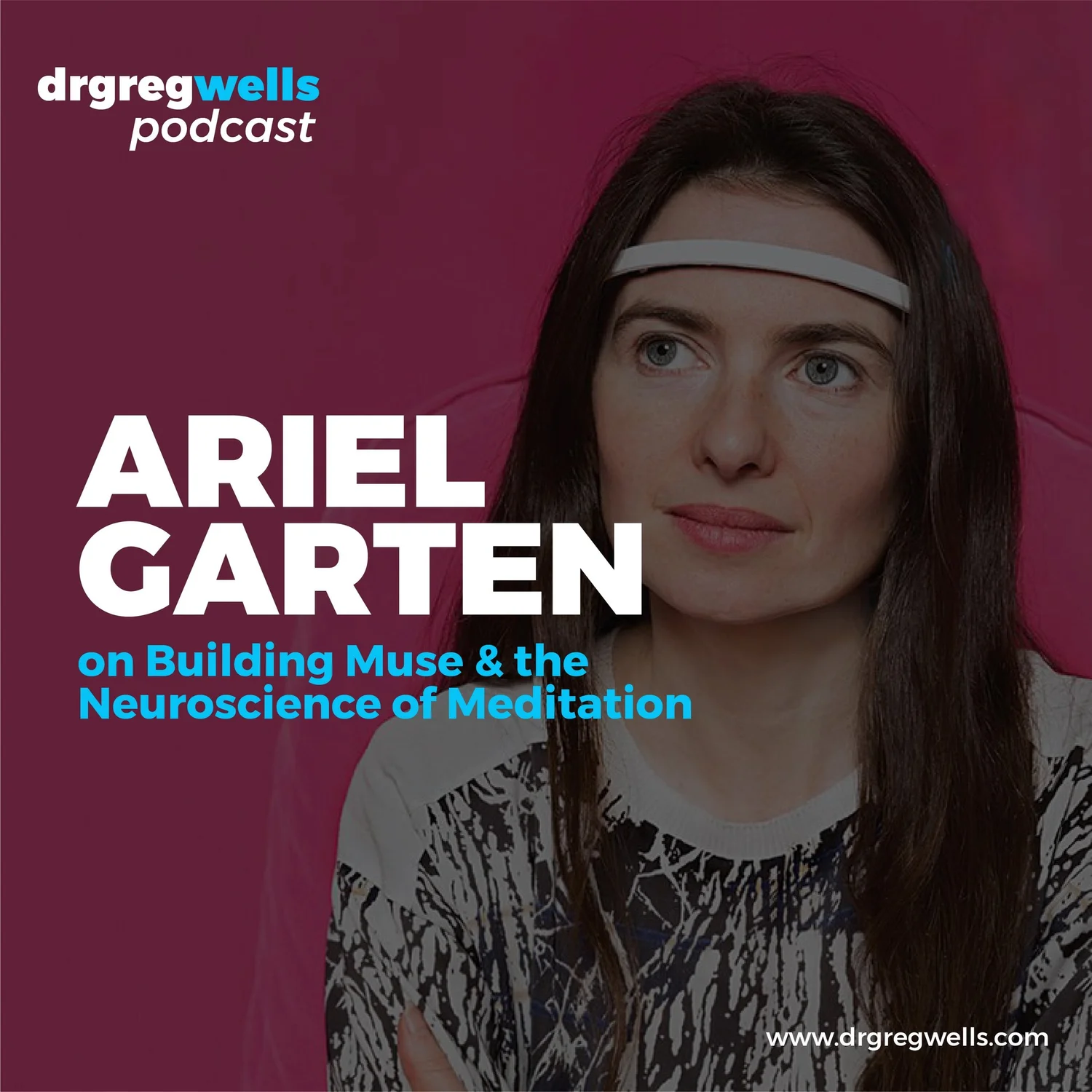
In her conversation with Dr. Greg Wells, Ariel Garten recounts her path from artist and psychotherapist to co‑founding InteraXon and creating the Muse headband. She explains how Muse uses EEG sensors to monitor brain activity and translate mental states into weather‑like sounds; when the mind drifts, the sound becomes stormy, prompting users to return their attention and quiet the “weather”. Garten describes how a concussion taught her that anxiety arises from the amygdala and triggers a cascade of stress hormones, and how approaching experiences with curiosity rather than fear reduces the physiological stress response. She advocates daily meditation as a way to strengthen the brain’s “intentional loop” and improve emotional regulation, envisioning a world where widespread meditation cultivates empathy and reduces conflict.
You will learn that brain‑computer interfaces can train mindfulness, daily practice builds the intentional loop and that meditation fosters compassion.
You’ll learn to establish a daily meditation practice: Allocate 15–20 minutes each day to focus on your breath. When your mind wanders, gently bring your attention back. This simple practice trains your brain to regulate stress and stay present.
Many people struggle to calm their minds and manage anxiety. Garten’s work demonstrates that combining science‑based meditation training with real‑time feedback can demystify mindfulness, making it a practical tool to reduce stress, improve focus and build compassion.