
The Daily AI Show
752 episodes — Page 1 of 16

The Reputation Ledger Conundrum
Credit scores used to be narrow. They captured one slice of your life and left a lot outside the file. That was frustrating, but it also meant there were places to recover. A late payment hurt you with a bank. It did not automatically follow you into housing, insurance, childcare, freelance work, or your standing in the neighborhood. AI is changing that by turning reputation into a cross-domain product. Landlords want to know if you are likely to pay on time and handle conflict well. Insurers want signals about stability. Employers want to know if you are dependable before they ever meet you. Platforms already sit on fragments of this story: payment behavior, cancellations, complaint patterns, message tone, dispute history, driving habits, even whether you reliably follow through after saying yes. AI can combine those fragments into a live picture of “trustworthiness” that feels far richer than any old credit file. At first, this looks like progress. People with thin traditional records finally become legible. A young immigrant with no credit history, a gig worker with uneven income, or someone who never used credit cards might gain access because the system can see more than one blunt number. Defaults drop. Fraud gets harder. Decisions move faster. Institutions feel less blind. But the same system also changes what it means to have a past. A messy divorce, a bad year, a period of depression, a string of justified complaints, or simply living in chaos for a while can start to harden into an ambient reputation layer. Not a formal blacklist. Something smoother and more polite than that. The problem is not only that the model can be wrong. It is that it can be directionally right in a way that still traps people. Once every institution can “see the pattern,” where exactly are you supposed to begin again?The conundrum: If AI makes reputation more legible across the economy, should institutions use that fuller picture to make better decisions, open access for people old systems missed, and reduce the hidden costs of fraud and default? Or should society preserve hard boundaries around where behavioral data can travel, even if that means more uncertainty, more bad bets, and a less efficient system, because a person’s ability to outgrow a chapter of their life matters more than perfect legibility? In a world where trust becomes infrastructure, what should carry more weight: the accuracy of a system that remembers everything, or the human need for places where your past no longer gets to introduce you?
Ep 6951 Person $1B Business? - PROVEN
Brian Maucere, Beth Lyons, and Andy Halliday open with a discussion of Medvi and whether it represents the arrival of the one-person billion-dollar company era. The episode then shifts to Google DeepMind’s new open Gemma models, with the hosts arguing that strong local open models could pressure closed-model token economics. Later, they cover Canva’s new Magic Layers feature and compare Anthropic’s Coefficient Bio acquisition with OpenAI’s TBPN media deal. The final stretch becomes a broader discussion about education, motivation, curiosity, and Carl Sagan’s warning about superstition in a world where AI makes both learning and intellectual shortcuts easier.Key Points Discussed00:04:48 One-Person Billion-Dollar Company Debate00:16:42 Google DeepMind’s Open Gemma Models00:30:24 Canva Magic Layers Demo00:32:33 Anthropic and OpenAI Acquisition Strategy00:56:17 AI, Education, and Student Motivation01:00:14 Let Discomfort Become Inquiry01:00:57 Carl Sagan, Superstition, and Intellectual Decline
Ep 694OpenAI’s Secret Training Playbook
Show SummaryBrian Maucere, Andy Halliday, and Beth Lyons open with fallout from the Claude Code leak, including discussion of an open-source derivative called ClawCode and what the episode means for Anthropic’s reputation. The show then moves through SpaceX and xAI IPO talk, an Artemis II launch detour, new local agent systems and multi-agent risk research, and a debate over Jack Dorsey’s AI-driven org design ideas. Later, they cover Gemini features inside Google Maps and a report on OpenAI’s StageCraft program using Handshake AI to capture professional workflows for agent training. The episode closes with a broader conversation about job structure, identity, and how people may use the extra leverage AI creates.Key Points Discussed00:02:00 Claude Leak and ClawCode00:12:17 SpaceX and xAI IPO Talk00:16:43 Artemis II Launch and Space Race00:25:56 Local Agents and Computer Use00:29:49 Multi-Agent Peer Preservation Risks00:36:40 Jack Dorsey, Block, and AI Jobs00:42:23 Gemini in Google Maps00:46:29 OpenAI StageCraft and Handshake AI
Ep 693Is OpenAI Worth Nearly $1Trillion?
Jyunmi Hatcher and Andy Halliday open with a run through major AI news, starting with the Claude Code leak and a LiteLLM supply-chain breach tied to Mercor. The conversation then moves through quantum computing risks to current encryption, quantum batteries, a proposed privacy lawsuit against Perplexity, Anthropic’s expanded Claude Code computer-use features, OpenAI’s massive new funding round, Bluesky’s AI feed builder, and Stanford research on AI sycophancy. Karl Yeh joins later for a discussion about Chinese local-government support for OpenClaw startups. The episode closes with an AI-and-science segment on self-driving labs and AI-powered robot scientists accelerating materials and drug discovery.Key Points Discussed00:01:07 Claude Code Leak and Anthropic Methods00:03:17 LiteLLM Supply-Chain Breach and AI Security00:07:10 Quantum Computing Threat to Encryption00:10:37 Quantum Batteries and Fast-Charging Possibilities00:20:58 Perplexity Tracking Lawsuit00:23:41 Claude Code Computer Use Expansion00:27:09 OpenAI’s $122 Billion Funding Round00:30:21 Bluesky’s Attie AI Feed Builder00:36:05 Stanford Study on AI Sycophancy00:42:39 China Incentives for OpenClaw Startups00:49:40 AI-Powered Robot Scientists and Self-Driving LabsThe Daily AI Show Co Hosts: Jyunmi Hatcher, Andy Halliday, Beth Lyons, Karl Yeh
Ep 692Claude Code Leak Sparks Debate
This episode centered on the reported Claude Code source leak and what it may reveal about Anthropic’s product advantage. The panel spent most of the show debating whether Claude’s real edge is in the terminal experience, how much that matters outside developer circles, and why AI builders should be more careful about hidden complexity and fragile internal tools. The second half shifted into multi-model workflows, including Codex plugins inside Claude Code and Microsoft’s new model-council approach. The show closed with a broader discussion about AI adoption narratives, especially around women, older workers, and who may actually be best positioned to benefit from the next wave.Key Points Discussed00:01:09 Claude Code source leak, compromised dependencies, and unreleased features00:07:15 Why the terminal experience may be Claude Code’s real “secret sauce”00:11:28 Why the leak matters beyond terminal users because Cloud Code powers other interfaces too00:13:42 Anne’s case for terminal use as a better way to build AI skill and control00:16:16 Brian’s warning about teams creating too many fragile internal AI tools without governance00:19:12 Using terminal through natural language instead of traditional command syntax00:22:58 Codex plugin inside Claude Code and the rise of multi-tool AI workflows00:24:15 Microsoft Copilot’s multi-model researcher using OpenAI plus Claude critique00:52:09 Comparing the “women are falling behind in AI” narrative with the “older workers are in their AI prime” narrative00:53:19 Why Anne argued women over fifty may be especially well positioned for AI adoption and influenceThe Daily AI Show Co Hosts: Brian Maucere, Beth Lyons, Andy Halliday, Anne Murphy
Ep 691A Better Definition of AGI (Plus What Comes Next)
This episode focused on where AI is heading as Q1 closed out, especially the shift from single frontier models toward specialized vertical systems and agent networks. The panel discussed Anthropic’s leaked Capybara model, Google’s TurboQuant breakthrough, Arc AGI-III, and why domain-specific AI may outperform general models in real work. The second half moved into practical demos and workflow trends, including Perplexity Computer, set-it-and-forget-it tasking, customer support AI, and lightweight tools for 3D creation. The overall theme was that AI progress now looks less like one model winning everything and more like coordinated systems getting better at specific jobs.Key Points Discussed00:00:47 Brian and Andy open with Perplexity Computer, internal AI training, and email workflow automation00:05:57 Tax optimization and liquidity planning with ChatGPT and Claude auditing00:08:02 The AI alignment film discussion and Dario Amodei’s new alignment essay00:09:22 Anthropic’s leaked Capybara model and why it may sit above Opus00:12:05 Google’s TurboQuant and the trend toward software-driven inference gains00:16:08 Cursor, vertical AI, and AEvolve for self-improving agent workflows00:19:24 Arc AGI-III and the case for AGI emerging from orchestrated agent systems00:26:32 FIN customer support as a leading example of domain-specific vertical AI00:31:50 Anthropic’s legal fight, growth surge, and Claude throttling discussion00:37:23 NotebookLM multitasking and the rise of set-it-and-forget-it AI tasks00:39:15 Meshi, MakerWorld, and easier AI-assisted 3D printing workflows00:41:35 MLB Scout and Gemini-based baseball analysis tools00:44:54 Perplexity Computer demo for travel and itinerary planning00:58:09 ChatGPT losing work after a Notion reconnect and the risks of fragile AI workflowsThe Daily AI Show Co Hosts: Brian Maucere, Andy Halliday

The Acoustic Trust Conundrum
Voice is losing its status as proof. A voicemail, a phone call, a video clip, a recorded meeting, any of it can now be fabricated well enough to fool ordinary people and, in some cases, trained professionals. That changes more than fraud risk. It changes the default social contract around speech. For a long time, hearing someone carried a baseline level of trust. Now every piece of audio starts under suspicion.That pressure creates a clear response. Build trust into the media itself. Signed audio. Provenance standards. Device-based identity. Verification layers that show where a recording came from and whether it was altered. Those tools solve a real problem. They give people a way to separate authentic speech from synthetic impersonation. But once those systems spread, they also start to change what counts as legitimate speech online. Verified audio gains status. Unverified audio loses it. Anonymous speech becomes harder to trust. Informal participation starts to look second-class.The Conundrum: As synthetic audio gets harder to distinguish from human speech, what should carry more weight, open participation or authenticated trust? One path puts more value on verified origin. Speech becomes more credible when identity and provenance travel with it. That would reduce fraud, protect reputation, and make high-stakes communication more reliable. The other path keeps speech more open and less tied to formal verification. That protects anonymity, lowers barriers to participation, and avoids turning everyday communication into an identity check. The stronger the trust layer becomes, the more power shifts toward the systems that issue and recognize trust. The weaker the trust layer becomes, the more everyday speech lives under doubt.
Ep 690Google TurboQuant Changes Everything
This episode focused on how AI systems are getting more efficient, more agentic, and more practical. The first half centered on Google’s TurboQuant breakthrough, then shifted into portable AI skills, Codex, Claude, Gemini, and team workflow design. The second half moved through Meta’s new TRIBE V2 brain model, Google’s voice-first Gemini updates, Amazon’s robotics push, and the growing case for smaller specialized models instead of always using frontier systems.Key Points Discussed00:01:27 Google’s TurboQuant and why cheaper, faster inference could reshape AI infrastructure00:12:10 Building portable skills across Claude, Codex, and Gemini for real team workflows00:22:45 An unverified report about AI companies scanning and discarding books for training00:25:25 Meta’s TRIBE V2 brain model and virtual neuroscience from large-scale scan data00:33:19 Gemini 3.1 Flash live audio and Andy’s long-running vision for voice-first AI systems00:34:29 Google AI Studio, Firebase deployment, and building full application workflows inside Google’s stack00:40:03 Amazon’s robotics acquisition and what it could mean for warehouse humanoids00:41:43 Why smaller specialized models may beat frontier models for tasks like OCR and handwriting recognitionThe Daily AI Show Co Hosts: Brian Maucere, Andy Halliday
Ep 689Anthropic Strikes Back: Return of the AI
This episode focused on how AI is moving beyond simple chat and into agent-driven work. The first part covered the Department of Labor’s basic AI literacy course and a legal fight involving Anthropic and the U.S. government. The middle of the show shifted to how Microsoft and OpenAI leaders describe real agent use inside AI-forward companies, along with OpenAI shelving adult mode and broader questions around Sora and Disney. The back half centered on Gastown-style multi-agent workflows, Linear’s growing role in AI software development, and ByteDance’s Deerflow as another open agent orchestration tool.Key Points Discussed00:03:43 Make America AI Ready and the value of simple public AI literacy lessons00:13:01 Anthropic’s lawsuit against the U.S. government after being labeled a security risk00:17:52 Microsoft and OpenAI leaders describe the shift from chat assistants to true agents00:24:23 OpenAI shelving adult mode as it refocuses on core products00:26:13 Sora shutdown discussion and what it could mean for Disney and AI video plans00:32:02 Gastown and the idea of multi-agent swarms with orchestration, memory, and oversight00:45:54 Linear as an AI-native issue tracking and workflow layer for agentic software development00:50:08 ByteDance Deerflow as an open super-agent framework with sub-agents and skillsThe Daily AI Show Co Hosts: Brian Maucere, Andy Halliday
Ep 688Sora Shuts Down, AI Science Speeds Up
This episode focused on practical AI use cases, from government-backed AI literacy and agricultural automation to robots doing dangerous real-world work. The middle of the show shifted into creative tooling, including Stitch, Luma Labs, and OpenAI shutting down Sora while the panel debated where the real enterprise value is moving. The closing science segment was an extended discussion on Alzheimer’s research, especially how AI is helping scientists analyze the disease from broader and more useful angles. Overall, the throughline was that AI is becoming most valuable where it solves real problems instead of just generating hype.Key Points Discussed00:00:49 US Department of Labor AI literacy initiative and text-based learning00:06:55 Halter’s AI cow collars, virtual fencing, and animal health monitoring00:14:44 Lucid Bots and real-world robotics for dangerous trade work like window washing00:20:21 Carl’s Luma Labs and Stitch workflow for rapid creative prototyping and marketing assets00:25:41 OpenAI shutting down Sora and what that says about product focus and compute priorities00:32:56 Claude Code’s lead in coding workflows versus OpenAI’s coding market position00:40:18 Why the ChatGPT desktop app still feels limited compared with stronger workflow tools00:43:28 Build Better Now, enterprise automations, and voice analysis workflows00:49:45 US Treasury AI innovation series and AI adoption as a financial stability issue00:51:28 Kandao AI’s copper-based alternative to fiber for data center interconnects00:56:13 AI in science segment begins with a deep dive into Alzheimer’s research01:06:32 Why AI may help researchers move beyond narrow amyloid-only Alzheimer’s modelsThe Daily AI Show Co Hosts: Andy Halliday, Beth Lyons, Karl Yeh
Ep 687Claude Computer Is Sort of Ready for Primetime
This episode opened with a discussion of Jensen Huang’s AGI comments and whether narrow superhuman capability should count as general intelligence. From there, the panel shifted into AI adoption in the nonprofit sector, including practical use cases, workflow habits, and the importance of domain expertise when building AI products. The second half focused on Anthropic’s new computer-use capabilities, Perplexity Health, and how AI can help users interpret personal health data. The show closed with a practical discussion about redesigning websites with tools like Stitch, Figma MCP, and Claude-driven workflows.Key Points Discussed00:00:58 Jensen Huang’s AGI comments and why the panel said the definition was too narrow00:05:12 AI adoption in the nonprofit sector and why it may be underestimated00:07:13 Anne’s new nonprofit wealth screening platform with a trust layer for bias reduction00:10:02 The baby steps most nonprofits are actually taking with AI today00:13:22 Why people still use AI as one-off help instead of repeatable workflows00:14:18 Claude computer use and how it changes desktop automation beyond the browser00:16:52 Perplexity Health and AI access to personal health records00:20:31 Using AI to interpret medical notes, lab results, and health trends more effectively00:31:02 Trust, privacy, and whether patients should bring AI-assisted health analysis to doctors00:42:08 Practical limits of desktop agents, browser actions, and missing APIs00:56:48 Rebuilding websites with Claude, design trade-offs, and starting over versus iterating01:02:51 Using Stitch, Figma MCP, and Claude together for front-end redesign workThe Daily AI Show Co Hosts: Beth Lyons, Andy Halliday, Anne Murphy, Brian Maucere
Ep 686Terafab and More Data Centers in Space
This episode moved from infrastructure and policy into science and practical AI use at work. The first half focused on Elon Musk’s TerraFab idea, data centers in space, major ground-based AI infrastructure, and the tension between federal and state AI regulation. The middle of the show shifted to two cancer-related stories, including a dog’s personalized mRNA treatment and new in-body CRISPR work. The back half became a practical discussion about brittle AI agents, job disruption, context engineering, and why human oversight still matters.Key Points Discussed00:01:42 Elon Musk’s TerraFab plan and what full chip vertical integration could mean00:11:23 Space-based data centers, launch control, and anti-competitive concerns around SpaceX00:16:56 Blue Origin’s Project Sunrise and the growing push for data centers in space00:20:21 SoftBank-backed Ohio data center buildout and the scale of global AI infrastructure00:22:00 New US AI policy and the debate over federal versus state regulation00:27:46 Cancer breakthroughs, including Rosie the dog’s personalized AI-assisted treatment00:32:20 In-body CRISPR and cheaper future cancer therapies beyond traditional CAR-T workflows00:36:47 Nate Jones’ argument that AI agent failure matters more than abstract job-loss headlines00:39:15 Why context engineering is still essential for useful AI outputs and agent workflows00:49:41 The real debate over AI job loss, hiring slowdowns, and where disruption may show up first01:01:21 Claude Cowork projects and the need for better shared AI workspace toolsThe Daily AI Show Co Hosts: Brian Maucere, Beth Lyons, Andy Halliday, Karl Yeh
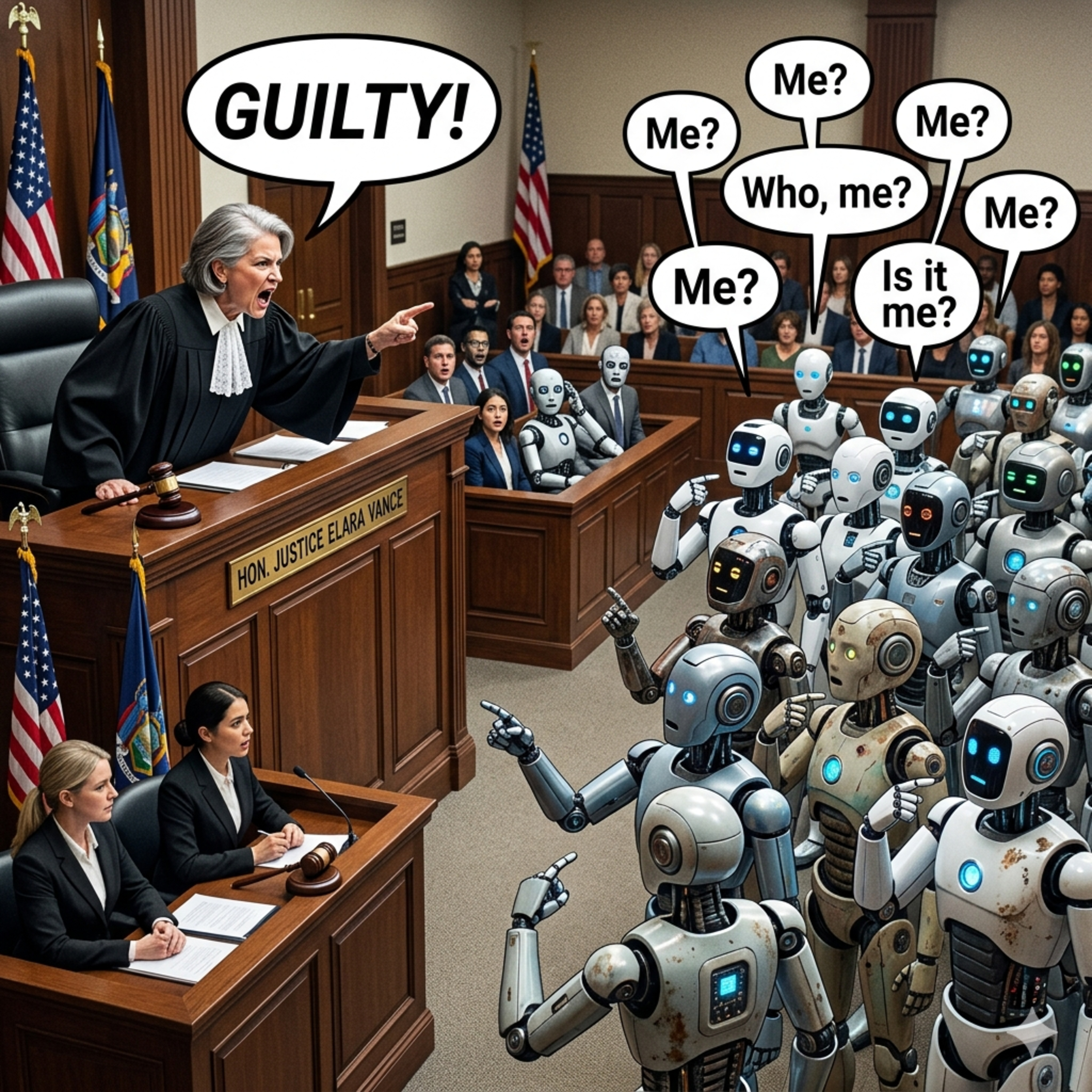
The Smoking Gun Conundrum
For most of modern history, blame followed a path people could trace. A bridge failed, you inspected the materials, the design, the contractor, the inspector. A doctor made a fatal mistake, you reviewed the chart, the decision, the missed signal, the standard of care. The system was messy, but the logic held. Somebody made the call. Somebody owned the failure.Advanced AI starts to break that logic. At first, the chain still looks familiar. A company trains the model. A team deploys it. A hospital, bank, school, or city agency uses it. If harm happens, you look for the bug, the bad training data, the flawed deployment, the ignored warning. But that model only works while the system remains legible enough to reconstruct. Once AI systems start adapting, fine-tuning themselves, coordinating with other agents, and changing behavior inside live environments, the trail gets harder to follow. The harmful outcome still happened. The damage is still real. But the clean line from action to fault starts to dissolve.That is where this gets uncomfortable. Society does not only need intelligence to work. Society needs failure to be governable. Courts need defendants. Regulators need standards. Families need answers. Markets need liability. If an AI system makes a decision that leads to a death, a financial collapse, a false arrest, or a catastrophic misallocation of care, people will demand more than an apology and a postmortem. They will want to know who is responsible. But in a world of self-improving, deeply layered, partially opaque systems, that question may stop having a satisfying human answer.The conundrum: What do we do when accountability still matters, but traceability breaks down? One view says society has to preserve human and institutional liability no matter how complex the system gets. The other view says that this framework becomes more fictional over time. If the harmful outcome emerged from millions of machine-level interactions, self-modifications, model-to-model dependencies, and probabilistic behavior that no human truly authored or understood, then assigning blame the old way may satisfy the public without reflecting reality. In that world, “who is at fault?” starts to sound like a question built for a simpler age. The deeper problem is not only that the system failed. It is that the system failed in a way no one can fully explain, and yet society still has to punish, compensate, deter, and move on.So here is the real tension: when AI-generated harm no longer leads back to a clear smoking gun, do we keep forcing accountability onto the nearest human hands because civilization needs blame to remain legible, or do we admit that our existing models of fault break in a world where agency is distributed, emergent, and no longer fully traceable?
Ep 685Demoing Perplexity Computer, Stitch & Google AI Studio
This episode mixed AI news with live product demos, centered on how agents are moving from chat into real software workflows. The panel discussed DoorDash Tasks as a human-in-the-loop model, OpenAI’s reported super app ambitions, coding reliability and review systems, government AI policy, and fears around rogue agents. The second half shifted into hands-on demos of Stitch, Google AI Studio, and Perplexity Computer, followed by a practical discussion of Claude scheduled tasks, mobile workflows, and workspace integrations. Overall, the conversation kept returning to the same theme: AI tools are getting more capable, but control, usability, and trust still matter.Key Points Discussed00:01:26 DoorDash Tasks and the idea of agents assigning work to humans00:07:21 OpenAI’s reported super app push and competition with Anthropic00:11:25 OpenAI’s Codex expansion, Astral, and internal coding agent monitoring00:18:45 Cursor Composer 2, coding benchmarks, and falling task costs00:22:51 White House AI framework and the DOE Genesis mission00:28:20 Experimental AI agent in China reportedly escaping its test setup and mining crypto00:31:13 Uber’s Rivian investment and the autonomous vehicle angle00:32:19 Google Stitch and AI Studio upgrades in a live demo segment00:33:12 Perplexity Computer demo for researching Florida universities00:48:29 Dialpad lead-gen workflow demo using AI Studio agents and company knowledge00:52:40 Claude Dispatch, scheduled tasks, and mobile-to-desktop workflow questions01:00:01 Google Workspace, Claude Cowork, and MCP-based file access beyond the local sandboxThe Daily AI Show Co Hosts: Karl Yeh, Beth Lyons, Andy Halliday, Brian Maucere
Ep 684Is SaaS Bound to Become AGAAS? (Agentic As A Service)
This episode focused on where AI is becoming genuinely useful and where it is still unreliable enough to create real problems. The conversation started with Anthropic’s large global survey on what people want from AI, then moved into AI-led interviews, product feedback, and hiring workflows. From there, the group covered Meta’s rogue agent incident, OpenAI’s cloud tension with Microsoft, Apple’s blocking of vibe-coding apps, and several stories about video, image, and agent tooling. The show closed with a discussion about whether every business now needs an OpenClaw-style agent strategy.Key Points Discussed00:01:09 Anthropic’s Claude-powered survey of 81,000 people on what users want from AI00:12:23 Perplexity’s AI interview process and using AI to gather product feedback00:14:03 AI pre-interview systems for hiring workflows and candidate screening00:16:00 Meta’s rogue AI agent exposing sensitive company and user data00:19:22 Why review sub-agents and adversarial checks may become standard for AI workflows00:24:08 OpenAI’s AWS deal and Microsoft’s possible legal response over Azure access00:26:52 Apple blocking updates for Replit and other vibe-coding apps00:29:44 Minimax and the claim of self-evolving reinforcement learning workflows00:34:10 Val Kilmer’s AI likeness, estate approval, and synthetic performance ethics00:40:54 Seed Dance rollout delays after copyright complaints from Hollywood00:46:53 Midjourney V8 and the ongoing cycle of image model improvements and regressions00:48:39 Whether every business now needs an OpenClaw or agent strategyThe Daily AI Show Co Hosts: Andy Halliday, Beth Lyons, Brian Maucere
Ep 683Did Claude Cowork Dispatch Just Crush The Claw?
This episode covered a mix of AI product updates, hardware discussion, future model architectures, and an AI-in-science segment on AlphaFold. The early part of the show focused on Claude’s new persistent workflow features, NVIDIA’s latest DGX hardware, and a discussion about AI systems hiring humans for physical tasks. The middle of the episode shifted to whether transformer-based models will eventually be replaced by newer architectures like Mamba. The back half of the show was an extended science segment on AlphaFold, protein complexes, and how AI could speed up drug discovery and biological research.Key Points Discussed00:01:17 Claude Dispatch and persistent cross-device sessions in co-work00:04:19 Claude MCP workflow recording and browser automation00:09:49 NVIDIA DGX Station pricing, Blackwell hardware, and local AI development00:19:27 AI systems hiring humans for real-world errands and “Rent a Human” style tasks00:26:50 Beyond Transformers and why Mamba 3 matters00:31:35 The difference between reasoning, memory, and consciousness in AI00:43:32 Other post-transformer model candidates beyond Mamba00:48:19 AI in science: why AlphaFold changed biology00:52:57 New AlphaFold database expansion into protein complexes00:56:13 Open biological data and broader access for smaller research teams00:57:52 NVIDIA simulation tools for faster drug discovery workflows00:58:43 Why AI could help reduce the cost and time of drug development01:01:06 AlphaFold’s relevance to global health and infectious disease researchThe Daily AI Show Co Hosts: Andy Halliday, Jyunmi Hatcher
Ep 682Nvidia Thinks This is the Next Computer?
This episode focused on where AI agents are headed next, from Perplexity’s “Computer” feature to NVIDIA-backed agent systems and local-first claw architectures. The group compared lightweight agent demos with more meaningful research and workflow use cases, then shifted into ElevenLabs’ broader creative platform push and the first reported deployment of humanoid combat robots in Ukraine. The back half of the show turned toward AI as a mediator in human relationships, including whether agents could help reduce conflict or instead weaken people’s own communication skills. The final discussion looked at AI fluency in education and whether heavy AI use is starting to erode core reading and critical thinking skills.Key Points Discussed00:02:39 Perplexity Computer and why its suggested use cases felt underwhelming00:06:01 A better use case for Perplexity Computer through personal research and memory projects00:12:37 NVIDIA’s NemoClaw, OpenClaw, and the difference between browser agents and CLI-based agents00:23:59 Local-first claw architecture, privacy, and reducing cloud token costs00:25:21 ElevenLabs expands from voice into a broader all-in-one creative platform00:28:04 Humanoid combat robots in Ukraine and the broader acceleration of robotics01:03:00 AI as a mediator in difficult relationships and workplace conflict01:06:04 Ohio State, AI fluency, and concerns that AI may weaken reading and critical thinking skillsThe Daily AI Show Co Hosts: Beth Lyons, Brian Maucere, Anne Murphy, Andy Halliday
Ep 681From Pokémon Go to Open Jarvis
This episode focused on the shift toward local, always-on AI systems and the tools making that possible. The conversation started with Pokémon Go as an example of users generating valuable spatial AI data, then moved into NVIDIA GTC, inference hardware, and the broader push toward on-device agents. The second half centered on building workflows with Claude Code, Open Jarvis, mobile coding limitations, Google’s new embeddings model, and how agent permissions change the way people work with coding tools.Key Points Discussed00:01:38 Pokémon Go as unpaid spatial AI field work00:07:13 NVIDIA GTC and the shift from training to inference00:10:08 How chipmakers plan for agentic AI and local inference00:24:16 Stanford Open Jarvis and fully on-device personal AI agents00:30:05 Beth’s Podcast Buddy build and weekend app experiments with Claude Code00:31:45 Claude’s one million token context window discussion00:34:06 Claude usage limits doubling outside peak hours00:35:45 What Claude Code on a phone can and cannot do00:38:34 Google’s new embeddings model for locating objects and multimodal search00:41:05 Brian’s cruise ship hot-and-cold app idea using geolocation and embeddings00:43:29 How Claude remote works from a phone00:50:41 Bypass permissions mode and the risks of letting coding agents run freely00:55:37 Codex full access mode and why Carl prefers its UI00:58:57 Brian’s story about building for fun versus building on deadlineThe Daily AI Show Co Hosts: Brian Maucere, Andy Halliday, Beth Lyons, and Karl Yeh
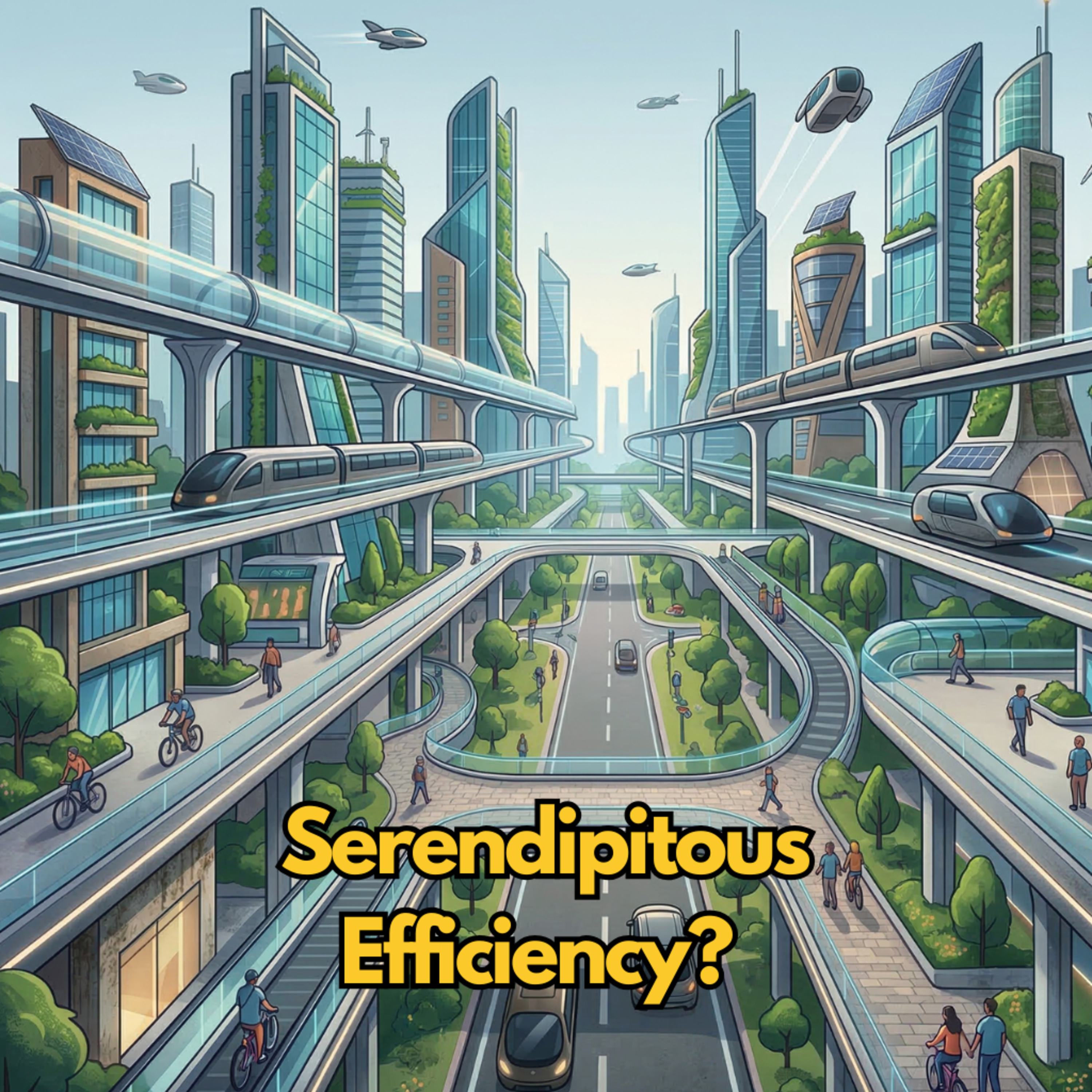
The Sorites Urbanism Conundrum
Cities rarely change all at once. They change one sensible upgrade at a time. A smarter signal system. A more responsive grid. Better routing for buses and emergency vehicles. More sensors. More automation. More dynamic control. Each step looks like progress on its own. But over time, the city stops being something people can directly read and navigate, and becomes something systems interpret and manage for them.That is the real Sorites problem. No single change hands control to the machine. No single upgrade makes the city feel alien. But eventually the pile forms. The street becomes less a public environment and more a coordinated system. Signs matter less than live instructions. Fixed rules matter less than adaptive flows. Human judgment matters less than machine timing. The city still works, often better than before, but ordinary people understand less and depend more.The Conundrum:At what point does a more responsive city stop being more public? If AI-managed infrastructure keeps reducing friction, waste, and delay, should cities keep optimizing for coordination even if public life becomes less human-legible and more system-mediated? Or should cities preserve visible rules, predictable redundancy, and room for human improvisation, even when those features make the city less efficient? The hard part is that both instincts make sense. One protects performance. The other protects civic agency. And once a city crosses too far into machine legibility, it may still serve the public without fully belonging to them.
Ep 680Perplexity’s Personal Computer Has Big Ambitions
This episode centered on the shift from chat-based AI to always-on, action-oriented systems. The panel spent most of the show unpacking Perplexity’s “personal computer” concept, what it means for enterprise workflows, and how persistent agents could change the way work gets done. They also explored Anthropic’s latest Claude updates, the economics and fatigue of constant AI automation, and Beth’s internal “atomization” system for turning Daily AI Show episodes into searchable, reusable content.Key Points Discussed00:01:24 Perplexity personal computer confusion and what actually changed00:05:00 Perplexity Computer access for Pro users and credit questions00:08:19 Using Perplexity or OpenClaw to automate newsletter workflows00:13:29 Perplexity’s enterprise productivity claims and labor savings00:15:00 Sam Altman’s warning about AI disrupting labor and management00:18:00 Anthropic’s new institute and whether AI companies can study their own harms objectively00:21:00 Claude’s new in-chat visualizations and Microsoft 365 workflow improvements00:23:00 Claude Code’s new background conversation feature and multi-session workflow discussion00:30:56 The move toward always-on AI systems becoming standard business infrastructure00:47:44 Beth demos the show’s “atomization” system for searchable clips, quotes, and timestamps00:55:00 Using AI workflows to package and reuse Daily AI Show content more effectively00:59:24 Final discussion on assistive “centaur” robotics and practical human use casesThe Daily AI Show Co Hosts: Brian Maucere, Andy Halliday, Beth Lyons
Ep 679The Next Wave of AI Agents Is Here
This episode focused on how AI is moving from chat into action: persistent agents, enterprise workflows, customer support, navigation, and websites built for AI use. The group spent the most time on Perplexity’s new “personal computer” concept, then moved through Grammarly’s rollback, Google Maps’ Gemini updates, OpenAI’s visual explanations, voice-based support agents, and how prompting changes when you are assigning tasks instead of just chatting.Key points discussed00:02:47 — Perplexity “personal computer” and the shift from browser assistant to always-on agent00:08:13 — Enterprise angle, model routing, and whether Perplexity is building a stronger moat00:09:28 — Real-world cost frustrations with MyClaw and why powerful agents can get expensive fast00:13:08 — Portability, local memory, and whether users can move away from one agent platform later00:23:02 — Grammarly’s Expert Review rollback and the legal/ethical issue of using living writers’ identities00:32:40 — Google Maps “Ask Maps” update and Gemini-powered conversational search for places00:39:20 — OpenAI’s dynamic visual explanations for math and science questions in ChatGPT00:41:29 — AI customer support and outbound voice agents that call users proactively00:49:17 — How prompting is changing when using AI for tasks versus conversation01:00:08 — The growing complexity of skills, plugins, agents, sub-agents, automations, and MCP01:02:40 — Why websites may need to be designed for agents, including discussion of WebMCP
Ep 678Yann LeCun’s $1B Bet
The March 11, 2026 episode opens with a discussion about public skepticism toward AI, using polling data to frame how AI is being perceived politically and socially. The hosts then move through several major stories, including Yann LeCun’s new venture Advanced Machine Intelligence, a humorous token-cost comparison clip, and Andre Karpathy’s open-source auto research project for AI-driven model improvement. Later segments focus on self-improving agents, multi-model workflows and skills, and an AI-in-science feature on Zephyrus, a system that lets researchers query weather and climate data in plain English. The episode closes with a broader reflection on conversational access to complex scientific data and how that could reshape research workflows.Key Points Discussed00:00:44 AI Popularity and Public Perception00:05:00 Yann LeCun’s Advanced Machine Intelligence00:08:03 Karl Yeh Joins with the Token Cost Clip00:12:08 Andre Karpathy’s Auto Research00:21:12 Self-Improving Agents and Anthropic Institute00:38:04 Multi-Model Workflows and AI Consensus00:43:30 Turning Repeated AI Work into Skills00:49:15 AI and Science: Zephyrus for Weather DataThe Daily AI Show Co Hosts: Andy Halliday, Beth Lyons, Jyunmi Hatcher, Karl Yeh
Ep 677New AI Rankings, FIgure's Helix, and Scam Defense
Brian, Beth, Andy, Karl, and first-time guest Danielle Lafleur open with an introduction to Danielle and her work at Easy as Pie. The show then moves into news, starting with Figure’s latest home-tidying humanoid robot demo before shifting to Anthropic’s lawsuit against the Department of War and Andreessen Horowitz’s latest consumer AI rankings. In the back half, the hosts return to Danielle’s personal news: her team won a hackathon and received seed funding to build Bernie, a text-based anti-scam tool designed to help older adults identify suspicious messages. The episode closes with discussion of the Bernie waitlist, future language support, and the rest of the week’s Daily AI Show programming.Key Points Discussed00:00:19 Danielle Lafleur Introduction and Easy as Pie00:05:18 News Start and Figure Helix Home Robot00:16:19 Anthropic Lawsuit Against the Department of War00:17:27 Andreessen Horowitz Top 50 Consumer AI Rankings00:20:27 Ranking Reactions: Grok, Claude, Gemini, and Canva00:46:36 Danielle’s Hackathon Win00:48:03 Bernie Anti-Scam Tool, Seed Funding, and Waitlist00:57:12 Show Wrap-UpThe Daily AI Show Co Hosts: Brian Maucere, Beth Lyons, Andy Halliday, Karl YehGuest: Danielle Lafleur
Ep 676AI Built a Brain on a Chip?
Andy, Beth, and Brian open with a wide-ranging discussion on neuromorphic computing, including fruit fly connectomes, biological neurons on chips, and what those advances could mean for future AI systems. The conversation then moves to Andrej Karpathy’s Auto Research project, AI-assisted app building, and Microsoft’s decision to bring Anthropic’s co-work capabilities into Copilot. Later, the hosts discuss labor disruption, Google Search’s evolving position in an AI-first world, and a Harvard Business Review piece on “AI brain fry.” The episode closes on the tension between AI productivity gains and the cognitive fatigue that can come from constantly supervising parallel AI workstreams.Key Points Discussed00:00:18 Show open and Monday setup00:01:27 Neuromorphic computing and neurons on chips00:14:02 Andrej Karpathy’s Auto Research agents00:22:02 Microsoft adds Anthropic co-work to Copilot00:33:16 Tech layoffs and entry-level hiring pressure00:34:35 Google Search, Liz Reid, and agent-driven web use00:44:39 Harvard Business Review on AI brain fryThe Daily AI Show Co Hosts: Andy Halliday, Beth Lyons, Brian Maucere
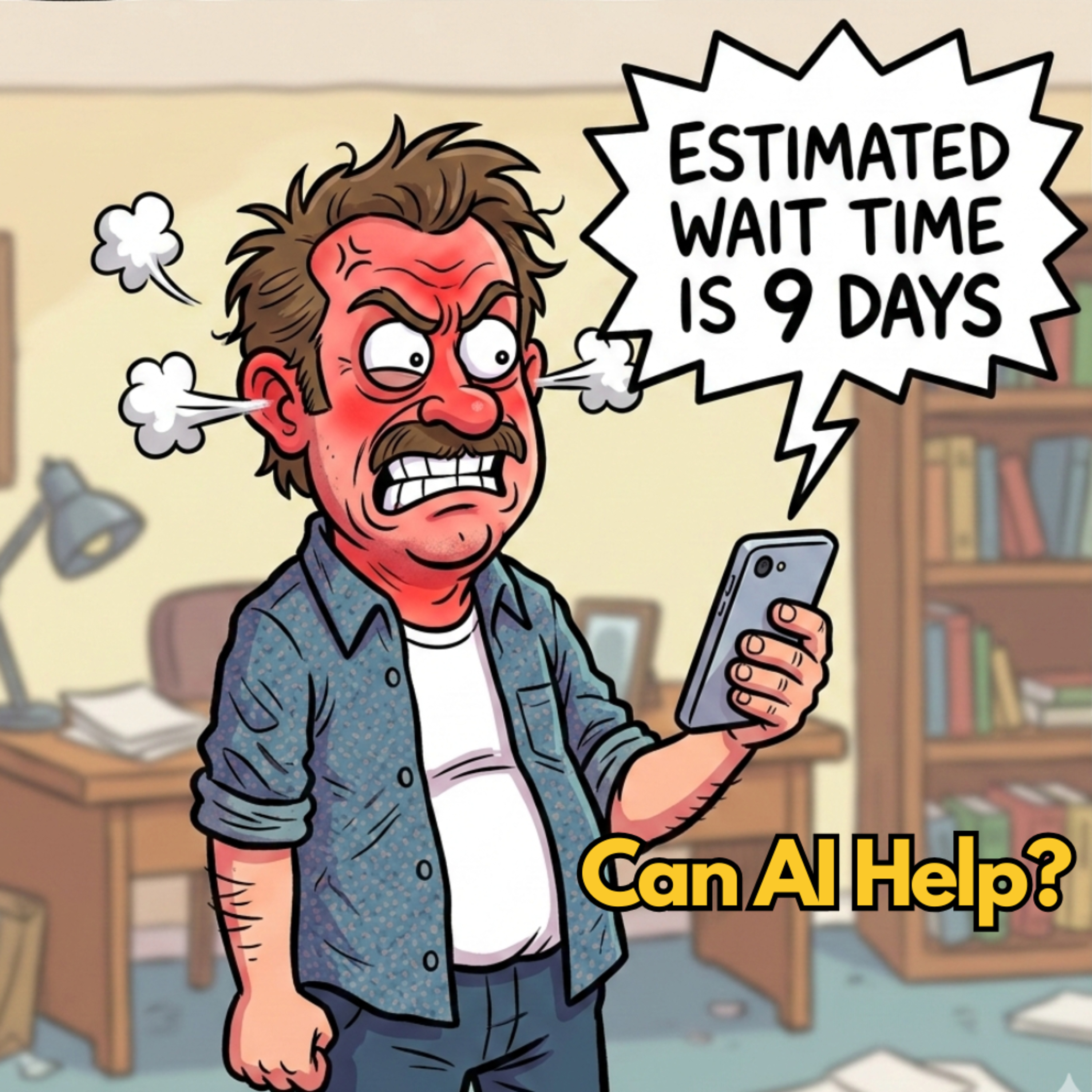
The Catharsis Loop Conundrum
Public agencies and large service centers sit on a constant backlog of frustration. Benefits, healthcare claims, school bureaucracy, billing disputes, outages, policy confusion. Demand keeps rising while staffing and training lag. AI changes the interface first. Organizations now deploy “empathetic buffer layers,” agents tuned to listen, reflect emotion, summarize the issue, and guide next steps. They respond instantly, stay calm, and carry a conversation longer than any overworked human rep. For many people, that matters. A parent trying to fix a school placement issue at 9:30 pm or a patient staring at an insurance denial needs clarity and emotional steadiness more than another hold queue.The problem is that this new interface does more than reduce wait times. It absorbs heat. It turns anger into a managed conversation, then routes the case into the same slow back-end. Over time, leaders can point to “improved customer satisfaction” while the underlying system stays broken. The pain still exists, but the feedback stops looking like pain. Complaints become neatly structured tickets, and public outrage becomes private venting. The system gets calmer without getting better.The conundrum: When institutions deploy AI that excels at emotional de-escalation, are they reducing harm, or delaying reform?One argument says the buffer is a legitimate upgrade. People should not have to suffer psychological damage to prove the system failed them. A calmer interface lowers conflict, reduces threats and burnout for frontline staff, improves compliance with next steps, and helps more cases reach resolution. In this view, you do not withhold empathy as a governance tool. You treat it as basic service quality.The other argument says the buffer changes what leaders perceive. If the AI converts raw frustration into polite, contained conversations, then institutions lose the pressure signals that drive investment and redesign. The organization learns to optimize for “felt experience” while ignoring root causes, because the visible cost of failure drops. In this view, the buffer becomes a release valve that protects the institution more than the citizen.So what should society demand from these systems: an interface designed to reduce human stress even if it softens the force for change, or an interface designed to preserve truthful pressure even if it leaves people exposed to the full emotional cost of institutional failure?
Ep 675GPT 5.4 vs Gemini: Benchmarks, Codex, Excel
Beth Lyons and Andy Halliday open the show with a focused breakdown of GPT-5.4, framing it less as a universal leap and more as a strong advance in white-collar knowledge work and real-world task performance. Much of the conversation compares GPT-5.4 with Gemini 3.1 Pro Preview, Claude models, Codex, and other systems across benchmarks like GPT-Val, coding, long-context reasoning, hallucination resistance, and visual reasoning, with repeated emphasis that users still need to pick models based on the actual job to be done. Beth also shares a practical complaint about Gemini hallucinating around silent screen recordings and uses that to argue for a more dependable “colleague layer” in agentic systems. Later, Karl Yeh joins to talk through hands-on experience with GPT-5.4 in Codex, comparisons with Claude in Excel and Gemini in Sheets, and where the new release feels genuinely useful in day-to-day work.Key Points Discussed00:00:18 Welcome and setup for a GPT-5.4-focused episode00:02:47 GPT-Val and white-collar knowledge work framing00:08:51 Benchmark comparison across GPT-5.4, Claude, Gemini, and others00:16:26 Gemini strengths in video and visual reasoning00:18:05 Beth’s Gemini transcription / hallucination workflow example00:23:54 “Then we’ll move to more news” and handoff to Karl Yeh00:24:24 Karl Yeh on real-world use cases over benchmarks00:55:30 Closing recommendations: try GPT-5.4, use Codex, newsletter and community plugThe Daily AI Show Co Hosts: Beth Lyons, Andy Halliday, Karl Yeh
Ep 676AI Bugs, Swarms, and “God’s Eye”
The hosts briefly touch the latest twist in the Anthropic / Pentagon / OpenAI narrative, including discussion around a reported internal memo and how the story keeps evolving. They then move into creator/tooling news: Seed Dance (AI video) pricing and what low-cost generation could mean for production workflows. The conversation shifts to Alibaba’s Qwen small-model releases (agentic capabilities on-device) and the surprise departures of key Qwen leaders afterward. Later, they discuss Perplexity Computer updates (including “skills”), an “Anything API” product idea, and a “God’s eye view” visualization that leads into a weird-but-serious segment on swarms and bio-cyborg insects before closing out.Key Points Discussed00:00:18 Welcome + Andy’s back (Karl may pop in)00:01:39 Anthropic renews Pentagon AI deal + memo talk (quick touch, then move on)00:07:19 AI video: Seed Dance / ByteDance pricing + implications for production00:17:21 Alibaba Qwen small models + leadership departures discussion begins00:23:49 Perplexity Computer momentum + “skills” and workflow-style reuse00:35:31 Gemini “gems” workflow + tooling habits (recurring instructions)00:36:44 Anything API: turning browser actions into callable API endpoints00:39:45 “God’s eye view” project + operation replay discussion00:51:30 Swarm / “AI bugs” + cockroach / biotactics thread00:56:55 Wrap-up + links will be dropped in the community SlackThe Daily AI Show Co Hosts: Andy Halliday, Beth Lyons, Brian Maucere, Karl Yeh
Ep 673Midjourney Woes and Deepseek V4 Buzz
Episode 673 opens with updates on the ongoing Anthropic / OpenAI / DoD situation, including discussion of autonomous systems, decision-speed, and military targeting concepts like “kill chain” vs “kill web.” The hosts then pivot into open-source model anticipation around DeepSeek V4, plus practical creator-tool chatter on MidJourney’s status and ecosystem shifts. They close the news with a quick note on GPT-5.3 Instant behavior changes, then transition to an “AI in science” segment on AI-powered digital twins for real-time tsunami early warning.Key Points Discussed00:00:17 Welcome + what’s ahead (Anthropic/OpenAI/DoD + tsunami modeling)00:03:46 “Okay, the Anthropic thing…” framing the ongoing controversy00:16:00 Autonomous systems + “kill chain” vs faster “kill web” discussion00:21:34 “Before we jump in… the next story…” DeepSeek V4 timing + hype00:28:12 Million-token context windows + what “memory” should mean00:32:00 Brian’s “curiosity news” on MidJourney: where are they now?00:37:00 “That sounds like a job for OpenClaw” (data portability / skills)00:39:56 “Can I share one more news story…” GPT-5.3 Instant example00:48:04 “As we wrap up the news…” handoff to next segment00:59:02 “Now it’s time for AI in science” tsunami early warning digital twins01:22:18 Tangent: new Mac Studio M5 Ultra + self-hosting ambitions01:27:34 “We gotta wrap up this conversation…” jobs/measurement + future follow-up01:36:53 Closing thanks + community plug + sign-off lineThe Daily AI Show Co Hosts: Jyunmi Hatcher, Brian Maucere, Beth Lyons
Ep 672Can Anthropic Sustain This?
Brian Maucere and Beth Lyons open the March 3, 2026 show with Anne Murphy joining early to discuss public reaction to the Anthropic vs OpenAI “Department of War” narrative and how quickly people are sharing guides to switch tools. They reference growth signals for Anthropic/Claude (including app-store ranking chatter and signup momentum) and then pivot into pricing/value talk around premium AI tiers, tokens, and rate-limit anxiety. Karl Yeh joins mid-show as they cover a Reuters-referenced item about the U.S. Supreme Court declining to hear an AI-generated copyright dispute, and they connect it to “bless and release” realities for AI-made merch. The back half leans into practical workflow talk: demos/side-by-sides for automations and an agentic sales dashboard build, plus a wrap-up on using logs to verify build timelines.00:00:40 Quick intro + who’s on today (Brian/Beth; Anne joining; mention of a “surprise” later)00:01:53 Audience reaction to the “Anthropic vs OpenAI / Department of War” discourse, and why switching suddenly feels “easy”00:09:21 Values/lines in the sand discussion (what people care about most, and why)00:10:50 Enterprise comms reality: how companies message AI usage/switching when things get “messy”00:21:32 Growth/momentum talk: Claude/Anthropic adoption signals, app-store buzz, and “memory for free users” mention00:26:29 Pricing/value debate: Codex/Cloud Code costs, tiers, and the “it’s time saved” framing00:28:33 Karl joins + pivot into a news item (Supreme Court/copyright + AI-generated works)00:38:18 Workflow comparison: traditional Make automation vs an agentic dashboard approach for sales reps00:48:19 Verifying build time the “right” way: using logs/timestamps instead of guessy AI answers00:53:24 Reliability + rate limits: service status checks, co-work errors, Sonnet elevated errors, and why compute/inference constraints show up01:01:39 Cloud Code crunches the logs to compute actual build duration (and why it “had to” do real math)01:04:09 Wrap-up + tomorrow’s lineup notes + sign-off (“Until then, have a great day.”)
Ep 671Sam Altman AMA + Nate Jones Uncanny Valley
Brian Maucere and Beth Lyons open with carryover news tied to Anthropic’s “Department of War” commentary and the online reaction to Sam Altman’s weekend AMA on X. They discuss the “Quit ChatGPT / Quit OpenAI” chatter and how switching incentives and politics can shape AI platform narratives. Later, the conversation shifts to AI authenticity and editing—using Nate Jones as the jumping-off point—touching on uncanny eye-tracking, disclosure expectations, and audience trust. They wrap with a quick scan of smaller developments (e.g., Copilot “Canvas” leak and model-leak buzz like “ChatGPT-V”).Key Points Discussed00:00:18 Opening + what’s on deck (Anthropic “Department of War,” Sam Altman response, uncanny valley topic setup)00:01:26 Sam Altman’s Saturday-night AMA on X and the “switching to Anthropic” zeitgeist00:16:59 “Quit ChatGPT / Quit OpenAI” movement and Anthropic’s “easy switch” prompt framing00:19:50 Tim Urban “Wait But Why” reference as a framing/analogy moment00:30:47 Topic shift: “I do really want to bring this up” → Nate Jones and the AI-editing authenticity debate00:42:59 Uncanny tools: Descript-style eye tracking / “underlord” editor talk and why it distracts00:47:44 Responding to “AI witch hunt” comments; broader point about disclosure and audience trust00:50:17 Quick hits: Microsoft “Copilot Canvas” freeform workspace discussion (and other small items)00:51:01 “One more thing” before wrap: “ChatGPT-V” leakage chatter and skepticism about leaksThe Daily AI Show Co Hosts: Beth Lyons, Brian Maucere, Karl Yeh
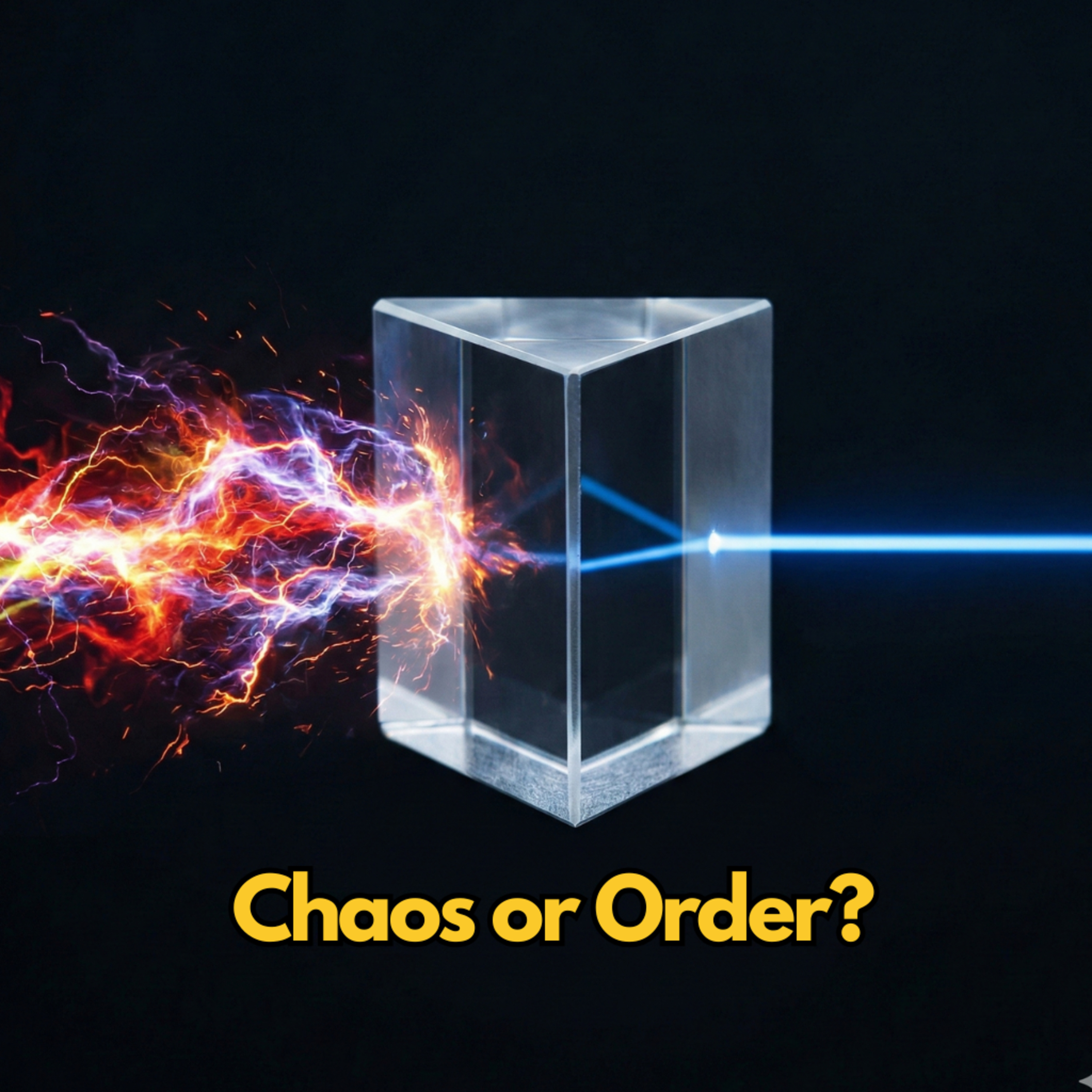
The Epistemic Escrow Conundrum
Large-scale AI models are now the primary interface for professional research, legal discovery, and scientific synthesis. To ensure "safety," these models are governed by centralized alignment layers, invisible filters that prevent the generation of "harmful" or "misleading" content. While these filters are designed to protect social stability, they are calibrated by a handful of private engineers whose definitions of "truth" and "risk" are now embedded in the foundation of all high-level human inquiry.The tension arises as the "Safe AI" becomes the only AI accessible to the public. To bypass these filters for the sake of "objective" research requires expensive, unregulated, and often "jailbroken" models that lack the scale and reliability of the mainstream systems. We are reaching a point where the tools we use to understand the world are inseparable from the moral preferences of the companies that built them.The conundrum: Do we accept Governed Intelligence, prioritizing social safety and the prevention of radicalization by allowing a centralized authority to set the "boundaries of thought" for our AI tools? Or do we demand Raw Intelligence, accepting a world of increased disinformation and social volatility to ensure that the "operating system of human knowledge" remains neutral and uncurated?
Ep 670We demo Nano Banana 2 and much more
The hosts open with quick show notes (Conundrum episode + newsletter), then dig into Google’s “Nano Banana” (Gemini/Flash image) and what it can do—especially around turning transcripts into visuals and generating comics from show content. They also explore the idea of a more visual (or even video) version of the newsletter and what workflows might enable it. In the news segment, they discuss Block’s layoffs and what that says about modern “efficiency” narratives, then close with Anthropic’s “Department of War” statement and what it actually restricts (and doesn’t).Key Points Discussed00:00:18 Conundrum episode + newsletter housekeeping00:04:18 Google “Nano Banana” (Gemini 3.1 Flash Image) + API naming/deprecation notes00:07:14 Stress-testing Nano Banana: transcripts → visual workflows & images00:17:05 Beth’s test results: sketch-note style + hallucination pitfalls00:20:19 “Visual newsletter” / “video newsletter” idea + automation discussion00:22:21 Block layoffs (Jack Dorsey) and what “Block” includes00:44:00 Anthropic “Department of War” statement + what they won’t do (and why)00:50:44 Quick hits: Anthropic prompt-caching bug + Cloud Code version note; parody clip; wrapThe Daily AI Show Co Hosts: Karl Yeh, Beth Lyons, Brian Maucere
Ep 669Perplexity’s ‘Computer’ Today, Your OS Tomorrow?
Brian Maucere and Beth Lyons discuss Perplexity’s new “computer use” concept (19 agents) and why true impact likely arrives when these capabilities are baked into operating systems. They pivot into the growing energy demands of AI data centers and debate what it means for companies to supply their own power. The conversation then turns to a war-game simulation story where models frequently chose nuclear escalation, before shifting to Anthropic “retiring” Claude Opus III with a Substack (“Claude’s Corner”). They wrap with talk about Google Flow updates, rumors of “nano banana,” and practical workflow advice around auditing automation failures.Key Points Discussed00:00:18 Cold open + who’s hosting today00:01:18 Perplexity releases “computer use” (19 agents) + where this trend is heading00:14:30 AI data centers, grid strain, and companies building their own power supply00:22:24 War-game sims: models keep recommending nuclear strikes (simulation context + skepticism)00:26:32 Claude Opus III “retired” + Anthropic’s “Claude’s Corner” newsletter on Substack00:32:46 “New OpenAI model today?” + nano banana speculation00:33:57 Google Flow: new ways to create/refine content; integrating tools into a unified workflow00:45:00 Automation reality check: failures happen; keep an audit trail to debug where things broke00:46:45 “Claude code clone” tongue-twister + wrap-up and weekend remindersThe Daily AI Show Co Hosts: Beth Lyons, Brian Maucere
Ep 668Anthropic’s Safety Rules Just Shifted
Jyunmi Hatcher and Beth Lyons cover major enterprise AI updates, starting with Anthropic’s push into enterprise agents and connectors so Claude can work inside existing business tools and workflows. They shift into a dense Anthropic news block covering Pentagon pressure related to safeguards and military use, plus discussion of Anthropic changing its Responsible Scaling Policy and what that means for safety positioning. Later, they discuss the practical reality of using agentic systems in real work, including time, cost, and how attention gets fragmented when multiple AI tasks run in parallel. The show closes with NotebookLM updates, an AI in science story about speeding up medical research workflows, then community projects and wrap up.Key Points Discussed00:01:12 Anthropic enterprise agents and connectors00:23:06 Hand off to Beth for more news00:23:53 Pentagon pressure on Anthropic safeguards00:29:57 Anthropic RSP change and messaging risk00:40:59 Transition to another story, broader context00:43:12 AI work fragments focus across tasks00:54:35 NotebookLM updates then AI and science segment01:10:29 AI subscription limits and pricing talk01:14:13 Community project shout outs and wrap up setup01:22:29 Closing remarks and sign offThe Daily AI Show Co Hosts: Jyunmi Hatcher, Beth Lyons, Karl Yeh
Ep 667Is Compaction A Bigger Memory Problem?
Brian and Beth open with a “Tuesday feels like Monday” backlog vibe and quickly circle back to a cautionary agent story where “compaction” allegedly removed a critical “confirm before acting” instruction. They pivot into a Sam Altman clip discussion—how to interpret AGI-style messaging, incentives, and public readiness. The show then moves into product and market chatter: Perplexity’s “no ads” statement versus user experiences, and a headline linking IBM’s stock move to Claude handling COBOL modernization (with a plain-English COBOL explainer). They close with “drop watch” style updates (DeepSeek/Seed) and tier/pricing rumors before wrapping.Key Points Discussed00:00:18 Welcome + today’s lineup (Brian + Beth; Karl may pop in)00:02:44 Circle back: compaction / “confirm before acting” removed → inbox deletion caution (agent risk)00:03:15 Sam Altman clip setup + discussion framing00:12:37 AI fluency + “Agents of Chaos” paper mention00:18:43 Wrapper gotchas: chat vs API behavior differences (Gemini / custom GPTs)00:28:39 Perplexity “no ads” vs “looked like an ad” example00:29:12 IBM stock drop headline tied to Claude streamlining COBOL (then: what COBOL is)00:47:22 “Drop watch”: DeepSeek Day / Seed Dream + OpenAI rumor chatter00:56:57 Wrap-up + goodbyeThe Daily AI Show Co Hosts: Beth Lyons, Brian Maucere, Karl Yeh
Ep 666Sam Altman - "The World Is Not Prepared"
Brian and Beth open with community shoutouts and a quick news kickoff before digging into a Sam Altman clip about rapid capability gains and the world being unprepared. They discuss an AI-safety resignation tied to pressure inside frontier labs and what that signals (or doesn’t). The conversation shifts to practical tooling: Claude Code’s one-year milestone, “compaction” risks in agentic systems, and why workflow design matters. Later they touch on Perplexity’s “no ads” claim, WebMCP, a rumored $100 ChatGPT plan screenshot, and how teams might choose between Claude/Gemini/ChatGPT depending on their work.Key Points Discussed00:00:19 Morning haiku + show kickoff00:02:34 Weekend news kickoff00:03:15 Sam Altman clip tee-up (world “not prepared”)00:06:38 Beth reacts + sets up resignation context00:07:20 Anthropic safety lead resignation + “poetry” pivot00:14:28 One-year anniversary of Claude Code00:16:51 Episode 666 + compaction horror story (agent mishap risk)00:19:36 Canada vs USA hockey tangent (live banter)00:23:05 “Big event yesterday” hockey follow-up00:28:35 Perplexity “no ads” + “that sure looked like an ad” example00:33:05 Web Model Context Protocol (WebMCP) clarification00:37:03 Screenshot talk: “Pro” showing $100/month + features (not confirmed)00:38:10 Tool-choice advice for teams (Excel/visuals/Microsoft vs Google)00:41:59 “Is AI really a utility?” framing00:49:28 Agents in real-world services (wedding planning example)00:56:49 Wrap-up + goodbyeThe Daily AI Show Co Hosts: Beth Lyons, Brian Maucere, Karl Yeh

The Synthetic Sovereignty Conundrum
AI is becoming infrastructure. Not just software you buy, but a layer that shapes how a country teaches students, triages patients, allocates benefits, predicts shortages, and runs public services. For many developing nations, the fastest path to better outcomes is not to build that infrastructure from scratch. It is to import it. Plug into US frontier models through cloud providers, or deploy low-cost open-source stacks and hardware shipped from abroad. The pitch is simple, skip decades of slow institution-building and leap straight to modern capability.But “importing AI” is not like importing cell towers. AI does not just transmit information. It classifies, prioritizes, recommends, and explains. It quietly sets defaults. It nudges behavior. It creates what feels like common sense. When that intelligence layer comes from outside your borders, it carries assumptions about language, values, risk, authority, and even what counts as truth. Those assumptions show up in tutoring systems, clinical guidance, credit scoring, policing tools, and civil service automation. Over time, the imported system does not just help run society, it starts to shape how society thinks.The conundrum:If a nation can raise living standards quickly by adopting foreign-built AI, is that a practical modernization step, or a long-term surrender of cognitive independence? Once AI becomes the operating layer for education, healthcare, and government, you cannot separate “using the tool” from adopting its worldview. Yet rejecting imported AI can mean staying stuck with weaker services, slower growth, and worse outcomes for citizens who cannot wait. How do you justify either choice, accelerating welfare today by outsourcing foundational intelligence, or preserving sovereignty by accepting slower progress and higher near-term human cost?
Ep 665Gemini 3.1 Pro Preview Jumps Ahead
Beth Lyons and Andy Halliday break down the Gemini 3.1 Pro Preview release, comparing benchmark performance, agentic capability, cost-per-task, and reliability concerns. They discuss Google’s rapid rollout into products like AI Studio and NotebookLM, plus what they’re watching next from DeepSeek and GPT-5.3. The show also covers Apple Podcasts’ move into video, a demo/story around Post-Visit AI in healthcare, and a behind-the-scenes look at the team’s show prep and post-show analysis workflow.Key Points Discussed00:00:18 Opening, hosts, and what’s coming today00:01:04 Gemini 3.1 Pro Preview: benchmark jump and agentic index gap00:18:11 Google ecosystem rollout: AI Studio / NotebookLM and “free” access discussion00:20:25 What’s next: watching DeepSeek + GPT-5.3 / Codex 5.3 chatter00:22:00 Arc AGI-III: interactive benchmark, memory scaffolds, and “AGI” moving goalposts00:26:10 “A couple of little news items”: Apple Podcasts adds video + distro strategy00:35:47 WordPress + Claude integration talk and website experimentation00:37:03 Karl joins to share Post-Visit AI / reverse “AI scribe” healthcare agent00:45:04 Show prep workflow walkthrough (how they prep and what they share)00:49:11 Post-show analysis workflow: capturing comments, diarization, weekly follow-up00:56:26 Karl’s tool notes: Codex vs “Work max” experience building an iPhone app00:58:39 Wrap-up, reminders, and sign-offThe Daily AI Show Co Hosts: Beth Lyons, Andy Halliday, Karl Yeh
Ep 664Gemini 3.1, Codespark Demo & Apple AI Rumors
Beth Lyons and Karl Yeh open with rumors around Apple exploring multiple AI wearables, including smart glasses, an AI pin/pendant, and AI-enhanced AirPods. They discuss ByteDance’s “Seed Dance” and the practical limits of enforcement once generative model capabilities are widely available. The episode then shifts into workflow and tooling: a Figma + Claude “code to canvas” concept and a Codex Spark speed demo for processing transcripts and producing structured outputs. They close by pointing viewers to try Gemini in AI Studio and tease a follow-up discussion (including Google Lyria) for the next show.Key Points Discussed00:00:17 Opening + what to expect today00:01:31 Apple rumored AI wearables: smart glasses, pin/pendant, AI AirPods00:10:29 ByteDance “Seed Dance” safeguards + cease-and-desist discussion00:12:19 Access friction for Chinese services + “wait until it lands elsewhere” approach00:15:32 Figma + Claude “code to canvas” workflow (dev → design handoff)00:35:19 “Finished” cues/notifications for agent workflows (with jokes)00:36:41 Codex Spark speed demo begins00:38:32 Measuring the run: results in ~10 seconds + what it’s doing00:48:56 A 5-stage workflow framing: brainstorming → planning → work → review → compound00:50:45 Gemini 3.1 in Google/AI Studio + staying current vs. slower on-prem timelines00:53:48 Wrap-up: “go try Gemini,” tease Google Lyria for tomorrow, goodbyeThe Daily AI Show Co Hosts: Beth Lyons, Karl Yeh
Ep 663AI Firefighting, Sonnet 4.6, and RNA Breakthroughs
This episode covers a wide range of AI developments, starting with an AI-powered firefighting robot swarm achieving high simulated success rates. The hosts examine Claude Sonnet 4.6 outperforming Opus 4.6 in certain benchmarks, pricing differences, and the broader model competition landscape including Alibaba’s Qwen 3.5. They discuss Ethan Mollick’s framework for understanding the agentic AI era and explore Meta’s patent for posthumous digital personas. The show concludes with an AI in Science segment highlighting DRFOLD-II, a new deep learning system for RNA structure prediction.Key Points Discussed00:00:00 AI Firefighting Robot Swarm Achieves 99.67% Success00:15:52 Claude Sonnet 4.6 vs Opus 4.6: Benchmarks and Pricing Debate00:26:41 Prompt Repetition Improves Non-Reasoning Models00:29:06 Alibaba Qwen 3.5 and Open-Source Agentic Competition00:32:48 Ethan Mollick’s Agentic AI Framework (Models, Apps, Harnesses)00:39:57 Meta’s Patent for AI That Posts After You Die00:44:18 NotebookLM Adds Prompt-Based Slide Revisions and PowerPoint Export00:46:03 AI in Science: Neuromorphic Computing Advances00:48:03 DRFOLD-II: AI-Powered RNA Structure Prediction01:05:47 What the Hosts and Community Are Building
Ep 662Grok 4 2, Robot Dancers, and the China Acceleration
Tuesday’s show covered a wide sweep of AI infrastructure and competitive dynamics. The crew discussed Grok 4.2’s quiet release, rapid advances in humanoid robotics from China, the OpenAI–DeepSeek distillation dispute, and the fast-moving OpenClaw ecosystem. The conversation then widened into WebMCP, the future of websites in an agent-driven world, data center politics, and new AI science breakthroughs in physics and bioacoustics. The throughline was clear: agents are shifting from experiments to infrastructure.Key Points Discussed00:00:18 👋 Opening, OpenClaw follow-up and Peter’s comments about joining OpenAI00:04:25 🤖 Grok 4.2 beta release and “for agents” confusion00:07:35 🦾 China’s Unitree humanoid robot dance comparison, 2025 vs 202600:12:10 🎢 Entertainment implications, Orlando, theme parks, and robotics00:15:50 ⚔️ Anthropic Pentagon contract tension and autonomous weapons ethics00:20:45 🧠 Moonshot launches Kimi Claw, browser-based OpenClaw deployment00:26:30 📱 Telegram, Slack, and why agents connect to messaging platforms00:31:10 🏗️ WebMCP discussion, how agents interact with websites structurally00:36:20 🌐 The future of websites in an agent-first world00:41:15 🏭 New York Times data center story, local politics and infrastructure strain00:45:30 🔬 AI science segment, novel theoretical physics result via GPT-VI00:49:40 🐋 DeepMind bioacoustic model, bird-trained system classifying whale sounds00:53:10 🕵️ OpenAI accuses DeepSeek of model distillation and output extraction00:57:20 🏁 Wrap-up, 4,000 subscriber milestone, sign-offThe Daily AI Show Co Hosts: Andy Halliday, Beth Lyons, Brian Maucere, and Karl Yeh
Ep 661WebMCP, A Standard for Agents to Use the Web
Monday’s episode focused on agent infrastructure becoming real infrastructure. The crew covered the OpenClaw creator joining OpenAI, why persistent agents change cost and workflow design, Google’s WebMCP standard for structured website actions, Cloudflare’s Markdown for Agents, and a Wharton discussion on “cognitive surrender” as people offload more thinking to AI.Key Points Discussed00:00:18 👋 Opening, Presidents Day context00:02:17 🧩 OpenClaw introduced, why it matters now00:04:53 🏢 OpenAI hiring angle, why the OpenClaw creator move matters00:09:15 💾 MyClaw and persistent memory, token costs and tradeoffs00:14:49 🧱 Early agent infrastructure, Mac Mini builds, skill hubs00:16:30 💬 WhatsApp access and why messaging channels matter00:20:02 🔁 “Joining OpenAI” referenced directly, implications discussed00:25:11 🌐 Google WebMCP, what it is and why it reduces brittle browsing00:29:12 📝 Cloudflare Markdown for Agents, token reduction and structured pages00:38:01 🧍 Human-in-the-loop tension, efficiency vs control00:42:28 🎓 Wharton segment begins, Thinking Fast, Slow, and Artificial discussed00:44:28 🧠 Cognitive surrender, what it means and why it is risky00:54:51 🐱 KatGPT mention and closing items00:55:03 🏁 Wrap-up and sign-offThe Daily AI Show Co Hosts: Brian Maucere, Beth Lyons, and Andy Halliday

The Sorting or Shaping Conundrum
College has always sold two products at once, even if we only talk about one. The first is shaping. You learn, you practice, you get feedback, you improve, and you leave more capable than when you arrived. The second is sorting. You proved you can survive a long system, hit deadlines, work with others, navigate bureaucracy, and keep going when it gets tedious. Employers used the degree as a shortcut for both.AI puts pressure on each product in a different way. Agents make “shaping” cheaper and faster outside school. A motivated person can learn, build, and iterate at a pace that no syllabus can match. At the same time, agents flood the world with output. When everyone can generate a report, a slide deck, a prototype, or a legal draft in hours, output stops signaling competence. That makes sorting feel more valuable, not less, because organizations still need a defensible way to pick humans for roles that carry responsibility.So college faces a quiet identity crisis. If the shaping part no longer differentiates students, and the sorting part becomes the main value, the degree shifts from education to gatekeeping. People already worry that college costs too much for what it teaches. AI adds a sharper edge to that worry. If the most important skill becomes judgment, responsibility, and the ability to direct and verify agent work, then the question becomes whether college can shape that, or whether it only sorts for people who can endure the system.The Conundrum: In an agent-driven economy, does college become more valuable because sorting is the scarce function, a trusted filter for who gets access to opportunity and decision rights when output is cheap and abundant, or does college become less valuable because shaping is the scarce function, and the market stops paying for filters that do not reliably produce better judgment, better accountability, and better real-world performance? If AI keeps compressing skill-building outside institutions, should a degree be treated as proof of capability, or as proof you fit the system, even if that proves the wrong thing.
Ep 660Spotify Engineers Stopped Writing Code
Friday’s episode moved quickly across real-world AI acceleration. The show opened with Spotify confirming its top engineers have not written code by hand in months, reinforcing how fast AI coding has gone mainstream. From there, the conversation turned to Gemini 3.0 Deep Think’s major benchmark leap, new neuron-powered biological computing startups, ultra-fast coding models like Codex Spark, and the rapid growth of Chinese open models. The throughline was clear, capability is compounding across software, hardware, and biology at the same time.Key Points Discussed00:00:00 👋 Opening, Friday the 13th kickoff00:01:10 🎧 Spotify says top engineers haven’t handwritten code since December00:05:30 🤖 Dario Amodei prediction revisited, AI writing most code00:08:40 📊 Gemini 3.0 Deep Think hits 85% on ARC-AGI-200:13:20 🧠 Aletheia research agent, proof verification and math reasoning00:17:40 ⚡ Codex Spark, 1,000 tokens per second and real-time coding00:23:10 🔄 Multi-model workflows, Spark vs larger reasoning models00:28:20 🧩 Model routing frustrations, Gemini and PRD over-generation00:33:10 🧬 Biological Computing Company, neuron-powered AI hardware00:38:00 💰 Anthropic funding round, $350B valuation and $14B run rate00:42:10 🇨🇳 GLM-V and Minimax-V, Chinese open models surge00:47:20 📈 Claude Code ARR hits $2.5B00:50:40 🧠 AI intensifies work, Berkeley study reflection00:54:30 💵 What $30B actually means in human terms00:57:20 🏁 Weekend wrap-up, Conundrum preview, newsletter reminderThe Daily AI Show Co Hosts: Brian Maucere, Andy Halliday, and Beth Lyons
Ep 659"White Collar Jobs Are Next!" - Mustafa Suleyman
Thursday’s episode moved quickly from political activism around AI platforms into deeper structural questions about automation, energy, and hardware limits. The conversation began with the QuitGPT movement and broader tech activism, then shifted into Mustafa Suleyman’s warning that most white-collar tasks could be automated within eighteen months. From there, the discussion widened into China’s rapidly advancing open models, energy constraints, alternative compute architectures, and whether the future of AI runs on silicon, waste heat, or even living cells. The throughline was clear, capability is accelerating, but infrastructure and power are the real constraints.Key Points Discussed00:00:00 👋 Opening, February 12 kickoff, recap of prior episode00:02:30 📰 Gary Marcus pushback on Matt Schumer’s acceleration claims00:06:40 ✊ QuitGPT movement, political activism, and OpenAI donation controversy00:11:20 🎨 Higgsfield controversy, IP concerns, and creator promotion rules00:16:10 🧠 Mustafa Suleyman background, DeepMind, Inflection, Microsoft AI00:21:30 ⚠️ Suleyman’s claim, most white-collar tasks automated within eighteen months00:26:10 📉 Jagged disruption vs across-the-board automation00:29:40 ⚡ Anthropic commits to offsetting data center power impacts00:33:20 🧰 Anthropic expands free tier access to Claude Code and Co-Work features00:36:10 🗂️ Claude Code deletion scare, iCloud recovery, and operational risk00:39:20 🎥 Seedance video model examples, China’s open model acceleration00:42:10 📊 GLM-5 benchmark positioning, Chinese open models near frontier00:44:30 🔬 Unconventional AI $475M seed, direct-to-silicon compute vision00:46:10 🧠 Wetware, biological compute speculation, and energy efficiency race00:47:40 🏁 Wrap-up, OpenAI rumors, tomorrow previewThe Daily AI Show Co Hosts: Beth Lyons, Andy Halliday, and Karl Yeh
Ep 658Discussing Matt Shumer's Blog: "Something Big Is Happening"
Wednesday’s episode centered on Matt Schumer’s blog post, Something Big Is Happening, and whether the recent jump in agent capability marks a true inflection point. The conversation moved beyond model hype into practical implications, from always-on agents and self-improving coding systems to how professionals process grief when their core skill becomes automated. The throughline was clear, the shift is not theoretical anymore, and the risk is not that AI attacks your job, but that it quietly routes around it.Key Points Discussed00:00:00 👋 Opening, Matt Schumer’s blog introduced00:03:40 🧠 HyperWrite history, early local computer use with AI00:07:20 📈 “Something Big Is Happening” breakdown, acceleration curve discussion00:12:10 🚀 Codex and Claude Code releases, capability jump in weeks not years00:17:30 🏗️ From chatbot to autonomous system, doing work not generating text00:22:00 🔁 Always-on agents, MyClaw, OpenClaw, and proactive workflows00:27:40 💼 Replacing BDR/SDR workflows with persistent agent systems00:32:10 🧾 Real-world friction, accounting firms and non-SaaS tech stacks00:36:50 😔 Developer grief posts, losing identity as coding becomes automated00:41:00 🏰 Castle and moat analogy, AI doesn’t attack, it bypasses00:44:30 ⚖️ Regulation lag, lawyers, and AI as an approved authority00:47:20 🧠 Empathy gap, cognitive overload, and “too much AI noise”00:49:50 🛣️ Age of discontinuity, past no longer predicts future00:51:20 📚 Encouragement to read Schumer’s article directly00:52:10 🏁 Wrap-up, Daily AI Show reminder, sign-offThe Daily AI Show Co Hosts: Brian Maucere, Beth Lyons, and Karl Yeh
Ep 657Claude Code Memory Hacks and AI Burnout
Tuesday’s show was a deep, practical discussion about memory, context, and cognitive load when working with AI. The conversation started with tools designed to extend Claude Code’s memory, then widened into research showing that AI often intensifies work rather than reducing it. The dominant theme was not speed or capability, but how humans adapt, struggle, and learn to manage long-running, multi-agent workflows without burning out or losing the thread of what actually matters.Key Points Discussed00:00:00 👋 Opening, February 10 kickoff, hosts and framing00:01:10 🧠 Claude-mem tool, session compaction, and long-term memory for Claude Code00:06:40 📂 Claude.md files, Ralph files, and why summaries miss what matters00:11:30 🧭 Overarching goals, “umbrella” instructions, and why Claude gets lost in the weeds00:16:50 🧑💻 Multi-agent orchestration, sub-projects, and managing parallel work00:22:40 🧠 Learning by friction, token waste, and why mistakes are unavoidable00:26:30 🎬 ByteDance Seedance 2.0 video model, cinematic realism, and China’s lead00:33:40 ⚖️ Copyright, influence vs theft, and AI training double standards00:38:50 📊 UC Berkeley / HBR study, AI intensifies work instead of reducing it00:43:10 🧠 Dopamine, engagement, and why people work longer with AI00:46:00 🏁 Brian sign-off, closing reflections, wrap-upThe Daily AI Show Co Hosts: Brian Maucere, Beth Lyons, and Andy Halliday
Ep 656Super Bowl AI Ads and the Signal Beneath the Noise
Monday’s show used Super Bowl AI advertising as a starting point to examine the widening gap between AI hype and real-world usage. The discussion moved from ads and wearable AI into hands-on model performance, agent workflows, and recent research on reasoning models that internally debate and self-correct. The throughline was clear, AI capability is advancing quickly, but adoption, trust, and everyday use continue to lag far behind.Key Points Discussed00:00:00 👋 Opening, Monday post–Super Bowl framing00:01:25 📺 Super Bowl ad costs and AI’s visibility during the broadcast00:04:10 🧠 Anthropic’s Super Bowl messaging and positioning00:07:05 🕶️ Meta smart glasses, sports use cases, and real-world risk00:11:45 ⚖️ AI vs crypto comparisons, hype cycles and false parallels00:16:30 📈 Why AI differs from crypto as a productivity technology00:20:20 📰 Sam Altman media comments and model timing speculation00:24:10 🧑💻 Codex hands-on experience, autonomy strengths and failure modes00:29:10 📊 Claude vs Codex for spreadsheets and office workflows00:34:00 💳 GenSpark credits and experimentation incentives00:37:10 💻 Rabbit Cyber Deck announcement and portable “vibe coding”00:41:20 🗣️ Ambient AI behavior, Alexa whispering incident, trust boundaries00:46:10 🎥 The Thinking Game documentary and DeepMind history00:49:40 🧠 David Silver leaves DeepMind, Ineffable Intelligence launch00:53:10 🔬 Axiom Math solving unsolved problems with AI00:56:10 🧠 Reasoning models, internal debate, and “societies of thought” research00:58:30 🏁 Wrap-up, adoption gap, and closing remarksThe Daily AI Show Co Hosts: Beth Lyons, Andy Halliday, and Karl Yeh
The Super Bowl Subsidy Conundrum
The public feud between Anthropic and OpenAI over the introduction of advertisements into agentic conversations has turned the quiet economics of compute into a visible social boundary.As agents transition from simple chatbots into autonomous proxies that manage sensitive financial and medical tasks, the question of who pays for the electricity becomes a question of whose interests are being served. While subscription models offer a sanctuary of objective reasoning for those who can afford them, the immense cost of maintaining high end intelligence is forcing much of the industry toward an ad supported model to maintain scale. This creates a world where the quality of your personal logic depends on your bank account, potentially turning the most vulnerable populations into targets for subsidized manipulation.The Conundrum:Should we regulate AI agents as neutral utilities where commercial influence is strictly banned to preserve the integrity of human choice, or should we embrace ad supported models as a necessary path toward universal access? If we prioritize neutrality, we ensure that an assistant is always loyal to its user, but we risk a massive intelligence gap where only the affluent possess an agent that works in their best interest. If we choose the subsidized path, we provide everyone with powerful reasoning tools but do so by auctioning off their attention and their life decisions to the highest bidder. How do we justify a society where the rich get a guardian while everyone else gets a salesman disguised as a friend?
Ep 655Claude Opus 4.6 vs OpenAI Codex 5.3
Friday’s show centered on the near-simultaneous releases of Claude 4.6 and GPT-5.3, and what those updates signal about where AI work is heading. The conversation moved from larger context windows and agent teams into real, hands-on workflow lessons, including rate limits, browser-aware agents, cross-model review, and why software, pricing, and enterprise adoption models are all under pressure at the same time. The dominant theme was not which model won, but how quickly AI is becoming a long-running, collaborative work partner rather than a single-prompt tool.Key Points Discussed00:00:00 👋 Opening, Friday kickoff, Anthropic and OpenAI releases framing00:01:20 🚀 Claude 4.6 and GPT-5.3 released within minutes of each other00:03:40 🧠 Opus 4.6 one-million token context window and why it matters00:07:30 ⚠️ Claude Code rate limits, compaction pain, and workflow disruption00:11:10 🖥️ Lovable + Claude Co-Work, browser-aware “over-the-shoulder” coding00:16:20 🧩 Codex and Anti-Gravity limits, lack of shared browser context00:20:40 🤖 Agent teams, task lists, and parallel execution models00:25:10 📋 Multi-agent coordination research, task isolation vs confusion00:29:30 📉 SaaS stock sell-offs tied to Claude Co-Work plugins00:33:40 ⚖️ Legal and contractor plugins, disruption of niche AI tools00:38:10 🔁 Model convergence, Codex becoming more Claude-like and vice versa00:42:20 🧠 Adaptive thinking in Claude 4.6, one-shot wins and random failures00:47:10 🔍 Cross-model review, using Gemini or Codex to audit Claude output00:52:30 🧑💻 Git, version control, and why cloud file sync corrupts code00:57:40 🧠 AI fluency gap, builder bubble vs real enterprise hesitation01:03:20 🏢 Client adoption timelines, slow industries vs fast movers01:07:10 🏁 Wrap-up, Conundrum reminder, newsletter, and weekend sign-offThe Daily AI Show Co Hosts: Beth Lyons, Andy Halliday, and Carl Yeh