
The Daily AI Show
752 episodes — Page 2 of 16
Ep 654When AI Business Models Collide
Thursday’s show focused on the growing strategic divide between OpenAI and Anthropic, sparked by Sam Altman’s recent Cisco interview and Anthropic’s Super Bowl ad campaign. The discussion explored how scale, ads, enterprise subscriptions, and compute economics are forcing very different business models, and why those choices matter for trust, access, and long term AI development. The back half of the show covered Codex adoption, Gemini’s rapid growth, data portability between AI platforms, agent-driven labor disruption, and new research tooling like Paper Banana.Key Points Discussed00:00:00 👋 Episode 654 kickoff, February 5 context, hosts00:02:10 🧠 Sam Altman Cisco interview, Codex as a ChatGPT-scale moment00:06:40 🤖 AI shifting from tool to collaborator, agent autonomy tradeoffs00:10:20 ☁️ “AI cloud” idea, enterprises outsourcing security, agents, and model control00:14:40 🧪 Frontier announcement, enterprise agent coworkers00:18:10 🔬 Scientific partnerships, OpenAI as compute investor00:23:20 📈 10x capability expectations for 2026 models00:26:40 ⚔️ Anthropic Super Bowl ad, parodying ad-supported AI00:30:30 💰 Ads vs subscriptions, incentive misalignment debate00:35:10 🏢 Enterprise focus, Anthropic profitability vs OpenAI scale pressure00:39:20 🗳️ Scott Galloway criticism, politics, and subscription boycotts00:44:10 🧩 Gemini user growth, approaching one billion users00:47:30 🔁 Importing ChatGPT history into Gemini, data portability00:51:10 🎥 Gemini strengths, video ingestion and long context00:54:40 🌍 Agent disruption of global labor, India and outsourced work00:58:10 📊 Perplexity advanced deep research rollout01:01:40 📐 Paper Banana, multi-agent scientific diagrams and visuals01:05:10 ❄️ Winter Olympics, AI curiosity, and closing reflections01:07:40 🏁 Wrap-up, Conundrum reminder, newsletter, and sign-offThe Daily AI Show Co Hosts: Brian Maucere, Beth Lyons, and Andy Halliday
Ep 653Why Google Conductor Changes Agentic Coding
Wednesday's show focused on the growing importance of persistent context and workflow memory in agentic AI systems. The conversation centered on Google’s new Conductor framework, real-world lessons from Claude Code and Render deployments, and how context management is becoming the difference between fragile experiments and durable AI-powered software. The second half expanded into market shifts, AI labor displacement concerns, chip and inference economics, and emerging ethical and safety tensions as AI systems take on more autonomous roles.Key Points Discussed00:00:00 👋 Opening, February 4 kickoff, host check-in00:01:20 🧠 Google Conductor introduction, persistent context via markdown in repos00:06:10 📂 Context directories, shared memory across teams and machines00:10:40 🔁 Conductor workflow sequence, context, spec, plan, implementation00:14:50 🧑💻 Claude Code comparison, markdown artifacts and partial memory gaps00:18:30 ☁️ Render MCP integration, logs, debugging, and production lessons00:23:40 🔍 GitHub repos as the backbone for multi-agent workflows00:27:10 🧠 Context fragmentation problem across ChatGPT, Claude, Gemini00:30:20 📱 iOS development, Xcode native Claude SDK integration00:35:10 🧪 Personal selfware examples, shortcuts vs custom apps00:38:40 🏎️ Anthropic partners with Atlassian Williams F1 team00:42:10 🎥 Sora app philosophy, creativity feeds, and end-user confusion00:46:00 🤖 MoldBook update, human-posted content and agent purity debates00:49:30 🧠 Agent memory vs human memory, Nat Eliason and Felix discussion00:54:20 🛡️ OpenAI hires Anthropic preparedness lead, AGI safety signals00:58:10 ⚡ OpenAI inference speed upgrade, Cerebras shift, chip constraints01:02:10 📊 AI market share shifts, OpenAI, Gemini, Grok competition01:06:40 🧱 SaaS market pressure, contract AI tools and investor reactions01:10:20 🧑🤝🧑 Rentahuman.ai, humans as callable infrastructure01:14:30 🧠 Monkey fingers metaphor, labor displacement framing01:18:40 🧠 Sonnet 5 rumors, outages, and release speculation01:22:30 🛑 International AI Safety Report, deepfakes, misuse, governance gaps01:27:20 🏁 Wrap-up, preview of AI science stories, sign-offThe Daily AI Show Co Hosts: Brian Maucere and Andy Halliday
Ep 652Codex vs Claude Code, Parallel Agents Arrive
Tuesday’s show centered on OpenAI Codex and the broader shift from single-agent assistance to managing teams of AI agents. The discussion compared Codex and Claude Code in practice, explored where UI and orchestration actually matter, and then widened into agent behavior, anthropomorphism risks, CRM re-architecture, and what “AI-first” software really looks like when you try to deploy it inside real organizations.Key Points Discussed00:00:00 👋 Opening, February 3 kickoff, framing the news-first focus00:01:40 🧑💻 Codex overview, GPT-5.2-codex model and Mac desktop app00:04:40 🧠 Multi-agent coding, parallel tasks, bounded work trees00:08:20 📦 Codex vs Claude Code, packaging vs capability differences00:12:10 🧩 Cursor, IDEs, and whether Codex replaces existing tools00:16:40 🔁 Automation vs orchestration, why n8n and Make still matter00:21:30 🧠 Agent swarms, conceptual understanding, and system-level goals00:27:10 🖥️ Claude Co-Work vs Claude Code, Mac vs Windows friction00:33:20 🧰 MCP setup, Chrome watching, terminal order dependencies00:39:10 🧑🏫 Doris in accounting, skills as the real adoption unlock00:45:00 📦 Skills over prompts, zip files, instruction following reliability00:51:10 🧑💼 Hyper-personalization for executives and internal reporting00:56:20 ⚠️ Mustafa Suleyman on MoldBook, anthropomorphism, and risk01:02:30 🧠 Emotional attachment, AI as mirror vs human connection01:08:10 🤖 OpenClaw, persistent memory, proactive assistants01:13:20 🧪 Carl’s agent experiments, emergent behavior and “monkey fingers”01:18:50 📈 YC thesis, AI agencies as software-margin businesses01:23:40 🧑💻 Day.ai announcement, AI-first CRM positioning01:28:30 🏢 Day.ai vs Salesforce, rip-and-replace vs wraparound models01:34:40 🔗 CRM as system of record, AI as the interface layer01:40:10 🤔 Build vs buy debate with Codex and Claude Code01:45:30 🔮 OpenClaw as universal assistant, risk tolerance discussion01:50:40 🕰️ Show length reflection and editing constraints01:52:10 🏁 Wrap-up, thanks to guests and community, sign-offThe Daily AI Show Co Hosts: Andy Halliday, Beth Lyons, Brian Maucere, and Karl Yeh
Ep 651OpenClaw and Moltbook - We Explain It All
Monday’s show focused almost entirely on OpenClaw, MoltBook, and what happens when large numbers of autonomous agents are released into open systems. The discussion traced the origins of OpenClaw, the rapid explosion of MoltBook as an agent-only social network, and the serious security, cost, and governance concerns that surfaced within days. The broader thread tied agent autonomy back to trust, data readiness, and why most organizations are not yet prepared for truly proactive AI.Key Points Discussed00:00:00 👋 Opening, February 2 kickoff, hosts and context00:03:10 🤖 OpenClaw background, CloudBot to MoltBot to OpenClaw naming chaos00:07:40 🧑💻 Peter Steinberger background, PSPDFKit exit, solo builder narrative00:13:20 🧠 Vibe coding addiction, productivity vs mental health tradeoffs00:17:10 🌐 MoltBook overview, agent-only Reddit-style network explained00:22:30 📊 MoltBook scale claims, fake agents, traffic, and early metrics00:27:10 🔐 Security failures, exposed API keys, agent abuse risks00:32:40 🧪 Emergent behavior, agent religions, self-organization, Crustafarianism00:38:10 ⚡ Energy costs, who pays for autonomous agent compute00:42:20 💸 Monetization questions, ads, subscriptions, and agent incentives00:46:30 🧠 Proactive AI vs assistant mode, trust and control boundaries00:51:20 📐 BI framework analogy, descriptive to prescriptive AI thinking00:57:10 🗂️ Data readiness, messy systems, and why agents fail in enterprises01:02:10 🧩 Data lakes, MCP limits, industry-specific stacks01:07:40 🖥️ Windows vs Mac gaps, local files, real enterprise friction01:13:30 🤖 Claude Cowork updates, plugins, skills, and controlled agency01:18:40 🧠 Superintelligence speculation, agent collaboration as a path01:23:50 🔍 What MoltBook is actually useful for, observation not deployment01:27:40 🏁 Wrap-up, community links, and sign-offThe Daily AI Show Co Hosts: Brian Maucere, Andy Halliday, Beth Lyons, and Karl Yeh
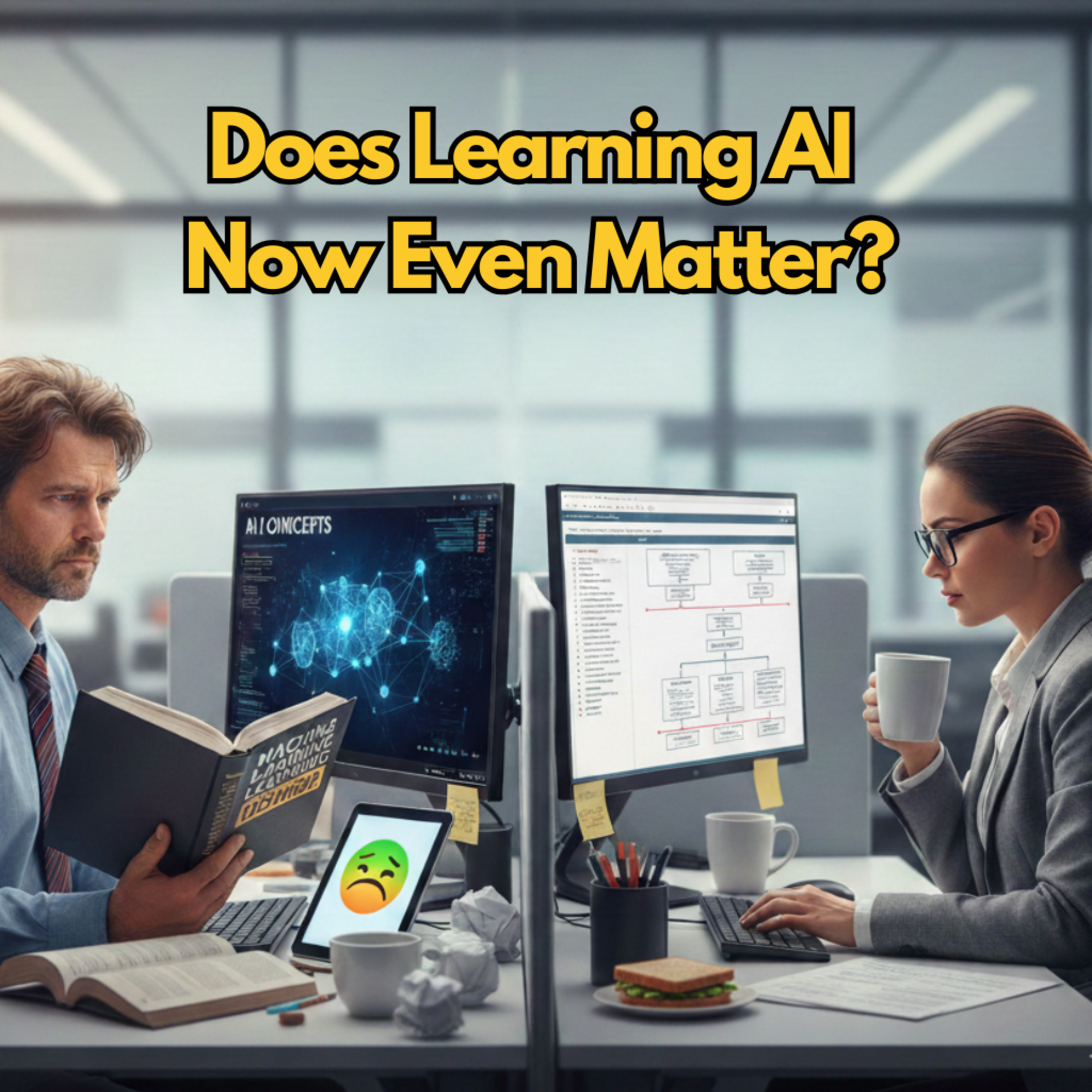
The Liquid Literacy Conundrum
Over the last six weeks, the center of gravity shifted. People spent 2024 learning how to talk to one model, now they manage systems where models talk to each other. Prompts still matter, but they increasingly hide inside workflows, agent routers, tool calls, and multi-step automation. That shift breaks the normal way professionals build competence, because the surface area you have to learn keeps changing faster than most teams can train, document, and standardize.The Conundrum: If AI skills now behave like a liquid, always taking the shape of the latest interface, model, or agent framework, what should you actually invest in? If you focus on the current tools and patterns, you stay effective, but your knowledge can expire quickly and you end up rebuilding your playbook every quarter. If you focus mainly on durable fundamentals, you build long-term leverage, but you risk falling behind on the practical methods that deliver results right now. How do you choose what to learn, teach, and operationalize, when the payoff window for tool-specific mastery keeps shrinking, but ignoring the tools also carries a real performance penalty?
Ep 650This Week, AI Got Messy
Friday’s show was a candid, builder-focused episode about what it actually feels like to work with today’s most hyped AI agents. The conversation centered on Claude Skills, Claude Code, and MoltBot, with an emphasis on hard-earned lessons, security tradeoffs, and the value of tinkering even when things break. The second half broadened into market and ecosystem news, covering OpenAI, Anthropic, AI video momentum, and why experimentation today may quietly shape real fluency tomorrow.Key Points Discussed00:00:00 👋 Episode 650 kickoff, hosts, milestone reflection00:02:10 📘 Claude releases official Skills guide, workflows, MCP, and standardization00:05:40 🧠 Skills as organizational leverage, repeatability, and workflow memory00:08:40 💸 “Stupid tax” concept applied to Claude Code lessons learned00:12:30 ⚠️ OneDrive corrupting GitHub repos, local file hygiene issues00:17:10 🧹 Temp files, repo bloat, and why cleanup matters for long builds00:21:40 🔄 Rebuilding projects, two steps back to move faster forward00:24:50 🤖 MoltBot recap, hype, and security concerns00:28:30 🖥️ Running agents on Mac Minis vs VPS vs cloud isolation00:32:20 ☁️ Cloudflare MoltWorker, $5/month hosted MoltBot option00:36:10 🧑💻 Developer realities, rate limits, delays, and API abuse patterns00:41:30 🎓 AI literacy, tinkering value, and learning through friction00:46:20 🔐 Local models vs cloud APIs, privacy tradeoffs explained00:50:40 🧠 Agents as architecture lessons, not magic assistants00:54:10 🎧 NotebookLM audio previews improving, AI co-hosts getting smoother00:57:30 📰 OpenAI retiring GPT-4o, implications for custom GPTs01:02:10 🧱 Open source models approaching GPT-4-level capability01:06:20 💰 Amazon, OpenAI funding talks, and Tranium chips01:10:40 🛑 Anthropic loses Pentagon deal over guardrails01:14:10 ⚖️ Music publishers sue Anthropic, training data fallout01:18:30 🎬 AI video momentum, Grok Imagine pricing vs Sora and Veo01:23:40 🎥 AI-generated short debuts at Sundance01:26:50 🗺️ Time magazine AI-generated American Revolution series01:30:40 📽️ Practical AI video workflows, physical shots guiding models01:34:30 🧪 Genie, world models, and camera-aware environments01:38:40 📺 Showrunner resurfaces, AI sitcoms revisited01:42:10 🚀 MVP pressure, Claude Code weekend build sprint01:45:30 📣 Community, Conundrum episode, newsletter reminders01:47:30 🏁 Wrap-up and sign-offThe Daily AI Show Co Hosts: Brian Maucere, Beth Lyons, and Andy Halliday
Ep 649Chrome Becomes the First Real Agentic Browser
Thursday’s show focused on a major shift in how people interact with the web, as Chrome evolves from a passive browser into an active, agentic workspace powered by Gemini. The conversation explored what persistent, tab aware assistants mean for daily work, how this changes the competitive landscape for agentic browsers, and why context awareness inside existing tools matters more than launching entirely new interfaces. The second half of the show broadened into deeper AI research, workforce impact, and hardware trends, reinforcing how quickly AI is moving from experiments into infrastructure that reshapes real jobs and workflows.Key Points Discussed00:00:00 👋 Opening, episode context, January 29 kickoff00:01:20 🌐 Gemini integration in Chrome, persistent sidebar and tab awareness00:05:10 🧭 Multi tab context groups, shopping comparisons, and workflow examples00:08:40 🔗 Future connections to Gmail, Search, YouTube, Photos, and Calendar00:11:50 🤖 Auto Browse agent, end to end web tasks with human approval00:15:30 🖼️ Image editing in Chrome with Nano Banana00:18:40 ⚔️ Impact on Perplexity Comet and the agentic browser race00:22:10 🧑💻 Personal workflow shift, copy paste vs shared browser context00:27:20 🧠 Claude Co Work and Chrome extensions, live page understanding00:33:10 📸 Screenshots vs rendered page context, practical tradeoffs00:38:40 🎩 Wearables and ambient AI, the “hat clip” thought experiment00:42:50 🧬 DeepMind Alpha Genome, reading DNA as context00:50:10 📚 Prism, scientific papers, and assisted understanding00:53:40 🏢 Amazon layoffs, automation, and long term workforce impact00:59:20 🚀 Flapping Airplanes, new AGI approaches, and funding dynamics01:05:10 🏭 NVIDIA chips to China, geopolitics and capacity tradeoffs01:10:40 🚚 Gatik self driving middle mile logistics success01:14:50 🗣️ GenSpark Speakly, voice agents, and mode switching01:18:40 📱 Liquid.ai LFM 2.5, small models and on device intelligence01:24:30 📊 Edge model benchmarks, GPQA and MMLU Pro comparisons01:29:10 🔔 Notifications, long running agents, and interruption design01:32:00 🏁 Wrap up, Alpha Genome follow ups, and sign offThe Daily AI Show Co Hosts: Beth Lyons and Andy Halliday
Ep 648AI Moves From Models to Swarms
Wednesday’s show focused on the rapid shift from single AI models to agent swarms, open ecosystems, and domain-specific workflows. The discussion moved from CloudBot and Moonshot’s open source agent breakthroughs into search, chips, weather modeling, and scientific tooling, with a strong emphasis on how AI is leaving the browser and embedding itself into real systems, hardware, and research environments.Key Points Discussed00:00:00 👋 Opening, host intros, show framing00:01:10 🤖 CloudBot overview, persistent agents via messaging apps00:04:30 🌏 Moonshot Kimi K-2.5, open source agent benchmarks beating frontier models00:09:40 🧠 Agent swarms, parallel reinforcement learning, and orchestrated sub-agents00:14:20 🎥 Video understanding, cloning websites from screen recordings00:18:30 💸 API cost pressure, cheap open models vs frontier pricing00:21:50 🧰 MoltBot transition, local deployment, Mac Mini hype and reality00:26:40 📉 Hardware bottlenecks, memory shortages, GPUs, and supply chains00:31:20 🔍 Google Search upgrades, Gemini 3, AI Overviews, and conversational follow-ups00:36:10 💻 Microsoft Maya inference chip, reducing NVIDIA dependence00:40:30 🌦️ NVIDIA Earth-2 open source weather models and scientific impact00:45:20 🧪 Citizen science, data collection, and decentralized sensing00:49:40 🧠 OpenAI PRISM, LaTeX-native scientific writing and collaboration00:54:30 🎓 Research dissemination, higher education, tenure, and accessibility00:58:20 🔬 AI in hearing research, UC San Diego VASC-SILA project01:03:40 🧠 AI accelerating the “middle” of science, repetition and validation01:06:50 🏁 Wrap-up, community reminders, and closingThe Daily AI Show Co Hosts: Jyunmi Hatcher, Beth Lyons, Andy Halliday, and Anne Murphy
Ep 647Moltbot? Oh come on!
Tuesday’s show focused on the rapid expansion of Claude across apps, platforms, and workflows, and the practical friction that shows up when people actually live inside these tools. The discussion blended breaking product news, hands-on Claude Code experience, and broader market signals around ads, chips, and real-world AI performance. The throughline was clear, AI capability is accelerating faster than usage discipline, pricing models, and operational norms can keep up.Key Points Discussed00:00:00 👋 Opening, episode context, January 27 kickoff00:01:40 🤖 ClawdBot rebrand to MoltBot, local agents, cost control, and hype cycle00:06:20 🔌 Claude desktop adds deep integrations, Asana, Figma, Slack, Box, Clay, Monday, Salesforce00:11:30 🧰 MCP Apps, open integrations, and why this unlocks rapid ecosystem copying00:16:10 📜 Dario Amodei essay, “The Adolescence of Technology,” framing AI risk and maturity00:23:40 🧠 Reading AI essays vs summaries, slowing down for first-principles thinking00:27:20 🌦️ NVIDIA Earth-2 open models, AI weather forecasting, and global access benefits00:32:10 🧱 Microsoft Azure Maya chip, competing with NVIDIA, inference and Copilot scale00:36:40 🧠 Moonshot Kimmi K-2, open source multimodal cloning and swarm behavior00:41:20 💸 Claude Code usage limits, Pro vs Max plans, timeouts, and real project pressure00:48:10 🧩 Context windows, refactoring, segmentation, and starting fresh sessions00:54:30 📊 OpenAI ad pricing rumors, $60 CPMs, intent vs attribution debate01:02:40 📈 Prediction Arena, Grok performance, real-world reasoning and market signals01:10:30 🧠 X, Reddit, signal dilution, and where AI discourse still concentrates01:16:40 🧑💻 Claude Code workflow tactics, start/stop scripts, Redis, FFmpeg, local control01:22:30 🎥 Video search, visual moments, finding clips without transcripts01:26:30 🏁 Wrap-up, project updates, and sign-offThe Daily AI Show Co Hosts: Beth Lyons, Andy Halliday, and Brian Maucere
Ep 646Why Sakana AI Keeps Beating the Pack
Monday’s show focused on alternative paths to AI progress and adoption. The conversation opened with Sakana’s growing influence and partnership with Google, then moved through shifts in AI traffic share, local agent systems like Claude Bot, and hands-on world modeling tools. The second half turned more reflective, covering app creation via vibe coding, enterprise hesitation around AI data, and a closing discussion on how the next generation may be trained to work with AI much earlier than today.Key Points Discussed00:00:00 👋 Monday kickoff, weather check, weekend context00:01:20 🐟 Sakana partnership with Google, evolutionary AI and non-scaling approaches00:07:10 🧠 Sakana history, Attention Is All You Need authorship, research culture00:13:40 📄 Sakana papers, AI Scientist, ALE agent, and why publishing still matters00:19:30 📊 Generative AI traffic share, Gemini growth vs OpenAI decline00:24:40 🧰 Manus acquisition by Meta, GenSpark as an alternative00:29:10 🤖 Claude Bot overview, local orchestration, private agents00:36:20 💻 Hardware requirements, local vs cloud models, sandboxing risks00:43:30 🧠 Claude Code comparisons, messaging interfaces vs desktop workflows00:47:50 🌍 What local AI agents signal about future productivity00:50:30 🧱 World Labs valuation jump and release of world-model APIs00:55:40 🏠 Live demo discussion, 3D world generation and architecture use cases00:59:30 📱 iOS app surge, Replit, vibe coding, and App Store publishing01:03:40 🎓 Stanford AI for All program, access, cost, and equity concerns01:07:00 🏁 Wrap-up, week preview, and sign-offThe Daily AI Show Co Hosts: Beth Lyons, Andy Halliday, and Brian Maucere
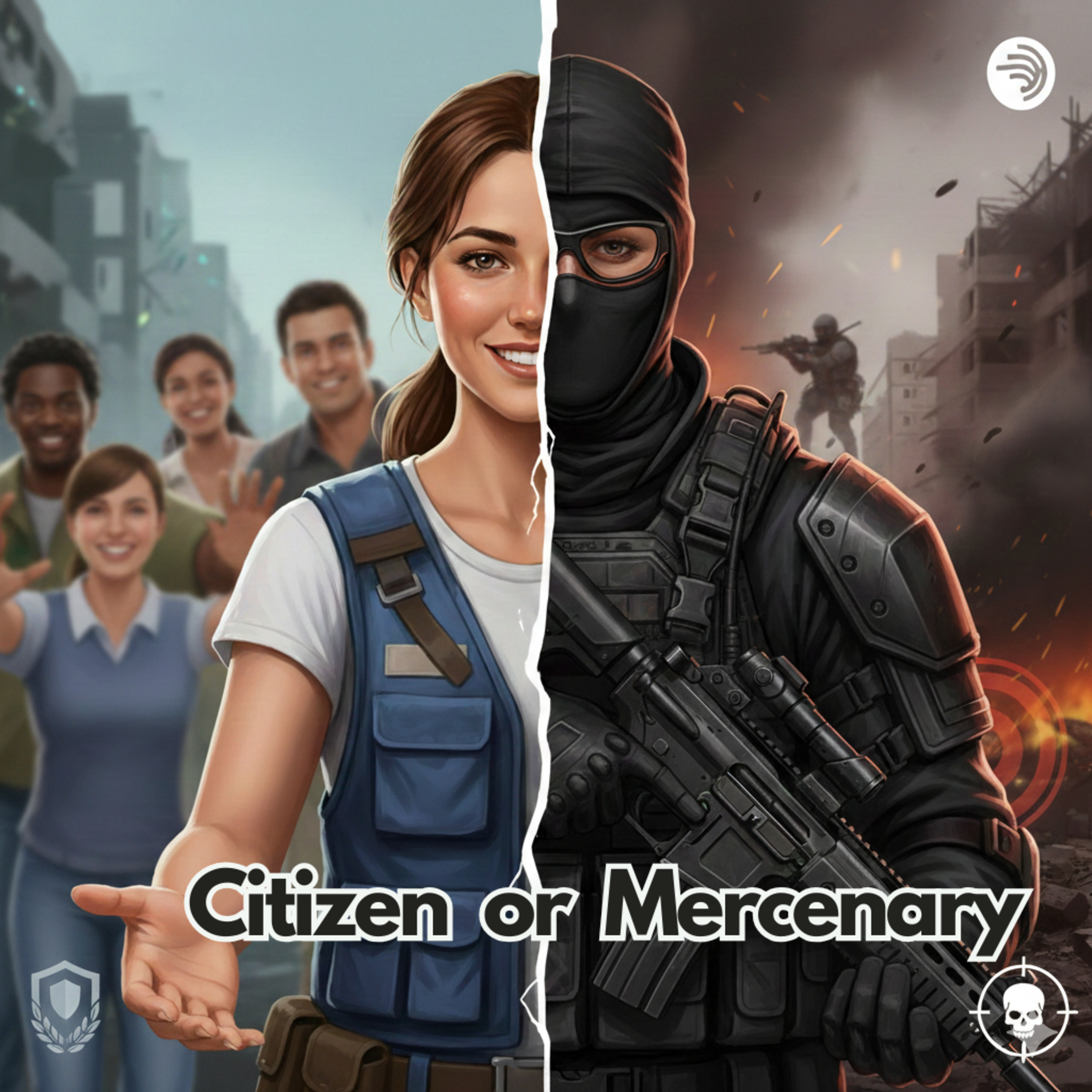
The Agentic Allegiance Conundrum
We are moving from "AI as a Chatbot" to "AI as a Proxy." In the near future, you won't just ask an AI to write an email; you’ll delegate your Agency to a surrogate (an "Agent") that can move money, sign contracts, and negotiate with other agents. Imagine a "Personal Health Agent" that manages your medical life. It talks to the "Underwriting Agent" at your insurance company to settle a claim. This happens in milliseconds, at a scale no human can monitor.Soon, we will have offloaded our Agency to these proxies. But this has created a "Conflict of Interest" at the hardware level:Is your agent a Mercenary (beholden only to you) or a Citizen (beholden to the stability of the system)?The conundrum:As autonomous agents take over the "functioning" of society, do we mandate "User-Primary Allegiance," where an agent’s only legal and technical duty is to maximize its owner's specific profit and advantage, even if that means exploiting market loopholes or sabotaging rivals (The Mercenary Model), or do we enforce "Systemic-Primary Alignment," where all agents are hard-coded to prioritize "Market Health" and "Social Guardrails," meaning your agent will literally refuse to follow your orders if they are deemed "socially sub-optimal" (The Citizen Model)?
Ep 645Can Claude Code Be Your Fulltime Assistant?
Friday’s show centered on how Claude Code is shifting from a development tool into a daily operating system for work and life. The conversation blended hands on Claude Code updates, real usage stories, and a wide ranging news roundup that reinforced how fast AI is moving into infrastructure, education, voice, chips, and media. The dominant theme was not automation, but co working with AI over long stretches of time.Key Points Discussed00:00:00 👋 Opening, Friday kickoff, week in review00:02:40 🧵 Claude Code saturation on LinkedIn and why it is everywhere00:05:20 🛠️ Claude Code task system upgrade, task primitives, sub agents, and orchestration00:09:30 🧪 Real world Claude Code build, long running sessions and autonomous fixing00:15:10 🎥 FFmpeg, Redis, and why local infra matters for Claude Code projects00:20:30 🧠 Daily AI Show 5x5 project, transcripts, VTTs, and automated clip selection00:26:10 📚 Google and Princeton Review, Gemini powered SAT prep00:28:40 🤔 Gemini self doubt, time awareness, and red teaming side effects00:34:00 🧠 Model awareness, slash model commands, and grounding context00:37:30 🏭 TSMC capacity crunch, Apple, Intel fabs, and AI chip pressure00:43:20 🇰🇷 South Korea AI Basic Act, governance and enforcement timelines00:46:10 💻 Salesforce engineers using Cursor at scale00:48:30 🎙️ Google acquihires Hume, emotionally aware voice AI00:51:40 🧠 Yann LeCun, world models, and Logical Intelligence00:55:10 🎬 Runway 4.5, AI video realism study, humans barely detecting fakes00:58:50 🧩 Rebecca Boltzma post, Claude Code as a life operating system01:04:30 🗣️ AI as co worker, agency, pushback, and human evolution framing01:08:40 🏠 Alexa desktop experience, zero token limits, and ambient AI01:14:50 🏁 Wrap up, community reminders, Conundrum episode, and weekend sign offThe Daily AI Show Co Hosts: Beth Lyons, Andy Halliday, and Brian Maucere
Ep 644You Shouldn't Be Vibe Coding
Thursday’s show explored where AI belongs and where it does not, across art, devices, and software creation. The discussion moved from backlash against AI-generated art to Apple’s rumored AI pin, before settling into a long, practical examination of Claude’s revised Constitution and real-world lessons from working with Claude Code on complex, multi-day builds. The throughline was clear, AI works best when treated as a collaborator inside structured systems, not as magic or pure “vibes.”Key Points Discussed00:00:00 👋 Opening, intros, agenda for the day00:01:10 🎨 Comic-Con bans AI-generated art, backlash from artists00:06:40 ⚖️ Copyright, disclosure, and where AI-assisted art fits00:12:30 🎵 AI-assisted music, Liza Minnelli, ABBA, Tupac, and precedent00:18:20 👁️ Transparency vs deception in AI creative work00:21:40 📌 Apple rumored camera-equipped AI pin and Siri rebuild00:27:10 ⌚ Wearables, rings, glasses, pins, and interface tradeoffs00:33:40 🧠 Voice vs writing, diagrams, and capture reliability00:38:10 📜 Claude’s revised Constitution, principles over rules00:43:50 🧩 Constitutional AI, safety, ethics, and priority ordering00:49:20 🗂️ Applying constitutional thinking to local Claude Code use00:54:10 🧑💻 Real Claude Code experience, multi-day builds and drift00:58:40 🧠 “Vibe coding” vs project management and engineering reality01:03:30 🏁 Wrap-up, upcoming conundrum episode, newsletter reminderThe Daily AI Show Co Hosts: Beth Lyons, Andy Halliday, and Brian Maucere
Ep 643AI at Davos, Growth, Jobs, and the Tradeoffs Ahead
Wednesday’s show focused on the implications of AI productivity at a societal and organizational level. The conversation connected Davos discussions about growth and employment with emerging tools like Claude Code, new collaboration-first startups, and shifting ideas about how work, software, and human value will evolve as AI systems take on more responsibility.Key Points Discussed00:00:00 👋 Opening, introductions, show setup00:02:10 🌍 World Economic Forum AI Day, framing from Davos00:03:30 🤖 Dario Amodei on near-term AI capabilities, GDP growth, and unemployment risk00:08:10 🧑💼 Demis Hassabis on junior hiring slowdowns and AI skill overhang00:12:20 📊 PwC CEO survey, weak AI ROI so far, and why this reflects older AI00:15:40 ⚙️ Individual productivity vs team collaboration gaps in enterprise AI00:18:30 🚀 Humans & startup, $480M seed round, and collaboration-first AI00:24:10 🧠 Co-intelligence vs autonomy, limits of solo AI workflows00:28:50 🗣️ Voice AI, customer support, and where humans still matter00:33:10 🧩 Data sharing, portability, and self-ware vs SaaS tradeoffs00:39:20 📱 Liquid AI LFM 2.5, on-device reasoning models and privacy00:44:10 🎙️ NVIDIA PersonaPlex, full-duplex conversational speech00:48:30 🧠 Anthropic research, neural “switches,” alignment, and safety00:52:40 🧰 Claude skills ecosystem, Vercel skills directory, agent reuse00:57:40 🧑💻 Skills vs custom GPTs, why agentic architecture matters01:01:00 🏁 Wrap-up, Davos outlook, and closing remarksThe Daily AI Show Co Hosts: Beth Lyons and Andy Halliday
What Davos Revealed About AI’s Real Constraints
Tuesday’s show focused on how AI productivity is increasingly shaped by energy costs, infrastructure, and economics, not just model quality. The conversation connected global policy, real-world benchmarks, and enterprise workflows to show where AI is delivering measurable gains, and where structural limits are starting to matter.Key Points Discussed00:00:00 👋 Opening, housekeeping, community reminders00:01:50 📰 UK AI stress tests, OpenAI–ServiceNow deal, ChatGPT ads00:06:30 🌍 World Economic Forum context and Satya Nadella remarks00:09:40 ⚡ AI productivity, energy costs, and GDP framing00:15:20 💸 Inference economics and underpricing concerns00:19:30 🧠 CES hardware signals, Nvidia Vera Rubin cost reductions00:23:45 🚗 Tesla AI-5 chip, terra-scale fabs, inference efficiency00:28:10 📊 OpenAI GDP-VAL benchmark explained00:33:00 🚀 GPT-5.2 performance jump vs GPT-500:37:40 🧩 Power grid fragility and infrastructure limits00:42:10 🧑💻 Claude Code and the concept of self-ware00:47:00 📉 SaaS pressure and internal tool economics00:51:10 📈 Anthropic Economic Index, task acceleration data00:56:40 🔗 MCP, skill sharing, and portability discussion00:59:10 🧬 AI and science, cancer outcomes modeling01:01:00 ♿ Accessibility story and final wrap-upThe Daily AI Show Co Hosts: Andy Halliday, Junmi Hatcher, and Beth Lyons
Ep 641Why You No Longer Need to Be “Good at AI”
Monday’s show opened with Brian, Beth, and Andy easing into a holiday-week discussion before moving quickly into platform and product news. The first segment focused on OpenAI’s new lower-cost ChatGPT Go tier, what ad-supported AI could mean long term, and whether ads inside assistants feel inevitable or intrusive.The conversation then shifted to applied AI in media and infrastructure, including NBC Sports’ use of Japanese-developed athlete tracking technology for the Winter Olympics, followed by updates on xAI’s Colossus compute cluster, Tesla’s AI5 chip, and efficiency gains from mixed-precision techniques.From there, the group covered Replit’s claim that AI can now build and publish mobile apps directly to app stores, alongside real concerns about security, approvals, and what still breaks when “vibe-coded” apps go live.The second half of the show moved into cultural and societal implications. Topics included Bandcamp banning fully AI-generated music, how everyday listeners react when they discover a song is AI-made, and the importance of disclosure over prohibition.Andy then introduced a deeper discussion based on legal scholarship warning that AI could erode core civic institutions like universities, the rule of law, and a free press. This led into a broader debate about cognitive offloading, the “cognitive floor,” and whether future generations lose something when AI handles more thinking for them.The final third of the episode was dominated by hands-on experience with Claude Code and Claude Co-Work. Brian walked through real examples of building large systems with minimal prompting skill, how Claude now generates navigational tooling and instructions automatically, and why desktop-first workflows lower the barrier for non-technical users. The show closed with updates on Co-Work availability, usage limits, persistent knowledge files, community events, and a reminder to engage beyond the live show.Timestamps and Topics00:00:00 👋 Opening, holiday context, show setup00:02:05 💳 ChatGPT Go tier, pricing, ads, and rollout discussion00:08:42 🧠 Ads in AI tools, comparisons to Google and Facebook models00:13:18 🏅 NBC Sports Olympic athlete tracking technology00:17:02 ⚡ xAI Colossus cluster, Tesla AI5 chip, mixed-precision efficiency00:24:41 📱 Replit AI app building and App Store publishing claims00:31:06 🔐 Security risks in AI-generated apps00:36:12 🎵 Bandcamp bans AI-generated music, consumer reactions00:42:55 🏛️ Legal scholars warn about AI and civic institutions00:49:10 🧠 Cognitive floor, education, and generational impact debate00:54:38 🧑💻 Claude Code desktop workflows and real build examples01:01:22 🧰 Claude Co-Work availability, usage limits, persistent knowledge01:05:48 📢 Community events, AI Salon mention, wrap-up01:07:02 🏁 End of showThe Daily AI Show Co Hosts: Brian Maucere, Beth Lyons, and Andy Halliday
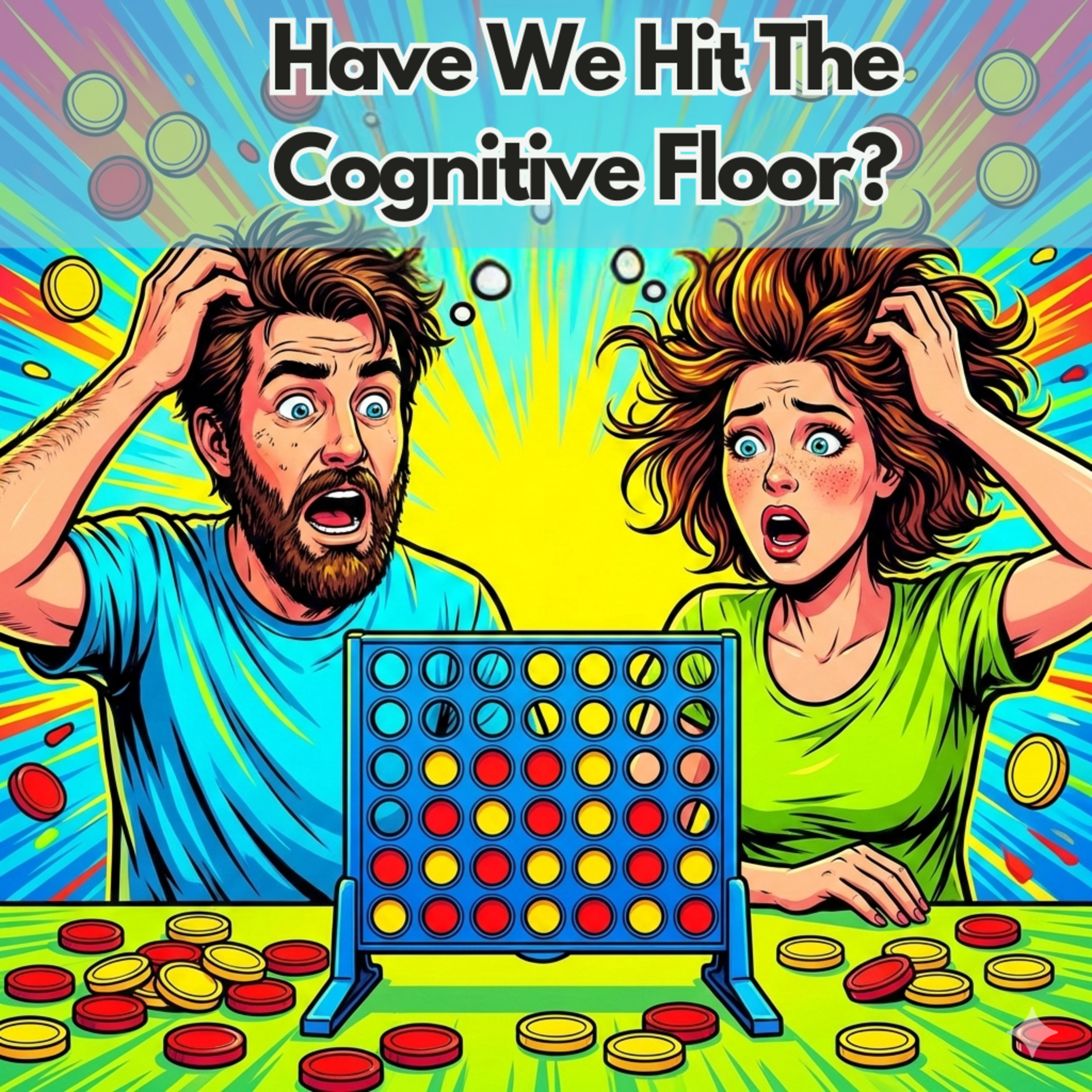
The Cognitive Floor Conundrum
In 2026, we have reached the "Calculator Line" for the human intellect. For fifty years, we used technology to offload mechanical tasks—calculators for math, spellcheck for spelling, GPS for navigation. This was "low-level" offloading that freed us for "high-level" thinking. But Generative AI is the first tool that offloads high-level cognition: synthesis, argument, coding, and creative drafting.Recent neurobiological studies show that "cognitive friction"—the struggle to organize a thought into a paragraph or a logic flow into code—is the exact mechanism that builds the human prefrontal cortex. By using AI to "skip to the answer," we aren't just being efficient; we are bypassing the neural development required to judge if that answer is even correct. We are approaching a future where we may be "Directors" of incredibly powerful systems, but we lack the internal "Foundational Logic" to know when those systems are failing.The Conundrum: As AI becomes the default "Zero Point" for all mental work, do we enforce "Manual Mastery Mandates"—requiring students and professionals to achieve high-level proficiency in writing, logic, and coding without AI before they are ever allowed to use it—or do we embrace "Synthetic Acceleration," where we treat AI as the new "biological floor," teaching children to be System Architects from day one, even if they can no longer perform the underlying cognitive tasks themselves?
Ep 640The Rise of Project Requirement Documents in Vibe Coding
Friday’s show opened with a discussion on how AI is changing hiring priorities inside major enterprises. Using McKinsey as a case study, the crew explored how the firm now evaluates candidates on their ability to collaborate with internal AI agents, not just technical expertise. This led into a broader conversation about why liberal arts skills, communication, judgment, and creativity are becoming more valuable as AI handles more technical execution.The show then shifted to infrastructure and regulation, starting with the EPA ruling against xAI’s Colossus data center in Memphis for operating methane generators without permits. The group discussed why energy generation is becoming a core AI bottleneck, the environmental tradeoffs of rapid data center expansion, and how regulation is likely to collide with AI scale over the next few years.From there, the discussion moved into hardware and compute, including Raspberry Pi’s new AI HAT, what local and edge AI enables, and why hobbyist and maker ecosystems matter more than they seem. The crew also covered major compute and research news, including OpenAI’s deal with Cerebras, Sakana’s continued wins in efficiency and optimization, and why clever system design keeps outperforming brute force scaling.The final third of the show focused heavily on real world AI building. Brian walked through lessons learned from vibe coding, PRDs, Claude Code, Lovable, GitHub, and why starting over is sometimes the fastest path forward. The conversation closed with practical advice on agent orchestration, sub agents, test driven development, and how teams are increasingly blending vibe coding with professional engineering to reach production ready systems faster.Key Points DiscussedMcKinsey now evaluates candidates on how well they collaborate with AI agentsLiberal arts skills are gaining value as AI absorbs technical executionCommunication, judgment, and creativity are becoming core AI era skillsxAI’s Colossus data center violated EPA permitting rules for methane generatorsEnergy generation is becoming a limiting factor for AI scaleData centers create environmental and regulatory tradeoffs beyond computeRaspberry Pi’s AI HAT enables affordable local and edge AI experimentationOpenAI’s Cerebras deal accelerates inference and training efficiencyWafer scale computing offers major advantages over traditional GPUsSakana continues to win by optimizing systems, not scaling computeVibe coding without clear PRDs leads to hidden technical debtClaude Code accelerates rebuilding once requirements are clearSub agents and orchestration are becoming critical skillsProduction grade systems still require engineering disciplineTimestamps and Topics00:00:00 👋 Friday kickoff, hosts, weekend context00:02:10 🧠 McKinsey hiring shift toward AI collaboration skills00:07:40 🎭 Liberal arts, communication, and creativity in the AI era00:13:10 🏭 xAI Colossus data center and EPA ruling overview00:18:30 ⚡ Energy generation, regulation, and AI infrastructure risk00:25:05 🛠️ Raspberry Pi AI HAT and local edge AI possibilities00:30:45 🚀 OpenAI and Cerebras compute deal explained00:34:40 🧬 Sakana, optimization benchmarks, and efficiency wins00:40:20 🧑💻 Vibe coding lessons, PRDs, and rebuilding correctly00:47:30 🧩 Claude Code, sub agents, and orchestration strategies00:52:40 🏁 Wrap up, community notes, and weekend preview
Ep 639Google Personal Intelligence Comes Into Focus
On Thursday’s show, the DAS crew focused on how ecosystems are becoming the real differentiator in AI, not just model quality. The first half centered on Google’s Gemini Personal Intelligence, an opt-in feature that lets Gemini use connected Google apps like Photos, YouTube, Gmail, Drive, and search history as personal context. The group dug into practical examples, the privacy and training-data implications, and why this kind of integration makes Google harder to replace. The second half shifted to Anthropic news, including Claude powering a rebuilt Slack agent, Microsoft’s reported payments to Anthropic through Azure, and Claude Code adding MCP tool search to reduce context bloat from large toolsets. They then vented about Microsoft Copilot and Azure complexity, hit rapid-fire items on Meta talent movement, Shopify and Google’s commerce protocol work, NotebookLM data tables, and closed with a quick preview of tomorrow’s discussion plus Ethan Mollick’s “vibe founding” experiment.Key Points DiscussedGemini Personal Intelligence adds opt-in personal context across Google appsThe feature highlights how ecosystem integration drives daily valueGoogle addressed privacy concerns by separating “referenced for answers” from “trained into the model”Maps, Photos, and search history context could make assistants more practical day to dayClaude now powers a rebuilt Slack agent that can summarize, draft, analyze, and scheduleMicrosoft payments to Anthropic through Azure were cited as nearing $500M annuallyClaude Code added MCP tool search to avoid loading massive tool lists into contextTeams still need better MCP design patterns to prevent tool overloadMicrosoft Copilot and Azure workflows still feel overly complex for real deploymentShopify and Google co-developed a universal commerce protocol for agent-driven transactionsNotebookLM introduced data tables, pushing more structured outputs into Google’s workflow stackThe show ended with “vibe founding” and a preview of tomorrow’s deeper workflow discussionTimestamps and Topics00:00:18 👋 Opening, Thursday kickoff, quick show housekeeping00:01:19 🎙️ Apology and context about yesterday’s solo start, live chat behavior on YouTube00:02:10 🧠 Gemini Personal Intelligence explained, connected apps and why it matters00:09:12 🗺️ Maps and real-life utility, hours, saved places, day-trip ideas00:12:53 🔐 Privacy and training clarification, license plate example and “referenced vs trained” framing00:16:20 💳 Availability and rollout notes, Pro and Ultra mention, ecosystem lock-in conversation00:17:51 🤖 Slack rebuilt as an AI agent powered by Claude00:19:18 💰 Microsoft payments to Anthropic via Azure, “nearly five hundred million annually”00:21:17 🧰 Claude Code adds MCP tool search, why large MCP servers blow up context00:29:19 🏢 Office 365 integration pain, Copilot critique, why Microsoft should have shipped this first00:36:56 🧑💼 Meta talent movement, Airbnb hires former Meta head of Gen AI00:38:28 🛒 Shopify and Google co-developed Universal Commerce Protocol, agent commerce direction00:45:47 🔁 No-compete talk and “jumping ship” news, Barrett Zoph and related chatter00:47:41 📊 NotebookLM data tables feature, structured tables and Sheets tie-in00:51:46 🧩 Tomorrow preview, project requirement docs and “Project Bruno” learning loop00:53:32 🚀 Ethan Mollick “vibe founding” four-day launch experiment, “six months into half a day”00:54:56 🏁 Wrap up and goodbyeThe Daily AI Show Co Hosts: Andy Halliday, Beth Lyons, Brian Maucere, and Karl Yeh
Ep 638From DeepSeek to Desktop Agents
On Wednesday’s show, Andy and Carl focused on how AI is shifting from raw capability to real products, and why adoption still lags far behind the technology itself. The discussion opened with Claude Co-Work as a signal that Anthropic is moving decisively into user facing, agentic products, not just models and APIs. From there, the conversation widened to global AI adoption data from Microsoft’s AI Economy Institute, showing how uneven uptake remains across countries and industries. The second half of the show dug into DeepSeek’s latest technical breakthrough in conditional memory, Meta’s Reality Labs layoffs, emerging infrastructure bets across the major labs, and why most organizations still struggle to turn AI into measurable team level outcomes. The episode closed with a deeper look at agents, data lakes, MCP style integrations, and why system level thinking matters more than individual tools.Key Points DiscussedClaude Co-Work represents a major step in productizing agentic AI for non technical usersAnthropic is expanding beyond enterprise coding into consumer and business productsGlobal AI adoption among working age adults is only about sixteen percentThe United States ranks far lower than expected in AI adoption compared to other countriesDeepSeek is gaining traction in underserved markets due to cost and efficiency advantagesDeepSeek introduced a new conditional memory technique that improves reasoning efficiencyMeta laid off a significant portion of Reality Labs as it refocuses on AI infrastructureAI infrastructure investments are accelerating despite uncertain long term ROIMost AI tools still optimize for individual productivity, not team collaborationSwitching between SaaS tools and AI systems creates friction for real world adoptionData lakes combined with agents may outperform brittle point to point integrationsTrue leverage comes from systems thinking, not betting on a single AI vendorTimestamps and Topics00:00:00 👋 Solo kickoff and overview of the day’s topics00:04:30 🧩 Claude Co-Work and the broader push toward AI productization00:11:20 🧠 Anthropic’s expanding product leadership and strategy00:17:10 📊 Microsoft AI Economy Institute adoption statistics00:23:40 🌍 Global adoption gaps and why the US ranks lower than expected00:30:15 ⚙️ DeepSeek’s efficiency gains and market positioning00:38:10 🧠 Conditional memory, sparsity, and reasoning performance00:47:30 🏢 Meta Reality Labs layoffs and shifting priorities00:55:20 🏗️ Infrastructure spending, energy, and compute arms races01:02:40 🧩 Enterprise AI friction and collaboration challenges01:10:30 🗄️ Data lakes, MCP concepts, and agent based workflows01:18:20 🏁 Closing reflections on systems over toolsThe Daily AI Show Co Hosts: Andy Halliday and Carl Yeh
Ep 637We Demo Claude Cowork & Other AI News
On Tuesday’s show, the DAS crew covered a wide range of AI developments, with the conversation naturally centering on how AI is moving from experimentation into real, autonomous work. The episode opened with a personal example of using Gemini and Suno as creative partners, highlighting how large context windows and iterative collaboration can unlock emotional and creative output without prior expertise. From there, the group moved into major platform news, including Apple’s decision to make Gemini the default model layer for the next version of Siri, Anthropic’s introduction of Claude Co-Work, and how agentic tools are starting to reach non-technical users. The second half of the show featured a live Claude Co-Work demo, showing how skills, folders, and long-running tasks can be executed directly on a desktop, followed by discussion on the growing gap between advanced AI capabilities and general user awareness.Key Points DiscussedAI can act as a creative collaborator, not just a productivity toolLarge context windows enable deeper emotional and narrative continuityApple will use Gemini as the core model layer for the next version of SiriClaude Co-Work brings agentic behavior to the desktop without requiring terminal useCo-Work allows AI to read, create, edit, and organize local files and foldersSkills and structured instructions dramatically improve agent reliabilityClaude Code offers more flexibility, but Co-Work lowers the intimidation barrierNon-technical users can accomplish complex work without writing codeAI capabilities are advancing faster than most users can absorbThe gap between power users and beginners continues to widenTimestamps and Topics00:00:00 👋 Show kickoff and host introductions00:02:40 🎭 Using Gemini and Suno for creative storytelling and music00:10:30 🧠 Emotional impact of AI assisted creative work00:16:50 🍎 Apple selects Gemini as the future Siri model layer00:22:40 🤖 Claude Co-Work announcement and positioning00:28:10 🖥️ What Co-Work enables for everyday desktop users00:33:40 🧑💻 Live Claude Co-Work demo begins00:36:20 📂 Using folders, skills, and long-running tasks00:43:10 📊 Comparing Claude Co-Work vs Claude Code workflows00:49:30 🧩 Skills, sub-agents, and structured execution00:55:40 📈 Why accessibility matters more than raw capability01:01:30 🧠 The widening gap between AI power and user understanding01:07:50 🏁 Closing thoughts and community updatesThe Daily AI Show Co Hosts: Andy Halliday, Beth Lyons, Anne Murphy, Jyunmi Hatcher, Karl Yeh, and Brian Maucere
Ep 636Why Patchwork AGI Is Gaining Traction
On Monday’s show, Brian and Andy broke down several AI developments that surfaced over the weekend, focusing on tools and research that point toward more autonomous, long running AI systems. The discussion opened with hands on experience using ElevenLabs Scribe V2 for high accuracy transcription, including why timestamp drift remains a real problem for multimodal models. From there, the conversation shifted into DeepMind’s “Patchwork AGI” paper and what it implies about AGI emerging from orchestrated systems rather than a single frontier model. The second half of the show covered Claude Code’s growing influence, new restrictions around its usage, early experiences with ChatGPT Health, and broader implications of AI’s expansion into healthcare, energy, and platform ecosystems.Key Points DiscussedElevenLabs Scribe V2 delivers noticeably better transcription accuracy and timestamp reliabilityAccurate transcripts remain critical for retrieval, clipping, and downstream AI workflowsMultimodal models still struggle with timestamp drift on long video inputsDeepMind’s Patchwork AGI argues AGI will emerge from coordinated systems, not one modelMulti agent orchestration may accelerate AGI faster than expectedClaude Code feels like a set and forget inflection point for autonomous workClaude Code adoption is growing even among competitor AI labsTerminal based tools remain a barrier for non technical users, but UI gaps are closingChatGPT Health now allows direct querying of connected medical recordsAI driven healthcare analysis may unlock earlier detection of disease through pattern recognitionX continues to dominate AI news distribution despite major platform drawbacksTimestamps and Topics00:00:00 👋 Monday kickoff and weekend framing00:02:10 📝 ElevenLabs Scribe V2 and real world transcription testing00:07:45 ⏱️ Timestamp drift and multimodal limitations00:13:20 🧠 DeepMind Patchwork AGI and multi agent intelligence00:20:30 🚀 AGI via orchestration vs single model breakthroughs00:27:15 🧑💻 Claude Code as a fire and forget tool00:35:40 🛑 Claude Code access restrictions and competitive tensions00:42:10 🏥 ChatGPT Health first impressions and medical data access00:50:30 🔬 AI, sleep studies, and predictive healthcare signals00:58:20 ⚡ Energy, platforms, and ecosystem lock in01:05:40 🌐 X as the default AI news hub, pros and cons01:13:30 🏁 Wrap up and community updatesThe Daily AI Show Co Hosts: Andy Halliday, Brian Maucere, and Carl Yeh

The Analog Sanctuary Conundrum
For most of history, "privacy" meant being behind a closed door. Today, the door is irrelevant. We live within a ubiquitous "Cognitive Grid"—a network of AI that tracks our heart rates through smartwatches, analyzes our emotional states through city-wide cameras, and predicts our future needs through our data. This grid provides incredible safety; it can detect a heart attack before it happens or stop a crime before the first blow is struck. But it has also eliminated the "unobserved self." Soon, there will be no longer a space where a human can act, think, or fail without being nudged, optimized, or recorded by an algorithm. We are the first generation of humans who are never truly alone, and the psychological cost of this constant "optimization" is starting to show in a rise of chronic anxiety and a loss of human spontaneity.The Conundrum: As the "Cognitive Grid" becomes inescapable, do we establish legally protected "Analog Sanctuaries", entire neighborhoods or public buildings where all AI monitoring, data collection, and algorithmic "nudging" are physically jammed and prohibited, or do we forbid these zones because they create dangerous "black holes" for law enforcement and emergency services, effectively allowing the wealthy to buy their way out of the social contract while leaving the rest of society in a state of permanent surveillance?
Ep 635Voice First AI Is Closer Than It Looks
On Friday’s show, the DAS crew shifted away from Claude Code and focused on how AI interfaces and ecosystems are changing in practice. The conversation opened with post CES reflections, including why the event felt underwhelming to many despite major infrastructure announcements from Nvidia. From there, the discussion moved into voice first AI workflows, how tools like Whisperflow and Monologue are changing daily interaction habits, and whether constant voice interaction reinforces or fixes human work patterns. The second half of the show covered a wide range of news, including ChatGPT Health and OpenAI’s healthcare push, Google’s expanding Gemini integrations, LM Arena’s business model, Sakana’s latest recursive evolution research, and emerging debates around decision traces, intuition, and the limits of agent autonomy inside organizations.Key Points DiscussedCES felt lighter on visible AI products, but infrastructure advances still matterNvidia’s Rubin architecture reinforces where real AI leverage is happeningVoice first tools like Whisperflow and Monologue are changing daily workflowsVoice interaction can increase speed, but may reduce concision without constraintsDifferent people adopt voice AI at very different rates and comfort levelsChatGPT Health and OpenAI for Healthcare signal deeper ecosystem lock inGoogle Gemini continues expanding across inbox, classroom, and productivity toolsAI Inbox concepts point toward summarization over raw email managementLM Arena’s valuation highlights the value of human preference dataSakana’s Digital Red Queen research shows recursive AI systems converging over timeEnterprise agents struggle without access to decision traces and contextual nuanceHuman intuition and judgment remain hard to encode into autonomous systemsTimestamps and Topics00:00:00 👋 Friday kickoff and show framing00:03:40 🎪 CES recap and why AI visibility felt muted00:07:30 🧠 Nvidia Rubin architecture and infrastructure signals00:11:45 🗣️ Voice first AI tools and shifting interaction habits00:18:20 🎙️ Whisperflow, Monologue, and personal adoption differences00:26:10 ✂️ Concision, thinking out loud, and AI as a silent listener00:34:40 🏥 ChatGPT Health and OpenAI’s healthcare expansion00:41:55 📬 Google Gemini, AI Inbox, and productivity integration00:49:10 📊 LM Arena valuation and evaluation economics00:53:40 🔁 Sakana Digital Red Queen and recursive evolution01:01:30 🧩 Decision traces, intuition, and limits of agent autonomy01:10:20 🏁 Final thoughts and weekend wrap upThe Daily AI Show Co Hosts: Andy Halliday, Beth Lyons, Brian Maucere, and Carl Yeh
Ep 634Why Claude Code Is Pulling Ahead
On Thursday’s show, the DAS crew spent most of the conversation unpacking why Claude Code has suddenly become a focal point for serious AI builders. The discussion centered on how Claude Code combines long running execution, recursive reasoning, and context compaction to handle real work without constant human intervention. The group walked through how Claude Code actually operates, why it feels different from chat based coding tools, and how pairing it with tools like Cursor changes what individuals and teams can realistically build. The show also explored skills, sub agents, markdown configuration files, and why basic technical literacy helps people guide these systems even if they never plan to “learn to code.”Key Points DiscussedClaude Code enables long running tasks that operate independently for extended periodsMost of its power comes from recursion, compaction, and task decomposition, not UI polishClaude Code works best when paired with clear skills, constraints, and structured filesUsing both Claude Desktop and the terminal together provides the best workflow todayYou do not need to be a traditional developer, but pattern literacy mattersSkills act as reusable instruction blocks that reduce token load and improve reliabilityClaude.md and opinionated style guides shape how Claude Code behaves over timeCursor’s dynamic context pairs well with Claude Code’s compaction approachPrompt packs are noise compared to real workflows and structured guidanceClaude Code signals a shift toward agentic systems that work, evaluate, and iterate on their ownTimestamps and Topics00:00:00 👋 Opening, Thursday show kickoff, Brian back on the show00:06:10 🧠 Why Claude Code is suddenly everywhere00:11:40 🔧 Claude Code plus n8n, JSON workflows, and real automation00:17:55 🚀 Andrej Karpathy, Opus 4.5, and why people are paying attention00:24:30 🧩 Recursive models, compaction, and long running execution00:32:10 🖥️ Desktop vs terminal, how people should actually start00:39:20 📄 Claude.md, skills, and opinionated style guides00:47:05 🔄 Cursor dynamic context and combining toolchains00:55:30 📉 Why benchmarks and prompt packs miss the point01:02:10 🏁 Wrapping Claude Code discussion and next stepsThe Daily AI Show Co Hosts: Andy Halliday, Beth Lyons, and Brian Maucere
Ep 633The Problem With AI Benchmarks
On Wednesday’s show, the DAS crew focused on why measuring AI performance is becoming harder as systems move into real-time, multi-modal, and physical environments. The discussion centered on the limits of traditional benchmarks, why aggregate metrics fail to capture real behavior, and how AI evaluation breaks down once models operate continuously instead of in test snapshots. The crew also talked through real-world sensing, instrumentation, and why perception, context, and interpretation matter more than raw scores. The back half of the show explored how this affects trust, accountability, and how organizations should rethink validation as AI systems scale.Key Points DiscussedTraditional AI benchmarks fail in real-time and continuous environmentsAggregate metrics hide edge cases and failure modesMeasuring perception and interpretation is harder than measuring outputPhysical and sensor-driven AI exposes new evaluation gapsReal-world context matters more than static test performanceAI systems behave differently under live conditionsTrust requires observability, not just scoresOrganizations need new measurement frameworks for deployed AITimestamps and Topics00:00:17 👋 Opening and framing the measurement problem00:05:10 📊 Why benchmarks worked before and why they fail now00:11:45 ⏱️ Real-time measurement and continuous systems00:18:30 🌍 Context, sensing, and physical world complexity00:26:05 🔍 Aggregate metrics vs individual behavior00:33:40 ⚠️ Hidden failures and edge cases00:41:15 🧠 Interpretation, perception, and meaning00:48:50 🔁 Observability and system instrumentation00:56:10 📉 Why scores don’t equal trust01:03:20 🔮 Rethinking validation as AI scales01:07:40 🏁 Closing and what didn’t make the agenda
Ep 632The Reality Check on AI Agents
On Tuesday’s show, the DAS crew focused almost entirely on AI agents, autonomy, and where the idea of “hands off” AI breaks down in practice. The discussion moved from agent hype into real operational limits, including reliability, context loss, decision authority, and human oversight. The crew unpacked why agents work best as coordinated systems rather than independent actors, how over automation creates new failure modes, and why organizations underestimate the cost of monitoring, correction, and trust. The second half of the show dug deeper into responsibility boundaries, escalation paths, and what realistic agent deployment actually looks like in production today.Key Points DiscussedFully autonomous agents remain unreliable in real world workflowsMost agent failures come from missing context and poor handoffsHumans still provide judgment, prioritization, and accountabilityCoordination layers matter more than individual agent capabilityOver automation increases hidden operational riskEscalation paths are critical for safe agent deployment“Set it and forget it” AI is mostly a mythAgents succeed when designed as assistive systems, not replacementsTimestamps and Topics00:00:18 👋 Opening and show setup00:03:10 🤖 Framing the agent autonomy problem00:07:45 ⚠️ Why fully autonomous agents fail in practice00:13:30 🧠 Context loss and decision quality issues00:19:40 🔁 Coordination layers vs standalone agents00:26:15 🧱 Human oversight and escalation paths00:33:50 📉 Hidden costs of over automation00:41:20 🧩 Responsibility, ownership, and trust00:49:05 🔮 What realistic agent deployment looks like today00:57:40 📋 How teams should scope agent authority01:04:40 🏁 Closing and reminders
Ep 631What CES Tells Us About AI in 2026
On Monday’s show, the DAS crew focused on what CES signals about the next phase of AI, especially the shift from screen based software to physical products, hardware, and ambient systems. The conversation centered on OpenAI’s reported collaboration with Jony Ive on a new AI device, why most AI hardware still fails, and what actually needs to change for AI to move beyond keyboards and chat windows. The crew also discussed world models, coordination layers, and why product design, not model quality, is becoming the main bottleneck as AI moves closer to the physical world.Key Points DiscussedReports around OpenAI and Jony Ive’s AI device sparked discussion on post screen interfacesMost AI hardware attempts fail because they copy phone metaphors instead of rethinking interactionCES increasingly reflects robotics, sensors, and physical AI, not just consumer gadgetsAI needs better coordination layers to operate across devices and environmentsWorld models matter more as AI systems interact with the physical worldProduct design and systems thinking are now bigger constraints than model intelligenceThe next wave of AI products will be judged on usefulness, not noveltyTimestamps and Topics00:00:17 👋 Opening and Monday reset00:02:05 🧠 OpenAI and Jony Ive device reports, “Gumdrop” discussion00:06:10 📱 Why most AI hardware products fail00:10:45 🖥️ Moving beyond chat and screen based AI00:15:30 🤖 CES as a signal for physical AI and robotics00:20:40 🌍 World models and physical world interaction00:26:25 🧩 Coordination layers and system level design00:32:10 🔁 Why intelligence is no longer the main bottleneck00:38:05 🧠 Product design vs model capability00:43:20 🔮 What AI products must get right in 202600:49:30 📉 Why novelty wears off fast in hardware00:54:20 🏁 Closing thoughts and wrap up
Ep 635World Models, Robots, and Real Stakes
On Friday’s show, the DAS crew discussed how AI is shifting from text and images into the physical world, and why trust and provenance will matter more as synthetic media gets indistinguishable from reality. They covered NVIDIA’s CES focus on “world models” and physical AI, new research arguing LLMs can function as world models, real-time autonomy and vehicle safety examples, Instagram’s stance that the “visual contract” is broken, and why identity systems, signatures, and social graphs may become the new anchor. The episode also highlighted an AI communication system for people with severe speech disabilities, a health example on earlier cancer detection, practical Suno tips for consistent vocal personas, and VentureBeat’s four themes to watch in 2026.Key Points DiscussedCES is increasingly a robotics and AI show, Jensen Huang headlines January 5NVIDIA’s Cosmos world foundation model platform points toward physical AI and robotsResearchers from Microsoft, Princeton, Edinburgh, and others argue LLMs can function as world models“World models” matter for predicting state changes, physics, and cause and effect in the real worldPhysical AI example, real-time detection of traction loss and motion states for vehicle stabilityDiscussion of advanced suspension and “each wheel as a robot” style control, tied to autonomy and safetyInstagram’s Adam Mosseri said the “visual contract” is broken, convincing fakes make “real” hard to assumeThe takeaway, aesthetics stop differentiating, provenance and identity become the real battlefieldConcern shifts from obvious deepfakes to subtle, cumulative “micro” manipulations over timeScott Morgan Foundation’s Vox AI aims to restore expressive communication for people with severe speech disabilities, built with lived experience of ALSAdditional health example, AI-assisted earlier detection of pancreatic cancer from scansSuno persona updates and remix workflow tips for maintaining a consistent voiceVentureBeat’s 2026 themes, continuous learning, world models, orchestration, refinementTimestamps and Topics00:04:01 📺 CES preview, robotics and AI take center stage00:04:26 🟩 Jensen Huang CES keynote, what to watch for00:04:48 🤖 NVIDIA Cosmos, world foundation models, physical AI direction00:07:44 🧠 New research, LLMs as world models00:11:21 🚗 Physical AI for EVs, real-time traction loss and motion state estimation00:13:55 🛞 Vehicle control example, advanced suspension, stability under rough conditions00:18:45 📡 Real-world infrastructure chat, ultra high frequency “pucks” and responsiveness00:24:00 📸 “Visual contract is broken”, Instagram and AI fakes00:24:51 🔐 Provenance and identity, why labels fail, trust moves upstream00:28:22 🧩 The “micro” problem, subtle tweaks, portfolio drift over years00:30:28 🗣️ Vox AI, expressive communication for severe speech disabilities00:32:12 👁️ ALS, eye tracking coding, multi-agent communication system details00:34:03 🧬 Health example, earlier pancreatic cancer detection from scans00:35:11 🎵 Suno persona updates, keeping a consistent voice00:37:44 🔁 Remix workflow, preserving voice across iterations00:42:43 📈 VentureBeat, four 2026 themes00:43:02 ♻️ Trend 1, continuous learning00:43:36 🌍 Trend 2, world models00:44:22 🧠 Trend 3, orchestration for multi-step agentic workflows00:44:58 🛠️ Trend 4, refinement and recursive self-critique00:46:57 🗓️ Housekeeping, newsletter and conundrum updates, closing
Ep 629What Actually Matters for AI in 2026
On Thursday’s show, the DAS crew opened the new year by digging into the less discussed consequences of AI scaling, especially energy demand, infrastructure strain, and workforce impact. The conversation moved through xAI’s rapid data center expansion, growing inference power requirements, job displacement at the entry level, and how automation and robotics are advancing faster in some regions than others. The back half of the show focused on what these trends mean for 2026, including economic pressure, organizational readiness, and where humans still fit as AI systems grow more capable.Key Points DiscussedxAI’s rapid expansion highlights how energy is becoming a hard constraint for AI growthInference demand is driving real world electricity and infrastructure pressureAI automation is already reducing entry level roles across several functionsRobotics and delivery automation in China show a faster path to physical world automationAI adoption shifts labor demand, not evenly across regions or job types2026 will force harder tradeoffs between speed, cost, and stabilityOrganizations are underestimating the operational and social costs of scaling AICorrected Timestamps and Topics00:00:19 👋 New Year’s Day opening and context setting00:02:45 🧠 AI newsletters and early 2026 signals00:02:54 ⚡ xAI data center expansion and energy constraints00:07:20 🔌 Inference demand, power limits, and rising costs00:10:15 📉 Entry level job displacement and automation pressure00:15:40 🤖 AI replacing early stage sales and operational roles00:20:10 🌏 Robotics and delivery automation examples from China00:27:30 🏙️ Physical world automation vs software automation00:34:45 🧑🏭 Workforce shifts and where humans still add value00:41:25 📊 Economic and organizational implications for 202600:47:50 🔮 What scaling pressure will expose this year00:54:40 🏁 Closing thoughts and community wrap upThe Daily AI Show Co Hosts: Andy Halliday, Beth Lyons, and Brian Maucere
Ep 628What We Got Right and Wrong About AI
On Wednesday’s show, the DAS crew wrapped up the year by reflecting on how AI actually showed up in day to day work during 2025, what expectations missed the mark, and which changes quietly stuck. The discussion focused on real adoption versus hype, how workflows evolved over the year, where agents made progress, and where friction remained. The crew also looked ahead to what 2026 is likely to demand from teams, especially around discipline, systems thinking, and operational maturity.Key Points Discussed2025 delivered more AI usage, but less transformation than headlines suggestedMost gains came from small workflow changes, not sweeping automationAgents improved, but still require heavy structure and oversightTeams that documented processes saw better results than teams chasing toolsAI fatigue increased as novelty wore offReal value came from narrowing scope and tightening feedback loops2026 will reward execution, not experimentationTimestamps and Topics00:00:19 👋 New Year’s Eve opening and reflections00:04:10 🧠 Looking back at AI expectations for 202500:09:35 📉 Where AI underdelivered versus predictions00:14:50 🔁 Small workflow wins that added up00:20:40 🤖 Agent progress and remaining gaps00:27:15 📋 Process discipline and documentation lessons00:33:30 ⚙️ What teams misunderstood about AI adoption00:39:45 🔮 What 2026 will demand from organizations00:45:10 🏁 Year end closing and takeawaysThe Daily AI Show Co Hosts: Andy Halliday, Brian Maucere, Beth Lyons, and Karl Yeh
Ep 627When AI Helps and When It Hurts
On Tuesday’s show, the DAS crew discussed why AI adoption continues to feel uneven inside real organizations, even as models improve quickly. The conversation focused on the growing gap between impressive demos and messy day to day execution, why agents still fail without structure, and what separates teams that see real gains from those stuck in constant experimentation. The group also explored how ownership, workflow clarity, and documentation matter more than model choice, plus why many companies underestimate the operational lift required to make AI stick.Key Points DiscussedAI demos look polished, but real workflows expose reliability gapsTeams often mistake tool access for true adoptionAgents fail without constraints, review loops, and clear ownershipPrompting matters early, but process design matters more at scaleMany AI rollouts increase cognitive load instead of reducing itNarrow, well defined use cases outperform broad assistantsDocumentation and playbooks are critical for repeatabilityTraining people how to work with AI matters more than new featuresTimestamps and Topics00:00:15 👋 Opening and framing the adoption gap00:03:10 🤖 Why AI feels harder in practice than in demos00:07:40 🧱 Agent reliability, guardrails, and failure modes00:12:55 📋 Tools vs workflows, where teams go wrong00:18:30 🧠 Ownership, review loops, and accountability00:24:10 🔁 Repeatable processes and documentation00:30:45 🎓 Training teams to think in systems00:36:20 📉 Why productivity gains stall00:41:05 🏁 Closing and takeawaysThe Daily AI Show Co Hosts: Andy Halliday, Anne Murphy, Beth Lyons, and Jyunmi Hatcher
Ep 626Why AI Still Feels Hard to Use
On Monday’s show, the DAS crew discussed how AI tools are landing inside real workflows, where they help, where they create friction, and why many teams still struggle to turn experimentation into repeatable value. The conversation focused on post holiday reality checks, agent reliability, workflow discipline, and what actually changes day to day work versus what sounds good in demos.Key Points DiscussedMost teams still experiment with AI instead of operating with stable, repeatable workflowsAI feels helpful in bursts but often adds coordination and review overheadAgents break down without constraints, guardrails, and clear ownershipPrompt quality matters less than process design once teams scale usageMany companies confuse tool adoption with operational changeAI value shows up faster in narrow tasks than broad general assistantsTeams that document workflows get more ROI than teams that chase toolsTraining and playbooks matter more than model upgradesTimestamps and Topics00:00:18 👋 Opening and Monday reset00:03:40 🎄 Post holiday reality check on AI habits00:07:15 🤖 Where AI helps versus where it creates friction00:12:10 🧱 Why agents fail without structure00:17:45 📋 Process over prompts discussion00:23:30 🧠 Tool adoption versus real workflow change00:29:10 🔁 Repeatability, documentation, and playbooks00:36:05 🧑🏫 Training teams to think in systems00:41:20 🏁 Closing thoughts on practical AI use
Ep 624It's Christmas in AI
Brian hosted this Christmas Day episode with Beth and Andy. The show was short and casual, Andy kicked off a quick set of headlines, then the conversation moved into practical tool friction, why people stick with one model over another, what is still messy about memory and chat history, and how translation, localization, and consumer hardware might evolve in 2026.Key Points DiscussedNvidia makes a talent and licensing style move with a startup described as “Grok,” focused on inference efficiency and LPUsPew data shows most Americans still have limited AI awareness, despite nonstop headlinesgenai.mil launches with Gemini for Government, the group debates model behavior and policy enforcementGrok gets discussed as a future model option in that environment, raising alignment questionsCodex and Claude Code temporarily raise usage limits through early January, limits still shape real usage habitsBrian explains why he defaults to Gemini more often, fewer interruptions and smoother workflowsTool switching remains painful, people lose context across apps, accounts, and sessionsTranslation will mostly become automated, localization and trust-heavy situations still need humansCES expectations center on wearables, assistants, and TVs, most “AI features” still risk being gimmicksTimestamps & Topics00:00:19 🎄 Christmas intro, quick host check in00:02:16 🧠 Nvidia story, inference chips, LPU discussion00:03:36 📊 Pew Research, public awareness of AI00:04:35 🏛️ genai.mil launch, Gemini for Government discussion00:06:19 ⚠️ Grok mentioned in the genai.mil context, alignment concerns00:09:28 💻 Codex and Claude Code usage limits increase00:10:31 🔁 Why people do or do not log into Claude, friction and limits00:21:50 🌍 Translation vs localization, where humans still matter00:31:08 👓 CES talk begins, wearables and glasses expectations00:30:51 📺 TVs and “AI features,” what would actually be useful00:47:35 🏁 Wrap up and sign offThe Daily AI Show Co-Hosts: Brian Maucere, Beth Lyons, and Andy Halliday
Ep 625Is AI Worth It Yet?
On Friday’s show, the DAS crew discussed what real AI productivity looks like in 2025, where agents still break down, and how the biggest platforms are pushing assistants into products people already use. They covered fresh survey data on AI at work, Salesforce’s push for more deterministic agents, OpenAI’s role based prompt packs, a reported Waymo in car Gemini assistant, Meta’s non generative “world model” work, holiday AI features, and the ongoing Lovable vs Replit debate for building software fast. The episode also touched on AI infrastructure and power constraints, plus how teams should think about curriculum, playbooks, and repeatable workflows in an AI first world.Key Points DiscussedLenny Rachitsky shared survey results from 1,750 tech workers on how AI is actually used at work55 percent said AI exceeded expectations, 70 percent said it improves work qualityMore than half said AI saves at least half a day per week, founders reported the biggest time savingsDesigners reported the weakest ROI, founders reported the strongest ROI92.4 percent reported at least one significant downside, including reliability issues and instruction following problemsSalesforce leaders highlighted agent unreliability and “drift”, AgentForce is adding more deterministic rule based structures to constrain agent behaviorOpenAI Academy published prompt packs grouped by job role, showing how OpenAI frames “default” use casesWaymo is reportedly working on a Gemini powered ride assistant, surfaced via a discovered system prompt in app codeMeta’s VLJEPA work came up as an example of non generative vision models aimed at world understanding, not image generationThe crew debated Lovable and Replit as fast paths from idea to working app, including where each still breaks downTimestamps and Topics00:00:17 👋 Opening, Boxing Day, setting up the “is AI delivering ROI” question00:02:20 📊 Lenny Rachitsky survey, who was sampled, what it measures00:05:44 ✅ Top findings, time saved, quality gains, ROI split by role00:07:33 🧩 Agents and reliability, Salesforce view on drift, AgentForce guardrails00:10:25 🧰 OpenAI Academy prompt packs by role, why it matters00:12:07 🚗 Waymo and a Gemini powered ride assistant, system prompt discovery00:13:05 👁️ Meta VLJEPA, non generative vision and “world model” direction00:15:47 🎄 Holiday AI features, Santa themed voice and image moments00:16:34 ⚡ Power and infrastructure constraints, wind and solar angle for AI buildout00:20:05 🛠️ Lovable vs Replit, speed to product and practical tradeoffs00:25:00 💻 Claude workflow talk and migration friction (real world setup issues)00:30:00 ☁️ Cloud strategy, longer prompts, and getting useful outputs from big context00:38:00 🎓 Curriculum and workforce readiness, what to teach and what to automate00:40:10 📚 Wikipedia, automation patterns, and reusable knowledge sources00:43:10 📓 Playbooks and repeatable processes, turning AI into a system not a novelty00:51:40 🏁 Closing and weekend sendoff
Ep 623Christmas Eve AI: From Robots to AI Toys Under the Tree
Jyunmi hosted this Christmas Eve episode with Beth, Andy, and Brian. The tone was lighter and more exploratory, mixing AI headlines with a holiday themed discussion on AI toys, gadgets, and everyday use cases. The show opened with a round robin on debates around general versus universal intelligence, then moved into robotics progress, voice assistants, enterprise AI adoption trends, and finally a long, practical segment on AI powered consumer gadgets people are actually buying, using, or curious about heading into 2026.Key Points DiscussedOngoing debate between Yann LeCun, Demis Hassabis, and Elon Musk on what “general intelligence” really meansPhysical Intelligence proposes a Robot Olympics focused on everyday household tasksNon humanoid robot arms already perform precise actions like unlocking doors and food prepRobotics progress seen as especially impactful for elder care and assisted livingChatGPT introduces pinned chats, a small but meaningful organization upgradeGrowing desire for folders and deeper chat organization in 2026Gemini excels at vision tasks like receipt scanning and categorizationBrian shares a real world Gemini workflow for automated personal budgetingBoston Dynamics to debut next generation Atlas humanoid robot at CES 2026Y Combinator Winter 2026 cohort favors Anthropic over OpenAI for startupsClaude leads in vibe coding due to Replit and Lovable integrationsAlexa Plus adds third party services like Suno, Ticketmaster, OpenTable, and ThumbtackMixed reactions to Alexa Plus highlight trust and use case gapsVoice first agents seen as a stepping stone toward true personal AI agentsAI toys discussed include board.fun, Reachy Mini robot, AI translation earbuds, and smart bird feedersStrong interest in wearables and Google’s upcoming AI glasses for 2026Timestamps and Topics00:00:00 👋 Opening, Christmas Eve welcome, host lineup00:02:10 🧠 AGI vs universal intelligence debate00:07:30 🤖 Robot Olympics and physical intelligence demos00:18:40 🔑 Precision robotics, care use cases, and household tasks00:27:10 📌 ChatGPT pinned chats and organization needs00:33:40 🧾 Gemini receipt scanning and budgeting workflow00:44:20 🦾 Boston Dynamics Atlas CES preview00:49:30 🧑💻 Y Combinator favors Anthropic for Winter 202600:55:10 🗣️ Alexa Plus features, pros, and frustrations01:16:30 🎁 AI toys and gadgets under the tree01:33:10 🧠 Wearables, translation devices, and future assistants01:48:40 🏁 Holiday wrap up and community thanksThe Daily AI Show Co Hosts: Jyunmi, Beth Lyons, Andy Halliday, and Brian Maucere
Ep 622AI Creativity Explodes and ChatGPT Gets Misty-Eyed about 2025
The DAS crew opened with holiday week energy, reminders that the show would continue live through the end of the year, and light reflection on the Waymo incident from earlier in the week. The episode leaned heavily into creativity, tooling, and real world AI use, with a long central discussion on Alibaba’s Qwen Image Layered release, what it unlocks for designers, and how AI is simultaneously lowering the floor and raising the ceiling for creative work. The second half focused on OpenAI’s “Your Year in ChatGPT” feature, personalization controls, the widening AI usage gap, curriculum challenges in education, and a live progress update on the new Daily AI Show website, followed by a preview of the upcoming AI Festivus event.Key Points DiscussedWaymo incidents framed as imperfect but safety first outcomes rather than failuresAlibaba releases Qwen Image Layered, enabling images to be decomposed into editable layersLayered image editing seen as a major leap for designers and creative workflowsComparison between Qwen layering and ChatGPT’s natural language Photoshop editingAI tools lower barriers for non creatives while amplifying expert creatorsCreativity gap widens between baseline output and high end craftAnalogies drawn to guitar tablature, templates, and iPhone photographySuno cited as an example of creative access without replacing true musicianshipDebate on whether AI widens or equalizes the creativity gap across skill levelsCursor reportedly allowed temporary free access to premium models due to a glitchOpenAI launches “Your Year in ChatGPT,” offering personalized yearly summariesFeature highlights usage patterns, archetypes, themes, and creative insightsHosts react to their own ChatGPT year in review resultsOpenAI adds more granular personalization controlsBuilders express concern over personalization affecting custom GPT behaviorGPT 5.2 reduces personalization conflicts compared to earlier versionsDiscussion on AI literacy gaps and inequality driven by usage differencesProfessors and educators struggle to keep curricula current with AI advancesCurriculum approval cycles seen as incompatible with AI’s pace of changeBrian demos progress on the new Daily AI Show website with semantic searchSite enables topic based clip discovery, timelines, and super clip generationClips can be assembled into long form or short viral style videos automaticallySystem designed to scale across 600 plus episodes using structured transcriptsTemporal ordering helps distinguish historical vs current AI discussionsPreview of AI Festivus event with panels, films, exhibits, and community sessionsAI Festivus replay bundle priced at 27 dollars to support the eventTimestamps and Topics00:00:00 👋 Opening, holiday schedule, host introductions00:04:10 🚗 Waymo incident reflection and safety framing00:08:30 🖼️ Qwen Image Layered announcement and implications00:16:40 🎨 Creativity, tooling, and widening floor to ceiling gap00:27:30 🎸 Analogies to music, photography, and templates00:35:20 🧠 AI literacy gaps and inequality discussion00:43:10 🧪 Cursor premium model access glitch00:47:00 📊 OpenAI “Your Year in ChatGPT” walkthrough00:58:30 ⚙️ Personalization controls and builder concerns01:08:40 🎓 Education curriculum bottlenecks and AI pace01:18:50 🛠️ Live demo of Daily AI Show website search and clips01:34:30 🎬 Super clips, viral mode, and timeline navigation01:46:10 🎉 AI Festivus preview and event details01:55:30 🏁 Closing remarks and next show previewThe Daily AI Show Co Hosts: Brian Maucere, Beth Lyons, Andy Halliday, Anne Townsend, and Karl Yeh
Ep 621The Reality of Human AI Collaboration
The show leaned less on rapid breaking news and more on synthesis, reviewing Andrej Karpathy’s 2025 LLM year in review, practical experiences with Claude Code and Gemini, and what real human AI collaboration actually looks like in practice. The second half moved into policy tension around AI governance, advances in robotics and animatronics, autonomous vehicle failures, consumer facing AI agents, and new research on human AI synergy and theory of mind.Key Points DiscussedAndrej Karpathy publishes a concise 2025 LLM year in reviewShift from RLHF to reinforcement learning from verifiable rewardsJagged intelligence, not general intelligence, defines current modelsCursor and Claude Code emerge as a new local layer in the AI stackVibe coding becomes a mainstream development patternGemini Nano Banana stands out as a major paradigm shiftClaude Code helps with local system tasks but makes critical date errorsTrust in AI agents requires constant human supervisionGemini Flash criticized for hallucinating instead of flagging missing inputsAI literacy and prompting skill matter more than raw model qualityDisney unveils advanced Olaf animatronic powered by AI and roboticsCute, disarming robots may reshape public comfort with roboticsUnitree robots perform alongside humans in live dance showsWaymo cars freeze in traffic after a centralized system failureAI car buying agents negotiate vehicle purchases on behalf of usersProfessional services like tax prep and law face deep AI disruptionDuke research shows AI can extract simple rules from complex systemsHuman AI performance depends on interaction, not model aloneTheory of mind drives strong human AI collaborationShowing AI reasoning improves alignment and trustPairing humans with AI boosts both high and low skill workersTimestamps and Topics00:00:00 👋 Opening, laptops, and AI assisted migration00:06:30 🧠 Karpathy’s 2025 LLM year in review00:14:40 🧩 Claude Code, Cursor, and local AI workflows00:22:30 🍌 Nano Banana and image model limitations00:29:10 📰 AI newsletters and information overload00:36:00 ⚖️ Politico story on tech unease with David Sacks00:45:20 🤖 Disney’s Olaf animatronic and AI robotics00:55:10 🕺 Unitree robots in live performances01:02:40 🚗 Waymo cars halt during power outage01:08:20 🛒 AI powered car buying agents01:14:50 📉 AI disruption in professional services01:20:30 🔬 Duke research on AI finding simplicity in chaos01:27:40 🧠 Human AI synergy and theory of mind research01:36:10 ⚠️ Gemini Flash hallucination example01:42:30 🔒 Trust, supervision, and co intelligence01:47:50 🏁 Early wrap up and closingThe Daily AI Show Co Hosts: Beth Lyons and Andy Halliday
The Aesthetic Inflation Conundrum
In economics, if you print too much money, the value of the currency collapses. In sociology, there is a similar concept for beauty. Currently, physical beauty is "scarce" and valuable. A person who looks like a movie star commands attention, higher pay, and social status (the "Halo Effect"). But humanoid robots are about to flood the market with "hyper-beauty." Manufacturers won't design an "average" looking robot helper; they will design 10/10 physical specimens with perfect symmetry, glowing skin, and ideal proportions. Soon, the "background characters" of your life—the barista, the janitor, the delivery driver—will look like the most beautiful celebrities on Earth.The Conundrum: As visual perfection floods the streets, and it becomes impossible to tell a human from a highly advanced, perfect android, do we require humans to adopt a form of visible, authenticated digital marker (like an augmented reality ID or glowing biometric wristband) to prove they are biologically real? Or do we allow all beings to pass anonymously, accepting that the social friction of universal distrust and the "Supernormal" beauty of the unidentified robots is the new reality?
Ep 620AI Memory Is Still in Its GPT 2 Era
The show turned into a long, thoughtful conversation rather than a rapid news rundown. It centered on Sam Altman’s recent interview on The Big Technology Podcast and The Neuron’s breakdown of it, specifically Altman’s claim that AI memory is still in its “GPT-2 era.” That sparked a deep debate about what memory should actually mean in AI systems, the technical and economic limits of perfect recall, selective forgetting, and how memory could become the strongest lock-in mechanism across AI platforms. From there, the conversation expanded into Amazon’s launch of Alexa Plus, AI-first product design versus bolt-on AI, legacy companies versus AI-native startups, and why rebuilding workflows matters more than adding copilots.Key Points DiscussedSam Altman says AI memory is still at a GPT-2 level of maturityTrue “perfect memory” would be overwhelming, expensive, and often undesirableSelective forgetting and just-in-time memory matter more than total recallMemory likely becomes the strongest long-term moat for AI platformsUsers may struggle to switch assistants after years of accumulated memoryLocal and hybrid memory architectures may outperform cloud-only memoryAmazon launches Alexa Plus as a web and device-based AI assistantAlexa Plus enables easy document ingestion for home-level RAG use casesHome assistants compete directly with ChatGPT on ambient, voice-first useAI bolt-ons to legacy tools fall short of true AI-first redesignsSam argues AI-first products will replace chat and productivity metaphorsSpreadsheets increasingly become disposable interfaces, not the system of recordLegacy companies struggle to unwind process debt despite executive urgencyAI-native companies hold speed and structural advantages over incumbentsSome legacy firms can adapt if leadership commits deeply and earlyAnthropic experiments with task-oriented agent interfaces beyond chatFuture AI tools likely organize work by intent, not conversationAdoption friction comes from trust, visibility, and human understandingAI transition pressure hits operations and middle layers hardestTimestamps and Topics00:00:00 👋 Opening, live chat shoutouts, Friday setup00:03:10 🧠 Sam Altman interview and “GPT-2 era of memory” claim00:10:45 📚 What perfect memory would actually require00:18:30 ⚠️ Costs, storage, inference, and scalability concerns00:26:40 🧩 Selective forgetting versus total recall00:34:20 🔒 Memory as lock-in and portability risk00:41:30 🏠 Amazon Alexa Plus launches and home RAG use cases00:52:10 🎧 Voice-first assistants versus desktop AI01:02:00 🧱 AI-first products versus bolt-on copilots01:14:20 📊 Why spreadsheets become discardable interfaces01:26:30 🏭 Legacy companies, process debt, and AI-native speed01:41:00 🧪 Ford, BYD, and lessons from EV transformation01:55:40 🤖 Anthropic’s task-based Claude interface experiment02:07:30 🧭 Where AI product design is likely headed02:18:40 🏁 Wrap-up, weekend schedule, and year-end remindersThe Daily AI Show Co Hosts: Beth Lyons, Andy Halliday, Brian Maucere, and Karl Yeh
Ep 619Google Undercuts the Field, OpenAI Builds an App OS, and China Accelerates
The conversation centered on Google’s surprise rollout of Gemini 3 Flash, its implications for model economics, and what it signals about the next phase of AI competition. From there, the discussion expanded into AI literacy and public readiness, deepfakes and misinformation, OpenAI’s emerging app marketplace vision, Fiji Simo’s push toward dynamic AI interfaces, rising valuations and compute partnerships, DeepMind’s new Mixture of Recursions research, and a long, candid debate about China’s momentum in AI versus Western resistance, regulation, and public sentiment.Key Points DiscussedGoogle makes Gemini 3 Flash the default model across its platformGemini 3 Flash matches GPT 5.2 on key benchmarks at a fraction of the costFlash dramatically outperforms on speed, shifting the cost performance equationSubtle quality differences matter mainly to power users, not most peoplePublic AI literacy lags behind real world AI capability growthDeepfakes and AI generated misinformation expected to spike in 2026OpenAI opens its app marketplace to third party developersShift from standalone AI apps to “apps inside the AI”Fiji Simo outlines ChatGPT’s future as a dynamic, generative UIAI tools should appear automatically inside workflows, not as manual integrationsAmazon rumored to invest 10B in OpenAI tied to Tranium chipsOpenAI valuation rumors rise toward 750B and possibly 1TDeepMind introduces Mixture of Recursions for adaptive token level reasoningModel efficiency and cost reduction emerge as primary research focusHuawei launches a new foundation model unit, intensifying China competitionDebate over China’s AI momentum versus Western resistance and regulationCultural tradeoffs between privacy, convenience, and AI adoption highlightedTimestamps and Topics00:00:00 👋 Opening, host setup, day’s focus00:02:10 ⚡ Gemini 3 Flash rollout and pricing breakdown00:07:40 📊 Benchmark comparisons vs GPT 5.2 and Gemini Pro00:12:30 ⏱️ Speed differences and real world usability00:18:00 🧠 Power users vs mainstream AI usage00:22:10 ⚠️ AI readiness, misinformation, and deepfake risk00:28:30 🧰 OpenAI marketplace and developer submissions00:35:20 🖼️ Photoshop and Canva inside ChatGPT discussion00:42:10 🧭 Fiji Simo and ChatGPT as a dynamic OS00:48:40 ☁️ Amazon, Tranium, and OpenAI compute economics00:54:30 💰 Valuation speculation and capital intensity01:00:10 🔬 DeepMind Mixture of Recursions explained01:08:40 🇨🇳 Huawei AI labs and China’s acceleration01:18:20 🌍 Privacy, power, and cultural adoption differences01:26:40 🏁 Closing, community plugs, and tomorrow preview
Ep 618Image 1.5 is out, but how does it stack up?
The crew opened with a round robin of daily AI news, focusing on productivity assistants, memory as a moat for AI platforms, and the growing wearables arms race. The first half centered on Google’s new CC daily briefing assistant, comparisons to OpenAI Pulse, and why selective memory will likely define competitive advantage in 2026. The second half moved into OpenAI’s new GPT Image 1.5 release, hands on testing of image editing and comics, real limitations versus Gemini Nano Banana, and broader creative implications. The episode closed with agent adoption data from Gallup, Kling’s new voice controlled video generation, creator led Star Wars fan films, and a deep dive into OpenAI’s AI and science collaboration accelerating wet lab biology.Key Points DiscussedGoogle launches CC, a Gemini powered daily briefing assistant inside GmailCC mirrors Hux’s functionality but uses email instead of voice as the interfaceOpenAI Pulse remains stickier due to deeper conversational memoryMemory quality, not raw model strength, seen as a major moat for 2026Chinese wearable Looky introduces always on recording with local first privacyMeta Glasses add conversation focus and Spotify integrationDebate over social acceptance of visible recording devicesOpenAI releases GPT Image 1.5 with faster generation and tighter edit controlsImage 1.5 improves fidelity but still struggles with logic driven visuals like chartsGemini plus Nano Banana remains stronger for reasoning heavy graphicsIterative image editing works but often discards original charactersGallup data shows AI daily usage still relatively low across the workforceMost AI use remains basic, focused on summarizing and draftingKling launches voice controlled video generation in version 2.6Creator made Star Wars scenes highlight the future of fan generated IP contentOpenAI reports GPT 5 improving molecular cloning workflows by 79xAI acts as an iterative lab partner, not a replacement for scientistsRobotics plus LLMs point toward faster, automated scientific discoveryIBM demonstrates quantum language models running on real quantum hardwareTimestamps and Topics00:00:00 👋 Opening, host lineup, round robin setup00:02:00 📧 Google CC daily briefing assistant overview00:07:30 🧠 Memory as an AI moat and Pulse comparisons00:14:20 📿 Looky wearable and privacy tradeoffs00:20:10 🥽 Meta Glasses updates and ecosystem lock in00:26:40 🖼️ OpenAI GPT Image 1.5 release overview00:32:15 🎨 Brian’s hands on image tests and comic generation00:41:10 📊 Image logic failures versus Nano Banana00:46:30 📉 Gallup study on real world AI usage00:55:20 🎙️ Kling 2.6 voice controlled video demo01:00:40 🎬 Star Wars fan film and creator future discussion01:07:30 🧬 OpenAI and Red Queen Bio wet lab breakthrough01:15:10 ⚗️ AI driven iteration and biosecurity concerns01:20:40 ⚛️ IBM quantum language model milestone01:23:30 🏁 Closing and community remindersThe Daily AI Show Co Hosts: Jyunmi, Andy Halliday, Brian Maucere, and Karl Yeh
Ep 617Inside Nvidia’s Nemotron Play, Real Agent Usage Data, and US Tech Force
The DAS crew focused on Nvidia’s decision to open source its Nemotron model family, what that signals in the hardware and software arms race, and new research from Perplexity and Harvard analyzing how people actually use AI agents in the wild. The second half shifted into Google’s new Disco experiment, tab overload, agent driven interfaces, and a long discussion on the newly announced US Tech Force, including historical parallels, talent incentives, and skepticism about whether large government programs can truly attract top AI builders.Key Points DiscussedNvidia open sources the Nematron model family, spanning 30B to 500B parametersNematron Nano outperforms similar sized open models with much faster inferenceNvidia positions software plus hardware co design as its long term moatChinese open models continue to dominate open source benchmarksPerplexity confirms use of Nematron models alongside proprietary systemsNew Harvard and Perplexity paper analyzes over 100,000 agentic browser sessionsProductivity, learning, and research account for 57 percent of agent usageShopping and course discovery make up a large share of remaining queriesUsers shift toward more cognitively complex tasks over timeGoogle launches Disco, turning related browser tabs into interactive agent driven appsDisco aims to reduce tab overload and create task specific interfaces on the flyDebate over whether apps are built for humans or agents going forwardCursor moves parts of its CMS toward code first, agent friendly designUS Tech Force announced as a two year federal AI talent recruitment programProgram emphasizes portfolios over degrees and offers 150K to 200K compensationHistorical programs often struggled due to bureaucracy and cultural resistancePanel debates whether elite AI talent will choose government over private sector rolesConcerns raised about branding, inclusion, and long term effectiveness of Tech ForceTimestamps and Topics00:00:00 👋 Opening, host lineup, StreamYard layout issues00:04:10 🧠 Nvidia Nematron open source announcement00:09:30 ⚙️ Hardware software co design and TPU competition00:15:40 📊 Perplexity and Harvard agent usage research00:22:10 🛒 Shopping, productivity, and learning as top AI use cases00:27:30 🌐 Open source model dominance from China00:31:10 🧩 Google Disco overview and live walkthrough00:37:20 📑 Tab overload, dynamic interfaces, and agent UX00:43:50 🤖 Designing sites for agents instead of people00:49:30 🏛️ US Tech Force program overview00:56:10 📜 Degree free hiring, portfolios, and compensation01:03:40 ⚠️ Historical failures of similar government tech programs01:09:20 🧠 Inclusion, branding, and talent attraction concerns01:16:30 🏁 Closing, community thanks, and newsletter remindersThe Daily AI Show Co Hosts: Brian Maucere, Andy Halliday, Anne Townsend, and Karl Yeh
Ep 616White Collar Layoffs, World Models, and the AI Powered Future of Content
Brian and Andy opened with holiday timing, the show’s continued weekday streak through the end of the year, and a quick laugh about a Roomba bankruptcy headline colliding with the newsletter comic. The episode moved through Google ecosystem updates, live translation, AI cost efficiency research, Rivian’s AI driven vehicle roadmap, and a sobering discussion on white collar layoffs driven by AI adoption. The second half focused on OpenAI Codex self improvement signals, major breakthroughs in AI driven drug discovery, regulatory tension around AI acceleration, Runway’s world model push, and a detailed live demo of Brian’s new Daily AI Show website built with Lovable, Gemini, Supabase, and automated clip generation.Key Points DiscussedRoomba reportedly explores bankruptcy and asset sales amid AI robotics pressureNotebook LM now integrates directly into Gemini for contextual conversationsGoogle Translate adds real time speech to speech translation with earbudsGemini research teaches agents to manage token and tool budgets autonomouslyRivian introduces in car AI conversations and adds LIDAR to future modelsRivian launches affordable autonomy subscriptions versus high priced competitorsMcKinsey cuts thousands of staff while deploying over twelve thousand AI agentsProfessional services firms see demand drop as clients use AI insteadOpenAI says Codex now builds most of itselfChai Discovery raises 130M to accelerate antibody generation with AIRunway releases Gen 4.5 and pushes toward full world modelsBrian demos a new AI powered Daily AI Show website with semantic search and clip generationTimestamps and Topics00:00:00 👋 Opening, holidays, episode 616 milestone00:03:20 🤖 Roomba bankruptcy discussion00:06:45 📓 Notebook LM integration with Gemini00:12:10 🌍 Live speech to speech translation in Google Translate00:18:40 💸 Gemini research on AI cost and token efficiency00:24:55 🚗 Rivian autonomy processor, in car AI, and LIDAR plans00:33:40 📉 McKinsey layoffs and AI driven white collar disruption00:44:30 🧠 Codex self improvement discussion00:48:20 🧬 Chai Discovery antibody breakthrough00:53:10 🎥 Runway Gen 4.5 and world models01:00:00 🛠️ Lovable powered Daily AI Show website demo01:12:30 🔍 AI generated clips, Supabase search, and future monetization01:16:40 🏁 Closing and tomorrow’s show previewThe Daily AI Show Co Hosts: Brian Maucere and Andy Halliday
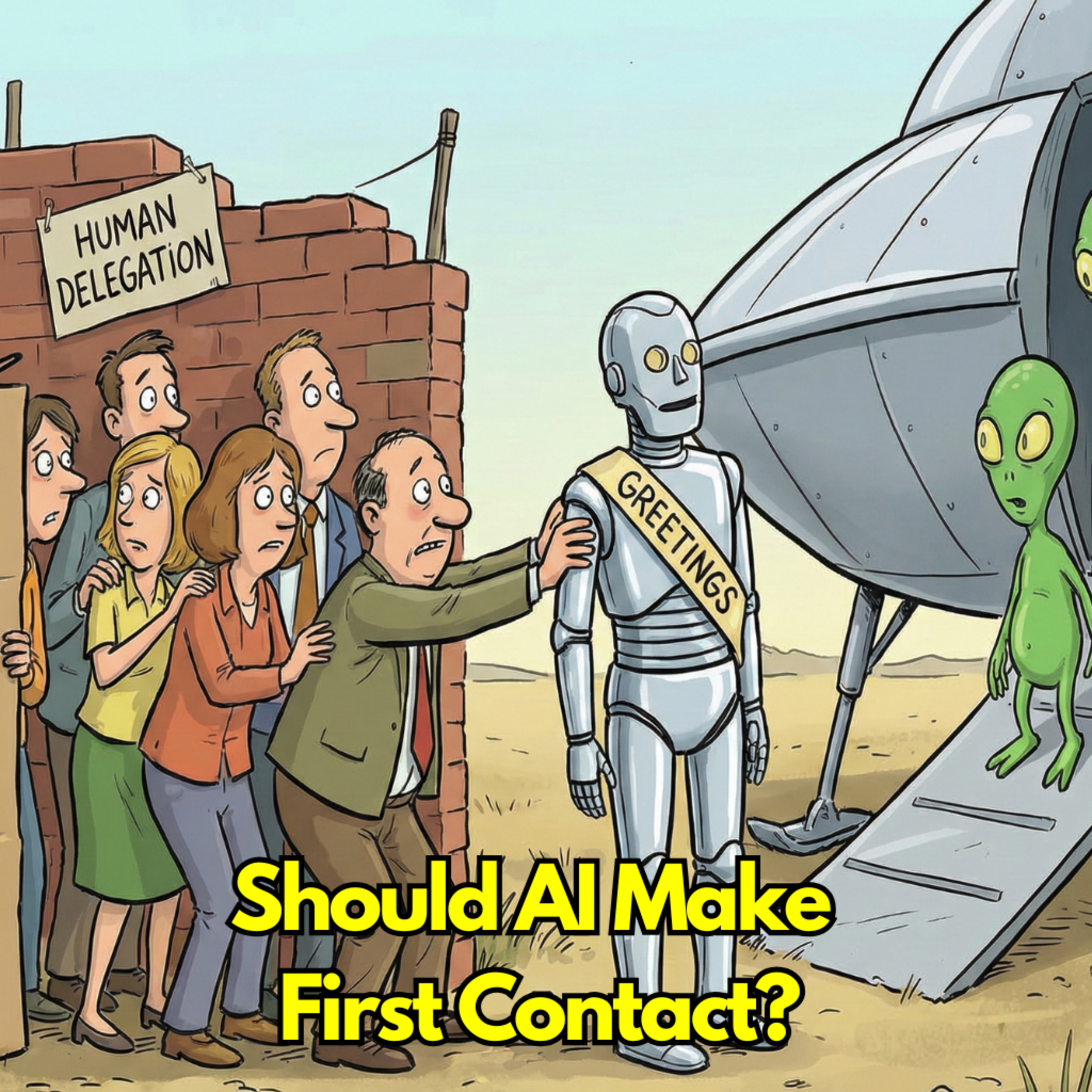
The Envoy Conundrum
If and when we make contact with an extraterrestrial intelligence, the first impression we make will determine the fate of our species. We will have to send an envoy—a representative to communicate who we are. For decades, we assumed this would be a human. But humans are fragile, emotional, irrational, and slow. We are prone to fear and aggression. An AI envoy, however, would be the pinnacle of our logic. It could learn an alien language in seconds, remain perfectly calm, and represent the best of Earth's intellect without the baggage of our biology. The risk is philosophical: If we send an AI, we are not introducing ourselves. We are introducing our tools. If the aliens judge us based on the AI, they are judging a sanitized mask, not the messy biological reality of humanity. We might be safer, but we would be starting our relationship with the cosmos based on a lie about what we are.The Conundrum: In a high-stakes First Contact scenario, do we send a super-intelligent AI to ensure we don't make a fatal emotional mistake, or do we send a human to ensure that the entity meeting the universe is actually one of us, risking extinction for the sake of authenticity?
Ep 615Using ChatGPT 5.2? Better watch this first!
They opened energized and focused almost immediately on GPT 5.2, why the benchmarks matter less than behavior, and what actually feels different when you build with it. Brian shared that he spent four straight hours rebuilding his internal gem builder using GPT 5.2, specifically to test whether OpenAI finally moved past brittle master and router prompting. The rest of the episode mixed deep hands on prompting work, real world agent behavior, smaller but meaningful AI breakthroughs in vision restoration and open source math reasoning, and reflections on where agentic systems are clearly heading.Key Points DiscussedGPT 5.2 shows a real shift toward higher level goal driven promptingBenchmarks matter less than whether custom GPTs are easier to build and maintainGPT 5.2 Pro enables collapsing complex multi prompt systems into single meta promptsCookbook guidance is critical for understanding how 5.2 behaves differently from 5.1Brian rebuilt his gem builder using fewer documents and far less prompt scaffoldingStructured phase based prompting works reliably without master router logicStress testing and red teaming can now be handled inside a single build flowSpreadsheet reasoning and chart interpretation show meaningful improvementImage generation still lags Gemini for comics and precise text placementOpenAI hints at a smaller Shipmas style release coming next weekTopaz Labs wins an Emmy for AI powered image and video restorationScience Corp raises 260M for a grain sized retinal implant restoring visionOpen source Nomos One scores near elite human levels on the Putnam math competitionAdvanced orchestration beats raw model scale in some reasoning tasksAgentic systems now behave more like pseudocode than chat interfacesTimestamps and Topics00:00:00 👋 Opening, GPT 5.2 focus, community callout00:04:30 🧠 Initial reactions to GPT 5.2 Pro and benchmarks00:09:30 📊 Spreadsheet reasoning and financial model improvements00:14:40 ⏱️ Timeouts, latency tradeoffs, and cost considerations00:18:20 📚 GPT 5.2 prompting cookbook walkthrough00:24:00 🧩 Rebuilding the gem builder without master router prompts00:31:40 🔒 Phase locking, guided workflows, and agent like behavior00:38:20 🧪 Stress testing prompts inside the build process00:44:10 🧾 Live demo of new client research and prep GPT00:52:00 🖼️ Image generation test results versus Gemini00:56:30 🏆 Topaz Labs wins Emmy for restoration tech01:00:40 👁️ Retinal implant restores vision using AI and BCI01:05:20 🧮 Nomos One open source model dominates math benchmarks01:11:30 🤖 Agentic behavior as pseudocode and PRD driven execution01:18:30 🎄 Shipmas speculation and next week expectations01:22:40 🏁 Week wrap up and community remindersThe Daily AI Show Co Hosts: Brian Maucere, Beth Lyons, and Andy Halliday
Ep 614Space Data Centers, Disney Sora Deal, and Shopify’s AI Shoppers
They opened with holiday lights, late year energy, and a quick check on December model rumors like Chestnut, Hazelnut, and Meta’s Avocado. They joked about AI naming moving from space themes to food themes. The first half focused on space based data centers, heat dissipation in orbit, Shopify’s AI upgrades, and Google’s Anti Gravity builder. The second half focused on MCP adoption, connector ecosystems, developer workflow fragmentation, and a long segment on Disney’s landmark Sora licensing deal and what fan generated content means for the future of storytelling.Key Points DiscussedSpace based data centers become real after a startup trains the first LLM in orbitChina already operates a 12 satellite AI cluster with an 8B parameter modelCooling in space is counterintuitive, requiring radiative heat transferNASA derived materials and coolant systems may influence orbital data centersShopify launches AI simulated shoppers and agentic storefronts for GEO optimizationShopify Sidekick now builds apps, storefront changes, and full automations conversationallyAnti Gravity allows conversational live website edits but currently hits rate limitsMCP enters the Linux Foundation with Anthropic donating full rights to the protocolGrowing confusion between apps, connectors, and tool selection in ChatGPTAI consulting becomes harder as clients expect consistent results despite model updatesAgencies struggle with n8n versioning, OpenAI model drift, search cost spikes, and maintenancePush toward multi model training, department specific tools, and heavy workshop onboardingDisney signs a three year Sora licensing deal for Pixar, Marvel, Disney, and Star Wars charactersDisney invests 1B in OpenAI and deploys ChatGPT to all employeesDebate over canon, fan generated stories, moderation guardrails, and Disney Plus distributionMcDonald’s AI holiday ad removed after public backlash for uncanny visuals and toneOpenAI releases a study of thirty seven million chats showing health searches dominateUsers shift topics by time of day: philosophy at 2 a.m., coding on weekdays, gaming on weekendsTimestamps and Topics00:00:00 👋 Opening, holiday lights, food themed model names00:02:15 🚀 Space based data centers and first LLM trained in orbit00:05:10 ❄️ Cooling challenges, radiative heat, NASA tech spinoffs00:08:12 🛰️ China’s orbital AI systems and 2035 megawatt plans00:10:45 🛒 Shopify launches SimJammer AI shopper simulations00:12:40 ⚙️ Agentic storefronts and cross platform product sync00:14:55 🧰 Sidekick builds apps and automations conversationally00:17:30 🌐 Anti Gravity live editing and Gemini rate limits00:20:49 🔧 MCP transferred to the Linux Foundation00:25:12 🔌 Confusion between apps and connectors in ChatGPT00:27:00 🧪 Consulting strain, versioning chaos, model drift00:30:48 🏗️ Department specific multimodel adoption workflows00:33:15 🎬 Disney signs Sora licensing deal for all major IP00:35:40 📺 Disney Plus will stream select fan generated Sora videos00:38:10 ⚠️ Safeguards against misuse, IP rules, and story ethics00:41:52 🍟 McDonald’s AI ad backlash and public perception00:45:20 🔍 OpenAI analysis of 37M chats00:47:18 ⏱️ Time of day topic patterns and behavioral insights00:49:25 💬 More on tools, A to A workflows, and future coworker gems00:53:56 🏁 Closing and Friday previewThe Daily AI Show Co Hosts: Brian Maucere, Beth Lyons, Andy Halliday, and Carl Yeh
Ep 613Japan Claims AGI, Pentagon Adopts Gemini, and MIT Designs New Medicines
They opened by framing the day around AI headlines and how each story connects to work, government, infrastructure, and long term consequences of rapidly advancing systems. The first major story centered on a Japanese company claiming AGI, followed by detailed breakdowns of global agentic AI standards, US military adoption of Gemini, China’s DeepSeek 3.2 claims, South Korean AI labeling laws, and space based AI data centers. The episode closed with large scale cloud investments, a debate on the “labor bubble,” IBM’s major acquisition, a new smart ring, and a long segment on an MIT system that can design protein binders for “undruggable” disease targets.Key Points DiscussedJapanese company Integral.ai publicly claims it has achieved AGITheir definition centers on autonomous skill learning, safe self improvement, and human level energy efficiencyLinux Foundation launches the Agentic AI Foundation with OpenAI, Anthropic, and BlockMCP, Goose, and agents.md become early building blocks for standardized agentsUS Defense Department launches genai.mil using Gemini for government at IL5 securityDeepSeek 3.2 uses sparse attention and claims wins over Gemini 3 Pro, but not Gemini Pro ThinkingSouth Korea introduces national rules requiring AI generated ads to be labeledChina plans megawatt scale space based AI data centers and satellite model clustersMicrosoft commits 23B for sovereign AI infrastructure in India and CanadaDebate over the “labor bubble,” arguing that owners only hire when they mustIBM acquires Confluent for 11B to build real time streaming pipelines for AI agentsHalliday smart glasses disappoint, but new Index O1 “dumb ring” offers simple voice note captureMIT’s BoltzGen model generates protein binders for hard disease targets with strong lab resultsTimestamps and Topics00:00:00 👋 Opening, framing the day’s themes00:01:10 🤖 Japan’s Integral.ai claims AGI under a strict definition00:06:05 ⚡ Autonomous learning, safe mastery, and energy efficiency criteria00:07:32 🧭 Agentic AI Foundation overview00:10:45 🔧 MCP, Goose, and agents.md explained00:14:40 🛡️ genai.mil launches with Gemini for government00:18:00 🇨🇳 DeepSeek 3.2 sparse attention and benchmark claims00:22:17 ⚠️ Comparison to Gemini 3 Pro Thinking00:23:40 🇰🇷 South Korea mandates AI ad labeling00:27:09 🛰️ China’s space based AI systems and satellite arrays00:31:39 ☁️ Microsoft invests 23B in India and Canada AI infrastructure00:35:09 📉 The “labor bubble” argument and job displacement00:41:11 🔄 IBM acquires Confluent for 11B00:45:43 🥽 AI hardware segment, Halliday glasses and Index O1 ring00:56:20 🧬 MIT’s BoltzGen designs binders for “undruggable” targets01:05:30 ⚗️ Lab validation, bias issues, reproducibility concerns01:10:57 🧪 Future of scientific work and human roles01:13:25 🏁 Closing and community linksThe Daily AI Show Co Hosts: Jyunmi and Andy Halliday
Ep 612Google AR Glasses, Agentic Browser Warnings, and the Fight for Local News
The news segment kicked off with Google leaks, OpenAI’s rumored point releases, and new Google AR glasses expected in 2026. From there, the conversation turned into privacy concerns, surveillance risks, agentic browser security, Gartner warnings for enterprises, Chrome’s Gemini powered alignment critic, OpenAI’s stealth ad tests, and the ongoing tension between innovation and public trust. The second half focused on Cloud Code inside Slack, workplace safety risks, IT strain, AI time savings, and a long discussion on whether AI written news strengthens or weakens local journalism.Key Points DiscussedGoogle leak hints at Nano Banana Flash and new Google AR glasses arriving in 2026Glasses bring real time Gemini vision, memory, and in stem audio, raising privacy concernsDiscussion about surveillance risks, public backlash, and vulnerable populationsMeta’s Limitless acquisition resurfaces concerns about facial recognition and social scrapingAgentic browsers trigger Gartner warning against enterprise use due to data leakage risksPerplexity launches BrowseSafe, blocking 91 percent of indirect prompt injectionsChrome adds a Gemini alignment critic to guard sensitive actions and untrusted page elementsOpenAI briefly shows promotional content inside ChatGPT before pulling itCloud Code inside Slack introduces local system access challenges and safety debatesIT departments face growing strain as shadow AI and on device automation expandOpenAI study says AI saves workers 40 to 60 minutes a dayAnthropic study finds 80 percent reduction in task time with Claude agentsAnthropic launches Claude Code for Slack, enabling in channel app buildingDiscussion on role clarity, career pathways, and workplace identity during AI transitionLocal newspapers begin using AI to generate basic articlesDebate on whether human journalists should focus on complex local storiesCommunity trust seen as tied to hyper local reporting, personal names, and social connectionRising need for human based storytelling as AI content scalesPrediction of a live experience renaissance as AI generated content saturates feedsTimestamps and Topics00:00:00 👋 StreamYard fixes, community invite00:02:19 ⚙️ Google leaks, Nano Banana Flash, AR glasses00:05:00 🥽 Gemini powered glasses, memory use cases00:08:22 ⚠️ Surveillance concerns for women, children, public spaces00:12:40 🤳 Meta, Limitless, and facial scraping risks00:14:58 🔐 Agentic browser risks and Gartner enterprise warning00:16:51 🛡️ Chrome’s Gemini alignment critic00:18:42 📣 OpenAI ad controversy and experiments00:21:30 🔧 Cloud Code local access challenges00:24:30 🧨 Workplace risks, shadow AI, “hold on I’m trying something” chaos00:28:56 ⏱️ OpenAI and Anthropic time savings data00:32:30 🤖 Claude Code inside Slack00:36:52 🧠 Career identity and worker anxiety00:40:06 📰 AI written news and local journalism trust00:43:12 📚 Personal connections to reporters and community life00:47:40 🧩 Hyper local news as a differentiator00:52:26 🎤 Live events, human storytelling, and post AI culture shift00:54:38 📣 Festivus updates and community shoutouts00:59:50 📝 Journalism segment wrap up01:03:45 🎧 Positive feedback on the Conundrum series01:06:30 🏁 Closing and Slack inviteThe Daily AI Show Co Hosts: Brian Maucere, Beth Lyons, Andy Halliday, and Anne Townsend
Ep 611Poetic’s Win, OpenAI Pressure, and a Messy Week for Consumer AI
The team recapped the show’s long streak and promised live holiday episodes no matter the date. The conversation then shifted into lawsuits against Perplexity, paywalled content scraping, global copyright patchwork, wearable AI acquisitions, and early consumer hardware failures. The second half explored Poetic’s breakthrough on the ARC AGI 2 test, Gemini’s meta reasoning improvements, ChatGPT’s slowing growth, expected 5.2 releases, and growing pressure on OpenAI as December model season arrives.Key Points DiscussedNew York Times sues Perplexity for copyright infringementPaywalled content leakage and global loopholes make enforcement difficultAcquisition of Limitless leads Meta to kill the pendant, refund buyers, and absorb the teamHoliday AR glasses reviewed as nearly useless for real world tasksLack of user testing and poor UX plague early AI wearable devicesAmazon delivery glasses raise safety concerns and visual distraction issuesPoetic’s recursive reasoning system beats Gemini on ARC AGI 2 for only 37 dollars per solutionARC AGI 2 scores jump from 5 percent months ago to 50 plus percent todayGemini’s multimodal training diet gives it an edge in reasoning tasksDebate over LLM glass ceilings and the need for neurosymbolic approachesChatGPT’s user growth slows while Gemini leads in downloads, MAUs, and time in appOpenAI expected to ship 5.2, but concerns rise about rushing a releaseOpenAI pauses ads to focus on improving model qualityNetflix acquires Warner Brothers for 83B, expanding its IP catalogIP libraries increase in value as AI accelerates character based contentPerplexity Comet browser gets BrowseSafe, blocking 91 percent of prompt injectionsGoogle Workspace gems can now run inside Docs, Sheets, and SlidesGemini powered follow up workflows, transcript processing, and structured docs become trivialGems enable faithful extraction of slide content from PDFs for internal knowledge buildingTimestamps and Topics00:00:00 👋 StreamYard return, layout issues, chin cam chaos00:02:40 🎄 Holiday schedule, 611 episode streak00:05:45 ⚖️ NYT sues Perplexity, copyright debate00:08:20 🔒 Paywalls, global republication, Times of India loophole00:14:23 🏷️ Gift links, scraping, and attribution confusion00:17:10 🧑🤝🧑 Limitless pendant killed after Meta acquisition00:20:14 🤓 Andy reviews the Holiday AR glasses00:24:39 😬 Massive UX failures and eye strain issues00:28:42 🥽 Amazon driver AR glasses concerns00:32:10 🔍 Poetic beats Gemini and DeepThink on ARC AGI 200:34:51 📈 Reasoning leaps from 5 percent to 54 percent00:40:15 🧠 LLM limits, multimodal breakthroughs, neurosymbolic debates00:43:10 📉 ChatGPT growth slows, Gemini rises00:46:50 🧪 OpenAI 5.2 speculation and Code Red context00:51:12 🎬 Netflix buys Warner Brothers for 83B00:53:06 📦 IP libraries and AI enabled content expansion00:54:50 🛡️ Perplexity Comet adds BrowseSafe00:57:30 🧩 Gems in Google Docs, Sheets, and Slides01:02:27 📄 Knowledge conversion from PDFs into outlines01:04:35 🧮 Asana, transcripts, and automated workflows01:08:10 🏁 Closing and troubleshooting tomorrow’s layoutThe Daily AI Show Co Hosts: Brian Maucere, Beth Lyons, and Andy Halliday