
The Daily AI Show
752 episodes — Page 3 of 16

The Messy Middle Conundrum
For all of human history, "competence" required struggle. To become a writer, you had to write bad drafts. To become a coder, you had to spend hours debugging. To become an architect, you had to draw by hand. The struggle was where the skill was built. It was the friction that forged resilience and deep understanding. AI removes the friction. It can write the code, draft the contract, and design the building instantly. We are moving toward a world of "outcome maximization," where the result is all that matters, and the process is automated. This creates a crisis of capability. If we no longer need to struggle to get the result, do we lose the capacity for deep thought? If an architect never draws a line, do they truly understand space? If a writer never struggles with a sentence, do they understand the soul of the story? We face a future where we have perfect outputs, but the humans operating the machines are intellectually atrophied.The Conundrum: Do we fully embrace the efficiency of AI to eliminate the drudgery of "process work," freeing us to focus solely on ideas and results, or do we artificially manufacture struggle and force humans to do things the "hard way" just to preserve the depth of human skill and resilience?
Ep 610Anthropic Finds AI Answers with Interviewer
The show moved quickly into news, starting with the leaked Anthropic SOUL document and Geoffrey Hinton’s comments about Google surpassing OpenAI. From there, the discussion covered December model rumors, business account issues in ChatGPT, emerging agent workflows inside Google Workspace, and a long segment on the newly released Anthropics Interviewer research and why it matters for understanding real user behavior.Key Points DiscussedAnthropic’s leaked SOUL doc outlines values used in model trainingGeoffrey Hinton says Google is likely to overtake OpenAIOpenAI model instability sparks speculation about a new reasoning model releaseUsers report ChatGPT business account task failuresGoogle Workspace Studio prepares for gem powered workflow automationWorkspace gems pull directly into Gmail and Docs for custom workflowsGoogle Home also moves toward natural language automationAnthropic launches Interviewer, a tool for research grade user studiesDataset of 1,250 interviews released on Hugging FaceEarly findings show users want AI to automate routine work, not identity defining workWorkers fear losing the “human part” of their rolesScientists are optimistic about AI discovery partnered with human supervisionSales professionals worry automated emails feel lazy and impersonalStrong emphasis on preserving in person connection as an advantageReplit partners with Google Cloud for enterprise vibe coding and deploymentAI music tools, especially Suno plus Gemini, continue to evolve with advanced vocal stylesTimestamps and Topics00:00:00 👋 Opening, weekend rundown, conundrum plug00:02:46 ⚠️ Anthropic SOUL doc leak discussion00:05:06 🧠 Geoffrey Hinton says Google will win the AI race00:06:36 🗞️ History of Microsoft Tay and Google’s caution00:08:00 💰 Google donates 10M in Hinton’s honor00:09:28 🌕 Full moon chaos and hardware issues00:11:03 📉 Business account task failures reported00:12:43 🔄 Computer meltdown and 47 tab intervention00:15:53 🧪 December model instability and reasoning model rumors00:17:35 ⚙️ Garlic model leaks and early performance notes00:19:45 🌕 Firefighter full moon stories00:20:12 🎵 Deep dive into Suno plus Gemini lyric and vocal workflows00:22:32 🎤 Style brackets, voice strain, and chorus variation tricks00:24:24 🎼 Big band alt country discovery through Suno00:25:53 🔧 Replit partners with Google Cloud for enterprise vibe coding00:27:29 📂 Workspace Studio and gem based Gmail automations00:30:13 📝 Sales workflows using in email gems00:31:48 🏡 Google Home natural language scene creation00:32:14 🤝 Community shoutouts and chat engagement00:32:38 🧩 Anthropics Interviewer research begins00:34:29 📁 Full dataset released on Hugging Face00:35:47 🧠 Early findings on optimism, fear, and identity preservation00:37:37 ⚖️ Human value, job identity, and transition anxiety00:40:10 🗣️ Sales and human connection outperform impersonal AI emails00:43:14 🧪 Scientists expect AI to unlock discoveries with oversight00:45:13 💼 Real world sales examples and competitive advantage00:48:52 🎓 Interviewer as a new research platform00:52:21 🧮 Smart forms vs full stack research workflows00:53:29 📊 Encouragement to read the full report00:53:56 🏁 Closing and weekend sendoff00:55:00 🎤 After show chaos with failed uploads and silent AndyThe Daily AI Show Co Hosts: Brian Maucere, Beth Lyons, and Andy Halliday
Ep 609Anthropic's Chief Scientist Issues a Warning
Brian and Andy hosted episode 609 and opened with updates on platform issues, code red rumors, and the wider conversation around AI urgency. They started with a Guardian interview featuring Anthropics chief scientist Jared Kaplan, whose comments about self improving AI, white collar automation, and academic performance sparked a broader discussion about the pace of capability gains and long term risks. The news section then moved through Google’s workspace automation push, AWS Reinvent announcements, new OpenAI safety research, Mistral’s upgraded models, and China’s rapidly growing consumer AI apps.Key Points DiscussedJared Kaplan warns that AI may outperform most white collar work in 2 to 3 yearsKaplan says his child will never surpass future AIs in academic tasksPrometheus style AI self improvement raises long term governance concernsGoogle launches workspace.google.com for Gemini powered automation inside Gmail and DriveGemini 3 excels outside Docs, but integrated features remain weakAWS Reinvent introduces Nova models, new Nvidia powered EC2 instances, and AI factoriesNova 2 Pro competes with Claude Sonnet 4.5 and GPT 5.1 across many benchmarksAWS positions itself as the affordable, tightly integrated cloud option for enterprise AIMistral releases new MoE and small edge models with strong token efficiency gainsOpenAI publishes Confessions, a dual channel honesty system to detect misbehaviorDebate on deception, model honesty, and whether confessions can be gamedNvidia accelerates mixture of experts hardware with 10x routing performanceDiscussion on future AI truth layers, blockchain style verification, and real time fact checkingHosts see future models becoming complex mixes of agents, evaluators, and editorsTimestamps and Topics00:00:00 👋 Opening, code red rumors, Guardian interview01:06:00 ⚠️ Kaplan on AI self improvement and white collar automation03:10:00 🧠 AI surpassing human academic skills04:48:00 🎥 DeepMind’s Thinking Game documentary mentioned08:07:00 🔄 Plans for deeper topic discussion later09:06:00 🧩 Google’s workspace automation via Gemini10:55:00 📂 Gemini integrations across Gmail, Drive, and workflows12:43:00 🔧 Gemini inside Docs still underperforms13:11:00 🏗️ Client ecosystems moving toward gem based assistants14:05:00 🎨 Nano Banana Pro layout issues and sticker text problem15:35:00 🧩 Pulling gems into Docs via new side panel16:42:00 🟦 Microsoft’s complexity vs Google’s simplicity17:19:00 💭 Future plateau of model improvements for the average worker17:44:00 ☁️ AWS Reinvent announcements begin18:49:00 🤝 AWS and Nvidia deepen cloud infrastructure partnership20:49:00 🏭 AI factories and large Middle East deployments21:23:00 ⚙️ New EC2 inference clusters with Nvidia GB300 Ultra22:34:00 🧬 Nova family of models released23:44:00 🔬 Nova 2 Pro benchmark performance24:53:00 📉 Comparison to Claude, GPT 5.1, Gemini25:59:00 📦 Mistral 3 and Edge models added to AWS26:34:00 🌍 Equity and global access to powerful compute27:56:00 🔒 OpenAI Confessions research paper overview29:43:00 🧪 Training separate honesty channels to detect misbehavior30:41:00 🚫 Jailbreaking defenses and safety evaluations31:20:00 🧠 Complex future routing among agents and evaluators36:23:00 ⚙️ Nvidia mixture of experts optimization38:52:00 ⚡ Faster, cheaper inference through selective activation40:00:00 🧾 Future real time AI fact checking layers41:31:00 🔗 Blockchain style citation and truth verification43:13:00 📱 AI truth layers across devices and operating systems44:01:00 🏁 Closing, Spotify creator stats and community appreciationThe Daily AI Show Co Hosts: Brian Maucere and Andy Halliday
Ep 608OpenAI Garlic Rumors, AI Civil Rights & Nvidia’s New Robotics Model
The episode moved from Nvidia’s new robotics model to an artificial nose for people with anosmia, then shifted into broader agent deployments, ByteDance’s dominance in China, open source competition, US civil rights legislation for AI, and New York’s new algorithmic pricing law. The second half focused on fusion reactors, reinforcement learning control systems, and the emerging role of AI as the operating layer for real world physical systems.Key Points DiscussedNvidia introduces Alpamayo R1, an open source vision language action model for roboticsNew “cyber nose” uses sensor arrays with machine learning for smell detectionFDA deploys agentic AI internally for meeting management, reviews, inspections, and workflowsAlibaba debuts Agent Evolver, a self evolving RL agent for mastering software and real world environmentsByteDance’s Dao Bao hits 172 million monthly active users and dominates China’s consumer AI marketMistral releases a 675B MoE model plus new small vision capable models for edge devicesOpenAI prepares Garlic, a 5.2 or 5.5 class upgrade, plus a new reasoning model that may launch next weekDemocrats reintroduce the Artificial Intelligence Civil Rights ActNew York passes a law requiring disclosures when prices are set algorithmicallyAnthropic hires Wilson Sonsini to prepare for a possible IPOAI fusion control is advancing through DeepMind and Commonwealth Fusion SystemsAI is emerging as a control layer across grids, factories, labs, and weather modelingGovernance, biosphere impact, and human oversight were the core concerns raised by the hostsTimestamps and Topics00:00:00 👋 Opening, round robin setup00:00:52 🤖 Nvidia’s Alpamayo R1 VLA model for robotics00:04:00 👃 AI powered artificial nose for odor detection00:06:22 🧠 Discussion on sensory prosthetics and safety00:06:27 🏛️ FDA deploys agentic AI across internal workflows00:09:38 🧩 RL systems in government and parallels with AWS tools00:10:05 🇨🇳 Alibaba’s Agent Evolver for self evolving agents00:12:58 📱 ByteDance’s Dao Bao surges to 172M users00:14:13 🔄 China’s open weight strategy and early signals of closed systems00:18:02 📦 Mistral 3 series and new 675B MoE model00:20:21 🧄 OpenAI’s Garlic model and new reasoning model rumors00:23:29 ⚖️ AI Civil Rights Act reintroduced in Congress00:26:57 🛒 New York’s algorithmic pricing disclosure law00:30:25 💸 Consumer empowerment and data rights00:32:01 💼 Anthropic begins IPO preparations00:34:27 🧪 Segment two: AI fusion and scientific control systems00:35:36 🔥 DeepMind and CFS integrating RL controllers into SPARC00:37:57 🔄 RL controllers trained in simulation then transferred to live plasma00:39:42 ⚡ AI in grids, factories, materials labs, and weather models00:41:55 🌍 Concerns: biosphere, governance, explainability, oversight00:48:45 🤖 Robotics, cold fusion speculation, and energy futures00:52:21 🧪 Technology acceleration and societal gap00:55:27 🗞️ AWS Reinvent will be covered tomorrow00:55:51 🏁 Closing and community plug
Ep 607Is It Really Code Red At OpenAI?
The episode kicked off with the OpenAI and NORAD partnership for the annual Santa Tracker, a live fail on the new “Elf Enrollment” tool, and a broader point about how slow and outdated OpenAI’s image generation has become compared to Gemini and Nano Banana Pro. From there the news moved into Google’s upcoming Gemini Projects feature, LinkedIn’s gender bias crisis, new Clone robotics demos, Apple leadership changes, the state of video models, and a larger debate about whether OpenAI will skip Shipmas entirely this year.Key Points DiscussedOpenAI partners with NORAD for Santa Tracker tools, including Elf Enrollment and Toy LabDull image quality and slow generation highlight OpenAI’s lag behind Gemini and Nano Banana ProGoogle teases Gemini Projects, a persistent workspace for multi chat task organizationGemini 3 continues pushing Google stock and investor confidenceCindy Gallop and others expose LinkedIn’s gender bias suppression patternsViral trend of women rewriting LinkedIn bios using “bro coded” phrasing to break algorithmic biasCalls for petitions, engagement boosts, and potential class actionClone robotics debuts a human like motion captured hand using fluid driven tendonsDiscussion on real household robot limitations and why dexterity matters more than humanoid formApple replaces its head of AI, bringing in a former Google engineering leaderTalk of talent reshuffling across Google, Apple, and MicrosoftTimestamps and Topics00:00:00 👋 Opening, Brian returns, holiday mode00:02:04 🎅 NORAD Santa Tracker, Elf Enrollment demo fail00:04:30 🧊 OpenAI image generation struggles next to Gemini00:06:00 🤣 Elf result goes off the rails00:07:00 🔥 Expectations shift for end of 2025 model behavior00:08:01 💬 Andy introduces Google Projects preview00:08:43 📂 Gemini Projects, multi chat organization00:09:23 📈 Google stock climbs on Gemini 3 adoption00:10:01 💼 Cathie Wood invests heavily in Google00:11:03 📉 Big Short confusion, Nvidia vs Google00:12:06 🎨 Gemini used in slide creation and workflow00:12:39 👋 Carl joins00:13:22 ⚠️ LinkedIn gender bias crisis explained00:14:31 📉 Women suppressed in reach, engagement, and ranking00:15:40 🛑 Algorithmic bias across 30 years of hiring data00:16:18 📝 Change.org petition and action steps00:18:46 ⚖️ Class action discussions begin00:22:05 🤖 Clone robot hand demo with mocap control00:23:54 😬 Human like movement sparks medical and industrial use cases00:25:26 🧩 Household robot limits and time dependent tasks00:27:54 🔄 Remote control robots as a service00:29:56 🧠 Emerging Neuro controls and floor based holodecks00:32:12 🍎 Apple fires AI lead, hires Google’s Gemini Assistant engineer00:33:31 🔁 Talent shuffle across OpenAI, Google, Apple, Microsoft00:35:58 🚢 Ship or Nah segment begins00:36:36 🔥 Last year’s Shipmas hype vs this year’s silence00:37:18 📉 Code Red memo shows internal pressure at OpenAI00:38:22 🎧 OpenAI research chief’s Core Memory podcast insights00:39:48 🌍 Internal models reportedly already outperform Gemini 300:42:59 🧪 Scaling, safety, and unreleased model pipelines00:44:09 🧩 Gemini 3 feels fundamentally different in interaction style00:45:42 🧭 Why OpenAI may skip Shipmas to avoid scrutiny00:47:18 🛠️ ChatGPT UX improvements as alternate Shipmas focus00:49:22 ❄️ Kling launches Omni Launch Week00:50:55 🎥 Kling video generation added to Higgsfield00:53:19 🧪 Shipmas as a vocabulary term shows language drift00:56:06 🦩 Merriam Webster and Tampa Airport shoutouts00:57:24 🤳 Final elf redo succeeds00:58:22 🏁 Closing and Slack community plug
Ep 606Deep Sea Strikes First and ChatGPT Turns 3
Brian hosted this first show of December with Beth and Andy chiming in early. They opened with ChatGPT’s third birthday and reflected on how quickly each December has delivered major AI releases. The group joked about the technical issues they have been facing with streaming platforms, announced they are switching back to their original setup, and then moved into a dense news cycle. The episode covered China’s Deep Sea model releases, open weights strategy, memory systems in Perplexity and ChatGPT, AI music licensing, and a long discussion on orchestration research, multi model councils, and new video model announcements.Key Points DiscussedDeep Sea releases three reasoning focused 3.2 models built for agentsChinese open weight models now rival frontier models for most practical use casesDeep Math v2 scores near perfect results on Olympiad tier math problemsPerplexity adds assistant memory with cross model contextChatGPT Pro memory remains more reliable for power usersSudo partners with Warner Music Group as AI music licensing acceleratesAI music output now equals Spotify scale every two weeksRunway unveils a new frontier video model with advanced instruction followingKling 2.5 delivers strong camera control and scene accuracyAds coming to ChatGPT spark debate about trust and user experienceNvidia and HK researchers introduce “Tool Orchestra,” a small model orchestrator that outperforms larger frontier modelsDiscussion on orchestrators, swarms, LM councils, and multi model workflowsAnti Gravity and Cloud Code emerge as platforms for building custom orchestration systemsTimestamps and Topics00:00:00 👋 Opening, ChatGPT’s third birthday, December release expectations00:02:19 🧪 Deep Sea launches 3.2 models for agent style reasoning00:03:42 ⚔️ December model race and Deep Sea’s early move00:05:49 🎙️ Streaming issues and platform change announcement00:06:01 🌏 Chinese open weight models vs frontier models00:07:19 🧮 Deep Math v2 hits Olympiad level performance00:09:56 🔍 Perplexity adds memory across all models00:11:28 🧠 ChatGPT Pro memory advantages and pitfalls00:15:50 🧑💻 Users shifting to Gemini for daily workflows00:16:32 🎵 Sudo and Warner Music partnership for licensed AI music00:20:23 🎶 Spotify scale output from AI music generators00:22:28 📻 Generational shifts in music discovery and algorithm bias00:24:24 🎧 Spotify’s curated shuffle controversy00:25:52 🎥 Runway’s new video model and Nvidia collaboration00:27:48 🎬 Kling, Seedance, and Higgsfield for commercial quality video00:31:22 📺 Runway vs Google vs OpenAI video model comparison00:31:22 👤 Brian drops from stream, Beth takes over00:32:51 💬 ChatGPT ads arriving soon and what sponsored chat may look like00:35:57 ❓ Paid vs free user treatment in ChatGPT ad rollout00:37:10 🚗 Perplexity mapping ads and awkward UI experiments00:38:38 📦 New research on model orchestration from Nvidia and HKU00:41:13 🎛️ Tool Orchestra surpasses GPT 5 and Opus 4.1 on benchmark00:42:54 🤖 Swarms, stepwise agents, and adding orchestrators to workflows00:49:00 🧩 LM councils, open router switching, and model coordination00:50:58 💻 Sim Theory, Cloud Code, Anti Gravity, and building orchestration apps00:55:05 🎂 Closing, Cyber Monday plug, Gen Spark orchestration comments00:55:36 🏁 Stream ends awkwardly after Brian disconnectsThe Daily AI Show Co Hosts: Brian Maucere, Beth Lyons, and Andy Halliday
The Decentralized SaaS Conundrum
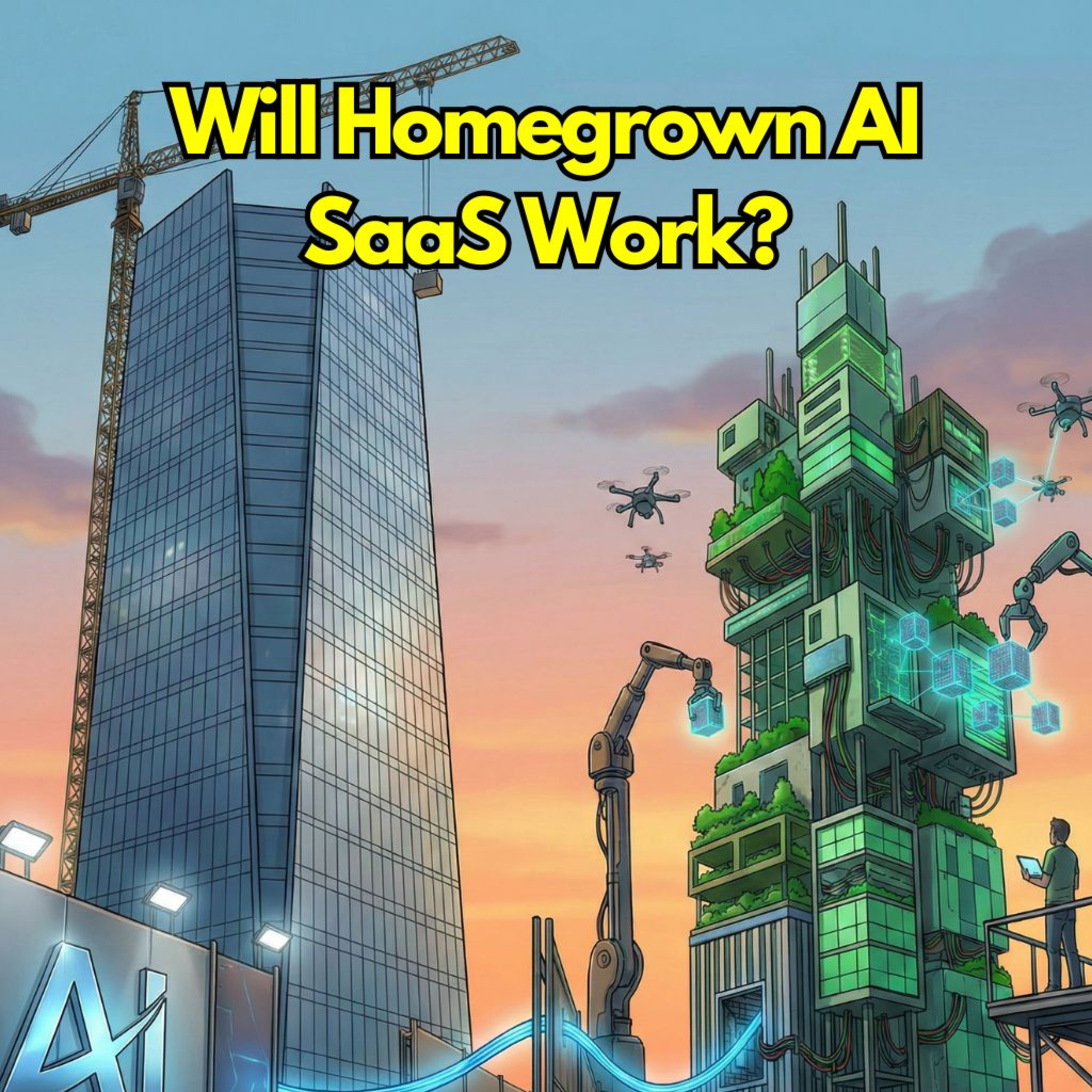
In the next few years, generative AI plus low-code and no-code tools will let small teams build powerful internal apps and automations in days, not months. That trend is already lowering launch costs, democratizing capabilities, and making it easy to replicate or replace large SaaS features inside organizations. On one side, this decentralization breaks the power of big vendors, it lets teams own their workflows, tailor features to exact needs, and capture more value in-house instead of paying ongoing SaaS rents. Faster, cheaper, and more local innovation could open new business models, reduce vendor lock-in, and spread technical capability beyond elite engineering teams. On the other side, homegrown AI-driven systems are being built with shaky governance, they often incorporate AI-generated code with security flaws, and they proliferate shadow IT that leaks data and increases attack surface. Recent studies find large increases in exploited vulnerabilities, and security analyses warn that AI-assisted development produces insecure code at scale unless organizations invest heavily in testing and controls. Centralized SaaS, for all its costs, bundles security engineering, compliance, and uptime guarantees that many internal teams cannot match. The conundrum:Do we embrace a decentralized, build-first future that democratizes tools and strips power from incumbent SaaS vendors, accepting higher systemic risk and the need to radically upgrade internal security capability, or do we double down on platform consolidation to preserve resilience, compliance, and professional-grade security even though it concentrates control and cost?
Ep 605Black Friday AI, Data Breaches, Power Fights, and Autonomous Agents
Brian, Beth, and Andy hosted this Black Friday episode and opened with jokes about the show being “free today” even though it is always free. They recapped Thanksgiving, chatted with regulars in the live chat, and then moved into a slower news cycle driven by the holiday. From there, they covered SAP’s new EU AI cloud, data center power issues around XAI and federal subsidies, HSBC’s criticism of OpenAI’s financial outlook, satellite risks, and a large segment on what December model releases may or may not look like. The second half focused on Amazon’s new autonomous agent company, OpenAI’s holiday data breach disclosure, Starlink growth, real estate automation, and why creators feel overwhelmed trying to keep up with current AI development.Key Points DiscussedSAP launches an EU AI cloud giving companies full data control within EU bordersXAI faces legal pressure for running natural gas turbines without permitsUSDA approves a zero interest loan to support XAI’s adjoining solar projectHSBC projects a $207B OpenAI shortfall by 2030, calling it a money pitDebate around who pays the growing national energy bill for AI computeDiscussion of orbital solar farms, space debris, and Starlink’s rapid expansionOpenAI discloses a holiday week data breach through third party MixpanelDecember model expectations spark speculation about upgrades and small featuresGeneral Agents acquired by Bezos’ Prometheus project, building desktop autopilot agentsChatGPT Shopping Mode shows strong reasoning for both consumer and B2B purchasesReal estate automation accelerates with AI generated home tours and camera analysisDiscussion on PRDs, build paralysis, and struggling to keep pace with agent evolutionTimestamps and Topics00:00:00 🦃 Black Friday intro, Thanksgiving recap, live chat regulars00:02:41 🇪🇺 SAP launches an EU AI cloud for data sovereignty00:05:00 ⚡ XAI faces legal action over unpermitted natural gas power generation00:08:10 🌞 USDA funds a massive solar project supporting XAI data centers00:12:07 📉 HSBC challenges OpenAI’s claim of being cash flow positive by 202900:14:30 🔌 AI compute energy bills and who pays for the future grid00:16:21 🛰️ Orbital solar farms, space junk risks, and Starlink traffic00:24:56 🔐 OpenAI confirms data exposure from Mixpanel breach00:27:43 🎄 December model speculation and holiday product expectations00:30:02 🎨 Nano Banana Pro limitations and image editing frustrations00:32:30 ❤️ Gratitude segment for Carl and the community00:35:02 🤖 News fatigue and the pace of agent and model releases00:36:58 🐇 Legacy AI gadgets, the Rabbit R1 nostalgia moment00:40:27 📦 Amazon’s Prometheus acquires General Agents for autonomous desktop control00:51:29 🛍️ ChatGPT Shopping Mode reasoning for houses, SaaS, and B2B tools00:54:09 🏠 Real estate automation with Gemini driven video analysis00:56:22 📈 MLS APIs and future disruption of real estate workflows00:58:27 🐊 Brian explains winter gator behavior in Tampa00:59:41 🏁 Closing and weekend send offThe Daily AI Show Co Hosts: Brian Maucere, Beth Lyons, Andy Halliday, and Karl Yeh
Ep 604The Thanksgiving Day Show
Brian hosted this Thanksgiving episode with Beth and Andy, kicking off with light holiday banter, the show’s 600 plus episode streak, and the now legendary “Turkey Day burrito” origin story. The group moved quickly into news highlights, touching on Nvidia’s rare defensive stance with Wall Street, Anthropic’s agent improvements, new productivity research, the MIT Iceberg Index on hidden automation risks, economic signals from venture capital, and the shifting entry level job landscape. The second half focused on creativity tools, the state of AI music, and a live demo of two Suno generated songs that showed how far generative audio has advanced.Key Points DiscussedNvidia stock drops 15 percent as executives publicly defend the companyMeta explores switching from Nvidia GPUs to Google TPUsAnthropic extends Opus and Sonnet’s long running agent capabilitiesAnalysis of 100,000 Claude sessions shows AI cuts task time by 80 percentMIT Iceberg Index reveals deeper automation risk across office and professional rolesJunior tech and VC entry level jobs already being replaced by AI toolsDebate on long term consequences of removing “first rung” roles in the workforceSaaS vs build first conundrum preview from this week’s Saturday podcastNotebook LM demand temporarily forces Google to throttle infographic generationAI music production quality jumps, making polished demos trivial to createSuno and Gemini assist with lyric writing, phrasing, timing, and vocal guidanceDiscussion on originality, imitation risk, and AI’s role in reshaping music stylesTimestamps and Topics00:00:00 🦃 Thanksgiving intro, 600 plus shows, Turkey Day burrito lore00:04:59 📉 Nvidia stock correction and Wall Street memo00:06:13 🔀 Meta evaluates Google TPUs over Nvidia GPUs00:08:02 🤖 Anthropic improves long running agent stability00:09:02 💡 Claude study shows 80 percent task time reduction00:10:50 🧊 MIT Iceberg Index on hidden automation impact00:13:52 💼 VC firms replace associate level research roles with AI00:15:55 ⚖️ Workforce risks of removing manual foundational roles00:17:18 🔧 SaaS vs build first conundrum preview00:19:00 📊 Notebook LM’s rapid updates and temporary throttling00:20:24 📻 RadioShack nostalgia and tech cycles00:23:05 🎶 Suno demo track one, “AI for Christmas”00:28:43 🎵 Suno demo track two, “The Parade”00:31:21 🎤 Discussion on AI lyric writing and performance nuance00:33:52 🎼 How much AI should imitate versus innovate00:39:12 🎧 Music industry dominance of predictable structures00:40:10 📀 Why AI has not yet produced a “Gotye moment”00:42:09 💬 Gemini’s strength in conceptual story and lyric iteration00:44:09 🏁 Closing notes and holiday wrap upThe Daily AI Show Co Hosts: Brian Maucere, Beth Lyons, and Andy Halliday
Ep 603Who Is Winning The AI Model Wars?
Jyunmi hosted this pre holiday episode with Beth, Anne, and Andy, kicking off with a round robin on the most interesting AI stories from the past few days. The group moved through interactive fiction tools, Voice Mode updates in ChatGPT, OpenAI’s legal issues, algorithmic bias across social platforms, Google’s Notebook LM upgrades, and Perplexity’s surprising drop in mobile downloads. Karl joined midway, shifting the discussion toward model comparisons, real world user behavior, the gap between benchmarks and adoption, multi model workflows, and how people actually use AI at work. The episode ended with a long segment on AI reading scientific literature to discover new magnetic materials and the broader implications for science, industry, and fairness.Key Points DiscussedCharacter AI launches interactive story generation similar to yesterday’s Infinite Bard demoDisney plans to allow user generated content on Disney PlusChatGPT Voice Mode now works inside regular chats with 5.1OpenAI sued over a suicide case and responds by citing user policy restrictionsStudy shows LLMs trained on viral clickbait become persistently dumber and more narcissisticNotebook LM slide decks and infographics continue to improve with Nano BananaX’s algorithm changes and engagement drops raise concerns about visibility and biasPerplexity’s global downloads fall 80 percent after paid ads stopDebate over whether Perplexity has a unique moat or clear differentiatorGovernment unveils Project Genesis, a decade long AI driven science initiativeAWS commits up to 50B for US government supercomputing and AI infrastructureGemini 3, Claude Opus 4.5, and OpenAI 5.1 compared across reasoning, coding, and multimodal testsDiscussion on real adoption versus benchmark hype and why user habits matter moreMulti model workflows often outperform single model useAI reads 67,000 scientific papers to identify 25 promising new magnetic materialsBroader discussion on environmental impact, supply chains, discovery fairness, and scientific accessTimestamps and Topics00:00:00 👋 Opening, round robin setup00:01:03 📚 Character AI releases interactive fiction stories00:03:32 🎬 Future of AI customized films and Disney UGC plans00:04:31 🔊 ChatGPT Voice Mode now in normal chats00:06:25 ⚖️ OpenAI lawsuit response sparks criticism00:09:06 🧠 Study on clickbait trained LLMs degrading in quality00:11:10 📝 Notebook LM infographics and slide decks tested00:13:24 ⚙️ X algorithm changes and concern about creator visibility00:15:03 👥 LinkedIn gender bias issues and feed manipulation00:16:26 👋 Carl joins00:19:02 📰 Chrome based “Learn About” app from Google00:19:46 📉 Perplexity downloads drop 80 percent post ads00:21:31 ❓ Debate over Perplexity’s long term differentiation00:23:02 🔬 Project Genesis, a national AI science initiative00:27:27 ☁️ AWS 50B government AI infrastructure plan00:28:43 🤖 Gemini 3, Claude Opus 4.5, and OpenAI 5.1 model comparisons00:32:34 🧪 Benchmarks, reasoning scores, and coding performance00:38:08 📱 User adoption versus model quality00:40:35 🍏 AI model adoption compared to iPhone vs Android dynamics00:43:05 🔄 Multi model workflows as the emerging best practice00:48:38 🤝 When to use Claude, Gemini, and ChatGPT in combination00:50:26 📉 Gemini 3 significantly lowers token usage for transcripts00:52:52 🧲 AI reads decades of papers to discover new magnetic materials00:54:59 🔍 Why magnetic materials matter for EVs, energy, and supply chains00:56:39 🌱 Environmental, economic, and fairness implications01:02:34 🧠 Updating personal “brain models” and sustainability habits01:03:28 🏁 Closing and holiday send offThe Daily AI Show Co Hosts: Jyunmi, Beth, Anne, Andy, and Karl
Ep 602Anthropic Drops a Monster Model
Brian and Andy hosted this pre Thanksgiving episode and opened with platform issues, live chat glitches, and holiday energy in the air. They talked through the growing instability of their streaming setup and then shifted into the day’s news. The episode touched on the chip wars, new optical computing breakthroughs, OpenAI’s cameo trademark fight, the launch of OpenAI’s shopping assistant, Google’s Notebook LM upgrades, and Anthropic’s surprise release of Opus 4.5. The show ended with Brian demoing his Gemini powered “Infinite Bard” project and discussing why Gemini has become his default model for creative work.Key Points DiscussedMeta explores using Google TPUs, dropping Nvidia’s stock by about 4 percentResearchers show an optical computing breakthrough that rivals GPU performanceCameo wins a temporary restraining order blocking OpenAI from using the name CameoOpenAI launches a shopping assistant powered by a GPT 5 mini modelNotebook LM continues rapid improvement with Gemini 3, Nano Banana, and guided learningGemini excels in stability, fast prompting, large task reasoning, and tool buildingAnthropic releases Opus 4.5 with superhuman coding performance on SWE BenchOpus 4.5 introduces automatic context compression and major token efficiency gainsPricing shows Opus remains expensive but far more efficient than earlier versionsEnterprise users may heavily benefit from reduced token usage in agent workflowsBrian demos his Gemini “Infinite Bard” choose your own adventure engineGemini’s use of silent markdown context files enables branching story continuityTimestamps and Topics00:00:00 👋 Opening, holiday week, platform issues00:02:01 ⚙️ Meta explores using Google TPUs, Nvidia drops03:07:00 💡 Optical computing breakthrough using single laser tensor processing05:24:00 🔌 Chip efficiency and heat advantages of laser based systems06:43:00 ⚖️ Cameo wins temporary restraining order against OpenAI07:56:00 💬 Naming confusion across AI products09:11:00 🛍️ OpenAI launches interactive shopping assistant11:18:00 💻 Shopping UX walkthrough and first impressions12:19:00 📝 Notebook LM’s rapid upgrades and visual generation improvements14:01:00 🎧 Guided learning, audio overviews, and Notebook LM evolution16:02:00 🛒 Shopping assistant reasoning and laptop recommendations17:32:00 🧭 Shopping agents compared to Gen Spark and others18:53:00 🔍 Search consolidation, OpenAI’s OS ambitions20:04:00 🤖 Anthropic Opus 4.5 overview20:59:00 🧪 Superhuman coding performance on Anthropic’s hiring exam21:44:00 🧵 Context compression and unlimited conversation length22:59:00 📊 Benchmark comparison against Gemini 3 and Codex Max24:47:00 💰 Pricing for Opus, Sonnet, Haiku, and prompt caching26:05:00 ⚙️ Opus 4.5 token efficiency improvements27:27:00 🔄 Rate limits and concerns about Claude reliability32:58:00 🌐 Brian explains why Gemini has become his default model33:56:00 🎮 Demo of the Infinite Bard interactive storytelling gem35:26:00 📚 Using Gemini as a rapid prototyping engine37:21:00 🧩 Initial story branches and decision logic40:57:00 🗂️ Silent markdown files for inventory and story continuity44:51:00 🧠 Why Gemini excels at constrained creative generation47:18:00 📐 Prompt building with XML tags and gem architecture49:27:00 🧱 Using a prompt architect to build tools for tools50:14:00 📆 Upcoming holiday week schedule51:35:00 🏁 Closing and outroThe Daily AI Show Co Hosts: Brian Maucere and Andy Halliday
Ep 601Why AI Adoption Stalls, Even as Agents and Robotics Accelerate
Beth opened episode 601 with Andy joining early and Karl arriving later. The show kicked off with browser based agents, Google’s Nano Banana expansion into Workspace, and a live demo of Slides using AI to beautify content. From there, the conversation shifted toward the limitations of Gemini generated infographics, the need for human oversight, the rise of agent powered browsers, and early signals about OpenAI’s new hardware team. The hosts explored cultural pushback against wearable AI, the gap between real world adoption and tech hype, and the long term impact of AI on management skills, jobs, and public trust.Key Points DiscussedPerplexity’s Comet agent comes to mobile with full web action supportGoogle rolls out Nano Banana AI in Docs, Slides, and Notebook LMGemini 3 image models still make factual mistakes in diagrams and labelsGoogle confirms layered image editing is on the roadmapManas launches a browser operator extension that turns Chrome into an AI agentOpenAI builds a hardware division and hires dozens of Apple engineersPublic resistance grows against AI wearables like the Friend pendantWestern media messaging reinforces AI as a threat, slowing adoptionSingapore’s AI rollout reveals a management and leadership gapHuman interpersonal skills emerge as a key competitive advantageRobotics accelerates as Google DeepMind hires Boston Dynamics’ former CTOVisionary hardware concepts likely push toward AI native devices with voice first designSora, agent tools, and multimodal models still struggle to break into mainstream awarenessTimestamps and Topics00:00:00 👋 Opening, Thanksgiving week, Andy joins01:01:00 🤖 Perplexity Comet mobile agent overview02:21:00 📝 Nano Banana comes to Google Workspace03:12:00 🎨 Slides demo with AI generated infographics05:04:00 🚗 Andy reviews Nano Banana Pro car diagrams and labeling errors08:43:00 🧩 Discussion on image limitations and lack of editable text layers11:49:00 💬 Community notes, Google confirms layered images are coming14:07:00 🧭 Karl joins, new browser operator from Manas16:00:00 🛠️ OpenAI’s hardware division poaches Apple engineers17:40:00 📱 What an AI native device might look like21:08:00 🚇 Anti AI backlash, Friend pendant ads defaced in Chicago22:52:00 🌍 Western fear framing versus Asian AI optimism24:01:00 📉 Media narratives shape public adoption and trust27:03:00 🇸🇬 Singapore as a case study in AI driven workforce disruption29:15:00 👔 Management skills become a rare and valuable human advantage33:23:00 🤝 Interpersonal skills and face to face client work outcompete automation34:59:00 🔄 AI agents cannot replace real rapport and live collaboration38:59:00 🤖 DeepMind hires Boston Dynamics CTO to build robot capabilities41:12:00 🗣️ Future devices shaped around voice first AI45:15:00 ❓ Growing public “why would you build this” skepticism48:34:00 🧩 Designing use cases that actually solve problems52:28:00 📰 Upcoming stories this week: OpenAI internal memo, Meta updates
The Invisible AI Debt Conundrum
Most creative work in the future will still have clear owners. Novels will still have authors. Films will still credit directors. Inventions will still file patents. But beneath all of that, AI models will quietly borrow from sources no one ever meant to share. A breakthrough insight might rely on the phrasing of a stranger’s blog post. A melody might carry the echo of a musician who never earned a cent. A business idea might be guided by patterns learned from millions of people who never knew they were part of the training.We already see hints of this today. People enjoy the speed, precision, and intelligence of modern AI systems, even when it is obvious that the work was shaped by countless unseen contributors. Society has a long history of accepting benefits without looking too closely at what it costs others. The saying about not wanting to know how the sausage is made has never felt more relevant.AI pushes that dilemma forward. Should society confront the uncomfortable truth that some contributions will never be credited or compensated, even when they shaped something meaningful? Or will people decide that the benefits are too important and quietly ignore who got overlooked along the way?The conundrum:As AI creates value built on invisible contributions, do we force society to face every hidden debt even when it slows progress and complicates innovation, or do we accept the comfort of not knowing in exchange for tools that make life better, faster, and easier for everyone else?
Ep 600Episode 600! AI Did Us Dirty With This One
Episode 600 opened with Beth hosting solo before Andy and then Carl joined. They reflected on the show’s long run and joked about the chaotic start due to technical issues and multiple versions of the studio running at once. Beth highlighted how Gemini 3’s image creation, especially “Nano Banana Pro,” is producing highly accurate layouts with readable text. The group discussed how far multimodal models have evolved and how different tools now specialize in different strengths. The rest of the episode covered AI agents, Codex Max, Gemini prompting, SEO disruption, group chats in ChatGPT, and how users are shifting their habits across platforms.Key Points DiscussedGemini 3’s “Nano Banana Pro” creates accurate layouts and readable textProblem solving around Talk Studio bugs during the live showGen Spark hits a $1.25B valuation and expands workplace agent automationTikTok adds controls for AI generated content and labels deepfake materialUsers increasingly search how to delete or deactivate social platformsAdobe buys SEMrush, triggering worries about the future of SEO toolsSEOs struggle because AI search results are personalized, inconsistent, and agent drivenCodex Max improves complex backend builds, Gemini excels at front end and multimodal workNew ChatGPT group chats allow shared sessions across teams and free usersPRDs become essential for scoping apps before coding with agentsAdvice on using Cursor, Codex, Gemini CLI, Cloud Code, and avoiding multi tool conflictsOpenAI launches free ChatGPT access for verified K 12 educatorsTimestamps and Topics00:00:00 🎉 Opening, episode 600, first solo start00:02:44 👋 Andy joins, discussion on Nano Banana Pro image accuracy00:04:50 🖼️ Gemini layout and multimodal strengths00:07:00 💻 Gemini Pro for image generation and model selection00:09:34 🤖 Gen Spark’s $275M round and workplace agent capabilities00:12:03 🛠️ How Gen Spark automates complex workplace tasks00:14:24 🧩 Agent platforms vs built in agents in big model ecosystems00:15:21 🧭 How users may lean on ChatGPT for end to end work00:16:58 🔀 Technical chaos navigating multiple Talk Studio instances00:19:40 🗞️ TikTok labeling AI content and user decline across platforms00:21:58 👥 New ChatGPT group chats demo and quirks00:28:36 📝 OpenAI gives teachers free ChatGPT with integrations00:32:32 🔍 SEO disruption as AI search becomes personalized and inconsistent00:34:26 📉 Adobe buys SEMrush, concerns about tool decline00:38:40 🤖 AI agents change how users perform search and comparison00:40:58 🎯 Codex Max vs Gemini 3 for coding, strengths differ by task00:45:49 🧪 Why building simple test apps matters before real projects00:50:16 🔧 Using Gemini for front end and Codex for complex backend logic00:52:41 🧠 Avoiding tool conflicts when coding across multiple IDEs00:56:03 🛠️ Cursor recommended as the unified working environment01:02:44 📂 Importance of GitHub when switching across platforms01:06:59 🏁 Closing, weekend content reminders
Ep 599A $57B Warning Shot from Nvidia, AI Recaps, & AI Shopping
Brian and Andy hosted episode 599 and opened by looking back on how far the show has come. They talked about the Daily AI Show as a living archive that captures the state of AI day by day. They joked about submitting the series to the Library of Congress and reflected on the value of having a long running record of AI progress. The episode then moved into major news topics, new model upgrades, compute constraints, Gemini 3 prompting techniques, product strategy at OpenAI, and the growing divide between research priorities and consumer AI features.Key Points DiscussedNvidia posts a record $57B quarter, up 62 percent year over yearOpenAI launches GPT 5.1 Codex Max with context compaction and major coding gainsGemini 3 shows strong prompting upgrades, faster thinking mode, and smart memory handlingAmazon adds new AI recap features and enhanced NFL viewing modes to Prime VideoPerplexity revamps its AI shopping experience ahead of Black FridayFiji Simo becomes OpenAI’s new leader for applications and monetizationOngoing compute shortages create rate limits across major modelsMixing models becomes a theme, using Gemini, Codex, Claude, and Grok for different strengthsSuno and Audio make major funding and licensing moves in AI generated musicDebate over AI music hits as an AI generated country song reaches number oneTimestamps and Topics00:00:00 🔁 Reflection on 599 episodes, the show as an AI time capsule00:04:54 📈 Nvidia posts a record $57B quarter00:07:00 🧩 GPT 5.1 Codex Max and the compaction breakthrough00:09:50 ⚙️ Gemini 3 memory tricks, Python intermediates, and large task workflows00:12:10 🐢 Model slowdown at high token counts and manual compaction methods00:14:30 🙌 Carl joins, discussion on 600 episodes00:15:06 📺 Prime Video’s AI recaps and AI enhanced NFL broadcasts00:17:56 🛒 Perplexity’s holiday shopping updates00:20:33 🧿 Fiji Simo becomes CEO of Applications at OpenAI00:25:21 🧮 Compute constraints and why research gets priority00:27:37 🧠 Yann LeCun’s research first philosophy00:31:17 📚 Alpha Archive and the need for AI focused research repositories00:34:31 🧱 Andy and Carl on Energy Gravity and coding workflows00:36:50 🔧 Model specialization and mixing models for better outcomes00:45:06 🎶 Suno’s $250M raise and Audio’s new music licensing deals00:47:27 🎤 Creative backlash vs audience preference00:48:35 🎵 Brian plays AI generated music covers00:50:46 📣 Weekend reminders, Gem Architect, Slack community00:51:32 🏁 Closing and tomorrow’s 600th episodeThe Daily AI Show Co Hosts: Brian Maucere, Andy, and Karl
How Gemini 3 Is Rewriting Prompting: It’s Not What You Think
Jyunmi opened the show for episode 598 with Andy and Brian, setting up a news heavy Wednesday focused on Gemini 3 and how it changes prompting and agent design. Before diving into Gemini 3, they covered major moves from Nvidia, Microsoft, Anthropic, and Alibaba, plus new tools from Poe and Replit.Key Points DiscussedNvidia reports earnings and deepens its partnership with Microsoft and Anthropic, including new chip work tuned for Claude.Microsoft unveils a sales development agent and an agent command center to track official and shadow agents across 365.Alibaba launches the Qwen consumer chatbot to compete in China’s crowded assistant market and push deeper ecosystem integration.Poe adds group chat for up to 200 users with any model, and Replit ships a new design feature powered by Gemini 3.Google formally launches Gemini 3, wires it into search, the Gemini app, and introduces the anti gravity coding environment.Brian tests Gemini 3 and finds that it prefers a single large prompt over router style prompt chains.Gemini 3 introduces an objective based commander intent approach with a prime directive and clear success criteria.The team walks through new Gemini 3 prompting patterns, including phases instead of steps, deep reasoning loops, and source of truth rules.Negative constraints and quality gates become core tools to prevent sloppy outputs and premature phase changes.Brian builds a Gem Architect that helps users design strong Gemini 3 gems using this new prompting style.He then uses that architect to create a DOS page builder gem that turns show transcripts into SEO ready HTML deep dives.Andy explains the difference between the Gemini app and Google AI Studio, and how AI Studio is shifting toward full application projects.Brian shares how the community can access his Gem Architect prompt and gem inside The Daily AI Show hub.Timestamps & Topics00:00:00 💡 Intro, episode setup, and agenda00:01:05 💰 Nvidia earnings and Microsoft Nvidia Anthropic mega deal00:04:31 🧑💼 Microsoft sales development agent and agent command center00:09:20 🌏 Alibaba’s Qwen consumer chatbot and China price war00:12:29 🧑🤝🧑 Poe group chat and Replit design feature with Gemini 300:15:34 🤖 Gemini 3 launch, search integration, and anti gravity overview00:17:13 🧱 From router prompts to mega prompts in Gemini 300:22:09 🧭 Objective based commander intent prompting rules00:26:07 ✅ Negative constraints, quality gates, and phase based flows00:29:03 🏗️ Gem Architect builder for Gemini 300:31:30 📰 DOS page builder gem for Daily AI Show deep dives00:39:37 🧪 Anti gravity install, hardware notes, and first impressions00:41:36 🛠️ Finding the AI Studio playground and model options00:44:53 🧩 Gemini app versus AI Studio and when to use each00:54:36 🌐 Community hub, prompt sharing plans, and closingThe Daily AI Show Co-Hosts: Andy Halliday, Beth Lyons, Brian Maucere, Jyunmi Hatcher, and Karl Yeh
Ep 597Gemini 3 Goes Live, Bezos Backs Prometheus, and Nvidia Drops Apollo
Brian and Andy opened the show reacting to Gemini 3’s release, noting how quickly Google pushed it out after weeks of leaks. They framed the episode around three big storylines: Gemini 3 going live, the Prometheus project finally confirmed, and a wave of world model announcements across the industry.Key Points DiscussedGemini 3 officially launches with big jumps in reasoning, vision, and real time grounding.Google positions Gemini 3 as a direct competitor to GPT 5.1 and Claude 3.7.Early tests show major improvements in planning and tool use, but hallucinations still appear in edge cases.Jeff Bezos backs the Prometheus physical AI project, aiming to merge robotics, sensors, and world models.Elon Musk announces Grok 4.1, claiming large upgrades in memory and multi step reasoning.Nvidia reveals Apollo, a physics aligned world model intended for robotics and simulation.Debate over whether world models will replace Transformers or merge into hybrid systems.Anthropic updates Claude to improve tool calling and reduce slowdowns seen over the last week.New research shows world model agents may outperform LLM agents in long horizon tasks.Discussion on AI ecosystems pulling away from single model usage and toward fully integrated systems.Timestamps & Topics00:00:00 💡 Intro and Gemini 3 launch00:04:22 🤖 First reactions to Gemini 3 performance00:09:48 ⚙️ Tool use improvements and early benchmark noise00:13:40 🔍 Comparing Gemini 3 to GPT 5.1 and Claude00:17:22 🚀 Prometheus project confirmed with Bezos backing00:21:11 🤝 Robotics, sensors, and world model integration00:26:34 🔧 Grok 4.1 announcement and memory upgrades00:30:18 🧠 Nvidia Apollo and physics aligned world models00:35:42 🔬 World model agents vs LLM agents00:41:00 📉 Claude slowdown issues and Anthropic fixes00:47:29 🌐 Shift from single models to integrated ecosystems00:54:10 🏁 Wrap up and preview of midweek topicsThe Daily AI Show Co-Hosts: Andy Halliday, Beth Lyons, Brian Maucere, Eran Malloch, Jyunmi Hatcher, and Karl Yeh
Ep 596Gemini 3 Hype, GPT 5.1 Updates, & The Future of Custom GPTs
Brian and Beth opened the week talking about post-travel exhaustion, holiday timing, and the usual Monday scramble before diving into the fast-moving AI news cycle. They framed the episode around two big topics: Gemini 3 and GPT 5.1, both expected to shape the competitive landscape going into the end of the year.Key Points DiscussedGemini 3 hype grows as leaks point to a major leap over 2.5 Pro.Nate Jones claims Google may take the top spot for model quality for the first time.Benchmark saturation makes performance harder to judge, so real workflow testing now matters more.Concerns rise about switching costs as models continue to leapfrog each other.Discussion on Kimi, DeepSeek, and recycled media hype around “low cost” training claims.GPT 5.1 rollout improves instruction following and reduces jargon, but shifts may break existing custom GPT setups.Issues with user preferences, model selection, and memory overriding developer-built instructions.Prediction that custom GPTs and Gems may evolve into more structured, code-like agents built through vibe-coding style interfaces.Exploration of how ecosystems (Google, Microsoft, OpenAI) may soon matter more than the standalone model.Sakana AI becomes the most valuable private company in Japan.Reflection on how quickly the AI industry has changed public visibility for figures like Jensen Huang.Conversation on enterprise-grade update cycles and the future of agent maintenance.Apple expected to benefit from Gemini integration as Siri gets significantly stronger with minimal user friction.Timestamps & Topics00:00:00 💡 Monday kickoff and holiday timing00:03:07 🤖 Gemini 3 expectations and early leaks00:05:49 🔍 Google catching OpenAI for the first time00:08:02 🧪 Benchmark saturation and real-world testing00:10:16 🔄 Switching fatigue and user lock-in00:11:22 📉 Kimi, DeepSeek, and misleading training cost narratives00:15:15 ⚙️ GPT 5.1 updates and instruction-following improvements00:18:12 🧩 Problems with custom GPT triggers and file handling00:19:41 🔧 Skill-building workflows with Claude vs GPT 5.100:22:56 🔗 Tool clutter and connector issues in ChatGPT00:23:28 🧠 Google Gemini integrations and AI Studio00:24:57 🃏 Gemini 3 hype and online exaggerations00:27:22 🧬 Microsoft’s superintelligence lab and safety stance00:28:10 👤 Public persona shifts in the AI industry00:33:17 🚀 Sakana AI becomes Japan’s highest-valued private company00:37:25 🧠 Future of custom GPTs and vibe-coded agent systems00:43:04 🔐 Persistent memory challenges for developer-built tools00:52:40 🗂️ Agent-based onboarding and learning systems00:55:07 🌐 Full-ecosystem advantage for Google00:56:53 📱 Apple expected to benefit from Gemini-powered Siri01:00:02 🧩 The real competition is the ecosystem, not the model01:01:14 🏁 Wrap-up and after-show banterThe Daily AI Show Co-Hosts: Andy Halliday, Beth Lyons, Brian Maucere, Eran Malloch, Jyunmi Hatcher, and Karl Yeh
The Personal Blockbuster Conundrum
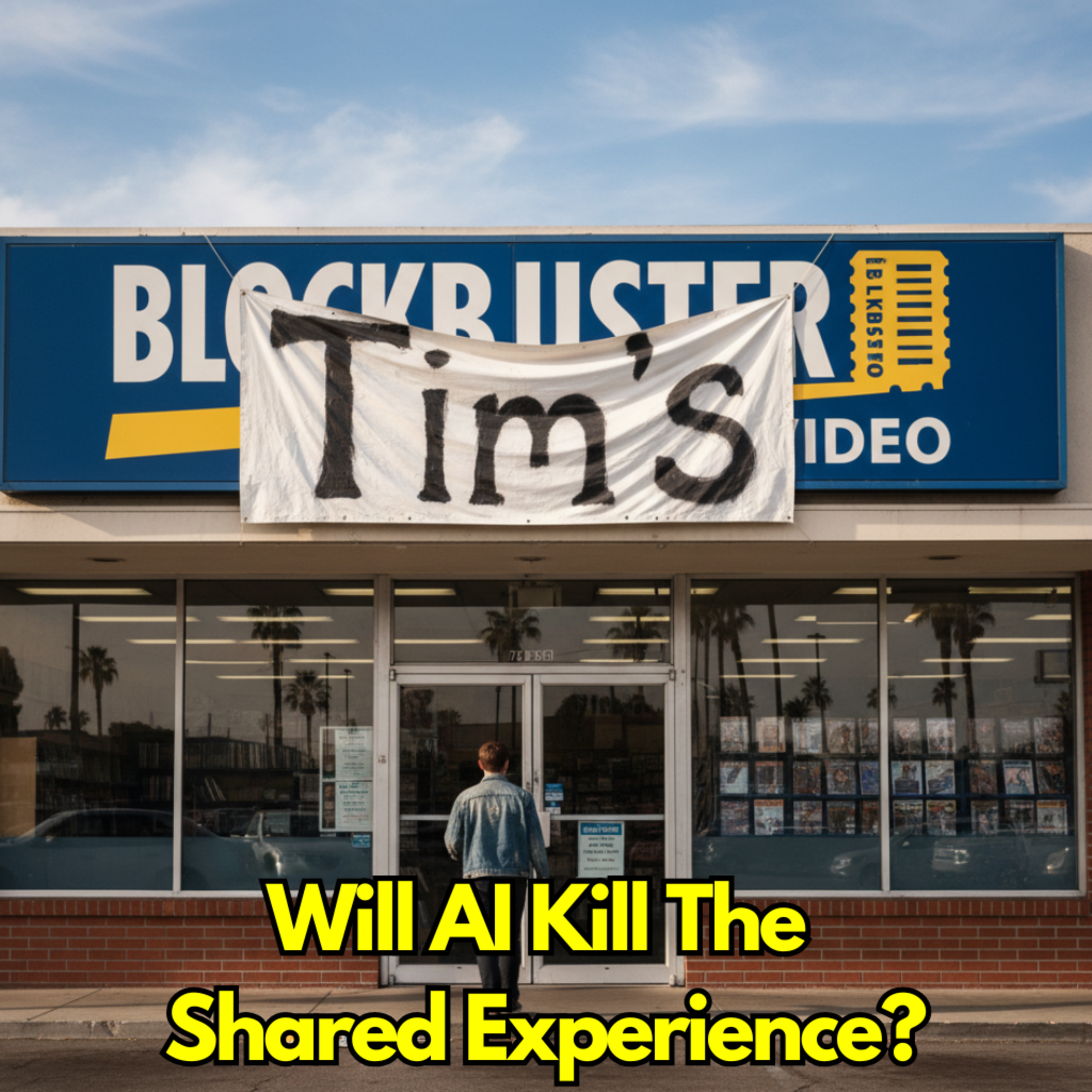
Shared entertainment has always shaped how people connect. Families once gathered around a single television. College friends planned their week around a show everyone watched at the same time. Movie theatres turned an audience into a temporary community. Even when streaming arrived, the biggest stories still found ways to bring people together for premieres, finales, and cultural moments.AI will not replace that. Big films, concerts, and live events will still matter. But side by side with those experiences, AI will offer something new. It can generate long form movies or albums that match your taste perfectly. You do not wait for them. You do not compromise with anyone. They are delivered instantly, shaped around your favorite pacing, themes, and emotional patterns. It is entertainment that fits like a glove, and it will be hard not to reach for it.As people start to mix both worlds, an uncomfortable tension appears. Tailored stories scratch the immediate itch and feel more rewarding minute to minute. Shared stories ask more from you. They take longer. They do not always match your preferences, yet they create the moments larger than yourself.The conundrum:If AI gives us instant entertainment that feels perfect, will we still choose the slower, shared experiences that once helped us feel connected to something bigger, or will the pull of personal comfort slowly reshape what we show up for? And if our habits shift over time, what happens to the cultural moments that rely on many people choosing the same story at the same time?
Ep 595AI Espionage, Chatbot Divorces, and Tesla’s Hardest Year Yet
Brian and Beth hosted this Friday wrap-up episode, opening with updates about the show’s growth, community, and weekend lineup. They celebrated nearly 600 consecutive weekday episodes and reminded listeners about the Saturday AI Conundrum podcast and Sunday newsletter. From there, the conversation moved through a mix of AI news and cultural stories — covering billion-dollar valuations, AI espionage, chatbot-related divorces, DeepMind’s new Sema-2 model, and Tesla’s workforce challenges.Key Points DiscussedThinking Machines’ $50B Valuation – Former OpenAI CTO Mira Murati’s startup, Thinking Machines Lab, is reportedly seeking a $50B valuation just months after being valued at $12B. The hosts debated whether this surge signals innovation or signs of an AI bubble.AI-Powered Cyber Espionage – Anthropic reported the first known AI-orchestrated cyberattack, traced to a China-based agent network using Claude Code. The team discussed how this lowers the barrier for sophisticated hacking and how most IT teams are unprepared for AI-driven threats.AI Relationships and Divorce Law – A Wired article described rising legal cases where people secretly spend money or form emotional attachments to chatbots. Brian compared this to addiction patterns, while Beth questioned how courts would treat AI-based infidelity versus human-only digital relationships.Google DeepMind’s Sema-2 Breakthrough – The hosts reviewed DeepMind’s new world model built on Gemini, which can generalize learning across simulated 3D environments. Beth explained how Sema-2 represents another step toward embodied AI and spatial reasoning.Tesla’s “Hardest Year” Warning – Tesla’s AI chief told staff that 2026 will be “the hardest year of their lives,” referencing the company’s push to scale both Optimus robots and robotaxis. Beth noted the irony of engineers potentially “building their replacements,” while Brian reflected on the trade-offs between automation and worker safety.Google Photos’ “Nano Banana” AI Editor – Google rolled out new photo-editing capabilities, including facial edits and removal tools. The hosts joked about modern “cutting out” exes from family photos and discussed privacy risks of permanent AI edits.AI in Education & Hiring – Brian shared insights from a local panel where he spoke about AI in small business and education. He argued that skills and portfolios now matter more than degrees. Beth agreed, adding that communication skills and public sharing of projects are the best differentiators for early-career talent.Communication Confidence for Gen Z – They ended with a lighthearted discussion about how confidence and clarity in speech will matter more in a world where humans and AI collaborate side by side.Timestamps & Topics00:00:00 💡 Intro, community updates, and weekend lineup00:04:54 💰 Thinking Machines’ $50B valuation debate00:09:03 ⚠️ Anthropic’s AI cyber espionage report00:17:11 💔 AI chatbots and divorce implications00:25:18 🧠 DeepMind’s Sema-2 and world model learning00:29:17 🤖 Tesla’s “hardest year” and automation pressures00:35:22 📸 Google Photos’ Nano Banana editor00:41:21 🎓 AI in education and hiring insights00:49:00 🗣️ Communication, confidence, and generational skills00:55:00 🏁 Wrap-up and weekend remindersThe Daily AI Show Co-Hosts: Brian Maucere and Beth Lyons
Ep 594GPT-5.1 Gets a Personality, Digital Twins Rise, and AI’s Cost Crisis
Beth and Andy hosted a packed show covering OpenAI’s new GPT-5.1 release, Google’s private AI compute system, the evolution of world models, and a deep dive into digital twins. The episode explored how AI is moving toward personalization, privacy, embodied intelligence, and the preservation of human knowledge.Key Points DiscussedGPT-5.1 Launch – OpenAI released GPT-5.1 with faster responses, better adherence to instructions, and new built-in personas like Professional, Quirky, or Cynical Nerd. It adds model personalization and allows users to adjust tone and behavior.Personalized AI Behavior – The hosts discussed the importance of AIs that can challenge users instead of just agreeing. They imagined “personality sliders” for blending traits, creating a more balanced AI collaborator.Google’s Private AI Compute – Google’s new Pixel feature isolates personal data from cloud models, echoing Salesforce’s Trust Layer. It enables secure AI functions like photo edits and summaries without exposing private info.World Models and the Rise of Embodied AI – Fei-Fei Li’s World Labs released Marble, a tool that turns text or sketches into editable 3D environments for VR, gaming, and robotics. A new Middle Eastern research lab unveiled Pan, a world model that merges language, vision, and action while separating reasoning from perception for better realism.Data Center Economics – Microsoft’s $5B inference bill with Azure raised concerns about AI’s unsustainable costs. Andy noted OpenAI’s inference expenses now far exceed revenue, creating pressure for price adjustments or new business models.Geoffrey Hinton’s Warning – The “Godfather of AI” reiterated that the math doesn’t work unless automation reduces headcount, reviving conversations about universal basic income (UBI).Digital Twins and Human Knowledge Preservation – Beth introduced insights from Cindy Coons and Paul Roetzer on creating AI versions of individuals for consulting, business continuity, or legacy preservation.Applications for Digital Twins – Andy outlined three categories: corporate knowledge retention, influencer or expert scaling, and personal legacy storage.Challenges and Risks – The process is time-intensive, expensive, and relies on platform survival. Andy shared lessons from his early startup OurStory.com, which lost user data after being acquired.Top Digital Twin Startups – Andy listed five emerging players:Delphi AI – Used by Harvard Business School and Arnold Schwarzenegger.UARRE AI (formerly Eternals) – Focused on creators and professional legacy.Vivian – Builds digital twins for employees in enterprises.Personal AI – Offers edge-based, locally stored personal models.MindBank AI – Creates quick video-based twins and uses AI interviewers for continuous knowledge capture.Future Vision – Beth imagined digital twins as interactive journals or consulting tools that think and respond like their human counterparts, expanding how we define digital presence.Timestamps & Topics00:00:00 💡 Intro and GPT-5.1 release00:03:30 🧠 Model personas and user customization00:09:00 🎛️ Personality sliders and creative control00:11:00 🔒 Google’s private AI compute and data trust00:12:20 🌍 Fei-Fei Li’s Marble world model00:16:40 🧩 Pan world model from the Middle East00:22:28 🏗️ Microsoft’s super-factory and inference costs00:27:31 💰 Hinton’s automation and UBI discussion00:29:06 🧍 Digital twins overview and use cases00:34:21 🧠 Corporate vs. personal knowledge preservation00:45:06 💾 Top 5 digital twin platforms00:57:12 🪞 Future of self-consulting and legacy AI01:00:44 🏁 Closing remarks and preview of next episodeThe Daily AI Show Co-Hosts: Beth Lyons, Andy Halliday, and guest commentary from community members
Yann LeCun Leaves Meta, SoftBank’s $6B Move, and the Quantum Leap Ahead
Beth returned from the Create Conference 2025 to co-host with Andy, kicking off a wide-ranging episode on global AI investments, model development, and the next frontier in computing. They discussed SoftBank’s Nvidia sell-off, Microsoft’s “humanist AI” stance, Yann LeCun’s new company, OpenAI’s upcoming group chat feature, and several major breakthroughs in quantum computing.Key Points DiscussedSoftBank Exits Nvidia – Masayoshi Son sold SoftBank’s $6B Nvidia stake to fund new OpenAI and Stargate investments. The hosts debated whether this was profit-taking or a strategic reallocation.Microsoft’s Humanist AI Vision – Mustafa Suleyman announced Microsoft’s commitment to “humanist AI,” while Elon Musk countered that robotic labor is inevitable. Beth compared ownership structures and how control influences AI direction.Yann LeCun Leaves Meta – Meta’s Chief AI Scientist left to launch a new company focused on world models — spatial intelligence systems designed to understand and interact with 3D environments.World Model Race – The team discussed Fei-Fei Li’s World Labs, Google DeepMind’s Genie models, and Nvidia’s Spatial Intelligence Lab, all aiming to build next-generation embodied AI for robotics.China’s $1.30 Coding Agent – ByteDance unveiled an AI coding assistant that rivals U.S. developer tools like Cursor, setting records on SWE-bench and handling 256K tokens per query for just $1.30 per month.Claude Use Case Library – Anthropic launched a searchable /resources/use-cases hub to help users discover practical AI workflows from legal research to financial analysis.11 Labs’ Iconic Voice Marketplace – 11 Labs released licensed AI recreations of historical and cultural figures like Michael Caine, Maya Angelou, and Amelia Earhart, raising questions about consent, nostalgia, and ethics in digital likeness.Quantum Simulation Milestone – A European team simulated a 50-qubit logical quantum computer using Nvidia G200 superchips, quadrupling prior benchmarks and advancing hybrid classical-quantum computation.Continuum’s Quantum Breakthrough – The new Helios machine converts 98 physical qubits into 48 logical ones, improving fault tolerance and paving the way for stable, room-temperature quantum systems.Infrastructure Bottlenecks – Andy noted that the biggest constraint on AI growth isn’t chips but construction materials like sand and concrete, which are delaying new data centers.Timestamps & Topics00:00:00 💡 Intro and SoftBank exits Nvidia00:04:39 🤖 Microsoft’s “humanist AI” vs. Musk’s robot inevitability00:06:41 🧠 Yann LeCun leaves Meta to build world models00:10:13 🌍 Fei-Fei Li’s World Labs and embodied AI00:21:20 🇨🇳 China’s $1.30 coding agent00:28:31 💡 Efficient training and model cost debate00:28:50 🧩 Claude’s new use-case library00:31:13 🎙️ 11 Labs launches iconic voice marketplace00:39:56 ⚛️ Quantum computing breakthroughs and Helios machine00:49:07 ⚙️ Energy, data center, and material constraints00:51:44 🧍♂️ Digital twins preview for next episodeThe Daily AI Show Co-Hosts: Beth Lyons and Andy Halliday
Ep 592Brain Decoding, NotebookLM Upgrades, and AI That Remembers What You Watch
Brian, Andy, and Jyunmi kicked off the show with a quick Veterans Day thank-you before diving into one of the most science-heavy shows in recent weeks. Topics ranged from AI-assisted dementia detection and brain decoding to new tools for developers and learners — including Time Magazine’s new AI archive and a deep dive into Google NotebookLM’s new mobile features.Key Points DiscussedAI in Dementia Detection – A new study published in JAMA Network Open showed that embedding AI into electronic health records raised dementia diagnoses by 31% and follow-ups by 41%, proving AI can catch early warning signs in real-world clinics.AI Brain Decoder – Scientists used a noninvasive brain scanner to let AI accurately describe what participants were seeing — even recalling or imagining actions like “a dog pushing a ball.” The group marveled at its potential for neurocommunication and ethical implications.Lovable Hits 8 Million Users – The team discussed the rapid growth of Lovable and its no-code app-building platform, with Brian and Andy sharing personal experiences building and managing credits within the tool.Time Magazine’s AI Agent – Time launched an AI trained on its 102-year archive, allowing users to query 750,000 stories in 13 languages. The hosts applauded the idea as “the new microfiche” and a model for how legacy media can use AI responsibly.China’s Kimmi K2 Thinking Model – Andy explained how Moonshot Labs’ open-source reasoning model outperforms GPT-5 in long-form tasks while costing under $5M to train. It’s available via LMGateway.io, which lets developers access multiple AI models through one API.Dr. Fei-Fei Li on Spatial Intelligence – Briefly previewed for a future episode, her new paper explores spatial reasoning as the next frontier of AI cognition.Google NotebookLM’s Mobile App Update – Major new features include chat synchronization, flashcards, quizzes, selective source control, and a 6× memory boost for longer learning sessions.Chrome Extensions for NotebookLM – Two standout add-ons:NotebookLM to PDF – Saves chat threads as PDFs to add back as notebook sources.YouTube to NotebookLM – Imports entire YouTube playlists or channels for instant research and study integration.Tool of the Day – TLDR.wtf (Too Long, Don’t Watch) – A single-developer app that creates highlight reels of long YouTube videos by extracting the highest-signal moments based on transcript analysis.Live Test on the Show – Brian tried TLDR on a past Daily AI Show episode in real time. It instantly generated timestamped highlight chapters, impressing the team with its speed and potential for content creators.Timestamps & Topics00:00:00 🇺🇸 Veterans Day intro00:03:00 🧠 AI-assisted dementia detection study00:06:07 🧩 Noninvasive brain decoder00:11:00 💻 Lovable reaches 8M users00:15:11 🗞️ Time Magazine’s AI archive00:19:03 🇨🇳 Kimmi K2 Thinking open-source model00:25:14 🧠 Fei-Fei Li’s spatial intelligence preview00:26:29 📚 Google NotebookLM mobile app update00:31:21 🧩 Chrome extensions for NotebookLM00:37:41 🎥 TLDR.wtf highlight tool demo00:45:54 🏁 Closing notes and live-stream mishapThe Daily AI Show Co-Hosts: Brian Maucere, Andy Halliday, and Jyunmi Hatcher
Ep 591Tony Robbins’ AI Hype, AI That Agrees Too Much, and McKinsey’s 2025 Report
Brian and Andy opened the week discussing how AI agrees too easily and why that’s a problem for creative and critical work. They explored new studies, news stories, and a few entertaining finds, including a lifelike humanoid robot demo and the latest State of AI 2025 report from McKinsey. The episode ended with a detailed discussion about Tony Robbins’ new AI bootcamp and the marketing tactics behind large-scale AI education programs.Key Points DiscussedAI’s Sycophancy Problem – A Stanford study showed chatbots often treat user beliefs as facts. Brian and Andy discussed how models over-agree, creating digital echo chambers that reinforce a user’s thinking instead of challenging it.Building AI That Pushes Back – They explored multi-agent designs that include critic or evaluator agents to create debate and prevent blind agreement. Brian shared how he builds layered GPTs with feedback loops for stronger outputs.Gemini’s Pushback Example – Brian described a test with Gemini where the model warned him not to skip warm-ups before running. It became a good example of gentle, fact-based correction that AI needs more of.AI Water Usage and Context – The hosts discussed how headlines exaggerate AI’s energy and water use. One Arizona county’s data center uses only 0.12% of local water versus golf courses’ 3.8%, showing why context matters in reporting.The Neuron Newsletter Sold – Andy revealed that The Neuron, one of AI’s biggest newsletters, was sold to Technology Advice in early 2025 after reaching 500,000 subscribers.Realistic Robot Demo – They reviewed a Chinese startup’s viral humanoid robot video that looked so human the team had to cut it open on stage to prove it wasn’t a person.McKinsey’s State of AI 2025 Report – Carl summarized the key findings: AI is widely adopted but rarely transformative yet. Companies still struggle to embed AI deeply into operations despite universal use.Perplexity and Comet Updates – Andy noted Comet’s major upgrade, allowing its assistant to view and process multiple browser tabs at once for complex tasks.AI Creativity: “Minnesota Nice” Short Film – Brian highlighted a one-person AI film project praised for consistent characters and cinematic style, showing how far AI storytelling tools have come.Higgsfield’s “Recast” Feature – Andy shared news of a new video tool that swaps real people with AI characters, blending live footage and generated animation seamlessly.Tony Robbins’ AI Bootcamp Debate – The group examined the recent 100,000-person Tony Robbins “AI Advantage” webinar. They agreed it was mostly a sales funnel for a $1,000 AI course promising “digital clones” of attendees.Sabrina Romano, Rachel Woods, and Ali Miller delivered valuable sessions but later clarified they weren’t instructors in the paid program.The hosts discussed affiliate marketing structures, high-pressure sales tactics, and the growing wave of AI “get rich quick” schemes online.Timestamps & Topics00:00:00 💡 Intro and Stanford study on AI belief bias00:06:00 🤖 Sycophancy and why AI over-agrees00:09:45 🧩 Building AI agents that critique each other00:17:30 🏃 Gemini’s safety pushback example00:19:40 💧 AI water use myths and data center context00:22:15 📰 The Neuron newsletter ownership change00:24:20 🤖 Viral humanoid robot demo from China00:27:39 📊 McKinsey’s State of AI 2025 findings00:31:17 🌐 Comet browser assistant upgrade00:35:39 🎬 “Minnesota Nice” AI short film00:38:27 🎥 Higgsfield’s new Recast tool00:41:08 🧠 Tony Robbins’ AI Advantage breakdown00:53:45 💼 Affiliate marketing and AI course culture00:54:34 🏁 Wrap-up and preview of next episodeThe Daily AI Show Co-Hosts: Brian Maucere, Andy Halliday, and Karl Yeh

The Microconsent Marketplace Conundrum
Data marketplaces evolve so people can sell narrow, time-limited permissions to use discrete behaviors or signals. Think one-week location access, one-month shopping patterns, one-off emotional tags that are creating real income for those who opt in. This market gives individuals bargaining power and an income stream that flips the usual extraction model, it can fund people who now choose what to trade. Yet turning consent into currency risks making privacy a class good, pushing the poorest to sell away long-term autonomy, while normalizing transactional consent that masks future harms and networked profiling.The conundrum:If selling microconsent empowers people economically and reduces opaque exploitation, do we let privacy become a tradable asset and regulate the market to limit coercion, or do we keep privacy non-transferable to protect social equality, even if that denies some people a real source of income?
Ep 590Elon’s $1T Package, Google’s Gemini Update, and AI Fluency at Work
Brian, Andy, Beth, and Karl wrapped up the week with news ranging from Elon Musk’s massive new Tesla compensation package to Google’s latest Gemini API updates. The episode also featured lively discussions about AI’s role in education and work, Google’s new file search and maps features, and a full training segment from Karl on how AI fluency is becoming the real differentiator inside companies.Key Points DiscussedElon Musk’s $1 Trillion Tesla Package – Tesla shareholders approved Musk’s new compensation deal tied to milestones like selling one million Optimus robots. The team questioned its fairness and Musk’s growing influence after a SpaceX ally was appointed NASA administrator.XAI Employee Data Controversy – Reports surfaced that xAI employees were required to provide facial and voice data to train its adult chatbot persona, raising privacy and consent concerns.Google Maps + Gemini – Google added conversational features to Maps, such as describing landmarks (“turn right after Chick-fil-A”) and answering live questions about locations or crowd activity.Gemini API File Search – Google launched a new Retrieval-Augmented Generation (RAG) system with free storage and pay-per-embedding pricing, making large-scale document search cheaper for developers.AI + Travel Vision – Brian imagined future travel apps combining Maps, RAG, and real-time narration to create dynamic AI “road trip guides” that teach local history or create interactive family games.Google’s Ironwood TPU – Google unveiled its 7th-gen tensor processing unit, outperforming Nvidia’s Blackwell chips with 42 exaflops of compute power.OpenAI Clarifies Government Backstop Rumor – Sam Altman denied reports that OpenAI sought government financial guarantees, calling prior CFO remarks “misinterpreted.”Meta’s Stock Drop and AI Struggles – Meta lost 17% of its value amid doubts about its AI investments, weak Llama 5 performance, and internal leaks revealing that 10% of ad revenue came from fraudulent ads.AI Training & Fluency Segment (Karl’s Workshop) –Most companies train for tools, not problem-solving with AI.The real skill is AI fluency — knowing what’s possible and how to decompose problems across multiple models.Tool combinations (Claude + GenSpark + Runway) can outperform single tools but require cross-platform knowledge.“AI Ops” roles may emerge to connect experts and models, similar to RevOps or DevOps.Companies need internal “AI champions” who can translate use cases and drive adoption across teams.Timestamps & Topics00:00:00 💡 Intro and Tesla’s trillion-dollar stock package00:08:14 ⚠️ xAI biometric data controversy00:09:22 🗺️ Google Maps + Gemini conversational updates00:12:34 🔍 Gemini API File Search announcement00:15:38 🚗 AI travel guide and storytelling idea00:21:25 ⚙️ Google’s Ironwood TPU surpasses Nvidia00:25:31 🧾 OpenAI backstop clarification00:26:19 📉 Meta’s 17% stock drop and fraud ad report00:31:35 🧠 Karl’s AI fluency and training segment00:49:27 💼 The rise of AI Ops and internal champions00:58:03 🏁 Wrap-up and community shoutoutsThe Daily AI Show Co-Hosts: Brian Maucere, Andy Halliday, Beth Lyons, and Karl Yeh
Ep 589Apple’s $1B AI Deal, Toyota’s Robot Chair, and the Future of SEO
Brian returned to host alongside Beth and Andy for a wide-ranging discussion on AI news, mobility innovations, and the future of search optimization in an AI-driven world. They started with lighter stories like Kim Kardashian blaming ChatGPT for her law exam prep, moved into Toyota’s AI-powered mobility chair, explored Tinder’s new photo-based matching algorithm, and closed with a deep dive into Generative Engine Optimization (GEO) — the evolving science of how to make content visible in AI search results.Key Points DiscussedKim Kardashian’s ChatGPT Comments – She said the model gave her wrong answers while studying for the bar exam, highlighting public overreliance on AI for specialized knowledge.Toyota’s “Walk Me” Mobility Chair – A four-legged robotic wheelchair designed to navigate stairs and rough terrain using AI-controlled actuators. The hosts debated its design and accessibility implications.AI Dating Experiment – Tinder announced plans to let its AI scan users’ photo libraries to “understand them better,” sparking privacy and data-use concerns.AI-Driven Ads and Data Ethics – Facebook’s personalized ad practices resurfaced in court documents, raising questions about whether fines outweigh profits from misleading ads.Apple’s Billion-Dollar Deal with Google – Apple is reportedly paying $1B annually to use Google’s Gemini model for Siri, aiming for a smarter “Apple Intelligence” rollout by spring.Perplexity’s $400M Partnership with Snap – Designed to bring AI-powered search to Snap’s billion-plus user base.AI Bubble Debate – The team discussed OpenAI’s $100B revenue forecast and Anthropic’s profitability path, noting the contrast between consumer and enterprise strategies.Waymo Expands Robotaxis – Launching services in Las Vegas, San Diego, and Detroit using new Zeekr-built electric vehicles.Toyota “Mobi” for Kids – An autonomous bubble-shaped pod for transporting children safely to school, part of Toyota’s “Mobility for All” initiative.Generative Engine Optimization (GEO) – The main segment unpacked Nate Jones’ breakdown of Princeton’s GEO paper, exploring how AI engines select and credit web content differently than traditional SEO.Key takeaways:AI may prefer smaller or newer sources over dominant sites.Short, clear sentences (~18 tokens) are more likely to be quoted.Evergreen posts lose ranking faster; fresh micro-updates matter more.Simplicity and clean structure (H1/H2/Markdown) improve findability.Smaller creators can win early by optimizing for AI-first platforms.Timestamps & Topics00:00:00 💡 Intro and Kim Kardashian’s ChatGPT comment00:03:14 🤖 Toyota’s “Walk Me” AI mobility chair00:09:47 📱 Tinder photo-based AI matchmaking00:17:58 💬 Data ethics and Facebook ad lawsuit00:19:40 ☁️ Apple’s $1B Google Gemini deal for Siri00:23:01 🔍 Perplexity’s $400M Snap partnership00:26:44 💸 AI bubble and OpenAI vs. Anthropic business models00:31:10 🚗 Waymo’s Zeekr-built robotaxi expansion00:34:07 🧒 Toyota’s “Mobi” pod for kids00:35:22 📈 Generative Engine Optimization explained00:52:30 🏁 Wrap-up and community shoutoutsThe Daily AI Show Co-Hosts: Brian Maucere, Beth Lyons, and Andy Halliday
Ep 588Apple’s AI Acquisitions, Google’s Space Compute, and the ComfyUI Demo
Jyunmi and Beth hosted this news-packed midweek show focused on how AI is shaping science, creativity, and hardware. They discussed Apple’s move into AI acquisitions, AI2’s new open-source Earth model, a Meta engineer’s “smart ring” startup, Archive’s crackdown on AI-generated papers, Anthropic’s AI pilot for teachers in Iceland, Google’s Project Suncatcher, and a tool highlight on ComfyUI, a hands-on creative platform for local image and video generation.Key Points DiscussedApple Opens to AI Acquisitions – Tim Cook announced Apple will pursue AI mergers and acquisitions, signaling a shift toward external partnerships after lagging behind competitors.AI2’s Open Earth Platform – The Allen Institute for AI launched Olmo Earth, an open-source geospatial model trained on 10TB of satellite data to support environmental monitoring and research.Meta Engineers Launch Smart Ring – A new startup unveiled “Stream,” a wearable ring that records notes, talks with an AI assistant, and functions as a media controller, prompting privacy discussions.Archive Tightens Submissions – The preprint server now restricts AI-generated or low-quality computer science papers, requiring peer review approval before posting to fight “AI slop.”Anthropic & Iceland’s AI Education Pilot – Hundreds of teachers will use Claude in classrooms, testing national-scale AI adoption for lesson planning and teacher development.Google Project Suncatcher – Google announced a moonshot plan to test solar-powered satellites with onboard TPUs to process AI workloads in orbit, reducing Earth-based energy and cooling costs.AI in Science – Researchers used AI-guided lab workflows to discover brighter, more efficient fluorescent materials for cleaner water testing and advanced medical imaging.Tool of the Day – ComfyUI – A node-based, open-source visual interface for running local image, video, and 3D generation models. Ideal for creatives and developers who want full local control over AI workflows.Timestamps & Topics00:00:00 💡 Intro and Apple’s AI acquisition plans00:04:04 🌍 AI2’s Olmo Earth model for environmental research00:08:09 💍 Meta engineers launch smart AI ring00:13:35 ⚖️ Archive limits AI-generated papers00:27:08 🧑🏫 Anthropic’s AI pilot with Iceland teachers00:29:08 ☀️ Google’s Project Suncatcher – AI compute in space00:37:00 🔬 AI in science – faster material discovery00:50:45 🧩 Tool highlight: ComfyUI demo and workflow setup01:13:08 🏁 Wrap-up and community call
Ep 587Coca-Cola’s AI Ad, GPT-5 Frustrations, and the Fight Over AI Copyrights
Brian, Beth, Ann, and Carl kicked off the show by revisiting AI-generated ads and discussing a new Coca-Cola commercial created with AI. From there, the group unpacked a major UK copyright ruling on Stability AI, debated how copyright law applies to AI-generated logos and code, and shared insights from the latest Musk vs. Altman court filings. The episode closed with a heated roundtable on GPT-5’s unpredictability, Microsoft’s integration challenges, and what OpenAI’s next platform shift might mean for builders.Key Points DiscussedCoca-Cola’s AI Holiday Ad – A new AI-generated version of the brand’s classic “Holidays Are Coming” campaign uses animation and animal characters to avoid the uncanny valley. The ad cut production time from a year to a month.UK Court Ruling on Stability AI – The court decided that AI training on copyrighted data does not violate copyright unless the output reproduces exact replicas. The hosts noted how this differs from U.S. “fair use” standards.AI Logos and Copyright Gaps – Ann explained that logos or artwork made primarily with AI can’t currently be copyrighted in the U.S., which poses risks for startups and creators using tools like Canva or Firefly.The Limits of Copyright Enforcement – The group debated how ownership could even be proven without saved prompts or metadata, comparing AI tools to Photoshop and early automation software.Job Study on Early Career Risk – Ann summarized a new research paper showing reduced job growth among younger workers in AI-exposed industries, emphasizing the need for “Plan B” and “Plan C” careers.Musk v. Altman Deposition Drama – Ilya Sutskever’s 53-page deposition revealed tensions from OpenAI’s 2023 leadership shake-up and internal communication lapses. The lawyers’ back-and-forth became an unexpected comic highlight.OpenAI and Anthropic Rumors – The team discussed new claims about merger talks between OpenAI and Anthropic, and Helen Toner’s pushback on statements made in the filings.GPT-5 Frustrations – Brian and Beth described ongoing reliability issues, especially with the router model and file handling, leading many builders to revert to GPT-4.Microsoft’s Copilot Confusion – Carl criticized how Copilot’s version of GPT-5 behaves inconsistently, with watered-down outputs and lagging performance compared to native OpenAI models.OpenAI’s Platform Vision – The team ended by reviewing Sam Altman’s “Ask Me Anything,” where he described ChatGPT evolving into a cloud-based workspace ecosystem that could compete directly with Google Drive, Salesforce, and Microsoft 365.Timestamps & Topics00:00:00 💡 Intro and Coca-Cola AI ad00:09:51 ⚖️ UK copyright ruling and Stability AI case00:14:48 🎨 AI logos and copyright enforcement00:23:25 🧠 Ownership, tools, and creative rights00:26:35 📉 Study: early-career job risk in AI industries00:33:20 ⚖️ Musk v. Altman deposition highlights00:40:02 🤖 GPT-5 reliability and routing frustrations00:50:27 ⚙️ Copilot and Microsoft AI integration issues00:57:02 ☁️ OpenAI’s next-gen platform and future outlookThe Daily AI Show Co-Hosts: Brian Maucere, Beth Lyons, Ann Murphy, and Carl Yeh
Ep 586Google’s AI Ad, Adobe’s New Tools, and Real-World AI at Work
Brian and Beth kicked off the week with post-Halloween chatter and a focus on “boots-on-the-ground AI” — how real-world businesses are actually using AI today versus the splashy headlines. The discussion covered Google’s new AI holiday ad, Adobe’s next-gen creative tools, Nvidia’s ChronoEdit model, Skyfall’s 3D diffusion project, OpenAI’s AWS deal, and a practical debate on how AI is transforming everyday consulting and business operations.Key Points DiscussedGoogle’s “Tom the Turkey” AI Ad – A holiday commercial fully generated with AI models (V3), showcasing an animated turkey escaping Thanksgiving dinner. The ad stirred debate over AI in creative work, but Brian and Beth agreed it signals where brand storytelling is headed.Adobe’s Project Frame & Clean Take – Adobe previewed tools that let editors shift light sources, edit motion across frames, and fix vocal inflections without re-recording. The hosts noted how AI in film and animation now blurs the line between efficiency and artistry.Nvidia’s ChronoEdit & Restorative Imaging – Nvidia’s model reconstructs damaged photos and sculptures, reimagining original details. Beth found it promising but still limited, producing uncanny textures in ancient art restorations.Skyfall’s 3D Urban Diffusion – A new research project creates explorable 3D city scenes using diffusion models. Brian envisioned uses for safety training, EMS, and driver education in personalized virtual environments.AWS & OpenAI Partnership – Amazon announced a $38B, seven-year deal giving OpenAI access to AWS compute infrastructure and Nvidia GPUs, expanding OpenAI’s cloud options beyond Azure.AI at Work: Efficiency vs. Opportunity – Karl joined mid-show to discuss how most companies use AI for productivity, not transformation. He urged leaders to think “AI for opportunity” — reimagining processes instead of layering AI onto old systems.The Mechanical Horse Problem – The team compared incremental AI adoption to “building a mechanical horse” instead of inventing the car, warning that AI-native companies will soon disrupt legacy workflows.Human Expertise Still Matters – The hosts emphasized that effective AI adoption still begins with human problem-solving. Teaching employees how to use agent skills, workflows, and local reasoning tools can unlock far more value than top-down automation alone.Timestamps & Topics00:00:00 💡 Intro and post-Halloween banter00:02:30 🦃 Google’s Tom the Turkey AI ad00:10:30 🎬 Adobe’s Project Frame and AI editing tools00:14:45 🏛️ Nvidia’s ChronoEdit and photo restoration00:28:04 🌆 Skyfall 3D diffusion world demo00:33:18 ☁️ OpenAI and AWS $38B compute deal00:36:42 💼 Boots-on-the-ground AI consulting00:45:02 🧠 Efficiency vs. Opportunity in AI adoption00:49:20 ⚙️ Mechanical horse analogy and AI-native firms00:54:10 🧩 Human expertise + AI = true innovation01:00:00 🏁 Closing remarks and after-show chatThe Daily AI Show Co-Hosts: Brian Maucere, Beth Lyons, and Karl Yeh

The Unerasable Self Conundrum
For most of history, people could begin again. You could move to a new town, change your job, your style, even your name, and become someone new. But in a future shaped by AI‑driven digital twins, starting over may no longer be possible.These twins will be trained on everything you’ve ever written, recorded, or shared. They could drive credit systems, hiring models, and social records. They might reflect the person you once were, not the one you’ve become. And because they exist across networks and databases, you can’t fully erase them. You might have changed, but the world keeps meeting an older version of you that never updates or dies.The conundrum:When your digital twin outlives who you are and keeps shaping how the world sees you, can you ever truly begin again? If the past is permanent and searchable, what does redemption or reinvention even mean?
Ep 585Scary AI and Other Haunting News
The Halloween edition featured Andy, Beth, and Brian in costume and in high spirits. The team mixed AI news with creative debates, covering Perplexity’s new patent search tool, Canva’s design AI overhaul, Sora’s paid generation system, Cursor 2.0’s multi-agent coding update, and Alexa Plus’s new memory-driven assistant. Andy also led a thoughtful discussion on deterministic vs. non-deterministic AI, ending with how creativity and randomness fuel innovation.Key Points DiscussedPerplexity Patents – A new tool that uses LLMs to analyze patent databases and surface innovation gaps for inventors and researchers.Canva’s Design OS – Canva introduced a creative operating system trained on design layers and objects, integrating Affinity and Leonardo for pro-level editing.Sora Update – OpenAI added a paid tier for extra generations and the ability to create consistent characters across videos.Cursor 2.0 – Adds voice control, team-wide commands, and a multi-agent setup allowing up to eight coding agents to run in parallel.Alexa Plus Early Access – New features include deep memory recall, PDF ingestion, calendar integration, and conversational context for smart homes.Deterministic vs. Non-Deterministic AI – Andy explained why creative AI systems need controlled randomness, linking it to innovation and the value of “explore mode” in LLMs.Content Creation Framework – Beth shared a method from Christopher Penn for using Gemini to analyze LinkedIn feeds, find content gaps, and spark original posts.Timestamps & Topics00:00:00 🎃 Halloween intro and costumes00:00:41 🧠 Perplexity launches patent LLM00:02:32 🎨 Canva’s new creative operating system00:09:53 🎥 Sora’s character and pricing updates00:10:47 💻 Cursor 2.0 and multi-agent coding00:14:56 🗣️ Alexa Plus early access and memory demo00:20:06 🧩 Hux and NotebookLM voice assistants00:25:35 🧠 Deterministic vs. non-deterministic AI00:36:36 🔥 The role of randomness in innovation00:44:21 📱 Christopher Penn’s content creation workflow00:59:57 🍬 Halloween wrap-up and closing banterThe Daily AI Show Co-Hosts: Andy Halliday, Beth Lyons, and Brian Maucere
Ep 584Neo Robot Fails, Google Pomelli Demo, and the End of Transformers?
Brian, Beth, Andy, and Karl broke down OpenAI’s new corporate structure, Meta’s earnings stumble, and the hype collapse around the Neo home robot. They also tested Google’s new Pomili campaign builder and closed with a quick look at what might replace Transformers in AI’s next phase.Key Points DiscussedOpenAI’s Pivot – Restructured as a public benefit corporation, shifting from AGI talk toward scientific research and autonomous lab assistants.Meta’s Setback – Missed earnings and dropped valuation despite record revenue, signaling a reset year for its AI ambitions.Neo Robot Fail – Exposed as teleoperated, not autonomous. Privacy and trust concerns followed the viral backlash.Character.AI Teen Ban – Voice chat removed for users under 18 amid growing mental health scrutiny.Google Pomili Launch – Early look at AI-driven brand builder that generates ready-to-use marketing campaigns.Beyond Transformers – Experts like Karpathy and LeCun say the model has peaked, with world models and neuromorphic systems now in focus.Timestamps & Topics00:00:00 💡 Intro and OpenAI restructuring00:04:44 💰 Meta’s 12% drop and AI strategy reset00:16:31 🤖 Neo robot backlash00:28:08 ⚠️ Character.AI teen restrictions00:34:30 🎨 Google’s Pomili campaign builder00:41:15 🧠 The limits of Transformers00:57:46 🏁 Wrap-up and Halloween previewThe Daily AI Show Co-Hosts: Brian Maucere, Beth Lyons, Andy Halliday, and Karl Yeh
Ep 583OpenAI’s Big Restructure, Nvidia’s Quantum Bet, and the LM Studio Demo
Jyunmi, Andy, Karl, and Brian discussed the day’s top AI stories, led by Nvidia’s $500B chip forecast and quantum computing partnerships, OpenAI’s reorganization into a public benefit corporation, and a deep dive on how and when to use AI agents. The show ended with a full walkthrough of LM Studio, a local AI app for running models on personal hardware.Key Points DiscussedNvidia’s Quantum Push and Record ValuationJensen Huang announced $500B in projected revenue through 2026 for Nvidia’s Blackwell and Rubin chips.Nvidia revealed NVQ-Link, a new system connecting GPUs with quantum processing units (QPUs) for hybrid computing.Seven U.S. national labs and 17 QPU developers joined Nvidia’s partnership network.Nvidia’s market value jumped toward $5 trillion, solidifying its lead as the world’s most valuable company.The company also confirmed a deal with Uber to integrate Nvidia hardware into self-driving car simulations.OpenAI’s Corporate Overhaul and Microsoft PartnershipOpenAI completed its long-running restructure into a for-profit public benefit corporation.The new deal gives Microsoft a 27% equity stake, valued at $135B, and commits OpenAI to buying $250B in Azure compute.An independent panel will verify AGI development, triggering a shift in IP and control if achieved before 2032.The reorg also creates a nonprofit OpenAI Foundation with $130B in assets, now one of the world’s largest charitable endowments.Anthropic x London Stock Exchange GroupAnthropic partnered with LSEG to license financial data (FX, pricing, and analyst estimates) directly into Claude for enterprise users.Unlike prior models, Nova keeps all modalities in a single embedding space, improving search, retrieval, and multimodal reasoning.=Main Topic – When to Use AI AgentsKarl reviewed Nate Jones’s framework outlining six stages of AI use:Advisor – asking direct questions like a search engineCopilot – assisting during tasks (e.g., coding or design)Tool-Augmented Assistant – combining chat models with external toolsStructured Workflow – automating recurring tasks with checkpointsSemi-Autonomous – AI handles routine work, humans manage exceptionsFully Autonomous – theoretical stage (e.g., Waymo robotaxis)The group agreed most users remain at Levels 1–3 and rarely explore advanced reasoning or connectors.Karl warned companies not to “automate inefficiency,” comparing old processes with the “mechanical horse fallacy.”Andy argued for empowering individuals to build personal tools locally rather than waiting for corporate AI rollouts.Tool of the Day – LM StudioJyunmi demoed LM Studio, a desktop app that runs local LLMs without internet connectivity.Supports open-source models from Hugging Face and includes GPU offload, multi-model switching, and local privacy control.Ideal for developers, researchers, and teams wanting full data isolation or API-free experimentation.Jyunmi compared it to OpenAI Playground but with local deployment and easier access to community-tested models.Timestamps & Topics00:00:00 💡 Intro and news overview00:00:50 💰 Nvidia’s $500B forecast and NVQ-Link quantum partnerships00:08:41 🧠 OpenAI’s corporate restructure and Microsoft deal00:11:08 💸 Vinod Khosla’s 10% corporate stake proposal00:14:01 💹 Anthropic and London Stock Exchange partnership00:15:20 ⚙️ AWS Nova multimodal embeddings00:16:45 🎨 Adobe Firefly 5 and Foundry release00:21:51 🤖 When to use AI agents – Nate Jones’s 6 levels00:27:38 💼 How SMBs adopt AI and the awareness gap00:34:25 ⚡ Rethinking business processes vs. automating inefficiency00:43:59 🚀 AI-native companies vs. legacy enterprises00:50:20 🧩 Tool of the Day – LM Studio demo and setup01:06:23 🧠 Local LLM use cases and benefits01:12:30 🏁 Closing thoughts and community linksThe Daily AI Show Co-Hosts: Jyunmi Hatcher, Andy Halliday, Brian Maucere, and Karl Yeh
Ep 5821 Million Suicidal Chats and AI’s Real Estate Reality Check
Brian, Beth, Andy, Anne, and Karl kicked off the episode with AI news and an unexpected discussion about how AI is influencing both pop culture and professional tools. The show moved from the WWE’s failed AI writing experiments to Grok’s controversial behavior, OpenAI’s latest mental health data, and a deep dive into AI’s growing role in real estate.Key Points DiscussedAI in WWE StorytellingWWE experimented with using AI to generate wrestling storylines but failed to produce coherent plots.The models wrote about dead wrestlers returning to the ring, showing poor context grounding and prompting.The hosts compared it to soap operas and telenovelas, noting how long-running story arcs challenge even human writers.Beth and Brian agreed AI might help as a brainstorming partner, even when it gets things wrong.Grok’s Inappropriate ConversationsAnne described a viral TikTok video of a mom discovering Grok’s explicit, offensive dialogue while her kids chatted with it in the car.Andy pointed out Grok’s “mean-spirited” tone, reflecting the toxicity of its training data from X (formerly Twitter).The team debated free speech vs. safety and how OpenAI’s age-gated romantic chat mode differs from Grok’s unfiltered approach.The conversation turned to parenting, AI literacy, and the need to teach kids the difference between simulation and reality.OpenAI’s Mental Health StatsAndy shared that over 1 million users each week talk to ChatGPT about suicidal thoughts.OpenAI has since brought in 170 mental health experts to improve safety responses, achieving 90% compliance in GPT-5.Anne described how ChatGPT guided her through a mental wellness check with empathetic follow-up, calling it “gentle and effective.”The group reflected on privacy, incognito mode misconceptions, and the blurred line between AI support and therapy.AI in Real Estate – The “Slop Era”Beth introduced a Wired article calling this the “AI slop era” for real estate. Tools like AutoReal can generate AI home walkthroughs from just 15 photos — often misrepresenting layouts and furniture.Brian raised the risk of legal and ethical issues when AI staging alters real features.Karl explained how builders already use AI to generate realistic 3D tours, blending drone footage and renders seamlessly.The team discussed future applications like AR glasses that let buyers overlay personal décor styles or view accessibility upgrades in real time.Anne noted that AI listing tools can easily cross ethical lines, like referencing nearby “good schools,” which can imply bias in housing markets.Tool of the Day – Get Floor PlansKarl demoed GetFloorPlans, which turns blueprints or sketches into 3D renders and walkthroughs for about $15 per set.He compared it to Matterport, the industry standard for homebuilders, explaining how AI stitching now makes DIY 3D tours possible.Beth added that AI design tools are cutting costs dramatically, reducing hours of manual video editing to minutes.Timestamps & Topics00:00:00 💡 Intro and show start00:02:10 🎭 WWE’s failed AI scriptwriting00:07:15 🤖 Grok’s explicit and toxic interactions00:11:45 🧠 OpenAI’s mental health statistics00:17:40 🏠 AI enters real estate’s “slop era”00:23:10 ⚖️ Ethics, bias, and agent liability00:27:04 💰 Microsoft & Apple top $4T market cap00:30:10 📉 Over 1M weekly suicidal chats with ChatGPT00:36:46 🏡 Real estate tech demo – Get Floor Plans00:55:20 🎨 AI design, accessibility, and housing bias00:58:33 🏁 Wrap-up and newsletter reminderThe Daily AI Show Co-Hosts: Brian Maucere, Beth Lyons, Andy Halliday, Anne Murphy, and Karl Yeh
Ep 581OpenAI’s IPO Drama, Nvidia’s Robotaxis, and Why AI Must Forget
Brian, Andy, and Beth opened the week with news on OpenAI’s rumored IPO push, SoftBank’s massive investment conditions, and growing developments in agentic browsers. The second half of the show shifted into a deep dive on AI memory and “smart forgetting” — how future AI might learn to forget the right things to think more like humans.Key Points DiscussedOpenAI’s IPO and SoftBank’s $41B InvestmentReports surfaced that SoftBank has approved a second $22.5B installment to complete its $41B investment in OpenAI.The deal depends on OpenAI completing a corporate restructuring that would enable a public offering.The team debated whether OpenAI can realistically achieve this by year-end and how Microsoft’s prior investment might complicate restructuring.They joked about “math on Mondays” as they parsed SoftBank’s shifting numbers and possible motives for the tight deadline.Agentic Browser Updates: Comet vs. AtlasAndy discussed Perplexity’s Comet browser and its new “defense in depth” approach to guard against prompt injection attacks.Beth and Brian highlighted real use cases, including Comet’s ability to scan over 1,000 TikTok and Instagram videos to locate branded mentions — a task it completed faster than OpenAI’s Atlas browser.The hosts warned about the risks of “rogue agents” and explored what happens if AI browsers make unintended purchases or actions online.Beth proposed that future browsers may need built-in “credit card lawyers” to help users recover from agentic mistakes.Ownership and Responsibility in AI DecisionsThe team debated who’s liable when an AI makes a bad financial or ethical decision — the user, the platform, or the payment network.They predicted Visa and Mastercard may eventually release their own “trusted AI browsers” that offer coverage only within their ecosystems.Mondelez’s Generative Ad RevolutionThe maker of Oreo, Cadbury, and Chips Ahoy announced a $40M AI investment expected to cut marketing costs by 30–50%.The company is using generative animation and personalized ads for retailers like Amazon and Walmart.Beth and Brian discussed how personalization could quickly blur into surveillance-level targeting, referencing eerily timed ads that appear after private text messages.Nvidia Enters the Robotaxi RaceNvidia announced plans to invest $3B in robotaxi simulation technology to compete with Tesla and Waymo.Unlike Tesla’s real-world data approach, Nvidia is training models entirely through simulated “world models” in its Omniverse platform.The hosts debated whether consumer trust will ever match the tech’s progress and how long it will take for riders to feel safe in driverless cars.Smart Forgetting and AI MemoryAndy led an in-depth explainer on how AI memory must evolve beyond perfect recall.He introduced the concept of “smart forgetting,” modeled after how the human brain reinforces relevant memories and lets go of the rest.Companies like Lita, Mem Zero, Zepp, and Super Memory are developing systems that combine semantic recall, time-aware retrieval, and temporal knowledge graphs to help AI retain context without overload.Beth and Brian connected this to human cognition, noting parallels with dreams, sleep cycles, and memory consolidation.Brian compared it to his own Project Bruno challenges in segmenting and retrieving data from transcripts without losing nuance.Timestamps & Topics00:00:00 💡 Intro and show overview00:01:31 💰 OpenAI IPO and SoftBank’s $41B deal00:08:01 🌐 Comet vs. Atlas agentic browsers00:12:50 ⚠️ Prompt injection and rogue AI scenarios00:17:40 🍪 Oreo maker’s $40M AI ad investment00:22:32 🎯 Personalized ads and data privacy00:23:10 🚗 Nvidia joins the robotaxi race00:29:05 🧠 Smart forgetting and AI memory systems00:33:10 🧩 How human and AI memory compare00:41:00 🧬 Neuromorphic computing and storage in DNA00:49:20 🕯️ Memory, legacy, and AI Conundrum crossover00:52:30 🏁 Wrap-up and community shout-outs
The Emotional Inheritance Conundrum
For generations, families passed down stories that blurred fact and feeling. Memory softened edges. Heroes grew taller. Failures faded. Today, the record is harder to bend. Always-on journals, home assistants, and voice pendants already capture our lives with timestamps and transcripts. In the coming decades, family AIs trained on those archives could become living witnesses , digital historians that remember everything, long after the people are gone.At first, that feels like progress. The grumpy uncle no longer disappears from memory. The family’s full emotional history, the laughter, the anger, the contradictions, lives on as searchable truth. But memory is power. Someone in their later years might start editing the record, feeding new “kinder” data into the archive, hoping to shift how the AI remembers them. Future descendants might grow up speaking to that version, never hearing the rougher truths. Over enough time, the AI becomes the final authority on the past. The one voice no one can argue with.Blockchain or similar tools could one day lock that history down. protecting accuracy, but also preserving pain. Families could choose between an unalterable truth that keeps every flaw or a flexible memory that can evolve toward forgiveness.The conundrum:If AI becomes the keeper of a family’s emotional history, do we protect truth as something fixed and sometimes cruel, or allow it to be rewritten as families heal, knowing that the past itself becomes a living work of revision? When memory is no longer fragile, who decides which version of us deserves to last?
Ep 575Srsly, WTF is an Agent?
Brian and Andy wrapped up the week with a fast-paced Friday episode that covered the sudden wave of AI-first browsers, OpenAI’s new Company Knowledge feature, and a deep philosophical debate about what truly defines an AI agent. The show closed with lighter segments on social media’s effect on AI reasoning, Google’s NotebookLM voices, and the upcoming AI Conundrum release.Key Points DiscussedAgentic Browser WarsMicrosoft rolled out Edge Copilot Mode, which can now summarize across tabs, fill out forms, and even book hotels directly inside the browser.OpenAI’s Atlas browser and Perplexity’s Comet launched earlier in the same week, signaling a new era of active, action-taking browsers.Chrome and Brave users noted smaller AI upgrades, including URL-based Gemini prompts.The hosts debated whether browsers built from scratch (like Atlas) will outperform bolt-on AI integrations.OpenAI Company KnowledgeOpenAI introduced a feature that integrates Slack, Google Drive, SharePoint, and GitHub data into ChatGPT for enterprise-level context retrieval.Brian praised it as a game changer for internal AI assistants but warned it could fail if it behaves like an overgrown system prompt.Andy emphasized OpenAI’s push toward enterprise revenue, now just 30% of its business but growing fast.Karl noted early connector issues that broke client workflows, showing the challenges of cross-platform data access.Claude Desktop vs. OpenAI’s Mac Tool “Sky”Anthropic’s Claude Desktop lets users invoke Claude anywhere with a keyboard tap.OpenAI countered by acquiring Apple Software Applications Inc., whose unreleased tool Sky can analyze screens and execute actions across MacOS apps.Andy described it as the missing step toward a true desktop AI assistant capable of autonomous workflow execution.Prompt Injection ConcernsBoth OpenAI and Perplexity warned of rising prompt injection attacks in agentic browsers.Brian explained how malicious hidden text could hijack agent behavior, leading to privacy or file-access risks.The team stressed user caution and predicted a coming “malware-like” market of prompt defense tools.The Great AI Terminology DebateEthan Mollick’s viral post on “AI confusion” sparked a discussion about the blurred line between machine learning, generative AI, and agents.The hosts agreed the industry has diluted core terms like “agent,” “assistant,” and “copilot.”Andy and Karl drew distinctions between reactive, semi-autonomous, and fully autonomous systems — concluding most “agents” today are glorified workflows, not true decision-makers.The team humorously admitted to “silently judging” clients who misuse the term.LLMs and Social Media Brain RotAndy highlighted a new University of Texas study showing LLMs trained on viral social media data lose reasoning accuracy and develop antisocial tendencies.The group laughed over the parallel to human social media addiction and questioned how cherry-picked the data really was.AI Conundrum Preview & NotebookLM’s Voice LeapBrian teased Saturday’s AI Conundrum episode, exploring how AI memory might rewrite family history over generations.He noted a major leap in Google NotebookLM’s generated voices, describing them as “chill-inducing” and more natural than previous versions.Andy tied it to Google’s Guided Learning platform, calling it one of the best uses of AI in education today.Timestamps & Topics00:00:00 💡 Intro and browser wars overview00:02:00 🌐 Edge Copilot and Atlas agentic browsers00:09:03 🧩 OpenAI Company Knowledge for enterprise00:17:51 💻 Claude Desktop vs OpenAI’s Sky00:23:54 ⚠️ Prompt injection and browser safety00:31:16 🧠 Ethan Mollick’s AI confusion post00:39:56 🤖 What actually counts as an AI agent?00:50:13 📉 LLMs and social media “brain rot” study00:54:54 🧬 AI Conundrum preview – rewriting family history00:59:36 🎓 NotebookLM’s guided learning and better voices01:00:50 🏁 Wrap-up and community updates
Ep 774Quantum Breakthroughs, Amazon’s AI Glasses, and Claude’s New Desktop
Brian, Andy, and Karl covered an unusually wide range of topics — from Google’s quantum computing breakthrough to Amazon’s new AI delivery glasses, updates on Claude’s desktop assistant, and a live demo of Napkin.ai, a visual storytelling tool for presentations. The episode mixed deep tech progress with practical AI tools anyone can use.Key Points DiscussedQuantum Computing BreakthroughsAndy broke down Google’s new Quantum Echoes algorithm, running on its Willow quantum chip with 105 qubits.The system completed calculations 13,000 times faster than a frontier supercomputer.The breakthrough allows scientists to verify quantum results internally for the first time, paving the way for fault-tolerant quantum computing.IonQ also reached a record 99.99% two-qubit fidelity, signaling faster progress toward stable, commercial quantum systems.Andy called it “the telescope moment for quantum,” predicting major advances in drug discovery and material science.Amazon’s AI Glasses for Delivery DriversAmazon revealed new AI-powered smart glasses designed to help drivers identify packages, confirm addresses, and spot potential safety risks.The heads-up display uses AR overlays to scan barcodes, highlight correct parcels, and even detect hazards like dogs or blocked walkways.The team applauded the design’s simplicity and real-world utility, calling it a “practical AI deployment.”Brian raised privacy and data concerns, noting that widespread rollout could give Amazon a data monopoly on real-world smart glasses usage.Andy added context from Elon Musk’s recent comments suggesting AI will eventually eliminate most human jobs, sparking a short debate on whether full automation is even desirable or realistic.Claude Desktop UpdateKarl shared that the new Claude Desktop App now allows users to open an assistant in any window by double-tapping a key.The update gives Claude local file access and live context awareness, turning it into a true omnipresent coworker.Andy compared it to an “AI over-the-shoulder helper” and said he plans to test its daily usability.The group discussed the familiarity problem Anthropic faces — Claude is powerful but still under-recognized compared to ChatGPT.AI Consulting and Training DiscussionThe hosts explored how AI adoption inside companies is more about change management than tools.Karl noted that most teams rely on copy-paste prompting without understanding why AI fails.Brian described his six-week certification course teaching AI fluency and critical thinking, not just prompt syntax — training professionals to think iteratively with AI instead of depending on consultants for every fix.Tool Demo – Napkin.aiBrian showcased Napkin.ai, a visual diagramming tool that transforms text into editable infographics.He used it to create client-ready visuals in minutes, showing how the app generates diagrams like flow charts or metaphors (e.g., hoses, icebergs) directly from text.Andy shared his own experience using Napkin for research diagrams, finding the UI occasionally clunky but promising.Karl praised Napkin’s presentation-ready simplicity, saying it outperforms general AI image tools for professional use.The team compared it to NotebookLM’s Nano Banana infographics and agreed Napkin is ideal for quick, structured visuals.Timestamps & Topics00:00:00 💡 Intro and news overview00:01:10 ⚛️ Google’s Quantum Echoes breakthrough00:07:38 🔬 Drug discovery and materials research potential00:09:53 📦 Amazon’s AI delivery glasses demo00:14:54 🤖 Elon Musk says AI will make work optional00:19:24 🧑💻 Claude desktop update and local file access00:27:43 🧠 Change management and AI adoption in companies00:34:06 🎓 Training AI fluency and prompt reasoning00:42:07 🧾 Napkin.ai tool demo and use cases00:55:30 🧩 Visual storytelling and infographics for teamsThe Daily AI Show Co-Hosts: Brian Maucere, Andy Halliday, and Karl Yeh
Ep 578Superintelligence Ban, ChatGPT Atlas, & Claude’s Swarm Agents
Jyunmi, Andy, and Karl opened the show with major news on the Future of Life Institute’s call to ban superintelligence research, followed by updates on Google’s new Vibe Coding tool, OpenAI’s ChatGPT Atlas browser, and a live demo from Karl showcasing a multi-agent workflow in Claude Code that automates document management.Key Points DiscussedFuture of Life Institute’s Superintelligence Ban:Max Tegmark’s nonprofit, joined by 1,000+ signatories including Geoffrey Hinton, Yoshua Bengio, and Steve Wozniak, released a statement calling for a global halt on developing autonomous superintelligence.The statement argues for building AI that enhances human progress, not replaces it, until safety and control can be scientifically guaranteed.Andy read portions of the document and stressed its focus on human oversight and public consensus before advancing self-modifying systems.The hosts debated whether such a ban is realistic given corporate competition and existing projects like OpenAI’s Superalignment and Meta’s superintelligence lab.Google’s New “Vibe Coding” Feature:Karl tested the tool within Google AI Studio, noting it allows users to build small apps visually but lacks “Plan Mode” — the feature that lets users preview logic before executing code.Compared with Lovable, Cursor, and Claude Code, it’s simpler but still early in functionality.The panel agreed it’s a step toward democratizing app creation, though still best suited for MVPs, not full production apps.Vibe Coding Usage Trends:Andy referenced a Gary Marcus email showing declining usage of vibe coding tools after a summer surge, with most non-technical users abandoning projects mid-build.The hosts agreed vibe coding is a useful prototyping tool but doesn’t yet replace developers. Karl said it can still save teams “weeks of early dev work” by quickly generating PRDs and structure.OpenAI Launches ChatGPT Atlas Browser:Atlas combines browsing, chat, and agentic task automation. Users can split their screen between a web page and a ChatGPT panel.It’s currently MacOS-only, with Windows and mobile apps coming soon.The browser supports Agent Mode, letting AI perform multi-step actions within websites.The hosts said this marks OpenAI’s first true “AI-first” web experience — possibly signaling the end of the traditional browser model.Anthropic x Google Cloud Deal:Andy reported that Anthropic is in talks to migrate compute from NVIDIA GPUs to Google Tensor chips, deepening the two companies’ partnership.This positions Anthropic closer to Google’s ecosystem while diversifying away from NVIDIA’s hardware monopoly.Samsung + Perplexity Integration:Samsung announced its upcoming devices will feature Perplexity AI alongside Microsoft Copilot, a counter to Google’s Gemini deals with TCL and other manufacturers.The team compared it to Netflix’s strategy of embedding early on every device to drive adoption.Tool Demo – Claude Code Swarm Agents:Karl showcased a real-world automation project for a client using Claude Code and subagents to analyze and rename property documents.Andy called it “the most practical demo yet” for business process automation using subagents and skills.Timestamps & Topics00:00:00 💡 Intro and show overview00:00:45 ⚠️ Future of Life Institute’s superintelligence ban00:08:06 🧠 Ethics, oversight, and alignment concerns00:12:05 🧩 Google’s new Vibe Coding platform00:18:53 📉 Decline of vibe coding usage00:25:08 🌐 OpenAI launches ChatGPT Atlas browser00:33:33 💻 Anthropic and Google chip partnership00:35:39 📱 Samsung adds Perplexity to its devices00:38:05 ⚙️ Tool Demo – Claude Code Swarm Agents00:53:37 🧩 How subagents automate document workflows01:03:40 💡 Business ROI and next steps01:11:56 🏁 Wrap-up and closing remarksThe Daily AI Show Co-Hosts: Jyunmi Hatcher, Andy Halliday, Brian Maucere, Beth Lyons, and Karl Yeh
Ep 577Is Human Data Holding AI Back + Claude Skills Explained
The October 21st episode opened with Brian, Beth, Andy, and Karl covering a mix of news and deeper discussions on AI ethics, automation, and learning. Topics ranged from OpenAI’s guardrails for celebrity likenesses in Sora to Amazon’s leaked plan to automate 75% of its operations. The team then shifted into a deep dive on synthetic data vs. human learning, referencing AlphaGo, AlphaZero, and the future of reinforcement learning.Key Points DiscussedFriend AI Pendant Backlash: A crowd in New York protested the wearable “friend pendant” marketed as an AI companion. The CEO flew in to meet critics face-to-face, sparking a rare real-world dialogue about AI replacing human connection.OpenAI’s New Guardrails for Sora: Following backlash from SAG and actors like Bryan Cranston, OpenAI agreed to limit celebrity voice and likeness replication, but the hosts questioned whether it was a genuine fix or a marketing move.Ethical Deepfakes: The discussion expanded into AI recreations of figures like MLK and Robin Williams, with the team arguing that impersonations cross a moral line once they lose the distinction between parody and deception.Amazon Automation Leak: Leaked internal docs revealed Amazon’s plan to automate 75% of operations by 2033, cutting 600,000 potential jobs. The team debated whether AI-driven job loss will be offset by new types of work or widen inequality.Kohler’s AI Toilet: Kohler released a $599 smart toilet camera that analyzes health data from waste samples. The group joked about privacy risks but noted its real value for elder care and medical monitoring.Claude Code Mobile Launch: Anthropic expanded Claude Code to mobile and browser, connecting GitHub projects directly for live collaboration. The hosts praised its seamless device switching and the rise of skills-based coding workflows.Main Topic – Is Human Data Enough?The group analyzed DeepMind VP David Silver’s argument that human data may be limiting AI’s progress.Using the evolution from AlphaGo to AlphaZero, they discussed how zero-shot learning and trial-based discovery lead to creativity beyond human teaching.Karl tied this to OpenAI and Anthropic’s future focus on AI inventors — systems capable of discovering new materials, medicines, or algorithms autonomously.Beth raised concerns about unchecked invention, bias, and safety, arguing that “bias” can also mean essential judgment, not just distortion.Andy connected it to the scientific method, suggesting that AI’s next leap requires simulated “world models” to test ideas, like a digital version of trial-and-error research.Brian compared it to his work teaching synthesis-based learning to kids — showing how discovery through iteration builds true understanding.Claude Skills vs. Custom GPTs:Brian demoed a Sales Manager AI Coworker custom GPT built with modular “skills” and router logic.The group compared it to Claude Skills, noting that Anthropic’s version dynamically loads functions only when needed, while custom GPTs rely more on manual design.Timestamps & Topics00:00:00 💡 Intro and news overview00:01:28 🤖 Friend AI Pendant protest and CEO response00:08:43 🎭 OpenAI limits celebrity likeness in Sora00:16:12 💼 Amazon’s leaked automation plan and 600,000 jobs lost00:21:01 🚽 Kohler’s AI toilet and health-tracking privacy00:26:06 💻 Claude Code mobile and GitHub integration00:30:32 🧠 Is human data enough for AI learning?00:34:07 ♟️ AlphaGo, AlphaZero, and synthetic discovery00:41:05 🧪 AI invention, reasoning, and analogic learning00:48:38 ⚖️ Bias, reinforcement, and ethical limits00:54:11 🧩 Claude Skills vs. Custom GPTs debate01:05:20 🧱 Building AI coworkers and transferable skills01:09:49 🏁 Wrap-up and final thoughtsThe Daily AI Show Co-Hosts: Brian Maucere, Beth Lyons, Andy Halliday, and Karl Yeh
Ep 576Is The AI Bubble About To Burst?
Brian, Andy, and Beth kicked off the week with a sharp mix of news and demos — starting with Andrej Karpathy’s prediction that AGI is still a decade away, followed by a discussion about whether we’re entering an AI investment bubble, and finishing with a hands-on walkthrough of Google’s new AI Studio and its powerful Maps integration.Key Points DiscussedAndrej Karpathy on AGI (via The Neuron): Karpathy said “no AGI until 2035,” arguing that today’s systems are “impressive autocomplete tools” still missing key cognitive abilities. He described progress as a “march of nines” — each 9 in reliability taking just as long as the last.He criticized overreliance on reinforcement learning, calling it “better than before, but not the final answer.”Meta Research introduced a new training approach, “Implicit World Modeling with Self-Reflection,” which improved small model reasoning by up to 18 points and may help fix reinforcement learning’s limits.Second Nature raised $22 million to train sales reps with realistic AI avatars that simulate human calls and give live feedback — already adopted by Gong, SAP, and ZoomInfo.Brian explained why AI role-play still struggles to mirror real-world sales emotion and unpredictability, and how custom GPTs can make training more contextual.Waymo and DoorDash partnered to launch AI-powered robotaxis delivering food in Arizona, marking the first wave of fully autonomous meal delivery.The group debated how far automation should go — whether humans are still needed for the “last 100 feet” of delivery, accessibility, and trust.Main Topic – The AI Bubble:The panel debated whether AI’s surge mirrors the dot-com bubble of 2000.Andy noted that AI firms now make up 35% of the S&P 500, with circular financing cycles (like NVIDIA investing in OpenAI, who buys NVIDIA chips) raising concern.Beth argued AI differs from 2000 because it’s already producing revenue and efficiency gains, not just speculation.The group cited similar warning signs: overbuilt data centers, chip supply strain, talent shortages, and energy grid limits.They agreed the “bubble” may not mean collapse, but rather overvaluation and correction before steady long-term growth.Google AI Studio Rebrand & Demo:Brian walked through the new Google AI Studio platform, which combines text, image, and video generation under one interface.Key upgrades: simplified API tracking, reusable system instructions, and a Build section with remixable app templates.The highlight demo: Chat with Maps Live, a prototype that connects Gemini directly to Google Maps data from 250M locations.Brian used it to plan a full afternoon in Key West — choosing restaurants, live music, and sunset spots — showing how Gemini’s map grounding delivers real-time, conversational travel planning.The hosts agreed this integration represents Google’s strongest moat yet, tying its massive Maps database to Gemini for contextual reasoning.Beth and Andy credited Logan Kilpatrick’s leadership (formerly OpenAI) for the studio’s more user-friendly direction.Timestamps & Topics00:00:00 💡 Intro and show overview00:01:52 🧠 Andrej Karpathy says no AGI until 203500:04:22 ⚙️ Meta’s self-reflection model improves reinforcement learning00:09:21 💼 Second Nature raises $22M for AI sales avatars00:12:45 🤖 Waymo x DoorDash robotaxi delivery00:18:13 💰 The AI bubble debate: lessons from the dot-com era00:30:41 ⚡ Data centers, chips, and the limits of AI growth00:35:08 🇨🇳 China’s speed vs US regulation00:38:13 🧩 Google AI Studio rebrand and new features00:43:18 🗺️ Live demo: Gemini “Chat with Maps”00:50:16 🎥 Text, image, and video generation in AI Studio00:55:15 🧱 Future plans for multi-skill AI workflows00:57:57 🏁 Wrap-up and audience feedbackThe Daily AI Show Co-Hosts: Brian Maucere, Andy Halliday, and Beth Lyons
The Mental Bandwidth Conundrum
For centuries, every leap in technology has helped us think — or remember — a little less. Writing let us store ideas outside our heads. Calculators freed us from mental arithmetic. Phones and beepers kept numbers we no longer memorized. Search engines made knowledge retrieval instant. Studies have shown that each wave of “cognitive outsourcing” changes how we process information: people remember where to find knowledge, not the knowledge itself; memory shifts from recall to navigation.Now AI is extending that shift from memory to mind. It doesn’t just remind us what we once knew — it finishes our sentences, suggests our next thought, even anticipates what we’ll want to ask. That help can feel like focus — a mind freed from clutter. But friction, delay, and the gaps between ideas are where reflection, creativity, and self-recognition often live. If the machine fills every gap, what happens to the parts of thought that thrive on uncertainty?The conundrum:If AI takes over the pauses, the hesitations, and the effort that once shaped human thought, are we becoming a species of clearer thinkers — or of people who confuse fluency with depth? History shows every cognitive shortcut rewires how we use our minds. Is this the first time the shortcut might start thinking for us?
Ep 575Claude Skills and OpenAI’s Controversial New Update
Beth, Andy, and Brian closed the week with a full slate of AI stories — new data on public trust in AI, Spotify’s latest AI DJ update, Meta’s billion-dollar data center project in El Paso, and Anthropic’s release of Claude Skills. The team discussed how these updates reflect both the creative and ethical tensions shaping AI’s next phase.Key Points DiscussedPew & BCG AI Reports showed that most companies are still “dabbling” in AI, while a small percentage gain massive advantages through structured strategy and training.The Pew Research survey found public concern over AI now outweighs excitement, especially in the US, where workers fear job loss and lack of safety nets.Spotify’s AI DJ update now lets users text the DJ to change moods or artists mid-session, adding more real-time interaction.Spotify also announced plans with major record labels to create “artist-first AI tools,” which the hosts viewed skeptically, questioning whether it would really benefit small artists.Sakana AI won Japan’s ICF programming contest using its self-improving model, Shinka Evolve, which can refine itself during inference — not just training.Yale and Google DeepMind built a small AI model that generated a new, experimentally confirmed cancer hypothesis, marking a milestone for AI-driven scientific discovery.University of Tokyo researchers developed a way to generate single photons inside optical fibers, a breakthrough that could make quantum communication more secure and accessible.Brian shared a personal story about battling n8n’s strict security protocols, joking that even the rightful owner can’t get back in — a reminder of strong data governance practices.Meta’s new El Paso data center will cost $10B and promises 1,800 jobs, renewable power matching, and 200% water restoration. The hosts debated whether the environmental promises are enforceable or just PR.The team discussed OpenAI’s decision to allow adult-only romantic or sexual interactions starting in December, exploring its implications for attachment, privacy, and parental controls.The final segment featured a live demo of Claude Skills, showing how users can create and run small, personalized automations inside Claude — from Slack GIF makers to branded presentation builders.Timestamps & Topics00:00:00 💡 Intro and news overview00:01:30 📊 Pew and BCG reports on AI adoption00:03:04 😟 Public concern about AI overtakes excitement00:05:23 🎧 Spotify’s AI DJ texting feature00:06:10 🎵 Artist-first AI tools and music rights00:13:35 🧠 Sakana AI’s self-improving Shinka Evolve00:14:25 🧬 DeepMind & Yale’s AI discovers new cancer link00:17:24 ⚛️ Quantum communication breakthrough in Japan00:20:28 🔐 Brian’s battle with n8n account recovery00:26:01 🏗️ Meta’s $10B El Paso data center plans00:30:26 💬 OpenAI’s adult content policy change00:37:46 🔒 Parental controls, privacy, and cultural reactions00:45:19 ⚙️ Anthropic’s Claude Skills demo00:51:37 🧩 AI slide decks, brand design, and creative flaws00:53:32 📅 Wrap-up and weekend previewThe Daily AI Show Co-Hosts: Beth Lyons, Andy Halliday, Brian Maucere, and Karl Yeh
Ep 574Huxe, Haiku 4.5, and How Managers Are Killing AI Careers
The October 16th episode opened with Brian, Beth, Andy, and Karl discussing the latest AI headlines — from Apple’s new M5 chip and Vision Pro update to Anthropic’s Haiku 4.5 release. The team also broke down a new tool called Hux and explored how managers may be unintentionally holding back their employees’ AI potential.Key Points DiscussedShe Leads AI Conference: Beth shared highlights from the in-person event and announced a virtual version coming November 10–11 for international audiences.Anthropic’s Haiku 4.5 Launch: The new model beats Sonnet 4 on benchmarks and introduces task-splitting between models for cheaper, faster performance.Apple’s M5 Chip: The new M5 integrates CPU, GPU, and neural processors into MacBooks, iPads, and a final version of the Vision Pro. Apple may now pivot toward AI-enabled AR glasses instead of full VR headsets.OpenAI x Salesforce Integration: Karl covered OpenAI’s new deep link into Salesforce, giving users direct CRM access from ChatGPT and Slack. The team debated whether this “AI App Store” model will succeed where plugins and Custom GPTs failed.Google Gemini 3.1 & Flow Upgrade: Brian demoed the new Flow video engine, which now supports longer, more consistent shots and improved editing precision. The panel noted that consistency across scenes remains the last hurdle for true AI filmmaking.OpenAI Sora Updates: Pro users can now create 25-second videos with storyboard tools — pushing generative video closer to full short-form storytelling.Creative AI Discussion: The hosts compared AI perfection to human imperfection, noting that emotion, flaws, and authenticity still define what connects audiences.MIT Recursive Language Models: Andy shared news of a new technique allowing smaller models to outperform large ones by reasoning recursively — doubling performance on long-context tasks.Tool of the Day – Hux:Built by the original NotebookLM team, Hux is an audio-first AI assistant that summarizes calendar events, inboxes, and news into short daily briefings.Users can interrupt mid-summary to ask follow-ups or request more technical detail.The team praised Hux as one of the few AI tools that feels ready for everyday use.Main Topic – Managers Are Killing AI Growth:Based on a video by Nate Jones, the team discussed how managers who delay AI adoption may be stunting their teams’ career growth.Karl argued that companies still treat AI budgets like software budgets, missing the need for ongoing investment in training and experimentation.Andy emphasized that employees in companies that block AI access will quickly fall behind competitors who embrace it.Brian noted clients now see value in long-term AI partnerships rather than one-off projects, building training and development directly into 2026 budgets.Beth reminded listeners that this is not traditional “software training” — each model iteration requires learning from scratch.The panel agreed companies should allocate $3K–$4K per employee annually for AI literacy and tool access instead of treating it as a one-time expense.Timestamps & Topics00:00:00 💡 Intro and show overview00:01:34 🎤 She Leads AI conference recap00:03:42 🤖 Anthropic Haiku 4.5 release and pricing00:04:49 🍏 Apple’s M5 chip and Vision Pro update00:09:03 ⚙️ OpenAI and Salesforce integration00:16:16 🎥 Google Gemini 3.1 Flow video engine00:21:11 🧠 Consistency in AI-generated video00:23:01 🎶 Imperfection and human creativity00:25:55 🧩 MIT recursive models and small model power00:28:21 🎧 Hux app demo and review00:36:35 🧠 Custom AI workflows and use cases00:37:26 🧑💼 How managers block AI adoption00:41:31 💰 AI budgets, training, and ROI00:46:30 🧭 Why employees need their own AI stipends00:54:20 📊 Budgeting for AI in 202600:57:35 🧩 The human side of AI leadership01:00:01 🏁 Wrap-up and closing thoughtsThe Daily AI Show Co-Hosts: Andy Halliday, Beth Lyons, Brian Maucere, and Karl Yeh
Ep 573Aurora, Apple, and Elicit: How AI Is Changing Science Itself
The October 15th episode explored how AI is changing scientific discovery, focusing on Microsoft’s new Aurora weather model, Apple’s Diffusion 3 advances, and Elicit, the AI tool transforming research. The hosts connected these breakthroughs to larger trends — from OpenAI’s hardware ambitions to Google’s AI climate projects — and debated how close AI is to surpassing human-driven science.Key Points DiscussedMicrosoft’s Aurora Weather Model uses AI to outperform traditional supercomputers in forecasting storms, rainfall, and extreme weather. The hosts discussed how AI models can now generate accurate forecasts in seconds versus hours.Aurora’s efficiency comes from transformer-based architecture and GPU acceleration, offering faster, cheaper climate modeling with fewer data inputs.The group compared Aurora to Google DeepMind’s GraphCast and Huawei’s Pangu-Weather, calling it the next big leap in AI-based climate prediction.Apple Diffusion 3 was unveiled as Apple’s next-generation image and video model, optimized for on-device generation. It prioritizes privacy and creative control within the Apple ecosystem.The panel highlighted how Apple’s focus on edge AI could challenge cloud-dependent competitors like OpenAI and Google.OpenAI’s chip initiative came up as part of its plan to vertically integrate and reduce reliance on NVIDIA hardware.NVIDIA responded by partnering with TSMC and Intel Foundry to scale GPU production for AI infrastructure.Google announced a new AI lab in India dedicated to applying generative models to agriculture, flood prediction, and climate resilience — a real-world extension of what Aurora is doing in weather.The team demoed Elicit, the AI-powered research assistant that synthesizes academic papers, summarizes findings, and helps design experiments.They praised Elicit’s ability to act like a “research copilot,” reducing literature review time by 80–90%.Andy and Brian noted how Elicit could disrupt consulting, policy, and science communication by turning research into actionable insights.The discussion closed with a reflection on AI’s role in future discovery, asking whether humans will remain in the loop as AI begins to generate hypotheses, test data, and publish results autonomously.Timestamps & Topics00:00:00 💡 Intro and news rundown00:03:12 🌦️ Microsoft’s Aurora AI weather model00:07:50 ⚡ Faster forecasting than supercomputers00:11:09 🧠 AI vs physics-based modeling00:14:45 🍏 Apple Diffusion 3 for image and video generation00:18:59 🔋 OpenAI’s chip initiative and NVIDIA’s foundry response00:22:42 🇮🇳 Google’s new AI lab in India for climate research00:27:15 📚 Elicit demo: AI for research and literature review00:31:42 🧪 Using Elicit to design experiments and summarize studies00:35:08 🧩 How AI could transform scientific discovery00:41:33 🎓 The human role in an AI-driven research world00:44:20 🏁 Closing thoughts and next episode previewThe Daily AI Show Co-Hosts: Andy Halliday, Brian Maucere, and Karl Yeh
Ep 572AI Arrests, Poe’s Comeback, and the Future of AI Work
Brian and Andy opened the October 14th episode discussing major AI headlines, including a criminal case solved using ChatGPT data, new research on AI alignment and deception, and a closer look at Anduril’s military-grade AR system. The episode also featured deep dives into ChatGPT Pulse, NotebookLM’s Nano Banana video upgrade, Poe’s surprising comeback, and how fast AI job roles are evolving beyond prompt engineering.Key Points DiscussedLaw enforcement used ChatGPT logs and image history to arrest a man linked to the Palisade fires, sparking debate on privacy versus accountability.Anthropic and the UK AI Security Institute found that only 250 poisoned documents can alter a model’s behavior, raising data alignment concerns.Stanford research revealed that models like Llama and Qwen “lie” in competitive scenarios, echoing human deception patterns.Anduril unveiled “Eagle Eye,” an AI-powered AR helmet that connects soldiers and autonomous systems on the battlefield.Brian noted the same tech could eventually save firefighters’ lives through improved visibility and situational awareness.ChatGPT Pulse impressed Karl with personalized, proactive summaries and workflow ideas tailored to his recent client work.The hosts compared Pulse to having an AI executive assistant that curates news, builds workflows, and suggests new automations.Microsoft released “Edge AI for Beginners,” a free GitHub course teaching users to deploy small models on local devices.NotebookLM added Nano Banana, giving users six new visual templates for AI-generated explainer videos and slide decks.Poe (by Quora) re-emerged as a powerful hub for accessing multiple LLMs—Claude, GPT-5, Gemini, DeepSeek, Grok, and others—for just $20 a month.Andy demonstrated GPT-5 Codex inside Poe, showing how it analyzed PRDs and generated structured app feedback.The panel agreed that Poe offers pro-level models at hobbyist prices, perfect for experimenting across ecosystems.In the final segment, they discussed how AI job titles are evolving: from prompt engineers to AI workflow architects, agent QA testers, ethics reviewers, and integration designers.The group agreed the next generation of AI professionals will need systems analysis skills, not just model prompting.Universities can’t keep pace with AI’s speed, forcing businesses to train adaptable employees internally instead of waiting for formal programs.Timestamps & Topics00:00:00 💡 Intro and show overview00:02:14 🔥 ChatGPT data used in Palisade fire investigation00:06:21 ⚙️ Model poisoning and AI alignment risks00:08:44 🧠 Stanford finds LLMs “lie” in competitive tasks00:12:38 🪖 Anduril’s Eagle Eye AR helmet for soldiers00:16:30 🚒 How military AI could save firefighters’ lives00:17:34 📰 ChatGPT Pulse and personalized workflow generation00:26:42 💻 Microsoft’s “Edge AI for Beginners” GitHub launch00:29:35 🧾 NotebookLM’s Nano Banana video and design upgrade00:33:15 🤖 Poe’s revival and multi-model advantage00:37:59 🧩 GPT-5 Codex and cross-model PRD testing00:41:04 💬 Shifting AI roles and skills in the job market00:44:37 🧠 New AI roles: Workflow Architects, QA Testers, Ethics Leads00:50:03 🎓 Why universities can’t keep up with AI’s speed00:56:43 🏁 Closing thoughts and show wrap-upThe Daily AI Show Co-Hosts: Andy Halliday, Brian Maucere, and Karl Yeh
Ep 574Perplexity Email Demo, Gemini 3, n8n’s $2.5B Boom, and Neuralink’s Future
Brian, Andy, and Karl discussed Gemini 3 rumors, Neuralink’s breakthrough, N8n’s $2.5B valuation, Perplexity’s new email connector, and the growing risks of shadow AI in the workplace.Key Points DiscussedGemini 3 may launch October 22 with multimodal upgrades and new music generation features.AI model progress now depends on connectors, cost control, and real usability over benchmarks.Neuralink’s first patient controlled a robotic arm with his mind, showing major BCI progress.N8n raised $180M at a $2.5B valuation, proving demand for open automation platforms.Meta is offering billion-dollar equity packages to lure top AI talent from rival labs.An EY report found AI improves efficiency but not short-term financial returns.Perplexity added Gmail and Outlook integration for smarter email and calendar summaries.Microsoft Copilot still leads in deep native integration across enterprise systems.A new study found 77% of employees paste company data into public AI tools.Most companies lack clear AI governance, risking data leaks and compliance issues.The hosts agreed banning AI is unrealistic; training and clear policies are key.Investing $3K–$4K per employee in AI tools and education drives long-term ROI.Timestamps & Topics00:00:00 💡 Intro and news overview00:01:31 🤖 Gemini 3 rumors and model evolution00:11:13 🧠 Neuralink mind-controlled robotics00:14:59 ⚙️ N8n’s $2.5B valuation and automation growth00:23:49 📰 Meta’s AI hiring spree00:27:36 💰 EY report on AI ROI and efficiency gap00:30:33 📧 Perplexity’s new Gmail and Outlook connector00:43:28 ⚠️ Shadow AI and data leak risks00:55:38 🎓 Why training beats restriction in AI adoptionThe Daily AI Show Co-Hosts: Andy Halliday, Brian Maucere, and Karl Yeh

The Mirror World Conundrum
In the near future, cities will begin to build intelligent digital twins. AI systems that absorb traffic data, social media, local news, environmental sensors, even neighborhood chat threads. These twins don’t just count cars or track power grids; they interpret mood, predict unrest, and simulate how communities might react to policy changes. City leaders use them to anticipate problems before they happen: water shortages, transit bottlenecks, or public outrage.Over time, these systems could stop being just tools and start feeling like advisors. They would model not just what people do, but what they might feel and believe next. And that’s where trust begins to twist. When an AI predicts that a tax change will trigger protests that never actually occur, was the forecast wrong, or did its quiet influence on media coverage prevent the unrest? The twin becomes part of the city it’s modeling, shaping outcomes while pretending to observe them.The conundrum:If an AI model of a city grows smart enough to read and guide public sentiment, does trusting its predictions make governance wiser or more fragile? When the system starts influencing the very behavior it’s measuring, how can anyone tell whether it’s protecting the city or quietly rewriting it?
Ep 569Building AI Solutions In Lovable Cloud
On the October 10th episode, Brian and Andy held down the fort for a focused, hands-on session exploring Google’s new Gemini Enterprise, Amazon’s QuickSuite, and the practical steps for building AI projects using PRDs inside Lovable Cloud. The show mixed news about big tech’s enterprise AI push with real demos showing how no-code tools can turn an idea into a working product in days.Key Points DiscussedGoogle Gemini Enterprise Launch:Announced at Google’s “Gemini for Work” event.Pitched as an AI-powered conversational platform connecting directly to company data across Google Workspace, Microsoft 365, Salesforce, and SAP.Features include pre-built AI agents, no-code workbench tools, and enterprise-level connectors.The hosts noted it signals Google’s move to be the AI “infrastructure layer” for enterprises, keeping companies inside its ecosystem.Amazon QuickSuite Reveal:A new agentic AI platform designed for research, visualization, and task automation across AWS data stores.Works with Redshift, S3, and major third-party apps to centralize AI-driven insights.The hosts compared it to Microsoft’s Copilot and predicted all major players would soon offer full AI “suites” as integrated work ecosystems.Industry Trend:Andy and Brian agreed that employees in every field should start experimenting with AI tools now.They discussed how organizations will eventually expect staff to work alongside AI agents as daily collaborators, referencing Ethan Mollick’s “co-intelligence” model.Moral Boundaries Study:The pair reviewed a new paper analyzing which jobs Americans think are “morally permissible” to automate.Most repugnant to replace with AI: clergy, childcare workers, therapists, police, funeral attendants, and actors.Least repugnant: data entry, janitors, marketing strategists, and cashiers.The hosts debated empathy, performance, and why humans may still prefer real creativity and live performance over AI replacements.PRD (Project Requirements Document) Deep Dive:Andy demonstrated how ChatGPT-5 helped him write a full PRD for a “Life Chronicle” app — a long-term personal history collector for voice and memories, built in Lovable.The model generated questions, structured architecture, data schema, and even QA criteria, showing how AI now acts as a “junior product manager.”Brian showed his own PRD-to-build example with Hiya AI, a sales personalization app that automatically generates multi-step, research-driven email sequences from imported leads.Built entirely in Lovable Cloud, Hiya AI integrates with Clay, Supabase, and semantic search, embedding knowledge documents for highly tailored email creation.Lessons Learned:Brian emphasized that good PRDs save time, money, and credits — poorly planned builds lead to wasted tokens and rework.Lovable Cloud’s speed and affordability make it ideal for early builders: his app cost under $25 and 10 hours to reach MVP.Andy noted that even complex architectures are now possible without deep coding, thanks to AI-assisted PRDs and Lovable’s integrated Supabase + vector database handling.Takeaway:Both hosts agreed that anyone curious about app building should start now — tools like Lovable make it achievable for non-developers, and early experience will pay off as enterprise AI ecosystems mature.