The Connected Leadership Podcast
257 episodes — Page 4 of 6
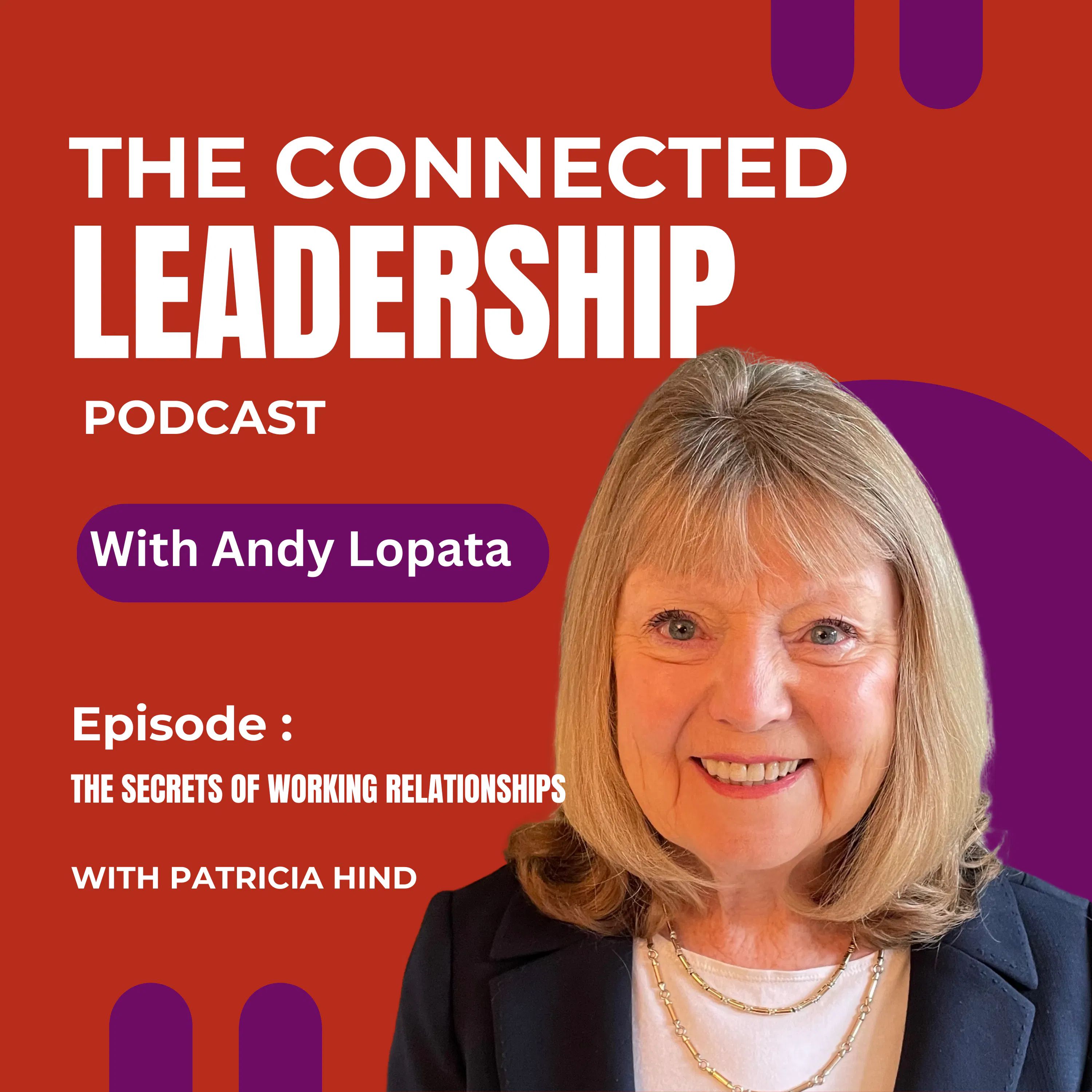
Ep 203The Secrets of Working Relationships with Patricia Hind
Welcome to another episode of The Connected Leadership Podcast with Andy Lopata, featuring an impelling discussion with Patricia Hind, a leadership and management development professor at Hult International Business School and author of Winning Together: The Secrets of Working Relationships. Patricia is a Trustee of the British Psychological Society and Chair of the Education and Training Board, Justice of the Peace and a Freeman of the City of London. Andy and Patricia’s conversation delved into the intricacies of working relationships, focusing on office dynamics and the art of developing mutually beneficial connections within the workplace. Patricia shares deep insights on how workplace relationships impact our overall work experience, emphasising their role in our successes and failures. She points out that everyone has a niche, a unique value to add to the organisation; no specific 'type' fits better within an office environment. What matters most is the nature of our working relationships and how these relationships shape both our professional lives and personal emotions. Patricia also points out that while networking can provide external boosts to career progress, nurturing effective working relationships with your own team has greater implications on your work experience and effectiveness. She champions transparency and openness in resolving conflicts, using feedback methods such as the Boff model that highlights behaviour rather than personality. The discussion also explores the changing nature of leadership. Patricia points out that leaders today are not those spectating from the top, but those who create a conducive culture in which differences can be safely managed and conflicts competently resolved. They touched upon how modern leaders are expected to appreciate their diverse team members, exhibiting and rewarding behaviours that reflect the culture they aspire to promote. Patricia highlights the undeniable fact that relationships have profound implications in the workplace. From conflicts to collaboration, understanding the dynamics of these relationships can significantly enhance productivity and overall satisfaction within the work environment. Andy and Patricia examine the challenges of connecting different generations, characterized by contrasting values and ways of working. Although initial reactions to these differences might be adverse, the growing push for diversity and equality encourages embracing diverse perspectives for a more innovative and creative workspace. Discussing remote working and its impact on building relationships, Patricia Hind feels that although being technologically connected has risen, social connectivity has reduced. While she agrees to a certain extent that digital platforms help mitigate feelings of isolation, face-to-face interaction remains a crucial part of building meaningful relationships. Concluding their discussion, Andy and Patricia explore how to manage a relationship with colleagues where there is no rapport. Here, Patricia suggests focusing on the specific tasks that need completion and ensuring credibility and reliability are displayed. Consequently, maintaining consistent communication is key, even in the absence of a deeper bond. This conversation sheds light on various facets of relationship management within the workspace – from multigenerational collaboration to leveraging differences, affirming the necessity of adapting to change and purposefully building connections. Connect with Andy Lopata Website Connect with Patricia Hind LinkedIn
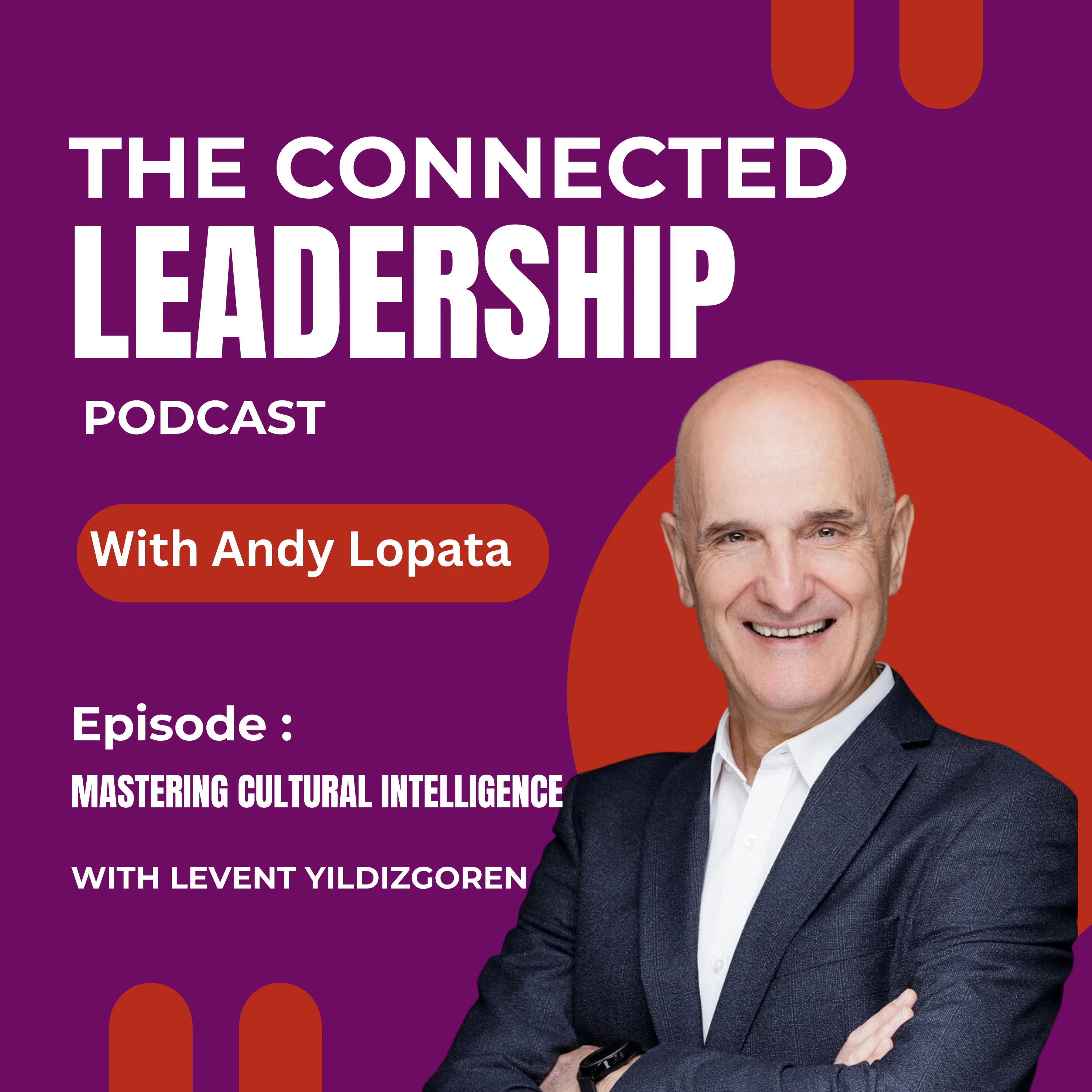
Ep 202Mastering Cultural Intelligence with Levent Yildizgoren
Welcome to another captivating episode of the Connected Leadership Podcast. Andy Lopata welcomes Levent Yildizgoren, author of Good Business in Any Language and host of the Thriving in Global Markets podcast. He has helped companies do business in more than 100 languages! Andy and Levent dive into the importance of cultural intelligence in leadership, particularly for leaders of multinational teams, and discuss how understanding cultural differences can improve business outcomes. Levent Yildizgoren starts by introducing the concept of cultural intelligence (CQ). He explains that CQ is the ability to effectively navigate and engage with different cultures. Drawing insights from his personal and professional experiences, he highlights the significance of cultural intelligence in everyday interactions. Empathy emerges as a key component of developing cultural intelligence. Levent emphasises the need to recognise the importance of empathy while emphasising that cultural intelligence is a skill that must be cultivated. Leaders must actively learn and adapt as they navigate professional spaces shared with individuals from diverse cultural backgrounds. One critical aspect impacted by cultural differences is communication. Levent stresses the need for leaders to be aware of the nuances in communication styles across cultures to avoid misinterpretations. It is vital to avoid making hasty assumptions or jumping to conclusions without considering the cultural context. Respect for differences is another vital aspect discussed by Andy and Levent. It is so important to understand and respect the diverse cultures encountered in the professional world. Leaders should approach cultural interactions with humility and avoid assuming that their own culture is superior. Highlighting the consequences of cultural misunderstandings, Levent cites the example of Dolce & Gabbana's advertising campaign, which went terribly wrong due to a lack of cultural understanding. This misstep resulted in a significant negative backlash and Levent stresses that it is necessary to respect and understand the differences that make our world fascinating. Embracing this diversity fosters harmonious and inclusive professional environments, allowing individuals to thrive in a multicultural setting. The key takeaways from this episode are: removing assumptions and acknowledging cultural differences; cultivating empathy and humility in cultural interactions; recognising and adapting to diverse communication styles; respecting and understanding cultural differences for inclusivity; and continually learning and developing cultural intelligence. By implementing these insights, leaders can navigate multicultural environments, foster meaningful connections, and enhance their understanding and appreciation of diverse cultures. Whether you're managing a multicultural team, working in a globally diverse business environment, or simply seeking a deeper understanding of various cultures, this episode is a must-listen. Join us as we explore the world of cultural intelligence and discover valuable insights to thrive in global markets. Connect with Andy Lopata Website Connect with Levent Yildizgoren Personal website My book - Free book offer
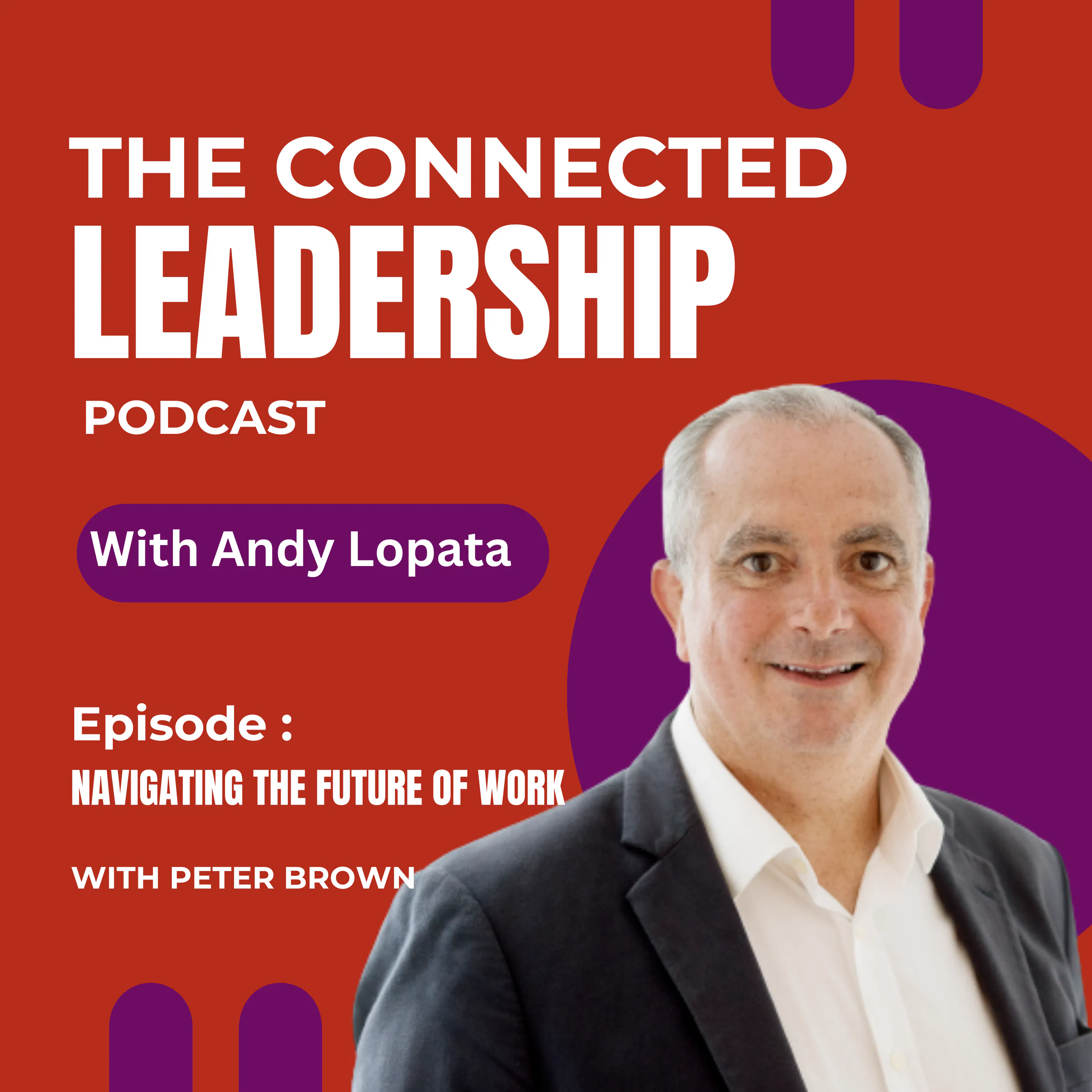
Ep 201'Navigating the Future of Work' with Peter Brown
Welcome to another exciting episode of The Connected Leadership Podcast, where we are exploring the future of work, the role of leadership in navigating these changes, and how to seize future opportunities instead of fearing them. Our guest today is PwC's Global Workforce Leader, Peter Brown. Pete leads a team of over 10,000 professionals supporting businesses with their workforce challenges. Pete has over 25 years of global experience of advising clients around a number of workforce disciplines. He also sponsors PwC’s Global Centre for Transformative Leadership. In the discussion, Andy and Pete examine how the pace of change in our workplace is accelerating, shaped by phenomena such as social media and AI’s rapid evolution. Peter shares how platforms like TikTok and Gen AI amassed an unprecedented number of users within months of launching, pointing to a speedier, high-tech future. Andy also explores with Pete, the impact of global macro trends like climate change and disruptive technologies as well as the importance of human capacity to adapt and learn. Pete stresses the need for urgency to deal with pressing issues such as the climate crisis. He suggests that technology is not an enemy but a powerful tool that can be harnessed for efficiency and productivity and highlights the necessity to protect people, not jobs, since the workforce must adapt and evolve as technology does. Andy and Pete further discuss the concerns and opportunities that AI brings to different professions. Technology and humans can work in harmony, complementing each other's abilities. Also, he emphasises that innate human skills such as critical thinking, networking, leadership, and interpersonal skills remain crucial. How can leaders guide their teams through these changes? Pete suggests that the central role of leaders is to clarify their stance on technology adoption and then equip their teams with the necessary knowledge and skills to excel in a technologically advanced landscape. How we confront these changes, will shape the labour landscape for generations to come. Andy and Pete explore the seismic shifts in the workplace and leadership amidst the remote work revolution. They look at the differences between companies fully embracing remote work, those adhering to traditional office-based roles, and ones leaning toward a hybrid model. The conversation also looks at the impact of the pandemic on highlighting the importance of mental health and work-life balance and the transformation from time-based to a productivity-centric work culture. Trust and flexibility emerge as crucial factors, particularly in a global market experiencing skills scarcity. Looking towards the future, Pete sees the hybrid work model persisting in various forms. He advocates empowering employee mobility within organisations and prioritising skills development. This episode provides foresight into the acceleration of existing work trends and emerging ones to anticipate in the global workplace environment. Tune into the Connected Leadership Podcast, where we continue to explore these issues and more weekly. Connect with Andy Lopata Website Connect with Peter Brown LinkedIn
Ep 200'Happy Healthy Sober' with Janey Lee Grace
On this 200th episode of the Connected Leadership Podcast, and as we celebrate its third year, Andy Lopata welcomes celebrated guest Janey Lee Grace. Janey is an Amazon No. 1 best-selling author and speaker, and she was co-presenter on the UK’s biggest radio show, BBC Radio 2’s Steve Wright in the Afternoon, for 24 years. Formerly, she was a backing singer with Wham!, Kim Wilde and Boy George, and had their own number 8 chart hit as Cola Boy with 7 Ways to Love. Janey has written five books on holistic living, including the number one Amazon best seller ‘Imperfectly Natural Woman’, and her latest book ‘Happy Healthy Sober’: Ditch the booze and take control of your life, which encourages everyone to look again at their relationship with alcohol. Janey has now dedicated her life to addressing "the alcoholic elephant in the room," advocating for an alcohol-free lifestyle. She recognises alcohol as a common factor in many social connections and explores the challenges of building relationships without the 'glue' of drinks. A major prompt for her came when she realised how her lifestyle of drinking roughly a bottle of wine a night sat quite at odds with her long-established career as a healthier-living advocate. Janey, who now hosts the popular Alcohol Free Life podcast, was struck by how readily accepted and indeed normalised the central place of alcohol had become within society. Her mission now is to highlight that every industry, not just entertainment, has a significant problem with heavy drinking. It's this prevalence and normalisation of alcohol in our society that Janey seeks to challenge by advocating for equal acceptance of the choice to not consume alcohol. Many professionals find alcohol to be a uniting component in establishing connections. Andy and Janey discuss how people can build relationships without depending on the 'glue' represented by alcohol. Siding with inclusivity and equal opportunities for all, Andy extends this conversation to those incompatible with traditional alcohol-based socialising. Janey emphasises that organisations have a pressing responsibility to eradicate the assumption that everyone drinks and combat the societal pressure to drink. She also proposes an alternative: Keep the ritual, change the ingredients,' keeping the culture intact while replacing unhealthy habits with healthier ones. The episode addresses the role of connection and community in aiding those trying to limit or stop their alcohol consumption. Janey underscores the immeasurable support she received from others in the same situation or those who've successfully pulled themselves out of it. This podcast sheds light on the shift organisations need to start making towards healthier, more inclusive, and more sustainable ways of connecting and conducting business. Whether you're engaged in social drinking or what Janey calls "grey area drinking," this episode is a valuable listen. It’s an exploration of our relationship with alcohol and how it interacts with our efforts to connect and build relationships. Connect with Andy Lopata Website Connect with Janey Lee Grace Website
Ep 199'How We Respond When Our Worldview Gets Challenged' with Noa Baum
In this episode, Andy Lopata speaks with storyteller and author of an impactful book, "A Land Twice Promised," Noa Baum, offers a unique perspective on the power of storytelling and empathy in understanding complex issues like the Israeli-Palestinian conflict. This episode explores the theme of how we respond when our worldview gets challenged and reflects on experiences that had a profound impact on Noa's understanding of life and existence. Noa discusses her unique experiences growing up in Israel, her personal experiences with war, and the shaping of her worldview. She talks about the influence of books she read, and the realisation of the limitations of understanding rooted in one's narrow perspective. Noa delves into the transfer of ancestral trauma through DNA, providing a deep-seated explanation behind some of our responses and behavior. Noa also opens up about her personal confrontations with challenging situations, how she navigates shifts of her worldview, and addresses questions about the perception of Palestinian people as she grew up. Noa had a transformative friendship with a Palestinian woman in America, which led to a meaningful bond built around their shared experiences as mothers and immigrants. She emphasises the importance of these human connections in acquiring a deeper understanding and empathy for each other's stories. Noa explains how listening to her friend's experiences as a Palestinian living under Israeli occupation caused her to reevaluate her previous beliefs. She realised that the stories she had been told and had accepted as truth were just one side of a complex historical narrative. This shift in her perspectives, taught her about the importance of listening, empathy, and acknowledging the narratives of others. Through her story, Noa demonstrates that it's possible to challenge and change our perceptions and to move beyond obstacles of misunderstanding and conflict. Attending her first conference of the National Storytelling Association, inspired her to venture into telling personal stories that shed light on her relationship with complex issues in her home country. This shift marked a turning point in her storytelling journey. This experience gave birth to a one-woman show The show relayed her real-life conversations and the contradicting narratives of both her and her Palestinian friend’s mothers. Noa acknowledged the challenges and criticisms she faced due to the sensitive nature of her work, but she resolutely continued, recognising the critical need to share these stories to promote understanding and empathy. Andy and Noa discuss the fluidity of truth, illustrating that framing and media influence often skew public perceptions of reality. Noa reminded listeners of the importance of listening to others' experiences and creating spaces where differing perspectives can safely coexist, emphasising that empathy and understanding are the truest routes towards conflict resolution. This episode offers important lessons about the power of storytelling, empathy, and listening to build understanding against a backdrop of deep-seated historical and political conflicts. Connect with Andy Lopata Website Connect With Noa Baum Website A Land Twice Promised: An Israeli Woman's Quest for Peace Noa Baum Noa has launched a four week online learning course on storytelling. You can find out more here.
Ep 198Where intuition goes to die with John Cohen
In this episode of the Connected Leadership Podcast, host Andy Lopata welcomes guest Jon Cohen, a vascular surgeon turned healthcare leader and policy expert, the former CEO and executive chairman of BioReference Laboratories a $1.7 billion company, and author of the book 'Swab.' Andy and Jon discuss leadership, decision-making, the importance of relationships and partnerships, navigating through external barriers, and the invaluable role of intuition amidst crisis. In his book, Jon shares the extraordinary record of BioReference Laboratories, which established robust testing processes during the COVID-19 pandemic without any roadmap, federal guidance, or prior pandemic experience. BioReference successfully offered testing services to a wide section of the American public, outmaneuvering competitors ten times its size and achieving firsts on many COVID-19 testing frontiers. Jon reflects on how his organisation navigated the evolving crisis. He explains that the key to their success was the team's adaptability and comfort with uncertainty. This mindset allowed key decisions to be made quickly, even when some of them were wrong. A unique aspect of their culture, which emerged during the crisis, was that decisions were less about seeking permission and more about owning responsibility. Jon also spoke about the challenges they faced, such as the rapid scale-up of their workforce from 4,000 to 8,000 in just four months and the substantial financial uncertainties. Yet their culture of adaptability, deep commitment to a larger goal, and mindset of "yes" prevailed, leading to impressive successes during the pandemic. The enormity of the decisions CEOs have to make, especially during crises like the COVID-19 pandemic, is a significant part of their roles. Jon Cohen shared how they had to make several consequential decisions internally without external support. Interestingly, despite these challenges and often the lack of a clear path, his company thrived, reaching an unprecedented height during the pandemic. Asking for help and building partnerships were integral strategies Jon Cohen used to navigate the crisis. Having previously established relationships with key public figures was instrumental in enabling swift responses and necessary assistance. Furthermore, Jon emphasised how important it is to have the ability to predict market needs. Though difficult, he suggests one way to achieve this seemingly intuitive skill is to consume a diverse range of information, thereby gaining new perspectives and ideas that could be applied to the industry you're in. On competition, Jon Cohen explained that because the need for testing during the COVID-19 pandemic was so immense, the competition was not about stealing market shares. Instead, it was a question of who would test where since everyone was just trying to get as many people tested as possible. Jon highlighted that while there is significant importance in data and staying updated, certain decisions still need to rely on 'the little man—our gut feelings and intuition. This fascinating interplay proves that a successful leader understands the value of both. Despite the rapidly changing environment, there must be space left for instinct and the inner voice in decision-making. Jon's insights on leadership during crisis periods offer valuable lessons for other leaders, particularly in fostering a culture of adaptability, empowerment, and commitment to a shared mission.
Ep 4Balancing long-term relationships in a short-term world with Dorie Clark
Andy Lopata's guest for the last of August's Connected Leadership Gold is Dorie Clark, recognised as one of the Top 50 business thinkers in the world by Thinkers50, and as the #1 Communication Coach by the Marshall Goldsmith Leading Global Coaches Awards. She teaches executive education at Duke University’s Fuqua School of Business and Columbia Business School, and is the author of ‘The Long Game’. A former presidential campaign spokeswoman, Dorie is a frequent contributor to the Harvard Business Review. This fascinating conversation covers the benefits of a long-term strategy in business relationships. In organisations changing attitudes can be a challenge, while small businesses can effectively be long-term driven. Switching to long-term thinking can be a balancing act of persuasion. The art is in attracting patient investors who are willing to bide their time with you. Andy and Dorie also talk about being bad at something - deliberately.
Ep 3Connected Leadership Gold: Todd Cherches
In this edition of The Connected Leadership Podcast, Andy Lopata and Todd Cherches take us on a fast paced ride around the English language and visual communication, discussing how they can help us to communicate more effectively and build stronger relationships. Todd Cherches, an academic from New York, talks about the use of metaphor and storytelling in visual leadership. Using a good metaphor can create greater clarity and understanding and story telling is a powerful resource. Andy and Todd also talk about using models to communicate visual thinking and the '3 Vs' of Visibility, Voice and Value.
Ep 2Connected Leadership Gold: Janice Lintz
In this episode of Connected Leadership Gold, Andy Lopata interviews Janice Lintz about her successes in improving access for the hard of hearing and getting induction loops installed in a host of venues across the world. Her passion came from being the parent of a daughter with hearing problems and seeing the effect that a lack of access had on her growing up with a normal life. Andy and Janice look at how asking on behalf of a cause you believe in makes it easier to make ‘unreasonable requests’. Janice has had amazing success in getting in front of many high-powered people. How does she make that happen? She has also travelled to over 140 countries and explains how she has used this to discover best practice that she has been able to use in her projects. "I don't take no for an answer - I don't give up" Andy calls her the Erin Brockovich of Hearing Loss! Andy and Janice end their discussion by looking at the importance of her support network.
Ep 1Connected Leadership Gold: with Rebecca Seal
In a fascinating conversation with Rebecca Seal, journalist, food writer and author of 'Solo - How to Work Alone and Not Lose Your Mind', Andy Lopata explores with Rebecca how to cope with the psychological difficulties of being by yourself. They look at the mental challenge of solitude and strategies for creating an environment of discipline and boundaries that are successful. Working from home can be very rewarding if certain rules are followed. Having dedicated spaces for work and home life; a transitional ritual, closing down at the end of the work day and therefore symbolically allowing your work day to end. Rebecca and Andy also discuss the importance of managing both personal and professional relationships with care. Social media and food are also discussed.
Ep 197'Embracing Neurodiversity' with Samantha Hiew
In this episode of the Connected Leadership Podcast, Andy Lopata engages in a riveting dialogue with Samantha Hiew, an award-winning social entrepreneur, founder of ADHD Girls, and a reputed scientist. As a person diagnosed with ADHD, Tourette's, dyspraxia, and autism, Samantha shares her thought-provoking insights on the subject of neurodiversity. Neurodiversity covers a spectrum of neurodevelopmental conditions, including ADHD, autism, dyspraxia, and dyslexia. Participants' perception, learning, and information processing are all affected by these variances in brain function, which manifest uniquely in different individuals. However, Samantha emphasises that prevalent misconceptions and stereotypes, largely amplified by media and cultural portrayals, still tend to distort the narrative of neurodiversity. Assessing media representations of neurodiversity, Samantha notes that while they have garnered visibility, they often perpetuate inaccurate stereotypes. The conversation shifts to addressing portrayals of varied neurodivergent experiences in newer Asian productions such as The Extraordinary Attorney Woo, which authentically reflect the struggles neurodivergent individuals face. Samantha underscores the significance of an inclusive work environment that accommodates neurodiversity. From a workplace perspective, she underscores the significance of creating an inclusive environment that accommodates neurodiversity. An essential part of this involves offering reasonable adjustments tailored to individual needs, particularly those relating to executive functioning. These adaptations can help individuals manage their emotional regulation, organisation, and other interactions with their teams. Moreover, fostering a sense of belonging, psychological safety, and valuing an individual’s contribution are all quintessential to supporting neurodivergent people and enabling them to thrive in the workplace. The discussion then turns to terminologies related to neurodiversity, particularly whether it should be considered a 'disability.' Samantha sees this term as failing to encapsulate the essence of the neurodiversity experience and believes that the issue arises from society's inaccessible systems disadvantaging neurodivergent individuals. With reference to the increased recognition of neurodivergence, Andy inquires if individuals may be overly self-labelling due to heightened awareness. Samantha responds by highlighting the challenges faced by many neurodivergent individuals in correctly labelling their conditions and receiving adequate support. She asserts that while individuals may seek labels to understand their experiences, implementing them in daily interactions and advocating for themselves on their own can be daunting. Effective communication of neurodiversity in the workplace becomes a critical discussion point. The tools for self-identification are important, but often the language to express the experiences and needs associated with neurodivergence is elusive. Samantha suggests establishing safe spaces and incorporating neurodiversity education into workplace training to support neurodivergent individuals and eliminate associated shame. Overall, this episode explores the landscape of neurodiversity, championing the need to understand, embrace, and celebrate it rather than seeing it as a challenge to be handled. Samantha’s thoughtful insights underline the need for education, understanding, and acceptance for neurodivergent individuals to successfully navigate and thrive within their professional environment. BONUS CONTENT Psychology Today 'How to Build Strong Relationships with Neurodivergent People' by Andy Lopata https://www.psychologytoday.com/us/blog/connected-leadership/202307/how-to-build-strong-relationships-with-neurodivergent-people-1
Ep 196'Developing Future Leaders' with Molly Harvey
In this stimulating episode of the Connected Leadership Podcast, host Andy Lopata welcomes Molly Harvey, a leading authority in the world of leadership development as well as the founder of OWL (Outstanding Women Leaders). Molly Harvey is an author, facilitator, and speaker who has more than 30 years of experience that includes involvement with the United Nations. Focusing on the development of future leaders, a topic Molly is deeply passionate about, the conversation unravels captivating insights. Molly underlines the importance of self-aware leadership and emotional intelligence, explaining that leaders should be cognisant of their influence and should appreciate each team member's contribution to the group dynamics. She believes that the capacity to pose theme-specific questions is an essential skill for future leaders, leading to surprising insights and facilitating positive change. Explaining a term she encountered at the UN, "Social artists of tomorrow", Molly describes these future leaders as adept networkers who build learning communities, comprehend intricate group dynamics, discern trends amidst chaos, and strategically capitalise on opportunities. Moving from the traditional fast-track of leadership that is based largely on an individual's academic accomplishments, Molly argues against the outdated concept of un-strategic hard work equating to success. She highlights the need for leaders to work not harder but smarter. She explains how implementing disciplines like allocated thinking time can lead to more efficient and effective leadership. This progressive approach, albeit demanding a high level of discipline, shapes leaders who are well-equipped to handle the complexities of a volatile business landscape. Andy and Molly also discuss developing leadership from the "inside out" through authenticity and maintaining presence. This includes acknowledging strengths and limitations as well as leveraging team members' abilities for collective success. She emphasises the significance of aspiring leaders finding and drawing inspiration from revered leaders within their organisation. She endorses starting the day mindfully, proposing that dedicating time for reflection at the start of the day can yield considerable advantages. The conversation takes a turn to address the critical issue of gender equity in the professional realm. Andy expressed concern about the perceived regression in gender balance during the COVID-19 pandemic and the introduction of hybrid working. Molly acknowledges that while there is increased representation of women at the boardroom level, many women report feeling overworked and question the pursuit of top leadership positions. She highlights the necessity of designing more inclusive and family-friendly policies that accommodate the unique challenges faced by women in the workforce. Enriched by Molly Harvey's astute perspectives, this episode provides a novel outlook on the attributes that future leaders will embody and the role incumbent leaders play in fostering these traits within their teams. Connect With Andy Lopata Website Connect With Molly Harvey Websites
Ep 195'The Connection Quotient' with Marco Buschman
In this episode of the Connected Leadership Podcast, Andy Lopata interviews Marco Buschman, Dutch leadership expert and author of the book "The Connection Quotient." They delve into the topic of the human approach to connections, emphasising building a culture of connection within an organisation. Marco introduces the concepts of EQ (Emotional Quotient), IQ (Intelligence Quotient), and CQ (Connection Quotient). Andy and Marco discuss how the quality of success within an organisation is dependent not just on individual relationships but on the connections across the team. The conversation then shifts to the importance of actively exploring, rather than trying to understand or win every argument. Marco Buschman sees the focus on fostering exploration and openness to disagreements or non-understanding, suggesting that this mindset fosters a more enriching interaction. Developing a connection culture within an organisation, Marco asserts, involves maintaining a balance between the functional (about what is being done, i.e., roles, tasks, goals - the IQ part) and the relational (about who is doing it, i.e., emotions, values, attitudes - the EQ part). He points out that while getting work done is essential, no long-term productivity can be achieved if there's no genuine connection based on trust and mutual respect among team members. They discuss the importance of a dual focus on both cognitive abilities (IQ) and emotional acuity (EQ), arguing that this blend helps form a stronger, more balanced connection within teams and organisations. Focusing not only on hard work and strategic goals, but also on the critical aspects of team dynamics such as culture, relationships, and emotional investment can create a sustainable competitive advantage. Also, the importance of a long-term focus on relationships to achieve impactful results, as opposed to only meeting short-term functional targets is key. An important point that emerged from the duo's discussion is the significance of self-connection before connecting with others. They highlighted that you can't truly connect with others without understanding and connecting with yourself. They also pointed out the critical role values play both personally and professionally, and the importance of differentiating between shared values and shared opinions. Marco explained his 'connection quotient' framework, which explores connection at various levels – from personal to global – through two lenses: doing (functional) and being (relational). He remarked that understanding these layers can improve an individual's or team's ability to connect more meaningfully. The episode wraps up with Marco asserting that a successful connection culture emerges when leaders appreciate and foster both IQ (doing) and EQ (being) aspects, instead of viewing them as mutually exclusive. By acknowledging the importance of cognitive diversity and emotional connection, organisations can create successful, high-performing teams and a thriving work culture. Ultimately, this episode offers valuable insights into the importance of cognitive diversity, showcasing different perspectives, and abilities --- vital for team performance and how a more profound understanding and leveraging of connection can enhance organisational success. Connect with Andy Lopata Website ‘The Connection Quotient’ by Marco Buschman https://m.media-amazon.com/images/G/02/apparel/rcxgs/tile._CB483369956_.gif Connect with Marco Buschman Website
Ep 194'Talking on Eggshells' with Sam Horn
In this episode of the Connected Leadership Podcast, Andy Lopata welcomes Sam Horn, CEO of the Intrigue Agency and the Tongue Fu! Training Institute. Sam's newly released book, "Talking on Eggshells," is the focus of their conversation, delving into conflict management and its impact on our professional lives. Sam emphasises that conflict is a natural aspect of life and highlights the need to address it rather than ignore it. Drawing inspiration from Elvis Presley, Sam encourages individuals not to let things go wrong but to address conflict head-on. She emphasises the importance of diverse perspectives within teams and explains how conflict arises from disagreements on the best course of action. Drawing a parallel to team sports, she compares the need for different positions and skills required in business environments. Conflict arises when individuals disagree on the best course of action or decision to make. Sam shares an example of how conflict can serve a constructive purpose by focusing on how individuals can cooperate instead of opposing one another. The power of language in conflict situations is a key topic of discussion. Sam provides practical techniques for effective communication, including the use of pattern interrupts to halt negative conflict and the need to focus on future solutions instead of assigning blame to the past. She suggests reframing negative accusations and stereotypes by sharing personal beliefs and experiences in a positive manner. Andy and Sam explore maintaining a positive mindset and engaging in constructive conversations, even in challenging situations. Sam compares changing communication habits to acquiring new skills, emphasising the need for practice and conscious effort. She recommends using reminder cards (Words to Use and Words to Lose) with positive phrases to interrupt negative language patterns and encourage curiosity and understanding in one-on-one interactions as a means of holding others accountable without blame. On how to address conflicts in group or meeting environments, Sam introduces the "Name the Game" technique inspired by Joan Rivers' comedic approach to guilt trips. This technique focuses on openly naming and calling out unhelpful behaviour, which neutralises it and holds individuals accountable for blocking progress. By reframing situations and redirecting focus towards productive outcomes, conflicts can be effectively managed. The importance of acknowledging the elephant in the room and fostering better communication is discussed. Sam and Andy provide practical tips and phrases such as "Could you please help me understand?" to bridge the gap between conflicting parties and promote open dialogue. Sam and Andy also discuss the challenge of dealing with individuals who consistently gravitate towards conflict. Sam acknowledges that some people thrive on negativity and attention, often acting as naysayers or fault-finders. She suggests using the person's name to redirect conversations towards the greater good, setting clear boundaries, and using a confident, final tone to indicate that further debate or discussion is not an option. Overall, this episode explores the significance of effective communication, the power of language, and practical techniques for managing conflict and changing the tone of relationships. You can check out Sam Horn's book, "Talking on Eggshells," for further guidance on improving interpersonal relationships and navigating difficult conversations. If you would like to download Sam’s ‘Words to Lose, Words to Use, please visit www.andylopata.com/samhorn. Connect with Andy Lopata Website Connect with Sam Horn LinkedIn
Ep 193'The Team Architect' with Eksteen de Waal
In this episode of the Connected Leadership Podcast, Andy Lopata is joined by Eksteen De Waal; an international speaker, author and leadership consultant. He is a Fellow of PSA UK and President of PSA Netherlands. Eksteen describes himself as a team architect, explaining that he views teams as structures that require attention and maintenance, much like a building. He illustrates how his work entails assessing existing teams, designing new teams from scratch (such as during mergers and acquisitions), or renovating teams to address conflicts and relationship issues. Eksteen shares insights from his 30 years of experience in analysing team dynamics, fostering inclusivity, and resolving conflicts. Eksteen primarily works with leadership teams, particularly in start-ups and scale-ups, to shape organisational culture. He highlights the significance of the founders' relationship systems, which often shape the culture of the organisation. Eksteen shares that certain behavioural patterns and coping mechanisms may be developed, both positive and negative, which can in turn affect the team dynamic. Andy and Eksteen discuss belief in personality types. Eksteen thinks that reducing individuals to acronyms or colours overlooks the complexity of who they are. Instead, he believes in using assessments as a way to initiate conversations and gain insights into how people engage and interact with each other. His assessments focus on behaviour, relationships, cognitive empathy, and motivation, allowing for a more comprehensive understanding of team members. The discussion moves to conflict management, with Eksteen advocating for learning to manage conflicts within the team's paradigm instead of avoiding them. He highlights Cognitive Empathy as a key factor in understanding individual differences. Acknowledging and utilising these differences can enhance team collaboration and cohesion. Andy and Eksteen also look into the importance of understanding ourselves as a way to navigate conflicts and build compassionate relationships. Eksteen shares a personal story from his childhood that shaped his curiosity about why people behave badly. He explains that his work focuses on conflict management within teams and utilising assessments that help uncover the barriers that hinder compassionate relationships. They touch on the inclusivity and discrimination experienced in the workplace. Eksteen shares his own experiences of being made to feel like an outsider due to his sexual orientation and race. He emphasises the impact that external assumptions and labels can have on individuals, particularly those from minority groups. Andy and Eksteen discuss the conflict surrounding the term "woke" and how it has become polarised in different contexts. Eksteen believes that finding alternative ways to describe ideas and perspectives can help foster connection rather than separation. The episode concludes by focusing on leading through others and the role of emotions in building trust and communication. Eksteen emphasises that listening involves not only hearing the words but also understanding the emotions at play. By creating an environment where people feel safe to express their emotions and thoughts, leaders can identify where disconnections and conflicts arise within teams and organisations. Through thought-provoking discussions, Andy and Eksteen emphasise the power of listening, empathy, and understanding in building connections and resolving conflicts. By embracing these qualities, individuals and teams can create inclusive and compassionate environments that foster trust, collaboration, and growth. Connect with Andy Lopata Website Connect with Eksteen de Waal for Assessments Exponentially:
Ep 192'Beyond the Court' with Zaza Pachulia
In this episode of the Connected Leadership Podcast, Andy Lopata interviews Zaza Pachulia, a former professional basketball player and current executive at the Golden State Warriors. Zaza won two NBA championships with the Warriors and played over a thousand games in the NBA. He was born in Georgia and came to the US via Turkey, overcoming the enormous competition of traditional basketball-playing nations. He discusses his passion for basketball and shares how his love and commitment to the game, combined with his hard work, sacrifice, and self-discipline, helped him achieve success in an arena where talent alone is not enough. Pachulia also talks about the challenges he faced in maintaining relationships with friends and family while dedicating his life to basketball and how he achieved balance during the off-season. Zaza shares his early struggles in the league and how he focused on overcoming his weaknesses to become a top player. He emphasises the importance of acknowledging one's weaknesses, being open to learning, and seeking help. Zaza also talks about the support he received from his teammates, mentors and coaches. He gives examples of how veteran players mentored him and shared their knowledge and experience with him, and how his European older brother, Tony Kukoc, helped him navigate his early career. Zaza reflects on his struggles throughout his 16-year career, including the cultural shock and mental health challenges, and discusses how he addressed them through positivity, consistency, and with support. Andy and Zaza talk about the importance of being a role model, inspiring and motivating kids throughout his career, emphasising the impact that role models had on him when he was growing up. Mentoring young players, such as Yanis Antetokounmpo, and being a positive influence is an essential part of his post-basketball career. Zaza also highlights the importance of continuing to learn and grow, citing his own experiences studying at prestigious business schools in the US. He stresses the importance of being prepared for life after sports, as injury or unexpected circumstances can abruptly end a career; athletes need to have a plan B. Communication and connection within organisations has been important. Also, bridging business and sports departments and understanding the business side of the NBA. This episode highlights the importance of caring deeply about one's work, investing hours of hard work, sacrifice, and self-discipline, and achieving balance in life to succeed professionally and personally. Listen to this episode to learn more from Zaza and his journey to success! Connect with Andy Lopata Website Connect With Zaza Pachulia LinkedIn
Ep 191'Building Bridges with Care' with Annetta Marion
In this episode of the Connected Leadership podcast, Andy Lopata speaks with Annetta Marion, the producer of the biopic film "Still: A Michael J. Fox Movie", directed by Oscar-winning filmmaker Davis Guggenheim. The film charts the career and struggles of Michael J. Fox with Parkinson's disease. Annetta shares her personal journey into the entertainment industry and her love for storytelling. She also discusses her rules for great storytelling and the importance of engaging viewers in a narrative. Prior to "Still", she worked on Oprah's Master Class docuseries and shares her experience of working with iconic figures who shared their stories. She emphasises the importance of caring deeply and meeting people where they are, irrespective of their status or title. The conversation then shifts towards Annetta's role as a producer on "Still" and working with director Davis Guggenheim. Annetta emphasises the importance of being adaptable, building relationships, and mentoring others. Annetta highlights how important it is to win the trust of the people involved in a project and create an atmosphere where people feel comfortable and are able to act naturally in front of the camera. Annetta explains how the movie "Still" is not just about Michael J. Fox's Parkinson's disease but his entire journey and path, and how it was a collaborative effort to tell his story. She talks about the power of storytelling and the importance of teamwork in creating a successful film. Further, Annetta talks about her latest project, a little horror movie called "Communion," which departs from her previous work in its minimalist approach to dialogue. She also discusses the power of improv, not just for entertainment but as a life lesson, and how it can build confidence and help prepare people to be ready for opportunities. Annetta highlights that talent does not discriminate, and it's crucial to be prepared and let the universe do its part in finding opportunities. Overall, the episode highlights the power of storytelling in connecting people and creating engagement and provides insights on how to build relationships, care deeply, and mentor others. The conversation delves into the importance of winning trust in a project and creating a comfortable environment for building great relationships with team members to perform well. Listen now to learn more about Annetta's latest project and how the power of storytelling connects people. Connect with Andy Lopata Website Connect with Annetta Marion Website
Ep 190'Building Authentic Customer Relationships' with John Maguire
In this episode of the Connected Leadership Podcast, Andy Lopata chats with John Maguire, the Regional Vice President of Sales in EMEA for Sugar CRM. The conversation covers a wide range of topics related to managing professional relationships and customer relationship management (CRM) systems. They start by discussing the capture of information in conversations, the need to prompt interactions with customers who have drifted off the radar, and the ways technology can improve customer relationships. John emphasizes the importance of using CRMs to reduce customer churn, increase customers, and reduce the cost of admin, as well as the role of AI in creating process automation workflows. Andy and John discuss the need for a 360-degree view of the customer and the importance of optimising each interaction with customers across the business. John Maguire also talks about how to avoid the dreaded task of inputting data into CRMs by building it within the flow of work and showing the value to users. He also touches on the balance between technology and humanity, how CRMs can support human interaction rather than replace it, and the applications of AI in the sales process. John highlights that AI can help with secondary selling, but primary selling still requires the human touch of sales professionals understanding clients and addressing their unique needs and challenges. The conversation then shifts towards maintaining authenticity in sales automation and ethical selling. Andy and John emphasise the importance of customer success and staying connected with clients beyond the initial sale to ensure they get the most out of their investment and are happy with the purchase. Andy and John explore the VCP model - visibility, credibility, profitability - and the significance of creating buying conversations rather than selling conversations. They look at the impact of gender differences on sales approach and customer relationships. The episode concludes with a discussion of the value of doing what's right and ethical in business, even if it does not result in immediate returns.. This episode explores ways to foster authentic relationships with customers, how to leverage technology to improve customer relationships, and the importance of doing what's right in business. Tune in to learn more. Connect with Andy Lopata John Maguire Sugar CRM
Ep 189Using Humour to Build Connections With Beth Sherman
In this episode of the Connected Leadership podcast, Andy Lopata interviews Beth Sherman, speaker, comedian, and multiple Emmy Award-winning comedy writer, whose credits include The Tonight Show, Ellen and the Academy Awards. She passionately believes that humour is a skill that can be taught, and speaks to teams and leaders about how to use humour to connect quickly with customers, colleagues and audiences. Beth offers insights into the world of comedy writing and reveals the collaborative process that takes place between writers, producers, and comics in delivering successful content to millions of viewers. Andy and Beth discuss the professional relationship between comics and writers, the importance of chemistry in delivering successful jokes, and how it differs when writing for an individual's voice rather than writing for oneself. Additionally, Beth highlights the challenges of writing topical content and the unique role that humour can play in developing professional relationships. Beth also shares her experience performing stand-up comedy for the US Army in combat zones and forward operating bases in Iraq. The topic of diversity in the writer's room is touched upon, with Beth acknowledging that while diversity is important, it sometimes comes down to hiring people who can do the best job. Beyond comedy writing, she has written speeches for corporate executives and helps them inject humour into their presentations. She highlights the importance of spotting comedic opportunities and finding the funny in what you're saying, rather than trying to tell jokes. Throughout the episode, the importance of self-awareness emerges as a key component in establishing connections and finding common ground with others in the workplace. Andy and Beth emphasise the importance of using humour appropriately and avoiding banter that may not be appropriate in a professional setting. Beth now focuses on speaking and showing how to use humour to make connections, how to use humour to connect with colleagues, and how leaders can use humour to make themselves more accessible to their teams. The episode offers valuable insights on the role of humour and self-awareness in building relationships and navigating professional situations. If you want to learn more about using humour effectively to build relationships and connect with others, don't miss out on this opportunity to enhance your communication skills and connect with others in a fun and meaningful way! Connect with Andy Lopata Website Beth Sherman WEBSITE LINKEDIN YOUTUBE
Ep 188'The Power of Being In the Moment': Neil Mullarkey
Neil Mullarkey is a renowned comedian and an expert in communication. He began his career as President of Cambridge Footlights and then he teamed up with Mike Myers. Neil has also shared the stage with household names from Eddie Izzard, Dawn French, Paul Merton, Josie Lawrence, Eric Sykes and Christopher Biggins. He has participated in the Radio 4 shows I’m Sorry I Haven’t a Clue, Just A Minute and appeared in Whose Line Is It Anyway, QI and two Austin Powers movies. In 1985 he and Mike Myers founded the Comedy Store Players and Neil can often be found improvising at the venue on Sundays. He now teaches improv and other theatre skills, helping people to gain confidence and to work together more creatively and effectively. Above all, he encourages people to have fun in the workplace – teaching them to listen to one another more carefully and to laugh at themselves. Neil gives workshops and online coaching worldwide, has worked with leading companies and with prominent names in the world of sport. Andy and Neil discuss the power of being in the moment and the positive effect this can have on relationships in business. Creativity and innovation can result by being prepared to listen and move away from your agenda when that moment occurs. His forthcoming book, In The Moment: Build your Confidence, Communication and Creativity at Work, uses a range of case studies to illustrate his ideas and is a witty, engaging and inspiring guide to achieving success in the workplace. Neil is talking about the new book on 7th June 2023 in London. You can attend in person or remotely. https://www.eventbrite.com/e/phls-2023-neil-mullarkey-on-laughter-at-work-tickets-617662022737?aff=odcleoeventsincollection&keep_tld=1&fbclid=IwAR06WtpcBRDdktbLXxo0nUes1EPoCkYvS1FmPomN-HBb4hjrxFtKctPKxcM
Ep 187Understanding Personality Styles for Effective Leadership With Catherine Stothart
In this episode of the Connected Leadership podcast, Catherine Stothart, a leadership coach, speaker and author of How to Get On with Anyone: shares insights with Andy Lopata on using personality styles to build stronger relationships. Catherine explains the difference between trait approach and type approach, stating that type is best used for self-development rather than assessment and selection. She also introduces the Interaction Styles Framework, which collapses the 16 personality types into four groups of communication styles based on emotions that drive behavior. The four interaction styles are: Mobilizers, Energizers, Navigators, and Synthesizers, and Catherine explains that people can flex between these styles depending on the situation. Catherine discusses her book, Motivation: The Ultimate Guide to Leading Your Team, which focuses on the four core psychological needs shared by all humans: belonging, competence, freedom, and self-actualisation. The episode highlights the importance of understanding different communication styles to manage conflicts and have successful interactions. Catherine notes that being aware of one's behavior and emotions is key to better understanding and managing communication and relationships.. Andy Lopata and Catherine also delve into how this knowledge on communication styles can help us influence other people, build power and charisma, and manage imposter syndrome. Catherine emphasises that influencing people is about matching impact to intention and understanding how to communicate with the other person based on their style. She notes that charisma comes from making others feel good while also having moral underpinning and integrity. Understanding one's own style and realizing that others have different communication styles can boost confidence and help manage imposter syndrome. This episode provides valuable insights on communication styles and their impact on relationships, highlighting the importance of understanding and adapting to different styles to build stronger connections and positive interactions. The episode also offers practical tips for managing life, work, and relationships to do more of what energises and fulfills us, emphasising the importance of self-awareness and understanding in building strong relationships and leading effectively. Connect with Andy Lopata Catherine Stothart
Ep 186Finding Space for Compassion with Richard McCann and Jo Berry
In this episode, Andy Lopata speaks with two incredible guests Jo Berry and Richard McCann about their experiences of trauma and forgiveness. Both lost a parent to violent acts - McCann's mother was murdered by serial killer Peter Sutcliffe in 1975, and Berry's father was killed in the IRA's bombing of the Conservative Party Conference in Brighton in 1984. Despite the immense tragedy, both found ways to come to terms with their loss and seek positive outcomes. McCann became a motivational speaker, while Berry started the charity Building Bridges For Peace. McCann shares his journey of forgiveness, beginning with forgiving his abusive father and eventually letting go of his anger towards Sutcliffe. He discusses how he tried to understand Sutcliffe as a human being, although his attempts to meet with him were rejected. However, McCann highlights that compassion and forgiveness can lead to healing and positive change, despite this painful journey. Berry shared how she made the decision to meet with the man responsible for her father's death. She stresses the importance of listening to one's gut instinct and taking responsibility for one's own healing by choosing a way that does not involve the person who hurt you. McCann & Berry also share personal experiences of forgiveness and healing, highlighting the power of forgiveness in bringing personal growth and positive change. They reflect on how their experiences have impacted their ability to forgive people for everyday issues, acknowledging that it's a journey with ups and downs. They also emphasise the importance of owning up to our mistakes, repairing harm, and creating stronger connections McCann shared how writing a book about his life without consulting his wider family impacted his relationships. Berry and McCann stress the importance of having supportive friends and family who will be there for you even if they disagree with the choices you make. They share how they have dealt with family members who do not support their choices and have focused on the positive relationships in their lives. This episode underscores the need for individuals to take control of their own mental wellbeing and not blame others for how they feel. Join us in this inspiring conversation and gain valuable insights into the power of forgiveness, understanding, and compassion in personal and professional growth. Connect with Andy Lopata Richard McCann Jo Berry
Building Strong Relationships in Hierarchies - Russell Best OBE
In this episode of the Connected Leadership Gold, Andy Lopata interviewed Russell Best OBE who was Commander of HMS Cumberland and Head of Strategy Management at the UK Ministry of Defence, advising on defence and security issues. Andy and Russell discuss what underpins successful operations across the military and business worlds. Relationships are key in both but values are very different in terms of focus and initiative. They look at how this affects hierarchies, leadership and the creation of a culture that generates a common or shared experience. Andy and Russell also talk about the different facets of networking and the importance of the depth of relationships rather than the size of your network. In hierarchical structures there is a fear of stepping out of line, of creating resentment among colleagues which doesn’t exist in the military where everyone has a common shared experience and networks go across ranks. The accessibility of leaders is also an important factor: how do I get noticed and build my relationship with senior management. Please note there is no Thursday episode
The Connected leadership Podcast: 'The Ignorant Maestro'
For the next two weeks we will be exploring Connected Leadership Gold, past episodes that you may have missed. This week, Andy's guest is Itay Talgam, conductor of the Tel Aviv Philharmonic Orchestra. Andy and Itay discuss what leaders can learn from the great conductors. A new conductor meeting with an orchestra, has to build trust often from resistance. The art of the conductor is to take a group of highly skilled, artistic individuals, making them one and creating beautiful music. Andy and Italy talk about the importance of having a dialogue; of creating relationships with musicians in the orchestra and agreeing together on the meaning of the music; what is the music saying? Andy and Itay also discuss the importance of getting the conductor's message across and how to control the outcome. Command and control leadership can stifle creativity. This is the importance of developing professional relationships. Please note there is no Thursday episode.
Ep 187The Connected Leadership Podcast: 'Breaking Down Hierarchies' With Neil Jurd, OBE
In this episode Andy Lopata speaks with Neil Jurd, OBE, who has extensive experience in leadership development from his time as a British Army officer and leading expeditions worldwide. Neil advocates for the power of relationships to break down hierarchies and reduce bureaucracy, which he has witnessed as being more effective in building stronger teams. Neil suggests that creating a safe culture where people feel comfortable in contributing to the organisation's purpose is essential for leaders. To accomplish this, leaders must be clear about the organisation's objectives and develop personal relationships with team members by showing interest in their lives beyond work. He advises leaders to be themselves and rely on personal power rather than positional power, as positions and ranks are fragile forms of influence. Additionally, he emphasises the importance of creating a relaxed environment for conversations and allowing team members the freedom to learn and grow under their leadership. The conversation also covers the significance of education and shared knowledge within a team. Neil highlights that leadership training and education should be available to the entire team and recommends book clubs where team members can discuss key principles and ideas. The shared understanding and terminology developed through education can give a team a sense of shared purpose and help break down barriers. In discussing diversity, tensions within a team are more likely to arise from fundamental differences in values rather than differences in background or beliefs. Neil shares his five rules of connecting and emphasises the importance of creating a culture where everyone in the team feels valued and significant, leading to the breakdown of traditional hierarchies and bureaucracy. This episode provides practical insights for leaders to develop their personal power, create deeper connections within their team, and foster a safe culture that values diversity and shared knowledge for stronger overall performance.
Ep 186'Self Esteem, Self Worth, Self Compassion' with John Niland & Una Murphy
In this episode, Andy Lopata is joined by Una Murphy and John Niland to discuss the importance of self-compassion, self-esteem, and self-worth in building strong relationships and networks. Una Murphy is an experienced executive coach working around wellbeing and resilience, and John Niland specializes in building professional identities both with teams and individuals, rooted in understanding self-worth. John explains the differences between these three terms and how they affect our relationships with ourselves and others. He notes that self-esteem is often based on our reputation with ourselves, which is conditional and can be affected by our successes and failures in life. In contrast, self-worth is unconditional and not based on performance or behavior. John also discusses how self-worth can help us build better relationships with others, as it allows us to be more interested in other people rather than trying to impress them. He gives examples of how the COVID-19 pandemic has affected our relationship with ourselves and highlights the importance of developing self-compassion, particularly during difficult times. Una Murphy, discusses the importance of self-worth and how it differs from self-esteem in building trust and strong relationships. Una emphasize that trust is built when people approach relationships from a place of comfort and listen to each other with humility. The guests also suggest that coaches need to shift from self-esteem coaching to exploring how individuals can be valuable to others. The conversation delves into the impact of social media on our self-esteem and how it affects our ability to connect authentically. They explore the topic of the indifference of others and the craving for attention, which has grown with the rise of social media and the plea for likes. John explains how self-preoccupation has been on the rise since the 80s and how it may be the cause of social media, rather than the other way around. People often suffer from feeling invisible despite putting in effort into their career, business, coaching practice, or creative endeavors. To combat this feeling, John suggests coming back to how you can be valuable, irrespective of whether people are buying it or not, and building a professional identity based on who you are, rather than what you do. Andy shares a powerful takeaway from a self-development program that he did, which is the NATO acronym, meaning "not attached to the outcome." It’s essential to focus on the value you bring, rather than the opinions of others, and to develop deep roots in what you stand for, which can help you survive times of indifference and transition. The episode provides valuable insights into building strong relationships and networks by first connecting with oneself. John Niland's book The Self-Worth Safari invites us on a powerful adventure to uncover the intrinsic state of value, which is ultimately untouched by changing fortune. The book is for anyone looking for more energy, confidence and a deeper belief in themselves. This could include people in career transition, young professionals, independent professionals and leaders who want to inspire others. Connect with Andy Lopata Una Murphy John Niland
Ep 184The Connected Leadership Podcast: Gil Petersil
In this episode of the Connected Leadership Podcast, host Andy Lopata talks to Gil Petersil, co-owner of Meet Partners, about the importance of professional networking and time management. Gil believes that most people know the importance of networking but don't really understand it. He suggests that people should spend more time nurturing the important mentors in their lives, and take following up seriously. Andy and Gil discuss the challenges people face in finding time to build strong professional relationships and networks and Gil suggests breaking down how time is currently allocated to understand how it can be better used for making connections. Gil shares insights on how to delegate tasks effectively without causing offence and losing control of the relationship-building process. The changes in networking strategies in the last 25 years and the challenges brought by a more globalised world are probed. Throughout the conversation, they touch on several topics related to professional relationships, including cultural differences, vulnerability, and the role of technology. Andy and Gil discuss the challenges of finding time to prioritise building professional relationships and why it's important to do so. Gil also talks about his personal values and how they influence who he chooses to spend time with. The conversation touches on cultural differences in networking and vulnerability, as well as the benefits of attending events and the importance of having a personal brand.
Ep 184The Connected Leadership Podcast: 'Is AI Going to Replace Humans' Ben Afia
With the rapid rise of AI, Andy Lopata asks his guest Ben Afia, if AI is going to replace humans and just how human are our connections in business now. Ben was a brand strategist for Boots and has worked with companies to build their brands and help them express themselves. There are distinct practical advantages to the use of AI; bringing data together, summarising meeting notes, marketing, generating ideas for copy and headlines. It is exciting and extraordinary to see what can be done, but it is still early days. The question is whether AI can develop empathy, sympathy with human emotions or reflect values, because at the moment there is a lack of humanity and the human aspect of communication with employees and with customer service is so important. Initially AI can be an assistant, an adjunct to a person doing a job Andy and Ben go on to discuss whether we have a problem with organisations appearing to be human to their customers. Is this a problem of scale and the development of silos as businesses grow? Being driven by numbers and targets internally affects the relationships we build. This is a problem facing leaders who need to change direction and ensure that their employees feel safe, feel looked after, feel supported and this will translate into improved customer service.
Ep 183Zafra Lerman 'We only have one nationality, it's science '
A remarkable woman is Andy Lopata's guest in this week's podcast. Zafra Lerman is a Doctor of Chemistry, five times nominated for the Nobel Peace Prize, recipient of the Presidential Award from President Clinton, honoured four times by the US Congress and winner of countless awards globally, particularly for her work on human rights. Her innovative approach to teaching science to under-privileged and homeless students developed when Zafra realised that she had to teach science in a way that was relevant to their life. She introduced art, music, dance and rap into lessons and assessments were informal demonstrations of the students' knowledge in any way they wanted. Zafra tells wonderful stories to illustrate her vision and her life's work. These include stories of her time in Russia and China with dissidents of those regimes and her efforts to broker peace in the Middle East through silent diplomacy. She organised the Malta Conference, inviting Nobel Prize winners and scientists from fifteen countries including Iran, Bahrein, Egypt, Jordan, Iraq, Palestine and Israel. This conference has now been held annually for the last ten years. A fascinating insight into a lifetime dedicated to help the under-privileged and homeless. To promote science, fight for human rights and to try to broker peace in troubled parts of the world particularly the Middle East.
Ep 182The Connected Leadership Podcast: Frank Agin 'Connecting With Impact'
In this week's episode, Andy Lopata's guest is Frank Agin. From Columbus, Ohio Frank has much in common with Andy with his emphasis on the importance of creating a connection and building relationships. He also emphasises the importance of using stories to make connections. Andy and Frank discuss recognising opportunities and using your wider network effectively. They also look at mixing the personal and the professional and the effect of cultural differences. Other areas for discussion are cognitive diversity; the challenge of different ideas and different backgrounds; using stories and getting to know people on a human level. People do business with those they know, like and trust. If you want to connect with impact, take yourself out of the equation - make it not just about the other person but the group, the tribe, the network, the long term.
Ep 181The Connected Leadership Podcast: 'Mergers and Aquisitions' Jennifer Fondrevay
Jennifer Fondrevay known as the 'MA Whisperer', is Andy Lopata's guest on this week's Connected Leadership Podcast. She is the author of the satirical book 'NOW WHAT? A Survivors Guide for Thriving Through Mergers and Acquisitions' and advises companies on the unexpected people challenges that may arise during the process. Jennifer outlines the stages employees may face during a merger including grief, putting a strain on relationships and uncertainty of the future. She emphasises the importance of connecting with the frontliners, listening to employees and valuing and respecting their comments. Preparation for possible challenges, transparency, understanding the culture of the companies involved can all help to move towards consensus. The environment post-merger/acquisition is largely a question of morale; involving competition, collaboration and 'survivors guilt'.
Ep 180The Connected Leadership Podcast: 'Do you have too many meetings?' Lawrence Krubner
'One on One Meetings are Underrated; Group Meetings Waste Time'. The title of Lawrence Krubner's book is the theme of this week's Connected Leadership Podcast. Lawrence discusses with Andy Lopata how meetings can be essential for some people but an inordinately inefficient way to get things done for others. If you invite fifteen people to an hour's meeting, you have to be sure the meeting is actually worth the fifteen hours of work lost. Too many large meetings are called to give out information that could be transmitted using technology, while one to one meetings are more productive. The basics of good meetings need to be understood and practiced by leaders. Larger gatherings for social reasons are good for morale. They can also be good for brainstorming exercises and for discovering talent. Smaller meetings help develop and deepen relationships and can help leaders adapt to the strengths and weaknesses of their teams.
Ep 179The Connected Leadership Podcast: 'Fail Fast, Learn Fast' Daniela Landherr
This week's guest on The Connected Leadership Podcast joins Andy Lopata from Switzerland. Daniela Landherr is the former Head of Talent at Google. She is now an Executive Coach specialising in psychological safety at work. Daniela's perspective is that our culture should accept that failure is OK; it is something you can learn from and develop. A leader who never makes mistakes is not a good leader because this means you never take a risk. Andy and Daniela discuss Fail Fests, meetings to discuss failures in a psychologically safe space and how to learn from them. Also, how to have the difficult conversation and be open to learning. They also emphasise the importance for leaders to follow up on feedback and surveys. An interesting innovation is the 'pre-mortem', a detailed debrief before action is taken. Generational differences in attitude underline the need to shift the mindset and take away the fear of failure so that creativity and innovation can flourish.
Ep 178The Connected Leadership Podcast: 'Building Strong Partnerships' LaTonya Kilpatrick
This week’s Connected Leadership Podcast focuses on a very important topic for many leaders; the relationships that are integral to building strong partnerships Internal or external to your organisation, strong trusted relationships can be the difference between the success and failure of projects. Andy Lopata’s guest is very strong at building these partnerships in her role at Colgate Palmolive leading a group of scientific researchers. LaTonya Kilpatrick is also a passionate mentor for engaging children with science at an early age Andy and LaTonya discuss the importance of building good partnerships between diverse areas of expertise where both sides perceive the value derived from working together. This involves good communication and transparency where appropriate and particularly recognition of the contribution. It is interesting to get LaTonya's perspective on key points of adapting language, research into the other person’s need and particularly the importance of gratitude
Ep 177The Connected Leadership Podcast: 'Adapatability' with Tom Sligting
Andy Lopata's guest in this week's Connected Leadership Podcast comes from Holland and is a global speaker and stand up comedian. Tom Sligting discusses new ways of working or doing things that require adaptability and the problems this poses for business and business leaders. Business is changing so rapidly that leaders need to be adaptable or they will miss out. This can be uncomfortable, moving out of your comfort zone. Andy and Tom look at the role of your network in validating changes, giving reassurance and positive feedback. They also discuss the soft skills that influence adaptability and the need for diverse talents or expertise within a team. Finally, Tom explains how he became a stand-up comedian and the life changing decisions that motivated him.
Ep 176The Connected Leadership Podcast: World Cup Winning Relationships with Steve Head
Steve Head is a global inspirational speaker, trainer and coach, much of his work is with the NHS in the UK helping leaders to be better and to achieve better results. But, unknown to many, for the past ten years he has also been a performance coach for the World Cup winning wheelchair Rugby League team. Steve tells Andy Lopata the story of how he helped the team to perform at their best. In a diverse team of male and female, able and disabled players, motivation was already strongly present. The mindset needed focus, calm and most important, values that everyone in the team accepted. Steve shares the important case study of how these values were set by the team themselves and became the inspiration and support for them all. The result was the total connectivity of the team, constantly reinforcing their values. There is no reason why these principles could not be used in the corporate world.
Ep 175The Connected Leadership Podcast: Renee Lee Rosenberg,'A Courageous Communicator'
A fascinating conversation in this week's Connected Leadership Podcast. Andy Lopata is joined from New York City by the 'courageous communicator' Renee Lee Rosenberg, to discuss ages, generations and the huge cultural differences between generations. In today's business world, there are often five generations working in the same place, with ages from 20 to 70+ and this is something that has to be addressed. Renee identifies five generations each having its distinct style: Traditionalists, Baby Boomers, Gen X, Gen Y (Millennials) and Gen Z. People have to work hard to understand, accept, acknowledge and show respect for other people and understanding what’s important to them. Andy and Renee look at how leaders, both from the older and the younger generations must adapt to the challenges and get the balance right to overcome them while motivating and retaining employees.
Ep 174The Connected Leadership Podcast: Bruce Y Lee, Effective Communication
Andy's guest Bruce Y Lee has had an interesting and very varied career. Professor of Health Policy and Management at the New York City University School of Public Health, he is well known for his blogs and articles on science and health, questioning established ways of communicating facts and theories. Bruce takes complicated ideas and makes them simple and engaging. Andy and Bruce discuss how, despite some opposition, he is changing the tone of science writing, less serious and where appropriate using humour to make it more accessible. Topics also covered are; the possible effect of using humour when dealing with a serious subject on reputation, and his writing process. Bruce frequently uses stories to illustrate issues and gives some tips for engagement in written communication emphasising the importance of thinking about how the message lands with the receiver.
Ep 173The Connected Leadership Podcast: Lateral Mentoring with Debbie Heiser
Andy's guest on this week's Connected Leadership Podcast is from the US. Debbie Heiser is the founder of The Mentor Project, a global project to bring mentoring and support to school and university students. The Mentor Project has successfuly brought together a volunteer community of high achievers across the spectrum. Andy and Debbie explore a new perspective on this subject, lateral mentoring. They compare hierarchical, lateral and reverse mentoring emphasising the need to both be a mentor and a mentee. Debbie believes everyone has mentors even if they are not always aware of it; this is the strength of lateral mentoring. Mastermind groups, other types of formal and informal mentoring and issues of reciprocity, vulnerability and diversity are part of this discussion.
Ep 172'I'm H.A.P.P.Y Exploring Happiness with Paul McGee'
Exploring the concept of happiness. Andy Lopata and the SUMO guy, Professor Paul McGee, discuss happiness and his new book 'The Happiness Revolution: A Manifesto for Living Your Best Life' by Andy Cope and Paul McGee. Lockdown has changed perspectives. The role of technology and social media in maintaining connections has been very important, but has also caused problems when it hasn't been used properly. A balance is required in identifying 'happiness', it doesn't always need to be goal orientated, you can be happy but still have further ambitions. Unhappiness has led to mental health problems. It is ok not to feel happy all the time. Happier people find it easier to form professional relationships.
Connected Leadership Gold: Mentoring with Vanessa Vallely and Kerrie Dorman
In this episode of Connected Leadership Gold Andy Lopata interviews Kerrie Dorman, founder of the Association of Business Mentors and named the 'People's Mentoring Champion' 2019 and Vanessa Vallely OBE, International Motivational Speaker and Managing Director of WeAreTheCity, on the importance of mentoring for individuals, leaders and large organisations. What does a good mentoring relationship look like? Kerrie and Vanessa answer this question and go on to explain the distinction between mentoring, coaching and sponsorship.
Connected Leadership Gold: Nigel Kershaw, Chairman of The Big Issue
In this episode of The Connected Leadership Podcast, Andy Lopata talks to Nigel Kershaw, Chairman of the Big Issue, Big Issue Invest and Big Issue Exchange. They discuss the startup of the Big Issue by Lord John Bird and its mission to get the homeless off the streets. Seen as a business solution rather than a charity, Andy and Nigel discuss the interdependency between the vendors and the teams and the relationships between the vendors and their clients. They also look at the obstacles they faced and how they have changed the perception of homeless people. As the business has grown and in the current circumstances, digital changes and innovation have been made introducing cashless on the street to protect and help vendors. Big Issue Invest and Big Issue Exchange are an extension of the original mission.
Christmas Bonus Episode: Exciting news!
bonusThe content for the next few weeks will be taken from the archives to re-visit some of the Connected Leadership Gold podcasts. Andy has some exciting news to share and introduces a previous guest on the podcast to talk about their upcoming collaboration in a new project for 2023. Listen to this short episode to hear the details!
Ep 172'Leading Teams in a Hybrid World' with Nikki Bush
This week in the Connected Leadership Podcast, Andy Lopata talks to Nikki Bush, Human Potential Expert, about what it takes to be a powerful and connected leader in a hybrid environment. Andy and Nikki discuss the importance of empathetic, engaging leadership that connects with employees. The importance of deep listening and an emotional presence even virtually for the retention of staff. Nikki emphasises a high-touch leadership style to improve the quality of conversations. In a hybrid working situation this takes the place of traditional command and control leadership, but the change to hybrid working can lead to more micro-management rather than less. The over use and changes in the set-up and purpose of meetings is also examined. Nikki believes that if you know your team, if you have these deep conversations, everything else will follow.
The Connected Leadership Podcast: 'Leading Under Pressure' with Martin Laschkolnig
How can you be an effective leader when you are under pressure and stressed? Andy Lopata discusses this issue with Martin Laschkolnig, global inspirational speaker in self-esteem, serenity, motivation and inner peace. Leaders are not trained for crisis intervention but there are ways they can ease situations for teams and individuals. Martin suggests simple steps including support, comfort and where necessary, counselling. Also the acceptance of the importance of mental health issues and showing that you see the problem, that you are listening. Andy and Martin look at how you can stay calm so that you can find a solution. Acknowledgement that although you can't have control over everything, you can manage what you do have control over. Martin advises the use of some helpful techniques which can ease stress and help to find solutions.
Ep 170The Connected Leadership Podcast: 'Creating Authentic Connections': Roxnne Derhodge
The theme of this week's podcast is 'Creating Authentic Connections'. Authenticity is a topic that comes up regularly and Andy Lopata invited this week's guest to look at different perspectives on the meaning of authenticity. Roxanne Derhodge is a certified psychotherapist and Forbes Business Council member. Her most recent book is 'Return on Relationships'. Roxanne believes that authenticity results from first understanding yourself and feeling good with who you are inside. Andy and Roxanne talk about the signs of authenticity, the professional and personal personas which leaders have to balance to connect with their teams. Leaders owning up to mistakes, knowing the different needs of their team, helps others to perform. Roxanne outlines her five elements of authentic heart leadership. Authenticity can seem obvious but it starts with understanding yourself and it can be learned, but you need to be willing to make the effort.
Ep 169'Navigating the Dangers of Burnout at Work' Dr Amy Bradley and Dr Katherine Semler
One of the legacies of the pandemic is the prevalence of overwhelm and burnout. Dr Amy Bradley, a professor in leadership and management and a member of the prestigious Thinkers 50 and Dr Katherine Semler, Senior Partner at the global consulting agency Korn Ferry, describe this in their recent book as ‘Running on Empty’. In the workplace there are crises of confidence, pressure, a feeling of being thinly spread and in many cases zoom fatigue. We need to be conscious of the dangers and impact on mental and physical health of doing too much. Experience varies with individuals but there is a real need to find a balance and time for your own space. Andy, Amy and Katherine discuss the effects of admitting to burnout on reputation where there is still a stigma attached to confessing a weakness. There are also gender differences where women, especially mothers take on a double burden. The role of leaders is to provide a culture of support through empathy and compassion. It is our collective responsibility to address the problems of burnout.
Ep 168The External Impact of Internal Relationships with Antoni Lacinai
Andy Lopata's guest on this week's Connected Leadership Podcast is Antoni Lacinai, Global Keynote Speaker and Workplace Communication expert. Antoni's expertise is looking at the internal culture of an organisation and how that affects how employees engage with clients, suppliers and external stakeholders. If a leader doesn't set the tone and create a supportive culture within a company, this can frustrate and affect performance. Command and control leadership, silos within a company, is changing to a culture of engagement. Andy and Antoni discuss how you can get leaders to change a toxic culture using empathy, communication and trust and how leaders build that trust. The workplace is changing, is this a generational issue? Antoni believes that this journey from treating people better internally leads to a common cause, community and ultimately benefits everyone and the planet.
Ep 167The Connected Leadership Podcast: 'How to Jump Ship' Matt Crabtree
Andy Lopata's guest on this week's Connected Leadership Podcast is Matt Crabtree a corporate entrepreneur who worked with Barclays and other global companies but jumped ship, went freelance as a business consultant and then founded his company Positive Momentum encouraging other expert consultants to take the plunge. Matt and Andy discuss the importance of having the right support network and material backing before making such a change. Matt’s company gives guidance on taking a business-wide approach for a successful outcome. If you are providing expert business advice to one company, why not offer that expertise to a number of companies? Individuals and organisations have to constantly change and a world of consultants exists to help organisations change, so that they can grow. There is a lot of support out there, providing the scaffolding and the unvarnished truth that you don't always get in corporate life. Matt's book 'From Fulltime to Fulfilled' sets out the path potential freelance consultants need to take to make the transition successfully.
Ep 166The Connected Leadership Podcast: Scott Friedman and Paul ter Wal discuss Employee Engagement
Looking at relationships between leaders and their teams and between employees, Andy Lopata questions Scott Friedman and Paul ter Wal on their theories of employee engagement. They both believe that if leaders ensure their employees have fun and enjoy their time at work, they will perform better and produce better results. Objectives and core values need to be defined and employees held accountable. Changes in the workplace including hybrid working means that leaders have to listen and then act in response to what employees are looking for now. Mental health and wellness have become important issues since Covid. With the move from a command and control model of leadership, empathy is now 90% of a leader's skill.