The Connected Leadership Podcast
257 episodes — Page 3 of 6
Ep 247Mastering Visual Communication For Impactful Leadership with Todd Cherches
In this episode of the Connected Leadership Bytes, Andy Lopata revisits his interviews with Todd Cherches, an academic from New York who specialises in visual leadership. They discuss the concept of visual leadership, exploring how it goes beyond simply incorporating pictures into presentations. Cherches argues that visual leadership is about how we see the world and how that shapes our vision as leaders. He emphasises the importance of diversity and inclusion in shaping our vision, highlighting that different perspectives can lead to more innovative solutions. Andy and Todd look at the power of metaphors, storytelling, visual imagery and models as tools for effective communication and engagement. Todd provides practical advice on how to incorporate visual elements like drawings and models, even for those who consider themselves artistically challenged. Humor in leadership can be a powerful tool for engaging and connecting with people. Todd shares insights on how to find humor in everyday life and use it effectively in communication. Todd also touches upon the three V's - visibility, voice, and value - as key elements for building strong professional relationships. He emphasises the importance of being seen, heard, and recognised for making a contribution, even for introverts. He encourages listeners to take baby steps towards developing their voice and contributing to conversations. Key Takeaways: 1. Visual leadership is more than just pictures: It involves how we see the world and how that shapes our vision as leaders. 2. Diversity and inclusion are crucial for vision: Different perspectives lead to more innovative solutions. 3. Metaphors, storytelling, visual imagery and models are powerful tools for communication and engagement. 4. Humor can be a powerful tool for connecting with people. 5. Learning from fiction and literature can offer valuable leadership lessons. 6. Being seen, heard, and recognised for making a contribution is essential for building strong relationships. Connect with Andy Lopata: Website | Instagram | LinkedIn | X/Twitter | YouTube Connect with Todd Cherches: Website |LinkedIn Listen to the full episode of this podcast The Financial Times Guide to Mentoring

Ep 246Navigating Communication Challenges in a Multi-Generational Workplace with Renee Lee Rosenberg
In this episode of the Connected Leadership Bytes, Andy Lopata revisits his interview with Renee Lee Rosenberg, a talent development coach, trainer and international speaker. They discuss the challenges and opportunities of navigating a multi-generational workforce. Andy and Renee explore the characteristics of five distinct generations: the Silent Generation, Baby Boomers, Gen X, Millennials, and Gen Z, highlighting their differences in values, communication styles, and expectations. Renee shares anecdotes from her own experiences to illustrate the challenges of bridging these generational divides, including a humorous encounter with a multitasking Google employee. She emphasises the importance of understanding and acknowledging these differences, advocating for open communication, and creating a culture that respects and values each generation's unique contributions. The conversation looks at the benefits of both traditional and reverse mentoring, demonstrating how learning and growth can happen across age groups. Renee's insights emphasise the need to move beyond hierarchies and focus on individual contributions, fostering a sense of shared purpose within organisations. Key Takeaways: 1. Understanding Generational Differences: Leaders need to research and understand the values, communication styles, and expectations of each generation. 2. Embrace Open Communication: Create an environment where open dialogue, feedback, and honest communication are encouraged. 3. Promote Mentoring & Reverse Mentoring: Foster learning and growth across generations through both traditional and reverse mentoring. 4. Value Individuality: Recognise and appreciate the individual contributions of each employee, regardless of age. 5. Cultivate a Purpose-Driven Culture: Emphasise the company's purpose and values to attract and retain talent from all generations. 6. Move Beyond Hierarchies: Break down traditional hierarchies and foster a collaborative environment where everyone feels respected and valued. SELECTED LINKS FROM THE EPISODE Connect with Andy Lopata: Website | Instagram | LinkedIn | X/Twitter | YouTube Connect with Renee Lee Rosenberg: Website |LinkedIn Listen to the full episode of this podcast The Financial Times Guide to Mentoring
Ep 245Using Humour and Storytelling to Communicate Effectively with Bruce Y Lee
In this episode of the Connected Leadership Bytes, Andy Lopata revisits his conversation with Bruce Y Lee, a writer, journalist, and professor whose ability to communicate complex scientific ideas in an engaging way is truly remarkable. They discuss the art of balancing gravitas and humor in writing, with Bruce sharing his experience of being challenged for writing about topics like vibrating yoga pants. He argues that using humor doesn't diminish the seriousness of an issue, but rather makes it more memorable and accessible. Andy and Bruce examine Bruce's writing process and he emphasises the importance of finding a "news peg" – a relatable story that hooks the reader's attention. He uses an example to illustrate how a seemingly mundane topic can be turned into an engaging narrative that raises awareness of an issue. Bruce also points out the importance of considering the reader's perspective and using humor to connect with them. He highlights the power of opening conversations with a disarming approach that makes people more receptive to complex information. Finally, they discuss how these principles apply to speaking engagements and everyday conversations. Bruce encourages listeners to find their own voice, take risks, and embrace the power of storytelling to make a lasting impact. Key Takeaways: Humor can enhance serious communication: Don't be afraid to inject humor to make your message more engaging and memorable. Find a "news peg": Use a relatable story to hook your audience and make complex ideas accessible. Think about your reader: Consider their perspective and what they want to hear. Embrace serendipity: Don't be afraid to take risks and experiment with different approaches. Question conventional wisdom: Challenge established ideas and don't be afraid to ask "why?" Make your message sticky and transferable: Create content that people will remember and share. SELECTED LINKS FROM THE EPISODE Connect with Andy Lopata: Website | Instagram | LinkedIn | X/Twitter | YouTube Connect with Bruce Y Lee: Website |LinkedIn Listen to the full episode here The Financial Times Guide to Mentoring
Ep 244'Move Fast, Break (the Right) Things' with Shannon Lucas & Tracey Lovejoy
This episode of the Connected Leadership podcast investigates the world of catalysts, those individuals who possess an unstoppable drive to create change. Tracey Lovejoy and Shannon Lucas, co-founders and co-CEOs of Catalyst Constellations, share their insights on identifying, nurturing, and harnessing the power of these change-makers within organisations. The conversation begins by defining what it means to be a catalyst, going beyond the chemical definition to highlight the key attributes of these individuals: their rapid information processing, ability to synthesise ideas, visionary thinking, inherent drive towards action, experimentation mindset, and the perception they give others as risk-takers and perceptive individuals. Andy, Tracey, and Shannon then explore the challenges catalysts face in navigating relationships, particularly in conservative environments where their drive for change might be perceived as disruptive or even toxic. Tracey and Shannon emphasise the importance of cultivating self-awareness and interpersonal skills among catalysts, particularly at the executive level, where their impact can be significant. They acknowledge that while some catalysts naturally excel at building relationships, others need to develop these skills to effectively drive change. Shannon recounts her own journey as a catalyst within Vodafone, highlighting the importance of networks and communities for support, especially when facing burnout. She explains how her personal burnout experience led to the creation of Catalyst Constellations and the retreat format they utilise to provide catalysts with a safe space to connect, reflect, and recharge. Andy and his guests explore the importance of self-awareness and self-compassion for catalysts. Tracey and Shannon also highlight the importance of building relationships with other catalysts and creating a network of support and understanding. The discussion touches on the importance of cognitive diversity within teams and how catalysts can contribute to a more inclusive and innovative work environment. Shannon shares examples of how diverse cohorts of catalysts, across industries, roles, and backgrounds, can drive significant organisational impact. The conversation then addresses the challenge of identifying catalysts within organisations, recognising that traditional personality profiling tools may not be sufficient. Tracey and Shannon emphasise the importance of listening to the observations of colleagues and bosses, as they often provide valuable insights into an individual's catalytic potential. They also highlight the importance of understanding an individual's relationship with risk, recognising that catalysts often view inaction as a greater risk than taking action to drive change. The episode leaves listeners with a renewed understanding of the vital role that catalysts play in today's fast-paced world. It provides valuable insights into identifying, supporting, and harnessing the power of these change-makers to drive positive change within organisations and beyond. Connect with Andy Lopata: Website | Instagram | LinkedIn | X/Twitter | YouTube Connect with Tracey Lovejoy: Website |LinkedIn Connect with Shannon Lucas: Website |LinkedIn The Financial Times Guide to Mentoring Move Fast, Break Ship, Burnout" book by Tracy Lovejoy and Shannon Lucas
Ep 243Beyond Win-Lose: Negotiating for Success & Stronger Relationships with Kwame Christian
Get ready to level up your communication skills and master the art of negotiation with Kwame Christian, a leading negotiation expert, two-time best-selling author, keynote speaker, business lawyer and CEO of The American Negotiation Institute and host of the top-rated "Negotiate Anything" podcast. In this episode of the Connected Leadership podcast, Andy Lopata has a captivating conversation with Kwame, exploring how negotiation isn't just a transactional process, but a fundamental skill for everyday conversations, particularly in building strong professional relationships. Kwame urges us to reframe our understanding of negotiation, moving away from the "win or lose" mindset and embracing a more strategic approach that focuses on advancing our position. He outlines a powerful three-pronged approach to negotiation, encompassing offensive, defensive, and relational strategies. One key takeaway from the conversation is the importance of strategic vulnerability. Kwame emphasises that sharing information thoughtfully, without compromising your position, is essential for building trust and facilitating productive conversations. He offers practical advice on what to disclose and what to hold back, using a salary negotiation as an illustrative example. Another powerful concept highlighted is compassionate curiosity, a three-step framework for navigating difficult conversations. This framework begins with acknowledging and validating emotions, followed by getting curious with compassion through open-ended questions, and culminating in a collaborative problem-solving approach. This shift from "you versus me" to "you and me versus the problem" fosters a spirit of collaboration and trust. Kwame also tackles the common fear of offending the other party in a negotiation. He emphasises that you are only responsible for your own actions and emotions, not those of the other person. By approaching conversations with the right attitude and skills, you can protect your relationships while advocating for your needs. The episode also underscores the importance of setting a walk-away price. Knowing your worth and being willing to leave a negotiation if your needs aren't met, while challenging, ultimately safeguards your value and leads to long-term success. The power of asking questions and listening more than you speak is emphasised throughout the episode. By turning on the lights in the negotiation room through thoughtful questions, you can gain invaluable information and foster a more collaborative dynamic. This insightful episode of the Connected Leadership podcast provides practical tips and a thought-provoking perspective on negotiation, equipping you with the tools to navigate conversations with confidence and achieve positive outcomes. Connectwith Andy Lopata: Website | Instagram | LinkedIn | X/Twitter| YouTube Connect with Kwame Christian: Website |LinkedIn |Instagram |YouTube The Financial Times Guideto Mentoring
Ep 242Finding Your Voice with Apurva Purohit
In this episode of the Connected Leadership podcast, Andy Lopata reconnects with Apurva Purohit, an author and advocate for gender diversity. Apurva Purohit is a prominent Indian businesswoman with over three decades of experience in the corporate world, where she has successfully built and transformed diverse businesses. She recently launched Aazol Ventures Pvt. Ltd., connecting women self-help groups and micro-entrepreneurs producing traditional, local food products with health-conscious consumers. Apurva also serves as an independent director at Marico Ltd., LTI Mindtree Ltd., L&T Technology Services Ltd. and Navin Fluorine International Ltd. She is the author of two national bestselling books and has been recognised as one of the most powerful women in business by India Today Group and Fortune India. Apurva is a Distinguished Alumni Awardee from IIM Bangalore and was also a state-level hockey player for Tamil Nadu. Andy looks into Apurva's impressive career journey, exploring her insights on risk-taking, relationship building and navigating the challenges women face in the business world. Apurva emphasises the importance of taking risks and stepping outside one's comfort zone for career growth. She highlights the value of agility and adaptability, encouraging listeners to view failures as learning experiences. Apurva also stresses the importance of building a strong support network while acknowledging that internal confidence and self-reflection are crucial for navigating risks, particularly when external support isn't readily available. Andy and Apurva talk about her experience with high-profile business turnarounds, where she underscores the necessity of clear, consistent, and simple communication to gain stakeholder buy-in. They also consider the challenges of navigating social media, the importance of brand guidelines and the need for in-person interactions to build trust and mitigate miscommunication. A key focus of the episode is Apurva's advocacy for women in business. She shares her top three tips for women to maximize their impact in the workplace: prioritise ruthlessly; combat under confidence by owning accomplishments and advocating for oneself; persevere through challenges, becoming role models for future generations. Apurva candidly discusses the pressure women face to be perceived as tough and direct in male-dominated environments, often requiring them to adopt behaviors that may not feel entirely authentic. She shares her own journey of finding her voice and asserting herself in meetings, demonstrating that respectful pushback ultimately earns respect and fosters more equitable dynamics. The episode concludes with a thoughtful discussion on cultural differences in business, contrasting Indian and Western approaches to relationships and communication. Connect with Andy Lopata: Website | Instagram | LinkedIn | X/Twitter | Youtube Connect with Lisa Apurva Purohit: Website | Youtube | LinkedIn | Instagram
Ep 241'Unstoppable; From Survival to Summit to Paralympic Gold' with Aaron Phipps
In this episode of the Connected Leadership podcast Olympic mini-series, Andy Lopata welcomes Aaron Phipps, MBE. Aaron is a Great Britain wheelchair rugby athlete and Paralympic gold medalist. After losing his legs and most of his fingers to meningitis at age 15, Aaron began his athletic journey with a 10-kilometre fundraising wheelchair race. He competed in two London Marathons, finishing fourth in 2009. Joining the GB Wheelchair Rugby squad, he scored over half of his team's points at the 2012 London Paralympics. In 2016, Aaron climbed Mount Kilimanjaro using a specially adapted off-road wheelchair to raise funds for the Meningitis Research Foundation and the Shaw Trust. Aaron shares his experiences with the Paralympic Games, describing the intense anticipation leading up to the event and the feeling of reality setting in as the games begin. He compares the build-up to a giant island looming on the horizon, with athletes approaching it in their "little boats." Aaron explains how athletes reach peak fitness and then focus on rest and recovery in the weeks leading up to the games. He highlights the importance of managing energy levels and avoiding injuries during this crucial time. Aaron recounts his life-changing experience with meningococcal septicaemia at the age of 15, detailing the rapid progression of the illness and the resulting amputations. He emphasises the importance of resilience and the critical role played by medical professionals in his recovery. Recovering from the amputations and a year in hospital, Aaron acknowledges the challenges of feeling self-conscious and navigating social interactions. But he emphasises the support of his parents and friends in helping him adapt and live a normal life. His illness had a great impact on his outlook on life. He acknowledges that nearly dying gave him a profound perspective on mortality and made him more appreciative of the simple things in life. He highlights the importance of gratitude and positivity in overcoming challenges. Andy and Aaron discuss his journey into wheelchair rugby, which he describes as a "real leveller" and a transformative experience. He recounts how seeing other athletes with even more severe disabilities inspired him to push his own limits and embrace his potential. Aaron emphasises the importance of giving back to others and using his platform to inspire those facing similar challenges. He shares stories about mentoring young athletes and connecting with people who have been impacted by life-changing illnesses. Aaron credits the London 2012 Paralympics with shifting public perceptions of disability. He highlights the impact of Channel 4's "Superhumans" campaign and the satirical comedy show "The Last Leg" on normalising disability and promoting inclusivity. Aaron concludes by encouraging listeners to step outside their comfort zones and embrace new challenges. He emphasises the importance of living life to the fullest and creating lasting memories. Listeners are encouraged to check out videos of Aaron Kilimanjaro's climb and his appearance in the latest Channel 4 "Superhumans" ad on Aaron's LinkedIn profile. Connect with Andy Lopata: Website | Instagram | LinkedIn | X/Twitter | YouTube The Financial Times Guide to Mentoring Connect with Aaron Phipps: LinkedIn | X/Twitter | Facebook New Paralympics advert on Channel 4 Superhumans advert Aaron journey to Mount Kilimanjoro

Ep 240Olympic Special #3 Breaking Barriers with Maritza McClendon
In this episode of the Connected Leadership podcast, Andy Lopata welcomes Maritza McClendon, a 2004 Olympic silver medalist and the first African American woman to make the US Olympic swim team as a college swimmer. She had an impressive college career, a 27-time All-American with 11 NCAA titles, the first African American to break an individual American record (2002) and a world record (2000) in swimming. Did you know? Maritza is the only swimmer, male or female, to ever win conference championships in all freestyle events, from the 50-yard free to the 1,650-yard free. By the time Maritza’s competitive swimming career ended, she had earned 12 international medals. She has also broken down barriers and paved the way for so many. Maritza is on a mission to make swimming a part of the conversation for all those who don't know how to swim and to inspire all generations to rise above challenges and conquer their fears. Maritza discusses her remarkable journey from a medical diagnosis for scoliosis to becoming a record-breaking Olympian swimmer. She emphasises her dedication and drive, highlighting how she overcame the challenges of being a minority in a predominantly white sport. Maritza shares a poignant anecdote about being questioned and dismissed by a parent at a swim meet at age nine. That experience, along with many others, solidified her determination to succeed despite facing prejudice and a lack of representation. She acknowledges the importance of having a supportive network of coaches, family, and sponsors like Nike, who recognised her potential and helped her navigate the challenges of being a minority athlete. Andy and Maritza discuss the balance between individual drive and team dynamics in swimming, a sport that often feels individualistic but relies on teamwork for relays and national representation. Maritza reflects on her experiences expressing her appreciation for the camaraderie and support she found within her teams. She also shares her perspective on the Olympic experience, highlighting the exhilaration of walking into the Olympic village and the incredible atmosphere of the competitions. She emphasises the significance of the medal as a tangible representation of her accomplishments and using it to inspire future generations. Andy and Maritza conclude by discussing her career transition from athlete to corporate leader at Carter's. She shares how her athletic experience has equipped her with the leadership qualities needed to succeed in the corporate world. She highlights the importance of resilience, drive, and a focus on personal growth, all qualities honed through her years as an athlete. This episode offers valuable insights into the importance of embracing challenges, fostering supportive relationships, and harnessing the power of personal drive. Maritza's journey is an inspirational testament to the transformative power of sport and the importance of representing, supporting, and empowering future generations. Connect with Andy Lopata: Website | Instagram | LinkedIn | X/Twitter | Youtube Connect with Maritza McClendon: Website | LinkedIn | X/Twitter | Facebook The Financial Times Guide to Mentoring

Ep 239Olympic Special #2 The Gold Medal Mindset with Ryan Millar
In this episode of the Connected Leadership podcast, Andy Lopata enters the world of volleyball with three-time Olympian and gold medalist, Ryan Millar. Ryan Millar is an American former volleyball player. He was a member of the United States national volleyball team from 1998 to 2008, winning a gold medal in the 2008 Olympics in Beijing and is a three-time NORCECA Champion. Andy and Ryan explore the unique perspective of a professional athlete transitioning into the business world and the valuable lessons learned along the way. Ryan grew up in Southern California, the mecca of American volleyball and he played professionally in Europe and Asia. He recalls the challenges of adapting to different cultures and languages, highlighting his fluency in Italian acquired during his time playing in the country. Andy and Ryan examine the crucial mental aspects of achieving greatness in sports, comparing it to the business world. Ryan emphasises the dedication and relentless pursuit of excellence required to reach the top, comparing it to the commitment necessary for leadership success. He reflects on his own Olympic journey, particularly the transformative impact a new coach had on the team's performance and culture, highlighting the importance of a strong leader in fostering a winning environment. Ryan discusses the importance of embracing change and adapting to evolving environments, both in sports and business. He stresses the importance of the need for continuous learning and growth to remain competitive and successful. Ryan's transition into the business world was not without its challenges, specifically imposter syndrome, but his passion for the subject matter and his innate ability to learn quickly helped him overcome these obstacles. Andy concludes the episode by discussing the impact of mentorship on Ryan's journey, both in sports and business. Ryan shares his experiences of leveraging the wisdom of experienced colleagues and mentors to accelerate his learning and navigate the complexities of the business world. Ryan's story serves as a powerful testament to the transferable skills learned in sports and their application to leadership success in the business world. He emphasises the importance of a growth mindset, continuous learning, and adaptability in achieving excellence in any field. SELECTED LINKS FROM THE EPISODE Connect with Andy Lopata: Website | Instagram | LinkedIn | X/Twitter| Youtube Connect with Ryan Millar: Website | LinkedIn The Financial Times Guide to Mentoring

Ep 238Olympic Special #1 Beyond the Podium with Caryn Davies
This week's Connected Leadership podcast looks at the world of elite athletics with Olympian Caryn Davies. Caryn Davies is a three-time Olympic medalist (two of them gold) in rowing. Recently, she was awarded the Thomas Keller Medal, the highest honour in the sport of rowing, recognising an exceptional international rowing career and exemplary sportsmanship. Davies is the first American ever to receive this award. As a corporate lawyer and founder of Podium Law, she specialises in representing women-owned and venture-backed startups. Andy Lopata kicks off a mini-series celebrating the upcoming Olympic and Paralympic Games in Paris with a conversation that delves into the highs and lows of Caryn’s journey. She shares fascinating insights about the evolution of the sport, highlighting the increased specialisation and pressure on athletes, especially with the rise of social media. She also discusses the unique challenges of a sport not heavily funded, like rowing, where athletes often lack significant financial rewards and the pressure to secure sponsorships becomes an added burden. Andy and Caryn discuss her personal experience returning to rowing after a seven-year hiatus, showcasing the challenges of reintegration into a highly competitive environment where she felt unwelcome due to being slower than her younger teammates. This leads into a powerful anecdote about Caryn’s conscious effort to build the relationships by asking them for feedback on how she could be a better teammate, despite facing resistance and difficult conversations. Caryn’s vulnerability in seeking feedback and the subsequent acceptance and support she received from her team despite her initial struggles, demonstrate the power of authentic self-expression and the importance of human connection, even in a highly competitive environment. Her experience managing the highs and lows of her career emphasises the ephemeral nature of success and the constant need to find purpose beyond achieving the gold medal. Caryn highlights the importance of finding a sense of belonging and community beyond the competitive arena. The conversation then turns to team dynamics, discussing how to manage egos and competition within a team while fostering a sense of collaboration. Caryn Davies shares a poignant story of the start line at the London Olympics, where she found gratitude and acceptance towards her competitors, transforming the competition into a collaborative experience. The podcast concludes by emphasising the critical importance of maintaining a life outside of one's core focus, be it a competitive sport or a demanding career. Caryn emphasises the dangers of singular focus and the necessity of nurturing interests and relationships beyond one's profession to maintain a strong sense of self and well-being. Caryn Davies' journey offers valuable insights for anyone seeking to navigate the complexities of high-pressure environments, highlighting the importance of vulnerability, self-compassion, and building authentic relationships as key factors in achieving success and maintaining mental well-being. Connect with Andy Lopata: Website | Instagram | LinkedIn | X/Twitter| Youtube Connect with Caryn Davies: Website | LinkedIn Podium Law: Website
Ep 237Creating a Culture of Transformation with Richard Gerver
This episode of the Connected Leadership podcast features a fascinating conversation with Richard Gerver, Andy’s guest this week. Richard came to prominence when, as a head teacher, he turned around a failing school in the UK in under two years. Winning plaudits globally, Richard was labelled The Walt Disney of the Classroom by the UK media and went on to win a multitude of international awards, including a UNESCO award for leadership and innovation, the Global Gurus Top 30 Thinkers, and the National Teaching Awards Head Teacher of the Year. Using his unique experience and insight, Richard has become one of the world’s most influential experts on change and leadership. Richard shares his journey to becoming the head teacher of a school that had been struggling for a decade. He emphasises the importance of human connection and building trust, describing how he fell in love with the school's community. He understood that the staff, despite being repeatedly told they were failing, were passionate and deeply cared about their students and community. They were simply disenfranchised and lacked a sense of purpose. Richard explains how he re-engaged the staff by focusing on their values and vision and asking them what they wanted their students to be like when they left the school. This simple question sparked a powerful conversation and allowed the staff to reclaim their ownership and drive. Richard highlights the urgency of education, emphasising that children only get one chance and that a single year can be deeply formative. Andy and Richard explore motivation and disengagement, with Richard criticising traditional education systems for fostering assumed incompetence, stifling curiosity and engagement. He advocates for cultures that encourage active participation, trust, and belief in individual potential. Richard underscores the crucial role of trust in positive change, comparing it to the political landscape, where mistrust fuels division. Building trust, he argues, requires genuine listening, authentic communication, and responsive action, including vulnerability, admitting mistakes, and showing genuine care for others' wellbeing. The podcast also touches on the impact of negative reinforcement and how to give constructive feedback effectively. Richard cautions against constantly telling people they are failing, as it can lead to a sense of hopelessness and undermine their self-worth. Instead, he emphasises the importance of understanding the context and reasons behind underperformance and supporting individuals to overcome their challenges. Andy and Richard conclude by examining the importance of consistency in leadership, drawing parallels to the constant turnover of managers in professional football. Richard argues that regardless of tenure length, it's crucial for leaders to demonstrate genuine care and commitment to their team. They must be present during both the highs and lows, holding themselves accountable and building authentic relationships. This episode provides valuable insights into the power of human connection, authenticity, and trust in driving positive change. It serves as a reminder that effective leadership requires more than just technical skills; it demands a deep understanding of the human condition and a commitment to empowering and supporting individuals. Connect with Andy Lopata: Website | Instagram | LinkedIn | X/Twitter| Youtube Connect with Richard Gerver: Website | X/Twitter | LinkedIn | Facebook |Youtube The Financial Times Guide to Mentoring
Ep 236Sorry, not Sorry with Victoria McLean
In this episode of the Connected Leadership podcast, Andy Lopata welcomes Victoria McLean, CEO of City CV and Hanover Talent Solutions. Victoria transformed recruitment strategy at Goldman Sachs and Merrill Lynch. She founded City CV in 2009, growing it into an international business. She serves on multiple boards, including Hanover Group and Rainbow Trust, and holds memberships in professional organisations like the Institute of Directors. Andy and Victoria discuss the importance of refraining from excessive apologies and the strategic power of saying "no." Victoria begins by highlighting the ubiquitous nature of apologies in everyday life, pointing out how people often apologise for things they haven't done wrong. She emphasises that over-apologising can damage our confidence and lead to a negative feedback loop where we feel increasingly inadequate. Andy questions whether the over-apologetic tendencies of Brits are a cultural trait. Victoria confirms this, citing statistics that show a significantly higher percentage of Brits apologising for minor inconveniences compared to Americans. She also points out a gender difference, suggesting that women are more likely to apologise than men, perhaps stemming from traditional upbringing and societal expectations. The conversation then delves into the impact of upbringing and trauma on our tendency to over-apologise. Victoria suggests that traumatic experiences might make individuals more sensitive to relationships going wrong and, therefore, more prone to apologising. Andy challenges the potential for over-apologising to become a vicious cycle, reinforcing feelings of inadequacy. Victoria agrees, emphasising that breaking this cycle is crucial for personal growth and confidence. Shifting gears, Andy asks how to recognise and break the habit of saying "yes" to everything. Victoria argues that strategically saying "no" allows us to focus on our priorities and say "yes" to the things that truly matter. Victoria also emphasises the importance of saying "no" to protect our mental and emotional well-being, suggesting that overextending ourselves can damage our relationships and our ability to perform at our best. Andy asks how to navigate saying "no" without damaging relationships. Victoria recommends a combination of clear communication and boundaries, ensuring that we're consistent in our actions. She advises against feeling compelled to soften our language or make unnecessary apologies when declining requests. Victoria shares her insights on how saying "no" and having a more thoughtful approach to apologies can positively impact career development and transitions. She introduces the "Goldilocks dilemma," where individuals who are too accommodating or too assertive might struggle to advance in their careers. Finally, Andy seeks advice on how to change these habits, especially for those who have been over-apologising or saying "yes" for years. Victoria encourages self-reflection, practicing saying "no" assertively and replacing apologies with expressions of gratitude. Connect with Andy Lopata: Website | Instagram | LinkedIn | X/Twitter| Youtube Connect with Victora Mclean: Website | X/Twitter | LinkedIn| The Financial Times Guideto Mentoring
Ep 234Being Coachable with Scott Osman and Jacquelyn Lane
Andy Lopata hosts Scott Osman and Jacquelyn Lane, founders of the Hundred Coaches Agency and co-authors of "Being Coachable." They explore the crucial elements of building trust, strong professional relationships and creating a coachable environment. This episode of the Connected Leadership Podcast emphasises the "relationship-first philosophy" adopted by Scott and Jacquelyn, where building genuine connections takes precedence over completing transactions. This approach fosters a shift from a zero-sum mindset to an "infinite game" perspective, liberating them to prioritise relationships over efficiency. Scott and Jacquelyn highlight the paramount importance of listening in building trust and rapport. They emphasise that great leaders must learn to listen deeply to gather the information they need to make effective decisions. This is facilitated by cultivating genuine curiosity, which is achieved by taking yourself out of the equation and focusing solely on the other person. This involves asking open-ended questions and providing space for the other person to share their thoughts. Building trust, according to Scott and Jacquelyn, requires more than just competence and honesty. Demonstrating genuine goodwill towards the other person—genuinely wanting the best for them and putting their needs first—is crucial. Andy then explores the concept of being coachable and Jacquelyn emphasises the willingness to be open to feedback, even when challenging. Scott adds that it's about recognising that there's great potential for growth beyond what you're currently doing, and a coach can help unlock that potential. The conversation explores the leader's role in fostering a coachable culture, emphasising the importance of setting an example by embracing coaching and sharing the benefits they've experienced. This demonstrates that coaching is not a sign of weakness but a powerful tool for personal and professional development. Scott and Jacquelyn offer practical advice, encouraging listeners to prioritise building genuine connections, cultivating deep listening, embracing curiosity, demonstrating goodwill, creating space for vulnerability, and embracing feedback as a gift. They emphasise that leaders should lead by example, demonstrating the benefits of coaching and encouraging others to embrace this powerful tool. This episode highlights the importance of building strong relationships and creating a coachable environment. As Andy mentioned, the themes of listening, curiosity, and creating space for others are crucial for success in leadership and beyond. By putting these principles into practice, we can foster a more collaborative and impactful world. Connect with Andy Lopata: Website | Instagram | LinkedIn | X/Twitter | Youtube Connect with Scott Osman: Website | X/Twitter | LinkedIn | Connect with Jacquelyn Lane: Website | LinkedIn |
Ep 234WHAT IF.......? with Stephen Bailey
In this episode of the Connected Leadership podcast, host Andy Lopata investigates the power of asking "what if?" with guest Stephen Bailey. Stephen is an entrepreneur, leadership and workforce expert, and co-founder of Exec Online the pioneer of online leadership development for enterprises. He oversees the organisation’s strategic vision and broader efforts to connect all leaders to their future potential through online learning and coaching. Stephen graduated from Yale Law School, and is on the boards of the Truman Center for National Policy, Match Group, Ibotta, and Prospects Schools, a charter school network in New York City. The discussion explores how Stephen's journey from corporate lawyer to entrepreneur was fueled by a profound desire to make a meaningful impact on the world, a desire that led him to choose the path of risk and innovation over the perceived safety of a traditional career. Stephen shares his experience of leaving the security of a Yale law degree and a lucrative law firm to join a startup. His decision was not driven by a fear of failure, but rather a fear of regret – a powerful insight that resonates with the podcast's theme. He reflects on the importance of fostering a "what if?" mindset, not just within organisations but also among external partners. Stephen emphasises the need for leaders to create a culture of boldness, curiosity, and purpose, where individuals are encouraged to embrace discomfort and push boundaries, leading to innovation and continuous improvement. Andy and Stephen examine how this mindset impacts Exec Online's approach to leadership development, highlighting their transition from traditional in-person programmes to a more dynamic, online-centric model. Stephen shares the challenges and lessons learned during this evolution, emphasising the iterative process of experimentation, adaptation, and learning from failures. The podcast concludes with Stephen reflecting on the impact of this "what if?" mindset on his personal and professional life. He acknowledges that while this approach can be stressful, it ultimately leads to a greater sense of fulfillment and the ability to make a positive difference in the world. This episode of the Connected Leadership podcast offers valuable insights into the power of embracing a "what if?" mindset for leaders and entrepreneurs alike. It encourages listeners to consider their own desires to contribute and make an impact, and to embrace risk and innovation as essential components of personal and professional growth. Connect with Andy Lopata: Website | Instagram | LinkedIn | X/Twitter | Youtube Connect with Stephen Bailey: Website | X/Twitter | LinkedIn |
Ep 233Authentic Connections with Melva Lajoy Legrand
Andy Lopata welcomes Melva Lajoy Legrand to this episode of the Connected Leadership podcast. Melva and Andy explore the concept of authentic connection. Melva is one of the leading event planners in the United States. Recognised nationally for her thought leadership, she is a six-time award-winning CEO who has used her social impact on the stages of IMEX Frankfurt (2024) and IMEX America (2023), the One Women’s Summit (2022), IBTM Americas (2022), four cities for BizBash’s Connect Conference (2022), and the Tide Risers Summit (2021). She has been featured in Forbes, Authority Magazine, The Washingtonian, The Black Wall Street Times, HQ The Association and more. Speaking on issues including the gender pay gap, redefining what success looks like for mature women, navigating career changes and being an ally for black women in the workplace. Based in Washington, DC, Melva produces events for audiences ranging from ten to 60,000 people, with the theme of connection being central to her work. Together, Andy and Melva explore the creation of authentic connections, not just for themselves but for others as well. Melva shares her approach to organising events, emphasising the importance of designing experiences that cater to the unique needs of everyone involved, including speakers, sponsors, general attendees, and volunteers. She believes that making people feel seen, valued, and heard is crucial for fostering genuine connections. This philosophy applies not only to event attendees but also to her team. Andy and Melva discuss the importance of understanding the 'why' behind people’s involvement, whether they are team members or clients. Melva values character and authenticity over a perfect resume, seeking individuals who are comfortable with their true selves and can see the bigger picture. This resonates with Andy's emphasis on vulnerability and sharing personal challenges to build deeper connections. Melva highlights the importance of community building in event design, noting that people want genuine, unstructured networking opportunities. She believes that successful leaders share knowledge freely and mentor others, fostering an environment of mutual growth and authentic connection. Andy emphasises the value of pre- and post-event engagement to create lasting connections. Melva agrees, pointing out that modern events should continuously evolve to meet attendees’ needs for connection and professional development. In this episode, Andy asks Melva to share a podcast episode in which she shares her personal journey. Melva recommends listening to her podcast interview with Elizabeth Smart Foundation. Melva asked her to stress, "This post contains sensitive information which is meant to heal not harm. Read with care. Consider with compassion. Protect your peace." This episode offers an examination of the art of creating authentic connections, whether through events, leadership, or everyday interactions, and provides valuable insights for anyone looking to foster genuine relationships in their personal or professional life. Connect with Andy Lopata: Website | Instagram | LinkedIn | X/Twitter | Youtube Connect with Melva Lajoy Legrand: Website | Instagram | LinkedIn
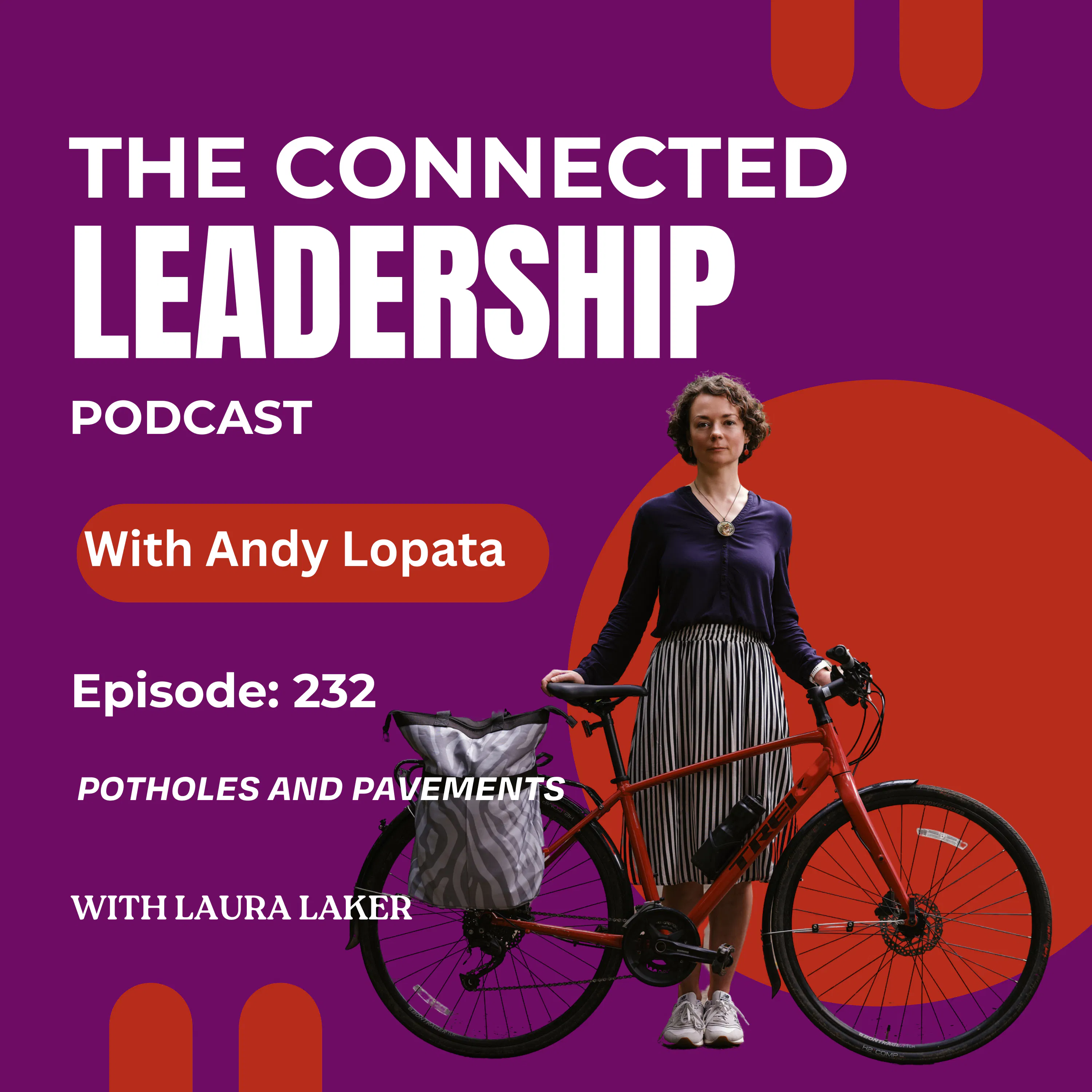
Ep 232Potholes and Pavements with Laura Laker
This episode of the Connected Leadership podcast takes a unique turn, featuring Laura Laker, a prominent and well-respected travel journalist and co-host of the Streets Ahead podcast. Laura Laker has written for national and specialist titles for well over a decade. Her new book is, Potholes and Pavements: A Bumpy Ride on Britain's National Cycle Network, Laura's journey to becoming a cycling advocate is anything but straightforward. She shares her story with Andy Lopata, of navigating different career paths before discovering her passion for cycling at university. The joy she experienced cycling through London and the opportunity to improve air quality and health through active travel ignited her enthusiasm. The conversation then turns to the impact of shared interests on building and deepening relationships. Andy and Laura reflect on their own friendship, which blossomed through their shared passion for walking and later, their book releases. Laura talks about how cycling has influenced her own friendships and professional networks, emphasising that shared activities like cycling and dancing act as social lubricants, breaking down barriers and allowing individuals to be more themselves. Turning to the book's core topic, Laura explains how the National Cycle Network, despite being composed of asphalt and gravel, is ultimately about people. She highlights the crucial role of volunteers, local and national networks, and organisations like Sustrans in building and maintaining the network. Through anecdotes about the development of cycle paths and bridges, Laura showcases the importance of community involvement, place making, and collaborative efforts. The conversation shifts to the challenges facing the National Cycle Network, including underfunding and a lack of long-term planning. Laura emphasises the need for consistent funding and government leadership to prioritise cycle routes as a strategic infrastructure, akin to high-speed rail projects. The conversation then examines the delicate balance between being a journalist and building relationships with those you cover. Laura shares her approach to ensuring accuracy, fairness, and honesty in her reporting, even when challenging those she interviews. She believes that this approach builds trust and facilitates open communication, leading to constructive change. The episode concludes with a discussion about the contentious relationship between pedestrians, cyclists, and drivers. Laura points out the manufactured conflict that is often fueled by political actors and social media. She advocates for a more holistic approach to urban planning, emphasising the need for safe and dedicated spaces for each mode of transport to reduce conflict and improve safety and the overall quality of life. Laura's book, "Potholes and Pavements," stands as a compelling call for greater investment in active travel and a more people-centred approach to infrastructure. It serves as a reminder of the power of community, the importance of relationships, and the potential for positive change through thoughtful collaboration. Connect with Andy Lopata: Website | Instagram | LinkedIn | X/Twitter| Youtube Connect with Lisa Laura Laker: Website | X/Twitter | LinkedIn | Instagram
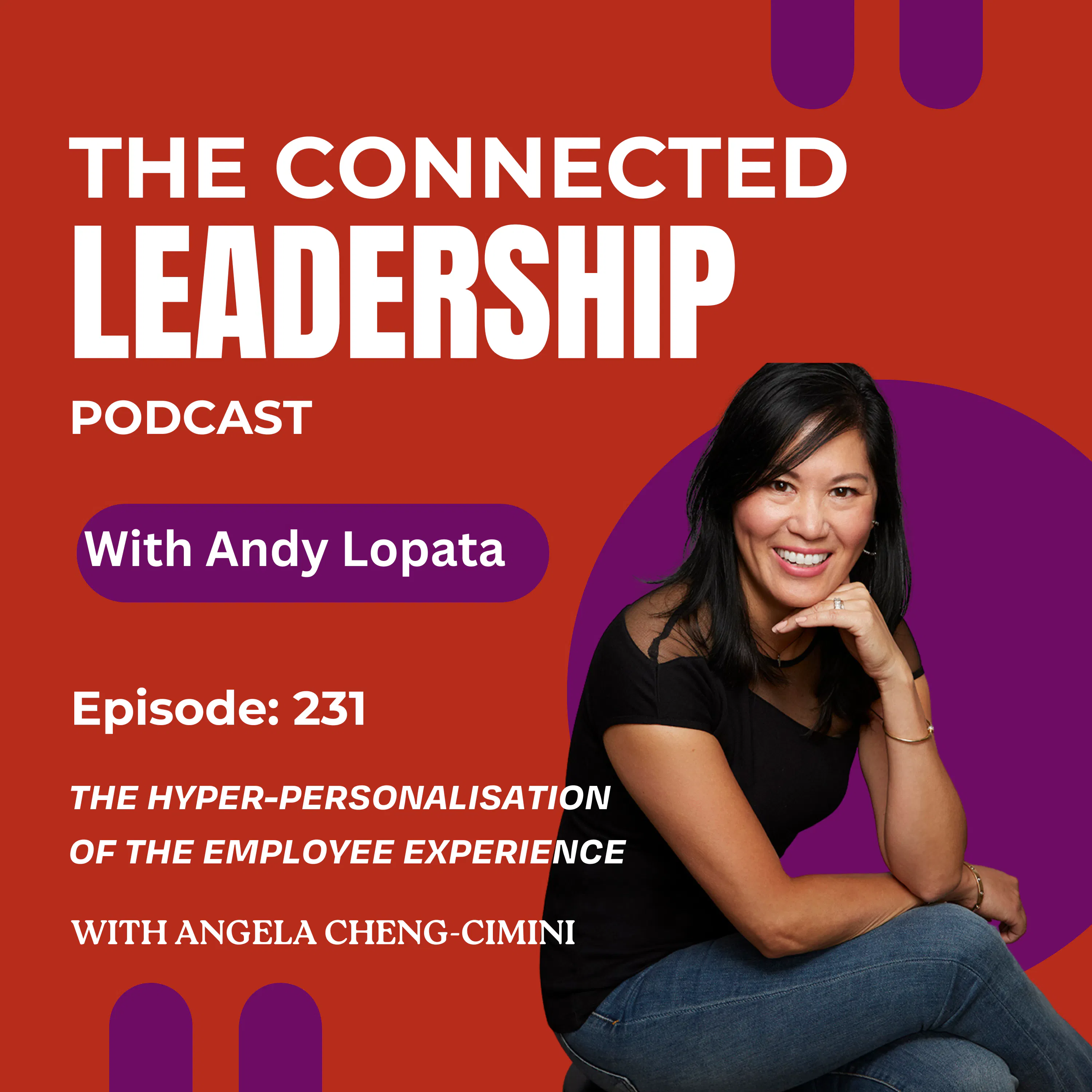
Ep 231The Hyper-Personalisation of the Employee Experience with Angela Cheng-Cimini
Andy Lopata welcomes Angela Cheng-Cimini, an HR professional, to discuss the hyper-personalisation of the employee experience and its impact on organisational success. Angela is the Senior Vice President, Talent, and Chief Human Resources Officer at Harvard Business Publishing, where she leads HR and Facilities & Administration. With 30 years of HR experience across various industries, Angela specialises in developing talent roadmaps that align with business strategies. She has a track record of transforming HR functions from administrative to strategic. Angela is also involved in several organisations, including serving on the Alumni Board of Directors for Cornell University and as a Board Director for the T. Howard Foundation. In their conversation, Angela explains that hyper-personalisation means meeting employees where they are, similar to how companies like Amazon and Netflix personalise customer experiences. She emphasises the importance of leveraging data to develop bespoke employee journeys, citing examples of data points such as skills, aspirations, and work-life balance. Angela also discusses Harvard Business Publishing's journey towards hyper-personalisation, including the development of a robust career pathing model that allows employees to choose their own adventure. Reflecting on leadership, Andy and Angela note a shift towards compassionate and vulnerable leadership styles. They also touch on the resurgence of labour unions and the increasing need for employee voice in organisations. The role of managers as key in localising the employee experience, emphasising the need for upskilling in areas like emotional intelligence and compassionate leadership, are highlighted. She shares insights into Harvard Business Publishing's approach to mentoring, including a formal in-house mentoring program that matches vice presidents with managers. Andy Lopata and Angela Cheng-Cimini reflect on the simplicity and importance of organisational values, noting that values should be easily understood and not overcomplicated. At Harvard Business Publishing, their values are not printed anywhere, yet employees can recite them and provide examples of how they embody them. The challenge of dealing with employees, who may not align with the organisational culture, is discussed, noting that this sometimes leads to reluctance to give critical feedback. Angela emphasises the need for balance, ensuring that kindness doesn't prevent the organisation from being innovative and taking risks. She acknowledges the importance of psychological safety and shares their approach to encouraging employees to find safe spaces within the organisation for conversations. Angela also talks about the role of HR in building relationships and establishing trust, ensuring that HR is seen as a partner rather than a compliance officer. She concludes by discussing the potential role of AI in HR, emphasising the importance of maintaining a balance between artificial intelligence and human intelligence, particularly in areas like talent acquisition where the human touch is essential. In closing, Angela reflects on her role at Harvard Business Publishing, emphasising the importance of values such as doing what's right, doing what's hard, and doing it with excellence. Connect with Andy Lopata: Website | Instagram | LinkedIn | X/Twitter | Youtube Connect with Angela Cheng-Cimini: LinkedIn |
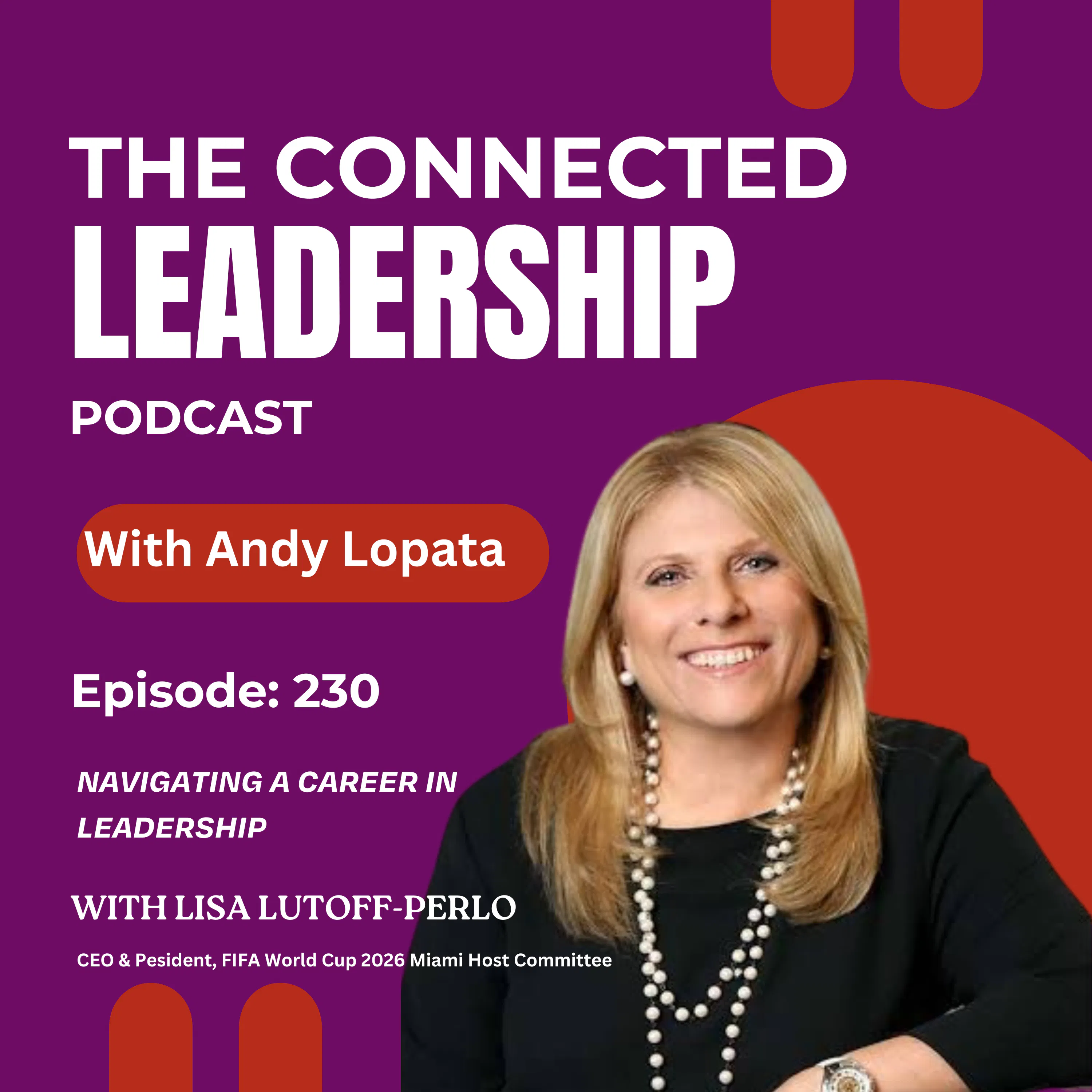
Ep 230Navigating a Career in Leadership with Lisa Lutoff-Perlo, CEO & President, FIFA World Cup 2026 Miami Host Committee
In this episode of the Connected Leadership podcast, Andy Lopata welcomes Lisa Lutoff-Perlo, immediate past vice chairman of external affairs for Royal Caribbean Group and former CEO of Celebrity Cruises. Lisa’s vision and strategy not only propelled Celebrity Cruises to achieve transformational financial results as a brand within the Royal Caribbean Cruises Ltd. (RCL) portfolio but also dramatically increased the number of women in leadership roles throughout the Celebrity brand. Her passion for building extraordinary ships, creating unique experiences, and opening up the world through travel has brought recognition and countless awards to her and Celebrity Cruises. She is now the CEO and President of the FIFA World Cup 2026 Miami Host Committee. Lisa shares her extraordinary journey from selling cruises door-to-door in New England to leading a multi-billion-dollar global company. She recently released her memoir Making Waves: A Woman's Rise to the Top Using Smarts, Heart, and Courage Lisa Lutoff-Perlo which chronicles her ascent in the travel industry. Lisa's entry into the hospitality world started in her parents' coffee shops and restaurants. Despite initially studying accounting, her passion for hospitality led her to the hotel industry and eventually the cruise sector. Her story emphasises that not everyone has a clear career plan, and it's often fate and openness to opportunities that guide one's path. She advises young people to stay open to various opportunities and not feel pressured to have a definitive plan. Networking played a crucial role in Lisa's career and she emphasises the importance of networking both internally within a company and externally in the broader industry. After 39 years at Royal Caribbean Group, Lisa has transitioned to become the CEO of the FIFA 2026 Miami World Cup Host Committee. This move, despite her lack of experience in sports, showcases her ability to leverage her extensive experience in operations, logistics, and hospitality. She underscores the importance of bringing diverse perspectives and skills to new roles. Andy and Lisa also discuss the challenges and triumphs of being a woman in a male-dominated industry. She describes her journey of building credibility and turning skeptics into supporters. She highlights the necessity of proving oneself repeatedly and the added responsibility she felt as a trailblazer for other women. Lisa's efforts to promote gender balance within her company illustrate her commitment to fostering diversity and supporting the next generation of female leaders. Andy and Lisa examine the importance of building relationships before you need them. They follow Lisa’s leadership journey, particularly her experience navigating the cruise industry through the challenges of the COVID-19 pandemic. Lisa shares valuable lessons on embracing vulnerability, adapting leadership styles, and the importance of empathy and optimism during crises. She emphasises the need for leaders to balance control with compassion and highlights the significance of learning from failures. Tune in to hear inspiring insights on resilient leadership and personal growth from Lisa’s remarkable career Connect with Andy Lopata: Website | Instagram | LinkedIn | X/Twitter | Youtube Connect with Lisa Lutoff-Perlo: Website | X/Twitter | LinkedIn | Instagram FIFA World Cup 2026 Miami Host Committee: Website Security Centre
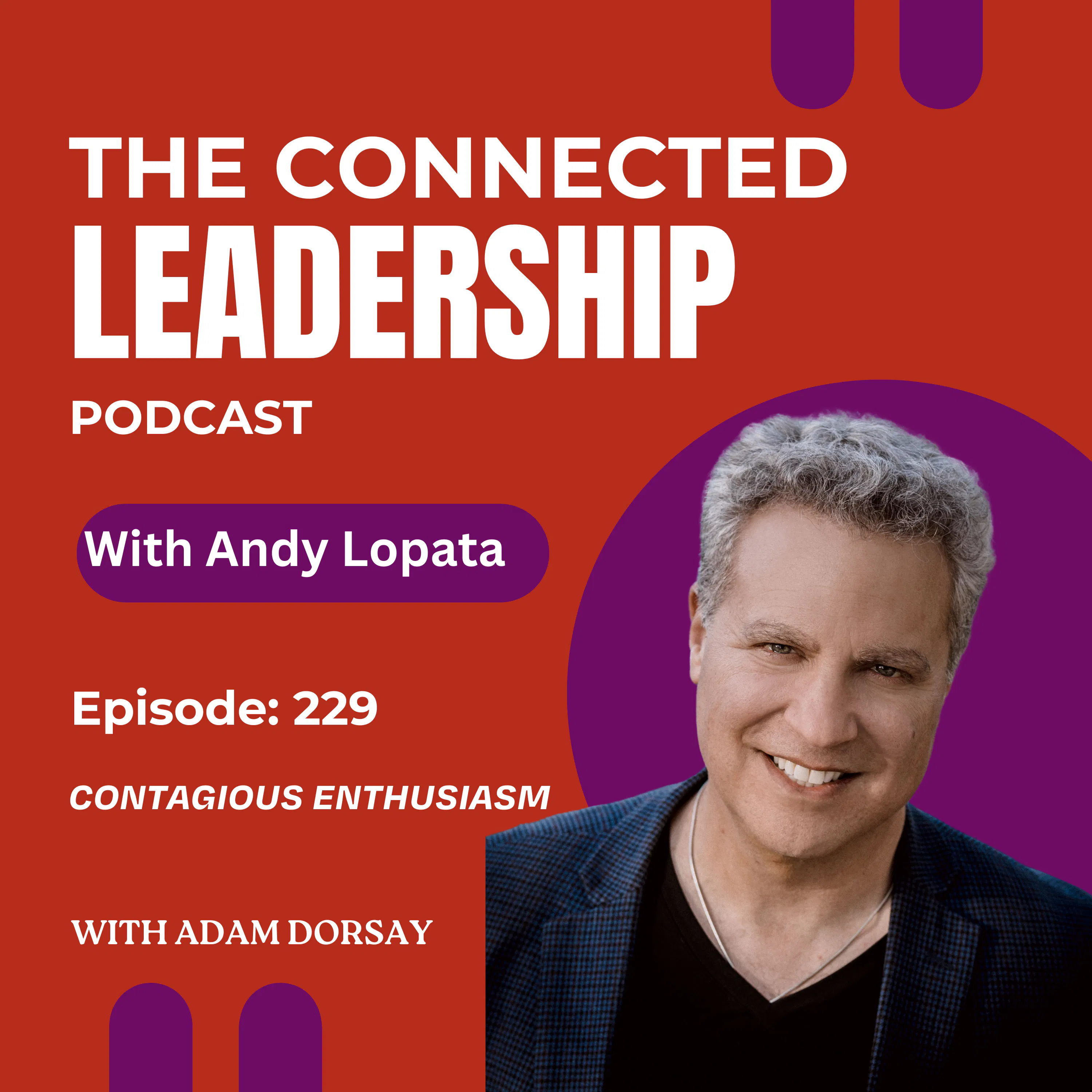
Ep 229Contagious Enthusiasm with Dr Adam Dorsay
In this episode of the Connected Leadership Podcast, Andy Lopata welcomes Dr. Adam Dorsay, a licensed psychologist and executive coach based in Silicon Valley. Dr. Adam Dorsay works with high-achieving adults (including professionals, executives, entrepreneurs, and professional athletes). Adam is the host of SuperPsyched, an award-winning podcast, and he has given two highly regarded TEDx Talks: one about men and their emotions and the other about friendship in adulthood. His book on the topic of the four ways people connect will be available later this year. Andy and Adam discuss the importance of genuine connection, sharing personal stories and insights. Andy reflects on his initial meeting with Adam, highlighting the power of shared interests and human connection. They discuss the impact of empathy and enthusiasm in building relationships, emphasising the need to look beyond job titles and surface-level conversations. The conversation touches on cultural differences, with Andy providing a British perspective on reserved behavior versus American enthusiasm. They explore how values play a crucial role in forming meaningful connections, for example in bridging gaps between people with vastly different backgrounds. The discussion also delves into the challenges of feigned interest and how to navigate conversations when interests don't align. Adam stress the importance of authenticity and creating inclusive environments where people feel comfortable being themselves. Andy and Adam explore the essence of genuine connection and its impact on our lives. They emphasise the importance of curiosity, listening, and learning as fundamental aspects of meaningful relationships. Adam highlights the power of engaging with others authentically, even when discussing topics one may not initially find interesting. He also shares insights on loneliness and the value of feeling useful, suggesting that volunteering and engaging in purposeful activities can combat feelings of isolation. The role of technology in connection is also touched on, with both speakers agreeing on the disruptive nature of smartphones and the importance of being present in interactions. They also discuss the concept of connection in various forms, including connection to oneself, others, the world and spirituality; highlighting how these connections contribute to our overall well-being and sense of purpose. Andy and Adam conclude the episode with a lighthearted exchange, showcasing their rapport and the natural connection that can develop through genuine conversation. Overall, the episode highlights the transformative power of genuine connection, showing that by focusing on shared values and interests, we can foster deeper, more meaningful relationships in both personal and professional settings. Connect with Andy Lopata: Website | Instagram | LinkedIn | X/Twitter | Youtube Connect with Dr. Adam Dorsay: Facebook | LinkedIn |
Ep 228Empathy in the Workplace with Dr Stacy Moore
In this episode of the Connected Leadership Podcast, Andy Lopata welcomes Dr. Stacy Moore, a practitioner psychologist specialising in organisational well-being and performance. Stacy has a wealth of expertise in training design and staff wellbeing support and is a member of the Professional Speaking Association (PSA). She has spoken on the main stage at the Insuretech Insights conference 2023 and most recently provided the closing keynote for CX BFSI UK in March 2024. She shares practical recommendations from psychology on how to positively impact the employee and customer experience. Andy and Stacy explore the role of empathy in the workplace and its impact on building strong professional relationships and enhancing organisational performance. Stacey distinguishes between empathy and sympathy, emphasising that empathy involves genuine connection and understanding without judgement, whereas sympathy often carries a sense of pity or superiority. She stresses the importance of empathy in leadership, customer service, and sales; highlighting its role in fostering trust and loyalty. Andy and Stacey discuss the impact of empathy on recruitment and retention. Stacey emphasises the need for organisations to recognise the human element in their employees and provide support and understanding for life events and challenges. They also explore the balance between efficiency and empathy, noting that while efficiency is important, organisations must prioritise empathy to build lasting relationships with both customers and employees. Stacey shares examples of companies that have successfully integrated empathy into their customer service and sales strategies, leading to improved customer satisfaction and loyalty. Andy and Stacy examine the significance of empathy in the workplace, emphasising its proactive nature. While empathy is often seen as reacting to others' challenges, Stacy highlights the importance of anticipating these challenges and implementing support systems beforehand. This proactive approach, she argues, is vital not only for employees but also for customer relations. Andy and Dr. Stacy also explore the relationship between empathy and personality styles, noting that while some individuals may naturally be more empathetic, empathy can be learned and should be a priority for managers. Stacy suggests that organisations should prioritise empathy in their cultures and incorporate it into training programmes, particularly for managers who may lack interpersonal skills. She advocates for a structured approach to empathy, breaking it down into steps to make it more accessible and actionable for all individuals. The conversation concludes with a discussion on creating psychologically safe spaces for empathetic conversations and the importance of follow-up and reflection after such interactions. This episode highlights the critical role of empathy in organisational success and encourages listeners to consider how they can cultivate empathy within themselves and their teams. Connect with Andy Lopata: Website | Instagram | LinkedIn | X/Twitter | Youtube Connect with Dr. Stacy Moore: Website | LinkedIn | Ben Afia Episode: Evergreen| Spotify|
Ep 227Fostering Inclusion and Equity in the Workplace with Jennifer McCollum
In this episode of the Connected Leadership Podcast, Andy Lopata’s guest is Jennifer McCollum, CEO of Catalyst, a NY-based nonprofit focused on accelerating progress for women in the workplace. Andy and Jennifer discuss issues of gender equality, professional relationships, and ally ship in the workplace. Jennifer McCollum is on a mission to create better leaders and workplaces by advancing women and promoting inclusivity. She’s an accomplished CEO, speaker, and consultant, and the author of the new book "In Her Own Voice: A Woman's Rise to CEO." Using data and personal stories Jennifer sheds light on the unique challenges women face on their journey to leadership and providie actionable insights for aspiring leaders and organisations. Jennifer was the first female CEO at Linkage, a global leadership development firm dedicated to "Changing the Face of Leadership." Jennifer also shares insights from her journey to CEO, reflecting on the challenges faced by women in the corporate world, including pay inequity and the internalisation of external biases. She emphasises the importance of recognising one's value, advocating for oneself, and making bold requests to advance in leadership roles. The conversation examines the concept of ally ship, highlighting the role of sponsors in supporting women's advancement. Jennifer explains that while mentorship provides guidance and advice, sponsorship goes further by leveraging influence and networks to create opportunities for advancement. Andy and Jennifer explore the nuances of ally ship, emphasising the need for men to actively support women in the workplace. They discuss the importance of men recognising and amplifying women's contributions, as well as stepping up as sponsors and advocates. The importance of surrounding oneself with diverse talents and viewpoints to expand opportunities is another important area for discussion. Andy and Jennifer emphasise the importance of creating a culture of inclusion and equity, measuring and ensuring fairness in talent systems, and gaining executive commitment to sponsorship and ally ship. Jennifer emphasises that these efforts not only benefit marginalised groups but also enhance the organisation as a whole. The episode concludes with a discussion on the importance of transparency and accessibility in formal sponsorship programmes, integrating them into the organisation's DNA for meaningful impact. Jennifer stresses the mutually beneficial nature of diversity, equity, and inclusion efforts, enriching not only the organisation but also the individuals involved. Connect with Andy Lopata: Website | Instagram | LinkedIn | X/Twitter | Youtube Connect with Jennifer Mccollum: X/Twitter | LinkedIn | Instagram Podcast: Navigating Imposter Syndrome With Sajna Rahman and Caroline Flanagan Book: Business Networking and Sex: Not What You Think Book: Beyond the Boys' Club: Achieving Career Success as a Woman Working in a Male Dominated Field
Ep 226Unleashing Your Career with Asad Husain
In this episode of the Connected Leadership Podcast, Andy Lopata explores the theme of career development and unleashing one's full potential with guest Asad Hussain, a seasoned HR professional and author of "Careers Unleashed." Asad is a 4-time CHRO with a background in leading blue-chip companies like Gillette, Procter & Gamble, Dun & Bradstreet, and Del Monte. His strategic HR achievements have not only driven the success of these companies but also positioned him as a key voice in discussions on the future of workspaces and employee engagement. Asad inspires professionals at all levels, offering guidance to CEOs, CHROs, senior managers, and HR leaders. His expertise in talent management and high-performance culture has been recognised in publications like Forbes and Big Think, where he provides actionable strategies for career advancement and emphasises the importance of taking ownership of one's career. In this episode, Asad shares insights from his extensive experience, showing the importance of aligning passion, talent, and market demand in one's career choice. He highlights the need for continuous learning, describing it as essential to stay relevant in a rapidly changing world. The conversation examines the concept of career paths no longer being linear, with individuals expected to navigate multiple job changes and industries over their working lives. Asad stresses the value of having a learning strategy and making learning a habit, rather than a separate chore, to stay ahead in one's career. He suggests practical approaches, such as reflecting on learning opportunities from past experiences and incorporating micro-learning techniques into daily routines. Andy and Asad discuss the role of mentors in career development, emphasising the need for mentors at all stages of one's career. The conversation touches on the "PI" model of promotion decisions, where performance, image, and exposure play key roles. Asad provides insights into building a strong professional image and gaining exposure to decision-makers through impactful contributions. Andy and Asad also discuss the importance of being relevant and understanding your value in career development. Asad emphasised the need for individuals to recognise and communicate their value, rather than letting their worth be defined solely by external factors like job titles or performance reviews. One key takeaway was the value of transparent conversations with leaders about career aspirations and restlessness in a role. Asad advises approaching these discussions with a mindset of inquiry and learning, rather than demand. Overall, the episode underscores the importance of lifelong learning and adaptability in today's evolving job market, where portfolio careers and continual growth are becoming the norm. This episode is packed with nuggets for leaders to think proactively about their careers, seek diverse experiences, and build strong professional relationships to unleash their full career potential. Connect with Andy Lopata: Website | Instagram | LinkedIn | X/Twitter | Youtube Connect with Asad Husain : Website | LinkedIn

Ep 225Standing in the Spotlight with Telly Leung
Andy Lopata welcomes Telly Leung to the Connected Leadership podcast. Telly is a versatile Broadway performer with an impressive list of credits, including roles in "Aladdin," "In Transit," "Allegiance," "Godspell," "Rent," "Wicked," "Pacific Overtures," and "Flower Drum Song." He has appeared on television in shows like "Warrior," "Glee," "Instinct," and "Law and Order: Criminal Intent." He is also an educator, teaching master classes at universities and drama programmes worldwide. Telly is the co-author of the "Empathy eBook: Empathy in the Workplace and Workforce," which explores the role of empathy in professional environments. Telly's work extends beyond the stage, as he has collaborated with top CEO Coaches to bring his unique perspectives as an artist and thought leader to CEOs and top executives at various organisations. In this episode Telly discusses his background growing up in Brooklyn in a traditional Chinese home. He describes his parents' escape from Communist China and their pursuit of the American dream, which initially involved high expectations for Telly to pursue a traditional career. Despite his parents' hopes, Telly followed his passion for the arts, eventually finding success on Broadway. He emphasises the importance of belonging and highlights the diverse roles within the theatre community, noting that everyone involved plays a vital part in creating a production. Telly acknowledges his parents' initial concerns about his career choice but explains that they eventually came to support him, proud of his achievements over the years. He reflects on the immigrant experience and the formation of supportive communities like Chinatowns, drawing parallels with the inclusive nature of the theatre community. Andy and Telly discuss the impact of cultural background on career choices, the challenges faced in pursuing non-traditional paths, and the value of perseverance in achieving personal and professional success. They also examine the importance of relationships in Telly's career and the impact of directors on his growth as an artist. Telly highlights how every opportunity he's had in the industry has come from building relationships on previous projects. He emphasises the value of personal connections in every industry. Telly also shares his approach to directing, highlighting the importance of understanding and respecting the different roles and perspectives within a production team and the collaborative nature of theatre, where each person's contribution is essential to creating a successful show. Andy and Telly conclude with the upcoming show in London at Crazy Coq, where Telly will be performing with a jazz trio on 28th April, 2024. Telly invited listeners to join him for an evening of Broadway songs, pop tunes, and backstage stories. The conversation reflects Telly's deep appreciation for the collaborative nature of the arts and the importance of building and nurturing relationships throughout his career. Connect with Andy Lopata: Website | Instagram | LinkedIn | X/Twitter |YouTube Connect with Telly Leung: Website | Facebook | YouTube |IMDB
Ep 224Humanising Leadership with Gerardo Segat
This episode of The Connected Leadership Podcast examines the essence of humanity in leadership, exploring the profound impact of humanising leadership practices. Host Andy Lopata is joined by international leadership coach Gerardo Segat. Gerardo worked for 20 years in the family office industry as CEO, chairman, and entrepreneur. In 2016, he left his business and re-qualified as a coach with the ICF. Gerardo has recently created 'Out As Humans', a performing arts show to humanise leaders of corporations, associations, organisations, and conventions. Andy and Gerardo explore how leaders can connect with their human side, fostering more authentic and empathetic relationships within their teams and organisations. Gerardo, drawing from his extensive experience, shares his journey of transitioning to coaching with a focus on humanising leadership. He emphasises the importance of addressing fears and harmful behaviours that hinder leaders from fully embracing their humanity. The conversation touches on the contagious nature of humanity, highlighting how leaders can set an example by embracing vulnerability and empathy. Gerardo shares powerful anecdotes, such as his experience with a bank's boardroom, where accepting vulnerability led to transformative changes in leadership dynamics. The episode underscores the importance of sensitivity in leadership, enabling leaders to see, hear, and understand their teams better. Sensitivity, as Gerardo explains, allows leaders to spot opportunities for collaboration and connect more authentically with others. Andy questions Gerardo about his unique approaches to leadership development and human connection. Gerardo explains his innovative formats for learning and decision-making, such as using debates to shape corporate decisions and conducting interviews with leaders using a mirror to foster deeper introspection. A key highlight is Gerardo's belief that AI will enhance human connection by forcing individuals to develop deeper self-awareness and empathy. He argues that as AI takes over more routine tasks, human skills such as interpersonal intelligence, sensitivity, and creativity will become increasingly valuable in leadership. Throughout the conversation, Gerardo emphasises the importance of inner objectives, such as finding meaning, love, freedom, and certainty as drivers for personal and professional fulfillment. He suggests that leaders who prioritise these inner treasures will not only excel in the AI-driven future but also contribute to a more humanised and empathetic society. Listeners are encouraged to challenge their assumptions and step out of their comfort zones to cultivate sensitivity and empathy in their leadership approach. Through insightful discussions and real-life examples, this episode inspires leaders to humanise their leadership, creating more compassionate and effective workplace cultures. Connect with Andy Lopata: Website | Instagram | LinkedIn | X/Twitter| Youtube Connect with Gerardo Segat: Website | LinkedIn | It’s OK Not To Be OK By Gerardo Segat
Ep 223Exploring 'The Financial Times Guide to Mentoring' with Alan Stevens
Welcome to a special episode of the Connected Leadership podcast. This episode is specially hosted by Alan Stevens and his guests for the episode, Andy Lopata and Dr. Ruth Gotian, co-authors of the recently released "Financial Times Guide to Mentoring." The conversation kicks off with Alan asking Andy to define mentoring. Andy describes mentoring as an exchange of experiences, skills, and expertise where someone with insights helps another along their journey. Alan then delves deeper, questioning who mentoring is for, and Andy and Ruth stress that it's for everyone, regardless of their career stage, emphasising the benefits of both being a mentor and having a mentor. The conversation flows seamlessly as they discuss the importance of mentoring, backed by research findings that demonstrate its impact on career success and organisational performance. Ruth provides statistical evidence supporting the effectiveness of mentoring, while Andy shares anecdotes and insights from his extensive experience in the field. Andy, Ruth, and Alan engage in lively exchanges, offering practical advice and expert insights on mentoring. The discussions highlight key points such as the different types of mentoring (traditional, reverse, and peer), the importance of formal and informal mentoring relationships, and the distinction between mentoring and coaching. Drawing from their collective expertise and their newly released book, "Financial Times Guide to Mentoring," they provide profound insights into the dynamics of mentoring relationships, the responsibilities of mentors, and the benefits of being mentored. Alan emphasises the often underestimated value of mentoring and highlights how it can significantly impact personal and professional development and relationships. Andy and Dr. Ruth stress the importance of trust, rapport, and mutual respect in fostering meaningful mentoring connections. By sharing real-world examples and research-backed strategies, they offer practical advice for both mentors and mentees. Imposter syndrome emerges as a common challenge for mentors, but Andy Lopata provides strategies for overcoming self-doubt and embracing the value they bring to the mentoring relationship. Dr. Ruth explores the concept of asynchronous mentoring, facilitated by modern communication tools, which opens up new opportunities for mentorship across different schedules and time zones. Additionally, Andy and Dr. Ruth discuss the significance of asking for guidance rather than directly seeking mentorship, highlighting the importance of building relationships and trust before formalising mentorship agreements. They underscore the value of fostering a mentoring culture within organisations, emphasising the benefits of supporting and rewarding mentorship initiatives. Listeners are encouraged to explore the comprehensive insights and actionable tips offered in the "Financial Times Guide to Mentoring,” which is available for purchase on Amazon and your favourite book retailer. Whether you're an experienced mentor, a prospective mentee, or someone interested in cultivating a mentoring culture, this episode provides invaluable perspectives and practical strategies to enhance your mentoring journey. Connect with Andy Lopata: Website | Instagram | LinkedIn | X/Twitter | Youtube Connect with Dr. Ruth Gotian: Website | LinkedIn | X/Twitter | Youtube Connect with Alan Stevens: Website | Instagram | LinkedIn | X/Twitter | Youtube

Ep 25324Connected Leadership Gold: Is AI Going to Replace Humans with Ben Afia
In this episode of the Connected Leadership Gold series, Andy Lopata revisits a crucial topic from April 2023, looking into the rise of artificial intelligence (AI). Andy brings a fresh perspective to the conversation around AI. He questions whether organisations are losing genuine human connections with their customers and stakeholders as they grow in size and complexity. Joining Andy is Ben Afia, a former brand strategist for Boots and an expert in culture, branding and communication. Ben shares insights from his extensive experience, shedding light on the evolving landscape where AI intersects with human interaction. Their conversation touches upon the early stages of AI integration in brands' communication strategies, highlighting both the opportunities and challenges. Ben emphasises the need for AI to reflect the values and behaviours of organisations, cautioning against generic experiences. Andy and Ben consider the delicate balance between control and empowerment in organisations. Drawing from anthropological studies and business models, they explore the challenge of maintaining consistency while allowing room for individuality and discretion. Andy and Ben examine the nuances of leadership, communication, and organisational culture. Andy reflects on his experience in direct sales, emphasising the limitations of scripted communication and the importance of authentic human connection. Ben shares insights on leveraging appreciative inquiry to unlock the potential within organisations, advocating for a coaching-style approach to leadership that empowers individuals and fosters genuine engagement. The discussion then centres on the evolving role of consultants, the need for leaders to prioritise listening and empathy, and the transformative power of coaching cultures within organisations. Andy and Ben underscore the importance of creating environments where individuals feel valued, supported, and empowered to drive meaningful change. Ben emphasises the reciprocal relationship between internal culture and external customer experience, highlighting the vital role of leadership in shaping both. Andy and Ben navigate the complexities of scaling organisations while preserving humanity in communication and relationships. They advocate for clear purpose, values, and behaviours as guiding principles to align teams and foster authentic connections, even in the age of advancing AI. Tune in to this thought-provoking conversation as Andy and Ben offer valuable insights into navigating the evolving landscape of leadership, communication, and human connection in a world increasingly influenced by technology. Connect with Andy Lopata: Website | Instagram | LinkedIn | X/Twitter Youtube Connect with Ben Afia: Website | LinkedIn
Ep 10424Connected Leadership Gold: Navigating the Dangers of Burnout at Work with Dr Amy Bradley and Dr Katherine Semler
In this episode of the Connected Leadership Gold series, Andy Lopata discusses the critical topic of overwhelm and burnout in today's fast-paced world. Joined by esteemed guests Dr. Katherine Semler and Dr. Amy Bradley, authors of the book "Running on Empty," the conversation explores the profound impact of excessive workload on individuals and organisations. Dr. Amy Bradley reflects on a pivotal moment during the COVID-19 pandemic when she recognised she was overwhelmed, noting similar patterns among peers. Dr. Katherine Semler highlights challenges in balancing well-being amid demanding work environments. Andy, Amy and Katherine discuss the role of technology, particularly the ubiquitous use of platforms like Zoom, which has led to the phenomenon of "Zoom fatigue." Andy underscores the importance of reevaluating scheduling practices to prevent back-to-back meetings and allow for essential breaks between engagements. There is a need for proactive measures to address burnout, both at an individual and an organisational level. The discussion progresses to advocate for open dialogue and supportive environments, where individuals feel empowered to prioritise self-care and seek assistance when needed. Additionally, the significance of tailored approaches is stressed, recognising that what may be restorative for one person could be overwhelming for another. Andy, with Dr. Katherine Semler and Dr. Amy Bradley, explores the complexities of burnout and overwhelm in various cultural and organisational contexts. Dr. Bradley highlights the importance of language and intentionality in addressing burnout, emphasising the need for genuine empathy and listening without judgment. Dr. Semler adds to the conversation by discussing the impact of toxic cultures on burnout, noting the extremes of either stigmatising or glorifying burnout within organisations. She emphasises the role of leadership in fostering a culture of support and openness, where emotional and practical support are prioritised and relationships are built on trust and reciprocity. The discussion also touches upon gender, ethnicity, and cultural differences in experiencing burnout, with Dr. Semler highlighting the added pressures faced by women, particularly during the COVID-19 pandemic. Dr. Bradley emphasises the link between perfectionism and burnout, noting that individuals with perfectionist tendencies may be more susceptible to exhaustion. Overall, the interview emphasises the collective responsibility of individuals, families, communities, organisations, and societies in addressing burnout and reshaping the way work is approached to prevent its detrimental effects. The episode highlights the importance of fostering a culture of empathy, communication, and mutual support. By recognising the warning signs of burnout and taking proactive steps to address them, individuals and organisations can work towards creating healthier, more sustainable work environments. Connect with Andy Lopata: Website | Instagram | LinkedIn | X/Twitter Youtube Connectwith Dr. Amy Bradley: LinkedIn Connectwith Dr.Katherine Semler: Website |LinkedIn |
Ep 222Leading in the NHS With Tendai Wileman
In this episode of the Connected Leadership Podcast, Andy Lopata welcomes Tendai Wileman. Tendai is Chief of Staff and Director of Organisational Change at Guy’s & St Thomas’ NHS Trust, the largest NHS organisation in the country. She has worked in healthcare for 20 years in various corporate and operational roles. Tendai shares her unexpected journey into the NHS and reflects on the pivotal role mentoring played in guiding her career path. Despite initial doubts about her potential, Tendai discusses how mentoring helped rebuild her confidence and shape her pathway into leadership. The conversation examines the importance of mentoring and supporting others, particularly for individuals from underrepresented backgrounds. Tendai shares insights into navigating the "minority tax" and balancing her role as a mentor while fulfilling her professional responsibilities. She emphasises the value of providing guidance while allowing individuals the autonomy to chart their own paths. Andy and Tendai also explore the ongoing commitment to learning and growth, both through formal mentoring relationships and informal interactions with colleagues. Tendai highlights the significance of reverse mentoring and the mutual learning that occurs when individuals share diverse perspectives. Andy and Tendai look at the concept of being a curator of ideas and how to incorporate our own views into discussions while remaining open to different perspectives. Tendai emphasises her approach of incorporating her opinions into a range of options, considering her experience while also recognising blind spots. She highlights the need for balance and logic in decision-making, acknowledging that the answer often lies somewhere in the middle. The conversation also touches on handling dissenting opinions and the challenge of maintaining a common agenda in complex organisations like the NHS. Tendai explains the impact of strikes on internal relationships and the NHS ability to deliver care effectively. Throughout the episode, Tendai's pragmatic approach to leadership shines through as she shares the complexities of managing relationships and driving organisational change in the healthcare sector. Her insights offer valuable lessons for leaders navigating similar challenges in high-pressure environments. Connect with Andy Lopata: Website | Instagram | LinkedIn | X/Twitter Youtube Connect with Tendai Wileman: Instagram |LinkedIn | X/Twitter
Ep 221Leading With Gravitas with Antoinette Dale Henderson
Welcome to the Connected Leadership podcast, hosted by Andy Lopata. In this episode, Andy welcomes Antoinette Dale Henderson, an expert in leadership communications and author of "Leading with Gravitas." Antoinette is an executive coach and global keynote speaker with over 25 years’ experience in leadership communications. She specializes in strategically-driven, results-oriented masterclasses that make a powerful difference to executives, boards, and top teams in the UK and internationally. She’s a Fellow of the Professional Speaking Association and the Global Speakers Federation and is the outgoing Chair of the Board of Trustees for BelEve, a charity that inspires and empowers girls aged 8 to 18 to become leaders of their world. In today's fast-paced and dynamic business world, effective leadership requires more than just authority and expertise. It demands authenticity, connection, and a commanding presence that inspires trust and respect. Andy and Antoinette discuss the intricacies of leadership gravitas. Gravitas is a term often associated with seriousness and weightiness, but as Andy and Antoinette explored, it's much more nuanced than that. At its core, gravitas is about the ability to command respect, get taken seriously, and have your voice heard—all while staying true to your authentic self. It's not about putting on a facade or trying to be someone you're not. Instead, it's about finding the balance between projecting confidence and staying grounded in who you are. One of the central themes of the discussion was the concept of managed authenticity. In today's diverse and inclusive workplaces, leaders must be able to flex and adapt their behavior while remaining true to their core values and beliefs. This means being able to read the room, adjust your approach accordingly, and authentically connect with those around you. Humor also emerged as a key element of gravitas. Contrary to popular belief, humor can be a powerful tool for building connection and rapport with others, as long as it's used appropriately and in context. By incorporating humor into your leadership style, you can break down barriers, foster camaraderie, and create a more positive and engaging work environment. Additionally, Andy and Antoinette discussed the gender implications of gravitas and the importance of creating inclusive environments where everyone feels empowered to express their authentic selves. In today's rapidly evolving workplace landscape, diversity of thought and perspective is more important than ever, and leaders must actively work to create spaces where all voices are heard and valued. Ultimately, mastering gravitas is a journey—one that requires self-awareness, humility, and a commitment to continuous growth and development. By embracing authenticity, connecting with others on a deeper level, and cultivating a sense of gravitas, we can all become more effective and inspiring leaders in our respective fields Listen to the full episode of the Connected Leadership podcast to dive deeper into the topic of gravitas and explore actionable strategies for enhancing your leadership presence. Together, let's unlock the power of gravitas and lead with authenticity and impact. Connect with Andy Lopata: Website | Instagram | LinkedIn | X/Twitter Youtube Connect with Antoinette Dale Henderson: Website | Instagram |LinkedIn | Youtube
Ep 220The Science Behind Happiness With Dr. Andy Cope
In this episode of the Connected Leadership podcast, Andy Lopata’s guest is Dr Andy Cope, a specialist in positive psychology. After 12 years of hard academic labour, he gained a Loughborough University PhD and became the UK’s first ever ‘Doctor of Happiness’. Dr Cope shares his journey from traditional psychology to becoming more interested in the effects of positive psychology and happiness. He explains how positive psychology focuses on wellness rather than just illness, seeking to understand what makes already happy people flourish and how others can learn from them. Dr Cope discusses the importance of intentional strategies and learned behaviours in achieving and maintaining happiness. He emphasises the significance of understanding one's own mental health and well-being, especially in today's fast-paced and challenging world. Andy and Dr Cope also examine the concept of "mental wealth" and the role of positive psychology in equipping individuals with the skills to take care of their own mental health. They highlight the impact of emotional contagion and the ripple effect of positivity. Dr Cope explains how an individual's well-being can influence the happiness of those around them, creating upward spirals of emotion. He also touches on the concept of "emotional soup," where everyone contributes to the overall emotional atmosphere in a social setting, with leaders having a particularly significant impact. Additionally, Dr Cope addresses the cultural differences between the US and the UK regarding positivity and happiness. He shares insights on the American "Pan Am smile" and the British tendency to downplay positivity, suggesting that genuine positivity and emotional contagion can transcend cultural differences. Andy and Dr Cope talk about the importance of effective leadership and creating a positive work environment. The need to move away from outdated leadership thinking and traditional approaches, such as the use of SMART objectives (specific, measurable, achievable, realistic, and time-bound), which Dr Cope believes are uninspiring and ineffective. Instead, he advocates setting ambitious and inspiring goals that encourage growth and creativity. Dr Cope promotes the importance of recognising and developing individual strengths rather than focusing on fixing weaknesses. He also challenges the concept of company values, suggesting that individuals prioritise their own values over those of the organisation. Andy agrees with Dr Cope's perspective and emphasises the value of focusing on strengths and building professional relationships. They both recognise the significance of psychological safety in creating an environment where individuals feel safe to be themselves at work. Overall, this episode offers valuable insights into effective leadership, the importance of psychological safety, and the need to move away from outdated approaches to goal-setting and development. Dr Cope's expertise and engaging storytelling make for a compelling and informative conversation. Connect with Andy Lopata: Website | Instagram | LinkedIn | X/Twitter Youtube Connectwith Dr. Andy Cope: Website | Twitter |LinkedIn | The Multiplier Effect" by Dr. Andy Cope
Ep 219Conversations Under The Table with Dawn Wray
In this episode of The Connected Leadership podcast, Andy Lopata engages in a riveting conversation with Dawn Wray, co-founder of the Listening Collective, an organisation developed from a deeply held belief that when people thrive, then their organisations do too. Dawn is a former VP of a $1 billion financial institution and an experienced senior leader. In 2018, she trained as a relational gestalt psychotherapist. She values real and honest conversation and talks candidly about her personal experience and how she believes her psychotherapy training is vital to how we think about leadership, employee satisfaction and well-being, retention, and company culture. Andy and Dawn look into the essence of connection, exploring how we can bridge gaps and foster genuine understanding between individuals. Dawn emphasises the importance of being present and attuned to what's happening in the moment, both within us and in our interactions with others. Dawn discusses the power of active listening and the importance of being fully present in conversations. She highlights how genuine curiosity and openness can lead to more meaningful connections and understanding. Acknowledging the inevitability of biases and prejudices, Dawn advocates for honest self-awareness and empathy. She encourages listeners to challenge their assumptions and approach differences with an open mind. Dawn also shares insights on creating safe spaces for open and honest dialogue where individuals can express themselves without fear of judgment. Andy and Dawn also discuss the importance of conflict in conversations and how it can be channeled constructively. They emphasise the need for honesty and openness, particularly in leadership, to create an environment where people feel safe to express their views. They also touch on the topic of psychological safety and how it can be fostered through clear boundaries and structures. The conversation concludes with a discussion on the value of collaboration over competition and the importance of aligning personal values with organisational values. This episode offers valuable insights and practical tips for fostering genuine connection, understanding, and collaboration in both personal and professional settings. The episode highlights the need for authentic leadership and open communication to create a culture of trust and collaboration in organisations. SELECTED LINKS FROM THE EPISODE Connect with Andy Lopata: Website | Instagram | LinkedIn | X/Twitter| Youtube Connect with Dawn Wray: Website | Instagram |LinkedIn | The Listening Collective RESOURCES MENTIONED “Conversations under the table" The Bridge: Dialogues across Cultures by TaliaLevine Bar-Yoseph Mark Carney: How we get what we value. BBC Reith Lectures December 2020: BBC Sounds - The Reith Lectures
Ep 218Smart Steps To Massive Goals with David Hyner
In this episode of the Connected Leadership podcast, Andy Lopata welcomes David Hyner, a researcher and speaker with a passion for helping people set and achieve massive goals. David shares insights from his extensive experience working with diverse groups, from school kids to senior business leaders, and emphasises the importance of having fun in all endeavours. Andy and David discuss the concept of goal setting, challenging the widely accepted notion of SMART goals, emphasising setting realistic and achievable steps for big projects. Drawing from his research and interviews with over 258 top achievers, David highlights that successful individuals prioritise setting and achieving massive goals over SMART goals. He highlights the importance of combining effective goal-setting processes with the right mindset and behaviours. David talks about his personal journey, including his struggles with education and his transformation into a purpose-driven speaker. He shares heartwarming anecdotes of former students reaching out years later to express gratitude for his impact on their lives. David emphasises the similarities between working with school kids and senior leaders, stressing that both groups share insecurities and doubts. He advocates for leaders to connect with younger generations, leveraging reverse mentoring to prepare for the changing landscape of the workplace. He goes on to outline his steps to massive goals, emphasising the importance of breaking down goals into manageable steps and tackling the most challenging tasks first. He encourages listeners to prioritise personal development and maintain a mindset focused on growth and service. Andy and David probe the significance of taking action, seeking support, and embracing accountability on the journey towards achieving massive goals. David emphasises the importance of tackling the most daunting tasks first, referred to as "eating the sprout," and adopting a "go rhino" mindset, inspired by Scott Alexander's book, "Rhinoceros Success." Andy shares practical insights, such as the "ten-minute test" for utilising LinkedIn effectively, highlighting the impact of consistent small actions over time. They discuss the role of mentors, citing examples from personal experiences and emphasise the power of mastermind groups in providing diverse perspectives, fresh ideas, and crucial accountability. David elaborates on the historical origins of mastermind groups, tracing back to the Lunar Society, and stresses the transformative potential of surrounding oneself with individuals who challenge and support growth. Both David and Andy underscore the importance of seeking support, overcoming insecurities, and embracing accountability as essential components of success. Throughout the episode, Andy and David's lively discussion underscores the transformative power of goal-setting and the importance of fostering connections across generations to drive positive change. Listeners are encouraged to reflect on their goals, identify areas where they need support, and take proactive steps to engage with mentors, join mastermind groups, and commit to consistent action towards their aspirations. Resources to assist you in setting up and managing successful mastermind groups can be accessed through the links provided below. How to set up & run asuccessful mastermind group By David Hyner The Quick Reference Guideto Mastermind Groups by Andy Lopata Connect with Andy Lopata Website Connect with Professor David Hyner Website
Ep 217The Autumn Ghost with Hannah Wunsch
In this episode of the Connected Leadership podcast, Andy Lopata hosts Hannah Wunsch, author of "The Autumn Ghost: How the Battle Against a Polio Epidemic Revolutionised Modern Medical Care," which was recommended by his colleague and co-author, Dr. Ruth Gotian. Despite his initial curiosity about the book's relevance to connected leadership, Lopata found himself engrossed in Wunsch's narrative about collaboration and competition during the polio epidemic in 1952. Hannah Wunsch, a critical care physician, Professor of Anesthesiology, and Vice Chair for Research in the Department of Anesthesiology at Weill Cornell Medicine, shares insights into her book's focus on the pivotal moment in medical history when anesthesiologist Bjorn Ibsen suggested a groundbreaking intervention to save polio patients. This discussion leads to reflections on the cultural differences in medical practices between Scandinavia and the United States, which Ibsen experienced during his training at Massachusetts General Hospital. Hannah emphasises how exposure to different medical systems broadened Ibsen's perspective, enabling him to challenge conventions and pioneer new approaches to patient care. Furthermore, Andy and Hannah explore the impact of World War II experiences on medical professionals and how those shared adversities forged deep bonds, influencing medical practices in subsequent years The conversation examines the importance of fostering open dialogue and interdisciplinary collaboration in healthcare, drawing parallels between historical medical salons and modern-day forums for knowledge exchange. Hannah highlights Ibsen's innovative thinking and willingness to engage with diverse perspectives as key factors in his ability to create the world's first modern intensive care unit. Andy and Hannah delve into the fascinating world of medical history, exploring the traditional hierarchy and segmentation of specialties in the medical field, particularly during the polio epidemic. Hannah shares insights into how this hierarchy initially hindered attempts to find cures and treatments for polio, highlighting the resistance faced by innovators like Ibsen. Despite initial reluctance, Henry Lassen ultimately deserves credit for being willing to break down barriers and listen to unconventional approaches. Reflecting on the past versus the present, Andy and Hannah discuss the persistence of hierarchy and specialisation in hindering innovation across various sectors, including healthcare and professional relationships. While there have been strides towards diversity and inclusivity, cronyism and siloed thinking remain prevalent challenges. The conversation also looks at the power of relationships and community support, exemplified by the immense volunteer effort during the polio epidemic. Hannah recounts the extraordinary sacrifice made by medical students who manually provided ventilation to patients, showcasing the strength of community response in times of crisis. Drawing parallels to navigating internal politics, Hannah emphasises the importance of active listening and withholding judgement, especially when faced with challenging situations. She highlights the value of synthesising information and understanding different perspectives to foster collaboration and achieve better outcomes. In conclusion, Hannah reflects on how her research has impacted her approach to teamwork and patient care, emphasising the importance of ensuring every voice is heard and valued. Ultimately, the discussion underscores the significance of cultural understanding, collaboration, and continuous learning in driving medical innovation and improving patient outcomes. Through Hannah's exploration of historical events and medical breakthroughs, listeners gain valuable insights into the interconnectedness of leadership, collaboration, and innovation in healthcare and professional relationships. Connect with Andy Lopata Website Connect with Professor Hannah Wunsch Website
Ep 216Pathways to Agreement With Professor Daniel Druckman
Welcome to the Connected Leadership podcast with Andy Lopata. In this episode, Andy’s guest is Professor Daniel Druckman, a distinguished expert in negotiation, conflict management, and international affairs. Daniel Druckman is Professor Emeritus at George Mason’s Schar School of Policy and Government and an Honorary Professor at Macquarie University in Sydney and at the University of Queensland in Brisbane Australia. His work focuses on negotiation, nationalism, group identity and conflict resolution among other topics. He is the recipient of five lifetime achievement awards and his most recent books, published this year, are ‘Negotiation, Identify, and Justice: Pathways to Agreement’ and “When Peacekeeping Missions Collide: Balancing Multiple Roles in Peace Operations. Andy starts the podcast by asking Daniel to share insights into his unique career path, transitioning from experimental social psychology to macro-level political science. Daniel recounts three significant consulting assignments, illustrating the complexity of negotiations involving topics like renewing military bases with Spain, managing alliances between NATO and the Warsaw Pact, and contributing to the Strategic Arms Reduction Treaty (START) negotiations with the Soviet Union. Andy and Professor Druckman discuss the concept of turning points in negotiations, exploring the factors that precipitate departures and the subsequent consequences. They look at the importance of flexibility in negotiations, where Professor Druckman emphasises the need for adaptability and training to navigate unpredictable situations successfully. The episode touches on the psychological aspects of negotiations, including the constructive use of anger and the significance of open communication. Professor Druckman shares valuable exercises to foster mutual understanding and build rapport between negotiating parties. Reflecting on the current state of political polarisation, the discussion highlights challenges in maintaining civil discourse and finding common ground in today's divisive climate. Professor Druckman acknowledges the need for creative solutions to address these issues. The multifaceted realm of negotiation, global diplomacy, and conflict resolution is explored. Professor Druckman shares his experiences negotiating on a global scale, emphasising the impact of diplomatic and working cultures. The conversation examines the nuances of nationalism and patriotism, shedding light on their roles in conflict resolution and collective identity. Professor Druckman emphasises the importance of transitioning from a nationalist stance to a more cooperative and inclusive patriotic stance. Andy and Daniel also talk about the significance of joint community activities in fostering reconciliation. The challenge of sustaining peace when conflicts involve deeply entrenched identities is highlighted and the complexities of identity issues in conflict resolution are explored. This episode looks into the intricacies of negotiation, conflict resolution, and global affairs, offering valuable insights and practical takeaways for both personal and professional contexts. Connect with Andy Lopata Website Connect with Professor Daniel Druckman Website
Ep 215How We Can Bridge Divides and Create a More Inclusive Workplace with Sally Helgesen
Andy Lopata welcomes Sally Helgeson, an expert with 35 years’ experience in women's leadership and inclusivity. Sally's latest book, Rising Together: How We Can Bridge Divides and Create a More Inclusive Workplace explores the creation of a more diverse and inclusive workplace culture. Sally Helgesen, cited in Forbes as the world’s premier expert on women’s leadership, is an internationally best-selling author, speaker and leadership coach. She has been inducted into the Thinkers 50 Hall of Fame, which honours those whose ideas have shaped the field of leadership worldwide. She is ranked number 3 among the world’s thought leaders by Global Gurus. Andy and Sally discuss the significance of diversity and inclusion and Sally explains the distinction between diversity and inclusion, emphasising the importance of inclusive practices in recognising individuals outside the leadership mainstream. The conversation explores the pivotal role of professional relationships and looks at the challenges and opportunities in cultivating a workplace culture that values and integrates diversity and inclusion. The focus shifts to leaders fostering inclusive behaviors within their teams and organisations. Sally underscores the value of Employee Resource Groups (ERGs) and Women's Networks in providing crucial support, mentorship, and networking opportunities. The positive shift towards inclusivity, involving men in formerly women-only networks, is highlighted. The discussion unfolds looking at the impact of the absence of role models, particularly at senior levels, on individual aspirations. Sally emphasises the importance of diverse role models for various career aspects, transcending gender or ethnicity. Diversity is an ever-expanding process encompassing various dimensions beyond gender and ethnicity. Choosing active participation in this transformative journey is considered a beneficial career approach. Sally and Andy explore the challenges of fostering inclusion and understanding diverse perspectives in the workplace. Proactive inclusivity, avoiding divisive rhetoric and addressing the concerns of those who feel left behind with empathy and curiosity, "How can I help you?" becomes a powerful bridge to understanding. Navigating multicultural environments involves being a cultural ambassador, fostering connections, and seeking to understand diverse perspectives. Sally advocates making people feel heard and insists that it requires treating each individual as unique, irrespective of their background. Sally challenges identity-based and unconscious bias models, advocating a focus on inclusive behaviours that promote collaboration and value diverse contributions. Andy and Sally emphasise the role of curiosity, understanding, and active support in building a truly inclusive workplace culture. Connect with Andy Lopata Website Connect with Sally Helgesen Website
Ep 214Putting the I Into Change with John Fisher
Welcome to the Connected Leadership podcast with Andy Lopata. In this episode, Andy welcomes John Fisher, a constructivist psychologist and coach with 25 years of experience in change management, personal development, and coaching. John has a rich professional background, working with organisations such as BPP, Training 2000 Ltd., Balfour Beatty Utility Solutions and BAe Systems. His experience spans designing and delivering leadership and personal development courses, coaching, and project management. John is the author of six books, including "Putting the I into Change," and joins Andy to explore the intricacies of navigating change from an individual's perspective. Andy and John examine the emotional and psychological issues people face during major life changes. John shares insights from his experience and introduces the Fisher curve (see link below). The Fisher curve maps the journey individuals undertake during change, considering the impact on identity and emotional well-being. Andy and John discuss the significance of understanding where individuals are in the change process to manage conversations effectively. They explore the stages of the curve, beginning with anxiety and anticipation, progressing through fear, threat, and guilt, and culminating in anger, confusion, and apathy. The podcast highlights the unique and subjective nature of the curve, with individuals experiencing varying depths and durations of each stage. John emphasises the importance of constructivist psychology, where understanding the world through another person's eyes is key to effective interaction. The conversation touches on conflict resolution, the stages of grief in the bereavement curve and the impact of change on an individual's sense of identity. Andy and John explore the nuanced aspects of organisational change and leadership. The focus centres on the involvement of external coaches in the change process, emphasising the delicate balance between delegating responsibility and maintaining accountability as a leader. John raises a critical point about the necessity of trusting relationships with coaches. He highlights that leaders must discern when to abdicate responsibility, especially in situations where their presence may hinder the change process. The conversation continues with reflections on the challenges of being honest during periods of uncertainty, emphasising the importance of trust and vulnerability in leadership. Andy and John use real-world examples, including the experience of business leaders and the impact of transparent communication on building trust. Andy and John explore the complexities of authentic leadership, acknowledging that wearing a metaphorical mask may be necessary in certain situations to provide the team with the stability they need. They discuss the emotional toll on leaders during challenging times and the power of vulnerability in building strong team dynamics. The episode concludes with a focus on the positive trajectory of change, offering insights into the process of getting individuals on board with change. John emphasises the importance of support, information, freedom, and open communication in guiding individuals through the phases of acceptance and embedding change successfully. The conversation also touches on the continuous nature of change, both at macro and micro levels, reinforcing the idea that change is a constant and dynamic force in organisational life. This episode is a must listen for leaders navigating the world of change. Connect with Andy Lopata Website Connect with John Fisher Website Fisher Transition Curve https://www.dpac.tas.gov.au/__data/assets/pdf_file/0021/60483/Change_09_-_Factsheet_-_The_Process_of_Transition.pdf
Ep 213The Right Kind of Wrong with Dr Amy Edmondson
Welcome to the Connected Leadership podcast, hosted by Andy Lopata. Our first guest for 2024 is Dr Amy Edmondson, a professor of leadership at Harvard Business School and author of seven books. Renowned for her expertise in psychological safety, Dr Edmondson explores this crucial topic in her latest award-winning book, "The Right Kind of Wrong: The Science of Failing Well." Winner of the prestigious Financial Times and Schroeder's Business Book of the Year award for 2023, her work is recognised globally. Andy and Amy examine the intricacies of failure, learning, and innovation within organizations. Dr. Edmondson shares her insights on the importance of creating a culture that encourages learning from failure, distinguishing between good and bad failure, and the concept of "intelligent failure." They discuss the challenges of balancing short-term results with long-term investments, especially in corporate environments driven by quarterly financial goals. Surprisingly, Amy’s research reveals that teams with strong relationships tend to report more errors than those with weaker ties. This leads to a thought-provoking discussion on the role of relationships, cognitive diversity, and psychological safety in fostering a culture of learning and innovation. The conversation delves into the dynamics of individual and organisational learning, the impact of a growth mindset, and the need for leaders to navigate the tension between immediate results and long-term investments. Dr Edmondson's extensive research and thoughtful insights provide valuable perspectives on building resilient and innovative organisations in an ever-changing landscape. Andy and Amy discuss the crucial aspect of psychological safety within organisational culture. Beginning with addressing the common concern of trusting colleagues and the fear of office politics, where individuals may present themselves as trustworthy but fail to prove it over time. Amy advocates a proactive approach, emphasising disclosure over systematic holding back. She asserts that the occasional harm from trusting an untrustworthy person is less costly than the lost opportunities resulting from systematic caution. This perspective challenges the conventional wisdom of waiting and seeing, encouraging a culture of openness and honesty. The conversation then shifts to the organisational side of psychological safety. Amy contends that a well-run organisation is one that doesn't tolerate infighting or backbiting. She stresses the importance of senior leaders modelling the desired culture and sending a clear message that undermining colleagues will not be tolerated. Andy Lopata explores the journey of establishing trust within a team and maintaining it as the team evolves. Amy emphasises the need for a joint effort, framing the creation of a trusting culture as a shared project. She believes that a culture of trust will naturally reject individuals attempting to engage in toxic behaviors. Amy highlights the importance of creating a safe space for learning and emphasises that psychological safety is not an end goal but a means to achieve broader objectives, such as innovation or quality. This episode provides valuable insights into the complexities of psychological safety, organisational culture, and the practical steps leaders can take to foster a climate of trust and learning within their teams. ‘Creating an environment where your voice is welcome’ Connect with Andy Lopata Website Connect with Dr Amy C. Edmondson Website
Ep 41223I'm H.A.P.P.Y Exploring Happiness with Paul McGee
Welcome to Connected Leadership Gold where Andy revisits a compelling conversation from May 2021 with Paul McGee, the renowned author and speaker widely recognised as the "Sumo Guy." Paul is celebrated for his motivational and practical approach, notably showcased in his book "Sumo: Shut Up, Move On." Paul's shares insights from his upcoming book, "The Happiness Revolution," co-authored with Dr. Andy Cope, setting the stage for a thought-provoking discussion. Andy and Paul examine the profound impact of the last 15 months on happiness. They look at the influence of technology and particularly of social media on well-being. Paul shares insights into the addictive nature of social platforms and the challenges posed by social perfectionism, where individuals often compare their lives to carefully curated online personas. Education emerges as a pivotal force in promoting holistic well-being, with an emphasis on the interconnectedness of mind, body, and emotions. Paul advocates for equipping individuals, especially the younger generation, with tools to navigate the digital landscape positively. The episode uncovers the evolving nature of happiness and the imperative to redefine success in the digital age. Andy and Paul explore the impact of technology and social media on happiness. Andy advocates for balance, sharing personal anecdotes about the role of photos in preserving memories. Paul agrees, emphasising moderation in the use of technology and social platforms. The conversation takes an introspective turn as they delve into the tendency to defer happiness based on future achievements. Paul shares his experience of setting arbitrary goals and attaching happiness to them, highlighting theimportance of appreciating the present. Reflecting on the pursuit of perfectionism, Paul encourages authenticity and vulnerability in leadership. Personal anecdotes weave through the discussion, addressing the role of role models and the impact of comparison on personal growth. Andy and Paul conclude with an exploration of unhappiness and mental health. Paul acknowledges the challenge of distinguishing between unhappiness and mental health issues, emphasising the importance of checking in on others. The segment leaves listeners with a call to embrace the complexity of emotions, understand their nuances, and strive for emotional agility in navigating life's challenges. Connect with Andy Lopata Website Connect with Paul Mcgee Website
Ep 31223How To Become the British Prime Minister with Simon Kuper
In this episode of Connected Leadership Podcast Gold, Andy Lopata explores the influence of Oxford University and the Oxford Union on the British political landscape with guest Simon Kuper, Financial Times columnist and author of Chums: How a Tiny Caste of Oxford Tories Took Over the UK. The conversation looks into the historical ties between British prime ministers and Oxford University, specifically the Oxford Union, emphasising the prevalence of individuals from similar backgrounds in political leadership. Simon Kuper, a contemporary of Boris Johnson, David Cameron, Michael Gove and others at Oxford in the 1980s, sheds light in his observations and insights into the dynamics of this establishment, extending beyond politics into various aspects of life. Simon’s book, Chums, highlights the rise of a group of individuals, primarily educated at Oxford, groomed from a young age to rule the UK. Andy and Simon examine the dominance of Oxford in shaping the top echelons of political life, the role of the PPE degree, and the significant impact of the Oxford Union Debating Society as a nursery for future politicians' rhetoric and debating skills. A key theme emerges as Simon Kuper addresses the power of the establishment in modern society, not just in the UK but globally. Andy and Simon explore the barriers faced by those not from the same privileged background and strategies to break into entrenched circles. The podcast delves into the concept of an "Oxbridge" elite and its impact on British public life. Simon Kuper shares insights into the superficial nature of certain degrees and the emphasis on speaking and writing skills over a deep understanding of policy and issues. The discussion also touches on the role of foreign influence in business, drawing parallels with the diversity seen in the business world as opposed to the political landscape. Andy Lopata brings attention to the contrast between the ability to speak eloquently and the grasp of policy details, questioning whether the former has gained an undue advantage in British politics. Simon Kuper provides a nuanced perspective, acknowledging the importance of effective communication skills while critiquing the prioritisation of such skills over substance. The conversation extends to the impact of Oxford Union training on political leaders and the significance of debating and rhetoric skills in shaping political narratives. Simon highlights how these skills, learned at Oxford, have played a crucial role in shaping the political landscape and influencing election outcomes. This episode of The Connected Leadership Podcast provides a comprehensive exploration of the influence of Oxford University and the Oxford Union on British public life. It delves into the complexities of leadership, the impact of traditional backgrounds, and the need for a more inclusive and diverse leadership landscape. Connect with Andy Lopata Website Connect with Simon Kuper Twitter "Oxford teaches you above all to speak well and write well, even when you don't know much about what you're talking about" Chums: How a Tiny Caste of Oxford Tories Took Over the UK by Simon Kuper
Ep 21223Humour in Business with Jeremy Nicholas and Tim Gard
On Christmas Day, Connected Leadership Gold explores the role of humour in business. Andy Lopata’s guests are Jeremy Nicholas, keynote speaker and news/sports presenter, and Tim Gard well-known US speaker and MC. Andy explores the personal journeys of Jeremy and Tim, highlighting the pivotal role humour has played throughout their careers. Both guests emphasise that humour serves as the foundation of their work, consistently seeking the humorous angle in all aspects of life. They discuss incorporating humour into presentations, considering the audience, applying filters, and leveraging individual strengths. Jeremy and Tim clearly distinguish between the stand-up comic and their approach, emphasising that humour should enhance rather than diminish. They explore the application of comedic principles in business, where humour effectively diffuses conflict and reduces stress. The conversation examines the transferability of the rules of comedy, including structural elements, elevating speeches, incorporating everyday stories, and tapping into emotion and nostalgia. Leaders, they argue, can significantly benefit from infusing humour into presentations and team motivation efforts. Through a fascinating and humorous dialogue, this episode offers insights into the strategic use of humour in professional settings. The focus shifts beyond the realm of presentations to explore the broader significance of humour in various aspects of life, looking at the power of humour in alleviating stress, diffusing conflicts, and enhancing personal well-being. Tim shares insights into using humour as a tool for self-care, emphasising its role in breaking patterns of stress and providing a source of hope. It is important to be intentional about incorporating humour into our lives, whether through cherished memories or visual props that evoke laughter. Jeremy, known for infusing humour into business presentations, expands on its relevance in leadership. He challenges the misconception that being funny undermines credibility and encourages leaders to embrace playfulness. Jeremy highlights the desirability of a good sense of humour and its potential to strengthen team dynamics. Throughout the conversation, anecdotes and experiences are shared, including humorous travel mishaps and the memorable image of Tim's signature rubber chicken leg protruding from his suitcase. The episode underscores the transformative impact of humour, not just in presentations but as a powerful tool for creating connections, diffusing tension, and fostering a positive mindset. Connect with Andy Lopata Website Connect with Tim Gard Website Connect with Jeremy Nichols Twitter
Ep 1"The Accidental Footballer: with Pat Nevin
In this episode from the archive, Andy Lopata interviews Pat Nevin, former professional footballer turned media personality and author of the bestseller, "The Accidental Footballer." Pat shares insights from his illustrious career, emphasising a unique perspective on life, career, and relationships. Pat discusses his book, highlighting the absence of antagonism. Despite potential conflicts with players and managers, Pat emphasises his commitment to living life on his terms. The conversation delves into Pat's early days with Chelsea, where he became a football icon. His love for the game, coupled with a commitment to maintaining a safety net beyond football, shaped his mindset. Pat's mantra, "Being a footballer is what I do, not who I am," reflects his approach to the sport. Pat's emphasis on playing with joy and creativity, rather than fear, allowed him to excel on the pitch. This mindset extended beyond football, influencing his media career and his role as PFA chairman. He addresses the dangers of modern business practices, expressing concern about large conglomerates losing touch with individual well-being. Andy and Pat discuss the shift towards empathic leadership and the potential pitfalls of prioritising the bottom line over human values. As a chief executive and chairman, Pat discusses his experience in the football industry, shedding light on battles fought for the welfare of players and the challenges of negotiating television deals. The discussion evolves into an exploration of values in decision-making. Pat's rejection of certain roles and his commitment to staying true to himself, even in the face of potential financial gain, highlights the significance of aligning personal values with professional choices. Pat Nevin shares a story about standing against homophobia and the pressure to conform in the football industry. His encouragement to be authentic to oneself, even in the face of societal norms, becomes a recurring theme. They conclude with a reflection on the changing landscape of acceptance, urging listeners to embrace diversity and individuality. Connect with Andy Lopata Website The Accidental Footballer
Ep 212Heart and Head Leadership with Kirstin Ferguson
In the last live Connected Leadership podcast episode of 2023, Andy Lopata interviews Dr. Kirstin Ferguson, an acclaimed Australian leadership expert and award-winning author. They explore her notable career, her new book "Head and Heart Leadership," and her journey. Kirstin, a recipient of the international Thinkers50 Distinguished Award for Leadership is among the top 50 global thinkers. With a PhD in leadership and culture and honours degrees in Law and History, she advises international brands on modern leadership. Kirstin is also an Adjunct Professor at the QUT Business School and a Sir Winston Churchill Fellow. Kirstin shared insights from thirty years of leadership experience including her time in the Royal Australian Air Force, leading a global consulting firm, and serving on the board of the Australian Broadcasting Corporation (ABC). She expressed gratitude for the experiences that shaped her leadership style and informed her idea of what it means to be a "modern leader", capable of reading situations and adapting interaction styles to build effective rapport. Kirstin touched on the challenges she faced while steering the ABC through a crisis, emphasising the importance of compartmentalising work stress and appreciating the role of supportive individuals in her life. She highlighted the evolving expectations of modern leaders, the necessity of bringing one's whole self to work, and the importance of connecting on a personal level while maintaining professional boundaries. Being authentic as a leader was emphasised, with Kirstin illustrating its significance through her usage of social media and her approach to connecting with different people in diverse situations. She stressed the need to respect and meet others where they are, in order to build connections and achieve influence effectively. Andy and Kirstin discuss the balance of head and heart for effective leadership. Leaders should be adaptable, and able to react according to what is required, whether that needs a rational or empathetic approach, making it impossible to determine a fixed ratio between head and heart leadership. Andy and Kirstin examine eight key attributes, including curiosity, wisdom, perspective, capability (head-based), humility, self-awareness, empathy, and courage (heart-based). Kirstin points out that possessing these qualities is essential, but the art of modern leadership lies in knowing which to employ and when. One intriguing point during the discussion is the explanation of the attribute 'perspective' and its correlation with diversity, inclusivity, and noticing who and what is missing from the room. The holiday season is upon us, and you may have some extra downtime. So why not use that break to catch up on missed episodes? `Connected Leadership Gold` is packed with interesting episodes from our archives, filled with insights waiting to be discovered or revisited. Make the most of your holiday season by adding some gold nuggets of wisdom to your leadership journey. Listen, learn, and lead better with the connected leadership podcast! Head & Heart: The Art of Modern Leadership by Kirstin Ferguson Connect with Andy Lopata Website Connect with Dr. Kirstin Ferguson LinkedIn
Ep 211The Seismic Shift in Leadership with Dr. Michelle K. Johnston
In this episode of the Connected Leadership Podcast, Andy Lopata’s special guest is Dr. Michelle K. Johnston, a management professor, executive coach, and leadership expert from Loyola University in New Orleans and author of the Amazon bestseller, "The Seismic Shift in Leadership: How to Thrive in a New Era of Connection." She shares her insights about the shifting nature of leadership, discussing a shift from a perfection-oriented, command-control cultural approach towards a more relatable, connected style of leadership. Exploring personal experiences that led to these observations, Michelle believes that the old authoritarian and aggressive leadership styles are becoming increasingly obsolete. Michelle explains how effective leadership today is rooted in meaningful relationships and team connections. She particularly highlights the importance of allowing for vulnerability in the workplace, noting that authenticity can foster a safe, inclusive environment conducive to innovation. Andy and Michelle also probe into the impact of generational, cultural and gender differences in leadership styles. Andy points out how cultural perceptions have shifted over time, making it difficult to apply a one-size-fits-all approach to leadership. Michelle highlights creating a positive work culture, emphasising the role of leaders in intentionally working towards this goal to foster better connections and drive results in their organisations. The importance of thoughtful human connection in leadership is discussed. Michelle illustrates how different individuals communicate, all driven by different things like efficiency, shared decision-making and building meaningful relationships. Michelle passionately advocates for transforming our approach to conducting businesse to nurture better human interaction in professional relationships. She stresses the importance of business leaders being more accessible, and striking a balance between providing direction and promoting shared decision-making for a better collaborative spirit. Andy and Michelle also examine how changes in leadership styles can affect the organisational culture. For instance, transitioning from a command-control style to a more inclusive approach requires a considerable adjustment period, consistency and managing expectations. The conversation ends with an enlightening three-step process guide for leaders to drive results by first connecting with themselves, their teams, and then the organisation. Andy Lopata;s upcoming book, "The Financial Times Guide to Mentoring," co-authored with Dr Ruth Gottian is scheduled for release in May 2024, the book is now available for pre-order on Amazon. The Financial Times Guide to Mentoring: A complete guide to effective mentoring (The FT Guides) Paperback – 8 May 2024 by Andy Lopata (Author), Ruth Gotian (Author) https://tinyurl.com/4jvfpss5 Connect with Andy Lopata Website Connect with Michelle Johnston Website
Ep 210Getting the Edge for Change with Jodie Rogers
In this episode of The Connected Leadership Podcast, Andy Lopata hosts Jodie Rogers, author and founder of Symbia. They discuss ways to help leaders guide their teams through uncertain times. With 20 years of experience in understanding human behaviour, Jodie's mission is to enhance engagement, empowerment, and productivity in individuals. As a human behaviour consultant, learning expert, and facilitator, Jodie founded Symbia to build teams of emotionally intelligent problem solvers who are agile in the face of change. Symbia collaborates with global corporations like Unilever, Johnson & Johnson, Barclays, and L'Oréal for leadership and professional development, promoting 'Mental Fitness' as a catalyst for growth. In a world where change is constant and uncertainty high, leaders are being called to take their teams forward through these challenges. The importance of personal relationships moving into professional relationships is highlighted, especially when working together on a programme like ‘The Edge’. Jodie Rogers' expertise in human behaviour and hidden psychology plays a crucial role in understanding how to get and maintain that edge for change during uncertain times. Andy and Jodie delve further into the concept of the ‘hidden edge’, discussing the necessity of emotional and social intelligence in the business world. The idea of dealing with the rapid changes happening in and around organisations, the uncertain times we live in, and how we maintain our focus amid distractions is a key topic of discussion. Jodie emphasises the importance of not just dealing with changes in terms of built relationships, but also how to protect oneself for the future. These life skills, she suggests, are not only more in demand now, but they are also developing rapidly to cater to new workplace requirements. Andy and Jodie discuss the importance of a systematic approach to professional development. The Edge, a professional development programme, has been designed purposely for low-cost but high impact. The three-phase programme focuses on enhancing mindsets, driving performance, and growing influence. In these ever-changing times, both Andy and Jodie agree on the importance of leaders becoming familiar with their emotional and social intelligence and the need to constantly refine and develop their skills to help their teams. Jodie discusses the beneficial impact of challenging work relationships, stressing how being pushed to one's limits can lead to enhanced skills and expertise. She also examines the tangible impacts of their program, "The Edge," which uses a benchmarking survey to track progress in core competencies and other measures. The results have been impressive, showing notable increases in comfort with uncertainty, critical thinking, prioritisation, and stressmanagement. Jodiehighlights the importance of mental well-being in managing the rigors of professional life. She advocates for a proactive approach to mental fitness, similar to the preventative measures used in physical healthcare. Equipping people with tools to boost their mental fitness can help them navigate hurdles more effectively in the future, thereby enhancing their resilience. To find out more about The EDGE programme, please visit https://symbiapartners.com/edge Connect with Andy Lopata Website Connect with Jodie Rogers Website
Ep 209Nurturing a Curious Mindset With Steph Auping
In this episode of the Connected Leadership podcast, Andy Lopata welcomes Steph Auping. Steph is a co-founder and the Chief Learning Officer at Leadership & Co. a firm dedicated to preparing leaders to excel in today's complex business environment. Her focus lies in nurturing skillsets and amplifying the leadership impact of participants. In this episode, Steph emphasises the importance of nurturing curiosity in individuals and organizations. She highlights that this core trait is a competitive advantage that enhances productivity, innovation, teamwork, resilience, and adaptability in the workplace. She identifies three types of curiosity: cognitive curiosity, which involves hunting for knowledge and problem-solving; social curiosity, which involves seeking to understand and engage with others; and reflective curiosity, which involves introspection of personal beliefs and values. All three contribute significantly to personal growth and relationship-building in professional environments. She discusses the potential negative impact of traditional educational models, where the pressure to memorise and recite information maystifle curiosity. Instead, the goal should be to foster learn-it-all cultures rather than know-it-all behaviours, encouraging an openness to new information. Andy and Steph discuss the powerful role of curiosity in workplaces, leadership, and cultures. They look at how leaders can model curiosity, encouraging it in their teams and workspaces to fuel innovation and growth. They also explore how personality traits and differences, including gender and introversion, impact curiosity. Navigating conversations with neurodivergent individuals and understanding their perspectives and experiences is also important. Andy and Steph discuss the role of having objectives or agendas in conversations. While a lack of agenda allows authenticity and free-flowing conversations, directed curiosity is beneficial when working towards a specific goal or innovation. Addressing the curiosity among different generations, Steph advocates for nurturing a curious mindset in younger workers instead of pushing them to conform to established norms. She suggests that structures need to be put in place to encourage their curiosity. Exploring cultural differences, Steph mentions that genuine curiosity about a different culture is usually met with open dialogue. A non-judgmental and genuinely curious approach is appreciated, while a lack of curiosity is perceived as disinterest or arrogance. In closing, Steph provides three key practices for leaders to foster curiosity: role modelling it, asking questions, and rewarding it. The conversation underscores the need for encouraging curiosity in the workplace, especially among women, who might, in some professional environments, be more reluctant to express their curiosity for fear of appearing unknowledgeable. For leaders, the challenge is to create safe spaces for questions, exploration, and the free exchange of ideas. According to Steph, when curiosity is valued and nurtured, it can drive substantial positive impacts for both the individual and the organisation. Connect with Andy Lopata Website Connect with Steph Auping Website
Ep 208The Power of Collective Intelligence with Jennifer Sundberg
In this episode of the Connected Leadership Podcast, Andy Lopata hosts Jennifer Sunberg, a former Ernst & Young London Entrepreneur of the Year and the Co-CEO of Board Intelligence. Her new book, co-authored with Pippa Begg, "Collective Intelligence: Build a Business That's Smarter Than You," encourages incorporating greater collective intelligence in businesses. Theconversation revolves around how businesses can promote intelligence and innovative thinking, not just from the business leaders but from everyone involved. Jennifer points out that many leaders assume their intelligence and ideas are solely responsible for business success, forgetting the power that lies in the team's collective brainpower. Being overly reliant on a superstar leader can hinder real progress. These leaders might be amazing, but their brilliance doesn't necessarily mean the business's success is solely dependent on them. Jennifer cites well-established organisations like Apple and Amazon as examples, revealing that some of their game-changing decisions like the iPhone and Amazon Prime did not come directly from Steve Jobs or Jeff Bezos but from their respective teams. The challenge lies in enabling everyone in a business to contribute ideas without fear of criticism or backlash. Jennifer believes that fostering a culture of humility and questioning is crucial for developing collective intelligence. Leaders must operate from an understanding that they don't know everything. She argues for a change in the predominant focus on having answers to fostering an environment that encourages asking questions. The downside of a top-led approach involves speed, waste, and hubris. Restricting decision-making power to a single person slows response time in a fast-paced business environment. Not tapping into the intelligence of all team members creates intellectual waste. Andy and Jennifer discuss the power of curiosity, the importance of reverse mentoring, providing truthful information even when it is not easy, and the need to normalise learning from failures. Jennifer states that asking simple questions, particularly the 'how' and 'why', can lead to a deeper understanding of issues and challenges. She further explains that using questions as tools for genuine inquiry and understanding can prove more valuable than using them as weapons. Andy and Jennifer also highlight the importance of clear and concise communication, stressing how the right kind of communication can enhance the collective intelligence of a group. Jennifer touches upon the concept of asking 'why', 'so what', and 'now what' questions. Finally, they emphasise the importance of maintaining the right focus in the face of multiple new ideas, and the pitfalls that can occur when collective intelligence doesn’t find a receptive audience. Jennifer suggests that shared critical thinking and questioning are required to avoid negative outcomes. Jennifer shares thought-provoking anecdotes, personal experiences, and scholarly wisdom, ensuring that by the end of the conversation, you'll view leadership through a new, enlightening lens. Tune in to this episode for an engaging discussion on collective intelligence and take the first step Connect with Andy LopataWebsite Connect with Jennifer Sundberg LinkedIn Board Intelligence
Ep 207Overcoming Anxiety and Fear with Olympic Medalist Ori Sasson
On this episode of The Connected Leadership Podcast, Andy Lopata is joined by two-time Israeli Olympic medalist Ori Sasson, who openly discusses his battle with anxiety and how he overcame it to achieve success. Despite his struggles, Sasson won two Olympic bronze medals in judo and now runs Olympic Mindset, a motivational speaking company where he shares his journey of facing anxiety and fear of failure. Ori opens up about how anxiety affected his sports career and how it continues to impact people during the ongoing crisis in the Middle East. He shares his personal story, starting from his first judo competition, where he experienced extreme nervousness but found a burning desire to prove himself. This ambition drove him forward despite his crippling anxiety and fear of failure. According to Sasson, it is possible to live with anxiety and still be successful. He discusses the strategies he used to manage his anxiety, such as being kinder to himself, viewing losses as opportunities for growth, and developing mental toughness during fights. He emphasises the significance of body language, mindset changes, and treating failure as a stepping stone rather than an endpoint. Transitioning from sports to motivational speaking, Andy and Ori discuss how he uses the coping skills he learned as an athlete to his new profession. He emphasises the power of mindset in overcoming adversities and that one's mind might tell stories, but it's up to the individual whether they allow their bodies to follow. Sasson shares his experiences with the downsides of seeking immediate gratification and the path to long-term success. He stresses the importance of understanding and rationalising issues to combat anxiety and mentions how obsession with short-term results often hampers building lasting relationships. These insights from the highly pressurised world of competitive sports offer crucial lessons in focusing on the present instead of longing for instant gratification. Ori openly discusses his Olympic journey, highlighting the need to reinvent oneself and adjust approaches to remain competitive. He notes that distractions like social media can hinder focus and describes how he overcame this by deleting his social media accounts during the Rio Olympics. The post-Rio 2016 period saw Ori Sasson becoming a national celebrity, which brought its own distractions. He emphasises the importance of maintaining professionalism and staying focused, lessons he learned firsthand during this phase. Additionally, he acknowledges that managing anxiety requires constant effort and awareness, as it never truly disappears. Undoubtedly, Ori Sasson's anecdotes provide valuable insights into the world of professional sports and personal and professional resilience. His conversation with Andy Lopata is a must-listen for anyone seeking honest reflections on overcoming adversity, managing anxiety, and striving for long-term success. Connect with Andy Lopata Website Connect with Ori Sasson Website LinkedIn Instagram
Ep 206Dance Me To The End Of Time with Tanya Wheway
In this episode of the Connected Leadership Podcast, Andy Lopata talks with renowned spa industry pioneer Tanya Wheway. Tanya is a renowned figure in the hospitality industry. She began her career in the US before returning to the UK to open an international marketing office. Alongside her husband, she ran Champneys Tring Health Resort and became known as a pioneer of the spa and wellbeing movement. They later created award-winning spas worldwide, and Tanya quadrupled profits as Managing Director of The Sanctuary. She has been involved in various interior design projects, written books, and engaged in charity work. At 78, Tanya continues to be active as a speaker, life coach, writer, and spa consultant. Andy and Tanya share a compelling conversation drawing from Tanya's unique life experiences and professional journey. Tanya sheds light on the transformative work at Champneys Spa in Tring, Hertfordshire, where they replaced old-fashioned practices with an unprecedented approach that focused on enjoyment, education, and personalised wellness goals. Tanya also details the challenges they faced during their journey, such as the as their short-lived partnership with Guinness and the dilemma of engaging with the cultural taboo of mental wellness in the UK during that time. Further, she gives listeners a glimpse into her philosophy of managing teams in the holistic wellness industry. Emphasising transparency, respect, and active listening, she compares leadership to responsible parenting. Highlighting the importance of embracing conflict, she advises leaders to always lead by example and ensure their staff feel heard. Andy and Tanya also touch on the idea of cooperation within competitive environments. Drawing on her experiences in the hotel industry, she explains how they approached competing businesses to collaborate for collective success, underscoring the merit of focusing on solutions instead of problems. While talking about modern ways of communication, Tanya expresses her preference for in-person meetings. Despite running a global business and having to have virtual meetings, she believes there is no substitute for the human connection and energy exchange that occur when being physically present with others. During their conversation, Andy and Tanya also touch upon her adventures with famous icons, reflecting on how these encounters often differed from public perceptions. Additionally, they delve into Tanya's remarkable experiences travelling with her granddaughter, highlighting her resilience, resourcefulness, and exploratory spirit. This rich conversation, filled with Tanya's valuable insights and wisdom, underscores the significance of passion, leadership, and innovation in business. Tanya's inspiring journey is a testament to the power of curiosity, determination, and an open mind. Connect with Andy Lopata Website Connect with Tanya Wheway LinkedIn
Ep 205Humanity Amidst Conflict with Will Kintish and Sobiya Jawaid
In this episode of the Connected Leadership Podcast, Andy Lopata welcomes Will Kintish and Sobiya Jawaid to discuss the escalating conflict in the Middle East from the perspective of a British Jew and a British Muslim. Will Kintish practiced as a chartered accountant for 30+ years until the year 2000. For the last 23 years, Will has shown thousands in the business, professional, academic, and technical communities how to become more effective and confident networkers. He is the published author of the best-selling book “Business Networking: The Survival Guide”. Sobiya Jawaid is the first hijab-wearing British Muslim black belt kickboxer to have represented England at the European level, where she won a silver medal. She is a leadership coach; diversity, belonging, and inclusion consultant; international keynote speaker, workshop facilitator and panelist. Andy and his guests take on a challenging exploration of deeply emotional subject matter, sharing their unique perspectives with the aim of fostering understanding rather than perpetuating division. Andy emphasises the importance of meaningful discourse, resolution of conflicts, and challenging preconceived notions. He expresses concern about the lack of balanced perspectives on social media, noting that taking sides can hinder conflict resolution. Andy's guests, both deeply affected by the current events, aim to shed light on the human aspect of the conflict. Will shares his concern for innocent people, including his family members, while Sobiya discusses the emotional toll of witnessing the catastrophe from afar. Both Will and Sobiya agree that, despite severe conflicts, humanity shares more common interests. They highlight the potential for unity and stress the need for self-leadership. They promote cross-cultural conversations and bridging divisions, emphasising that more connects us than divides us. Sobiya emphasises the importance of comparing values, not personal labels, to foster connections in diverse friendships. These conversations encourage empathy and allow individuals to recognise the humanity beneath the politics. She urges leaders to acknowledge their team's pain and provide support. Will emphasises the need for leaders to engage in solution-oriented conversations with employees. Will and Sobiya agree that individuals should take responsibility for diversifying their social circles. They should become knowledgeable and empathetic towards different cultures. This diversity leads to greater understanding and helps to foster stronger social dynamics. Andy suggests leaders use an open-door policy leading to crucial conversations about employees' experiences. Sobiya advises leaders to reflect on their personal values and consider the factors influencing their viewpoints and actions. She emphasises empathy in leadership and encourages leaders to practice it when discussing challenging issues with their team. This episode offers more insights into how conversations around challenging events such as socio-political unrest offer opportunities for bridging gaps, fostering understanding, and promoting empathy. Will Kintish and Sobiya Jawaid highlight the importance of values in the workplace and recommend professional guidance services for employees struggling with the current situation. Strong leadership plays a crucial role in maintaining healthy and effective team dynamics during unsettling times. Andy advises individuals to maintain dialogue within theirsocial circles to foster understanding and empathy. Listento our previous episodes Elliott Ferguson on leading conversations on race and Noa Baum on different perspectives of the Israeli/Palestine conflict to gain more perspective on the issue we are discussing today. Connect with Andy Lopata Website Connect with Will Kintish LinkedIn Connect with Sobiya Jawaid Website
Ep 204The Power of Mentoring with Chelsey Baker
Andy's upcoming book, The Financial Times Guide to Mentoring, co-authored with Dr. Ruth Gotian, aligns well with this episode of The Connected Leadership Podcast, in which he discusses mentoring with Chelsey Baker. Chelsey is a visionary force in the world of mentoring, founding National Mentoring Day, the largest celebration of mentoring to support mentors and mentees, taking place on 27th October and inaugurated as an official National Day in the Houses of Parliament in London. Chelsey's mission is clear - to make mentorship accessible to all and celebrate and support mentors and mentees, sharing their mentoring news, impact and stories year-round. Chelsey is a multi-award-winning business mentor with thousands of hours mentoring experience working with Royalty, Governments, celebrities, and business leaders across all sectors where she is well known for inspiring and elevating others through her mentorship. Chelsey's remarkable achievements have earned her many prestigious accolades, including "Excellence in Enterprise Mentoring Award" at BAFTA, "Influential Woman of the Year," and "Visionary Woman Serving Humanity'' reflecting her commitment to empowering individuals and businesses through mentoring. Andy and Chelsey discuss her passion for mentoring, which offers guidance, advice, and wisdom. She explains how mentoring contrasts with coaching. Chelsey would like to see mentoring at every level and in different sectors, from start-ups to C-suite executives. For start-ups, mentors provide the much-needed support and direction that can prevent businesses from falling apart. For executives, mentors serve as a sounding board for airing concerns that can't always be shared with team members. The discussion also touches on the concept of multiple mentors. Here, an individual could seek advice from different mentors, each specialising in a unique field, thereby providing rounded guidance. The frequency of mentorship sessions varies and is tailored depending on the mentee's needs and expectations. Chelsey sees mentoring's role to connect, to learn to engage. Besides sharing much-needed wisdom and expertise, mentors also provide emotional support by offering an objective perspective, thus making powerful allies in the journey of self-growth and learning. Chelsey recounts her unique journey into mentoring, which found its roots in her public speaking and business advice background. This led to her signing up to stand at a show, which focused on finding individuals willing to pass on their skills and experiences. Eventually, this culminated in the creation of National Mentoring Day, an event born out of frustration and a lack of mentors, and it was officially inaugurated in the Houses of Parliament in 2016. The need for regular mentorship promotion, awareness, and support throughout the year forms the crux of National Mentoring Day's mission to make mentoring accessible to all. Chelsey encourages organisations to applaud their mentors and mentorship programs. She emphasises that everyone has the capacity to mentor or to learn as a mentee, thus improving mentorship's reach and influence. Chelsey also highlights her "six keys to effective mentoring", which include leading by example, active listening, and fostering a trustworthy and supportive relationship. Chelsey reflects that mentoring ultimately fosters growth, innovation, and confidence, permitting individuals to unlock their full potential. National Mentoring Day is on October 27th and www.nationalmentoringday.org is a valuable resource that sheds light on the importance of mentoring at every level and across different sectors. Discover how mentorship can provide guidance, support, and wisdom, ultimately unlocking your full potential. Connect with Andy Lopata Connect with Chelsey Baker