The Biotech Startups Podcast
284 episodes — Page 2 of 6
🧬 The Hidden Skills Scientists Need to Build Real Companies | Caitlyn Krebs (Part 2/4)
🧬Unconventional Career Moves in Biotech: Finding a Path to Leadership | Caitlyn Krebs (Part 1/4)
🧬 The Founder Identity Trap: Navigating the Hidden Mental Cost of Leadership | Nicole Paulk (Part 4/4)
🧬 Let the Science Lead: Building Successful Biotechnology | Nicole Paulk (Part 3/4)
🧬 The Dark Side of Postdoc Culture Nobody Talks About | Nicole Paulk (Part 2/4)
🧬 2 Identity Crises, 1 Mission: From Broken Shoulder to Biotech Career | Nicole Paulk (Part 1/4)
Ep 227🧬 The Competitive Threat Reshaping US Drug Discovery Strategy | Richard Yu (Part 4/4)
In this episode of The Biotech Startups Podcast, co-founder and CEO of Abalone Bio, Richard Yu reflects on how processing grief after losing his co-founder, Gustavo Pesce, brought clarity and renewed focus — stripping away the inessential and driving him forward at Abalone Bio. He unpacks the strategic thinking behind the pipeline, from developing CB2 agonist antibodies that reverse fibrosis and reduce neuropathy, to deciding which programs to partner versus develop internally based on value inflection points. Richard also reflects on hitting his 400th VC rejection, why the West Coast's frontier mentality fuels entrepreneurial resilience, how the rise of China's biotech ecosystem is pushing US startups toward novel targets as a competitive moat, and how AI has transformed once-impossible problems — from protein folding to natural language — into solved challenges that are fundamentally reshaping drug discovery.
Ep 226🧬 Resilience After Loss: Leadership Lessons for Biotech Founders | Richard Yu (Part 3/4)
In this episode of The Biotech Startups Podcast, Richard Yu, co-founder and CEO of Abalone Bio, reflects on building a company around a bold scientific vision — and the personal moments that shaped his leadership along the way. He unpacks the core insight behind Abalone Bio's yeast-based screening platform: that conventional antibody discovery optimizes for binding over function, like grabbing scissors by the blades. Richard also opens up about the devastating loss of co-founder Gustavo Pesce in a 2021 skiing accident, how the team and investors rallied with unwavering support, and how that crisis ultimately sharpened his sense of purpose and focus. From weathering hundreds of investor rejections to landing partnerships with Pfizer and Sichuan Pharma, Richard offers an honest look at running a biotech startup with a platform-driven, portfolio-management mindset.
Ep 225🧬 The Science of Persistence: Why Biotech Founders Can’t Quit | Richard Yu (Part 2/4)
In this episode of The Biotech Startups Podcast, we continue our conversation with Richard Yu, CEO and co-founder of Abalone Bio, as he traces his path from academic scientist to entrepreneur—starting with the 2008 alternative energy boom that led him to co-found algae biofuel startup Green Pacific Biologicals and deliver a two-slide, science-only VC pitch that sparked a new sense of purpose. He reflects on shutting the company down in 2013 and realizing that scientific feasibility alone doesn’t build a business, then describes how joining QB3’s incubator immersed him in hundreds of therapeutics startups, taught him the business side of company building, and ultimately set the stage for founding Abalone Bio and entering Y Combinator’s March 2020 batch just as COVID-19 began disrupting the world.
Ep 224🧬 Quitting Physics to Treat Biology Like an Engineering Problem | Richard Yu (Part 1/4)
"The magic is always at the intersections." In this episode of The Biotech Startups Podcast, we explore CEO & co-founder of Abalone Bio, Richard Yu’s journey from his Midwestern and New Jersey upbringing as the son of Chinese immigrants to UC Berkeley and Yale, tracing how living at the intersection of cultures and disciplines shaped his identity as a scientist and founder. He shares how a friend's pitch about “engineering proteins to eat dirt” pulled him from physics into biophysics, igniting a passion for treating biology as an engineering discipline. Along the way, Richard contrasts Berkeley’s sink-or-swim entrepreneurial energy with Yale’s rigorous East Coast culture, reflects on mentors who sharpened his scientific thinking, and explains how his early interest in systems biology and an unconventional postdoc path ultimately laid the foundation for Abalone Bio.
Ep 223🧬 You Don’t See the Path, You Take the Next Step | Sujal Patel (Part 4/4)
In this episode of The Biotech Startups Podcast, Sujal Patel recounts his transition from enterprise data storage to co-founding Nautilus Biotechnology — sparked by a 2016 email from scientist Parag Mallick declaring "I think I've come up with something important." Sujal breaks down why proteomics is one of science's most urgent unsolved challenges, explaining that while 95% of FDA-approved drugs target proteins, current mass spectrometry methods produce incomplete and irreproducible data. He details how Nautilus tackles this by simultaneously analyzing billions of molecules using iterative antibody binding on a chip-based system, and reflects candidly on his journey to becoming a biotech CEO — from YouTube chemistry lectures at 2x speed to learning how to lead PhD scientists who think very differently than software engineers.
Ep 222🧬 "Be On It”: High-Stakes Deals & Building World-Class Teams | Sujal Patel (Part 3/4)
In this episode of The Biotech Startups Podcast, we dive into part three of Founder and CEO at Nautilus Biotechnology, Sujal Patel’s story—zooming in on the high-stakes path to Isilon’s acquisition by EMC and what it really feels like to negotiate while your company, your board, and the market clock are all in motion. Sujal walks through how the “strategic partnership” conversations revealed themselves as acquisition positioning, why EMC’s approach felt unusually aggressive and old-school, and how a deal can appear to die on the finish line—only to roar back to life under intense time pressure. Sujal also shares the tactical and emotional reality of price negotiation, from holding the line when an acquirer tries to anchor you, to staying disciplined in your responses, to making decisions fast when the range tightens and leaks force a deadline. From there, the conversation expands into what happens after the announcement: the commitments he made to EMC about scaling the business, the organizational decisions that protected long-term value, and the personal calculus behind eventually leaving—even when bigger roles were on the table.
Ep 221🧬 If You Knew What Could Go Wrong, You’d Never Start - The Founder’s Leap | Sujal Patel (Part 2/4)
In this episode of The Biotech Startups Podcast, we dive into Sujal Patel's bold decision to leave RealNetworks and co-found Isilon Systems, a distributed storage company built to solve a problem he witnessed firsthand — enterprise customers spending millions on storage systems that simply couldn't handle media files. Sujal shares how a pair of scissors on his desk became the unlikely symbol that pushed him and co-founder Paul Mikesell to finally take the leap. Sujal recounts the harrowing experience of launching a company at the peak of the dot-com collapse, watching his RealNetworks stock fall from $100 to $8, and still managing to close an $8.4 million Series A as the only such deal in Seattle that year. He walks through Isilon's early growth, landing marquee customers like Kodak by overdelivering on impossible timelines, and the painful but necessary decision to fire both the CEO and CFO of a public company — all while his wife was pregnant with twins — on the same day Lehman Brothers collapsed.
Ep 220🧬 How Open-Source Programming Teaches Company Building Skills | Sujal Patel (Part 1/4)
In this episode of The Biotech Startups Podcast, Sujal Patel — co-founder and CEO of Nautilus Biotechnology and former founder and CEO of Isilon Systems — takes us back to his upbringing in suburban New Jersey, where his engineer father and an older brother's love of computers set him on a path toward a life in tech. From self-teaching programming on a budget Apple II clone to building operating systems from scratch at the University of Maryland and contributing to the FreeBSD open-source project, Sujal's early career was defined by curiosity and bold moves — none bolder than demanding his boss's job just three months out of college at RealNetworks, a decision that nearly turned out very differently thanks to one unanswered phone call.
Ep 219🧬 Staying Focused During Biotech Funding Ups & Downs | Roy Maute (Part 4/4)
In this episode of The Biotech Startups Podcast, we follow Roy Maute’s journey from the Gilead acquisition of Forty Seven Inc. through COVID-era corporate life—where he spent over a year at Gilead without meeting colleagues in person—to co-founding Pheast Therapeutics in 2021, clarifying his passion for early-stage company building. He unpacks how he, Amira Barkal, Irving Weissman, and Ravi Majeti rallied around CD24 as the next macrophage checkpoint target, explains PHST001 and why macrophage checkpoint inhibitors could form a new class of immunotherapy, and reflects on building a lean, 34-person clinical-stage company, navigating a tougher post-COVID fundraising environment, and charting the road ahead as Pheast generates pivotal clinical data.
Ep 218🧬 Trust Over Control: Building Teams Like the Best Scientists | Roy Maute (Part 3/4)
In this episode of The Biotech Startups Podcast, we dive into Roy Maute's journey from academic scientist to biotech entrepreneur, exploring the founding and acquisition of Ab Initio Biotherapeutics and his subsequent roles at Forty Seven Inc. and Gilead Sciences. Roy reflects on the lasting influence of Irv Weissman's hands-off, trust-driven lab culture at Stanford and how it shaped his philosophy on building teams. Roy shares how he co-founded Ab Initio with colleagues from Chris Garcia's and Brian Kobilka's labs, navigating early-stage challenges like seed funding, a Pfizer collaboration, and managing a lean team of 10. He explains why the company ultimately chose acquisition over raising a major round, and how Ligand Pharmaceuticals' interest in their directed evolution technology brought that chapter to a successful close. Roy also discusses stepping into a biomarker strategy role at Forty Seven Inc., and what it was like to witness the company's $4.9 billion acquisition by Gilead — all as COVID lockdowns began.
Ep 217🧬 Why Comfort Is the Enemy of Scientific Growth | Roy Maute (Part 2/4)
In this episode of The Biotech Startups Podcast, we follow CEO and co-founder of Pheast Therapeutics, Roy Maute’s graduate school journey in Riccardo Dalla-Favera’s demanding Columbia lab, where he dives into genetic rearrangements in B-cell lymphoma and chooses intensity over comfort to accelerate his growth alongside clinician-scientists. He shares how brutal weekly Friday lab meetings, where imperfect work was publicly dissected, built his resilience and rigor, and what it was like to live through the shift from Sanger to high-throughput sequencing that reshaped cancer research. Roy also reflects on why he never wanted to become a professor and how a mentor’s advice led him to Irving Weissman’s famously hands-off Stanford lab—a stark contrast to his PhD environment, but equally formative for his scientific career.
Ep 216🧬 “Get the Info, Take the Shot”: The DIY Mindset Behind Success | Roy Maute (Part 1/4)
In this episode of The Biotech Startups Podcast, we explore Roy Maute's foundational years—from a curious kid in Dallas, Texas, to an aspiring scientist at UC Berkeley. Roy, CEO and co-founder of Pheast Therapeutics, takes us back to his childhood home where an architect father and artist mother fostered a DIY ethos through weekend home renovations and creative projects that taught him no task was off-limits. He shares how Golden Age science fiction novels from his grandfather and Jurassic Park sparked his fascination with genetic engineering, his transition from a small Dallas magnet school to Berkeley's "sink or swim" environment, and the serendipitous dorm-mate connection that landed him his first lab position mixing salt solutions and caring for mice. Roy reflects on the patient mentorship, California's natural beauty, and early glimpses of Silicon Valley's startup culture that shaped his path before heading to Columbia University for the rigorous training that would define his scientific career.
Ep 215🧬 How Curiosity Creates Breakthroughs in AI, Data & Biotech | Caleb Appleton (Part 4/4)
In this episode of The Biotech Startups Podcast, Partner at Bison Ventures, Caleb Appleton shares how Bison Ventures is rethinking biotech investing through “TechBio,” backing revenue-generating platforms that validate product-market fit like software rather than relying solely on therapeutic risk. He lays out a practical framework for data platform founders—when to sell their technology versus build drugs—using examples like Eikon Therapeutics’ in-house super-resolution microscopy and Vivodyne’s ambition to become the “AWS of biology.” Caleb also reflects on how leading a turnaround at TuneIn made him more empathetic to founders and explains why, amid exuberance in physical world AI and tougher biotech markets, teams must identify their superpower and double down on it instead of trying to be everything at once.
Ep 214🧬 From VC to Operator: The Career Move Nobody Recommended | Caleb Appleton (Part 3/4)
In this episode of The Biotech Startups Podcast, we explore Partner at Bison Ventures, Caleb Appleton's journey from venture capital to operations and back again. Caleb shares his experience joining Innovation Endeavors during its spinout from Eric Schmidt's family office, where minimal structure forced him to rapidly master sourcing, diligence, and thesis-building—including a cold email that landed a multibillion-dollar investment in Eikon Therapeutics. Grappling with whether he could truly operate rather than just advise, Caleb left venture in 2020 to join TuneIn during a pandemic crisis, managing a $50 million turnaround after canceled sports leagues devastated subscriptions. He repositioned the company away from unsustainable NFL deals toward ad-supported radio and premium news content, achieving profitability while learning the immediate feedback loops and difficult pivots that operating demands. These hard-won lessons in execution and empathy for founders ultimately led him back to venture, joining Bison Ventures in 2023 as a more complete investor.
Ep 213🧬 People Over Place: A Lesson in Career Success | Caleb Appleton (Part 2/4)
"People outweigh challenging environments. A great environment cannot outweigh challenging people." In this episode of The Biotech Startups Podcast, Partner at Bison Ventures, Caleb Appleton returns for Part Two to share how early research experiences in nanotechnology, genome editing, and concussion biomechanics pushed him to question whether engineering could solve problems with poorly defined constraints, ultimately steering him away from academia and toward management consulting. After a transformative summer in Portland sparked his commitment to prioritize lifestyle and location, Caleb landed at Bain by cramming Case in Point in seven days, where he learned to parachute into ambiguous Fortune 500 business problems and rapidly structure high-stakes analyses—skills that now underpin his venture capital work. He reflects on the crucial role of mentors and teammates who reinforced his conviction that people matter more than any opportunity, and recounts the unexpected ten-day whirlwind that pulled him from a clear promotion path in Atlanta to join Eric Schmidt's Innovation Endeavors in San Francisco, embracing serendipity despite tripled rent and an uncertain future.
Ep 212🧬 The Serendipity Mindset: Unlocking Career Opportunities | Caleb Appleton (Part 1/4)
"You have to learn to embrace serendipity. You can't plan everything out because it will never go to plan." In this episode of The Biotech Startups Podcast, we explore Partner at Bison Ventures, Caleb Appleton's formative years growing up in College Station, Texas, where being surrounded by Texas A&M University shaped his worldview and exalted academia as the ultimate career path. Now a Partner at Bison Ventures, Caleb takes us through his journey to Georgia Tech, where he dove into biomedical engineering and landed an extraordinary undergraduate research opportunity working with CRISPR technology in its earliest days, collaborating with pioneers like Feng Zhang when the field was just emerging. Through hands-on lab work—pipetting, troubleshooting Western blots, and contributing to published research—Caleb began questioning whether a PhD was truly his path forward. The episode explores pivotal lessons about embracing serendipity, how a neighbor's connection unlocked a transformative research experience, and why growing up without exposure to business and industry careers ultimately shaped his unconventional journey into venture capital.
Ep 211🧬 Big Pharma to Startup: Chasing a Patient‑Centric Future | Judy Chou (Part 4/4)
In this episode of The Biotech Startups Podcast, Dr. Judy Chou shares how she walked away from leading global biotech operations at Bayer to take a risky first‑time CEO role at AltruBio, transforming a struggling predecessor company—alongside a “Genentech mafia” of former colleagues—into a lean, patient‑centric startup built around a novel PSGL‑1 immune checkpoint mechanism aimed at restoring immune balance and breaking the remission ceiling in ulcerative colitis, all while navigating near‑bankruptcy, a 30‑day fundraising sprint that led to a record $225M Series B, launching a translational lab in Taipei, and drawing on formative experiences at Yale and MIT as a young mother and mentee to shape her gritty, values‑driven leadership philosophy.
Ep 210🧬 Biosimilars, FDA Risk-Taking & Billion-Dollar Deals | Judy Chou (Part 3/4)
“If you want to make money, really follow your passion rather than follow the money, because the money later on will come.” In this episode of The Biotech Startups Podcast, Dr. Judy Chou shares her journey as employee number one at Tanvex, walking into an empty 50,000 square foot facility and building a biosimilar company from scratch after a close friend’s death from metastatic lung cancer reshaped her understanding of drug access and affordability. She recounts an extraordinary FDA meeting where, as the sole company representative, she fielded questions from 32 regulators and ultimately convinced them to waive all preclinical animal studies, then later took on unexpected responsibility for building three manufacturing suites when multiple VPs were fired. The conversation also follows her move to Medivation, where she scaled technical operations from two people to a global network of over 50 CDMOs and CROs, culminating in a high-stakes bidding war among five pharma giants that ended with Pfizer acquiring Medivation for $14.3 billion, up from a $9 billion market cap just three months earlier.
Ep 209🧬 High-Throughput Innovation & Breaking Biotech Bottlenecks | Judy Chou (Part 2/4)
In this episode of The Biotech Startups Podcast, President & CEO of AltruBio, Judy Chou, shares her pivotal transition from academia to industry, revealing how she left AbbVie when the company went idle after Humira's launch to pursue more meaningful work at Wyeth. Despite Humira becoming one of the most successful drugs in history, the company's uncertainty about biologics left Judy feeling unable to fulfill her mission to make a difference for patients. Judy describes how she pioneered high-throughput screening for biologics at Wyeth, earning the nickname "High-Throughput Lady" when colleagues thought her ideas were crazy. She explains how she adapted small molecule screening techniques to biologics despite widespread skepticism, ultimately generating 10 grams per liter antibody production for the first time and winning Wyeth's President Award for the biggest business impact of the year. Judy also recounts being recruited to Genentech to build a revolutionary product-driven department in Oceanside, where Ann Lee's vision to break vertical silos and create a "startup within a major company" generated much of the pipeline Genentech still develops today.
Ep 208🧬 Inner Rebel: Art, Physics & Purpose-Driven Leadership | Judy Chou (Part 1/4)
In this episode of The Biotech Startups Podcast by Excedr, AltruBio President and CEO Judy Chou traces her journey from an arts-driven childhood in politically tense, conservative Taiwan to leading a clinical-stage biotech company in the U.S., sharing how an “inner rebel,” a love of physics, and two pivotal uncles redirected her from an elite engineering track into medicine and biology at National Taiwan University, where she hustled her way into research labs each summer. A heartbreaking encounter with a young boy whose mother was dying of leukemia convinced her that treating one patient at a time was not enough, propelling her to Yale for a PhD, where she earned five Honors in a single semester, dove into cutting-edge neuroscience and synaptic vesicle biology, and survived a “Home Alone” phase after her advisor left—pushing a cart of reagents between world-class labs and forging the resilience, independence, and multidisciplinary mindset that now underpin her leadership and her pursuit of first-in-class therapies for immune and inflammatory diseases.
Ep 207🧬 Democratizing Cell Therapy Through Regional Manufacturing | Amy Hay (Part 4/4)
In this episode of The Biotech Startups Podcast, Amy Hay, Chief Business Officer at CTMC, shares how CTMC bridges academia and industry to help lean cell therapy teams reach the clinic faster and more capital-efficiently through a co-development model that bundles manufacturing, regulatory, and operational support so scientists can stay focused on the science while building scalable, commercialization-ready processes from day one. Amy and host Jon Chee dig into why business model innovation—milestone-based contracts and, in some cases, equity alignment—can be as critical as scientific breakthroughs in today’s tough fundraising landscape, and how regional manufacturing, knowledge transfer, and global network alliances are turning cell therapy from a theoretical option into a practical reality for patients around the world.
Ep 206🧬Career Reinvention After Leadership Shakeups | Amy Hay (Part 3/4)
In this episode of The Biotech Startups Podcast, we explore Amy Hay's remarkable evolution from a longtime leader at MD Anderson Cancer Center to an entrepreneurial consultant and medtech executive. Amy shares the deeply personal and professional challenges of leaving an institution that defined her for two decades, describing how a "painful" leadership change became the ultimate catalyst for her growth and reinvention. Amy details her global journey, from navigating the cultural nuances of opening oncology clinics in Brazil to the eye-opening experience of consulting in Nigeria, where she learned that healthcare innovation must meet people where they are. She discusses the founding of her consulting firm, Evolve, its timely acquisition by Varian just before the global pandemic, and her eventual full-circle return to the Houston biotech ecosystem to lead strategy in the burgeoning field of cell therapy.
Ep 205🧬 The Hidden Cost of Big Wins in Healthcare | Amy Hay (Part 2/4)
"If you're persistent, you can get there. If I think it's gonna be meaningful, I'm willing to do whatever it takes." In this episode of The Biotech Startups Podcast, Amy Hay, Chief Business Officer at CTMC, shares how she transformed ground-level patient care experience at MD Anderson into high-impact leadership that reshaped cancer treatment delivery. She traces her path from MD Anderson's first-ever internal administrative fellow to spearheading the institution's first proton therapy center and pioneering satellite clinics—including a "flea-bitten" Bellaire, Texas facility that became a runaway success by prioritizing convenience, compassion, and continuity of care. Amy recounts the audacious multi-year journey of raising 125 million dollars by assembling an unlikely coalition of clinicians, physicists, investment bankers, and construction operators, weathering the shock of 9/11 and frozen capital markets, then pivoting to purpose-driven local investors like firefighters' and police officers' pension funds whose communities are directly impacted by cancer. Along the way, Amy reflects on the challenges of intrapreneurship inside a major academic medical center, the unexpected emotional letdown that follows a "big win," and how that restlessness ultimately pushed her toward global oncology. She shares how collaborations with Hospital Albert Einstein in São Paulo, the American Hospital in Istanbul, and other international partners expanded her perspective beyond elite U.S. centers, sharpening her focus on access, alignment, and building care models that work across diverse health systems—not just in Houston.
Ep 204🧬 No Margin, No Mission: The Business Truth Healthcare Leaders Must Accept | Amy Hay (Part 1/4)
"If you work hard and you try hard, you'll get there. It might take a long time. It might be a little bit bloody, and you might be battered, but you'll get to the top of the mountain. You just have to work hard." In this episode of The Biotech Startups Podcast, we explore Amy Hay's formative years and the experiences that shaped her unique approach to healthcare leadership. From caring for her grandparents through dementia in Dallas to landing her first job at MD Anderson Cancer Center on the same day as its new president, Amy's journey reveals how personal crisis, liberal arts education, and unwavering resilience can forge a distinctive path in oncology and biotechnology. Amy shares how her father's advice to "behave as if you're in your next job" transformed her approach to work, starting from her role as a receptionist where she learned to never say no—only how. She recounts her unconventional college application using a photo essay documenting individuals at a Dallas food bank on Thanksgiving, her child life internship at Santa Rosa Hospital, and how these experiences taught her that meaningful healthcare careers extend far beyond clinical roles. Amy also discusses the critical balance between the business of healthcare and patient care, explaining how her decision to pursue a Master's in Healthcare Administration while working full-time at MD Anderson gave her real-world context to apply theoretical knowledge immediately.
Ep 203🧬 From Vendor to Trusted Advisor: A New B2B Playbook in Biotech | Jason C. Foster Re-Release (2/2)
"The best thing about starting your own business is you get to design the business that you always wanted to work for." We’re revisiting some of our previous episodes over the holidays this year. Our next re-release is this episode of The Biotech Startups Podcast, where Jason C. Foster takes us through his remarkable journey of building an international pharmaceutical company across Europe and his transition to founding Ori Biotech, a pioneering cell therapy manufacturing technology company. Jason shares how he moved from Richmond, Virginia to London in 2010 with a pregnant wife and toddler to build what would become Indivior, scaling the business from just a handful of employees to over 1,100 people across 37 countries before listing on the London Stock Exchange in 2014. Jason offers candid insights into the cultural challenges of doing business across Northern and Southern Europe, the complexities of navigating different regulatory environments, and the critical importance of building mission-driven culture over purely financial incentives. He discusses how discovering cell therapy's potential to cure cancer—yet seeing patients unable to access these treatments due to cost and manufacturing limitations—compelled him to co-found Ori Biotech in 2018. Jason explains how the company is revolutionizing personalized medicine by creating scalable, affordable manufacturing platforms for cell therapies, with their Iro platform launching in 2024 and expecting to treat first patients in clinical trials in 2025.
Ep 202🧬 People Aren’t Rational: Why That’s an Advantage as a Leader | Jason C. Foster Re-Release (1/2)
"If you think about what we do as human beings, the vast majority of the value we create is through communication." We’re revisiting some of our previous episodes over the holidays this year. Our next re-release is this episode of The Biotech Startups Podcast, where Jason C. Foster, CEO and Executive Director at Ori Biotech, shares how his upbringing in Richmond, Virginia and his family’s deep roots in business shaped his entrepreneurial drive and leadership style. Growing up as an only child surrounded by adults, Jason cultivated strong communication skills early on, while paper routes, lawn care, and door-to-door sales instilled in him a bias toward self-sufficiency and finding creative ways to add value. Jason walks through his journey from studying government at the University of Virginia and working on healthcare policy in Washington, D.C., to realizing that real impact on patient outcomes often happens in the private sector rather than in government. He then reflects on his formative years at Columbia Business School in New York City, where exposure to a highly international, high-performing peer group—and to the chaos and energy of post-9/11 New York—pushed him out of his comfort zone and helped crystallize his aspiration to build and lead in healthcare and startups.
Ep 201🧬 Choosing the Right VC: What Money Can’t Buy | Jacob Glanville Re-Release (Part 4/4)
"If you can synthesize, then there's no such thing as too much expertise." We’re revisiting some of our previous episodes over the holidays this year. Our next re-release is this episode of The Biotech Startups Podcast, where Jacob Glanville pulls back the curtain on the “black box” of venture capital for biotech founders, sharing what he learned moving from pitching antibody platforms to pitching VCs. He explains how aligning with each firm’s investment thesis, simplifying your story, and using sharp visuals—while treating fundraising like dating, not a numbers game—can dramatically improve your odds without ever resorting to exaggeration or dishonesty. Jacob then dives into choosing the right venture partners, negotiating fair terms, and focusing on what real success looks like for both founders and investors. He shows how the best VCs act as strategic allies and “polishing engines,” and explains why he partnered with NFX and GHIC to help drive Centivax’s universal vaccine programs forward, from RNA-LNP–enabled flu vaccines to broad-spectrum efforts in HIV and coronaviruses, all powered by a village of mentors, collaborators, and family.
Ep 200🧬 The "Respiration Model": Balancing Debate & Execution | Jacob Glanville Re-Release (Part 3/4)
"If you are capable of acquiring knowledge, of applying the knowledge, and you like it, you can succeed. It doesn't matter what it is." We’re revisiting some of our previous episodes over the holidays this year. Our next re-release is this episode of The Biotech Startups Podcast, in which Jacob Glanville breaks down how he built Distributed Bio from a napkin-stage idea into a full-service antibody discovery platform—without traditional venture capital. He shares how creative partnerships with USF’s biotech master’s program and a scrappy animal facility in Guatemala helped him access labs, talent, and proof-of-concept data, even as early setbacks with SuperHuman 1.0 cost him clients and sleep. The conversation then dives into the realities of scaling: squeezing into half a bench at JLABS before expanding into a 7,500-square-foot facility powered by smart equipment leasing and a growing team. Jacob also introduces his “Respiration Model” of leadership—open debate followed by uncompromising execution—and explains why rising competition and strong universal vaccine data led him to sell Distributed Bio to Charles River Laboratories and spin out Centivax just as the pandemic hit.
Ep 199🧬 From Raw Data to Better Drugs: Deep Sequencing Antibodies | Jake Glanville Re-Release (2/4)
"Find the thing that gets you excited, that fascinates you, and then have the thing you love be something else." We’re revisiting some of our previous episodes over the holidays this year. Our next re-release is this episode of The Biotech Startups Podcast, in which Jacob Glanville discusses his transformative years at Pfizer's Rinat site and his transition to Stanford. He describes how an open, collaborative culture allowed him to roam across teams, trading his coding skills for scientific mentorship while building critical bioinformatics infrastructure for antibody discovery. Jacob shares how he converted a corporate laptop into antibody.pfizer.com, creating an internal web server that centralized analysis tools and enabled scientists to rapidly interrogate antibody libraries. Early access to deep sequencing let him dissect repertoires before and after selection, iteratively design better synthetic libraries, and publish influential papers—ultimately being promoted four times to Principal Scientist with only a BA. Despite this success, his burning idea for a universal vaccine drove him to leave Pfizer, pursue a PhD at Stanford, and simultaneously launch Distributed Bio. At Stanford, Jacob explains how he "separated church and state," keeping therapeutic antibody work in his company while focusing academic research on T-cell receptors and cytokine analysis. He reflects on navigating Stanford's tech transfer process and contrasts the priorities of academia versus industry, emphasizing the value of finding work that fascinates you.
Ep 198🧬 The Mayan Negotiation Secret That Built A Biotech Company | Jake Glanville Re-Release (1/4)
"You don't always know at the time how something will be useful in the future, but if you keep following what fascinates you, those threads can re-synthesize into something powerful down the line." We’re revisiting some of our previous episodes over the holidays this year. Our next re-release is this episode of The Biotech Startups Podcast, where computational immuno-engineer and serial entrepreneur Jake Glanville shares how growing up in a Mayan Tzʼutujil village in Guatemala during a civil war shaped his path into biotech. He reflects on living amid limited access to medicine, navigating personal health challenges like asthma, and witnessing how simple interventions such as deworming transformed entire communities, inspiring his commitment to developing therapeutics and vaccines. Jake discusses the profound influence of his grandfather, a Rocketdyne engineer who worked on the engines that sent humans to the moon, and how that legacy lowered his sense of what is "impossible" in science. Watching his parents run a hotel and restaurant gave him an education in operations, resilience, and people management—skills that translated directly into building biotech companies. He also unpacks the negotiation lessons he absorbed from Mayan market culture, where the goal is sustainable, mutual value rather than one-time wins. The episode follows Jake's transition to the United States after his father's autoimmune disease diagnosis, his strategic decision to attend UC Berkeley, and how his self-taught programming background fused with population genetics to create a passion for computational immunology.
Ep 197🧬 Seed Rounds Are the New Series A: How Funding Benchmarks Shifted | Krish Ramadurai (4/4)
"The biggest problem that we're seeing right now is that the efficiency gains have not translated to enterprise value. The customer is not seeing that result transcend into unit economics yet." In this episode of The Biotech Startups Podcast, we explore Krish Ramadurai's insights on AI-native venture investing and the evolving biotech landscape. Krish unpacks the current state of AI ventures, explaining why the foundation layer is being rapidly commoditized and how defensibility now lives in full-stack applications rather than point solutions. He offers a candid perspective on what founders often misunderstand about market fit, revealing that efficiency gains haven't translated to enterprise value and that most AI companies are building vitamins when customers need painkillers. Krish breaks down the dramatic shift in funding benchmarks, where seed-stage companies now achieve revenue milestones that previously defined Series A rounds. He shares hard-won lessons from the tech bio space, explaining why platforms that forgot biotech is fundamentally a drug business struggled during the biotech winter, and why growth investors can only underwrite assets, not services models. The conversation also explores AIX's firm-building philosophy, emphasizing how combining technical expertise with authentic human connection—being "the same dweeb in and out of the office"—creates a competitive advantage in winning deals against tier-one funds with significantly larger checks.
Ep 196🧬 Controlled Chaos: Why Success Isn't Planned (And Doesn't Need To Be) | Krish Ramadurai (3/4)
"I'm only doing this because I'm already doing this or because I couldn't afford to hypothesis test." In this episode of The Biotech Startups Podcast, Krish Ramadurai, Partner at AIX Ventures, reveals his unconventional approach to building a venture capital career through simultaneous immersion in both academia and industry. The conversation explores how Krish pursued his master's in nanomedicine and PhD at Oxford University while working full-time at Harmonics Capital—an arrangement he negotiated by demonstrating that his research on machine learning algorithms for mRNA optimization directly aligned with his daily venture work. Krish challenges conventional wisdom about hustle culture, arguing that productivity drops after 55 hours per week and emphasizing strategic time protection over brute-force effort. He shares candid reflections on what he calls "controlled chaos"—how his achievements weren't the result of meticulous planning but rather making the best of challenging circumstances. The discussion then transitions to his strategic move to AIX Ventures, where he joined as the first institutional partner at a firm helmed by AI pioneers like Richard Socher (inventor of prompt engineering). Krish describes building AIX's TechBio practice from less than 10% to 25% of the portfolio in just over a year, leading nine deals while helping scale a fund that's become the #2 VC globally for performance with eight unicorns from their first fund.
Ep 195🧬 Why 40% of Venture Funds Failed Last Year (And How to Avoid It) | Krish Ramadurai (2/4)
"I was not like, 'Well, this partner helped me on it, and then we shared the deal.' I was like, 'I think I'm good at this because I basically did the output of an entire firm by myself, like, the first two years.'" In this episode of The Biotech Startups Podcast, host Jon Chee continues his conversation with Krish Ramadurai, exploring his unconventional journey from Harvard academia to becoming a venture capital partner in record time. Krish shares how he applied his research training to venture capital, identifying a new category of compute-driven biotech companies before "TechBio" even existed, and executing twelve investments during his first year as an analyst—all while the COVID-19 pandemic sent markets into free fall. Krish reveals the critical importance of "shot-calling" in venture capital, explaining why many talented associates and principals get stuck in their careers by not claiming ownership of their wins. He describes compressing his MBA into sixteen months at Washington University while working two full-time positions, his rapid ascent from analyst to partner by consistently performing above his role, and the uncomfortable but necessary transition from technical expert to fundraiser when dealing with limited partners. Throughout the conversation, Krish emphasizes breaking traditional rules when conviction demands it, treating every investment like an evidence-based academic experiment, and understanding that in venture capital, you're only as good as your last deal.
Ep 194🧬 Working 3 Jobs at Harvard: How Desperation Built Conviction | Krish Ramadurai (1/4)
"You’ve just got to embrace the suck. When everything sucks, you just execute against it. It's nice because then when that situation happens again, which adult life works like that all the time, you can be more systematically prepared." In this episode of The Biotech Startups Podcast, we explore Krish Ramadurai's unconventional journey from Chicago's South Side to becoming a Partner at AIX Ventures. Krish shares how a career-ending femur fracture during his track and field career redirected his path from Johns Hopkins to the University of Illinois, where he discovered the intersection of hard science and business that would define his future. Krish takes us through his audacious approach to getting into Harvard—auditing classes before formal admission, working three jobs simultaneously to afford tuition, and sending over 500 cold emails to find research opportunities. He reflects on how working alongside figures like US Secretary of Defense Ash Carter, CIA Director David Petraeus, and Nobel Prize winner Mike Kremer at the Belfer Center shaped his understanding of applied science and policy intervention. Most importantly, Krish emphasizes how rejection built conviction, turning financial desperation and constant setbacks into the foundation for his success in venture capital.
Ep 193🧬 Profit + Purpose: The New Model for Healthcare Investing | Parag Shah Re-Release (2/2)
"Entrepreneurship is great, but, for me, family always came first. [My] wife and kids always came first. I didn't miss a single game or show or anything of the kids, whether it was at 3 PM or 5 PM or 7 PM, I did that. And then I figured out the work otherwise." We’re revisiting some of our previous episodes over the holidays this year. Our next rerelease is part 2 of this episode of The Biotech Startups Podcast with Parag Shah, where we discuss his journey from leading the life sciences practice at Hercules Capital to founding K2 Health Ventures. Parag shares candid insights about the pivotal moment he transitioned from banking to private credit, his decision to join Hercules as one of the first employees, and the challenges of scaling a fund from $25 million to over a billion dollars as a public BDC. Parag offers rare transparency about the difficulties of navigating toxic corporate culture while building a successful business, and how those experiences shaped his vision for K2 HealthVentures. He emphasizes the critical importance of work-life balance in entrepreneurship, revealing how he never missed a single one of his children's games or shows despite the demands of building investment firms. The conversation explores the strategic advantages of evergreen fund structures versus traditional LP/GP models, and how K2's unique approach of combining debt and equity across the capital stack, along with dedicating a percentage of profits to underserved healthcare, represents a new model for impact investing in life sciences.
Ep 192🧬 How Biotech Companies Get Debt Funding (Without Revenue) | Parag Shah Re-Release (1/2)
"I was fortunate that my parents pretty much allowed for a more experimental, open approach to education being important, but do what you want to do, right? Try different things, take healthy risks." We’re revisiting some of our previous episodes over the holidays this year. Our first rerelease is part 1 of this episode of The Biotech Startups Podcast with Parag Shah, where we explore his remarkable journey from molecular biologist to CEO and Founding Managing Director of K2 Health Ventures. Parag shares how his upbringing in New York City with immigrant parents who encouraged experimentation shaped his entrepreneurial mindset, and describes the pivotal moment when he realized bench science wasn't his calling while researching at MIT's Whitehead Institute. The conversation reveals how Parag boldly proposed building Imperial Bank's life sciences lending practice from scratch, despite being young and relatively inexperienced. He discusses lessons learned from MIT about persistence through failure, translating traditional credit frameworks to venture-backed biotech companies, and the complementary role of debt capital alongside equity financing in life sciences.
Ep 191🧬 Big Pharma's $180B Patent Cliff: Why VCs Are Betting on Biotech | Sergey Jakimov (4/4)
"The only advice I can give to my 21-year-old self is that advice doesn't work... But whenever you actually need advice on something that you do not know how to start or how to solve or how to figure out, you should really remember that someone in this world has already figured it out." In this episode of The Biotech Startups Podcast, host Jon Chee concludes his conversation with Sergey Jakimov, Managing Partner at LongeVC, exploring the realities of fundraising from limited partners and building a successful longevity-focused biotech fund. Sergey shares his unconventional approach to LP fundraising—telling his story rather than selling a product—and how personal experiences with age-related diseases drive his science-first investment philosophy. Sergey explains why Fund One, which launched with 30% GP capital commitment, has achieved over 3x returns in just three years despite challenging market conditions. He reveals why big pharma's massive liquidity reserves, combined with looming patent cliffs like Merck's Keytruda expiration, create unprecedented opportunities for venture-backed biotech innovation. The conversation explores the vital role venture capitalists play in bringing breakthrough therapies to patients—therapies that big pharma would never risk developing on their own. Looking ahead, Sergey discusses his vision for establishing longevity as an evidence-based, data-driven field while combating the "snake oil" supplements and questionable therapies that damage the industry's credibility. He emphasizes the need to translate scientific success stories into accessible language that attracts generalist capital, ultimately accelerating growth across the entire longevity sector.
Ep 190🧬 $25M Fund, 20 Companies, Zero Failures: A Biotech Investing Secret | Sergey Jakimov (3/4)
"If you die, all your crypto doesn't make sense. All your sustainability doesn't make sense. You have not solved the major existential issue or the major existential threat that you have." In this episode of The Biotech Startups Podcast, host Jon Chee continues his conversation with Sergey Jakimov, Managing Partner at LongeVC, as he reveals launching a $25 million longevity fund. Leveraging relationships with top universities and a scientific advisory board featuring Nobel Prize winners, Sergey built a fund with an unconventional thesis: tackle age-related diseases one at a time, investing solely based on patient outcomes. The results—20 companies, zero write-offs in 3.5 years, with portfolio companies approaching unicorn status. The conversation turns personal when Sergey shares his experience as a rare disease patient. At 28, a rare autoimmune neurodegenerative condition left him partially paralyzed, forcing him through a healthcare system offering only outdated treatments. This experience fundamentally reshaped his investment philosophy and cemented his belief that biotech is the most important industry. Sergey also discusses expanding his platform with Ani.vc and the Longevity Science Foundation, while reflecting on why health span and "joy span" matter more than simply extending lifespan.
Ep 189🧬 The Bank Heist Model: How to Build Your Startup Team | Sergey Jakimov (2/4)
"Building a deep tech company or building anything, pretty much, like being a founder in anything, it's like planning a bank robbery. It's like putting together a crew where, you know, you need a driver, you need someone to pick locks, you need someone to not sell, and you need someone who has the intellectual capacity to come up with a plan." In this episode of The Biotech Startups Podcast, Sergey Jakimov, Managing Partner at LongeVC, shares his journey from uncertain graduate student in Budapest to serial deep tech founder. He discusses launching his first startup at age 22 in the conservative oil and gas industry with zero experience, pioneering drug-eluting coatings for orthopedic implants, and building Lungesys—a clinical data platform that revolutionized trial patient recruitment and helped establish the world's largest biobank. Sergey challenges the "dropout culture" narrative while defending both formal education and learning by doing. He reveals why the least specialized person often makes the best founder and shares surprising truths about big pharma, including that only 14% of first-in-class cancer drugs are developed internally.
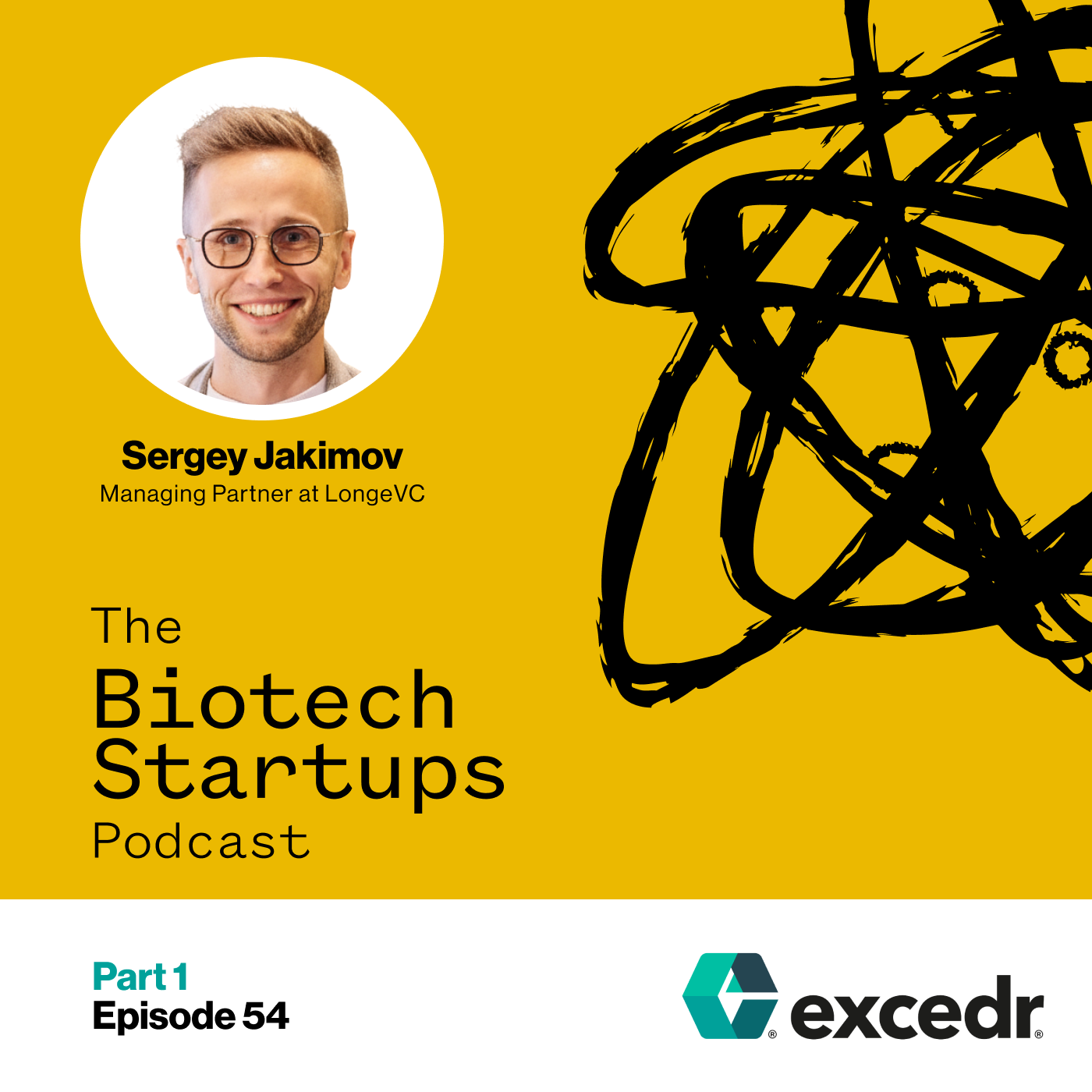
Ep 188🧬 Childhood Without Tech: Building a Foundation for VC Success | Sergey Jakimov (1/4)
"Retrospectively, this was honestly the best childhood one can get, and it was absolutely without gadgets." In this episode of The Biotech Startups Podcast, we explore the formative years of Sergey Jakimov, founding partner at LongeVC, as he takes us from his childhood in post-Soviet Latvia to his graduate studies in Budapest. Sergey shares what it was like growing up in a small rural town near the Russian border, where limited resources, no technology, and long winters shaped his resilience, diplomacy, and drive to succeed. Sergey recounts his unlikely journey into competitive tennis under a retired national coach, training on concrete courts and turning the sport into both a discipline and a livelihood. He describes the grueling path to university admission—waking at 2 AM every Saturday for four-hour bus rides to attend prep courses in Riga—and the intense workload that followed, surviving on just three to four hours of sleep while juggling translation work and coaching gigs. A pivotal parliament internship shattered his idealistic views of government, leading him to embrace technocracy and meritocracy as guiding principles. Finally, Sergey reflects on earning his master's at Central European University in Budapest, where diverse perspectives and world-class academics further expanded his worldview and prepared him for entrepreneurship.
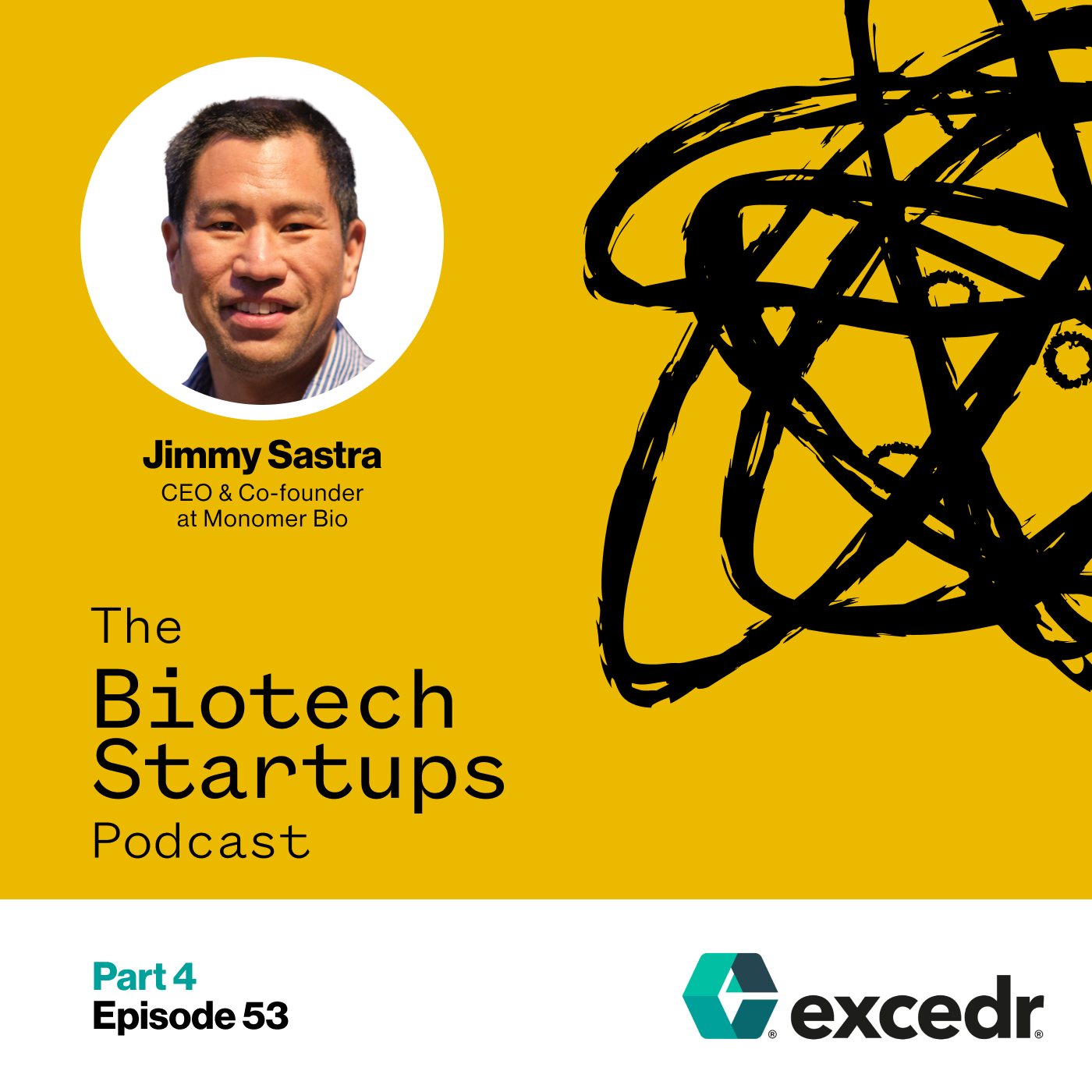
Ep 187🧬 How Autonomous Science Will Change Drug Discovery Forever | Jimmy Sastra (Part 4/4)
"Risk management is really just planning for when things go wrong." In this final episode with Jimmy Sastra, PhD, co-founder and CEO of Monomer Bio, host Jon Chee explores how Jimmy redefines biotech leadership by treating fundraising as a strategic tool rather than a necessity. The conversation dives into building a company that combines scalable software with hands-on lab services, the importance of creativity and risk management in uncertain times, and Monomer’s bold vision for "autonomous science"—where AI and robotics revolutionize experimentation. Alongside deep biotech insights, Jimmy shares personal reflections on balancing entrepreneurship, family, and his immigrant journey while pushing the boundaries of automation in life sciences.
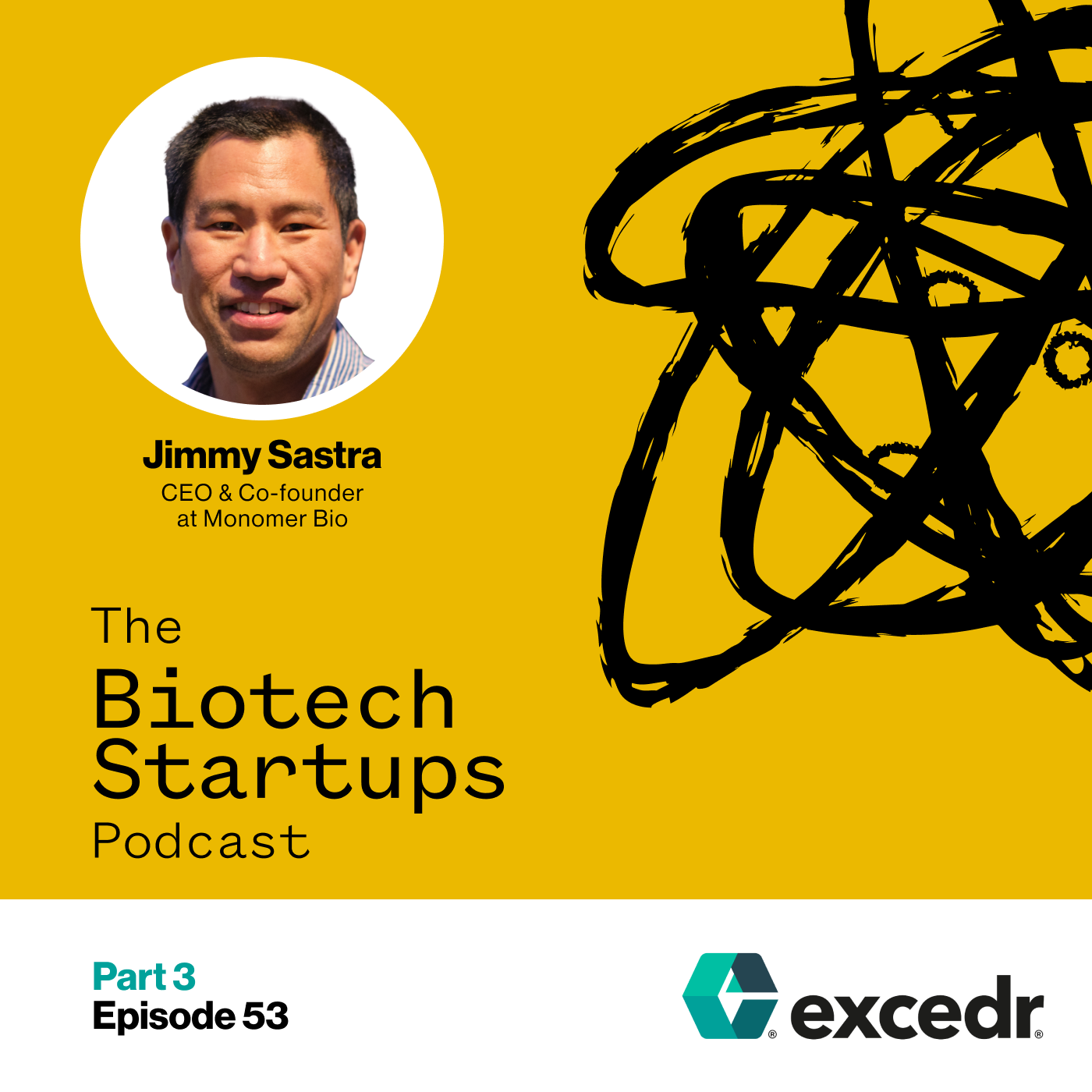
Ep 186🧬 Autonomous Labs: The Future of Cell Culture | Jimmy Sastra (Part 3/4)
"People are looking at cells, making decisions, and then acting on them—that’s a robotics loop. I felt it could be done autonomously." In this episode of The Biotech Startups Podcast, host Jon Chee sits down with Jimmy Sastra, co-founder and CEO of Monomer, to discuss how his team transformed hands-on lab automation consulting into a breakthrough biotech robotics company. Jimmy shares how Monomer’s vertically integrated platform unites robotics, software, and biology to automate cell culture, cut reliance on animal models, and boost reproducibility. He also explains the company’s adaptive go-to-market strategy—ranging from software-only pilots to full robotic deployments—and reflects on the power of cross-disciplinary teamwork, global collaboration, and flexibility in navigating today’s challenging biotech landscape.
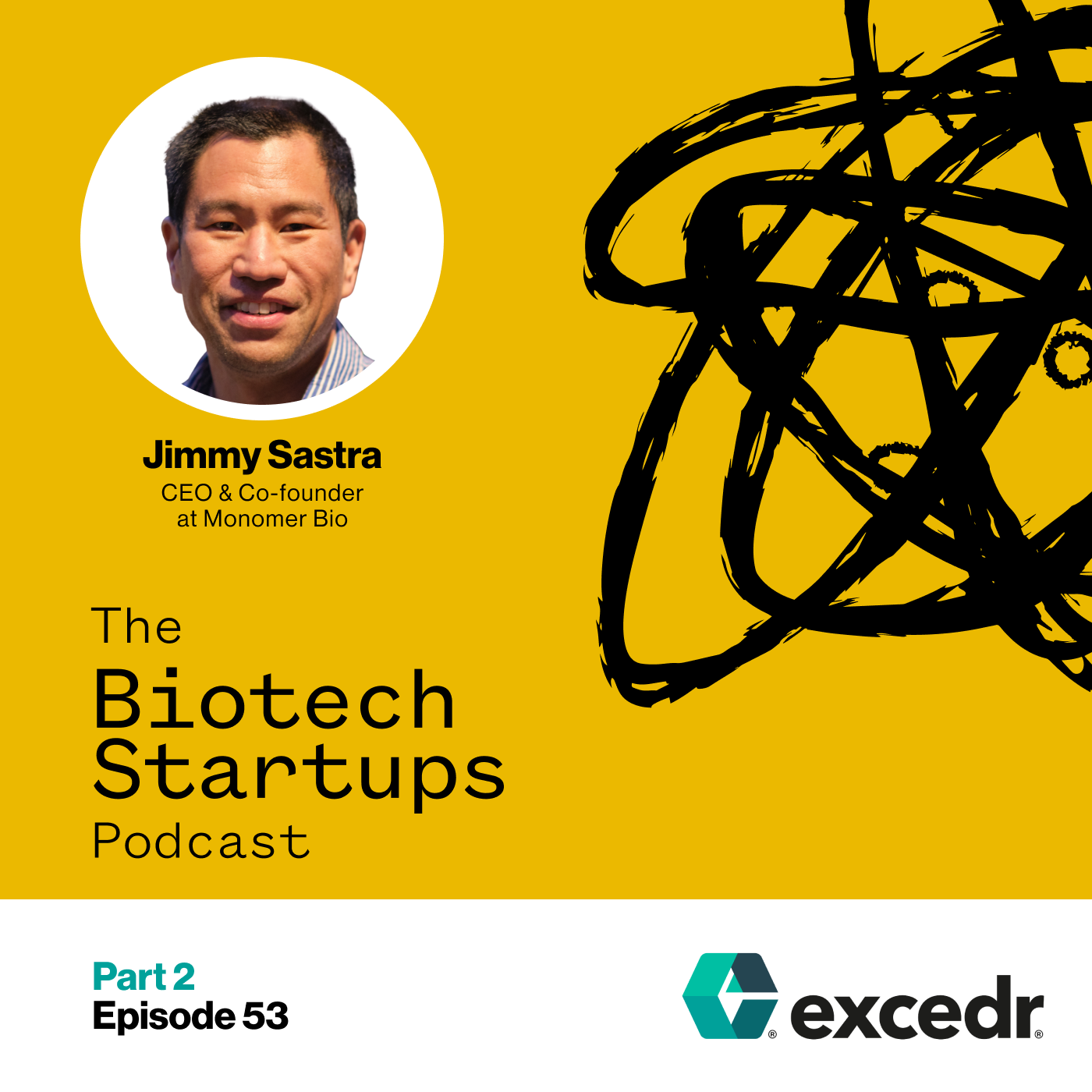
Ep 185🧬 Lessons From Building the World's First Robotic Cloud Lab | Jimmy Sastra (Part 2/4)
"Life is amazing, but it’s also very fragile. I could not think of a more important mission than trying to understand how life works." In this episode of The Biotech Startups Podcast, host Jon Chee continues his conversation with Jimmy Sastra, CEO and co-founder of Monomer Bio, tracing his evolution from a self-taught PhD student to a Silicon Valley engineer at the forefront of robotics and biotech innovation. Jimmy recounts his time at Willow Garage during the rise of ROS, his groundbreaking work at Transcriptic—where he helped build the world’s first robotic cloud lab—and how those experiences shaped his vision for Monomer Bio. He also explores the power of hiring for personal mission alignment and shares how a life-changing moment involving his brother inspired a career dedicated to understanding life through technology.
Ep 184🧬 The Rebellious Mindset That Builds Successful Startups | Jimmy Sastra (Part 1/4)
"Maybe because of that experience, we still keep in touch. I feel fortunate that my friends and I built something together back then—even if it started with murals and late nights, it taught me about creativity, risk, and teamwork." In this episode of The Biotech Startups Podcast, Jimmy Sastra, CEO and co-founder of Monomer Bio, unpacks his global journey from The Netherlands and Japan to transforming lab automation in biotech. Shaped by his father’s engineering legacy at Philips and ASML, Jimmy recalls lessons in creativity, rebellion, and resilience that guided his path from the University of Pennsylvania to a PhD in robotics. His story reveals how curiosity and systems thinking became the foundation for Monomer Bio’s mission to empower scientists through smarter, automated lab solutions.