
The Big Story
511 episodes — Page 3 of 11
Ep 860Security Lapses in PM Modi's Punjab Visit: What is the Political Gameplay?
Prime Minister Narendra Modi’s recent visit to Punjab turned into quite a fiasco with his convoy being stranded on a highway and the PM being forced to cancel his plans and public addresses in the state. What followed was a full-blown political slugfest between the BJP-led Centre and the Congress-led Punjab government. Shortly after the episode, the Ministry of Home Affairs issued a statement accusing the Charanjit Singh Channi government of a lapse in the PM's security. Seeking a detailed report on the matter, Home Minister Amit Shah tweeted, "Such dereliction of security procedure in the Prime Minister’s visit is totally unacceptable and accountability will be fixed." Other BJP leaders like Smriti Irani also went onto claim that there were "murderous intentions" behind such an oversight. Former Punjab CM and Congress leader Amarinder Singh, who is now a BJP ally, went a step ahead and asked CM Channi to quit. While the Punjab government has constituted a high-level committee to investigate into the lapses around the visit, CM Channi, on his part, has denied any breach. Rejecting the allegations that PM Modi's life was in danger, he said, "Narendra Modi is our PM. I would lay down my life to protect him, as a Punjabi." But how did this visit take such a wild turn? How did PM Modi end up being stranded on a flyover? Who is to blame for the security lapses? And the most important question, given that Punjab is headed to the state elections: is there a political gameplay here? We'll dive into all these questions and the timeline of the events that led to this fiasco. Host and Producer: Shorbori Purkayastha Guests: Aditya Menon, The Quint's political editor. Editor: Shelly Walia Music: Big Bang Fuzz Listen to The Big Story podcast on: Apple: https://apple.co/2AYdLIl Saavn: http://bit.ly/2oix78C Google Podcasts: http://bit.ly/2ntMV7S Spotify: https://spoti.fi/2IyLAUQ Deezer: http://bit.ly/2Vrf5Ng Castbox: http://bit.ly/2VqZ9ur Learn more about your ad choices. Visit megaphone.fm/adchoices

Ep 859#BulliBai Case: Unpacking the New Developments in the Investigation
After just three days of investigation, the Mumbai Police has made a breakthrough in the Bulli Bai case, by apprehending three individuals behind the app and the Twitter accounts involved. The Bulli Bai app, which you may be aware of, was created on the platform GitHub. It triggered a furore as photos of hundreds of Muslim women with significant social media following were misused with degrading texts as captions on 1 January, which implied that they were being auctioned. And unfortunately, this is not the first time an incident like this has occurred, with the same thing taking place in July 2021 under the name of “Sulli Deals”. With zero arrests till date, the lack of action by the Delhi Police left the victims without any justice. However, the present pace of investigation by the Mumbai police seems to have thrown up results within days of the incident. Addressing a press conference on 5 January, Mumbai Police Commissioner Hemant Nagrale confirmed that three accused have been identified as 21-year-old Vishal Kumar Jha and Mayank Rawal and 18-year-old Shweta Singh, who according to police is the apparent mastermind behind the case. What are the new developments in the investigation? Who are behind this despicable act? To unpack this, for today’s episode, we speak with The Quint’s Ritvick Bhalekar and Nikhila Henry who have been reporting on the case since the start. Guests: Ritvick Bhalekar, Senior Correspondent, The Quint Nikhila Henry, South Bureau Chief, The Quint Host and Producer: Himmat Shaligram Editor: Shorbori Purkayastha Music: Big Bang Fuzz Listen to The Big Story podcast on: Apple: https://apple.co/2AYdLIl Saavn: http://bit.ly/2oix78C Google Podcasts: http://bit.ly/2ntMV7S Spotify: https://spoti.fi/2IyLAUQ Deezer: http://bit.ly/2Vrf5Ng Castbox: http://bit.ly/2VqZ9ur Learn more about your ad choices. Visit megaphone.fm/adchoices

Ep 858COVID-19: Is India Underplaying the Threat of a Omicron-Led Third Wave?
The growing narrative around Omicron, of it being a mild variant of COVID-19, is worrisome. Here’s why: India is reckoning with one of its highest daily COVID spikes in months, with the country reporting more than 37,000 cases on 3 January – one of the highest caseload number reported since October. But what is different about this surge is that it is outpacing all previous waves. At the start of the pandemic, in April 2020, cases only rose by 500 every day, against the daily jump in thousands we are witnessing right now. If we take just the last week, starting 27 December, cases have increased almost six-fold. And a large factor behind this spike is the Omicron variant, whose cases have more than doubled in the past week. While case numbers have been flying off the charts, hospitalisation numbers have largely been constant since this variant reportedly causes only mild symptoms and low hospitalisation rates. At present, metro cities like Delhi and Mumbai have put in some lockdown measures, like a weekend curfew and a limit on restaurant occupancy. But given the explosive growth of cases in India, are we underplaying the threat of Omicron and its potential impact on our fragile healthcare system? To discuss this, for today’s episode, we spoke to Professor Gautam Menon at Ashoka University and Dr Rajeev Jayadevan, Vice Chairman of the Research Cell at Kerala IMA. Guests: Professor Gautam Menon, Ashoka University Dr Rajeev Jayadevan, Vice Chairman of the Research Cell at Kerala IMA. Host and Producer: Himmat Shaligram Editor: Vaishali Sood Music: Big Bang Fuzz Listen to The Big Story podcast on: Apple: https://apple.co/2AYdLIl Saavn: http://bit.ly/2oix78C Google Podcasts: http://bit.ly/2ntMV7S Spotify: https://spoti.fi/2IyLAUQ Deezer: http://bit.ly/2Vrf5Ng Castbox: http://bit.ly/2VqZ9ur Learn more about your ad choices. Visit megaphone.fm/adchoices

Ep 857#BulliBai: Has Police Inaction in 'Sulli Deals' Encouraged A Repeated Offence?
Imagine waking up to a new year and finding yourself on sale. Your photograph has been used without your permission on an app where you're listed for an online auction. That's exactly how more than 100 Muslim women in India were greeted on the morning of 1 January 2022. Muslim women with significant social media following, including several activists and journalists, found themselves being auctioned off by anonymous accounts through a web page on GitHub called 'Bulli Bai'. Screenshots shared by some of the targets show their photos and Twitter handles, and had the message 'Your Bulli Bai for the day.' But as disturbing as this is, unfortunately, it's the second time in less than six months that such a despicable thing has happened, where women have been targeted for their religious and gender identities, without a single arrest being made in the incidents at the time of the recording of this podcast.* As the repeated offence raked up massive outrage on social media platforms once again, the app was taken down. In terms of police actions so far, the Delhi and Mumbai cyber teams have filed separate FIRs against unknown persons with charges of sexual harassment, intentions to insult the modesty of a woman, promoting enmity on grounds of religion, and imputations prejudicial to national integration. At the time of the recording of this podcast, no arrest was made in the cases. The Delhi Police has also sought information from Twitter about the account that first tweeted about the 'Bulli Bai' app as well as information about the app developer from GitHub platform. But does all this inspire confidence, given the police inaction in the first incident? Is it the same inaction that has emboldened the culprits towards a repetition of such misogynistic and Islamophobic harassment at a time when attacks on minorities are at an all time high in the country? Tune in! *Since the publishing of the podcast, the Mumbai Police has detained a 21-year-old Bengaluru man in connection with the case.) Host and Producer: Shorbori Purkayastha Guests: Arshi Qureshi, Independent Journalist Fatima Khan, Senior Correspondent, The Quint Apar Gupta, Executive Editor, IFF Karan Saini, Bengaluru-based security analyst Editor: Shelly Walia Music: Big Bang Fuzz Listen to The Big Story podcast on: Apple: https://apple.co/2AYdLIl Saavn: http://bit.ly/2oix78C Google Podcasts: http://bit.ly/2ntMV7S Spotify: https://spoti.fi/2IyLAUQ Deezer: http://bit.ly/2Vrf5Ng Castbox: http://bit.ly/2VqZ9ur Learn more about your ad choices. Visit megaphone.fm/adchoices

Ep 856As We Close of 2021, Are We At The Brink of a New COVID Wave?
As we close of the year, there is a growing uncertainty over where this pandemic, especially in the wake of a new variant, is headed. COVID cases in India are gradually increasing over the past 10 days, with more than 9,000 cases reported in the past 24 hours alone, one of the highest spikes we have seen since the start of December. There is a gradual upward trend in cases in Delhi and Maharashtra over the past 10 days which has raised fears of a possible third wave in India. For example, Delhi witnessed an 86 percent rise in daily COVID cases, with 923 new cases reported on 29 December. And Mumbai, another hotspot, reported 2,510 total cases, which is reportedly more than the total cases in Kerala. 400 infections were detected in Bengaluru, 540 in Kolkata and 294 in Chennai on 29 December. And this surge largely stems from the highly mutated Omicron variant, which is more transmissive than earlier variants. But the total cases of this variant are still below 1,000. However, given that each case of Omicron is only detected after the samples are genome sequenced, which takes about a week, there is a possibility that this number is higher. So for our last episode of 2021, we unpack biggest story of the year with the following questions- At what stage of the pandemic are we in? Are we at the brink of a new wave? Joining me today to discuss the state of the pandemic in India is Vaishali Sood, The Quint and Quint FIT’s Health Editor. Guests: Vaishali Sood, Health Editor at The Quint and Quint FIT Host and Producer: Himmat Shaligram Editor: Vaishali Sood Music: Big Bang Fuzz Listen to The Big Story podcast on: Apple: https://apple.co/2AYdLIl Saavn: http://bit.ly/2oix78C Google Podcasts: http://bit.ly/2ntMV7S Spotify: https://spoti.fi/2IyLAUQ Deezer: http://bit.ly/2Vrf5Ng Castbox: http://bit.ly/2VqZ9ur Learn more about your ad choices. Visit megaphone.fm/adchoices

Ep 855'Mentally, Physically Exhausted': Doctors Speak on NEET PG Counselling Protests
Protests and sloganeering by resident doctors from across medical colleges and hospitals in Delhi have been reverberating for the past month over the delay in the NEET PG counselling. And the reason why this counselling process is important is because nearly 44,000 doctors, which are assigned by the counselling process every year, have been left in a lurch for almost 12 months now. And with no new staff, only two-thirds of medical staff has been available at government and state run hospitals, in a pandemic. And on 27 December, a protest by the Federation of Resident Doctors Association or FORDA near ITO Post Office in Delhi met with a wall of police personnel, where videos shared on social media show the police dragging and detaining several doctors. Over 100 doctors were detained and the police also filed an FIR on charges of rioting and destruction of public property. According to the FORDA, the protests will continue until their demands have been met. For today’s episode, you will hear from resident doctors part of the protest from Safdarjung and GB Pant Hospitals in Delhi. Guests: Dr Suvrankar Datta, General Secretary of the Federation of All Indian Medical Association Dr Lovely Singh, a gynecologist at Safdarjung Hospital Dr Mahesh Mahajan, a neurosurgery resident at GB Pant Hospital Dr Aarti Parashay, a resident doctor at GB Pant Hospital Host and Producer: Himmat Shaligram Editor: Eshwar Ranjana Also check out: ‘We Are Not Machines’: Doctors Across Delhi Protest Against Delay in NEET-PG Counselling | The Quint NEET-PG Protest: Relief for Patients, Resident Doctors Suspend Strike for a Week Resident Doctors Protest Outside Health Ministry Over Delay in NEET Counselling 'Black Day': Delhi Police Detains Protesting Doctors, Logs Rioting Case Become a Quint Member! Music: Big Bang Fuzz Listen to The Big Story podcast on: Apple: https://apple.co/2AYdLIl Saavn: http://bit.ly/2oix78C Google Podcasts: http://bit.ly/2ntMV7S Spotify: https://spoti.fi/2IyLAUQ Deezer: http://bit.ly/2Vrf5Ng Castbox: http://bit.ly/2VqZ9ur Learn more about your ad choices. Visit megaphone.fm/adchoices
Ep 854What Does AAP's Performance in Chandigarh Signal About Upcoming Assembly Polls?
In its debut election in Chandigarh, the Aam Aadmi Party has single-handedly changed the political equations, by winning 14 out of 35 wards in the city municipal elections. For a city like Chandigarh, which as a UT is administered by the Centre, the administrative power has always relayed between the BJP and the Congress. But those parties struggled to break ground this time around While the ruling BJP party was reduced to 12 seats from 21 in 2016, Congress only managed to gain 8 seats. The Shiromani Akali Dal got only 1. And the reason why we are speaking about Chandigarh today is that no one expected a result like this, especially because AAP had no organisational structure in place in the city up until last year. Its candidates also managed to take away seats from the incumbent and former mayors AAP’s stunning victory does raise the following questions: would the party be able to replicate the same result across Punjab in the upcoming polls and what does this decline in seat share mean for the BJP? Guest: Aditya Menon, The Quint’s Political Editor Host and Producer: Himmat Shaligram Editor: Aditya Menon Music: Big Bang Fuzz Listen to The Big Story podcast on: Apple: https://apple.co/2AYdLIl Saavn: http://bit.ly/2oix78C Google Podcasts: http://bit.ly/2ntMV7S Spotify: https://spoti.fi/2IyLAUQ Deezer: http://bit.ly/2Vrf5Ng Castbox: http://bit.ly/2VqZ9ur Learn more about your ad choices. Visit megaphone.fm/adchoices

Ep 853COVID-19 Vaccine: Why Has the Centre Termed Additional Doses as 'Precautionary'?
As India grapples with the possibility of a new wave due to the Omicron variant, the Centre on Saturday, 25 December, announced an expansion of the national vaccination drive. In a late-night address on Christmas, PM Modi announced that those aged between 15-18 years of age will now be eligible for vaccinations from 3 January. “Precautionary doses” of a COVID vaccine will also be administered to frontline workers and those who are 60 years and above with comorbidities will be administered doses from 10 January. Though the decision to expand vaccination coverage has been widely welcomed, four critical questions regarding them have emerged: First, why call it a precautionary dose and not a booster dose? Does this signal that the third shot will be Covishield or Covaxin? This leads us to the second question, how effective is a third dose of the same vaccine? Third, given that Covaxin is the only vaccine in production to be cleared for inoculating those under 18, is it worrying that there is no publicly available data of the trials? And lastly, will the restriction on additional doses for those over the age of 60 cause problems? Guests: Dr Chandrakand Lahairya, an epidemiologist and health systems expert. Dr Rakesh Mishra, former director of the Center for Cellular and Molecular Biology. Host and Producer: Himmat Shaligram Editor: Eshwar Ranjana Music: Big Bang Fuzz Listen to The Big Story podcast on: Apple: https://apple.co/2AYdLIl Saavn: http://bit.ly/2oix78C Google Podcasts: http://bit.ly/2ntMV7S Spotify: https://spoti.fi/2IyLAUQ Deezer: http://bit.ly/2Vrf5Ng Castbox: http://bit.ly/2VqZ9ur Learn more about your ad choices. Visit megaphone.fm/adchoices
Ep 852Why The World Cup of 1983 Changed The Face of Indian Cricket
“If they can do it, so can we.” These were the words which Kapil Dev said to his team on 25 June 1983 before they went out to win against two-time World Cup winners West Indies in a match which triggered India’s obsession with cricket. And the reason why this World Cup final was so historic is because before this, no one took the Indian cricket team seriously. There was no fanfare or an endorsement deal or even a very influential BCCI. It was only a team of young men who had never won a world cup match before. Such a historic match, and that too without any audio or visual reference, but finally thanks to Kabir Khan's sports drama '83', we have this incredible moment where India rose as cricket world champions re-enacted in precise details on-screen. From the time the trailer was released, it has garnered a lot of attention, with resounding validations coming from cricket fans, movie critics, including the team 11 of the 1983 match themselves. Legendary batsman Sunil Gavaskar, who was a party of the playing 11, said he was blown away by the film and gave it full marks. In this Christmas eve edition of The Big Story, we'll take you behind-the-scenes of the sets of '83'. Guests: Kabir Khan, Director of 83 Chirag Patil, cast member of 83 who plays Sandeep Patil Pankaj Tripathi, cast member of 83 who plays Man Singh Chandresh Narayanan, cricket analyst and commentator Host and Producer: Himmat Shaligram Editor: Shorbori Purkayastha Music: Big Bang Fuzz Listen to The Big Story podcast on: Apple: https://apple.co/2AYdLIl Saavn: http://bit.ly/2oix78C Google Podcasts: http://bit.ly/2ntMV7S Spotify: https://spoti.fi/2IyLAUQ Deezer: http://bit.ly/2Vrf5Ng Castbox: http://bit.ly/2VqZ9ur Learn more about your ad choices. Visit megaphone.fm/adchoices

Ep 851Is the Gig Economy in India As "Flexible" As Advertised by Platforms?
Now and again, news regarding the harsh working conditions of individuals who work for platforms like Urban Company, Zomato or Swiggy comes to light. And recently, over 50 female partners working with home services venture Urban Company, protested outside their offices in Gurgaon on 22 December, demanding better pay, safer working conditions and social security. However, the company responded to these protests by filing a lawsuit against these women for their “illegal protests.” But the issue of compensation, working conditions and social welfare is not isolated to one company or one protest but its about the working conditions within the gig economy itself. This sector is booming in India with a report by ASSOCHAM, which is a non-govt trade association and advocacy group, stating that over 130 million people are working for these platforms and that this industry will grow to $455 billion by 2024. And with the pandemic crippling the economy and companies trimming their staff, in the past two years, many more have turned to the gig economy as a source of employment where these platforms promise “flexibility” as opposed to traditional work systems. But there is a dangerous flip side to working in this sector, with non-existent social security, complete lack of benefits as compared to a traditional workforce. So with millions of workers employed in this sector, how are these constraints affecting them? And is this gig economy creating a scope for labor exploitation? Guests: Gunjan Chowdhury, one of the Urban Company protestors Rajendra Chaddha, a former spa therapist working for Urban Company Shaik Salauddin, the National General Secretary of the Indian Federation Of App Based Transport Workers (IFAT) Shahana Bhattacharya and Archana Agarwal, members of the People's Union for Democratic Rights (PUDR) Vakasha Sachdev, The Quint’s legal editor Host and Producer: Himmat Shaligram Editor: Shorbori Purkayastha Music: Big Bang Fuzz Listen to The Big Story podcast on: Apple: https://apple.co/2AYdLIl Saavn: http://bit.ly/2oix78C Google Podcasts: http://bit.ly/2ntMV7S Spotify: https://spoti.fi/2IyLAUQ Deezer: http://bit.ly/2Vrf5Ng Castbox: http://bit.ly/2VqZ9ur Learn more about your ad choices. Visit megaphone.fm/adchoices
Ep 850Why is The Move to Link Aadhaar to Voter ID Cards Contentious?
You know how every few weeks you get a notification on your phone about linking your PAN card to your Aadhaar card? Well, you may soon start getting similar messages about linking your voter ID with your Aadhaar number now as well. Because on 20 December, the Union Cabinet passed the Elections Law (Amendment Bill) 2021, with certain electoral reforms, one of which allows the linking of voters IDs with Aadhaar. There are a few other reforms too, including allowing first-time voters to have the chance to register four times a year instead of once; making the electoral law gender-neutral for service officers—where words like wife were replaced by spouse. But in today’s episode, we will talk about the reform to link voter ID to Aadhaar because it caused an uproar in Parliament given how contentious the issue is and it passed without any discussion via a voice vote in just 10 minutes. And, of course, while linking Aadhaar with your voter ID may make life easier to an extent, on the flip-side, many experts and activists pointed serious concerns regarding privacy and voters being excluded. This concern of exclusion is legitimate because in 2015, when this idea was first gamed out by the Election Commission, about 55 lakh names were found to be deleted from the voter database of two states—Andhra Pradesh and Telangana. And with assembly elections in important states like Uttar Pradesh just around the corner, the timing of this bill also raises eyebrows. So in today’s episode, we will go through why this move to link Aadhaar to voter ID is contentious and its possible impacts. Guest: Vakasha Sachdev, The Quint's Legal Editor. Host and Producer: Himmat Shaligram Editor: Shorbori Purkayastha Music: Big Bang Fuzz Listen to The Big Story podcast on: Apple: https://apple.co/2AYdLIl Saavn: http://bit.ly/2oix78C Google Podcasts: http://bit.ly/2ntMV7S Spotify: https://spoti.fi/2IyLAUQ Deezer: http://bit.ly/2Vrf5Ng Castbox: http://bit.ly/2VqZ9ur Learn more about your ad choices. Visit megaphone.fm/adchoices
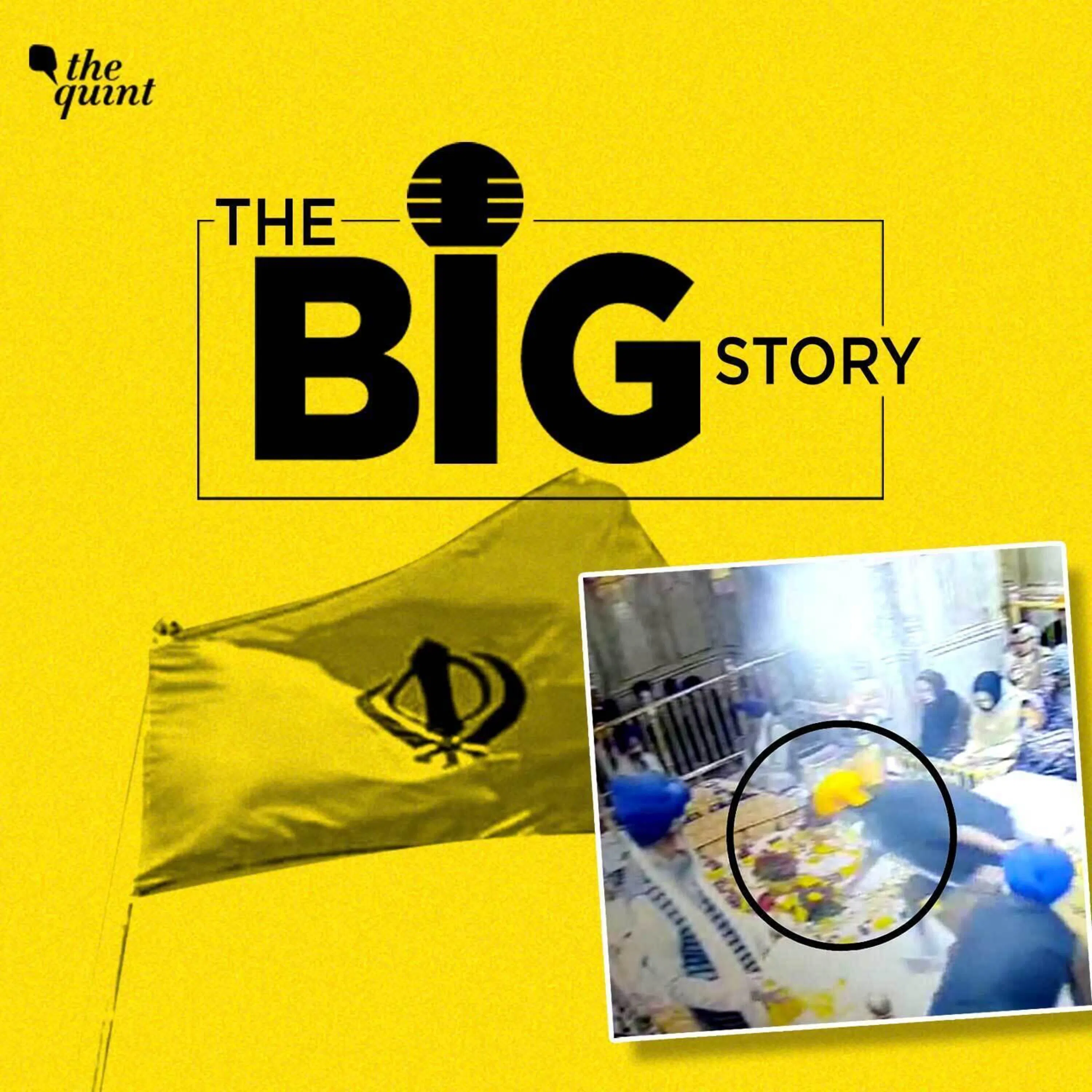
Ep 849How Will the Sacrilege Cases in Punjab Impact Upcoming Assembly Polls?
In a space of 24 hours, Punjab was shaken by two attempted and alleged cases of sacrilege, followed by lynchings, on 18 and 19 December in Amritsar and Kapurthala districts respectively. In the case in Amritsar, there is CCTV footage showing a man jumping the railing of sanctum sanctorum at the Golden Temple and grabbing the Siri Sahib, the sacred sword and was then a split second later, tackled by the Sevadars and was seen being dragged out. And with these cases, sacrilege has returned to the center stage in Punjab politics, with condemnations pouring from politicians across the spectrum. From the Congress and BJP, to the SAD and AAP, all described the “heinous act to attempt sacrilege” and that it can be part of a larger conspiracy. The Punjab government has also constituted a special investigation team to investigate these two cases. However, while the acts of sacrilege are a terrible and a serious crime, none of these politicians from any party condemned the lynchings which followed these sacrilege attempts at the hands of the public. With assembly elections around the corner, what gives the politicians uproar over sacrilege but not on what followed it? In today’s episode, we will look at the political reactions to these cases, the track records of the SIT probes and how this will impact the upcoming polls. Guests: Aditya Menon, The Quint’s Political Editor Aarish Chabbra, a senior journalist and professor at the Bennet University. Host and Producer: Himmat Shaligram Editor: Shorbori Purkayastha Music: Big Bang Fuzz Listen to The Big Story podcast on: Apple: https://apple.co/2AYdLIl Saavn: http://bit.ly/2oix78C Google Podcasts: http://bit.ly/2ntMV7S Spotify: https://spoti.fi/2IyLAUQ Deezer: http://bit.ly/2Vrf5Ng Castbox: http://bit.ly/2VqZ9ur Learn more about your ad choices. Visit megaphone.fm/adchoices
Ep 848Increasing Women's Minimum Age for Marriage: Will it Prevent Child Marriage?
India is still struggling to put an end to child marriages in the 21st century. But is raising the minimum legal age of marriage for women the solution? Ever since the Centre indicated its intention, to raise the minimum age of marriage for women from 18 to 21 years of age, there has been a lot of conversation around this move. And now a year later, on Thurdsay, 16 December, the Union Cabinet has officially cleared the proposal. This has been done on the basis of recommendations from a special task force set up by the DCW. Although details of the panel's report isn't available in the public domain yet, the main rationale for this proposal has been to address the physiological and psychological issues that arise from child marriages in the form of early pregnancies, poor nutrition levels, high infant mortality rate, high maternal mortality rates, etc — all of which are ultimately deleterious for women's progress. While a lot of people have welcomed the move, the opinion is divided with some also cautioning that this decision could backfire. But what are the concerns here exactly? In what way can raising the minimum legal age of marriage backfire? In this episode, we'll take a full-rounded look at this proposal, the reasons behind it and also the criticisms against it. Click here to contribute to The Quint's special project — Girls Out of School. Host and Producer: Shorbori Purkayastha Guests: Madhu Mehra, lawyer and founding member of Partners for Law in Development (PLD) Amita Pitre, Lead Specialist, Gender Justice at Oxfam India. Editor: Shelly Walia Music: Big Bang Fuzz Listen to The Big Story podcast on: Apple: https://apple.co/2AYdLIl Saavn: http://bit.ly/2oix78C Google Podcasts: http://bit.ly/2ntMV7S Spotify: https://spoti.fi/2IyLAUQ Deezer: http://bit.ly/2Vrf5Ng Castbox: http://bit.ly/2VqZ9ur Learn more about your ad choices. Visit megaphone.fm/adchoices

Ep 847Was the Commotion over Virat Kohli's ODI Captaincy Avoidable by the BCCI?
All is not well with the Indian cricket as the men's team begin a difficult South Africa tour with a Test and ODI series on the heels of an explosive press conference by Virat Kohli just 24 hours ago. Ahead of the tour, on 15 December, Kohli made spoke at length about the process that was followed in his dismissal as the ODI captain and openly contradicted BCCI head Sourav Ganguly’s version of the T20 captaincy change, stating that no one had asked him stay back in charge once he had made up his mind. And adding fuel to fire, Kohli further clarified that he was informed about his dismissal as ODI captain by the selection committee only 90 minutes prior to the selection meeting for the Test squad on 8 December. And that contrary to rumours and media reports, he was and still is available for the ODI leg of the tour and never communicated with the BCCI asking for a rest. At the end of the press conference, it was his word against the BCCI president and Kohli was clearly unhappy and ready to take a stand. While Kohli said that he accepts the BCCI’s decision, the practice of unceremoniously dismissing Indian cricket captains is not alien, with many like Ganguly and Tendulkar being at the receiving end. So what does the poor handling of dismissing captains speak of the BCCI? And will this off-field drama right before a crucial Test series affect the mood in the dressing room? Guests: Chandresh Narayanan, cricket commentator and analyst Abhishek Mukherjee, the Chief Editor for Cricket News. Host and Producer: Himmat Shaligram Editor: Shorbori Purkayastha Music: Big Bang Fuzz Listen to The Big Story podcast on: Apple: https://apple.co/2AYdLIl Saavn: http://bit.ly/2oix78C Google Podcasts: http://bit.ly/2ntMV7S Spotify: https://spoti.fi/2IyLAUQ Deezer: http://bit.ly/2Vrf5Ng Castbox: http://bit.ly/2VqZ9ur Learn more about your ad choices. Visit megaphone.fm/adchoices
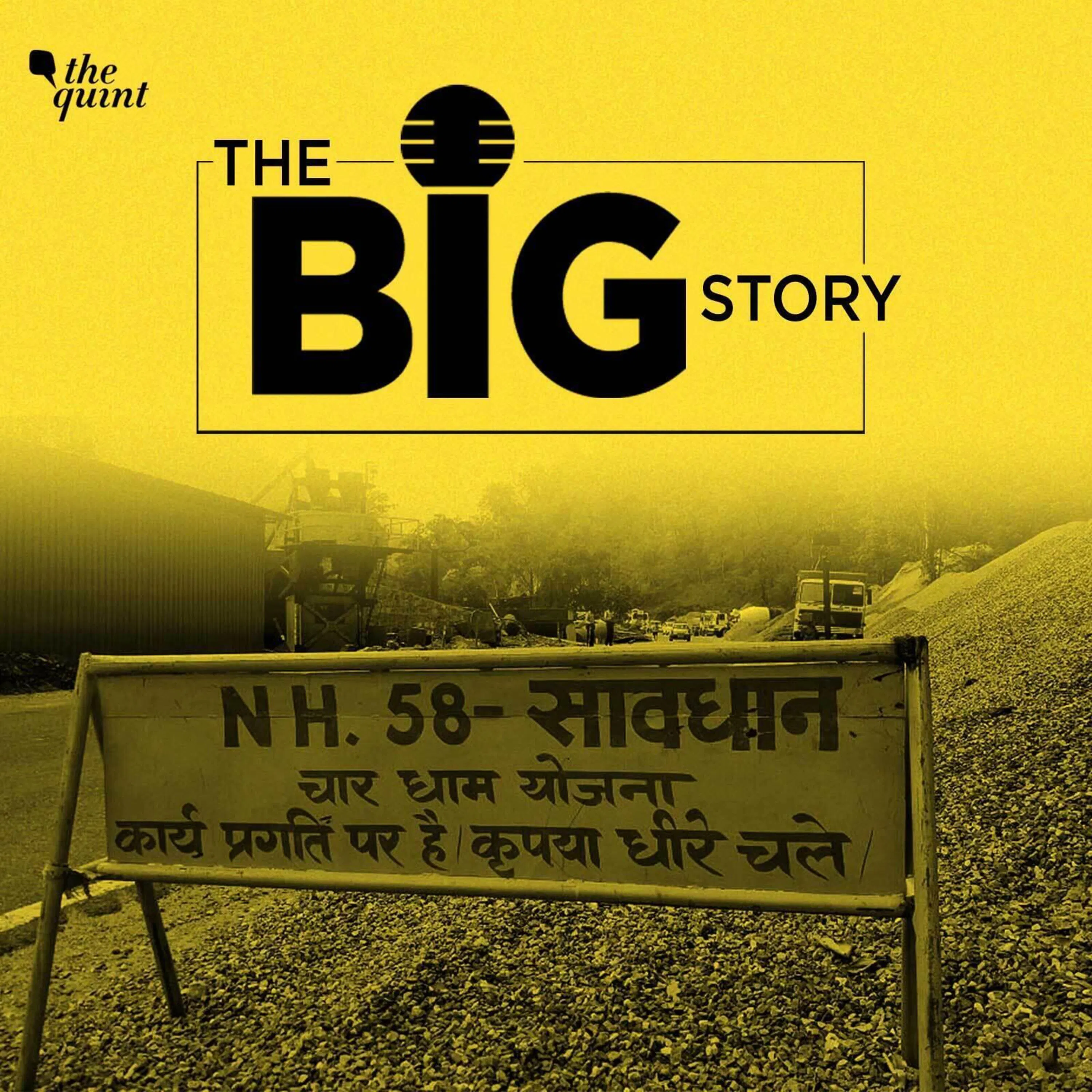
Ep 846Why the SC Judgement on Char Dham Highway Project is Problematic
How does a tourism infrastructure project suddenly become a concern of the Ministry of Defence in India? This is the question which every environment activist in the country is asking about the controversial Char Dham Highway Development Project, which has been riddled with ecological violations ever since its construction began in 2016. The Rs 12,000 crore highway expansion project aims to widen nearly 900 kms of hills in Uttarakhand to provide all weather connectivity to the state’s four major shrines—Badrinath, Kedarnath, Gangotri and Yamunotri—all in the upper Himalayas and all in very ecological sensitive zones. Now, the project from its start had a clear motive to provide easier access to the shrines. But over the years, with each ecological concern raised by activist in the Supremo Court, specifically targeting the petition to widen the roads beyond the Ministry of Roads and Transport 2018 mandate of 5.5 meters, the project has also moved into the ambit of national security. The Ministry of Defense in an affidavit in 2020 claimed that the roads need to be 7 meter wide to ferry essential arms and ammunition to sensitive border areas, given the rising China threat. And while the Supreme Court noted the environment concerns regarding the project, it agreed to the requirements of “national security,” and essentially, set aside its 2020 judgement where it denied the Ministry of Road and Transport the same thing. And activists and NGO’s petitioning the widening of the highway project have been baffled by the Supreme Court judgement given that it does provide any credence to what they have been saying for the past few years or the hundreds of landslides which have occurred in the region due to the project. Guest: Mallika Bhanot, a member of Ganga Ahvaan, a citizen forum working towards conserving the Ganga and the Himalayas Host and Producer: Himmat Shaligram Editor: Shorbori Purkayastha Music: Big Bang Fuzz Listen to The Big Story podcast on: Apple: https://apple.co/2AYdLIl Saavn: http://bit.ly/2oix78C Google Podcasts: http://bit.ly/2ntMV7S Spotify: https://spoti.fi/2IyLAUQ Deezer: http://bit.ly/2Vrf5Ng Castbox: http://bit.ly/2VqZ9ur Learn more about your ad choices. Visit megaphone.fm/adchoices

Ep 845To Boost or Not to Boost? Decoding the Debate on COVID-19 Booster Shots
To boost or not to boost? The debate on COVID-19 booster shots has existed ever since inoculations have begun, with the scientific community racing to figure out how long the protection will last. However, the debate was supercharged recently with the emergence of the highly mutated Omicron variant, which according to UK Prime Minister Boris Johnson, is causing a tidal wave of infections across the British isle. The concerns regarding the new variant were muted initially with early reports indicating that it causes only mild symptoms. However, with the report of the first death due to Omicron in the UK and its rapid spread across the country, representing over 44 percent of total cases in London, the need of booster doses has become increasing clear. Omicron has announced its presence in India as well, with the national tally climbing to 49 on 14 December. However, India is yet to take a decision on booster doses. But there are very critical questions on booster doses which are not yet answered: How effective are the current available vaccines towards Omicron? What are the reservations regarding booster doses? And if India does authorise booster doses, which vaccine is our best bet? Guests: Dr Rakesh Mishra, former director of the Center for Cellular and Molecular Biology. Dr Shahid Jameel, one of India's top virologist. Host and Producer: Himmat Shaligram Editor: Vaishali Sood Everything you need to know on Omicron and COVID vaccines here and here. Also listen to: Amid a Shortage, Where Do Indian Experts Stand on Mixing Vaccines Will Zydus Cadila’s COVID Jab for Kids Pave the Way for Reopening Schools? Omicron | Is it More Transmissible? Do We Need Boosters? Dr Shahid Jameel Decodes Music: Big Bang Fuzz Listen to The Big Story podcast on: Apple: https://apple.co/2AYdLIl Saavn: http://bit.ly/2oix78C Google Podcasts: http://bit.ly/2ntMV7S Spotify: https://spoti.fi/2IyLAUQ Deezer: http://bit.ly/2Vrf5Ng Castbox: http://bit.ly/2VqZ9ur Learn more about your ad choices. Visit megaphone.fm/adchoices

Ep 844Why Harnaaz Sandhu Winning the Miss Universe Crown is a Big Deal
A billion dreams came true as Chandigarh-born Harnaaz Sandhu was announced as the winner of the 70th edition of the coveted Miss Universe pageant early on Monday, 13 December. The 21-year-old diva edged 80 other women from around the world and brought the crown home, 21 years after Lara Dutta won the title in 2000. Sandhu is not new to pageantry, she was previously crowned Miss Diva 2021, Femina Miss India Punjab 2019, and was even placed in the Top 12 of the Femina Miss India in 2019. In today’s episode of The Big Story, we look at her journey with the help of Bharat Gupta, her fashion director for Miss Universe, Abhishek Sharma, one of her stylist. You will also hear from Harnaaz’s elder brother Harnoor on her historic win. Guests: Harnoor Sandhu, Harnaaz Sandhu's elder brother Bharat Gupta, Fashion Director for Harnaaz Sandhu Abhishek Sharma, Fashion Stylist Host and Producer: Himmat Shaligram Editor: Shorbori Purkayastha Music: Big Bang Fuzz Listen to The Big Story podcast on: Apple: https://apple.co/2AYdLIl Saavn: http://bit.ly/2oix78C Google Podcasts: http://bit.ly/2ntMV7S Spotify: https://spoti.fi/2IyLAUQ Deezer: http://bit.ly/2Vrf5Ng Castbox: http://bit.ly/2VqZ9ur Learn more about your ad choices. Visit megaphone.fm/adchoices
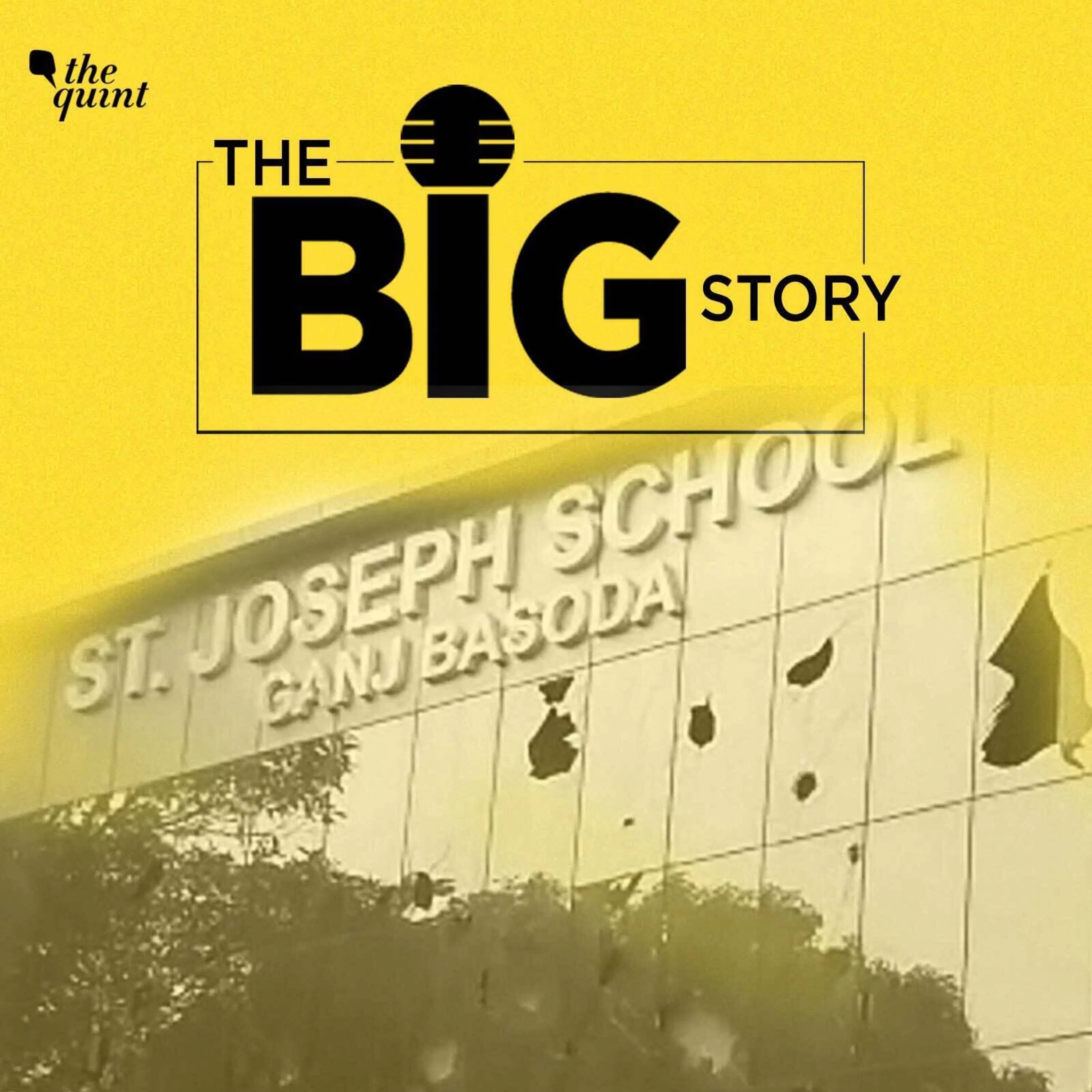
Ep 843MP School Attack: Ransacking Churches & 'Conversion Allegations' a Pattern Now
Class 12 students of St Joseph School in Ganj Basoda in Vidhisha district of Madhya Pradesh were writing their Maths paper on 6 December. But little did they expect to find their school under attack in the middle of their exam. Based on an allegation about eight students being converted into Christianity in a conversion drive, members of Hindutva groups including the VHP gheraoed the school around noon that day. Video footage from the school show a mob of around 300-500 people chanting 'Jai Shri Ram' and ‘Missionaries Murdabad’, outside the school gate. Some miscreants who managed to get inside the school were seen to be pelting stones at the building and vandalising school property. Although it's been a week since the actual incident happen, why we are talking about it now is because unfortunately this kind of an attack against the Christian minority is not a one-off event. It is becoming a grotesque pattern with churches being frequently ransacked across the country and prayer meetings being disrupted by Hindutva mobs on mere suspicions of "forced religious conversions". The dangerous rhetoric around conversions is sometimes also getting abetted by elected governments in states like BJP-ruled Karnataka who are giving credence to such sentiments with anti-conversion law proposals. But are anti-conversion laws constitutional? Are religious conversions all illegal? Is the freedom to practice one's faith fast diminishing in India? In this episode, you will hear voices from ground zero – of teachers, parents, VHP leaders – to piece together what really happened at St Joseph's, where these suspicions of forced conversions are stemming from and how are people responding to the allegations. We'll also be joined by our legal editor Vakasha Sachdev. Host and Producer: Shorbori Purkayastha Editor: Shelly Walia Music: Big Bang Fuzz References: MP School Vandalised: Priest Calls Conversion 'Fake News', Staff Recalls Horror Despite Anti-Christian Hysteria, Not All Religious Conversions Are Illegal How UP’s "Love Jihad" Ordinance is Detached from Facts Another Dubious Church 'Survey': Karnataka BJP Govt Tracing 'Christian Converts' Listen to The Big Story podcast on: Apple: https://apple.co/2AYdLIl Saavn: http://bit.ly/2oix78C Google Podcasts: http://bit.ly/2ntMV7S Spotify: https://spoti.fi/2IyLAUQ Deezer: http://bit.ly/2Vrf5Ng Castbox: http://bit.ly/2VqZ9ur Learn more about your ad choices. Visit megaphone.fm/adchoices

Ep 842'Steadfast, Diligent, Respectful': A Tribute to Gen Rawat And Other Fallen Defence Personnel
Steadfast, a non-nonsense person and extremely diligent person, thats how Gen Bipin Rawat, India’s first Chief of Defence Staff was described by those who knew him. In an extremely tragic and unexpected accident, India on 8 December mourned the loss of its highest ranking military official, his wife Mrs Madhulika Rawat, and 11 others who were killed in a helicopter crash in Tami Nadu’s Coonoor. Along with Gen Rawat and his wife, Brigadier LS Lidder, Lieutenant Colonel Harjinder Singh, Wing Commander PS Chauhan, Squadron Leader K Singh, Junior Warrant Officer Das, JWO Pradeep A, Havildar Satpal, Naik Gursewak Singh, Naik Jitender, Lance Naik Vivek and Lance Naik S Teja were the other defence personnel killed in the crash. The lone survivor of the crash was Group Captain Varun Singh, who was moved to the Command Hospital in Bengaluru for further treatment today on 9 December. In today’s special episode, we remember the lives of the fallen with: Lt Gen (retd) Syed Ata Hasnain, who served with Gen Bipin Rawat in Jammu and Kashmir Lt Gen (retd) Madhuri Kanitkar, who was part of Gen Rawat’s staff and a close friend of Mrs Madhulika Rawat Col (retd) Sandeep Shaligram, who served in the Indian army for 25 years and served alongside Brigadier LS Lidder at several occasions. Host and Producer: Himmat Shaligram Editor: Shorbori Purkayastha Music: Big Bang Fuzz Listen to The Big Story podcast on: Apple: https://apple.co/2AYdLIl Saavn: http://bit.ly/2oix78C Google Podcasts: http://bit.ly/2ntMV7S Spotify: https://spoti.fi/2IyLAUQ Deezer: http://bit.ly/2Vrf5Ng Castbox: http://bit.ly/2VqZ9ur Learn more about your ad choices. Visit megaphone.fm/adchoices
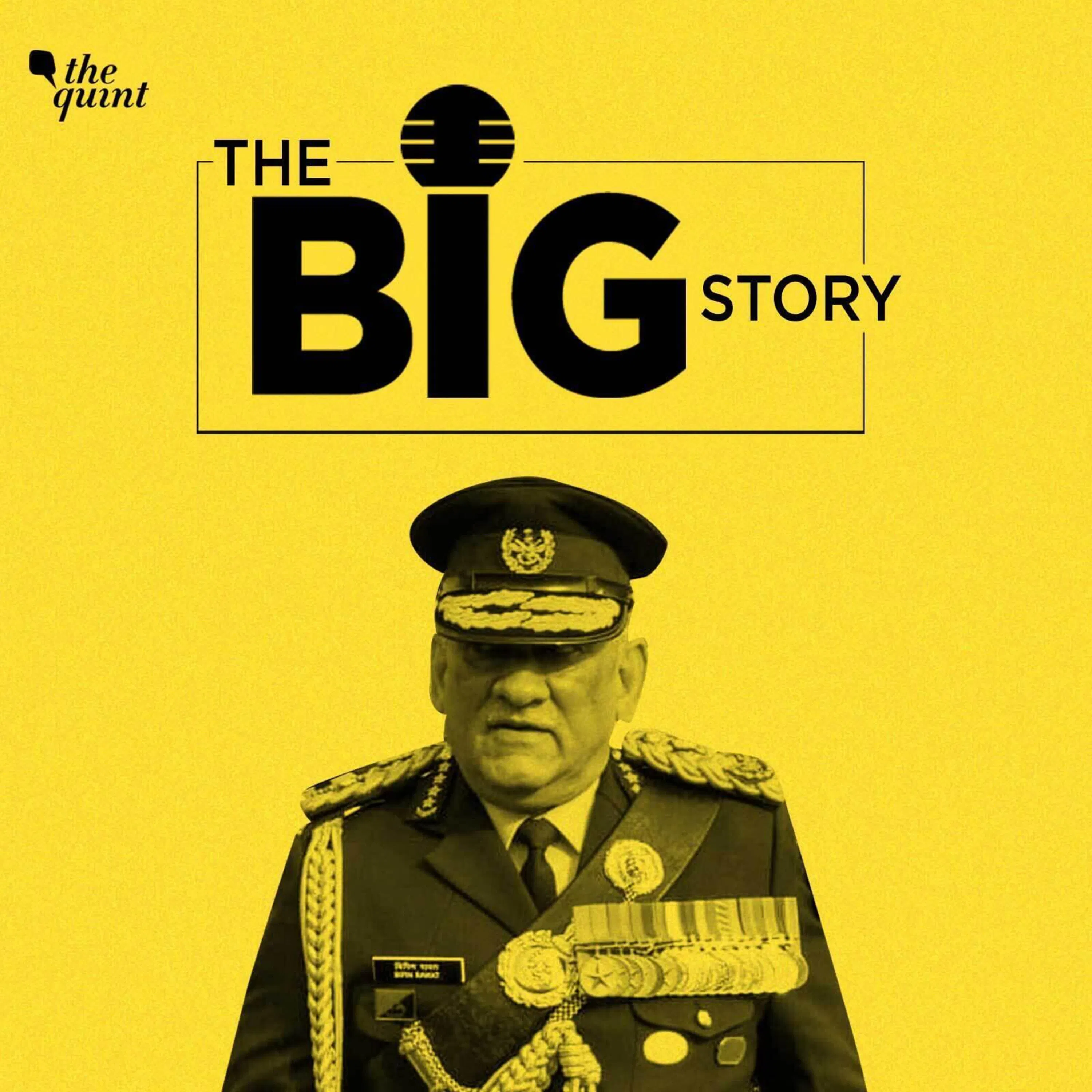
Ep 841India Loses First CDS Gen Bipin Rawat to a Helicopter Crash: What We Know So Far
In an extremely tragic incident, India lost its first Chief of Defence Staff, General Bipin Rawat in a helicopter crash. An IAF Mi-17V5 chopper, with General Rawat on-board and 13 others – five crew and nine passengers – including his staff and his wife Madhulika Rawat, crashed in Tamil Nadu's Coonoor district at around 12 noon on 8 December with one lone survivor. A tweet posted by the IAF's twitter handle at 6:03 pm on 8 December, confirmed the fatalities. "With deep regret, it has now been ascertained that Gen Bipin Rawat, Mrs Madhulika Rawat and 11 other persons on board have died in the unfortunate accident. Gp Capt Varun Singh SC, Directing Staff at DSSC with injuries is currently under treatment at Military Hospital, Wellington," the IAF tweet read. While Prime Minister Narendra Modi has called for an urgent meeting and Union Defence Minister Rajnath Singh is expected to make an official statement in the parliament on 9 December. The IAF has ordered an inquiry to ascertain what caused such an unfortunate incident, but until then we'll tell you what we know so far from this terrible incident. Tune in to The Big Story! Host and Producer: Shorbori Purkayastha Editor: Shelly Walia Music: Big Bang Fuzz Listen to The Big Story podcast on: Apple: https://apple.co/2AYdLIl Saavn: http://bit.ly/2oix78C Google Podcasts: http://bit.ly/2ntMV7S Spotify: https://spoti.fi/2IyLAUQ Deezer: http://bit.ly/2Vrf5Ng Castbox: http://bit.ly/2VqZ9ur Learn more about your ad choices. Visit megaphone.fm/adchoices
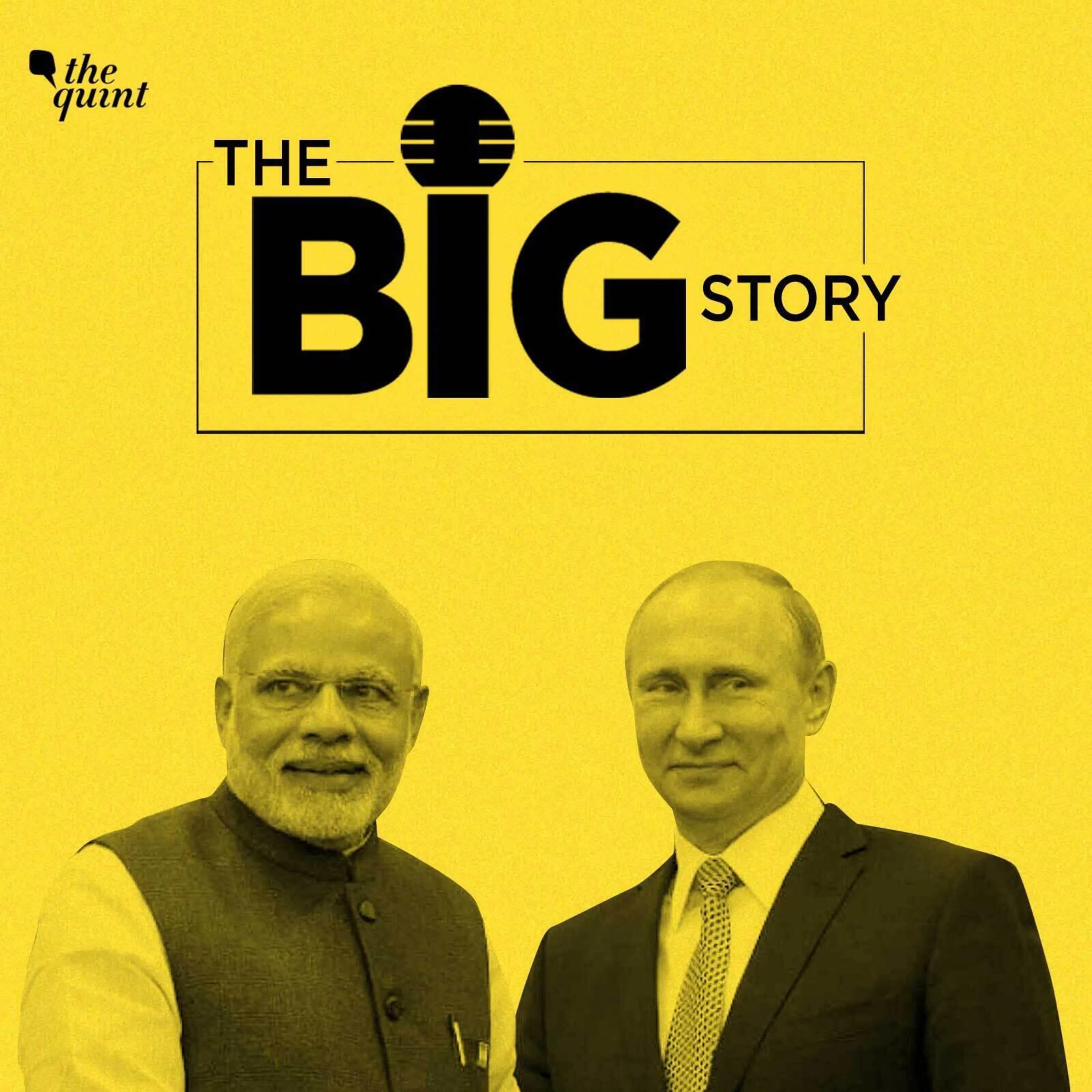
Ep 840India-Russia: Why Relations Between the Two Have Advanced After Years
New Delhi rolled out the red carpet on 6 December for Russian President Vladimir Putin and if you are asking why we are talking about a visit that lasted just a few hours, it's because of the symbolism attached to it. The first is that the Russian president has been very cautious about going abroad during the pandemic and this is only the second time he has ventured out, the only other time was for a meeting with US President Biden. Preceding the Modi-Putin meet were also high-level dialogues between the two countries defence and external affairs ministry. According to statements by the govt, 28 agreements were signed which include a 10-year cooperation defence agreement, a new consular office in the city of Vladivostok and the final go-ahead of the much-awaited S-400 missile system. But there is a larger picture behind these meetings and that's the growing influence of China. Over the past year, we have seen several 2+2 dialogues with the US, Japan and Australia, all of which are QUAD members. However, a dialogue with Russia, a long time friend and economic partner of China, may cast a worrying shadow over the ties the countries have. In today’s episode, we will discuss the relationship between the long time allies India and Russia and what came out of the recent meeting. Guests: Harsh V Pant, Director, Studies and Head of the Strategic Studies Programme at Observer Research Foundation Dr Tara Kartha, a Distinguished Fellow at the Institute of Peace and Conflict Studies Aditi Bhaduri, a columnist specialising in Eurasian geopolitics Host and Producer: Himmat Shaligram Editor: Shorbori Purkayastha Music: Big Bang Fuzz Listen to The Big Story podcast on: Apple: https://apple.co/2AYdLIl Saavn: http://bit.ly/2oix78C Google Podcasts: http://bit.ly/2ntMV7S Spotify: https://spoti.fi/2IyLAUQ Deezer: http://bit.ly/2Vrf5Ng Castbox: http://bit.ly/2VqZ9ur Learn more about your ad choices. Visit megaphone.fm/adchoices

Ep 839Nagaland Civilian Deaths: How Did the Army Intelligence Operation Go Wrong?
The tenuous peace in the northeast was shattered over the weekend after a botched Indian Army security operation led to the death of six innocent civilians on Saturday, 4 December. In an apparent case of “mistaken identity”, a counter-insurgency team of 21 Para Special Forces ambushed a vehicle carrying coal workers in Nagaland’s Oting village in Mon district. But the situation derailed further from this point after hundreds from a nearby village attacked the army team. This led to the clash between the two sides, leading to the death of seven more civilians and one jawan. But that was not the end of the flare-up between the two sides. Fresh violence erupted the next day as well with dozens of protesters attacking the Assam Rifles camp in Mon in protest of the killings and clashed with the army again. Unfortunately, one more civilian died and several more were injured. In purported videos on social media, gunfire could be heard. Soon after the incident, the army in a statement said that the operation was carried out based on “credible intelligence” and expressed deep regret. But what does this completely botched operation signal about the type of intelligence received in this region? How could it go so horribly wrong? This incident also brings the focus back on the ongoing peace talks with the insurgent groups like the National Socialist Council of Nagalim (NSCN-IM), talks with whom have reached a stalemate since an agreement on the framework was signed in 2015. With this incident, by how many steps have the peace talks backtracked? Guests: Col DPK Pillay, a retired Shaurya Chakra awardee with experience in counter-insurgency operations in the northeast region. Patricia Mukhim, the editor of Shillong Times. Host and Producer: Himmat Shaligram Editor: Shorbori Purkayastha Music: Big Bang Fuzz Listen to The Big Story podcast on: Apple: https://apple.co/2AYdLIl Saavn: http://bit.ly/2oix78C Google Podcasts: http://bit.ly/2ntMV7S Spotify: https://spoti.fi/2IyLAUQ Deezer: http://bit.ly/2Vrf5Ng Castbox: http://bit.ly/2VqZ9ur Learn more about your ad choices. Visit megaphone.fm/adchoices

Ep 838Omicron in India: Is India Prepared for a Possible Spread?
Life to a large extent was coming back to some level of normalcy in India after the country witnessed a deadly second wave earlier this year. But with a new variant of COVID-19, Omicron, being reported all around the world last week and now also in India, everyone is sitting up in their chair to enquire about what the deal is with this variant. The first two cases of the Omicron in India were detected on 2 December. Both these cases were detected in Karnataka and both patients have recovered from the virus. So now that Omicron is in India, how concerned should you be? And more importantly, how prepared is India? Guest: Dr Chandrakant Lahariya, epidemiologist and health systems expert Host and Producer: Himmat Shaligram Editor: Shorbori Purkayastha Music: Big Bang Fuzz Listen to The Big Story podcast on: Apple: https://apple.co/2AYdLIl Saavn: http://bit.ly/2oix78C Google Podcasts: http://bit.ly/2ntMV7S Spotify: https://spoti.fi/2IyLAUQ Deezer: http://bit.ly/2Vrf5Ng Castbox: http://bit.ly/2VqZ9ur Learn more about your ad choices. Visit megaphone.fm/adchoices
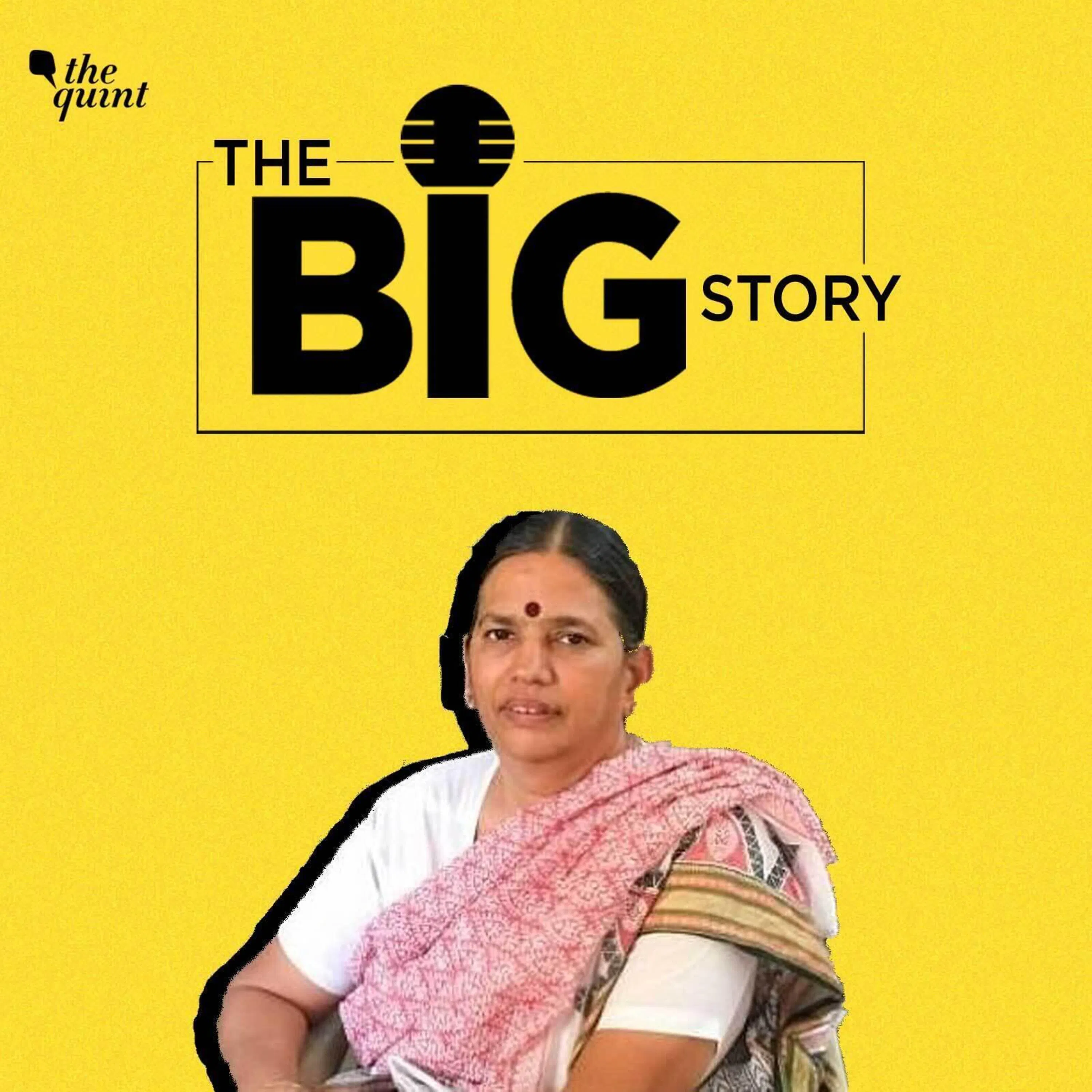
Ep 837Bhima Koregaon Case: Why Sudha Bharadwaj Got Her Bail and Not Others
Timing — that is what it came down to for lawyer and long-time workers' rights activist Sudha Bharadwaj’s bail plea, which was accepted by Bombay High Court on Wednesday, 1 December. Bhardwaj, who is one of the accused in the Bhima Koregaon case, was arrested on 28 August 2018 and has been in police custody for the past three years at Byculla Jail. In her bail plea, she argued that she should be granted a default bail as the Pune sessions court judge who had passed several important pre-trial orders in the case was not a designated judge to hear cases under the Unlawful Activities (Prevention) Act. But this same request of appeal, however, was denied to the other accused in the case, even though it was the same court that heard their case, because of the timing of when they filed their default bail pleas. The National Investigation Agency has stated that they will appeal the HC order in court but on what legal grounds would this be? And why were the others not given bail under the same conditions? How exactly do default bails work? To discuss this, for today’s episode we spoke to Guest:Vakasha Sachdev, The Quint’s Legal Editor. Host and Producer: Himmat Shaligram Editor: Vakasha Sachdev Music: Big Bang Fuzz Listen to The Big Story podcast on: Apple: https://apple.co/2AYdLIl Saavn: http://bit.ly/2oix78C Google Podcasts: http://bit.ly/2ntMV7S Spotify: https://spoti.fi/2IyLAUQ Deezer: http://bit.ly/2Vrf5Ng Castbox: http://bit.ly/2VqZ9ur Learn more about your ad choices. Visit megaphone.fm/adchoices
Ep 836Is Twitter's Updated Privacy Policy Practical to Enforce?
Twitter in a recent policy change has tried to make the platform safer for its users but the move has raised more doubts than assurances. Under its updated policy, the social media giant will now take action against users who post photos or videos of private individuals without their permission. And the policy also raises the question of the role of human content assessors at Twitter, who are seemingly now the final authority on the intent behind every post on the platform. In a statement, Twitter said that the misuse of such information can have a “disproportionate effect on women, activists, dissenters, and members of minority communities”. While a section of the internet has welcomed the policy, the other raised several doubts on whether it would be practical to enforce. What can be the foreseeable hurdles in implementing such a policy? And with more than 211 million daily active Twitter users, how do you get a policy like this correct at scale? Guests: Apar Gupta, the Executive Director of the Internet Freedom Foundation Srinivas Kodali, an independent researcher at the Free Software Movement of India Radhika Jhalani, a Counsel at Software Freedom Law Centre Host and Producer: Himmat Shaligram Editor: Shorbori Purkayastha Music: Big Bang Fuzz Listen to The Big Story podcast on: Apple: https://apple.co/2AYdLIl Saavn: http://bit.ly/2oix78C Google Podcasts: http://bit.ly/2ntMV7S Spotify: https://spoti.fi/2IyLAUQ Deezer: http://bit.ly/2Vrf5Ng Castbox: http://bit.ly/2VqZ9ur Learn more about your ad choices. Visit megaphone.fm/adchoices

Ep 835Munawar Faruqui's Shows Cancelled: Is the Space for Political Comedy Shrinking?
It feels like an almost everyday incidence now that we hear a standup comic in India being slammed or trolled for something they said or a particular performance they did. But in stand-up comedian Munawar Faruqui’s case - 12 of his shows were cancelled just over the last few months - the latest being in Bengaluru where he was supposed to perform a set called ‘Dongri to Nowhere'. The comic had to spend a month in jail on charges of allegedly making jokes against Hindu gods and goddesses. He was released from jail 35 days later after the Supreme Court found that evidence against him was “vague” and the fact that he did not crack a single joke. But from then on it's been out of the pan and into the fire for him. The comic has faced a wave of targeted hounding on social media from right wing groups. And if it's not over pressure from right-wing groups, then it's the city police who have gotten his shows cancelled. In the recent incident from Bengaluru, the police wrote that his show could “create chaos and could disturb the public peace and harmony which may further lead to law and order problems.” But this statement begs the question- isn’t it the job of the police to safeguard the safety and rights of citizens when there is an established threat? And more importantly, what do these kinds of actions towards comics signal about the right to freedom of expression and law and order in India? Guests: Dr NC Asthana, the former DGP of Kerala Siddharth Dash, a stand-up comic and show producer for Munawar Faruqui’s Bengaluru show Arpit Sharma, a satirist and comedian. Host and Producer: Himmat Shaligram Editor: Shorbori Purkayastha Music: Big Bang Fuzz More from The Quint: Interview | Munawar Faruqui Responds to Death Threats: ‘Hit Unsubscribe on Those Spreading Hate’ Munawar Faruqui’s Show Axed: How Legal Sense Became the Joke 'Hard-Hitting': Comedians Speak on Vir Das's 'I Come From Two Indias' Listen to The Big Story podcast on: Apple: https://apple.co/2AYdLIl Saavn: http://bit.ly/2oix78C Google Podcasts: http://bit.ly/2ntMV7S Spotify: https://spoti.fi/2IyLAUQ Deezer: http://bit.ly/2Vrf5Ng Castbox: http://bit.ly/2VqZ9ur Learn more about your ad choices. Visit megaphone.fm/adchoices

Ep 834As Countries Race to Contain Omicron, How Worried Should You Be?
A new variant of COVID-19, named Omicron, has set-off alarm bells across the world, with multiple countries imposing travel restrictions over the weekend. The variant, B.1.1529, was first detected in Botswana and then later identified in South Africa on 24 November. It is said to be the most mutated version of the virus and is reportedly more transmissible than the deadly Delta variant, which caused havoc across the world. Preliminary analysis and genome sequencing by experts in South Africa show that Omicron’s heightened mutations may mean that it’s more transmissible and even have immune escaping properties. Based on this evidence, the World Health Organisation has labelled Omicron as a “variant of concern.” A growing number of countries since the virus was first identified in South Africa, have reported confirmed cases of the new variant including the United Kingdom, Hong Kong, Canada, Italy, Germany and Australia. With little knowledge about the variant, how concerning is Omicron and what do we know about it so far? Guests: Dr Shahid Jameel, renowned virologist. Dr K Srinath Reddy, President of the Public Health Foundation of India. Host and Producer: Himmat Shaligram Editor: Vaishali Sood Music: Big Bang Fuzz Listen to The Big Story podcast on: Apple: https://apple.co/2AYdLIl Saavn: http://bit.ly/2oix78C Google Podcasts: http://bit.ly/2ntMV7S Spotify: https://spoti.fi/2IyLAUQ Deezer: http://bit.ly/2Vrf5Ng Castbox: http://bit.ly/2VqZ9ur Learn more about your ad choices. Visit megaphone.fm/adchoices
Ep 833'Couldn't Believe This Was Happening in Mumbai': Revisiting The 26/11 Attacks
26 November 2008. There's perhaps still a lingering sense of disbelief as we talk about the day. Even 13 years after the attack, we continue to piece together all the tiny details of the events of the day through the words and memories of those who survived to tell the tale. In this special episode of The Big Story we get first-hand accounts of three journalists who covered the attack from ground zero. In this podcast you'll hear from Raksha Shetty, Mahrukh Inayat and Shai Venkatraman talk about how they went around covering the attack. Along with that we also have with us Anjali Kulthe, Staff Nurse of Labour Room at Cama Hospital who showed extreme grit and saved the lives of several pregnant women when the hospital had come under attack. You'll also hear from Dr Shailesh Mohite, Former Forensic Head at Nair Hospital who recounts how he had to operate on the lone surviving terrorist Ajmal Kasab. Tune in! Host and Producer: Shorbori Purkayastha Editor: Shelly Walia Music: Big Bang Fuzz Listen to The Big Story podcast on: Apple: https://apple.co/2AYdLIl Saavn: http://bit.ly/2oix78C Google Podcasts: http://bit.ly/2ntMV7S Spotify: https://spoti.fi/2IyLAUQ Deezer: http://bit.ly/2Vrf5Ng Castbox: http://bit.ly/2VqZ9ur Learn more about your ad choices. Visit megaphone.fm/adchoices
Ep 832A Closer Look at NFHS-5 Data on Sex Ratio & Population Stabilisation
For a country that has a lot to worry about the repercussions of its humungous population, we seemed to have hit a positive demographic milestone. According to the findings of the National Family Health Survey-5 data, India’s total fertility rate has declined from 2.2 to 2. Another finding from the survey that is being pompously celebrated is that for the first time in the history of NFHS surveys, the sex ratio is skewed in favour of women. The data suggests there are 1,020 women for every 1,000 men. So, the two questions that come up are: Do these number indicate that India is closer to stabilizing its population? And, given the continued prevalence of patriarchal attitudes in Indian society, gender preferences for children at birth, how we really read the sex ratio figures? Tune in! Host and Producer: Shorbori Purkayastha Guests: Sanghamitra Singh, Senior Manager of Knowledge Management & Partnerships at Population Foundation of India; Dr Srinath Reddy, President of Public Health Foundation of India ; Varna Sri Raman, Lead of Research and Knowledge Building at Oxfam India Editor: Vaishali Sood Music: Big Bang Fuzz Listen to The Big Story podcast on: Apple: https://apple.co/2AYdLIl Saavn: http://bit.ly/2oix78C Google Podcasts: http://bit.ly/2ntMV7S Spotify: https://spoti.fi/2IyLAUQ Deezer: http://bit.ly/2Vrf5Ng Castbox: http://bit.ly/2VqZ9ur Learn more about your ad choices. Visit megaphone.fm/adchoices

Ep 831With a Potential Ban on Cryptocurrency, What Should You Do With Your Investment?
The entire cryptocurrency market in India had a bloodbath on the evening of 23 November as panic set in with retail investors over the news coming out that the government is tabling a bill in the upcoming Parliament to ban "private cryptocurrencies". Bymidnight, the entire market fell by around 15 percent, with Bitcoin down by 17 percent, Ethereum down by nearly 15 percent and Tether by almost 18 percent. The root of this volatility is The Cryptocurrency and Regulation of Official Digital Currency Bill, 2021, which “seeks to ban all private cryptocurrencies in the country, but will allow certain exceptions to promote underlying technology and its uses.” Along with this, the document also states that the Reserve Bank of India will be introducing its own digital coin as well. But, there is no knowledge so far on how this RBI coin will work or its purpose. An unregulated market so far, for the past few months, the Centre has been dropping hints regarding its intent on regulating cryptocurrency in India. Even Prime Minister Narendra Modi in a recent speech at Sydney Dialogue said that the “democratic countries need to work together on cryptocurrency and ensure that it does not end up in the wrong hands.” But with reportedly 10 crore retail investors in the crypto market, how can a ban impact India’s crypto market? What is the Centre’s concerns regarding cryptocurrencies? And if you are an investor, what should you do with your investment? Guests: Subhash Garg, former finance Secretary of India and Naimish Sanghvi, the CEO of CoinCrunch, a crypto news platform. Host and Producer: Himmat Shaligram Editor: Shelly Walia Music: Big Bang Fuzz Listen to The Big Story podcast on: Apple: https://apple.co/2AYdLIl Saavn: http://bit.ly/2oix78C Google Podcasts: http://bit.ly/2ntMV7S Spotify: https://spoti.fi/2IyLAUQ Deezer: http://bit.ly/2Vrf5Ng Castbox: http://bit.ly/2VqZ9ur Learn more about your ad choices. Visit megaphone.fm/adchoices

Ep 830Report on Data Protection Bill: What Are the Main Concerns Raised by Dissenters?
After nearly two years, the much-awaited and long-overdue report by the Joint Parliamentary Committee on the Data Protection Bill 2019 was tabled on Monday, 22 November. Though the report has not been made available in the public domain yet, as many as seven MP’s from the Congress Trinamool Congress and the BJD have submitted dissent notes to the committee since some clauses give the Centre sweeping powers to collect and process data. While Congress MP Jairam Ramesh in his dissent note stated that the bill assumes that “constitutional right to privacy arises only where operations and activities of private companies are concerned”, TMC MPs Derek O'Brien and Mahua Moitra described the 2019 Bill as "Orwellian" in nature and raised questions on the functioning of the committee. Though the report reportedly has introduced a few positive provisions as well, including mandatory disclose if users' data has been passed on to a third party, the blank cheque of relaxations given to the Centre for collecting and using personal and non-personal data is a matter of grave concern. Guest: Vakasha Sachdev, The Quint’s Legal Editor Host and Producer: Himmat Shaligram Editor: Shelly Walia Music: Big Bang Fuzz Listen to The Big Story podcast on: Apple: https://apple.co/2AYdLIl Saavn: http://bit.ly/2oix78C Google Podcasts: http://bit.ly/2ntMV7S Spotify: https://spoti.fi/2IyLAUQ Deezer: http://bit.ly/2Vrf5Ng Castbox: http://bit.ly/2VqZ9ur Learn more about your ad choices. Visit megaphone.fm/adchoices

Ep 829Farm Laws Repealed: Strategic Retreat by PM Modi or A Win for Democracy?
Prime Minister Narendra Modi on 19 November, announced that his government will repeal the three controversial farm laws, against which lakhs of farmers for the past year have been protesting. The announcement, made on Guru Nanak Jayanti, came as a surprise to many since there was no indication from the saffron party or the Centre on any climb down on the farm laws. At first glance, the rollback of the laws is a major victory for the farmer's movement, and signals that old fashioned non-violent protest do have their way to find chinks in the BJP-led Centre’s strongman image armour. However, it would be naive to not see the political equations running behind this decision, with two crucial states-Punjab and Uttar Pradesh- heading to Assembly polls earlier next year. And with the most recent C-Voter opinion poll predicting a 100 seat fall for the BJP in Uttar Pradesh, one would say it was imperative for the BJP to make good with the farmers if it wanted to stay in power. But what political impact will this move have for the BJP in the upcoming elections? Will it change the scenario in Uttar Pradesh or give it relevance again in Punjab? Guest: Aditya Menon, The Quint’s Political Editor. Host and Producer: Himmat Shaligram Editor: Aditya Menon Music: Big Bang Fuzz Listen to The Big Story podcast on: Apple: https://apple.co/2AYdLIl Saavn: http://bit.ly/2oix78C Google Podcasts: http://bit.ly/2ntMV7S Spotify: https://spoti.fi/2IyLAUQ Deezer: http://bit.ly/2Vrf5Ng Castbox: http://bit.ly/2VqZ9ur Learn more about your ad choices. Visit megaphone.fm/adchoices
Ep 828Srinagar Encounter: Breaking Down Contesting Versions on Civilian Killings
The controversial deaths of two civilians in Kashmir’s Hyderpora have sparked outrage across the valley, with the next of kin asserting that their relatives were used as human shields by the Jammu and Kashmir (J&K) police during an encounter with militants. The two deceased civilians, identified as Dr Mudasir Gul and Altaf Bhat, were both local business persons and owned shops in a commercial complex in Hyderpora where the encounter took place on the evening of 15 November. According to police statements, they cordoned off the complex after receiving inputs claiming that militants were present at an “illegal call centre”. The two civilians then accompanied the police to the building. According to the police, they were killed in the crossfire as the search operation turned into a gunfight. The police later claimed that one of the civilians, Dr Gul, was an overground worker. The J&K police, citing law and order concerns, also performed the last rites of the two civilians and have not turned over the bodies to the next of kin. But their families are not taking no for an answer, demanding the bodies of the relatives to be released to them. They have also sought proof that their deceased loved ones were associated with militants, or were Over Ground Workers (OGWs) as the police have claimed. To learn more about the case and the situation on the ground, for today’s episode, we spoke with Srinagar-based freelance journalist Shakir Mir. Tune in! Guest: Shakir Mir, Srinagar-based freelance journalist. Host and Producer: Himmat Shaligram Editor: Shelly Walia Also listen: What is the Intent of Terror Groups Behind Recent Civilian Killings in J&K? Music: Big Bang Fuzz Listen to The Big Story podcast on: Apple: https://apple.co/2AYdLIl Saavn: http://bit.ly/2oix78C Google Podcasts: http://bit.ly/2ntMV7S Spotify: https://spoti.fi/2IyLAUQ Deezer: http://bit.ly/2Vrf5Ng Castbox: http://bit.ly/2VqZ9ur Learn more about your ad choices. Visit megaphone.fm/adchoices

Ep 827'Hard-Hitting': Comedians Speak on Vir Das's 'I Come From Two Indias'
What can a comedian in India joke about that is acceptable to the audience and the public? The debate on this has been stirred time and again and was sparked once again on Tuesday, 16 November. Stand-up comedian Vir Das has been caught in a storm of applause and criticism on his recent stand-up video recorded at Washington DC's John F Kennedy Centre for Performing Arts titled "I Come From Two Indias" In a six-minute video, Vir Das talks about the duality of India and speaks on topical issues the country is facing from the pandemic to the farmers' protests, and targeted attacks towards comedians as well. While many on social media have said that India can’t take criticism and applauded Das for his candid words, the other side has condemned the comedian for generalising incidents and projecting a negative image about India abroad. The negative comments and hate speech regarding his monologue reached such an extent that at least two police complaints have been filed against Das for “derogatory statements against India”. In a clarification, Das on Twitter stated that his intention was to remind people that despite the issues, India is “great” and requested people to not be fooled by edited snippets. But the bigger question here is, was Das wrong in saying what he did about India? If he was, do comedians need to start self-censoring before they bring their material out? What do comedians feel about this? We took these questions to Host and Producer: Himmat Shaligram Guests: Stand-up comedians Neeti Palta, Sanjay Rajoura, and Agrima Joshua. Editor: Shelly Walia Music: Big Bang Fuzz Listen to The Big Story podcast on: Apple: https://apple.co/2AYdLIl Saavn: http://bit.ly/2oix78C Google Podcasts: http://bit.ly/2ntMV7S Spotify: https://spoti.fi/2IyLAUQ Deezer: http://bit.ly/2Vrf5Ng Castbox: http://bit.ly/2VqZ9ur Learn more about your ad choices. Visit megaphone.fm/adchoices
Ep 826Are Lockdowns a Viable Measure To Curb Delhi's Air Pollution?
Every year, like clockwork, the Delhi-National Capital Region (NCR) is blanketed in smog in the winter months and the Air Quality Index (AQI) levels in different parts of the capital spike through the roof. This year, despite there being strict enforcement on bursting crackers, Delhi woke up to a thick smog the day after Diwali and the AQI remained at a “severe” level for days till 14 November when it reduced to “very poor”. Even the Supreme Court (SC) had to step in and pull up the Delhi government. A three-judge bench, comprising Chief Justice NV Ramana, sought to know what measures the Union and the Delhi government were taking to control pollution. The SC also contemplated measures like placing the entire city under a lockdown or an odd-even system of managing vehicular traffic. But how significant are these band-aid-like measures? And fingers, of course, were also pointed towards stubble burning in the Punjab and Haryana. However, this time, the tables turned as contribution of stubble burnings to Delhi’s pollution was reportedly only 10 percent. But can we always place the blame on farmers when it comes to air pollution in the capital? Is there a win-win solution for all parties? Host and Producer: Himmat Shaligram Guest: Santosh Harish, a fellow at the Centre for Policy Research Editor: Shelly Walia Music: Big Bang Fuzz Listen to The Big Story podcast on: Apple: https://apple.co/2AYdLIl Saavn: http://bit.ly/2oix78C Google Podcasts: http://bit.ly/2ntMV7S Spotify: https://spoti.fi/2IyLAUQ Deezer: http://bit.ly/2Vrf5Ng Castbox: http://bit.ly/2VqZ9ur Learn more about your ad choices. Visit megaphone.fm/adchoices
Ep 825As COP26 Ends, Did the World Fail To Limit Dangers of Climate Change?
Billed as the “last, best hope” to save humanity, the COP26 summit ended on a bitter-sweet note after two weeks of gruelling negotiations and bargaining over language and provisions of the Glasgow Pact. Nearly 200 nations participated in the conference to make progress on slowing down global warming. However, it was in the last few hours of the conference that a handful of countries changed the entire atmosphere of the summit. A last-minute demand by India, backed by China and other countries, watered down the language in the pact which called for a “phase-out” of coal. Instead, China demanded the wording to be “phase down” and India wanted the pact to only cover “inefficient” coal. But with no alternative solution other than countries voluntarily agreeing to reduce emissions, where does the world go from here? Was COP26 a success or a failure? Have we made any headway in limiting climate change? Host and Producer: Himmat Shaligram Guest: Chandra Bhushan, environment, and climate expert and senior journalist Nabanita Sircar. Editor: Shelly Walia Audio of COP26 Speeches: United Nations Framework Convention on Climate Change. Music: Big Bang Fuzz Listen to The Big Story podcast on: Apple: https://apple.co/2AYdLIl Saavn: http://bit.ly/2oix78C Google Podcasts: http://bit.ly/2ntMV7S Spotify: https://spoti.fi/2IyLAUQ Deezer: http://bit.ly/2Vrf5Ng Castbox: http://bit.ly/2VqZ9ur Learn more about your ad choices. Visit megaphone.fm/adchoices

Ep 824What is China Trying to Signal to India by Upping the Ante in Disputed Regions?
China, a country that is so singularly determined to expand its territorial claim in the Asia-Pacific, has now built an entire village inside a disputed territory with India. You read that right. According to several media reports and satellite images, China has built a village that can house thousands in the disputed territory in Arunachal Pradesh. And though the news about the village being constructed is not new as NDTV had broken the story earlier this year, it got reignited after the US Pentagon published a report on 3 November, highlighting China’s growing claim along the LAC. In its annual report, the Pentagon pertinently notes that China has been taking “incremental and tactical actions to press its claims” at the LAC with India and that sometime in 2020, China built a “large 100-home civilian village inside a disputed territory”. Taking note of this report, the Ministry of External Affairs on Thursday, 11 November, stated that it does not accept “such illegal occupation” and the “unjustified Chinese claims”. But in a bizarre contradiction to both the MEA and Pentagon report, Chief of Defence Staff Gen Bipin Rawat stated that China’s construction “were well within their part of the LAC” and that "they have not transgressed anywhere". To make matters worse and more confusing, China has also introduced a new land boundary law, which sends a clear signal that the country plans to use its civilian population to safeguard “territorial integrity”. With Sino-India relations already on a tightrope since the most recent core-commander talks reaching a deadlock, China’s recent actions at the border may have only soured the relations between the neighbours further. Their actions throw up the following questions: What is China trying to signal by upping the ante in the disputed regions? Does the new land boundary law state that China is no longer interested in a border resolution with India? And lastly, how worrying are these moves for India? Host and Producer: Himmat Shaligram Guest: Harsh V Pant, Director, Studies & Head, Strategic Studies Programme at the Observer Research Foundation. Editor: Shelly Walia Music: Big Bang Fuzz Listen to The Big Story podcast on: Apple: https://apple.co/2AYdLIl Saavn: http://bit.ly/2oix78C Google Podcasts: http://bit.ly/2ntMV7S Spotify: https://spoti.fi/2IyLAUQ Deezer: http://bit.ly/2Vrf5Ng Castbox: http://bit.ly/2VqZ9ur Learn more about your ad choices. Visit megaphone.fm/adchoices

Ep 823IPO: Which Factors Led to Nykaa's Bumper Debut and Paytm's Sluggish Performance?
The much-awaited IPOs of Paytm and Nykaa, the homegrown fashion brand, finally came to an end on Thursday, 11 November, with the latter having a blockbuster start on listing day with its valuation crossing Rs 1 lakh crore. The issue price for Nykaa was Rs 2,018 apiece, with a premium of 79 percent over its issue price. But the strong demand from all categories of investors resulted in the company making it to the top 100 mid-caps on the Bombay Stock Exchange, ahead of giants like State Bank of India and even Coal India. The rally in the markets also resulted in the company’s founder, Falguni Nayar, net worth touching USD$ 7 billion, making her India’s wealthiest self-made female billionaire. But while on one end Nykaa made out like a bandit, Paytm’s parent company, One97 Communications, struggled to garner a full subscription, with less than 50 percent of the stock being subscribed even on the second day of listing. And according to analysts, one of the reasons for the weak response could be the massive size of the issue itself. Host and Producer: Himmat Shaligram Guest: Niraj Shah, Markets Editor at Bloomberg Quint Editor: Shelly Walia Music: Big Bang Fuzz Listen to The Big Story podcast on: Apple: https://apple.co/2AYdLIl Saavn: http://bit.ly/2oix78C Google Podcasts: http://bit.ly/2ntMV7S Spotify: https://spoti.fi/2IyLAUQ Deezer: http://bit.ly/2Vrf5Ng Castbox: http://bit.ly/2VqZ9ur Learn more about your ad choices. Visit megaphone.fm/adchoices
Ep 822How Will Rohit Sharma Fair as T20 Captain in New Zealand Series?
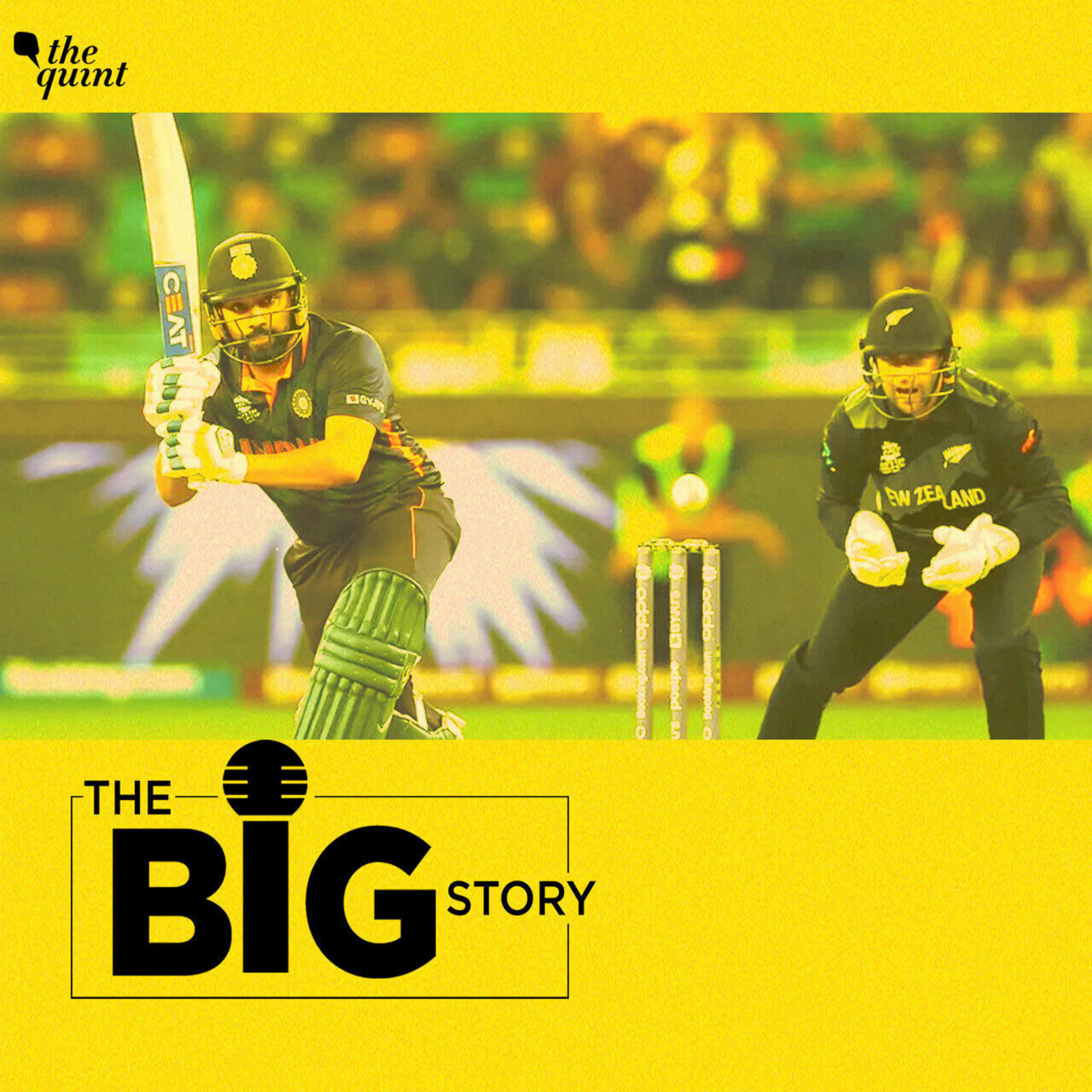
On the heels of an early exit from the 2021 T20 World Cup, the BCCI has announced the T20 squad for the New Zealand series starting 17 November, with the baton of captaincy being passed to Rohit Sharma. Alongside as his deputy is KL Rahul and the new coach Rahul Dravid. But what has also been making headlines is the induction of fresh faces in the squad as with many senior players being put on rest, notably Virat Kohli, Jasprit Bumrah, Ravindra Jadeja and Hardik Pandya. The new squad includes freshers like Venkatesh Iyer, who made his mark in the 2021 IPL in Dubai, Avesh Khan, and Harshal Patel. And one of the key reasons for these fresh faces in the squad is due to exhaustion faced by the players who have been travelling for 6 months and living in bio-bubbles without adequate breaks in between. Fatigue is also reportedly one of the key factors which contributed toward’s India’s losses at the T20 cup. But with a new captain handling the team, a new coach managing the players and several new players in the squad, how will India fair in the upcoming T20 series? Will this reset of players work? What can we make of the new squad? Host and Producer: Himmat Shaligram Guest: Sports commentators and analysts Amrit Mathur and Chandresh Narayanan. Editor: Shelly Walia Music: Big Bang Fuzz Listen to The Big Story podcast on: Apple: https://apple.co/2AYdLIl Saavn: http://bit.ly/2oix78C Google Podcasts: http://bit.ly/2ntMV7S Spotify: https://spoti.fi/2IyLAUQ Deezer: http://bit.ly/2Vrf5Ng Castbox: http://bit.ly/2VqZ9ur Learn more about your ad choices. Visit megaphone.fm/adchoices

Ep 821COVID-19: How Significant Are the Anti-viral Oral Pills for Treatment?
The world for the past few months has been speaking a lot on COVID vaccines and how it is our way out of this pandemic. But it will be a long time before the entire world is vaccinated. So what do we do to prevent severe symptoms or hospitalisation till then? A new anti-viral pill for COVID-19 treatment from pharma giants Merck and Pfizer Inc, aims to reduce the risk of hospitalisation and even death. These new drugs – Merck’s Molnupiravir and Pfizer’s Paxlovid – are currently in their clinical trials but have shown promising results, especially the latter, which claims to reduce the risk of hospitalisation by 89 percent. And countries have already started recognising the significance of these pills, with the United Kingdom being the first country to approve Molnupiravir and purchased nearly half a million courses. So what are these new drugs exactly? How do they work and more importantly, are they safe? Host and Producer: Himmat Shaligram Guest: Vaishali Sood, The Quint’s Health Editor and Dr Rakesh Mishra, the former Director of Council of Scientific and Industrial Research and an Advisor to CEBM. Editor: Shelly Walia Music: Big Bang Fuzz Listen to The Big Story podcast on: Apple: https://apple.co/2AYdLIl Saavn: http://bit.ly/2oix78C Google Podcasts: http://bit.ly/2ntMV7S Spotify: https://spoti.fi/2IyLAUQ Deezer: http://bit.ly/2Vrf5Ng Castbox: http://bit.ly/2VqZ9ur Learn more about your ad choices. Visit megaphone.fm/adchoices
Ep 820What Do BJP's NEC Resolutions Signal About the Parties Election Strategy?
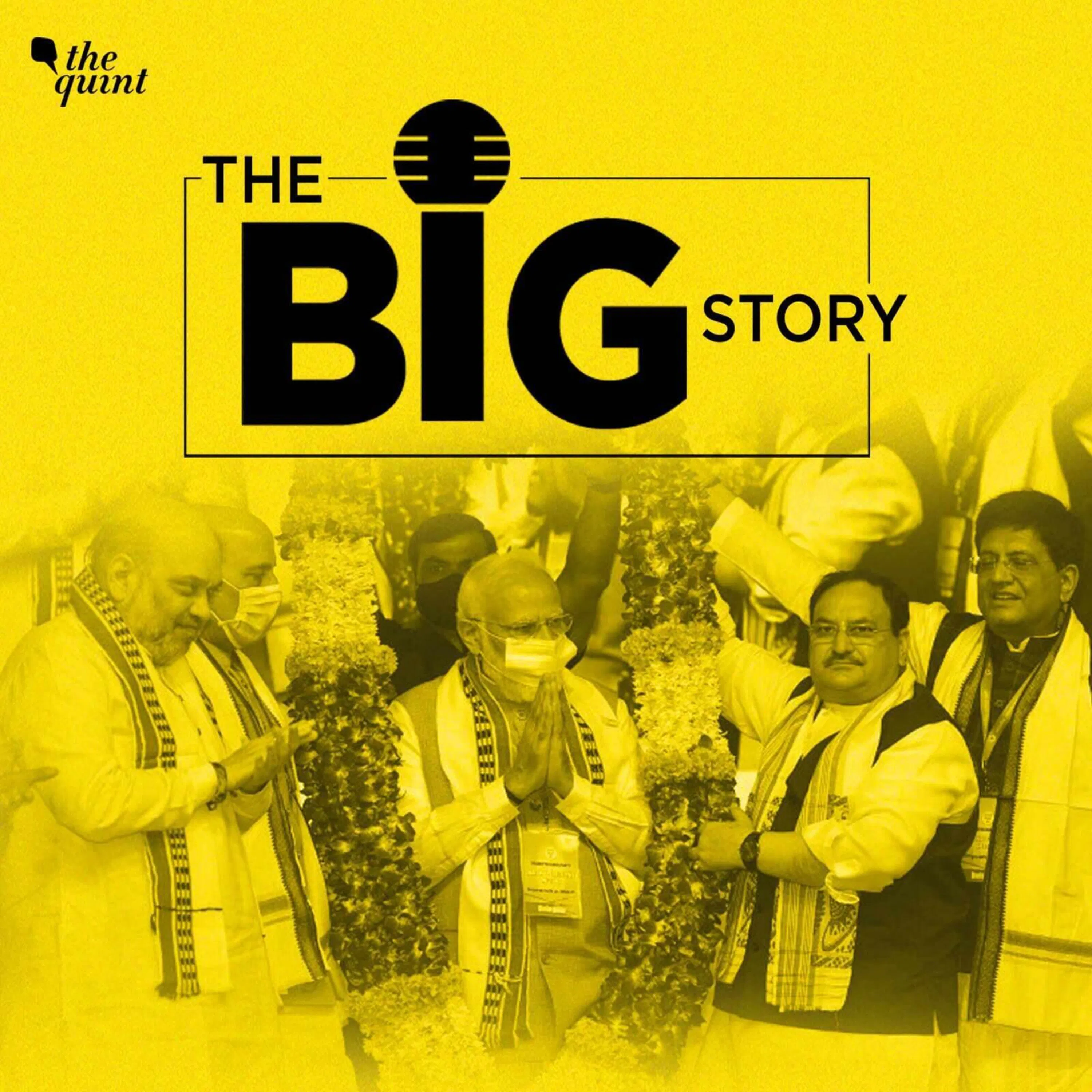
On the heel of a mixed bag of wins and losses in the recently concluded bypolls, the Bharatiya Janta Party held their first national executive meeting since the start of the pandemic on 7 November. Though the meeting was largely devoted to applauding Prime Minister Narendra Modi’s government on a range of actions, primarily COVID-19 and his intervention at the COP-26 summit, what was also front and centre was the focus on the upcoming assembly elections in early 2022. And this was pertinent from Modi’s reported exhortations at the party meeting, asking the BJP top brass and workers to become the “bridge of faith” for the common man. Party chief JP Nadda in his inaugural speech added to this, stating that the “BJP’s best is yet to come”. They also announced a “resolution for victory” in the upcoming polls. But a significant takeaway from the meeting was the presence of Uttar Pradesh Chief Minister Yogi Adityanath, the only BJP CM to attend the meeting physically. Adding more to his profile was him presenting the parties political resolution mentioned earlier, indicating a rise in importance in the party. The saffron party also slammed the opposition on various counts like reduction in VAT on fuel and even went a step further, accusing them of “opportunism” and acting with a mindset of “extreme hate”. While the party applauded the Centre for its measures regarding farmer welfare and COVID, there was no direct mention of the contentious farm laws, CAA, nor the unclear border disputes with China. So what does this meeting tell us about the BJP’s elections strategies? What is this “resolution for victory’? To discuss this, joining me today is author and senior journalist Nilanjan Mukhopadhyay and Host and Producer: Himmat Shaligram Guest: Nilanjan Mukhopadhyay, author and senior journalist and Aditya Menon, The Quint's Political Editor. Editor: Shelly Walia Music: Big Bang Fuzz Listen to The Big Story podcast on: Apple: https://apple.co/2AYdLIl Saavn: http://bit.ly/2oix78C Google Podcasts: http://bit.ly/2ntMV7S Spotify: https://spoti.fi/2IyLAUQ Deezer: http://bit.ly/2Vrf5Ng Castbox: http://bit.ly/2VqZ9ur Learn more about your ad choices. Visit megaphone.fm/adchoices

Ep 819What Challenges Lie Ahead for Rahul Dravid as the New Men's Cricket Coach?
The T20 World Cup may not be going as we expected but there is light at the end of this tunnel with Rahul Dravid waiting for the Indian men’s cricket team to take over as the new coach. Dravid has come on board on a two-year contract and his first assignment with be the home series against New Zealand starting 17 November. But how did a man, who made it pretty clear that he didn’t want the job, get selected for it? Guest: Chandresh Narayanan, senior sports journalist and cricket commentator Host: Mendra Dorjey Producer: Himmat Shaligram Editor: Shelly Walia Music: Big Bang Fuzz Listen to The Big Story podcast on: Apple: https://apple.co/2AYdLIl Saavn: http://bit.ly/2oix78C Google Podcasts: http://bit.ly/2ntMV7S Spotify: https://spoti.fi/2IyLAUQ Deezer: http://bit.ly/2Vrf5Ng Castbox: http://bit.ly/2VqZ9ur Learn more about your ad choices. Visit megaphone.fm/adchoices

Ep 818What Do the 2021 Bypoll Results Signal for the Bharatiya Janata Party?
It was a bittersweet day for the Bharatiya Janata Party as the results of the bypolls held in 29 Assembly seats and three Lok Sabha seats were out on Tuesday, 2 November. The saffron party and its allies made a clean sweep in the northeast, winning all nine seats, which went to poll in Assam, Mizoram, and Meghalaya and won the Lok Sabha seat in Madhya Pradesh’s Khandwa. But it was the surprise blow by the Congress in Himachal Pradesh, Karnataka, and Rajasthan, which became a major setback for the BJP. In the BJP-ruled Himachal Pradesh, the GOP wrested the Mandi Lok Sabha seat and the Assembly seats of Jubbal. It also retained the Arki and Fatehpur Assembly seats. With the state going to polls next year, the loss is significant since it has now triggered the speculation whether the BJP will replace the incumbent CM Jairam Thakur. And in Rajasthan, the Congress won both seats-Dhariawad and Vallabh Nagar with comfortable margins, while the BJP was unable to make a dent and slid further down in the vote share ladder. To further rub salt in BJP’s wounds, the victory parade of the Trinamool Congress in West Bengal continued as it snatched away all four seats that went to poll with average margins of 75 percent. This results in the TMC’s strength in the 294-member Bengal Assembly rising to 219. Along with these setbacks, the BJP also lost the Dadra and Nagar Haveli Lok Sabha seat to the Shiv Sena, making this the Sena’s first Lok Sabha victory outside of Maharashtra. So what caused this major rollback of votes for the BJP? Is this a warning signal for the ruling party before the upcoming polls ? And looking ahead, how will this affect the 2024 polls? Host and Producer: Himmat Shaligram Guest: Aditya Menon, The Quint’s Political Editor. Tune in! Editor: Shelly Walia Music: Big Bang Fuzz Listen to The Big Story podcast on: Apple: https://apple.co/2AYdLIl Saavn: http://bit.ly/2oix78C Google Podcasts: http://bit.ly/2ntMV7S Spotify: https://spoti.fi/2IyLAUQ Deezer: http://bit.ly/2Vrf5Ng Castbox: http://bit.ly/2VqZ9ur Learn more about your ad choices. Visit megaphone.fm/adchoices
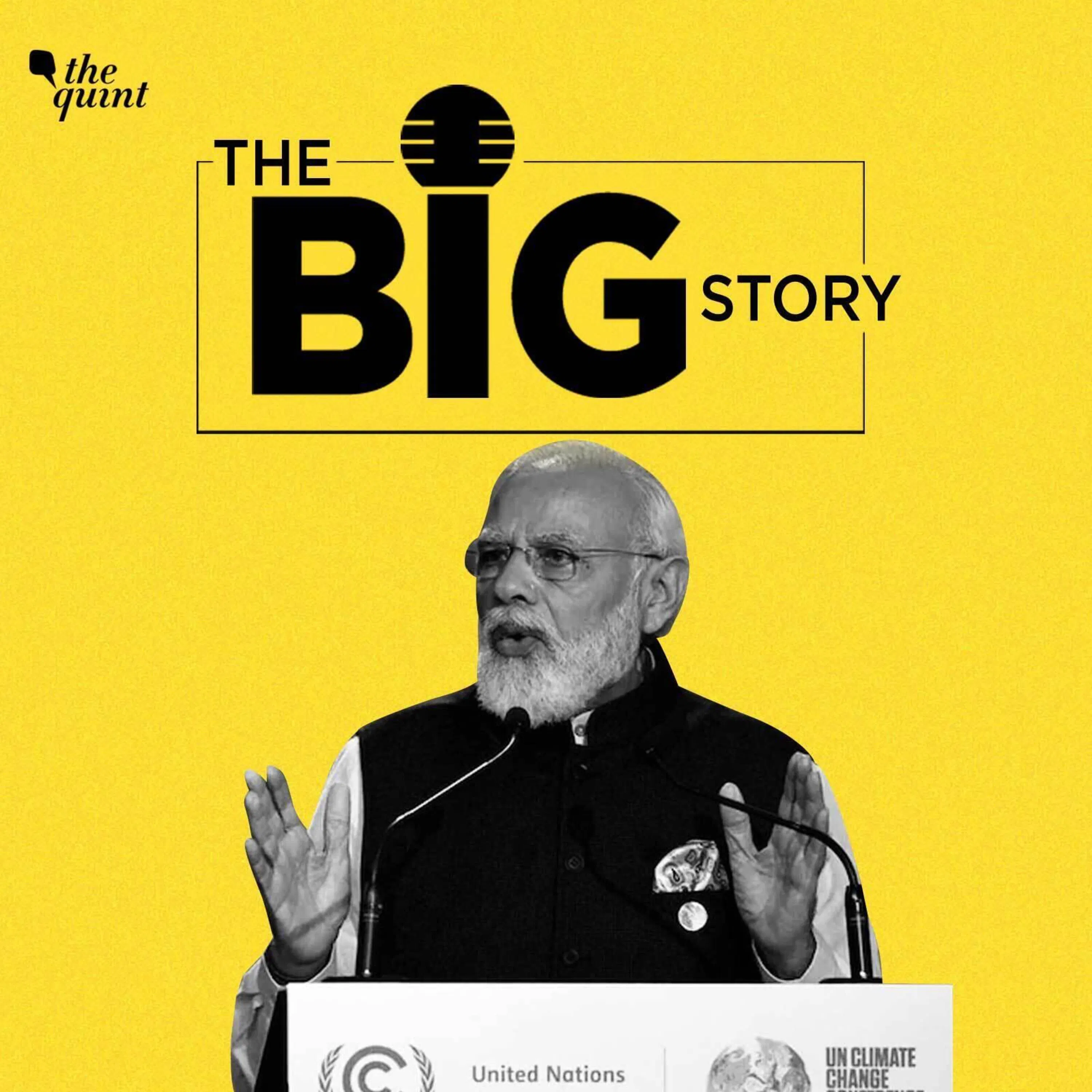
Ep 817How Substantive Are the Climate Pledges Made by India at COP26?
The buzziest word over the past 24 hours has been “net-zero” and it is because India – in a significant first – has pledged that it will cut its emissions to net-zero by 2070, a target which may be far from ideal but still transformative. The announcement, accompanied by four other climate-related targets, was announced by Prime Minister Narendra Modi at the 26th UN Conference of the Parties or better known as COP26 on 1 November. And the announcement came as a surprise to many, given that India, up until just a few days ago, rejected all global pressures to announce such a commitment. Along with the net-zero pledge, India has promised to increase its installed renewable capacity and the share of non-fossil fuel energy sources from 40 percent to 50 percent by 2030. All of these commitments do sound great as pledges but how substantive are they in nature? And with a significantly later net-zero deadline than many other countries, have we set ourselves an ambitious enough target or have we left enough just enough wiggle room to get by? Are these pledges another set of low hanging fruit or will they have a real impact on the climate? Host and Producer: Himmat Shaligram Guest: Anjal Prakash, Research Director and Associate Professor at Bharti Institute of Public Policy at Indian School of Business and an IPCC author. Editor: Shelly Walia Music: Big Bang Fuzz Listen to The Big Story podcast on: Apple: https://apple.co/2AYdLIl Saavn: http://bit.ly/2oix78C Google Podcasts: http://bit.ly/2ntMV7S Spotify: https://spoti.fi/2IyLAUQ Deezer: http://bit.ly/2Vrf5Ng Castbox: http://bit.ly/2VqZ9ur Learn more about your ad choices. Visit megaphone.fm/adchoices

Ep 816Is India's T20 Campaign Coming to End After Defeat Against New Zealand?
A 10 wicket thrashing at the hands of Pakistan followed by an 8 wicket loss to New Zealand and pre-tournament favourites India are staring at a dangerously early exit from the 2021 T20 World Cup. Yes, the Men in Blue are not yet out of the tournament, but their chances of qualifying for the semi-finals went from bad to worse on Sunday and what's more - their fate no longer rests in their own hands. Only two teams qualify from the two groups at the t20 World Cup and with Pakistan on a winning-spree, they are set to book the first spot. Meaning, it will come down to India, New Zealand and maybe even Afghanistan fighting for that second spot. For India to win that race, they not only need to win the remaining three matches with a significant margin but also hope that Afghanistan upset New Zealand. On Sunday night, Virat Kohli made two changes to the squad that lost to Pakistan and brought in Ishan Kishan in place of the injured Suryakumar Yadav and got Shardul Thakur to play in Bhuvneshwar Kumar;s place. Ishan opened, Rohit batted at three but all the experiments failed as the team was put into bat first and managed to only score 110/7- their lowest ever score batting first in a T20 World Cup. The team was also unable to secure any boundaries between 6th-17th overs. Several factors, from the batting order to the bowling performance may have worked against the India team, with top pacer Jasprit Bumrah stating that the toss becomes a very crucial factor in these matches given the nature of the pitch To speak on India’s performance in the match and the road ahead for the team, we spoke with sports commentator and analyst Host and Producer: Himmat Shaligram Guest: Chandresh Narayan, sports commentator and analyst. Editor: Shelly Walia Music: Big Bang Fuzz Listen to The Big Story podcast on: Apple: https://apple.co/2AYdLIl Saavn: http://bit.ly/2oix78C Google Podcasts: http://bit.ly/2ntMV7S Spotify: https://spoti.fi/2IyLAUQ Deezer: http://bit.ly/2Vrf5Ng Castbox: http://bit.ly/2VqZ9ur Learn more about your ad choices. Visit megaphone.fm/adchoices

Ep 815Facebook Goes Meta: What This Change Really Means For Users
Metaverse. Sounds straight out of a sci fi novel, right? Well, it is. From a 1992 dystopian novel "Snow Crash" by American writer Neal Stephenson that envisioned a digital universe as a 3D space that one can come in and out of. And, that sci fi concept that has been the plot of movies like Matrix or Inception, is exactly what Mark Zuckerberg is aiming for, as he announced that Facebook is rebranding itself as Meta. The social media platform will still be called Facebook but with the rechristening of the company name from Facebook to Meta it's not just a social media company anymore but hopes to be a "metaverse company"—something that wants to make this sci fi concept into a reality. But where is this reinvention coming from? Well, Zuckerberg the Chief Executive of the company explained the name “Facebook” doesn't fully encompass everything that the company does anymore, let alone the future. So, the rebranding in fact, is heralding a transition in the company towards building the next generation of the internet that'll blend the real and virtual worlds for its users. But what is Meta's futuristic vision going to look like in practice? Is this going to be the next big thing? As the social media company faces trust deficit over data privacy issues, what are some of the concerns that arises as this social media giant takes a plunge into the AR-VR world? Host and Producer: Shorbori Purkayastha Guest: Udbhav Tiwari is a public policy advisor at Mozilla Editor: Shelly Walia Music: Big Bang Fuzz Listen to The Big Story podcast on: Apple: https://apple.co/2AYdLIl Saavn: http://bit.ly/2oix78C Google Podcasts: http://bit.ly/2ntMV7S Spotify: https://spoti.fi/2IyLAUQ Deezer: http://bit.ly/2Vrf5Ng Castbox: http://bit.ly/2VqZ9ur Learn more about your ad choices. Visit megaphone.fm/adchoices

Ep 814Drugs-on-Cruise Case: What Do Arguments in Bombay HC Tell Us About NCB Probe?
After twenty-four days in jail under charges of purchase, abetment, conspiracy, and possession of drugs – none of which were admissible in court – Aryan Khan, son of Bollywood superstar Shah Rukh Khan, was granted bail by the Bombay High Court on Thursday, 28 October. The cruise ship drug case has been dominating the headlines for close to a month and buzzing with new updates since his arrest on 2 October. And despite the extensive pursuit and media hype around this high-profile case, the NCB investigation raised more questions than answers. Appearing on behalf of Aryan Khan, former Attorney General Mukul Rohatgi stated that his arrest was in direct violation of constitutional guarantees and none of the “unbelievable and shocking” WhatsApp chats recovered from Khan’s phone relate to the cruise party. What has further muddied the waters in the NCB’s case, are allegations made by a witness in the case Prabhakar Sail, against Sameer Wankhede, who is the Mumbai NCB chief and in-charge of the investigation. In an affidavit, Sail claimed that he was made to sign blank pages by Wankhede and that he overheard conversations that point to corruption and extortion of money. And parallel to the NCB case, something else is brewing, with Wankhede now being investigated for extortion and bribery by the Mumbai Police after four separate complaints were lodged against him. Seeing this, Wankhede has now been given interim relief from arrest by the Bombay HC. The Aryan Khan case saga shows us how despite legal experts pointing out big holes in the probe, the NCB continued with their investigation for weeks. So, what were the arguments made by the NCB and Khan’s defense in the court order, which led to the bail order? And looking back, did the NCB probe have any ground? And did those holes in the investigation along with allegations against NCB officials, stand to weaken the case? Host and Producer: Himmat Shaligram Guest: Vakasha Sachdev, The Quint’s Legal Editor and Suhas Gokhale, a former senior official in Mumbai Narcotics Drugs Bureau. Editor: Shelly Walia Music: Big Bang Fuzz Listen to The Big Story podcast on: Apple: https://apple.co/2AYdLIl Saavn: http://bit.ly/2oix78C Google Podcasts: http://bit.ly/2ntMV7S Spotify: https://spoti.fi/2IyLAUQ Deezer: http://bit.ly/2Vrf5Ng Castbox: http://bit.ly/2VqZ9ur Learn more about your ad choices. Visit megaphone.fm/adchoices

Ep 813How Effective Will Supreme Court Pegasus Committee Be, Given Centre's Stonewall?
Stating that the Centre can’t get a free pass every time by stating “national security”, the Supreme Court on 27 October appointed an external committee to investigate the allegations of unauthorised use of the Pegasus spyware on citizens. After weeks of back and forth between the Centre, the petitioners, and the court on Pegasus, the apex court sharply noted in its order that the “vague denial from the government is not sufficient”, and that it had no option but to set up a panel to examine the allegations made by the petitioners. The court's stern observations on the issue comes after hearing a clutch of petitions, which requested a probe into the allegations of the Centre’s use of the spyware on over 142 Indian citizens. The revelations regarding the use of spyware were made after a consortium of media organisations around the world reported in July, the use of the spyware on prominent politicians like Congress leader Rahul Gandhi, 40 Indian journalists, and several private citizens. However, the Centre has to date refused to take a clear stand on whether it has purchased or used the spyware. And given the Centre’s stonewalling on this issue, how significant are the observations made by the court? Will an expert committee be able to unearth the answers that the court has been unable to do so thus far? What powers will this committee have? Joining me today to discuss the significance of the order and also what functions the expert committee will possess is Tune in! Host and Producer: Himmat Shaligram Guest: Apar Gupta, the Executive Director of the Internet Freedom Foundation, and Gunjan Chawla, Programme Manager of Technology & National Security at the Centre for Communication Governance at NLU Delhi. Editor: Shelly Walia Interviews: Vakasha Sachdev, The Quint's Legal Editor. Music: Big Bang Fuzz Listen to The Big Story podcast on: Apple: https://apple.co/2AYdLIl Saavn: http://bit.ly/2oix78C Google Podcasts: http://bit.ly/2ntMV7S Spotify: https://spoti.fi/2IyLAUQ Deezer: http://bit.ly/2Vrf5Ng Castbox: http://bit.ly/2VqZ9ur Learn more about your ad choices. Visit megaphone.fm/adchoices
Ep 812What Makes 'Sardar Udham' Stand Out From Other Patriotic Films?
13 April 1919 — the unspeakable horrors at Jallianwala Bagh on that day still resonates with those who visit the walled city of Amritsar and the site. On that horrific day, thousands of innocent civilians, without warning, were gunned down at the orders of Brigadier-General Dwyer, where a platoon of soldiers surrounded the bagh and fired on those who were peacefully protesting. Over the past 100 years, many books, TV shows, and movies have tried to capture the scale of the tragedy that took place. And the most recent attempt that has been lauded by critics and audience reviews is the new movie Sardar Udham, which captures the unrelenting journey of freedom fighter Udham Singh to avenge the Jallianwala Bagh massacre. Directed by Shoojit Sircar, Sardar Udham, navigates the life of Udham Singh from his time in prison in India to his journey to London, and eventually his motives to assassinate Sir Michael O'Dwyer. The film has received rave reviews for actor Vicky Kaushal’s performance as Udham Singh and also for, according to one movie review, separating nationalism from jingoism. This of course goes without saying that this episode contains a few spoilers for the movie. Tune in! Host and Producer: Himmat Shaligram Guest: Shoojit Sircar, Director of Sardar Udham Interviews: Suresh Matthew and Abira Dhar Editor: Shelly Walia Music: Big Bang Fuzz Listen to The Big Story podcast on: Apple: https://apple.co/2AYdLIl Saavn: http://bit.ly/2oix78C Google Podcasts: http://bit.ly/2ntMV7S Spotify: https://spoti.fi/2IyLAUQ Deezer: http://bit.ly/2Vrf5Ng Castbox: http://bit.ly/2VqZ9ur Learn more about your ad choices. Visit megaphone.fm/adchoices
Ep 811Pak Cricket Team Overcomes Dry Spell But Can India Overcome Intolerance?
The number 13 may be a bit daunting for a lot of people, but for the Pakistani Men's cricket team, turns out 13th time's the charm! After a 29-year-long dry spell of losing all of the 12 previous ICC World Cup matches against India Pakistan's cricket team turned the tide for themselves and how! Until 24th October, India had seven wins in 50-over World cup matches and five wins in 20-over matches against Pakistan, but Babar Azam became the first Pakistani captain to lead his team to an emphatic victory over India by 10 wickets, in a men's ICC World Cup event. Our men in blue are no doubt a formidable lot, with an incredible record backing them, which is why perhaps the outcome at Dubai International Stadium was rather unexpected. But in the spirit of sportsmanship most of our listeners will agree that it was quite an enthralling match to watch, nonetheless. Humbly accepting defeat at the post-match presser, skipper Virat Kohli said that credit goes where credit's due, but the Indian cricket team is aware of where it faulted and will be moving forward in a positive way. To understand what put team India in the back foot, we spoke to sports commentator and analyst Mr Chandresh Narayan in this episode. We also speak to Mr Hemant Buch, a broadcast consultant who's managed LIVE sports broadcast around cricket, about the Pakistani cricket team and how they managed to break the jinx. But losing a game more often than not, ends up taking an intolerant route in the country. We saw team members of the women's hockey team being subjected to casteist slurs online after the lost the quarterfinals in Tokyo Olympics. And similarly, since last night's loss, there have been several reports of Kashmiri students being harassed. Indian bowler Mohammed Shami has found himself to be the target of hate messages and trolling on social media platforms. For our third guest, we speak to Seema Chishti, a writer and journalist based in Delhi about how sports getting co-opted into jingoistic and nationalistic politics can stand to harm the game itself. Tune in! Host and Producer: Shorbori Purkayastha Guest: Chandresh Narayan, Sports Commentator and Analyst Hemant Buch, Broadcast consultant Seema Chishti, Writer and Journalist Editor: Vaishali Sood Music: Big Bang Fuzz References: WHO Approves World’s First Malaria Vaccine: All You Need To Know Listen to The Big Story podcast on: Apple: https://apple.co/2AYdLIl Saavn: http://bit.ly/2oix78C Google Podcasts: http://bit.ly/2ntMV7S Spotify: https://spoti.fi/2IyLAUQ Deezer: http://bit.ly/2Vrf5Ng Castbox: http://bit.ly/2VqZ9ur Learn more about your ad choices. Visit megaphone.fm/adchoices