The Automotive Leaders Podcast
195 episodes — Page 3 of 4
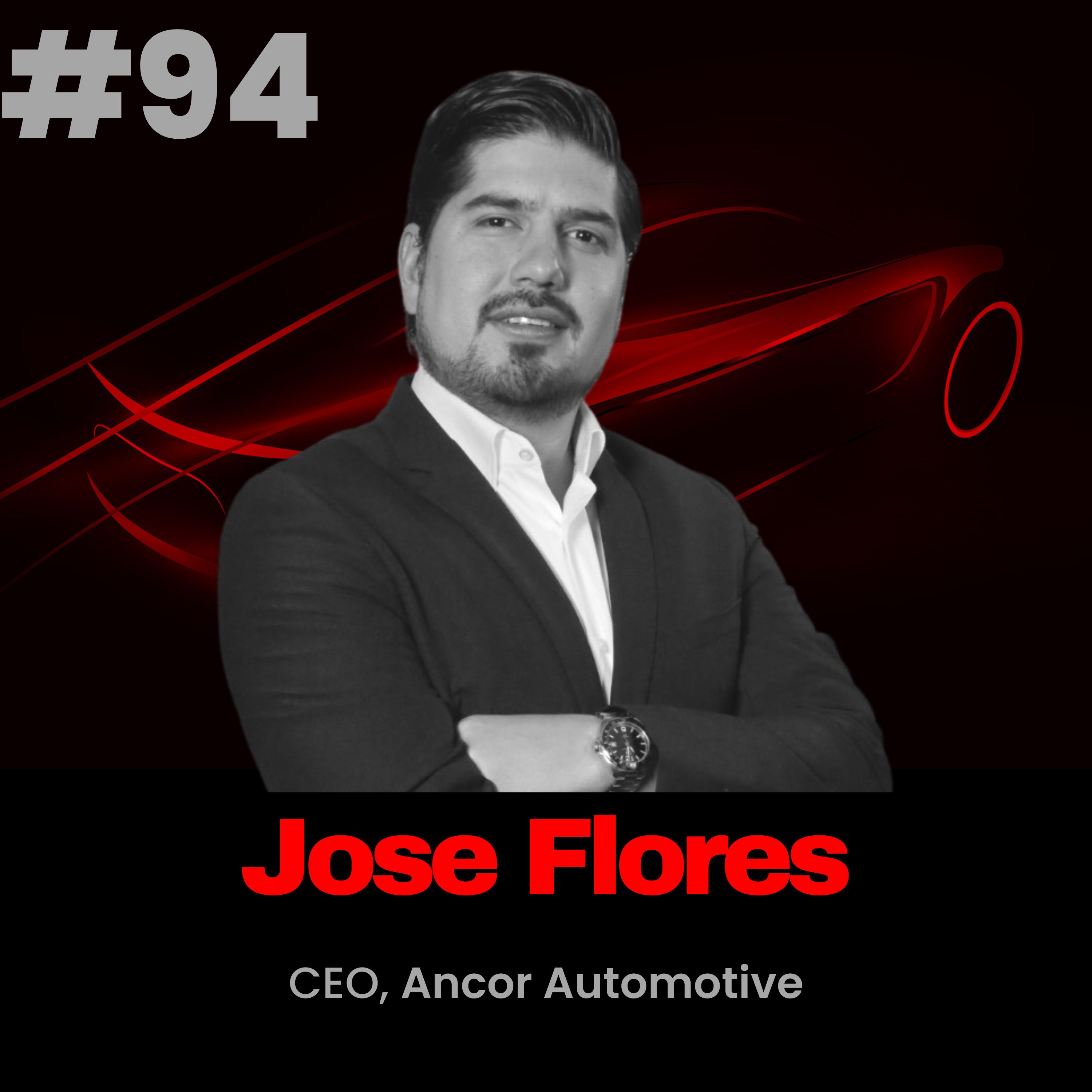
S4 Ep 94Rethinking Automotive Leadership with Millennial CEO Jose Flores
Sign up for The Automotive Leaders Letter Learn more about creating your own internal company podcast Watch the full video on YouTube - click hereJose Flores is the 34-year-old CEO of a traditional Tier 1 automotive supplier — but there’s nothing traditional about the way he runs the company. While many leaders claim to disrupt the status quo, Jose actually lives it. From his innovation hub to his embrace of failure, Jose shares the techniques that help him empower a multigenerational workforce.“With the old-timers,” says Jose, “you need to earn their trust and respect.” That requires leading by example and getting measurable results in the workplace. But Millenials and Gen Z are often looking for a different leadership mold. Jose says the younger generations need a sense of purpose and trust in their company’s values.At Ancor Automotive, innovation is a value. For Jose, the space to create and test new ideas is non-negotiable, and it’s this vision that led him to overhaul his company’s structure.Jan dives into Jose’s rapid ascension to automotive leadership and unpacks the secrets of his quiet confidence. How is this Millennial leader transforming a 40-year-old label supplier into an innovative tech company? What is he doing to change the culture and give everyone a voice — and how can other organizations replicate his success?Don’t miss this powerful episode of the Automotive Leaders Podcast. If companies want to attract young talent, they can no longer rely on outdated management models and metrics-driven KPIs. Jose’s work at Ancor Automotive sets a new standard for the future of automotive leadership and inspires new possibilities for corporate innovation.Themes discussed in this episode: What Millennials and Gen Z workers typically want from a companyBuilding trust with a multigenerational workforceWhat it really means to Be a Working CEOWhy automotive leaders should embrace failureThe Challenges of retaining young talentA new definition of KPIThe importance of investing in the culture budgetWhy modern companies require servant leadershipFeatured Guest: Jose FloresWhat he does: Jose is the CEO of Ancor Automotive and a proud disruptor in the auto industry. His talent for strategic planning and fostering innovation powered his rapid rise into executive roles. At Ancor, Jose is piloting the transformation of a 40-year-old labeling company into a leader in software solutions for mobility manufacturers.On leadership: “I'm a very technical, working CEO. I get into the nitty-gritty. If a machine breaks, I'm there watching it, trying to fix it by myself. If we're short-handed, I'll go there and help. I earn the respect of the people who have long tenure here by leading by example. I'm not just here in my fancy office, typing and having coffee. I'm there with you in the trenches, making it happen.”Episode HighlightsTimestamped inflection points from the show[0:58] Pardon the disruption: How does a 34-year-old become the CEO of a traditional Tier 1 supplier? Jose possesses the paradoxical ability to assimilate into a culture and then break the status quo.[5:42] Skyrocket in flight: Jose recounts his journey from consulting into automotive and his vision to take Ancor from a label-making company to an innovator of software solutions.[10:46] Millennials want more: Jan says there’s a reluctance in traditional automotive to give leadership roles to younger people — but Millenials and Gen Z are equally reluctant to accept an outdated corporate model.[13:41] The innovation hub: How does Jose encourage ideas from every generation on his team at Ancor? He creates a safe environment to think outside the box and fail forward to solve customer pain points.[19:32] Get on the same page: Jan presses for details about how Jose earns his employees’ trust. Jose explains what it means to truly be a “working CEO.”[22:24] ‘It takes ironclad nerves’: A lot can go wrong for a young CEO. Jose shares his mindset to be comfortable in his own skin and move the company forward. Jan recalls her interview with Daniel Pink and “the regret of inaction.”[24:37] Advice for auto industry leaders: Stand next to your team and encourage them to make decisions. Jose gives fellow leaders a roadmap.[26:14] 21 traits: Of Jan’s 21 traits of authentic leadership, Jose sees vision and resilience as most prevalent in his work at Ancor. He gives examples of how these traits apply.[30:31] A new KPI: At most companies, it’s a key performance indicator. Jose shares what it stands for at Ancor and explains why modern companies need servant leadership.[35:52] Live to work or work to live?: Jan and Jose discuss hiring trends and challenges in retaining young talent. Jose shares what he sees as the biggest need for Michigan companies.[40:38] Closing comments: The conversation turns to life outside of work, and Jose reveals his favorite restaurant in Detroit. Jan and Jose share their thoughts on investing in company culture. Top quotes[12:00] Jan: “Anybo

S4 Ep 93Why Leaders Need a Purpose, Not Just a Job Description
Sign up for The Automotive Leaders Letter Learn more about creating your own internal company podcast After her fascinating interview with HEVO founder Jeremy McCool, Jan reflects on the idea of declaring oneself a leader. Instead of fitting a mold, many successful young leaders are making their own statements of purpose, and the results are transforming the auto industry.Drawing on lessons from Jeremy and other past show guests — including Michael Chime (Gen Z Ceo) and Doug Conant (former CEO of The Campbell Soup Co.) Jan outlines a process for how leaders can remain true to themselves while creating a positive and productive company culture.“We can influence somebody's life,” Jan says. “We can make it better; we can make it a wonderful, meaningful, challenging, awesome experience and culture — or we can make it as miserable as sin.”On this episode of the Automotive Leaders Podcast, Jan challenges leaders to structure their company cultures around their value systems. Tune in for resources, inspiration, and practical questions to ask yourself as Jan speaks from her own experience in the industry. She shares a powerful story of how one of her clients stepped out with authenticity and vulnerability to radically shift her team’s culture. With the right mindset, any automotive leader can do the same. This is not about what it says on the company website or a set of motivational clichés. It’s time to get real and get personal. See how a simple statement can redefine your career.Themes discussed in this episode: Fitting an existing mold vs. establishing a new oneWhy Gen Z leaders often choose purpose over moneySeeing leadership as an influenceHow company values are born from the leader’s visionWinning in the workplace — productivity and positivity can coexistCreating a high-performance teamThe framework of a leadership statementQuestions every leader should askFeatured Expert: Jan Griffiths (Host) What she does: Jan is the co-founder and president of Gravitas Detroit, an organization dedicated to cultivating authentic leadership in the automotive industry by providing courses, workshops, speaking events, and more. She is also the host of The Automotive Leaders Podcast.On leadership: “What I see coming through in the leaders of tomorrow — the leaders who will take this industry forward — they truly understand the importance of purpose, of vision, of conviction.” Episode HighlightsTimestamped inflection points from the show[0:57] Break the mold: Jan draws inspiration from Jeremy McCool and explains why she feels encouraged by the rising generation of automotive leadership.[2:03] Not your grandfather’s kind of leader: Jan contrasts her early experiences in automotive with the mindsets she observes in many Gen Z leaders, including Michael Chime of Prepared.[4:23] Purpose over money: Many leaders are good at articulating what they do, but not why they do it. Jan challenges leaders to reflect on more than just the bottom line.[5:13] ‘Leadership is influence’: An excerpt from Jeremy’s interview connects lessons from his time in the military to business leadership. Leaders must often ask people to do things that are impractical or illogical. Jeremy explains how to influence others successfully.[9:43] Conviction over compliance: Jan shares what she sees as the defining quality of leaders of tomorrow and how company values are born from a leader’s vision.[12:43] Tough but tender: It’s time to get practical. Jan recalls her interview with Doug Conant as she lays out how leaders can achieve both positive results and employee engagement.[16:00] Think about your role: Building form lessons in Doug’s book, The Blueprint, Jan challenges listeners to make their own leadership statements. Jan shares the success story of one of her clients.[18:59] Advice for auto industry leaders: Leaders should ask themselves these questions to define their leadership statements. Top quotes[3:52] Jan: “The leaders we see coming up now are not interested in fitting a mold that somebody else has established. They're very comfortable in setting out who they are as leaders and being who they want to be. And they see leadership in a totally different way: They don't see it as a job. That's all about controlling and managing people. They don't see it that way.”[4:55] Jan: “We're all very good at articulating what we do and how we impact the bottom line. But how often do we sit back and think, what is our job as a leader?”[6:00] Jeremy: “What I learned how to do is influence people to do things that were radical. Going to war does not make sense. It really doesn't, when you think of it from a very objective point of view. Putting yourself in danger doesn't make any sense, either. So you have to learn how to influence people to do things that are really impractical.”[10:28] Jan: “You've heard me say many times, company values are far more than some numbers that you throw up on a chart and stick in a conference room or throw
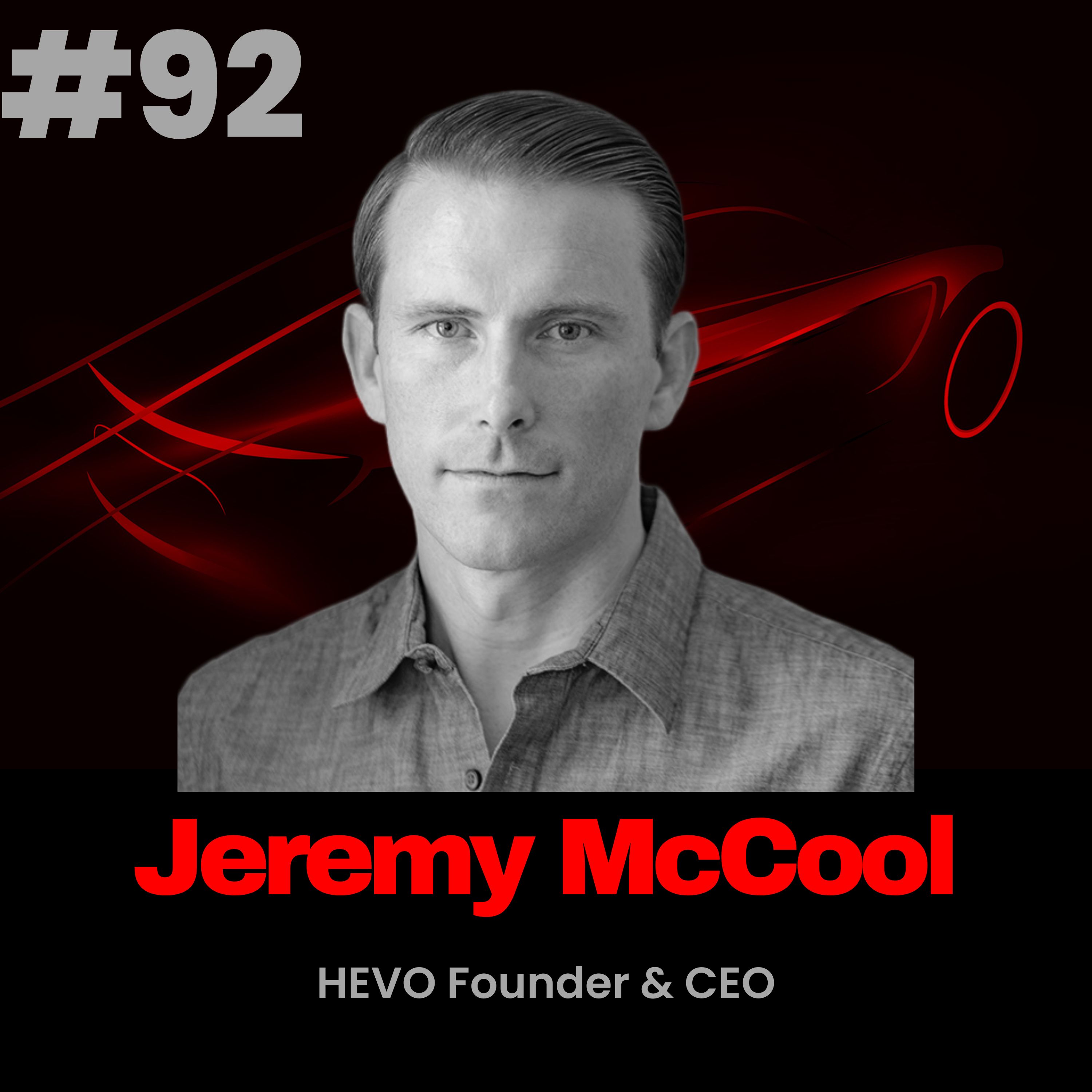
S4 Ep 92Meet the Man Behind the EV Wireless Charging Revolution: HEVO Founder & CEO Jeremy McCool
This episode is sponsored by Lockton, click here to learn more Watch the full video on YouTube - click hereWhat happens when you have an idea for a start-up that’s ten years ahead of its time? Well, it helps to have conviction.Jeremy McCool, HEVO Founder & CEO, knew auto companies would eventually want wireless charging, but it was at a time when they weren’t even really embracing electric vehicles. “I saw it as an opportunity that was different than anything else that anybody else was putting their energy into,” he says.During Jeremy’s time in the U.S. Army, he helped Middle Eastern countries rebuild their power grids. It was here that he saw the true importance of power. The more auto fleets he talked to, the more he could see a need emerging — wireless charging technology. He started to observe what his few potential competitors were working on.“I didn't have any resources. I was not an engineer. I didn't have money. I didn't have investors lining up, didn't have a team, didn't have anything,” he says. “I just thought, You know what, I see what these guys have. I think I can do better.” With that commitment, he’s making it happen today. HEVO is now partnering with one of the largest automakers. Tune in to this episode of the Automotive Leaders Podcast as Jan sits down with Jeremy to talk about the EV wireless charging revolution and what it will take for tech start-up leaders to break through the silos of traditional auto companies. Hear how Jeremy started his entrepreneurial journey as an 8-year-old (!) and developed his leadership qualities. Themes discussed on this episode: The importance of being able to influence a team as a leaderHow having conviction helps drive an idea forwardHow to get through to traditional auto companiesThe challenges of starting a tech company in an industry where you have no experienceHow efficiency and time management drive creativityFeatured Guest: Jeremy McCoolWhat he does: Jeremy is the Founder & CEO of HEVO, an electric vehicle wireless charging tech company. He is a U.S. Army veteran who spent 15 months in Baghdad following 9/11, and he applied the leadership skills that he learned in the military to his tech start-up, which has been at the forefront of wireless EV charging for more than a decade.On leadership: “If you can’t influence people to join, build something together, to get online with your vision, to move on to the next steps and go through a lot of different phases of challenges and unforeseen things that you would never know about until you got there, then you're never going to do it. Because team is everything. Without team you cannot do anything.” Episode HighlightsTimestamped inflection points from the show[4:05] Lessons from the military: After 9/11, Jeremy knew he wanted to join the military. He eventually worked his way up to U.S. Army Captain and spent 15 months in Baghdad. He shares what his service taught him about leadership.[5:27] You’re nothing without your team: Being able to influence others to build something with you is one of the single best traits of a leader, according to Jeremy. He shares why team is everything.[9:06] An 8-year-old business owner: Jeremy started his entrepreneurial journey early in life — very early. He was running a full-fledged business at 8-years-old, riding a paper route and providing lawn services to neighbors. He elaborates on where he got his entrepreneurial spirit.[15:46] A conviction for wireless charging: Conviction, according to Jan, is authentic leadership at its core. When you’ve got conviction, you can make your vision happen — no matter your skill set. Where did Jeremy get his conviction for HEVO?[29:01] Breaking through to the auto companies: When auto companies were still unsure of EVs, Jeremy was trying to sell them on the idea of wireless charging. He talks about what it was like going to Detroit for the first time and explaining his tech start-up to auto manufacturers. [33:36] Advice for auto industry leaders: Jeremy’s biggest tip for auto industry leaders is to coach the tech companies navigate silos. Traditional automotive companies can be difficult to navigate, so companies like HEVO need guidance to figure out the process.[39:25] ‘The first of many’: HEVO has a partnership with a major OEM right now, and Jeremy believes this is just the start. More automakers are talking about wireless charging, and he wants his tech company to lead the charge.[41:42] Why HEVO?: Jeremy shares how his tech company landed on the name HEVO. Brand identity and values played a large part.[44:03] 21 traits: Of Jan’s 21 traits of authentic leadership, Jeremy says his top two are vision and accountability. Without those, you don’t have a focus.[49:45]: Remarkable efficiency: Jeremy has a no-meetings-in-the-afternoon rule at HEVO. This allows more time for creativity and efficiency, something he prides himself on and helps him set his days up for success. Top quotes[04:44] Jeremy:

S4 Ep 91When Amazon Meets Automotive Leadership: Insights from Wendy Bauer
Watch the full video on YouTube - click here Everyone wants to know about Amazon. Its ultra-fast, customer-centric culture couldn’t be more different from traditional automotive, but in the age of software-defined vehicles, leveraging cloud technology is vital for OEMs.Wendy Bauer has a strong background in traditional automotive and currently serves as the general manager of Amazon Web Services (AWS) for automotive and manufacturing. AWS helps companies operate more efficiently and better understand their customers’ needs. Yet despite the limitless capabilities, there are often challenges in bringing enterprise cloud computing to the auto industry.“These two worlds are colliding in many ways,” says Wendy, “but they talk past each other — often. I see it every day.”To remove the obstacles, companies need a culture of innovation. It’s more than just cloud computing or performance diagnostics. Partnering with tech companies is a strategic decision that requires enterprise-level buy-in. From rethinking workflows to creating top-down changes in the corporate mindset, automotive leaders can unlock the potential of a full-scale digital transformation.Wendy joins the Automotive Leaders Podcast to share more about what’s possible with Amazon Web Services. Jan presses for details about how OEMs can accelerate forward to prioritize big data. These aren’t far-fetched, futuristic ideas. But for change to happen, companies need to embrace it.Themes discussed in this episode:● How Amazon Web Services can help the automotive industry● Why OEMs need big data to stay competitive in today’s market● The steps involved for an OEM to purchase cloud services● Why do so many companies struggle to implement enterprise-level solutions● The importance of failure in a culture of innovation● Listening skills as the key to open communication● The mindset required to maximize the potential of cloud technologyGuest: Wendy BauerWhat she does: Following a successful career in the auto industry, Wendy has worked with Amazon Web Services since 2019. She currently serves as the general manager for automotive and manufacturing, where she helps automotive companies leverage data and cloud-based technology to develop new products and work more efficiently. On leadership: “[Listening] can’t be understated … we will far sub-optimize what is possible with our organizations as leaders if we don't listen more than then we speak.”Episode HighlightsTimestamped inflection points from the show[0:58] Ask Alexa: Everyone knows about Amazon’s fast delivery speeds and home devices, but what are they doing in auto? Wendy describes the mission of Amazon Web Services for automotive. [3:48] Put simply: What does “leveraging cloud-based IT capabilities to maximize value” really mean? Wendy explains how Amazon collects data to help OEMs understand their customers’ needs. [6:03] Problem solving for optimization: Many automotive companies recognize the strategic decision of partnering with technology companies. Jan and Wendy discuss how OEMs purchase cloud services. [9:05] Speaking the same language: The tech and automotive worlds often talk past each other. What does it take to bridge the gap in communication? Wendy gives an example. [14:04] The speed of innovation: Wendy shares the difference between a one-way door and a two-way door — a mental model for implementing new ideas.[16:59] Advice for auto industry leaders: How can leaders create space to fail and a culture of innovation? Jan and Wendy discuss the importance of different perspectives. [22:22] Building the ecosystem: The conversation turns to the future implications of software-defined vehicles. How will they affect the business model of OEMs?[27:52] 21 traits: Of Jan’s 21 traits of authentic leadership, Wendy chooses trust and listening skills. She says that in complex business dealings, partnering is an art form. You can’t play the “blame game.” [36:17] Get in the boat: Jan asks about the fun stuff. Wendy brags about her team and shares her leadership secret for how they work so well together.[42:31] Closing comments: Wendy challenges automotive leaders to challenge their understanding of what is truly possible.Top quotes[12:34] Wendy: “When you start to talk about technology transformation, generally things that are very valuable at an enterprise level and don't fit squarely into a bucket … technology is one variable. There's culture, there's [the] business process, there's data flow — there are so many layers to this onion.” [17:02] Jan: “In a lot of Tier 1 [companies] out there, the CEO will talk about innovation, and then he'll look at his VP of engineering or technology and go, ‘You’ve got that on your agenda fo

S4 Ep 90The Future of Automotive Leadership: Gen Z and Millennial Views on Mary Buchzeiger
Full video on YouTube - Click hereWould you work for Mary Buchzeiger? Following her electrifying interview with the CEO of Lucerne International, Jan invites two automotive leaders of different generations to deconstruct Mary’s inspiring — and unconventional — company culture of trust and accountability.Seeking both Gen Z and Millennial perspectives on the future of automotive leadership, Jan speaks to two rising stars in the auto industry. Mary Mason is a Senior HR Business Partner at AirBoss, and Mark Hebert is a Vice President of Sales and Business Development at Woodbridge. While both of them look up to Mary Buchzeiger’s ideals, they find them difficult to live out in practice.“Building that structure of trust and accountability can definitely be a struggle,” Mary Mason says. From rising costs and supply chain issues to work-life balance and raising kids, automotive leaders face no shortage of challenges. How can leaders build the kind of culture that Mary Buchzeigher describes?On this episode of the Automotive Leaders Podcast, Jan and her guests get real about why so many companies struggle with fostering trust and empowering their employees. Yet there is hope for the future. Gen Z especially has little tolerance for outdated systems of management, and they’re making moves to do something about it. Mary Buchzeiger’s model of resilience shows that leaders don’t have to be aggressive in order to be strong.Themes discussed on this episode: Self-awareness in leadership and the ability to pivotHow to bring levity while keeping a meeting on taskGender equity and changing expectations in the workforcePower dynamics that hinder a culture of trustAccountability systems that lead to resultsFeatured Guest: Mary MasonWhat she does: Mary is a Senior HR Business Partner at AirBoss supporting both plant and corporate employees. She worked her way up since joining the company as an intern four years ago.On leadership: “It’s really important to have [a trusting] relationship and rapport with your employees, to have them give you honest feedback and to get criticism. You don't want sycophants on the team, right? You can't just agree to everything.”Featured Guest: Mark HebertWhat he does: Mark is the Vice President of Sales and Business Development for North and South America at Woodbridge. As a provider of global material technologies, Woodbridge serves a diverse customer base in automotive, healthcare, packaging and other industries. On leadership: “From a leadership standpoint, as long as I have clear goals and objectives — I've been told what the expectation is and I'm given the freedom to try to meet those challenges however I want to — I will be happy with that. I don't need things to be perfect.”Episode HighlightsTimestamped inflection points from the show[3:08] What stood out to you?: Mary and Mark share their favorite moments of the Mary Buchzeiger interview. Many of her ideals are challenging to emulate.[7:50] Throwing squirrels: Jan and her guests react to Mary Buchzeiger’s unusual way of keeping a meeting on task.[11:01] Meetings are an art form: Mark explains the importance of both having some levity and measurable goals in a meeting agenda.[15:08] Family matters: The conversation turns to Mary Buchzeiger’s supportive marriage. It’s personal for Mark as he shares about the sacrifice his wife makes for their family.[18:30] Gender equity: Jan discusses the stigma around choosing family over work, and Mark predicts a big change that companies will need to make to keep Gen Z leaders on their teams.[22:44] 21 Traits: Mary names her top three from Jan’s 21 Traits of Authentic Leadership and shares why leaders need to welcome honest feedback. As for Mark, everything comes down to just one leadership trait.[27:42] Advice for auto industry leaders: Bosses have more control over their employees than they often realize. Jan, Mary and Mark discuss the implications of this power imbalance.[31:38] The F-bomb: Feelings: With so much emphasis on goals and metrics, what about the emotional component of leadership? Jan and Mary share their thoughts.[33:14] Closing comments: Would you work for Mary Buchzeiger? Mary and Mark submit their final answers — although Mark’s comes with an important caveat.Top quotes[19:50] Jan: “There's this thing called life, and there are many facets to it. You can't be all work.”[24:06] Jan: “You talk to any leader and they'll say, ‘Oh, I empower my team.’ And then next thing you know, they're the most ridiculous micromanager on the planet … You’ve got to give people things that really throw them in the deep end and let them sink or swim.”[27:53] Jan: “When you control the paycheck, you control [your employees’] lives. You control their ability to pay their mortgage, to put food on the table, and to live the life they want to live. … It's something that you've got to be very careful with, and it's something that you have to respect.”[30:09] Mary: “[Pushing back] helps better the bus

S4 Ep 89Business Operating Systems for the Auto Industry with Preston True
Learn more about creating your own internal company podcast Sign up for The Automotive Leaders Letter Watch the full video on YouTube - click hereFollowing her eye-opening interview with Mary Buchzeiger, CEO of Lucerne International, Jan wanted to know about how companies can achieve their long-term visions with business operating systems. To understand the concept, Jan speaks with Preston True, the coach who helped Mary establish a goals-driven culture at Lucerne.Preston says that, fundamentally, there’s no difference between a tiny startup and a multinational corporation. Businesses of any size can develop successful operating systems built on the same simple frameworks.A lot of leaders think that their company is too unique or different for Preston’s ideas to work for them, but he’s never found that to be true. Speaking from personal experience with both business success and the dark moments of entrepreneurship, Preston makes the case that a few guiding principles can help any organization radically transform its goal-setting process.“There’s no magic in this whole process,” Preston says. “It’s really just reverse engineering. I want to ask the question — what do I need to do today that’s going to give me the result that I want 10 years out?”Too often the automotive industry relies on lagging indicators to measure progress toward goals. Preston explains how better accountability and a “dumbed-down” vision can create a more effective growth plan.Join this special episode of the Automotive Leaders Podcast as Jan and Preston get real about why so many organizations overcomplicate their strategies and discuss how crystal-clear expectations and frequent course corrections can help any business succeed.Themes discussed on this episode: The functional components of organizing a businessThe frameworks that make a business operating systemWhy people need to have a cultural fit and a productivity fitThe process of reverse engineering day-to-day prioritiesWhy many automotive companies fail in their strategic initiativesHow leadership can effectively hold employees accountableThe importance of empathy and challenge in giving feedbackFeatured Guest: Preston TrueWhat he does: Preston is an entrepreneurial leadership coach and business operating systems guru. His consultancy, Get TPA Fit, helps companies go “from stuck to unstoppable” with consistent, measurable growth. He’s also a founding member of Pinnacle Business Guides.On leadership: “[Resiliency] is not just, I can weather each quarter or I have the stamina to do great work over long periods of time. It's actually in that moment when you and I may have a disagreement, in which case, I can not fall victim to all the stories that are manufactured in my mind. [...] You're offering me feedback. It might be a little tough [but] what a great opportunity and a gift.” Episode HighlightsTimestamped inflection points from the show[0:57] Diving deeper: This is a special episode — Jan explains how her interview with Mary Buchzeiger of Lucerne International struck a chord about business operating systems.[2:38] ‘It’s not magic’: Preston explains how organizing a business starts with some fundamental functional components.[5:06] Components defined: Jan wants details, and Preston names the five frameworks that create a strong business operating system.[7:07] From excuse to opportunity: Preston calls out the number one reason companies give to justify their underperformance and says organizations need to “dumb things down.”[10:07] The right people in the right seats: Where does Preston begin when he consults with a business? He breaks down how to think about forming teams and the operational pipeline. Ignoring this principle is enormously costly.[14:30] Big, hairy, audacious goals: Jan expresses the dangers of leaders staying in the weeds, and Preston explains how reverse engineering a goal helps set priorities.[17:56] Top of the mind: Jan observes that many automotive companies struggle with keeping to their strategic initiatives. Preston suggests how to keep goals front and center.[20:28] See it in action: Does a business operating system really work? Preston gives examples of past and present clients who have found success with these simple tactics.[23:26] ‘Peer pressure works’: Goal-setting is great in theory, but how do you hold people accountable to prioritize the right behaviors? Preston explains how and why small course corrections keep everyone on track.[27:38] Advice for auto industry leaders: Preston invites anyone in leadership to see feedback as an opportunity and a gift. Empathy and a willingness to challenge others must be present.Top quotes[3:44] Preston: “A three-person company, when it comes to organizing itself isn't, isn't really that much different than a 30,000-person company. There are different flavors of the issues and different flavors of the opportunity, but fundamentally, it boils down to a few core components that you want to strength

S4 Ep 88Future-Focused Leadership with Mary Buchzeiger
Watch the full video on YouTube - Click here Where most people see a roadblock, Mary Buchzeiger sees an opportunity. Her infectious optimism and willingness to step into uncertain situations have propelled her career in automotive leadership. Jan welcomes the longtime CEO of Lucerne International for a frank and intimate discussion about navigating the turbulent auto industry.From Lucerne’s recent decision to onshore manufacturing to the inner workings of its entrepreneurial operating system, Mary shares how her company has kept a focus on the future while adjusting to challenging situations in the present. Effective ten-year plans may seem like a pipe dream to some automotive suppliers, but Mary demonstrates how a positive team culture with high accountability can yield results in any business climate. “We've got crisis after crisis that we deal with just like any other business,” Mary says. She says it’s not always easy to set aside time to dream, plan and work on the business. Yet without making time for strategic projects, a business is doomed to stagnate and fail.On this insightful episode of the Automotive Leaders Podcast, Jan draws out the details of Mary’s most daunting professional challenges and her unwavering commitment to her family. Themes discussed on this episode: Why onshoring manufacturing is growing in popularityThe importance of an entrepreneurial operating systemHow to set goals as a company — and stick to themBest practices for leading people in difficult timesTips for successfully managing career and familyFeatured Guest: Mary BuchzeigerWhat she does: Mary is the CEO of Lucerne International, a Michigan-based global automotive supplier specializing in castings, forgings and stampings. She sits on the Automotive Hall of Fame’s board of directors, and her numerous accolades include her recognition in Automotive News’ 100 Leading Women in the North American Automotive Industry.On leadership: “My team and I spend a lot of time planning and looking at the future [...] Our business has an operating system. We use this framework to really help build our vision and make sure that we're all rowing in the same direction in the same boat. We all know exactly where we're going.”Episode HighlightsTimestamped inflection points from the show[2:04] Gray area: Mary admits that she struggled with the black-and-white world of mechanical engineering early in her career. This dissatisfaction propelled her transition into company leadership.[4:01] Localizing for North America: Lucerne is onshoring manufacturing for the first time in 20 years while still embracing the global automotive industry. Jan and Mary discuss the industry’s progression and why onshoring is gaining popularity.[7:43] ‘It takes guts to stop’: How does a company break from routine and pivot its strategy? Mary shares her experience with creating an entrepreneurial operating system and the inspiration she’s drawn from Gino Wickman’s “Traction.”[11:02] Let’s get real: Jan asks how in the world a leader is supposed to protect time for goal setting when there are so many other issues to discuss in a quarterly meeting. Mary shares her accountability tips and says sticking to “rocks” must be non-negotiable.[16:34] Squirrel alert!: Jan emphasizes the importance of modeling the behavior of planning for the future, and Mary offers a creative method to stay on track.[19:33] ‘Running the ship together’: Trust, openness and surrounding yourself with the right people — Jan presses Mary to share how she achieves that at Lucerne.[22:36] Managing people: Mary says the biggest challenge facing leaders in the automotive industry is “leading through change.” Jan and Mary discuss best practices for a remote workforce.[28:01] 21 traits: Which of the 21 traits of authentic leadership resonates the most with Mary? Resilience — and she has several powerful stories to explain why.[31:06] Keep the glass half full: Jan and Mary explore how to motivate people in scary situations. Mary reveals her secret to keeping the team together.[32:28] On the homefront: Mary’s grateful for her husband’s support. She opens up about when she realized how hard it was to be a stay-at-home parent and shares how she and her husband keep communication lines open.[39:33] Advice for auto industry leaders: Mary gets candid about managing a career and family, and offers advice that applies to everyone.[46:03] Closing comments: Mary encourages listeners to seek opportunities even in a crisis.Top quotes[10:49] “One of the most important things that you can do is surround yourself with people that will both challenge you as well as believe in you, and believe in the vision that you have set out and work together to achieve that vision.” [20:43] “Culture is everything for us. We hire, fire and even pick customers and suppliers by our core values. And we stick to those core values. We all live by them.”[21:26] “If I'm the smartest person in the room, I'm doing somet

S4 Ep 87The Life and Leadership of Janet Yellen with the WSJ’s Jon Hilsenrath
Watch the full episode on YouTube - click hereWhat do the life and career of Janet Yellen have to do with automotive leaders? Jan invites the acclaimed Wall Street Journal writer Jon Hilsenrath — author of the new book, “Yellen: The Trailblazing Economist Who Navigated an Era of Upheaval” — to the show to discuss Yellen’s role at the center of the largest American economic crises of the past 30 years. “When she became treasury secretary,” says Jon, “she had done something that no person in American history had ever done. She became the first human in American history to be the treasury secretary, the Fed chair, and the chair of the Council of Economic Advisers — and, no less, the first woman to hold those roles.”Jan and Jon dive into Yellen’s remarkable leadership and humanized approach to economic policy. Yellen’s success in traditionally slow-moving, male-dominated institutions has done more than break a glass ceiling. Her clarity of purpose, humility and gravitas have steered her through some of the most turbulent times in American economic history.The historical backdrop of Yellen’s career sheds light on many of the present challenges in the automotive industry. Jan highlights lessons from this intimate look at one of the most powerful figures in American politics.From lessons in building trust to the importance of feeling comfortable in one’s skin, Yellen’s life story has universal appeal. Stay until the end to hear how Jan once danced with the treasury secretary on stage at a conference. What else would you expect?Themes discussed in this episode: Finding purpose through humanizing your workListening well and embracing cognitive diversityHow leaders can benefit from skepticsThe importance of admitting mistakesBuilding trust in a politically divided nationThe complexities of democratic market-driven capitalismStories of Janet Yellen’s gravitas in difficult situationsFeatured Guest: Jon HilsenrathWhat he does: Jon Hilsenrath is a senior contributor to The Wall Street Journal, a Pulitzer Prize finalist and one of America’s most influential financial writers. Jon’s most recent work is his critically acclaimed biography “Yellen: The Trailblazing Economist Who Navigated an Era of Upheaval.” On leadership: “People around a leader can detect if that leader feels comfortable with his or her place in an organization and is comfortable enough to accept challenges from other people, to accept contradictory information, to accept dissonance when it occurs — because that's inevitable.”Episode HighlightsTimestamped inflection points from the show[0:58] Spotlight on Yellen: Jan explains her admiration for Janet Yellen and introduces this episode’s guest, award-winning financial journalist Jon Hillsenrath and author of “Yellen: The Trailblazing Economist Who Navigated an Era of Upheaval.”[2:36] Economics meets auto: Jon shares his inspiration for writing “Yellen.” The treasury secretary and her husband George Akerlof have been at the center of American economics for the past 60 years. This historical backdrop helps us understand the modern auto industry.[6:20] Purpose in her work: Jon explains how Janet Yellen thrived in inertial, male-dominated institutions and her motivation to humanize economics.[10:13] Market for lemons: Yellen’s husband George Akerlof won a Nobel Prize for a research paper about emotions and information asymmetry in the 1960s used car market. Jon says these humanizing insights are a calling card of Akerlof’s career.[12:17] 21 Traits: Of Jan’s 21 traits of authentic leadership, Jon says purpose, gravitas and trust best describe Janet Yellen’s leadership style. He describes how these traits have played out in her career.[16:50] One-on-one: How did Yellen reach consensus decisions as the Fed chair? Jon shares how she leads by listening and embracing cognitive diversity.[21:12] Thoughtful skeptics: Jon explains one of his biggest lessons from writing the book and why leaders should listen to skeptics: “Sometimes, they’re onto something.”[24:14] Ingredients of gravitas: How does Yellen exhibit authentic leadership? Jan and Jon discuss the treasury secretary’s unconventional formula for success.[29:35] ‘I was wrong’: Jan and Jon are amazed by Yellen’s willingness to acknowledge her mistakes. Jon shares a story about one of her greatest blunders that she later laughed at.[35:30] Silver style: The conversation turns to Washington’s superficial criticism of Janet Yellen’s wardrobe. Jan feels an affinity with Yellen’s signature gray-haired look.[37:47] Crisis of trust: How involved should the government be in a free market? Jon explains why democratic market-driven capitalism relies on public trust in government institutions — and how Yellen navigates her duties to a country skeptical of its leadership.[46:36] The fun side of Janet Yellen: Jan goes behind the scenes about when she met Janet Yellen and convinced her

S4 Ep 86Actionable Advice for Mobility Industry Leaders: Insights From the Jessica Robinson Interview with Katelyn Davis
Watch the full video on YouTube 👈Katelyn Davis knows how to create a personal brand. She’s a marketing expert with diverse experiences in mobility, making her the perfect person to help Jan deconstruct her recent interview with Assembly Ventures’s co-founder Jessica Robinson. New mobility — especially for EVs and autonomous vehicles — is a fast-moving, rapidly changing industry driven by startups. Katelyn says the internal company dynamics are different from what she's experienced in traditional automotive, and leaders are the ones who can empower others and create a positive company culture.“It's now about who has the ability to…inspire people,” Katelyn says. “Who can make the culture be better? Who's cracking jokes here or there? It's really fun to see how you can have different leaders come out of your organization.”Jan and Katelyn discuss the importance of giving professional development opportunities to everyone on a team. Effective mobility leadership requires the right mindset to maintain a stable team culture in a constantly evolving work environment.Reflecting on Jessica Robinson’s advice that leaders should sit with their fears rather than quickly push through them, Jan and Katelyn draw practical takeaways. Leaders should welcome honest discussions and constructive feedback, and they should be quick to say no rather than be “too nice.” It’s also important for leaders to embrace all professional backgrounds and recognize the validity of non-linear journeys into a particular workspace.Join Jan and Katelyn to find out what dancing, bingo, and tier-one suppliers have in common. Reinventing company culture can happen at the team level, even if no other group in the corporation operates the same way.Themes discussed on this episode: How new mobility startups differ from traditional automotiveThe importance of setting a positive tone in a company cultureHaving the right mindset for an ever-changing work environmentWhat it means for leaders to sit with their fearsWhy honest feedback and disagreement are vital to a team’s successAdvice for mobility industry leadersFeatured Guest: Katelyn DavisWhat she does: Katelyn is the communications lead at Cavnue and the co-founder of Women Driven Mobility. She is also a board member of the Automotive Public Relations Council (APRC) and a member of Inforum's AutomotiveNEXT.On leadership: “You don't necessarily need to be the person with 35 years of experience, who's managed a hundred people over the course of their career…It's now about who has the ability to lead people, inspire people…who can make the culture be better.”Episode HighlightsTimestamped inflection points from the show[0:58] Welcome back: Jan introduces Katelyn, a former guest and ambassador for millennials and mobility. Katelyn is recognized for sticking to her value system and her personal brand. [2:41] Build who you are: From her first interview with Jan, Katelyn recalls entering the workforce during a recession and recaps her professional journey from working for traditional automotive companies to late-stage mobility startups to her current role with a company building road infrastructure for autonomous vehicles.[7:08] Mobility moves faster: In Jessica Robinson’s interview, Jessica shared that new mobility may not have the traditional customer-supplier relationship we’re used to in automotive. Katelyn agrees. New mobility is aggressive, fast-moving and largely dependent on startup funding.[9:15] Set the tone: Jan and Katelyn discuss how the culture of the mobility industry has impacted internal company operation dynamics. Emerging leaders are the ones who can inspire others in the organization and set a positive tone in the company culture.[13:11] Share the mic: More and more, companies are offering professional development opportunities. It’s important for leaders to uplift their staff and value their opinions. [14:55] 21 traits: Jessica Robinson said that of the 21 traits of authentic leadership, mindset resonated with her the most. Katelyn agrees that the right mindset can help leaders thrive in a fast-changing company environment.[16:07] Embrace your fear: Acknowledging fear leads to greater self-awareness. Katelyn compares the process to leaning into a stretch in yoga.[19:54] Just say no: Jan’s mantra for 2023 will be Jessica’s quote: “A fast no is better than death by a thousand meetings.” Many mobility startups are still in a honeymoon phase during which everyone is too nice to each other. Honest discussions help good work get done quickly.[22:52] Advice for auto industry leaders: Many startups focus their messaging on consumers, but their primary business will be with the supplier network, not end users. Companies need to consider their audience.[25:39] Roundabout way: Jessica’s pathway into the mobility industry resonated with Katelyn. Hiring managers need to recognize the validity of non-linear journeys to an industry.[30:12] Disrupting auto: Jan and Katelyn share uniq

S4 Ep 85Make 2023 Your Year With 3 Automotive Leadership Tips
Learn more about creating your own internal company podcast Sign up for The Automotive Leaders Letter Watch the full episode on YouTube - Click hereIt’s the end of 2022, and you know what that means — it’s goal-setting season. Many of us automotive leaders find our minds wandering this time of year, envisioning all the success that will come our way in 2023 and setting goals to get us there. But the truth is, an estimated 91 percent of people fail to achieve their New Year's resolutions. The biggest reason why? They lack an emotional connection to their goal. Knowing why you want to do something is a huge motivating factor in getting it done.The same applies when leading a team. We in the automotive industry are great at putting together the metrics and the numbers. But achieving success as a leader is also about articulating the why.If you really want to make a change within your company culture and achieve your goals in 2023, simply declaring a goal is not enough. You’ve got to inspire, you’ve got to show why a goal is so important and you’ve also got to break it all down with your team.In this special episode of the Automotive Leaders podcast, you’ll learn three things you can do differently in 2023 to ensure success.Themes discussed in this episode: What’s a temporal landmark and why they’re the perfect time to set new business objectivesWhy we need to look to the past to achieve success in the futureHow to inspire people around your goals and get where you want to goWhy culture and processes are integral to getting things done How language makes a difference when holding your team accountable Featured Expert: Jan Griffiths (Host)What she does: Jan is the co-founder and president of Gravitas Detroit, an organization dedicated to cultivating authentic leadership in the automotive industry by providing courses, workshops, speaking events, and more. She is also the host of The Automotive Leaders PodcastOn leadership: “Leadership is [about] inspiring a team around more than the numbers. To be truly successful and reach the goal of a high-performance team, we have to inspire not only our team, but the people around us.” Episode HighlightsTimestamped inflection points from the show[0:57] The power of the restart: 2023 is about to begin, and you’re probably thinking about how you can be a better leader for your team next year. Repeating the same strategies year after year won’t generate success. How are you going to do things differently? [3:55] Tip 1: Look in the rearview mirror: Why look back when we want to move forward? Reflecting on your team’s 2022 mistakes and accomplishments will go a long way toward ensuring future success — and it keeps your team engaged in the process.[6:56] Tip 2: Ask the question, Where am I going?: Metrics and numbers alone won’t help you become a better leader. You need clarity and an emotional connection for your team to understand and execute your goals successfully.[12:48] Tip 3: Articulate how you are going to get there: In the automotive industry, we’ve got the metrics for everything. But we need to work harder on the ‘how’ — how we’re going to improve our culture and boost efficiency to achieve our goals.[17:05] Rethink accountability: We need to stop associating accountability with blame and instead with following up on our commitments. Accountability language matters. Be clear, be specific, and don’t accept wishy-washy language. [20:00] A new realm of possibility: Make 2023 the year you step into your authentic leadership power. Lead from the heart and inspire your team. Most importantly, believe in yourself. Watch the full episode on YouTube - Click hereTop quotes[4:58] “We need to recognize accomplishments all the time. Whenever there's a win, take a moment to recognize that success. It fuels not only you as the leader, but it fuels the team and the team members to go take on the next success.”[10:35] “You can't stand on January 1 … and say, we're going to launch all of our programs on time and in budget. Great. Love that. But how? How are you going to do that? What exactly are you going to change in your organization and the way that you do business to make that happen? Just declaring a goal doesn't make it happen. You’ve got to inspire people around that goal, [explain] why that's so important, but then start to break it down. ”[13:03] “We're great in automotive at talking about the metrics and the numbers. We're really good at that … But it's the how part that needs more attention.”[20:10] “I know that you can step up into your leadership strength. Be the authentic leader you know you can be and lead from the heart, inspire your team, and take them into an entirely new realm of performance and possibility.”
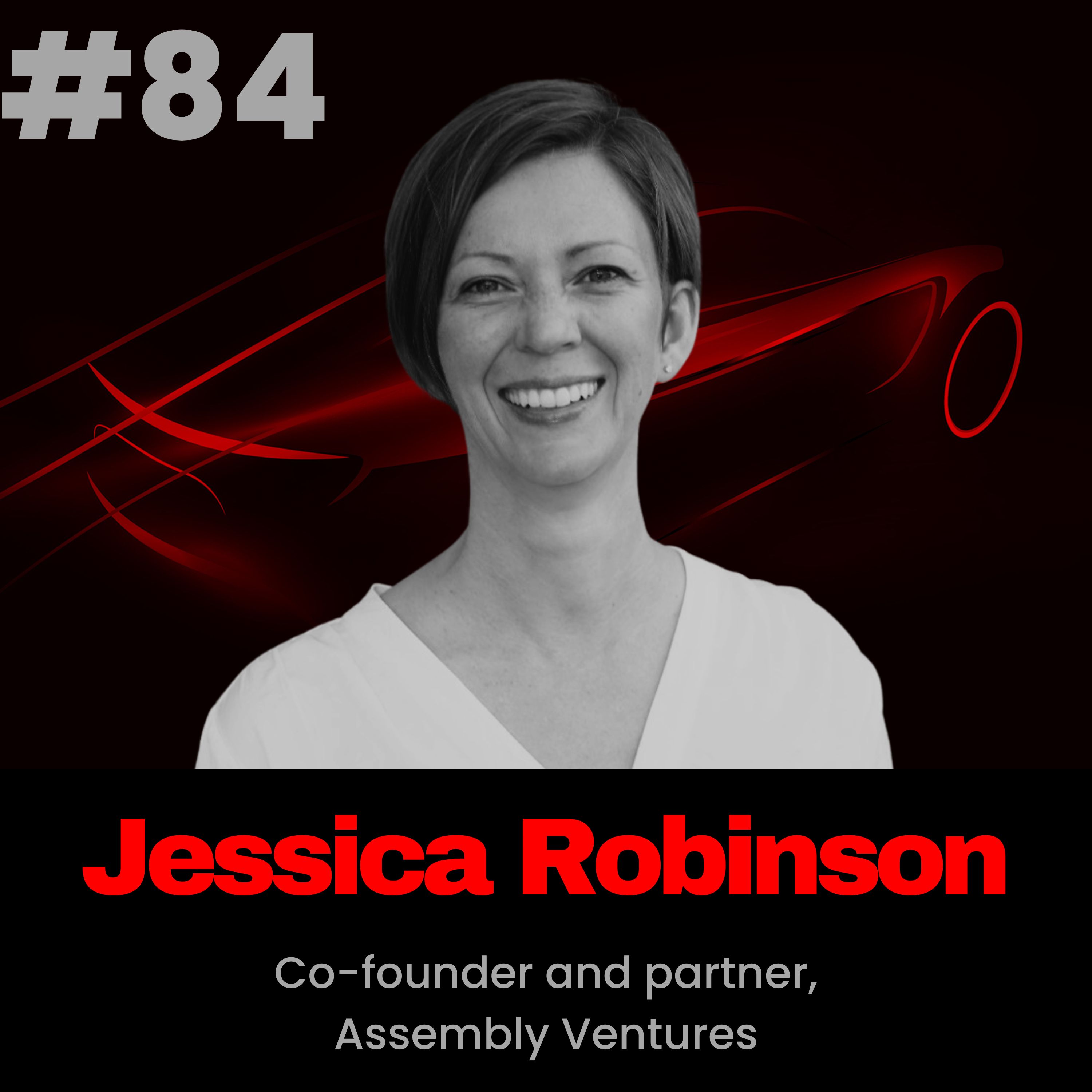
S4 Ep 84Meet Jessica Robinson, committed to the future of mobility
This episode is sponsored by Lockton, click here to learn more Watch the full video on YouTube, click hereJessica Robinson is not your average venture capitalist. She started her career, not in finance or investing, but as a professional tea taster.In fact, Jessica’s entire career path can be characterized by unconventional pivots. After that tea-tasting gig, she fell in love with the mobility industry and spent time working for tech startups like Zipcar and Techstars before moving on to one of the legacy automotive OEMs: the Ford Motor Company.That’s when she realized where her true passion was in business, specifically the business of changing the way the world moves and improving the mobility industry while she’s at it. That’s why Jessica joined Chris Thomas to co-found, Assembly Ventures, to help uplift the companies moving the industry forward.When it comes to taking big career leaps like hers, Jessica says it’s all about embracing the fear of failure — and using it to your advantage. “In embracing this idea of failure, what you're really looking to do is find better ways,” Jessica says. “In startup life, we call it finding product market fit. It's a little dry and clinical, but the idea here is, you’re really looking for something that makes your customers’ eyes light up.”Themes discussed in this episode: Is ‘mobility’ more accurate than ‘automotive’ to describe our industry?How the addition of EVs is changing the culture of traditional OEMsHow to tackle big career shifts and shake-upsHow to lead cultural changes within your automotive company Featured Guest: Jessica RobinsonWhat she does: Jessica is a co-founder and partner at Assembly Ventures, a venture capital fund helping move and transform the world of mobility in the West. She also co-founded the Detroit Mobility Lab, an organization dedicated to helping create a better future for the mobility industry through educational and networking opportunities. With over a decade in the mobility industry, Jessica is a rising global leader and sought-after speaker in her field.On leadership: “Mindset, I really do believe, is linked to the change that we're talking about in this industry, in the sense that we have the power to choose what we want our companies to be, what the opportunities are that we're going to pursue. And that starts with the mindset of who do we want to be, and everything else follows from there.”Episode HighlightsTimestamped inflection points from the show[1:36] From tea taster to venture capitalist: How did one of Jessica Robinson’s first jobs as a professional tea taster kick-start her journey toward venture capitalist and automotive thought leader?[4:02] An industry rebrand: Does the word “automotive” still accurately sum up our industry today? Jessica explains why the term “mobility” is becoming the norm and how it can take us into the future.[7:10] Climbing the ladder: From her first auto industry job at Zipcar to a podcast in the sky with Richard Branson for Virgin Media, here’s how Jessica climbed the mobility ladder to a position at Ford’s Smart Mobility project and beyond.[11:01] The big split: Ford recently announced that its electric vehicle business would be a venture separate from its legacy company. That split presents new opportunities as well as new challenges for workplace leadership and culture.[13:39] The next chapter: How can the auto supply chain industry learn how to work in tandem with Silicon Valley startups to bring in new technology? Companies are still figuring it out, Jessica explains.[18:17] A new beginning: Though Jessica enjoyed working for a big OEM like Ford, she soon found she was an entrepreneur at heart. That’s why she started the Detroit Mobility Lab with the goal of bettering the industry.[23:40] Not your average venture capitalist: Jessica made multiple big career shake-ups — from working at startups to OEMs to starting a venture capital fund. She offers her best pieces of advice for those looking for the confidence to make similar career leaps.[28:38] Don’t deny the fear: One of the biggest barriers to making a bold career shift and achieving success is overcoming the fear of failure. Jessica and Jan discuss how aspiring automotive leaders can embrace that fear and use it to their advantage.[30:02] Advice for auto industry leaders: Many leaders have been conditioned to believe that controlling their team is the most important thing. But Jessica says listening to team members and customer needs is the key to culture change. [34:46] Changing the way the world moves: To Jessica, the mobility industry is about a lot more than making cars. She explains why changing the culture of the industry is so important to her. [36:49] 21 traits: For Jessica, mindset is the most important of Jan’s 21 traits of authentic leadership when it comes to creating change in the industry.[41:15] Now is the time: It’s almost that time again — strategy planning meetings for the next year. How can t

S4 Ep 83Deconstructing the Katherine Knight "work from home forever!" episode with Naseem Malik
Watch the full video on YouTube - click hereAs a managing partner at MRA Global Sourcing and a thought leader in supply chain staff sourcing, Naseem Malik has his finger on the pulse of the automotive supply chain industry — and lots of other industries. With all the other major challenges facing supply chains in the pandemic era, none has caused as big of a culture shift as the move to remote work. According to Naseem, top pre-pandemic questions from talent shifted from What’s the comp? Who will I be working for? to What's the work arrangement? Is this hybrid? Companies that demanded full-time on-site work were not popular with talented candidates.“And those companies that continue to say, no, we don't care, this is what we want — they struggled,” said Naseem. “They struggled to find people. Not just [find] people, but they're struggling to retain their people.”In order to keep up with the rapidly changing world of work, automotive supply chain companies need to change their culture and allow more flexibility. A cookie-cutter approach won’t cut it anymore. They might look to previous podcast guest Katherine Knight, Mitsubishi’s chief legal officer and chief HR officer, who led the charge to “work from home forever.” In this episode of the Automotive Leaders podcast, Naseem joins Jan to deconstruct that conversation with Katherine, and discuss major changes in work culture across multiple industries including the automotive industry.Themes discussed on this episode: Cross-industry trends in remote versus on-site work modelsWhat remote work means for new Gen Z employeesWhy traditional performance reviews are being scrapped across industriesHow being unapologetically yourself makes you a better leaderFeatured Guest: Naseem MalikWhat he does: Naseem is a managing partner at MRA Global Sourcing and a true thought leader when it comes to sourcing executive supply chain staff. Get Naseem’s informative newsletter.On leadership: “Just be your raw self. Find your voice and don't be afraid to share it. We talked about this a lot — you are your own brand. You've got to build your own brand. So if you are not honest with yourself and the way you act, feel, everything, it'll be reflected. It'll stunt your growth, it will stunt your development. And it may create an impression about you which is not reality.”Episode HighlightsTimestamped inflection points from the show[2:36] Meet the guest: Naseem and Jan discuss how they met, as well as Naseem’s unique cross-industry expertise.[5:07] At the forefront: Katherine Knight’s statement, “work from home forever,” was a bold one. Mitsubishi is leading the charge for remote work in the automotive industry. But operationalizing it can be tricky. [8:00] Flipping the switch: How do companies across sectors decide whether to mandate in-office work or go remote? Naseem gives a sampling of trends across industries.[11:38] The Gen Z challenge: For many younger workers, remote work is attractive. But some Gen Zers are beginning to recognize the benefits of being an office and learning from more experienced colleagues. [13:40] Cookie cutter won’t cut it: Naseem discusses the importance of work flexibility, and how it is beginning to play a larger role in supply chain industry hiring and retention. [19:35] The hybrid work choice paradox: Will GM’s decision to mandate three days of on-site work per week hurt or help them? [23:12] Define your own culture: The auto supply chain industry often feels pressure to follow tech companies’ leads. How is that trend playing out when it comes to on- versus off-site work?[26:54] The highlights: Naseem talks about what stood out about Jan’s interview with Katherine Knight, including her unique approach to performance reviews. [31:58] Toward a new performance review: Naseem and Jan discuss what makes Katherine’s view on performance reviews unique, as well as performance review trends across industries.[35:41] A leader for the future: As a lawyer, Katherine is the last person one might expect to have progressive views on work from home. But it’s part of what makes her an effective leader in her industry. [42:40] Break out of the mold: Jan and Naseem discuss breaking out of the corporate mold and being unapologetically yourself. [45:21] Advice for auto industry leaders: To become a strong leader, embrace your authentic self by building your personal brand around who you truly are.Top quotes[8:39] Naseem: “There's some leaders that were dead set against ever hiring anybody remote pre-pandemic. And these are leaders that were 30, 35 years into their careers, that would never entertain that because either they're in a good spot — meaning geographically. they don't need to do that — or they just didn't believe it could work. And to see them do a complete 180 and now hire successfully remote was an eye opener.”[14:43] Jan: “Inclusive is a word that gets a lot of airtime these days, but we have to be m

S4 Ep 82Happy Thanksgiving!
Relax, recharge, and don't check e-mailHappy Thanksgiving 2022 from the team at Gravitas Detroit and the Automotive Leaders podcast.Learn more about your host, Jan Griffiths in this short video Learn more about creating your own internal company podcast Sign up for The Automotive Leaders Letter

S4 Ep 81OESA Supplier Conference Unplugged
bonusBonus episode.Jan Griffiths and Jason Stein sit down behind the mic. and share their perspectives on the OESA supplier conference 2022.Auto Supply Chain ProphetsFlat Six MediaCars & CultureOESA Insiders podcastLearn more about creating your own internal company podcast Sign up for The Automotive Leaders Letter

S4 Ep 80Work from home forever? with an automotive OEM?
Watch the full video on YouTube - click hereEarlier this year, an announcement by Mitsubishi North America (MMNA)caught the attention of the entire automotive industry. The company would be shifting to work from home — forever.At the time, MMNA’’s CEO called it “a critical moment to embrace, change, motivate and retain our talented employee base.” The decision represented a major culture shift for Mitsubishi but also presented some big challenges for company leaders.So what exactly does “work from home forever” look like for Mitsubishi? A little different than you might think. Mitsubishi’s Chief Legal Officer, Chief HR Officer, and Chief Compliance Officer Katherine Knight says she still sees people in the office every day, and seasonal parties and team meetings are usually still held in person. But the most important thing is that employees are offered to work the way that is most comfortable and efficient for them.“Everybody is at a different place in their life. And it's one of the reasons why this choice, for me personally, was very important, because I want us to be as inclusive as possible,” Katherine says.So how’s it going six months into the experiment? “Nobody has suggested we need to mandate days in the office. Absolutely not.”Katherine joins Jan on this episode of the Automotive Leaders Podcast to talk about Mitsubishi’s move to remote work and how this OEM made that difficult decision. Tune into the episode for more on Mitsubishi’s “cultural revolution,” plus a peek into Katherine’s upbringing as a record store geek!Themes discussed on this episode: What ‘labor relations’ really meansWhy the shift to work from home was a positive opportunity for company leadersExpanding your talent net with remote workWhy you need to change your performance reviewsThe importance of vision, purpose, and risk-taking in the automotive industryFeatured Guest: Katherine KnightWhat she does: Katherine is the Chief Legal Officer, Chief HR Officer and Chief Compliance Officer at Mitsubishi Motors. As a C-suite executive at Mitsubishi North America, she led the charge in 2022 to allow U.S. employees to work from home forever.On leadership: “ I'm trying to lead the department in a particular type of vision and a particular way of working. And that encompasses a lot of other things. It encompasses authenticity. It encompasses transparency. I don't expect people to go along with the vision if I'm not being completely transparent with them about what the challenges we're going to have are and how we're going to have to change how we do things. And I also don't expect them to go along with the vision if they get something different from me today than they do tomorrow, or they did yesterday. They need consistency from me.”Episode HighlightsTimestamped inflection points from the show[2:08] Free to choose: Today’s guest, Katherine Knight, discusses her traditional beginnings as a trial lawyer and how she fell in love with employment law, particularly in the auto industry. [6:50] What ‘labor relations’ really means: Katherine discusses her first labor relations job at Nissan and what it taught her about what really drives employee success.[9:52] A critical moment: Mitsubishi’s shift to a permanent remote model came at “a critical moment to embrace, change, motivate and retain our talented employee base.” Katherine talks about what inspired her and other C-suite leaders to make the decision.[17:59] Modeling motivation: The shift to “work from home forever” is a big responsibility for company leaders. But for many of Mitsubishi’s leaders, it has also become an opportunity to model the type of behavior they want to see from their teams, Katherine explains.[20:59] An equitable experience: Katherine discusses the biggest challenge when it comes to keeping employees motivated: creating an equitable experience for everyone, whether they choose to stay home or come into the office.[28:03] Expanding the talent net: Katherine explains how Mitsubishi’s remote work policy has expanded the talent pool and attracted more interest in the company from people both inside and outside of the automotive industry.[31:46] A ‘cultural revolution’: Company culture at Mitsubishi is changing in more ways than one. Katherine discusses why the company is making performance reviews more employee-centric. [37:39] Numbers aren’t everything: Jan and Katherine talk about why points-based performance reviews harm workplace culture more than help it, and how Mitsubishi incorporates company values and culture into performance reviews.[43:00] 21 traits: Katherine breaks down why she views vision and purpose as the most important of Jan’s 21 leadership traits.[48:42] Record store geek: Katherine takes us back to the good old days with her first record store job and some of her biggest musical influences — particularly 80s post-punk.[52:08] Taking notes: Katherine discusses how she reins in her biggest distraction: “all of the ideas tha

S4 Ep 79Deconstructing the Dr. Andy Palmer Interview With Automotive Technology Leader Anne Partington
This episode is sponsored by Lockton, click here to learn more Watch the full video on YouTube - click hereThe reality of practicing leadership is different from talking about it. No one knows that better than Dr. Andy Palmer, who Automotive Leaders interviewed recently. And there’s no more important space for the right kind of leadership than the automotive industry.Anne Partington, a mobility leader in the transportation industry and commercialization director for advanced transportation, explains: “We are living through immense and intense disruption across all of the automotive industry and with that brings opportunity for novel approaches and the culture change to support rapid innovation”.Between traditional command and control OEM and California tech culture clashes, it’s ripe for opportunity and growth. So how is Andy Palmer really leading the charge?“[He’s] running three start-up companies — not just one. And he sits as a board member on a fourth,” Anne says. “That is a demonstration of true commitment to innovation: To be in the thick of it.” Spearheading DEI initiatives and all-in commitments to net-zero emissions takes real guts in the automotive space. It’s hard to drive change, and even harder to make it stick.But likability in a leader can go a long way in inspiring real innovation spurred on by culturally diverse teams. “Every time there is a challenge or a failure, that is a great opportunity to learn,” Anne says. “When leaders like Andy Palmer share those experiences, and in that manner are sharing their vulnerabilities, it makes them much more identifiable.”Together with host Jan Griffiths, Anne breaks down the key learnings from the interview with Andy, with a thorough deconstruction of what leadership and culture really mean for an evolving automotive industry. They share what really resonated and what the automotive space can expect now and in the future.Themes discussed on this episode: Why understanding social and technology trends is important to driving cognitive diversity and inclusion in organizationsThe importance of actually living your values to drive real change and growth across different teams with diverse experiencesGoing all in on your mission and being willing to put yourself on the lineWhy automotive and the entrepreneurial spirit mesh together so wellWhat disruptive challenges automotive faces now and in the future — and what to do about itFeatured Guest: Anne PartingtonWhat she does: Anne Partington is a mobility and transportation expert in the automotive space. Her work as a commercialization director for advanced transportation focuses on advancing new technology in the market. Her areas of expertise include mobility, innovation, sustainability, inclusive leadership and supply chain management.On leadership: “Sharing that life is a journey of ups and downs, successes and challenges, makes a leader really approachable. There is no one of us that has that perfect journey of having a vertical trajectory all the way up — it's quite stepped. And every time there is a challenge or a failure, that is a great opportunity to learn. When leaders like Andy Palmer share those experiences, and in that manner are sharing their vulnerabilities, it makes them much more identifiable. […] That’s also very inspiring for people who want to take risks. to try new things, to try to be supportive of others, to bring diverse voices and marginalized communities to the table who historically have not been present [or] had a voice.”Episode HighlightsTimestamped inflection points from the show[2:05] Key takeaways: Anne breaks down the main ways the Dr. Andy Palmer interview resonated with her.[5:04] Cognitive diversity: Andy had the foresight to not just understand social trends, but to act on them by bringing them into traditional processes. Healthy dissent at the table really matters.[8:34] Creating parallels: Moving DEI forward takes real creativity and innovation. Jan and Anne dive into what Andy did to make it happen.[11:53] Living your values: Jan breaks down why Andy never took other automotive roles being thrown at him. [13:05] Startup and disrupt: Running three companies and being on the board of the fourth helped Andy pave the way for sustainability with his all-in, net-zero mission. [15:28] Building bridges: Anne shares advice for connecting the entrepreneurial world of start up with traditional OEM manufacturing, and the invaluable lessons learned.[18:14] Cultural fit: Between traditional automotive command and control and the California tech space, there’s no one culture. But further than this, different cultures are experienced within teams, so it needs to be a key focus of companies that want to thrive.[24:12] Lucking out: Andy could’ve cashed in on his ‘Godfather of EV’ title, but went for honesty and humility instead — the hallmarks of not just a great leader, but a likable one too.[30:49] Advice for auto industry leaders: In closing, Anne shares her unique ins

S4 Ep 78Meet the ‘Godfather of the EV’ and the former CEO of Switch Mobility, Dr. Andy Palmer
This episode is sponsored by Lockton, click here to learn more Watch the full video on YouTube - click hereThe automotive industry is changing fast — and we’re not just talking about the pandemic. The electric vehicle revolution is going to be a shift as monumental as when cars first began selling on the market.There’s no one who knows this better than Andy Palmer, also known as the “Godfather of the EV.” As the former COO of Nissan, Andy led the Nissan Leaf project, which became the world’s first mass-market EV, and has continued to work in new energy vehicles and batteries throughout his career.According to Andy, startups and even old companies who don’t catch up with the EV revolution are going to fall behind, and many will fail completely. And an essential part of survival requires reflecting on their company culture and making necessary changes.“This is so big that getting your corporate culture right is the only way that you could get to a 70% possibility of success. It doesn't guarantee success, but it gets there an awful lot more if you have people that basically know what they're working for, like what they're working for, are consistent in what they're working for, and have the energy to deliver what they're working for,” Andy says. “And you only do that by setting the tone and the culture of the companies that you're working in.”Tune in to the first episode of the Automotive Leaders Podcast as Jan sits down with Andy to talk about the EV revolution and what it will take for leaders in the auto industry to survive it and thrive. Make sure to stay ‘till the end of this episode to hear more about Andy’s glory days as a punk rocker and he and Jan’s shared admiration for Vivienne Westwood!Themes discussed on this episode: Why it’s important to step outside the corporate bubbleThe importance of values for auto supply chain leadersWhy company culture will be crucial to the EV revolutionHow diversity makes a better team and a better productWhat apprenticeships can do that formal higher education can’t Featured Guest: Dr. Andy PalmerWhat he does: Andy, known as the “Godfather of EVs,” is the former CEO of Aston Martin and former COO of Nissan. He was also the CEO of Switch Mobility. Currently, he is the CEO at Pod Point, Chairman at Brill Power, Chairman of the Board at InoBat, and Founder and CEO at Palmer Automotive Ltd.On leadership: “A work ethic is really, really important. You don't get to be a leader if you don't have a work ethic. So I would say that's almost a hygiene factor … the importance of being genuine, the importance of being yourself, the importance of having a clear vision of your own values, and then living by those values. The ability to disagree with your boss, but not necessarily in a violent way … learning to influence by doing and not simply blowing in the wind, which so many people do."Episode HighlightsTimestamped inflection points from the show[2:05] Lifelong commitment: After leading the Nissan Leaf project, the world’s first mass-market EV, Andy Palmer decided he wanted to focus his career on zero-emissions vehicles. He discusses how his work in this area has continued since leaving Aston Martin in 2020.[6:02] Popping the corporate bubble: Jan and Andy discuss the importance of stepping outside of the corporate world, and the opportunities that can come as a result.[9:18] Predicting the future: How did Andy know that EVs would become the next big thing for the automotive industry nearly a decade ago? He breaks down a few major points.[14:50] Staying true to your values: How can you be an authentic leader and show up for your team when your boss doesn’t align with your values? Andy offers his two cents.[20:28] ‘We’re still humans’: The shift from conventional engines to EVs is so monumental that most companies will fail unless they also adapt their company culture for the better, Andy explains in this segment.[23:38] No magic model: Jan and Andy discuss the idea that the automotive industry should import California’s ‘tech bro’ culture. “I think you have to create your own culture to start with,” Andy says.[31:43] ‘A more competitive team’: Andy talks about the “ female parallel board” at Aston Martin and discusses why he feels so strongly about the importance of diversity in the automotive industry.[35:44] 21 traits: Of Jan’s 21 traits of authentic leadership, Andy couldn’t pick just one — because an authentic leader needs many of them, he says.[37:04] In-person vs remote: Andy shares his thoughts on the debate about remote versus face-to-face work.[41:21] The value of apprenticeship: Andy discusses why apprenticeships should, in some cases, replace higher education, and how The Palmer Foundation creates apprenticeship opportunities for young aspiring automotive engineers.[48:11] ‘The glory days’: Andy and Jan get into the personal questions: Andy’s ‘glory days’ as a punk rocker in the late 1970s, Vivienne Westwood, and work distractions.[53:07] Advice for auto industry l
S4 Ep 77The Automotive Leaders Podcast, launched!
We're back!The Automotive Leaders Podcast is officially launched.Here's the story behind the rebrand and what you can expect in future episodes.Download the 21 traits of authentic leadership e book Learn more about creating your own internal company podcast Sign up for The Automotive Leaders Letter Easily navigate our back catalogue of episodes Learn more about your host, Jan Griffiths in this short video
S3 Ep 76We're Rebranding!
Here's a short status update on the why behind the rebranding.This is a time for me to fall on the sword and admit something that's been haunting me for a while.

S3 Ep 755 Tips for Improving Accountability With Jan Griffiths, President and Founder of Gravitas Detroit
You’ve just finished your annual strategic planning meeting, which hopefully if you listened to episode 73 of our podcast, went a little better than usual. Now you’re sitting at your desk with binders full of big ideas and lofty goals for where to take your company next. And as a leader, it’s your responsibility to seize that heightened energy from your team and run with it. So how are you going to do that?One word: ACCOUNTABILITYAt first glance, ‘accountability’ might conjure up some negative feelings. It certainly does for Jan, who has long associated the word with blame. “When people say, I'm gonna hold you accountable, it means you've got to do this. Because if you don't, you're gonna suffer the consequences,” Jan says. “And that's not what accountability is all about.”What accountability should look like is you as an authentic leader using your management skills to inspire your team. Instead of just “trying your best,” start thinking outside the box and pushing your team to reach loftier goals. After all, how are we going to grow and change this industry if we’re only focused on playing it safe? In the second part of this special solo series of Finding Gravitas, Jan breaks down company accountability and how to do it right in the automotive industry. For more on accountability, check out Jan’s recent episode with Brian Moran, co-author of Uncommon Accountability.Themes discussed in this episode: What accountability really meansHow to be clear about your goals and expectations Why positive language gets things doneWhat it means to take ownership of an objectiveHow to create a safe environment for high performanceThe importance of metrics and how to track them Featured Expert: Jan Griffiths (Host)What she does: Jan is the co-founder and president of Gravitas Detroit, an organization dedicated to cultivating authentic leadership by providing courses, workshops, speaking events, and more. She is also the host of The Automotive Leaders Podcast (formerly, Finding Gravitas Podcast).Episode HighlightsTimestamped inflection points from the show[0:37] Adjust your strategy: Jan recaps her top five tips from episode 73 on how to improve your strategic planning meetings to create a more authentic leadership culture.[3:14] Where to go next: Effective strategic planning is essential, but what are the needed steps to put your new ideas into action? How do you carry out objectives and keep people accountable for their goals?[6:32] Definition and clarity: You can’t hold your team accountable if they don’t know exactly what they’re being held accountable for. Be clear and direct with specific goals, objectives, and tasks.[7:24] Positive language: Jan explains why it’s so important to use positive accountability language and why it helps get things done.[12:22] Own it: What does it mean to encourage your team to take ownership over an action item? In this segment, Jan discusses how you can inspire your team to own their tasks and why doing so will hold them accountable.[15:09] Fear and failure: Our tendency to play it safely come back to our natural fear of failure. But playing it safe isn’t going to change the automotive industry. Here’s how to break that mold and create an environment that allows your team to aim higher.[17:24] Metrics and tracking: Jan explains why she’s researching the OKR method — objectives and key results — to track progress and improve accountability.[19:37] A brand new look: Jan’s taking a short break following this episode of Finding Gravitas to take a step back and rebrand. Listen to this segment for more on why we’re rebranding and what you can expect when the podcast returns on September 22nd. [24:23] Keep in touch: We love to hear from our listeners! Email Jan directly at [email protected] to tell us about your journey to authentic leadership and what topics you want her to cover in future episodes. Top quotes[7:08] “You cannot hold people accountable to something that's vague — that people don't understand. So spending time making sure you have definition and clarity, every minute of that time is time well spent. ”[9:28] “What does that mean, I'll try my best? Does that mean it's gonna happen or not? When you're running a business or you're making a commitment and taking ownership, that kind of language just doesn't work. So you have to start to train the team — and it starts with you — on using positive accountability language.” [13:16] “It's up to you as the leader to get people to feel inspired and excited about these strategic objectives so that people want to be a part of it [and] they want to own it. That’s what leadership is all about.”[15:33] “We're not going to be able to stretch ourselves and really reach for those moonshots… if we always play it safe.”

S3 Ep 74How To Hold Others Accountable With Brian Moran, Founder and CEO of The Execution Company and co-author of ‘Uncommon Accountability’
Episode Summary Accountability isn’t exactly a fun word. It has quite a negative connotation — probably because we’ve been acculturated to think that if we don’t hold ourselves accountable, we’ll suffer negative consequences (or, to use an even more fear-inducing word, punishment). But accountability expert Brian Moran offers a different perspective. As a professional with 30 years of expertise as a CEO, corporate executive, entrepreneur, consultant, and coach, he argues that reframing accountability around ownership rather than consequence can have significant impacts on our teams. Brian co-wrote the bestseller “The 12 Week Year” to teach leaders how to shorten their execution cycle from one year to 12 weeks. In his newest book, “Uncommon Accountability,” he reveals how to “hold others capable” by rejecting “command and control” and focusing instead on nurturing your team members’ sense of autonomy. It’s this autonomy, he argues, that fosters accountability. When employees are encouraged to view accountability as taking ownership, they realize they have freedom of choice in what happens next. It takes the leader out of the equation and puts the employee at the center of their own journey. They determine their future with the company by deciding how to learn from their mistakes. Execution drives accountability, and both are critical to the success of any organization.In this episode of Finding Gravitas, Brian shares his knowledge to help listeners reframe their mindset around accountability and how to help their employees do the same. Themes discussed on this episode: Why so many people hate the word “accountability”How we can create the freedom to perform without “command or control”Why clarity of expectations is so importantThe relationship between accountability and blameWhether or not accountability is a system or a traitHow leaders can foster ownership among their employees How we can confront people with choiceLearn more about your host, Jan Griffiths in this short video Featured Expert: Brian MoranWhat he does: Brian Moran is the founder and CEO of The Execution Company, which helps entrepreneurs, sales professionals, and business leaders improve their performance and results. He is also a motivational keynote speaker and the co-author of two New York Times bestsellers, “The 12 Week Year” and “Uncommon Accountability.”Episode HighlightsTimestamped inflection points from the show[3:24] Getting to know Brian Moran: Brian shares a little about his background, notably how he worked his way through college by working for UPS. He gives a taste of how that experience led him to become the accountability expert he is today.[7:12] The root of his writing: Unlike many business books, “The 12 Week Year” didn’t start with a theory, Brian says. Instead, he and his co-author simply started documenting how they work with clients. More specifically, they answered the question: We’ve created annual plans and goals, but how do we ensure they’re executed?[10:01] The fear-inducing implications of “accountability”: The phrase “holding someone accountable” often has a negative connotation because it’s typically associated with punishment or negative consequences, Brian says. So how do we shift employees’ perception of accountability?[13:29] Accountability as a trait and a mindset: If you want your employees to rethink the way they define accountability, encourage them to view it as taking ownership rather than suffering consequences, says Brian. This reframing creates a completely different set of actions and reactions. [15:19] Fostering ownership: You can’t force anyone to do anything. So Brian believes when you’re encouraging employees to take ownership, you’re confronting people with freedom of choice and therefore taking yourself (as a leader) out of the equation. It’s not up to you to determine what happens next. It’s up to them.[17:54] Co-creating agreements: Brian says the first step is making agreements at the goal level. Those goals should be specific and concrete. Vague goals are too open for interpretation to be successfully met. [22:13] Keeping the whole team accountable: Keep teams focused on a couple of questions: How do we get better? And how do we get the results we want? It’s about looking forward rather than backward, Brian says. [28:36] It all starts with personal accountability: Brian argues that personal accountability is the underpinning of corporate and/or team accountability because we can’t be accountable if we’re not looking inward. [34:32] Gravitas is a leader’s responsibility: A person with gravitas has the goods, says Brian. They do what they say and say what they mean. So effective leaders are always asking themselves: Am I a better leader today than I was three months ago? And if not, what needs to change?Top quotes[8:03] “We need transparency with respect to execution … where everyone can see what's getting done from the plan, what

S3 Ep 735 Tips for better strategic planning meetings
EEpisode DescriptionStrategic planning is traditionally a dreaded affair. Days of meaningless corporate speak and internal competition usually fail to result in something inspiring or exciting that a team can get behind.But it doesn’t have to be this way. In this episode of Finding Gravitas, Jan shares her top five tips on how to break the bygone corporate mold so you’re prepared to authentically lead your next strategic planning meeting.Episode Summary When we think of strategic planning, our mind likely conjures images of dull conference rooms and PowerPoint presentations loaded with meaningless corporate phrases. And then there’s all the politics and the gamesmanship — the atmosphere of competition in the room speaks volumes. At the end of the day, you may come away with strategic goals to “improve revenue and profitability” or “diversify your customer portfolio.” But what does that even mean?“This is supposed to be a strategy meeting, where you're outside of the day-to-day, you're not in the weeds, you're thinking onward and upward. And you're thinking about where to take this company next. That's what strategy meetings are for,” says host and founder of Gravitas Detroit Jan Griffiths.The truth is, we’re still trying to fit this mold of a bygone corporate age that just doesn’t work. When the people in the room are too afraid to be judged for proposing a potentially great idea, the creativity and innovation we hope will come from strategic planning are subdued.The automotive industry is never going to meet the lofty goals of moving toward more electric and autonomous vehicles if we keep running strategy meetings like this. “It's time to step up and change this process to imagine what it could look like in an authentic leadership culture,” Jan says. Yes, strategic planning meetings can be rewarding, exciting, and inspiring for you and your team. And they should be.In this solo episode of Finding Gravitas, Jan shares her five biggest pieces of wisdom for how to improve your approach to strategic planning and rally a team around your goals. Themes discussed in this episode: How traditional strategic planning slows innovationChoosing an inspiring meeting venueWhy corporate language doesn’t make you work smarterHow to rally support around new strategic objectivesThe virtues of “positive accountability” Why you should make time to dream big about futureFeatured Expert: Jan Griffiths (Host)📽️ What she does: Jan is the co-founder and president of Gravitas Detroit, an organization dedicated to cultivating authentic leadership by providing courses, workshops, speaking events, and more. She is also the host of The Automotive Leaders Podcast (formerly, Finding Gravitas Podcast).Episode HighlightsTimestamped inflection points from the show[4:32] The grace of Steve Kiefer: The mission of this podcast is to drive a more authentic version of leadership in the automotive industry. Jan’s prior guest, Steve Kiefer of General Motors, embodied that mission by offering his time to come on the show.[7:52] The dread of strategic planning: None of us look forward to the politics and competition that mark strategic planning. What are the consequences of this competitive environment on yourself and your company?[11:33] Strategic planning — what is it good for?: Let’s be real: the outcomes of these meetings are often broad strategic projects rife with corporate speak, not the exciting, forward-looking planning we all hope for. It’s time to break that mold and create a process that will actually help us progress. [14:17] Go off-site: If you want your team members to feel excited about strategic planning, your everyday conference room is not the place to do it. Find a venue that inspires energy, where you can feel the innovation in the room — not a hotel conference room.[16:46] Imagine a bright future: YouTube didn’t reach a million views per day until well into its life cycle. Now, it’s our go-to platform for videos. Don’t be afraid to spend the time — yes, unstructured time — imagining what the future could be like.[18:37] Develop a solid ‘why’: You can’t develop a strong mission and set of objectives — and a rallying cry around those objectives — without a strong ‘why.’[20:22] Put yourself on the top of the mountain: If you’re going to succeed with your strategic plans, you have to picture what it looks or feels like when you’re there.[22:22] Get clear: You can’t mobilize your team around your mission with corporate speak because not everybody speaks corporate. Stop trying to fit the mold and keep it simple.[24:00] Hold yourself accountable: It’s one thing to establish your strategic objectives; now you have to communicate them, rally people around them, and follow through on your promises. Tune into the next episode to learn about how “positive accountability” can help you accomplish that.Top quotes[13:44] “In automotive, we talk about EVs and autonomous driving and the fact that we need to chan

S3 Ep 72Automotive Supplier Relationships with Steve Kiefer and Dave Andrea
It's time to launch your supplier podcast - click here for more detailsThe 2022 Plante Moran WRI® (Working Relations Index®) Study of North American auto supplier-Original Equipment Manufacturer (OEM) relationships is a bedrock survey in the industry. But does it really impact the bottom line? And what can OEMs do with the information?Dave Andrea, principal at Plante Moran and guardian of the WRI, relies on insight gathered across the industry to help answer these questions. And as someone who spent almost forty years at General Motors, Steven Kiefer, chairman of The Kiefer Foundation, provides an unmatched inside look at the internal processes OEMs use for change.“For the OEMs, [the WRI® is] a fantastic piece of data,” Steve says. It provides an invaluable view of the relationship between automotive OEMs and their supply bases (aka suppliers), which is paramount because if there is any tension, OEMs aren’t efficient, which hinders organizational growth.Beyond just looking at the WRI® as useful data to look at how to improve, it’s also about proactively using this information within an organization to actually improve by increasing overall organizational effectiveness and leading to more growth. These actions are at the heart of improving supplier relationships. “You can see how much mutual dependency there is between the supplier and the OEM,” Dave says.On this episode of Finding Gravitas, Dave and Steve share how the power of the 2022 WRI® Study directly impacts the change OEMs seek within their organizations, and what this tells us about the future of supply chain leadership in the automotive industry.Themes discussed in this episode: How the WRI® has become a crucial source of data for organizational changeHow looking at feedback objectively benefits OEMs in the long termHow OEMs can apply the right strategy to action the data in the right wayThe importance of communications and alignment to enterprise successThe future of supply chain leadership in an ever-changing industryHow new startups and EV culture are shaking up the industry and what to do about itThe importance of humility and vision in leadership and the 21 traits as a toolboxFeatured GuestsDave AndreaWhat he does: as Principal at Plante Moran, self-described “accidental analyst” Dave Andrea is a guardian of the WRI®. Dave grew up with a passion for automotive from the get-go and is still going strong.On gravitas: “It’s about being aware of other people, being humble to be able to stop and help someone else. But you’ve had to get there first — you’ve had to build up your own credibility base or your own resources or your own network to be able to help someone else, and make that opportunity open up a door for someone else to succeed, just as any one of us has.”Steven KieferWhat he does: “Just a kid from Detroit,” Steven Kiefer recently retired from a four-decade career with General Motors. Father of four Steven is chairman of The Kiefer Foundation, which he founded in honor of his second son Mitchell who was killed by a distracted driver. This episode is dedicated to the Foundation, and we ask that you please take the pledge and support it in a way that works for you.On Gravitas: “It’s all about setting a clear vision and making sure you inspire people to do things that they never thought they could do without your leadership.”Episode HighlightsTimestamped inflection points from the show[6:47] WRI® history: Dave and Steve discuss the WRI®’s background, its importance to and its impact on OEMs and automotive supplier relationships. “Year to year, internally at each OEM, how can they improve their working relationships to fulfill their strategies?” Dave asks.[14:12] Taking action: Steve discusses his strategy for getting GM to take the WRI® seriously. “We made sure that everybody got exposure to it. That was the most important thing — especially that first year where the data wasn’t very good.”[18:25] Best practice: Dave shares his experience with varying OEM reactions, and how these play into overall business strategy. “If you can take a step back and say that it’s not personal — it’s not directed at the individual — you can see how much mutual dependency there is between the supplier and the OEM.”[22:19] Communication and enterprise issues: “Clear, transparent communications and setting of goals is most important,” Steve says. “Be very open with suppliers on what the cost challenge is, and let them be part of the solution.” But alignment between different business functions is crucial with regard to “[ensuring] that supplier relations are not just on the shoulders of the purchasing organization,” Dave says.[27:55] Future focus: Dave and Steve share insight about the ongoing change in business and supply chain leadership, how to overcome the challenges presented by EVs and startups, and how to incorporate new OEMs. “We grew up very much in this command and control model,” Jan says. “How on earth do you break away from that legacy culture?”
S3 Ep 71Meet Cathy Mott & Dr Toni Flowers
It’s rare to be able to benefit from authentic leadership insight from both a manager and one of her team members. But approaching the leadership model of the future in action from both sides of the discussion is the key to real change and growth — and this applies just as much to automotive as management in any other industry.In a truly unique take on gravitas and the power of management, leadership coach Cathy Mott returns for a discussion with her ex-“ssob” (boss spelled backwards) and now lifelong friend Dr. Toni Flowers, who refused to be called a boss by her team.Dr. Toni not only has an eye for talent, but sees nurturing her team as a privilege leading to great things in the future. “She allowed me to go to this program which was such a gift,” Cathy says. “And here I am — many years later — as an executive coach running my own business, because she believed in me and gave me that gift.”Dr. Toni is driven by a powerful vision which took her — in her own words — “from the broom to the boardroom.” Born to be a healer, her destiny led her down the path toward truly authentic leadership and its gifts by unlocking what was already inside herself.Meanwhile, Cathy sees herself as a beneficiary of this on her own journey in helping executives and others in management to harness the true power of leading with authenticity.On this special episode of Finding Gravitas, Dr. Toni and Cathy share how their professional and personal dynamic supercharged their work together and took them both to new heights in their respective careers as authentic leaders.Themes discussed on this episode: Spotting and nurturing talent to unlock the hidden potential in new hiresHow great feedback can be a source of joy and inspirationHow having a powerful vision of yourself defines your futureHow failure can be a source of growth and opportunity if you’re willing to be introspectiveWorking with leaders at all level for real authentic leadership insightHow gravitas is actually a privilege — to impact people’s lives for better or worseBeing a continual learner and an active listener to keep growingFeatured Guest: Cathy MottWhat she does: Cathy Mott is the mind, body and spirit behind CWC Leadership, offering executive and leadership coaching. With diverse experience across the automotive, education and healthcare industries, Cathy wants to bring her very best to encourage authenticity in a confidential space for her clients.On Gravitas: “Mind, body, soul and spirit … it's all about bringing 100% of myself as a gift to other individuals…. I always want to bring the best version of myself to my clients. And I love creating the space for people to be truly authentic in the moment in the space of coaching.”Featured Guest: Dr. Toni FlowersWhat she does: As Chief Diversity and Social Responsibility Officer at LCMC Health, Dr. Toni Flowers shares her gifts as a leader with a keen eye for innate talent across her teams. On Gravitas: “It is acknowledging that you have a privilege, and that [that] privilege is impacting the lives of those that support you, those that report to you [and] share your work, and execute your vision. And recognizing that [that] privilege can be misused [and] abused, or embraced.”Episode HighlightsTimestamped inflection points from the show[6:35] On hiring talent: Dr. Toni explains the special traits Cathy had that made hiring such an easy decision. “The thing about Cathy that stood out to me and still does,” she says, “is that Kathy always appears fearless. And whenever she does something that is amazing to her, it's not surprising to me, because I always expect her to do great things.”[11:21] On gravitas: “Cathy would go down to the CEO’s office,” Dr. Toni explains, “because she already knew his schedule, and she would close his door, and she would give him the truth. And that takes a lot of guts and gravitas.”[14:56] On the pleasures of receiving great feedback: Cathy talks about how Dr. Tony is “so good at giving feedback, you want her to give you feedback on how you can improve.”[18:20] True colors: Cathy talks about Dr. Toni’s unique method for coaxing the best out of people. “I will never forget that: that someone knew me that well [and] cared enough about me to get me to a good place, so I could do the best work possible. She was amazing.”[20:00] The essence of leadership: “There’s a growing consciousness and recognition that it’s not about treating everybody the same,” reminds Jan. “You’ve got to meet people where they’re at, and you’ve got to connect with the individual on a human to human level. That’s what great leadership is.”[20:29] From the broom to the boardroom: Dr. Toni shares her origin story and determination to shine based on her personal vision. “While I was sweeping floors and brushing toilets clean, I knew that I was the best nurse in the world,” she says, “I just hadn’t achieved that yet. So I think your perspective of yourself, and knowing what your goal is, really helps to establish w

S3 Ep 70The reality of a Covid world
In this episode, I'll share the reality of living in a Covid world along with a walk back to episode 0Download the 21 traits of authentic leadership e book

S3 Ep 69Did you hear the news?
Stellantis reverses controversial changes in contract terms for suppliersHere's the Automotive News articleGood move but what's next? how will Stellantis rebuild supplier trust?We're taking a break, recording from Wales, and changing habits and routines.Time to challenge your thinking and listen to an episode outside of your industry silo.Try one of these:Episode #35, David Chislett, Chief Activator & Weapon of Mass Creation Episode #33, Aled Miles, President & CEO of Sauce LabsEpisode #29, Clint Bruce, Former Navy Special Warfare OfficerEpisode #18, Michael Chime, Generation Z CEOEpisode #12, Nick Norris, Navy SEALEpisode #08, Kristy Fercho, Head of home lending at Wells Fargo & Chair of Mortgage Bankers AssociationEpisode #03, Laura Lawson, Chief People Officer - United Wholesale Mortgage

S3 Ep 68Meet Daniel Pink, NY Times best selling author
Regret is a “peculiar emotion,” says Daniel Pink. “People regret inaction more than they regret taking action.”What’s more, regret is universal — and healthy. But it’s in need of a rebrand. In his new book, “The Power of Regret: How Looking Backward Moves Us Forward,” Dan turns the conventional wisdom about regret into a positive force for change — and offers crucial lessons for leaders who strive for authenticity and gravitas. For those of us in the automotive industry, his analysis is especially apt. We can't afford to miss the opportunities we have in this moment of massive industry disruption. We should not look back and see the decisions we make as inadequate or obsolete. Dan's book includes insights from the last 50 years of social psychology, neuroscience, cognitive science, and developmental psychology, as well as his own groundbreaking research. His findings help us better understand what we as leaders can do to help our teams reach their full potential. (Spoiler alert: It's not about "command and control" or staying in our comfort zones.)Host Jan Griffiths welcomes Dan to discuss how regret can be a catalyst for change, particularly for automotive leaders. Other themes discussed on this episode: Why "doing the right thing" might just mean disrupting our fossil fuel-driven industryHow to choose comfort over discomfortMaking the choice to go back to the office (or not)What a traditional Japanese method of mending pottery can teach us about improving workplace culture Featured Guest: Daniel PinkWhat he does: Dan is the author of seven books, five of which are New York Times bestsellers. His latest is “The Power of Regret: How Looking Backward Moves Us Forward”. Prior to his publishing career, Dan worked in various roles in politics and government, including as the chief speechwriter to Vice President Al Gore.On Gravitas: “It’s a mix of authenticity, credibility, and vision — all those three things combined. Authenticity, because the person is being true to herself. Credibility means that other people look at the person and can trust that person — trust not only their morality and what they say, but also trust their competence. And then vision. You can be an authentic person who has credibility and technical skill, and if you have no vision, you don't go anywhere.” Episode HighlightsTimestamped inflection points from the show[3:57] Who is Daniel Pink? Dan describes himself as a citizen, a father, a husband, and a writer — whose “story is unfinished.”[7:06] Age of reason: One of the few demographic differences Dan uncovered is that younger folks tend to split their regrets somewhat equally between action and inaction. But as we age, “inaction regrets take over, almost by about two-to-one margin,” he notes.[11:56] Cultural mosaic: The four categories of regret can give us clues about what makes a coherent corporate culture, says Dan. Fair pay and physical safety are basic values that mirror foundational regrets. Psychological safety is necessary for people to feel comfortable speaking up and taking chances, thus preventing “boldness regret.” The other two are more self-evident: Doing the right (moral) thing and a sense of belonging or affinity with one another that leads to connection. [12:40] Fueling the future: Dan thinks "doing the right thing" in the auto industry might mean evolving from the internal combustion engine to "cleaner" vehicles.[13:10] Wisdom from Intel: Former Intel CEO Andy Grove once said that when he had to face a tough decision, he’d ask himself: What would my successor do? That question is a great tool for leaders, says Dan. “Would your successor say, Wait a second: We’re at the brink of this seismic change. I’m going to slow things down […] I’m going to try to restrict progress? No, I don’t think your successor would do that.”[13:39] Inside story: Dan says another powerful question to ask is: What story do you want to tell yourself in 10 years? It’s like making a phone call to Future You. Chances are, in 2032 you’ll either applaud yourself for being at the forefront of positive transformations in the automotive industry or regret being an impediment to them.[17:17] Office space: Does post-pandemic life mean going back to the office? Maybe not all the time. Dan thinks we “have to give people a reason and have some kind of logic behind it.” Companies that required their teams to return to in-person work in the fall got a rude awakening: “They would say, Okay, everybody, if you want to be committed, you’ve got to be back in the office. And everybody under 40 was like, Okay, whatever. I’ll find a new job, dude.”[10:44] Failure is a (valid) option: Most people don’t regret their failures as much as they regret not trying at all. He saw thousands of people who said, I started a business that totally flopped, but I’m okay with that. Because at least I gave it a try. For every one person who regretted a failure, “there were 40 or 50 who had t

S3 Ep 67I love the office !!!??
A look back into the evolution of the way we work today, where we're headed, the most recent Gallup survey, my personal story, a surprising announcement from an OEM, and the questions we need to be asking ourselves BEFORE we write that back to the office policy.Learn more about creating your own internal company podcast Learn more about your host, Jan Griffiths in this short video Episodes referenced in this episodeStephen M.R. Covey - Trust & InspireJason Stocker - VolitionArticles and data sources Great Lakes Data & Analytics Summit23 Essential Gig Economy Statistics [2022]: Definitions, Facts, And Trends On Gig Work – Zippia40-hour work week: The history and evolution | Culture AmpMitsubishi Motors Announces Industry-Leading New Work-From-Home Policy‘Please, Come Back to the Office’Hybrid workThe Future of Hybrid Work: 5 Key Questions Answered With DataReady to take action on authentic leadership in your company?Download the 21 traits of authentic leadership e book Visit us at Gravitas Detroit for more tools.
S3 Ep 66Meet Sandy Stojkovski, CEO Vitesco Technologies, North America
This episode is sponsored by Lockton, click here to learn more Sandy Stojkovski’s career took off when, during her first year at Cooper-Standard Automotive — her first job out of college — the Vice President of Engineering hand-selected her to run a manufacturing operation. She’s been paying it forward ever since by taking chances on employees with potential. “I told him that I didn't think I was qualified,” Sandy recalls. “And he did something I will never forget. He told me he was choosing me not for my experience, but for the potential, he saw in me.”After obtaining three degrees from the University of Michigan, Sandy climbed the ranks of seven positions at five different companies. Eventually, she landed in her current position as CEO of North America at Vitesco Technologies. Over the 18 years that have passed since she worked at Ford Motor Company by day and took master’s courses at night, she gained invaluable knowledge about business development. However, the most important lessons she’s learned are about leadership. Sandy's leadership model is an inverted pyramid structure rather than the traditional hierarchy with a CEO at the top and everyone else at the bottom.“It’s about the team,” she says. “I serve as a player and a coach for the team … I care, and it's about seeing the team succeed.”In this episode, Sandy shares hard-won lessons on how to overcome imposter syndrome, the mental health (and thus productivity) benefits of maintaining a routine, and how to build trust among your teams.“If a leader is trustworthy and is focused on competency, carrying sincerity, and reliability," she says, "everyone wants to follow you.”Other themes discussed in this episode: Gaining trust by showing you careWhy getting buy-in from employees is a slow but worthwhile process Why it’s important to attract and retain Gen Z employees (as well as how to do it)How to be the leader you wish you’d had in the past Featured Guest: What she does: Sandy is the CEO of North America at Vitesco Technologies, a Regensburg, Germany-based automotive supplier for “clean, smart, and electrified” drivetrain and powertrain technologies. On Gravitas: “Anyone can carry on with the status quo. That's called a manager. In most cases, a leader with gravitas is willing to do the unpopular and sometimes uncomfortable work of creating a new vision, and leading people there.”Episode HighlightsTimestamped inflection points from the show[2:05] Back to the beginning: Sandy explains her background, from her roots in southeast Michigan as a varsity athlete, flutist and dancer to her extensive experience in the automotive industry as a planning analyst, engineering director, VP and eventually CEO.[16:26] Taking a leap of faith: Long after her first boss took a chance on her, Sandy realized he promoted employees based on potential instead of just demonstrated experience. She talks about how his approach influenced her approach to leadership.[20:01] Making up for lack of experience: One of the most important lessons Sandy learned early in her career was how to overcome imposter syndrome. She explains why putting in the work can help make up for lack of experience through on-the-ground learning.[23:49] ‘Be the leader you wish you’d had’: At a previous job, Sandy learned to gauge people’s reactions when a meeting was over. She finds that post-meeting, some of the best ideas tend to come out — particularly if the leader of that meeting wasn’t making others comfortable enough to share.[25:38] Flipping the pyramid: The majority of Sandy’s actions as a leader stem from her visualization of authority within her organization: It’s not a pyramid where she sits at the top as CEO. It's an inverted pyramid that starts with everyone working together as a team. [28:27] Nurturing a safe environment: Sandy understands that if her team members don’t feel safe, they won’t perform at a high level. She demonstrates why in a world of VUCA (volatility, uncertainty, complexity, and ambiguity), it’s increasingly important to be transparent and ask for input in order to foster psychological safety.[31:38] Why it’s worth the extra time: Sandy is aware that her approach to leadership takes more time than simply giving commands. But she thinks it’s worth the extra effort because it takes a whole lot longer to get things done if there is no employee buy-in.[32:59] There is no team without trust: A discussion of Sandy’s favorite of Jan’s 21 Traits of Authentic Leadership evolves into a point about why no company can function without trust: “Do you really think you can deliver the bottom line if you don't have your team? And do you really think you have your team if they don't trust you?”[36:26] The power of Gen Z: Sandy discusses her perspective on attracting and retaining Gen Z. She says it's important to learn what they need and want and provide as much of that as possible (for example, ask them about their
S3 Ep 65Meet Stephen M. R. Covey, Global authority on trust, leadership, and culture. New York Times best selling author
This episode is sponsored by Lockton, click here to learn more Get Stephen's latest book Trust & Inspire, click hereStephen M.R. Covey wants you to trust your employees. And he wants you to do so by putting in the time to truly connect with them — while resisting the urge to micromanage.“You’re truly empowering people around an agreement with clear expectations and with accountability,” he says of his “trust and inspire” leadership model. “And with that, you can do so much more. People will actually judge themselves against the agreement and report back to you, instead of you having to hover.”Stephen’s leadership career began in 1989 when, after graduating from Harvard Business School with an MBA, and with nearly two years of experience as a leasing agent with Trammell Crow Company under his belt, he was at a crossroad.“I was really debating going back to [Trammell Crow] after getting my MBA when my father said, ‘why don’t you join with me?’” Stephen recalls. And when your father is the author of “The Seven Habits of Highly Effective People,” joining him is decidedly the correct choice. So, they worked together to create the Covey Leadership Center, and Stephen climbed the ranks from Client Partner to CEO over the course of the next five years. But eventually, Stephen realized he had more to offer the world, leading him to write three books around the concept of trust and inspire leadership.In this episode, he explains the ins and outs of this concept and why it’s the necessary replacement for the “command and control” model. “You win in the workplace when you build and inspire a high-trust culture, and you win in the marketplace when you collaborate and innovate. That’s how you stay relevant in a changing world,” he says. Themes discussed on this episode: How his father’s success influenced Stephen’s childhood and eventual career The difference between the command and control leadership model and the trust and inspire modelWhy Stephen believes trust and inspiration go hand-in-hand with innovation and winning Why gaining trust is a slow but worthwhile processWhy today’s digital-first and ever-evolving work environment deserves a new leadership modelHow believing people are innately good will lead you down a path of connection and collaborationThe difference between position authority and moral authorityFeatured Guest: Stephen M.R. Covey📽️ What he does: Stephen M.R. Covey is the former CEO of Covey Leadership Center, which maintains a mission to “develop principle centered-leaders of character and competence who elevate society.” Currently, he’s the Global Practice Leader of Global Speed of Trust Practice, the result of the merger between consulting practice CoveyLink and leadership training company FranklinCovey. He’s also the author of three leadership books, including his most recent, “Trust and Inspire: How Truly Great Leaders Unleash Greatness in Others.”💡 On Gravitas: “The Greek philosophy of influence was expressed in three words: ethos, pathos, logos,” says Stephen. “What gravitas means to me— it’s ethos, pathos, and logos in that order, in that sequence. And so in my trust and inspire model is modeling, trusting, inspiring. … That’s gravitas. It’s who you are. It’s your credibility, it’s your moral authority that precedes you.”Episode HighlightsTimestamped inflection points from the show[2:54] Where it all started: Stephen discusses his childhood as the son of Dr. Stephen R. Covey, author of “The Seven Habits of Highly Effective People,” and why, after receiving his MBA, he chose the path of the family business rather than going out on his own. [7:45] ‘Something to say’: After scaling FranklinCovey, Stephen witnessed firsthand the weaknesses of the command and control leadership model. That’s what led him to become an author focused on a new, opposing leadership model: trust and inspire, which he explains here.[12:20] Sharing his knowledge: The most important lesson Stephen learned in the last few years, which has only been further proven by the pandemic, is that the best leaders know the difference between management and leadership. Here, he explains why “You manage things, but you lead people.” [17:06] Innovation is the key ingredient: Stephen believes if you don’t build a high-trust work culture, you won’t be able to collaborate or innovate. In this section, he discusses why trust leads to innovation, and innovation leads to “winning in the workplace, which is what will enable you … to win in the marketplace.”[23:29] Most people are good: All of Stephen’s actions as a leader stem from the basic belief that most people are good and worth being trusted. He explains why that’s a great starting point for a growth mindset. [27:50] Slow and steady wins the race: Stephen recognizes that speed doesn’t always equal success. Here, he demonstrates why it’s worth taking the extra time needed to build trust among your employees so that in the long run,

S3 Ep 64Ford and the EV split, Stellantis and a few more stumbles
EIn this episode, Jan covers a few of the noteworthy topics in the automotive industry and how they relate to leadership.👉 Ford announcement on the EV split, how will this work?👉 Stellantis and a few more stumbles 🤦🏻♀️👉 "A golf club to a tennis match" Stephen M.R. Covey on command & control leadership👉 Surprise guest coming.......👉 A new podcast is on the way - check it out here, it officially launches on March 21Episodes referenced in this episode:-Stefan KrauseDoug ConantArticles referenced in this episode:-Ford separating EV business from ICE vehiclesTavares: Suppliers will need to eat cost to keep EVs affordableStellantis CEO, UAW spar over worker absenteeism after robust 2021 earnings reportBoost employee engagement with an internal podcast by Gravitas Detroit, learn more here. Meet your host Jan Griffiths and get ready to be inspired in this video short

S3 Ep 63Meet Doug Conant, former CEO of Campbell Soup Company
This episode is sponsored by Lockton, click here to learn more Buy the book The Blueprint - 6 Practical Steps to Lift Your Leadership to New HeightsKeeping employees happy and engaged while advancing a company is a delicate balancing act. Go too easy and the work doesn’t get done; go too hard on them and they check out. Right?Not according to Doug Conant, the former Campbell Soup Company CEO who unlocked the secrets of having both an engaged workforce and a thriving organization. When Doug took the helm at Campbell’s in 2001, sales were in decline. It was ranked at the bottom among the top 20 food corporations. Plus, Campbell’s leadership team clearly hadn’t been drinking their V8. In just a few years’ time, Doug was able to boost both morale and the company’s bottom line. The secret sauce is a combination of authenticity, servant leadership, and a tough-minded, tender-hearted management style. Doug thinks authenticity can be summed up with the phrase “what you see is what you get, and what you hear is what I believe.” He spent much of his career trying to please other people without being true to himself but found greater success after battling his own introversion.Doug and host Jan Griffiths have an enlightening, candid conversation about leading from the head and the heart — and how that combination drives success and workplace satisfaction. Themes discussed in the episode:Showing up with authenticityHow leadership can be both demanding and compassionateImproving employee engagementServant leadership as a two-way streetWhy introverts can be leaders, too Featured Guest: Doug Conant🥣 What he does: Doug is the founder and CEO of Conant Leadership, giving companies the tools to level up their leadership by leading from the heart. With an extensive C-suite background in roles at Nabisco Foods Company, Campbell Soup Company, and Avon Products, he is a celebrated New York Times best-selling author, speaker, and innovator in the field of leadership. 💡 On Gravitas: “[Gravitas is] authenticity. You declare a commitment to something and that’s how you show up, to a point where it’s just unquestionable. You have to be living and breathing it. It has to be the essence of how you show up every day.” Episode HighlightsTimestamped inflection points from the show[01:45] Doug’s professional journey: Doug boasts an impressive resume with senior roles at Nabisco Foods, Campbell’s, and Avon. He now is a keynote speaker and author on leadership. [05:46] What’s your story?: Doug gives an overview of his background. [07:57] The authentic zone: This principle is that “what you see is what you get, and what you hear is what I believe.” From there, it’s important to leverage your own talents to elevate the company or team.[10:03] Tough mind, tender heart: Doug says you have to be tough on standards while also being tender-hearted with people. [11:35] The three-year path: When you’re recruited into a leadership role, it’s likely because the person before you failed. You’re typically given about three years to prove results. [12:42] The people on the bus: Doug references Jim Collins, author of “Good to Great,” saying that when he started at Campbell’s, they didn’t have the right people “on the bus.” This led to Doug replacing 300 of the top 350 leaders at the company. [14:07] Skyrocketing employee engagement: By making such critical cuts to the management at Campbell’s, Doug showed the non-management employees that he had their backs. Employee engagement metrics went from four-to-one engagement to 77 to one, where 12 to one is a marker of an exceptional organization. [18:17] Dealing with fear: When a new leader steps in, some employees fear change or not “making the cut.” Doug deals with this by being clear about expectations and standards. [22:25] Weakness as a strength: Coming from a traditional, militaristic model of business, Doug worried people would think of him as weak. However, he was up-front in his interview process on how he intended to lead.[26:36] Courage is key: Many people aren’t aware of their convictions, but it’s important to explore them and have the courage to stick to your convictions. [27:26] Leading from your experience: Everyone’s leadership style is different because we all have different experiences. Chances are, you’ll be more successful being yourself than trying to fit in a mold. [32:10] The covenant of hard work: Doug is a proponent of servant leadership, with leaders performing as well for employees as they do for their own leaders. He also encourages forgetting perfection, as you only have to be as good as your competitor. [33:39] Dealing with toxic high performers: Clear expectations and continuous feedback can help to check bad attitudes in the workplace.[38:03] TSR (Total Stakeholder Returns): The traditional measure is Total Shareholder Returns, but Doug prefers to think of it as Total Stakeholder Returns. [40:58]

S3 Ep 62Stellantis WTF? 10 steps backward
EIn this episode, Jan talks about the new supplier Terms and Conditions recently issued by automaker, Stellantis and what this means to the automotive industry.Topics covered include:- Command & control leadership, compliance vs conviction, remembering SCORE, the bottom-line impact of collaborative relationships and where do we go from here?Here are the links to the articles and episodes quoted in the podcast.Automotive News article dated 2/2/22Speed of Trust - Stephen Covey see section 9Supply Chain Management Review June 2014 - Lost supplier trustInterview with Mark Bole, General MotorsInterview with Stefan Krause, CEO MOOVFor more on authentic leadership email me directly at [email protected] or visit our website at GravitasDetroit.com

S3 Ep 61Meet Mark Bole, Senior Executive at General Motors, Head of V2X & Battery Solutions
How do you not just survive but thrive as an authentic leader at General Motors (or, indeed, anywhere)?It's not very often you come across a large number of people who rave about their boss. But self-described servant leader Mark Bole, Senior Executive at General Motors, Head of V2X & Battery Solutions, has a following. He firmly lives — and leads — in line with his values. “It's not the number of people that I lead — it's the number of people that I impact,” Mark says. Mark’s glittering career in leadership and management spans more than a decade in a diverse array of cultures across the globe. This has helped him appreciate just how powerful diversity makes an organization. When covid came, he sought opportunities in the challenges of remote work, embracing the need to adapt. It was about “learning to be more intentional and deliberate about those personal connections that came more naturally when we were in the workforce,” says Mark.In this episode of Finding Gravitas, Mark talks about connecting to the individual, the power of diversity, and leading by example — even (and especially) in failure. It’s about driving a culture where it’s okay to fail. Mark also discusses how leaders rely on their teams in creating an essential shared purpose. It’s important to always get better, but helping other people get better too is part of making an impact. “That resonates with people on a very personal level”, he says. “You see it work once: you do it again.” While storytelling and purpose go hand in hand, it’s crucial to be specific about common objectives. The combination of these things and “giving them wiggle room to learn, be creative and innovative,” is Mark’s approach to authentic leadership — and it works.Mark and host Jan Griffiths discuss servant leadership as well as how harnessing the power of diversity unlocks real business potential. Themes discussed in this episode: ● Bringing your whole self to work● Living and leading in line with your personal values● Building a joint purpose with people● Cognitive diversity and making people feel safe● The simplicity of listening to people in order to support them● Not needing to have a specific plan● Following up as a measure of personal accountability This episode is brought to you by Gravitas Detroit and the power of the internal company podcast, boost employee engagement, and amplify your authentic leadership message today – for more information click here Featured Guest: Mark Bole 📽️ What he does: Mark is Head of V2X & Battery Solutions at General Motors, with a mission to help GM realize customer, financial and environmental benefits through energy services. A community leader in Detroit serving on boards and supporting initiatives across the city, Mark has traveled the world extensively during his career, holding positions in international operations and leading joint venture relationships. 💡 On Gravitas: “It's really getting better every day — not [just] yourself, but helping others get better. [It’s] people being able to trust you and just know you're going to do the right thing.” Episode HighlightsTimestamped inflection points from the show [3:47] Origin story: Husband and father first, worker second, Mark discusses his glittering career spanning decades across the globe and how it led him to where he is today at GM. His parents instilled in him the values of respect and consideration, and he still carries them today.[10:51] The value of cultural exposure: Being an outsider can have its perks. “Many of us go through life with unconscious biases around diversity and inclusion,” he tells Jan. Through experiencing diverse cultures, “you suddenly get the ability to experience what [being an outsider] feels like”.[12:40] Creating psychological safety in the workplace: Jan and Mark talk about the importance of a leader connecting with the individual in order to empower them.[15:14] Thriving — not just surviving — as an authentic leader: Mark discusses the importance of awareness in making an impactful difference, and how to teach and learn from failure.[24:03] Leadership key ingredients: Mark shares what he’s learned is the most effective combination for being a better leader.[26:31] The power of diversity: How to embrace diversity and empower your team for the best results. [32:18] Pandemic pointers: Mark has found opportunities during the crisis, and has learned to be more intentional and deliberate about personal connections that came more naturally in the physical workplace. [35:37] Attracting Gen Z: Mark and Jan discuss tips for attracting the newest workforce entrants and how to leverage the gig economy to your advantage. [40:57] On Gravitas: It’s getting bett

S3 Ep 60Meet Lynn Kier, VP Corporate Communications at Diebold Nixdorf
Learn more about creating your own internal company podcast There’s never been a greater need for honesty and transparency — for people to tell it like it is.Enter Lynn Kier, VP Communications at Diebold Nixdorf, who talks about the importance of embracing your authentic self to further your personal mission.Lynn began her career in 1997 as a financial analyst. After five years, she realised that simply putting her head down and working hard wasn’t the answer. She moved into the automotive industry and later worked her way up to the top of her game in communications. She currently serves on the Forbes Communications Council What’s the magic ingredient for effective communication? “You’ve got to tell stories,” Lynn says. “If you look at all the people who are really successful, they're telling stories. And it resonates with people.”On this episode of Finding Gravitas, Lynn talks about the professional challenges she’s faced throughout her career, the importance of self-promotion, and how to bring your authentic self to the table. Lynn is a strong advocate of empowering your team to empower you. This is “what really sets an authentic leader apart,” she says.Lynn and host Jan Griffiths discuss traditional weekly meetings versus daily huddles, which are part of a key strategy of Laura Lawson, Chief People Officer at United Wholesale Mortgage. While meetings tend to just end up being about bringing the boss up to speed, huddles bring a team together like a family, Lynn points out.There’s a growing need for authenticity in business, particularly on social media. Don Akery, President of TTI Americas, has spoken about the need to evolve along with the workforce while staying true to core values. At the younger end of the spectrum, ambassador for millennials and mobility Katelyn Davis owns her voice and her authentic self regardless of title or company. Themes discussed in this episode:● Lynn’s career in communications and the art of self-promotion● What makes the culture of Diebold Nixdorf so special● The crucial role of communications and using your own words● The importance of storytelling in business success● Refining your personal mission and bringing your authentic self to the table● Finding your voice on social mediaFeatured Guest: Lynn Kier 🏦 What she does: Lynn is VP of Communications at Diebold Nixdorf, a major bank innovation and retail technology company. With a breadth of experience in the finance and automotive industries, Lynn is leading with a powerful vision of authenticity.💡 On gravitas: “I have a lot of value to add. And I'm going to do it my way. It'll resonate with some and maybe not with others. But you’ve got to be human. You’ve got to relate.” Episode HighlightsTimestamped inflection points from the show [3:03] Origin story: Lynn discusses her background, moving from finance to automotive, and how “networking is everything — who you know is everything.”[7:50] On self-promotion: At GM, Lynn learned to “self-promote and champion” herself, she says. “You have to lobby for yourself because nobody else is going to do that for you.” Just as importantly, Lynn urges you to “be assertive — maybe be a little aggressive. Don't stop asking for what you want.”[9:03] How to stand out: Technical knowledge is rarely what sets people apart. For her, “it was the relationship-building," she says. "It was listening to the opportunities that were out there. It was gaining the trust and support of the customers. And it was being present. It was so much fun.”[10:43] We’re more capable than we think: “You can do just about anything that's put in front of you,” explains Lynn. “You know how to do the job, and how to motivate people to get the job done.”[16:34] Learning lifelong lessons the tough way: “If you can survive and thrive in the automotive industry, you can do anything,” says Lynn, who took the experience from hard-won battles with her as she moved forward in her career. Now, "I love who I work with," she reports. "I love the culture. I love our mission. And I have fun, even with the [COVID-19] crisis.” [21:24] Daily huddles work wonders: Jan and Lynn discuss why weekly meetings or monthly reviews don’t work as well as short but powerful daily huddles.[24:49] Real leadership: “You have to know that your leader has your back. Then you aren't afraid if something doesn't go according to plan, because we can't control everything,” Lynn clarifies. She once saw a note another leader sent to his colleagues during a crisis: Hey, we're all in this together. We did the best we could at the time, [but] we are going to come up with another plan. And we won't let this happen again." [29:06] Communications advice for a changing world: Leaders must listen to their communications teams, but Lynn says telling sto

S3 Ep 59Ready for the big quit 😱
The Pandemic has given us cause to pause and rethink how we live our lives.In this episode, Jan explores her personal story and how she decided to quit her corporate job along with some things you should consider before you quit.
S3 Ep 58Meet Rich Sheridan, CEO and Co-founder of Menlo Innovations, Author of ‘Joy Inc.’ and ‘Chief Joy Officer’
The first time Rich Sheridan touched a computer was in 1971. The CEO and Co-founder of Menlo Innovations, who went on to write “Joy Inc.” and “Chief Joy Officer,” was then a freshman in high school who instantly fell in love with the idea of writing software.For Rich, who refers to himself as a “pure Michigan kid,” software was an artistic medium. He started by typing the names and stats of Major League Baseball players into a computer so he and his friends could “play” baseball in the winter. That programming won a contest and essentially launched his career.He got his first software programming job shortly thereafter and went on to earn degrees in computer science and engineering. But when he entered the workforce, the world of software development wasn’t what he thought it would be.“It was chaos,” he says. “It was firefighting every single day, delivering poor quality all the time. There is nothing satisfying in that kind of career. I don’t care how much money you make; I don’t care how many stock options are thrown at you.” Eventually, Rich became a vice president of research and development for a public company, where he could make the kinds of changes he dreamed of. Unfortunately, he lost that job in 2001 when the dot-com bubble burst, but he took it as a sign to become an entrepreneur. Rich founded Menlo Innovations later that year with a mission to bring joy back into an industry that he always thought could, and should, be joyful.Themes discussed in this episode:● The books that influenced Rich’s career● The two types of business culture● Why Rich hates the word failure● Taking action versus taking a meeting● Why spending time together is one of the most important ways to build trust● How to break out of the "numbers game"● Why entrepreneurship is really about self-discoveryFeatured Guest: Rich Sheridan 📽️ What he does: Rich is the author of “Joy Inc.” and “Chief Joy Officer” as well as the CEO and co-founder of Menlo Innovations, which aims to bring joy back into software development with a stated mission to “end human suffering in the world as it relates to technology.”💡 On Gravitas: “When I hear that word, I hear gravity,” says Rich.”Which is [about] grounding. We entrepreneurs have our heads up in the clouds. But it’s our feet on the ground, taking one step each day, held down by that gravity, that’s important. It keeps us connected to reality.” Episode HighlightsTimestamped inflection points from the show [4:34] Origin story: Rich discusses his upbringing as a “pure Michigan kid,” how he got started in software and how he knew the industry needed a change.[8:49] Becoming an entrepreneur: When Rich lost his job in 2001, he knew it was time to make the change he always wanted to see, so he started Menlo Innovations.[12:20] When teacher becomes student: Rich’s advice to leaders: Read more books. He encourages us to “become students again.” He also touches on unlocking your dreams when you’re stuck in a rut.[17:29] Clash of two cultures: The way Rich sees it, it’s important to distinguish between two types of business cultures — the “intentional” culture and the “default” one. He explains that, often, default cultures lead to “hero-based cultures,” in which the only way to scale the hero is by [working] overtime. [19:51] Run the experiment: It’s a given that experiments don’t always work, but that shouldn’t be a reason to stay within the company comfort zone. Rich shares an example of why running experiments is so important — and how he got his team on board to try something new.[24:47] Nobody’s perfect: Rich doesn’t like the word fail. In fact, he encourages his team to “make mistakes faster.” Here, Rich explains why making early, small mistakes can help in the long run.[29:23] Building trust: Rich says the only way to build serious relationships is through quality, in-person time. “You don’t get to build trust by just waving your hands, saying, ‘Okay, guys, let’s get past the trust thing. We all trust one another,’” he explains. “No, that’s not how trust works. We literally have to spend time together.”[36:05] Avoid Groundhog Day: If you’ve ever felt like you’re Bill Murray in “Groundhog Day,” you’re not alone. Most of us have the same daily routines, but that monotony does not lend itself to new ideas. Rich talks about WeWork and the benefits of new “office” environments.[46:04] Fear is just a four-letter word: Rich has a simple motto for transparency: “Fear doesn’t make bad news go away. Fear makes bad news go into hiding.” Here, he dives into the importance of frequent transparency and communication.[57:56] A journey of self-discovery: Many careers, especially those that involve entrepreneurship, are a journey to self-discovery, Rich says: “The easiest place to

S3 Ep 57Trust, Transparency and Supply Chain
Let's talk about trust and transparency, not only in terms of leadership, internally and with our teams, but externally, with our stakeholders more specifically, with our suppliers. And yes, that's going to lead us into a supply chain discussion and the chip shortage.These two traits of authentic leadership have been coming up time and time again in the last couple of months. And that's why I wanted to go deeper. I believe that we have to challenge the way that we lead. We have to break the mold in the way that we lead but not just internally with our people, also externally with our stakeholders.Episode links:-Kelly BarnerKellly's blog Book Review - Contracting in the new economyKate VitasekKate's book Contracting in the new economy

S3 Ep 56Meet Stefan Krause, A driving force in the world of EVs
This episode is sponsored by Lockton, click here to learn more Leaders need to have conviction in themselves and their employees. Without it, a compliance mindset can creep in. Seeking compliance is a sign of a “weak manager,” says Stefan Krause, former Chairman & CEO at MOOV Throughout his career with BMW and in the electric vehicle (EV) industry, Stefan has built innovative management systems that promote a culture of trust and empowerment among his teams.Stefan was born and raised in Colombia and educated at a German school. He explains that one of the skills he learned in Colombia was improvisation, which has stayed with him throughout his professional career. During his 20-year tenure at BMW, Stefan broke out of the leadership mold and found new ways to foster innovation. When he moved to California, he broke into the EV industry with a role as CFO/COO of electric car startup Faraday Future. A few years later, he and some other Faraday employees launched a new EV company called Canoo. Stefan has since left Canoo and continues his mission in the world of mobility with MOOV, a very different kind of company.In this episode of Finding Gravitas, Stefan discusses the need for trust and conviction within the workplace. He believes that many traditional original equipment manufacturers (OEMs) have a "compliance culture" instead, causing them to lose employees to more progressive startups. As a leader, Stefan sees people as inherently good. “In the end, human beings want to do the right thing and want to be successful,” he says. “At the end of the day … It’s not the money on your bank account that counts,” Stefan adds. “It’s what you were able to move and push forward in terms of making the world a better place.”Stefan and host Jan Griffiths talk about his career journey, his transition to the EV space, and how leaders can use conviction to drive innovation in the workplace.Themes discussed in this episode: Stefan’s leadership experience working for BMW and Deutsche Bank as well as his journey within the EV industry at Faraday and CanooHow small changes in the way we manage people can create significant differences in innovationBeing a leader in good times and bad, and what it takes to be what he calls a "bad-weather sailor"Why believing that people are inherently good means less time managing the bad apples Why trust is the best means for innovation How the startup culture in California is causing people to leave traditional automotive companies for EV companies Stefan's advice to people working in traditional OEMs and those just beginning their careers Featured Guest: Stefan Krause🚙 What he does: Stefan is an entrepreneur with extensive experience in leadership roles at blue-chip companies. After spending 20 years driving innovation at BMW, he has since become a leader within the EV industry. He is the former Chairman & CEO at MOOV. Currently, Stefan co-founded B-ON and has become its senior business advisor.💡On Gravitas: “I would say it has something to do with how people react to you and what you’re trying to do … Gravitas, for me, is also how you deal with people, how empathetic you are to people.”Episode HighlightsTimestamped inflection points from the show[5:18] Origin story: Stefan explains how growing up in Colombia with German parents shaped the unique business ideas that ultimately made him a successful entrepreneur. [8:06] Leadership in good times and bad times: Stefan details what he learned while working for 20 years at BMW, and how he later survived the “longest doomsday of my life” in 2008 at Deutsche Bank. [11:10] The start of the EV industry: After working at Faraday Future in California, Stefan started Canoo with a team of Faraday employees. He shines light on why he has since decided to leave Canoo to focus on his own business.[16:13] Break the rules: Rules are very important in German culture. However, while working at BMW Europe, Stefan found a way to speak out, change the system and foster innovation. [22:46] People are good: In his leadership roles, Stefan has noticed that “the same people in different systems work completely differently.” He also acknowledges that you need to take risks to succeed.[24:36] Empower and trust employees: Jan and Stefan discuss how the culture in the automotive industry often doesn’t allow for mistakes. Stefan points out that human nature means mistakes happen, and mistakes mean innovation. [30:51] EV culture in California: When building Canoo, Stefan decided to scrap the idea of titles and other “distractions.” Instead, he opted for titles that simply describe what each team member was in charge of.[35:49] Compliance vs. conviction: People are leaving traditional OEMs for startups because "OEMs don’t allow them to innovate,” Stefan argues. Jan says that to change workplace culture, leaders have to ask themselves: “Are you looking for compliance, or are you looking for conviction?”&
S3 Ep 55Meet Delaina and Luke, members of Gen Z in the workplace.
Meet Delaina and Luke, members of Gen Z in the workplace.There’s a lot to be gained from a fresh perspective — even then it’s a viewpoint that doesn’t quite align with your own.Instead of interviewing a seasoned leader, Jan is flipping the script in this episode. She hosts a conversation with two members of Gen Z, Delaina Yatoma and Luke Tappen, recent graduates of Wayne State University, to uncover their perspectives on good leadership in the workplace.In this episode of Finding Gravitas, Delaina and Luke share their perspectives on authentic leadership.Delaina graduated in May 2021 and worked full time while attending school. Previously, she was a buyer in the jewelry industry. Now, she works as a data analyst in healthcare.Luke, who was homeschooled through the end of high school, graduated in 2019 with degrees in global supply chain management and finance. During college, he held internships in the automotive industry and spent a summer in Hong Kong as a freight forwarder. Now, he is a commodity buyer for a Tier 1 automotive supplier.The COVID-19 pandemic has prompted major changes in traditional workplaces and remote work has gone mainstream. Delaina and Luke share their early career perspective on the evolving workplace — as well as where boundaries need to be drawn.Luke notes the value of in-person interaction when you’re just starting out in the workplace: “It's really important to have those water-cooler discussions. So that is something that's missed [in remote work environments].”Delaina and Luke share their perspective on effective leadership, noting the need for leaders who are willing to communicate with employees of all levels and be honest about their struggles.“Leaders who are relatable — in reason and purpose — I think are easier to follow and to be inspired by,” says Delaina. Themes discussed in this episode: ● How much do members of Gen Z really care about a company’s mission? Are we to believe what the media says?● Balancing a company’s values and mission with nuts-and-bolts business operations● Gen Z’s view on workplace flexibility and remote work● Using “reverse mentorship” to learn from those just starting out● Gen Z speaks: advice for leadershipFeatured Guests: Delaina Yatoma and Luke Tappen 📈 What they do: Delaina and Luke are both graduates of Wayne State University. Delaina graduated in 2021 and is a data analyst in the healthcare industry. Luke graduated in 2019 and is a commodity buyer for a Tier 1 auto supplier.💡 On gravitas: Luke discusses the importance of leaders who attract people to them with warmth and kindness.Episode HighlightsTimestamped inflection points from the show [2:32] Breaking out: Delaina and Luke, both recent graduates of Wayne State University, discuss their experiences in the workforce since graduating from college.[4:20] Mission critical: Members of Gen Z are known for wanting to work for companies with strong values. The guests discuss their views and share what values they look for in a company’s mission statement. “I do believe that both successful business leaders and companies have clarity. They have clarity on who they are, what they want, and who they want to be,” says Delaina.[8:40] Balancing act: Delaina and Luke share their perspectives on their regard for business metrics versus the mission of their work.[14:59] A better culture: As COVID-19 forced companies to shift traditional work structures, many employees have embraced the greater flexibility of remote work. As fresh faces in the workforce, the guests share their opinions on workplace cultures, placing emphasis on flexible and hybrid models.[24:00] Leadership expectations: Delaina and Luke divulge what characteristics and values a leader should exude, finding common ground with approachability. “Anyone that's going to follow someone isn't going to follow someone that doesn't show confidence,” Luke observes.[25:28] On gravitas: Luke emphasizes the point that a good leader draws people in to them through their confidence and warmth.[30:07] Reverse card: When the mentor becomes the mentee, that’s when growth happens. “A lot of the things that I thought may have been obvious to this leader that I experienced reverse mentoring with were not obvious,” Delaina says.[35:04] Starting the day off right: Delaina and Luke lay out their morning routines. The consensus? Start your day off with some mindful moments away from your phone.[39:41] Gen Z’s advice to leaders: Delaina and Luke impart their advice for senior leaders — honesty and communication go a long way.

S3 Ep 54Meet Paul Glantz, co-founder and chairman - Emagine Entertainment
The pandemic hasn’t been easy for business leaders. And that’s especially true for people leading businesses that physically bring people together. But rather than lamenting the challenges of the last 18+ months, Paul Glantz, co-founder and chairman of luxury movie theater company Emagine Entertainment, believes he’s the “luckiest guy on earth.” A CPA by training, Paul spent 27 years of his career at Proctor Financial — the last 10 as its president. The entrepreneurial bug bit and Paul started a company rooted in his passion for the movies. Today, Emagine operates 27 luxury theatres with a combined 23,141 seats and 244 screens in Michigan, Illinois, Minnesota, and Wisconsin.The pandemic has proved to be a tough hurdle for Emagine. “To be candid with you, I misjudged the duration of the pandemic on several occasions,” Paul admits.In this episode of Finding Gravitas, Paul talks about navigating a challenging business environment since the onset of the COVID-19 pandemic, including the company’s decision to continue to pay employee health insurance — after it was forced to furlough some workers. Paul believes in leading with empathy, but says keeping loyal employees is ultimately about “enlightened self-interest.” He also discusses how his company drives innovation and implements new technology. Although Emagine is known for introducing digital and luxury enhancements to the theater experience, Paul doesn’t see himself as a visionary. Instead, he views innovation as necessary for sustainability in business. “A lot of the things that we've done in our theatres, folks say, Oh, you've been such an innovator … this is great,” he explains. “Candidly, I think everything we've done has been largely driven by the need to survive.” Paul and host Jan Griffiths discuss what it means to lead authentically as well as how gratitude can inform leadership style. Themes discussed in this episode: The “most difficult thing” Paul had to do in his entrepreneurial careerWhy business success starts and ends with great customer service Giving back to more than 1,000 different organizations How a fear of failure drives Paul’s desire to serveAdmitting problems and acknowledging weaknessesWhy it makes sense to put the interest of others ahead of your own Being a leader who doesn’t like daily routinesFeatured Guest: Paul Glantz📽️ What he does: Paul is co-founder and chairman of Emagine Entertainment, which operates 27 luxury theatres in Michigan, Illinois, Minnesota, and Wisconsin. An expert in the cinematic exhibition industry, Paul led Emagine to the forefront of dramatic technological enhancements.💡 On Gravitas: “It's leading with conviction but recognizing you don't have all the answers, and incorporating the views and the input of others to help you form a better organization.”Episode Highlights[4:21] Origin story: Paul discusses his background and explains why he thinks of himself as “the luckiest guy on earth.” [9:18] When COVID came: Paul talks about the state of his movie theater business when the pandemic first hit as well as his mindset. “To be candid with you, I misjudged the duration of the pandemic on several occasions,” he tells Jan. [15:10] Leaders might not have the answers: Jan and Paul talk about acknowledging weaknesses as a leader. [14:32] Servant leadership: At Emagine Entertainment, teammates are treated with “kid gloves” and a lot of empathy. During the pandemic, Paul made sure general managers never missed a paycheck. He did have to furlough some employees but continued to pay their health insurance. [27:08] Tech and leadership: When thinking about leading with technology, Paul doesn’t consider himself a visionary. He shares how a disappointing opening night led him to make bigger investments in technology.[33:12] Setting the tone with customers: Paul emphasizes the importance of customer service, noting that all success in business stems from pleasing the customer. [39:32] Ch-ch-ch-changes: Leaders need to move with the times. Paul reflects on adapting to change (even when it’s not convenient). “If we don't embrace change, if we don't recognize that there are perhaps better ways to do business ... I think we're doomed to failure,” Paul says.[44:15] On Gravitas: When asked what gravitas means to him, Paul talks about leading while recognizing you don’t have all the answers. [49:19] No two days are the same: Paul describes himself as “the least regimented guy in the world.” He starts his days at different times and enjoys a mix of things in his schedule.

S3 Ep 53Break the Mold - Authentic Leadership LIVE!
In the season 3 opening episode, Jan shares the audio from the highly energetic and engaging speech at the Centre for Automotive Research conference, Management Briefing Sessions In Traverse City, Michigan.We dive into authentic leadership and the behaviors that support and detract away from it and why authentic leadership is critical to our future and the way we lead.The audio refers to slides in the presentation, click here to access the slide deck.Click here for the full video of the speechEngage with us for more tools to help you on your authentic leadership journey at www. gravitasdetroit.com Enjoy!

S2 Ep 52Time to go deeper
In this episode, Jan explores the deeper questions around authentic leadership and the plans for season 3 including an increased focus on Gen Z
S2 Ep 51Boost Employee Engagement with an Internal Podcast
Audio from a recent webinar exploring the benefits of an internal podcast for your business or your team along with exactly what you need to know before you start. Presentation slidesWebinar video How to be a great podcast guest - mini course

S2 Ep 50The Mission
Jan Griffiths, President of Gravitas Detroit talked about the mission on the Automotive Leaders Podcast

S2 Ep 49Meet Carrie Uhl, Chief Procurement Officer for GE Healthcare
In this podcast, you’ll meet Carrie Uhl, Chief Procurement Officer for GE Healthcare. Carrie is one of the most impactful supply chain leaders in not one, but two different industries. She shares with us her belief in bringing her best self to work, being tough on issues and not people, and being relentlessly positive.02:24 – Carrie’s formative years in Pittsburgh04:15 – First job in Supply Chain, with Guardian Industries05:31 – After many years in Automotive, moving on to healthcare08:46 – Carrie’s leadership style10:14 – How Carrie creates a safe environment12:50 – Building high-performance teams17:48 – Lean Thinking18:30 – Carrie’s definition of Gravitas22:17 – How Carrie’s leadership style has evolved28:16 – Developing people globally31:14 – Work/Life balance36:15 – Carrie’s surprising morning routine40:47 – Carrie’s advice to her 25-year-old self42:38 – Carrie’s legacyPlease share your thoughts on this episode, email me at [email protected], I'd love to hear from you.

S2 Ep 48Meet Carla Bailo, former President and CEO at the Center for Automotive Research
Download the 21 traits of authentic leadership e book In this podcast, you’ll meet Carla Bailo, President and CEO of the Center for Automotive Research. Carla shares with us her love of cars and deep roots in the automotive industry. Her long career has been full of opportunities to start from a blank slate, she loves doing things no one has done before. She also enjoys breaking molds and challenging people to think differently.02:27 – Carla’s deep roots in automotive05:30 – GMC ride and handling performance on big rigs, driving cross-country09:30 – Moving to Nissan’s newly opened R&D center, the “blank sheet of paper” job11:36 – Joint venture with Ford, negotiating differences in culture and customer expectations19:00 – Request from President to start three new departments for R&D23:50 – Moving to Japan for 5 yrs to be program director for trucks and SUVs globally27:37 – Moving back to be head of R&D for North and South America28:00 – Retiring from Nissan, working for Ohio State to do mobility research29:48 – Asked to go to the Center for Automotive Research32:00 – Modernizing the CAR – MBS conference 37:24 – Gen Z has a totally new way of thinking about things, employers have to change too38:45 – What authentic leadership is to Carla48:29 – The joys of getting back to in-person human interaction54:20 – Carla’s definition of Gravitas56:23 – Advice for her 25-year-old self1:02:23 – Carla’s morning routinePlease share your thoughts on this episode, email me at [email protected], I'd love to hear from you.

S2 Ep 47Meet Jesse Jacoby, Change Leadership Guru
Today, you're going to meet the change leadership guru. Jesse Jacoby is the founder of the business consulting service Emergent, which focuses on organizational change management and business transformations. Jessie is exactly the subject matter expert we need right now, to help us all transition into this new way of doing business. We will benefit from his experience, and expertise to navigate this new normal, and avoid pitfalls along the way.02:28 – How Jan and Jesse met04:39 – Jesse’s background – developing a strong work ethic06:30 – Joining Accenture to satisfy curiosity about the workings of large corporations07:47 – Started consulting business, Emergent10:10 – Why so many change efforts fail13:45 – Qualities of authentic leaders17:29 – Figuring out a flexible work model, companies with a culture of trust have a huge advantage21:51 – Remember this is an ongoing process25:56 – The dangers of inconsistency29:26 – The importance of leading by example34:09 – Remembering the human element of change38:35– What Jesse would say to his 25-year-old self41:38 – How Jesse starts his dayPlease share your thoughts on this episode, email me at [email protected], I'd love to hear from you.

S2 Ep 46Meet Mark Lecher, President & CEO of HFI
In this episode, you’ll meet Mark Lecher, President and CEO of HFI. Follow his journey from an impoverished beginning where he had to start working at age 12, to being the President and CEO of a tier-two Automotive Interiors company. Mark speaks of being true to your purpose, being your authentic self, and bringing out the best in your team by demonstrating trust.02:29 – Mark’s blue-collar beginnings04:20 - Learning self-reliance from his mother06:17 – High School, College, and accounting at PricewaterhouseCoopers07:25 – A business unit’s transition from a family-owned business to being part of a large corporation10:00 – Becoming CFO of GST Auto Leather, 3 days before division spin-off12:54 – Embracing the “gray area” in leadership16:39 – Being a servant leader20:24 – When you’re playing a part, you’re not being yourself25:39 – Demonstrating trust with your team members29:20 – How Mark starts his day35:45 – Mark’s definition of Gravitas40:29 – Advice for young leaders44:00 – What Mark would say to his 25-year-old self49:33 – Mark’s legacyPlease share your thoughts on this episode, email me at [email protected], I'd love to hear from you.

S2 Ep 45The Power of the RESTART
As pandemic restrictions come to an end, we find ourselves facing another transition. Many of us are heading back to the office, but not necessarily in the same way we did it before. There is understandably some concern over what this “new normal” is going to look like.In this episode, we are going to delve into research and strategies that harness the power of the restart to help us successfully lead through this transition. 00:50 Going back to the office02:38 Some science behind the restart: http://dx.doi.org/10.1287/mnsc.2014.1901.04:45 Use this transition to break the mold of corporate leadership08:43 Talking about culture… yes, again09:45 7 things to establish a High-Performance Team - #1, Connection12:40 #2 Get it off your chest14:06 #3 What we love16:52 #4 Strengths21:00 #5 Trust battery24:32 #6 Team Traits26:17 #7 What now?29:20 Take advantage of the Gravitas Workshop to harness the power of the restart.Please share your thoughts on this episode, email me at [email protected], I'd love to hear from you.