The Automotive Leaders Podcast
192 episodes — Page 2 of 4
S5 Ep 141A New Year, A New Approach to Leadership
This episode is sponsored by Lockton, click here to learn more 2024 is about to end, but the challenges in the automotive industry aren’t slowing down. From supply chain challenges and UAW strikes to the ongoing push for EV adoption, it’s been a wild ride. But as Jan Griffiths looks ahead to 2025, her message is clear: leaders must step up for what’s next.As John McElroy said in episode 100, the alarm bells for leadership and culture aren’t ringing loud enough. And he’s right. Culture isn’t just a “nice-to-have”—it’s the foundation of everything we do. It defines us as an industry, a company, and a leader. It influences not just our behaviors but also the processes we use. That’s why Jan challenges leaders to abandon the old “this is how it’s always been done” mentality and rethink their approach to leadership.Using real examples, Jan shares why leadership matters now more than ever, pointing to Martin Fischer’s success with the people-first approach at ZF compared to Stellantis’s struggles under Carlos Tavares. For Jan, this contrast underscores the urgent need for cultural evolution and authentic leadership to succeed in today’s rapidly transforming automotive landscape.This isn’t a look back; it’s a wake-up call for leaders ready to build the future. As we step into 2025, let’s focus on not only what we do but also how we lead—because the future of this industry depends on it.Your HostJan Griffiths is the architect of cultural change in the automotive industry. As the President & Founder of Gravitas Detroit, Jan brings a wealth of expertise and a passion for transforming company cultures. Additionally, she is the host of the Automotive Leaders Podcast, where she shares insightful conversations with industry visionaries. Jan is also the author of AutoCulture 2.0, a groundbreaking book that challenges the traditional leadership model prevalent in the automotive world. With her extensive experience and commitment to fostering positive change, Jan is at the forefront of revolutionizing the automotive landscape. Reach out to her at [email protected] in this episode:Auto Revolutions: John McElroy & Jason Stein on Shaping Industry CultureWhy Automotive Leaders Need Emotional Intelligence with Daniel GolemanDriving Culture Change in the Automotive Industry with Jon HusbyMeet the Leader Behind the Next Iconic Car CompanyHadi Awada's Journey to Transforming Workplace CultureBridging Startup Culture and Traditional Auto with Ted SerbinskiStellantis US Crisis: Leadership Failure Demands a New StrategyGen Z Perspectives on Authentic Leadership in the Automotive IndustryMartin Fischer on Shaping ZF's Automotive Leadership and Culture21 Traits of Authentic Leadership PDFAutoCulture 2.0: Leading with Gravitas

S5 Ep 140TikTok Meets Auto: Ahmed Iqbal's Inspiring Leadership Journey
This episode is sponsored by Lockton, click here to learn more Watch the full video on YouTube - click hereAhmed Iqbal, Head of Industry for Automotive at TikTok, joins Jan Griffiths in our latest episode to share his unique journey from selling cars in college to leading innovative strategies that bridge legacy auto practices with modern digital platforms.Starting at Audi, Ahmed quickly rose through the ranks, learning the art of leadership, the power of listening, and the importance of human connection along the way. His path took an unexpected turn when he ventured into the tech world, where he blends innovative approaches with creative marketing.Now at TikTok, Ahmed leads a team that is transforming how the automotive world connects with consumers. TikTok is proving to be more than just an entertainment app—it’s a vital hub for car enthusiasts and commerce. Ahmed’s team helps brands make the most of this space, whether it’s launching new cars or reaching potential buyers through engaging authentic content.But the conversation doesn’t stop at marketing. Ahmed also explores the changing expectations of younger generations in the workforce, the need for a balance between legacy automotive practices and new technologies, and the traits leaders must embrace.Whether you’re curious about TikTok’s impact on the industry or want to learn how to lead during times of change, this episode is packed with insights that automotive leaders and marketers can’t afford to miss.Themes discussed in this episode:What consumer behavior trends indicate about the future of automotive marketing on platforms like TikTokThe strategic role of TikTok’s automotive team in building partnerships and guiding brands through the platform’s unique opportunitiesWhy the auto industry must now adopt new strategies to address emerging challenges instead of relying on outdated toolsThe challenge of integrating legacy automotive practices with the innovative approaches of new EV startupsThe need to shift from traditional top-down leadership to a more empathetic and inclusive approach that resonates with younger generationsThe importance of creating a company culture where every employee feels valued and has the opportunity to contribute to a larger visionFeatured guest: Ahmed IqbalWhat he does: Ahmed Iqbal is an accomplished leader with over a decade of experience at the intersection of automotive and media technology. At Audi, he led transformative initiatives, including launching electrification strategies, developing new revenue models, and bringing the retail experience into the digital era. As Twitter’s Global Head of Auto, he built a global partnership strategy across 13 markets, delivering value to automakers while driving growth. Now, as TikTok’s Head of Industry for Automotive, Ahmed leads efforts to connect automotive brands with TikTok's dynamic audience through innovative products and full-funnel marketing strategiesOn Leadership: “I didn't really realize until later in my career that the breadth of, let's say, passions and interests of a leader play a big role in how you can impact or make an impact with people, not just for business results, but how you connect with your team, how you inspire your team, how you show your team sides of you that are important to create that connection outside of just a manager-employee relationship.”Episode Highlights:[00:02:16] Ahmed’s Professional Journey: In an inspiring journey through the automotive industry, Ahmed reveals how his early sales experience and the power of listening shaped his leadership path from Sales Analyst to Chief of Staff at Audi.[00:11:18] Global Lead of Auto and What? Ahmed shares how a chance lunch conversation at Cannes led him to a role that transformed marketing strategies at Twitter.[00:15:31] TikTok Meets Automotive: Ahmed describes how TikTok uses its large audience to transform the automotive industry by creating genuine connections between consumers and brands[00:20:46] From Dance Moves to Data: Embracing TikTok's evolution, Ahmed reveals how the platform now attracts a diverse audience beyond Gen Z, making it a vibrant hub for entertainment, information, and commerce.[00:22:15] Rethinking Leadership for a New Generation: "Empathy is now an expectation," Ahmed states as he shares his views on what younger generations are looking for in workplace culture.[00:26:21] Bridging Legacy and Future: Ahmed shares the importance of actively listening to team interests and weaving the rich legacy of the automotive industry with modern innovation to inspire and engage the next generation.[00:29:25] Ahmed's Top Picks: Ahmed shares the authentic leadership traits that resonate with him the most. He believes leaders must listen, build trust, and know when to empower or support their team, all while keeping the bigger picture in sight to inspire meaningful contributionsTop Quotes:[00:16:53] Ahmed: “We have a massive audience of over 170 million users. It's like more than half of

S5 Ep 139Thanksgiving Thoughts: A Message for the Automotive Industry
This episode is sponsored by Lockton, click here to learn more Thanksgiving is a time to celebrate our blessings and express gratitude, and in this special episode, Jan Griffiths makes it personal. She shares a heartfelt thank you to listeners, guests, and supporters who've been part of the journey to transform the culture of the automotive industry.Jan also presents a simple yet meaningful leadership challenge: Write a handwritten note to each of your team members. Skip the corporate language—just genuine appreciation for what they bring to the table. It's a small gesture that can make a significant impact.As a teaser for the next episode, she hints at an upcoming feature with TikTok's Head of Automotive—yes, TikTok and automotive in the same sentence! Get ready for something unexpected!Until then, enjoy the holiday, spend time with loved ones, and take a moment to show genuine appreciation to those around you.Your HostJan Griffiths is the architect of cultural change in the automotive industry. As the President & Founder of Gravitas Detroit, Jan brings a wealth of expertise and a passion for transforming company cultures. Additionally, she is the host of the Automotive Leaders Podcast, where she shares insightful conversations with industry visionaries. Jan is also the author of AutoCulture 2.0, a groundbreaking book that challenges the traditional leadership model prevalent in the automotive world. With her extensive experience and commitment to fostering positive change, Jan is at the forefront of revolutionizing the automotive landscape. Reach out to her at [email protected] in this episode:Check out our other podcast episodes here.The 21 Traits of Authentic Leadership PDFEmail Jan Griffiths at [email protected]
S5 Ep 138Rethinking Automotive: Key Takeaways from the 2024 MEMA Annual Conference
This episode is sponsored by Lockton, click here to learn more MEMA, the Vehicle Suppliers Association, just concluded its 2024 Annual Conference, a premier gathering for automotive suppliers, thought leaders, and innovators committed to navigating the industry's toughest challenges and emerging trends. Inside MEMA, discussions tackled the industry's biggest question: how to adapt and thrive amidst escalating tariffs, China's rapid advancements, and the growing influence of artificial intelligence. Day one set a powerful tone as MEMA President Collin Shaw opened with a commitment to building high-performing, diverse teams—a pledge that resonated deeply with attendees. A spotlight session saw top leaders from Nissan, GM, and Toyota share how they're 'wargaming' future political and supply chain challenges. Their focus? Supporting suppliers and maintaining transparent communication.Then came a show-stopper: the BYD Seagull, a sleek EV priced under $10,000, which caught Jan's attention. Terry Woychowski from Caresoft explained that this low-cost model underscores China's competitive edge—its tight integration and simplicity. To stay competitive, he argued, the industry must embrace "quantum change," leaving incremental improvements behind.Day two continued with AI thought leader Noelle Russell, who urged companies to align AI innovations with core values and deploy them carefully. Her stance? AI isn't a job killer—it's a task killer, set to eliminate mundane tasks and boost workforce creativity. Then came Michael Dunne with a wake-up call about China's rising influence, urging the industry to pick up the pace before it's too late.The conference wrapped up with supplier CEOs Swamy Kotagiri and Ray Scott advocating a future based on aligned interests and transparency. Jan left with MEMA's powerful message ringing in her ears: "Together, we are invincible." Tune in for Jan's inside take on MEMA 2024—and discover why now is the time to rethink, unlearn, and move fast in automotive.Your HostJan Griffiths is the architect of cultural change in the automotive industry. As the President & Founder of Gravitas Detroit, Jan brings a wealth of expertise and a passion for transforming company cultures. Additionally, she is the host of the Automotive Leaders Podcast, where she shares insightful conversations with industry visionaries. Jan is also the author of AutoCulture 2.0, a groundbreaking book that challenges the traditional leadership model prevalent in the automotive world. With her extensive experience and commitment to fostering positive change, Jan is at the forefront of revolutionizing the automotive landscape. Reach out to her at [email protected] in this episode:MEMA Original Equipment Suppliers Annual Conference 2024Why Automotive Leaders Need Emotional Intelligence with Daniel Goleman

S5 Ep 137Why Automotive Leaders Need Emotional Intelligence with Daniel Goleman
This episode is sponsored by Lockton, click here to learn more Watch the full video on YouTube - click hereEmotional intelligence—defined as the ability to recognize, understand, and manage our emotions and those of others—might sound like just another "soft skill." But what if it's the key to effective leadership, a strong workplace culture, and even a healthier bottom line?In this episode of the Automotive Leaders Podcast, we're talking about how emotional intelligence (EI) is reshaping leadership and culture within the rapidly changing automotive industry. To explore this topic, we bring in Daniel Goleman, a psychologist and bestselling author of Emotional Intelligence—a book that delves into why our emotional smarts matter as much as our IQs.Self-awareness, self-management, empathy, and social skills are the four fundamental pillars of emotional intelligence. But why do these skills matter? According to Daniel, in an evolving industry like automotive, leaders who embrace these skills do more than just improve morale; they create a culture that fosters innovation.Citing a Harvard study, Daniel explains that emotionally intelligent leaders create an “optimal state” for employees, leading to high engagement, low turnover, and true satisfaction. However, this requires a work culture where people feel safe to innovate, make suggestions, and take risks without fear—a rare find in industries still skeptical of prioritizing emotions at work.Adding a psychologist’s perspective, Dan says fear shuts down the brain’s ability to perform at its best. Instead of thriving, people just play it safe. He emphasizes the need for leaders to focus on what’s going right, motivating with encouragement rather than criticism. Citing a powerful line from Daniel’s book, Jan emphasizes the call for a complete rethinking of the systems that have long defined the industry. Daniel’s advice to leaders? Start with openness. Listen first, ask questions, and avoid assuming you have all the answers. As Jan points out, transforming the industry isn’t just about new tech; it’s about reshaping the operating model and culture, with emotional intelligence as the driving force.Themes discussed in this episode:Emotional intelligence and its positive impact on automotive leadershipExploring the four pillars of emotional intelligence and why they’re essential for effective leadershipThe challenges and limitations of traditional, hierarchical leadership models in the automotive industryWhy the automotive industry needs a cultural shift—from fear-based management to emotionally intelligent, people-centered leadershipHow fostering a culture of trust and safety encourages team members to share ideas, take risks, and contribute to organizational innovationActions leaders can take to reach an optimal state for higher performancePractical ways for leaders to develop and strengthen their emotional intelligence, boosting their effectiveness and organizational impactFeatured guest: Daniel GolemanWhat he does: Daniel Goleman is a psychologist, science journalist, and pioneering author best known for his best-selling book Emotional Intelligence, which introduced the concept of EI and redefined leadership, education, and interpersonal relationships worldwide. Ranked among the world’s top business thinkers by The Wall Street Journal, Daniel has worked with global organizations to show how social and emotional competencies profoundly impact business success. His extensive work has earned him prestigious awards, including Harvard’s Centennial Medallion and the HBR McKinsey Award for best article of the year. Daniel’s research and teachings have evolved into an acclaimed online Emotional Intelligence Program, where he offers courses to build key EI skills such as self-awareness, self-management, empathy, and social skills. On Leadership: “The best way to get performance out of people is to say what's positive about them, what's positive about what we're all doing together about our mission, and that is a very different way. Leaders, I think, should be more careful about how they give performance feedback because, very often, it's just like, "Oh, you really screwed that up,” which kills motivation. If you say, I know you're good at this, and you're good at that, and you're good at that, you could get better at this, and here's how. It's a much more positive way, and it has a very positive impact on the systems that operate inside us. I'm talking about neurotransmitter systems and brain chemicals that help us be at our best.”Mentioned in this episode:Emotional Intelligence: Why It Can Matter More Than IQOptimal: How to Sustain Personal and Organizational ExcellenceFlow: The Psychology of Optimal ExperienceEmotional Intelligence: Leadership That Gets ResultsDaniel Goleman Emotional Intelligence CoursesGoleman Consulting GroupEmotional & Social Competency Inventory (ESCI)Episode Highlights:[00:05:19] Why Emotional Intelligence Matters: Leaders

S5 Ep 136Stellantis US Crisis: Leadership Failure Demands a New Strategy
This episode is sponsored by Lockton, click here to learn more Watch the full video on YouTube - click hereStellantis is in a tight spot. With leadership shakeups, lawsuits, and strained relationships with suppliers, workers, and even shareholders, the company faces challenges from all directions. The once-powerful automaker is now reeling from significant internal and external turmoil. Yet, amid this crisis, a critical question remains: How can Stellantis turn things around and find a better way forward?In this episode of the Automotive Leaders podcast, Jan Griffiths brings on Kate Vitasek, a University of Tennessee faculty member and expert on collaborative relationships, to talk about how Stellantis can get through these tough times.Drawing on her work with major organizations, Kate discusses how Stellantis could benefit from a shift in strategy—away from adversarial tactics and towards collaborative contracting. She highlights the "Vested Methodology" — a method designed to build win-win relationships and foster cooperation rather than conflict.Jan worries that Stellantis' internal challenges are not only affecting its own stability but also sending ripples throughout the automotive world. Now, she calls for bold action: Tavares must step down immediately. Jan argues that Stellantis urgently requires a leader who understands collaboration, can mend these damaged relationships, and addresses the company's real issues.Kate agrees, saying, "Change the people or change the people." She urges Stellantis to rethink its leadership approach and points out that without a mindset shift from the top, the company may continue on its downward spiral.Towards the end, Kate Vitasek urges Stellantis to take swift, decisive action to break free from its crisis. Her advice? Gather the key leaders in a focused session, where they'd work together to craft a clear statement of intent—a roadmap to establish long-term goals and a unified direction. By confronting issues directly and with purpose, Kate believes Stellantis can realign itself for a stronger future.Themes discussed in this episode:The key reasons leading to the Stellantis US crisisChallenges in Stellantis’ supplier and union relationshipsThe ripple effect of Stellantis’ crisis on the automotive industryThe critical role of strong supplier and union partnerships for organizational stabilityThe impact of leadership decisions on organizational stabilityThe consequences of a win-lose mentality in business partnershipsUsing formal relational contracting to promote win-win solutionsTransforming adversarial relationships into collaborative partnershipsFeatured Guest: Kate VisatekWhat she does: An accomplished author and educator, Kate is a leading authority in strategic partnerships. She also heads research at the University of Tennessee and specializes in the Vested® business model. With experience at major corporations like P&G and Microsoft, Kate provides executive training and coaching, empowering organizations to excel in strategic collaborations and foster innovation.On leadership: “Anytime you have uncertainty, it makes people even more anxious. And so, getting in and making some decisive decisions, just bringing calmness back. Long-term, saying, this is where we're committing to not the decision for tomorrow. Take a pause. Move quickly, but take a little pause, bring everybody together, and create the goals for the future.”Mentioned in this episode:Past episode with Kate Vitasek: Transforming UAW Strike Negotiations for a Win-Win OutcomeVested: How P&G, McDonald's, and Microsoft are Redefining Winning in Business Relationships.How to build better long-term strategic partnerships by David Frydlinger, Oliver Hart, and Kate VitasekStellantis, WTF? 10 steps backwardThe 24th annual North American Automotive OEM-supplier Working Relations Index® (WRI®) StudyWhat Is Vested?Vested Executive Education CourseCollaborative Contracting CourseEpisode Highlights[00:03:11] Meet Kate Vitasek: An introduction of our episode guest, Kate Vitasek, a faculty member at the University of Tennessee and an expert in building win-win relationships that transform how businesses work together.[00:04:11] Learning from Success Stories: Kates shares inspiring stories of industry giants who have transformed their power into partnerships, proving that collaboration can turn business challenges into groundbreaking successes.[00:06:46] The Stellantis Crisis: Jan unpacks the unfolding crisis at Stellantis, detailing a timeline of poor decisions, leadership changes, and the alarming decline in relationships with suppliers and stakeholders that have led the company to the brink of collapse.[00:13:53] The Win-Lose Mentality: Kate explores the destructive cycle of distrust between Stellantis and the UAW, emphasizing that their win-lose mentality hinders collaboration and ultimately leads to a race to the bottom, where everyone loses.[00:19:51] Trust & Vested Way: Rebuilding trust is crucial

S5 Ep 13521 Leadership Traits You Need to Lead Today's Automotive Industry
This episode is sponsored by Lockton, click here to learn more Watch the full video on YouTube - click hereWhat are the 21 Traits of Authentic Leadership, and why do they matter?In this episode of The Automotive Leaders Podcast, host Jan Griffiths takes us on a journey into the heart of authentic leadership, exploring the origins and importance of the "21 Traits of Authentic Leadership."Born out of Jan's desire to define authentic leadership, the idea for the 21 traits emerged when she founded her business. Drawing from her extensive experiences in the automotive industry, she identified the traits she admired in herself and others, ultimately crafting a set that captures the essence of being an authentic leader. This framework laid the groundwork for her online courses and workshops, providing a practical approach to developing effective leadership skills.Throughout the episode, Jan walks listeners through each of the 21 traits, explaining their importance in shaping a leadership style that is both genuine and impactful but also perfectly suited to the industry's evolving demands. Jan's passion for redefining leadership is evident as she discusses each trait, aiming to empower leaders to embrace their authentic selves and create a positive impact on their teams.Tune in to gain a deeper understanding of these traits and discover how to embrace them in your professional journey, equipping yourself to tackle today's challenges in the automotive industry.Themes discussed in this episode:The traits you need to become an effective leader in today's automotive industryWhat it means to be an authentic leader in a rapidly evolving environmentThe need to shift from traditional leadership to a more people-centered approachHow to create a workplace where team members feel valued and supportedThe importance of resilience and adaptability in navigating the complexities and uncertainties of the industryWhy we need to build genuine relationships with team membersUnderstanding that effective leadership involves continuous learning and personal developmentWhat the new generation of authentic leaders needs to do to make their company a great place to workYour HostJan Griffiths is the architect of cultural change in the automotive industry. As the President & Founder of Gravitas Detroit, Jan brings a wealth of expertise and a passion for transforming company cultures. Additionally, she is the host of the Automotive Leaders Podcast, where she shares insightful conversations with industry visionaries. Jan is also the author of AutoCulture 2.0, a groundbreaking book that challenges the traditional leadership model prevalent in the automotive world. With her extensive experience and commitment to fostering positive change, Jan is at the forefront of revolutionizing the automotive landscape. Reach out to her at [email protected] in this episode:The 21 Traits of Authentic Leadership PDFGravitas Detroit Leadership ProgramGrab a copy of Jan’s book AutoCulture 2.0: Leading with GravitasEmail Jan Griffiths at [email protected] Highlights:[00:01:27] The Beginning: Jan takes us behind the scenes of the 21 Traits of Authentic Leadership, breaking down how these traits came to life and why they matter for anyone who wants to lead with heart and authenticity.[00:04:11] Resilience: Resilient leaders don’t get stuck in the past; they bounce back, stay hopeful, and push ahead, showing that true strength means never giving up.[00:05:41] Cognitive Diversity: Authentic leaders know that different perspectives make a team stronger, bringing out ideas from everyone and building a culture where all voices matter.[00:07:07] Supportive Coaching Leadership Style: By swapping control for support, these leaders help their teams grow and thrive, creating a space where everyone has a chance to shine.[00:08:16] Focus on Long-Term Results: Great leaders juggle today’s tasks while keeping one eye on tomorrow, guiding their teams toward a future they can all believe in.[00:09:36] Energy: Leaders with contagious energy bring life to the room, lifting spirits and inspiring others to dive in with the same passion and enthusiasm.[00:11:03] Mindset: Growth-minded leaders see every challenge as a chance to grow, always aiming to be better and showing others that learning never stops.[00:12:59] Kindness: Kind leaders prove that caring isn’t a weakness; it’s the way to earn trust and show people they truly matter.[00:14:50] Trust: Leaders who build trust create a safe haven where their team feels respected, valued, and ready to give their best.[00:17:08] Vulnerability: By being open and real, vulnerable leaders inspire deeper connections, encouraging others to be their authentic selves, too.[00:18:37] Ownership, responsibility, and accountability: Owning up to responsibilities fosters a culture of trust, where everyone’s working together instead of pointing fingers.[00:22:45] Consistency: A consistent leader is like a rock; they provide

S5 Ep 134Gen Z Perspectives on Authentic Leadership in the Automotive Industry
This episode is sponsored by Lockton, click here to learn more Watch the full video on YouTube - click hereIn this episode of the Automotive Leaders Podcast, Jan Griffiths shifts the focus to the next generation of leaders—Gen Z. Joining her are Wayne State University students Victoria Shubelyak and Andrew Stocke, who share their perspectives on the future of leadership in the automotive industry.Jan's book, "AutoCulture 2.0," had a significant impact on Victoria and Andrew. Victoria reflects on her role in its creation and how being valued for her input shaped her understanding of authentic leadership. Andrew appreciates the book's focus on trust and empowerment, contrasting with his past micromanagement experiences. A deep dive into their favorite sections of the book reveals Andrew's fascination with the Blockbuster vs. Netflix case study. He praises Netflix's resilience and innovation in the face of skepticism while pointing out Blockbuster's failure due to its arrogance. Victoria, on the other hand, finds inspiration in the chapter about Sandy Stojkovski, the CEO of Vitesco. She admires her honesty about overcoming imposter syndrome and the impact of a supportive manager on her leadership approach.Together, they dive into the leadership traits they believe are most important in today's workplace. They talk about how their generation is pushing back against outdated command-and-control management styles, advocating for a more inclusive and empowering approach.Jan ends the episode by offering valuable advice to the next generation, stressing the importance of personal accountability and the benefits of embracing the diverse range of perspectives that come from having multiple generations in the workforce.Tune in to get a clear and relatable view of how leadership is changing—and what it takes to truly connect with and inspire the next generation of automotive leaders.Themes discussed in this episode:Gen Z's perspective on leadershipThe negative impact of micromanagement on employeesGen Z's desire for leaders who provide mentorship and guidanceThe need to understand and respect different leadership styles across generationsHow younger generations value trust, transparency, and mentorship over traditional leadershipLeadership traits that Gen Z values most in a leaderJan’s advice for Gen Z and future leaders in the auto industryFeatured guests: Name: Victoria Shubelyak, Finance and Global Supply Chain Student at Wayne State University - Mike Ilitch School of BusinessName: Andrew Stocke, Finance and Global Supply Chain Student at Wayne State University - Mike Ilitch School of BusinessMentioned in this episode:Meet Doug Conant, former CEO of Campbell Soup CompanyEpisode with Craig Keeys: Breaking Barriers: From Humble Beginnings to Industry LeaderMeet Sandy Stojkovski, CEO of Vitesco Technologies, North AmericaEpisode Highlights:[00:03:11] Creating AutoCulture 2.0: Victoria reflects on her role in creating Jan's leadership book. Together, they explore how involving fresh voices at all levels can shape the future of automotive leadership.[00:05:14] Trust is the Key: Reflecting on the importance of trust in authentic leadership, Andrew shares insights from his journey. He compares his current empowering role to a time when he was micromanaged, showing that for employees to thrive, leaders need to trust them.[00:10:52] Shifting from Traditional Leadership: Victoria dives into the generational shift in leadership styles and how Gen Z prefers mentorship over micromanagement. She points out that her generation values supportive leaders and a culture of trust and growth, and they are ready to leave if these are unmet.[00:14:34] Lessons from Rivalry: Andrew reflects on the striking lessons from the Blockbuster-Netflix rivalry, highlighting Netflix's resilience in the face of skepticism and Blockbuster's downfall due to arrogance. It's a powerful reminder that humility and adaptability are crucial for success.[00:16:12] Mentorship Matters: Victoria admires Sandy Stojkovski and talks about a part of her story that shows how Sandy overcame self-doubt despite her success. Victoria uses Sandy's experience to show how one person can change their leadership style and create a positive team environment with the help of a mentor.[00:19:10] Leadership Traits that Gen Z looks for: Andrew and Victoria outline the essential traits they seek in leaders. Andrew stresses the importance of leaders who roll up their sleeves and lead by example, while Victoria highlights trust and transparency as vital for fostering open communication.[00:23:37] Take Accountability, Future Leaders: Jan advises Andrew on the power of personal accountability as the cornerstone of effective leadership. She emphasizes that fulfilling commitments—big or small—builds trust and credibility, ultimately shaping a solid foundation for his future career.[00:27:00] Understand Differences: Jan advises Victoria about stepping into a diverse workf

S5 Ep 133Breaking Barriers: From Humble Beginnings to Industry Leader
This episode is sponsored by Lockton, click here to learn more Watch the full video on YouTube - click hereIn this episode of the Automotive Leaders Podcast, Jan Griffiths interviews Craig Keeys to talk about his leadership style, impressive career journey, and how he’s leading INFINITI through industry changes as their Group Vice President for the Americas.Starting in 1998 as a warehouse operator at Nissan, Craig’s early days were far from the glamorous start many imagine. Juggling afternoon shifts at Nissan’s parts distribution center while attending Rutgers University, he learned the true meaning of hard work. After graduation, Craig transitioned from a blue-collar role into sales and marketing, which sparked his passion for the industry and fueled his desire to explore its dynamic nature.Craig’s early mentor, Mark Grimm, played a pivotal role in shaping his career. Mark’s belief in Craig’s potential gave him the confidence to overcome self-doubt and pursue opportunities. Today, Craig is committed to empowering others, championing diversity, and driving change in the automotive industry—evident in his recognition as the 2023 Automotive News Champion of Diversity.He also dives into the industry’s shift toward electrification, sharing how INFINITI balances innovation with stability while maintaining an exceptional customer experience. He stresses the importance of maintaining stability for his team during such rapid change.In a personal twist, Craig shares how his family is the driving force behind everything he does and even gives a glimpse into his morning routine and passions outside of work. He also points out that younger generations prioritize a balanced, stress-free life over pursuing paychecks. Craig believes that if leaders don't adjust their mindset to this change, they will struggle to attract the next wave of talent.Tune in to hear insights into Craig’s journey to the top, the importance of authentic leadership, and how leaders can transform their organizations by embracing change and empowering others. If you want to make a real impact in the automotive world, this conversation is for you.Themes discussed in this episode:The importance of staying true to one's values and being genuine in leadership rolesHow Craig’s early experiences and the mentorship he received shaped his approach to leadershipThe challenge of maintaining a consistent leadership style amidst varying top-down philosophies and industry changesHow leadership styles have changed over time, particularly from command-and-control leadership to more genuine, empowering approaches that resonate todayInfiniti’s approach to innovating both its products and its people strategies to lead industry changeThe importance of giving people the freedom and support they need to reach their full potentialThe role of self-reflection, especially through the lens of family, in understanding and adapting to the needs of younger generationsFeatured guest: Craig KeeysWhat he does: As Group Vice President for INFINITI Americas, Craig Keeys oversees the brand's operations across the U.S., Canada, Mexico, Latin America, the Caribbean, and Israel. Since his appointment in April 2022, Craig has been focused on relaunching the INFINITI brand, placing a strong emphasis on strategic planning, marketing, and strengthening the retail network. He also prioritizes employee engagement, ensuring a motivated and high-performing team.With over 24 years of experience at Nissan Group, Craig’s leadership spans sales, marketing, aftersales, and logistics. His dynamic approach drives growth and enhances client experiences. A firm believer in mentorship, he develops future leaders and fosters long-term relationships, demonstrating visionary leadership in highly competitive markets. On Leadership: "I really think of myself as an authentic leader. I'm the same person when I'm with my family, when I'm with my team, when I'm engaging in moments like this. And so authenticity is important to me. And I think when we talk a little bit about my humble beginnings as a warehouse operator. I think the experiences that I've had in the various levels within the organization, as well as, just generally in life. I have afforded me that perspective of wanting to be an authentic leader.”Mentioned in this episode:2023 Champions of Diversity: Craig Keeys Four new models signal INFINITI product renaissanceEpisode Highlights:[00:02:22] Craig Keeys As Leader: Craig reveals his leadership philosophy: staying authentic. From his start as a warehouse operator to leading INFINITI, he values being the same genuine person in all areas of his life.[00:03:44] Humble Beginnings: Craig takes us on a journey from his start as a warehouse operator at Nissan in 1998 to his rise within the company. Born in Jamaica and growing up across the U.S., Craig’s path to Nissan was unconventional, sparked by a flyer in a counselor's office.[00:08:44] The Mentor's Impact: A conversation with the regional VP, w

S5 Ep 132Resting the Mic: Automotive Leaders Podcast Update
This episode is sponsored by Lockton, click here to learn more In this solo episode, Jan Griffiths opens up about something we all need but often ignore—a break. Reflecting on a conversation with Hadi Awada, President of Axalta Mobility Coatings, Jan explores the guilt and pressure many leaders feel to stay "always on" and why it's vital to step back and recharge.Jan also shares exciting professional developments, including two new projects: an innovative solution for creating multilingual internal podcasts using a combination of AI and human expertise and the upcoming "AutoCulture 2.0: Leading with Gravitas" online course centered around the 21 Traits of Authentic Leadership.On a personal note, Jan shares her experience of moving her daughter into a high-rise in Detroit, reflecting on how much the city has evolved over the past 30 years. She openly admits her need for a break and encourages listeners to embrace rest without guilt, leaving them with a teaser for an inspiring upcoming episode.Stay true to yourself, take that much-needed break, and prepare for more authentic leadership insights on the next episode.Host: Name: Jan GriffithsTitle: President and Founder, Gravitas Detroit About: Jan is the architect of cultural change in the automotive industry. As the President and founder of Gravitas Detroit, Jan brings a wealth of expertise and a passion for transforming company cultures. Additionally, she hosts the Automotive Leaders Podcast, where she shares insightful conversations with industry visionaries. Jan is also the author of AutoCulture 2.0, a groundbreaking book that challenges the traditional leadership model prevalent in the automotive world. Connect: LinkedInMentioned in this episode:Hadi Awada's Journey to Transforming Workplace CultureGravitas Detroit Podcast ServicesGravitas Detroit Leadership WorkshopWhat is AutoCulture 2.0?The 21 Traits of Authentic Leadership PDF

S5 Ep 131Meet the Leader Behind the Next Iconic Car Company
This episode is sponsored by Lockton, click here to learn more Watch the full video on YouTube - click hereIn this episode of the Automotive Leaders Podcast, Jan Griffiths welcomes Marques McCammon, the president of Karma Automotive, to share his leadership philosophy and journey. A proud graduate of North Carolina A&T State University and holding engineering and management roles in Detroit, including Chrysler, before leading Karma Automotive, Marques’ story highlights breaking conventional molds. He emphasizes authentic leadership, being comfortable with oneself, and leading according to one's values. Having dared to dream big despite skepticism, he embodies the persistence in challenging the status quo and driving innovation. His leadership lesson focuses on serving the team, listening, making oneself available and vulnerable, and supporting the team to reach their full potential, a sharp contrast to the command-and-control leadership model commonly experienced in Detroit's automotive industry.Themes discussed in this episode:Marques McCammon's approach to leading and transforming a company.How Karma Automotive is pushing boundaries in vehicle design and technology.Addressing the challenges faced by the company and how they are turning them into opportunities.Why evolving leadership styles are crucial for the future of the automotive industry.Strategies for developing leadership skills and approaches that will be effective in navigating the future of the automotive industry.The critical role of software in driving innovation across various aspects of the automotive industry.Marques McCammon’s vision for the future of Karma Automotive and the broader automotive industry.Featured guest: Marques McCammonWhat he does: Marques was named President of Karma Automotive, California’s first and only ultra-luxury automaker, in April 2023. His tasks at Karma Automotive are twofold, equally ambitious, and paramount: to reinvigorate the brand and to implement alternate paths to revenue. His career, which spanned nearly three decades before joining Karma Automotive, showcases his expansive expertise in general management, product development, manufacturing, brand leadership, marketing, and software-focused automotive innovations. His leadership and contributions to the automotive sector have been recognized by Detroit Business, which listed him among the top 40 Young Executives making an impact in Detroit.On Leadership: "For me, I think that as a leader, my job is to serve my team. And by that, what I mean is there's always a greater number of employees than there are leaders, and we often, as leaders or people in leadership roles, get preoccupied with our notion of the authority that we carry or the title that we carry, and we're supposed to drive the day. But the reality is the work gets done by the team. And our job is to connect with that team, help them to find their potential, and their overlap with the other team members so that the organization can see its fullest potential."Mentioned in this episode:Interview with Kate Vitasek: Transforming UAW Strike Negotiations for a Win-Win OutcomeMeet Stefan Krause, A driving force in the world of EVsMeet Doug Conant, former CEO of Campbell Soup CompanyEpisode Highlights:[00:03:39] Who is Marques McCammon as a Leader?: Rather than focusing on authority, Marques believes leadership is about serving the team, connecting with them, and unlocking their potential.[00:04:51] The Birth of an Authentic Leader: Marques reflects on how mentors helped him see past traditional hierarchies. He learned to stop apologizing for his ideas and started seeing everyone as equals, no matter their title.[00:13:08] Karma Automotive: Karma stands apart as an ultra-luxury brand, distinct from Henrik Fisker's legacy. While others aim for mass markets, Karma focuses on exclusivity, staying clear of the crowded automotive field.[00:14:48] The Key to Success: Marques shares how a lifelong passion for the automotive industry fueled his journey from an East Coast dreamer to a leader shaping the next generation of vehicles. Despite doubters, he embraced the challenge, driven by a desire to help others find their place in the industry.[00:17:36] Marques’ Top Leadership Traits: Marques reflects on the power of authenticity and vulnerability in leadership. In a world often dominated by facades, he believes that real trust only forms when leaders show their true selves. For him, being open, even when it means admitting mistakes, fosters growth and builds deeper connections with those around him.[00:20:18] We’re All Humans: Leadership isn’t just about making tough decisions; it’s about understanding the humanity in every interaction. Marques shares how his bond with a colleague allowed them to navigate a difficult situation with mutual respect and empathy, proving that even in the harsh world of business, relationships matter.[00:25:06] Leading with Conviction: Jan and Marques discuss shifting f
S5 Ep 130CAR MBS 2024 Unplugged
This episode is sponsored by Lockton, click here to learn more In the world of automotive innovation, it's not just about keeping up—it's about leading the charge. The Center for Automotive Research (CAR) is where those big ideas come to life, and at this year's CAR Management Briefing Seminars (MBS) in Traverse City, Michigan, the industry's top minds gathered to share their vision for the future. This episode takes you inside CAR MBS 2024 like never before. We're not just talking about the event—we're diving into the conversations that are driving change, from the push toward electrification to the reshaping of how we view and acquire talent for the industry. You'll hear the voices of leaders who are not only shaping mobility but also inspiring the next generation of automotive pioneers. Hear firsthand the strategies they're deploying, the trends they're watching, and the challenges they're overcoming. Whether you're driving leading in the automotive industry or simply passionate about its future, this episode is your access to the conversations that matter. Co-host: Carl AnthonyWhat he does: Carl Anthony is the Managing Editor and Co-Founder of Automoblog and AutoVision News. He also hosts AutoVision News Radio and AutoSens Insights. Carl is a regular contributor on MotorMouth Radio on WHPC 90.3 FM and an active member of the Automotive Women's Alliance Foundation, supporting its mission to empower women in the automotive and mobility industries. He has collaborated with top automotive brands like Escort Radar, Cobra Electronics, Real Truck, and Meguiar's as a respected ambassador. Carl's previous roles include dealership and new vehicle launch trainer for Ford, Honda, Mercedes-Benz, and Volvo, as well as serving as a product specialist on Chevy's National Truck Team. Featured guests: Name: Tara Andringa Title: Executive Director of Partners for Automated Vehicle Education (PAVE)Discussed: [00:04:53] At CAR MBS 2024, Tara dives into the real-world impact of autonomous vehicles (AVs), stripping away the hype to reveal how the "last mile" could quietly revolutionize transportation. It’s not about flashy tech—it's about practical solutions that could redefine mobility if only the public can learn to trust and understand it.Name: Scott Tobin Title: CEO of EnvorsoDiscussed: [00:06:53] Scott talks about bridging the gap between legacy automotive engineering and cutting-edge software technology. He explains how Envorso combines the best of both worlds, overcoming the silos in traditional auto design to create Software Defined Vehicles (SDVs). With hundreds of modules and millions of lines of code, these vehicles redefine customer experience through updatable software, efficient electrical architecture, and data-driven insights.Name: Collin ShawTitle: President, MEMADiscussed: [00:08:51] The $160 billion invested in North America's EV sector is impressive, but what happens when that money doesn’t pay off? Collin Shaw tackles the industry's most pressing concern—stranded capital. He reveals how MEMA is working behind the scenes to ensure suppliers' voices are heard, securing grants, and helping the industry navigate the tricky transition to electrification.Names: Tharunika Vasudevan, Andrew Nodge, and Liuyan He.Title: Students of Wayne State University, Mike Ilitch School of Business. Part of the Students@MBS ProgramDiscussed: [00:11:46] From the complexities of supply chain management to the impact of policies and data analytics, these future leaders explore how their studies connect with real-world challenges. Their experiences at CAR MBS are not just educational—they’re eye-opening glimpses into the future of mobility, where technology and innovation are driving change at every turn.Name: Bob LeeTitle: Corporate Executive VP and Head of North America for LG Energy SolutionDiscussed: [00:14:57] Bob explains what makes EVs far more eco-friendly than traditional combustion engines. He also highlighted a surprising fact about charging infrastructure in the US: there are already 50,000-60,000 public charging stations, surpassing the number of McDonald's locations. With expectations for a tenfold increase in the next decade, the future of EV charging is looking bright.Name: Judd HerzerTitle: Mobility Director at Michigan State UniversityDiscussed: [00:18:22] Judd explains his role in managing MSU's mobility research and infrastructure and emphasizes the need for more experiential learning opportunities to bridge classroom knowledge with real-world application. He also discusses MSU's innovative Tech-E program, designed to quickly adapt to industry needs and accelerate talent development, cutting the typical program update timeline from eight years to just two and a half.Name: Pamposh ZutshiTitle: Vice President of Product Strategy and Planning at WiTricityDiscussed: [00:22:19] Pamposh envisions a future where wireless charging becomes as routine as Wi-Fi. He challenges the notion that EVs ne

S5 Ep 129Driving Culture Change in the Automotive Industry with Jon Husby
This episode is sponsored by Lockton, click here to learn more Watch the full video on YouTube - click hereIn this episode of the Automotive Leaders Podcast, host Jan Griffiths interviews Jon Husby, president and CEO of ADAC Automotive, about the critical elements of leadership and culture in the automotive industry.Jon grew up as a shy child who was always worried about what other people thought. However, after taking on a leadership role, he discovered that he enjoys leading and getting things done."I am imperfect. I'm learning as a leader," says Jon. Despite spending 30 years in the industry, Jon still believes every day is new for him. As a leader, Jon is unafraid to roll up his sleeves and get into the trenches to help his people. He embraces a transparent leadership style that empowers people to be better versions of themselves.Jon highlights a common issue where companies focus heavily on KPIs at the expense of culture. He says this unbalanced focus on metrics and people prevents companies from evolving their culture. At ADAC, they address this by putting concerted effort and commitment into the people aspect of the business.Jon shares a significant challenge ADAC faced—a cyber event that tested the company's strength. Despite the adversity, the incident showcased the power of strong leadership and teamwork. By understanding each other's strengths and placing the right people in the right roles, ADAC could respond swiftly and effectively, earning customer compliments for their quick recovery.Transparency is a fundamental trait in Jon's leadership philosophy. By fostering an environment where employees feel comfortable asking questions and understanding the reasoning behind decisions, Jon believes transparency can significantly enhance trust and engagement within the company. Jon suggests that industry leaders should tackle their challenges with leadership and culture by being transparent and collaborative. He emphasizes the need for giving and receiving feedback to improve the industry. This is especially important during a time of major changes in the industry.Join Jon and host Jan Griffiths as they discuss his career journey, the importance of transparency and mindset in leadership, and how leaders can drive transformation within their organizations.Themes discussed in this episode:Understanding how Jon Husby is driving transformation with ADAC AutomotiveThe importance of transparent and collaborative relationships with Original Equipment Manufacturers (OEMs)Ensuring a focus on both organizational culture and key performance indicators for long-term successThe impact of understanding and effectively communicating with employees on leadership effectivenessCreating an environment where employees feel valued and comfortable asking questions.Strategies for leading a company through significant changes and challenges.Encouraging a mindset that seeks to address issues before they become significant problemsFeatured guest: Jon HusbyWhat he does: Jon Husby is the President and CEO of ADAC Automotive, a leading vehicle access and diversified solutions company. Joining ADAC in August 2022, he was appointed to its board of directors in January 2024. Before ADAC, Jon was the President and CEO of SEG Automotive North America, where he managed mechanical and e-machine technology from 2018 to 2022. He also served as SVP of Global Sales during his tenure. Jon's extensive career includes leadership roles at Harman International, TomTom, Tele Atlas, and DENSO Corporation, with expertise in sales, marketing, and advanced automotive technologies. He holds board positions with MEMA Original Equipment Suppliers and the Automotive Hall of Fame. Jon earned his Bachelor’s in Economics and Management from Albion College and an MBA from Wayne State.On leadership: “I am imperfect. I'm learning as a leader. Every day is new for me, but I embrace a style of empowerment. I embrace a style of trust and transparency in coaching. I fully, fully believe, and I've learned this through my well over 30 years of leading people in this idea of rolling up your sleeves, getting in the trenches, and not being afraid to help people and coach people, right? And I've seen so many different styles of leadership. And so, for me, personally, being able to grab onto that, being able to be that transparent type of leader that empowers people, but also holds them accountable in a fair way and helps people learn to be better versions of themselves where they can go. That's really who I am as a leader.”Mentioned in this episode:Plante Moren 24th annual North American Automotive OEM-supplier Working Relations Index® (WRI®) StudyMeet Stefan Krause, A driving force in the world of EVsMartin Fischer on Shaping ZF's Automotive Leadership and CultureGetting to Know Collin Shaw, the next President of MEMA Original Equipment Suppliers Group Episode Highlights:[00:03:02] Jon Husby As A Leader: Jon describes his leadership style as one of empowerment, trust,

S5 Ep 128Hadi Awada's Journey to Transforming Workplace Culture
This episode is sponsored by Lockton, click here to learn more Watch the full video on YouTube - click hereIn this episode of the Automotive Leaders Podcast, Jan Griffiths welcomes Hadi Awada, President of Axalta Mobility Coatings. Known for his exceptional leadership and dedication to fostering a positive work culture, Hadi dives into his unique approach to leading with people and culture at the forefront.Hadi starts with his journey; he recounts his decision to leave the draining environment of a demanding corporate job. He then joined a $20 million startup, only to return to the corporate world with a new perspective and mission to change corporate culture from within.Hadi explains his role in keeping his team cohesive and operating smoothly. By fostering trust and maintaining a no-politics policy, he ensures that his team remains focused on their collective goals and stays out of the weeds.They discuss what makes a high-performance team: psychological safety and positive conflict, setting the stage for a discussion on fostering a healthy and creative work environment. Hadi points out that creativity thrives in an environment where fun and positive competition are encouraged, leading to a motivated and innovative team.Respect is central to Hadi's leadership approach. He believes in being firm but fair without resorting to disrespect. Hadi explains that true accountability involves anticipation and initiative—rewarding those who foresee and prevent problems rather than assigning blame when things go wrong. When issues arise, he looks at the systems and processes, not individuals, to find solutions and improve.Hadi points to transparency as a key leadership trait. He says transparency doesn't mean breaching confidentiality but being genuine and open with your team. He believes that when leaders show their true selves, they encourage others to do the same, fostering a culture free of fear and politics.Going personal, they explore Hadi's interests, such as his favorite binge-worthy shows, passion for music, and morning routine, which keep him grounded and effective as a leader.Themes discussed in this episode:Why automotive leaders should prioritize culture and peopleThe positive impact of staying authentic in all aspects of lifeHow to foster a creative and collaborative environment for your companyThe importance of transparency in automotive leadershipThe impact of positive conflict and enjoyable competitionNurturing a culture of respect and promoting proactive accountabilityUnderstanding Hadi’s approach to transforming workplace cultureFeatured Guest: Hadi AwadaWhat he does: Hadi Awada is the President of Global Mobility Coatings at Axalta. He leads Axalta’s Mobility Coatings business, supporting the evolving coatings needs of established and emerging automotive and commercial vehicle OEMs, fleet owners, and shared mobility providers. Hadi was previously President of Faurecia Clean Mobility – North America, where he also served as a member of Faurecia’s North American Board of Management and President of Faurecia Clean Mobility – Asia Pacific, serving on multiple boards with JV partners. He began his career after earning his BA from the University of Toledo, serving the Ford Motor Company in various roles within the Ford customer service division.On leadership: “I lead with culture and people. And I don't lead through them, I lead with them. I think culture is the first thing that I look at because it is the only thing that beats everything. The other thing is, as you look at people, the people that you put around you represent exactly who you are. And so, that culture has to manifest itself in what you're trying to bring into leadership. There are three things I usually look at: it's the people, the org, and the governance. But as you look at the people, I hire people for situations, not for jobs. I develop organizations that are created for empowerment, and I govern with that empowerment in mind. So, we keep things simple.”Mentioned in this episode:Meet Warren Harris, CEO of Tata Technologies Meet Doug Conant, former CEO of Campbell Soup CompanyThe 21 Traits of Authentic Leadership Episode Highlights:[00:03:08] People and Culture: Get to know Hadi Awada as a leader and learn about his leadership approach at Axalta.[00:04:01] Hadi’s Leadership Journey: Hadi reflects on his industry journey, leaving a corporate job, joining a startup, and returning to the corporate world to initiate his mission of transforming work culture from within.[00:08:20] Staying Up from the Weeds: Hadi’s job is to ensure his team works together like a family, each playing their unique role yet moving forward as one unit. That's how he keeps his team focused and maintains perspective.[00:12:54] Toxicity is NOT Allowed: How Hadi ensures that they maintain a positive environment within his team through positive conflicts and enjoyable competition. [00:13:55] Creative Mode: “There are multiple things you can

S5 Ep 127Inside CAR: Pioneering the Future of the Automotive Industry
This episode is sponsored by Lockton, click here to learn more Watch the full video on YouTube - click hereIn this special episode of the Automotive Leaders Podcast, host Jan Griffiths teams up with co-host Carl Anthony, Managing Director and co-founder of Automoblog and AutoVision News, for an in-depth conversation with Alan Amici, the President and CEO of the Center for Automotive Research (CAR).Since assuming the position at CAR almost two years ago, Alan says the organization has been very active and is making exciting developments to strengthen it further."CAR's mission is to inform and advise with the goal of making the automotive industry more viable and sustainable," says Alan. He explains that CAR achieves this mission through a three-pronged approach: conducting research, hosting events, and fostering partnerships with private and public entities.Discussing the need for a cultural shift in the automotive industry to match its technological advancements, Alan points out the strategies employed by General Motors and Ford to attract new talent. He also underscores the industry's need for more diversity, particularly women in leadership roles, to improve decision-making and better cater to market demands.Alan emphasizes how the traditional model of making car changes after assembly is changing with over-the-air updates; this allows for continuous improvement and risk-taking in development. He also talks about the increasing global competition, especially from China, and emphasizes the need to focus on speed and adaptability to remain competitive.The episode concludes with a look at the upcoming Management Briefing Seminar (MBS) conference in Traverse City, Michigan. Be sure to listen to the very end when Alan shares the names of their visionary guests and the new content they prepared for CAR's main event!Themes discussed in this episode:Why we need to adapt culturally to support innovations such as software-defined vehicles and the development of electric vehiclesUnderstanding CAR’s role in the global automotive industryThe need to increase the representation of women in engineering and leadership roles to achieve workforce diversityUnderstanding the importance of speed and adaptability in maintaining competitiveness amidst increasing global competitionHow automakers are increasingly bringing software development capabilities in-house and the challenges they face in developing these competenciesThe challenges and the requirements for transitioning from internal combustion engines to electric vehiclesWhat you can anticipate from the upcoming CAR-MBS and why you should attendCo-host: Carl AnthonyWhat he does: Carl Anthony is the Managing Editor and Co-Founder of Automoblog and AutoVision News. He also hosts AutoVision News Radio and AutoSens Insights. Carl is a regular contributor on MotorMouth Radio on WHPC 90.3 FM and an active member of the Automotive Women's Alliance Foundation, supporting its mission to empower women in the automotive and mobility industries. He has collaborated with top automotive brands like Escort Radar, Cobra Electronics, Real Truck, and Meguiar's as a respected ambassador. Carl's previous roles include dealership and new vehicle launch trainer for Ford, Honda, Mercedes-Benz, and Volvo, as well as serving as a product specialist on Chevy's National Truck Team.Featured Guest: Alan AmiciWhat he does: Alan Amici has over 35 years of experience as an automotive leader. Currently, he serves as the President and CEO of the Center for Automotive Research (CAR). Prior to this role, Alan held important leadership positions at Chrysler and TE Connectivity. At TE, he was the Vice President and Chief Technology Officer for Transportation Solutions and played a key role in launching the Global Uconnect platform at Chrysler. Alan's career spans various areas, including engineering, manufacturing, and service leadership across global locations. He holds two patents and has received the Walter P. Chrysler Technology Award. Alan has degrees in Electrical Engineering and an MBA from the University of Michigan. Additionally, he is actively involved in academia, serving on advisory boards at Penn State Harrisburg and Wayne State University.Mentioned in this episode:59th Annual CAR MBS: Where we will ENGAGE, EMBRACE, and EMBARKWhat Is a 501(c)(3) Nonprofit Organization?General Motors’ Mountain View tech hubMichigan CentralNational Electric Vehicle Infrastructure (NEVI) ProgramEconomic Development CorporationAlliance for Automotive InnovationEpisode Highlights:[00:03:08] 2 Years in Service: Since taking on the role at CAR nearly two years ago, Alan has stated that the organization has been highly active and is undergoing exciting developments to further strengthen it.[00:04:27] CAR’s Vision and Mission: "CAR's mission is to inform and advise," says Alan. He also explains CAR's three-pronged approach to achieving its goals.[00:06:57] The Tech Side of the Industry: Alan explores how technology and or

S5 Ep 126Collaborating with Giants: HAAS Alert's Successful Startup with Stellantis
This episode is sponsored by Lockton, click here to learn more Watch the full video on YouTube - click hereIn this episode of the Automotive Leaders Podcast, host Jan Griffiths interviews Cory Hohs, the CEO and co-founder of HAAS Alert. Cory takes us through the fascinating journey of HAAS Alert, a company dedicated to revolutionizing roadway safety through connected vehicle technology and V2X (vehicle-to-everything) communication.Cory shares his leadership philosophy, emphasizing the importance of trust and rallying his team around a shared mission. At HAAS Alert, that mission is clear and compelling: ensuring everyone gets home safely. He recounts the personal incident that inspired HAAS Alert—a near-collision with an ambulance—and the realization that vehicle-to-vehicle communication technology was overdue.Cory underscores the significance of being mission-driven throughout the discussion. He said that HAAS Alert is not just a tech company but a safety company first. This focus on safety over technology for its own sake has been crucial in motivating his team and the broader market.Cory highlights HAAS Alert's successful partnership with Stellantis. He praises Stellantis for its innovative mindset and willingness to adapt HAAS Alert's technology quickly, bypassing the usual bureaucratic obstacles that can slow down such integrations. This partnership exemplifies how forward-thinking OEMs can successfully work with startups to enhance vehicle safety.The episode shows how different tech startups and traditional automotive companies are. suggesting that legacy companies can learn much from startups' agile, mission-focused approach. Cory's insights offer a refreshing perspective on leadership and innovation in the auto industry, making this episode a must-listen for anyone interested in the future of automotive technology and safety.Themes discussed in this episode:Leadership style of a tech startup CEO and co-founderCory’s views on building trust and focusing on a mission rather than just selling techHAAS Alert’s passion for saving lives through innovative tech solutionsRevolutionizing roadway safety through connected vehicle technologyHow a personal near-miss with an ambulance inspired Cory to create HAAS AlertEffective strategies for tech startups to collaborate with major automotive manufacturersThe story of a seamless integration with Stellantis showcases what’s possible when an OEM embraces innovationFeatured Guest: Cory James HohsWhat he does: Cory is the CEO and co-founder of HAAS Alert, a company dedicated to saving lives through connected vehicle safety and smart infrastructure solutions. He focuses on collision prevention technology for first responders and government fleets, ensuring safer roads with real-time alerts integrated into automotive systems. Cory's background includes over a decade in engineering and product management, with significant contributions to connected and autonomous vehicles. His leadership has positioned HAAS Alert as a key player in enhancing roadway safety, delivering nearly one billion alerts across over 240 cities and private fleets, including police, fire, EMS, and more.On leadership: “To be a leader within an organization, especially at a startup where you're asking people to do more, you're asking people to strive further, asking them to do things that have never been done before. I always remind everybody during all hands that everybody at a startup is an entrepreneur, not just the founders. We could all be at different jobs, cozier jobs, working less, getting paid more, but instead, we're all focused on a mission to get something done. It's really about keeping people rallied around that and us never forgetting, especially in our case, where it relates to safety, making sure that it's just constant reminding of folks, like why we do what we do every day, and reminding that we're not a tech company first, we're a safety company first.”Mentioned in this episode:The 24th annual North American Automotive OEM-supplier Working Relations Index® (WRI®) StudyVehicle-to-everything (V2X)The 21 Traits of Authentic LeadershipEpisode Highlights:[00:03:43] Safety first, tech second: Leading HAAS Alert, Cory fosters trust and an entrepreneurial mindset among his team, emphasizing their mission to prioritize safety over mere technological advancement.[00:04:58] Realizing the Mission: Grounding his team in the real-world impact of their work, Cory starts meetings with sobering statistics on road fatalities and injuries, reinforcing HAAS Alert's commitment to saving lives through innovative safety solutions.[00:07:36] Let’s talk about HAAS Alert: Reflecting on how HAAS Alert started, Cory shares how a close call with an ambulance inspired the company's mission to integrate life-saving technology into automotive systems.[00:12:43] Collaborating with Giant: Cory talks about the road to a successful partnership with Stellantis and applauds the industry giant for swiftly embracing their

S5 Ep 125Bridging Startup Culture and Traditional Auto with Ted Serbinski
This episode is sponsored by Lockton, click here to learn more Watch the full video on YouTube - click hereIn this episode of the Automotive Leaders Podcast, host Jan Griffiths dives into the changing dynamics between traditional automotive companies and tech startups, featuring guest Ted Serbinski, a pioneering figure in Detroit's startup ecosystem.Ted opens up about his journey, shaped by a military upbringing and a rebellious spirit. He recounts his move to Detroit in 2011, where he played a crucial role in establishing Detroit Techstars and building a collaborative environment among automotive giants and tech startups.Offering advice to tier-one suppliers struggling to engage with startups, Ted highlights the importance of patience and a long-term vision. He notes that innovation takes time, and results aren't immediate. He advises against the tendency to reorganize frequently, which can disrupt the growth of innovative ideas.When asked about the most vital trait for automotive industry leaders, Ted emphasizes trustworthiness. He believes building authentic relationships is crucial for long-term collaboration and success in the startup world.Ted introduces his current venture, HAAS Alert, a startup in the connected vehicle space. The company, founded in 2015, aims to enhance road safety by sending digital alerts from emergency vehicles to nearby drivers. Ted shares the story of HAAS Alert's inception and its journey to becoming a production-ready solution in the automotive industry.Reflecting on the visionary approach of leaders like Dan Gilbert, who believed in Detroit's potential even during its downturn, Ted emphasizes the importance of believing in and trusting the innovation process rather than relying solely on measurable metrics.Ted's passion for innovation and deep understanding of the startup and automotive world make his insights important for anyone looking to thrive at this intersection.Themes discussed in this episode:Bridging the gap between startup culture and traditional automotive practicesFostering trust and long-term vision for successful collaborations between startups and established companiesStrategies for tier-one suppliers to connect with startupsThe evolution and growth of Detroit's tech scene, particularly through initiatives like Techstars and the impact of community and collaboration in driving progressThe pivotal role of trust in successful leadership and partnershipsNavigating the differences and intersections between corporate and startup environmentsIntegrating innovative startup technology within traditional automotive frameworksEmbracing continuous learning and a growth mindset to tackle the challenges of the startup ecosystem and innovation.Featured: Ted Serbinski What he does: Ted Serbinski is a tech entrepreneur and venture capitalist dedicated to investing in founders who are shaping the future of transportation. Currently, he serves as the Chief of Staff & Detroit General Manager of HAAS Alert, a company focused on advancing automotive safety through real-time alerts. After relocating from San Francisco to Detroit in 2011, Ted played a crucial role in catalyzing the Detroit startup scene. His work has significantly influenced Detroit's tech scene, earning him multiple recognitions for his contributions to economic growth and innovation.On leadership: “As a leader, I think of myself as a trailblazer, always trying new things to learn about the new paths, the new ways, and then share what I've learned with others to kind of follow. I'm not afraid to try new things, crazy things that people think aren't going to work, and I always come at it from an approach of learning and sharing, and we're all better off the more we can move forward together.”Mentioned in this episode:Ted Serbinski's blog, where he shares his insights on innovation, startups, and the future of industry.Episode with Kate Vitasek: Transforming UAW Strike Negotiations for a Win-Win OutcomeDetroit Venture PartnersDetroit Exits Bankruptcy, Techstars Comes to DetroitEpisode Highlights:[00:02:31] Who Are You as a Leader? A trailblazer at heart, Ted Serbinski shares how his rebellious spirit and upbringing shaped his leadership style.[00:05:25] Moving to Detroit: From a spontaneous email to Dan Gilbert to founding Detroit Techstars, Ted’s unexpected journey to Detroit reveals his passion for the region and commitment to innovation.[00:08:35] Engaging with Startups: Struggling to connect with startups? Ted’s advice to tier-one suppliers: be patient, plant seeds, and give them time to grow amidst corporate pressures.[00:13:53] Importance of Trust: Ted identifies trustworthiness as the most crucial trait from the 21 Traits of Authentic Leadership. He stresses that authentic relationships and integrity are essential for long-term success and collaboration in the automotive industry.[00:18:17] Grow the Pie, Share the Pie: Embracing a collaborative mindset, Ted advocates for a nurturing and coaching app

S5 Ep 124The WRI Study 2024: Toyota's Surge, Ford's Decline
This episode is sponsored by Lockton, click here to learn more Watch the full video on YouTube - click hereIn this episode of the Automotive Leaders Podcast, host Jan Griffiths dives into the findings of the 24th Annual North American Automotive OEM and Supplier Working Relations Index (WRI) with guests Dave Andrea of Plante Moran, who led the study, and Sig Huber, Chief Commercial Officer for ELM Analytics.Dave starts by giving a macro-level overview of the industry's recent challenges, from electrification and new market competitors to supply chain disruptions and cost inflation. Despite these hurdles, Toyota, Nissan, Honda, and General Motors have emerged as top performers in the WRI. Toyota, in particular, saw another significant 30-point increase, reflecting their strong culture of continuous improvement and respect for people, known as The Toyota Way.They discuss General Motors, which has shown steady improvement despite leadership changes. Dave credits the company’s progress to the consistent focus on supplier relations by successive Vice Presidents of Purchasing. Sig emphasizes that GM's efforts under leaders like Steve Kiefer have embedded supplier relationship management deeply into the company’s culture.Jan and Dave then address the decline in Ford’s ratings, attributing it to organizational challenges and a more command-and-control purchasing style. Sig warns that Ford’s recent UAW negotiations and slower-than-expected EV adoption rates add to their struggles.On a brighter note, Stellantis shows signs of improvement under Marlo Vitous’s leadership despite a rocky past with supplier relations. However, Jan questions how much Stellantis's top executives value the WRI.In their closing comments, Dave and Sig reflect on the industry's future and the need for change. Dave emphasizes adapting business practices to navigate uncertain technology trends and regulatory issues. Sig highlights the industry's resilience, stressing that collaboration and trust with suppliers are crucial for overcoming challenges.Themes discussed in this episode:Understanding the significance of the Automotive OEM-Supplier Working Relations Index (WRI) Study as a tool for assessing industry performance and supplier relationsAddressing electrification, supply chain disruptions, and cost inflation and their impact on OEM-supplier relationshipAnalyzing the cultural and organizational elements that contribute to Toyota's enduring success, including continuous improvement, respect for people, and long-term relationship-buildingThe influence of leadership changes, such as Vice Presidents of Purchasing, on supplier relations and organizational performanceFord's decline in WRI scores and the organizational issues contributing to challenges in supplier relations and performanceThe role of effective communication in fostering strong relationships between OEMs and suppliers.The importance of trust and collaboration between OEMs and suppliers in navigating future challenges.Featured guest: Dave AndreaWhat he does: Dave Andrea leads the Plante Moran NA Automotive OEM - Supplier Working Relations Index (WRI) study and its associated activities. With over 30 years of experience in the automotive industry, he specializes in supply chains, government relations, automotive economics, industry structure, market trends, and technology development. Dave is an accomplished facilitator and moderator for working groups, councils, and conference panels. Renowned for his integrity and strong team collaboration, he has earned trust across all industry sectors.Featured guest: Sig Huber What he does: Sig Huber serves as the Chief Commercial Officer at ELM Analytics, bringing a wealth of expertise in supplier risk management spanning over 25 years. With a distinguished career at both FCA (now Stellantis) and Toyota, Sig has demonstrated exceptional leadership in guiding supplier risk management teams to success.Mentioned in this episode:The 24th annual North American Automotive OEM-supplier Working Relations Index® (WRI®) StudyPast Episode with Sig Huber: UAW Strike and the Automotive Industry: Supply Chain InsightsThe Toyota WayEpisode Highlights:[00:03:22] Industry Challenges: The auto industry has faced challenges, including electrification, supply chain disruptions, and cost inflation. The WRI reflects how well vehicle manufacturers handle these pressures, with all six major OEMs facing similar issues.[00:05:19] Top Performers: Toyota, Honda, and General Motors are the top WRI performers. Toyota, in particular, saw a significant 30-point increase attributed to overcoming recent organizational expansions and focusing on continuous improvement.[00:10:17] General Motors' Leadership: Despite three different Vice Presidents of Purchasing over five years, GM maintained a strong focus on supplier relationships, resulting in positive WRI results.[00:20:57] Challenges for Ford: Ford faces difficulties. The need for quick improvement is emphasized, par

S5 Ep 123Taking a break
This episode is sponsored by Lockton, click here to learn more In this episode, Jan Griffiths announces she is taking a well-deserved break to head back to her homeland, Wales. She reflects on this year, filled with unexpected achievements like becoming an author and launching AutoCulture 2.0. Amidst the highs of success, Jan opens up about the inevitable crash that followed, shedding light on the less glamorous side of achievement.Despite the challenges, the overwhelming support for her book on social media and its rapid rise to the top of Amazon's charts in the leadership category left Jan grateful for the dialogue it sparked on culture change in the automotive industry.With the audiobook and Kindle versions released and the paperback version still available, Jan eagerly invites feedback from listeners, encouraging them to engage in conversations with their teams about the book's insights. She shares her email, [email protected], welcoming thoughts and questions.For now, Jan invites listeners to tune in to another podcast she co-hosts and produces, Auto Supply Chain Prophets, where recent guest Shiv Taylor, VP of Enterprise Technology at Volta Trucks, shares valuable insights on the company's revival after facing bankruptcy.Themes discussed in this episode:The importance of taking breaks to recharge and reflect on both personal and professional aspects of lifeEmbracing both the highs and lows of achievementFostering dialogue and community engagement around topics like culture and leadershipThe value of learning from experiences, both positive and challenging, for personal and professional growthYour HostJan Griffiths is the architect of cultural change in the automotive industry. As the President & Founder of Gravitas Detroit, Jan brings a wealth of expertise and a passion for transforming company cultures. Additionally, she is the host of the Automotive Leaders Podcast, where she shares insightful conversations with industry visionaries. Jan is also the author of AutoCulture 2.0, a groundbreaking book that challenges the traditional leadership model prevalent in the automotive world. With her extensive experience and commitment to fostering positive change, Jan is at the forefront of revolutionizing the automotive landscape. Reach out to her at [email protected] in this episode:Listen to the AutoCulture 2.0 Book Launch speech.Grab a copy of AutoCulture 2.0: Leading with GravitasVolta Truck's Electrifying Comeback to EV Business

S5 Ep 122AutoCulture 2.0 Book Launch
This episode is sponsored by Lockton, click here to learn more Watch the full book launch speech on YouTube - click hereIn this special episode, we'll take you through the electrifying launch event of the book AutoCulture 2.0: Leading with Gravitas, where Jan Griffiths, the visionary force behind Gravitas Detroit, takes center stage.Jan shares a heartfelt reflection on the significance of the book launch. Surrounded by industry veterans, friends, and supporters, she describes it as the best night of her life, where everything in her career and life converged. Jan starts her speech by diving straight into the core issue: the automotive industry's transformation. She highlights the flurry of discussions around technological advancements but questions the neglect of culture in these conversations. Jan challenges the traditional leadership model and advocates for authentic leadership rooted in trust and inspiration, drawing from Stephen M. R. Covey's wisdom.Jan weaves in stories from influential figures like Sandy Stojkovski, Dr. Andy Palmer, Stefan Krause, and Jessica Robinson, illustrating the essence of authentic leadership. Through their experiences, Jan underscores the urgent need for a cultural revolution in the automotive industry.Jan reflects on Tesla and BYD's remarkable journeys from skepticism to success. She warns against the Blockbuster fate, urging a culture that nurtures innovation instead of stifling it with outdated practices.With unwavering determination, she calls on the audience to take action and become agents of change in an industry on the verge of a revolution.Themes discussed in this episode:Revolutionizing leadership and workplace culture in the automotive industryThe essence of authentic leadership and its significance in driving positive change Learning from visionary leaders in the automotive sectorThe importance of creating safe spaces where employees can freely express their ideas without fear of judgment or backlashConfronting the common challenges entrenched in traditional corporate culturesTransitioning from top-down management to a more people-centered approachCultivating an environment that nurtures innovationElevating the voices and contributions of every employee through inclusive communication and community-building effortsYour HostJan Griffiths is the architect of cultural change in the automotive industry. As the President & Founder of Gravitas Detroit, Jan brings a wealth of expertise and a passion for transforming company cultures. Additionally, she is the host of Automotive Leaders Podcast, where she shares insightful conversations with industry visionaries. Jan is also the author of AutoCulture 2.0, a groundbreaking book that challenges the traditional leadership model prevalent in the automotive world. With her extensive experience and commitment to fostering positive change, Jan is at the forefront of revolutionizing the automotive landscape. Reach out to her at [email protected] in this episode:AutoCulture 2.0: Leading with GravitasMeet Stephen M. R. Covey, The New York Times and #1 Wall Street Journal bestselling author of The Speed of Trust and Trust & Inspire Meet Dr. Andy Palmer, former COO of Nissan and CEO of Aston MartinMeet Stefan Krause, A driving force in the world of EVsMeet Sandy Stojkovski, CEO of Vitesco Technologies, North AmericaMeet Jessica Robinson, committed to the future of mobilityMeet the Man Behind the EV Wireless Charging Revolution: HEVO Founder & CEO Jeremy McCoolEpisode with Cheryl Thompson: DE&I Transformation: Insights from a CEO's Remarkable RiseEpisode Highlights:[03:16] A Warm Introduction: Ashok kicks off the event with a lively introduction, setting the stage for Jan's speech.[06:22] Culture Matters: Jan starts her speech and talks about why culture is so important in the evolving automotive industry.[09:51] Following Her Heart: Jan recounts her journey—from feeling stuck in her dream job to daring to redefine automotive culture.[15:06] Building Gravitas: Jan takes the leap into entrepreneurship with Gravitas Detroit, realizing the need to amplify authentic leadership in the automotive industry.[24:01] Embracing Change: Tesla and BYD's journeys from skepticism to success and why we should create an environment for innovation to thrive.[28:25] Shout-out to Sponsors: A quick nod to the sponsors who helped make the event happen.[30:32] Call to Action: Jan concludes her speech with a powerful call to action, urging listeners to join the movement toward a cultural revolution in the automotive industry.Top Quotes:[07:12] Jan: “Every day, we're busy in this industry. We talk about EVs, right? We talk about the adoption rate. We talk about autonomous driving. We talk about software-defined vehicles. We talk about batteries. We talk about charging infrastructure and on and on and on. And technology and technology, right? What about culture? Does anybody in this room seriously think that the lea

S5 Ep 121Martin Fischer on Shaping ZF's Automotive Leadership and Culture
This episode is sponsored by Lockton, click here to learn more Watch the full video on YouTube - click hereMeet Martin Fischer, a member of the ZF Group Board of Management and the President of ZF Group Americas. In this episode of the Automotive Leaders Podcast, we'll discuss his views on automotive leadership and culture and how they play a vital role in his position at ZF Group. Martin talks about his leadership style and explains why aligning personal and professional values is essential to creating a consistent leadership identity. Reflecting on his intercultural experiences, Martin advises integrating the strengths of traditional German-style leadership and people-focused leadership styles for organizational success.Martin gives a glimpse into ZF's culture transformation journey, including their "culture pioneers" program, which empowers employees to drive cultural improvements from the ground up. Martin describes "The ZF Way" as ZF's framework for running the company and identifies its core principles as part of its roadmap for success.Discussing the emergence of EV startups in the automotive industry, Martin says ZF sees this change as an opportunity for learning and collaboration, sharing the approach they took with these startups and its positive impact on innovation.Martin's role as chairman of MEMA OES Group takes center stage. His explanation of his motivation to give back to the industry speaks volumes about his commitment to collective progress beyond the confines of ZF.Jan asks Martin, "What is the biggest challenge you see in this transformation?" Martin points out that uncertainty is affecting the entire industry. Martin said investing in new tech like EVs comes with risks, and solutions are needed to avoid supply chain collapse during the transition period.Going personal, Jan wants to know what gets Martin out of bed in the morning. It turns out he's all about office life—meeting people, fixing problems, and getting that adrenaline rush from solving crises.Stay until the end of the episode to hear Martin's advice for automotive businesses dealing with the industry's changes.Themes discussed in this episode:Exploring a leadership style that is deeply rooted in values instilled by upbringingWhy we should create a safe space for innovation and growth within teamsImportance of collaboration in driving progress, both within ZF and across the automotive sectorHaving initiatives that empower employees to contribute to cultural improvement.Discussing the necessity of authenticity and the ability to connect with employees regardless of hierarchyUnderstanding ZF's methodologies and strategies for realizing its corporate visionExploring collaborative opportunities presented by emerging EV startups in the automotive industryHighlighting the importance of investing in education and innovation to drive industry electrificationThe importance of comprehending industry transformation and setting a clear vision for organizational directionFeatured: Martin Fischer What he does: With extensive management experience at Siemens VDO Automotive, Hella, and Borg Warner, Martin Fischer provides valuable expertise in his role as the President of ZF Group Americas and a member of ZF Group Board of Management. He is responsible for overseeing Electronics and ADAS, Passive Safety Systems, and the Chassis Solutions divisions, as well as North and South America regions and Corporate Quality. He is also a supporter of diversity in the automotive sector. He received recognition as a 2023 Automotive News Notable Champion of Diversity. Fischer established the North America Diversity Advocacy Council and introduced comprehensive training initiatives for DE&I throughout ZF Americas. On leadership: “I have to say, I am myself as leader, Martin Fischer. So, I prefer to have that one face, that one mindset, that one personality that shows in my private life and in my professional life, and what is it I'm made of? I think that goes quite a long way back to the values that I have grown up with that my parents, in the end, gave me, and that makes me a person. And my values that are really important and relate to that leadership are basically integrity; that's at the get-go. There was never any doubt about that at home, and I think that's a strong value to carry in. And then, it's probably most about performance and team. So, I would say this is my values where I say it holds for the personal life and it holds for the leadership life.”Mentioned in this episode:MEMA Original Equipment Suppliers GroupDr. Martin Fischer of ZF named chairman of MEMA OE SuppliersMeet Doug Conant, former CEO of Campbell Soup CompanyThe ZF WayEpisode Highlights:[00:02:15] Martin as a leader: Jan asks Martin about his leadership style. Martin reflects on the values he thinks are crucial in both his personal and professional life: integrity, performance, and teamwork.[00:04:12] German leadership: Influenced by intercultur

S5 Ep 120Getting to Know Collin Shaw, the next President of MEMA Original Equipment Suppliers Group
This episode is sponsored by Lockton, click here to learn more Watch the full video on YouTube - click hereIn this episode of the Automotive Leaders Podcast, Jan Griffiths interviews Collin Shaw, the incoming President of MEMA Original Equipment Suppliers Group. They talk about leadership, transformation, and culture in the automotive industry.Collin shares his leadership philosophy: enjoying work, showing empathy, and building a solid team. He tells us how his early leadership role taught him the importance of guiding others toward success and how leadership isn't just about the leader but about empowering others to thrive.Collin identifies focus as the biggest challenge in the auto industry as we wrestle with electrification, software-defined vehicles, and supply chain disruptions. He stresses the need for leaders to provide a clear vision for the future and rally their teams around it to foster unity and direction.Discussing his new role in MEMA, Collin highlights the stability and strong leadership already in place. He emphasizes the need to understand current trends and member needs without " blowing things up." He aims to adapt and enhance existing foundations to serve members better and foster community engagement.Collin identifies vulnerability and empathy as crucial authentic leadership traits, especially in a multi-generational workforce. He underscores the importance of leaders admitting their limitations and fostering connections across diverse teams.On a personal note, Collin shares his passion for music and how it takes him off the stress of business life. Discussing the importance of mindset in setting the tone for the day, he stresses the importance of starting the day with meaningful connections and a sense of purpose, setting the stage for productivity and fulfillment in both personal and professional endeavors.Themes discussed in this episode:The ongoing transformation in the automotive industryLeadership philosophy that focuses on enjoying work, empathy towards employees, and team-buildingPersonal stories and experiences that shaped ideas of leadershipIdentifying focus as the primary challenge facing the automotive industry amidst various disruptions Building a community within organizations and associations like MEMA How Vulnerability and Accountability contribute to effective leadership The importance of starting the day with a positive mindset, fueled by meaningful interactions with family and a sense of purpose in workFeatured: Collin Shaw What he does: Incoming President of the MEMA Original Equipment Suppliers group. He initially joined MEMA as president of the Heavy Duty Manufacturers Association (HDMA) in early 2022. On leadership: “The very first thing that I find to be important as a leader is: let's have fun, let's laugh. Now, second to that, I think it's important that you have empathy for those around you; you know, we all bring things to the table when it comes to leadership. We all have baggage, good or bad, and making sure that you're empathetic as a leader is vitally important to the success of your team.”Mentioned in this episode:Julie Fream to Depart MEMA, Collin Shaw Named as Her Successor, Effective April 1, 2024Heavy Duty Aftermarket Week Emerging Leadership Council - 2023/2024Episode Highlights:[00:02:26] Leadership identity: Collin reveals himself as a leader who prioritizes fun, empathy, and team building, finding joy in guiding others to success.[00:04:05] Shaping leadership: Collin shared some experiences that helped him shape his view on leadership. [00:11:01] Two types of stress: Collin shares his wisdom on stress, distinguishing between negative and positive stress and how it can affect leadership.[00:12:27] Industry challenge: Discussing the biggest challenge facing the auto industry today, sparking a conversation on the need for focus amidst transformation.[00:16:00] Organizational approach: How Collin plans to approach his new role at MEMA, igniting a discussion on adaptability and community building.[00:19:54] Authentic traits: Collin reveals his chosen traits of authentic leadership: vulnerability, fostering trust across generations, and accountability, crucial for team success.[00:25:30] Personal touch: Collin offers a glimpse into his personal life, sharing his passion for music and his desire to relearn guitar playing.[00:28:24] Family & purpose: How the incoming president of MEMA set himself up for a good day.Top Quotes:[00:03:29] Collin: "We all bring things to the table when it comes to leadership. We all have baggage, good or bad, and making sure you're empathetic as a leader is vitally important to your team's success. And then taking that lesson of being empathetic in building a team."[00:09:22] Collin: "To get to this point, I've screwed up plenty, and I appreciate that people have allowed me to screw up and to make some of those mistakes. And so, you

S5 Ep 119Leading Diversity: A Discussion on CADIA's DE&I Industry Study
This episode is sponsored by Lockton, click here to learn more Watch the full video on YouTube - click hereIn this episode, Jan Griffiths is joined by Cheryl Thompson, the CEO of CADIA (Center for Automotive Diversity, Inclusion & Advancement), to discuss "Driving Diversity: Unlocking the Power of Diverse Workforces for the Future of the Transportation Industry," a Diversity, Equity & Inclusion (DE&I) industry study that CADIA conducted in 2023.Cheryl highlights progress and areas that need improvement, citing statistics on women's representation in the transportation industry and the disparities in racial and ethnic representation, especially at senior executive levels.They explore the misconception of hiring "the best person for the job" as an excuse for the lack of diversity and the importance of providing equal opportunities for all candidates. Cheryl highlights the need for transparency in promoting diversity while discussing the challenges of collecting demographic data. Additionally, she underscores the importance of attracting early talent by dispelling outdated industry perceptions.Jan and Cheryl also discuss the importance of connecting with the workforce to create a sense of belonging and inclusivity. They highlight the importance of retention strategies, including stay interviews, especially in a multi-generational workforce. They discuss innovative approaches like reverse mentorship and shadow boards to bridge the generational gap and leverage diverse perspectives for organizational growth and success.Lastly, they talk about the key findings and best practices of CADIA’s 2023 Industry Study. Cheryl emphasizes the significance of collecting data, incorporating DEI into core business goals, and mentoring and sponsorship initiatives for career advancement.Jan stresses the significance of investing time and effort in promoting diversity and inclusion, as emphasized in the study. She encourages listeners to explore the study for the lessons leaders can learn.Themes discussed in this episode:The significance of diversity, equity, and inclusion (DE&I) in the automotive industry The need for cultural transformation in the auto industryThe importance of cultural, racial, and generational diversityChallenges in achieving representation for women and minorities, particularly in leadership rolesImportance of providing equal opportunities for all candidatesThe urgency of dispelling industry stereotypes to attract diverse talentChallenges in collecting accurate demographic dataDebunking the notion of hiring based solely on meritIntegrating DEI into core business goals and practicesFeatured: Cheryl Thompson What she does: In her role as the founder and CEO of the Center for Automotive Diversity, Inclusion & Advancement (CADIA), Cheryl Thompson champions diversity, equity, and inclusion within the automotive industry. With over 30 years of experience in various leadership roles at Ford Motor Company and American Axle, Cheryl brings expertise in manufacturing, operations, and global leadership to her work. On leadership: “DE&I is all about good leadership, taking care of our people, making sure they have what they need to contribute to their highest potential and to really thrive at work.”Mentioned in this episode:DE&I Transformation: Insights from a CEO's Remarkable RiseDEI Industry Study in 2023: Driving DiversityCADIA Accelerator DEI Certification Program for Automotive Industry ProfessionalsRev Up 2030 - DEI Summit 20242023 High-Tech Talent Initiative Perception StudyEpisode Highlights:[00:01:33] The Study: Jan sets the stage for a discussion on driving change in the automotive industry with Cheryl, focusing on the progress and challenges highlighted in her recent study "Driving Diversity."[00:04:47] "The Best Person for the Job": Jan challenges excuses for lack of diversity. Cheryl discusses the study's motivation and the data collection challenges; they highlight transparency and leadership alignment with DE&I efforts.[00:09:51] Plant & Manufacturing: Cheryl discusses the study's findings on manufacturing representation and the need for talent development pathways, emphasizing the importance of dispelling industry stereotypes to attract diverse early talent.[00:12:56] Sense of Connection: A discussion on the importance of storytelling to foster community and inclusivity; Cheryl reflects on the sense of connection and camaraderie experienced in manufacturing roles.[00:15:34] Promotion & Attrition: Cheryl discusses promotion and attrition rates. Jan promotes the value of stay interviews in understanding retention factors despite industry hesitation.[00:18:25] New Generation: Cheryl notes the rise of millennial and Gen Z leaders, highlighting the need for companies to understand their values for better retention. Jan suggests embracing generational diversity through initiatives like reverse mentorship and shadow boards.[00:23:44] Best Practices: C

S5 Ep 118AutoCulture 2.0: Leading with Gravitas
This episode is sponsored by Lockton, click here to learn more Watch the full video on Youtube - click hereJan Griffiths is thrilled to share the news about her upcoming book, "AutoCulture 2.0," which is set to be published on March 7th, 2024. In this episode, Jan talks about the book's inspiration and commitment to transforming the leadership model and culture in the auto industry.Jan dives into the book's contents, which include her personal story, industry experiences, and vision for authentic leadership. The book also features podcast interviews with visionary leaders in the auto industry, each providing a unique perspective on leadership and drawing from diverse backgrounds and experiences within the automotive sector.Jan reveals three crucial leadership lessons she learned during the book's writing process. These include playing to one's strengths, prioritizing brevity and clarity, and embracing progress over perfection. With the release of "AutoCulture 2.0" just around the corner, Jan encourages listeners to get the book and embrace authentic leadership.Themes discussed in this episode:Transforming leadership and culture in the auto industryThe essence of authentic leadership and its significance in driving positive change Learning from visionary leaders in the automotive sectorGetting vital leadership lessons from a personal journeyRecognizing and embracing your strengthsBrevity and clarityEmbracing progress over perfectionYour HostJan Griffiths is the architect of cultural change in the automotive industry. As the President & Founder of Gravitas Detroit, Jan brings a wealth of expertise and a passion for transforming company cultures. Additionally, she is the host of The Automotive Leaders Podcast, where she shares insightful conversations with industry visionaries, and is the author of AutoCulture 2.0. With her extensive experience and commitment to fostering positive change, Jan Griffiths is at the forefront of revolutionizing the automotive landscape.Email: [email protected] in this episode:Meet Stephen M. R. Covey, The New York Times and #1 Wall Street Journal bestselling author of The Speed of Trust and Trust & Inspire Meet Dr. Andy Palmer, former COO of Nissan and CEO of Aston MartinMeet Stefan Krause, A driving force in the world of EVsMeet Sandy Stojkovski, CEO of Vitesco Technologies, North AmericaMeet Warren Harris, CEO of Tata TechnologiesMeet the Man Behind the EV Wireless Charging Revolution: HEVO Founder & CEO Jeremy McCoolMeet Doug Conant, former CEO of Campbell Soup CompanyWho Not How: The Formula to Achieve Bigger Goals Through Accelerating TeamworkEpisode Highlights:[02:06] Book Journey: Hear Jan's journey, why she decided to write the book, and what the book is all about.[06:14] Leaders on Focus: Get to know the industry leaders individually as Jan talks about each featured leader, giving you a glimpse into their take on automotive leadership.[10:10] Jan's Key Lessons: Join Jan in discussing three vital leadership takeaways from her writing journey, emphasizing the importance of strengths, clarity, and progress.
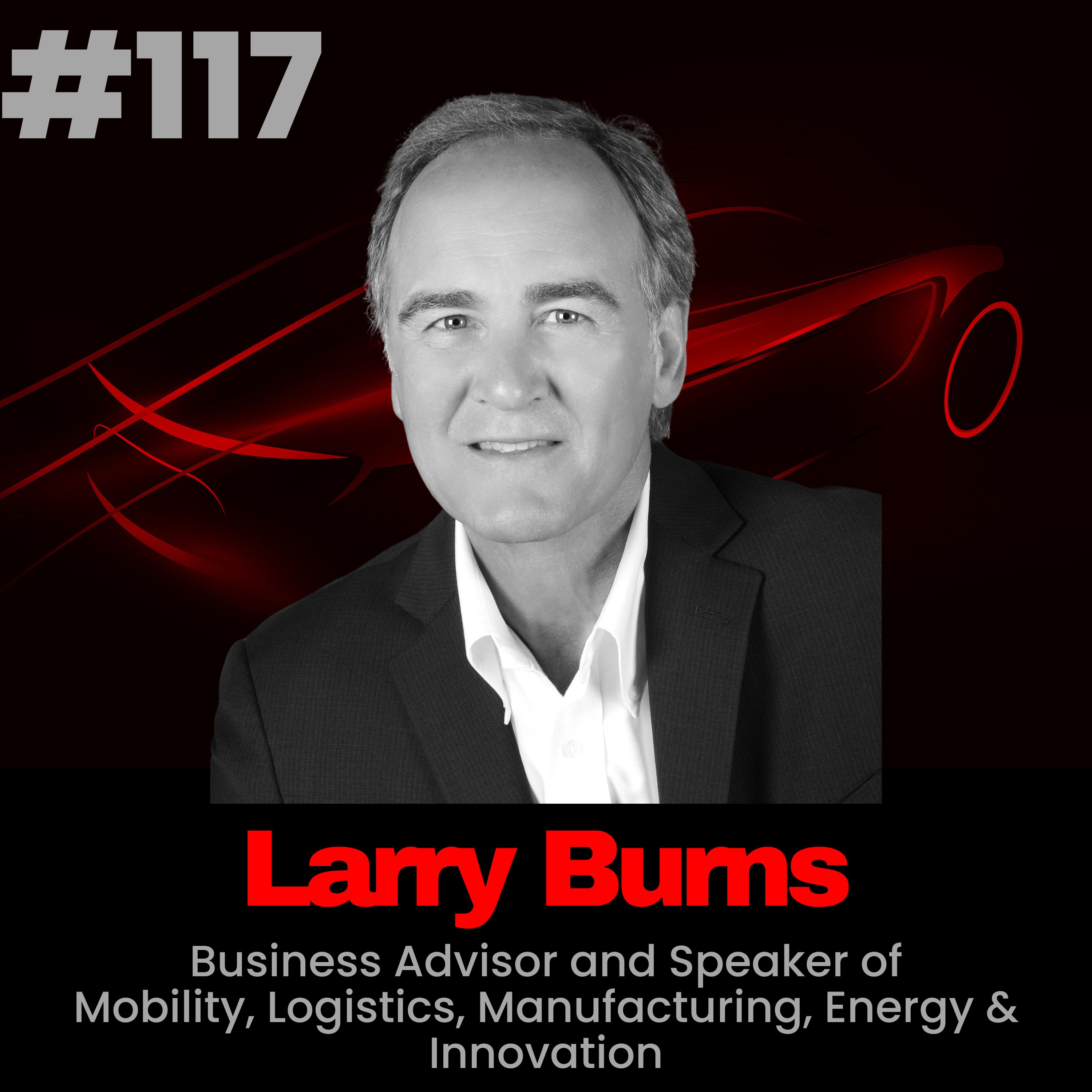
S5 Ep 117Understanding EV Startups & Industry Dynamics with Larry Burns
This episode is sponsored by Lockton, click here to learn moreWatch the full video on YouTube - click hereMeet Larry Burns, a leading voice in the world of mobility. From serving as Corporate VP of R&D for General Motors to consulting for tech companies like Waymo, Larry bridges the gap between legacy OEM and tech-startup worlds. During this episode of the Automotive Leaders podcast, Larry addresses critical questions about the EV startup DNA, what enables its success, and the challenges traditional automotive culture poses. He revealed why traditional OEMs struggled with EV innovation and discussed how leadership played into the success of tech companies like BYD and Tesla in the EV market. He highlights the need for empowerment and a culture that embraces failure as a learning opportunity.Discussing the kind of leadership the auto industry needs, Larry advocates for the "power of and," suggesting that effective leadership encompasses multiple traits rather than a single characteristic, emphasizing empathy, teamwork, and setting the proper examples in leadership behavior.Furthermore, Larry highlights the evolving nature of leadership in today's world, where personal and professional lives are intertwined. He stresses maintaining personal values while balancing work and family life.As the podcast wrapped up, Larry said that moving from ICE to BEV marks only the beginning. He stressed how technology is reshaping travel habits and urged leaders to adapt. Larry emphasized how crucial it is for companies to grasp these changes in mobility and encouraged them to grab onto the new tech opportunities coming their way.Themes discussed in this episode:The importance of authentic leadership traits in fostering innovative learning environments.Challenges in maintaining a healthy work-life balance, especially in demanding industries.The transition from Internal Combustion Engine (ICE) vehicles to Battery Electric Vehicles (BEVs)The success of EV startups and their unique approach to technology.The impact of traditional automotive culture on hindering innovation.The transformative potential of communication and information technology in shaping the future of mobility.Difference between traditional OEM and EV startupsFeatured: Larry Burns What he does: Larry is a prominent advisor in mobility, logistics, manufacturing, energy, and innovation. With a distinguished background as General Motors’ Corporate Vice President of Research & Development and Planning, Larry now consults for various organizations, including Kitson & Partners, Niron Magnetics, and Securing America’s Future Energy (SAFE). His expertise lies in autonomous electric vehicles and their transformative impact on transportation services, a topic he explores in his book “Autonomy: The Quest to Build the Driverless Car―And How It Will Reshape Our World.”On leadership: “There’s not one magic pill a person can take to be a great leader. You must be very sensitive to the people you’re leading. If you don’t set the right examples in your behavior, whether it’s integrity or treating people with dignity and respect, if you overreact to someone who had a failure, that’ll spread throughout the organization instantly.”Mentioned in this episode:Autonomy: The Quest to Build the Driverless Car―And How It Will Reshape Our WorldReinventing the Automobile: Personal Urban Mobility for the 21st CenturyEpisode with Alisyn Malek: How Alisyn Malek is shaping the future of mobility through collaboration, innovation, and leadershipTesla Model S and BYD SeagullAdvanced Driver Assistance Systems (ADAS)Google X and Project WaymoThe GM AUTOnomyThe Opposable Mind: How Successful Leaders Win Through Integrative Thinking by Roger MartinThey Made America: From the Steam Engine to the Search Engine: Two Centuries of Innovators by Harold EvansEpisode Highlights:[00:03:07] EV Challenges: Jan poses the common question to Larry: Why do traditional automakers struggle with EV innovation? [00:06:35] Tesla and BYD’s DNA: Larry discusses Tesla and BYD's success in the electric vehicle market, crediting visionary leadership and iterative learning cycles. He stresses the importance of adaptable strategies and market-driven value propositions over rigid forecasts.[00:14:25] Fostering Innovation: Larry and Jan discuss the necessity for the automotive industry to break free from past constraints and embrace innovation without fear of failure. Larry stresses leadership commitment to innovation and empowerment for fostering innovation.[00:24:59] Leadership Traits: Larry discusses integrative thinking and the importance of empathy, teamwork, and setting the proper examples in behavior for effective leadership.[00:29:26] Work-Life Balance: Larry shares personal experiences and advice on maintaining a work-life balance and prioritizing family time and integrity amidst career demands.[00:36:21] Larry on Reimagining Mobility: Larry advises leaders to anticipate the impact of technolog

S5 Ep 116The Chinese Challenge: BYD vs Legacy Automakers
This episode is sponsored by Lockton, click here to learn more Watch the full video on YouTube - click hereIn this podcast episode, Jan Griffiths tackles a crucial question: Are Chinese OEMs ready to take over the global automotive stage, possibly replacing legacy automakers? In the quest for answers, Jan sits down with Tu Le, Founder of Sino Auto Insights. He brings his experience as a seasoned tech and auto professional with a rich background spanning Ford, General Motors, and Apple.The conversation started with the current state of the automotive market in China — China's electric vehicle boom and the rise of Chinese automakers globally, with BYD surpassing a legacy OEM in sales. The talk then extends to the worldwide impact of China's EV exports and BYD's strategies for the US and Europe, with Tu identifying key factors contributing to the success of Chinese OEMs— visionary leadership, vertical integration, and a focus on innovation and scale. He also revealed the challenges for legacy automakers facing the evolving auto scene, emphasizing the necessity of cultural change for digital transformation.Talking about traits leaders need in major OEMs, Tu advocates for decisiveness, a willingness to hire more competent individuals, and having a global perspective. He urges leaders to be visionaries who consider the evolving needs of consumers worldwide. The conversation concludes with Tu advising leaders to right-size their businesses, reduce dependency on legacy OEMs, and invest heavily in talent and future opportunities, especially in software-driven aspects. The advice also extends to exploring global markets, understanding regional driving trends, and considering the growing EV revolution.Themes discussed in this episode:Auto industry dynamics and global market perspectivesChinese dominance in the worldwide marketCultural transformation in the auto industryAutomotive transformation, OEM challenges, and disruptionsICE (Internal combustion engine) to BEV (Battery electric vehicle) The role of software in the automotive futureDiversification for Tier One SuppliersThe importance of customer experience and being customer-focused Featured: Tu Le What he does: Tu Le, Founder and Managing Director of Sino Auto Insights, is a driven entrepreneur dedicated to transforming transportation. He's led the firm to impressive growth, specializing in mobility and transportation consultancy. Tu is a recognized expert, often featured in major media, and co-organizer of the MOBILIT/E Conference, a key event in the global mobility space. His goal is to simplify and enhance how people and goods move, emphasizing innovation and accessibility. On leadership: “Leadership traits [OEMs for the future] I think that they are decisive. They also hire people on their teams that are smarter than they are. So, they don't have that typical ego of a CEO. I think it's important to be very confident and decisive because the automotive sector is not going to be a high-tech space. It'll become this individually distinct new sector that has elements of manufacturing and elements of customer engagement service. You have to have a really diverse understanding of how the world works.”Mentioned in this episode:NEV (New Energy Vehicle)Wang Chuanfu, Founder and CEO of BYD Episode with Alisyn Malek: How Alisyn Malek is shaping the future of mobility through collaboration, innovation, and leadershipDriverless DueleVTOL or Electric Vertical Take-off and Landing, and Autonomous Robo-taxisEpisode with Wendy Bauer: When Amazon Meets Automotive Leadership: Insights from Wendy BauerCARIAD – Automotive Software for VolkswagenThe Automotive Leaders Podcast’s 100th podcast episode with John McElroy & Jason SteinMagna Steyr – Vehicle Contract ManufacturerTu Le shares his outlook on China’s competitive electric vehicle industry in an interview on CNBCChina EVs and more podcastEpisode Highlights:[00:02:58] The Big Question: Jan sets the stage by raising the crucial question of whether Chinese OEMs will dominate the automotive landscape, sparking a conversation about the future of legacy automakers and what sets BYD apart regarding leadership and culture.[00:09:47] Innovating Faster than Giants: Jan questions the astounding pace of BYD's success compared to legacy automakers like GM, revealing the factors behind BYD's global dominance.[00:14:53] Chinese Auto Export Strategy: Jan and Tu delve into China's plans to lead the global auto market, discussing timing, long-term visions, and the shake-up in global manufacturing involving Tesla, MG, Volkswagen, Nissan, and Ford.[00:31:46] Speeding Up Transformation: The conversation stresses the auto industry's need to break free from traditional mindsets, speed up decision-making, and embrace the necessary cultural and operational changes.[00:35:17] Tier One Leaders' Survival Guide: Tu shifts attention from OEMs to Tier Ones, providing crucial advice for leaders in

S5 Ep 115Bridging Gaps: Lean Manufacturing Meets Tech
Sign up for The Automotive Leaders Letter Watch the full video on YouTube - click hereEmbark on an automotive innovation journey with Ashok Sivanand, Founder and CEO of Integral, as we explore how he actively shapes the future of product design, technology, and leadership in the automotive industry.In this episode, Ashok shares his insights on:👉What's happening in the world of automotive technology and product design👉Bridging the gap between Lean manufacturing principles and the field of software and technology👉The challenges faced by OEMs in adopting cross-functional design processes and understanding how silos impact innovation👉The shortcomings of traditional customer surveys👉Power of in-depth interviews and qualitative data for effective problem-solving👉Essential leadership qualities for fostering innovation in automotive companies👉Why leaders should foster an environment that encourages experimentation and learning👉The transition to a more innovative mindset within traditional organizationsJoin us to explore the challenges, rewards, and transformative approaches shaping the future of the automotive industry. Whether you’re an industry professional or simply love innovation, this episode is a must-listen. Themes discussed in this episode:Understanding Customer Pain PointsChallenges in Traditional ApproachesInnovating Automotive CultureDesigning Products in the IndustryMaking Bets for InnovationTransitioning to an Innovative MindsetIntegral Way of Problem-SolvingEssential qualities for fostering innovation in companiesManaging Transitions in CompaniesFeatured: Ashok SivanandWhat he does: Ashok is the driving force behind Integral, a digital transformation firm. As the CEO, Ashok is on a mission to make mobility a universal right. His passion lies in collaborating to build delightful products and high-performing teams, fostering a tech community that's not just inclusive but diverse. With leadership roles at Pivotal Labs and a track record in product development, he's now leading Integral to reshape how businesses integrate technology into their core.On leadership: “I think that a combination of vulnerability and resilience is something that is hard to find. It's hard to find within oneself, let alone within an organization”Mentioned in this episode:IoT Company, ShoplogixToyota Production System & The Theory of ConstraintsFord LabsSteve Blank’s Investment Readiness ChecklistThe Four Steps to the Epiphany: Successful Strategies for Products that Win The Lean Startup: How Today's Entrepreneurs Use Continuous Innovation to Create Radically Successful BusinessesFord ProEpisode Highlights:[00:03:38] Ashok’s journey in automotive: Explore Ashok’s impactful career journey and how it led him to become a transformative force in the automotive industry. [00:08:54] The genesis for Integral: The factors that inspired Ashok to start his own business and sparked his commitment to reshaping traditional automotive practices. [00:12:13] Transforming automotive product design: The changes brewing in automotive product design and understanding Ashok’s take on how the industry is adjusting to meet the ever-changing market demands. [00:15:48] Breaking silos, building innovation: The challenges OEMs face when trying to ditch the silo mentality to focus on cross-collaboration and fostering innovation.[00:18:20] Ashok’s advice for leaders: Ashok’s advice for innovation leaders: Understand your role, recognize your strengths, transition from mere order-taking to value creation, and adopt a holistic approach.[00:24:38] The right way: The Integral way of truly understanding customer pain and prioritizing customer value through in-depth interviews, qualitative data, and a missionary approach to problem-solving.[00:32:51] Leadership guide for innovation: Ashok’s take on the 21 traits of authentic leadership and the qualities he thinks are essential for fostering innovation.[00:40:53] Lessons from Ford Labs: Learn from Ashok’s experiences at Ford Labs, understanding how companies can effectively manage transitions and adopt innovative practices.[00:49:08] Personal side of Ashok: In a more personal segment, Ashok shares his favorite Detroit spots and music preferences, offering a glimpse into the life of a leader shaping the auto industry’s future.Top Quotes:[00:13:46] Ashok: “I think anytime you use the word product, you want to be very clear as to who's it for and what's it for.”[00:14:19] Ashok: “When you get all the cross-functional components together, or the constituents together, they're able to make decisions relatively more autonomously and be given the authority to go solve that problem. You're going way faster. And you're able to combine hardware and software very quickly to make these decisions.”[00:15:31] Ashok: “Digital transformation is not just the use of technology, but it's thinking in

S5 Ep 114The journey through 2023 and the vision for 2024
Sign up for The Automotive Leaders Letter Watch the full video on YouTube - click hereAs we step into 2024 with a fresh episode of the Automotive Leaders Podcast, Jan Griffiths sets the tone by highlighting the power of a restart. Drawing on the significance of the new year, Jan emphasizes the opportunity for a clean slate and renewed energy. Building on this, Jan delves into the philosophy of "The Gap and the Gain," urging listeners to shift their focus from unmet goals to acknowledging achievements and progress. This mindset, she emphasizes, is the key to success as we embark on a new year.The episode unfolds with a broad overview of Jan's experiences in 2023, featuring milestones like her five-year journey at Gravitas Detroit, hitting the 100th episode milestone for the podcast, and engaging in thought-provoking discussions with automotive industry leaders. Throughout the recap, the episode subtly includes the ups and downs, highlighting Jan's role in dealing with challenges like the UAW strike and emphasizing her dedication to tackling crucial industry issues.Looking ahead to 2024, Jan shares exciting plans, the upcoming release of her book, 'Roadmap to rEVolution,' and a commitment to 'swift execution,' where getting things done is the focus, but not at the expense of quality. The episode concludes with Jan expressing gratitude to loyal supporters, urging them to spread the word and invite others to join the movement towards authentic leadership and cultural transformation in the auto industry.Themes discussed in this episode:The transformative potential of a fresh startMeasuring success through progress2023 Recap - milestones and highlightsProspects for the year 2024Automotive transformation, OEM challenges, and disruptionsThe importance of quality and ease in driving successful outcomesCultural transformation in the auto industryFostering a new mindset for success in 2024Featured: Jan Griffiths What she does: Jan is the founder and CEO of Gravitas Detroit, an organization dedicated to cultivating authentic leadership in the automotive industry by providing courses, workshops, speaking events, and more. She is also the host of The Automotive Leaders Podcast.Mentioned in this episode:The Fresh Start Effect: Temporal Landmarks Motivate Aspirational BehaviorThe Gap and The Gain by Dan Sullivan and Dr. Benjamin HardyWayne State University’s Global Supply Chain Management Advisory BoardTor Hough, CEO of ELM AnalyticsGlobalWelsh USA HubThe Automotive Leaders Podcast’s 100th podcast episode with John McElroy & Jason SteinNext-Gen Automotive Leadership with Volkswagen CSMO, Andrew SavvasThe Authentic Leadership CourseThe podcast that Jan co-hosts and produces for QAD and Quistem: Auto Supply Chain ProphetsMarques McCammon, President of Karma AutomotiveMeet Stephen M. R. Covey, global authority on trust, leadership, and culture. New York Times best-selling author of Trust & InspireThe Unicorn Within, written by Mach49 CEO Linda YatesUAW strike episodes: Leadership in Crisis: Navigating the UAW Strike & My Love-Hate Relationship with Shawn FainDave Kinchen from Fox 2 NewsEpisode Highlights:[00:01:02] The power of the restart: Jan explores the profound impact of restarting, encouraging listeners to harness the transformative energy of fresh beginnings.[00:02:49] The Gap and the Gain: Jan discusses the importance of measuring progress and achievements, shifting the focus from unmet goals to recognizing personal and professional gains.[00:05:44] Recap of 2023: The key moments that shaped Jan's 2023 experience and a highlight of the podcast's achievements, celebrating milestones such as the 5-year mark at Gravitas Detroit and reaching the 100th episode milestone. [00:30:22] Plans for 2024: Looking ahead, Jan shares exciting plans for the upcoming year, including the eagerly anticipated release of her book.
S5 Ep 113How Alisyn Malek is shaping the future of mobility through collaboration, innovation, and leadership
Sign up for The Automotive Leaders Letter Watch the full video on YouTube - click hereIn this podcast episode, Alisyn Malek, a seasoned leader in the automotive and mobility industry, shares her extraordinary journey from working on an OEM electric vehicle project to pioneering startups that influence the future of mobility. Alisyn addresses the challenges confronting traditional automotive manufacturers in adapting to rapid innovation, highlighting the necessity for a mindset shift and a focus on solving tangible customer problems through data-driven decision-making. As she discusses her role at May Mobility and establishing SkillFusion, Alisyn emphasizes the crucial intersection where policy, infrastructure, automation, leadership, and technology converge. The podcast explores her experience developing a software platform to address the pressing issues with EV charging infrastructure, showcasing how her leadership and expertise bridge the gap between established OEMs and the burgeoning startup landscape. Alisyn's commitment to shaping the future of mobility through collaboration, innovation, and an unwavering growth mindset shines through, making this episode a must-listen for those intrigued by the transformative dynamics of the automotive industry.Themes discussed in this episode:Automotive transformation and OEM challengesChallenges and opportunities in the automotive industry's transition to automationCross-functional design approach in the automotive industryData-driven decision-makingStartup ecosystem and innovationThe human element in EV charging infrastructureLeadership traits for innovationFeatured: Alisyn MalekWhat she does: Alisyn is a dynamic leader in the mobility and automotive sectors, having played key roles at General Motors, driving EV product development and corporate strategy. As the co-founder and COO of May Mobility, she pioneered autonomous vehicle transportation solutions. Currently, she's driving innovation as the force behind SkillFusion, a platform focused on enhancing EV charging infrastructure through workforce development.On leadership: “The open mindset helps because you've created a dialogue back and forth. But you also have to demonstrate back that you trust them. That only goes so far, so if they keep messing up, you have to show people there are consequences. But it has to be a two-way street because that, again, really creates the strength of the team that's going to allow you to achieve things you otherwise never would have thought imaginable.”Mentioned in this episode:Ed Olson, CEO and Co-Founder of May MobilitySAFE, Coalition for Reimagined MobilityAlisyn Malek’s book, Intersection: Reimagining Mobility Across Traditional BoundariesNewlabEpisode Highlights:[00:03:25] Alisyn's professional journey: Embark on Alisyn's dynamic career, spanning GM's automation endeavors to co-founding May Mobility and venturing into the realm of startups.[00:11:53] A blueprint for innovation: Exploring the multifaceted dimensions of mobility and transportation, Alisyn discusses her book's mission to capture diverse perspectives on the future of mobility.[00:20:01] Get comfortable with being uncomfortable: Dive into Alisyn's perspective on embracing discomfort and cultivating a growth mindset for innovation within the automotive realm.[00:33:26] Nurturing mobility ecosystem: A dynamic startup ecosystem that Alisyn played a pivotal role in launching in Detroit. Newlab focuses on empowering founders to scale their businesses, particularly in hard tech areas such as mobility, energy, and materials.[00:36:31] Explore SkillFusion: Alisyn's recent venture addressing the shortage of skilled technicians in maintaining EV charging infrastructure, ensuring a seamless experience for electric vehicle users.[00:40:51] Alisyn on authentic leadership: Learn about the key traits that fuel Alisyn’s dynamic approach to navigating the fast-paced world of innovation and mobility.[00:43:59] Personal side of Alisyn: Peek into Alisyn Malek's personal side, from favorite spots in Detroit to literary preferences, offering a glimpse into the life of a leader shaping the future of mobility.Top quotes:[00:07:02] Alisyn: “Why would we do the same thing when we knew the same thing was actually having worse outcomes for people getting where they needed to go?”[00:11:17] Alisyn: “Our entire economy is underpinned by mobility. Our health and life outcomes are underpinned by our access to mobility.”[00:19:38] Alisyn: “We need to be able to ask questions, and we need to know that sometimes, at the very start, we won't have all the answers, but we'll get them along the way. And that requires a culture that needs that open mindset.”[00:22:44] Alisyn: “To write something off because it didn't work once is terrible product planning because other people are working to evolve it… Instead of just telling me it doesn't work. Why don't you tell me why it didn't work then? What part of it failed?”[00:27:15] Alisyn: “The number

S5 Ep 112Exploring Nissan's path to workplace excellence with Michael Colleran
Sign up for The Automotive Leaders Letter Watch the full video on YouTube - click hereWelcome to the first episode of Season 5 of the Automotive Leaders Podcast. In this season opener, Jan Griffiths interviews Michael Colleran, Senior Vice President and Corporate Officer at Nissan North America. Michael started his professional journey as a US Marine Corps Captain and later worked at General Motors and Saab before joining Nissan. This diverse experience gives him a unique perspective on the shifts in the auto industry.The conversation starts with a study from Great Place to Work, revealing that 77 percent of Nissan’s employees deem it a great place to work. Mike shares what factors contribute to this recognition, exploring the essential elements that shape Nissan’s exceptional workplace culture.Michael highlights the changing dynamics of customer interactions, emphasizing the shift from transactional to experiential relationships. Essential leadership qualities, accountability, and the significance of setting examples within leadership teams are discussed, and challenging norms by acknowledging past success behaviors may not ensure future achievements. These perspectives not only give a glimpse into how leadership operates at Nissan but also offer valuable lessons for adapting to the ever-changing world of the automotive industry.Themes discussed in this episode:Nissan's journey and transformation.The necessity for behavioral and cultural changes to drive success.Adapting to changing customer expectations from transactional to experiential.Evolving dynamics of leadership in the automotive industry.Balancing innovation with a strong sense of accountability in leadership.The influential role of leadership teams in setting positive examples.Featured: Michael ColleranWhat he does: Michael is Corporate Vice President at Nissan Motor Co., Ltd., and Senior Vice President for all sales and marketing activities for the Nissan and INFINITI brands in the US. A former Captain in the United States Marine Corps, Michael brings a dynamic blend of strategic vision and operational excellence to the automotive industry.On leadership: “When leaders replicate good behaviors, people will follow. They want to follow; they want that example out there... Leaders can get out there, set an example, and use their experience.”Mentioned in this episode:Podcast interview with Navy SEALs: Episode with Clint Bruce - Former Navy Special Warfare OfficerEpisode with Nick Norris - Former Navy SEALBook Extreme Ownership by Jocko WillinkPodcast episode with Stefan KrausePodcast episode with Doug Conant, former CEO of Campbell Soup CompanyEpisode Highlights:[00:02:53] Michael's corporate odyssey: Follow Michael’s journey as he transitions from a US Marine Corps Captain through roles at GM and Saab to his impactful position at Nissan, revealing the changes in leadership dynamics along the way.[00:08:36] Cultural transformation at Nissan: Exploring the essential cultural shifts and behavioral changes that positioned the company as a great workplace amidst the rapid transformations in the automotive industry.[00:20:01] Innovation through accountability: Jan and Michael tackle the fear of failure that is prevalent in leadership. Michael advises leaders to encourage risk-taking, emphasizing the importance of learning from failures and swiftly moving forward. They also discussed accountability dynamics, steering away from blame and fostering a culture that encourages positive accountability.[00:33:29] Authentic leadership traits: Discussing the 21 Traits of Authentic Leadership, Michael emphasizes the essence of being a leader with Gravitas, summarizing the comprehensive qualities required for authentic leadership.[00:35:54] Executive beyond the boardroom: Explore the personal side of an auto industry executive as Michael Colleran shares insights into his life outside the corporate world, uncovering exciting details such as his music preferences and hobbies.[00:40:37] Michael’s advice: In an industry where stability once prevailed, Michael urges leaders to stay attentive to the shifting ground, continuously questioning and adapting while acknowledging the influx of new competitors.Top Quotes:[00:04:17] Michael: “Where to place your trust, how to earn trust, and how to make sure that your people and the teams around you trust each other are crucial… That's true in our business today. Employees want that level of trust and transparency. It was probably one of the key things I learned from my days in the Marine Corps.”[00:09:55] Michael: “Most would say the big challenges in the industry are ICE to EV, autonomous drive, or connected cars. At Nissan, we reject that. Big change is coming, no question. But the biggest change is the battle for the customer. At the ultimate decision point, the customer has to make a decision for your brand.”[00:11:16] Michael: “We're going to make the best ecosystem possible, one that people just don't want to leave. The

S4 Ep 111Season 4 finale and the road to industry transformation
Sign up for The Automotive Leaders Letter Watch the full video on YouTube - click hereIn this solo episode, Jan Griffiths reflects on the recent developments in the automotive industry and takes a moment to revisit a series of episodes dedicated to strike-related content, featuring key providers and experts offering insights on risk management, operational perspectives, collaborative agreements, and the legal aspects of the automotive landscape.Transitioning to her experience at the MEMA conference, Jan shares her personal growth in aligning with her values and embodying authentic leadership. The highlight of the conference was an interaction with Stephen Covey. Jan also recaps her participation in the Reuters conference, where she introduced Marques McCammon, President of Karma Automotive. Impressed by Karma's mission-driven approach and authentic leadership, Jan expresses enthusiasm for the company's future in the luxury EV market.As season four concludes, Jan sheds light on the evolution of Gravitas Detroit, providing details about the company's development and direction. Jan announces the upcoming website revision, the release of her book, and the podcast's sponsorship opportunities in 2024. Jan looks forward to returning for season five in December, continuing to promote authentic leadership in the automotive industry.Themes discussed in this episode:End of the UAW strikeInsights from key providers and expertsPersonal experiences and growthDiversity, Equity, and InclusionUpdates on the business End of seasonPlans and preparation for the futureFeatured: Jan GriffithsWhat she does: Jan is the founder and CEO of Gravitas Detroit, an organization dedicated to cultivating authentic leadership in the automotive industry by providing courses, workshops, speaking events, and more. She is also the host of The Automotive Leaders Podcast.Mentioned in this episode:Podcast episode with Tor Hough and Sig Huber of ELM AnalyticsPodcast episode with Thomas Kowal, President of Seraph North AmericaPodcast episode with Kate Vitasek, Expert in collaborative negotiationsPodcast episode with Daniel Rustmann, Co-Chair of the Global Automotive Practice at Butzel LongSolo episode, “My Love Hate Relationship with Shawn Fain.”MEMA ConferencePodcast episode with Stephen Covey, Global authority on trust, leadership, and culture. Author of “Trust and Inspire: How Truly Great Leaders Unleash Greatness in Others.”Marques McCammon, President of Karma AutomotiveMichelle Christensen, Vice President, Global Design at Karma AutomotiveKarma Automotive Launch Event last November 11ALP’s 100th episode with John McElroy and Jason SteinPodcast that Jan co-host and produce, Auto Supply Chain Prophets ASCP podcast episode with Anthony Emery, Supply Chain and Logistics Director for PHINIAASCP podcast episode with Thomas Kull, Professor of Supply Chain Management at Arizona State UniversityEpisode Highlights:[00:01:18] Reflection on season four and previous episodes: Jan Griffiths reflects on the themes and highlights of Season Four, offering insights into the past episodes and the overarching narrative.[00:03:28] Experience at the MEMA Conference: Sharing her experience at the MEMA Conference, Jan provides a personal perspective on the growth and evolution of her involvement in the automotive industry.[00:07:30] Introduction to Karma Automotive: Jan introduces Karma Automotive, highlighting the mission-driven approach and the impressive leadership of Marques McCammon.[00:10:08] Closing season four and updates on future plans: As Season Four concludes, Jan shares updates on future plans, including a book release, website revisions, and the launch of Season Five, teasing exciting developments.[00:20:18] Sponsorship: Discussing sponsorship, Jan opens the door for potential partners aligned with the mission of preparing the automotive industry for the future through authentic leadership.

S4 Ep 110Legal Success Strategies for your post-UAW Strike Auto Startup
Watch the full video on YouTube - click hereIn this episode of the Automotive Leaders Podcast, host Jan Griffiths engages in a conversation with Daniel Rustmann, an industry expert with over 30 years of legal experience in supplier-related matters. They explore the unique challenges the automotive supply chain faces during and post-UAW strike.Daniel, a co-chair of the global automotive practice at Butzel Long, provides valuable insights into the legal and contractual aspects influencing the ability to restart operations swiftly. He emphasizes that while contractual obligations often favor OEMs, a cooperative approach may be more effective in resolving disputes. The discussion also highlights the intricate interconnectivity within the automotive supply chain, emphasizing the importance of aligning terms and conditions to ensure a seamless flow of expectations.The significance of proactive risk assessment and open communication within the supply chain is evident throughout the conversation. Maintaining healthy supplier relationships, keeping in touch with employees, and fostering positivity are key takeaways. This episode underscores that, while legal considerations are crucial, a collaborative approach, coupled with positive leadership, holds the key to overcoming challenges and transforming the automotive industry in the face of adversity.Themes discussed in this episode:UAW Strike and supply chain challengesSwift restart of operationsContractual and legal considerationsCommunication and collaborationRisk assessment and preparednessLeadership and positivityOpportunities for transformationFeatured Guest: Daniel RustmannWhat he does: Daniel Rustmann is the Co-Chair of the Global Automotive Practice at Butzel Long; he is highly respected in the automotive industry for his work in the supply base.On leadership: “Every time we face a serious challenge, that also comes with a serious opportunity. And this is an opportunity for people to step up and show their leadership and show their poise, show their creativity, show their grit to be able to get through the situation like we always do like the industry always recovers.”Mentioned in this episode:UAW Strike: Preparing for a Successful Industry Restart, episode with Thomas Kowal, President of Seraph North AmericaMEMA - Motor & Equipment Manufacturers Association (formerly OESA)FMEA - Failure Modes and Effects AnalysisEpisode Highlights:[00:01:26] Legal Challenges and Swift Startup Post-UAW Strike: Explores the legal and operational hurdles in the automotive supply chain post-UAW strike, focusing on the need for swift startup and effective communication across tiers.[00:07:41] Contractual Preparations for Supply Chain Recovery: Critical aspects of supplier contracts are discussed. Dan advises suppliers to review their contracts, especially concerning payment issues, proactively. Understand rights and obligations and establish a clear paper trail to prepare for a rapid startup.[00:14:27] Prioritizing Collaboration in Supplier Contracts: Dan and Jan stress the significance of proactive discussions in supplier contracts, focusing on quality, delivery, and issue resolution. Their approach prioritizes collaboration over legalities, enabling suppliers to better prepare for supply chain challenges.[00:21:09] Embracing change and leading through crisis: This highlight focuses on authentic leadership during times of crisis and the potential for transformation within the automotive industry amid challenges. [00:25:22] Dan's pro tips: Dan provides three essential tips for automotive suppliers: legal preparedness, effective communication, and positive adaptation.Top Quotes:[00:02:27] Dan: “We can expect that when an agreement is reached, the OEMs will want supply to start immediately. And they will push hard to have everybody up and running yesterday with very little notice. So that will certainly be the largest obstacle everybody faces.”[00:16:17] Dan: “It's impossible to make a perfect contract that could address every situation; however, you can have a good contract, you know, one that is very clear and negotiated upfront”[00:16:43] Dan: “I've been advocating for years that you might have more leverage than you think. You may be able to provide some protection for yourself. And I'm not talking about doing a massive red line of the terms and conditions. I'm talking about the fundamental issues that will seriously impact whether you make money or lose money from this contract in the long term: price adjustment, return of capital, and protecting your intellectual property.”[00:21:15] Dan: “I strongly believe you should have a little faith. Our industry has recovered from many things in the past, and we as individuals have recovered from many things in the past; we have to have a certain amount of positivity about our approach… And we must be able to turn it over to a certain extent and think; maybe I can come out of this stronger and better.”[00:24:48] Dan: “The indus

S4 Ep 109My Love Hate Relationship with Shawn Fain
Watch the full video on YouTube - click hereIn this solo episode of the Automotive Leaders Podcast, Jan Griffiths addresses the ongoing UAW strike, focusing on the president of the UAW, Mr. Shawn Fain. Jan begins by acknowledging the positive aspects of Fain's leadership, including his early communication and his personal connection to build a strong sense of community among union members.However, the tone of the episode shifts as Jan expresses her concerns about Fain's aggressive negotiation tactics. She criticizes what she sees as a return to old-school power plays and threats. Jan points out that the automotive industry is in a period of transformation, and Fain's tactics risk damaging the industry's future. Jan also cites industry experts Sandy Munro and John McElroy, who offer different perspectives on the situation. Furthermore, Jan underscores Bill Ford's collaborative approach and vision for the industry, opposing Fain's adversarial stance, and stresses the importance of all stakeholders uniting to steer the industry through transformation, expressing her frustration with Fain's "us vs. them" mentality.In conclusion, Jan calls on Shawn Fain to reconsider his approach, urging him to prioritize the industry's long-term interests, engage in meaningful dialogue, and work towards a mutually beneficial resolution for all parties involved in the automotive industry.Themes discussed in this episode:UAW strike and leadershipNegotiation tacticsThe need for a more collaborative approachThe rhetorical use of emotionsPreparation for industry transformationReaching a mutually beneficial dealFeatured Guest: Jan GriffithsWhat she does: Jan is the founder of Gravitas Detroit, an organization dedicated to cultivating authentic leadership in the automotive industry by providing courses, workshops, speaking events, and more. She is also the host of The Automotive Leaders Podcast.Mentioned in this episode:Episode with Kate Vitasek about collaborative negotiations.Sandy Munro’s YouTube videoBYD and VinFastMary Barra, CEO of General MotorsJohn McElroy’s YouTube video. "Share the Pain, Fain"Episode 100th of Automotive Leaders Podcast with John McElroyEpisode Highlights:[01:36] Leadership evaluation: The episode comprehensively evaluates Mr. Shawn Fain's leadership style during the UAW strike, highlighting his approach's positive and negative aspects.[03:54] Critique of negotiation tactics: Fain's tactics are old school, emphasizing the aggressive and adversarial methods used and their potential consequences for the automotive industry.[07:20] Emotional rhetoric: The discussion explores the emotional language used in the strike, including terms like "corporate greed" and "eat the rich," and how these emotional arguments can distract from the essential issues.[13:13] Collaborative vision: Bill Ford's collaborative approach and idea for the industry are contrasted with Fain's adversarial stance, emphasizing the importance of unity among all stakeholders to drive the industry's transformation.[16:08] Jan's call for change: Jan delivers a powerful call for Shawn Fain to reconsider his approach and prioritize the industry's long-term interests. She stresses the need to work towards a mutually beneficial resolution to avoid the industry's potential downfall due to prolonged disputes.

S4 Ep 108UAW Strike: Preparing for a Successful Industry Restart
Sign up for The Automotive Leaders Letter Watch the full video on YouTube - click hereIn this Automotive Leaders Podcast episode, host Jan Griffiths and Thomas Kowal, the president of Seraph North America, discuss the current state of the automotive supply base during the UAW strike. They begin the episode by exploring MEMA's statistics, shedding light on concerns about layoffs, financial viability, and restart times, emphasizing the importance of understanding the strike's impact on the supply base across various timeframes.The conversation shifts to the importance of conserving cash, including labor reduction and inventory optimization. They also address the potential challenges that could arise when trying to restart production after supply chain disruptions. Stressing the significance of working on rapid ROI projects, finding ways to collaborate with consulting firms when financial constraints exist, and building relationships with OEMs.Thomas shares practical advice on how to prepare for the production restart, including conducting startup FMEA, analyzing logistics, and improving communication with suppliers. He suggests creating a startup plan and involving the workforce to ensure a smooth transition when production resumes. The episode concludes with insights into evolving automotive dynamics, adaptability, and leadership's role in a positive workplace.Themes discussed in this episode:Impact of the ongoing UAW StrikeStrategies for cash conservationOutline of potential short-term to long-term scenarios for suppliersDecision-making for CEOsThe importance of proactive preparationRole of leadership during restartThe new normal of the auto industryFeatured Guest: Thomas KowalWhat he does: Thomas is the President of Seraph North America. His areas of expertise include operations, business development, project and team management.On leadership: “I recommend the plant office people, when you start back up again, get out on that shop floor, be with the people, solve the problem for them, take this as an opportunity to rebuild the relationship with the workforce.”Mentioned in this episode:IHS Markit LTD / S&P GlobalPublished Document by MEMA OEE - Overall Equipment EffectivenessFMEA - Failure Mode and Effects AnalysisEpisode Highlights:[00:02:35] Understanding Challenges: The discussion dissects key MEMA statistics, highlighting challenges in the auto supply chain during ongoing strikes. Thomas offers insights into short, medium, and long-term implications. They also examine how strikes affect suppliers' finances, program management, and the potential shift to low-cost regions.[00:10:06] Industry Layoffs and Resilience: The unexpected salary layoffs in the supply base due to the strike's indirect impact. Insights on addressing this issue through workforce training line adjustments and the importance of long-term strategic planning and open communication for industry resilience.[00:16:10] Advice for CEOs: Practical advice is provided for CEOs and leaders facing liquidity challenges, including considering rapid ROI projects and seeking collaboration with consulting firms while finding financial solutions.[00:20:50] Strengthening OEM Relationships: The importance of building strong relationships with OEMs and working on solutions proactively is emphasized.[00:25:15] Strategies for Production Restart: The episode highlights the need for open communication in preparing for production restart, suggesting strategies such as conducting startup FMEA, analyzing logistics, and rebuilding relationships with the workforce during startup.[00:27:54] Leadership in Shifting Auto Industry: The role of leadership in fostering a positive and productive work environment is discussed, along with the evolving dynamics in the automotive industry and the need for adaptability.Top Quotes:[00:21:54] Thomas: “If an OEM does not have a good relationship with a supplier, they will do everything, not only to hide it but to fight the OEM.”[00:23:20] Thomas: “If you haven't done it already, try to work on a solution; they [OEMs] will not stop their production, they will bring people in and they will be much tougher with the suppliers that were not at least open and try to work with them beforehand.”[00:28:33] Jan: “But it's the leadership and the enthusiasm that comes along with it that will really make the difference, I see an opportunity, for leadership to be real cheerleaders for the shop floor.”Related Episodes:Transforming UAW Strike Negotiations for a Win-Win OutcomeLeadership in Crisis: Navigating the UAW StrikeUAW Strike and the Automotive Industry: Supply Chain Insights

S4 Ep 107Transforming UAW Strike Negotiations for a Win-Win Outcome
Sign up for The Automotive Leaders Letter Watch the full video on YouTube - click hereThe Vested Way eBooksIn this latest episode of the Automotive Leaders podcast, host Jan Griffiths engages in a compelling conversation with Kate Vitasek, a renowned expert in the realm of collaborative, win-win business agreements. The episode explores the pressing issue of labor strikes within the automotive industry, with a particular focus on the ongoing dispute between the UAW and OEMs. Jan and Kate challenge the conventional power-based negotiation strategies prevalent in the industry and advocate for a transformative shift towards collaborative negotiation methods.Kate shares her well-established approach to crafting vested agreements that cultivate trust, transparency, and the alignment of interests between negotiating parties. Through real-world examples and success stories, the conversation highlights the immense potential for positive change within the automotive sector. It calls on industry leaders to break away from adversarial relationships, urging them to embrace a culture of collaboration. This shift not only holds the promise of driving innovation and cost savings but also ensures a win-win outcome for all stakeholders. This episode serves as a compelling call to action for the automotive industry, inspiring leaders to revamp their negotiation practices and forge healthier, long-term relationships.Themes discussed in this episode:Labor strikes in the automotive industryConventional power-based negotiationThe need for a transformative approachCollaborative negotiation principlesThe potential for positive changeSustainability and ResponsibilityFeatured Guest: Kate VisatekWhat she does: An accomplished author and educator, Kate is a leading authority in strategic partnerships. She also heads research at the University of Tennessee and specializes in the Vested® business model. With experience at major corporations like P&G and Microsoft, Kate provides executive training and coaching, empowering organizations to excel in strategic collaborations and foster innovation.On leadership: “Don't treat your suppliers or union employees as "us versus them", you're competing against other companies. So, beat the market with your suppliers, beat the market with your employees.”Mentioned in this episode:MEMA (Motor & Equipment Manufacturers Association)Graduate and Executive Education ProgramJohn Nash, Nash EquilibriumVested: How P&G, McDonald's, and Microsoft are redefining winning in business relationships.Island HealthHarvard Business ReviewEpisode Highlights[00:01:34] The costly impact of the UAW strike. The ongoing UAW strike and its significant impact on the automotive industry is estimated at over $4 billion. [00:06:07] Moving beyond power-based negotiations. The prevalence of power-based negotiation tactics in the industry and the need for a better approach.[00:09:26] Kate’s Vision for collaborative agreements. Kate’s expertise in collaborative, win-win business agreements and her mission to change negotiation mindsets.[00:13:53] Embracing a win-win negotiation mindset. Explore the importance of shifting from a win-lose mentality to a collaborative negotiation mindset and discover Kate's step-by-step approach to transforming negotiation dynamics, which focuses on establishing trust and transparency."[00:21:10] Success of Collaborative Negotiation. The success stories and positive outcomes of organizations that have adopted collaborative negotiation methods.[00:25:27] A Call to Action: Kate’s words of wisdom. The call to action for the automotive industry to embrace a culture of collaboration, leading to innovation and cost savings for all stakeholders.Top Quotes:[00:03:17] Kate: "You've got to change the world one deal at a time. And it changes with changing your mindset.”[00:05:41] Kate: "I actually don't want Shawn to stand up, I want both of them to stand down. I want them to change their dialogue.”[00:06:41] Kate: "When we use our power back and forth, we tend to just get on a slippery slope, it gets ugly, and it's a lose-lose for everyone.”[00:25:32] Kate: “Don't treat your suppliers or union employees as "us versus them", you're competing against other companies. So, beat the market with your suppliers, beat the market with your employees.”[00:26:12] Kate: “Change the way things are. But don't go with power. That's ugly. That cost is $4 billion. It costs us not to have employees to have dinner on the table.”[00:27:04] Kate: “I challenge you to redefine winning, and it's not winning at the expense of your supplier. It's not winning at the expense of the labor unions.”

S4 Ep 106More Strike Content in the Works
Sign up for The Automotive Leaders Letter In this episode of the Automotive Leaders Podcast, host Jan Griffiths addresses the ongoing UAW strike and its impact on the industry. She begins by acknowledging the chaos and media coverage surrounding the strike, with jabs being exchanged between OEMs, the UAW, and even politicians getting involved. Jan emphasizes that the strike's repercussions extend beyond just the OEMs and Tier Ones, affecting smaller businesses like hers that rely on the automotive industry for their livelihood. Jan outlines her plans for upcoming episodes, focusing on bringing in a turnaround company to offer insights on surviving the strike and preparing for the industry's restart. She also discusses the aggressive negotiation tactics prevalent in the industry and teases an upcoming interview with an expert in collaborative negotiations who will shed light on changing negotiation models. Additionally, Jan encourages listeners to explore another podcast she co-hosts, "Auto Supply Chain Prophets," which delves into supply chain topics within the automotive sector. She concludes by inviting listeners to share their favorite podcasts and reassures them that the automotive industry's resilience will see it through the challenges posed by the strike.Themes discussed in this episode:Impact of the UAW StrikeRepercussions Beyond OEMsSurvival StrategiesPreparation for Industry RestartNegotiation TacticsFeatured Guest: Jan GriffithsWhat she does: Jan is the founder and CEO of Gravitas Detroit, an organization dedicated to cultivating authentic leadership in the automotive industry by providing courses, workshops, speaking events, and more. She is also the host of The Automotive Leaders Podcast.Mentioned in this episode:Auto Supply Chain ProphetsPreparing for Post-Strike Success in Automotive Supply Chains with Bill HurlesQAD and QuistemAutolineMorning JoeSmartlessTen Percent HappierEpisode Highlights:[00:00:57] UAW Strike Impact: Jan discusses the ongoing UAW strike and its extensive impact on the automotive industry, shedding light on how it reaches beyond OEMs to affect Tier Ones and smaller businesses, offering a more comprehensive view of the crisis.[00:02:28] Survival Strategies: Jan outlines plans to feature a turnaround company, offering insights into surviving the strike and preparing for the industry's eventual restart.[00:04:03] Rethinking Negotiation Tactics: The episode touches on the aggressive negotiation tactics prevalent in the industry and hints at an upcoming interview with an expert in collaborative negotiations, advocating for a shift in negotiation models.[00:05:40] Podcast Promotion and Audience Engagement: Jan promotes her co-hosted podcast, "Auto Supply Chain Prophets," centered on automotive supply chain topics while engaging listeners by inviting them to share their favorite podcasts. She concludes with a message of industry resilience and confidence in overcoming the strike's challenges.

S4 Ep 105Leadership in Crisis: Navigating the UAW Strike
Watch the full video on YouTube - click hereIn this solo episode, Jan Griffiths shifts her podcast's focus to address the ongoing UAW strike's impact on the automotive industry. She spotlights Shawn Fain, the UAW President, highlighting his transparent communication while critiquing certain negotiating tactics. Jan explores the importance of leadership traits displayed during the strike, such as transparency, clear communication, and personal connection. While she appreciates these qualities in Fain, she advocates for a more collaborative approach between the OEMs and the UAW. Jan emphasizes the critical need for Tier One leaders to adopt a coaching and nurturing approach with Tier Two suppliers, fostering trust and transparency amid industry challenges. Jan believes in the resilience of the automotive industry and its ability to weather this storm through authentic leadership. She commits to keeping listeners updated on the strike's progress and the complexities of restarting operations, encouraging all to step up as leaders and remain authentic in facing the uncertainties ahead.Themes discussed in this episode:UAW Strike and Automotive Industry ImpactLeadership Traits of Shawn FainTier Two Supplier RelationshipsResilience and Authentic LeadershipFeatured Guest: Jan Griffiths (Host)What she does: Jan is the founder and CEO of Gravitas Detroit, an organization dedicated to cultivating authentic leadership in the automotive industry by providing courses, workshops, speaking events, and more. She is also the host of The Automotive Leaders Podcast.On leadership: “We're resilient and tough, and we will survive. We know how to survive. This is a real test for us right now. It's a real test for our leadership. This is a time for authentic leadership to shine.”Mentioned in this episode:Shawn Fain, UAW PresidentEpisode 104: UAW Strike and the Automotive Industry: Supply Chain Insights with Tor Hough and Sig HuberCIE NewcorLM ManufacturingEpisode Highlights:[00:00:01] Shift in focus: The episode marks a departure from the podcast's usual content to address the UAW strike and its implications for the automotive industry.[00:02:22] Shawn Fain's leadership: Jan Griffiths discusses the leadership qualities displayed by Shawn Fain, the President of the UAW, during the strike. She acknowledges his transparent communication but criticizes certain bullying tactics.[00:08:13] Tier two supplier vulnerability: The fragility of the tier two supply base is emphasized, particularly in the face of plant shutdowns caused by the strike. Jan stresses the importance of Tier One leaders adopting a coaching and nurturing approach with their Tier Two suppliers.[00:09:53] Need for collaboration: The episode advocates for a more collaborative relationship between the OEMs and the supply based, encouraging open dialogue and human-to-human conversations.[00:11:17] Resilience and authentic leadership: The episode underscores an enduring theme—the remarkable resilience of the automotive industry. It emphasizes the critical role of authentic leadership, especially in times of crisis, as a driving force behind the industry's ability to navigate challenges and persevere. [00:11:50] Future updates: Jan commits to providing ongoing updates on the strike's progress and the challenges of restarting operations. She invites her audience to contribute ideas and insights for future episodes.Top Quotes:[00:07:45] Jan: “I would love to see a much more collaborative relationship between the OEMs and the UAW.”[00:10:26] Jan: “If we don't open up these communications and get a greater level of honesty and transparency, and trust with our suppliers, we're never going to get through this.”[00:11:09] Jan: “The only way that we're going to get through this is by making human connections and building on trust and transparency”[00:11:16] Jan: “We know as an industry, we are strong, we are tough, we are resilient. And we have gotten through everything in over 100 years to get us where we are today.”

S4 Ep 104UAW Strike and the Automotive Industry: Supply Chain Insights
Watch the full video on YouTube - click hereIn this bonus episode of the ALP podcast, Jan Griffiths delves into a pivotal moment in the automotive industry as the UAW (United Auto Workers) calls for a strike across the three major American OEMs: Ford, General Motors, and Stellantis. This historic event highlights the significant challenges that supply chain leaders and CEOs within the automotive sector are currently facing. Jan sets the stage for this critical day in automotive history, emphasizing the urgent need for strategic responses to address the disruptions rippling through the supply chain.Joining Jan are industry experts Tor Hough, CEO of ELM Analytics, and Sig Huber, Chief Commercial Officer for ELM Analytics. Together, they engage in a comprehensive discussion about the essential steps required to prepare for and effectively manage such disruptive situations. The conversation revolves around key aspects, including the critical role of gathering timely and accurate data about suppliers, enhancing supply chain resilience through design and relationships, and the analysis of the five pillars of risk: liquidity, labor, parts, demand, and transportation.Moreover, the episode underscores the paramount importance of transparent communication with the supply base, the cultivation of trust, and proactive planning for financial risks and startup challenges in the event of prolonged disruptions. As the automotive industry grapples with uncertainty during the ongoing strike, this episode equips supply chain leaders and CEOs with valuable insights to navigate the complex landscape of supply chain disruptions successfully.Themes discussed in this episode:Automotive industry disruptionsSupply chain risk managementFinancial vulnerabilities of suppliersImportance of Communication and TrustStrategies and CountermeasuresPillars of Supply Chain ResilienceFeatured Guest: Tor HoughWhat he does: Tor Hough is the CEO of ELM Analytics. Tor is fervently committed to elevating data quality standards in the industry while catalyzing business change, transformation, and growth.Featured Guest: Sig HuberWhat he does: Sig Huber serves as the Chief Commercial Officer at ELM Analytics, bringing a wealth of expertise in supplier risk management spanning over 25 years. With a distinguished career at both FCA (now Stellantis) and Toyota, Sig has demonstrated exceptional leadership in guiding supplier risk management teams to success.Episode Highlights:[03:27] Data Gathering: The importance of gathering accurate and timely data about suppliers, especially in the sub-tier levels of the supply chain, to understand vulnerabilities.[10:06] Navigating Supply Chain Vulnerability and Building Resilience: Sig and Tor dive into the automotive supply chain's vulnerabilities amid disruptions like COVID and the UAW strike. They emphasize the importance of timely data, supplier financial health, and strategies for bolstering resilience, including supply chain design and robust supplier relationships.[14:15] Proactive Planning for Supply Chain Resilience: Sig delves into best practices for bolstering supply chain resilience. They emphasize the need for proactive planning to mitigate financial risks and navigate startup challenges during prolonged disruptions.[15:27] Effective Crisis Leadership, What Leaders Should Do Now: Sig Huber, Tor Hough, and Jan Griffiths share invaluable insights into leadership during supply chain crises. Learn about the significance of clear communication, crisis management teams, building trust with the supply base, and maintaining strong relationships. Gain actionable advice for leaders in the automotive industry facing disruptions like the UAW strike.[24:25] Five Pillars of Risk: Analyzing the five pillars of risk—liquidity, labor, parts, demand, and transportation—and the significance of addressing each pillar during supply chain disruptions.[27:22] Financial Risk and Authentic Leadership: Sig discusses the financial risks impacting suppliers, stressing the need to identify and prioritize vulnerable ones. Jan emphasizes the importance of authentic leadership when dealing with financially challenged suppliers. Top Quotes:[14:18] Tor: "The design of your supply chain matters greatly. The type of part that you're manufacturing and who you're using to manufacture that can have a big impact on how you respond to events."[15:13] Tor: “Gathering the data to understand where your suppliers are is important. And in both preparing for it, and then understanding what you need to do to respond once the event occurs.”[17:51] Sig: “If it's a few weeks, I think that the industry will be okay. If it drags out beyond six weeks, I think it's going to be a different situation.”[18:52] Tor: “That trust relationship allows you to get ahead of the problem, identify where the weaknesses are, and then put in countermeasures.”[29:38] Jan: “When you identify a supplier with some financial weakness, please do not go in there with a baseball bat

S4 Ep 103DE&I Transformation: Insights from a CEO's Remarkable Rise
Sign up for The Automotive Leaders Letter Watch the full video on YouTube - click hereIn this insightful podcast episode, Cheryl Thompson, CEO of the Center for Automotive Diversity, Inclusion, and Advancement (CADIA), joins host Jan Griffiths to discuss the critical topic of Diversity, Equity, and Inclusion (DE&I) in the automotive industry. Cheryl shares her inspiring journey, from washing dishes in the basement of Ford Motor Company to becoming a CEO, highlighting the possibilities for personal growth and professional excellence.The conversation also touches on Cheryl's role at American Axle & Manufacturing and her efforts to champion DE&I within the organization. Demystifying DE&I, Cheryl emphasizes that it's about creating workplaces where everyone feels valued, respected, and has equitable opportunities. She introduces the concept of the "fear zone," a barrier to meaningful DE&I progress, and addresses common pushbacks and resistance faced in DE&I initiatives.Cheryl outlines the critical elements of an effective DE&I strategy, including leadership commitment, systemic change, and creating inclusive cultures. She also shares CADIA's mission to double the number of diverse leaders in the automotive industry by 2030 and highlights the tangible bottom-line impact that diversity and inclusion can have. The episode concludes with Cheryl offering valuable advice to leaders in the automotive industry: the importance of self-awareness and fostering an inclusive environment.Themes discussed in this episode:Diversity, Equity, and InclusionPersonal and professional growthCrafting an Effective DE&I StrategyChallenges and Pushbacks in DE&IBalancing Psychological Safety and AccountabilitySignificance of self-awarenessFeatured Guest: Cheryl ThompsonWhat she does: Cheryl Thompson is CEO and Founder of the Center for Automotive Diversity, Inclusion, and Advancement. (CADIA) Cheryl possesses a wealth of experience in the automotive sector, having held key roles at prominent companies such as Ford and American Axle.On leadership: “I think that leaders, particularly leaders who have been around for a while, think that they know everything, they think they've got it all figured out. And nobody has it all figured out.”Mentioned in this episode:Center for Automotive Diversity, Inclusion and Advancement (CADIA)Gallup surveyNational Defense Industrial AssociationGoogle in Project Aristotle 2012CADIA ConnectsMeet Stephen M. R. Covey, Global authority on trust, leadership, and culture. New York Times best-selling authorMeet Carrie Uhl, Chief Procurement Officer for GE HealthcareEpisode Highlights:[00:03:03] Cheryl's inspiring career journey: Cheryl's remarkable career trajectory, from washing dishes in the basement at Ford to becoming a CEO, illustrates the power of determination and perseverance.[00:10:21] American Axle's DE&I initiatives: This podcast episode explores American Axle's commitment to Diversity, Equity, and Inclusion (DE&I), shedding light on the organization's efforts to create a more inclusive and equitable work environment for all employees.[00:13:16] Diversity, Equity, and Inclusion (DE&I): The podcast delves into what DE&I truly means in the workplace and its importance for fostering inclusive cultures and diverse leadership.[00:17:33] Balancing psychological safety and accountability: The discussion revolves around the challenge organizations face in maintaining a delicate balance between holding individuals accountable for their actions and fostering an atmosphere where employees feel psychologically safe to express their thoughts and ideas.[00:22:05] Overcoming challenges and pushbacks in DE&I: Cheryl and Jan explore common pushbacks and hurdles organizations encounter on their DE&I journey. These include resistance to change, fear of backlash, and the importance of navigating these challenges with resilience.[00:31:01] CADIA's role in DE&I: A spotlight on CADIA (Center for Automotive Diversity, Inclusion, and Advancement) and its mission to double the number of diverse leaders in the automotive industry by 2030.[00:40:30] Bottom-line impact and benefits: The podcast discusses the positive impact that DE&I initiatives can have on a company's bottom line, from increased innovation to improved employee engagement.[00:42:57] The fun stuff: In a lighthearted segment, Cheryl shares her favorite band and mobile app (LinkedIn), adding a personal touch to the conversation.[00:47:49] The 21 traits of authentic leadership: Cheryl's favorite trait of authentic leadership is "self-awareness." Cheryl's emphasis on self-awareness is a testament to her commitment to personal growth and unwavering dedication to making the automotive industry more diverse, equitable, and inclusive.[00:48:06] Advice for auto industry leaders: Cheryl offers valuable advice to automotive leaders on the significance of self-awareness in fostering diversity, equity, and i

S4 Ep 102Revolutionizing the Road Ahead: Traditional to Tech in Automotive
Contact Lockton - Your Automotive Industry Insurance ExpertSign up for The Automotive Leaders Letter Watch the Full Video on YouTube - click hereIn this podcast, Jan Griffiths talks to Kristin Trecker, Chief Human Resources Officer at Visteon Corporation, a global auto tech company. The focus is authentic leadership and transformation in the automotive industry —how to roll with change, grow the right mindset, and drive real impact. Trecker shares her 5-year journey in automotive, underlining the need to adapt, learn, and network. She's all about true leadership, especially in these fast-changing times.Jan and Kristin discuss ditching the old top-down leadership for newer, agile styles. Leaders must flex, admit missteps, and foster learning and teamwork. They also dig into how authentic leadership fuels innovation, spotlighting how Visteon's learning culture and Agile Software method spark small yet game-changing innovations.Kristin ends by pushing leaders to step up, link with strategy, and grow their businesses. She's all for making things happen, staying in the know, and boosting the auto industry's drive forward. This podcast digs deep into Kristin's journey and leadership impact. It's a roadmap for change, learning, and pushing the industry's pedal to the metal.Themes discussed in this episode:Innovative Transformation in the Automotive IndustryDeveloping a Talent Supply ChainVisteon’s Holistic Culture ChangeTechnological Shift of a Legacy Auto CompanyThe Importance of Having a Growth Mindset as a LeaderFeatured Guest: Kristin TreckerWhat she does: Kristin is the Chief Human Resources Officer at Visteon Corporation. She excels in driving cultural transformation and using technology to propel business success, while her skillful blend of strategic vision and operational prowess nurtures high-achieving teams.On leadership: “I also asked my team, give me feedback. Did I do something wrong? Or should I have done something different? …. Because no leader is perfect. And if you can develop that two-way conversation, that mutual trust, you can just go so much more quickly.”Mentioned in this episode:Sachin Lawande, President and CEO of Visteon Corporation The Automotive Leaders Podcast Episode 36: Meet Warren Harris, CEO of Tata TechnologiesThe Automotive Leaders Podcast Episode 65: Meet Stephen M. R. Covey, Global authority on trust, leadership, and culture. New York Times best-selling authorThe Automotive Leaders Podcast Episode 78: Meet the ‘Godfather of the EV’ and CEO of Switch Mobility, Dr. Andy PalmerEpisode Highlights:[00:05:24] Revolutionizing Talent Supply Chain: Kristin delves into the concept of the talent supply chain and its transformative impact on the automotive industry. Drawing parallels from traditional supply chain practices, Kristin explains how Visteon is reshaping its organizational culture to resemble a tech company, fostering employee empowerment and accountability.[00:08:24] Empowering Gen Z in the Workforce: Jan and Kristin explore the shifts in workforce expectations and values, highlighting Gen Z's emphasis on purpose-driven work and aligning company culture with individual contributions. They discuss how embracing these changes can increase engagement, meaningful connections, and positive organizational impact.[00:15:29] Reimagining Performance Management: Jan and Kristin candidly discuss the shortcomings of traditional annual performance reviews and the need for a more agile and employee-centric approach. They emphasize the value of ongoing conversations, real-time recognition, and transparent feedback to foster trust, alignment, and rapid growth within organizations.[00:27:18] Balancing Tradition and Innovation: The conversation delves into the challenge of balancing automotive industry traditions with the demand for innovation and rapid transformation. Kristin and Jan discuss how companies must evolve their cultures and leadership styles to align with new industry trends.[00:32:32] Applying Lessons from Other Industries: Kristin draws parallels between Formula One racing and the automotive industry, emphasizing the value of iterative improvements and the role of technology in driving success. The conversation highlights the importance of being open to change and embracing new ideas.[00:36:18] The 21 Traits of Authentic Leadership: Kristin Trecker's favorite trait of authentic leadership is the "growth mindset," which aligns with her passion for continuous learning and adapting to new challenges. She emphasizes the importance of believing in oneself and being open to new possibilities.[00:44:59] Advice for auto industry leaders: Kristin recognizes the importance of creating an impact in an ever-evolving landscape, empowering leaders to steer through industry shifts and trends with purpose and vision.Top Quotes:[00:04:59] Kristin: "Asking for help when you need help. I think that's probably something that will speed up how your company operates when you can develo
S4 Ep 101Unleashing the Unicorn Within: Nurturing Innovation in Legacy Auto
Learn more about creating your own internal company podcast Sign up for The Automotive Leaders Letter Episode 101 is here, and we're diving deep into a compelling journey through the heart of the auto industry's transformation. Buckle up as we explore how legacy companies are reimagining themselves in the face of rapid change.In Episode 100, we sat down with industry veterans John McElroy and Jason Stein, to examine the auto industry's leadership and culture. Now, it's time to shift our focus towards the future—toward transformation. While the term "transformation" might seem like a ubiquitous buzzword, the present episode promises a fresh outlook. We're not just talking about change; we're uncovering the essential elements that propel legendary auto companies into the future.Remember the Blockbuster and Netflix tale? Think of it as a cautionary tale for our beloved industry. How can century-old giants like Goodyear and Ford shift their thinking to harness the power of startups? We delve into the success story of Mach49 and Goodyear's transformation journey, revealing how they're nurturing innovation and embracing the startup mindset.And here's a hint: It's not just about splitting businesses or making structural changes. It's about a cultural revolution that brings innovation to the forefront.Linda Yates, CEO of Mach49, lays out the path to success in her book, "The Unicorn Within," unveiling how legacy giants can tap into the magic of startups and innovation. It's a blueprint for reinvention—a guide to unleashing the true potential of auto industry leaders.But the real magic lies in understanding how Tesla's "all design in one room" philosophy can break down the silos that have held us back. It's time to ignite a startup mentality and forge new paths.So, rev up your curiosity and join us on this riveting journey of transformation and innovation. Click the play button and hear the auto industry's evolution from the inside out.Get ready to shift gears and embrace the future. Because, as we'll uncover, the road less traveled is where the true revolution begins.Themes discussed in this episode:Transformation in the Auto IndustryStartup Mentality and Culture shiftLessons from Goodyear and Mach49Nurturing innovation and embracing startupsOvercoming Silos and Nurturing InnovationImportance of fostering an authentic leadership approachAdapting and staying relevant in a rapidly changing landscapeOthers mentioned in this episode:Episode 92: Meet the Man Behind the EV Wireless Charging Revolution: HEVO Founder & CEO Jeremy McCool"The Seven Secrets to Tesla's Success," a Youtube video by John McElroySandy Munro, CEO of Munro & Associates"10x Is Easier Than 2X" by Dr. Benjamin HardyLori Jo Vest, Partner at Popspeed Digital Marketing LLCFeatured Guest: Jan Griffiths (Host)What she does: Jan is the founder and president of Gravitas Detroit, an organization dedicated to cultivating authentic leadership in the automotive industry by providing courses, workshops, speaking events, and more. She is also the host of The Automotive Leaders Podcast.On leadership: "This podcast is all about finding those leaders who really 'get it,' who understand what the leadership model and the culture is required for in the future of this industry."Episode Highlights:[00:03:59] Injecting Innovation into Legacy Giants. Jan discusses the need for legacy auto companies to infuse a startup mentality into their operations for innovation. Splitting business units like Ford did is a step, but true transformation requires cultural shifts beyond just structural changes.[00:06:37] Unleashing Innovation. Jan highlights Goodyear's example of successfully integrating startup mentality into their legacy company. This case study showcases the importance of nurturing innovation, fostering cross-functional collaboration, and adopting a venture capital approach.[00:08:29] Strategies for Cultivating Innovation. Jan delves into "The Unicorn Within," a book by Linda Yates, showcasing how legacy companies can create a nurturing environment, leverage their strengths, and diversify their growth engine.[00:11:35] Disrupting Traditional Silos. Jan explores Tesla's innovative approach of having all design under one roof. This strategy disrupts traditional silos, enabling streamlined communication and collaboration, resulting in more cohesive and innovative designs. [00:15:52] Journey to personal and professional transformation. Jan shares her personal transformation journey, from leaving a corporate job to pursuing her mission. The story illustrates the importance of aligning personal beliefs with professional goals to drive meaningful change. [00:17:34] Shifting from Incremental to 10x Thinking. Jan encourages a shift in mindset from incremental improvement to a more ambitious 10x thinking, citing examples of how personal and professional transformations can drive significant change.Top Quotes[00:02:37] Jan: "Think back to the Netflix sto

S4 Ep 100Auto Revolutions: John McElroy & Jason Stein on Shaping Industry Culture
Watch the Full Video on YouTube - click hereIf you want to understand the cultural shift the automotive industry is going through right now, you need to look back to the year 1905.“Get ready,” warns John McElroy, the influential journalist, and commentator who created “Autoline Daily,” the auto industry’s first news and analysis webcast. “This industry is going to see more change in the next seven years — taking us to the end of this decade — than we've seen in the last 100 years.” How fitting, then, that John — along with SiriusXM host and Flat Six Media CEO Jason Stein — joins this special episode of the Automotive Leaders Podcast to talk about the trends that are about to tear up long-held industry beliefs. Jason, who is the former publisher of Automotive News, highlights how Toyota’s Akio Toyoda’s 100-year vision is a shining example of the kind of foresight and determination the industry needs to prepare for and face these oncoming challenges.Discussing the kind of authentic leadership the automotive industry needs, we hear wisdom from a range of top auto and business leaders, including former Campbell's CEO Doug Conant, HEVO CEO Jeremy McCool, “Godfather of EV” and former Aston Martin CEO Dr. Andy Palmer, and Volkswagen North America’s CSMO Andrew Savvas.Tune in to this very special 100th episode of the Automotive Leaders Podcast as Jan sits down with John and Jason to talk about the change the automotive industry is about to undergo. Be sure to listen to the very end of the episode when the guests get personal — and to hear why Jan thinks the automotive world needs more leaders like Ted Lasso.Themes discussed on this episode: The challenge of creating long-running podcasts and build a faithful listenership (with stats to back it up)The importance of servant leadership in a time of monumental industry changeThe uphill battle of changing a century’s worth of business processesThe nature of EVs and what OEMs need to do to stay ahead of the gameHow company culture is trickle-down, starting with the boardWhy culture can’t change if purchasing and supply chain executives are measured by bottom-line cost resultsWhat the new generation of authentic leaders really need to embody to get themselves etched into the automotive Mount RushmoreWhy there’ll be more change over the next seven years than there has been in the last centuryFeatured Guest: John McElroyWhat he does: Journalist, lecturer, commentator, and entrepreneur, John is the influential thought leader in the automotive industry. He created “Autoline Daily,” the first industry webcast of automotive industry news and analysis. With a deep knowledge of the industry, John talks about its many facets, and remains unrivaled in his dissection of its inner workings.On leadership: “If you don't have a motivated, dedicated workforce that comes into work every day excited to do new stuff that's going to make the product or the services that the company offers better, there's no way that you're going to compete against those that have that. So culture and leadership in the auto industry are more important now than ever before.”Featured Guest: Jason SteinWhat he does: Jason is a former VP and publisher of Automotive News, and a long-time producer of compelling content. He is now owner and CEO of Flat Six Media, as well as host of “Cars & Culture with Jason Stein” on SiriusXM. Jason is focused on unique stories — from business leaders to automotive legends — bringing automotive history to life and distilling future trends.On leadership: “It all starts at the top: What leadership dictates transcends and trickles down to everyone else and … motivates behavior. … When [Toyota] decided they were going to move from California to Texas, Akio Toyoda had a 100-year vision. I don't know of many companies who lay out roadmaps that are that long and in that detail.”Episode HighlightsTimestamped inflection points from the show[4:46] Cream of the crop: Podcasting stats reveal how challenging building an audience can be — and how easy it is to give up.[11:53] Winning workplace, winning marketplace: Some automotive industry leaders are embodying new leadership values, transforming century-old company culture in the process.[16:40] Cultural myopia: What the board of directors dictates trickles down to the rest of the company. Toyota’s 100-year vision and its move from California to Texas sets an example for what cultural change can really achieve.[20:53] The how: Former Campbell's CEO Doug Conant turned the company around with a simple principle: “You have to be tough on standards, and tender-hearted with people.” Servant leadership is critical for real change.[23:50] Can you relate?: Measuring purchasing and supply chain executives by bottom line cost results drives certain behavior. Nothing will change until buyer rewards and compensation changes, John highlights.[29:35] EVolution: HEVO CEO Jeremy McCool called Detroit OEMs “antiquated.” Forget about mov
S4 Ep 99Driving Disruption: How Highland Electric Fleets is Transforming School Transportation
Learn more about creating your own internal company podcast Sign up for The Automotive Leaders Letter Watch the full video on YouTube - click hereIn this episode, we meet Duncan McIntyre, the CEO of Highland Electric Fleets, Inc., the electric school bus company. He saw an opportunity to provide a managed solution for large fleets lacking the expertise to adopt this new technology. He envisioned electric buses as a way to improve air quality, reduce pediatric asthma, integrate renewable energy into the grid, and serve multiple purposes. Duncan's disruptive approach includes a subscription model based on total acquisition cost, offering a comprehensive and affordable solution for schools and local authorities to transition to electric buses.Creating a cohesive culture at Highland involves aligning diverse perspectives and values toward a shared mission. Duncan acknowledges that people from different industries bring their own cultural norms, but he emphasizes the importance of customer-centricity as a core value across all teams. Innovation is another key aspect of the culture, encouraging employees to think outside the box, challenge the status quo, and continuously iterate and improve. Highland operates with agility, adapting to the rapidly changing market by setting shorter-term plans and remaining open to new ideas. Join us in this episode as Duncan explains how a supportive-coaching leadership style, and resilience resonates with him among the 21 traits of authentic leadership. His advice for leaders in the auto industry today is twofold. First, he suggests carving out a larger R&D budget and encouraging teams to spend time tinkering and iterating. This fosters a culture of innovation and creativity throughout the organization. Second, he emphasizes the importance of senior leadership adopting an entrepreneurial mindset and seeking training to foster innovation. While process and metrics are crucial for delivering reliable vehicles, leaders should also prioritize coaching and training that allows for the introduction of new ideas.Themes discussed in this episode:A Mission-vision driven leadershipBuilding a culture of innovationLearning the value of electric vehicleCultivating a high-performance teamApplying different leadership stylesLeadership and organizational cultureFeatured Guest: Duncan McIntyreWhat he does: Duncan is the CEO of Highland Electric Fleets, Inc. Highland stands at the forefront of revolutionizing student transportation by embracing electric vehicles. They possess the necessary resources to assist communities in transitioning to a modern fleet without straining their current budgets.On leadership: “You have to focus on key milestones, you can't do everything. You have to get to sort of a minimally viable proof point, in order to go, you know, candidly raise money, so that you can then further invest in people, systems, processes, customers, projects, all the pieces that any business needs to focus on.”Episode Highlights:[03:09] The big fleets: As Duncan became obsessed with EV, he realized that big fleets face challenges in adopting new technology due to lack of expertise and high costs. A managed solution provider can stitch together financing, monetize tax credits, and deliver services to ensure reliable and affordable fleet operation.[4:54] Disrupting the Auto Industry: Duncan, with a background in renewable energy and a mission-driven mindset, approached the transportation industry from a different angle, recognizing electric vehicles as a solution for pediatric asthma and the need to improve air quality, integrate renewable energy, and provide multiple functionalities such as transporting students, supporting the grid, and aiding in disaster relief, driven by his personal experience of wanting cleaner air for his own children and observing the harmful effects of diesel buses on children's health and the environment.[15:07] Customer-centric culture at Highland: Duncan praised their outstanding team. Their company fosters a customer-centric culture where every team, from finance to operations, is focused on providing a fantastic customer experience. They prioritize innovation and encourage out-of-the-box thinking, supported by a healthy R&D budget. Adapting quickly to market changes, they operate on a six-month plan. Their team is passionate, mission-driven, and dedicated to the customers and product.[17:17] Permission for innovation: Creating a shared vision and mission is essential for a united workforce. By spending time with each new employee, aligning them with the goal of providing affordable, clean transportation to underserved communities, and fostering a culture of innovation, they empower individuals from diverse backgrounds to embrace entrepreneurship and think differently within the organization.[22:09] 21 Traits of Authentic Leadership: Among the 21 traits, Duncan resonates the most with supportive-coaching leadership style and resilience.[38:04] Advice fo

S4 Ep 98Enter the Supplier Ecosystem: With Infineon’s Chris Thibeault Reflecting on Lessons from Amazon’s Wendy Bauer
Sign up for The Automotive Leaders Letter Watch the full YouTube video - click hereAutomotive buyer-supplier relationships are no longer linear. In the transition from ICE to BEV, vehicles are increasingly software-defined, and it’s nearly impossible for OEMs to source every electronic component on their own. Enter the supplier ecosystem.Following up on her interview with Amazon’s Wendy Bauer, Jan seeks to learn more about the partnership between tech companies and traditional automotive. Chris Thibeault is the partner and ecosystem senior manager at Infineon, and he shares his expertise on the complexity of sales relationships in the semiconductor industry.It’s a new value chain. Chip manufacturers have to work with third-party partner technologies to meet customer requirements, and automotive leadership requires a new level of confidence and humility to keep the relational web intact.Wendy Bauer described how she often saw tech companies and OEMs talk past each other. Chris sheds light on how this happens and explains what company leaders must do to bridge the gap. Trust is only the beginning of a healthy working relationship. A thriving ecosystem requires more traits from its leaders.In a wide-ranging discussion touching on the people who’ve inspired them and the books they’re reading, Jan and Chris take a broad view of innovation, business dynamics and the new style of partnership required for modern vehicle production.Themes discussed on this episode: Understanding the new supplier ecosystemThe central importance of the semiconductor industryNetworking tactics for modern buyer-supplier relationshipsChoosing the right partners to meet customer requirementsLessons from Amazon about the power of cloud computingHow OEMs and tech companies can thrive togetherThe leadership qualities required in a successful business partnershipFeatured Guest: Chris ThibeaultWhat he does: Chris is the partner and ecosystem senior manager at Infineon Technologies. His deep experience in sales and product management gives him insight into buyer-supplier relationships. As a semiconductor company, Infineon has redefined partnerships with third-party companies, combining technologies and skill sets to create innovative solutions for customers.On leadership: “Adding to listening is empathy. Listening is obviously very, very important […] but it’s also the feeling that you are able to connect with the people you're trying to lead.”Episode HighlightsTimestamped inflection points from the show[1:02] The supplier ecosystem: Jan recaps her interview with Amazon’s Wendy Bauer, and Chris introduces a new meaning of “partnership” in the world of software and electronics. It’s increasingly difficult for OEMs to source every component on their own.[3:40] All about that chip: Software-defined vehicles rely on semiconductors. Chris explains how the chip industry has effectively become a Tier 1 and the implications for the wider OEM-supplier landscape. Jan raises a question about the role of purchasing departments in the kind of partnership Chris has described.[6:14] Defining terms: Chris explains how he thinks about his organization as a collection of ecosystems. He explains the necessity of choosing the right partners and names the specific technologies involved.[10:00] Caught in the middle: In her interview, Wendy described bridging the gap between OEMs and tech companies like Amazon. Chris explains why this happens.[11:27] The prisoner’s dilemma: Jan recalls HEVO founder Jeremy McCool’s discussion of consultative selling and nurturing the OEM relationship. Chris relates to Kate Vitasek’s book “Getting to We” and highlights the economic impact of upfront collaboration. [14:48] ‘The product is the relationship’: Business partners rarely discuss how they’re going to work together. Jan and Chris talk about the groundwork companies should lay before pulling out the contract.[17:57] It starts with trust: Chris admires Wendy’s personal leadership style, but he also expands it by naming other qualities that come into play once a partnership is formed.[19:39] Head in the cloud: How does Infineon drive a culture of innovation? Chris describes what it means to digitize the entire external world — and stay humble while doing it.[24:10] Advice for auto industry leaders: Chris challenges automotive corporations to think about each piece of the puzzle. No one company can fill every customer need.[25:10] Closing comments: Chris reveals Infineon’s early mistake that companies should avoid as they look for new partnerships.Top quotes[6:35] Chris: “A bee and a flower make honey; it's an interdependent relationship. So, in a sense, that is an ecosystem. We tried to take that analogy into our business and explain to our organization that every application is its own ecosystem and every product is its own ecosystem with its own needs that it has to take to market from a partner perspective.”[15:07] Jan: “The product is transforming in a way where we n

S4 Ep 97🌴 Embrace the Power of Extended Time Off: 5 Benefits to Enhance Your Work-Life Balance 🌴
Sign up for The Automotive Leaders Letter When was the last time you stepped awayfrom your job for more than two weeks? Not a working trip when you’re available by phone and email, but a true, unplugged vacation? Jan recently did just that — a four-week trip to her native Wales to reorder her priorities and recharge her soul.For most leaders in the automotive industry, a four-week vacation sounds like a fantasy. Or if it’s possible, it sounds irresponsible. Who would lead the company? How would work get done? Yet Jan found that time off was not only an opportunity to refill her tank but also a chance to trust and empower her team.“I don't care if you're gone for a day, for a week, or for a month, you empower somebody else to make decisions,” Jan says. “Allow others to step up and lead.”Join the adventure on this special episode of the Automotive Leaders Podcast as Jan recounts long walks by the sea, watching sheep from a coffee shop, and the inspiration she took from some of the most exciting and innovative Welsh automotive companies.Work culture in America too often sees vacation as a sign of weakness or a lack of commitment to a job, but current executives have an opportunity to break the stigma and celebrate authentic rest. Through a deeply personal journey through her homeland, Jan gives a blueprint for other leaders to follow.Themes discussed on this episode: A contrast of American and European work culturesThe new perspective found on vacationCreating Space for CreativityHow to rewire your brain with new habitsFinding projects that fuel your soulThe team leadership benefits of extended time offFeatured Expert: Jan Griffiths (Host)What she does: Jan is the founder and president of Gravitas Detroit, an organization dedicated to cultivating authentic leadership in the automotive industry by providing courses, workshops, speaking events, and more. She is also the host of The Automotive Leaders Podcast.On leadership: “Leadership is identifying somebody to take your place. I don't care if you're gone for a day, for a week, or for a month. You empower somebody else to make those decisions.”Episode HighlightsTimestamped inflection points from the show[1:42] Back to her roots: Jan shares why she left her corporate job in the auto industry and, more recently, how that same motivation led her back to her native Wales for four weeks.[3:36] Breaking the habit: Jan lists her priorities for her trip and the daily routines she wanted to change. More than a personal challenge, this was a battle against American work culture. Unlike many European nations, America does not guarantee paid vacation.[5:24] West Farm: Jan’s favorite place in South Wales helped her hit the reset button on her life. Check out her coastal retreat at West Farm.[7:12] Data behind the break: Taking more vacation days increases the likelihood of receiving a raise or bonus within three years. Jan explains why the work-first culture in automotive may be harmful in the long term.[9:56] Into the whitespace: Leaders should be busy all the time — or should they? Jan reflects on what it takes for leaders to be effective and creative in their roles.[11:10] Rewiring for new habits: It’s tricky to unplug completely. Jan shares her experience with adding a new rhythm to the start of her day.[12:26] Fuel your soul: Jan recounts her journey to leading the US hub of GlobalWelsh and the unexpected inspiration she drew from delivering a keynote, including meeting Tom Gullick of Pixel Valley.[14:46] Hiraeth: A tour of Welsh businesses brought Jan to hydrogen-powered Riversimple, consultative agency Spindogs, and the Welsh Automotive Forum. Jan describes the Welsh automotive leaders who impressed her most during her visit.[20:09] Passing the torch: Strong leadership is the ability to empower others in your organization to step up while you’re away. Jan explains what happened when she tried this for her business.[22:40] The girl with the dragon tattoo: Jan reveals some personal updates from her trip to Wales and gives her advice to auto industry leaders.

S4 Ep 96Next-Gen Automotive Leadership with Volkswagen CSMO Andrew Savvas
Watch the full video on YouTube - click hereFor Andrew Savvas, the auto industry isn’t about selling cars. As the Chief Sales and Marketing Officer of Volkswagen North America, Andrew is at the forefront of innovative design and advertising efforts to increase the German automaker’s U.S. market share, but he sees his most important task as developing a leadership pipeline.German OEMs have a reputation for “command and control” in their company cultures. While many leaders have started moving away from a focus on compliance and uniformity, Andrew sees room for improvement starting with how organizations hire.“We need to get braver in employing competencies, not experience,” Andrew says. Instead of looking for certain line items in the resume, organizations should focus on hiring for culture fit and skill set. More importantly, companies need to establish career development pathways that promote diversity in the top leadership roles.Volkswagen has had five CMOs in ten years, and they’ve all been external hires. “That was the first observation I made when I arrived in this organization — why are we always going external? Why aren't we focused on developing internal talent?” says Andrew. Now, he’s reshaping the company’s leadership model.Andrew recounts his journey from working at a fish market to becoming an automotive executive. Andrew has worked for Volkswagen on four continents, and he joins the Automotive Leaders Podcast to share what he’s learned about developing a purpose-driven culture and leading with vulnerability.Themes discussed in this episode: The broad range of opportunities within the auto industryHow automotive leadership is embracing a purpose-driven cultureThe challenges of attracting — and retaining — Gen Z talentCompetency-based development and a new way of hiringHow Volkswagen is Expanding its talent poolThe pathway to diverse representation in future leadershipHow to put vulnerable leadership into practiceFeatured Guest: Andrew SavvasWhat he does: Andrew is the Chief Sales and Marketing Officer of Volkswagen North America. His previous Volkswagen management experience has spanned four continents, and his track record of success in different regional markets has made him one of the auto industry’s most highly-regarded business strategists.On leadership: “Work out what you're good at and really be comfortable in your own skin […] Don't pretend you're someone else. Don't try to emulate somebody else. Listen, learn, observe, and just focus on how you can make yourself better.”Episode HighlightsTimestamped inflection points from the show[3:05] ‘I never dreamed about cars’: Andrew recounts his winding path into the auto industry from immigrating to Australia, working in a fish market, and eventually landing in sales — and he names the people who believed in him along the way.[7:05] The VW connection: Jan and Andrew discuss the variety of opportunities in the global auto industry, and Jan reveals what kind of car she drives.[10:27] ICE to BEV: Product transformation is happening as the industry shifts to electric, but how is the leadership model changing? Jan recalls her interview with Stephen Covey about winning in the workplace, and Andrew emphasizes the importance of seeking new viewpoints.[12:32] Purpose-driven leadership: Jan remembers Stefan Krause how explained the movement from compliance to conviction in German OEMs. Andrew offers his perspective. [14:00] Can’t win the numbers game: Andrew says he may not be the smartest in the room, but he energizes his team members through vulnerable leadership. He goes on to elaborate on Volkswagen’s regional market design process.[18:09] Succession planning: How does Volkswagen attract Gen Z talent? For Andrew, it’s about promoting the industry and competency-based development. [21:05] Know the way, show the way: Jan talks about the workplace culture shift and the generational differences that make it hard to empower Gen Z. Andrew emphasizes delivering a sense of purpose and diversifying the industry.[26:11] Building the pipeline: For Andrew, diversity is the number one challenge in the industry. He shares his experience of growing up as a Greek Cypriot, then details what he’s doing at VW to create diverse representation in future leadership.[31:21] Hire up: Competency-based hiring sounds good in theory, but most organizations are too afraid to follow through with it. Andrew gives two examples of this actually working.[36:48] 21 traits: Andrew has no trouble choosing his favorite from Jan’s 21 traits of authentic leadership — vulnerability. He explains how he arrived at this realization early in his career and learned to ask questions.[41:26] Showing his personal side: Andrew talks about his diverse podcast playlist and his biggest demon of distraction.[47:11] Closing comments: Don’t pretend to be someone you’re not, Andrew urges. He explains why authenticity is so important in a person’s career development.Top quotes[7:39]

S4 Ep 95Leadership Insights for the EV Supply Chain: Deconstructing the Jeremy McCool Interview with Carolyn Sauer
Watch the full video on YouTube - click hereFollowing her dynamic and inspiring conversation with HEVO Founder & CEO Jeremy McCool, Jan invites automotive sales and marketing expert Carolyn Sauer to unpack the interview and mine the most important advice for industry leaders.Many e-mobility suppliers agree that one of their biggest challenges is reaching the right decision-makers at OEMs. As the industry shifts to EV, both purchasing and selling teams need new mindsets and a consultative approach. Jeremy McCool’s inspirational leadership provides a model for how to maintain conviction in difficult environments.Yet closing deals and bringing new technology to market requires a different kind of bravery. Besides persevering in business objectives, leaders must address the human side of relationships.“I am seeing more of that in the industry,” says Carolyn. “Leaders are becoming more empathetic to personal issues that come up or being more open to listening to the next generation sharing their ideas.”There’s no doubt Jeremy McCool is impressive, but is his leadership model one-of-a-kind, or can others replicate his best practices?Join in on this episode of the Automotive Leaders Podcast as Jan and Carolyn get practical and specific on how to foster authentic relationships both internally and outside of an organization. From supplier-OEM relations to the physical layout of an office space to reclaiming employee time from meetings, automotive leaders can take steps right now to move forward on their long-term objectives.Themes discussed on this episode: The unique challenges of EV suppliersSafety features in EV technologyHow OEMs should approach sourcing for electric vehiclesPersonal conviction meets company brandingTrends in Millennial and Gen Z leadersHow to influence others in difficult circumstancesWhy fewer meetings lead to better problem-solvingInnovating without fear of the unknownFeatured Guest: Carolyn SauerWhat she does: With a background in both traditional automotive and e-mobility, Carolyn is the Director of Business Development for Schaltbau GmbH. Her wealth of Tier 1 sales and marketing experience and her cross-functional approach to problem-solving help her drive product innovation and strengthen relationships with OEMs.On leadership: “I don't want my team members to come into work every day and feel like they have to be a different person at work than they are at home. I want them to be their authentic self all the time, no matter what that may look or feel like, and it's not going to look and feel the same way every day. You don't know what's going on in someone's life. But when you're working with me, be who you are.”Episode HighlightsTimestamped inflection points from the show[2:21] Old company, new tricks: Carolyn details her background in traditional automotive and explains why Schaltbau, even as a 93-year-old company, acts like a tech. startup.[3:43] Networking challenge: In his interview, Jeremy McCool described the difficulty suppliers have in finding the right decision-makers at OEMs. Carolyn says it’s because electrification products fit so many applications.[6:32] Feel the power: Schaltbau manufactures bidirectional DC contactors. Carolyn explains what those are and how they function inside electric vehicles.[7:14] Nurture the relationship: How should an OEM approach the sourcing process? When bombarded with new products from an array of different suppliers, Carolyn says buyers have to be open-minded. As for suppliers, she suggests a consultative approach to selling.[10:07] Next-gen leadership: Jan and Carolyn are impressed by Jeremy McCool’s personal conviction, purposeful branding and willingness to break the traditional mold of an automotive CEO. They discuss macro trends they’re seeing in Millenial and Gen Z leaders.[14:52] Safe space in the battle: Jeremy spoke about leading people to move out of their comfort zones. Jan and Carolyn reflect on how to influence others, and Carolyn throws out a challenge.[19:19] Leave space for the magic: Jeremy argued that holding fewer meetings leaves more space for creativity, and Jan shares a recent experience to prove how the physical layout of an office space can foster authentic conversations. Carolyn relays a lesson from early in her career.[24:54] Advice for auto industry leaders: Much of Jeremy’s career demonstrates his bravery to step into the unknown. Jan and Carolyn discuss what it means for auto leaders to have no fear in product innovation and customer relationships.[27:52] Closing comments: Would you work for Jeremy McCool? Carolyn submits her final verdict — and channels her inner Run-DMC.Top quotes[7:42] Carolyn: “[OEMs] are all stating that they really want to embrace new suppliers and open up their channels and avenues for purchasing. And yet, reaching out to them directly is very different because either there's no response at all or it's a very delayed response […] My advice is for them to be a little bit more open to
S4 Ep 94Rethinking Automotive Leadership with Millennial CEO Jose Flores
Sign up for The Automotive Leaders Letter Learn more about creating your own internal company podcast Watch the full video on YouTube - click hereJose Flores is the 34-year-old CEO of a traditional Tier 1 automotive supplier — but there’s nothing traditional about the way he runs the company. While many leaders claim to disrupt the status quo, Jose actually lives it. From his innovation hub to his embrace of failure, Jose shares the techniques that help him empower a multigenerational workforce.“With the old-timers,” says Jose, “you need to earn their trust and respect.” That requires leading by example and getting measurable results in the workplace. But Millenials and Gen Z are often looking for a different leadership mold. Jose says the younger generations need a sense of purpose and trust in their company’s values.At Ancor Automotive, innovation is a value. For Jose, the space to create and test new ideas is non-negotiable, and it’s this vision that led him to overhaul his company’s structure.Jan dives into Jose’s rapid ascension to automotive leadership and unpacks the secrets of his quiet confidence. How is this Millennial leader transforming a 40-year-old label supplier into an innovative tech company? What is he doing to change the culture and give everyone a voice — and how can other organizations replicate his success?Don’t miss this powerful episode of the Automotive Leaders Podcast. If companies want to attract young talent, they can no longer rely on outdated management models and metrics-driven KPIs. Jose’s work at Ancor Automotive sets a new standard for the future of automotive leadership and inspires new possibilities for corporate innovation.Themes discussed in this episode: What Millennials and Gen Z workers typically want from a companyBuilding trust with a multigenerational workforceWhat it really means to Be a Working CEOWhy automotive leaders should embrace failureThe Challenges of retaining young talentA new definition of KPIThe importance of investing in the culture budgetWhy modern companies require servant leadershipFeatured Guest: Jose FloresWhat he does: Jose is the CEO of Ancor Automotive and a proud disruptor in the auto industry. His talent for strategic planning and fostering innovation powered his rapid rise into executive roles. At Ancor, Jose is piloting the transformation of a 40-year-old labeling company into a leader in software solutions for mobility manufacturers.On leadership: “I'm a very technical, working CEO. I get into the nitty-gritty. If a machine breaks, I'm there watching it, trying to fix it by myself. If we're short-handed, I'll go there and help. I earn the respect of the people who have long tenure here by leading by example. I'm not just here in my fancy office, typing and having coffee. I'm there with you in the trenches, making it happen.”Episode HighlightsTimestamped inflection points from the show[0:58] Pardon the disruption: How does a 34-year-old become the CEO of a traditional Tier 1 supplier? Jose possesses the paradoxical ability to assimilate into a culture and then break the status quo.[5:42] Skyrocket in flight: Jose recounts his journey from consulting into automotive and his vision to take Ancor from a label-making company to an innovator of software solutions.[10:46] Millennials want more: Jan says there’s a reluctance in traditional automotive to give leadership roles to younger people — but Millenials and Gen Z are equally reluctant to accept an outdated corporate model.[13:41] The innovation hub: How does Jose encourage ideas from every generation on his team at Ancor? He creates a safe environment to think outside the box and fail forward to solve customer pain points.[19:32] Get on the same page: Jan presses for details about how Jose earns his employees’ trust. Jose explains what it means to truly be a “working CEO.”[22:24] ‘It takes ironclad nerves’: A lot can go wrong for a young CEO. Jose shares his mindset to be comfortable in his own skin and move the company forward. Jan recalls her interview with Daniel Pink and “the regret of inaction.”[24:37] Advice for auto industry leaders: Stand next to your team and encourage them to make decisions. Jose gives fellow leaders a roadmap.[26:14] 21 traits: Of Jan’s 21 traits of authentic leadership, Jose sees vision and resilience as most prevalent in his work at Ancor. He gives examples of how these traits apply.[30:31] A new KPI: At most companies, it’s a key performance indicator. Jose shares what it stands for at Ancor and explains why modern companies need servant leadership.[35:52] Live to work or work to live?: Jan and Jose discuss hiring trends and challenges in retaining young talent. Jose shares what he sees as the biggest need for Michigan companies.[40:38] Closing comments: The conversation turns to life outside of work, and Jose reveals his favorite restaurant in Detroit. Jan and Jose share their thoughts on investing in company culture. Top quotes[12:00] Jan: “Anybo

S4 Ep 93Why Leaders Need a Purpose, Not Just a Job Description
Sign up for The Automotive Leaders Letter Learn more about creating your own internal company podcast After her fascinating interview with HEVO founder Jeremy McCool, Jan reflects on the idea of declaring oneself a leader. Instead of fitting a mold, many successful young leaders are making their own statements of purpose, and the results are transforming the auto industry.Drawing on lessons from Jeremy and other past show guests — including Michael Chime (Gen Z Ceo) and Doug Conant (former CEO of The Campbell Soup Co.) Jan outlines a process for how leaders can remain true to themselves while creating a positive and productive company culture.“We can influence somebody's life,” Jan says. “We can make it better; we can make it a wonderful, meaningful, challenging, awesome experience and culture — or we can make it as miserable as sin.”On this episode of the Automotive Leaders Podcast, Jan challenges leaders to structure their company cultures around their value systems. Tune in for resources, inspiration, and practical questions to ask yourself as Jan speaks from her own experience in the industry. She shares a powerful story of how one of her clients stepped out with authenticity and vulnerability to radically shift her team’s culture. With the right mindset, any automotive leader can do the same. This is not about what it says on the company website or a set of motivational clichés. It’s time to get real and get personal. See how a simple statement can redefine your career.Themes discussed in this episode: Fitting an existing mold vs. establishing a new oneWhy Gen Z leaders often choose purpose over moneySeeing leadership as an influenceHow company values are born from the leader’s visionWinning in the workplace — productivity and positivity can coexistCreating a high-performance teamThe framework of a leadership statementQuestions every leader should askFeatured Expert: Jan Griffiths (Host) What she does: Jan is the co-founder and president of Gravitas Detroit, an organization dedicated to cultivating authentic leadership in the automotive industry by providing courses, workshops, speaking events, and more. She is also the host of The Automotive Leaders Podcast.On leadership: “What I see coming through in the leaders of tomorrow — the leaders who will take this industry forward — they truly understand the importance of purpose, of vision, of conviction.” Episode HighlightsTimestamped inflection points from the show[0:57] Break the mold: Jan draws inspiration from Jeremy McCool and explains why she feels encouraged by the rising generation of automotive leadership.[2:03] Not your grandfather’s kind of leader: Jan contrasts her early experiences in automotive with the mindsets she observes in many Gen Z leaders, including Michael Chime of Prepared.[4:23] Purpose over money: Many leaders are good at articulating what they do, but not why they do it. Jan challenges leaders to reflect on more than just the bottom line.[5:13] ‘Leadership is influence’: An excerpt from Jeremy’s interview connects lessons from his time in the military to business leadership. Leaders must often ask people to do things that are impractical or illogical. Jeremy explains how to influence others successfully.[9:43] Conviction over compliance: Jan shares what she sees as the defining quality of leaders of tomorrow and how company values are born from a leader’s vision.[12:43] Tough but tender: It’s time to get practical. Jan recalls her interview with Doug Conant as she lays out how leaders can achieve both positive results and employee engagement.[16:00] Think about your role: Building form lessons in Doug’s book, The Blueprint, Jan challenges listeners to make their own leadership statements. Jan shares the success story of one of her clients.[18:59] Advice for auto industry leaders: Leaders should ask themselves these questions to define their leadership statements. Top quotes[3:52] Jan: “The leaders we see coming up now are not interested in fitting a mold that somebody else has established. They're very comfortable in setting out who they are as leaders and being who they want to be. And they see leadership in a totally different way: They don't see it as a job. That's all about controlling and managing people. They don't see it that way.”[4:55] Jan: “We're all very good at articulating what we do and how we impact the bottom line. But how often do we sit back and think, what is our job as a leader?”[6:00] Jeremy: “What I learned how to do is influence people to do things that were radical. Going to war does not make sense. It really doesn't, when you think of it from a very objective point of view. Putting yourself in danger doesn't make any sense, either. So you have to learn how to influence people to do things that are really impractical.”[10:28] Jan: “You've heard me say many times, company values are far more than some numbers that you throw up on a chart and stick in a conference room or throw
S4 Ep 92Meet the Man Behind the EV Wireless Charging Revolution: HEVO Founder & CEO Jeremy McCool
This episode is sponsored by Lockton, click here to learn more Watch the full video on YouTube - click hereWhat happens when you have an idea for a start-up that’s ten years ahead of its time? Well, it helps to have conviction.Jeremy McCool, HEVO Founder & CEO, knew auto companies would eventually want wireless charging, but it was at a time when they weren’t even really embracing electric vehicles. “I saw it as an opportunity that was different than anything else that anybody else was putting their energy into,” he says.During Jeremy’s time in the U.S. Army, he helped Middle Eastern countries rebuild their power grids. It was here that he saw the true importance of power. The more auto fleets he talked to, the more he could see a need emerging — wireless charging technology. He started to observe what his few potential competitors were working on.“I didn't have any resources. I was not an engineer. I didn't have money. I didn't have investors lining up, didn't have a team, didn't have anything,” he says. “I just thought, You know what, I see what these guys have. I think I can do better.” With that commitment, he’s making it happen today. HEVO is now partnering with one of the largest automakers. Tune in to this episode of the Automotive Leaders Podcast as Jan sits down with Jeremy to talk about the EV wireless charging revolution and what it will take for tech start-up leaders to break through the silos of traditional auto companies. Hear how Jeremy started his entrepreneurial journey as an 8-year-old (!) and developed his leadership qualities. Themes discussed on this episode: The importance of being able to influence a team as a leaderHow having conviction helps drive an idea forwardHow to get through to traditional auto companiesThe challenges of starting a tech company in an industry where you have no experienceHow efficiency and time management drive creativityFeatured Guest: Jeremy McCoolWhat he does: Jeremy is the Founder & CEO of HEVO, an electric vehicle wireless charging tech company. He is a U.S. Army veteran who spent 15 months in Baghdad following 9/11, and he applied the leadership skills that he learned in the military to his tech start-up, which has been at the forefront of wireless EV charging for more than a decade.On leadership: “If you can’t influence people to join, build something together, to get online with your vision, to move on to the next steps and go through a lot of different phases of challenges and unforeseen things that you would never know about until you got there, then you're never going to do it. Because team is everything. Without team you cannot do anything.” Episode HighlightsTimestamped inflection points from the show[4:05] Lessons from the military: After 9/11, Jeremy knew he wanted to join the military. He eventually worked his way up to U.S. Army Captain and spent 15 months in Baghdad. He shares what his service taught him about leadership.[5:27] You’re nothing without your team: Being able to influence others to build something with you is one of the single best traits of a leader, according to Jeremy. He shares why team is everything.[9:06] An 8-year-old business owner: Jeremy started his entrepreneurial journey early in life — very early. He was running a full-fledged business at 8-years-old, riding a paper route and providing lawn services to neighbors. He elaborates on where he got his entrepreneurial spirit.[15:46] A conviction for wireless charging: Conviction, according to Jan, is authentic leadership at its core. When you’ve got conviction, you can make your vision happen — no matter your skill set. Where did Jeremy get his conviction for HEVO?[29:01] Breaking through to the auto companies: When auto companies were still unsure of EVs, Jeremy was trying to sell them on the idea of wireless charging. He talks about what it was like going to Detroit for the first time and explaining his tech start-up to auto manufacturers. [33:36] Advice for auto industry leaders: Jeremy’s biggest tip for auto industry leaders is to coach the tech companies navigate silos. Traditional automotive companies can be difficult to navigate, so companies like HEVO need guidance to figure out the process.[39:25] ‘The first of many’: HEVO has a partnership with a major OEM right now, and Jeremy believes this is just the start. More automakers are talking about wireless charging, and he wants his tech company to lead the charge.[41:42] Why HEVO?: Jeremy shares how his tech company landed on the name HEVO. Brand identity and values played a large part.[44:03] 21 traits: Of Jan’s 21 traits of authentic leadership, Jeremy says his top two are vision and accountability. Without those, you don’t have a focus.[49:45]: Remarkable efficiency: Jeremy has a no-meetings-in-the-afternoon rule at HEVO. This allows more time for creativity and efficiency, something he prides himself on and helps him set his days up for success. Top quotes[04:44] Jeremy: