PLAY PODCASTS
The Automotive Leaders Podcast

The Automotive Leaders Podcast

The Leadership Podcast for the Automotive Industry

Jan Griffiths

184 episodesEN

Show overview

The Automotive Leaders Podcast has been publishing since 2020, and across the 6 years since has built a catalogue of 184 episodes, alongside 5 trailers or bonus episodes. That works out to roughly 120 hours of audio in total. Releases follow a fortnightly cadence, with the show now in its 7th season.

Episodes typically run thirty-five to sixty minutes — most land between 26 min and 48 min — though episode length varies meaningfully from one episode to the next. It is catalogued as a EN-language Business show.

The show is actively publishing — the most recent episode landed 2 days ago, with 11 episodes already out so far this year. Published by Jan Griffiths.

Episodes
184
Running
2020–2026 · 6y
Median length
38 min
Cadence
Fortnightly

From the publisher

Prepare yourself, your team, and your business for the future of automotive. We are all evolving the products we make, have you thought about the leadership model to get us there? In-depth interviews with leaders, authors, and thought leaders, provide the insights you need. This podcast is brought to you by Gravitas Detroit.

Latest Episodes

View all 184 episodes

The CEO Whisperer: What Automotive Leaders Need Most Right Now

May 14, 202639 min

Lincoln’s Reinvention: Joaquin Nuño-Whelan on Leadership, Luxury, and Legacy Transformation

Apr 30, 202637 min

Is USMCA at Risk? Colin Bird Breaks Down What Happens Next

Apr 16, 202634 min

S7 Ep 180It's Q2: Are You Ready to Blow Up Your Playbook?

Q1 was a wild ride. Tariffs. Geopolitical shocks. Supply chain chaos. And now Q2 is here, and the question no one's asking out loud is: are you walking into your quarterly review meetings with the same playbook you've always used?Are you making decisions the same way? Operating the same way? Thinking the same way?Because if you are, this episode is for you.In this solo episode, Jan Griffiths lays out five things every automotive leader needs to confront as we head into Q2 2026. This is not a pep talk. This is a reality check.The ground is shifting. Trade agreements are uncertain. Chinese competitors are moving faster than ever. And the old playbook, the one built on certainty, hierarchy, and control, is a liability.Jan covers the five forces shaping Q2 2026 and what you need to do about them: from the geopolitical storm still raging, to the reinvention mandate, to why trust is a P&L lever, not a soft skill. She also shares a personal update on her new role as Executive Advisor with Seraph, a global manufacturing and operations consulting firm.If you're heading into Q2 with the same mindset as Q1, this episode will challenge you to change that, now!Themes Discussed in this EpisodeThe geopolitical storm: tariffs, the Iran conflict, global oil crisis, chip shortages, and USMCA renegotiationWhy resilience without reinvention is just enduranceThe reinvention mandate: speed, process destruction, and AI as an accelerator, not a crutchTrust and transparency as competitive weapons, not cultural nice-to-havesWhy command-and-control leadership is a speed killer and authentic leaders are winningOver-customization and why stopping it could be the fastest path to speed and cost reductionThe WRI scorecard: OEMs will be judged on supplier relationships in MayJan's new Executive Advisor role with SeraphThree actions you can take this week to start Q2 differently🎥 Watch the full episode on YouTube:https://www.youtube.com/@jangriffithsautomotiveleadersAbout Your Host – Jan GriffithsJan Griffiths is the champion for culture change and the host of the Automotive Leaders Podcast. A former automotive executive with a rebellious spirit, Jan is known for challenging outdated norms and inspiring leaders to ditch command and control. She brings honesty, energy, and courage to every conversation, proving that authentic, human-centered leadership is the future of the automotive industry.Mentioned in this episodeListen to the Auto Supply Chain Champions Podcast powered by QADThe Automotive Leaders Podcast with Lori Lancaster, Vice Chairwoman at Emotiv MobilityThe North American Automotive Industry's Road to Resilience McKinsey reportGM and Ford should reconsider parts consolidation by John McElroyEpisode Highlights[00:01:26] Q2 Is Here. Now What?: The rules have changed permanently. Stop waiting for certainty. Clarity is not coming[00:02:20] The Geopolitical Storm: Tariffs, the Supreme Court EPA decision fallout, an Iran conflict, a global oil crisis, a looming chip shortage, and USMCA renegotiation in July.Jan also flags Canada allowing 49,000 Chinese OEM vehicles into the country, and what that means when they start crossing into the US.Upcoming guest: Colin Bird, Consul General for Canada, will join the podcast to discuss USMCA. Submit your questions to Jan on LinkedIn.[00:07:05] The Reinvention Mandate: Tear apart your processes and target a 50% reduction in cycle time. Chinese OEMs already launch vehicles in half the time legacy OEMs can. Jan references Terry Woychowski at Caresoft for the data and points to QAD’s framing, systems of record to systems of action, as the right mindset for agentic AI.[00:11:10] Trust and Transparency: Trust is a P&L lever. Approval processes built on decades of mistrust are killing speed. The WRI scorecard drops in May and will show which OEMs are walking the talk with suppliers and which ones aren’t.[00:14:35] Authentic Leaders Are Winning: Command and control is too slow. Jan references Lori Lancaster, Vice Chair at Emotive Mobility, on leaders who wait too long to ask for help. When people hide problems instead of raising them, it's a speed killer. Culture is the operating system.[00:16:50] Stop Customizing What Nobody Cares About: The McKinsey North American Automotive Road to Resilience report and Terry Woychowski at Caresoft make the case: the industry agonizes over components consumers don’t care about. Chinese OEMs don’t. Jan previews an upcoming conversation with the President of Horse North America on shared component strategy.[00:18:30] Personal Update: Jan has taken on an Executive Advisor role with Seraph, a global manufacturing and operations consulting firm focused on supply chain and operational improvement. She also shares an update on the Automotive Leaders YouTube channel.[00:20:15] Closing: Three Things You Can Do This WeekIdentify one decision that can be pushed downstream and push it down todayName one process that slows you down and kill itHave an honest executive-level
Apr 2, 202624 min

S7 Ep 179Why Reinvention Is Critical for Automotive Suppliers Right Now

Reinvention in the automotive industry is no longer optional. It is survival. In this episode, Jan Griffiths sits down with Lori Lancaster, Vice Chair of Emotiv Mobility, to break down what reinvention really looks like when you are living it, not talking about it from a distance. The old playbook is cracking, and incremental improvement will not get us where we need to go. Yet many leaders are still holding on, waiting for direction instead of stepping up to create it.Lori did not wait. She made the decision to step back from the EV hype, resist the pressure to go all in, and focus instead on the real constraint holding the industry back. Infrastructure. That shift required courage. It meant challenging conventional thinking and refusing to follow the herd. Instead of chasing what everyone else was doing, she looked at where the real opportunity was and made a strategic move to meet it.That decision led to a bold reinvention of the business. By taking core automotive manufacturing capabilities such as process discipline, scale, and precision, Lori and her team expanded into energy and transformer production while exploring emerging mobility spaces like eVTOL. This was not diversification for the sake of it. It was a deliberate move to stabilize the business, reduce reliance on automotive cycles, and position the company for what comes next.But reinvention is not just about strategy. It is about leadership. Lori grounds her approach in servant leadership, accountability, and clarity of purpose. She makes it clear that transformation only works when people understand the why, when they are engaged in the journey, and when leaders create an environment of trust. Without that foundation, even the best strategy will fail.The message is simple and direct. If you are waiting for certainty, you are already behind. If you are waiting for direction, you have missed the point. Reinvention belongs to leaders who are willing to see what is coming, make the hard calls, and move forward without a safety net.Themes Discussed in this EpisodeReinvention as a survival strategyWhy incremental improvement is no longer enoughBreaking free from OEM dependency and legacy thinkingThe real barrier to EV adoption: infrastructure, not vehiclesDiversification beyond automotive to stabilize volatilityTranslating automotive manufacturing discipline into new industriesLeadership courage in high-risk, uncertain decisionsServant leadership vs command-and-control in transformationAccountability through clarity of purpose and shared visionCulture as the foundation for successful reinvention🎥 Watch the full episode on YouTube:https://www.youtube.com/@jangriffithsautomotiveleadersThis episode is sponsored by Lockton, click here to learn moreFeatured Guest: Lori LancasterLori is a seasoned automotive and advanced manufacturing executive known for leading organizations through complex industry change. Over the course of her career, she has overseen large-scale operations supporting major OEMs, helping guide companies through supply chain disruption, operational transformation, and the shift toward electrified mobility.She began her career as a critical care nurse at Massachusetts General Hospital, an experience that shaped her leadership style and approach to decision-making in fast-moving, high-pressure environments.About Your Host – Jan GriffithsJan Griffiths is the champion for culture change and the host of the Automotive Leaders Podcast. A former automotive executive with a rebellious spirit, Jan is known for challenging outdated norms and inspiring leaders to ditch command and control. She brings honesty, energy, and courage to every conversation, proving that authentic, human-centered leadership is the future of the automotive industry.Mentioned in this episodeDakkotaeVTOL (Electric Vertical Take-Off and Landing)Episode Highlights[01:26] Reinvention is survival, not strategy: Jan opens with a hard truth. The legacy automotive model is breaking, and incremental improvement is no longer enough to compete.[02:36] Defining leadership: servant, not command-and-control: Lori shares her leadership philosophy. Lead by example. Serve the team. Hold people accountable without losing trust.[03:47] Challenging old-school leadership norms: Jan calls out the industry’s past. Command-and-control once ruled. Lori explains how she chose a different path and why it works.[04:18] Engagement and buy-in drive accountability: Lori breaks down the real meaning of accountability. It starts with listening, aligning on vision, and helping people understand the why.[06:00] The industry’s biggest trap: incremental thinking: Jan challenges the status quo. Automotive is great at small improvements, but that mindset is now holding companies back.[07:18] From healthcare to automotive: A powerful personal reinvention. Lori shares how starting in healthcare shaped her ability to lead in high-pressure environments.[09:11] Building Emotiv Mobility: The strategy comes to li
Mar 19, 202629 min

S7 Ep 178Policy, Power, and the Future of Automotive Manufacturing with Congresswoman Haley Stevens

If you had told Jan a year ago she would bring a member of Congress onto this show, she would have said you were crazy.But this isn’t about politics.It’s about survival.It’s about supply chains, tariffs, China, semiconductors, and the reality that policy decisions now move faster than most production lines.In this episode of the Automotive Leaders Podcast, Jan Griffiths sits down with Congresswoman Haley Stevens, often called the “manufacturing geek,” for a direct conversation about industrial policy, public-private partnership, national security, and what automotive leaders should expect from Washington.Whether we like it or not, policy volatility is now a leadership variable.Themes Discussed in this EpisodeWhy Manufacturing Mondays keep policymakers grounded in shop-floor realityLessons from the 2008–2009 auto rescue and bipartisan public-private partnershipThe Chips and Science Act and reshoring semiconductor productionChina’s 95% dominance in rare earth processing and why it mattersCritical minerals, battery recycling, and national competitivenessTariff volatility and the cost of policy uncertaintyUSMCA review, Canada relationships, and North American stabilityThe Chinese OEM threat and rule-based trade enforcementWhat automotive leaders can expect from policymakers moving forward🎥 Watch the full episode on YouTube:https://www.youtube.com/@jangriffithsautomotiveleadersThis episode is sponsored by Lockton, click here to learn moreFeatured Guest: Congresswoman Haley StevensCongresswoman Haley Stevens is a Michigan native who served as Chief of Staff on President Obama’s auto rescue team, helping save 200,000 Michigan jobs. Elected to Congress in 2018, she flipped a Republican-held seat and has since championed Michigan’s manufacturing and auto industries. She has introduced legislation to strengthen domestic supply chains, counter China’s influence in critical minerals and auto production, and push back against tariffs impacting Michigan families. Stevens has been recognized as one of the most effective Democrats in Congress, particularly on science and technology issues, and is currently running to be Michigan’s next U.S. Senator.About Your Host – Jan GriffithsJan Griffiths is the champion for culture change and the host of the Automotive Leaders Podcast. A former automotive executive with a rebellious spirit, Jan is known for challenging outdated norms and inspiring leaders to ditch command and control. She brings honesty, energy, and courage to every conversation, proving that authentic, human-centered leadership is the future of the automotive industry.Mentioned in this episodeCirba SolutionsEpisode Highlights[01:26] Why Jan Brought a Policymaker Onto the Show: Policy now shapes daily decisions in automotive. Jan explains why Washington can no longer be ignored.[04:09] Nearly 200 Manufacturing Mondays Visits: Haley Stevens shares how nearly 200 shop floor visits keep her grounded in real manufacturing issues.[07:03] Inside the Auto Task Force During GM’s Bankruptcy: A firsthand look at the bipartisan effort to stabilize GM and protect American jobs during the crisis.[10:03] Chips and Reshoring Strategy: From pandemic shortages to the CHIPS Act, rebuilding semiconductor strength became a national priority.[11:14] China’s 95% Control of Critical Minerals: China dominates processing and refining. Stevens calls it a supply chain and national security risk.[14:17] USMCA and Canada Trade Tensions: Uncertainty around trade agreements creates instability for manufacturers across North America.[15:20] 55 Tariff Announcements in 100 Days: Volatility is the real problem. Constant tariff changes leave suppliers scrambling.[16:57] The Chinese OEM Threat: Chinese automakers are expanding globally. The competitive pressure is real, even if we do not see it yet.[18:26] What Leaders Should Expect from Policymakers: Leaders need steady voices who understand the supply chain and fight for fair competition.Top Quotes[07:53] Haley Stevens: “We were caught holding the bag and we needed to act.”[10:03] Haley Stevens: “They're doing 95% of that processing and refining, we've seeded an industry to them.”[00:15:20] Haley Stevens: “When you mention the White House tab that's open, 55 tariffs announcements in the first a hundred days, and then many more from that. I mean, manufacturers didn't know which way is up.”[00:18:37] Haley Stevens: “Well, look, I think we need reasonable policy makers who actually have an understanding of the industries and the jobs that they are lawmaking around.”[00:19:20] Jan Griffiths: “I would agree. It's the volatility that kills us. Tariffs are here. They're a reality, whether we like it or not, it's part of the administration moving forward. They're here, but it's the way that they're administered that we have a problem with.”The automotive industry does not operate in a vacuum.Trade policy, tariffs, semiconductor access, critical minerals, and global competition now shape execution decisions da
Mar 5, 202620 min

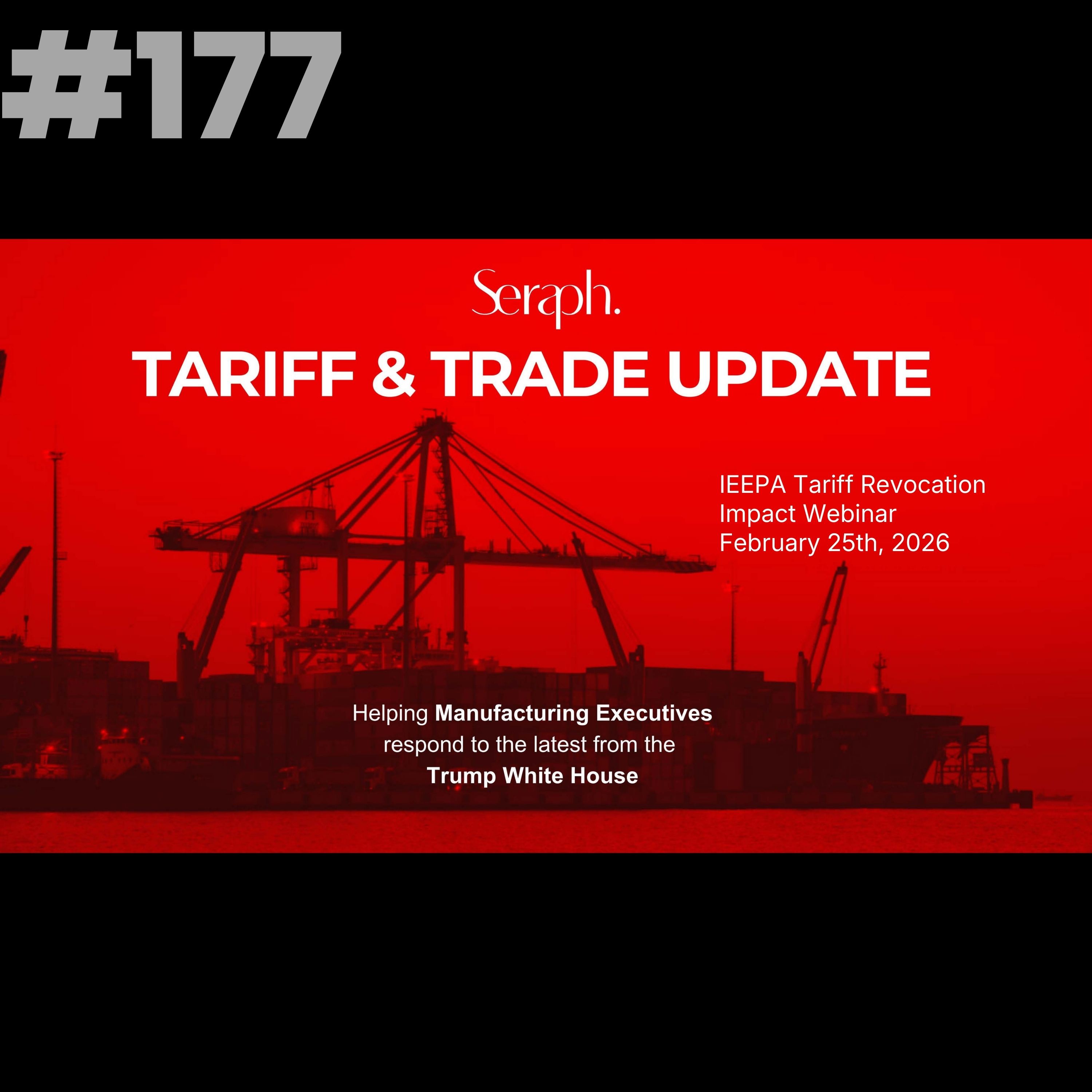
S7 Ep 177IEEPA Struck Down — Why the Tariff Pressure Remains

Download the full webinar slides hereSpecial Audio from the February 20th Seraph WebinarTariffs were struck down.So why does the pressure still feel the same?If the Supreme Court ruled against IEEPA, why aren’t costs meaningfully lower?This special episode is different.It is the full audio recording from the February 20th Seraph IEEPA Tariff Revocation Impact Webinar, led by Ambrose Conroy, CEO of Seraph.In this episode of the Automotive Leaders Podcast, Jan Griffiths joins Ambrose and Harrison Catlin as they break down what the Supreme Court decision actually changed and what it didn’t.Headlines suggested relief. But Section 122 tariffs were implemented almost immediately. Effective rates dropped briefly, then climbed back up — not fully to prior IEEPA levels, but still materially impactful.This conversation goes beyond policy.It is about enterprise risk, supply chain resilience, and what leaders must do next.Themes Discussed in this EpisodeWhat the Supreme Court ruling actually changedHow Section 122 partially restored tariff levelsThe three critical dates: entry date, liquidation date, protest windowHow Post Summary Corrections (PSC) impact refund strategyOEM debit risk and cascading supply chain pressureWhy geopolitics — not just tariffs — is the real long-term riskThe July 2026 convergence: Section 122 expiration and USMCA negotiationsUsing AI and prediction markets to anticipate legal outcomesWhy reshoring must continue regardless of short-term tariff shiftsFeatured Guest:Ambrose Conroy is the Founder and CEO of Seraph, a global operational excellence and manufacturing strategy firm. He advises CEOs, boards, and private equity leaders on supply chain restructuring, footprint acceleration, and industrial resilience in volatile geopolitical environments.Ambrose is known for his reality-first perspective on manufacturing strategy and for translating global uncertainty into decisive operational action.About Your Host – Jan GriffithsJan Griffiths is a champion for culture transformation and the host of the Automotive Leaders Podcast. A former automotive executive with a rebellious spirit, Jan is known for challenging outdated norms and inspiring leaders to ditch command and control. She brings honesty, energy, and courage to every conversation, proving that authentic, human-centered leadership is the future of the automotive industry.Episode Highlights[01:05] Supreme Court strikes down IEEPA tariffs[02:00] Section 122 implemented and effective rates climb back[06:07] What tools remain available to the administration[11:55] Refund mechanics: entry date, liquidation date, PSC filings[14:46] OEM debit risk and supply chain tension[18:08] China, Taiwan, and geopolitical escalation[25:47] July 2026 - Section 122 expiration meets USMCA negotiations[30:00] AI and prediction markets used to model the ruling[32:00] Why tariffs are likely here to stayTop Quotes[11:38] Ambrose: “ Tariffs are a core tenet.”[17:23] Ambrose: “ Pre-COVID supply chain was, was a function that was seen as supportive. Now it's so core, and it's so critical, and it's so impactful so many times because everything is so fragile since we've sought the lowest cost and lowest price and not necessarily taken into account true resiliency. “[27:43] Jan: “Get your arms around the data, get visibility all the way through the supply chain. And make sure that you know those dates, the entry date and the liquidation date, and that you've got the right team of people around you with the right set of expertise.”[26:34] Ambrose: “ The only thing that it is clear to me if you if you want to sell a product in the United States, make it in the United States, source it in the United States.”If this episode resonated, share it with a fellow automotive leader and subscribe to The Automotive Leaders Podcast, where we’re shaping the future of authentic leadership in the automotive industry.This podcast episode is also available on YouTube. Check out our YouTube channel at JangriffithsautomotiveleadersSend us your feedback or questions — email Jan at [email protected].
Feb 26, 202633 min

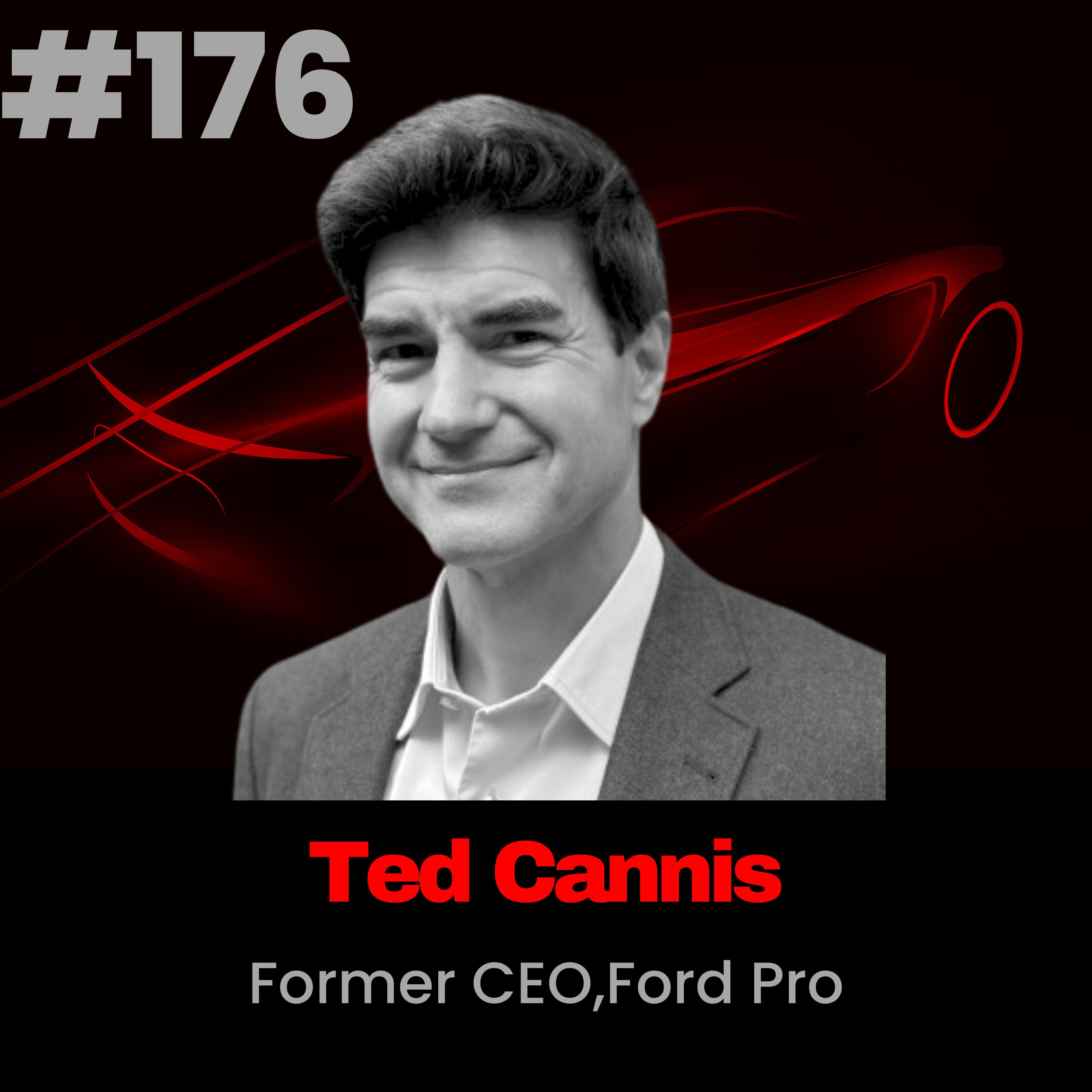
S7 Ep 176Building a $67B Auto Business Within Constraints: The Leadership Behind 230% Growth

This conversation goes straight at the tension every legacy leader feels but rarely names.How do you build something new inside a company designed for stability?How do you move fast inside a system built to control risk?How do you create urgency without burning out your team?In this episode of the Automotive Leaders Podcast, Jan Griffiths sits down with Ted Cannis, former CEO of Ford Pro and longtime executive at Ford Motor Company.Ted didn’t just grow revenue. He helped build an integrated ecosystem of vehicles, software, charging, service, and financing. But this conversation isn’t about the numbers. It’s about the leadership and culture required to produce them.Ted shares what it really takes to drive change inside a legacy organization. Why data is your most powerful ally. Why shared metrics matter more than motivation. Why speed is a discipline. And why every bold initiative faces what he calls “status quo snapback.”He also makes a surprising admission. He’s a self-confessed micromanager. And that opens up one of the most honest leadership moments we’ve had on the show.This episode is about disciplined change.Not hype. Not slogans. Not transformation theater.Real leadership inside real constraints.Themes Discussed in this EpisodeWhy building inside constraints sharpens leadershipThe power of going to the gemba instead of managing from the conference roomUsing data to win enterprise-level changeHow shared metrics break down silosWhy speed requires preparation, not chaosThe danger of “sketchy scoping” in big strategic betsWhat “status quo snapback” looks like inside legacy organizationsCan micromanagement and authentic leadership coexist?Watch the full episode on YouTube - click hereThis episode is sponsored by Lockton, click here to learn moreFeatured Guest - Ted CannisTed Cannis is the former CEO of Ford Pro, where he scaled the business to $67B in revenue and $9B EBIT by integrating commercial vehicles, SaaS, charging, service, and financing into one global ecosystem.Across a 30+ year career at Ford Motor Company, Ted led global electrification strategy, investor relations, and international operations. He is known for combining operational discipline with enterprise-level vision and has been featured in CNBC, The Wall Street Journal, and Forbes.Today, he serves as a strategic advisor and board-level collaborator across mobility, energy, and technology ventures.About Your Host – Jan GriffithsJan Griffiths is the champion for culture change and the host of the Automotive Leaders Podcast. A former automotive executive with a rebellious spirit, Jan is known for challenging outdated norms and inspiring leaders to ditch command and control. She brings honesty, energy, and courage to every conversation, proving that authentic, human-centered leadership is the future of the automotive industry.Episode Highlights[02:47] “Build within constraints” — Ted’s leadership mindset[06:17] Why going to the gemba is a strategic investment, not a luxury[12:16] Using hard data to sell change across the enterprise[15:43] Speed, impatience, and seizing decision windows[19:04] The Culture Change Hub — leaders, teams, rituals, rules, metrics, stories[22:18] Why C-suite sponsorship is non-negotiable[26:23] Pivoting fast when the plan breaks[28:24] “Status quo snapback” and how initiatives quietly die[30:39] Vision and ownership as the core of authentic leadership[32:46] The micromanagement confessionTop Quotes[02:48] Ted: “I build within constraints. Set a vision of where you want to go and be pragmatic about how you get there.”[07:25] Ted: “You can’t be blind. You have to go and see.”[14:14] Jan: “Speed is everything. The way we make decisions, how we make decisions, and the speed of those decisions.”[22:49] Ted: “If you really want change in a large company or a small one, it needs to come from the top.”[28:44] Ted: “The most exciting days for the project are the day it's announced. That is the high. It never gets any better.”[31:59] Ted: “You have to own the pivot. No matter what.”If this episode resonated, share it with a fellow automotive leader and subscribe to The Automotive Leaders Podcast, where we’re shaping the future of authentic leadership in the automotive industry.This podcast episode is also available on YouTube. Check out our YouTube channel at JangriffithsautomotiveleadersSend us your feedback or questions — email Jan at [email protected].
Feb 19, 202636 min

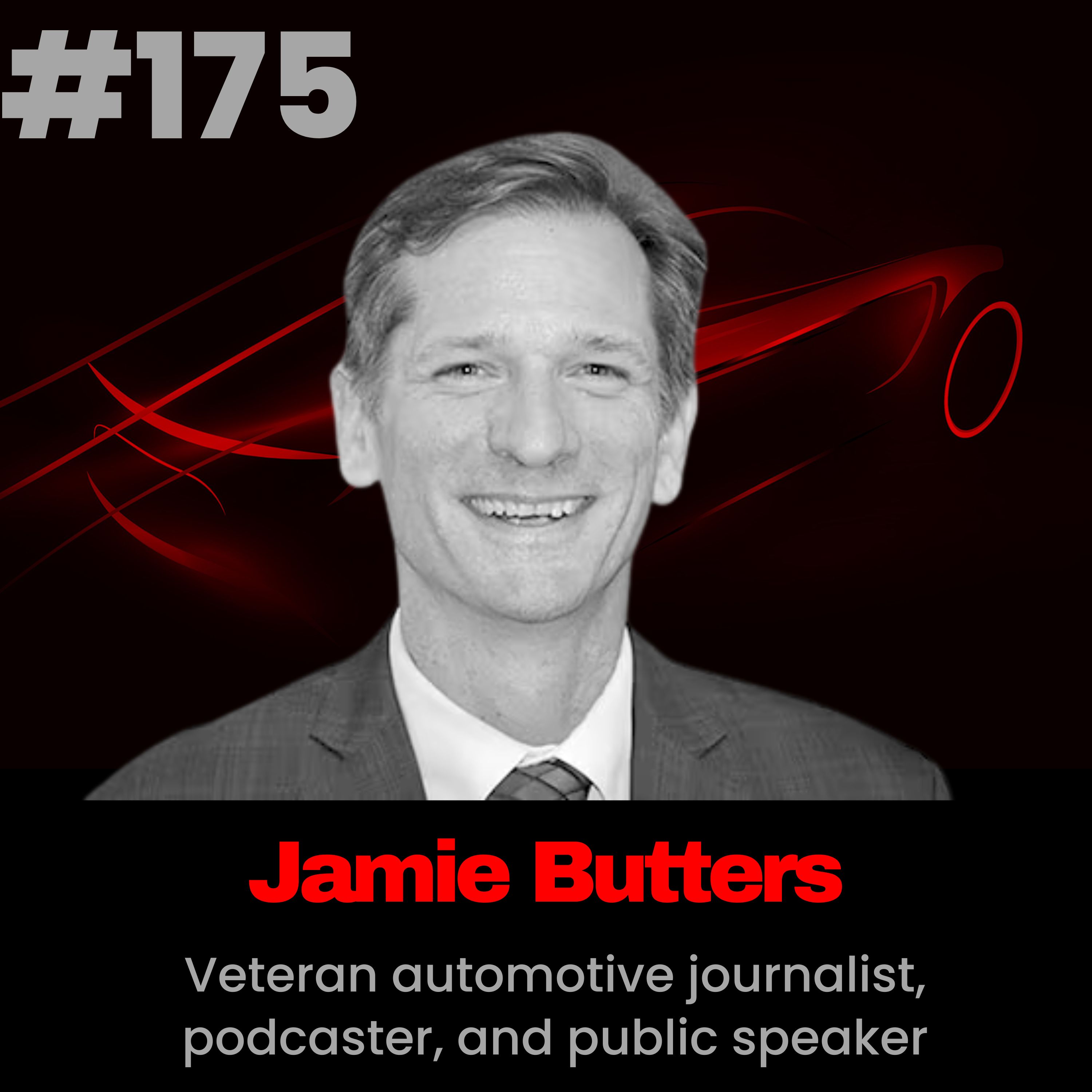
S7 Ep 175Reality Check 2026: Speed, China, AI, and the Hard Truths Automotive Leaders Can’t Ignore

This conversation doesn’t sugarcoat anything. The auto industry is under real pressure, and leaders can’t afford denial or delay.In this episode of the Automotive Leaders Podcast, Jan Griffiths sits down with Jamie Butters, now an independent journalist, speaker, emcee, and content creator who has spent decades reporting from every corner of the automotive ecosystem.Jamie brings a clear, grounded view of where the industry stands at the start of 2026. China’s competitive advantage is no longer theoretical. Affordability is becoming an existential issue. Tariffs and geopolitics are injecting uncertainty that freezes investment. AI is everywhere, but leaders still struggle to separate real value from noise.They unpack why legacy automotive culture slows decision-making, how bespoke thinking drives unnecessary cost, and why speed is now a leadership requirement, not a nice-to-have. The conversation also digs into Tesla’s influence on manufacturing thinking, the future of dealer AI tools, and what’s at stake as the UAW heads into a pivotal leadership year.This episode is about reality. Not hype. Not fear. Just the hard truths automotive leaders need to face if they want to compete, adapt, and lead with courage.Themes Discussed in this EpisodeWhy China’s scale and speed threaten global incumbentsHow affordability became automotive’s silent crisisWhere AI delivers value and where it quietly creates wasteThe cultural cost of bespoke thinking in legacy organizationsTariffs, uncertainty, and their chilling effect on investmentWhat UAW leadership changes could mean for competitivenessWhy speed of decision-making is now a core leadership skillWatch the full video on YouTube - click hereThis episode is sponsored by Lockton, click here to learn moreFeatured GuestJamie Butters is an independent automotive journalist, speaker, emcee, and content creator. He previously served as Executive Editor and Chief Content Officer at Automotive News, Detroit bureau chief for The Wall Street Journal, and automotive editor at Bloomberg. Jamie is known for connecting the dots early, telling the truth plainly, and translating complex industry dynamics into language leaders can actually use.About Your Host – Jan GriffithsJan Griffiths is a champion for culture transformation and the host of the Automotive Leaders Podcast. A former automotive executive with a rebellious spirit, Jan is known for challenging outdated norms and inspiring leaders to ditch command and control. She brings honesty, energy, and courage to every conversation, proving that authentic, human-centered leadership is the future of the automotive industry.Mentioned in this EpisodeAutomotive NewsBloombergThe Wall Street JournalUSMCAUHY RFQ white paperEpisode Highlights[02:08] Jamie’s move to independence and why now is the right moment[04:51] Why China’s competitive threat feels distant in Detroit but isn’t[07:47] Affordability, regulation, and how the industry boxed itself in[13:29] The hidden cost of bespoke thinking in the supply base[17:20] Tesla’s influence on China’s manufacturing mindset[18:30] Using AI where customers don’t see it but value it[25:03] Tariffs, uncertainty, and frozen investment[31:03] What’s at stake in the next UAW leadership cycle[36:18] Why speed of decision-making defines modern leadershipTop Quotes[05:24] Jamie: “It's a real challenge when you're competing with players in an economy that is not a capitalist market economy. They have different motivators; they have different factors that determine who survives. And so, it's a really asymmetric competition. ”[08:24] Jamie: “ They really never made money on small cars. Being able to focus on the bigger ones, it's more profitable, it's less good for the environment, and it does make it harder for low to middle-income people to buy a new vehicle. ”[14:54] Jan: “If you change the process but you’re still feeding it with legacy thinking, what have you really achieved?”[18:50] Jamie: “You should focus where you have the most cost and where the consumer doesn’t really know or care how you get it done.”[25:17] Jamie: “Just having those threats continue to come really paralyzes investment.”[36:14] Jan: “Speed is everything. The way we make decisions, how we make decisions, the speed of those decisions.”If this episode resonated, share it with a fellow automotive leader and subscribe to The Automotive Leaders Podcast, where we’re shaping the future of authentic leadership in the automotive industry.This podcast episode is also available on YouTube. Check out our YouTube channel at JangriffithsautomotiveleadersSend us your feedback or questions — email Jan at [email protected].

Feb 5, 202639 min

S6 Ep 174Why Automation Fails in Manufacturing and the Leadership Shift Required to Fix It

Re-industrializing America sounds bold. Necessary. Inevitable.But on factory floors across the country, automation keeps stalling before it ever delivers real value.Robots sit unused. Projects drag on for years. Leaders know automation is essential, yet decisions stall, risks get avoided, and the same problems repeat. This episode goes straight to the heart of why.Jan Griffiths is joined by Søren Peters, CEO of HowToRobot, a global marketplace helping manufacturers source and implement robotics more effectively. Søren has spent decades leading digital transformation and operational change, giving him a front-row seat to why automation struggles inside real plants, not PowerPoint decks.This conversation moves past hype. It tackles the real blockers: fear-based leadership, siloed decision-making, short-term contracts, poor education, and a complete lack of ownership once robots hit the shop floor. Automation doesn’t fail because the technology isn’t ready. It fails because organizations aren’t.Søren challenges leaders to rethink how they assess risk, train their workforce, and take responsibility for change. Buying a robot isn’t a technology decision. It’s a leadership decision. And without courage, clarity, and accountability, even the smartest automation strategy will collapse.If the automotive industry is serious about rebuilding manufacturing capacity, closing labor gaps, and preparing for an AI-enabled future, leaders must stop waiting for certainty and start owning the change.Themes DiscussedWhy automation failures are leadership failures, not technology failuresThe risk-avoidance mindset is slowing manufacturing transformationHow siloed decision-making kills automation on the shop floorWhy education matters beyond engineers and integratorsThe hidden impact of short-term supplier contracts on ROIWhat successful automation leaders do differentlyWhy ownership and courage matter more than toolWatch the full video on YouTube - click hereThis episode is sponsored by Lockton, click here to learn moreFeatured GuestSøren Peters is the CEO of HowToRobot, a global industrial robot marketplace that helps manufacturers find, evaluate, and implement automation solutions more effectively. He has spent over two decades leading companies through digital transformation, outsourcing, and large-scale operational change across Europe and the United States. Søren brings a pragmatic, leadership-first perspective to automation, grounded in what actually works inside manufacturing plants.About Your Host – Jan GriffithsJan Griffiths is a champion for culture change and the host of the Automotive Leaders Podcast. A former automotive executive with a rebellious spirit, Jan is known for challenging outdated norms and inspiring leaders to ditch command and control. She is the author of AutoCulture 2.0 and the co-host of the Auto Supply Chain Prophets podcast. Jan brings honesty, energy, and courage to every conversation, proving that authentic, human-centered leadership is the future of the automotive industry.Mentioned in this EpisodeHowToRobotUHY RFQ white paperEpisode Highlights[02:55] Re-industrialization sounds great until automation decisions stall for years[04:12] Why factories don’t need humanoids, they need basics that work[06:35] The real reason companies delay buying robots for a decade[09:10] Fear, risk, and leadership paralysis inside manufacturing[12:58] Why training only engineers guarantees automation failure[14:41] Robots are workers, and leaders must manage them as such[18:04] Short-term contracts destroy long-term automation ROI[19:52] Financing, trust, and the reality of buying unfamiliar technology[21:21] What the DNA of a successful automation leader really looks likeTop Quotes[11:20] Soren Peters: “I think it’s leadership. And I think those who want to be the one who takes the torch and says, I will take the risk. I will bear the burden.”[14:52] Soren Peters: “A robot is a worker in a sense, and it comes with different ROIs, it comes with different behaviors.”[15:15] Soren Peters: “And a robot also has a sick day. But we are also saying to everybody, a robot never gets sick — and it’s not, well, but it does.”[25:48] Jan Griffiths: “The tech mindset is let’s get this technology and play with it. Let’s break it. Let’s break it. Let’s iterate it.”If this episode resonated, share it with a fellow automotive leader and subscribe to The Automotive Leaders Podcast, where we’re shaping the future of authentic leadership in the automotive industry.This podcast episode is also available on YouTube. Check out our YouTube channel at JangriffithsautomotiveleadersSend us your feedback or questions — email Jan at [email protected].

Jan 22, 202634 min

S6 Ep 173Leadership After the Storm: What 2025 Taught Us and How to Lead in 2026

2025 didn’t just challenge the automotive industry.It exposed it.Tariffs that shifted overnight. Another chip crisis. A sudden rethink on EVs. Then Ford dropped the bomb: nearly $20 billion in charges as it pivoted away from EVs, stranding capital across the supply chain. And on top of it all, AI is moving faster than most leaders can keep up with.In this solo episode, Jan Griffiths presses pause on the noise and calls it what it really was: feedback.Not chaos.A signal.2025 showed us exactly where legacy leadership breaks under pressure. Command-and-control slowed decision-making. Rigid processes collapsed under uncertainty. And waiting for perfect data became a competitive disadvantage.As we step into 2026, Jan lays out what leadership must become if this industry wants to survive, not just react. She challenges leaders to stop pretending they have all the answers and start learning out loud. To trade certainty for curiosity. Ego for humility. Silos for systems thinking.AI is not the threat. Speed is the reality. And culture is still the differentiator.This episode is a direct, honest conversation with leaders who feel the weight of what’s coming and know the old playbook won’t get them there. Jan breaks down the five leadership categories that will define success in 2026 and beyond, and why standing still is no longer an option.If 2025 cracked the foundation, 2026 is the year leaders decide whether to rebuild or repeat the same mistakes.Watch the full video on YouTube - click hereThis episode is sponsored by Lockton, click here to learn more Themes DiscussedWhy 2025 wasn’t chaos, but critical feedback for automotive leadersThe leadership behaviors that failed under pressureLearning out loud instead of waiting for perfect answersIntellectual humility as a competitive advantageWhy speed now matters more than certaintyHow AI is forcing a shift away from rigid org chartsThe leadership mindset required to win in 2026About Your Host – Jan GriffithsJan Griffiths is a champion for culture change and the host of the Automotive Leaders Podcast. A former automotive executive with a rebellious spirit, Jan is known for challenging outdated norms and inspiring leaders to ditch command and control. She is the author of AutoCulture 2.0 and the co-host of the Auto Supply Chain Prophets podcast. Jan brings honesty, energy, and courage to every conversation, proving that authentic, human-centered leadership is the future of the automotive industry.Mentioned in this EpisodeAI‑Era Leadership Self‑Assessment Episode Highlights[01:26] Reflecting on 2025: Challenges and Lessons[04:32] Leadership Traits for 2026[04:45] Mindset and Intellectual Humility[06:03] Systems Thinking and Bias Awareness[07:20] AI and Business Processes[08:27] Leadership Styles in the Age of AI[09:47] Decision Making and Accountability[11:26] Trust, Culture, and Empowerment[14:51] Humanity and Empathy in LeadershipIf this episode resonated, share it with a fellow automotive leader and subscribe to The Automotive Leaders Podcast, where we’re shaping the future of authentic leadership in the automotive industry.This podcast episode is also available on YouTube. Check out our YouTube channel at JangriffithsautomotiveleadersSend us your feedback or questions — email Jan at [email protected].

Jan 1, 202618 min

S6 Ep 172AI, Trust, and the Human Shift: What Automotive Leaders Must Do Next

Sometimes a conversation hits so deeply that it demands a part two , and that’s exactly what happened after our episode with MIT’s Dr. Bryan Reimer. The response was immediate, and the very first message came from CADIA CEO Cheryl Thompson, who had been quietly diving deep into AI for months. Her reaction captured what so many leaders are feeling right now: excitement, overwhelm, fear, and possibility all at once.This episode brings Cheryl and Bryan together to talk about what AI is really doing inside companies — not the hype, but the human impact. The emotional truth? AI is forcing us to look hard at our culture, our trust levels, and our willingness to unlearn the habits that hold us back. That’s where transformation starts.Cheryl shares how AI has changed the way she works, creates, leads, and even manages her daily life. But she’s honest about the trap many leaders fall into: using AI to produce more… instead of stepping back to breathe, think, and lead. Bryan brings the research lens, grounding the conversation in what AI can do, what it can’t, and how leaders must shift from delegation to collaboration if they want AI to be truly useful.Together they unpack psychological safety, generational differences, the rise of agentic AI, and the cultural tension AI exposes inside legacy automotive. And they remind us that AI will not replace leaders — but leaders who use AI well will absolutely outpace those who don’t.This isn’t a conversation about technology. It’s a conversation about courage, trust, and the future of leadership in an industry that desperately needs to move faster while staying true to its values. Themes Discussed in This EpisodeHow trust and culture determine whether AI succeeds or stallsWhy leaders must collaborate with AI instead of delegating blindlyWhat the Wow, Whoa, Grow framework reveals about human behaviorHow generational differences shape AI adoption and comfort levelsWhy AI in automotive demands unlearning old processes, not just adding toolsThe risk of locking down AI too tightly — and the risk of letting it run wildHow small businesses and startups are using AI to outrun traditional OEMsWatch the Full Video on YouTube - click hereThis episode is sponsored by Lockton, click here to learn moreFeatured GuestsCheryl Thompson, CEO, CADIACheryl leads the CADIA: Culture Evolved, where she equips organizations to build equitable, high-performing cultures. A former manufacturing engineering leader in the automotive industry, Cheryl is known for her human-centered approach to leadership, her commitment to psychological safety, and her skillful integration of AI into learning and development. She helps teams work smarter, remove friction, and accelerate change by pairing technology with deep emotional awareness.Dr. Bryan Reimer, Research Scientist, MITDr. Bryan Reimer is a Research Scientist at the MIT Center for Transportation & Logistics and a founding member of the MIT AgeLab. His work examines how humans and automation interact in real-world conditions, including driving, attention, decision-making, and safety. He leads three major academic–industry consortia focused on human-centered vehicle technology and is the author of How to Make AI Useful, a practical guide for leaders navigating AI’s cultural and operational impact.About Your Host – Jan GriffithsJan Griffiths is a champion for culture transformation and the host of the Automotive Leaders Podcast. A former automotive executive with a rebellious spirit, Jan is known for challenging outdated norms and inspiring leaders to ditch command and control. She brings honesty, energy, and courage to every conversation, proving that authentic, human-centered leadership is the future of the automotive industry.Mentioned in This EpisodeHow to Make AI Useful by Dr. Bryan ReimerCADIAMcKinsey research on the “second muscle” of leadershipEpisode Highlights[02:35] Cheryl’s AI “wow” moment: Enthusiasm turns into overload, forcing her to reset and take the lead back from the tool.[04:06] Bryan on LLMs: Useful copilots, not autopilots — and only one part of a much larger AI ecosystem.[07:18] Human in the Loop: Cheryl and Bryan break down why AI must be viewed as an opinion, not a fact.[11:14] Next-level use cases: Cheryl explains how to move beyond meeting summaries into real business transformation.[14:00] Leaders must stop throwing AI to IT: AI adoption requires business alignment, courage, and clarity.[16:33] Culture and unlearning: Why legacy processes slow AI more than technology does.[20:52] Generational differences: Gen X trusts AI most; boomers the least; Gen Z remains skeptical.[23:03] The collaboration equation: Neural activity drops when we delegate to AI — but rises when we collaborate with it.[32:18] Capturing knowledge before it walks out the door: AI as a tool for organizational memory.[34:29] Final advice: Leaders must experiment, question, and use AI to learn faster than the pace of change.Top Quotes“AI won’t replace us, but lea

Dec 11, 202536 min

S6 Ep 171AI Is About to Change Everything… But Not the Way You Think

AI dominates every conversation in the automotive industry, but very few companies know how to make it truly useful. That focus on real value is what led MIT research scientist Dr. Bryan Reimer to write How to Make AI Useful.The idea began casually over dinner in Lisbon, when someone asked him what he really thought about AI. Bryan didn’t dive into predictions about machines taking over. He focused on something more practical: how AI only matters when it’s built with people in mind.He breaks AI down into three realities: the excitement of what it could do, the fear that follows when we realize what it might do, and the long, steady work required to make it truly valuable.AI can automate the basics and even create new content, but its real strength is amplifying human skill, not replacing it. The goal isn’t an autopilot workforce. It’s a copilot.That means the fear that AI will take jobs is misplaced. AI changes work; it doesn’t erase it. Just as assisted driving has changed how we drive, rather than removing the driver, AI will shift roles and demand new skills.Bryan points out that layoffs blamed on AI are often just business decisions wearing a convenient mask. The real question is how companies use AI to make work better rather than cheaper.To do that, leaders in automotive need to unlearn old habits. Years of rigid processes, slow decision-making, and fear of change make it hard for AI to deliver value.He argues that useful AI requires trust and transparency. It’s hard for any organization to move forward when fear, hidden approvals, and layers of bureaucracy control decisions. If employees can’t be trusted to make decisions, AI won’t save them. The real challenge is cultural, not technical.Bryan expands the conversation globally. Japan is embracing robotics as companions, while Europe is focusing heavily on privacy. Culture shapes how AI grows, and automotive companies need to pay attention to what consumers value, not just what tech can do.He connects this to China as well. China’s speed is not about dumping features into cars. It’s about building products people can afford and use. If Western brands only chase faster or cheaper without real value, they will lose.AI becomes useful when companies start small, test real-world problems, and continually improve the tool until it actually helps people do their work. That progress may cost more in the beginning, but better safety features, more accurate data, and enhanced customer experiences rarely come from shortcuts. The goal is not to replace people. It’s to build technology that helps them perform at a higher level.Watch the Full Video on YouTube - click hereThis episode is sponsored by Lockton, click here to learn moreThemes discussed in this episode:How AI becomes useful only when it is designed to support human judgment instead of replacing workersWhy the “Wow, Whoa, and Grow” framework helps companies move beyond AI hype and build tools that solve real problemsHow assisted driving proves that advanced technology still depends on human responsibility and oversight to deliver safe, reliable resultsThe importance of unlearning outdated processes before applying AI to existing workflows in automotiveWhy a lack of trust inside automotive organizations slows down AI adoption more than the technology itselfLessons from China’s speed in product development and why Western automakers should prioritize value and accessibility over rushed innovationWhat automotive leaders can learn from the pharmaceutical model of testing, releasing, and improving technology through data-driven updates over timeWhy leaders should start small, run narrow pilots, and scale only after AI tools prove measurable value for customers and business resultsFeatured guest: Dr. Bryan ReimerWhat he does: Dr. Bryan Reimer is a Research Scientist at the MIT Center for Transportation & Logistics and a key member of the MIT AgeLab. His work focuses on how drivers behave in an increasingly automated world, using a combination of psychology, big data, and real-world testing to study attention, distraction, and human interaction with vehicle technology. He leads three major academic-industry consortia that are developing new tools to measure driver attention, evaluate how people use advanced driving systems, and improve in-vehicle information design, thereby guiding automakers and policymakers toward safer, human-centered mobility solutions.Mentioned in this episode:MIT Center for Transportation & LogisticsMIT AgeLabMIT AVT | Advanced Vehicle Technology ConsortiumAI Sweden | National center for applied AIAutomotive Suppliers and the Revenue Acquisition Process – Then and Now: 2025 UpdateHow to Make AI Useful: Moving beyond the hype to real progress in business, society, and lifeEpisode Highlights:[03:04] Lisbon, Wine, and a Big Question: A casual dinner in Portugal, fueled by a few glasses of wine, led to a book built around a simple idea: AI only matters when it helps real people, not j

Nov 27, 202540 min

S6 Ep 170Inside Panasonic’s Gigafactory: No Blame, Big Results

Inside Panasonic’s gigafactories in Nevada and Kansas, machines never stop running. Every second, 70 batteries roll off the line, powered by thousands of people working 24/7. At the center of it all is Allan Swan, a Scotsman who left aerospace to lead one of the most ambitious manufacturing operations in America.Allan begins by explaining what a gigafactory really is and what it takes to manage a workforce of almost 8,000 people while producing billions of batteries a year. At Panasonic, Allan flipped the hierarchy, putting his name at the bottom of the org chart to remind everyone that leaders exist to serve their people. For him, leadership isn’t about hitting KPIs; it’s about getting the people side right first. When communication is clear and employees have what they need to do their jobs, the results follow naturally.He shares how Panasonic built a no-blame culture, where problems are met with curiosity rather than fear. Through a system called CIG — Control, Influence, and Gravity — issues are quickly directed to the people who can resolve them, with no hierarchy or politics in the way. One of his favorite examples is the “door story,” where a small request from a team led to significant changes in trust and teamwork across the plant.Allan also explains how recognition helps maintain high morale in an environment that never stops. Teams celebrate wins every day through thank-you cards, high-five points, and open conversations that connect everyone to the company’s mission. The focus isn’t just on electrification and sustainability, but on providing people with meaningful work that can change their lives.Allan’s approach to leadership is anything but distant. He spends time on the factory floor every day, talking with teams, asking questions, and seeing problems firsthand. For him, leadership means being present and approachable, not hiding behind emails or titles. In the end, Allan’s message to other leaders is simple: real change doesn’t come from massive initiatives or slogans. It begins with small, consistent actions that show people that you care. Fix one problem. Listen to one person. Keep showing up. That’s how culture and performance grow together.Watch the full video on YouTube - click hereThis episode is sponsored by Lockton, click here to learn moreThemes discussed in this episode:The shift from aerospace to EV manufacturing and what it taught Allan Swan about leadershipThe evolution of leadership from command-and-control to people-first management in large-scale manufacturingHow Panasonic’s gigafactories produce 70 batteries every second with a people-driven approachWhy focusing on people before KPIs drives long-term performance across Panasonic’s gigafactoriesHow Panasonic’s Control, Influence, and Gravity (CIG) system helps teams escalate issues and make faster decisionsHow recognition programs such as “Did You Win Today?” and “High-Five Points” help sustain motivation in 24/7 production environmentsThe value of hiring people for energy and mindset rather than industry experience in a new manufacturing sectorHow daily visibility and “gemba walks” keep leaders connected to people and grounded in real operations Featured guest: Allan SwanWhat he does: Allan Swan leads Panasonic Energy’s battery manufacturing operations in the United States, overseeing the company’s gigafactories in Sparks, Nevada, and De Soto, Kansas. Under his leadership, Panasonic has grown into the leading global producer of cylindrical lithium-ion batteries, powering much of today’s electric vehicle industry. With a focus on people, innovation, and performance, Allan has helped transform the Nevada facility from a startup into a world-class smart factory producing over two billion cells each year. His work drives Panasonic’s mission to advance clean energy, create thousands of American jobs, and build a more sustainable future.On Leadership: “We've got one job as leaders, that's to make sure our people have got the right tools to do their job. They're accountable for doing the job. We are accountable to make sure they've got the right tools to do their job. And that's what we hone in on every single day. And by doing that, we created a really amazing culture that, quite frankly, KPIs are irrelevant because you just keep blowing past them all the time. And everybody wins.”Episode Highlights:[07:18] People Before Numbers: Success isn’t measured by spreadsheets but by how well leaders equip and support their people to win every day.[11:44] Resilience Through No Blame: Of the 21 traits of authentic leadership, Allan connects most with resilience, built through a no-blame culture where people feel safe to make mistakes, learn fast, and keep moving forward.[17:33] Wrong Question, Right Answer: Instead of playing pricing games, Allan builds trust with EV customers by focusing on transparency; aligning cost curves, solving gaps together, and keeping speed at the center of every partnership.[21:03] Mindset Over Resume: Allan sha

Nov 13, 202544 min

S6 Ep 169How Kim Less Leads and Elevates Nissan Aftersales Across the Americas

When people in the automotive world talk about leaders who bring out the best in others, Kim Less's name always surfaces. As Vice President of aftersales for Nissan Americas, she leads a team of more than 1,600 people in the U.S., Canada, Mexico, and South America.Her leadership philosophy? Constant gentle pressure. The phrase, which came from Danny Meyer, perfectly captures how Kim shows up daily. To her, "constant" means persistence and accountability. "Gentle" means having your team's back while guiding them toward growth. And "pressure" is the drive to win, move with urgency, and deliver. Together, they form the balance she strives for: leading with calm confidence but never without expectation.At Nissan, Kim has spent years redefining what aftersales means inside the organization. For her, aftersales isn't an "afterthought," it's the engine that fuels brand loyalty and future sales. Leading across multiple countries means managing different cultures, languages, and expectations. Kim talks about how she's brought the entire Americas region together as one unified team. She does that by traveling to meet teams in person and building relationships and credibility. Over time, those consistent actions turned into a shared culture built on mutual respect and accountability.As the automotive industry evolves, Nissan is focused on simplifying its processes to make quicker decisions. Kim recalls working with the dealer advisory board to streamline 60 dealer-facing programs; removing or simplifying two-thirds to sharpen focus on what truly matters. To her, simplification isn't about doing less; it's about removing distractions so teams can move faster and stay focused on impact.She ties that same thinking to the importance of trust inside organizations. Once people trust each other and the data and systems they rely on, they no longer waste time validating every decision. That's when speed naturally follows. She also reflects on the personal side of leadership and the lessons from finding balance. Earlier in her career, while raising twins, she often hesitated to step away from work for family events. Over time, she learned that setting boundaries wasn't a weakness but a necessity. Now, she mentors others, urging them to "own their calendar," set limits, and protect their well-being. It's advice she lives by and passes down to emerging leaders who often feel pressured to choose between career and personal life.Watch the Full Video on YouTube - click hereThis episode is sponsored by Lockton, click here to learn moreThemes discussed in this episode:How Kim Less applies “constant gentle pressure” to balance accountability, empathy, and performance in leading Nissan Aftersales AmericasThe leadership lessons Kim Less learned from Saturn and GM that shaped her people-first approach at NissanWhy calm leadership and consistency drive stronger team alignment across multiple cultures and regions in the AmericasThe business case for aftersales as a core growth engine that strengthens brand loyalty and customer lifetime valueThe transformation of Nissan’s Aftersales organization through simplification, streamlined programs, and faster decision-makingThe process of uniting 1,600 employees across North and South America under one shared vision and operating modelThe importance of visiting markets and building relationships in person to earn credibility and alignmentHow setting boundaries, owning your calendar, and leading with authenticity sustain energy and focus in high-pressure rolesFeatured guest: Kim LessWhat she does: As Vice President of Aftersales for Nissan Americas, Kim Less leads the organization’s mission to strengthen customer satisfaction, brand loyalty, and profitability across North and South America. Since her appointment in 2022, she has guided aftersales strategy, dealer operations, and parts logistics with a focus on delivering exceptional ownership experiences. With more than 30 years in global supply chain, manufacturing, engineering, and aftersales, Kim combines operational expertise with a people-first leadership style that’s earned her wide respect across the industry.Episode Highlights:[03:34] Constant. Gentle. Pressure.: Kim shares the simple philosophy that defines her leadership: steady persistence, genuine care, and the right kind of pressure to keep her team moving forward together.[07:07] Where It All Began: Kim reflects on her early years at Saturn and GM, where hands-on experience and teamwork shaped the foundation of how she leads today.[08:29] Leading with Energy: Among the 21 traits of Authentic Leaders, Positive energy, Kim says, can change the tone of a room, lift people through chaos, and turn tough moments into opportunities for progress.[12:14] Rethinking Aftersales: Aftersales isn’t an afterthought — it’s the engine of brand loyalty and future sales, turning every service visit into a lasting customer relationship.[17:49] One Team, One Vision: Bringing together diverse teams across t

Oct 30, 202540 min

S6 Ep 168Built by People: The Cultural Transformation Behind Cooper Standard’s Global Success

How does a 65-year-old automotive supplier reinvent itself for the future? That’s the question Jeff Edwards, Chairman and CEO of Cooper Standard, answers in this episode. With 22,000 employees across 20 countries, Cooper Standard is navigating one of the fastest periods of change in its history; not by clinging to the past, but by transforming how it leads, operates, and builds culture.Jeff explains that the company’s strength begins with its people. Of the ~22,000 employees, 18,000 work in plants every day. They are the heartbeat of the business, and their mindset defines how the company performs. Culture once lived within HR, but today, that’s no longer the case. And at Cooper Standard, every leader owns it. The values and purpose that guide the business aren’t just words in a handbook; they shape decisions, behavior, and priorities across the organization. Jeff reinforces them in quarterly meetings with employees worldwide, making sure new hires understand how the company operates and what it stands for.Jeff explains how Cooper Standard continues to invest in better tools and infrastructure to support faster, more informed decisions — and sees AI as a future opportunity to help teams work smarter.However, Jeff points out that no system works without the right mindset. Change only happens when people are willing to adopt new ways of working together.Jeff also describes how Cooper Standard restructured its organization two years ago into three business units: Fluids, Sealing, and Industrial Specialty. Each has its own president who is responsible for performance. The new setup flattened decision-making and pushed authority closer to the work.Instead of questioning the change, employees embraced it. They wanted to understand how it would improve them, not why it was happening. That response, Jeff says, is the product of a healthy culture built on trust and shared purpose.The conversation closes where every great company story should — with its people. At Cooper Standard, leadership isn’t a title or a process; it’s the daily act of listening, learning, and helping others grow. Decisions are made through conversation, not command. Ideas come from every corner of the company, shaped by the experience of those who build, design, and lead on the floor each day. That shared approach to leadership is what keeps Cooper Standard moving; steady, united, and ready for whatever the next chapter demands.Watch the full video on YouTube - click hereThis episode is sponsored by Lockton, click here to learn moreThemes discussed in this episode:The transformation of Cooper Standard from a legacy automotive supplier into a future-focused global manufacturerThe link between company culture and faster decision-making in today’s competitive automotive industryHow Cooper Standard is strengthening its digital infrastructure to improve decision-making speedThe structural transformation that created three focused business units and improved Cooper Standard’s responsiveness to customersWhy collaboration and teamwork between leaders and teams matter more than hierarchy in a modern organizationThe importance of maintaining zero-incident safety standards as a reflection of company culture and care for employeesThe connection between trust, open communication, and long-term success in a global automotive supply chainFeatured guest: Jeff EdwardsWhat he does: Jeff Edwards, Chairman and CEO of Cooper Standard, brings nearly four decades of experience in the automotive industry. Since joining the company as CEO and Board member in 2012, and later assuming the role of Chairman in 2013, he has focused on driving long-term value through culture, innovation, and results. Before Cooper Standard, he spent 28 years at Johnson Controls, where he rose through a series of leadership roles to become Corporate Vice President and Group Vice President and General Manager of the Automotive Experience Asia Group. He also serves on the Board of Directors of Standex International Corp., contributing to its Compensation and Nominating & Corporate Governance Committees.On Leadership: “When you're responsible for as many folks as our plant managers are, you find that courage to act or courage to not act is the way you ultimately define success. So, it isn't always about the decision you made. You may decide to not do something and that might be the best one you've ever made. I think, to be willing to open up and think differently and listen for answers around the world, at least within the automotive industry, is important.”Episode Highlights:[02:23] Built by People, Not Walls: Culture isn’t defined by logos or buildings—it’s shaped every day by the 18,000 people on the plant floor who own problems, fix them, and keep getting better.[03:39] From Command to Connection: Leadership at Cooper Standard starts on the shop floor, where accountability, collaboration, and shared purpose have replaced the old command-and-control mindset.[05:36] Culture Isn’t an HR Pro

Oct 16, 202537 min

S6 Ep 167Beyond PR: Why Employees Are the Most Important Audience You Have

Why do so many companies spend millions shaping their external image while missing the most important audience: their own people? That’s the question Jan Griffiths brings to Tina Kozak, CEO of Franco, in this episode of the Automotive Leaders Podcast. Together, they explain why internal communication is often overlooked, and what leaders can do to fix it.Tina talks about her “head and heart” style of leadership, which balances business strategy with empathy and emotional intelligence. She shares how mentors and coaches shaped that approach and how it helped her lead Franco through a recent acquisition. While the finance team handled the numbers, she put her energy into people, making sure employees and clients felt supported through the change.In legacy industries like automotive, employees are still too often seen as replaceable. Tina challenges that thinking, arguing that leaders earn loyalty when they consistently support their people, not just when business is booming.Technology and AI are also discussed. Tina shares examples of how Franco uses tools like generative AI to make communication easier and more accessible for employees. Jan connects it to her passion for internal podcasts, especially when paired with AI translation, to give shop-floor workers a direct line to leadership in their own language. Both agree that leaders often underestimate how much their words and actions ripple through employees’ lives, far beyond the workplace.Jan admits she used to see communications as nothing more than “corporate messaging.” She even remembers being afraid to post on LinkedIn without approval; a fear that silenced genuine voices and wasted a chance to connect.Tina builds on this, explaining how employees can be a company’s greatest ambassadors if supported with the right tools and freedom. Authentic advocacy, she says, is far more powerful than polished ads.Tina closes with practical advice: start with empathy. Instead of only pushing out the messages leadership wants to deliver, consider what employees want and need to know. Ask questions, listen carefully, and act on the patterns you hear. That, she argues, is how internal communication shifts from a one-way broadcast to a true partnership.Watch the Full Video on YouTube - click hereThis episode is sponsored by Lockton, click here to learn moreThemes discussed in this episode:The “head and heart” leadership style that balances strategy with empathy and emotional intelligenceLessons from mentors and coaches that shaped Tina Kozak’s leadership approach in the automotive industryHow focusing on people, not just numbers, made Franco’s acquisition successfulWhy legacy industries like automotive struggle with internal communication and employee connectionHow consistent communication builds trust, loyalty, and long-term employee engagementThe role of technology and AI in simplifying and improving employee communicationThe missed opportunity when leaders dismiss communications as “corporate messaging”How employee advocacy strengthens culture and why authentic voices beat polished campaignsFeatured guest: Tina KozakWhat she does: As CEO and majority shareholder of Detroit-based Franco, Tina Kozak leads one of the region’s top integrated communications agencies. She combines strategic insight with a human-centric approach she calls “Head and Heart” leadership, guiding her team and clients with equal focus on results and empathy. Under her leadership, Franco has grown rapidly, expanding from a traditional PR firm into a full-service agency delivering communications strategy, change management, and internal communications support across industries.On Leadership: I am a head and heart leader. I got here because I've studied, I'm smart and intellectual, I know business strategy, I'm curious, and I'm a good listener. But the heart piece is equally, and sometimes, more important. I mean, the emotional intelligence and sort of that human-centric view of business. So, I take a very integrated look at my leadership and my responsibilities as a leader and think about it as the head and the heart. Mentioned in this Episode:Automotive Suppliers and the Revenue Acquisition Process – Then and Now: 2025 Update Episode Highlights:[02:25] Head and Heart: Tina describes herself as a “head and heart” leader—grounded in strategy and intellect but driven just as much by empathy, curiosity, and the human side of business.[05:00] Shaped by Mentors: From a tough-but-nurturing journalist to a coach who pushed her to define her values, Tina’s leadership journey was built on guidance that made her own style possible.[08:04] Heart First, Vision Clear: When asked which of the 21 traits stand out, Tina points to two: leading with heart and always casting a vision. For her, it’s not enough to have purpose—you have to communicate it in a way that connects everyone who matters.[08:49] People Over Paper: Tina explains why Franco’s acquisition worked by focusing less on spreadsheets and more on peop

Oct 2, 202534 min

S6 Ep 166From Power to Partnership: Why Automakers Have to Reinvent How They Do Business

Ford just made waves with news of a $30,000 EV pickup built on a universal platform. It promises fewer parts, lower costs, and faster assembly. But Jan Griffiths asks a bigger question: if automakers can reinvent the product, why not reinvent the way business gets done?That’s where Kate Vitasek comes in. As the creator of the Vested Methodology, Kate has spent more than 20 years studying how companies negotiate. She joins Jan to unpack how the old “win at all costs” mindset still lingers in the industry and why it’s holding leaders back.Kate walks through the history: the 80s and 90s were all about leverage and power. The 90s brought interest-based bargaining, which used data instead of bravado. More recently, companies are experimenting with collaboration, where both sides actually work together to solve problems and create value.But change doesn’t come easy. Short-term wins might seem like progress, but they often backfire. Kate describes this as “shading,” when the other side feels mistreated and resists or retaliates. She uses examples from union negotiations, supplier relationships, and even global trade disputes to show how this cycle keeps repeating.Collaboration offers a different path. Instead of focusing only on price or concessions, it creates agreements that match intent with execution, protect both parties, and provide space for innovation.Kate explains how her Vested framework turns adversarial supplier or union relationships into productive, long-term partnerships built on trust and results. Still, consistency is key: you can’t have one division trying to collaborate while another sticks to power plays.Jan ties this back to leadership. Command-and-control might have worked decades ago, but it doesn’t inspire people now. Negotiation that depends on control and bravado is outdated in the face of current challenges. Leaders who show up with openness, clarity, and a willingness to co-create solutions will succeed.And the advice for leaders listening? Start small. You don’t need to change everything overnight. Pilot a collaborative negotiation on one deal, measure the results, and use that success to expand the approach. Watch the full video on YouTube - click hereThis episode is sponsored by Lockton, click here to learn moreThemes discussed in this episode:The shift from power-based negotiation to collaborative partnerships in the automotive industryThe evolution of negotiation models from the 1980s to today’s business environmentThe role of trust, transparency, and shared outcomes in strengthening supplier relationshipsWhy authentic leadership aligns with collaboration better than command-and-control managementHow adversarial union negotiations can transform into long-term, cooperative agreementsThe connection between cultural consistency and successful collaborative business modelsWhy outdated power tactics undermine innovation and efficiency in global supply chainsHow the Vested Methodology creates sustainable value for both buyers and suppliersFeatured guest: Kate VisatekWhat she does: Kate is a recognized authority on strategic partnerships and the creator of the Vested® business model, a framework that helps organizations move from “what’s in it for me” to “what’s in it for we.” An accomplished author of seven books and a faculty member at the University of Tennessee, she combines award-winning research with real-world experience from companies like P&G and Microsoft to show leaders how to build collaborative, innovative, and sustainable business relationships.Mentioned in this episode:Getting to We: Negotiating Agreements for Highly Collaborative RelationshipsA New Approach to Contracts by David Frydlinger, Oliver Hart, and Kate VitasekWhat Is Vested?Collaborative Contracting CourseVested Executive Education CourseAutomotive Suppliers and the Revenue Acquisition Process – Then and Now: 2025 UpdateEpisode Highlights:[04:30] From Power to Partnership: Negotiation has evolved from leverage and bravado in the 80s to today’s growing shift toward collaboration and shared value.[10:31] The Illusion of Short-Term Wins: Power-based negotiation might deliver quick gains, but it breeds resentment and retaliation. Kate explains how this “shading” effect, seen in cases like GM’s bankruptcy talks, shows why leaders must shift toward long-term collaboration.[13:17] Collaboration Isn’t Slower: Power-based negotiations drag on with endless trade-offs, while collaborative deals set clear principles from the start. Kate explains how the Vested Methodology not only delivers better results in the same timeframe but can even turn toxic, adversarial relationships into trusting, long-term partnerships.[17:56] Power’s Hidden Costs: Monopoly deals may lower prices upfront, but they trigger retaliation and rising long-term costs. Kate explains why leaders need clear strategies and collaborative processes to break out of this cycle.[20:56] Ego Kills Deals: Lack of trust can be fixed with education, but ego is har

Sep 18, 202535 min

S6 Ep 165Liderazgo, Cultura y la Incertidumbre que Enfrentan los CEO de la Industria Automotriz

This episode is also available in English - click hereLa carrera de Tony Trecapelli en la industria automotriz comenzó en Saturn, donde pudo ver, de primera mano, cómo podía ser la cultura centrada en personas. Se confiaba en los empleados, se fomentaba la colaboración y los líderes trataban a la fuerza de trabajo como compañeros. Ese ambiente formó su perspectiva desde el principio. Cuando después entró a GM, sintió un ambiente muy diferente. Las decisiones se tomaban arriba y se esperaba que las personas siguieran las órdenes sin cuestionarlas. Ver ambas caras de la industria le permitió a Tony decidir qué tipo de líder quería ser. En vez de imponer y controlar, se comprometió a liderar dando entrenamiento y apoyo.Ahora, como presidente y CEO de Gemini Group, Tony aplica esas lecciones todos los días. Nos habla sobre cómo crear un ambiente de trabajo donde las personas pueden intentar, cometer errores y aprender sin miedo a ser castigados. Desde su punto de vista, así es cómo se crea resiliencia: no evitando los riesgos, sino enfrentando los retos y adaptándose juntos.Tony también reflexiona sobre las raíces de Gemini: un pueblo pequeño en Michigan. Es un lugar donde la gente se conoce, las relaciones importan y la compañía se esfuerza en mantener ese espíritu vivo incluso mientras opera a nivel global. Describe cómo esos valores influencian a diario la toma de decisiones y ayudan a estabilizar la organización en una industria impredecible.La conversación aborda la realidad de ser un proveedor de segundo nivel. Tony comparte cómo los aranceles, las transiciones de vehículos, EV e híbridos y la competencia global crean en conjunto incertidumbre constante. En vez de fingir tener todas las respuestas, se enfoca en ser transparente y abierto con su equipo, asegurándose de comprender los retos y sentirse conectado con la misión más importante.Tony también se abre a un nivel más personal. Nos platica sobre qué lo motiva como líder, las rutinas que lo preparan para el día y las maneras en las que recarga sus baterías fuera del trabajo.El episodio cierra con preguntas y respuestas de la audiencia en vivo, dándole a Tony la oportunidad de responder directamente preguntas sobre el futuro de Gemini, su estilo de liderazgo y las lecciones que lo formaron. Los oyentes obtendrán de esta conversación más que una historia sobre la trayectoria de un líder; encontrarán un vistazo honesto al liderazgo en la industria automotriz hoy en día. El mensaje de Tony es muy directo: el liderazgo se trata de poner primero a las personas y la cultura es lo que lleva a las compañías a través del cambio.Los temas que se tratan en este episodio:Las lecciones de liderazgo que Tony Trecapelli tomó de la cultura colaborativa de Saturn y aplicó en su carreraLa diferencia entre liderazgo de servicio y los estilos de comando y control de las organizaciones automotricesPor qué Tony lidera al Gemini Group con una mentalidad de coach, que anima a mejorar a través de los erroresLas realidades y los retos diarios de los proveedores de segundo nivel en la volátil cadena de suministro automotrizEl impacto de los aranceles, las transiciones EV y la incertidumbre política sobre las decisiones comerciales para los proveedoresCómo han moldeado el enfoque de liderazgo de Tony sus mentores, sus hábitos personales y valoresPor qué la transparencia y la comunicación clara son esenciales para fomentar la confianza durante periodos de cambioInvitado Especial: Tony Trecapelli A qué se dedica:  Anthony A. Trecapelli es el CEO de Gemini Group, dirige las operaciones a lo largo de 18 sedes y más de 1,400 empleados. Se unió a la compañía en 2013, trayendo consigo más de tres décadas de experiencia en la industria automotriz.Su participación en el sector va más allá de Gemini. Anthony forma parte del Consejo Asesor de Ingeniería de Manufactura de Ferris State y de la Junta de la GLBMA en la Universidad Estatal del Valle de Saginaw. También es miembro de la Asociación de Proveedores de Equipos Originales (OEM), contribuyendo con conversaciones más profundas que moldean la industria.La formación académica de Anthony incluye una licenciatura en Administración de Empresas de la Universidad de Phoenix, una maestría en Operaciones de Manufactura de la Universidad de Kettering y un certificado en Sistemas de Manufactura Flexible Lean.Fuera de sus roles profesionales, ha dedicado tiempo al trabajo voluntario con grupos como SAE Wheels in Motion, Rochester Community Schools y Oakland Township Fire & Rescue, lo que refleja su compromiso con la comunidad y la industria.Sobre el Liderazgo: “¿Quién soy como líder? Sin importar cuánto intente ser otra cosa, soy coach y sirvo. Me encanta dar entrenamiento. Me encanta ayudar a las personas a convertirse en algo que nunca imaginaron que podrían ser. Me encanta servir  a los demás. Me encanta servir a mi familia y a la comunidad. Y lo he hecho. Eso es lo que me impulsa. Si no tuviera gente a qui

Sep 5, 202548 min

S6 Ep 164Leadership, Culture, and Navigating Uncertainty as a CEO in the Auto Industry

This episode is sponsored by Lockton, click here to learn more This episode is available in Spanish - click hereWatch the full video on YouTube - click hereTony Trecapelli's career in automotive began at Saturn, where he saw firsthand what a people-centered culture could look like. Employees were trusted, collaboration was encouraged, and leaders treated the workforce as partners. That environment shaped his perspective early on. When he later moved into GM, the environment felt very different. Decisions came from the top, and people were expected to follow orders without question. Seeing both sides of the industry gave Tony a clear choice about the kind of leader he wanted to be. Instead of command and control, he committed to leading through coaching and support.Now, as President and CEO of Gemini Group, Tony applies those lessons every day. He talks about creating a workplace where people can try, make mistakes, and learn without fear of punishment. In his view, that's how resilience is built — not by avoiding risk, but by facing challenges and adapting together.Tony also reflects on Gemini's small-town Michigan roots. It's a place where people know each other, relationships matter, and the company works hard to keep that spirit alive even as it operates globally. He describes how those values influence daily decisions and help steady the organization in an unpredictable industry.The conversation turns to the realities of being a tier two supplier. Tony shares how tariffs, EV and hybrid transitions, and global competition create constant uncertainty. Instead of pretending to have all the answers, he focuses on being transparent and open with his team, making sure they understand the challenges and feel connected to the bigger mission.Tony also opens up on a more personal level. He talks about what fuels his drive as a leader, the routines that set the tone for his day, and the ways he steps back to recharge outside of work.The episode closes with a live audience Q&A, giving Tony the chance to respond directly to questions about Gemini's future, his leadership style, and the lessons that shaped him. What listeners get from this conversation is more than a story about one leader's journey; it's an honest look at leadership in automotive today. Tony's message is straightforward: leadership is about people first, and culture is what carries a company through change.Themes discussed in this episode:The leadership lessons Tony Trecapelli carried from Saturn’s collaborative culture into his careerThe difference between servant leadership and command-and-control styles in automotive organizationsWhy Tony leads Gemini Group with a coaching mindset that encourages growth through mistakesThe daily realities and challenges tier two suppliers face in a volatile automotive supply chainThe impact of tariffs, EV transitions, and political uncertainty on business decisions for suppliersThe role of mentors, personal habits, and values in shaping Tony’s leadership approachWhy transparency and clear communication are essential for building trust during times of changeFeatured guest: Tony Trecapelli What he does: Anthony A. Trecapelli is the CEO of Gemini Group, where he leads operations across 18 locations and more than 1,400 employees. He joined the company in 2013, bringing with him over three decades of experience in the automotive industry.His involvement in the field extends beyond Gemini. Anthony serves on the Ferris State Manufacturing Engineering Advisory Board and the GLBMA Board at Saginaw Valley State University. He is also a member of the Original Equipment Suppliers Association, contributing to broader conversations shaping the industry.Anthony’s academic background includes a bachelor’s degree in Business Management from the University of Phoenix, a master’s in Manufacturing Operations from Kettering University, and a certificate in Lean Flexible Manufacturing Systems.Outside of his professional roles, he has dedicated time to volunteer work with groups such as SAE Wheels in Motion, Rochester Community Schools, and Oakland Township Fire & Rescue, reflecting his commitment to community and industry.On Leadership: “Who am I as a leader? No matter how hard I try to be something else at times, I'm a coach and I'm a servant. I love coaching. I love to help people become something they never thought they could be. I love to serve. I love to serve others. I love to serve my family. I love to serve the community—and I have. That's what turns my wheels. If I didn't have people to serve, I would not be the person who's sitting here in front of you today. That's for sure.”Mentioned in this episode:Leading Through Change: The Culture Shift Automotive Leaders Need to Compete Today with Terry WoychowskiAutomotive Suppliers and the Revenue Acquisition Process – Then and Now: 2025 UpdateEpisode Highlights:[03:34] Built on Saturn’s Culture: Tony reflects on how his time at Saturn shaped his ide

Sep 4, 202553 min
@gravitasdetroit