
The Arise Podcast
142 episodes — Page 2 of 3

S4 Ep 11Season 4, Episode 11: Bethanee Randles of Elevate Strength & Conditioning speaks with Danielle S. Castillejo about Small Business, Equity, and Inclusion
WE BUILD POWERFUL HUMANS www.elevatestrengthco.com@bethaneerandles@elevatestrengthcoMeet the Team HERE. (https://www.elevatestrengthco.com/our-team ) Welcome to Elevate Strength and Conditioning, Home of Bainbridge Island’s Most Inclusive Fitness CommunityHOME OF BAINBRIDGE ISLAND’S MOST INCLUSIVE FITNESS COMMUNITYACCOUNTABILITY: Every member is important to our coaching staff. Each person will have a full accountability partner in every staff member, paired with a community that will support you every step of the way.Elevate is not just a gym where you pay a membership, Elevate is a family. Your goals are our priority. COMMITMENTWE CARE ABOUT YOUR GOALS.We are committed to helping you become your strongest, most confident self.Every session spent working with our highly skilled staff will help you, “become the machine,” and prepare you to move through life with ease and confidence in your movement. Our mission is to help you actualize yours, one step and one drop of sweat at a time, at a pace that works for you.GRITWe are going to do hard things. We are going to struggle. We are going to fail. We are going to succeed. We will do all of these things together. Strength is the key piece of everyone's individual independence in movement, and together, we will overcome obstacles to become stronger, more capable humans.INTEGRITYWe are honest in our assessments and programming to meet each person where they are so we can take them where they want to be. We believe in our method and our programming and its ability to help every single member progress responsibly and with quality movement. Transcripts:Danielle (00:38):Welcome to the Arise Podcast, conversations on faith, race, justice, gender, and healing. Uh, so proud to welcome my dear friend, uh, Bethany Randall's, owner of Elevate Strength and Conditioning on Banbridge Island, Washington. And this girl, this friend of mine, really knows and cares for human beings. And so here we go. Um, that I'm recording. Okay. Got it. Well, hey, Bethany, uh, welcome to recording a podcast with me. I've been wanting to do this for a long time, so it feels really special and important, and in fact, I just saw you today, so that was fun. Yeah. I brought my whole, well, three of my kids with me, so that was kind of a surprise for you and also for me, . Yeah, no, Bethany, I wanted to just, people may be like, well, how did Danielle and Bethany know each other? And I would say, it's been like a decade, right? Bethanee (01:39):Yeah. Yeah. It's been, let's see, yeah, it's been at least nine years since I've met you, right? Nine years. Yeah. And for anybody watching this, just just know that my two, uh, French bulldogs are in the room, so if you hear any funny noises, it's just them. And, sorry, . Um, Danielle (02:00):That's great. Um, yeah. So I met you at the Y M C A and I came to one, I think I came to your ripped class first and then started working out, and that was when it was like in a smaller room, but eventually it grew to like the gymnasium to where you had people lined up. Bethanee (02:19):Yeah. Yeah. So when I met you, sorry, the dog's cracking me up. Um, when I met you, I was working at the Y and I might have still been a volunteer at the Y I'm not sure if I was an actual employee there, but, um, I started teaching some group fitness classes there, uh, kickboxing, cycling ripped, which was a, like a high intensity interval class. Um, and when I started, I was being trained by two other instructors, and eventually I was able to go off and have my own classes. Um, and then they kind of grew into really big classes. And that was kind of the start of my, um, career and teaching fitness to others. So, but I, I, you and Louis would come to those classes, which was great. Danielle (03:06):That's true. And I remember he filled out like a comment card once, , do you remember that comment card? Bethanee (03:12):Yeah. I still have that comment card. . Yeah.Danielle (03:16):Yeah. Um, yeah. Well, then I started doing some personal training with you there, and you actually introduced me to some movements that weren't a part of the classes. I think it was like deadlift and cleans, um, and just a lot of laps around the upper track, like bear crawl laps sometimes. I remember those. So just a lot of, um, fitness. But the one thing I remember about you from the very beginning, and that still stands out every time I see you, is that you, the way you relate to people and the way you show up is consistent and kind and inviting. And that, not that I don't love to work out. I do. I do it on my own too when I can. Um, but I, I did just enjoy showing up to get to hang with you and experience being with you. So, um, yeah. Bethanee (04:09):Yeah, yeah. So you're talking about, you know, just the time you spent kind of around me, I guess we got to spend more time with each other, whether it was in the private training or in the classes. And, um, we developed a friendship mm-hmm. over the years. Uh, ye

S4 Ep 10Season 4, Episode 10: Therapist Jennifer Jordan and Danielle S. Castillejo talk about Spiritual Abuse and It's Impacts
Website is reclamationcounseling.net and my instagram is @reclamationcounselingllcJenn is a therapist and writer who resides in Mobile, Alabama. She is also currently working as a fellow with the Allender Center. A lifelong resident of the south and a mother of four wild and remarkable daughters, she is passionate about reclamation. She loves to see those who know the legacy of trauma carve new paths forward and reclaim their voices, their bodies, and their stories - that they may truly live. She is currently taking new clients for therapy within the states of Alabama and Florida and also has story work coaching availability for those across the country.Danielle:Welcome to the Arise Podcast, conversations on faith, race, justice, gender, and healing. And today, I'm so honored to be joined by a therapist and a colleague, Jennifer Jordan. We talk a little bit about spiritual abuse and its impacts, so, uh, link in notes to get ahold of her bio and find out how you can hear more from her. Just so honored to have this conversation. Yeah. It's, it's really good to be with you. You know, I got, I got to know Jen a little bit. Do you prefer Jen or Jennifer?Okay. I got to know you a little bit through our, when we intersected at a training course at the Lander Center, and we were in the same group, and I was like, oh, I like that woman. Um, I loved your vulnerability, your skill as a facilitator. I trusted you, and then just who you emanated as a person. And so it feels really like an honor to get to talk with you in this space, like on a podcast. So thank you for coming.Jennifer (01:44):Yeah. I'm so glad to be here and like, echo everything you're saying, like it feels really fun and exciting and like, um, uh, an honor to get to have this conversation. Mm-hmm. , you know, outside of the context that I've known you previously, so.Danielle (02:00):Right. Um, you know, like, I don't know if you're familiar with my pod, with our podcast, but, um, Maggie is on a break right now, like doing grad school and doing other things. But a lot of what we've noticed since the pandemic and since we've started talking on the podcast is how much spiritual abuse has been highlighted. Of course, prior to even, I think that awareness was the me Too movement, and then just patriarchy just seems like dripping every, like in all the systems we operate in mm-hmm. . And so yeah. As a clinician, as a therapist, like, before we jump into that, just love to hear like, what are you doing, where are you located, and what are your passions around serving, uh, people?Jennifer (02:49):Yeah, so I'm in Mobile, Alabama, down in the south, um, working as a therapist. Um, so I see clients, um, see clients in, um, Alabama and Florida, and then also offer some, um, a bit of a different service story work, consultation to people outside of, um, those states. But, um, really, really passionate. Um, my, my, my practice is called Reclamation Counseling. I feel super passionate about helping people to reclaim, um, what's been taken. Um, whether that's, um, their, their bodies, right, their voices, um, or just their stories have kind of been co-opted into a larger narrative, um, that, that removes their personhood and their individuality, um, and their culture. Um, I think that that's, that's my passion. I think it comes out in different ways, um, depending on the type of, uh, client that I'm working with. But, um, that's what I'm, that's what I'm about. And, and it's a major, it's a major thing for me. It's a big deal for me because that's been so much of my story. Um, and so, yeah, that, that's where I'm at. That's what I do. It's what I'm about.Danielle (04:02):I love that idea though. Like reclaiming, I think you said bodies and stories mm-hmm. . So when you think about that reclaiming process, like what do you see happening for clients or people you work with or maybe in your own life, if you can just speak to that a little bit.Jennifer (04:20):Yeah. So there's so much overlap there certainly, um, but overlap in terms of, um, like what I see happening with my clients and then what I see happening with myself. Um, but, you know, at the root, um, like naming the truth of the stories, the stories of both our personal individual lives within our families of origin, but then also, um, the larger narrative, like the stories of our ancestors, the stories of the culture that we come from, um, and, and as we piece together the truth of those stories, um, and, and, and the ways that, um, buying into, um, falsified stories, um, have cost us, um, that process of reclamation can begin. Um, and so, you know, you talk about spiritual abuse and patriarchy and pure culture and, um, and, and, you know, white supremacists, like all these things are so overlaid and so, um, so connected. But, um, so much of my process has been, um, like naming these multiple layers, these multiple layers of harm, um, that have like, been the building blocks on which my particular stories of ha

S4 Ep 9Season 4, Episode 9: Alethea Lamberson & Danielle S. Castillejo on Tiffany Cross, Elections and Equity
From Danielle: "Alethea is a skilled facilitator, and compassionate truth teller - and all around good people. Alethea teaches me, through her way of moving in the world, to continue to use my own voice. I know her to bring her awareness in difficult spaces for herself and others in moving towards healing. Alethea lives her life through the lens of love."I would be honored to co-host a podcast with her any time. She is also a DEI consultant, lives in Atlanta, GA, and loves being an auntie! Is...." A Black woman. Love being a black woman. Proud to be a black woman single, live in Atlanta, Georgia. Love it here. One of the homes of the civil rights movement. So it's been great to live here. And I love, one of the things I love about living here is I'm in the majority in a lot of places, which I was not used to prior to six years ago when I moved here. So it's part of, I feel like who I am and what I get to experience in my day to day, which is refreshing. I have served in the non-profit sector for the last 10 years specifically in a sports ministry context. But over time, that evolved to getting into doing work around training and development in the areas of race, power, privilege, ethnicity, culture in the gospel. And so really for my own journey, one understanding of how being a racialized person in a racialized society, what my experience has been. And I didn't have language for a lot of my experiences until I was probably 27 years old and realized that God cares about that. So that was just so new to me. So I feel like part of who I am is helping others understand themselves first and foremost of how they experience the world, how they show up in the world how they navigate the world. And then adding the faith perspective in as well and combining the two. And so that's very much a part of who I am is our history as followers of Jesus in this sense matters, but also who we are as people in whatever place we call home. For me it's here in the US in Atlanta, Georgia." Danielle (00:40):Welcome To the ARise podcast, conversations on faith, race, justice, gender and healing. And just wanna welcome a colleague and a dear friend. She's located in the Atlanta area and she gives herself a robust introduction here and I love it because it is who she is. She about belonging, she is about being with others in their stories. She's about being authentic and true to what she believes. And I'm just so honored to have her with me today and it's election season. So we're gonna get into it and talk a little bit about that belonging Tiffany Cross from MSNBC whose contract wasn't renewed. And I encourage you to listen in and with curiosity and hold space for any kind of resistance you feel and just be curious about that and jump in with us. I mean, let's get into it. But Alicia, tell me a little bit about who you are, what you do. Yeah, jump in. Who are you?Alethea (01:52):, who am I? That's a great question. Are you? I am a black woman. Love being a black woman. Proud to be a black woman single, live in Atlanta, Georgia. Love it here. One of the homes of the civil rights movement. So it's been great to live here. And I love, one of the things I love about living here is I'm in the majority in a lot of places, which I was not used to prior to six years ago when I moved here. So it's part of, I feel like who I am and what I get to experience in my day to day, which is refreshing. I have served in the non-profit sector for the last 10 years specifically in a sports ministry context. But over time, that evolved to getting into doing work around training and development in the areas of race, power, privilege, ethnicity, culture in the gospel. And so really for my own journey, one understanding of how being a racialized person in a racialized society, what my experience has been. And I didn't have language for a lot of my experiences until I was probably 27 years old and realized that God cares about that. So that was just so new to me. So I feel like part of who I am is helping others understand themselves first and foremost of how they experience the world, how they show up in the world how they navigate the world. And then adding the faith perspective in as well and combining the two. And so that's very much a part of who I am is our history as followers of Jesus in this sense matters, but also who we are as people in whatever place we call home. For me it's here in the US in Atlanta, Georgia.So that's very much part of who I am. That's the type of work I do. And so now I've transitioned, I'm still in a nonprofit space but transitioned to a different space and continuing that work. So under the, what the other people call it, under the umbrella of dei, you know, everyone's like dei, what is that? I thought it was more common, I say it than people ask me, but diversity, equity, and inclusion. I've seen some people adding the B on there belonging, which is very intriguing to me. Brene Brown just has a two part podcast two part ser

S4 Ep 8Season 4, Episode 8: Akuyea Karen Vargas and Danielle S. Castillejo on Healing and Racism in Kitsap County
Akuyea Karen Vargas: source (https://www.tidelandmag.com/articles/2022-03-a-warrior-for-peace)(photo credit: Nora Phillips)"Vargas may be small in stature, but the 59-year-old mother of three is a towering presence in the West Sound’s African American community. An army veteran, community activist, arts educator, youth mentor and historian, she has been a tireless advocate for the young and underserved, and for healing racial divisions in our communities for over 25 years.After growing up on the East Coast and serving in the Army, Vargas arrived here in 1992 when her husband was assigned by the Navy to the Bangor submarine base. Raising her three Black children in the overwhelmingly white Bainbridge schools was a rude awakening, Vargas recalls. Advocating for her own children in the school system led her to start advocating for other children of color. Eventually she joined the district’s Multicultural Advisory Committee, which she co-chairs to this day.Through two programs she founded in 2003, the Living Arts Cultural Heritage Project and Living Life Leadership, Vargas has taught cultural history and life skills to hundreds of youth throughout Kitsap County, including many of the young leaders who spoke at those demonstrations in 2020.Recognizing her contributions, Governor Jay Inslee bestowed Vargas a 2021 Governor’s Arts and Heritage Award in the new category of Luminaries, honoring people who “stood as shining lights for their community during the pandemic.” Commenting on the award, Sheila Hughes, executive director of the Bainbridge Island Museum of Art, described Vargas as “a trusted advisor… as well as a great friend who has a genuine laugh and a huge hug just when you need one.”Multicultural Advisory Committee Living Arts Cultural Heritage Project and Living Life Leadership2021 Governor’s Arts and Heritage AwardDanielle (00:35):Welcome to the Arise Podcast, conversations on race, faith, justice, gender and healing. And as many of you know or aware, I mean it's election season. It's election day. And whether we're voting today, we already voted. Maybe some of us cannot vote for various reasons in our communities. This is an important time in the nation and it has been an important time for many years. I think back to 20 16, 20 18, 20 20. And now we're in 2022 and we're still working through what does it mean to exercise this right to vote? What does it mean? What is impacting our communities? What things are important? And today I had a Coyier, Karen Vargas of Kitsap County. She is an elder. She is on the Multicultural Advisory Committee for our county. She is living arts cultural heritage, founded the Living Arts Cultural Heritage Project and Living Life Leadership. She has taught cultural history and life skills to hundreds of youth throughout Kitsap County and including many of the young leaders who spoke at demonstrations in 2020. Ms. Vargas is concerned about the impact of what Covid did. She is deeply invested. And in 2021, the governor of Washington, Jay Insley, bestowed on Vargas an arts and heritage award in the category of luminaries honoring people who stood as shining lights for their community during the pandemic. And someone that commented on the award, Sheila Hughes, the executive director of the Bainbridge Island Museum of Art, described Vargas as a trusted advisor as well as a great friend who has a genuine laugh and a huge hug for just when you need one. So as you think about listening tune in and hopefully keep an open mind to the conversation. So it's just an honor to join forces Akuyea (02:51):, what we need to be doing. We have done tremendous work together for many years back from the Civil Rights Movement and even before we were working in a collective collaborative way to address the issues that affect all of our communities. And so the more we can do that, the more we can cultivate that, I think we can begin to do some impactful work that will move things forward. Danielle (03:24):And I love the way we got connected. It happened at church. Yeah, I saw you at a couple events before that, but then you were speaking to church and I saw the post on Instagram. I was like, I told my family we're going to church today, I know. So we showed up and we made this connection around youth and mental health. Would you be able to speak to that a little bit? Akuyea (03:50):Yes. Our children are not doing well, let's just start there. Our children are having a difficult time. They're dealing with trauma, they're dealing with depression, they're dealing with anxieties, just dealing with life and they don't know how or what to do. In 2019, I had one of my living life leadership students take her own life and it devastated me the way she did it. She ran in the middle of a highway, sat down and allowed car to run over her. And what I still mean, the actual act devastated our students, our parents, her friends, the school. And we have to address some of the issues because we knew before that time

S4 Ep 7Season 4, Episode 7 - Misty Harper - Anderson and Danielle S. Castillejo on Liminal Space and Calling
Misty Harper-Anderson is someone who values deep connection and authenticity inrelationships. She has led in various faith spaces for the past eight years after spendingthe first part of her vocational life in the corporate world. She is a visionary leader whoappreciates the power of collaboration. Misty is the Senior Director of Event Management for Pulse (https://pulse.org). Additionally, she serves as the Lead and Planting Pastor for Aspen Community Church. Misty and her husband, Bill, live in Eagan. Even though their children are all adults, atleast technically, they spend a lot of time together. Their oldest daughter, Sydney,married a great man, Ludwig, in 2020. Their son, Jacob, lives in Alabama and loves thesouth. Their youngest daughter, London, is now at MNSU Mankato. So, they areexperiencing the empty nest for the first time. This is a family who loves board games,hiking and traveling togetherDanielle (00:18):Hey, welcome to theArise podcast, Conversations on faith, race, justice, gender and healing. And the guest on the podcast is just a dear friend today, Misty Harper Anderson. First of all, you're gonna hear me say that I have a room in her house. I've stayed in the same room twice, and I have, uh, my own drinks in there, LaCroix my own flavor, Misty Ann is truly the embodiment of hospitality, someone I trust, uh, who's willing to have difficult conversations. Someone who's been in the liminal space before and has persisted in that space. She's an event planner, um, a pastor, a church planter, and someone that's hung onto her faith in very authentic in real ways. Love to hear where you're at, what you're doing. Any recent changes you're willing to share. I, I love you. Respect you. I've been in your house. I have my own room there. Um, yeah, , and I've been wanting to get you on the podcast for a long time. I know we collaborated on a writing project a while backElection. And I think after that experience, I was just knocked out. I've written here and there since then, but, you know, it was like a lot of emotional experience for all of us. So yeah, tell me what are you comfortable sharing about what you're doing? I know you have some exciting things going on, so I'd love to hear about them.Misty (01:36):Yeah, for sure. Well, first know this, you still have a room here. It still has your LaCroix water in it, and there were some m and m's there now safely in like a, a jar that's tightly sealed. So whenever you come back, they are waiting for you in your room. Uh, what I'm doing right now, so many things. So, so many things. Um, I, I just accepted a full-time job and, uh, I am really excited about the, the title of, of the position as Senior Senior Director of Event Management. So really it's going to be logistics behind these really large evangelism events. And, uh, I love nuts and bolts and things. I love spreadsheets. That's like one of the nerdy things about me. I love color coded spreadsheets. Uh, so that's new that will start this coming Monday. So in just a couple of days.And in addition to that, I am doing event management for our friend Joe Saxton and, and Steph O'Brien. And that, that part of my work will wrap up probably like the end of November. Uh, and that's been very fun. You know, I have such great love and respect for both of them, and I love AZA is their event, and I love that. And just everything that they represent in this world and how they uplift and encourage women. So it's been such a privilege to work with them. And then I teach a New Testament and Old Testament at Buffalo University, and that too, that will wrap up, uh, the first week of December. And I teach students with intellectual disabilities, so autism, uh, and Down syndrome. And it has been my oldest daughter, Sydney. She said, Mom, there's no other job that's given you that has given you heart eyes than like that job, because it's been such a good passion project for me.I love those students and I'm glad that I get to finish up this with them. Uh, and we're church planning still. We've been in the process of church planting since, uh, fall of 2020. Really, really started to kick things off more like spring, summer, fall 2021. And now we are moving into this model of church that actually comes outta Seattle. Uh, it is in Seattle. It's known as Dinner Church, and we will call it Table Church. But it's simple. It's this, We meet around tables, we share food together. Uh, there is, uh, what's called a short Jesus story. So we just, uh, any, any of the stories that come out of the New Testament about Jesus, because I love the Old Testament, will sneak some of that in there too. Uh, and, and then it creates space for conversation about we're, what we're teaching about, and there are a few things that I really love about this.Something that's just really been on my heart lately is that when we come to these tables, there's no food insecurity. We don't know where people are coming from. We've had people join us who are h

S4 Ep 6Season 4, Episode 6 Inter Cultural Conversations on Repair with Dr. Ernest Gray, Rebecca W. Walston, Jen Oyama Murphy, TJ Poon, and Danielle S. Castillejo - Part 2
Bios:Ernest Gray Jr. is the pastor of Keystone Baptist Church located in the West Garfield Park neighborhood of Chicago. He is a graduate of the Moody Bible Institute with a degree in Pastoral Ministries, and a graduate of Wheaton College with a Master’s Degree in Biblical Exegesis. He completed his PhD coursework at McMaster Divinity College and is currently completing his thesis within the corpus of 1 Peter. Mr. Gray has taught in undergraduate school of Moody in the areas of Hermeneutics, first year Greek Grammar, General Epistles, the Gospel of John and Senior Seminar. It is Mr. Gray’s hope to impact the African American church through scholarship. Teaching has been one way that God has blessed him to live this out. Ernest is also co-host of the newly released podcast Just Gospel with an emphasis upon reading today’s social and racial injustices through a gospel lens. www.moodyradio.org Jen Oyama Murphy "My love of good stories led me to Yale University where I received a BA in English. Upon graduation, I felt called to bring individual stories into relationship with the Gospel Story, and I have worked in the areas of campus and church ministry, lay counseling, and pastoral care since 1989. Over the years, I sought a variety of ongoing education and training in the fields of psychology and theology, including graduate classes at The Seattle School of Theology & Psychology and Benedictine University. I also completed the Training Certificate and Externship programs at The Allender Center, and I previously held roles on their Training and Pastoral Care Team, as Manager of Leadership Development, and most recently as the Senior Director of The Allender Center. Believing that healing and growth happens in the context of relationship, I work collaboratively to create a safe coaching space of curiosity and kindness where honesty, care, desire, and imagination can grow. Using my experience and expertise in a trauma-informed, narrative-focused approach, I seek to help people live the story they were most meant for and heal from the ones they were not. I am passionate about personal support and development, particularly for leaders in nonprofit or ministry settings, including lay leaders who may not have a formal title or position. I’m especially committed to engaging the personal and collective stories of those who have felt invisible, marginalized, and oppressed. I love facilitating groups as well as working individually with people. I currently live in Chicago with my husband, and we have two adult daughters.Rebecca Wheeler Walston lives in Virginia, has completed Law School at UCLA, holds a Master’s in Marriage and Family Counseling, is also a licensed minister. Specializing in advising non-profits and small businesses. Specialties: providing the legal underpinning for start-up nonprofits and small businesses, advising nonprofit boards, 501c3 compliance, creating and reviewing business contracts.TJ PoonDr. Ernest Gray (00:41:40):Absolutely. Absolutely. There will be stories told in the next five, no, two or three years now about, this is the fascinating thing I'm trying to wrap my mind around is that it is this, I need to do a more research upon the Ukrainian Russian thing wherein you have, um, my ignorance, you have an apparent Eastern European, you have, uh, you know, have an eastern European kind of, this isn't anything about pigment autocracy, but culturally, I'm op I'm opposed to you because you have Russian descent, and I'm a Ukrainian descent. So upon the, upon the outside, it's not anything that has to do with the, with the merits of, of, of, uh, racial, racial, a racialized racialization. It has more to do with the cultural, um, ethnicity kind of, um, indicatives that create this hostility between the two. And to hear the atrocities that are ongoing right now against, you know, each o against the, the Ukrainian Russian conflict, right now, we're gonna hear about those things and, and, and hear just how egregious they are or whether it's the, um, the tusks and the Hutus in the Rwandan conflict, or whether it's the Bosnians versus the, um, the Serbians. I mean, there's gonna be a lot of that. There's, we, we find that these things occur, um, and that, and that it's, it's all because of these notions of superiority and, and tools of the enemy in order to, to, to divide and conquer. Um, and then coupled with power create, you know, devastating effects. I, I I, I, I think that there's a, um, there's a, there's a, the, the collectivist idea of seeing us all in the same boat with various facets is something that we need to strive. It's not easy to always to do. Um, but it's gotta happen. If we're going to create a, a better human, if we're not creative, if the Lord is gonna work in a way to, to help us, uh, move toward a better humanity, one that is at least honoring may not happen in our lifetime, may not happen until we see the Lord face to face. But at the same time, that's the work that we're, I'm call

S4 Ep 4Season 4, Episode 5 Inter Cultural Conversations on Repair with Dr. Ernest Gray, Rebecca W. Walston, Jen Oyama Murphy, TJ Poon, and Danielle S. Castillejo
Bios:Ernest Gray Jr. is the pastor of Keystone Baptist Church located in the West Garfield Park neighborhood of Chicago. He is a graduate of the Moody Bible Institute with a degree in Pastoral Ministries, and a graduate of Wheaton College with a Master’s Degree in Biblical Exegesis. He completed his PhD coursework at McMaster Divinity College and is currently completing his thesis within the corpus of 1 Peter. Mr. Gray has taught in undergraduate school of Moody in the areas of Hermeneutics, first year Greek Grammar, General Epistles, the Gospel of John and Senior Seminar. It is Mr. Gray’s hope to impact the African American church through scholarship. Teaching has been one way that God has blessed him to live this out. Ernest is also co-host of the newly released podcast Just Gospel with an emphasis upon reading today’s social and racial injustices through a gospel lens. www.moodyradio.org Jen Oyama Murphy "My love of good stories led me to Yale University where I received a BA in English. Upon graduation, I felt called to bring individual stories into relationship with the Gospel Story, and I have worked in the areas of campus and church ministry, lay counseling, and pastoral care since 1989. Over the years, I sought a variety of ongoing education and training in the fields of psychology and theology, including graduate classes at The Seattle School of Theology & Psychology and Benedictine University. I also completed the Training Certificate and Externship programs at The Allender Center, and I previously held roles on their Training and Pastoral Care Team, as Manager of Leadership Development, and most recently as the Senior Director of The Allender Center. Believing that healing and growth happens in the context of relationship, I work collaboratively to create a safe coaching space of curiosity and kindness where honesty, care, desire, and imagination can grow. Using my experience and expertise in a trauma-informed, narrative-focused approach, I seek to help people live the story they were most meant for and heal from the ones they were not. I am passionate about personal support and development, particularly for leaders in nonprofit or ministry settings, including lay leaders who may not have a formal title or position. I’m especially committed to engaging the personal and collective stories of those who have felt invisible, marginalized, and oppressed. I love facilitating groups as well as working individually with people. I currently live in Chicago with my husband, and we have two adult daughters.Rebecca Wheeler Walston lives in Virginia, has completed Law School at UCLA, holds a Master’s in Marriage and Family Counseling, is also a licensed minister. Specializing in advising non-profits and small businesses. Specialties: providing the legal underpinning for start-up nonprofits and small businesses, advising nonprofit boards, 501c3 compliance, creating and reviewing business contracts.TJ Poon serves with Epic Movement, where we both serve on the People & Culture Team (HR). TJ is the Director ofPeople & Culture and and also serves on Epic's leadership team to provide her leadership, wisdom, vision and direction for the ministry.Danielle:SO on screen and feel free to add to your introductions. Uh, Ernest, um, Dr. Gray is someone I'm met Yeah. Um, on screen during one of our cohort, um, virtual weekends and just listening to him talk, I think he was in the Caribbean when he was giving us the lecture mm-hmm. and talking about theology, and I was frantically taking notes and eventually resorted to screen shooting, like snapping pictures of the screen as he was talking. Uh, and then like quickly texting some friends and my husband to say, Hey, I was learning this that. And so that was kinda my introduction to Dr. Gray. And then we of course had a chance to meet in Montgomery. Um, yes, my respect just, uh, grew for you at that point. Um, the ability for you to be honest and be in your place of location Absolutely. And show up and show up to present, it felt like a theology that had life, and that feels different to me. So, um, thank Dr. Ernest Gray:Thank You for that. Thank you for that. No, I'm, it's a pleasure to join you all. I, I see some familiar faces and I'm excited to be with you all, and, um, yeah, I'm, um, yeah, I'm, I'm thankful that you thought me, um, thought my voice would be, uh, would be relevant for this conversation. So I'm, I'm grateful to be here and, um, yeah, I'm, I'm here to, um, to both participate and to, um, to learn as much as I can in this moment, so thank you. Danielle:Mm. You're welcome. Um, and then there's Rebecca Wheeler Walton who is the boss, and she's both smart and witty and funny and kind and extremely truthful in the most loving ways, and so have highest regard for her. Back when I answered the phone, Luis would be like, Is that Rebecca Yeah. Um, yeah, and tj, uh, TJ had gotten to know TJ over the last year and, um, you know, she's kind of introduced as like an admi

S4 Ep 3Season 4, Episode 4, Rebecca W. Walston, TJ Poon, and Danielle Inter-Cultural Conversations
And this week you're going to listen in on a conversation between myself, Rebecca Wheeler Walston, and TJ Poon. We're all part of a project we've been working on together for over a year now. And, and as part of that project, we're exploring the Latinx experience in, in this time. And so what, what we're doing in this conversation is kind of fleshing out, like, what does it mean to have an intercultural conversation in with the primary lens of Latinx culture?Rebecca Wheeler Walston:Specializing in advising non-profits and small businesses. Specialties: providing the legal underpinning for start-up nonprofits and small businesses, advising nonprofit boards, 501c3 compliance, creating and reviewing business contracts. Rebecca lives in Virginia, has completed Law School at UCLA, holds a Master’s in Marriage and Family Counseling, is also a licensed minister.TJ Poon: Danielle (00:12):Welcome to the Arise Podcast, conversations on faith, race, justice, gender, and healing. And this week, uh, you're going to listen in on a conversation between myself, uh, Rebecca Wheeler Walston, and TJ Poon. We're all part of a project we've been working on together for over a year now. And, and as part of that project, we're exploring the Latinx experience in, in this time. And so what, what we're doing in this conversation is kind of fleshing out, like, what does it mean to have an intercultural conversation in with the primary lens of Latinx culture?Rebecca (00:52):Right? It it reminds me what that, um, the, the, the, uh, Latinx woman who we saw this weekend. I don't know, I'm not sure I remember where she's from particularly, but how she was talking about how, like in Spanish, the, the wording is different. Therefore, what I interpret or what I metabolized right, is different. That was brilliant.Danielle (01:18):Mm-hmm. . Okay. I love what you just said, Rebecca. And then tj, I'd like you to hear your thoughts on this, but part of what I think I'm hoping for in saying this is a space for you to even come in and, and say, like, in the African H and American experience, here's where I resonate. Mm. But here's where I don't resonate if you don't resonate. So I, I think this wasn't outright said in the African American experience about the psychological lens, but I do think it was implied and it was there. And so I think this is a chance for us to collaborate and hopefully pull people together despite differences. So that's something I'm wondering about, but I I didn't wanna just throw that out there in the moment.Rebecca (02:11):What do you mean by a psychological lens?Danielle (02:14):Because in the Western European format, pretty much the only person of color I read, and the only person of color I read from a psychology standpoint was re men. Mm-hmm. , every single other person in literature was white, white female, white male philosophers, European philosophers here and there. Someone Spanish, but white. And what I'm saying is that European Americans don't own healing practices. And oftentimes what I've learned in the space of a psychological lens, I've found it in my community that has a far longer history and with different language. And, and so even when we talk about like alignment, I mean, doesn't that sound like Dan Siegel to you? Doesn't that sound like Shar to you? Yeah. But they aren't citing as techs and South American indigenous peoples. And I, I have no doubt that that is likely found in African American communities as well. And so I, I wanted to give the participants, at least La Latinx participants and hopefully bridge some gaps here and have people know, like, I'm not just stepping into a healing practice that is made by European white men. This is a, this healing practice. Actually, European white men, like a lot of things took it and they reworked it in their culture, which fine, but we also own part of that history. We own part of the way we heal. This is not original to it.Rebecca (03:59):That's the part where I feel like, again, like throwing an accusation that such, such as white is, um, among other things, it is problematic because unless you've done the research to, in what you're telling me is that the very origin of something that you're, you're discussing actually came out of European culture and only outta European culture, then the statement is just outright inaccurate, right? Mm-hmm. . And in some ways, you are actually perpetuating supremacy by, by, by perpetuating the, the lie that the thing we're talking about is, is unique to, to people of European or white folk. Right. Or however. Um, and so stop doing that. Right? Right. But, and so, so yeah. So you're asking me what is the African American equivalent to alignment, toka testimonial, andDanielle (05:02):Like trust.Rebecca (05:03):Yeah. You're asking me that?Danielle (05:05):Yeah. Cuz I mean, I don't know. But even in watching high on the hog mm-hmm. , and they're in this, they go to this one church setting, right? I don't know if you remembe

S4 Ep 3Season 4, Episode 3 Jacqueline Batres Bonilla on Therapy and Latinx Culture
My name is Jacqueline Batres Bonilla.I was born in El Salvador and moved to Minnesota at the age of 11 years old. I am a Cáncer survivor who lives with a grateful heart and with a mission to bring God’s kingdom to the earth. Happily Married to Marvin Batres who are also excited to become adoptive parents. I'm a Marriage and Family Therapist working with individuals, couples and families. I am also a co- lead pastor at Espíritu Santo church in the East Side of Minneapolis, MN. I'm a person who believes to be called to listen to others with an incarnational heart and mind to bring healing and freedom.“The Blessings comes after the step of obedience”From El Salvador to MinnesotaTranscripts:Danielle (00:05):Welcome to the Arise Podcast, conversations on faith, race, justice, gender and healing. And I'm so excited for you to meet my friend and colleague, recent graduate, working in the therapeutic field, also a pastor. Um, and you know, we're gonna touch on the fact that this is this stereotypical Latinx heritage month. But, you know, it is really important for us to take up some space and to give voice, uh, give opportunities to talk about what, what mental health means for our community, and really wanna be celebrating this all year round. And that's gonna be intentional as well. But, you know, here we're jumping in with this wonderful woman. So listen in and, uh, looking forward to the conversation. You know, I'm so impressed with like, your work, and I know just bits and pieces from Instagram and a lot from, like, the feeling I had when I was with you mm-hmm. . Yeah. So I'm excited for your journey and hear what you're hearing, what you're up to, and you know where you've come from. So I don't know where you wanna go or how you wanna open up talking about that, butJacqueline (01:26):Basic things. Um, Okay. Um, me number is jacking Bon. Um, and I was born in El Sal la moved to the US specifically directly to Minnesota. Um, when I was 11 years old, um, my parents, you know, my dad came to California during the Civil War, El Salvador, and, you know, he learned his English and like work in restaurants and he has shared with us that he didn't like the fast pace of the us So he went back and then got married with my mom and had my older brother and I. Um, so he has always, um, fought to be in our country. And it is interesting because he kind of lost the opportunity to become a US citizen, because after he left the amnesty in the eighties, um, so all my uncles who stayed are US citizens, and he's kind of like the only one who was not able to become an, I mean, he planned not to come back to the USHe, we, I mean, my dad always, and my mom worked hard to be business owners and just like, you know, do the best they can. Um, but I remember in the, we moved here 2000. In 2000, I just remember my dad saying like, We have too many debt. Um, we have to go to the us. And my mom was, my mom has always traveled. So, um, so my dad, when he moved, when he moved back in the eighties and he went back, he actually, uh, went to school to become a pilot. So he was a taxi, what they call, um, and when he got married with my mom, he was still like finishing his like license and all that. And, um, he's saw his plane to buy us a house. Um, so then he started like, Okay, I have to do business. And so we were, um, lucky enough to have visas since we were little because my dad, um, so we will come like for vacation and see like California and like Maryland and Washington, where we have, uh, family as well.So then my mom was a be a head, I don't know if you ever heard this term before, but my mom will travel every month to bring tamales, , you know, all the, the good stuff that you couldn't find here. And my mom will bring back things that people wanted to, you know, send their relatives, like computers, perfumes, Nikes, FIAs, and all those things that, um, anyways, so my mom was ara like every month. And my dad was at home, you know, like with the business in El Salor, but in 2000, before 2000, he's like, We have to go, we have a lot of debt. And, um, so I was 11. My brother was, he's three years older than me, so he was 14, 15. Um, and yeah, we moved to Minnesota and it's crazy because a year after, so, you know, we have to kind of learn English and all the stuff that, you know, um, a year after I was in school and learning English, I was diagnosed with cancer, um, arrived on my sarcoma.And, um, I don't know, we see, we, we see it now as there was a plan for us to come to Minnesota, You know, just having the Mayo Clinic and having like good medical assistant here. Um, and the type of cancer that I had was so rare, so rare, um, for a girl, my, for a girl my age. And, you know, it was such a blessing. Now we see like, okay, like maybe my parents never wanted to come, but I don't know if I would've been alive if I was an else because of, um, just, just the, what's the word that I'm looking for? Um, how advanced science isn't here mm-hmm. th

S4 Ep 2Season 4, Episode 2 - Educator Martha Little on Belonging, Care and Immigration
Hospitality, Advocacy, Education and Community (Belonging) with Latina Martha Little of Kitsap County - "Anytime we have a conversation with, with someone, it's like, um, you are part of our family. You are part of us. And so we want to impart that, that wisdom and that love, because we want to, um, we want to ensure that we're all a family and we're all, you know, um, benefiting from, from each other." Transcripts:Danielle (02:22):So, I, I wanted to just hear from you because every time I talk to you, there's like a little bits of wisdom in, in all the sentences. And I think that's true of most Latinas. Like, they start talking to you and they're like, By the way, let me give you this piece of really important advice,Martha Little (02:37):. Yeah. It's, it's our culture, right? Um, we are the, we are Tias to everyone. I mean, that's just, it is, is, um, anytime we have a conversation with, with someone, it's like, um, you are part of our family. You are part of us. And so we want to impart that, that wisdom and that love, because we want to, um, we want to ensure that we we're all a family and we're all, you know, um, benefiting from, from each other.Danielle (03:08):Right. And as a community member, I wonder if you would be willing to speak from your experience, Like, what are the aspects that make you feel belonging or maybe you, you, it's easier to speak to where you don't belong? I'm not sure .Martha Little (03:22):Um, you know, I think that, I mean, I could speak to both. Um, I think that, um, as the older I get, um, the more, um, the more comfortable I am with, um, presenting myself as fully as I am. Um, and so I think that, um, throughout my life, um, I, I was trying so hard not to assimilate, but to, um, I was trying so hard to, um, to have others like me and include me and, and to, um, and to build a space where, where I could show up as myself. And, um, and I just, it seemed like it didn't matter what I did, it just wasn't going to happen. And, um, and I realized that, um, you know, when my kids are, were in high school, and I can tell you a little bit more about that, but I came to this realization that, um, I was, I was perfect just the way I am.Like, I don't need to change. I don't need to, um, to pretend to be something. I am not just to be included. And so, um, so I started showing up as myself. I started speaking my mind. I started, um, just being more, um, more outwardly Latina than I had been before. And, um, and I realized that, um, you know, the spaces that, that I was going into that maybe did not, did not feel like it was a space where I belonged, I, I started realizing that I had to say something. I had to, um, call it out and help them create a space for my, for me and for, for kids that I support and communities that I support. And so, um, I think that one, some of the things that, that organizations can do to create spaces where, um, where I can show up and feel like I belong in other, other community members like myself, um, is to, um, welcome us into the space.I mean, just the smile and then acknowledgement that we have entered the space, um, because that's part of our culture is Latinos. I mean, it's that instant smile, Oh, like, what was that? And then, you know, we gravitate and we wanna touch, we wanna shake hands, or we wanna hug, we want to embrace. And, um, and so I think that, you know, white culture, this embracing sometimes is a little awkward. We have our little space bubble that we don't want people to, to cross. And, and we, and I can respect that most of us can, I, I feel, but, but even just that smile, that greeting that, Hey, how are you? Good to see you. Welcome. You know, that would be, um, number one is like, create a space instantly when the person walks in, greet them, um, and let them know that they're, that they're welcome in there.And then also, um, you know, create a space where, where, um, people are allowed to show up as themselves and speak without criticism. Um, and so, and, and I'll give you an example. I was in a meeting once, um, where they were going over the, the, uh, meeting norms. And one of the norms was to, um, to monitor our, our voice level, our tone, and our body language. And I had to raise my hand and I said, Well, I need to leave then. And they said, What do you mean you're welcome here? And I said, No, that agreement right there tells me that I am not welcome if I have to monitor my body language, I am Latina. We speak with our hands, you know, we speak with our heads, we speak with our bodies. I mean, we get into this conversation, I said, And then, and then if I have to monitor my tone, if I have to monitor my voice, voice level, then I'm not gonna speak.Because as a Latina, I tend to sometimes get very animated and my voice raises and that, and so, and so, they're like, Oh, oh no, that's not what we meant. What should that say then? And so, um, and so we work through that together as a team. And it took several meetings before we, w

S4 Ep 1Season 4 Episode 1 Dr. Eliza Cortes Bast - Belonging and Latinx Heritage Month 2022
Dr. Eliza Cortes Bast is a fierce and honest follower of Jesus. She is a pastor and denominational executive, dedicated to helping churches think missionally. She lives into her passion by connecting people, advocating for the community, and helping organizations think strategically so they can be healthy, vibrant, and sustainable. Eliza lives in Michigan with her patient and handsome husband EJ, and their two boys. Her loves include her home country Puerto Rico, her interracial marriage, a good steak, salsa dancing, writing, empowering emerging leaders, making the impossible possible, Diet Coke, and mentoring. She is not a big fan of anger without action, generalizations, basketball, and saying you can’t live without coffee. She believes you can because she believes in you.Featured here on RED TENT LIVINGAboutAboutMy greatest joy is helping people & teams lean into what is possible, and develop the processes, metrics, and structure to help get them there! Helping develop the natural talent of teams and optimize outcomes & opportunities to reach strategic goals is my sweet spot. I love interacting with clients and teams, bringing energy and enthusiasm, as well as accountability and quality management, to every setting I serve. I love training and facilitation, creating both consensus and curiosity around your table. I am skilled in intercultural competency, and have worked with diverse teams in multiple contexts to create cohesion and movement. I have built a career and identity that revolves around nurturing organizational vibrancy. Working with rural and urban agencies, I have provided dedicated guidance in curriculum writing, program and process design, and talent development and management. I have served a variety of for-profit and not-for-profit organizations around the country, including academic and religious institutions and parachurch organizations. From the podium to the pulpit, I have enjoyed engaging audiences with stories of impact, leadership development, and my years of nonprofit and ministry experience. I have authored blogs and articles, and have spoken at national and local conferences and workshops around Latina identity, empowering leadership, emerging young leadership, and more. My passions include creating communities of purpose and excellence - where together, people are appropriately empowered in their strengths. I excel at helping teams identify strengths and performance gaps, identifying key issues and strategies quickly, and helping teams discover how to resolve problems and innovate for the future. I am also an adjunct professor, teaching at the intersection of non-profit work, leadership, talent management, and ministry. Gallup Certified Strengths CoachStrengths: Strategic, Maximizer, Command, Activator, and Responsibility.Enneagram: 8w9DiSC: Di (The Seeker: action, results, enthusiasm)MBTI (Myers Briggs): ENTJ Transcript of Podcast:Dr. Bast: I would just wonder, Danielle, and I know you and I talked about this a little bit before, I think there's a part where, um, I think just kind of baked into the American expression of Latin culture is the sense of just like, um, indebtedness, um, and deep gratitude. And so there's always the inclination of just, um, of just that, the weight of that in some ways. Like the container of that, you know, that you're a guest, that you're always a guest in someone else's space. And so I think there's a, there's inside of that, or ingrained inside of that is a, is a sense of just, well, I'm so grateful for what I have that I don't wanna disrupt it for somebody else, or I don't wanna, I don't wanna disrupt the host, you know? And so I still wrestle with that because I think, I think there's a part of it that the older I get the truer that feels Danielle: Hmm. Which part that you don't wanna disrupt or that you're a guest or Yeah. That, um, the idea that, you know, what does it look like to not be a guest anymore? That sense of like, yeah. It's like we are guests and, and, and what does ownership, real ownership and agency look like? Yeah. As you were talking about it, I was thinking about like how like a broader generalization of culture for us, I think is this idea of hospitality. Mm-hmm. and that we're already always welcoming, which, you know, I think probably goes back centuries. Yep. Dr. Bast: Centuries. So in that welcoming process, because other cultures may have a different intention, we often welcome to the point where we don't exist anymore, or we're moved out of our own space. Yeah. Well, and I would say too, you know, I mean that's the part, that's the part where we are distinctly like the east meeting the west, you know, as there's a sense of that we really bring that eastern, um, framing with us forward is that, you know, when we migrated out, we never lost that sense of hospitality and what the indebtedness around the, the hospitality means for us as a community, what I offer others Yeah. And what I expect others to offer me. And so I
S3 Ep 20Season 3 Wrap Up
Danielle's Fall Story Groups: https://wayfindingtherapy.com/groupsEmail or Call for more information ([email protected])Spiritual Abuse Story Group (with Kali Jensen)Women of Color CoHort (With Abby Wong-Heffter/Jen Oyama Murphy)Race and Story (with Kali Jensen)The Art of Living Narrative Training.https://artoflivingcounseling.com///trauma-focused-narrative-group-therapy/Participants will have an opportunity to further their skills and develop their unique artistry in engaging stories of trauma. Participant will be taught how to structure and run story groups in the context of therapy offices, church settings or small groups.To give towards the scholarship fund, contact Cyndi Mesmer at [email protected] . The Allender CenterOur professional trainings include conferences that grow your capacity to help clients pursue trauma recovery, consultation weekends to receive insight regarding your work with clients, or our full certificate program, which is designed to provide foundational teaching and training in The Allender Theory and experiential personal story work.To find out more, click here . Impact MovementThe Impact Movement equips Black students to become disciples of Jesus Christ who integrate their faith into every aspect of their life.Maggie's Fall Story Group: https://www.storiedlifecoaching.com/story-groupshttps://www.storiedlifecoaching.comMental Health Resources:Mental health crisis linesWashington Recovery Help Line: 1-866-789-1511 (24/7)https://www.hca.wa.gov/health-care-services-supports/behavioral-health-recovery/mental-health-crisis-linesNAMI HelpLinehttps://www.nami.org/helpMaggie is reading: Everything Sad is Untrue (A True Story) by Daniel Nayeri. CORRECTION: He lived in Oklahoma, not Kansas.Jesus and the Disinherited by Howard Thurman. The Artist's Way by Julia Cameron. Maggie is listening to: Brené Brown's Audio book of Atlas of the Heart. Silence when possible.Maggie is inspired by: Flowers, especially peonies and roses grown locally. Danielle is reading: What My Bones Know by Stephanie FooDanielle is listening to: Early 90's Rap, Silence and an occasional podcastDanielle is inspired by: her kids Well, first I guess I would have to believe that there was or is an actual political dialogue taking place that I could potentially be a part of. And honestly, I'm not sure that I believe that.

S3 Ep 19Dallas, Houston, Buffalo, Irvine, Uvalde - Racial Violence
In an ongoing season littered-literally - with bodies of color, lets disrupt norms, love one another well - advocate for one another, let’s urgently pursue collective identity work for white bodies that can run in the same direction as the folks of color. Let us be active participants in healing collective trauma. Let us not further perpetuate the dominant cultural norms that I believe many conservative power brokers would curse on us and our society. Please - I ask you to consider how both addressing white supremacy and equity work need to start with the truth telling. Let us -- as a nation -- tell a more true story to ourselves about where we are, what we are for, and where we are going. Resources: Free Therapy in Uvalde: https://latinxtherapy.comGo Fund Me Uvalde: https://www.gofundme.com/c/act/donate-to-texas-elementary-school-shooting-reliefOn May 24, nineteen students and two adults were killed in a shooting at Robb Elementary School in Uvalde, Texas. The GoFundMe community is coming together to support all those affected. Our Trust & Safety team will continue to update this hub with more fundraisers as they are verified. Donate to verified Texas elementary school shooting fundraisers below to offer your help.Write/Email/Call Legislators:https://www.house.gov/representatives/find-your-representativehttps://www.senate.gov/senators/senators-contact.htm Mental Health Hotline:https://www.samhsa.gov/find-help/national-helplinehttps://www.mentalhealth.gov/get-help/immediate-help Well, first I guess I would have to believe that there was or is an actual political dialogue taking place that I could potentially be a part of. And honestly, I'm not sure that I believe that.

S3 Ep 18Unpacking Purity Culture with Angie Hong, Jenny McGrath and Abby Wong-Heffter
Angie Hong is a worship leader, writer, and speaker. She has completing her master’s of divinity from Duke University and lives in Durham, North Carolina, with her spouse and two children.Angie's Article in the Atlantic "The Flaw at the Center Purity Culture"Atlanta Spa Shooting - March 17, 2021Resources:The Folly of 'Purity Politics' - A new book by Julie Beck that argues for the value of owning up to your imperfections.Link to The Purity Culture Research Collective that Jenny is a part of.Unpacking Purity Culture, Sex and Race (link here)May 22, 2022, 9AM-12:30PM PST"The Purity Culture teaching and movement has had a profound impact on shaping our identity in terms of our faith, sexuality, body, race, and gender. It has helped to create an intense shame and beliefs of imbalances and distortions of power. Left unattended these impacts have contributed to creating environments ripe for greater shame, abuse, and sexual disfunction. Our hope in creating this panel discussion is to Unpack Purity Culture and to allow space, curiosity, and care for those who have been shaped by its teaching."Abby Wong- Heffter - I reside and work on Duwamish land and identify as a cis, straight, mixed Chinese woman of color. I graduated from The Seattle School of Theology and Psychology with a MA in Counseling Psychology after having completed my clinical internship in war-affected Northern Uganda, East Africa. Since obtaining my MA, I worked as a therapist for children and families in crisis. I am a Licensed Mental Health Counselor and Child Mental Health Specialist in the state of Washington. In addition to practicing therapy, I teach at The Seattle School as Affiliate Faculty and created the Concentration in Trauma and Abuse. I am also a founder of the Allender Center where I train and supervise clinicians who seek to specialize in Trauma-Informed Narrative Therapy. In my “former life” I worked in various social service realms where I acted as a case manager at an international adoption agency and a women and family’s homeless shelter.Jenny McGrath - I have spent over a decade researching the ways in which the body can heal from trauma through movement and connection. I have come to see that our bodies know what they need. By approaching our body with curiosity we can begin to listen to the innate wisdom our body has to teach us. And that is where the magic happens! I was raised within fundamentalist Christianity. I have been, and am still on my own journey of healing from religious trauma and religious sexual shame (as well as white saviorism). I am a white, straight, able-bodied, cis woman. I recognize the power and privilege this affords me socially, and I am committed to understanding my bias’ and privilege in the work that I do. I am LGBTQIA+ affirming and actively engage critical race theory and consultation to see a better way forward that honors all bodies of various sizes, races, ability, religion, gender, and sexuality. Danielle S. Rueb - Castillejo - I hold an MA in Counseling in Psychology from The Seattle School of Theology and Psychology, am a Licensed Mental Health Counselor Associate in Washington State, story lover, owner of Way-Finding Therapy, podcaster, avid reader, writer, adventurer and advocate. I love the anticipation of Spring and Summer in the Northwest - the long days and sunlight we miss in the dark winters. You can easily find me out on a trail, laughing, cooking with my kids, or working in my yard.Maggie Hemphill - Born and raised in the Pacific Northwest, I live with my husband and our three kids in the greater Seattle area where we are close to family, water and mountains. Trained for three years (2019-2022) at the Allender Center in Narrative Focused Trauma Care learning to listen to and hold stories of trauma, bringing curiosity and kindness, offering attunement and containment and helping people move towards healing and redemption. I'm a Certified Professional Coach doing 1:1 life coaching and Story Groups. Well, first I guess I would have to believe that there was or is an actual political dialogue taking place that I could potentially be a part of. And honestly, I'm not sure that I believe that.

S3 Ep 17Decolonizing Theology with Jana Peterson
Connect with Jana through her website: janalgpeterson.comNAIITS - North American Institute for Indigenous Theological StudiesHere are some resources:A great conversation on the Syrophoenician Woman from Dr. Mitzi Smith and her colleagues: https://www.youtube.com/watch?v=jVy-kp-3jDY&t=4994sThe book referenced by Jonathan Wilson-Hartgrove is Reconstructing the Gospel: Finding Freedom from Slaveholder ReligionDr. Angela Parker's book If God Still Breathes, Why Can't I?Here are some pages from Mark and Method: New Approaches in Biblical Studies, edited by Janice Capel Anderson and Stephen D. Moore. It’s where Jana first read about the particular interpretations of Salome’s dance. https://www.dropbox.com/s/vr93lcqlr7eq31a/Mark%20and%20Method%2C%20121-135.pdf?dl=0Lisa Sharon Harper and Randy Woodley on Closing the Narrative Gap - Peacing It All Together PodcastJana is reading Shoutin' in the Fire: An American Epistle by Danté Stewart. Jana is listening to: Paul Cardall's piano music. Jana is inspired by her children, the earth, Spring bringing new life and Lisa Sharon Harper Well, first I guess I would have to believe that there was or is an actual political dialogue taking place that I could potentially be a part of. And honestly, I'm not sure that I believe that.

S3 Ep 16Listening Well with Susan Cunningham
Poem Incident at the Oscars. Psalm 116:2 [NLT] "Because he bends down to listen, I will pray as long as I have breath!Connect with Susan on Instagram at: https://www.instagram.com/susanhcunningham/Or find her online at: https://www.susan-cunningham.com/Susan is listening to: Kate Bowler's Podcast Everything HappensBrené Brown's Unlocking Us Podcast and Dare to Lead Podcasta podcast on griefSusan is reading:Mitch Albom's Stranger in the LifeboatRobert Johnson's Inner WorkLouise Glück's The Wild IrisSister Wendy Beckett's Meditations on SilenceSusan is inspired by: PoetryWalks through grape vineyards and almond orchards where she can witness the blooms announcing life. Well, first I guess I would have to believe that there was or is an actual political dialogue taking place that I could potentially be a part of. And honestly, I'm not sure that I believe that.

S3 Ep 15Checking in on 2 Years of a Global Pandemic, the war in Ukraine
CORRECTION: Ancestors from Melitopol, Ukraine not Mariupol, Ukraine.The Daily Show's Trevor Noah on Refugees: "...refugee is not a synonym for brown person. Anyone could become a refugee. It's a thing that happens to you, it's not who you are." -Trevor NoahNAACP's tweet comparing the treatment of Haitian Refugees in 2021 to the treatment of enslaved people in the 1800s. Photo of Strollers left at the Poland Train Station for incoming Ukrainian Refugees. Unpacking Workshops: Purity Culture Register HereINFO: Unpacking Purity Culture, Sex and Race, May 22, 2022 9AM-12:30PM PSTThis online workshop consists of 3 hours of content from the panelists discussing the intersections of sexuality, faith, body image, race, gender and church structures that are impacted by purity culture. There will be two 15 minute breaks, moderated discussion in the chat, and resources to encourage further exploration into these complex intersections. Panelists: Jenny McGrath (LMHC) indwellcounseling.comTiffany Bluhm, Author, Speaker, Podcaster tiffanybluhm.comDanielle S. Castillejo (LMHCA) wayfindingtherapy.comAbby Wong-Heffter, (LMHC) abbymwong.comKeisha Polonio, (MSWI) counselingandwellnessboutique.com/keishaWith Support From: , Kali A. Jensen, MA, LMHC cultivatecs.com, Susan Kim, MA, LMHCWay Finding TherapyRacial Trauma Care for Women of Color Summer in Story Group with Maggie and Vanessa Sadler of Abiding in Story. Application here. Racial Identity Work for White Folks - Story Group launching Fall of 2022 Danielle is reading: The newsDanielle is listening to: Soundtrack of Encanto, Dr Dre & Snoop Dogg, Soundtrack of The West Side StoryDanielle is inspired by: Working with others and her kids. Maggie is reading: The Gospel of John in Eugene Peterson's The Message, Redeeming Heartache by Dan Allender and Cathy Loerzel, Building a Story Brand by Don Miller. Maggie is listening to: Muse with her kids, Adam Young's podcast The Place We Find OurselvesMaggie is inspired by: the global response in support of Ukraine Well, first I guess I would have to believe that there was or is an actual political dialogue taking place that I could potentially be a part of. And honestly, I'm not sure that I believe that.

S3 Ep 14Rebekah Vickery On Quiverfull Theology
TRIGGER WARNING-- This episode may be disruptive and uncomfortable for some listeners. If you become dysregulated, please pause and offer yourself kindness. Rebekah Vickery is a Psychotherapist in the Pacific Northwest at Heart Root Psychotherapy, She's also the program coordinator at the Allender Center. She is a friend and Danielle's former classmate from Grad School.Connect with Rebekah: Email: [email protected] Website: https://www.heart-root.comResources: Series on Sister-Moms - https://homeschoolersanonymous.wordpress.com/2013/08/19/voices-of-sister-moms-part-one-introduction/Heart & Soul BBC podcast - The womb is a weapon - https://www.bbc.co.uk/sounds/play/p0188t2wBecoming Worldly blog - https://becomingworldly.wordpress.comBooks:Quiverfull: Inside the Christian Patriarchy Movement by Kathryn JoyceQuivering Families by Emily Hunter McGowin---What is Quiver-Full Theology?The idea that some conservative Christians see large families as blessings from God, highlighting Psalms 127 that children are arrows in the quiver of a warrior.They encourage procreation (abstaining from and speaking against birth control) to advance God's Kingdom on earth and win the "culture wars".The family is central and meant to reflect God's Kingdom: The father is seen as representing God or High Priest, having final authority over the family. The Mother seen as the bride of Christ; her womb a weapon, her children are part of God's army.Many quiver-full families also homeschooled their children and were somewhat isolated from community in order to shelter/protect them from outside influences.---Rebekah is reading The Wild Edge of Sorrow. She is listening to "We Don't Talk about Bruno" from the movie Encanto as well as classical music. Rebekah is inspired by the stories of folks recovering and healing from the harmful impacts of Quiver-full theology. Well, first I guess I would have to believe that there was or is an actual political dialogue taking place that I could potentially be a part of. And honestly, I'm not sure that I believe that.

S3 Ep 13Purity Culture, Sex and Race - A Conversation with Jenny McGrath and Abby Wong-Heffter
Jenny McGrath is a licensed mental health counselor who does somatic psychotherapy and teaches movement. She offers online classes and courses that help individuals find their way back to their body. She is passionate about helping folks who grew up in fundamental Christianity work through deconstruction in a way that honors their faith and their body. She is researching purity culture and Christian nationalism by focusing on the impact of purity culture on people's subjective experience as well as the social impacts of the movement. You can learn more about Jenny and her work at www.indwellmovement.comAbby Wong-Heffter grew up in the Pacific Northwest with a 1st generation Chinese father and a white mother. Her experience of evangelical church and Christian education had her often in the experience of being a minority and haunted with a feeling of being on the “outside.” Abby is passionate about freedom for people at the cross sections of sexual and spiritual abuse, race, and our longing to belong. She currently teaches at The Seattle School of Theology and Psychology as well as The Allender Center for Trauma and Abuse. Her primary work is offering psychotherapy where she specializes in the experience of transracial adopted adults, childhood sexual abuse survivors, and those addressing racial identity. She also supervises new clinicians in a narrative approach and consults and coaches organizations working toward liberation.Purity Culture. Salt-n-Pepa's "Let’s Talk About Sex Baby!"Abby’s Guilty Pleasure was John Mayer’s Your Body’s A Wonderland. Jenny says, Salt-n-Pepa were singing these songs about sex and sexuality in the middle of the AIDS crisis. It was so powerful. Danielle remembers being introduced to “secular music” like Missy Elliot and not being able to stop listening to it. She felt deeply connected. Abby says it was right and good for her to have a crush on an older married man because it was “Christian” – speaking of her Michael W Smith poster in her bedroom. Danielle asks who came up with this shit?Jenny said it was a conglomerate but one of the biggest contributors was the True Love Waits Campaign of 1993. A large group of youth gathered in Washington DC to put their “purity cards” staking in government land. This was the time of “purity rings” and “purity conferences.” Soon after the infamous book, “I Kissed Dating Goodbye” came out. All these things were happening within the first few years of the 1990s.Abby said it feels like it was built upon the work of James Dobson and Focus on the Family –There was a big push on families and for the Christian community to create manuals for “How to Raise Your Children Godly.” There were conversations about appropriate touching, and messaging around massages and dances leading to sex. Purity culture had a big platform to build off of. Focus on the Family was the foundation for the churches Danielle grew up, for how to view family.Jenny adds it was a very narrow, white heteronormative patriarchal view of family. James Dobson talked about how he didn’t agree with interracial marriage because people were unequally yoked. There were other racists ideas propagated as well. Focus on the Family was always about focusing on the White Christian Patriarchal Heteronormative family. Danielle says looking back she can now see why I never felt at peace in any of these places. It feels less crazy-making; it was designed to be this way. Abby talks about the intersection of purity culture and race—she says converge in the vision that was cast of a knight in shining armor was saving the damsel in destress who was a Northern European female, pure and virginal. It was this place where the “holiness and goodness” of being chosen met the standard/ideal (of womanhood) that she could never fit as a woman of Asian ancestry. Because she could not change her ethnicity, she focused on what she could control: her purity, and being rigid with rules. Jenny hears in that the set up for continued/perpetuation of harm. The only access to power that Abby would have is by disempowering her own agency, her own body. It was taking any sense of choice and desire off the table. It stripped her of agency, voice and consent. Abby had proximity to the language around “the Jezebel,” though she didn’t grow up with it. So where there could be any sense of power, even in being able to flirt, it had already been deemed bad. She could honestly not think of a worse word in the Christian culture to call a woman. Where young people are meant to learn to play, explore and rein in their sexuality, she would be made fun of for not doing it right or she would be called some form of “slut.” This is a place where we come into our power—learning how to bring ourselves sexually into the world. Jenny agrees. Sexuality is not compartmentalized—it is intertwined in how we show up in other areas of our lives. So the purity culture takes away freedom and curiosity. Jenny, as a white heteronormative woman did fit the

S3 Ep 12Chris Bruno & Tracy Johnson - Wisdom, Thoughts and Resources for Mental Health Care
This episode was recorded in Dec 20, 2021. Tracy Johnson – Lives in Austin, Tx. Works with and for Chris Bruno at Restoration Counseling in Fort Collins, Colorado. She is the founder and Chief editor of Red Tent Living Magazine, online space for women around the world. She works in the virtual world with story work and spiritual direction, seeing people from all over the world. Chris Bruno – Founded Restoration Counseling 12 years ago after living overseas doing missions. He is a licensed professional counselor and works locally with folks as well as online. He has been doing a lot more Intensives and group intensives – the opportunity to spend more focused time. He loves that work. He also founded Restoration Project, which is focused on men, fathering and brother-ing, exploring what it means to be a son. Danielle has had an increase in requests for support, coaching and counseling. Where can we plug people in? What’s available?Tracy has had similar experiences – there was a lull in the summer when people were out enjoying the sun but she too is experiencing an uptick with people needing help. Tracy believes that COVID, the pandemic and isolation has shrunk space that used to be expansive inside of people, and people are noticing they are less well. Before there may have been pockets of anxiety or depression before but now is it more prevalent and feels like it doesn’t go away.She says the same is true for spirituality—before the pandemic people may have masked a struggle with their spirituality by continuing to go to church and bible study, but as that went away, the questions have surfaced and there is more disruption between their relationship with God and their relationship with the Church.Chris agrees with both. The way he conceptualizes where we’ve been is by looking back to 2020-2021 New Years when there was an emotional rally. As a world, we said “2020 sucked! It sucked the life out of us” and yet mentally and emotionally there was this thought that “2021” will be different. But this year, as we realized that the pandemic is not going away, and the coping mechanisms aren’t going to help us any more than they did before. This are not shifting. “Deferred Hope.” 2021 was a thinning of this hope. The last little bit of hope in relationships, marriages, etc. has eroded. He’s seen this too in their Thrive Marriage Lab online – relationships seem more tense, thin and desperate. Like it could move to crisis if it’s not dealt with. Tracy says we’re set up for the same this year looking at 2022. We can make no plans; everything is subject to cancelation. We’re not okay again.Chris wants to invite people to do something different in 2022. There isn’t a going back to normal—the normal that we know is now different and therefore the internal work we do needs to be different. The mental, emotional and relationship work needs to look different than what it was and what we assumed. There is a shift in how we need to work on and expand “the space inside” that is no longer spacious. This is the important work that needs to be done in 2022. Tracy said those can be part of what comes in the New Year—it is just a fact that we will never go back to where we were before. She thinks what we’re learning to do now is about tending to ourselves in ways that we’ve never had to do that before. There was so much noise pre-pandemic with traveling and parties, gatherings and going to the office… It’s kept us from having to listen to our internal selves. How do we learn to tend to this internal space? What does that mean and what does it look like for me? For some people, that tending needs to be done with a therapist or licensed counselors. For others that looks like tending to the stories that our bodies and souls hold; To listen and care for those stories. Now is the time to do this work. “Our world has changed and so that we’re going to be in our world has to change, like it or not.”Danielle said she has been paying a trainer to work out twice a week because first she doesn’t want to get COVID in a gym class but secondly because she likes the attention on her—that there is someone who it watching and attending to her body. A few days before this recording, her trainer told her that the average human uses between 50-70% of the air in their lungs. That means we’re only breathing at 50-70% our capacity. Danielle was un-attentive to her breathe, and as her heart rate get high her trainer said, “you’re not in your body!” Danielle was thinking, “hey I’m the therapist!” But her trainer replied, “If you want to push yourself, you have to be present. You have to pay attention to your body.” Danielle said this interaction with her trainer in a sense is like what Chris is doing with intensives—it is expanding someone’s capacity to stay present in themselves and their relationships. Chris loves that image of how much space is your lungs and in your body and the invitation to pay attention to it. Some of the work around story is about bein

Jan 6th - A Collection of Stories and Laments
bonusWe have a special bonus episode today as we remember one year ago and the Jan 6th (2021) insurrection at the capitol. We’ve asked former guests, friends and colleagues what they remember about this day? What this event meant to them? How they are feeling a year later. Hearing the words, stories and tears from each of the folks who’ve taken the time to lend their voice to this project has been a powerful lament. Maggie has felt them deeply within her body. So because of this was a traumatic event and these are stories recounting trauma responses, you the listener may also experience mild to significant discomfort. Please consider good self care, be mindful of yourself and taking breaks as needed. Here is the number for a national mental health care hotline, if you need to talk to someone1-800-273-8255Maggie start us off by reading an excerpt from her journal:"Jan 6, 2021 Honestly I’ve got too many words and thoughts for what has transpired today. Trump supporters, radicalized and encouraged by Trump, rioted, broke into the US Capitol and sought to stop the counting of the electoral votes claiming election fraud. “An Election was stolen,” Trump said. 4 Dead. Many arrested. I’m completely shocked at the scary and dangerous level of these “nationalists.” Really, it’s the stuff we hear about happening in other countries. This is the world we brought our children into? Wow. I want to have hope in our government but I clearly cannot. I want to see change led by the church, but I do not. "Where are you God and what are you up to? Your endless patience, long suffering and waiting for someone to partner with… I just don’t think humankind has got enough for you to work with right now. [And yet] even as I write this I know it to not be true. [Once] again I’m looking in the wrong place. "God show me. I know in my head you are good and you are near. I can’t feel you. I can’t see you. Help me. I want you to make all things new. Have you started? I know you’re doing things in my family and in me… but what is [happening in] the big picture? Where is the grand finale, the great reversal, the coming of your upside-down kingdom?"These are strange and wild times. Division is palpable. I can feel myself want to withdraw inward, to hole up and focus on “just my little world,” but I know this is not the way. Maggie said she remembers in the days and months following that day, the haunting and disturbing images on the news and in social media. "I felt sick, disgust, anxious and afraid. Truly afraid for the uncertain times ahead."She says some of these feels continue even into this morning reading the news regarding the investigation that there is “significant testimony” that Trump’s own daughter asked him to intervene and stop what was happening at the capitol and he refused. "The disgust and fear around how much evil was at work that day is scary, even a year later." Written Statement (No Audio Available):Though I wasn't in front of the news last January 6, the tension in the air was palpable. As the day unfolded, I found myself in shock & disbelief as the nation's Capitol was overrun by What appeared to be primally driven, animistic behavior. There was nothing I could scrape together in myMind to make sense of the behavior. I was not aware these events were to take place. I attempted to make sense of the whole in shock, anguish, and disgust. The right was blaming the left. Groups claiming a "few bad apples" ruined the intended peaceful rally. I do not believe that small collective accurately represent entire organizations or people groups. Nevertheless, I was horrified as I continued to read about gallows, a noose, and defecation. How do we turn a blind eye to something so horrific? I find myself in an interesting place. The masses of my friends have chosen to spend the last number of years learning, growing, understanding, and attempting to change this nation's shameful history of racial exploitation and misogynistic white structures. Being white, it would be remiss for me not to name the times I have felt I am not a part of this. And yet, if I'm honest, heartbreakingly, I am. There are no two ways about it. We all are. At times I have quietly listened as the events and ramifications of that day have been discussed; other times, I have not been so quiet. For me, nausea and sadness, coupled with anger, caused questions to roll over and over in my mind. How in the world are the events of that day be considered a step toward making America great again, and not a permanent stain on who we are, And how far we have to go? Written Statement #2 (audio available):January 6, 2021 I found myself at home, just a regular old pandemic living type of day. I bathed my kids, nursed my "baby" for the last time, I baked a loaf of sourdough bread, all while trying not to draw my kids attention to the constant news that was playing in the background.As I watched both the news covering the insurrection at the capital and the footage of the Trump rall
Insagram live with Rebecca Wheeler on Collective Identity and Advent
bonusDanielle kicks off by asking Rebecca what “collective identity” means to her. As a Black American woman she has a sense of herself as a part of a community that is larger than herself. It is a community she can rely on and one that she feels a strong sense of responsibility to the collective as a whole and the people in it. Danielle wonders what collective identity mean for the Mexican Americans community, feeling that Latinx or Latin Community is too big. “It’s more specific to country and culture and ethnicity…” in the way our identity id developed and in the way we think about Advent.Rebecca is mindful as Danielle is speaking around the American or US way of thinking around race and ethnicity. There’s a tendency to put things into boxes, she says the census is a perfect example: there’s no place for you to identify as “Mexican” or “Cuban” or “Puerto Rican”, you have to pick Hispanic. She said she refers to herself as a Black American Woman and for African American, there is the loss from the transatlantic slave trade of the ability to name a particular country or tribe. She’s aware of the differences in their stories and each of their ability to name who they belong to, who’s their tribes. Rebecca says “Black American Woman” when she identifies herself because she has been to the continent of Africa more than once. She’s knows that her roots are in African but she is aware that there is something distinctly American about her orientation to the world. She remembers visiting Nigeria and when they began to de-board the plane, her blue-covered American Passport gave her preference to exit the plane first. “It might be the first time in my life I’ve ever had a sense of privilege.” She had the distinct and keen awareness that this was because she was American. In the US she doesn’t feel privileged as a Black person living here. And while she cognitively knows her roots and ancestry are in Africa, she is very aware of the second part of the hyphen (in African-American.)Danielle mentioned an article that Rebecca sent her saying, “Collective identity refers to the shared definition of a group that derives from its members common interests, experiences and solidities. It is the social movements answer to who we are locating the movement within the field of political actors.” Danielle remarks it is both very specific as well as nuanced. For Rebecca, she remembers turning on the news to see that at the death of Philando Castile, right on the heels of Alton Sterling, that there was a shooting of police officers in Dallas by a Black male. She remembers feeling those three events like it was her own family. Even though she never met Philando Castile or Alton Sterling; she’s wasn’t in Dallas… Her sense of belonging in and to this community, seeing something happen to any member of the community, whether they act or are acted upon, she feels the sense of “this affects me” and needing to understand her reaction and responsibility. How do I pass what I know of this to my two teenage children?Rebecca came of age when Affirmative Action was in it’s heyday, and when the country elected the first African American to the Oval office. There is almost a sense of perhaps we have already reached these moments of overcoming, that perhaps the racial violence as she has known through the Civil Rights Movement is over. But then Treyvon Martin. Then Sandra Brown. Then Michael Brown. And a long list of names. So when it came to Philandro Castile and Alton Sterling, she knew she needed to talk to her kids, because she is raising them in a time when racial violence against them is a very real thing. At that time of Philandro, her son was still a kid (8 years old) and she thought “I have more time, he’s just a little kid.” Except Tamir Rice was her son’s age when he lost his life in park as a police officer mistook his nerf gun for a real gun. Rebecca had a sense was that perhaps she didn’t have to talk to her daughter because “girls are more safe then black men” except Sandra Bland was a Black Woman (and also a member of her same sorority Sigma Gamma Ro, a historically Black). The sense on the morning of Philandro was that “I am out of time and I need to educate my kids about the world that they grew up in. It’s looking like Barak Obama is more of an anomaly and a Trevon Martin is more of a common occurrence in their world. That is where collective identity hit both as a trauma and a need for a person, who belongs to a community that is victimized in that trauma, to actually protect my kids and arm them with a sense of awareness so they can protect themselves.” Rebecca says this is a part of collective identity development: How do we make meaning out of the traumas we see? And how do we pass and interpret that meaning to the next generation?To make meaning of the Trauma for Danielle, from her cultural perspective, when Adam Toledo was murdered in the Chicago area, with the exception of the massacre outside of a Walmart in El Paso, it was

S3 Ep 11Advent, COVID and Year End
No guest today! Just Danielle and Maggie. We can talk about a lot things…. But we wanted to talk to what it’s been like to have our kids back to in-person school, COVID updates, Advent and Year End.Maggie said, yes let’s start with Advent. It’s the season we’re in, both in the Church Calendar and in our lives with COVID. It’s the waiting, the darkness, but also the anticipation. This is parallel to the long season of COVID we’re in.For Maggie’s family: Historically kids have done the little chocolate calendars and it taught them about anticipation in a very embodied sense—every morning they woke up with excitement to go to the calendar and the anticipation as the calendar was a countdown of sorts until Christmas Day.It lacked spiritual depth and connectionLast year we used Advent Conversation cards from “Kids Read Truth” – these were fabulous as they had varying prompts for kids of different ages so each child was able to engage the conversation at their level of understanding.This year we are doing a “Jesse Tree” – which helps connect the customs of decorating the Christmas Tree to events leading up to Jesus’ birth. “The ornaments of the Jesse tree tell the story of God in the Old Testament, connecting the Advent season with the faithfulness of God across thousands of years of history.”Also this year, more aware of the Advent candles – I’ve always seen them but this year I am learning their meaning and hope that in the future I can incorporate that into what we do as a family.Learning about the advent candles of – Hope, Faith, Joy and PeaceWhat I’m seeing around my community: I have a number of friends that are using An Advent devotional put out by “Reclaiming my Theology” – My people are examining and rethinking right now. They are processing harmful and bad theology and trying to reclaim their faith -- They are recreating, reimagining, reconnecting in new and deeper ways. It’s truly beautiful to watch and come along side.For Danielle, Advent start with her daughter Julie. She usually pulks out paper and draws a nativity scene. Five years ago, when she was only nine years old, she painted the nativity scene on a wall of their house. You can see this years’ drawing (it’s on Instagram and is the cover art for this podcast episode)—all the people in the scene have their eyes closed, but the animals and the angels have their eyes open. Baby Jesus is portrayed as a tried, maybe even a little frustrated, baby that’s sleep is being interrupted by the crowd. They’re family also does the Chocolate calendars and Marvel LEGO advent (Maggie too!)Danielle’s grandma passed away right before Thanksgiving; she just feels dead tired. In those places where she’s desired to be more intentional, she just feels she can’t. The memorial service was help far away and so she and her family watched via live stream. She noticed the next day that her kids just couldn’t settle, they just wanted to lay around. It’s felt like a passing of a generation and the tiredness of the year they’ve had. So on Sunday, rather then attending or listening to a church service, they just gathered in their living room and watched Pentatonix music videos, singing along and talking about which Christmas carol they feel most connected to. So overall this year’s advent has been more informal or maybe less intentional for their family, but no less meaningful. Maggie loves how Julie is leading this space for her family. She too loves seeing her Advent drawings every year. And that because Julie has painted a nativity scene on the wall of their house, it’s up all year round. Maggie totally feels the tired weariness Danielle is talking about. She said by odd coincidence or God’s intentional plan, her grandma also passed away, the day after Thanksgiving. She’s tired, dead tired, and sometimes feels not in to Christmas this year. For instance, she has one strand of lights up on her house when normally she would do the whole house… But that is the amount of energy she has for it this year: one strand on the front of the house. And it doesn’t feel any less meaningful or intentional, like Danielle said, it is just the capacity that their family has right now for the season they are in. Danielle said it also speaks to the long season that we’ve all been in for COVID. She knows that other people have experienced far more death than she. And yet, we’re coming up on two years and this Christmas is one that feels more like normal…. To have a death in her family feels like, “really?!?” Her favorite Christmas Carol is “O Holy Night” and there’s a line about “the weary world rejoices,” and she feels like, yeah that’s where we’re at right now. Profound weariness of a COVID season that is coming up on two years. Maggie says yes, it has been a long two years; in fact it has felt like five years. Part of the weariness for Maggie is this feeling “when will this end?” I’ve stopped watching the COVID numbers in our area because it was easy to ride it like an emotional rollercoast

S3 Ep 10Women in Leadership, the Journey and Ezer Collective with Kali Jensen (LMHC) and Danielle S. Castillejo
At Cultivate Counseling Services we believe in creating space for conversations that bring healing, from one on one conversations to collective community conversations on relevant cultural topics. We offer counseling sessions and groups for individuals, couples, families, and also provide training programs for businesses, schools, and churches. Therapist:Kali Jensen (LMHC)Kali founded Cultivate Counseling Services to create a safe space for people to heal, grow, and develop, into the people that they were created to be. Therapeutic Approach:“I practice a relational psychodynamic approach to therapy, which centers on the relational encounter between the client and therapist to understand current patterns, uncover the impacts of trauma, and works to create new more desirable ways of relating. To understand your current patterns, we explore your past, current relationships, and your thoughts and desires as trust builds. The role of therapist is not one of authority and answers, but one that journeys with you to change undesirable patterns, find healing from past hurts, and provide space to process the difficulties of life and relationships.” – KaliWebsite: www.cultivatecs.comInstagram: @kali_jensen5Email: [email protected]:Kali Jensen Well, first I guess I would have to believe that there was or is an actual political dialogue taking place that I could potentially be a part of. And honestly, I'm not sure that I believe that.

S3 Ep 9Grief and Pregnancy Loss with Unexpecting Author Rachel Lewis
This episode, our notes will be brief, in order to honor both host's bodies. Over the Thanksgiving Weekend, both Maggie and Danielle lost a Grandparent. In order to give ourselves space and then practice a bit what we talk about, the notes for this episode will be brief."Rachel is a foster, adoptive and bio mom with three kids in her home, a foster son in her heart and five babies in heaven after a five-year battle with secondary infertility and unexplained recurrent pregnancy loss. She is the author of "Unexpecting: Real Talk on Pregnancy Loss" by Bethany House Publishers, which released August of 2021. She is also the blogger behind The Lewis Note and a contributor to Still Standing Magazine, Pregnancy After Loss Support and Filter-Free Parents. Rachel and her family have been featured by the Today Show, Babble, For Every Mom, and more. She is an avid Goldendoodle fan (specifically, an avid fan of HER Goldendoodle), gets way-too excited anytime Trader Joe's comes out with a new gluten-free dessert, and thinks that mommying is the hardest, but one of the best, things she's done. When she's not writing, you can find her drinking coffee, wishing she were drinking coffee, or planning her next trip to Starbucks."Her Blog: thelewisnote.comHer Book: unexpectingbook.comSocial Media: @rachel.thelewisnote InstagramFacebook: https://www.facebook.com/rachel.e.lewis.1 Unexpecting—Real Talk on Pregnancy Lossby Rachel LewisEven though pregnancy and infant loss are common, society shrouds them in secrecy and even shame—starving grieving women and their partners of much-needed support. Women may leave the hospital feeling like strangers in their own bodies, facing postpartum life without a baby in their arms. And the well-intentioned but hurtful comments from loved ones may make them feel lonelier than ever.Rachel Lewis, founder of the Brave Mamas online support group, is the friend bereaved mothers never hoped to need—giving them the practical guide she wished for after each of her five losses. With raw transparency and no pat answers, Rachel helps readers navigate how theloss of a child can affect body, heart, mind, and soul. Unexpecting offers a safe place to ask:• Am I still a parent if my baby died?• I know it’s not my fault—so why can’t I shake the feeling that it is?• How will I ever be able to talk about this with my friends and family?• My partner isn’t grieving like I am—does that mean he’s over it?• What do I do now? Receiving practical tips on coping with their new normal, bereaved readers will feel heard,understood, and validated through Rachel’s story and the many interspersed messages from hercommunity of bereaved parents. When life after loss doesn’t make sense . . . this book will.“Rachel has an authenticity that few are able to convey with such compassion.She is relatable because she’s been there. She’s struggled with the same faithquestions and platitudes and has done the work to find where her strength andjoy truly come from. She doesn’t shy away from hard things that weall-too-often like to avoid or wrap with bows to cover up the heartache,and she shares her heart in the most positive and uplifting way.”—Lori Ennis, MS Ed, editor, Still Standing Magazine ABOUT THE AUTHORRachel Lewis is the founder of Brave Mamas, an online community offering support tothousands of bereaved moms. Rachel is a well-known contributor to Still StandingMagazine and Pregnancy After Loss Support. She’s the creator of Unexpecting: A 4-WeekGrief Workshop for Pregnancy Loss for couples. Her work and family have been featuredby the Today Show, Upworthy, AdoptUSKids, and Babble. Rachel has experienced the lossof five pregnancies, as well as the unique grief of reunifying a foster son with his birth family. Learn more at thelewisnote.com.Rachel Lewis is the founder of Brave Mamas, an online community offering support to thousands of bereaved moms. Rachel is a well-known contributor to Still Standing Magazine and Pregnancy After Loss Support. She’s the creator of Unexpecting: A 4-Week Grief Workshop for Pregnancy Loss for couples. Her work and family have been featured by the Today Show, Upworthy, AdoptUSKids, and Babble. Rachel has experienced the loss of five pregnancies, as well as the unique grief of reunifying a foster son with his birth family. Learn more at thelewisnote.com. Well, first I guess I would have to believe that there was or is an actual political dialogue taking place that I could potentially be a part of. And honestly, I'm not sure that I believe that.

S3 Ep 8Spiritual Abuse and Deconstruction with David Hayward, the NakedPastor
EBack by popular demand, David Hayward, the NakedPastor returns to the Arise Podcast. You can listen our first conversation with David HERE.David is a cartoon artist who uses his art to challenge the status quo, deconstruct dogma, and offer hope for those who struggle and suffer under it. After 30 years in the church, he left the ministry to pursue his passion for art. He holds a Masters in Theological Studies. He is also a writer with several books, and is based out of New Brunswick, Canada. We wanted to circle back with David to explore and expand the idea of Spiritual Abuse which often appears in his art. Maggie asked him to start us off with a working definition.David said he knows religious abuse or spiritual abuse intimately and from both sides: he has been on the receiving end, that is he has been personally harmed as well as he has participated in the structures that have inflicted spiritual abuse. As for a working definition, David said Wikipedia’s definition is a good place to start: “Religious abuse is abuse administered under the guise of religion, including harassment or humiliation, which may result in psychological trauma. Religious abuse may also include misuse of religion for selfish, secular, or ideological ends such as the abuse of a clerical position.” There are so many forms of abuse (emotional, physical, sexual, etc.) but it can be simply said that abuse is when someone’s self is being violated in some way. Spiritual abuse is then when anything that falls under the spirituality / religious realm is used as a weapon to violate another person’s freedom, dignity or their physical or emotional self. Some people, he says, have a hard time accepting that Christianity, Faith, the Bible or religion can be used as a weapon. “Right of the bat, their defenses go up. ‘Impossible! Because ‘Christianity is a good thing.’” Religion, like any good thing, can be turned around and used to harm another person or people group. Abuse of power, like the clerical position and spiritual leaders, can be used to harm others. This is an overt and severe expression of spiritual abuse like you see in the examples from the cases of clergy with their membership, especially in the Roman Catholic Church with sexual abuse of boys by priests. There are also more subtle or as David says “mild” forms of spiritual abuse that just comes off as “uncomfortable” feeling, like “something doesn’t sit right” as would be the case in someone feeling the pressure to give of financial resources or time and energy to the church. Danielle says David has named that spiritual abuse is an abuse of someone’s identity, who God created them to be, and therefore it encompasses a range of things that can violated making it all the more devious. David says that people would categorize sexual assault, sexual abuse, rape or sexual harassment under the category of sexuality but he believes there’s something even more foundational than that and it is human dignity, their self-space, their pride and freedom is being violated. When you consider the sexual abuse of the Roman Catholic Church, it is being done under the guise that there is a spiritual union happening. This adds another layer to the abuse – it is both sexual and spiritual violations. There’s a clear abuse of power when a pastor has an affair with one of its members—there can’t be consent with the power dynamic. This is the same as a professor with a student. It’s not just rare cases, this is happening all over the place.Maggie says she thinks of the word rampant—it’s happening all over and it’s happening all the time. One of the things that is hard to identifying is abuse when it’s subtle. She says it’s easier to identify spiritual abuse in cases like the priest sexually abusing boys-–it’s a clear misuse of power. But it’s harder to identify cases of subtle spiritual abuse where it’s more like a warping of scripture or misuse of theology. Something feels off and you may feel uncomfortable but you also want to trust the pastor or spiritual leader. “It doesn’t seem wrong; they’re using the Bible.” “They’re looking out for me.” We have all kinds of ways to rationalize away the possibility of spiritual abuse, to give the “leadership” the benefit of the doubt, when in fact they are weaponizing scripture to instill fear and self-doubt so you feel like you can no longer trust yourself. David says that is happening just about everywhere. He gives two examples, one in which he inflicted and one in which he was the recipient of:When he was fresh out of seminary, 25 years old, preaching “with great zeal” to the three Presbyterian churches in his charge, he taught on the importance of reading the Bible and knowing the Bible. Afterwards he felt bad and even apologized the following Sunday for being so “pushy” and making people feel guilty about not reading the Bible. The response he got was, “No, no, no! We loved it! We want you to do more of it.” They liked the “hell, fire and brimstone that makes th
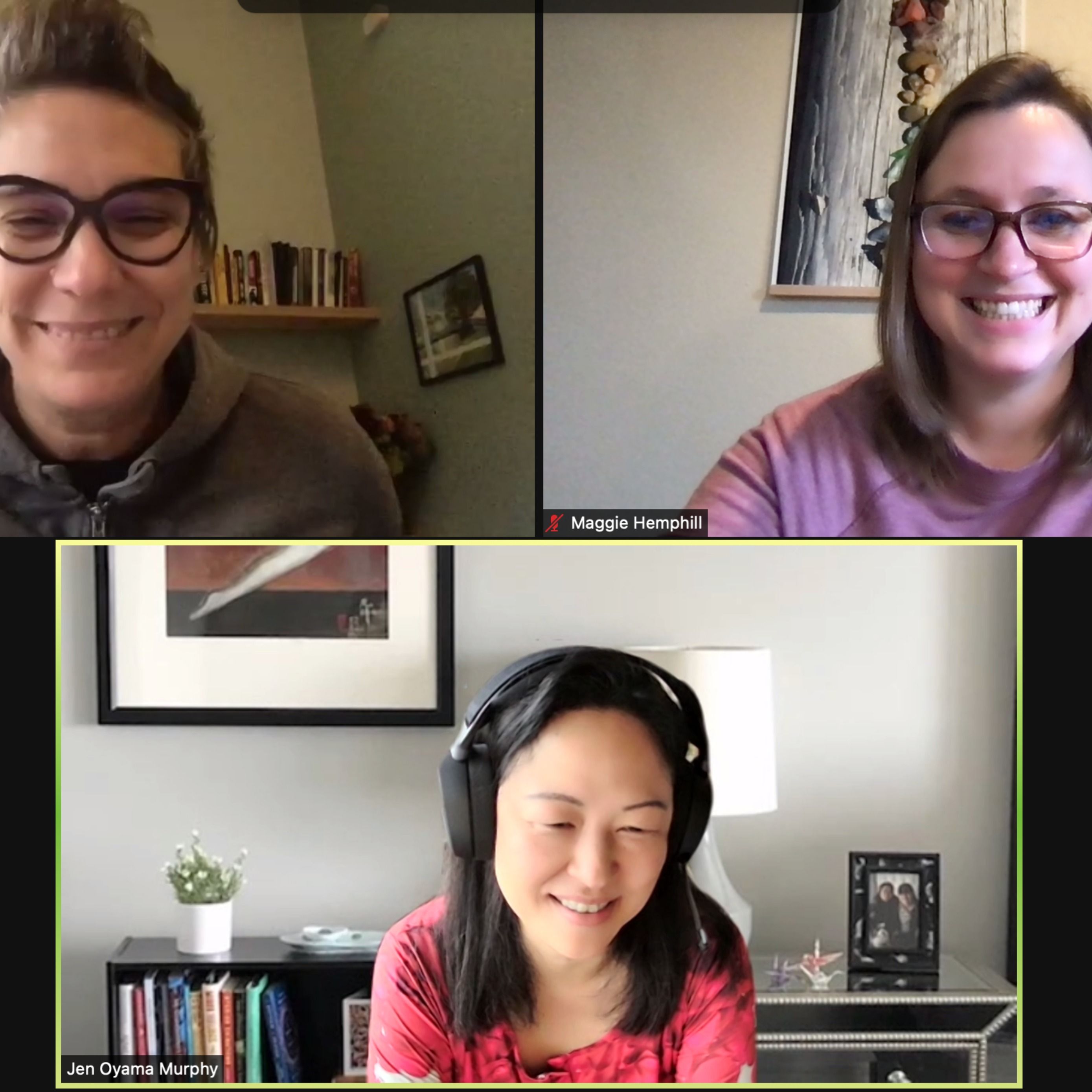
S3 Ep 7Dream Work with Jen Oyama Murphy
Jen Oyama Murphy of Paper Crane Coaching joins Maggie and Danielle to talk about her work with dreams.Jen is a Story Guide. She has a BA in English from Yale University. She’s worked in ministry and Non-profit settings for 30 years using both theology and psychological modalities. She’s a dream guide, a mom and she most recently worked for the Allender Center in Seattle. Jen has been a guide for Danielle personally in her training in therapy work and story work. Both Maggie and Danielle were in story groups that Jen facilitated through the Allender Center.Jen is located in Chicago, IL with her husband. They have two adult daughters and so as far as stage of life goes, she’s transitioning out of that mother and moving into what she is calling the Matriarch stage, borrowing from Jungian Psychology and archetypes. She is trying to live and lead from a place more of knowing where I’m empowered and called, rather than when you’re in that mothering stage where it’s a lot of effort and figuring out how to care for yourself while caring so deeply for others. “I think even my identity is starting to locate a little bit differently.”All three are connected to the Seattle School and Jen mentions that on the Seattle School’s website, they have a quote from Richard Rohr about the inside edge of the outside, or the outside edge of the inside. To Jen that’s a liminal space and she locates herself in that space as an Asian American woman, feeling very much in the in-between and the invisibility of that space. It can be really lonely, with a sense of waiting and transition. For her that plays out for her racially, not being white, not being black and not really knowing how to understand or define herself without a lot of other Asian faces around her. This has been a place that has felt like a place of abandonment and a place where she’s forgotten herself. Because she’s moving into her middle-late 50s, she in a different place where she’s starting to hear Jesus ask her to consider that the liminal space actually is a space of creativity. It’s not just a place of marginalization but out of that hurt when there is healing and transformation and growth, there can be this powerful space of transition, generativity and creativity. This has brought a new richness to her dream world and she’s trying to pay attention to it and bring it into the work she’s doing. Maggie asks Jen what is dream work and how does she use it?Jen thinks of dreams as parables—they are stories that the spirit is co-authoring with our unconscious. Because she is such a cognitive person, living in her head, she believes it is Jesus’ pursuit of her and God’s sweet mercy that she has dreams. Playwright Marsha Norma says “dreams are illustrations from the book your soul is writing about you.” For Jen this is perfect combination of story work, which is about text, and dreams which are the symbols and pictures that go along with the story. Because she is in her head so much, she misses or doesn’t pay attention to the illustrations. Her dreams are stories with symbols that are inviting her to pay attention to something about herself, something about her world, something about who Jesus is and what the kingdom of God is life. Sometimes, she says, it is something she once knew and had forgotten and needed to be reminded again. Dreams are a powerful way God is communicating to us. Jungian analyst and Episcopal priest John Sanford says, “Dreams are God’s forgotten language” and Jen thinks that is really true.Danielle has been writing about how are words just are coming out of her and that her dreams give her the texture and feeling. She is able to have a witness and a felt sense in her skin for the texture of the story. A nod back to the liminal space Jen talked about, a blending of past and present, what’s real and what we’re calling dreams or parables.When Jen talks about dream work, 9 times out of 10 people will say her “I don’t dream” or “I can’t remember my dreams.” She believes it is because we put so much pressure on ourselves to encode things cognitively through a lot of words. Dreams are this embodied symbol and story mixed together. What Jen tells people is just to practice being aware of what comes up when you wake up—that may be a feeling, a color, an emotion, it may be one symbol or one words. Just start there and don’t put pressure to wake up a write three pages of a really complicated dream. You may not be ready for all the content. What comes you when you first wake up may be what the spirit is inviting you to pay the most attention to. Maggie asks Jen what she thinks dreams are made of? Jen had mention them being our unconscious and the holy spirit. What Maggie thinks of when she thinks of how dreams are made is the idea from Disney/Pixar’s Inside Out. The main character falls asleep, and we the audience are seeing her brain working on the inside and they are grabbing scenes from the day, putting a lens over it and then projecting to the dreaming world
S3 Ep 6Mental Health, Story Work with Therapist Cyndi Mesmer
Cyndi Mesmer – colleague, mentor and friend to Danielle. She’s first and foremost a wife and a mom of five. She’s a therapist and owns her own group practice called Art of Living Counseling based out of Illinois. She also works at the Allender Center, based out of Seattle, WA, and wears many hats as a teacher and trainer as well as story facilitator. Cyndi is an avid reader and loves to hang out with her kids. Cyndi is doing well, just came off of a 4-day intensive at the Allender Center called Story Workshop where they engaging trauma stories and teaching. It’s both a blast and so much fun as well we exhausting. She likens it to deep sea diving; you go down deep and then have to come up for air every once and while before going back down. She’s well but really busy. Danielle says it feels like the mental health field is slammed during this ongoing trauma of COVID. Cyndi enthusiastically agrees it is slammed! Initially when COVID hit she felt like they bought into the idea that it was just going to be three weeks, and then we’ll be back at the office and everything will be well. But three weeks turned into six weeks, then three months, then here we are [18 months later] and it just keeps going. “In many ways, it turned the world upside down.” She is experiencing in her practice within the mental health field a huge influx of people needing care. Her view is that the trauma that has been embedded in people bodies that normally stays hidden—under coping mechanisms and other techniques to suppress, ignore or avoid—has come to the surface during COVID. She sees this playing out for her clients in their family dynamics, their marriages, with people struggling with depression and anxiety and are now seeking help. Cyndi doesn’t know many therapists that don’t have completely full practices—everyone is full. She herself has a 45 person wait-list and finds herself emailing around every week to see if there are any therapists in her network that have room for new clients. She’s even trying to hire new therapists for her counseling group to in order to try to meet the demands for mental health care. And it’s not just adults who are looking for care—Cyndi says adolescences are having a really hard time.Maggie asks if Cyndi if the actual work she does with clients has changed at all since the pandemic start. Cyndi thinks people now are more “raw”; they are showing up more authentically and eager to do the work that they need to do because of the unprecedented levels of distress they are feeling. Before people before the pandemic would come to therapy for “crisis resolution”– to fix an immediate issue—but they didn’t really want to get to the underside of what’s actually causing their symptoms or to engage the embedded trauma in their bodies. They would come for a few sessions and feel better and be gone. But with the pandemic, everyone’s schedules, routines and nervous systems are getting triggered and changed. What seems like it would be restful—being more at home and slowing down—has actually unsettled people and created a significant amount of distress for their nervous systems. Everyone is exhausted! The people who are coming to therapy now are doing really good work because they are more ready, raw and eager to do the deep work of engaging the underlying trauma. Danielle has felt like a mental health emergency responder. She says is it like the past trauma shows up in ways that creates internal activation; People want to get regulated and to learn to self-regulate knowing that the isolation could continue. What comes with that, Cyndi says, is confusion. People are asking, “why am I experiencing what I am experiencing? They can name that we’re in a pandemic or that their kids are now at home when they would have been at school, but there is so much more going on and people don’t really know what is happening. Now they are willing to unpack the hard stuff. Maggie says the disruption that occurred globally with the pandemic triggered internal disruption for people on the individual level. Pre-pandemic people normally on a regular everyday basis have good coping skills, tools, resources and mechanisms for getting through the day. But when the world turned upside with the pandemic, the disruption caused their coping skills to not be as effective. This left people wondering, “what is happening to me?”Some of those defense mechanisms, Cyndi said, were actually built into structures—they were tied to our routines and schedules. “We are routine structured people: we operate really well, our bodies operate well, when we have routine, structure, a typical schedule we follow. I think our bodies like that. I think our bodies operate best like that.” And when the pandemic hit, it disrupted and upset our normal routines and schedules and our bodies didn’t know what to do with that. Her schedule changed: Now, she goes to her office once a week when she used to go 4 times a week. And when she’s home. she has to contend with her kid

S3 Ep 5A Statement on Sexual Assault in Kitsap County High Schools by Danielle S. Castillejo
Resources for Learning about Consent:https://www.rainn.org/articles/what-is-consent"What is consent?Consent is an agreement between participants to engage in sexual activity. Consent should be clearly and freely communicated. A verbal and affirmative expression of consent can help both you and your partner to understand and respect each other’s boundaries.Consent cannot be given by individuals who are underage, intoxicated or incapacitated by drugs or alcohol, or asleep or unconscious. If someone agrees to an activity under pressure of intimidation or threat, that isn’t considered consent because it was not given freely. Unequal power dynamics, such as engaging in sexual activity with an employee or student, also mean that consent cannot be freely given.How does consent work?When you’re engaging in sexual activity, consent is about communication. And it should happen every time for every type of activity. Consenting to one activity, one time, does not mean someone gives consent for other activities or for the same activity on other occasions. For example, agreeing to kiss someone doesn’t give that person permission to remove your clothes. Having sex with someone in the past doesn’t give that person permission to have sex with you again in the future. It’s important to discuss boundaries and expectations with your partner prior to engaging in any sexual behavior.You can change your mind at any time.You can withdraw consent at any point if you feel uncomfortable. One way to do this is to clearly communicate to your partner that you are no longer comfortable with this activity and wish to stop. Withdrawing consent can sometimes be challenging or difficult to do verbally, so non-verbal cues can also be used to convey this. The best way to ensure that all parties are comfortable with any sexual activity is to talk about it, check in periodically, and make sure everyone involved consents before escalating or changing activities." Kitsap Sun quotes:Link Article: https://www.kitsapsun.com/story/news/2021/10/02/north-kitsap-students-demand-school-district-make-campus-safer-show-solidarity-survivors-sexual-viol/5891493001/"North Kitsap school students have hit the streets five times in the last two weeks to bring attention to sexual misconduct and sexual assault both on campus and off and what they say is a culture of sexualization that they want school officials to address.The teens are tired of hearing their classmates being hurt, they said. Some said they have been victims of unwanted touching at school, and in some cases, sexual assault, both on- and off-campus. Some said they came to support peers who they hear are survivors of sexual assault.""how we can avoid our assaulters." (To Sign the Petition: https://www.change.org/p/kingston-highschool-hold-rapists-in-nksd-accountable?utm_content=cl_sharecopy_30832795_en-US%3A3&recruiter=1065753321&utm_source=share_petition&utm_medium=copylink&utm_campaign=tap_basic_share&utm_term=G%3ESearch%3ESAP%3EUS%3ENonBrand%3EAll-Match-Types)Petition Statement:"Schools in NKSD have repeatedly swept cases of rape and assault of students under the rug. For years even before I was in highschool the staff at NKHS and KHS have looked the other way when a student is crying for help. There have been 20+ people who have came forward within the last 4 days telling me how their school in NKSD has silenced them for YEARS. These rapists and assaulters have been getting away with this for years, some since they were 12 years old. These are your DAUGHTERS and your SONS your CHILDREN who are crying for help. We do NOT feel safe in a school where rapists get to roam free. We students and parents of NKSD demand investigations into these rapists , we demand change in our schools, we demand that we have the right to go to school everyday and feel safe. WE WANT CHANGE. "A petition at Change.org being circulated among students at the protests and walkouts calls for "investigations into these rapists" by the school district and has been signed by 1,300 people so far." "School officials say they have heard students' messages. A school district spokeswoman said in response to emailed questions from the Kitsap Sun that the district follows the state's mandatory reporting laws — which require school personnel to report cases of suspected physical or sexual abuse to law enforcement. The district "takes all allegations of harm and abuse very seriously, and we always investigate these reports," NKSD spokeswoman Jenn Markaryan wrote to the Kitsap Sun in an email.Markaryan said a response team is trained to respond to reports of sexual assault. Because of privacy laws, the district can't share the results of investigations or individual discipline, she said.In response to the protests, school principals are working with students to understand how students can best be supported and to find ways to continue to improve systems and wrap-around supports for students, Markaryan said."Each and every adult in our schoo

S3 Ep 4David Hayward, NakedPastor on Art
David Hayward is the NakedPastor www.nakedpastor.comDavid is a cartoon artist who uses his art to challenge the status quo, deconstruct dogma, and offer hope for those who struggle and suffer under it.After 30 years in the church, he left the ministry to pursue his passion for art. He holds a Masters in Theological Studies, as well as Diplomas in Religious Studies and Ministry. He is also a writer with several books, and is based out of New Brunswick, Canada. Maggie asks David how he got started with marking cartoons. David started a blog back in 2004-5 under the moniker “NakedPastor” because he wanted to be honest as a pastor and talk about the real things that churches experience: conflict, financial struggles, spiritual abuse, doubts and fears. Having been an artist is whole life and really enjoying a good cartoon, he decided to give it a shot for himself. Not only did David enjoyed it but people really liked what he made. So he decided to challenge him: draw one cartoon a day and see how long it would last. He thought maybe it would last a couple of weeks and here he is 16 years later still doing it! He kept doing it because he was getting such a response“If someone comes along to a 300-500 word blog post, if they are in agreement and they like it, they’re going to read it and maybe comment. But with a cartoon, it happens so fast. It’s like a split second and you can’t unsee it. I love the power and immediacy and the effectiveness of it [cartoons].” Danielle says she wants to go back and ask how the title “NakedPastor” came to rest on his shoulders.David says at the time there were shows out like “the naked chef,” “the naked archeologist,” “the naked truth.” He says “naked” just means raw, real, honest, open, vulnerable, no adornments, just the basic. In fact, he says he got the name by accident—someone else owned nakedpastor.com and he decided he would put his name in for whenever it became available. Sure enough, a year later he was notified by via email that he had won the auction for the domain name for $68. He acknowledged the name has its problems, especially with the pedophilia and sexual abuse within the priesthood. But most people understand the meaning. It’s become a thing and it’s sticking around. Maggie says he’s doing it—what initially drew her to his art was that it was real and honest, holding nothing back when looking at the church. She asks him what was his experience led him to critiquing the church?David says he gets from a lot of people that they think he hates the church and wants to see it abolished. “They couldn’t be more wrong!” David grew up in the church; it was his spiritual home. He both loved the church and was harmed by it; both as a member but as a pastor. He says he also participated in the systemic, spiritual abuse that occurs in the church. “I found my cartoons were an effective way to address that, to make it graphic literally, so that people couldn’t deny it or unseen it.” “I wanted to draw cartoons about of how the church does manipulates and coerce and shame and guilt and terrify and abuse people. And I know, intimately, because I experienced horrible spiritual abuse in the church and I also participated in, like I said, the dehumanization of people that’s just in the air of systems.” He names everything from the DMV, army, education, hospitals… “Wherever there is a system, the gravitational pull is towards the dehumanization of people. And that constantly has to be challenged and corrected. The church isn’t exempt from that, and that’s why I do what I do.” Maggie says he puts an image to what many experience as wordlessness. When someone experiences spiritual abuse or trauma, they don’t necessarily have the words to put to what has happened to them. Maggie connected with one of his recent post on Instagram because it touched so close to her own experience. The cartoon of a church full of people and a pastor point out the door to a woman outside the church and the caption read “Good riddance! She was so uncontrollable anyway!” In his work he talking about spiritual abuse and patriarchy in a snap shot and for many people, including her, it hits close to home. “That’s why I love cartoons, this happens all the time” David says. In the picture Maggie mentioned it was about a woman who was tired of being manipulated and dominated, people were trying to control her so she left. “This happens every day. So I draw a picture of it and put words to what’s actually happening.” In his own experiences he has actually heard pastors say, “good riddance” and “they were hard to manage” or “extra grace required.” And maybe it doesn’t happen in a moment like that but in a more gradual way over a lifetime, “but when you put more starkly in a picture, it really drives home the point I hope.”Danielle says it does drive home the point. She’s been thinking about how art has become an expression and so “you must live really close to your own experience of the pain you’ve experienced or the
S3 Ep 3Phil Allen Jr on Racial Trauma, Resilience and Solidarity
Phil Allen Jr is author of Open Wounds, a filmmaker, theologian, poet and PhD Candidate. He is founder of Racial Solidarity Project, an organization committed to justice through solidarity, community building and healing. You can connect with Phil work at: www.philallenjr.comTwitter @philallenjrInstagram: www.instagram.com/philallenjrig/ facebook www.facebook.com/philallenjrGet his new book is Open Wounds: A Story of Racial Tragedy, Trauma and RedemptionCheck out his podcast "Intersections with Phil Allen Jr." wherever you get your podcasts. Support his organization Racial Solidarity Project committed to justice through solidarity, community building and healing. We start our conversation by checking in with Phil on how his life has been impacted by COVID. Danielle asks him to share how he’s doing during the pandemic and where he is located. Phil is located in Pasadena, CA. He is perpetually quarantined. He reads and goes out running, when out he wears a mask and is vaccinated. He’s been good through the pandemic. He’s highly introverted, learning this about himself about 7 years ago. The pandemic hasn’t affected him emotionally or mentally but in fact has allowed him to be very productive—he’s has nowhere to go, nowhere to be. He said since it hasn’t been too bad for him there, he’s more concerned with others.His new book Open Wounds came out this year in February; Danielle asks how the process was to write the book. Phil got the idea write book while taking a class at Fuller Seminary called Theology and Ethics of Martin Luther King. They were watching the series Eyes of the Prize about the Civil Rights Movements and he saw a picture of Emmett Till. Right then and there he made the connection to his grandfather’s murder (which happened in 1953)—he imagined that’s how his grandfather would have looked. He was in the river several days before his grandfather’s body floated up and they found him. “I can’t see Emmett Till without seeing my grandfather.”The response of his classmates really surprised him – he didn’t think it would matter to them but they were in tears. It was then that he realized he needed to tell this story. But he didn’t start writing right away. He went to Sundance [Institute] for a filmmaking class on directed reading, which turned out to be the most impactful class he has taken in his PhD studies because it’s produced the most work, and he did the same thing: He told the story of his grandfather and people were blown away. He says he had made the content of film they were studying at Sundance real for his classmates. It became personal now because he had shared his family’s story. They encouraged him to make a film. He didn’t know he was going to make a film when he took that class. He didn’t start writing the book until after that. He outlined everything, wrote four chapters but had no prospects and thought maybe he would self-publish. A professor of Phil’s advocated for him with Fortress Press (publisher) and sent what he had over, they loved it. Phil said he has a tendency to start something and not finish it. With half the book written and having a full class load, he didn’t want to keep working on the book unless it was going to be published (not self-published). Once he signed the contract with Fortress Press, he wrote the rest of the book in three months. It was at the start of the pandemic, went through four rounds of edits, and got it done for release in February 2021. Phil did not expect the process to be so emotional or taxing. He said the editing process was triggering—He said, after you’ve written it you have to be out of your emotions and back in analytic mode. He described incidents that would happen after he would be writing for two or three hours. He would go out and encounter someone, say at a grocery store, and it would be an older white guy who would do something or say something that would trigger him. One time he was almost hit (with a car) in a parking lot, the guy never slowed or stopped but came within 12 inches of him and Phil had to maneuver his body to jump out of the way. This led to an altercation with him. After writing for three hours, Phil said he was already at an “8” or “10” and then had this encounter happen. He realized then how much the writing was affecting him. He added accountability and ways to check in with trusted people so as not to be an outflow of the intensity of writing the book because it wouldn’t be healthy. Maggie named that what happened was a blurring of past and present. Phil had been deep in his story and how his past has shaped him when in the present he encountered this altercation/incident. She said that is what is so profound about his book—it is a way to look at the past and how it is shaping us in the present. One the things in his book that impacted Maggie was how he described the layers of racism involved in his grandfather’s murder: structural racism, passive and active racism. Often times we want racism to be inside a tiny
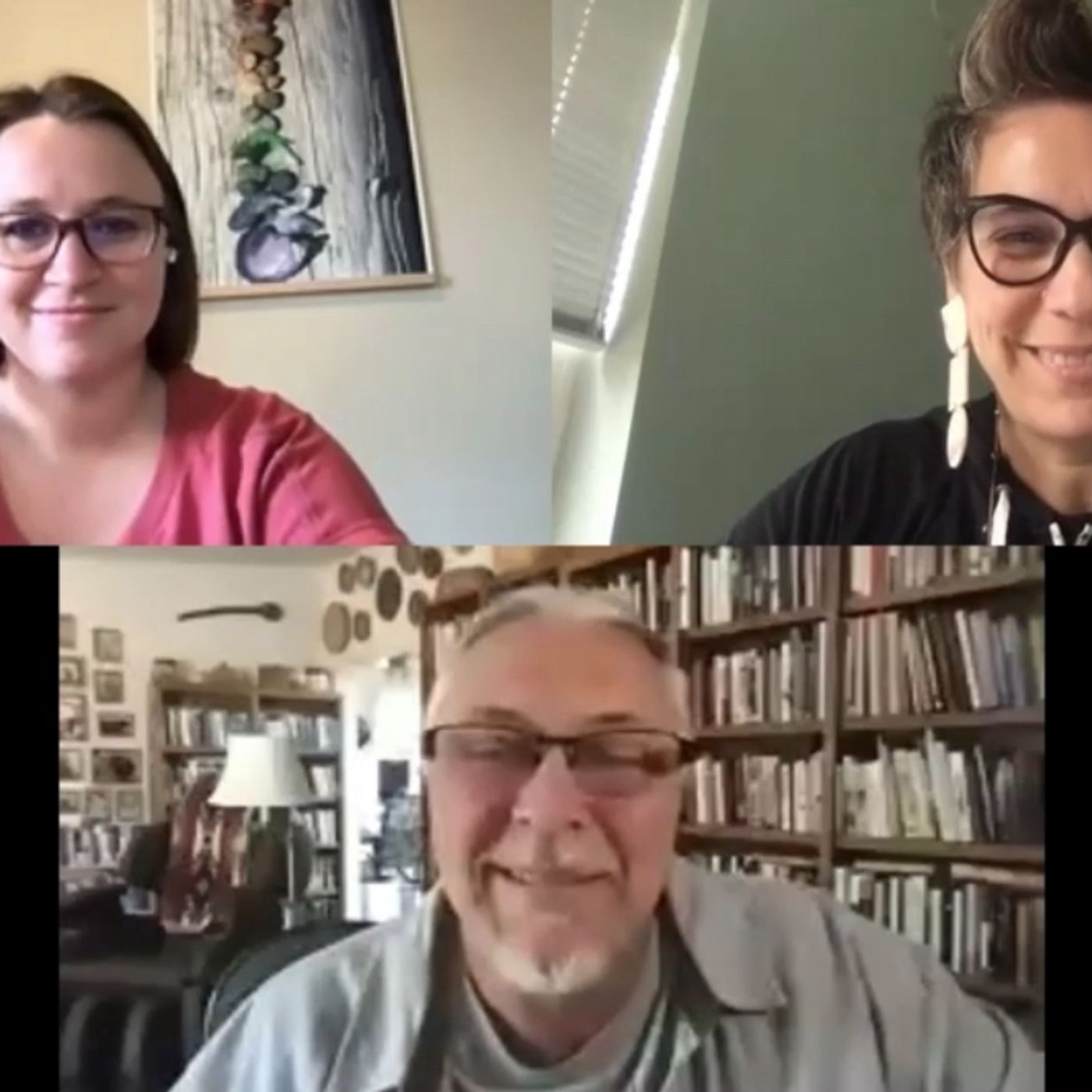
S3 Ep 2Conversation with Randy Woodley on Deconstruction
Rev. Dr. Randy Woodley, PhD is an activist/scholar, distinguished teacher and wisdom keeper who addresses a variety of issues concerning American culture, faith/spirituality, justice, race/diversity, regenerative farming, our relationship with the earth and Indigenous realities. His expertise has been sought in national venues such as Time Magazine, The Huffington Post and Christianity Today. Dr. Woodley currently serves as Distinguished Professor of Faith and Culture at Portland Seminary. He served for several years on the Oregon Dept. of Education, American Indian/Alaska Native Advisory Council. Randy was raised near Detroit, Michigan and is a Cherokee descendent recognized by the United Keetoowah Band of Cherokee Indians in Oklahoma. Randy co-hosts the Peacing it all Together podcast with Bo Sanders. Author of several books include "Decolonizing Evangelicalism" which we discuss in this episode. Connect and support the work that Randy is doing: www.randywoodley.comwww.eloheh.org www.elohehseeds.comRandy lives south of Portland in Yam Hill, Oregon where he and his wife have a 10-acre farm where they house the Eloheh Center for Earth Justice. He said it is on the illegally and unethically seated land the Kalapuya People, particularly the Yamhill and Tualatin bands. The Woodleys have been in the area since 2008 and are just “enjoying climate change in Oregon” which is teaching them how to do regenerative farming under stressful conditions. “We’re learning all the time.”Maggie asked Randy how he has seen the major cultural shift and what he thinks is happening and we’re seeing the response to Breonna Taylor’s murder, the many other lynchings [of men and women of color], and all that is going with people battling against Critical Race Theory. The book he wrote “Decolonizing Evangelicalism” with his podcast partner Bo Sanders and it came out during COVID so it hasn’t really been publicized or promoted. It’s written in like a conversation, and they’ve been taking theology and social issues ever since Bo was a seminary student of his back in 2008. They wrote the book this way both because that is how their relationship is (conversation) and in the style of one of his favorite books; “We Make the Road by Walking: Conversations on Education and Social Change” by Myles Horton and Paulo Freire. We talk about Critical Race Theory in the book; Randy says “I do it” and Bo explains it. Our book would now be banned from a number of seminaries and institutions around the country, it will not be allowed to use the book as a reference [because it uses Critical Race Theory to examine theology].Randy says Critical Race Theory is the current “bugaboo” and it is endemic of all the other right wing, white supremacist reactions to People of Color coming into their own and the popularization of the unjust deaths of members of the BIPOC community. Social media has done a lot to inform people but in our [BIPOC] communities, people have been dying unjustly for hundreds of years. “There’s nothing different it’s just people are finding out about it now.” It’s important, Randy believes, that as we are learning [about the unjust deaths], that what we are finding is that all the systems and our country were founded in white supremacy. Randy acknowledges that there are other things behind that, including the Western worldview and patriarchy, but he says the white supremacy that founded the systems in our country—education, economic and social systems—are all bent towards the benefit and privilege of white males. “So the system itself has not really changed a lot; it looks a little more kinder than it used to under enslavement or genocide but the idea is still the same: People of color, and oftentimes women and others—the cultural or racial or gender other—are [seen as] a subcategory of humanity as opposed to white folks, especially white males of prominence.” Randy says Critical Race Theory gets at the heart of that; it says, there is a systemic problem that we have to deal with. “And a systemic problem means that all of us have to deal with it together. It’s not just up to white folks or People of Color, it’s like we all have to do this together in order change this system.” Randy believes that what the Right has done is taken away the ability for us to talk about that in a systemic way. “America by the way is, and we could go into the history of this as well, is one of the most individualistic nations that has probably ever existed in the history of humanity.”Randy says everyone wants to talk about whether this one person is a racist or not. “I don’t even deal with that... I’m more interested in dismantling the systems that are corrupt with racism.” Randy believes that this Right reaction to everything that is going on is actually a way to stop us from talking about systemic racism. It’s very akin, Randy says, to the 1840 Gag Rules when they wouldn’t allow congress to talk about slavery. “It’s that: you’re not going to fix the problem if
S3 Ep 1Critical Race Theory Rebecca Wheeler Walston and Danielle S. Castillejo
Rebecca Wheeler Watson - CRT Instagram Live 8/28/2021 NotesRebecca lives in Virginia, has completed Law School at UCLA, holds a Master’s in Marriage and Family Counseling, is also a licensed minister.What is Critical Race Theory? We need to define it before we actually step into defending or refuting, coming to the pros and cons, in order to have informed discussions. Rebecca says, CRT is a way of thinking or engaging a topic, event, perspective or field of study, and asking the question are there racial dynamics at play that move beyond the individual intentions of the players involved and looking at structural things “baked into the cake” that are making decisions based on race, often time that are to the detriment of the minority group (or disempowered group). Started in the 1970s by legal scholars - looking at the gains that they thought would come through the Civil Rights Move Act.They saw gains in the legislation and in the law (Brown vs Board of Education) but were not being felt or seen in real time experiences on the ground.Early CRT scholars Derrick Bell and Kimberle Crenshaw were asking questions, why is this happening? If we apply a neutral sounding law to a scenario where racism is already “baked” into the structure, they found that you will not actually get at the structure, the racism that’s built into the structure. Classic law case would be regarding: Hate SpeechThere is freedom of speech. The law on its face is neutral and doesn’t mention race at all. However, if we apply that basic principle to a cross burning as a freedom of speech, we must take into account the history of the terror that a burning cross was meant to strike terror into the hearts of African Americans and newly freed slaves. We don’t at the structure or the symbol if we simply say “all speech is free”Danielle asks, so without including race in the discussion we aren’t getting the full picture?Rebecca says yes! And other disciplines have adopted this framework. COVID-19: When the numbers started to show that Black and Brown communities were getting disproportionately affected by COVID, members of the health profession started to take a Critical Race Theory approach and ask are there things ‘baked’ into our health system and to our economic system that actually produced the disparate results we are seeing in COVID-19? And if we ask those questions, can we undo some of the inequity and imbalances that are built into the health care system and economic systems so we don’t see these disparate impacts moving forward? Danielle says what she is hearing from Rebecca is that it is not an attack on a certain group of people but a way to get to racism that is built in the structure by an invitation to look at the history of how the laws were made (and by whom they were made) and how racism got baked into them. [Can we look at the disparities and care for one another well?]Rebecca says it’s a good point -- this is not about an individual but a method for getting at racism built into the structure and therefore transcends individual actions. For example Darrin Chauvin, the police officer who was convicted of murdering George Floyd. You can look at that scenario and say the individual act of one police officer, and if we address that one case with Darrin Chauvin going to prision for the murder of George Floyd, then “the problem has been solved.” But the issue is there are far too many George Floyds and Darrin Chauvins across the police communities across this country. In fact today (8/28) is the anniversary of the death of Emmet Till. There are many names and many scenarios. So if we simply stop with Darrin Chauvin then we don’t get at the question of do we have a problem with the way we imagine policing in this country? Do we have a problem with the way we imagine innocent behavior as threatening or criminal when the actor in that scenario has black skin? CRT invites us to look at the structure of policing altogether to engage not in villainizing a single person but to look at the whole system, as a country. Danielle adds, it doesn’t sound like it is a villainization of a system either. It is a look at where we are now and saying we don’t want to be here now. A historian looks at where we came from in order to help us understand how to make decisions about where we go from now moving forward. Rebecca says recently Professor Crenshaw gave the example of asbestos: The medical community and the science community has now determined that we should not use asbestos because it has been found to contain carcinogens. But there was a previous generation that built every generation with asbestos in it. Same with lead paint. There are hundreds and thousands of buildings across America where asbestos is built into the building. And you don't usually know that until something happens to stir it up and expose it. Would we just ignore that? Of course not. When we discover asbestos in the building we move to remediating. Granted that process is costly.

S2 Ep 21LOVING YOUR NEIGHBOR
This is a special episode corresponding with an upcoming demonstration of "loving your neighbor" in our hometown of Poulsbo, WA. You will hear a collection of voices and words of why folks love their neighbor as a direct response to an upcoming known hategroup leader speaking a local church in our community this coming Sunday (Aug 22nd.)To call on the words of the Rev. Dr. Martin Luther King Jr in a sermon from 1957 (and quote in his book Strength to Love, 1963), "Returning hate for hate multiplies hate, adding deeper darkness to a night already devoid of stars. Darkness cannot drive out darkness; only light can do that. Hate cannot drive out hate, only love can do that." Here is why we love our neighbors...Clips from: Danielle. Melissa. Rebekah. Diana. Petra. Jenny. Alex. Corban. Camper. (no name). Misty. Elise. Ben. Victoria. Luca. Estella. Benjamin. Sean. Julie. Keisha. Wayne. Luis. (no name) Maggie. Here's what you need to know:A local church in our area of Kitsap is bringing Joseph Backholm to come and speak on Sunday morning from the pulpit and in a "discussion panel" later that evening. This is both an in-person event as well as streamed live online.Joseph Backholm's organization is listed as a hate group under the Southern Poverty Law Center . A quick look at his twitter feed and his own words will speak for themselves--his words are not only full of hate but they also incite violence towards marginalized groups.In response, there is an organized protest in support of loving our neighbors--all people. And the Arise Podcast joins that effort here by collecting messages of why we love our neighbors .Here is a link to the ACLU's Guide to "Know Your Rights" regarding protests. You'll also find information about what you can to do participate in showing support for "Loving Your Neighbor." We've listed action steps from our facebook community, making phones, to showing up on Sunday in support of the BIPOC and LBGTQ community. ACTION STEPS:CALL: Gateway Fellowship Church (360) 779-5515 and say: "Hello, I am calling to protest the event you are hosting with Joseph Backholm and ask that you cancel it. His organization is listed as a hate group bu the Southern Poverty Law Center. This man and his organization's values, actions and content perpetuate harm and it is not what the people of Poulsbo want for their community, nor it is consistent with the teachings of Christ."SHOW UP: Sunday August 22nd from 9am to Noon at HOSTMARK and 8TH AVE in POULSBO. Bring your signs, flags and spirit wear to show your love and support for loving your neighbor. Remember to WEAR YOUR MASKS and STAY ON THE SIDEWALKS. Parking is available at these closed businesses: the Poulsbo Library (700 NE Lincoln Rd, Poulsbo, WA 98370), The Doctor's Clinic Poulsbo (19245 7th Ave NE, Poulsbo, WA 98370), The old Albertsons in Poulsbo Village (near 19505 7th Ave NE, Poulsbo, WA 98370), WA Fed Bank (18960 WA-305 #103, Poulsbo, WA 98370). REMINDER: This is a PEACEFUL protest.Be thinking: Who is your neighbor? Well, first I guess I would have to believe that there was or is an actual political dialogue taking place that I could potentially be a part of. And honestly, I'm not sure that I believe that.

S2 Ep 20Part Two with Michael Chen on Collective Liberation and Asian American Theology
This is part two of a conversation with Michael Chen of AAPI.Liturgy. Recorded on April 30th, 2021Find Michael Chen on instagram @aapi.liturgy Michael Chen lives in Philadelphia with his wife Rachael and their two boys. He is a graduate of Princeton Seminary where he earned his Master of Divinity, and is currently working on a PhD in Marriage and Family Therapy at Eastern University. As a long time campus minister, he has a heart for helping people live more fully into their unique identity and vocation. In his free time he likes exploring cities and eating dumplings. Also, he is a karaoke champion. Maggie offered a recap of last week: We talked about collective trauma, what it is and how that impacts the way we view healing. We explored what it means to be Asian, a name that encompasses a vastly diverse group of people from 50+ countries. Michael reflected on his own experience of growing up and working in predominately white spaces and how race has been somewhat of a binary construct of black and white. Through his work and research getting his PhD he started AAPI.Liturgy where he seeks to create a space to expand, explore and examine what it means to be both Asian American and Christian.Currently Michael is researching for his PhD and the overarching questions for him has been: What does it mean to Asian American and Christian? What is Asian American theology? Michael says “The term ‘Asian American’ comes out of the 60’s. It’s a protest identification really trying to capture the essence, fervor of the Civil Rights Movement.” His big question is, “What happened?”Michael grew up in a Chinese Church that was somewhat divided. There was a Chinese congregation that was Mandarin speaking. With the influx of Chinese immigrants they grew a Cantonese congregation. And then the children of those immigrants needed their own congregation, and so they formed an English congregation. There were three congregations within one church and they just “did” church and the topic of what it means to be Asian or Asian-American in Church was not a topic of discussion. Michael was around Asians weekly and yet there was no exploring the deeper meaning of their sense of isolation, of being marginalized, of experiencing micro-aggressions or being stuck or feeling stuck in predominately white spaces and structures. “So we talked about Jesus… and we were just with one another which on a level was wonderful and great but in the back in my mind I had that question of ‘what does it means to be Asian American’ that never made it into the church space.”It was this inquiry got filtered through literature and sociology classes, and through Seminary (at Princeton) where he studied white theologians—Calvin, Kuyper, Augustine, Luther…. The question, “Is there an Asian American theology?” was never given much room. Michael began to wonder, has anyone written on Asian American Theology? In his research he came across a math professor who was doing research and writing articles on Asian American Liberation Theology. He found the early course readers of the 70s, at the beginning of Asian identity as a political identity as a movement, as well as the conversation that was happening around Black Liberation Theology, the work of James Cone, [Gustavo] Gutierrez. At last it seemed he had found them—"Here are folks that are thinking about and talking about the experience of marginalization! People who are looking at the biblical narrative and finding themselves in it."Michael gives the example from the Japanese-American Rev Dr. Jitsuo Morikawa who converted to Christianity from a Buddhist background. He was interned in Arizona during WWII and began preaching the gospel at the internment camp. After this experience he went to seminary and eventually pastored a predominately white church in Chicago. At that time the sentiment was, “A Jap will always be a Jap. The Japanese will always be suspect.” Michael notes that for Morikawa to be in that position of widespread prejudice and to subsequently see the church grow, it is a powerful move of the spirit. When Michael read some of Morikawa’s writing around the Asian American experience in the Exodus story, it was the first time he had seen or heard anyone thinking about Asian liberation in light of the Biblical narrative. It brought so much deep emotion for him and inspiration in thinking about the Asian American story in light of the movement from slavery into freedom — He asks, “Where are we now in our Exodus journey? And what does mean to become a priesthood of believers with our particularity, with our story, with our art, with our culture, with our poetry, with our faces?”Danielle is struck by how in the United States we have collected vast ethnicities of people groups into continents. She’s says it is almost as if we (in the US) can not bare the particularity in their ethnicities. And yet she feels that as we come into the spaces of story there can be solidarity. She names for her, being Mexican is her
S2 Ep 19Michael Chen on Collective Trauma, Margins and AAPI.Liturgy
Find Michael Chen on instagram @aapi.liturgy Michael Chen lives in Philadelphia with his wife Rachael and their two boys. He is a graduate of Princeton Seminary earned his Master of Divinity, and is currently working on a PhD in Marriage and Family Therapy at Eastern University. As a long time campus minister, he has a heart for helping people live more fully into their unique identity and vocation. In his free time he likes exploring cities and eating dumplings. Also, he is a karaoke champion. Maggie had the privilege and honor to meet Michael at Allender Center where they were trained in Narrative Focused Trauma Care - Level II.Michael is coming in tired and grateful. He’s coming off of a few late nights but also good conversations and meaningful work. He’s been in quarantine lock-down since the beginning (March 2020). Having married his wife Rachael in October of 2019, they enter their first year of marriage and hit the “accelerator” to get to know each other: getting to know all the quirks and dynamics of newly married life during the pandemic. They’ve hit wall emotionally and spiritually in this season. They’ve definitely triggered each other but have so much faith, trust and love in one another. He is looking froward to Philadelphia opening up a bit more. His boys start hybrid school next week and baseball season is starting up.Maggie checks in with Michael around how he is holding the Derek Chauvin verdict. He’s angry that his Black siblings felt so much relief at something that should have been a “no brainer.” And he certainly has mixed emotions because he too felt relief. There was this sense of, “how can it be the case that something so seemingly straightforward and clear would even be in question?”Danielle says that white folks talk about justice in a way that they are entitled to it, that justice is a right. This exposes historical narratives back to Emmet Till, people along the border, and so many others that have been murdered… But justice is not a built in right for all people. Michael adds, “and hence the relief…I don’t like that.”Michael asks how Danielle and Maggie processed the verdict and also hearing the news of Ma’Kaia Bryant on the same day, and what a tail spin that was. Maggie agreed that tailspin is a perfect way to describe her feelings — it was a sense of not knowing which direction is up or down. She too held a mixed bag of emotion - A sense of relief at the accountability, a small measure of justice, at the guilty verdict for Derek Chauvin, as well as anger knowing how much work there is to be done with police reform, gun control and white supremacy in our country. And then feeling the overwhelming sense of, “How long, Oh Lord?” When hearing the news of Ma’Kaia Bryant. Watching videos of her showing her peers how to do hair… She wept. The only thing she could say was “How long?” Because there was no knowing of how to make meaning or sense of all that had happened in that one day.Michael believes that, “we were not built to take in this much information this quickly without a sense of ritual, a sense of grief, or a space for mourning.” There is a feeling that our bodies can not process the amount of trauma in the news at the rate and intensity it is coming at us. He reminds himself to stay cognizant of that.Danielle wrote an essay on April 19th about Adam, Dante and the impact of the massacre in Atlanta along with her journey to become a therapist. No sooner had she sent it off to get published when the verdict came in and Ma’Kaia Bryant was killed. She went to bed and felt like “this essay is no longer true.” She pulled the essay, edited it and resubmitted it today (April 23) to be published on May 3rd and her thought was, “Oh Lord, will I have to change this again? Will there be more stories to tell? I already know in my bones that it won’t feel right to leave a name out…” She agrees with Michael, it is too much to take in. And sometimes she says feels like all we can do is to say their name. Michael adds, which feels like another injustice or violation.Maggie mentioned Michael’s new work with AAPI.liturgy on instagram and read a recent post about looking at trauma in a way to include collective trauma. The post says: “A group experience of pain, loss or catastrophe that shatters the social bonds that form a community, resulting in loss of trust, dissolution of roles and boundaries, and the breaking of group identity.” - Kai EriksonIn beginning to define trauma with the collective, it is expanding our idea of trauma from an individual felt embodied experience to “as individual bodies experiencing trauma collectively.” Maggie said that is in fact what we just described as we have processed what it has been like to live in our bodies even just the last few days with collective trauma.Michael has thought for a long time that he does not know what it means to be Asian. He has grown up in a predominately white spaces in Minnesota and had taken a position in an a ministry organizati
S2 Ep 18In "Circle" with Trauma Coach Marisa Wandeler on Decolonizing Healing Practices, Resilience and Consent
Marisa Wandeler is a trauma Coach in the somatic mind-body realm with a heavy emphasis on decolonized Psychology. She leans on indigenous practices and meets virtually one-on-one with clients from all over the world to experience their stories as an empathetic witness. Marisa says that COVID has shown that in America we have not been equipped to process or handle this current level of suffering. She names it’s been hard because pre-COVID she was already doing difficult work with her clients in terms of story work and trauma work... Now it’s at a whole new level with totally different layers of coping, resilience and equipping ourselves and one another to move forward in what will be impacting us emotionally for decades to come.Maggie recalls a post from Marisa’s Instagram (@Latina_heals) about resilience: “The goal of building resilience is not strength or toughness. The goal of resilience is increasing the flexibility and adaptability of the body and brain in navigating the inconsistencies and unexpected of life.”Marisa says the conversation around resilience starts first with identity and how our bodies are storied in society. “The notion that resilience is really about toughing things out, or being strong enough, or mentally positive enough, isn’t for everyone.” She says that depending on your story, you’ll have different resiliency skills. For People of Color and people who are continually marginalized, positivity isn’t enough. What does it look like in the body and brain to be under stress? Resilience is about how the body experiences stress and when that same stress comes up again in our lives, are we able to cope with it in healthy ways? “Resilience is not about effort so much as it is about equipping.” Marisa says that it doesn’t put us all on an level playing field but it does give us the mutuality of humanity—we all have a nervous systems and a brain and the way we are designed to react to stress has mutuality within everyone’s bodies.Danielle mentions that her clients have been asking questions around resilience because the struggle keeps going: Is this resilience? Am I actually making it?Marisa approaches these questions with validation. It’s not just COVID; It’s not just someone’s daily stress. She was raised in El Paso, TX: “a border Latina.” COVID has brought a different dimension of worry and awareness in her body. When someone asks her about COVID, whether that be politically or related to health, she’s not just thinking about her body. That is not the way she was raised, that is not her culture. She is thinking about how the border is impacted. She’s thinking about the kids at the border. And then you add COVID on top of it. It’s so multilayered in her own body so when she works with her clients they try to name the layers in their body. Even if they can’t get to them all, they name the layers that feel present and the whispers of narratives that are attached. All that noise can feel like overwhelming static in the body. “Sometimes the best we can do with what we have is just lament.” We can be resilient and in lament at the same time if the emotions that we are feeling are being validated for our body.Marisa says one of the hallmarks of the decolonized approach to trauma healing is to start with consent. The assumption is that we are to go to therapy and automatically offer vulnerability and disclosure when very often the body is not ready for that. Clients need to “feel into” where they are at. It’s about allowing the client to sink into their own body; she asks clients, "is that what your body needs tended to today?” We cannot just assume that we can go to the new place without permission and consent. She says, “I’m not going to push you into disclosure and so what does it look like for you to actually take my offering for care … in a way that can be received.”ConsentExchange of offering and receiving (vs. fixing and doing)She brings a "be with" and "tend to" mentality. I will only give offerings if you are willing to receive itDanielle said this isn’t counter-cultural to her, but it is counter-cultural to some people and most of the current educational systems.Maggie names it is a beautiful way of existence to always enter into spaces by asking for permission or consent. And in the realm of trauma healing / coaching she suggests this may also create some “buy in” from clients. To give consent feels disarming and it allows the client to relax into themselves. Additionally, Maggie agrees that majority culture has not viewed therapy or coaching through the lens of offerings and receiving but instead through fixing and doing.Marisa says it is a kindness to the trauma work because people who are seeking to do trauma healing already have trust issues; Their bodies, minds and identities have been forced or co-opted in trauma. "Trauma is a taking.” So by allowing people to experience what it looks like to choose what you’re giving and to choose what you give, it is doing the healing work.Maris

S2 Ep 17Statement Against Asian Hate
We are filled with sorrow and rage.In the last year, violence against Asian Americans and Pacific Islanders has surged 149% according to a recent article in Time. It is sickening and heartbreaking. The most recent attack gaining national attention happened last week in Atlanta on March 16th, (the murder of 8 people) 6 of whom were Asian women in what has still yet to be classified as a hate crime.There has been a long history of anti-Asian rhetoric and action in our country -- the Chinese Exclusion Act and Japanese Internment, are just two of the large government-sponsored acts against Asians. This last year's spike in anti-Asian hatred feels so closely linked to Trump's racist remarks around the COVID-19 global pandemic, which he repeatedly referred to as the "China Virus," thus putting blame on an entire people group and inciting fear, xenophobia and hatred against people of Asian heritage.As we have seen all year, COVID has ripped back the veil of a post-racial America showing racism is alive and active. The increase in anti-Asian violence was already in full swing in March of 2020 when Danielle Castillejo sat down with the Allender Center's Wendell Moss and Seattle area high school teacher and coach Dan Taylor for the Arise Podcast. This conversation, now over a year old, continues to feel relevant today in terms of recognizing that we are still seeing racial trauma lived out as a collective experience.And it is not just a "black and white" issue. While there has been countless accounts of police brutality against Blacks and African Americans; in the last year the horror of George Floyd and Breonna Taylor, the White Supremacy on display in the murder of Ahmaud Aubrey, and so many other hate crimes against Blacks, they aren't the only group who have been targeted. Asian Americans have been verbally assaulted, their businesses vandalized, the voices silenced and their lives threatened and ultimately taken.In contrast to the proceeding administration, President Biden openly condemned anti-Asian violence, ordered all flags to be flown at half-mast in honor of those lives lost, and along with Vice President Harris visited Atlanta in support of the Asian community. These actions say, "We see you. We hear you. And we will not idly stand by." They set an example for us; we too cannot remain silent and watch hate, racism and white supremacy snuff out lives. Sometimes it feels like we can't possibly do enough with a problem this far spread and this deeply entrenched and yet as Wendell Moss said, "Don't underestimate what one person can do."Here's a few things you can do to stand against anti-Asian Violence:1. Don't look away. Pay attention to what is happening around you and in our nation. Spend some time and get educated on the experiences of Asian Americans. A great place to start would be PBS's 5 Part Documentary "Asian Americans." Find out the specific history in your town, your state by connecting to your local library, historical society or museums.2. "If you see something, say something." Report anti-Asian violence to your local authorities and to organizations like Stop Anti-Asian and Pacific Islander Hate. Commit to not remaining silent while racist jokes and memes are said or shared: Speak up and speak out.3. Donate your time and your money. To help the families and communities that have been impacted by the March 16th shooting, the Atlanta's branch of the Asian American Advancing Justice Organization set up a fund which you can give to that goes directly to those families. You can also support your local Asian owned and operated businesses by frequenting their establishments and sharing them on social media.Join us in standing against anti-Asian violence. Stop Asian Hate.Originally from a blog post published 3.19.2021https://www.maggiehemphill.com/post/standing-against-anti-asian-violence Well, first I guess I would have to believe that there was or is an actual political dialogue taking place that I could potentially be a part of. And honestly, I'm not sure that I believe that.
S2 Ep 16LENT 2021 with Rev. Dr. Susie Beil and Deanna Gemmer
We welcome back to the podcast, Rev. Dr. Susie Beil of Summit Ave Presbyterian Church and Deanna Gemmer, Director of Community Development and Engagement to talk about Lent.We are currently in the church season of Lent.Danielle names it has almost been a year since our lockdown began in Washington State and we’re still battling COVID. “We are still in the wilderness!”Deanna agrees, it was about Mid-March when lockdown began last year which was about 2 or 3 weeks into the 2020 Lent season. She remembers a meme that was going around last year that still feels true today: “This is the lentiest lent we’ve ever lented.” It has in fact felt like one long year of Lent; a year of sorrow and hardship.Susie says even visually for them as a liturgical church that celebrates the changing time of the year through colors, they had hung the purple banners in their church on Ash Wednesday and they were up until Advent (the lead up to Christmas) which is also marked with purple. And now the Lent banners are back up and feels like there is no ordinary time any more, only seasons of reflection and repentance. Visually if feels like they have been in Lent, a wilderness journey, for the whole year.Lent comes from a Latin word that means lengthening, for the lengthening of days, Susie explains. She acknowledges that is true for the Northern Hemisphere at this time of the year which influences the Western Church. Historically, she says, this is a time when the food is scarce because it is the end of winter and the new crops have not yet grown. It was “a hungry season” and in the Middle Ages they decided to make it a “discipline,” or practice, which is why there is often times fasting (or going without) food. To deepen the spirituality, Susie continues, they connected it to the 40 days of Jesus in the wilderness.Just a few centuries after Jesus, the early church decided to celebrate the life of Jesus every year by creating a church calendar. Beginning with Advent which is celebrating waiting for the arrival of Jesus’ birth, followed by the 12 days of Christmas celebrating His birth, epiphany the season of the three kings and Jesus’ baptism. Next comes the 40 days of Lent, Easter Season, “ordinary time” until Pentecost and Christ the King Sunday which is at the end of November and the whole cycle starts again.Deanna adds that Lent is 40 days but the season is technically 46 days. The church historically takes Sundays off and treats them as mini-Easters, mini celebrations. For those who fast from something, Sundays are a day to indulge, feast and celebrate God’s goodness. “So it’s not all dark and dismal and minor keys,” Deanna assures us. She says Lent is “an invitation to journey with Jesus in the wilderness. An invitation to journey with Jesus towards that suffering place of the work that He did on the cross.” For her, this year has been particularly challenging but she has found that it is in these wilderness seasons that God does God’s best work in her life and draws her closer.Deanna shares a story about a friend who has felt as if she has given up enough this year and no more is needed to “give up” for this Lent season. Instead, a modern look or alternative way to celebrate Lent is to focus on having new or different ways to engage God. Adding something OR taking something away are both practices people are doing as ways to participate in Lent. Deanna is reading through “40 Days Of Being an Enneagram 3” Book for Lent and journaling as a practice of self-awareness in this Lent season.Susie recalls she had a seminary professor do a word study on “fast.” First there is fast as in doing without, like food fasting being a common practice during lent. But it also means to hold fast or hold tight. And then a third definition around the idea of to fasten, to be held close. She has the image of being held fast by God and to hold fast to God.There is the opposites of feasting and fasting in Lent; when you go without something it builds a hunger in you. How does that physical hunger awaken a spiritual hunger for God? Susie asks.Richard Foster, a Quaker Theologian and Writer, describes spiritual disciplines as putting yourself physically in a place for God to act. Fasting is one of those body practices.Danielle was asked to write something upbeat and while she could do it she chose not to. She said she is just not yet ready to move out of the wilderness experience even though she wants to move out of it because there is still more space for hunger in her. Susie said it reminded her of the temptations of Jesus - wrestling with internal dialogue, but staying true.Danielle said she feels like we just want to honor how much people have given up in this season; losses that we’ve never agreed to give up for a wilderness period. Susie names some of them are coping mechanisms during this covid time that aren’t actually helpful or healthy. For example Netflix binging.Maggie says there are also places and space where we need to bless that comfort
S2 Ep 15Leticia Ochoa Adams on how Faith and Therapy can work together in Healing
Leticia Ochoa Adams is a wife, mother, grandmother and loves her family’s three pit bulls. She is a born-and-raised Texan. She is Hispanic, Catholic, Whole Life, anti-racist and is dedicated to helping people make space in their lives for their own grief or for the grief of those they love. She speaks and writes on parenting, her Catholic faith, learning how to process childhood trauma and suicide loss.Connect with Leticia or hire her https://leticiaoadams.com/ Email her at [email protected] Follow her on Instagram Or on facebookThis episode was recorded the day after the presidential inauguration and Danielle checks in with Leticia about how she is feeling regarding the transition of power.Leticia said she feels like we’re in the aftermath of a tornado. Having grown up in Texas she is familiar with the terror of tornados—you get a warning the storm is coming and then you don’t know if it will actually hit. Then when it does hit it leaves a path of destruction. While there is relief when the tornado is over, there is so much work to do in the wake of its destruction. That is how she feels about the presidential inauguration. She is happy and feels a sense of relief at the departure of President Trump and yet she knows that the issues are still present but at least “you don’t have the most powerful person in the country instigating those issues further.”Danielle says it was a four year long tornado.Leticia said for her people especially, Hispanics, there is a lot of destruction left behind in their community in the wake of Trump’s presidency. She has hope because, “I know us and I know that at the end of the day we’re going to figure out a way to keep it going.”Maggie said Leticia’s image of the tornado feels so true and it acknowledges the complexity of this moment- the sense of relief the storm is over (Trump is gone) AND the work ahead in the wake of the destruction (disrupting systems). Maggie asks Leticia, what does it look like to tend to ourselves right now?Holding two conflicting feelings at the same time is a familiar feeling to Leticia growing up as a Hispanic girl in Texas. Add to her own childhood trauma, three years ago on March 8th, her oldest son Anthony died by suicide. It tore everything in her life down — especially her Catholic faith and her belief in God. Leticia said it was the 8 years of therapy before hand that set her up to be in a place where she was able to withstand this huge loss. She believes the way forward for us as a collective right now is to take a deep breathe and begin doing internal work, internal healing.“What Trump did put a giant spotlight on all these unhealed places in our communities.” Leticia said maybe we have been lulled into comfort by Amazon prime, Netflix and Uber eats… so that we no longer remembered these wounds. But now, Leticia says, is the call to remember and have a collective “come to Jesus moment.”Danielle feels caught: Even though we have had this transfer of power, these unhealed spaces in our communities are still open wounds. She used the analogy of the change in shift of doctors at the ER; The tired, burned out doctor who was actually causing harm is replaced by a more capable and resourced doctor, but all the patients still have open wounds. She describes is like taking a band aid off and finding the wound has gangrene. “I was so used the smell but now I have to look at it.”As a therapist Danielle fully believes what Leticia claim that “stories will lead us.” She asks Leticia to talk about faith and therapy working together.Leticia believes the path to heaven is a path of healing. She says Jesus didn’t come so that He could give us a little book of rules of dos and don’ts; He came because God created us to love us and part of loving someone is helping them be their best selves. We collect so many tiny paper cuts of hurts throughout our lives that bring us to a space of wounded-ness. God wants to reach into those places and heal us.Leticia says she tells people in the Catholic faith, “You can’t just pray a rosary and then suddenly everything will be fine… God is not a magician, He is the creator of the universe.” And so there is space for us even with our faith to go to therapy and look at each of those paper cuts.The thing Leticia loves most about her therapist is that she takes out a giant white board and will color code her wounds. They will dig through her story in order to see how everything is connected and how things continue to play out in areas of her life (her past showing up in her present). Instead of being triggered and freaking out, she can actually be present in the moment and is able to figure out that place of wounding and understanding where they come from.Because of therapy Leticia has been able to accept the things she did wrong as a mother without taking the blame for her son’s suicide. She said this is what white people need to do— acknowledge the things they did wrong without taking the responsibility of being a KKK me
S2 Ep 14Psychotherapist and DV Advocate Yvette Stone talks about Narcissistic Abuse
Yvette Stone, psychotherapist and dv advocate. She has her own private practice and is an affiliate and trainer at NW Family Life.During covid she graduated from grad school and started her own practice. It’s been a season of “Grief and Gratitude.” When people ask “How are you doing?” For the first time in my life I stop and say, “I don’t know.” It’s complex and we’re all carry so much. There aren’t straight forward answers.She works mostly with women in domestic violence relationships and her specialization is with people of narcissistic abuse. Yvette is a survivor herself of narcissistic abuse.Yvette is passionate about bringing narcissistic abuse into the forefront of domestic violence. Most people associate domestic violence with battery—broken bones and hospitalizations—and it is absolutely a category of dv, but psychological and narcissistic abuse also falls under that umbrella and Yvette says it is equally damaging and so much more prevalent than people realize.Maggie asks Yvette to give a formal definition to the term narcissist. Many people use the term casually for someone who is selfish but there is really more to it.Yvette acknowledges that the term has been thrown around a lot more lately. The statics say Narcissists make up 1 in 30 of the US population of those over 60 years old. However that number jumps to 1 in 10 of 20-somethings experience the clinical symptoms of Narcissistic Personality Disorder. She says this is because of the prevalence of violence, materialism and social media (the sense of look at me! look at me! look at me!”) in our culture.She says there is a way narcissistic people will feel to you and then there is the clinical definition. A narcissist is identifiable by their:Lack of empathy for othersInflated sense of importanceDeep need for excessive attention and admirationPerpetually troubled relationshipsThe traits of a narcissist according to the DSM (Diagnostic and Statistical Manual of Mental Disorders):grandiose sense of self-importancepreoccupation with fantasies of unlimited success, power, brilliance, beauty, ideal lovebelief they’re special and unique and can only be understood by, or should associate with, other special or high-status people or institutions,need for excessive admiration sense of entitlement,interpersonally exploitative behavior,lack of empathy,envy of others or a belief that others are envious of them,and demonstration of arrogant and haughty behaviors or attitudes.Vulnerable or Deflated Narcissists tend to be a product of neglectful parenting, where as the grandiose narcissists tend to be a product of being spoiled and told how special or entitled they are.Danielle relates this back to her own experience growing up in the church with some leaders— “You’re talking to them but it’s like they aren’t there.” How shameful that felt. She said having a president [Trump] who exhibits some of these traits strongly, it has forced her to look inward to ask herself “What’s my narcissism Where have I exhibited narcissistic tendencies? Where have I been effected by this?” Growing up she had this sense of being gaslit - where if you call out someone who has a strong lack of empathy, she’s told no, that’s not it.Yvette said that is the first thing people do when they hear the definition of a narcissist—they self reflect. They start to think “Oh God, I’m the Narcissist.” Every survivor/victim has to go war with that in their relationships. Everybody has narcissism in them. In fact, Yvette says you need a little bit of narcissism to achieve big things in life. You have to have someone who believes you can, but people that didn’t have good parenting did not get informed of their limitations nor were they celebrated for the way they were made thus preventing them from growing up in a healthy way.There are some healthy levels of narcissism that causes us to take necessary risks in life and there is also a narcissist style of relating that can be difficult but still worked with and seen in yourself. This differs from a pathological narcissism that goes back to early developmental issues.Maggie said gaslighting is one of the hallmark impacts of being in a relationship with a narcissist and asked Yvette what are some of the others.Yvette says what you’ll experience in a relationship with a narcissist is:Lack of EmpathyManipulationProjection - things get spun around and accuse the victim of it to themEmotionally Distant or Cold - “Sucked into their orbit”Emptiness - Hard to attach to their personhoodGaslighting, re-narratingCrazy making, circular natureConfusionInability to take responsibility for their actionsDanielle asks, what is the process of naming and untangling from narcissistic abuse?Yvette says a key component of healing from N.A. is dropping in your body, identifying and naming what you’re feeling. In abuse we get stuck in our heads trying to make meaning of things, we lose sight of how we feel. The first goal is to establish safety. What does it mean to have
S2 Ep 13Tamara Woodruff, Trades of Hope and fighting the effects of human trafficking
Tamara Woodruff Bio:Tamara is a self proclaimed Justice Warrior, who is, admittedly, still learning what that means. She spent 7 years on active duty with the Navy as a Surface Warfare Officer (plus a few more as a Naval Reservist). She’s now a Navy spouse who has lived all over the U.S. from Virginia to Rhode Island, Hawaii, Florida, Washington state, and Washington DC. She is currently living in the UK with her husband and two hilarious red headed sons. Her life is a constant series of transitions and she says she is absolutely terrible with change. She is an introvert, an enneagram 9, and a master of self doubt. A late adopter who is late to every party - but still somehow manages to be the life of it. She enjoys traveling, sitting on the couch doing nothing, and telling stories that make you laugh at her utter ridiculousness. She became a Compassionate Entrepreneur with Trades of Hope almost 5 years ago and it flipped everything she knew right on its ear. It’s been a journey that has challenged her faith (or maybe just her religion), and her thinking, and her view of herself. The work she does with Trades of Hope feeds her soul, stretches her mind, and connects her with women all over the world. It also ensures that she is surrounded (at least electronically) by other women who spur her on to bigger things - which keeps her from spending too much time sitting on the couch doing nothing.You can connect with Tamara on Instagram or facebookSupport Tamara's work with Trades of Hope!tradesofhope.com/tamarawoodruffWe begin with a check-in Tamara: she said things are weird in the UK—back in lockdown 3.0, a new strain of covid, people working from home, closures... She is missing out of Christmas in London as well as many other holiday events. But she says that they are doing okay.Tamara almost doesn’t remember what it was like to be a naval officer. It was the place that laid the ground work for her work with Trades of Hope; The Navy was the first place she heard the words “human trafficking.” Every year they had a training on how to recognize the signs of human trafficking, this is before she knew why it should matter to her. The Navy also exposed her to a lot different places and cultures around the world and even within the US as the Navy is “a fabulous mixing pot.”Maggie first met Tamara over five years ago while the Woodruffs were stationed in Washington State. It was also right at the beginning of Tamara’s work with Trades of Hope. Tamara had learned about TOH from someone at previous station and was just in the transition of moving to Washington when she was asked to host a party. Having just moved she was not in good place to host and didn’t know many people; she ended up "chickening out" and hosting Facebook party instead. This was before we all were hosting facebooks parties (due to covid). For her it was an awakening! Back then in 2015, TOH had artisans in 15 countries. Through that party she connected with a friend in Florida who had just returned from a prayer walk through the red light district in Mumbai, India, one of the largest red light districts in the world. Tamara had previously held many ideas of how women ended up in brothels up until this moment but what her friend told her changed her world. He told her the women in the red light district because they had been tricked. They usually came from large families in desperately improvised communities around India and Pakistan where they didn’t have enough resources to feed themselves. Someone would come into these regions and tell these families that they had an amazing opportunity for them; “I’m going to take your oldest daughter into Mumbai. I’m going to give her a job. I’m going to provide room and board. And she’s going to be able to send that paycheck home.” Then the girls were taken, literally locked in cages in the red light district doing things “I don’t even want to try to envision.” Tamara said it was the first time she saw the connection between the desperate poverty in the world and how women end up being exploited.Trades of Hope was founded ten years ago for the sole purpose of providing employment for women so they are no longer vulnerable to being trafficked and exploited. That first party back in 2015 was her wake up call: “This is really happening. AND there is something I can do about it.”Maggie said she appreciated that Tamara was not deterred with how big the problem was—that though she could not solve the whole problem for all women everywhere, she could make a difference. It was a small start that began to grow. Now Tamara has over $100,000 in sales.Tamara says, “My only regret is that I didn’t try harder sooner.” For her it has always been "a starfish story" - Someone walking along the beach asking “why are you throwing those starfish in the water, you’re never going to save them all?” And the answer is, “But to this one that I threw back in the ocean, it matters.”"2020 was the year we all pivoted and tried new things..
S2 Ep 12Rev. Dr. Susie Beil and Deanna Gemmer on how to engage critical conversations around current events
Links: Connect with Rev. Dr. Susie Beil and Deanna Gemmer at Summit Ave Presbyterian Church. You can read Seattle Presbytery's Rev. Eliana Maxim and their statement about the co-opting of Christian symbol's in Wednesday's attempted coup.PSUSA's Statement.National Council of Church's call for Trump's Removal.“Happy New Year!” is said with fear and trepidation according to Rev. Dr. Susie Beil.Danielle acknowledges that we knew 2021 wouldn’t come with bells and whistles, all sparkly and shiny…Susie jokes there’s a meme circulating around saying, “I’d like to cancel my subscription to 2021. I tried the seven day trial and I’m not interested.”Maggie asks Susie and Deanna what it has been like as church leaders, watching and witnessing the events of Wednesday Jan 6th and how the local church has responded (or not) to the civil unrest.Susie said they’ve been asking those questions themselves. In the age of online church, their church had already planned their service for Sunday Jan 10th by Tuesday the 5th and on Wednesday the 6th they were in the process of recording and editing. By Thursday at noon it was “in the can and ready to go” but as she kept checking news feeds and began to feel paralyzed and nauseous. She began checking in with their office manager, their worship leader and Deanna… Feeling numb.“And we were all in shock. Like, ‘is this really happening?’” Deanna adds. Wednesday was Epiphany, a Christian holiday celebrating the kings/magi visit to baby Jesus, and she had posted on her social media asking what gifts we might bring to the newborn, reflecting on epiphany and what it means,,. And within 20 minutes she felt, “oh my gosh, that feels so not important any more.” She said she couldn’t look away as she watched the events unfold, wondering what was going to happen. “The numbness lingered for a few days.”Susie said she and her husband watched the Senate debates later that evening. They felt sober and called their teenage boys to watch these historic moments with them. “We were glued to it. And I just felt like it was this moment where everything was on hold and there was nothing more important than paying attention to what was going on.” She said the first day was a rollercoaster of emotions; sorrow and nausea interspersed with moments of hope and inspiration spoken by a few senators and congress men and women.Danielle gets a sense that as we attempt to talk about and process what has happened, that this is a national, collective and personal trauma. She says one of the first things that happens in a traumatic event is that we lose our ability to speak—there’s a sense of wordlessness and an inability to describe what has happened. We are still figuring out what happened to our bodies and to us as community even a week later.Susie had a zoom meeting scheduled for 1/13 with local and national faith leaders on racial justice and as she was working with Karen Vargess, an African American Community organizer to help plan this event on 1/6. They just kept checking in with each other as the news unfolded, saying how shaken they felt. Within hours, Karen had been receiving calls from members of the Black community in Kitsap saying they were afraid and asking how they can keep their families safe.Deanna says “it doesn’t feel like the trauma is over.” She says she hasn’t been able "let down" and doesn’t know when she’ll be able to let down. “I feel on high alert. I don’t believe this insurrection is over… and so I still feel very much on edge.” While in some ways they have begun to process just those few days but the larger themes are hard to process.Maggie asked what happened as they knew going into Sunday the 10th that they had a pre-recorded message and still somehow it didn’t feel honoring to play it without acknowledging what had happened? What it was like for them as a church to offer space for their congregants to process.Susie woke up Saturday morning with a sense of urgency in her spirit that they had to do something—they had to somehow gather people. She’d been receiving texts from church members and elders with anxiety and worry. “We need a space" she decided. After connecting with Deanna, she called an emergency “session” of the church elders to meet that night online. They wrestled with the discomfort that some people felt talking about politics as a church / at church. The question became, “How can we do this space well?”Deanna said people were nervous and afraid. Some of them hadn’t had a chance to process either and so they came to session raw. They set ground rules at the beginning of the conversation and several times had to reinforce them during the session when they were broken. “It was a challenging space. It was not an easy consensus of ‘this is what needs to happen and this is how it needs to happen.’” She said there was a sense that we just need each other. We need to be together even when it’s hard.Susie named that the verbal processing for the elders was necessary, they needed that fo

S2 Ep 11Danielle and Maggie talk about year end traditions new and old.
Danielle and Maggie pick up the previous episode’s conversation around comfort vs. distraction/numbing. Maggie says there’s a great temptation to “get out of our bodies” because this season is so long, so uncertain, there’s anxiety and fear; it’s seemingly unbearable.Things that bring us comfort are things that will invite us into our bodies. Distraction and numbing are ways to dissociate and escape reality; they make us no longer present. Danielle gets a general feeling or sense after a conversation, then allows herself to give it words. She has been collecting candles, lighting them and purposefully pausing to watch the flame waver. Tiny things that bring her comfort. She’s also been more aware of the Sunday iPhone usage data -- she sees that and it motivates her to limit the number of hours she spends on social media. She tells herself, don’t hop on, what do you want to do? Lay down, push shoulders back. Maggie agrees, that iPhone usage notification on Sundays is so convicting! She thinks it is probably time for her to reinstate good boundaries regarding phone usage, especially on weekends. Maggie also has been using candles, when she lights them she recites “I have set the Lord before me always, because He is with me I will not be shaken” (from Psalm 16:8) and is reminded how many times in scripture God’s presence is symbolized with fire. God is with me, whether I am aware of his presence or not.”Another practice Maggie is doing is good body-kindness care, specifically baths. Trying to invite herself into that space by bringing her book in there with her and told herself to at least read an entire chapter before getting out. Because she created this space, she came out more refreshed, more willing to engage, less stressed or hurried. “I need to slow down enough to where I am inviting myself to stay.” It’s not perfect but the practices are good and we should do them, but there is no reason to berate ourselves if we don’t do them frequently, or long enough or “the right way.” It is a mindful assessment of our heart, mind and body. There need be no self imposed restrictions on that space. Danielle says even just listening to Maggie brings her comfort knowing that she too is working on staying present. Danielle says there is something about just picking up the phone and calling someone to chat; the voice to voice contact connects us to our humanness and she feels the longing for another person. Maggie acknowledges there seems to have been a cultural or social shift that says texting is an okay place to have meaningful, important conversations. We can miss someone over text. Danielle asks about Maggie’s crazy cat -- Like many others, she adopted a pet during covid. This particular cat is feral and was found under Danielle’s house. Kids named him Cosmo and he’s a legitimate ankle biter, waiting in the hallways to pounce on people’s feet. Danielle says it’s comforting to know we can still laugh together. In general, Maggie says there is a push and pull around traditions this holiday season because many of the normal traditions she and her family do can not be done this year due to restrictions on gathering. It is forcing her to evaluate them and to add more meaningful ones for this year. For instance for Advent this year she really wanted to do something with her entire family rather than participate in an advent scripture reading plan or devotional that she would in previous years on her own. Her sister-in-law recommended Advent conversation cards with the kids, and it’s been a beautiful new tradition for her family that has provided an avenue for deeper, more meaningful conversations at dinner. As far as end of the year traditions, Maggie usually assesses / looks back on the previous year and sets goals for the coming new year. She has historically used Jennie Allen’s Dream Guide / Inventory which is a look at four categories of life: spiritual, work, relationship and [personal]. In it you spend time looking at how you did in those categories this year and how you’d like to be different (or the same) in the coming year. Like many others, she had high expectations for 2020 and virtually none that she set out to do happened the way she wanted them to. Looking into 2021, she is taking into account her capacity and her limitations with kids still being at home for school, and setting goals/dreams that can be done from home. Because of this, she is intentionally not planning to “crank down hard” on herself and demand a lot of herself in this coming year. Danielle’s holiday traditions have also been altered and new ones added. A new thing her family is doing is every Monday, they vote on what they’re making for dinner plus a very special dessert (just a little extravagance!). They’ve also been making it a point to rent a movie occasionally. Its the small things. Her kids have been drawing and coloring like crazy and they've been putting them all up over the house. Since they could not gather for Thanksgiving she d
S2 Ep 10S2E10: Dan Allender and Rachael Clinton-Chen on Advent and Holding Tension
Dan Allender, PhD - is a pioneer of a unique approach to trauma and abuse therapy that has brought healing and transformation by bridging the story of the gospel and the stories of trauma and abuse. He helped found the Seattle School of Theology and Psychology in 1997 as well as the Allender Center in 2011 to train leaders and mental health professionals to courageously engage others’ stories of harm.Rachael Clinton-Chen, MDiv is a trauma practitioner, speaker (preacher), and pastoral leader. She serves as the Director of Teaching and Care for The Allender Center at The Seattle School.Together Dan and Rachael host a weekly podcast for the Allender Center which you can find here: The Allender Center Podcast. You can follow the Allender Center on instagram @theallendercenter---Checking in with Dan and Rachael about how they are doing under COVID. Rachael says she’s doing surprisingly well in the midst of it all but definitely feels the fragmentation and the exhaustion; moments of despair and moments of joy that almost feel wrong because they expose the disparity between the two. She and her husband Michael are trying to tend to the small as if it is one of the most sacred and powerful things that they can do while also holding the larger reality of what’s playing out in the world as the larger cultural context. She said she is really ready for a pause, which she believes Christmas in a pandemic will offer. Dan just wanted to say “ditto” to everything Rachael said. He says this time is crazy and none of us know how to live but we’re living. We’re all dislocated; at home but exiled. With the prospect of goodness in the New Year and the possibility of a vaccine, the coming hope actually makes our struggle today that much harder not easier.Danielle feels that deeply and asks are we ready to sprint to the finish or do we still have to pace ourselves for more ahead? Maggie wonders how do we engage Advent and the Christmas season as we both live in and feel the push and pull between hope/joy and grief/sorrow right now?Dan holds no nostalgia for this season--Christmas was not a particularly happy holiday for him growing up; his father was a baker which meant Thanksgiving through the New Year he was usually working as early as the age of 8. It was tense and intense as his family’s ability to make a living largely depended on this season. He didn’t look forward to this time of year. He also says that the assumption that this is a joyous season on the basis of Scripture is ridiculous; this is a season in which Joseph and Mary are being sent back to Bethlehem for governmental purposes in order to raise taxes. This is a season of tension, exhaustion and fear. It is one of wild, crazy unpredictability. As a therapist also this is not a season he looks forward to because it is a time of deep familial tensions and people between their expectations.“I enter this season pretty regularly with a sense of exhaustion and despair much like I believe the coming of Jesus is meant to be.” Dan believes that most of us ruin Christmas in part in order to have a sense of similitude between what the moment was that the God man arrived on this earth. Rachael thinks Advent has been co-opted by Hallmark, even down to the words we use when we talk about this season. “Hope,” “joy,” “peace” and “love” in a biblical sense are held with tension. They are more complex and robust than we often use today. There is a sense of waiting in exile for God to arrive with a deeper awareness of our need. These words then are the heart cry of what we long for as we live in the juxtaposition of what does not feel or is not true of our Christmas. For Rachael, Christmas has been a season that has held the robust tension between deep sorrow and deep delight. Growing up in a big Italian family they’d roll meatballs, make homemade sauce… They were together in a way that brought so much delight; to be in the midst of 50 people with all the noise, the fights, the chaos and the laughter. It was the passion of people being together. And it is a season that holds the stories of the stresses of life, including financial stress. She says this year feels more akin to the biblical story of the context of Jesus breaking into the world. She believes we have an opportunity to let the ache of advent permeate us more truthfully. Our joy is in the one who comes to be with us; no one can take that away even in a global pandemic, even as police brutality continues, even as socio-economic disparities are heightened, loved ones are lost… There is so much heartache at this moment in time. And yet, there is something inside her that says, “May we encounter something of God who comes to be with us even in the brutality and the heartache.” A God that says, “I am with you and there is something redemptive about your humanity that I am willing to enter in to make a way for you.” Danielle says it feels like Jesus was born with an ache. “What took you so long to get here? Can’t you see how ba
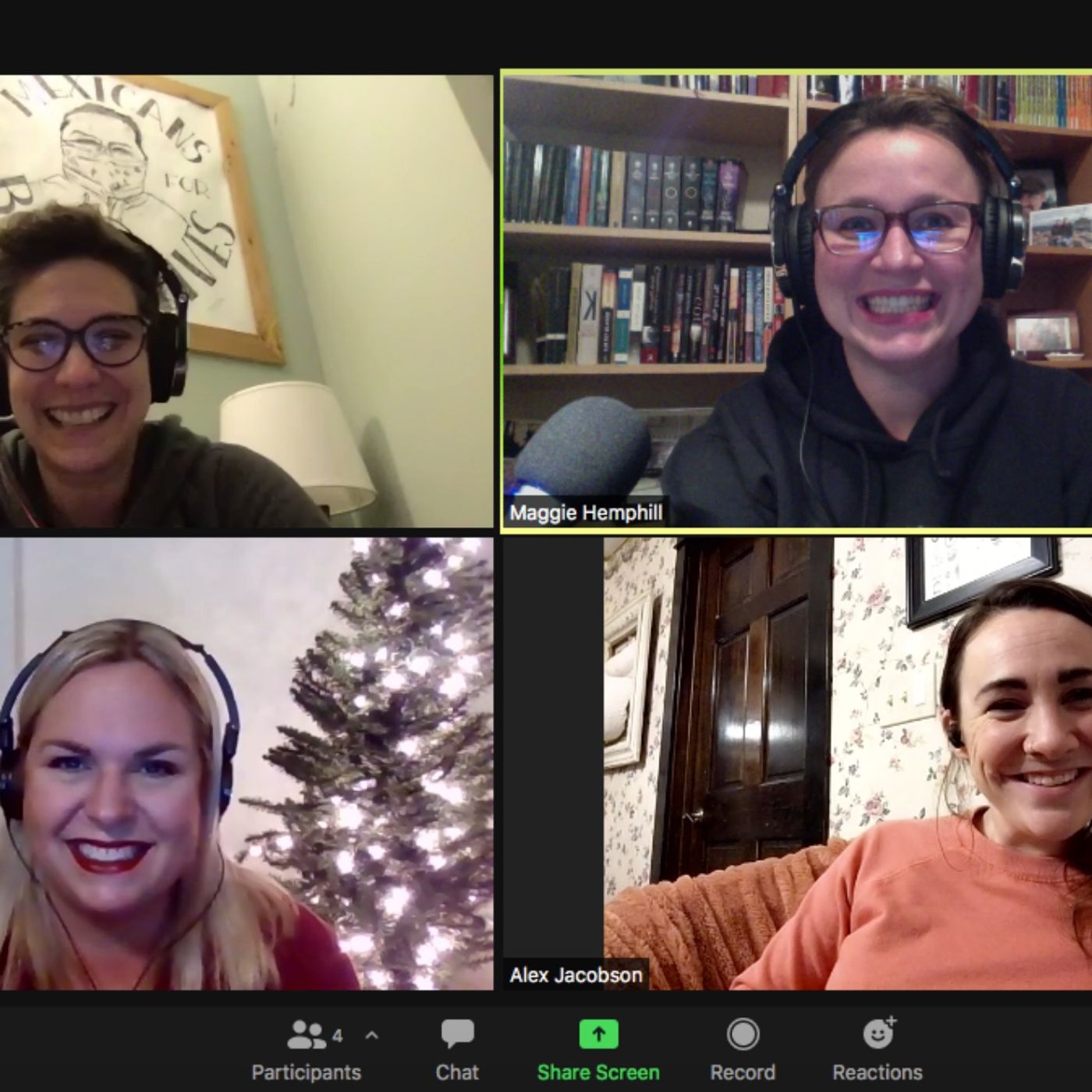
S2 Ep 9Season 2, Episode 9: Diana Frazier and Alex Jacobson talk about Covid disruption, changing systems, hope and advent
Diana Frazier - Story-teller, musician, worship leader, mother, wife and entrepreneur who's on sabbatical from her business Poulsbo Elderberry. Alex Jacobson - Leader, speaker, writer, avid book reader and book reviewer, activist, advocate, lives on her hobby farm with her husband of 12 years and their five children. She's an excellent cook and provides tips and tricks on her instagram and blog @inspirationclothesline---We check in with these ladies who were on our podcast back in April (season one episode 25):Diana’s business was booming back in April, so much such so that she was killing herself with up to 60 hours a week AND she had all her kids home from school. She knew something had to give.Most days now, managing her children with distance learning is deeply challenging: There’s just not enough of her to go around. “It feels like you’re sucking at everything all the time and no one is getting the very best you.”Alex and her husband feel like they are handling things differently than most; they have very limited contact with the outside world because they have autoimmune disorders in their family. One of things that she has learned in this season from an online parenting class is around the idea that kids have “buckets” that need to be filled in order for them to even be able to behave properly. Basically she came to realize that she can’t ask or expect her kids to function without some shifts in the way they are as parents. They are trying to get one-on-one time with each kid for ten minutes twice a day. It doesn’t happen everyday but the intention is to fill their kids’ buckets up so they have the energy and emotional bandwidth to behave when they are asked; and they are being asked to do more than before covid out of necessity. It has increased the quality of their nuclear family. The biggest shifts have been in these internal systems. Everything is always changing, and even person to person.Alex says, “Life moves on in a pandemic. Life moves on in quarantine. Life has real issues, whether that is a presidential election, family drama or health issues… those things don’t stop. They get exponentially harder.”But thank God for therapy over zoom!Danielle says we are all trying to harness all the fragments of life, that normally other places in our lives would have collected for us. There is a spiritual and collective weight to what we’re all bearing. Trauma forces us to shift systems and perspectives, to cut out the [unnecessary] fat in our lives.Diana says this year has been “a walk in the wildness that I didn’t know I needed.” She has come to realize that in so many ways in her life she has been silenced, through trauma, abuse, theology… And it has forced her to not be able to show up as herself, bringing all of who she is. That she has had to shut down who she is in order to make others more comfortable. As she has been healing in this season, that means "I’ve been really unpopular with my family for sure and a lot of people this year because they are not used to this version of me. I’m not used to this version of me.” It’s a continually living in the “messy middle.”Diana said to her husband that he may have thought he was marrying a quiet, compliant church girl 15 years ago but instead has married someone very different. “We never could have known.”Maggie named that it has been costly for Diana; She’s become aware of that places she has been silenced and the ways she has had to shave off her sides in order to fit into other people’s spaces. She is reclaiming herself now. This covid season has in some ways given her the freedom to hold those boundaries and say, “No, this is who I actually am.” Maggie also noted how beautiful it is that in this season Diana is stepping into her prophetic truth-telling gifting, calling things out and becoming the best version of herself in the middle of a global pandemic.Alex says one of the things that happens when you are doing an internal work is that you realize you’re a part of systems. Whether that be systemic racism, a religious system, a familial system… the way that you were was a component of that greater system. “When I change, the system around me will be forced to change. And I can’t manage how someone else feels about that change.”Alex mentioned a quote by Maryam Hasnaa “Be prepared for the emotional reactivity that’s going to come when you decide to release the pattern of trying to make everyone else comfortable at your own expense.”Alex says, if you are at all evolving, in your faith, in yourself, in family dynamics…If you’re evolving in anyway you are changing the systems around you.The questions Alex are asking are what will come out of this when we all are actually able to get back to interacting in the world? With people changing and systems changing, what will it look like to reenter with each other again? How am I going to react or respond to other people’s change, or changes in the systems that I am a part of? “We’re all literally going to come

S2 Ep 8Season 2, Episode 8: Dr. Kimberly Riley and Dr. Jessica Guerrero on Ambiguous Grief and the Election Season
Dr. Kimberly Riley is a Licensed Marriage and Family Therapist and a certified child mental health specialist in the state of Washington. She has experience working with children and is passionate about their behavioral health needs, although she currently works mostly with couples and families in the private practice setting. She loves being a wife and mom to her 3 teenage daughters. She also enjoys traveling to and exploring new places with her family.Dr. Jessica Guerrero, "Dr. G" is a resident of South Central Los Angeles a city where she grew up. She is a wife and mother of two kiddos, the daughter of immigrants and the first one in her family (on both sides) to receive a Doctoral degree. She earned her Bachelors in Sociology 2005, a Masters in Social Work in 2013 and a Doctorate in Social Work in the summer of 2020. She is currently working as a Psychiatric Social Worker and has been working in mental health with children, youth and families for 20 years.[Recorded 10/27/2020]We’re in a season of anxiety & grief — Across political parties, social structures’ etc.Dr. Kimberly says these are sober times filled with grief, loss and uncertainty. Our current events are causing us grief and we’re having trouble identifying. We are feeling “ambiguous loss” which she names from ambigiousloss.com as loss that “defies resolution and creates confusion.”1. Identifying Loss & GriefWe don’t know what we’ve lost. We’re still trying to figure out it! We’ve lost events, people, freedom…2. Since Grief shows up in different ways, how do we cope with it?Danielle says it’s hard to get started “grieving” losses because this grief sneaks up on us and it’s unclear where and how it’s hitting us.We are wanting to have particularity with our grief.She says we need to move slow. This is a slow process. “Today I feel this… Tomorrow I may not.”Dr. G says what we are experiencing is rare: for us all to be in a state of grief at the same time. Never in our lifetime have we been through this. She said there is a sense of camaraderie.She’s seeing an increase in anger in the children she is working with; developmentally they haven’t gained the tools or language to navigate this. Even adults are having a hard time walking along side children. It is a parallel process.Maggie named this for herself and how much sadness and grief she feels at the beginning of the week—trying to gain the will to do another week at home with kids, schooling them when not trained to do so.Dr. G expands on the trouble with Mondays: There used to been a marking at beginning of the week, there was a routine and schedule (almost like a ritual) that began the night before in preparation for the week. It’s just not as clearly defined in this COVID season with school and work at home. The days are all blending together. It’s heavy on caregivers/parents.Be kind to yourself on Monday!Dr. Kimberly says the unknown over comes us on Mondays. We are experiencing so much!We have to give ourselves breaks, grace… give ourselves what we need — whether it be highly structured or more fluid.Danielle says all the little losses add up and we almost can’t recognize them. She thinks that perhaps people are reluctant enter into grief because it will feel like it will drown us.Dr. G Feeling reluctant to say where the grief is coming from because when compared to someone else who may have it worse. These are little losses can be very significant, so we don’t need undermine our feelings.Maggie - when we allow ourselves to engage with others in our grief, we provide a space for shared grief, that camaraderie that Dr. G talks about. “I see you. You see me. We’re not alone in this.” Identifying grief then also can lead to being able to identify places where we have gained thing. Pause and reflect, find joy in the midst of seemingly unbearable times. This allows us to come close to ourselves and to each other.Dr. Kimberly says getting to a place of gratefulness and thankfulness in our grief and loss will remind you that you are still here, and for a purpose. She mentioned how we have reframed funeral to celebration of life as a way of focusing on positive in the midst of grieving.Danielle how grief, gratefulness and joy can lead to a sense resilience even the midst of on-going loss. If you haven’t engaged your losses or are disconnected with your community then resilience can be harder to come by. She says it’s for this reason we need to look to our communities to engage our grief and loss; to look at other cultures and learn how they engage their loss and grief. This could bring us together.Dr. G - Even in this divisive political climate, there are some like-minded people coming together. These times can highlight individuals who are supporting us.Dr. Kimberly Latino’s on horseback for Biden in Nevada. They came together, unified, riding through the city. She found joy from a community group that she didn’t identify with. There was such beauty in this unified moment.Can we find something be
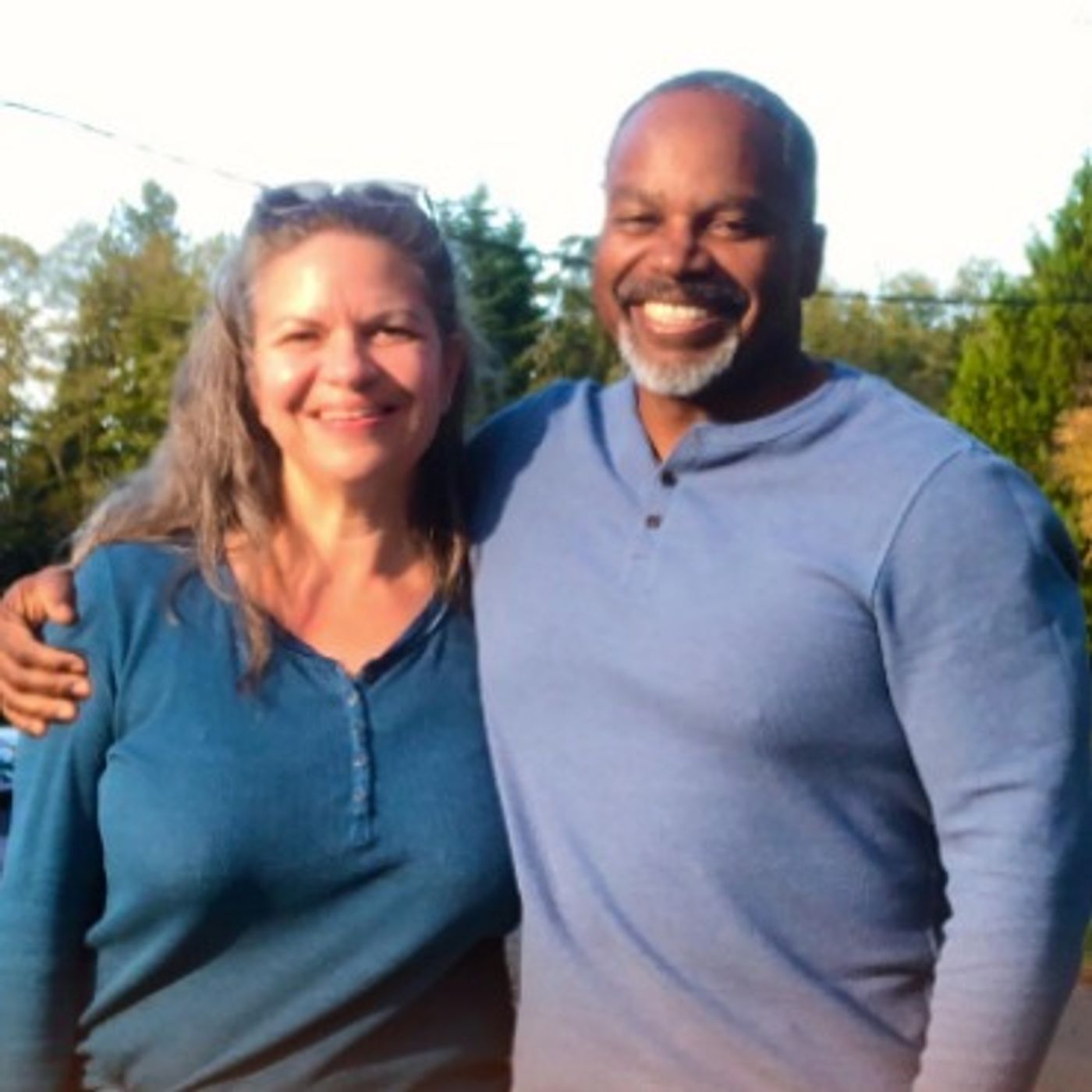
S2 Ep 7Season 2, Episode 7: Part 2 with Pastor Michael Walker
Continuing our conversation with Pastor Michael Walker... You can listen to PART ONE HERE.Maggie jumps right in: When we’re reading stories from the bible, what do they illustrate for us today around how to engage racial tensions, political systems, caring for the oppressed and marginalized? What do we about injustice?The story in Judges about the Levi and the concubine — the way she was treated (used and abused) is not just about her but it also represents a larger mistreatment of the people. Today that is what is happening around George Floyd—it’s not just about him but it’s also about all the black and brown bodies that have been oppressed in America for centuries.God brings it to light and we need to walk in what’s right, to hold account. Our call is to walk in what’s right, but what if we can’t even agree on what’s right? We see today more division than ever and Churches are seeing injustice and choosing inaction.Pastor Mike talks about the difference between being "Christian Americans" vs. being "Christians in America" ... When we identify as Christians who live in America; Everything filtered through the word of God. We are foreigners here. We are to be stewards of what we have here.Mat 5:9 Blessed are the peacemakers. We are image bearers and are called to a ministry of reconciliation: We are called to be God’s Ambassadors. This is what we are called to on this earth and we will be held accountable.As Americans though we look through lens of “Our Rights,” or “capitalism”or Liberalism, rather than as Christians through the lens of Christ.Danielle says it's about Empire & Kingdom. The Israelites wanted a king and physical kingdom. Now we are wanting a literal physical army to fight injustice. [But we are it!]Pastor Mike says the key is that we need to see each other as image bearers and to “love neighbor as self.”He gave the example of the 1988 Central Park 5 Case. There was such pressure to close the case quickly, even though there wasn't evidence and thought the 5 black kids were expendable and so put the fault on them.Maggie asks, What will be the reckoning we receive for the Churches inaction now?Danielle says they know about injustice and are purposely silent. She believes they’re hearts are hard.Pastor Mike said, But still there is hope!—All throughout scripture where we see a massive movement of God it comes through breaking, crisis, tragedy and struggle.People will falsely put hope in our political system but they will reap what they sow (see Gal 6:8). What is shown through the flesh, it will fall short. Hope in a corrupt system will corrupt our hearts.We need to respond out of love not just out of anger.And so what does Hope look like right now? Pastor Mike says we need to pray! Prayer is not about constantly speaking, but about positioning ourselves to hear and listen to God.2 Chronicles 7:14 “…if my people, who are called by my name, will humble themselves and pray and seek my face and turn from their wicked ways, then I will hear from heaven, and I will forgive their sin and will heal their land.”So Mike says we much be earnest in prayer. Asking God what is going on and how are we to walk in what is going on?It is a call to repentance, lament, Godly sorrow. Individual repentance, as a church body, and as a nation.Mike described a prayer meeting in Texas where blacks and white took turns kneeling and asking forgiveness. It was an act of courageous humility. To bless others is to kneel before.We will be judged and hated when we walk in courageous humility and obedience.God can take a few and transform a world. A few fully submitted to God.Danielle says that both sides (Conservatives, Liberals) are driven by fear that is fueled by shame. Both sides are holding a sense of despair. Collective despair is treason to our faith.“If we look and we expect men to be different than their sinful state, we’re going to feel hopeless.” But Rom 5:8 says that when we were hopeless, out of heaven comes Hope in Jesus. There is always hope in Christ. God is still on his throne. This means we need to be agents of hope, what he has called us to be in the world.We have to grieve for human lives lost. It is a Godly Sorrow. We should be shaken to our core to see someone’s life taken.People ask him, "How are you not angry and bitter?" He says "Because my hope is in God."Maggie mentioned a Perspective Shift she learned from Marty Solomon of the Bema Discipleship - Judges is often referred to as the “Sin Cycle” — focus is on sin, on us. When we view it as the “Redemption Cycle” - the focus is on God: God has redeemed his people. He has endless love and grace and patience for His people. It says, "Look! These are all the places that God has rescued! Our hope is in God." Mike says it comes down to a choice: We can choose to be on the side of wrath or redemption.Mike said the two countries that have shown the most growth in Christianity is China and Iran, both are oppressive countries. In America we get our Christianity c
S2 Ep 6Season 2, Episode 6: Pastor Michael Walker on Racism, Social Justice and the Bible PART ONE
Pastor Michael Walker has been follower of Christ for 47 years and served in ministry since 1986. He is a black American male, married to his college sweetheart, they're a biracial couple happily married for over 30 years. He has served as a youth pastor, missionary in Africa for 11 years, the Director of Love Botswana Bible School, and as Director of Word to Africa Mission school in Botswana, Outreach Director for Love Botswana Outreach Mission and a Church planter. He has been an Associate Pastor in multiple churches and Senior Pastor in two churches, one of which was an all-white Southern Baptist Church. He congruently served as a Chaplain for a Sheriff’s department for five years. Currently he is serving as the Corporate Chaplain for CRISTA Ministries and is Board Certified Pastor Counselor. He and his wife Heather have five children: Three are grown and two still at home. He considers his most significant achievement to that all of our children are following Christ.Maggie has known Mike since 2001 when he baptized her in the Puget Sound, and in matching wet suits!Checking in with how life has shifted since COVID in his family life and with work – Mike doesn’t miss the commute and he enjoys more time with this family. He hates not being able to see people’s faces or give hugs. Maggie asks Mike, having lived in several countries in Africa (Uganda, Botswana and South Africa), how has he seen race engaged differently or the same as in the States?Mike recalls the renaming of streets in South Africa from Afrikaner names to Zulu names. He named this as showing progress and change in the atmosphere, and it was done so much faster than in America.He noticed that when people found that he was from America, he was treated with more respect and honor. Mike saw that even missionaries there held bias and it made him realize that some Christ-followers also walk in bias and bigotry like anyone else, and it invited him to turn inward and ask what biases he is holding?Regarding his experiences here in America he says, “You really don’t understand what my life ha been about because you haven’t had to walk in my skin.”Mike was 7 years old when he first experienced racism. Living in a neighborhood with mostly white families and only one other black family, he remembers them coming over and their families agreeing to “Watch each other’s backs” in the neighborhood after their little girl was beaten with a hose by a white-bodied neighbor. As an adult both he and his wife have faced racism together. Mike recalls driving in Virginia with his wife when another car started honking at him and telling him to pull over. When he did he was cussed out and called derogatory names just because he was married to a white-bodied woman. The man tried to run him off the road. Some of Heather’s family said they would disown her if she married Mike. So from the very beginning she has had to experience these things with him. And even though her skin is white she is treated as if it is black because she is married to a black man. Danielle named the continual collective trauma we are in and even bearing witness to Mike’s story now, it doesn’t feel like things have gotten better.Mike recalls how back in 2016 he mentioned Colin Kapernick’s name in the church he was pasturing at the time, which was all white, and his congregation was enraged he even mentioned him from the pulpit. For him, George Floyd epitomized what has been going on in our country for years. People were literally crying out for the police to stop, pleading for mercy and asking for someone to step-in. This has been the experience of people with Black and Brown bodies in America. Mike believes we are seeing a new Civil War in America. He feels grief and anger. There is a sacrifice to be a polarizing figure. But he knows he has to be a part of the solution. When he tries to make people aware, the color of his skin effects their ability to accept what he says. He wants to help people see what is still plaguing our country, if he says certain words or phrases he immediately gets shut down. We [as a country] are still in a raw place of denial of racism. As a church, Mike believes, we need to not be afraid to be involved in becoming a part of the solution. He knows that there is a personal cost to this work.He describes the parable of the Good Story of Good Samaritan in Luke 12 [It’s actually Luke 10:25-37]:The priest was unwilling to engage because it would make him “unclean” and therefore unable to participate in worship at the temple. To help the man he would have also put his own life in jeopardy to help this man because it was a dangerous part of the road. It was going to cost him also time, money and energy to get involved. When the two religious men “counted the cost” to help the man and decided to keep walking by.... It was the Samaritan to was willing– he saw the man, cared for him right where he was at, then traveled with him the man, providing for him for the long haul. Mike s
S2 Ep 5Season 2, Episode 5: Guest Susan Cunningham and Chase Estes collaborate - VOTE
COUNTThe vote is precious. It is the most powerful non-violent tool we have in a democratic society, and we must use it. ~John Lewis (1940-2020) Votes are voices castUpon excruciating waterSplashed like dark oval notesIn bottles like ships illustratingHope thrown or sentOut to seaSee power Full votes cast oneBy one faces circulate inflowing lines — post officesPolling places voices waitingTo countChoices drawn drenchedUnder a midnight sun Say it you count youMatter democracy saturatingUnshiny wet ballots floatingSoaked precious truthDepth liberty history deathone voice one vote castIn the booth adding up who Will sit in the OvalClearly this mattersSo completely no wayTo be discreetFill the oval bubble withBlack ink black bodiesCount Susan Cunningham09.21.2020 Well, first I guess I would have to believe that there was or is an actual political dialogue taking place that I could potentially be a part of. And honestly, I'm not sure that I believe that.