
The Arise Podcast
142 episodes — Page 3 of 3
S2 Ep 4Season 2, Episode 4: Guest Megan Lundstrom of The Avery Center speaks on leadership during the pandemic and the pandemic's impact on human trafficking
Megan Lundstrom is the co founder and Director of Research at The Avery Center, a nonprofit organization that serves victims and survivors of exploitation and human trafficking through evidence-based, survivor-centered programming. Megan holds a Bachelors of Science in Finance and Masters in Sociology from the University of Northern Colorado. During COVID Megan lead her company through a legal name change, rebranding and re-launch in order to be more inclusive to all people, all genders, all races. Checking with Megan: She says there’s a mass of emotions in her home with three kids 5-16 years old. Works from home but is able to go into the office and safely distance from co-workers. Megan says the key word of COVID is PIVOT. As a small team, they are over worked but are also super flexible. They’ve seen an increase in need and vulnerability during COVID. Support groups rolled online, going virtual opened up the ability to serve more people; people who have had transportation issues or who live in anotherJob Training Program in Northern Colorado, physical site dependent. During COVID they have been able to double with a staffing rotation schedule. A silver lining during COVID!100% of their clients are on Medicaid so being able to access tele-health is “hit or miss.” Having a support net through all the barriers and Megan said it’s been really really hard to lead in a time when people are looking to you for leadership and as a leader you don’t necessarily know what is coming next, you may not have the answer. Decision-making is about what is best for the team; making sure her staff has the support at home to being able to work at home, including the added responsibility of remote learning for most children in this season. As a leader she is going through the same things as her team. Everyone is giving 100% right now and it doesn’t look the same as pre-COVID.Conversations around healthy boundaries – what are we actually able to do? When is too much, especially for over-achievers on her team. You just can’t be in it all the time. Growing pains – having all the service referrals and all the system changes amidst the rebrand, it grew her team to add a Director of Services, knowing that she could not do any more than she was already doing. Megan’s organization received both a State and a Federal Grant – including a Housing Grant – which will allow them to build internal capacity.Megan says QAnon, #savethechildren and similar hashtags actually create fear and misinformation. She thought they could be an opportunity to educate and inform people but instead she has come to realize that these hashtags are actually traumatizing people, making them feel helpless, powerless and ill-equipped to help do the work. The burst of awareness is good but the misinformation has been harmful. She shared a story of someone in one of these Facebook groups who went vigilante style to “rescue” a child, compromising an open investigation. Places to get good/accurate information about trafficking:Polaris – National Human Trafficking Hotline that center survivor voices and are a data and evidence based organizationRebecca Bender and Elevate Academy – Training and educating communities. Myth Buster SeriesGems in NYBreaking Free in MinnesotaRace & Human Trafficking: “Trafficking happens because of these intersections of vulnerabilities, and marginalization and oppression. You can’t not be anti-racist and I’m fighting human trafficking. When people have equal access to resources, education, employment, housing … trafficking will go away. The data shows that those who are trafficked are disproportionately people of color. Race and racism and equality it is all apart of this conversation around human trafficking.It’s a complex system! Anti-trafficking work can be done daily, fighting in direct and indirect ways. Do you know where your clothing is made? What changes can you make that go towards contributing to a better world?Megan recently learned about “Dirty Deleting” and how we can challenge privilege. When someone posts a question or comment and there is following discussion and comments. Then the original poster deletes a post that feels exposing; they’ve been called out and/or has learned something new… Deleting the post silences everyone else’s voice in order to protect your own ego. It’s hard to sit in discomfort. It’s not just saving face, it’s also preventing other people from learning.Live out the things you talk about publicly in your everyday life. --- Megan is reading: “The Body Keeps the Score” by Bessel van der KolkMegan is listening to: Rob Bell’s The Robcast “Deep Knowing”Megan is inspired by: Ruth Bader Ginsberg Connect with Megan at www.theaverycenter.org Well, first I guess I would have to believe that there was or is an actual political dialogue taking place that I could potentially be a part of. And honestly, I'm not sure that I believe that.
S2 Ep 3Season 2, Episode 3: Guests Krishon and Danielle Allen give us a glimpse into practical parenting, school at home and connection in marriage.
Checking in Krishon and Danielle Allen:Danielle Allen says this is “the longest year of our entire lives.”When the pandemic hit she became the pseudo-teacher, scheduling “classes” between her work conference call. Krishon became the principal. Krishon noted it they were trying to condense an 8 hour day school day in to two hours. He said to his kids, “You can prolong it with whining or you can get it done.”Krishon said in March he had to learn Zoom with this kids. The struggle was how to still be productive in his job, because nothing is stopping even in the pandemic, while also assuring the kids don’t fall behind in school. Even with all the pressure at the end of the school year, the grade came out as pass or fail and they laughed it off, they could have just done “mid-level work.”Danielle is an operations management for a tech company and Krishon does I.T. Management for the dept of the navy. They have 11 and 8 year old daughters. Danielle remarked it was a weird time to transition into Middle School.Her oldest quickly got in the flow to online learning; her teachers posted all the assignments for the whole week and she was able to work at her own pace. The youngest saw her sister working and tried to do work ahead of time so she could have a long weekend. It was a “get through to the end of the school year and get to summer.” There was also a shift or discovery about productivity when the girls would come to “school” in their pajamas vs. when they got up and got dressed. Danielle C. identified it as a mindset shift, and they were able to implement it in the entire household.The way we learn subjects is totally different than the way their kids are now. Krishon said “ It was survival mode for all of us. Don’t tell me what your teachers said about how to do this math.” They had to google common core just to understand what the kids needed to learn. They had to fill the learning gap. And in the end taught their kids two ways to do math! Krishon said for this fall they are still feeling like it’s going back to March since we don’t know how long this virtual school is going to last and they still have to work full time jobs. The dynamic of the aspect continues to force them to prepare for the unknown. Danielle feels that having a set schedule is helpful for creating subject in the household, especially as she is going into work a couple of days a week. She goes back to work “carefully.” Thankfully her office has few people and the space allows for good distancing as well as she maintains good health habits. They have a “decontamination” process for when they return home. She doesn’t want to put her family at risk and she does what she needs to do in order to keep her family safe. Danielle says this has unfortunately made people not want to socialize. Everyone is more mindful. There’s stress for getting used to the process and talking through masks. But it’s what needs to be done for all people to be safe. Krishon says mask wearing has become polarized and political, everything is heightened where they are in Maryland, being so close to Washington DC.Danielle C. says that Mexico and Morocco isn’t having the same tension with mask wearing.Krishon looked back to see how long things have taken before to make changes including smoking indoors, seat belt wearing… There’s fight and registration before change will happen; both sides argue their case and compromise is finally reached. It’s always for the safety of the majority of the population. Danielle says we need to be thinking for the greater good, for the collective, not just for individual rights and how it’s affecting me. Krishon spent a bit of time in Japan and at first he was taken aback by mask wearing, asking, “do I need to wear a mask?” But they he learned that when someone is feeling under the weather there, they wear a mask as a way to protect everyone else. Danielle C. says it feels like we are each fighting in our own corner. Krishon says ultimately he and Danielle are responsible for the health and well being of their family. Even if the schools said “hey, everyone come on back to in person school” they had been making decisions to look into alternative schooling so their kids could be at home until they felt is was safe. There’s so much information coming as us and we have to filter what is real, what information is going to help us make a good decision for our family. The necessary step is to say I am responsible for my kids.Krishon looked at the response to COVID is regional. There are places in the country could send their kids to school and it would probably be okay. But where they are in DC they are heavily impacted. He said he is watching the COVID numbers. And they want to be able to support their family and so it puts all of them at risk if the kids are in school physically. Their kids have a level of anxiety because Krishon and Danielle haven’t totally shielded them from all the information. They wanted to keep them informed without adding

S2 Ep 2Season 2, Episode 2: Maggie and Danielle, Critical Conversations, Engaging Community and Politics
Click HERE to donate and support the work of the Arise Podcast. Connect with us by emailing us: [email protected] this episode, Maggie and Danielle connect over having a new imagination for what it’s like to live in these COVID days. Having once thought, “perhaps this will all blow over,” we are now knee deep in changing family dynamics, changing what it looks like for kids to “go to school” with distance learning, and adults shifting to a more long-term working from home situation. Normal is being redefined. Even still, nearly six months in to COVID-19, things feel raw and exposed.With the end of summer and the beginning of the school year, there is a sense that “I’m not ready.” Maggie named that she is feeling ill-equipped to teach children and also help to them deal with social isolation… Simply put: We are not able to meet all the needs for all the kids.Danielle names there is a hard balance: how do we manage screen time and engage with our kids and work (from home)? We are having to trust our kids lot more and these family dynamics are continuing to develop as we find ways to deal with losses and managing emotions.In the midst of a continued need for social distancing, how do re-form, or form from for the first time, community? Just how well were we connected before COVID?As we enter into the political season it feels more divided than ever across our nation—people seem to be lining up to pick sides!We can ask ourselves: How much capacity do I have in this season, in a global pandemic, being maxed out with personal and/or work life, do I have to engage people who aren’t like me… or who disagree with me, when I still want to connect and be seen and heard?Danielle says the reality is we just don’t want to know people who are like us and yet we do just want people to know people like us. We want to agree because it feels good. And when we disagree, we aren’t just having disagreements [about politics], people believe that these things are connected to the core of who they are.Danielle challenges us as we engage in debate and discourse this political seasons to ask ourselves: Am I in my body? Am I present with what I'm thinking? When you’re in your body you have a harder time accusing and dehumanizing another person. Honor humanity by being a human: be in your body.What if I am in my body and my neighbor isn’t in their body? Start by asking questions, “You don't seem to be with me right now, where are you?” Start with curiosity. Acknowledge what you see them, it disarms them.If we can have a conversation with someone without being seen and heard, what was the point of the conversation?If someone hears what you said, they're going to remember what you say. They remember it in their bodies, for good or bad.Danielle’s tips for engaging with others in this political season who may disagree with you:Practice hospitality to the other person.Offer yourself kindness. — If you’re not ready to engage or in a place to engage, then don’t.Have self-awareness—what am I feeling? And where am I feeling it in my body?Stay with it: Danielle believes that our culture wants to disconnect from the conversation around race, racism and white supremacy because there is a sense of SHAME. But we need stay with it: take breaks, do work on your own, but then reengage in this important conversation.Don’t engage over social media because you remove the human part of being human—our bodies. Our bodies regulate with other bodies. When one person’s body is dis-regulated it disrupts other bodies present. Therefore engaging over social media takes away our ability to regulate our bodies.Anger can be arousing and exciting over social media. And yet anger can cause damage that will require repair that you may not be able to over social media.When we enter into a place that requires repair there can be this sense of despair, hopelessness, "this isn’t going to get better.” We need sit in that for moment and mourn. We need to feel the weight of our grief for there can be no movement out of grief without engagement. We must allow space for our anger to transform into grief so that our grief turns to lament and morning which leads to repair and reconciliation and healing.There’s been much debate around Abortion / Pro-Life this political cycle and it is not as black and white as much as we’d like it to be, it’s so much more nuanced. There is this sense that if we are supporting the dismantling of systemic racism and white supremacy that somehow we’re also supporting abortion. Danielle asks why do you think these two are linked?We can not do “the work” for others. If we give someone the completed work or “the answer,” without the scaffolding, framework and structure, it has no place to land.Maggie talks about story work engagement and how others may be able to “see” clearly what’s happening but the person who is sharing does not. To just name or tell them what’s happening without building the framework to support that idea, it won’t hold an
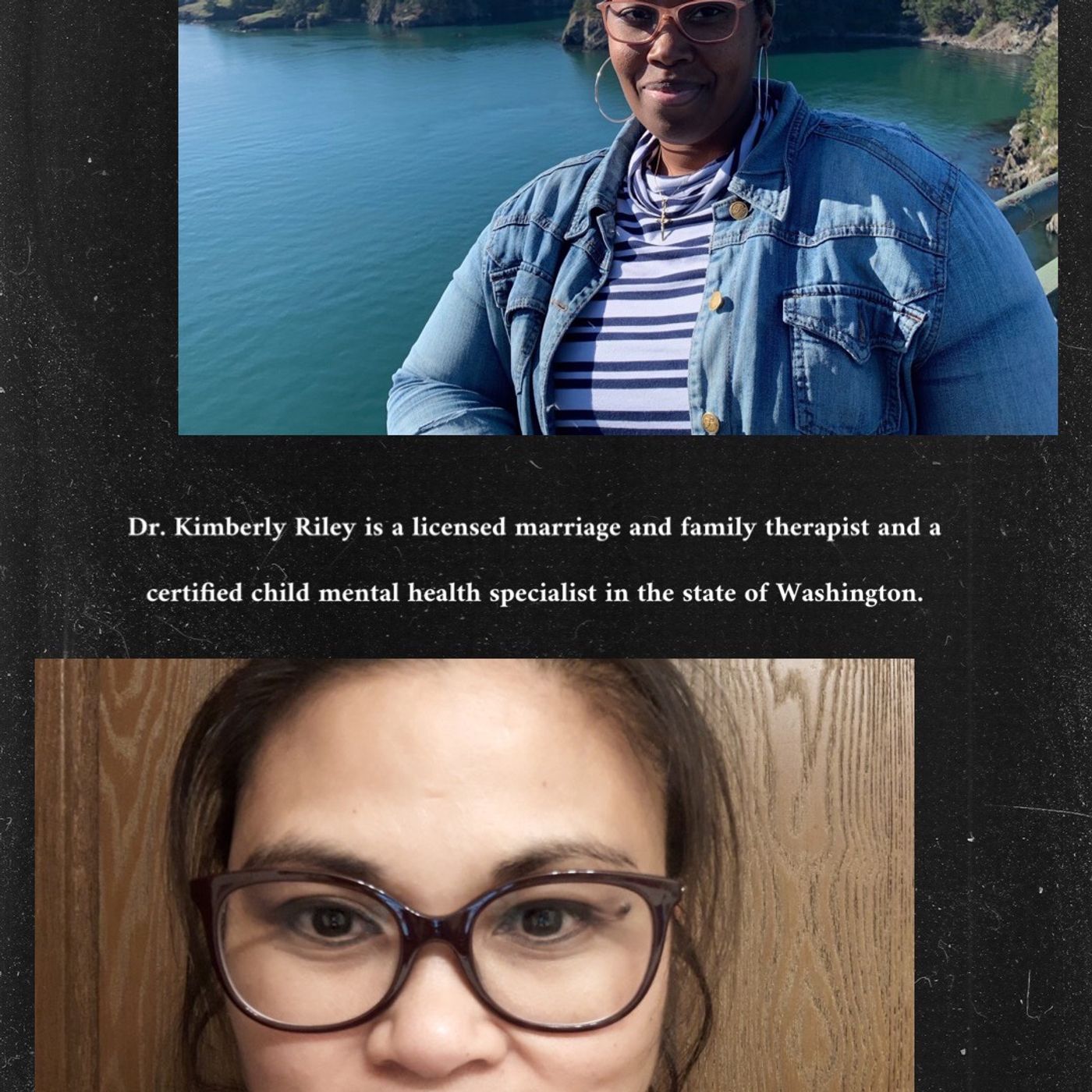
S2 Ep 1Season 2, Episode 1: Back to School encouragement on Family, Community and Schooling
Kimberly Riley, returns to the Arise Podcast with her friend and colleague Desiree Cadengo. Both are Licensed Marriage and Family Therapists and they join Danielle to talk about how to get kids, parents and families through distance learning this coming Fall. "We need to be adjusting for the long haul" of distance learning. At the end of the last school year it was very much a hunker down and get through this, but as we look at the longevity and severity of COVID-19 we need to rethink how we're going to do this upcoming school year. Both Kimberly and Desiree emphasize the importance of having structure and a schedule at home. How can we expect kids to manage themselves when we as adults are having a hard time managing life under COVID? Parents must lead by example, as well as with our words and expectations. Everyone is adjusting. It's not just kids, adults are working from home. We're all having to reimagine what normal looks like. Kids are asking, "Is anything the same?" Kids are better at adjusting than adults because they are constantly learning and adjusting as they grow.How to form cohesiveness in our families in communities--start with networking. Ask around, who's home? Neighbors? Extended family? Who is working? Who's not? We need to be reaching out to others so we remember we're not alone in this. We can work together on a smaller scale if we let people know we need help and can help. Social isolation has been a big issue for children. There is something we can do: Zoom calls, phones calls, social distancing outside. Kids need interaction with other kids, however that may look in this next season. Danielle says it's important to put some of these practices in place before the weather turns and social distancing outside will be less possible. Kids are having a dramatic increase in screen time. There needs to be balance, parents still need to monitor the screen time. Screens can be helpful and educational... But there still needs to be limits and parents need to know what the kids are watching. What they are watching is affecting them. Scary and inappropriate images, cyber bullying are causing some kids to have nightmares. Parents are coming aware, they can no longer be detached because they are actually home with their kids. Parents need to regulate their children's screen time. Basic parenting practices are being illuminated during COVID. Kids need screen regulation as well as adults! We can be asking ourselves, "When am I going to put my phone down and be present?" Be honest with your kids when they ask you (as the parent) what you're doing on the screens; are you working? are you just zoning out? are you looking for something funny to cope with this challenging season? are you socializing?Lead by example -- it's healthy for adults to have a time limit on screens as well. We all need balance!We can also use screen to engage with each other. For instance doing art with a "Step by step painting" video: Do it with your kids. Get your Bob Ross on. Coping skills and finding other ways to connect through exploration.Kimberly's family decided to try learning how to skateboard--they ordered a skateboard, the wheels and all the tools they need to put it together. She said there's probably stuff around your house that can be put together with the kids. What do you already have? There are things in your house that can entertain you. Trying taking things apart and putting them back together. Try to be spontaneous and get creative. Desiree had her kids make slime and then had them put it inside balloons to make stress balls. Take flashlights to your LEGO. Build a fort. Make play dough. Google some ideas! It doesn't have to be complicated or expensive. Bake or cook or new recipe. Sleep in the tent out in the backyard. Your kids just want to be with you. Let them know you enjoy being with them. What do you have in your house and what can you give out of what you have to others that are in greater need? Who's my neighbor, who's in my community and how can I come alongside them in this season?There are people out there who have difficulty asking for help. We need to be reaching out to those around us. People are feeling alone because of social distancing; there are people struggling in their homes. People are experiencing high levels of stress and we can do even something small to try to connect. Simply asking "how are you handling things right now?" Reach out, do what you can as a community. Kimberly talks about how some ethnic culture identities say: Community. People of Color especially are familiar with the idea of connecting within a community. Look at your black and brown neighbors to see how they are doing community in this season. What can you do to show love and connect?Connect with Kimberly:kimberlyriley@youarebeautifulpllc.com360-440-4021www.youarebeautifulpllc.comKimberly is reading facebook feeds to stay connected socially. Kimberly is listening to 90s RnB and Hip HopKimberly is inspired by communiti
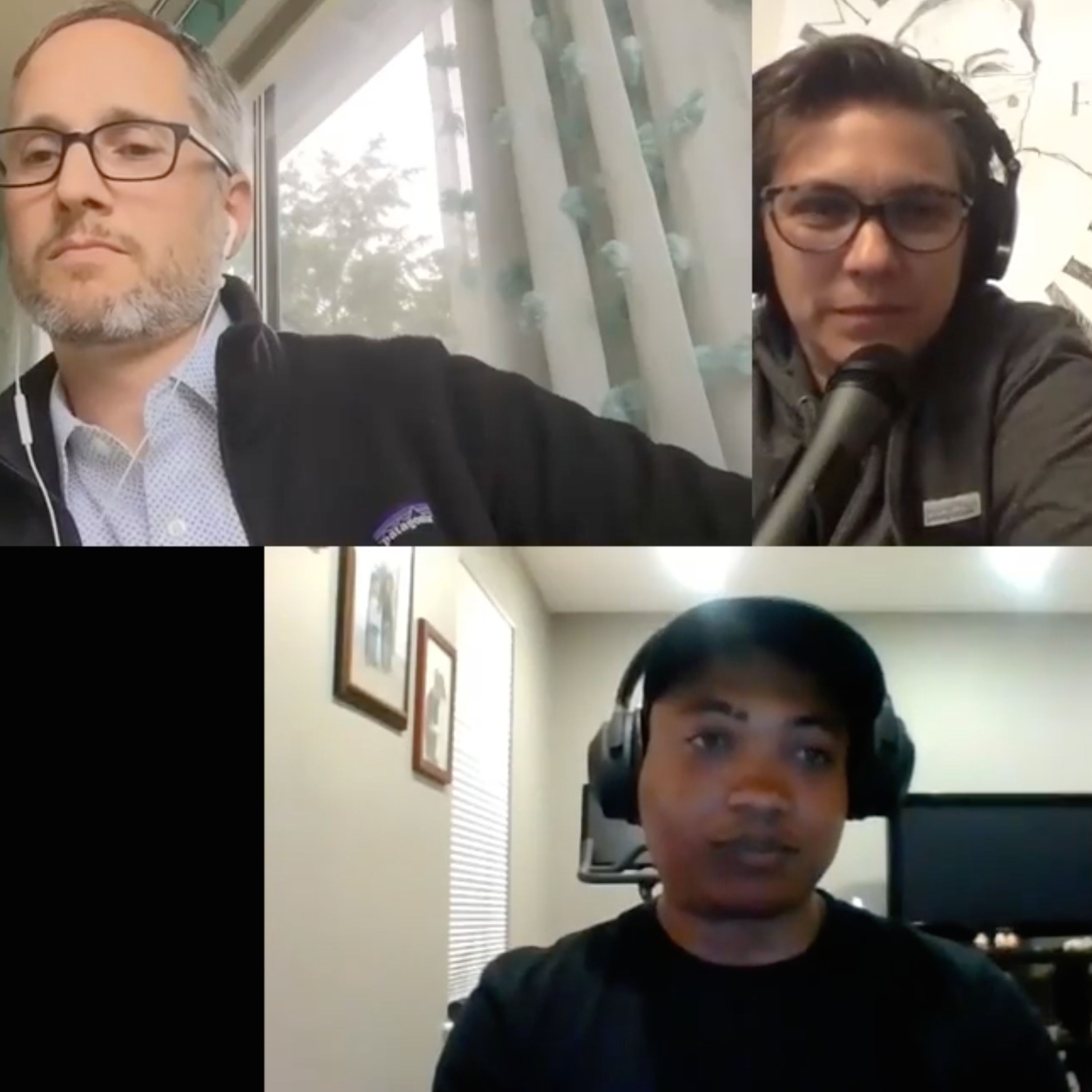
S1 Ep 37Season 1, Episode 37: Krishon Allen and Dustin Jensen on the Power of Proximity in race-relations
Dustin Jensen – Spouse of Danielle’s colleague. Grew up in rural Washington, mostly white communities. He attended Christian schools through college. Became a pastor and left ministry after 12 years. Joined the local government shipyard to make money. Married, has three kids. Is on a journey to rediscover his faith and personal growth. Krishon Allen – Native New Yorker, currently residing in Maryland with his wife and two daughters. Following is time in the US Navy he began a personal relationship with Christ. Faith is a driving force in his life. He is currently an Assistant Program Manager for the Naval Sea Systems Command and is the process of building a faith-cased coaching and mentoring program. These friends talk about current events and racial relations and reconciliation. They were first connected in 2017 where they were both selected to be a part of a Naval leadership development cadre in Washington DC. It was through this training that they began to forge a friendship and engage in deep meaningful conversations. Dustin said when he met Krishon he was in a place where we was challenging ideas in his life: his faith, his posture towards race and his view of women…. So that when he entered the leadership program he wanted to challenge himself, he wanted and made a conscious choice to be with people who were different than him, who didn’t look like him. He wanted to be in a different relationship and had a posture of learning and listening. Krishon acknowledged that on the surface is didn’t look like they had a lot in common but they were both husbands and fathers who were away from their families. The friendship was cultivated through mutual interests. The time in DC made it easy to continue their relationship when they left their time. They talked and emailed for those two years up until COVID and then they started weekly ZOOM calls. It was Dustin who added the dynamic of listening to podcasts and discussing books. The discussions have been challenging. Dustin said there was a deepening and a continuing of their relationship that may not have come naturally before they added outside content to their discussions. It was a new layer of vulnerability that they intentionally leaned into. They chose to engage and be willing to engage in those difficult conversations within the safety of their friendship.The first thing that Dustin did as he began to engage in difficult conversations and in building trust in his relationship was admitting there were things he didn’t know. He walked alongside his wife going to grad school and he questioned and challenged things she was learning along the way. So to come into a cross-racial relationship we have to change our posture: there are thing you don’t know, and you don’t know that you don’t know them until you engage someone else’s pain and struggle.For Krishon it wasn’t difficult to engage with Dustin because of his own upbringing. He said he didn’t to make anything easy and just “coast” for the sake of building relationship. Dustin acknowledged that Krishon is not responsible for Dustin’s journey as a white person, but Krishon has been willing to engage and go along with Dustin on the journey. It was a willingness to go along together.[Long gap 12:42-48]Danielle says our area is really white and they met in a different part of the country that is very different from Kitsap and more diverse. That is the challenge for our area in the NW, that while there are people of color, there aren’t many. The importance is looking at the diversity within the whole country. There is power is looking at another person’s face, it humanizes them. And you become more human to each other. Dustin says after living in (and loving) a culturally and racial diverse area like DC. it is difficult to come back to a predominantly white area and feel like “how in the world can I engage culture and diversity and equality?”Maggie says there is a lack of interest or lack of engagement in cross cultural relationships in our area. The important thing is, like Dustin said, coming from a place of interest and posture of wanting to be challenged. It is an intentional seeking out of people who are different than you. We must have a posture of learning and humility (admitting you don’t know everything). Maggie asked about a tool or resource that Dustin and Krishon used during their discussions of race and race relations. Krishon mentioned the book “Woke Church: An Urgent Call for Christians in America to Confront Racism and Injustice” by Eric Mason. He encouraged Dustin to read it since Krishon had read it with some friends. Krishon said that honestly a lot of their conversations just flowed organically—“When you have a black man and a white man having race conversations who have all the text you need is right there.” They just share their experiences. One experience they had in DC was that they went out for a run and afterward Krishon asked Dustin if he wanted to get coffee. Dustin said he didn’t bring
S1 Ep 36Season 1, Episode 36: Susan Cunningham, Danielle Castillejo & Maggie Hemphill dive into arts, poetry, soul care and trauma
With more than 30 years of experience, Susan has walked alongside and listened to the stories of countless women and men and across the United States and around the world, helping them to discern and engage what God seems to be doing in their lives. Because of her unique background, she is an especially attentive listener and effective communicator. Her work is thoughtful and wise, Biblically and theologically informed, educational and inspiring. She is committed to providing practical guidance in the present and God’s hope for the future.A Licensed Professional Counselor for over two decades, Susan continues to work with The Allender Center, facilitating lay counselor training and women’s sexual abuse recovery. She enjoys a vibrant counseling practice, and was voted "Best of Charlottesville, Virginia" for four years in a row by the public. THERE ARE NO STRAIGHT LINES IN NATURE OR SORROW Lord we are a lamentation Living like swans in a promise Not coming true Flush gone all mute I weep and swear To it though I’m sure some Find meaninglessness Beyond dispute I prefer the fathomable Grant me faith meaning prayer Settle us down into water To receive unquiet Questions without shushing us Pitching toward the imaginable By crushing us Fill our plain mouths with salt Under water color light Gulps of ballet Deep sprays of mundane As a sign Father You are still fond of us Feathered Spirit gather us by chance intervene Lengthen your curved neck As we are sodden quivering Inelegance keening Faithless faith dance Sound the depths of your Brokenness rolling Sand ground thus Into meaning and well-being Like sea glass submerged Be lost with us exhausted us I heard you sink wisdom With understanding beneath The enormous surface of your silence Susan Haroutunian Cunningham A FEW QUESTIONS FOR GRANDPA’S VINEYARD— FRESNO, CALIFORNIA To the pinhead berries clustered on grapevines Paul planted seventy years ago by my back door How dare you? To those curlycue tendrils reaching magnetically toward light, exhaling wrapping around climber and branch Are you listening? About tiny leaves making their way from those tendrils reaching larger leaves, touching with insistence Why are you emerging? Do you dare bring forth fruit into this burdened world full of sickness, death, poverty The undoing of everything? What do you know about change? How do you grow sweetness confidently in the breeze disobedient So near to one another? Against this cloudless cerulean spring’s new vines are still alive bright green sprouting from rough wood while 24 hour news rhythms go on I see freshness another mystifying cycle showing buried secrets to air, soil, sun, to the water dripping down ancient stumps Susan Haroutunian Cunningham Well, first I guess I would have to believe that there was or is an actual political dialogue taking place that I could potentially be a part of. And honestly, I'm not sure that I believe that.

S1 Ep 35Season 1, Special Episode 35: Susan Cunningham, Danielle Castillejo and Chase Estes present "First Mother"
What are you doing right now? Are you eating? Listening to a podcast? Out for a run or a walk? Heading home from work? Ready to fall asleep? Maybe you are intentionally doing something to nourish your heart, your body, your mind— your self. Maybe some combination of all of the above. I’m writing at home, not thinking about safety. Ahmaud Arbery and Breonna Taylor were doing something ordinary when they were killed. Ahmaud was out for a run, Breonna was asleep. Their lives and deaths bring to mind too many other Black Americans and people of color doing ordinary things in America while facing increasing racial injustice and fear. Almost 65 years ago Rosa Parks wanted to do something ordinary too— sit in her seat on the bus home from work. Despite many decades since the modern civil rights movement, more attention is needed particularly from white and privileged christian communities who have been uneducated and silent. Remembering Rosa Parks gives us an opportunity to learn and to pay attention to both history and current events. She is relevant in both. It does not need to be Black History Month to focus on Rosa Parks. It does not need to be February. We need Rosa Parks this summer and in every season. Her voice teaches us to be more fully human, honor and love God, and all human beings as ourselves. Rosa Parks invites us to listen, stretch, to become collaborators and to work for justice for everybody. FIRST MOTHER Roll. Roll, Rosa. Roll down, Rosa. Roll down where wheels roll on, Cleveland Avenue bus. Move. Move on, Mother. Move on back. Move back as this driver orders, Montgomery Police bust. Rosa rides the dented yellow, green and white bus home from work where she sews dignified defiance into every garment. Rosa Louise McCauley Parks rides. Sees through sound glasses in 1955, sensible dignity any day in the way she inhabits her rightful vinyl seat. First of December this mother is due. Tonight, she sits unmoved, no stopping here. So still, Rosa. Accepts deep breaths of arrest, receives this moment thrust upon her. Constant kicking, labor, pains, screaming. Undeserved delivery. Giving birth to a boy- cott, Rosa Parks, forbearing mother. Twelve years ago when that same bus driver pushed her off that bus, rain, not justice, rolled down. An ever-flowing stream ran over her, walking, buttoned up topcoat, soaked. What patience courage carries. The face that stops hundreds of busses, moves thousands of feet. Do nothing and change everything. Down the road for such a time as this, Rosa. Awaken the pastor, whose dream will preach. Feel an honest presence. Marchers swelling like an emotional river still. So many motherless. Stillborn, are too many children of God. Console, Rosa. Let my people roll. So far and we are not there yet. Go down, Rosa. Even so, Rosa. This is the long way home. Susan Cunningham ©Susan Haroutunian Cunningham 2019 Well, first I guess I would have to believe that there was or is an actual political dialogue taking place that I could potentially be a part of. And honestly, I'm not sure that I believe that.
S1 Ep 34Season 1, Episode 34: Jay Stringer on Pornography Use During COVID
You can watch this conversation on YouTube. Jay Stringer is a licensed Mental Health Counselor, an ordained minister and the author of "Unwanted: How Sexual Brokenness reveals the pathway to healing"Danielle and Maggie check in with Jay to see how he and his family are doing during COVID:Jay's family is doing great. It took a couple of weeks to figure it out but they have created new rhythms and figured out a new schedule where he and his wife take turns going into the office. A lot of what Jay does is speaking and teaching, but he hasn't been on a plane since March 6th which he says is lovely. He has had to pivot his business to seeing clients online. Jay is the author of the book Unwanted, a book about healing from sexual brokenness and sexual addictions. Danielle asked about how Jay's sees sexual addictions and sexual brokenness playing out right now under COVID. Jay says from a 30,000 ft view, "any time of uncertainty, like the one we're in, is going to naturally increase powerlessness and anxiety." This leads people to lean on unwanted behaviorsDanielle mentioned that in Italy, Porn Hub has made it's premium content free. Jay read part of an email that was out to other countries under quarantine that said, "Stay home and help flatten the curve. Since COVID-19 continues to impact us all, porn hub has decided to extend free porn hub premium world wide." It's madness! We are now seeing a 10-25% increase in porn traffic. Jay explains that unwanted sexual behavior, like the use of pornography, infidelity, buying sex, hook ups... are appealing because they offer some relief from what we're experiencing. "When you feel anxious, when you're distressed, you're going to look to another substance, behavior or process to begin to mitigate some of those feelings of discomfort."Jay says in regards to unwanted sexual behavior (specifically the use of pornography and sex trafficking), we need to step into WHY we are we using another person's body for our own sexual gain in the midst of so much stress and anxiety we're experiencing. Unwanted sexual behavior will always offer that sense of escape. Maggie commented that Porn Hub has made it sound like they are providing a great service for people in their time of need, "these are hard times for us all" and they trying to appear caring. Jay speculates that as a result of easier access to pornography there will be increased levels of addiction. He believes that Porn Hub knows that and so providing premium content during the pandemic will produce more customers afterwards. When someone begins to use sexual content in the midst of your own distress you decrease your ability to self sooth. Jay mentions Dan Siegel's The Window of Tolerance, which is the ability to regulate yourself. When you are in the "green zone," you're not necessarily no longer in distress but you are able to sooth yourself and your anxiety, to understand if I'm angry, to move into emotions rather than outsource them. So what the porn and sex industry is doing, Jay says, is teaching us to not build our window of tolerance, so we outsource the solution to something that has a lot of male gender-based violence to it. No matter the age, Jay says when you begin to think that you are entitled to, you deserve, to look at another human body in the midst of your distress because you need an escape, it sets you up for intimate partner violence. This develops the inability of dealing with distress and creates a pattern of pursuing an orgasm at the expense of someone else's exploitation. "It's really troubling."Danielle acknowledges that our anger can come out sideways. "You can numb it for a bit with food, alcohol or porn. For a time it is numb, but that doesn't mean it isn't going to come out." If we're not engaging the anger and what we're feeling, it will come out sideways. Anger needs to be engaged not numbed. Jay says one the main failures of the Evangelical community is that they view the use of pornography and other "sexual sin" as a matter of lust. The evangelical community then creates "lust management" with accountability partners and internet monitoring ... but this only cuts off one tributary of unwanted sexual behavior. Anger is a big tributary of that river. Using Dan Siegel's language, "name it to tame it." The moment that we have proprioception (the ability to name what we're experiencing) it releases soothing neuro-chemicals into our limbic system, the area in our body that is holding our anger and distress. Other wanted behaviors such as drinking or binge watching Netflix alert us: "When we are not taking of ourselves, and we are outsourcing the solution to something we know doesn't bear much significance or beauty of glory... we are going to feel like crap." Jay believes that people stay in unwanted sexual behavior, sometimes for a lifetime, not because sexual brokenness is self-medicating, but instead because it is bound to a type of judgement against yourself. "The more we do not like ourselves,
S1 Ep 33Season 1, Episode 33: A Conversation with Bobby Martin and Kyle Petricek on Whiteness
Still social distancing.Kyle and Bobby are Classmates of Danielle’s from the Seattle School of Theology and Psychology. All three were in the Counseling program together.Danielle met Bobby and Kyle in a Spirit and Trauma Class and shared a research project together.Checking in with Bobby about how he’s doing and how COVID is affecting his life:Bobby says truthfully, “We don’t actually know how COVID-19 is effecting us and we probably won’t know for a long time.”What he’s noticed in his counseling internship is that the gap between the haves and have-nots has is becoming increasingly larger.As a therapist, Bobby find himself entering sessions with a different mindset – “there’s a lot more case management” happening rather than actual therapy. It’s become more difficult right now to engage past trauma, while living in a current trauma. He finds his sessions are less about trauma and more about just surviving.With 9 people in his household, Bobby is watching how each kid is navigating the lack of community, social support and social interaction. And when you magnify that with the population of people you work with, there is a diverse reaction to what’s happening.Bobby says he’s not sure he can do anything more than just sit with people and listen to how their day/week/month has been and not really give much input. It allows them space to share what’s happening in their daily routine, what is lacking. Danielle noted that the longer COVID goes on, the larger the gap. Bobby had hopes that there would be a hiatus on crime during this season. In the past weeks there’s been an uptick in violence. The media is showing there’s not just more violence on a whole but also more violence being inflicted by law enforcement. Bobby is trying to work and everyone should also work on taking a collective deep breathe and try to figure out what the next move is. He’s had a young person that he’s close to that was killed three weeks ago and there is no place for lament or gathering together. The gap is widening from economic and racial. The luxury he is given: the ability to lament and give space to lament. For many people that space is decreasing when it should be increasing. Bobby says, when you don’t allow yourself space to lament, it bottles up and manifest in someway other way, shape or form.Maggie acknowledges that the collective tension is so tight. She empathizes with not getting more space and wishes she has space to lament, not just for herself but also for her kids who hate school online and miss their friends. She says in this COVID environment our friends have become threats and that is not the way she wants her kids to live. Bobby says we need to remember that the tension we feel will manifest itself in some way and law enforcement is not immune to that. Kyle mentions a book they read for class [My Grandmother’s Hands by Resmaa Menakem] that deals with racialized trauma in our country and addressed police bodies. Kyle watched a recent interaction with an African American man who was intoxicated at a Walgrens. Kyle found himself watching to make sure the man was treated fairly by law enforcement all the while his therapy training running in his head, is he a risk to himself? Is he a risk to others? Then adding to that Menakem’s work he began to wonder, “How is the officer working to deescalate this guy? And if the officer is stressed he’s not going to have that to give.” Kyle thinks Menakem’s work needs to be apart of the conversation on how we take care of the police so that they can practice law. The police is working with new stress, just like the rest of us. Danielle mentions that Shaun King, an Activist, has been showing video clips of African American men getting tazzed and tackled by Police just standing there, not practicing social distancing, brutally arrested and charged with police assault. Contrasted to images of white people in a park in New York, not social distancing, and cops were rolling throw handing out masks. The contrast is so stark. Individual police are responsible for their actions. But who is above them telling them to carry out an agenda and a policy like that?A friend made masks for Danielle’s family and the one for her husband didn’t fit. Instead he wore a bandana. But it was as they were going on with him wearing the bandana on his face that she thought, “Oh you better not wear that… to other people you are looking really dangerous” as a Mexican man. So he went into the store without a mask and people gave him dirty looks. It’s like a bind, “What do you want him to do? Where is he going to fit?” It’s like not having the space to exist. Danielle says that communities need more opportunities to lament, space to lament. And white spaces are still crowding that space.Bobby was reminded of something that happened at the Seattle School during a practicum: It was a heated conversation about race shortly after Trump was elected and there were white folks saying there were no race issues, especiall
S1 Ep 32Season 1, Episode 32: Vanessa Sadler of Abide Enneagram Coaching on the enneagram under COVID
Vanessa Sadler is a wife, mother, trauma-informed enneagram coach, excellent hugger.We check in with Vanessa and how things are for her and her family of 5 in Nashville, TN under COVID-19. They are hunkered down, social distancing. Her kids are home for the duration of the school year. Her family had homeschooled a few years ago so the shift back to school at home wasn’t too difficult. Being an enneagram coach has allowed her to have a lot of flexibility in her schedule and she has shifted to accommodate the school at home schedule.Overall she said COVID has been a mix of joy and sorrow. Vanessa believes Grief and Joy are two ends of the same spectrum — to the degree that you’re willing to allow grief in that is the extend to which you will be able to experience joy. There’s been a lot of tears in her house, mostly from her, as she has come to accept the loss of her autonomy.Vanessa says that so many of us are reverting to coping mechanisms from our childhood and adolescence in highly stressful or activated situations. For her that looks like binge watching Gilmore Girls. She realized the last time she had binged watched Gilmore Girls was when she was postpartum with their first born child. It is a kind of self-soothing that brings comfort in the midst of things feeling like chaos.Maggie said she loves that idea of grieve and joy because it feels true for her in this current time. She said it’s like there are really awesome days or really bad days and nothing in between. It’s very extreme and high emotions are her home right now.Vanessa says they have a lot of outside space behind their house for their kids that can fill either their boredom or their curiosity/imaginative play.Danielle has it’s harder to watch her kids go through boredom more so than it is to experience her own boredom. She says it it affects her, it feels personal. It’s like an personal attack!Vanessa agrees, “You’re invading my space.” She says there’s a connection with boredom and food: “When you think you’re hungry but you’re really bored and you’re just eating all the food.”Maggie can relate. Her husband as been baking, especially baking chocolate chip cookies. When he came home from work, he asked her if she had had a cookie. To which she replied, I’ve had six!Danielle acknowledges the spectrum of our experiences and yet there’s some specificity that is similar.Danielle has four kids at home, each 2 years apart. Sometimes their birthdays mess up her ability to name their ages.Vanessa asks, “How many days?!” have we been in this COVID [implying it affects all our ability to keep things straight.]Maggie tells how she and Vanessa became connected through the Certificate Program in Narrative Focused Trauma Care at the Allender Center in Seattle and she asked how being trauma-informed helps her practice as an enneagram coach.Vanessa helps her clients unpack the ways they have emerged from childhood with their dominant enneagram number and then spending time looking at how that lens and wiring plays out in how they relate to others. She always, and especially now under COVID, spends the first part of her sessions checking in with her clients and seeing what they are bringing in with them. And over the past few months, she’s noticed those check in times have gotten longer. She likes to leave space to diverge from her “planned” session, giving God and the Holy Spirit space to move, and right now that looks like tending to peoples current experiences, unpacking layers of survival mode.Danielle loves that Vanessa already had a rhythm of providing space for her clients that she can be flexible with that now is being used to engage the current collective trauma. It’s so helpful and healing for people to have space for grief or silence. It reminds Danielle why we even had a this check-in at the beginning of this podcast.As a culture, Vanessa says, we tend to split from thing to thing, checking off boxes. When we actually find time to sit still, all we can think about is decompressing or numbing out. We need rhythms to be able to check in with one another. She and her husband have a way they check in with how they are feeling, affirming one another, being attentive to needs, and even owning things that need to be named. Sometimes that is Vanessa owning that the laundry isn’t done.Maggie says “There’s grace for that too!”“Yes exactly,” Vanessa replies.Maggie asks Vanessa to give a brief overview of the Enneagram, what it is and how it is used.Vanessa describes the enneagram as “an intricately layered, multifaceted map of our internal world.” Where most personality tests and assessments do a good job of pinpointing people’s behavior, tendencies and quirks, the Enneagram is going to drop a few layers deeper and tells the why: what’s motivating the behavior, what’s pushing certain responses and actions and the styles of relating that comes out of it. There are nine basic personality types but they are all interconnected. People will see parts of themse
S1 Ep 31Season 1, Episode 31: Danielle and Maggie speak with Jill Dyer on anxiety, panic and attachment styles
Jill Dyer is a writer, editor, story coach, poet, narrative trauma practitioner, mother, wife, and is on the Allender Center team.Danielle begin with checking in with Jill during COVID: Jill has many hats that she wears and finds herself navigating school online with her four kids at home, while she and her husband are both working. She notices that she sees what’s going on with them and tries to fit her self and her projects in wherever she can... But it’s not always easy. Jill finds it is difficult to find space to work without interruptions during this season.Maggie agrees; regular life has been so disrupted that she wonders how we will be able to do everything we did before, having so much “quantity time” not necessarily “quality time.” Things are just different and emotions are high! Jill agrees emotions are all over the place; “Everyone is in a different spot every day. We are not all on the same page.” She says it’s hard to fill the gap when someone isn’t doing well. She asks, “How do you manage or tend to the gap of people not being at their best with kindness?”Danielle had awoken the last few days feeling like “I gotta get this done. I gotta get this done….” before she really stopped and asked herself, “What is it that I need to get done?” And she couldn’t think of anything that needed to be done. Through talking to Jill on the phone, they came to this idea of a sense of panic that is happening for many people right now. Jill says she is the type of person who can hold a lot of anxiety in her body without even knowing it. She believes that to be part resiliency, part survival and part not helping at all, all mixed together. Jill gives us a snapshot of a story where she and her daughter went out on a beautiful day to do a bit of hiking down by a river. The water was moving pretty fast and she felt like “eh, I don’t want to do this,” yet she ahead went anyway. As she got about a third of the way across the river all of a sudden her legs started to shake and she couldn’t move. Her daughter was all the way across now and looking at her. Jill could not get her legs to move! Finally her daughter came back to and asked her if she was okay to which Jill replied, “I don’t think so.” Her daughter suggested that she scooted on her butt back across the river. Her daughter said, “I’ve never seen you like that.”Jill acknowledged she had never felt that way before. She began to try to put words and explain to her daughter, “I’m not normally like that. I think all of the things that are going on are held in my body more than I’ve known.”This was a loud signal to her that she is holding the collective panic of her family, of herself, of our nation, of our world. And she is working really hard to be kind to herself in the midst of all of this and STILL she is at the edge of panic. Maggie felt terror just listening to Jill’s story – panic, not being in control of your body, sense of urgency and overwhelming fear of not knowing what’s happening. Maggie loved how Jill engaged her daughter in the midst of it, offering more than just “I’m fine.” Maggie noted that her daughter was clearly aware that something was happening and Jill took the time to tell her “I think I am holding more than I can carry” in a way that wasn’t asking her daughter to carry it for her (placing the burden on her daughter.” Maggie wondered what was it that helped Jill to calm down and reengage her body again?As Jill was lying in the sun, she kept reaching over and touching granite rocks, feeling the warmth. It was the stability and grounded-ness of the rock that was really soothing to her in that moment. It wasn’t actually until she wrote the whole story out, spent time walking and listening to worship music, that she was able to feel regulated again. But even then she knows she is in a more heightened place than normal. Danielle notices the same for herself—she’s been taking it easy on herself during her workouts but she finds herself gasping for breath at times, as opposed to regular shortness of breaths that she experiences in a workout. “Our bodies in a sense are in protest of all that we have to hold. And it’s not like we can give away all that we’re metabolizing for our children.” We have to hold it and be kind and find a way to soothe ourselves all at the same time. Jill said it wasn’t easy to tell her daughter what was happening. She felt embarrassed and she didn’t want it to happen. She wonders if just showing our kids who we really are is a safe way forward; We’re not asking them to carry it we’re just letting them see it. It’s more honoring as a family to see it, rather than one person overcompensating. Maggie said the environment she grew up in her parents were untouchable and they didn’t have to say sorry, they didn’t’ have to offer an explanation. “It feels like I didn’t really know them in the way that your daughter will know you.” Sometimes there aren’t words for what’s happening and merely offering that you don’t know what’s happe
S1 Ep 30Season 1, Episode 30: Special Episode - Con Luis Castillejo, Danielle Castillejo, Charo y Jorge Sanchez
Luis Castillejo, guest co-host, helps facilitate a conversation on faith, race, justice, and immigration in the United States. This conversation is in Spanish.Immigration in the United States, the workers in the fields, and race is a real issue. Where is God in the middle of the crisis?What does Faith mean in the middle of the crisis?How do we provide for our neighbor? Inmigracion, el dinero que mando el gobierno, y los trabajadores que siguen trabajando encuentran diferentes problemas. Luis, Charo, Jorge y Daniela hablan de todo eso y mas del significado del día festivo Cinco De Mayo.Porque celebran (los de Los EEUU) Cinco De Mayo? Escuchen porque queremos enfocar en lo importante del día Cinco De Mayo y no solo en tomar cerveza y comer tacos. Los Americanos roban el día festivo, pero lo podemos tomar para lo que es hablando en realidad de lo que significa. Well, first I guess I would have to believe that there was or is an actual political dialogue taking place that I could potentially be a part of. And honestly, I'm not sure that I believe that.
S1 Ep 29Season 1, Episode 29: Part Two of our conversation with Theresa Melendez, Dealing with Grief and Loss
PART TWO Danielle asks Theresa to share about a major event that in her life this last year, one that disrupted and changed her life: the death of her father. Theresa is still processing the death of her father last year—he tried to kill himself, survived but then died on an operating table.She knows she needs to see a therapist but culturally Filipinos doesn’t go to see therapists. Theresa wrestles with him taking his own life and what the church of her youth (the Catholic Church) believes about suicide, that it leads to hell. Is this where he is now? Theresa heard God say to her, “He tried to take his life, but he didn’t, I did.” And this brought her an answer that brought her comfort. He didn’t leave a note or say why he wanted to kill himself...God showed Theresa that He reached out and grabbed ahold her father, and wept with him. And that image felt like God had given her that mercy in knowing where he is.Her dad had shot himself in the head, survived it, then got up and walked to the bathroom and said "I don’t want to go to the hospital, I want to go home.”There is still a physical part of her grief, she feels it, and how she and her mom deal with it. She's tried to find things she can control.There was a lot of paperwork to bring him back to the states.She felt there was this constant narrative, “We got to keep moving.”It was when it was all done that someone said, “That must have been hard” that she broke down grieving. It was like a release that she didn’t have to carry any more weight. GRIEVING is to deal with all the tragedies she was experiencing, not just the death. It was permission to feel it all. When they did find out why he killed himself, there was this overwhelming sense of betrayal and abandonment. He was her rock, her source of wisdom and he was gone. She stepped down from the ministry she was leading and stopped leading worship. Then she got angry. She felt she was doing all these thing for him and now he was gone. “Fine! I’m going to get more tattoos.” She laughs at this. Theresa finally got to a place where she declared, “Alright I’m going to start living!She said she has never felt the strength of prayer more in her life than in the season after her dad’s death.Danielle said, “we don’t grieve well.” And Theresa in a culture where things are fragmented. Even in the way she quarantines—she quarantines with her family—“thank God, I wish I was doing that!”“It's no wonder that trauma resurfaces in COVID-19, where we’re fragmented and isolated.” And Danielle speculates that perhaps that is why she felt she could share it right now during this season of so much loss and grief happening around us and in us.Theresa says there isn’t a day that goes by where she isn’t thinking about her dad. She thinks that the isolation of quarantine and the uncertainty, the stress of her working at home…the anxiety and trauma from her dad’s death … It all parallels each other. She finds that little things are magnified. She remembers how out of control she felt after her dad’s death and how God brought her through that, and she thinks it will be the same with COVID even though it feels like “the end times” because of the global nature.Maggie acknowledge there’s a new and different level of connectedness as we experience collective global trauma together. We are grieving together, for each other and for ourselves. We’re all separated physically and so in order to heal and engage the grieving processes it’s doing what we're doing now: it’s sharing our stories, sharing our loss and sharing our grief... So we can say “me too” as a way to be connected even while we’re apart. Well, first I guess I would have to believe that there was or is an actual political dialogue taking place that I could potentially be a part of. And honestly, I'm not sure that I believe that.
S1 Ep 28Season 1, Episode 28: Filipina Project Engineer and Worship Leader Theresa Melendez speaks about gender in the workplace, deconstructing faith and the state of the church right now in the midst of the Pandemic
EWe are still social distancing here.Today’s guest is Theresa Melendez - Filipina Project Engineer, Worship leader, mom and wife. She’s also in a band!Danielle asks how Theresa and her family are doing during COVID. She says she is “blessed” because her work is considered essential, so she’s been learning to work from home. Her husband is a freelancer and most of his clients are not working right now, which means he is not working. Their kids are doing school at home and that is the most stressful part of COVID for her. Theresa calls herself “strict” and says she wants her kids to learn Chinese and do algebra… She wants them to take education seriously but knows that she can’t be “that super homeschool mom.” There is grace for and for them in this season. She said however we can get it done is the way we get it done. But she is “breaking the rules” a bit by taking her kids to her mom’s house Monday, Wednesday and Friday. Theresa says this not only helps her to be able to keep working but it also is good for her mother who is home alone otherwise and it always her to be useful.Theresa doesn’t love working from home. She says it’s hard to look around the house and see all the things that need to get done that she can’t do because she’s actually working.“We’re coping pretty well.” She says. But at the same time Theresa says, “I’ve never spent so much money on food!” It’s either a huge increase in her monthly budget for food or she just never noticed how much money they spent on food before COVID. Perhaps, she says, it’s because it’s such “a huge ordeal to do to the grocery store now.” She jokes about having to find a face mask that will match her outfit. Now she spends time a lot time pre-planning her trips to the store focusing on how to get in and out of in the quickest amount of time with the least amount of touching and contact with people as possible.Maggie adds that we’re all in that same place of having to rethink things that we never had to before, like going to the store and minimizing contact. “Our brains are working so much more than they used to.” Maggie notes that Theresa’s home is now also her place of work and so her brain is having to switch back and forth between work-mode and mom-mode. There’s a bit of brain acrobats going on where our mind has to juggle all the things while seemingly trying to be as productive as before we have all these other obstacles.Theresa shares that she mostly grew up here in Poulsbo, having moved her in 1987. “I’m a navy brat,” she says so she’s been exposed to lots of different cultures. She remembers not really knowing what race was until her family moved to North Chicago when she was in the 5th Grade. It was a predominantly African American community and that was the first time that she noticed that she was different. Then after living in Chicago her family moved to Kitsap County and there were only two or three other Filipino kids, a hand full of Native America students and maybe two African American students. It was a predominantly white community.She recalls that in Chicago people were fascinated with her, but when she moved here she began to hear things. She learned about swastikas and white supremacy.. and she wondered “what does this have to do with me?” She thought it was about someone else. Her friends never treated her differently and she felt she was never exposed to blatant in your face racism. Growing up kids would make jokes asking her if she eats dogs? And she was like “no…we actually have dogs as pets likes everyone else.”When she stepped into the leadership here in our community she was thankful to be under leadership that was very open. Theresa feels more boundaries because she is a woman than she does because of her race. It’s not as if she feels that people have their thumb on her. Theresa has worked in the construction industry for over 20 years, which is a predominately male working environment. She works in the office but believes if she wanted to work in the field she would have some trouble. She said she’s had to grow a really hard and thick skin.She lead a group at her church and the leadership was very respectful and she was “given to permission to be who she is.” Work is where gender thing has come to play. She has battle that early on, but overall she's had respectful bosses.Danielle says it is very common for women to get push back and imagines that it is especially so in the construction setting. But Danielle has noticed that even though Theresa has built up a “thick skin,” she has not become bitter and there is something very sweet about that. Danielle asks Theresa how was she able to develop that thick skin while still retaining her kindness?Theresa describes how she had a bad working experience in Seattle where there was some sexual harassment happening in the office that she worked for. She was a single mom at the time so it was taking a huge risk to step down from a job that paid her well, including paying for her commute, and wor
S1 Ep 27Season 1, Episode 27: Korean American Clinical Psychologist Gloria Huh on race, grief, trauma and pathways toward healing.
Gloria Huh, Korean American Clinical PsychologistMaggie was unable to record due to illness.Danielle chats with her friend and colleague Gloria Huh. She is a licensed clinical psychologist in private practice working with oppressed groups, she’s a trauma therapist and teaches university-level courses on intergenerational trauma and diversity.Gloria, who lives and practices in Seattle, has not had “that much” disruption because of COVID which has led to deep sense of gratitude and also urgency to provide for her clients who are directly affected. She said it’s been a lot of “holding space” for them, helping people to not push themselves to be productive or to overextend themselves but instead to encourage them to be mindful and more patient with themselves. Smile! Joke around! Gloria tends to be introverted so the shift to working on tele-health has allowed her to connected with her introspective space. She’s able to jam on her guitar or go for a walk and “cry it out” in between sessions which allows her to be more connected to herself making her stronger for others and not get burned out.Danielle says she loves that Gloria is telling her clients to not try to be over-productive in this time. Danielle has had people give her suggestions for online courses for her kids to take if they are “bored” at home. And while she believes her kids are bored, they simply don’t have the energy for more classes right now.Many of Gloria’s clients say to her, “What do I do? What do I do?” And she just tells them, “You just need to stay and build a tolerance for the silence. And your body will start adjust and it will be good for your body. We’re not meant to always be at a fast pace.” It’s about being able to stay in the silence, to let out your grief, to be present and themselves in the midst of COVID.Danielle and Gloria met through the Allender Center, they both took level 1 and 2 certificate training in Trauma Care. [They had the best group, did you hear that Jen?] Their training focused on trauma and how it impacts our bodies and each other.Gloria’s work is with oppressed groups and people of color and during COVID she is finding there are a lot more nuances; a lot her clients feel guilt for being sad and their trauma work is on hold. Talking about their childhood emotional pain feels wrong to talk about right now in the middle of a world-wide crisis. She gets them to a place where they can name the fact that they are deflecting from engaging their work in this moment; that the collective trauma somehow overshadows their micro-trauma and family of origin works.There’s been so much racism exposed and highlight during COVID. Gloria has noticed that her clients do not bring it up on their own and that she asks how it is impacting them. She has many Asian American clients that tell about the discrimination and bullying that is happening right now and is being reported on the news is triggering for them because it is so closely related to their own trauma growing up. “They feel invisible and it requires for me to name so that we can bring to the surface and say ‘hey I see you. I know this is hurting you right now.’” Her clients don’t feel they can bring the racism up for fear of being invalidated, even though they know it’s a safe place to talk about it with her. She Gloria makes sure bring it up to provide a space for them to talk about.Danielle says what Gloria is doing is both holding space for silence so grief can emerge and also holding the tension to name certain things that may lead to even more grief.Gloria’s clients say to her, “You want me to cry!” And she is like, “YES!” It is because the more we look at the details, the pain and the denial, the more you can move towards healing. Grief is a consistent theme with most of her clients and she prepares them even in their initial consultation. Gloria admits she’s an anxious person given her background. She is a second-generation, growing up with immigrant parents who did not know the system. She was thrown in to a predominantly white community and she didn’t know the rules and it created a lot of anxiety for her. So with this in mind, she wants to provide a space where her clients know what to expect and thereby reduces some of their fear and anxiety. Many of them have never had therapy before so she works hard to relieve them of misconceptions and provide structure for a good experience. “Hey, These are things we’re going to talk about… This is what’s going to happen: You’re going to feel worse before you feel better, but trust me in the end it will be so much better. And these are things you will feel… In the beginning there will be a lot of grief, you will feel even more down than you thought you were, and way more anxious.” She asks them straight up: If you can take it, let’s do the work! We can set the pace together.When clients come some are ambivalent in the beginning (meaning they feel two competing emotions) and so Gloria spends a lot of time upfront going over
S1 Ep 26Season 1, Episode 26: "Streams in the Desert" A Conversation with Puerto Rican Pastor Melyssa Cordero
Melyssa Colon Cordero - is a Florida based Pastor, preacher, wife, mother, worship leader and racial justice fighter. She works with InterVarsity Christian Fellowship in the Latino Fellowship Ministry.We experienced heavy internet traffic due to COVID trying to record, causing delays in getting started.Melyssa talks about “COVID life” which started for her four weeks ago when her kids went on Spring Break and did not return. “Everythign has been destabilized.” It is adjusting to a new normal. She and her husband are both working from home, her kids are doing online learning. Melyssa jokes that she is teacher, guidance counselor, cafeteria lady, custodial services, tech support, maintenance…Doing it all! And not getting paid for it. “It has been really challenging, but I’ve found really restful moments of God’s grace and favor.” It’s been pretty overwhelming with all the emotions at once.Maggie asks what self-care looks like for her: Melyssa wakes up 2 hours before her kids in order to center herself over a cup of cafe con leche with Jesus. It is a space for quiet before the chaos of three boys. She has lived in her house for the past ten years but is just now finding her porch to be a gift from God in this season. Plus the weather has been amazing! She barely remembers life before Corona. The porch is restorative. "There’s something about being out doors that breathes life into you.”She gets her kids outside by going on walks around the neighborhood, taking in her neighbors with new eyes, appreciating things with new eyes things always existed but that she didn’t see because she was so busy and distracted with life. There are thing she is doing now that she wants to continue when COVID is over.Danielle feels her tears are close, that there is such grief held in not being able to leave your home but also having a renewed appreciate for things you have. It’s a huge privilege what we have.Melyssa’s kids have been playing outside more, even though they are like every kid in America that wants to stay inside and play video games and watch you tube… She said they are choosing to go outside now. This is something new and she loves it! There is something new being birthed amidst the death that is around us. Not just deaths as in loss of lives, but also loss of the ability to hug someone, loss of jobs, loss of the ability to celebrate birthdays the way we would…Melyssa was recently hired with InterVarsity to work with the Latino Fellowship, an ethnic specific ministry. Right before the shelter in place order she was in Puerto Rico [Mar 4-7] leading a time of worship and fellowship. Her primary focus is to raise support and she doesn’t even know how to do that during a recession. She finds herself readjusting her expectations of what raising support looks like in this season. It looks more like CARE right now, it’s not just about asking for money.As a Latina is she is highly relational and finds that any support or fundraising starts with building relationships —- she already naturally wants to connect and care about people.This past week she is gone back and had to ask her boss to decrease her hours because she really feels called to be present with her family in this season. He recognize that she doesn’t have the capacity to do it all. She believes that God is doing something in her family and she needs to be pay attention; Something that is going to have long term implications. Her boss’ priority is what’s best for her and her family, not just what’s best for the company. And Melyssa recognizes this isn’t forever, it’s just a season.“God is doing something and I want to have the ability to see what He is doing!”Danielle breaks it down:She is still listening. She’s paying attention in this seasonShe’s heard something; She has noticed something in her family.She’s in it for the long haul: investment in her family. It is lovely, beautiful work, inspiring, encouraging and challenging. Not only are we all pivoting to working at home, there are other things we need to pay attention to at home.Presence and capacity. Recognizing what you can and can’t do. It takes the ability to be aware of your own capacity.Melyssa talks about not having a very good track record with motherhood in ministry. She’s been in full time ministry for almost 20 years and her children always felt like a barrier to her leadership, to her call. She admits that she has made some decision that have been harmful to her family and the God is in the process of now healing those places of hurt. She feels a transition from just healing to actually flourishing and strengthening their bond as a family unit. Prioritizing her family has not been her history so this is a big shift for her—her family is a part of her call not a stumbling block. She is paying attention, being sensitive to the Holy Spirit, and responding to it. God has done a work in her!Danielle asks how she envisions her ministries impact on her family in the face of COVID… Melyssa was born in
S1 Ep 25Season 1, Episode 25: Collection of Stories from Women Who Lead, Diana Frazier, Alex Jacobson, and Jennifer Tompos
Diana Frazier - Entrepreneur, mother, story teller, musician, worship leaderWe start by checking in with Diana and how she is doing during this time of shelter in place.She says it’s been crazy. As she tells her kids let’s “taking one day at a time,” and she takes her own advice by waking up and thinking only of today.Diana’s business - Poulsbo Elderberry - is the busiest it’s ever been in the year and half that she’s owned it. This comes during a time when she now has her four children at home with her and her husband still working. She says is overwhelming, “How do I keep producing and keep up with the ever increasing demand while also being a mom some how?”When things first starting amping up she was so busy that one day she realized she hadn’t gone to the bathroom in over six hours. It was because she was working, not stopping to eat or even to go to the bathroom all the while her “house was exploding around her” with kids running around.We asked her why is her business booming so much? She started Poulsbo Elderberry back in 2018. It’s a pre-made Elderberry syrup with herbs that used as an antiviral immune support. Diana said even just 5 years ago people didn’t really even know about Elderberry. The added herbs like echinacea, hibiscus, ginger and other things that help boost the immune system. It’s been growing in popularity since 2018 but with the Coronavirus she says that even people who “wouldn’t believe in that stuff” are even thinking they should try it.Winter cold and flu season is usually her busy time of year of but she has seen her business increase by 500%!! Which is insane. She said it really would be more but she actually runs out and can not meet the demand! Like a lot of businesses right now she is stuck waiting on the supply chain. Diana always tries to buy locally and support other business in the Seattle area but when the Coronavirus hit it was sudden and hard she found herself unable to get the bottles she used and even some of the herbs. She has to order from 7 or 8 places and hope that one of them will be able to fulfill her order and actually show up.It’s said all over media that this is “unprecedented,” we are living in a time when nothing like this has ever happened. It reminds Danielle about trauma and how it has all these tentacles reaching so many different parts.Diana reiterates that trauma is a place of powerlessness and right now none of us have control over what’s happening or will happen. She said she can feel like she is in control by placing orders to her suppliers, but she doesn’t have any control over whether they will be filled.She and her husband have a long history of significant medical trauma and so to experience COVID-19 right now she is coming from a perspective of “I’ve already sat vigil while he was dying three times…. I don’t want to do that again.” She finds her herself busy with work and wondering if she is busy because she doesn’t want to think about or experience the trauma they are in. Everything is amplified for a lot of people because of trauma that we carry with us.The fact that this is a medical trauma feels very personal for her.There is this sense of triggering; we’ve done this before, while also having nuances that are different and how our responses can be different. Most of the time when someone is triggered they are having feelings from the past come up in the present but their present self is actually safe. Diana says what we’re experiencing now is a trigger but with a real sense of danger to our present self.Danielle said many people are struggling to just validate their reality. There’s this attack against our reality. “In this moment I may be safe, but I don’t know.” That is legitimate fear. COVID lives in the air for three hours so the air we breathe could be toxic even when there is no one around. So even when we take all the precautions of social distancing there’s this weight that it is not enough. How do we validate ourselves without freaking out?Diana says there’s an inner dialogue happening, “Am I spiraling right now?" Where we critique our own feelings. There’s so much peace in just saying, no that’s a real feeling right now and there is so much that is uncertain for ourselves and our loved ones. We also don’t have the benefit of being able to go on a walk with a friend or get coffee with a friend.Maggie says she is an extravert this is has been a hard season of not being able to get together with people. She asks Diana what she does in lieu of not being able to go hang with her friends? Diana says she is also an extravert and her self care is looking like showering every day. “What can I do that gives me a sense of normal right now? I shower and I put on makeup and it doesn’t matter that I won’t see anyone.” She also finds time to play piano and sing, working out. She does these things not because she is pretending everything is normal but knowing that she isn’t going to feel great if she has not showered and is not dressed and re
S1 Ep 24Season 1, Episode 24: Heather Stringer, Danielle S. Castillejo, and Maggie Hemphill discuss ritual making during the coronavirus
Heather Stringer, Pyschotherapist, facilitator at the Allender Center, ritual maker and performance artist. She has a Bachelor’s Degree in Fine Arts and a Master’s Degree in Counseling and Psychology. She is also mom of two kids.Danielle and Maggie are Practicing Social Distancing even though they are living in the same town. This podcast was recorded using zoom. Heather Stringer is from Chicago, IL originally. She came out to Seattle to attend graduate school for counseling and psychology. While at the Seattle School she took a theology class that gave her the opportunity to do an art piece rather than a paper and it connected her back to roots in performing arts. She views performing arts as a way to use the body as a place work out concepts in a way that invites the audience to participate. It’s not just a consumeristic experience. This led her to continue to explore performance arts as she began practicing therapy and realized there is something more that she was wanting. It was through a friend’s desire to create an experience for her birthday that led Heather to ritual making.We asked Heather how she is holding up during shelter in place: she said she has felt so close to the experience of grief and gratitude. To have them both commingling so intimately has been such an experience. Feeling grief of life being restricted, not being able to be around friends and family [a very bodily experience], the impact of the economy, how our world is being turned upside down…. But also feeling gratitude for seeing her kids’ faces in a way that she hasn’t seen before because of schedules and all the busyness of life. “There’s something about our rhythms being synced up in a way that I haven’t felt before… There’s this peace of gratitude I can’t escape.” She finds herself homeschooling her kids, which she never thought she’d be doing. “It’s not for the faint of heart!” But she says she’s going the best she can, giving herself a lot of space to improvise including playing capture the flag in the middle of a hail storm. Heather says this is what really matters. COVID has been a stripping of superfluous things and finding what you want to say yes to with your kids. “Every minute is different.”Danielle says the concept of grief and gratitude used to be a heady concept but now it feels like she writing it and it’s dripping on to the page! Tears and kids crying because they are missing an activity or being grateful to be able to go on ride bikes, walking the dogs for hours until the dogs begin to hide. She even feels the stress even in the animals!Maggie really resonated with Heather’s experience of seeing her kids’ face in a new way. Even though she is mostly at home with her kids as a stay-at-home mom who volunteers and studies on the side. But things are way different now. It’s like all of sudden the kids seem older and she are witnessing their growth right in front of her eyes. It is a remarkable experience to see who they are becoming. Maggie is also filled with the grief and gratitude because homeschool is not for everyone but what a gift we have in being able to see our kids in a new way and play with them, saying yes to them.Heather says there is some kind of necessity in saying “yes” to the kids. It’s more energy to say no! Saying yes to the kids getting the sprinkler out when it’s only 46 degrees out. There’s something stunning about this stripping away and saying yes to our kids, because we say no far more than we need to.Heather posted two videos on the ritual of release. [You can see them here and here.] Ritual making - when we are undergoing changes (changes within us or something happening to us) we don’t always have the practices to mark and move through it. Ritual making is a way to say what I am experience matters and deserves my whole self—body, soul, and mind—to move through this to come out on the other side. The videos came out of her own process of moving through this season of COVID-19 and her own reaction to what’s happening in her part of the world. We are all having a reaction, and not just at the age we are at this very moment but all the ages we’ve ever been crashing into this moment. “What’s happened to us at 5 will color the way we approach what’s happening now.” Ritual making is a way to open that dialogue and then mark on our bodies through actions to help us say, this is what happening and this is what I need.The release videos was a way of her acknowledging the weight that she carries — like her sister who is a nurse right now, kids in her son’s class who are struggling being at home right now, centering herself even going to the grocery store respecting distance from other people… Our minds are constantly on. “I need to find ways to move my body so that I can push out that energy that is hunkering down. And I need to make sounds that are usual that are attuned to what it is I am experiencing.” It is through accessing these places that you can release the parts that are weighing you down
S1 Ep 23Season 1, Episode 23: Sandhya Oaks, Maggie Hemphill, and Danielle S. Castillejo talk about Women in Leadership, Race, Covid-19, and Leading in Difficult Times
Danielle and Maggie are social distancing, recording from their separate homes same town.Sandhya Oaks is an enthusiast, an extrovert, a foodie, an international transracial adoptee. She’s a full time missionary with Cru (Formerly Campus Crusade of Christ) and is a part of the Lenses Institute Team. She speaks and writes and has been a part of the Allender Center.Danielle and Sandhya have many mutual friends and Sandhya reached out to Danielle to connect about being a woman of color in leadership.Sandhya finds herself in Wisconsin, she is self-quarantining. She is originally from India but was adopted by a family in Wisconsin so she grew up in Wisconsin. She lives and works at the University of Minnesota as a campus missionary with Cru, and she is continuing that work remotely. She loves her work but it’s been very strange to do it all through the computer. She is very relational so this has been a challenge for her. She says she is “riding it out,” even though she doesn’t even know what that means. She has been coping with the social isolation by having hangs out digitally through zoom, FaceTime, google hang outs. She is also going on walks and talking to friends on the phone.Maggie adds it is indeed a strange time to be involved in a ministry, business or organization that involves so much face-to-face contact and personal interaction. While the technology is great it is just not the same as being in person. Sandhya says that it’s hard to have back to back meetings and interactions on screens. She needs the full person to person sitting together otherwise miss out on the whole person. We can be thankful that the technology does exist for us all to stay connected.Danielle says Sandhya’s job is built on relationships. Part of what has motivated her to make those relationships has been from her own story. Sandhya said she always been very relational, she loved school and loved being around people, but her home was not that way. Her home was filled with trauma and so she was always wanting to be away from home and with other people, taking every opportunity to do so. Not too much as surfaced for her from her own childhood but she does think about the kiddos who are at home now with their families and it’s not a safe environment for their flourishing; think gin about the kids who are living in spaces of trauma. Her heart is near and dear to those kiddos. Her prayer has been “Would you redeem families through this time? Would this be a time where you actually bring families together? And kids who don’t have great homes, would you protect them? Would be near to them, would you draw near to them?” Sandhya’s heart is breaking for kids right now that don’t have a good home and are trapped with them and don’t have an outlook.Maggie says, everyone’s lives has been turned upside down. Not knowing when this is going to end keeps us all heightened. What a great prayer to redeem this time.When everything started growing with COVID it caused a shift in her ministry. Her first thoughts were to care for the students who are having to make hard decisions in the midst of upheaval as well as creating spaces for them to grieve: Stay or go. Indefinite online classes. Loss of graduation. Job offers. Living out the rest of their Freshman year…. Sandhya has been leaning into these spaces with the students to help bring them to a place of gratitude. These students were scared when this all started. They have gone from just needing someone to talk to to trying to figure out online classes, and now they have moved back towards discipleship to feel connection with each other. The students are all now back at their homes, sheltering in place, and wanting to engage and connect with their friends not just on social media but with real relationship. Sandhya views herself like a guide, helping lead them through what it could look like to stay connected in creative ways. “We were created for real relationship, to experience each other through all of our senses. How do we engage our whole self during this time when we can’t be in front of each other?”Practical Tips that Sandhya is giving her students to guide them when they are feeling lonely and are reaching out?Affirming the emotion: Believe them, what they are feeling is real. We are all feeling this wayAsking “Who are connecting to? Who are your people? Who are two to three people you can check in with, they can check on you?Name the things you’ve lost — Then grieve for the loss! When we bury grief (rather than experiencing it) turns into addiction, compulsion or obsessions. Grieve and lament together.Create a rhythm of gratitude. Where is their beauty and goodness right now? Let’s name and claim those things. What are your practices right now? Getting into the word, self care, exercise, drinking water, eating healthy. What’s one you can practice today… Then add in another in a couple of days. These students have a lot going on with school and relationships… Sandhya just want to help take

S1 Ep 22Season 1, Episode 22: Restoration Counseling Founders, Chris and Beth Bruno, and Innovator Tracy Johnson speak with us about mental, spiritual and emotional resources available during the Pandemic
Chris Bruno- Founder and Counselor at Restoration Counseling in ColoradoBeth Bruno - Chief of Strategic initiatives at Restoration CounselingTracy Johnson - Spiritual and story work counselor, leads virtual team at Restoration Counseling, she is also the founder of Red Tent Living.We start with a Together but Separate check in - How is everyone holding up?Tracy she has grown kids out of the house as well kinds living at home. After almost 30 years plus of avoiding homeschooling, she is homeschooling her youngest and “it’s as bad as I thought it would be.” She is feeling the distance with her grown kids being far away and being without any family near by. Tracy has “all the feelings” including what she is holding for her clients as all.Maggie can relate to avoiding homeschooling her kids and fo course has found herself in the same place as most people. Her kids say it’s not their favorite to which she whole-heartedly agrees and then acknowledges that she is not a teacher and has not been trained as a teacher so they are all having to make the best of an awkward and difficult situation.Beth started by reeling from so much loss — so many cancelled exciting things that were coming up for her. Feeling so sad and disappointed led to anger, fear and anxiety. She describes it as a sense of feeling out of control, of not knowing really what we’re really dealing with. She has begun to limit her news consumption to avoid the panic that begins to rise as she reads too much news and media. They have been very purposeful about getting outside and do something that gives them life everyday.Chris mentioned they emptied out their garage rafters and found a giant 12’ x 25’ photo backdrop that they then put out along their fence and invited people in their neighborhood to come journal, draw, write things they are grateful for and prayer requests… They provide space for people to express and communicate to each other as a way to do something communal in a time of separation.Danielle notes how much complexity this time is — its full of grief, having kids home or being alone, working at home, losing a job and not being able to get unemployment… issues with the internet—which is a chief source of connection—because the internet was not made for the whole world to be on at the same time. It’s all overwhelming.Restoration Counseling is offering virtual help and support, for leaders and pastors and it’s open for all people. Chris says that mental health field has gone online the past few days in light of the decreased access to care. Beyond just one-on-one counseling, which many places are offering (including them), it’s actually the group spaces in the moments of trauma that create an ability to process as a community, and uniquely in this time when our group spaces are so deeply limited. They are offering group spaces to offer communal lament as well as celebration.They started by asking their teams what they are passionate about, what themes are already coming up in their individual practices and spheres of influence… and then to create a digital space for groups to connect: group for women who’ve experienced trauma, trauma-informed yoga, college freshmen who’ve been displaced, high school seniors who have lost their last year of high school, etc.Tracy’s group for women who’ve experienced trauma starts this coming week (Thursday April 2nd) and meets for a half an hour. There are still spots available—see link at the bottom—and the goal is to provide space for the women to be able to name what is happening in them right now, what is coming up for them now as opposed to past trauma or story work. How are they noticing what’s happening in the here and now that is hitting places of trauma from the past. It’s to get a sense that we are not alone and don’t have to spiral into hopelessness or depression. The group will meet for the next six weeks to be a safe space for women to connect and be heard and to feel supported. Limit is 8 ladies, can be from any where, 7-8:30pm CST on Thursdays.Danielle noted that she has been feeling the need to lay down and take naps, and has heard from other friends this same feeling of exhaustion even when it seems like we’re doing far less. Tracy said we’re actually doing more in this move to working from home. Our normal working rhythms have been lost to back-to-back meetings online rather than having time to go get coffee or lunch, or chatting with another co-worker along the way. And we’re all also holding our collective trauma—fear and anxiety, losses, uncertainty. Tracy is hearing it again and again how tired people are, greater levels of exhaustion.Maggie says the increase in tiredness could also be the result of the blurring of lines between a place of rest and a place of work: Our homes are now our places of work. You can work longer and you’ve lost the time you would normally be able to shut off work mode because we aren’t leaving to go home from work. Maggie seconds Beth’s choice to limit media
S1 Ep 21Season 1, Episode 21: Rev. Dr. Susie Beil talks about the road to inclusion, biblical interpretation
Rev. Susie is the lead pastor at Summit Ave Presbyterian Church. She is an ordained minister, MDiv from Princeton Seminary and a Doctorate from Fuller Seminary. She leads the congregation in worship and discipleship as well as pastoral care and counseling. Summit Avenue church kicked off the year by issuing this Statement of Inclusion:Summit Avenue Presbyterian Church welcomes all persons regardless of race, ethnic origin, worldly condition, sexual orientation, or gender identity. All the sacraments, celebrations, privileges, and responsibilities of church participation and leadership are available to each person who responds in trust and obedience to God’s grace in Jesus and desires to become part of the mission and ministry of Christ’s Church. It came not from her but from her congregation. The words were intentional and purposeful, going through many drafts with feedback from the elders and the congregation to engage. The statement had to reflect all people and was built on scripture and responding with trust. The statement was the culmination of a twenty-year long conversation beginning with a pastor who had a family member that came out. This cracked open the conversation but nothing formal was done. In 2011, the Presbyterian Church changed an amendment in their constitution that allowed churches to decide for themselves whether they would be affirming and inclusive, which made it possible for the discussion to happen at the leadership level. Three years ago, the outreach team lead the way in wanting to welcome people from the LBGTQ community. "We learned that advocacy work isn't just for people on behalf of others, it has to be with [them]."So the church began to have conversations with people in their congregation, in their families and in their community. It takes more than just putting a rainbow flag out, there has to be conversations. The team spent a year did research, had interviews, they looked up resources. Then in 2018 the Elder Board decided to spend a year doing a Bible Study, followed by inviting the entire congregation to read with discussion groups, have conversations, and Susie preached a sermon series. She calls it "Presbyterian Standard Speed" because they do not move quickly. Danielle acknowledges that it's honoring to take the time and space to engage the conversation. There is sometimes a resistance to the long commitment to the process, starting with awareness, an evaluation of your beliefs, and a willingness to step into doubts in your faith. The decision to become inclusive wasn't just made by the leadership and then told to the congregation. It was a gift to allow the congregation to participate in the process, engaging and deciding for themselves what they believed and supported. Then when the statement was made, the congregation had some ownership in it. Doing it this way allowed for each person to have the confidence to engage the conversation, not just Susie as their Pastor. The resource they used for this process was first and foremost was the Bible. The Bible is also used for the against this conversation, so always starting with the text as the primary source. The tool they used was a book called "Jesus, the Bible and Homosexuality: Explode the Myths, Heal the Church" by Jack Rogers. The book starts with asking how do we interpret the Bible? How is it that we come to the Bible? He outlines the 7 guidelines for biblical interpretation. Is it through the lens of Christ? Are we keeping the context? Does it follow the Rule of Love?Ultimately the bible has been misused for centuries to justify slavery, never mind that the whole arc of scripture is God's heart to free people from slavery. And the same with oppressing women even though God honors and gives voice to women throughout scripture. The author engages the "clobber" passages... Susie unpacks the Sodom and Gomorrah: Sodom has been used an example of destruction, but at times the prophets zero in on the sin of Sodom and shed light on why God destroyed it. Isaiah 1:10 says the sin of Sodom is meaningless worshipJeremiah 23 says the sin of Sodom is adultery and worship of other godsEzekiel 16:49 “‘Now this was the sin of your sister Sodom: She and her daughters were arrogant, overfed and unconcerned; they did not help the poor and needy.Wisdom of Solomon 19:13-14 "They practiced a more bitter hatred of strangers. Sodomites refused to receive foreigners when they came to them.”So the sin of Sodom is pride, gluttony, idolatry, not helping the poor and needy, and not receiving foreigner... not homosexuality. The term "Sodomite" came from 6th century Emperor Justinian, condemning sex between men punishable by death. Jesus in Luke 10 says “When you enter a town and are welcomed, eat what is offered to you. Heal the sick who are there and tell them, ‘The kingdom of God has come near to you.’But when you enter a town and are not welcomed, go into its streets and say,‘Even the dust of your town we wipe from our feet as a warning t
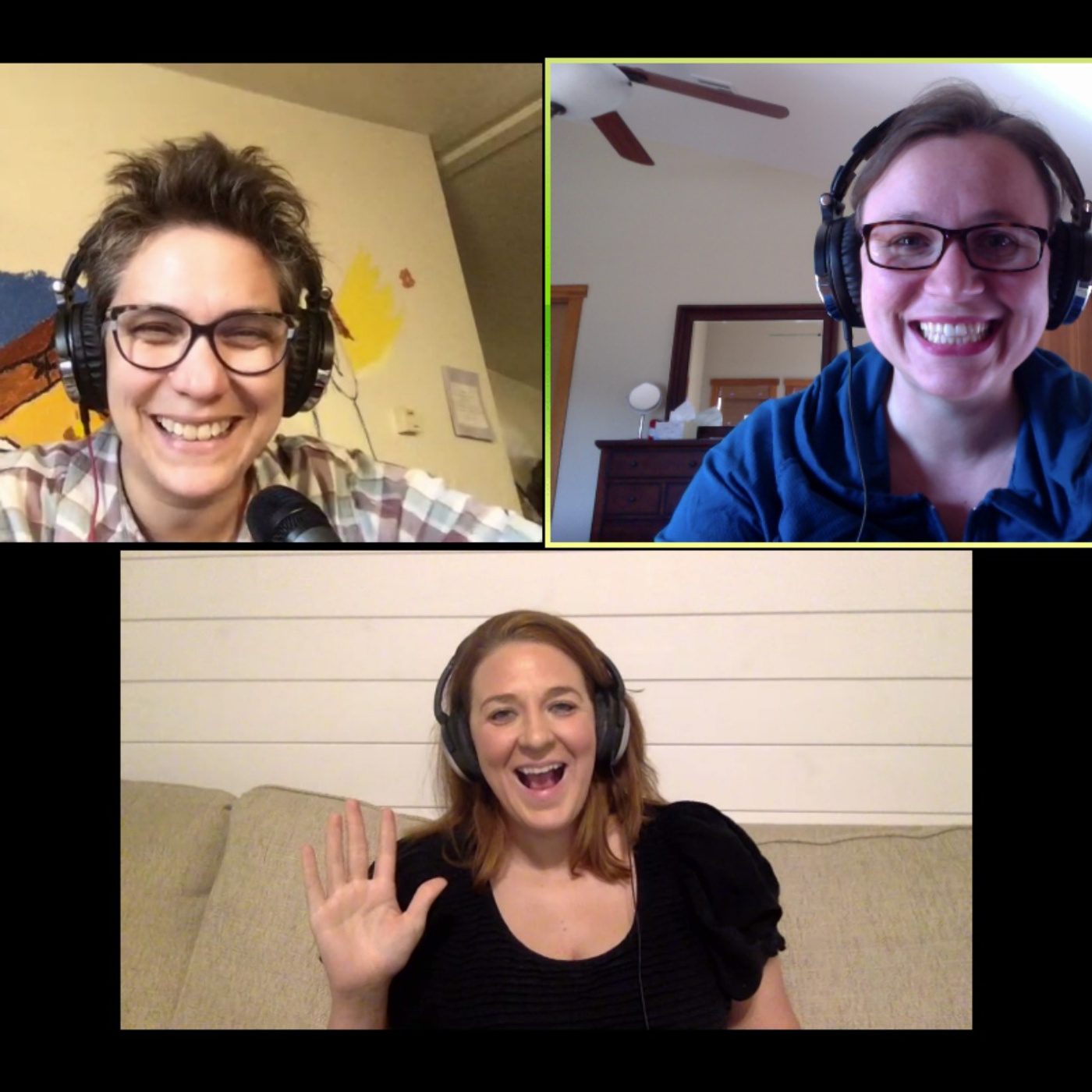
S1 Ep 20Season 1, Episode 20: Critical Care Nurse Amy Taylor, Maggie Hemphill, and Danielle S. Castillejo discuss the Coronavirus, flow of information, medical supplies, and STAYING HOME
Amy Taylor is a Georgia Native and is a NICU nurse and critical care nurse. When she first heard about the coronavirus she wasn’t inclined to worry about it. As a nurse she thought, “If you’re not bleeding out you’re fine… This will pass…” But within several days it escalated quickly and it became harmful to health care workers.She described how at the beginning the hospital she worked at would not allow someone to bring more than one person into the hospital with them and each time someone came in to the hospital their temperature was taken. Then big tents were set up outside the hospital and people had to be screened outside. “It looked like something from a third world country where you think ‘this isn’t happening here.’”Shortages of Personal Protective Equipment began within a few days of Trump acknowledging the severity of the virus. Amy takes about how airborne viruses are combatted by using a negative pressure room so that the virus does not spread through the air vents. She tells the story about a nurse in her hospital having to treat a patient with Tuberculosis with no mask because they’re were none available due to the PPE shortages. And Amy says the shortages had started before it got bad where she lives. “The nurses had no masks. It was health care workers stealing them, it was people hoarding them, management started hoarding them…”Masks are supposed to be a one-time use but now nurses get one N95 mask and they are to wear it the whole day. There are not enough gowns, which are also not reusable, and nurses are now wearing them all day long. Gowns are, like all Personal Protective Equipment (PPE), are for the protection of both the patient and the health care provider. Health Care Providers could now carry the virus from patient to patient by not changing their PPE.It’s really scary because not only are these nurses trying to manage their own anxiety as a person in this crisis—making sure they and their family have enough food and supplies—but nurses are also managing the fears and anxieties of their patients, and the fear passing the virus to them now extends bringing it home to their loved ones.These are not the typical problems of 1st world countries. Amy said the CDC has changed the rules from requiring N95 masks on every nurse to allowing heath care providers to just use a bandana. She said, “That doesn’t actually do anything.”The climate among the nurses are the hospital she works at is this overall sense of deprivation and fear. “And that fear looks different for everybody… it looks like snapping at other people… it looks like lack of empathy towards others… A crass-ness…” It’s very low morale. There are people who are very angry and people who are very tearful.Danielle asked if we could sew masks and other protective gear for nurses. Amy said that studies show that homemade PPE is not effective so a better way to support medical staff is to donate N95 masks if you have them, and make your own masks to wear out. Nurses who have been exposed to the coronavirus are getting sicker than others so it appears that there is a cumulative affect to being exposed virus.The idea that the virus lingers in the air for up to three hours is terrifying because if the virus is in a place that has an HVAC system, the virus would then be pumped to every room of that building through the air vents. It’s a scary thought to enter a building let alone a hospital.Maggie asked how patients coming into the hospitals have been: Amy said that initially people are just wanting to know [if they have it]— ERs were flooded with people wanting to get tested because they were running a temperature and their hospital didn’t have the capacity to test people who were not critically ill. Amy admits this is difficult to hear this when you have people like Harvey Weinstein being tested but health care workers aren’t being allowed to be tested. But this is one of the big difference between our country and other countries—many other countries initially quarantined people and tested everybody, then they followed the trail of infected people.“If you would not normally go to the ER for an issue, then you shouldn’t go to the ER because you’re risking being exposed to more things by going there… And it’s hard because you want to know. You want to know if I am infected I want to not be passing it on to my spouse to my kids…”Danielle says “Its hard to know what to believe. I believe you! … And then you hear our public health officials say ‘there’s tests!” Even the tests that have been done are prioritized. Some people have been tested and haven’t gotten their results back.Things vary from hospital to hospital. Amy’s friend who works in a hospital in Florida was caring for a patient for five days along with nurses that had nausea, vomiting and diarrhea but were still being required to work. After the five days, she found out the patient had the coronavirus so she got tested herself but was still required to work her THREE SHIFTS before
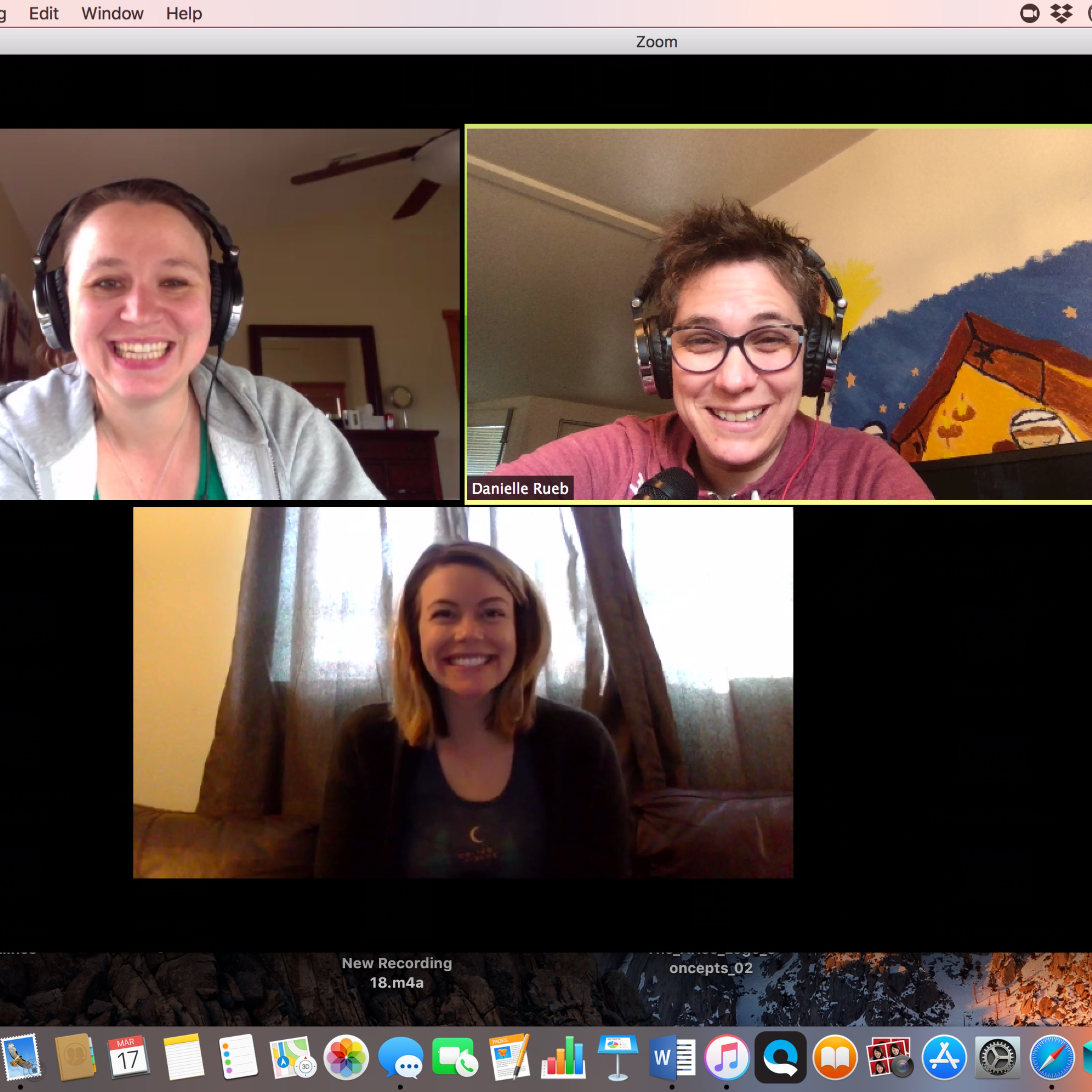
S1 Ep 19Season 1, Episode 19: Jenny McGrath, Maggie Hemphill, and Danielle Castillejo speak candidly about how to come back to our bodies in the midst of a Worldwide Pandemic
*Please note that at the time of recording the Governor of Washington had not yet issued a “Shelter in place” order. As of the release of this podcast, all Washington residence are required by law to stay home. Please, for you own safety and that of others, stay in your homes and practice social distancing when you do have to leave your home for food or medical attention.*Jenny McGrath is a Licensed Mental Health Counselor, Somatic Psychotherapist, Core facilitator at the Allender Center, and specializes in using movement, mindfulness and narrative work to help people find their way back to their bodies.Jenny explored and did research in Northern Uganda on how movement and dance could be used therapeutically which lead to her to graduate studies at the Seattle school. She learned about how the body is impacted by trauma and how the body is our portal to healing trauma, healing communities and to heal our world.We have become disconnect from our bodies. Western thinking is that the body and mind are separate and are not connected. This thinking has been harmful to how we care for ourselves, body and mind.Jenny grew up in theology and teaching around the body being something to get passed. And as a woman, she had a lot of messaging both implicit and explicit of the dangers of her body. She worked hard avoid her body and to use it as a tool. Her experience lead her to the mission field: “If I’m going to have a body it should be useful for others.”After working in Northern Uganda for a couple of years her body told her no. She broke into shingles and her immune system shut down. She didn’t know what was going to happen and if she would be able to return to Uganda. It was at a conference she heard Dan Allender speak on longevity in serving professions. She decided to go to graduate school in Seattle, thinking she’d learn how to care for her body for three years and then return back to Uganda. The more she deconstructed her story and her faith, why she was so drawn to the places she was drawn to, she came to realize that tending to and learning how to inhabit her body was going to be a life long journey and a life long work.Amari, her boxer dog, helps regulate her and her clients.Right now, all around the world people are practicing social distancing and staying at home: it’s like getting a crash course in being with yourself. Not everyone gets the privilege to be with family members or a safe place to shelter. The current situation has made self-regulation so much more difficult as people are in tight quarters and anxiety and frustration are high. Not being able to express what you’re feeling in your body, what you’re feeling still comes out even when we’re disconnected.How do we come back to our bodies? Societies that are to focused on productivity have existed as floating heads… but as we’re stuck in these spaces where we’re not used to working or being productive and it’s an invitation back to our bodies and ourselves in pretty drastic ways.How do we listen to our bodies and interrupt what we are feeling? First Jenny encourages us to normalize feelings of anxiety that come up. One working definition of trauma she uses in her work is immobility, whether psychically or physically, immobility is a felt sense of trauma in our bodies. Listen to the impulses in your body, what does it want to do? Does it want to release adrenaline and cortisol by running or some other physical activity? When she is working with someone, their body is the wisest person in the room. Our bodies can move through anxiety and surprisingly quick to resolve the anxiety if we start to listen to our body’s impulses. The more you try ignore and push away, the louder your body will get. Pay attention, what are you noticing? When you engage in active noticing of your body, it will naturally begin to release the building pressure.Danielle has been telling her kids honestly how she is; “Hey, I’m a little bit crabby right now and I was short with you, did I hurt your feelings?” It’s about stopping in the moment and putting words to what is going on with her, and allowing for there to be engagement. It has lightened the atmosphere in her home; We can’t always take the action we want to take, but having a conversation, putting words to feelings, can generate relief.Jenny says how important this is because as we are all trapped together in our homes, our bodies are always co-regulating with each other. Science has show that even if someone doesn’t know there is another person in the room, their body does and begins to regulate their heart rate, breathing and even brain waves will start to sync up with each other. Even when your kids don’t know you’re feeling anxious by your words, their bodies are feeling what you’re feeling in your body as you are anxious. Naming what’s happening in your body helps them to become more conscious of what they are feeling in their bodies, and provides some relief.Maggie shared that through this experience of practicing
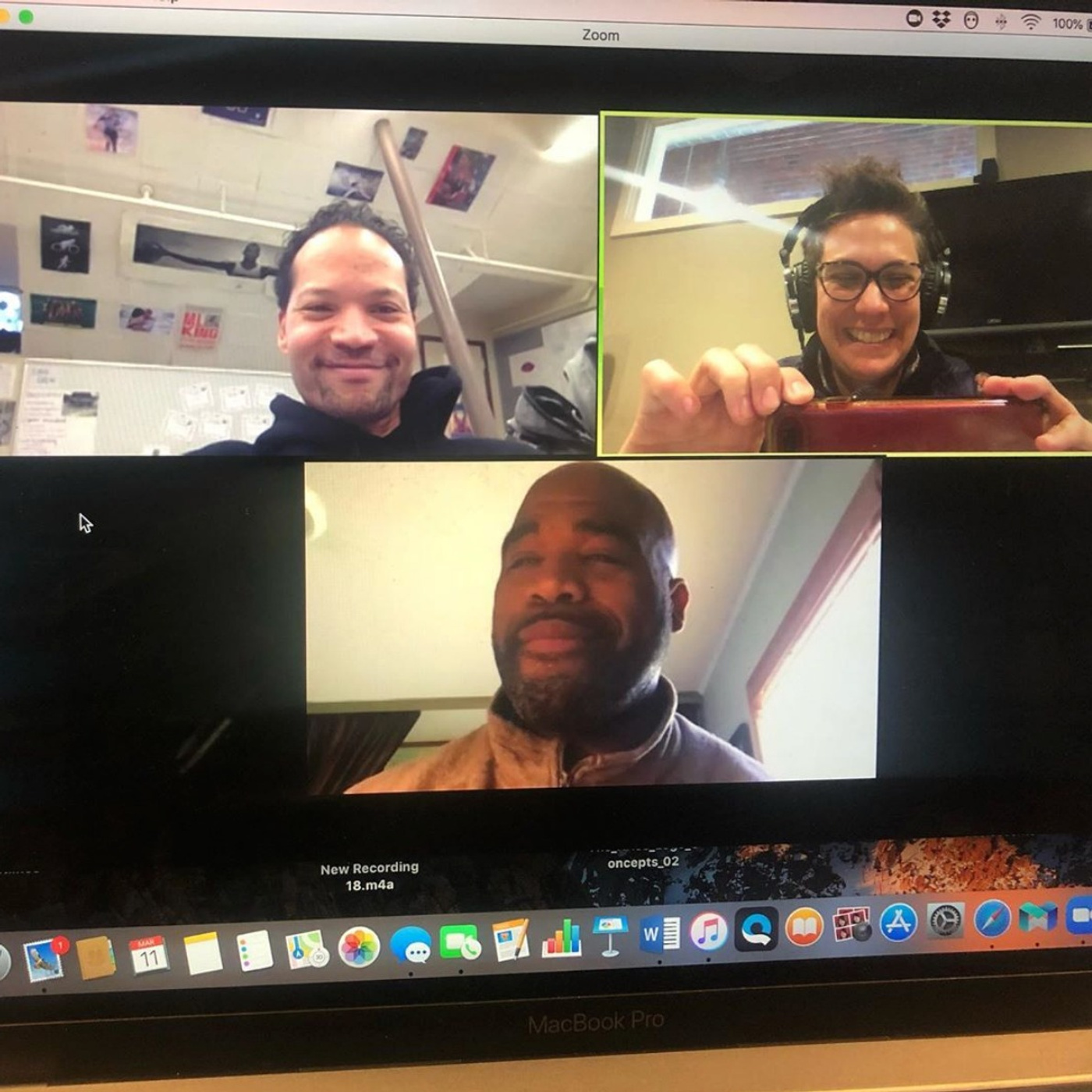
S1 Ep 18Season 1, Episode 18: Wendell Moss, Dan Taylor and Danielle chat about how the coronavirus exposes underlying racism
[Intro with Danielle and Maggie]Wendell starts by naming how the coronavirus given racism and white supremacy back more daylight. The attack on Asian culture is brought to the forefront with mimes and racist jokes circulating on social media and even physical violence and attacks on Asian people. Dan says it's a lot like "judging books by it's color," assuming someone is sick because of their race. Any race can get diseases, as shown throughout history. In fact, dominate culture has spread disease as was the case when Europeans came to this continent and decimated the Natives. Disease, when it originates in another culture, can be demonized... But that same narrative has not been told when the dominate culture brings the disease. The Northwest and the West Coast appear to be tolerant and accepting of different cultures and races, "a melting pot." Wendell came to discover that it takes an event [like this] to expose the racism that is present. The coronavirus is exposing the underbelly of racism that is still residing in people. At what point do we stop and say, "Wait a minute, this isn't about the coronavirus."This isn't just adults, racism is still being passed down to our kids as seen by kids telling racist jokes at school about Asians. Dan says our relationships with people who are different than us need to be transformational relationships not transactional relationships. We can not use others for products, resources and entertainment. He challenges us, "what are you doing for them now that they are hurting, how can you be transformative in their lives?" Even more, what are we doing as a body of believes to step up and bring healing between races?Dan wonders if the coronavirus has some underlying theme; "Is God not waking us up from something?" Slow down. Stop chasing the almighty dollar. Reach out to those in need. Exposes racism. Wendell believes folks want to hold on to their own narrative. It's hard to deal with racism without acknowledging the narrative you hold. The dominate culture often tries and even decides the narrative for people of color. With Dan's invitation to education is to actually have to learn the narrative. You have to do some of your own work. And Danielle adds that it's not just inside yourself but a commitment to work in your family, your spouse, your children. You have to be humble enough to admit places you'd got it wrong and then talk about how you're going to do it differently. It's starts to home with your own heart. In situations like this (pandemic) ethnicities are being pitted against one another. Dan is Korean and Black but people mostly see his Black features. And when he thinks about the trauma that people who look Asian are going through, he thinks they don't even want to go out out in public for fear of what people will say. The coronavirus has amplified this causing people to stereotype others. Racist jokes prove that there is a belief in a racial hierarchy; that some races are better than others. What we are seeing is that "the bandaid is off and the wound [of racism] is still festering."Wendell says that times like these show that racial trauma is continuing to be lived out as an collective experience. This coronavirus is not just showing an individual wound but a collective wound that is manifesting itself in different cultures and different ways. If we need to pay attention and tend to this wound, it will repeat again and again.Wendell believe that God is trying to expose the church's silence. The church often fails to address this issue around the racial jokes and racial rhetoric. God is clearly after us for how to love justice:Micah 6:8 He has shown you, O man, what is good. And what does the Lord require of you?To act justly and to love mercy and to walk humbly with your God.Where is God called us to honor what Godly justice look like?We need to be honest about our history otherwise racial injustice will continue to happen over and over again. Wendell says, "That's what trauma does: trauma continues until it's addressed. We continue to reenact and relive."Dan admits, this feels like we're living in a movie. It's so wild. He believes we need to keep on our knees praying, be with our families and stop chasing meaningless other gods. He hopes and prays that there can be healing brought to the Asian community. He says, "reconciliation starts with repairing relationships... Taking the time to lament for the Asian community." Dan is brutally honest (and appalled) at how many people of all ethnicities don't wash their hands in the bathrooms! Seeing all the videos and reminders that are out now about hand washing it's like, "Shouldn't we have been washing our hands all this time?!" It's alarming!Wendell talked about how people are in a panic. It starts because someone seeing or hearing one person panicking to get TOILET PAPER. Coronavirus is not an intestinal issue! But people will follow suit buying up toilet paper because someone else is. "And then you know what h
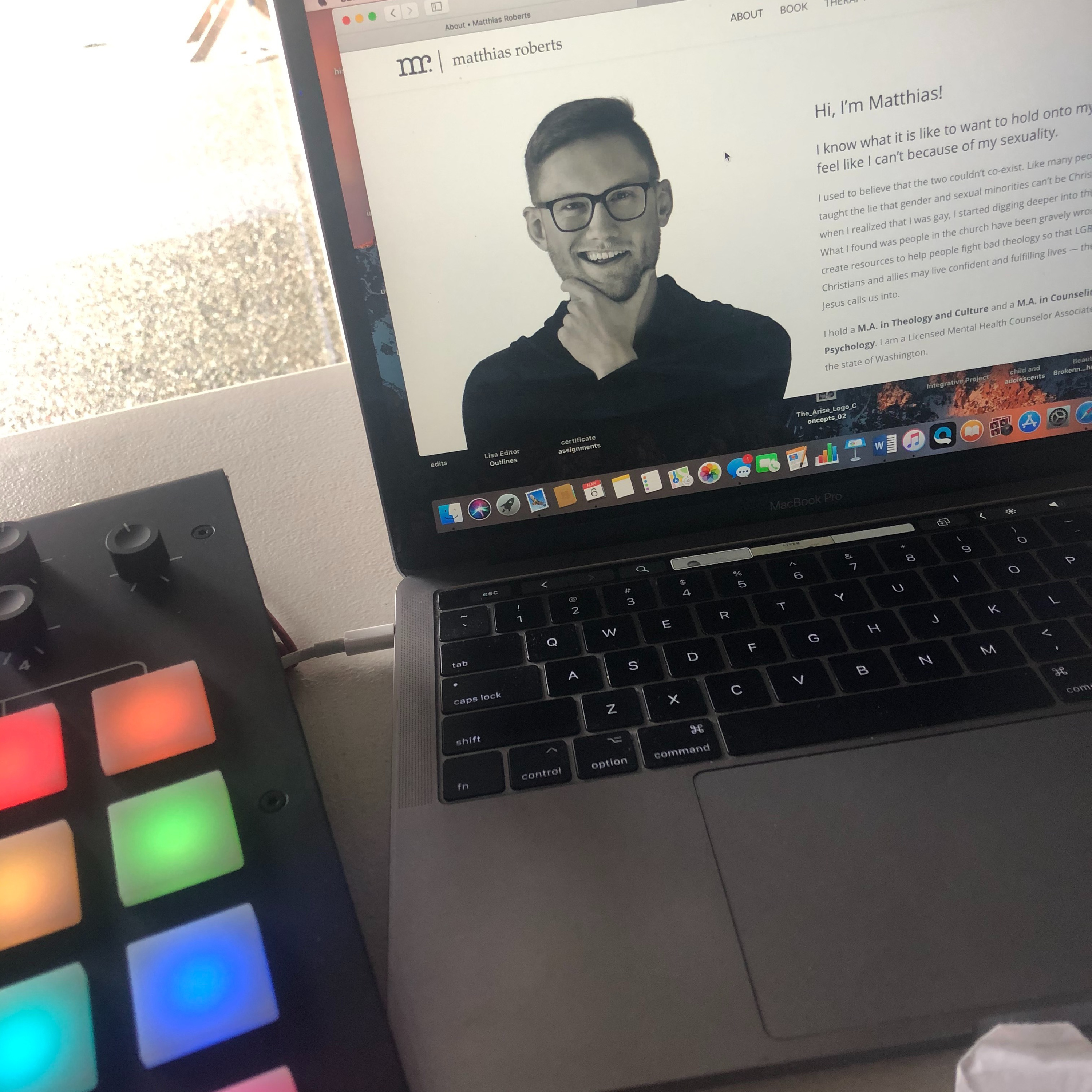
S1 Ep 17Season 1, Episode 17: Queerology's Matthias Roberts talks about his book Beyond Shame which talks about sexual shame and coping mechanisms as well as his podcast Queerology
In this episode, Danielle and Maggie chat with Matthias Roberts, the author of Beyond Shame and the host of the Queerology: A Podcast about Belief and Being. He holds a M.A. in Theology and Culture and a M.A. in Counseling Psychology, both from the Seattle School of Theology and Psychology where he is also an associate instructor. He is Licensed Mental Health Counselor Associate (LMHCA) in the state of Washington and specializes in LBGTQ+ trauma and faith.His new book, Beyond Shame, is written for anyone who grew up in under the purity movement—rigid rules about sexuality. US was founded on Puritanical ideals and we’re just now beginning to see how harmful in the ways we’ve been policing bodies. How do we work with that our sexual shame and move beyond shame towards confident flouring lives and sexuality?Matthias says we first need to recognize what you’re working with: acknowledge that the shame you feel. See the ways we are trying to cope with our shame.Three coping mechanisms that we use to deal/avoid with shame:Shame Full-ness: We let shame rule our lives and sexuality. We push it down and hide it, do not express it. Shame less-ness: Let our “freedom” rule over our shame, we do whatever we want. We’re running away from shame, instead of dealing with it. Auto-pilot: Either we’ve done our shame work, or do not have as much sexual shame (grown up in sex positive environment), but when sexuality pops up we feel shame and because it’s not pervasive enough we don’t engage it. Once we know what coping mechanisms are at play we can ask ourselves, “If this is the shape of my shame, what can I then do to start working with it in a honest way.“Good intentions” can not be an escape from working with your shame. We can acknowledge good intentions, like when mom says “don’t look” when a woman is on the tv screen. We don’t want to over sexualize our kids, so there is goodness in that. But when you’re body starts to have biological responses and you really want to look at this, cognitive dissonance happens. When the only messages that you've been told is “You are dirty, you are bad. God will hate you if you enjoy looking…” Thats where shame gets mixed in.There’s a both and. You can say that “my parents really were doing the best that they could” and “I’m still left with debilitating shame.” Honesty is that both of these are true. “We can be messed up with good intentions."Matthias hopes that people will find themselves among the chapters. Coping mechanisms have helped us get through life. “When someone puts language to what you know to be very true in your body… it can be really uncomfortable but also feel really freeing." There’s a different way to live! We no longer have to live out of our coping mechanisms, we can live out of groundedness and what our actual values are, which is much more satisfying.We need a faith that can move in these space (in our sexuality and our shame). We shouldn’t have to reject our faith in order to navigate honestly.His book arose out of a personal question—he found the things he had been taught about sex and sexuality didn’t seem to be working. For example, sex outside of marriage. He kept seeing people of deep faith operating in different ways. Personal longing: what are these other pope seeing that I don't and how do I apply that to what I have been taught. Who do I believe God is? Is God a God of freedom? A god who invites us to flouring within our relationships, bodies and sexuality? Is it this rigid one-size fits all model or is there space for people to have different values about their bodies and sexuality?“God is so much bigger than what I was taught. God is not in the business of making moralistic black and white rules…. I don’t think that’s who God is.” God is complex and so are we!Sexuality is a hot button for people. Race too. It’s a topic that’s been glossed over. The complexity has not been address in either.We as a culture have an issue with embodiment. When we gloss over the complexities, it says a lot about who we are as particular bodies, particular people who live in particular environments. One size fits all is literally impossible, it does not work.There needs to be a curiosity about why we are so disembodied. How can we engage our faith and sexuality by bringing the fullness of our humanity.Are we fearfully and wonderfully made or are we not?Do I believe that about me and do I believe that about you?Matthias started his podcast Queerology three years ago with a desire to engage the intersection of being LBGTQ and a person of faith. He wanted to address the question: What does it mean to live faithfully, to live well, as LBGTQ people of faith? It was a movement beyond the question can I be gay and be a person of faith. It’s conversations around queerness and “what we believe and what we’re doing in the world.” He talks about how faith informs work as a queer person.March 24th launches season 4!Matthias describes what it means to be Queer: it uses “queer” to be an umb
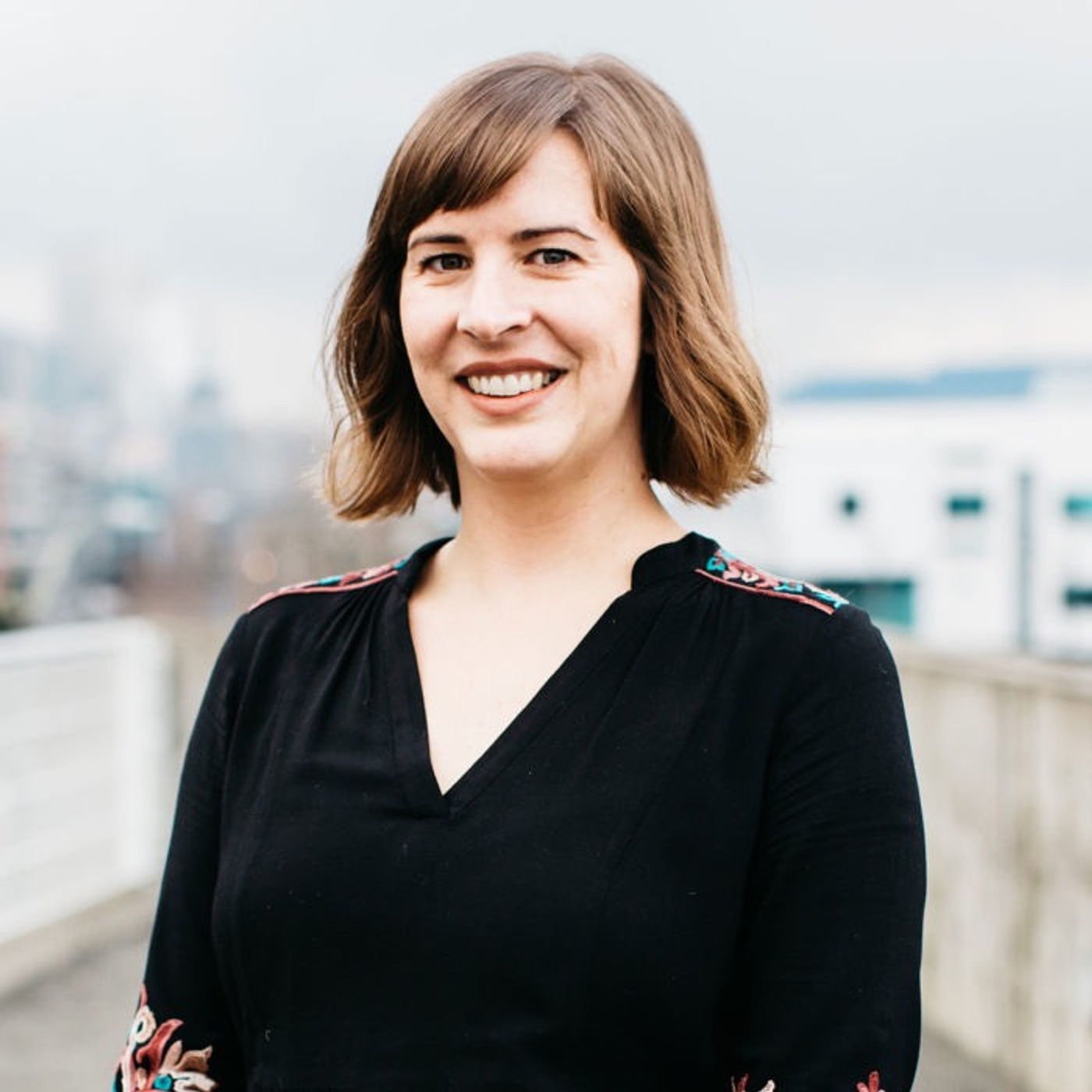
S1 Ep 16Season 1, Episode 16: Rachael Clinton-Chen talks about injustice and it's call not just to action but to transformation
Rachael Clinton-Chen is a trauma specialist, pastor, preacher, and therapeutic practitioner. She serves as the Director of Organizational Development for The Allender Center at The Seattle School, as well as a part of the teaching and training team. She is a stormborn woman of the Oklahoma plains, but relocated to Seattle over a decade ago where she received a Master of Divinity at The Seattle School of Theology & Psychology in 2010.Rachael is devoted to bringing healing, hope, and radical welcome at the prophetic and pastoral intersection of trauma, embodiment, and spiritual formation. She has deep convictions that our stories shape our biblical imagination and the way in which we experience and participate in God’s unfolding story. While offering both sanctuary and a call to action, Rachael engages the elements of our stories that distort and disorder as well as reveal and illuminate God’s story and our place within it.In this episode, she offers wisdom on call to action, transformation of living in the here-and-now and the not-yet. Rachael also speaks to the locatedness with which we read the Bible, how this affects our theology, and practical living.She is Inspired by the short film, live action nominated films for the Oscars - the story-tellers who are trying to capture different perspective of stories and the complexity of humanity. She is inspired by story-tellers who give her the privilege to step into their worlds.She is reading fantasy novels by women of color, "Children of Blood and Bone" and "The Fifth Season" and reading "My Grandmother's Home: radicalized trauma and the pathway to healing our hearts and bodies". She is listening to a lot of kid's music (i.e. the muffin song).CONTACTWebsite: https://theallendercenter.org/about/team/rachael-clinton Well, first I guess I would have to believe that there was or is an actual political dialogue taking place that I could potentially be a part of. And honestly, I'm not sure that I believe that.

S1 Ep 15Season 1, Episode 15: Jefte Sanchez shares his immigration to the US, LA Culture, Kobe Bryant and what the grieving process looks like for him.
Twenty-Four Seconds of Silence has been intentionally left to honor Kobe Bryant.Jefte shares his story—Born in Costa Rica. His father felt called to “reverse missions” becoming a missionary to the United States. His family moved to California when he was 6 years old; growing up in the LA area in the 1990s with gang violence, drive-bys, living in a fear-based environment, not feeling like he understood what was going on since he was only beginning to learn English. It was a shock.Jefte became connected to the culture of Los Angeles, a diverse and multi-ethnic community where different languages, food, and people were welcomed and celebrated. To Jefte, it was actually unnerving to be in a place where there was only ethnicity. Being from Los Angeles you take the the good and the bad. It was a culture shock moving to the Pacific Northwest—the people were “nice” and it was not what he was used to from LA, more relaxed, but there was a lack of diversity, not just Latinos but of all people of color. It’s a slower pace of life than in LA.Morning and grieving Kobe Bryant here in the Northwest felt lonely. He had a flood of memories from his childhood of Kobe Bryant’s career and his life, his work-ethic and study of the details, but he felt alone in processing Kobe’s death since there weren’t many Lakers fans up here.The grieving process was hard, he was continuously crying. “We’re all going to remember where we were when we found out Kobe died.” He needed people to talk to about it, to process. He wanted to a part of the community that was grieving , because the whole world was in shock when it happened. “I didn’t want this to be true.”Jefte tells a story about an NBA player in China who got in taxi, and the taxi driver asked the NBA player if he knew Kobe, which he did. The taxi driver pulls over and starts crying; He was impacted by meeting someone who knows Kobe, not even meeting Kobe himself. That’s the kind of global impact he had as a player and as a person. Kobe had created a world-wide community. We can find comfort when we grieve together.Kobe’s story had so many layers, he was an example of what it means to be a human; the good and the bad. That’s what made him so “reachable” and relatable. He embodied humanity and he embodied specifically LA. Kobe’s death gave men permission to cry. Jefte didn’t hold back, he cried in front of his own children. Kobe’s death became an invitation to see grieving unclose. And as a parent to let our kids witness it so they can see our humanity, even if they don’t fully understand it.#girldad Kobe’s daughter was going to be his legacy, and which is not the cultural norm. But Kobe wanted his kids to choose for themselves what they wanted to do.The silence, and dead air space, is to honor this man.Memorial for Kobe: Monday 24th.Maggie thought about the unimaginable grief that Kobe’s wife felt losing her husband and daughter in one day.Jefte takes from Kobe: Family first. He brought his kids with him every where. Allowing curiosity lead you to your passions, and your passions keep you curious. Ultimately our lives are to inspire others.Jefte is reading: Prayer Book, how to pray.Jefte is listening to: The Bill Simmon’s PodcastJefte is inspired by: Soaking in what other people are doing and witnessing their passions.You can connect with Jefte at www.jeftesanchez.com———Jefte Sanchez : Creator / Musician / Entrepreneur / FatherJefte Sanchez is a creative visionary with a passion for storytelling through art, music, design, film & photography. He has worked with brands and clients from Google & Under Armour to smaller local businesses looking to launch or revamp their story.He has also created a name for himself by launching two successful Instagram channels tallying over a quarter million followers. Jefte has been published in the Huffington Post and has seen his photography displayed around the world.Business aside, Jefte is a husband and father of three children (all under 4). His most important job is to inspire his kids and help them along the way as they discover their passion. Friends would describe him as a connector of people and an enthusiast of life's experiences and all of the opportunities it brings. Well, first I guess I would have to believe that there was or is an actual political dialogue taking place that I could potentially be a part of. And honestly, I'm not sure that I believe that.

S1 Ep 14Season 1, Episode 14: Pastor Ken Riley talks about "a third way" to racial reconciliation
Pastor Ken Riley shares a story of recently traveling to Dakar, Senegal and coming to reflect on how we are all connected, even across the globe. As he was standing at the "door of no return,” the place where Africans who were stolen from their homes would cross never to return to their families or country, his Senegalese companion put his arm around Ken and said, “Isn't it good to be reminded that we are brothers.” May we all walk through a door not to return to the racial injustices that exists in our society but to make a commitment to work together to provide healing a hope!Ken talked about his time serving as a Chaplin in the Navy, a model that seeks to “Provide for your own, care for all, facilitate for others and advise the command.” Working in the this environment was multicultural, multiethnic and as well as many faith backgrounds.Ken believes we need to take a call to action! Three things Ken believes we are called to do in our commitment to justice (having a conviction that is Biblical), through a “third way,” using Matthew 5:6-7 as an example:1. Mourn with those who mourn. It is in mourning that people are comforted.BLACK LIVES / BLUE LIVES / ALL LIVES: Are these just opportunities to mourn with those who are mourning? These movements are people asking, “can somebody mourn with me?” We are all created in the image of God, we all have human dignity.2. Become passionate peacemakers. It is through peace that we create influence and influence moves us beyond equity to unity. MLK Jr., as radical as he was, was committed to peace through non-violence.Ken shares his story about being incarcerated his senior year of high school, under charges of attempted murder. What he needed in that moment for advocacy was relationships with those in power.Working together requires calling out the injustice; “this is wrong and here’s the solution.” It requires doing your own work, seeing the places you have prejudices and phobias. It involves having courageous conversations, not remaining silent. Get educated! Read books! Listen to podcasts. Get to know the “other;” people who don’t look like me.Jesus listened, He intentionally had conversations with those who were on the outside of society.Looking at demographics for supporting diversity: representation needs to be in leadership in order to have a voice and any power.Political season is coming up: it’s a charged tense season… Ken chooses to engage conversations by be willing and open, not allowing the conversation to affect him personally: It’s not an attack your values. Being okay with not changing the other person.3. Have a commitment to listening. Engaging people around you and listening first. Lead with being secure in who you are and that all people reflect the image of God.Relationship is a journey not a destination, it is a process that brings us closer to understanding each other and puts us on the pathway of learning.There is a generation coming who doesn’t understand racism.----Pastor Ken Riley is the Campus Lead for newlife Church in Bremerton, WA. He's also a husband, father to three teen-aged girls, and a former Navy Chaplin.You can hear Ken preach on Sundays at Mountain View Middle School at 9am, 10:30am & 6pm with a community dinner hosted at 5:30pm.You can connect with Ken for continued conversations with a non-judgmental ear: [email protected] is reading: Above the Line by Urban Meyer, Dare to Lead by Brene BrownKen is listening to: Craig Groeschel Leadership PodcastKen is inspired by: Dr. Martin Luther King, Jr. Well, first I guess I would have to believe that there was or is an actual political dialogue taking place that I could potentially be a part of. And honestly, I'm not sure that I believe that.

S1 Ep 13Season 1, Episode 13: Michael Thornhill and Maggie Hemphill chat on Racial Reconciliation, Black History Month and the Superbowl Halftime Show
In this episode Maggie chats with Michael Thornhill, Associate Director of Cross-Cultural Ministry at the Coalition for Christian Outreach, about his work navigating race, class, cultural and generational dynamics.Michael and Maggie talk about Latasha Morrison's Be the Bridge foundation, which empower people and culture towards racial conciliation and unity. Morrison at the IF:Gathering this past weekend mentioned four things that someone can do as they begin to engage in conversations around racial reconciliation: 1. Start with educating yourself. Research and study history, and read. 2. Listening to others, being in proximity to those who are different than you. 3. Lamenting: carrying each others sorrows and burdens4. Leveraging your privilege and using your voice to come alongside. Michael talks about how lamenting helps us as a culture to move forward. Despair is rich with disbelief, but lamenting is rich with belief and hope. We also discuss Black History Month and why Black History needs to be a conversation all year long. Black history is American History, and Black History Month is really meant to highlight Black History but instead it's become the only time of year that it's talked about. We need to talk about both the trauma and the glory. Michael believes that these conversations are not exclusively for people of color but he asks us how can we be inviting white people to engage their own stories. "You have to be curious about your own story, not just about the story of the person of color you know." "Curiosity invites us to ask questions without judgement."Discussion about the Superbowl halftime show, acknowledging outrage as well as the beauty. There was entertainment/performance, cultural expression, political statements... Michael thinks there is a lack of how male culture navigates their own arousal structures. Michael is reading:Unwanted: Sexual Brokenness Reveals Our Way to Healing by Jay Stringer My Grandmother's Hands: Racialized Trauma and the Pathway to Mending Our Hearts and Bodies by Reesma MenakemMichael is listening to:4 your Eyez Only - Album by J. ColeMichael is Inspired by:Ruth Chou Simons' Instagram post on "When disappointment is God's deliberate design for my good." @ruthchousimons "God doesn't waste anything, He uses even the crud"Reach out to Michael Thornhill if you're interested in exploring your own ethnic identity with kindness and curiosity, or if you would like to invite him to consult, teach or speak on diversity, equity and inclusion, email him at: [email protected] Well, first I guess I would have to believe that there was or is an actual political dialogue taking place that I could potentially be a part of. And honestly, I'm not sure that I believe that.
S1 Ep 12Season 1, Episode 12: Kelly Welk, Maggie Hemphill, and Danielle S. Castillejo discuss calling and following your passions
Joining us this week is Kelly Welk: She is a wife, mother, hostess, cook, owner of Cider Press Lane and founder of the Freedom Dinners.Kelly talks about how she found her way into her calling by simply doing the things she already loves doing. After releasing herself from doing "big things" it was actually through the little things--like her love of cooking and gathering people together--that she found a way to make a big impact and develop community. With the creation of the Freedom Dinners she combined her love of food and people to help combat the injustices she saw around the world. She used these dinners as a way to raise over $50,000 for Rescue: Freedom International, an organization that sets people free from slavery around the world.Kelly also talks about the importance of doing things slowly, so that they can be done well. It requires both time and practice to do things well. One of the temptations we have in our culture is to do a lot of things and to do them fast. Through giving herself permission to go deep and slow, she's been able to learn the self-discipline it takes to say "no" to things, in order for her to be able to say "yes" to the things that she is really passionate about. It was in this process that she built both a business and a way of life that she and her family love and share with others. Kelly talks about work-mode vs mom-mode and finding the balance that life requires when you are a business owner with three school-aged children.This conversation is full of great nuggets about pursuing your dream, following your calling and building community along the way. The everyday and ordinary are not frivolous, they can have meaning and purpose if you live intentionally.Kelly is reading The Ruthless Elimination of Hurry by John Mark ComerKelly listens to the Exploring My Strange Bible Podcast.Kelly is inspired by her three kids.You can get Kelly's Books; "Dinner Changes Everything" and "Dream Catcher" as well as her other fair market goods (such as aprons, wooden spoons and bowls) on her website: ciderpresslane.com Follow Kelly on Instagram @ciderpresslane or @kellywelk Well, first I guess I would have to believe that there was or is an actual political dialogue taking place that I could potentially be a part of. And honestly, I'm not sure that I believe that.

S1 Ep 11Season 1, Episode 11: Gabes Torres, Maggie Hemphill, and Danielle S. Castillejo speak about decolonization, race, faith, and the impact on bodies of color.
Gabes (she/they) is a researcher, artist, theologian, speaker, and psychotherapist in training. Her life’s work is to demonstrate how there’s nothing “post-” about postcolonialism, and that the effects of historical and oppressive conquest permeated the ideologies, cultures, languages, literature, human behaviors, inter- and intrapersonal relationships, and spiritual practices we have today. With agency and integrity, her passion is to research the practices and therapeutic approaches that decolonize the mind, body, and spirituality of underrepresented groups who have been suffering from generational oppression and marginalization.Her research is carried through by the influences of esteemed educators, authors, and practitioners such as Gayatri Chakravorty Spivak, Letty M. Russell, Paulo Freire, Linda Tuhiwai Smith, Melba Maggay, E.J.R. David, Peter Levine, Miroslav Volf, Homi K. Bhabha, Shelly Rambo, David Bosch, and so forth.She completed a Bachelor’s in Historical Theology at the Moody Bible Institute, Chicago because of her fascination towards the birth and growth of the Western church and its significant influence on Christianity in the Philippines. She recently completed a Master’s in Theology and Culture at The Seattle School of Theology and Psychology, and is continuing with a Master’s in Counseling Psychology. She intends to pursue PhD work that concentrates on the integration of spirituality and the social psychology of intergenerational and racial trauma.Gabes currently works at The Allender Center, and has been enjoying her time living and growing in the city of Seattle. In her spare time, she writes poetry and songs, and performs them at her live shows. She independently produced 3 albums of original music, and has toured in Southeast Asia, Chicago, San Francisco, and Seattle.Therapeutic Services: As part of her clinical training, Gabes works as a psychotherapist intern at MEND Institute in Seattle, which has a social justice-oriented and intersectional feminist approach in therapy.Gabes’ caseload is currently full, and there is no waitlist at this time.Support Gabes: https://www.gofundme.com/f/help-gabes-stayWriting: https://gabestorres.com/blog/Speaking: https://gabestorres.com/speaking/Music: https://gabestorres.com/music/ Well, first I guess I would have to believe that there was or is an actual political dialogue taking place that I could potentially be a part of. And honestly, I'm not sure that I believe that.

S1 Ep 10Season 1, Episode 10: Rebecca Bender and Danielle speak about her book, In Pursuit of Love, life, work, calling, family and trauma.
Rebecca Bender, MACTCEO & Founder Rebecca Bender InitiativeAuthor, In Pursuit of Love, Roadmap to Redemption Rebecca Bender is the founder and CEO of the Rebecca Bender Initiative (RBI). She is an award-winning, nationally recognized expert on human trafficking. After escaping nearly six years of modern-day slavery, she wrote her first book, Roadmap to Redemption, followed by her recent curriculum Elevate. RBI’s advanced trainings have equipped FBI, Homeland Security, local law enforcement, medical professionals, service providers, and faith communities across America. Rebecca serves as an advisor to both the Oregon D.O.J. Human Trafficking Council and the U.S. Dept. of Health and Human Services. She is also the recipient of the Female Overcomer Award, Unlikely Hero Award, Hero to our Generation Award and multiple FBI and Congressional recognitions. She is a sought-after speaker and consultant and has been featured on the Today Show, NBC Deadline Crimes, Forbes, Huffington Post, and Sports Illustrated. She lives in the Pacific Northwest with her husband and their four daughters and just completed her master’s degree from Bethel Seminary. www.rebeccabender.orgBook PreOrder at: https://rebeccabender.org/in-pursuit-of-love Well, first I guess I would have to believe that there was or is an actual political dialogue taking place that I could potentially be a part of. And honestly, I'm not sure that I believe that.

S1 Ep 9Season 1, Episode 9: Jackie Loos and Danielle. Human Trafficking Awareness Month
It’s National Human Trafficking Awareness month.Had the best chat with @flapjacks_withbutter (Jackie Loos) leader, entrepreneur, advocate, mother, supervisor, artist, pioneer and so much more...don’t miss hearing her speak about direct service work with #complextrauma survivors, @rest_seattle and #motherhood and #selfcare ... this woman is an example of dreams meet hard work. She shares wisdom and philosophy on working with those who want to exit the #sextrade - Stay tuned, folks.Ohhhh also....She and Erik Gray have opened a non-profit start up to provide resources, education and more for LGBTQ leaders working with #humantrafficking survivors. Jacquelyn LoosJackie is a Seattle-based advocate, whose passions have stemmed from her lived experience as a commercially sexually exploited womxn. Since leaving the life, Jackie has been a part of numerous projects and programs dedicated to empower, give voice to CSE/CSEC individuals, and providing trauma-informed care through: outreach, direct case management, and her current role as a supervisor and community educator. Her roles outside of supervising direct-service programs at REST also include: being a co-founding partner/educator at (QUEE) Queers Uniting to End Exploitation and an ambassador for GEMS (Girl Educational & Mentoring Services).Her unique skill set has been sought out to formulate, nurture, and implement the piloting of “Freedom Signal’s project intercept” through SAS/Microsoft. The purpose of this project is to assist CSE/CSEC-victim outreach programs throughout the United States; integrating technology and proven data to aid and support survivors - meeting folx where they are at. Throughout Jackie’s work, one can see that her posture of humility and tenacity is reflected the services she provides.QUEE- Queers United in ending exploitation Humantraffickingconsultants.comJackie@[email protected]@[email protected] Well, first I guess I would have to believe that there was or is an actual political dialogue taking place that I could potentially be a part of. And honestly, I'm not sure that I believe that.
S1 Ep 10Season 1, Episode: Dr. Martin Luther King Jr. Day with Dan Taylor
Dan and I (Danielle) have been friends since we were at Seattle Pacific University together at 18 years of age.Dan highlights the importance of doing what we can right where we are called, giving specific examples of how to be an anti-racist. Maggie and I talk candidly and honestly with Dan about building the muscle of working towards change through relationship in our communities.BIOCoach Dan Taylor has twenty years of coaching boys and girls in the sports of basketball, football, soccer, and track and field. Currently he is the varsity head girl’s basketball coach at King’s. He teaches PE, Health and Faith and Justice at King's High school. He helps lead the King's C.A.R.E. team (Community, Action, Reconciliation, and Equity) and has done Race, Culture, Diversity and Equity work in the public and private schools. Since 2012, Coach Taylor has been the Washington State Girls Basketball Coaches Association President. He has been an ASB Advisor, Link Crew Advisor, Black Student Union Advisor, Fellowship of Christian Athletes Advisor, and Social Justice Club Advisor. He has a Master's in School Counseling From Seattle Pacific University and has led workshops on Culturally Responsive Coaching, Team Leadership, College Recruiting, Team Building, and sport-specific sessions. He is Black and Korean and loves working with students of bi-racial backgrounds by helping them find strength in their identity through their cultural background and academic journeys. Dan TaylorKing's Girls Varsity Basketball CoachWashington State Girls Basketball Coaches' Association PresidentReach Out to Dan Taylor for Speaking, Connection, or Consultation:[email protected] wherever you get your podcasts. Well, first I guess I would have to believe that there was or is an actual political dialogue taking place that I could potentially be a part of. And honestly, I'm not sure that I believe that.
S1 Ep 8Season 1, Episode 8: Janel, Jason, and The Welcome Home Project
The “Welcome Home Project”http://www.tribaljustice.org/places/specialized-court-projects/re-entry-program/Port Gamble S’Klallam Reentry ProgramAwarded $1 Million from Department of JusticeMoney to be used to expand Tribe’s “Human Dignity Model”of reentry into Kitsap County Jail system The Port Gamble S’Klallam Tribe’s Reentry Program has been awarded a $1 million grant from the Department of Justice’s Second Chance Adult Comprehensive Community-based Adult Reentry Grant to expand their proven model into the Kitsap County Jail system. PGST is the only Tribe in the nation to be awarded money from this DOJ program during the current cycle. This money will be used over a three-year period in a government-to-government partnership in creating the infrastructure to implement a robust Reentry program within the Kitsap County Jail using the Tribe’s successful “Human Dignity Model.” This includes the use of Risk & Needs Assessments, a critical tool that help Success Coaches create comprehensive and collaborative strategies as well as tailored support services with the goal of reducing recidivism, creating a Universal healing re-entry model, and creating a cultural shift with corrections. Since 2013, PGST’s Reentry program has been helping Tribal members who have struggled with addiction and criminal justice issues reintegrate back to health and productivity. Unlike many reentry programs which tend to be punitive, focusing solely on avoiding re-arrest, PGST’s model helps the client attain the basic life skills, training, and well-being necessary for community involvement. Program Manager Janel McFeat coined the term “Human Dignity Model” in describing PGST’s program; that is having Success Coaches who work closely and develop a connection with clients as partners while addressing a broad array of risk and protective factors facing formerly incarcerated individuals, including addiction, trauma, and behavioral health. While this methodology is unique throughout much of the United States, PGST’s Reentry’s program is guided by global best practices established by the United Nations for the treatment of the incarcerated. This approach has offered impressive results: since the program’s inception, PGST has reduced recidivism by 81 percent with their target population. “Reentry has helped illuminate an alternative way of thinking about how to support tribal members struggling with addiction and criminal justice issues in the community. Participants’ success is a testament to the ways in which the Port Gamble S’Klallam community fosters personal resiliency and, in turn, advances the well-being of the community as a whole,” said Christine Barone, Director, PGST Court Services, which oversees the Reentry program. The success of PGST’s Reentry program began catching the attention of other tribes as well as governments and law enforcement entities who are struggling with similar problems. Lt Penny Sapp, with the Kitsap County Sherriff’s Department, recognized that PGST’s model could help solve the “revolving door” of inmates coming through the county’s jail system. “(In the Kitsap County jail), we want to see people get the help they need,” said Lt. Sapp. “We see them come in and out of the jail, and we want them to understand why they keep coming back. We know it’s because they commit crimes, but we want to get to the root of the problem.” PGST Reentry actually began working in the Kitsap County Jail in 2015 with funding from the DOC’s Second Chance Adult Reentry Demonstration Grant. This small trial was such a success that the county encouraged PGST to find additional funds for an expansion that would include core elements like Risk & Needs Assessment, Trauma Informed Care, Resilience Training, Cognitive Science and other evidence-based techniques designed to get to the root of the issues causing people to reoffend. “It’s a breath of fresh air to see people so dedicated to the mission of helping others reintegrate back into the community. They make connections and bring people together,” said Lt. Sapp. While Lt. Sapp expressed excitement for the forthcoming program expansion, she acknowledged challenges; namely, changing the mindset of staff to focus on positive outcomes versus punishment as well as the short-term nature of the jail system where the average length of stay is just 18 days. Unfortunately, in the current system, this isn’t nearly enough time to identify corrective resources. These issues are currently being addressed and assessed during a planning phase before the full program is rolled out. Also a part of the partnership between PGST and Kitsap County is The Pacific Institute® (TPI). Based out of Seattle, TPI is global consultancy has been working in the field of cognitive and social science with an emphasis on mindset development for over 50 years. All agree that this approach to re-entry is a radical, requiring a cognitive shift in how jail staff and leadership think about those in their charge. To this end, t

S1 Ep 7Season 1, Episode 7: Becky Allender talks about Endings, Anxiety and Knowing your body
Quotes“People do change…with their kindness to their story.” - Becky Allender"There is such change, that's why I love this work so much." - Becky Allender"A lot of forgiveness...a lot of holy listening and holy words towards each person.." - Becky Allender (on core facilitating at The Allender Center Certificate 1)LinksHidden In Plain Sight:https://www.amazon.com/Hidden-Plain-Sight-Identity-Intimacy/dp/1947974009(Video) https://vimeo.com/280278322The Allender Center: https://theallendercenter.org/author/ballender/Facebook: Becky AllenderInstagram: @becky3971Red Tent Living: https://redtentliving.com/tag/becky-allender/ Other LinksHello/Goodbye: https://www.leadstoriesmedia.com/resources/hello-goodbye-2019-2020Dream Guide (Jennie Allen): https://www.jennieallen.com/dreamguide Well, first I guess I would have to believe that there was or is an actual political dialogue taking place that I could potentially be a part of. And honestly, I'm not sure that I believe that.
S1 Ep 6Season 1, Episode 6: Pastor Steph O'Brien on Leadership, Activism, and Curiosity
Pastor Stephanie Williams O'BrienWebsite: http://www.pastorsteph.com“Why did you decide to become a pastor?”I’m often asked this question. There is the long answer that is really more of a story. The short answer? When something is your calling, it’s not like you can do something else. If so, I’d be miserable. Maybe you can relate. So I find myself here living the pastor life – stepping one foot in front of the other, just trying to join God’s restorative and redemptive work in the world. These God-chasing actions are the source of my activism.Lead Stories Media: https://www.leadstoriesmedia.comTwitter: @LeadStoriesVoxInstagram: @LeadStoriesPodcastFacebook: LeadStoriesPodcastPodcast: http://www.leadstoriespodcast.comInstagram: @pastorstephSubscribe on iTunes to have the podcast automatically download to your device every week or listen at www.leadstoriespodcast.comFor other resources and podcasts head to: www.leadstoriesmedia.comDon’t forget to check out Lead Stories Community at www.leadstoriesmedia.com/communityCrafted Coaching: https://www.leadstoriesmedia.com/coaching#coachingoptionsPastor StephAreas of expertise: Coaching for pastoral ministry leadership, coaching for leaders of teams, preaching, church planting, missional community, intentional discipleship, change theories, podcasting, writing.Stay Curious Book: https://www.staycuriousmedia.org"We are created to be curious - to wonder, to discover, to question and yes, to doubt. Curiosity is a key part of what it means to be human. We have the cognitive ability to think beyond our immediate surroundings. We each get to choose whether to embrace curiosity, or ignore and suppress it. What would it look like if you chose to stay curious?" Well, first I guess I would have to believe that there was or is an actual political dialogue taking place that I could potentially be a part of. And honestly, I'm not sure that I believe that.
S1 Ep 5Season 1, Episode 5: Kali Jensen talks The Color of Compromise, the Church and Advent
Kali JensenCultivate Counseling Services: http://www.cultivatecs.com1050 NE Hostmark St. Suite 201APoulsbo WA 98370Kali Jensen (LMHCA)Kali founded Cultivate Counseling Services to create a safe space for people to heal, grow, and develop, into the people that they were created to be. Therapeutic Approach:Areas of Focus:“I practice a relational psychodynamic approach to therapy, which centers on the relational encounter between the client and therapist to understand current patterns, uncover the impacts of trauma, and works to create new more desirable ways of relating. To understand your current patterns, we explore your past, current relationships, and your thoughts and desires as trust builds. The role of therapist is not one of authority and answers, but one that journeys with you to change undesirable patterns, find healing from past hurts, and provide space to process the difficulties of life and relationships.” – KaliEducation Kali received her bachelor’s degree in psychology from Northwest University and her master’s degree in counseling psychology from The Seattle School of Theology and Psychology. Level 1 Gottman Trained TherapistTrauma Focused-Cognitive Behavioral Therapy online certificateCognitive Processing Therapy online certificateExperience Kali has a rich and diverse background. She has worked in public education, serving as a paraeducator, with children who have experienced physical, mental, and relational difficulties. She has volunteered leading groups, teaching, and coordinating special events for children, adolescents, and adults. She worked for 7 years at a local church overseeing small groups, pastoral care and created and led community impact events. She interned at Hope Sparks in Tacoma, WA working with adolescents at a Tacoma public school and in the office with children and adults. Kali has also worked with local businesses and non-profits to provide training in areas from parenting skills to living healthy in a digital age. Well, first I guess I would have to believe that there was or is an actual political dialogue taking place that I could potentially be a part of. And honestly, I'm not sure that I believe that.
S1 Ep 4Season 1, Episode 4: Tamice Spencer of Sub:culture Inc.
Maggie and I (Danielle) are honored to have this initial conversation with Tamice Spencer, of Sub:culture Inc. During this week of buying gifts, we are partnering with Tamice Spencer to work towards raising $8,000 to pay various expenses for college students practical needs so that they can continue studying in 2020. Please consider partnering as well. Below is the information for how to connect, and partner with these students towards practical needs. If you need to reach The Arise Podcast, please do! Our email is [email protected] and/or connect on our website at www.thearisepodcast.com . Sub:culture Inc.www.subcultureinc.orgPh: 757-410-0839 Email: [email protected] Resurrect ElohehRandy WoodleyEdith Woodleyhttps://www.eloheh.org/index.html Well, first I guess I would have to believe that there was or is an actual political dialogue taking place that I could potentially be a part of. And honestly, I'm not sure that I believe that.
S1 Ep 3Season 1, Episode 3: Conversations with Pastor Cyon Edgerton
Cyon Edgerton is a pastor, leader, advocate, writer, mother, wife, and more. Find out more about Cyon on her website, www.cyonedgerton.com . Her new leadership venture is created to empower, train, and equip leaders.You can connect with Cyon weekly, through email by visiting her site, or emailing [email protected] .Find her new leadership adventure at www.thetableleadership.comWho We Are:"Expert and experienced leaders from all contexts and walks of life, committed to coming alongside under-resourced leaders for the purpose of training and equipping. "What We Do:"First, we build community through our weekly equipping newsletter. Second, we provide grab-and-go content on our site. Third, we offer extended and intensive online leadership courses. Finally, we offer growth coaching with trained professionals."Why We Do It:"We believe that everyone is invited to pull up a seat to the table, and all leaders have something to contribute to the conversation. Too many voices have been silenced due to cultural, systemic, and doctrinal differences. We desire to elevate those silenced voices,…"Instagram: @cyonedgerton or @thetableleadershipFacebook: Cyon EdgertonTwitter: @CyonEdgerton Well, first I guess I would have to believe that there was or is an actual political dialogue taking place that I could potentially be a part of. And honestly, I'm not sure that I believe that.
S1 Ep 2Season 1, Episode 2: A Chat with Kimberly Riley
Find Kimberly at: youarebeautiful.pllcEmail is [email protected] number is 360-440-4021Instagram youarebeautifulpllcFacebook Kimberly RileyBioKimberly Riley is a licensed marriage and family therapist associate, and a child mental health specialist in the state of Washington. She provides narrative therapy-based care for children, adults, families, and couples in private practice. Kimberly spent nearly two years working with children of color and their families in the community mental health setting. She is passionate about helping all people find the beauty in their stories and is dedicated to providing spiritually and culturally aware therapy.Contact The Arise Podcast Team at [email protected] Well, first I guess I would have to believe that there was or is an actual political dialogue taking place that I could potentially be a part of. And honestly, I'm not sure that I believe that.
S1 Ep 1Season 1, Episode 1: Introductions
Introductory podcast - who we are and what we're aboutDanielle is a graduate student at the Seattle School of Theology and Psychology, getting her Master's Degree in Counseling. She is a mother and wife. She is about having conversations about trauma in communities, race and class, and imagining a different future. Maggie is currently being trained at the Allender Center for Narrative Focused Trauma Care. She is also a mother and wife. She is all about stories and bringing to light things that are hidden. Both are committed to truth telling, being a place where the exiled are welcome, creating a space for shared power. Who is our audience?This podcast is for people who are curious, who are aware or wanting to to become aware about the things that are happening in our society. People who want to hear from marginalized voices. All genders and races. People who are looking for leadership next steps.What are the barriers to these important conversations?Personal and societal expectations. As women who are educated, dominate and influential we can be seen as "aggressive," brazen and other words that start with a B....Selective Theology and interpretations. Power. Traditions. We are not afraid of information or learning, we welcome it. We hope to create a community of people who are willing to sift through and discern, engage and challenge the dominate culture and the main stream narrative in meaningful and practical ways. We are for people who are seeking connection. CONNECT WITH US! We want to hear from you! You can find us at www.thearisepodcast.comfacebook: The Arise Podcast with Danielle Castillejo and Maggie HemphillInstagram @thearisepodcastDanielle's website: www.daniellescastillejo.comMaggie's website: www.maggiehemphill.comMaggie is reading: All You Can Ever Know by Nicole CheungDanielle is reading: The Color of Compromise by Jemar TisbyReign Rain by Ann MartinMaggie is listening to: Jen Hatmaker's for the Love Podcast, Ask NT Wright, Truth's Table "You Ok Sis?"Danielle is listening to: Shaun King's the Breakdown, Lead Stories Podcast with Jo Saxton and Steph O'BrienMaggie is inspired by: Danielle. Jemar Tisby.Danielle is inspired by: Jo Saxton and Pastor Steph who lead and don't do it alone. Also the Allender Center's work with trauma care. Music by Chase Estes. Well, first I guess I would have to believe that there was or is an actual political dialogue taking place that I could potentially be a part of. And honestly, I'm not sure that I believe that.