
Tank Talks By Ripple Ventures
349 episodes — Page 3 of 7
Why Venture Capital Needs a Reboot—And How Villi Iltchev Is Doing It
On this episode of Tank Talks, we welcome back Villi Iltchev, founder and managing partner of Category Ventures, for an unfiltered deep dive into the evolving venture capital landscape. From his early days at Salesforce Ventures to launching his solo $160M fund, Villi unpacks the seismic shifts happening in enterprise software, how AI is reshaping startup economics, and what today’s founders need most from their investors.We get tactical about startup pricing models, founder-investor trust, and what it takes to build truly category-defining companies. Villi also shares what he learned from backing GitLab, why transparency builds long-term trust, and how he thinks about firm design as a solo GP.Whether you're an aspiring founder, current operator, or an emerging VC, this episode is a masterclass in strategic thinking and building with purpose.Inside the Mind of a Modern VC (00:01:00)* Villi’s journey from tech banking to Salesforce Ventures* Why Salesforce’s transformation into a platform company changed everything* The parallels between Salesforce and NVIDIA’s ecosystem dominance* How being early at Salesforce shaped Villi’s thesis around go-to-market and platform strategyScaling GitLab: Lessons from the Frontlines (00:15:00)* The inside story of GitLab’s infamous database failure—and why live-streaming the crisis built trust* Why Villi pushed GitLab to sunset unscalable SKUs and simplify pricing* The power of bundling and setting an “aspirational” price point from day oneGoing Solo: Building Category Ventures (00:25:00)* Why Villi finally felt ready to start his own fund—and what changed* The biggest surprises (and reliefs) in raising as a solo GP* How LPs are getting more sophisticated and what they want from fund managers* Why venture needs a reset and what legacy firms are getting wrongThe New Rules of Early-Stage Investing (00:32:00)* Why founder/firm misalignment leads to orphaned startups* The real impact of mega-funds dabbling at seed and pre-seed* Why Category Ventures is built to be flexible—and fiercely focused on enterprise softwareAI, Startups & the Future of Enterprise (00:38:00)* Villi’s hot take on AI-powered lean startups: “It’s not the norm—and won’t be.”* Why AI is a second-order unlock for vertical SaaS and back-office automation* The coming wave of software replacing the BPO industryLife, Adrenaline, and VC Energy (00:45:00)* What gets Villi’s adrenaline pumping as a VC* Why endless internal meetings kill his vibe—and founder calls fuel him* How skiing and extreme adventure balance the chaos of ventureAs the venture landscape shifts under our feet, Villi Iltchev is proving that thoughtful investing, deep expertise, and founder-first empathy are more vital than ever. From GitLab board rooms to building Category VC, his journey is a blueprint for those looking to lead with clarity—and conviction.About Villi Iltchev:Villi Iltchev is the founder and managing partner of Category Ventures, a $160M early-stage venture firm focused exclusively on enterprise software. With a career spanning both operating and investing, Villi brings a rare blend of empathy and edge to the startups he backs—having sat on both sides of the table.He began his career in tech investment banking before transitioning into operating roles at companies like Hewlett-Packard, LifeLock, and Box. He later joined Salesforce Ventures at its inception, helping to build one of the most influential corporate venture arms in the world. During his time there, he led investments in category-defining companies like GitLab and HubSpot.Prior to launching Category Ventures, Villi was a partner at August Capital and Two Sigma Ventures, where he built a strong track record backing developer tools, infrastructure, and vertical SaaS startups. His investments are grounded in deep enterprise domain expertise, a keen sense for go-to-market strategy, and a relentless focus on founder empathy.A lifelong learner and backcountry skiing enthusiast, Villi draws creative energy from the outdoors and adrenaline-fueled adventures. He holds degrees in finance and philosophy and is driven by a singular belief: the best founders don’t just build products—they redefine categories.Follow Villi Iltchev on LinkedIn: https://www.linkedin.com/in/villi04Visit the Category Ventures website: https://www.categoryvc.com/Follow Matt Cohen on LinkedIn: https://ca.linkedin.com/in/matt-cohen1Visit the Ripple Ventures website: https://www.rippleventures.com/ This is a public episode. If you would like to discuss this with other subscribers or get access to bonus episodes, visit tanktalks.substack.com
From Crisis to Success: The Fintech Pivot That Made Financeit a Market Leader with Michael Garrity
On this episode of Tank Talks, Matt Cohen sits down with Michael Garrity, Executive Chair and Founder of Financeit, alongside recurring guest, John Ruffolo. Michael shares his unconventional journey—from growing up in remote Canada to navigating the world of venture capital, fintech, and regulatory battles. He reveals how he pivoted CommunityLend after facing regulatory roadblocks, ultimately transforming it into Financeit, which became Canada’s largest point-of-sale lender for home improvement.We also dive into:* The hard lessons of scaling a fintech company* How Goldman Sachs’ investment changed Financeit's trajectory (and the tough call that put the company up for sale)* Why Canada needs better fintech regulations and open banking policies* How tariffs, economic shifts, and political uncertainty are reshaping the fintech industry* The resilience required to build and scale a successful business in CanadaMichael Garrity’s Journey from Politics to Fintech (00:01:00)* How growing up in Northern Canada shaped his entrepreneurial mindset* His unexpected path into venture capital and fintech* What he learned from early-stage investing and Canada’s labor-sponsored fundsThe CommunityLend Pivot: How Failure Led to a Billion-Dollar Business (00:05:00)* Why Canada’s financial regulators blocked his first fintech startup* The painful decision to pivot away from peer-to-peer lending* How FinanceIt found product-market fit and scaled rapidlyWinning in Fintech: What It Takes to Build a Market Leader (00:12:00)* The strategic acquisition of TD’s home improvement lending business* How partnering with Goldman Sachs helped Financeit scale* The biggest mistakes founders make when raising capital from big-name investorsThe Future of Fintech & Canada’s Economic Challenges (00:25:00)* Why Canada’s regulatory environment is stifling innovation* How tariffs, inflation, and deglobalization are impacting Canadian businesses* Why open banking is critical for fintech growth in CanadaMichael’s Advice for Founders & Leaders (00:40:00)* Why the best founders have grit and adaptability* How to navigate industry shakeups and market downturns* Why trust, relationships, and strategic pivots matter more than everAs Canada navigates economic uncertainty, fintech disruption, and regulatory battles, founders must adapt or risk being left behind. Michael Garrity’s story proves that persistence, strategic thinking, and a willingness to pivot are the keys to building a billion-dollar business. Will Canada’s fintech ecosystem rise to the challenge, or will regulatory roadblocks continue to hold it back?About Michael GarrityMichael Garrity is the Executive Chair and Founder of Financeit, a leading point-of-sale financing platform for home improvement projects in Canada.Michael is a seasoned fintech entrepreneur who has built and scaled multiple financial technology businesses. His journey began in venture capital and early-stage investing, where he worked on Canada’s early labor-sponsored investment funds. He later co-founded CommunityLend, a peer-to-peer lending marketplace that faced regulatory challenges—leading to a high-stakes pivot that ultimately resulted in FinanceIt.Under Michael’s leadership, FinanceIt grew into Canada’s dominant home improvement lender, with billions in loan originations and major financial backers, including Goldman Sachs. Today, he continues to shape the industry while advocating for open banking and smarter fintech regulations.Follow Michael Garrity on LinkedIn: https://linkedin.com/in/michael-garrity-7a87152Visit Financeit’s website: https://www.financeit.io/Subscribe to our YouTube channel: https://www.youtube.com/@thetanktalkspodcastFollow Matt Cohen on LinkedIn: https://linkedin.com/in/matt-cohen1Visit the Ripple Ventures website: https://www.rippleventures.com/ This is a public episode. If you would like to discuss this with other subscribers or get access to bonus episodes, visit tanktalks.substack.com

News Rundown 3/14/25: Banking Shakeups, AI’s SEO Revolution, and CoreWeave’s Big Bet
Welcome back to another thought-provoking episode of Tank Talks! Matt Cohen sits down with John Ruffolo to dissect the most pressing developments in tech, finance, and AI. From major banking shifts to the evolving landscape of AI-driven SEO, this episode delivers sharp insights and expert analysis you won’t want to miss.* The Bank of Canada’s latest interest rate cut—will it actually help the economy?* The power shift in Canadian banking: What CIBC’s CEO transition means for the future.* Open banking and AI’s role in reshaping the financial landscape.* The rapid rise of AI-driven SEO—how companies are optimizing for large language models.* CoreWeave’s massive IPO plans and why John Ruffolo sees echoes of the Nortel bubble.* The brewing U.S.-EU trade war—why Trump’s tariff threats could hit Canadian businesses harder than expected.Canada’s Banking Future: CIBC’s Big Shift (00:04:00)* Victor Dodig steps down as CIBC CEO after 11 years, handing over to Harry Cullum, a capital markets veteran.* The big question: Can Cullum lead CIBC into the digital era, or will traditional banks struggle to keep up with fintech and AI-powered banking?* Why open banking is no longer a threat, but an opportunity for Canada’s biggest banks.John Ruffolo’s Take:John sees Cullum as a strong leader with deep expertise in digital banking, positioning him well for the transition. However, he warns that legacy banks must move quickly to stay competitive as fintech innovation accelerates, or risk falling behind in a rapidly evolving financial landscape.AI’s SEO Revolution: The Future of Search (00:10:00)* Companies are now optimizing for AI models, not just Google Search.* Mercury and Vercel are already seeing significant growth in inbound leads from large language models.* The big shift: Instead of backlinks and keywords, companies are feeding training data directly into AI models.CoreWeave’s Billion-Dollar Bet: Nortel 2.0? (00:14:00)* CoreWeave, an AI-focused cloud company, is skyrocketing in valuation—going from $16 million in revenue to $1.9 billion in just two years.* NVIDIA and Microsoft are heavily invested—so what happens if they pull the plug?* Is CoreWeave truly innovative, or just benefiting from excess GPU capacity?John Ruffolo’s Take:"This reminds me way too much of Nortel in the late ‘90s. They pumped up revenue, but it was all based on unsustainable deals. Watch this one carefully."As AI reshapes industries, banking undergoes major leadership shifts, and companies scramble to adapt to new digital landscapes, the stakes have never been higher. Will traditional banks successfully embrace open banking and digital transformation, or will fintech disruptors take the lead? Can AI-driven SEO remain a competitive advantage, or will regulators step in to level the playing field? And as CoreWeave pushes toward its high-stakes IPO, is this the beginning of a new tech revolution, or a repeat of past market bubbles? The coming months will reveal whether these trends signal long-term shifts—or short-lived hype. This is a public episode. If you would like to discuss this with other subscribers or get access to bonus episodes, visit tanktalks.substack.com
AI Isn’t Just Reshaping Sales—It’s Redefining Success with Daniel Saks of Landbase
On this episode of Tank Talks, Matt Cohen sits down with Daniel Saks, co-founder of AppDirect and now CEO & co-founder of Landbase, to explore the explosive rise of AI-powered go-to-market strategies. Fresh off a $12.5M seed round, Daniel reveals how Agentic AI is transforming B2B sales and marketing, the key lessons he learned from scaling AppDirect, and what it really takes to build a category-defining company.* What does it take to build a billion-dollar SaaS company?* How is AI reshaping the future of sales and marketing?* Why do some entrepreneurs thrive while others struggle to scale?The Rise of AI in Sales & Marketing (00:02:00)* How Landbase is redefining B2B sales with Agentic AI* Why traditional lead generation is broken—and how AI is fixing it* The difference between generative AI vs. Agentic AI and why it mattersScaling a Unicorn: AppDirect’s Journey & Hard Lessons (00:07:00)* The seven-year journey to profitability at AppDirect* Why AppDirect’s first major partnership almost failed—and how they pivoted* How Daniel landed multi-million-dollar contracts with Deutsche Telekom, AT&T, and SoftBankWhat Founders Get Wrong About Go-To-Market Strategies (00:15:00)* The biggest mistakes startups make when scaling sales* Why trust and relationship-building are the ultimate growth levers* How AI is eliminating time-wasting manual processes for sales teamsThe Future of AI & Business: What’s Next? (00:25:00)* Why AI-powered tools will reclaim 70-80% of sales teams' time* How agentic AI can simulate human sales reps and optimize campaigns in real time* The 100x efficiency gain Landbase customers are already seeingDaniel’s Advice for Founders & Leaders (00:40:00)* Why the best founders have an insane vision—plus the ability to adapt* How Daniel structured his multi-year transition plan out of AppDirect* Why success is about falling in love with the problem—not the solutionAs AI rapidly reshapes sales and marketing, businesses stand at a crossroads—adapt or be left behind. Daniel Saks and Landbase are proving that Agentic AI isn’t just the future—it’s already here, transforming how companies generate leads, build trust, and drive revenue. Will sales teams embrace AI as their most powerful ally, or will they struggle to keep up in an era where machines work smarter, not just harder?Connect with Daniel Saks:LinkedIn: https://www.linkedin.com/in/danielsaksVisit the Landbase website: https://www.landbase.com/ This is a public episode. If you would like to discuss this with other subscribers or get access to bonus episodes, visit tanktalks.substack.com

News Rundown 3/10/25: BREAKING NEWS: Justin Trudeau OUT, Mark Carney IN – What Happens Next?
Matt Cohen and John Ruffolo break down the seismic shift in Canadian politics as Mark Carney takes over as Prime Minister, succeeding Justin Trudeau. We explore what this means for Canada’s economy, upcoming elections, and how business leaders are reacting to the change.* What’s next for Carney and the Liberal Party?* Could Canada be heading for an April election?* How will Canada’s economic policies evolve under Carney’s leadership?Mark Carney Takes Over as Canada’s 24th Prime Minister (00:01:00)In a widely expected move, Mark Carney won the Liberal leadership race with 86% of the vote, stepping into the role of Prime Minister. Despite having never held elected office, Carney’s deep experience in global finance makes him a powerful force in Canadian politics.Carney’s Background:* Former Governor of the Bank of Canada (2008-2013)* Governor of the Bank of England (2013-2020)* Economic advisor to Trudeau during COVID-19* Declined a role in Harper’s Conservative governmentWhat’s Next?With a tight race against Conservative leader Pierre Poilievre, Carney must move quickly to define his platform beyond broad economic promises. His leadership so far has been untested in political debates, raising questions about how he will navigate policy discussions leading up to a potential election.John Ruffolo’s Take:“This is not a massive shift from Trudeau’s policies—it’s more of a continuation. Expect more government spending and taxation debates, but the big question is: How will Carney perform under real political pressure?”Will Canada See an April Election? (00:03:00)An early election could be announced as soon as March 16, with a vote set for April 22.Key Election Dynamics:* The Liberal Party is eager to hold elections before Conservative fundraising gains momentum.* Carney currently lacks a parliamentary seat, which could impact campaign optics.* A potential coalition between the Liberals, NDP, and Greens could reshape the political landscape.Projected Outcomes:* Conservatives still favored to win—but the margin is narrowing.* A left-wing coalition could prevent a Conservative majority.* Economic issues, particularly cost of living and taxation, will dominate voter concerns.John Ruffolo’s Perspective:“With Canada’s economy still under pressure, the Liberals need to move fast. Their best bet is a short campaign before Pierre Poilievre gains further traction. If the Liberals delay too long, it could backfire.”Canada’s Economic Crossroads: What Carney’s Policies Could Mean (00:07:00)Carney has hinted at major spending initiatives, but concerns over taxation remain front and center.Top Concerns:* Rising debt: More government borrowing could impact inflation.* Carbon tax shift: The tax isn’t going away—just moving from gas stations to industrial sectors.* Cost of living crisis: Canadians are struggling with affordability, and tax policy will be a major campaign issue.What’s Next?Will Carney unveil a bold new economic vision, or will his policies be Trudeau’s agenda rebranded? Investors, business leaders, and everyday Canadians are watching closely.The Big Picture: What This Means for CanadaWith a potential election looming, Canada stands at a political and economic crossroads. Will Carney’s leadership provide stability, or will voters seek a new direction under Pierre Poilievre? This is a public episode. If you would like to discuss this with other subscribers or get access to bonus episodes, visit tanktalks.substack.com

News Rundown 3/7/25: The AI Boom, Political Shifts & Canada’s Brain Drain—What You Need to Know
Matt Cohen and John Ruffolo dive into the growing exodus of Canadian talent to the U.S., breaking down why top founders and engineers are choosing Silicon Valley over homegrown opportunities. They discuss OpenAI’s latest move to charge up to $20,000 per month for AI-powered research agents and how companies are rethinking hiring in light of these powerful tools. The conversation also covers the controversial CoreWeave IPO, highlighting its rapid $1.9B revenue surge, heavy reliance on Microsoft, and whether it signals a coming shake-up in cloud computing. On the political front, they analyze the potential for an early Canadian election, shifts in party leadership, and how economic policies—like capital gains tax hikes—are driving entrepreneurs out of the country.Canada’s Tech Exodus: Why Founders Are Flocking to the U.S. (07:00)A striking rise in Canadian emigration has raised concerns about the country’s ability to retain top talent. In 2024, 81,601 Canadians left the country, the highest number since 2017—half of them from Ontario.* Capital gains tax hikes pushing high-net-worth individuals and founders to relocate.* U.S. venture capital firms providing better funding opportunities for Canadian startups.* YC founder exodus: More Canadian founders are moving to the U.S. post-Y Combinator Demo Day, as confirmed by YC CEO Gary Tan.John Ruffolo’s take:* Canada risks losing its top tech talent permanently if it doesn’t address the capital and policy gaps driving this migration.* Founders aren’t leaving out of convenience—it’s about better market access, capital, and scaling opportunities.OpenAI’s $20K/Month AI Agents: A Game-Changer? (18:00)OpenAI is rolling out three tiers of AI-powered assistants, capable of advanced research, software development, and business strategy—at a hefty price tag.Pricing breakdown:* $2K/month: Handles advanced knowledge worker tasks.* $10K/month: AI for software development.* $20K/month: PhD-level AI agents for deep research.Why this matters:* AI-powered coding tools like Cursor.dev have already grown to $100M ARR in 18 months.* Founders are increasingly opting for AI engineers over hiring multiple full-time developers.* This signals a shift in the labor market, potentially disrupting high-paid professional roles in tech, research, and consulting.CoreWeave’s $2B Revenue IPO—Boom or Bust? (12:00)CoreWeave, a cloud computing startup that stockpiled NVIDIA GPUs early, is racing toward a high-profile IPO.Key numbers:* Revenue skyrocketed from $16M in 2022 to $1.9B in 2023.* Microsoft accounts for 62% of its revenue, sparking concerns over customer concentration.* The company holds $11B in debt, raising questions about profitability.* Founders cashed out $500M pre-IPO, raising red flags.John Ruffolo’s analysis:* This looks like a high-risk, low-margin business that may struggle to justify its valuation.* Heavy debt financing and reliance on Microsoft contracts make it a shaky bet.* If public markets reject CoreWeave, it could be a warning sign for other AI and cloud IPOs.Will Canada See an April Election? (03:00)With Canada’s Liberal Party leadership race heating up, rumors suggest an election could be called as early as March 16, with a vote on April 22.* The Liberals want a short election to limit Conservative fundraising advantages.* Mark Carney is positioned as the Liberal frontrunner, but he doesn’t currently hold a parliamentary seat.* Coalition talks between Liberals, NDP, and the Green Party could reshape Canada’s political landscape.Projected outcomes:* Conservative majority is still likely, but the margin has narrowed.* A left-wing coalition could prevent a Conservative landslide.The Bigger Picture: Where is Canada Headed?From AI disruption and talent migration to political uncertainty, this episode of Tank Talks dives into the forces reshaping Canada’s future. This is a public episode. If you would like to discuss this with other subscribers or get access to bonus episodes, visit tanktalks.substack.com

From Wall Street to the Classroom: Investing, Teaching, and Lifeguarding Lessons for Leadership with Robert Morier of Drexel University
Matt Cohen sits down with Robert Morier, a former global investment executive turned venture capital professor at Drexel University. Robert shares his non-traditional journey—from studying history to managing multi-billion dollar investment portfolios, and ultimately returning to education to mentor the next generation of startup founders and VCs. They discuss his experience teaching venture capital, how risk management in lifeguarding relates to investing, how podcasting helps drive awareness, and why universities need more real-world startup training.About Robert Morier:Robert Morier is a professor at Drexel University, specializing in venture capital, early-stage finance, and private market due diligence. He mentors entrepreneurs and conducts research on entrepreneurial mindset and risk management, drawing insights from his experience as an ocean lifeguard in Wildwood Crest, NJ.With 25 years in institutional investments, he has led business development and fundraising efforts at firms like Paradice Investment Management, Xponance, and Indus Capital, raising billions in assets across global markets. He also runs Twelve Pound Advisors, advising asset managers on growth strategies.Morier is the co-founder of Twelve Pound Productions, producing the Dakota Live! Podcast, where he interviews investors on finance, leadership, and market trends. He has served on the University of Vermont’s Grossman School of Business advisory board and supports nonprofit fundraising initiatives.Topics* (00:01:39) - How a love for travel led Robert into global investment roles* (00:03:04) - Spending years on the road and what ultimately led Robert to leave for academia* (00:04:06) - How working as a lifeguard shaped Robert’s perspective on leadership and risk management* (00:07:09) - Why VCs should start with risk assessment rather than leaving it for the end of due diligence* (00:09:53) - Teaching Venture Capital: Why VC education is still lacking in most universities and how Drexel is changing that* (00:12:47) - Why schools focus too much on investment banking exits rather than startup formation* (00:15:32) - How the Drexel Innovation Fund supports student-led startups with real investments* (00:19:35) - The importance of teaching students about mistakes, failures, and resilience in investing.* (00:24:58) - The story of AER Cosmetics, a sustainable mascara startup that grew out of Drexel’s entrepreneurial program* (00:30:21) - How schools can build better VC education and student-run investment funds* (00:36:25) - How the Dakota Live! Podcast came to be* (00:41:47) - The biggest mistake fund managers make when pitching investorsRobert Morier’s Fast Favorites:* Favorite Podcast: The Overthink Podcast* Favorite Podcast for Venture Capital: Capital Allocators by Ted Seides, along with Dakota Live! and Tank Talks.* Favorite Newsletter or Blog: Alternatively Speaking by Christopher Schelling* Favorite Book: East of Eden by John Steinbeck* Favorite Tech Gadget: A landline phone* Favorite Life Lesson: “Who’s better than you? Nobody.”Follow Matt Cohen and Tank Talks here!Podcast production support provided by Agentbee.ai This is a public episode. If you would like to discuss this with other subscribers or get access to bonus episodes, visit tanktalks.substack.com

News Rundown 2/24/25: BDC Capital Goes Big On Growth, CVCA's VC Trends Show Problems, High Speed Rail Going Nowhere Fast, and Cohere vs The Media Giants
Matt Cohen and John Ruffolo talk about the BDC Capital $1B fund, the state of early-stage VC funding in Canada, and the rise of mega-deals dominated by U.S. investors. They also discuss the feasibility of the Quebec City-Toronto high-speed rail project, AI copyright lawsuits, potential Trump-era tariffs, and the future of open banking in Canada.Key TopicsBDC Capital’s $1B Growth-Stage Investment Fund (00:42)* BDC Capital announces a $1B investment fund, with:* $500M Growth Venture Fund for direct investments and co-investments.* $450M Growth Equity Partners Program for minority stake investments in mid-market companies.* Concerns were raised by Mark McQueen about lack of early-stage funding* John Ruffolo’s take:* Canada’s early-stage VC ecosystem is underfunded.* BDC was meant to focus on riskier, early-stage investments, while EDC (Export Development Canada) focused on growth-stage.* Shift towards later-stage funding may leave early-stage startups without necessary capital.Canadian Venture Capital Funding Trends (04:55)* CVCA’s 2024 report:* $7.86B invested across 592 deals, up 10% from 2023.* Mega deals ($50M+ rounds) comprised 62% of total VC investments.* Seed-stage funding fell 50% to $510M.* Notable mega-deals:* Clio – $1.24B Series F* Cohere – $616M Series D* Blockstream – $289M convertible note* Waabi – $275M Series B* U.S. investors dominate:* 32% of Canadian VC deals had U.S. investor participation.* Clio’s round was entirely U.S.-funded.* John Ruffolo’s analysis:* Canada needs stronger domestic venture capital.* U.S. capital will always flow into late-stage companies, but early-stage funding is crucial for long-term ecosystem growth.* Lack of Canadian IPOs in 2024 is a concerning sign.Quebec City-Toronto High-Speed Rail: $90B Boondoggle? (09:17)* Massive infrastructure proposal:* $60B–$90B price tag, with $3.9B allocated to planning alone.* Construction won’t begin for at least five years, taking 5–7 years per segment.* Criticisms:* Timing is political (announced right before an election).* Where is the funding coming from? Canada’s finances are already stretched.* Route selection is questionable – e.g., Laval getting a stop over Mississauga/Brampton.* John Ruffolo’s take:* Financial viability is unclear – pension funds won’t invest without guarantees of ridership.* Other priorities (e.g., Arctic infrastructure, national security) are being ignored.* The government should invest in digital infrastructure instead (e.g., full 5G coverage).AI Copyright Lawsuits: Cohere vs. Media Giants (14:35)* Major media coalition (The Atlantic, Forbes, The Guardian, Vox, etc.) sues AI startup Cohere for copyright infringement in New York.* Allegations: Cohere scraped and displayed copyrighted content without permission.* Seeking $150K per work infringed + an injunction against Cohere using their content.* Growing legal pressure on AI companies:* NY Times vs. OpenAI – potentially setting a massive precedent.* Anthropic, Meta, and Thomson Reuters have faced similar lawsuits.* John Ruffolo’s view:* Copyright concerns were always an issue for AI models.* AI startups may have to pay into a licensing pool (like the music industry).* Investor risk increasing – legal uncertainties may impact funding for public LLMs.Trump’s Potential Tariffs: What Canada Should Do (19:25)* Trump’s trade policies likely to return if re-elected, impacting Canadian businesses.* John Ruffolo’s recommendations:* Canada must fix internal issues first (e.g., interprovincial trade barriers).* Tariffs won’t disappear for at least four years, so businesses must adapt.* Canadian businesses will have to shift profits & operations to the U.S. to remain competitive.The Future of Open Banking in Canada (22:00)* U.S. fintech sector gains a boost as Trump administration removes CFPB regulations.* Chime & Klarna expected to benefit from deregulation.* Canadian Conservatives promise major push for open banking if elected.* Liberals have been slow to act on open banking despite six years of promises.John Ruffolo’s perspective:* Open banking will make Canadian banks stronger, not weaker.* Canada must prepare for U.S. competition in financial services.Follow Matt Cohen and Tank Talks here!Podcast production support provided by Agentbee.ai This is a public episode. If you would like to discuss this with other subscribers or get access to bonus episodes, visit tanktalks.substack.com

From Breaking News to Breaking Barriers: Amber Kanwar’s Bold Leap into Independent Media
Matt Cohen sits down with Amber Kanwar, a longtime financial journalist and former BNN Bloomberg anchor, who recently made the bold leap into independent media with her new podcast, In the Money. Amber shares her journey from an ambitious intern at BNN to becoming one of Canada’s most recognizable financial voices.She recounts how she overcame imposter syndrome in the high-stakes world of financial journalism, the real lessons she learned from industry giants, and the importance of clear communication in a jargon-filled industry. Amber also reveals the investigative journalism story that put her on the map—a shocking fertility fraud scandal that led to a national reckoning.Leaving behind a prestigious legacy media role wasn’t easy, but Amber explains why she chose to go solo, the structural challenges traditional media faces, and why she believes the future belongs to independent content creators. About Amber Kanwar:Amber Kanwar is one of Canada’s most trusted and recognizable business journalists. For over a decade, she was a familiar face on Canada’s flagship business channel, BNN Bloomberg. She has appeared as a contributor on CTV and Bloomberg in the US. She has interviewed hundreds of portfolio managers, CEOs, political leaders and newsmakers. She has a reputation for asking the right questions, putting the viewers’ interests first and having a deep knowledge of the financial markets. She brings her signature authenticity and charm to the show, stress-testing ideas to make sure investors have all the information they need to make moves.Topics:* (01:25) – Amber’s early career at BNN and breaking into financial journalism* (01:41) – Overcoming fear and using it as a motivator* (02:09) – The importance of starting from the bottom and learning every role* (04:56) – Amber’s groundbreaking investigative journalism piece on fertility fraud* (09:16) – Transitioning from investigative journalism to financial news* (10:26) – The journey from intern to producer to on-air host at BNN* (11:38) – The importance of mentorship in media careers* (13:05) – How Amber developed her financial knowledge through guest interviews* (14:26) – Learning to turn complex financial news into engaging stories* (15:48) – The impact of simplifying financial jargon for broader audiences* (18:26) – Why Amber left BNN Bloomberg after 15 years* (22:02) – The vision for In the Money and why long-form content is valuable* (23:46) – How independent media can move faster than legacy media* (25:09) – The shift to digital-first journalism and YouTube podcasting* (26:26) – Investing philosophies: Amber’s biggest lessons from the pandemic* (30:26) – The role of media in shaping market sentiment* (32:09) – Alternative investments: Are they worth it?* (33:38) – The future of In the Money and expanding AK Media* (35:23) – The shift in media consumption habits and the opportunity for new players* (38:46) – The importance of clear communication in finance* (40:02) – The hardest part of going independent: identity & brand-building* (41:38) – How Amber approaches guest preparation differently from legacy media* (43:23) – Building a media brand: Monetization, distribution, and content strategy* (45:09) – What legacy media gets wrong about digital content* (47:26) – Why niche content is thriving while traditional news strugglesFast Favorites📻 Favorite Podcast: SmartLess, Conan O'Brien Needs a Friend, Seth Meyers’ Podcast, Gettin’ Savvy by Catherine Murray and Strictly Money by Sejal Patel📰 Favorite Newsletter or Blog: Jim Reid’s Early Morning Read (Deutsche Bank)📱 Favorite Tech Gadget: iPhone & Continuous Glucose Monitor (CGM)📈 Favorite New Trend: Podcasting on YouTube📖 Favorite Book: Educated by Tara Westover🎓 Favorite Life Lesson: "Shortcuts take you the long way."Follow Matt Cohen and Tank Talks here!Podcast production support provided by Agentbee.ai This is a public episode. If you would like to discuss this with other subscribers or get access to bonus episodes, visit tanktalks.substack.com

🚀 Scaling Global HR with AI – Willson Cross of Borderless AI
In this episode, Matt welcomes Willson Cross, the co-founder and CEO of Borderless AI, to discuss how AI is transforming the global HR and payroll industry. Willson shares his entrepreneurial journey, from founding and selling GoFetch to launching Borderless AI. They explore how AI-driven compliance, payroll, and onboarding are solving key challenges in hiring global teams. Willson also talks about the company’s $35M funding, its partnership with Cohere, and how they differentiate from major competitors like Deel and Rippling.About Willson Cross:Willson Cross is the Co-Founder and CEO of Borderless AI, a global payroll platform that uses generative AI to streamline hiring, managing, and paying international employees. Since launching in 2023, the company has raised $27 million from top investors, including Susquehanna and Bernard Arnault. Based in Toronto, Willson leads the team in building AI-powered solutions for the future of work.Before Borderless AI, Willson co-founded GoFetch, Canada’s leading pet services marketplace. Starting from his basement in 2015, he grew the company to seven markets, raised $3.5 million, and led a team of 45 before selling the business in 2018. Earlier, he launched UBC Bitcoin Jobs, an online job board that connected university students with cryptocurrency startups, matching over 80 students to 20 companies.Originally from Vancouver, Willson studied economics at New York University before leaving after his third year to pursue startups full-time.⏱ Topics* (1:26) – Willson’s background & founding GoFetch* (2:59) – Key lessons from running a bootstrapped startup* (4:55) – The transition to Borderless AI & identifying HR’s biggest challenges* (6:33) – Payroll & benefits: The first major opportunities* (6:52) – Building real-time global payroll infrastructure* (7:50) – Meeting co-founder Sean Agarwal & forming a strong partnership* (9:45) – AI’s role in HR compliance, payroll & automation* (12:04) – How Cohere’s AI models enhance HRGPT* (15:48) – Competing with Deel & Rippling as an AI-native company* (18:19) – Pricing strategy & product differentiation* (19:13) – How AI is transforming HR roles* (20:47) – The shift toward larger early-stage funding rounds* (24:30) – Target customers: Startups & large enterprises* (27:41) – Why Borderless AI chose a full in-office model🎯 Fast Favorites🎧 Favorite Podcast: 32 Thoughts📩 Favorite Newsletter/Blog: SaaStr by Jason Lemkin📱 Favorite Tech Gadget: Old-school wired headphones📈 Favorite New Trend: No-meeting Wednesdays📚 Favorite Book: How to Know a Person – David Brooks💡 Favorite Life Lesson: “It’s not what is said, but how it’s said.”Follow Matt Cohen and Tank Talks here!Podcast production support provided by Agentbee.ai This is a public episode. If you would like to discuss this with other subscribers or get access to bonus episodes, visit tanktalks.substack.com

News Roundup: Trade Wars, Tech Investments, and Canada's Future
This episode analyzes the latest trade tensions between the U.S., Canada, and Mexico, exploring Trump’s recent tariff decisions and their economic impact. Matt Cohen and John Ruffolo discuss Canada's political inaction, the rise of the Build Canada initiative, and the massive AI infrastructure investments by tech giants. They also break down StackAdapt’s explosive growth and its implications for the Canadian startup ecosystem.Topics(00:42) Trump’s Trade War: Winners & Losers(06:00) Canada’s Delayed Government Response(09:30) The Launch of Build Canada(14:00) Shifts in Liberal Party Leadership(17:00) StackAdapt’s Rise & $235M Investment(20:00) AI’s CapEx Boom – Smart Play or Overspend?Follow Matt Cohen and Tank Talks here!Podcast production support provided by Agentbee.ai This is a public episode. If you would like to discuss this with other subscribers or get access to bonus episodes, visit tanktalks.substack.com
Building the Future of Marketplaces with Niklas Halusa of Nautical Commerce
Matt Cohen welcomes Niklas Halusa, Co-Founder and CEO of Nautical Commerce, to explain how his company makes starting and running marketplaces easier. Niklas shares lessons from his venture capital experience, how to choose the right customers, and why marketplaces succeed or fail. He also talks about fundraising, managing growth, and what startup founders can learn from Formula 1 racing.About Niklas Halusa:Niklas Halusa is the Co-Founder and CEO of Nautical Commerce, where he has led the company since September 2023 after serving as its President for over three years. At Nautical, he focuses on simplifying marketplace creation and advancing digital commerce solutions.Before starting Nautical Commerce, Niklas worked on the investment team at Activant Capital, a firm specializing in commerce and technology-focused growth-stage businesses. Prior to Activant, Niklas held leadership roles at Turvo Inc., a supply chain collaboration platform which was acquired by Lineage Logistics for over $200 million. Earlier in his career, he worked in investment banking at Bank of America Merrill Lynch and at eToro.Niklas earned a Bachelor’s degree in Economics from Harvard University.Topics:(01:15) Niklas shares his upbringing across Europe, his time in the U.S., and how his international background shaped his career(02:17) Niklas discusses his early work at Activant Capital, how he stumbled into venture capital, and what drew him to marketplace technology(05:56) The challenges and inefficiencies in marketplace infrastructure that inspired the creation of Nautical Commerce(08:00) Why startups should focus on their ideal customer profiles (ICP), how the wrong customers can harm growth, and why it’s crucial to say no(11:45) Niklas explains how marketplaces evolve, why there’s still room for new entrants, and how niche players can disrupt legacy platforms like Amazon(18:06) The experience of raising $30 million during the COVID-fueled e-commerce boom, and the importance of finding investors who align with your vision(25:00) Creative ways marketplaces can make money, such as seller subscriptions, logistics services, and data-driven value-adds beyond basic commissions(30:00) How marketplaces can use search data and customer insights to increase sales, attract more buyers, and better serve sellers(33:00) Strategies for reducing churn and building long-term trust in marketplaces by focusing on supplier quality and buyer-seller stickiness(37:00) Lessons from Formula 1: the value of focusing on one problem at a time, resource prioritization, and how it applies to running startups(41:00) Advice for founders: Test your idea while keeping your day job to gain conviction before fully committing to entrepreneurshipFast Favorites:* Favorite Podcast: How I Built This and F1 Beyond the Grid* Favorite Newsletter or Blog: Stratechery* Favorite Tech Gadget: Eight Sleep Pod,* Favorite New Trend: Antitrust movements, particularly those supporting small businesses* Favorite Book: Children of Time by Adrian Tchaikovsky* Favorite Life Lesson: “Success is going from failure to failure with no loss of enthusiasm.”Follow Matt Cohen and Tank Talks here!Podcast production support provided by Agentbee.ai This is a public episode. If you would like to discuss this with other subscribers or get access to bonus episodes, visit tanktalks.substack.com
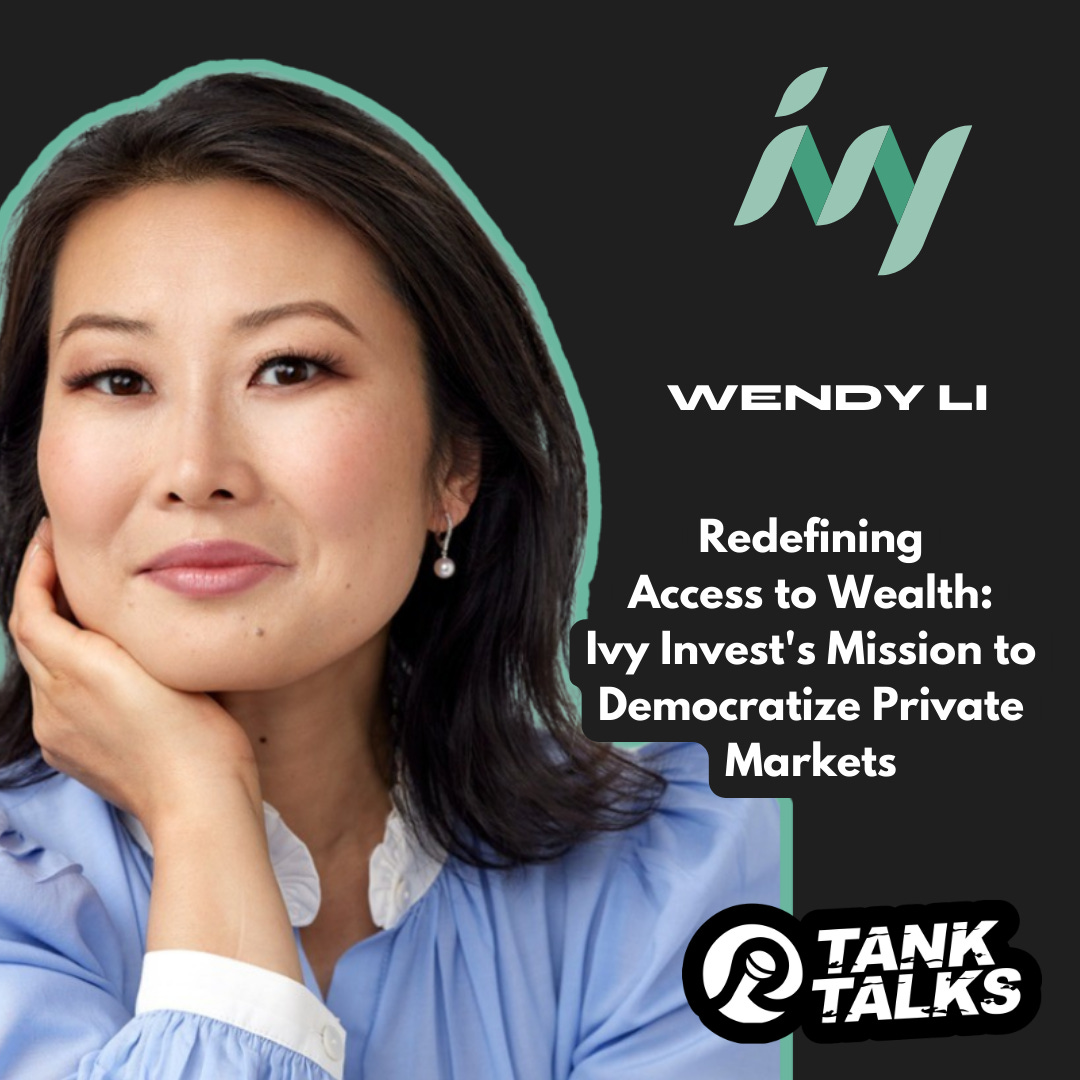
Redefining Access to Wealth: Ivy Invest's Mission to Democratize Private Markets with Wendy Li
In this episode, Matt Cohen chats with Wendy Li, the co-founder and Chief Investment Officer of Ivy Invest, about her journey from managing institutional endowments to founding a fintech startup. Wendy shares insights from her experiences at the Metropolitan Museum of Art, the UJA Federation of New York, and the Mother Cabrini Health Foundation.She highlights her decision to leave a traditional allocator role to build Ivy Invest, a platform democratizing access to institutional-quality investments for retail investors. Wendy discusses the challenges of being a first-time founder, how emerging managers can build trust with institutional investors, and the long-term lessons from her career.About Wendy Li:Wendy Li is the Co-Founder and Chief Investment Officer of Ivy Invest, a platform that helps individual investors access investment portfolios similar to those used by big institutions. She has over 10 years of experience managing large investment funds and holds a Chartered Financial Analyst certification.Before starting Ivy Invest, Wendy was the Managing Director of Investments at the Mother Cabrini Health Foundation, where she set up the investment office and managed $4 billion. At the UJA-Federation of New York, she oversaw a $1 billion endowment and a $400 million pension plan. Her career began at the Metropolitan Museum of Art, where she worked as a Senior Investment Analyst.Wendy studied at Columbia University, where she earned her Bachelor’s degree.Topics(01:13) Early Career Journey: Wendy shares her upbringing in Pennsylvania, moving to NYC, and her entry into finance at Columbia University.(02:30) First Role at the Met Museum: Insights from working with an established portfolio, sitting across high-profile investment committee members, and lessons on portfolio management.(04:51) The Transition to UJA: Managing a new investment office, building credibility with a seasoned investment committee, and reshaping a hedge fund-heavy portfolio.(06:57) Influence of David Swensen: Learning from Swensen's Yale Model and its focus on alternative investments, plus her direct exposure to the Yale network through colleagues.(09:48) Building Ivy Invest: Why Wendy left the endowment world to create Ivy Invest, the challenges of launching an SEC-registered fund, and solving access and complexity barriers for individual investors.(19:14) Fund Structure: Ivy Invest’s single-fund strategy blending public and private investments, its interval fund structure, and quarterly repurchase options for investors.(24:11) Emerging Manager Advice: Key strategies for preparing to meet with institutional investors, understanding their specific needs, and how to build trust over time.(28:17) Long-Term Relationships: Why personal rapport, patience, and a deep understanding of both LPs and your own strategy are essential for emerging managers.(31:17) Lessons as a First-Time Founder: Transitioning to a fintech startup, learning to navigate the tech and regulatory landscape, and unexpected challenges like user access glitches.(36:38) Co-Founders and Team Dynamics: The complementary skills of her co-founders, balancing optimism with risk awareness, and maintaining trust and humor through challenges.(38:42) Brand Awareness and Challenges: Educating retail investors about their eligibility and building recognition for Ivy Invest’s mission.(39:54) Surprises from Early Investors: The diversity of early adopters and how their demographics exceeded initial expectations.Fast Favorites* Favorite Podcast: How I Built This* Favorite Newsletter: Matt Levine’s Money Stuff* Favorite Tech Gadget: iPhone* Favorite Trend: Established alternative investment managers opening access to retail investors* Favorite Book: A Tree Grows in Brooklyn by Betty Smith* Favorite Life Lesson: “Finish what you start.”Follow Matt Cohen and Tank Talks here!Podcast production support provided by Agentbee.ai This is a public episode. If you would like to discuss this with other subscribers or get access to bonus episodes, visit tanktalks.substack.com

News Round Up: Trump Shocks and Awes with Day One Policies and Venture Capital Reinvents Private Equity
This episode analyzes the latest developments in U.S. policy and how they intersect with business, innovation, and Canadian economic strategies. Matt Cohen and John Ruffolo discuss Trump’s second-term inauguration, Canada’s potential responses, and the growing trend of venture capital firms adopting private equity-style roll-up strategies.Topics(00:42) Trump’s Second-Term Inauguration(02:40) Key US Policy Announcements(05:00) Canada’s Preparedness vs. Reaction in Policy (09:03) Alberta’s Independent Strategy(13:11) Shifts in Liberal Party Leadership(16:31) Venture Capital Adopts Roll-Up Strategies(21:15) Challenges for Venture Roll-UpsFollow Matt Cohen and Tank Talks here!Podcast production support provided by Agentbee.ai This is a public episode. If you would like to discuss this with other subscribers or get access to bonus episodes, visit tanktalks.substack.com
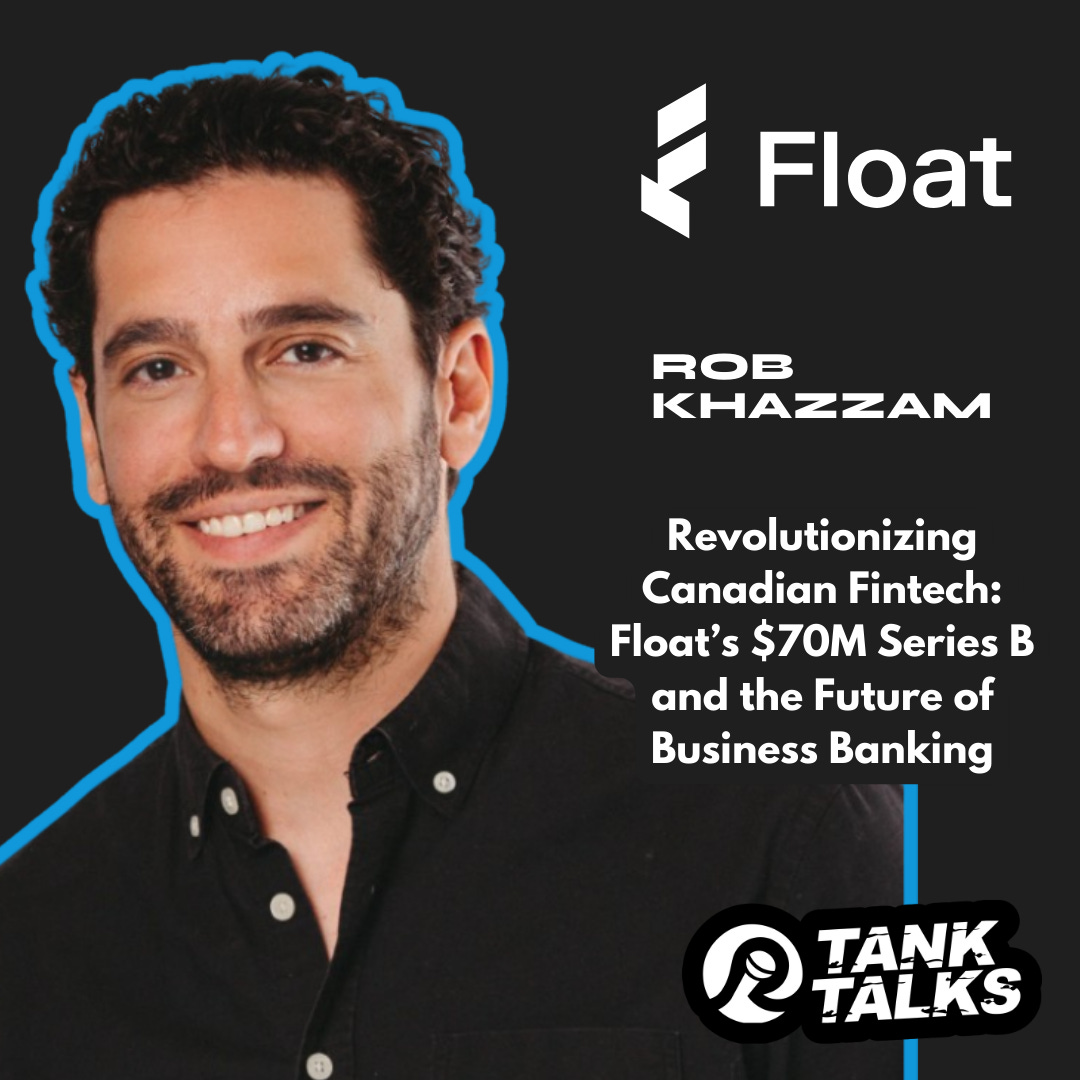
Revolutionizing Canadian Fintech: Rob Khazzam on Float’s $70M Series B and the Future of Business Banking
In this episode of Tank Talks, Matt Cohen welcomes back Rob Khazzam, CEO of Float, along with John Ruffolo, to discuss Float's recent $70M Series B funding led by Goldman Sachs, the challenges of building a fintech company in Canada, and the broader state of entrepreneurship in the country.Rob shares insights into Float's mission to simplify financial operations for Canadian businesses, emphasizing innovation in a heavily regulated industry. He reflects on the lessons learned from previous funding rounds and how Float adapted to market shifts. The conversation expands to challenges in Canadian policy, the need for a vibrant knowledge economy, and the role of government in fostering innovation.About Rob Khazzam:Rob Khazzam is the Co-Founder and CEO of Float, a Canadian company dedicated to simplifying corporate spending for businesses and teams.Previously, Rob served as an advisor to Framework Venture Partners and was the Managing Partner at Great Mountain Partners, an investment firm focused on acquiring majority stakes in Canadian businesses. He also worked at Uber for over five years, holding various leadership roles, including General Manager for Canada and Central & Eastern Europe.Rob earned an Honours Business Administration degree from the Richard Ivey School of Business at the University of Western Ontario in 2009.Topics Discussed:(03:24) The founding story of Float, inspired by solving the inefficiency of expense reports. He reflects on the challenges Canadian businesses face in accessing modern financial tools, such as corporate cards.(05:20) Float’s Series A funding and navigating the 2022–2023 market downturn. Rob emphasizes how Float balanced rapid growth with sustaining operations during challenging times(10:00) Float's approach to partnerships and funding, emphasizing long-term vision and sustainable growth over short-term wins or valuations and the alignment with Goldman Sachs as a strategic partner.(13:41) Exploration of payment inefficiencies and their impact on Canadian businesses.(17:45) Rob describes Float’s commitment to trust, compliance, and risk management in a highly regulated fintech environment.(20:24) A broader discussion on Canada's entrepreneurial ecosystem and the importance of celebrating entrepreneurship and implementing proactive policies, such as open banking, to enhance Canada's knowledge economy.(25:54) Critiques of Canada’s economic policies, advocating for a focus on intentional knowledge economy growth and smarter immigration strategies to boost per capita GDP.(35:29) Personal reflections on Rob’s time in Europe, which gave him perspective on Canada’s multicultural strengths and opportunities for economic unity.(40:16) A discussion on the importance of standing up for Canadian values, addressing social tensions, and fostering national unity against divisive identity politics.(50:42) Float’s goals for the next 12–18 months, including delivering an optimized business banking experience, helping customers achieve better ROI, and significantly reducing user time spent on Float’s platform.Fast Favorites:* Podcast: Invest Like the Best (business), Spittin’ Chiclets (sports).* Blog: Stratechery* Tech Gadget: iPhone* New Trend: Cold plunging to manage stress and anxiety* Book: No Rules Rules by Reed Hastings and Erin Meyer* Life Lesson: "Believe in yourself more than you actually do."Follow Matt Cohen and Tank Talks here!Podcast production support provided by Agentbee.ai This is a public episode. If you would like to discuss this with other subscribers or get access to bonus episodes, visit tanktalks.substack.com

Profitability Over Funding: A Data-Driven Playbook for Startup Success with Dave Lambert of Right Side Capital Management
Host Matt Cohen talks with Dave Lambert, founder and managing director of Right Side Capital Management. Founded in 2009, Right Side takes a quantitative, data-driven approach to early-stage investments, focusing on capital-efficient tech startups. It has funded over 2,000 companies, offering rapid investment decisions and fostering innovation in the fragmented seed-stage funding market.Dave explains how Right Side invests in very early-stage startups using data instead of gut feelings. He also discusses how technology, like AI, is changing startups and shares stories from his career.About Dave Lambert:Dave Lambert is the Founder and Managing Director of Right Side Capital Management, a pre-VC stage investment firm based in San Francisco. Before founding Right Side Capital, Dave was the CEO and Founder of WorkMetro Inc., a network of local online job boards operating across major U.S. metropolitan markets. He successfully expanded the company to over 20 markets before its acquisition by Jobing.com in 2008. Earlier in his career, he founded Acorn Computer, Inc., which provided IT solutions to businesses and institutions in the San Francisco Bay Area for over a decade.Dave earned his Bachelor of Science degree from Stanford University, specializing in Values, Technology, Science & Society with a focus on Artificial Intelligence.Topics* (01:15) Dave’s background growing up in Denver, his entrepreneurial beginnings with a computer hardware company, and how those experiences led to founding Right Side Capital* (03:26) How The Black Swan by Nassim Taleb influenced the creation of Right Side Capital, focusing on “positive black swans” (startups with unexpected, outsized success)* (05:53) Understanding the Power Law in Venture Capital* (08:39) How Right Side makes investment decisions, often providing a “yes” or “no” within a week and why they focus on startups with small funding needs and clear metrics* (11:48) What Metrics Right Side Looks For* (16:11) TradingView: A Success Story* (21:08) Impact of AI on Startups* (25:56) Low-Headcount Companies Thriving* (28:37) Changing Founder mindsets toward profitability and capital efficiency rather than raising successive funding rounds* (29:04) Tax Benefits for Venture Investors* (33:26) The Role of Accelerators* (36:40) Challenges in VC Fundraising and Innovation* (40:00) Resilient Entrepreneurs* (43:10) Dave’s Tech and Productivity SetupDave Lambert's Fast Favorites* Favorite Podcast: Slow Burn* Favorite Newsletter/Blog: Dave doesn’t have a single favorite but enjoys reading a variety of blogs and newsletters, especially about tech, venture capital, and economics.* Favorite Tech Gadget: Golf simulators* Favorite New Trend: Entrepreneurs focusing on profitability as the main goal instead of just raising money* Favorite Book: Extreme Ownership by Jocko Willink and Leif Babin – A guide on leadership and accountability, teaching lessons from Navy SEALs.* Favorite Life Lesson: “Believe in yourself and trust your own judgment.”Follow Matt Cohen and Tank Talks here!Podcast production support provided by Agentbee.ai This is a public episode. If you would like to discuss this with other subscribers or get access to bonus episodes, visit tanktalks.substack.com

News Rundown: CRA Gives Murky Guidance, Legality of Prorogation, RBC x Cohere, and Bench Accounting goes Bye-Bye
Matt Cohen and John Ruffolo discuss the fast-moving events shaping Canada's political and economic landscape. Topics include the fallout from Prime Minister Justin Trudeau's resignation, the complexities of the CRA's proposed capital gains tax adjustments, and the legal challenges tied to Parliament's prorogation. The conversation then pivots to groundbreaking developments in AI, spotlighting RBC's partnership with Cohere to build a generative AI platform. The episode wraps with a critical analysis of the sudden closure of Vancouver-based Bench Accounting and its surprising acquisition.Topics:* (00:45) CRA’s enforcement of capital gains tax changes and taxpayer strategies* (02:41) Legislative uncertainty surrounding the federal budget and prorogation* (04:08) Legal arguments challenging prorogation and their implications* (06:04) External perceptions of Canadian governance* (08:22) RBC’s partnership with Cohere for AI development* (11:36) Anthropic’s funding round and global AI investment trends* (11:52) Bench Accounting’s shutdown and its acquisition by employer.comFollow Matt Cohen and Tank Talks here!Podcast production support provided by Agentbee.ai This is a public episode. If you would like to discuss this with other subscribers or get access to bonus episodes, visit tanktalks.substack.com

Emergency Pod: Trudeau Resigns… Now What?
Matt Cohen and John Ruffolo talk about the big news that Justin Trudeau is stepping down after being Canada’s Prime Minister for nine years. They explore what this means for Canada, including how it affects the government, the economy, and Canada’s relationship with the United States.Topics covered include:* (01:28) What Trudeau’s resignation means for the Liberal Party and Canada’s government.* (03:17) Why the Liberal Party’s leadership race could create even more problems.* (04:00) How Canada’s political issues might hurt its relationship with the U.S.* (07:22) Questions about the proposed capital gains tax changes and how they confuse taxpayers.* (10:12) Politicians using social media to speak directly to people, like Pierre Poilievre’s viral interview.* (13:15) Elon Musk announces changes to X (formerly Twitter) to make it more positiveFollow Matt Cohen and Tank Talks here!Podcast production support provided by Agentbee.ai This is a public episode. If you would like to discuss this with other subscribers or get access to bonus episodes, visit tanktalks.substack.com

Tank Talks In Review: A Look Back at our Favourite Things in 2024!
Matt Cohen wraps up an extraordinary year in tech, venture capital, and innovation with this special "Best of 2024" episode of Tank Talks. Featuring insights from some remarkable guests, this episode explores the year’s defining moments and actionable lessons.Baron Davis dives into the transformative potential of AI, VR/AR, and digital assets, while Dax Da Silva of Lightspeed shares how energy and spirituality fuel leadership. Nicolas Mulroney reveals the grit it took to pitch 80 investors to launch his bakery venture, and Winter Mead explains how Coolwater Capital is building the next generation of venture fund managers.Tom McCullough of Northwood Family Office discusses what it takes to thrive in wealth management, and Mario Nigro shares strategies for navigating high-stakes M&A negotiations. Arati Sharma and Satish Kanwar offer a critical lens on Canada's innovation landscape, calling for affordability and optimism to drive entrepreneurial growth. Finally, John Rikhtegar delivers data-driven insights into the past decade of Canadian venture exits, revealing how market cycles shape success.Enjoy and see you next week with fresh insights and a new interview.Key Highlights and TimestampsFeatured Guests* Baron Davis: The Future of AI and Life Lessons* (00:01:45) Explores trends in AI, VR/AR, and tokenized digital assets, including his innovative "OATMills" project.* (00:04:00) Favorite books: Rich Dad Poor Dad and Outliers.* Lesson: “Be happy with what you have, and good people will surround you.”* Nicolas Mulroney: Resilience in Entrepreneurship* (00:05:13) Shares how he overcame 50+ rejections while securing funding for his bakery in a challenging market.* Lesson: “It’s an election you have to win. There’s no other option.”* Winter Mead: Supporting Emerging VCs* (00:08:00) Highlights Cool Water Capital’s program to develop first-time fund managers, focusing on operations, fundraising, and fund management.* Lesson: "Fund management isn’t just about investing—it’s about running a business."* Mario Nigro: Successful M&A Strategies* (00:24:00) Offers advice on managing complex negotiations, emphasizing communication and trust.* Lesson: "Most deal problems can be solved by better understanding the other side."* Arati Sharma & Satish Kanwar: Revitalizing Canadian Innovation* (00:29:00) Discuss Canada’s innovation challenges and opportunities.* Arati: Calls for affordability to enable young entrepreneurs.* Satish: Stresses the importance of belief, optimism, and community building.* Tom McCullough: Redefining Wealth Management* (00:35:00) Advises aspiring family office founders to focus on client needs and solve real problems.* Lesson: “Understand demand and build something that fills a gap.”* John Rikhtegar: Venture Capital Insights* (00:46:00) Analyzes a decade of Canadian venture exits, revealing that over 50% of exit value occurred in 2020-2021.* Lesson: "Consistent capital allocation is critical for navigating market cycles."* Dax Da Silva: Energy, Fitness, and Leadership* (00:59:28) Discusses how fitness and spirituality fuel his leadership and entrepreneurial resilience.* Lesson: "To get energy, you must first put energy in."Follow Matt Cohen and Tank Talks here!Podcast production support provided by Agentbee.ai This is a public episode. If you would like to discuss this with other subscribers or get access to bonus episodes, visit tanktalks.substack.com

News Rundown: Canada’s Political Turmoil, Tech Sector Predictions, and 2025 Outlook
Matt Cohen and John Ruffolo tackle the seismic shifts in Canada’s political landscape, discuss the recent fall economic statement, and make bold predictions for 2025.Topics covered include Chrystia Freeland’s unexpected resignation as Finance Minister (00:41), highlights from the Federal Budget (03:39), speculation about Canada's election timing (09:18), and how this government looks to the incoming US administration. The discussion also covers the growing "100 Million Dollar Club" in Canadian tech and debates the IPO prospects for leading startups (12:00). And John and Matt give rapid-fire predictions for 2025 (18:00).Follow Matt Cohen and Tank Talks here!Podcast production support provided by Agentbee.ai This is a public episode. If you would like to discuss this with other subscribers or get access to bonus episodes, visit tanktalks.substack.com

News Rundown: Sheertex Moonshots, Quantum Leaps, and Canada’s VC Conundrum
In this episode of Tank Talks, host Matt Cohen and John Ruffolo discuss the latest developments in venture capital, technology, and innovation. Topics include the Canadian government’s proposal to encourage pension fund investments in startups, the challenges entrepreneurs face in scaling businesses, and the systemic capital constraints within Canada’s ecosystem.The conversation highlights Sheertex founder Katherine Homuth’s journey and the broader difficulties of pursuing ambitious ventures in Canada. They also cover Raptor Maps’ use of AI for solar farm efficiency, the resurgence of quantum computing with D-Wave’s latest funding, and the emergence of layered SPVs investing in high-demand companies like SpaceX and OpenAI. The episode closes with an analysis of ServiceTitan’s IPO and its implications for the reopening of the IPO market.(00:46) The Canadian Mini-Budget and Venture Capital* $2B package to support startups and scale-ups* Discussion on U.S. influence on Canadian investments and government initiatives(03:00) Economic Realities for Canadian Startups* John highlights Canada’s capital constraints and increased tax concerns(05:00) Sheertex and Katherine Homuth’s Moonshot Journey* $35M funding round led by Investissement Québec* Challenges in scaling operations and media scrutiny* The uphill battle of Canadian entrepreneurs pursuing ambitious goals* Read her article here(12:44) Raptor Maps and Solar Innovation* $35M raised to enhance solar energy management through AI and drones* Predictive maintenance and operational efficiencies in the solar sector(17:23) Quantum Computing Resurgence* D-Wave raises $175M as Google advances with its Willow chip* Global implications of quantum on industries and geopolitics(21:00) Double-Layer SPVs: Opportunity or Risk?* The rise of SPVs investing in other SPVs for firms like SpaceX and OpenAI* Risks of layered fees and opaque ownership structures(23:28) ServiceTitan IPO and the IPO Market Rebound* ServiceTitan’s valuation debate following its $101/share IPO* Implications for the reopening of the IPO windowFollow Matt Cohen and Tank Talks here!Podcast production support provided by Agentbee.ai This is a public episode. If you would like to discuss this with other subscribers or get access to bonus episodes, visit tanktalks.substack.com

Democratizing Private Fundraising with Rebecca Kacaba of DealMaker
Matt Cohen sits down with Rebecca Kacaba, Co-Founder and CEO of DealMaker, a groundbreaking platform transforming how companies raise capital. Rebecca shares her journey from her entrepreneurial family background and legal expertise to spearhead innovation in the fundraising space.The conversation covers how DealMaker democratizes capital access, enabling individuals to invest in brands they love. The discussion also touches on the impact of regulations like the JOBS Act, the role of community and marketing in successful capital campaigns, and the future of AI in streamlining complex fundraising processes.Rebecca also opens up about her experiences as a female CEO in a male-dominated industry, scaling a fintech startup, and her vision for how retail capital will reshape ownership in the coming years.About Rebecca KacabaRebecca Kacaba is the CEO and co-founder of DealMaker, a tech company that helps businesses raise money online. DealMaker has helped companies raise over $1.7 billion from 650,000 investors, making it one of the fastest-growing companies in Canada. Rebecca’s goal is to make it easier and fairer for people to invest in businesses they believe in.Before starting DealMaker, Rebecca worked as a lawyer for over ten years, specializing in helping companies with capital markets and mergers. She also worked at the Ontario Securities Commission, where she helped with important rules and policies for investments. Her background in law helped her create new tools for companies to raise money more efficiently.Rebecca earned her Bachelor of Arts in Psychology from Western University and her law degree (LLB) from the University of Windsor.Fast Favorites* Favorite Podcast: All-In Podcast* Favorite Bestie from All-In: Chamath Palihapitiya* Favorite Newsletter or Blog: Morning Brew* Favorite Tech Gadget: iPhone* Favorite New Trend: The democratization of capital* Favorite Book: Elon Musk's Biography* Favorite Life Lesson: "Failure is not a thing."Follow Matt Cohen and Tank Talks here!Podcast production support provided by Agentbee.ai This is a public episode. If you would like to discuss this with other subscribers or get access to bonus episodes, visit tanktalks.substack.com

News Rundown: Canada's Prosperity Agenda, Building Leverage with the US, Funding for AI, and ServiceTitan’s IPO Fallout
Matt Cohen and John Ruffolo discuss John’s OpEd on building a prosperity agenda for Canada, becoming a better ally to the US, the announcement of the Sovereign AI fund, and key developments in venture capital, including ServiceTitan’s IPO challenges and the implications of recent lawsuits against OpenAI.(01:13) Canada’s Prosperity Agenda and Economic PrioritiesJohn Ruffolo delves into his op-ed advocating for federal government spending reforms, tax system simplification, and fostering innovation to secure Canada’s future prosperity.* Key Points:* Canada must address federal debt, currently projected at $1.4 trillion.* Simplifying and aligning taxes with U.S. competitiveness could enhance productivity.* Innovation requires leveraging Canada’s relationship with the U.S. in energy, minerals, and defense strategies.* John’s Insight: “Canada’s size means we must strategically use our strengths to negotiate with global powers, especially the U.S.”(06:14) Friend-Shoring: A Strategic Opportunity for CanadaMatt and John discuss the concept of “friend-shoring,” where allied nations reshape supply chains to reduce reliance on adversarial countries like China.* Definition: Using partnerships to onshore critical technologies and manufacturing.* Canada’s Role: Access to minerals, energy, and a coordinated defense strategy make Canada an ideal partner for the U.S.* John’s Take: “Canada’s future will be closely tied to the U.S. This is a chance to secure innovation access and consumer market integration.”(12:35) Canada’s AI Sovereignty StrategyThe federal government unveiled its $2 billion AI Sovereign Compute Strategy to enhance AI infrastructure across Canada.* Allocation Highlights:* $1 billion for public computing infrastructure.* $700 million for private sector and academia collaborations.* $300 million for affordable AI compute access for small businesses.* Criticism: Concerns about execution and whether funds should directly support existing private solutions like AWS or Google Cloud.* John’s Perspective: “Supporting infrastructure is crucial, but tax credits for private spending might have been a better approach.”(18:02) OpenAI Faces Canadian Copyright LawsuitsMajor Canadian media organizations filed a lawsuit against OpenAI, claiming their content was used without permission for AI training.* Details: Plaintiffs include CBC, Globe and Mail, and Postmedia, seeking $20,000 per infringed work.* Implications: Rising copyright costs could fundamentally alter large language model economics.* John’s View: “This highlights the need for a framework to balance creator rights and AI development.”(21:45) ServiceTitan’s IPO ChallengesServiceTitan’s IPO faces scrutiny due to its compounding ratchet clause, which dilutes employee ownership.* Background: IPO valuation set between $52-$57 per share, well below prior funding rounds.* Key Impact:* Employees face tax consequences on overvalued RSUs.* Preferred investors benefit from a 1x preference redemption and additional shares.* John’s Take: “The lack of valuation adjustments in prior rounds leaves employees holding the bag. This is a cautionary tale for structuring future investments.”(28:19) Legacy VC Exits and Emerging Manager StrugglesBrian Singerman, a Founders Fund partner, transitions to partner emeritus, reflecting challenges in the current VC landscape.* Key Observations:* Spinout managers face difficulty raising funds amid institutional risk aversion.* Established partners are stepping back due to tougher market conditions.* John’s Insight: “VC investing is hard work. The market is returning to normalcy after years of overfunding during the zero-interest era.”Follow Matt Cohen and Tank Talks here!Podcast production support provided by Agentbee.ai This is a public episode. If you would like to discuss this with other subscribers or get access to bonus episodes, visit tanktalks.substack.com

Building Supply Chain 2.0 with Mitch Debora of Mosaic Manufacturing
Matt Cohen welcomes Mitch Debora, the Co-Founder and CEO of Mosaic Manufacturing, a pioneer in the field of additive manufacturing and 3D printing. Mitch shares insights into how Mosaic is transforming global supply chains with innovative 3D printing solutions, particularly in the wake of COVID-19, which exposed the fragility of traditional supply chains.The discussion dives into Mosaic’s latest innovation, the Array system, which enables continuous automated production at scale. Mitch outlines the environmental and economic advantages of additive manufacturing, its applications in diverse industries such as medical devices, textiles, and consumer goods, and Mosaic's vision for a sustainable future of localized production.The conversation also touches on Mosaic’s $28M growth equity financing round led by Idealist Capital, signaling the company's ambitious plans for expansion and innovation.About Mitch Debora:Mitch Debora is the Co-Founder and CEO of Mosaic Manufacturing, a leader in advanced polymer-based multi-material additive manufacturing solutions. He also serves as an Additive Manufacturing Advisory Board Member at NGen Canada. With expertise in digital manufacturing and supply chain innovation, Mitch focuses on strategy, growth, intellectual property, and engineering. His earlier ventures include founding Vivid 3D, offering professional-grade 3D printing services. Mitch earned his Bachelor of Applied Science in Mechanical Engineering from Queen's University, where he also developed a deep interest in 3D printing.Topics discussed:(01:32) Mitch’s Journey into Entrepreneurship02:30) Inspiration Behind Mosaic(08:09) Impact of COVID-19 on Supply Chains(11:49) The Array System: Revolutionizing Manufacturing(15:48) Future of 3D Printing(18:24) AI in Additive Manufacturing(23:00) Environmental Benefits of Additive Manufacturing(26:34) 3D Printing at Home(31:40) Mosaic’s Recent Funding RoundFast Favorites:Favorite Podcast: How I Built This by Guy RazFavorite Blog: Mosaic’s BlogFavorite Tech Gadget: 3D printersFavorite New Trend: Betting culture as a predictive data sourceFavorite Book: The Age of Spiritual Machines by Ray KurzweilFavorite Life Lesson: "You don't know what you don't know."Follow Matt Cohen and Tank Talks here!Podcast production support provided by Agentbee.ai This is a public episode. If you would like to discuss this with other subscribers or get access to bonus episodes, visit tanktalks.substack.com

News Rundown: Neo Financial’s Tencent Secret Backing, Hopper’s Big Shift, and Musk’s AI Power Play
Matt Cohen and John Ruffolo discuss Neo Financial’s $80M funding and the concerns surrounding Tencent’s involvement, Hopper’s layoffs as it pivots to B2B partnerships, and Elon Musk’s dual moves with his Department of Government Efficiency and X.AI’s stock offering. They also explore the implications of ServiceTitan’s IPO ratchet clause and Wealthsimple’s $100M secondary share purchase ahead of a potential IPO.(01:13) Neo Financial’s Tencent ControversyNeo Financial’s $80M equity financing revealed Tencent Holdings as a lead investor, sparking concerns about Chinese involvement in Canadian financial services.* Tencent is a passive investor with no board seat or sensitive data access, but the lack of transparency raised questions.* John’s Take: “If safeguards are in place, why not openly embrace a credible investor like Tencent? Mishandling the PR has fueled unnecessary suspicion.”(04:39) Hopper’s Layoffs and Strategic PivotHopper cuts 10% of its workforce, following a 30% reduction last year, as it shifts focus to B2B partnerships with firms like Capital One and Uber.* B2B now accounts for two-thirds of Hopper’s revenue.* John’s Analysis: AI could transform Hopper’s operations, but revenue compression and dependency on Expedia create challenges.(09:53) Musk’s Moves: DOGE and XAIElon Musk enlists Sriram Krishnan for his Department of Government Efficiency (DOGE) initiative while leveraging his X.AI venture to benefit Twitter investors.* DOGE: Musk’s team focuses on reducing government inefficiency through red tape reduction, technology adoption, and spending optimization.* X.AI Stake Offering: Musk grants a 25% stake in X.AI to Twitter investors to offset valuation losses post-acquisition.* John’s Insight: “Musk is creating an interconnected ecosystem where partners benefit from his entire portfolio, a brilliant move to maintain loyalty and long-term value.”(06:00) Wealthsimple’s Secondary TransactionsWealthsimple purchased $100M in employee shares at a $5B valuation, positioning for a potential IPO.* Signals: Minimal gap between common and preferred shares indicates readiness for public markets.* Performance: Reportedly cash flow breakeven, driven by a strong crypto portfolio and $8B AUM.* Matt’s Take: “This secondary move shows maturity and sets the stage for long-term growth under new leadership.”(18:29) ServiceTitan’s Ratchet Clause and IPO ImpactServiceTitan’s IPO is propelled by a compounding ratchet clause from its Series H funding.* What’s a Ratchet? Investors get more shares if IPO valuation falls below a set threshold, diluting existing shareholders.* John’s Take: “Compounding ratchets penalize employees and distort economic interests. They’re a clear sign of investor concerns during the funding crunch.”Follow Matt Cohen and Tank Talks here!Podcast production support provided by Agentbee.ai This is a public episode. If you would like to discuss this with other subscribers or get access to bonus episodes, visit tanktalks.substack.com
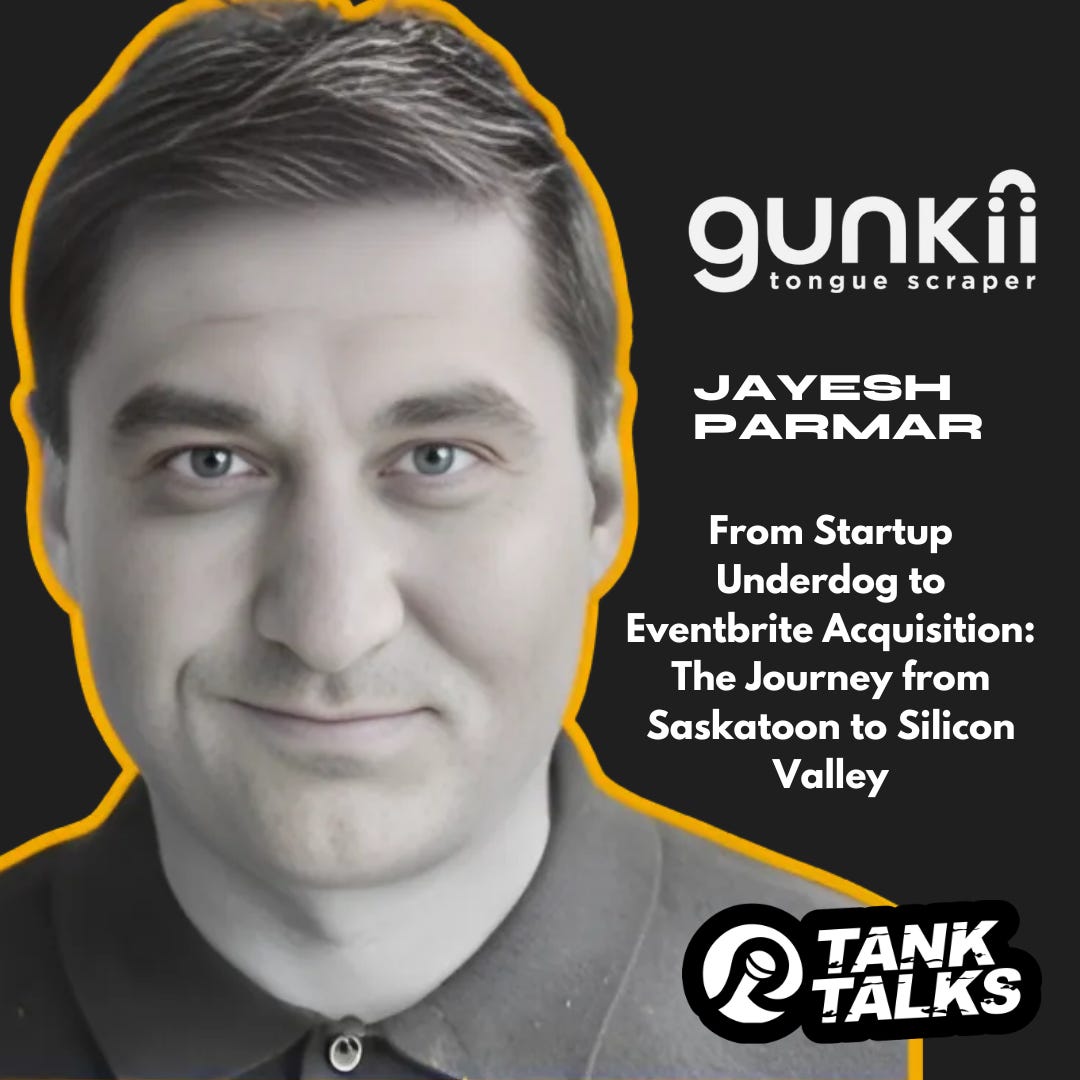
From Startup Underdog to Eventbrite Acquisition: Jayesh Parmar’s Journey from Saskatoon to Silicon Valley
Matt Cohen interviews Jayesh Parmar, founder of Picatic, a ticketing platform acquired by Eventbrite, and current wellness innovator with Gunkii. Jayesh discusses building a startup in Saskatoon, navigating challenges, competing against incumbents, and lessons learned from scaling a company. He also shares insights into his current venture, Gunkii, and his contributions to the startup ecosystem.About Jayesh Parmar:Jayesh Parmar is the Co-CEO and founder of Gunkii, a wellness brand launched in 2021 that focuses on luxury tongue scrapers. He is responsible for leading product innovation and strategic growth in the oral health space.Previously, he was at Eventbrite after acquired his startup, Picatic a global event ticketing platform serving 46 countries, known for its innovative pricing models. Earlier, Jayesh founded Boom Music, an event production and live music management company, which he ran from 1997 to 2011. He also spent over a decade as a teacher with Saskatoon Public Schools.Jayesh holds a bachelor’s degree from the University of Saskatchewan.Discussion Highlights:* 00:20 Founding Picatic: Competing with Eventbrite using innovative pricing models* 00:37 Early challenges of building a startup: Funding, market confusion, and team building.* 02:11 Scaling from Saskatoon and the role of accelerators in San Francisco, Toronto, and New York* 03:44 Competing with Eventbrite: Pay-What-You-Want and freemium pricing models* 09:00 The importance of "dogfooding" in refining Picatic’s product* 16:32 Celebrating milestones like reaching $10 million in sales* 18:50 The Eventbrite acquisition: How it happened and preparing for M&A* 21:00 Practical advice: Keeping a clean data room and leveraging exited founders as advisors* 27:13 Mentorship and giving back to the startup ecosystem* 28:31 Viewing failure as a data point and using it to improve* 31:00 Creating Gunkii: A wellness product inspired by cultural heritage* 33:24 What’s next: Supporting startups as a mentor and advisorFast Favorites:* Favorite Podcast: All In* Favorite Newsletter: Lenny’s Newsletter* Favorite Tech Gadget: Boardy.ai* Favorite New Trend: Wellness-focused retreats for entrepreneurs* Favorite Book: Principles by Ray Dalio* Favorite Life Lesson: “Your presence matters more.”Follow Matt Cohen and Tank Talks here!Podcast production support provided by Agentbee.ai This is a public episode. If you would like to discuss this with other subscribers or get access to bonus episodes, visit tanktalks.substack.com

News Rundown: Neo Financial's cram down, IPOs show signs of life, The Feds Sue Google, and NVIDIA is juggernaut
Matt Cohen welcomes back John Ruffolo, of Maverix Private Equity, for a discussion on Neo Financial’s recent funding round, the state of IPOs, antitrust actions against Google, the dominance of NVIDIA in AI hardware, and the speculative nature of MicroStrategy's Bitcoin strategy. * (00:55) Neo Financial's $362 Million Series D RoundAnalysis of the Calgary-based challenger bank's latest financing round, including a significant valuation drop since 2022 and insights into structured equity and debt financing.* (03:20) Fintech Valuation ResetsJohn reflects on the aggressive valuations during 2019-2021 and applauds founders navigating down rounds responsibly.* (06:22) Klarna and IPO TrendsDiscussion of Klarna's IPO and broader market activity, including ServiceTitan's filing and a potential boost in M&A and IPOs.* (08:47) Antitrust Pressure on GoogleThe DOJ's push to dismantle Google's Chrome browser and Android dominance, its implications for AI development, and the historical irony compared to Microsoft's Netscape case.* (12:49) NVIDIA’s Dominance in AI HardwareExploration of NVIDIA’s record-breaking revenues, its chokehold on AI compute, and the challenges potential competitors face.* (15:46) OpenAI’s Costs vs. RevenueA deep dive into OpenAI's staggering operational costs and projected losses for 2024, highlighting the high stakes of AI innovation.* (16:45) MicroStrategy’s Bitcoin StrategyDiscussion of MicroStrategy’s Bitcoin-heavy balance sheet, its valuation compared to its holdings, and parallels to previous financial collapses.* (19:00) Final Thoughts and TakeawaysJohn reflects on exuberance in speculative markets and the risks of over-leveraging in volatile assets like Bitcoin.Follow Matt Cohen and Tank Talks here!Podcast production support provided by Agentbee.ai This is a public episode. If you would like to discuss this with other subscribers or get access to bonus episodes, visit tanktalks.substack.com
Breaking Down Venture Capital Returns: Capital Efficiency, Exit Strategies, and Canada's Ecosystem with John Rikhtegar of RBCx
Matt Cohen and John Rikhtegar of RBCx discuss the insights from Rikhtegar's report on capital exited in Canadian venture capital over the past decade. They talk about the importance of understanding capital efficiency, market cycles, and the power law in venture exits.John emphasizes the need for a comprehensive view of the venture ecosystem, focusing on capital allocated, invested, and exited. The discussion also the current state and future of Canadian venture capital, emphasizing the importance of capital efficiency, the challenges of growth at all costs, and the evolving landscape of funding. They analyze data on exit values and funding ratios between Canada and the US, highlighting the need for Canadian investors to adapt their strategies to achieve better outcomes.And John Ruffolo from Maverix PE stops by to discuss the week’s news.About John Rikhtegar:John Rikhtegar is the Director of Capital at RBCx, where he leads investments in venture capital funds and startups, while driving strategic initiatives to enhance transparency and value in Canada's private markets. With a focus on supporting the venture ecosystem, John has played a key role in fostering innovation and growth across the country.Before joining RBCx, John built an impressive career in tech and operations. He held senior leadership roles at Kognitiv Corporation, guiding strategic transformations in Canada and the UK, and was part of the founding team at VaynerCommerce, leading revenue growth in the UK and EMEA. At Shopify Plus, he worked with high-growth, enterprise-level merchants, helping scale some of the world’s most innovative brands.John holds an Honors Business Administration (HBA) degree from the Ivey Business School at Western UniversityNews Rundown with John Ruffolo(01:00) Analysis of Q3 2024 Canadian venture capital activity: Record-breaking headline numbers but troubling declines in early-stage domestic investment.(03:00) Impact of Canada’s capital gains tax increases on angel investments and early-stage startups.(05:23) U.S. investment dominance in Canadian deals and the challenges for domestic capital raising.(10:50) Klarna’s rebound after valuation cuts as a roadmap for startups navigating downturns.(12:35) Databricks' secondary funding move and the tension between liquidity needs and IPO delays.(16:50) Public-private sector collaboration in the U.S. and lessons Canada could adopt for governance efficiency.Interview with John Rikhtegar(20:20) John Rikhtegar’s career journey: From Shopify to VaynerMedia to leading RBCX Capital.(24:30) The origins of the Spotlight report and why analyzing capital exited, not just invested, is critical to understanding venture ecosystem health.(28:00) Market cycles and their impact on liquidity, with 2020-2021 generating 50% of Canada’s total exit value over the past decade.(30:26) The power law in Canadian venture exits: The top 50 exits accounted for 85% of all exit value.(32:00) Capital efficiency and its implications for founders, GPs, and LPs: Why bigger isn’t always better.(36:00) Canada’s advantage in building capital-efficient companies due to constrained resources compared to the U.S.(38:00) Practical advice for investors: Staying disciplined on entry prices and prioritizing ownership-sensitive investments in early-stage companies.(46:08) Comparing Canada and U.S. capital efficiency: Lessons learned and the importance of scaling the 1.6x efficiency ratio for Canadian venture capital.Fast FavoritesFavorite Podcast: 10X Capital by David WeisbergFavorite Newsletter or Blog: Clouded Judgment by Jamin BallFavorite Tech Gadget: Garmin WatchFavorite New Trend: Cooking at homeFavorite Book: The Score Takes Care of Itself by Bill WalshFavorite Life Lesson: Don’t worry about things outside of your control.Follow Matt Cohen and Tank Talks here!Podcast production support provided by Agentbee.ai This is a public episode. If you would like to discuss this with other subscribers or get access to bonus episodes, visit tanktalks.substack.com

Why Playing It Safe in B2B Marketing Means Getting Lost in the Crowd with Bill Macaitis of SaaS CMO Pro
In this episode, Matt Cohen interviews Bill Macaitis of SaaS CMO Pro. Bill was instrumental in scaling B2B SaaS giants like Salesforce, Zendesk, and Slack. The conversation covers Bill’s transition from B2C to B2B, bringing consumer marketing techniques into enterprise SaaS, and his role in IPO successes for companies like Zendesk and Slack. Bill also delves into building high-performing, customer-centric marketing teams, strategies for effective inbound and outbound marketing, and the importance of brand differentiation, even in the traditionally risk-averse B2B space. They also explore the evolving role of AI in marketing and the shift in customer acquisition strategies using product-led growth (PLG) models.And John Ruffolo is back to break down the news of the week!About Bill Macaitis:Bill Macaitis is the founder and CEO of SaaS CMO Pro, a platform that helps B2B SaaS and AI companies grow through customer-centric, capital-efficient strategies. He also provides advisory services to founders on scaling marketing and sales.Previously, Bill served as CMO and CRO at Slack, where he led the company to a $16 billion IPO and later acquisition by Salesforce. He was also CMO at Zendesk, guiding the company to a $1.7 billion IPO, and SVP of Marketing at Salesforce, where he drove revenue from $900 million to $3 billion.Bill began his career in B2C marketing, notably at IGN Entertainment and Fox Interactive Media. He holds a Bachelor’s in Business Administration from the University of Illinois Urbana-Champaign.News Rundown with John Ruffolo* (00:01:04) U.S. Federal Election Analysis* (00:04:00) Mainstream Media and Social Media's Rise* (00:06:35) Elon Musk’s Influence and Stock Market Reactions* (00:08:18) OpenAI’s Purchase of "Chat.com"* (00:09:38) Perplexity AI’s $500 Million Funding Round* (00:13:00) Venture Capital’s Private Equity Strategy in AI* (00:15:23) Salesforce in the AI LandscapeInterview with Bill Macaitis* (00:20:20) Bill Macaitis’ Journey from B2C to B2B* (00:21:52) Building Salesforce’s Brand in the Financial Crisis* (00:27:00) Importance of B2B Mascots* (00:32:57) Product-Led Growth (PLG) Strategy at Slack* (00:39:00) Tips for AI Startups on Freemium Strategies* (00:41:31) Account-Based Marketing (ABM) Insights* (00:45:58) AI’s Impact on Marketing and Career Advice for Marketers* (00:49:26) Launch of SaaS CMO ProFast Favorites* Favorite Podcast: Artificial Intelligence Show* Favorite Newsletter or Blog: Only CFO* Favorite Tech Gadget: Rachio* Favorite New Trend: Artificial Intelligence (AI) advancements* Favorite Book: Earn It by Steve Pratt* Favorite Life Lesson: Don't focus on if you're employed, focus on if you're employableFollow Matt Cohen and Tank Talks here!Podcast production support provided by Agentbee.ai This is a public episode. If you would like to discuss this with other subscribers or get access to bonus episodes, visit tanktalks.substack.com

Transforming Healthcare Through Venture Capital: GLP-1 Drugs, AI, and the state of the CVCA with Peter van der Velden of Lumira Ventures
Peter van der Velden joins Matt Cohen to discuss the dynamic changes within the life sciences sector and venture capital at large. He highlights the success factors in life sciences as a high-performing asset class and discusses the role of Canadian pension funds in supporting innovation. The episode also covers the transformative potential of GLP-1 drugs and AI's impact on drug discovery and medical technology.And John Ruffolo is back to talk about the US elections and tech news. (Note: this was recorded before the election on 11/5/24).About Peter van der Velden:Peter van der Velden is the Founder and Managing General Partner of Lumira Ventures, a top Canadian life sciences venture capital firm he established in 2007 following a management buyout of MDS Capital. At Lumira, he focuses on biotech and medtech investments, with multiple high-profile exits involving acquisitions by major pharmaceutical companies.Prior to Lumira, Peter served as President and CEO of MDS Capital, Canada’s oldest life sciences VC firm. He has also founded and led Fusion Capital, an investment bank for Canadian tech ventures, and worked as Managing Director at Bedford Capital, a private equity boutique.Peter began his career in venture capital in 1988 at Vencap Equities and later held roles in business development at Hyal Pharmaceuticals and Taurus Capital. He holds an MBA from the Schulich School of Business and an MSc in Pathology and a BSc in Life Sciences from Queen’s University.In this episode, we discuss:News with John Ruffolo(1:26) – Super Micro Computer Stock Decline(4:00) – Canadian Perspective on U.S. Elections(6:45) – Decline of Mainstream Media and Rise of Alternative Platforms(11:41) – VCs Backing Multiple Competing LLMs(17:20) – Potential AI Mergers and Acquisitions in 2025Interview with Peter van der Velden(19:48) – Peter’s Role at Lumira Ventures(21:03) – Transformation in Venture Capital and Life Sciences(24:05) – Life Sciences Outperformance as an Asset Class(27:48) – Canadian Pension Funds and Venture Capital(31:20) – Case Study: Histosonics and Pension Fund Support(35:25) – Quebec’s Leadership in Supporting Local Innovation(37:00) – Challenges in Advocating for Canadian Venture Capital(46:16) – GLP-1 Drugs and Their Transformative Potential(49:19) – Industries Disrupted by GLP-1 Innovations(52:00) – AI’s Role in Drug Discovery and MedtechFast Favorites * Favorite Podcast: Acquired and All In* Favorite Tech Gadget: NotebookLM.google* Favorite Trend: Rationality returning to the venture market* Favorite Life Lesson: "Never give up"Follow Matt Cohen and Tank Talks here!Podcast production support provided by Agentbee.ai This is a public episode. If you would like to discuss this with other subscribers or get access to bonus episodes, visit tanktalks.substack.com

Disruptive Innovation in Journalism, and the Future of Media in a Tech-Driven World with David Skok of The Logic
In this episode, David Skok, founder and CEO of The Logic, discusses his journey from traditional journalism to leading a digital-first news outlet. He reflects on his time at The Boston Globe, where he helped the publication transition to a digital subscription model. This experience laid the foundation for his decision to launch The Logic, focusing on Canada's innovation economy and providing high-quality, in-depth reporting.David explains how Clayton Christensen’s theory of disruptive innovation influenced his approach to digital media. He saw an opportunity to address gaps in Canadian tech and business coverage, and launched The Logic in 2018. He highlights the challenges of building a digital publication in a space dominated by legacy media and how his publication has carved out its niche by focusing on critical, analytical journalism.The discussion also covers the impact of Bill C-18 on the media landscape in Canada, with David offering insights into how it aims to level the playing field between big tech platforms and smaller news organizations. He also touches on the role of The Logic Summit, an annual event that brings together leaders in tech and business, as part of his broader mission to foster a stronger innovation ecosystem in Canada.And John Ruffolo of Maverix Private Equity joins Matt Cohen to discuss the latest tech and venture capital news.About David Skok:David Skok is the founder and CEO of The Logic, a business news publication focused on Canada’s innovation economy, with five bureaus across the country. Backed by the Financial Times, The Logic has become a prominent source of in-depth business journalism under his leadership.With over 25 years of experience, David previously held senior roles at The Toronto Star and The Boston Globe, where he led digital strategy and helped grow BostonGlobe.com’s digital subscriptions by 40%. He also co-created Globalnews.ca, one of Canada’s leading digital news platforms.David holds a Nieman Fellowship from Harvard University and a Bachelor’s degree in journalism from Ryerson University. He also serves on the board of the Online News Association and advisory boards for several journalism institutions.In this episode, we discuss:News Rundown with John Ruffolo:* (01:31) Elon Musk’s epic week * (02:00) Discussion on the rise of reusable rocket systems and the implications for space exploration* (03:26) Information Venture Partners (IVP), a Toronto-based venture capital firm, decides not to raise its fourth venture fund, citing market conditions and personal circumstances* (05:00) The trend of venture funds consolidating and shifting towards more niche or special purpose vehicle (SPV) investments is explored* (09:00) Geoffrey Hinton, known as the "AI godfather," wins the 2024 Nobel Prize in Physics for his contributions to AI* (12:00) Shopify President Harley Finkelstein's controversial comments about the lack of ambition in the Canadian tech sector, and the push for more risk-taking in AI development* (14:50) John Ruffolo responds, emphasizing the need for better access to capital and support for Canadian entrepreneurs, rather than a lack of ambition being the primary issue* (19:00) Matt and John discuss the large investments being made in U.S. data center developments and AI infrastructure, noting the contrast with Canada’s lack of similar projects* (23:00) A story about Anguilla’s earnings from the ".ai" domain surge, and how it now accounts for 20% of the island’s government revenueInterview with David Skok:* (24:53) David Skok discusses his early years in journalism and how his experiences shaped his career* (27:21) His experiences at The Boston Globe, leading its transition to a subscription-based model and the lessons learned from that time* (31:00) The evolution of digital content consumption and how consumers’ preferences for news have changed* (33:36) Clayton Christensen’s disruptive innovation theory on David’s decision to start The Logic, and his approach to navigating the shifting media landscape.* (41:55) The founding of The Logic, initial challenges, and the importance of building a subscription-based media outlet* (45:00) The competitive nature of the Canadian media landscape and the challenges of securing talent and resources for a startup media company* (49:13) David explains The Logic Summit, how it serves as a platform for bringing together Canada’s innovation and business leaders, and its growing significance* (51:58) The implications of Bill C-18 and how it affects relationships between media outlets and tech platforms like Google and Meta* [56:43] The rise of generative AI, the challenges of copyright for news organizations, and the impact on journalistic integrity* [59:00] David outlines The Logic’s approach to using AI and how they manage its integration with journalistic standards.Fast Favorites:* Favorite podcast: Pivot by Kara Swisher and Scott Galloway* Favorite newsletter or blog: Stratechery by Ben Thompson* Favorite tech ga
Building Successful Relationships Between Family Offices and Emerging Managers with Benedikt Langer
Matt Cohen sits down with Benedikt Langer, the thought leader behind the newsletter Embracing Emergence, to explore the world of emerging managers and their relationships with family offices and other Limited Partners (Limited Partners). Benedikt shares his journey of growing up in Germany to becoming an influential voice in the LP and Emerging Manager space, providing insights on why family offices and LPs should give more attention to emerging managers.About Benedikt Langer:Benedikt Langer is currently the Founder of Embracing Emergence, a platform dedicated to fostering collaboration and understanding between Limited Partners (LPs) and Emerging Managers (EMs). Through this initiative, he has created a space where both sides can exchange insights, build relationships, and engage in meaningful conversations to solve inefficiencies in the LP-GP process. In addition to running Embracing Emergence, Benedikt partners with select emerging managers, helping them craft their stories and strategies while guiding them in building strong connections with LPs.Before launching Embracing Emergence in 2024, Benedikt founded The Associates Network, an exclusive community for over 225 Venture Capital associates and analysts worldwide. Through this network, he facilitated deal flow, educational events, and personal introductions, significantly enhancing collaboration within the global VC ecosystem. Concurrently, he worked as an Associate at The Sutton Firm, a single-family office where he helped shape the firm’s strategies in venture capital, real estate, and small business acquisition.Earlier in his career, Benedikt gained a broad range of experiences, including a role as Senior Treasury Analyst at Vistra Corp. and advisory work with the Port Royal Society. His diverse background, combined with his passion for transparency and thought leadership in the family office space, has made him a sought-after partner in both the LP and EM communities.In this episode, we discuss:* (01:23) – Benedikt shares his background, growing up in Germany, and his journey into the venture world through a family office in Dallas* (05:18) – The story of how Benedikt met his wife during a 500-mile pilgrimage* (07:06) – The role of emerging managers in the venture ecosystem and common misconceptions held by LPs* (10:11) – How LPs can better underwrite emerging managers and the importance of storytelling in pitching to LPs* (12:31) – The concept of “LP-GP fit” and embracing complexity in relationships with emerging managers* (14:28) – The importance of understanding professional and personal dimensions in emerging managers* (20:00) – The value of direct communication and trust in LP-emerging manager relationships* (23:50) – The role of fund of funds in mitigating risk and providing access to top-performing GPs* (29:10) – How to effectively pitch to family offices and align with their values* (34:00) – Reverse due diligence: what emerging managers should learn about family offices before pitching* (36:00) – Differences between pitching founders and pitching family offices* (39:40) – Benedikt’s vision for Embracing Emergence and fostering better relationships between LPs and emerging managersFast Favorites* Favorite Podcast: Pints with Aquinas – If you could grab a beer with Thomas Aquinas, what would you talk about?* Favorite Newsletter or Blog: The Abbey of Misrule – A blog about mysticism and wonder.* Favorite Tech Gadget: AirPods – Essential for phone calls.* Favorite New Trend: Marketing shifting from attention-based to thoughtfulness-based approaches.* Favorite Book: Pensées by Blaise Pascal.* Favorite Life Lesson: "Always do the uncomfortable things first in life" – Advice from his father.Follow Matt Cohen and Tank Talks here!Podcast production support provided by Agentbee.ai This is a public episode. If you would like to discuss this with other subscribers or get access to bonus episodes, visit tanktalks.substack.com

Bootstrapping to a Billion-Dollar IPO: Dax Dasilva on Lightspeed's Journey
In this live episode recorded at the Elevate Conference, host Matt Cohen interviews Dax Dasilva, founder of Lightspeed and the conservation initiative Age of Union. The discussion covers Dax's entrepreneurial journey from his early days growing up in Vancouver as the son of Ugandan refugees, through the founding and growth of Lightspeed, and his venture into conservation and environmental advocacy. Dax shares insights on transitioning from a bootstrapped company to VC-backed growth, going public, his time away from the company, and his recent return as CEO. He also emphasizes the importance of spirituality, conservation, and embracing change as a leader.About Dax DasilvaDax Dasilva is the Founder and CEO of Lightspeed Commerce. Founded in 2005, Lightspeed is the unified POS and payments platform for ambitious entrepreneurs to accelerate growth, provide the best customer experience and become a go-to destination in their space. It powers the world's best businesses in over 100 countries globally.Dasilva was reappointed as CEO on February 15, 2024. Prior to that, he served as Executive Chair of Lightspeed’s board of directors for two years, and previously led the company’s operations as Chief Executive Officer since its founding in 2005.Lightspeed employs thousands of staff, and powers hundreds of thousands of customer locations worldwide. During Dasilva’s leadership as CEO, the company went public in March 2019 on the Toronto Stock Exchange under the symbol LSPD, becoming one of Canada’s top 10 technology IPOs. In September 2020, the company listed on the New York Stock Exchange. Lightspeed also undertook 9 acquisitions over the course of a four year period to consolidate the global market and launch two, best-in-class flagship products: Lightspeed Retail and Lightspeed Restaurant.In this episode, we discuss:* (01:16) Dax explains his long-standing relationship with Elevate and the importance of in-person gatherings.* (02:03) Growing up in Vancouver, Dax was introduced to technology through his father’s job and his early exposure to a Mac startup.* (04:00) Dax talks about how his initial programming work with Mac dealerships led to the foundation of Lightspeed, serving complex retailers.* (05:09) Dax reflects on balancing growth and profitability during Lightspeed's first seven years without external funding.* (07:54) Dax stresses the need for a detailed business plan, which guided Lightspeed through its early years.* (09:00) Lightspeed’s shift to VC-backed growth began with a $30 million Series A led by Accel, as Dax discusses how they prepared for scaling and moving to cloud-based services.* (12:22) The challenges of leading a company through IPOs in Toronto and New York required Dax to adapt to public market pressures.* (15:01) Dax shares insights on handling the volatility of public markets, especially during the pandemic and interest rate shifts.* (17:00) Dax explains why he stepped back from Lightspeed in 2022, the projects he pursued during his time away, and the advice he received before returning.* (18:43) Dax reflects on how spiritual practices like meditation have helped him balance various roles and projects.* (20:32) Dax provides an overview of Age of Union, his conservation initiative, and his experiences with grassroots projects worldwide.* (23:16) Dax encourages startups to embrace a learning mindset, iterating through failures, and applying entrepreneurial thinking to different fields.Fast Favorites:* Favorite Podcast: 20VC* Favorite Newsletter: Nate Silver's Silver Bulletin* Favorite Tech Gadget: InBody fat and body composition analyzers* Favorite Trend: The rise of meditation* Favorite Book: Good to Great by Jim Collins* Favorite Life Lesson: "The journey is the reward" – Steve JobsFollow Matt Cohen and Tank Talks here!Podcast production support provided by Agentbee.ai This is a public episode. If you would like to discuss this with other subscribers or get access to bonus episodes, visit tanktalks.substack.com

News Rundown: CVCA Drama, Brookfield's Pension Fund Peters Out, And OpenAI Raising Billions
Matt Cohen and John Ruffolo of Maverix Private Equity talk about the current dynamics of the Canadian venture capital ecosystem, discussing recent controversies and major moves by key players.Topics include public criticism within the Canadian Venture Capital Association (CVCA), Brookfield’s ambitious plans for a $50 billion pension fund, and a strategic review by Lightspeed Commerce, hinting at privatization.The discussion also covers global developments in AI, such as California's vetoed AI safety bill and OpenAI's massive new fundraising round, and closes with reflections on the growing influence of self-driving technologies and regulatory challenges, with insights into the future of AI and automation.In this episode, we discuss:* (0:16) - CVCA Criticism* (3:23) - Role of Industry Associations* (5:00) - Brookfield’s $50B Maple Fund* (8:00) - Lightspeed Commerce Strategic Review* (11:35) - Waymo and Self-Driving Tech* (15:51) - California’s Vetoed AI Safety Bill* (19:00) - OpenAI’s $150B Valuation* (24:00) - Future of AI and Enterprise SoftwareFollow Matt Cohen and Tank Talks here!Podcast production support provided by Agentbee.ai This is a public episode. If you would like to discuss this with other subscribers or get access to bonus episodes, visit tanktalks.substack.com

Mastering Category Design with Peter Goldie and Deborah Kattler Kupetz from Category Design Co.
In this week's episode of Tank Talks, host Matt Cohen welcomes Peter Goldie and Deborah Kattler Kupetz the two principals of Category Design Co.Category Design is a powerful business strategy that involves identifying a gap in the market and creating an entirely new category to fill it. Together, they share their journeys, personal experiences, and insights into how category design can transform companies and shape industries.Peter and Deborah talk about how they first met through TED conferences and discovered a shared passion for category design. Peter, with his extensive experience in software and B2B industries, and Deborah, a serial entrepreneur with a background in trends, music, and events, explain how category design can redefine business strategies, create new market opportunities, and help companies achieve dominance in their fields.We also have John Ruffolo from Maverix Private Equity back to discuss the latest news.Deborah Kattler KupetzDeborah Kattler Kupetz is a partner at Category Design Co., where she helps businesses define new market categories and execute strategies to dominate them. She also serves as an advisor at Physio AI, focusing on computational analytics for digital health, and at Aligne Capital Partners, where she works on creating sustainable ecosystems in the food and waste industries. Since 2006, Deborah has led dkkevents, a green event production company that produces eco-conscious experiences, and she continues to produce hybrid and virtual events.She has extensive experience in community-focused ventures, including her roles as Executive Producer of TEDxGreenStreet and Founder of Recenterpiece, a project that repurposes event centerpieces to reduce waste and feed those in need. Earlier in her career, she co-founded several initiatives focused on philanthropy and literacy, including Koreh L.A., Virtual Philanthropy, and the L.A. Literacy Corps.Deborah holds a BA in American Studies from Scripps College and earned both her MSW and MSG from the University of Southern California.Peter GoldiePeter Goldie is a partner at Category Design Co., where he works with companies to define and dominate their business categories. He is also an advisor to Physio AI and Aligne Capital Partners, helping both organizations scale their impact in digital health and sustainability. Prior to these roles, Peter was an advisor at Karerra and Gold Front, assisting startups in scaling and category development.Before focusing on category design, Peter co-founded sewnow! fashion studio and FashionKit, a retail and online business. He also held executive roles at companies like Leanplum, Exploratory Software, and Fluid, where he led product marketing and business strategy efforts. At Macromedia, Peter played a key role in the growth of Flash as the world's most installed software, and he began his career at Procter & Gamble in brand management.Peter holds a Bachelor of Commerce degree in Marketing from Queen’s University and completed his high school education at Upper Canada College.In this episode, we discuss:* News Rundown with John Ruffolo:(00:26) – Amazon's Return to Office MandateAmazon CEO Andy Jassy’s return-to-office announcement and its implications.(02:00) – Corporate Downsizing Through PolicySpeculation on whether the return-to-office policy is a strategy to reduce headcount without layoffs.(03:00) – Return-to-Office Trends Across IndustriesThe broader trend of companies shifting away from fully remote work.(05:00) – Space & Telecommunications: Elon Musk vs. TelesatDiscussion on Canada's investment in Telesat and the ethics of government handouts.(09:00) – Canadian Government Ventures and InnovationConcerns about government-backed corporations and their ability to foster innovation.(12:00) – Business Development Bank of Canada (BDC) Leadership ChangesLeadership changes at BDC and their impact on Canadian venture capital.(16:00) – Secondary Sales and Continuation Funds in VCHow VC firms are turning to secondary sales and continuation funds in response to a stagnant IPO market.(20:00) – Investor Strategies Amidst a Stagnant IPO MarketThe effects of innovative liquidity strategies on startups remaining private longer.Main Interview with Peter and Deborah:(21:00) – Introduction to Peter and DeborahOverview of Peter and Deborah’s backgrounds in category design.(21:35) – Deborah’s BackgroundDeborah’s entrepreneurial journey from fashion to tech and innovation.(23:00) – Peter’s Early CareerPeter’s early experiences in consumer goods and his transition into tech.(24:00) – Cultural Influence on DesignHow Peter’s travels influenced his perspective on design and marketing.(25:45) – Peter’s Early TED InvolvementPeter’s role in creating a social network for TED and demonstrating rich internet applications.(28:00) – What is Category Design?Deborah explains the basics of category design and how it redefines markets.(30:00) – Examples of Category KingsDiscussion of category-defining products like the iPhone

Disrupting Telecom and Beyond: Anthony Lacavera on Lessons Learned and New Ventures
This week Matt Cohen welcomes Anthony Lacavera, an entrepreneur known for founding Globalive and Wind Mobile.Anthony shares his journey from starting his first business after graduating from the University of Toronto to challenging the Canadian telecom giants with Wind Mobile. He discusses the lessons learned from his successes and failures, his passion for innovation, and his latest ventures in the Caribbean telecom industry and the matchmaking space with Pair Us. Throughout the conversation, Anthony highlights the importance of resilience, transparency, and fostering meaningful relationships in both business and life.About Anthony LacaveraAnthony Lacavera is the Founder and Chairman of Globalive, a venture capital firm and operating company based in Toronto, Canada. Since establishing Globalive in 1998, Anthony has been involved in creating and leading several companies across industries like telecommunications, technology, and media. Among his notable ventures is WIND Mobile, a Canadian telecom company that was sold for $1.6 billion in 2015. Recently, Anthony co-founded Pairus, a platform combining traditional matchmaking with AI, and serves as Chairman of Paradise Mobile, a telecom initiative in Bermuda.In addition to his entrepreneurial activities, Anthony has been active in media and technology. He founded Globalive Media in 2018, where he hosts "Beyond Innovation," a program that covers developments in technology and innovation. He also contributed to Bloomberg Television, focusing on technology, telecommunications, and entrepreneurship. Through Globalive Capital, Anthony has invested in over 200 early-stage companies and is involved in various mentorship programs supporting new entrepreneurs.Anthony's career began after he earned a degree in Computer Engineering from the University of Toronto.In this episode, we discuss:(01:55) The founding of Globalive and its first big success with Wind Mobile(04:11) Why transparency was the key to Wind Mobile's success(06:10) The story behind trying to buy back Wind Mobile in 2022(08:04) The challenges of foreign ownership restrictions in the Canadian telecom industry(09:27) Re-entering the telecom business with Paradise Mobile in the Caribbean(11:25) His biggest financial loss and what he learned from it(12:50) The importance of self-awareness and learning from failure(14:54) What Globalive looks for in startups: Founder resilience and self-awareness(17:38) The importance of investing in your health and longevity as a founder(20:00) Transforming the matchmaking industry with AI and human connections with Pair Us(21:45) Why human connections are crucial for longevity and happiness(26:45) How Anthony incorporates learning from every interaction into his daily life(28:19) Why patience and long-term thinking are critical for entrepreneurial success(31:16) The role of AI in transforming business(36:45) Balancing giving advice with letting founders learn on their own(38:04) Why taking care of your health is essential for sustained successFast Favorites:📲 Favorite Tech Gadget: Samsung Z Fold6📚 Favorite Book: The Science and Technology of Growing Young by Sergei Young 🤔 Favorite Life Lesson: Every single interaction you have with someone, think about what you can learn from that person, and journal it. This is a public episode. If you would like to discuss this with other subscribers or get access to bonus episodes, visit tanktalks.substack.com

News Rundown: The Maverix Conference Recap, Canadian Elections, PitchBook’s 2024 University rankings and more with John Ruffolo of Maverix Private Equity
Matt Cohen welcomes back John Ruffolo of Maverix Private Equity, focusing on a variety of topics, including predictions for the next Canadian election, reflections on the 2023 conference season, and the impact of long-term value creation in Canadian business. They also discuss PitchBook's 2024 university rankings and their implications for Canadian education and entrepreneurship. Additionally, they explore trends in private equity and leveraged buyouts, the impact of interest rates on these markets, and the future of long-term capital in Canada.In this episode, we discuss:* (00:21) The busy conference season including Maverix’s off-the-record Leadership Summit* (02:00) Reflections on Mark Leonard’s strategic growth and long-term value creation.* (04:47) Discussion on Andre De Grasse and his transition into investing.* (06:00) Analysis of PitchBook’s 2024 university rankings and Canada’s showing.* (11:15) The shift from leveraged buyouts to minority buyouts in private equity.* (16:57) OMERS Ventures and the consolidation of its private capital group.* (20:04) The recent U.S. election debate and its entertainment value.Follow Matt Cohen and Tank Talks here!Podcast production support provided by Agentbee.ai This is a public episode. If you would like to discuss this with other subscribers or get access to bonus episodes, visit tanktalks.substack.com

Designing A Better Tomorrow: From Jet Cooper to Good Future with Arati Sharma and Satish Kanwar
In this episode, Matt Cohen sits down with Arati Sharma and Satish Kanwar, the powerhouse duo behind Good Future, a family office with a mission to support and grow the Canadian tech ecosystem. They discuss their journey from starting the digital design agency Jet Cooper to playing pivotal roles at Shopify, and now investing in the next generation of entrepreneurs. The conversation delves into their insights on building community, the importance of innovation, and their commitment to making a lasting impact on the Canadian tech scene.About Arati SharmaArati Sharma is a prominent entrepreneur, angel investor, and technology leader based in Toronto, Canada. She is the Co-Founder and President of Good Future, a family office focused on building and investing in companies that positively impact the world. Arati is also the Founding Partner of Backbone Angels, a collective of female investors dedicated to supporting women and non-binary founders, particularly those from underrepresented communities. Alongside her investing activities, Arati co-founded Ghlee, a skincare brand rooted in South Asian tradition, which has gained significant traction since its launch in 2019.Prior to her entrepreneurial ventures, Arati spent nearly a decade at Shopify, where she played a pivotal role in shaping the company’s marketing strategy. She was the Director of Product Marketing, responsible for establishing and scaling the product marketing function as Shopify expanded its global reach. Arati also led the creation of Shopify’s annual Unite conference, transforming it into a major event for the company’s partners and developers. Her earlier roles at Shopify included leading offline, experiential, and community marketing, where she spearheaded initiatives like Shopify’s first merchant roadshow and high-profile events such as Kylie Jenner’s first pop-up shop.Before joining Shopify, Arati worked at Jet Cooper, a Toronto-based digital design agency, where she held various roles, including Communications & Strategy and Operations Manager. Her work at Jet Cooper involved developing the company’s communication strategies, managing operations, and contributing to the firm’s internal culture. Arati’s early career also included leadership positions in student organizations, such as the Canadian Alliance of Student Associations and the Ontario Undergraduate Student Alliance, where she honed her skills in advocacy and leadership.About Satish KanwarSatish Kanwar is a seasoned technology entrepreneur and business leader from Toronto, Canada. He is the Co-Founder of Good Future, a family office that invests in and operates businesses with a focus on positive-sum impact. In addition to his role at Good Future, Satish serves as the Board Chair of BetaKit, Canada’s leading tech news publication, and holds board positions at Toronto Global and Delphia. His leadership and influence in the tech community have earned him recognition, including being named to Forbes' 30 Under 30 and Toronto Life's Most Influential lists.Satish spent a decade at Shopify, where he held various senior roles, most recently as Vice President of Corporate Development and Head of Product Acceleration. In this capacity, he oversaw over 30 strategic acquisitions, investments, and alliances, significantly contributing to Shopify’s growth beyond online stores into multi-channel commerce. His earlier roles at Shopify included leading the company’s product strategy for online stores, retail point of sale, and multi-channel platforms, establishing Shopify as a leader in global commerce technology.Before his tenure at Shopify, Satish co-founded Jet Cooper, a digital design studio based in Toronto that was acquired by Shopify in 2013. At Jet Cooper, Satish was instrumental in building the agency into a well-regarded design firm, which ultimately became Shopify’s foundation in Toronto. Earlier in his career, Satish worked as a Marketing Manager at Microsoft Canada, where he developed his passion for technology and entrepreneurship. Satish is a graduate of the University of Toronto, where he earned his Bachelor of Business Administration.In this episode, we discuss:(00:34) Starting at Jet Cooper, the early days of Canadian tech(02:13) Meeting Satish and the mystique of Jet Cooper(03:03) The importance of community and design(04:51) How Jet Cooper cornered the market on design talent(07:03) The unexpected Shopify acquisition offer(09:42) Transitioning to Shopify and leading community initiatives(13:55) Building Shopify's multi-channel platform strategy(16:20) Leaving Shopify to pursue new creative ventures(18:47) The founding of Backbone Angels and supporting diverse founders(23:19) The mission of Good Future and supporting Canadian innovation(27:08) The vision behind Good Future and its unique approach(32:39) Balancing investments with building new ventures like Ghlee(33:13) Acquiring BetaKit to strengthen Canadian tech storytelling and why supporting media is crucial for the Canadian

Navigating Wealth and Family Dynamics with Tom McCullough of Northwood Family Office
This week Tom McCullough, Chairman and CEO of Northwood Family Office stops by to talk all things Family Office.Tom is often referred to as the "godfather" of family offices in Canada. He shares his journey from a successful career at Dominion Securities to founding Northwood Family Office, where he has spent over two decades helping families manage their wealth and complex financial needs. The discussion covers the evolution of the family office industry, the importance of building trust with clients, and Tom's insights into intergenerational wealth transfer and the growing complexity of wealth management in today's world.We also are joined by friend-of-the-pod John Ruffolo of Maverix Private Equity to discuss the week’s news (including Ripple’s recent Fund III announcement)About Tom McCulloughTom McCullough is the Co-Founder, Chairman, and CEO of Northwood Family Office, a Toronto-based multi-family office that serves the comprehensive needs of families with significant wealth. Tom has been a pioneering force in establishing one of Canada’s leading independent family offices. Northwood Family Office has been consistently recognized as the top independent family office in Canada by Euromoney in its global private banking survey. Tom is also the co-author of three influential books on wealth management: Wealth of Wisdom: The Top 50 Questions Wealthy Families Ask, Wealth of Wisdom: Top Practices for Wealthy Families and Their Advisors, and Family Wealth Management: 7 Imperatives for Successful Investing.Before founding Northwood Family Office in 2002, Tom spent two decades at RBC Dominion Securities, where he held senior executive roles. His experience at RBC, combined with his personal insights into the needs of wealthy families, led him to establish a boutique-style, client-focused family office that provides objective and customized services. Tom’s commitment to education and thought leadership in wealth management is evident through his role as an Adjunct Professor of Finance at the University of Toronto’s Rotman School of Management, where he teaches an MBA course on the management of private wealth. He is also actively involved with the Ultra High Net Worth Institute, serving on its board and faculty.Tom’s contributions to the field have been widely recognized, including being awarded ‘Best Individual Contribution to Thought Leadership in the Wealth Management Industry (North America)’ at the 2020 Family Wealth Report Awards. He holds an MBA from York University’s Schulich School of Business and certifications such as the Chartered Investment Manager (CIM) and Certified International Wealth Manager (CIWM). In addition to his professional endeavors, Tom is actively involved in philanthropic activities, particularly focusing on poverty alleviation in the developing world.In this episode, we discuss:(00:57) Announcement of the third fund from Ripple Ventures and promotion within the team(02:50) The saga of Bolt and its founder Ryan Breslow(07:00) Stripe's new buyback tender offer and its implications(09:07) Canadian government consultations on the 2024 federal budget(13:00) The U.S. Federal Reserve's upcoming rate decisions and economic impact(17:30) 20VC podcast insights with Aiden Gomez from Cohere—(22:34) The interview with Tom McCullough(23:00) Starting out at Dominion Securities and the early days of his career(24:00) The epiphanies that led him to leave Dominion Securities and start a family office(25:20) The early challenges of the family office business(26:08) What is a family office and how it serves high-net-worth families(28:09) The story behind landing his first client(30:01) The changing landscape of family offices in Canada.(32:31) What sets Northwood Family Office apart from bank-run family offices.(36:00) The most common questions wealthy families ask and how Northwood addresses them(41:19) Balancing professional advice with personal relationships in family office management(43:56) The seven imperatives for successful investing in the new world order(46:50) Teaching and thought leadership in wealth management and family office services(48:45) Practical tools and exercises from Tom’s new book, Wealth of Wisdom(52:10) How families can maintain transparency and communication across generations(55:15) The evolving role of family offices in managing global wealth and complexity.(58:00) The impact of technology on wealth management and family offices.(1:04:38) The most rewarding aspects of Tom’s career in wealth management.(1:08:02) Advice for those looking to start their own family office or wealth management firm.Fast Favorites:🎙 Favorite Podcast: The History of English📰 Favorite Newsletter or Blog: Northwood Perspective📲 Favorite Tech Gadget: iPad📈 Favorite New Trend: The rise of the integrated advisor as a recognized profession📚 Favorite Book: Made to Stick by Chip Heath and Dan Heath🤔 Favorite Life Lesson: Show grace. Everyone you meet is dealing with challenges you can't see.Follow M

News Rundown: The State of Venture Capital and AI: Radical Ventures, NVIDIA, and Government Policy with John Ruffolo of Maverix Private Equity
Matt Cohen and John Ruffolo of Maverix Private Equity talk about a wide array of current topics in venture capital, with a particular focus on the state of AI funding with Radical Ventures raising an $800M AI-focused fund, the challenges facing late-stage startups, and the impact of government policies on entrepreneurship and innovation.In this episode, we discuss:(00:23) Radical Ventures raises $800M for growth-stage AI startups(01:19) Discussing risks and rewards in AI growth-stage investing(05:09) Insights from Carta and CVCA reports on late-stage funding challenges(13:18) Canadian Entrepreneurs Incentive (CEI) changes and their impact(18:06) NVIDIA chip smuggling to China despite U.S. export restrictions(21:06) Google’s antitrust case and its potential impact on the tech industryFollow Matt Cohen and Tank Talks here!Podcast production support provided by Agentbee.ai This is a public episode. If you would like to discuss this with other subscribers or get access to bonus episodes, visit tanktalks.substack.com

Unlocking Success in Mid-Market M&A: Insights from Mario Nigro of Stikeman Elliott, LLP
On this week's episode, we welcome Mario Nigro, a partner at Stikeman Elliott, to discuss navigating the world of search funds and recent trends in mid-cap M&A.Mario shares his journey to becoming an M&A expert and offers insights into the evolving landscape of mergers and acquisitions, particularly in the Canadian market.He explains the rising popularity of the entrepreneurship-through-acquisition model and highlights the essential traits for aspiring search fund founders.We also explore current trends in mid-market M&A, the impact of rising interest rates, and the significant changes since the 2021-2022 market correction.Mario provides practical tips for sellers preparing for M&A and emphasizes the importance of strategic planning and cultural due diligence for buyers.Finally, Mario shares his outlook on the future of mid-market M&A, the role of technology, and the opportunities available for young entrepreneurs.About Mario Nigro:Mario Nigro is a partner at Stikeman Elliott LLP, where he works in the Mergers & Acquisitions and Private Equity & Venture Capital Groups. His practice includes mergers and acquisitions, private equity, venture capital, and corporate reorganizations. Mario has worked with clients in various industries, including technology, food, retail, and manufacturing. He also hosts the "Views from the Market: Midmarket M&A and Private Equity" podcast.Before Stikeman Elliott, Mario was a partner at Blake, Cassels & Graydon LLP, focusing on corporate and commercial law, mergers and acquisitions, and energy transactions. He also has experience with Ontario Power Generation and served as a policy adviser in the Office of the Ontario Minister of Education.Mario earned law degrees from McGill University, a Master’s and a Bachelor’s of Education from Western University, and a Bachelor of Arts from the University of Toronto.* (01:13) Mario discusses his journey from kindergarten teacher to M&A expert.* (03:00) Overview of the rise of search funds and differences between traditional and self-funded models.* (04:56) Explanation of the economic structures in search funds.* (07:00) Discussion on how search funds have evolved in Canada.* (12:04) Why investors prefer funded search models and their benefits.* (14:55) Key traits of successful search fund founders.* (19:22) Current trends in mid-market M&A and the role of search funds.* (24:25) Increasing role of technology in M&A and its impact on traditional industries.* (28:40) Impact of rising interest rates on mid-market M&A deals.* (31:20) Common pitfalls for sellers and the importance of preparation.* (35:45) Advice for new CEOs post-acquisition on building strong relationships.* (43:00) Mario’s outlook on the future of mid-market M&A in Canada.* (49:00) Tips for managing complex and high-pressure deal negotiations.Mario’s Fast Favorites:🎙 Favorite Podcast: "Views from the Market"📰 Favorite Newsletter or Blog: "New York Times"📲 Favorite Tech Gadget: AirPods Pro📈 Favorite New Trend: TikTok’s cultural impact📚 Favorite Book: The English Patient by Michael Ondaatje🤔 Favorite Life Lesson: All-in mentalityFollow Matt Cohen and Tank Talks here!Podcast production support provided by Agentbee.ai This is a public episode. If you would like to discuss this with other subscribers or get access to bonus episodes, visit tanktalks.substack.com

Building An Award Winning App Through Design and Non-Addictive Play with Melissa Cash of Pok Pok
In this week's episode, Matt talks to Melissa Cash, Co-Founder and CEO of Pok Pok. She shares her story of creating an award-winning kids' app. Melissa explains how her time at Disney and working with Snowman helped shape Pok Pok, and the challenges they faced in starting the company.Melissa talks about where the idea for Pok Pok came from and the key principles behind its design. She focuses on making the app fun and educational while keeping it safe and low-stimulation for kids. She also discusses the impact of winning big awards like the Apple Design Award and the App Store Award, which helped the company grow and attract investors, especially women.Melissa also shares her thoughts on the future of educational technology for kids, how they measure success at Pok Pok, and her hopes for the app's legacy.About Melissa Cash:Melissa Cash is the co-founder and CEO of Pok Pok, an award-winning company focused on fostering creativity and learning in children through digital play. Since its launch in May 2021, Pok Pok has received the Apple Design Award in 2021 and the App Store Award in 2023. The company's main app, Pok Pok Playroom, is known for its innovative, non-addictive approach to screen time.Before starting Pok Pok, Melissa was the Director of Operations at Snowman from February 2019 to May 2021, where she contributed to the success of the Alto series games. Her prior roles include Marketing Manager at Thriver and Product Designer for baby and toddler products at The Walt Disney Company. Melissa holds an Honours Bachelor of Arts in Communication Studies from York University and participated in an exchange program at the University of Helsinki for a Master's in Communication.In this episode, we discuss:(01:26) Melissa's journey from marketing and PR to entrepreneurship.(02:49) Melissa explains the serendipitous creation of Pok Pok.(04:07) Inspiration for educational and engaging digital experiences.(06:51) Design principles focusing on non-addictive play(08:59) Initial incubation within Snowman and learning the app business(10:14) Insights into consumer behavior and market differentiation(16:00) Collaboration with therapists and educators for app development(20:00) Winning the Apple Design Award and its impact on visibility and culture(22:00) Fundraising challenges in securing diverse investment.(31:00) Melissa's approach to balancing professional and personal life(33:52) Future of Education and Technology(41:15) Hopes for Pok Pok's lasting impact and high-quality experience(43:23) Origin of Pok Pok's NameMelissa's Fast Favorites🎙 Favorite Podcast: "We Can Do Hard Things"📰 Favorite Newsletter or Blog: "Why We Buy"📲 Favorite Tech Gadget: iPhone📈 Favorite New Trend: Democratization of AI📚 Favorite Book: "The Measure" by Nikki Erlick🤔 Favorite Life Lesson: The importance of joy and beautiful nostalgia in childhood experiencesFollow Matt Cohen and Tank Talks here!Podcast production support provided by Agentbee.ai This is a public episode. If you would like to discuss this with other subscribers or get access to bonus episodes, visit tanktalks.substack.com

Unlocking VC Success: Emerging Managers & LP Strategies with Jamie Rhode of Screendoor
We have friend-of-the pod Jamie Rhode, now a partner at ScreenDoor, back to discuss all things emerging managers and LP investing. Jamie shares her reasons for joining ScreenDoor, and the evolution of the venture landscape since leaving the family office world. The conversation covers the changing perspectives of LPs regarding emerging managers and the unique challenges they face compared to public markets.About Jamie Rhode:Jamie Rhode, CFA, is a Partner at ScreenDoor, an investment platform that supports new and developing managers in raising early-stage institutional venture funds.Prior to Screendoor, Jamie spent over eight years at Verdis Investment Management, a single-family office, where she progressed from Investment Analyst to Principal. Jamie's work at Verdis gave her a deep understanding of the nuances of private market investments and the importance of aligning with the right LPs. Jamie's career began at Bloomberg, where she worked for four years in equity research and credit analysis.Jamie holds a Bachelor of Science in Finance and Marketing from Drexel University and is a licensed Chartered Financial Analyst (CFA). In this episode, we discuss:(01:20) Jamie’s transition from managing multi-asset class portfolios in a family office to focusing on early-stage venture and emerging managers(02:00) The unique return profiles offered by early-stage venture and emerging managers(03:09) The challenges and psychological impact of the long feedback loops in venture capital(03:50) Jamie’s reasons for joining ScreenDoor and the opportunity to create standardization in the emerging manager space(06:18) The evolution of ScreenDoor and its purpose in the market today(07:59) Expanding ScreenDoor’s mandate to invest in funds beyond the first institutional round(10:25) Key questions LPs should ask when considering emerging managers(13:00) Importance of having an investment and decision framework that guides through all market cycles(15:15) Setting a fund target and minimum viable fund size criteria(19:13) Discussing minimum check sizes and their strategic value(21:03) Sourcing capital from family offices and the challenges they face(25:17) ScreenDoor’s approach to sourcing emerging venture funds(27:59) The role of spin-outs in the venture capital industry(29:37) Addressing the fragmentation in the seed stage investment landscape(32:29) The impact of reduced capital needs for early-stage startups(35:25) ScreenDoor’s support for portfolio GPs in various economic conditions(40:00) The role of LPs in supporting emerging managers and ensuring alignment with their objectives(41:28) The importance of understanding LP motivations and ensuring fit for long-term relationships(44:03) Tailoring pitch decks for different types of LPs(47:00) Jamie’s advice for emerging managers: staying humble, thoughtful, and transparentFast Favorites🎙 Favorite Podcast: Personal side: Tiesto's weekly podcast; Business side: 10x Capital Podcast📰 Favorite Newsletter/Blog: Embracing Emergence by Benedikt Langer📲 Favorite Tech Gadget: Walking pad for under the desk📈 Favorite New Trend: Using audiobooks to stay productive while on walks📚 Favorite Book: Unreasonable Hospitality🤔 Favorite Life Lesson: You make plans and God laughsFollow Matt Cohen and Tank Talks here!Podcast production support provided by Agentbee.ai This is a public episode. If you would like to discuss this with other subscribers or get access to bonus episodes, visit tanktalks.substack.com

News Rundown: Clio's big raise, CrowdStrike's cluster, and Kamala's coup
In this 200th episode of Tank Talks, host Matt Cohen reflects on the podcast's journey and the lessons learned.The episode features a discussion with John Ruffolo of Maverix Private Equity, about major events in the tech and investment world, including recent funding rounds, the impact of AI, a significant cybersecurity outage, and political developments.In this episode, we discuss:(01:04) Tips for aspiring podcasters: embrace mistakes, maintain consistency, and stay curious(01:49) Introduction to guest John Ruffolo(02:00) Discussion about Clio’s $3 billion valuation Series F round(03:00) The significance of Clio’s funding and its market implications(04:00) Insights into the role of Gen AI in Clio’s business model(05:21) Analysis of Clio’s vertical market expansion(06:00) Breakdown of the primary and secondary capital in Clio’s funding(07:48) Comparison of Clio’s funding with Cohere’s Series D round(09:17) Thoughts on asset managers investing in AI startups(11:55) Impact of the CrowdStrike outage on global cybersecurity(13:05) The importance of robust contingency plans for startups(15:22) Speculations on the political ramifications of Joe Biden’s recent actions(18:00) Potential impacts on Canada’s political landscape and its relationship with the US(22:15) Jamie Dimon’s potential role in the US governmentFollow Matt Cohen and Tank Talks here!Podcast production support provided by Agentbee.ai This is a public episode. If you would like to discuss this with other subscribers or get access to bonus episodes, visit tanktalks.substack.com

News Rundown: U.S. Political Turmoil, Canada's Housing Crisis, and the Generative AI Investment Bubble with John Ruffalo of Maverix Private Equity
In this episode of Tank Talks, Matt Cohen and John Ruffalo delve into the current political landscape in the U.S., the ongoing housing affordability crisis in Canada, and the burgeoning investments in generative AI.The discussion touches on the recent U.S. presidential election debate, the potential impact of a Trump administration on Canada, and the controversial proposal to tax home equity in Canada. The episode also examines Andreessen Horowitz's strategic investment in GPU capabilities and the implications of the Google acquisition of Hubspot shutdown. They conclude by discussing the challenges in the Canadian healthcare system and the potential for technology to improve access to family doctors.In this episode, we discuss:(00:26) Matt and John's reactions to the Trump vs. Biden debate and its implications.(02:35) Biden's Legacy and Future Prospects(04:01) How a Trump presidency could affect U.S.-Canada relations.(04:57) Housing Affordability Crisis in Canada(06:40) Generative AI Investment Bubble(11:55) Andreessen Horowitz's GPU Investment and its strategic implications(14:45) Analysis of why Google halted its acquisition of Hubspot talks and the broader impact on M&A activities(17:06) Explanation of the US Supreme Court's decision to overturn the Chevron Doctrine and its implications for regulatory agencies(19:22) Canadian Healthcare Access and the difficulty of finding family doctors in Canada and potential technological solutionsFollow Matt Cohen and Tank Talks here!Podcast production support provided by Agentbee.ai This is a public episode. If you would like to discuss this with other subscribers or get access to bonus episodes, visit tanktalks.substack.com
Unlocking IP Secrets: A Guide for Startups with Mike McLean of Innovation Asset Collective
On this week's episode, we welcome Mike McLean, CEO of Innovation Asset Collective, to talk about the importance of intellectual property (IP) for startups and Canadian companies. Mike explains how founders can prepare for IP challenges when entering global markets and how to use IP to create value.Mike talks about how the government helps Canadian tech companies protect and use their IP, and he points out that Canada is not doing as well as it should in creating and using IP, with many Canadian patents owned by foreign companies. He shares advice on building a defensive patent portfolio and using government support for IP education and protection.We also discuss the early stages of the IP process, how to create value with an IP strategy, and the importance of having experts help with IP planning. Mike explains how IP insurance works and why it’s important for companies facing legal challenges. He also talks about the importance of having clear IP terms in employee contracts and how AI is changing IP laws. Finally, Mike shares his journey in the IP field and stresses the importance of owning up to mistakes.About Mike McLean:Mike McLean is the CEO at Innovation Asset Collective, helping Canadian clean tech companies leverage intangible assets for growth and building capacity in the Canadian IP ecosystem. Previously, he served as the VP of IP Operations & Transactions and spent over a decade at TechInsights, where he connected business strategies with engineering teams and led efforts to help clients identify valuable patents.Mike's career began at Semiconductor Insights, where he provided technical intelligence to the IP and licensing community and led teams across the IP lifecycle in the electronics industry. His roles involved strategic planning, partnership agreements, and engaging with the VC and private equity communities.He has a B.Sc.E. in Electrical Engineering from Queen's University.In this episode, we discuss:(01:00) Mike McLean's background and journey in the tech and IP sectors(03:17) Using IP to drive revenue and defend market share in technology businesses(05:08) Changing how entrepreneurs think about and use IP within their businesses(07:04) Early-stage IP strategies and the importance of contracts and staff arrangements(09:59) Balancing disclosure with protection when seeking investment or customers(11:00) Key components of Innovation Asset Collective's educational programs(14:08) Challenges Canadian companies face with IP in global markets(18:21) Building a defensive patent portfolio and the role of IP insurance(22:00) Government programs supporting IP strategies for Canadian companies(28:22) Timing and strategy for building an IP portfolio in various industries(33:45) Employee contracts and IP ownership in innovation-focused startups(36:06) Importance of IP insurance and its role in scaling operations and fundraising(40:00) Case study of maximizing value through IP strategy in a company exit(41:10) Discussion on AI, IP, and the evolving legal frameworkFast Favorites🎙 Favorite Podcast: Mike does not have a favorite podcast as he prefers reading :)📰 Favorite Newsletter/Blog: James Clear's "3-2-1" newsletter📲 Favorite Tech Gadget: His smartphone (Android)📈 Favorite New Trend: Coaching youth baseball and learning hitting techniques📚 Favorite Book: "Turn the Ship Around!" by David Marquet🤔 Favorite Life Lesson: Take ownership of your mistakes and work collaboratively to find solutionsFollow Matt Cohen and Tank Talks here!Podcast production support provided by Agentbee.ai This is a public episode. If you would like to discuss this with other subscribers or get access to bonus episodes, visit tanktalks.substack.com

News Rundown: Toronto By-Election Upset, AI Commercialization in Canada, and Pension Fund Strategies with John Ruffolo of Maverix Private Equity
This week, John Ruffolo of Maverix Private Equity is back with Matt to talk about the latest news in the tech and capital ecosystem.They discuss the surprising results of the Toronto by-election, the commercialization of AI in Canada, and strategic investment moves by pension funds. Additionally, they delve into AI's impact on Hollywood, Apple's strategic partnerships, and the European Union's fines on big tech.In this episode, we discuss:(00:23) Toronto By-Election Results(05:05) Commercialization of AI in Canada(08:09) Investment Strategies of Pension Funds(11:00) AI in Hollywood and Media(16:00) Apple’s Strategic Partnerships(17:28) European Union's Fines on Big Tech(18:48) OpenAI’s Governance Structure ChangeFollow Matt Cohen and Tank Talks here!Podcast production support provided by Agentbee.ai This is a public episode. If you would like to discuss this with other subscribers or get access to bonus episodes, visit tanktalks.substack.com

News Rundown: Collision Conference Comes and Goes, TD Innovation Partners, and AI Developments with John Ruffolo of Maverix Private Equity
This week, John Ruffolo of Maverix Private Equity is back with Matt to talk about the latest news in the tech and capital ecosystem.They discuss the end of the Collision Conference in Toronto, TD Bank's new initiative for tech entrepreneurs, and big moves in AI.They also cover Jerome Nycz's retirement from BDC Capital and Raquel Urtasun's new funding round for her company, Waabi.In this episode, we discuss:(00:00) Impact of Collision Conference on Toronto Ecosystem(01:33) Opportunities for Vancouver Ecosystem(05:52) TD Innovation Partners launch(08:28) Jerome Nycz' retirement from BDC Capital(10:34) Apple Intelligence Product Announcement(11:24) Partnership between Apple and OpenAI(14:54) Ilya Sutskever’s new company, Safe AI(17:35) OpenAI’s governance structure change(18:48) Raquel Urtasun's Waabi Series B fundingFollow Matt Cohen and Tank Talks here!Podcast production support provided by Agentbee.ai This is a public episode. If you would like to discuss this with other subscribers or get access to bonus episodes, visit tanktalks.substack.com

News Rundown: Cohere's $450M Raise, PluralSight Write Down, and Anti-Woke Stock Market with John Ruffolo of Maverix Private Equity
This week John Ruffolo of Maverix Private Equity is back with Matt to talk about the news affecting the venture capital and financial sectors including Cohere's recent $450 million fundraising, featuring investments from Nvidia, Salesforce Ventures, and others. The conversation shifts to the resurgence of crypto interest, Vista Equity's write-off of Pluralsight, private equity firms targeting individual assets within companies rather than entire companies, and how that could present opportunities for venture capitalists to recover some value from underperforming investments.They also cover Canada's capital gains plan's slow progress and impact on investment stability, as well as the proposal of a new “anti-woke” Texas stock exchange, which aims to offer a more business-friendly environment free from some of the regulatory burdens seen in current exchanges.Finally, they discuss recent interest rate changes by the Bank of Canada and the European Central Bank, and their implications for the Canadian economy and inflation.In this episode, we discuss:* (00:49) Cohere's $450 million fundraising.* (02:49) Discussion on AI space valuations.* (04:28) Crypto resurgence and political implications.* (07:46) Vista Equity's write-off of Pluralsight.* (10:55) Private equity targeting individual assets.* (12:48) Canada's capital gains plan delay.* (14:24) Proposal of Texas stock exchange.* (17:05) Interest rate changes by Bank of Canada and ECB.* (19:54) Impact of interest rates on the economy.Follow Matt Cohen and Tank Talks here!Podcast production support provided by Agentbee.ai This is a public episode. If you would like to discuss this with other subscribers or get access to bonus episodes, visit tanktalks.substack.com
The Journey to CEO with Rob Kumer of KingSett Capital
This week, we welcome Rob Kumer, CEO of KingSett Capital, to share his journey from Analyst to CEO, the evolution of KingSett Capital, and the strategic moves that have shaped the firm into a $17 billion private equity real estate powerhouse.Rob provides insights into the impact of global experiences on his career, the challenges and opportunities of zero-carbon buildings, and the future of office spaces amid market bifurcation and work-from-home trends.About Rob Kumer: Rob Kumer is the Chief Executive Officer of KingSett Capital.As the chair of KingSett’s Investment Committee, Rob oversees new investment activities, shapes the project finance strategy, and steers the mortgage lending business. His leadership extends to chairing the Management Committee, where he ensures the ongoing implementation and oversight of the firm’s business strategy.Rob's academic background includes a degree in Honours Business Administration from the Ivey Business School at Western University, where he also serves on the Advisory Board. Beyond his professional achievements, Rob is dedicated to community service as a director of the Sinai Health System Foundation in Toronto.In this episode, we discuss:(01:19) Rob shares his career path from growing up in Toronto to becoming KingSett Capital's CEO(03:12) His early career in real estate development and his tenure at RioCan(04:45) His decision to join KingSett Capital and John Love's influence on his career trajectory(11:50) KingSett Capital's growth and diverse investment strategies emphasizing successful capital raising(17:55) The creation of the urban infill fund and its strategy of acquiring key street corners in Toronto(23:44) KingSett's strategic decisions during the early months of the pandemic(29:47) Insights into the current state of commercial real estate and the impact of rising interest rates(30:34) Market bifurcation and the future of office spaces, with a focus on Toronto(33:12) The performance of AAA office buildings versus lower-tier properties(37:36) The continued evolution of office space design to meet changing needs(43:26) The challenges and value creation opportunities in achieving zero-carbon buildings(48:56) Rob’s views on the proposed capital gains decisions in Canada and their potential investment impact(54:09) The importance of building relationships for success in both personal and professional lifeFast Favorites🎙 Favorite Podcast: Making Sense Podcast with Sam Harris📰 Favorite Newsletter / Blog: DealBook by Andrew Ross Sorkin📲 Favorite Tech Gadget: AutoDrive in his car, his bicycle📈 Favorite New Trend: Neckties and working from the office🤔 Favorite Life Lesson: Make relationshipsFollow Matt Cohen and Tank Talks here!Podcast production support provided by Agentbee.ai This is a public episode. If you would like to discuss this with other subscribers or get access to bonus episodes, visit tanktalks.substack.com