Sustain
294 episodes — Page 6 of 6
Episode 44: Crossing The Chasm with Tobie Langel
Sponsored by Linode Panelists Allen "Gunner" Gunn | Justin Dorfman | Pia Mancini | Richard Littauer Guest Tobie Langel Show Notes Welcome to Sustain! On today’s episode, we have special guest, Tobie Langel, the Founder of UnlockOpen, from Geneva, Switzerland. Tobie tells us all about UnlockOpen and what he does there. He tells us how he focuses on convincing companies that they need to contribute back to Open Source. Other topics we will talk about are DevOps culture, prototype JavaScript framework not being updated since 2015, which Tobie extensively explains what happened, as well as speaking about lessons to be learned and things we need to be aware of. There is so much great advice and stories shared on this episode. Download it now! [00:01:19] Tobie tells us about UnlockOpen and what he does. [00:02:30] Richard wants to know how do you get in the door as a consultant to try to talk to people about how they should use Open Source and how do you pitch that to people that don’t know what Open Source is? [00:08:04] Tobie discusses how he focuses on convincing companies that they need to contribute back to Open Source. Pia wonders if Tobie thinks we’re making progress towards cultural changes within the audience? [00:12:10] Allen asks Tobie if he’s advancing the notion of DevOps as a gateway drug for all of this open culture. Tobie mentions a book he’s reading called, Accelerate, that_ _talks about the benefits of DevOps culture to companies from a business perspective. [00:14:13] Justin wants to know where Tobie got his kind of background and he also wonders about project abandonment, and prototype JavaScript framework hasn’t been updated since 2015. So, what happened there and what lessons could be learned? [00:24:06] Tobie speaks about learning from history, about lessons to be learned, and things we have to be aware of. [00:26:06] Tobie mentions how he’s a huge fan of DHH and Basecamp and he gives some great advice that he’s learned on focusing on things that matter long term. Justin and Richard also have some positive advice and stories to share as well. [00:35:25] Richard makes an awesome statement here about being resilient. [00:36:20] Tobie tells us where we can find him to learn more about him. Spotlight [00:38:03] Justin’s spotlight is our first bonus podcast episode (#41) with Dave Gandy, and we discussed Font Awesome 6, the donut diet, commitments, and more. Check it out! ☺ [00:42:23] Allen’s spotlight is Open Tech Fund. [00:38:56] Richard’s spotlight is Aral Balkan, a cyborg rights activist. [00:39:17] Toby’s spotlight is a book by Nadia Eghbal called, Working in Public: The Making and Maintenance of Open Source Software. Quotes “It boils down to bottom line and top line. To some degree it’s more than that, obviously, culture, brand, making people feel happy to work in a company. All of those are critical for a company.” [00:10:45] “And we are at the point where we need to cross the chasm. So maybe move that from being something that is essentially something adopted by a few really performant companies at the helm of this effort and move that across to become more mainstream. [00:16:47] “And so the funny thing is I essentially learned JavaScript by reading the source code because there was no documentation and I started contributing to the library by writing documentation for it.” [00:17:44] “It took a lot of time for Sam to realize that he was burning out and just couldn’t spend the time that was needed to give more authority to other people on the project.” [00:21:58] “There was a lot of energy, and people are ready to do a lot of things for the rocket ship because you also benefit personally quite a bit when you’re investing your time in a rocket ship.” [00:25:19] “This goes right to the heart of what we’re trying to talk about here. And so I think one of the things that I’m really picking up from what you’re saying is that it’s better to dedicate yourself towards an ideology of working well in the open, of working with other people, of trying to consistently not just stay ahead of the curve, but work in a way that what you do will matter later.” [00:34:20] “At the same time you could carry that comparison even further kind of ad absurdum, like everything’s the same, because we all need to eat and we all get tired and we all get sleepy and we all get hungry, we’re all kind of anxious and we have to work with other people and what wears kind of annoying and it’s pretty tough.” Links Tobie Langel Twitter UnlockOpen Sustain Podcast-Episode 41: The Donut Diet, Commitments. and More Awesomeness with Dave Gandy Open Technology Fund Aral Balkan Working in Public: The Making and Maintenance of Open Source Software by Nadia Eghbal Accelerate: The Science of Lean Software and DevOps:Building and Scaling High Performing Technology Organizations by Nicole Forsgren, PhD Credits Produced by Justin Dorfman Edited by Paul M. Bahr at Peachtree Sound Show notes by DeAnn Bahr at Peachtree Sound Ad Sa
Episode 43: Investing in Open Infrastructure with Kaitlin Thaney
Sponsored by Linode Panelists Eric Berry | Justin Dorfman | Pia Mancini | Richard Littauer Guest Kaitlin Thaney Invest in Open Infrastructure (IOI) Show Notes Hello and welcome to Sustain! Today, we have Kaitlin Thaney, who is the Executive Director for Invest in Open Infrastructure (IOI). Kaitlin will tell us all about IOI and what she’s doing there. She also explains the history of the Mozilla Science Lab and how her team came up with it. How has COVID impacted the organization, especially since her first day of the job was when New York City went into lockdown! Download this episode now to find out! [00:01:17] Kaitlin tells us what Invest in Open Infrastructure is and what she’s doing there. [00:04:17] Eric wants to know is this organization built to create essentially just the technology behind these infrastructures or is it primarily ways of sharing data? Kaitlin explains the end goal in simplistic terms. [00:09:50] With Kaitlin’s background and previous organization’s that she’s worked for (Wikimedia, Mozilla, and Creative Commons), Justin wants to know how those former employers shaped her for what she’s doing now as an Executive Director. [00:16:41] Kaitlin explains Mozilla Science Lab. She also has a call to action called “Get credit for your code!” She talks about this and how she and her team came up with it. [00:21:35] Richard asks Kaitlin to tell us what Elsevier is and how they represent what’s happening in academia now. Also, since she started this initiative before COVID happened, she tells us how she’s adapted, how she’s changed, and what’s happening moving forward. [00:28:21] Pia wants to know from Kaitlin what the broad impact COVID has had and what are her plans going forward, and how are folks thinking about this? [00:33:12] Richard gives a s/o to the Schmidt Foundation for funding Invest in Open Infrastructure (IOI). [00:33:42] Kaitlin lets us know how you can get involved with her project if you are a software developer, work at a university, or a researcher. Also, how you can find her and where can you sign up. Spotlight [00:34:35] Richard’s spotlight is BibTeX. [00:35:02] Justin’s spotlight is Undraw.co. [00:35:28] Eric’s spotlight is Betterhelp.com and Therapistaid.com (both worth checking out) [00:37:55] Pia’s spotlight is Excalidraw. [00:38:43] Kaitlin’s spotlight is a portable Informed Consent Toolkit from Sage Bionetworks. Quotes [00:13:55] “You all know the deep roots that Open Source has, and software and the internet have in science. But beyond those initial stories, I think there’s an interesting kind of proof space that this sort of work allows for, because in terms of moving decisions forward, it’s not just talking about researchers. It also touches those in the education sector, universities, policy makers, for profit tech, and non-profit tech. All of these various elements that by their very nature, help bring and incubate different solutions that you can then apply to broader society.” Links Invest in Open Infrastructure Open Infrastructure in times of crisis: How IOI can help Kaitlin Thaney Twitter Kaitlin Thaney (IOI) Mozilla Science Lab-Get credit for your code! BibTeX unDraw.co Betterhelp.com TherapistAid.com Excalidraw.com Schmidt Family Foundation Credits Produced by Justin Dorfman Edited by Paul M. Bahr at Peachtree Sound Show notes by DeAnn Bahr at Peachtree Sound Ad Sales by Eric Berry Special Guest: Kaitlin Thaney.
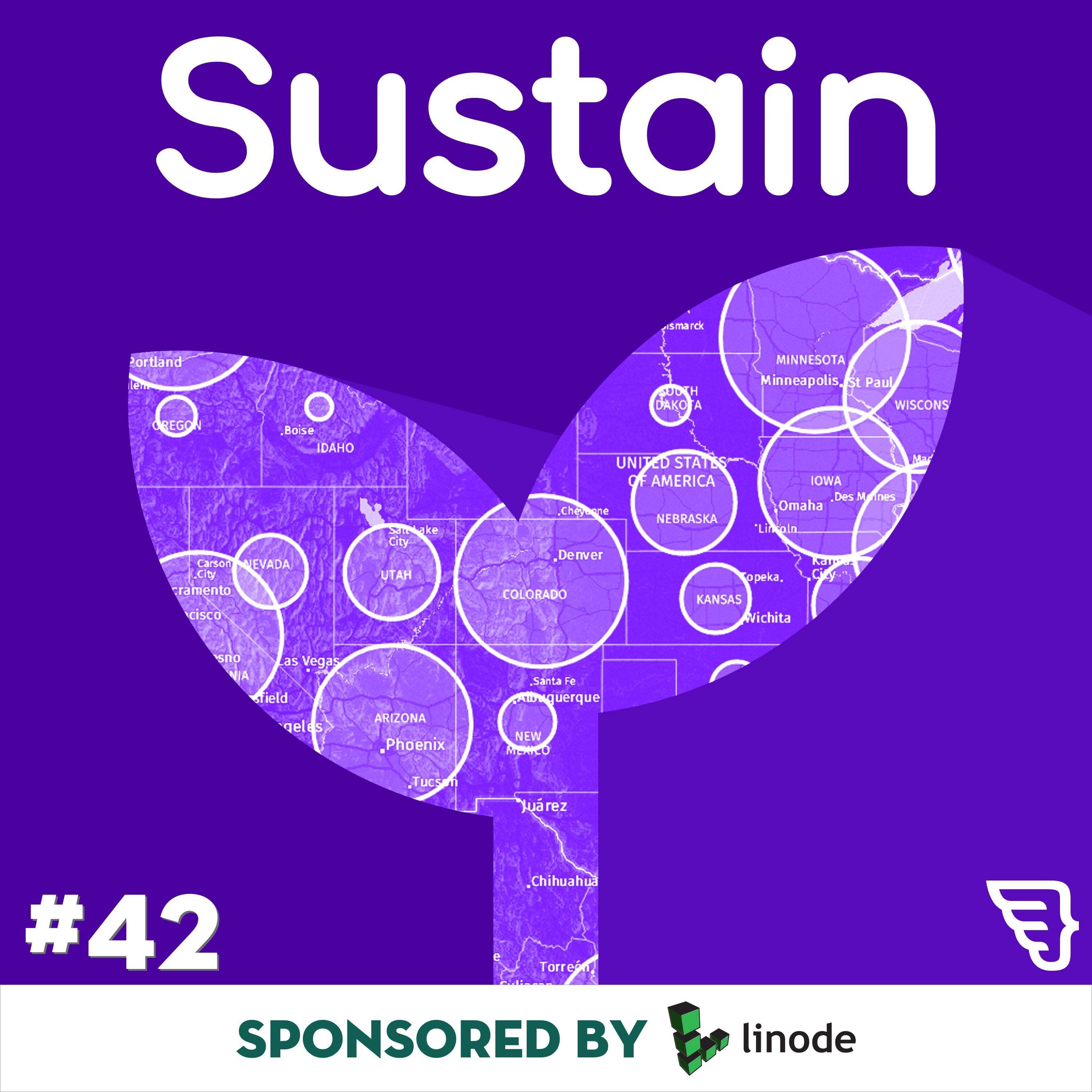
Episode 42: Open Sourcing COVID-19 Data with Cindy Wang & Gil Yehuda
Sponsored By Linode Panelists Justin Dorfman | Eric Berry | Richard Littauer Guest Cindy Wang Sr. Director, Product Management, Yahoo Knowledge Graph Verizon Media Gil Yehuda Sr. Director of Open Source Verizon Media Show Notes Hello and welcome to Sustain! In this episode, we have special guests, Gil Yehuda and Cindy Wang, who both work for Verizon Media, which is a combination of a bunch of companies, predominantly Yahoo and AOL. Gil is Senior Director, Open Source Program and Cindy is Sr. Director, Product Management, Yahoo Knowledge Graph. We learn more about Gil and Cindy’s positions with Yahoo, the Yahoo Knowledge Graph COVID-19 project, data sets, complications with data, and Vespa (open source big data serving engine). [00:02:26] Gil explains to us what coverage he has and what he’s responsible for in his OSPO (Open Source Program Office). He also tells us how many repos and orgs he’s managing. [00:05:29] Cindy tells us all about the Yahoo Knowledge Graph COVID-19 project. Justin questions data sets and its inconsistencies and Cindy explains. [00:12:30] Eric asks Cindy if this resource has been established as an authority and if she’s heard feedback or others pointing to this as the authoritative data source? [00:14:00] Gil explains to us two levels of complications with data that he’s observing. [00:18:30 ] In regard to financial incentivisation, Eric wonders what has been their experience, or have they had any feedback from people who are trying to massage the numbers in their favor? [00:21:22 ] Richard wants to know if there is any code open source and can people look at that? How can people get involved and what was that process like besides the data aspects? Also, Gil tells us if he has any pushbacks from making any of this stuff open. [00:29:01] Gil mentions Vespa.ai, an open source big data serving engine. Richard wonders if Gil has thought of long term plans for how he sustains this work and how it’s going forward and what teams will be on it, and will it just be open source in the sense of like a year? [00:31:57] Richard wonders if Gil and Cindy have plans to onboard people from the community who are interested in the data who are helping out so that they also become maintainers, so it’s not just a Yahoo only project internally. [00:33:08] Eric asks Gil to elaborate on a follow up question where he said he was using these tools internally. Cindy tells us all about the tools. Also, Eric wonders if there was any questions or concerns about licensing the open source and are people allowed to build commercial applications on top of this data? [00:40:24] Gil and Cindy tell us where people can get involved in this project, how can you follow along, and how can you follow them. Spotlight [00:42:20] Richard’s spotlight is Moment.js. [00:42:39] Eric’s spotlight is a project built by Jared White called Bridgetown, which is an updated version of Jekyll. [00:43:49] Justin’s spotlights are to thank Ashley Wolf for putting this whole thing together and a browser extension called Read Aloud, a text to speech voice reader. [00:44:31] Gil’s spotlight is a project called Denali. Quotes [00:04:51] "AOL had an OSPO and they didn’t have an OSPO and they kind of had an OSPO, but when we merged together we brought it together and we just continue to do what we do.” [00:05:04] “Before OSPO there was Open Source activity because as you know companies do Open Source even without OSPO’s. They just do Open Source better with OSPO’s.” [00:14:00] “There’s two levels of complications with data that I’m observing and there’s probably more, because there’s always more to everything.” [00:14:48] “But then there’s this other element which is, I don’t know, maybe it’s the political nature of data.” [00:16:23] “And I guess all of the paddling that goes on under the surface of the water to collect that data and to be as accurate as you can, but also to connect it to the source so that you could investigate it.” [00:20:36] “The training set has to be clean, so they actually spend 80% of their effort in cleaning the data.” [00:34:28] “So, for example, you look at some states now after opening, the numbers shot up. So, is it concerning from business planning perspective? Perhaps.” [00:37:23] “We have hundreds of millions of entities in this graph that represent billions of pieces of information that we use across the company for all types of things, like how the news stream is ordered.” Links Gil Yehuda Twitter Gil Yehuda LinkedIn Cindy Wang LinkedIn Yahoo-Covid-19 Data Yahoo Covid-19 Dashboard Yahoo Knowledge COVID-19 API Yahoo-GitHub Vespa-Github Yahoo! Developer Network (YDN) Yahoo! Developer Dash Open Podcast Read Aloud Bridgetown Denali OpenStreetMap Leaflet.js Credits Produced by Justin Dorfman at CodeFund Edited by Paul M. Bahr at Peachtree Sound Show notes by DeAnn Bahr at Peachtree Sound Ad Sales by Eric Berry at CodeFund Special Guests: Cindy Wang and Gil Yehuda.
Episode 41: The Donut Diet, Commitments, and More Awesomeness with Dave Gandy
Sponsored By: Panelists Justin Dorfman | Richard Littauer Guest Dave Gandy Font Awesome Show Notes Producer's note: When the show "ends," we are still recording while we all say goodbye. This time our goodbye turned into a great conversation with Dave after we finished recording Episode 33. With Font Awesome 6 coming out soon, we thought, why not celebrate by taking that extra tape and make an extension/bonus/part-2 episode? We hope you enjoy it! 🍩 Hello and welcome to Sustain! In this episode, we have Dave Gandy, from Font Awesome, talking about how he and his wife each lost 50lbs, how they did it, and about how important self-care is today. He will also tell you how he fit two donuts a day for a month into his diet, which he refers to as the “Donut Diet.” Download this episode now to find out how he did this and listen to the great advice he shares with us. [00:01:38] Dave talks about how he lost 50 lbs with working out and how “Stronger U” nutrition came into his life. [00:03:57] Dave explains his cheat days and he refers to it as “The Donut Diet,” eating 2 donuts a day for a month, and still kept the weight off. [00:05:51] Dave tells us about why the Stronger U membership is so good and worth the price to pay. [00:07:20] Richard talks about how he is trying to meditate every day and how you have to put in time to meditate to get better and Dave brings up prayer which is another form of meditation. [00:09:45] Richard brings up how all this applies to open source which is all about putting your money where your mouth is and making commitments. [00:10:58] Dave talks about the best way to self-care. Great advice here! [00:12:23] Dave talks about how there’s no such thing as failure, because you are growing and developing as person. He also talks about how to not worry about fear. Quotes [00:05:10] “I don’t think there is evil and good food. There’s not evil foods and there’s not hero foods, there’s just food and there’s the stuff that we like.” [00:06:04] “This isn’t a business where free trial can work. You’re not going to see it, unless YOU DO IT!” [00:06:44] “It’s not so much about extending the years of your life, it’s about taking the ones that you have and making them better!” [00:10:38] “The commitments we make to each other help make things stronger!” [00:11:16] “The way to the best self-care is other care. When you worry about others, you think about them and try to do that first, you end up in a weird way taking care of yourself.” [00:12:35] “If you’re doing it the way that you think is right to begin with, there is no such thing as failure.” Links Dave Gandy Twitter Font Awesome Stronger U Eggslut Credits Produced by Justin Dorfman at CodeFund Edited by Paul M. Bahr at Peachtree Sound Show notes by DeAnn Bahr at Peachtree Sound Ad Sales by Eric Berry at CodeFund Special Guest: Dave Gandy.
Episode 40: How Open Source Maintainers Don't Get Rich with Bogdan Vasilescu
Sponsored By: Panelists Justin Dorfman | Eric Berry | Richard Littauer Guest Bogdan Vasilescu Show Notes Hello and welcome to Sustain! Today, we have Bogdan Vasilescu, who is an Assistant Professor at Carnegie Mellon University, School of Computer Science. We start out by learning what Bogdan builds at the STRUDEL Lab. Then we discuss, “The GHTorrent project.” We also learn about the research that he and his group at CMU have been doing on open source sustainability. There are a few papers on topics related to sustainability that we will also discuss. One of his papers really inspired Justin, and after listening to this podcast you will probably agree that this is one of our best guests! [00:02:18] Bogdan tells us more about what he builds at the STRUDEL Lab. He gives a shout-out to his students and collaborators who are doing all the work. [00:03:50] Bogdan talks about one of his papers titled, “How To Not Get Rich.” He also explains The GHTorrent project which is like a mirror of GitHub. [00:08:43] Justin asks Bogdan about a website he built and how 46% of packages show a badge. He asks how long did it take to get to that number? He describes the process and how they compute that number. [00:11:31] Eric goes back to the scraping of GitHub’s readme’s and these npm module badges, and asks Bogdan what is he looking for with those and how does that translate to the topic of how not to get rich with open source? [00:15:27] Eric asks Bogdan since he says that badges add almost validity and gives developers a sense of trust that this project appears to have an ecosystem around it, but how does that tie in with donations and how does it tie in with your report? [00:18:14] Eric explains why he’s so interested in the donation side. He talks about corporations donating money out of their charity budget and unless they can donate with the 501C3 which allows it to be tax deductible, it’s a financial loss for them. He asks Bogdan’s takeaway on this and why are donations a terrible way to fund open source? [00:22:38] Bogdan lets us know when the follow-up study of “How To Get Rich with Open Source” is coming out and what it contains. [00:26:52] Eric wonders if Bogdan talked to GitHub about getting funds and he lets us know. [00:28:50] Justin tells Bogdan how he was really inspired by his paper and how he is the best guest. Eric gives credit to his phenomenal students and thanks them for all this important work they are doing. [00:30:00] Richard has a question about donations for Bogdan. He wants to know is there a light saying you should even bother with donation models and where is the good news? Bogdan answers. [00:33:53] Eric wants to know who is doing donations the right way, what is the ideal scenario, and is there a right way to go about doing it? [00:35:16] Richard mentions a couple of Bogdan’s other papers that deal with sustainability from another angle: “Why do People Give Up FLOSSing? A Study of Contributor Disengagement in Open Source,” and “Going Farther Together: The Impact of Social Capital on Sustained Participation in Open Source.” He wants to know what makes people stay in open projects and what makes people disengage? Spotlight [00:41:16] Richard’s spotlight is Shields.io. [00:41:35] Eric’s spotlight is our sponsor Linode. The reason why the Sustain Podcast exists is because of Tyler Van Fossen and the Linode Company. [00:42:37] Justin’s spotlight is the Sustain Podcast newsletter he just launched. You can sign up at sustain.codefund.fm/newsletter. [00:42:57] Bogdan’s spotlight is a shout-out to the “Jekyll-Scholar” project. Quotes [00:14:02] “What we’re observing through this series of studies that we’ve done, and other people have done too, is that people’s behavior changes when you have this salience of information.” [00:16:30] “On average, people submitting PR’s, they are more likely to add tests to their PR’s when the stuff is being displayed because then there’s some feedback loop that’s instant and very visible.” [00:17:54] “That should be a part of the sustainability checklist. If you want to have a sustainable open source project, you probably need badges, you probably need a CI indicator. Those are core to making it so that project becomes adoptable with other developers.” [00:24:08] “In the real world, organizations asking for charitable donations are very clear about what the goals of these campaigns are and we’re not seeing that in open source just yet.” [00:29:51] “But really, thanks to Cassandra Overney and Jens Meinicke who were the students working on this paper, they’re the ones who deserve all the credit, not me, and my collaborator, Christian Kastner form CMU.” [00:34:09] “I don’t think expecting donations to be the only way to sustain an open source project is the right approach.” Links Bogdan Vasilescu Twitter Bogdan Vasilescu Strudel Research Strudel The GHTorrent project Strudel Publications “Stress and Burnout in Open Source: Toward Finding, Understanding, and Mitigating Unhea
Episode 39: How $2 Million Dollars Helped Build CROSS with Dr. Carlos Maltzahn
Sponsored By: Panelists Justin Dorfman | Richard Littauer Guest Dr. Carlos Maltzahn Show Notes 💬 Discuss this episode Hello and welcome to Sustain! In this episode, we have a really interesting guest, Dr. Carlos Maltzahn, who’s a Professor at University of California at Santa Cruz. He teaches Computer Science and Engineering and specializes in storage systems. Carlos is going to teach us all about his project CROSS (Center for Research in Open Source Software). He will tell us how they get projects, how they get funded for projects, and he will explain the Ceph storage system to us as well as SkyhookDM. Interested in finding out how to enroll in CROSS? Go ahead and download this episode to find out! [00:01:45] Carlos explains a project that is dear to his heart and he’s been directing for a while. called CROSS. He also walks us through how to get involved and what’s the life cycle look like for people. [00:04:21] Carlos explains funding Open Source Autonomous Vehicles. He tells us how they get the projects and how they get the projects funded. [00:09:25] Carlos explains about the funding part. He talks about “Ceph Storage System” that Sage Weil created as part of his PhD project. Great story here! [00:19:33] Find out here the key advice CROSS got from Sage Weil about OpenStack. [00:23:53] Richard asks Carlos since he’s so many successes thus far, have there been any other success stories he’s had? He shares some good news here. [00:26:25] Carlos tells us about SkyhookDM, a programmable storage for databases. [00:30:07] Richard mentions a great book he’s been reading that he highly suggests reading called, “Designing Data- Intensive Applications,” by Martin Kleppmann. [00:30:33] If someone wants to enroll in CROSS, Carlos tells us four possibilities how to do this. Spotlight [00:32:52] Richard spotlight is ROpenSci, an awesome project to help people get into the sciences and keep it open source and collaborate. [00:33:27] Justin’s spotlight is an article on ZDNet, “Mozilla starts funding open source coronavirus tech projects.” It’s a good read! ☺ [00:34:06] Carlos’s spotlight is an incubator project at CROSS called “Popper,” by Ivo Jimenez. Quotes [00:04:56] “It turns out there’s a lot of interesting things going on in the university and the faculty are kind of discovering the usefulness of open-source software in their research.” [00:06:22] “That is only possible with this open source concept, where you basically make it available, and that’s good for reproducibility of the science, but it’s also good too for learning, for bringing in the classroom all these things.” [00:11:03] “We asked Sage whether it would be nice to give back a little bit to the university. And so, he gave me 2 million dollars to essentially build CROSS. It was the second largest gift ever given to the School of Engineering at UC Santa Cruz and it was a big deal.” [00:19:42] “One of the key factors that made Ceph successful was that it fit into the ecosystem of OpenStack.” Links Dr. Carlos Maltzahn CROSS at UC Santa Cruz Ceph SkyhookDM “Designing Data-Intensive Applications” Martin Kleppmann ROpenSci “Mozilla starts funding open source coronavirus tech projects,” ZDNet Falsifiable-Popper Project Credits Produced by Justin Dorfman at CodeFund Edited by Paul M. Bahr at Peachtree Sound Show notes by DeAnn Bahr at Peachtree Sound Ad Sales by Eric Berry at CodeFund Special Guest: Dr. Carlos Maltzahn.
Episode 38: Working Group Updates with Justin & Javi
Sponsored By: Panelists Justin Dorfman | Richard Littauer Guests Justin Flory RIT Javier “Javi” Canovas Open University of Catalonia Show Notes This is a special episode where we are talking about the working groups that came out of the Sustain Summit in Brussels back in January. Today, we have Justin Flory, a student at Rochester Institute of Technology and Javier “Javi” Canovas, from Barcelona, an Assistant Professor at the Open University of Catalonia, who are very involved in the Sustain Working Groups. Javi is the bottom liner for the Governance Readiness Group and Justin is the bottom liner for the Principles of Authentic Participation (PAP). They will both talk about their groups and their involvement in them. They also talk about the Transparency Working Group. Also, Richard talks about the Nvie Git Flow Model. If you want to learn more about the different working groups, then this episode is for you! [00:01:31] Richard gives an overview of what the Sustain Working Group is all about and how you can join in on the conversation on the discourse forum. [00:05:22] Justin Flory tells us what PAP is and what does it mean to be authentically participating in something. He also explains navigating core values that don’t match up. [00:11:07] Richard wonders if Justin Flory ever tried to figure out what does it mean to be authentic as a large corporation versus what does it mean to be authentic as a lone script kitty and if those ever clashed? Justin explains. [00:15:35] Javi explains what Governance Readiness is and how that has materialized for him over the past couple of months. [00:18:17] Javi talks about some of the Governance Models that he’s looked at or put together. He is asked by Justin D. if any of his students know what he’s working on. Also, he talks about how many people are involved in his group. Justin F. tells us how many people are in the PAP group. [00:21:54] Justin F. builds on the Javi’s discussion about where the working group sits and explains that this working group is also another place where they’re trying to build that common language. [00:24:15] Richard talks about the “Nvie Git Flow Model” and a blog post that came out 10 years ago. [00:25:51] Justin F. talks about the Transparency Working Group and its focus. He also gives a shout out to Gunner’s interview on Episode 19 of Sustain’s Podcast, which helped him frame the way he’s going into some of this sustainability work. [00:31:35] Javi explains what his working group is looking at for the next meeting and what topics he’s looking to get feedback on for the working group right now. [00:34:09] Justin F. asks Javi what the working group is planning to do next and what would he want the working groups accomplishments to be? He explains. [00:35:43] Justin F. tells us where he wants to go with PAP and what’s next. He talks about “Boundary spanning.” [00:37:50] Richard says for any listeners out there who want to start listening actively or actively contributing to go to sustainoss.org/working-groups. Spotlight [00:38:49] Justin’s spotlight is a project he works for CodeFund which is Open Source. They passed 400 million ethical ads served. Big Milestone for them! Congratulations! ☺ [00:39:20] Javi’s spotlight is a project called, “Community Rule.” [00:39:59] Justin Flory’s spotlight is first a shout-out for the place where we have defined the Governance Model, which is open for issues and pull requests. Also, a cool initiative in the Fedora Project Community, an Open Source Linux Project. [00:40:54] Richard’s spotlight is NVIE Git Flow Model. He loves it! Quotes [00:22:36] “But now we’re in this changing world where Open Source is starting to become really popular or it’s being looked at a different way than it was twenty years ago.” [00:29:52] “We all eat, and it’s really important to eat. And if you don’t eat, you get angry. And if you get angry you close issues a lot faster without saying thank you, right?” Links Justin Flory Twitter Justin Flory Blog Javier Canovas Twitter NVIE Git Flow Model Boundary spanning Sustain Working Groups CommunityRule CodeFund “400 Million Ad Served” Fedora Project Sustain Podcast-Episode 19 Credits Produced by Justin Dorfman at CodeFund Edited by Paul M. Bahr at Peachtree Sound Show notes by DeAnn Bahr at Peachtree Sound Ad Sales by Eric Berry at CodeFund Special Guests: Javier “Javi” Canovas and Justin W. Flory.
Episode 37: An Open Source History Lesson & More with Patrick Masson
Sponsored By: Panelists Pia Mancini | Eric Berry | Justin Dorfman | Richard Littauer Guest Patrick Masson Open Source Initiative Show Notes In this episode, we have Patrick Masson, who is the General Manager and Board Director of OSI (Open Source Initiative). Patrick gives some very interesting “nerd history” on Open Source Software. Did you know that you can find Open Source Intelligence as a reference to World War 2? Listen here to find out more interesting things about OSI. [00:01:33] We start off with Patrick telling us about his job with the OSI. [00:03:22] Patrick fills us in on the history of OSI, how it started, how long it’s been going, and what are the main things that he does. There is some very cool history revealed here. [00:08:07] Patrick talks more about communities of collaborative contributors and he touches again on the history of OSI. The term “Openwashing” is explained. [00:21:00] Pia brings up a topic to Patrick about lately, there has been some friction with groups or other projects trying to use different Open Source licenses in the name of creating better sustainability opportunities for Open Source. He comments about it. [00:24:31] Patrick answers a question about the idea of avoiding the business model trap of sustainability. He talks about it and also has a great quote. [00:28:36] Justin chimes in to say he always hears that 98% of companies use Open Source Software. Where did that come from, is it true, and who’s behind that? Patrick answers this. [00:30:49] Eric brings up a study done by Black Duck Software with the Northbridge survey done in 1915, to back up the number of users. Patrick is on a “roll” with stats here. [00:36:51] Pia wants to clarify with Patrick about a point he made about if the path to the sustainability of these projects would be if companies are hiring folks to work on these projects, projects that serve many companies? Patrick explains. [00:38:38] Pia also wonders if the way to join an Open Source project, in a way that is sustainable, is just being hired by a company to work on a project and how is that growing the diversity of our communities and opening the door for more joiners instead of just a few that can be part of those companies? Patrick answers. Spotlight [00:41:31] Justin’s spotlight is Show HN. It has great information and it could change your life. [00:42:01] Eric’s spotlight is a piece of hardware, Dell Precision T7610. It is a screamer! [00:42:39] Pia’s spotlight is a project called Open Mind, to help protect the user’s data privacy properly. [00:43:15] Richard’s spotlight is D3, for graphing, and super fun. [00:43:39] Patrick’s spotlight is FLOSS Desktops for Kids, a program that takes decommissioned hardware and puts it in the hands of underserved districts and the kids there. Quotes [00:24:42] “I really think Open Source will take off once all the software companies are gone.” [00:35:50] “We need to have more joiners of projects than starters of projects. And so, again, there’s no real reason to differentiate any of these.” Links Patrick Masson Twitter Open Source Initiative Openwashing US Department of Defense Use of Open Source Software Show HN Dell Precision T7610 Open Mind Project D3js FLOSS Desktops for Kids Black Duck Software Survey Credits Produced by Justin Dorfman at CodeFund Edited by Paul M. Bahr at Peachtree Sound Show notes by DeAnn Bahr at Peachtree Sound Ad Sales by Eric Berry at CodeFund Special Guest: Patrick Masson.
Episode 36: The Open Source Movement Shift with María Cruz
Sponsored By: Panelists Justin Dorfman | Richard Littauer Guest Maria Cruz Google Open Source Show Notes In this episode, we have Maria Cruz, Open Source Program Manager at Google. Maria talks about doing community engagements for Cloud Native projects and other things she does at Google. The panelists are curious about how the Open Source movement shifted since COVID-19 took over the world. Also, Maria gives great advice to people who are aspiring to be Program Managers in OSPO (Open Source Program Office). You can also find out what happens when Richard’s had “late coffee.” Hit the button and download this episode! [00:01:03] Maria tells us what she does at Google and how she first got started with Open Source. [00:05:45] Maria explains how she has seen the Open Source movement shift in the past couple of months since COVID-19. [00:10:32] Richard asks Maria how do we design events that are online to be as diverse as possible? How does that work? What role does diversity have when we’re all 2-D? [00:15:28] Richard is curious to know how do we foster connection and growth on a friendship level between people remotely? Can it happen over Zoom? Are there things we should do to make connection more possible? Maria answers. [00:20:38] Justin wants to know how big Maria’s OSPO (Open Source Program Office) team is and she also gives advice for those who are aspiring to be Program Managers in OSPO’s. [00:23:02] Justin asks her if she’s worked in any other OSPO’s. Richard and Justin ask Maria what is Google’s OSPO up to during these times of COVID-19 Coronavirus? [00:24:49] Google has come out with resources to help out with events that have been canceled or had to move to virtual for Open Source projects. Maria talks more about the actual resources that Google’s offering to the Open Source Community and how people can get involved and use them. Spotlight [00:28:29] Richard’s spotlight is the Open Knowledge Foundation. [00:28:58] Justin’s spotlight is Alligator.io. [00:29:34] Maria’s spotlight is the Open Source tool, Zulip. Quotes [00:33:04] “Just kind of create a situation where the other person feels safe and comfortable enough where they will open up.” Links Maria Cruz Twitter Open Source Virtual Events Guide Cloud Native Google Open Source Google Enterprise G Suite GO Programming Language Open Knowledge Foundation Alligator.io Zulip Invest in Open Infrastructure Twitter Credits Produced by Justin Dorfman at CodeFund Edited by Paul M. Bahr at Peachtree Sound Show notes by DeAnn Bahr at Peachtree Sound Ad Sales by Eric Berry at CodeFund Special Guest: María Cruz.
Episode 35: Why The Drupal Community Cares with Rachel Lawson
Sponsored By: Panelists Justin Dorfman | Allen “Gunner” Gunn | Richard Littauer Guest Rachel Lawson Drupal Association Show Notes In this episode, we have Rachel Lawson, from the U.K., who is the Community Liaison for Drupal Association. She is going to tell you all about the Drupal Association, what role she plays, and what she does. Since DrupalCon has been canceled due to COVID-19, there are some major things going on with sponsors that are still contributing money, the founder of Drupal making an unbelievable donation, as well as some other campaigns and match donations happening! [00:01:08] Rachel explains about working with Drupal in the U.K. and also talks about how many people are using Drupal to power their websites. [00:02:50] Justin has noticed that Drupal has a very big adoption within government, and he wonders why is that? Is it a security thing? Rachel answers this. [00:04:14] Rachel tells us how Drupal gets paid as an open source product. She also talks about what’s been going on since DrupalCon has been canceled in May. [00:10:37] There is a list of sponsors that are still contributing money to Drupal, despite the event being canceled, and a HUGE SHOUT OUT is necessary to them, so please see the list below! ☺ [00:012:01] The Founder of Drupal, Dries Buytaert, made an unbelievable donation and Rachel talks about what it was and how it affected everything. It is AMAZING!! There have been some other match donations mentioned as well. [00:16:16] Governance is brought up by Gunner and he wants to know the civilian’s version of how governance at Drupal works and how the decision-making works that others could learn from and Rachel explains. [00:23:00] Rachel explains her role with Drupal and what she does. [00:25:00] How does someone join the Drupal open source community and how does Drupal capture all the contributors, not just the Devs? Rachel explains. Spotlight [00:33:01] Justin’s spotlight is The Ruby Blend Podcast-Episode 9. Listen to it! [00:33:49] Gunner has two spotlights: Qubes OS and Subgraph OS and the Tails Project (tails.boum.org). [00:34:39] Richard’s spotlight is the EFF (Electronic Frontier Foundation). [00:35:33] Rachel has two spotlights: A pub in Leeds, Yorkshire where she was attending a Drupal event. It made her reflect back to being there before and how much it changed her life. Also, OS FEST in Lagos, Nigeria, that she recently attended. It was a huge experience for her and truly incredible. Quotes [00:20:54] “We’ve been going through a process at Drupal association about raising money and we have a campaign on at the moment called Drupal cares (#DrupalCares) and you will notice there is quite a lot going on with that.” [00:23:33] “If just downloading Drupal or downloading any open source projects isn’t enough, you need the services around it, the support around it, regular security updates so where you can work on new code and have thousands and thousands of thousands of continuous integration tests run every time you say, “Hey, I propose that we do this new thing in Drupal!” [00:25:18] “Do you want to give a shout out to those sponsors that have done that because that warmed my heart! You know, the sponsors that said, keep our money, we believe in the project, we know we won’t get any real value out of the event not being alive. Please, give them some props.” (They are listed below.) 👇 [00:40:41] “I said look, if you’re going to do this, call it a Community Liaison. It’s a liaison between the wider Drupal community and project and the Drupal Association. It was later on and I said all those things and I’m actually quite fond of the job now!” [00:42:13] “The single most important thing we changed was that getting attribution for work doesn’t just apply to code. We celebrate, we recognize, and we attribute work for all different reasons. If there is one thing we have done that has transformed Drupal into a wider thing than just a piece of software, it’s that.” Links Rachel Lawson Twitter Drupal The Ruby Blend Podcast-Episode 9 Qubes OS Subgraph OS Tails EFF (Electronic Frontier Foundation) OS Fest, Lagos Nigeria DrupalCon Minneapolis 2020 Sponsors: Pantheon Acquia Phase2 Technology Mediacurrent Interactive Solutions Tag1 Platform Sh Elevated Third FFW Amazee Group Palantir Srijan Technologies Pvt Ltd Acro Media Inc Contegix Four Kitchens Last Call Media Lullabot Gatsby Chromatic, LLC Third and Grove Chapter Three Hook 42 Lemberg Solutions Limited AnyforSoft Electric Citizen Kanopi Studios QED42 Drupal Association #DrupalCares Match Challenge Credits Produced by Justin Dorfman at CodeFund Edited by Paul M. Bahr at Peachtree Sound Show notes by DeAnn Bahr at Peachtree Sound Ad Sales by Eric Berry at CodeFund Special Guest: Rachel Lawson.
Episode 34: Staying Hum-Babel with Henry Zhu
Sponsored By: Panelists Pia Mancini | Justin Dorfman | Eric Berry | Richard Littauer Guest Henry Zhu Babel Show Notes [00:01:30] Henry explains how he got involved in Babel and how it’s funded. [00:03:18] Eric wonders if Henry wishes he could just step away and just cut ties with it and go do something completely different and how tight is he with this project. He gives a great answer to this! [00:04:39] Pia was wondering if Henry’s relationship with the project itself or his view with Babel changed since he started working full time there. In the beginning, Henry started this as a side job while he worked at Adobe. [00:08:06] Since a lot of maintainers may get to a point in their lives where the issues stack up, but not putting into perspective how big this project is, Justin asks Henry how he deals with this since this is such a huge project and he explains. [00:011:18] Justin wonders how Henry deals with Devs that are coming in and just saying, “Fix it, now,” and hit and run issues. [00:13:06] Henry talks about how as maintainers view each other as extremes. He brings up the quote from “The Dark Knight” as a reference to what he talks about. [00:15:10] Henry mentioned earlier about how Open Source communities could look at faith communities, religion, or church communities. Pia wonders if he has anything in mind from his experience that he wants to share, which he does. [00:20:14] Justin makes a right turn and wants Henry to go into his involvement with TC39 and how it helps him, Babel, and the sustainability with the JavaScript language as a whole. Also, he talks about what he’s accomplished since he joined. [00:24:57] Justin asks Henry about travel expenses and if anyone pays for them. [00:26:42] Pia brings up some good points about how we can learn how to heal and support ourselves during these troubling times. She wonders if Henry knows any ways that the community is supporting each other and where can we best spend our time and energy helping the members of our community going through what we’re all going through now. Spotlight [00:34:56] Richard’s spotlight is “Hope in Source” podcast. [00:35:03] Justin’s spotlight is openfoodnetwork.org. [00:35:38] Pia’s spotlight is mutualaid.nyc. [00:36:07] Richard has another spotlight which is Gary Snyder’s poetry. [00:36:50] Henry’s spotlight is his favorite gospel, which is Mark. Quotes [00:14:04] “You either die a hero, or you live long enough to see yourself become a villain.” Links Henry Zhu’s Twitter Henry’s Zoo “Hope In Source” podcast Babel Maintainers Anonymous TC39 Open Food Network Mutual Aid NYC Gary Snyder Credits Produced by Justin Dorfman at CodeFund Edited by Paul M. Bahr at Peachtree Sound Show notes by DeAnn Bahr at Peachtree Sound Ad Sales by Eric Berry at CodeFund Special Guest: Henry Zhu.
Episode 33: Getting Money for Awesome Icons with Dave Gandy
Sponsored By: Panelists Justin Dorfman | Eric Berry | Richard Littauer Guest Dave Gandy Font Awesome Founder | CEO Fonticons, Inc. Show Notes If you’ve never heard of Font Awesome, or even if you have, this episode is worth taking a listen to. Our special guest today is Dave Gandy, who is one of the main people behind Font Awesome. He has some super inspiring advice that we all could use right now with everything going on in the world. On a funny note, which way is the best way to hang toilet paper? There is a fascinating conversation on TP that you don’t want to miss. 😂 02:33 Dave talks about what Font Awesome released to help out with COVID-19 awareness and they are ALL Open Sourced. 04:55 It’s been eight years since Font Awesome has been around, and Dave talks about the story behind it and how it gets money for icons. 08:31 Dave explains the process and the response from transitioning to being free to now asking for money. It all came down to what kind of company they wanted to build. 11:30 Richard wonders how Dave pitches all his ideas to investors and he has some great stories to tell. 016:38 Justin wonders how Font Awesome pays their Angel Investors back and is there an exit they are looking for or has he already paid them back? 21:17 Dave talks about how Kickstarter raised 1.076 million dollars which is still a record of most raised and backed by a software Kickstarter. The guys were all backers to it. 24:53 Expectations for the Kickstarter for Font Awesome is discussed and Dave goes into how the video is made. 33:41 Is Font Awesome one of those Cinderella stories or one of those unicorn projects that are likely to be reproduced? Can somebody else be the next Font Awesome? Dave has some great advice and so much inspiration to share that we could all use. Spotlight 37:04 Richard’s spotlight is a book called, “War of Art,” by Steven Pressfield. 37:25 Eric’s spotlight is a project website called, helpwithcovid.com. 38:18 Justin’s spotlight is to Google, “Font Awesome 5 Kickstarter Video.” 39:34 Dave’s spotlight is a book series, “Mistborn Trilogy,” by Brandon Sanderson. Quotes 22:39 “It turns out all of that failure was actually not failure, because all of those things we had done leading up to it, ended up being tremendous assets when it came time for Kickstarter.” 23:36 “No matter how good your intuition is on the first version of a product, the only way to get better is to talk to customers.” 34:02 “Everything is impossible until it’s done and then it was always inevitable.” 34:13 “When you believe before you start something that you can’t do it, you will always be right. No matter what, you’ll always be right!” 34:35 “If we don’t have faith in something that doesn’t exist, it can’t come into existence, until you believe that something could become real that doesn’t exist yet, it can’t.” Links Dave Gandy Twitter “The War of Art” Helpwithcovid.com Font Awesome 5 Kickstart “Mistborn Trilogy” Credits Produced by Justin Dorfman at CodeFund Edited by Paul M. Bahr at Peachtree Sound Show notes by DeAnn Bahr at Peachtree Sound Ad Sales by Eric Berry at CodeFund Special Guest: Dave Gandy.
Episode 32: What FOSS Responders Does with Megan Sanicki & Duane O’Brien
Sponsored By: Panelists Justin Dorfman | Richard Littauer Guests Megan Sanicki Open Source Program Office at Google Duane O’Brien Head of Open Source at Indeed Show Notes This is a continuation of our mini COVID-19 coverage series podcast. Today, we have special guests, Megan Byrd-Sanicki and Duane O’Brien, who are FOSS Responders. We are talking about how does the Open Source Ecosystem deal with this and how do we, as Open Source Developes think about this, and how do members feel that can’t host their conferences. Also, listen here to find out why you should check your oxygen tank! [00:01:29] Duane explains what FOSS Responders does. [00:03:30] Megan explains how FOSS Responders has grown and what’s happening now. [00:05:50] Richard wants to know why does it matter to open source developers if events are canceled? Aren’t they just for large corporations anyway? [00:10:53] Justin wants to know if Duane and Megan have been in touch with organizations such as, Python Software Foundation, since they rely heavily on the income from their yearly conference, PIConf, which is now canceled. [00:014:38] Duane talks Mozilla. He mentions a program called MOSS (Mozilla Open Source Support) and they put together a COVID-19 solution fund geared to providing awards to Open Source technology projects that are responding to the pandemic. [00:18:38] Duane and Megan talk about the “Buddy System” that they use a lot. It’s all about supporting each other and sharing talents. [00:21:43] Megan and Duane give some AWESOME advice to close out the podcast. Remember, keep checking your oxygen tank! Quotes [00:8:28] “If we want them to continue to be sustainable, if we want the organizations that run them to continue to be sustainable, then we need to take some kind of action and respond in the opposite.” [00:09:02] “These are the events that are accelerators, and they do it in a very structured way, but in a very serendipitous way too.” [00:21:43] “The biggest learning is to check your oxygen tank. Sustainability really starts with yourself and how well you’re sustaining yourself through this time.” Links Megan Sanicki Twitter Duane O’Brien Twitter FOSS Responders Open Collective's Slack SustainOSS ForumSpecial Guests: Duane O’Brien and Megan Sanicki.
Episode 31: Practicing Self-Empathy with Whitney Hess
Sponsored By: Panelists Justin Dorfman | Eric Berry | Richard Littauer Guest Whitney Hess Executive Coach Show Notes Whitney Hess is the special guest today. She is an Executive Coach, supporting business leaders of various kinds to help them be the best version of themselves. With COVID-19 happening right now it’s affecting everyone. People are stressed, overwhelmed, emotional, anxious, and have a whole rollercoaster of emotions. Remember, we are all human and you are not alone. And, if you’ve never meditated, you will want to after listening to this episode. 01:21 Whitney clarifies what an Executive Coach is and what she does. She also explains how she differentiates from a Life Coach. 03:00 To cut to the chase, Richard wonders how COVID-19 has affected her business and how has it affected the way she helps people during this time. 05:35 On the brighter side of things, Whitney talks about how people are able to work on legacy code because their companies aren’t as in demand and they can do various things that they’ve been putting off. 06:50 Justin wants to know if maintainers would get a lot of value out of Whitney’s management coaching, especially helping FOSS Responders who are dealing with COVID-19. 12:34 “Empathy” is discussed in depth. There is a misconception about empathy and Whitney also explains self-empathy. 15:59 Eric has a question about persona, and he wonders if there is a mother and a maintainer and she’s really stressed, has to feed her kids, teach them, maintain open source and she doesn’t have time to walk away from her computer, what advice does Whitney have for that sort of person. Let’s say “meditation” is talked about, and reprioritizing and re-evaluating our values. 22:37 Richard talks about how one night he hit rock bottom emotionally and physically and what he did to make himself happy. Justin talks about how he was feeling fatigued by everything happening with work and what’s happening in the world and what he did to feel mentally separated and enjoy himself. 25:27 Whitney stresses how especially now, we need to allow ourselves moments of joy. Try to find a little bit of space to allow ourselves to be happy in that moment. She goes more into this with some very uplifting advice. Quotes 12:48 “I think a misconception about empathy is that it’s all about what we give to others, when in actuality it starts with what we give to ourselves.” 14:28 “You need to put your oxygen mask on first before you help others!” 17:17 “If you don’t have time to meditate once a day, meditate twice a day!” Links Whitney Hess Whitney Hess Twitter Whitney Hess Blog “My Neighbor Totoro”Special Guest: Whitney Hess.
Episode 30: Silver Linings in The FOSS Community
Sponsored By: Panelists Richard Littauer | Justin Dorfman | Eric Berry Show Notes COVID-19 is the main focus today and how it is ripping through the open source ecosystem. Although you may be tired of listening to it, the guys get real and speak from the heart and talk about the affects it is having on people all over the country, especially maintainers and coders. The message here is, “BE KIND TODAY!” 02:37 Justin talks about keeping busy with SustainOSS stuff and he’s been listening to an Audible book called, “It Doesn’t Have to Be Crazy at Work,” which has changed his perception on how to work smart and not hard. 03:49 Richard chimes in about he’s been working on a lot of projects and since COVID-19 started in the US he’s been involved in a project called FOSS Responders, which is Free and Open Source Responders and he explains what it does. 04:55 Richard gives an update on what FOSS Responder’s did this week. 06:27 Eric joins in to say that he runs CodeFund with Justin and how it allows them to display ethical non-tracking ads to developers all over the world. Find out what happened in THREE DAYS after they launched a FOSS Responders campaign. 08:04 Eric talks about his friend who did an amazing thing with his business and it’s pretty cool! This gets him thinking about Open Source, developers, and us as people and how each of us has a talent to maybe donate or allow use of something to support people to give back to the community. 15:31 Justin’s been trying to find silver linings in everything these days, especially with FOSS Responders. Richard brings up helping at helpwithcovid.com and opencollective.com. 17:08 Richard speaks from the heart about his silver lining. He is more connected then he was a month ago. Listen to hear what he’s been doing about connecting with friends. 18:05 Eric talks about struggles he has been having as well as other people may be having right now, with their jobs, figuring out a way to homeschool their kids, and keeping everybody heathy and happy while doing their jobs. He also talks about his silver lining which is really knowing to him what is important. Links Help With COVID Open Collective “It Doesn’t Have to be Crazy at Work.”-Audible Book FOSS Responders GitHub COVID-19
Episode 29: How License Zero Works with Kyle Mitchell
Sponsored By: Panelists Richard Littauer | Justin Dorfman | Pia Mancini | Eric Berry | Allen “Gunner” Gunn Guest Kyle E. Mitchell Attorney, License Zero Show Notes Kyle E. Mitchell is an independent Attorney based in California. Today we talk to him about Open Source subjects such as “License Zero.” He delves into the types of licenses there are, what are their differences, and how they came about. Also, be sure to check out this week’s spotlights for ways to help out during the Coronavirus/COVID-19 outbreak. 1:42 Richard ask Kyle about his blog post about License Zero, aka dual licensing, selling exceptions, or public/private licensing. What it is, what it does, and how Dev’s get paid for their creative work. 03:14 Kyle explains that License Zero has two types of licenses, public, which is not open source and the other is parity. 06:55 Kyle talks about how License Zero started out with one licensing choice. It was similar to the Creative Commons license used for stock photos, music, etc. 10:24 Kyle reveals how he needed to create a new license for License Zero, a share-alike license that would help cover Dev’s work they were creating. 14:13 Pia asks about projects that he’s had experience using this license with, and lessons he’s learned. 21:00 Pia wants to know if License Zero is creating complexity in the Open Source world by having different licenses. Is this making it more difficult for people to navigate and understand what they can and can’t do with those licenses? Kyle goes into License Proliferation. 26:32 Richard brings up one of Kyle’s blog posts about the “curse of sustainability” and how it’s impossible to fix the open source problem. 33:04 So far, we’ve mainly talked about the “what” of licensing. Gunner wants Kyle to go into the “who” of licensing. Does he think of persona’s in the licensing world? Spotlight 41:15 Pia’s spotlight is the collective “Meals of Gratitude”, which sends meals to health workers. 41:52 Richard’s spotlight is FOSS Responders, which helps Open Source Developers and Open Source Projects during this COVID-19 crisis. 42:32 Kyle piggybacks Richard’s spotlight with Bandcamp Daily, which is also helping out music artist during COVID-19. 43:51 Gunner spotlights Indeed’s Head of Open Source, Duane O’Brien, who spearheaded the FOSS Responders movement. 45:16 Kyle chimes in with one more quick spotlight...Nick Craig-Wood’s Rclone library. Quotes 06:03 “And this idea that Open Source is a licensing question, first and foremost, and then that’s the whole question is wrong.” 44:14 “The thing I’m amazed with Duane is that he’s spun up this FOSS Responders project, he’s holding so many different communities with integrity, and he’s doing his job for Indeed. But he’s walking just 100% of what I consider to be free and Open source integrity.” 44:28 “He’s really being mindful of different communities and their different cultures. And in this time of crisis we need cloning to get done, so with Duane’s opt-in permission, we could have more Duane’s in this world. I feel like he is setting an example we all need to follow.” Links Kyle E. Mitchell Twitter Kyle E. Mitchell Writings Kyle E. Mitchell Website Kyle E. Mitchell GitHub License Zero License Zero-Private License License Zero-Prosperity Public License License Zero-Parity Public License Creative Commons License The Curse of Sustainability Fernando Pessoa Open Collective-Meals of Gratitude FOSS Responders Bandcamp Daily Duane O’Brien Twitter Nick Craig-Wood RClone LibrarySpecial Guest: Kyle E. Mitchell.
Episode 28: What "OpenStreetMap US" is with Maggie Cawley & Alyssa Wright
Sponsored By: #28 Cover art uses imagery by Humanitarian OpenStreetMap Team © OpenStreetMap contributors. Panelists Justin Dorfman | Richard Littauer Guest Maggie Cawley OpenStreetMap US Alyssa Wright OpenStreetMap US | Open Source Collective Show Notes In this episode Justin and Richard talk with Maggie Cawley, Executive Director of the American OpenStreetMap US and Alyssa Wright, current Board Member of OpenStreetMap US. If you’ve never heard of OpenStreetMap US you will learn all about what it is, how you can use it, how you can edit it (YES, it’s editable like Wikipedia), and how it differs from Google Maps. 1:40** What is OpenStreetMap and OpenStreetMap US? How are they different? The ladies also share how many people are all together in the OpenStreetMap world in their biosphere and how many contributing editors there are. 04:41 Justin wonders how the map data is licensed and was it a hard sell to the community or an easy one? 08:24 OSMF and OSM US are slighty different. Richard is interested to know what Maggie and Alyssa are doing for each one and how do they see them growing. 10:43 Richard wants to know the Code of Conduct and was questioning if it was just started or did it change. 12:40 Justin wants to know what percentage Craig, from Craigslist, give to their annual budget. Also, regarding sustainability, the discussion of what it costs to run OpenStreetMap as a service is answered. 13:34 Maggie talks about who is involved in their membership which is made of many different people. 17:00 Richard wonders if anything is difficult now and what does sustainability look like and if there are any problems. The ladies talk about all the challenges there have been. 23:09 Why would people use OSM vs. Google Maps? Empowerment is a big factor with OSM. 27:18 Justin wonders how Maggie and Alyssa deal with possible misinformation from bad edits, especially with the earthquakes or tornados or if there have been any issues. 32:04 The ladies answer some questions from Richard regarding what sustainability means for OSM and how do you make sure everyone is working on the same product, doing it with the same intention, but with the same sort of guidance. Quotes 05:43 “ODbL, it’s a unique license.” 15:15 “I always point to my phone, it’s like, you know, this is essentially a map that we’re carrying around with us constantly and whether we’re talking about data privacy in our location, movement, or crime statistics or this Coronavirus, this is grounded in space, and we’re grounded in space.” 21:08 “Billions of people in this world do not have an address. So, without an address that means you don’t have a legal right to your land.” 23:17 “It’s very well known that Google is going to map where they have commercial interest.” Spotlight 34:07 Justin’s spotlight this week is Dracula PRO-Episode 27. 34:40 Richard’s spotlight is Leaflet JS. 34:57 Maggie’s spotlight is QGIS project. 35:17 Alyssa’s spotlight is PostGIS community. Links Maggie Cawley Twitter Alyssa Wright Twitter State of the Map U.S. Conference Craigslist Charitable Fund Donation OpenStreetMap.US OpenStreetMap.org OpenStreetMap on Slack QGIS PostGIS TeachOSM Dracula Pro-Episode27 Leaflet JSSpecial Guests: Alyssa Wright and Maggie Cawley.
Episode 27: Creating Dracula PRO with Blood, Sweat, and Tears with Zeno Rocha
Sponsored By: Panelists Richard Littauer | Justin Dorfman | Eric Berry Guest Zeno Rocha Liferay Cloud | Dracula Pro Show Notes In this episode we talk with Zeno Rocha. He is the Chief Product Officer at Liferay Cloud, a newly created Liferay, Inc division. He is responsible for crafting the product strategy, shaping the features, and defining the future of DXP Cloud. Zeno also created the popular Dracula theme. We talk about the success of clipboard.js, Dracula theme, and the importance not just creating the code, but promoting is as well. 2:38 Zeno talks about how he started out as an Open Source developer. He also explains what the developer scene is like in Brazil. 05:15 Zeno has spoken at over 110 conferences now and Richard is interested to know why he has this drive to get more views and work on social problems. 9:54 Zeno explains how he got involved in Dracula Theme and clipboard.js. Let’s just say there are 28,000 stars. 11:54 Zeno gets into the importance of promoting libraries that we create. If you want to reach and help more people. We as a group need to promote! He discusses what he did to promote his stuff. 15:45 One of the guys asked Zeno how did he get from zero to 5,000 stars overnight. He explains it’s not because of Hacker News but from something else. 18:20 Zeno talks about his design capabilities with Dracula. He says he’s not a designer or a marketeer. 20:18 Justin mentions about how he founded a project called BootstrapCDN and how an influencer helped shoot the usage up in one night. 22:54 Richard wonders how Zeno chooses his projects and how does he plan to have projects live beyond him, in terms of Dracula, which is a theming project that has grown beyond him. Zeno explains a hospital stay and a stolen computer is involved in this, so listen on. 30:34 Richard is curious about Dracula Pro and that it’s monetized but how does it work. Zeno answers this talking about dark mode and a keyboard that was crated for Dracula that had record sales. 32:57 Zeno reaches a point where he says he needs to learn about sales to make money. He finds a book that he reads that taught his some very interesting lessons. Quotes 07:14 “If you really want to learn something you have to teach it.” 08:10 “If I learn that one framework and learn that one language, then I am going to be successful.” 12:07 “If you want to get traction, if you want to reach more people…then you have to spend time promoting to others. 22:36 “Teach first, be welcoming first, communicate 10 times more than you code.” 30:56 “Typically I never monetize my work.” 39:49 “Email is not dead. Whoever says that never sent a newsletter. It works.” Spotlight 41:07 Justin’s spotlight this week is SHML.xyz (shell markup language) 41:49 Eric’s spotlight is Thoughtbot. Go on github.com/thoughtbot/laptop also a subscription to Dracula Pro, found on Draculatheme.com. 43:41 Richard’s spotlight is Caigmod.com (a newsletter). 44:30 Zeno’s spotlight is HTML5 Boilerplate. Links Zeno Rocha Zeno Rocha Twitter Zeno Rocha Linkedin Zeno Rocha GitHub Dracula Theme GitHub/Alfred Workflows Launch: An Internet Millionaire’s Secret Formula TO Sell Almost Anything Online, Build A Business You Love, And Live The Life Of Your Dreams. SHML.xyz Thoughtbot Craigmod.com HTML5 Boilerplate GitHub: How did the repo get 5000 stars in a few days? Hacker News-Modern Copy to ClipboardSpecial Guest: Zeno Rocha.
Episode 26: The Data Behind Open Source is CHAOSS with Georg Link
Sponsored By: Panelists Richard Littauer | Eric Berry | Justin Dorfman Guest Georg Link Bitergia | CHAOSS Show Notes In this episode we talk with Georg Link, an Open Source Strategist. He is Director of Sales for Bitergia and Co-Founder, Governing Board Member of the Linux Foundation CHAOSS Project. He’s a native of Germany, but currently resides in Omaha, Nebraska. 04:21 Georg explains how he spent his last five years as he joined the PhD program, how he dove into Open Source, and his research focus. 5:25 The topic of metrics is discussed for Open Source. 07:52 The roots of the CHAOSS Project is explained and how it started at the Open Source Leadership Summit in 2017. 10:36 The topic of Red Hat’s contribution to Prospector as part of Project CHAOSS is explained and how it took the approach of taking metrics and providing an interface for analysis. 11:55 A question was posed to Georg about his perspective of his view when he started getting into the data behind Open Source and what kind of revelations he had. 15:29 One of the guys wants to know what Georg’s expectations are of these projects when they use metrics outlined and what will they do with it. 19:09 Georg talks about the two main reasons why he sees the metrics being implemented. 19:26 Justin brings up how Drupal does a comprehensive state of their community once a year and how they really go into metrics and Richard wants to know what metrics we have, and Georg expands on this topic. 22:26 Georg shares checking out CHAOSS.community/metrics to see shared metrics. 25:10 Richard wants to know how people who are not in an OSPO, who have a project, or are solo maintainers, or a team of people working on a project, how can they use these metrics to make their code better in the long run? Georg gives his recommendations on how to do this. 29:08 Georg explains who metrics are useful to and a question was asked from one of the guys as to how people can learn about different things from metrics without getting involved in the CHAOSS community if they don’t have time. Georg gives his advice. 33:38 Georg chats about what was different at the recent CHAOSSCON, what he’s focused on, and what he’s doing moving ahead. Listen on as he states, “It was the BEST we’ve had!” Spotlights 39:11 Justin’s spotlight this week is a TechRepublic article called, “Linux Foundation study throws the open source sustainability debate into question,” by Matt Asay. 39:38 Eric’s spotlight is a controversial one called Web3 Sustain Event-Blockchain. 40:47 Richard’s pick is Jekyll, to build websites really easily and fast using Ruby. 41:15 Georg gives a shout out to the LibreOffice community. Links Georg Link, PhD Georg Link Georg Link Twitter Georg Link Linkedin Bitergia Red Hat OSPO CHAOSS Participate CHAOSS Metrics Finos Foundation Common Vulnerabilities and Exposures (CVE) Drupal Cauldron Tech Republic article by Matt Asay Sustain Web3 event-Blockchain Jekyll LibreOfficeSpecial Guest: Georg Link.
Episode 25: Creating a Support Network for Maintainers with Don Goodman-Wilson
Sponsored By: Panelists Justin Dorfman | Richard Littauer Guest Don Goodman-Wilson Maintainerati Foundation Show Notes In this episode we talk with Don Goodman-Wilson, from Amsterdam. He’s a philosopher-engineer experienced in developer advocacy, Founder of Katsudon.tech, and Board Member at Maintainerati Foundation. 1:18 Don explains Maintainerati’s mission and brings up a point about how to create a network of support among maintainers. 04:10 Don talks about having no insight in the Japanese open source community and the challenges must face not being able to communicate with others. 7:03 Justin asks Don what does DevRel means to him and he also explains what “empowerment” means to him as well. 10:26 Don explains what issues he tackled at Slack and GitHub. 16:17 Don wrote a post on open source about how it’s a bit broken. He explains how the current situation is radically skewed in favor of the business interests. 18:50 Richard asks Don to talk about what ethical implications might mean for open source and how do we fix it, work on it, and make it better for the developmental maintainers. 22:21 The panel and Don discuss how a maintainer, Seth Vargo, found out that his code was being used by a subcontractor for ICE and how ICE is currently having major humanitarian issues on the border. 28:21 Justin speaks about open source and section five of no discrimination against persons or groups. 32:10 Don chimed in about a talk he did at FOSDEM that challenged the assumption that open is the right thing. 35:27 Richard explains his views on academic linguistics and saving endangered languages and how to do it properly. Spotlights 38:33 Justin’s spotlight is tickgit 39:15 Richard’s spotlight is Front Porch Forum 40:16 Don’s spotlight is Grape Links Don Goodman-Wilson Open Source is Broken FOSDEM 2020 katsudon.tech Maintainerati DEVREL Slack GitHub Seth Vargo Karl Popper The Hippocratic License 2.0Special Guest: Don Goodman-Wilson.
Episode 24: Securing the FOSS Ecosystem with Gareth Rushgrove
Sponsored By: Panelists Eric Berry | Justin Dorfman | Richard Littauer | Allen “Gunner” Gunn Guest Gareth Rushgrove Snyk Show Notes In this episode, we talk with Gareth Rushgrove, from Cambridge, UK, Director of Project Management at a security software startup called Snyk. He has spoken at a number of international technology conferences over the past few years, including FOSDEM, RAMP, BACON, QCon, PuppetConf, Monitorama, GOTO and Velocity. Security and Open Source don’t often go together, in this episode we explore the topic and more. 01:20 Gareth explains that Snyk provides tools for developers who use Open Source Software and help them stay secure. He also expands on vulnerability landscapes. 02:10 Justin asks Gareth at what point does he think the collective community decided that we need to start digging into security holes within our software and he answers the question. 04:00 One of the guys asks Gareth if security is a passion of his and if he joined the company because that’s what he loves or was it more for Open Source. 05:30 The guys talk about Guy Podjarney (a.k.a Guypod) and Steve Souders and how they started the web performance movement. 07:30 Richard states Snyk has 400,000 users on the website and three times more vulnerability than a public database. Gareth goes further in-depth about this and what his company does using Java, Ruby, or Python and how he does a bunch of propriety research and helps projects do profit disclosure. 11:10 Gareth discusses the Heartbleed attack & the Equifax data breach and its effect on the industry’s view on Open Source. Companies want Open Source ecosystem to be more secure, 17:50 Gunner chimes in with a question about if there is a list of things Gareth wishes Open Source projects would do to be better members of ecosystems visa the security and if there are checklists or places to go for best practices. Gareth expands on this. 23:49 Gareth talks about DevSecCon which is a conference that brings developers and security together in one place. There are eight conferences around the world this year. 24:33 One of the guys is curious about the effect of security and how people out there have packages that are used by millions of other users and how often they don’t know how many users are using it. Gareth explains. 26:44 Gunner asks about the role of threat modeling in the work Gareth does and what he recommends. 28:25 Gareth goes in-depth about the Helm Project and CNCF sponsoring. 37:31 Gareth gives advice on where people can go to find more information about security besides talking to Snyk. Spotlight 38:40 Justin’s spotlight this week is a blog post by Andrew Mason about [Ruby on Rails Development with VS Code](ttps://andrewm.codes/posts/ruby-on-rails-development-with-vs-code-p1i/) 39:07 Eric suggests getting off Google Chrome and using Firefox (Developer Edition). 40:15 Gunner’s pick is guix.gnu.org 40:46 Richard’s pick is crubadan.org 41:34 Finally, Gareth’s pick is openpolicyagent.org Links Snyk Gareth Rushgrove Twitter Puppet Heartbleed CNCF DevSecCon Helm HeavyBit Open Policy Agent GitHub Guy Podjarny Twitter Steve Souders Twitter Andrew Mason - Ruby On Rails Firefox Guix An Crúbadán Open PolicySpecial Guest: Gareth Rushgrove.
Episode 23: Why Companies Should Invest Money in Open Source with Josh Simmons
Sponsored By: Panelists Pia Mancini | Eric Berry | Justin Dorfman | Richard Littauer | Allen “Gunner” Gunn Guest Josh Simmons Salesforce | Open Source Initiative Show Notes In this episode we talk with Josh Simmons, Senior Open Source Strategist at Salesforce Engineering. He is a community strategist, open source advocate, and dusty- foot philosopher. He also serves as Vice President of the Open Source Initiative (OSI). 4:10 Josh talks about how he started in Open Source and his background. 7:27 Josh explains why companies/people should invest money in Open Source even though it’s free and why it’s a good business, adding features, fixing bugs, and risk mitigation. 10:28 Richard says, “As a dusty-foot philosopher,” Josh believes it’s ethical to give back and non-ethical for enterprise companies not to give back. 11:03 We are lucky to have this concept of Open Source. Our fore fathers twenty plus years ago realized there was another approach to intellectual property. Open Source was such a radical concept. Also, as contributors, if we don’t give back who will? If no one does, what are we here for? 20:50 A panelist asks Josh, “What are the challenges of running an OSPO?” In an organization with over 8,000 developers, Josh explains how he tries to pull all the docs and pool everything together and create coherent set of documents and policies. Also, the main challenge is the outreach to the staff. 25:27 Josh tells us tools he likes using such as CLA Assistant (BOT) and OSS Review Toolkit. He also gives a shout out to the TODO Group: talk openly, develop openly which is a project for the LINUX Foundation. Both tools were found through the “To Do Group.” 28:16 Josh talks about his role in OSI (Open Source Initiative). Josh is Vice President of the Open Source Initiative. He gives us the history of how it started and how their goal is to protect and promote Open Source, including maintaining the approved OSI license list. 36:55 Richard and Josh debate whether or not OSI is a vehicle for the community. Richard brings up how dual licensing does not fall under Open Source under OSI’s definitions. Spotlight 50:04 Justin's spotlight this week is cURL 50:20 Eric’s pick is Ruby-Grape.org 51:22 Gunner’s pick is F-Droid.org 51:52 Richard gives Pia a shout out to Open Collective 52:02 Richard’s pick is SpoofMAC on GitHub 52:40 Josh’s spotlight is Drupal.org Sponsor Linode Links Josh Simmons Website Josh Simmons LinkedIn Josh Simmons Twitter TODO The Linux Foundation F-Droid SpoofMAC Drupal Open Collective Open Source Initiative CLA Assistant OSS Review ToolkitSpecial Guest: Josh Simmons.
Episode 22: Teaching the Future Open Source Programmers with Ibiam Chihurumnaya
Sponsored By: Panelists Eric Berry | Justin Dorfman | Richard Littauer Guest Ibiam Chihurumnaya Sugar Labs Show Notes 00:55 In today’s episode, we have Ibiam Chihurumnaya. He is a developer based in Nigeria. Ibiam works with Sugar Labs where he develops and maintains software for children. Also, as a way of giving back to society, he trains children how to code. So far, they have trained over 800 children. He is here to share with us how he started his programming journey and the wonderful things he is doing for future programmers. Imagine growing up in a village where every child is expected to either be a lawyer, an engineer or a doctor and anything to do with technology is unheard off. Can you imagine depending on a cyber café for you to learn how to code? Our guest narrates to us how he overcame all that he went through for him to become the great developer he is today. 07:10 How did he start coding? Ibiam was fortunate enough to attend a school that offered coding training. He was lucky enough to grab a chance to attend some of the training, and it created a base for his coding passion. 10:10 The laptop he was using at that time had limited RAM and hard disk space; therefore, he resulted in learning Python. It was not a walk in the park. He had to sacrifice to afford cyber services. For parents who are listening, it is good for you to allow your children to choose what they want to do. Ibiam’s mother supported him to the best of her ability. Our guest started the FOSSFA movement. 15:30 He drew inspiration from a developer in Uruguay who teaches coding as an extra-curricular activity to children between the age of nine and twelve who are interested in coding. The results in Uruguay are amazing. When Ibiam started teaching kids programming in Nigeria, it was not easy for him but the desire to see people who will carry on the coding work once he is not there kept him going. He teaches open-source. 21:09 Ibiam is working with the Nigerian government to help teach the interested children coding as an extra-curricular activity along with other activities like robotics, design and drones classes. The foundation encourages children to be whatever they want to be without necessarily choosing a career in the technology world. 33:06 In Africa, Rwanda is doing an exceptionally good job in encouraging the children to love coding. In the next 10 to 20 years, Ibiam sees Africa as a tech space with collaboration and innovations. Also, he wants to see a lot of engineers in Africa from Africa, still in Africa and working with companies in Africa and outside Africa. Spotlights Ibiam Chihurumnaya - Delta Justin Dorfman Sketch CSV Mail Merge Richard Littauer - Semantic Release Eric Berry - RestForce Links Python Listen to How The Python Software Foundation Works Sugar Labs FOSSFA OLPC Ibiam on Twitter Sponsored By Linode - https://linode.com/sustain/ Special Guest: Ibiam Chihurumnaya.
Episode 21: How Playing Minecraft Opened a Door to the Open Source World with Justin W. Flory
Sponsored By: Panelists Eric Berry | Pia Mancini | Justin Dorfman | Allen “Gunner” Gunn Guest Justin W. Flory Rochester Institute of Technology Show Notes In this episode we talk with Justin Flory, quite possibly the future of Open Source Sustainability. Justin fell into the Open Source world as a 15-year-old out of necessity while trying to build and maintain his Minecraft server. Justin currently attends the Rochester Institute of Technology, currently the only institute of higher learning offering a Free and Open Source Software and Free Culture minor. He is best known as an Open Source contributor in the U.S. 01:21: Justin Flory discusses his contribution to the Linux open source community and getting involved with his University’s open source program. 02:11: The driving force at an early age was playing Minecraft as a kid and wanting to have his own server to build a community to play with friends. This led to learning networking, system administration, and eventually drove him to some Minecraft open source software. It was there he helped out and eventually became a community manger. 07:32: Justin talks about the Spigot Project and how they funded it through a web store, contests, and donation drives. 09:18: While at RIT, he became more involved in the open source world through such things as the FOSS Initiative, Libre Corps, UNICEF, Open APS, Night Scout, and Sugarlabs, and the One Laptop per Child ecosystem. 12:51: Also at RIT, and as part of his minor, discusses his class on FOSS. 14:29: Breaks down the 2006 post on Linux.com by Bruce Byfield on why FOSS is not on activists’ agenda and how he was ahead of his time. 21:54: Justin talks about one of the sessions he went to at the Mozilla Festival in 2019 about the Extinction Rebellion. 23:40: Gunner joins in and Eric talks about the upcoming events in Brussels: Sustain, CHAOSS, and FOSDEM. Justin Flory and Michael Nolan will be speaking at FOSDEM and he gave us a preview of his “Freedom and AI” which will showcase the Four Essentials of Freedom. This will be held on Saturday, February 2, 2020. Spotlights • 34:24: Justin Dorfman spotlight this week is Tailwind CDN. • 34:55 Pia’s is Queer JS. • 35:43: Gunner picks the harden Linux movement, Tails OS, and Qube • 36:19: Eric brings back one of his old favorites, Mert by Brian Gonzalez • 36:52: Finally, Justin Flory picks Spigot, the open source Minecraft server software. Links Justin W Flory Rochester Institute of Technology unicef Libre Corps Justin's blog about Bruce Byfield’s post Why FOSS Isn’t On Activist Agendas FOSDEM 2020 Justin Flory's Sustain Summit 2018 Blog Extinction Rebellion Tailwind CDN Queer JS Tails OS Qubes Mert Spigot ProjectSpecial Guest: Justin W. Flory.
Episode 20: The Keys to Open Source Sustainability with Gidi Morris
Sponsored By: Panelists Justin Dorfman | Eric Berry Guest Gidi (Gideon) Morris Principal software engineer at Elastic Show Notes 00:44: The special guest for this episode of Sustain is Gidi (Gideon) Morris. Gidi is the principal software engineer at Elastic and has been in the industry for about two decades now. 03:08: He discusses his worries within not just the open source world, but the entire tech industry. Justin furthers the questions that Gidi raise about the open source world and the various psychological impacts it can have on the employees, due to his own experience. Gideon address the pressures and shifts relating to newcomers in the industry, specifically focusing on the world of open source. He raises the two issues he’s concerned about which is why people come into the industry and how do we support them? And are we creating an environment where they’re burning themselves out the way I did? 06:45 Eric begins the discussion by addressing the term Gidi raises which is, burnout. He relates his own experience where he felt this way about his work in the past year and brings up Gidi current employer, Elastic. Eric talks about his time when he was working at a startup called Mahalo and he used a product called Elastic search. 07:45 The question was posted in IRC and it was answered in 30 seconds according to Eric, which he exclaims was very surprising and that it represented that healthy environment Gidi brought up. Eric says he’s heard the work on Elk Stack is the environment striving to prevent the burnout that Gidi raises issues about. 08:18 Gidi then goes into detail about how companies can prevent the burnout of their employers and how they can learn from companies, like Elastic. He explains Elastic and what they do, he says it mainly works on a product called Elastic search, which is a search engine as well as a variety of satellite products. 10:30 He also states that it’s also one of the biggest remote companies across the tech world. He joined because all of the development within Elastic is developed like an open source project. Gidi also discusses how well the communication is within the employers and the flexibility within the company. 12:50 Eric then moves the conversation to working in a remote company and the benefits and downsides that it can possess. Gidi explains how his team works across 5 different time zones. Eric then asks Gidi about licensing working on a source available product, which allows users to look at the source. 16:30 Gidi discusses the benefits of the open source project and the healthy environment it provides. There is nothing secretive about what's being done within the company which he states as being less limited than more limited. Gidi explains how there are certain folders that have what used to be closed source and are now source available. Eric agrees with Gidi in that the key to open source sustainability is licensing and being honest with customers and contributors. 22:01 Gidi also brings up the recent dilemma about the expectations of the open-source community to shift without the help of those companies, which is where the dilemma comes up between balancing that and licensing agreements. Gidi explains some of the mistakes they’ve made along the way with the dual-licensing model, however it has mostly worked out for them in the end. Eric says that Elastic has taken a good approach to licensing with open source. 36:40 Gideon ends the conversation explaining why he joined Elastic from the start. The main thing was the difference between a company being asynchronous and synchronous and that is what Elastic brought into question for him. He emphasized that if we as a community adopt these ways of working, there will be a big change in how others get involved with the open source community. 43:25 Eric and Justin wrap up the conversation by discussing what they’re planning to do with every podcast, which is every podcast they share an open-source project or library that has provided value or an impact for their personal career or life. They spotlight Erik Rasmussen, Laravel Charts, and a charity called BEAM. Spotlights Gidi - Not an OS project, but plugging Beam - a charity worth mentioning and founded by a fellow developer Eric - Final Form by Erik Rasmussen Justin - Laravel Charts Special Guest: Gidi Morris.
Episode 19: Recovering Software Engineer to a Believer in Open Source with Gunner
Summary Allen Gunn aka Gunner self-identifies as a recovering software engineer and CTO. After the dot-com bubble popped circa 2000 he founded a non-profit called Aspiration which is a values-driven nonprofit technology organization. For those lucky enough to have attended an event Gunner has facilitated will know, he has the gift of gab. He was so good on this episode that we asked him to become a permanent host/panelist and he said YES! Panelists Justin Dorfman | Pia Mancini | Richard Littauer | Eric Berry Guest Allen Gunn (Gunner) of Aspiration Show Notes 01:10 Allen’s Background 02:32 Conferences 05:10 Allen’s Experience That Lead Him to Where He Is 09:01 Building Capacity Toward Sustainability 10:15 What You Would See at Allen’s Conferences Cognitive Dissonance Equitable Knowledge Transactions 13:30 Hard Conversations in Open Source Communities and How To Bridge Those Conversations at the Conferences 20:07 Self-Obsolescence Reading Suggestions https://www.torproject.org/download/ https://www.amazon.com/Linchpin-Are-Indispensable-Seth-Godin/dp/1591844096 https://aspirationtech.org/publications/manifesto https://facilitation.aspirationtech.org/index.php?title=Main_Page 25:30 Control Takers vs. Love Bringers 29:55 Why Gunner is in Tech and not Politics 39:16 Gunner’s Thoughts on Sustainability Personal Sustainability Jamis Buck Talk on Burnout Justin W. Flory's Episode Notes Mentions Nadia Eghbal Brandon Keepers Cat Allman Spotlights Justin - Carbon - A simple PHP API extension for DateTime Pia - CodeBuddies Richard - HackMD Eric - Bulk Insert Ruby Gem Allen - Allied Media Project
Episode 18: How The Python Software Foundation Works with Ewa Jodlowska
Panelists Justin Dorfman | Pia Mancini | Richard Littauer | Eric Berry Guest Ewa Jodlowska Executive Director at Python Software Foundation Show Notes 01:20 How Ewa Got Started in Open Source 02:38 Keeping the Python Culture Going Concentrating on Diversity 03:32 Challenges the PSF is Dealing With 04:10 PyCon Revenue Location 07:58 PSF Sponsorship Program Impact Report PSF Grants Program 12:05 BDFL Steps Down Evolution of Python Since 15:25 Where Developers are Going with Python Web Development and the Scientific Community Workgroup Giving out Funding for Scientific Python Groups 21:38 Starting Workgroups Funding Requests 24:10 Challenges Python Developers Face 26:03 Questions Other Languages Ask 28:25 Addressing Diversity at PSF Code of Conduct 31:05 PSF Membership Levels Psfmember.org 33:00 Updates in the Python Governance from PyCon 2019 Spotlights Pia - npm Funding Justin - pythoncheatsheet.org Richard - Thanks by Feross Eric - Back Your Stack Ewa - Thanks Special Guest: Ewa Jodlowska.
Episode 17: How Formidable Supports Open Source With Lorenzo Sciandra
Sponsored By: Summary Lorenzo Sciandra talks about being an Open Source maintainer, how Formidable provides Open Source, the benefits of open source, expanding open source, and who is behind Formidable. Panelists Justin Dorfman | Pia Mancini | Richard Littauer | Eric Berry Guest Lorenzo Sciandra @kelset Show Notes 02:42 Being an Open Source Maintainer React Native Provided As Is 08:40 How Formidable Provides Open Source 14:03 Explaining the Benefits of Open Source to Other Companies 16:38 Expanding Open Source Through Fellowship (Proposal Process) Sauce Program 21:08 How to Get Other Companies to Participate in Open Source 24:07 Who is Behind Formidable 26:00 Other Companies That Have a Big Impact in Open Source 29:10 Contributions to Open Source Projects 34:05 Meaningful Work Being Done Outside of Work Hours Spotlights Justin - xmake Pia - Open Source Diversity Richard - Covenant Generator Eric - SplitRB Lorenzo - Upgrade Helper Special Guest: Lorenzo Sciandra.
Episode 16: Changing Open Source Culture With Serkan Holat
Serkan is a freelance software developer who has been developing web applications since 2001. Lately he has been working with Angular and ASP.NET. He shares that he has been studying sustainability of open source issues since 2014 and also shares the abridged version of how he came to be involved with the open source community. Richard then asks Serkan to share more details on how he as a developer became interested in open source. He shares how as a developer working on proprietary software he often found himself working on similar solutions in different companies and he realized that he was building the same software solutions over and over. From this he concluded that open sourcing these types of projects would reduce the need to keep creating these projects by sharing the solutions between those that need them. Serkan points out the problem with the way open source works now is that it’s difficult to make money in it and as such he started looking for ways to fix this problem. He has the desire to find ways to move money from proprietary solutions into open source. Serkan asserts that the only real difference between proprietary software and open source software is licensing and furthermore that any software could be open source. The next topic discussed by the panelists is the changes they’ve seen in the last five years for funding open source. Serkan highlights that he believes that many companies are coming to understand that the future is positive with open source and those companies are beginning to move that way. Richard responds by sharing the importance of building structures around funding developers who decide to open source their software. Serkan moves the conversation to a deeper analysis of proprietary rights. The panelists discuss a survey of developers taken by Tidelift that shows that many professionals prefer open source software over proprietary software. The panelists then have a deeper discussion on what the reasons and drawbacks are for proprietary companies to turn open source. They also discuss how to create a tax of sorts that starts funding proprietary solutions turned open source and who would start that process. The open source experts then discuss how it is difficult to convince individual companies to go open source because their focus is on growing their business and making their own software prosper. Serkan responds to this by saying that open source is an investment that can pay dividends in the long run. They also share ideas on how working with governments and individuals could help to facilitate the transition to greater worldwide involvement in open source and propel the software industry forward to supporting open source. Serkan closes by reiterating some thoughts he shared earlier that governments are already involved in a wide range of programs that benefit all of its citizens. He shares how the sustaining of open source could be another program that is added to a government’s agenda and the opportunities that a government has to be of help in contrast to companies and individuals. Panelists Richard Littauer Pia Mancini Eric Berry Guest Serkan Holat Sponsors iPhreaks Adventures in Angular Adventures in .NET Links Angular ASP.NET Chad Whitacre Medium Catching Up w/ Nadia Eghbal Changelog.com sustainoss.org Tidelift Survey Tragedy of the Commons Picks Richard Littauer NPM Tools The Access Fund Pia Mancini Asymmetry by Lisa Halliday Emahoy Tsegué-Maryam Guébrou Eric Berry Airpods Case Oscoin Codefund Serkan Holat License Zero Marcin Jakubowski Ted Talk The Egg In a Nutshell Special Guest: Serkan Holat.
Episode 15: Open Source Leadership With Abigail Cabunoc Mayes
This episode of Sustain our Software features Abigail Cabunoc Mayes. Abigail has a background in bioinformatics and computer science and has an interest in using computers to solve problems in biology. She works for the Mozilla Foundation where she is a practice lead working Open. She has been named in “100 Awesome Women in Open source” and mentioned in Github’s State of the Octoverse 2016. Abigail begins by sharing some of how she got started and what interests her in technology. The discussion then moves to altmetrics and how Abigail helps people publish code and get recognition for their work. Richard asks Abigail how her work for mozilla fits into the type of work she is known for. Abigail shares that Mozilla is much more than the Firefox browser that it is known for. Abigail shares that “Mozilla’s mission is to ensure that the Internet is a global, public resource” that is “open and accessible to all”. This mission at Mozilla goes back to the browser wars of the early 2000’s when they created Firefox to ensure that a web browser was available to all. Abigail goes into further detail how the Mozilla foundation helps to further the internet and open source as well as what she is currently working on. The next topic covered by the open source experts is the tooling used by Mozilla to maintain privacy. Abigail notes that some of the issues that prevent a healthy internet are privacy and security, openness, decentralization, web literacy, and digital inclusion. She shares that Mozilla is very conscious of protecting users and how they walk the line between privacy and openness. They also discuss how Abigail grows leaders in the community. She shares how it starts with identifying potential leaders and how she finds them. Currently Abigail is teaching a course on how leaders can run their own versions of Mozilla’s Open Leaders through an online program that meets every two weeks. Abigail goes through the details of how the Open Leaders program works. Eric then asks Abigail to explain what openness means to her. She shares that openness and movement building really work together. They are means of rallying people together and empowering them to work towards a shared goal. Openness means to both be public and participatory and be active in the community. Richard follows up by agreeing that openness means to be participatory and is a pillar of open source. Abigail adds that as a leader it is very important to be able to delegate tasks and entrust responsibility to other members of the group. She goes on to say that it is vital to open source sustainability for others to be able to contribute to a project. The panelists then lead into a discussion on why maintainers leave a project and what happens when they do. Eric asks Abigail how to teach someone to delegate to which she explains that it is important to help people see how a broader community with diverse perspectives can help propel a project forward. To get contributors to stick around, it is important to give them ownership over a piece of a project. The panelists conclude this episode with covering how to avoid abstracting too much and talking about what’s coming up next for Abigail. Panelists Eric Berry Richard Littauer Guest Abigail Cabunoc Mayes Sponsors Dev Ed Views on Vue Adventures in DevOps Links Mozilla Foundation Mozilla Open Leaders 100 Awesome Women in Open source State of the Octoverse 2016 Abigail’s Website Mozilla Science Lab Open Leadership training series on github Mozilla’s 2019 Internet Health Report Increasing Developer Engagement at Mozilla Open Leadership Training Series Open Leadership Framework Introducing Open Leaders X (OLˣ) Blog Post What Does Openness Mean to You? Blog Post Apply Now For Open Leaders X Open Source Archetypes Report Mozilla Open Source Support Awards @abbycabs on Twitter acabunoc on github Picks Richard Littauer Found someone's bird at Adelaide and Spadina Reddit The Crisis for Birds Is a Crisis for Us All Global Climate Strike Eric Berry Project Code Rush - The Beginnings of Netscape / Mozilla Documentary Zyloware Eyewear Abigail Cabunoc Mayes Chris Adams Blog Stardew Valley Special Guest: Abigail Cabunoc Mayes.
Episode 14: Funding Open Source With Gitcoin
The special guest for this episode of Sustain our Software is Kevin Owocki. Kevin is the founder of Gitcoin, a service that links up freelance developers with people who need them and pays these developers in crypto currency. Gitcoin is a blockchain forward brand that is built on open source software and currently uses Ethereum as its crypto currency of choice rather than creating their own. They like Ethereum because of its relevance as the 2nd most popular cryptocurrency at the time of this episode. By incentivizing open source contributions, Gitcoin has become an important contributor to the funding of open source software. Pia begins the discussion by asking Kevin how the bounty system is governed for Gitcoin and Kevin shares some of their structure, process, and philosophy on the subject as well as Gitcoin’s desire to make it easy for developers to find work on their platform. The panelists then discuss how they think the future of the job market will change with the emergence of blockchain. The discussion starts with stating that bounties are the current popular system but Eric says he would look to see a blockchain based paycheck network among other ideas. Pia questions how Eric’s ideas can scale to the larger open source ecosystems and how to have a conversation with a company to open a wallet with Ethereum. Eric responds with some of his ideas on how to make this work as well as some roadblocks they might face. One of the biggest challenges is that the technologies involved are newly emerging and this brings along some skepticism with it. Richard then asks what Kevin’s long term view is that goes beyond the current system even though things are working really well right now. Kevin shares his aspiration that Gitcoin becomes a network that is owned, built by, and built for coders. This means that they find a way to distribute Gitcoin’s equity to the community and sustain open source through those means. Kevin shares that he does wish to go beyond the bounty system and some of his thoughts on how he hopes to accomplish that. The conversation then moves to networks and peer communications. Pia raises a concern that some people who don’t have an aptitude for communication often get left behind. She asks Kevin how Gitcoin helps to overcome challenges for those who struggle to get involved. Kevin shares some thoughts on why certain demographics struggle and makes the point that a difference could be made in how those in the field prioritize diversity. Kevin talks about the sustain conference and some of the great opportunities he had when he attended the prior year. He had the opportunity to talk to other professionals and share ideas on web3, blockchain and sustaining open source. The final topic covered by the panelists is who the big contributors are that are making a big difference to sustain open source. Kevin names a few companies that he feels has made a difference and a high level view of what they have done. Panelists Pia Mancini Eric Berry Richard Littauer Guest Kevin Owocki Sponsors Adventures in .NET React Round Up Adventures in Blockchain Links Gitcoin Ethereum Web3 Sustain OSS Conference Codefund Oscoin Moloch DAO Picks Richard Refined github chrome extension Using CSS to hide the github notification icon Four Tet Eric Berry Pipedrive Oss fund Pia Woop recovery tracker Open collective climate strike Octobox Kevin Advantage kinesis 2 keyboard Gratitude journaling Deep Chord by Echo Space Special Guest: Kevin Owocki.
Episode 13: Elevating Musicians Through Open Source with Robert Kaye
Robert Kaye is the executive director of the MetaBrainz Foundation, the legal umbrella for MusicBrainz. He got started in the late 80’s and early 90’s hacking on some MP3 projects when most of the world hadn’t heard of MP3. The metadata on MP3s was terrible, so he started creating the database known as MusicBrainz. Robert talks about his business model for MusicBrainz. As time has progressed, more and more people have access to a laptop and cheap recording equipment. This constant churn of data gave them the ability to play gatekeeper. Their goal was to take that data and make it cleaner, better, and provide context. In 2003 they started a service called Live Data Feed, which allows anyone to set up a copy of MusicBrainz. Turning on Live Data Feed gets you updates to your copy of MusicBrainz. The idea was to take the recognition they had around Live Data Feed and created monetary value from a service around timely and convenient packs of data. In 2015, MusicBrainz realized that the actual value they had wasn’t in the data, but in the community of people editing the data took. So, they took a radical step and quit caring about code licenses. Now, it is based off memberships with monthly fee. This has worked spectacularly. They have taken to calling their customers ‘supporters’, because if the database is going to stick around then they need their support. BookBrainz is a similar project to the MusicBrainz database, but applied to books. The project has grown large enough that Robert had to hire a full time engineer to work on it. They deal with disambiguation, deduplication, and conflicts in the metadata so that organizations like internet archives and Open Library can build other tools on top. For the past 4 years MetaBrainz has also been working on two other projects. AcousticBrainz is machine learning analysis applied to individual songs to determine what music sounds like. It can determine acoustic characteristics such as male or female vocals, presence of certain instruments, and beats per minute. ListenBrainz tracks your listening history, similar to LastFM. In fact, you can import your LastFM history into ListenBrainz and it will do a metadata report on what you’ve listened to. Robert notes that if you choose to learn ListenBrainz your data will be public. These two projects form the perfect basis for building a collaborative filtering algorithm and give you personalized suggestions of what you may also like. They also have a program to work with AcousticBrainz to track what you listen to and the similarities between the songs. They are currently working on compiling the data, but this open source project will enable anyone to come in and create an open source music recommendation engine. When building a recommendation engine, the idea is if there’s a small/medium music label with one computer geek on staff, they can get access to MusicBrainz and download their recommendation engine and start getting their stuff out there, and have it personalized to the listener. Robert’s inspiration for these databases came from seeing a lot more recommendation engines that are entirely biased and want to push their content. He realized that these recommendation engines were designed to feed money back into the system and keep everyone inside the ‘walled garden’ of music. He got funding for these projects through his good relationships with other companies and because they were giving him the money for MusicBrainz, which is enough money, so the extra money is funneled towards other projects. The MetaBrainz Foundation emphasizes quality of life for their employees, and Robert and the panelists discuss how he reconciles this quality of life versus the desire to get all this stuff out the door. Robert believes that if you trust your team and empower them to do what needs done, they will do their job. He only really gets involved if it’s legal concerns, monetary issues, or the rare high priority assignment. His company has few deadlines, and he talks about how they organize their work. The panel compares their experience working for other open source companies. They discuss some of the drawbacks of remote work, such as difficulty coordinating meetings and never really being disconnected from work. The show concludes with Robert talking about where he wants to take MusicBrainz and MetaBrainz. His dream is to create more tools for an improved music listening experience. His hidden agenda is to get the small bands heard so that musicians can make more money, elevating the artists in the world to be able to earn a normal living. He hopes that by applying the concepts of open source to the music industry, it will be cleaned up and all musicians will get the exposure they deserve. Panelists Richard Littaur Pia With special guest: Robert Kaye Sponsors My Ruby Story Elixir Mix My Angular Story Links MetaBrainz Foundation Napster BookBrainz Acous
Episode 12: Funding of open source communities with Benjamin Nickolls
Episode Summary In this episode of the Sustain Our Software podcast, Benjamin Nickolls talks with the panelists about the potential for an open source community that is self-sustaining. Benjamin helped create Octobox, a notification system for GitHub, which helps filter messages that one receives through GitHub. Benjamin and his partner created Octobox hoping it would be a model of a sustainable open source project, and after 9 months of working on it full time they have been able to step away from it as it continues to pay for its own hosting and software development. The money that they received from the community was donated back into the community to be able to experiment with paying for development in the open source crowd. There are still times when they need to go back in and maintain it, but for the most part it is a self sustaining software. Benjamin explains that as they tried to increase the amount of people paying for their services they noticed that there was organic growth that was occurring so they decided to step back and let it continue to grow on its own. Benjamin and his partner are both interested in seeing how Octobox can lead the way in a new way to create open source development and be an example for effective sustainability and maintainability. Before Octobox, Benjamin and his partner created Libraries.io which helped people search open source software to find what is being used the most by the community. This has stemmed research about the ecosystem of open source software. Open source projects are an extremely diverse thing coming from different builders, maintainers, and funders. Donations, paid services, as well as grants have been the best source for funding for his projects. Diverse funding has created better stability. They discussed the different ways of funding and its benefits through different platforms. Codesponsor was created to help make funding more acceptable on the open source marketplace although there were many critics. GitHub sponsors has been created to promote individual sponsorships for developers similar to how Patreon works. Benjamin is wary of sponsoring individuals because of possible burnout or the individual could feel over committed to the project and will not work on anything else. The lack of diversity in sponsoring an individual compared to sponsoring groups and teams of people is problematic because of this tendency to get burned out before the project is complete.. He stresses throughout the podcast the importance of diversity in every aspect of developing to maximize sustainability. Benjamin wants to start seeing a push of funding towards developers who are creating products that aren’t as visible to the community instead of all the funding going towards those who are building off of the less seen projects and have a bigger name in the open source community. If those who are able to receive money through open source projects are able to put it back into the community, there will be a more stable and self-sustaining environment for developers. The panelists discuss how open source communities have been driven by hobbyists in the past, but the need for change is coming because of the dependency that has been created on these communities. Simply giving those developers what they have received in the past may not be sufficient now that it is a core part of almost every application. Panel Richard Littauer Eric Berry Joined by special guest: Benjamin Nickolls Sponsors Adventures in Devops CacheFly Links Benjamin Nickolls - Twitter Octobox.io Libraries.io SustainOur Software on Twitter SustainOur Software on Facebook Picks Richard Littauer: Scuttlebot: a peer to peer log store Patchwork: a web-based patch tracking system Norman MacGaig: a Scottish poet The Overstory: by Richard Powers Eric Berry: Pipedrive: A CRM tool CodeFund: Funding open source projects through ethical advertising Benjamin Nickolls: YouAreListening.to: ambient noise with police radio Under The Skin: by Michel Faber Special Guest: Benjamin Nickolls.
Episode 11: Diversity in Open Source with Laura Gaetano
In this week’s episode of Sustain Our Software the panel interviews Laura Gaetano. Laura is a developer and designer, whose main job was running was running Rails Girls Summer of Code. The panel considers how great Rails Girls is and all that they are doing. The panel also expresses their love for the Rails framework. Laura explains the difference between Rails Girls and Rails Girls Summer of Code. The panel asks about the challenges that the Rails Girls Summer of code experience. Laura tells the panel how open source and the Ruby community has changed since they started. When they first started Rails Girls Summer of Code there was a lot less support for open source and diversity in programming. Now their main challenges are lack of resources, such as money and people who are invested in Rails Girls Summer of Code for the long term. Other challenges in the organization stem from the nature of the organization. They are just trying to get everything done, that things like documentation and long term management solutions get forgotten. They want to get all their experience for the last six years documented so that knowledge can help in the future of Rails Girls Summer of Code. The panel considers what a great feeling it is when people use or contribute to their open source and ask Laura what it’s like to actually help someone become a developer through her open source efforts. Laura explains how amazing it is to see women from past Rails Girls Summer of Code and their success. Laura shares her love of open source and the collaboration that happens in the community. Doing Rails Girls Summer of Code she gets a lot more human contact than in typical open source projects, she explains how that has made a difference in the way that she sees open source. The panel asks Laura about the state of diversity in open source. Laura explains that there are initiatives out there to support diversity in opensource. She invites everyone to visit opensourcediversity.org. They provide resources to learn about diversity. They even have an open forum where people have a safe space to learn about diversity. She explains that diversity is now a common talking point at conferences to help improve diversity by educating developers about it. The panel discusses making projects more inclusive and explains how Github added s social impact feature that helps make your project more inclusive. The topic turns to a talk Laura gave in 2017. Her talk explains that open source needs more than code. She explains that she would like to see more crowdsourcing of knowledge and design in open source. Programming is a major part of open source and she is so impressed the how willing programmers are to volunteer their time. However, she would love to see that desire from other people in the technology industry. Open source would be more maintainable if they had people marketing, networking, documenting. Having open source maintainers who focus on these things would help generate more funding and make it more sustainable. The panel considers why there is such an emphasis on the code contributions, even more so than managing or other roles in open source. Code is a very visible contribution, easy to hold up and say look what they did. Other roles aren’t so easy to hold up, how can someone hold up the hours they spent finding sponsors or perfecting documentation. The discussion turns to mental health in open source. Laura talks about her own state of mind and how hard it can be to get herself to do anything when she is feeling burnt out. She explains that she needs to change the way she approaches work. The panel discusses ways that we can help those experiencing mental health problems in open source. They suggest talking to each other more about their experiences, about what depression, anxiety, and burn out look like and how they affect different people. The panel discusses what processes can be put in place to help developers to avoid burn out. The panel wonders if developers are susceptible to mental health problems. Do the large workloads and high amounts of stress contribute to these issues. Laura explains that in her opinion, we as humans tend to think that our experience is unique, so other industries probably feel the same way. The reality is that this is a worldwide problem, especially for those that Laura calls knowledge workers. The panel considers other ways we can help open source maintainers not get burnt out. The power of gratitude is one way they think might help. Laura thinks that getting a thank you from supports is very important. She relates how she feels when she talks with participants of Rails Girls Summer of Code and how it makes all her hard work worth it. The panel discusses the power of money in open source, explaining why they started codefund. They explain the benefits of open source getting some money for their contributions. They consider the effect
Episode 10: Sustaining Unified with Titus Wormer
Episode Summary In this week's episode of Sustain Our software Titus Wormer joins the panel to discuss his experience maintaining Unified.js. Titus is built Unified and is working fulltime maintain Unified. He has a bachelor's in digital design and did his thesis on fixing natural language in wed design using syntax trees. The panel takes a moment to talk about abstract syntax trees. Titus explains how abstract syntax trees help computers understand what is going on in human languages, helping programs like Babel and Google Translate. Titus also does a lot of his work in markdown and the panel asks him why he started working in markdown. Most developers work in markdown and HTML explains Titus, plus markdown has some great tools. In opensource he needs a lot of Read Me’s so Titus built tools in markdown to check on his Read Me’s. Moving on to the sustaining of Unified the panel asks Titus about the funding he is receiving for Unified. Titus explains a little about the setup of Unified and what goes into maintaining it. Unified has over 400 repositories on Github that need to be maintained, and as Unified gained popularity so did the amount of work needed to maintain the repositories. Titus shares how stressful it was to come home from his everyday paying job to find more and more requests piling up. Titus decided they needed a change, so last November they started an open collective and looking for sponsors. Titus shares how easy it was asking his users for money and the amount of support they received. According to Titus, about 90% of their funding comes from large company sponsors. The panel discusses his experience in finding these companies and getting them to sponsor Unified. The panel wonders how much time Titus spends fundraising. Titus explains what it was like when they first started the open collective. They were getting some funding but not enough to pay someone to work full time maintaining Unified, so they didn’t really know what to do with it. The panel brings up an article about developers working for salaries under the poverty line because of the lack of sustaining funds for opensource projects. They consider specific projects and how much funding they receive annually. Titus shares his opinion on this article. He believes people support what they see that they are using, big visible projects like Babel and Webpack receive tons of funding because not only do a lot of people use this software but they see that they are using it. He explains that smaller projects that are buried in a stack don’t get funding because they are less visible to their users. Relating this to Unified, Titus doesn’t think Unified fits into either category. Unified is a bunch of smaller modules but is advertised as one large monolith. Which is why they get as much funding as they do. The Starbuck’s supply chain analogy is discussed by the panel. The analogy is this, farmers grow the coffee beans to make the coffee at Starbucks. While sitting Starbucks the coffee drinkers never think of the farmers that put all the work into the coffee just about Starbucks. Some opensource projects are the farmers, small and unrecognized while others are visible and renowned like Starbucks. The panel asks Titus about where he thinks Unified fits into this analogy. Next, the panel discusses governance, asking Titus how he decides who gets the money. He explains that in people would help out, fixing things, and Titus would tell them to send in an invoice and that he would give them some of the money. Many of the people didn’t want the money, saying it was opensource and they were happy to donate their time. Titus then decided to try maintaining Unified fulltime and has been doing so since May. He explains all he does every day to maintain Unified. “What’s next for unified?” is the next question the panel wants to be answered. Titus explains how they partnered with NDX and announced a new project called micro mark. He’s is hoping to finish up the new project by November when the money runs out. At which time he will need to find a real job or find other funding. The episode ends with a discussion about what it’s like being a fulltime opensource maintainer. Titus explains that his current situation and the fact that the Netherlands has a safety net for its citizens making it less dangerous financially than it would be in the United States. Titus and the panel explore the idea of Titus being a contractor for unified as a way of making money. Panelists Eric Berry Richard Littauer Guest Titus Wormer Sponsors Adventures in DevOps Adventures in Angular Ruby Rogues CacheFly Links https://opencollective.com/unified http://www.openmdx.org/ Software Below the Poverty Line https://en.wikipedia.o
Episode 9: The Trade-Offs of Using Open Source with Lou Huang
Episode Summary The panel interviews Lou Huang, who has a background in architecture and urban planning. Lou built an opensource app called Streetmix and uses it to help the panel understand opensource projects from a user's perspective. Lou starts by sharing his background, how he got into opensource and his work making Streetmix sustainable. Lou then explains that most Streetmix users are urban planners and don’t care if it is opensource or not. The panel weighs the trades offs of choosing an opensource project versus a non-opensource project. Considering the benefits of using an opensource product, the panel discusses the effect opensource has on developers learning from opensource code. Convenience is mentioned and the panel touches on how seeing the code can ensure that your information stays private. The trade-offs of using opensource are discussed by the panel. They also discuss how trade-offs are getting fewer. These trade-offs include extra time and the risk of the project not being maintainable. The panel discusses what the word sustainability means and Lou references the Sustainability three-legged stool. The panel considers the three legs of the stool, economic, social and environmental. How to raise awareness and funding for sustainable software. The panel also discusses why and how non-technical users of opensource products can contribute to sustaining software that they love. Panelists Eric Berry Richard Littauer Guest Lou Huang Sponsors GitLab | Get 30% off tickets with the promo code: DEVCHATCOMMIT DevOps DevEd CacheFly Links https://www.codeforamerica.org/ http://saiko.fish https://streetmix.net/ https://louhuang.com/ https://biffud.com/ https://twitter.com/SwiftOnSecurity/status/1067682759592869889 https://www.facebook.com/Sustain-Our-Software-SOS-857471391289849/ https://twitter.com/sos_opensource Picks Eric Berry: https://theuserisdrunk.com Unblocked iPad Pro Richard Littauer: https://www.sidetracked.com https://indefenseofdegrowth.com https://yellowlegalpads.com Lou Huang: The economics of open source by C J Silverio | JSConf EU 2019 https://www.thegreathack.com The Imposter's Handbook Special Guest: Lou Huang.
Episode 8: Writing Good Documentation with Chris Ward
Sponsors Gitlab Commit Adventures in DevOps Podcast The DevEd Podcast Cachefly Panel Richard Littauer Joined By Special Guest: Chris Ward Episode Summary This week, Sustain Our Software welcomes Chris Ward, Technical Writer at Ethereum from Berlin, Germany. Chris shares his story of how he became a technical writer as well tips and resources for good documentation writing. After many years working as a developer, Chris realized he enjoyed helping others understand technical subjects. Chris defines a path of how to become a technical writer. He advises contributing to Open Source projects as well as joining the Write the Docs Society. Chris and Richard discuss why having good documentation is important and what the minimum viable documentation for a project is. Often times the assumptions that developers make are not very obvious to other developers on the project and the users. Then then discuss the common challenges a technical writer faces when creating documentation targeting developers, contributors and Getting Started Guide. A good technical documentation develops over time and like code it's never really done and newer versions are rolled out as questions come in. Chris recommends some tools for technical writing as well as a book by Stephen King called On Writing. He also recommends dogfooding or hackathons to help the developers work on usability issues. Then they talk about how the Bounties model can also be applied to documentation writing. Links Learn to Build on Ethereum with Kauri https://readthedocs.org/ https://github.com/btford/write-good/ Society for Technical Communication https://www.ethereum.org/ Write the Docs Society https://gitcoin.co/ On Writing https://github.com/errata-ai/vale https://chrischinchilla.com/ Picks Chris Ward: On Writing by Stephen King Write the Docs Society https://git-fork.com/ Richard Littauer: Bird by Bird by Anne Lamott Web3 Summit 2019 https://stevenpressfield.com/books/the-war-of-art/ Special Guest: Chris Ward.
Episode 7: Sustaining Open Source Projects in the International Development and Humanitarian Sector with Heath Arensen
Sponsors Gitlab Commit Adventures in DevOps Cachefly Panel Eric Berry Joined By Special Guest: Heath Arensen Episode Summary Heath Arensen is the Director of Business Planning and Sustainability at the Digital Impact Alliance's Open Source Center. He also supports Open Source projects with consulting and advising in Business Models for sustainability. The discussion opens with a discussion about a quote Heath has in his Twitter account “Belief that the world's best software can be built in the most unlikely places”. Heath grew up in East Africa and talks about how developers from Africa can face prejudice when it comes to their skills. They then talk about how developer talent can be cultivated around the world. Heath defines sustainability as more than just software. He describes their "Open-Sourcify" check-list that they go through when they are evaluating an Open Source project's sustainability. The panel then goes through an example where two countries exchange digital services and list the challenges that can arise along the way. They then talk about some of the successful cases Heath has worked on. Heath then talks about different Open Source revenue models that they go through when they evaluate an Open Source projects that benefit the community. They then invite people who are interested in being a part of an Open Source project that with to get in touch with them through their website. Links Towards a More Gender-inclusive Open Source Community https://www.osc.dial.community/ https://forum.osc.dial.community/ Digital Impact Alliance Heath's LinkedIn Heath's Twitter Picks Eric Berry: https://alteregoeffect.com/ https://www.playdemic.com/games/golf-clash Richard Littauer: Taking pics with his grandfather's Nikon camera Special Guest: Heath Arensen.
Episode 6: Open Source Software Maintenance Lessons Learned with Bastien Guerry
Sponsors React Native Radio iPhreaks Show Ruby Rogues Cachefly Panel Eric Berry Richard Littauer Joined By Special Guest: Bastien Guerry Episode Summary Bastien Guerry is employed by the French Administration in a program named Entrepreneurs d'intérêt général inspired by Presidential Innovation Fellows. He is also the Release Manager of Org Mode, an information management and outlining tool for Emacs. Bastien wrote his first software for his girlfriend to help her with her thesis. He then went onto maintain Org Mode between years 2011 and 2015. Bastien likens open source software maintainers' job to that of stay-at-home mothers' job description, as both are a lot of work and involve a lot of responsibility and stress and both are not compensated financially. The panel then ask about the evolution of Fund The Code Project which supports the free software movement by donations from sponsors. Bastien invites free software maintainers to contact Fund The Code Project for help in finding sponsors. Links Bastien Guerry - EmacsWiki Org mode _DINSIC Etalab Entrepreneurs d'intérêt général Presidential Innovation Fellows https://bzg.fr/en/donating-to-free-software-and-free-culture.html/ https://libraries.io/ https://backyourstack.com/ http://themaintainers.org/ Bastien Guerry (@bzg2) | Twitter Maintainers III: Practice, Policy and Care https://publiccode.net/ https://www.fundthecode.org/ http://openmodels.fr/en/ SOS 005: Trademark Versus Copyright to Sustain OSS with Mehdi Medjaoui Open Source & Software Development | O'Reilly OSCON Picks Eric Berry: Software Freedom Conservancy Richard Littauer: The Internet is a City https://www.amazon.com/Chomsky-Anarchism-Noam/dp/1904859208 https://en.wikipedia.org/wiki/Shakespeare_and_Company_(bookstore) Bastien Guerry: https://www.writethedocs.org https://en.wikipedia.org/wiki/The_History_of_Cardenio Special Guest: Bastien Guerry.
Episode 5: Trademark Versus Copyright to Sustain OSS with Mehdi Medjaoui
Sponsors Cachefly Panel Richard Littauer Jon Schlinkert Eric Berry Joined By Special Guest: Mehdi Medjaoui Episode Summary Mehdi Medjaoui is the Steering Committee Member of The Maintainers and the founder of OAuth.io and APIdays Conferences. He is also the EU commission 2020 expert on open data and open APIs. He has co-authored O’Reilly Book “Continuous API management” and created the Maintainers Contract and ALIAS protocol. Mehdi and the panel shine a light on the lack of compensation for developers that maintain open source projects. A majority of these projects are used by many profitable end products but these profits do not make its way back to the developers that contribute with their open source code. The panel explores the best methods to write open source code and still be recognized for the development effort via trademark, licensing and copyright. Links Mehdi's LinkedIn Mehdi's Twitter Mehdi Medjaoui – Medium Sustain 2018 Tidelift Open Source Initiative The Market for Lemons FOSSmarks Contributor License Agreement Why I Do Not Support a Node Foundation by Eran Hammer https://www.fundthecode.org/ A Trademark-based contract for OSS maintainers https://github.com/micromatch/micromatch IBM closes $34 billion Red Hat acquisition: Now it's time to deliver Walmart's investment in open source isn't cheap Picks Eric Berry: Making Uncommon Knowledge Common SuperHuman marketing efforts Jon Schlinkert: Crossing the Chasm The Profit Zone Richard Littauer: https://en.wikipedia.org/wiki/The_Cherry_Orchard The Great Book of Amber https://www.davidwhyte.com/ Mehdi Medjaoui: https://github.com/Droogans/unmaintainable-code https://increment.com/ Special Guest: Mehdi Medjaoui.
Episode 4: Open Source Community Activities Around the World with Samson Goddy and Vipul Gupta
Sponsors Cachefly Panel Pia Mancini Richard Littauer Joined By Special Guest: Samson Goddy and Vipul Gupta Episode Summary Samson Goddy and Vipul Gupta join the panelists Pia Mancini and Richard Littauer to talk about open source activities in Nigeria and India. Samson is the Member of the Oversight Board at Sugar Labs and co-founder of Open Source Community Africa and Vipul is a Global Outreach Team Lead at Sugar Labs. Sugar Labs is an activity-focused open-source software learning platform for children. Both Samson and Vipul agree that a lot of developers they talk to are not very familiar with open source and the most common question they receive in meet-up groups is how one can start to contribute to open source. They then discuss what can be done to have more open source contributors and conference attendance from the rest of the world. One of the main issues that make travel difficult is obtaining visa for non-USA and non-UK citizens. A practice that France has been doing for conference specific visas is brought up as a beneficial example. Links: https://www.oscafrica.org/ https://sustainoss.org/ https://www.sugarlabs.org/ Vipul Gupta's LinkedIn Vipul Gupta's Twitter Samson Goddy's Twitter Samson Goddy's LinkedIn https://pydelhi.org ALiAS https://opencollective.com/osca https://twitter.com/unicodeveloper https://www.yegor256.com/about-me.html Bounties - Open Collective Docs Sustain Summit 2018 | Sustain Open Source Picks Pia Mancini: Suggestion for certifications for open source contributions Suggestions to move opencollective forward Vipul Gupta: https://swipetounlock.com/ Richard Littauer: https://en.wikipedia.org/wiki/The_Tyranny_of_Structurelessness Redshirts by John Scalzi Samson Goddy: Nigerian Jollof rice Black Panther (2018) Special Guests: Samson Goddy and Vipul Gupta.
Episode 3: Greg Bloom discusses the Principles of Commons Governance
Sponsors Cachefly Panel Pia Mancini Eric Berry Joined By Special Guest: Greg Bloom Episode Summary Greg Bloom, the Chief Organizing Officer of Open Referral Initiative, a community of practice that develops data standards and open source tools that make it easier to share, find and use information about health, human, and social services.Greg talks about the evolution of Open Referral Initiative and defines what "commons" is. He mentions how some of the dilemmas developers are facing in open source software maintenance resembles some of the dilemmas dealt with in common resources management. The panel then talks about what principles or rules should be defined for using open source software resources by taking cues from the common resources management guidelines. Links: https://OpenReferral.org https://openreferral.org/our-video-open-referral-in-three-minutes/ Greg's LinkedIn Greg's Twitter Governing the Commons by Elinor Ostrom Tragedy of the Commons by Garrett Hardin Elinor Ostrom https://commons.blog/2012/08/18/how-commons-can-flourish/ https://en.wikipedia.org/wiki/Institutional_analysis_and_development_framework https://en.wikipedia.org/wiki/Tragedy_of_the_commons https://en.wikipedia.org/wiki/Institutional_analysis_and_development_framework The Institutional Analysis and Development Framework Principles of Open Source Institutional Design https://aspirationtech.org Governing Knowledge Commons by Brett M. Frischmann, Michael J. Madison, Katherine J. Strandburg Picks Eric Berry: https://en.wikipedia.org/wiki/Preacher_(comics) iPadOS Preview Pia Mancini: The Age of Surveillance Capitalism by Shoshana Zuboff The Value of Everything by Mariana Mazzucato Greg Bloom: https://responsibledata.io/ https://digitalpublic.io/ Special Guest: Greg Bloom.
Episode 2: Is GitHub Sponsors Good for OSS?
Sponsors: CacheFly Panel Richard Littauer Jon Schlinkert Eric Berry Episode Summary The panel discusses the announcement of the beta GitHub Sponsors, a new way to financially support the developers who build the open source software. They list the features they like that GitHub Sponsors offers but think the beta roll-out could have been handled differently. A lot of critical software is dependent on open source software and many of these open source software libraries are maintained by unsupported developers. The panel uses border patrolling drones that are used to identify threats as an example to demonstrate how everyday life can suffer if open source sponsorship is geared only towards finished products rather than libraries like these. Links GitHub Sponsors Picks Jon Schlinkert: https://en.wikipedia.org/wiki/Man's_Search_for_Meaning Eric Berry Eric Berry: https://metabase.com/ https://tryshift.com/ Richard Littauer: https://www.hbo.com/documentaries/momentum-generation
Episode 1: Funding Open-Source Projects
Subscribe Sponsors Cachefly Panel Pia Mancini Richard Littauer Eric Berry Jon Schlinkert Episode Summary This new addition to the Devchat.tv podcast family is about software sustainability, open source projects funding and software maintenance. The panelists introduce themselves and their roles and backgrounds in software sustainability. The panelists also mention that 57% of all software built is open-source and the economic value of open source is over 360 billion dollars so it is crucial to keep developers who maintain open-source projects from burning out. That being said open-source projects have difficulty accessing funding. The panelists talk about efforts that have been made to combat that such as opencollective.com. They then talk about some of the other topics the panelists plan to cover are and invite the audience to recommend topics they would like to hear more about on open-source sustainability. Links https://www.zdnet.com/article/its-an-open-source-world-78-percent-of-companies-run-open-source-software/ https://www.blackducksoftware.com/download/2018-open-source-security-and-risk-analysis-infographic https://www.developer-tech.com/news/2015/oct/14/measuring-value-open-source/ https://www.youtube.com/watch?v=oTiyh47zFps tidelift.com opencollective.com maintainer.io codefund.io https://discourse.sustainoss.org/ Picks Jon Schlinkert: https://tidelift.com Eric Berry: https://adventure.land Richard Littauer: https://99percentinvisible.org/episode/palaces-for-the-people/ Pia Mancini: https://www.brainpickings.org/figuring/ https://www.npr.org/sections/goatsandsoda/2019/03/21/702209976/can-inuit-moms-help-me-tame-my-3-year-olds-anger