
Star Diary
377 episodes — Page 1 of 8
New space mission will hunt for alien worlds
See Mars and Jupiter in the morning sky this autumn
The mystery of comet 3I/ATLAS
The Harvest Moon and the autumn equinox
Discovery beneath the surface of Mars
August 2026 solar eclipse and Perseid meteor shower
How do you weigh a planet that hasn’t formed yet?
Mercury and Saturn return!
How to build a planet-hunting spacecraft
Summer stargazing
How spaceflight hammers the human body
May's 'blue Moon’ – what we'll really see
Strange signals from the galactic centre
The Evening Star is back
Venus is slowly returning to the evening sky, marking the re-emergence of one of the best naked-eye objects. Find out what else is happening with the planets, the Moon, stars constellations and deep-sky objects in April 2026 Learn more about your ad choices. Visit podcastchoices.com/adchoices
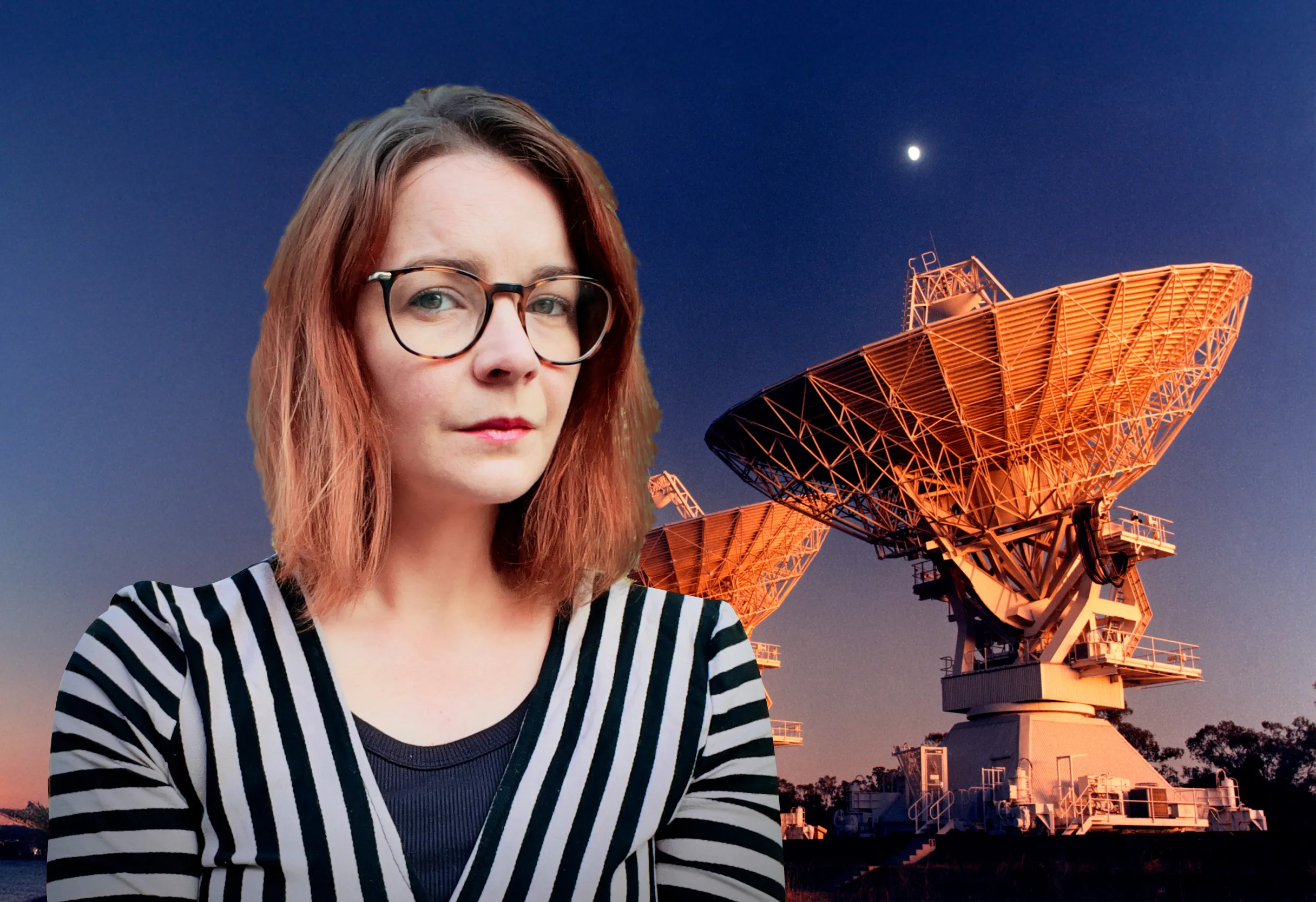
Exploring the radio Universe
Radio astronomer Dr Emma Chapman reveals how radio waves enable scientists to explore the cosmos, from mapping Venus to searching for alien life and discovering the origins of the Universe. Learn more about your ad choices. Visit podcastchoices.com/adchoices
Spring stargazing is here
Find out which planets are best in the night sky in March 2026, plus key times to observe the Moon, stars and constellations. Learn more about your ad choices. Visit podcastchoices.com/adchoices

Revealing the secrets of Mercury
The European Space Agency's BepiColombo mission arrives at Mercury later this year. Planetary scientist Emma Bunce reveals the mysteries the mission could uncover. Learn more about your ad choices. Visit podcastchoices.com/adchoices
Jupiter dominates the night sky in February 2026
Find out the best things to see in the sky this month, from the planets and constellations to deep-sky targets for your telescope. Learn more about your ad choices. Visit podcastchoices.com/adchoices

Listening to black holes colliding
Tessa Baker discusses newly-discovered cosmic collisions and how they’re helping her unlock the secrets of the Universe. Learn more about your ad choices. Visit podcastchoices.com/adchoices
New Year, new stargazing – January 2026
Pete Lawrence and Paul Abel reveal the best things to see in the night sky to kick off a new year of stargazing. Happy 2026 everyone! Learn more about your ad choices. Visit podcastchoices.com/adchoices

3D-mapping an alien world
Astronomer Anjali Piette reveals how she and colleagues created a 3D view of a scorching gas giant around a distant star. Learn more about your ad choices. Visit podcastchoices.com/adchoices
Christmas stargazing 2025
Pete Lawrence and Paul Abel reveal what you should be looking at in the December 2025 night sky, including the best planets, the Geminid meteor shower, Orion and top times to see the Moon. Learn more about your ad choices. Visit podcastchoices.com/adchoices

Have scientists solved Webb’s ‘impossible’ black holes?
Astronomers say the James Webb Space Telescope has seen black holes at the dawn of time that shouldn't exist. But a new study may be able to explain what's going on. Astronomer Seb Hoenig reveals how a new look at the early Universe could show that JWST has got black holes all wrong. Learn more about your ad choices. Visit podcastchoices.com/adchoices
See the Moon and planets under truly dark skies
As winter gets underway, we’re approaching the darkest time of year. Find out the best times to see the Moon and planets this month, including November’s supermoon. Learn more about your ad choices. Visit podcastchoices.com/adchoices

Can a planet have a planet?
Astronomer Belinda Damian discusses her research into the giant, free-floating worlds that may one day be able to form their own planetary systems. Learn more about your ad choices. Visit podcastchoices.com/adchoices
See gas giants Jupiter and Saturn at their best
Find out how to see the biggest planets in the Solar System while they’re big and bright, and find out what makes the Harvest Moon so special. Learn more about your ad choices. Visit podcastchoices.com/adchoices

Can YOU help astronomers find exploding stars?
Astronomer Tom Killestein reveals how the public can help him on his mission to find stellar explosions via the Kilonova Seekers project, and reveals its first major discovery. Learn more about your ad choices. Visit podcastchoices.com/adchoices
See the blood Moon rise
We reveal how to see the ‘blood Moon’ total lunar eclipse in September 2025, and explain the best dates and times to see the planets of the Solar System in the sky. Learn more about your ad choices. Visit podcastchoices.com/adchoices

How the Rubin Observatory will study the Universe
The Vera C Rubin Observatory is set to be a game-changer in our understanding of key ideas such as the expansion of the Universe and the distribution of matter in distant galaxies. But how will it do all this? We spoke to astronomer Dani Leonard, who is working with the Rubin Observatory, to find out. Learn more about your ad choices. Visit podcastchoices.com/adchoices
See Venus and Jupiter’s close approach
The best things to see in the night sky this month, including Venus and Jupiter’s close approach, Uranus’s meeting with the Pleiades, Saturn and Neptune’s nightly tango and the low-down full Moon. Learn more about your ad choices. Visit podcastchoices.com/adchoices

Will our Galaxy collide with its neighbour?
Astronomer Alis Deason reveals new research that shows how likely it is the Milky Way will collide with the Andromeda Galaxy. She discusses why galaxy mergers happen and, if our galaxy did collide with its neighbour, which would come out on top. Learn more about your ad choices. Visit podcastchoices.com/adchoices
Saturn and Venus are morning jewels
Pete Lawrence and Paul Abel reveal how to observe Saturn, Venus and the rest of the planets, the Moon's meeting with the Pleiades and Antares, the Southern Aquarid meteor shower and the best deep-sky objects. Learn more about your ad choices. Visit podcastchoices.com/adchoices

The birth of the Universe
Astronomer Hidde Jense has seen cosmic light from just after the Big Bang. He reveals what it tells us. Learn more about your ad choices. Visit podcastchoices.com/adchoices
Venus is a Morning Star and Mars meets the Lion's heart
Find out how to see bright planet Venus in the early morning before sunrise, and track the Red Planet Mars as it passes near Regulus, the brightest star in the constellation Leo. Our new monthly version of Star Diary is hosted by Pete Lawrence and Paul Abel. Learn more about your ad choices. Visit podcastchoices.com/adchoices

Earth, aliens and astronomy
The search is on for life beyond Earth. Astrobiologist Penny Boston reveals what life on our own planet can tell us about extra-terrestrial life among the stars. Learn more about your ad choices. Visit podcastchoices.com/adchoices
The Flower Moon rises in full bloom
Meteor showers are always a great excuse to get out and do some stargazing. Find out how to see them Eta Aquarids in the latest episode of Star Diary, the podcast from the makers of Sky at Night Magazine. Transcript Learn to observe our nearest star, the Sun, in our upcoming online masterclass series Subscribe to BBC Sky at Night Magazine and submit your astrophotography images over on our website: https://www.skyatnightmagazine.com [email protected] Learn more about your ad choices. Visit podcastchoices.com/adchoices
The Eta Aquarid meteor shower lights up the sky
Meteor showers are always a great excuse to get out and do some stargazing. Find out how to see them Eta Aquarids in the latest episode of Star Diary, the podcast from the makers of Sky at Night Magazine. Transcript Learn to observe our nearest star, the Sun, in our upcoming online masterclass series Subscribe to BBC Sky at Night Magazine and submit your astrophotography images over on our website: https://www.skyatnightmagazine.com [email protected] Learn more about your ad choices. Visit podcastchoices.com/adchoices
Mars passes through the Beehive
The Red Planet passes through the star strewn field of the Beehive Cluster. Find out how to see them in the latest episode of Star Diary, the podcast from the makers of Sky at Night Magazine. Transcript Learn to observe our nearest star, the Sun, in our upcoming online masterclass series Subscribe to BBC Sky at Night Magazine and submit your astrophotography images over on our website: https://www.skyatnightmagazine.com [email protected] Learn more about your ad choices. Visit podcastchoices.com/adchoices
Venus reaches its greatest brightness near the Moon (21 to 27 April)
The planet will appear its largest in the morning sky before teaming up with the Moon later in the week. Find out how to see them in the latest episode of Star Diary, the podcast from the makers of Sky at Night Magazine. Transcript Learn to observe our nearest star, the Sun, in our upcoming online masterclass series Subscribe to BBC Sky at Night Magazine and submit your astrophotography images over on our website: https://www.skyatnightmagazine.com [email protected] Learn more about your ad choices. Visit podcastchoices.com/adchoices

Strange signals from the 'Eye of God'
Astronomer Martin Guerrero reveals the mysterious x-ray signals coming from the Eye of God Nebula, that could indicate a planet is being torn apart by a dying star. Learn more about your ad choices. Visit podcastchoices.com/adchoices
Two sparkling diamonds glisten in the night sky (14 to 20 April)
A pair of globular clusters will glitter across the night sky this week. Find out how to see them in the latest episode of Star Diary, the podcast from the makers of Sky at Night Magazine. Transcript Learn to observe our nearest star, the Sun, in our upcoming online masterclass series Subscribe to BBC Sky at Night Magazine and submit your astrophotography images over on our website: https://www.skyatnightmagazine.com [email protected] Learn more about your ad choices. Visit podcastchoices.com/adchoices
An asteroid passes through a Hamburger (Galaxy) (7 to 13 April 2025)
Watch the asteroid Flora as at passes by the Hamburger Galaxy this week. Find out how to see it in the latest episode of Star Diary, the podcast from the makers of Sky at Night Magazine. Transcript Learn to observe our nearest star, the Sun, in our upcoming online masterclass series Subscribe to BBC Sky at Night Magazine and submit your astrophotography images over on our website: https://www.skyatnightmagazine.com [email protected] Learn more about your ad choices. Visit podcastchoices.com/adchoices
The Moon blots out the Pleiades (31 March to 6 April 2025)
After creeping ever closer to the Seven Sisters star cluster, the crescent Moon will pass through the Seven Sisters star cluster this week. Discover how you can watch the stars as blink out one by one by listening to the latest episode of Star Diary, the podcast from the makers of Sky at Night Magazine. Transcript Learn to observe our nearest star, the Sun, in our upcoming online masterclass series Subscribe to BBC Sky at Night Magazine and submit your astrophotography images over on our website: https://www.skyatnightmagazine.com [email protected] Learn more about your ad choices. Visit podcastchoices.com/adchoices
Partial solar eclipse visible across the UK (24 to 30 March 2025)
This week, a partial solar eclipse will be visible across the UK. Find out how you can safely see the momentous occasion for yourself by listening to the latest episode of Star Diary, the podcast from the makers of Sky at Night Magazine. Transcript Learn to observe our nearest star, the Sun, in our upcoming online masterclass series Subscribe to BBC Sky at Night Magazine and submit your astrophotography images over on our website: https://www.skyatnightmagazine.com [email protected] Learn more about your ad choices. Visit podcastchoices.com/adchoices

Searching for life on alien planets
Are we alone? It’s one of the humanity’s fundamental questions. Could one of the 6,000 known exoplanets beyond our Solar System host an alien species? Lisa Kaltenegger has spent her career trying to find out. Learn more about your ad choices. Visit podcastchoices.com/adchoices
The Moon passes the heart of the Scorpion (17 to 23 March 2025)
The Moon brushes past the red star Antares, the heart of Scorpius. Make sure to catch them both by listening to the latest episode of Star Diary, the podcast from the makers of Sky at Night Magazine. Transcript Subscribe to BBC Sky at Night Magazine and submit your astrophotography images over on our website: https://www.skyatnightmagazine.com [email protected] Learn more about your ad choices. Visit podcastchoices.com/adchoices
Can you see the Blood Moon? (10 to 16 March 2025)
This week sees a total lunar eclipse turn the moon blood red as it passes over the US. Unfortunately, the UK will only catch the partial phase. To find out exactly what you can see, listen to the latest episode of Star Diary, the podcast from the makers of Sky at Night Magazine. Transcript Subscribe to BBC Sky at Night Magazine and submit your astrophotography images over on our website: https://www.skyatnightmagazine.com [email protected] Learn more about your ad choices. Visit podcastchoices.com/adchoices
Mars meets up with the Moon (3 to 9 March 2025)
Mars passes right next to the Moon, while Mercury reaches its highest point in the sky. Make sure to catch them both by listening to the latest episode of Star Diary, the podcast from the makers of Sky at Night Magazine. Transcript Subscribe to BBC Sky at Night Magazine and submit your astrophotography images over on our website: https://www.skyatnightmagazine.com [email protected] Learn more about your ad choices. Visit podcastchoices.com/adchoices
Mercury returns to the evening skies (24 February to 2 March 2025)
After a long absence Mercury returns to our evening skies, shining brightly in the twilight. To make sure to catch is return, listen to the latest episode of Star Diary, the podcast from the makers of Sky at Night Magazine. Transcript Subscribe to BBC Sky at Night Magazine and submit your astrophotography images over on our website: https://www.skyatnightmagazine.com [email protected] Learn more about your ad choices. Visit podcastchoices.com/adchoices
Catch Saturn before it leaves our skies (17 to 23 February 2025)
Saturn is about to disappear behind the Sun. Ensure you catch it before it leaves by listening to the latest episode of Star Diary, the podcast from the makers of Sky at Night Magazine. Transcript Chasing the ISS Subscribe to BBC Sky at Night Magazine and submit your astrophotography images over on our website: https://www.skyatnightmagazine.com [email protected] Learn more about your ad choices. Visit podcastchoices.com/adchoices