
SpyCast
767 episodes — Page 13 of 16

Ep 167Cuba Libre: An Interview with Intelligence Legend Felix Rodriguez (Part I)
SPY Historian Dr. Vince Houghton sat down with Cuban-exile-turned-CIA-officer Felix Rodriguez to discuss his extraordinary intelligence career. As a teenager, Rodriguez joined the effort to overthrow (and kill) Fidel Castro. After that mission failed, he trained and led the team that hunted – and captured – the guerilla Che Guevara in Bolivia. By the late 1960s, he took his counterinsurgency experience and applied it in covert operations against America’s enemies in Vietnam. This, and much more.
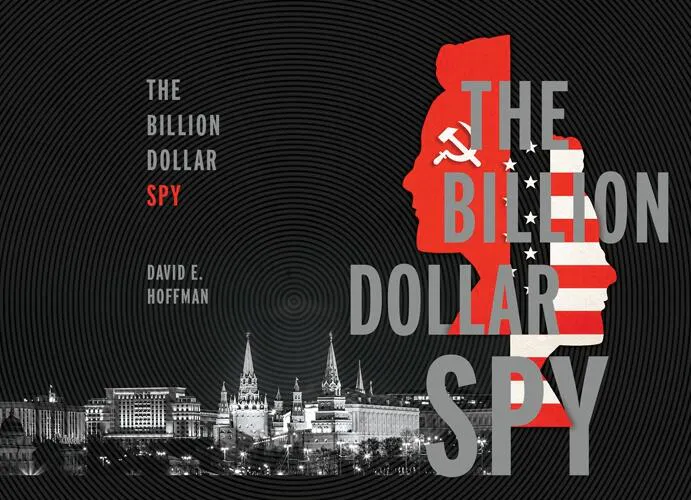
Ep 166Author Debriefing: The Billion Dollar Spy
While getting into his car on the evening of February 16, 1978, the chief of the CIA's Moscow station was handed an envelope by an unknown Russian. Its contents stunned the Americans: details of top secret Soviet research and development in military technology that was totally unknown to the United States. From David Hoffman, the Pulitzer Prize-winning author of The Dead Hand, comes the riveting story of the CIA's most valuable spy in the Soviet Union and an evocative portrait of the agency's Moscow station, an outpost of daring espionage in the last years of the Cold War. Drawing on previously secret documents obtained from the CIA, as well as interviews with participants, Hoffman will reveal how the depredations of the Soviet state motivated one man to master the craft of spying against his own nation until he was betrayed to the KGB by a disgruntled former CIA trainee. No one has ever told this story before in such detail, and Hoffman's deep knowledge of spycraft, the Cold War, and military technology makes him uniquely qualified to bring to the International Spy Museum this real life espionage thriller.

Ep 165From the CIA to the Classroom: An Interview with Joe Wippl
SPY Historian Vince Houghton sat down with Joe Wippl, the Director of Graduate Studies and Professor of the Practice of International Relations, Boston University Pardee School of Global Studies. Wippl is also a former CIA officer, who spent a 30 year career as an operations officer in the National Clandestine Service – at the time (as it is again) the Directorate of Operations. Houghton and Wippl discuss his time serving overseas as an operations officer and operations manager in Bonn, West Germany; Guatemala City; Luxembourg; Madrid, Spain; Mexico City; Vienna, Austria; and Berlin, Germany – where he was the Station Chief. Later, while on assignments in CIA headquarters, he served as the Deputy Chief of Human Resources, as the Senior NCS representative to the Aldrich Ames Damage Assessment Team, as Chief of Europe Division and as the CIA’s Director of Congressional Affairs.

Ep 164Author Debriefing: How to Catch a Russian Spy
For three nerve-wracking years, Naveed Jamali spied on the United States for the Russians – or so the Russians believed. Hear Naveed bring his unbelievable, yet true, story to life. By trading thumb drives of sensitive technical data for envelopes of cash, he pretended to sell out his own country across noisy restaurant tables and in quiet parking lots. Although he had no formal espionage training, with the help of an initially reluctant FBI duo he ended up at the center of a highly successful counterintelligence operation that targeted Russian espionage in New York City. With news about Russia’s disintegrating relationship with the United States a frequent headline and political hot topic, How to Catch a Russian Spy is the one-of-a-kind story of how one young man’s post-college adventure became a real-life US counter-intelligence coup. Get the book: http://www.spymuseumstore.org/how-to-catch-a-russian-spy.html#.Vz3ixZMrJTY
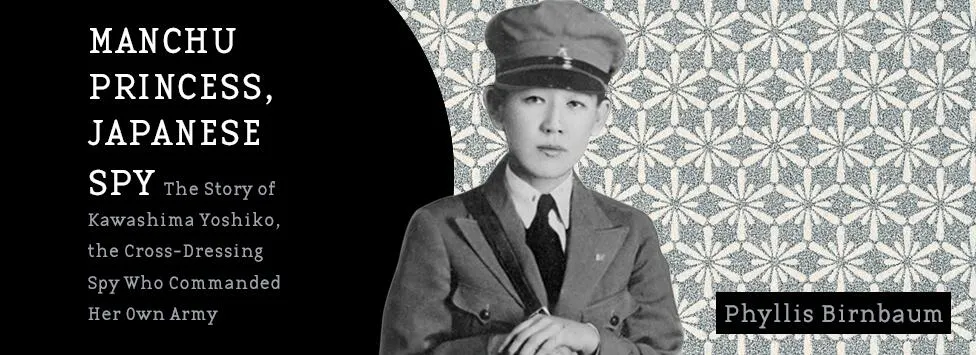
Ep 163Author Debriefing: Manchu Princess, Japanese Spy: The Story of Kawashima Yoshiko, the Cross-Dressing Spy Who Commanded Her Own Army
SPY Historian Vince Houghton sat down (remotely) with biographer Phyllis Birnbaum to discuss her newest book, based on the life of Kawashima Yoshiko, who supported the puppet Manchu state established by the Japanese in 1932--one reason she was executed for treason after Japan's 1945 defeat. The truth of Yoshiko's life is still a source of contention between China and Japan: some believe she was exploited by powerful men, others claim she relished her role as political provocateur. China holds her responsible for unspeakable crimes, while Japan has forgiven her transgressions. This biography presents the richest and most accurate portrait to date of the controversial princess spy, recognizing her truly novel role in conflicts that transformed East Asia.
Ep 162Author Debriefing: When Should State Secrets Stay Secret?: Accountability, Democratic Governance, and Intelligence
SPY Historian Vince Houghton sat down with Dr. Gen Lester to discuss her new book, When Should State Secrets Stay Secret. Lester’s book examines the oversight mechanisms that have developed within all three branches of government, how they interact, and what types of historical pivot points have driven change among them. She suggests ways to improve oversight mechanisms based on her expert analysis. The book also includes a fascinating chapter on the inner workings of the CIA to which a number of CIA officers contributed.
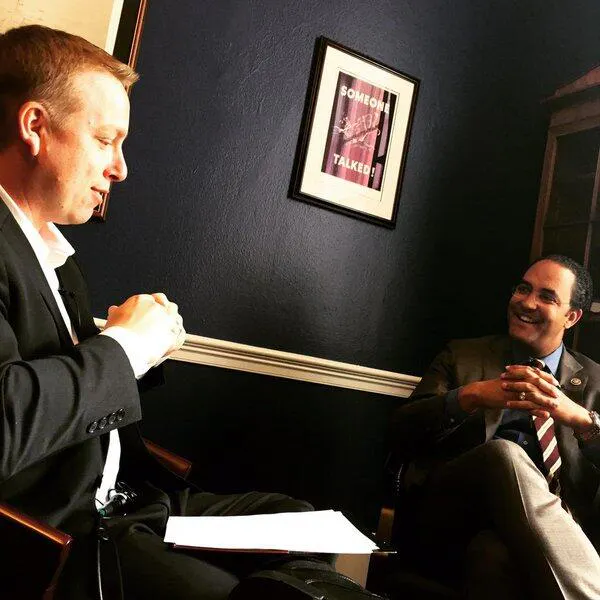
Ep 161From CIA to Congress: An Interview with US Congressman Will Hurd
SPY Historian Vince Houghton sat down with Representative Will Hurd, a Republican from Texas’ 23rd Congressional District, to discuss his unique background as a former CIA officer who is now a Member of the US House of Representatives. After spending most of a decade working in Pakistan, India, and Afghanistan, Rep. Hurd brought his experiences and lessons-learned to the Halls of Congress, where he serves on key committees, including Homeland Security and Oversight and Government Reform.

Ep 160The Rosenbergs: The Definitive Debate
More than sixty years after their execution in June 1953 for conspiring to steal atomic secrets for the Soviet Union, debate still rages about the Rosenbergs. Mike Meeropol, the son of Julius and Ethel, has spent his life in pursuit of the real story behind his parents’ secret lives, their trials, their convictions for espionage, and ultimately their executions. Sam Roberts, journalist for The New York Times, is the author of The Brother, a book written with exclusive access to David Greenglass, Ethel’s brother, whose testimony almost single-handedly convicted the couple. In this extraordinary debate, these renowned Rosenberg scholars— with very different perspectives—take on the divisive issues and key questions that remain despite the declassification of intelligence files from the United States and the Soviet Union. Dr. Vince Houghton, historian and curator of the International Spy Museum and an expert on nuclear intelligence, moderated this authoritative debate on the Rosenberg case. This event took place April 21, 2015.

Ep 159Intelligence and Arms Control: An Interview with Kelsey Davenport
SPY Historian Vince Houghton sat down with Kelsey Davenport, the Director for Nonproliferation Policy at the Arms Control Association, where she provides research and analysis on the nuclear and missile programs in Iran, North Korea, India, and Pakistan and on nuclear security issues. Vince and Kelsey discuss the complexity of the arms control process, the role of intelligence in verifying the status of nuclear weapon states, and the hope for a future without the danger of nuclear proliferation.

Ep 158Washington’s Spies: An Interview with Alexander Rose
SPY Historian Vince Houghton sat down with historian and author Alex Rose, whose book Washington’s Spies: The Story of America’s First Spy Ring, is the source material for AMC Network’s series TURN. Drs. Houghton and Rose (who is a writer and co-producer of TURN) discuss history on TV, and the plotline of the second season of the hit series. They also take time to focus on the real history of the period, what is history and what is “Hollywood”, the Culper spy ring, and the importance of intelligence during the American Revolution.
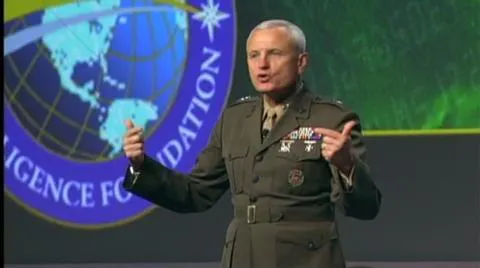
Ep 157From the SpyCast Vault: An Interview with Major General Michael Ennis
Former SPY Historian Mark Stout sat down with Marine Maj. Gen. (ret.) Mike Ennis to discuss human intelligence (HUMINT) within the Defense Department and the CIA. In 1998, Ennis commanded the Joint Intelligence Center of the United States Pacific Command, was later named Director of Marine Corps Intelligence Command in 2000, and was the Director of HUMINT for the DIA. In 2006, he was named Deputy Director of Community HUMINT of the Central Intelligence Agency’s National Clandestine Service, his final government posting before his retirement in 2007. This SpyCast was recorded on February 11, 2013.

Ep 156Author Debriefing | Operation Chowhound: The Most Risky, Most Glorious US Bomber Mission of WWII
SPY Historian Vince Houghton sat down (remotely) with Australian author Stephen Dando-Collins to discuss his new book, Operation Chowhound. Beginning with a crazy plan hatched by a suspect prince, and an even crazier reliance on the word of the Nazis, Operation Chowhound was devised. Between May 1 and May 8, 1945, 2,268 military units flown by the USAAF, dropped food to 3.5 million starving Dutch civilians in German-occupied Holland. Dando-Collins takes the reader into the rooms where Operation Chowhound was born, into the aircraft flying the mission, and onto the ground in the Netherlands with the civilians who so desperately needed help. James Bond creator Ian Fleming, Hollywood actress Audrey Hepburn, as well as Roosevelt, Eisenhower, and Churchill all play a part in this compelling story.

Ep 155Intelligence in the Early Republic: An Interview with Ken Daigler
The history of American intelligence in the Revolution and Civil War has been extensively covered by both professional and amateur historians. But what about the time in between the wars? SPY historian Vince Houghton sat down with retired career CIA operations officer and historian Ken Daigler to discuss American espionage during the earliest period of United States history. Who were the first foreign agents sent to collect HUMINT? Can we look at the Lewis and Clark expedition as an intelligence operation? How well did American intelligence function during the War of 1812? The Mexican-American War? Daigler, author of Spies, Patriots, and Traitors: American Intelligence in the Revolutionary War and two seminal articles on early American intelligence for the CIA’s Studies in Intelligence, provides the answers.

Ep 154Author Debriefing: The Hundred-Year Marathon: China's Secret Strategy to Replace America as the Global Superpower
For more than forty years, the United States has played an indispensable role helping the Chinese government build a booming economy, develop its scientific and military capabilities, and take its place on the world stage, in the belief that China’s rise will bring us cooperation, diplomacy, and free trade. But what if the "China Dream" is to replace us, just as America replaced the British Empire, without firing a shot? Mike Pillsbury, a fluent Mandarin speaker who has served in senior national security positions in the U.S. government since the days of Richard Nixon and Henry Kissinger, draws on his decades of contact with the "hawks" in China’s military and intelligence agencies and translates their documents, speeches, and books to show how the teachings of traditional Chinese statecraft underpin their actions. He offers an inside look at how the Chinese really view America and its leaders – as barbarians who will be the architects of their own demise.

Ep 153Defending a Spy: An Interview with Espionage Attorney Plato Cacheris
What do Aldrich Ames, Robert Hanssen, and Ana Montes have in common? Two things: they all spied against the United States, and they all had Plato Cacheris as their lawyer. SPY Historian Vince Houghton and Executive Director Peter Earnest sat down with the legendary defense attorney to discuss many of his most (in)famous clients – including Ames, Hanssen, Montes – who stole some of America’s most guarded secrets.

Ep 152Author Debriefing | Iran-Contra: Reagan’s Scandal and the Unchecked Abuse of Presidential Power
Through exhaustive use of declassified documents, previously unavailable investigative materials, and wide-ranging interviews, Malcolm Byrne explores what made the Iran-Contra scandal possible and meticulously relates how it unfolded—including clarifying minor myths about cakes, keys, bibles, diversion memos, and shredding parties. Byrne, the Deputy Director and Research Director at the National Security Archive, demonstrates that the affair could not have occurred without awareness and approval at the top levels of the US government. He reveals an unmistakable pattern of dubious behavior—including potentially illegal conduct by the president, vice president, the secretaries of state and defense, the CIA director and others—that formed the true core of the scandal.

Ep 151Drones: Past, Present, and Future: An Interview with Dr. Trevor McCrisken
Guest host Dr. Chris Moran of Warwick University (UK) sat down with his colleague, Dr. Trevor McCrisken, for a SpyCast on the role of drones in modern surveillance, warfighting, and counterterrorism. McCrisken, whose biography can be found here, discusses the weaponization of drones, the targeted killing program of the Bush and Obama administrations, the perception in the West that the drone war is “costless”, and the possibility of what he calls the “perpetual war” against global terrorism.

Ep 150Inside the Stasi Archives: An Interview with Dr. Doug Selvage
SPY Historian Vince Houghton sat down with historian Doug Selvage to discuss the archives of the East German Ministry of State Security, the Stasi. Dr. Selvage, Project Director in the Office of the Federal Commissioner for the Stasi Records in Berlin, has published widely on the CSCE process, Polish-German relations under communism, and the history of the Soviet bloc. He and Houghton focus on the history of the Stasi, its role in the Cold War struggle between East and West, the devious disinformation campaign to convince the world that the United States was responsible for the AIDS epidemic, and the monumental effort to reconstruct millions of secret documents shredded at the end of the Cold War.

Ep 148Spies, Policymakers, and Nuclear Weapons: An Interview with Gregg Herken (Part 2)
SPY Historian Vince Houghton continues his conversation with historian Gregg Herken, focusing on his previous four books on US nuclear policy. Brotherhood of the Bomb, Cardinal Choices, Counsels of War, and The Winning Weapon redefined the ways historians and policymakers have viewed nuclear weapons. Houghton – who himself is a historian of nuclear weapons and intelligence – and Herken discuss the challenges faced by American policymakers and intelligence professionals in dealing with the world’s most dangerous weapon.

Ep 149Spies, Policymakers, and Nuclear Weapons: An Interview with Gregg Herken (Part 1)
SPY Historian Vince Houghton sat down with historian Gregg Herken to discuss his new book The Georgetown Set: Friends and Rivals in Cold War Washington. Herken, the professor emeritus of modern American diplomatic history at the University of California, gives a behind-the-scenes history of postwar Washington – the close-knit group of journalists, spies, and government officials who planned and waged the Cold War over cocktails and dinner.

Ep 147Can a Drone Read Your Email? : An Interview with Mike Tassey and Rich Perkins
SPY Historian Vince Houghton sat down with Mike Tassey and Rich Perkins, creators of the Wireless Aerial Surveillance Platform, a state-of-the-art cyber drone. Mike and Rich built their unmanned aerial vehicle (UAV) in their garage using off-the-shelf electronics, and with the intention of proving that a drone could be used to launch a cyber-attack. With only an Internet connection, a hacker sitting on a beach anywhere in the world could use their UAV to intercept cell phone conversations, steal financial information, or access secret government documents. The prototype was a success and the race is now on to develop the next generation of cyber drones.
Ep 146From Bletchley to Bond: An Interview with Journalist and Author Sinclair McKay (Part 1)
SPY Historian Vince Houghton sat down with British author and journalist Sinclair McKay for a two-part SpyCast. In Part 1, Vince and Sinclair discuss the role played by the codebreakers at Bletchley Park in the Allied victory in the Second World War. The author of three books and numerous articles on the topic, McKay provides compelling historical insight into a subject that you only think you really know.
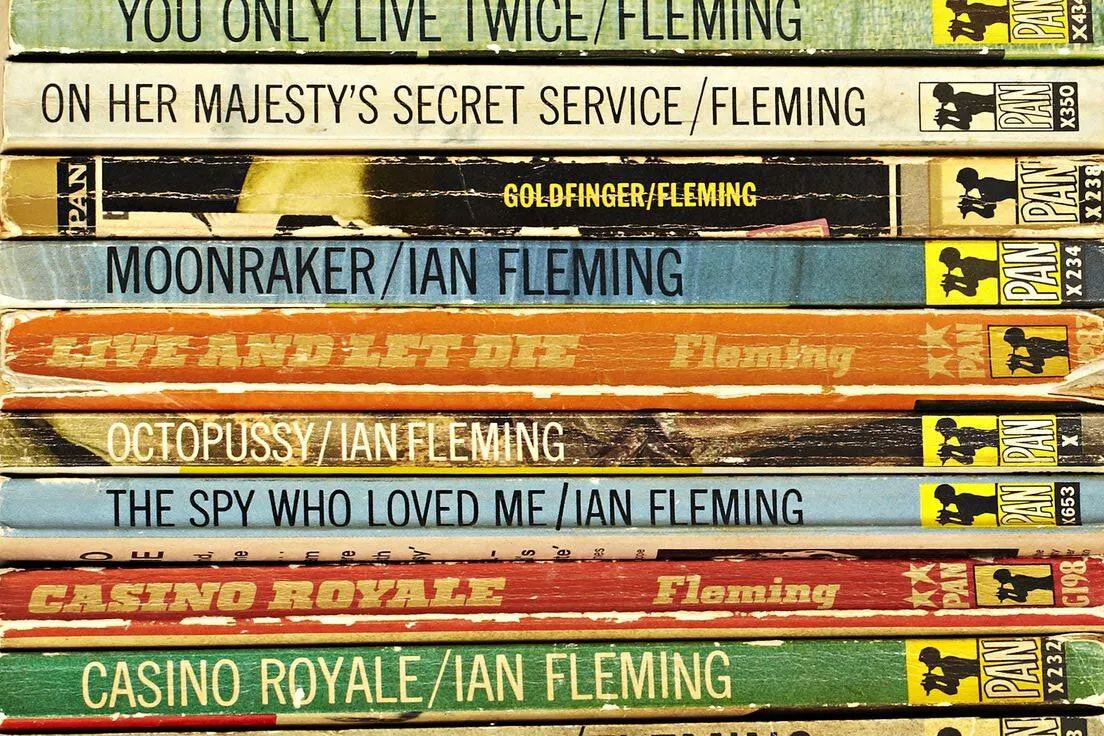
Ep 145From Bletchley to Bond: An Interview with Journalist and Author Sinclair McKay (Part 2)
Half of the world’s population has seen a James Bond movie. The historical and cultural impact of this franchise’s 23 (and counting) films is unrivaled by anything else in contemporary pop culture. SPY Historian Vince Houghton is joined by British journalist Sinclair McKay, who is the author of the seminal book on Bond’s cultural impact, The Man With the Golden Touch. They discuss Sean, George, Roger, Timothy, Pierce, and Daniel, and the legacy of Ian Fleming’s secret agent who has now saved the world for more than 50 years – and who might continue to save the world for 50 more.

Ep 143Author Debriefing: Good Hunting, An American Spymaster’s Story
Jack Devine is one of the legendary spymasters of our time. He was in Chile when Allende fell; he ran Charlie Wilson’s war in Afghanistan; he had too much to do with Iran-Contra for his own taste, though he tried to stop it; he caught Pablo Escobar in Colombia; and he tried to warn George Tenet that there was a bullet coming from Iraq with his name on it. His new book, Good Hunting, is Devine’s guide to the art of spycraft and his belief in the CIA’s vital importance as a tool of American statecraft. Although it has been caricatured by Hollywood, lionized by the right, and pilloried by the left, Devine believes the CIA remains one of the least understood instruments of the United States government.
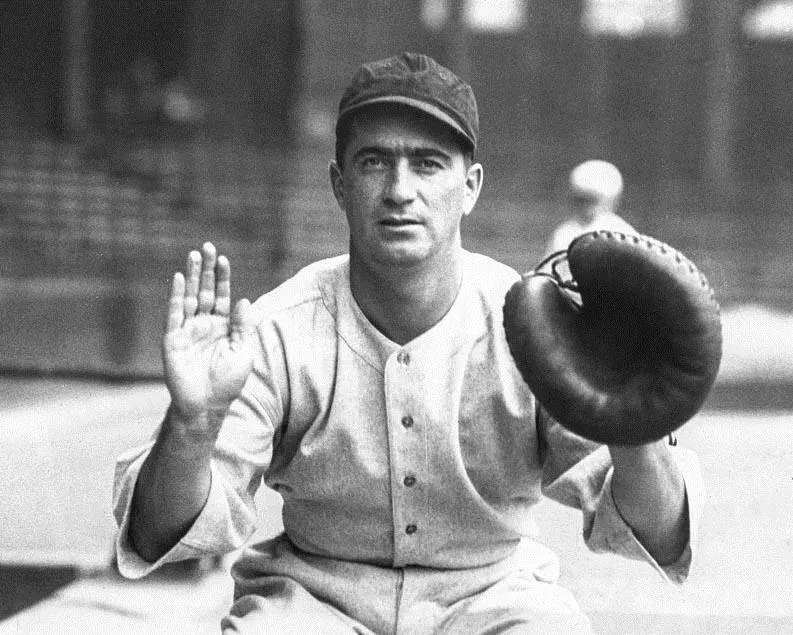
Ep 144Author Debriefing: The Catcher Was a Spy: The Mysterious Life of Moe Berg
Moe Berg—the major league baseball player, OSS operative and legendary linguist—was one of the most remarkable secret agents ever deployed by the US. Whether authorized by the government as an atomic spy or choosing to surreptitiously film Tokyo of his own volition, Berg relished and accomplished his espionage missions, yet he died penniless and with little acclaim. Nicholas Dawidoff brought Moe Berg’s achievements to light in his best-selling 1994 book The Catcher Was a Spy. In honor of the Pennant Race, Dawidoff will share his latest thoughts on the only Major League baseball player to have his card on display at CIA headquarters.

Ep 142Author Debriefing: Double Agent, The First Hero of World War II and How the FBI Outwitted and Destroyed a Nazi Spy Ring
Leading up to the US entry into WWII, Germany set up a sophisticated and productive espionage ring, which effectively utilized well-placed German Americans in the States. They were able to infiltrate key military and industrial facilities, and succeeded in obtaining critical information, including plans for the exceptionally accurate and very secret Norden bombsite device. When naturalized American William Sebold visited his native Germany in 1939, German intelligence officers saw him as a prime target for recruitment. Threatened with arrest, Sebold seemingly agreed to work for the Germans, but they woefully misjudged him. Returning to New York, he contacted the FBI and told all. In his new book Double Agent, journalist Peter Duffy uncovers how Sebold became the center of a 16-month investigation that led to the arrest of 33 enemy agents in June 1941. Known as the Duquesne Spy Ring, the colorful cast of traitors included military contractors, a South African adventurer with an exotic accent and a monocle, and even a Jewish femme fatale.
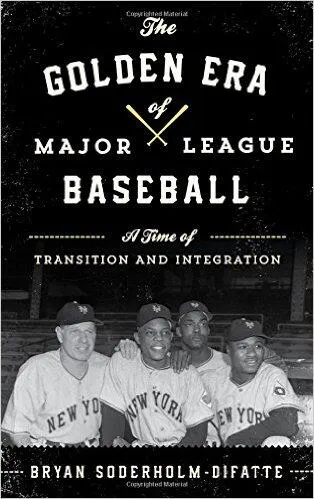
Ep 141Tinker, Tailor, Shortstop, Spy: An Interview with Former CIA Analyst Bryan Soderholm-Difatte Part 1
Baseball has been played in the United States since the mid-19th Century, and from the very beginning teams were trying to gain a competitive edge against their rivals. In many cases, this involved stealing signs – the messages passed from coaches to players or from catchers to pitchers. In essence, this is a signals intelligence operation: one team is encrypting its messages, while the other is attempting to intercept these messages, decrypt them, and use the resulting intelligence to their advantage. SPY Historian Vince Houghton sat down with Bryan Soderholm, a former CIA analyst who is now putting his training to use analyzing baseball statistics and history. They discussed the influence of spycraft on the game of baseball – in particular, the infamous case of the 1951 New York Giants, who set the standard for baseball espionage.

Ep 139Terrorists, Double Agents, and European Domination (Part 1)
SPY Historian Vince Houghton sat down with Paul Cruickshank and Tim Lister of CNN to discuss their new book Agent Storm: My Life Inside Al Qaeda and the CIA. The book, which they co-wrote with terrorist-turned-double-agent Morten Storm, traces an improbable journey of conversion, radicalization, reassessment, and redemption. Join Vince, Paul, and Tim as they reflect upon a story that is so incredible it would be completely unbelievable – if it wasn’t completely true. This interview was conducted September 8, 2014

Ep 140Terrorists, Double Agents, and European Domination (Part 2)
Join SPY Historian Vince Houghton as he continues his conversation with Paul Cruickshank and Tim Lister of CNN. Both men share their expertise on ISIS and the threat of Islamic Jihadism, and Tim, who has traveled to Ukraine on four different occasions this year alone, provides his insight into the current conflict between Ukrainian separatists, the Ukrainian government, and Russia. This interview was conducted September 8, 2014

Ep 138Author Debriefing: Spies, Patriots, and Traitors: American Intelligence in the Revolutionary War
Nathan Hale and Benedict Arnold may be the most famous spies of the American Revolution, but they were hardly alone. George Washington’s use of spy networks and wider intelligence efforts were critical to the fight for independence. In Spies, Patriots, and Traitors, former CIA officer Kenneth Daigler closely examines American intelligence activities during the era of the Revolutionary War from 1765 to 1783. Daigler will explain how America’s founders learned and practiced their intelligence role, providing insight from an intelligence professional’s perspective and revealing how many of the principles of the era’s intelligence practice are still relevant today. After the talk, see the Museum’s famous George Washington spy letter. This event took place July 15, 2014.
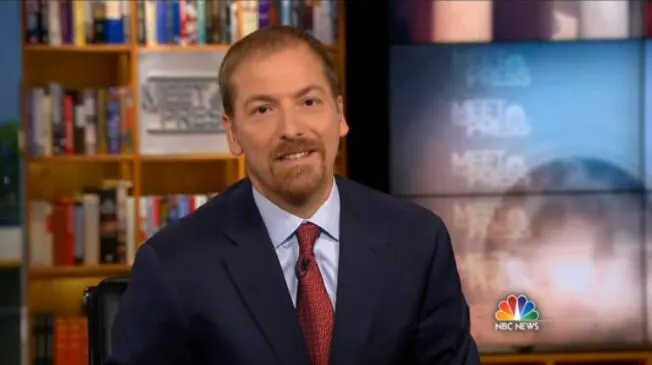
Ep 137Election Espionage: An Interview with NBC Chief Political Correspondent Chuck Todd
SPY Historian Dr. Vince Houghton sat down with NBC News Political Director and Chief White House Correspondent Chuck Todd to discuss the growing role of intelligence tradecraft in American election politics.Todd, the host of MSNBC’s The Daily Rundown, explains how political campaigns – on both sides of the aisle – use surveillance, propaganda, disinformation, deception, and covert action to give their candidates a political edge. This interview was recorded on July 29, 2014. https://www.youtube.com/watch?v=2g2F6lEJU_c
Ep 136The Birth of British Intelligence Coordination: The Joint Intelligence Committee
SPY Historian Vince Houghton in joined by Dr. Michael Goodman of King’s College in London. Dr. Goodman is the official historian for the British Joint Intelligence Committee, and in that role he has published the book The Official History of the Joint Intelligence Committee: Volume I: From the Approach of the Second World War to the Suez Crisis. Drs. Houghton and Goodman discuss the early development of British intelligence coordination, which spans two of the most momentous decades of the Twentieth Century, and includes events such as the Spanish Civil War, WWII, the end of the British colonial empire, the Cold War, and the Suez Crisis. This interview took place on June 16, 2014

Ep 135Author Debriefing: The Good Spy: The Life and Death of Robert Ames
Pulitzer Prize- winning biographer Kai Bird gives the inside story of his compelling portrait of the remarkable life and death of one of the most important operatives in CIA history, Robert Ames. Through Bird’s personal connection to Ames’ family, he gained access to his personal correspondence and range of contacts. Eventually more than forty retired CIA and Mossad officers told Bird their memories of Ames. Those seasoned spies all seemed to feel that they had been waiting for someone to tell the incredible story of Bob Ames, and how he carefully cultivated his ten-year relationship with Ali Hassan Salameh, Yasir Arafat’s intelligence chief. This highly clandestine relationship between the CIA and the PLO planted the seeds for the Oslo peace process. Get the book: http://www.spymuseumstore.org/the-good-spy-book.html#.Vz3puPkrIdU
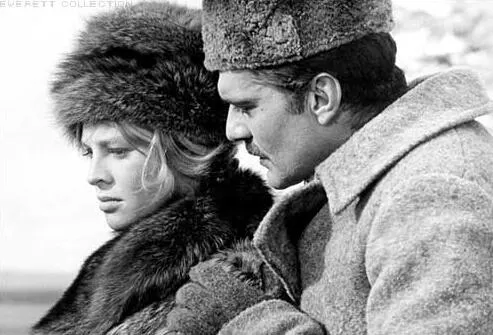
Ep 134Author Debriefing: The Zhivago Affair: The Kremlin, the CIA, and the Battle Over a Forbidden Book
Travel back to a time when literature had the power to influence the world. Washington Post national security correspondent and former bureau chief in Moscow, Peter Finn tells the dramatic first account of how a forbidden book in the Soviet Union became a secret weapon in the battle between East and West. The CIA secretly printed Doctor Zhivago in Russian and smuggled it into the Soviet Union. It was snapped up on the black market and passed surreptitiously from friend to friend fueling flames of dissent. Finn shares how he and his co-author used their special access to otherwise classified CIA files, to create an irresistible portrait of the charming and passionate Pasternak and a twisty thriller that takes readers back to a fascinating period of the Cold War.

Ep 133The Beginnings of US Overhead Reconnaissance
The development of overhead reconnaissance technology is one of the most important – if not the most important – advances in the history of intelligence. Policymakers today use IMINT from spy planes and satellites in their daily assessments of global threats, but did you know that overhead reconnaissance technology predates the advent of powered flight? SPY Historian Vince Houghton is joined by Dr. Jim Green, Director of the Planetary Science Division at NASA, to discuss Civil War balloon reconnaissance. Dr. Green, an expert in the field, explains the role of balloons in the greater Union strategy, their impact on the war effort, and the numerous and significant innovations developed by Union “aeronauts” (including the first aircraft carriers!). This interview took place May 30, 2014

Ep 132Spy in the Sky - The KH-9 Hexagon
SPY Historian Vince Houghton sits down with engineer Phil Pressel to discuss his role in developing the KH-9 Hexagon spy satellite. The Hexagon, which was the last US spy satellite to use film, was declassified in 2011, allowing Pressel to write his book, Meeting the Challenge: The Hexagon KH-9 Reconnaissance Satellite. Houghton and Pressel discuss the formation of the project, the daunting technological hurdles, the impact of the satellite on US national security, and the top secret mission to recover film lost in the deepest waters of the Pacific Ocean.Video of interview available on the Spy Museum youtube page. https://www.youtube.com/watch?v=MmWlw8Ufo6Q This interview took place May 8th, 2014.

Ep 131Peter Earnest: My Life in the CIA
Former SPY Historian Mark Stout sat down with SPY Executive Director Peter Earnest to discuss Peter’s CIA career. After his recruitment and espionage training at the Farm, Peter’s entry into the world of spying came at an important turning point in the Cold War. From his posts overseas in hot spots while living undercover, Peter’s fascinating career culminated in a very public role as the Agency’s spokesperson. Join Peter for this reflection on a life in the shadows. This interview was conducted June 1, 2012.

Ep 130The Future of Intelligence
The world sends 3 million emails every second. How do Western intelligence agencies cope with such massive amounts of data? The Spy Museum's Executive Director Peter Earnest sits down to discuss the future of intelligence with historian Richard Aldrich, Professor of International Security at the University of Warwick (UK) and Director of the Institute of Advanced Study. With the prevalence of the internet, social media, integrated communications systems, and surveillance capabilities, everyone is now a de facto member of the intelligence community. Dr. Aldrich discusses Snowden, leakers, whistleblowers, and what he calls “the end of secrecy.” Who – and when – will be the next Snowden? This interview took place April 3, 2014.
Ep 129Putin’s End Game in Ukraine
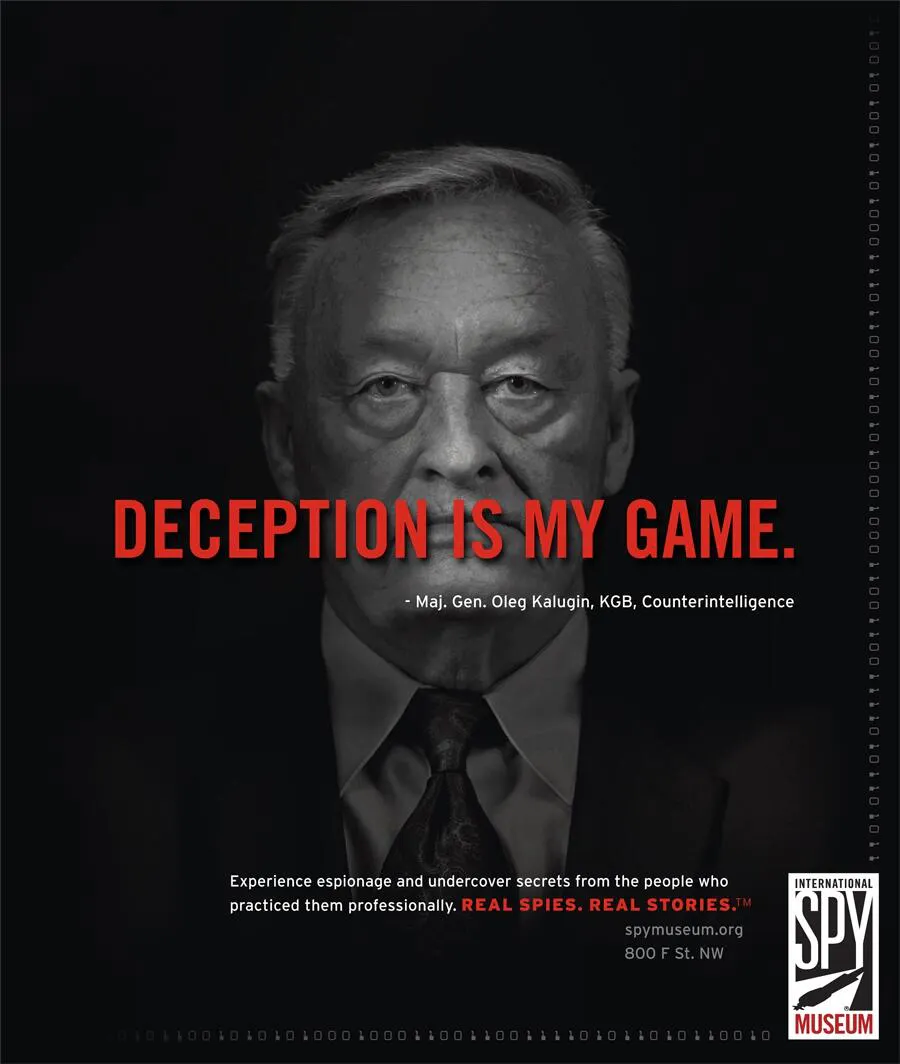
Peter and SPY Historian Vince Houghton are joined by retired KGB Major General Oleg Kalugin. They discuss the current confrontation between Russia and Ukraine over Crimea, Crimea’s strategic place in Russian history, and the potential conflict over Ukraine’s strategic shift toward Europe and away from Russia. They then discuss the role intelligence and special operations forces might play in any future war between Russia and Ukraine. This interview took place March 14, 2014.
Ep 128America's Great Game: The CIA's Secret Arabists and the Shaping of the Modern Middle East
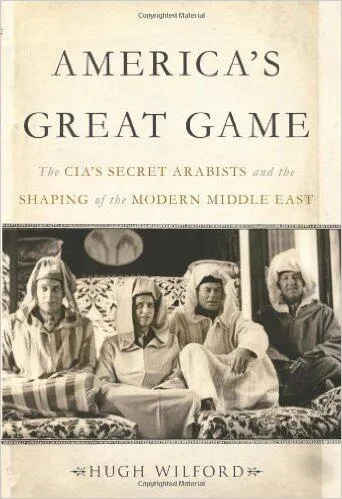
Intelligence historian Hugh Wilford reveals the surprising history of the CIA’s pro-Arab operations in the 1940s and 50s by tracing the work of the agency’s three most influential—and colorful—officers in the Middle East: Kermit Roosevelt, Archie Roosevelt, and Miles Copeland. With their deep knowledge of Middle Eastern affairs, the three men were heirs to an American missionary tradition that engaged Arabs and Muslims with respect and empathy. These “Arabists” propped up authoritarian regimes, attempted secretly to sway public opinion in America against support for the new state of Israel, and staged coups that destabilized the nations with which they empathized. They were fascinated by imperial intrigue, and were eager to play a modern rematch of the “Great Game,” the nineteenth century struggle between Britain and Russia for control over central Asia. This event took place January 7, 2014.

Ep 127Author Debriefing: Cyber War Will Not Take Place
Is cyber war really coming? Renowned scholar Thomas Rid of the Department of War Studies at Kings College London argues that the focus on war distracts from the real challenge of cyberspace: non-violent confrontation that may rival or even replace violence in surprising ways. In this provocative talk, the author will trace the most significant hacks and attacks and explore some key questions: What are cyber weapons? How have they changed the meaning of violence? How likely and how dangerous is crowd-sourced subversive activity? Why has there never been a lethal cyber-attack against a country's critical infrastructure? How serious is the threat of cyber-espionage? And who is most vulnerable in the cyber realm? This event took place on September 10, 2013 .http://www.spymuseumstore.org/

Ep 126Enemies Within: Inside the NYPD's Secret Spying Unit and bin Laden’s Final Plot Against America
Six months after the 9/11 attacks, New York Police Commissioner Ray Kelly initiated a straightforward, yet audacious, antiterrorist plan to be implemented in the Big Apple, dispatching a vast network of undercover officers and informants to track suspected terrorists. In Enemies Within, Pulitzer Prize-winning investigative journalists Matt Apuzzo and Adam Goldman for Associated Press reveal the effectiveness of the domestic spying plan. Based on hundreds of previously unpublished New York Police Department internal memos and exclusive interviews with intelligence sources, including 25-year FBI veteran Don Borelli who assisted with the book, they found that many of those strategies aren’t even close to being useful, functional, or successful. As Assistant Special Agent in Charge in the New York Joint Terrorism Task Force (JTTF), Borelli was responsible for top investigations and counterterrorism missions that spanned the globe. Join Apuzzo and Borelli for an unbridled look at the breathtaking race to avert a second devastating terrorist attack on American soil. This event took place September 26, 2013. Get the book: http://www.spymuseumstore.org/enemy-within-book.html#.Vz3rRfkrIdU

Ep 125Shadow Warrior: William Egan Colby and the CIA
Historian Randall B. Woods of the University of Arkansas discusses his new biography of one of the most fascinating and controversial figures of the postwar period: William Egan Colby. World War II commando, Cold War spy, CIA station chief in Saigon, and ultimately CIA director under Presidents Nixon and Ford, Colby played a critical role in some of the most pivotal events in twentieth-century history. Despite his strong commitment to global democracy and economic and social justice, he was also drawn to the shadowy world of covert action… This event took place on April 18, 2013.

Ep 124The Secret Rescue: An Untold Story of American Nurses and Medics Behind Nazi Lines
When 26 Army nurses and medics boarded a transport plane in November, 1943, they never anticipated the crash landing in Nazi-occupied Albania that would lead to their months-long struggle for survival. The group dodged bullets and battled blinding winter storms as they climbed mountains and fought to survive, aided by courageous villagers who risked death at Nazi hands as well as Britain’s Special Operations Executive (SOE) and the American OSS. Listen to author Cate Lineberry, a former writer and editor for Smithsonian Magazine, tell this mesmerizing tale of World War II courage and heroism. This event took place August 13, 2013. Get the book: http://www.spymuseumstore.org/the-secret-rescue-book.html#.Vz3qN_krIdU

Ep 123The Life of a Military Attaché: Moscow, Almaty, and Warsaw in the 1990s (Part 2)
In this continuation of the discussion with US Army Colonel James Cox, we hear about the day-to-day work of US military attachés: being military diplomats for the Defense Intelligence Agency. Colonel Cox tells SPY Historian Mark Stout what it was like working in Moscow after the failure of the 1991 coup. He also shares his experiences in Almaty, the capital of the newly independent country of Kazakhstan and later in Poland, a once-communist country, as it joined the NATO alliance.
Ep 122The CIA Analyst and the Polish Colonel
During the 1970s, Colonel Ryszard Kuklinski was a rising star in the Polish General Staff during the Cold War. He was also a spy for the CIA. Colonel Aris Pappas was a rising star in the CIA’s analytic ranks whose specialty was Poland. Pappas sat down with SPY Historian Mark Stout to discuss the Kuklinski case, the important information that Kuklinski passed about the Soviet and Warsaw Pact militaries and the imposition of martial law in Poland, and how he and Kuklinski eventually met and became friends.
Ep 121The Life of a Military Attaché: Moscow During the Coup (Part 1)
In the summer of 1991, US Army Colonel James Cox arrived in Moscow, the capital of the Soviet Union, to serve as Assistant Army Attaché. Little did he know that Communist hardliners were about to launch a coup. When the coup started, the intelligence agencies in Washington immediately needed up-to-the-minute information on developments, so the attachés went out on the streets to get it. Hear Colonel Cox tell SPY Historian Mark Stout what it was like chasing tanks on the streets of Moscow and witnessing Boris Yeltsin make his stand at the Russian White House.

Ep 120Espionage in Traditional China
Sun Tzu’s 2500 year old book The Art of War contains a famous chapter on spies. However, Master Sun was not the only Chinese author to address this topic centuries before Westerners did. In fact, many Chinese authors built on his work. SPY Historian Mark Stout met up with Ralph Sawyer, the translator of the definitive edition of The Art of War and the author of The Tao of Spycraft, to discuss the sophisticated theory and remarkable practice of espionage in traditional China.
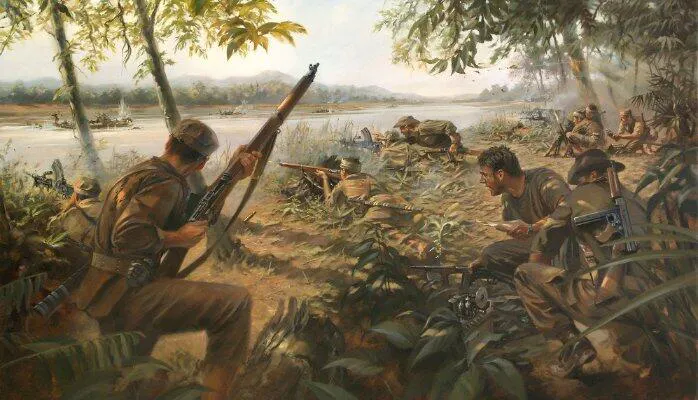
Ep 119The OSS in Burma: Jungle War Against the Japanese
“One could not choose a worse place for fighting the Japanese,” said Winston Churchill of northern Burma, but it was there that the fledgling Office of Strategic Services conducted its most successful combat operations of World War II. Troy Sacquety, an Historian for the US Army’s Special Operations Command, ventures into Burma’s steaming jungles in the first book to fully cover the exploits and contributions of the OSS’s Detachment 101 against the Japanese Imperial Army. In this Author Debriefing, Sacquety describes how Detachment 101 succeeded and created a prototype for today’s Special Forces. This event took place on May 13, 2013. Get the book: http://www.spymuseumstore.org/oss-burma-book.html#.Vxk39JMrJTY

Ep 118Deceiving the Iraqis in Operation Desert Storm
Military deception was an important part of Operation Desert Storm, the 1991 coalition effort to eject the Iraqi Army from Kuwait. The man in charge of that U.S. Marine Corp’s part of that deception was Brigadier General Tom Draude. Despite the fact that he had no previous background in deception, General Draude and his team of clever American planners put together an elegant and effective deception plan. Hear him tell Peter how they exploited the expectations of Iraq's military to put them off guard and out of place. Also learn about the role in that books such as The Man Who Never Was and John Le Carre’s The Little Drummer Girl played in General Draude’s thinking.