Sounds Profitable
1,078 episodes — Page 20 of 22
Ep 31SP Higlights: Sounds Profitable en Español! w/ Sean King of Veritone One
When we started using Veritone One to expand sounds profitable into Spanish the whole goal was to show people how accessible it was even with a small team, which sounds profitable is. The success of that attempt led to The Download—our weekly news recap podcast, which you absolutely should check out—to be localized by our hosts, Manuel Gabe, in their own words and in their own voice. This is a must-listen-to episode with Sean King of Veritone One where we talk about why expanding into Spanish is critical for your success in podcasting. Credits: Original full episode available at https://soundsprofitable.com/episode/2/6 Audio engineering by Evo Terra Executive produced by Evo Terra of Simpler Media Sounds Profitable Theme written by Tim Cameron See omnystudio.com/listener for privacy information.
Ep 26Spotify’s Building A New Brand Safety Tool + 4 more stories for June 16, 2022
This week on The Download: Spotify’s building a new brand safety tool, Google Podcast removed an episode under suspicious conditions, and Apple tells us how their podcast search works. It’s been a rollercoaster of a week for Acast news. Let’s start with the positive. This Monday Acast announced a global Audio Pride Parade, celebrating Pride month for the LGBTQIA+ community via a series of podcast live shows in major cities across the world. Senior Partner Manager Alexandria Fuller said: “It’s also one day where you feel safe to be yourself. With hate crimes against LGBTQIA+ people on the rise, we’re always wondering when it’s safe to hold hands. But there’s safety in numbers at Pride, and it’s really freeing.” Fuller’s heartfelt blog about the importance of celebrating queerness was undercut the next morning. Tuesday Acast announced a partnership with Spring to provide on-demand merch options for producers hosting on Acast, including Spring’s so-called Mint on Demand NFT service. According to Hot Pod, most of the 11 podcasts in the pilot program have elected to not use Mint on Demand. Also on Tuesday, multiple tweets were posted providing evidence Acast is data mining email addresses tucked in the RSS feeds of podcasts to send an advertisement email suggesting the podcaster would be better off switching to Acast. So far podcasters on Podbean, Captivate, Blubrry, and Transistor have reported being targeted by this aggressive marketing push. Transistor co-founder Justin Jackson has reported Acast to their email service provider, who Jackson reports have said this cold-calling approach is against their terms of service. Jackson - who previously worked for an email company - considers the Acast emails to be illegal under Canadian law and has filed a formal complaint under the government arm created to enforce Canada’s Anti Spam Law (also know as CASL). A spokesperson for Acast told Podnews the emails targeting podcast of competitor hosting services are “... part of our continuing marketing strategy, which we don’t currently plan to change.” At Sounds Profitable, our goals are to lift up and improve the entire industry. Based on the actions and response from Acast, we do not feel like they share those goals. Until Acast discontinues these practices, we will no longer be covering Acast in Sounds Profitable or The Download. --- This Wednesday Integral Ad Sciences announced a joint project with Spotify to develop a new third-party brand safety tool for podcast advertisers, with UM Worldwide signed on to be the first company in line to stress-test the project. From the press release: “The companies will embark on a rigorous analysis to help the industry understand the tools and resources necessary to effectively deliver brand safety in podcasting and digital audio writ large.” Given IAS already has these tools for both the web and apps, we can infer this announcement refers to a net-new production. An overwhelming majority of podcasting operates on RSS outside of Spotify’s control, so this product is exclusively a brand safety play for content Spotify sells ads to on their own platform. From the beginning of the press release: “Ultimately, the firms intend to create the industry's first third-party brand safety and suitability reporting tool to bring more transparency and confidence to podcast advertising.” And then, later on: “In the future, the results will be used to create a first-of-its-kind brand safety and suitability tool to aid in campaign planning, management, and reporting.” Spotify is no stranger to courting controversy when flirting with that safety, be it the actions of acerbic talent or the upcoming return of political ads. Brand safety is hot right now, but so is Spotify announcing things that don’t go live. Should we hold our breath? In keeping with Pride month-adjacent stories: Google has provided a cautionary tale in the unexpected consequences of using automated systems to filter inappropriate content. On Tuesday the tabletop roleplaying game actual play podcast RPG: Realms of Peril and Glory posted a screenshot of their newest episode showing an error on Google Podcasts indicating the content is unavailable for people under the age of 18. As Podnews covered in October of last year, this is not necessarily new. Google Podcasts, in an effort to remain in compliance with some laws in Europe and the UK addressing children accessing age-inappropriate content, began restricting certain podcasts from being visible to users with underaged accounts or users who weren’t logged into a Google account while attempting to access. This particular interest is noteworthy as the episode isn’t just blocked from users who aren’t logged in to Google Podcasts. As of Wednesday it was inaccessible to anyone on Google Podcasts. From the original tweet from RPG: “There is nothing adult in this episode. The only difference from our other episodes is the word Lesbian in the title.” RPG’s missing episode was the first of a
Ep 25Spotify’s Earnings Call Happened + 5 other stories for Jun 10, 2022
This week on The Download: Spotify’s earnings call happened, Apple improves podcast statistics, and podcast pros weigh in on how many ads is too many ads. Podcast statistics are about to get better, thanks to a recent update from Apple that’ll help take a bite out of AppleCoreMedia’s presence on podcast statistics. Anyone who just opened the linked source and doesn’t have a background in coding: we promise that page makes sense. User Agents are how we truly understand what specific app is being used to play a podcast. AppleCoreMedia is the default displayed by iOS apps if they haven’t built their own player from scratch. Few do. This leads to a snowball effect of either over or under-counting Apple’s presence in the market. As James Cridland explained in Tuesday’s Podnews: “Buzzsprout’s global stats don’t include AppleCoreMedia, under-estimating downloads from Apple Podcasts. On the other hand, Libsyn’s stats wrongly attribute all traffic to AppleCoreMedia as Apple Podcasts.” This new update from Apple solves for that. For a more detailed breakdown on AppleCoreMedia, we recommend the Podnews article from April “Mythbusting: are downloads from 'AppleCoreMedia' mostly from Apple Podcasts?” Edison Research’s 2022 edition of the Smart Audio Report is slated for June 16th. In 2017, for the original Smart Audio Report, NPR and Edison surveyed smart speaker owners to learn how the technology was being integrated into their lives. “The 2022 installment of the Smart Audio Report will not only offer an update on some of those original families, but also fresh data from a recent national study that measures attitudes around voice tech among those who use it and those who don’t.” For those listening in time to register, one can do so for free at the link provided in our show notes. This Wednesday Bloomberg’s Ashley Carman live-tweeted the Spotify earnings call. The music powerhouse had a fair bit to say about their podcasting efforts, including some numbers that come as a bit of a surprise after such heavy investment over the past few years. As reported by Carman: “A number! Spotify had 200 million euros in podcast revenue in 2021. They expect it to be a $20 billion opportunity.” If that number feels low, that’s because it is. In a reply on Carman’s thread Podnews editor James Cridland pointed out that $220 million USD of profit amounts to only fifteen percent of the total podcast ad revenue for just the United States in 2021. In addition to the revenue number, Spotify teased some details of their upcoming audiobook offerings that’ll put them in a market mostly dominated by Amazon’s Audible wing. In a bit of mixed messaging, much hay was made about Spotify branching out into three new businesses but they also claim they’re a music-first company. CEO Daniel Ek said: “That’s the thing you just have to get about Spotify. We’ll put out these big, audacious targets.” The irony of this being the official position of a company with a history of announcing big, audacious projects only to blow past the intended release window by months, if not cancel them, is not lost on The Download. The earnings call also featured a section criticizing the limitations of RSS distribution, including calling it outdated tech. This is a curious change in tack given a substantial amount of ad service on Spotify is handled through RSS by Megaphone. It remains unclear as to why Megaphone is being left out in the cold while doing a not-insignificant portion of the business that got them to their percentage of 2021 global ad revenue. Every podcast with ad breaks has struggled with an eternal, unanswerable question: how many ads is too many? On Monday MarketingBrew’s Alyssa Meyers published “What’s the perfect number of ads in a podcast episode?” Spoiler alert: Meyers’ quest involving interviews with 14 marketers doesn’t turn up a magic formula that’ll change the industry. Some questions can never be concretely answered, but there is wisdom to be found in a big-picture view of the current podcast advertising landscape. In general, Meyers found short-form podcasts with episodes shorter than thirty minutes featured four ad slots populated with three to six ads. Long-form podcasts had the same potential slots for ad breaks but increased the maximum threshold up to eight potential ads per episode. “As of the first quarter of 2022, about 5.5% of a podcast episode was made up of ads, according to podcast media planning platform Magellan AI’s quarterly benchmark report.” Big takeaways from those interviewed include acknowledging the power of host-read over pre-recorded, fewer quality ads beat out quantity, and inevitably the best ad is the one the host knows will work with the audience they’ve cultivated. Finally, a quick-hits rundown of two articles we think are well worth your time that came out this week: Crooked Media adds speech-to-text podcast captions with Adobe partnership, by Brad Hill. And, in our continuing mission to bring news of global podcasti
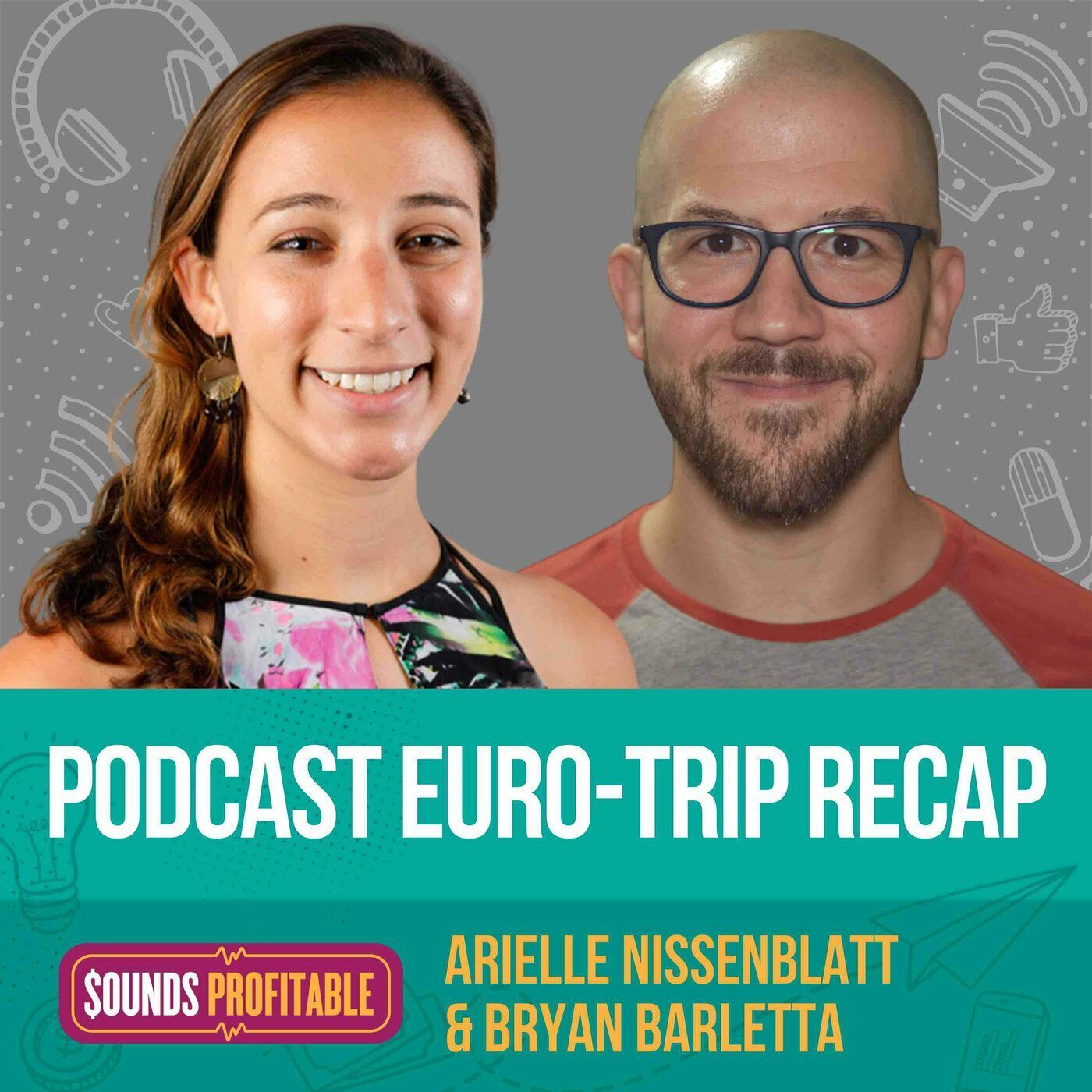
Ep 30Podcast Euro-Trip Recap
Arielle Nissenblatt and Bryan Barletta discuss some big Sounds Profitable news – Tom Webster has officially joined the team, we announced a big Summit, taking place at Podcast Movement in Dallas later this year, and we’ve got some research presentations coming soon. Bryan and Arielle also recap Bryan’s last few weeks – his whirlwind adventures in Europe, attending both Radio Days Europe in Malmo, Sweden, and Podcast Show London in…London. Listen for: Bryan’s recap of Radio Days Europe and his big takeaway Bryan’s review of the Chunnel Bryan and Arielle’s vegan food podcast announcement Bryan’s recap of Podcast Show London and the big opportunity that outside-of-the-U.S. podcast presents What to expect at the Sounds Profitable Summit at Podcast Movement in August in Dallas How to become a sponsor to get involved with the Summit and with Sounds Profitable Here’s our favorite idea from this conversation: if you’re looking to find a niche in the podcast space, learn all about the podcast and audio market outside of the U.S. According to Bryan, through his experience in Europe, there’s tons of opportunity here, especially in the advertising space. Links: Bryan Barletta Arielle Nissenblatt Radio Days Europe Podcast Show London Sounds Profitable Summit at Podcast Movement The Download Sounds Profitable: Narrated Articles SquadCast Credits: Hosted by Bryan Barletta & Arielle Nissenblatt Audio engineering by Evo Terra Executive produced by Evo Terra of Simpler Media Sounds Profitable Theme written by Tim Cameron See omnystudio.com/listener for privacy information.
Ep 24Podcast Profits On The Rise In The UK + 5 other stories for June 3, 2022
This week on The Download: Podcast profits on the rise in the UK, white noise podcasts prove profitable, and the first Sounds Profitable Business Leader's Summit is headed to Podcast Movement. As is true of many episodes of The Download, we start with an article published on Tuesday. Bron Maher of the Press Gazette published “https://pressgazette.co.uk/economist-podcasts-paywall/” The lede is somewhat buried, as the interesting information lies not in the framework of The Economist’s future plans to paywall podcasts, but in just how much traffic those free podcasts bring in. Prior to the launch of the publication’s flagship podcast The Intelligence, The Economist had seven full-time employees dedicated to podcasting. As of 2022 that number has ballooned to thirty of the paper’s nearly 320 staff. Quoting the article: “The Intelligence gets approximately 350,000 downloads an episode. In a month, Prideaux said the podcast can now reach as many as two million listeners. During peak coverage of the invasion of Ukraine, the figure hit two and a half million. Across its entire podcast stable, The Economist is now being listened to by more than three million people a month. That compares against 1.2 million print subscribers – while its digital circulation in the second half of 2021 was 995,228, according to its ABC report.” John Prideaux, director of podcasts for The Economist, notes that the podcasting wing’s success brings an unexpected level of familiarity with one’s audience. The Economist’s longstanding policy on not publishing bylines does not extend to their shows, allowing parasocial relationships to blossom where they wouldn’t in articles of identical information without an author attached. Maher quotes Prideaux: “I mean, it’s a bit of a surprise – some of our people, who are on the podcast, they suddenly get not exactly recognised, but internet famous in a way that is new for a place with no bylines. And some of them find that a bit alarming.” Regardless of whether the publication paywalls previously free content, nearly two decades of embracing podcasting has lead The Economist to a point where a fraction of its staff bring in more impressions via podcast audience than the actual published paper. Jacob Kastrenakes, writing for Hot Pod Insider, https://newsletters.feedbinusercontent.com/d1c/d1cd50d1a231ab6a200d0d2d0802ce2b4cf7b3b4.html. The main takeaway of the talk? iHeart believes there’s a finite window in which one can determine if a podcast can be made successful purely through promotion. “First off, a show has to be good, according to Bob Pittman, iHeart’s CEO and chairman. ‘We can’t make something that’s not a hit a hit,’ he said. From there, it comes down to marketing. ‘What we can generally find is probably in two or three weeks, we can see if we've got a hit or not with heavy promotion.’” Though, unlike radio, a lack of success during launch window doesn’t spell death for the product. Kastrenakes quotes Pittman as saying podcasts have “unlimited shelf space.” Without a limited amount of bandwidth on which to program, iHeart is able to take risks on relatively cheaper production costs and - even if it doesn’t take off in the 2 to 3 week launch period - allow the product to exist on its own in hopes outside forces lead to a free resurgence in popularity. Once again we circle back to the global story of podcasting doing well everywhere, not just in the North American markets. Quite well, in fact, according to https://pressgazette.co.uk/publisher-audio-revenue/?utm_source=podnews.net&utm_medium=web&utm_campaign=podnews.net:2022-05-31 “Among the sample of 12 publishers included in the report, which was produced by the Association of Online Publishers (AOP) and Deloitte, audio revenue hit £4.2m in the first quarter of this year. This was six times what they made in the first quarter of 2021.” Deloitte’s Dan Ison claims daily podcast listening has caught up to online radio in the UK, growing to the point one in ten adults under 25 pay for at least one form of premium podcast subscription. AOP managing director Richard Reeves, as quoted by Majid, said: “We’ve seen revenue for digital audio grow steadily over the last few quarters, driven in part by what’s being deemed the ‘golden age of podcasts’. The 500% revenue growth reported for this channel in Q1 2022 demonstrates that publishers are now successfully monetising this type of content.” This next bit of news is home-grown as it comes direct from Sounds Profitable founder—and former host of The Download—Bryan Barletta. In partnership with Podcast Movement, https://soundsprofitable.com/update/business-leaders-summit. “On its own, a one-day business-focused event would be a hard sell to just about anyone, even in NYC or LA. But as an industry, we absolutely need one. A day dedicated to the real tough conversations that the industry needs to have in order for us to drive the progress that leads to a $4bn US podcast advertising industry and then
Ep 35The Final Show - But Not The End
Future articles and podcasts from Sounds Profitable (and me!) are all available here: https://soundsprofitable.com/episodesThanks for coming along for the ride, and I hope you'll join me at Sounds Profitable!See omnystudio.com/listener for privacy information.
Ep 23Spotify Erroneously Serves Liquor + 4 more stories for May 27, 2021
This week on The Download: Spotify erroneously serves liquor, platforms continue to snap up content houses, and RSS.com shares how they beat podcast spam. Last week Spotify experienced the mother of all brand safety mistakes, and for now it has cost them the ad dollars of a major liquor distributor. https://tannerhelps.substack.com/p/spotify-done-effd-up-big-time?s=w, sometime on Saturday Spotify began serving a banner ad for bourbon distillery Wild Turkey to the profile of every podcast. This led to numerous screenshots demonstrating just how unfortunate such a slip-up can be, including children’s entertainment and podcasts discussing sobriety. https://podnews.net/uploads/campari-group-statement.txtQuoting their statement: “We are disappointed that the implementation of the campaign by Spotify was inconsistent with our advertising code and have paused all media with Spotify pending results of the investigation. We are members and partners of DISCUS and Responsibility.org and unequivocally support a responsible marketing agenda.” The Download has covered numerous stories involving new tech designed to ensure brand safety when it comes to problematic podcast hosts or suspect content in an existing brand’s catalog, but this slip-up shows brand safety doesn’t stop at the content of the podcast itself. Which leads to a decision that might set up further problems in the very near future. https://www.protocol.com/bulletins/spotify-political-adsQuoting the article: “In an email the company sent out to potential partners this week, Spotify said that political ads will appear “across thousands of podcasts on and off Spotify.” An accompanying presentation promises political advertisers the ability to target niche audiences and tap into AI-driven “contextual targeting,” which allows advertisers to place ads in podcasts when they are discussing issues relevant to their target audiences.” Lapowsky highlights the uphill struggle Spotify has ahead of them. While competitors like Meta and Google have made efforts to be open with political advertisements by maintaining large public archives, Spotify’s starting from scratch. The Wild Turkey slipup isn’t enough to raise alarms at Spotify’s ability to run ads ethically. Mistakes happen. That said, it does highlight just how impactful a mistake can be when made by a massive player in the industry. A player now dabbling in an area of advertising infamous for its ability to spread disinformation. It’s been a week of big-name acquisitions of talent in the podcasting world. The massive long-running interview podcast WTF with Marc Maron signed with Acast, https://rainnews.com/marc-maron-and-wtf-to-join-acast/ “‘Entering into a partnership with the podcast giant Marc Maron is a big win for Acast and for the open podcasting landscape, as this deal guarantees that the podcast can continue to be listened to by everyone, everywhere and on their preferred listening platform,’ said Ross Adams, CEO of Acast.” WTF, which previously operated as an independent production with a paywalled back catalog available for a fee on its website, will now switch to offering older episodes to Acast+ subscribers as bonus content. For the audience little will change, but Acast has just inherited one of the biggest names in podcasting outside of Spotify’s walled garden and gets to handle ad sales. Establishing the trend for the week, https://podnews.net/press-release/siriusxm-team-coco most notably bringing aboard Conan O’Brien Needs a Friend. Like the Maron buyout, Sirius has purchased the production house whole hog, including a five year talent agreement with O’Brien. Longtime fans of the former late-night comedian will understand the gravitas behind convincing O’Brien into an exclusivity deal after his messy breakup with NBC. Rounding out the trio of announcements, Monday also saw https://redcircle.com/blog/redcircle-partners-with-drew-binsky/?utm_source=podnews.net&utm_medium=rss&utm_campaign=podnews.net:2022-05-24. Binsky is making the popular move for influencers by starting a podcast guaranteed to court a built-in audience from his existing audience, sporting 3.3 million YouTube subscribers alone. “Roots of Humanity celebrates the beauty and diversity of the world, which is aligned with RedCircle’s vision of helping podcasters of all sizes and shapes across the globe to get rewarded for their work. RedCircle is excited to be part of Drew Binsky’s journey and help him to achieve his goals with its modern podcast hosting and monetizing technology.” It seems the trend continues with podcast platforms looking beyond simple exclusivity rights for an individual podcast to focus on acquiring production houses and existing brands that can act as content engines beyond the popular podcast’s lifespan. Full creator/talent packages are the current hotness and there’s no signs of them slowing down. This Monday Sounds Profitable’s own Bryan Barletta https://twitter.com/BryanBarletta/status/15288584226656911
Ep 28What To Expect When You’re Expecting Tom Webster (To Join Sounds Profitable)
Today on the show, Arielle Nissenblatt chats with soon to be Sounds Profitable partner, Tom Webster. They discuss Tom’s entry into the audio world, what drives him to tell stories with data, how to be into statistics without being a “math” person, and our near and longterm plans for the company. Here’s our favorite idea from this conversation: Arielle asked Tom to go through the pillars that the team has outlined as important principles for the company and we break them down. This is a mission statement that we want the podcasting public to hold us to. Links: Tom Webster Tom’s recent article for Sounds Profitable The Download Sounds Profitable: Narrated Articles SquadCast Credits: Hosted by Bryan Barletta Hosted by Arielle Nissenblatt Audio engineering and transcriptions by Ian Powell Executive produced by Evo Terra of Simpler Media Special thanks to James Cridland of Podnews Sounds Profitable Theme written by Tim Cameron See omnystudio.com/listener for privacy information.
Ep 22Premium Podcasting On Apple Just Got Easier + 4 more stories for May 20, 2022
This week on The Download: Premium Podcasting on Apple just got easier, Media Monitors slips up on methodology, and Podfest Africa’s annual study is here. Publishing content to a premium subscription feed on Apple Podcasts is about to become far less painful. This Tuesday Techcrunch’s Sarah Perez https://techcrunch.com/2022/05/16/apple-podcasts-gains-storage-clean-up-tools-support-for-annual-subscriptions-and-a-new-distribution-system/ in a rundown of Apple’s new announcements. Quoting the article: “Starting this fall, a select number of hosting providers will support the Delegated Delivery system, including Acast, ART19, Blubrry, Buzzsprout, Libsyn, Omny Studio and RSS.com. Apple says these providers represent around 80% of listening for premium content on Apple Podcasts, and more services will be added over time.” Additionally: “The feature will be available at no additional cost to all creators through Apple Podcasts Connect and creators won’t need a membership to the Apple Podcasts Program to publish their free shows — only to publish premium content.” Prior to the introduction of the delegated delivery offerings, uploading a premium file to Apple for one’s monthly subscribers was an arduous and time-consuming process. Now the process will be smoother, at least for those on hosting platforms included in Apple’s rollout. https://twitter.com/ashleyrcarman/status/1526221885259784192 noted the divide possibly forming between providers when comparing who supports the new Apple feature and who is partnered with Spotify’s similar premium service. The tweet read: “Spotify works with third parties to support its subscription offering, too. The only overlap is Acast, at least according to the initial partner list. [I’m] curious if this means there's now additional stratification in [the] podcast world: team Spotify or team Apple.” In what is pleasantly becoming a weekly segment on The Download, we bring news of podcasting flourishing on a global scale. Last month Podfest Africa published the 79 page report titled https://www.podcasting.africa/discovery-tour-data-edition-report The study is built off research collected in part with in-depth interviews with podcast producers and industry stakeholders, reviewing existing literature on relevant topics, and a survey of 370 podcast listeners across the study’s target areas of Kenya, Nigeria, and South Africa. Unsurprisingly, podcasting seems to be doing well. “These results build on existing evidence of the rapid growth of podcast usage in allt hree countries and the evidence that South Africa, Kenya and Nigeria are the most developed podcasting markets on the African continent.” A quick rundown of some interesting statistics provided: on average over 50% of respondents were women. With all results aggregated the idea podcast episode length across the three represented countries is 30 to 40 minutes. Spotify has a significant advantage over its competitors for distribution in the three countries studied for apps most used to listen to podcasts, clocking in at 35.1%. Apple comes in at a close second with 18.1% of the market share. Google Podcasts, YouTube, Anchor, and Afripods make up the rest of the top contenders. In its key takeaway section, the study makes a point of stressing that their findings suggest - unsurprisingly - audiences want content influenced by local creators and local companies. “A key growth opportunity identified is educating media companies to not rely on Western expertise for guidance on podcast production but instead to generate key insights through research from the African continent.” Continuing the trend of podcast news favoring Tuesdays, for some reason, Alyssa Meyers of Marketing Brew publishedhttps://www.marketingbrew.com/stories/2022/05/17/here-s-what-you-missed-at-the-2022-iab-podcast-upfront?mid=4afb33bb7ffe284d840660fb3604ff60 Quoting the article: “If you couldn’t make it last week (or if you were already burnt out from NewFronts), we tuned in and rounded up some of the most important announcements and themes of this year’s event, which positioned pods as ‘mainstream, prominent, and influential.’” Meyer’s reporting condenses a substantial amount of IAB content down to three main points plus a bonus regarding Disney - ever a fan of conglomerating - consolidating podcasting brands under one banner. The three common topics focused on diverse hosts and audiences, statistical dumps in the form of podcast trend reports, and quite a few mentions of brand safety. That last point might perk up the ears of long-time Download listeners, as brand safety is a recurring topic in more places than the IAB UpFront. Even https://omny.fm/shows/the-download-from-sounds-profitable/us-podcasting-revenue-is-up-5-more-stories-for-may included coverage of a story involving ethics in adtech and its impact on brand safety. This Monday Media Monitors published the results of a listeners survey conducted over two weeks in March, all bundled with the enticing headli
Ep 27Exploring a Real-Time Case Study with Fatima Zaidi of Quill
Today on the show, Bryan Barletta speaks with Fatima Zaidi, founder and CEO of Quill inc., a full-service podcast agency that makes it easy for brands and publishers to create, launch and grow successful podcasts. Quill is launching a hosting service, Co-Host. After years of trying to work with existing hosting solutions, Quill found that their clients desired different and more complex KPIs, so, they decided to build a solution that could track them. Listen for: How and why Quill decided to build a new hosting platform in this seemingly saturated space How Quill has built a tech team after running a production company for a few yearsP.s. they’re still looking for a developer A discussion on the hype around VC and angel funding Why we should celebrate bootstrapped companies A playbook on real-time beta testers Here’s our favorite idea from this conversation: Fatima believes in the concept of “if it’s not broken, don’t fix it.” But she and her team still came to the decision that the existing solutions weren’t hitting all of the needs of their clients. Ultimately, they had to put their clients first. Links: Fatima Zaidi Quill The Download Sounds Profitable: Narrated Articles SquadCast Credits: Hosted by Bryan Barletta Hosted by Arielle Nissenblatt Audio engineering and transcriptions by Ian Powell Executive produced by Evo Terra of Simpler Media Special thanks to James Cridland of Podnews Sounds Profitable Theme written by Tim Cameron See omnystudio.com/listener for privacy information.
Ep 21US Podcasting Revenue Is Up + 5 more stories for May 13, 2022
This week on The Download: US podcasting revenue is up, Google launches new way to collect data, and a new partnership aims to bring ethics to advertising. One of many podcasting social media staples is sharing platitudes about how the industry is always growing, always doing better. This Monday offered a wonderful moment where one gets empirical data to back them up. The United States podcast ad revenue market hit a billion dollars for the first time in 2021 and shows no sign of slowing down. Anthony Vargas writes for AdExchanger: “At $1.4 billion – up 72% from roughly $840 million in 2020 – podcasting is now one of the fastest-growing digital media channels, and it’s growing twice as fast as the internet advertising market as a whole, according to a report on podcast ad revenue released by the IAB and PricewaterhouseCoopers on Monday.” Growth has developed so quickly just the US market’s 2021 revenue matched podcasting’s global 2020 revenue. Vargas attributes a bulk of this growth to the increase of dynamic ad insertion leading to better ad placement. Regardless, things are looking good on the business side of podcasting. This Tuesday Rain News’ Brad Hill reported on the Q1 earnings call of audio distribution platform Audacy. CEO David Field cited strong growth in digital revenue but as far as The Download is concerned, we’re interested in their reported 37% podcast revenue increase Audacy’s apps offer a generational divide-bridging service, offering a place to access both terrestrial radio stations and on-demand audio in the form of podcasts in the same place. And it appears Audacy is aiming to take advantage of their broad audience. Brad Hill reports from the earnings call: “A key forward-looking emphasis of the call was the Audacy Digital Audience Network, a scale-and-reach initiative which was launched during the quarter. Field described it as ‘an addressable and aggregate of over 60 million listeners across our app, streaming content and podcast lineup, enabling precision targeting at scale, coupled with real-time optimization and reporting.’” Up next: a bit of nostalgia looking back at the world that allowed podcasting to exist. Last Thursday Ben Thompson of Stratechery posted an interview with Tony Fadell, the designer known as the father of the iPod. On the off chance there are members of The Download’s audience who aren’t old enough to rent a car: the very word podcast is a portmanteau of iPod and broadcast, originally created specifically as a way to share spoken word to Apple’s wildly successful MP3 player via their iTunes digital media platform. With Wednesday’s announcement that Apple has officially discontinued the iPod Touch, a vestigial remnant of the iPod brand, it’s a good time to be nostalgic for the early days of the industry and reflect on how much has changed. Thompson’s interview with Fadell gleefully partakes of nostalgia, rehashing key moments from both Fadell’s career and that of the iPod’s development. Steve Jobs’ leadership style from Apple’s 2005 flash memory gambit, the interview evokes memories of a time when touch screens were still exotic futuristic technology. Last Thursday Olivia Morley, writing for Adweek, covered the announcement of Havas Media Group partnering with the Institute of Advertising Ethics. According to Havas, they intend to offer an advertising ethics certification course to over 9,000 clients and employees. A quote from the founding COO of IAE, as reported by Morley: “‘Our industry, astoundingly, is virtually the only professional industry—unlike law, medicine, architecture, engineering, et cetera—that doesn’t have any sort of industry code of ethics or certification for ethics,’ said Andrew Susman, noting that this will now change.” As Susman said, the IAE has identified a marked lack of training and focus on ethics in advertising. This has a trickle-down effect on the podcasting industry, as we’ve seen before with various sticky situations companies and creatives alike create with brand safety or unintentional side effects of unethical systems. “Ethics, according to Downing, can extend to many things. Some include issues of brand safety and ensuring that clients are not using discriminatory ad filters that impact minority creators. For example, putting “LGBTQ+” on a blocklist.” One needs only look at the tech industry’s laundry list of issues with their army of engineers with no ethical training creating wildly unethical digital ecosystems. A more ethical advertising industry, if it takes advantage of the IAE and whatever competitors might arise, is a better one. Speaking of weird ethics: The Download is going to take a brief moment to report on someone reporting on our mothership Sounds Profitable. Tom Webster is leaving Edison Research to join Sounds Profitable as a partner. Webster goes into detail on his motivations and goals for the new position in Tuesday’s edition of his newsletter I Hear Things. Quoting Tom: “On June 1st, I am joining Sounds Pro
Ep 26The Dos and Don’ts & How Tos of Branded Podcasting
Today on the show, Bryan Barletta speaks with Shantae Howell, Creative Director for the Americas at Acast. They discuss branded podcast content: how and when to make it, what to consider, and what to expect Listen for: The difference between branded podcasts, advertising on podcasts, and sponsoring podcasts. How Acast works with brands to make impactful branded podcasts. When your brand should consider getting into the audio game. Here’s our favorite idea from this conversation: a branded podcast can have many different goals, whether it be brand awareness, customer acquisition, sharing customer stories, as a creative outlet for the company, and so much more. It’s important for the brand and the creative agency behind the soon-to-be branded podcast to be aligned in their missions for the show. Links: Shantae Howell Acast The Download Sounds Profitable: Narrated Articles SquadCast Credits: Hosted by Bryan Barletta Hosted by Arielle Nissenblatt Audio engineering and transcriptions by Ian Powell Executive produced by Evo Terra of Simpler Media Special thanks to James Cridland of Podnews Sounds Profitable Theme written by Tim Cameron See omnystudio.com/listener for privacy information.
Ep 34Sounds Profitable
I Hear Things is joining Sounds Profitable. That's the tweet.See omnystudio.com/listener for privacy information.
Ep 20Potential New IAB Standards Revealed + 5 more stories for May 6, 2022
This week on The Download: potential new IAB standards are revealed, advertisers reflect on a year of iOS-enforced privacy, and Facebook is losing the confidence of its customers. Last Thursday Ryan Barwick, writing for MarketingBrew, published a look at some promising new standards https://www.marketingbrew.com/stories/2022/04/28/publishers-are-labeling-their-audiences-to-make-it-easier-for-advertisers-to-target-them With the evolution of online privacy advertising must change with it, and the IAB is experimenting with replacing existing data-collection structures with seller-defined audiences, or SDAs. Instead of adtech using tracking methods to use collected data to serve certain ads to certain users, publishers would use first-party data to decide how to categorize their own audience and take ads targeting those categories. Quoting the article: “Using this data, SDAs would, theoretically, let publishers place their audiences into groups—whether by behavior or interest—which would then be shared with advertisers to help them run targeted programmatic ads. So far, there are roughly 1,600 available labels for publishers to choose from.” Barwick and others at MarketingBrew have taken a liking to the hyper-specific example label of “potatoes/onions” as an example of how granular the SDA system would be if fully implemented. Michael Nuzzo, Vice President and head of Hearst data solutions at Hearst Magazines is quoted from the IAB Tech Lab event in February: “It’s a very positive indication that publishers are gaining more control in the open web. We were only seen as supply. Now, we’re seen as supply, identity partners, as well as data providers, and that’s an exciting shift.” This signals a significant boon for podcasting. The IAB has created a world where podcast producers determine their audiences and present them to advertisers. An open world with power in the hands of producers is a good thing. Last Thursday Digiday’s Kimeko McCoy published an article covering the thoughts of advertisers on the https://digiday.com/marketing/it-changed-the-way-people-perceived-digital-advertising-advertisers-reflect-on-ios-14-changes-a-year-later/ “In this last year, Apple’s crackdown on in-app tracking upended the digital advertising industry and crippled advertisers’ ability to know whether their mobile ads were working. It forced them to look elsewhere to spend their dollars.” iOS 14, along with other similar privacy-boosting offerings from web browsers and Android devices, changed the game. Platforms reliant on the old buffet of collectable data have had issues adjusting, as we’ll cover in a Facebook-heavy story shortly. “But those 12 months of acclimating to these shifts have made it clear to media buyers that Apple’s ATT is an attribution problem, not an advertising one. In other words, the effectiveness of advertising hasn’t gone away as a result of it being harder to track people. But it has become more difficult to know how effective those ads are.” McCoy’s reporting paints a promising future. Every step the industry takes in this direction is a glowing endorsement for podcasting. While the rank-and-file are just now dealing with tricky attribution, this industry has been successfully serving ads with tricky end-game attribution for the better part of a decade. On Monday AdExchanger’s James Hercher published “https://www.adexchanger.com/platforms/facebook-advertisers-are-itching-for-change-as-bugs-infest-its-attribution-tech/” The piece begins with an anecdotal story of a marketer beset with costly glitches in the aging platform’s adtech. Things don’t get much better for Meta from there. Quoting the article: “Facebook is heads-down trying to fix the ad platform as gears and springs fly out of it like a cartoon pocket watch.” Facebook faces huge troubles as its advertising empire built on a tracking pixel now has to operate in a world where said pixel can’t immediately report back data on a user browsing outside websites. Instead of instantaneous granular updates, Facebook adtech operates in batch updates once every few days. “Facebook’s consistent response has been to be patient and, well, to slow down. In February, Facebook acknowledged that it was still underreporting attribution, but said it hadhttps://www.adexchanger.com/platforms/meta-claims-underreporting-for-ios-web-conversions-is-now-down-from-15-to-8/ from 15% to 8%. Says who?” Walled gardens, especially Facebook, are starting to show cracks in their foundations and are losing the faith of buyers as they struggle to course-correct for industry-wide changes. Facebook may have tapped out of the podcasting game entirely, but we still have Spotify. What has happened to the likes of Google and Meta could happen to Spotify in the future. Especially now that they’ve purchased some of the biggest names in podcast data attribution, setting themselves up as potential gatekeepers of proprietary data not wholly dissimilar to Facebook. Speaking of attribution tech: h
Ep 25Beyond Editing and SEO: How to Produce Compliant Podcast Transcripts
Today on the show, Bryan Barletta speaks with Ma’ayan Plaut, who is the growth marketing manager at 3play media. They discuss what it means to create accessible and compliant podcast transcripts. Ma’ayan recently tweeted about the need for transcripts to include non-speech elements. Her tweet was instructive and contained practical information for podcast publishers. We expand upon her thread in this conversation, and go beyond it as well. We are moving towards a world in which we don’t simply consume podcasts by listening. Consumers will read podcast content, too; whether that’s because they prefer to read it or because they are d/Deaf or hard-of-hearing, or for a variety of other reasons. For those use-cases, and more, we need to find a way to make transcripts for available and accessible. Listen for: Statistics on how many people are consuming podcasts via transcripts How publishers can prioritize creating transcripts beyond just in the initial editing process Discussion as to which lawsuits have impacted this discussion How to dissect important legislation that regulates accessibility requirements for media creators Here’s our favorite idea from this conversation: transcripts should be vetted by a human. Even if AI gets us halfway there, it’s important to have the final version looked over by a real human. Why? Names like Ma’ayan Plaut and even Arielle Nissenblatt very rarely get AI transcribed the right way. Links: Ma’ayan Plaut 3Play Media Paul F. Tompkins’ Tweet The Download Sounds Profitable: Narrated Articles SquadCast Credits: Hosted by Bryan Barletta Hosted by Arielle Nissenblatt Audio engineering and transcriptions by Ian Powell Executive produced by Evo Terra of Simpler Media Special thanks to James Cridland of Podnews Sounds Profitable Theme written by Tim Cameron See omnystudio.com/listener for privacy information.
Ep 19Warner Music Launches A Podcast Network + 3 more stories for April 29, 2022
ICYMI: Warner Music launches a podcast network, Spotify weathers the storm, and personnel changes at Edison Research. Warner Music Group is dipping its toes into podcasting with its first network: Interval Presents. The new network’s slate promises a variety of content lead by popular musicians and celebrities who work with WMG. “The initiative marks the first major music label to follow in Sony Music’s lead; Sony entered the podcast arena five years ago in May, 2017.” WMG Senior VP of Digital Strategy & Business Development Allan Coye has stepped into the role of General Manager of Interval Presents content. CDO and EVP of Business Development Oana Ruxandra set the tone for what Interval Presents intends to accomplish. She says, “There’s a hunger for more inclusive and authentic podcast content and, with Allan leading the charge, we’re thrilled to launch an audio platform that will connect with this growing audience and spotlight a breadth of voices and perspectives.” While this might initially look like simply another company jumping into the field of celebrity podcasts, that itself is enough to help grow the industry. With more celebrity-hosted podcasts comes a higher chance of graduating those who only listen to music into full-fledged podcast listeners who seek out content beyond their initial introduction, be it with a Jason Derulo-hosted fiction podcast or a Lupita Nyong’o series on African diaspora. --- This week Spotify’s Q1 numbers became the subject of much discussion as they became public. On Wednesday Bloomberg’s Ashley Carman published “Spotify Tumbles as Investors Question Podcast Investments.” “Spotify Technology SA has spent more than a billion dollars in an effort to become the No. 1 name in podcasting, but investors’ patience is wearing thin on how much that will cost.” Carman’s article paints a cloudy sky for the big green dot with investors getting antsy at the amount of money invested in podcasting intended for long-term growth over short-term returns, including a gross margin of 25.2% that falls short of the 30 to 40% target. That said, both paid subscriptions and unpaid ad-supported users are up despite locking out Russian users and much-publicized Joe Rogan backlash. Sarah Perez writes for a TechCrunch article on the same subject this Wednesday: “Despite losing 1.5 million users in Russia, Spotify’s premium subscribers grew 15% year-over-year in the first quarter to reach 182 million, largely in line with analyst estimates. Ad-supported users, meanwhile, grew 21% to reach 252 million.” The #deletespotify movement, sparked by a transphobic conversation in his latest Jordan Peterson interview, a history of COVID-19 disinformation, and a compilation of him saying a racial slur lead to musicians and podcasters alike pulling their content from Spotify or threatening to cancel contracts. As Sarah Perez reports: “But app store data at the time indicated rival streaming apps were not getting a boost from this latest PR headache, as Spotify’s app had continued to see millions of weekly downloads — a significantly larger figure than its nearest rivals — even amid the #deletespotify campaign on social media.” That lack of attention to rival apps likely stings especially hard for Neil Young, a figurehead of the Rogan backlash who pulled all of his music from Spotify in protest of Rogan’s COVID disinformation. Young, a vocal critic of low-quality MP3 streaming on services like Spotify, also happened to be releasing high-quality versions of his discography on Amazon Music shortly after the much-publicized stunt. As with all things, Spotify’s growth remains a complicated beast. Subscribers are up, stock value is down, all while successfully weathering a weeks-long PR storm. --- Last Thursday Spotify dropped an article on their official blog announcing Spotify’s big entrance into video podcasting. Quoting the article, “Last fall, Spotify began activating Video Podcasts for creators on a limited basis. Since then, we’ve found that podcasters love having the option to accompany their audio with visual components, and fans love having the opportunity to more deeply connect with the content.” As of Thursday creators in the US, Canada, New Zealand, Australia, and the UK gained access to the feature, as well as a handful of new features to help the transition for video podcasters with backlogs. The new system requires a podcast be hosted on Spotify’s service Anchor, meaning any existing video podcasts interested in trying out the service will either need to make a Spotify spinoff feed or wholesale transfer from their existing service to take advantage of this new feature. Once integrated into Spotify the video podcasting appears to function identical to simply watching a video podcast on YouTube, with those who prefer pure audio able to leave the app or lock their phone to background the video. Video in podcasting challenges an open ecosystem to consider themselves creators, agnostic of any one mediu
Ep 33Roll With The Changes
Ashley Carman's article on Spotify's earnings call: https://www.bloomberg.com/news/articles/2022-04-27/spotify-dodges-joe-rogan-controversy-forecasts-miss-estimates?sref=W6GJF3MSSupport I Hear Things! http://buymeacoffee.com/tomwebsterSee omnystudio.com/listener for privacy information.
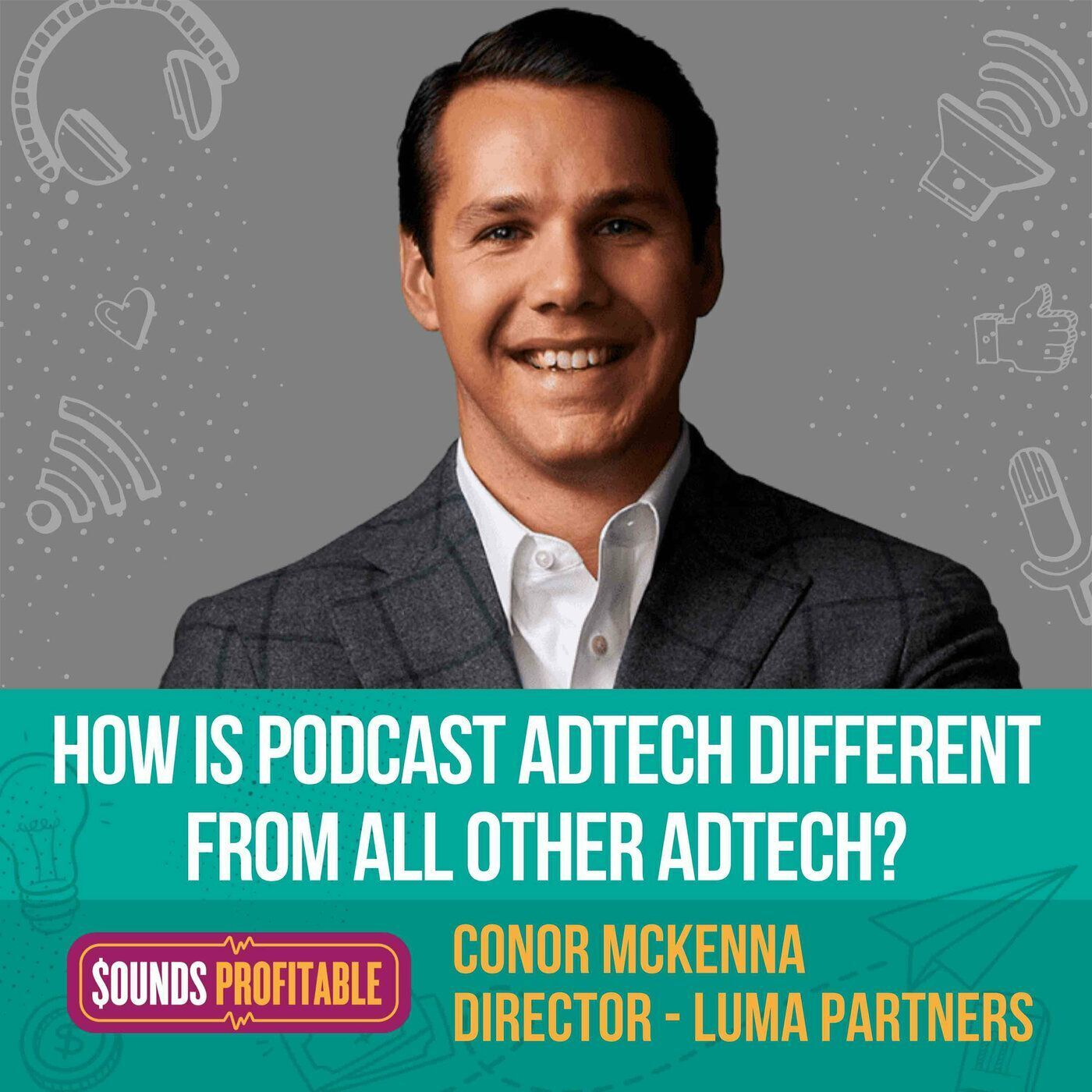
Ep 24How Is Podcast Adtech Different From All Other Adtech?
Today on the show, Bryan Barletta speaks with Conor McKenna, director at LUMA Partners. They discuss how adtech in podcasting applies to adtech in other adtech-led companies. Listen in to learn about: How we're still in the early days of building technology specifically made for podcasts How we need to build software that makes the process of buying and selling ads more seamless How we need better attribution technology because downloads aren't enough Why Conor recommends that publishers build out other content channels beyond podcasting Here’s our favorite idea from this conversation: Bryan and Conor don't agree about everything. And it makes for some interesting takeaways! Links: Conor McKenna LUMA Partners The Download Sounds Profitable: Narrated Articles SquadCast Credits: Hosted by Bryan Barletta Hosted by Arielle Nissenblatt Executive produced by Evo Terra of Simpler Media Special thanks to James Cridland of Podnews Sounds Profitable Theme written by Tim Cameron See omnystudio.com/listener for privacy information.
Ep 18Data Scraping Is Officially Legal + 5 other stories for April 22, 2022
Today on The Download; data scraping is officially legal, recent Spotify purchases prove concerning for some, and what fiction podcasters can learn from their non-fiction cousins. Collecting data just got legally less questionable in the United States. On a Tuesday news roundup for ExchangeWire, Hanna Dillion covered a huge decision by the US court of appeals. The suit, brought by LinkedIn to prevent a rival company from scraping their publicly-available data, has ended with the Ninth Circuit of Appeals declaring the act of data scraping legal. The act of scraping - using software to automatically collect data hosted on the public internet - is now legally defined as an act that is not classified as hacking with the court’s decision. Scraping, thus, does not violate the Computer Fraud and Abuse Act of 1986. The landmark ruling should come as a relief to academics, journalists, researchers, and archivists, for whom scraping publicly available information from the internet is an integral part of their day-to-day work. The decision, however, could also renew privacy and security concerns, as web scraping has been used for nefarious purposes in the past; in May 2021, several tech giants filed lawsuits against Clearview AI, a facial recognition startup which claimed to have scraped billions of social media profile photos, without the consent of users. What does this mean for the podcasting world? One can legally scrape data, but what they do with it remains a legally gray area. Scraping publicly-available RSS feeds for academic purposes is fine. Scraping those same feeds for email addresses with intent to spam anyone who isn’t using a certain company’s hosting service with offers to switch to said service is subject to other pre-existing laws. For more on the state of data scraping, see our March 11th episode coverage of a story about a similar lawsuit. Up next, in yet another recurring thread that has resurfaced: last Friday a Morning Brew article by Alyssa Meyers went live, titled “Spotify’s acquisition of podcast analytics firms has some in the industry concerned.” The piece acts as an industry reaction to the February acquisition of Podsights and Chartable (see The Download’s February 18th episode for our coverage at the moment). In the interest of full disclosure, we must note one of the industry voices quoted by Meyers is Sound Profitable’s own Bryan Barletta. The week after Spotify announced the acquisitions, Mike Kadin, CEO of podcast hosting and monetization platform RedCircle, told Marketing Brew it “had folks reach out to us from major publishers and ask if we have attribution technology. I’m not super worried about it, but it does sadden me to see more chunks of the ecosystem getting centralized.” It’s no secret the official position of The Download is pro-third party analytics to keep the industry honest and prevent further walled gardens of information in adtech. The concerns continue to be real and the industry will continue to fret until more options exist. Once again we return to highlighting the global nature of podcasting outside of English-speaking markets. On Saturday Luis Pablo Segundo, writing for Milenio, broke down the results of a recent study. The flashiest piece for our audience is the reveal that ad spending on podcasts in Mexico has risen fifty percent from 2019 to 2021, though it still represents a small market share in comparison to traditional radio. Traditional radio is expected to reach an advertising revenue by 2025 of $480 million, 10.6 percent higher than what was recorded in 2021, while podcasting will remain almost 11 times lower at $44 million, according to consulting firm PwC. A quick note for our Spanish-speaking audience: this story, as well as every other story covered each week, is covered in our Spanish sister podcast La Descarga! Hosted by myself and Gabriel Soto. Before we leave the realm of global podcasting growth, a small bit of news from Canada. eMarketer’s Paul Briggs shared last Monday data predicting almost two-thirds of the Canadian population will listen to some form of digital audio by the end of 2022. Last Thursday media critic and podcast producer Wil Williams guested on the Hot Pod newsletter with a column titled “What fiction podcasters can learn from nonfiction podcasters.” Their piece aims to provide fiction podcast producers, aspiring and existing alike, tools to build stories with techniques that are second nature to their nonfiction cousins. Over three sections Williams explores story flow, following a thesis, evocative sound design while providing three examples of existing podcasts that best embody these traits. But while fiction is finally getting its due, nonfiction is still considered the primary mode of storytelling in podcasting. This can cause some understandable contempt from fiction creators, but there's creative gold to be found in nonfiction. If you want your stories to have realistic goals, realistic sounds, and realistic characters
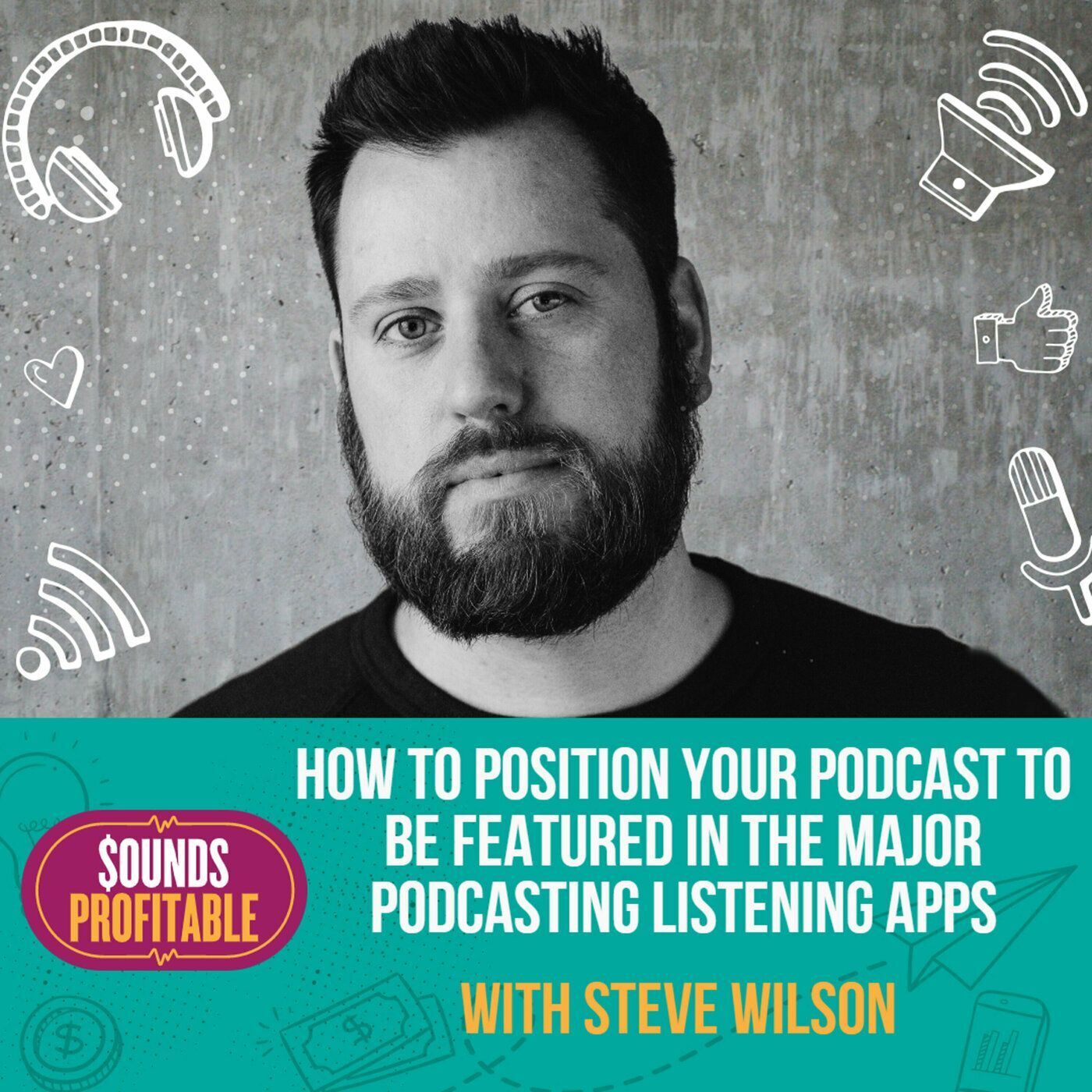
Ep 23How to Position Your Podcast to Be Featured in the Major Podcasting Listening Apps
Today on the show, Bryan Barletta speaks with Steve Wilson, chief strategy officer at QCODE Media. They discuss what it takes to get podcasts featured in major podcast listening apps, building relationships with podcast discovery platforms, and becoming a co-marketing partner.Listen in to learn about: Steve's background and how he got into the podcast world. How to put your best foot forward when it comes to partnering with podcast listening apps. Why it's worth it to spend time cultivating relationships with in app curators. Why it's worth experimenting with different strategic partnerships plans with different listening apps. Pod.link, and why it's important to use, but it's not everything. Here’s our favorite idea from this conversation: podcast publishers have an opportunity, when posting on social media, to elevate the relationships they have (or want to have) with podcast listening apps, by promoting the link to their show on Apple or Spotify or Castbox (we could go on all day).Links: Steve Wilson QCODE The Download Sounds Profitable: Narrated Articles SquadCast Credits: Hosted by Bryan Barletta Hosted by Arielle Nissenblatt Audio engineering and transcriptions by Ian Powell Executive produced by Evo Terra of Simpler Media Special thanks to James Cridland of Podnews Sounds Profitable Theme written by Tim Cameron See omnystudio.com/listener for privacy information.
Ep 17Audio is the Fastest Growing Digital Ad Sector + 6 Other Stories
This Week On The Download: the IAB cites digital audio as the fastest-growing digital ad sector, Anchor language update embraces global podcasting, and Adweek launched their own podcast network. Let’s get started. Good news for those in the world of digital advertising: your efforts are working extremely well, according to the International Advertising Board. On Tuesday the IAB published an article titled https://www.iab.com/news/digital-advertising-soared-35-to-189-billion-in-2021-according-to-the-iab-internet-advertising-revenue-report/ Not the catchiest of headlines, but the article is full of good news. “The growth is consistent with a recent study from Harvard Business School, commissioned by IAB, which showed the internet economy has grown seven times faster than the U.S. economy over the past four years and now accounts for 12% of the U.S. GDP.” Digital advertising in general might be up, but there’s a tiny bit of news for the world of podcasting. Digital video, social media, and search revenue are all trending upward but digital audio has outpaced them all. According to one of the IAB’s highlights, digital audio took home the highest year over year growth at 57.9%, totaling $4.9 billion. There’s a lot changing in the world of advertising. Both this and previous episodes cover the small evolutions required to adapt to new tech, legislation, and industry standards. Despite it all, podcasts are still bringing in the money. One of the big-picture stories we’ve been following on The Download for months is that of podcasting as a global medium, not just something for English-speaking markets. The biggest news on that front was posted last Thursday on the official blog of Spotify’s podcast hosting platform Anchor. As of Thursday, https://blog.anchor.fm/updates/anchor-web-localization?utm_source=podnews.net&utm_medium=rss&utm_campaign=podnews.net:2022-04-11 “One of our biggest goals is to ensure that creators everywhere have access to all the robust tools and features Anchor has to offer. And while creators around the world have been able to record, host, and grow their podcast on our platform, Anchor on web hasn’t always been available to everyone in their native language.” As podcasting grows its infrastructure needs to grow with it. Localizing websites built for a different language is difficult under the best conditions. A major player in the podcasting industry allowing sites built on their service to be built in the native language of thirty five languages is a big step forward in supporting a world where the idea of a podcast does not automatically default to something produced in English. On Tuesday Al Mannarino, writing for thehttps://www.adweek.com/podcasts/. “We are excited to announce the launch of the Adweek Podcast Network, the first-ever podcast network for advertising and marketing professionals, brand enthusiasts and anyone curious about what the heck that ad they saw was about.” The new network is planned to feature twelve podcasts, featuring five new creations, four existing Adweek shows, and three pre-existing podcasts from Adweek partners. “Through our partnership with Acast, the world’s leading independent podcast hosting platform, we’ll make sense of trends, tackle pressing challenges, and share top-tier insight to help you level up your career, creativity and strategy.” Adweek joins an ever-growing group of media outlets, organizations, and others who’re capitalizing on the inherent cross-promotional capabilities of a network. More content, more inventory, and a shiny new delivery vehicle for their existing ad sales team. What’s not to love? A changing of the guard is happening at Ad Results Media. https://www.businesswire.com/news/home/20220412005775/en/%C2%A0Ad-Results-Media-Appoints-Co-CEOs-Steven-Shanks-and-Michael-Kropko. Chief revenue officer Steven Shanks and chief operations officer Michael Kropko are slated to replace Williams as co-CEOs. Williams’ replacements aren’t newcomers to the industry, either. New co-CEO Steven Shanks laid out his bone fides: ““I’m honored to have had the opportunity to learn from Marshall for the last decade. I’ve enjoyed purchasing some of the first podcast ads, negotiating some of the largest buys in the history of podcasting, developing 360-degree integrated ad concepts, building sponsorships from the ground up, and ultimately fueling the industry up to $2 billion in ad revenue. I’m thrilled to work with our team to further innovate and deliver performance for our clients.” While ARM looks to the future with two new CEOs and a former as chairman, it’s worth acknowledging William’s contribution over two and a half decades. ARM has played a big part in the growth of podcast advertising and Williams’ involvement was easily a large influence in how Podsights became the success they are. The Download has covered multiple articles about upcoming privacy changes on larger platforms and how they’ll affect advertising. On Mondayhttps://www.busine
Ep 32Podcasting's Most Important Investment
Suscribe to the I Hear Things newsletter at http://tomwebster.mediaMichael Stelzner's Crypto Business podcast: https://www.socialmediaexaminer.com/crypto-business-podcast/Brian Fanzo's NFT 365 podcast: https://www.isocialfanz.com/nft365Support the show at http://buymeacoffee.com/tomwebsterSee omnystudio.com/listener for privacy information.
Ep 22Recapping Podcast Movement: Evolutions
Today on the show, Bryan Barletta and Arielle Nissenblatt discuss Podcast Movement: Evolutions, which took place last month in Los Angeles. Overall, they had a blast, met with a ton of industry folks, had some nice meals, and attended some innovative sessions. Bryan and Arielle take time to highlight Evo Terra's Podcast Hall of Fame acceptance speech.Listen in to learn about: The overall feel of the event The YouTube announcement Bryan's on-stage time Arielle's social media talk Evo Terra's acceptance speech and his call to action for the future of the industry Future podcast events Here's our favorite idea from this conversation: It was super neat to meet Sounds Profitable listeners, sponsors, and readers in person! Links: Podcast Movement Evo's speech The Download Sounds Profitable: Narrated Articles SquadCast The Podcaster's Dilemma Credits: Hosted by Bryan Barletta Hosted by Arielle Nissenblatt Audio engineering and transcriptions by Ian Powell Executive produced by Evo Terra of Simpler Media Special thanks to James Cridland of Podnews Sounds Profitable Theme written by Tim Cameron See omnystudio.com/listener for privacy information.
Ep 16Digital Ads Evolve As Online Privacy Increases + 4 more stories for April 8, 2022
**This week on The Download; digital ads evolve as online privacy increases, Substack poaches podcasts from Patreon, and iHeartMedia is buying NFTs to make podcasts about them.**A fair amount of coverage has been written about the so-called death of targeted advertising. Privacy changes implemented by Google and Apple have made some waves, but said waves are having interesting effects on the industry. On Wednesday Brian Chen and Daisuke Wakabayashi published a New York Times piece called *You’re Still Being Tracked on the Internet, Just in a Different Way*. A fair amount of coverage has been written about the so-called death of targeted advertising. Privacy changes implemented by Google and Apple have made some waves, but said waves are having interesting effects on the industry. On Wednesday Brian Chen and Daisuke Wakabayashi published a New York Times piece called *You’re Still Being Tracked on the Internet, Just in a Different Way*. Throughout the piece Chen and Wakabayashi alternate between birds-eye views of the tech industry and personal anecdotes from small business reflecting the changing landscape of traditional digital ads. “The rise of this tracking has implications for digital advertising, which has depended on user data to know where to aim promotions. It tilts the playing field toward large digital ecosystems such as Google, Snap, TikTok, Amazon and Pinterest, which have millions of their own users and have amassed information on them. Smaller brands have to turn to those platforms if they want to advertise to find new customers.” Where in previous years a business would be able to purchase ad space on services like Instagram or Facebook, famous for their tracking providing fine-tuned results, now the pendulum has shifted. “Shawn Baker, the owner of Baker SoftWash, an exterior cleaning company in Mooresville, N.C., said it previously took about $6 of Facebook ads to identify a new customer. Now it costs $27 because the ads do not find the right people, he said.” With the devaluing of assumed default channels of advertising, more budgets are being redistributed to new avenues of advertising. Especially options with first-party data. While podcast advertising doesn’t offer that data for users, the contextual nature and growth of podcasting-first data solutions are becoming appealing options for those buyers Dave Jones (no relation to the undersea legend) posted a blog to Substack Monday with intent to clear the air on Podcasting 2.0. What exactly is Podcasting 2.0? As Jones puts it: “The Podcasting 2.0 project is simply this: A vision of what podcasting experiences can be in the future, and a set of free, open source standards for how that vision becomes reality.” Jones goes on to give context for what some of these open-source standards could look like, folding them into a fictional day in the life a podcast super-listener named Joy. Throughout Joy’s typical work day she uses a one-size-fits-all podcatcher app that folds features and functionality from existing first-party services into one place. Whenever a video podcast she likes goes live, Podcast 2.0 framework allows her to join in and listen to just the audio (much like YouTube’s audio-only feature). When she dips into the video portion of the stream she can tip money to the hosts, causing an on-screen notification akin to Superchats on YouTube and donations on Twitch. Her app displays episode-specific links and data mentioned in podcasts manually placed by the hosts. It automatically switches to lower bitrate versions of audio feeds when traveling into areas with poor signal. In Joy’s Podcast 2.0 world she can check comments and reviews aggregated from other podcasting apps. “Every bit of the above scenario is perfectly possible using only RSS and open source standards. Much of it is already functioning today in apps and services that are early adopters.” For those who’ve only heard of Podcasting 2.0 in passing, Jones’ piece aims to explain the passion and potential open-source future the concept could provide. We move from a story posted on Substack to a story about Substack. On Tuesday Ashley Carman published the Bloomberg piece Substack Poaches Patreon Stars for Expanded Push into Podcasting. Substack now offers two resources popular with monetized podcasts: a newsletter and a private RSS feed for paying subscribers. Substack’s COO Hamish McKenzie says the company is giving grants to certain podcasters who make the switch from Patreon. Though, like a recent report on YouTube offering grants for podcasters to pivot to video, Substack is keeping quiet as to which specific podcasts got grants. Currently only four are known. The grants Substack offers serve to soften the blow of abandoning an existing service. Patreon does not offer the ability to take paid subscriptions to a competitor’s platform. Podcasters making the switch will lose patrons, moreso than they normally would to monthly churn. Marketers have been telling podcasters that n

Ep 21For Your Consideration: The Many Flavors of Sounds Profitable
We’re offering up a special treat for you today. You see, a lot of the Sounds Profitable crew was all at Podcast Movement Evolutions last week... and what a week it was! Think non-stop discussions about podcasting, ad tech, equipment, statistics... and more. This week, as we wind down from all the hype, networking, eating, and drinking that occurred in LA, Bryan's having some fun in Disneyland with his family, and Arielle's enjoying some time with family on the west coast. This episode is actually from an episode of another of our podcasts, called Sounds Profitable: Narrated Articles. And that podcast is what it says on the box—an article published on Sounds Profitable that’s narrated by the writer. In this case, it’s Bryan, walking you through the entirety of the Sounds Profitable family of shows. At least as they are today. Credits: Written by Bryan Barletta Copy editing by Evo Terra Rather read it? https://soundsprofitable.com/update/many-flavors Audio engineering by Ian Powell Sounds Profitable theme written by Tim Cameron Sounds Profitable: Narrated Articles is a production of Sounds Profitable. For more information, visit soundsprofitable.com.See omnystudio.com/listener for privacy information.
Ep 15Podcast CPMs Outpace Digital + 4 more stories for Apr 1, 2022
Today on The Download from Sounds Profitable; podcast CPMs blow digital out of the water, a leaked document reveals YouTube plans for podcasters, and iHeartMedia breaks into kids podcasting. In a development some industry veterans might not have seen coming when they got started in the industry: The Wall Street Journal has an article about podcast advertising. And what’s better: podcast CPMs are doing well. Last Friday WSJ’s Megan Graham published “Streaming Audio Climbs the Charts With Marketers, but Some Want More Certainty.” Graham’s 900-word report combines interviews with advertisers with data from sources like the Infinite Dial to give a birds-eye view of the industry. “In early 2021, some 68 percent of Americans aged 12 and older said they listened to online audio in the previous month, up from 47% who said the same in 2014, according to surveys conducted by Edison Research and Triton Digital.” Graham goes on to cite a Standard Media Index study showing podcast CPMs rose to $26 in Q3 2021, up four dollars from 2019. The piece covers some of the inherent issues with confirming the reach and success of a given podcast ad, but primarily presents a bright future to the industry through quotes from ad buyers big and small. While it’s not full of brand-new information that’d shock someone with an eMarketer bookmark, it does reflect a healthy and growing industry. And did we mention the Wall Street Journal is talking about podcasting? Last week we covered the developing story of TV ratings giant Nielsen, their pack of evolution, and a rejected buyout offer of six billion dollars. According to InsideRadio this Tuesday, Nielsen has sold for sixteen billion to a collective of private equity firms. “The Nielsen board voted unanimously to support the acquisition proposal, which represents a 10% premium over the consortium's earlier proposal and a 60% premium over Nielsen's stock price before the potential sale surfaced in early-March.” Barring any unforeseen interruptions, the deal is expected to close in the latter half of 2022. Now we wait to see if, as said last week on The Download, yet another third party incumbent for measurement and research becomes a proprietary service under new ownership. YouTube’s planning big things for podcast integration, monetization, and analytics, according to an exclusive scoop on Wednesday from Podnews. “Despite no announcement from YouTube’s director of podcasting, Kai Chuk, at Podcast Movement Evolutions last week, Podnews has been sent an 84-page presentation produced by YouTube, intended for podcast publishers. In it, three slides marked ‘Looking Ahead’ allow us a view into what YouTube is planning.” The most notable features of the leaked deck are a promise of RSS feed ingestion, monetization both through Google and approved larger partners, and they’re open to accepting podcast measurement solutions. The final comes with a promise to integrate YouTube data into “industry-standard podcast measurement platforms.” This is paired with the logos for Podtrac, Charitable, and Nielsen. Podnews offers the insight with “Chartable was bought by Spotify in February, so perhaps this slide shows companies that YouTube have worked with, rather than companies it might work with in future.” Shreya: Spotify is testing out one of its new toys in a new test integration of discovery platform Podz. As reported by Tech Crunch’s Sarah Perez on Monday, a Twitter thread from early adopter Chris Messina showcases the new feature. The Podz integration as of this writing is visually similar to algorithm-driven vertical feed apps like TikTok, providing Spotify users with a seemingly infinite virtual feed of sixty second audio clips from podcast episodes matched to show art, animated transcript, and episode information. “What made the company’s technology interesting is that it didn’t rely on podcast creators to produce their own clips for its feed. Instead, it used a machine learning model that had been trained on some 100,000 hours of audio to help automatically select clips to showcase.” As Perez points out in the article, Podz isn’t the first company to try and fix podcast discovery, but they were the first to be bought for almost fifty million dollars. Now their tech is being deployed for field testing on iOS devices. Time will tell how Spotify’s new automated TikTok for podcasts works out. Followers of The Download might remember our March 18th episode in which we covered a Hollywood Insider article about the booming business of making podcasts for children. That story continues to blossom as a big name in the industry has tossed their hat into the ring. As reported by Brad Hill on Tuesday for RainNews, iHeartMedia has teamed up with Collab Incorporated to create podcast network Curativity. The network has partnered with Jim Jacobs, known as Mr. Jim to his young audience, creator of Kids Animal Stories and Kids Short Stories. According to iHeartMedia’s press release, both of Jacobs’ existing ser
Ep 31What To Do When The Line Stops Going Up
The full Infinite Dial 2022 Presentation: https://www.youtube.com/watch?v=zf3CtkkUqgAMy Medium article, with a recap of the current state of podcasting for 2022: https://webby2001.medium.com/the-state-of-podcasting-in-2022-back-to-work-2b21583c33bcSpotify's new podcasting interface (from Podnews): https://podnews.net/update/spotify-new-ux Adori Labs: https://www.adorilabs.comSee omnystudio.com/listener for privacy information.
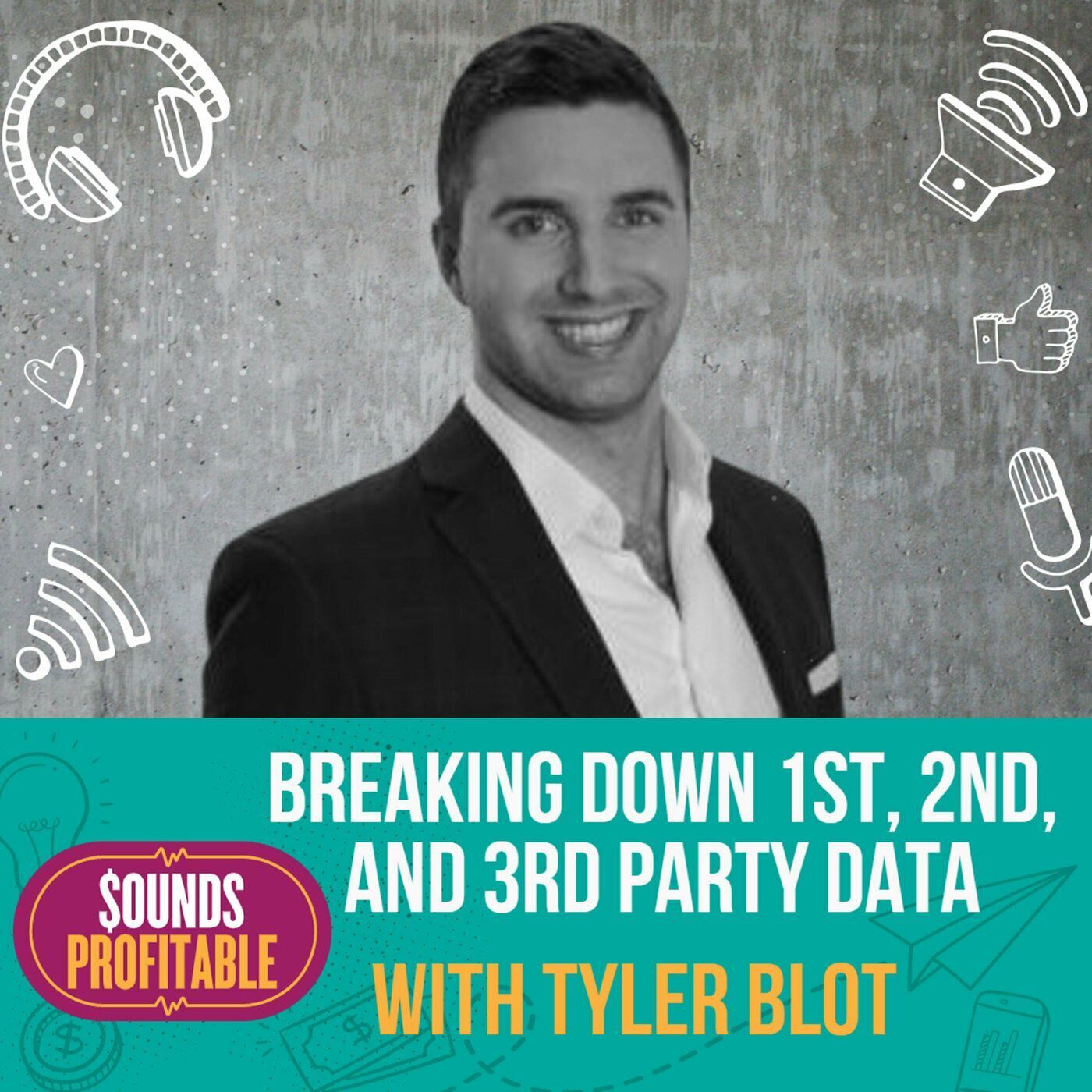
Ep 20Breaking Down 1st, 2nd, and 3rd Party Data
Today on the show, Bryan Barletta speaks with Tyler Blot, Director of Client Development at TransUnion about data -- 1st and 3rd party data, with a bit of 2nd party data thrown in there. They discuss the differentiating factors between the three of them and what you should know as an advertiser and consumer.Listen in to learn about: Transparency in data collection How and why your data is collected Why this conversation is important to have right now And much more! Here's our favorite idea from this conversation: You have to do your homework. While your industry peers can vouch for a product to a certain extent, you won't be able to make your decisions until you read the fine print.Links: TransUnion Tyler Blot The Download Sounds Profitable: Narrated Articles SquadCast Credits: Hosted by Bryan Barletta Co-hosted by Arielle Nissenblatt Audio engineering and transcriptions by Ian Powell Executive produced by Evo Terra of Simpler Media Special thanks to James Cridland of Podnews Sounds Profitable Theme written by Tim Cameron See omnystudio.com/listener for privacy information.
Ep 14Unsavory Developments At Stitcher After Buyout + 5 other stories for Mar 25, 2022
Today on The Download; A new article shines light on unsavory developments at Stitcher after their buyout, Chartable is shuttering SmartAds, and this year’s edition of The Infinite Dial was unveiled at Podcast Movement: Evolutions. Last Friday, Tom Webster published an installment of I Hear Things titled Podcasting’s Most Controversial Statistic. The statistic in question relates to an experiment run by Edison Research’s Podcast Consumer Tracker. The parameters of the experiment were simple: discern how many networks an advertiser would have to buy run-of-network spots to reach at least half of weekly podcast listeners, accounting for unduplicated reach. Webster goes into great detail explaining unduplicated reach, something The Download’s writer does not feel qualified to condense further. “When we ran these numbers a year ago, we discovered that you could reach 50% of weekly podcast listeners if you bought every show on the top seven podcast networks.” Webster has run the same experiment again using Q4 2021 data and that number has now dropped to one only needing to buy out ad space on four podcast networks to confidently reach fifty percent of podcast listeners. Webster stresses the importance of collective action for smaller, independent podcasters who don’t have the same ad-buying power of the bigger players in the industry. “I have a day job (I am sure you do, too), but if indie podcasters don't find a way to organize and consolidate their buying power, some monetization options are just not going to be available for them. For you.” On Tuesday The Verge published How SiriusXM Bought and Bungled a Beloved Podcast Network. **With extensive reporting by writer Ashley Carman and bespoke illustrations, the piece tells the story of SiriusXM’s acquisition of Stitcher from the founding of comedy podcast network Earwolf in 2010 to today. The 2020 SiriusXM and Stitcher merger came with many beneficial changes for both companies. SiriusXM gets all the benefits of a successful podcasting company while the producers get access to SiriusXM-level budgets, enabling podcasts under the Stitcher banner to grow and improve. “But according to 13 former corporate employees across Stitcher who spoke with The Verge anonymously because of nondisclosure agreements and fear of retaliation, the merger was marked by confusion, culture clash, and shifting objectives. Around 145 people worked at Stitcher when it was bought, and since then, more than a quarter of them have left, The Verge found through LinkedIn.” Carman’s article continues at length to detail systemic issues plaguing all but the most successful content creators through the multiple buyouts that lead to SiriusXM’s difficult transition period. A period plagued with mismanagement and miscommunication to the point one Stitcher employee had to explain to a SiriusXM team member that RSS feeds aren’t constantly-live feeds. The piece is a masterclass in how not to handle merging two completely different companies. A new post on the Chartable blog has announced the inevitable: Chartable has made the first step in winding down services available to users not on Spotify’s Megaphone. Chartable co-founder Dave Zohrob writes: “With Chartable now a part of Spotify, we will be shifting our focus to building world-class publisher tools as part of the Megaphone platform. For our advertiser customers, that means that we will soon be deprecating our SmartAds product and will no longer be supporting advertiser campaigns on the Chartable platform.” SmartAds campaigns can still be booked through April 21st. The final day for new impressions tagged with SmartAds will be June 30th. In the final paragraph Zohrob clarifies Chartable publisher products aren’t going anywhere, as these shutdowns only affect advertising products. For those wondering why this wasn’t a surprise announcement, we recommend checking out February 18th’s edition of The Download when we covered an article about the Chartable-Spotify acquisition. Now for a pivot away from acquisitions: Nielsen has not been acquired by a private equity firm. The original story, posted last Thursday to The Drum by Hannah Bowler, details the struggles facing the aging monolith and asks if a buyout would help. Neilsen, once synonymous with television monitoring, has been slow to adapt to the rapid evolution of what people watch and how they watch it. Now their older methodology combined with pending lawsuits alleging inaccurate counting and fraud by concealment threatens the company. “For the industry to trust Nielsen again, president and chief executive at the VAB Sean Cunningham says it needs to deliver - here begins a nested quote from Cunningham - “deep disclosures and real transparency, commitment to the modernization that sharply increased competition demands and increased collaboration versus increased collision with their major clients.” Then, this Monday, the story developed further. Frank Saxe, writing for InsideRadio, reported the
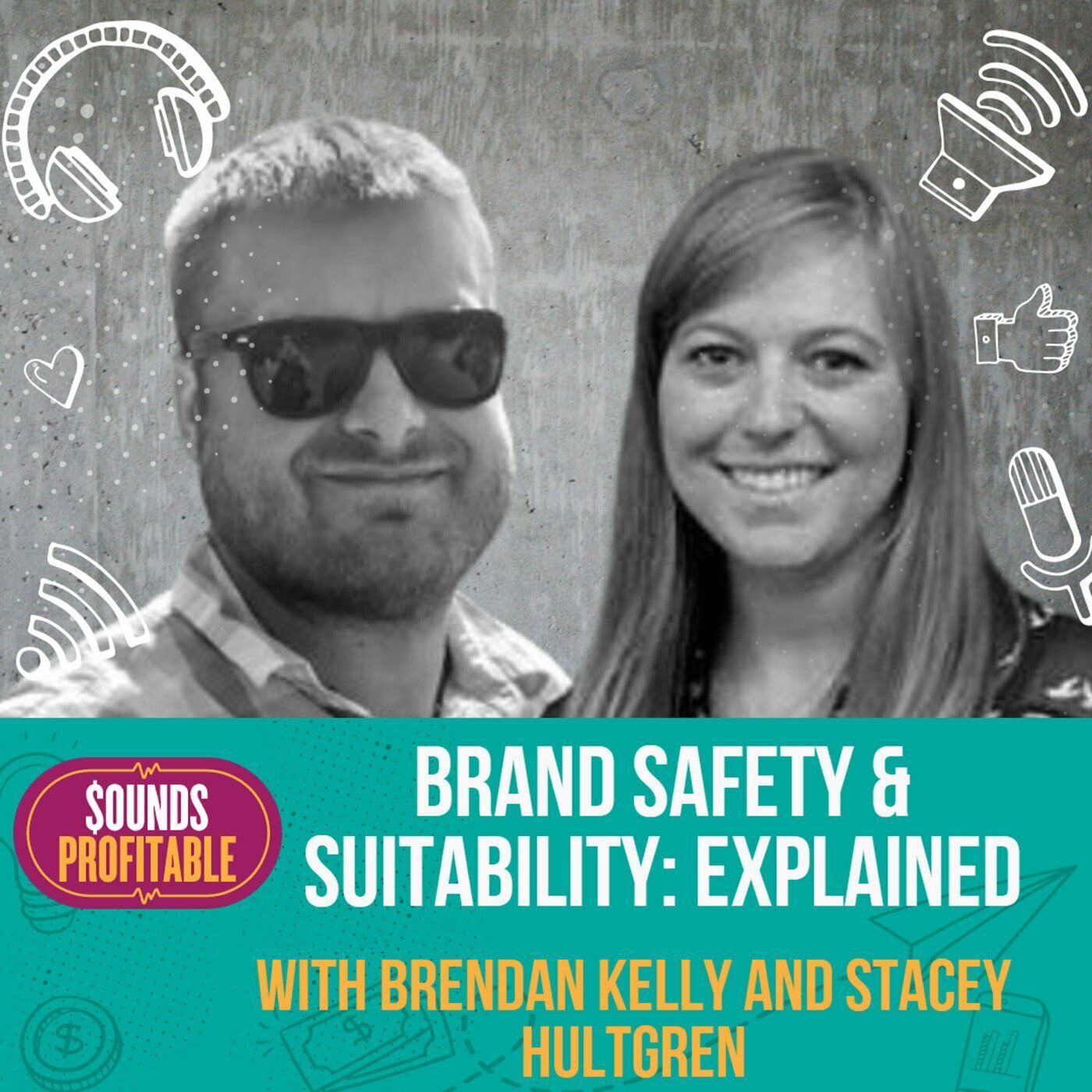
Ep 19Brand Safety & Suitability: Explained
Today on the show, Bryan Barletta sits down with Brendan Kelly (director of ad quality measure) and Stacey Hultgren (senior manager of ad quality measurement) of SXM Media to break down the concepts of brand safety and suitability. How do advertisers determine what shows are brand safe and brand suitable for them? They also discuss a proposal that Brendan and Stacey recently brought to an IAB working group, focusing on how transcripts can be used to ameliorate the process of determining brand safety and suitability for podcasts and audio.Listen in to learn about: The different between brand "safe" and brand "suitable. What is the IAB and how can you join? Why Bryan, Stacey, and Brendan think there's still ample time to get in on the ground floor and make changes. Why transcripts are so crucial for advertisers to acquire and consider. And much more! Here's our favorite idea from this conversation: Bryan uses the recent example of the Applebee's ad running on CNN's wartime coverage of Ukraine to explain brand suitability.Links: The IAB The IAB tech lab SXM Media The Download Sounds Profitable: Narrated Articles SquadCast Credits: Hosted by Bryan Barletta Audio engineering and transcriptions by Ian Powell Executive produced by Evo Terra of Simpler Media Special thanks to James Cridland of Podnews Sounds Profitable Theme written by Tim Cameron YouTube | The Young TurksCNN Airs Corny Applebee’s Ad While Covering Russia-Ukraine War iabtechlab.com-Established in 2014, the IAB Technology Laboratory (Tech Lab) is a non-profit consortium that engages a member community globally to develop foundational technology and standards that enable growth and trust in the digital media ecosystem. Comprised of digital publishers, ad technology firms, agencies, marketers, and other member companies, IAB Tech Lab focuses on solutions for brand safety and ad fraud; identity, data, and consumer privacy; ad experiences and measurement; and programmatic effectiveness. Its work includes the OpenRTB real-time bidding protocol, ads.txt anti-fraud specification, Open Measurement SDK for viewability and verification, VAST video specification, and DigiTrust ide… Show moreSXM MediaSXM Media — The Best of Music, Podcast, and Satellite Radio AdvertisingThis is the best of audio advertising, all in one place. Experience the power of audio across music, podcast, and satellite radio. (27 kB)https://www.sxmmedia.com/pod.linkThe Download from Sounds ProfitableThe most important news from this week and why it matters to people in the business of podcasting. Brought to you by Sounds Profitable. (85 kB)https://pod.link/1608566100pod.linkSounds Profitable: Narrated ArticlesSounds Profitable is a weekly newsletter that covers both strategic and tactical changes to the business side of podcasting. Articles cover a range of topics, from podcast adtech to new revenue models to innovative business initiatives and is read by senior podcasting industry management, including CEOs and divisional heads. Our mission is not to make the information from the podcasting industry more accessible to everyone, and this podcast feed is an extension of that. Each episode is a human-narrated version of the articles we publish on our site and in our newsletter, typically voiced by the author.See omnystudio.com/listener for privacy information.
Ep 13Beer Gets Into Video Podcast Advertising + 6 more stories for Mar 18, 2022
Today on The Download from Sound Profitable; Beer gets into video podcast advertising, kids podcast business is booming, and an appeal to private marketplace deals over FAANG, and more. Production company Crooked Media has kicked off a campaign incorporating a purely visual sponsorship into Offline with Jon Favreau, and it’s from a sector not frequently seen in podcasting. Morning Brew’s Alyssa Meyers covered the story last Friday, shining light on a YouTube-focused partnership between Crooked Media and Blue Moon beer, a subsidiary of Molson Coors. “For Blue Moon, Crooked agreed to add title cards that say ‘presented by Blue Moon,’ along with the brand’s logo, to the start of each Offline YouTube episode, Crooked Media VP of commercial marketing and creative strategy Joel Fowler told Marketing Brew.” In addition to the title card and host-read ads in each video, Blue Moon will also buy YouTube ad space specifically on Crooked Media’s YouTube channel. Joel Fowler told Marketing Brew Blue Moon is the first “bigger blue-chip brands that you’re seeing come into the podcast space.” Fowler foresees more Fortune 500 companies embracing multi-media podcast ad campaigns in the near future. Disinformation detection company NewsGuard is looking to provide brand safety by uprooting disinformation in podcasts. According to reporting by MediaPosts’ Joe Mandese: “NewsGuard is said to be in talks with at least three of the ad industry’s big holding companies to fund the new podcast rating service, and would reap a six-month exclusive window as part of the deal.” Mandese connects a renewed industry interest in new brand safety tools for podcasts to the latest controversy surrounding the resurgence of COVID-19 disinformation on Spotify’s The Joe Rogan Experience. NewsGuard aims to provide a personal touch with physical human analysts to employ prior knowledge and context to determine a podcast’s veracity, building lists of safe or problem podcasts as time goes on. While initially NewsGuard’s attempt to adapt their blog fact-checkers for podcasting sounds noble, it raises some eyebrows. It’s a proprietary tool that’ll have six-month exclusivity for the anonymous holding companies funding the project. Their chosen hands-on approach also isn’t scaleable like other solutions currently in production, like that offered by Barometer. Unlike NewsGuard, Barometer is using the publicly-auditable GARM framework and isn’t focusing on exclusivity with a particular investor. It is *The Download’*s opinion that the brand safety problem needs not be solved with proprietary solutions, but with accessible and easily-replicated frameworks. Once again J. Clara Chan over at Hollywood Reporter has some fun developments in the podcasting world. Published last Tuesday, Chan’s The Booming Business of Kids’ Podcasting gives a rundown of the big-name attention kids podcasts are getting. “Podcasts in the kids and family category have seen a 20 percent increase in listenership since 2019, according to NPR and Edison Research’s 2021 Spoken Word Audio Report. Podcast adaptations of hit children’s shows are proliferating, while, conversely, film and TV studios are becoming involved earlier than ever to snap up podcast IP catered toward kids.” That 20% number is likely quite low, as discussed in Lindsay Patterson’s Medium blog on how the Kids & Family category needs an overhaul. Regardless of where the number’s at, it’s good enough to get some big movers interested in kids’ podcasting content. Spotify has produced a podcast spinoff of the viral hit toddler sensory videos CoComelon. GBH Kids is producing an adaptation to continue the recently-retired PBS Kids series Arthur. On the opposite side of the equation Warner Brothers is optioning the TV rights from Gen-Z Media’s unreleased podcast 20 Million Views. According to Ben Strouse, CEO of Gen-Z media while speaking to Hollywood Reporter: “Everyone’s looking for great IP, especially great family IP, which is what we’re counting on.” As YouTube, television, and every other form of media has discovered: making content to entertain kids is profitable. Now podcasting just has to thread the tricky needle of advertising to younger audiences with legislation like the Children’s Online Privacy Protection Act severely limiting traditional advertising practices. On Wednesday Michael Korsunsky published the incredibly thorough op-ed “How Publishers Can Lessen Their Dependence on FAANG” in a Wednesday op-ed for Adweek. Korsunsky opens with a quick recap of the alleged handshake deal in which Google offered Facebook perks like lower digital ad fees in exchange for Facebook’s support of Google’s Open Bidding program. News that gives the appearance the F and the G of FAANG are colluding. For those not looking at the transcript: FAANG is an initialism of the five biggest players in tech consisting of Facebook, Amazon, Apple, Netflix, and Google. Well, technically with Google becoming an Alphabet company the last letter
Ep 30Podcasting's Most Controversial Statistic
Sorry about all the police sirens. I wasn't arrested. No, I had to record this on St. Patrick's Day. In Downtown Boston. It's like Christmas, but for alcotourists.Register for the 2022 Infinite Dial presentation here: https://www.eventbrite.com/e/the-infinite-dial-2022-tickets-290830069567?aff=edisonnewsletter&__s=xxxxxxxSupport for I Hear Things can be provided at https://www.buymeacoffee.com/TomwebsterSee omnystudio.com/listener for privacy information.
Ep 18The Low-Down From 'The Download' Team at Sounds Profitable
Manuela Bedoya, Shreya Sharma, and Gavin Gaddis are on the show today, chatting with Bryan Barletta about our newest podcast, The Download. If this is your first time hearing about it, The Download is our weekly podcast about the business of podcasting. It started in December, and was initially hosted by Evo Terra and Bryan Barletta. We quickly decided to bring in Sharma, Bedoya, and Gaddis to the production and hosting team. In this chat, learn more about the team behind The Download and why we decided this podcast was necessary in the first place, both for Sounds Profitable, and for the podcast industry. Listen in to learn about: How The Download team sources their news. How Sharma, Bedoya, and Gaddis stay up to date on the podcast world's happenings. Our goal for The Download An upcoming Spanish-language version of The Download, prominently featuring Sounds Profitable contributor Gabriel Soto of Edison Research How The Download fits into Sounds Profitable's overall mission And much more! Here's our favorite idea from this conversation: when each guest was asked where they get their podcast news, they cited each other's podcast newsletters -- Shreya Sharma writes Inside Podcasting, Manuela Bedoya curates the Podcasting, Seriously newsletter, and Gavin Gaddis is subscribed to all of 'em! Links: Follow Manuela Follow Gavin Follow Shreya The Download SquadCast Sounds Profitable: Narrated Articles Credits: Hosted by Bryan Barletta Audio engineering and transcriptions by Ian Powell Executive produced by Evo Terra of Simpler Media Special thanks to James Cridland of Podnews Sounds Profitable Theme written by Tim Cameron See omnystudio.com/listener for privacy information.
Ep 12Ad Tech Firms Under Fire For Data Scraping + 5 more stories for Mar 11, 2022
Today on The Download from Sounds Profitable; ad tech firms are under fire for data scraping, Amazon joins the social audio market, YouTube is paying podcasters to incorporate video, and more. Morning Brew’s Ryan Barwick reports that trade groups acting on behalf of publishers from the US, UK, and Canada are accusing ad-tech firms of unfairly scraping metadata from websites Once collected, this allegedly ill-gotten data is used to create contextual advertising segments for clients without the publisher’s consent, also undercutting the publishers’ attempts to directly sell contextual advertising deals. “Now that third-party cookies are dying and some ad dollars are shifting to contextual advertising—ads based on the content of the media, not on personal information—publishers want a (better) seat at the table and stronger terms as the industry adopts new technologies.” Richard Reeves, managing director of the Association of Online Publishers, summarized the issue of companies scraping data. “What we are now seeing is people almost brazenly walking through your home, and removing your furniture, and selling your assets elsewhere. And you don’t even know that they’re doing it, or you can’t receive any value for it. Just because you can doesn’t mean to say you should.” Data scraping isn’t new to podcasting, either. Transcription happens in podcasting, with and without a publisher's consent. It’s likely however this wider publisher issue plays out will have trickle-down effects to what companies can do with unlicensed podcast transcripts. Amazon has a new social audio app to make podcasters' dreams of being a DJ come true. Brad Hill of Rain News reports: “While early reports compare Amp to Clubhouse, Amazon’s promotional emphasis is on building interactive music shows, something like live, interactive radio.” Amp brings to mind an obscure podcasting tool Spotify launched for Anchor in late 2020. The feature, titled Shows with Music at launch, allows podcasters on Anchor to slot any song in the Spotify catalog between any pre-recorded podcast segments. Listeners with Spotify Premium would experience a seamless transition as if the music was baked into the podcast, while free listeners would hear a thirty-second preview of the song. Shows with Music still exists, technically, but has fallen by the wayside to become a feature hidden in the Anchor interface. Much like the forgotten podcasts from big-name creators covered last week. Amp, conversely, only requires listeners to sign up for a free Amp account to listen to creators. The Verge’s Jack Kastrenakes writes: “Amazon is positioning this as more of a radio-style service than a live chat service (there’s even a five-person cap on callers right now), which is probably for the best.” Shows with Music was a cool feature that enabled podcasters to live out their radio DJ dreams in a copyright-friendly manner. Another platform with a massive collection of licensed content at their disposal playing in this podcasting-adjacent space might just lead to more creativity and innovation in the social audio sphere. On Tuesday, podcasting ad tech company Gumball announced they had raised ten million in Series A funding. Brad Hill of Rain News reports, “Gumball, which was started by podcast comedy network Headgum, allows advertisers to programatically buy pre-recorded host-read ads. The system offers real-time inventory browsing, demographic audience targeting, and verification of placement and listening. The company lists a few brands which have used the system — Casper, CBS, Netflix, OkCupid, Squarespace, Warby Parker, and others.” Naturally, the Gumball system is deployed across the entire Headgum network, serving ads on flagship podcasts like The Doughboys, Punch up the Jam, and We Hate Movies. YouTube is taking podcasting seriously enough to put their money where their mouth is. Last Friday Bloomberg’s Ashely Carman reported both independent podcasters and podcast networks, all of which asked for anonymity, received offers ranging from $50,000 to $300,000 to create filmed versions of their episodes, as well as “other kinds of videos.” Video podcasts on YouTube historically have done well. As the platform matured from cat clips to encouraging content creators to make longer and longer content, the unedited video chat show took off. Productions like The H3H3 Podcast and The Joe Rogan Experience saw great success embracing the platform. That said, as Carman said, “However, the cost to build a studio, hire editors, and develop a fully functioning video publishing pipeline can deter networks and shows from adopting the platform.” In addition to these cash injections implying YouTube wants to seed more of a professionally-produced podcasting atmosphere, there are small infrastructure moves to suggest this is a long-term plan. Alex Castro at The Verge reminds readers that back in October YouTube began allowing Canadian users to listen to videos while the device was not focusing o

Ep 29The Care And Feeding Of A Podcast Audience
Register for the 2022 Infinite Dial presentation here: https://www.eventbrite.com/e/the-infinite-dial-2022-tickets-290830069567?aff=edisonnewsletter&__s=xxxxxxxThe top podcast networks, by reach: https://www.edisonresearch.com/u-s-top-podcast-networks-by-reach-q4-2021/The difficulty of "hits" in podcasting: https://tomwebster.media/the-oversimplified-superstring-hit-incubation-theory-of-podcasting/Support the show! Buy Walnut a treat! https://www.buymeacoffee.com/TomwebsterSee omnystudio.com/listener for privacy information.
Ep 17Unpacking Podcasting’s Good Data w/ Caila Litman
Caila Litman, author of Sounds Profitable's #GoodData series and longtime podcast industry professional, is on the show today. It's a special episode—sans regular host Bryan Barletta. Caila and Arielle Nissenblatt, who you usually hear at the top and bottom of each episode, discuss all things Good Data. If you've been wondering how our Good Data series came to be and what our goals are for it, this episode is for you. Listen in to learn about: How Caila finds, dissects, and evaluates data Caila's background (hint, she doesn't come from a math/statistics standpoint) Caila's goals for the #GoodData series and how she sees it evolving over the next few months Some of Caila's favorite recent stats from Nielsen and Edison Research The emergence of the "lighter listener" And much more! Here's our favorite idea from this conversation: Nielsen data has shown that COVID has propelled an emergence of the "lighter listener," people who don't listen to hours and hours of audio each week, but something closer to 1-2 hours. This is an opportunity for advertisers to target newer listeners. Links: Caila's first article Caila's second article Connect with Caila Litman Submit to The Podscape Podsights SquadCast The Download Sounds Profitable: Narrated Articles Credits: Hosted by Bryan Barletta and Arielle Nissenblatt Audio engineering by Ian Powell Evo Terra is the executive producer of Sounds Profitable: Adtech Applied Special thanks to James Cridland of Podnews Sounds Profitable Theme written by Tim Cameron See omnystudio.com/listener for privacy information.
Ep 11Big Name Podcasts Gets Big Numbers + 5 other stories for Mar 4, 2022
Today on The Download from Sounds Profitable; big names in podcasting are pulling down big numbers in ad revenue, Meta and Mozilla have teamed up to change advertising privacy, and TikTok might not be the #1 place to take short-form podcast content. https://www.morningbrew.com/marketing/stories/2022/02/25/ads-from-major-brands-are-running-on-news-sites-owned-by-or-linked-to-the-russian-government?utm_campaign=mkb&utm_medium=newsletter&utm_source=morning_brew&mid=4afb33bb7ffe284d840660fb3604ff60. Ryan Barwick of Morning Brew wrote a brief rundown of the situation last Friday. According to a Business Insider report, Google AdSense has been found on publishers of Russian state propaganda. “While on those sites, BI observed Google-served ads from Best Buy, Progressive, and Allbirds, and a handful of other brands. Marketing Brew also saw ads for brands on these two sites, but a banner ad atop several stories was blocked by Integral Ad Science, a brand-safety firm.” Barwick then pairs this evidence of brand safety kind-of working with the infamously-timed Applebee’s promotion that aired in a split-screen ad break with footage of Kyiv under siege. The ad, featuring footage of a man in a cowboy hat gyrating his butt in glee over $1 boneless chicken wings, went viral on social media for its grim pairing with footage of burning buildings. “What do these stories have in common? Funding journalism. Advertisers often don’t want to fund inflammatory, hateful, or controversial content. While brand-safety tech might help marketers avoid having their ads showing up on propaganda sites, it can also direct their ads away from legitimate coverage of political or other sensitive topics, inadvertently hurting newsrooms as a result.” Both the propaganda site ad serves and Applebee’s pulling from CNN serve as evidence of extremes of what could happen in similar spheres of podcasting. To ignore brand safety and the messaging of associated programs is a recipe for being associated with disinformation and propaganda. To overcorrect and leave the space entirely could leave journalism podcasts without the stability of CNN in a financial pickle. https://www.morningbrew.com/marketing/stories/2022/02/24/audio-giants-report-ad-revenue-gains-for-2021?utm_campaign=mkb&utm_medium=newsletter&utm_source=morning_brew&mid=4afb33bb7ffe284d840660fb3604ff60. SiriusXM, Spotify, Acast, and iHeartMedia all show significant growth. Both Spotify and Acast posted a 40% year-over-year increase for ad revenue while SiriusXM-owned Pandora experienced a 30% growth. The biggest headline-grabber of the bunch, though, is iHeartMedia “Q4 revenue grew 59% in iHeartMedia’s ‘Digital Audio Group’ division, which encompasses iHeartMedia’s podcasting business, digital service, and ad-tech companies. Podcast revenue alone increased 130% YoY. The company said the growth was partly due to ‘general increased demand for digital advertising’ and ‘the growing popularity of podcasting.” It appears the industry-wide trope of saying podcasting ads are fast-growing is less of a marketing pitch and more a truism as more companies rake in those fast-growing profits. Up next we have a story shuffled into the digital stack of news and left by the wayside: Spotify appears to be better at announcing podcast deals than actually publishing podcasts. https://www.businessinsider.com/spotify-star-podcast-partners-few-shows-insiders-tumult-2022-2, much of the original reporting on the subject was done by Podnews’ James Cridland in the December article https://podnews.net/article/missing-spotify-shows As Cridland and others report: a great deal of splashy Spotify projects announced since December of 2020 have yet to come to fruition. Some announcements were vague deals akin to a popular actor signing a multi-picture deal with a prominent movie studio. Others, however, appear to have died on the vine. Warner Brothers and DC Entertainment’s celebrity-studded Batman audio fiction series has fallen off the radar since announcing its cast last June. British royalty power couple Meghan and Harry signed up in December of 2020. The most concerning is Kim Kardashian West’s partnership with Spotify and Parcast. Cridland writes “In March 2021 she hinted she was ready to release her episodes. Where are they?” https://www.emarketer.com/content/tiktok-short-video-app-us?ecid=NL1001 In fact, the data gathered by CensusWide in late January puts TikTok in third place with 53.9% of respondents sixteen and up. The top two are Facebook and YouTube with 60.8 and 77.9% respectively. As podcasters explore video podcasting, or simply video clips promoting their shows, TikTok is constantly brought up. The format of what makes a successful Facebook or YouTube video are far different than what pleases TikTok’s famous algorithm, making it difficult to reuse assets. The results of this study seem to imply that while TikTok is valuable, those new to video as an advertising medium would have a bette
Ep 28What Podcasting's Best Customers Think Of Podcast Ads
The full Super Listeners Study is available here: https://www.edisonresearch.com/super-listeners-2021-from-edison-research-and-ad-results-media/Support the show at: https://www.buymeacoffee.com/TomwebsterSee omnystudio.com/listener for privacy information.
Ep 16Radio Teaching Podcasting Lessons w/ Pierre Bouvard
Pierre Bouvard, Chief Insights Officer at Cumulus Media, is on the show today to speak with Bryan Barletta about what podcasting can learn from radio and other legacy media. Bouvard develops media and marketing insights to support Cumulus's 1300+ media sellers. He works with brands and agencies to craft targeting and measurement solutions. As always, Arielle Nissenblatt joins Bryan at the top of the show to introduce the conversation. She then rejoins after the chat to break it all down, giving listeners actionable next steps. Listen in to learn about: Bryan and Arielle's favorite radio stations Why Bryan and Pierre think ads should be no longer than 90 seconds How to write impactful ad copy for audio What the listening public really thinks about ads on their podcasts (i.e. did you know they'd be ok with more?) Listener behavior as it relates to advertisement consumption on podcasts and on radio An instructive note from Bryan about updating your pitch decks! And much more! Here's our favorite idea from this conversation: The job of advertising is to help a brand or product be known before they’re needed. Links: The Download Sounds Profitable: Narrated Articles Pierre Bouvard Cumulus Media Signal Hill Insights Submit to The Podscape Podsights SquadCast Credits: Hosted by Bryan Barletta and Arielle Nissenblatt Audio engineering by Ian Powell Evo Terra is the executive producer of Sounds Profitable: Adtech Applied Special thanks to James Cridland of Podnews Sounds Profitable Theme written by Tim Cameron See omnystudio.com/listener for privacy information.
Ep 10Libsyn Grows Monetization + 4 more stories for Feb 25, 2022
Today on The Download, Libsyn grows monetization, LinkedIn launches a podcast network, and what the new Privacy Sandbox feature for Android means for marketers. Let’s get started. Libsyn has bought another podcast representation firm, this time acquiring PAR - Podcast Ad Reps. With the acquisition LibSyn brings around 120 podcasts that were currently under representation with PAR under the LibSyn-owned AdvertiseCast banner, further building out the company’s monetization arm. According to Libsyn CEO Brad Tirpak in the official press release: “With the acquisitions of AdvertiseCast in June 2021 and now PAR, Libsyn is well-positioned to continue to rapidly scale in the podcast advertising market, which PWC estimates will reach around $3.5 billion by 2025. We plan to continue to invest in our award-winning hosting platform, expand both our host-read and programmatic advertising efforts, and look for new ways to make Libsyn the preferred destination for both creators and advertisers.” All of this continues to show another side of Libsyn, a company that previously swore it would never have a free hosting platform and was anti-targeted advertising is now a large, tech-focused ad platform. Australian podcast producer LiSTNR has branched out into audio fiction. From Radio Today’s Kim Napier: “LiSTNR is investing in audio fiction with book adaptations by Australian authors to bring audiences compelling audio stories, with Bryden Media casting Australian actors to deliver the stories in different podcast formats as episodic series or audio movies.” Both LiSTNR’s slated audio movies and standard serialized audio fiction podcast adaptations reflect a building synergy and momentum between podcasting and publishers, two factions that’ve circled each other since before the coining of the term podcast. Until now audio fiction as a genre has remained a largely under-utilized sector of podcasting. With industry moves like this, we could be seeing enough momentum building to change that for the better. Over on The Rebooting’s Substack newsletter, Brian Morrissey has published a piece titled “End of an era of ad targeting: Publishers will need closer ties to their audiences.” In addition to being an excellent overview of privacy on the web and how business has worked to take full advantage, Morrissey stresses the importance of adapting with changing tech. “Primary-engagement media will gain. As I’ve written, I believe the next phase of digital publishing will favor quality over quantity in terms of audiences. Those publishing brands that put community at their core will thrive since it easily lends itself to a direct relationship that will make those audiences far more valuable than a random collection of people who mindlessly tapped a link on their Facebook feed. There’s a reason that Squarespace found podcasts such an efficient way to acquire customers. The newsletter boom is a signal of where publishing is going.” Morrissey reflects on the very first ad sold on the internet circa 1994 as a reflection of how much online marketing has changed and what modern advertising can learn from the mistakes made back then that’re still made today. It’s time to update that profile you’ve been neglecting. Business-focused social media network LinkedIn launched a podcast network on Wednesday. The network has a dozen shows at launch that, according to protocol’s Veronica Irwin will, “...cover topics ranging from mental health to startup trends. With the announcement, LinkedIn joins the ranks of tech companies attempting to become the favorite hub of content creators and influencers.” The social network’s launch appears to have gone incredibly well, with their flagship show “Hello Monday,” gaining 4 million downloads in its first day. Over on Digiday, Ronan Shields and Seb Joseph have made a post aiming to decode the implications of Google’s nebulous new Android feature Privacy Sandbox for advertisers. “The main takeaway: Google says it will work with the industry to establish a set of technical standards that will enable ad targeting and measurement online after traditional targeting tools, like mobile identifiers, are retired on its Android devices. Why is this important? It’s pitched as the inverse of Apple’s own scorched earth plan to do something similar.” While Privacy Sandbox might be of some concern eventually, maybe, Shields and Joseph’s interpretation of existing news suggests: “...marketers needn’t panic over the latest announcement.” At the risk of this becoming a regular segment, we’ve got another article the staff of The Download recommend checking out. This week: “What is Podcasting 2.0, and why is it important” by Podcode’s Mark Steadman. While ostensibly written for podcasters, namespace changes are something the people in the business of podcasting need to be aware of, if not outright adopt. Steadman’s primer on podcasting 2.0 is a great start. The Download is a production of Sounds Profitable. Today's episode was hosted b
Ep 15Solving For Pain Points w/ Sean Howard
Sean Howard, founder of Flightpath and of Fable and Folly, talks with Bryan about solving for pain points in adtech, collaboration with your competitors, and how we're truly only at the beginning of podcasting. Sean Howard of Flightpath Credits: Hosted by Bryan Barletta of Sounds Profitable - [email protected] and Arielle Nissenblatt Audio engineering by Ian Powell Executive produced by Evo Terra of Simpler Media Special thanks to James Cridland of Podnews Podcast hosting and dynamic insertion wizardry by Whooshkaa Sounds Profitable Theme written by Tim Cameron Send us messages with Yappa!Join the Podscape Podcast: https://bit.ly/3rHLxgDCheck out The Download: https://omny.fm/shows/the-download-from-sounds-profitableSee omnystudio.com/listener for privacy information.
Ep 9Amazon Exclusivity Deals Galore + 4 more stories for Feb 18, 2022
Today on The Download, Amazon continues their streak of signing exclusivity deals, agents are becoming more of a common site in podcasting, and Spotify buys both Podsights and Charitable. Good news for those who missed Ad Result Media and Edison Research’s big webinar on 2021 data from Super Listeners: Caila Litman live-tweeted the event! Litman, author of Sound Profitable’s column #GoodData, posted a thread of 17 tweets containing screenshots and quotes full of juicy data. According to the thread, podcast power users are eagerly engaging with podcast advertising. 74% Super Listeners are visiting a product or service’s website after hearing it promoted on a favorite podcast. 53% of those listeners agree they have a more positive opinion of a company when it’s mentioned on a podcast they regularly listen to. A 9% increase from 2019 data on the same question. After last week’s Amazon-heavy coverage we’re mixing things up with... another Amazon acquisition! Amazon Music and Wondery have signed How I Built This with Guy Raz. The deal gives Wondery exclusive ad sales and YouTube distribution rights for simulcasts while all new podcast episodes will have Amazon Music exclusivity for one week. Meanwhile, NPR keeps radio distribution rights and underwriting credits. In addition, How I Built This will ramp up to a twice-weekly upload schedule. Amazon’s just getting started in podcasting and deals like this indicate podcast ads are clearly working for them. In addition, their premium Wondery+ subscriptions in their own bespoke app and through Apple Podcast subscriptions are working well enough to continue obtaining more timed exclusive content. Now we find Amazon at an interesting moment in regards to acquisitions. They’ve got Art19 for tech, Amazon Music for distribution, and Wondery to produce and publish content. Their biggest space for growth is ad sales, something that might change if their offer to buy Audioboom is chosen over competitor Spotify. If big green gets the company, they effectively buy a company that does something they can already do well. Buying Audioboom would effectively eliminate competition in their field. If Amazon gets the purchase they get closer to a full package of podcast monetization that will become incredibly hard to compete with. For brevity’s sake, we’ve combined two stories into one segment, as iHeartMedia appears to be in the mood to form partnerships this week. Partnership number one: iHeart partners with Sounder to bring brand safety to audio. At the moment, all current brand safety and suitability solutions are built for text. If one wants to turn one of those services on for podcasting, the podcast has to be transcribed. This partnership provides similar value to what Adswizz and Acast implemented with Comscore to contextually categorize their inventory for targeting and brand suitability. This is just a first step, though, as the data has to be actionable by buyers, sellers, and planners in their tools directly. As things currently stand, it feels like the overall podcast industry would benefit more from building a unified framework to tackle this problem than everyone splitting off and doing duplicate work to build their own solution. And partnership number two: iHeart is looking to broaden its global podcast outreach by partnering with Veritone to use their translation and synthetic voice AI tech to, as Brad Hill reports on RAIN News “translate and synthetically voice iHeart’s leading podcasts for Spanish-speaking markets.” With this Veritone partnership, iHeart is on track to be able to have their more popular podcasts available in global markets via synthetic translated voices. Our Valentine’s gift this year is an article from The Hollywood Reporter’s J. Clara Chan interviewing talent agents tasked with signing big podcasts. Podcasting is growing fast and a big sign of that is the prevalence of agents. Behind every big acquisition story is an agent getting into a relatively new field and helping the producer. With the industry growing at an exponential rate podcasting has a growing need for representation and agents seem to be stepping up to rep shows big and small. Chan reports: “As Hollywood fully buys into podcasting, multimillion-dollar deals are the norm for the crème de la crème of shows, while a growing audio advertising marketplace has allowed more podcasters to make a good living off their work as the industry is expected to exceed $2 billion in ad revenue next year. The major talent agencies have jumped on the train and are building out their audio divisions, with agents increasingly working on podcast deals with clients.” The big players in podcasting are chasing the new trend of acquiring IP to adapt, and agents are taking notice. Finally, the biggest news in podcasting this week: Spotify has purchased both Podsights and Chartable. With the acquisition, the podcast measurement service Podsights will remain available to the public. Quoting from Tech Crunch’s Sa
Ep 14Programmatic and Transparency w/ Jordan Bentley
Jordan Bentley, Founder of Audiohook, talks with Bryan about transparency, waterfalls, programmatic advertising, and how Podcasting still has a chance to start things the right way to lead to a better future. Jordan Bentley of Audiohook Credits: Hosted by Bryan Barletta of Sounds Profitable - [email protected] and Arielle Nissenblatt Audio engineering by Ian Powell Executive produced by Evo Terra of Simpler Media Special thanks to James Cridland of Podnews Podcast hosting and dynamic insertion wizardry by Whooshkaa Sounds Profitable Theme written by Tim Cameron Send us messages with Yappa!Join the Podscape Podcast: https://bit.ly/3rHLxgDCheck out The Download: https://omny.fm/shows/the-download-from-sounds-profitableSee omnystudio.com/listener for privacy information.
Ep 8SmartLess Media Launch + 4 more stories for Feb 11, 2022
Today on The Download: Today: Amazon inherits a celeb-powered podcasting company, new ad revenue numbers forecast good news for podcast investment, and a new op-ed asks where has Facebook’s fervor for podcasting gone? Celebrity chat podcast Smartless, hosted by Jason Bateman, Will Arnett, and Sean Hayes, recently launched production house SmartLess Media. With former Jon Stewart-era Daily Show producer Richard Korson at the reins as president, SmartLess Media is poised to add multiple new stars to the relatively small constellation of Amazon-owned podcasts. The new company has sprung into existence following a prior deal in which the trio of celebs licensed the podcast SmartLess to Amazon Music and Wondery in a deal, as reported by Deadline’s Peter White, “thought to be valued at between 60 million to 80 million.” According to White, this deal also extends to shows created by the fledgling production house, meaning SmartLess Media’s promised slate of “weekly series, narrative, and limited podcasts,” are subject to first-look exclusivity with Amazon. It appears through careful future-proofing and investment during the licensing deal when SmartLess was just one podcast feed, the shopping and streaming conglomerate has inherited a celebrity-fronted production company wholecloth. And they continue to have rights to the original product’s momentum, which currently fuels a cross-country live tour set to wrap up this weekend. Speaking of Amazon: in a first for the company, Amazon has broken down its advertising revenue as a distinct category instead of bundling it with other earnings. The decision to do so now and not last year when they posted a ten billion profit increase from 2020 to 2021 remains unseen, but we’ll take it. According to Business Insider “at $9.7 billion in the quarter, up 32% year-over-year, ad revenue was one of Amazon's fastest-growing areas.” With their fostering SmartLess from a simple podcast acquisition into a brand-new source of content production, Amazon appears to show no sign of slowing growth in media properties that can help fuel this advertising boom. Amazon’s continued heavy spending in podcasting could be an indicator they believe in the medium’s ability to help continue ad revenue growth. Continuing the theme of growth: eCommerce is on the rise globally. Sara Lebow of eMarketer provides statistics breaking down the top ten countries with the biggest increase in ecommerce made over any internet-capable device that excludes travel, bill payments, gambling, food service, or anything that falls under the “vice good” umbrella. To quote the article: “The Philippines and India will lead the world in retail ecommerce sales growth this year, with respective increases of 25.9% and 25.5%. Countries in Latin America and Southeast Asia will make up most of the top 10 list, while the last spot will go to the US, the only advanced economy to slide into the rankings, with 15.9% growth.” A significant portion of podcast advertising is still direct-to-consumer and significantly focused on the US. The country that’s coming in tenth out of the top ten. That, combined with emerging podcast markets or strong pre-existing histories with audio in countries represented in the top nine shows podcast advertising has room to grow. Growth that might shift to bucking the existing status quo of purely targeting North American customers. New podcasting app Fountain aims to make things easier for podcasters to receive tips from their audience in the form of Bitcoin Lightning, a system simplifying the process of transferring one hundred millionths of Bitcoin between users. The biggest barriers to entry for such a scheme have been the need of a digital wallet, the process of buying crypto for said wallet, and the ID of another person’s wallet to be able to transfer the crypto to an intended recipient. While those hurdles still exist for the person intending to send the money, startup Fountain solves the initial problems for podcasters on the receiving end of Value 4 Value transactions by creating a wallet on their behalf. Several larger podcasts have embraced the service, including Jack Rhysider’s Darknet Diaries. In this week’s Hot Pod Insider, Ashley Carman published an op-ed about Meta (nee Facebook), their profit woes, and the question mark that leaves for Facebook podcasting. Carman writes: “I wondered if brands would start spending more money on podcast ads simply because Facebook’s aren’t as powerful. Maybe that’s worth another check-in, but instead, I’m now wondering how this tech informs Facebook’s decision to pursue podcasts on its platform.” With the social media giant reporting a decline in users for the first time in its existence alongside declining profits, a second “pivot to video,” and a full-throated commitment to rebranding VR gaming headsets as office supplies, Facebook’s previous interest in embracing podcasts seems to have been lost in the shuffle. Quote “I’m unclear where that team stands or
Ep 13Disinformation and Ad Accountability w/ Claire Atkin
Claire Atkin, co-founder of the brilliant non-profit Check My Ads, talks with Bryan about disinformation, ad accountability, and the steps you should be taking to make sure your brand is being seen where you want it to. Claire Atkin of Check My Ads Link discussed in Episode:https://checkmyads.org/branded/ Credits: Hosted by Bryan Barletta of Sounds Profitable - [email protected] and Arielle Nissenblatt Audio engineering by Ian Powell Executive produced by Evo Terra of Simpler Media Special thanks to James Cridland of Podnews Podcast hosting and dynamic insertion wizardry by Whooshkaa Sounds Profitable Theme written by Tim Cameron Send us messages with Yappa!Join the Podscape Podcast: https://bit.ly/3rHLxgDCheck out The Download: https://omny.fm/shows/the-download-from-sounds-profitableSee omnystudio.com/listener for privacy information.
Ep 7Is The IAB On Borrowed Time? + 4 more stories for Feb 4, 2022
Today on The Download: is the IAB on borrowed time?, podcast ads see big gains again, Google makes misinformation less profitable, podcasts grow globally, SXM enters the identity game, and Spotify stands behind Rogan even as earnings fall. Let's get started. Neilsen spells doom for IAB In the world of TV, Nielsen measurement has been the defacto solution that deals are guaranteed against for decades. But now, according to https://digiday.com/future-of-tv/advertisers-tv-networks-plan-to-set-nielsen-alternatives-as-shadow-currencies-in-this-years-upfront-negotiations/ and for some publishers and campaigns, replacing them completely. Nielsen took its fair share of lumps last year, with the https://www.adexchanger.com/tv-2/an-update-on-nielsens-re-accreditation-journey-and-whats-next-for-the-mrc/#:~:text=In%20late%20August%2C%20the%20MRC%27s,media%20companies%20finally%20boiled%20over.&text=The%20MRC%20released%20its%20final,measurement%20standards%20in%20September%202019.. And with their newly announced plans for Nielson One, a cross-measurement product, there is a lot of comfort in using new measurement partners in parallel to compare to current Nielsen reporting, while publishers determine their path forward. Incumbent measurement solutions are incredibly hard to shake, and this change in the TV landscape doesn’t mean that overnight, Nielsen won’t be the primary solution or that they’ll ever necessarily lose that top spot. But it does mean that any measurement solution that represents an industry can and should be challenged, to better represent the industry and all those participating in it. IAB measurement of podcasting may be the default today, but we should always keep an open mind to better opportunities. Podcast Ads See Big Gains—Again! Good news for the podcast advertising industry! https://www.advertisecast.com/podcast-advertising-rates Their most recent study of the 2,515 podcasts tracked shows that aggregate or the average CPM is now $25.37, which is up from $22.50 this time last year. Doing the quick math shows that’s an increase of 12.7%. Nice And the news is even better for shows with the largest audiences. According to AdvertiseCast’s data, shows that see over 100K downloads are getting an average of $23.08, up from $20.09 a year ago. That’s a 14.6% increase year over year, and great news for the growing value of podcast advertising. CheckMyAds Makes Misinformation Less Profitable The nonprofit adtech industry watchdog CheckMyAds continues to gain traction on holding platforms accountable for monetizing disinformation content. https://www.mediapost.com/publications/article/370781/google-stops-serving-ads-to-website-of-fox-news-ho.html?utm_source=newsletter&utm_medium=email&utm_content=headline&utm_campaign=125147&hashid=u70GlKs7RsqyAMPsHBEpeg. This comes just a week after YouTube permanently banned Bongino from the platform for, you guessed it, repeated violations of YouTube’s COVID misinformation policy. Quoting from the piece: It is not clear how much revenue Bongino will lose as a result of the Google Ads and YouTube bans. However, as Engadget noted, https://twitter.com/catthekin/status/1487108665513439240?s=20&t=P7thsM49qVb6LebdNzOD1Q, co-founder of the digital disinformation-fighting nonprofit https://checkmyads.org/, tweeted that Gateway Pundit lost $1.1 million in annual revenue after its Google AdSense account was revoked for spreading COVID and election misinformation. Quick side note: Clair Atkin is my guest on the next episode Sounds Profitable: Adtech Applied, if you are not already subscribed. What’s most interesting is Google, at least with their ad platform, doesn't have to make a decision on whether to censor content or not. Instead, they make the decision whether or not to fund it through their ad solutions. So sure, you can say anything you want on your own platform. But with this move, Google is saying pick someone else to make it profitable, a trend we hope to see echoed through all of media. Growing Podcasts Globally Every indicator shows podcasting has had a heck of a growth trajectory over the last few years. But even though we count our numbers now in the millions, it’s still dominated by English-speaking podcasts. But that may be changing. In https://digiday.com/media/how-podcast-publishers-and-platforms-are-working-to-grow-non-english-language-audiences/. Quoting from the piece: Of the 600,000-plus podcasts that launched in 2021 [that had declared] a language [in the RSS feed], a majority – 53% – tagged a non-English language, according to [Dave] Zohrob [of Chartable]. By contrast, in 2020 less than half of the 900,000 new podcasts debuted in 2020 were in non-English languages. Knowing that the majority of new podcasts launched last year are presenting information in a language other than English is a huge turning point for the global-ness of podcasting, which should be welcome news for any podcasting business looking to expand their global foot
Ep 27Scattered To The Wind
Register for the Super Listeners webinar (free presentation on Feb 16)We WANT TO BE FREE: https://www.youtube.com/watch?v=xsHly9UuQ-ASupport the show at Buy Me A Coffee!See omnystudio.com/listener for privacy information.
Ep 6HBO Gets Serious About Podcasting + 4 more stories for Jan 28, 2022
Today on The Download: is the IAB on borrowed time?, podcast ads see big gains again, Google makes misinformation less profitable, podcasts grow globally, SXM enters the identity game, and Spotify stands behind Rogan even as earnings fall. HBO Max is Hiring For Their Podcast Marketing Team Subscription streaming video service HBO Max continues to prove its serious about podcasting. Their first venture into the space dropped last summer with Batman: The Audio Adventures, an exclusive podcast that could only be listened to in HBO Max app itself.While HBO maintains podcast channels on Spotify and Apple for related content, just like their peers at Netflix, this is the first podcast to be exclusively hosted in a subscription video streaming app.Now, they're looking to hire a new role, specifically for podcasting under the HBO Max brand. The role is for a Sr. Analyst, Direct-to-Consumer, Podcasting Strategy & Operations, and will “provide strategic and analytic support on various projects covering direct-to-consumer and HBO Max Podcasting initiatives. Interactive Voices Lack Diversity If you missed CES 2022 because... well, reasons; you probably saw a plenty of breathless reporting of new prototypes and maybe-coming-in-the-future tech. Steve Keller, Sonic Strategy Director for Studio Resonate, SXM’s audio-first creative consultancy has an in-depth piece on things he noticed at the event of interest to audio people like us. Like a lot of tech around the explosion of interactive voice systems. But he also noticed something else: Quoting from the piece: But something was missing. Innovation aside, the lack of sonic diversity in the voice sector was disturbing. [P]ractically all the AI voices we heard at CES 2022 were female—and white. In fact, the only voice assistant of color heard was during a series of sessions focused on voice technology, curated and moderated by attn.live CEO, Ian Utile. Multiple panelists affirmed that there’s an underlying problem with the overwhelmingly white, male demographics of the AI world who are unconsciously programming biases, sonic color lines, and digital discrimination into voice systems. As a result, the default voice of automotive assistants, connected homes, and a plethora of other devices is white. The issue is compounded by the fact that these assistants, designed to serve us, are also predominantly female. It’s a systemic problem, and developers and brands need to work harder to sonically diversify their voice systems, as well as the designers, engineers, and developers who create them. With DEI so high on the priority list for most companies, it’s surprising this problem exists. No, wait. It’s not surprising at all, is it? Google’s Federated Learning of Cohorts Replaced by Topics While third-party cookies aren’t part of the information we receive from listeners in podcasting, they are a big part of the device graphs we use to augment what we do receive and improve how we run attribution. So while Safari and Firefox kicked them completely to the curb in 2020, Google has pushed out their deadline for when they’re twilight third-party cookies until 2023. And their original pitch, Federated Learning of Cohorts, or FLoC for short, has now been scrapped for what they’re calling Topics. FLoC grouped audiences based on their browsing activity at a very granular level, where Topics focuses on applying a list of topics, starting at around 300 but expected to be in the thousands, directly to the individual. Only the top three most prevalent Topics will be available for targeting and identification, but what’s really interesting is that they expire every three weeks, keeping them increasingly fresh and relevant. Topics fit in nicely with the contextual offerings that podcasting is primed to offer advertisers if we continue to prioritize transcription and contextual targeting. Podcasting Only Looks Hit-Resistant If you somehow avoided the kerfuffle over the Bloomberg Article where Lucas Shaw reported on podcasting’s inability to generate a current hit... well, I’m not sure how you did. There have been a lot of hot takes on the article, but one worthy of your attention was penned by Tom Webster in his weekly newsletter, I Hear Things.It’s a fascinating read, with Tom pointing out that other mediums, like movies, television programs, and music all have the same “problem”. They just present differently. Examining the top movies from last year, Tom notes: Even if you go further down the list from the top 10, it's sequels, movies based on existing properties, and remakes. Is it fair to say that the movie industry hasn't produced a new hit in years? No--all the above movies are new movies, but they are familiar at the same time. He goes on to make a similar case for popular television programs - The Bachelor season 26, anyone? - and even music, going so far as to craft metaphors around melody and harmony to predict a hit. Working that back to podcasting, Tom says: Podcasting is, by its v
Ep 47A Deep Dive on Device Graphs w/ Chase Miller of Claritas
bonusChase Miller, EVP of Strategy and Corporate Development at Claritas, joins us for our latest product deepdive. We talk about device graphs, legacy, "The Barletta Household", and why having good data is so incredibly important.Think of the product deepdives like the final meeting your company would have with an adtech vendor, fully running through what the product actually is and how it’s used. No power points, press releases, or marketing presentations here. It’s time for some detailed product reviews.This event is free to attend and will be made available on demand. We respect your time, and planning your day around a webinar isn't fun for anyoneSee omnystudio.com/listener for privacy information.
Ep 26The Oversimplified Superstring Hit Incubation Theory Of Podcasting
The "podcasting isn't creating new hits" article: https://www.bloomberg.com/news/newsletters/2022-01-09/podcasting-hasn-t-produced-a-new-hit-in-years2021 Top Movies: https://www.pastemagazine.com/movies/box-office/highest-grossing-movies-of-2021/#2-shang-chi-and-the-legend-of-the-ten-rings2020-21 Top TV Shows: https://variety.com/2021/tv/news/most-popular-tv-shows-highest-rated-2020-2021-season-1234980743/Larry Rosin's article: https://radioink.com/2022/01/11/music-radio-a-kingdom-of-gold/?vgo_ee=6dAkE8pCl7%2FUnVnkEHwyU9dBEzid0g%2F0Hme0NU6Dyjw%3D&fbclid=IwAR27qCcEzU0V8BrM6HwYtsKQ0zVAhsmO06EPe_nbSK6HI-52CPjLYXUMjS0"Killing New Music" from Ted Gioia: https://tedgioia.substack.com/p/is-old-music-killing-new-musicSupport the show at https://www.buymeacoffee.com/TomwebsterThanks for listening!See omnystudio.com/listener for privacy information.