Sounds Profitable
1,078 episodes — Page 19 of 22
Ep 42A DeepDive Retrospective
Just what is a Sounds Profitable DeepDive, and what have they covered this year? What drove Bryan Barletta to create them in the first place? Read on to find out. Credits: Written by Bryan Barletta Edited by Bryan Barletta Produced with Spooler.fm Hosted with Omny Studio Sounds Profitable theme written by Tim Cameron Sounds Profitable: Narrated Articles is a production of Sounds Profitable. For more information, visit soundsprofitable.com.See omnystudio.com/listener for privacy information.
Ep 41Samsung Free App Issue Causes Spike In Downloads & 7 Other Stories
This week: Samsung Free app issue causes spike in downloads, Transistor joins email spam prevention movement, How streaming TV is bracing for the recession, and Spreaker debuts two new offerings, one of which sounds like a cool robot. New auto-playing Samsung app spikes downloads. Manuela: Our top story this week, fitting for a holiday weekend, is one of collaboration and teamwork against all odds. Last week Samsung launched the Listen tab on Samsung Free, a media streaming app pre-installed on every Samsung Galaxy smartphone. When clicked on, the Listen tab would open a full-screen player with a three second timer. If not manually stopped within the three seconds, the app would begin to auto-play segments of featured podcast episodes, with each episode in the queue pre-downloaded for instant play. This auto-downloading and auto-listening lead to podcasters seeing a sudden spike of listens coming from the Dalvik user agent. Like something out of a heartwarming holiday special, the podcasting community came together on a long weekend to work together and solve the problem. In the Sounds Profitable Partners Slack channels, employees of Audioboom, Triton, Spreaker, and others jumped into threads to discuss how to handle the issue. James Cridland’s Monday edition of the Podnews segment The Tech Stuff details why a download spike from Dalvik isn’t necessarily an easy fix. Cridland says: “Some podcast hosting companies have blocked the “Dalvik” useragent entirely. However, blocking Dalvik - even with the Samsung model numbers - will also block, among other things, Google News’s audio player, which uses an identical audio useragent. At least one app powered by Podcast Index also uses this generic Dalvik useragent along with PodcastAddict, and Indian podcast app Gaana also retains Dalvik in its useragent.” Luckily, there’s a happy ending to this Thanksgiving story. Multiple employees on a holiday weekend managed to get the attention of Samsung, a company only just now entering podcasting, and get the problem fully solved. According to Podnews reporting, Samsung Free content partner Acast has since demonetized any traffic from the Dalvik user agent, and a fix to the app to prevent any future download spikes is set to be published soon. What could have been a massive headache for many people was quickly resolved fully without any half-measure bandage fixes, all on a holiday weekend, thanks to the cohesiveness of the community. That we can certainly be thankful for. Transistor joins email spam prevention movement. Shreya: Back on November 3rd we covered Buzzsprout’s announcement that they were removing email addressed from podcast RSS feeds. Presented as the company ‘fighting back against email spam,’ Buzzsprout only inserts a podcaster’s email address into the feed on request to verify the feed with other services and platforms. On August 22nd Apple Podcasts announced updates to RSS feed requirements in 2023, including the end of support for the ‘owner’ tag. “The owner tag and its contact information, including email, will no longer be recommended.” In addition to Buzzsprout embracing the email-free future, Podbean and - most recently - Transistor have joined the cause. From their blog post this monday: “Unfortunately, because podcast feeds are public, spammers can scrape these email addresses and use them to send unwanted emails (like pitches for guests to appear on your show).” Meanwhile, yesterday’s Podnews published an alternate take on this move to prevent email spam. The Canadian Podcast Awards told Podnews they neither agree with nor support the removal of email addresses from RSS feeds. From yesterday’s issue: “We do not have any plans at the moment to support feeds without contact information.” Email spam has become a growing problem in podcasting. Back in July, James Cridland published the results of an email spam-trap he’d created in the Podnews RSS feed. Over the course of three months his experiment received 240 unsolicited commercial emails. Similarly to Buzzsprout, Transistor has removed email addresses from the feed by default, but include a tool to manually reveal it for verification purposes. In addition, they now have a verification code entry field designed to work with Apple Podcast’s new code-based verification system. A new verification method that, hopefully, will help ease the concerns of objecting organizations like the Canadian Podcast Awards. How streaming TV is bracing for a recession Manuela: Depending on who you ask, the next recession is either here already or fast approaching. On November 17th Maia Vines, writing for AdAge, published a piece detailing how streaming television is battening down the hatches. From the article: “Brands have already started to re-prioritize where they are placing their ad dollars, said Lisa Herdman, senior VP and executive director of strategic investments at RPA.” Heather Stewart, General Motors’ general director of global media and marketing services pre
Ep 40Why CPA Ads are a Win-Win, Running a Podcast Like a Business, and More with Amanda McLoughlin
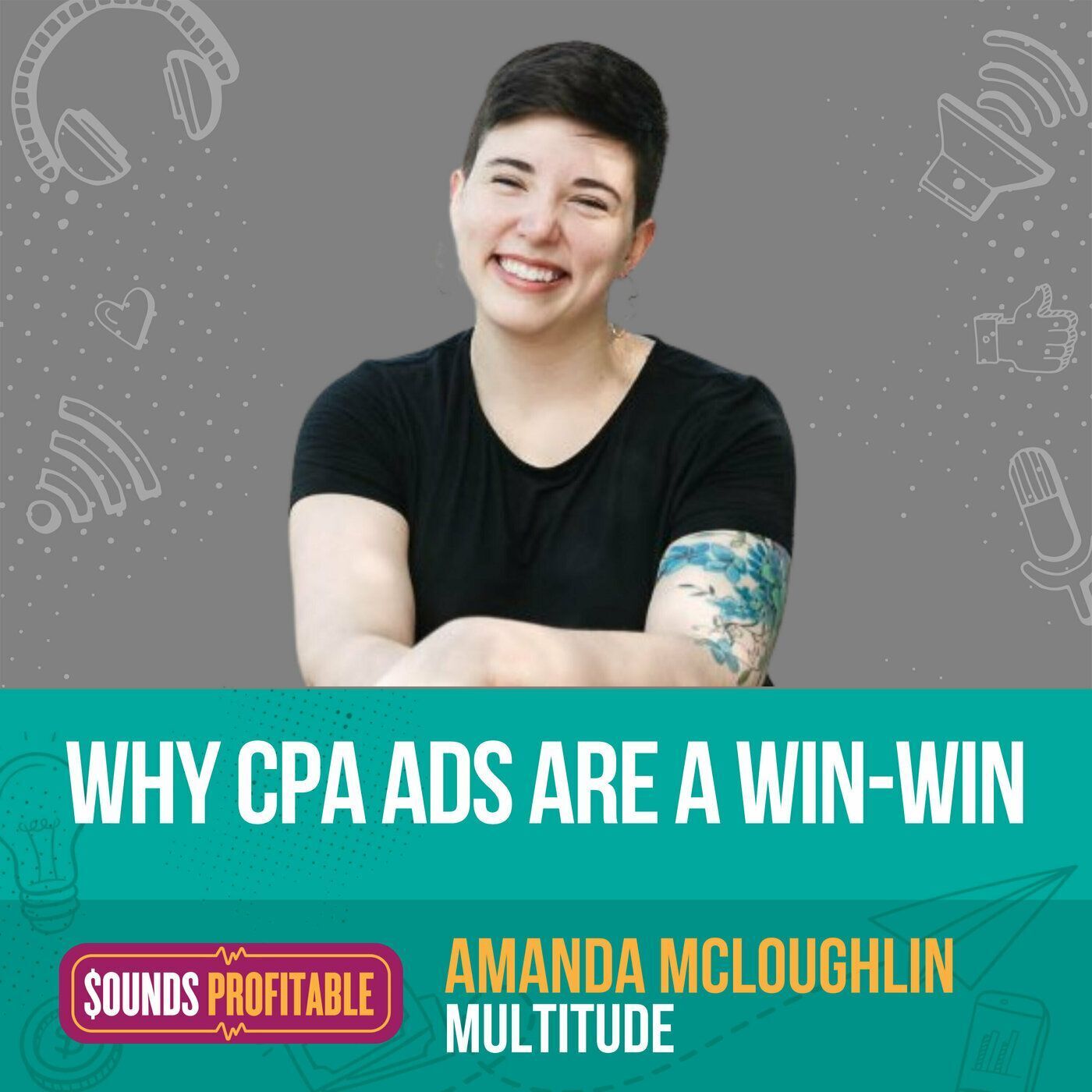
Multitude Productions has an impressive array of podcasts, resources, events, and more going for them. In this episode, Bryan Barletta speaks with Multitude CEO Amanda McLoughlin about building the company, how they handle relationships with advertisers, scaling, and so much more. Listen to learn about: (5 bullet points) Why Amanda believes CPA ads are a win-win The Multitude Podcasting Conference How Amanda and team build engaged audiences Why Multitude can’t scale tenfold (but maybe that’s a good thing) Links: Bryan Barletta Arielle Nissenblatt Amanda McLoughlin Multitude Productions The Download Sounds Profitable: Narrated Articles SquadCast Credits: Hosted by Bryan Barletta, Arielle Nissenblatt Sounds Profitable Theme written by Tim Cameron Additional support from Gavin Gaddis Compiled by: Spooler Media Edited by: Reece Carman and Ron Tendick Hosted on: Omny Studios See omnystudio.com/listener for privacy information.
Ep 39Creating Podcast Subscription Awareness
This week, Bryan comes at things from a different perspective, specifically that of the ways that the podcaster and audience interact. From how we convert a follow to a subscriber, to weighing and prioritizing each subscription solution from both the podcaster and listener perspective, and most importantly to exploring the upper limits of what we can accomplish under a subscription offering. Credits: Written by Bryan Barletta Edited by Bryan Barletta Produced with Spooler.fm Hosted with Omny Studio Sounds Profitable theme written by Tim Cameron Sounds Profitable: Narrated Articles is a production of Sounds Profitable. For more information, visit soundsprofitable.com.See omnystudio.com/listener for privacy information.
Ep 38The Current State of Subscription Podcasting
This week on the Sounds Profitable Deep Dive, Bryan Barletta is joined by SoundStack CEO Jon Stephenson to embark on a three-part journey through what the audio-as-a-service company has to offer. Tune in to learn how the SoundStack platform makes podcast hosting/distribution, broadcast-to-podcast, and monetization really simple. Credits: Written by Bryan Barletta Edited by Bryan Barletta Produced with Spooler.fm Hosted with Omny Studio Sounds Profitable theme written by Tim Cameron Sounds Profitable: Narrated Articles is a production of Sounds Profitable. For more information, visit soundsprofitable.com.See omnystudio.com/listener for privacy information.
Ep 37Apple Podcasts is using machine learning to tag episodes and 7 other stories
This Week: Apple Podcasts is using machine learning to tag episodes, IAB to require annual recertification, Edison Research shares Share of Ear Q3 statistic, and Headliner announces automated YouTube integration. Bumper Discovers Apple Podcasts Assigns Topics Automatically. Manuela: This Tuesday Bumper co-founder Dan Misener posted a new discovery that explains how Apple Podcasts can recommend individual podcast episodes based on topics discussed. The example Misener uses is an episode of Today, Explained which, if one opens the web page source on Apple Podcasts, is tagged with twenty topics ranging from broader concepts like ‘world politics’ to individual names of celebrities and politicians mentioned in the episode. The catch? Those keywords and topics do not appear anywhere in the episode description or RSS feed. The only way to assign them to that particular episode is a transcript. From the article: “Here’s my best guess: Apple is using machine-generated transcriptions, then applying natural language processing techniques like topic modeling to generate lists of relevant topics on an episode-by-episode basis.” According to Misener’s reporting, the current top 250 podcasts on Apple Podcasts consists of 70,094 episodes. Approximately 63.5% of those episodes are currently tagged with topics generated by Apple. “Here’s my best guess: Apple is using machine-generated transcriptions, then applying natural language processing techniques like topic modeling to generate lists of relevant topics on an episode-by-episode basis.”The topics are also ranked with a per-episode relevance score and appear to be integrated into the Apple Podcasts search function. Misener tested this by searching the phrase ‘war in Donbass,’ which he had seen as a tag on Today, Explained. Apple Podcasts returned an episode of The Inquiry that discusses the issue at length, but also does not specifically include those keywords in the title or description. This suggests the assigned topics influenced its search ranking. As Misener says in his breakdown of what this means for podcasters, the implications of this automated topic system are numerous and all signal better relevancy in podcast discovery. SEO now goes far beyond what they chose to include in RSS feeds. In response to the Bumper article, https://podnews.net/article/apple-topics. Visitors can type in the name of a podcast and choose one of the 20 most recent uploads to see what topics Apple has assigned. That is, if it has been assigned any at all. Unfortunately the Sounds Profitable feed has not been fed through their machine learning, so we don’t know what Apple thinks last week’s episode of The Download is about. IAB to require annual recertification. Shreya: Last Thursday Podnews reported the Interactive Advertising Bureau is now requiring annual re-certification from podcasting companies. The information came from a note Podnews editor James Cridland discovered on the IAB website. https://iabtechlab.com/standards/podcast-measurement-guidelines/“As podcast listenership increases and the technology to support that listenership improves, the podcast technical measurement capabilities are continuing to evolve at a rapid pace. As such, and to be aligned with other industry auditing programs, IAB Tech Lab is updating its compliance program to require annual recertification. “ The post then cites the fact several complaint companies were certified on the 2.0 version of the standards but have not re-certified under 2.1. As of this podcast https://iabtechlab.com/compliance-programs/compliant-companies/#\ For context: version 1 of the Measurement Technical Guidelines was released in September of 2016. Version 2.0 released the following September. Version 2.1 released five years later, finalizing in February of 2022. The bulk of the updates in 2.1 involve guidelines blocking the Apple Watch user agent to prevent duplicate download stats. Members of the audio committee and the tech lab were not briefed on the upcoming changes prior to Cridland’s reporting on this story. Using numbers available on the IAB website, the original Podnews report cited the cost for annual recertification at $45,000, split between a $35k certification fee and $10,000 annual membership fee. The page has since been updated to reflect previously un-announced, cheaper certification prices. Now the cost of initial certification is $17,500 for non-members and $12,500 for members. Recertification will cost $8,750 and $6,250 for the same respective categories. Reducing the price for certification is a step in the right direction, creating more competition and reinforcing standards that others are likely to flaunt when compared against those who decide to merely be IAB compliant instead of IAB certified.An issue remains the recertification itself, as the process has had a life cycle of six years between 2.0 and 2.1 with no commitment whatsoever to improvements in the certification process to drive interest into certific
Ep 36Podcasting, Audiobooks, And The Third Thing
Podcasts and Audiobooks are crossing the streams of spoken word content - what else is possible? This week, Tom Webster looks at ideas for hybrid non-fiction content that could open up whole new sources of revenue. Credits: Written by Tom Webster Edited by Tom Webster Produced with Spooler.fm Hosted with Omny Studio Sounds Profitable theme written by Tim Cameron Sounds Profitable: Narrated Articles is a production of Sounds Profitable. For more information, visit soundsprofitable.com.See omnystudio.com/listener for privacy information.
Ep 35Why Sports Podcasts Could Be a Slam Dunk for Advertisers... & 6 Other Stories
This week: Why sports podcasts are a slam dunk for podcast advertisers, our quarterly earnings roundup, how the buy-side of advertising defines ‘premium’ content, how podcast advertisers are embracing Latino podcasting, and Netflix launches their ad-supported tier. Why sports podcasts could be a slam dunk for advertisers who know how to navigate the in-demand space Shreya: There’s no denying the synergy of sports and advertisers during regular game seasons, but a new article from MarketingBrew’s Alyssa Meyers highlights how podcasts can easily fill that gap the rest of the year. “The sports podcast genre is among the top five most popular in the US, according to Edison Research, and the percentage share of ad revenue for that category more than doubled from 2020 to 2021, according to the Interactive Advertising Bureau.” Several of Meyers’ sources stress that sports is one of the most in-demand podcast genres for ad buyers. Steven Abraham, president of the Oxford Road, said the agency’s biggest clients are interested in the space due to its reach with an active and engaged audience. “A good sports-podcast media plan includes both, according to Abraham. Major shows that cover entire leagues or sports news in general can provide the benefit of reach, but fan-led shows that focus on specific teams tend to be more targeted and affordable, he said.” Regardless of a show’s popularity, the CPM of a sports podcast has the benefit of flexibility even in the off season. Locked On Podcast Network CEO David Locke reports listenership spikes more during off-season times like trade deadlines than during important games during the normal season. Traditional media has spent decades refining their infrastructure around courting sports fans when players are on the court. Podcasting has the flexibility and staying power to capitalize on sports fandom’s dedication for their favorite pastime and make sporting content a perennial avenue for advertisers. Podcasting Companies Post Q3 Earnings Manuela: It’s time for what’s becoming a quarterly event here on The Download: quarterly earnings reports are here! Most of what we’re reporting on today has been released in the past week, but in the interest of gathering everyone together, we’ll open with Spotify. As we covered back in October, Spotify shares dipped after their earnings call, in which CEO David Ek announced price increases coming in 2023. In good news for Big Green: they report 456 million monthly active users, up 20% year over year, 195 million of which are paying subscribers, representing a 13% year over year jump. iHeartMedia is up 7% year over year on revenue, with a Q3 total of $989 million. Their Digital Audio Group revenue hit a 23% year over year increase, with podcast revenue hitting $91 million dollars. On Wednesday Veritone posted their Q3 financial report. $37.2 million in revenue with 64% year over year growth. Audacy’s financial report shows total revenue down 3.8% year on year. Their Digital revenue, including podcasting, made $62 million in the quarter. As Podnews James Cridland reports, this is up 2% year on year but 10% down quarter on quarter. Cridland also said: “The company is threatened with stock market delisting; stock hit a record low of $0.27 yesterday.” Acast’s Q3 has been positive with revenue up 21%, amounting to $29.8 million USD when converted from Krona. In their significant events recap they list the Podchaser acquisition, the partnership with Wondery to translate and record successful podcasts in Italian, and their agreement with rep The New York Times and sell UK ad space on NYT podcasts. They also note Amazon functionally purchasing all ad space on Acast podcasts through the deal struck just after the reporting period so Amazon can run Acast shows ad-free for Amazon Music subscribers. How the buy-side of the ad industry is now defining ‘premium’ content Shreya: On Wednesday Ronan Shields, writing for Digiday, published a piece covering how the buyer side of the market is defining premium ad content and the general mood of the industry in regards to the looming threat of recession. The piece quotes panels from multiple relevant conferences in New York City last week. “Just about everyone in the industry is bracing themselves for a recession with swinging cuts to advertisers’ budgets expected, fellow panelists Jesse Fisher from Horizon Media and GroupM’s Esra Bacher offered insights into how marketers would make budgeting decisions. They both pointed out how priorities will delineate depending on whether they are an emerging or mature brand.” Fischer predicts smaller brands will focus more on awareness campaigns instead of focusing on ROI. “But if you look at a more mature brand, you know that’s really well positioned… they might shift spend into more measurable channels and types of activations because they really want to make sure that if they’re spending a million dollars, they’re able to see $1.1 million in ROI.” Programmatic Investment
Ep 32Is It Time To Rethink Promo Codes?
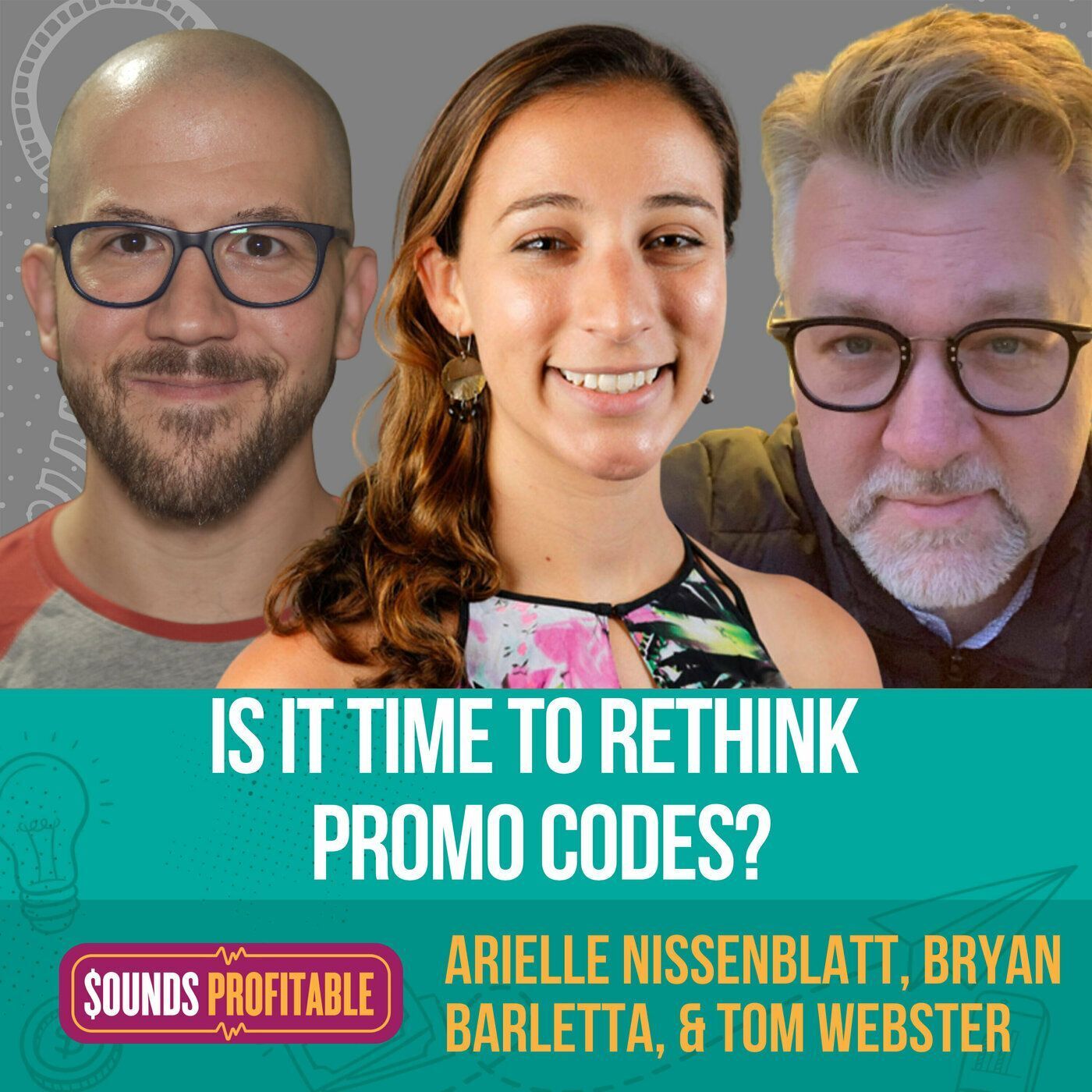
What’s the episode about: If you’re a long time podcast listener, you’re probably familiar with promo codes. In this episode, we discuss how impactful they really are. And, is it possible that they could have even more impact for listeners, publishers, and advertisers? Tom Webster proposes an upgrade. Arielle Nissenblatt and Bryan Barletta are here to discuss with it with him. Listen to learn about: A promo code that’s been living rent free in Arielle’s head for 5+ years Why promo codes work for publishers A possible upgrade to the promo code system we know and love Whether or not this potential upgrade would be as impactful for advertisers as it would be for publishers and listeners How this discussion ties into our recent research studies, After These Messages and We’ll Be Right Back Links: Bryan Barletta Arielle Nissenblatt Tom Webster Article discussed The Download Sounds Profitable: Narrated Articles SquadCast Podsights Credits: Hosted by Bryan Barletta, Tom Webster, Arielle Nissenblatt Sounds Profitable Theme written by Tim Cameron Produced by: Reece Carman and Ron Tendick Assembled by: Spooler Media Hosted by: Omny Studio See omnystudio.com/listener for privacy information.
Ep 34Radio's Seven Warnings For The Podcast Industry: Part 2
This week, Tom continues his thoughts from last week about what Podcasting can learn from Radio’s worst mistakes. Credits: Written by Tom Webster Edited by Tom Webster Produced with Spooler.fm Hosted with Omny Studio Sounds Profitable theme written by Tim Cameron Sounds Profitable: Narrated Articles is a production of Sounds Profitable. For more information, visit soundsprofitable.com.See omnystudio.com/listener for privacy information.
Ep 33Amazon Music Adds Entire Music Catalog, Ad-Free Podcasts & 6 Other Stories
This week: Amazon Prime users get ad-free podcasts and music, Buzzsprout combats email spam, new ad placements at Apple cause brand safety issue, and a roundup of the three new podcast research studies. Amazon Music adds entire music catalog, ad-free podcasts. Manuela: On Tuesday David Pierce, writing for The Verge, covered the changes coming to Amazon Prime subscribers. Previously, Amazon Prime members had access to a limited batch of 2 million songs from Amazon Music’s extensive library. Now they have access to all 100 million songs in a limited shuffle-only capacity, similar to how a Spotify free account currently works. The big change makes the Amazon Prime music offerings comparable to a free Spotify account. However, Amazon Prime members also get ad-free access to a fair few major podcasts. This includes podcasts produced by Amazon-owned companies like Wondery, as well as podcasts produced in partnership with outside companies, including NPR, ESPN, and the New York Times. “Amazon is also working on podcast discovery. It’s rolling out a new feature called Podcast Previews, which seems to be something like trailers for podcast episodes. You’ll be able to listen to “a short, digestible soundbite” before deciding to dive into an episode, which Amazon thinks could help discovery.” Pierce says the feature is billed as being “swipeable” and summarizes it as ‘Tinder for podcasts.’ Sounds Profitable asked several large publishers and hosting platforms for their percentage of downloads from Amazon Music. All were below 1% of monthly volume. Giving Amazon’s over 250 million Prime subscribers ad-free access to podcasts might bring that percentage up soon. In addition to the Prime members, those who pay the $9 monthly subscription fee for Amazon Music Unlimited but do not have Prime get access to the ad-free podcast listening and Podcast Previews tool. Buzzsprout ‘fighting back against email spam.’ Shreya: This Monday, Buzzsprout posted a short update announcing a significant update to how they’re distributing RSS feeds. “Email spam has increasingly become an issue for podcasters. Spammers and bots routinely scrape RSS feeds to collect podcasters' email addresses and send them junk emails.” The inclusion of a producer’s email in the RSS feed has been a mixed bag in recent years. As Buzzsprout says, making it easily available leaves the door open for companies scraping data to create massive databases of email addresses specifically to cold-call in hopes of selling something relevant to podcasters. On the other hand, anyone who has produced a podcast knows the RSS email is an integral part of the process, with many platforms sending an email to that address with a verification link to prove the person claiming they own the RSS feed is legitimate. Buzzsprout’s solution to that issue is simple: a new button has been added to the dashboard that puts the account owner’s email back into the RSS feed for 24 hours, enough time to verify the podcast Barring any teething troubles with the 24 hour temporary email addition process, it seems like Buzzsprout has found an elegant solution to an inelegant problem. Apple’s new ad placements immediately caused a brand safety crisis Manuela: As covered in past episodes of The Download, Apple has been interested in expanding advertising offerings on its platforms. This Monday Insider Intelligence’s Daniel Konstantinovic posted coverage of a brand safety speedbump Apple encountered when rolling out new ad locations on the App Store. One of the new ad spots is in the “you might also like” section recommending similar apps, allowing advertisers to promote their own app. On the 25th when the ads went live, users began to notice inappropriate advertisements appearing on the platform. The chief example of this provided in the article is an ad for the game Jackpot World - Slot Machines on the page for RecoverMe, a gambling addiction management app. “The influx of gambling ads led to an outcry from developers, who didn’t want their apps associated with such services, and prompted Apple to indefinitely pause ads in the gambling category.” Podcasting is no stranger to this kind of hiccup. Back in May, Spotify experienced an issue with their implementation of ads on podcast pages, leading to one Wild Turkey whiskey ad getting served to every podcast on the platform, including those about substance abuse and alcoholism, causing a small social media firestorm. Growing pains happen with large platforms rolling out changes like this. In-depth rules and hands-on verification helps reduce issues when rolling out a new moving part, like ads on every app listing. Apple is looking into expanding similar ads into Apple Podcasts. It’s best to keep aware of how these changes happen and be comfortable reporting on them as they happen. Apple certainly doesn’t want their own version of Spotify’s whiskey snafu, but it doesn’t hurt to keep an eye out when ad changes debut on any platform. Podcasting Research Ro
Ep 31Radio's Seven Warnings For The Podcast Industry: Part 1
This week we kick off a two part series on the lessons that podcasting can take from radio's struggles. Credits: Written by Tom Webster Edited by Tom Webster Produced with Spooler.fm Hosted with Omny Studio Sounds Profitable theme written by Tim Cameron Sounds Profitable: Narrated Articles is a production of Sounds Profitable. For more information, visit soundsprofitable.com.See omnystudio.com/listener for privacy information.
Ep 30How Podcast Networks are Making Their Own Rules for Political Advertising & 5 Other Stories
This week: A birds-eye view of how podcasting is doing political ads this year, Spotify stock drops after announcing price increase, podcast companies discuss diversity at Advertising Week and the IAB Upfront, and a massive new Nielsen study shows podcast ads universally boost brand metrics. How podcast networks are making their own rules for political advertising—and how they differ from one another. Manuela: Midterm elections are approaching fast in the United States and that means political ads are on the rise. This Wednesday MarketingBrew’s Alyssa Meyers published https://www.marketingbrew.com/stories/2022/10/26/how-podcast-networks-are-making-their-own-rules-for-political-advertising?mid=4afb33bb7ffe284d840660fb3604ff60. “Political advertisers, including candidates and advocacy groups, have expressed interest in podcasts, according to several network execs, but not all networks want to play ball. And because the FCC doesn’t regulate political ads in podcasting, the rules are left entirely up to platforms and networks.” iHeart, Wondery, and Vox declined to comment on Meyer’s story, but those that did gave a wide variety of responses and opinions. Cadence13 has always been open to political ads, for instance. That said, the decision on whether or not to run any particular cause or campaign is left to the individual hosts of Cadence13 original podcasts. Spotify has flipped the switch to allow political ads again, having banned them after accusations of spreading disinformation during the 2020 presidential election. Curiously, both Apple Podcasts and Google Podcasts do not directly mention political advertising in their ad policies. Due to government regulations, NPR cannot run political ads on terrestrial radio. CEO Gina Garrubbo told MarketingBrew NPR chooses not to run political ads on other platforms. Meyers continues: “Execs from other podcast networks told us they’re starting to see increasing interest from political candidates and issue-based organizations, and though they’re open to these opportunities, some don’t have formal policies in place yet.” Shira Atkins, co-founder and CRO of Wonder Media Network, has taken the approach of allowing political ads but only as part of sponsored content or via baked-in host-read. She says the network has gotten pitches from PACs and candidates, but some have blanched at the idea of handing over creative control to a host instead of running an ad produced by the campaign. “While political ad dollars aren’t flooding the podcast space the way they are CTV, as the industry continues to grow, its political ad policies will likely continue to evolve and solidify, even if they differ across networks.” If there’s one clear consensus in the world of political advertising on podcasts, it’s that there currently is no consensus. Spotify Shares Slip 10% After CEO Says Price Hikes Coming Next Year Shreya: On Wednesday Denny Jacob, writing for The Wall Street Journal and reposted to MarketWatch,https://www.marketwatch.com/story/spotify-shares-slip-10-after-ceo-says-price-hikes-coming-next-year-271666801839The results were a mixed bag for Spotify. “For its third quarter, Spotify reported 456 million monthly active users, up 20% from a year earlier and above the company's guidance. Paying subscribers, Spotify's most lucrative type of customer, climbed 13% to 195 million, also exceeding the company's expectations, thanks to promotions and household plans.” That said, Spotify also posted a Q3 loss of 195 million dollars. Spotify Premium has cost $9.99 since the service launched in 2011, but CEO Daniel Ek says that’ll change some time next year. Spotify shares fell 10% after the announcement. Podcast companies want to increase diverse content—but say they need better ad budgets to do so Manuela: Time for another article from MarketingBrew’s Alyssa Meyers, this one published on Monday. In it, she covers conversations about the podcasting industry stemming from https://www.marketingbrew.com/stories/2022/10/24/podcast-companies-want-to-increase-diverse-content-but-say-they-need-better-ad-budgets-to-do-so?mid=4afb33bb7ffe284d840660fb3604ff60 last week. “Part of the push for more diversity in podcasting is about getting creators from different backgrounds behind the mic in the first place. Conal Byrne, CEO of the iHeartMedia Digital Audio Group, said that podcasting, like other mediums, has a problem with representation, but that there are efforts underway to “course-correct.” Meyers cites the Edison Research’s 2022 Infinite Dial to demonstrate that the average makeup of the regular US podcast listeners - 53% men and 59% white, has declined in recent years. She also notes the diverse makeup of podcast hosts is outpacing wider US population statistics, using statistics from https://soundsprofitable.com/article/the-creators-us-2022 on June 28th. Conversations about diversification also raise questions about brand safety. “During Acast’s panel, global head of ad innovation Elli Dimitroul
Ep 29Two Years Later
What’s the episode about: Arielle Nissenblatt chats with Sounds Profitable partners Bryan Barletta and Tom Webster about the two year anniversary of Sounds Profitable. Learn about our content initiatives, our research, our partnership opportunities, and how you can get involved at every stage. Listen to learn about: What it means to be a Sounds Profitable partner Where we think Sounds Profitable will be in another two years Our upcoming research initiatives AKA what we’ll be exploring next The next iteration of The Creators, our research study about podcast creators How you can best utilize Sounds Profitable’s resources for continuing education within your company Links: Bryan Barletta Arielle Nissenblatt Tom Webster Article discussed The Download Sounds Profitable: Narrated Articles SquadCast Podsights Credits: Hosted by Bryan Barletta, Tom Webster, Arielle Nissenblatt Sounds Profitable Theme written by Tim Cameron Produced by: Ron Tendick and Reece Carman Assembled by: Spooler Media Hosted by: Omny Studio See omnystudio.com/listener for privacy information.
Ep 28Where Your Podcast Plays Matters More Than You Think
What does it mean that several podcasts paid to have their podcasts downloaded in a mobile app? Let’s break down the issue at hand, where things went wrong, and what we as an industry can do to solve it. Credits: Written by Bryan Barletta Edited by Bryan Barletta Produced with Spooler.fm Hosted with Omny Studio Sounds Profitable theme written by Tim Cameron Sounds Profitable: Narrated Articles is a production of Sounds Profitable. For more information, visit soundsprofitable.com.See omnystudio.com/listener for privacy information.
Ep 27TikTok spotted scraping podcast feeds & 8 Other Stories
This week: TikTok spotted scraping podcast feeds, YouTube launches audio ads and host-read ad service, Internet radio platform Live365 to distribute through TuneIn On Air, the Spoken Word Audio Report debuts next week, and Digiday research shows publishers are warming more to programmatic. Evidence suggests TikTok to explore podcasts. Manuela: TikTok is coming to podcasting, or at least it looks to be that way from the breadcrumb trail of hints the company has left behind over the past year. Most recently, in Monday’s edition of Podnews, James Cridland reported podcast hosting company Audiomeans has spotted a“new bot that is scraping our feeds, starting October 11th.” The host also provided Podnews with details about the bot scraping their feeds that ties it back to TikTok.Back in May the social media giant registered a trademark for a new service titled TikTok Music, which happened to include a provision for podcast content. Further back still, in the last week of December 2021 all TikTok users got a notification prompting them to take the ‘TikTok Podcast experience survey’ that collected listener-focused data, as well as audience metrics if the person filling it out identified as a producer. With questions like “if TikTok is going to launch a podcast feature, which of the following do you think will lead to a positive podcasting experience?,” it’s no surprise we’re seeing signs they’re building something podcasting related almost a year later. YouTube launches audio advertisements, service for host-read podcast spots. Arielle: This Monday YouTube announced a launch of audio-only ads, including ways to allow advertisers to specifically target podcasts, music, and those using connected TVs. This feature was beta-tested in 2020 but has now gone live globally. Sheila Dang covered the announcement for Reuters. “The streaming video platform said it will expand audio advertising globally to allow brands to market to people who use YouTube to listen to music or podcasts.” It should be noted, as of this writing the YouTube podcasts homepage is still unavailable outside the US, though the announcement of global audio ads suggests this will change soon. Then on Tuesday MarketingBrew’s Alyssa Meyers covered further development on the story as YouTube brought host-read ads into the mix. “YouTube BrandConnect, its branded-content platform that connects creators with advertisers, is piloting a program that offers video ads read by podcasters, signaling YouTube’s continued interest in expanding its footprint in the podcast world.” The BrandConnect system will allow brands testing the program to op into 60 or 90 second host-read ad segments that exclusively appear on the YouTube version of the podcast. The spots will either include video of the host reading the copy or a custom title card with audio overlay. BrandConnect managing director Lori Sobel mentioned skincare company Neutrogena has implemented the tool to run a campaign on the The Financial Confessions. In the future BrandConnect has intentions of using audience insights to pair brands with creators. Live365 signs TuneIn On Air distribution deal. Manuela: Last Wednesday Soundstack’s Live365 platform announced a distribution agreement with TuneIn. Broadcasters on Live365 premium subscriptions now have access to the TuneIn On Air, opening up access to the platform’s 30 million US-based people using the TuneIn mobile app on over 200 connected devices, including integrations with automotive systems by Tesla and Volvo. A quote from TuneIn CEO Richard Stern: “This partnership with Live365 fits perfectly within our mission to reinvent radio for a connected world and democratize access to radio for broadcasters large and small. We believe great conversations are driven by the power of the human voice and we know our listeners rely on us to stay connected to the issues that matter to them most via our content catalog. We're thrilled to help more broadcasters reach TuneIn's expansive audience." This partnership comes at a time when traditional radio listenership is dropping. Last month Tom Webster, in an article for Sounds Profitable, wrote about the most recent Edison Research Share of Ear study. In recent years there has been a slow decline in Americans 13 and up listening to audio on AM/FM radios, while listening time on mobile devices has grown in almost direct correlation. “I am certainly not the only person to write about this, but radio has as much of a hardware problem as it does a “software” issue. Other than your car, it is getting harder and harder to even buy a broadcast radio receiver. Some mobile phones do offer radio tuners, but Apple has famously rebuffed all attempts by radio lobbyists to include one in the iPhone. And so, as you might guess, AM/FM’s Share of Ear on mobile devices is comparatively quite small, indeed--in fact, today that share is markedly smaller than the share allocated to podcast listening on mobile devices.”Bringing radio to those mobil
Ep 26What Does the Competitive Landscape for Podcasting Really Look Like?
There are around four million podcasts in the world today - but how many are you actually competing with? The answer is much smaller than you might think. Credits: Written by Tom Webster Edited by Tom Webster Produced with Spooler.fm Hosted with Omny Studio Sounds Profitable theme written by Tim Cameron Sounds Profitable: Narrated Articles is a production of Sounds Profitable. For more information, visit soundsprofitable.com.See omnystudio.com/listener for privacy information.
Ep 25ESPN Nears Large New Partnership With DraftKings & 6 Other Stories
This week: ESPN to potentially partner with DraftKings, Podcasting unions make headlines, Netflix confirms two independent measurement companies, advertisers reflect on 2023 spend, and two new podcasting hosts arrive in the US. ESPN Nears Large New Partnership With DraftKingsManuela: Last Thursday Ed Hammond and Crystal Tse of Bloomberg covered an anticipated deal between ESPN and sports-betting firm DraftKings. According to an update to the piece, DraftKings’ stock rose as much as 8.8% in response to the news on Friday. “ESPN has already invested heavily in sports gambling, though it has steered clear of taking actual bets. The broadcaster has betting-related shows such as Daily Wager and marketing deals with DraftKings and Caesars Entertainment Inc. where links to the sportsbooks are integrated into ESPN’s website. Disney also acquired a stake in DraftKings as part of its acquisition of Fox’s entertainment assets in 2019.”Disney has long avoided gambling in pursuit of upholding its wholesome family image. As Bloomberg points out, none of the Disney cruise ship fleet have casinos aboard, nor are Disney characters licensed to slot machine manufacturers. Clearly, their attitudes appear to be changing as they search for a sports betting partner for ESPN.Sean Russo, Research Manager of Magellan AI, offered this when asked about the growth of sports betting and adjacent categories: “As of August, the Fantasy Sports industry is up 22% year to date, although historically spending in the industry has peaked in September. Last year spend more than doubled between August and September, primarily driven by brands like Fanduel and DraftKings” ESPN is a major podcast network and sports betting, as well as its cousins like fantasy sports, continue to climb in popularity. If this deal comes to fruition, it could be a big deal indeed. Podcasting gains new union, hears from two recently affected by Spotify layoffs. Shreya: In this first segment we have two stories fitting in a theme of organized labor in podcasting. Last Tuesday, Audacy’s Pineapple Street Studios announced last Tuesday that roughly 75% of their proposed bargaining unit signed up to officially join WGA East. Ashley Carman reported for Bloomberg: “The employees said they’re looking for increased transparency around pay, rights to their intellectual property, protection against favoritism at work and improved health insurance, according to the letter.”Later in the week, the utility of unionizing was highlighted when Spotify pruned their walled garden. Last Thursday Tech Crunch’s Lauren Forristal reported on Spotify canceling multiple shows at once from two of the four Spotify in-house content production companies. Three podcasts from Gimlet and eight from Parcast are either canceled effective immediately or set - in the case of Horoscope Today - scheduled to end in the second quarter of 2023. Spotify also announced this would cause “less than 5% of layoffs of Spotify’s podcast staff.” Last Friday both the Gimlet Union and Parcast Union took issue with that number in an official letter posted to Twitter. “Yesterday, Spotify blindsided both Gimlet Union and Parcast Union with at least 38 layoffs across their studios. Spotify has said in the press that these layoffs constitute less than 5% of people working on original podcasts. That number is misleading. The reality is that each bargaining unit organized with the Writers Guild of America, East has lost about 30% of its members. These are not small cuts, they are massive restructurings.” The two unions go on to highlight Spotify’s internal reasoning for canceling the podcasts was due to low listenership, which the unions argue was in large part due to decisions made by Spotify itself. “Their decision to make most of Gimlet’s and Parcast’s shows Spotify Exclusive caused a steep drop in listeners - as high as three quarters of the audience for some shows. Yet the company did little or nothing to staunch the bleeding. Shows languished without marketing support, and teams were not given clear audience goals to meet.” Netflix strikes measurement deals ahead of new ad-supported tier Manuela: On Monday Garett Sloane, writing for AdAge, reported on some updates to the ongoing story of Netflix prepping for the launch of their ad-supported tier. As covered in the September 8th episode of The Download, details were scarce about the tier beyond its possible price point and the streamer’s CPM goals. “... Netflix has been asking for high prices for its ad inventory, at least $60 CPMs—cost per thousand views—while only offering limited targeting possibilities and no third-party measurement, according to people familiar with the situation.” Now Netflix has announced they’re working with both Integral Ad Science and DoubleVerify to act as that third-party measurement. A measurement executive speaking to Sloane anonymously believes implementation of the two services should be relatively easy for Netflix. Netflix signing two big-n
Ep 24Does Podcasting Have an Ad Frequency Problem?
As interest in podcasting continues to surge, so does the expectation that podcasting adheres to norms established in other advertising channels. Today, frequency capping takes the center stage. Podscribe DD: https://soundsprofitable.com/article/podscribeThoughtleaders: https://soundsprofitable.com/article/thoughtleaders-intelligence Sounds Profitable Podscribe A deep dive into Podscribe: critical intelligence for podcast advertisers. Dec 17th, 2020 Sounds Profitable ThoughtLeaders Partner Intelligence Solution Elsie Bernaiche, Director of Sales at ThoughtLeaders, joins us for our latest product deepdive into the ThoughtLeaders Partner Intelligence Solution. Credits: Written by Bryan Barletta Edited by Bryan Barletta Produced with Spooler.fm Hosted with Omny Studio Sounds Profitable theme written by Tim Cameron Sounds Profitable: Narrated Articles is a production of Sounds Profitable. For more information, visit soundsprofitable.com.See omnystudio.com/listener for privacy information.
Ep 23Podcasting overtakes talk radio, CPMs increase & 7 Other Stories
This week: Podcasting overtakes talk radio, CPMs increase, video game ads counting as podcast downloads, and Publishers test personalizing newsletters. Podcasting overtakes talk radio, CPMs increase Manuela: For today’s first segment we’re going to cover two recent pieces about industry growth. First, Kurt Hanson’s Rain News recap of the Audioscape 2022 talk by Cumulus Media executive Pierre Bouvard. The biggest eye-catching number from Bouvard’s presentation of Edison Research media involves how the 18-34 age group spends their weekly time listening to talk or personality-driven audio content. Terrestrial radio has been overtaken in this bracket, with podcasts taking 60% of those listening hours. “Even within the older demos of 25-54 and 35-64, podcast listening’s share of talk/personality listening is high — 47% and 39%, respectively, with those numbers up nearly double and more than triple, respectively, compared to five years ago.” Continuing the trend of good news from new data, Libsyn’s Advertisecast has published their Podcast Advertising Rates 2022 report. The presentation is compiled from reporting data provided by 2,985 podcasts. Podnews editor James Cridland reported on Monday: “There has been a jump in the average CPM for podcast advertising, according to Libsyn’s AdvertiseCast: the average is now $24.35, the second-highest on record. It’s up 3.7% month-on-month, or 5% year-on-year.” Podcasting continues its upward climb. More listener share over radio and growing CPMs sounds like a good thing to us. A follow-up on video game ads counting as podcast downloads. Shreya: Last week we covered Ashely Carman’s piece covering podcast companies, most notably iHeartRadio, purchasing downloads via mobile game ads. In a follow-up piece covering industry reactions posted last Thursday, Carman got official comment from the Interactive Advertising Bureau. “The standards are in a continual state of review,” said Eric John, vice president of the media center at the IAB. “We’re trying to ski to where the puck is going ultimately, and we’re going to make standards to match the industry’s needs.” On the same day Podnews reported a response from Podtrac explaining why the gaming ads only playing 20 seconds of an episode of were counted as full downloads. “It’s our understanding they appear as browser traffic without a unique user agent (or [unique] IP address). These downloads don’t have a material impact on the publisher rankings including the rank order of the top publishers.” Then, in related news, HotPod reported on an InsideRadio piece covering Podtrac suspending its weekly data newsletter after iHeart stopped sponsoring the project. The decision was reportedly made over a month ago. According to HotPod, the last data tracker email they’d received was published September 13th, while the last one with iHeartRadio branding had been sent August 15th. Since the HotPod publication went live, InsideRadio - a company owned by iHeartMedia - has pulled their Podtrac story. Publishers test personalizing newsletters with varying degrees of success Manuela: Last Wednesday Digiday’s Sara Guaglione reported the experiences of publishers who experimented with using tools to generate personalized newsletters for subscribers. We’re covering it here as the tools and methodology involved might just be of interest to podcasting. From the article: “As companies like The New York Times and The Washington Post experiment with personalizing their homepages to get readers to consume more articles, publishers are also tweaking newsletters to serve readers’ specific interests and behaviors — but to varying degrees of success. The piece opens with the success story of The Telegraph, which has run the personalized newsletter Headlines for a year. Each time a newsletter needs to be sent, an algorithm selects vertical-specific content recommendations based on browsing history, including making sure to not recommend articles the subscriber has already read. The Telegraph reports higher click-through rates, page views per click, and time spent on the website from Headlines subscribers vs. their standard hand-built newsletters. In contrast, publications like The Toronto Star have tried similar things and found little to no results. Newsroom director David Topping told Digiday: Most newsletter subscribers “seem pretty happy getting what everyone else got,” Topping said. The personalized newsletter drove engagement for a “niche audience” who wanted tailored recommendations but it wasn’t “necessarily something that’s going to move the needle,” he added.” Niche audiences are a thing podcasting does well. The recommendation tech used to create these newsletters could be of use in the podcasting industry. An individual news podcast could build itself live akin to how Spooler allows The Refresh to add new segments on the fly. Except, with a recommendation engine, a news podcast could be constructed of only segments the recommendation tool knows the l
Ep 22Is It Time To Rethink Promo Codes?
With the release of We’ll Be Right Back, part two of After These Messages, Tom Webster has a few questions about promo codes. Is it time to change how we use them? Credits: Written by Tom Webster Edited by Tom Webster Produced with Spooler.fm Hosted with Omny Studio Sounds Profitable theme written by Tim Cameron Sounds Profitable: Narrated Articles is a production of Sounds Profitable. For more information, visit soundsprofitable.com.See omnystudio.com/listener for privacy information.

Ep 21Sounds Profitable - Two Years Later
Sounds Profitable is two years old this month! Founder Bryan Barletta talks about just how far we’ve come in 24 short months, and where we are headed next as we continue to serve our mission to push podcasting forward and set the course for the future of the audio business. Credits: Written by Bryan Barletta Edited by Bryan Barletta Produced with Spooler.fm Hosted with Omny Studio Sounds Profitable theme written by Tim Cameron Sounds Profitable: Narrated Articles is a production of Sounds Profitable. For more information, visit soundsprofitable.com.See omnystudio.com/listener for privacy information.
Ep 20Podcasters Are Buying Millions of Listeners Through Mobile-Game Ads & 7 Other Stories
This week: Podcasts found using mobile game ads for downloads, a trio of new pixels announced, and the Independent is reframing programmatic for advertisers. Podcasters Are Buying Millions of Listeners Through Mobile-Game Ads Manuela: Our first story is a big one! This Tuesday, Bloomberg’s Ashely Carman published a piece reporting on the discovery that podcast companies are serving podcast players as ads in mobile games. For those not hip to mobile gaming: free-to-play mobile video games traditionally generate revenue by interrupting gameplay on a regular basis with a skippable ad, with the option to watch a 20 second unskippable ad in exchange they receive beneficial in-game items, or more attempts to play that day. Instead of serving a video ad, which is one of the more common uses of these platforms, some companies are serving a web player that plays the an episode of a podcast. The ads are timed, requiring the app user to interact for often 20 seconds or more, which is more than enough time to download an entire 1 hour podcast through progressive downloading. That download and every ad in that download would be seen as legitimate by current IAB podcast standards, even though the app user was prompted to move out of the ad and back to the game after the timer ended.Ad fraud detection company DeepSee’s August examination of ads in the popular game Subway Surfers spotted podcasts from the New York Post, independent podcaster Scott Savlov, and iHeartMedia. Carman interviewed Corey Weiner, CEO of Jun Group, a company specializing in placing ads in mobile apps. The starting rate for Jun Group placement is a $27 CPM for one of the 20 second ads. Jun Group’s main podcast client is iHeartMedia. “According to a person familiar with the effort, the radio company, which bills itself as the top podcast publisher globally, has shelled out more than $10 million and gained approximately 6 million unique listeners per month through these ads since 2018."During the last week of August, half of the top ten trending podcasts in Podtrac were iHeart productions that hadn’t uploaded new episodes in weeks, if not months, according to Carmen. Podtrac is an industry ranker that only measures podcasts that opt into their platform’s prefix analytics solution, and recently independent developer John Spurlock identified that Spreaker from iHeart had added the prefix to podcasts on their platform en masse. Yesterday Podnews published exclusive info regarding iHeart rankings: “Are these plays counting for iHeart’s “#1 for podcasting” Podtrac ranking? Podnews analysis confirms that the embedded podcast players used, as documented by DeepSee, makes a call to Chartable and a call to Podtrac.” Podnews editor James Cridland then links to Podnews coverage of a 2018 story in which iHeartMedia was busted embedding podcasts on the websites of hundreds of affiliate radio stations, inflating play counts.The core problem that led to this story existing lies in the fact that there are minimal requirements for podcast players and not requirements for reporting transparency to podcast advertisers. Podcast players like Apple are Spotify are safe to trust as one can be 99% sure it’s coming from their apps. Even web player traffic is generally trustworthy given it’s assigned less inventory in general. That said, it’s time for the industry to figure out stricter guidelines for web players and more obligations to our advertisers.It’s not immediately clear what the finite details of a solution will be, but if all the big players in the industry came together for the sake of transparency they can build something. Something that would get publishers and advertisers alike reevaluating what inventory is or isn’t valuable based on where it’s played rather than simply if it’s played. Pixels Galore - Podscribe and Gumball launch podcast analytics, and Magellan launches attribution Shreya: Time to increase your resolution, several new pixels have recently arrived in podcasting. First up: a little trip to the past. Back on August 11th Podscribe announced third party impression verification. Or, in their words, third pod-y impression verification. Once users get the pixel to their publisher they will receive real-time downloads. “As early publishers in all other seasoned media forms discovered, 3rd party verification both facilitates and is required for significant scale.” The new verification comes designed to automatically sync to Google Sheets, allows for flagging of campaigns if suspicious data starts coming in, and GARM methodology brand safety monitoring. Flashing forward to last Thursday, our second pixel comes from Magellan AI with their new Attribution by Magellan AI. With the new Attribution tech both advertisers and publishers will have details like campaign performance and pacing at their fingertips within the Magellan AI dashboard. “We are helping brands and agencies complete the entire buyer’s journey in one seamless location to enable them to scale w
Ep 19Serial and the Importance of Content Curation & 8 other stories for September 22nd 2022
This week: Serial and the importance of content curation, Spotify launches audiobooks, Spanish-language TV is surging, why Wonder Media Network won’t use programmatic, and SirusXM is no longer the biggest podcast network by reach. Let’s get started. Serial and the importance of content curation. Manuela: Last week news broke that prosecution would petition for the release of Adnan Syed, whose case was the subject of the first season of Serial. Since then Syed has been officially released. In the interim conversation regarding the case and the part Serial played in popularizing it reached a boiling point on social media. On Friday the 16th attorney Rabia O’Chaudry, host of Undisclosed and the person who originally brought Syed’s case to the attention of Sarah Koenig, tweeted an analogy for how Serial fit into the narrative of Syed’s release: “Imagine you ask someone to help renovate your house. Instead they set fire to it. The story about the fire brings thousands to your aid that rebuild your house.” Media critic and true crime aficionado Rebecca Lavoie quote-tweeted O’Chaudry to start a thread with an important lesson to be learned from Serial. “I have previously heralded Serial as a seminal piece of media and even made a podcast originally based on reviewing it. But given the facts of the case, Rabia’s analogy is precise. Serial doesn’t hold up. And its biggest crime is its abandonment of its own reporting.”Lavoie details several sections of the popular podcast that contain outdated or inaccurate knowledge with seven years of hindsight that, due to the podcast’s popularity, are still being discovered by brand new podcast listeners with. No warnings or amendments have been placed on the original season of Serial. “I am not saying that Sarah Koenig et al have an obligation to report this story forever. But…the owners of the Serial feed (now [The New York Times]) have an absolute obligation to point news consumers to the latest… news.”Lavoie points to dynamic ad insertion tech and how it could be used to retroactively place a warning giving context without having to manually update each episode’s file. Given last year’s scandal with Caliphate, the NYT is no stranger to retroactively adding disclaimers to its own in-house reporting. Lavoie argues they have the same level of responsibility to maintain legacy feeds. Even the most popular true crime podcast in the industry is not above poor reporting or claims that were later disproven by new evidence. Despite being seven years old, Serial’s popularity means statistically it’s still someone’s first podcast in 2022. Spotify Offers Audiobook Service with 300,000 Titles Shreya: This Tuesday Spotify announced the launch of their audiobook platform. “Starting today, Spotify listeners in the U.S. will be able to purchase and listen to more than 300,000 audiobook titles—making our platform a true all-in-one destination for everyone’s listening needs. And we’re excited to launch audiobooks with a brand-new user interface that’s geared specifically for listening to audiobooks and fits them seamlessly alongside the music and podcasts you already listen to and love.” The new audiobook interface includes an in-app purchase screen to buy each individual audiobook. Most popular audiobook platforms, like Audible or Libro.fm, use a monthly subscription system that gives users a set amount of credits to exchange for audiobooks at a rate that costs less than purchasing them retail. Spotify’s model requires a Premium Spotify membership for the ability to purchase audiobooks.Press materials include a series of four screenshots depicting the purchase of Colleen Hoover’s novel It Ends with Us for $13.99, on sale from a normal listing of $17.99. This pricing is in lockstep with the average retail cost of the same book at popular audiobook providers Google Play, Kobo, and Audible if the user is not a subscriber. With this addition Spotify is now a one-stop shop for the casual user. While it might not attract many users specifically for the audiobook functionality, any user who listens to music or podcasts with Premium has the ability to buy audiobooks and listen without leaving the app they’re already paying for. Spanish-Language TV viewership surges despite mishandled metrics, lackluster representation. Manuela: As is becoming common on The Download, this segment will discuss two articles that are closely related. First off: Spanish-language TV Viewership is Surging by Kelsey Sutton for MarketingBrew. The headline leads into a subheader explaining the surge is accompanied by poor measurement leading to under-investing. Now things are turning around. “We’re sure you’ve heard it about a million times: linear TV viewership is, on average, not looking good. But there’s one segment of old-fashioned TV whose outlook seems downright rosy. Spanish-language TV networks, including mainstays like Univision and Telemundo, are on the upswing, growing daily audience reach even as many other major n
Ep 18Inaugural Business Leaders Summit Recap
In this episode of Sounds Profitable: Arielle Nissenblatt and Tom Webster sit down to discuss Podcast Movement, the Sounds Profitable Business Leaders Summit, and most importantly: an update on Tom’s dog Walnut. Listen to learn about: Dynamic ad insertion and video trends among our sponsors. Tom’s Podcast Movement takeaways. What happened at the Sounds Profitable Business Leaders Summit Here’s our favorite idea from this conversation: “When things don’t seem settled in the space, try to organize as best you can with other voices and take strong positions.” Links:Bryan BarlettaArielle NissenblattThe DownloadSounds Profitable: Narrated Articles Credits: Hosted by Arielle NissenblattProduced with Spooler.fmHosted with Omny StudioSounds Profitable theme written by Tim Cameron See omnystudio.com/listener for privacy information.
Ep 17One Key To Growing Podcasting We Take For Granted
We talk a lot about the unique content advantages in podcasting, but one key to growing the medium with an older audience might be even simpler. Credits: Written by Tom Webster Edited by Tom Webster Produced with Spooler.fm Hosted with Omny Studio Sounds Profitable theme written by Tim Cameron Sounds Profitable: Narrated Articles is a production of Sounds Profitable. For more information, visit soundsprofitable.com.See omnystudio.com/listener for privacy information.
Ep 16Programmatic Advertising Could Make Podcasting a $6 Billion Industry by 2026 & 7 Other Stories
This week: Analyst predicts programmatic will get podcasting to six billion in ad spend, the new iOS update takes care of AppleCoreMedia, Apple announces virtual neighborhood for Latine Heritage Month, brand-lift studies are catching up with the times, and kids content is booming for Paramount+. Programmatic advertising could make podcasting a $6 billion industry by 2026 Manuela: In last Friday’s Hot Pod Insider, Ariel Shapiro covers B. Riley analyst Daniel Day’s newest publication about the industry. His most attention-grabbing prediction, as the headline spoils, expects podcast ad spending to be up to six billion dollars within four years. It’ll be an uphill battle to get there. Shapiro points out the potential downsides of programmatic without the right data and infrastructure by recalling the infamous Wild Turkey incident. Back in May Spotify accidentally ran an ad for budget whiskey on every podcast on the app simultaneously, leading to a social media firestorm as users posted screenshots of the most inappropriate examples of podcasts to pair with Wild Turkey. Day is of the opinion more detailed location data will be a game-changer that avoids such issues in future. “Small and mid-sized businesses really have almost entirely sat out podcast advertising to date,” Day told Hot Pod. “These advances in geo-targeting and programmatic allow mom and pops and local, regional businesses to access this medium in a way that they couldn’t before, absent reaching out to like some local sports or news podcast. Now, they can target audiences listening to some big national podcast.” Day points to iHeartMedia putting significant investments into podcasting, as well as podcasting making up a larger portion of the company’s revenue each year, as examples of the growth he projects in action. iOS 16: What’s new for Apple Podcasts Shreya: Last Wednesday Apple published an update blog detailing some of the new features coming with their iOS 16 update. The update comes with some creature comforts for the user, such as more prominent placement of the sleep timer button and better Apple Watch integration for podcasts. There’s also a bit of housekeeping noted, in case you missed the multiple emails over the past few weeks: “Show and provider titles will continue to be displayed alongside show artwork on the Library and Search tabs, so make sure your show’s metadata is up to date and that your artwork includes your show’s title for the best experience.” The most important feature of this update for the business side of podcasting isn’t mentioned in the update blog, though. This update brings the change to AppleCoreMedia user agent that’ll shift how we view Apple’s footprint in podcasting. As covered in our June 10th episode, this will lead to far less confusion as to what traffic is actually coming from Apple Podcasts. Those who didn’t report ACM will no longer underestimate traffic from Apple, and those who labeled all traffic from ACM as Apple will get a more balanced look at just how much traffic is coming out of Apple. For those that are code-savvy, we’ll include a link in the show notes to the official Apple developer page for the updated user agent key. Apple Podcast launches "El Vecindario" collections. Manuela: On the subject of Apple: This Monday an email sent by Apple announced their plans for Latine Heritage Month, which runs from today through October 15th. “Later this month, Apple will showcase the abundance of Latine created content across genres, formats, and languages – and spotlight many great creators. Apple Podcasts has created a special destination, titled El Vecindario, that honors the spaces where Latine communities come together and conversations originate.” El Vecindario, the neighborhood in Spanish, will showcase Latine-created content covering multiple genres, formats, and languages. Influencer marketing brand-lift studies are improving Shreya: Last Friday Marketing Brew’s Phoebe Bain used the release of the Association of National Advertisers’ organic measurement guidelines for influencers as an excuse to discuss how brand-lift studies have matured. “Out of more than 1,000 Marketing Brew readers surveyed last month, about one-third said they think measurement for influencer marketing has “evolved significantly” over the past two years.” A useful tool to track that rapid evolution is the brand-lift study. Bain spends a good portion of the article explaining the basics: two groups are asked questions about something, with only one having experience with that thing. Any differing answers or familiarity expressed by the second group is quantified as - you guessed it - brand lift. Old-school brand-lift studies would ask simple questions regarding information retention, or whether the audience wanted to buy the product in an ad. Modernized studies take into account the changing media landscape, especially with the popularity of influencers.VP of marketing at creator management platform Grin Ali Fazal explains
Ep 15Programmatic Advertising for Buyers
September 22nd is officially the last day of Summer, making our third and final article in our Programmatic Summer series absolutely not late to the party. Credits: Written by Bryan Barletta Produced with Spooler.fm Hosted with Omny Studio Sounds Profitable theme written by Tim Cameron Sounds Profitable: Narrated Articles is a production of Sounds Profitable. For more information, visit soundsprofitable.com.See omnystudio.com/listener for privacy information.
Ep 14All We Know About Netflix's Ad Plans So Far & 9 Other Stories
This week: We learned something interesting about Netflix, Cross-promotions work but you might be doing them wrong, Anchor continues to be the top podcast host by episode share, and the FTC sues a data broker. All we know about Netflix’s ad plans so far Shreya: Once again we bring you an article that doesn’t feature the world “podcast”, but could have big implications for the industry. Last Friday Kelsey Sutton published a brief roundup of all the news about Netflix that had dropped during the week. The world learned about polarizing new ad-supported tier, charging between $7 to $9 a month. We also learned they’re targeting 15 and 30 second spots for preroll and midroll ads. “The flurry of reports helps provide a better picture of how Netflix is strategizing the rollout of its ad-supported tier after eschewing Madison Avenue for years. There are still many unknowns, including what kind of metrics the service will provide to measure ad effectiveness. Even without all the details, media buyers are buzzing with anticipation.” Podcasters and advertising folk alike should take note of how much Netflix is paying per thousand impressions. According to Sutton the streamer is paying $65 CPM, with expectations of that going up to $80 in future. With those rates in mind for the biggest streaming platform, average podcast CPM is fair to underpriced in comparison. Do Cross-Promos Work? Hell Yes, But You Are Likely Doing Them Wrong…And We Can Fix That Manuela: On Monday Eric Nuzum published an issue of The Audio Insurgent that aims to introduce podcasters to a vital lesson learned while conducting research for terrestrial radio nearly two decades ago. Nuzum is of the opinion that on-air and in-episode content promotion is frequently misunderstood and often poorly executed. This and the next two issues of Audio Insurgent are dedicated to covering the three Rs of program promotion: Reduction, Repetition, and Real Content. In 2004 Nuzum conducted a study for the Corporation for Public Broadcasting titled ON-air Program Promotions Insight Study, a study of cross-promotion in the radio industry so helpful he continued to get messages asking where to find the study long after the original webpage hosting it had decayed. For this newsletter series he has done some light editing and uploaded the entirety of the 18 year-old study to Google Drive for preservation. “Yet despite its age, it can still be very effective and useful to all audio professionals today. But the whole project boils down to one simple sentence: A well-constructed message, delivered to the right listeners often enough for them to recognize it, can increase listening.” His issue on Reduction stresses the importance of stripping fat from a promotion and ensuring it isn’t airing in a block of multiple other promotions that could distract from the message. An example given from when the promo study was first conducted is Nuzum playing a promo for A Prairie Home Companion. The promo rapid-fire announced the town, state, college auditorium in said town the performance would take place at. Following that, three musical acts and the name of the famous News from Lake Wobegon segment. “Immediately after playing it, I would ask those in the room to name a single artist or location mentioned in that promo. On a rare occasion, someone could remember “Iowa”--but most times, no one could remember anything. And these people were (supposedly) paying attention.” Top Podcast Hosting Companies by Episode Share (August 2022) Shreya: Last Thursday Livewire Labs updated their substantial snapshot of the industry via episode share. “One of the ways to measure the health of the current podcast ecosystem is to measure the number of new episodes published in a given period. We look at every single new podcast episode published (about 1.6 million in August 2022, up 5.4% from last month) and identify which podcast hosting company it belongs to.” One of the first things that jumps out about both the list of hosting companies by new episode share and the ranking of hosts by new episodes published in August is the gulf between first and second place. In a ranked list of 234 podcast hosting services Anchor dominates first place at 22.9% of new episodes published. Buzzsprout showed gains in solidifying a strong second place at 9%. Livewire’s data pairs nicely with the Podnews podcast hosting change tracker, which observes RSS feed hosting changes across the system’s sample size of over 73,000 podcasts. Over the past week 211 podcasts changed from one hosting service to another, 26 which moved from various other services to Anchor. Pundits are fond of depicting Anchor as a dumping ground for single episode or dead podcasts due to their free tier, but they clearly are attracting a lot of new creators. A sociologist on what advertisers should know when they use health data And: FTC picks fight with data broker Manuela: Over the past week Ryan Barwick of Marketing Brew has published two closely-re
Ep 13100 Years of Audio Advertising
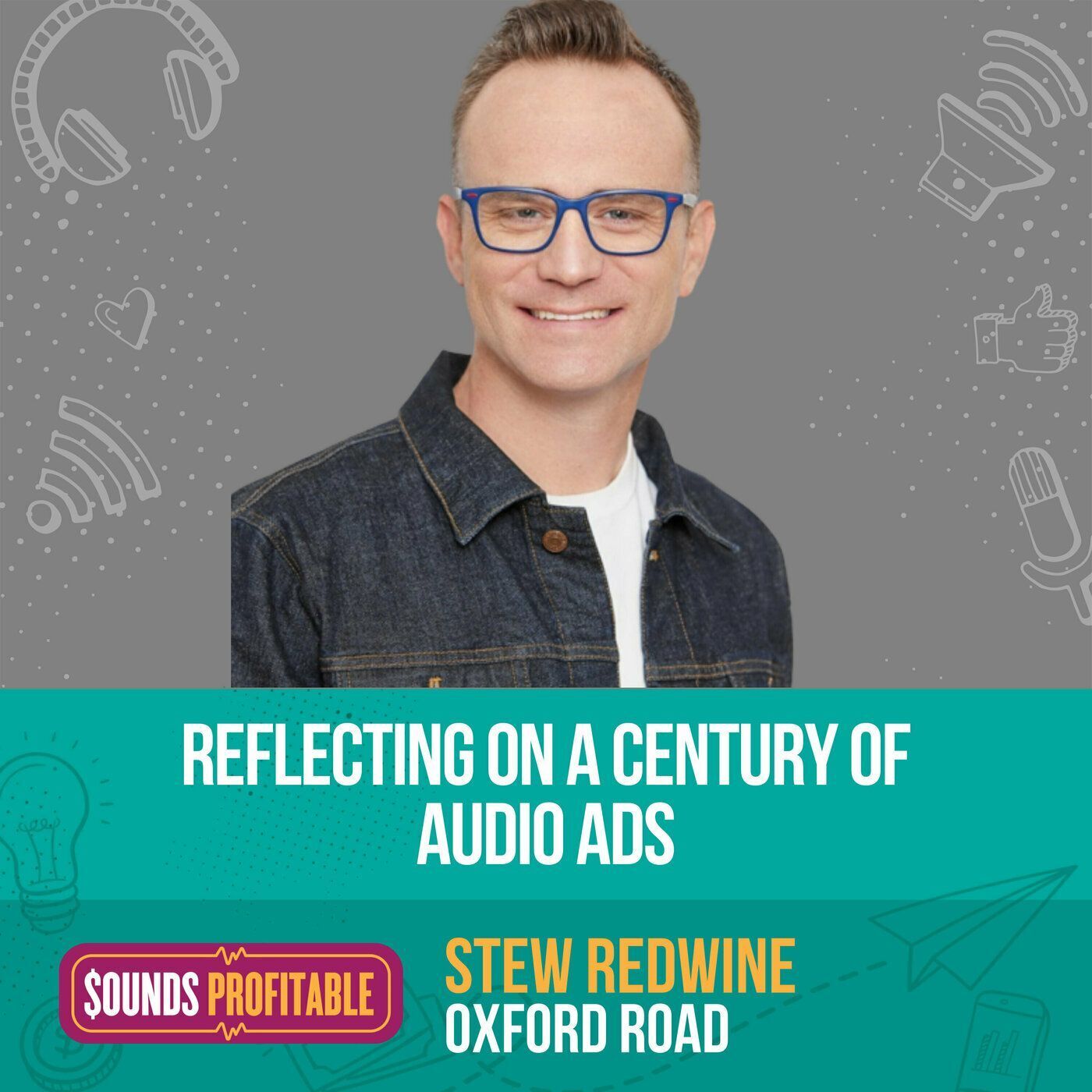
In this episode of Sounds Profitable: Bryan Barletta is joined by Stew Redwine in observing the anniversary of the first audio advertisement in 1922. How have things changed over a hundred years? What even was the first ad? Listen to learn about: The origin of audio advertising How audio ads have grown since. What we can learn from the evolution of audio ads Here’s our favorite idea from this conversation: “History doesn’t repeat itself, it rhymes.” - Mark Twain. Links: Bryan Barletta Arielle Nissenblatt Stew Redwine The Download Sounds Profitable: Narrated Articles Credits: Hosted by Bryan Barletta & Arielle NissenblattSounds Profitable Theme written by Tim CameronSee omnystudio.com/listener for privacy information.
Ep 12Host Reads Or Announcer Reads In Podcast Advertising: Do We Have To Choose?
There's a lot of received wisdom that says host read ads beat announcer ads in podcasting. But is this always true? Could it even be a false choice? Credits: Written by Tom Webster Edited by Tom Webster Produced with Spooler.fm Hosted with Omny Studio Sounds Profitable theme written by Tim Cameron Sounds Profitable: Narrated Articles is a production of Sounds Profitable. For more information, visit soundsprofitable.com.See omnystudio.com/listener for privacy information.
Ep 11Podcast Ad Spend Isn’t Slowing as a Recession Potentially Looms & 7 Other Stories
This week: Podcast ad spending goes strong despite recession fears, YouTube and Twitter launched dedicated podcast spaces, advertising questions what to do if premium users choose not to see ads, and a look into why DTC ads haven’t fallen off as expected. Podcast Ad Spend isn’t Slowing as a Recession Potentially Looms. Manuela: Marketing Brew’s Alyssa Meyers brought good news last Wednesday. Things are looking up for the podcast ad spending despite, shall we say, less than ideal economic conditions. Over on the general advertising side of things, it’s a bit bleak. On August 18th Daniel Konstantinovic, writing for Insider Intelligence, covered the worst month of ad spending in two years. “July saw ad spending go through its worst monthly decline since July 2020. Ad spending contracted 12.7% year over year in July, per MediaPost and Standard Media Index’s US Ad Market Tracker.” Several potential causes of this dip are proposed, most of which are interlinked to some degree. Relaxing of pandemic restrictions and the return of larger social gatherings has increased commuting and free time away from screens. Meanwhile, even while the jury’s out on whether we’re technically in a recession, Konstantinovic points out a Brand Keys statistic showing 70% of consumers believe they’re in a recession and thus are cutting back on spending. Perhaps spending wasn’t great in the general advertising space, but podcast ad spending continues to boom regardless. “Some of the biggest audio companies reported growth in podcast ad revenue for Q2 despite a softening ad market, and buyers responsible for major audio budgets told us they’ve yet to see a significant retreat from podcasting, indicating that the sector could continue growing regardless of the state of the economy.” It’s also worth keeping in mind which data we’re looking at and how we’re looking at it, as Magellan AI’s Sean Russo explains: “We took a look through a few different lenses. When you look at year-over-year spend in July in podcasts, we’re seeing a 19% increase. If we look at Q2 YoY we’re seeing a 48% increase. Worth noting that looking at month-over-month June to July we saw a 7% decrease. So, the bottom line on what we’re seeing is that podcast ad spend continues to grow at a healthy clip YoY, though we did see a minor pullback from June to July.” YouTube and Twitter Launch Dedicated Podcast Sections Shreya: It’s time to follow up on two developing stories we’ve covered in recent weeks, as two giant social media platforms have now rolled out sections dedicated to podcasting. Last Thursday Twitter started the rollout of the new dedicated Spaces tab. “Integrating podcasts into Spaces, where audio conversations happen on Twitter, is another way we’re continuing to invest in audio creators. To do this in a simple and intuitive way that allows listeners to simply hit play and go, we started with a redesigned audio experience in the Spaces Tab.” Twitter remains an important space for podcasters to both promote and network. With the addition of podcast functionality that’s native to the app they’ve removed some of the friction between the promotion of a podcast and the potential audience member actually listening. On that same note: last Monday YouTube launched a dedicated page for podcasts, though only for users in the United States. As covered by Sarah Perez in TechCrunch, the url for the new page was discovered ahead of formal announcement. Despite their thunder being partly stolen, YouTube’s shown a promising amount of dedication to the industry. “Last year, YouTube hired a podcast executive, Kai Chuk, to lead its efforts in the space and has been offering cash to popular podcasters to film their shows, reports said. This March, a site called Podnews leaked an 84-page presentation that detailed YouTube’s podcast roadmap. In the document, YouTube revealed it had plans to pilot the feature by ingesting RSS feeds. It also mentioned a new URL, YouTube.com/podcasts, but the link didn’t work at the time.” A quick note from script writer Gavin: yes, that bit of the quote with the phrase “a site called Podnews” hurt me too. In addition to what Perez covered in the quote, it’s also worth remembering YouTube has recently announced a partnership with NPR to bring their shows to the platform. It’s safe to say YouTube is one of the big companies that is taking the podcasting industry and its potential seriously. What happens when high-income households opt out of ads? Manuela: Last Monday Kelsey Sutton, writing for Marketing Brew, approached an important question: what if the people certain brands wish to market to are also the demographic most likely to pay a premium specifically to avoid ads? “The people that advertisers most want to target are hiding from the advertisers,” said Eric Schmitt, research director and analyst on the Gartner for Marketing Leaders. “It really is going to have some interesting knock-on effects for the ad business over time.” Podcasting is not spe
Ep 10The Reality of Podcast Economics: I Built an Independent Women’s Podcast Network
In three years, Allyson Marino built and sold her own podcast company, Lipstick & Vinyl, a network built around strong female voices. Here is Allyson’s story. Credits: Written by Allyson Marino Edited by Tom Webster Produced with Spooler.fm Hosted with Omny Studio Sounds Profitable theme written by Tim Cameron Sounds Profitable: Narrated Articles is a production of Sounds Profitable. For more information, visit soundsprofitable.com.See omnystudio.com/listener for privacy information.
Ep 10The Future of Brand Safety & Suitability for Audio
In this episode of Sounds Profitable: Adtech Applied, Bryan speaks with Tamara Zubatiy, co-founder and CEO of Barometer. Barometer contextualizes podcasts based on the GARM brand suitability components and the Media Roundtable Values. Listen to learn about: Brand safety and suitability Why it’s important to create block and allow lists for advertisers How context and nuance play into the brand safety and suitability conversation The Sounds Profitable Business Leaders Summit The consolidation of our feeds Why we need your feedback on this podcast Here’s our favorite idea from this conversation: GARM marks different levels of risk when it comes to advertising but there’s never an ad partnership that brings zero risk to either party (advertiser or publisher). Links: Bryan Barletta Arielle Nissenblatt Tamara Zubatiy Barometer Sounds Profitable Summit at Podcast Movement The Download Sounds Profitable: Narrated Articles SquadCast Podsights Credits: Hosted by Bryan Barletta & Arielle Nissenblatt Sounds Profitable Theme written by Tim Cameron See omnystudio.com/listener for privacy information.
Ep 9Podcast Ad Delivery: Make Better Sandwiches
Even with the best intentions, bad ad delivery can happen. But why does it happen? Credits: Written by Bryan Barletta Edited by Tom Webster Produced with Spooler.fm Hosted with Omny Studio Sounds Profitable theme written by Tim Cameron Sounds Profitable: Narrated Articles is a production of Sounds Profitable. For more information, visit soundsprofitable.com.See omnystudio.com/listener for privacy information.
Ep 8Apple Ramps Up Its In-House Podcasting Efforts & 6 other stories for August 18th 2022
This week: Apple’s funding podcasts, brand safety tech continues to divide advertisers, what more can and should ad agencies do to support journalism, Edison’s Latino Podcast Report, and Spotify bundles Chartable and Podsights access for Megaphone users Apple Ramps Up Its In-House Podcasting Efforts with Studio Deal Manuela: Rumors of Apple getting into podcasting bore fruit last week with official confirmation. At least, sort of. Ashley Carman and Lucas Shaw’s Bloomberg piece from last Wednesday explains: “The investments have been led by Apple’s TV studio, rather than its podcast division. Despite being one of the biggest distributors of audio in the world, the company’s podcasting unit has avoided funding individual shows or buying networks because it wants to be seen as a neutral platform.” That TV division has entered into a deal with Futuro Studios to fund the creation of podcasts while Apple retains first-look rights on film and TV adaptations. In essence, the deal creates a pilot-factory for Apple to generate new IP and test them in the world of podcasting before graduating to the more expensive filmed version. “Apple hasn’t pumped nearly as much money into original podcasts as Amazon and Spotify Technology SA, which have each spent more than $1 billion acquiring companies and programming. Spotify, Apple’s rival in music streaming, has made some of the most popular podcasts in the world exclusive to its service and thus unavailable to the competition.” Podcasting is becoming a relatively affordable testing ground for IP instead of fully committing to a TV pilot, along with the added bonus of any successful IP getting a built-in audience of fans before the first day of shooting. Successful shows like Netflix’s Dirty John adaptation are proving the method can work and work well. ‘A key impediment’: Brand safety tech continues to divide advertisers into haves and have-nots Shreya: This Monday Seb Joseph of Digiday posted an article detailing the growing divide in how advertisers handle being posted to news sites when big, predominantly negative stories break. Nobody wants to be the next viral sensation getting roasted worse than Mr. Peanut when Planters’ ad campaign temporarily killing their mascot coincided with the death of Kobe Bryant. In a world full of dangerous news cycles, brand safety tech companies like Integral Ad Science are able to impart more granular control over what content is considered brand-safe in a timely manner. “Then there are those marketers who don’t use the technology. Take British newspaper group Reach plc, for example, which has said the war in Ukraine significantly dampened advertiser demand. This won’t surprise anyone. The truth is the downside is too steep and the upside too obscure for many marketers to do anything but avoid the polarizing news. That said, not every marketer sees it this way. And if they could afford to, they would advertise on news sites — just in a more nuanced manner.” An unintended side effect of advertisers deciding what topics are acceptable to block ads on is that some of the biggest news stories are also cutting off some of the potentially best-written journalism of the moment. Joseph quotes Zefr EVP of Strategy and Marketing: “We actually don’t accept or use keyword blocklists as a policy in our company, because they end up causing the same damage to over-blocking quality voices over and over again and they just don’t work well in UGC environments. We instead apply the GARM [Global Alliance of Responsible Media] models for debated sensitive social issues as a way to keep brands in front of suitable content while avoiding the issues that they’re concerned about.” Ad Agencies Can, and Should, Do More to Support Journalism Shreya: Between hedge fund buyouts dissolving seemingly bulletproof institutions and ad dollars drying up when negative stories drop, things are looking rough for journalists. Ricardo Baca writes an impassioned plea for ad agencies, stressing the importance of not only collaborating with journalists but also supporting them with ad buys and subscriptions. He writes from the perspective of having worked on the other side of the fence as a journalist himself years prior. “To be clear, agencies are partly to blame here. We’re stuck on the same vicious treadmill as everyone else: We see the web traffic going to social media, so that’s where we buy our ads, further siphoning away support from journalism, the snake eating itself. And with news outlets struggling mightily on the revenue front no matter their size—from local alt-weeklies to major metropolitan dailies—I am making a plea for agencies to step up.” Baca suggests treating relationships with journalists not as transactional, but symbiotic instead. Value their time and they will value yours. Don’t hold grudges when well-researched reporting generates something the client isn’t happy with. Then there’s the fact that journalism has evolved beyond gumshoe reporters all working for
Ep 7The Podcasting Problem Hiding in Plain Sight
Survey after survey tell us that people continue to discover podcasting every year. But is podcasting growth really a case of three steps forward, two steps back? Credits: Written & Editing by Tom Webster Produced with Spooler.fm Hosted with Omny Studio Sounds Profitable theme written by Tim Cameron Sounds Profitable: Narrated Articles is a production of Sounds Profitable. For more information, visit soundsprofitable.com.See omnystudio.com/listener for privacy information.
Ep 6Podcast Quarterly Earnings & 6 Other Stories
This week on The Download: Quarterly earnings, more quarterly earnings, Audio is getting its own track at Advertising Week, and Spotify is giving podcasts their own space in its app. Arielle: Hope you’re ready for some earnings reports, because we’ve got two segments worth of second quarter earnings to go over. First up: the big platforms. Last Wednesday https://www.marketingbrew.com/stories/2022/08/03/spotify-siriusxm-and-acast-report-growing-podcast-ad-biz-in-q2?mid=4afb33bb7ffe284d840660fb3604ff60Things kick off with a silver lining: “Call it what you want, the ad biz is not looking its best right now. But according to these execs, the growing podcast segment is keeping its head above water.” Economic uncertainty is undeniably impacting the ad industry. The CEOs of Spotify and SiriusXM both cite ‘macro’ trends as being notably dire but not to podcast ads sales. SiriusXM’s Q2 ad revenue for Pandora and associated platforms reports a 5% year over year increase, reaching 403 million. Spotify posted a 31% year over year gain, earning around 366 million. This time around they neglected to isolate their podcast ad revenue as its own statistic. Meyers quotes Spotify CFO Paul Vogel as saying they’re experiencing “strong growth on the podcasting side.” Hosting service Acast has been busy this second quarter, citing new features, a massive increase of podcasts on the platform, and their acquisition of Podchaser as driving factors of their 39% net sales growth. A figure that calculates out to 31 million USD. While the macro trends are concerning, The Download will never pass up an opportunity to report numbers going up in podcasting. Big or small, names in the industry are increasing ad revenue, and that’s a good thing. Shreya: Now to cover the Q2 numbers from three large broadcasters: iHeartMedia, Cumulus Media, and Audacy. There’s a few dark spots throughout but, interestingly, their podcast numbers are shining beacons of hope in all three reports. Overall https://www.businesswire.com/news/home/20220804005680/en/iHeartMedia-Inc.-Reports-Results-for-2022-Second-Quarter, despite, in the words of company president Rich Bressler: “the uncertain economic environment.” Podcast revenue is up to 86 million, a 60% year over year increase. Meanwhile, https://www.cumulusmedia.com/wp-content/uploads/2022/08/CMLS-2022.06.30-Earnings-Release-FINAL.pdfjoined the macro club during president Mary Berner’s opening statement: “Despite the challenging macro environment, we increased revenue in the quarter by more than 5%, driven by our digital businesses whose growth accelerated in Q2 to 20% year-over-year.” Podcasting made Cumulus around 15 million this last quarter, up 27% year over year. All told, podcasting accounts for 6% of the company’s revenue. Not too shabby. Finally,https://seekingalpha.com/pr/18894187-audacy-reports-second-quarter-results: “After a very strong first quarter in which we grew revenues by 14% and significantly increased margin, our second quarter results were adversely impacted by declining macroeconomic conditions and ad market headwinds which reduced our top line growth to 5%.” The company made a nice $69m from “digital,” which includes podcasting, and is up 18% year over year. Podcast downloads grew 40% year-over-year. Revenue from podcasts is supposedly in the upper teens of percentage growth, but Audacy didn’t give specifics. Even with the ad market headwinds it seems podcasting is doing well for them. Arielle: Wednesday of last week was a busy day for Alyssa Meyers, as we cover her second article of the day: “https://www.marketingbrew.com/stories/2022/08/03/audio-gets-its-own-track-at-this-year-s-advertising-week?mid=4afb33bb7ffe284d840660fb3604ff60” Advertising Week’s head of podcasting Richard Larsson told Marketing Brew, “The rise of audio throughout the pandemic, coupled with Advertising Week’s efforts to build its own podcast network, culminated in the decision to give audio a more official spot on the agenda this October.” Audio representation continues with one of - if not the - longest-running podcast awards ceremony. Yesterday the People’s Choice Podcast Awards announced the nominees for their 17th annual session. The substantive list of nominees can be found https://www.podcastawards.com/ Continuing the award theme with one more bit of news: on Monday the newest issue of Adweek dropped with the winners to the 2022 Adweek Podcast of the Year Awards. The full list of winners can be found in the official Adweek posthttps://www.adweek.com/media/see-all-the-2022-adweek-podcast-of-the-year-awards-winners/amp/?utm_source=podnews.net&utm_medium=web&utm_campaign=podnews.net:2022-08-09. Shreya: Podcasts and music are taking a break from each other soon on Spotify, according to David Pierce’s https://www.theverge.com/2022/8/9/23298679/spotify-app-redesign-podcasts-music “Spotify has been working on a new design for its home tab that will create separate feeds for your music and your podcasts. Th
Ep 5How To Approach A Podcast Industry-Wide Education Initiative
In this episode of Sounds Profitable: Adtech Applied, Bryan speaks with U of Digital Managing Partner Shiv Gupta about what it means to create a comprehensive educational approach across an industry. Gupta comes to us by way of the digital marketing space, but has spent his career creating programming aimed at educating and serving across different sectors and levels within companies. Adtech Applied cohost Arielle Nissenblatt joins to set up the chat and break it down with takeaways at the latter half of the show. Listen to learn about: Shiv Gupta’s career Why it’s important to create non-biased courses that educate on entire industries How Sounds Profitable plans to approach an education initiative Why we need your feedback on this podcast Here’s our favorite idea from this conversation: creating opportunities for folks to learn, either if they’re new to a job or looking to move on to the next level, benefits everyone. Links: Bryan Barletta Arielle Nissenblatt Shiv Gupta U of Digital Sounds Profitable Summit at Podcast Movement The Download Sounds Profitable: Narrated Articles SquadCast Podscribe Credits: Hosted by Bryan Barletta & Arielle Nissenblatt Audio engineering by Evo Terra Executive produced by Evo Terra of Simpler Media Sounds Profitable Theme written by Tim Cameron See omnystudio.com/listener for privacy information.
Ep 4Programmatic Advertising for Podcasters: How to Get Started
The Summer of Programmatic continues! You may have already decided that programmatic advertising is important, but is it difficult to get started? The answer is...no! And this week, we lay out a simple plan to get you up and running. Credits: Written & Editing by Bryan Barletta Produced with Spooler.fm Hosted with Omny Studio Sounds Profitable theme written by Tim Cameron Sounds Profitable: Narrated Articles is a production of Sounds Profitable. For more information, visit soundsprofitable.com.See omnystudio.com/listener for privacy information.
Ep 3TikTok Eyes Podcasting? & 6 Other Stories for August 4th 2022
This week on The Download: New TikTok Trademark Could mean new streaming service, third-party cookies get a stay of execution from Google, Apple App Store ads could signal Apple Podcasts’ future, and two perspectives on the downturn ad economy. New TikTok App Trademark Manuela: Last Thursday Dan Whateley and Amanda Perelli, writing for Business Insider, covered a new trademark application for a service called TikTok Music. As the simplistic name suggests, TikTok parent company ByteDance could be looking to branch the TikTok brand out beyond its current relationship to music and create a fully-fledged streaming platform. “The idea that ByteDance would launch a standalone "TikTok Music" streaming service in the US to compete with players like Spotify and Apple Music isn't unfounded. It already runs a streaming app called Resso in three markets — India, Brazil, and Indonesia — that has been grabbing market share from other streamers in the past year.” While nothing has been formally announced or set in stone, the sources Perelli and Whateley contacted for their story suggest it’s highly unlikely ByteDance would file such a trademark. Filing in the US and Australia wouldn’t happen without a strong chance the company meant for it to come to fruition. Then there’s the matter of this move making perfect sense for TikTok. Why cover this on The Download? Well, in addition to the general fact TikTok is slowly devouring the online world, it’s coming for audio specifically and the trademark application lists, among other things, the proposed new app’s ability to stream: “downloadable mobile applications providing podcast and radio broadcast content.” What remains to be seen is what the TikTok version of ‘a podcast’ will be. Google Delays Cookie Death Again Shreya: Once again we won’t be seeing the death of third-party cookies, as Google has delayed their death blow for another year. Last Wednesday The Verge’s Richard Lawler covered the story in the article “Google delays blocking third-party cookies again, now targeting late 2024.” “The plan is to expand the group of Chrome users who have Privacy Sandbox APIs enabled to “millions of users globally” starting in August, then gradually opt more people in throughout the rest of the year and into 2023, giving the publishers and developers of these sites time to find out how the technology works before the APIs are “generally available” by Q3 of 2023.” With this second delay third-party cookies are becoming the shoe that refuses to drop in advertising. While podcasting doesn’t depend on cookies per se, the ability to track individual consumers remains an expectation of digital marketers who don’t want to see the genie go back into the bottle. If it does, podcasts are on equal footing with mobile and web ads, and all will have to do the work to target the right consumers. Apple App Store Ad Offerings Signal Podcast Future Manuela: This Tuesday’s issue of Stratechery covers many sections of the Apple earnings call, but one particular section stuck out to The Download: Apple’s new advertising slots. The new slots are detailed by 9to5Mac’s Chance Miller. “Apple is expanding its advertising business and adding two new ad slots to the App Store. Currently, the App Store has two ad slots: one on the main ‘Search’ tab and one in the Search results. The two new App Store ads announced today will bring advertisements to the App Store ‘Today’ homepage, as well as to individual app pages.” While the App Store and Apple Podcasts are different services, this change could signal a shift in the winds over in the podcasting world. Currently there are no ads in Apple Podcasts. Apple also puts considerable time into featuring podcasts in places ads would normally appear at no charge. Years of careful curation and optimal placement have caused those spots to become incredibly coveted. By making some of those spaces available for purchase - through search or the home page, or even on pages for OTHER podcasts - Apple would unlock a large revenue opportunity for themselves outside of subscriptions, and provide a new for-pay opportunity for podcast promotion. Ad Economy Downturn Dual Perspectives Shreya: On Monday Digiday’s Seb Joseph posted “The downturn ad economy: A tale of two narratives.” “There are two competing narratives on advertising at the moment. They sit uneasily with each other. But both are correct. Ad dollars are being spent, but they’re also being cut. Yes, these two things can be true at the same time. No, the latter perspective doesn’t make the former any less valid or vice versa. Really, it’s a matter of perspective.” The two warring perspectives in Joseph’s piece are that of the big holding companies and agencies versus the platforms. Both are staring down the barrel of a recession and have different reactions. “It’s no surprise that the marketers who can afford to advertise now are trying to make the most of it. They’re spending ad dollars, rather than looking to pull them. In
Ep 2Shameless Acquisition Target - Episode Drop
We're such big fans of Laura Mayer and her new show Shameless Acquisition Target, that we wanted to make sure you didn't miss it. Subscribe directly here! After years of seeing friends (and some enemies) get rich, rich, rich selling their shows and companies to other bigger shows and bigger companies, longtime podcast executive Laura Mayer has decided to get hers. To do this, she'll speak to straight-up geniuses in the worlds of podcasting, entertainment, and business to understand what value is in media and how to make it. At the end, Laura will sell the show itself to the highest bidder. Will she make hundreds, millions, or even dozens of dollars? Will she be able to afford the gray house down the street from her rental apartment? Let’s find out together… shamelessly. Laura explains why she cares so *very* much about acquisitions And, hopefully, why you should care, too! Want to buy MERCH (“Hector’s Place” is our newest addition) or buy the show?\Want to learn more about this episode’s sponsor?Want to listen to Harkin’s new fabulous album?Want to give Laura Mayer a PIECE OF YOUR MIND?See omnystudio.com/listener for privacy information.
Ep 1What Garth Brooks Can Teach Us About Podcast Ads
Are programmatic ads bad for podcasting? Or are they a lifeline for creators? We ask the number one solo artist in U.S. history. Credits: Written by Tom Webster Editing by Bryan Barletta Produced with Spooler.fm Sounds Profitable theme written by Tim Cameron Sounds Profitable: Narrated Articles is a production of Sounds Profitable. For more information, visit soundsprofitable.com.See omnystudio.com/listener for privacy information.
Ep 35Reporting On The Business Of Podcasting
Bryan speaks with Marketing Brew’s Alyssa Meyers about reporting on podcasting and audio for an advertising-focused publication. Marketing Brew is part of Morning Brew’s network of newsletters. Adtech Applied cohost Arielle Nissenblatt joins to set up the chat and break it down with takeaways at the latter half of the show. Listen for: How Alyssa found this beat What Alyssa looks for in a story How to become a source for Alyssa and other marketing/advertising-focused publications that cover podcasting and audio Information on the Sounds Profitable Summit at Podcast Movement Dallas Where to find our other podcasts, La Descarga, The Download, and Sounds Profitable: The Narrated Articles An update on our podcast slate at Sounds Profitable and a tease of what’s to come Here’s our favorite idea from this conversation: we need subject matter experts who are not just well-versed in their own product or company’s capabilities, but who also know how their product/company relates to and fits in with the larger audio landscape. Links: Bryan Barletta Arielle Nissenblatt Alyssa Meyers Marketing Brew Sounds Profitable Summit at Podcast Movement The Download Sounds Profitable: Narrated Articles SquadCast Credits: Hosted by Bryan Barletta & Arielle Nissenblatt Audio engineering by Evo Terra Executive produced by Evo Terra of Simpler Media Sounds Profitable Theme written by Tim Cameron See omnystudio.com/listener for privacy information.
Ep 31Acast Buys Podchaser & 6 other stories for July 21, 2022
This week on The Download: Acast buys Podchaser, PodcastOne strikes out on their own, SiriusXM and Comscore expand their deal, Disney’s integrating with The Trade Desk , and Podnews caught 240 spam emails. This Monday Podnews started off the work week with a big announcement: Acast is acquiring Podchaserhttps://podnews.net/press-release/acast-podchaser “Podchaser, which will continue to operate as a separate brand and independent business, was founded in 2016 and is home to the leading global podcast database, covering more than 4.5 million podcasts and more than 1.7 billion data points — including hundreds of thousands of ratings and reviews, and the advertisers of the world’s top 5,000 podcasts. This unique, proprietary data — which will also remain open to all — spans and powers the entire open podcast ecosystem, and is used by listeners, podcasters, advertisers and industry professionals.” Podchaser has created strong integrations with hosting platforms to receive data, exported data to podcast apps and hosting platforms, and has a competitive intelligence tool built to enable publishers and buyers alike to improve their revenue streams. General industry sentiment of Acast currently is a bit lukewarm unless you’re actively working with them as a publisher or a buyer. As previously reported, Acast has—or at least had— a marketing strategy involving unrelenting spam emails encouraging podcasters to switch to their services. With mass emails to RadioPublic users and their siloed relationships with partners like Patreon, it’s hard for some podcasters to give this deal the benefit of the doubt. We’re very happy for our sponsor Podchaser, and the entire team there, and truly hope the independent nature is maintained. We still question the comfort of existing and new integrated partners providing data to a competitor. Last Friday LiveOne issued a press release announcing that their company PodcastOne, having just raised 8.1 million in funding, is looking to separate and https://ir.livexlive.com/news/news-details/2022/LiveOnes-Wholly-Owned-Subsidiary-PodcastOne-Closes-8.1-Million-Financing-at-a-Pre-Money-Valuation-of-60-Million-as-Part-of-Its-Intention-to-Spin-Out-PodcastOne-as-a-Separate-Public-Company-Before-Year-End/default.aspx “PodcastOne is the leading advertiser-supported on-demand digital podcast company, offering a 360-degree solution for both content creators and advertisers, including content development, brand integration and distribution. Acquired by LiveOne in 2020, PodcastOne has had more than 2.1 billion downloads a year since its acquisition, across the more than 350 weekly episodes it distributes.” Their talent stable includes names like Jordan Harbinger, Adam Carolla, and T-Pain. In the press release PodcastOne president Kit Gray said: “The podcasting business has exploded over the past five years and PodcastOne is one of the largest independent podcast companies in the world. The company is one of only two independent podcasting publishers in the top 10 of Podtrac's list of Top Publishers. We believe that by trading as a separate public company, PodcastOne will have the opportunity to access the public capital markets as well as be better positioned to both acquire podcast platforms and attract significant podcast talent.” PodcastOne offers its own self-built platform and operates as an ad sales network for its publishers. It’s weathered a lot of storms in podcasting and investment like this during a recession shows confidence in the ability for them to stand on their own. It will be interesting to see how their products and services come to market faster, and who they cater toward. Much like the acquisition last story, this announcement shows podcasting deals aren’t going stale. Last Thursday SiriusXM and Comscore announced the expansion of their collaborative agreement to bring predictive audience targeting to podcasts. This new expanded agreement https://podnews.net/press-release/siriusxm-comscore-predictive. General Manager of Comscore activation services Rachel Grant said: “With podcast consumption skyrocketing and the regulatory environment still very fluid, it’s critical to give advertisers the ability to develop privacy-forward and future-proof audience targeting on podcasts” Prior to this AdsWizz was already working with Comscore for their contextual targeting based off of keywords for the Podscribe tool (not to be confused with the company Podscribe). The new deal expands into a targetable dataset for those buying through Adswizz programmatic offerings, either as a buyer using their demand side platform to buy anywhere in podcast programmatic, or buying directly into their open marketplace Podwave. The continued highlighting of it being privacy-first is a bit misleading. AdsWizz is still providing the IP address to match off of, which we at Sounds Profitable do not find to be an issue. That Comscore has built a new dataset not built on cookies is a step towards the aforementioned f
Ep 30Blubrry Brings A New Spin To Media Kits & 6 more stories for July 14, 2022
This week on The Download: Blubrry brings a new spin to media kits, Twitter’s building a podcast player, TargetSpot expands into Latin American audiences, Overcast’s creator has beef with how podcasters use DAI, and Anchor’s co-founder finds RSS standards restrictive to innovation. While a significant portion of the United States was recovering from an excessive amount of explosive devices used over the holiday weekend, Blubrry announced a new way for podcasters to present themselves to potential sponsors and partners. “Blubrry is introducing a podcasting industry first by providing all Blubrry paid customers a podcast media kit that updates daily with information you choose to include. The kit includes data you provide, podcast statistics and audience survey results.” Data points that can be included in the kit range from simple unchanging data points like website or show start date to granular things like social media follower counts, average monthly downloads per episode, and Blubrry audience survey results. While not technically a media kit, this is a great step forward in helping arm podcasters with useful information they can give advertisers interested in evaluating their show. While lacking in the usual collection of logos and information ephemera a true media kit designed to be attractive to press, this sort of media kit 2.0 cuts down on a fair amount of repeat labor. To The Download’s knowledge this is the first time a hosting company has automated this process and included actual download statistics in the package. Usually the process is a tedious manual one that requires regular updates by either the show runner or their representation to pull each data point. Kudos to Blubrry for being the first to market with this dreamed-of feature. Once again we bring news of a social media platform showing interest in podcast integration, but this time it feels more legitimate. Frontend engineer and code researcher Jane Manchun Wong did some digging. In her to-the-point tweet she announced: “Twitter is working on in-app Podcast player.” Attached to the tweet is a screen recording of the new player in action, showing Wong clicking on show art for Office Ladies, which prompts a new podcast player overlay. For the younger folk in the room, it’s worth noting that Twitter didn’t spring forth fully formed into the world. In its primordial form the service was originally Odeo, a 2005 attempt at what we’d call a podcast social media network today. Podcasting is literally in Twitter’s DNA. This Monday Podnews shared an announcement from TargetSpot concerning a promising step towards diversifying podcasting further. The adtech company is opening a Latin American-focused office in Miami, Florida under the leadership of Angelica Potes. Chief Revenue Officer Alexandre Ouhadi said: “We are glad to finally be physically present in the Latin American Market. We have created amazing partnerships with big name publishers. This is the right moment to officially go live. Audio is growing rapidly, so it’s a great opportunity for advertisers to leverage their digital media budget through this engaging medium.” Diversity in language, ethnicity, and geographical location is how the podcast industry expands. Hispanic/Latino creators are incredibly well represented in podcasting in comparison to the overall US population. Providing revenue opportunities for those audiences provides the ability for new businesses to be built to capture that revenue. This is good growth for the industry. On Tuesday Marco Arment, creator of podcatcher Overcast, took to Twitter to address a trend in negative reviews for his app. In four screenshots provided four different anonymous users cite an abundance of jarring advertisements. Some complain about the amount and quantity of ads, one claims the ads were so poorly-optimized the volume shift was enough to burst their eardrum. While the last review’s threat of legal action might be hyperbolic, Arment is still concerned. “Cheap, sloppy dynamic ad insertion (DAI) in podcasts continues to degrade the experience for listeners. They blame the app, and that’s my problem to deal with.” He goes on to ask podcasters who poorly implement DAI “what are you doing” in all capital letters. Sounds Profitable’s Bryan Barletta took issue with this in a quote-tweet of Arment, citing issues like frequency capping, comp separation, and other features related to poor-quality ad placement: “...are not tech issues, they’re business decisions. Your host doesn’t offer it? Switch hosts. And don’t buy inventory that doesn’t support your needs.” Sloppy implementation of DAI is a recipe for disaster, and there’s plenty of evidence of podcasters falling for that trap. Too often that sloppiness is built in under the guise of 'automation', which often leads to odd ad breaks added by the hosting company filled with even odder ads. So what's the solution? Bad ads—ads that don't fit the context of the episode, ads that are recorded at wi
Ep 29Edison Research Says Podcasting Is More Succession Than Yellowstone & 8 more stories for July 7, 2022
This week on The Download: Edison Research says podcasting is more Succession than Yellowstone, Reddit launches new take on live podcasting, Google’s Adtech is dropping IP, new data says podcast ads are overfishing popular ponds, and we spotlight #PodcastingSeriously. Last Friday the Edison Research blog posted “https://www.edisonresearch.com/podcastings-opportunity-in-wide-open-spaces/” In addition to reminding readers of The Chicks’ 1998 single from their fourth studio album, the post highlights a regional gulf in what counts as “popular” in podcasting. The comparison used highlights how Succession and Yellowstone are comparably popular television series, but based on one’s physical location in the country it’s highly likely they won’t see much advertisement or social media chatter for one over the other. More rural TV viewers will more likely to hear about and actively watch Yellowstone while Succession finds more attention in metro centers. “New data from Edison Research’s Infinite Dial study – sponsored by Wondery and Art19 – shows that as of today podcasting is more of a “Succession” story.” Consider this a tease from Edison Senior Director of Research (and, of course, my co-host on La Descarga) Gabriel Soto’s talk at Podcast Movement Dallas this August. “We in the podcasting space regularly remark that with four million titles, there’s a podcast for everyone. And while that’s surely right in theory, that doesn’t mean that enough of a match has yet happened to bring all the possible listeners to the space. One might argue that indeed there are a lot more podcasts talking about Succession than Yellowstone, and that might be part of the issue.” A lot of people got a three-day weekend in the US thanks to a national holiday, but this Monday Arielle Nissenblatt was on the podcasting streets https://twitter.com/arithisandthat/status/1544096389277294592?s=20&t=4_CSvYx2s9CHSyxS_60p2A. In a Twitter thread Nissenblatt detailed the launch of social media platform Reddit’s new Talk feature that shares some DNA with the social audio craze. The twist with Reddit Talk is those who use it get placement over any relevant subreddits that fit under a broad chosen topic. “If you host a Talk from your Reddit profile and pick up to 3 topics, you’ll appear at the top of Reddit to millions of users. e.g., if you pick "Finance" topic, everyone who follows r/wallstreetbets, r/personalfinance, etc will see your Talk.” Currently, Talk is only available to those chosen by Reddit via an application form. Niche content gets niche listeners, and Reddit is the king of niche. While we’ve been burned as an industry before on social platforms diving into podcasting, this measured approach seems like a promising one. Google has updated Universal Analytics and things aren’t going so hot. On Tuesday Ad Exchanger’s James Hercher posted https://www.adexchanger.com/analytics/marketers-have-one-year-to-migrate-to-the-new-google-analytics-but-its-already-a-mess/ “When Google announced the expiration date on Universal Analytics earlier this year, it said it would also cease logging or storing IP address data – a crucial datapoint that qualifies as personally identifiable and thereby subjects Google Analytics to tough interpretations of GDPR. Removing IP addresses may not be enough for Google Analytics to stem the tide of GDPR suits. But privacy concerns do explain why Google will force a change across its customer base, rather than continue to offer multiple services.” While Google impression tracking pixels do work in podcasting, Google refuses to accept IP and any other client info forwarded to it, so attribution from Google was unlikely in podcasting. With IP going away on the website side, it’s safe to say there will be no Google solution for podcast attribution as we know it today. However, the move by big companies like Google and Apple away from IP addresses will always be concerning for podcasting. There’s evidence to suggest IP address tracking won’t be outright removed from the industry, but it still will decline to the point one should expect methods of attribution to undergo a metamorphosis within the next 12 to 18 months. This Tuesday Pierre Bouvard of Westwood One published findings that might seem easy to predict, but are important to acknowledge regardless. https://westwoodone.com/blog/2022/07/05/three-solutions-to-the-podcast-ad-frequency-problem-remind-the-many-dont-lecture-the-few/ “The number of times podcast listeners hear an ad campaign is soaring. According to Podsights, the leading podcast attribution measurement firm, average podcast ad frequency has doubled in the past year, reducing podcast conversions. In Q1 2022, the average podcast campaign ad frequency measured by Podsights was 6.32, a twofold increase from Q1 2021 [when it was] (2.97).“ Bouvard reports the Podsights data indicates this uptick in ad frequency is leading to knock-on effects, such as site visits driven by podcast ads hitting a record low in Q1 of
Ep 28Sounds Profitable Publishes The Creators Report + 5 more stories for June 30, 2022
This week on The Download: Sounds Profitable publishes the Creators report. Slate is running provocative billboards for Slow Burn, Spotify turns its radar on podcasts, rising YouTube CPMs make the platform even more attractive for podcasters, and news organizations struggle to keep young folks around. Firstly, if you’ll indulge us a bit of self-promotion, the first ever Sounds Profitable report has been delivered! On Tuesday Sounds Profitable hosted a first-of-its-kind presentation of https://soundsprofitable.com/article/the-creators-us-2022. Here's how we billed it: “Sounds Profitable, in partnership with Edison Research, has put together the first credible study of the profile of podcast creators in America. This is an incredibly important benchmark in the history of podcasting and the first of many regular reports Sounds Profitable will be publishing to chart the future of the audio business.” The Creators operates off a data sample of 617 people who fit the profile of having produced a podcast, were over the age of eighteen, and listened to podcasts weekly. The data was collected from Q2 2021 through Q1 of this year. Some results put into sharp focus many assumed truths of the industry, as well as challenging others. The gender makeup of those polled showed sixty-nine percent of creators were men, twenty percentage points higher than the population of the United States. On that same token, the ethnicity spectrum shows podcasting has more diversity, with more representation of Black and Hispanic/Latino podcasters than the census reports as a national average. These juicy stats and more are available at https://soundsprofitable.com/article/the-creators-us-2022, from the presentation’s video to a spiffy 35-slide PDF of just the presentation, for you raw data nerds out there. In an advertising campaign fitting of a flashy documentary, Slate is running a stealth billboard campaign for the current season of Slow Burn. https://www.theverge.com/2022/6/28/23186432/abortion-roe-scotus-howard-stern-my-favorite-murder-podcast “Slate is launching a provocative new campaign to promote its latest season of Slow Burn, which tells the story of Shirley Wheeler, the first woman convicted of manslaughter for getting an abortion. The outlet has placed billboards in states that now have some of the strictest abortion laws in the country urging passersby to “Defend Shirley Wheeler.” The billboards are up in seven states with deeply-entrenched anti-abortion sentiment that had trigger laws waiting for Roe v. Wade’s nullification. The same issue of Hot Pod also spotlighted the efforts of Earbuds Podcast Collective founder Arielle Nissenblatt to organize a massive campaign of podcasts running pre-roll message to advocate for abortion rights. Messages like the one you’ll find at the beginning of this very episode. Hundreds of podcasters have signed on to the cause, including The Bechdel Cast, You Are Good, and legacy household name My Favorite Murder. This https://newsroom.spotify.com/2022-06-29/discover-even-more-emerging-creators-with-radar-podcasters/, originally created to spotlight up-and-coming artists on the music side of the app. RADAR Podcasters aims to get promising young podcasts in front of wider audiences with free exposure in-app. Each quarter Spotify’s content editors in participating regions will select three podcasts to spotlight with the RADAR program. Podcast Editorial Lead Brianne O’Brien goes more into the rhetoric used: “We’ll focus on creators with shows that exhibit authenticity and inclusivity, give us a reason to keep listening, and educate and entertain.” Currently the list of participating countries is fifteen, including thirteen countries in which English is not the default language. This is encouraging news for more big company recognition of podcasting’s strengths outside the North American and UK English-speaking bubble. O’Brien seems passionate about the cause, too. “My team, and Spotifiers more broadly, are podcast enthusiasts. So first and foremost, we really want to underscore the hard work that’s being done by creators to take their podcast to the next level, but also to build those long-lasting relationships with their audience.” Little is given in the way of specific details outside of which countries will be involved and how many podcasts are being selected. For example: The paragraph dedicated to addressing how the program will measure success offers no concrete ways by which they’ll measure success. The main drive seems to be that the program exists and those involved are excited to execute its ambitious mission. Currently RADAR Podcaster will only spotlight podcasts hosted on Anchor. Big Green sees the utility in embracing its creators, but for now only creators who are wholly locked into the Spotify system. https://www.marketingbrew.com/stories/2022/06/23/report-youtube-influencer-marketing-cpms-are-on-the-rise?mid=4afb33bb7ffe284d840660fb3604ff60, and that could be excellent news for po
Ep 32SP Highlights: Disinformation and Ad Accountability w/ Claire Atkin Of Check My Ads
Brand suitability and brand safety are topics that we're never gonna get away from in any aspect of podcasting. Or advertising in general. And that's why I was so excited to have Claire Atkin, co-founder of Check My Ads on the show earlier this year. Personally, as an individual, I support their movement and contribute to it every single month. I highly recommend listening to this episode, subscribing to their newsletter, and throwing a few bucks towards the only non-profit ad watchdog in existence. Credits: Original full episode available at: https://soundsprofitable.com/episode/2/13 Audio engineering by Evo Terra Executive produced by Evo Terra of Simpler Media Sounds Profitable Theme written by Tim Cameron See omnystudio.com/listener for privacy information.
Ep 27YouTube Gives Tips To Podcasters + 8 more stories for June 23, 2022
This week on The Download: a YouTube channel dives into podcasting on the video platform, the absence of podcasting’s middle class, and what do IAB’s measurement standards in video games mean for podcasting. Last Thursday, Creator Insider, a YouTube channel operated by a creator-focused wing of YouTube, uploaded a four minute https://www.youtube.com/watch?v=-fNrF7GTSco While the video doesn’t necessarily contain new groundbreaking information for someone who is deep in the podcasting industry, it’s a wonderful sign for the future of small-to-midsize podcasts unsure about perceiving YouTube as a viable podcast platform. Strategic Partner Manager Erica even backs up the size of YouTube’s reach with a citation of Edison Research data. Having good, concise resources to facilitate an easier move towards the mentality that YouTube should be treated like any other podcast aggregator is a promising step. It’s also interesting to note how much importance is placed on properly arranging podcast episodes in playlists. The video takes great care to establish best practices for naming and arranging playlists. While “RSS” is never spoken aloud, it feels like YouTube’s approach is to use the existing functionality of easily saving video playlists to treat playlists like an RSS feed. Who knows, in a few months we could be hearing about updates to the platform that bridge the gap between how YouTube is consumed and audio podcasts are consumed. Speaking of YouTube… Last Monday an exclusive from Reuters reporter Foo Yun Chee shared details on Google’s https://www.reuters.com/technology/exclusive-google-offers-let-ad-rivals-place-youtube-ads-eu-antitrust-probe-2022-06-13/. Luckily for podcasting, this could have beneficial knock-on effects. Google parent Alphabet has proposed to open their digital doors for the first time to allow third-party programmatic partners to place ads on YouTube videos. “The European Commission opened a probe last year to examine whether the world's largest provider of search and video was giving itself an unfair advantage in digital advertising by restricting rivals' and advertisers' access to user data.” If Google does end up waiving the requirement to use Ad Manager to place YouTube ads, this could both please the European Commission and open up a considerable amount of valuable inventory to podcast ad buyers. Inventory through platforms they’re already familiar with and - since YouTube is pushing for more podcasts on their platform - that inventory will still be going to benefit the podcasting industry. Last Friday, a prominent podcaster under the Spotify umbrella said the quiet part out loud. As detailed in lhttps://hotpodnews.com/bill-simmons-on-spotifys-war-chest-of-data/ sports analyst and host of The Ringer Bill Simmons revealed Spotify parts the metric curtain for creatives that sign with them. The following is in reference to a recent episode of Peter Kafka’s podcast Recode, in which Simmons appeared. “One thing he mentioned in the podcast that stood out to me was how he uses data. Although he said that he does not pay too much attention to his own show’s performance metrics, he indicated that he takes advantage of Spotify’s other data resources to scope out the competition and better position his shows.” The newsletter goes on to quote Simmons’ interview in Recode in which Simmons describes having the ability to see the metrics of competitor’s podcasts on Spotify as having access to “an incredible war chest of intelligence on the habits of people who listen to podcasts.” This is one of those rare moments where a known fact being stated out loud makes it sound like new information. It’s not particularly breaking news that a content aggregator would have excellent data. Everyone in the business can use access to the data of a podcaster’s competitors, it’s just not often talked about. The fear behind what Simmons says here is that Spotify owns more than just the aggregator. Big Green owns hosting platforms and one of the largest ad businesses in Megaphone. There’s nothing new under the sun. Retail giants like Walmart and Amazon have done this for retail purchasing competition in the past, but now podcasting is growing up and one-stop-shops like Spotify are becoming more common. Last Thursday Eric Nuzum published an installment of his Substack The Audio Insurgent in which he floats the question “https://audioinsurgent.substack.com/p/does-podcasting-lack-a-middle-class” The piece begins with Nuzum speaking at a conference heavily attended by GMs and CEOs of public radio stations. During a talk Nuzum hosted he asked the group of over 200 public radio heads, a demographic famous for embracing podcasting, who had at least one podcast that made 50,000 downloads a month. Fewer than ten attendees met that metric. “Why are those numbers important? The average CPM ad rate in podcasting is about $23.16 per thousand downloads. To qualify for buys at even that average rate, you generally need to have a po