
Software People Stories
412 episodes — Page 4 of 9
Becoming a consultant with Dan Balcauski
In this episode, my co-host Gayatri continues her conversation with Dan Balcauski, founder and chief pricing officer at product tranquility, a company that helps high-volume B2B SaaS CEOs define pricing and packaging for new productsGayatri asked him what challenges he faced when he became a consultantDan sharesHow he did a solo backpacking around the world and the transformational experiences he gotHow he had to talk himself away from self-talk that would shoot any ideas for entrepreneurshipWanting to explore a ‘brain for hire’ model, to see if he could sell his expertiseValidating the niche to be in - of SaaS pricing advisoryWhy he did not consider a model of being a fractional product manager role, as a consultantWhat some of the inflexion points in his career have beenHow he has been able to support global clients, remotelyHis advice for young professionals who want to take up product management as a careerDan Balcauski, the founder and Chief Pricing Officer at Product Tranquility, dispels B2B SaaS Pricing Illusions.Dan is an expert in helping high-volume B2B SaaS CEOs define pricing and packaging for new products. He has 15 years of experience managing multiple products throughout their life cycles, from start-ups to publicly traded multinationals. A fun fact about him: before founding the company, he took a sabbatical and completed a solo, round-the-world expedition to 21 countries.Linkedin: https://www.linkedin.com/in/balcauski/

Pricing Software Services with Dan Balcauski
In this episode, my co-host Gayatri is in conversation with Dan Balcauski, founder and chief pricing officer at product tranquility, a company that helps high-volume B2B SaaS CEOs define pricing and packaging for new productsIn this conversation he talks aboutHis student days in 1999, the peak dotcom eraGot a job in Austin, TexasGetting into engineering manager role, which included envisioning product roadmapsDeveloping an interest in articulating value of solutions Signing up for an MBA and doing work on pricingSeeing some of the mistakes made by others during mergers and acquisitionsSetting up his company about 4 years agoHow he learns from other experts and booksHis views and recommendations on pricing and inflationThe impact of Covid on pricing patterns in hardware and softwareListen on!Gayatri asked him what challenges he faced when he became a consultantThe answer to that question and a lot more interesting stuff in the next episode.Dan Balcauski, the founder and Chief Pricing Officer at Product Tranquility, dispels B2B SaaS Pricing Illusions.Dan is an expert in helping high-volume B2B SaaS CEOs define pricing and packaging for new products. He has 15 years of experience managing multiple products throughout their life cycles, from start-ups to publicly traded multinationals. A fun fact about him: before founding the company, he took a sabbatical and completed a solo, round-the-world expedition to 21 countries.Linkedin: https://www.linkedin.com/in/balcauski/
Making teaching exciting with Shailaja Venkatasubramanyan
I continue my conversation with Shailaja Venkatasubramanyan.In the first part, she talks about how she got into Information systems and her career spanning education and startup sectors. How she balanced professional and personal demands and challenges.How she never hesitated to get into new areas and was always ready to learn.In this part of the conversation Shai talks aboutDifferences in teaching approaches for young adults and childrenHow she likes to learn when she is interested in a topic, and not for grades etcPeople learn best when they are invested in itI bring a lot of enthusiasm, by being funny and a pinch of entertainmentGiving interesting assignments (designing assignments that I would want to do)Also taught a strategy class: lot of case studies, that had a lot of learning valueOne of the aspects to address in teaching is to manage short attention spansHow teamwork is important even in academic coursesTrends and concerns related to Evolving Knowledge managementHer career tipsShailaja "Shai" Venkatsubramanyan is an Associate Professor Emeritus at the School of Information Systems and Technology at San Jose State University (SJSU), where she has taught and researched for over 15 years. She has a Ph.D. in Management Information Systems (MIS) from the University of Arizona, and is a Fellow of the Salzburg Global Seminar and a Master Teacher Award recipient.Shai is passionate about using technology and data to solve real-world problems and to make the world a better place. She has also worked as a General Manager at theCoderSchool, a franchise that teaches coding and programming skills to kids and teens, and as a Knowledge Engineer at Kanisa, a Silicon Valley start-up that developed innovative solutions for online customer service. She has expertise in MIS, data analysis, databases, online customer service, and coding education. She enjoys writing, teaching, and learning about various topics related to MIS and beyond.https://www.linkedin.com/in/shailaja-venkatsubramanyan-b47742
Balancing professional and personal pressures with Shailaja Venkatasubramanyan
I am in conversation with Shailaja Venkatasubramanyan, who is an Associate Professor Emeritus at the School of Information Systems and Technology at San Jose State University. She is also a Fellow of the Salzburg Global Seminar and a Master Teacher Award recipient.A special note on this episode: during this conversation Shailaja talks about some very personal moments in her life that some may find disturbing or moving.In this conversation, she talks about:Wanting to do science, but was influenced to take up commerceEncouraged by her mother, choosing to study accounting in the USATaking up courses in Information systems and computer scienceBeing encouraged by a professor to take up PhD in information science and getting a PhD in Management Information SystemsFinding herself amidst engineers and how she got over the initial fearsTaking up a teaching job at Tulane University, but leaving that after a year to take up a position with a startup in CaliforniaHow she had to do literally a cross country trip one weekend a month for one more semesterEnjoying the work culture in a startup, till they decided to start a familyMoving to San Jose State university after a first meeting at a StarbucksThe hectic and intense pace of life, juggling work and family, with an incident at home that needed help from the Fire departmentRealizing that it is best to focus on one thing at a timeGoing through a tough phase personally, with family health challengesFacing some unfair situations and harassment at workNot getting an empathetic hearing from seniorsHow all these experiences made her more patientWanting to spend more time with her ailing father, choosing to pause her career and focus on familyFeeling happy about her choices as she has a sense of overall satisfactionHow she was able to find her niche, and differentiate her strengths, particularly when among others with more technical backgroundsAn example was about learning what she needed to know for processing satellite dataShailaja "Shai" Venkatsubramanyan is an Associate Professor Emeritus at the School of Information Systems and Technology at San Jose State University (SJSU), where she has taught and researched for over 15 years. She has a Ph.D. in Management Information Systems (MIS) from the University of Arizona, and is a Fellow of the Salzburg Global Seminar and a Master Teacher Award recipient.Shai is passionate about using technology and data to solve real-world problems and to make the world a better place. She has also worked as a General Manager at theCoderSchool, a franchise that teaches coding and programming skills to kids and teens, and as a Knowledge Engineer at Kanisa, a Silicon Valley start-up that developed innovative solutions for online customer service. She has expertise in MIS, data analysis, databases, online customer service, and coding education. She enjoys writing, teaching, and learning about various topics related to MIS and beyond.https://www.linkedin.com/in/shailaja-venkatsubramanyan-b47742
Modeling the celestial objects with Kishore Kumar
This is a continuation of the conversation with Kishore Kumar.He talks about how he started his youtube channel and trigger for his interest on astronomy after ending his formal professional careerHe talks about how he prepares , be it scripting, location , photography, tools for animation, java scripts and creativity to produce one episode on his channel.His views on “Time” before and after astronomy in his life.If you want time for something you will find it.His advice or tips on career questionsKishore Kumar is a youtuber with a unique youtube channel called @ahargana. This channel has the singular purpose of explaining the astronomical basis of the Hindu panchanga using custom-built planetary orbital simulations.Kishore was not always a youtuber. In his previous avatar, Kishore was a software professional for over thirty five years playing a variety of roles from programmer to program manager, general manager and vice president in leading companies such as Tata Unisys, Cognizant and Siemens. He has earned a masters degree in computer science from SUNY at Buffalo, USA and a bachelors degree in Electronics and Communication Engineering from NIT Trichy. A lifelong self-learner, Kishore has leveraged all his learnings from his education and professional experience in the making of @Ahargana and contrary to appearance, considers it an entirely logical continuation of his life journey.Kishore may be reached at:Email: [email protected]: youtube.com/@ahargana LinkedIn: linkedin.com/in/kishoresridharakumar
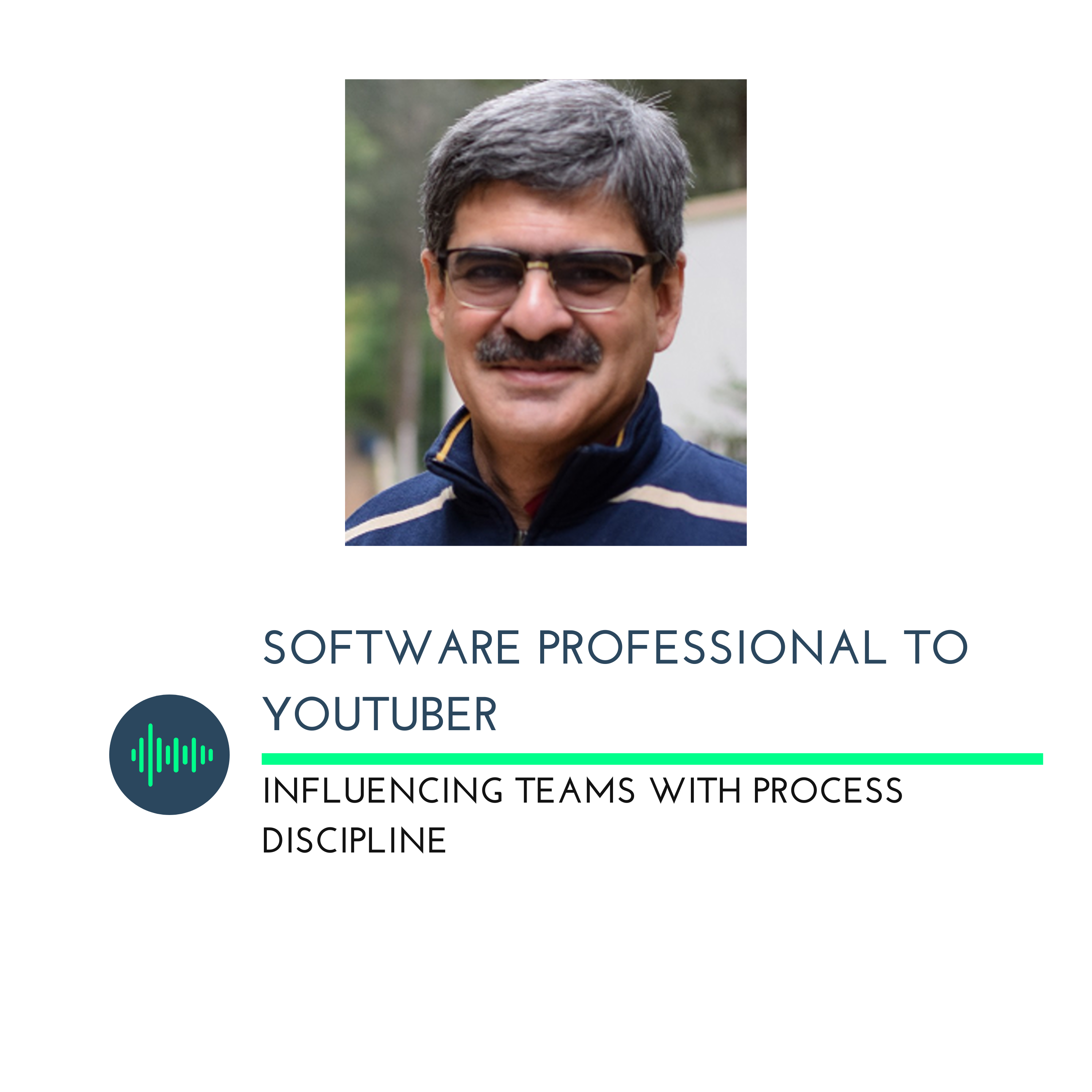
Software professional to Youtuber with Kishore Kumar
Kishore Kumar is a software professional turned youtuber. He shares his career journey with SivaguruStarting career as system engineer later moved to programing on mainframes Moving to the USA and feeling the need of studies did his Masters in computer science . Learning AI way back in 1989 to 1991. How this helped later in his careerHow his career mirrors the Indian software industry which has changed shapes over years. How things changed from convincing the US for jobs to how later their trust on Indians helped increase workflow.Moving from service to product companyHis views on handling ambiguous requirements in old and new software development cyclesInfluencing teams with his systematic approach/processTalks about his personal transition while transitioning professionallyKishore Kumar is a youtuber with a unique youtube channel called @ahargana. This channel has the singular purpose of explaining the astronomical basis of the Hindu panchanga using custom-built planetary orbital simulations.Kishore was not always a youtuber. In his previous avatar, Kishore was a software professional for over thirty five years playing a variety of roles from programmer to program manager, general manager and vice president in leading companies such as Tata Unisys, Cognizant and Siemens. He has earned a masters degree in computer science from SUNY at Buffalo, USA and a bachelors degree in Electronics and Communication Engineering from NIT Trichy. A lifelong self-learner, Kishore has leveraged all his learnings from his education and professional experience in the making of @Ahargana and contrary to appearance, considers it an entirely logical continuation of his life journey.Kishore may be reached at:Email: [email protected]: youtube.com/@aharganaLinkedIn: linkedin.com/in/kishoresridharakumar
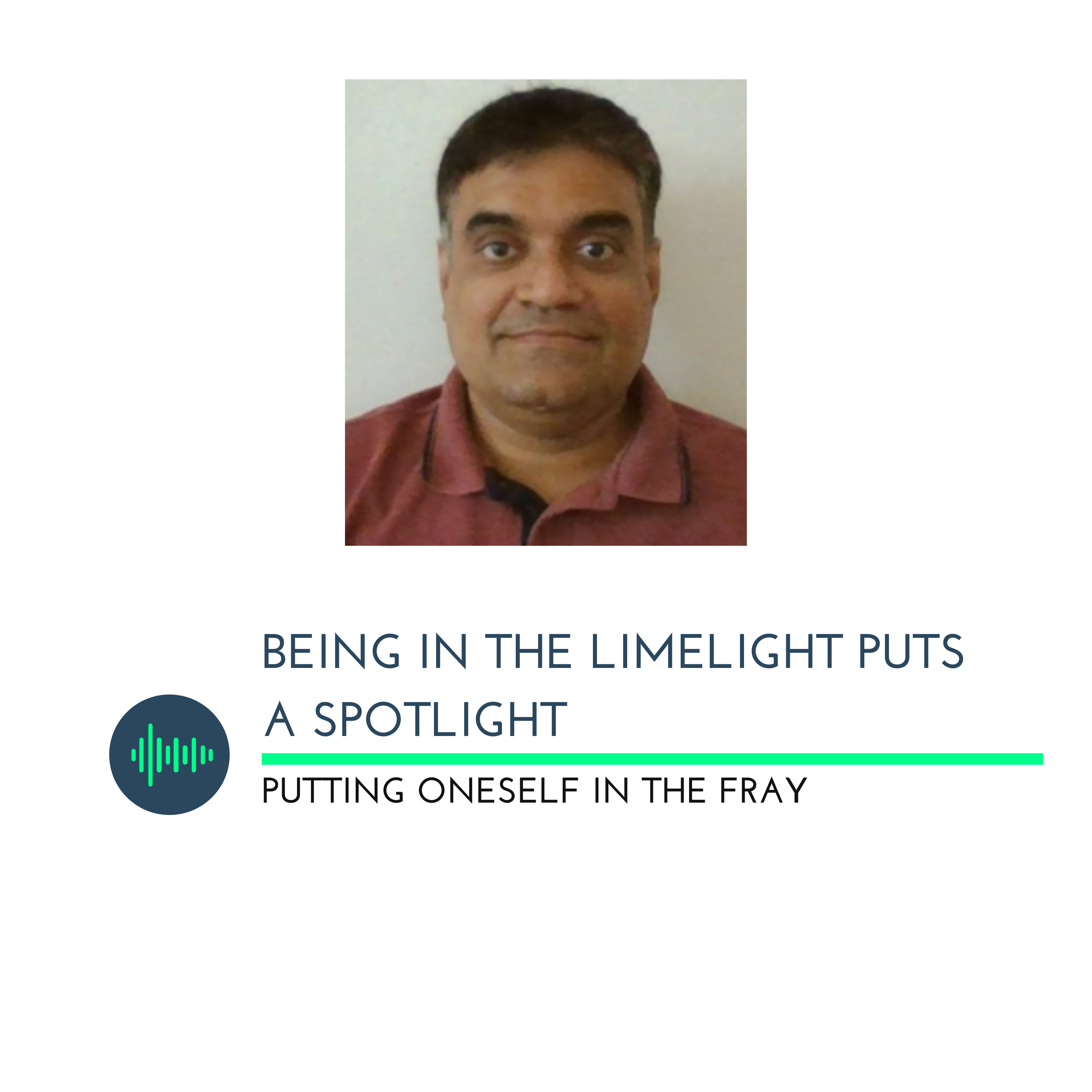
Being in the limelight puts a spotlight with Mathan Ramanujam
In the second part of the podcast episode, Gayatri Kalyanaraman is in conversation with Mathan Ramanujam, Product Influencer and Hardware Designer and Director at SiMa.ai, shares his career journeyMathan shares on values on why would you work in a startup - Working for today’s salary or invest in tomorrow’s growth He also shares matching personal believes in the firm and extracting learning from failures and failure in itself Talks about each person needs to think of themselves as an IC irrespective of product or service worldMathan shares his customer to customer philosophy - Ensuring that customer need from marketing to end product launch - Development and productisation and sales & customer desk to the customerPutting onself in the fray in the various roles - shares learning to put oneself in the same role Shares his experience in doing a verification in two different decadesMathan shares how his Contacts have helped in getting Contracts Creating your own psychological safety and how one can create that in the team with 8-15 yearsHow can you build high potential people by building safe environment for failure as well as skill buildingMathan shares how he relates to being system centric and hence able to manage community between hardware and software and thus being successful in the embedded industry Mathan Ramanujam is the director in SIMa.ai. SiMa.ai™ is a machine learning company delivering the industry’s first software-centric purpose-built MLSoC™ platform. Mathan is a front-runner, growing high performance team ground-up! He’s is using his versatile nature and cross-functional experience to to build CoE for Infrastructure IPs for ML SoC, while Challenging himself to learn ML/AI.Mathan has over 27 years of total industry experience with 17+ years of Team responsibilities. Mathan has taken multiple Si from concept to production, specialized in Digital design, with FPGA in the semiconductor industry. Mathan started his career in Atlaz Telecom and moved to the bay area for Arasan Chip Systems Inc.in the role of USB Device, Ethernet controller and XGMII IP development - RTL. Mathan later moved back to India took up team leadership roles in Nokia, Texas Instruments, QualComm, Western Digital and STMicroelectronics. Mathan Ramanujam has done his B.Tech in Bharathidasan University in Electronics and Communication Engineering. Mathan can be contacted at https://www.linkedin.com/in/mathan-ramanujam-4495082/
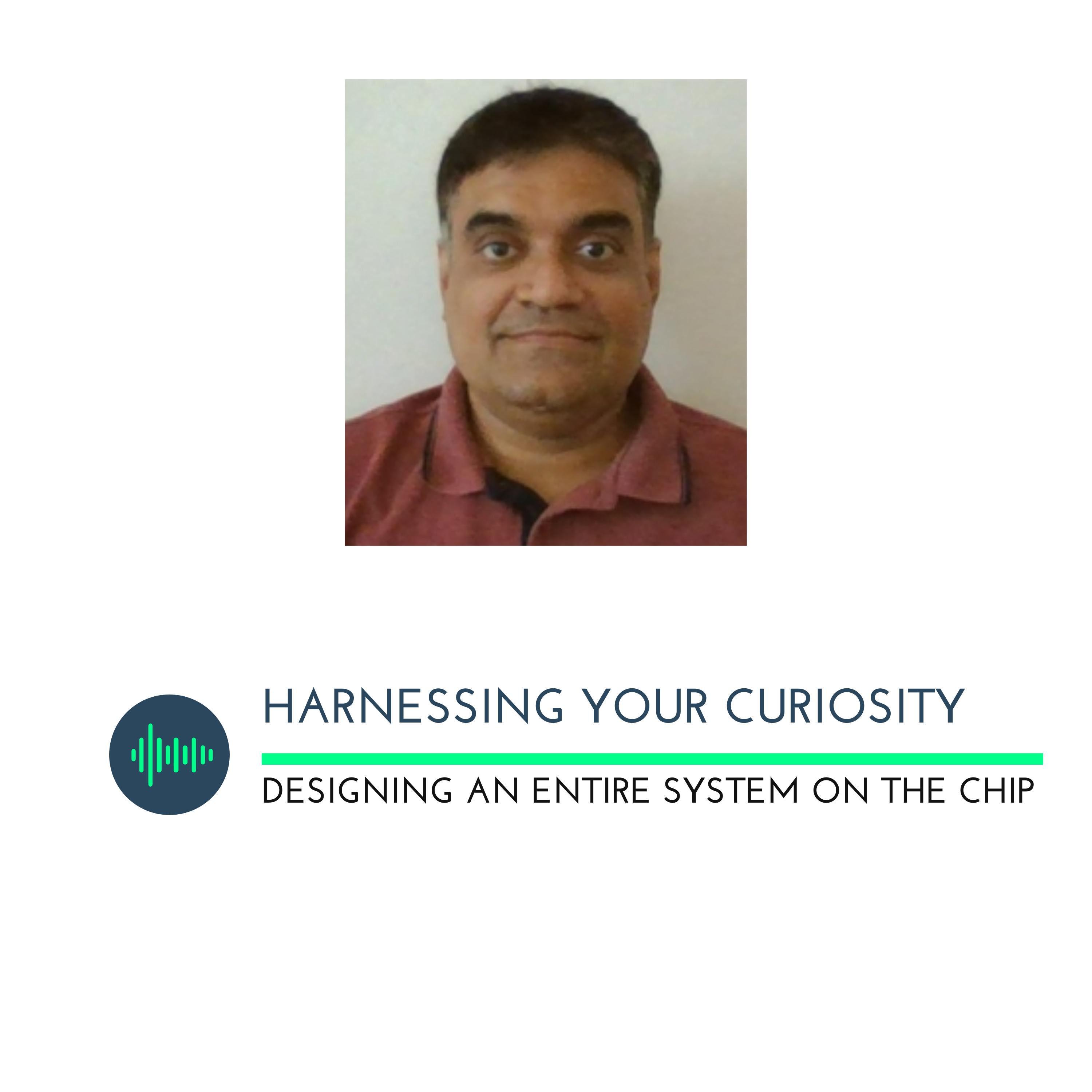
Harnessing your curiosity with Mathan Ramanujam
In the first part of the podcast episode, Gayatri Kalyanaraman is in conversation with Mathan Ramanujam, Product Influencer and Hardware Designer and Director at SiMa.ai , shares his career journeyMathan started his journey as a hardware engineer at Atlaz Telecom and identified that creating Mathan’s growth can be traced very similar to Moore’s law - shares experiences on how tools, circuitry and semiconductor industry has exponential world and how he has adapted himselfSystem on the chip or SoC is the trend that’s making hardware Mathan realised his skill in building relationship and ability to deliver in the operational and later strategic rolesHe shares a few stories on being a product influencer and being invited to be part of panels on SoC and verificationHarnessing the team members strength and learning from them and ensure that the value is being always deliveredMathan shares stories on enabling people not different from learning to swim by giving a moving target and in the end people recognizing themselvesMathan talks about how he has ability to tell stories and discovered it Mathan shares a crumple zone as a story - End zone in view Story on moving from US to India and shares his experiencing of supporting his familyMathan shares India’s cities that are opening up for the embedded and hardware design Mathan Ramanujam is the director in SIMa.ai. SiMa.ai™ is a machine learning company delivering the industry’s first software-centric purpose-built MLSoC™ platform. Mathan is a front-runner, growing high performance team ground-up! He’s is using his versatile nature and cross-functional experience to to build CoE for Infrastructure IPs for ML SoC, while Challenging himself to learn ML/AI.Mathan has over 27 years of total industry experience with 17+ years of Team responsibilities. Mathan has taken multiple Si from concept to production, specialized in Digital design, with FPGA in the semiconductor industry. Mathan started his career in Atlaz Telecom and moved to the bay area for Arasan Chip Systems Inc.in the role of USB Device, Ethernet controller and XGMII IP development - RTL. Mathan later moved back to India took up team leadership roles in Nokia, Texas Instruments, QualComm, Western Digital and STMicroelectronics. Mathan Ramanujam has done his B.Tech in Bharathidasan University in Electronics and Communication Engineering. Mathan can be contacted at https://www.linkedin.com/in/mathan-ramanujam-4495082/
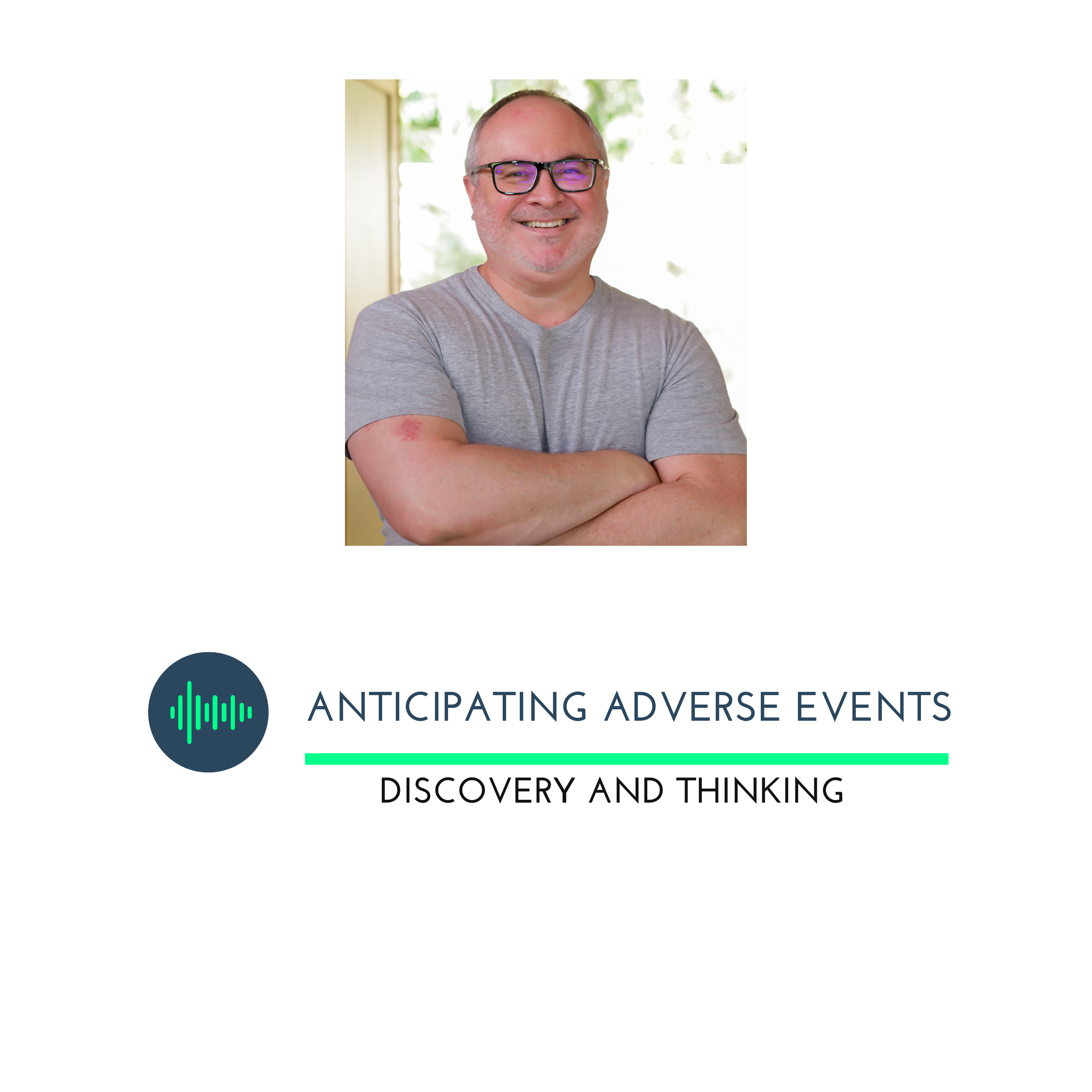
Anticipating adverse events with Matt Genovese
Matt Genovese Founder and CEO of Planorama Design continues his conversation with Chitra and shares his thoughts on-Writing effective stories or work behind defining the requirements Working in collaboration with the development team, discussing the challenges of an APIIssues working with IOT projects and hardware have synchronous issues and different hardware failuresWhat failures to take care of and what can be ignoredImportance of functional verificationAlong with writing user stories, discovery and thinking is also importantWhole process of discovering problems, asking questions, naturally brings the right people in How diagrams help all the stakeholders understand/Visualize the flow togetherHow and when a design sprint happensHis message to someone who is aspiring hardware or software careers –Matt Genovese is the founder and CEO of Planorama Design, bringing over 25 years of career experience in high-tech, spanning semiconductors, hardware, IoT, IT, and software product development. He has a strong track record of planning, launching, and shipping products that work. Matt’s company, Planorama Design, is a software user experience design professional services company, designing complex, technical software that is simple and intuitive to use. Staffed with seasoned engineers and user experience (UX) designers, the company is headquartered in Austin, Texas, USA.Matt earned a B.S. in Computer Engineering from the Rochester Institute of Technology and an M.S. in Electrical Engineering from The University of Texas at Austin. He began his career at Motorola-Freescale Semiconductor in product & test engineering and moved into design verification of RISC processors and SoCs. Matt has also held product leadership roles for complex and technical software development. As a result of his deep professional experience, Matt strives to “get it right the first time” starting with the software application’s user experience design, down to the hardware at the bottom of the stack. Planorama helps drive product development processes that create products that work out of the gate. Social Media Handles:Way to reach Matt : https://planorama.design/podcast/Join AI Product Hive – an AI-focused Community for Product Managers, Designers, and Development Teams (Slack) https://aiproducthive.com/
Diving inside the black box with Matt Genovese
Matt Genovese Founder and CEO of Planorama Design shares how he -Started learning programming as a kid on 8-bit computersFounding Planorama Design, software experimentsImpact of dinner table conversations around trigonometry, tinkering and electronics projectsNeed to know “why”, diving inside the black box, having the freedom to take things apart to learnWorking at Motorola, from fabrication to production, moving into functional design and verification for SoC for Power PC based RISC processorsPoints of view on the cost of releasing bugsBringing design into software engineering, getting requirements right to build the right productFocus on delivering hi-fidelity requirements for software engineers to do a great job, reduce time to deliver a quality productMatt Genovese is the founder and CEO of Planorama Design, bringing over 25 years of career experience in high-tech, spanning semiconductors, hardware, IoT, IT, and software product development. He has a strong track record of planning, launching, and shipping products that work. Matt’s company, Planorama Design, is a software user experience design professional services company, designing complex, technical software that is simple and intuitive to use. Staffed with seasoned engineers and user experience (UX) designers, the company is headquartered in Austin, Texas, USA.Matt earned a B.S. in Computer Engineering from the Rochester Institute of Technology and an M.S. in Electrical Engineering from The University of Texas at Austin. He began his career at Motorola-Freescale Semiconductor in product & test engineering and moved into design verification of RISC processors and SoCs. Matt has also held product leadership roles for complex and technical software development. As a result of his deep professional experience, Matt strives to “get it right the first time” starting with the software application’s user experience design, down to the hardware at the bottom of the stack. Planorama helps drive product development processes that create products that work out of the gate.Social Media Handles:Way to reach Matt : https://planorama.design/podcast/Join AI Product Hive - an AI-focused Community for Product Managers, Designers, and Development Teams (Slack)URL: https://aiproducthive.com/
Personal lessons from podcasting with guest host Gopalan
This is part 2 of the conversation celebrating the milestone of 250 episodes, with our guest host Gopalan.Gopalan was the first guest on the show and agreed to play host and have the hosts as guests!In part 1, he was exploring aspects related to how the hosts prepare for an episode and how different formats worked for the Software People Stories.In this part, he continues to explore his curiosity of how the minds of podcast hosts work, in handling planned and unplanned situations.He asksSome things that went wrong and what went right.. About similarities of podcast editing and movie makingSome difficult guests, who would veer off topicHow does one stay in the conversation, but stay detachedHandling situations when known persons say things that you do not feel the same way about or know it may not be completely factualHow one would resist the temptation to not get into arguments or negating something that a guest saysSome of the podcasts that Gopal listens toWe hope you enjoyed some of our experiences in bringing you 250 episodes of stories of software people.We believe that everyone has a story to tell that will inspire or educate others.When would you like to tell your story?Or, if you would like to submit somebody else’s story, and be a guest host, please record a sample or the full conversation and share it with us.
Celebrating 250 with guest host Gopalan
This a very special episode for all us, hosts - and assume, for you, our listener as well.This is the 250th episode of the Software People Stories.About 5 years ago, A desire to learn something new and leverage that learning to pay it forward to the community, led to the launch of this podcast.What started as Software Lifecycle Stories pivoted to Software People Stories and thanks to all your encouragement and love, we are at 250.This episode is a little different from the usual episodes in that we have reversed the roles.The very first guest on the show, Goplan, plays the host and the three co-hosts, me, Chitra and Gayatri are the guests.In a freewheeling conversation, Gopal had many questions about what happens behind the scenes and inside our minds in the context of being associated with the podcast.The topics covered include:What the experience has been for the hosts to have a consistent and regular scheduleHow was the experience of discovering new aspects of people that you have known for long, through the podcast conversationIf the hosts had a structure in mind for the conversationsHow such structures work when there are multiple guestsGopal asked for some examples of things that went right and some things that did not go as per plan.The answers to that questions and more interesting questions, listen to the next episode, which is part 2 of this special conversation, to celebrate the milestone of 250 episodes.
Try experiments Over Talking with Woody Zuill
In the second part of the podcast episode, Gayatri Kalyanaraman is in conversation with Woody Zuill, Expert Coach and co-author of Mob Programming, shares his career journeyBalancing the speeches and consulting with consulting engagementsWoody shares tips and tricks of being in the speaking networksWoody talks about joy of creating his own businesses - Almost 16 of them is creating Woody shares early experiments on signs and making new thingsHe shares his passion of making his day productive by avoiding repeated steps and automateWoody shares his deep inflection points in his career that has positioned him today Woody also shares his ideal places to work and attracting like minded people to work Instead of Doing what others are expecting of us and always uplifting to oneself alsoWoody also shares deep views on how one needs to contribute for a better tomorrowWoody has been programming computers for almost 40 years, and have 20+ years of experience as an Extreme Programmer, and 15+ years as an Agile Guide of some sort. He truly believes that code must be simple, clean, and maintainable so that we can realize the Agile promise of Responding to Change, and that we must constantly "Inspect and Adapt".Woody is a co-author with Kevin Meadows of the book "Mob Programming, A Whole Team Approach". He’s a prolific speaker on this topic at conferences, user groups, and meet-ups all over the world.More generally, I've delivered workshops, trainings, and coaching sessions on Agile Software Development, Mob Programming, and Software Development Practices for a number of firms including Ericsson, Schneider Electric, Qualcomm, Intel, H & M, King Games, Capital One, Twitter, and Spotify.Woody can be connected at https://www.linkedin.com/in/woodyzuill/
Leading from With”Out” with Woody Zuill
In the first part of the podcast episode, Gayatri Kalyanaraman is in conversation with Woody Zuill, Expert Coach and co-author of Mob Programming, shares his career journeyShares how he joined software development after he created tools to improve his day-to-day lifeJokingly Woody mentions how he didn’t have to clean up(unlike doing carpentry) after a hard day at writing codeEarly experimentation on pair programming and having fun and how he found that explaining ideas, listening each other and accepting each others opinions - most importantly stop interrupting othersTalks about the story of using pair programming for knowledge transfer in a rapid mannerShares his principle on how experimenting is the fastest way to build cultural nuancesPaying attention to others emotions and deeply listening enables - Listen as if the next sentence is the most important thing we are going to listenHis motto - Be the best team member that you can be Woody shares tips and tricks on deep listening skill and staying curiousAha moments Woody has had how “Teams” have evolvedHow can you lead from without any of the influence and how that led him to become a speaker and teacherWoody has been programming computers for almost 40 years, and have 20+ years of experience as an Extreme Programmer, and 15+ years as an Agile Guide of some sort. He truly believes that code must be simple, clean, and maintainable so that we can realize the Agile promise of Responding to Change, and that we must constantly "Inspect and Adapt".Woody is a co-author with Kevin Meadows of the book "Mob Programming, A Whole Team Approach". He’s a prolific speaker on this topic at conferences, user groups, and meet-ups all over the world.More generally, I've delivered workshops, trainings, and coaching sessions on Agile Software Development, Mob Programming, and Software Development Practices for a number of firms including Ericsson, Schneider Electric, Qualcomm, Intel, H & M, King Games, Capital One, Twitter, and Spotify.Woody can be connected at https://www.linkedin.com/in/woodyzuill/

Navigating ambiguity with Mohan Ram
In the second part of the podcast episode, Shiv Sivaguru continues his conversation with Mohan RamMohan talks aboutThe challenges in working with details as well as abstractionsThe cost of not understanding implicit requirements and the importance of progressive elicitation of requirementsHow coaching and observations of people who were doing well in these aspectsWhy crossing the initial hurdle of winning the confidence of your clients / users is extremely critical for the success of a projectHis personal philosophy in working under contractual constraints - of cost or timelinesHow Agile approaches are suitable to work more effectively under dynamic scope conditionsHow individuals can find a balance between having or not having an aptitude for technical or managerial flavors of workHow he developed an interest in philosophy and constant learningWhat he would like to do with the ancient wisdom, in applying them to day-to-day contextsHis thoughts and tips for career questionsMohan Ram is a Principal Consultant at PM Power Consulting, he works with Clients in their Agile Transformation initiatives, Digital Innovation and Transformation journey and helping build Individuals and Teams that are capable of effectively Delivering outcomes and Managing these Transformations in a Confident and Sustained manner.
Attention to details with Mohan Ram
In the first part of the podcast episode, Shiv Sivaguru is in conversation with Mohan Ram, a senior professional in the IT industry who has played various roles related to networking software development to business line management and now a coach with PM Power Consulting.Mohan sharesHis growing years in a conservative family in Thanjavur district in Tamil NaduAbout how his life was comfortable, not luxurious and how those days and culture had a strong influence on his lifeGetting into IT. probably more by chance and then liking the opportunities to apply logical thinking and solving problems for others and the gratification of seeing users benefitting from the solutionsMoving to systems engineering and networks and looking at those technology areas and find applications in the commercial worldThe opportunity to be mentored and coached by good managersDiscovering his strength of going beyond just technology and connect with customers, into more techno commercial rolesHis feeling of being thankful for being at the right places at the right timesHis interest in ancient wisdom, yoga, vedanta, music etc - all towards finding and keeping a balance in lifeLooking forward to the next phase of his lifeThe support and concerns that he received from friends and familyThe opportunity to work with geek, to contribute to create and refine a network operating system with one of the early startups in the networking space, that triggered his curiosity to get into softwareGetting into creating software products as well as services, particularly managed services Seizing an opportunity to address new and greater challenges nd moving from C-DAC to HPThe two important switches:Coming out of monotonySeeing a bigger opportunityAn important aspect of being a good mentor; and learning to look at the forest and not get lost among the trees - leveraging his strength of paying attention to detailSwitching to project and program management roles and stress the need to understand the nuances of project managementI asked him about how he was able to work in zones of abstraction or ambiguity, while interacting with customers - to understand requirements and come up with an approach or solution and create a project plan to execute, when his strength of attention to detail.The answer to this question and a lot more in part 2 of the conversation.Mohan Ram is a Principal Consultant at PM Power Consulting, he works with Clients in their Agile Transformation initiatives, Digital Innovation and Transformation journey and helping build Individuals and Teams that are capable of effectively Delivering outcomes and Managing these Transformations in a Confident and Sustained manner.
Creating a courageous and inclusive environment with Vadeesh
In the second part of the podcast episode, Shiv Sivaguru is in conversation with Vadeesh Budramane,Founder and CEO of AlgoShack, shares his career journeyShares his thought processes on why a product company to be started He also shares the decision parameters that he considered and that’s common across entrepreneursJourney to be gratifying to the founders and early employeesCelebrating every small milestone from ID issuance, website, logo and creating a sense of moving in the right directionAbility to make an impact in the automation - Vadeesh talks about creating an inclusive environmentVadeesh shares the principles in which AlgoShack is created in terms of usage of tools and techniques and democratization of quality engineeringHe further shares how AI is embedded in the test processVadeesh talks about creating fit-for-purpose solutions that’s specific in the domainVadeesh talks about his advice to people joining the testing industryEnabling automation testers to modularise and optimise test cases constantly keeping users and non functional scenarios in mindVadeesh is currently CEO at AlgoShack and he has held several roles such as Senior Vice President at Sutherland Global Services, Director & Head of Healthcare Vertical at Computer Sciences Corporation and Managing Director at FCG.Vadeesh has 32 years of experience focused on product engineering, innovation & IP creation. In his 15+ years of experience in senior leadership positions, Vadeesh has been responsible for strategic planning, end-to-end operations, and P&L. He has built globally competitive leadership teams, orchestrated strategic customer engagements, and created significant value for stakeholders.Vadeesh is a leader with experience in managing offshore delivery center and vertical delivery with a team size of 3000+ people & $250m P&L. He has experience across healthcare, ISVs, telecom, and real-time embedded systems industry verticals and North America, UK and Europe markets that include global delivery, customer engagement, business development and P&L responsibilities.A leader with hands-on experience in seeding and developing globally competitive leadership teams, developing competencies, transforming delivery organizations and driving business models for outcomes.Vadeesh can be contacted at https://www.linkedin.com/in/vadeeshbudramane/
Multiplexing across Domains with Vadeesh Budramane
In the first part of the podcast episode, Shiv Sivaguru is in conversation with Vadeesh Budramane, Founder and CEO of AlgoShack, shares his career journeyVadeesh talks about starting in the embedded programming with Time Division Multiplexing and has built and learnt numerous protocols and standardsHe has also multiplexed his time across different domains such as Automotive, Medical instruments, Healthcare and Telecommunication Vadeesh shares his experience why he started the firm AlgoShack focused on the QE Combat the challenge of building quality software by automating automation testingHe shares his experiences on how critical devOps processes in the medical field and thinking about holistic environment He shares how he has built a keen sense of understanding the domain of telecom with different protocolsWhile he took up assignments in Healthcare, the type of stakeholders and touchpoints has moved him back to a learner of the domainVadeesh shares his passion of teaching and learning and thanks his Wipro days to inculcate that and further strengthened while working for HCGVadeesh decided to start a firm in test automation for embedded systems and we will hear more about the start up journey in the next episode. Vadeesh is currently CEO at AlgoShack and he has held several roles such as Senior Vice President at Sutherland Global Services, Director & Head of Healthcare Vertical at Computer Sciences Corporation and Managing Director at FCG.Vadeesh has 32 years of experience focused on product engineering, innovation & IP creation. In his 15+ years of experience in senior leadership positions, Vadeesh has been responsible for strategic planning, end-to-end operations, and P&L. He has built globally competitive leadership teams, orchestrated strategic customer engagements, and created significant value for stakeholders.Vadeesh is a leader with experience in managing offshore delivery center and vertical delivery with a team size of 3000+ people & $250m P&L. He has experience across healthcare, ISVs, telecom, and real-time embedded systems industry verticals and North America, UK and Europe markets that include global delivery, customer engagement, business development and P&L responsibilities.A leader with hands-on experience in seeding and developing globally competitive leadership teams, developing competencies, transforming delivery organizations and driving business models for outcomes.Vadeesh can be contacted at https://www.linkedin.com/in/vadeeshbudramane/
Understanding 5 key way of Agility in AI world with Fred George
In the second part of the podcast episode, Gayatri Kalyanaraman is in conversation with Fred George,Consulting Developer in Scienta AS and master change agent, shares his career journeyFred shares his experience in creating and nurturing thinking diversity in his London projectEnsuring that you create a blameless culture and a wonderful experimentation and that’s what enables innovation to flow and no permission culture He shares about creating change management in behaviors starting with extreme rigor in processes. Once the barriers are broken in, processes are completely taken out and that’s when you become truly agileUnderstanding the five key principles on agility Fred shares about rewilding and increasing experimentation He shares his expertise on balancing his brand, building products and consultingFred shares about inculcating no-fear environment and ensuring that he picks the team around him Fred shares his thoughts around how AI needs to be looked at as a way to do your repeated steps - Understanding the essence of the workStay in the learning journey and that’s what enables you to be successful Fred can be contacted at https://www.linkedin.com/in/fred-george/ Fred considers himself a hands-on software developer with executive responsibilities and experience. Early experimenter in micro-service architectures from 2005, and father of the post-Agile process termed Programmer Anarchy. Earlier implementer of new technology for his entire career, including computer networking in the 70's, LAN's and GUI in the 80's, and OO and Agile in the 90's. Very early adopter of Kanban processes. He has used over 70 programming languages in his career.
Continuously Stay Transparent with Fred George
In the first part of the podcast episode, Gayatri Kalyanaraman is in conversation with Fred George, Consulting Developer in Scienta AS and master change agent, shares his career journeyFred is a career IBM developer and speaks about the skills he developedFred shares his experience in gaining an MBA degree and speaks about how IBM is great in building great people around yourTalks about how one needs to imbibe oneself in the talking to executives Shares some of the stories on ensuring that fears are quelled and anticipate the people who are fearing Talks about hard and complex problems that he welcomes to solveFred’s mantra is “I can't do everything well, but Most things can do as well as anyone else”Fred shares how he ensures that he gets the right set of team members and mentor them around you. Ensuring that management are taken into confidence in the journey using transparency and metricsFred shares his movement from being in the management cadre in IBM to a consultant and ensuring that he taught himself new language skills. Fred knows about 75 languages over the period of timeFred shares his experience on how job descriptions have become very convoluted and complex and that’s leading to dysfunctionsFred shares about the new concept of thinking Diversity and what type of innovations that are coming inFred can be contacted at https://www.linkedin.com/in/fred-george/ Fred considers himself a hands-on software developer with executive responsibilities and experience. Early experimenter in micro-service architectures from 2005, and father of the post-Agile process termed Programmer Anarchy. Earlier implementer of new technology for his entire career, including computer networking in the 70's, LAN's and GUI in the 80's, and OO and Agile in the 90's. Very early adopter of Kanban processes. He has used over 70 programming languages in his career.
Agenda Shifter with Karl Scotland
In the second part of the podcast episode, Gayatri Kalyanaraman is in conversation with Karl Scotland, Agile Transformation Services Practice Manager at TEKsystems Global Services and a master facilitator, shares his career journeyKarl shares his journey of how he became a master facilitator and that started when he was experiencing tremendous resistance with Scrum. (Karl moved to using Kanban and lean concepts :) )Later when he was designing for larger change, Karl came across using X-matrix - with an agile transformation flavor embeddedKarl talks about his realisation that one should not think about just to implement scrum/kanban Agility needs to be baked is created my own sense of self discovery - Achieving flow And the next step was to start looking for evidence to look for and think about strategy as always about tough choicesSomething similar to Agile manifesto - A even over BKarl shares his views on Tool selection and it should not define process. Usage of tool should stay at the tactical side Choice of tool should always be to help us capture flow data and understand blockers on Interesting story on the balancing the speaking and consulting engagement Shares the passion on building community events Karl can be reached at https://www.linkedin.com/in/kjscotland/ Karl helps businesses become Learning Organisations. Karl has held several engineering and management positions in Neural technologies, BBC, Cisco, Yahoo and Rally software. Over the last 20 years Karl has been an advocate of Lean and Agile approaches to achieve this, working with companies including the BBC, Yahoo!, EMC Consulting, Rally Software, Cisco, SDL, Legal & General and Alegis. During this time, he has been a pioneer of using Kanban Systems and Strategy Deployment for product development, a founding member of both the Lean Systems Society and Limited WIP Society, as well as being active in the community and a regular conference speaker. Karl is a co-founder of the Lean Agile in Brighton.
Creating Change Makers with Karl Scotland
In the first part of the podcast episode, Gayatri Kalyanaraman is in conversation with Karl Scotland, Agile Transformation Services Practice Manager at TEKsystems Global Services and a master facilitator, shares his career journeyStarted his education with a passion with music and quickly found that he was enjoying the software part of the music over creative musicKarl has held several engineering and management positions in Neural technologies, BBC, Cisco, Yahoo and Rally softwareLater on he moved to become a consultant in helping organizations transform themselves to writing clean code, good practices and happier peopleKarl shares his thesis on why technology roles have become extremely complex - while we started writing C++ code, there were relatively less requirements and hence the need to change became less relevant. But as software and technology become ubiquitous, the roles also needed to be wider and deeperKarl talks about curiosity and learning and how he has built it within himself. He talks about the story where the subject matter experts Approach from the perspective of what does organizations need to do to become change initiators themselvesKarl shares his model of Agenda Shift hypothesisKarl loves the perspective of ‘Cynics will become your biggest supporters’ - as they want to share the obstacles that’s preventing them from making it happenHypothesis driven change creates a sense of ownership on their obstacleKarl can be reached at https://www.linkedin.com/in/kjscotland/ Karl helps businesses become Learning Organisations. Karl has held several engineering and management positions in Neural technologies, BBC, Cisco, Yahoo and Rally software. Over the last 20 years Karl has been an advocate of Lean and Agile approaches to achieve this, working with companies including the BBC, Yahoo!, EMC Consulting, Rally Software, Cisco, SDL, Legal & General and Alegis. During this time, he has been a pioneer of using Kanban Systems and Strategy Deployment for product development, a founding member of both the Lean Systems Society and Limited WIP Society, as well as being active in the community and a regular conference speaker. Karl is a co-founder of the Lean Agile in Brighton.
Limit Is What You Set with Vikrant Viniak
In this podcast episode, Gayatri Kalyanaraman is in conversation with Vikrant Viniak, Senior Managing Director of Accenture and a prolific speaker on Technology at the frontier, shares his career journeyStarted as a mechanical engineer in the areas of supply chain. After taking his management degree in Chicago he chose to become a consultantShares his reasons for reinventing himself every 3-5 years and starts the root cause for itTalks about personal board of directors creating mentors around and why one need to reach their own potentialTalks about pushing himself physically, mentally and professionally by continuous improvement on oneselfVikrant shares the art of building Reseliance by creating a beautiful 15 min ‘me’ time over a period of timeVikant shares his belief that he likes to listen from each and every person he comes in contact with. This helps in learning and unlearning in a more seamless wayAlso he’s found his passion in physical fitness His Ethos, As written by Robert Frost - The woods are lovely, dark, and deep, But I have promises to keep, And miles to go before I sleep, And miles to go before I sleep. Vikrant shares his stories in taking and receiving feedback and it has also helped to become more genuine Vikrant shares how he has applied rapid changes that are happening and expectation of business leaders on where technology is heading. He shares how he keeps up with the rapid pace of learningVikrant shares his key wisdom around being kind to yourself, learning and constantly learn to unlearnVikrant V is a Senior Managing Director in Accenture for the last 16+ years. In his current role as Senior Managing Director at Accenture Strategy, he has worked in Telecom, Media and Technology Industry. He’s a dynamic business leader who is passionate about challenging myself to solve complex problems using creative thinking; bold and iconoclastic action; and data-driven analysis and decision making. He enables his clients with their most strategic imperatives including Digital Transformation, Driving Growth through Digital Operating Models, Everything As a Service (EaaS) transformations, ESG, and Strategic Partnerships.An avid runner and fitness enthusiast who loves people and technology. In his professional and personal life, he has committed to going the extra mile in supporting, mentoring and coaching people to achieve their goals. I like to push my physical and intellectual boundaries.Vikrant started his career as a software engineer in Wipro and moved to become a supply chain consultant. After completing his management graduation in Quinlan School of Business, Loyola university in Chicago, he became a consultant. He has a degree in Mechanical Engineering in NIT Trichy, India. Vikrant can be contacted here - https://www.linkedin.com/in/vikrantviniak/ or Follow in twitter - https://twitter.com/vviniak?lang=en

Build Better Software Faster with Dave Farley
In the second part of the podcast episode, Gayatri Kalyanaraman is in conversation with Dave Farley, Independent Software Developer and Consultant, Founder and Director of Continuous Delivery Ltd.Dave shares his perspective on the new fads that are constantly coming in and what he’s rooting himself into the basicsCritical to focus on Fundamentals - exercise on learning, ensure that you have modular and building blocks, get feedback constantly, separation of concernsHaving these basic models in place will be always durable Dave shares secret in balancing the content creation and software consulting as well as community buildingHe also shares the reason why he started the conference speaking - recruit people! Dave believes in being generous in sharing ideas and creating collective and learning from colleaguesDave shares some of the key inflection points in his career from being consultant to LMAX product and starting his own consulting as well as his recent experience of building a YouTube channelDave shares identify areas that gives one joy and identify areas of influencing. Whats your professional duty and taking pride in what you doGuest IntroductionDave Farley is a pioneer of Continuous Delivery, thought-leader and expert practitioner in CD, Devops, TDD and software development in general.Dave has been a programmer, software engineer and systems architect for many years, from the early days of modern computing, taking those fundamental principles of how computers and software work, and shaping ground-breaking, innovative approaches that have changed how we approach modern software development. Dave has challenged conventional thinking and led teams to build world class software.Dave is co-author of the - Continuous Delivery, and a popular conference speaker on Software Engineering. He built one of the world’s fastest financial exchanges, is a pioneer of BDD, an author of the Reactive Manifesto, and a winner of the Duke award for open source software with the LMAX Disruptor.Dave is passionate about helping development teams around the world improve the design, quality and reliability of their software, by sharing his expertise through his consultancy, YouTube channel, and training courses.Dave can be contacted here - https://www.linkedin.com/in/dave-farley-a67927/ Published works - https://continuousdelivery.com/wp-content/uploads/2010/01/The-Deployment-Pipeline-by-Dave-Farley-2007.pdfhttps://www.amazon.com/Continuous-Delivery-Pipelines-Better-Software/dp/B096TTQHYM https://www.youtube.com/channel/UCCfqyGl3nq_V0bo64CjZh8g

Creating 10X Teams with Dave Farley
In the first part of the podcast episode, Gayatri Kalyanaraman is in conversation with Dave Farley, Independent Software Developer and Consultant, Founder and Director of Continuous Delivery Ltd.Dave started his career as a visual designer even before user experience became center stage He later became a systems engineer in designing large complex softwareDave shares his experience in working with stalwarts in ThoughtWorks building software in an agile fashion and the kind of innovations that the team were doing in developing terms that have became common place nowDave shares his experience in architecting LMAX as the Financial exchange in a truly continuous deliveryHe says that it's impossible to break compliance in a continuous delivery environment and makes a clear business case for financial sector to rapidly adopt the modern software practicesStarted experimenting the idea of Extreme programming with colleague Jez with a single chapter and extended the notion of continuous deliveryHe’s inspired by Feymann’s theory that, If you can synthesize an idea in a way a child can understand, your solution is half doneDave shares his 10X teams and not necessarily 10X developersHe further shares the story of overlapping developing teams in lean manufacturing and how transformation of people in taking accountability Dave talks about software practices by decade and he’s enjoying being part of the journey.Dave Farley is a pioneer of Continuous Delivery, thought-leader and expert practitioner in CD, Devops, TDD and software development in general.Dave has been a programmer, software engineer and systems architect for many years, from the early days of modern computing, taking those fundamental principles of how computers and software work, and shaping ground-breaking, innovative approaches that have changed how we approach modern software development. Dave has challenged conventional thinking and led teams to build world class software.Dave is co-author of the - Continuous Delivery, and a popular conference speaker on Software Engineering. He built one of the world’s fastest financial exchanges, is a pioneer of BDD, an author of the Reactive Manifesto, and a winner of the Duke award for open source software with the LMAX Disruptor.Dave is passionate about helping development teams around the world improve the design, quality and reliability of their software, by sharing his expertise through his consultancy, YouTube channel, and training courses.Dave can be contacted here - https://www.linkedin.com/in/dave-farley-a67927/ Published works - https://continuousdelivery.com/wp-content/uploads/2010/01/The-Deployment-Pipeline-by-Dave-Farley-2007.pdfhttps://www.amazon.com/Continuous-Delivery-Pipelines-Better-Software/dp/B096TTQHYM https://www.youtube.com/channel/UCCfqyGl3nq_V0bo64CjZh8g
Success through shared goals with Venu Subramania Iyer
In this episode, Shiv continues his conversation with a colleague in PM Power, Venu Subrmania Iyer.In the previous episode, he asked Venu if testing should always be independent or it can be embedded in the development process itselfHe shared his answer to that question and moreFrom earlier models of independent testing centers, testing is being shifted left [particularly in Agile approaches], but there is a need for both approachesHow he got exposed to Agile approaches, by starting with organizational transformational initiativesHow management support and culture are critical for any transformation projectWhat he considers as critical for success in agile transformation projectsHow his perception and appreciation for Agile approaches changed from the days of being a tester to getting into a transformation initiativeOn applying Agile based on the context and determining the best optionsThe importance of having shared or collaborative goals for team successHis thoughts on what skills are needed to be an effective testerHis tips for persons considering a career in testing Venu has been in the embedded technology space for 24 years, working on cutting-edge R&D in the areas of Consumer Electronics, Display Systems, Semiconductor & Automotive domains. Starting his career as a Hardware Engineer in Philips,later switched to Software Testing due to his passion for finding software defects. He was 1st independent software testing engineer in Bosch Car Multimedia, Bangalore and later played several leadership roles in testing, Project Management and Quality assurance.Prior to joining PM Power consulting, I was Director, Delivery and test in Harman for Automotive Digital cockpit and Telematics software solutions. I have played leadership role for delivery management, software testing and supplier delivery management.More about Venu : https://pm-powerconsulting.com/experts/venu/
A passion for testing with Venu Subramania Iyer
In this episode, Shiv is in conversation with a colleague in PM Power, Venu Subrmania Iyer. Venu, who started his career as a systems engineer, sharesStarting with hardware, software and testingBorn in Kerala and grew up in Alleppey and grew up in KottayamStudied Electrical EngineeringPassion for engineering was inspired by an uncle and it was a difficult journey due to personal situationsHow he goes about in identifying solutionsHis passion was in electrical engineering, designing various elements in power engineeringWanting to get into some public sector enterprises, but getting into a multinational - as a customer service engineer to service TV systems and DVD, Audio systemsLocating problems and isolating them based on simple documentation, using systematic approachesUsing only 2 tools: multimeter and CRO [cathode ray oscilloscope]How he was able to adapt to a problem resolution approach from a designer-inventor aspiration [from R&D to service mindset]The pressure of solving issues while customers were watching over your shoulder and doing all it takes, including visiting a consumer courtMoving to the software domain - as a hardware engineer and working with test engineers, taking an interest and choosing to get into systems testingSetting a personal goal to get into software and system testingAttending training from ISTQB and getting a formal certificationMoving to an automotive company as the first independent test engineerGrowing his team to over 200 in about 10 yearsHow he was able to pick up the technology and domain aspects and the importance of having a team with complementary skillsHis approach to personal scaling by investing in developing othersHis thoughts on creating the awareness of testing in developersInjecting defects into software under test, to train testersTransitioning to managerial roles and then to a display manufacturing companyTaking up a delivery role, to get experience on the right side of the V modelThe answer to a question on : His view on whether testing should always be independent or it can be embedded in the development process itself in the next episodeVenu has been in the embedded technology space for 24 years, working on cutting-edge R&D in the areas of Consumer Electronics, Display Systems, Semiconductor & Automotive domains. Starting his career as a Hardware Engineer in Philips,later switched to Software Testing due to his passion for finding software defects. He was 1st independent software testing engineer in Bosch Car Multimedia, Bangalore and later played several leadership roles in testing, Project Management and Quality assurance.Prior to joining PM Power consulting, I was Director, Delivery and test in Harman for Automotive Digital cockpit and Telematics software solutions. I have played leadership role for delivery management, software testing and supplier delivery management.More about Venu : https://pm-powerconsulting.com/experts/venu/
Building a platform that performs with Robert Cooke
In this episode, I continue my conversation with our guest Robert Cooke, founder of 3forge, a provider of data virtualization and visualization technology. In this conversation, Robert shares What was the startup bug that bit him.. The urge to reinvent how software is developed based on experience, after getting a feeling that 90% of the code written is quite similar across teams and organizations and how that can be a base for reuseSolve it once, solve it well, reuse it.His approach to abstracting many of the operations needed, for example, the user interface widgets and experience, to reduce the work needed to create and deploy solutions quicklyThe story behind the name of his company 3forge -- started asForge financial framework and then evolved into 3forgeHis thoughts on processing data in real time v/s in batch or offline mode His thoughts on defensive coding and a 2 minute intro to defensive codingHow he manages his time and what stresses himRobert Cooke is the Founder and Principal Architect at 3Forge, a New York-based provider of data virtualization and visualization technology. 3Forge has achieved significant growth over the years as a result of increasing demand for its award-winning, web-based browser AMI platform.Robert’s accomplishments have spanned across electronic trading, middle and back office, regulatory reporting, compliance and risk management.His LinkedIn profile: https://www.linkedin.com/in/robert-cooke-a7835b69/
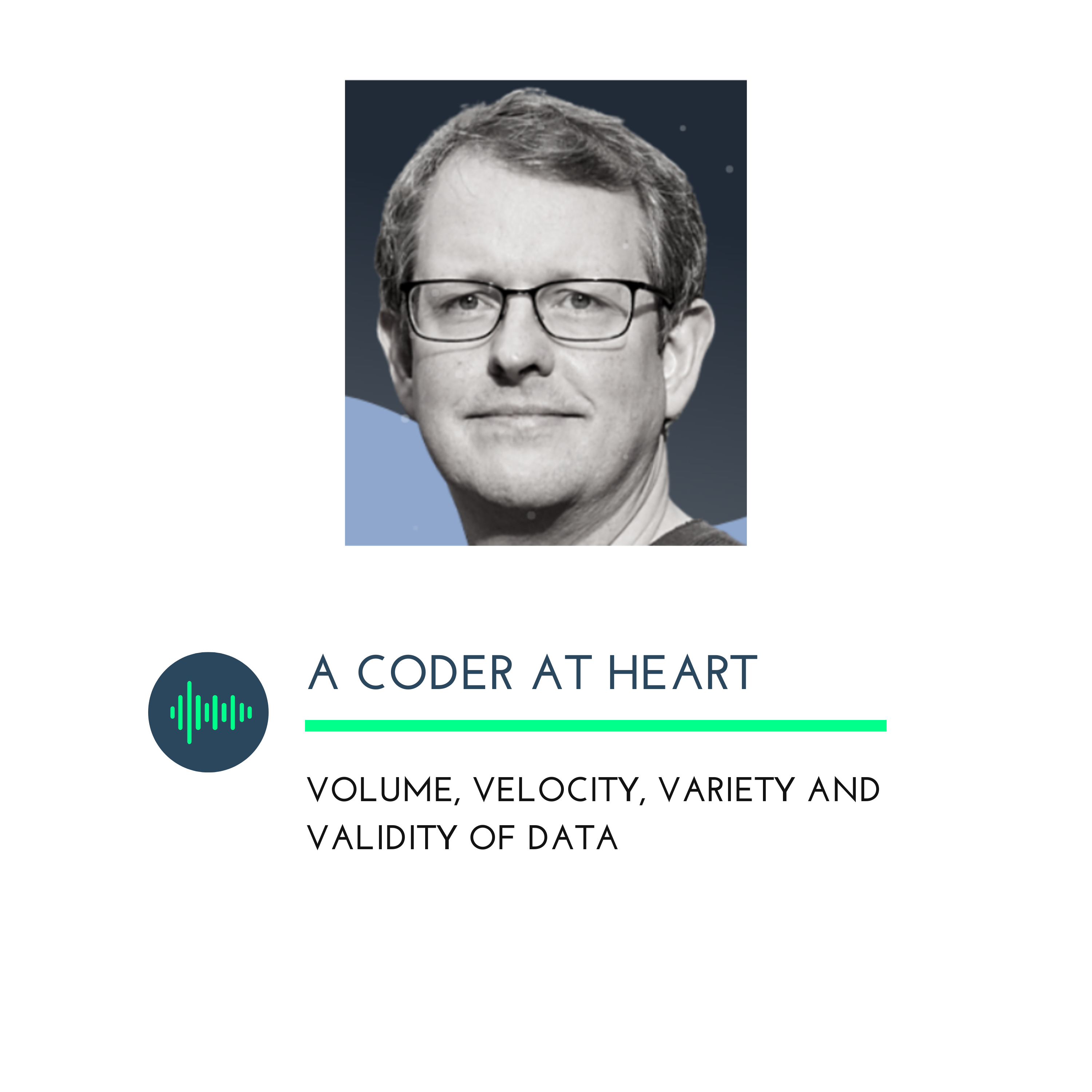
A coder at heart with Robert Cooke
In this episode, our guest is Robert Cooke, founder of 3forge, a provider of data virtualization and visualization technology solutions. In this conversation, Robert shares His origin story of starting with computers when he was a kid in the 80sHis liking to build things - in wood or legoDiscovering that he could build a lot more without needing a lot more money, with computersDeveloping Video games, accounting software - helping manage things in college with software solutionsHis experience with writing code in 128k memoryWorking in silicon valley in 2000s, getting a job in an insurance company4Vs of data: volume, velocity, variety and validity of dataLast 15 years has been about solving problems with the 4VsBeing a self proclaimed software addict, sometimes upto 10-12 hours per dayHis early experience with writing software for his club, in his teens - when hardcoding was more naturalLearning later that parameterization, lookup tables etc were more elegant and genericStarting his company in 2012Same software for all customers, with a single branch of codeAnyone who takes the art form of writing code seriously, will get better with timeHis transition from being in individual contributor to delivering as a teamThe advantage of getting different insights from team membersNaming, logical architecture decisions become important when working in teamsThe need for consistency across team members..but what is right or wrongLearning from the NEC - National Electrical Code - that codifies the minimum requirements for safe electrical installations in a single, standardized sourceWe do not have anything similar in softwareVery hard to get rid of code, but it can be a therapeutic processInsert or create is easy; update or modify is somewhat difficult and deleting is extremely hardAbout the urge to do Ctrl-A and delete.. And rewrite code from the scratchHow he balances his engineering thinking and artist’s thinking [developing software as a work of art, as there are so many ways to solve a problem]Balancing maintainability, the efforts needed and how well the software performsHe looks for people with strong math and logic background and problem solving, not necessarily experience in codingHardest part on software development is debugging somebody else’s codeMore on his entrepreneurial experience, tips on defensive coding and a whole lot more in the next episodeRobert Cooke is the Founder and Principal Architect at 3Forge, a New York-based provider of data virtualization and visualization technology. 3Forge has achieved significant growth over the years as a result of increasing demand for its award-winning, web-based browser AMI platform.Robert’s accomplishments have spanned across electronic trading, middle and back office, regulatory reporting, compliance and risk management.His LinkedIn profile: https://www.linkedin.com/in/robert-cooke-a7835b69/
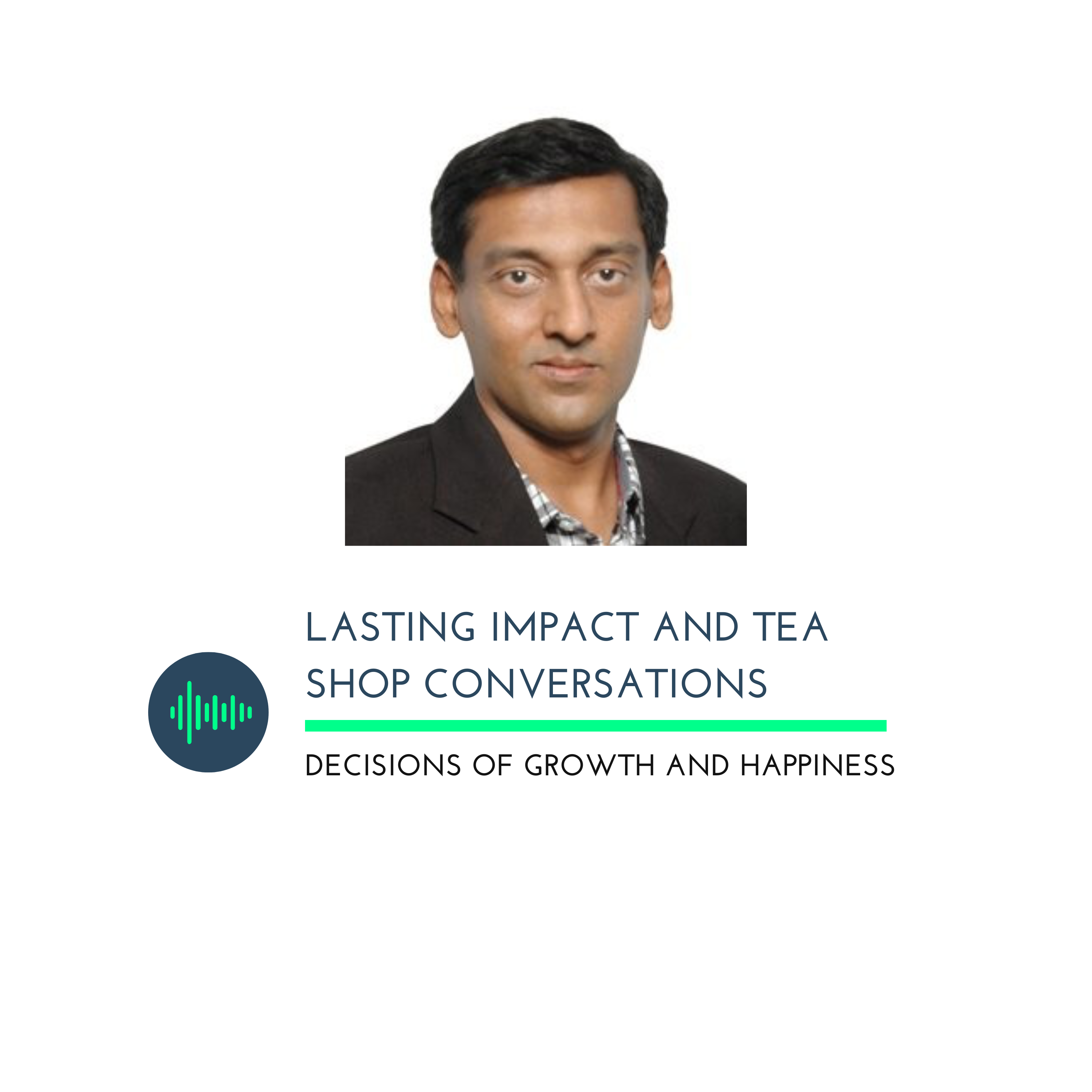
Lasting Impact and Tea Shop Conversations with Sathyanarayanan Vijayaraghavan
In this podcast episode, Gayatri Kalyanaraman is in conversation with Sat (Sathyanarayanan) Vijayaraghavan, Founder and CEO at Adept Labz AKA "Ajira.Tech" and CASA Retail AISat started dabbling with computers at the age of 11 and started keenly interested in problem solvingSat also shares his interests in computers while also sharing his earlier thoughts of following his fathers business and gently moved towards software technologyJoined Cognizant as one of the earlier employees and moved to back to US and showed early interest in the field of product development and consulting. At this time (late 90s), Building a web page was a cutting edge and started building a product in work flow development. Sat shares his learnings of nuts and bolts of problem solvingHis next experience was with Diamond cluster consulting that sharpened his strategy consulting skills for about 5.5 years and built the first marketplace Sat later talks about his decisions of location from India to US to across the globe and his love for problem solvingSat covers the initial set of vision that started in a Tea shop Mangalambika and conceptualized the company Sat shares his stories of creating a brand new firm Ajira in 2016. He also shares the struggles and wiggles that he had to ride out ofSat has sold off his first venture and building the next set of venturesWhat is the impact that we are leaving behind in the workplace that we are in. Sat shares some profound ideas from his experience and links it to general happiness and financial freedomDifferences between being a executive and Founder and risks and struggles of being an entrepreneur Sat shares how as a start up first question to answer is there a person out there who will be ready to pay for it and ensure that you build fault tolerance from the get go.Sathyanarayanan (SAT for his friends) did his bachelor engineering in Venkateshwara college in Chennai and post grad in Cincinnati college. Started working for Cognizant. Moved on the Diamond Cluster and later to Wpro. He became the General manager and the vertical head for Retail in ThoughtWorks.Sat has about 23 years of overall IT management and delivery experience with 4 years in management (P&L responsibility, operations etc), 6 years in technology strategy and 9 years in global software sourcing; 8+ years in US working with ‘C’ level executives of Fortune 500 firmsHe has been a Founder and CEO of Ajira, General Manager of Chennai at ThoughtWorks, Retail practice development at Wipro and created Retail practice at ThoughtWorksSat shares a passion for enterprise architecture having architected some of the largest online and trading platforms for Fortune 500 customers. He has also defined strategic enterprise architectures for several Fortune 100 customersHe is a true Thought leader with international publications in global retailing, customer experience, cross channel retailing, supply chain and eCommerceSat can be contacted at https://www.linkedin.com/in/satvijayaraghavan/

Embedded programming to heading Cloud Platforms with Bindu
In this podcast episode, Gayatri Kalyanaraman is in conversation with Bindu Sunil, Sector Head and Engineering Director - Cloud Data Platforms and AI in Wipro. Bindu started her carrier in Kirloskar as a design engineer for alternators.She then moved to Tata Elxsi as an embedded developerBindu shares her experience of building the teams being a techie at heartLearnt the basics of cloud right at the beginning of 2012Shares her growth story within Wipro cloud Talks about being Cloud advisory, program director, cloud center of excellence within WiproShe then moved to become a practice leader in the cloud platformBindu shares how she has rediscovered herself from embedded engineer to Cloud Practice headBindu shares how her perspective changed from a constraint based environment on embedded to cloudBindu Sunil is the Director of Engineering with 21 years of experience, developing and applying new technologies to manage and deliver complex projects spanning Internet Scale Computing, Cloud platforms, AI/ML in Medical Devices and Healthcare, Consumer Electronics, Electrical manufacturing domains on Data platforms, AI, Cloud (AWS), Embedded Systems, and Firmware technologies. R&D leadership in various roles - engineering manager, program manager, delivery manager, cloud consultant, and practice lead. Bindu can be reached at https://www.linkedin.com/in/bindusunil/
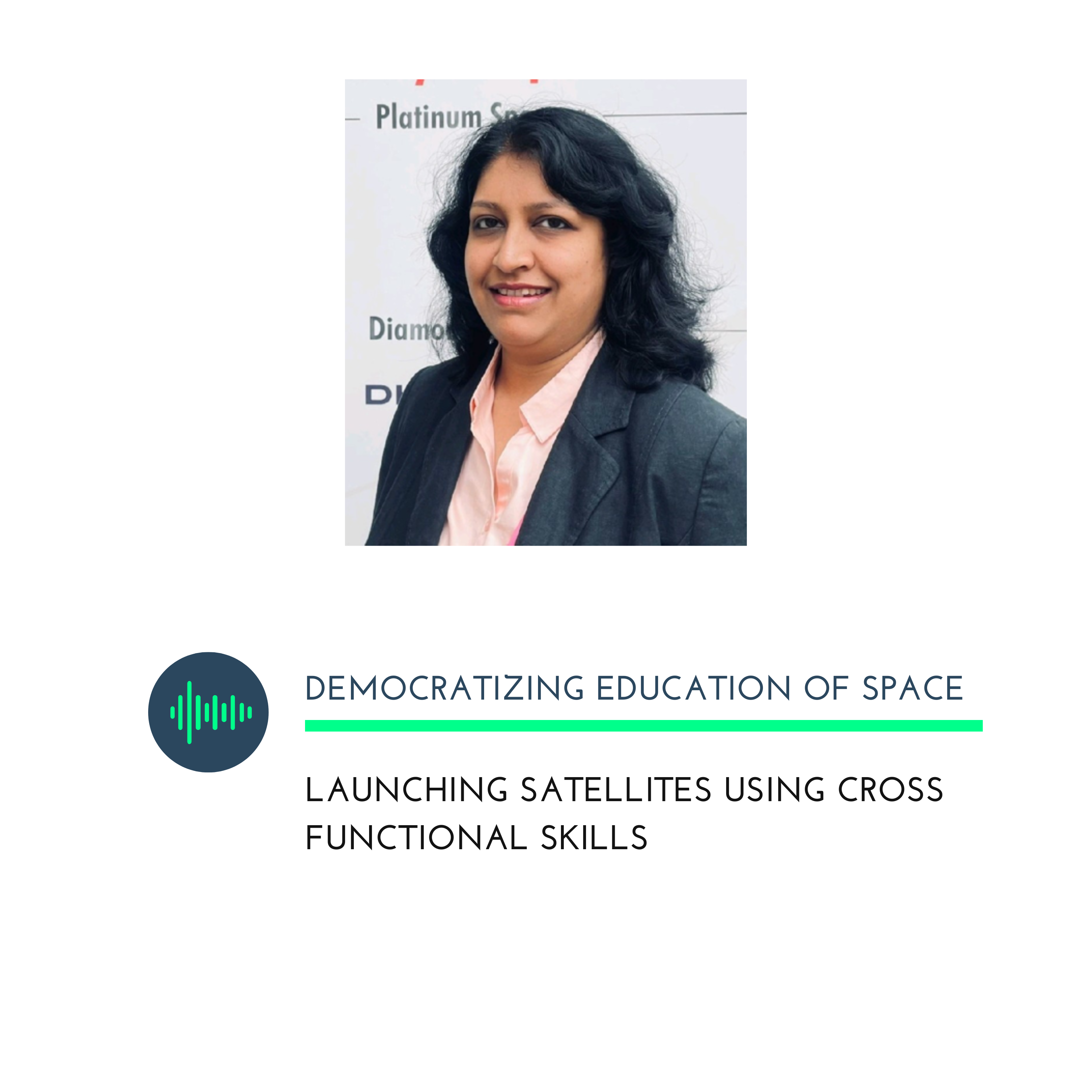
Democratizing education of Space with Pramitha
In this podcast episode, Gayatri Kalyanaraman is in conversation with Pramitha Ramaprakash, CEO of Transcend Satellite Technology Pramitha talks about her passion in aerospace and how that shaped her early experiences while working in WiproShe talks about Satellite launching as an extremely cool team sport as there are several field that come together Further she shares what it has taken to launch herself (literally) in the field She talks about her dream to launch 75 Indian student satellites in the next decadeShares her experiences of bridging the students learning with the deeper corporate needs in the satellite industryShe shares about sustainability in the space and how her firm is bringing visibility and transparency towards this goalPramitha believes that today’s students are highly motivated towards this field and only need guidance and support. That way she is extremely grateful towards the kind of interactions that she’s been bestowed She shares how the building blocks approach is the way aheadPramitha shares several decisions that she’s taken and how the positive outlook energizes her dayShe covers the kind of cross functional skills and anyone can join the space industryShe shares her mantra “Do Not Limit Yourself”Pramitha Ramaprakash is an industry leader in the field of Satellite education, She’s the CEO of Transcend Satellite Technology. She’s a co-author of Payload design and System design for CubeSats (1U to 27U) and Microsatellites. She’s also designed Payload Design for EO, Remote sensing, communication and IoT Payloads as well as Designed the Payload Interface Computer using Raspberry Pi for MirrorSat of AAReST Satellite Mission as part of MSc Space Engineering dissertation. She had held several hardware engineer roles in Wipro, BAE systems, Concurrent Technologies, Cadac holding, Intel and Dell prior to starting her own firm in the field of Space educationPramitha can be reached at - https://www.linkedin.com/in/pramitharamaprakash/
Micro and Macro Goals with Puja Issar
In the this podcast episode, Gayatri Kalyanaraman is in conversation with Puja Issar, Managing Director of AnitaB.org IndiaPuja started her career in the investment banking world in United Kingdom dealing with multiple banks and large corporates. She talks about the stresses of the job and the highs that came with itPuja talks about her career in 3 different decades with the first decade in advising large corporates on M&A dealsHer second decade she talks about her foray into the world of Not for profit segmentShe shares her experiences of enabling school girls in the india’s rural sector with their first computer and how it has transformed her as a personShe talks about bringing her experience of working in corporate in the not for profit and creating a rewarding experience for herself and the volunteers as wellHer third decade of work experience she has started as Managing Director for AnitaB.org where she mixes both corporate and her philanthropic angles as wellShe covers her excitement of launching GHCI in November 2023 that will have more than 6000+ women technologists across the globeListen to Puja to share about more excitement around the Grace Hopper India conferencePuja talks about having macro goals for oneself that acts as a guiding beacon and ensuing that one has micro goals that can be ticked off on a regular basisPuja Issar is a Result driven senior executive with proven ability to evaluate ,identify and execute meaningful business across national and international boundaries. Skilled imaginative analytical strategist with excellent track record in creating strategic objectives and developing value creating business models.Wealth of experience and knowledge and awareness of alternate management approaches has been a key to success. Extensive experience in planning ,implementing and managing strategic initiatives and building and scaling of business lines across Financial services,hospitality ,real estate and not for profit sectors. Puja is a chartered accountant with CFA and MBA from Henley business schoolPuja Issar can be contacted at https://www.linkedin.com/in/puja-issar-a2264a48
Connecting the Dots in the career and life journey with Vaishali James
In this podcast episode, Gayatri Kalyanaraman is in conversation with Vaishali James, ex-CMO of OpenTap, Community Director for AnitaB.org and mentor at HopeWorks FoundationVaishali starts the episode with a very funny interaction of giving a technology solution ahead of its timeShe shares her tryst with doing an engagement on brand alignment and how simple steps could be taken at different levels to create that viable and clear brand promise to the end customerVaishali talks about the cross section of people who have to come together to understand each other's vantage point before creating a coherent marketing story.She shares about why she took the plunge towards the startup - OpenTap that worked in the financial inclusion spaceShe also shares experiences as the co-Founder and what it takes to be in the financial spaceImpact of Covid and what it took for the company and needing to shutdown the firmVaishali shares how her own modest upbringing has influenced her to create an ecosystem where women can depend on one another for a sense of sisterhoodVaishali shares her experiences of being a mentor and community director for the AnitaB.org and Hopeworks foundation and how its deeply ful fillingWhat it took to unlearn from hi-tea in corporate world to having coffee with the customers in their humble housesVaishali is the brand aficionado and a deep understanding of developing products. She has worked for 19 years in different roles as a marketeer for Servion Software. Later she became the co-founder and CMO for OpenTap for 5 years. Vaishali has the additional benefit of understanding / working on designing and aligning organizational strategy across all functions with the brand strategy to ensure that brand conversations externally and internally talk the same language. So that, the entire organization works towards living and breathing a single ideology to ensure that the promise and the experience is consistent – both internally and externally.Vaishali can be reached in https://www.linkedin.com/in/vaishali-james-25066815/
Intersection of social change, technology and data science with Palashi V
In this episode, Gayatri Kalyanaraman is in conversation with Palashi V, research scholar with Cornell UniversityPalashi started her career as a software engineer where she played the role of business analystsHer interests in social impact stemmed from Dhirubhai Ambani College where she did her thesis in web tools that empowered womenPalashi decided to pivot from software towards the intersection of social impact and technologyShe shares her learnings in training technology tools for underprivileged kidsPalashi shares her vision of creating an equitable environment for marginalised social segments. She shares how she’s working in information science and data but powering change She also covered how corporate social responsibility can be extended towards more deeper change and that forms like a continuum Palashi shares how her research is shaping up and how this education has transformed her thinking Palashi’s research interests lie at the intersection of Information Science, Science and Technology Studies and South Asian Studies. For her dissertation research, she focused on the relationship between computing, gender and caste in India. She’s a trained Information and Communications Technology engineer with experience in SAP and core java development. Her work focuses on the social impact with the background of gender and technology, specifically with feminist organizations and initiatives in India closely engaged with issues of women's rights and technology. Palashi has worked in technology consulting, marketing and non-profit sector before starting her PhD. She was also the founder and editor-in-chief at Fangirl.in, an collaborative e-zine that promotes independent art/music and artists in India.More information about me on her website - https://palashi.xyz/ For more details and contact Palashi here https://www.linkedin.com/in/palashiv/
Design is like poetry with Jeremy Kriegal
In this episode, I continue my conversation with Jeremy Kriegel. He talks aboutHow UX can help users stay focused and also providing opportunities to take a break or breather to stay productiveMicro level thinking and system level thinkingMay need local inefficiencies for overall system wide efficiencyAnalogy of a relay race team member, who needs to wait for the moment to take the baton and runThe zappos example of helping customersOn the balance between personalization and privacyThe skills needed for an effective UX professionalCuriosity, humility and influencing skillsUX professionals as change agents, or as sales peopleClever v/s usable designThe benefit of spending time to understand the problem and analyze solutions and approaches before jumping in to create wireframes etcThe limitations of canvas based design toolsThe reason for starting his podcast, saving UXSignificance of lean approaches and fast learning loops in UXThe role of design in customer loyaltyImpact of AI based approaches on UX professionalsHis career tips for new entrants as well as persons considering a career switch to UX domainJeremy Kriegel is a UX leader, very active on various professional forums.He is also the host of the podcast ‘Saving UX’https://www.linkedin.com/in/jeremykriegel/
Creativity is everybody’s job with Jeremy Kriegel
In this episode, I am in conversation with Jeremy Kriegel, a UX leader and the host of the Saving UX podcast.Jeremy sharesGetting into UX accidentallyStarted in the mid 90s, Undergrad in CMU, Art and EnglishStudying electronic and time based media and working with robotic sculptureA friend asking for help with creating a websiteHiring friends and colleagues to start an agencyGetting introduced to HCI and taking a more formal approach to learning UXHow his stint with Xerox was a great learning experienceMoving on to various companies across industriesOne common theme has been agile ways of workingWorking with xerox printers that were complex -- from tree to book - and managing the various steps and interactionsThe relevance of user research and how or why many organizations do not do thatAbout creating processes that meets a team’s needsHow creativity is part of everyone’s workJeff Patton’s guidance on creating a holistic vision in lightweight way and a tree analogyShares a story about an experience with working on a poker platform that needed to comply with new taxability regulations in FranceHis thumb rule of gathering inputs from 8 people, for a more comprehensive understandingQuantitative gives a lot of what, but not why..Letting go of internal bias [not asking leading questions etc]Why role based personas approach need to be re-looked at, to identify inflexion points to understand how their needs change over timeLearning from the model used by many gamesThe benefit of not optimizing for first use experienceHelping the user stay focused and accomplish their goals; with post-pandemic, how can UX discipline help not only stay focused, but also provide breaks to refresh themselvesJeremy Kriegel is a UX leader, very active on various professional forums.He is also the host of the podcast ‘Saving UX’https://www.linkedin.com/in/jeremykriegel/
Continuously Curious with Rohit Salecha
In the second part of the podcast episode, Gayatri Kalyanaraman is in conversation with Rohit Salecha, Security Engineering Manager in Disney+Hotstar and book author of GitOpsRohit continues to share the areas that he’s planning to learn in terms of Web3 He shares how he ties complex technologies and the necessity that has driven him to learn it as he’s responsible for security He shares some of the key areas he wants to improve in being a manager for other team members as well as give back to the community that has helped himRohit gives a nugget of wisdom to keep coding and continue to learnRohit Salecha is a technology geek who loves to explore anything that runs and understands binary. As a security engineer he is passionate about learning the length,breadth and depth of technology.Being more on the defensive side he has evangelised secure software development at various organizations for more than a decade.Rohit is driven by “everything as code” mantra and strongly believes that the security team must strive towards making themselves irrelevant. In his free time he is either reading books or watching movies. He is a fitness freak who loves to jog,swim and cycle on different terrains.More details checkout his linked in page - https://www.linkedin.com/in/rohitsalecha/https://rohitsalecha.com
Embrace Code in Everything with Rohit Salecha
In the first part of the podcast episode, Gayatri Kalyanaraman is in conversation with Rohit Salecha, Security Engineering Manager in Disney+Hotstar and book author of GitOpsRohit talks about his passion towards electronics and how he was experimenting in many of the areas. He also shares how he joined the software journey by accidentRohit believes that every engineer out there needs to be exceptional in what they do, but also know how to do basic coding. When he talks about coding he’s not only discussing about software as Java, C++ but also no code, system design level understanding as wellRohit started as a software engineer in Mastek and realised that he was passionate about how the embedding security in the software modules that he was developingAfter a few years of being a software engineer, he join NII consulting with specialisation in secure software. In each step, he talks about the want to expand his knowledge and thirst in this areaRohit is the author of the book GitOps and he shares some of the key challenges that he encountered in writing the book including creating a fully functional design, code and keeping up with the versions of the software modulesRohit Salecha is a technology geek who loves to explore anything that runs and understands binary. As a security engineer he is passionate about learning the length, breadth and depth of technology.Being more on the defensive side he has evangelised secure software development at various organizations for more than a decade.Rohit is driven by “everything as code” mantra and strongly believes that the security team must strive towards making themselves irrelevant. In his free time he is either reading books or watching movies. He is a fitness freak who loves to jog, swim and cycle on different terrains.More details checkout his linked in page - https://www.linkedin.com/in/rohitsalecha/https://rohitsalecha.com

Connecting at all levels with Bill Hall
In this second part of my conversation, Bill Hall, President of Simulation Studios sharesSome of his professional failures when he was given large responsibilities at a very young ageHow sims enable executives to get a feel for the impact of their decisions and learn from that experienceThe role of software in the simulation exercises he runsA quick walkthrough of how a sim is runAspects of an organization that need to be built into a simulationQualities that would help someone be like BillNo fear of failure or encouraging failure as an opportunity to learnGiving things a go and learning from the experienceHow he communicates with all levels of roles in any organizationHow he understands the context of an organization quicklyUsing butcher paper to spatially and visually organize his thoughtsTaking a break and breathing in nature - to organize thoughts and doing a brain dumpCascading learnings in an organization by training learners to also be trainersRelevance of simulation based tools to enable high performing teams quicklyWhat he readsLimits of simulationBill partners with companies and individuals to build highly strategic mindsets resulting in accelerating change. Utilizing business simulations, leadership development, and business coaching, Bill helps shift mindsets and build skillsets resulting in driving positive change more quickly and with less friction. Currently President of Simulation Studios, Bill closely partners with companies and people in all types of corporate development scenarios. Bill has successfully worked for and with companies such as Apple, Sony, Boeing, Lockheed Martin, Korn Ferry, Caterpillar, Sephora, and many more. Prior to Simulation Studios, Bill managed Skype’s global strategic software business, was in executive marketing roles at AOL and Nortel, and enjoyed working with Steve Jobs on various strategic projects during his 15+ years working with Apple where he was a five-time Apple MVP, and a Golden Apple Award winner. Bill authored a #1 Training and Development Amazon best-selling book, been featured in major publications and podcasts, and earned an MBA in Entrepreneurship and a Strategy Execution certificate from Harvard Business School. Bill spends the majority of his time with his family in the San Francisco Bay Area. Book Link:https://www.amazon.com/dp/B00CMBP1TA Forbes Articles:https://www.forbes.com/sites/forbescoachescouncil/people/billhall1/?sh=373b957726aa Contact Info:Contact at SimulationStudios.com and ask for BillLinkedIn www.linkedin.com/in/wphall

Simulation based learning with Bill Hall
In this conversation, Bill Hall, President of Simulation Studios sharesHow he used to be part of a bandThen deciding to go to college and doing some work for AppleGetting into roles that needed to turnaround organizationsImportance of getting people to be behind the turnaroundsGetting an inspiration to start simulation studiosThe importance of unlearning in a turnaround situation, along with relearn and learn newChallenges of changes in an organization across teams, geographies etcTechnology should not come in the way of learningTeam and learning architectures for transformationsUsing personality profiling tools, such as MBTIHow he got into simulations or games, as he calls themHow a typical sim session looks likeAttributes of an effective simIdentifying metrics and justifying investments for a turnaroundI asked how simulations help with individual contributors taking up transformation leadership roles.The answer to this question and more in the next episode.. When Bill starts taking about some failures he had faced in his careerBill partners with companies and individuals to build highly strategic mindsets resulting in accelerating change. Utilizing business simulations, leadership development, and business coaching, Bill helps shift mindsets and build skillsets resulting in driving positive change more quickly and with less friction. Currently President of Simulation Studios, Bill closely partners with companies and people in all types of corporate development scenarios. Bill has successfully worked for and with companies such as Apple, Sony, Boeing, Lockheed Martin, Korn Ferry, Caterpillar, Sephora, and many more. Prior to Simulation Studios, Bill managed Skype’s global strategic software business, was in executive marketing roles at AOL and Nortel, and enjoyed working with Steve Jobs on various strategic projects during his 15+ years working with Apple where he was a five-time Apple MVP, and a Golden Apple Award winner. Bill authored a #1 Training and Development Amazon best-selling book, been featured in major publications and podcasts, and earned an MBA in Entrepreneurship and a Strategy Execution certificate from Harvard Business School. Bill spends the majority of his time with his family in the San Francisco Bay Area. Book Link:https://www.amazon.com/dp/B00CMBP1TA Forbes Articles:https://www.forbes.com/sites/forbescoachescouncil/people/billhall1/?sh=373b957726aa Contact Info:Contact at SimulationStudios.com and ask for BillLinkedIn www.linkedin.com/in/wphall
Being a Fremen with Steven Aberle
In this episode, I continue the conversation with Steven Aberle, founder of a company in stealth mode, working on domain aware, large language model based processing for very niche applications.In the previous episode, Steven spoke about his origin story and also how he got into and some of the technical challenges related to a domain aware large language model solution - and his patent in that area.He continues to share aboutHow the same engine can still retain some originality and uniquenessHow updates to the base model can happen, to mature the model over timeHow ingesting content from various sources is becoming easier with APIsThen the reverse podcast starts! The questions are Steven’s and responses are mineSteven asked about where young companies could go wrongFounders’ passionChemistry with the investorsScaling too fastHis own trigger to jump into this venture.. That it was born out of hating some of the persistent pain points in the area of workHis philosophy of ‘what you do is what you are’Fremen culture - from DuneThe importance of being frugal during the startup phase and being funded by customersHis experience of playing a CEO role; the moment when he made the decision and support from his familyYou must take care of the people in the community you are trying create and be fanatic about solving their problemsHis personal practices to stay calmNot measuring success only by monetary standardsSteven Aberle is the Co-Founder of The Rohirrim, a start-up bringing Domain-Aware Generative AI to the Enterprise. He has 18 years of leadership and executive-level technology capacities and is a recognized expert in unstructured data processing at scale. Steve holds the patent for Domain-Aware Generative AI, Generative Stitching and Vector-Attributable Large Language Models.

The potential of Large Language Models with Steven Aberle
Hope you had a wonderful start to the new year.This episode is special for multiple reasons.This is one of the few episodes when I had the conversation with a guest in person - and that was also video recorded, with a fireplace in the background, on a cold day!You would be able to watch this conversation as a video on the PM Power youtube channel.This episode was recorded in November, 2022 - much before ChatGPT was made available to the public and the subsequent increased interest.My guest today, Steven Aberle, is a founder of a company that is in stealth mode, working on domain aware, Large Language model based processing for very niche applications.In this conversation, Steven sharesHow he joined the military half way through college and then went back to finish his studiesGetting interested in IT during the military serviceNavigating away from the back end to the front and, focusing on how the users interact with the systemsBeing in the Washington DC area, getting to work on Defense related areasWorking on defense proposals, that need to be technical, unique and bring out the uniqueness of the proposed approachCreating a piece of patented technology for domain aware generative AI, based on Large Language models and transformersThe challenge for small technology companies to break into the defense procurement spaceCouple of challenges with the open LLMsTrained on open content available, thereby missing contextual insights that are more valuableNone of the data that is generated, can be attributed to the source material [explainable AI]How he organizes his own learning even when moving across specialization areasIt is always about the dataHis exposure and experience with ETL approaches, including working with unstructured dataAbout being a full stack engineer, to be aware of many areasNot be as much of an expert as one may want to be in any one area, but connect the learnings to the new areas as wellHis approach for being a T-shaped individual, going deep into LLM, on how they are trained Transformers are the next big wave now, after the cloud a couple of decades agoThe concept or role of a solutions architect and how that may be implemented in a large language modelAspects related to LLMs and content / data more than just text, to also include images, figure descriptions etcHow generative AI has made the life of graphic designers / UX specialists much easierCapturing conversations with solutions architects, use a transformer to generate a proposal-language based outputHis answer to that question and a lot more - including questions he asked me, related to startups - effectively making role reversal - the guest becoming the host!Steven Aberle is the Co-Founder of The Rohirrim, a start-up bringing Domain-Aware Generative AI to the Enterprise. He has 18 years of leadership and executive-level technology capacities and is a recognized expert in unstructured data processing at scale. Steve holds the patent for Domain-Aware Generative AI, Generative Stitching and Vector-Attributable Large Language Models.
Reflections with PM Power coaches
This is another year end special episode.As coaches engaged with various organizations and teams, PM Power coaches are always learning, adapting, helping others internalize good practices in work and life situations.We have the personal reflections of some of the coaches at PM Power Consulting on what they have learnt during the year and what they plan to learn in the coming year.As Shiv - Sivaguru - reflected on 2022, these were his thoughtsHe talks about hybrid working modelHow he could start reading books againHow we handle longer podcastsWhat he would like to do for 2023Anantha Natarajan, or Anand, as he likes to be called, shared thisVision, Love and Courage : 3 words that are his key reflections of 2022How he learnt the importance of coaching in his lifeThe vital life lessons from his experienceFocus areas for the upcoming years 2023This is what JV, had to sayHow things have changed after Covid.How at Pm Power we found innovative ways to handle online workshopsHelping customers in their Enterprise Agile transformation journeyWhat we can expect in 2023Next, here are the thoughts from Zafar AhmedEngaging with people in person though technology had brought us together virtuallyMore and More organizations are embarrassing AgileIf Agile coaching needs domain knowledge or is it domain independentAlways Mindful, Vishu's reflections are next.Engagements and contributions in Agile transformation, leadership developmentHow fulfilling was Mindful leadership coachingBelow is the link to know more about our PM Powerian’shttps://pm-powerconsulting.com/experts/Also, watch what our PM powerian’s have to say on YouTube https://www.youtube.com/channel/UC3F2N5Abhcz-OEcqg9B20OQ
A Message from the Co-hosts
This is a special episode.After a long time, the co-hosts of the show had an opportunity to get together to reflect on what the impact of this podcast has been on our own lives and ways of working.We also talk about what else or more we can do for you, our listeners in the coming year.We hope that this podcast has brought cheer and some inspiration over the last 200+ episodes and thank you for the love and support.Do share your reflections as well with us.You can subscribe to this podcast on your favorite podcast client, so that you don't miss any of the exciting episodes.You can also subscribe to the PM Power newsletter, S-curve - on LinkedIn. Thank you

Supporting usage of technology with Baktha Muralidharan
In this episode, the conversation continues with Bhaktha Muralidhran, AVP, Unified Communications at Sompo International..In the first part, he shared:A brief history of some of the computer networking technologies based on his experienceWorking on some of the emerging standards at that timeExploring roles in sales and marketing supportPreferring to work with customers and solve their problems using appropriate technologiesI asked him about: how comfortable it was to be working with customers and supporting them, coming from an engineering or developer mindset?We continue the conversation with Murali sharing The importance of understanding the customers’ temperament, beyond technology glassesBeing comfortable with not developing cutting edge technologyThe experience of being part of a sales teamThe importance of considering the cost of solutionsHis move to the current role, working with a Japanese firmThe impact of covid on the collaboration infrastructureSome interesting metrics about when meetings really startThe shift from being an individual contributor in technology to an enabling roleSome options he considered from a career advancement perspectiveThe stress when one has to let team members goHis suggestions on what can be done to increase and improve the adoption of technology, to be more effectiveOver three decades of experience in software development in computer networking technologies and support. Experienced in managing a team of engineers. Led several projects from concept to delivery. Specialization: VoIP, Cisco Collaboration technologies, UNIX, Embedded Programming, TCP/IP, QoS, SNMP, Wireless, ATM, Frame Relayhttps://www.linkedin.com/in/baktha-muralidharan-2221344/

Selecting appropriate technology with Baktha Muralidharan
In this episode, Bhaktha Muralidhran, AVP, Unified Communications at Sompo International shares:His first job to develop electronics solutions for use in the Indian Navy, for data collectionGetting an exposure to software towards the end of his course and liking itAfter masters, getting a job at Digital and getting an opportunity to work on ethernet that was just becoming more widely adoptedCreating an ethernet with existing hardware and infrastructure, in the lab - to connect computersExploring client server approaches in the early days, understanding the close relationship between computers and networkingDeveloping a print server and later working on frame relay technology and network managementLearning SNMP [Simple Network Management Protocol] that opened up new opportunities for his careerMoving to Lucent, when AT&T was split upWorking on MIB - Management Information Base - for knobs that could be manipulated to change the behavior of networksHow DSL technology enabled having multiple phones [numbers] in a homeMoving to Cisco, when the company was acquiredPreferring to work more with technology and interfacing with people - read customers - and so, taking up roles in service, over software developmentWhy one needs appropriate technology and not necessarily the latest technology, when IT is an enabler for the core businessOver three decades of experience in software development in computer networking technologies and support. Experienced in managing a team of engineers. Led several projects from concept to delivery. Specialization: VoIP, Cisco Collaboration technologies, UNIX, Embedded Programming, TCP/IP, QoS, SNMP, Wireless, ATM, Frame Relay

Scaling your company with Maha Mahadevan
In this episode, the conversation continues with Maha Mahadevan, CEO of BOSS Solutions - a company providing technology solutions for ITSM, Help desk and 811 ticket management for the damage prevention industry. Maha talks aboutHow he built and kept the team together and stay motivatedHow he bridges the gap between developers and actual usersHow they sharpened the positioning and chose industry segments to operate inHow to handle scale and stay current, as the # customers and team size growsHis secret sauce about acquiring and retaining new customers and growthThe importance of new member selection, onboarding and cultural integration for building a high performing teamMotivating team membersHis career guidance tips for mid career transitions as well as entry level Domain expertise and experience in industry segmentsMaha Mahadevan is the founder CEO of BOSS Solutions, an Atlanta GA based company providing SaaS solutions BOSSDesk for service management and BOSS811 for Onecall ticket management for the damage prevention industry. The company started off as an IT staff augmentation business and transformed into developing innovative solutions providing SaaS solutions to a sizable customer base across the US. Maha has a bachelors in engineering from the Indian Institute of Science Bangalore and Masters from the Indian Institute of Technology, Bombay. He is a regular tennis player and practices yoga. He enjoys traveling and spending time with family and friends.

Startup, stay focused with Maha Mahadevan
In this episode, Shiv is in conversation with Maha Mahadevan, CEO of BOSS Solutions - a company providing technology solutions for ITSM, Help desk and 811 ticket management for the damage prevention industry. Maha sharesHis origin story of getting into IT after graduating in electrical engineeringGetting a call from a friend asking if he would like to start a businessWanting to create IT solutionsHow he approached a selling role, that was needed for the startupProviding staff augmentation services to start and developing a solution to help with Windows NT migrationExtending the solutions with additional products, some based on suggestions or requests from customersHow a ticket management solution could be enhanced to manage a solution for utilities and serving many customers for over seven yearsIn hindsight, learning that drastic steps and dropping the old could be very risky - and happy that his bets have proven successful in the longer runThe context when he chose to become an entrepreneur, and the risks he faced at that timeHis advice: do it as if there is no other option, network and tap into your networkHow to retain confidence, when things may not appear to go the way one would like toBeing ready to adapt and change, when in uncertain situationsHis personal practices to stay calm under all circumstancesHow to communicate the value of IT solutions - in terms of benefits and not featuresWhom to engage in a customer organization, not just what to communicateHow he built and kept the team together and stay motivatedMaha Mahadevan is the founder CEO of BOSS Solutions, an Atlanta GA based company providing SaaS solutions BOSSDesk for service management and BOSS811 for Onecall ticket management for the damage prevention industry. The company started off as an IT staff augmentation business and transformed into developing innovative solutions providing SaaS solutions to a sizable customer base across the US. Maha has a bachelors in engineering from the Indian Institute of Science Bangalore and Masters from the Indian Institute of Technology, Bombay. He is a regular tennis player and practices yoga. He enjoys traveling and spending time with family and friends.

Social aspects of teamwork with Jutta Eckstein
In this episode, the conversation continues with Jutta Eckstein, an independent coach, consultant and trainer, based in Germany. In the first part, she shares-Her origin story as a product engineerTransition from an engineer to a coachThe importance of listeningWe continue the conversation with: In her initial explorations with organizations, one pattern she found isThe understanding for leaders to introspect and understand their own responsibilitiesThat it is not always only technical aspects, but also the social aspectsHow having a common purpose helps in aligning team members togetherAlso creates a better buy-in and the work she had done with Diana Larsen on the book liftoffHow she finds and manages time to do so many things - liking her job and what she does!Doing what she feels is importantThe advice she got from Alistair Cockburn - what is the maximum money you want to make in a year?Making time to help others, not for money, at least immediatelyHow she reconciles different perspectives she gets from her network - by keeping some ME time, doing yoga, exercises etc and not forgetting self careHer thoughts on sustainability - that is her current passion as the planet is on fireSocial, environmental and economic pillars Diversity, inclusion, accessibility, equity Carbon footprint, wasteHolistic picture of the product: is or product improving lives everywhere or in a limited areaThe carbon impact of products during their lifecycle is more during the usageHow to find a balance between consuming more computing resources and the carbon footprintSome career tips in the area of IT and sustainabilityJutta Eckstein works as an independent coach, consultant, and trainer. She has helped many teams and organizations worldwide to make an Agile transition. She has a unique experience in applying Agile processes within medium-sized to large distributed mission-critical projects. Jutta has recently pair-written with John Buck a book entitled Company-wide Agility with Beyond Budgeting, Open Space & Sociocracy (dubbed BOSSA nova). Besides that, she has published her experience in her books Agile Software Development in the Large, Agile Software Development with Distributed Teams, Retrospectives for Organizational Change, and together with Johanna Rothman Diving for Hidden Treasures: Uncovering the Cost of Delay in your Project Portfolio.Jutta is a member of the Agile Alliance (having served the board of directors from 2003-2007) and a member of the program committee of many different American, Asian, and European conferences, where she has also presented her work. She holds a M.A. in Business Coaching & Change Management, a Dipl.Eng. (MSc.) in Product-Engineering, a B.A. in Education, and is trained as pollution control commissioner on ecological environmentalism.links: https://www.linkedin.com/in/juttaeckstein/ https://www.jeckstein.com/https://www.agilebossanova.org https://jeckstein.com/sustainability