
Software People Stories
412 episodes — Page 3 of 9
S-curves with Mohan Ram
In this thematic conversation on S-curves, I am in conversation with my colleague and Coach at PM Power, Mohan Ram..In this conversation, Mohan touches upon various topics, including:S Curves in Personal and Professional LifeConscious vs. Unconscious S CurvesThe Importance of Support SystemsLetting Go and Moving OnPreparing for New RolesRetrospective AnalysisThe Impact of Rapid ChangeThe Importance of PerspectiveLeveraging Organizational ResourcesHumility and LearningThe Role of Reflection and Self-AwarenessThe Power of Mentorship
S-curves with Anantha Natarajan
In this thematic conversation on S-curves, I am in conversation with my colleague and Coach at PM Power, Anantha Natarajan. In this conversation, Anand, as he prefers to be called, shared various significant S-curves in his personal and professional life includingDecision to enter the software industry,Migrating to Australia, Pursuing an MBA, and Transitioning to a leadership role. He emphasized the importance of considering multiple dimensions beyond career goals, such as personal growth, family relationships, and financial stability.
S-curves with Gopalan
In this thematic conversation on S-curves, I am in conversation with my colleague and Coach at PM Power, Gopalan.In this conversation, Gopal shares:some Specific S-Curves:Transitioning from Home to Hostel: This early experience fostered independence and adaptability.Shifting from Academics to Professional Life: Adapting to the different demands and expectations of the professional world.Evolving Roles: Taking on leadership positions, managing teams, and transitioning from technical roles to business management.Navigating Organizational Changes: Adapting to changes within organizations, such as mergers, restructurings, and shifts in company direction.Building a Startup: The challenges and rewards of founding and leading a startup.
S-curves with Paramu Kurumathur
In this thematic conversation on S-curves, I am in conversation with my colleague, Coach and serial author, Paramu Kurumathur.In this conversation, Paramu shares some specific S-Curve in his life:School Change: Moving from Trivandrum to Calicut presented challenges like adapting to a new language, culture, and classmates.IIT Entrance and College: Entering IIT brought Paramu face-to-face with high competition, where everyone was a topper.Job Market Challenges: With limited job opportunities for Aerospace Engineers in India, Paramu had to choose between a scholarship abroad with an unrecognized degree or a less promising job.Shifting Gears to Computer Science: This was a major turning point where luck played a role. An available seat in computer science due to others' choices opened a new path for Paramu.Tata Burroughs and Corporate Life: This was another big change, requiring adjustments like dressing professionally. Paramu navigated these changes while building new friendships.Marriage, Children, and Work-Life Balance: These personal milestones presented new challenges alongside professional ones.Job Stagnation and Transition to Digital: Feeling stuck in his US job, Paramu found a pull factor in the challenge of setting up a GCC for digital right Unix development.Startup and NGO: Foray into a startup (Bell Soft) wasn't successful, coinciding with an industry downturn. He then transitioned to a contrasting role at Action Aid, an NGO.Leadership and Scaling: Paramu's roles at Action Aid and Bell Soft involved leadership responsibilities, scaling up operations, and navigating organizational challenges.Entrepreneurship: His entrepreneurial ventures, including the startup, demonstrate his willingness to take risks and pursue new opportunities. https://www.linkedin.com/in/paramu-kurumathur-01489a6/
Maintaining Composure, being productive with Ben Johnson
I continue my conversation with Ben Johnson, the CEO of Particle 41, a company that provides fractional CTO services, software development, data science, data engineering, and AI solutionsIn this part, Ben talks about:The importance of user adoption for successful technology implementation.The challenges and benefits of agile development in contract-based projects.The value of personal practices like journaling and mindfulness for maintaining composure and productivity.Career advice for aspiring technologists, including the importance of continuous learning and specializing in niche areas.The enduring value of expertise and the opportunities created by emerging technologies like AI and blockchain.Benjamin Johnson, CEO & Founder @ Particle41Benjamin Johnson is a serial technical co-founder with a track record of success and hands-on open-source programming experience. He has a wide range of being both a board-level advisor and founder but also an in-depth understanding of how things work. Through his 20+ years as a software developer and leader, he has gained extensive experience with remotely distributed development teams and business hacks.Benjamin is the CEO & Founder of Particle41, a dev firm founded by industry veterans that aims to help companies accelerate their initiatives through Software Development, DevOps, and Data Science.With a constant focus on results and ways to improve, Benjamin is having fun building highly scalable and highly secure applications.https://www.linkedin.com/in/benjaminrjohnson/
Building a strong team culture with Ben Johnson
I am in conversation with Ben Johnson, the CEO of Particle 41, a company that provides fractional CTO services, software development, data science, data engineering, and AI solutionsSome of the highlights from the conversation are:How he started programming on the Commodore 64Starting a travel company and getting hands on experience with building and managing IT infrastructureWorking in different business domainsThe importance of being adaptable and embracing new technologies.The value of listening to customers and understanding their needs.The need to balance technology adoption with practical considerations.The importance of building strong relationships and networks.The role of personality traits in successful partnerships.The importance of building a strong team culture and focusing on employee engagement.The need for quality assurance and DevOps practices in software development.Benjamin JohnsonCEO & Founder @ Particle41Benjamin Johnson is a serial technical co-founder with a track record of success and hands-on open-source programming experience. He has a wide range of being both a board-level advisor and founder but also an in-depth understanding of how things work. Through his 20+ years as a software developer and leader, he has gained extensive experience with remotely distributed development teams and business hacks.Benjamin is the CEO & Founder of Particle41, a dev firm founded by industry veterans that aims to help companies accelerate their initiatives through Software Development, DevOps, and Data Science.With a constant focus on results and ways to improve, Benjamin is having fun building highly scalable and highly secure applications.https://www.linkedin.com/in/benjaminrjohnson/
Collaborating teams with Douglas Ferguson
I continue my conversation with Douglas Ferguson, an entrepreneur and human-centered technologist. He is the president of Voltage Control, a facilitation academy that develops leaders through various programs.In this part of the conversation, Douglas shares his story related to:Voltage Control: A facilitation academy focused on developing collaborative leaders.Facilitation skills: Valuable for individuals in various roles, not just facilitators.Community building: Emphasizes diversity, inclusion, and shared values.Entrepreneurial journey: Douglas's experiences in starting and growing Voltage Control.Leadership development: The importance of facilitation skills for effective leadership.And finally, he shares career tips for those aspiring to be facilitators.Douglas is an entrepreneur and human-centered technologist with over 26 years of experience. He is president of Voltage Control, a facilitation academy that develops leaders through certifications, workshops, and organizational coaching focused on facilitation mastery, innovation, and play. He has helped transform leaders, innovators, and creatives from Nike, U.S. SOCOM, Google, the Air Force, Gap, Tesla, MSU, Church & Dwight, Apple, Adobe, Dropbox, Fidelity, Vrbo, Liberty Mutual, Humana, and SAIC.Prior to Voltage Control, Douglas held CTO positions at numerous Austin startups, where he led product and engineering teams using agile, lean, and human-centered design principles. While CTO at Twyla, Douglas worked directly with Google Ventures running Design Sprints, and now brings this experience and process to companies everywhere.Douglas is currently active in the Austin startup community, where he serves on the board of several non-profits, mentors startups, and advises early-stage ventures.Douglas is a thought leader and often writes and talks about facilitation, leadership, collaboration, innovation, culture, meetings, and Design Sprints. He is also the author of four books: Magical Meetings, Beyond the Prototype, How to Remix Anything, and Start Within, He has been published in Forbes, Fast Company, Innovation Leader, and is a regular contributor to The Future Shapers. He publishes a weekly podcast called Facilitation Lab.When not facilitating or coaching facilitators, you might find Douglas patching up his Modular Synth, boxing, doing pilates, and taking photographs. He graduated from Virginia Polytechnic Institute and State University.Douglas may be contacted at::https://www.linkedin.com/in/douglasferguson/
Leadership lessons with Douglas Ferguson
I am in conversation with Douglas Ferguson. Douglas is an entrepreneur and human-centered technologist. He is the president of Voltage Control, a facilitation academy that develops leaders through various programs.In this part of the conversation, Douglas shares his story related to:Douglas's journey: From individual contributor to leader, emphasizing the importance of understanding and empathy in building successful teams.Teamwork and collaboration: Discusses storytelling, creating a positive culture, and the challenges and opportunities of working with distributed and cross-cultural teams.Effective meeting practices: Highlights the value of rituals, storytelling, and focusing on generation and exploration.Douglas is an entrepreneur and human-centered technologist with over 26 years of experience. He is president of Voltage Control, a facilitation academy that develops leaders through certifications, workshops, and organizational coaching focused on facilitation mastery, innovation, and play. He has helped transform leaders, innovators, and creatives from Nike, U.S. SOCOM, Google, the Air Force, Gap, Tesla, MSU, Church & Dwight, Apple, Adobe, Dropbox, Fidelity, Vrbo, Liberty Mutual, Humana, and SAIC.Prior to Voltage Control, Douglas held CTO positions at numerous Austin startups, where he led product and engineering teams using agile, lean, and human-centered design principles. While CTO at Twyla, Douglas worked directly with Google Ventures running Design Sprints, and now brings this experience and process to companies everywhere.Douglas is currently active in the Austin startup community, where he serves on the board of several non-profits, mentors startups, and advises early-stage ventures.Douglas is a thought leader and often writes and talks about facilitation, leadership, collaboration, innovation, culture, meetings, and Design Sprints. He is also the author of four books: Magical Meetings, Beyond the Prototype, How to Remix Anything, and Start Within, He has been published in Forbes, Fast Company, Innovation Leader, and is a regular contributor to The Future Shapers. He publishes a weekly podcast called Facilitation Lab.When not facilitating or coaching facilitators, you might find Douglas patching up his Modular Synth, boxing, doing Pilates, and taking photographs. He graduated from Virginia Polytechnic Institute and State University.Douglas may be contacted at::https://www.linkedin.com/in/douglasferguson/
Working with the Government with Karthik Viswanathan
I continue my conversation with Karthik Viswanathan, the President of Ochyo Inc, a consulting firm that specializes in serving State & Local governments around strategy development, technology enablement and business process optimizationIn this part, Karthik delves deeper into the challenges and opportunities within government IT. He discusses the complexities of balancing top-down mandates with bottom-up needs, particularly in large, decentralized organizations.Key points:Government structure: The unique structure of government, with different levels (federal, state, local) and political cycles, impacts IT initiatives.Technology adoption: While there is a growing recognition of technology's importance, the pace of adoption is slower than the private sector due to budgetary constraints, procurement processes, and risk aversion.Talent management: Government agencies face challenges in attracting and retaining IT talent, especially in comparison to the private sector.Intergovernmental collaboration: There's potential for increased collaboration and data sharing between government entities, but challenges remain in terms of standards, security, and trust.Consulting and government: Karthik discusses his experience in consulting for government agencies, highlighting the need for understanding the unique dynamics of the public sector.Overall, the conversation emphasizes the complexities and opportunities within government IT, providing insights into the challenges and potential solutions.Karthik Viswanathan is the President of Ochyo Inc, a consulting firm thatspecializes in serving State & Local governments around strategy development, technology enablement and business process optimization.He was previously the Vice President for Development & Strategy for AIinGov responsible for driving strategic partnerships and relationships to accelerate the time to market and operational efficiencies for AIinGov’s customers. Prior to that, Karthik served in senior IT leadership roles in State and Municipal governments. He was the Assistant Secretary for Technology Services & Security to help streamline IT services for the Commonwealth of Massachusetts including CIO roles for Labor & Workforce and Department of Revenue. Karthik has also served as CIO for the City of Somerville.He holds engineering degrees from the University of Mumbai and Texas A&M University, and an MBA from Northeastern University.LinkedIn Profile: https://www.linkedin.com/in/kaviswan/
IT solutions in the Government with Karthik Viswanathan
I am in conversation with Karthik Viswanathan, the President of Ochyo Inc, a consulting firm that specializes in serving State & Local governments around strategy development, technology enablement and business process optimizationIn this part of the conversation, Karthik shares:Karthik's career path:Started in IT after college in Bombay (now Mumbai)Worked in tech support for a university in the USJoined a research company (GTE Labs, now part of Verizon) focused on telecom technologiesTransitioned from research to government work focusing on applying technology to improve citizen servicesGovernment vs. Private Sector:Government projects can have a larger social impactFunding for government projects is based on impact and efficiency, not ROIUser experience (UX) is becoming increasingly important in government services, especially after the COVID-19 pandemicCloud migration and low-code/no-code development are accelerating innovation in governmentKey points about impact in government projects:Needs to consider a "long tail" of users with diverse needsFocuses on human impact and reducing frustration for citizensMust balance efficiency and initial investment costsShifting landscape of government technology:From building systems for internal needs to user-centered designCloud migration enabling faster and more scalable solutionsRise of low-code/no-code development for quicker implementationKarthik Viswanathan is the President of Ochyo Inc, a consulting firm thatspecializes in serving State & Local governments around strategy development, technology enablement and business process optimization.He was previously the Vice President for Development & Strategy for AIinGov responsible for driving strategic partnerships and relationships to accelerate the time to market and operational efficiencies for AIinGov’s customers. Prior to that, Karthik served in senior IT leadership roles in State and Municipal governments. He was the Assistant Secretary for Technology Services & Security to help streamline IT services for the Commonwealth of Massachusetts including CIO roles for Labor & Workforce and Department of Revenue. Karthik has also served as CIO for the City of Somerville.He holds engineering degrees from the University of Mumbai and Texas A&M University, and an MBA from Northeastern University.LinkedIn Profile: https://www.linkedin.com/in/kaviswan/
Entrepreneurship with Ravi Krishnappa
Sivaguru continues the conversation with Ravi Krishnappa, managing partner at July Ventures.In this part, he shares his thoughts as belowEmphasizes that his curiosity drives him to understand new concepts deeply, particularly through teaching.How teaching others can enhance one’s own understanding, He says that having ideas alone is not sufficient. Successful outcomes depend on understanding and addressing the underlying practical and behavioral aspects related to those ideas.Effective problem-solving requires being aware of current market conditions and issues. Entrepreneurship requires a strong sense of conviction to push beyond one's comfort zone.Feeling uncomfortable is a natural and beneficial part of starting something new, as it keeps you alert and engaged.: Entrepreneurs often experience a transition from uncertainty to clarity, where they feel confident in their decision to pursue a venture.He speaks about various challenges in entrepreneurial journeyFinally he talks about the career tipsRavi Krishnappa is a Venture Capital professional, an Entrepreneur & an avid teacher with 35+ years of experience over 2 dozen start-ups in his portfolio. He is currently the managing partner at July Ventures (www.julyventures.com) He is a mechanical engineer who moved onto the IT sector and is a thought leader in the area of digital applications for the industry. Over the last 30+ years he has worked in several countries including the US, UK and Switzerland. His first startup was acquired by Oracle, and he was subsequently it’s global Executive Director. He sold his second venture which was in supply chain applications to a publicly listed company. Since 2010, he has been working to develop the Entrepreneurial eco-system, particularly in incubating ideas and working with early stage startups and their founders as a CEO coach. He is a board director and an advisory member in a number of startups. He has been an active member in several industry associations including TIE. He is also a trustee at several NGOs working on causes ranging from education to public transparency.
Being insanely curious with Ravi Krishnappa
Sivaguru is in conversation with Ravi Krishnappa, managing partner at July Ventures. He talks aboutHow he Started as a mechanical engineer and ERP consultant, then co-founded Accel Venture Partners and Inatech. Transitioned to angel investing and is now a partner at July Ventures, focusing on B2B tech startups. He also attributes his success to an intense curiosity and a broad interest in various fields, rather than deep specialization.He also believes both nature (innate curiosity) and nurture (experiences and opportunities) play roles in personal developmentHe also taks about learning the intersection of finance and engineering, and addressing inefficiencies in ERP systems, which shaped their business mindset and approach..He also talks about developed a solution to locally print data from a mainframe system, leading to a significant licensing deal with Unisys EMEA.He reflects on how recognizing and seizing opportunities, even if not fully realized, has influenced his entrepreneurial journey.The experience of seeing potential improvements and wanting more control motivated their shift to entrepreneurshipRavi Krishnappa is a Venture Capital professional, an Entrepreneur & an avid teacher with 35+ years of experience over 2 dozen start-ups in his portfolio. He is currently the managing partner at July Ventures (www.julyventures.com) He is a mechanical engineer who moved onto the IT sector and is a thought leader in the area of digital applications for the industry. Over the last 30+ years he has worked in several countries including the US, UK and Switzerland. His first startup was acquired by Oracle, and he was subsequently it’s global Executive Director. He sold his second venture which was in supply chain applications to a publicly listed company. Since 2010, he has been working to develop the Entrepreneurial eco-system, particularly in incubating ideas and working with early stage startups and their founders as a CEO coach. He is a board director and an advisory member in a number of startups. He has been an active member in several industry associations including TIE. He is also a trustee at several NGOs working on causes ranging from education to public transparency.
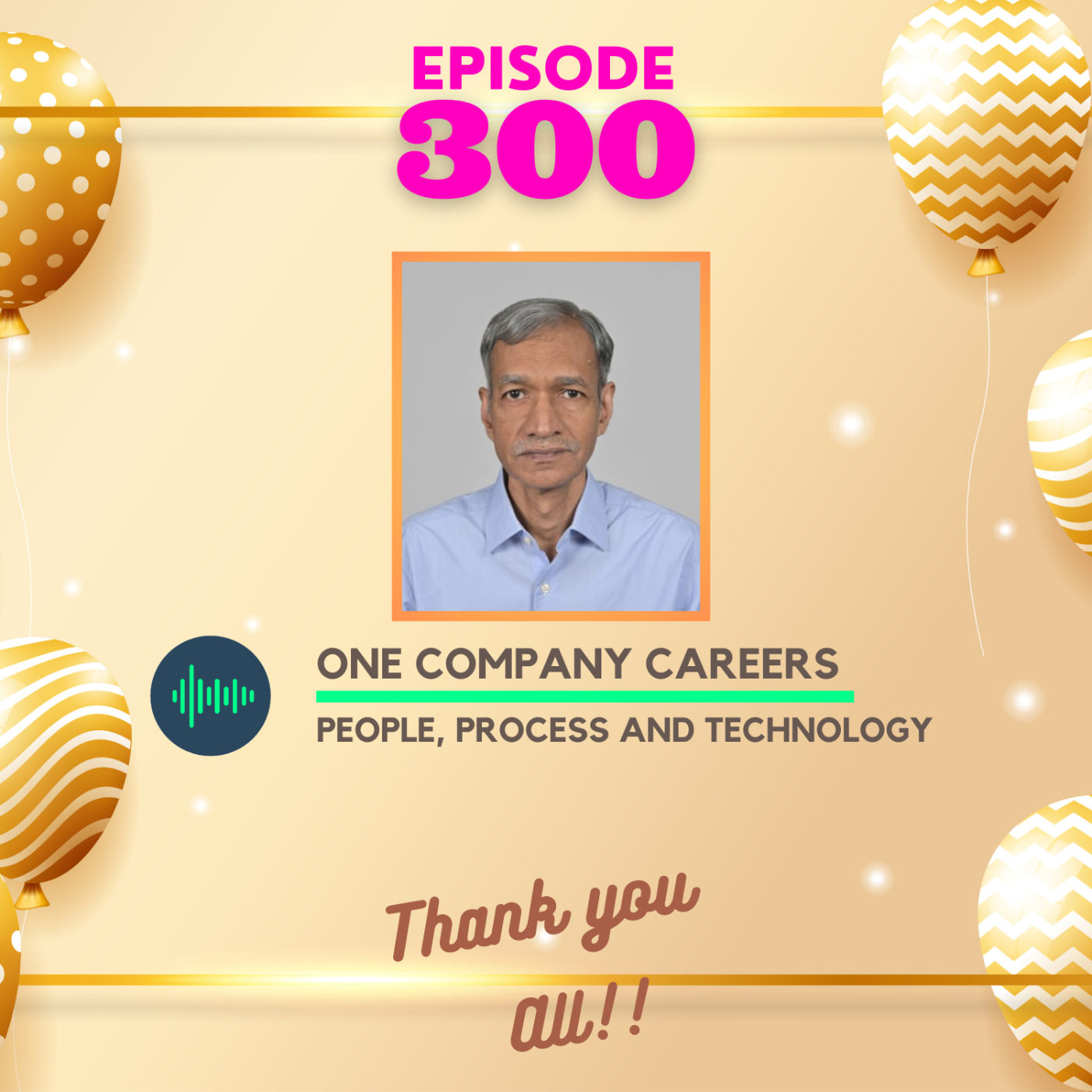
One Company careers with Gunaseelan Narayanan
This marks 300 episodes of the Software People Stories. The journey has been very enriching. But more of that, in a few weeks, when we complete six years of the podcast.In addition, the guest today is a person who has been a mentor to me and whose qualities technically and as a leader, I admire.I continue my conversation with Gunaseelan Narayanan, known as Guna. Guna is an executive coach with a long career in IT before that.In this conversation, he talks aboutTransition from Project Leader to Delivery Excellence Leader, initial challenges with management style to embracing new technologies and effectively leading high-performing engineering teams.He also emphasizes the difference in project timelines between internal R&D and global customerThe importance of empathy, communication, and tailored processes in effectively aligning different divisions or lines of business within an organization, especially in a complex matrix organizational structure.How his career was marked by diverse opportunities across different sectors , each offering valuable learning experiences and professional development.His journey into coaching and leadership development, emphasizing the shift from directive management to coaching and the importance of continuous learning and adaptation in his career.His Career Advice, and explanation of ethics in TechnologyGuna has over three decades of experience in the Information Technology industry. Currently he is an Executive Coach, helping senior executives enhance their leadership capabilities.He started his career as a software engineer in R&D department of Hindustan Computers Limited in 1979. He held various technical and managerial roles in HCL R&D and HCL-HP R&D before transitioning to HCL Technologies. In HCL Technologies he was in key delivery and business leadership roles including head of Engineering and R&D Services Line of Business and head of Delivery Excellence.Guna holds M.Tech. degree in Computer Science and B.Tech. in Electrical Engineering, both from IIT Madras. He is a certified Executive Coach from Coaching Foundation India. https://www.linkedin.com/in/gunaseelan-narayanan-13246b23/

Growing as a leader with Gunaseelan Narayanan
This is a special episode for me, personally.This marks 300 episodes of the Software People Stories. The journey has been very enriching. But more of that, in a few weeks, when we complete six years of the podcast.In addition, the guest today is a person who has been a mentor to me and whose qualities technically and as a leader, I admire.I am in conversation with Gunaseelan Narayanan, known as Guna. Guna is an executive coach with a long career in IT before that.In this conversation, he talks aboutTwo phases of his careerStarting with FORTRAN programming and transitioning into microprocessorsHis career at HCL - the only company he was associated with throughout his careerShifting to creating user focused solutions and telecom areasGaining experience with multi-national partnershipsGuna has over three decades of experience in the Information Technology industry. Currently he is an Executive Coach, helping senior executives enhance their leadership capabilities. He started his career as a software engineer in R&D department of Hindustan Computers Limited in 1979. He held various technical and managerial roles in HCL R&D and HCL-HP R&D before transitioning to HCL Technologies. In HCL Technologies he was in key delivery and business leadership roles including head of Engineering and R&D Services Line of Business and head of Delivery Excellence.Guna holds M.Tech. degree in Computer Science and B.Tech. in Electrical Engineering, both from IIT Madras. He is a certified Executive Coach from Coaching Foundation India https://www.linkedin.com/in/gunaseelan-narayanan-13246b23/
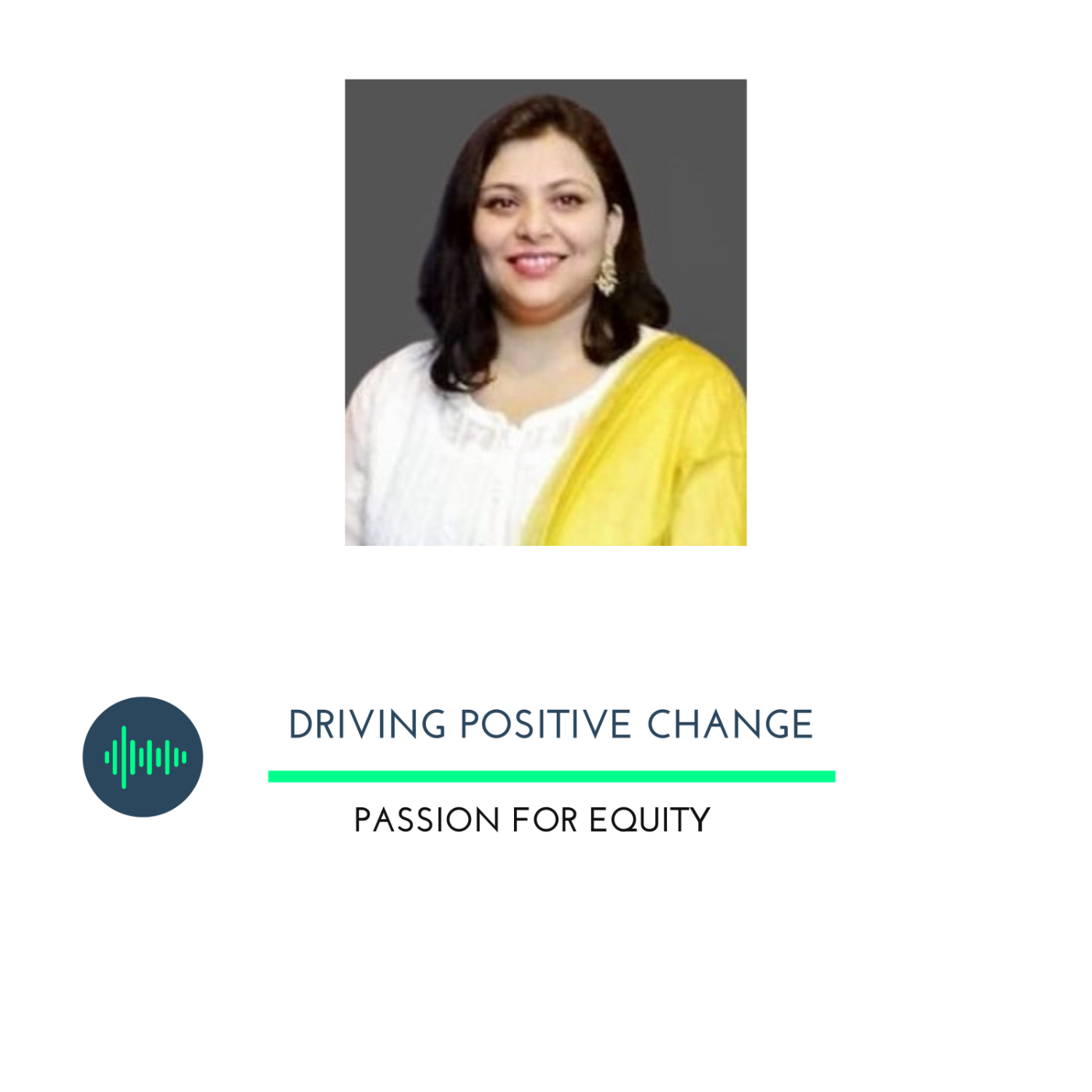
driving positive change with Sapna Jhawer
In this conversation, Sapna Jhaver, Technology Leader is in conversation with Chitra Gurjar where she shares various perspectives on -- Gen Alpha - their role as influencers, their thoughts and virtual influence of Generative AI- Moving into leadership roles and how her theatre experience helped her with playing, understanding leadership- Becoming inward focused to manage orthodoxy, perceptions and accepting herself- Providing her narrative for her future self- Messages for people aspiring to make a career in tech with dedicating time to learn, exposing ones' mind to different roles and using principles of running a business to learn about leadershipSapna Jhawer is a Retail Technology leader known for her fusion of innovation, empathy, and resilience. As a technology leader with over two decades of experience, she is known for her strategic vision, collaborative leadership style, and commitment to driving positive change. Sapna's passion for equity and storytelling fuels her mission to empower teams, foster innovation, and create a lasting impact on society. Her authentic approach, coupled with her expertise in retail technology, makes her a trusted advisor and thought leader in her field
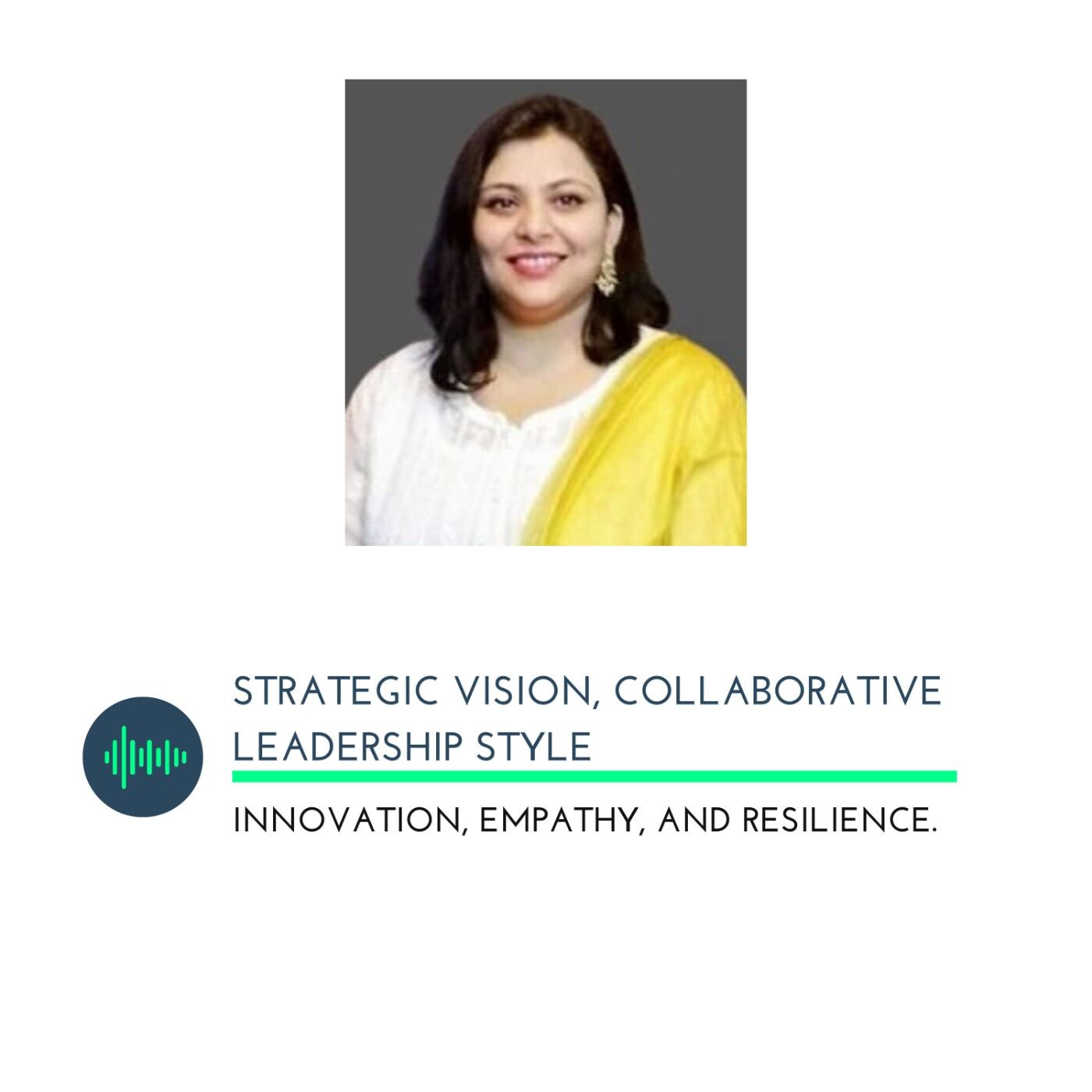
Strategic Vision, Collaborative Leadership style by Sapna Jhawer
In this conversation, Sapna Jhaver, Technology Leader is in conversation with Chitra Gurjar where she shares various perspectives on -- Wanting to first get into a business, thanks to being from a mainly business family- Wanting to do Chartered Accounting so she could start a business, then being peer-pressured into doing Electronics engineering- Switching mindsets from testing to development to understanding how developers first want to get things done, make them work and then test code- Taking on customer facing roles and getting into minutiae about customers in retail- Managing customer expectations and how technology can give an experience of look and feel, fit and experience of online retail shopping Sapna Jhawer is a Retail Technology leader known for her fusion of innovation, empathy, and resilience. As a technology leader with over two decades of experience, she is known for her strategic vision, collaborative leadership style, and commitment to driving positive change. Sapna's passion for equity and storytelling fuels her mission to empower teams, foster innovation, and create a lasting impact on society. Her authentic approach, coupled with her expertise in retail technology, makes her a trusted advisor and thought leader in her field
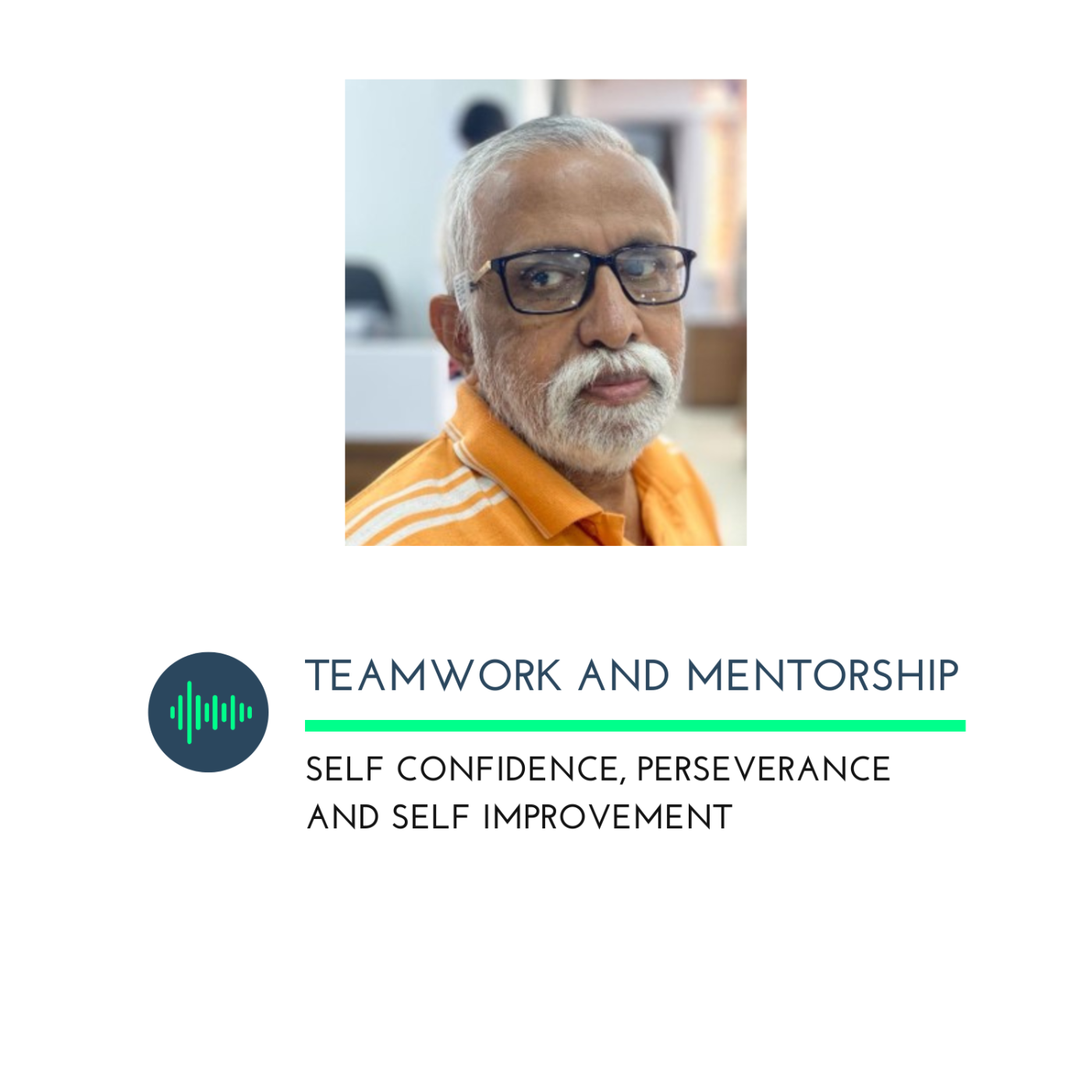
Teamwork and mentorship with C Subramanian (CS)
I continue my conversation with C Subramanian - more affectionately known as CS in his circles, an accomplished banker turned IT professional, with international experience.CS - C Subramanian's story is one of resilience, adaptation, and continuous learning. From his humble beginnings, he sought stability through education and found unexpected opportunities in the banking sector. Despite facing objections, he embraced the chance to join Canara Bank and eventually transitioned into the IT field within the organization.His journey into IT was marked by challenges and learning experiences, particularly during the implementation of banking software. CS emphasized the importance of understanding banking requirements and effectively communicating them to software developers. He highlighted the pivotal role of taking on computer courses reimbursed by the bank, which opened doors to new career paths.As he moved into project management, CS encountered new challenges but remained determined to succeed. He emphasized the significance of upgrading skills, adapting to new roles, and fostering teamwork. Throughout his narrative, CS underscored the importance of self-confidence, perseverance, and continuous self-improvement in achieving career growth.CS's story serves as a testament to the power of resilience, learning, and seizing opportunities, even in the face of doubts and obstacles. His emphasis on teamwork and mentorship underscores the value of collaboration and support in professional development. Overall, CS's journey offers valuable insights for navigating career transitions and achieving success in the ever-evolving landscape of the IT sector.A post graduate in Chemistry, worked in a public sector Bank for nearly 30 years and then moved to IT industry in BFSI. Handled various Banking projects for nearly 10 years in middle east and India in roles of Domain expert and Project Management. Lives in BengaluruHe may be reached at: [email protected]
Learning and Growing with C Subramanian - CS
In this episode, Shiv is in conversation with C Subramanian, more affectionately known as CS in his circles, an accomplished banker turned IT professional, with international experience.In this first part of the conversation, CS shared his origin story, starting from a modest background with a focus on securing a stable life through education. Despite initial plans for a career in chemistry, a friend's suggestion led him to apply for a job at Canara Bank, where he began his career. Despite family objections, he pursued the opportunity and eventually transitioned into the IT sector within the bank, leveraging courses and opportunities for advancement.He recounted his journey from a banking employee to an IT professional, highlighting key moments such as taking on computer courses reimbursed by the bank, which unexpectedly paved the way for his entry into the IT field. He described the challenges and learning experiences during the implementation of banking software, emphasizing the importance of understanding and conveying banking requirements to software developers.CS reflected on his transition to project management and the challenges he faced, including the need to upgrade his skills and adapt to new roles. He shared insights into managing teams, emphasizing the importance of guiding and motivating team members while continuously learning and upgrading oneself. Despite initial doubts from others, he persevered, proving himself and achieving career growth within the organization.Throughout his narrative, CS emphasized the importance of learning, adaptation, and self-confidence in navigating career transitions and achieving success. He also stressed the value of teamwork, mentorship, and continuous self-improvement in professional growth.A post graduate in Chemistry, worked in a public sector Bank for nearly 30 years and then moved to IT industry in BFSI. Handled various Banking projects for nearly 10 years in middle east and India in roles of Domain expert and Project Management. Lives in BengaluruHe may be reached at: [email protected]
Successful outsourcing partnerships with Andy Hillard
In this episode Shiv continues his conversation with Andy Hillard the CEO of Accelerance. He leads and advocates for the globalization and collaboration of great software teams across the world. In this second part of the conversation, Shiv and Andy discuss the challenges of working with multiple service providers and the importance of building cohesive teams. Andy emphasizes the need for trust, accountability, and common values in creating successful partnerships, regardless of whether you're working with one partner or multiple partners.He also touches upon the impact of AI on the IT landscape. Andy highlights the proliferation of service providers due to remote work and the challenges companies face in leveraging AI effectively. He stresses the importance of trust, credibility, and a focus on what AI cannot do, advocating for investing in interpersonal skills and problem-solving abilities.Shiv then asks for career tips, and Andy advises leaning into challenges rather than retreating from them, emphasizing action over inaction. He encourages individuals to continuously improve themselves and to maintain determination in the face of obstacles.Finally, they discuss travel preferences, with Andy expressing interest in revisiting India and Japan due to their unique cultures and vast diversity.Overall, the conversation explores themes of teamwork, adaptation to technological advancements, personal growth, and cultural appreciation.As CEO, Andy leads and advocates for the globalization and collaboration of great software teams with companies in search of talent, innovation and a globally-distributed extension of their engineering function and culture.Andy founded the ground-breaking nearshore software development services company, Isthmus Costa Rica. He began his global software services career as a Division Manager at Cognizant during their early formative years.
Essentials of outsourcing with Andy Hillard
In this episode, Shiv is in conversation with Andy Hillard, the CEO of Accelerance. He leads and advocates for the globalization and collaboration of great software teams across the world. The conversation between Shiv and Andy covers Andy's extensive career journey, including his time with the Peace Corps, his experience in finance and marketing, and his transition into software development. Andy discusses the evolution of the outsourcing industry, emphasizing the need for service providers to build trust and credibility with their clients. He shares insights on fostering empathy and collaboration within distributed teams, particularly in the context of outsourcing relationships. Andy highlights the importance of aligning cultural values, communication practices, and leadership styles between clients and service providers to ensure successful collaboration. The conversation also touches on challenges and controversies in outsourcing, prompting a discussion on the risks and benefits of outsourcing arrangements involving multiple service providers. Overall, the conversation explores strategies for building effective and trustworthy partnerships in the software development industry.As CEO, Andy leads and advocates for the globalization and collaboration of great software teams with companies in search of talent, innovation and a globally-distributed extension of their engineering function and culture.Andy founded the ground-breaking nearshore software development services company, Isthmus Costa Rica. He began his global software services career as a Division Manager at Cognizant during their early formative years.

Being an architect with Mike Bowers
Shiv continues his conversation with Mike Bowers, Chief architect at FairCom. In this conversation, Mike discusses how to identify someone with an aptitude for being a software architect.Here are the key points:Aptitude for a software architect, abstract thinking and PracticalityHis Experience in extensive coding and understanding of different programming languages, Data structures and algorithms knowledgeHe also talks about the Qualities of a good software architect:How to identify if you have the aptitude:In short, a software architect should be a well-rounded programmer with a strong understanding of design and practicality. They should be able to see the big picture and translate that vision into a functional system.He also shares some career tips for aspiring architects.Mike Bowers is the Chief Architect at FairCom with over 35 years of experience in software development and architecture. As the driving force behind FairCom's architecture and product roadmaps, Mike specializes in high-performance NoSQL and SQL databases, IIoT platforms, and legacy system modernization solutions. His wealth of knowledge extends to topics like database revolution, manufacturing 4.0, IIoT, edge computing, and data integration. With a deep understanding of the tech landscape, he actively contributes to the development of industry standards through his membership in the INCITS technical committee, focusing on SQL and GQL. Mike's insights resonate particularly well with audiences comprising CEOs, IT managers, software architects, software engineers, and controls engineers.

Architecting database engines with Mike Bowers
My guest today is Mike Bowers, Chief architect at FairCom. We had a very interesting conversation that we decided to publish in two parts. In the first part of the conversation , MIke shares his career path and his perspective on how to approach software development. He emphasizes the importance of understanding the customer's needs and designing systems that are flexible and scalable. He also discusses the importance of data in software development and his experience working with different data models.Here are the key points from the conversation:Mike started programming at a young age and has been passionate about it ever since.He has a PhD in music theory and sees connections between music and software development, particularly in terms of patterns.As an architect, he focuses on designing systems that are flexible, scalable, and meet the needs of the customer.He believes that data is a crucial part of software development and that understanding data is essential for building good systems.He has experience working with different data models, including relational databases and JSON.Mike Bowers is the Chief Architect at FairCom with over 35 years of experience in software development and architecture. As the driving force behind FairCom's architecture and product roadmaps, Mike specializes in high-performance NoSQL and SQL databases, IIoT platforms, and legacy system modernization solutions. His wealth of knowledge extends to topics like database revolution, manufacturing 4.0, IIoT, edge computing, and data integration. With a deep understanding of the tech landscape, he actively contributes to the development of industry standards through his membership in the INCITS technical committee, focusing on SQL and GQL. Mike's insights resonate particularly well with audiences comprising CEOs, IT managers, software architects, software engineers, and controls engineers.
Architecting solutions for the social sector with Vijayashree Urs
In this conversation with Ms. Vijayashree CTO - Shikshalokam | Director- Onlineengineer Inc. she talks about her career trajectory and how she approaches technical challenges. Here are the key points:Vijayashree accidentally ended up in computer science after wanting to study electronics engineering.She has a passion for system software design and coding.She transitioned from a services role to a product role to focus more on the technical aspects.She believes in balancing the technical aspects with user needs and understanding the business domain.She uses a collaborative approach to design, involving the team and getting their buy-in on ideas.She acknowledges the need for analysis and design but also emphasizes the importance of getting things into production quickly using Agile methodologies.When making decisions about new technologies, she weighs the risks and benefits, using proven patterns for critical areas but also taking calculated risks to experiment with new ideas.She communicates the importance of non-functional requirements to her team and integrates them into the design process to ensure scalability, reliability, and maintainability.Vijayashree talks about the challenges and the transition from working in the commercial sector to the social sector.Key takeaways for designing for the social sector:Users might not have the technical expertise and may have limited internet connectivity.The solutions should be designed for a wider range of devices including low-end smartphones.Multiple languages and possibly voice interfaces should be considered.There might be a need to focus on offline functionality as well.Metrics for success in the social sector:Adoption rate of the software by other organizations.User feedback and the resulting improvements made to the software.The impact of the software on the beneficiaries.There are also a few interesting career advices by herhttps://www.linkedin.com/in/vijayashree-urs/
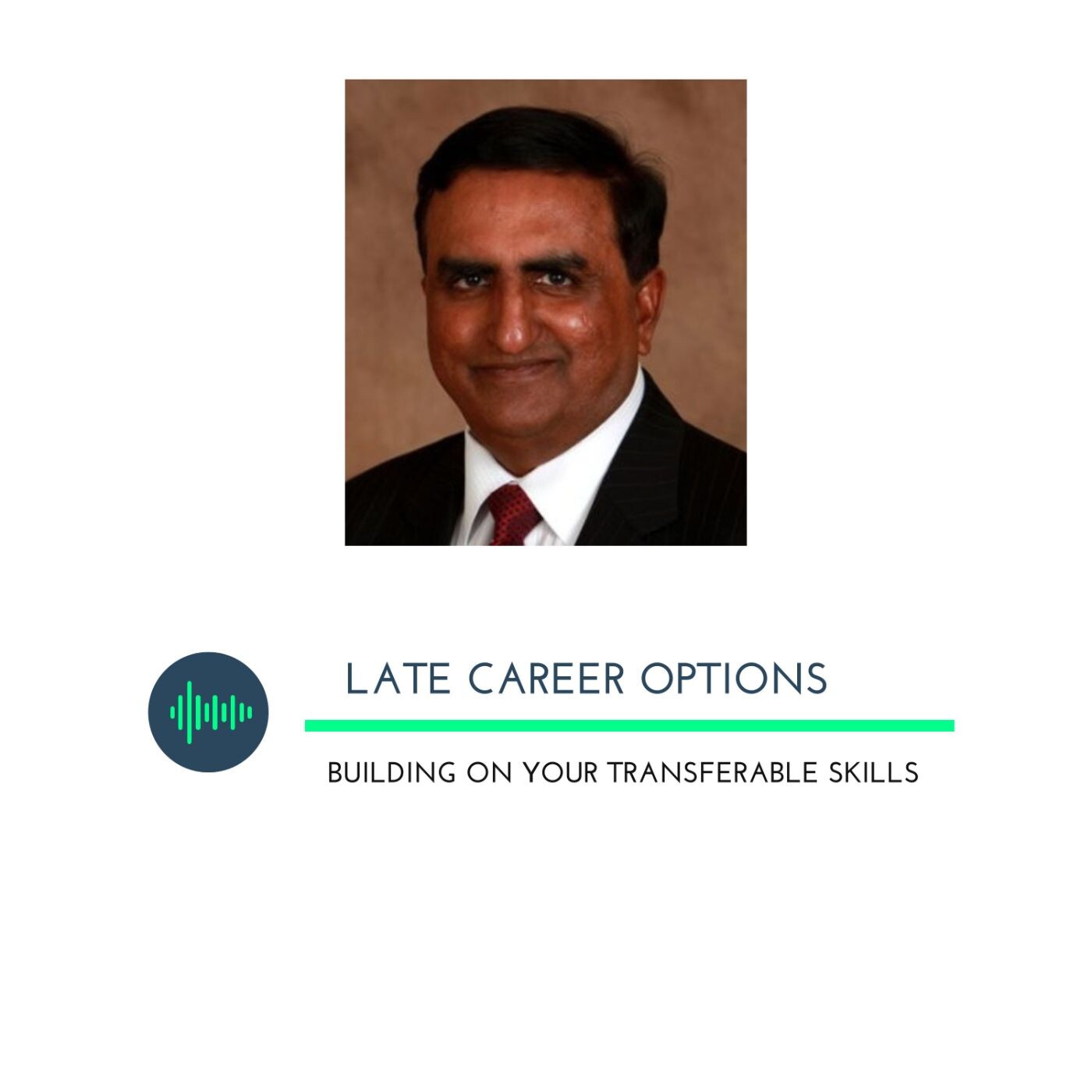
Late career options with Shekhar Chandra
Today, my guest is Shekhar Chandra - the Global Practice Head at Irs Software Inc.Here are the key themes from the conversation: Shekhar initially disliked sales because he is more of an introvert. However, he was eased into the role by his company and his technical background helped him gain the confidence to sell because he understood the product.Building a brand: Shekhar highlights the importance of building a brand for oneself, especially when venturing into entrepreneurship.Shekhar talks about the concept of building practices within a company to focus on specific areas of expertise.Shekhar emphasizes the importance of trying new things and learning from failures.Shekhar highlights the need for salespeople to have a good understanding of the technical aspects of the product or service they are selling.Shekhar then talks about the challenges faced by Indian companies trying to take their products global.Marketing is crucial: Building a good product is not enough. Companies need to focus on marketing and building alliances with other companies to be successful in the global market.Shekhar describes three different methods for partnering with other companies:Highlights some challenges faced by Indian companies when they try to take their products global. Shekhar also offers his advice for people in two different career stages:Mid-life career crisis:Late career:Shekhar Chandra - aka SC Shekar is the global practice head at Iris Software Inc. https://www.linkedin.com/in/shekhar-chandra-740953/
Staying curious and adaptable with Harpreet Singh
Shiv our host is in conversation with Harpreet SIngh, CO-founder and co-CEO of Launchale Inc. Harpreet has been associated with conceiving and launching many innovative products that have become a standard among developer community. In today's conversation he talks aboutHow he started his career in India and then moved to the US. He emphasizes the importance of continuous learning and self-improvement. He mentions his growth mindset and his habit of reading and taking courses to stay updated.Harpreet acknowledges the challenge of scaling himself as a leader alongside the company. He talks about managing time for both work and personal growth. He highlights the importance of clear communication and context setting to empower his team and free up his time. He also mentions using a prioritization technique where he identifies the top three important tasks for both work and personal life. Harpreet acknowledges the resistance developers often have towards documentation. He discusses how he built his team by looking for individuals who value clear communication and writing skills. He describes how he identified a niche in the developer experience (DevEx) domain. He noticed that even after implementing CI/CD practices, companies weren't seeing the desired benefits quickly enough. This led him to explore how AI and machine learning could improve software delivery pipelines.Launchable's product uses machine learning to predict which tests are likely to fail based on code changes. Launchable is now expanding its offering to include intelligent test failure diagnostics using AI and machine learning.Harpreet acknowledges that coding style can influence the likelihood of errors. Launchable considers this to some extent, but the focus is on broader patterns and historical data to predict test failures.He emphasizes the importance of lifelong learning for personal and professional growth.He also talks about careers in testing and tech in general: Harpreet is an entrepreneur, innovator, developer, and creative product leader who has dedicated his life to building new solutions for software teams. His latest iteration is Launchable Inc, an AI/ML company to help developers and QA. A seasoned DevOps leader, Harpreet has been building products for developers for the last 25+ years.Previously, he was GM for Atlassian Bitbucket and VP of Product at CloudBees. At CloudBees he helped create the Jenkins business that scaled to multi-millions in ARR.He has an MBA from Santa Clara University, an MS in CS from the University of Cincinnati, and a Bachelors in Computer Engineering from Pune University, India.

Corporate, Entrepreneurship and Social impact with Vinaya Mallya
Today, my guest is Vinaya Mallya, is a seasoned IT professional, who has played leadership roles in the corporate sector, then was an entrepreneur building a team and moving on to create solutions to impact the social sector.In this conversation, :Vinaya shares her career path, including experiences in corporate IT, startups, and the social sector.Early Career in ITVinaya's original plan was to study civil engineering, but her principal encouraged her to switch to computer science due to her gender.Despite initial challenges and limited practical experience, a project in COBOL sparked her interest in software development.Her husband, an IT engineer, encouraged her to pursue a career in the field.Finding Passion at InfosysAfter getting married, Vinaya joined Infosys despite initial reservations.The initial training period was difficult, but the collaborative work environment with diverse teams motivated her.She discovered her passion for problem-solving, particularly collective problem-solving in a team setting.Work-Life Balance ChallengesMarrying young and having a demanding job at Infosys presented work-life balance challenges.Her supportive in-laws and husband, who encouraged her to focus on her career for the first five years, helped manage the situation.Traveling abroad for work required additional compromises to maintain family harmony.Leaving Infosys and Starting a StartupInspired by her father's entrepreneurial spirit, Vinaya dreamt of creating jobs someday.After 11 years at Infosys, the need to care for her children and the distance from her husband in Malaysia led to her resignation.Her mother's strong words about the impact on their children became a turning point.Starting an Animation FranchiseTaking a break from corporate life, Vinaya explored franchise opportunitiesAnimation, a growing field, emerged as the final choice, and she started a franchise of an animation institute.While the business didn't generate significant profit, Vinaya takes pride in providing a platform for young talent to launch their careers.Work in the Social SectorVinaya's entry into the social sector was accidental. Initially, she volunteered one day a week, but her time commitment gradually increased to five days a week.The transition from corporate IT to the social sector required adjustments. Vinaya had to learn to appreciate the value of creative solutions and a less structured work environment.She also enjoyed building a team of all women who could relate to the challenges faced by the target population.Challenges of an All-Women TeamVinaya acknowledges that managing an all-women team has its challenges, such as difficulty with travel and limited budget.However, she believes the team's ability to connect with the target population is a significant benefit.Career AdviceFor Early Career Professionals: Vinaya recommends new graduates invest five years in their careers, being open to learning new skills and flexible in their work approach.For Mid-Career Professionals: She acknowledges that some individuals may need to decelerate their careers at a certain point due to life circumstances. However, Vinaya emphasizes the possibility of re-entering the workforce or even transitioning to a new field altogether.After 10 years of experience, Vinaya suggests that professionals consider how they can "give back" to their field or community.OverallVinaya's career path demonstrates the value of flexibility and lifelong learning.Her experiences highlight the opportunities for women in both the IT sector and the social sector.Vinaya has close to 24 years of varied experience in the IT services industry, and more recently in the social sector. She started her career with Infosys, where she spent a decade amassing technical knowledge and honing her management and customer relationship skills. During her stint in Infosys, she got the opportunity to work in different geographical cultures spanning America, Europe & Asia. During the phase of motherhood, she shifted from the hectic corporate job to founding her own startup, a design services company for training and development of multimedia solutions. She was selected for Goldman Sachs-ISB sponsored – “10000 World Women Entrepreneurs Management Program” in 2011. Through a common network, she found an opportunity to get associated in the social sector. At Dhwani Foundation, Vinaya engages with NGOs to help them adopt technology platforms to smoothen their operations. Her motto in life has been to keep an open mind and contribute towards any opportunity that comes along. This attitude has helped her have a very diverse career in her 2+ decades of professional life and hence has not had a boring moment so far ! Handles:Linked in: linkedin.com/in/vinaya-mallya-a30109aEMail: [email protected]

No guilt career breaks with Amita Ardha
Today, my guest is Amita Ardha, an enterprise architect who has been focusing on sustainable development solutions.In this conversation;Amita started her career in engineering and transitioned to IT due to her interest in the "why" behindthe coding.She realized the importance of understanding the business world and pursued an MBA with a focus onIT and software engineering.She eventually became a certified Enterprise Architect but took a break to focus on personal goals andexplore sustainability.This entrepreneurial experience involving a reuse studio helped her develop a broader understanding ofconnecting business with sustainability.Currently, Amita works as a part-time Enterprise Architect and is involved in sustainability initiatives.Being a Woman in TechAmita acknowledges the challenges women face in tech but emphasizes focusing on the work andenjoying the journey.She advises against attributing missed opportunities solely to gender and highlights the importance ofrecognizing individual journeys.Amita encourages women to take breaks without guilt and to keep striving towards their goals.Sustainability in ComputingAmita views sustainability as a journey from finite to infinite resourcefulness.Focus on Achievable Goals and Resource EfficiencyAmita emphasizes using resources efficiently and highlights cloud computing as an example of improvedresource utilization.She shares an example of identifying hygiene issues faced by sanitation workers and the potentialbenefit of providing antifungal cream.She recommends offering online sessions like storytelling or technology workshops to contributeremotely.You can see some of her work at https://www.instagram.com/bharatireusestudio/

The New Indian Woman, Krishna
Every year, the Software People Stories dedicates the month of March to women guests, to call out their contributions and highlight some women’s perspectives.Today, I am very happy to introduce our guest, Krishna Kumari, who is also a podcaster, hosting the New Indian Woman podcast.In this conversation, Krishna talks about:Her first association with computers during her engineering student days and her first jobReflecting on the novelty and curiosity around computers and software that generated an attraction to this sectorBeing a campus hire at an IT organization and moving across various roles over the next 22 yearsLeaving the software industry and volunteering at various NGOs for about 7 yearsGetting back to IT handling the applications portfolio at a large universityHow programming languages were associated with an invisible class system among the developers with developers wanting to work only on specific languagesGetting an opportunity to talk to one of her uber-bosses and complaining about not getting an opportunity to work on a language of her choice and how he could make a differenceHow she kept learning new technologies as they evolved, and as she moved from domain to domainHer tips on cross leveraging one’s experience when moving from one domain to another How it is important to understand the user experience and design for thatSeeking inputs from others as feedback, one gets opportunities to discover one’s strengthsHow it is important to nurture the quality of transparency to gain the trust of team members and how she discloses her strength areasHow a mentor was instrumental in guiding her in switching to the social sector, by making her think what her contribution to the social sector could beFinding a niche to contribute, by bringing her experience in process management in the corporate sector, to the social sectorHow forming genuine relationships with people is very importantShe shares the reason for starting the New Indian Woman podcast, to share experience and perspectives with more women Her career tips: the importance of the qualities that a person brings to the tableListen on!More about Krishna Kumari:I am Krishna and I currently live in Bangalore.I have been interested in planning, productivity and time management related topics, right from my middle school.Over the years, this expanded to a journey of continuous improvement and learning from others and examining of how I can live my life in a better way. Better for myself and for the people I care.These learnings have helped me a lot, no doubt. I have been looking for ways to share the same with the larger community of people around me and learn more and more. And that is the genesis of this blog 'New Indian Woman' and many more things to come…And if you are wanting to know more about my background. I come from a small town called Alleppey(now Alappuzha, famous for its backwaters), in Kerala. My mother tongue is Tamil. On the academic front, I have done Engineering in Computer Science and then worked in the new IT industry. I started as a software developer, worked many roles in a leading IT organization. When I was performing the role of General Manager, I decided to leave the corporate world and explore. This led me to start volunteering for different causes . During this period, I havebeen a volunteer with NGOs and citizen groups involved in a range of activities from structuring and managing a variety of programs, translating ideas to project opportunities, interacting with partner organisations to facilitate IT implementation, creating visibility of organization's operations towards stakeholder agencies and so on.been a visiting faculty for Undergraduate students at a University for Data Management course .engaged at my children’s school for multiple activities including implementation of new library software using open source toolshelped with teaching a Sewing course for Undergraduates at a University as part of their Creative Expressions programmelaunched my own podcast(yes, available in this site)pursued my hobbies - the ever common reading and of course, you guessed it right, sewing!My learnings come from the 2 decades in the IT world (after a simple small town upbringing), my current explorations and interactions with a wide variety of people from all backgrounds . My learning also comes from being a mother to a young adult daughter and teenage son.Get in touchWebsite : http://thenewindianwoman.comFacebook : http://facebook.com/newindianwomanEmail : [email protected] : https://twitter.com/thenewindianwo1LinkedIn: https://www.linkedin.com/company/thenewindianwoman

Travel, Media & Software
Happy Women's Day!This whole month we have all women's special podcast.Today, Malini Gowrishankar , Founder and CEO of F5escapes is in conversation with Chitra sharing her experiences as below - Describes herself as a nerdy 1st bencher with interest in music poetry, screen tested with Doordarshan- Support role resolving backend issues, strong fundamentals in delivering high quality software- the disconnect between developers v/s requirements and realizing business value, software products v/s services- An understanding of the "why" as key to building good software- Building software is NOT a transaction, empowering people to encourage curiosity- A process of keeping many identities, thriving and not just surviving- Voice acting, scripting and weekend hobbies becoming her career- Starting f5 travels post the Nirbhaya incident to create an impact- A trip to Sikkim to prove some perceptions otherwise and travel as a transformation- create feeling of safety through establishing local connections and traveling in groups, solo women travel8 years in IT as a techie / project manager, 10+ years in media as voice-over/dubbing artist and creative writer, 8+ years in travel as Founder/CEO of F5 Escapes. Passionate about women empowerment, entrepreneurship and sustainable travel. Lover of rains, books, music, nature, performing arts, animals and children. In her free time, she also trains people in voice-overs; mentors young professionals and women wanting to return to the workplace. https://www.linkedin.com/in/malini-gowrishankar-40210515/
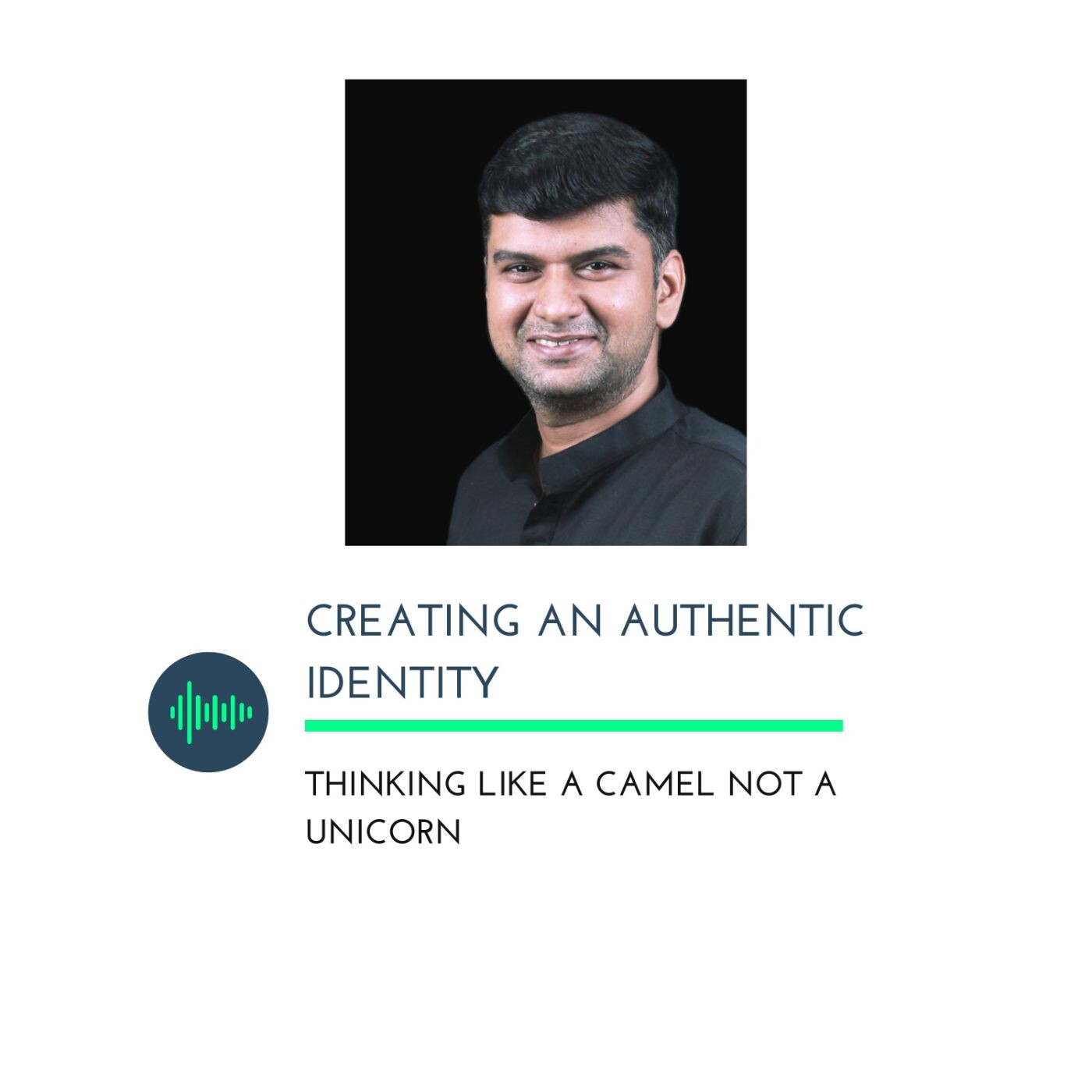
Creating an Authentic Identity
In second part of this episode, Gayatri Kalyanaraman is in conversation with Bharath Kumar who is a Marketeer from a Technologist, Head Of Marketing & Cx - Zoho Creator and he’s a Marketing and Content Specialist.Believing the part of Authentic marketing Creating a Product first and playing secondary to product but how do you differentiate the values of Zoho organization along with product featuresUnlearning and becoming second fiddle to the ProductChanging the model to inbound focus from an outboundGuiding through the vision instead of power Bharath also shares how he believes that one has to understand their own visionBharath further Bharath considers himself as an entrepreneurial marketeer. Bharath has 14+ years of professional work experience that helped him develop expertise in the areas of Lead Generation, Marketing communications, Brand management, Marketing strategy & Content marketing. Bharath is the marketing head for Zoho Creators for the last 5 years. Prior to that, Bharath was in the product marketing team for Ramco system and TinyOwl. He was the head of communication of Tamil Nadu Circle for Airtel where he was responsible for the content delivery and creating the brand promise for Airtel. Bharath was a software engineering in Infosys for 3 years. Bharath graduated from College of Engineering Guindy in Mining Engineering and Great Lakes Institute of management. Bharath can be contacted at https://www.linkedin.com/in/bharathkumarb-marketer/ You can listen to the Part1 of the podcast belowhttps://pm-powerconsulting.com/blog/creating-your-great-day-every-day-with-bharath-kumar/
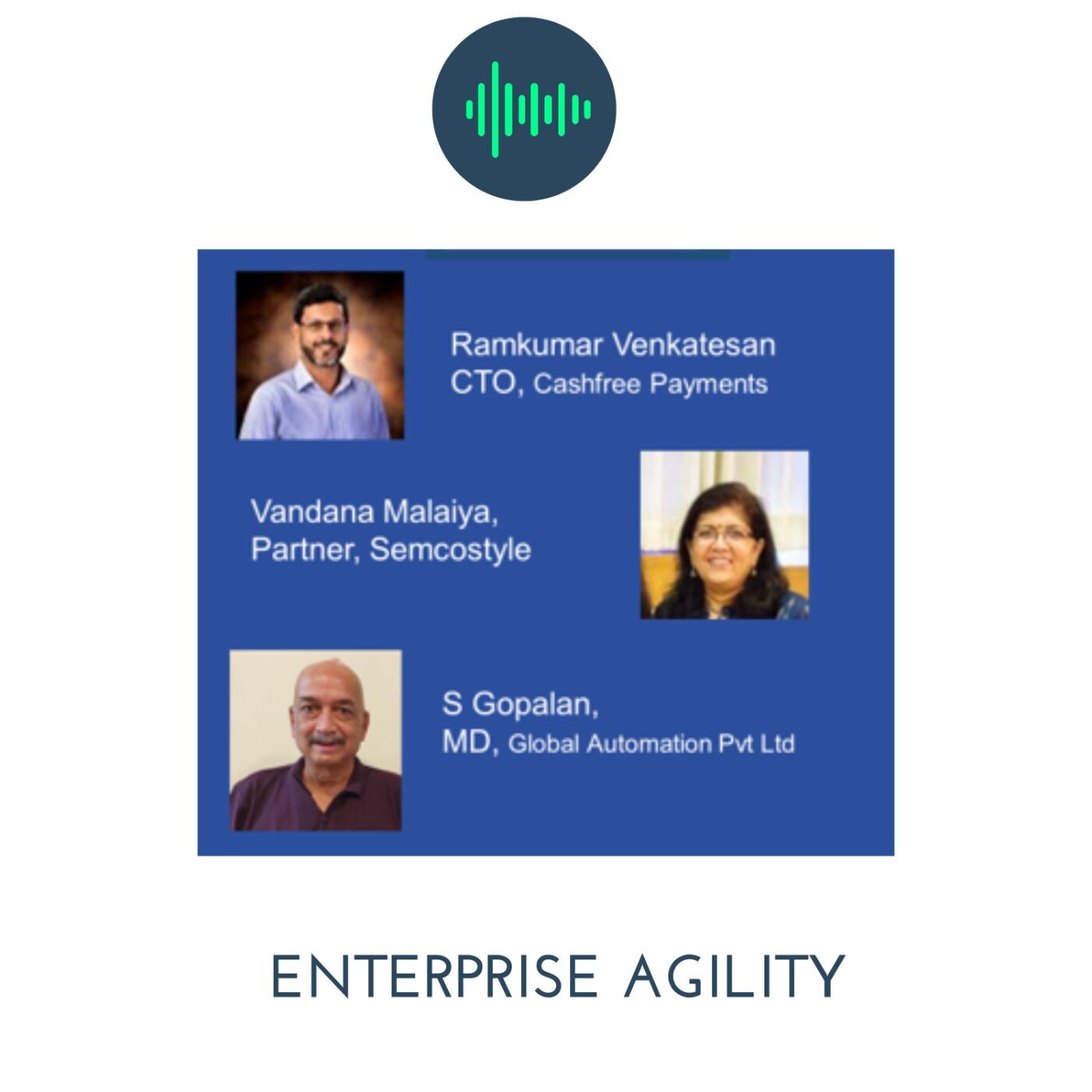
Panel Discussion on Enterprise Agility
In this special episode, as part of our book launch "A Practitioner's guide to Enterprise Agility", we had a panel discussion on Enterprise agility. As part of this panel Sivaguru was in conversation with 3 eminent guest from IT industry, Ramkumar Venkatesan, CTO Cashfree payments, Vandana Malaiya, Partner Semcostyle and S Gopalan, MD Global automation Pvt Ltd. Listen to this episode to know what were the views on enterprise agility of our guests .Hope you enjoy the episode!
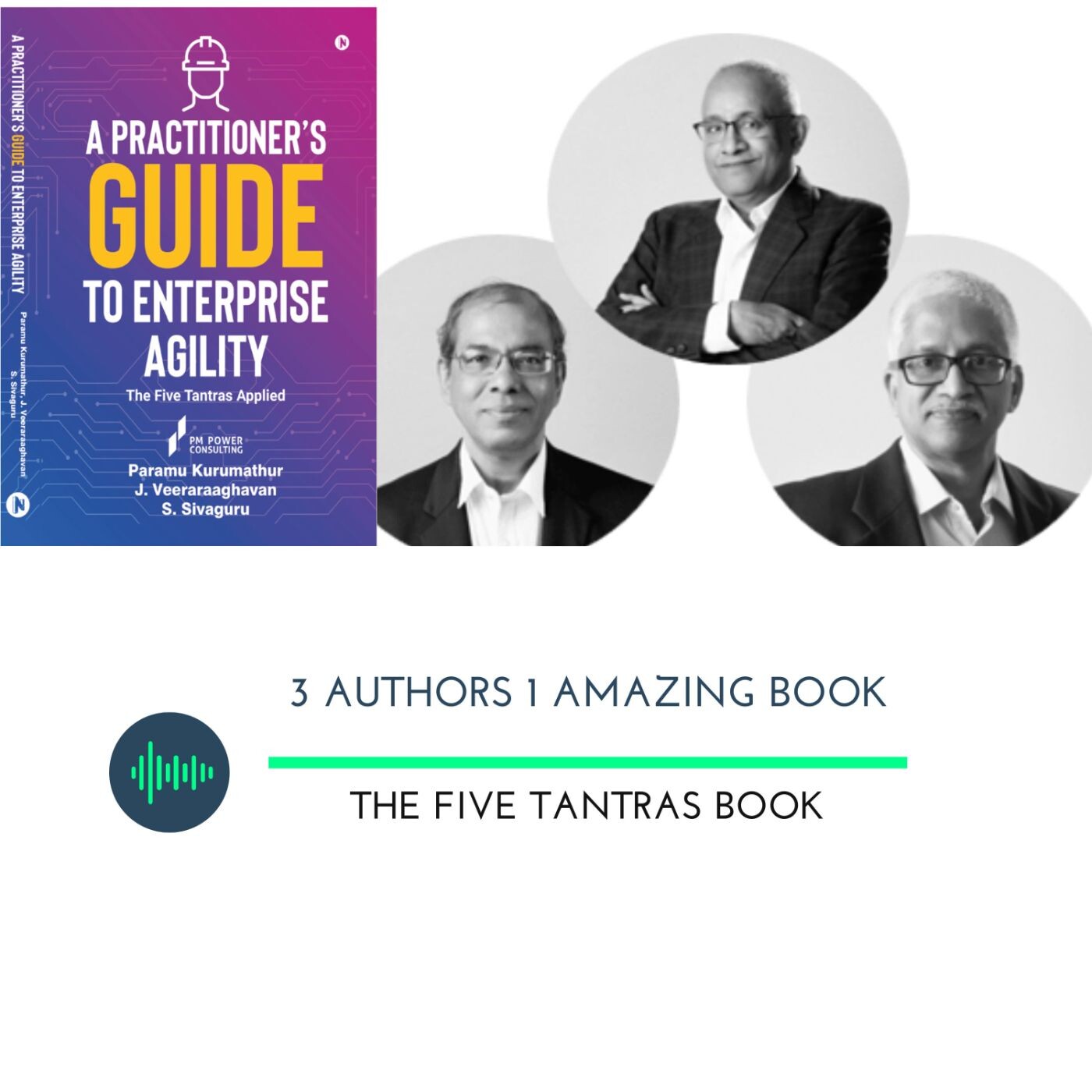
3 Authors 1 Amazing Book
In today's special episode we have our authors in conversation with our host Chitra. They share their experiences and thoughts with Chitra about the story behind this book. Here is what Chitra has to say about this podcast.The five tantras of enterprise agility which emerged from real coaching, business and consulting experiences of PM Power Consulting authored by Paramu Kurumathur only meant a sequel was a matter of time.So when co-author and former colleague of mine Sivaguru asked if I be the host for a podcast on the new book,I jumped at the chance. In this conversation, the three co-authors of a practitioner's guide to enterprise agility, J.Veeraraaghavan, Paramu and Sivaguru shared their experiences around the process of creating this piece of work and what embodies its essence, working with their individual styles and ideas especially for which PM Power is a powerhouse and how it eventually all came together.Apparently, a trio of authors makes for the perfect book recipe. They tell listeners not only about what the practitioner's guide is but also how it enables enterprises on their agility path practically with converting philosophies of the five tantras using tried and tested tools and practices backed by over 15 years of PM Power experience. Listen to this episode of the Software People's Stories podcast.Listen on...
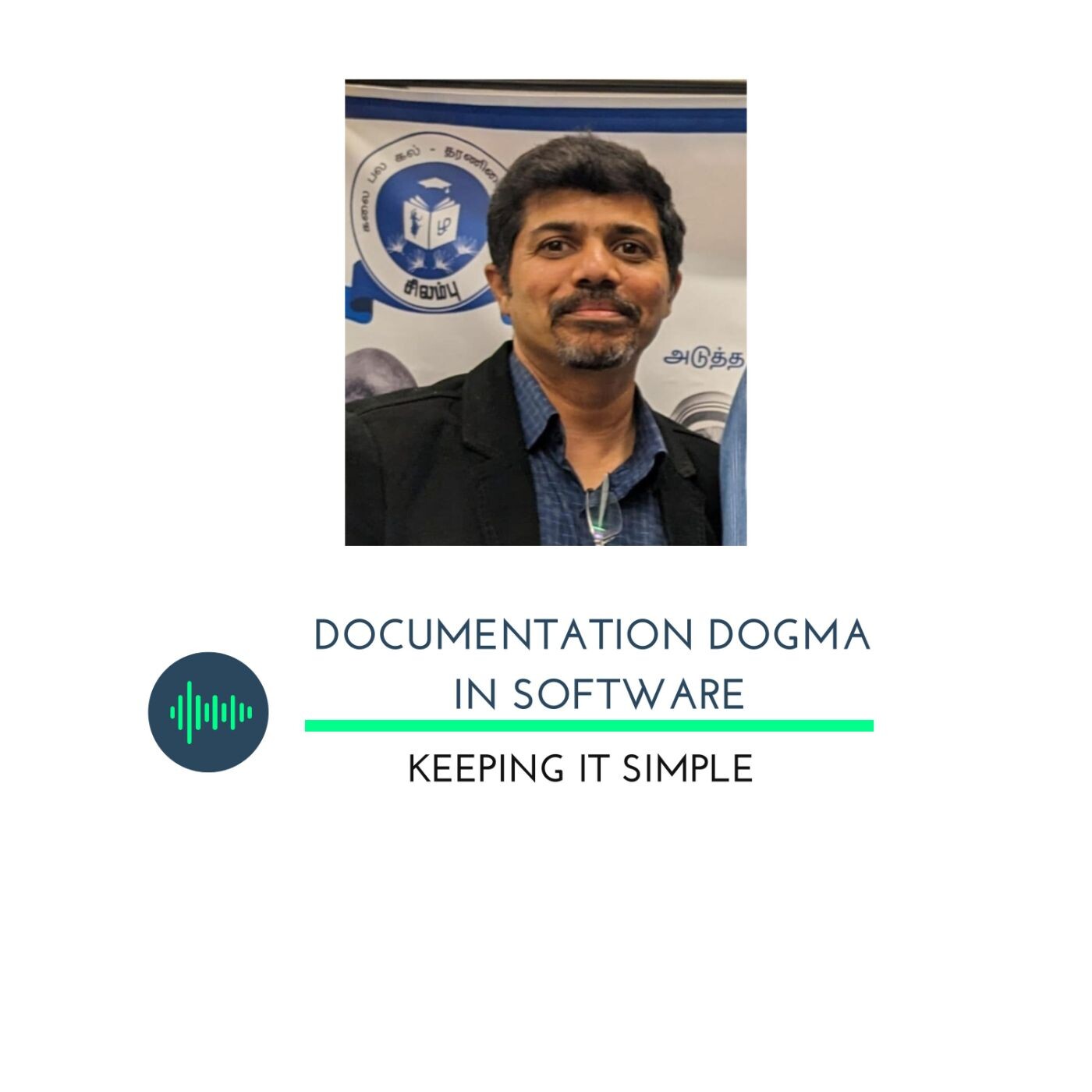
Documentation Dogma in Software with Prema Dhas Mohunraj
In the second part of the conversation with my friend Prema Dhas Mohunraj - aka Prem, Automotive Engineer, Product Leader in the Automotive Space, Electrobit(EB), we touched upon his career and reflections, including:Shares his decisions and the outcomes of moving roles, company and locationTalks about family and decisions on moving career Prem shares his learnings on being part of a legal case while dealing with a software quality issueSharing his views on the role definition and switching his avatars based Riding the high on completing a software codeWorking between different meetingsShares his learnings and Premadhas started his career with Robert Bosch and moved to Wipro where he led several roles for 14+ years. His most recent role was being the Quality Lead/Project Manager for a client. Premadhas moved to Electrobit (EB) as an automotive engineer and then to lead their quality practices and now in Product lead role. Premadhas is currently in the Detroit Metropolitan Area. Premadhas did his engineering in REC (now NIT) Trichy in Electronics and Communication Engineering. Premadhas can be connected at linkedin.com/in/premadhas
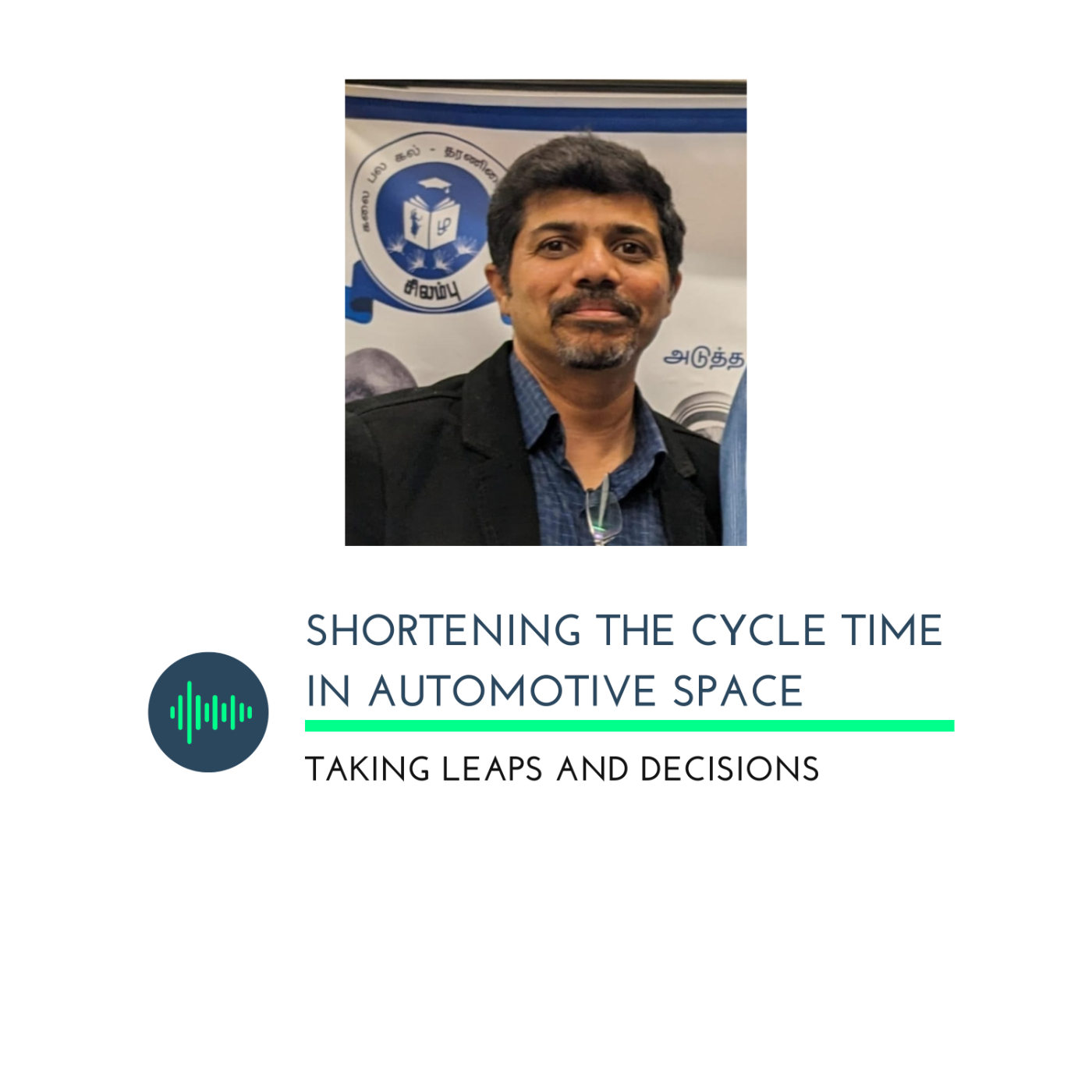
Shortening the Cycle time in Automotive Space with Prema Dhas Mohunraj
In the first part of conversation with my friend Prema Dhas Mohunraj - aka Prem, Automotive Engineer, Product Leader in the Automotive Space, Electrobit(EB), we touched upon his career and reflections, including:Shortest stint in Robert Bosch for 2 years and talks about today’s trend of people moving out in less than 2 monthsBeen an automotive engineer for the better part of his career and worked in different parts of business with . Premadhas jokes that he was getting only one firm to get a pay check but very different clients and even mail idsShares his view of the automotive industry - number of chips in a car to number of people who used to work in the software side during the entire transformation Proliferation of companies coming in the space - shortened the cycle of development - want to keep up with technology and mimicking the cellphone designsTalks about the connected cars and keeps the conversation on what’s happening on the road in a real-time basis. Shares the need to adapt in 2-3 year period to new roles (within or outside the firm) to ensure that we continue to learn from our ecosystemPremadhas talks about mentoring and how that support has helped him identify newer roles that he has just joined in as a Product Lead in ElectrobitPrem shares some of his personal decisions and shares his change from being a manager to an individual contributor and it brought him to a new city to write C++ codePremadhas started his career with Robert Bosch and moved to Wipro where he led several roles for 14+ years. His most recent role was being the Quality Lead/Project Manager for a client. Premadhas moved to Electrobit (EB) as an automotive engineer and then to lead their quality practices and now in Product lead role. Premadhas is currently in the Detroit Metropolitan Area. Premadhas did his engineering in REC (now NIT) Trichy in Electronics and Communication Engineering. Premadhas can be connected at linkedin.com/in/premadhas

Analytics and planning with Srinivasan Sundararajan
In this conversation with my colleague Srinivasan Sundararajan - aka Srini, we touched upon many topics related to personal finance as well as non-financial planning, including:His passion for data and analyticsUnderstanding that behavior matters as much or more than data and how his own approach to analytics has evolved over timeThe year end being a logical time window to reflect and planStart your reflection and planning from selfPicking the vital few aspects that need to be addressed and focusing measurements and analysis on thatHis reflection on the past year on a personal levelWhile he may not be very excited about planning quarter in quarter, using a quarter as a window to review financial investments , but shorter windows based on what the goals areAspects one should be clear about, both when planning and reflecting on the progress on plansHaving discretionary and non-discretionary aspects in the goals and aspirationsThe importance of making a public commitment or having an accountability buddyHow to use four words of Intrinsic / extrinsic, need/want driven to test motivationThe link to the blog post referred to by Srini on the four words related to motivation: https://pm-powerconsulting.com/blog/4-words-test-motivational-level/
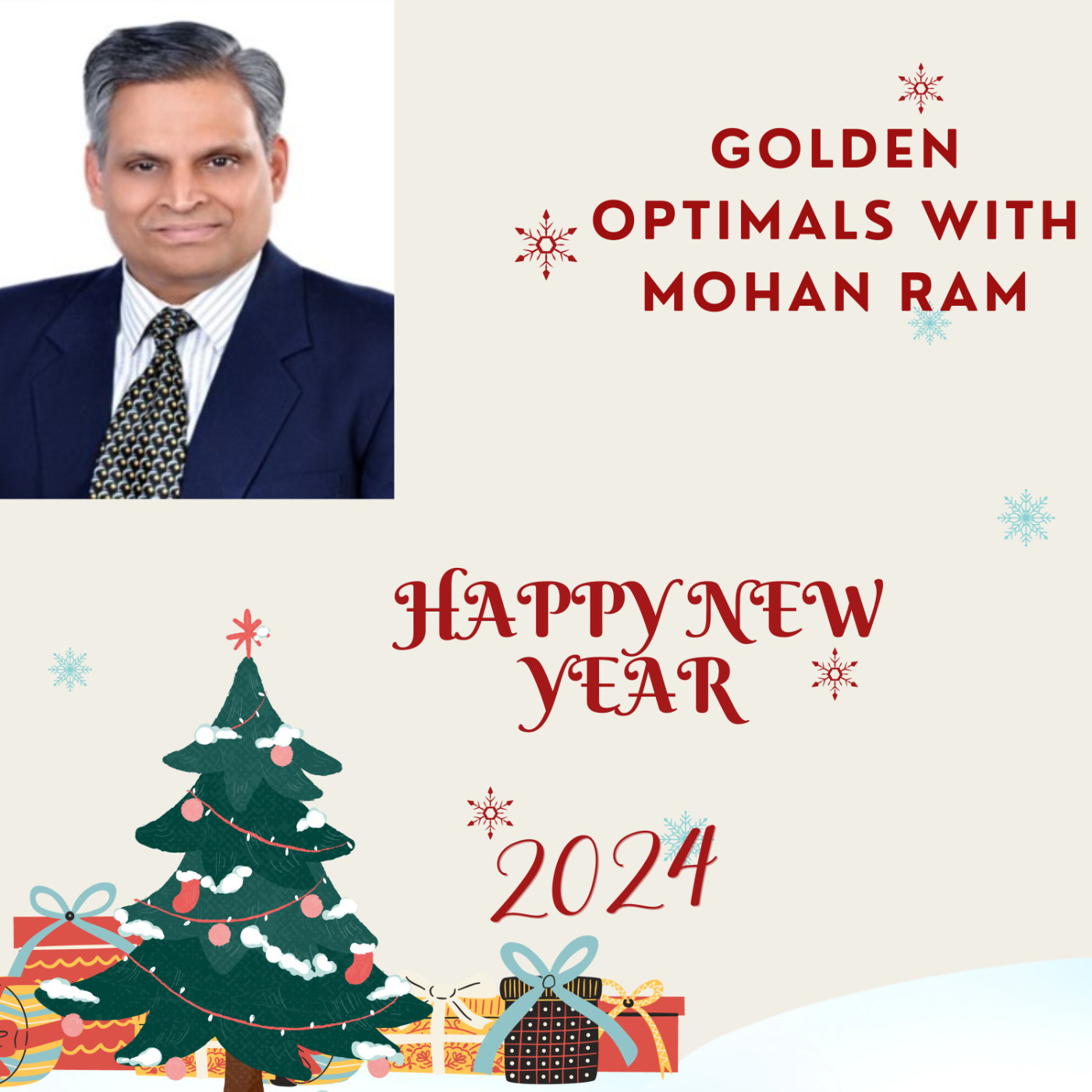
Golden Optimals with Mohan Ram
In this conversation, my colleague Mohan Ram shares howHis reflection and planning cycle is not necessarily synchronized with the calendar yearHis preference to not think too far ahead in the future, but focus on the next 3 monthsHow the thought process is always on in the back of one’s mindHow to avoid the analysis paralysis, but move towards action with a golden optimal ruleHis experience and learnings from two of his bossesThe significance of journals and journalingHis preference for more visually laid out elements in a journal and fitting a note within half a page or one page max

Year end thoughts with Chitra and Gayatri
As we approach the end of a calendar year, many of us have the practice of looking back on the year that was, reflecting on the highs and lows of the year - and shape our dreams and aspirations for the coming year.At Software People Stories, we are running a special series of conversations with people on their own approaches as well as practices and stories of how their thinking has changed over the years.Today, it is a conversation between the two co-hosts of the podcast, Chitra and Gayatri. In this conversation, they touch upon:Chitra’s practice of annual year end reflectionGayatri’s professional achievements in a large organization and being bit by the startup bugHaving many goals at the start of the year and achieving many of themPlanning for a college reunion that brought together over 250 personsSome ideas that did not see as much progress as desiredChitra shares her entrepreneurial journey in the learning spaceThe strength of the co-founders supporting each other through tough timesA new role in a new sector that she has recently taken upHer delving into authorshipTheir experiences and some practices as coaches and how that has influenced their ways of workingThe significance of time management and also ‘just be’ing.. And not doing anythingWhat Chitra would like to build up as a practice in the coming yearManaging your energy more than timeManage FOMO, by sifting through the barrage of information overload and pick the ones most relevant for you and how to get startedThe importance of having safe spaces to help explore problem spacesTheir ideas for the coming year, that they want to work onSome of the techniques they talked about include: Atomic habits and pomodoro techniqueListen on, to be inspired.
Year end thoughts with Kurumathur Param
As we approach the end of a calendar year, many of us have the practice of looking back on the year that was, reflecting on the highs and lows of the year - and shape our dreams and aspirations for the coming year.At Software People Stories, we are running a special series of conversations with people on their own approaches as well as practices and stories of how their thinking has changed over the years.Today, my guest is Paramu Kurumathur, a colleague and a published serial author.He talks aboutTwo types of books he writesHow he motivates himself to make progress, even when there is no deadlineHow he plans and prioritizes time across projectsThe significance of a calendarHis thoughts on year end reflections and analogies from astronomyAnd the repeating cycles in calendars and their relevanceThe usefulness of year end reflections and new year resolutionsYou can reach him onhttps://www.linkedin.com/in/paramu-kurumathur-01489a6/

Year end thoughts with Gopalan
As we approach the end of a calendar year, many of us have the practice of looking back on the year that was, reflecting on the highs and lows of the year - and shape our dreams and aspirations for the coming year.At Software People Stories, we are running a special series of conversations with people on their own approaches as well as practices and stories of how their thinking has changed over the years.Today, I am in conversation with S Gopalan, my colleague from PM Power and an industry veteran. He prefers to be called Gopal.In this conversation he sharesThat reflections are goodHow his own perspective on annual cycles of appraisal [and feedback] have changed over timeThat he is not fond of setting goals such as losing weight within a fixed timeline, as effective, but rather prefers to take up things that would help make changes in his daily routinesHow taking micro goals per day, could possibly be accumulated and sometimes ‘binge’ completedThe benefit of making commitments publicHow his approaches are different when reflecting on two different contexts that he is actively associated with: a loosely structured team and a more structured team with tight timelinesWhat we, as coaches, need to think about differently - about tools to help us deliver more impactful engagementsThe value of reflections - to make one feel more secure and confident of the futureYou should have a plan, but be open to modifying that to adapt dynamically
Year end thoughts with Anantha Natarajan
As we approach the end of a calendar year, many of us have the practice of looking back on the year that was, reflecting on the highs and lows of the year - and shape our dreams and aspirations for the coming year.At Software People Stories, we are running a special series of conversations with people on their own approaches as well as practices and stories of how their thinking has changed over the years.Today, I am in conversation with Anantha Natarajan, my colleague from PM Power and an accomplished coach. He prefers to be called Anand.In this conversation he sharesHow his approach has evolved over the years, influenced by the context and environment he grew up in and moving to a larger city for studies and on to professional lifeA question he was asked by one of his mentors, about 25 years ago, about his aspirations for the futureHis practice of writing things down in his dream bookA model that has evolved and worked for him, that he calls i-fi; moving from the present I, to the future IThe importance of the role of a mentorWhether discipline is essential for these resolutionsHow considering some responsibilities as chores, obligations or blessings changes ones complete perspectiveThe high level overview of his i-fi modelAbout improving the quality of the inner mirrorThe relevance of choosing timelines for future plansFor more details on the i-fi model, check out Anand’s blog post.Accessible at: https://pm-powerconsulting.com/blog/i-fi-a-model-for-designing-your-future-and-personal-change/I hope you got some ideas to help you reflect and plan for the coming year.If some other practices have worked for you - or possibly not worked for you, would you like to share your story?Reach us on [email protected] and please do share with your networks to spread the word.
Creating your great day every day with Bharath Kumar
In this episode, Gayatri Kalyanaraman is in conversation with Bharath Kumar who is a Marketeer from a Technologist, Head Of Marketing & Cx - Zoho Creator and he’s a Marketing and Content Specialist.In his career spanning over two decades, he shares very interesting stories –Started his career in Infosys as a software engineerFound that his interests was in organizing events, quizzes and packaging and presenting the ideas were his strengthsDuring his career as a mainframe engineer, Bharath found that he was the most approachable and decided to approach a career in marketingHe talks about creating every day a great day and understanding what according to him made him feel greatShares his stories on what led him to choose marketing in MBABharath shares his dichotomy of experience in Madura Micro Finance LtdEndearing stories on being a communication - content management and head of circle communication for airtelBharath shares some of the data orientation and how to wear the data hat and keep visibility of the brand Identifying the patterns of data using clarity and ethical values. Bharath also shares how he always has the analytical mind and the eye for color/ patterns at the same time. In fact Bharath recommends that all of us need to keep this modelBharath considers himself as an entrepreneurial marketeer. Bharath has 14+ years of professional work experience that helped him develop expertise in the areas of Lead Generation, Marketing communications, Brand management, Marketing strategy & Content marketing. Bharath is the marketing head for Zoho Creators for the last 5 years. Prior to that, Bharath was in the product marketing team for Ramco system and TinyOwl. He was the head of communication of Tamil Nadu Circle for Airtel where he was responsible for the content delivery and creating the brand promise for Airtel. Bharath was a software engineering in Infosys for 3 years. Bharath graduated from College of Engineering Guindy in Mining Engineering and Great Lakes Institute of management. Bharath can be contacted at https://www.linkedin.com/in/bharathkumarb-marketer/
Collaborate, to simplify problems and solutions with Tom Pierce
In this episode, I asked Tom Pierce, the president and founder of Integrated Information Systems (I2S) responds to my question on how the ‘integrated’ in his company name is internalized by his clients. He responded to that question and shared many more interesting thoughts in this episode. He shared:How their weekly 5 hour workshops for clients, to get vibrant conversations goingHow he uses music in some of his interactionsHis belief in segmentation and appropriate responses, rather than fragmentationHis experience with music, when practicing first base alone and getting the big picture when the full team came togetherHis metaphor from baseball, on being present and aware of the other players and take decisionsWhy preparation and practice trumps planning aloneHow Covid had a negative impact on collaborationAbout drawing from how children learn music to make software teams more effectiveHow the artistry of code can be better when a team member ‘listens’ to the rest of the team membersHow children are very perceptive, while AI [alexa] is notHis career tips for those considering a career in IT and those considering a switch mid-career, from non-tech to tech rolesHe also draws from his experience of holding his first grand child in his hands the first time.. Beautiful!, in responding to a question of patience and a sense of urgency or rushing through lifeHow he finds time for being interested and engaged in multiple activities Tom Pierce is the president and founder of Integrated Information Systems (I2S) of Louisville, Kentucky. He holds a bachelor’s degree in mathematics from Wake Forest University (1981) and a Master’s in Divinity (1993) from Southern Baptist Theological Seminary. After serving as an officer in the US Army, Tom has been immersed in the design and support of manufacturing software, as well as in the data-driven analysis of business and financial systems, primarily in large manufacturing facilities within the Aerospace Defense sector. A self-described MRP philosopher and ERP contrarian, Tom is a passionate advocate of simple approaches to complex problems. As a stubbornly resolute moderate, his company seeks to promote intelligent integrity by avoiding the opposing traps of overly simplistic naivety and overly complicated sophistication. For roughly four decades, Tom has focused his career and his company on the pursuit of trustworthy clarity and practical understanding of information, which is the light of all human pursuits.
Military experience and software development with Tom Pierce
In this episode, Tom Pierce, the president and founder of Integrated Information Systems (I2S), shares:Many in his family had been in military serviceIn his first assignment, being assigned to the analysis team because he has a background in math and computersGrabbing an opportunity to use a computer that was unusedDoing some simulation modeling solutionsLeaving the army in good terms and going back to schoolWorking for a defense contractor and then starting his own defense contracting firmLeveraging his experience in the military to solve civilian problemsSome generational differences in the approach to merge technology and processesHis experience of the rules and hierarchical models of working in the military, where, on the lighter side, ‘you cannot do anything without breaking some rule’Some examples of streaks of entrepreneurship that ran in his familyThe last straw that pushed him into entrepreneurship: a sense of frustration about how businesses were run and having his own values and ideas of how to run a companyNot compromising on the value of working with end usersHow tech fluency is more important than tech savvinessTom Pierce is the president and founder of Integrated Information Systems (I2S) of Louisville, Kentucky. He holds a bachelor’s degree in mathematics from Wake Forest University (1981) and a Master’s in Divinity (1993) from Southern Baptist Theological Seminary. After serving as an officer in the US Army, Tom has been immersed in the design and support of manufacturing software, as well as in the data-driven analysis of business and financial systems, primarily in large manufacturing facilities within the Aerospace Defense sector. A self-described MRP philosopher and ERP contrarian, Tom is a passionate advocate of simple approaches to complex problems. As a stubbornly resolute moderate, his company seeks to promote intelligent integrity by avoiding the opposing traps of overly simplistic naivety and overly complicated sophistication. For roughly four decades, Tom has focused his career and his company on the pursuit of trustworthy clarity and practical understanding of information, which is the light of all human pursuits
Secure development with Jeremy Snyder
I continue my conversation with Jeremy Snyder, the founder and CEO of FireTail.io, an end-to-end API security startup. Towards the end of the first part, I asked Jerermy ‘how a developer should think, when using APIS - with so many moving parts - from security and performance aspects’He answers that and continues to share his story relating to:The extensive experience his co-founder has with API based architectures and implementationsHow APIs can implement business functions or offer specific extracts of data held in applicationsFirst, understanding how APIs could be compromised, to pick the scope for what their company firetail should be addressingHow many breaches are related to authentication and authorizationWhy a zero-trust approach is very critical and the good practice of sharing only minimum data that needs to be sharedThe importance of central loggingHow he manages to get a good night’s sleep, while playing a very crucial role in the chain of enterprise security in an API based solutionHis personal practices to handle pressure at work and stay calmThe story behind naming their company firetailHow he developed an interest in learning many languagesJeremy asked me about my linguistic interestsHis career tipsSocial media: https://twitter.com/halffinn , https://www.linkedin.com/company/77663520 , https://www.linkedin.com/in/jeremysnyder/ Jeremy is the founder and CEO of FireTail.io, an end-to-end API security startup. Prior to FireTail, Jeremy worked in M&A at Rapid7, a global cyber leader, where he worked on the acquisitions of 3 companies during the pandemic. Jeremy previously led sales at DivvyCloud, one of the earliest cloud security posture management companies, and also led AWS sales in southeast Asia. Jeremy started his career with 13 years in cyber and IT operations. Jeremy has an MBA from Mason, a BA in computational linguistics from UNC, and has completed additional studies in Finland at Aalto University. Jeremy speaks 5 languages and has lived in 5 countries. Jeremy was once kicked off a train in central Sweden, and another time went several days without seeing another human, but did see lots of reindeer.Link to my podcast: https://podcasts.apple.com/us/podcast/ask-a-ciso/id1596056884
Scaling to the cloud with Jeremy Snyder
In this conversation, Jeremy Snyder, the founder and CEO of FireTail.io, an end-to-end API security startup, shares his professional journey and perspectives. Specifically, How he got into IT in the late 90s, when technology was coming into businessesEarly experience in Linux, VAX and Unix and implementing solutions for a translation agencyBeing responsible to evaluate, implement and integrate with various systems and thereby increasing the empathy for users and their situationsMoving to work with one of the solution providers and taking up tech support roles and trying his hand at software developmentGetting into and liking the infrastructure related rolesHis experience, as an IT infrastructure professional, of working with software developersThe ‘healthy’ struggle between the two roles and how IT teams would specify the environments to develop and deploy intoIT teams wanting to conserve resources and giving very limited capacities for developersDays when 98% availability was taken as acceptable and when crashes occurred, devs and IT teams would work overtime to find fault with the other teamStarting with Amazon AWS in 2010 when cloud computing was just evolvingUnderstanding the power of virtualized environments and why that needs a different way of thinking about data centers, getting away from the server-hugger mentalityThe need for users to develop trust in the cloud model of workingThe experience with gaining customer confidence in the cloud model in terms of stability, security etcThe harder aspect of addressing cultural issues triggered by fear of losing jobs by IT personnelTaking up other roles in smaller companies and understanding the security and vulnerability risks that companies could get exposed toPerimeter controls, endpoint protection, logging and monitoring etcFrom replicating data center structures to auto scaling infrastructure using containers and serverless architecturesThese resulting in more and more API based architecturesSocial media: https://twitter.com/halffinn https://www.linkedin.com/company/77663520 https://www.linkedin.com/in/jeremysnyder/ Jeremy is the founder and CEO of FireTail.io, an end-to-end API security startup. Prior to FireTail, Jeremy worked in M&A at Rapid7, a global cyber leader, where he worked on the acquisitions of 3 companies during the pandemic. Jeremy previously led sales at DivvyCloud, one of the earliest cloud security posture management companies, and also led AWS sales in southeast Asia. Jeremy started his career with 13 years in cyber and IT operations. Jeremy has an MBA from Mason, a BA in computational linguistics from UNC, and has completed additional studies in Finland at Aalto University. Jeremy speaks 5 languages and has lived in 5 countries. Jeremy was once kicked off a train in central Sweden, and another time went several days without seeing another human, but did see lots of reindeer. Link to my podcast: https://podcasts.apple.com/us/podcast/ask-a-ciso/id1596056884
Accelerating Business Outcomes with Nanthakumar Arumugam
In this episode, Gayatri Kalyanaraman is in conversation with Nanthakumar Arumugam who is a Technologist, Delivery Lead at ThoughtWorks and he’s a Quality Engineer and Financial Expert.In his career spanning over two decades, he shares very interesting stories –Nantha started his career as an instrumentation engineer within Polyester firm. His interest gravitated towards the PLC programming and that led him to join the software engineering full timeNantha joined Ready Test Go as a Quality engineer where he got his skill in the world of startup and certification worldNantha shares how the waterfall way of working had provided different domains and worked in 20 different programs in a very short period of timeHe also covers how he and his team ramped up on the domain and program rapidly Automation as a practice he gravitated to reduce the manual regression suite Nantha talks about the background on how Selenium tool came in as an antidote to the mercury tools (winrunner / loadrunner)Nantha shares his expertise on the passage of Automation CoE and a separate teamNantha talks about several hats he has worn in ThoughtWorks and shares the changes on how business interactions within TechnologyHe further shares the distance that’s reduced between business leads and access to leads to identify solution optionsNantha talks about the availability of tools that has made the business outcomes come out as soon as possibleNantha shares some of the key wisdom on how one has to build expertise in different facets of experience Nantha is the delivery lead and project manager in ThoughtWorks. He has been working with ThoughtWorks for a decade. He has played several roles including Quality Analyst, Quality Lead, Architect and Chennai Chapter lead prior to taking the current role. Nantha has done his PG in BITS Pilani and B.E. in University of Madras Nanthakumar can be contacted at https://www.linkedin.com/in/nanthakumara/
Don't Choose an Easy Path with Saikat Chakrabarty
In this episode, Gayatri Kalyanaraman is in conversation with Saikat Chakrabarty who is a Technologist, Director, Engineering at Mihup and he’s a AI/ML and Computer Vision Enthusiast.In his career spanning over a decade, he has been a Telecom engineer, prompt engineering, Interaction designer and conversational AI. Saikat is working in the pioneering world of building AI tools that map the man machine and the personHe’s working in the contact center engineering by understanding the questions and asks from our customersSaikat started his career in creating software for LTE within 4G Telecom providers and says that he has not looked back from thereSaikat’s team in Mihup creates the analysis of the several thousand conversations between the customer and contact center and understand the sentiment of the userListen to the conversation on how the vernacular language support is being created in the AI platform to build accuracyUnderstand that initial days you have to choose the right place to work and always stay invested in oneselfSaikat also talks about his mantra of “Don't choose an easy path and continue to learn”Saikat talks about his interests in Medical and Computer science and Brain networks are working. Saikat believes that the future bet is lying on medical access across the globeSaikat says that software changes in months not years - you have to keep yourself updated daily and that’s the only way to stay relevant He’s also deep believer of the growth of the technology in Tier 3 cities within India given the organizations changing to remote first or HybridSaikat has been instrumental in Mihup's success as one of the leading Conversational AI companies in India. He leads the entire tech organisation at Mihup, with a team of almost 20 people working under him, ranging from Devops to MLEs, overseeing the end to end development and shipping of the Mihup products.Saikat Chakrabarty is a dynamic leader and Senior Engineering Manager at Mihup, a pioneering conversational AI platform founded in 2016. Mihup's revolutionary approach empowers individuals to seamlessly interact with the digital world while prioritizing inclusivity and accessibility, regardless of language, accent, or dialect.Technical Leadership:At Mihup, Saikat has successfully managed and mentored cross-functional teams in machine learning, R&D, product development and DevOps. His expertise in managing the development of Mihup's conversational AI products has positioned him as a trusted leader in the industry. With a deep understanding of a wide range of technologies, including Java (Spring Boot), NodeJs, Golang, Angular, Python, RabbitMQ, PostgreSQL, Redis, Kubernetes, and more, Saikat has played a pivotal role in building highly scalable cloud microservices and optimizing premise-based applications.Diverse Experience:Saikat's wealth of experience extends beyond his role at Mihup. He has previously worked with renowned companies like Lexmark and Polaris Network Inc., where he honed his skills and passion for AI/ML and computer vision. His contributions to these cutting-edge fields have resulted in 2 patents and 6 paper publications, consolidating his exceptional knowledge and expertise.Recognition and Awards:Saikat's exceptional contributions and dedication to his craft have earned him notable accolades throughout his career. Notably, he was awarded the prestigious Digital Transformation Award at Lexmark Focus-2-Future, alongside the Manager Appreciation Award and several other commendations. At Mihup, he has regularly been the recipient of special rewards for his undying passion and dedication towards delivering products that customers love to use.Saikat can be contacted at Saikat Chakrabarty:
Smart hiring for startups with Prasenjit Sarkar
In this episode, I continue my conversation with Presenjit Sarkar, who is a Technologist, Innovator, Disruptor - and distinguished engineer with Rubrik inc.In his career spanning over 25 years, he has been a researcher, inventor, startup founder among other key roles he has played.I asked Prasenjit, if an entrepreneur should take outside help in building teams and people..The answer to that question and a lot more in the second part of the conversation.Today, he talks about:Taking professional support to build a psychological profile of a new hireThe importance of reaching out to references and understand any challenges the candidates facedHow he finds time to manage multiple things and also stay current on technology, competition etcWhy one should not try to do everything oneself, particularly the founders, rather focus on the core strengthsHis thoughts on data protection and data qualitySome career tips for roles related to data scienceI asked Prasenjit in building teams and people, if an entrepreneur should take outside help..The answer to that question and a lot more in the second part of the conversation.Stay tuned in for the next episode.Prasenjit Sarkar is a Distinguished Engineer at Rubrik responsible for the architecture and development of relational, NoSQL, and Big Data backup and recovery products. He has previously led initiatives to formulate product strategy, deliver industry-leading backup and recovery features, and superior performance at scales of thousands of databases.https://www.linkedin.com/in/psarkar24/On X - @psarkar24

Joys and pains of entrepreneurship with Prasenjit Sarkar
In this episode, Sivaguru is in conversation with Presenjit Sarkar, who is a Technologist, Innovator, Disruptor - and distinguished engineer with Rubrik inc.In his career spanning over 25 years, he has been a researcher, inventor, startup founder among other key roles he has played.Today, he talks about:His background, growing up years in IndiaDoing his PhD and moving to corporate research, as he is more of a hands on personAfter about 15 years with IBM, as a successful research scientist, left to start a companyGetting enterprise customers and then getting acquired by another companyHaving experience in large, small companies, startups, connected to academiaWorking in storage, big data management, backup and recovery spaceMoving from data protection to data securityThe experience of shifting from academics to corporateHow research focuses on thought leadership, while the priority in corporate is about market leadershipThe pleasures and pains of founding a startupThe feelings when one’s startup is acquired by someone elseAspects of chemistry and work styles that play out in acquisitionsThe need to be pragmatic, accept decisions, adjust and move aheadTips to manage one’s personal stresses and some techniques that have worked for him, particularly during transitionsHis tips for motivating people, and sharing your founder’s vision and excitement with the team that joins youManaging people, their aspirations and expectation, ambitions - is more difficult to manageThe answer to that question and a lot more in the second part of the conversation.Stay tuned in for the next episode.Prasenjit Sarkar is a Distinguished Engineer at Rubrik responsible for the architecture and development of relational, NoSQL, and Big Data backup and recovery products. He has previously led initiatives to formulate product strategy, deliver industry-leading backup and recovery features, and superior performance at scales of thousands of databases.https://www.linkedin.com/in/psarkar24/On X - @psarkar24
Building Confidence and Career with Kamala Srinivasa
In this episode, Gayatri Kalyanaraman has the conversation with Kamala Srinivasan who is a Technologist, Founder & CEO, Upahara, and women in tech influencer.In her career spanning over 25 years, she has been a STEM engineer, fintech developer, women in tech influencer and startup founder among other key roles she has played.Kamala grew up in a home with professors and engineers she recalls how having a clean room with AC blasting made her fascinated with the technology industryKamala shares her experiences of introducing reverse mentoring in India to enable senior people understand the pulse of the young people Started her career in the early 90s in the technology industry and worked in the financial sector Shares her decision making nugget to create a calculated move with the family onboard as well as a clear timeKamala shares that one needs to take care of self be it in your physical and mental stateKamala talks about her experience in fintech companies in India and US and how she found very less women in her age group. This made her take a call in the non-profit organizationKamala talks about creating ethically viable future and gives examples for thatKamala shares how her company is an app in your mobile phone to provide the application to connect people in need with people who would like to give. Her firm Upahara.com provides that service and she wants to share more about the firm in the future She shares some of the her book recommendation and philosophies that has helped her groundKamala shares tips on networking that listeners can help stay connected and learning from othersA technologist and an exec coach with more than 20 years of experience in both nonprofit organizations and technology industries. Kamala’s broad areas of expertise include global technology product delivery and operations, go-to-market strategy, digital transformation, and SAAS in Fintech, retail, legal, and media.Kamala’s expertise in non-profit and philanthropic fields, and in information technology has led her to seek a solution using emerging technology to create a robust platform that serves the needs of both donors and charitable organizations: a personalized, curated, discovery-based interface, connecting organizations and donors without extensive effort on both sides, like Fintech investment management products. www.linkedin.com/in/kamalasrinivasan/ https://twitter.com/Kamalasrini