Software Development, Finance and AI
482 episodes — Page 5 of 10

Ep 360(Part 2/2) Remote Work - An Engineer’s Perspective (feat. Jason Crum)
In this podcast, Krish and Jason discuss the cultural aspects of remote work and the importance of knowing each other in a remote setting. They explore whether it is necessary for engineers to know each other and the responsibility of individuals and organizations in fostering relationships. They also touch on the impact of engagement length on building relationships and the importance of treating software development as an art. The conversation concludes with a discussion on the challenges of working with different cultures and the need to embrace diversity and learn from different cultures. Takeaways Building relationships and getting to know each other is important in a remote work setting. Both individuals and organizations have a responsibility in fostering relationships and creating a positive work culture. Engagement length can impact the depth of relationships and the quality of deliverables. Treating software development as an art and giving 100% effort leads to better results. Working with different cultures requires understanding and embracing diversity. Chapters 00:00 Introduction and Recap 00:46 The Importance of Knowing Each Other 03:48 The Individual vs. Organization Responsibility 06:12 Building Relationships in a Remote Setting 11:11 The Impact of Engagement Length 12:32 Treating Software Development as an Art 17:50 Giving 100% and Treating Software Development as an Art 22:23 Challenges of Working with Different Cultures 24:51 Embracing Diversity and Learning from Different Cultures 26:56 Closing Remarks Snowpal Products Backends as Services on AWS Marketplace Mobile Apps on App Store and Play Store Web App Education Platform for Learners and Course Creators

Ep 359(Part 1/2) Remote Work - An Engineer’s Perspective (feat. Jason Crum)
In this podcast episode, Krish interviews Jason Crum, a Senior Enterprise Architect, about remote work from an engineer's perspective. They discuss various aspects of remote work, including pre-pandemic, during pandemic, and post-pandemic experiences, preferences for remote or in-office work, benefits and challenges of remote work, limitations of remote work, social interaction, pairing in remote work, implementing remote work in startups, team dynamics, and challenges of non-engineers in remote teams. Takeaways Remote work offers flexibility and the ability to manage time effectively. Remote work can limit social interaction and the ability to collaborate in person. Pairing in remote work can be challenging but can also be beneficial for certain tasks. Implementing remote work in startups requires considering team dynamics and ensuring everyone is either remote or in-office. Non-engineers in remote teams may face unique challenges. Chapters 00:00 Introduction and Welcome 01:10 Favorite Food Items 04:06 Remote Work Experience 06:23 Pre-Pandemic, During Pandemic, and Post-Pandemic Remote Work 10:33 Preference for Remote or In-Office Work 13:07 Benefits and Challenges of Remote Work 15:28 Limitations of Remote Work 19:16 Social Interaction and Remote Work 20:39 Pairing in Remote Work 24:46 Implementing Remote Work in Startups 27:50 Team Dynamics in Remote Work 29:43 Challenges of Non-Engineers in Remote Teams 32:21 Closing Comments Snowpal Products Backends as Services on AWS Marketplace Mobile Apps on App Store and Play Store Web App Education Platform for Learners and Course Creators

Ep 358(Part 3/4) Confluent Cloud (Managed Kafka as a Service) - Create a Go client to consume messages
In this podcast episode, the host continues from the previous episodes in the Confluent Cloud series and focuses on consuming messages. The consumer code is reviewed, and the concept of group ID is explained. The process of initializing the consumer and subscribing to topics is demonstrated. The use of channels in Go for message consumption is explored. The host troubleshoots issues related to group ID and discusses the inconsistencies observed. The allocation of messages among multiple consumers with different group IDs is examined. The episode concludes with a summary of the learnings and an invitation to explore Snowpals' products and APIs. Takeaways Consuming messages in Confluent Cloud involves initializing the consumer and subscribing to topics. The group ID determines which consumers belong to which group and affects work sharing and fault tolerance. Messages can be consumed using channels in Go, allowing for continuous listening and processing. Troubleshooting issues with group ID and understanding message allocation among multiple consumers is important. Snowpal offers a range of products and APIs for software development and architecture. Chapters 00:00 Introduction and Recap 00:31 Starting to Consume Messages 01:44 Consumer Code Overview 03:08 Consumer Group ID04:04Initializing the Consumer 04:32 Consuming Messages with Channels 05:00 Publishing Messages and Consuming 06:25 Group ID and Offset 07:07 Troubleshooting Group ID08:29Group ID and Producer 09:12 Inconsistencies and Debugging 10:24 Cluster Settings and Group ID 11:08 Cluster and Topic Configuration 12:24 Consumer Group ID and Partitions 13:22 Consumer Group ID and Message Filtering 16:29 Consumer Group ID and Work Sharing 17:49 Producer and Consumer Group ID 18:35 Multiple Consumers and Group ID 19:54 Multiple Consumers with Different Group IDs 20:50 Consuming Messages with Multiple Consumers 22:07 Parallelism and Message Distribution 23:52 Consumer Group ID and Message Allocation 26:30 Consumer Group ID and Message Allocation (Continued) 28:30 Consumer Group ID and Message Allocation (Continued) 30:03 Consumer Group ID and Message Allocation (Continued) 35:45 Conclusion Snowpal Products Backends as Services on AWS Marketplace Mobile Apps on App Store and Play Store Web App Education Platform for Learners and Course Creators
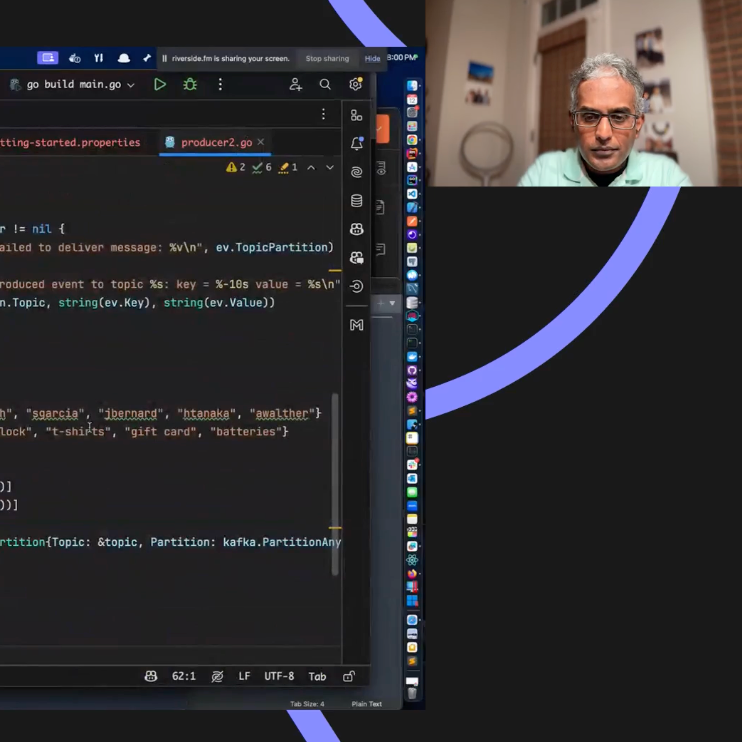
Ep 357(Part 2/4) Confluent Cloud (Managed Kafka as a Service) - Create a Go client to publish messages
In this podcast episode, the host continues the discussion on Confluent Cloud and focuses on adding a consumer and creating a Go client. The process of building a producer and troubleshooting and debugging common issues is also covered. The host explores topics such as topic creation, error handling, and configuration. Known issues and workarounds are discussed, along with cluster settings and security protocols. The episode concludes with final debugging and error handling techniques. In this conversation, Krish explores the process of publishing messages to a Kafka topic using a Go client. He encounters some issues along the way, such as delivery failures and SSL connection problems. However, after making some code changes and switching back and forth, the publishing starts working unexpectedly. Krish also discusses the use of Go channels in the producer and the importance of reading config and initializing the producer correctly. He concludes by mentioning the next steps, which involve consuming the messages from the topic. Takeaways Adding a consumer and creating a Go client are important steps in working with Confluent Cloud. Troubleshooting and debugging are essential skills when working with messaging systems like Kafka. Understanding topic creation, error handling, and configuration is crucial for successful message production. Being aware of known issues and their workarounds can save time and effort in troubleshooting. Configuring cluster settings and security protocols correctly is essential for smooth operation. Publishing messages to a Kafka topic using a Go client involves initializing the producer and ensuring the correct configuration. Go channels can be used in the producer to handle message production. Reading the config and initializing the producer correctly is crucial for successful message publishing. Issues such as delivery failures and SSL connection problems can be resolved by making code changes and switching back and forth. Chapters 00:00 Introduction and Recap 02:30 Adding a Consumer 03:44 Creating a Go Client 08:08 Building the Producer 10:55 Creating a Consumer 17:30 Troubleshooting and Debugging 21:02 Topic Creation and Message Production 25:48 Error Handling and Configuration 33:27 Continued Troubleshooting 46:20 Correcting Configuration Issues 55:41 Known Issues and Workarounds 59:12 Cluster Settings and Security Protocols 01:01:07 Final Debugging and Error Handling 01:02:19 Connecting to the Bootstrap Server 01:03:47 Using Channels 01:04:48 Replacing Code and Expecting a Broker and Topic 01:05:21 Building and Running with Broker and Topic 01:06:36 Using Go Channels in the Producer 01:07:16 Reading Config and Initializing the Producer 01:08:43 Delivery Failed and SSL Connection 01:10:13 Sending Messages via Postman and Code 01:11:02 Switching Code and Unexpected Working 01:11:39 Messages Sent and Refreshing Stand 01:12:55 Publishing to Different Topics 01:13:32 Publishing Messages and Minor Changes 01:14:00 Initializing the Producer and Randomizing Messages 01:15:09 Failed to Deliver Message and Event Types 01:17:00 Producing Messages with Go Routine 01:18:13 Producing Messages and Business Functionality 01:19:21 Producing Messages and Printing Output 01:21:48 Subscription to the Topic 01:22:37 Go Routine and Message Type 01:23:56 Event Types and Handling 01:30:07 Error Handling and Non-Existent Topic 01:32:12 Next Steps: Consuming Messages Snowpal Products: Backends as Services on AWS Marketplace Mobile Apps on App Store and Play Store Web App Education Platform for Learners and Course Creators

Ep 356(Part 1/4) Confluent Cloud (Managed Kafka as a Service) - Create a cluster, generate API keys, create topics, publish messages
In this podcast, the host explores Confluent Cloud, a fully managed Kafka service. The host shares their experience with RabbitMQ and Kafka and explains the value of using a managed service like Confluent Cloud. They walk through the process of signing up for an account, creating a cluster, generating API keys, and creating topics. The host also discusses the use of connectors and introduces ksqlDB and Apache Flink. They explore cluster settings, message consumption, and additional features of Confluent Cloud. The podcast concludes with a summary of the topics covered. Takeaways Confluent Cloud is a fully managed Kafka service that provides added value through pre-built connectors and ease of use. Creating a cluster, generating API keys, and creating topics are essential steps in getting started with Confluent Cloud. ksqlDB and Apache Flink offer stream processing capabilities and can be integrated with Confluent Cloud. Cluster settings, message consumption, and additional features like stream lineage and stream designer enhance the functionality of Confluent Cloud. Using a managed service like Confluent Cloud allows developers to focus on solving customer problems rather than managing infrastructure. Chapters 00:00 Introduction 02:25 Exploring Confluent Cloud 09:14 Creating a Cluster and API Keys 11:00 Creating Topics 13:20 Sending Messages to Topics 15:12 Introduction to ksqlDB and Apache Flink 17:03 Exploring Connectors 25:44 Cluster Settings and Configuration 28:05 Consuming Messages 35:20 Stream Lineage and Stream Designer 38:44 Exploring Additional Features 44:21 Summary and Conclusion Snowpal Products: Backends as Services on AWS Marketplace Mobile Apps on App Store and Play Store Web App Education Platform for Learners and Course Creators
Ep 3552 engineers discussing many things about Software Development (feat. Serkan Durusoy)
In this conversation, Serkan Durusoy, the head of engineering at Okra, discusses his background, living on a sailboat, and his passion for engineering. He emphasizes the importance of creativity and art in engineering and how personal background and upbringing can influence problem-solving approaches. Serkan also explores the balance between individual approaches and the need for alignment on outcomes in engineering teams. He highlights the role of personal relationships and the challenges of making tough decisions as a manager. In this conversation, Krish and Serkan discuss various topics related to software engineering and career development. They explore managing differences as a manager, the challenges of remote work, choosing a software engineering career, applying opinions to circumstances, and the impact of software engineering on the world. Takeaways Engineering is a creative and artistic field that allows for the creation of solutions and the impact on users. Personal background and upbringing can shape problem-solving approaches in engineering. Balancing individual approaches and aligning on outcomes is crucial for effective teamwork in engineering. Personal relationships and emotions should be considered, but the focus should be on the problem and desired outcome. As a manager, it is important to approach conflicts with the goal of amicably solving the problem and moving things forward. Remote work requires intentional communication and over-communication to compensate for the lack of social cues and body language. Choosing a software engineering career can be a shortcut to making a visible impact in the world, but it requires a lifelong commitment to learning and dealing with frustrations. Opinions and learnings should be applied to specific circumstances rather than taken as absolute truths. Software engineering has the potential to make a significant impact on the world and offers opportunities for personal and professional growth. Chapters 00:00 Introduction and Background 01:37 Living on a Sailboat and Engineering 03:25 Favorite Food and Cultural Differences 05:29 Engineering as Art and Creativity 09:42 The Influence of Upbringing on Engineering 11:14 Differences in Approaching Engineering Problems 16:36 The Role of Personal Background in Engineering 19:22 Balancing Individual Approaches in Engineering 25:14 Navigating Differences in Engineering Approaches 28:59 The Importance of Alignment on Outcomes 31:45 Balancing Personal Relationships and Engineering Decisions 36:43 Prioritizing the Problem and Outcome 40:12 Making Tough Decisions as a Manager 40:40 Managing Differences as a Manager 49:16 Challenges of Remote Work 59:13 Choosing a Software Engineering Career 01:01:07 Applying Opinions to Circumstances 01:03:21 Software Engineering as a Career Snowpal Products: Backends as Services on AWS Marketplace Mobile Apps on App Store and Play Store Web App Education Platform for Learners and Course Creators
Ep 354World Traveler Series (1/N): Learnings from Global Travels about gaps in App Localizations (feat. Prasanna Veeraswamy)
Prasanna Veeraswamy shares his unique experience of traveling to every country in the world and the personal growth and education he gained from his travels. He emphasizes the importance of living in a place to truly understand its culture and build relationships. Prasanna also discusses the impact of travel on food perceptions and the accessibility of travel and learning opportunities for everyone. In this conversation, Prasanna Veeraswamy shares his experiences and insights from traveling to different countries. He discusses the number of countries and cities he has visited, the unplanned nature of his travels, and the sacrifices he has made for his nomadic lifestyle. Prasanna also reflects on the impact of traveling on his appreciation of different cultures and the expansion of his food palette. He emphasizes the importance of exploring the world and understanding different markets for product development. The conversation concludes with a discussion on the evolution of personal identity through travel and the potential for future conversations on overlapping topics. Takeaways Traveling is a valuable form of education that provides personal growth and learning opportunities. Living in a place, even for a short period, allows for a deeper understanding of the culture and the ability to build meaningful relationships. Food perceptions can vary greatly between different countries and regions, and experiencing local cuisine is an important part of travel. Travel and learning opportunities are accessible to everyone, and it is possible to balance travel with professional life. Traveling to different countries allows for a deeper understanding and appreciation of different cultures. The number of countries and cities visited can vary based on personal circumstances and opportunities. Unplanned travel can lead to unexpected adventures and opportunities to explore new places. Traveling often requires sacrifices, such as stability and financial considerations. Experiencing different cuisines can expand one's food palette and provide a deeper connection to different cultures. Understanding local markets and cultures is crucial for effective product development. Traveling can contribute to personal growth and the evolution of one's identity. Future conversations can explore overlapping topics related to travel, culture, and product development. Chapters 00:00 Introduction to Prasanna Veeraswamy 03:06 The Unique Experience of Traveling to Every Country 06:02 The Education and Personal Growth of Travel 09:29 Balancing Travel and Professional Life 10:53 The Topic: Learnings from Global Travels about Gaps in App Localizations 12:14 Factors that Shape a Person 15:31 The Impact of Living in Different Countries 19:14 The Difference Between Traveling and Living in a Place 23:17 Understanding Culture and Building Relationships 26:55 The Influence of Travel on Food Perceptions 30:38 The Importance of Being on the Ground 36:53 The Accessibility of Travel and Learning Opportunities 38:41 Traveling to Different Countries 40:08 The Number of Countries and Cities Visited 41:05 Unplanned Traveling 43:41 Appreciating and Remembering the Travel Experiences 45:55 Sacrifices Made for Traveling 47:24 The Impact of Traveling on Appreciating Different Cultures 49:22 Completing the Loop of Traveling to All Countries 52:19 Expanding the Circle of Food Experiences 56:14 Favorite Food Item 57:20 Consistency in Food Preferences 58:24 Evolution of Personal Identity 01:02:27 Understanding Different Markets and Cultures 01:05:38 The Importance of Traveling for Product Development 01:08:34 Future Conversations on Overlapping Topics 01:12:07 Closing Thoughts on Traveling and Exploration Prasanna Veeraswamy's Links: LinkedIn Profile Book: One for the Road Snowpal Products: Backends as Services on AWS Marketplace Mobile Apps on App Store and Play Store Web App Education Platform for Learners and Course Creators

Ep 353Impact of Gratitude, Forgiveness, Expectations on Mental Health (feat. Vidhi Vohra)
In this conversation, Krish and Vidhi discuss the topics of gratitude and forgiveness. They emphasize the importance of expressing gratitude towards oneself and others, as well as the positive impact it can have on mental health. Vidhi shares her personal experience of forgiving someone and the sense of relief it brought her. They also discuss the need to let go of expectations and focus on the present moment. Overall, the conversation highlights the power of gratitude and forgiveness in leading a happier and more fulfilling life. In this conversation, Vidhi and Krish discuss the interconnectedness of happiness and mental health. They explore the relationship between gratitude, forgiveness, and expectations, emphasizing the importance of continuous effort in maintaining mental well-being. They draw parallels between mental well-being and the execution of tasks in software development. Vidhi shares her personal journey of forgiveness and highlights the positive impact it has had on her mental state. They discuss the need for incremental action and self-forgiveness as the first step towards positive change. The conversation concludes with a reminder to be grateful for what one has and to spread happiness to others. Takeaways Expressing gratitude towards oneself and others can have a positive impact on mental health. Forgiving others can bring a sense of relief and contribute to personal growth. Letting go of expectations can lead to greater happiness and contentment in life. Gratitude, forgiveness, and mental well-being are interconnected and contribute to happiness. Continuous effort is required to maintain good mental health. Self-forgiveness is the first step towards positive change. Feeling gratitude for what one has can lead to a happier state of mind. Forgiveness allows for healthier relationships and personal growth. Chapters 00:00 Introduction and Gratitude 07:48 The Power of Gratitude 16:02 The Importance of Forgiveness 28:17 Managing Expectations 39:22 The Interconnectedness of Happiness and Mental Health 40:34 The Connection Between Gratitude, Forgiveness, and Expectations 42:55 The Continuous Process of Working on Mental Well-being 43:54 The Challenge of Sustaining Positive Feelings 45:21 The Importance of Execution and Concentration 47:33 The Effort Required for Positive Change 49:55 Taking Incremental Action Towards Mental Well-being 52:47 The First Step: Forgiving Yourself 57:32 Feeling Gratitude for What You Have 59:01 The Journey of Forgiveness 01:03:45 Making an Effort for Positive Change 01:07:39 The Importance of Mental Peace and Self-love 01:10:12 Continuing the Journey of Gratitude Snowpal Products: Backends as Services on AWS Marketplace Mobile Apps on App Store and Play Store Web App Education Platform for Learners and Course Creators

Ep 352Fundamentals of Sales (feat. Deva Rangarajan)
In this conversation, Dr. Deva Rangarajan discusses the differences between sales, pre-sales, and marketing. He explains that marketing is about creating awareness and educating customers, while pre-sales helps customers formulate solutions and sales focuses on negotiating terms and conditions. Dr. Rangarajan emphasizes that these roles can be performed by the same person or different individuals, depending on the complexity of the business and customer needs. He also highlights the importance of understanding customer requirements, being patient, and having curiosity in sales. Additionally, he addresses the challenge of selling products you're not convinced about and the need for effective communication and listening skills in sales. In this conversation, Krish and Dr. Deva Rangarajan discuss the qualities of a salesperson, the importance of curiosity and listening skills, and the balance between passion and sales skills. They also explore the subjectivity in sales and the role of process in selling. The conversation concludes with closing remarks and an invitation for further questions. Takeaways Marketing creates awareness and educates customers, pre-sales helps formulate solutions, and sales negotiates terms and conditions. The roles of marketing, pre-sales, and sales can be performed by the same person or different individuals. Understanding customer needs and effectively communicating with them is crucial in sales. Being patient, curious, and having effective listening skills are important qualities in sales. Curiosity and listening skills are essential qualities for a salesperson. Passion for the business can be important, but sales skills are also crucial. Subjectivity is inherent in sales, and it is important to embrace it. Selling is both a process and an art form, requiring a balance of science and creativity. Chapters 00:00 Introduction and Background 04:00 Understanding Sales, Pre-Sales, and Marketing 09:26 Sequence of Marketing, Sales, and Pre-Sales 19:20 The Art of Convincing and Persuading 23:01 The Role of Sales in Every Role 27:33 Dealing with Selling Products You're Not Convinced About 30:32 Understanding Customer Needs and Misinterpretations 36:03 The Importance of Patience and Curiosity in Sales 40:17 Qualities of a Salesperson 42:13 Passion vs. Sales Skills 43:22 Subjectivity in Sales 44:28 Selling as a Process and an Art Form 46:22 Closing Remarks Dr. Rangarajan's Links LinkedIn Profile Ball State Sales Center Snowpal Products: Backends as Services on AWS Marketplace Mobile Apps on App Store and Play Store Web App Education Platform for Learners and Course Creators
Ep 351(Part 2/2) Coaching and Self Development (feat. Dan Tudorache)
This conversation explores the gig economy and its impact on companies. It discusses the skills and training required for gig workers, as well as the integration of contractors into teams. The importance of human skills and the role of coaching in developing them is emphasized. The conversation also touches on the use of AI as a tool in problem-solving and consulting. Overall, it highlights the need for companies to adapt to changing challenges and leverage both human and AI capabilities. Takeaways The gig economy encompasses various sectors and requires different skills and training. Gig workers can have a significant impact on a company's image and performance. Integration and communication are crucial when working with contractors. Developing human skills and fostering relationships are essential for success in the gig economy. Chapters 00:00 Understanding the Gig Economy 05:20 Impact of Gig Workers on Companies 06:25 Skills and Training for Gig Workers 11:11 Integration of Contractors into Teams 16:21 Building Skills and Relationships with Contractors 19:34 The Importance of Human Skills 21:20 Coaching and Developing Human Skills 22:54 AI as a Tool in Problem Solving 25:15 Adapting to Changing Challenges 26:42 Using AI Tools in Consulting Dan Tudorache's Details LinkedIn Page: https://www.linkedin.com/in/dantudorache/ Vibe IT Up Podcast: https://www.linkedin.com/company/vibe-it-up/ EmpacITy company website: https://www.empacity.ro/ Personal webpage: https://www.dantudorache.com/ Tech Career Accelerator Program: https://www.empacity.ro/tech-career-accelerator-program/ Snowpal Products: Backends as Services on AWS Marketplace Mobile Apps on App Store and Play Store Web App Education Platform for Learners and Course Creators
Ep 350(Part 1/2) Coaching and Self Development (feat. Dan Tudorache)
In this podcast episode, Dan Tudorake discusses game-based learning and its implementation in the tech industry. He shares insights on how game-based learning can be applied to software teams and how it can benefit different roles within an organization. Dan also explains how his coaching and gaming sessions are structured and the typical audience composition. Takeaways Game-based learning is an effective approach to training and development in the tech industry. Game-based learning can be implemented to improve collaboration and problem-solving skills within software teams. Training sessions should be tailored to the specific needs and interests of different roles within an organization. Gaming sessions can be organized for groups of various sizes and should include participants from different departments and roles. Dan Tudorache's Details LinkedIn Page: https://www.linkedin.com/in/dantudorache/ Vibe IT Up Podcast: https://www.linkedin.com/company/vibe-it-up/ EmpacITy company website: https://www.empacity.ro/ Personal webpage: https://www.dantudorache.com/ Tech Career Accelerator Program: https://www.empacity.ro/tech-career-accelerator-program/ Snowpal Products: Backends as Services on AWS Marketplace Mobile Apps on App Store and Play Store Web App Education Platform for Learners and Course Creators

Ep 349(Part 2/N) Terraform: Import Existing Resource
In this episode of the Terraform series, we continued from where we left off in the previous podcast. We created a Docker container, cloned the example repository, and initialized Terraform. We generated configuration using Terraform plan and imported a resource while modifying the configuration. We pruned the generated configuration and applied changes, handling destructive changes. We also troubleshooted and fixed errors along the way. Overall, we made progress in understanding Terraform and managing Docker containers using Terraform. In this second podcast of the Terraform series, Krish continues exploring the Terraform documentation and learning as he goes. He demonstrates how to modify the Terraform configuration by replacing placeholder values and making necessary changes to the config files. Krish also shares the commands he used, including Docker run, Docker PS, Terraform plan, Terraform apply, and Terraform show. He concludes the podcast by summarizing the progress made and inviting viewers to check out the next episode. Takeaways Terraform allows you to manage infrastructure using a common workflow Importing resources into Terraform requires defining an import block and generating configuration Destructive changes should be carefully managed and tested Troubleshooting errors in Terraform requires understanding the configuration and resource dependencies Modifying the Terraform configuration involves replacing placeholder values and making necessary changes to the config files. Commands like Docker run, Docker PS, Terraform plan, Terraform apply, and Terraform show are useful in the Terraform workflow. The Snowpal platform offers APIs and SaaS products that can be used to power back-end systems and accelerate development processes. Snowpal provides flexible options for using their products, including pay-per-use, monthly plans, and commercial licenses. Chapters 00:00 Introduction and Recap 02:01 Creating a Docker Container 05:19 Cloning the Example Repository 08:16 Initializing Terraform and Generating Configuration 10:04 Understanding Main.tf and Terraform.tf 11:46 Generating Configuration with Terraform Plan 15:50 Importing a Resource and Modifying Configuration 18:21 Pruning the Generated Configuration 20:50 Applying Changes and Handling Destructive Changes 27:31 Troubleshooting and Fixing Errors 36:44 Recap and Conclusion 50:29 Modifying the Terraform Configuration 52:28 Summary and Next Steps 53:26 Using Snowpal APIs and SaaS Products Snowpal Products: Backends as Services on AWS Marketplace Mobile Apps on App Store and Play Store Web App Education Platform for Learners and Course Creators

Ep 348Automated Economy Series (3/N): Education in Automated Economy (feat. David Kramer)
The conversation explores the transformation of education and the future of learning. It discusses the role of research and research communities in shaping education. The importance of a well-rounded education and the need to adapt to market needs are highlighted. The conversation also delves into how real-time education will change and the potential disruption of the traditional education system. The role of humans in future education is examined, along with the vision for a more personalized and automated learning experience. An anecdote is shared to illustrate the challenges in traditional education. In this conversation, Krish and David discuss the impact of automation and AI on education. They explore the challenges and benefits of personalization in learning, as well as the potential loss of the human element. They also discuss the importance of building trust with digital entities and the future of education in a hyper-personalized world. They touch on the balance between automation and human interaction, using the example of playing chess. Ultimately, they emphasize the need to embrace change and make choices that prioritize the things that truly matter. Takeaways Education is undergoing a transformation, driven by advancements in technology and the need to adapt to market demands. Research and research communities play a crucial role in shaping the future of education. Real-time education and personalized learning experiences will become the norm. The traditional education system is likely to be disrupted, leading to new models and approaches. The role of humans in education will evolve, with digital technologies and automation playing a significant role. Automation and AI have the potential to dramatically change education, offering personalized learning experiences. While personalization can enhance learning, it may also lead to a loss of the human element in education. Building trust with digital entities is crucial in a hyper-personalized world. The future of education will involve a balance between automation and human interaction. Chapters 00:00 Introduction and Setting the Stage 00:53 Transformation of Education: Research and Research Communities 06:31 Well-Rounded Education and Adapting to Market Needs 11:25 Interacting with Real-Time Education 19:47 Disruption of Traditional Education System 30:49 The Role of Humans in Future Education 41:10 Research, Training, and Execution in Education 46:07 The Vision for Future Education 47:31 Anecdote: Challenges in Traditional Education 48:01 Introduction to Advanced Calculus 49:26 The Challenge of Personalization 50:26 The Potential Lack of Human Element 51:31 Building Trust with Digital Entities 52:29 Interacting with Teachers in a Hyper-Personalized World 53:52 The Future of Education and Personalization 55:25 The Balance Between Automation and Human Interaction 56:52 The Example of Playing Chess 57:22 The Importance of Human Personalization 01:03:17 Finding a Balance in a Changing World 01:06:00 Embracing Change and Making Choices 01:10:42 Prioritizing the Things That Matter Snowpal Products: Backends as Services on AWS Marketplace Mobile Apps on App Store and Play Store Web App Education Platform for Learners and Course Creators

Ep 347(Part 1/N) Terraform: Fundamentals, Set up, Configuration, Providers, Resources
In this podcast episode, Krish explores the topics of platform engineering and Terraform. He starts by discussing Humanitech, a tool that streamlines platform engineering processes. Krish then dives into Terraform, an infrastructure as code tool, and demonstrates how to get started with it. He covers the basics of Terraform configuration, provisioning and destroying infrastructure, using variables, and working with the AWS provider. Krish also explores the resources available in Terraform and compares it to AWS SAM, another infrastructure as code framework. In this podcast episode, the host continues reviewing the build infrastructure section of Terraform. They explore resource blocks and the unique ID for resources. The host emphasizes a pragmatic approach to learning and highlights the benefits of hands-on experience. They also provide a recap of the progress made so far, including modifying the Terraform file and working with variables. The episode concludes with a promotion of the host's APIs and a call to action for listeners to try them out. Takeaways Humanitech is a tool that helps streamline platform engineering processes. Terraform is an infrastructure as code tool that allows you to define, provision, and manage infrastructure resources. Terraform configuration consists of providers, resources, and variables. You can use Terraform to provision and destroy infrastructure, and manage resources across different cloud providers. AWS API Gateway is a service that allows you to create, deploy, and manage APIs. Resource blocks in Terraform consist of a resource type and name, which form a unique ID for the resource. Taking a pragmatic approach to learning, such as hands-on experience, can be more effective than solely relying on documentation and theory. Using variables in Terraform files allows for more flexibility and avoids hard coding values. Promoting APIs and encouraging listeners to try them out can help streamline backend system development. Chapters 00:00 Introduction and Background 02:18 Exploring Humanitech 06:07 Introduction to Terraform 07:06 Getting Started with Terraform 13:37 Understanding Terraform Configuration 19:05 Provisioning and Destroying Infrastructure 23:16 Using Variables in Terraform 28:08 Working with AWS Provider 38:42 Exploring Terraform Providers and Resources 45:46 Understanding AWS API Gateway 49:30 Comparing Terraform and AWS SAM 51:43 Reviewing the Build Infrastructure Section 53:05 Taking a Pragmatic Approach to Learning 54:32 Recap of Progress So Far 55:02 Using Variables in Terraform Files 56:03 Ending the Podcast and Promoting APIs Snowpal Products: Backends as Services on AWS Marketplace Mobile Apps on App Store and Play Store Web App Education Platform for Learners and Course Creators
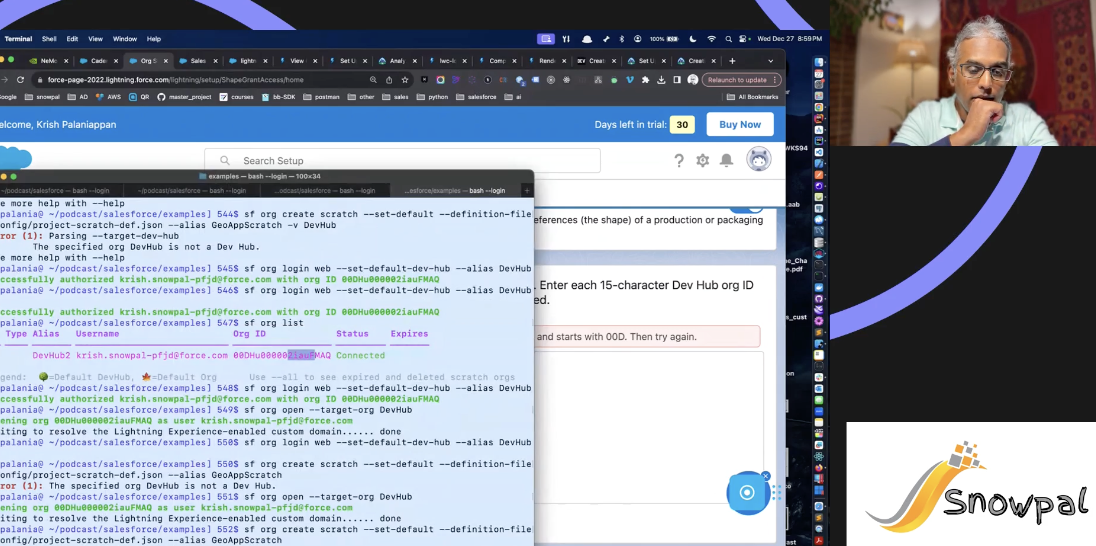
Ep 346(Part 7/N) Salesforce: Lightning Design System, Aura Components, Salesforce CLI, Scratch Org, Permission Sets
In this podcast episode, Krish explores the Salesforce platform and its various features. He starts by reviewing the previous episodes in the Salesforce series and provides an overview of the Anypoint platform. Krish then dives into the Salesforce dashboard and explores the sales solutions available. He also examines the configuration settings and introduces the concept of Lightning components and the Lightning Design System. Krish demonstrates how to use the Lightning Web Components Studio and explores the differences between Aura components and Lightning Web Components. He also shares his approach to learning by doing and troubleshooting component issues. Finally, Krish compares Salesforce components to React components. In this part of the conversation, the host explores Salesforce Lightning Components and the process of setting up the development environment. They discuss the Salesforce Lightning Experience and the creation of a Lightning Web Component. The host also delves into the usage of Salesforce CLI for deployment and the concept of Scratch Orgs. They explore Salesforce Dev Hubs and troubleshoot deployment issues. The conversation concludes with an overview of Salesforce Permission Sets and a summary of the topics covered. In this episode, Krish explores the Salesforce CLI and the Salesforce platform. He starts by creating a new org and then logs into it. Next, he creates a project and explores scratch orgs. Krish introduces Apex, the Salesforce-specific language, and discusses its usage. He then explores the Salesforce Lightning Experience and its features. Finally, Krish summarizes the topics covered and suggests next steps for further exploration. Takeaways Salesforce offers a wide range of solutions for sales, marketing, commerce, and service. Lightning components and the Lightning Design System are key elements of the Salesforce platform. The Lightning Web Components Studio provides a visual interface for building and testing components. Understanding the differences between Aura components and Lightning Web Components is important for development on the Salesforce platform. Learning by doing and troubleshooting issues is an effective way to explore and understand Salesforce components. Salesforce Lightning Components are used to build applications on the Salesforce platform. Setting up the development environment involves installing Salesforce CLI and configuring Scratch Orgs. Salesforce Dev Hubs are used to manage and deploy Salesforce applications. Permission Sets in Salesforce allow for granular control over user access and permissions. The Salesforce CLI allows developers to interact with the Salesforce platform from the command line. Scratch orgs are temporary Salesforce environments that can be created and used for development and testing purposes. Apex is a Salesforce-specific language used for creating custom components and functionality. The Salesforce Lightning Experience provides a modern and intuitive user interface for Salesforce applications. Chapters 00:00 Introduction to Salesforce Series 03:23 Exploring Salesforce Dashboard 04:19 Salesforce Sales Solutions 06:43 Configuring Salesforce Settings 09:09 Understanding Lightning Components 17:17 Using Lightning Web Components Studio 21:13 Exploring Lightning Design System 23:12 Understanding Aura Components and Lightning Web 28:02 Learning by Doing 32:13 Creating a Hello World Component 36:21 Troubleshooting Component Issues 45:41 Adding More Components 49:53 Comparing Salesforce Components to React Components 50:34 Introduction to Salesforce Lightning Components 58:52 Setting Up the Development Environment 01:01:26 Exploring Salesforce Lightning Experience 01:04:31 Creating a Lightning Web Component 01:07:12 Using Salesforce CLI for Deployment 01:09:24 Working with Scratch Orgs 01:12:25 Understanding Salesforce Dev Hubs 01:21:16 Troubleshooting Deployment Issues 01:30:18 Exploring Salesforce Permission Sets 01:41:57 Summary and Next Steps 01:49:23 Creating a New Org 01:50:13 Logging into the New Org 01:51:43 Creating a Project 01:52:28 Exploring Scratch Orgs 01:53:26 Reviewing Scratch Org Creation 01:54:02 Introduction to Apex 01:55:13 Exploring Salesforce Lightning Experience 01:56:57 Using Scratch Orgs for Projects 01:57:59 Summary and Next Steps Snowpal Products: Backends as Services on AWS Marketplace Mobile Apps on App Store and Play Store Web App Education Platform for Learners and Course Creators
Ep 345Fundamentals of Platform Engineering (feat. James Schorr)
In this conversation, James Schorr, a senior director in the cloud platform area, discusses platform engineering and its impact on developers. Platform engineering is the next evolution of DevOps, aiming to provide a consistent and easy-to-use platform for developers. It simplifies the developer experience by reducing the cognitive load and allowing developers to focus on writing code. The goal is to make the developer's life easier and provide a self-service platform. The platform engineering team aims to meet the needs of developers using different programming languages and frameworks. The skills needed for integrating with platform engineering include understanding CI/CD pipelines and configuration management. In this conversation, James Schorr and Krish discuss various aspects of platform engineering. They cover topics such as understanding Kubernetes and serverless, concerns about learning and vendor lock-in, balancing ease of use and continuous learning, the job market for platform engineering, and the suitability of platform engineering for different organizations. Takeaways Platform engineering is the next evolution of DevOps, providing a consistent and easy-to-use platform for developers. The goal of platform engineering is to simplify the developer experience and reduce the cognitive load on developers. Platform engineering aims to provide a self-service platform, allowing developers to focus on writing code. Developers should have the freedom to choose their preferred programming languages and frameworks, while the platform engineering team focuses on providing the necessary tools and support. Skills needed for integrating with platform engineering include understanding CI/CD pipelines and configuration management. It is important to understand the underlying concepts of Kubernetes and serverless, as the specific tools and implementations may vary between companies. Learning and adapting to different platform engineering tools and approaches is necessary, but it can be a concern for consultants or individuals who may need to switch organizations. Continuous learning is essential for personal growth and should not be solely dependent on the organization or platform engineering team. Platform engineering skills, along with security and integration expertise, are in high demand in the job market. Platform engineering is more suitable for medium to large-sized organizations that can dedicate resources to manage and maintain the platform. Chapters 00:00 Introduction and Overview 00:45 What is Platform Engineering? 03:00 Transition from DevOps to Platform Engineering 06:16 Impact on Developer's Daily Life 08:10 Simplifying Developer Experience 10:35 Supporting Different Programming Languages 13:05 Time Savings for Developers 14:31 Quantifying Time Savings 17:07 Rolling Back Deployments 18:05 Self-Service and Developer Empowerment 21:13 Interacting with the Platform 24:09 Supporting Multiple Programming Languages 25:20 Different Team Configurations 28:39 Skills Needed for Platform Engineering 35:26 Different Developer Personas 39:00 Skills for Integrating with Platform Engineering 45:25 Understanding Kubernetes and Serverless 46:11 Concerns about Learning and Vendor Lock-In 49:56 Balancing Ease of Use and Continuous Learning 53:00 Job Market for Platform Engineering 57:31 Suitability of Platform Engineering for Different Organizations Snowpal Products: Backends as Services on AWS Marketplace Mobile Apps on App Store and Play Store Web App Education Platform for Learners and Course Creators

Ep 344(Part 2/2) Impact of Social Media on Mental Health (feat. Vidhi Vohra)
In this conversation, Krish and Vidhi discuss the impact of social media on mental health, specifically focusing on the role of comparison. They explore how comparison can steal joy and peace of mind, and how social media exacerbates this issue by constantly triggering comparison. They emphasize the importance of not letting social media change one's opinion about their own life and not allowing comparisons to affect mental well-being. They also discuss the need to express gratitude and find satisfaction in one's own achievements, as well as the importance of building a positive mindset and finding happiness in local experiences. This conversation explores the impact of social media on mental health and provides insights on how to use social media mindfully. It emphasizes the importance of setting priorities and not letting social media negatively affect mental peace and joy. The addictive nature of social media is discussed, along with the need for reflection and adjustments to ensure a healthy relationship with it. Taking breaks from social media and finding a balance between personal and professional use is highlighted. The conversation also touches on the pressure to distribute content on multiple platforms and the challenges of content creation. Ultimately, the key takeaway is to prioritize mental health and find enjoyment in content creation and consumption while avoiding comparisons and unfair judgments. Takeaways Comparison is the thief of joy and can negatively impact mental health. Social media exacerbates the issue of comparison by constantly triggering it. It is important to not let social media change one's opinion about their own life and not allow comparisons to affect mental well-being. Expressing gratitude and finding satisfaction in one's own achievements can contribute to mental well-being. Building a positive mindset and finding happiness in local experiences can help counter the negative effects of social media. Use social media mindfully and set priorities to avoid negative impacts on mental health. Take breaks from social media and find a balance between personal and professional use. Reflect on the purpose and impact of social media usage and make adjustments as necessary. Prioritize mental health and find enjoyment in content creation and consumption while avoiding comparisons and unfair judgments. Chapters 00:00 Introduction and Background 02:11 Comparison is the Thief of Joy 06:24 Comparison on Social Media 08:47 Comparison with Neighbors 13:00 The Role of Social Media in Comparison 17:21 Finding Satisfaction in Achievements 19:44 Expressing Gratitude 24:28 Balancing the Pros and Cons of Social Media 29:27 Building a Positive Mindset 33:09 Finding Happiness in Local Experiences 40:12 The Impact of Social Media on Mental Health 41:02 Constantly Looking at Other People's Messages 42:00 The Addictive Nature of Social Media 43:22 Reflection and Adjustments 44:39 Taking Breaks from Social Media 46:20 The Overwhelming Amount of Content on Social Media 47:37 Finding Your Own Rules for Social Media 49:02 The Pressure to Distribute Content on Multiple Platforms 50:00 Prioritizing Mental Health in Social Media Usage 52:21 Mindful Usage of Social Media 57:09 Enjoying Content Creation and Distribution 59:14 The Challenges of Content Creation 01:05:00 Comparisons and Unfair Judgments on Social Media 01:06:45 Mindful Usage and Prioritization of Social Media Snowpal Products: Backends as Services on AWS Marketplace Mobile Apps on App Store and Play Store Web App Education Platform for Learners and Course Creators

Ep 343(Part 1/2) Impact of Social Media on Mental Health (feat. Vidhi Vohra)
The conversation, between Krish Palaniappan & Vidhi Vohra, explores the impact of social media on mental health. It discusses the negative effects of excessive social media usage, such as reduced interaction and increased anxiety and depression. The conversation also touches on the fear of missing out, comparison with others, and the use of filters to present an idealized version of oneself. Strategies for reducing social media usage and improving work productivity are discussed. The conversation concludes with the importance of prioritizing family and personal connections over social media. Takeaways Excessive social media usage can lead to reduced interaction and increased anxiety and depression. The fear of missing out and comparison with others can contribute to negative mental health effects. Using filters and presenting an idealized version of oneself on social media can create unrealistic expectations and feelings of insecurity. Strategies for reducing social media usage include setting boundaries, limiting notifications, and prioritizing personal connections. Balancing social media usage can improve work productivity and overall well-being. Chapters 00:00 Introduction 01:34 Starting the Conversation 03:01 Negative Impact of Social Media 06:16 Lack of Interaction 09:24 Fear of Missing Out 11:48 Context Switching and Productivity 14:23 Comparison and Filters 20:15 Impact on Different Demographics 22:02 Validation and Insecurity 26:07 Making Adjustments 28:53 Reflecting on Personal Experience 35:17 Tying it to Work Productivity 36:03 Closing Comments Snowpal Products: Backends as Services on AWS Marketplace Mobile Apps on App Store and Play Store Web App Education Platform for Learners and Course Creators

Ep 342Remote Leadership - Opportunities & Challenges in scaling remote SaaS teams (feat: Valentina Thörner)
Valentina Thörner discusses the challenges and benefits of remote work in her book 'From a Distance: Strategies and Tools for Leading Remote Support Teams.' She emphasizes the importance of trust, communication, and clear expectations in remote work. Valentina also highlights the need for conscious conversations and checkpoints to ensure productivity and support for remote workers. She addresses the fear and insecurity of managers in remote work and suggests creating spaces for personal connections and sharing in remote teams. Valentina also discusses the impact of cultural differences on remote work and the need for understanding and adaptation. The conversation explores the importance of understanding cultural differences and creating awareness in remote work. It emphasizes the need to assume good intent and be aware of different frames of reference. The discussion also highlights the significance of building relationships and personal connections in remote teams. It concludes by discussing the future of work and the value of long-term relationships in a changing landscape. Takeaways Trust, communication, and clear expectations are crucial in remote work. Conscious conversations and checkpoints help ensure productivity and support for remote workers. Creating spaces for personal connections and sharing can foster a sense of belonging in remote teams. Understanding and adapting to cultural differences is important in remote work. Understanding cultural differences is crucial in remote work to bridge communication gaps and foster collaboration. Creating awareness about different frames of reference helps reduce friction and assumptions in remote teams. Building personal connections and relationships in remote work is essential for effective communication and trust. Long-term relationships contribute to knowledge retention and enrich the work environment. Chapters 00:00 Introduction and Book Discussion 01:17 Reasons Remote Work Won't Work for Your Company 02:33 Differences in Remote Work Before and After the Pandemic 04:19 Supporting Remote Workers Who Lack Skills 05:50 The Fear of Managers in Remote Work 06:15 The Devil's Advocate: Monitoring Remote Workers 08:11 The Insecurity of Managers in Remote Work 09:10 The Importance of Conscious Communication in Remote Work 10:18 Creating Checkpoints and Clear Expectations in Remote Work 11:21 Establishing Trust and Comfort in Remote Work 13:16 The Role of Trust, Communication, and Expectations in Remote Work 14:34 Establishing Personal Relationships in Remote Work 18:14 Cultural Differences in Remote Work 20:48 Challenges of Personal Relationships in Remote Work 25:19 The Limitations of Online Channels for Personal Relationships 28:00 Addressing Cultural Differences in Remote Work 29:36 The Complexity of Cultural Differences in Remote Work 32:13 Addressing Diversity and Cultural Differences in Remote Work 32:52 Understanding Cultural Differences 39:33 Creating Awareness and Assumptions 44:37 Building Relationships in Remote Work 50:26 The Importance of Long-Term Relationships 56:38 The Future of Work and Relationships Snowpal Products: Backends as Services on AWS Marketplace Mobile Apps on App Store and Play Store Web App Education Platform for Learners and Course Creators

Ep 341Automated Economy Series (2/N): AI in Automated Economy (feat. David Kramer)
In this conversation, Kramer discusses the role of AI in the automated economy and its impact on various industries. He explains how AI can process large amounts of data and make logical decisions, leading to advancements in automation and personalization. Kramer also explores the changing roles in different sectors and the emergence of new roles in the digital era. He highlights the importance of understanding the art of the possible and adapting to the new ways of working. Additionally, he touches on the transformation of education and the need for thought leadership in embracing AI. In this conversation, Krish and Kramer discuss the importance of human-written content and the challenges of finding it in a world filled with automated content. They also explore the value of conversational content and how Snowpals plays a role in content creation. Takeaways AI enables the processing of large amounts of data and logical decision-making, leading to automation and personalization. Roles in various industries will change as AI takes over mundane tasks and humans focus on more specialized and creative roles. The future of education will involve a shift in how knowledge is acquired and certified, with a focus on skills and real-time learning. Understanding the art of the possible and embracing new ways of working is crucial for adapting to the digital era. Human-written content is valuable because it provides a personal connection and unique perspective. Finding human-written content can be challenging due to the abundance of automated content. Conversational content is valuable because it captures authentic and engaging discussions. Snowpal helps create high-quality human-written content for businesses. Chapters 00:00 Introduction and AI in the Automated Economy 04:06 Advancements in AI and Cognitive Capability 10:28 Role Mapping in the Automated Economy 17:08 The Impact of AI on the Restaurant Industry 27:30 The Future of Education in the AI Era 42:16 The Transformation of Education 45:43 Closing Thoughts on Role Definition and Ways of Working 10:30 The Importance of Human-Written Content 20:15 The Challenges of Finding Human-Written Content 30:45 The Value of Conversational Content 40:00 The Role of Snowpals in Content Creation 46:45 Conclusion #snowpal #cooperativecomputing Cooperative Computing: LinkedIn: David Kramer Company Website "How AI is Disrupting Traditional Business Models" Snowpal Products: Backends as Services on AWS Marketplace Mobile Apps on App Store and Play Store Web App Education Platform for Learners and Course Creators

Ep 340(Part 2/2) Content Marketing for Founders - Fundamentals, Challenges, Distribution Strategies (feat. Dessire Ugarte)
In this podcast episode, Dessire Ugarte discusses the importance of distribution in content marketing. She emphasizes that creating great content is not enough; it must be actively shared and distributed to reach the intended audience. Desi explains that distribution involves sharing content on various channels, such as social media, subreddits, and industry-specific platforms. She advises against giving up on content that doesn't initially perform well, suggesting that it may just need some adjustments or context. Dessi also highlights the importance of persistence and not giving up, using examples from the music and business industries to illustrate the value of perseverance in content marketing. In this conversation, Dessi and Krish discuss various aspects of content marketing. They emphasize the importance of change and adaptation, encouraging entrepreneurs to be open to modifying their products and strategies. They also highlight the need to avoid being married to one idea and instead make incremental changes to improve content and products. The conversation delves into the debate of quality versus quantity in content marketing, with Dessi emphasizing the importance of resonating with the target audience. They also discuss the impact of language on content resonance and the considerations for choosing the right channels for content distribution. Finally, they explore the decision of hiring a developer versus hiring a content marketer and provide a summary of the key takeaways. Takeaways Distribution is fundamental in content marketing and involves actively sharing and distributing content to reach the intended audience. Content should be shared on various channels, including social media, subreddits, and industry-specific platforms. Don't give up on content that doesn't initially perform well; it may just need adjustments or additional context. Persistence is key in content marketing, and success often comes from continuous effort and learning from mistakes. Be open to change and adaptation in your content marketing strategy. Avoid being married to one idea and be willing to make incremental changes. Focus on resonating with your target audience rather than prioritizing quantity over quality. Consider the impact of language on content resonance and tailor your content accordingly. Choose the right channels for content distribution based on your target audience and goals. When hiring, consider the stage of your business and the specific needs of your product or service. Chapters 00:00 Introduction and Background 01:06 Recap of Previous Podcast and Introduction to Distribution 03:30 Importance of Distribution in Content Marketing 09:21 Types of Content and Channels for Distribution 13:44 Quality vs Quantity of Content 17:31 Dealing with Content that Doesn't Perform Well 22:27 Avoiding Dramatic Changes and Learning from Mistakes 27:07 Persistence and Not Giving Up 31:02 Examples of Persistence in Content Marketing 38:39 Importance of Setting Context in Content 43:29 Motivation to Keep Going 44:47 The Importance of Change and Adaptation 49:15 Don't Be Married to Your Ideas 50:36 Making Incremental Changes 56:48 Quality vs Quantity in Content Marketing 01:01:00 Language Considerations in Content Marketing 01:04:11 Choosing the Right Channels for Content Distribution 01:08:18 The Impact of Language on Content Resonance 01:21:46 Hiring a Developer vs Hiring a Content Marketer 01:27:20 Summary and Closing Thoughts Snowpal Products: Backends as Services on AWS Marketplace Mobile Apps on App Store and Play Store Web App Education Platform for Learners and Course Creators

Ep 339(Part 1/2) Content Marketing for Founders - Fundamentals, Challenges, Distribution Strategies (feat. Dessire Ugarte)
In this conversation, Dessire Ugarte, a digital marketer, discusses the basics of content marketing and the challenges faced by startups in this field. She emphasizes the importance of defining the target audience and creating content that addresses their specific needs. Dessi also highlights the role of storytelling in content marketing and the need to start small and gradually expand the target audience. The conversation concludes with a teaser for the next episode, which will focus on distribution strategies in content marketing. Takeaways Content marketing is a marketing approach that involves creating and distributing valuable content to attract and retain a specific audience. Start by defining the problem your product or project solves and communicate it clearly to your target audience. Narrow down your target audience to a specific group or persona to create more focused and effective content. Storytelling plays a crucial role in content marketing, helping to engage and connect with your audience. Start small and gradually expand your target audience as you gain more clarity and resources. Chapters 00:00 Introduction and Background 01:19 Defining Content Marketing 03:14 Changes in Content Marketing 06:52 Challenges in Content Marketing 08:20 Determining the Type of Content 12:02 The Importance of Storytelling 14:22 The Order of Defining What, Why, Who, and How 18:04 Defining the Target Audience 20:53 Narrowing the Focus of the Audience 26:21 Starting Small and Expanding 31:51 Recap and Teaser for Next Episode Snowpal Products: Backends as Services on AWS Marketplace Mobile Apps on App Store and Play Store Web App Education Platform for Learners and Course Creators

Ep 338(Part 6/N) Salesforce: Anypoint API Manager, API Governance, Runtime Manager
In this episode, Krish explores the Anypoint Platform's API Manager, Anypoint Service Mesh, Flex Gateway, and Mule Runtime. He also demonstrates how to install Mule Standalone and deploy an API using the Flex Gateway. Additionally, Krish configures the Mule Agent and explores API functional monitoring. In this part of the conversation, the host sets up servers and applications, verifies the application status, and configures the gateway and application URI. They explore API admin and upstream URL, troubleshoot endpoint and request routing, and confirm gateway routing. They also discuss API governance, managing versions and governance violations. Finally, they explore runtimes, alerts, private spaces, and load balancers. In this final part of the conversation, Krish explores the configuration of gateways and Virtual Private Clouds (VPCs) in the Anypoint platform. He then discusses governance and the runtime manager, followed by a demonstration of the visualizer for observability. Krish compares the visualizer to Data Dog and provides insights into its capabilities. Finally, he summarizes the topics covered in the Anypoint platform series and hints at future topics for discussion. Snowpal's Products: Backends as Services on AWS Marketplace Mobile Apps on App Store and Play Store Web App Education Platform for Learners and Course Creators

Ep 337(Part 5/N) Salesforce: Anypoint DataGraph - Create a unified GraphQL Schema
According to MuleSoft Documentation, "Anypoint DataGraph enables you to connect those graphs into one unified schema that runs as a single SaaS GraphQL endpoint and contains and links all of the fields defined within all of your APIs". In this podcast episode, Krish explores Salesforce Data Graph and its integration with MuleSoft. He starts by providing an introduction to Salesforce and his personal experience with the platform. Krish then dives into exploring Data Graph, including authentication policies and custom headers. He demonstrates how to update the unified schema and troubleshoot issues with API and asset versions. Krish also discusses the fundamental concepts of Data Graph and differentiates it from MuleSoft Data Graph. He goes on to run queries and mutations and discusses real-world use cases for Data Graph. Krish explores the concept of working with multiple endpoints in GraphQL and how it can be used to integrate multiple APIs. He discusses the potential benefits and challenges of this approach and shares his skepticism until he has had a chance to test it thoroughly. Krish also explains the unified data graph schema and its promise of simplifying API integration. He concludes the conversation by summarizing the key points discussed and inviting listeners to explore the AWS APIs for their backend needs. Snowpal's Products: Backends as Services on AWS Marketplace Mobile Apps on App Store and Play Store Web App Education Platform for Learners and Course Creators

Ep 336(Part 4/N) Salesforce: Anypoint Design Center, Anypoint Code Builder IDE
In this podcast episode, Krish explores the Code Builder IDE and the Eclipse-based Anypoint Editor. He also delves into the DataWeave language and its syntax, functions, and script structure. Krish shares his experience with using these tools and provides insights into troubleshooting issues with AnyPoint Studio. He emphasizes the importance of learning by doing and using playgrounds to experiment with different features. Finally, he discusses the process of working with flows and packaging and deploying them. In this podcast episode, Krish discusses the process of getting started with a new tool and the importance of hands-on experience. He explores various MuleSoft components, including Code Builder, Design Center, and AnyPoint Studio. Krish also introduces Exchange, a platform for sharing and discovering APIs. Finally, he mentions the concept of data graphs and concludes with recommendations for using pre-built APIs to save time and effort. #snowpal #salesforce #design Snowpal's Products: Backends as Services on AWS Marketplace Mobile Apps on App Store and Play Store Web App Education Platform for Learners and Course Creators

Ep 335(Part 3/N) Salesforce: Anypoint Design Center, Anypoint Code Builder IDE
In this podcast episode, Krish continues the discussion on the Salesforce Anypoint Design Center. He starts by recapping the previous episode and addressing a timeout issue. He then explores the process of publishing API documentation and compares the RAML and OpenAPI specifications. Krish also demonstrates how to access and customize the public portal. He explains how to enable and disable the portal and shares assets with team members. Finally, he provides feedback on the Design Center's user interface and concludes the episode. #snowpal #salesforce #design Snowpal's Products: Backends as Services on AWS Marketplace Mobile Apps on App Store and Play Store Web App Education Platform for Learners and Course Creators

Ep 334(Part 2/N) Salesforce: Anypoint Design Center, Anypoint Code Builder IDE
In this podcast episode, Krish explores the Anypoint Design Center and walks through the process of creating an API specification using RAML. He compares RAML and OpenAPI and discusses the advantages and disadvantages of each. Krish also troubleshoots and debugs issues in the Design Center, highlighting some inconsistencies and potential bugs. Overall, the episode provides an overview of the Design Center and offers insights into working with RAML and API specifications. #snowpal #salesforce #design Snowpal's Products: Backends as Services on AWS Marketplace Mobile Apps on App Store and Play Store Web App Education Platform for Learners and Course Creators

Ep 333(Part 1/N) Salesforce: Anypoint Design Center, Anypoint Code Builder IDE
In this podcast episode, Krish explores Salesforce and its low code, no code tools. He starts by introducing Salesforce and its potential as a low code platform. Krish then dives into exploring various Salesforce products and their features. He focuses on Salesforce Sales and MuleSoft Integration API Management, discussing their functionalities and potential use cases. Krish also provides a hands-on demonstration of signing up for MuleSoft and using the Anypoint Code Builder to design an API. The episode concludes with a summary of the topics covered and an invitation to continue learning together in future episodes. #snowpal #salesforce #design Snowpal's Products: Backends as Services on AWS Marketplace Mobile Apps on App Store and Play Store Web App Education Platform for Learners and Course Creators

Ep 332Automated Economy Series (1/N): Fundamentals, Key Attributes, and What the future holds (feat. David Kramer)
In this conversation, Kramer discusses the role of AI in the automated economy and its impact on various industries. He explains how AI can process large amounts of data and make logical decisions, leading to advancements in automation and personalization. Kramer also explores the changing roles in different sectors and the emergence of new roles in the digital era. He highlights the importance of understanding the art of the possible and adapting to the new ways of working. Additionally, he touches on the transformation of education and the need for thought leadership in embracing AI. In this conversation, Krish and Kramer discuss the importance of human-written content and the challenges of finding it in a world filled with automated content. They also explore the value of conversational content and how Snowpals plays a role in content creation. Takeaways AI enables the processing of large amounts of data and logical decision-making, leading to automation and personalization. Roles in various industries will change as AI takes over mundane tasks and humans focus on more specialized and creative roles. The future of education will involve a shift in how knowledge is acquired and certified, with a focus on skills and real-time learning. Understanding the art of the possible and embracing new ways of working is crucial for adapting to the digital era. Human-written content is valuable because it provides a personal connection and unique perspective. Finding human-written content can be challenging due to the abundance of automated content. Conversational content is valuable because it captures authentic and engaging discussions. Snowpals helps create high-quality human-written content for businesses. Chapters 00:00 Introduction and AI in the Automated Economy 04:06 Advancements in AI and Cognitive Capability 10:28 Role Mapping in the Automated Economy 17:08 The Impact of AI on the Restaurant Industry 27:30 The Future of Education in the AI Era 42:16 The Transformation of Education 45:43 Closing Thoughts on Role Definition and Ways of Working 10:30 The Importance of Human-Written Content 20:15 The Challenges of Finding Human-Written Content 30:45 The Value of Conversational Content 40:00 The Role of Snowpals in Content Creation 46:45 Conclusion #snowpal #cooperativecomputing Cooperative Computing: LinkedIn: David Kramer Company Website "How AI is Disrupting Traditional Business Models" Snowpal's Products: Backends as Services on AWS Marketplace Mobile Apps on App Store and Play Store Web App

Ep 331(Part 4/4) B2B Sales: How to get started
(Part 4/4) In this podcast series, we'll take a look at some of my learnings over the past couple of months in B2B Sales. If you are new to Sales, or B2B Sales, this should help you understand some of the fundamentals (I hope!). #snowpal #startup #sales #b2b Snowpal's Products: Backends as Services on AWS Marketplace Mobile Apps on App Store and Play Store Web App Education Platform for Learners and Course Creators

Ep 330(Part 3/4) B2B Sales: How to get started
(Part 3/4) In this podcast series, we'll take a look at some of my learnings over the past couple of months in B2B Sales. If you are new to Sales, or B2B Sales, this should help you understand some of the fundamentals (I hope!). #snowpal #startup #sales #b2b Snowpal's Products: Backends as Services on AWS Marketplace Mobile Apps on App Store and Play Store Web App Education Platform for Learners and Course Creators

Ep 329(Part 2/4) B2B Sales: How to get started
(Part 2/4) In this podcast series, we'll take a look at some of my learnings over the past couple of months in B2B Sales. If you are new to Sales, or B2B Sales, this should help you understand some of the fundamentals (I hope!). #snowpal #startup #sales #b2b Snowpal's Products: Backends as Services on AWS Marketplace Mobile Apps on App Store and Play Store Web App Education Platform for Learners and Course Creators

Ep 328(Part 1/4) B2B Sales: How to get started
(Part 1/4) In this podcast series, we'll take a look at some of my learnings over the past couple of months in B2B Sales. If you are new to Sales, or B2B Sales, this should help you understand some of the fundamentals (I hope!). #snowpal #startup #sales #b2b Snowpal's Products: Backends as Services on AWS Marketplace Mobile Apps on App Store and Play Store Web App Education Platform for Learners and Course Creators

Ep 327(Part 4/4): An informal conversation about Mental Health (feat. Vidhi Vohra)
(Part 4/4) I had a conversation with Vidhi Vohra, Contract Specialist, about Mental Health (a topic that I am entirely unfamiliar with), and we discussed a variety of topics ranging from remote work, social interactions, device "addictions", work-life harmony, and more. #snowpal Snowpal's Products: Backends as Services on AWS Marketplace Mobile Apps on App Store and Play Store Web App Education Platform for Learners and Course Creators
Ep 326(Part 3/4): An informal conversation about Mental Health (feat. Vidhi Vohra)
(Part 3/4) I had a conversation with Vidhi Vohra, Contract Specialist, about Mental Health (a topic that I am entirely unfamiliar with), and we discussed a variety of topics ranging from remote work, social interactions, device "addictions", work-life harmony, and more. #snowpal Snowpal's Products: Backends as Services on AWS Marketplace Mobile Apps on App Store and Play Store Web App Education Platform for Learners and Course Creators

Ep 325(Part 2/4): An informal conversation about Mental Health (feat. Vidhi Vohra)
(Part 2/4) I had a conversation with Vidhi Vohra, Contract Specialist, about Mental Health (a topic that I am entirely unfamiliar with), and we discussed a variety of topics ranging from remote work, social interactions, device "addictions", work-life harmony, and more. #snowpal Snowpal's Products: Backends as Services on AWS Marketplace Mobile Apps on App Store and Play Store Web App Education Platform for Learners and Course Creators

Ep 324(Part 1/4): An informal conversation about Mental Health (feat. Vidhi Vohra)
(Part 1/4) I had a conversation with Vidhi Vohra, Contract Specialist, about Mental Health (a topic that I am entirely unfamiliar with), and we discussed a variety of topics ranging from remote work, social interactions, device "addictions", work-life harmony, and more. #snowpal Snowpal's Products: Backends as Services on AWS Marketplace Mobile Apps on App Store and Play Store Web App Education Platform for Learners and Course Creators

Ep 323(Part 2/2): The Art of Tech Transition (feat. Richa Bhardwaj)
(Part 2/2) I had an opportunity to chat with Richa Bhardwaj, a Holistic Technology Professional, about various aspects of Software Development. We talked about technology stacks, code reviews, comfort zones, full stack development, polyglot development, and more. Snowpal's Products: Backends as Services on AWS Marketplace Mobile Apps on App Store and Play Store Web App Education Platform for Learners and Course Creators #snowpal

Ep 322(Part 1/2): The Art of Tech Transition (feat. Richa Bhardwaj)
(Part 1/2) I had an opportunity to chat with Richa Bhardwaj, a Holistic Technology Professional, about various aspects of Software Development. We talked about technology stacks, code reviews, comfort zones, full stack development, polyglot development, and more. Snowpal's Products: Backends as Services on AWS Marketplace Mobile Apps on App Store and Play Store Web App Education Platform for Learners and Course Creators #snowpal

Ep 321(Book: Part 6/6) Future-Proofing Product Management: A Guide to Current Trends and Beyond (feat. Magali Pelissier)
(Part 6/6) I had an opportunity to chat with Magali Pelissier, Product Management Leader at Cisco, about her latest book: "Future-Proofing Product Management: A Guide to Current Trends and Beyond", and it made for a very exciting conversation. You can find the book here. Magali's podcast, "Product Perspectives", can be found on Apple & Spotify. For more details, check out Magali's website. Note: The entire conversation is spread across 6 episodes. I highly recommend that you watch them in sequence. Snowpal's Products: Backends as Services on AWS Marketplace Mobile Apps on App Store and Play Store Web App Education Platform for Learners and Course Creators

Ep 320(Book: Part 5/6) Future-Proofing Product Management: A Guide to Current Trends and Beyond (feat. Magali Pelissier)
(Part 5/6) I had an opportunity to chat with Magali Pelissier, Product Management Leader at Cisco, about her latest book: "Future-Proofing Product Management: A Guide to Current Trends and Beyond", and it made for a very exciting conversation. You can find the book here. Magali's podcast, "Product Perspectives", can be found on Apple & Spotify. For more details, check out Magali's website. Note: The entire conversation is spread across 6 episodes. I highly recommend that you watch them in sequence.

Ep 319(Book: Part 4/6) Future-Proofing Product Management: A Guide to Current Trends and Beyond (feat. Magali Pelissier)
(Part 4/6) I had an opportunity to chat with Magali Pelissier, Product Management Leader at Cisco, about her latest book: "Future-Proofing Product Management: A Guide to Current Trends and Beyond", and it made for a very exciting conversation. You can find the book here. Magali's podcast, "Product Perspectives", can be found on Apple & Spotify. For more details, check out Magali's website. Note: The entire conversation is spread across 6 episodes. I highly recommend that you watch them in sequence. Snowpal's Products: Backends as Services on AWS Marketplace Mobile Apps on App Store and Play Store Web App Education Platform for Learners and Course Creators

Ep 317(Book: Part 3/6) Future-Proofing Product Management: A Guide to Current Trends and Beyond (feat. Magali Pelissier)
(Part 3/6) I had an opportunity to chat with Magali Pelissier, Product Management Leader at Cisco, about her latest book: "Future-Proofing Product Management: A Guide to Current Trends and Beyond", and it made for a very exciting conversation. You can find the book here. Magali's podcast, "Product Perspectives", can be found on Apple & Spotify. For more details, check out Magali's website. Note: The entire conversation is spread across 6 episodes. I highly recommend that you watch them in sequence. Snowpal's Products: Backends as Services on AWS Marketplace Mobile Apps on App Store and Play Store Web App Education Platform for Learners and Course Creators

Ep 317(Book: Part 2/6) Future-Proofing Product Management: A Guide to Current Trends and Beyond (feat. Magali Pelissier)
(Part 2/6) I had an opportunity to chat with Magali Pelissier, Product Management Leader at Cisco, about her latest book: "Future-Proofing Product Management: A Guide to Current Trends and Beyond", and it made for a very exciting conversation. You can find the book here. Magali's podcast, "Product Perspectives", can be found on Apple & Spotify. For more details, check out Magali's website. Note: The entire conversation is spread across 6 episodes. I highly recommend that you watch them in sequence. Snowpal's Products: Backends as Services on AWS Marketplace Mobile Apps on App Store and Play Store Web App Education Platform for Learners and Course Creators

Ep 317(Book: Part 1/6) Future-Proofing Product Management: A Guide to Current Trends and Beyond (feat. Magali Pelissier)
(Part 1/6) I had an opportunity to chat with Magali Pelissier, Product Management Leader at Cisco, about her latest book: "Future-Proofing Product Management: A Guide to Current Trends and Beyond", and it made for a very exciting conversation. You can find the book here. Magali's podcast, "Product Perspectives", can be found on Apple & Spotify. For more details, check out Magali's website. Note: The entire conversation is spread across 6 episodes. I highly recommend that you watch them in sequence. Snowpal's Products: Backends as Services on AWS Marketplace Mobile Apps on App Store and Play Store Web App Education Platform for Learners and Course Creators
Ep 316Challenges in bootstrapping a SaaS Startup
I stumbled into an article written by Melissa Kwan recently where the author had listed a number of challenges in bootstrapping a SaaS Startup, and as someone who runs a Startup with both B2C and B2B products, some of the points resonated well with me. I figured it might be worth sharing my perspective on some of the items mentioned in the article, and draw the parallels to our experiences. #snowpal #startup #bootstrap
Ep 315(Part 2/2) Podcast Collaboration: Introducing my first 2 guests
(Part 2) 2 podcast collaborations in - time to share a few thoughts! My first podcast was with Matthew Davidchuk, a brilliant engineer. And no surprises - 90 minutes later, I walked out a slightly better engineer. My second podcast was with Magali Pelissier, a brilliant product leader. And no surprises again - 120 minutes later, I walked out a slightly better product manager. (The podcasts are in "post production", so should be published shortly) Look out for more podcasts with Matthew and Magali, as the first podcast has turned into a series! Plus, my next guest is a very special one from New Delhi, and we will be discussing a 3rd topic (hint: there may well be a hands-on, LIVE coding component to that conversation). #snowpal #podcast
Ep 314(Part 1/2) Podcast Collaboration: Introducing my first 2 guests
(Part 1) 2 podcast collaborations in - time to share a few thoughts! My first podcast was with Matthew Davidchuk, a brilliant engineer. And no surprises - 90 minutes later, I walked out a slightly better engineer. My second podcast was with Magali Pelissier, a brilliant product leader. And no surprises again - 120 minutes later, I walked out a slightly better product manager. (The podcasts are in "post production", so should be published shortly) Look out for more podcasts with Matthew and Magali, as the first podcast has turned into a series! Plus, my next guest is a very special one from New Delhi, and we will be discussing a 3rd topic (hint: there may well be a hands-on, LIVE coding component to that conversation). #snowpal #podcast

Ep 313Porting over 250 podcasts from one platform to another
Scalability isn't limited to applications in production. No matter what you do, you want to ensure that it is a scalable approach. Short of it, the exact same activity is going to take a lot longer. Besides, what's interesting is that making even tiny changes to your approach tends to go a long way in enhancing overall productivity. In this podcast, I'll share the approach we took to port hundreds of videos from one platform to another, and why we were able to accomplish that in shy of 10 hours. #snowpal aws.snowpal.com learn.snowpal.com
Ep 312Do you love what you do? Do you feel fulfilled at work?
And are you doing more of it? Here's my take on a Venn Diagram you've most likely seen that illustrates the implications of our career choices beautifully. #snowpal aws.snowpal.com learn.snowpal.com