Software Development, Finance and AI
482 episodes — Page 3 of 10

Ep 472NASDAQ’s Spring Rally: A 3.5-Month Climb Through Volatility and AI Hype
In this podcast, Krish Palaniappan discusses the recent performance of the NASDAQ, analyzing market trends, volatility, and the impact of AI on trading. He provides insights into historical comparisons, daily fluctuations, and potential investment opportunities, while also addressing the current market sentiment and future predictions.

Ep 470Coding with AI: A Take on the Future of Software Development (feat. Mike Rispoli)
In this podcast episode, Krish Palaniappan and Mike Rispoli, CTO of Cause of a Kind, discuss the transformative impact of AI on software development. They explore how AI tools have evolved, the balance between human intellect and AI capabilities, and the changing dynamics of development teams. The conversation emphasizes the importance of problem-solving skills over specific programming languages and the future of software engineering in an AI-driven world. In this conversation, Mike Rispoli discusses the evolving landscape of software development in the age of AI. He emphasizes the increasing importance of soft skills, communication, and adaptability in hiring practices. The discussion covers the diminishing emphasis on traditional qualifications like college degrees, the changing dynamics of team composition, and the impact of AI on code quality and developer roles. Rispoli also shares insights on the future of software engineering, the role of consulting, and the necessity for developers to embrace new technologies and methodologies.

Ep 469Sales with Marketing: Building Real Growth Through Strategy and Trust (feat. Ryan Caracciolo)
In this episode, Krish Palaniappan speaks with Ryan Caracciolo, founder of Striventa and Hyperdrive, about the intersection of sales and marketing and how to drive business growth. They discuss the importance of building relationships, understanding the sales funnel, and the role of inbound marketing. Ryan emphasizes the need for consistency in outreach efforts and the value of creating compelling content to attract qualified leads. The conversation also touches on the evolving nature of sales in a tech-driven world and the necessity for developers to embrace sales as part of their roles. In this conversation, Ryan Caracciolo shares insights on how to create compelling content by interviewing existing customers, emphasizing the importance of understanding market needs. He discusses the balance between being a pioneer and a follower in business, and the necessity of investing in sales and marketing for startups. The dialogue also covers navigating difficult sales conversations, building trust through discovery, and the role of developers in sales and marketing strategies.

Ep 468Uber vs Tesla: Compare/Contrast
In this podcast episode, Krish Palaniappan discusses the evolving landscape of finance and technology, focusing on the business models of Tesla and Uber. He explores Tesla's expansion into Robotaxis and its implications for Uber's ride-hailing services. The conversation delves into market performance, sales analysis, and the competitive edge provided by data and technology. The episode concludes with financial insights into both companies and a look at future prospects in the mobility sector.

Ep 467Mastering Day Trading: Timing and Strategy
In this podcast, Krish Palaniappan discusses the intricacies of day trading, focusing on the importance of timing, market fluctuations, and the analysis of trading data. He emphasizes the risks involved in trading and provides insights into how traders can interpret market movements to make informed decisions. Through case studies of specific stocks, he illustrates the dynamics of trading within the first hour and the rest of the trading day, highlighting the significance of understanding directional changes and trading ratios.

Ep 466Conversational AI (feat. Peter Swimm)
In this conversation, Krish Palaniappan and Peter Swimm, Founder of ToilVille, explore the evolving landscape of conversational AI and its implications for business, creativity, and society. They discuss the challenges and opportunities presented by AI, particularly in the context of team dynamics, productivity, and the future of work. The conversation also touches on the importance of context in AI applications, the potential for AI to enhance creativity, and the societal disparities in AI adoption. Peter shares insights from his experience in the field, emphasizing the need for organizations to adapt and leverage AI effectively to remain competitive.
Ep 465Thinking about enrolling in College in Fall 2025? Think again! (Hint: AI)
In this podcast episode, Krish shares his personal reflections on the value of a college degree, drawing from his own extensive educational background and that of his family. He discusses the traditional expectations surrounding higher education, particularly in cultures where college is seen as a necessary step after high school. Krish also explores the evolving landscape of education in light of advancements in artificial intelligence, questioning whether a college degree is still essential in today's job market. He emphasizes the importance of making informed decisions about education and career paths, especially as AI continues to reshape the workforce. In this conversation, Krish Palaniappan discusses the evolving landscape of computer science education, the value of traditional college degrees, and the impact of AI on learning. He argues that while college can provide social benefits and networking opportunities, the traditional education model may not be the best path for everyone, especially in a rapidly changing job market. He emphasizes the importance of practical skills and alternative learning methods, suggesting that the future of education may require a shift away from conventional degrees.

Ep 464AI: Automation, Impact, Future (feat. Zac Engler)
In this conversation, Zac Engler, founder of BODHI AI, discusses the transformative impact of AI on business operations, emphasizing the importance of making AI work for individuals rather than the other way around. He shares insights on the barriers to automation, the differences in AI adoption between small and large organizations, and the future of entrepreneurship in an AI-driven world. Engler also highlights the need for reevaluating traditional software development processes and introduces the concept of the trifurcation of work, where AI can take on a significant portion of tasks, allowing humans to focus on higher-level functions. In this conversation, Zac Engler and Krish Palaniappan discuss the rapid evolution of AI technology and its implications for the workforce. They explore the disconnect between technological advancements and real-world adoption, the exponential changes brought by AI, and the challenges of adapting teams to new tools. The conversation also touches on the geopolitical impact of AI and the importance of retraining existing employees versus hiring new talent. In this conversation, Zac Engler discusses the transformative impact of AI on software development, the importance of adapting to new technologies, and the implications for outsourcing and job markets. He emphasizes the need for continuous learning and the potential for AI to serve as a strategic partner in business. The discussion also touches on the geopolitical aspects of AI advancement and the evolving landscape of technology companies, highlighting the balance between established giants and emerging players.

Ep 463Role of AI in Mental Health (feat. Dr. Sam Zand)
In this conversation, Dr. Sam Zand (@drsamzand), a holistic psychiatrist and founder of Anywhere Clinic, discusses the integration of AI in mental health care, the benefits of psychedelic therapy, and the evolving role of technology in enhancing patient care. He emphasizes the importance of emotional regulation, the potential of AI to augment therapeutic practices, and the need for adaptability in the medical field. The discussion also touches on biases in human and AI interactions, the ROI of AI in healthcare, and the future of medicine as it embraces technological advancements. In this conversation, Dr. Sam Zand and Krish Palaniappan explore the intersection of technology, mental health, and human connection. They discuss the paradox of happiness in technologically advanced societies, the role of AI in early mental health support, and the necessity for emotional intelligence in the age of AI. Dr. Zand emphasizes the importance of viewing AI as a companion rather than just a tool, advocating for a symbiotic relationship that enhances human understanding and connection. The conversation also touches on the evolving landscape of education and the need for AI literacy across various disciplines.

Ep 462AI Initiatives: Demand, Challenges and Architecture (feat. David Trier)
In this conversation, Krish Palaniappan speaks with David Trier, VP of Product at ModelOp, about the challenges enterprises face in implementing AI initiatives, particularly generative AI. They discuss the demand for AI solutions, the architecture of AI systems, and the importance of choosing the right foundation models. Dave emphasizes the need for a structured approach to AI lifecycle management and the significance of trust among different teams in an organization. The conversation also touches on the future of user interfaces, the terminology surrounding AI, and the distinction between AI agents and agent AI.

Ep 461Challenges and Implications of AI from a Software Development standpoint (feat. Jack Kennedy)
In this episode, Krish Palaniappan interviews Jack Kennedy, co-founder and CTO of Whippy AI. They discuss the challenges and implications of AI in business, focusing on Whippy’s all-in-one communication and automation platform. Jack shares insights on the evolution of AI, the importance of understanding customer needs, and how companies like Apple are navigating the AI landscape. The conversation also explores the balance between traditional software and AI innovations, emphasizing the need for user-friendly interfaces and tangible value in AI features. In this conversation, Jack Kennedy and Krish Palaniappan explore the evolution of user interfaces, particularly in the context of AI and automation. They discuss the balance between traditional software interfaces and new chat-based interfaces, emphasizing the importance of user experience and the potential pitfalls of over-automation. The dialogue also touches on the cultural aspects of software development and how these influence the tech stack choices of companies today. The conversation concludes with insights into the tech stack used by Jack's company, highlighting the tools and technologies that drive their development process. In this conversation, Krish Palaniappan and Jack Kennedy discuss the integration of AI in software development, the importance of cloud infrastructure, and the dynamics of remote teams. They explore the future of software development, the impact of AI on job markets, and the role of education in preparing for these changes. Jack emphasizes the value of talent regardless of location and the need for engineers to adapt to new technologies and methodologies.

Ep 460AI Tools and Measuring Developer Performance (feat. Jirka Bachel)
In this episode, Krish Palaniappan interviews Jirka Bachel, CEO of Navigara, about the innovative use of AI in measuring software developer performance. They discuss the shortcomings of traditional metrics, such as lines of code and merge request times, and emphasize the importance of peer feedback and context in evaluating developer contributions. The conversation also explores cultural differences in how developers present their work, highlighting the significance of effective communication in showcasing skills and achievements. In this conversation, Jirka Bachel and Krish Palaniappan discuss the dynamics of developer teams, the importance of presentation skills, and the impact of AI on developer performance. They explore how to identify hidden talent within teams, the significance of measuring developer metrics, and the challenges of overengineering in code. The discussion also delves into the integration of AI tools in software development, the importance of security and privacy in code analysis, and the evolving landscape of software development as AI continues to play a larger role. In this conversation, Jirka Bachel and Krish Palaniappan discuss the evolving landscape of software development, particularly in light of AI advancements. They explore the emergence of new roles such as 'builders' who may not need extensive programming knowledge, the importance of understanding code for effective problem-solving, and the potential impact of AI on job markets and outsourcing. The discussion also highlights disparities in software quality across different industries and the changing dynamics of hiring talent globally. In this conversation, Krish Palaniappan and Jirka Bachel discuss the evolving landscape of software development, particularly in the context of AI's impact on outsourcing, hiring practices, and team dynamics. They explore the importance of evaluating developer skills, the role of communication in a tech-driven world, and the changing nature of engineering roles as automation increases. The discussion emphasizes the need for curiosity and adaptability among engineers as they navigate these changes.

Ep 459Introduction to Amazon Bedrock (feat. Ramya Ganesh)
In this episode, host Krish Palaniappan welcomes back Ramya Ganesh to discuss Amazon Bedrock and its applications in AI and cloud computing. Ramya shares her extensive experience with AWS, particularly in cybersecurity and AI, and explains the differences between Bedrock and SageMaker. The conversation delves into practical use cases, such as code generation and architectural diagrams, while also addressing the challenges and considerations when integrating Bedrock into existing applications. The episode concludes with insights on prototyping with AWS AI tools and the future of AI development. In this conversation, Krish Palaniappan and Ramya Ganesh delve into the intricacies of using AWS Bedrock for model selection and application development. They explore the open-source nature of certain applications, the importance of selecting the right model for specific problems, and the nuances of model configurations. The discussion also covers how to compare different models and the next steps for integrating these models into applications.

Ep 458AI Agent to AI Agent Interaction (feat. Jesse Flores)
In this conversation, Jesse Flores discusses the evolution of web development in the context of AI, emphasizing the need for websites to cater to both humans and AI agents. He introduces the concept of 'smart sites' designed for AI interactions, explores the technical aspects of AI agent communication, and discusses the future of websites as AI agents become more prevalent. The conversation also touches on the role of APIs and the handling of unstructured data in AI interactions. In this conversation, Krish Palaniappan and Jesse Flores discuss the evolution of databases, the importance of choosing the right database for specific tasks, and the impact of AI on development. They explore how UI/UX design must adapt to accommodate conversational interfaces and the disparities in technology adoption across the globe. Jesse shares insights on the future of development, emphasizing the need for a philosophical approach to technology, and concludes with a personal touch about his favorite foods.

Ep 457Consistency, Commitment and Comfort Zones (feat. Ramya Ganesh) - a very human conversation in an increasingly AI world!
In this episode, Krish Palaniappan interviews Ramya Ganesh, an XDR cybersecurity leader and mentor, who shares her journey in the tech industry and her passion for mentoring individuals, especially those with cognitive disabilities. Ramya discusses the importance of mentoring, recognizing when one needs help, and the significance of community support in neurodiversity. She emphasizes the need for self-motivation and consistent actions to achieve personal and professional goals, while also highlighting the role of community in fostering inclusion and support for individuals with cognitive disabilities. In this conversation, Ramya Ganesh and Krish Palaniappan discuss the importance of self-realization, consistency, and the balance between personal passions and responsibilities. They share personal anecdotes about overcoming challenges, the significance of showing up even when faced with difficulties, and the lessons learned from both success and failure. The dialogue emphasizes the need for individuals to prioritize their own passions while also fulfilling their roles as caregivers and professionals.
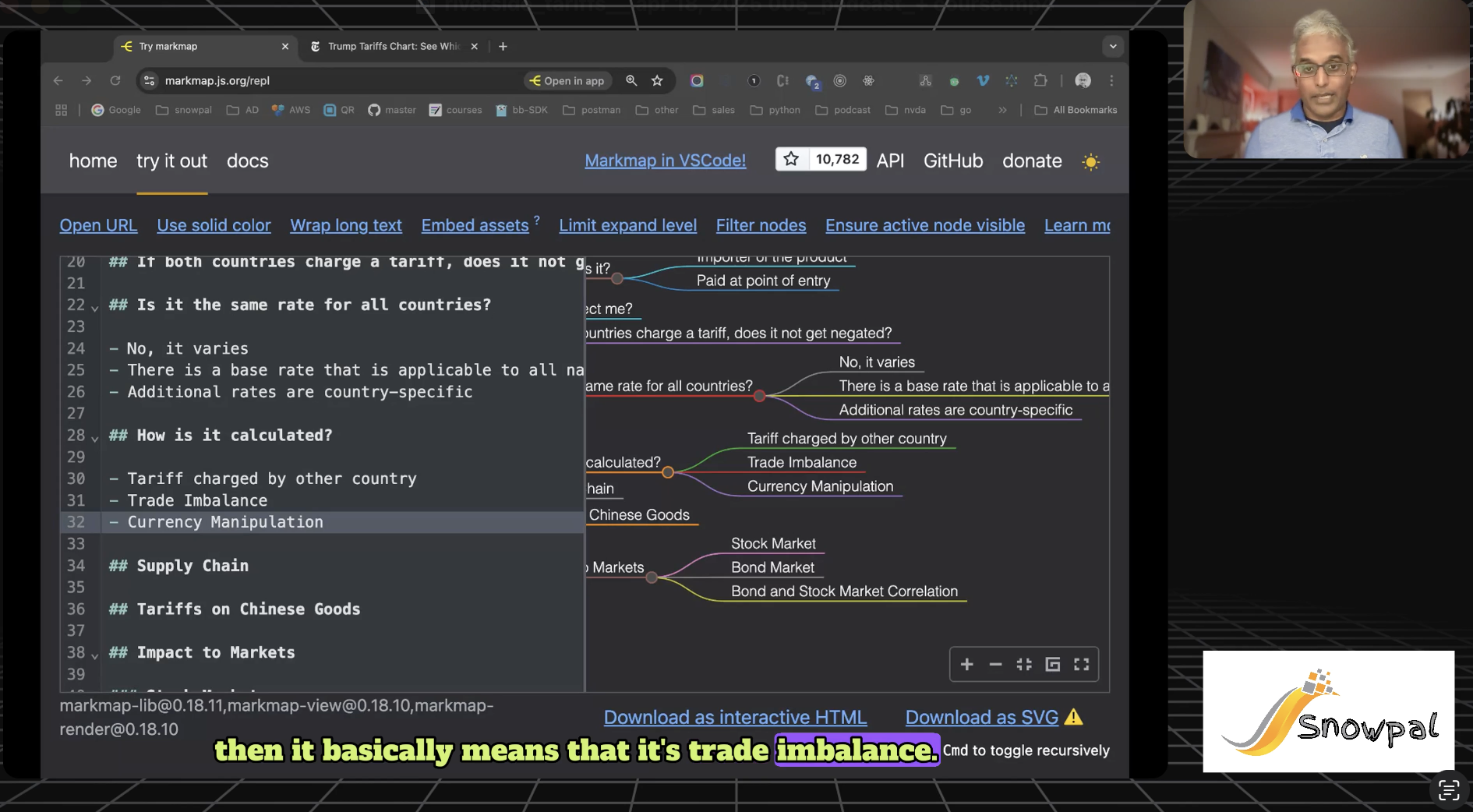
Ep 456Tariffs - what are they, who pays them, and does it affect me?
In this podcast, host Krish Palaniappan delves into the complex topic of tariffs. He begins by defining what tariffs are and their relevance in current economic discussions. The conversation explores who pays tariffs, how they are calculated, and the variability of rates across different countries. Krish also discusses the implications of tariffs on trade imbalances and currency manipulation, providing specific examples to illustrate their impact on consumers and businesses. The episode concludes with reflections on the broader effects of tariffs in the context of international trade and economic policy. In this conversation, Krish Palaniappan delves into the complexities of tariffs, their purposes, and their impact on trade and markets. He discusses how tariffs can protect domestic industries, generate government revenue, and address unfair trade practices. The conversation also explores trade imbalances, the intricacies of supply chains, and the geopolitical factors influencing tariff negotiations. Finally, Krish touches on the broader implications of tariffs on market dynamics and investor behavior.

Ep 455Navigating Your Career in the Age of AI (feat. Alagappan Veerappan)
In this episode, Alagappan Veerappan, a consulting director at Cognizant, discusses the transformative impact of AI on careers, particularly in consulting and technology. He emphasizes the importance of adopting an AI-first approach in problem-solving while balancing human intellect with AI tools. The conversation explores real-world examples of AI implementation, the challenges faced, and the evolving role of AI in various industries. In this conversation, Alagappan Veerappan and Krish Palaniappan discuss the evolving landscape of AI tools and their implications for software engineering and consulting. They explore the importance of human judgment in utilizing AI, the increasing preparedness of clients due to accessible information, and the changing dynamics of consulting engagements. The conversation also delves into the challenges of selecting the right technology amidst a plethora of options and the potential impact of AI on workforce structures, particularly concerning mid-level engineers. In this conversation, Alagappan Veerappan and Krish Palaniappan discuss the evolving landscape of engineering roles in the age of AI, the inadequacies of traditional education in preparing students for the workforce, and the importance of soft skills for Gen Z. They reflect on personal experiences in their careers, the necessity of adapting to new technologies, and the significance of pursuing one's passions in a rapidly changing job market.

Ep 454Challenges associated with Data Privacy, Interoperability, Security (feat. Michael Brown)
In this conversation, Michael Brown, CEO of CLOUDNINE AI, discusses the challenges and opportunities in enterprise AI applications, particularly focusing on data interoperability and privacy. He highlights the historical context of data collection in enterprises, the interoperability issues faced by various systems, and the unique challenges posed by large language models (LLMs) trained on public data. The discussion also delves into the importance of securing personally identifiable information (PII) and the processes involved in filtering and encrypting sensitive data. Brown shares insights into how CLOUDNINE AI addresses these challenges through innovative solutions, including the creation of digital twins and the management of dynamic data privacy rules across different regions. In this conversation, Michael Brown discusses the company's data management solutions, the onboarding process for clients, and the challenges of data privacy. He emphasizes the importance of understanding client needs and the evolving landscape of technology, particularly for Gen Z professionals looking to enter the field. The discussion also touches on personal insights and preferences, including Michael's favorite comfort food.

Ep 453"Film" secrets about remote work (feat. Steven Puri)
In this episode, Steven Puri shares his unique insights on remote work, drawing parallels between the film industry and software engineering. He discusses the evolution of film production, the importance of flexibility in work environments, and the universal challenges faced by teams in remote settings. Steven emphasizes the need for creativity and collaboration, and how leaders can foster a productive atmosphere regardless of where their teams are located. The conversation concludes with personal reflections on the importance of happiness in work.

Ep 452Measuring Productivity: The Remote Work Challenge (feat. Valentina Thörner)
In this episode, Krish Palaniappan and Valentina Thörner discuss the evolving landscape of remote work, the challenges companies face in transitioning back to office environments, and the implications of AI on productivity and work dynamics. Valentina shares her extensive experience in remote operations, highlighting the differences in employee and company perspectives on remote work, productivity measurement, and the future of work in a hybrid model. The conversation delves into the complexities of managing remote teams, the importance of flexibility, and the potential impact of AI on the workforce. In this conversation, Krish Palaniappan and Valentina Thörner explore the evolving landscape of work, particularly in the context of automation, AI, and the expectations of the Gen Z workforce. They discuss the contradictions in corporate policies regarding remote work and automation, the cultural shifts brought by Gen Z, and the implications of AI on employment and productivity. The dialogue emphasizes the need for flexibility in work arrangements and the challenges of adapting to new technologies while maintaining a healthy work-life balance. In this conversation, Krish Palaniappan and Valentina Thörner explore the evolving landscape of the workforce, particularly in light of AI advancements. They discuss how individuals entering the job market should approach their career choices, emphasizing the importance of asking good questions and finding passion in their work. Valentina shares insights on team dynamics in the age of AI, highlighting the necessity of human connection and the challenges posed by societal divisions. The conversation concludes with reflections on the value of human interaction over AI-generated responses, underscoring the need for intentional relationships in both personal and professional contexts.

Ep 451Understanding Earnings Trades: Risks, Volatility, and Educational Resources
In this conversation, Krish Palaniappan discusses the intricacies of earnings trades, emphasizing the risks involved and the importance of understanding earnings reports. He explains how earnings releases can lead to significant market volatility and the factors that influence stock price movements post-announcement. The conversation also touches on the educational resources available for those interested in trading and investing.

Ep 450Using AWS Certificate Manager to provision SSL Certificates
In this conversation, Krish Palaniappan discusses a critical issue encountered with an API on AWS Marketplace, where they were notified of a lack of usage requests due to an expired SSL certificate. He walks through the steps taken to identify the problem, including checking logs and understanding SSL certificate management. The conversation highlights the importance of proper certificate handling, the challenges faced during the resolution process, and the lessons learned from the experience.

Ep 449Deploying AWS SAM Applications to API Gateway
In this conversation, Krish Palaniappan discusses the intricacies of deploying an API gateway on AWS, focusing on the management of API usage, reporting, and the challenges faced with certificate management. He elaborates on the deployment strategies across different environments, the debugging process for certificate issues, and the importance of understanding endpoint types and SSL certificates. The conversation also highlights the resolution of certificate chain issues and the necessary code adjustments to ensure smooth operation. In this conversation, Krish Palaniappan discusses the intricacies of optimizing AWS Lambda layers, the transition from AWS SDK version 2 to version 3, and the importance of efficient deployment strategies. He emphasizes the need for local development and testing using Express to enhance productivity and streamline the onboarding process for customers, including API key management and usage plans. Snowpal Products Backends as Services on AWS Marketplace Mobile Apps on App Store and Play Store Web App Education Platform for Learners and Course Creators

Ep 448Exploring Ruby Code with AI Tools: DeepSeek, ChatGPT, CoPilot, Gemini
In this podcast, Krish Palaniappan explores a piece of Ruby code used for a notification system, analyzing it through the lens of four different AI tools: DeepSeek, ChatGPT, Microsoft Copilot, and Gemini. The discussion delves into the strengths and weaknesses of the code, the evolving role of AI in software development, and the insights provided by each tool during the review process. The conversation highlights the importance of code readability, efficiency, and the potential for automation in code reviews. In this conversation, Krish Palaniappan discusses various AI tools for code review, comparing their functionalities, user interfaces, and performance. He emphasizes the importance of readability and modularization in code, while also sharing insights on the growing relevance of Python in AI development. The conversation culminates in a ranking of the tools based on their effectiveness, with ChatGPT emerging as the preferred choice. Snowpal Products Backends as Services on AWS Marketplace Mobile Apps on App Store and Play Store Web App Education Platform for Learners and Course Creators

Ep 447AI Explorer Series (Part 3: Anthropic, Hugging Face, Cohere)
In this conversation, Krish Palaniappan delves into the AWS AI series, focusing on Amazon Bedrock and its foundational models. He discusses the differences between serverless models and the Bedrock marketplace, the importance of selecting the right model for specific use cases, and the training and inference processes in AI. The conversation also compares AWS Bedrock with Azure's offerings and emphasizes the complexities of AI architecture in modern development. In this conversation, Krish Palaniappan delves into the complexities of selecting AI models and platforms, particularly focusing on Bedrock and Hugging Face. He discusses the challenges startups face in asset comparisons, the importance of initial architecture in software development, and the evolving landscape of AI tools. The conversation emphasizes the need for a strategic approach to model selection, deployment, and understanding pricing structures, while also highlighting the significance of community engagement in the AI space. Snowpal Products Backends as Services on AWS Marketplace Mobile Apps on App Store and Play Store Web App Education Platform for Learners and Course Creators

Ep 446AI Explorer Series (Part 2: AWI AI Products)
In this conversation, Krish Palaniappan explores various AWS AI products, providing an overview of their functionalities and applications. The discussion covers medical AI solutions, intelligent search capabilities, conversational AI, anomaly detection, healthcare data management, customer experience personalization, voice and image recognition technologies, machine translation, and deep learning frameworks. The conversation emphasizes the competitive landscape of AWS in the AI domain and concludes with reflections on the explored products. Snowpal Products Backends as Services on AWS Marketplace Mobile Apps on App Store and Play Store Web App Education Platform for Learners and Course Creators

Ep 445AI Explorer Series (Part 1: AWI AI Products)
In this conversation, Krish Palaniappan explores various AWS AI products and services, discussing their applications, features, and potential use cases. He emphasizes the importance of understanding these tools at a foundational level, especially for beginners in the AI space. The discussion covers specific AWS offerings like Amazon Q, SageMaker, and App Studio, as well as the significance of human review in machine learning through Augmented AI. The conversation aims to provide insights into navigating the complex landscape of AWS AI tools and their integration into business processes. Snowpal Products Backends as Services on AWS Marketplace Mobile Apps on App Store and Play Store Web App Education Platform for Learners and Course Creators

Ep 444Building a Mobile App: Part 2 (Components, Local Storage)
In this course, Krish Palaniappan delves into the intricacies of mobile app development, focusing on local storage, UI components, and the design principles that guide effective app creation. He emphasizes the importance of iterative development and minimal viable products while comparing his app, Snowpals, with the Panera Bread app to illustrate key concepts. The discussion also covers the distinction between functional and presentational components, providing insights into best practices for building reusable and efficient app components. In this conversation, Krish Palaniappan discusses the importance of reusable UI elements and functional components in mobile app development. He emphasizes the need for a clear separation between presentation and functional components, focusing on practical implementation over theoretical concepts. The discussion transitions into local storage strategies, highlighting the significance of efficient data management and caching to enhance user experience. The conversation concludes with a recap of the key points covered, reinforcing the importance of thoughtful design and architecture in mobile applications. Snowpal Products Backends as Services on AWS Marketplace Mobile Apps on App Store and Play Store Web App Education Platform for Learners and Course Creators

Ep 443Building a Mobile App: Part 1 (UI/UX Review)
In this conversation, Krish Palaniappan reviews the Panera Bread mobile app, focusing on its user interface, experience, and functionality. He discusses the importance of user loyalty and how it affects app usage. Throughout the review, he identifies various bugs, issues with the app's workflow, and areas for improvement, particularly in terms of speed and user interaction. The conversation highlights the significance of a well-designed app in enhancing customer satisfaction and loyalty. In this conversation, Krish Palaniappan reviews the Panera app, discussing various aspects such as coffee subscriptions, user experience challenges, customization features, rewards and offers, and overall app navigation. He highlights the importance of user interface design and the need for improvements in speed and personalization. The conversation culminates in a reflection on the app's usability and the feedback process. Snowpal Products Backends as Services on AWS Marketplace Mobile Apps on App Store and Play Store Web App Education Platform for Learners and Course Creators

Ep 442Community Driven Product Development (feat. Jake McKee)
In this episode, Krish Palaniappan interviews Jake McKee, a consultant specializing in community-driven product development. They discuss the importance of integrating customer voices into the product development process, the three stages of product development, and how community involvement can lead to better products and customer loyalty. Jake shares insights on when to involve the community, how to find the right voices, and the significance of timing in community engagement. A case study on LEGO Mindstorms illustrates the practical application of these concepts. In this conversation, Jake McKee discusses the critical aspects of community-driven product development, emphasizing the importance of defining clear outcomes, engaging the right people, and utilizing effective tools for feedback. He explores the evolving nature of participant roles throughout the development process and the significance of maintaining engagement and expertise. The discussion also touches on the role of AI in facilitating these processes, highlighting both the potential benefits and challenges of integrating technology into community engagement. In this conversation, Krish Palaniappan and Jake McKee explore the intersection of creativity and technology, emphasizing the importance of integrating the arts into STEM education. They discuss cultural perspectives on career choices, the role of creativity in a tech-driven world, and the need for interdisciplinary skills. The conversation also touches on the future of work, the significance of problem-solving skills, and the importance of teaching creative problem-solving to future generations. Finally, they highlight Austin as a unique cultural hub that fosters community and creativity. Snowpal Products Backends as Services on AWS Marketplace Mobile Apps on App Store and Play Store Web App Education Platform for Learners and Course Creators

Ep 441ST 108: Day Trading Stocks - Part 3
In this conversation, Krish Palaniappan discusses trading activities observed in the market, focusing on three key securities: Palantir, Tesla, and Meta. He explains the significance of a triple witching day, analyzes the daily performance of these stocks, and highlights the volatility during the first hour and last 30 minutes of trading. The discussion also covers fluctuations in stock prices and trading volumes, providing insights for day traders and investors. In this conversation, Krish Palaniappan delves into the intricacies of trading volume and its implications for day trading. He discusses various trading tools, analyzes the trading volumes of major stocks like Palantir, Tesla, and Meta, and highlights the significance of understanding trading patterns. The conversation emphasizes the importance of being informed about market dynamics and the challenges of day trading, while also encouraging listeners to explore further educational resources. Prerequisites This is a follow up to the 2 courses below. https://products.snowpal.com/p/day-trading-stocks-part-1?utm_source=publication-search https://products.snowpal.com/p/day-trading-stocks-part-2?utm_source=publication-search Snowpal Products Backends as Services on AWS Marketplace Mobile Apps on App Store and Play Store Web App Education Platform for Learners and Course Creators

Ep 440Impact of AI on Software Developers (feat. Jason Crum)
In this conversation, Krish Palaniappan and Jason Crum discuss the impact of AI on software development, exploring skepticism towards AI predictions, societal implications, and the future of jobs. They delve into corporate spending on AI, the quality of content generated by AI, and the importance of talent acquisition in tech companies. The discussion highlights the dual perspectives of developers and non-developers regarding AI's role in their professional and personal lives, emphasizing the need for adaptation in a rapidly changing technological landscape. Takeaways AI is predicted to take over many developer tasks. Skepticism exists regarding the timeline of AI advancements. Investment in AI is driven by fear of missing out. Companies are hiring top talent to leverage AI effectively. Repetitive tasks are most susceptible to AI automation. Quality of AI-generated content is a concern. The future of jobs in AI is uncertain and complex. AI tools can enhance productivity for developers. Corporate spending on AI is a significant trend. Automating tasks can save time, but AI tools may not always deliver expected results. Understanding the underlying technology is crucial when using AI tools. AI's ability to create is limited by existing data and patterns. Reliance on AI tools can lead to a decline in critical thinking skills. Creativity in art and music may not be fully replicable by AI. AI can assist in repetitive tasks but may struggle with complex problem-solving. Human intuition and reasoning are still essential in many fields. Relying too much on AI can diminish our intellectual engagement. Small businesses can thrive with fewer resources due to AI. The disparity between the wealthy and the poor may worsen with AI. Meaningful contributions to society are essential in a tech-driven world. Adapting to change is crucial in the workforce, particularly with evolving technologies. Continuous learning is essential to remain relevant in the job market. AI is transforming job roles, especially in areas that are repetitive and easily automated. Developing a diverse skill set can enhance job security and marketability. Being creative and standing out is vital in a world where everyone has access to the same tools. Chapters 00:00 Introduction to AI's Impact on Software Development 03:01 Skepticism Towards AI Predictions 06:03 Dual Perspectives: Developer vs. Non-Developer 08:54 Societal Implications of AI 12:14 The Future of Jobs in AI 14:53 Investment Trends in AI 18:13 Content Quality and AI's Role 20:53 Corporate Spending on AI 24:05 Talent Acquisition in Tech Companies 27:00 The Role of Repetitive Tasks in AI Adoption 36:48 Automating Media Management with Python 40:48 Challenges in AI-Assisted Coding 44:42 The Future of Jobs in the Age of AI 49:53 Creativity and AI: A Complex Relationship 57:51 The Role of Intellect in a Tech-Driven World 01:12:40 Navigating the Reliability of AI Tools 01:15:10 The Rise of Small Businesses in the AI Era 01:19:49 Geographical Disparities in AI Impact 01:23:51 Geopolitical Implications of AI and Job Displacement 01:30:53 The Role of Meaningful Contribution in a Tech-Driven World 01:47:54 Miscommunication and Cultural Context 01:49:12 Adapting to Change in the Workforce 01:51:10 The Impact of AI on Job Security 01:53:01 Skills for the Future: Learning and Adaptation 01:54:34 Exploring Global Perspectives and Personal Aspirations 02:03:20 The American Spirit: Hard Work and Risk-Taking 02:09:52 Closing Thoughts: Being a Producer, Not a Consumer

Ep 439Investing in Restaurant Stocks (focus on SG, CAVA and SHAK)
In this episode, Krish Palaniappan discusses the dynamics of investing in the food industry, focusing on three specific companies: Shake Shack, Cava, and SweetGreen. He provides insights into their recent stock performance, the factors influencing price fluctuations, and the importance of understanding the market landscape. He emphasizes the risks associated with trading and the value of personal experience in making investment decisions. Takeaways Shake Shack, Cava, and Sweetgreen are discussed as food industry securities. Price fluctuations can indicate market trends and company performance. Understanding the food industry is crucial for investors. Different investors have varying approaches to stock selection. Personal experience with companies can inform investment decisions. Market trends can impact multiple companies in the same industry. The importance of analyzing a company’s growth potential and competition. Chapters 00:00 Introduction to the Podcast and Disclaimer 02:54 Exploring Food Industry Securities 05:52 Analyzing Price Fluctuations in Food Stocks 09:14 Investor Perspectives on Food Companies 12:06 Conclusion and Course Offerings

Ep 438Immigrating to USA
In this episode, Krish Palaniappan shares his personal insights on the complexities of US immigration. He emphasizes that immigration should be viewed as a privilege rather than a right, discussing the challenges and realities faced by immigrants. He encourages listeners to appreciate the opportunities available in the US while acknowledging the need for improvements in the immigration system. The conversation highlights the importance of respect, gratitude, and understanding in the immigration process, urging a balanced perspective on the experiences of immigrants. Takeaways Immigration is a privilege granted by a country, not a right. The immigration process can be lengthy and complex, often taking years. Many immigrants contribute positively to society, even if not at the highest levels. Comparing immigration systems globally reveals that many countries have stricter processes. Respect and gratitude for the immigration system are essential for a harmonious society. Life is not fair, and sometimes qualified individuals may not succeed in immigrating. The odds of becoming a highly successful immigrant are low for most. Good people should have a legal path to immigration, and improvements are needed. Understanding the immigration process can help alleviate frustrations. The journey of immigration can be painful, but patience is crucial. Chapters 00:00 Introduction to Immigration Perspectives 02:53 The Privilege of Immigration 06:11 The Reality of Immigration Processes 09:05 Comparative Immigration Experiences 11:54 The Importance of Respect and Gratitude 14:48 Conclusion and Call for Understanding

Ep 437Credibility needs to be built both by individuals and communities
In this episode, Krish Palaniappan discusses the recent layoffs at Apple, which were not due to employee performance but rather a scam involving misuse of a grant program. He reflects on the cultural implications of such news, particularly for Indian engineers, and emphasizes the importance of credibility and integrity in the tech industry. Krish shares insights on how individual actions can impact perceptions of entire communities and stresses the need for maintaining a good reputation in professional settings. Takeaways Layoffs in tech are often misunderstood and misreported. Cultural identity can influence perceptions in the workplace. Credibility is a crucial asset for engineers. Negative news can affect the reputation of entire communities. Maintaining integrity is essential for personal and professional growth. The tech industry faces challenges in hiring due to credibility issues. Good impressions are vital for future opportunities. Honesty in professional representation is non-negotiable. The actions of a few can impact the many in a global context. Future discussions will return to technical topics. Chapters 00:00 Introduction to the Podcast and Topic 01:30 Layoffs at Apple: A Deeper Look 04:00 Cultural Implications of the Layoffs 10:11 The Importance of Credibility in Engineering 15:51 Maintaining Integrity and Reputation

Ep 436RTO & Cumulative Commute Times
In this episode, Krish Palaniappan discusses the concept of “coffee badges” in the context of the return to office (RTO) debate. He explores the implications of commuting, productivity, and the quality of life for employees, particularly in the tech industry. The conversation highlights the challenges of mandatory office attendance and the potential benefits of remote work, while also considering the impact on company culture and employee satisfaction. Takeaways Coffee badges refer to employees who come to the office briefly. The return to office debate raises questions about productivity. Commuting can take up a significant amount of time. 38.3% of work hours can be lost to commuting. Quality of life is affected by commuting time. Companies need to consider employee satisfaction. Remote work can lead to better work-life balance. Different companies have different cultures and needs. It’s important to find what works for your team. Employee retention is linked to job satisfaction. Chapters 00:00 Introduction to Coffee Badges 01:53 The Return to Office Debate 06:06 The Commute Conundrum 11:56 Quantifying Commute Time 17:58 Quality of Life and Work 24:07 Final Thoughts and Company Culture

Ep 435(Part 2) Exploring No Code Development Platform: Bubble (feat. Xan Hong)
In this episode, Xan Hong, a no-code development expert, guides Krish Palaniappan through the process of building a simple to-do application using Bubble. They explore the user interface, create workflows, and discuss the transition from web-based to native app development. The conversation emphasizes practical application, collaboration, and the importance of getting a functional product up and running before focusing on aesthetics. They explore the Bubble platform, discussing its no-code capabilities, data management, plugin integrations, and design systems. They reflect on the learning curve associated with Bubble, the potential for AI integration, and the future of no-code platforms in the context of evolving technology. The discussion highlights practical applications, user experiences, and the importance of adapting to new tools in software development. Takeaways • No-code development can significantly reduce costs for clients. • Understanding the user interface is crucial for effective app development. • Starting with a functional prototype is more important than aesthetics. • Bubble allows for both web and native app development. • Dynamic elements enhance user interaction in applications. • Workflows are essential for managing data and user actions. • Testing and debugging are critical steps in the development process. • Collaborative development can enhance the learning experience. • Data management is key to maintaining application functionality. • User feedback is vital for refining app features. • Bubble allows users to create applications without writing code. • Understanding the platform’s structure is crucial for effective use. • Data management in Bubble includes both data and metadata. • Plugins enhance functionality but vary in quality. • Design systems can be created and reused within Bubble applications. • APIs can be integrated to extend application capabilities. • The learning curve for Bubble can be steep for new users. • AI integration presents new challenges for no-code platforms. • Building meaningful projects can enhance the learning experience. • No-code platforms are evolving with the introduction of AI technologies. Chapters 00:00 Introduction to No Code Development 02:55 Exploring Bubble's User Interface 05:52 Creating a To-Do Application 09:10 Understanding Native App Development with Bubble 11:58 Dynamic Elements and User Interaction 15:07 Workflow Creation and Data Management 17:52 Testing and Debugging the Application 20:47 Collaborative Development and Sharing 24:01 Data Management and Deletion Functionality 38:49 Navigating the Bubble Platform 40:46 Understanding Data Management and Metadata 42:49 Exploring Plugins and Third-Party Integrations 45:35 Design Systems and Reusability in Bubble 48:30 Connecting APIs and Backend Functionality 53:44 Recap of Building a To-Do App 55:11 Reflections on No-Code Development 01:01:43 The Learning Curve of Bubble 01:08:14 The Future of AI in No-Code Platforms

Ep 434(Part 1) Exploring No Code Development Platform: Bubble (feat. Xan Hong)
In this episode, Xan Hong shares his journey into the world of no-code development, highlighting the challenges faced by non-technical founders and the flexibility offered by platforms like Bubble. The conversation explores the evolving landscape of software development, the importance of creativity in problem-solving, and the impact of no-code solutions on traditional development roles. San emphasizes the need for adaptability in a rapidly changing technological environment and discusses the value of a well-rounded skill set in today’s market. They delve into the intricacies of no-code platforms, particularly focusing on Bubble. They discuss backend workflows, API integration, and the advantages of no-code solutions for MVP development. The conversation also explores how no-code platforms can be utilized in various business contexts, from startups to large enterprises, and the future landscape of software development in relation to AI-generated code. Xan shares real-life case studies demonstrating the effectiveness of no-code solutions, while Krish raises thought-provoking questions about the evolving role of coding in the tech industry. Takeaways • No-code platforms like Bubble can save significant development costs. • Learning data structuring is crucial for using no-code tools effectively. • Bubble offers flexibility but has a steeper learning curve than other platforms. • Creativity is essential in problem-solving with no-code solutions. • Developers may feel threatened by the rise of no-code tools. • Adaptability is key in the fast-changing tech landscape. • A combination of business and technical skills is valuable in development. • Clients appreciate understanding their needs during the development process. • Problem-solving skills are more important than technical skills alone. • No-code platforms can expose backends as APIs. • No backend server is needed for user management. • No-code solutions can significantly reduce development time. • Enterprises can save millions by transitioning to no-code. • Startups can validate ideas quickly using no-code tools. • No-code platforms are more accessible for non-technical users. • AI-generated code may not always be the best solution for MVPs. • The perception of no-code limitations is often exaggerated. • Education in tech is shifting towards practical problem-solving. • No-code tools can complement traditional coding practices. Chapters 00:00 Introduction to No-Code Development 02:57 San's Journey into No-Code Development 06:02 Challenges of Starting Without a Technical Background 08:54 Exploring No-Code Platforms: Bubble vs Others 11:57 The Flexibility and Limitations of No-Code Solutions 14:54 Creativity in Problem Solving with No-Code 17:56 The Impact of No-Code on Traditional Development 21:01 Navigating the Future of Software Development 23:53 The Value of a Well-Rounded Skill Set 27:07 Client Perspectives on No-Code Development 30:04 Hands-On with Bubble: Features and Functionality 38:41 Exploring Backend Workflows and API Integration 45:10 Understanding No-Code Solutions for MVP Development 50:14 No-Code Platforms in Different Business Contexts 54:47 The Future of No-Code vs. AI-Generated Code 01:08:56 Closing Thoughts on No-Code and Personal Insights

Ep 433Exploring AWS AI Products
In this conversation, Krish Palaniappan discusses the evolving landscape of AI and software development in 2025. He emphasizes the need for adaptability in engineering roadmaps due to rapid changes in technology. The discussion highlights the importance of collaborative learning in AI, exploring AWS tools, understanding different AI models, and preparing for the future of software development. Krish encourages listeners to engage in this learning journey together, regardless of their current expertise level. Takeaways The landscape of AI is rapidly changing, requiring constant adaptation. Collaborative learning is essential for effective software development. AWS offers a vast array of tools that can be overwhelming but beneficial. Understanding the differences between AI models is crucial for application. Software development must evolve to incorporate new technologies and methodologies. It's important to learn with a purpose to effectively apply knowledge. Engaging with new tools can lead to innovative solutions. Different career stages influence how individuals approach learning AI. Gen Z brings fresh perspectives to software development. Continuous learning is vital in the tech industry. Chapters 00:00 Embracing Change in AI Development 02:50 Learning Together: The Journey of AI Exploration 06:08 Navigating AWS and AI Tools 09:02 Understanding AI Models and Their Applications 11:51 The Future of Software Development in AI

Ep 4322025. New Year. Motivation. A. R. Rahman.
In this podcast, Krish Palaniappan shares his New Year wishes and discusses the inspiration he draws from A.R. Rahman, a renowned composer. He reflects on Rahman's journey, the challenges of catering to diverse audiences in India, and the importance of motivation and commitment to one's art. The conversation also touches on the concept of Ikigai, the value of time, and the significance of finding one's calling in life. Krish emphasizes the need to step out of comfort zones and pursue passions, concluding with a hopeful message for the new year. Takeaways The importance of motivation in personal and professional life. A.R. Rahman's impact on music and culture. Catering to diverse audiences is a significant challenge. Commitment to art is crucial for long-term success. Finding your calling can lead to fulfillment. The Ikigai concept helps in understanding one's purpose. Time is a valuable resource that should be spent wisely. Stepping out of comfort zones can lead to growth. Chapters 00:00 New Year Wishes and Company Updates 03:02 Inspiration from A.R. Rahman 05:54 The Journey of A.R. Rahman 08:51 Catering to Diverse Audiences 12:00 Motivation and Commitment to Art 14:48 Finding Your Calling 18:11 The Ikigai Concept 21:01 The Value of Time and Life 24:13 Conclusion and Future Plans

Ep 431APIs and Reusability (with charts as an example)
In this conversation, Krish Palaniappan discusses the significance of APIs and reusability in software development. He emphasizes how leveraging existing APIs can help organizations save time, reduce costs, and focus on core customer problems. The discussion includes examples of how APIs can enhance product offerings and the importance of not reinventing the wheel in development. Krish also highlights the various models available for utilizing APIs and the benefits they bring to businesses. Takeaways APIs provide essential building blocks for applications. Reusability in development leads to faster market entry. Organizations should focus on core competencies and customer needs. Leveraging existing APIs can save time and resources. Investing in reusable components enhances product quality. APIs can be integrated quickly and efficiently. Using APIs allows teams to avoid reinventing the wheel. Snowpal offers a suite of APIs for various needs. Understanding the importance of reusability is crucial for success. APIs can help startups and mid-sized organizations thrive. Chapters 00:00 Introduction to APIs and Reusability 04:41 The Importance of Reusability in Development 12:47 Leveraging Existing Components for Efficiency 23:13 Conclusion and Future Directions

Ep 419Apple's Image Playground App Review (feat. Ryan Soosayraj)
In this episode of the Snowpal Polyglot Software Development Podcast, Krish Palaniappan and Ryan Soosayraj discuss the latest iOS release and its new feature, Image Playground. They explore Ryan’s background in product management, share their initial reactions to the app, and compare their experiences with other Apple products. They discuss the essence of character captured by the app, the role of AI in enhancing user experience, and Apple’s approach to integrating AI into consumer products. They delve into the intricacies of photo selection and editing using advanced AI tools. They discuss user expectations from high-end devices, the balance between realism and creativity in AI-generated images, and the integration of image tools across various applications. They also touch on generational perspectives on image technology, the resonance of features across different demographics, and the innovations in background removal and subject copying. Takeaways Image Playground is designed to be playful and engaging. Initial reactions to new technology can vary widely. The essence of a person's character can be captured in digital form. AI can enhance user experience in creative applications. Apple's approach to AI focuses on user value rather than technical details. User feedback is crucial for product development. Features must resonate with users to be successful. The importance of unbiased perspectives, especially from children. Product management involves testing various features to see what sticks. Navigating photo selection can be cumbersome with large libraries. High-end devices come with high user expectations. AI interactions should feel intuitive and responsive. Realism in AI images is often balanced with creative liberties. Customization features enhance user experience in image editing. Integration of image tools across apps is beneficial but could be deeper. AI-generated images often present an enhanced version of the user. Generational perspectives influence the excitement around new features. Features that resonate across demographics can lead to widespread adoption. Innovations in subject copying and background removal streamline editing processes. Digital avatars can reflect personal identity in unique ways. APIs play a crucial role in enhancing creative applications. User experience is vital for the success of new technology. Chapters • Image Playground is designed to be playful and engaging. • Initial reactions to new technology can vary widely. • The essence of a person’s character can be captured in digital form. • AI can enhance user experience in creative applications. • Apple’s approach to AI focuses on user value rather than technical details. • User feedback is crucial for product development. • Features must resonate with users to be successful. • The importance of unbiased perspectives, especially from children. • Product management involves testing various features to see what sticks. • Navigating photo selection can be cumbersome with large libraries. • High-end devices come with high user expectations. • AI interactions should feel intuitive and responsive. • Realism in AI images is often balanced with creative liberties. • Customization features enhance user experience in image editing. • Integration of image tools across apps is beneficial but could be deeper. • AI-generated images often present an enhanced version of the user. • Generational perspectives influence the excitement around new features. • Features that resonate across demographics can lead to widespread adoption. • Innovations in subject copying and background removal streamline editing processes. • Digital avatars can reflect personal identity in unique ways. • APIs play a crucial role in enhancing creative applications. • User experience is vital for the success of new technology. • Face recognition technology is evolving and becoming more integrated into daily life. • Cultural connections through food can deepen personal relationships. • Unexpected conversations can lead to meaningful connections. • The importance of sharing experiences with family across generations. • Technology can be both playful and functional in our lives. • Food is an emotional experience that connects us to our heritage. • Serendipity often leads to the most rewarding interactions.

Ep 418Creating AD Campaigns on Meta Platforms (feat. Dan Nikas)
In this episode, Krish Palaniappan interviews Dan Nikas, a former homicide detective turned e-commerce expert. Dan shares his journey from policing to founding Gear Bunch and becoming a leading figure in email marketing and Meta advertising. The conversation delves into the challenges of B2C marketing, the importance of understanding audience needs, and effective strategies for creating successful marketing campaigns on Meta platforms. Dan emphasizes the significance of data-driven decision-making and the evolving landscape of digital marketing, particularly the necessity of multiple touchpoints to convert potential customers. Dan and Krish discuss effective advertising strategies for startups, emphasizing the importance of creating engaging ads without a large budget or a dedicated creative team. They explore the necessity of marketing in business, especially in a privacy-conscious world, and the significance of cultural sensitivity in global advertising. The discussion highlights the value of taking imperfect action and learning from experiences, as well as the essential role of marketing in ensuring that unique products reach their intended audience. Takeaways Dan transitioned from a 17-year career in policing to e-commerce. Understanding audience needs is crucial for effective marketing. Marketing is about selling solutions, not just products. Meta’s algorithm can help target the right audience effectively. Creating custom audiences can be done at a low cost. The rule of seven touchpoints has evolved to 19-21 touchpoints. Brand awareness campaigns can help filter potential customers. Data-driven marketing is essential for optimizing campaigns. Geographic targeting should be based on product relevance. Engagement metrics are key to refining marketing strategies. You can effectively advertise on a small budget. It’s crucial to answer potential customer questions through ads. Imperfect action is better than inaction; don’t wait for perfection. Cultural differences matter in advertising; tailor your message accordingly. Investing in advertising helps you learn and optimize faster. Even unique products need marketing to gain visibility. Use available tools like Canva to create ads without a creative team. Engaging content can come from everyday experiences and insights. Building trust and relationships is key in marketing. Marketing is a collective responsibility across all roles in a company. Chapters 00:00 Introduction to Dan Nikas and His Journey 03:40 Transitioning from Policing to E-commerce 04:37 Understanding Email Marketing and Meta Advertising 07:10 Challenges in B2C Marketing 10:14 Targeting the Right Audience on Meta Platforms 12:45 Creating Effective Campaigns for B2C Products 19:19 Data-Driven Audience Creation 22:39 Geographic Targeting Strategies 26:44 Leveraging Meta's Algorithm for Audience Engagement 30:11 The Importance of Touchpoints in Marketing 39:19 Effective Advertising Strategies for Startups 43:31 Creating Engaging Ads Without a Creative Team 52:38 The Importance of Imperfect Action in Marketing 55:30 Navigating Advertising in a Privacy-Conscious World 01:01:25 Understanding the Role of Marketing in Business Success 01:06:11 Cultural Sensitivity in Global Advertising 01:07:15 The Necessity of Marketing for Unique Products

Ep 417Fundamentals of B2B Sales (feat. Srivatsa Srinivasan)
In this episode, Krish Palaniappan interviews Srivatsa Srinivasan to explore the intricacies of sales, particularly in the B2B context. They discuss the fundamental aspects of sales, the importance of understanding buyer personas, and the differences between outbound and inbound sales strategies. The conversation emphasizes the continuous nature of selling in everyday life and the significance of building relationships with customers. Srivatsa shares insights from his personal journey in sales, providing practical advice for entrepreneurs and startups navigating the sales landscape. Krish and Srivatsa delve into the intricacies of sales strategies, focusing on the balance between targeted and broad outreach methods. They discuss the importance of creating awareness, building relationships, and understanding sales metrics to set realistic expectations. The dialogue emphasizes the need for startups to navigate the challenges of customer acquisition while leveraging various outreach channels effectively. Takeaways • Sales is a continuous process that everyone engages in. • Understanding your audience is crucial for effective selling. • Fear of rejection is a common barrier in sales. • B2B sales require thorough research on prospects. • Developing buyer personas helps tailor sales strategies. • Value propositions must address customer needs directly. • Outbound sales often yield higher value than inbound. • Building relationships is essential for long-term success. • Identifying stakeholders is key in B2B sales. • Sales strategies should adapt to the target audience. • Targeted outreach requires research but can yield better results. • Broad outreach can create awareness but may lack personalization. • Building relationships is crucial for customer retention. • Sales metrics should guide outreach strategies and expectations. • Awareness creation is the first step in the sales process. • Sales-qualified leads are essential for effective sales strategies. • Startups should focus on budget-friendly outreach methods. • Utilizing multiple channels increases the chances of success. • Don’t confuse effort with results in sales. • Sales is a science that requires strategic thinking. Chapters 00:00 Introduction to Sales and Personal Journey 06:00 The Nature of Selling in Everyday Life 11:47 Prospecting in B2B Sales 17:58 Developing Buyer Personas 23:58 Challenges in B2B Sales 30:12 Understanding Customer Needs 40:18 Targeted vs. Broad Outreach Strategies 52:46 Creating Awareness and Building Relationships 01:01:01 Understanding Sales Metrics and Expectations

Ep 416Running a Small Business (feat. Steven Ferguson)
In this episode, Steven Ferguson shares his journey from being a Marine to becoming a successful entrepreneur. He discusses the importance of integrating a social mission into business, the challenges of bootstrapping a startup, and the significance of thorough planning and research. Steven also delves into the intricacies of managing an e-commerce business, particularly in the coffee industry, and the various challenges he faces, both technical and non-technical. He emphasizes the need for expertise in areas where one lacks knowledge and the importance of effective marketing strategies for growth. Steven discusses his transition from a custom-built e-commerce platform to Shopify, highlighting the benefits of ease of use and cost-effectiveness. He emphasizes the importance of focusing on the core business of selling coffee while navigating technical challenges. The discussion shifts to marketing strategies, where Steven shares insights on effective customer engagement through events and digital marketing. He also reflects on the journey of becoming a founder, addressing the expectations versus the reality of entrepreneurship, and the significance of having a mission-driven business. Takeaways • Businesses should not only prioritize profit but also people. • Bootstrapping a startup requires careful resource management. • Planning is essential for any new venture. • Choosing the right business model can make or break a startup. • E-commerce presents unique challenges compared to traditional retail. • Finding the right suppliers is crucial for product quality. • Marketing strategies must adapt to the digital landscape. • Customer service is vital for maintaining growth. • Automation can streamline operations but requires initial manpower. • Using pre-built platforms can save time but may limit customization. • Transitioning to Shopify resolved many technical issues. • Focusing on the core business is crucial for success. • In-person marketing at events yields high conversion rates. • Digital marketing presents challenges but is essential for growth. • Understanding customer demographics helps target marketing efforts. • The mission of supporting veterans is a key selling point. • Customization in e-commerce can be both necessary and limiting. • Building a brand message around a social cause resonates with customers. • The journey of a founder involves continuous problem-solving. • Flexibility in daily tasks is both a freedom and a responsibility. Chapters 00:00 Introduction to Steven Ferguson and His Mission 02:52 Integrating Social Mission into Business Models 06:10 Bootstrapping a Startup with Limited Resources 09:11 Planning and Research for New Ventures 11:55 Choosing the Right Business Model 15:04 Navigating E-commerce and Physical Products 18:06 Managing Supply Chain and Inventory 21:03 Overcoming Challenges in E-commerce 24:02 Marketing Strategies for Growth 26:50 Technical and Non-Technical Challenges in Business 32:54 Transitioning to Shopify: A Strategic Move 41:50 Marketing Strategies: Connecting with Customers 53:25 The Journey of a Founder: Expectations vs. Reality

Ep 415Fundamentals of B2B Marketing (feat. Chris Williams)
In this episode, Krish Palaniappan interviews Chris Williams, CMO at Arima, discussing the evolution of marketing strategies, particularly focusing on marketing mix models and their application in both B2B and B2C contexts. Chris shares insights on how startups can effectively market their products, identify key stakeholders, and leverage content creation and community engagement to build their brand. The conversation also touches on the role of a CMO in a startup environment and the challenges faced in prospecting and utilizing paid search effectively. Krish and Chris discuss the multifaceted roles of founders in startups, particularly in marketing and sales. They explore the importance of understanding customer problems, effective budgeting strategies, and the dynamics of sales and marketing. The conversation also delves into the challenges of educating customers about solutions, handling rejections in sales, and crafting effective elevator pitches. Chris emphasizes the need for a balance between product development and marketing efforts, highlighting that both art and science play a role in successful marketing strategies. Takeaways • Marketing mix models have evolved significantly over the years. • Understanding your target market is crucial for effective marketing. • Building relationships is key to acquiring initial customers. • Identifying influencers within organizations can drive product adoption. • Content creation is essential for engaging potential customers. • Paid search remains a valuable tool despite changing landscapes. • Startups often require a different approach to marketing than established companies. • Networking at events can expand your reach significantly. • Utilizing LinkedIn effectively can help identify prospects. • The role of a CMO in a startup is multifaceted and dynamic. The founder often serves as the best CMO in a startup. • Understanding customer pain points is crucial for effective marketing. • Budgeting in startups should be flexible and responsive to traction. • Sales and marketing should begin as soon as the entrepreneurial journey starts. • Prospecting is a key component of the sales process. • Handling rejection is part of the sales journey and should not be taken personally. • An elevator pitch should be tailored to the audience when possible. • Marketing is essential to keep the product development on track. • Sales strategies should include relationship building and networking. • Both quantitative and qualitative measures are important in marketing. Chapters 00:00 Introduction to Synthetic Data and Marketing Mix Models 02:52 Understanding Marketing Mix Models 05:56 Marketing Strategies for Startups 08:55 Identifying Stakeholders and Influencers 12:02 Prospecting and Finding Influencers 14:47 Content Creation and Community Engagement 18:11 Paid Search and Its Evolving Landscape 21:00 The Role of a CMO in Startups 37:18 The Role of Founders in Startups 40:35 Budgeting Strategies for Startups 42:14 Understanding Customer Problems 45:06 Educating Customers on Solutions 49:44 Sales and Marketing Dynamics 52:50 Sales Strategies and Techniques 56:21 Handling Rejections in Sales 01:01:26 Crafting the Perfect Elevator Pitch 01:04:10 Balancing Development and Marketing 01:06:53 Final Thoughts and Comfort Food
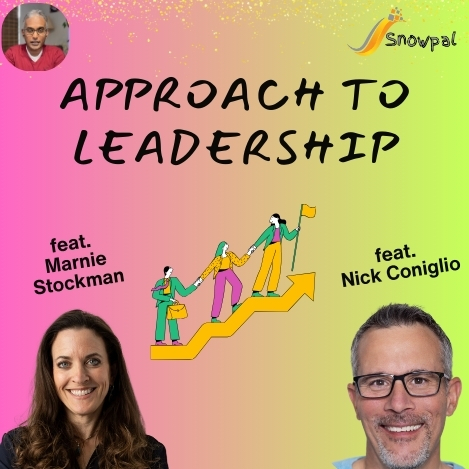
Ep 414Approach to Leadership (feat. Marnie Stockman & Nick Coniglio)
In this episode, Krish Palaniappan, Marni Stockman, and Nick Coniglio discuss their journey as founders of Lifecycle Insights, a SaaS platform. They explore the importance of leadership, the challenges of starting a business, and the critical role of sales and marketing. The conversation delves into the significance of validation in product development and effective strategies for gathering honest feedback from potential customers. The hosts emphasize the need for iterative development and the importance of understanding customer needs to ensure business success. Nick Coniglio and Marnie Stockman discuss the critical aspects of leadership, stakeholder management, and the importance of character skills in the startup environment. They emphasize the need for identifying key stakeholders, understanding the fluid nature of gatekeepers, and the significance of leading oneself, especially in small teams. The discussion also covers the learning curve associated with leadership, the mistakes made along the way, and how to navigate leadership in a diverse and remote work environment. Ultimately, they highlight that character and communication are essential for effective leadership in today’s world. Takeaways • Founders should focus on building relationships and communication. • Sales and marketing are essential for business growth. • Validation is crucial before launching a product. • Engaging with the user community leads to better product development. • Iterative development allows for continuous improvement. • Listening to customer feedback is vital for success. • Sales should be integrated into the product development process. • Asking the right questions leads to valuable insights. • Detaching from your product helps in receiving honest feedback. • Understanding your target market is key to validation. • Identifying key stakeholders is crucial for product success. • Leadership is essential, even for small teams. • Everyone is a leader in their own right. • Leadership skills can be learned and developed. • Character skills are becoming increasingly important. • Good leadership focuses on team growth and development. • You cannot please every user; focus on core needs. • Mistakes in leadership provide valuable learning opportunities. • Communication is key to effective leadership. • Be open to feedback and adapt your approach. Chapters 00:00 Introduction to Leadership and SaaS 03:22 Founders’ Journey: From Employees to Entrepreneurs 08:45 The Birth of Lifecycle Insights 14:36 Writing a Book: Sharing Experiences 20:47 Sales and Marketing: The Lifeblood of Business 25:10 Understanding Validation in Startups 31:01 Effective Validation Strategies 37:15 Asking the Right Questions for Validation 41:12 Identifying Key Stakeholders 48:00 The Importance of Leadership in Startups 53:10 Learning from Leadership Mistakes 57:48 Navigating Leadership in a Diverse World 01:01:00 The Role of Character in Leadership
Ep 413Impact of AI on the Travel and Hospitality Industry (feat. Tim Hentschel)
In this episode, Krish Palaniappan interviews Tim Hentschel, co-founder and CEO of Hotel Planner, discussing the impact of artificial intelligence on the travel and hospitality industry. Tim shares insights on the evolution of group hotel bookings, the unique offerings of Hotel Planner, and the integration of AI in call centers. The conversation also delves into technology licensing, customer interactions with AI agents, and the challenges of selecting the right technology in a rapidly evolving landscape. In this conversation, Tim Hentschel discusses the integration of AI in business operations, the evolving role of engineering teams, and the challenges of staffing in startups. He emphasizes the importance of understanding the dynamics of entrepreneurship, especially in the context of AI, and shares personal insights on comfort food and the realities of running a business without external funding. Takeaways • Tim Hentschel is a third-generation hotelier with a background in computer science. • Hotel Planner specializes in group hotel bookings, automating the process significantly. • The company has patented technology for group bookings that simplifies negotiations with hotels. • AI agents are trained on over 8 million calls to enhance customer interactions. • Hotel Planner operates under the corporate name Lexel Technologies, focusing on technology licensing. • The AI agents can handle individual and group bookings, providing personalized experiences. • The integration of AI in call centers has improved conversion rates by 30%. • AWS plays a crucial role in hosting Hotel Planner’s gig-based system. • Choosing the right technology is essential to avoid over-engineering solutions. • Tim emphasizes the importance of high touch and high automation in the travel industry. • AI is transforming business operations and customer interactions. • The scalability of AI can provide a competitive advantage. • Engineering teams are adapting to new AI tools without reducing headcount. • Staffing strategies should focus on quality over quantity in tech roles. • Entrepreneurship requires resilience and a clear vision beyond financial gain. • The survival rate of startups is alarmingly low, especially in AI. • AI can enhance personalization in customer service significantly. • Raising funds can dilute founder equity and control. • Comfort food preferences can reveal personal insights about individuals. • Understanding market dynamics is crucial for startup success. Chapters 00:00 Introduction to Hotel Planner and AI in Travel 03:07 The Evolution of Group Hotel Bookings 05:57 Understanding Hotel Planner’s Unique Offerings 08:53 Technology Licensing and Customer Base 12:12 AI Integration in Call Centers 14:57 Exploring AI Agents and User Interaction 17:55 Technology Architecture and Implementation 20:46 Challenges in Technology Selection 28:25 The Evolution of AI in Business Operations 32:15 Engineering Teams and AI Integration 39:44 Staffing Strategies for Startups 43:45 Entrepreneurship in the Age of AI 50:30 Comfort Food and Personal Insights
Ep 412Minimum Viable Product (feat. Michael Sattler)
In this episode, Krish Palaniappan and Michael Sattler delve into the concept of Minimum Viable Product (MVP). Michael shares his extensive experience as a serial entrepreneur and fractional technical product executive, discussing the evolution of his understanding of MVP over the years. The conversation covers the definition of MVP, common misconceptions, the importance of recognizing team capabilities, and the necessity of proving value through MVPs. They also explore the concept of MVP in non-engineering contexts, such as opening a restaurant, and the relationship between MVP and product-market fit. The episode emphasizes the iterative nature of MVP development and the importance of user feedback in refining the product. Takeaways • MVP is the smallest feature set to prove value. • Aesthetics matter only if they communicate value. • Founders often confuse their vision with user needs. • Recognizing team capabilities is crucial for MVP success. • MVP should be a test of hypotheses about user needs. • Iterate based on user feedback to improve MVP. • MVP can be applied in various contexts, not just software. • Product-market fit is different from MVP. • Cutting unnecessary features simplifies MVP development. • Learning from MVP failures is essential for growth. • MVP should be designed to teach rather than be perfect. • Finding product-market fit is crucial for startup success. • Startups often fail due to lack of market validation. • Testing ideas before building can save resources. • It’s essential to identify the most critical features first. • Big companies also struggle to identify valuable features. • Startups can learn from the testing methods of larger companies. • Understanding customer needs is vital before building an MVP. • The process of building an MVP should be iterative and flexible. • Feature selection is both an art and a science. • Building something beautiful for personal satisfaction is valid. • Skepticism is crucial in evaluating your own ideas. • Validation from friends is often just sympathy, not real feedback. • Understanding consumer willingness to pay is essential for success. • Simulating the buying experience yields more valid data. • Execution is as much a science as it is an art. Chapters 00:00 Introduction to MVP and Michael Sattler's Background 02:16 Defining Minimum Viable Product (MVP) 06:42 Common Misinterpretations of MVP 09:33 Recognizing Team Capabilities in MVP Development 12:55 The Importance of Proving Value in MVPs 15:47 Exploring MVP in Non-Engineering Contexts 20:46 Understanding Product-Market Fit vs. MVP 24:35 Iterating on MVP Based on User Feedback 29:45 Defining the Minimum Viable Product (MVP) 32:43 The Importance of Product-Market Fit 35:19 Alternative Approaches to Feature Development 39:41 Testing Before Building: The Agile Approach 43:36 Learning from Big Companies: What Startups Can Do 48:34 Understanding Product-Market Fit vs. Problem-Solution Fit 51:55 Translating Restaurant Validation to SaaS 56:39 The Art vs. Science of Feature Selection 01:04:53 The Joy of Building for Personal Satisfaction 01:05:47 The Importance of Skepticism in Entrepreneurship 01:08:04 The Reality of Validation and Market Testing 01:11:41 Understanding Consumer Willingness to Pay 01:18:45 Execution: The Science Behind Successful Startups 01:19:45 Looking Ahead: Future Conversations on Execution Challenges
Ep 411Automation to Improve Efficiency (feat. Ben Bressington)
In this episode, Krish Palaniappan interviews Benjamin Bresington, CEO of Automate Boring, about the transformative power of automation and AI in business. They discuss the challenges of scaling a company, the intricacies of Robotic Process Automation (RPA), and real-world applications that demonstrate how automation can streamline processes and enhance productivity. Ben shares insights into the technology stack used for automation, the importance of understanding client needs, and the potential for automating course creation processes. Ben discusses the transformative impact of AI and automation on course creation, software development, and business processes. Ben emphasizes the importance of integrating AI into existing platforms, scaling operations through automation, and the necessity of documenting processes for effective onboarding. The discussion also covers the evolution of software development practices, the optimization of code reviews with AI, and the cultural shifts required in engineering teams to embrace new tools and methodologies. Ben shares insights on achieving efficiency and flexibility in development, highlighting the potential for significant improvements in productivity and profitability through innovative approaches. Takeaways • Automation can significantly boost productivity and efficiency. • Robotic Process Automation (RPA) goes beyond simple automation tools. • AI agents can be created without coding experience. • Identifying repetitive tasks is key to implementing automation. • Automation can uncover hidden revenue opportunities. • The automation process involves understanding client workflows. • Maintaining security and compliance is crucial in automation. • Automation can be tailored to specific business needs. • Pre-built components can speed up the automation process. • Continuous maintenance and updates are essential for automation success. • AI can generate course materials better than humans. • Scaling through automation can lead to significant revenue growth. • Documenting processes is crucial for effective onboarding and automation. • AI agents can optimize code reviews and improve development efficiency. • Embracing new tools is essential for modern software development. • Efficiency in development teams can be dramatically increased with automation. • Cultural shifts are necessary for successful software engineering practices. • Challenge yourself to find automation opportunities in your work. • New solutions can scale effectively without the constraints of traditional methods. • Investing in R&D and mastering tools is key to staying competitive. Chapters 00:00 Introduction to Automation and AI 05:00 Understanding Robotic Process Automation (RPA) 09:58 Real-World Applications of Automation 18:00 The Automation Process Explained 25:01 Technology Stack and Tools for Automation 30:06 Exploring Course Creation Automation 31:42 AI-Driven Course Creation and Automation 34:20 Integrating AI with Existing Platforms 37:36 Scaling Through Automation 39:14 Onboarding and Process Standardization 41:04 The Importance of Documenting Processes 42:54 Optimizing Code Review with AI 46:15 The Evolution of Software Development 51:00 Efficiency in Development Teams 56:19 Cultural Shifts in Software Engineering