
So to Speak: The Free Speech Podcast
285 episodes — Page 5 of 6

Ep. 84 The fight to publish Allen Ginsberg's 'Howl'
E"I saw the best minds of my generation destroyed by madness." So begins Allen Ginsberg's famous poem "Howl." You might be familiar with Allen Ginsberg. You might be familiar with the poem. But chances are you don't know about the efforts in San Francisco in 1957 to censor the poem. On today's episode of So to Speak, we discuss those efforts with distinguished First Amendment scholar and recurring So to Speak guest Ronald K.L. Collins. He is the co-author, with David M. Skover, of the new book, "The People v. Ferlinghetti: The Fight to Publish Allen Ginsberg's HOWL," which recounts the story behind the publication of "Howl" and the courageous fight against its censorship. Show notes: Video of this podcast conversation "Howl" by Allen Ginsberg Allen Ginsberg reads "Howl," (Big Table Chicago Reading, 1959) "The People v. Ferlinghetti: The Fight to Publish Allen Ginsberg's HOWL" Ronald K.L. Collins' First Amendment News www.sotospeakpodcast.com Follow us on Twitter: http://www.twitter.com/freespeechtalk Like us on Facebook: http://www.facebook.com/sotospeakpodcast Email us: [email protected]

Ep. 83 Mustafa Akyol on jailing journalists in Turkey, 're-educating' Uyghurs in China, and cultural conformity in America
On today's episode of So to Speak, we sit down with Cato Institute Senior Fellow Mustafa Akyol to discuss threats to freedom of thought and expression around the world, with a particular focus on situations in Turkey and China. Akyol has been described by CNN's Fareed Zakaria as "Turkey's finest political analyst." Prior to joining Cato, he was a senior fellow at The Freedom Project at Wellesley College, where he learned a thing or two about illiberalism in America. He is also a regular contributing opinion writer for The New York Times. Show notes: Podcast transcript Bios and bibliographies: http://www.mustafaakyol.org/, https://www.cato.org/people/mustafa-akyol, https://www.nytimes.com/column/mustafa-akyol FIRE Investigates: An (il)liberal arts education at Wellesley College "China's Gulag for Muslims" "One Month, 500,000 Face Scans: How China is Using A.I. to Profile a Minority" "The New Gulag Archipelago: How China "Reeducates" the Uyghurs and Why the World Should Be Alarmed" (Video of Cato Institute panel) www.sotospeakpodcast.comFollow us on Twitter: http://www.twitter.com/freespeechtalk Like us on Facebook: http://www.facebook.com/sotospeakpodcast Email us: [email protected]

Ep. 82 'Can free speech be progressive?'
On today's episode of So to Speak, we ask the question, "can free speech be progressive?" Our guest is Louis Michael Seidman. He is the Carmack Waterhouse Professor of Constitutional Law at Georgetown Law and the author of the much-discussed 2018 Columbia Law Review article "Can Free Speech Be Progressive?" Click here for a transcript of the podcast. www.sotospeakpodcast.com Follow us on Twitter: http://www.twitter.com/freespeechtalk Like us on Facebook: http://www.facebook.com/sotospeakpodcast Email us: [email protected]

Ep. 81 Techdirt's Mike Masnick
On today's episode of So to Speak: The Free Speech Podcast, we speak with Techdirt.com founder and editor Mike Masnick. Since founding Techdirt in 1997, Masnick has written nearly 50,000 blog posts for the publication and covered many of tech's hottest free speech controversies. He even coined the phrase "Streisand Effect." In this conversation, we discuss some of the issues Masnick has recently written about for Techdirt, including defamation lawsuits and content moderation. We also ask Mike about the founding of Techdirt, the culture for free speech in Silicon Valley, the fear surrounding new technologies, and, of course, the story behind the Streisand Effect. www.sotospeakpodcast.com Follow us on Twitter: http://www.twitter.com/freespeechtalk Like us on Facebook: http://www.facebook.com/sotospeakpodcast Email us: [email protected]

Ep. 80 Ten Worst Colleges for Free Speech: 2019
EOn today's episode of So to Speak: The Free Speech Podcast, FIRE staffers discuss our 2019 list of the 10 Worst Colleges for Free Speech. Participants in this show are: Nico Perrino, host of So to Speak, director of communications Will Creeley, senior vice president of legal and public advocacy Adam Steinbaugh, director of FIRE's Individual Rights Defense Program Sarah McLaughlin, senior program officer for legal and public advocacy www.sotospeakpodcast.com Follow us on Twitter: http://www.twitter.com/freespeechtalk Like us on Facebook: http://www.facebook.com/sotospeakpodcast Email us: [email protected]

Ep. 79 Former FEC Chairman Bradley Smith
Former Federal Election Commission Chairman Bradley A. Smith is perhaps best known for opposing many campaign finance regulations on First Amendment grounds. On today's episode of So to Speak: The Free Speech Podcast, we talk with the former chairman about how political campaign activity is regulated in America and how this regulation implicates the First Amendment. We also explore some of today's hot-button campaign finance controversies. Smith is a professor of law at Capital University Law School in Columbus, Ohio. From 2000 until 2005, he served as a FEC commissioner. He was FEC chairman in 2004 and vice chairman in 2003. In 2005, Smith founded the Center for Competitive Politics, now known as the Institute for Free Speech. Show notes: Podcast transcript Cases: Buckley v. Valeo (1976), Randall v. Sorrell (2006) Citizens United v. Federal Election Commission (2010), Speechnow.org v. FEC (2010), McCutcheon v. Federal Election Commission (2014) Timeline: The history of campaign finance regulation Faulty Assumptions and the Undemocratic Consequences of Campaign Finance Reform by Bradley A. Smith (1996) Unfree Speech: The Folly of Campaign Finance Reform by Bradley A. Smith (2009) Stormy weather for campaign-finance laws National Enquirer didn't commit a crime by killing Trump affair stories www.sotospeakpodcast.com Follow us on Twitter: http://www.twitter.com/freespeechtalk Like us on Facebook: http://www.facebook.com/sotospeakpodcast Email us: [email protected]

Ep. 78 LGBT equality and the First Amendment
On today's episode of So to Speak: The Free Speech Podcast, we speak with Rutgers Law School Professor Carlos Ball about his book, "The First Amendment and LGBT Equality: A Contentious History." During this conversation, we explore the history of how LGBT activists utilized the First Amendment to secure their rights, why Professor Ball considers that history "contentious," and how debates surrounding liberty and equality have roiled America for over a century and continue to drive conversations about LGBT rights today. Show notes: Podcast transcript The First Amendment and LGBT Equality: A Contentious History Cases: Roth v. United States (1957), One, Inc. v. Olesen (1958), Manual Enterprises, Inc. v. Day, Postmaster General (1962), Bowers v. Hardwick (1986), Romer v. Evans (1996), Boy Scouts of America v. Dale (2000), CLS v. Martinez (2010), Obergefell v. Hodges (2015), Masterpiece Cakeshop v. Colorado Civil Rights Commission (2018) Relevant past podcasts: Debating Masterpiece Cakeshop v. Colorado Civil Rights Commission, Jonathan Rauch's "Kindly Inquisitors" www.sotospeakpodcast.com Follow us on Twitter: http://www.twitter.com/freespeechtalk Like us on Facebook: http://www.facebook.com/sotospeakpodcast Email us: [email protected]

Ep. 77 Campus speech roundup: Art censorship, porn filters, speech restrictions abroad, and litigation victories
On today's episode of So to Speak: The Free Speech Podcast, we are joined by four members of FIRE's staff to discuss the latest campus free speech news, including two new FIRE initiatives to tackle art censorship and restrictions on free speech and academic freedom abroad. Participants in this show are: Nico Perrino, host of So to Speak, director of communications Will Creeley, senior vice president of legal and public advocacy Adam Steinbaugh, director of FIRE's Individual Rights Defense Program Marieke Tuthill Beck-Coon, director of litigation Sarah McLaughlin, senior program officer for legal and public advocacy Show notes: YouTube video link: https://www.youtu.be/AKkL7nICtG8 Chicago State to rewrite policies, pay $650,000 to settle professors' First Amendment lawsuit Whistleblowers on campus: The fight for free speech and academic freedom (VIDEO) Nine years later, UCLA complains — again — about online critic Speech rights of 150,000 students to be restored as Los Angeles Community College District settles lawsuit Fencing in free speech at Los Angeles Pierce College (VIDEO) FIRE launches initiative to defend campus free expression across borders REPORT: Artists clash with campus censors Indiana University Kokomo confirms that once-removed sculptures will remain on display through end of semester The problem with porn filters Wisconsin system president reprimands UW La Crosse Chancellor for Free Speech Week talk by porn star EFF sues Texas A&M University for violating PETA's free speech rights by blocking group from its Facebook page Rutgers reverses finding against professor who posted about resigning from the white race on Facebook www.sotospeakpodcast.com Follow us on Twitter: http://www.twitter.com/freespeechtalk Like us on Facebook: http://www.facebook.com/sotospeakpodcast Email us: [email protected]

Ep. 76 From black armbands to the U.S. Supreme Court
Her journey started with wearing a black armband to school and proceeded to the landmark United States Supreme Court case Tinker v. Des Moines Independent School District (1969). But it by no means stopped there: Mary Beth Tinker, namesake of the "Tinker" decision, continues to be a free speech icon. On today's episode of So to Speak: The Free Speech Podcast, we share with you an unabridged version of a 2016 conversation between Tinker and attorney Robert Corn-Revere, in which Tinker sheds light on her case and the state of student speech rights nearly 50 years later. Show notes: Podcast transcript Abridged video of the conversation Tinker v. Des Moines Independent School District (1969) The picture of a young Mary Beth Tinker with her mother and father, as described in the episode Past podcasts with Robert Corn-Revere: Free speech at the U.S. Supreme Court, Censorship: the 'bastard child of technology', Masterpiece Cakeshop v. Colorado Civil Rights Commission debate www.sotospeakpodcast.com Follow us on Twitter: http://www.twitter.com/freespeechtalk Like us on Facebook: http://www.facebook.com/sotospeakpodcast Email us: [email protected]

Ep. 75 Against 'Free Speech' with Anthony Leaker
Against 'Free Speech' with Anthony Leaker What does it mean to be "against 'free speech?'" On today's episode of So to Speak: The Free Speech Podcast, we speak with Anthony Leaker. Earlier this year he wrote an essay for Cato Unbound called "Against 'Free Speech'," in which he professes skepticism of the prevailing free speech narrative in the West and argues that it is often used as a Trojan Horse for far-right wing and fascist propaganda. Leaker is a principal lecturer in cultural and critical theory at the University of Brighton in England. Show notes: Podcast transcript Against "Free Speech" by Anthony Leaker Cato Unbound, June 2018: Free Speech in International Perspective www.sotospeakpodcast.com Follow us on Twitter: http://www.twitter.com/freespeechtalk Like us on Facebook: http://www.facebook.com/sotospeakpodcast Email us: [email protected]
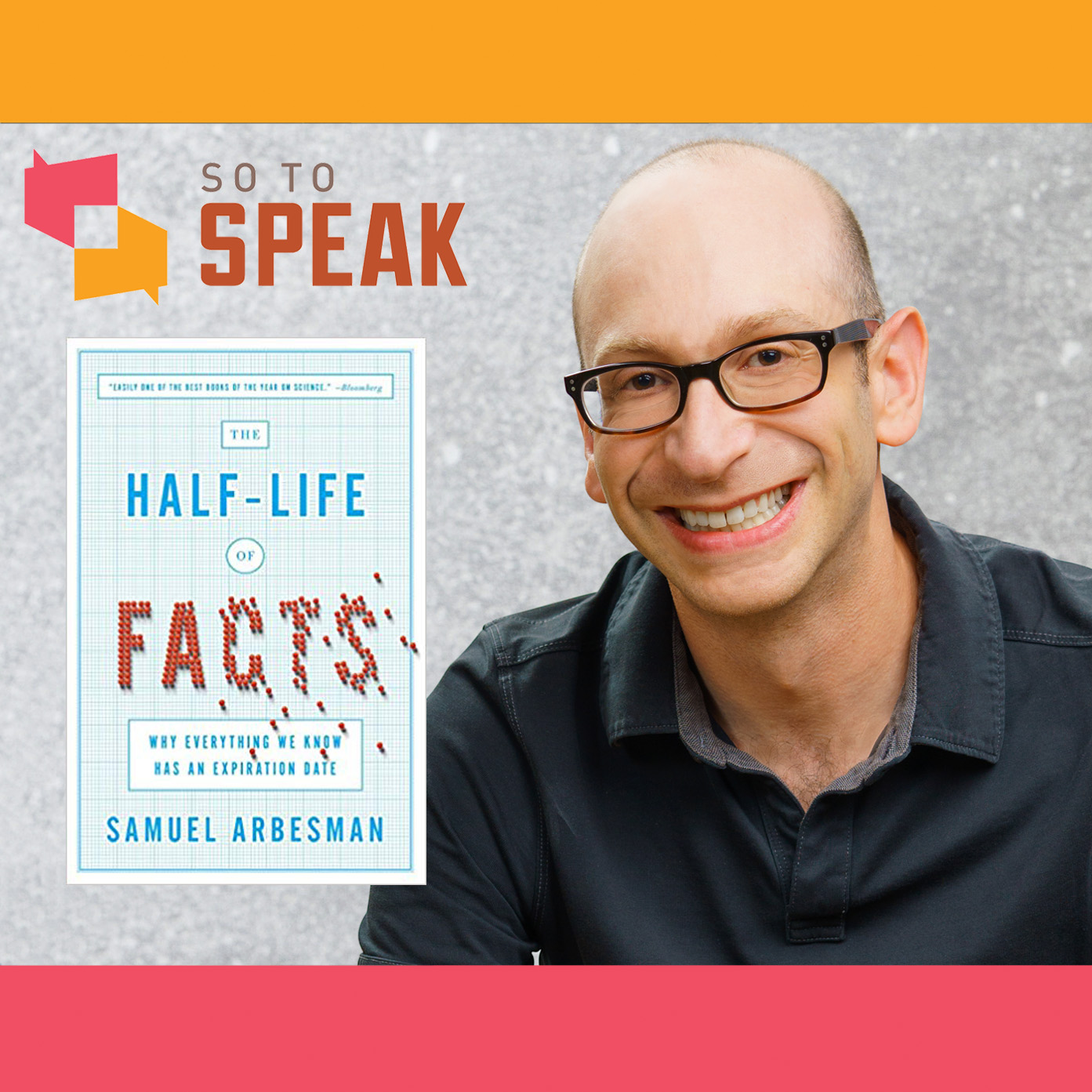
Ep. 74 'The Half-Life of Facts' with Samuel Arbesman
Has every fact we've ever known undergone revision or reversal? It's a provocative and consequential idea, and one that complexity scientist Samuel Arbesman argues has some truth to it — even if he wouldn't state it that strongly. On today's episode of So to Speak: The Free Speech Podcast, we talk with Arbesman about his 2012 book, The Half-Life of Facts: Why Everything We Know Has an Expiration Date. If facts about our world are constantly shifting, shouldn't the protection of free speech — the right to openly question the world and all we believe about it — become even more critical? We explore what, if any, implications Arbesman's argument has for those who care about free speech and open inquiry. Show notes: Podcast transcript http://www.Arbesman.net "World citation and collaboration networks: uncovering the role of geography in science" "Non-compete Agreements: Barriers to Entry … and Exit?" "How a Copyright Mistake Created the Modern Zombie" "Undiscovered Public Knowledge" by Don R. Swanson www.sotospeakpodcast.com Follow us on Twitter: http://www.twitter.com/freespeechtalk Like us on Facebook: http://www.facebook.com/sotospeakpodcast Email us: [email protected]

Ep. 73 'Uncensored' with Zachary Wood
Zachary Wood has become comfortable with uncomfortable conversations. He's engaged in them his entire life — with his mom who suffers from schizoaffective disorder, with his neighbors in Washington, D.C.'s impoverished Ward 8 community, and with his friends at the elite private high school he commuted four hours round trip to each day. So when Wood arrived at Williams College in 2014, he was prepared for the uncomfortable learning that comes along with uncomfortable conversations about the world's most important and controversial issues. Unfortunately, he was quick to learn not everyone was up for the challenge — including his college president. On today's episode of So to Speak: The Free Speech Podcast, we talk with Wood about his new memoir, Uncensored: My Life and Uncomfortable Conversations at the Intersection of Black and White America. Show notes: Podcast transcript Randall Kennedy So to Speak podcast "Williams College Bars 'Uncomfortable Learning' Speaker from Campus, Declares 'Hate Speech' Too Uncomfortable" "The Condescending Paternalism of Williams President Adam Falk" The Chicago Statement "In Response to the 'Chicago Statement' Petition" (Williams College student petition) www.sotospeakpodcast.com Follow us on Twitter: http://www.twitter.com/freespeechtalk Like us on Facebook: http://www.facebook.com/sotospeakpodcast Email us: [email protected]

Ep. 72 'Bodied' with director Joseph Kahn
E"Words are weapons in the world's most lyrical sport." That's how competitive battle rap is described by the makers of "Bodied," a new satirical film produced by Eminem about a college student who decides to write a thesis paper on battle rap and through a twist of fate finds himself becoming a prodigy in the sport. On today's episode of So to Speak: The Free Speech Podcast, we speak with"Bodied" director Joseph Kahn. Kahn is a filmmaker and Grammy-award winning music video director, who has directed videos for Taylor Swift, Imagine Dragons, Blink 182, Britney Spears, Maroon 5, and many other best-selling artists. Kahn describes himself as a free speech absolutist. During the course of this conversation, we unpack what that means and take a look at the free speech interests in his new, controversial film. Show notes: Joseph Kahn podcast transcript Bodied movie trailer: https://youtube.com/watch?v=oUry7CpMpCE Bodied is in theaters now and will be available on YouTube Premium on Nov. 28 BodiedMovie.com JosephKahn.com "Joseph Kahn doesn't care if he's 'canceled'" — Vulture, Nov. 2, 2018 "Power/Rangers (unauthorized NSFW bootleg)" www.sotospeakpodcast.com Follow us on Twitter: twitter.com/freespeechtalk Like us on Facebook: facebook.com/sotospeakpodcast Email us: [email protected]

Ep. 71 Thinking about free speech in bets with Annie Duke
On today's episode of So to Speak: The Free Speech Podcast, we discuss how decision-making, "information liquidity," and luck fit into our daily lives — and how a solid understanding of these concepts can point to an underappreciated benefit of free expression. Our guest is Annie Duke. She is a decision strategist, renowned poker player, and author of Thinking in Bets: Making Smarter Decisions When You Don't Have All the Facts. Duke won more than $4 million in tournament poker during her career, and in 2004 she won the World Series of Poker Tournament of Champions. Show notes: Podcast transcript AnnieDuke.com Thinking in Bets: Making Smarter Decisions When You Don't Have All the Facts Friedrich Hayek's "The Use of Knowledge in Society" www.sotospeakpodcast.com Follow us on Twitter: twitter.com/freespeechtalk Like us on Facebook: facebook.com/sotospeakpodcast Email us: [email protected]

Ep. 70 Free speech in the digital age with Jameel Jaffer
On today's episode of So to Speak: The Free Speech Podcast, we speak with Jameel Jaffer, executive director of the Knight First Amendment Institute at Columbia University. Jaffer and the Knight Institute seek to defend "the freedoms of speech and the press in the digital era through strategic litigation, research, and public education." Show notes: Podcast transcript Knight First Amendment Institute website Clapper v. Amnesty International, the U.S. Supreme Court case Jaffer argued challenging the constitutionality of the Foreign Intelligence Surveillance Act. So to Speak podcast with Glenn Greenwald on free speech and privacy Knight Institute v. Trump, the Knight Institute's legal challenge to President Donald Trump's blocking of critics on Twitter. "Knight Institute calls on Facebook to lift restrictions on digital journalism and research" www.sotospeakpodcast.com Follow us on Twitter: twitter.com/freespeechtalk Like us on Facebook: facebook.com/sotospeakpodcast Email us: [email protected]

Ep. 69 Former Solicitor General Donald B. Verrilli Jr.
On today's episode of So to Speak: The Free Speech Podcast, we partner with the First Amendment Salon to present a conversation between former Solicitor General of the United States Donald B. Verrilli Jr. and University of Washington School of Law scholar Ronald Collins. Verrilli was solicitor general of the United States from June 2011 to June 2016 and during that time he argued dozens of cases in front of the U.S. Supreme Court, including many First Amendment cases. He is now a partner with Munger, Tolles & Olson, and the founder of its Washington, D.C. office. During this conversation, Verrilli and Collins discuss Verrilli's advocacy in front of the Supreme Court on First Amendment cases and beyond. Verrilli also provides his take on the future of the court. The First Amendment Salon is a quarterly gathering of members of the First Amendment community for a 90-minute discussion with leading thinkers concerning a timely topic related to freedom of expression.A video version of this and past First Amendment Salon conversations can be found on FIRE's YouTube page. To learn more about the First Amendment Salon, visit the Salon's archive on FIRE's First Amendment Library. www.sotospeakpodcast.com Follow us on Twitter: twitter.com/freespeechtalk Like us on Facebook: facebook.com/sotospeakpodcastEmail us: [email protected]

Ep. 68 'True threats' with David L. Hudson Jr.
EThere are very few exceptions to the First Amendment, and a "true threat" is one of them. But defining a true threat isn't easy. Ever since the U.S. Supreme Court first examined true threats in the 1969 case Watts v. United States, it's been a messy doctrine. The court didn't provide a definition of a true threat until many years after Watts, and even then questions still remained. On today's episode of So to Speak: The Free Speech Podcast, we discuss the true threats doctrine with First Amendment scholar and FIRE Legal Fellow David L. Hudson Jr. He is the author of an ABA Journal article about true threats titled "When do rants exceed First Amendment boundaries and become true threats?" Also, don't miss Hudson tell the story of many important student free speech court cases as part of our "FIRE Starter" video series. You can watch the short videos on FIRE's YouTube channel at YouTube.com/theFIREorg. www.sotospeakpodcast.com Follow us on Twitter: twitter.com/freespeechtalk Like us on Facebook: facebook.com/sotospeakpodcast Email us: [email protected]

Ep. 67 'The Coddling of the American Mind'
ETribalism and group polarization are on the rise. So too are rates of anxiety, depression, and suicide. On campuses, professors and students are afraid to speak out. And on social media, outrage mobs rule the day. How did we get here? On today's episode of So to Speak, we are joined by FIRE President and CEO Greg Lukianoff to discuss his new co-authored book with New York University professor Jonathan Haidt, "The Coddling of the American Mind: How Good Intentions and Bad Ideas Are Setting Up a Generation for Failure." It's a social science detective story that seeks to explain "the growing inability of Americans to live, work, and cooperate across party lines" — and in this discussion, Greg points us toward all the clues. www.sotospeakpodcast.com Follow us on Twitter: twitter.com/freespeechtalk Like us on Facebook: facebook.com/sotospeakpodcast Email us: [email protected]

Ep. 66 Outrage mobs in comedy
EMuch has been written in recent months about online campaigns to get certain journalists, movie directors, and professors fired from their jobs because of things they said or wrote. Some campaigns have been successful. Some have not. On today's episode of So to Speak: The Free Speech Podcast, we talk about how these outrage mobs affect the world of comedy — in particular, one comedy club in Long Island City, New York. How should free speech advocates think about outrage mobs? Do they represent more speech, or a form of private censorship? Or is it more complicated? This episode of So to Speak is presented in partnership with Comedy Cellar: Live From the Table. It features: Nico Perrino, host, So to Speak: The Free Speech Podcast Noam Dworman, owner, The Comedy Cellar Rebecca Trent, owner, The Creek and the Cave Dan Naturman, comedian Monroe Martin, comedian www.sotospeakpodcast.com Follow us on Twitter: twitter.com/freespeechtalk Like us on Facebook: facebook.com/sotospeakpodcast Email us: [email protected] in a question: 215-315-0100

Ep. 65 Artificial intelligence & speech rights
How should we think about speech rights in the age of artificial intelligence and advanced robotics? On today's episode of So to Speak, we are joined by First Amendment scholars Ronald Collins and David Skover. They are the authors of the new book, Robotica: Speech Rights & Artificial Intelligence. From the printing press to the internet, advances in communications technology often upset the established order and spawn demands for censorship. There is little reason to suspect advances in artificial intelligence will be treated differently. As free speech advocates, how should we respond to these demands? To answer that question, Collins and Skover argue that we need to take a step back and ask some more fundamental questions about the values we seek to advance in protecting speech in the first place. www.sotospeakpodcast.com Follow us on Twitter: twitter.com/freespeechtalk Like us on Facebook: facebook.com/sotospeakpodcast Email us: [email protected] in a question: 215-315-0100

Ep. 64 How censorship crosses borders with Jacob Mchangama
On this episode of So to Speak, we chat with lawyer and free speech activist Jacob Mchangama. He is the founder and CEO of the Danish think tank Justitia, a visiting fellow at FIRE, and host of Clear and Present Danger: A History of Free Speech. Mchangama is also the author of the lead essay for the Cato Institute's June Cato Unbound online debate on the topic of "how censorship crosses borders." Our conversation focuses on the origins of Mchangama's interest in free speech issues, the 2005 Jyllands-Posten Muhammad cartoons controversy, the history of free speech, and the critiques of his Cato Unbound essay. Show notes: Mchangama's podcast, Clear and Present Danger: A History of Free Speech June Cato Unbound debate, "Free speech in international perspective" Mchangama's essays for Cato So to Speak episode with Flemming Rose, who commissioned the Jyllands-Posten Muhammad cartoons www.sotospeakpodcast.com Follow us on Twitter: twitter.com/freespeechtalk Like us on Facebook: facebook.com/sotospeakpodcast Email us: [email protected] in a question: 215-315-0100

Ep. 63 Supreme Court review: Kennedy, Kavanaugh, and "weaponizing the First Amendment"
Supreme Court review: Kennedy, Kavanaugh, and "weaponizing the First Amendment" On this episode of So to Speak, we discuss President Donald Trump's nomination of Brett Kavanaugh to the United States Supreme Court and what it might mean for the First Amendment. We also review Anthony Kennedy's legacy, the free speech cases from this past Supreme Court term, and Justice Elena Kagan's contention that some of her colleagues are "weaponizing the First Amendment." The guests on today's show are: Paul Sherman: Senior attorney, Institute for Justice Bob Corn-Revere: Partner, Davis Wright Tremaine Walter Olson: Senior fellow, Cato Institute www.sotospeakpodcast.com Follow us on Twitter: twitter.com/freespeechtalk Like us on Facebook: facebook.com/sotospeakpodcast Email us: [email protected] in a question: 215-315-0100

Ep. 62 Most memorable FIRE cases
EOn today's episode of So to Speak, we take a trip down memory lane. We are joined by FIRE's Greg Lukianoff, Samantha Harris, and Will Creeley to discuss memorable cases from FIRE's 19-year history. You can watch a video of this conversation on FIRE's YouTube channel (youtube.com/thefireorg). www.sotospeakpodcast.com Follow us on Twitter: twitter.com/freespeechtalk Like us on Facebook: facebook.com/sotospeakpodcast Email us: [email protected] in a question: 215-315-0100

Ep. 61 'HATE' with Nadine Strossen
EThe United States is unique in its protection of what some might label "hate speech." Of course, certain expression is unprotected, like incitement to imminent lawless action and true threats. But expression that is deemed merely offensive or hateful is generally protected. On this episode of So to Speak, we welcome back to the show former ACLU president and New York Law Professor Nadine Strossen. She is the author of "HATE: Why We Should Resist It With Free Speech, Not Censorship." In this new book, she argues that America's broad protections for hateful speech are a good thing, and that efforts to censor such speech has historically backfired or been proven ineffective. www.sotospeakpodcast.com Follow us on Twitter: twitter.com/freespeechtalk Like us on Facebook: facebook.com/sotospeakpodcast Email us: [email protected] in a question: 215-315-0100

Ep. 60 'Speak Freely' with Professor Keith Whittington
EIn February, Princeton University President Christopher Eisgruber announced that he will distribute copies of "Speak Freely: Why Universities Must Defend Free Speech" to all Princeton students and faculty as part of the university's annual "Pre-read" program. On this episode of So to Speak, our guest is Princeton University Professor Keith Whittington, who is the author of "Speak Freely." We discuss the latest campus free speech news at Princeton and across the county. We are also joined by FIRE Vice President of Policy Research Samantha Harris, who is a Princeton alumna and Professor Whittington's former student. www.sotospeakpodcast.com Follow us on Twitter: twitter.com/freespeechtalk Like us on Facebook: facebook.com/sotospeakpodcast Email us: [email protected] in a question: 215-315-0100

Ep. 59 Debating 'Is there a campus free speech crisis?' with Sullivan, Haidt, Nossel, Sachs, & Foster
EIs there a campus free speech crisis? In March, FIRE staff discussed the question. On today's episode of So to Speak: The Free Speech Podcast, we put the question to others and feature audio from a live debate that occurred on May 8 in New York City. New York magazine's Andrew Sullivan and New York University's Jonathan Haidt argue, yes, there is a campus free speech crisis. PEN America's Suzanne Nossel and Acadia University's Jeffrey Sachs argue, no, there is not. Freethink's Kmele Foster moderates. The debate took place at The Village Underground and was sponsored by FIRE and the Comedy Cellar as a part of "The Underground Debate Series." Who do you think won the debate? Share your thoughts on social media and tag the podcast using @freespeechtalk on Twitter. www.sotospeakpodcast.com Follow us on Twitter: twitter.com/freespeechtalk Like us on Facebook: facebook.com/sotospeakpodcast Email us: [email protected] Call in a question: 215-315-0100

Ep. 58 'Lust on Trial' with Amy Werbel
Anthony Comstock is a name that has become synonymous with censorship in America. In 1873, he founded the New York Society for the Suppression of Vice, and his career led to the confiscation or incineration of more than 3 million pieces of allegedly "obscene, lewd, or lascivious" material. On this episode of So to Speak, we speak with Fashion Institute of Technology Professor Amy Werbel about her new book, "Lust on Trial: Censorship and the Rise of American Obscenity in the Age of Anthony Comstock," and the legacy of Comstock's "Comstockery." Don't forget! Join us on May 8 at the Comedy Cellar in New York City for a live debate: "Is there a campus free speech crisis?" Tickets are now available from comedycellar.com. www.sotospeakpodcast.com Follow us on Twitter: twitter.com/freespeechtalk Like us on Facebook: facebook.com/sotospeakpodcast Email us: [email protected] in a question: 215-315-0100

Ep. 57 Exploring threats to a free press with Laura Handman
What are the greatest threats to a free press in America, and how have they changed in recent years? On this episode of So to Speak, we speak with Laura R. Handman, who is a partner at Davis Wright Tremaine and a co-chair of the firm's appellate practice. For 30 years, she has worked on free press issues ranging from defamation to reporter's privilege. Her media clients include National Public Radio, Atlantic Media, Dow Jones, The Economist, Amazon, Bloomberg, and many more. Don't forget! Join us on May 8 at the Comedy Cellar in New York City for a live debate: "Is there a campus free speech crisis?" Tickets are now available from comedycellar.com. www.sotospeakpodcast.com Follow us on Twitter: twitter.com/freespeechtalk Like us on Facebook: facebook.com/sotospeakpodcast Email us: [email protected] in a question: 215-315-0100

Ep. 56 Have you been defamed?
In January, President Donald Trump called America's libel laws "a sham and a disgrace." Are they? On this episode of So to Speak: The Free Speech Podcast, we sit down with Ballard Spahr Senior Counsel Lee Levine to discuss what America's libel "laws" really are — and are not. www.sotospeakpodcast.com Follow us on Twitter: twitter.com/freespeechtalk Like us on Facebook: facebook.com/sotospeakpodcast Email us: [email protected] in a question: 215-315-0100

Ep. 55 Is there a campus free speech crisis?
Is there a campus free speech crisis? On this episode of So to Speak, Nico Perrino is joined by FIRE's Will Creeley and Samantha Harris to discuss this simmering question. Watch the video of this podcast recording: youtu.be/uoO6TCAQpaE Additional reading: "The 'campus free speech crisis' is a myth. Here are the facts." by Jeffrey Adam Sachs "Everything we think about the political correctness debate is wrong" by Matthew Yglesias "The skeptics are wrong: Attitudes about free speech on campus are changing" by Sean Stevens and Jonathan Haidt "White House forum discusses free speech on campus" by Robert Shibley/FIRE "Gallup/Knight survey sheds light on changing student attitudes about free speech" by Nico Perrino/FIRE www.sotospeakpodcast.com Follow us on Twitter: twitter.com/freespeechtalk Like us on Facebook: facebook.com/sotospeakpodcast Email us: [email protected] in a question: 215-315-0100

Ep. 54 Masterpiece Cakeshop v. Colorado Civil Rights Commission
In 2012, a same-sex couple entered Masterpiece Cakeshop and asked its owner, Jack Phillips, to create a cake for their wedding reception in Denver, Colorado. Phillips declined the request, reportedly telling the couple, "Sorry guys, I don't make cakes for same-sex weddings." That brief, 20-second exchange eventually found its way to the U.S. Supreme Court, where it is now the subject of one of the most controversial First Amendment cases in years. The issue before the court is whether applying Colorado's public accommodations law to compel Phillips to create a cake for a gay wedding violates the free speech or free exercise clauses of the First Amendment. On this episode of So to Speak, we feature a First Amendment Salon debate about the case that occured last month. Arguing on the side of Masterpiece Cakeshop are Robert Corn-Revere (Davis Wright Tremaine) and Ilya Shapiro (Cato Institute). Arguing on the side of the Colorado Civil Rights Commission are John Paul Schnapper-Casteras (Schnapper-Casteras PLLC) and Sarah Warbelow (Human Rights Campaign). The debate is moderated by American University Law School Professor Stephen Warmiel. A video version of this and past First Amendment Salon conversations can be found on the Foundation for Individual rights in Education's YouTube page (youtube.com/thefireorg). www.sotospeakpodcast.com Follow us on Twitter: twitter.com/freespeechtalk Like us on Facebook: facebook.com/sotospeakpodcast Email us: [email protected] in a question: 215-315-0100

Ep. 53 Bret Weinstein, professor in exile
EFormer Evergreen State College Professor Bret Weinstein describes himself as a "professor in exile." The evolutionary biologist left Evergreen last September in the fallout from the controversy surrounding the school's planned Day of Absence programming. Weinstein's objection to the programming led fifty students to disrupt his class and demand his resignation. The backlash became so intense that Evergreen's chief of police told him she could not protect him from protesters. As a result, he had to hold his biology course in a public park. On this episode of So to Speak, we speak with Weinstein about his experience and the state of free speech and inquiry in higher education and beyond. www.sotospeakpodcast.com Follow us on Twitter: twitter.com/freespeechtalk Like us on Facebook: facebook.com/sotospeakpodcast Email us: [email protected] Call in a question: 215-315-0100

Ep. 52 The Great Firewall of China
Most Americans are familiar with The Great Wall of China. Fewer are familiar with the Great Firewall of China. The Firewall blocks vast expanses of the world's web content — and it's just one of the tools the Chinese government uses to monitor, censor, and even manipulate what its approximately 1.4 billion citizens see online. On this episode of So to Speak, we explore one of the most extensive and effective censorship systems ever devised by a government. How does the Chinese government do it? And why? For answers, we turn to the experts: "Charlie Smith," the pseudonymous co-founder of anti-censorship group greatfire.org, working secretly in China; Jeremy Goldkorn, a co-founder of the Sinica Podcast and editor of supchina; and Bill Bishop, editor of the popular China policy newsletter Sinocism. www.sotospeakpodcast.com Follow us on Twitter: twitter.com/freespeechtalk Like us on Facebook: facebook.com/sotospeakpodcast Email us: [email protected] Call in a question: 215-315-0100

Ep. 51 University of Alaska President Emeritus Mark Hamilton
In 2001, University of Alaska president Mark Hamilton made national headlines when he wrote a sternly worded memo declaring that freedom of speech on campus "CANNOT BE QUALIFIED" [emphasis original]. Hamilton retired from his position as University of Alaska president in 2010. However, his memo lives on in FIRE lore as the gold standard for a university president's response to a campus free speech controversy. On this episode of So to Speak, we talk with Hamilton about his famous memo and what he makes of today's campus free speech controversies. We also explore his illustrious career prior to becoming a university president, where he learned a thing or two about negotiation, talking across lines of difference, and defending the U.S. Constitution. Hamilton has a master's degree in English literature from Florida State University and taught English at West Point. He also spent 31 years in the U.S. Army, where he negotiated peace deals in El Salvador and Somalia, oversaw U.S. Army recruiting during the "be all you can be" era, and rose to the rank of Major General. www.sotospeakpodcast.com Follow us on Twitter: twitter.com/freespeechtalk Like us on Facebook: facebook.com/sotospeakpodcast Email us: [email protected] Call in a question: 215-315-0100

Ep. 50 Randall Kennedy on 'The Forgotten Origins of the Constitution on Campus'
EHas the history of how our constitutional rights came to be protected on campus been forgotten? Professor Randall L. Kennedy believes it has. It's a history even he wasn't familiar with until recently. On this episode of So to Speak, Professor Kennedy explains how civil rights activists in the 1950s and 60s secured early victories for free speech, due process, and public assembly on high school and college campuses. Professor Kennedy teaches courses on contracts, criminal law, and the regulation of race relations at Harvard Law School, and he is the author of "The Forgotten Origins of the Constitution on Campus." Prior to arriving at Harvard, he was a law clerk for Justice Thurgood Marshall at the United States Supreme Court. BONUS: Check out and subscribe to the new FIRE-sponsored podcast, Clear and Present Danger: A History of Free Speech. www.sotospeakpodcast.com Follow us on Twitter: twitter.com/freespeechtalk Like us on Facebook: facebook.com/sotospeakpodcast Email us: [email protected] Call in a question: 215-315-0100

Ep. 49 "The Great Dissent" w/ Professor Thomas Healy
Was our modern First Amendment born out of a chance encounter on a train bound for Boston in 1918? On this episode of So to Speak, we speak with Seton Hall Law Professor Thomas Healy. He argues that Supreme Court Justice Oliver Wendell Holmes' unlikely run-in with Judge Learned Hand in the summer of 1918 set off a series of events that culminated in a new trajectory for the First Amendment in America. Professor Healy is the author of "The Great Dissent: How Oliver Wendell Holmes Changed His Mind — and Changed the History of Free Speech in America." The book explores how one man who claimed to disdain all constitutional rights ended up breathing new meaning into our first one. www.sotospeakpodcast.com Follow us on Twitter: twitter.com/freespeechtalk Like us on Facebook: facebook.com/sotospeakpodcast Email us: [email protected] Call in a question: 215-315-0100

Ep. 48 'Natural Rights and the First Amendment' w/ Jud Campbell
Did the founders intend for the First Amendment to protect as much speech as it does today? University of Richmond Assistant Professor of Law Jud Campbell argues probably not. He is the author of an article recently published in The Yale Law Journal that Cass Sunstein says "might well be the most illuminating work on the original understanding of free speech in a generation." In "Natural Rights and the First Amendment," professor Campbell argues that the founders' understanding of the freedoms of speech and of the press rested on "a multifaceted understanding of natural rights that no longer survives in American constitutional thought." He contends that those rights "were expansive in scope but weak in their legal effect, allowing for restrictions of expression to promote the public good." On this episode of So to Speak, we investigate professor Campbell's claims and wonder, if true, what — if anything — we should do about them. www.sotospeakpodcast.com Follow us on Twitter: twitter.com/freespeechtalk Like us on Facebook: facebook.com/sotospeakpodcast Email us: [email protected] Call in a question: 215-315-0100

Ep. 47 Institute for Justice President and General Counsel Scott Bullock
The Institute for Justice doesn't litigate your typical First Amendment cases. They don't take cases involving protest bans, controversial speakers, or political dissent. Instead, the libertarian, public-interest law firm takes cases often ascribed to the margins of First Amendment concerns by the public and even some judges: cases involving occupational speech, commercial speech, and campaign finance. On this episode of So to Speak, we speak with IJ President and General Counsel Scott Bullock about the origin of IJ's unique brand of First Amendment litigation. Bullock joined the organization at its founding in 1991 and was involved in all of its early free speech cases. We also discuss some of IJ's current cases and some common arguments against its stances on First Amendment issues. www.sotospeakpodcast.com Follow us on Twitter: twitter.com/freespeechtalk Like us on Facebook: facebook.com/sotospeakpodcast Email us: [email protected] Call in a question: 215-315-0100

Ep. 46 Revisiting Masses v. Patten (1917)
Masses Publishing Co. v. Patten (1917) might be the most important free speech case you've never heard of. In his now largely forgotten decision in the case, then Southern District of New York Judge Learned Hand rejected the United States postmaster general's arguments for refusing to mail Masses magazine. The magazine was staunchly opposed to World War I and the compulsory military draft. The postmaster general argued that the recently passed Espionage Act gave him the authority to deny the magazine's circulation. On this episode of So to Speak, we revisit Masses v. Patten with University of Washington School of Law Scholar Ronald Collins and feature a reargument of the case (min. 40) at the United States Court of Appeals for the Second Circuit. One hundred years ago this month, that same court reversed Judge Hand's decision. The case was reargued in front of a panel of Second Circuit judges on Nov. 6, with former Stanford Law School Dean Kathleen Sullivan appearing for Masses Publishing Company and First Amendment attorney Floyd Abrams appearing for Postmaster Patten. VIDEO of reargument: https://youtu.be/p1W1wfOK1R0 www.sotospeakpodcast.com Follow us on Twitter: twitter.com/freespeechtalk Like us on Facebook: facebook.com/sotospeakpodcast Email us: [email protected] Call in a question: 215-315-0100

Ep. 45 Harvard professor Steven Pinker
Harvard University professor and FIRE Advisory Council member Steven Pinker is a rockstar academic. He has written 10 books, many of which are bestsellers, including most recently "The Better Angels of our Nature" and "The Sense of Style." On this episode of So to Speak, we chat with professor Pinker about free speech, free inquiry, taboo, dangerous ideas, and, of course, his forthcoming book on the Enlightenment: "Enlightenment Now: The Case for Reason, Science, Humanism, and Progress." Here is the recommended reading list provided by professor Pinker during the podcast: Immanuel Kant's "What is the Enlightenment?" Thomas Nagel's "The Last Word" Jonathan Glover's "Humanity: A Moral History of the 20th Century" www.sotospeakpodcast.comFollow us on Twitter: www.twitter.com/freespeechtalk Like us on Facebook: www.facebook.com/sotospeakpodcast Email us: [email protected] in a question: 215-315-0100

Ep. 44 Berkeley then and now
ENowhere have the campus free speech debates been as intense as at the University of California, Berkeley — the home of the Free Speech Movement. Violent protests against one speaker. Hundreds of thousands of dollars in security costs to protect another. Speaking invitations extended and then (maybe?) rescinded. And that's just this year. On this episode of So to Speak, we revisit the events surrounding the 1964 Berkeley Free Speech Movement to see if the university's storied past can teach us anything about today's debates. www.sotospeakpodcast.com Follow us on Twitter: twitter.com/freespeechtalk Like us on Facebook: facebook.com/sotospeakpodcast Email us: [email protected] Call in a question: 215-315-0100

Ep. 43 LIVE EVENT: Viewpoint diversity on campus
Is the modern college campus suffering from a decline in viewpoint diversity? Do American universities prepare students for life in a politically divided democracy, or might they be teaching habits of thought that will add to America's political divisions? Does political orthodoxy reduce the quality of research, scholarship, and education? Heterodox Academy and the Foundation for Individual Rights in Education conducted a live panel discussion at New York University in New York City on Tuesday, October 10 to explore these and other pressing questions. The panelists included: • Mark Lilla, professor, Columbia University • Nadine Strossen, professor, New York Law School; former president, ACLU • April Kelly-Woessner, professor, Elizabethtown College • Sam Abrams, professor, Sarah Lawrence College • Nico Perrino (moderator), host, So to Speak: The Free Speech Podcast; director of communications, FIRE Video: youtu.be/tcDN4iQWfUc www.sotospeakpodcast.com Follow us on Twitter: twitter.com/freespeechtalk Like us on Facebook: facebook.com/sotospeakpodcast Email us: [email protected] Call in a question: 215-315-0100

Ep. 42 'Is this the day the Internet dies?'
EThe experts are calling it the free speech debate of the next decade: Who makes the rules for what people can say — and see — on the web? And who pays the price when "The Delete Squad" gets it wrong? On today's episode of So to Speak: The Free Speech Podcast, FIRE's Alex Morey talks to experts on all sides of the issue, from the Facebook team working to keep the social network uncensored — but also safe — for users, to directors at Electronic Frontier Foundation and the Committee to Protect Journalists, and more. When one entity can unilaterally censor billions of users at the push of a button, what does it mean for the future of the internet? "Is this the day the Internet dies?" www.sotospeakpodcast.com Follow us on Twitter: twitter.com/freespeechtalk Like us on Facebook: facebook.com/sotospeakpodcast Email us: [email protected] Call in a question: 215-315-0100

Ep. 41 The British free speech invasion
EThe British free speech invasion is here. Our friends from the current affairs magazine spiked have traveled across the pond to host "Unsafe Space," an all-star free speech tour of American college campuses. On today's episode of So to Speak, we catch up with spiked editors Tom Slater and Ella Whelan in New Jersey to chat about the tour, which kicks off next week in Washington, D.C. We also discuss developments overseas, including spiked's latest free speech rankings of campuses in the United Kingdom and the implications of Brexit for free expression. Video: https://youtu.be/pnitp0Oa_ts www.sotospeakpodcast.com Follow us on Twitter: https://www.twitter.com/freespeechtalk Like us on Facebook: https://www.facebook.com/sotospeakpodcast Email us: [email protected] Call in a question: 215-315-0100

Ep. 40 "The neurodiversity case for free speech" w/ Geoffrey Miller
Would Isaac Newton succeed on the modern college campus? The genius who discovered the laws of motion, but who also obsessed over alchemy, was introverted and prone to unpredictable mood swings. Scholars believe he may have had autism, which is one of the many neurological conditions that contribute to "neurodiversity" in the world. And according to one new theory, the way modern colleges regulate speech is particularly chilling for neurodivergent people, like Newton, who are estimated to make up at least 20 percent of the population. On today's episode of So to Speak, we chat with University of New Mexico Associate Professor Geoffrey Miller. He is the author of two new articles, titled "The neurodiversity case for free speech" and "Mental health 'disabilities' as legal superpowers." In these articles, he argues that overbroad and vague campus speech codes could discriminate against neurodivergent people with diagnosed mental health disabilities. www.sotospeakpodcast.com Follow us on Twitter: twitter.com/freespeechtalk Like us on Facebook: facebook.com/sotospeakpodcast Email us: [email protected] Call in a question: 215-315-0100

Ep. 39 Judge Richard Posner on the First Amendment
Last week, Judge Richard Posner suddenly retired from the 7th U.S. Circuit Court of Appeals after nearly 36 years on the bench. The 1981 President Reagan appointee authored over 3,300 judicial opinions during his tenure and is widely considered one of the most vocal, provocative, and influential appellate court judges of all time. On today's episode of So to Speak, we hear Judge Posner's candid thoughts on the First Amendment as we play for you a conversation he had with Professor Geoffrey Stone on May 16, 2016, at the University of Chicago Law School. In this wide-ranging and candid dialogue, Judge Posner discusses his views on executive power in wartime, including why he believes President Franklin Roosevelt was justified in interning Japanese-Americans during World War II and why President Abraham Lincoln was right to ignore the Supreme Court's decision in Ex Parte Merryman. He also addresses Citizens United v. FEC ("terrible"), the Supreme Court in general ("a mediocre institution"), McCullen v. Coakley, the Pentagon Papers, flag burning, and much, much more. This podcast is presented as part of So to Speak's exclusive partnership with the First Amendment Salon. The First Amendment Salon is a quarterly gathering of members of the First Amendment community for a 90-minute discussion with leading thinkers concerning a timely topic related to freedom of expression. VIDEO: youtu.be/bhLJliXX848 www.sotospeakpodcast.com Follow us on Twitter: twitter.com/freespeechtalk Like us on Facebook: facebook.com/sotospeakpodcast Email us: [email protected] Call in a question: 215-315-0100

Ep. 38 "After Charlottesville" w/ former ACLU President Nadine Strossen
Nadine Strossen knows the dangers of Nazism. Her father was liberated from the Buchenwald concentration camp one day before he was scheduled to be sterilized. If American soldiers arrived a day later, Strossen would never become the first female president of the ACLU. She wouldn't even be alive. After Charlottesville, there has been vigorous debate about the so-called limits of free speech. Should white supremacist and neo-Nazi ideologies enjoy full First Amendment rights? And if so, should civil liberties groups, like the ACLU, defend them? On today's episode of So to Speak, Strossen discusses the fallout from Charlottesville and argues forcefully that, yes, even neo-Nazis deserve free speech and assembly rights ― and yes, the ACLU should defend those rights. She believes the best way to preserve a free society is to not compromise the rights guaranteed by a free society. She is authoring a book on this very topic due out next year titled, "HATE: Why we should resist it with free speech, not censorship." www.sotospeakpodcast.com Follow us on Twitter: twitter.com/freespeechtalk Like us on Facebook: facebook.com/sotospeakpodcast Email us: [email protected] Call in a question: 215-315-0100

Ep. 37 Fredrik deBoer on the growing distrust of higher ed
Fredrik deBoer has been in and around academia his entire life. He's a fourth generation Ph.D. who has blogged about education issues since 2008. Writing from a socialist perspective, he regularly tackles campus free speech debates. Last month, deBoer wrote a piece for The Los Angeles Times arguing that recent efforts to shut down conservative speakers on campus have contributed to an environment where 58 percent of Republicans say colleges have a negative effect on the country. On today's episode of So to Speak, we ask deBoer how this distrust threatens the future of higher education, and why he believes his colleagues on "the left" contribute to it. We also review common arguments against free speech, and deBoer explains how anti-communist purges targeting his grandfather sparked his early appreciation for academic freedom. www.sotospeakpodcast.com Follow us on Twitter: twitter.com/freespeechtalk Like us on Facebook: facebook.com/sotospeakpodcast Email us: [email protected] Call in a question: 215-315-0100

Ep. 36 The life of Louis Brandeis w/ Jeffrey Rosen
During the summer of 1919, U.S. Supreme Court Justice Louis Brandeis changed his mind about free speech. Earlier that year, he voted to uphold the conviction of Charles Schenck for opposing the military draft. A year later, he was the lone dissenter in a case dealing with nearly the same issue. In 1927, he wrote what some consider to be the greatest defense of free speech ever penned by a Supreme Court justice in the case Whitney v. California. Why did Brandeis change his mind? On today's episode of So to Speak, we explore the life and legacy of Brandeis with National Constitution Center President and CEO Jeffrey Rosen. Last year, Rosen wrote the book "Louis D. Brandeis: American Prophet," which explains how Brandeis came to be one of free speech's most eloquent advocates. www.sotospeakpodcast.com Follow us on Twitter: twitter.com/freespeechtalk Like us on Facebook: facebook.com/sotospeakpodcast Email us: [email protected] Call in a question: 215-315-0100

Ep. 35 Et tu, hecklers? Howard Sherman on defending the arts
In Shakespeare's 1599 play "Julius Caesar," the title character is warned by a soothsayer to "beware the Ides of March." After protesters attempted to shut down a modernized production of the play in New York's Central Park last month, theater companies may now be warning each other to "beware the ire of hecklers." On today's episode of So to Speak, we speak with Arts Integrity Initiative Director Howard Sherman about the controversy surrounding The Public Theater's production of "Julius Caesar," which captured headlines for portraying Caesar as a costumed Donald Trump (spoiler alert: Caesar gets assassinated). Howard was in the audience on June 16 when a protester stormed the stage. He may have also been the first to report the heckling to the outside world. Was the protest protected speech? What does the controversy tell us about creating art on contemporary political themes? Also, looking beyond the "Julius Caesar" controversy, where else do we see art challenged — or censored — and why? These questions and more are addressed in this wide-ranging interview. www.sotospeakpodcast.com Follow us on Twitter: twitter.com/freespeechtalk Like us on Facebook: facebook.com/sotospeakpodcast Email us: [email protected] Call in a question: 215-315-0100