Sex and Psychology Podcast
512 episodes — Page 4 of 11

Ep 363Episode 363: Sex In The Movies
EWhen it comes to how sex and sexuality are portrayed on screen, what does Hollywood get right and wrong? Let’s talk about it! I recently appeared on the Love Factually Podcast, hosted by my friends Paul Eastwick and Eli Finkel. They asked me to select a film about sex, so I picked the 2010 movie Easy A starring Emma Stone. We had a really fun conversation about it, so I wanted to share it with you today. Easy A covers a lot of timely themes, including sexual reputation, virginity, casual sex, and the sexual double standard. We discuss how this film handles them, what the science says about these topics, and also how our sexual culture has shifted since this film first came out. Some of the topics we explore include: Does the sexual double standard still exist for men and women? How is casual sex related to self-esteem? What does this movie get right and wrong about hookup culture? How do reputational concerns influence women’s interest in casual sex? I hope you enjoy this episode of the Love Factually podcast—and if you like what you hear, give Paul and Eli’s show a follow on Apple or Spotify. Have a sex question of your own? Send me a podcast voicemail to have it answered on a future episode at speakpipe.com/sexandpsychology. *** Thank you to our sponsors! The Kinsey Institute at Indiana University has been a trusted source for scientific knowledge and research on critical issues in sexuality, gender, and reproduction for over 75 years. Learn about more research and upcoming events at kinseyinstitute.org or look for them on social media @kinseyinstitute. *** Want to learn more about Sex and Psychology? Click here for previous articles or follow the blog on Facebook, Twitter, or Bluesky to receive updates. You can also follow Dr. Lehmiller on YouTube and Instagram. Listen and stream all episodes on Apple, Spotify, Google, or Amazon. Subscribe to automatically receive new episodes and please rate and review the podcast! Credits: Precision Podcasting (Podcast editing) and Shutterstock/Florian (Music). Image created with Canva; photos used with permission of guest.

Ep 362Episode 362: Sex Questions We’ve Never Been Asked Before (Listener Questions)
EWe are answering more of your sex questions in this show! We had a couple of fascinating questions that came through our listener voicemail that really stood out to me because I’ve never been asked about them before: Our first question is about what to do with sex toys you don’t want or need anymore. Can you recycle them? The answer is surprisingly complicated! The second question comes from a sex worker who wants to be open and honest with her kids about her work, so she’s looking for advice on how to have that conversation. To help me in answering these questions, Ashley Weller is back on the show. She is a Human Sexuality and Health Psychology Professor at Chapman University in Southern California. She also has a podcast called What’s Your Position that tackles issues surrounding sexuality, relationships, life, and love from a comedic yet educational point of view. Have a sex question of your own? Send me a podcast voicemail to have it answered on a future episode at speakpipe.com/sexandpsychology. *** Thank you to our sponsors! Passionate about building a career in sexuality? Check out the Sexual Health Alliance. With SHA, you’ll connect with world-class experts and join an engaged community of sexuality professionals from around the world. Visit SexualHealthAlliance.com and start building the sexuality career of your dreams today. *** Want to learn more about Sex and Psychology? Click here for previous articles or follow the blog on Facebook, Twitter, or Bluesky to receive updates. You can also follow Dr. Lehmiller on YouTube and Instagram. Listen and stream all episodes on Apple, Spotify, Google, or Amazon. Subscribe to automatically receive new episodes and please rate and review the podcast! Credits: Precision Podcasting (Podcast editing) and Shutterstock/Florian (Music). Image created with Canva; photos used with permission of guest.

Ep 361Episode 361: Navigating Age-Gap Relationships (Listener Questions)
EIn today’s show, we are answering more of your sex questions! We recently had two questions come through our podcast voicemail that center around navigating relationships where the partners are significantly different in terms of age, so that’s what we’re going to be talking about in this show. To help me in answering these questions, Ashley Weller is back on the podcast. She is a Human Sexuality and Health Psychology Professor at Chapman University in Southern California. She also runs her own podcast called What’s Your Position, which tackles issues surrounding sexuality, relationships, life, and love from a comedic yet educational point of view. Some of the topics we explore include: What counts as an “age-gap relationship” anyway? Why are age-gap relationships so stigmatized? If you’re in an age-gap relationship, how do you deal with all of the social judgment? How do you maintain a healthy and active sex life in an age-gap relationship when partners have different libidos? What are some of the most common challenges that come up in age-gap relationships? Have a sex question of your own? Send me a podcast voicemail to have it answered on a future episode at speakpipe.com/sexandpsychology. *** Thank you to our sponsors! The Kinsey Institute at Indiana University has been a trusted source for scientific knowledge and research on critical issues in sexuality, gender, and reproduction for over 75 years. Learn about more research and upcoming events at kinseyinstitute.org or look for them on social media @kinseyinstitute. *** Want to learn more about Sex and Psychology? Click here for previous articles or follow the blog on Facebook, Twitter, or Bluesky to receive updates. You can also follow Dr. Lehmiller on YouTube and Instagram. Listen and stream all episodes on Apple, Spotify, Google, or Amazon. Subscribe to automatically receive new episodes and please rate and review the podcast! Credits: Precision Podcasting (Podcast editing) and Shutterstock/Florian (Music). Image created with Canva; photos used with permission of guest.

Ep 360Episode 360: What’s Your Love Language?
E“The Five Love Languages” is one of the most popular self-help books on relationships ever written, and it’s often used in couples’ therapy. However, despite its massive popularity, there’s a surprising lack of research on the theory behind it. My guest today recently published a new study that tested some of its core ideas, and the findings may very well surprise you. I am joined by Dr. Sharon M. Flicker, a clinical psychologist who researches intimate relationships. She is licensed to practice psychology in New York and Pennsylvania, and is an Associate Professor of Psychology at California State University – Sacramento. Some of the topics we address in this episode include: What are the five love languages? Does everyone have a primary love language? Are people actually happier when their partner “speaks” their primary love language? Which love language is most strongly linked to relationship satisfaction? Is the love languages concept useful in sex and relationship therapy? You can check out Sharon’s website to learn more about her work. Got a sex question? Send me a podcast voicemail to have it answered on a future episode at speakpipe.com/sexandpsychology. *** Thank you to our sponsors! Passionate about building a career in sexuality? Check out the Sexual Health Alliance. With SHA, you’ll connect with world-class experts and join an engaged community of sexuality professionals from around the world. Visit SexualHealthAlliance.com and start building the sexuality career of your dreams today. *** Want to learn more about Sex and Psychology? Click here for previous articles or follow the blog on Facebook, Twitter, or Bluesky to receive updates. You can also follow Dr. Lehmiller on YouTube and Instagram. Listen and stream all episodes on Apple, Spotify, Google, or Amazon. Subscribe to automatically receive new episodes and please rate and review the podcast! Credits: Precision Podcasting (Podcast editing) and Shutterstock/Florian (Music). Image created with Canva; photos used with permission of guest.

Ep 359Episode 359: Are You Having “Good Enough” Sex?
ESexual problems are common. So how do we fix them? In today’s episode, we’re going to dive into the Good Enough Sex Model. It’s a radically different way of thinking about sex that can help us both in preventing problems from emerging in the first place, as well as fixing problems when they appear. My guest is Dr. Barry McCarthy. He is an emeritus professor of psychology at American University and a certified couple’s therapist. He has published more than 150 academic papers and chapters, and has authored or co-authored 24 books. In 2016 he received the Masters and Johnson award for lifetime contributions to the sexuality field. Some of the topics we address in this episode include: Why do we need more than just medication when it comes to fixing sexual problems? What is the Good Enough Sex Model? How is it different from other forms of sex therapy? How can we set realistic expectations for resolving sexual problems? Why is playfulness such an important element of good sex? How can parters resolve disagreements about sex in a healthy way? You can check out Barry’s Psychology Today profile to read more of his work. Got a sex question? Send me a podcast voicemail to have it answered on a future episode at speakpipe.com/sexandpsychology. *** Thank you to our sponsors! The Kinsey Institute at Indiana University has been a trusted source for scientific knowledge and research on critical issues in sexuality, gender, and reproduction for over 75 years. Learn about more research and upcoming events at kinseyinstitute.org or look for them on social media @kinseyinstitute. *** Want to learn more about Sex and Psychology? Click here for previous articles or follow the blog on Facebook, Twitter, or Bluesky to receive updates. You can also follow Dr. Lehmiller on YouTube and Instagram. Listen and stream all episodes on Apple, Spotify, Google, or Amazon. Subscribe to automatically receive new episodes and please rate and review the podcast! Credits: Precision Podcasting (Podcast editing) and Shutterstock/Florian (Music). Image created with Canva; photos used with permission of guest.

Ep 358Episode 358: Resolutions for Thriving Relationships (Essential Listen)
ENow is the perfect time to make some resolutions for healthy relationships in the New Year! In previous year-end episodes, we covered sexual resolutions (see episodes 155 and 253), so in this show, we’re going to focus on relationship resolutions. We’ll be talking about tips for making new friends, strengthening romantic relationships, and building a healthier relationship with yourself. Today, we’re going to revisit one of Sex and Psychology’s Essential Listens: my interview with Dr. Juliana Hauser, which originally appeared back in episode 156. Dr. Juliana is a licensed marriage and family therapist and licensed professional counselor who specializes in relationships, sex, and sexuality. In addition to running a private practice, she is a nationally known expert in this area whose work has appeared all over in the media. Some of the topics we dive into include: What are some ways of meeting new people in the new year? How can we balance having strong friendships that don’t interfere with our romantic relationships? How can we resolve to be better online daters in the new year? What are some ways we can cultivate better communication skills with our partners? You can check out Juliana’s website to learn more about her work. Got a sex question? Send me a podcast voicemail to have it answered on a future episode at speakpipe.com/sexandpsychology. *** Thank you to our sponsors! Maintain your intimate health with NeuEve. Check out NeuEve’s array of science-backed products created by an OB/GYN for promoting vaginal wellness. Visit neueve.com/justin to learn more and save 5% off of your order! *** Want to learn more about Sex and Psychology? Click here for previous articles or follow the blog on Facebook, Twitter, or Bluesky to receive updates. You can also follow Dr. Lehmiller on YouTube and Instagram. Listen and stream all episodes on Apple, Spotify, Google, or Amazon. Subscribe to automatically receive new episodes and please rate and review the podcast! Credits: Precision Podcasting (Podcast editing) and Shutterstock/Florian (Music). Image created with Canva; photos used with permission of guest.

Ep 357Episode 357: Navigating ADHD and Sex
EAttention-deficit/hyperactivity disorder (ADHD) is a topic that is rarely discussed in terms of how it affects adults’ intimate lives, but it’s something we need to talk about. Research suggests that around 40% of adults with ADHD experience at least one form of sexual dysfunction. In today’s show, we’re going to explore what you need to know about ADHD, sex, and relationships. I am joined by Cate Osborn, a certified sex educator, mental health advocate, and full-time content creator, with ADHD. As a professional table top role-playing game performer, she is passionate about opening conversations about neurodiversity and accessibility in the gaming and BDSM/kink communities. Some of the specific questions we answer in this episode include: Why is ADHD linked to both lower and higher sexual desire? How does ADHD affect orgasm? Are there gender differences in how ADHD impacts sex? What are some of the ways ADHD can affect relationships outside of the bedroom? If you’re someone who finds yourself constantly distracted during sex, what can you do about this? You can check out Cate’s website to learn more about her work. Got a sex question? Send me a podcast voicemail to have it answered on a future episode at speakpipe.com/sexandpsychology. *** Thank you to our sponsors! The Kinsey Institute at Indiana University has been a trusted source for scientific knowledge and research on critical issues in sexuality, gender, and reproduction for over 75 years. Learn about more research and upcoming events at kinseyinstitute.org or look for them on social media @kinseyinstitute. *** Want to learn more about Sex and Psychology? Click here for previous articles or follow the blog on Facebook, Twitter, or Bluesky to receive updates. You can also follow Dr. Lehmiller on YouTube and Instagram. Listen and stream all episodes on Apple, Spotify, Google, or Amazon. Subscribe to automatically receive new episodes and please rate and review the podcast! Credits: Precision Podcasting (Podcast editing) and Shutterstock/Florian (Music). Image created with Canva; photos used with permission of guest.

Ep 356Episode 356: Why Holiday Romance Movies Are So Popular
EOver the last couple of decades, holiday movies have increasingly centered around love and romance, and they’re growing massively in popularity. In this episode, we’re going to dive into the rise of romance-themed holiday media and how this intersects with cuffing season, or the increased tendency for people to partner-up during the winter months. I am joined once again by Dr. Paul Eastwick and Dr. Eli Finkel. Dr. Eastwick is a Professor at the University of California, Davis, where he studies romantic attraction and close relationships. Dr. Finkel is a professor at Northwestern University and author of the bestselling book The All-Or-Nothing Marriage: How the Best Marriages Work, which we discussed back in Episode 45. Together, they co-host the Love Factually podcast. Some of the specific questions we answer in this episode include: Why is so much holiday media focused on themes of love and romance? What’s the science behind “cuffing season?” Is it a good or bad thing that holiday media focuses so much on romance? Is Die Hard really a Christmas movie? You can check out the Love Factually podcast website to learn more. Got a sex question? Send me a podcast voicemail to have it answered on a future episode at speakpipe.com/sexandpsychology. *** Thank you to our sponsors! Passionate about building a career in sexuality? Check out the Sexual Health Alliance. With SHA, you’ll connect with world-class experts and join an engaged community of sexuality professionals from around the world. Visit SexualHealthAlliance.com and start building the sexuality career of your dreams today. The Kinsey Institute at Indiana University has been a trusted source for scientific knowledge and research on critical issues in sexuality, gender, and reproduction for over 75 years. Learn about more research and upcoming events at kinseyinstitute.org or look for them on social media @kinseyinstitute. *** Want to learn more about Sex and Psychology? Click here for previous articles or follow the blog on Facebook, Twitter, or Bluesky to receive updates. You can also follow Dr. Lehmiller on YouTube and Instagram. Listen and stream all episodes on Apple, Spotify, Google, or Amazon. Subscribe to automatically receive new episodes and please rate and review the podcast! Credits: Precision Podcasting (Podcast editing) and Shutterstock/Florian (Music). Image created with Canva; photos used with permission of guest.
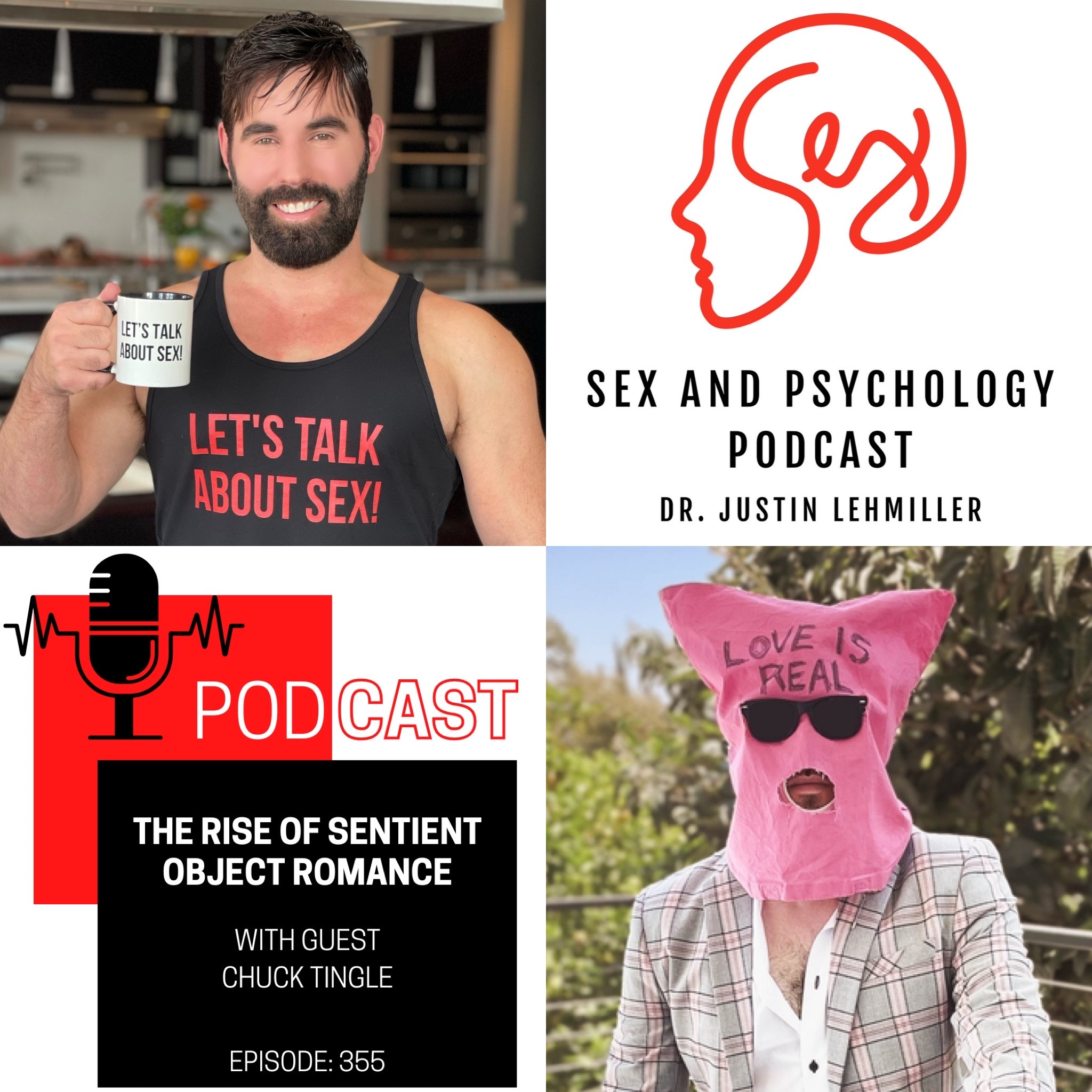
Ep 355Episode 355: The Rise of Sentient Object Romance
E“Sentient object romance” is an increasingly popular erotica genre in which humans get ravished by inanimate objects that come to life. Some of the most wonderfully absurd titles I’ve seen in this area include “Glazed by the Gay Living Donuts” and “This Pumpkin Spice Latte Gets Me Off.” In today’s show, we’re going to explore the appeal of sentient object romance with an author who has published dozens of books in this area. I am joined by Chuck Tingle, a USA Today bestselling author, two-time Hugo Award finalist, and Bram Stoker Award nominee. He is a mysterious force of energy behind sunglasses and a pink mask. He is also an anonymous author of romance, horror, and fantasy. Chuck writes to prove love is real, because love is the most important tool we have when resisting the endless cosmic void. Some of the topics we dive into include: What do people find appealing or arousing about sentient objects? Why are some people attracted to objects in real life? How does attraction to objects intersect with neurodiversity? What’s the political subtext behind sentient object romance? You can check out Chuck’s website to learn more about his work, and check out all of his books here. Got a sex question? Send me a podcast voicemail to have it answered on a future episode at speakpipe.com/sexandpsychology. *** Thank you to our sponsors! Maintain your intimate health with NeuEve. Check out NeuEve’s array of science-backed products created by an OB/GYN for promoting vaginal wellness. Visit neueve.com/justin to learn more and save 5% off of your order! *** Want to learn more about Sex and Psychology? Click here for previous articles or follow the blog on Facebook, Twitter, or Bluesky to receive updates. You can also follow Dr. Lehmiller on YouTube and Instagram. Listen and stream all episodes on Apple, Spotify, Google, or Amazon. Subscribe to automatically receive new episodes and please rate and review the podcast! Credits: Precision Podcasting (Podcast editing) and Shutterstock/Florian (Music). Image created with Canva; photos used with permission of guest.

Ep 354Episode 354: Why Gay Men Have a Higher Risk of Erectile Dysfunction
EResearch has found that gay men are substantially more likely to experience erectile dysfunction than heterosexual men, whereas heterosexual men are more likely to experience premature ejaculation than gay men. So what’s up with that? In this episode, we’re going dive into the science that can help to explain this curious pattern, as well as discuss tips for dealing with ED. I am joined once again by Tom Bruett, a licensed marriage and family therapist, trainer, consultant, and author who works extensively with the queer community. He is the founder of the Queer Relationship Institute, and author of the book The Go-To Relationship Guide for Gay Men: From Honeymoon to Lasting Commitment, which will be published in March 2025. Some of the specific questions we answer in this episode include: How common is ED among gay men? How does performance anxiety impact gay men, and how do you deal with this? How do recreational drugs impact sexual functioning? What are some strategies to improve erectile function? How might rapid ejaculation be viewed differently in gay vs. heterosexual contexts? You can learn more by checking out the Queer Relationship Institute’s Linktree. Got a sex question? Send me a podcast voicemail to have it answered on a future episode at speakpipe.com/sexandpsychology. *** Thank you to our sponsors! TENGA is Japan’s leading sexual wellness brand, specializing in discreet, stylish products. Take advantage of their year-end sale and Christmas bundles at the TENGA Store USA and TENGA Store Europe. Use code SEXANDPSYCH to save 15% off your first purchase with a minimum spend of $15 (US) or €30 (Europe). Passionate about building a career in sexuality? Check out the Sexual Health Alliance. With SHA, you’ll connect with world-class experts and join an engaged community of sexuality professionals from around the world. Visit SexualHealthAlliance.com and start building the sexuality career of your dreams today. The Kinsey Institute at Indiana University has been a trusted source for scientific knowledge and research on critical issues in sexuality, gender, and reproduction for over 75 years. Learn about more research and upcoming events at kinseyinstitute.org or look for them on social media @kinseyinstitute. *** Want to learn more about Sex and Psychology? Click here for previous articles or follow the blog on Facebook, Twitter, or Bluesky to receive updates. You can also follow Dr. Lehmiller on YouTube and Instagram. Listen and stream all episodes on Apple, Spotify, Google, or Amazon. Subscribe to automatically receive new episodes and please rate and review the podcast! Credits: Precision Podcasting (Podcast editing) and Shutterstock/Florian (Music). Image created with Canva; photos used with permission of guest.

Ep 353Episode 353: Dating And Relationship Tips For Gay Men
EMost relationship advice is tailored to heterosexual folks. And while some of that is also applicable queer relationships, not all of it is. Queer relationships are unique and therefore need relationship advice that’s tailored to them. My guest today has a forthcoming book that offers a relationship guide for gay men, so that’s what we’re going to be talking about in this show. I am joined by Tom Bruett, a licensed marriage and family therapist, trainer, consultant, and author who works extensively with the queer community. He is the founder of the Queer Relationship Institute, and author of the book The Go-To Relationship Guide for Gay Men: From Honeymoon to Lasting Commitment, which will be published in March 2025. Some of the specific questions we answer in this episode include: What are the unique stages that gay men’s relationships go through? What’s the deal with gay men and “daddy issues?” For gay men who struggle to make a relationship last beyond the honeymoon stage, what do they need to know? How can understanding your attachment style help in navigating dating and relationships? How do you find a sex or relationship therapist who is knowledgable and gay-affirming? You can learn more by checking out the Queer Relationship Institute’s Linktree. Got a sex question? Send me a podcast voicemail to have it answered on a future episode at speakpipe.com/sexandpsychology. *** Thank you to our sponsors! Passionate about building a career in sexuality? Check out the Sexual Health Alliance. With SHA, you’ll connect with world-class experts and join an engaged community of sexuality professionals from around the world. Visit SexualHealthAlliance.com and start building the sexuality career of your dreams today. Whether you’re just a few dates in or have been together a long time, it’s time to lighten the mood and have fun with your partner by using Paired. Head over to paired.com/justin to get a 7-day free trial and 25% off if you sign up for a subscription. *** Want to learn more about Sex and Psychology? Click here for previous articles or follow the blog on Facebook, Twitter, or Bluesky to receive updates. You can also follow Dr. Lehmiller on YouTube and Instagram. Listen and stream all episodes on Apple, Spotify, Google, or Amazon. Subscribe to automatically receive new episodes and please rate and review the podcast! Credits: Precision Podcasting (Podcast editing) and Shutterstock/Florian (Music). Image created with Canva; photos used with permission of guest.

Ep 352Episode 352: Inside the World of Financial Domination
EFinancial domination or findom involves a submissive (usually a man) who gives money or control of their finances to a dominant partner (usually a woman). The sub is not expecting anything in return—it’s about submitting, giving up control, sometimes being humiliated, and being aroused by all of this. So why are people into findom, and why does it seem to be growing in popularity? My guest today is Jessica van Meir, a PhD candidate at the Harvard Kennedy School who studies sex work. Jessica is co-founder of MintStars, a subscription platform for content creators, models, and their fans. She also co-authored a chapter in the new book Sex Work Today: Erotic Labor in the 21st Century that explores the rise of financial kinks. Some of the specific questions we answer in this episode include: Who’s into findom and why? How is findom similar to or different from sugar dating? What’s the connection between findom, our growing economic crises, and capitalism? How can findom serve as a way of coping with financial precarity? How does findom both challenge and reinforce traditional gender power dynamics? To learn more about Jessica, follow her on the socials at @jessicavanmeir.bsky.social You can get 30% off Sex Work Today when you input code NYUP30 at checkout on nyupress.org. Got a sex question? Send me a podcast voicemail to have it answered on a future episode at speakpipe.com/sexandpsychology. *** Thank you to our sponsors! Maintain your intimate health with NeuEve. Check out NeuEve’s array of science-backed products created by an OB/GYN for promoting vaginal wellness. Visit neueve.com/justin to learn more and save 5% off of your order! *** Want to learn more about Sex and Psychology? Click here for previous articles or follow the blog on Facebook, Twitter, or Bluesky to receive updates. You can also follow Dr. Lehmiller on YouTube and Instagram. Listen and stream all episodes on Apple, Spotify, Google, or Amazon. Subscribe to automatically receive new episodes and please rate and review the podcast! Credits: Precision Podcasting (Podcast editing) and Shutterstock/Florian (Music). Image created with Canva; photos used with permission of guest.

Ep 351Episode 351: The Pornification of America
EThese days, it seems like sex is everywhere you look. We live in a very pornified culture in many ways, but it wasn’t always like this. So what changed? In today’s show, we’re going to explore the rise of “raunch culture.” Some of the topics we’ll discuss include the effects of living in a hypersexualized society, the mixed messages that women receive about sex, and why raunch culture and purity culture co-exist. I am joined once again by Dr. Bernadette Barton, a Professor of Sociology and the Director of Gender Studies at Morehead State University. Barton is co-editor of the new book Sex Work Today: Erotic Labor in the 21st Century. She is also author of the book The Pornification of America. Her research and teaching explore contemporary issues of gender, sexuality, religion, culture, happiness, and the sex industry. Some of the specific questions we answer in this episode include: What is “raunch culture?” When and why did our culture start to become so highly pornified? Is raunch culture empowering to women? Is the hypersexualization of society a sign of sex-positivity? Raunch culture and purity culture seem at odds with one another, so how do they exist simultaneously? You can get 30% off Sex Work Today when you input code NYUP30 at checkout on nyupress.org. Got a sex question? Send me a podcast voicemail to have it answered on a future episode at speakpipe.com/sexandpsychology. *** Thank you to our sponsors! Passionate about building a career in sexuality? Check out the Sexual Health Alliance. With SHA, you’ll connect with world-class experts and join an engaged community of sexuality professionals from around the world. Visit SexualHealthAlliance.com and start building the sexuality career of your dreams today. The Kinsey Institute at Indiana University has been a trusted source for scientific knowledge and research on critical issues in sexuality, gender, and reproduction for over 75 years. Learn about more research and upcoming events at kinseyinstitute.org or look for them on social media @kinseyinstitute. *** Want to learn more about Sex and Psychology? Click here for previous articles or follow the blog on Facebook, Twitter, or Bluesky to receive updates. You can also follow Dr. Lehmiller on YouTube and Instagram. Listen and stream all episodes on Apple, Spotify, Google, or Amazon. Subscribe to automatically receive new episodes and please rate and review the podcast! Credits: Precision Podcasting (Podcast editing) and Shutterstock/Florian (Music). Image created with Canva; photos used with permission of guest.

Ep 350Episode 350: The Rise of Sugar Dating
ESugar dating typically involves an older, wealthy person who financially supports a younger, attractive partner in exchange for companionship and intimacy, and sometimes sex. In today’s episode, we’re going to explore the growing popularity of sugar dating and the unique grey area that it occupies in between traditional dating and sex work. My guest is Dr. Bernadette Barton, a Professor of Sociology and the Director of Gender Studies at Morehead State University. Barton is co-editor of the new book Sex Work Today: Erotic Labor in the 21st Century. Her research and teaching explore contemporary issues of gender, sexuality, religion, culture, happiness, and the sex industry. Some of the specific questions we answer in this episode include: What are some common examples of sugaring arrangements? How is sugar dating different from traditional dating? Is sugar dating sex work? What’s the legal status of sugar dating? Who holds the power in sugar dating relationships? You can get 30% off Sex Work Today when you input code NYUP30 at checkout on nyupress.org. Got a sex question? Send me a podcast voicemail to have it answered on a future episode at speakpipe.com/sexandpsychology. *** Thank you to our sponsors! Maintain your intimate health with NeuEve. Check out NeuEve’s array of science-backed products created by an OB/GYN for promoting vaginal wellness. Visit neueve.com/justin to learn more and save 5% off of your order! *** Want to learn more about Sex and Psychology? Click here for previous articles or follow the blog on Facebook, Twitter, or Bluesky to receive updates. You can also follow Dr. Lehmiller on YouTube and Instagram. Listen and stream all episodes on Apple, Spotify, Google, or Amazon. Subscribe to automatically receive new episodes and please rate and review the podcast! Credits: Precision Podcasting (Podcast editing) and Shutterstock/Florian (Music). Image created with Canva; photos used with permission of guest.

Ep 349Episode 349: What Movies Get Right (And Wrong) About Relationships
ERomantic comedies are one of the most popular film genres. But how accurate are rom-coms in the way they portray sex, love, and relationships? My guests today are the hosts of a new podcast that uses the science of relationships to separate fact from fiction in some of the biggest rom-coms of all time. We’re going to explore some of the things that Hollywood gets right and wrong in the way they depict relationships. I am joined by Dr. Paul Eastwick and Dr. Eli Finkel. Dr. Eastwick is a Professor at the University of California, Davis, where he studies romantic attraction and close relationships. Dr. Finkel is a professor at Northwestern University and author of the bestselling book The All-Or-Nothing Marriage: How the Best Marriages Work, which we discussed back in Episode 45. Together, they co-host the Love Factually podcast. Some of the specific questions we answer in this episode include: In movies, partners often meet as strangers and fall in love. Is this how relationships typically start in real life? Falling in love at first sight is a common theme in rom-coms. But what does the science say about this? Opposites often attract on screen, but is that also true IRL? What are some things films often get wrong about sex? Is it necessarily a bad thing if rom coms aren’t always accurate? You can check out the Love Factually podcast website to learn and listen more. Got a sex question? Send me a podcast voicemail to have it answered on a future episode at speakpipe.com/sexandpsychology. *** Thank you to our sponsors! The Kinsey Institute at Indiana University has been a trusted source for scientific knowledge and research on critical issues in sexuality, gender, and reproduction for over 75 years. Learn about more research and upcoming events at kinseyinstitute.org or look for them on social media @kinseyinstitute. *** Want to learn more about Sex and Psychology? Click here for previous articles or follow the blog on Facebook, Twitter, or Bluesky to receive updates. You can also follow Dr. Lehmiller on YouTube and Instagram. Listen and stream all episodes on Apple, Spotify, Google, or Amazon. Subscribe to automatically receive new episodes and please rate and review the podcast! Credits: Precision Podcasting (Podcast editing) and Shutterstock/Florian (Music). Image created with Canva; photos used with permission of guest.

Ep 348Episode 348: How To Stay Sexually Healthy Your Entire Life
EOur sexuality is something that evolves and changes over time. However, traditional sex education does a poor job of preparing us for those changes. In today’s show, we’re going to talk about how to stay sexually healthy for your entire life. We’re going to explore what people at different stages of life need to know, why maintaining sexual health is so important, tips for navigating low sexual desire, and so much more. I am joined once again by Dr. Evelin Dacker, who is the creator of the STARS framework for sexual communication, which we discussed in depth in the last episode. She is a physician who specializes in sexual wellness, menopause and hormones, and vitality throughout life. Some of the specific questions we answer in this episode include: What are the key things young adults should know about staying sexually healthy? How can we effectively communicate with our partners about sexual difficulties when they arise? What do mid-life and older adults need to know about maintaining a healthy sex life? How do you maintain a healthy sex life when your sexual desire (or your partner’s desire) declines? How do you talk to your doctor about sex? You can check out Evelin’s website to learn more about the STARS method and follow her on the socials @sexmeddoc. Got a sex question? Send me a podcast voicemail to have it answered on a future episode at speakpipe.com/sexandpsychology. *** Thank you to our sponsors! Passionate about building a career in sexuality? Check out the Sexual Health Alliance. With SHA, you’ll connect with world-class experts and join an engaged community of sexuality professionals from around the world. Visit SexualHealthAlliance.com and start building the sexuality career of your dreams today. The Kinsey Institute at Indiana University has been a trusted source for scientific knowledge and research on critical issues in sexuality, gender, and reproduction for over 75 years. Learn about more research and upcoming events at kinseyinstitute.org or look for them on social media @kinseyinstitute. *** Want to learn more about Sex and Psychology? Click here for previous articles or follow the blog on Facebook, Twitter, or Bluesky to receive updates. You can also follow Dr. Lehmiller on YouTube and Instagram. Listen and stream all episodes on Apple, Spotify, Google, or Amazon. Subscribe to automatically receive new episodes and please rate and review the podcast! Credits: Precision Podcasting (Podcast editing) and Shutterstock/Florian (Music). Image created with Canva; photos used with permission of guest.

Ep 347Episode 347: How To Improve Your Sexual Communication Skills
EMost of us recognize how important sexual communication is, yet we still struggle with it. In today’s show, we’re going to discuss a practical framework for improving your sexual communication skills. It’s called the STARS method. Using this technique will help you and your partner(s) to better understand each other and lay the groundwork for hot and healthy intimate encounters. My guest is Dr. Evelin Dacker, the creator of the STARS method. She is a physician who specializes in sexual wellness, menopause and hormones, and vitality throughout life. Her unique approach to health incorporates pleasure as an important aspect for healing trauma and illness. Some of the specific questions we answer in this episode include: What does STARS stand for? What are the key things we should be discussing with our partners? How can we go about discovering our turn-ons and communicating them effectively? How do you tell your partner about the things you don’t want and communicate your boundaries? How do you make discussions about sexual health and STIs easier? Why is it important to communicate your relationship intentions, and how do you do this? You can check out Evelin’s website to learn more about the STARS method and follow her on the socials @sexmeddoc. Got a sex question? Send me a podcast voicemail to have it answered on a future episode at speakpipe.com/sexandpsychology. *** Thank you to our sponsors! Whether you’re just a few dates in or have been together a long time, it’s time to lighten the mood and have fun with your partner by using Paired. Head over to paired.com/justin to get a 7-day free trial and 25% off if you sign up for a subscription. *** Want to learn more about Sex and Psychology? Click here for previous articles or follow the blog on Facebook, Twitter, or Bluesky to receive updates. You can also follow Dr. Lehmiller on YouTube and Instagram. Listen and stream all episodes on Apple, Spotify, Google, or Amazon. Subscribe to automatically receive new episodes and please rate and review the podcast! Credits: Precision Podcasting (Podcast editing) and Shutterstock/Florian (Music). Image created with Canva; photos used with permission of guest.

Ep 346Episode 346: What You Don’t Know About the Clitoris
EThe clitoris is a piece of anatomy that has repeatedly been discovered, described, and forgotten. In today’s show, we’re going to dive into the history of the clitoris and what you need to know about it. We’ll also explore whether there’s really a difference between clitoral and vaginal orgasms, the surprising role of testosterone in clitoral health, and how recent research has completely changed our understanding of clitoral anatomy. I am joined once again by Dr. Maria Uloko, a board certified urologist specializing in comprehensive sexual health, reconstruction, and prosthesis. She is the CEO of MUMD Sexual Medicine Consulting and the founder of VULVAi, an innovative patient advocacy tool that employs AI to aid patients grappling with vulvovaginal issues. Some of the specific questions we answer in this episode include: When did people first start recognizing the importance of the clitoris in female sexual pleasure? Why did it take so long for us to develop a basic understanding of clitoral anatomy? How many nerve ending are in the clitoris? How can a better understanding of clitoral anatomy help improve women’s sexual health and pleasure? Are there really different “types” of female orgasm? You can check out Maria’s website to learn more about her work. Got a sex question? Send me a podcast voicemail to have it answered on a future episode at speakpipe.com/sexandpsychology. *** Thank you to our sponsors! The Kinsey Institute at Indiana University has been a trusted source for scientific knowledge and research on critical issues in sexuality, gender, and reproduction for over 75 years. Learn about more research and upcoming events at kinseyinstitute.org or look for them on social media @kinseyinstitute. *** Want to learn more about Sex and Psychology? Click here for previous articles or follow the blog on Facebook, Twitter, or Bluesky to receive updates. You can also follow Dr. Lehmiller on YouTube and Instagram. Listen and stream all episodes on Apple, Spotify, Google, or Amazon. Subscribe to automatically receive new episodes and please rate and review the podcast! Credits: Precision Podcasting (Podcast editing) and Shutterstock/Florian (Music). Image created with Canva; photos used with permission of guest.

Ep 345Episode 345: Secrets of the Vulva
EThe vulva is one of the most misunderstood pieces of sexual anatomy. So in today’s show, we’re going to talk about what you don’t know about the vulva. Among other things, we’ll discuss the lifespan of the vulva, the importance of maintaining vulvar health, and how sex education is failing us all when it comes to understanding the vulva. My guest is Dr. Maria Uloko, a board certified urologist specializing in comprehensive sexual health, reconstruction, and prosthesis. She is the CEO of MUMD Sexual Medicine Consulting and the founder of VULVAi, an innovative patient advocacy tool that employs AI to aid patients grappling with vulvovaginal issues. Some of the specific questions we answer in this episode include: What is the difference between the vulva and the vagina? Are doctors learning enough about the vulva? How does the vulva evolve and change with age? How can paying attention to vulvar health improve overall wellbeing? How do you maintain a happy and healthy vulva? You can check out Maria’s website to learn more about her work. Got a sex question? Send me a podcast voicemail to have it answered on a future episode at speakpipe.com/sexandpsychology. *** Thank you to our sponsors! Passionate about building a career in sexuality? Check out the Sexual Health Alliance. With SHA, you’ll connect with world-class experts and join an engaged community of sexuality professionals from around the world. Visit SexualHealthAlliance.com and start building the sexuality career of your dreams today. *** Want to learn more about Sex and Psychology? Click here for previous articles or follow the blog on Facebook, Twitter, or Bluesky to receive updates. You can also follow Dr. Lehmiller on YouTube and Instagram. Listen and stream all episodes on Apple, Spotify, Google, or Amazon. Subscribe to automatically receive new episodes and please rate and review the podcast! Credits: Precision Podcasting (Podcast editing) and Shutterstock/Florian (Music). Image created with Canva; photos used with permission of guest.

Ep 344Episode 344: The Surprising History of Kink, Porn, and Fetishes
EFor as long as humans have been having sex, they’ve been having kinky sex. So let’s talk about our kinky history and how it can help us to better understand sexuality today. In this episode, we’re going to explore the roots of a number of popular fetishes, including leather, nylon, and feet. We’re also going to talk about the history of porn, including the rise of animated porn in popular culture. I am joined once again by Esmé Louise James, who is best known for her Kinky History podcast and social media series which has amassed nearly 3 million followers. She is author of the new book Kinky History: A Rollicking Journey Through Our Sexual Past, Present, and Future. Some of the specific topics we discuss in this episode include: How did leather and nylon come to be associated with sex in the first place? When and why did foot fetishes start to become popular? When did humans start making porn? Historically, why was porn often used for political purposes? When did cartoon/animated porn begin to rise in popularity? You can check out Esmé’s website to learn more about her work and follow her on the socials @esme.louisee. Got a sex question? Send me a podcast voicemail to have it answered on a future episode at speakpipe.com/sexandpsychology. *** Thank you to our sponsors! Xersizer is the world’s only FDA regulated hydropump and it provides a discreet and effective way to exercise an area of the body that’s neglected in the gym. To learn more and get a 20% discount off of your purchase, visit xersizer.com/SAP. *** Want to learn more about Sex and Psychology? Click here for previous articles or follow the blog on Facebook, Twitter, or Bluesky to receive updates. You can also follow Dr. Lehmiller on YouTube and Instagram. Listen and stream all episodes on Apple, Spotify, Google, or Amazon. Subscribe to automatically receive new episodes and please rate and review the podcast! Credits: Precision Podcasting (Podcast editing) and Shutterstock/Florian (Music). Image created with Canva; photos used with permission of guest.

Ep 343Episode 343: The Fascinating History Of Sex Toys
ESex toys are far from a modern invention. Humans have actually been making them for millennia! So let’s dive into the fascinating history of sex toys. In today’s show, we’ll tell you about the oldest dildo ever discovered, the true story behind the invention of the vibrator, and so much more. I am joined by Esmé Louise James, who is best known for her Kinky History podcast and social media series which has amassed nearly 3 million followers. She is author of the new book Kinky History: A Rollicking Journey Through Our Sexual Past, Present, and Future. Some of the specific topics we discuss in this episode include: How long have humans been using sex toys? When did people start mass-producing dildos? When was the vibrator invented, and why were the first versions geared toward men? When were cock rings first developed and what were they like? What did people use for contraception before condoms or birth control pills existed? You can check out Esmé’s website to learn more about her work and follow her on the socials @esme.louisee. Got a sex question? Send me a podcast voicemail to have it answered on a future episode at speakpipe.com/sexandpsychology. *** Thank you to our sponsors! Passionate about building a career in sexuality? Check out the Sexual Health Alliance. With SHA, you’ll connect with world-class experts and join an engaged community of sexuality professionals from around the world. Visit SexualHealthAlliance.com and start building the sexuality career of your dreams today. The Kinsey Institute at Indiana University has been a trusted source for scientific knowledge and research on critical issues in sexuality, gender, and reproduction for over 75 years. Learn about more research and upcoming events at kinseyinstitute.org or look for them on social media @kinseyinstitute. *** Want to learn more about Sex and Psychology? Click here for previous articles or follow the blog on Facebook, Twitter, or Bluesky to receive updates. You can also follow Dr. Lehmiller on YouTube and Instagram. Listen and stream all episodes on Apple, Spotify, Google, or Amazon. Subscribe to automatically receive new episodes and please rate and review the podcast! Credits: Precision Podcasting (Podcast editing) and Shutterstock/Florian (Music). Image created with Canva; photos used with permission of guest.
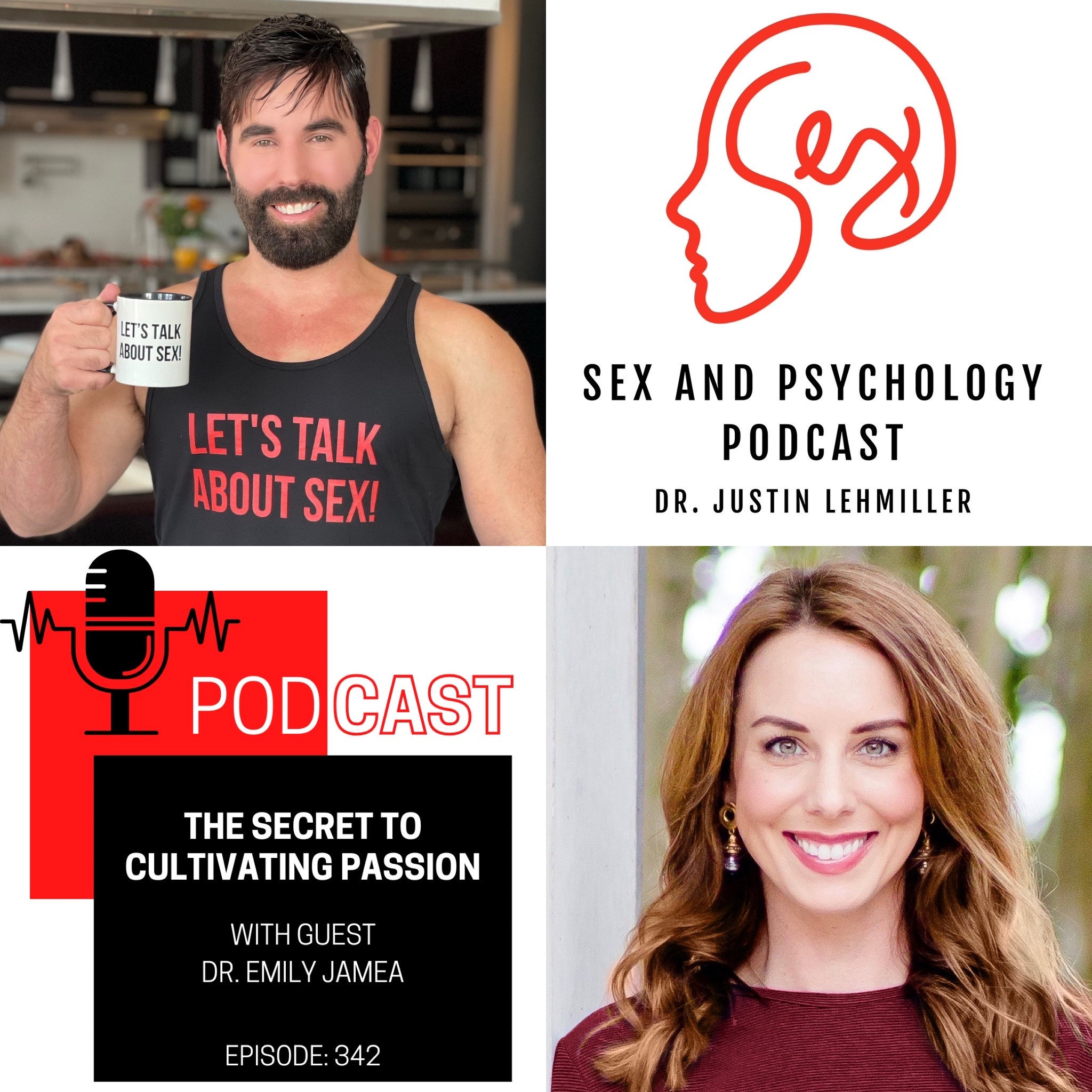
Ep 342Episode 342: The Secret To Cultivating Passion
EHow do you create a lasting connection with a partner and sustain passion in a relationship over time? In today’s show, we’re going to discuss the secrets you need to know for cultivating hotter and healthier sex lives. By following these tips, you can learn to have the kind of sex that we all really want to be having, which is where it feels almost effortless because you’re totally in synch with your partner. I am joined once again by Dr. Emily Jamea, an AASECT Certified Sex Therapist based in Houston, Texas. Dr. Jamea hosts the popular Love & Libido Podcast and is author of the new book Anatomy of Desire: Five Secrets to Create Connection and Cultivate Passion. Some of the specific topics we discuss include: Why is curiosity an important element of great sex? How do you build up the courage to try something new if that sounds a little scary or stressful to you? How can you learn to become more adaptable in the bedroom? Why is vulnerability important for having great sex? What is attunement, and how can we become more attuned to our partners during sex? You can check out Emily’s website to learn more about her work and follow her on the socials at @DrEmilyJamea. Got a sex question? Send me a podcast voicemail to have it answered on a future episode at speakpipe.com/sexandpsychology. *** Thank you to our sponsors! Xersizer is the world’s only FDA regulated hydropump and it provides a discreet and effective way to exercise an area of the body that’s neglected in the gym. To learn more and get a 20% discount off of your purchase, visit xersizer.com/SAP. *** Want to learn more about Sex and Psychology? Click here for previous articles or follow the blog on Facebook, Twitter, or Bluesky to receive updates. You can also follow Dr. Lehmiller on YouTube and Instagram. Listen and stream all episodes on Apple, Spotify, Google, or Amazon. Subscribe to automatically receive new episodes and please rate and review the podcast! Credits: Precision Podcasting (Podcast editing) and Shutterstock/Florian (Music). Image created with Canva; photos used with permission of guest.

Ep 341Episode 341: How To Stop Feeling Distracted During Sex
EOne of the most common sex problems people report today is that they can’t seem to clear their mind during sex. They find themselves distracted or they’re multi-tasking, and this is getting in the way of their pleasure. In today’s show, we’re going to discuss why this problem is on the rise and what we can do about it. Specifically, we’re going to learn how to have embodied sex, which is the kind of sex that allows us to get out of our heads and into the moment. I am joined by Dr. Emily Jamea, an AASECT Certified Sex Therapist based in Houston, Texas. Dr. Jamea hosts the popular Love & Libido Podcast and is author of the new book Anatomy of Desire: Five Secrets to Create Connection and Cultivate Passion. Some of the specific topics we discuss include: How is our modern world making it harder for us to be present during sex? What is a “flow state,” and why is this an important element of good sex? How can we learn to become more embodied during sex? What are some everyday ways to practice embodiment? How can we leverage the power of touch to enhance sex and relationships? You can check out Emily’s website to learn more about her work. Got a sex question? Send me a podcast voicemail to have it answered on a future episode at speakpipe.com/sexandpsychology. *** Thank you to our sponsors! Passionate about building a career in sexuality? Check out the Sexual Health Alliance. With SHA, you’ll connect with world-class experts and join an engaged community of sexuality professionals from around the world. Visit SexualHealthAlliance.com and start building the sexuality career of your dreams today. *** Want to learn more about Sex and Psychology? Click here for previous articles or follow the blog on Facebook, Twitter, or Bluesky to receive updates. You can also follow Dr. Lehmiller on YouTube and Instagram. Listen and stream all episodes on Apple, Spotify, Google, or Amazon. Subscribe to automatically receive new episodes and please rate and review the podcast! Credits: Precision Podcasting (Podcast editing) and Shutterstock/Florian (Music). Image created with Canva; photos used with permission of guest.

Ep 340Episode 340: Is Social Media Ruining Dating?
ESocial media has permeated many aspects of our lives, including our intimate lives. In today’s show, we’re going to discuss the good, bad, and ugly of how social media has changed dating. Some of the topics we explore include how social media can stoke relationship insecurity and undermine authentic connection, as well as why social media is increasingly a terrible place to learn about relationships. We’ll also consider tips for using social media in healthier ways. I am joined once again by Dr. Nicole McNichols an Associate Teaching Professor in the Department of Psychology at the University of Washington. Nicole is the co-author of the textbook “Human Sexuality In A Diverse Society” and author of the forthcoming book “You Could Be Having Better Sex.” Some of the specific topics we discuss in this episode include: How can social media increase uncertainty about whether someone is really interested in you? How is the fact that people are constantly posting private details of their lives changing the way we’re approaching dating? When do social media interactions cross the line into cheating? Are there any ways that social media can be good for relationships? How can we use social media in a more mindful way? You can learn more about Nicole’s work on her website, and be sure to check out her videos on TikTok as well. Got a sex question? Send me a podcast voicemail to have it answered on a future episode at speakpipe.com/sexandpsychology. *** Thank you to our sponsors! Xersizer is the world’s only FDA regulated hydropump and it provides a discreet and effective way to exercise an area of the body that’s neglected in the gym. To learn more and get a 20% discount off of your purchase, visit xersizer.com/SAP. *** Want to learn more about Sex and Psychology? Click here for previous articles or follow the blog on Facebook, Twitter, or Bluesky to receive updates. You can also follow Dr. Lehmiller on YouTube and Instagram. Listen and stream all episodes on Apple, Spotify, Google, or Amazon. Subscribe to automatically receive new episodes and please rate and review the podcast! Credits: Precision Podcasting (Podcast editing) and Shutterstock/Florian (Music). Image created with Canva; photos used with permission of guest.

Ep 339Episode 339: How Gen Z Is Redefining Sex and Relationships
EWhat do young adults today want from sex and relationships? And how is this different compared to generations past? To answer these questions, we’re going to dive into The State of Dating Report, a collaborative scientific analysis from the Kinsey Institute and Feeld, the dating app for the curious. We’re going to discuss why younger adults are having less sex overall but more kinky sex, how preferences for different types of relationships vary across generations, and more. I am joined by Dr. Nicole McNichols an Associate Teaching Professor in the Department of Psychology at the University of Washington. Nicole is the co-author of the textbook “Human Sexuality In A Diverse Society” and author of the forthcoming book “You Could Be Having Better Sex.” Some of the specific topics we discuss in this episode include: Why Gen Z is having less sex and fewer relationships compared to generations past. Why younger adults are more interested in monogamy than older adults. Why kinky sex is on the rise in Gen Z. How the sexual fantasies of younger and older adults compare. Why rates of LGBTQ+ identification are rising among young adults. You can learn more about Nicole’s work on her website, and be sure to check out her videos on TikTok as well. Got a sex question? Send me a podcast voicemail to have it answered on a future episode at speakpipe.com/sexandpsychology. *** Thank you to our sponsors! Passionate about building a career in sexuality? Check out the Sexual Health Alliance. With SHA, you’ll connect with world-class experts and join an engaged community of sexuality professionals from around the world. Visit SexualHealthAlliance.com and start building the sexuality career of your dreams today. The Kinsey Institute at Indiana University has been a trusted source for scientific knowledge and research on critical issues in sexuality, gender, and reproduction for over 75 years. Learn about more research and upcoming events at kinseyinstitute.org or look for them on social media @kinseyinstitute. *** Want to learn more about Sex and Psychology? Click here for previous articles or follow the blog on Facebook, Twitter, or Bluesky to receive updates. You can also follow Dr. Lehmiller on YouTube and Instagram. Listen and stream all episodes on Apple, Spotify, Google, or Amazon. Subscribe to automatically receive new episodes and please rate and review the podcast! Credits: Precision Podcasting (Podcast editing) and Shutterstock/Florian (Music). Image created with Canva; photos used with permission of guest.

Ep 338Episode 338: The Science of Libido, Orgasm, and Desire (Listener Questions)
EIn today’s show, we’re answering more of your sex questions! This is our third dive into some of the questions that have come through our listener voicemail. I’m going to answer three of them that I thought were super interesting. Our first question is about whether libido is genetically determined, so we’ll look at what the science says about the degree to which genetics control our sexual desire. The second question deals with a male listener who has difficulty reaching orgasm, so we’ll talk about tips for managing that. Finally, a listener asked about how to boost sexual desire in post-menopausal women, so we’ll explore what you need to know about that with an assist from Dr. Mary Jane Minkin, a practicing gynecologist and a North American Menopause Society Certified Clinician. Dr. Minkin was a previous guest on episode 334: How To Have a Happy Vagina. If you have questions you’d like to have answered on the show, you can send me a podcast voicemail of your own at speakpipe.com/sexandpsychology. You can do it from your computer or from your phone, so keep sending those questions in! *** Thank you to our sponsors! Xersizer is the world’s only FDA regulated hydropump and it provides a discreet and effective way to exercise an area of the body that’s neglected in the gym. To learn more and get a 20% discount off of your purchase, visit xersizer.com/SAP. *** Want to learn more about Sex and Psychology? Click here for previous articles or follow the blog on Facebook, Twitter, or Bluesky to receive updates. You can also follow Dr. Lehmiller on YouTube and Instagram. Listen and stream all episodes on Apple, Spotify, Google, or Amazon. Subscribe to automatically receive new episodes and please rate and review the podcast! Credits: Precision Podcasting (Podcast editing) and Shutterstock/Florian (Music). Image created with Canva; photos used with permission of guest.

Ep 337Episode 337: Understanding Women’s Sexual Desire (Essential Listen)
ESexual desire is complex. Scientists can’t even agree on a definition of it, let alone whether and how it is distinct from arousal. In today’s show, we’re going to revisit one of my favorite conversations of all time on the show, which offers a deep dive into the science behind women’s sexual desire. Some of the topics we’ll discuss include how to treat problems with low desire, why monogamy is so hard on desire, as well as why wanting to be wanted is so vital to feeling desire. My guest is Dr. Marta Meana, a Professor of Psychology at the University of Nevada, Las Vegas. The author of numerous academic publications and two books, her research has focused on genital pain in women, as well as female sexual desire. Some of the topics we explore include: Diversity in how sexual desire is experienced. Why long-term monogamy is hard on sexual desire for everyone, but especially for women. Whether it’s possible to maintain both intense intimacy and intense passion at the same time. Why women are more likely than men to see themselves as the object of desire in their fantasies. How having more erotic self-focus can benefit women’s sex lives. Got a sex question? Send me a podcast voicemail to have it answered on a future episode at speakpipe.com/sexandpsychology. *** Thank you to our sponsors! Whether you’re just a few dates in or have been together a long time, it’s time to lighten the mood and have fun with your partner by using Paired. Head over to paired.com/justin to get a 7-day free trial and 25% off if you sign up for a subscription. *** Want to learn more about Sex and Psychology? Click here for previous articles or follow the blog on Facebook, Twitter, or Bluesky to receive updates. You can also follow Dr. Lehmiller on YouTube and Instagram. Listen and stream all episodes on Apple, Spotify, Google, or Amazon. Subscribe to automatically receive new episodes and please rate and review the podcast! Credits: Precision Podcasting (Podcast editing) and Shutterstock/Florian (Music). Image created with Canva; photos used with permission of guest

Ep 336Episode 336: Not Having Sex Is The Latest Sex Trend
EA growing number of people seem to be hitting the pause button on their sex lives, which is why terms like “volcel” (short for voluntary celibacy) and “boysober” are trending on social media. So what’s this all about? Why is not having sex the hot new sex trend? Let’s talk about it. In today’s show, we’re going to explore the rise of voluntary celibacy and what you need to know about it. I am joined once again by Dr. Candice Nicole Hargons, an award-winning Associate Professor at Emory University’s Rollins School of Public Health, where she studies sexual wellness and liberation. With over 70 published articles, Dr. Hargons has made substantial contributions to the field. Her debut book titled Good Sex will be published in February 2025. Some of the specific topics we discuss in this episode include: What does it really mean to be voluntarily celibate? Why might someone choose to take a break from sex for a while? Why does voluntary celibacy seem to be more popular among women than men? What are the potential benefits and challenges of celibacy? If you’re taking a break from sex, how can you make the most of it? You can check out Candice’s website to learn more about her work. Got a sex question? Send me a podcast voicemail to have it answered on a future episode at speakpipe.com/sexandpsychology. *** Thank you to our sponsors! Passionate about building a career in sexuality? Check out the Sexual Health Alliance. With SHA, you’ll connect with world-class experts and join an engaged community of sexuality professionals from around the world. Visit SexualHealthAlliance.com and start building the sexuality career of your dreams today. The Kinsey Institute at Indiana University has been a trusted source for scientific knowledge and research on critical issues in sexuality, gender, and reproduction for over 75 years. Learn about more research and upcoming events at kinseyinstitute.org or look for them on social media @kinseyinstitute. *** Want to learn more about Sex and Psychology? Click here for previous articles or follow the blog on Facebook, Twitter, or Bluesky to receive updates. You can also follow Dr. Lehmiller on YouTube and Instagram. Listen and stream all episodes on Apple, Spotify, Google, or Amazon. Subscribe to automatically receive new episodes and please rate and review the podcast! Credits: Precision Podcasting (Podcast editing) and Shutterstock/Florian (Music). Image created with Canva; photos used with permission of guest.

Ep 335Episode 335: How To Have Good Sex
EIf you had to define “good sex” in just three words, what would they be? In today’s show, we’re going to talk about the key things that come to mind when people are asked this question. There are 20 common responses to this, which constitute the main ingredients of the kind of sex we all want to be having. We’re going to dive into some of those ingredients and talk about tips for how to incorporate them into your sex life so that you can experience more pleasure, connectedness, and fun in the bedroom. My guest is Dr. Candice Nicole Hargons, an award-winning Associate Professor at Emory University’s Rollins School of Public Health, where she studies sexual wellness and liberation. With over 70 published articles, Dr. Hargons has made substantial contributions to the field. Her debut book titled Good Sex will be published in February 2025. Some of the specific topics we discuss include: Why is it useful to think about sex as being akin to cooking? What are some of the key ingredients, seasonings, and spices that make for good sex? How can we make sex fun again? How can we experience more connectedness to ourselves during sex? How can we get better at communicating about sex? You can check out Candice’s website to learn more about her work. Got a sex question? Send me a podcast voicemail to have it answered on a future episode at speakpipe.com/sexandpsychology. *** Thank you to our sponsors! Xersizer is the world’s only FDA regulated hydropump and it provides a discreet and effective way to exercise an area of the body that’s neglected in the gym. To learn more and get a 20% discount off of your purchase, visit xersizer.com/SAP. *** Want to learn more about Sex and Psychology? Click here for previous articles or follow the blog on Facebook, Twitter, or Bluesky to receive updates. You can also follow Dr. Lehmiller on YouTube and Instagram. Listen and stream all episodes on Apple, Spotify, Google, or Amazon. Subscribe to automatically receive new episodes and please rate and review the podcast! Credits: Precision Podcasting (Podcast editing) and Shutterstock/Florian (Music). Image created with Canva; photos used with permission of guest.

Ep 334Episode 334: How To Have A Happy Vagina
EMany women don’t know what they really need to know about maintaining good vaginal health, which leads some of them to turn to products and practices that might do more harm than good. So in today’s show, we’re going to discuss how to have a happy and healthy vagina. Specifically, we’ll explore how your lifestyle impacts your vaginal health, how to maintain the proper pH balance for your vagina, tips for dealing with vaginal dryness, what you need to know about feminine hygiene products, and more. My guest today is Mary Jane Minkin, a practicing gynecologist and a North American Menopause Society Certified Clinician. She has taught at Yale School of Medicine for more than 41 years, and is a clinical professor of obstetrics, gynecology and reproductive sciences. Some of the specific topics we discuss include: What are some common lifestyle factors that can impact vaginal health? How would someone know if their vaginal pH balance was out of whack? How do vaginal hygiene products impact vaginal health? What causes vaginal dryness, and what are some practical ways of dealing with this for both younger and older women? How do you choose the contraceptive that’s right for you and your body? You can check out Dr. Minkin’s website to learn more about her work. Got a sex question? Send me a podcast voicemail to have it answered on a future episode at speakpipe.com/sexandpsychology. *** Thank you to our sponsors! Passionate about building a career in sexuality? Check out the Sexual Health Alliance. With SHA, you’ll connect with world-class experts and join an engaged community of sexuality professionals from around the world. Visit SexualHealthAlliance.com and start building the sexuality career of your dreams today. The Kinsey Institute at Indiana University has been a trusted source for scientific knowledge and research on critical issues in sexuality, gender, and reproduction for over 75 years. Learn about more research and upcoming events at kinseyinstitute.org or look for them on social media @kinseyinstitute. *** Want to learn more about Sex and Psychology? Click here for previous articles or follow the blog on Facebook, Twitter, or Bluesky to receive updates. You can also follow Dr. Lehmiller on YouTube and Instagram. Listen and stream all episodes on Apple, Spotify, Google, or Amazon. Subscribe to automatically receive new episodes and please rate and review the podcast! Credits: Precision Podcasting (Podcast editing) and Shutterstock/Florian (Music). Image created with Canva; photos used with permission of guest.

Ep 333Episode 333: What It’s Like To Have Sex On Psychedelics
EPsychedelic use is at an all-time high among young adults. These drugs are used for many purposes, but often for sex. So let’s talk about “trippy” sex. In this episode, we’re going to discuss the sexual effects of several common psychedelics, the potential benefits and risks of these drugs, and what people who wish to combine sex and substances need to know in terms of having safer and more pleasurable experiences. I am joined once again by Ashley Manta, an award-winning sex educator and certified sexologist. She has become a sought-after authority on mindfully combining sex and cannabis as part of her CannaSexual brand, which has also expanded to include psychedelics. She is co-author of the book The CBD Solution: Sex. Some of the specific topics we discuss in this episode include: How does MDMA/ecstasy affect people’s sexual experiences? What are the sexual effects of psilocybin and ketamine? Why do different people experience different effects from psychedelics? How do psychedelics compare to alcohol in terms of their sexual impact? What conversations should you have with a partner before combing drugs and sex? You can check out Ashley’s website to learn more about her work. Got a sex question? Send me a podcast voicemail to have it answered on a future episode at speakpipe.com/sexandpsychology. *** Thank you to our sponsors! Xersizer is the world’s only FDA regulated hydropump and it provides a discreet and effective way to exercise an area of the body that’s neglected in the gym. To learn more and get a 20% discount off of your purchase, visit xersizer.com/SAP. *** Want to learn more about Sex and Psychology? Click here for previous articles or follow the blog on Facebook, Twitter, or Bluesky to receive updates. You can also follow Dr. Lehmiller on YouTube and Instagram. Listen and stream all episodes on Apple, Spotify, Google, or Amazon. Subscribe to automatically receive new episodes and please rate and review the podcast! Credits: Precision Podcasting (Podcast editing) and Shutterstock/Florian (Music). Image created with Canva; photos used with permission of guest.

Ep 332Episode 332: How Cannabis Affects Sex
EA lot of people consume cannabis prior to sexual activity. But how exactly does cannabis affect sex, and what do you need to know about it? In today’s show, we’re going to dive into what the research says about how cannabis affects men’s and women’s sexual function and performance, the problems with a lot of the research on sex and cannabis, why cannabis affects different people in different ways, how the sexual effects of marijuana and CBD compare, and more. My guest today is Ashley Manta, an award-winning sex educator and certified sexologist. She has become a sought-after authority on mindfully combining sex and cannabis as part of her CannaSexual brand, which has also expanded to include psychedelics. She is co-author of the book The CBD Solution: Sex. Some of the specific topics we discuss in this episode include: What is the endocannabinoid system, and what is its purpose is in the body? What are the most common sexual effects of cannabis use? How does cannabis affect male and female sexual function? Why is there so much individual variability in the effects of cannabis on the body? How are CBD and THC similar or different in terms of sexual effects? You can check out Ashley’s website to learn more about her work. Got a sex question? Send me a podcast voicemail to have it answered on a future episode at speakpipe.com/sexandpsychology. *** Thank you to our sponsors! Are you looking for a space that celebrates diverse perspectives, explores new frontiers and brings all of your favorite people together? The Annual Sexological Conference hosted by Sexual Health Alliance is where sexuality leaders gather. Get your ticket to be inspired, educated, and empowered. Head over to SexualHealthAlliance.com, select the Annual Sexological Conference page and save your spot today! The Kinsey Institute at Indiana University has been a trusted source for scientific knowledge and research on critical issues in sexuality, gender, and reproduction for over 75 years. Learn about more research and upcoming events at kinseyinstitute.org or look for them on social media @kinseyinstitute. *** Want to learn more about Sex and Psychology? Click here for previous articles or follow the blog on Facebook, Twitter, or Reddit to receive updates. You can also follow Dr. Lehmiller on YouTube and Instagram. Listen and stream all episodes on Apple, Spotify, Google, or Amazon. Subscribe to automatically receive new episodes and please rate and review the podcast! Credits: Precision Podcasting (Podcast editing) and Shutterstock/Florian (Music). Image created with Canva; photos used with permission of guest.

Ep 331Episode 331: The Surprising Intimacy of Bromances
E“Bromance” is a term that is often used to describe close friendships between men. These relationships contain elements of emotional intimacy, but physical intimacy may occur as well, such as cuddling. Sometimes there’s even a sexual component, such as when two male friends participate in a threesome together. In today’s show, we’re going to discuss the psychology behind bromances. We’ll also talk about why a lot of men struggle when it comes to being vulnerable with their friends. I am joined once again by Mark McCormack, a Professor of Sociology at Aston University. His research examines how social trends related to gender and sexuality map onto everyday experiences of individuals. To date, he has published more than 80 scientific works. Some of the specific questions we answer in this episode include: What does it really mean to have a bromance? What do these relationships look like? Why do a lot of heterosexual men find it difficult to open up to their male friends? How common is physical intimacy in bromances? What are bromances like among men who identify as something other than heterosexual? You can click here to connect with Mark on Twitter/X. Got a sex question? Send me a podcast voicemail to have it answered on a future episode at speakpipe.com/sexandpsychology. *** Thank you to our sponsors! Xersizer is the world’s only FDA regulated hydropump and it provides a discreet and effective way to exercise an area of the body that’s neglected in the gym. To learn more and get a 20% discount off of your purchase, visit xersizer.com/SAP. *** Want to learn more about Sex and Psychology? Click here for previous articles or follow the blog on Facebook, Twitter, or Reddit to receive updates. You can also follow Dr. Lehmiller on YouTube and Instagram. Listen and stream all episodes on Apple, Spotify, Google, or Amazon. Subscribe to automatically receive new episodes and please rate and review the podcast! Credits: Precision Podcasting (Podcast editing) and Shutterstock/Florian (Music). Image created with Canva; photos used with permission of guest.

Ep 330Episode 330: The Science of Kink
EWhat does it really mean to be “kinky?” It can be difficult to say because kink is a subjective term that means different things to different people. Kink can also be a fantasy, a practice, or even an identity. It’s time for a new way of thinking about kink that can capture all of this complexity. In today’s show, we’re going to explore the brand new Kink Orientation Scale, a scientific quiz designed to measure how kinky a given person is in a comprehensive way. My guest is Mark McCormack, a Professor of Sociology at Aston University. His research examines how social trends related to gender and sexuality map onto everyday experiences of individuals. To date, he has published more than 80 scientific works. Some of the specific topics we discuss in this episode include: What does it mean to have a “kink orientation?” Is kink itself a sexual orientation? What are the five different components that make up a kink orientation? Why is it important to think about kink as running along a continuum instead of being a binary thing (i.e., kinky vs. vanilla)? You can click here to take the Kink Orientation Quiz for yourself. Got a sex question? Send me a podcast voicemail to have it answered on a future episode at speakpipe.com/sexandpsychology. *** Thank you to our sponsors! Are you looking for a space that celebrates diverse perspectives, explores new frontiers and brings all of your favorite people together? The Annual Sexological Conference hosted by Sexual Health Alliance is where sexuality leaders gather. Get your ticket to be inspired, educated, and empowered. Head over to SexualHealthAlliance.com, select the Annual Sexological Conference page and save your spot today! The Kinsey Institute at Indiana University has been a trusted source for scientific knowledge and research on critical issues in sexuality, gender, and reproduction for over 75 years. Learn about more research and upcoming events at kinseyinstitute.org or look for them on social media @kinseyinstitute. *** Want to learn more about Sex and Psychology? Click here for previous articles or follow the blog on Facebook, Twitter, or Reddit to receive updates. You can also follow Dr. Lehmiller on YouTube and Instagram. Listen and stream all episodes on Apple, Spotify, Google, or Amazon. Subscribe to automatically receive new episodes and please rate and review the podcast! Credits: Precision Podcasting (Podcast editing) and Shutterstock/Florian (Music). Image created with Canva; photos used with permission of guest.

Ep 329Episode 329: Monogamy? In This Economy?
EWhen romantic partners move in together, something they need to figure out is how to manage their finances. Will your money be shared or separate? And who will pay for what? These conversations can be tricky to navigate in general, but they become even more complex when you have multiple partners. In today’s episode, we’re going to dive into money management in polyamorous relationships. We’ll explore financial considerations for poly folks, the financial benefits of being polyamorous, and more. I am joined once again by Laura Boyle, author of the new book Monogamy? In this Economy? Sue runs a blog called Ready for Polyamory. Her first book titled, Ready for Polyamory: A Pragmatic Guide to Consensual Non-Monogamy, was released in 2021. Some of the specific questions we discuss include: Why are more and more people (including monogamous couples) keeping their finances separate today? What are the most common financial arrangements that polyamorous people make? How can poly folks successfully navigate conflicts around money? How do polyamorous people manage money when partners have drastically different incomes, expenses, and debts? What are some of the financial advantages to having multiple partners? You can learn more about Laura and her work by visiting her website. You can also follow her on the socials @readyforpolyamory. Got a sex question? Send me a podcast voicemail to have it answered on a future episode at speakpipe.com/sexandpsychology. *** Thank you to our sponsors! Xersizer is the world’s only FDA regulated hydropump and it provides a discreet and effective way to exercise an area of the body that’s neglected in the gym. To learn more and get a 20% discount off of your purchase, visit xersizer.com/SAP. *** Want to learn more about Sex and Psychology? Click here for previous articles or follow the blog on Facebook, Twitter, or Reddit to receive updates. You can also follow Dr. Lehmiller on YouTube and Instagram. Listen and stream all episodes on Apple, Spotify, Google, or Amazon. Subscribe to automatically receive new episodes and please rate and review the podcast! Credits: Precision Podcasting (Podcast editing) and Shutterstock/Florian (Music). Image created with Canva; photos used with permission of guest.

Ep 328Episode 328: Tips For Living With Multiple Partners
EIf you’ve never lived with multiple partners before, figuring out how to navigate this kind of situation can pose some challenges. For example, how do you determine where everyone will sleep? How do you navigate things like personal space, chores, and scheduling conflicts? In today’s show, we’re going to discuss practical tips on cultivating happy and harmonious living arrangements for polyamorous individuals. My guest is Laura Boyle, author of the new book Monogamy? In this Economy? Sue runs a blog called Ready for Polyamory. Her first book titled, Ready for Polyamory: A Pragmatic Guide to Consensual Non-Monogamy, was released in 2021. Some of the specific questions we answer in this episode include: What are the most common living arrangements for polyamorous folks? How can poly people navigate issues like leases, mortgages, and even biases from landlords that might make it difficult to live with more than one partner? How can “new relationship energy” complicate living situations? What are the most common conflicts that arise when a new partner moves in? You can learn more about Laura and her work by visiting her website. You can also follow her on the socials @readyforpolyamory. Got a sex question? Send me a podcast voicemail to have it answered on a future episode at speakpipe.com/sexandpsychology. *** Thank you to our sponsors! Are you looking for a space that celebrates diverse perspectives, explores new frontiers and brings all of your favorite people together? The Annual Sexological Conference hosted by Sexual Health Alliance is where sexuality leaders gather. Get your ticket to be inspired, educated, and empowered. Head over to SexualHealthAlliance.com, select the Annual Sexological Conference page and save your spot today! The Kinsey Institute at Indiana University has been a trusted source for scientific knowledge and research on critical issues in sexuality, gender, and reproduction for over 75 years. Learn about more research and upcoming events at kinseyinstitute.org or look for them on social media @kinseyinstitute. *** Want to learn more about Sex and Psychology? Click here for previous articles or follow the blog on Facebook, Twitter, or Reddit to receive updates. You can also follow Dr. Lehmiller on YouTube and Instagram. Listen and stream all episodes on Apple, Spotify, Google, or Amazon. Subscribe to automatically receive new episodes and please rate and review the podcast! Credits: Precision Podcasting (Podcast editing) and Shutterstock/Florian (Music). Image created with Canva; photos used with permission of guest.

Ep 327Episode 327: Sex Tips for Men
EWe discussed sex tips for women in the previous episode, so today we have some tips for the guys. Some of the topics we’ll discuss include how to have stronger erections, what you need to know if you’re concerned about your penis size, as well as how to increase sexual pleasure. We’re also going to discuss common sexual concerns men have and how to address them. I am joined once again by Dr. Rena Malik, a board-certified urologist and sexuality educator. With over 300 million views and 2 million subscribers, her YouTube channel @RenaMalikMD has become a go-to destination for frank, evidence-based discussions of taboo topics. With a prolific portfolio boasting over 80 peer-reviewed publications, she has contributed to advancement and innovation in the field of urology. Some of the specific questions we answer in this episode include: If you experience delayed or absent orgasm during partnered sex, what can you do about this? What should you do if you find that condoms interfere with pleasure and sensation? What can you do if you want to have stronger and firmer erections? Are there any reliable ways to boost seminal volume? Is there anything that actually works in terms of increasing penis size? You can check out Rena’s website to learn more about her work. Got a sex question? Send me a podcast voicemail to have it answered on a future episode at speakpipe.com/sexandpsychology. *** Thank you to our sponsors! Xersizer is the world’s only FDA regulated hydropump and it provides a discreet and effective way to exercise an area of the body that’s neglected in the gym. To learn more and get a 20% discount off of your purchase, visit xersizer.com/SAP. The Kinsey Institute at Indiana University has been a trusted source for scientific knowledge and research on critical issues in sexuality, gender, and reproduction for over 75 years. Learn about more research and upcoming events at kinseyinstitute.org or look for them on social media @kinseyinstitute. *** Want to learn more about Sex and Psychology? Click here for previous articles or follow the blog on Facebook, Twitter, or Reddit to receive updates. You can also follow Dr. Lehmiller on YouTube and Instagram. Listen and stream all episodes on Apple, Spotify, Google, or Amazon. Subscribe to automatically receive new episodes and please rate and review the podcast! Credits: Precision Podcasting (Podcast editing) and Shutterstock/Florian (Music). Image created with Canva; photos used with permission of guest.

Ep 326Episode 326: Sex Tips For Women
EFemale sexual pleasure is a topic that is not often covered in traditional sex education. In fact, it’s extraordinarily rare for the word “clitoris” to even be mentioned in sex ed! The unfortunate result is that many women (and their partners) never learn the information they really need to know. In today’s show, we’re diving into the sex ed you never got in school and discussing key facts about women’s sexual health and pleasure. My guest is Dr. Rena Malik, a board-certified urologist and sexuality educator. With over 300 million views and 2 million subscribers, her YouTube channel @RenaMalikMD has become a go-to destination for frank, evidence-based discussions of taboo topics. With a prolific portfolio boasting over 80 peer-reviewed publications, she has contributed to advancement and innovation in the field of urology. Some of the specific questions we answer in this episode include: What are some ways of making intercourse more pleasurable for women? How do you deal with a problem like sexual pain, and what are some common solutions for it? What can women do if they’re having trouble orgasming? What should women who are concerned with vaginal taste and smell know? What can you do to prevent vaginal infections? You can check out Rena’s website to learn more about her work. Got a sex question? Send me a podcast voicemail to have it answered on a future episode at speakpipe.com/sexandpsychology. *** Thank you to our sponsors! Are you looking for a space that celebrates diverse perspectives, explores new frontiers and brings all of your favorite people together? The Annual Sexological Conference hosted by Sexual Health Alliance is where sexuality leaders gather. Get your ticket to be inspired, educated, and empowered. Head over to SexualHealthAlliance.com, select the Annual Sexological Conference page and save your spot today! Whether you’re just a few dates in or have been together a long time, it’s time to lighten the mood and have fun with your partner by using Paired. Head over to paired.com/justin to get a 7-day free trial and 25% off if you sign up for a subscription. *** Want to learn more about Sex and Psychology? Click here for previous articles or follow the blog on Facebook, Twitter, or Reddit to receive updates. You can also follow Dr. Lehmiller on YouTube and Instagram. Listen and stream all episodes on Apple, Spotify, Google, or Amazon. Subscribe to automatically receive new episodes and please rate and review the podcast! Credits: Precision Podcasting (Podcast editing) and Shutterstock/Florian (Music). Image created with Canva; photos used with permission of guest.

Ep 325Episode 325: Sex on Trial – Tales of an Expert Witness
ESex educators and researchers are often called upon to serve as expert witnesses in legal proceedings. This is particularly true in cases that center around kink or BDSM, consensual non-monogamy, and sexual or gender minorities. The job of the experts is to help judges and juries better understand the sexual issues at hand. In today’s show, I’m going to interview a colleague who has extensive experience serving as an expert witness. We’re going to talk about the some of the cases she’s been a part of, what the experience is like, and more. My guest is Dr. Elisabeth Sheff, a researcher, expert witness, coach, speaker, and educational consultant. Dr. Eli holds a PhD in Sociology and certification as a Sexuality Educator from AASECT. She has published four books, over 30 peer-reviewed journal articles and chapters, and is currently editing a series of books on relationship and sexual diversity. Some of the specific questions we answer in this episode include: How do you decide which legal cases to get involved in? What are some reasons why you might not take a particular case? What kinds of legal issues come up for non-monogamous individuals that would require an expert witness? What are some of the legal issues that come up in the context of kink and BDSM? Given that consent is not a valid legal defense for injuries that arise during sex, what do kinky folks need to know with respect to avoiding potential legal peril? You can visit Dr. Eli’s website to learn more about her work. Got a sex question? Send me a podcast voicemail to have it answered on a future episode at speakpipe.com/sexandpsychology. *** Thank you to our sponsors! The Kinsey Institute at Indiana University has been a trusted source for scientific knowledge and research on critical issues in sexuality, gender, and reproduction for over 75 years. Learn about more research and upcoming events at kinseyinstitute.org or look for them on social media @kinseyinstitute. *** Want to learn more about Sex and Psychology? Click here for previous articles or follow the blog on Facebook, Twitter, or Reddit to receive updates. You can also follow Dr. Lehmiller on YouTube and Instagram. Listen and stream all episodes on Apple, Spotify, Google, or Amazon. Subscribe to automatically receive new episodes and please rate and review the podcast! Credits: Precision Podcasting (Podcast editing) and Shutterstock/Florian (Music). Image created with Canva; photos used with permission of guest.
Ep 324Episode 324: How To Get What You Want In Bed
EA lot of us aren’t getting what we really want in bed. For example, there might be certain positions, activities, or techniques that you prefer or enjoy, but you aren’t quite sure how to ask for them. So in today’s show, we’re going to talk about how to get more of what you want. Some of the topics we’ll explore include practical tips for sharing your sexual desires, tips for introducing a kink or fetish into a relationship, as well as tips for normalizing conversations about sex in general. I am joined once again by Dr. Elisabeth Gordon. She is a board-certified psychiatrist who specializes in sexual health. She maintains a New York City based private practice and is also an educator, speaker, researcher, and writer dedicated to advancing sexual health. She has taught at multiple academic institutions around the world, and is a frequent commentator on sexual health topics in the popular media. Some of the specific questions we answer in this episode include: How do you go about uncovering your sexual likes and dislikes in the first place? When is the right time to talk to your partner about trying something new in the bedroom? What are some tips for communicating about kinks with a new partner? What should you do when you and your partner have different sexual fantasies and desires? How can you encourage a partner to share their sexual wants with you? You can check out Elisabeth’s website to learn more about her work. Got a sex question? Send me a podcast voicemail to have it answered on a future episode at speakpipe.com/sexandpsychology. *** Thank you to our sponsors! Passionate about building a career in sexuality? Check out the Sexual Health Alliance. With SHA, you’ll connect with world-class experts and join an engaged community of sexuality professionals from around the world. Visit SexualHealthAlliance.com and start building the sexuality career of your dreams today. Xersizer is the world’s only FDA regulated hydropump and it provides a discreet and effective way to exercise an area of the body that’s neglected in the gym. To learn more and get a 20% discount off of your purchase, visit xersizer.com/SAP. *** Want to learn more about Sex and Psychology? Click here for previous articles or follow the blog on Facebook, Twitter, or Reddit to receive updates. You can also follow Dr. Lehmiller on YouTube and Instagram. Listen and stream all episodes on Apple, Spotify, Google, or Amazon. Subscribe to automatically receive new episodes and please rate and review the podcast! Credits: Precision Podcasting (Podcast editing) and Shutterstock/Florian (Music). Image created with Canva; photos used with permission of guest.

Ep 323Episode 323: The Most Common Sex Fights, And How To Solve Them
ESexual conflict is inevitable in long-term relationships. It’s virtually impossible for partners to always be erotically in synch with one another at all times over the course of many years together. That’s why everyone fights about sex from time to time. In today’s show, we’re going to explore the most common sexual conflicts that arise in long-term relationships, as well as practical tips on how to solve them. My guest is Dr. Elisabeth Gordon. She is a board-certified psychiatrist who specializes in sexual health. She maintains a New York City based private practice and is also an educator, speaker, researcher, and writer dedicated to advancing sexual health. She has taught at multiple academic institutions around the world, and is a frequent commentator on sexual health topics in the popular media. Some of the topics we cover in this episode include: What’s the most common sex fight? What should you do when one partner wants more sex than the other? How do you tell your partner that you want them to initiate sex more often? What are some ways to tell your partner that the sex you’re having isn’t meeting your needs? How do you deal with a selfish lover? What should you do when masturbation and/or porn use become conflict areas in a relationship? You can check out Elisabeth’s website to learn more about her work. Got a sex question? Send me a podcast voicemail to have it answered on a future episode at speakpipe.com/sexandpsychology. *** Thank you to our sponsors! Whether you’re just a few dates in or have been together a long time, it’s time to lighten the mood and have fun with your partner by using Paired. Head over to paired.com/justin to get a 7-day free trial and 25% off if you sign up for a subscription. *** Want to learn more about Sex and Psychology? Click here for previous articles or follow the blog on Facebook, Twitter, or Reddit to receive updates. You can also follow Dr. Lehmiller on YouTube and Instagram. Listen and stream all episodes on Apple, Spotify, Google, or Amazon. Subscribe to automatically receive new episodes and please rate and review the podcast! Credits: Precision Podcasting (Podcast editing) and Shutterstock/Florian (Music). Image created with Canva; photos used with permission of guest.

Ep 322Episode 322: Why Bisexuality Is On The Rise
EToday, more people identify as LGBTQ+ than ever before. However, this is largely due to a big increase in the number of persons identifying as bisexual. So in this episode, we’re going to dive into a recent study published in The Journal of Sex Research that investigates the rise in bisexuality over time. We’ll discuss different ways of defining and measuring bisexuality, why women seem more likely to be bisexual than men, and much more. My guest is Martin Monto, a Professor of Sociology at University of Portland specializing in the intersection between gender, sexuality, and public health, with an additional focus on society’s impact on the natural environment. Monto has an extensive publication record focusing on social aspects of sexuality and the sex industry, including notable publications on sex buyers, webcam users, “hooking up,” and bisexuality. Some of the topics we cover in this episode include: What are some of the different ways that scientists have defined bisexuality? How many people today identify as gay, lesbian, or bisexual—and how have these numbers changed over time? With the rise in bisexual identification, has there also been a rise in bisexual behavior? How do rates of bisexuality differ for older versus younger adults? Why might more women identify as bisexual than men? You can connect with Martin here. Got a sex question? Send me a podcast voicemail to have it answered on a future episode at speakpipe.com/sexandpsychology. *** Thank you to our sponsors! Passionate about building a career in sexuality? Check out the Sexual Health Alliance. With SHA, you’ll connect with world-class experts and join an engaged community of sexuality professionals from around the world. Visit SexualHealthAlliance.com and start building the sexuality career of your dreams today. Xersizer is the world’s only FDA regulated hydropump and it provides a discreet and effective way to exercise an area of the body that’s neglected in the gym. To learn more and get a 20% discount off of your purchase, visit xersizer.com/SAP. *** Want to learn more about Sex and Psychology? Click here for previous articles or follow the blog on Facebook, Twitter, or Reddit to receive updates. You can also follow Dr. Lehmiller on YouTube and Instagram. Listen and stream all episodes on Apple, Spotify, Google, or Amazon. Subscribe to automatically receive new episodes and please rate and review the podcast! Credits: Precision Podcasting (Podcast editing) and Shutterstock/Florian (Music). Image created with Canva; photos used with permission of guest. Heart photo by Jiroe (Matia Rengel) on Unsplash.

Ep 321Episode 321: Penis Problems, And How To Fix Them
EThe penis doesn’t always do what you want it to do. For example, sometimes you might want an erection but can’t get one, or maybe you’ll reach orgasm faster than you’d like. These things happen. But when does a penis problem cross the line into becoming a sexual difficulty in need of treatment? That’s what we’re going to be exploring today. We’re going to talk about common male sexual health issues, including how they are clinically defined and treated, as well as tips for maintaining penile health as you age. I am joined once again by Melissa Hadley Barrett. Melissa is a nurse practitioner and sexologist, and the founder of Restorative Sexual Health Clinic and Restore Men’s Intimate Health. She is also co-founder of The Penis Project Podcast. Some of the specific questions we answer in this episode include: What is Peyronie’s disease, and how would someone know if they had it? What “counts” as having premature ejaculation? How can men last longer in bed? What’s the difference between a sexual dysfunction and a sexual disappointment? What are some different ways of dealing with erectile dysfunction? You can check out Melissa’s website and YouTube channel to learn more. Got a sex question? Send me a podcast voicemail to have it answered on a future episode at speakpipe.com/sexandpsychology. *** Thank you to our sponsors! The Kinsey Institute at Indiana University has been a trusted source for scientific knowledge and research on critical issues in sexuality, gender, and reproduction for over 75 years. Learn about more research and upcoming events at kinseyinstitute.org or look for them on social media @kinseyinstitute. *** Want to learn more about Sex and Psychology? Click here for previous articles or follow the blog on Facebook, Twitter, or Reddit to receive updates. You can also follow Dr. Lehmiller on YouTube and Instagram. Listen and stream all episodes on Apple, Spotify, Google, or Amazon. Subscribe to automatically receive new episodes and please rate and review the podcast! Credits: Precision Podcasting (Podcast editing) and Shutterstock/Florian (Music). Image created with Canva; photos used with permission of guest.

Ep 320Episode 320: What You Don’t Know About The Penis
EHow much do you know about the penis? You may think you already know everything there is to know, but you probably don’t. That’s why today’s episode is going to dive into what you don’t know about the penis. Some of the topics we’re going to cover include the immense variability that exists in penile sensitivity and sensation, as well as what we know about multiple orgasms in men. My guest today is Melissa Hadley Barrett. Melissa is a nurse practitioner and sexologist, and the founder of Restorative Sexual Health Clinic and Restore Men’s Intimate Health. She is also co-founder of The Penis Project Podcast. Some of the questions we explore in this episode include: What is the average penis size? Why is flaccid penis size not necessarily a reliable predictor of erect size? If there aren’t any bones in the penis, can you still break or fracture an erection? What are the benefits of using vibrators for men’s sexual health and function? How common is it for men to experience erectile dysfunction? You can check out Melissa’s website and YouTube channel to learn more. Got a sex question? Send me a podcast voicemail to have it answered on a future episode at speakpipe.com/sexandpsychology. *** Thank you to our sponsors! Passionate about building a career in sexuality? Check out the Sexual Health Alliance. With SHA, you’ll connect with world-class experts and join an engaged community of sexuality professionals from around the world. Visit SexualHealthAlliance.com and start building the sexuality career of your dreams today. Xersizer is the world’s only FDA regulated hydropump and it provides a discreet and effective way to exercise an area of the body that’s neglected in the gym. To learn more and get a 20% discount off of your purchase, visit xersizer.com/SAP. *** Want to learn more about Sex and Psychology? Click here for previous articles or follow the blog on Facebook, Twitter, or Reddit to receive updates. You can also follow Dr. Lehmiller on YouTube and Instagram. Listen and stream all episodes on Apple, Spotify, Google, or Amazon. Subscribe to automatically receive new episodes and please rate and review the podcast! Credits: Precision Podcasting (Podcast editing) and Shutterstock/Florian (Music). Image created with Canva; photos used with permission of guest.

Ep 319Episode 319: The Bogus BDSM Legal Defense
EWas it consensual kink or sexual abuse? This question is at the heart of a growing number of legal cases. Unfortunately, people sometimes try to claim consensual kink as a cover for sexual violence, a trend my guest today refers to as “the bogus BDSM defense.” In this show, we’re going to dive into a few recent cases where the bogus BDSM defense has been deployed, as well as the signs that can help us to distinguish between consensual kink and sexual violence. I am joined once again by Andrea Zanin, author of the new book Post-Nonmonogamy and Beyond. They are also co-author of the new edition of the book More than Two. Andrea blogs at sexgeek.wordpress.com, and has authored a book chapter on the bogus BDSM defense. Some of the topics we cover in this episode include: What does the “bogus BDSM defense” look like? Is this defense ever successful in terms of avoiding conviction or leading to a reduced sentence? How does the bogus BDSM defense intersect with race and respectability politics? How can we prevent people from using claims of consensual kink as a cover for sexual violence? You can check out Andrea’s website to read more of their work. Got a sex question? Send me a podcast voicemail to have it answered on a future episode at speakpipe.com/sexandpsychology. *** Thank you to our sponsors! The Kinsey Institute at Indiana University has been a trusted source for scientific knowledge and research on critical issues in sexuality, gender, and reproduction for over 75 years. Learn about more research and upcoming events at kinseyinstitute.org or look for them on social media @kinseyinstitute. *** Want to learn more about Sex and Psychology? Click here for previous articles or follow the blog on Facebook, Twitter, or Reddit to receive updates. You can also follow Dr. Lehmiller on YouTube and Instagram. Listen and stream all episodes on Apple, Spotify, Google, or Amazon. Subscribe to automatically receive new episodes and please rate and review the podcast! Credits: Precision Podcasting (Podcast editing) and Shutterstock/Florian (Music). Image created with Canva; photos used with permission of guest.

Ep 318Episode 318: What Comes After Nonmonogamy?
EWhen people become nonmonogamous, they don’t always stay nonmonogamous for life. Sometimes people decide to take a temporary break from it. Other times, people stop practicing it altogether because it’s just not what they want or need anymore. Maybe they only want to pursue one relationship right now, or perhaps they just want to be single. So what does a post nonmonogamous life look like? That’s what we’re going to be talking about in this episode. My guest today is Andrea Zanin, author of the new book Post-Nonmonogamy and Beyond. They are also co-author of the new edition of the book More than Two. Andrea blogs at sexgeek.wordpress.com, where they created the 10 Rules for Happy Nonmonogamy and coined the term “polynormativity.” Some of the topics we cover in this episode include: What does post nonmonogamy look like? What are the main reasons people become post-nonmonogamous? Is post-nonmonogamy a temporary or permanent state? In what ways can post-nonmonogamy be rewarding? In what ways it is challenging? You can check out Andrea’s website to read more of their work. Got a sex question? Send me a podcast voicemail to have it answered on a future episode at speakpipe.com/sexandpsychology. *** Thank you to our sponsors! Passionate about building a career in sexuality? Check out the Sexual Health Alliance. With SHA, you’ll connect with world-class experts and join an engaged community of sexuality professionals from around the world. Visit SexualHealthAlliance.com and start building the sexuality career of your dreams today. *** Want to learn more about Sex and Psychology? Click here for previous articles or follow the blog on Facebook, Twitter, or Reddit to receive updates. You can also follow Dr. Lehmiller on YouTube and Instagram. Listen and stream all episodes on Apple, Spotify, Google, or Amazon. Subscribe to automatically receive new episodes and please rate and review the podcast! Credits: Precision Podcasting (Podcast editing) and Shutterstock/Florian (Music). Image created with Canva; photos used with permission of guest.
Ep 317Episode 317: The Psychology of Consensual Non-Consent Fantasies
EA common theme in many people’s sexual fantasies is being “forced” to have sex. In the world of kink, this is widely known as consensual non-consent (CNC). So why is this such a popular sexual interest? In today’s show, we’re going to explore the psychology behind it. We’re also going to delve into some of the political aspects of CNC fantasies and discuss how the growing emphasis on affirmative and enthusiastic consent might paradoxically be making these fantasies more popular than ever. I am joined once again by Tina Horn, author of the new book Why Are People Into That?: A Cultural Investigation of Kink. This book is based on her long-running podcast of the same name. Tina is also a comic book writer and host of the Wondery phone sex podcast titled Operator. Some of the specific questions we answer in this episode include: What does a CNC fantasy look like? What are some reasons people might be into CNC? What is the role of fear in sexual arousal? Why do people often struggle with feelings of shame around CNC fantasies, and how can they come to terms with it? You can visit Tina’s website to learn more about her work. Got a sex question? Send me a podcast voicemail to have it answered on a future episode at speakpipe.com/sexandpsychology. *** Thank you to our sponsors! The Kinsey Institute at Indiana University has been a trusted source for scientific knowledge and research on critical issues in sexuality, gender, and reproduction for over 75 years. Learn about more research and upcoming events at kinseyinstitute.org or look for them on social media @kinseyinstitute. *** Want to learn more about Sex and Psychology? Click here for previous articles or follow the blog on Facebook, Twitter, or Reddit to receive updates. You can also follow Dr. Lehmiller on YouTube and Instagram. Listen and stream all episodes on Apple, Spotify, Google, or Amazon. Subscribe to automatically receive new episodes and please rate and review the podcast! Credits: Precision Podcasting (Podcast editing) and Shutterstock/Florian (Music). Image created with Canva; photos used with permission of guest.

Ep 316Episode 316: Why Are People Into That? The Truth About Fetishes
EPeople have the potential to develop fetishes for virtually anything. If you can think of it, somebody probably has a fetish for it! However, fetishes remain among the most misunderstood and stigmatized sexual interests. So in today’s show, we’re going to dive into the world of fetishes and dispel some common misconceptions about them. We’ll also discuss a new way of thinking about fetishes, as well as tips for how to communicate about fetish interests with a partner. My guest is Tina Horn, author of the new book Why Are People Into That?: A Cultural Investigation of Kink. This book is based on her long-running podcast of the same name. Tina is also a comic book writer and host of the Wondery phone sex podcast titled Operator. Some of the topics we cover in this episode include: What is the advantage of thinking about fetishes as “something I have a taste for?” Where do fetishes come from? How important is it to know where fetishes come from? Does their origin really matter? Does having a fetish necessarily involve an exclusive attraction to a specific object? How can people incorporate fetishes into their sex lives in a healthy way? You can visit Tina’s website to learn more about her work. Got a sex question? Send me a podcast voicemail to have it answered on a future episode at speakpipe.com/sexandpsychology. *** Thank you to our sponsors! Passionate about building a career in sexuality? Check out the Sexual Health Alliance. With SHA, you’ll connect with world-class experts and join an engaged community of sexuality professionals from around the world. Visit SexualHealthAlliance.com and start building the sexuality career of your dreams today. *** Want to learn more about Sex and Psychology? Click here for previous articles or follow the blog on Facebook, Twitter, or Reddit to receive updates. You can also follow Dr. Lehmiller on YouTube and Instagram. Listen and stream all episodes on Apple, Spotify, Google, or Amazon. Subscribe to automatically receive new episodes and please rate and review the podcast! Credits: Precision Podcasting (Podcast editing) and Shutterstock/Florian (Music). Image created with Canva; photos used with permission of guest.

Ep 315Episode 315: My Partner Has an STI. What Do I Do?
EImagine for a moment that your partner told you they had a sexually transmitted infection. What should (and shouldn’t) you say or do in that situation? That’s what we’re going to be talking about in this episode: tips for navigating a partner’s STI disclosure. Some of the topics we’ll explore include tips for keeping the conversation productive and not perpetuating STI stigma, how to manage a relationship where one partner has an STI and the other doesn’t, and what it means when someone in a long-term relationship suddenly tests positive for an STI. I am joined once again Dr. Kayley McMahan, a sexual health scholar and educator. She serves as a research and evaluation specialist for the Substance Misuse & Addiction Resource for Tennessee (SMART) Initiative at the University of Tennessee, Knoxville. Kayley recently co-authored a comprehensive review article in the Journal of Sex Research focused on STI disclosure. Some of the topics we cover in this episode include: When a parter discloses an STI, how do you keep the conversation positive and productive? How do you manage a herpes, HPV, or HIV infection in dating and relationships? Does a partner suddenly testing positive for an STI necessarily mean they were cheating? Where can people go to learn more about managing and treating STIs? You can connect with Kayley on LinkedIn here. Got a sex question? Send me a podcast voicemail to have it answered on a future episode at speakpipe.com/sexandpsychology. *** Thank you to our sponsors! The Kinsey Institute at Indiana University has been a trusted source for scientific knowledge and research on critical issues in sexuality, gender, and reproduction for over 75 years. Learn about more research and upcoming events at kinseyinstitute.org or look for them on social media @kinseyinstitute. *** Want to learn more about Sex and Psychology? Click here for previous articles or follow the blog on Facebook, Twitter, or Reddit to receive updates. You can also follow Dr. Lehmiller on YouTube and Instagram. Listen and stream all episodes on Apple, Spotify, Google, or Amazon. Subscribe to automatically receive new episodes and please rate and review the podcast! Credits: Precision Podcasting (Podcast editing) and Shutterstock/Florian (Music). Image created with Canva; photos used with permission of guest.

Ep 314Episode 314: How To Tell Your Partner You Have An STI
EA lot of people find it hard to talk to their partners about sex in general. But discussing sexually transmitted infections (STIs) specifically can be even more challenging. It is such a fraught topic that many people who have STIs don’t even tell their partners. That’s why I’ve put together a two-part series for you on STI disclosure. In today’s show, we’re going to discuss how to tell your partner you have an STI. In the next episode, we’re going to explore what to do when your partner tells you they have an STI. My guest today is Dr. Kayley McMahan, a sexual health scholar and educator. She serves as a research and evaluation specialist for the Substance Misuse & Addiction Resource for Tennessee (SMART) Initiative at the University of Tennessee, Knoxville. Kayley recently co-authored a comprehensive review article in the Journal of Sex Research focused on STI disclosure. Some of the topics we cover in this episode include: At any given point in time, how many people have an STI? How many people who have an STI actually disclose this information? What are the main reasons people with STIs don’t tell their partners about their status? When is the right time to tell a partner that you have an STI? What are some strategies for bringing up the subject of STIs with a partner? You can connect with Kayley on LinkedIn here. Got a sex question? Send me a podcast voicemail to have it answered on a future episode at speakpipe.com/sexandpsychology. *** Thank you to our sponsors! Whether you’re just a few dates in or have been together a long time, it’s time to lighten the mood and have fun with your partner by using Paired. Head over to paired.com/justin to get a 7-day free trial and 25% off if you sign up for a subscription. *** Want to learn more about Sex and Psychology? Click here for previous articles or follow the blog on Facebook, Twitter, or Reddit to receive updates. You can also follow Dr. Lehmiller on YouTube and Instagram. Listen and stream all episodes on Apple, Spotify, Google, or Amazon. Subscribe to automatically receive new episodes and please rate and review the podcast! Credits: Precision Podcasting (Podcast editing) and Shutterstock/Florian (Music). Image created with Canva; photos used with permission of guest.