SEO in 2026
578 episodes — Page 2 of 12
Focus your AEO strategy on showing up in Dark AI conversations - Tom Rudnai
Stand out in any region through better personalisation – with Gemma Fontané
Treat individual markets individually – with Lau Miguez
Avoid client-side routing and rendering – with Simone De Palma
Put your best foot forward with consistent data – with Kaspar Szymanski
SEO is not dying, but bad SEO is - Krešimir Ćorluka
Show AI crawlers what you want them to see – with Arnout Hellemans
Strengthen your foundations with technical SEO and user experience – with Iva Jovanovic
Don’t accept a janky website – with Jono Alderson
Bring together your traditional, digital, and brand PR – with Charlotte Crowther
How To Create a SERP Monopoly with Off-Page SEO - Jeremy Moser
Align social and content to boost your digital PR – with Eva Cheng
Get the press talking because AI will be listening – with James Brockbank
Leverage digital PR to unlock AI search visibility – with Annabelle Sacher
Raise your editorial standards – with Alex Moss
Analytics should be core to your SEO strategy in 2026 - Jeremy Horne
Unlock revenue potential by building collection pages – with Joe Hale
Produce meaningful research to stand out in AI search – with Andreas Voniatis
Refocus on topical authority – with Pieter Serraris
Focus on genuine EEAT to determine what valuable content looks like – with Tom Winter
Win by being the brand that AI wants to quote - Tom Vaughton
Make your value clear and undeniable as soon as your page is opened – with Sara Fernández Carmona
Be proud of what you are putting out into the world – with Anna Bravington
Zero in on bottom-of-funnel – with Araminta Robertson
Share your research findings to reach more users – with Rosemary Osuoha
Focus on building topical authority in 2026 - Brandon leibowitz
Utilise SEO but preserve the human element – with Ahmed Bhula
Show expertise and trustworthiness through high-quality content – with Valentina Stragliotto
S2026 Ep 532Earn your authority through real, human expertise – with Isa Lavahun
Isa Lavahun explains that you can enhance the perceived authority of your content through real, human expertise.Isa says: “Authority should be built on earned expertise.What I mean by that is real experience and credible voices that can’t be easily replicated or automated. In the age of AI, the most humanised content is what’s going to give you competitive edge”How does a person earn that expertise?“As marketers, we all use experts. We use people who are either the face of the brand, founders, product leads, or sector specific specialists – from scientists to nutritionists.Credible experts are always going to be better equipped to help answer the search queries people are looking for. This goes beyond standard EEAT practice because, when AI can produce technically sound content on any topic, expert-attributed content becomes your primary differentiator. Not just expert-reviewed or expert-informed, but expert-led and authored. They need to be front and centre of your content strategy.”
S2026 Ep 531Write from real, authentic human experience – with Greg Gifford
You’ve selected your content distribution opportunities based upon AI and where your audience resides, but your content should be written based upon real, authentic human experience, according to Greg Gifford.Greg says: “Don’t get distracted by all of the AI content on the web.A lot of people are choosing to use AI to write all of their content, but AI is just predicting words based on the content that is already out there. As more of it floods the web, AI is training itself on AI. It's like copying the same VCR tape over and over again, and the quality continues to get worse.The way that businesses and marketers need to combat that is with real, authentic human experience. AI systems and models cannot replicate that.Write your content with humans. Skip the stupid informational stuff. Share authentic experiences and reasons why humans vibe with your company. That's how you're going to win in the future.”

S2026 Ep 530Technical, on-page, and off-page remain the fundamental SEO building blocks - Nick Musica
Nick Musica shares that the technical, on-page, and off-page. The expressions of those SEO building blocks have evolved over the years, but they remain the fundamental building blocks. Talking points include: What do you mean by “The expressions of those SEO building blocks have evolved over the years” What are the fundamental SEO building blocks of on-page? What are the fundamental SEO building blocks of off-page? Why do they remain the fundamental building blocks?
S2026 Ep 529Think multimodally – with Irina Papuc
When you are creating content, you need to be thinking multimodally, advises Irina Papuc.Irina says: “Think multimodally.A consistent trend that we've seen growing over time is the inclusion of different types of media in search results. AI can already parse images and videos really well, and it can also explain what's depicted in detail.By thinking multimodally, you will increasingly capitalise on this, as AI chunks related concepts across formats into a tailored presentation for the user.”Does multimodal just include video, audio, images, and text?“It also includes things like infographics and diagrams, and it’s about the way you think through what kinds of content and visuals to use, like avoiding stock images and filler, and no longer publishing walls of text.In general, provided that you do things according to best practice and ethics (which includes citing your source), you can definitely use AI-generated content. Google has explicitly said in its best practices that AI-generated content, whether it's visual or written, is okay to use on your site or elsewhere.That's not an issue, but you need to be properly citing whatever you put out there so that you don't accidentally deceive your audience.”

S2026 Ep 528Produce content in the mediums that surface in AI-driven results – with Katherine Nwanorue
Katherine Nwanorue shares that the content medium you select should be based upon the content medium that your target AI platform prefers.Katherine says: “Multimodal content isn't new, but AI is going to make it non-negotiable.”How would you describe multimodal content?“Basically, it is content that exists across several mediums. We have audio, video, text, and images.For as long as I can remember, SEOs and marketers have always prioritised repurposing content across several mediums: you create a blog post, and then you transform that into video, and into infographics as well. That is multimodal content.”
S2026 Ep 527Get more value from your visuals – with Desmond Boateng
One of the ways that you can teach AI about what you offer is to enhance your image offering. This is what Desmond Boateng advises.Desmond says: “Use visual commerce, which means using contextual images for e-commerce.Also, for any business that works with products, instead of using plain product photos, use contextual photos with different settings based on AI.”Is there a type of image that you would recommend?“I recommend using context-rich visuals.Think about lifestyle photos and AI-generated product imagery that make the online shopping experience more engaging and trustworthy. That could be 3D renders or lifestyle photos, or it could be using AI to create video based on those high-quality images.

S2026 Ep 526Make sure machines truly see your brand and your product – with Myriam Jessier
Myriam Jessier highlights the importance of ensuring that machines truly see the precise nature of your products.Myriam says: “Everyone is slowly coming to realise that SEO is changing in many different ways.My tip is to make sure that your brand and your products are machine-readable, because we're dealing with multimodal search now. That means I can take out my phone, take a picture of your product and say, ‘Is this vegan?’ - and I will get the answer right away.SEO is entering the outside world, beyond the web.”

S2026 Ep 525Stop designing SEO pages as AI encyclopaedias - Kirsty McLellan
Kirsty McLellan shares that it's key to stop designing SEO pages as AI encyclopaedias — and start designing them as human experiences. Talking points include: How do you design pages for AI and humans? If you design for humans are you less optimised for AI? Can you design separate pages for AI and humans? What does the optimum combined optimised page look like? Is it worthwhile to still optimize for humans? Are humans still visiting websites? What are the metrics to measure success?
S2026 Ep 524Build community to bring together the worlds of AI and SEO – with Tory Gray
Tory Gray highlights that community blends the worlds of AI and SEO together. Tory says: “Drop the AI and SEO binary and redirect that effort into tactics, including community-building tactics, that increase visibility across both platforms.” Are you saying that anything you do for SEO is naturally optimizing for AI as well? “Not inherently everything, but there is significant overlap. It’s similar to local SEO versus traditional on-site SEO, or perhaps SEO for Bing versus Google. We might be measuring the same tactics, but they can be measured in different ways, and we might value those tactics differently. There may be changes across what we do for those platforms, and we can and should be thoughtful about how we do that, but there’s a significant overlap and work that benefits both.

S2026 Ep 523Get human users talking to build authority with AI – with Jon Mest
Jon Mest shares that AI needs human interaction in order to be confident in the authority of recommendations. Jon says: “User intent matters more than ever in AI search.” How do you determine what the user intent is in AI search? “So much of traditional SEO is about building your backlink profile, making sure that other reputable sites reference you, and making sure that other people say that you are who you are and you're authoritative. That still matters, but more so now than ever. When the AI thinks about who to recommend as a brand, they care about real, actual humans saying you are a good brand. That is things such as Reddit, Quora, and YouTube comments. It includes case studies, user testimonials, review sites, etc. Those all really matter to the AI when they think about how you should be referenced as a brand.”
S2026 Ep 522Create your own branded subreddit – with Chris Meabe
An extremely popular community platform in 2026 is Reddit, and building your own branded subreddit is something that Chris Meabe recommends. Chris says: “Make your own branded subreddit. The fact that Reddit is dominating the SERPs right now is something that everyone is noticing, even people who aren't SEO specialists. It's a really fast and underappreciated way to start ranking for a lot of high-difficulty keywords, and it doesn't have to be too difficult either.”
S2026 Ep 521Find a community where you can start showing up for your audience – with Erin Simmons
Erin Simmons shares that, although AI is important, users still rely on communities to assist with the final buying decision. Erin says: “In 2026, we’re already starting to see that AI is where people start their research, and community is where people make up their minds. Therefore, in 2026, the smartest SEO strategies are going to optimize for both.” Is it becoming the norm for people to use AI for search? “People are getting AI more directly in their faces through things like AIO, but I don't think that the average person is going to ChatGPT or Perplexity specifically. If your demographic is my mother's demographic, I know she's not going to ChatGPT. However, she does use Google a lot, so she is experiencing AI Mode.

S2026 Ep 520Keep content fresh and effective - Richard George
Richard George shares that content decay, where website content becomes outdated or irrelevant, negatively impacts user engagement, SEO, and brand reputation, and requires practical strategies and tools for identification and management to keep content fresh and effective. Talking points include: How do you identify ineffective content? What metrics do you look at? What has the zero click serp done to identifying this content? What do you do about it? Should you delete old content? How does this feed into content strategy?

S2026 Ep 519Redefine discoverability and understand your consumers – with Andrew Stubbs
Andrew Stubbs suggests that, once you understand your consumers, you should be ensuring that your content is structured appropriately to be featured by AI search engines. Andrew says: “There is a growing need to understand an awful lot more about consumer activity in terms of where they're actually searching. People used to go on about voice search, which is obviously important, but now you should really be trying to own the answer layer. By that, I'm referring to AI citations and references. When I type something into Google, I generally go to two places. I might go to Google to ask a question and get an answer, or to help me on my fact-finding or information-gathering journey. Otherwise, I'll go to ChatGPT, Claude, or any of the other AI engines, and I'll ask them for their recommendation.
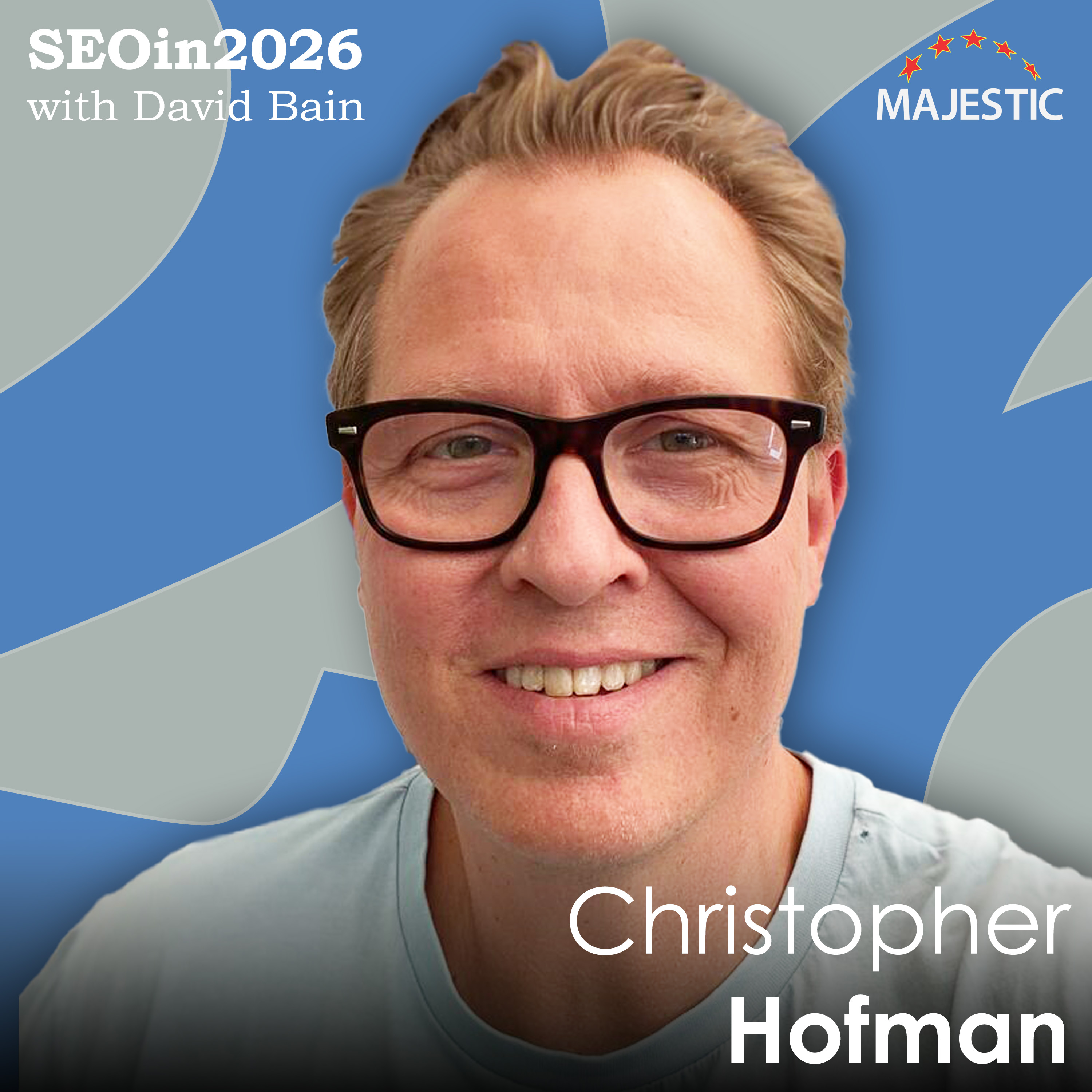
S2026 Ep 518Discover where AI is going to fit into your customer journey – with Christopher Hofman Laursen
Christopher Hofman Laursen shares that once you’ve mapped out your customer journey, it’s time to determine where AI is going to help you. Christopher says: “Take a step back and really try to understand where generated AI platforms will fit into the customer journey.” Do you do that by instinct, or is there research and data you can use to determine where that's likely to be? “First off, it's super important to realise that there's so much noise in the market at the moment. Right now, we're talking about ‘GEO’ as a new SEO discipline, trying to optimize for generative AI engines. There are former SEO consultants now going all-in on GEO. You see future crypto bros trying to get their foot in the door and creating blank canvas agencies competing against the established agencies. There's a lot of noise to declutter at first.

S2026 Ep 517Expand your understanding of clustering – with Gianluca Fiorelli
Gianluca Fiorelli advises that, to truly understand and deliver for your customer in 2026, you should be revisiting how you utilise clustering at every touchpoint. Gianluca says: “Rethink the concept of clustering. We usually think of clustering as something that is only for creating content, especially in the informational space. However, we know that we need to be visible along the entire search journey and customer journey. This means we must be visible with our informational content, but also our commercial, navigational, and transactional content – to use the classic definitions for intent. When you cluster, you need to do so for different types of clusters. The first one is still clustering for topics: entity search, and so on. Then, it is also interesting and very effective to start clustering these queries and segments for other things, like the buyer personas that are implied by these queries. You can cluster them by sentiment, in order to understand the urgency and needs that are implied by those searches.
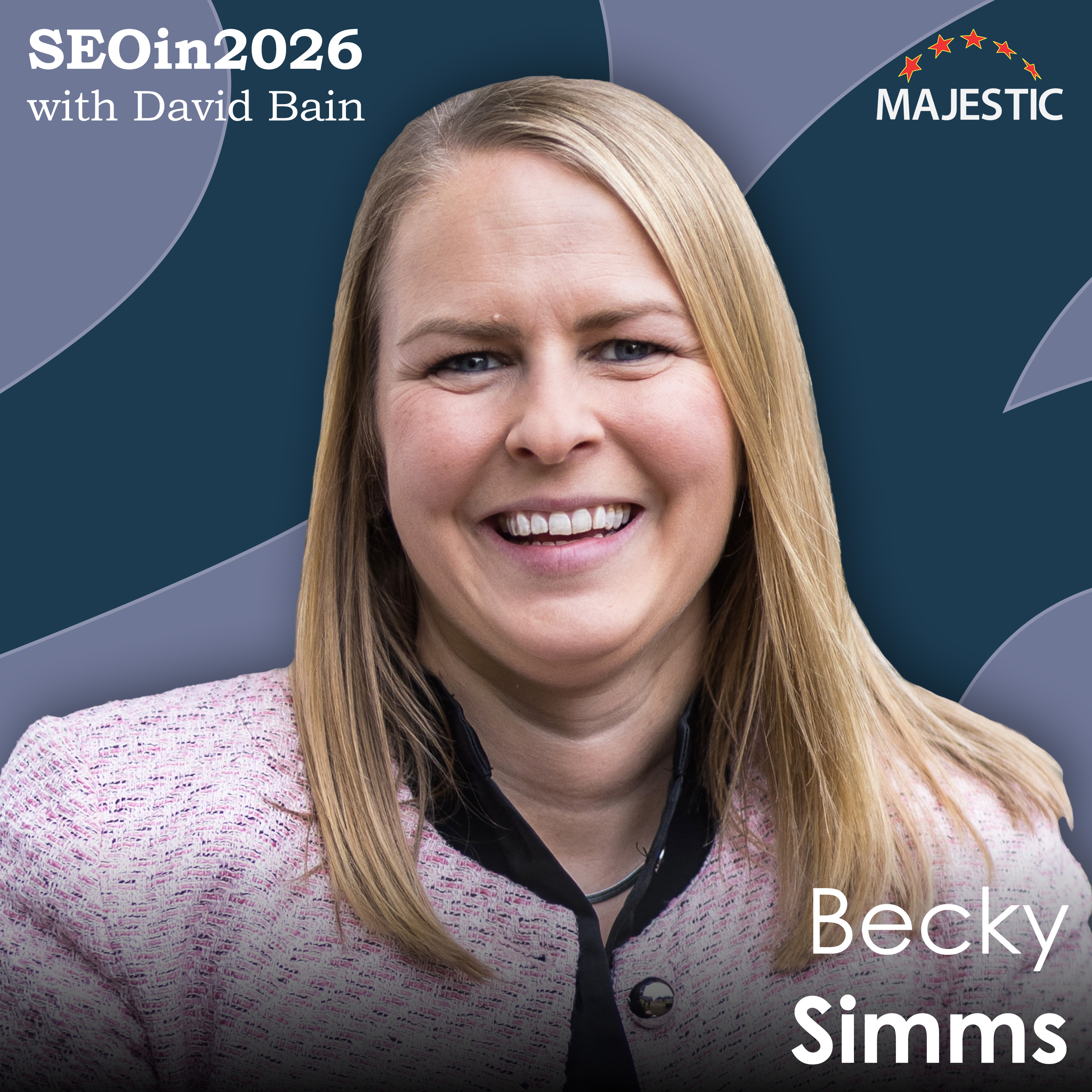
S2026 Ep 516Investigate your audience, and discover how user intent is changing – with Becky Simms
Becky Simms shares that user intent doesn’t stand still, and this is something that you should be continually analysing. Becky says: “We are seeing huge shifts in how people search, and you need to stay on top of that, but not just by looking at what platforms are doing. You need to understand what users are doing, and how their intent is changing where they search.”
S2026 Ep 515Be where your users are - Joao Pereira
Joao Pereira shares the importance of being where your users are. Talking points include: How do you know where your users are? How do you identify who your users are? What tools do you use to help to identify where they interact? What do you do once you know where your users are? How does this fit into your marketing funnel? What measurable SEO benefit does this have?
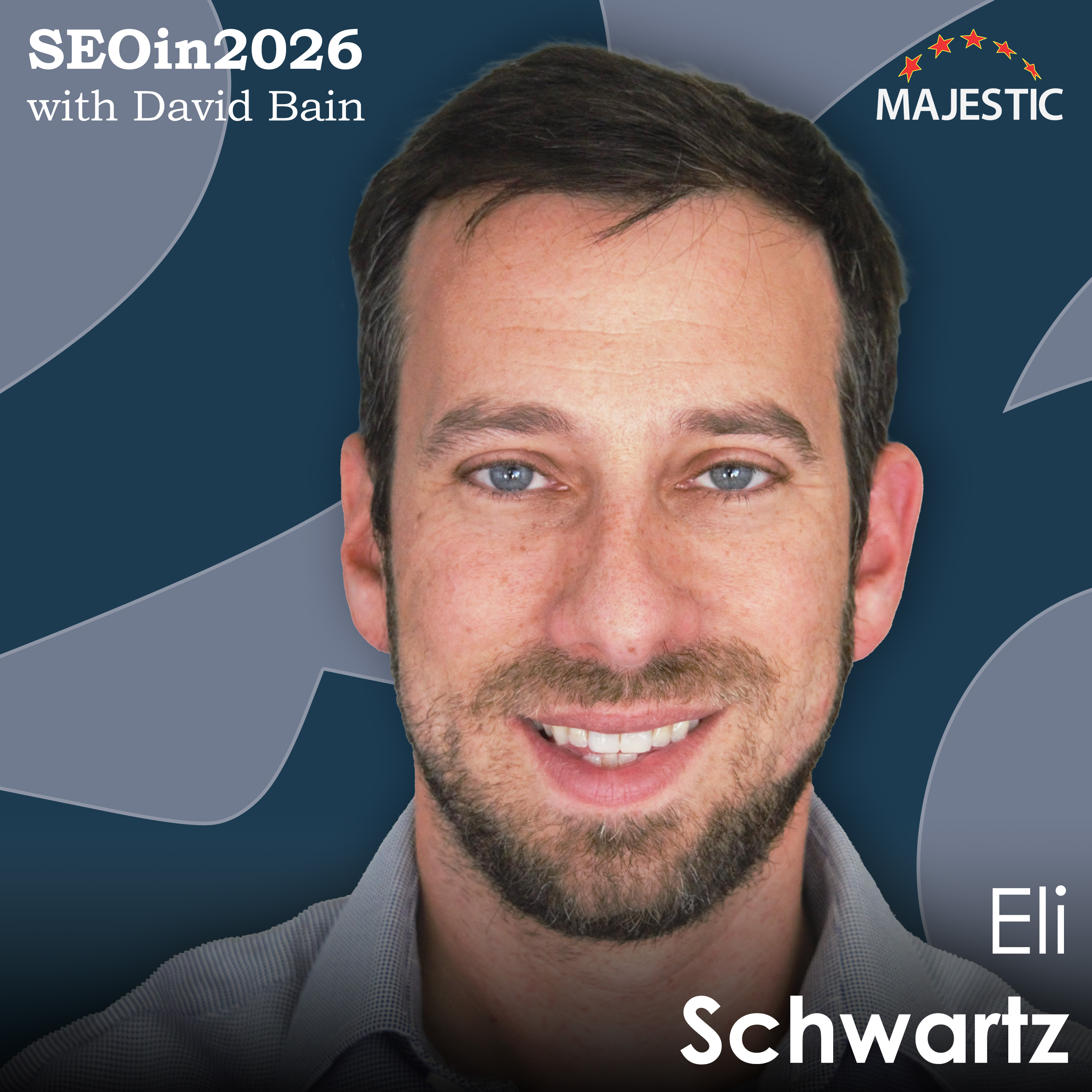
S2026 Ep 514Switch seats with your customers to discover how they search – with Eli Schwartz
It’s one thing to understand who your audience is, but how do you get a true sense of what your customers experience? Eli Schwartz advises walking a mile in their shoes. Eli says: “Map out your customer journey and figure out where search fits.” How do you start mapping an actual search journey? “It's very, very simple: you switch chairs. Marketers always have this marketing hat on when they're trying to sell something. Their boss gives them something, or it's their own product, and they put their marketing hat on. ‘What are the things I need to do? How do I package this? How do I promote it? What should the price be for SEO? What should my keywords be? What should my pages look like? How much content do I need? Who am I going to hire to do this?’
S2026 Ep 513Make your writing into mixtapes, for real people – with Will Slater
Will Slater uses a ’90s analogy to demonstrate the importance of being unique, even though it takes a little bit longer to get done. Will says: “Be more mixtape, specifically when you're writing content. To explain that, I need to take you back in time to the mid-90s. I'm a big music fan, I have been for most of my life, and my formative years with music were in the ‘90s. Back then, there were two main ways to share music: listening to the radio and making mixtapes and sharing those mixtapes with your friends. Now, creating mixtapes was hard work. It was a faff because you had to figure out exactly what tracks were going to be in what order. You had to sit in front of your stereo, picking out your records or your CDs and pressing ‘play’ and ‘record’ on your tape deck. However, that meant that every mixtape that anybody made was special because people put so much thought and effort into it.
S2026 Ep 512Stand out and survive by focussing on user intent – with Melissa Popp
Melissa Popp highlights that it’s easy to take the easy route when it comes to creating content in 2026, but this isn’t the way you stand out. Melissa says: “With AI rewriting the rules of search, content that zeroes in on real user intent is the only content that will stand out and survive.” How do you establish the user intent to begin with? “You have to look at the problem you're trying to solve. Every piece of content you create should start from that place. If you can't answer that question, you should not be writing that piece of content – whether the keywords tell you to or not.”

S2026 Ep 511Slow down and keep your eyes on the end user – with Vince Nero
Vince Nero believes that it’s all too easy to forget about the end user in the age of AI. Vince says: “Things are changing so rapidly with AI, you should be leaning on what works for people and not the algorithms.” Will doing what works for people naturally mean that you will be successful in catering towards the newer algorithms? “That's the big question. In theory, Google’s algorithms and the tools that they have built want to provide answers for users. There are some tin-foil-hat theories that they are optimizing for ad dollars and publishers – and to an extent, they do want to keep people on the platform because it’s where they get paid. However, at the end of the day, that type of mindset is going to be very limiting, and you end up forgetting about your customers.