Secret Life of Books
164 episodes — Page 3 of 4
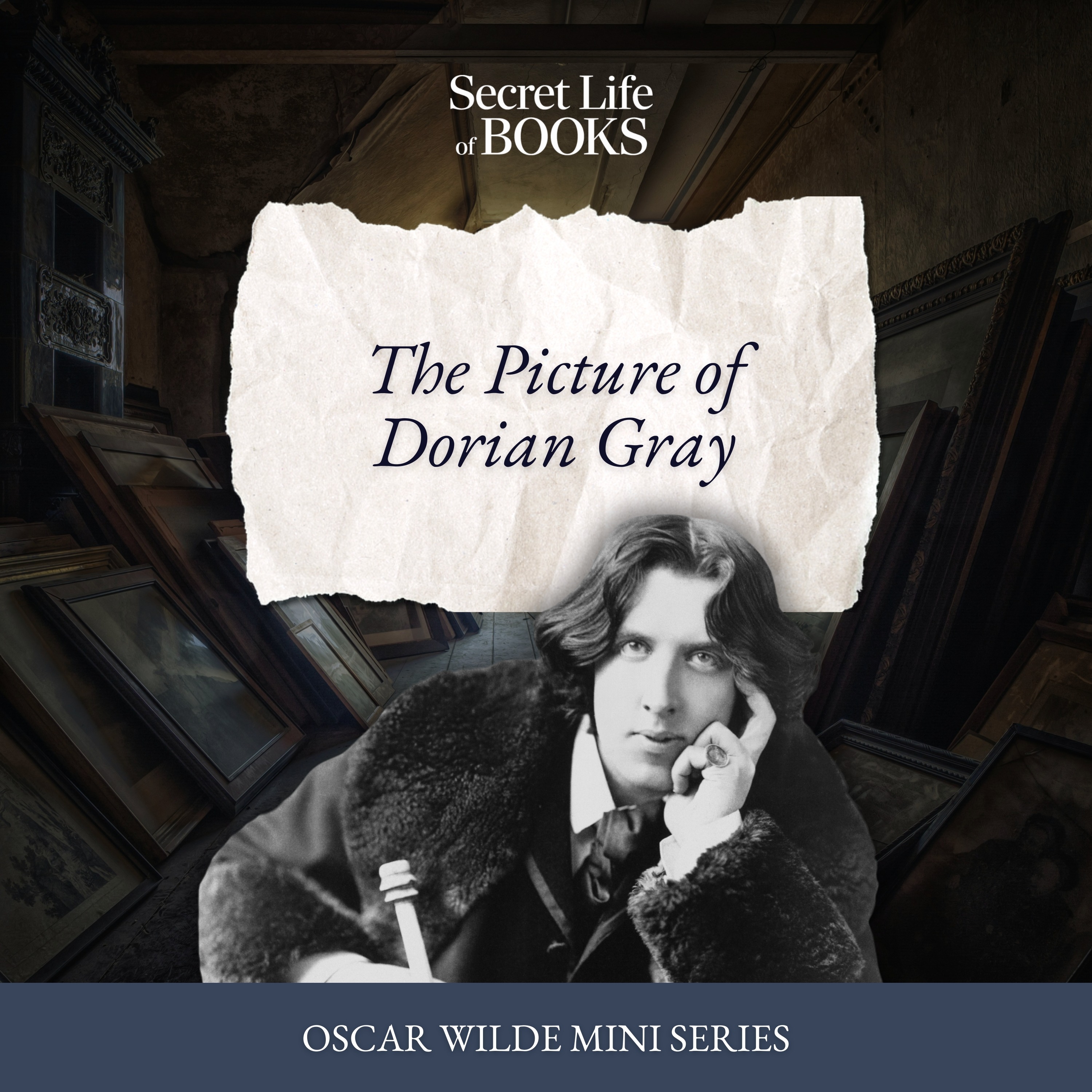
Ep 63Oscar Wilde 2: If Looks Could Kill: The Picture of Dorian Gray
The Picture of Dorian Gray is Oscar Wilde’s only novel, and it caused a sensation. It was used as evidence in Wilde’s trial for the crime of “gross indecency” in 1895. The conceit of the story is famous – a portrait grows old and corrupt while its human subject remains eternally youthful. But who knows what really happens in this famous modern myth?Sophie and Jonty talk about the influence of Shakespeare, Christopher Marlowe and Dr. Jekyll and Mr. Hyde, and Jonty throws around some exciting legal phrases like the Criminal Law Amendment Act. There’s plenty of discussion of Wilde’s personal obsession with home interiors, as well as a debate about why Wilde is so indebted to Dickens when he’s always going on about his contempt for matters of morality. Find out how a novel that is quintessentially about London is also about Wilde’s Irish identity, and what kind of wallpaper Oscar Wilde had in his student digs at Oxford. As the arch-aphorist and aesthetic rogue Henry Wotton would say, this podcast episode “has all the surprise of candour,” so find out what really happens in this legendary modern myth. Books referenced or mentioned in this episode:Oscar Wilde: A LIfe (2021) by Matthew SturgisSodomy on the Thames: Sex, Love and Scandal in Wilde Times (2012) by Morris B KaplanOscar Wilde, The Happy Prince and Other Tales (1888)Oscar Wilde, “The Decay of Lying,” “The Soul of Man Under Socialism,” and “The Portrait of Mr. W.H.” (1889)Oscar Wilde, The Picture of Dorian Gray (1890)Charles Dickens, Oliver Twist (1838)Jules Verne, Journey to the Center of the Earth (1864); Twenty-Thousand Leagues Under the Sea (1870); Around the World in Eighty Days (1872)Robert Louis Stevenson, Dr. Jekyll and Mr. Hyde (1886)Bram Stoker, Dracula (1897)H.G. Wells The Time Machine (1895) War of the Worlds (1898)-- To join the Secret Life of Books Club visit: www.secretlifeofbooks.org-- Please support us on Patreon to keep the lights on in the SLoB studio and get bonus content: patreon.com/secretlifeofbookspodcast-- Follow us on our socials:youtube: https://www.youtube.com/@secretlifeofbookspodcast/shortsinsta: https://www.instagram.com/secretlifeofbookspodcast/bluesky: @slobpodcast.bsky.social Hosted on Acast. See acast.com/privacy for more information.

Ep 62Classic Books vs Trump: Jill Lepore on reading her way through the first 100 days
Jill Lepore is one of America’s most renowned intellectuals. She’s Professor not only of American History, but also of Law at Harvard University; she's a staff writer at the New Yorker, and still finds time to write some of the most renowned history books of the 21st Century, including the magisterial and monumental These Truths: A History of the United States, the brilliant Secret History of Wonder Woman and Sophie’s personal favourite, a history of King Phillip’s War and the origins of American identity.For the first 100 days of the new US presidency, Jill Lepore turned to the classics-- the Penguin Little Black Classics to be exact. In these miniature volumes of great writing, Jill found the imaginative intelligence, resilience and sense of ordinary pleasures she needed to abide with what's going on across America -- and at Harvard specifically -- as a result of Trump's turbulent regime. Listen and learn how the classics reconnect us with deep truths that we might "hold to be self-evident," but which have so often been under threat across human history.Books mentioned in this episode and published in Penguin Little Black Classics:The Decameron, Giovanni Boccaccio (~1350)"As Kingfishers Catch Fire," Gerard Manley Hopkins (1877)Anon. The Saga of Gunnlaug Serpent-tongue (late 13C)Wailing Ghosts, Pu Songling (c.1640)"A Modest Proposal," Jonathan Swift (1727)Tang Dynasty Poets (c8C)"On the Beach at Night Alone," Walt Whitman (1856)A Cup of Sake Beneath the Cherry Trees, Kenko (13C)"The Eve of St Agnes," John Keats (1819)"Travels in the Land of Serpents and Pearls," Marco Polo (c1300)"Caligula," Suetonius (121 CE)"Olalla," Robert Louis Stevenson (1885)The Communist Manifesto, Karl Marx and Friedrich Engels (1848)"Trimalchio's Feast", Petronius (c.60 CE)Inferno, Dante (14C)"The Wife of Bath's Prologue and Tale," Geoffrey Chaucer (c1390)Essais, Michel de Montaigne (1580)"The Beautifull Cassandra," Jane Austen (1788)Homer, The Iliad and The Odyssey"The Maldive Shark," Herman Melville (1888)Socrates’ Defence, Plato (399 BCE)"Goblin Market," Christina Rossetti (1862)-- To join the Secret Life of Books Club visit: www.secretlifeofbooks.org-- Please support us on Patreon to keep the lights on in the SLoB studio and get bonus content: patreon.com/secretlifeofbookspodcast-- Follow us on our socials:youtube: https://www.youtube.com/@secretlifeofbookspodcast/shortsinsta: https://www.instagram.com/secretlifeofbookspodcast/bluesky: @slobpodcast.bsky.social Hosted on Acast. See acast.com/privacy for more information.
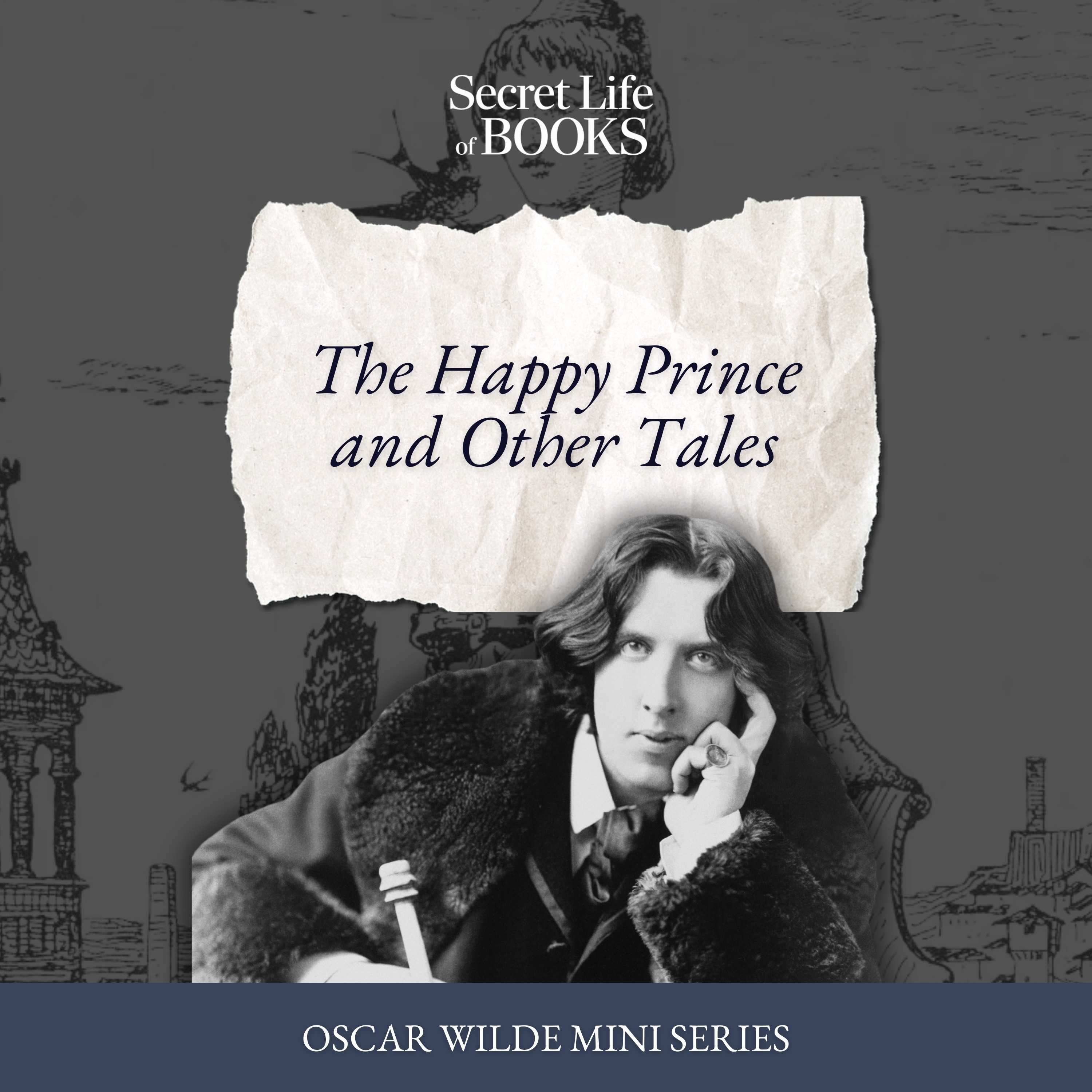
Ep 61Oscar Wilde 1: The Happy Prince and Other Stories
Few writers have blurred the boundaries between life and art quite so spectacularly as Oscar Wilde. In his writing, he challenged the moral standards of the time, advocated for Irish Nationalism and demanded tolerance of homosexuality. He wrote about decadence and the corruption of youth before going out in a fireball of scandal of his own making, his reputation shattered in the infamous trial that followed. So, was Oscar Wilde the great genius of his day or just a rather talented man with a knack for publicity? Was he a martyr in the history of gay activism, or just a self-absorbed pain in the arse? These are just some of the questions Sophie and Jonty are asking in the first of a four part series on Oscar Wilde. In this first episode, they look at his early years and how cultural and political movements of the time shaped his first great work - the seemingly timeless fairy-tales of The Happy Prince and Other Stories. Into these stories, Wilde condensed years of scholarship, literary criticism and the development of a personal aesthetic and philosophy. It is a short book and deceptively simple because these stories - like all the best fairytales - conceal deeper truths about human experience. Most importantly, through them Wilde found his voice as a writer, unleashing the extraordinary creative outpouring of the following ten years. Texts referred to: Oscar: A Life (2018) by Matthew SturgisAlice in Wonderland (1865) by Lewis Carroll Children’s and Household Tales (1812) by the Brothers GrimmDoctor Faustus (c.1594) Christopher MarlowePatience (1881) by Gilbert and Sullivan (extract from 1961 recording with John Reed) Study of the Greek Poets (1873) by JA Symonds Studies in the History of the Renaissance (1873) by Walter PaterSocial Life in Greece (1874) by John Pentland MahaffyDavid Copperfield (1850) by Charles DickensA Christmas Carol (1843) by Charles Dickens Hard Times (1854) by Charles DickensDracula (1897) by Bram Stoker -- To join the Secret Life of Books Club visit: www.secretlifeofbooks.org-- Please support us on Patreon to keep the lights on in the SLoB studio and get bonus content: patreon.com/secretlifeofbookspodcast-- Follow us on our socials:youtube: https://www.youtube.com/@secretlifeofbookspodcast/shortsinsta: https://www.instagram.com/secretlifeofbookspodcast/bluesky: @slobpodcast.bsky.social Hosted on Acast. See acast.com/privacy for more information.
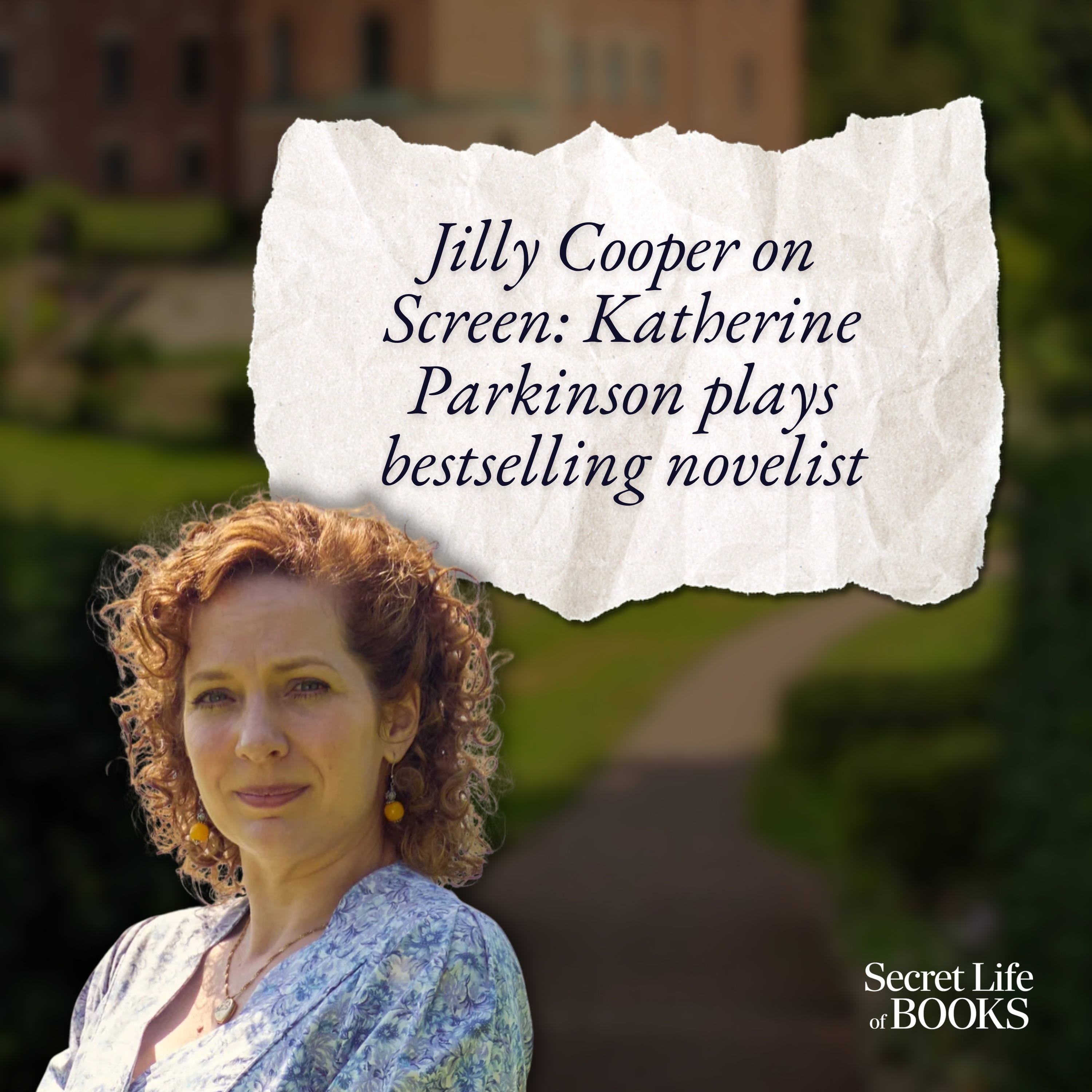
Ep 60BONUS: More 'Rivals': Actor Katherine Parkinson on the joy of Jilly Cooper and playing Lizzie Vereker in the television adaptation
Hot on the heels of our Rivals episode, Sophie and Jonty are joined by the actor and writer Katherine Parkinson - one of the stars of the recent adaptation for television. Katherine talks about playing Lizzie Vereker, wife of the ghastly James Vereker, and the satisfaction she finds in her characters's affair with Freddie Jones; why Jilly Cooper is the Jane Austen of the modern age; and why champagne is more than an optional extra when it comes to sex on screen.-- To join the Secret Life of Books Club visit: www.secretlifeofbooks.org-- Please support us on Patreon to keep the lights on in the SLoB studio and get bonus content: patreon.com/secretlifeofbookspodcast-- Follow us on our socials:youtube: https://www.youtube.com/@secretlifeofbookspodcast/shortsinsta: https://www.instagram.com/secretlifeofbookspodcast/bluesky: @slobpodcast.bsky.social Hosted on Acast. See acast.com/privacy for more information.
Ep 59Bollinger, Board Battles and Bonking Galore: Jilly Cooper's Rivals
EJilly Cooper’s Rivals (1988) is the ultimate bonkbuster - a story of professional rivalry in the Cotswold’s fast-set with lashings of sex thrown in. It follows a wide cast of characters as they jostle for power, conduct affairs with one another’s spouses, eat terrible 1980s food and listen endlessly to Chris de Burgh’s Lady in Red. Rivals was marketed as an airport book back in the day, but beneath the brash cover is a sophisticated story that draws in surprising ways from classic literature to create what is now considered to be a modern classic. Sophie and Jonty why they are so drawn to Rivals, what we can learn about the 1980s from reading it today, and the ways in which it engages with a wide range of literary influences, including Austen, Trollope and Yeats, but also Valley of the Dolls and the works of Jackie Collins and Danielle Steele. BOOKS DISCUSSED/ALLUDED TO: Rivals (1988) by Jilly Cooper Mansfield Park (1814) by Jane Austen Pride and Prejudice (1813) by Jane Austen The Wind Among the Reeds (1899) by WB Yeats A Dance to the Music of Time (1951-1975) by Anthony PowellBarchester Towers (1857) by Anthony Trollope Possession (1990) by AS ByattOscar and Lucinda (1988) by Peter CareyBilgewater (1977) by Jane Gardam Middlemarch (1872) by George EliotCocktail (1988) screenplay by Heywood GouldLady in Red (1986) by Chris de BurghValley of the dolls (1966) by Jacqueline SusannThe Bitch (1979) by Jackie Collins -- To join the Secret Life of Books Club visit: www.secretlifeofbooks.org-- Please support us on Patreon to keep the lights on in the SLoB studio and get bonus content: patreon.com/secretlifeofbookspodcast-- Follow us on our socials:youtube: https://www.youtube.com/@secretlifeofbookspodcast/shortsinsta: https://www.instagram.com/secretlifeofbookspodcast/bluesky: @slobpodcast.bsky.social Hosted on Acast. See acast.com/privacy for more information.
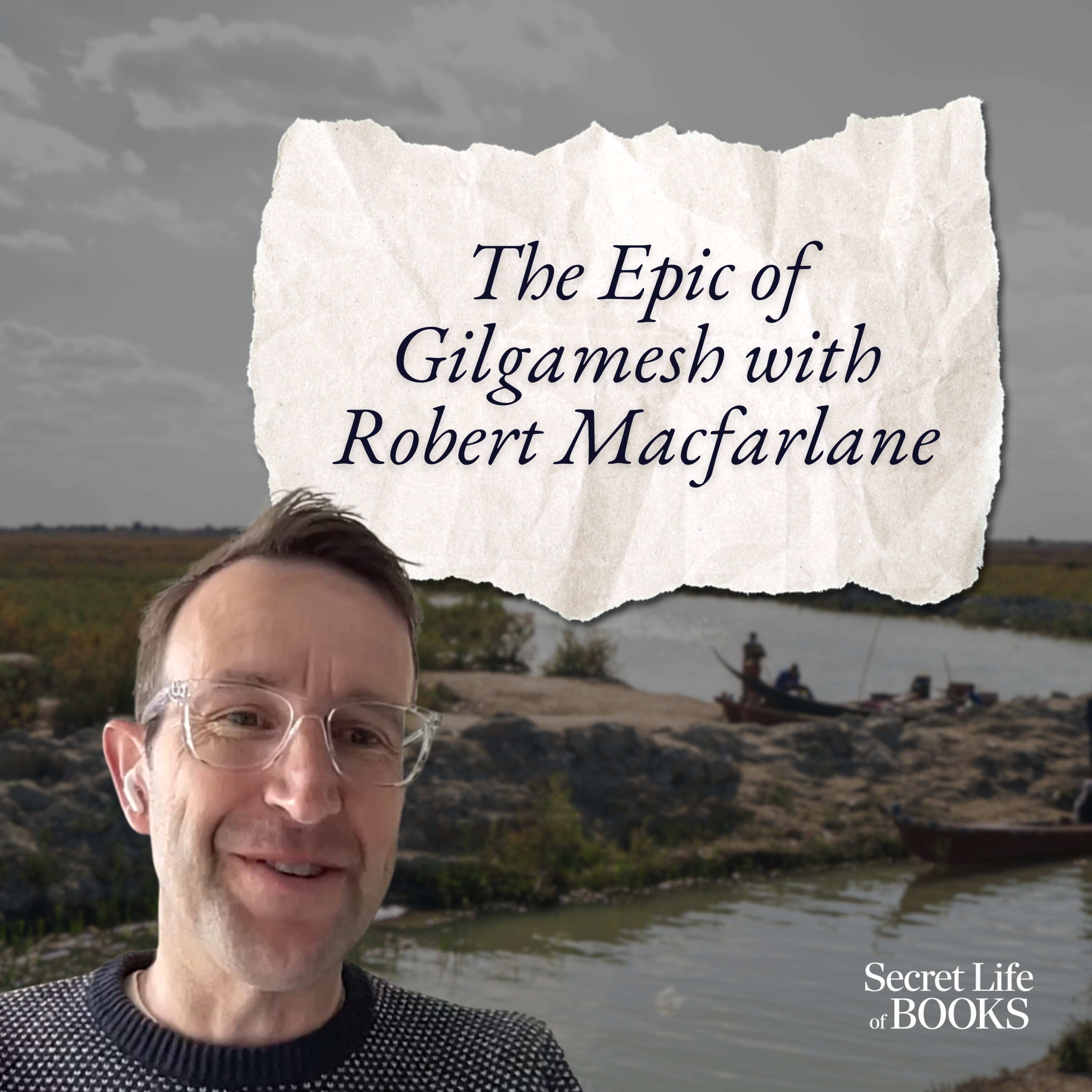
Ep 58The Epic of Gilgamesh with Robert Macfarlane
The Epic of Gilgamesh is one of the oldest surviving works of literature - an epic poem from ancient Mesopotamia, stitched together from fragments going back as far as 2100BCE. It tells the story of Gilgamesh, King of Uruk, his friendship with the wild man Enkidu, and his attempts to come to terms with his own mortality. Although incomplete, the essence of the story - and many passages - are preserved thanks to the work of dedicated Assyriologists past and present. To discuss this extraordinary work, Sophie and Jonty are joined by Robert Macfarlane, author of The Wild Places (2007), The Old Ways (2012), Underland (2019) and now Is A River Alive? (2025). Rob has been obsessed with Gilgamesh for many years - what it has to tell us about humanity and the environment. BOOKS REFERRED TO:The Epic of Gilgamesh (1999) translated by Andrew George Gilgamesh: A New English Version (2004) by Stephen Mitchell Gilgamesh: A New Translation of the Ancient Epic (2021) by Sophus HelleWe Have Never Been Modern (1991) by Bruno Latour Camera Lucida (1981) by Roland Barthes Civilization and its Discontents (1930) by Sigmund Freud The Country and the City (1973) by Raymond Williams People of the River (2021) by Grace Karskens Hosted on Acast. See acast.com/privacy for more information.
Ep 57The Tortured Poets Department: Emily Dickinson, the Transcendentalists and, yes, Taylor Swift
Emily Dickinson is probably the most famous female poet in the world. And yet – at least according to Dickinson mythology – her work could easily have gone unpublished. She wrote 1800 poems but published only 10 in her lifetime. Instead, she bound them into little bundles of paper, tied with kitchen string. These were found after her death by her sister Lavinia and after many stops and starts the first collection was published in 1890 by her friend and mentor, the critic and abolitionist Thomas Wentworth Higginson. It was an instant hit with 11 editions in less than 2 years.The spontaneity and freshness of the poems appealed to readers, as well as their fragmentary, transient, unfinished quality, as though they were moments of thought or feeling, grabbed out of thin air.She wrote about death and life, ordinary objects, the natural world, light, air, love and god with a kind of improvisational vim that proved timeless.The legend of Dickinson is more flamboyant than the writing, which is precise, miniaturist and modest. In this episode Sophie and Jonty talk about the relationship between Dickinson’s world in Amherst and her world on the scraps and fragments of paper she wrote on; the tensions between her reclusive persona and her prolific and highly professional writing life; her disdaining publication and her making sure that it would happen, and the ambiguities of her most intimate relationships. How has such a quiet and unforthcoming poet destined to become one of the most relatable, personal and confessional voices in the history of world poetry?Books etc referred to in this episode:Martha Ackmann These Fevered Days: Ten Pivotal Moments in the Making of Emily DickinsonCristanne Miller and Karen Sánchez-Eppler Oxford Handbook of Emily DickinsonDiana Fuss The Sense of An InteriorLisa Brooks The Common Pot: The Recovery of Native Space in the NortheastCharlotte Bronte, Jane EyreEmily Bronte, “No Coward Soul Am I”Elizabeth Barrett Browning, Sonnets from the Portuguese and Aurora LeighThomas Carlyle, Sartor Resartus and On HeroesRalph Waldo Emerson, EssaysHenry David Thoreau, Walden, A Week on the Concord and Merrimack Rivers, Cape CodIsaac Watts, HymnsTaylor Swift, The Tortured Poets Department.-- To join the Secret Life of Books Club visit: www.secretlifeofbooks.org-- Please support us on Patreon to keep the lights on in the SLoB studio and get bonus content: patreon.com/secretlifeofbookspodcast-- Follow us on our socials:youtube: https://www.youtube.com/@secretlifeofbookspodcast/shortsinsta: https://www.instagram.com/secretlifeofbookspodcast/bluesky: @slobpodcast.bsky.social Hosted on Acast. See acast.com/privacy for more information.
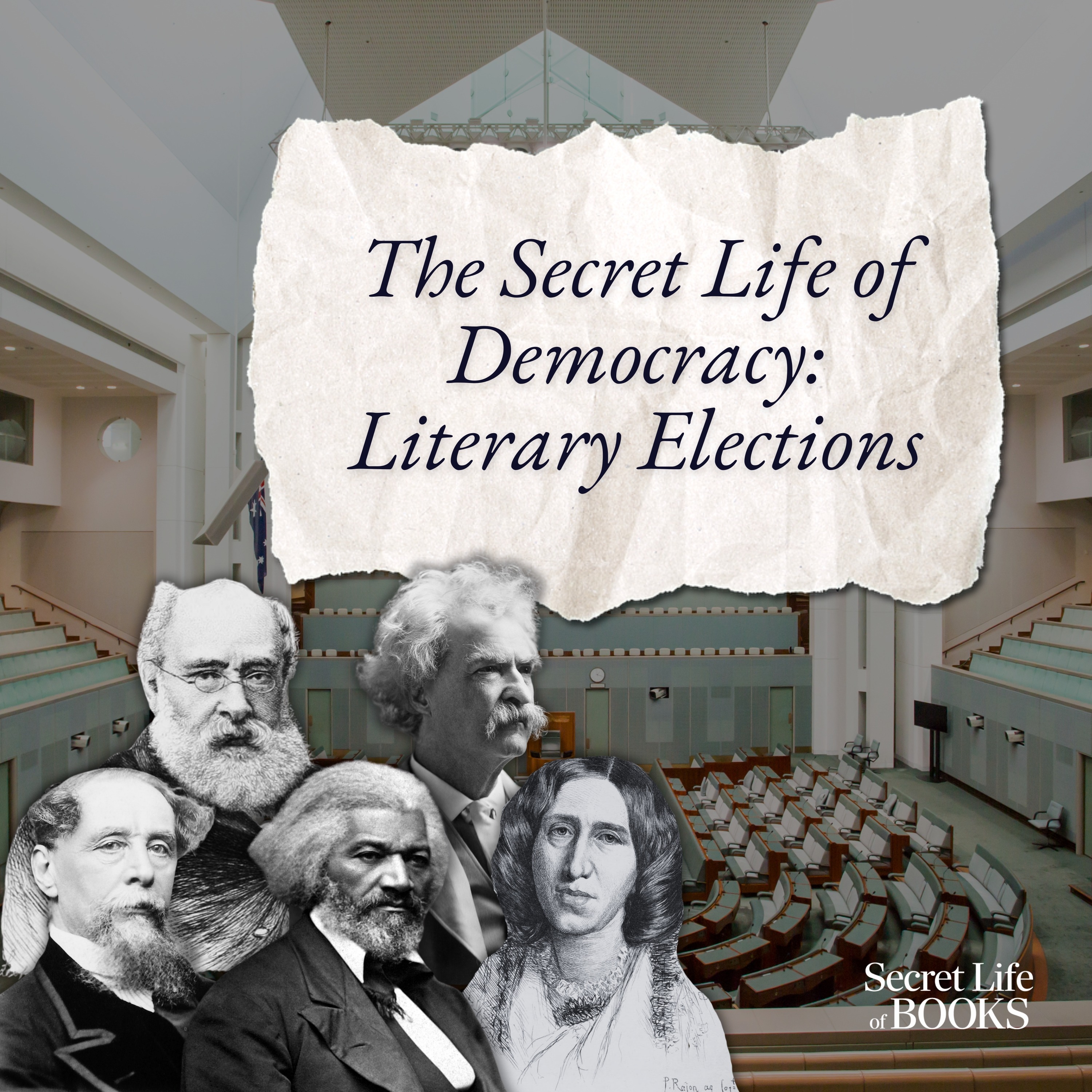
Ep 56BONUS: Secret Life of Democracy (Literature at the polls)
As Australia heads to the polls, Sophie and Jonty slap their democracy sausages on the bbq and take a tour of the greatest elections and electoral candidates in literary history. Their journey takes them through the full political spectrum - from Ancient Athens to Shakespeare's London, the fictional towns of Middlemarch and Market Snodsbury to the great American plains. Candidates include Richard III, Sir Robert Walpole and a flock of unruly birds, but in the end there can only be one winner. Who will it be? Hosted on Acast. See acast.com/privacy for more information.
Ep 55Guns and (war of the) Roses. The irresistible rise of Shakespeare's Richard III
Richard III is one of the OG villains of English literary history, the usurper king who killed his brother, nephews (the infamous “Princes in the Tower”) and seduced his brother's wife all in the space of about six months. Richard III is also known as “Crookback,” or the hunchback of Windsor Castle, because of his curvature of the spine, which prompted the great historian and Tudor apologist Thomas More to describe him as “little of stature, ill featured of limbs, crooked-backed,” a condition that made him “malicious, wrathful and perverse.” Shakespeare used Richard’s villainy and disability with unprecedented skill and daring, creating a character whose deformity and appetite for evil became assets and sources of charm.Richard III is Shakespeare’s first masterpiece. He probably wrote it in 1592 or 93, after warming-up with Taming of the Shrew, Henry VI parts 1, 2 and 3, Two Gentlemen of Verona and Titus Andronicus. With the psychological depth of these characters and his analysis of relationships under the strain of political volatility and anxiety, Shakespeare accessed a new kind of writing, influenced by Marlowe’s hit Tamburlaine. In Richard III we see the cruelty and misogynistic violence of Shrew reappear, along with the lust for blood that Shakespeare front loaded in Titus Andronicus. And we see the sit-com like return of the royal family from the Henry VI plays – all of whom would have been familiar to Elizabethan audiences. Richard III is like the season finale of Succession, when we find out what’s going to happen to all the scheming, unpleasant, entitled nepo babies and their underlings.-- To join the Secret Life of Books Club visit: www.secretlifeofbooks.org-- Please support us on Patreon to keep the lights on in the SLoB studio and get bonus content: patreon.com/secretlifeofbookspodcast-- Follow us on our socials:youtube: https://www.youtube.com/@secretlifeofbookspodcast/shortsinsta: https://www.instagram.com/secretlifeofbookspodcast/bluesky: @slobpodcast.bsky.social Hosted on Acast. See acast.com/privacy for more information.
Ep 54BONUS: The Disappearance of Agatha Christie
On 3 December 1926, only a few months after the publication of The Murder of Roger Ackroyd (in book form), Agatha Christie mysteriously disappeared, leaving an abandoned car in a ditch. As the days passed, the media went wild with excitement, vast searches involving thousands of volunteers were conducted in the Surrey countryside, and her husband Archie let the side down with unsympathetic speculation about what might have really happened. Eleven days later she was discovered staying incognito in a spa hotel in Harrogate, having suffered a terrible breakdown, involving memory loss and confusion about her identity. After a short recovery, she resumed her career becoming the best-selling novelist of all time. Sophie and Jonty recount the story of what happened during those eleven days. BOOKS/FILMS READ OR REFERRED TO: Agatha Christie (2022) by Lucy Worsley -- To join the Secret Life of Books Club visit: www.secretlifeofbooks.org-- Please support us on Patreon to keep the lights on in the SLoB studio and get bonus content: patreon.com/secretlifeofbookspodcast-- Follow us on our socials:youtube: https://www.youtube.com/@secretlifeofbookspodcast/shortsinsta: https://www.instagram.com/secretlifeofbookspodcast/bluesky: @slobpodcast.bsky.social Hosted on Acast. See acast.com/privacy for more information.
Ep 53Hercule Poirot, a Tunisian dagger and an evening of Mah Jong: The Murder of Roger Ackroyd
The three best-selling authors of all time are, in order, God, Shakespeare and Agatha Christie. Exact figures are hard to know, but the gulf between Christie and the second division is big enough to guarantee her place. She has sold over 2 billion books (and just to make that number easier to comprehend, that’s two thousand million). There are a handful of contenders for her greatest book overall, but The Murder of Roger Ackroyd - first serialised exactly 100 years ago in 1925 - is usually amongst them. The Murder of Roger Ackroyd tells the story of murderous happenings in the English country village of Kings Abbot, peaking with the mysterious death of local squire Roger Ackroyd. By happy circumstance, the famous detective Hercule Poirot has recently retired to the village. Already bored stiff by his attempts to grow marrows in his garden, he leaps at the chance of solving a crime, slowly revealing the hidden desires and secrets of his suspects before the grand reveal. Sophie and Jonty turn detective too to work out why this relatively short book with its action never ranging far from a small village has proven so successful and influential. It has been adapted many times for radio, television and film with Charles Laughton, Orson Welles and (of course) David Suchet playing Poirot. Its influence on popular culture is much broader, inspiring everything from the board game Cluedo to films like Knives Out. In this episode, Sophie and Jonty going to reveal the secrets behind Agatha Christie’s unique take on detective fiction, tell the origin story of her most famous creation Hercule Poirot, and show how the publication of the book was an inciting incident for her infamous disappearance a few months afterwards. Their investigations take them surfing with Agatha in Hawaii, into speculations about the origin of the Wagon Wheel biscuit and, of course, some truly dreadful impersonations of Hercule Poirot. SPOILER ALERT! We reveal the identity of the murderer, but only in the final part of the episode and give clear warning before we do. BOOKS/FILMS READ OR REFERRED TO: The Life and Times of Hercule Poirot (199) by Anne Hart Agatha Christie (2022) by Lucy Worsley Who Killed Roger Ackroyd (1998) by Pierre Bayard The Murder of Roger Ackroyd radio play (1939) by Orson Welles One Thousand And One Nights The Chalk Circle (14th century)Celebrated Cases of Judge Dee (18th century) The Murder in the Rue Morgue (1841) by Edgar Allan Poe Oliver Twist (1838) by Charles DickensBleak House (1853) by Charles DickensThe Woman in White (1860) by Wilkie CollinsThe Moonstone (1868) by Wilkie Collins The Mysterious Affair at Styles (1921) by Agatha ChristieThe Wasteland (1922) by TS EliotUlysses (1922) by James Joyce Cane (1923) by Jean Toomer Mrs Dalloway (1925) by Virginia Woolf The Weary Blues (1926) by Langston Hughes The Sun Also Rises (1926) by Ernest Hemingway Dracula (1897) by Bram Stoker Heart of Darkness (1899) by Joseph Conrad -- To join the Secret Life of Books Club visit: www.secretlifeofbooks.org-- Please support us on Patreon to keep the lights on in the SLoB studio and get bonus content: patreon.com/secretlifeofbookspodcast-- Follow us on our socials:youtube: https://www.youtube.com/@secretlifeofbookspodcast/shortsinsta: https://www.instagram.com/secretlifeofbookspodcast/bluesky: @slobpodcast.bsky.social Hosted on Acast. See acast.com/privacy for more information.
Ep 52Who watches the Watchmen?: Alan Moore and Dave Gibbons' Watchmen
Quis custodiet ipsos custodes, wrote the Roman poet Juvenal two thousand years ago. And just in case your Latin isn’t up to scratch, we’ll translate it for you: Who watches the watchmen? That line provided inspiration to Alan Moore and Dave Gibbons’ Watchmen - arguably the first graphic novel to join the ranks of classic literature.Published as a stand-alone comic in twelve issues between 1986 and 1987, and compiled later that year, Watchmen did for comics what Sergeant Pepper’s did for pop music, legitimising them as a serious artform in the eyes of many. Watchmen is influenced by Friedrich Nietzsche, Thomas Pynchon and Jorge Luis Borges as much as Superman and Batman.It tells the story of a group of morally-dubious, has-been superheroes, who are being picked off one-by-one by a mysterious killer against the backdrop of nuclear threat. These are the ‘watchmen’ of the title, but - as the quote from Juvenal suggests - pity the society that is looked after by these guys. Sure, they fight crime, but they also commit a lot of it - and even they aren’t sure if the world is a better place for their existence. While the book isn’t short on action, its characters also discuss philosophy, analyse the history of the comic as an art-form and engage in commercial ventures to capitalise on their own story. Some time ago, when TIME Magazine listed the 100 most important books of the past century, Watchmen was on the list, wedged somewhere between Lolita and Things Fall Apart (in this case you really do have the watch the watchmen because one of the people responsible for the list and, in particular, for Watchmen’s inclusion, was Sophie’s husband Lev). To discuss the book, Sophie and Jonty are joined by Andy Miller - writer, performer and one-half of the power duo behind the brilliant Backlisted podcast. In fact, when we asked Andy to come on the show and what book he wanted to do, Watchmen was the first thing he said. In this episode, Andy, Sophie and Jonty discuss how Watchmen predicted the 21st Century, changed the shape of comics and literature, and why Alan Moore can’t stand the term ‘graphic novel’. BOOKS REFERRED: Watchmen (1986-7) by Alan MooreProvidence (2015-17) by Alan MooreJerusalem (2016) by Alan MooreMaus: A Survivor’s Tale (1991) by Art Spiegelman The Dark Knight Returns (1986) by Frank Miller American Psycho (1991) by Bret Easton Ellis Paradise Lost (1667) by John Milton Tristram Shandy (1767) by Laurence SterneThe Prisoner (TV series) (1967-8)Revelations In the Wink of An Eye (2024) by Jeffrey Lewis -- To join the Secret Life of Books Club visit: www.secretlifeofbooks.org-- Please support us on Patreon to keep the lights on in the SLoB studio and get bonus content: patreon.com/secretlifeofbookspodcast-- Follow us on our socials:youtube: https://www.youtube.com/@secretlifeofbookspodcast/shortsinsta: https://www.instagram.com/secretlifeofbookspodcast/bluesky: @slobpodcast.bsky.social Hosted on Acast. See acast.com/privacy for more information.

Ep 51SLoB's Secret Life of Pets
From Macavity to Samuel Johnson’s Hodge, Buck to Rochester’s Pilot, what is classic literature without its pets? One of the most affecting scenes in The Odyssey, that foundation stone of western literature, occurs when Argos, Odysseus’ aged dog, dies at the moment of reunion with his long lost owner. Not even the knowledge of his afterlife as a shopping catalogue can relieve the pathos of the moment. In this episode, Sophie and Jonty make amends for slaughtering Boxer the carthorse in their episode on Animal Farm with a celebration of their favourite pets in literature. We make the case that the early 18th Century was the Golden Age for Pet Lit, that Dickens was so masterful at characterisation even the animals in his books are unforgettable, that Jane Austen was - on the basis of her books - no animal lover, while the Bronte sisters very much were. Finally, Jonty accidentally uncovers Sophie’s deep, repressed love for Enid Blyton’s Famous Five books. Like a match to gunpowder, just mentioning the books sends Sophie into a long homily to Timmy the dog. Note: No animals were harmed in the production of this episode. BOOKS DISCUSSED My Dog Tulip (1956) by JR Ackerley Old Possum’s Book of Practical Cats (1939) by TS EliotThe Life of Samuel Johnson (1791) by James Boswell Rape of the Lock (1717) by Alexander Pope Ode on the Death of a Favourite Cat (1747) Thomas Gray Jubilate Agno (1759-63) by Christopher Smart The Nun’s Priest Tale (1390s) by Geoffrey ChaucerOliver Twist (1838) by Charles Dickens David Copperfield (1850) by Charles Dickens Gulliver’s Travels (1726) by Jonathan Swift Jane Eyre (1847) by Charlotte Bronte The Odyssey Sense and Sensibility (1811) by Jane Austen Mansfield Park (1814) by Jane Austen Five Go To Smuggler’s Top (1945) by Enid Blyton Gilead (2004) by Marilynne Robinson Rivals (1988) by Jilly Cooper The Call of the Wild (1903) by Jack London Breakfast at Tiffany’s (1958) by Truman Capote-- To join the Secret Life of Books Club visit: www.secretlifeofbooks.org-- Please support us on Patreon to keep the lights on in the SLoB studio and get bonus content: patreon.com/secretlifeofbookspodcast-- Follow us on our socials:youtube: https://www.youtube.com/@secretlifeofbookspodcast/shortsinsta: https://www.instagram.com/secretlifeofbookspodcast/bluesky: @slobpodcast.bsky.social Hosted on Acast. See acast.com/privacy for more information.

Ep 50George Orwell 6: What's in Room 101? 1984 Part 2
As Shakespeare almost wrote: Orwell That Ends Well. While our six-part series on George Orwell comes to a triumphant end, Orwell’s life - alas - did not. He died too young and deeply pessimistic about the future of the world. In this last episode, Sophie and Jonty look at the bright side of life in Airstrip One, speculate what really lies within Room 101, and - REFORMATION ALERT - take a deep dive into the possible influence of 16th Century theological revolution on Winston Smith’s life (and betrayal). Finally, we step away from 1984 to reflect on this Orwell series as a whole: how do we feel about Orwell now, knowing what we do about his life, his triumphs and failures, and the controversy surrounding his treatment of his wife and women in general? Books referenced, quoted, or mentioned: Orwell: The New Life (2023) by DJ Taylor WIFEDOM (2023) by Anna Funder The Ministry of Truth: A Biography of George Orwell’s 1984 (2021) by Dorian LynskeyEssays by George Orwell Hosted on Acast. See acast.com/privacy for more information.

Ep 49George Orwell 5: Sex crime, anyone? 1984 pt1
Newspeak, Big Brother, the Thought Police, Room 101, doublethink, sex crime, the Ministry of Truth. Few books have generated quite as many outlandish yet unforgettable concepts as George Orwell’s Nineteen Eighty-Four. So much so that Orwell’s name is now an adjective - Orwellian - which, according to the Merriam-Webster dictionary means ‘relating to or suggestive of the dystopian reality depicted in the novel Nineteen Eighty-Four. Published in 1949, Nineteen Eighty-Four is a nightmare from start to finish. It follows the demise of Winston Smith - a desk-worker in a totalitarian regime called Airstrip One - as he navigates his way through daily life in a version of London ravaged by nuclear war, makes the great error of falling in love and is finally tortured and brainwashed into a state of pathetic subservience and adoration of the fictional leader of Airstrip One: Big Brother. Part of the enduring impact of Nineteen Eighty-Four is the way Orwell successfully, but regretfully, identified emerging trends in our culture. And although Britain did not become Airstrip One - other countries in the world did, including North Korea and Turkmenistan, arguably did. Reading Orwell’s novel is still one of the best ways of understanding life in such regimes. In this episode, Sophie and Jonty discuss the way that Nineteen Eighty-Four both compels and repels us as readers and chart the long road to the book’s creation at the end of another long road - the track leading to Barnhill house in the Scottish island of Jura, where Orwell spent much of his last years. For anyone concerned this might be too heavy as an episode, we lean into the unacknowledged strain of comedy that runs through the book, as well as the hope implicit in the so-called Appendix Theory (the idea that the book is narrated by somebody after the fall of the regime). Anyone interested in numerology will note that this is episode 49 of Secret Life of Books and that 1949 was the year Nineteen Eighty-Four was published. We did not plan this, but just as fate draws Winston Smith to O’Brien and Room 101, so we are drawn into Orwell’s dystopian vision… Books referenced, quoted, or mentioned: Orwell: The New Life (2023) by DJ Taylor WIFEDOM (2023) by Anna Funder The Ministry of Truth: A Biography of George Orwell’s 1984 (2021) by Dorian LynskeyEssays by George OrwellGulliver’s Travels (1726) by Jonathan SwiftThe Handmaid’s Tale (1985) by Margaret AtwoodThe Sleeper Awakes (1899) by HG WellsThe Iron Heel (1908) by Jack London We (1921) by Yevgeny ZamyatinAnthem (1938) by Ayn RandLolita (1955) by Vladimir NabokovLord of the Rings (1955) by JRR Tolkien Hosted on Acast. See acast.com/privacy for more information.

Ep 48George Orwell 4: Come on, Eileen! Anna Funder, Mrs Orwell and Wifedom
George Orwell is one of the most famous names in classic literature, thanks to his novels Animal Farm and 1984, both dystopian fables of worlds gone mad, ruled over by autocratic pigs and authoritarian governments who monitor their citizens– or barnyard companions – every move.And yet for all his commitment to political and social justice, or at least the calling out of injustice and repression, Orwell’s private relationships were troubled and difficult, particularly his relationship with his wife Eileen O’Shaughnessy.In 2023, the internationally celebrated historian and novelist Anna Funder published Wifedom to instant acclaim. It’s a beautifully crafted biography of Eileen, re-assessment of Orwell, and polemical memoir of Anna’s own life as a writer, mother and wife. The book has had a huge impact on wives and women all over the world and has changed the way we think about Orwell.Anna’s home turf as a writer is the challenge of staying human under repressive regimes. She is the author of the brilliant Stasiland a documentary history of life in East Germany under the Stasi secret police in the aftermath of world war 2, and All That I Am, an historical novel about Nazi Germany and Hitler’s atrocities. Anna joins Sophie and Jonty in the studio to talk about Eileen, Eric Blair, early 20thC British history, and the experience of publishing Wifedom. Hosted on Acast. See acast.com/privacy for more information.

Ep 47George Orwell 3: Murder in the Barnyard: Animal Farm
Animal Farm is George Orwell’s micro masterpiece, an animal fable that offers a devastating critique of Stalinist Russia and the rise of totalitarianism. Orwell described it to a friend as a “little squib,” but it’s much more than that: a tiny atom bomb that lands a structurally perfect hit on mid-20th century political authoritarianism and communism’s failure to protect the people it purported to serve.Written over the winter 1943/1944, Animal Farm is the closest Orwell came to a piece of collaborative writing, as Orwell and Eileen revised the book together, huddled in bed to stay warm in chronically cold houses.Animal Farm was rejected by 4 publishers (including TS Eliot at Faber & Faber) before it was snapped up by Secker and Warburg and published in 1945 and became an instant hit, hugely popular ever since. As Sophie and Jonty tell the history of the novella, they also retrace the early years of Orwell’s marriage to Eileen O’Shaugnessey when they lived together on a smallholding farm in Wallingford Hertfordhsire, complete with a farm-shop; Orwell’s flirtation with violent revolution during the years of the Second World War; and, less dramatically, his time as a producer at the BBC. Sophie and Jonty also sing Beasts of England in its entirety (to the tune of Darling Clementine), discuss how to make the perfect cup of tea, and Jonty’s bad experiences at a prestigious London restaurant, and why - in many ways - Animal Farm really is just about the animals. Books referenced, quoted, or mentioned: Orwell: The New Life (2023) by DJ Taylor WIFEDOM (2023) by Anna Funder Orwell’s Roses (2021) by Rebecca SolnitDarkness at Noon (1940) by Arthur KoestlerEssays by George OrwellGulliver’s Travels (1726) by Jonathan SwiftThe Canterbury Tales by Geoffrey Chaucer Leviathan (1651) by Thomas HobbesThe Social Contract (1762) by Jean-Jacques RousseauThe Communist Manifesto (1848) by Karl Marx and Friedrich Engels Hosted on Acast. See acast.com/privacy for more information.

Ep 46World Poetry Day Double-Bill: Can poetry change the world? The War Poems of Siegfried Sassoon
Together, Siegfried Sassoon’s The Old Huntsman (1917) and Counter-Attack and Other Poems (1918) are among the greatest examples of protest art in British history. Sassoon was a decorated war hero, who took a stand - when few others dared - on the moral emptiness, institutional corruption and brutality of the First World War. Alongside his poetry, Sassoon took the shocking measure of writing an open letter, which was read out in parliament, in which he accused the British government and military of deception, of deliberately prolonging an ‘evil and unjust’ war, and the complacency of the British public for not holding the government to account.As a consequence, he faced a court-martial and certain imprisonment, but his friend - the fellow poet Robert Graves - intervened and persuaded the authorities that Sassoon was mentally ill. Instead, Sassoon was sent to Craiglockhart Hospital, under the care of pioneering psychoanalyst WHR Rivers, where he wrote many of his finest poems, before returning to the frontline for the final months of the war. In this episode, Sophie and Jonty are joined by historian and Sassoon biography Max Egremont, who explains the extraordinary circumstances that led to Sassoon - an officer so brave that his men nicknamed him Mad Jack - turning against the war and embracing the tiny, fringe movement that was pacifism in the 1910s. We’ll find out about his friendships with fellow poet Wilfred Owen and psychologist WHR Rivers at Craiglockhart Military Hospital, which inspired Pat Barker’s best-selling Regeneration trilogy. Finally, the question is asked - can poetry ever change the world?Siegfried Sassoon: A Biography (2005) by Max Egremont.Regeneration Trilogy by Pat Barker (1991-1995) Hosted on Acast. See acast.com/privacy for more information.

Ep 45George Orwell 2: The Revolution SHOULD NOT be televised: Homage to Catalonia
War is boring; revolution is boring; politics is boring. That’s the message of George Orwell’s Homage to Catalonia. But, somehow, Homage to Catalonia itself is NOT boring. Published in 1938, it charts Orwell’s experience on, behind and beyond the front line of the fight against Fascism in the Spanish Civil War. Through the course of his narrative, written in the weeks immediately following his return to England, adrenalin still pumping in his veins, Orwell takes us through the complexity of internecine factionalism in Republican Barcelona, derring-do raids on General Franco’s trenches, his own experience of being shot in the throat by a fascist sniper, and the narrow escape by himself and his wife Eileen when they became political targets of the Soviet Union with a warrant out for their arrest. Homage to Catalonia was a massive flop - think Betamax video, New Coke, or Michael Jackson’s Invincible album - selling less than a thousand copies, but it has become recognised as a masterpiece of reportage. Most importantly, it contains the political awakening and many of the ideas leading directly to Animal Farm and 1984. In these pages, we see Orwell’s horror of totalitarianism, his fear of rats, the betrayal of workers by their supposedly revolutionary leaders, of newspaper censorship rewriting the past with alternative facts. And, in anarchist Barcelona, we even see a glimpse of Airstrip One - a crumbling post-revolutionary city with blue-overall wearing citizens, gradually succumbing to Stalinist mind-control. This is the second episode in our four-part series on George Orwell. The first, following Orwell’s early life was about the impact of the First World War, the moral abyss of the British Empire and the Great Depression on his first book Down and Out in Paris and London. In this, Sophie and Jonty look at the rise of fascism in Europe through Orwell’s front row seat of the Spanish Civil War, taking us up to brink of the Second World War. Content warning: mild bad language Books referenced, quoted, or mentioned: Orwell: The New Life (2023) by DJ Taylor WIFEDOM (2023) by Anna Funder Essays by George OrwellThe Road to Wigan Pier (1937) by George OrwellNineteen Eighty-Four (1949) by George Orwell People of the Abyss (1904) by Jack London Tropic of Cancer (1934) by Henry Miller Memoirs of an Infantry Officer (1930) by Siegfried SassoonFor Whom the Bell Tolls (1940) by Ernest Hemingway Hosted on Acast. See acast.com/privacy for more information.

Ep 44World Poetry Day Double-Bill: Elizabeth Bishop's Geography III with Rachel Cohen
Elizabeth Bishop is one of those poets who’s often referred to as a writer’s writer, but this doesn’t mean her poems are hard to read. On the contrary: as one of the most loved and admired twentieth-century poets, Bishop has the rare ability to do high-low. She’s enjoyable and accessible and also intensely artful and complex, not to mention very funny. In this special episode, Sophie and Jonty chat to American writer and critic Rachel Cohen about her decades-long admiration for Bishop and deep appreciation for her art.Bishop was born in New England and spent a significant amount of her childhood in Nova Scotia, Canada. Her writing is infused with the austerity and beauty of Northeast America. But Bishop has another side too, a flamboyance and lushness of texture that came from living in Key West Florida and Brazil. She struggled with alcoholism and depression and had intense lifelong friendships with several of the most important writers of her generation, including the great poets Robert Lowell and Marianne Moore.We talk about the paradoxes and contradictions of Bishop and her last published collection, Geography III, with the brilliant Rachel Cohen, whose books, essays and occasional observations are, like Bishop’s poems, beautiful, meticulous, and expansive all at once. Rachel has written about Bishop in her fabulous book A Chance Meeting.Further Reading:Elizabeth Bishop, Geography IIIRachel Cohen, A Chance Meeting-- To join the Secret Life of Books Club visit: www.secretlifeofbooks.org-- Please support us on Patreon to keep the lights on in the SLoB studio and get bonus content: patreon.com/secretlifeofbookspodcast-- Follow us on our socials:youtube: https://www.youtube.com/@secretlifeofbookspodcast/shortsinsta: https://www.instagram.com/secretlifeofbookspodcast/bluesky: @slobpodcast.bsky.social Hosted on Acast. See acast.com/privacy for more information.

Ep 43George Orwell 1: The Best Gap Yah, great food writing and Paris hotels: Down and Out in Paris and London
In the winter of 1927, George Orwell dropped his aitches, pulled on his distressed tailored trousers, and took the first of many trips to the underbelly of London society. Over the following years, he spent long stints amongst the homeless and starving people of both Paris and London. He collected these experiences into his first book Down and Out in Paris and London (1933), conveniently leaving out the weekends and kitchen sups with mater and pater.Orwell’s intention was partly to draw attention to the appalling social inequality of France and England after the First World War, but also simply to allow his imagination to wallow in scenes of surreal vividness and black humour. In this - the first in a four-part series about Orwell’s life, work and times - Sophie and Jonty look at the circumstances that lead to his first, and still one of his best-loved, books. They focus on two of his most famous essays that provide unique insights into his early years. In Such, Such Were the Joys, Orwell wrote about his experience of English boarding school, where he developed an ineradicable sense of himself as intrinsically doomed and disgusting, of a world where bullies will always triumph and where the underdog can never win. In Shooting an Elephant, Orwell recounts his years working for the Indian Police in the 1920s and his realisation that the British Empire was a corrupt, murderous regime. Finally, Sophie and Jonty follow Orwell into the mean streets of Paris’ 5th arrondissement and London’s Whitechapel, the scenes of brutality that follow and a truly bizarre encounter with another Old Etonian in a slum lodging-house. -- To join the Secret Life of Books Club visit: www.secretlifeofbooks.org-- Please support us on Patreon to keep the lights on in the SLoB studio and get bonus content: patreon.com/secretlifeofbookspodcast-- Follow us on our socials:youtube: https://www.youtube.com/@secretlifeofbookspodcast/shortsinsta: https://www.instagram.com/secretlifeofbookspodcast/bluesky: @slobpodcast.bsky.socialContent warning: mild bad language Books mentioned: Orwell: The New Life (2023) by DJ Taylor WIFEDOM (2023) by Anna Funder Essays by George OrwellThe Road to Wigan Pier (1937) by George OrwellNineteen Eighty-Four (1949) by George Orwell David Copperfield (1850) by Charles Dickens New Grub Street (1891) by George Gissing Nadja by (1928) Andre Breton Paris Peasant by (1926) Louis Aragon Tom Jones (1749) - as ever - by Henry Fielding Gulliver’s Travels (1726) - as ever - by Jonathan Swift Tales of Mean Streets (1894) by Arthur Morrison People of the Abyss (1904) by Jack London Tropic of Cancer (1934) by Henry Miller Kitchen Confidential (2000) by Anthony Bourdain The Tramp Ward (1904) by Mary Higgs Autobiography of a Super-Tramp (1908) by WH Davies Hosted on Acast. See acast.com/privacy for more information.

Ep 42International Women's Day Bonus: Was Shakespeare a Woman? Jodi Picoult says yes!
Legendary bestseller Jodi Picoult is also a graduate of the Princeton English Department, and this week she came back to teach class! Sophie recorded a live episode at the Princeton Public Library in front of a packed house of Jodi fans who were delighted to hear why she believes that when it comes to Shakespeare's best plays, a women was holding the quill!Jodi's newest novel "By Any Other Name," tells an intense, gripping story about a real-life woman who might just have written many of Shakespeare's most famous works, including Hamlet, Merchant of Venice and Romeo and Juliet, leaving the Bard himself to run his theatre, make money, and have extra-marital affairs.Emilia Bassano, Jodi's heroine, is a brilliant but under-appreciated writer in the precarious world of the Renaissance court. In real life, Emilia Bassano was a self-made author, lover, mother, and an all-round Elizabethan bad-ass. She published the first collection of poems by a woman in England, and in this live conversation we get a fascinating glimpse of an extraordinary women in an extraordinary time. Jodi takes us through the evidence of of Emilia's "fingerprints" in Shakespeare's plays, and she explains her own original discovery of a sizzling connection between Emilia and the hottest man at court, the Earl of Southampton!"Bardolatry" was a term George Bernard Shaw came up with to describe people who love Shakespeare too much, and Jodi is leading a new vanguard of Bardoloclasts — skeptics who are breaking the myth of Shakespeare to reveal hidden histories behind the legend.Special thanks to Janie Hermann, Becky Bowers and the Princeton Public Library for their support.-- To join the Secret Life of Books Club visit: www.secretlifeofbooks.org-- Please support us on Patreon to keep the lights on in the SLoB studio and get bonus content: patreon.com/secretlifeofbookspodcast-- Follow us on our socials:youtube: https://www.youtube.com/@secretlifeofbookspodcast/shortsinsta: https://www.instagram.com/secretlifeofbookspodcast/bluesky: @slobpodcast.bsky.socialProducer: Boyd BrittonDigital Content Coordinator: Olivia di CostanzoDesigner: Peita JacksonOur thanks to the University of Sydney Business School.Content warning: moderate swearing and sexual content Hosted on Acast. See acast.com/privacy for more information.

Ep 41Magnetic chemistry, social anxiety, and the in-laws from hell: Pride & Prejudice (aka Meet The Bennets)
By many reckonings, this is the most famous novel in English. It’s also the book Jane Austen described as her own “Darling Child.” As we head to the milestone of Jane’s 250th Birthday in December (get ready for the minced chicken and negus party) Sophie and Jonty dig into one of the most joyful, funny, sexy stories ever told.In this episode we ask why this small novel of village life exploded into a global cultural icon, inspiring retelling upon retelling, and catapulting Mr. Darcy and Lizzie Bennet’s romance into a modern myth.You’ll hear about some lesser-known experiences from Jane Austen’s life that informed the writing, and why it took her so long (aspiring writers, take heart). Sophie tries to shoehorn four historical secrets at the start of the episode, but Jonty only lets her share two of them on air. And he dings her for being too interested in legal history.Instead, the duo argue about why mismatched attraction, or mistaking steamy passion for implacable dislike, is such an evergreen literary trope, and how much Elizabeth’s love of Darcy depends on seeing his enormous house.Both hosts give favorite jokes another outing – listeners can decide if repetition make them more funny. Not as funny as Austen, that’s for sure. Tune in for a tune-up about the original Meet the Parents, a tale of colliding families, ghastly mothers in law, and male bonding activities.-- To join the Secret Life of Books Club visit: www.secretlifeofbooks.org-- Please support us on Patreon to keep the lights on in the SLoB studio and get bonus content: patreon.com/secretlifeofbookspodcast-- Follow us on our socials:youtube: https://www.youtube.com/@secretlifeofbookspodcast/shortsinsta: https://www.instagram.com/secretlifeofbookspodcast/bluesky: @slobpodcast.bsky.socialBooks Mentioned or Used as Sources:Rachel Cohen, Austen Years: A Memoir in Five Novels, 2020.Claudia L. Johnson and Clara Tuite, 30 Great Myths About Jane Austen, 2020.Sandra MacPherson, “Rent to Own, or, What’s Entailed in Pride and Prejudice,” Representations, 2003.Claire Tomalin, Jane Austen: A Life, 1999.Fay Weldon, Letters to Alice: On First Reading Jane Austen, 1985.Hilary Davidson "Reconstructing Jane Austen's Silk Pelisse," Costume, vol 49, no. 22, 2015.Producer: Boyd BrittonDigital Content Coordinator: Olivia di CostanzoDesigner: Peita JacksonOur thanks to the University of Sydney Business School. Hosted on Acast. See acast.com/privacy for more information.

Ep 40Self-Help, dodgy marriages and the siren call of Australia: David Copperfield Part 2
In Part 2 of David Copperfield, we pick up David where we left him, sobbing at the door of Betsey Trotwood’s house in Dover. From this low, David’s life changes - he is no longer a victim, but embarks on a (very long) journey towards self-reliance, re-encountering old friends like Micawbers and Steerforth, but also new characters like Uriah Heep and the simpering Dora. To make sense of this long, rambling journey of redemption, Sophie and Jonty reveal the influence of the emerging self-help movement on Dickens’ world-view and how his side-hustle as the director of a Home for Homeless Women inspired him to send many of the characters in David Copperfield off to Australia at the end of the book - and the inevitable happy ending this suggests. BOOKS MENTIONED OR USED AS SOURCES: Charles Dickens: A Life (2011) by Claire Tomalin Self-Reliance (1841) by Ralph Waldo Emerson Self-Help (1859) by Samuel Smiles 1848: The Revolution of the Intellectuals (1944) by Lewis Namier Demon Copperhead (2022) by Barbara KingsolverRivals (1988) by Jilly Cooper Hosted on Acast. See acast.com/privacy for more information.

Ep 39‘Umble beginnings, childhood neglect, and did Dickens steal from Charlotte Bronte: David Copperfield
David Copperfield is the name of an American illusionist, whose feats included levitating over the Grand Canyon, walking through the Great Wall of China and making an airplane disappear. It’s also the name of novel by Charles Dickens. Published in serial form between 1849 and 1850, David Copperfield charts the degradation and eventual success of its narrator - a figure based closely on the author himself. So much so that Dickens later referred to the book as a ‘favourite child’, which considering his self-proclaimed habit of ‘slaughtering’ his child characters is fortunate for Copperfield. David Copperfield is very much A Tale of Two Stories - a literary pun which Jonty is very pleased with. The first story is that of David’s neglect as a child, the second of his adult life as he aspires to a state of self-reliance. In this episode, Sophie and Jonty look at the mid-life crisis that precipitated the writing of Copperfield as Dickens suffered a minor breakdown, excavated memories from his unhappy childhood and distributed increasingly silly names to his many children. We discover the literary innovations that resulted from Dickens choosing to adopt first person narrative for his child star, how he ripped off Charlotte Bronte without acknowledging it, and the vast cast of unforgettable characters like the Micawbers, Betsey Trotwood, and Uriah Heep that carry his story along. Finally, we leave listeners on a cliff-hanger as poor David, homeless and destitute, walks from London to Dover and flings himself at the mercy of his long-lost aunt. What will happen to David? Will he rise to success and levitate across the Grand Canyon? Listen to part 2 to find out. -- To join the Secret Life of Books Club visit: www.secretlifeofbooks.org-- Please support us on Patreon to keep the lights on in the SLoB studio and get bonus content: patreon.com/secretlifeofbookspodcast-- Follow us on our socials:youtube: https://www.youtube.com/@secretlifeofbookspodcast/shortsinsta: https://www.instagram.com/secretlifeofbookspodcast/bluesky: @slobpodcast.bsky.socialProducer: Boyd BrittonDigital Content Coordinator: Olivia di CostanzoDesigner: Peita JacksonOur thanks to the University of Sydney Business School.Content warning: moderate swearing and sexual contentBOOKS MENTIONED OR USED AS SOURCES: Charles Dickens: A Life (2011) by Claire Tomalin Tristram Shandy by Laurence SterneTom Jones by Henry FieldingJane Eyre by Charlotte Bronte Hosted on Acast. See acast.com/privacy for more information.

Ep 38BONUS: SLoB's Secret Crushes and Clandestine Encounters pt 2
In part 2 of SLoB's Valentine's special, more heroes and heroines from the world of classic books get the brutal Tinder treatment as Sophie and Jonty assess the romantic moves of your literary faves. They are in full agreement concerning the lead characters of Sense & Sensibility and Go Tell It On The Mountain, but the conversation turns fractious as they lock horns over whether Frankenstein or his monster is the greatest lover in Mary Shelley's famous novel. Fortunately, Dracula - that great peacemaker - is on hand to elicit full agreement that he, the Prince of Darkness, is the ideal date.-- To join the Secret Life of Books Club visit: www.secretlifeofbooks.org-- Please support us on Patreon to keep the lights on in the SLoB studio and get bonus content: patreon.com/secretlifeofbookspodcast-- Follow us on our socials:youtube: https://www.youtube.com/@secretlifeofbookspodcast/shortsinsta: https://www.instagram.com/secretlifeofbookspodcast/bluesky: @slobpodcast.bsky.socialProducer: Boyd BrittonDigital Content Coordinator: Olivia di CostanzoDesigner: Peita JacksonOur thanks to the University of Sydney Business School.Content warning: moderate swearing and sexual content Hosted on Acast. See acast.com/privacy for more information.

Ep 37Free love in Paris, male wrestling and murder: Giovanni's Room
EIt's Black History Month and Sophie and Jonty are bringing their analytical chops once again to the giant of 20th-century literature, James Baldwin. In his debut novel, Go Tell It On the Mountain, Baldwin had captured the experience of growing up in 1930s Harlem. In his second novel, Giovanni’s Room, published in 1956, he focused instead on his experiences as a gay man, living in Paris. But, unlike Baldwin, the narrator of this novel is white. The hero David is torn between two desires - his burgeoning love for an Italian barman called Giovanni, and the imperative to marry his girlfriend Hella. He struggles to choose, but the casualty is Giovanni rather than David. Baldwin wrote Giovanni’s Room while wrestling with his own homosexuality - and his fears about the life of loneliness it condemned him too - and developing new theories about white and black experience in America. Sophie and Jonty talk about the unique experiences behind the writing of this novel, the powerful expression of homosexual desire, and why Paris isn’t all it’s meant to be. Content warning: mild sexual content -- To join the Secret Life of Books Club visit: www.secretlifeofbooks.org-- Please support us on Patreon to keep the lights on in the SLoB studio and get bonus content: patreon.com/secretlifeofbookspodcast-- Follow us on our socials:youtube: https://www.youtube.com/@secretlifeofbookspodcast/shortsinsta: https://www.instagram.com/secretlifeofbookspodcast/bluesky: @slobpodcast.bsky.socialProducer: Boyd BrittonDigital Content Coordinator: Olivia di CostanzoDesigner: Peita JacksonOur thanks to the University of Sydney Business School.Further ReadingNotes On A Native Son (1956) by James Baldwin James Baldwin: Living in Fire (Pluto Books, 2019) by Bill V MullenThe Ambassadors by Henry James (1903) Hosted on Acast. See acast.com/privacy for more information.

Ep 36BONUS: SLoB's Secret Crushes and Clandestine Encounters pt 1
EIt's Valentine's Day and love is quite literally in the air as the Secret Life of Books beams, via a complex network of satellites and data banks, to your ears. In this Bonus Episode, Sophie and Jonty reflect on what they've learnt about love from the classics, and rank the leading men and ladies of the books covered so far as lovers. St Valentine first appears in English literature in Geoffrey Chaucer's Parliament of Fowls and weaves his way via Jane Austen and Charles Dickens through to the present day.In this first part of 2, Sophie and Jonty revisit Picnic at Hanging Rock, which begins with a Valentine's Day picnic gone wrong, and spend far too much time talking about Jane Eyre's Rochester, who somehow - despite driving one woman mad, giving another false teeth as a gift, and getting himself up in drag to woo Jane - is one of literature's great sex symbols. Gullver - of 'Travels' fame - gets a look in, as do Lockwood, Cathy, Hareton and the rest of the kids from Wuthering Heights.Part 2 of this conversation is available on Patreon and will join the main feed on Friday February 21, 2025.Content warning: moderate sexual content and bad language.-- To join the Secret Life of Books Club visit: www.secretlifeofbooks.org-- Please support us on Patreon to keep the lights on in the SLoB studio and get bonus content: patreon.com/secretlifeofbookspodcast-- Follow us on our socials:youtube: https://www.youtube.com/@secretlifeofbookspodcast/shortsinsta: https://www.instagram.com/secretlifeofbookspodcast/bluesky: @slobpodcast.bsky.socialProducer: Boyd BrittonDigital Content Coordinator: Olivia di CostanzoDesigner: Peita JacksonOur thanks to the University of Sydney Business School. Hosted on Acast. See acast.com/privacy for more information.

Ep 35Shakespeare does 'Succession': Rory Stewart on King Lear
E“Now, gods, stand up for bastards!” King Lear is the Mount Everest of Theatre - a sprawling masterpiece of political turmoil, personal betrayal, horrifying gore and great poetry. It makes ‘Succession’ look like The Midsomer Murders. Lear is the pagan king who decides to divides his kingdom between two daughters (and banishing a third), only to find himself outcast, succumbing to madness, adrift in a world collapsing into civil war. Who better to tackle this cautionary tale of domestic and political crisis than Rory Stewart, host of The Rest is Politics, who has watched the downfall of several rulers, in one way or another. For Rory, King Lear is ‘THE’ play. He fell in love with it at school and becomes only more seduced by Lear, as a character, the older he gets. While Sophie and Jonty, in predictable style, try to tie the play to the Reformation and Shakespeare’s personal life respectively, Rory shames them by making the case that some works of art can’t be explained purely by the world around them; that something magic, and beyond Shakespeare’s own control, took place when he booted up his Quill 2.0 and started writing. Rory also admits that, during his political career, he sometimes felt like Goneril to Boris Johnson’s King Lear; and rather yearns to be Lear himself, raging and shouting in the rain. Content warning: the f-word is used thrice.-- To join the Secret Life of Books Club visit: www.secretlifeofbooks.org-- Please support us on Patreon to keep the lights on in the SLoB studio and get bonus content: patreon.com/secretlifeofbookspodcast-- Follow us on our socials:youtube: https://www.youtube.com/@secretlifeofbookspodcast/shortsinsta: https://www.instagram.com/secretlifeofbookspodcast/bluesky: @slobpodcast.bsky.socialProducer: Boyd BrittonDigital Content Coordinator: Olivia di CostanzoDesigner: Peita JacksonOur thanks to the University of Sydney Business School. Hosted on Acast. See acast.com/privacy for more information.

Ep 34Wizards, Hobbits and WWII: Dominic Sandbrook on The Lord of the Rings
One ring to rule them allOne ring to…Yes, SLoB finally turns its Sauron-like eye on what is thought to be the second best-selling novel of all time (after Dickens’ Tale of Two Cities): Lord of the Rings. And who better to share this experience than Dominic Sandbrook, historian of the 20th Century, co-host of the Rest is History podcast, and Tolkien devotee. In this Fellowship of Literary Analysis, Dominic, Sophie and Jonty are united in believing that Lord of the Rings - a novel which, superficially, appears to be about orcs and wizards in a fantasy realm - is in fact one of the greatest novels about the 20th Century. Together, they plunder Tolkien’s work and life to show how seismic events - two world wars, the rise of fascism, industrialisation, environmental disaster - found expression in his sprawling masterpiece.Jonty and Dominic clash, like marauding armies on the plains of Mordor, over whether the many poems and songs in Lord of the Rings are of a quality that the reader deserves. While Sophie embarks on the inevitable digression into the Dead Marshes of the Protestant Reformation. Dominic gives the shock announcement that Tolkien almost called Frodo ‘Bingo’, which would have made for a great episode of Bluey but not for a terrifying novel about good versus evil. Even less so if Tolkien had also followed his original intention to call Aragorn ‘Trotter’ and the Elves ‘Gnomes’. After all, it’s hard to imagine Cate Blanchett signing up for the role of Galadriel, the ethereal gnome Further reading:The Great British Dream Factory: The Strange History of Our National Imagination by Dominic Sandbrook (London: Allen Lane. 2015)JRR Tolkien: A Biography by Humphrey Carpenter (Harper Collins, 1998)-- To join the Secret Life of Books Club visit: www.secretlifeofbooks.org-- Please support us on Patreon to keep the lights on in the SLoB studio and get bonus content: patreon.com/secretlifeofbookspodcast-- Follow us on our socials:youtube: https://www.youtube.com/@secretlifeofbookspodcast/shortsinsta: https://www.instagram.com/secretlifeofbookspodcast/bluesky: @slobpodcast.bsky.socialProducer: Boyd BrittonDigital Content Coordinator: Olivia di CostanzoDesigner: Peita JacksonOur thanks to the University of Sydney Business School. Hosted on Acast. See acast.com/privacy for more information.

Ep 33Love and Beauty Bonus: Geraldine Brooks picks Gilead as the great modern classic
The Pulitzer Prize winner, fan-favorite Geraldine Brooks first read Gilead on a packed flight and found herself clambering over passengers for a Kleenex. Find out why Robinson’s quiet, meditative, multi-generational story remains a model and touchstone for one of the most admired and loved novelists writing today. Or, to echo Jonty’s effort to sound like the cool kids: why is Gilead such a stone-cold classic? Geraldine talks openly about love, beauty and her determination not to turn away from the world in a time of global crisis. Sophie talks openly about why Geraldine is her non-consensual mentor for living the Australian-American life right. Will all these caring-sharing vibes make Jonty feel left out? Or, like Barack Obama, is he just another happy fan of this modern masterpiece? -- To join the Secret Life of Books Club visit: www.secretlifeofbooks.org-- Please support us on Patreon to keep the lights on in the SLoB studio and get bonus content: patreon.com/secretlifeofbookspodcast-- Follow us on our socials:youtube: https://www.youtube.com/@secretlifeofbookspodcast/shortsinsta: https://www.instagram.com/secretlifeofbookspodcast/bluesky: @slobpodcast.bsky.socialProducer: Boyd BrittonDigital Content Coordinator: Olivia di CostanzoDesigner: Peita JacksonOur thanks to the University of Sydney Business School. Hosted on Acast. See acast.com/privacy for more information.

Ep 32Soldier Preachers, late-life love and Soapy the cat in Marilynne Robinson's Gilead
Gilead, from 2004, by the American writer Marilynne Robinson, is a smash-hit novel about Calvinism, three generations of Congregationalist minister and a cat called Soapy. Unlikely trifecta through this is, Gilead is a gorgeous, life-affirming tale that has the distinction of being one of Barack Obama’s favorite books. The Gilead tetralogy - the four novels that make up Robinson’s Gilead cycle, were Oprah’s Book Club pick in 2021 and Robinson is beloved by intellectuals and celebrities alike.Despite all the Calvinism - or maybe because of it - it is a beautiful novel about fatherhood, intergeneration struggle, the legacy of the Civil War, appreciating the everyday beauty of life, about mortality and letting go. Robinson is on public record speaking about the humanity and compassion inherent in puritan theology, its role in leading us out of our global political crises, the conversational, engaging genre of the sermon as a literary form, and why – like Sophie – she thinks the Protestant Reformation is right up there with the invention of cinema and the internet as one of a handful of the most impactful and transformative cultural events of human modernity.-- To join the Secret Life of Books Club visit: www.secretlifeofbooks.org-- Please support us on Patreon to keep the lights on in the SLoB studio and get bonus content: patreon.com/secretlifeofbookspodcast-- Follow us on our socials:youtube: https://www.youtube.com/@secretlifeofbookspodcast/shortsinsta: https://www.instagram.com/secretlifeofbookspodcast/bluesky: @slobpodcast.bsky.socialFurther Reading and Listening:Marilynne Robinson, the Gilead novels: Gilead, Home, Lila, Jack.Conversation between Robinson and Obama:https://www.nybooks.com/articles/2015/11/05/president-obama-marilynne-robinson-conversation/?srsltid=AfmBOoq8ggGJ-bnyvBupbhzTEzu0XzgRR2kSqVWxk2RlHDjvUCaIGLyDPodcast with Marylinne Robinson about Calvinism:https://conversationswithtyler.com/episodes/marilynne-robinson/Support the showProducer: Boyd BrittonDigital Content Coordinator: Olivia di CostanzoDesigner: Peita JacksonOur thanks to the University of Sydney Business School. Hosted on Acast. See acast.com/privacy for more information.

Ep 31Jane Austen goes to the dark side: social turmoil and scandalous texting in Sense and Sensibility
If you think Jane Austen is light and bright and sparkling, think again. In Sense and Sensibility, her first published novel, Jane goes to the dark side. Listeners remembering Emma Thompson and Kate Winslet laughing prettily in pale dresses might be expecting a tale of sisterly affection and romantic walks, while Hugh Grant stammers and charms his way towards inevitable wedlock. Tune in to hear how Austen changes the course of the English novel by writing about teenage girls left homeless, the unfairness of inheritance laws, and vulnerable young women whose lives literally depend on being able to trust the men they love. She weaves in a double tragedy where a mother's and a daughter's lives are destroyed by unwanted pregnancies. Austen writes about chronic anxiety and depression, with wickedly clever barbs and catty character take-downs.Jonty and Sophie discuss the events that led Austen to write this black comedy in the way she did. Hear what was happening in Jane’s seemingly uneventful life that explains the darkness and the scandal of this story, albeit set in delightfully large houses and charming cottages, with a liberal dose of balls, smart carriages, fashionable dresses and even a custom-ordered toothpick-case.-- To join the Secret Life of Books Club visit: www.secretlifeofbooks.org-- Please support us on Patreon to keep the lights on in the SLoB studio and get bonus content: patreon.com/secretlifeofbookspodcast-- Follow us on our socials:youtube: https://www.youtube.com/@secretlifeofbookspodcast/shortsinsta: https://www.instagram.com/secretlifeofbookspodcast/bluesky: @slobpodcast.bsky.socialFurther Reading:Claire Tomalin, Jane Austen: A Life.Ang Lee, Sense and Sensibility.Rachel Cohen, Austen Years: A Memoir in Five Novels.D.A. Miller, Jane Austen and the Secret of Style. Section about the toothpick case in Sense and Sensibility.Mentioned in episode: William Cowper, Austen’s favourite poet. https://www.poetryfoundation.org/poets/william-cowper Support the showProducer: Boyd BrittonDigital Content Coordinator: Olivia di CostanzoDesigner: Peita JacksonOur thanks to the University of Sydney Business School. Hosted on Acast. See acast.com/privacy for more information.

Ep 30Cannes, a white mess jacket, and the pure joy of P.G. Wodehouse's "Right Ho, Jeeves"
Right Ho, Jeeves was the 34th novel by the British writer PG Wodehouse, written when he was - struggling writers take note - 52 years old. But you would never guess this. It is fresh, energetic, joyful, structurally perfect and one of a handful of books that might be considered Wodehouse’s masterpiece. The story follows the escapades of hopeless toff Bertie Wooster and his mentally superior butler Jeeves as they tackle the romantic woes of Bertie’s friends, the demands of his formidable Aunt Dahlia, and bicker over matters of fashion, all against the romantic, timeless backdrop of a large English country-house. Join Sophie and Jonty as they uncover Wodehouse’s emotionally-starved childhood, during which he was brought up by nannies, aunts and school matrons while his parents sweated the benefits of imperialism in Hong Kong. How he perfected the Jeeves and Wooster characters while his neighbour and friend on Long Island, F Scott Fitzgerald, wrote The Great Gatsby. How he enjoyed the side hustle to end all side hustles as lyricist for the great composer Jerome Kern. How the secret to understanding Jeeves may lie in the opening chapters of Bram Stoker’s Dracula. How Wodehouse dedicated Right Ho, Jeeves - arguably his masterpiece - to his tax lawyer of all people. And how, having achieved fame and fortune as one of the best-loved novelists in both Britain and the United States, Wodehouse torpedoed his reputation by broadcasting a series of Nazi-friendly radio essays for Goebbels in Berlin during the Second World War, joking that the only issue between the Allies and the Nazis was a lack of mutual understanding, that he was no longer proud to be English, and that he would give the Nazis all of ‘India’ if they’d let him go home. Further reading: Wodehouse: A Life by Robert McCrum -- To join the Secret Life of Books Club visit: www.secretlifeofbooks.org-- Please support us on Patreon to keep the lights on in the SLoB studio and get bonus content: patreon.com/secretlifeofbookspodcast-- Follow us on our socials:youtube: https://www.youtube.com/@secretlifeofbookspodcast/shortsinsta: https://www.instagram.com/secretlifeofbookspodcast/bluesky: @slobpodcast.bsky.socialSupport the showProducer: Boyd BrittonDigital Content Coordinator: Olivia di CostanzoDesigner: Peita JacksonOur thanks to the University of Sydney Business School. Hosted on Acast. See acast.com/privacy for more information.

Ep 29The Craft of Writing, the Booker Prize from Australia: Charlotte Wood on My Name is Lucy Barton
Elizabeth Strout’s My Name Is Lucy Barton is a much-loved and perennially-read novel that has caught the attention of literally millions of readers worldwide. But it’s quiet, low-key book, about family dynamics and difficult feelings, with a modest plot and characters who wouldn’t seem heroic if you met them in real life. Find out why Charlotte Wood found herself drawn to a novel that refuses to be a “people pleaser.” How does it connect to her own novel Stone Yard Devotional, shortlisted for the 2024 Booker Prize. Charlotte also unearths one of SLoB’s best-ever secrets about how Elizabeth Strout trained herself to write with radical honesty. Sophie waxes lyrical about the landscapes of Strout’s homestate Maine, and Jonty makes a passionate care for My Name is Lucy Barton as a classic about men as well as women, equally compelling for the blokes.-- To join the Secret Life of Books Club visit: www.secretlifeofbooks.org-- Please support us on Patreon to keep the lights on in the SLoB studio and get bonus content: patreon.com/secretlifeofbookspodcast-- Follow us on our socials:youtube: https://www.youtube.com/@secretlifeofbookspodcast/shortsinsta: https://www.instagram.com/secretlifeofbookspodcast/bluesky: @slobpodcast.bsky.socialFurther Reading:Elizabeth Strout, My Name is Lucy Barton, Anything is Possible, Oh William, Lucy by the Sea, Tell Me Everything, (Random House, 2016-2024)Charlotte Wood, Stone Yard Devotional (Riverhead/ Allen and Unwin, 2024)https://www.charlottewood.com.au/Support the showProducer: Boyd BrittonDigital Content Coordinator: Olivia di CostanzoDesigner: Peita JacksonOur thanks to the University of Sydney Business School. Hosted on Acast. See acast.com/privacy for more information.

Ep 28Literature's great parties: launch 2025 in style with Lady Macbeth, Count Dracula and the Mad Hatter
To round out 2024, SLoB is hosting the world’s shortest New Year’s Eve party, in which we rank literary history’s most under-the-radar ragers. Crank up your sonos and get ready for classic fun this New Year. In under an hour, and with lashings of improvisational revelry, Sophie and Jonty review and rank party scenes from the books they covered in 2024. Most readers of the great English classics come for the amazing settings, the unrequited passions, the rampant alcoholism, homicidal rage and untreated personality disorders. But after this episode, you’ll stay for all the underappreciated scenes of hospitality, small group functions and intimate dinners. SLoB ranks according to five key metrics - all in the name of literary festivity and new year’s optimism. Pre-game for your 2024 NYE bash with this baby, recorded in a new studio with a special machine that enables Jonty to make amusing sound-effects over the voice tracks. Support the showProducer: Boyd BrittonDigital Content Coordinator: Olivia di CostanzoDesigner: Peita JacksonOur thanks to the University of Sydney Business School. Hosted on Acast. See acast.com/privacy for more information.

Ep 27Did Dickens Change the Face of Christmas Forever? Scrooge, Tiny Tim and the First Ever Turkey
From the “man who invented Christmas,” this is the ultimate Christmas fable. Everyone’s heard of Scrooge, and many could quote his “Bah! Humbug!” And maybe even Tiny Tim’s “God Bless us, every one.” But who knows which Christmas season mega-industry Dickens started, with Scrooge’s parting gift to the Cratchit family? And what was going on in Dickens’s life that drove him to the power and melodrama of this micro-novel?Sophie makes a foolhardy attempt to link Dickens’ Christmas Carol to our modern wellness and self-care movements, while Jonty takes the moral and spiritual high-road and ties this short novel to Dicken’s interest in social welfare and the Poor Laws. Everyone’s in heated agreement, though, that Dickens has a decidedly creepy relationship to young women, which he channels into the handsy narrator who takes us through this classic tale. Whether or not you buy into the political messaging and Scrooge’s discovery of “manifesting,” you won’t be able to resist the descriptions of Christmas-time food and drink in merry London, so come ready for Christmas revels.-- To join the Secret Life of Books Club visit: www.secretlifeofbooks.org-- Please support us on Patreon to keep the lights on in the SLoB studio and get bonus content: patreon.com/secretlifeofbookspodcast-- Follow us on our socials:youtube: https://www.youtube.com/@secretlifeofbookspodcast/shortsinsta: https://www.instagram.com/secretlifeofbookspodcast/bluesky: @slobpodcast.bsky.socialSupport the showSupport the showProducer: Boyd BrittonDigital Content Coordinator: Olivia di CostanzoDesigner: Peita JacksonOur thanks to the University of Sydney Business School. Hosted on Acast. See acast.com/privacy for more information.

Ep 26The Albatross Curse, Bad Weddings and Lots of Opium: Rime of the Ancient Mariner
The Rime of the Ancient Mariner - the name of a classic song by Iron Maiden AND a decent-ish poem by Samuel Taylor Coleridge. It’s the latter that’s under the microscope in this episode. Written in 1798, in a haze of opium smoke and revolutionary fervor, the Rime of the Ancient Mariner is a long ballad poem describing the supernatural curse against a sailor who shoots an albatross. There’s a ghost ship, angelic spirits, a zombie crew and many unforgettable lines, including ‘water, water everywhere nor any a drop to drink’.In this episode Sophie and Jonty look at the road to Rime, following Coleridge’s flirtation with anarchism, friendship with William Wordsworth and a particularly unpleasant case of diarrhoea. In so doing, he wrote some of the greatest poems about fatherhood ever (Frost at Midnight) and the orgasmic Kubla Khan. Sophie does a pretty good job of explaining the complexity of poetical meter in this deceptively simple poem, while Jonty commiserates with Coleridge’s travails as a fellow mouth-breather. -- To join the Secret Life of Books Club visit: www.secretlifeofbooks.org-- Please support us on Patreon to keep the lights on in the SLoB studio and get bonus content: patreon.com/secretlifeofbookspodcast-- Follow us on our socials:youtube: https://www.youtube.com/@secretlifeofbookspodcast/shortsinsta: https://www.instagram.com/secretlifeofbookspodcast/bluesky: @slobpodcast.bsky.socialSupport the showProducer: Boyd BrittonDigital Content Coordinator: Olivia di CostanzoDesigner: Peita JacksonOur thanks to the University of Sydney Business School. Hosted on Acast. See acast.com/privacy for more information.

Ep 25Victorian dresses, teenage passions and fiction’s scariest picnic: Picnic at Hanging Rock
Sophie and Jonty find themselves a few sandwiches short of a picnic this week when they take on their first Australian classic book, the legendary “Picnic at Hanging Rock.” This 1960s masterpiece achieved global fame with Peter Weir’s hit film in 1975. And it has lost none of its edge with the passage of time. The intrepid hosts of SLoB discover that the joke’s on them – descended as they are from the white colonial families that Joan Lindsay set out to skewer so mercilessly. With riffs aplenty on Cath and Kim, Sir Les Patterson and other touchstones of Australian culture, Sophie and Jonty drop the “citizens of the world” act and connect with their Australian origins. And in the serious bits they talk about what’s really going on in this surrealist bush-gothic masterpiece, discussing the secrets behind Lindsay’s Picnic. These include Australian independence from Britain in the year the novel was set and the referendum on First Nations sovereignty in the year the novel was written, as well as the painting in the National Gallery of Victoria that inspired the 70 year old Lady Joan to put pen to paper.The episode is recorded in advance of the publication of the first full biography of Lindsay, and a provocative new Sydney Theatre Company production of Tom Wright’s stage play, directed by Ian Michaels who has been hailed as the “most exciting director of his generation.” Both coming in February 2025.-- To join the Secret Life of Books Club visit: www.secretlifeofbooks.org-- Please support us on Patreon to keep the lights on in the SLoB studio and get bonus content: patreon.com/secretlifeofbookspodcast-- Follow us on our socials:youtube: https://www.youtube.com/@secretlifeofbookspodcast/shortsinsta: https://www.instagram.com/secretlifeofbookspodcast/bluesky: @slobpodcast.bsky.socialSupport the showProducer: Boyd BrittonDigital Content Coordinator: Olivia di CostanzoDesigner: Peita JacksonOur thanks to the University of Sydney Business School. Hosted on Acast. See acast.com/privacy for more information.

Ep 24Please Sir, may we have some more? Oliver Twist, sex work and criminal underclasses in Victorian London
Let’s Twist Again! Not the dance, of course, but Charles Dickens’ incendiary second novel, which he began writing at the tender age of 24. With Oliver Twist, Dickens found his voice - a style simultaneously intimate and epic, funny but terrifying, exaggerated but true to life. Millions fell in love with his characters, shared their misfortunes and triumphs, and had their eyes opened to the plight of society’s outcasts. To write it, Dickens drew on his own experiences as a child of London, including the year he spent as a child labourer in a factory, mentored by an older boy called Bob Fagin. He also filled it with the outrage he developed as a parliamentary reporter, watching the great and good fail to tackle inequality in Britain. In so doing, he created some of the most beloved (and hated) characters in literary history - the Artful Dodger, Fagin, Nancy, Bill Sykes. He invented the first detective double-act Blathers and Duff (move over Starsky & Hutch - these guys beat you by a century) and captured London as no writer had before, earning the approval of none other than Queen Victoria. Her verdict: ‘excessively interesting’. Join Sophie and Jonty as they discover that the real enemy isn’t the criminal underworld, but ‘the system’ (Dickens’ term), come to grips with the awful, snivelling and bullying Mr Claypole (not Jonty, but Noah - one of Dickens’ most despicable villains), and - for reasons only passingly related to Oliver Twist - reveal the cruel nicknames they were tormented by at school. Hardly Oliver levels of suffering, of course, but enough to nurse a lifelong grudge.-- To join the Secret Life of Books Club visit: www.secretlifeofbooks.org-- Please support us on Patreon to keep the lights on in the SLoB studio and get bonus content: patreon.com/secretlifeofbookspodcast-- Follow us on our socials:youtube: https://www.youtube.com/@secretlifeofbookspodcast/shortsinsta: https://www.instagram.com/secretlifeofbookspodcast/bluesky: @slobpodcast.bsky.socialFurther Reading:Charles Dickens, Oliver Twist, Oxford Worlds Classics, 2003.Claire Tomalin, Charles Dickens: A Life, 2011. https://www.theguardian.com/books/2011/oct/02/charles-dickens-life-tomalin-reviewThe Oxford Handbook of Charles Dickens, 2022.https://www.amazon.com/Oxford-Handbook-Charles-Dickens-Handbooks/dp/0192855719/ref=sr_1_1?crid=37E72VMAQVSUI&dib=eyJ2IjoiMSJ9.fnQOHbtdzGpLOEmAFjoj_ZVCVdw3tuuFEQoIP7ARHHsV064k9gkbHPU4h28v-qyvW4yRvrCvFpmelrkipRpWwgshRB_XB7vEVsyre-sBfgzzWjLdSt56PCWjL-p6A4cQ1jxHS24BLyNGp83L-sQQ4w.YGLIBW2Rlqa2PI2jK3jo9TG-I-QLDmBgFobMjHbeH84&dib_tag=se&keywords=Oxford+Handbook+charles+dickens&qid=1733096684&s=books&sprefix=oxford+handbook+charles+dicke%2Cstripbooks%2C360&sr=1-1Lee Jackson, Dickensland: A Curious History of Dickens' London, 2023.https://www.amazon.com/Dickensland-Curious-History-Dickenss-London/dp/0300266200/ref=pd_lpo_d_sccl_1/133-3551518-8907113?pd_rd_w=z2d83&content-id=amzn1.sym.4c8c52db-06f8-4e42-8e56-912796f2ea6c&pf_rd_p=4c8c52db-06f8-4e42-8e56-912796f2ea6c&pf_rd_r=KFQPNN521TYGS56SRCWV&pd_rd_wg=XOtzg&pd_rd_r=48fe60bb-dd16-45f4-b1a6-5cd7577619b1&pd_rd_i=0300266200&psc=1Judith Flanders, The Victorian City: Everyday Life in Dickens' London, 2015.https://www.amazon.com/Victorian-City-Everyday-Dickens-London/dp/1250068266/ref=asc_df_1250068266?mcid=789f73a5e274313391651fd60922739e&hvocijid=8362640346023649414-1250068266-&hvexpln=73&tag=hyprod-20&linkCode=df0&hvadid=692875362841&hvpos=&hvnetw=g&hvrand=8362640346023649414&hvpone=&hvptwo=&hvqmt=&hvdev=c&hvdvcmdl=&hvlocint=&hvlocphy=9007527&Support the showProducer: Boyd BrittonDigital Content Coordinator: Olivia di CostanzoDesigner: Peita JacksonOur thanks to the University of Sydney Business School. Hosted on Acast. See acast.com/privacy for more information.

Ep 23The world's most famous classicist on the world's most famous classic: Mary Beard and The Odyssey
The Odyssey - where stories began. Probably written down around 7th century BC - give or take a few centuries either way - by somebody or somebodies who may or may not have been called Homer. Leaving aside these mysteries, what is the Odyssey really about, why is it so violent and why is Odysseus himself - the lord of the lies - such an unlikeable hero? Who better to navigate this intellectual Scylla and historical Charybdis than the world’s best-loved classicist Mary Beard? Sophie and Jonty listen in admiration as Mary describes discovering The Odyssey aged 14 - a self-proclaimed swot with aspirations to be scruffy and cool (or, in Sophie’s parlance, a ‘dag’). How it - or at least the several incidents in which Odysseus’ wife Penelope is told to shut up and go to her room by her own son - inspired Mary’s best-selling book Women and Power. And how the whole poem, which begins with the word ἄνδρα (man), is a riff on toxic masculinity millennia before Andrew Tate was even in a twinkle in Zeus’ eye. And listen, pithy mortals, to Jonty as he repeatedly mangles Ancient Greek names, particularly the ‘Laestrygonians’, to Sophie as she - for the first time in this podcast - tries and fails to make a convincing link to The Reformation, and to all of us as we advocate the benefits of an oil rubdown every evening.-- To join the Secret Life of Books Club visit: www.secretlifeofbooks.org-- Please support us on Patreon to keep the lights on in the SLoB studio and get bonus content: https://patreon.com/SecretLifeofBooks528?utm_medium=unknown&utm_source=join_link&utm_campaign=creatorshare_creator&utm_content=copyLinkyoutube: https://www.youtube.com/@secretlifeofbookspodcast/shortsinsta: https://www.instagram.com/secretlifeofbookspodcast/bluesky: @slobpodcast.bsky.socialFurther Reading:Emily Wilson, trans, The OdysseyMary Beard books:Women & Power: A Manifesto by Mary Beard (Profile Books, 2019)Confronting the Classics: Traditions, Adventures and Innovations by Mary Beard (Profile Books, 2013) The Parthenon by Mary Beard (Harvard University Press, 2002)Support the showProducer: Boyd BrittonDigital Content Coordinator: Olivia di CostanzoDesigner: Peita JacksonOur thanks to the University of Sydney Business School. Hosted on Acast. See acast.com/privacy for more information.

Ep 22Bonus Live Ep: hosts' secrets revealed and the classics stripped bare!
Co-hosts Sophie and Jonty bare all in a bonus SLoB live ep! After months of rummaging through the dirty laundry of the great writers, it is only fair that we turn a critical eye back upon ourselves - and reveal the secret life of the Secret Life of Books. In this bonus episode, recorded to mark our official launch before a live audience in Sydney’s iconic Gleebooks, Sophie and Jonty get raw. After briefly discussing why we started SLoB and why the classics matter, we get down to the serious questions: which literary character do we most fancy? Who would we least like to be stuck in a lift with? And who, out of Jonty and Sophie, makes the best bolognese?Discover why, despite being published by Penguin ‘Classics’, Morrissey’s Autobiography is not and never will be a classic. While Sophie admits to a reading gap so embarrassing it will surely - SURELY - end her career as an English professor. Which book will it be? Listen to find out. This episode - unashamedly, nay proudly, self-indulgent - is the closest to a mission statement we’ll ever do, so strap yourselves in to discover (drum-roll) the secret life of the Secret Life of Books. -- To join the Secret Life of Books Club visit: www.secretlifeofbooks.org-- Please support us on Patreon to keep the lights on in the SLoB studio and get bonus content: https://patreon.com/SecretLifeofBooks528?utm_medium=unknown&utm_source=join_link&utm_campaign=creatorshare_creator&utm_content=copyLinkinsta: https://www.instagram.com/secretlifeofbookspodcast/youtube: https://www.youtube.com/@secretlifeofbookspodcast/shortsinsta: https://www.instagram.com/secretlifeofbookspodcast/bluesky: @secretlifeofbookspodcastRecommended reading: Henry James, Wings of the DoveSpenser’s Faerie Queene Support the showProducer: Boyd BrittonDigital Content Coordinator: Olivia di CostanzoDesigner: Peita JacksonOur thanks to the University of Sydney Business School. Hosted on Acast. See acast.com/privacy for more information.

Ep 21Jane Austen does gothic horror with insta-ready clothes and great interiors: Northanger Abbey
Henry Tilney: is he yet another of Jane Austen’s Bad Men, or the stealth MVP with his interest in dress fabrics and interior decorating? Northanger Abbey is Austen’s funniest, most unabashedly joyful and silly novel. It’s also where Jane gets meta – with lots of speeches about what novels are and why we love reading them. Sophie makes the case that Catherine Morland is the most under-rated heroine in the Austen canon, an upbeat Fanny Price without the sad backstory. Jonty enthuses about the hero Henry Tilney’s interest in gothic fiction, and admits to having a soft spot for the ghastly John Thorpe, the fast-driving, hard-drinking braggart who gets in the way of Catherine’s path to happiness. Despite this, Sophie and Jonty wish him well and will indulge in a side-argument about the likely name of his future wife.And there’s more! Austen was a secret revolutionary, embedding all sorts of ideas about world revolutions and slave rebellions into this charming novel. We talk about whether Austen's famous satire on gothic novels, the massive bestsellers of the 1790s, is in fact the greatest, and most bestselling gothic novel of them all.-- To join the Secret Life of Books Club visit: www.secretlifeofbooks.org-- Please support us on Patreon to keep the lights on in the SLoB studio: https://patreon.com/SecretLifeofBooks528?utm_medium=unknown&utm_source=join_link&utm_campaign=creatorshare_creator&utm_content=copyLinkinsta: https://www.instagram.com/secretlifeofbookspodcast/youtube: https://www.youtube.com/@secretlifeofbookspodcast/shortsX: @SLOBpodcast@sophieggee@ClaypoleJontyinsta: https://www.instagram.com/secretlifeofbookspodcast/Further Reading:Jane Austen, Northanger Abbey, intro. Claudia Johnson (Oxford, 2003)Clare Tomalin, Jane Austen: A Life, (1997)Claudia Johnson, Equivocal Beings, (1995). A great book about the female novelists who influenced Austen, discussed in this episode.Rachel Cohen, Austen Years: A Memoir in Five Novels, (FSG, 2020)Tom Keymer, Jane Austen: Writing, Society, Politics (Oxford, 2020)Eve Kosofsky Sedgewick, “Jane Austen and the Masturbating Girl,” (Critical Inquiry 1991)Support the showProducer: Boyd BrittonDigital Content Coordinator: Olivia di CostanzoDesigner: Peita JacksonOur thanks to the University of Sydney Business School. Hosted on Acast. See acast.com/privacy for more information.

Ep 20James: National Book Award global hit; a Huck Finn rewrite the world needed; plot twists you'll never guess
It took 140 years for someone to write back to Mark Twain’s brilliant but troubling masterpiece The Adventures of Huckleberry Finn. Now the celebrated American novelist Percival Everett has done it with James, a daring, provocative, retelling of Huck Finn through the eyes, mind and heart of Huck’s friend Jim, a runaway slave. What are the untold secrets of Mark Twain’s novel, that Everett brings to light with James? And what should we make of the small but crucial fact that Everett once owned a pet crow, also named Jim?Everett didn’t train as a literary innovator. He studied biochemistry, philosophy and mathematical logic. And after that he was a horse and mule trainer. Sophie and Jonty speculate about how these career moves provide crucial clues to the secret life of James itself — and why the most important secret of all might be that Everett watched the 1960s TV version of Mission: Impossible while he wrote.Sophie takes a crack at explaining Everett’s cryptic but alluring statement that all of his work is about “the fact that A is A is not the same thing as A equals A, and even as I say it, it gives me a headache.” And Jonty puts Quentin Tarantino’s Django Unchained in its place once and for all.-- To join the Secret Life of Books Club visit: www.secretlifeofbooks.org-- Please support us on Patreon to keep the lights on in the SLoB studio: https://patreon.com/SecretLifeofBooks528?utm_medium=unknown&utm_source=join_link&utm_campaign=creatorshare_creator&utm_content=copyLinkinsta: https://www.instagram.com/secretlifeofbookspodcast/youtube: https://www.youtube.com/@secretlifeofbookspodcast/shortsX: @SLOBpodcast@sophieggee@ClaypoleJontyinsta: https://www.instagram.com/secretlifeofbookspodcast/Further Reading:Percival Everett, James (Doubleday 2024)Percival Everett, The Trees (Graywolf 2021)Quentin Tarantino Django Unchained (2012)Support the showProducer: Boyd BrittonDigital Content Coordinator: Olivia di CostanzoDesigner: Peita JacksonOur thanks to the University of Sydney Business School. Hosted on Acast. See acast.com/privacy for more information.

Ep 19Huckleberry Finn: but wait, maybe THIS is the great American novel?
What makes a trip down the Mississippi river so famous - and so notorious? Why did it need to be rewritten in the 2024 novel James by Percival Everett? Is Huck Finn the most famous character in world literature? We’ve gone on record saying that The Great Gatsby is #1 Great American Novel - but this week we may have to eat our words. Is it actually The Adventures of Huckleberry Finn, the book Mark Twain published in 1884 but set in America before the civil war. Released on the day of the Harris-Trump Presidential election, this episode is all about why Huck Finn remains what it has always been, a novel of division. Sophie and Jonty talk about why Huck Finn is a novel of divisions and polarizations. A novel for our times. The divisions are between North and South, between slave states and free, between confederates and unionists, between white and Black, between enslaved and emancipated. These are just some of the tensions that Twain took on and even though it’s nearly 150 years old, its themes and ideas are more relevant than ever. But is this book now racist to be readable? Or is it a vision of what America really is, a wake-up call that we must pay attention to? -- To join the Secret Life of Books Club visit: www.secretlifeofbooks.org-- Please support us on Patreon to keep the lights on in the SLoB studio: https://patreon.com/SecretLifeofBooks528?utm_medium=unknown&utm_source=join_link&utm_campaign=creatorshare_creator&utm_content=copyLinkinsta: https://www.instagram.com/secretlifeofbookspodcast/youtube: https://www.youtube.com/@secretlifeofbookspodcast/shortsX: @SLOBpodcast@sophieggee@ClaypoleJontyinsta: https://www.instagram.com/secretlifeofbookspodcast/Further Reading:Mark Twain, The Adventures of Huckleberry Finn, (Norton Critical Edition, 4th Edition, 2021)Jerome Loving, Mark Twain: The Adventures of Samuel L. Clemens (University of California Press, 2010)William Dean Howells, My Mark Twain (Dover, 1997, reprint of 1910 edition)Rachel Cohen, A Chance Meeting, ( NYRB reprints, 2024)Richard White, The Republic for Which It Stands - The United States during Reconstruction and the Gilded Age, 1865-1896 (Oxford, 2017)There’s a great forthcoming biography of Mark Twain by the celebrated Ron Chernow, publishing May 2025.Percival Everett, James (Doubleday 2024)Support the showProducer: Boyd BrittonDigital Content Coordinator: Olivia di CostanzoDesigner: Peita JacksonOur thanks to the University of Sydney Business School. Hosted on Acast. See acast.com/privacy for more information.

Ep 18Hamnet: sexy witches replace skulls and soliloquies
Ever wonder what Shakespeare got up to in the bedroom? Well, whether you do or not, you’ll find out - along with many other things - in this episode devoted to Maggie O’Farrell’s superb novel Hamnet (spoiler alert: it involves a shed, a kestrel and shelves of bouncing apples, rather than an actual bedroom). Hamnet was published to critical acclaim in 2020. It brings Shakespeare’s wife - Anne Hathaway (called Agnes in this telling) - out of the shadows, recounting her relationship with a Latin tutor who has an urge to write, the fraught birth of their children, the death of their son Hamnet, the impact this tragedy has on their marriage and, finally, how all this informed the creation of said Latin Tutor’s masterpiece. A play titled - you guessed it - Hamlet. Most daringly of all, O’Farrell gives Anne/Agnes supernatural powers and suggests that Shakespeare’s meanness in leaving her only his second best bed in his will was in fact an affectionate reminder of the sexy time they had together in said bed. Sophie and Jonty talk about the long road that brought O’Farrell to this story; the difficulty of bringing historical characters to life; the unique light that O’Farrell’s novel casts on the creation of a literary landmark; and finally ask:does this book about the making of a classic have the potential to become one? Jonty also confronts Sophie about the sex scenes in her 2007 novel Scandal of the Season, implying a certain gratuitousness, but Sophie ably defends herself on purely intellectual grounds.-- To join the Secret Life of Books Club visit: www.secretlifeofbooks.org-- Please support us on Patreon to keep the lights on in the SLoB studio: https://patreon.com/SecretLifeofBooks528?utm_medium=unknown&utm_source=join_link&utm_campaign=creatorshare_creator&utm_content=copyLinkinsta: https://www.instagram.com/secretlifeofbookspodcast/youtube: https://www.youtube.com/@secretlifeofbookspodcast/shortsFurther reading: Maggie O’Farrell, Hamnet (Tinder Press, 2020) Maggie O’Farrell, I Am, I Am, I Am: Seventeen Brushes With Death (Tinder Press, 2018) James Shapiro, A Year in the Life of William Shakespeare: 1599 (Harper Collins, 2005)Stephen Greenblatt, Will In The World (WW Norton, 2004)Sophie Gee, Scandal of the Season (Chatto & Windus, 2007)Support the showProducer: Boyd BrittonDigital Content Coordinator: Olivia di CostanzoDesigner: Peita JacksonOur thanks to the University of Sydney Business School. Hosted on Acast. See acast.com/privacy for more information.

Ep 17Hamlet: Shakespeare's secret double or pain in neck?
EHamlet is jammed with famous quotes like “to be or not to be,” “something is rotten in the state of Denmark,” “time is out of joint,” “the play’s the thing,” “get thee to a nunnery,” and “the rest is silence.” But who really knows what happens in the world’s most famous play? And why is it so damn long? Jonty confides the intense boredom induced by the unabridged 5.5 hour Kenneth Branagh marathon Hamlet during the 90s.Jonty and Sophie are in heated agreement that Hamlet is not a nice guy but a bit of an over privileged brat. The Ghost, not Hamlet, gets SLOB’s prize this week for MVP. not to mention lovely Ophelia, the play’s most moving and sympathetic character. There many unanswered questions in Hamlet and Sophie argues that “to be or not to be?” isn’t even in the Top 10. And also, why do actors speak so slowly when delivering the “to be or not to be” speech? Jonty - at last - concedes that the Protestant Reformation is at the heart of this text! Plus we get a quick primer on political and religious life under Queen Elizabeth I, who was in crisis with a threatened rebellion from the Earl of Essex. The queen wasn’t the only one in a career slump in the late 1590s - Shakespeare was having problems with his work-life balance too. Why — and how — did he and his business partners dismantle their theater and carry it across the Thames one frosty December night in 1598? Hear why Shakespeare played the Ghost in the first performances of Hamlet, and how this very adult play is also about the death of Shakespeare’s 11 year old son named Hamnet, a few years earlier. -- To join the Secret Life of Books Club visit: www.secretlifeofbooks.org-- Please support us on Patreon to keep the lights on in the SLoB studio: https://patreon.com/SecretLifeofBooks528?utm_medium=unknown&utm_source=join_link&utm_campaign=creatorshare_creator&utm_content=copyLinkinsta: https://www.instagram.com/secretlifeofbookspodcast/youtube: https://www.youtube.com/@secretlifeofbookspodcast/shortsFurther Reading:William Shakespeare, Hamlet, Folger Shakespeare Library edition. https://www.folger.edu/explore/shakespeares-works/hamlet/read/James Shapiro, A Year in the Life of William Shakespeare: 1599 (Harper Collins, 2005)Stephen Greenblatt, Hamlet in Purgatory (Princeton UP, 2014)Rhodri Lewis, Hamlet and the Vision of Darkness (Princeton UP, 2017)T. S. Eliot, “Hamlet and His Problems.” In The Sacred Wood (Dover Publications, reprint edition 1997).Support the showProducer: Boyd BrittonDigital Content Coordinator: Olivia di CostanzoDesigner: Peita JacksonOur thanks to the University of Sydney Business School. Hosted on Acast. See acast.com/privacy for more information.

Ep 16Midsummer Nights Dream: are true love and sexual attraction magic tricks?
“The course of true love never did run smooth.” It certainly did not in Shakespeare’s psychedelic fantasy about cross-dressing, polyamory, speaking truth to power and tik-tok – centuries before the internet. A Midsummer Night’s Dream is endlessly adapted and readapted. At its heart, it’s a play about the madness and thrill of attraction and love; about how strange it is when one human spots another human to spend their life with. In this episode there are green fairies who fight and turn flowers into love-potions. Is falling in love always this random and inexplicable? But the really big question is: are the faeries Incredible Hulk Green, or Fungus the Bogeyman Green? Help us decide. Will you side with Jonty that the “Rude Mechanicals” are hilarious and the young lovers are a tedious bore – or do you agree with Sophie that Bottom, Snug and Flute are unfunny and that Hermia and Helena are internet influencers before their time? A queen falls in love with a donkey, and the Duke of Athens compares lovers, poets and madmen. Join the SLOB team in a moonlit Athenian wood for love and laughs, and a moment of nostalgia for Robert Sean Leonard as Puck in the 1980s hit film Dead Poets’ Society. -- To join the Secret Life of Books Club visit: www.secretlifeofbooks.org-- Please support us on Patreon to keep the lights on in the SLoB studio: https://patreon.com/SecretLifeofBooks528?utm_medium=unknown&utm_source=join_link&utm_campaign=creatorshare_creator&utm_content=copyLinkinsta: https://www.instagram.com/secretlifeofbookspodcast/youtube: https://www.youtube.com/@secretlifeofbookspodcast/shortsFurther Reading:William Shakespeare, A Midsummer Night’s Dream, “The New Cambridge Shakespeare.” (2003). Stephen Greenblatt, Will in the World, (Norton, 2004).Jonathan Bate, How the Classics Made Shakespeare, Princeton University Press, 2019.Leonard Barkan, Reading Shakespeare, Reading Me, (Fordham UP, 2024)Bart van Es, “Captive children: John Lyly, A Midsummer Night's Dream, and child impressment on the early modern stage,” Renaissance Studies, 33;2, 2019.Support the showProducer: Boyd BrittonDigital Content Coordinator: Olivia di CostanzoDesigner: Peita JacksonOur thanks to the University of Sydney Business School. Hosted on Acast. See acast.com/privacy for more information.

Ep 15Go Tell It On The Mountain: growing up Black, poor and gay in 1930s New York
Go Tell It On The Mountain is one of the great incendiary debuts of the 20th Century. Published in 1953, James Baldwin’s autobiographical novel follows a fictionalised avatar of his younger self as he navigates his way through an ordinary day in 1930s Harlem. Baldwin showed readers life as he knew it as a black, working-class gay teenager in a racist society. Baldwin disliked what he called ‘protest’ novels. His interests ranged from classic white writers like Charles Dickens and Henry James to many of the giants of Harlem Renaissance, like Countee Cullen and Richard Wright. He counted Miles Davis and Toni Morrison amongst his friends, but also Norman Mailer and ultimate playboy Hugh Hefner. To write a book about New York, he ultimately needed to leave America - first to Paris, then to a Swiss village, where he - against a backdrop of Alpine hills and the tinkling of cowbells - he brought it to a close. Go Tell It On the Mountain was respected on publication, but hardly sold like hotcakes. Sophie and Jonty ask why it is that Baldwin, who wrote his greatest works in the 1950s and 1960s, and died in 1987, has become only more relevant in the last decade, with intellectuals, novelists and film-makers adapting or responding to his work. Content warning: discussion of violence, domestic abuse, racism; mention of rape.Visit the Secret Life of Books and join a conversation about the episode and the show: https://www.secretlifeofbooks.org/forumFurther Reading and Watching:James Baldwin, Go Tell It on the Mountain, (Penguin, 2002 edition, first pub. 1953)James Baldwin, “Notes of a Native Son,” in Notes of a Native Son (Beacon Classics 2015)David Leeming, James Baldwin: A Biography, (Skyhorse, 2015)Rachel Cohen, A Chance Meeting: American Encounters, (New York Review of Books Classics, 2024) Colm Tóibín, On James Baldwin (Brandeis University Press, 2024) Eddie Glaude, Begin Again: James Baldwin’s America and its Urgent Lessons for Our Own, (Crown, 2020)New Yorker article about Baldwin and Richard Avedon’s collaboration Nothing Personal: https://www.newyorker.com/magazine/2017/11/13/richard-avedon-and-james-baldwins-joint-examination-of-american-identityBarry Jenkins’s film adaptation of “If Beale Street Could Talk” Raoul Peck’s documentary “I Am Not Your Negro”Support the showProducer: Boyd BrittonDigital Content Coordinator: Olivia di CostanzoDesigner: Peita JacksonOur thanks to the University of Sydney Business School. Hosted on Acast. See acast.com/privacy for more information.

Ep 14The Great Gatsby: is this THE great American novel?
Few novels capture a moment and place in time as The Great Gatsby. F Scott Fitzgerald’s 1925 masterpiece captures a generation determined to live and party hard in the aftermath of the First World War. There are love affairs, exotic cocktails (a ‘gin rickey’ anyone?), no less than three car crashes and, of course, the famous party scenes. It has been adapted at least eight times for film and television, yet the road from publication to becoming considered one of Great American Novels was a slow burn. Fitzgerald died believing his life a failure. The Great Gatsby has some of the most famous final lines in literary history. But what exactly is the ‘green light’ and can the future really be ‘orgastic’ or did Fitzgerald make a typo? Sophie and Jonty wrestle with these questions while asking how a book so specifically rooted in the 1920s has proven so timeless. In the process, Sophie shows off her detailed knowledge of the landscape between Manhattan and Long Island, and Jonty confirms Tom Buchanan’s claim that Jay Gatsby can’t be an Oxford man because ‘he wears a pink suit’. We also look at Fitzgerald’s life. His determination not to end up a failure like his father (a former salesman at Proctor & Gamble), his turbulent relationship with Zelda Sayre and the long road to Gatsby via a disastrous play called The Vegetable. Content warning: discusses alcoholism, racism, scenes of violence. And Sophie uses a swear word. Visit the Secret Life of Books and join a conversation about the episode and the show: https://www.secretlifeofbooks.org/forumFurther reading: F. Scott Fitzgerald, The Great Gatsby, Norton Critical Edition, ed. David Alworth (2022)Some Sort of Epic Grandeur: The Life of F Scott Fitzgerald by Matthew J Bruccoli (Open Road Media, 2022) Cambridge Companion to F. Scott Fitzgerald, (Cambridge UP, 2023).Support the showProducer: Boyd BrittonDigital Content Coordinator: Olivia di CostanzoDesigner: Peita JacksonOur thanks to the University of Sydney Business School. Hosted on Acast. See acast.com/privacy for more information.