Secret Life of Books
151 episodes — Page 2 of 4
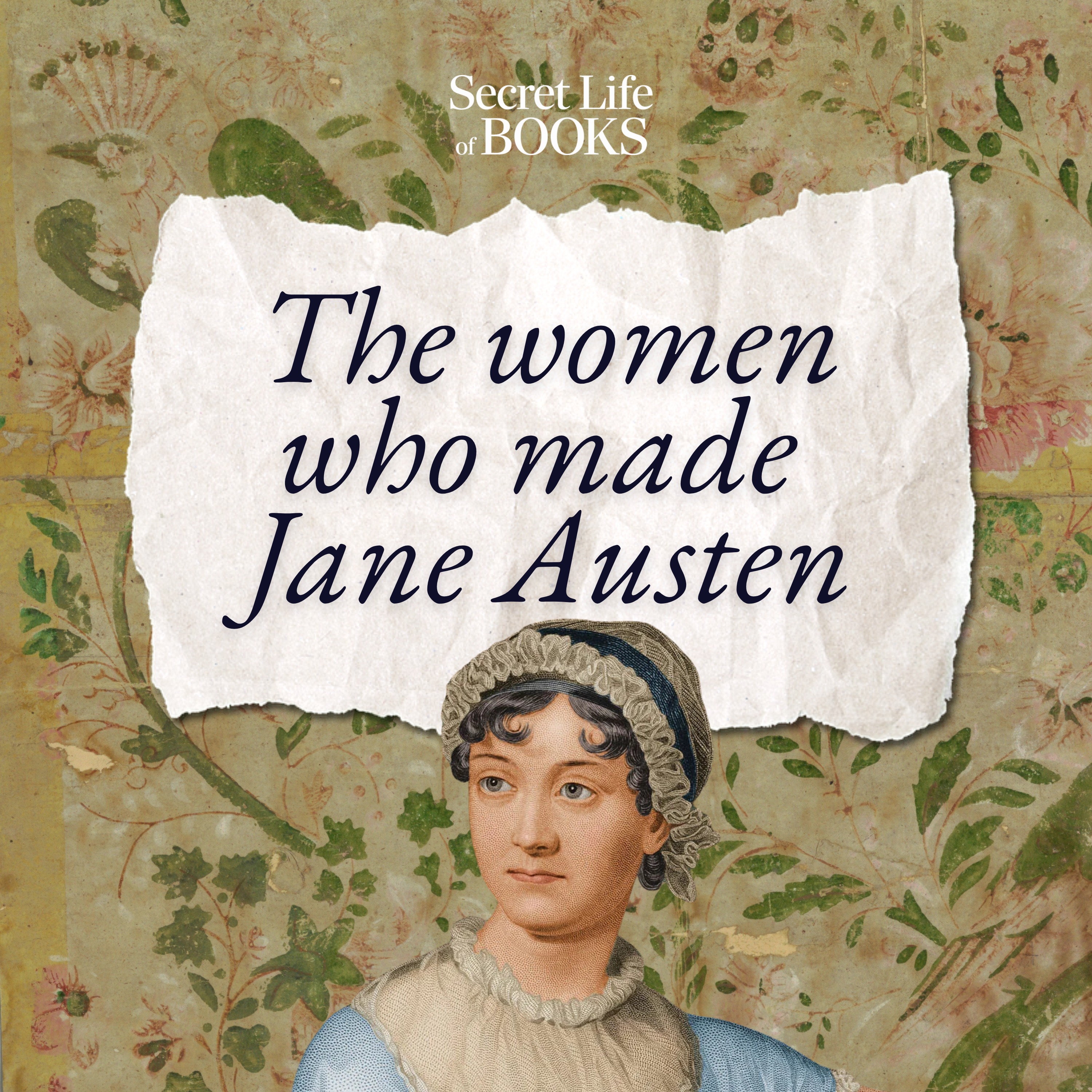
Ep 106The Women Who Made Jane Austen
Unless you've been living under a rock, you'll know that Jane Austen has a big birthday this week -- her 250th to be exact. Happy Birthday Jane!Over here on SLOB we're throwing Jane a party, and we've invited guests. They're truly the guests of honor. The women who made Jane Austen. You may not know all of their names, or any of them. We introduce some literary superstars from their own day, who influenced Austen's craft, storytelling, irony and encouraged her appetite for wild, subversive stories.We tend to see Austen as a lone genius, carving out a voice for women in a world where they were often unheard. She was, in fact, just a particularly brilliant member of a wider social and literary movement. She was great, and she was great because she stood on the bonnets of giantesses. Please meet the bolters, bad-asses, barn-stormers, bold adventurers. The bloody-minded and the bloody-brilliant.Writers and books mentioned in the episode:Aphra Behn, Oroonoko and Love-Letters Between a Nobleman and His SisterDelarivier Manley, The New AtlantisEliza Haywood, Love in ExcessCharlotte Lennox, The Female Quixote and HenriettaAnn Radcliffe, A Sicilian Romance; The Romance of the Forest; The Mysteries of Udolpho; and The ItalianMary Wollstonecraft, A Vindication of the Rights of Women; A Short Residence in Sweden, Norway and Denmark; Maria; or, the Wrongs of WomanFrances Burney, Evelina, Cecilia, Camilla and The WandererCharlotte Smith, Elegiac Sonnets and The Old Manor HouseElizabeth Inchbald, A Simple StoryMaria Edgeworth, Castle Rackrent, Harrington and Belinda.Jane Austen, The Beautifull Cassandra (juvenilia) Hosted on Acast. See acast.com/privacy for more information.
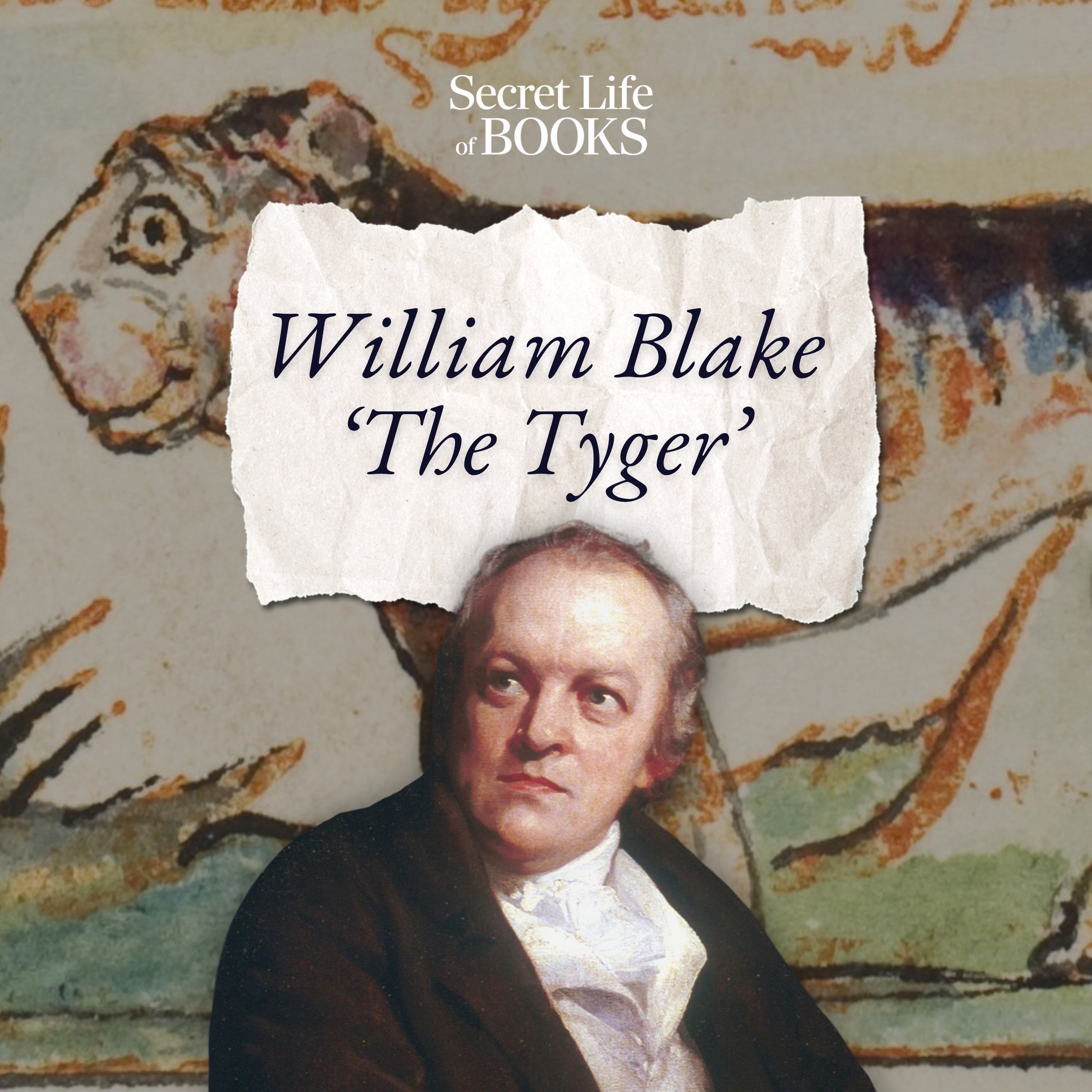
Ep 104Big Cat Theory: William Blake's The Tyger
Are you a cat-person or a tyger-person? William Blake was both. Find out why such a big fuss about "The Tyger," which never fails to show up in google searches for the best poem in English. "The Tyger" has a lot going for it: short, punchy, mystical and definitely about a tiger. But beyond that, everything is up for grabs. Who was this William Blake, not just one of the most loved poets of all time, but among the strangest. Had he actually seen a tiger in 1794, or is his tiger a metaphor for other powerful, scary, orange things, like the French Revolution, child-labor, or other Romantic Poets? Why were tigers in the news at the time, and what does Blake's poem have to do with much-loved mechanical tiger in the Victoria and Albert museum? Sophie and Jonty discuss Blake's quirky brilliance as an illustrator, his similarity to Chagall, his early life and late obsession with John Milton, and the literary rarity of Blake's being both a Great Poet and a Nice Guy. Hosted on Acast. See acast.com/privacy for more information.
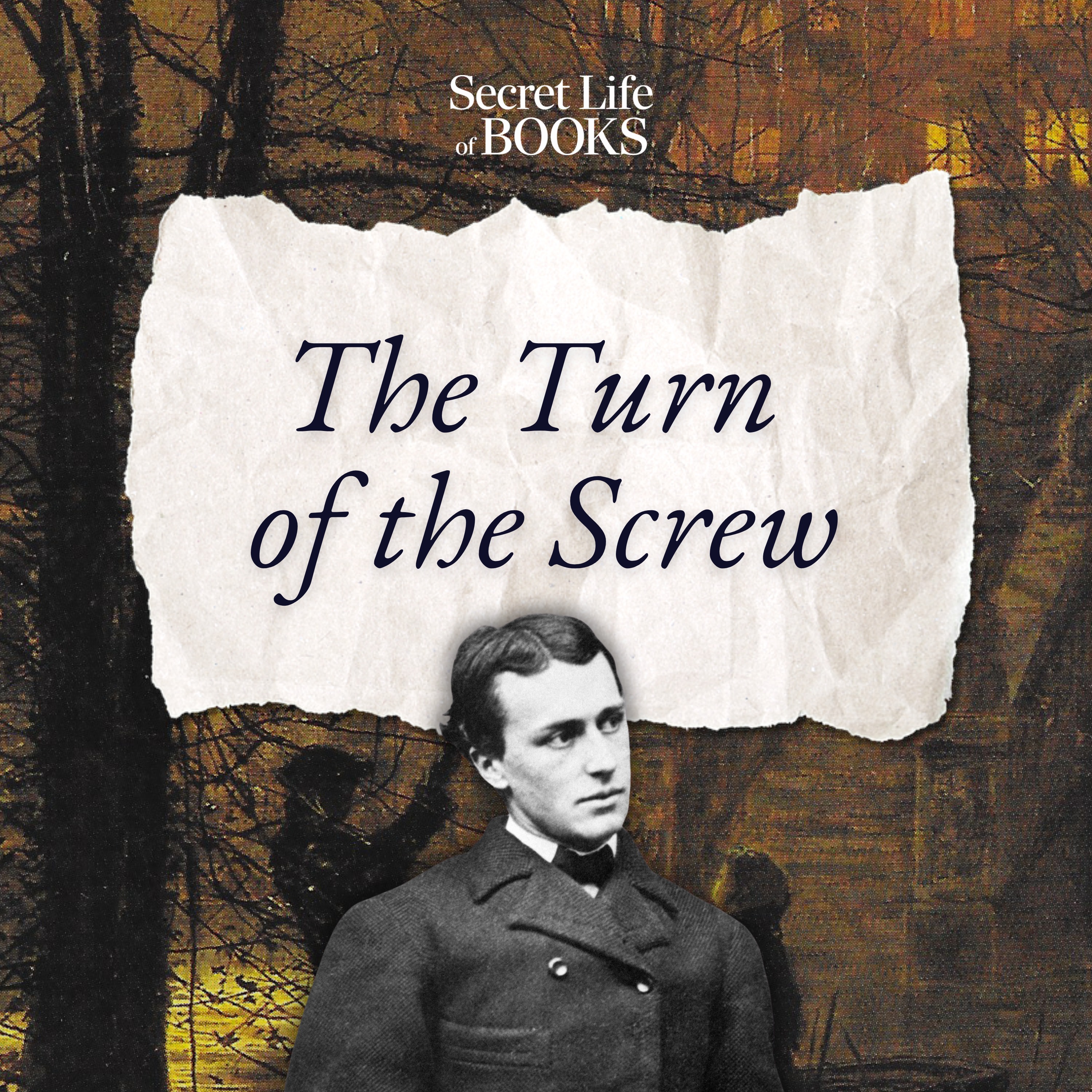
Ep 103Henry James 3: Turn of the Screw
Stephen King and Shirley Jackson agree that The Turn of the Screw is the GOAT of ghost-stories. It’s a gripping, excellently creepy potboiler about a mad governess and a pair of haunted children in a scary Victorian country house.Henry James already had 14 novels and a load of short fiction behind him when he wrote The Turn of the Screw, and he channeled his talent for opaque, ambiguous storytelling to come up with one of the most truly chilling psychological thrillers ever written.The novella – yes we’re happy to report that this is a short read – was serialized over three months in a magazine called Collier’s Weekly and then reprinted with another story as The Two Magics. It was a hit, which it needed to be because avid listeners to SLOB will remember that the 1890s in London was a competitive time for supernatural page turners. We’re looking at you, Dracula, Sherlock Holmes and The Picture of Dorian Gray. Find out why this is the decade of the unputdownable classic Hosted on Acast. See acast.com/privacy for more information.
Ep 101Henry James 2: Colm Tóibín on Henry James
One of the world's favorite novelists, on his own favorite novelist. Colm Toibin has written many beloved novels, for which he has won many prestigious prizes. The novels include Brooklyn and Long Island; The Magician and The Master. This last is Colm's fictional recreation of Henry James' extraordinary career-save in which he bounced back from the failure of his West End play, Guy Domville, to write, in rapid succession, several of the greatest masterpieces of 19thC fiction. It takes confidence imaginatively to inhabit the mind and creative life of Henry James, the writer who, more than anyone before him, worked out how to inhabit his characters' minds and creative lives. Not only does Colm pull it off in The Master, he repeats the trick in many other novels, giving us characters of immense emotional and psychological depth. Sophie and Jonty quickly realized why Colm had felt able to tackle the ultimate challenge of mind-reading Henry James. Colm, it quickly emerges, is a staggeringly astute literary critic and craft-teacher. Aspiring writers, masters of their craft, and curious readers alike will be blown away by the fluency and virtuosity of Colm's account of what he's learned from Henry James, his own development as a writer, and much more.Colm Toibin, The Master, Brooklyn, Long Island. Hosted on Acast. See acast.com/privacy for more information.
Ep 100Henry James 1: The Portrait of a Lady
Many readers consider The Portrait of a Lady to be the greatest novel in English. But for some reason, James' fellow novelists loved to dump on him. Nabokov called him a "pale porpoise," and said his books were strictly for "non-smokers." Virginia Woolf, who knew him as a family friend, wrote, "we have his works here, and I read them, and can’t find anything but faintly tinged rose water, urbane and sleek, but vulgar, and as pale as Walter Lamb. Is there really any sense in it?" T.S. Eliot said that he had "a mind so fine no idea could penetrate it." Ouch.Sophie and Jonty beg to differ. For once, we think Virginia Woolf got it completely wrong. Serialized simultaneously in America and Britain over 1880/81, A Portrait of Lady is one of the great peaks of English writing. It tells the story of Isabel Archer, an American heiress, who is determined to enjoy a life of travel and independence, only to fall into the clutches of a gaslighting con-artist called Gilbert Osmond. James' first masterpiece is a gripping domestic thriller, which marked a revolution in the portrayal of women in literature, creating a heroine who is psychologically complex, outspoken, transgressive and determined not to be pinned down by Victorian moral standards. It also marks a revolution in our understanding of the human mind. Henry James’ brother was the so-called Father of American Psychology William James. Both of them tackled the question of what really goes on in the mind in different ways. It has one of the best opening sections ever, and one of the most fascinating and ambiguous endings. It's not for the faint-hearted reader, sure, but it repays every moment of a reader's attention. Hosted on Acast. See acast.com/privacy for more information.
Ep 98Greece Lightnin': My Family and Other Animals by Gerald Durrell
SLoB is turning 1! To celebrate, Sophie and Jonty re-read one of their all time favorites, My Family and Other Animals by Gerald Durrell.My Family and Other Animals (1956) is the beloved, hilarious, brilliant chronicle of a childhood idyll — which is also a series of comic disasters — set on the Ionian Greek Island of Corfu.The memoir is the first part of a trilogy that includes Birds, Beasts and Relatives and The Garden of the Gods and Gerald Durrell wrote dozens of other books about his life as a naturalist and conversationist. But My Family was his break-out hit that made him into a celebrity-animal whisperer, and royalties from the book allowed him to establish the famous Jersey Zoo for wildlife conservation. Long before the zoo, however, came the celebrity animals of the Corfu years, whom we meet in this glorious memoir: Quasimodo the pigeon, Achilles the Tortoise, Aleko the seagull, Ulysses the Owl, Sally the Donkey, Widdle and Puke the puppies and of course, Roger the dog.Sophie and Jonty dive into the story behind the story of everyone’s favorite animal story and learn what was really going on behind the scenes of this delightful but dysfunctional family. Find out why “Mother,” Mrs. Durrell, moved with her children to Greece after a life in British India and Bournemouth; learn about the full identity of the irascible and hilarious brother Larry, and hear what happened to the other Durrell siblings after they became famous.And for all the beauty and bucolic happiness of Corfu in the 1930s, there was backdrop of complex and fascinating geopolitical unrest across the Eastern Mediterranean, which Sophie wants to discuss in much greater depth than Jonty has patience for.Mentioned in the episode:Gerald Durrell, My Family and Other Animals, Birds, Beasts and Relatives, The Garden of the Gods.Lawrence Durrell, The Alexandria Quartet; Prospero’s Cell Hosted on Acast. See acast.com/privacy for more information.
Ep 98American Horror 3: Salem's Lot by Stephen King
Salem’s Lot (1975) is Stephen King’s second published novel, and many would say it's his best. It tells the story of a plague of vampires running amok in a blue-collar town in New England and the band of heroes who come together to fight them. We’re aware that many listeners may not have read a Stephen King novel, although they will probably have seen - and enjoyed - a film adaptation, and may wonder what Salem’s Lot has to do with a podcast about classic books. This episode answers that question by telling the story of how and why Stephen King became the biggest horror writer in the world. Since his debut with Carrie in 1974, he has published 60 novels and sold over 400 million books. He is one of the most successful writers ever - and films adapted from his books and stories include The Shawshank Redemption, The Shining, Stand by Me and Misery - all landmarks of cinema based on brilliant writing. And though only one of these four books is a horror novel, in this episode we stay firmly in the horror lane and get to work figuring out what makes Salem’s Lot so enduringly gripping. Hosted on Acast. See acast.com/privacy for more information.
Ep 93American Horror 2: Rosemary's Baby by Ira Levin
Chocolate Mouse, anyone? Rosemary’s Baby was a smash hit on release - the best selling horror novel of the 1960s, eventually selling over 4 million copies. The year after publication it was adapted into one of the greatest films of the decade - directed by Roman Polanski with Mia Farrow as the eponymous heroine. At first glance, it seems that Ira Levin’s story was at odds with the prevailing spirit of free love - read the room, baby! But as we’re going to find out - the secret of Rosemary’s Baby is that it perfectly captured the spirit and anxieties of the age. Ira Levin would repeat the trick with the Stepford Wives in 1972 and The Boys From Brazil in 1976, but Rosemary’s Baby is his masterpiece. A book which is simultaneously an outlandish fantasy and one of the greatest novels about coercive gaslighting relationships. Sophie and Jonty ask a tough question: is Levin's depiction of a coercive relationship just too real? Do we come away feeling that Rosemary has real power and agency that speaks to us now, or is the book's depiction of domestic violence and misogyny and trapped in its own cultural moment just as much as the stuffed mushrooms and Gibsons the couple consume on the fateful night that the horror takes hold?Content Warning: the book and film — and this conversation — contain descriptions of sexual violence, rape and abusive relationships.Books and Film Referred to:Ira Levin, Rosemary's Baby Roman Polanski, Rosemary's BabyF. Scott Fitzgerald, The Great GatsbyJane Austen, EmmaJ.D. Salinger, The Catcher in the RyeTom Wolfe, The Bonfire of the VanitiesBetty Friedan, The Feminine MystiqueCharlotte Bronte, Jane EyreAdrienne Rich, "In the Evening"Valerie Solanas, SCUM ManifestoAndrea Dworkin, Women HatingJulia Kristeva, Powers of Horror -- To join the Secret Life of Books Club visit: www.secretlifeofbooks.org-- Please support us on Patreon to keep the lights on in the SLoB studio and get bonus content: patreon.com/secretlifeofbookspodcast-- Follow us on our socials:youtube: https://www.youtube.com/@secretlifeofbookspodcast/shortsinsta: https://www.instagram.com/secretlifeofbookspodcast/bluesky: @slobpodcast.bsky.social Hosted on Acast. See acast.com/privacy for more information.
Ep 92American Horror: The Haunting of Hill House
Who's afraid of American horror? Sophie and Jonty, for starters. To celebrate halloween, SLOB is taking a deep dive into three classics of the American Horror genre. We've chosen novels published after 1945, and we're asking how the war - and its many aftershocks and resonances in American domestic and political life - transformed horror as a literary genre. We won't spoil the surprises by telling you all the titles ahead of time. But be warned: read and listen at your own peril.We’ll be looking at these books in chronological order. The first is Shirley Jackson's The Haunting of Hill House, published in 1959 and is now considered one of the most influential horror novels of all time. It is beautifully written, incredibly funny and genuinely scary. It's imbued with a spirit of cynicism and evil. As a result it disorientated many readers who knew Jackson not as a horror writer, but for her charming memoirs about life as a housewife in 1950s suburbia.Join us as we enter the locked gates of Hill House and explore how this gripping, poignant, strange — and above all, scary — ghost story took shape and how Shirley Jackson came to be regarded as one of the greatest mid-century American writers.Further Reading and listening:Shirley Jackson, "Life Among the Savages" (1953)Shirley Jackson, "The Haunting of Hill House" (1959)Shirley Jackson, "We Have Always Lived in the Castle" (1962)Ruth Franklin, Shirley Jackson: A Rather Haunted Life, 2016On the Road with Penguin Classics Halloween episode with Ruth Franklin: https://podcasts.apple.com/gb/podcast/the-haunting-of-hill-house-with-ruth/id1549179379?i=1000633191567-- To join the Secret Life of Books Club visit: www.secretlifeofbooks.org-- Please support us on Patreon to keep the lights on in the SLoB studio and get bonus content: patreon.com/secretlifeofbookspodcast-- Follow us on our socials:youtube: https://www.youtube.com/@secretlifeofbookspodcast/shortsinsta: https://www.instagram.com/secretlifeofbookspodcast/bluesky: @slobpodcast.bsky.social Hosted on Acast. See acast.com/privacy for more information.
Ep 91Montaigne pt2: A Montaigne out of a mole hill (with Rowan Tomlinson)
Jonty and Sophie were separated by an ocean while Sophie and her family went back to New York and Jonty stayed in Sydney - so they made lemonade out of life's lemons, and created two miniature episodes about the great 16th-century French essayist Michel de Montaigne.Montaigne isn't just any old essayist — he's the man who invented the form, with three volumes of brilliant, surprising, constantly fresh and astonishingly modern sallies on every possible topic. To introduce Montaigne and unpack his brilliance and immense influence, Sophie talked to the Renaissance scholar Stephen Greenblatt. Meanwhile, Sydney-side, Jonty had a conversation with the historian and writer Rowan Tomlinson, a specialist on Montaigne and Renaissance studies at the University of Bristol. They take the Montaigne chat in many unexpected directions, and Jonty initiates discussion of the Reformation off his own bat, with Sophie nowhere to be found.Further Reading:The Complete Essays of Michel de Montaigne, (Penguin 1993)Sarah Bakewell, How to Live: Or A Life of Montaigne in One Question and Twenty Attempts at an Answer, (2011)-- To join the Secret Life of Books Club visit: www.secretlifeofbooks.org-- Please support us on Patreon to keep the lights on in the SLoB studio and get bonus content: patreon.com/secretlifeofbookspodcast-- Follow us on our socials:youtube: https://www.youtube.com/@secretlifeofbookspodcast/shortsinsta: https://www.instagram.com/secretlifeofbookspodcast/bluesky: @slobpodcast.bsky.social Hosted on Acast. See acast.com/privacy for more information.
Ep 90Montaigne pt1: Climb Every Montaigne (with Stephen Greenblatt)
Sophie talks to one of the world's leading literary scholars, who co-founded a whole branch of literary studies known as "The New Historicism," before reinventing Shakespeare for new generations of readers, and then turning the Roman poet Lucretius into an (almost) household name. Stephen Greenblatt is professor of English at Harvard University, he's a Pulitzer Prize winner and the author of Will in the World, The Swerve, and a host of other acclaimed and brilliant books. Most recently he's the author of Dark Renaissance, the story of Shakespeare's rival and shadow double, Christopher Marlowe.But today he talks about the writer he turns to whenever he thinks about what makes the Renaissance so distinct a period -- the age in which Europeans truly became modern. That writer is the great French essayist Michel de Montaigne. Montaigne is a stealth heavy-hitter, an MVP of classic literature who is now all too rarely read. To explain what makes Montaigne's influence and legacy so important, and why he's truly one of the GOATs, Sophie and Jonty have decided to bring you two companion conversations with a pair of very different scholars.Further Reading:Stephen Greenblatt, ed. Shakespeare's Montaigne: The Florio Translation of the Essays (2014)Stephen Greenblatt, Dark Renaissance: The Dangerous Times and Fatal Genius of Shakspeare's Greatest Rival (2025)Stephen Greenblatt, The Swerve: How the World Became Modern (2012)-- To join the Secret Life of Books Club visit: www.secretlifeofbooks.org-- Please support us on Patreon to keep the lights on in the SLoB studio and get bonus content: patreon.com/secretlifeofbookspodcast-- Follow us on our socials:youtube: https://www.youtube.com/@secretlifeofbookspodcast/shortsinsta: https://www.instagram.com/secretlifeofbookspodcast/bluesky: @slobpodcast.bsky.social Hosted on Acast. See acast.com/privacy for more information.
Ep 89SLoB's Four (literary) weddings and a funeral
The label says what's in the tin: Secret Life of Books dives deep into weddings and funerals in literature, asking why they become iconic moments to hang a story on. Family strife, betrayal, love, passion, disappointment and hope are all bound up in these major life events where we see characters' true colors and desires writ large.-- To join the Secret Life of Books Club visit: www.secretlifeofbooks.org-- Please support us on Patreon to keep the lights on in the SLoB studio and get bonus content: patreon.com/secretlifeofbookspodcast-- Follow us on our socials:youtube: https://www.youtube.com/@secretlifeofbookspodcast/shortsinsta: https://www.instagram.com/secretlifeofbookspodcast/bluesky: @slobpodcast.bsky.social Hosted on Acast. See acast.com/privacy for more information.
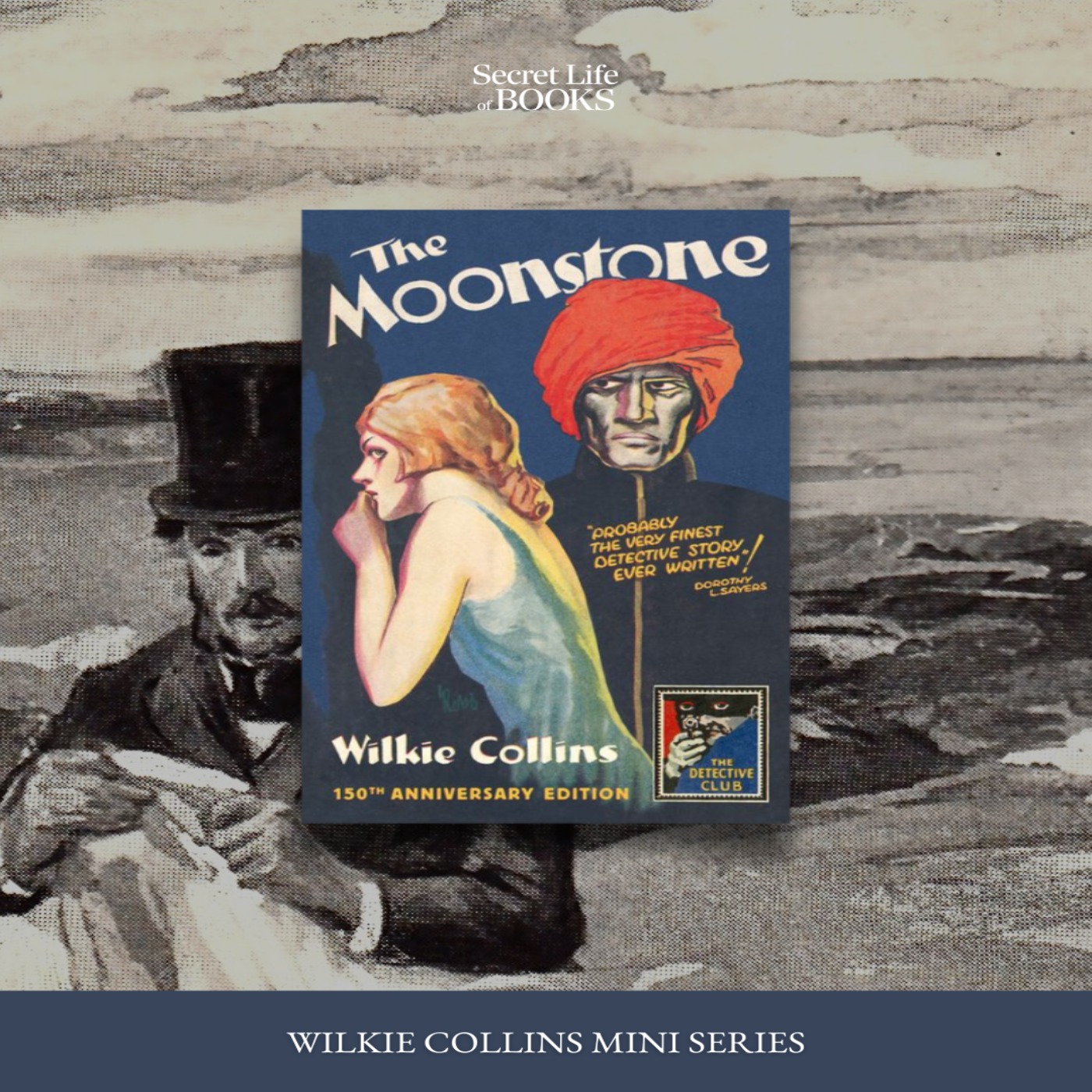
Ep 88Wilkie Collins 2: The Moonstone
With The Moonstone, Wilkie Collins published yet another giant sensation, this time pioneering the detective novel and mystery/heist genre. It was published in 1868 and serialised - just as The Woman White was - in Dickens’ All the Year Round, making it one of the most popular books of Victorian Britain. Jonty and Sophie will show how The Moonstone gave the world most of the key ingredients of the detective genre, which have remained unchanged ever since. The country house setting. The bungling local constabulary. The celebrated, ingenious but curmedgeonly investigator. A large cast of false suspects. Plenty of red herrings. A final twist in the plot in which the least likely suspects suddenly become implicated. It's all here.If all The Moonstone did was shape a new genre of literature, we’d still be talking about it. But on top of that, Wilkie Collins’ masteripece is also a critique of colonialism, of the British caste system and Victorian morality. And it reveals a fascinating shadow story about Wilkie Collins and his life, including a long struggle with opium addiction that he used to treat pain, making this a novel written mostly in an hallucinatory state.-- To join the Secret Life of Books Club visit: www.secretlifeofbooks.org-- Please support us on Patreon to keep the lights on in the SLoB studio and get bonus content: patreon.com/secretlifeofbookspodcast-- Follow us on our socials:youtube: https://www.youtube.com/@secretlifeofbookspodcast/shortsinsta: https://www.instagram.com/secretlifeofbookspodcast/bluesky: @slobpodcast.bsky.social Hosted on Acast. See acast.com/privacy for more information.
Ep 87BONUS: Jennifer Egan on the Woman in White
As part of our ongoing “That’s Classic!” series, we're joined by the wonderful Jennifer Egan to chat about the sensational thriller The Woman in White.Jennifer is one of the most loved, admired and critically acclaimed writers in America, with fans all over the world. Jennifer is a Pulitzer Prize winner and was President of the vitally important PEN America. She's the author of many books, including the brilliant, genre-defying Visit from the Goon Squad and its follow up The Candy House. There's more than a touch of gothic in her writing, alongside the compelling social realism, so when we asked her to choose a classic that matters, we were thrilled that she chose Wilkie Collins' The Woman in White.This gripping page-turner and perennial bestseller was published between 1859-60 in Charles Dickens’ serial All the Year Round. It's a gothic page-tuner about a mysterious young woman dressed entirely in white, who becomes the key to a thrilling tale of emotional entrapment and gaslighting in Victorian England. Jennifer joins Sophie in a brilliant discussion of why The Woman in White is such a literary touchstone, paving the way for modern thrillers including Gone Girl and The Girl on the Train.Further Reading:Wilkie Collins, The Woman in WhiteJennifer Egan, A Visit From the Goon Squad Jennifer Egan, The Candy House Jennifer Egan, The Keep Jennifer Egan, Manhattan Beach Hosted on Acast. See acast.com/privacy for more information.
Ep 86Wilkie Collins 1: The Woman in White
The Woman in White was a sensation when it was serialised in Charles Dickens’ magazine All The Year Round in 1859 and 1860. It begins with an uncanny late-night meeting on the road to London between a young man and a woman dressed entirely in white. It ends with a sensational cat and mouse game between a villain and his pursuers. One of the unsung secrets of Wilkie Collins's novel is the brilliant, unorthodox counter-heroine Marian Halcombe. Another is that Wilkie Collins identified with disfigurement and disability, and used the woman in white to explore some of his own sense of being an outsider.At the time it Collins's novel belonged to new kind of writing called sensation fiction, which today we call thrillers. It aimed to shock the public by preying on their deepest anxieties, going beyond the facade of Victorian respectability to show ordinary families riven by secrets, including illegitimacy, adultery, madness and criminal activity. The literary inheritors of The Woman in White today are novels like The Girl on the Train and Gone Girl.Find out how it all started - and why The Woman in White is still a compulsive page-turner 150 years later.-- To join the Secret Life of Books Club visit: www.secretlifeofbooks.org-- Please support us on Patreon to keep the lights on in the SLoB studio and get bonus content: patreon.com/secretlifeofbookspodcast-- Follow us on our socials:youtube: https://www.youtube.com/@secretlifeofbookspodcast/shortsinsta: https://www.instagram.com/secretlifeofbookspodcast/bluesky: @slobpodcast.bsky.social Hosted on Acast. See acast.com/privacy for more information.
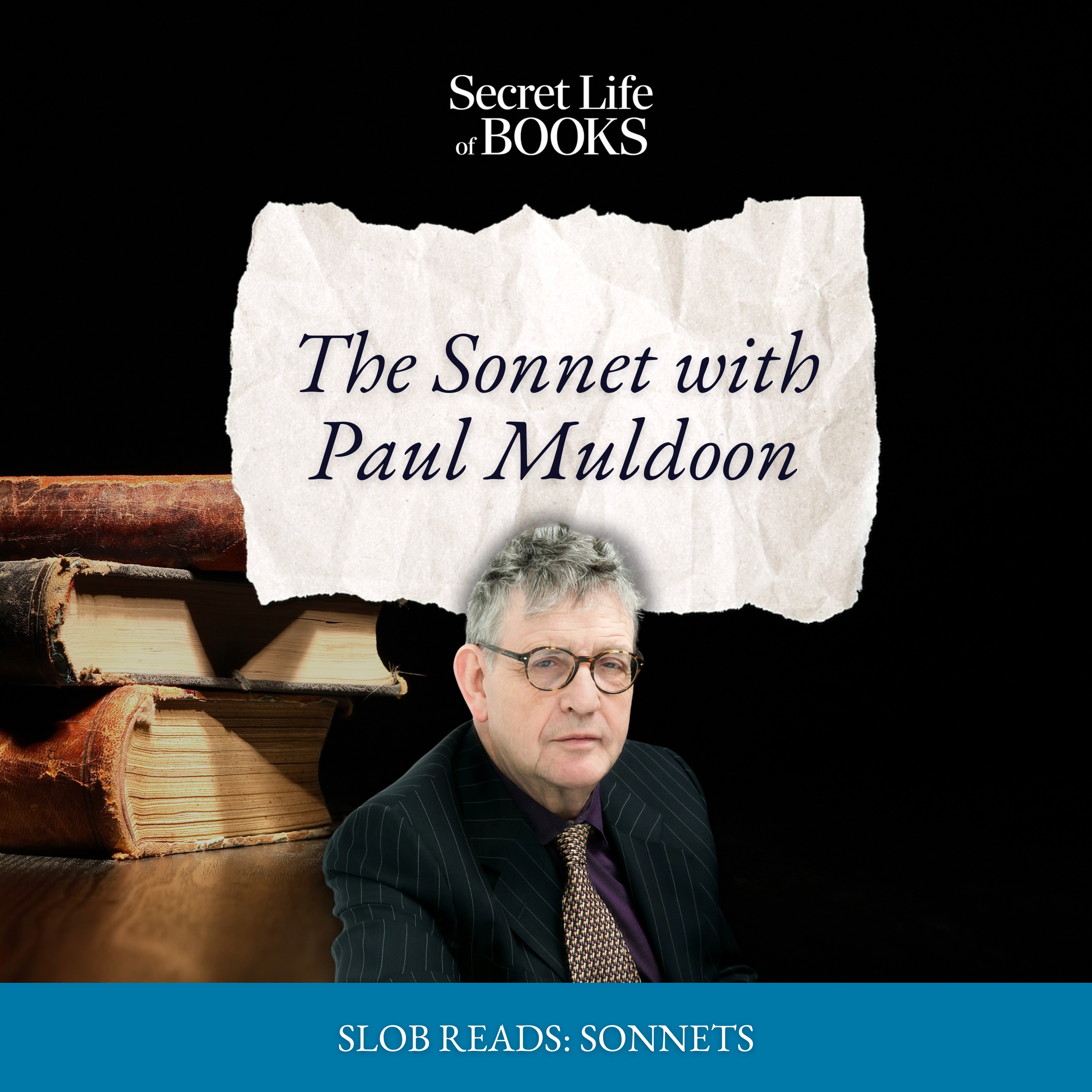
Ep 85SLOB Reads: The Sonnet with Paul Muldoon
For several weeks we've been recording a subscribers-only mini series on the history of the sonnet in English. Sonnets are crowd-pleasers - short, sometimes sweet, and they always deliver a lot of bang for the reading buck.Today, one of the world's great living poets, Paul Muldoon, Pulitzer Prize winner and former poetry editor of the New Yorker, joins us to talk about the pleasures and challenges of this glorious short form.Paul has recently compiled a spectacular anthology of sonnets, Scanty Plot of Ground, published this month by Faber in the UK.Making this episode free for all because it's such a special conversation and gateway back into reading the classics.Listeners to our show can order the book from faber.co.uk and enter the code Podcast25 for a discount with UK shipping.Paul Muldoon, ed, Scanty Plot of Ground, Faber 2025Paul Muldoon, Joy in Service on Rue Tagore, Farrar, Strauss and Giroux, 2025Paul Muldoon, Horse Latitudes, Farrar, Strauss and Giroux, 2006Paul Muldoon, Moy Sand and Gravel, Farrar, Strauss and Giroux, 2004 Hosted on Acast. See acast.com/privacy for more information.
Ep 84The Secret Life of Trains: how rail travel changed fiction - for ever
It was five o’clock on a winter’s morning in Syria. Alongside the platform at Aleppo stood the train grandly designated in railway guides as the Taurus Express. So Agatha Christie began her sleeper [car] hit, Murder on the Orient Express (1934).All aboard! In the latest of SLoB's much-loved special episodes on surprising, fun, and always deeply revealing literary themes, Sophie and Jonty take an all-stations train journey through literary locomotion. One of life's great pleasures is reading a good book on a train, as it rattles through scenic countryside. But what's more annoying than cramming onto a packed underground train at 8am, desperate for a moment with a book before work, only to be wedged between an armpit and a stroller? Trains are social levelers: a means of bringing unlikely people together; and often keeping them apart. Trains help tell stories about social divisions and distinctions in status, love affairs and heartbreak, unwanted changes in landscapes and the ever-increasing encroachments of modern life.Tune in to find out why, in short, trains are at the heart of many great books, and why train travel turned out to be the ideal metaphor for the experience of reading modern fiction.Books mentioned in this episode:George Eliot, MiddlemarchHenry David Thoreau, WaldenCharles Dickens, Our Mutual Friend, "The Signal Man"Leo Tolstoy, Anna KareninaBram Stoker, DraculaAgatha Christie, Murder on the Orient ExpressJ.K. Rowling, Harry Potter and the Philosopher's StoneGraham Greene, The Little TrainLev Grossman, The Silver ArrowEdward Thomas "Adlestrop"Jilly Cooper, Rivals-- To join the Secret Life of Books Club visit: www.secretlifeofbooks.org-- Please support us on Patreon to keep the lights on in the SLoB studio and get bonus content: patreon.com/secretlifeofbookspodcast-- Follow us on our socials:youtube: https://www.youtube.com/@secretlifeofbookspodcast/shortsinsta: https://www.instagram.com/secretlifeofbookspodcast/bluesky: @slobpodcast.bsky.social Hosted on Acast. See acast.com/privacy for more information.
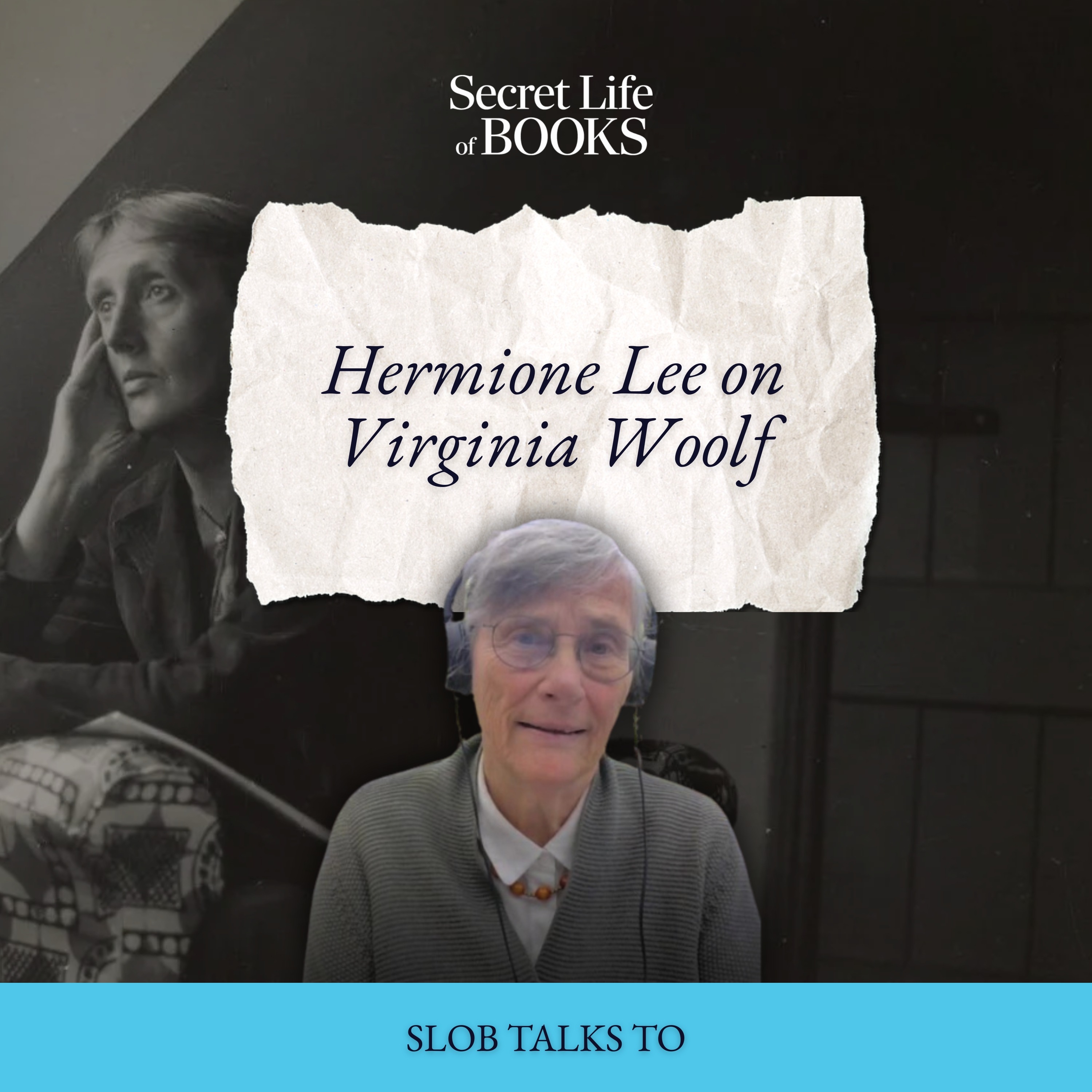
Ep 83BONUS: Writing Virginia Woolf's life (with Hermione Lee)
In this final episode in SLoB's series on Virginia Woolf, Jonty talks to literary biographer Hermione Lee whose Virginia Woolf (1996) is perhaps the most respected account of her life and art in a world not short on them. Hermione talks about the challenges in writing about somebody who had such firm views on what a biography should and shouldn't be. Woolf's father, Leslie Stephen, was, after all, the editor of the Dictionary of National Biography and one of her closest friends, Lytton Strachey, revolutionised biography as a form with Eminent Victorians. More importantly, she wrote a biography of her friend Roger Fry and many 'life studies' of the great writers. She also published two mock biographies in Orlando and Flush.Finally, Jonty and Hermione talk about the end of Virginia Woolf's life by suicide in 1941. Despite the suffering she experienced because of her bipolar condition, hers was nonetheless a rich life full of joy and artistic achievement.Recommended reading:Virginia Woolf (1996) by Hermione Lee.-- To join the Secret Life of Books Club visit: www.secretlifeofbooks.org-- Please support us on Patreon to keep the lights on in the SLoB studio and get bonus content: patreon.com/secretlifeofbookspodcast-- Follow us on our socials:youtube: https://www.youtube.com/@secretlifeofbookspodcast/shortsinsta: https://www.instagram.com/secretlifeofbookspodcast/bluesky: @slobpodcast.bsky.social Hosted on Acast. See acast.com/privacy for more information.
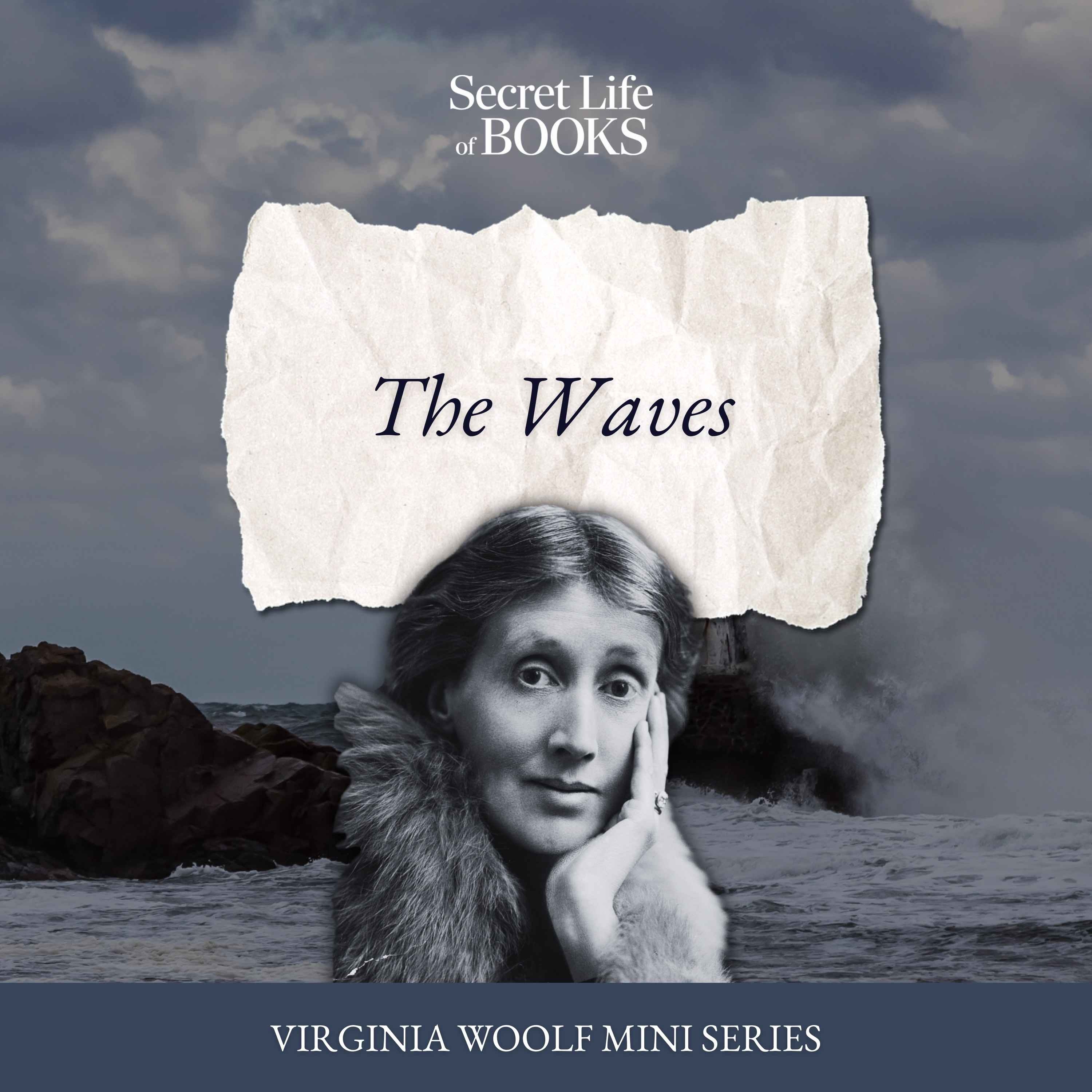
Ep 82Virginia Woolf 5: The Waves
We thought we’d be concluding our Virginia Woolf deep-dive with "A Room of One’s Own," but we’ve enjoyed this series so much we decided to extend. Today we’re looking at the book which many Woolf obsessives consider her masterpiece. Woolf published The Waves in 1931, just two years after her string of masterpieces, Mrs Dalloway, To the Lighthouse, Orlando and “A Room of One’s Own.” As Sophie and Jonty will tell you, it’s the Big Chill – or the Breakfast Club – of Woolf’s oevre. A story about a group of friends who go through their lives in and out of contact with one another, sharing many of their most profound and important experiences.The sensation of reading The Waves is rather like being a pebble on a beach, rolled around by the waves of Woolf’s creative genius - not always knowing what is going on. While it's hugely brilliant, we think most readers will need a floatation device to help them cope with the swell of this experimental, unconventional narrative. To be our Virginia Woolf “life raft in residence” we invited Woolf scholar and all-round excellent writer and critic Alexandra Harris back onto the show to explain to us why The Waves is the novel that serious Virginia Woolf fans can't live without.And don’t miss Alexandra’s own wonderful books, especially her recent The Rising Down, a beautiful and moving account of the Sussex landscape, and the lives and histories it contains within it.Books by Alexandra Harris:The Rising Down: Lives in a Landscape (Faber, 2024)Weatherland: Writers and Artists Under English Skies (Thames and Hudson, 2015)Romantic Moderns: English Writers, Artists & the Imagination from Virginia Woolf to John Piper (Thames and Hudson, 2010)-- To join the Secret Life of Books Club visit: www.secretlifeofbooks.org-- Please support us on Patreon to keep the lights on in the SLoB studio and get bonus content: patreon.com/secretlifeofbookspodcast-- Follow us on our socials:youtube: https://www.youtube.com/@secretlifeofbookspodcast/shortsinsta: https://www.instagram.com/secretlifeofbookspodcast/bluesky: @slobpodcast.bsky.social Hosted on Acast. See acast.com/privacy for more information.
Ep 81Virginia Woolf 4: A Room Of One's Own
Thank God, my long toil at the women’s lecture is this moment ended. I am back from speaking at Girton, in floods of rain. Starved but valiant young women – that’s my impression.That’s what Virginia Woolf wrote in her diary after delivering the lectures that became “A Room of One’s Own,” arguably the most important feminist manifesto of the twentieth century. Students attending the lectures reported they were a total snooze; one eyewitness actually fell asleep. But another said that the spectacle of Virginia Woolf and Vita Sackville-West arriving at the Girton College literary society together was the most glorious and glamorous vision she’d ever seen.When Woolf published the revised version in 1929 as "A Room of One's Own," she confirmed her brilliance, inventiveness, wit and lightness of touch yet again. She also made her most provocative claim to date: the patriarchy must be defeated so that the voices of unheard women writers across centuries can live through the awakened voices of women writing today. As Sophie and Jonty discover, one cannot read the stirring, impassioned final lines of “A Room of One’s Own” without a tear.This is also the essay in which Woolf imagines Shakespeare’s sister Judith and the fate that might have awaited her had she been as talented and ambitious as her brother. Woolf gives us unforgettable accounts of good and bad meals at two Oxbridge colleges, and a devastating take-down of the anger and inaccuracy of histories and anthropology books by men, which she reads in the British Museum.-- To join the Secret Life of Books Club visit: www.secretlifeofbooks.org-- Please support us on Patreon to keep the lights on in the SLoB studio and get bonus content: patreon.com/secretlifeofbookspodcast-- Follow us on our socials:youtube: https://www.youtube.com/@secretlifeofbookspodcast/shortsinsta: https://www.instagram.com/secretlifeofbookspodcast/bluesky: @slobpodcast.bsky.social Hosted on Acast. See acast.com/privacy for more information.
Ep 80Virginia Woolf 3: Orlando
Virginia Woolf wrote Orlando, a gender-defying historical romance, in 1927, when her intimate friend and lover Vita Sackville-West left London to join her diplomat husband Harold Nicholson in Tehran. Orlando is a love-story set across 300 years of English history, starting in the Elizabethan court and finishing in 1920s England. It features an irresistible protagonist who is both woman and man; a writer and a lover; an aristocrat and a commoner. The novel gifts us a joyful romp through English literature, with lots of cameos from writers who have appeared on the Secret Life of Books.Orlando is also a meditation on the nature of novels themselves, explaining how Woolf’s Modernist style emerges from the great literary works of the past.Woolf said that she wrote Orlando “sitting over the gas in her sordid room” while Vita capered about in the sunny climes of the middle east. But that sordid room gave rise to one of English literature’s great queer love-stories and reconstructions of Woolf's beloved city of London, across three centuries of transformation.Jonty and Sophie pursue many eccentric critical hunches, explaining why you can't read Orlando without knowing about solar eclipses, the mini ice-age of the late seventeenth century, Lytton Strachey's semen - or Jonty's favorite hobby-horse, the decline of the English aristocracy.-- To join the Secret Life of Books Club visit: www.secretlifeofbooks.org-- Please support us on Patreon to keep the lights on in the SLoB studio and get bonus content: patreon.com/secretlifeofbookspodcast-- Follow us on our socials:youtube: https://www.youtube.com/@secretlifeofbookspodcast/shortsinsta: https://www.instagram.com/secretlifeofbookspodcast/bluesky: @slobpodcast.bsky.social Hosted on Acast. See acast.com/privacy for more information.
Ep 79BONUS: Reading Mrs Dalloway (with Alexandra Schwartz)
"Throw that party. Go for it. It's worth it."In today’s Mrs. Dalloway special episode, Sophie talks to Alex Schwartz, writer, critic and co-host of the New Yorker Magazine’s Critics at Large pod. On “Critics at Large’ she discusses the most urgent cultural matters, ranging from Sesame Street to the Pope to Meaghan and Harry to Ancient Rome. Which is why we knew we needed Alex on the show. It started when Sophie heard Alex discussing Jane Austen with a playful rigor that rarely comes with Austen-itis. Something made her think Alex would have great things to say about Mrs. Dalloway. And guess what? Woolf is Alex’s favourite writer. Hear what a critic at large thinks about dresses, flowers, being young and in love, and why it’s always worth throwing the party, and reading the classics.-- To join the Secret Life of Books Club visit: www.secretlifeofbooks.org-- Please support us on Patreon to keep the lights on in the SLoB studio and get bonus content: patreon.com/secretlifeofbookspodcast-- Follow us on our socials:youtube: https://www.youtube.com/@secretlifeofbookspodcast/shortsinsta: https://www.instagram.com/secretlifeofbookspodcast/bluesky: @slobpodcast.bsky.social Hosted on Acast. See acast.com/privacy for more information.
Ep 78Virginia Woolf 2: To The Lighthouse
50 is the new 25!“To the Lighthouse” is Virginia Woolf’s masterpiece about summer holidays and the passage of time. It’s perhaps the greatest novel ever written about middle-age, published when Viriginia Woolf herself was middle aged, and recorded by Sophie and Jonty at the height of their middle aged powers. The novel was published in 1927, after “Mrs. Dalloway” and the “Common Reader” in 1925. It was an instant hit, sold twice as much as Mrs. Dalloway before publication and was immediately declared Woolf’s masterpiece, admitted by Woolf’s husband Leonard. Woolf herself wasn’t sure about some bits of it, but knew she’d nailed the dinner party scene at the novel’s centre, where the wonderful Mrs. Ramsay serves her guests a boeuf en daube for 14. Join Sophie and Jonty as they continue the story of Virginia Woolf’s extraordinary life and times, told through the details of how she came to write her greatest books. This week we trace her childhood, her summer holidays in Cornwall, her extraordinary, famous, demanding parents, and the beginnings of Woolf’s long struggle with mental illness. And of course we take plenty of detours into holiday cooking and … you guessed it, particle physics.-- To join the Secret Life of Books Club visit: www.secretlifeofbooks.org-- Please support us on Patreon to keep the lights on in the SLoB studio and get bonus content: patreon.com/secretlifeofbookspodcast-- Follow us on our socials:youtube: https://www.youtube.com/@secretlifeofbookspodcast/shortsinsta: https://www.instagram.com/secretlifeofbookspodcast/bluesky: @slobpodcast.bsky.social Hosted on Acast. See acast.com/privacy for more information.
Ep 77BONUS: Virginia Woolf, the not-so-Common Reader (with Alexandra Harris)
‘Think of a book as a very dangerous and exciting game, which it takes two to play at.’ For Virginia Woolf, reading wasn’t a passive act. It requires guts and ingenuity. At times one is locked in combat with a book, at others one is the ‘accomplice’ of a writer, like an accomplice to crime, aiding an act of daring imagination. Few people read as closely, as critically and joyfully as Virginia Woolf. For her, books were real relationships – and she famously dedicated Orlando to some of her favourite historical writers as well as her friends. To talk about Woolf as a reader, Jonty is joined by author and scholar Alexandra Harris. Alexandra is author of the acclaimed Romantic Moderns: English Writers, Artists and Imagination from Virginia Woolf to John Piper, Weatherland, The Rising Down and a study of Virginia Woolf. She is currently writing a book all about Virginia Woolf’s life as a reader. Together, Alexandra and Jonty talk about Virginia Woolf’s unique philosophy of reading and discuss some of her favourite books.Further reading:Romantic Moderns: English Writers, Artists and Imagination from Virginia Woolf to John Piper (Thames & Hudson, 2023) by Alexandra HarrisVirginia Woolf (Thames & Hudson, 2024) by Alexandra HarrisThe Rising Down (Faber & Faber, 2024) by Alexandra HarrisWeatherland: Writers and Artists Under English Skies (Thames & Hudson, 2015)-- To join the Secret Life of Books Club visit: www.secretlifeofbooks.org-- Please support us on Patreon to keep the lights on in the SLoB studio and get bonus content: patreon.com/secretlifeofbookspodcast-- Follow us on our socials:youtube: https://www.youtube.com/@secretlifeofbookspodcast/shortsinsta: https://www.instagram.com/secretlifeofbookspodcast/bluesky: @slobpodcast.bsky.social Hosted on Acast. See acast.com/privacy for more information.
Ep 76Virginia Woolf 1: Mrs Dalloway
Who's Afraid of Virginia Woolf? Not the Secret Life of Books, as we joyfully immerse ourselves in four of Woolf's greatest books to celebrate what is probably the most extraordinary middle-aged flowering of literary talent in history. Virginia Woolf was 43 when she published Mrs. Dalloway, 100 years ago in 1925. She went on to publish To the Lighthouse, Orlando and a Room of One's Own, to name only a few of her extraordinary achievements.To celebrate Mrs. Dalloway's centenary, Virginia Woolf's middle-aged burst of creative brilliance, and to tell the story of the other members of the Bloomsbury circle around her, we take a deep dive into Woolf and her work. Virginia Stephen was born in Victorian England to a famously literary and artistic family: both parents were fixtures in high end London intellectual society. But her childhood was turbulent as much it was illuminated by brilliance all around her. The young Virginia Stephen and her sister Vanessa were sexually and emotionally abused as children and young teenagers, and these early experiences contributed to Woolf's battle with mental illness, probably bipolar disorder. But her life was also filled with joy, including the joy of her marriage to Leonard Woolf and her love affair with Vita Sackville-West.One of many wonderful things about Woolf is that although she died relatively young she left a huge amount of writing behind her. 9 novels, 25 years of diaries, letters, lectures, essays and journalism. Join us for an extraordinary 20thC story of literary glamor and dazzling success, alongside terrible grief, suffering and trauma. We’ll meet many of the biggest names in Modernism, we’ll encounter some of the century’s most horrifying events, and one of fiction's greatest parties.-- To join the Secret Life of Books Club visit: www.secretlifeofbooks.org-- Please support us on Patreon to keep the lights on in the SLoB studio and get bonus content: patreon.com/secretlifeofbookspodcast-- Follow us on our socials:youtube: https://www.youtube.com/@secretlifeofbookspodcast/shortsinsta: https://www.instagram.com/secretlifeofbookspodcast/bluesky: @slobpodcast.bsky.social Hosted on Acast. See acast.com/privacy for more information.

Ep 75Smells Like Teen Spirit: The Secret Diary of Adrian Mole
Martin Amis’ Money, Thomas Wolfe’s The Bonfire of the Vanities, Bret Easton Ellis’ Less Than Zero… These books are often cited as defining works of the 1980s - serious works of literature that captured the spirit of the age. They are all great books, but spare a thought too for Sue Townsend’s The Secret Diary of Adrian Mole aged 13¾. Like The Diary of a Nobody, The Secret Diary of Adrian Mole is a fictional work, following just over a year in the life of a teenage boy in the city of Leicester in the Midlands of England. Adrian falls in love with a girl at school called Pandora, embarks on a career as a self-proclaimed ‘intellectual’, witnesses his parents’ affairs, separation and eventual reunion, and spends a lot of time examining his spots and measuring the size of his 'thing'. All this happens against the backdrop of Margaret Thatcher’s government, the marriage of Prince Charles and Diana, and the Falklands War. The author Sue Townsend was a comic writer, but she uses her comedy - as all the best satirists do - to explore difficult themes. In her case: poverty, domestic abuse and the disintegration of the Welfare State. This is the last in SLoB's series on male diarists through the centuries (and, yes, there will be a follow-up series soon looking at female diarists). The significance of each diary is that it creates space for a previously unheard voice in British culture (Pepys and the Middle Classes, Boswell and Scottish youth, The Diary of a Nobody and the lower-middle-classes). Adrian Mole's voice is that of an impoverished teenage boy far from the capital. Unlike - say - Oliver Twist - he is not a passive victim, but possesses immense agency. He may not be the first of his type, but he is probably the first to be a best-seller. The Secret Diary sold 2 million copies in its first three years - and, as of date, around 20 million in total. In this episode, Sophie and Jonty discuss how and why this deceptively throwaway book took a nation by storm, why it deserves greater prominence as a serious work of literature, and they even reveal the exact length of Adrian’s ‘thing’ as measured (repeatedly) by himself.Texts mentioned...Mr Bevan's Dream: Why Britain Needs Its Welfare State (1989) by Sue TownsendThe Female Eunuch (1970) by Germaine GreerThe Hitchhiker's Guide to the Galaxy (1979) by Douglas AdamsWuthering Heights (1847) by Emily BronteJust William (1922) by Richmal CromptonSons and Lovers (1913) by DH LawrenceRivals (1988) by Jilly CooperTV: Friday Night, Saturday Morning (1979). BBC2. Debate between Malcolm Muggeridge and Monty Python-- To join the Secret Life of Books Club visit: www.secretlifeofbooks.org-- Please support us on Patreon to keep the lights on in the SLoB studio and get bonus content: patreon.com/secretlifeofbookspodcast-- Follow us on our socials:youtube: https://www.youtube.com/@secretlifeofbookspodcast/shortsinsta: https://www.instagram.com/secretlifeofbookspodcast/bluesky: @slobpodcast.bsky.social Hosted on Acast. See acast.com/privacy for more information.
Ep 74The Secret River with Kate Grenville
This special episode on a great modern classic was recorded live at the Sydney Writers' Festival in 2025. Very few novels can genuinely claim to have changed a nation’s consciousness. The Secret River, written by Kate Grenville and published in 2005, is one of those books. It put a spotlight on a side of white settler experience that Australians had been brought up to ignore - the violence, murders and genocide. By questioning her ancestors, Kate Grenville encouraged thousands of Australians with British ancestry to do likewise. Many of us have done so as a consequence of this book, wondering if those heroic pioneers we heard about at a grandparent’s knee were really quite as heroic as all that.Kate Grenville, The Secret River, The Leiutenant, Sarah Thornhill.Kate Grenville, Searching for the Secret River, Unsettled. Hosted on Acast. See acast.com/privacy for more information.
Ep 73Keeping Up Appearances with the Pooters: The Diary of A Nobody
This episode is a cheat. It's not a real published personal diary, but a satire on published diaries. It’s a fiction, but it’s a fiction that tells us a lot about fact. Published 1892, The Diary of a Nobody is about London clerk, Charles Pooter, his wife Carrie, his son William Lupin, and numerous friends and acquaintances. Most of all, it's about upwardly mobile lower middle class life in London at around the time of Oscar Wilde, Bram Stoker and Robert Louis Stevenson. But the Grossmiths showed a side of life and a kind of comedy those other writers wouldn't touch. That's what made Diary of a Nobody a huge bestseller.The Grossmith brothers were cultural barometers of their day. George Grossmith was the most famous character actor in Gilbert and Sullivan's operettas, and a stand-up comic, sketch writer, performer and artist. He wrote hit 18 comic opera, 600 songs, and endless short sketches. Weedon Grossmith (where is that name now?) was also a successful artist, writer, performer and actor.In this episode we'll see a side of Victorian London we haven't delved into until now. Sophie and Jonty feel their oats as upwardly mobile creatives, or Upper Middle Bogans as we're called in Australia. And if anyone listening thinks that SLOB has turned SNOB, that's because The Diary of a Nobody was an unprecedentedly playful and loving look at the domestic anxieties, commuter travel, office politics and food and drink of a highly specific slice of class society in Victorian Britain.This episode reveals what isn’t being talked about in the great books of the period. Sophie and Jonty ask why the Grossmith Brothers used the diary form to write their satire, and how this book in the inheritor of Samuel Pepys and James Boswell's voices. We'll learn how this diary shows the faultlines, tensions and unresolved issues about Victorian masculinity, making Diary of a Nobody a mini masterpiece.Books mentioned in this episode:George and Weedon Grossmith, Diary of a Nobody.Oscar Wilde, The Importance of Being Earnest; The Picture of Dorian GrayEvelyn Waugh, Decline and FallHG Wells, The History of Mr. Polly, Love and Mr. LewishamGeorge Gissing, New Grub StreetBill Watterman, Calvin and HobbesJim Davis, GarfieldJohn Gay, The Beggar’s OperaGeorge Orwell, Keep the Aspisistra FlyingHerman Melville, Bartlby the ScrivenerWilkie Collins, The MoonstoneE.M. Forster, Howards EndHanif Kureshi, The Buddha of SuburbiaVirginia Woolf, “Mrs. Bennet and Mr. Brown” Hosted on Acast. See acast.com/privacy for more information.
The Secret Life of Summer Holidays: sunburns, family arguments and holiday cottages in classic literature
Shall I compare thee to a summer's day? Not if it was the summer holiday that Jonty's family went on to Menorca when a stomach bug ripped through their local village. Or the ill-fated beachside retreat amid a lacerating tropical storm that Sophie took with her mother and sister to mourn her father's death.Classic literature stages endless scenes of summer holidays, some successful and delightful, others, erm, less so. In this joyful episode to celebrate the northern hemisphere summer, Sophie and Jonty travel from the idyllic to the catastrophic by way of a varied and surprising collections of classics taken from many time periods. As they journey through summer suns, winds and rains, they begin to realize just how many writers have used hot weather and family holidays to depict the rich complexities of the human heart and the transformations their characters must undergo in the course of literary narrative. Hosted on Acast. See acast.com/privacy for more information.
Ep 71BONUS: Move Over Bridgerton: James Boswell's Big Romance
A bonus episode to share the extraordinary detail and richness of the real-time, live-streamed account James Boswell gives us of his first love affair in 1760s London. This may be the closest we can ever come to understanding what passion was like in an age of sexual libertinism and STDs before antibiotics. In our last episode, we talked about Boswell’s long-lost London journal of 1762-63, finally published in 1951. We talked briefly about Boswell’s fling with an actor called Louisa. In this bonus episode, we want to do full justice to that story because it is an astonishing document. We are all familiar with the way that story-tellers - from Jane Austen to Bridgerton - depict 18th century seduction scenes, but Boswell gives us the real thing, transcribing dialogue as and when it happened. Hosted on Acast. See acast.com/privacy for more information.
Ep 70A Date With Signor Gonorrhea: James Boswell's London Journal 1762
EIt’s London, 1763 - we're paying a visit to the most fashionable, literary, sexy, filthy, glamorous capital in the world. The 22 year old James Boswell, born and raised on a large country estate outside Edinburgh, has escaped his ambitious and pushy Presbyterian parents and arrived in London. They want him to follow the family footsteps and become a lawyer. He wants a commission in the guards - which means that he wants to loaf around London in peacetime wearing a smart uniform and getting paid. But more than that, he wants to make a splash – to leave his mark among the great writers and artists of his day. Boswell will go on to write the "Life of Samuel Johnson," maybe the greatest biography ever written, and the founding text in modern biography. But in 1762 he’s having trouble getting a start on his career. When this journal was discovered hidden away in a house in Aberdeen in the 20th century, the full extent of Boswell’s literary genius was finally understood. The "London Journal" was published to instant notoriety and celebrity, because of Boswell’s tell-all sexual adventures and total frankness about his efforts to make a mark on literature, and his own life.We see Boswell in company with the most celebrated artists and writers of the day, and we hear about his adventures with his most treasured possession – a reuseable eighteenth-century condom, fabricated from sheeps' intestines. Content warning: this episode includes scenes of sexual violence. Books referred to in this episode:James Boswell, London JournalJames Boswell, Life of Samuel JohnsonJames Boswell and Samuel Johnson, Journal of a Tour to the HebridesSamuel Johnson, Johnson’s DictionarySamuel Johnson, RasselasSamuel Johnson, Lives of the PoetsLaurence Sterne, The Life and Opinions of Tristram ShandyDavid Hume, An Enquiry Concerning Human UnderstandingJohn Hunter, A Treatise of Venereal DiseaseAdam Smith, The Wealth of NationsJoseph Addison and Richard Steele, the Tatler and The Spectator-- To join the Secret Life of Books Club visit: www.secretlifeofbooks.org-- Please support us on Patreon to keep the lights on in the SLoB studio and get bonus content: patreon.com/secretlifeofbookspodcast-- Follow us on our socials:youtube: https://www.youtube.com/@secretlifeofbookspodcast/shortsinsta: https://www.instagram.com/secretlifeofbookspodcast/bluesky: @slobpodcast.bsky.social Hosted on Acast. See acast.com/privacy for more information.
Ep 69Plague, fire and hanky-panky in Swinging 1660s London: Samuel Pepys' Diary
Welcome to London in the swinging sixties. One man fights off a towering inferno, navigates a zombie apocalypse, and an invading fleet of evil foreigners, while doing an extraordinary amount of shagging along the way. But we’re not talking about Austin Powers: International Man of Mystery. This is the Diary of Samuel Pepys, written in the - flip that 9 upside down - 1660s of Restoration Britain. Pepys’ contribution to history, literature and the modern soul is second to none, but it was his reforms to the navy that made him a big cheese in his day. And, speaking of cheese, this is a man who loves his parmesan - as we’ll be discovering. Without very little precedence to draw upon, Pepys - a nobody at the time - sat down on 1 January 1660 and spilled his soul and most intimate secrets onto the page in a way nobody had done before. He kept it up for the next ten years, giving us a front row seat at the frivolous court of King Charles II, the Great Fire of London, the horrific plague of 1665, and the bosoms of many unfortunate women who willingly or otherwise faced his advances. Join us for the the first episode in a series about personal diaries from the 1600s, 1700s, 1800s and 1900s. Books mentioned in this episode:Samuel Pepys, Diary of Samuel PepysJohn Evelyn, The Diary of John EvelynJoseph Addison and Richard Steele, the SpectatorClaire Tomalin, Samuel Pepys: The Unequalled SelfSophie Gee, Making Waste: Leftovers and the Literary Imagination -- To join the Secret Life of Books Club visit: www.secretlifeofbooks.org-- Please support us on Patreon to keep the lights on in the SLoB studio and get bonus content: patreon.com/secretlifeofbookspodcast-- Follow us on our socials:youtube: https://www.youtube.com/@secretlifeofbookspodcast/shortsinsta: https://www.instagram.com/secretlifeofbookspodcast/bluesky: @slobpodcast.bsky.social Hosted on Acast. See acast.com/privacy for more information.
Ep 68Breakfast with Jane Austen
Breakfast is the most important meal of the day -- especially for Jane Austen. On and off the page, Austen paid a lot of attention to the breakfast table. In real life, Austen woke before her family, played the piano and got the breakfast ready, before retreating to write for the rest of the morning. And in the novels this meal is no less foundational: it's when we get to see the characters as they really are, sometimes up and about for hours before downing a boiled egg and a piece of toast, barely managing to consume a thin piece of bread and butter, or shoveling up pork, eggs and coffee after a morning's ride. Breakfast is the least formal meal of the day, so we see lots of interactions that can't happen at dinner, lunch or supper, when servants are present. At all times, Austen pays meticulous attention to what gets eaten, how, and why, and of course what is revealed about all of her characters when they sit down to table.Join us for a joyful romp through Austen's meals, in a studio recording of a session Sophie and Jonty presented at the Sorrento Writers Festival in April 2025, with the world-renowned Austen scholar Clara Tuite, whose "Thirty Great Myths About Jane Austen", co-authored with Sophie's Princeton colleague Claudia Johnson, is a must-read for any Janeite. Hosted on Acast. See acast.com/privacy for more information.
Ep 67Oscar Wilde 4: Doing rhyme: The Ballad of Reading Gaol
In this episode - the last in our series on Oscar Wilde - we tell the story of the melodramatic, mediagenic, mad, melancholy end of Oscar Wilde's writing life and glittering career as the cleverest man in Britain, after his string of smash hit plays, culminating in "The Importance of Being Earnest." Almost as the curtain went up on his masterpiece he filed a libel suit against the Marquess of Queensberry, the father of Alfred Douglass, Wilde's lover. It was the beginning of a series of legal, emotional and financial disasters for Oscar Wilde, and led to the last of his great works: The Ballad of Reading Gaol. In previous episodes we looked at Wilde's break-out collection of fairy tales (the Happy Prince), a novel (Dorian Gray) and his greatest play. With The Ballad of Reading Gaol Wilde's career culminated, and ended, with a long poem. It tells the story of Charles Thomas Wooldridge, a trooper in the Royal Horse Guards, who murdered his girlfriend and was executed at Reading Gaol, where Wilde was also incarcerated, in July 1896. With "Reading Goal," Wilde's most distinctive literary device, the paradox, stops being a force of subversive delight, and becomes a grim, philosophical reflection on the impossibility of happiness. The poem was published in 1898 under the name C33, which was Wilde’s prison name. It seemed to herald a new beginning for Wilde - the work of a reflective, penitent and compassionate artist - but it was actually his swan song. He was unable to write anything else before his death at the age of 46 in 1900.Works referred to in this episode:Oscar Wilde, “The Ballad of Reading Gaol,” (1898) De profundis (pub. 1905)John Betjeman, The Arrest of Oscar Wilde at the Cadogan Hotel (1937)John Bunyan, The Pilgrim’s Progress (1678)Anon. Newgate Calendar, or The Malefactors' Bloody Register, (1774)Susan Fletcher, Twelve Months in an English Prison, (1883)Marcus Clark, For the Term of His Natural Life, (1872)Samuel Taylor Coleridge, “The Rime of the Ancient Mariner” (1798)William Wordsworth, the “Lucy” poems (1798-1801)Ballads by Keats, Byron and the Border poets (18C)John Locke, The Reasonableness of Christianity (1695)John Milton, De doctrina christiana (written 17C, pub 1825) and the Divorce Tracts (1643-45)William Godwin, Enquiry Concerning Political Justice (1793)Havelock Ellis and John Addington Symonds, Sexual Inversion (1896)Edward Carpenter, “Civilization, Its Cause and Cure” and other essays (1889)D.H. Lawrence Lady Chatterley’s Lover, (1828)E.M. Forster Maurice, (written 1913-14, pub. 1972)Charlotte Wilson and Peter Kropotkin, Freedom Magazine (founded 1886)-- To join the Secret Life of Books Club visit: www.secretlifeofbooks.org-- Please support us on Patreon to keep the lights on in the SLoB studio and get bonus content: patreon.com/secretlifeofbookspodcast-- Follow us on our socials:youtube: https://www.youtube.com/@secretlifeofbookspodcast/shortsinsta: https://www.instagram.com/secretlifeofbookspodcast/bluesky: @slobpodcast.bsky.social Hosted on Acast. See acast.com/privacy for more information.
Ep 66Life and love with MND: Lisa Genova's Every Note Played with Prof Dominic Rowe
Published in 2018, Lisa Genova’s Every Note Played follows the experiences of renowned concert pianist Richard Evans from the moment he is diagnosed with a form of Motor Neurone Disease, or MND, to his death less than two years later. It is a confronting, blow-by-blow account of the physical deterioration caused by MND, but also a testament to humanity’s capacity for empathy, love and redemption. In this special episode, recorded in support of MotorOn (which raises funding for MND research), Jonty talks to Professor Dominic Rowe - director of the Macquarie University Centre for MND and one of the world’s leading experts in MND. When Every Note Played begins, Richard is recently divorced from his wife Karina, but neither have been able to move on from their anger and endless emotional ruminating. But when Richard is diagnosed, Karina becomes his primary carer. Over the last months of his life, they learn to forgive one another and move on - one towards death, the other towards creative rebirth. Every Note Played is the fifth novel by Lisa Genova, who made her debut with the bestselling Still Alice in 2007. Still Alice was adapted into a film, with Julianne Moore giving an Oscar winning performance in the title role as the 50 year old Alice who develops onset dementia. Richard Glatzer directed the film while suffering from advanced MND - and he died a few months after release. Inspired by Glatzer, and their friendship, Genova wrote Every Note Played.Content warning: this episode is a frank conversation about a subject some may find disturbing.For more information about MND, please go to: Macquarie Centre for MND Research - www.mndnsw.org.au - the site has links to info lines and information packs If you are interested in donating to MotorOn and supporting the work of the Macqueries Centre for MND Research, please go to www.motoron.org Hosted on Acast. See acast.com/privacy for more information.
Ep 65Oscar Wilde 3: "A Handbag?!" The Importance of Being Earnest
The Importance of Being Earnest, first performed in 1895 at the sumptuous St James' Theatre in London, was Wilde’s last, and without question his greatest piece of dramatic writing. The handbag, the cucumber sandwiches, the Bunburying and the first class ticket to Worthing all come together to create a timeless classic that has been rarely out of performance since its debut.It was a smash-hit from the moment it opened, but even as the lights went up, Wilde was grabbing the spotlight in the press and the courts with his libel suit against the Marquess of Queensberry, the father of Wilde's young gay lover Bosie.None of this is apparent on first viewing "Earnest," which seemingly refuses to be serious. It's a farce and a romance and a fairy tale -- but it's also a radical confession of homosexual attraction and a bitter satire on Victorian morality and domestic politics. It’s also a parody of Gilbert and Sullivan’s operetta Patience which was itself a parody of Oscar Wilde and the aesthetic movement in England.Content warning to listeners: reading this play – and possibly just listening to this episode - will cause you to irritate your family members by attempting aphoristic remarks and epigrammatic witticisms.Books and writers mentioned in this episode:Oscar Wilde: A LIfe (2021) by Matthew SturgisSodomy on the Thames: Sex, Love and Scandal in Wilde Times (2012) by Morris B KaplanOscar Wilde, Vera, or, The Nihilists; Salome; The Importance of Being Earnest; Lady Windermere's Fan; A Woman of No Importance; The Ideal Husband.Oscar Wilde, "The Portrait of Mr. W.H."; "The Decay of Lying"; "The Soul of Man Under Socialism"; "The Critic as Artist"Bram Stoker, DraculaShakespeare, A Midsummer Night's Dream; Much Ado About NothingRichard Brinsley Sheridan, The School for Scandal; The RivalsOliver Goldsmith, She Stoops to ConquerHenry Arthur Jones, The Silver King; Saints and SinnersArthur Wing Pinero, The Second Mrs. TanquerayCharles Dickens, George Eliot, Emile ZolaHenrik Ibsen, Hedda Gabler; The Doll's HouseGeorge Bernard Shaw, The Philanderer, Mrs. Warren's Profession, Pygmalion Leo Tolstoy, Anna KareninaMary Shelley, Frankenstein-- To join the Secret Life of Books Club visit: www.secretlifeofbooks.org-- Please support us on Patreon to keep the lights on in the SLoB studio and get bonus content: patreon.com/secretlifeofbookspodcast-- Follow us on our socials:youtube: https://www.youtube.com/@secretlifeofbookspodcast/shortsinsta: https://www.instagram.com/secretlifeofbookspodcast/bluesky: @slobpodcast.bsky.social Hosted on Acast. See acast.com/privacy for more information.
Ep 64Happier with Henry Wotton: Gretchen Rubin on Aphorisms and the Importance of Being Oscar Wilde
Gretchen Rubin is one of America’s best known and best-loved writers on how to be happy. She published her evergreen classic The Happiness Project in 2009, and it was an instant hit. She’s followed it with many more books on the habits of happiness, and she’s also co-host of a hit podcast Happier, which she hosts with her sister, the writer Elizabeth Craft. Today we’re talking about Gretchen’s take on Oscar Wilde’s Picture of Dorian Gray, Wilde’s only novel, which is packed with sometimes brilliant and sometimes merely glib aphorisms and witticisms. We talk about why pithy sayings are so appealing, whether they are ever really true, and why Wilde was so obsessed with this kind of writing. A companion episode to episode 63 on the book itself. Mentioned on this episode: Gretchen Rubin: The Happiness Project, Life in Five Senses, Happier and Home and Secrets of Adulthood.Gretchen Rubin and Elizabeth Craft: Happier the podcast.Oscar Wilde: The Picture of Dorian Gray.-- To join the Secret Life of Books Club visit: www.secretlifeofbooks.org-- Please support us on Patreon to keep the lights on in the SLoB studio and get bonus content: patreon.com/secretlifeofbookspodcast-- Follow us on our socials:youtube: https://www.youtube.com/@secretlifeofbookspodcast/shortsinsta: https://www.instagram.com/secretlifeofbookspodcast/bluesky: @slobpodcast.bsky.social Hosted on Acast. See acast.com/privacy for more information.
Ep 63Oscar Wilde 2: If Looks Could Kill: The Picture of Dorian Gray
The Picture of Dorian Gray is Oscar Wilde’s only novel, and it caused a sensation. It was used as evidence in Wilde’s trial for the crime of “gross indecency” in 1895. The conceit of the story is famous – a portrait grows old and corrupt while its human subject remains eternally youthful. But who knows what really happens in this famous modern myth?Sophie and Jonty talk about the influence of Shakespeare, Christopher Marlowe and Dr. Jekyll and Mr. Hyde, and Jonty throws around some exciting legal phrases like the Criminal Law Amendment Act. There’s plenty of discussion of Wilde’s personal obsession with home interiors, as well as a debate about why Wilde is so indebted to Dickens when he’s always going on about his contempt for matters of morality. Find out how a novel that is quintessentially about London is also about Wilde’s Irish identity, and what kind of wallpaper Oscar Wilde had in his student digs at Oxford. As the arch-aphorist and aesthetic rogue Henry Wotton would say, this podcast episode “has all the surprise of candour,” so find out what really happens in this legendary modern myth. Books referenced or mentioned in this episode:Oscar Wilde: A LIfe (2021) by Matthew SturgisSodomy on the Thames: Sex, Love and Scandal in Wilde Times (2012) by Morris B KaplanOscar Wilde, The Happy Prince and Other Tales (1888)Oscar Wilde, “The Decay of Lying,” “The Soul of Man Under Socialism,” and “The Portrait of Mr. W.H.” (1889)Oscar Wilde, The Picture of Dorian Gray (1890)Charles Dickens, Oliver Twist (1838)Jules Verne, Journey to the Center of the Earth (1864); Twenty-Thousand Leagues Under the Sea (1870); Around the World in Eighty Days (1872)Robert Louis Stevenson, Dr. Jekyll and Mr. Hyde (1886)Bram Stoker, Dracula (1897)H.G. Wells The Time Machine (1895) War of the Worlds (1898)-- To join the Secret Life of Books Club visit: www.secretlifeofbooks.org-- Please support us on Patreon to keep the lights on in the SLoB studio and get bonus content: patreon.com/secretlifeofbookspodcast-- Follow us on our socials:youtube: https://www.youtube.com/@secretlifeofbookspodcast/shortsinsta: https://www.instagram.com/secretlifeofbookspodcast/bluesky: @slobpodcast.bsky.social Hosted on Acast. See acast.com/privacy for more information.

Ep 62Classic Books vs Trump: Jill Lepore on reading her way through the first 100 days
Jill Lepore is one of America’s most renowned intellectuals. She’s Professor not only of American History, but also of Law at Harvard University; she's a staff writer at the New Yorker, and still finds time to write some of the most renowned history books of the 21st Century, including the magisterial and monumental These Truths: A History of the United States, the brilliant Secret History of Wonder Woman and Sophie’s personal favourite, a history of King Phillip’s War and the origins of American identity.For the first 100 days of the new US presidency, Jill Lepore turned to the classics-- the Penguin Little Black Classics to be exact. In these miniature volumes of great writing, Jill found the imaginative intelligence, resilience and sense of ordinary pleasures she needed to abide with what's going on across America -- and at Harvard specifically -- as a result of Trump's turbulent regime. Listen and learn how the classics reconnect us with deep truths that we might "hold to be self-evident," but which have so often been under threat across human history.Books mentioned in this episode and published in Penguin Little Black Classics:The Decameron, Giovanni Boccaccio (~1350)"As Kingfishers Catch Fire," Gerard Manley Hopkins (1877)Anon. The Saga of Gunnlaug Serpent-tongue (late 13C)Wailing Ghosts, Pu Songling (c.1640)"A Modest Proposal," Jonathan Swift (1727)Tang Dynasty Poets (c8C)"On the Beach at Night Alone," Walt Whitman (1856)A Cup of Sake Beneath the Cherry Trees, Kenko (13C)"The Eve of St Agnes," John Keats (1819)"Travels in the Land of Serpents and Pearls," Marco Polo (c1300)"Caligula," Suetonius (121 CE)"Olalla," Robert Louis Stevenson (1885)The Communist Manifesto, Karl Marx and Friedrich Engels (1848)"Trimalchio's Feast", Petronius (c.60 CE)Inferno, Dante (14C)"The Wife of Bath's Prologue and Tale," Geoffrey Chaucer (c1390)Essais, Michel de Montaigne (1580)"The Beautifull Cassandra," Jane Austen (1788)Homer, The Iliad and The Odyssey"The Maldive Shark," Herman Melville (1888)Socrates’ Defence, Plato (399 BCE)"Goblin Market," Christina Rossetti (1862)-- To join the Secret Life of Books Club visit: www.secretlifeofbooks.org-- Please support us on Patreon to keep the lights on in the SLoB studio and get bonus content: patreon.com/secretlifeofbookspodcast-- Follow us on our socials:youtube: https://www.youtube.com/@secretlifeofbookspodcast/shortsinsta: https://www.instagram.com/secretlifeofbookspodcast/bluesky: @slobpodcast.bsky.social Hosted on Acast. See acast.com/privacy for more information.
Ep 61Oscar Wilde 1: The Happy Prince and Other Stories
Few writers have blurred the boundaries between life and art quite so spectacularly as Oscar Wilde. In his writing, he challenged the moral standards of the time, advocated for Irish Nationalism and demanded tolerance of homosexuality. He wrote about decadence and the corruption of youth before going out in a fireball of scandal of his own making, his reputation shattered in the infamous trial that followed. So, was Oscar Wilde the great genius of his day or just a rather talented man with a knack for publicity? Was he a martyr in the history of gay activism, or just a self-absorbed pain in the arse? These are just some of the questions Sophie and Jonty are asking in the first of a four part series on Oscar Wilde. In this first episode, they look at his early years and how cultural and political movements of the time shaped his first great work - the seemingly timeless fairy-tales of The Happy Prince and Other Stories. Into these stories, Wilde condensed years of scholarship, literary criticism and the development of a personal aesthetic and philosophy. It is a short book and deceptively simple because these stories - like all the best fairytales - conceal deeper truths about human experience. Most importantly, through them Wilde found his voice as a writer, unleashing the extraordinary creative outpouring of the following ten years. Texts referred to: Oscar: A Life (2018) by Matthew SturgisAlice in Wonderland (1865) by Lewis Carroll Children’s and Household Tales (1812) by the Brothers GrimmDoctor Faustus (c.1594) Christopher MarlowePatience (1881) by Gilbert and Sullivan (extract from 1961 recording with John Reed) Study of the Greek Poets (1873) by JA Symonds Studies in the History of the Renaissance (1873) by Walter PaterSocial Life in Greece (1874) by John Pentland MahaffyDavid Copperfield (1850) by Charles DickensA Christmas Carol (1843) by Charles Dickens Hard Times (1854) by Charles DickensDracula (1897) by Bram Stoker -- To join the Secret Life of Books Club visit: www.secretlifeofbooks.org-- Please support us on Patreon to keep the lights on in the SLoB studio and get bonus content: patreon.com/secretlifeofbookspodcast-- Follow us on our socials:youtube: https://www.youtube.com/@secretlifeofbookspodcast/shortsinsta: https://www.instagram.com/secretlifeofbookspodcast/bluesky: @slobpodcast.bsky.social Hosted on Acast. See acast.com/privacy for more information.
Ep 60BONUS: More 'Rivals': Actor Katherine Parkinson on the joy of Jilly Cooper and playing Lizzie Vereker in the television adaptation
Hot on the heels of our Rivals episode, Sophie and Jonty are joined by the actor and writer Katherine Parkinson - one of the stars of the recent adaptation for television. Katherine talks about playing Lizzie Vereker, wife of the ghastly James Vereker, and the satisfaction she finds in her characters's affair with Freddie Jones; why Jilly Cooper is the Jane Austen of the modern age; and why champagne is more than an optional extra when it comes to sex on screen.-- To join the Secret Life of Books Club visit: www.secretlifeofbooks.org-- Please support us on Patreon to keep the lights on in the SLoB studio and get bonus content: patreon.com/secretlifeofbookspodcast-- Follow us on our socials:youtube: https://www.youtube.com/@secretlifeofbookspodcast/shortsinsta: https://www.instagram.com/secretlifeofbookspodcast/bluesky: @slobpodcast.bsky.social Hosted on Acast. See acast.com/privacy for more information.
Ep 59Bollinger, Board Battles and Bonking Galore: Jilly Cooper's Rivals
EJilly Cooper’s Rivals (1988) is the ultimate bonkbuster - a story of professional rivalry in the Cotswold’s fast-set with lashings of sex thrown in. It follows a wide cast of characters as they jostle for power, conduct affairs with one another’s spouses, eat terrible 1980s food and listen endlessly to Chris de Burgh’s Lady in Red. Rivals was marketed as an airport book back in the day, but beneath the brash cover is a sophisticated story that draws in surprising ways from classic literature to create what is now considered to be a modern classic. Sophie and Jonty why they are so drawn to Rivals, what we can learn about the 1980s from reading it today, and the ways in which it engages with a wide range of literary influences, including Austen, Trollope and Yeats, but also Valley of the Dolls and the works of Jackie Collins and Danielle Steele. BOOKS DISCUSSED/ALLUDED TO: Rivals (1988) by Jilly Cooper Mansfield Park (1814) by Jane Austen Pride and Prejudice (1813) by Jane Austen The Wind Among the Reeds (1899) by WB Yeats A Dance to the Music of Time (1951-1975) by Anthony PowellBarchester Towers (1857) by Anthony Trollope Possession (1990) by AS ByattOscar and Lucinda (1988) by Peter CareyBilgewater (1977) by Jane Gardam Middlemarch (1872) by George EliotCocktail (1988) screenplay by Heywood GouldLady in Red (1986) by Chris de BurghValley of the dolls (1966) by Jacqueline SusannThe Bitch (1979) by Jackie Collins -- To join the Secret Life of Books Club visit: www.secretlifeofbooks.org-- Please support us on Patreon to keep the lights on in the SLoB studio and get bonus content: patreon.com/secretlifeofbookspodcast-- Follow us on our socials:youtube: https://www.youtube.com/@secretlifeofbookspodcast/shortsinsta: https://www.instagram.com/secretlifeofbookspodcast/bluesky: @slobpodcast.bsky.social Hosted on Acast. See acast.com/privacy for more information.
Ep 58The Epic of Gilgamesh with Robert Macfarlane
The Epic of Gilgamesh is one of the oldest surviving works of literature - an epic poem from ancient Mesopotamia, stitched together from fragments going back as far as 2100BCE. It tells the story of Gilgamesh, King of Uruk, his friendship with the wild man Enkidu, and his attempts to come to terms with his own mortality. Although incomplete, the essence of the story - and many passages - are preserved thanks to the work of dedicated Assyriologists past and present. To discuss this extraordinary work, Sophie and Jonty are joined by Robert Macfarlane, author of The Wild Places (2007), The Old Ways (2012), Underland (2019) and now Is A River Alive? (2025). Rob has been obsessed with Gilgamesh for many years - what it has to tell us about humanity and the environment. BOOKS REFERRED TO:The Epic of Gilgamesh (1999) translated by Andrew George Gilgamesh: A New English Version (2004) by Stephen Mitchell Gilgamesh: A New Translation of the Ancient Epic (2021) by Sophus HelleWe Have Never Been Modern (1991) by Bruno Latour Camera Lucida (1981) by Roland Barthes Civilization and its Discontents (1930) by Sigmund Freud The Country and the City (1973) by Raymond Williams People of the River (2021) by Grace Karskens Hosted on Acast. See acast.com/privacy for more information.
Ep 57The Tortured Poets Department: Emily Dickinson, the Transcendentalists and, yes, Taylor Swift
Emily Dickinson is probably the most famous female poet in the world. And yet – at least according to Dickinson mythology – her work could easily have gone unpublished. She wrote 1800 poems but published only 10 in her lifetime. Instead, she bound them into little bundles of paper, tied with kitchen string. These were found after her death by her sister Lavinia and after many stops and starts the first collection was published in 1890 by her friend and mentor, the critic and abolitionist Thomas Wentworth Higginson. It was an instant hit with 11 editions in less than 2 years.The spontaneity and freshness of the poems appealed to readers, as well as their fragmentary, transient, unfinished quality, as though they were moments of thought or feeling, grabbed out of thin air.She wrote about death and life, ordinary objects, the natural world, light, air, love and god with a kind of improvisational vim that proved timeless.The legend of Dickinson is more flamboyant than the writing, which is precise, miniaturist and modest. In this episode Sophie and Jonty talk about the relationship between Dickinson’s world in Amherst and her world on the scraps and fragments of paper she wrote on; the tensions between her reclusive persona and her prolific and highly professional writing life; her disdaining publication and her making sure that it would happen, and the ambiguities of her most intimate relationships. How has such a quiet and unforthcoming poet destined to become one of the most relatable, personal and confessional voices in the history of world poetry?Books etc referred to in this episode:Martha Ackmann These Fevered Days: Ten Pivotal Moments in the Making of Emily DickinsonCristanne Miller and Karen Sánchez-Eppler Oxford Handbook of Emily DickinsonDiana Fuss The Sense of An InteriorLisa Brooks The Common Pot: The Recovery of Native Space in the NortheastCharlotte Bronte, Jane EyreEmily Bronte, “No Coward Soul Am I”Elizabeth Barrett Browning, Sonnets from the Portuguese and Aurora LeighThomas Carlyle, Sartor Resartus and On HeroesRalph Waldo Emerson, EssaysHenry David Thoreau, Walden, A Week on the Concord and Merrimack Rivers, Cape CodIsaac Watts, HymnsTaylor Swift, The Tortured Poets Department.-- To join the Secret Life of Books Club visit: www.secretlifeofbooks.org-- Please support us on Patreon to keep the lights on in the SLoB studio and get bonus content: patreon.com/secretlifeofbookspodcast-- Follow us on our socials:youtube: https://www.youtube.com/@secretlifeofbookspodcast/shortsinsta: https://www.instagram.com/secretlifeofbookspodcast/bluesky: @slobpodcast.bsky.social Hosted on Acast. See acast.com/privacy for more information.
Ep 56BONUS: Secret Life of Democracy (Literature at the polls)
As Australia heads to the polls, Sophie and Jonty slap their democracy sausages on the bbq and take a tour of the greatest elections and electoral candidates in literary history. Their journey takes them through the full political spectrum - from Ancient Athens to Shakespeare's London, the fictional towns of Middlemarch and Market Snodsbury to the great American plains. Candidates include Richard III, Sir Robert Walpole and a flock of unruly birds, but in the end there can only be one winner. Who will it be? Hosted on Acast. See acast.com/privacy for more information.
Ep 55Guns and (war of the) Roses. The irresistible rise of Shakespeare's Richard III
Richard III is one of the OG villains of English literary history, the usurper king who killed his brother, nephews (the infamous “Princes in the Tower”) and seduced his brother's wife all in the space of about six months. Richard III is also known as “Crookback,” or the hunchback of Windsor Castle, because of his curvature of the spine, which prompted the great historian and Tudor apologist Thomas More to describe him as “little of stature, ill featured of limbs, crooked-backed,” a condition that made him “malicious, wrathful and perverse.” Shakespeare used Richard’s villainy and disability with unprecedented skill and daring, creating a character whose deformity and appetite for evil became assets and sources of charm.Richard III is Shakespeare’s first masterpiece. He probably wrote it in 1592 or 93, after warming-up with Taming of the Shrew, Henry VI parts 1, 2 and 3, Two Gentlemen of Verona and Titus Andronicus. With the psychological depth of these characters and his analysis of relationships under the strain of political volatility and anxiety, Shakespeare accessed a new kind of writing, influenced by Marlowe’s hit Tamburlaine. In Richard III we see the cruelty and misogynistic violence of Shrew reappear, along with the lust for blood that Shakespeare front loaded in Titus Andronicus. And we see the sit-com like return of the royal family from the Henry VI plays – all of whom would have been familiar to Elizabethan audiences. Richard III is like the season finale of Succession, when we find out what’s going to happen to all the scheming, unpleasant, entitled nepo babies and their underlings.-- To join the Secret Life of Books Club visit: www.secretlifeofbooks.org-- Please support us on Patreon to keep the lights on in the SLoB studio and get bonus content: patreon.com/secretlifeofbookspodcast-- Follow us on our socials:youtube: https://www.youtube.com/@secretlifeofbookspodcast/shortsinsta: https://www.instagram.com/secretlifeofbookspodcast/bluesky: @slobpodcast.bsky.social Hosted on Acast. See acast.com/privacy for more information.
Ep 54BONUS: The Disappearance of Agatha Christie
On 3 December 1926, only a few months after the publication of The Murder of Roger Ackroyd (in book form), Agatha Christie mysteriously disappeared, leaving an abandoned car in a ditch. As the days passed, the media went wild with excitement, vast searches involving thousands of volunteers were conducted in the Surrey countryside, and her husband Archie let the side down with unsympathetic speculation about what might have really happened. Eleven days later she was discovered staying incognito in a spa hotel in Harrogate, having suffered a terrible breakdown, involving memory loss and confusion about her identity. After a short recovery, she resumed her career becoming the best-selling novelist of all time. Sophie and Jonty recount the story of what happened during those eleven days. BOOKS/FILMS READ OR REFERRED TO: Agatha Christie (2022) by Lucy Worsley -- To join the Secret Life of Books Club visit: www.secretlifeofbooks.org-- Please support us on Patreon to keep the lights on in the SLoB studio and get bonus content: patreon.com/secretlifeofbookspodcast-- Follow us on our socials:youtube: https://www.youtube.com/@secretlifeofbookspodcast/shortsinsta: https://www.instagram.com/secretlifeofbookspodcast/bluesky: @slobpodcast.bsky.social Hosted on Acast. See acast.com/privacy for more information.
Ep 53Hercule Poirot, a Tunisian dagger and an evening of Mah Jong: The Murder of Roger Ackroyd
The three best-selling authors of all time are, in order, God, Shakespeare and Agatha Christie. Exact figures are hard to know, but the gulf between Christie and the second division is big enough to guarantee her place. She has sold over 2 billion books (and just to make that number easier to comprehend, that’s two thousand million). There are a handful of contenders for her greatest book overall, but The Murder of Roger Ackroyd - first serialised exactly 100 years ago in 1925 - is usually amongst them. The Murder of Roger Ackroyd tells the story of murderous happenings in the English country village of Kings Abbot, peaking with the mysterious death of local squire Roger Ackroyd. By happy circumstance, the famous detective Hercule Poirot has recently retired to the village. Already bored stiff by his attempts to grow marrows in his garden, he leaps at the chance of solving a crime, slowly revealing the hidden desires and secrets of his suspects before the grand reveal. Sophie and Jonty turn detective too to work out why this relatively short book with its action never ranging far from a small village has proven so successful and influential. It has been adapted many times for radio, television and film with Charles Laughton, Orson Welles and (of course) David Suchet playing Poirot. Its influence on popular culture is much broader, inspiring everything from the board game Cluedo to films like Knives Out. In this episode, Sophie and Jonty going to reveal the secrets behind Agatha Christie’s unique take on detective fiction, tell the origin story of her most famous creation Hercule Poirot, and show how the publication of the book was an inciting incident for her infamous disappearance a few months afterwards. Their investigations take them surfing with Agatha in Hawaii, into speculations about the origin of the Wagon Wheel biscuit and, of course, some truly dreadful impersonations of Hercule Poirot. SPOILER ALERT! We reveal the identity of the murderer, but only in the final part of the episode and give clear warning before we do. BOOKS/FILMS READ OR REFERRED TO: The Life and Times of Hercule Poirot (199) by Anne Hart Agatha Christie (2022) by Lucy Worsley Who Killed Roger Ackroyd (1998) by Pierre Bayard The Murder of Roger Ackroyd radio play (1939) by Orson Welles One Thousand And One Nights The Chalk Circle (14th century)Celebrated Cases of Judge Dee (18th century) The Murder in the Rue Morgue (1841) by Edgar Allan Poe Oliver Twist (1838) by Charles DickensBleak House (1853) by Charles DickensThe Woman in White (1860) by Wilkie CollinsThe Moonstone (1868) by Wilkie Collins The Mysterious Affair at Styles (1921) by Agatha ChristieThe Wasteland (1922) by TS EliotUlysses (1922) by James Joyce Cane (1923) by Jean Toomer Mrs Dalloway (1925) by Virginia Woolf The Weary Blues (1926) by Langston Hughes The Sun Also Rises (1926) by Ernest Hemingway Dracula (1897) by Bram Stoker Heart of Darkness (1899) by Joseph Conrad -- To join the Secret Life of Books Club visit: www.secretlifeofbooks.org-- Please support us on Patreon to keep the lights on in the SLoB studio and get bonus content: patreon.com/secretlifeofbookspodcast-- Follow us on our socials:youtube: https://www.youtube.com/@secretlifeofbookspodcast/shortsinsta: https://www.instagram.com/secretlifeofbookspodcast/bluesky: @slobpodcast.bsky.social Hosted on Acast. See acast.com/privacy for more information.
Ep 52Who watches the Watchmen?: Alan Moore and Dave Gibbons' Watchmen
Quis custodiet ipsos custodes, wrote the Roman poet Juvenal two thousand years ago. And just in case your Latin isn’t up to scratch, we’ll translate it for you: Who watches the watchmen? That line provided inspiration to Alan Moore and Dave Gibbons’ Watchmen - arguably the first graphic novel to join the ranks of classic literature.Published as a stand-alone comic in twelve issues between 1986 and 1987, and compiled later that year, Watchmen did for comics what Sergeant Pepper’s did for pop music, legitimising them as a serious artform in the eyes of many. Watchmen is influenced by Friedrich Nietzsche, Thomas Pynchon and Jorge Luis Borges as much as Superman and Batman.It tells the story of a group of morally-dubious, has-been superheroes, who are being picked off one-by-one by a mysterious killer against the backdrop of nuclear threat. These are the ‘watchmen’ of the title, but - as the quote from Juvenal suggests - pity the society that is looked after by these guys. Sure, they fight crime, but they also commit a lot of it - and even they aren’t sure if the world is a better place for their existence. While the book isn’t short on action, its characters also discuss philosophy, analyse the history of the comic as an art-form and engage in commercial ventures to capitalise on their own story. Some time ago, when TIME Magazine listed the 100 most important books of the past century, Watchmen was on the list, wedged somewhere between Lolita and Things Fall Apart (in this case you really do have the watch the watchmen because one of the people responsible for the list and, in particular, for Watchmen’s inclusion, was Sophie’s husband Lev). To discuss the book, Sophie and Jonty are joined by Andy Miller - writer, performer and one-half of the power duo behind the brilliant Backlisted podcast. In fact, when we asked Andy to come on the show and what book he wanted to do, Watchmen was the first thing he said. In this episode, Andy, Sophie and Jonty discuss how Watchmen predicted the 21st Century, changed the shape of comics and literature, and why Alan Moore can’t stand the term ‘graphic novel’. BOOKS REFERRED: Watchmen (1986-7) by Alan MooreProvidence (2015-17) by Alan MooreJerusalem (2016) by Alan MooreMaus: A Survivor’s Tale (1991) by Art Spiegelman The Dark Knight Returns (1986) by Frank Miller American Psycho (1991) by Bret Easton Ellis Paradise Lost (1667) by John Milton Tristram Shandy (1767) by Laurence SterneThe Prisoner (TV series) (1967-8)Revelations In the Wink of An Eye (2024) by Jeffrey Lewis -- To join the Secret Life of Books Club visit: www.secretlifeofbooks.org-- Please support us on Patreon to keep the lights on in the SLoB studio and get bonus content: patreon.com/secretlifeofbookspodcast-- Follow us on our socials:youtube: https://www.youtube.com/@secretlifeofbookspodcast/shortsinsta: https://www.instagram.com/secretlifeofbookspodcast/bluesky: @slobpodcast.bsky.social Hosted on Acast. See acast.com/privacy for more information.

Ep 51SLoB's Secret Life of Pets
From Macavity to Samuel Johnson’s Hodge, Buck to Rochester’s Pilot, what is classic literature without its pets? One of the most affecting scenes in The Odyssey, that foundation stone of western literature, occurs when Argos, Odysseus’ aged dog, dies at the moment of reunion with his long lost owner. Not even the knowledge of his afterlife as a shopping catalogue can relieve the pathos of the moment. In this episode, Sophie and Jonty make amends for slaughtering Boxer the carthorse in their episode on Animal Farm with a celebration of their favourite pets in literature. We make the case that the early 18th Century was the Golden Age for Pet Lit, that Dickens was so masterful at characterisation even the animals in his books are unforgettable, that Jane Austen was - on the basis of her books - no animal lover, while the Bronte sisters very much were. Finally, Jonty accidentally uncovers Sophie’s deep, repressed love for Enid Blyton’s Famous Five books. Like a match to gunpowder, just mentioning the books sends Sophie into a long homily to Timmy the dog. Note: No animals were harmed in the production of this episode. BOOKS DISCUSSED My Dog Tulip (1956) by JR Ackerley Old Possum’s Book of Practical Cats (1939) by TS EliotThe Life of Samuel Johnson (1791) by James Boswell Rape of the Lock (1717) by Alexander Pope Ode on the Death of a Favourite Cat (1747) Thomas Gray Jubilate Agno (1759-63) by Christopher Smart The Nun’s Priest Tale (1390s) by Geoffrey ChaucerOliver Twist (1838) by Charles Dickens David Copperfield (1850) by Charles Dickens Gulliver’s Travels (1726) by Jonathan Swift Jane Eyre (1847) by Charlotte Bronte The Odyssey Sense and Sensibility (1811) by Jane Austen Mansfield Park (1814) by Jane Austen Five Go To Smuggler’s Top (1945) by Enid Blyton Gilead (2004) by Marilynne Robinson Rivals (1988) by Jilly Cooper The Call of the Wild (1903) by Jack London Breakfast at Tiffany’s (1958) by Truman Capote-- To join the Secret Life of Books Club visit: www.secretlifeofbooks.org-- Please support us on Patreon to keep the lights on in the SLoB studio and get bonus content: patreon.com/secretlifeofbookspodcast-- Follow us on our socials:youtube: https://www.youtube.com/@secretlifeofbookspodcast/shortsinsta: https://www.instagram.com/secretlifeofbookspodcast/bluesky: @slobpodcast.bsky.social Hosted on Acast. See acast.com/privacy for more information.