Science Quickly
1,974 episodes — Page 7 of 40
The Dark Side of Houseplant Collection
Marc Hachadourian, senior curator of orchids and director of glasshouse horticulture at the New York Botanical Garden, joins host Rachel Feltman to explore houseplant trends from the past and the present. Plus, they discuss how ethically sourcing your plants can prevent fad-driven overcollection. Listen to the New York Botanical Garden’s new podcast Plant People. E-mail us at [email protected] if you have any questions, comments or ideas for stories we should cover! Discover something new every day: subscribe to Scientific American and sign up for Today in Science, our daily newsletter. Science Quickly is produced by Rachel Feltman, Fonda Mwangi, Kelso Harper, Madison Goldberg and Jeff DelViscio. This episode was hosted by Rachel Feltman with Marc Hachadourian, senior curator of orchids and director of glasshouse horticulture at the New York Botanical Garden. Our show is edited by Jeff DelViscio and Fonda Mwangi with fact-checking by Shayna Posses and Aaron Shattuck. The theme music was composed by Dominic Smith. Learn more about your ad choices. Visit megaphone.fm/adchoices
NASA’s Perseverance Rover Ascends, Ozempic Is Linked to Depression, and Mpox Cases Spread Rapidly
NASA’s Perseverance rover cautiously climbs Jezero Crater on Mars in search of new discoveries. We also explore recent revelations about the Red Planet’s hidden water reserves and puzzling sulfur findings. On the health front, a new device, described as an implant that acts like a pacemaker for the brain, shows promise for Parkinson’s treatment by reducing symptoms more effectively than conventional methods. Plus, we discuss a concerning side effect of the popular weight-loss drug semaglutide, fears of a polio outbreak in Gaza and the latest on mpox, which the World Health Organization declared a global health emergency earlier this month. Recommended Reading: Mars Hides Colossal Ocean Deep Below Its Surface People Are Overdosing on Semaglutide Drugs like Ozempic and Wegovy Mpox Is a Global Health Emergency. Here’s What We Know Email us at [email protected] if you have any questions, comments or ideas for stories we should cover! Discover something new everyday: subscribe to Scientific American and sign up for our daily newsletter. Science Quickly is produced by Rachel Feltman, Fonda Mwangi, Kelso Harper, Madison Goldberg and Jeff DelViscio. Shayna Posses and Aaron Shattuck fact-check our show. Our theme music was composed by Dominic Smith. Learn more about your ad choices. Visit megaphone.fm/adchoices
Dissecting the Linguistic Patterns of Kamala Harris
The Democratic presidential ticket has literally diverse voices. While Vice President Kamala Harris’s speech is influenced by her Californian origins, the way Minnesota governor Tim Walz talks reflects his roots in Nebraska. In our podcast, linguist Nicole Holliday expands on her viral TikTok analyses of Harris’s speech patterns and the ideological stereotypes we attach to pronunciation and intonation. Recommended reading: Watch one of Holliday’s viral TikToks Bilingualism Is Reworking This Language’s Rainbow Grammar Changes How We See, an Australian Language Shows E-mail us at [email protected] if you have any questions, comments or ideas for stories we should cover! Discover something new every day: subscribe to Scientific American and sign up for Today in Science, our daily newsletter. Science Quickly is produced by Rachel Feltman, Fonda Mwangi, Kelso Harper, Madison Goldberg and Jeff DelViscio. Shayna Posses and Aaron Shattuck fact-check our show. Our theme music was composed by Dominic Smith. Learn more about your ad choices. Visit megaphone.fm/adchoices
‘Dark Oxygen’ Is Coming from These Ocean Nodules, and We Don’t Know How
Polymetallic nodules litter a stretch of ocean between Mexico and Hawaii. They contain metals, such as manganese and cobalt, that mining companies want to use for battery production. Researchers recently found that these seafloor blobs might make their own oxygen—and no one knows exactly how. Scientific American’s associate news editor Allison Parshall explains the hype behind this “dark oxygen.” Recommended reading: ‘Dark Oxygen’ Discovered Coming from Mineral Deposits on Deep Seafloor https://www.scientificamerican.com/article/dark-oxygen-discovered-coming-from-mineral-deposits-on-deep-seafloor/ Earth’s Coral Reefs Face a New, Deadly Mass Bleaching. They Can Still Be Saved https://www.scientificamerican.com/article/earths-coral-reefs-face-a-new-deadly-mass-bleaching-they-can-still-be-saved/ E-mail us at [email protected] if you have any questions, comments or ideas for stories we should cover! Discover something new every day: subscribe to Scientific American and sign up for Today in Science, our daily newsletter. Science Quickly is produced by Rachel Feltman, Fonda Mwangi, Kelso Harper, Madison Goldberg and Jeff DelViscio. This episode was hosted by Rachel Feltman with guest and associate news editor Allison Parshall. Shayna Posses and Aaron Shattuck fact-check our show. The theme music was composed by Dominic Smith. Learn more about your ad choices. Visit megaphone.fm/adchoices
How Our Brains See Faces [Sponsored]
Doris Tsao is the 2024 recipient of The Kavli Prize in Neuroscience for her research on facial recognition. Her work has provided insights into the complex workings of the brain and has the potential to advance our understanding of perception and cognition. This podcast was produced for The Kavli Prize by Scientific American Custom Media, a division separate from the magazines board of editors. Learn more about your ad choices. Visit megaphone.fm/adchoices
James Cameron’s OceanXplorers Embraces Real- Life Science with Cinematic Flare
James Cameron is known for his ambitious filmmaking. His newest project is a six-part National Geographic miniseries that goes beneath the waves with the crew of the OceanXplorer. Cameron joins Science Quickly host Rachel Feltman to talk about the origins of his fascination with the ocean and the importance of seeing scientists at work. Recommended reading: Mysterious Galápagos Reefs Harbor Strawberry Squid and Other Fantastic Creatures https://www.scientificamerican.com/article/mysterious-galapagos-reefs-harbor-strawberry-squid-and-other-fantastic-creatures1/ Healthy Coral Reefs Sound like a Symphony https://www.scientificamerican.com/podcast/episode/this-is-how-a-healthy-coral-reef-sounds-and-why-it-matters/ Earth’s Coral Reefs Face a New, Deadly Mass Bleaching. They Can Still Be Saved https://www.scientificamerican.com/article/earths-coral-reefs-face-a-new-deadly-mass-bleaching-they-can-still-be-saved/ E-mail us at [email protected] if you have any questions, comments or ideas for stories we should cover! Discover something new every day: subscribe to Scientific American and sign up for Today in Science, our daily newsletter. Science Quickly is produced by Rachel Feltman, Fonda Mwangi, Kelso Harper, Madison Goldberg and Jeff DelViscio. This episode was hosted by Rachel Feltman with guest James Cameron.Our show is edited by Fonda Mwangi with fact-checking by Shayna Posses and Aaron Shattuck. The theme music was composed by Dominic Smith. Learn more about your ad choices. Visit megaphone.fm/adchoices
Uncovering the Truth about Sexual Pleasure and Prostates with Science Vs’s Wendy Zukerman
When the hit podcast Science Vs went to find the facts about the “male G-spot,” it was faced with remarkably little research to draw from. So the team collaborated with academics on one of the largest surveys about anal sex and masturbation. We discuss what they learned, on this episode of Science Quickly with Rachel Feltman and special guest Wendy Zukerman of Science Vs. Recommended reading: Mind-Blowing Orgasms: Does the Male G-Spot Exist? How to Explore Your Sexuality, according to Science Asexuality Research Has Reached New Heights. What Are We Learning? E-mail us at [email protected] if you have any questions, comments or ideas for stories we should cover! Discover something new every day: subscribe to Scientific American and sign up for Today in Science, our daily newsletter. Science Quickly is produced by Rachel Feltman, Fonda Mwangi, Kelso Harper, Madison Goldberg and Jeff DelViscio. This episode was hosted by Rachel Feltman with guest Wendy Zukerman, host of Science Vs. Our show is edited by Fonda Mwangi with fact-checking by Shayna Posses and Aaron Shattuck. The theme music was composed by Dominic Smith. Learn more about your ad choices. Visit megaphone.fm/adchoices
What Happens when Space Junk Falls on Your Property?
Debris from satellites, rockets and other space infrastructure are crowding low-Earth orbit. Occasionally, that space junk crashes down to Earth. For Samantha Lawler, an associate professor of astronomy at the University of Regina in Saskatchewan, such debris was mostly a theoretical nuisance. Then a nearby farmer found remnants of a SpaceX craft on his land, and Lawler was pulled into the murky legal landscape around space junk in the skies and on the ground. Recommended reading: SpaceX Dropped Space Junk on My Neighbor’s Farm. Here’s What Happened Next Space Junk Is Polluting Earth’s Stratosphere with Vaporized Metal Space Trash Threatens the Global Economy E-mail us at [email protected] if you have any questions, comments or ideas for stories we should cover! Discover something new every day: subscribe to Scientific American and sign up for Today in Science, our daily newsletter. Science Quickly is produced by Rachel Feltman, Fonda Mwangi, Kelso Harper, Madison Goldberg and Jeff DelViscio. This episode was hosted by Rachel Feltman with guest Samantha Lawler. Our show is edited by Fonda Mwangi with fact-checking by Shayna Posses and Aaron Shattuck. The theme music was composed by Dominic Smith. Learn more about your ad choices. Visit megaphone.fm/adchoices
Olympic Athletes Swim the Murky Seine, and Astronauts Are (Still) Stuck on the Space Station
The 2024 Summer Olympics in Paris came to a close on Sunday—and swimmers swam the Seine as promised. The two astronauts sent to the International Space Station on a Boeing Starliner craft in June are still in limbo, with no set return flight. The EPA is acting quickly to suspend sales of products that contain the pesticide dimethyl tetrachloroterephthalate over safety concerns. Plus, we discuss a new theory of how the pyramids were built (and no, it doesn’t involve aliens). Recommended reading: Cleaning Up Paris’s Poop River for the Olympics https://www.scientificamerican.com/podcast/episode/cleaning-up-the-poop-polluted-seine-for-the-paris-olympics/ Lost Branch of the Nile May Solve Long-Standing Mystery of Egypt’s Famed Pyramids https://www.scientificamerican.com/article/egypts-famed-pyramids-overlooked-a-long-lost-branch-of-the-nile/ E-mail us at [email protected] if you have any questions, comments or ideas for stories we should cover! Discover something new every day: subscribe to Scientific American and sign up for Today in Science, our daily newsletter. Science Quickly is produced by Rachel Feltman, Fonda Mwangi, Kelso Harper, Madison Goldberg and Jeff DelViscio. This episode was hosted by Rachel Feltman. Our show is edited by Fonda Mwangi with fact-checking by Shayna Posses and Aaron Shattuck. The theme music was composed by Dominic Smith. Learn more about your ad choices. Visit megaphone.fm/adchoices
Unusual Archaeology: Investigating Ancient Human Sacrifice (Part 3)
Content warning: This episode focuses in part on the archaeological study of ancient human sacrifice, including incidents involving young children. While we have taken care not to include gratuitous descriptions of violence, this episode does contain frank discussion of the circumstances of these deaths and the nature of these individuals’ remains. In the final episode of our three-part series on unusual archaeology, science journalist Kata Karáth takes you on one more adventure—to a mountaintop with an extreme climate, where archaeologists investigate the practice of human sacrifice among the Inka. Listen to the first two episodes of this series exploring humanity’s past: — Sustainable Fishing with Ancient Chambers and Ocean Tides — How Ancient Humans Interpreted the Cosmos E-mail us at [email protected] if you have any questions, comments or ideas for stories we should cover! Discover something new every day: subscribe to Scientific American and sign up for Today in Science, our daily newsletter. Science Quickly is produced by Rachel Feltman, Fonda Mwangi, Kelso Harper, Madison Goldberg and Jeff DelViscio. This episode was reported and hosted by Kata Karáth with fact-checking by Shayna Posses and Aaron Shattuck. The theme music was composed by Dominic Smith. Special thanks to María Luz Endere and Carlos Molina-Vital for their assistance with parts of this script. Learn more about your ad choices. Visit megaphone.fm/adchoices
Why Coral Reefs Need You to Listen
Host Rachel Feltman is joined by conservation bioacoustics researcher Isla Keesje Davidson to explore the vibrant world of coral reefs through an unexpected lens: sound. They discuss how healthy coral reefs sound different from those in distress, why listening to the ocean could be key to its preservation and how you can be part of this groundbreaking research. Recommended reading: — Earth’s Coral Reefs Face a New, Deadly Mass Bleaching. They Can Still Be Saved — We Can Save Earth’s Coral Reefs Email us at [email protected] if you have any questions, comments or ideas for stories we should cover! Discover something new everyday: subscribe to Scientific American and sign up for our daily newsletter. Science Quickly is produced by Rachel Feltman, Fonda Mwangi, Kelso Harper, Madison Goldberg and Jeff DelViscio. This episode was hosted by Rachel Feltman, featuring guest Isla Keesje Davidson. Our show is fact-checked by Shayna Posses and Aaron Shattuck. The theme music was composed by Dominic Smith. Learn more about your ad choices. Visit megaphone.fm/adchoices
Cancer Case Rates Are Rising Across Generations and a Private Spacewalk is Delayed
The American Cancer Society published a study suggesting that for 8 or 34 cancers tracked, case rates are rising from one generation to the next. While headlines often point to sedentary lifestyles and higher weights as a possible cause, some experts say that these factors alone cannot explain the spike. In more hopeful oncology news, there’s a new blood test for colorectal cancer–though it doesn’t replace the importance of colonoscopies. SpaceX is delaying their attempt at the first-ever private spacewalk—billionaire Jared Isaacman will have to wait. And on the ground, move over hardwood and softwood—two surviving species of the Liriodendron genus point to a new categorization of midwood. Recommended reading: Gen X Faces Higher Cancer Rates Than Any Previous Generation Why We’ll Never Live in Space E-mail us at [email protected] if you have any questions, comments or ideas for stories we should cover! Learn more about your ad choices. Visit megaphone.fm/adchoices
Unusual Archaeology: Contemplating the Cosmos (Part 2)
Gazing up at the night sky is a universal human experience, likely as old as our species itself. But how did our ancient ancestors feel about what they saw in the heavens, and how did it shape their lives? In Episode Two of our three-part Fascination miniseries on unusual archaeology, science journalist Kata Karáth introduces us to archaeoastronomy—the study of how people in the past experienced and explained the phenomena of the cosmos. Listen to the first episode of this series: “Sustainable Fishing with Ancient Chambers and Ocean Tides” E-mail us at [email protected] if you have any questions, comments or ideas for stories we should cover! Discover something new every day: subscribe to Scientific American and sign up for Today in Science, our daily newsletter. Science Quickly is produced by Jeff DelViscio, Fonda Mwangi, Kelso Harper, Madison Goldberg and Rachel Feltman. This episode was reported and hosted by Kata Karáth. Special thanks to Saara Alakorva and Camilla Brattland for their assistance with parts of this script. Shayna Posses and Aaron Shattuck fact-checked this series. The theme music was composed by Dominic Smith. Learn more about your ad choices. Visit megaphone.fm/adchoices
Sex Testing’s Long History in the Olympics and Other Elite Sports
Sex testing has a long history in sports. As participation in events like the Olympics opened to women, organizers and audiences alike began questioning the sex of the athletes. The tests devised to “prove” an athlete’s sex have been invasive and inaccurate. Rose Eveleth, host of the NPR and CBC podcast Tested, brings us the story of sex testing and where the science stands. Listen to Tested: https://link.chtbl.com/zQEKpQCE Read Olympic coverage from Scientific American: Is Technology in the Olympics a Form of Doping or a Reality of Modern Sport? https://www.scientificamerican.com/article/is-technology-in-the-olympics-a-form-of-doping-or-a-reality-of-modern-sport/ For Olympic Athletes, First Come the Games—Then Come the Post-Olympics Blues https://www.scientificamerican.com/article/for-olympic-athletes-first-come-the-games-then-come-the-post-olympics-blues/ E-mail us at [email protected] if you have any questions, comments or ideas for stories we should cover! Discover something new every day: subscribe to Scientific American and sign up for Today in Science, our daily newsletter. Science Quickly is produced by Rachel Feltman, Fonda Mwangi, Kelso Harper, Madison Goldberg and Jeff DelViscio. This episode was hosted by Rachel Feltman with guest Rose Eveleth, host of Tested. Shayna Posses and Aaron Shattuck fact-check our show. The theme music was composed by Dominic Smith. Learn more about your ad choices. Visit megaphone.fm/adchoices
Cocaine Sharks and the Hottest Days on Record (So Far)
It’s a scorching summer, with record-breaking temperatures last Monday. Rain really is harder to predict, and greenhouse gasses are probably to blame. Polio is circulating in Gaza’s wastewater and could spread as conflict leads to crowding, poor sanitation and missing routine vaccinations. Plus, we discuss a shocking price for a promising HIV vaccine, cocaine sharks and komodo dragons with iron-tipped teeth. Recommended reading: Sharks in Brazil Test Positive for a Surprising Contaminant: Cocaine Komodo Dragons’ Nightmare Iron-Tipped Teeth Are a Reptilian First Why Extreme Heat Is So Deadly E-mail us at [email protected] if you have any questions, comments or ideas for stories we should cover! Discover something new every day: subscribe to Scientific American and sign up for Today in Science, our daily newsletter. Science Quickly is produced by Rachel Feltman, Fonda Mwangi, Kelso Harper, Madison Goldberg and Jeff DelViscio. This episode was hosted by Rachel Feltman. This show was edited by Jeff DelViscio, with fact-checking by Shayna Posses and Aaron Shattuck. The theme music was composed by Dominic Smith. Learn more about your ad choices. Visit megaphone.fm/adchoices
Unusual Archaeology: Ancient Chambers and Ocean Tides (Part 1)
Fish trapping is an ancient practice, reaching across the globe from at least as far back as 11,000 years ago. It takes advantage of coastal tides and human-made chambers to catch and release fish. The simple but ingenious ancient fishing structures are built on two intertwining principles: the ocean can provide for us if we properly care for it. Archaeologists are mapping the possible locations of ancient traps. And on Penghu, a group of islands off of Taiwan, people are reviving the traditional tidal weirs, hoping to promote sustainable fishing and attract ecotourism. Stay tuned for more from science journalist Kata Karáth in part two of our three-part Fascination series on unusual archaeology. Recommended reading: – Oldest Deep-Sea Shipwreck Is a ‘Time Capsule’ from the Bronze Age – The Oldest-Wine-in-the-World Title Goes to a 2,000-Year-Old White Found in Southwestern Spain E-mail us at [email protected] if you have any questions, comments or ideas for stories we should cover! Discover something new every day: subscribe to Scientific American and sign up for Today in Science, our daily newsletter. Science Quickly is produced by Rachel Feltman, Fonda Mwangi, Kelso Harper, Madison Goldberg and Jeff DelViscio. This episode was hosted by Rachel Feltman and journalist Kata Karáth. Shayna Posses and Aaron Shattuck fact-check our show. The theme music was composed by Dominic Smith. Learn more about your ad choices. Visit megaphone.fm/adchoices
Advanced Meditation Can ‘Reset’ the Brain
Meditation is mostly mainstream, with many people using mindfulness to manage stress. But dedicated practitioners of advanced meditation move beyond mindfulness into a state where consciousness “entirely falls away.” That’s according to today’s guest: Matthew Sacchet, an associate professor and director of the Meditation Research Program at Harvard Medical School and Massachusetts General Hospital. Sacchet tells host Rachel Feltman about his journey from youthful meditator to neuroscience researcher. Plus, they discuss what meditation and psychedelic experiences are unlocking for consciousness researchers. Recommended reading: Read a feature co-authored by Sacchet in the July issue of SciAm And see our June issue feature on the neuroscience of near-death experiences E-mail us at [email protected] if you have any questions, comments or ideas for stories we should cover! Discover something new every day: subscribe to Scientific American and sign up for Today in Science, our daily newsletter. Science Quickly is produced by Rachel Feltman, Fonda Mwangi, Kelso Harper, Madison Goldberg and Jeff DelViscio. This episode was hosted by Rachel Feltman with guest Matthew Sacchet. Our show is edited by Madison Goldberg and Anaissa Ruiz Tejada, with fact-checking by Shayna Posses and Aaron Shattuck. The theme music was composed by Dominic Smith. Learn more about your ad choices. Visit megaphone.fm/adchoices
Windows Devices Go Down, COVID Rates Go Up, and Tornadoes Touchdown on the Ground and on the Big Screen
President Biden is far from the only positive as COVID is experiencing a summer surge. Windows malfunction grounds planes and causes outages for banks, hospitals and emergency services. The Perseid meteor shower gives you plenty of shooting stars to see. Plus, we use the Twisters premiere as an excuse to talk about wild weather. Recommended reading COVID Rates Are Rising Again. Why Does It Spread So Well in the Summer? Worldwide Tech Outage Started with Defective Crowdstrike Update to Microsoft Windows [WATCH] Tornado Science is Evolving Fast E-mail us at [email protected] if you have any questions, comments or ideas for stories we should cover! Discover something new every day: subscribe to Scientific American and sign up for Today in Science, our daily newsletter. Learn more about your ad choices. Visit megaphone.fm/adchoices
Cleaning Up Paris’s Poop River for the Olympics
The Seine is set to feature prominently in the Paris 2024 Olympics’ Opening Ceremony—and in its marathon swimming events. But this urban waterway has been challenging to clean and keep clean after a particularly wet summer and high bacterial counts. What can the Parisian organizers learn from the revitalization of a U.S. river that was so polluted that it inspired the creation of the Environmental Protection Agency? Scientific American associate news editor Allison Parshall takes us to the banks of the reformed Cuyahoga River in Ohio. Plus, she gives us a look at the growing urban river swimming movement in Europe. Recommended Reading Training with 'Digital Twins' Could Boost Olympic Swimmer Speeds Science Quickly is produced by Rachel Feltman, Fonda Mwangi, Kelso Harper, Madison Goldberg and Jeff DelViscio. This episode was hosted by Rachel Feltman with guest and Scientific American associate news editor Allison Parshall. Our show is edited by Elah Feder, Alexa Lim, Madison Goldberg and Anaissa Ruiz Tejada, with fact-checking by Shayna Posses and Aaron Shattuck. The theme music was composed by Dominic Smith. E-mail us at [email protected] if you have any questions, comments or ideas for stories we should cover! Discover something new every day: subscribe to Scientific American and sign up for Today in Science, our daily newsletter. The Seine is set to feature prominently in the Paris 2024 Olympics’ Opening Ceremony—and in its marathon swimming events. But this urban waterway has been challenging to clean and keep clean after a particularly wet summer and high bacterial counts. What can the Parisian organizers learn from the revitalization of a U.S. river that was so polluted that it inspired the creation of the Environmental Protection Agency? Scientific American associate news editor Allison Parshall takes us to the banks of the reformed Cuyahoga River in Ohio. Plus, she gives us a look at the growing urban river swimming movement in Europe. Recommended Reading Training with 'Digital Twins' Could Boost Olympic Swimmer Speeds https://www.scientificamerican.com/article/training-with-digital-twins-could-boost-olympic-swimmer-speeds/ E-mail us at [email protected] if you have any questions, comments or ideas for stories we should cover! Discover something new every day: subscribe to Scientific American: https://www.scientificamerican.com/getsciam/ And sign up for Today in Science, our daily newsletter: https://www.scientificamerican.com/account/email-preferences/ Learn more about your ad choices. Visit megaphone.fm/adchoices
Name a Quasi-Moon with Radiolab Host Latif Nasser
Science journalist and Radiolab host Latif Nasser found himself at the center of a space mystery. A space poster in his child’s room showed Zoozve, a moon circling Venus. Only Nasser had never heard of Zoozve—and neither had anyone else. Nasser brings us the story of Zoozve the quasi-moon and brings listeners the opportunity to name a quasi-moon of their own. Recommended listening Zoozve Name a Quasi-Moon with Radiolab Quasi-Moon Contest E-mail us at [email protected] if you have any questions, comments or ideas for stories we should cover! Discover something new every day: subscribe to Scientific American and sign up for Today in Science, our daily newsletter. Science Quickly is produced by Rachel Feltman, Fonda Mwangi, Kelso Harper, Madison Goldberg and Jeff DelViscio. This episode was hosted by Rachel Feltman with special guest Latif Nasser, Radiolab host. Our show is edited by Elah Feder, Alexa Lim, Madison Goldberg and Anaissa Ruiz Tejada, with fact-checking by Shayna Posses and Aaron Shattuck. The theme music was composed by Dominic Smith. Learn more about your ad choices. Visit megaphone.fm/adchoices
The Kavli Prize Presents: Building Materials From The Bottom Up [Sponsored]
Chad Mirkin, recipient of the 2024 Kavli Prize in Nanoscience, has spent his career exploring the possibilities of creating and inventing materials at the nanoscale. This podcast was produced for The Kavli Prize by Scientific American Custom Media, a division separate from the magazine’s board of editors. Learn more about your ad choices. Visit megaphone.fm/adchoices
Astronauts Can Drink More Recycled Pee Than Ever, and You Can Still Catch the Plague
We commemorate the 55th anniversary of the Apollo 11 mission, dive into NASA’s groundbreaking Mars habitat simulation and discuss the innovative “stillsuits” designed to recycle astronaut pee and how they could enhance spacewalks. Plus, we discuss the record-breaking Hurricane Beryl and its implications for climate change policies, and a surprising case of the plague in Colorado. Recommended reading: – One Small Step Back in Time: Relive the Wonder of Apollo 11 – Why Hurricane Beryl Underwent Unprecedented Rapid Intensification Science Quickly is produced by Rachel Feltman, Fonda Mwangi, Kelso Harper, Madison Goldberg and Jeff DelViscio. This episode was hosted by Rachel Feltman. Our show is edited by Elah Feder, Alexa Lim, Madison Goldberg and Anaissa Ruiz Tejada, with fact-checking by Shayna Posses and Aaron Shattuck. The theme music was composed by Dominic Smith. E-mail us at [email protected] if you have any questions, comments or ideas for stories we should cover! Discover something new every day: subscribe to Scientific American and sign up for Today in Science, our daily newsletter. Learn more about your ad choices. Visit megaphone.fm/adchoices
On Thin Ice: Contemplating Our Climate Future in Antarctica (Part 4)
We’re at the end of the Nathaniel B. Palmer’s Antarctic expedition. The researchers onboard are returning sea ice and thousands of gallons of seawater. These samples will allow them to examine biogeochemical processes, some of which are linked to climate change. As the research vessel makes its way back to port, the scientists reflect on the future of our planet and the question of whether the ice in Antarctica will always be around for sampling. Listen to the first three episodes of this series: – Glacial Melting Could Change the Chemistry of Antarctic Seawater – Penguins and Ice Samples Make This Research Vessel Paradice – Life for Researchers on This Icebreaker Is Cold and Fulfilling E-mail us at [email protected] if you have any questions, comments or ideas for stories we should cover! Discover something new every day: subscribe to Scientific American and sign up for Today in Science, our daily newsletter. Science Quickly is produced by Rachel Feltman, Fonda Mwangi, Kelso Harper, Madison Goldberg and Jeff DelViscio. This episode was hosted by journalist Sofia Moutinho. Our show is edited by Elah Feder, Alexa Lim, Madison Goldberg and Anaissa Ruiz Tejada, with fact-checking by Shayna Posses and Aaron Shattuck. The theme music was composed by Dominic Smith. Learn more about your ad choices. Visit megaphone.fm/adchoices
Saving the Last Truly Wild Horse
Przewalski’s horses are truly wild horses, even the ones held in captivity. They traditionally roamed the Central Asian steppes, so you can imagine everyone’s surprise when two separate accounts on TikTok claimed to have found a Przewalski’s horse here in the U.S. But as guest and Scientific American associate news editor Allison Parshall will tell you, the real story is the remarkable conservation efforts that led to a resurgence for this horse, which was once considered extinct in the wild. The Last Wild Horses Are Finally Returning to Their Natural Habitat How a Cloned Ferret Inspired a DNA Bank for Endangered Species Science Quickly is produced by Rachel Feltman, Fonda Mwangi, Kelso Harper, Madison Goldberg and Jeff DelViscio. This episode was hosted by Rachel Feltman with guest and associate news editor Allison Parshall. Our show is edited by Elah Feder, Alexa Lim, Madison Goldberg and Anaissa Ruiz Tejada, with fact-checking by Shayna Posses and Aaron Shattuck. The theme music was composed by Dominic Smith. E-mail us at [email protected] if you have any questions, comments or ideas for stories we should cover! Discover something new every day: subscribe to Scientific American and sign up for Today in Science, our daily newsletter. Learn more about your ad choices. Visit megaphone.fm/adchoices
A Blast from Our Past and Plans for a Petrochemical-Free Future
We’re looking at our reporting—from 100 years ago. In 1924 Scientific American’s pages were bemoaning traffic, waste management and pests. They were also praising the by-products of coal tar and those substances’ use in household items. While the record is clear on the toxicity of fossil fuels to our environment and our health, demand for fossil-fuel-based “petrochemical” products such as plastic is only increasing. Host Rachel Feltman advises on how to avoid petrochemicals in our everyday products. Plus, we take a lighthearted look at a telepathy study also featured in one of our 1924 issues. Recommended reading: The Gas Industry Is Gaslighting the Public about Climate Change Renewable Power Set to Surpass Coal Globally by 2025 E-mail us at [email protected] if you have any questions, comments or ideas for stories we should cover! Discover something new every day: subscribe to Scientific American and sign up for Today in Science, our daily newsletter. Science Quickly is produced by Rachel Feltman, Fonda Mwangi, Kelso Harper, Madison Goldberg and Jeff DelViscio. This episode was hosted by Rachel Feltman. Our show is edited by Elah Feder, Alexa Lim, Madison Goldberg and Anaissa Ruiz Tejada, with fact-checking by Shayna Posses and Aaron Shattuck. The theme music was composed by Dominic Smith. Learn more about your ad choices. Visit megaphone.fm/adchoices

The Supreme Court Plays Hot Potato with Idaho’s Abortion Restrictions, and NASA Plays It Safe with Starliner
The Supreme Court dismissed a case about Idaho’s abortion ban, preserving a lower court ruling that allows for emergency access to abortion in the state. NASA pushed back a return flight for two Starliner astronauts so that Boeing and the agency can better understand the helium leaks and thruster failures that plagued the spacecraft’s launch. Infectious disease experts are still tracking the transmission of bird flu in the U.S., while Finland is set to offer preemptive vaccines to farmworkers. Higher temperatures are contributing to a spike in dengue fever. A new strain of mpox is spreading in the Democratic Republic of the Congo. We’re taking the holiday week off, so there won’t be an episode on Wednesday or Friday. Enjoy your Fourth of July, stay safe around fireworks and listen to our back catalog of episodes when you need a break from backyard barbecues. Recommended reading: Supreme Court Allows Emergency Abortions in Idaho—For Now Mosquitoes Carry Nasty Diseases. Here’s How to Protect Yourself E-mail us at [email protected] if you have any questions, comments or ideas for stories we should cover! Learn more about your ad choices. Visit megaphone.fm/adchoices
On Thin Ice: Life Onboard an Antarctic Icebreaker (Part 3)
Life onboard the Nathaniel B. Palmer can be cramped and cold. Chaotic work schedules and changing time zones can be disorienting, and the isolation of Antarctica is hard to handle. Research, routine and a mock trial with the god of the sea help these scientists stay grounded. Stay tuned for the fourth and final episode of this Friday Fascination: researchers reflect on the emotional toll of witnessing climate change’s impact on Antarctica. E-mail us at [email protected] if you have any questions, comments or ideas for stories we should cover! Discover something new every day: subscribe to Scientific American and sign up for Today in Science, our daily newsletter. Science Quickly is produced by Rachel Feltman, Fonda Mwangi, Kelso Harper, Madison Goldberg and Jeff DelViscio. This episode was hosted by journalist Sofia Moutinho. Our show is edited by Elah Feder, Alexa Lim, Madison Goldberg and Anaissa Ruiz Tejada, with fact-checking by Shayna Posses and Aaron Shattuck. The theme music was composed by Dominic Smith. Learn more about your ad choices. Visit megaphone.fm/adchoices
How to Stay Cool during Record-Breaking Heat Waves
Summers are getting hotter, with heat waves that last longer and occur more often. That makes it even more important to communicate the risks of heat to vulnerable groups and keep communities and individuals cool. Sustainability editor Andrea Thompson explains why it feels hotter than ever and how to keep yourself and your community safe in the summer heat. Recommended reading: This Isn’t Your Grandparents’ Summer Heat How Some Common Medications Can Make People More Vulnerable to Heat E-mail us at [email protected] if you have any questions, comments or ideas for stories we should cover! Discover something new every day: subscribe to Scientific American and sign up for Today in Science, our daily newsletter. Science Quickly is produced by Rachel Feltman, Fonda Mwangi, Kelso Harper, Madison Goldberg and Jeff DelViscio. This episode was hosted by Rachel Feltman, with special guest Andrea Thompson. Our show is edited by Elah Feder, Alexa Lim, Madison Goldberg and Anaissa Ruiz Tejada, with fact-checking by Shayna Posses and Aaron Shattuck. The theme music was composed by Dominic Smith. Learn more about your ad choices. Visit megaphone.fm/adchoices
Your Penis Might Be Full of Microplastics, and The Seine is Definitely Full of Bacteria
Microplastics are everywhere—and we mean everywhere. These pesky plastic pollutants have been found in penis tissue, testicles, breast milk and blood. They’ve turned up in Antarctic snow, in the clouds above Mount Fuji, inside deep-sea creatures and near the top of Mount Everest. In Paris Olympic ambitions for the Seine’s are being complicated by bacteria. Far above Earth, the Starliner spacecraft faced a rocky road to the International Space Station (ISS). Starliner’s return to Earth is being delayed as Boeing and NASA officials take a look at the leaks and thruster failures that occurred during its journey to the ISS. Recommended reading: Microplastics Linked to Heart Attack, Stroke and Death The Physics of Breakdancing, a New Olympic Sport E-mail us at [email protected] if you have any questions, comments or ideas for stories we should cover! Discover something new every day: subscribe to Scientific American and sign up for Today in Science, our daily newsletter. Science Quickly is produced by Rachel Feltman, Fonda Mwangi, Kelso Harper, Madison Goldberg and Jeff DelViscio. This episode was hosted by Rachel Feltman. Our show is edited by Elah Feder, Alexa Lim, Madison Goldberg and Anaissa Ruiz Tejada, with fact-checking by Shayna Posses and Aaron Shattuck. The theme music was composed by Dominic Smith. Learn more about your ad choices. Visit megaphone.fm/adchoices
On Thin Ice: Penguins in Paradise (Part 2)
It’s important that researchers get samples of Antarctic sea ice before melting takes the opportunity away. But fieldwork is never straightforward, and in part two of our Friday Fascination series about Antarctica, journalist Sofia Moutinho and the scientists on the Nathaniel B. Palmer take a break to enjoy some adorable Adélie penguins, the smallest penguin species in the Antarctic. Stay tuned for next Friday’s episode, when we’ll learn what it’s like to live and work onboard an icebreaker in Antarctica. E-mail us at [email protected] if you have any questions, comments or ideas for stories we should cover! Discover something new every day: subscribe to Scientific American and sign up for Today in Science, our daily newsletter. Science Quickly is produced by Rachel Feltman, Fonda Mwangi, Kelso Harper, Madison Goldberg and Jeff DelViscio. This episode was hosted by journalist Sofia Moutinho. Our show is edited by Elah Feder, Alexa Lim, Madison Goldberg and Anaissa Ruiz Tejada, with fact-checking by Shayna Posses and Aaron Shattuck. The theme music was composed by Dominic Smith. Learn more about your ad choices. Visit megaphone.fm/adchoices
What Happens if a Nuclear Weapon Goes Off in Space?
The U.S. Department of Defense has sounded the alarm on a worrying hypothetical program from Russia aimed at putting a nuclear weapon into orbit. Associate news editor Allison Parshall explains what we know about nukes in space from a satellite accident and a series of ill-advised low-orbit tests during the cold war. E-mail us at [email protected] if you have any questions, comments or ideas for stories we should cover! Discover something new every day: subscribe to Scientific American and sign up for Today in Science, our daily newsletter. Science Quickly is produced by Rachel Feltman, Fonda Mwangi, Kelso Harper, Carin Leong, Madison Goldberg and Jeff DelViscio. This episode was hosted by Rachel Feltman with guest Allison Parshall. Our show is edited by Elah Feder, Alexa Lim, Madison Goldberg and Anaissa Ruiz Tejada, with fact-checking by Shayna Posses and Aaron Shattuck. The theme music was composed by Dominic Smith. Learn more about your ad choices. Visit megaphone.fm/adchoices
‘Flying’ Joro Spiders Are No Big Deal, and Starlink Satellites Are Not So Great for The Ozone Layer
This week’s news roundup features spiders, space and the Supreme Court. “Flying” Joro spiders are making headlines, but are they really taking over the East Coast? Extreme heat leads Greece to close the Acropolis and worry about what the rest of the summer will bring. Levels of ozone-depleting hydrochlorofluorocarbons are on the decline. Plus, satellite reentry releases ozone-damaging aluminum oxide, and access to medication abortion is preserved. Recommended viewing: The Ozone Hole Showed Humans Could Damage Earth and That We Could Heal It E-mail us at [email protected] if you have any questions, comments or ideas for stories we should cover! Discover something new every day: subscribe to Scientific American and sign up for our daily Today in Science newsletter. Science Quickly is produced by Rachel Feltman, Fonda Mwangi, Kelso Harper, Carin Leong, Madison Goldberg and Jeff DelViscio. This episode was hosted by Rachel Feltman. Our show is edited by Elah Feder, Alexa Lim, and Anaissa Ruiz Tejada, with fact-checking by Shayna Posses and Aaron Shattuck. The theme music was composed by Dominic Smith. Learn more about your ad choices. Visit megaphone.fm/adchoices
On Thin Ice: Supercharged Phytoplankton (Part 1)
All aboard the Nathaniel B. Palmer, a research vessel making its way through the waters of West Antarctica. Journalist Sofia Moutinho is joining a team of chemists trying to find out how glacial melting is changing ocean chemistry—and what those changes might mean for the global climate. The researchers want to know whether a negative feedback loop could take shape in Antarctica’s seas. Carbon dioxide contributes to the rise in warming that is melting the glaciers. As glacial melting releases iron, phytoplankton feast. Phytoplankton in turn remove carbon from the air, potentially causing a cooling effect. Stay tuned for next Friday’s episode, where Moutinho will embark on a hunt for sea ice and hear about the researchers’ special encounter with Adélie penguins. E-mail us at [email protected] if you have any questions, comments or ideas for stories we should cover! Discover something new every day: subscribe to Scientific American and sign up for Today in Science, our daily newsletter. Science Quickly is produced by Rachel Feltman, Fonda Mwangi, Kelso Harper, Carin Leong, Madison Goldberg and Jeff DelViscio. This episode was hosted by journalist Sofia Moutinho. Our show is edited by Elah Feder, Alexa Lim, Madison Goldberg and Anaissa Ruiz Tejada, with fact-checking by Shayna Posses and Aaron Shattuck. The theme music was composed by Dominic Smith. Learn more about your ad choices. Visit megaphone.fm/adchoices
What’s Actually In Your Tattoo Ink? No One Really Knows
Nearly a third of U.S. adults have tattoos, but how many people know what's really in the ink? Despite new regulations, researchers have found many commercial inks contain unlisted and potentially harmful ingredients. John Swierk, an assistant professor of chemistry at Binghamton University, and his team are trying to figure out exactly what goes into each vial of tattoo ink—and how tattoos actually work—to help make body art safer. Email us at [email protected] if you have any questions, comments or ideas for stories we should cover! Discover something new everyday: subscribe to Scientific American and sign up for our daily newsletter. Science Quickly is produced by Rachel Feltman, Kelso Harper, Madison Goldberg and Jeff DelViscio. This episode was hosted by Rachel Feltman, with guest John Swierk, assistant professor of chemistry at Binghamton University. Our show is edited by Elah Feder, Alexa Lim, Madison Goldberg and Anaissa Ruiz Tejada, with fact-checking by Shayna Posses and Aaron Shattuck. The theme music was composed by Dominic Smith. Learn more about your ad choices. Visit megaphone.fm/adchoices
Rock Samples Taken from Far Side of the Moon and a ‘Morning-After Pill’ for STIs
In this week’s news roundup, we present the latest from the skies and the pillbox. The Hubble Space Telescope is limping along, operating with just one gyroscope to preserve its research capabilities. China’s Chang’e-6 lunar probe is sending back the first ever samples from the far side of the moon. Plus, there are exciting advancements in the world of pharmaceuticals, with the Centers for Disease Control and Prevention endorsing a “morning-after pill” for STIs and artificial intelligence discovering potential novel antibiotics. E-mail us at [email protected] if you have any questions, comments or ideas for stories we should cover! Discover something new every day: subscribe to Scientific American and sign up for our daily Today in Science newsletter. Science Quickly is produced by Rachel Feltman, Kelso Harper, Carin Leong, Madison Goldberg and Jeff DelViscio. This episode was hosted by Kelso Harper. Our show is edited by Elah Feder, Alexa Lim, Madison Goldberg and Anaissa Ruiz Tejada, with fact-checking by Shayna Posses and Aaron Shattuck. The theme music was composed by Dominic Smith. Learn more about your ad choices. Visit megaphone.fm/adchoices
Do Plants ‘Think’? We Might Not Know Enough about Consciousness to be Certain
Can plants “think?" Do they “talk” to one another? These are questions that scientists are asking—and the answers might surprise you. Zoë Schlanger, climate reporter at The Atlantic, sits down with Science Quickly host Rachel Feltman to discuss her new book The Light Eaters, which explores the surprising science of plant intelligence. Related Reading: Brains Are Not Required When It Comes to Thinking and Solving Problems—Simple Cells Can Do It How Plant Intelligence Can Soothe Climate Anxiety Email us at [email protected] if you have any questions, comments or ideas for stories we should cover! Discover something new everyday: subscribe to Scientific American and sign up for our daily newsletter. Science Quickly is produced by Rachel Feltman, Kelso Harper, Carin Leong Madison Goldberg and Jeff DelViscio. This episode was hosted by Rachel Feltman with guest Zoë Schlanger from The Atlantic. Our show is edited by Elah Feder, Alexa Lim, Madison Goldberg and Anaissa Ruiz Tejada, with fact-checking by Shayna Posses and Aaron Shattuck. The theme music was composed by Dominic Smith. Learn more about your ad choices. Visit megaphone.fm/adchoices
Snacking on Cicadas Is Nutritious, Sustainable, and—Yes—Delicious
A “double brood” of cicadas is taking over much of the eastern half of the U.S. They’re loud and abundant. Have you considered–eating them? Chef Joseph Yoon, founder of Brooklyn Bugs, explains how to harvest and feast upon this year’s “double brood” and the many benefits of adding insects to our diet. Related Reading: – Periodical Cicadas Emerge Every 13 or 17 Years. How Do They Keep Track of Time? – Can You Eat Cicadas? Can Your Dog Do So? E-mail us at [email protected] if you have any questions, comments or ideas for stories we should cover! Discover something new every day: subscribe to Scientific American and sign up for Today in Science, our daily newsletter. Science Quickly is produced by Rachel Feltman, Kelso Harper, Carin Leong, Madison Goldberg and Jeff DelViscio. This episode was hosted by Rachel Feltman, with guest Joseph Yoon of Brooklyn Bugs. Our show is edited by Elah Feder, Alexa Lim, Madison Goldberg and Anaissa Ruiz Tejada, with fact-checking by Shayna Posses and Aaron Shattuck. The theme music was composed by Dominic Smith. Learn more about your ad choices. Visit megaphone.fm/adchoices
Auroras Are on the Horizon, and Bird Flu Is on the Menu
In this week’s news roundup: Despite widespread concerns, a new study on adolescent smartphone use found that teens report improved moods when using their devices. Misleadingly framed but factually accurate stories shared on social media can drive vaccine hesitancy more effectively than outright false information. Updates on rising COVID-19 cases and the latest developments in the ongoing bird flu outbreak. Plus, the potential return of stunning auroral displays, thanks to upcoming solar activity. Email us at [email protected] if you have any questions, comments or ideas for stories we should cover! Discover something new everyday: subscribe to Scientific American and sign up for our daily newsletter. Science Quickly is produced by Rachel Feltman, Kelso Harper, Madison Goldberg and Jeff DelViscio. This episode was hosted by Kelso Harper. Our show is edited by Elah Feder, Alexa Lim, Madison Goldberg and Anaissa Ruiz Tejada, with fact-checking by Shayna Posses and Aaron Shattuck. The theme music was composed by Dominic Smith. Learn more about your ad choices. Visit megaphone.fm/adchoices
Troubled Waters on Cape Cod: Liquid Gold (Part 3)
Cape Cod communities are facing an expensive mandate to clean up their wastewater. Urine diversion or “pee-cycling” could be a cost-effective pollution solution. In the third and final installment of our three-part Fascination series about Cape Cod’s “yellow tide,” environmental reporter Barbara Moran meets a Falmouth couple championing this unconventional approach. You can check out more of Barbara Moran’s reporting on Cape Cod’s water pollution, including the “pee-cycling” pilot project in Falmouth. And watch WBUR and Scientific American’s documentary short exploring how pollution and algae overgrowth threaten this Massachusetts vacation hub. Email us at [email protected] if you have any questions, comments or ideas for stories we should cover! Discover something new every day: subscribe to Scientific American and sign up for our daily newsletter. This series is a co-production of WBUR and Scientific American. It’s reported and hosted by WBUR’s Barbara Moran. Science Quickly is produced by Jeff DelViscio, Kelso Harper, Madison Goldberg and Rachel Feltman. Our theme music was composed by Dominic Smith. Shayna Posses and Aaron Shattuck fact-checked this series, and Duy Linh Tu and Sebastian Tuinder contributed reporting and sound. WBUR’s Kathleen Masterson edited this series. Additional funding was provided by the Pulitzer Center. Learn more about your ad choices. Visit megaphone.fm/adchoices
The Science Behind Curly Hair [Sponsored]
Research at the intersection of science and beauty is providing us with a better understanding of hair diversity. This podcast was produced for L’Oréal by Scientific American Custom Media, a division separate from the magazine’s board of editors. Learn more about your ad choices. Visit megaphone.fm/adchoices
How to Protect Wildlife without Leaving Home
Whether you have a large yard or a tiny planter, there are ways to use your outdoor space to protect wildlife. Senior news reporter Meghan Bartels takes us through what you can do, or stop doing, to make your yard and home friendlier to local critters. Related Reading: – 8 Ways to Protect Wildlife Near Your Home – Pollinators Flock to Flower-Filled Solar Panel Fields Email us at [email protected] if you have any questions, comments or ideas for stories we should cover! Discover something new every day: subscribe to Scientific American and sign up for our daily newsletter. Science Quickly is produced by Rachel Feltman, Kelso Harper, Madison Goldberg and Jeff DelViscio. This episode was hosted by Rachel Feltman with guest Meghan Bartels. Our show is edited by Elah Feder, Alexa Lim, Madison Goldberg and Anaissa Ruiz Tejada, with fact-checking by Shayna Posses and Aaron Shattuck. The theme music was composed by Dominic Smith. Learn more about your ad choices. Visit megaphone.fm/adchoices
Troubled Waters on Cape Cod: Sticker Shock (Part 2)
Cape Cod’s famed ponds and bays are suffering from pollution with a curious origin: human urine. Household septic systems are flushing nitrogen into the water, resulting in toxic algal blooms. In the second installment of our three-part Fascination series about Cape Cod’s “yellow tide,” environmental reporter Barbara Moran looks at the controversial and costly pollution solutions being considered. You can check out more of Barbara Moran’s reporting on the efforts to improve Cape Cod’s water pollution, including a “pee-cycling” project being considered by one innovative town. And watch WBUR and Scientific American’s documentary short exploring how pollution and algae overgrowth threaten this Massachusetts vacation hub. Email us at [email protected] if you have any questions, comments or ideas for stories we should cover! Discover something new everyday: subscribe to Scientific American and sign up for our daily newsletter. This series is a co-production of WBUR and Scientific American. It’s reported and hosted by WBUR’s Barbara Moran. Science Quickly is produced by Jeff DelViscio, Kelso Harper, Madison Goldberg and Rachel Feltman. Our theme music was composed by Dominic Smith. Shayna Posses and Aaron Shattuck fact-checked this series, and Duy Linh Tu and Sebastian Tuinder contributed reporting and sound. WBUR’s Kathleen Masterson edited this series. Additional funding was provided by the Pulitzer Center. Learn more about your ad choices. Visit megaphone.fm/adchoices
The Apocalypse Is Going to Be a Lot Friendlier Than You Think
Psychologist and cooperation theorist Athena Aktipis shares advice from her new book, A Field Guide to the Apocalypse, on how to survive and thrive in doomsday scenarios from catastrophic natural disasters to zombie outbreaks. Related Reading: – Could the Zombie Fungus in TV’s The Last of Us Really Infect People? – The Evolutionary Reasons We Are Drawn to Horror Email us at [email protected] if you have any questions, comments or ideas for stories we should cover! Discover something new everyday: subscribe to Scientific American and sign up for our daily newsletter. Science Quickly is produced by Rachel Feltman, Kelso Harper, Madison Goldberg and Jeff DelViscio. This episode was hosted by Rachel Feltman with guest Athena Aktipis. Our show is edited by Elah Feder, Alexa Lim, Madison Goldberg and Anaissa Ruiz Tejada, with fact-checking by Shayna Posses and Aaron Shattuck. The theme music was composed by Dominic Smith. Learn more about your ad choices. Visit megaphone.fm/adchoices
AI Is Getting Creepier and Risky Cheese Is Getting Trendier
In this week's science roundup: drinking raw milk was always risky, but now there are added concerns over the spread of bird flu into dairy cows. An intense geomagnetic storm led to stunning auroras across the globe last week–and similar storms could mess with satellites and electricity infrastructure. Plus, hurricane forecasts are on the horizon. Email us at [email protected] if you have any questions, comments or ideas for stories we should cover! And discover something new everyday by subscribing to Scientific American or signing up for our daily newsletter. Science Quickly is produced by Rachel Feltman, Kelso Harper, Carin Leong, Madison Goldberg and Jeff DelViscio. This episode was hosted by Rachel Feltman. Our show is edited by Elah Feder, Alexa Lim, Madison Goldberg and Anaissa Ruiz Tejada, with fact-checking by Shayna Posses and Aaron Shattuck. The theme music was composed by Dominic Smith. Learn more about your ad choices. Visit megaphone.fm/adchoices
Troubled Waters on Cape Cod: Loved to Death (Part 1)
In the first episode of a three-part series, environmental reporter Barbara Moran is on Cape Cod to find out why the crystal clear water there is turning “pea-soup green”—and how communities are scrambling to clean it up. For more information, read WBUR’s coverage of the efforts to improve Cape Cod’s water pollution, including a “pee-cycling” project being considered by one innovative town. And watch WBUR and Scientific American’s documentary short exploring how pollution and algae overgrowth threaten this Massachusetts vacation hub. Email us at [email protected] if you have any questions, comments or ideas for stories we should cover! Discover something new everyday: subscribe to Scientific American and sign up for our daily newsletter. This series is a co-production of WBUR and Scientific American. It’s reported and hosted by WBUR’s Barbara Moran. Science Quickly is produced by Jeff DelViscio, Kelso Harper, Madison Goldberg and Rachel Feltman. Our theme music was composed by Dominic Smith. Shayna Posses and Aaron Shattuck fact-checked this series, and Duy Linh Tu and Sebastian Tuinder contributed reporting and sound. WBUR’s Kathleen Masterson edited this series. Additional funding was provided by the Pulitzer Center. Learn more about your ad choices. Visit megaphone.fm/adchoices
A Citrus-Scented Cannabis Compound Reduces Anxiety for Weed Users
Cannabis consumers may be familiar with the paranoia that can come from taking too many gummies or smoking too much weed. New research into cannabis reveals how a lemon-scented terpene d-limonene can ease anxiety without diminishing the high. Join Scientific American, Springer Nature and Nature Portfolio in Washington, D.C. on May 17 for Science on the Hill. Register now! Email us at [email protected] if you have any questions, comments or ideas for stories we should cover! Discover something new everyday: subscribe to Scientific American and sign up for our daily newsletter. Science Quickly is produced by Rachel Feltman, Kelso Harper, Madison Goldberg and Jeff DelViscio. This episode was hosted by Rachel Feltman with guest Allison Parshall. Our show is edited by Elah Feder, Alexa Lim, Madison Goldberg and Anaissa Ruiz Tejada, with fact-checking by Shayna Posses and Aaron Shattuck. The theme music was composed by Dominic Smith. Learn more about your ad choices. Visit megaphone.fm/adchoices
The Internet Is Full of Deepfakes, and the Sky Is Full of Trash
AI-generated images of Katy Perry at Monday’s Met Gala looked so realistic they even duped her mom. And it just so happens that ChatGPT developer OpenAI released a new tool to detect fake images generated by DALL-E—the very next day. Join Scientific American, Springer Nature and Nature Portfolio in Washington, D.C. on May 17 for Science on the Hill. Register now! Email us at [email protected] if you have any questions, comments or ideas for stories we should cover! Discover something new everyday: subscribe to Scientific American and sign up for our daily newsletter. Science Quickly is produced by Rachel Feltman, Kelso Harper, Madison Goldberg and Jeff DelViscio. This episode was hosted by Rachel Feltman. Our show is edited by Elah Feder, Alexa Lim, Madison Goldberg and Anaissa Ruiz Tejada, with fact-checking by Shayna Posses and Aaron Shattuck. The theme music was composed by Dominic Smith. Learn more about your ad choices. Visit megaphone.fm/adchoices
Introducing Science Quickly’s New Host, Rachel Feltman
Meet Rachel Feltman, the new host of Science Quickly! Bringing a fresh perspective and infectious enthusiasm, Rachel will take you on audio journeys to far-off places, inspire you to ponder deep questions, and introduce you to people changing the world with science. Email us at [email protected] if you have any questions, comments or ideas for stories we should cover! Discover something new everyday: subscribe to Scientific American and sign up for our daily newsletter. Science Quickly is produced by Rachel Feltman, Kelso Harper, Carin Leong, Madison Goldberg and Jeff DelViscio. This episode was hosted by Rachel Feltman. Our show is edited by Elah Feder, Alexa Lim, Madison Goldberg and Anaissa Ruiz Tejada with fact-checking by Shayna Posses and Aaron Shattuck. The theme music was composed by Dominic Smith. Learn more about your ad choices. Visit megaphone.fm/adchoices
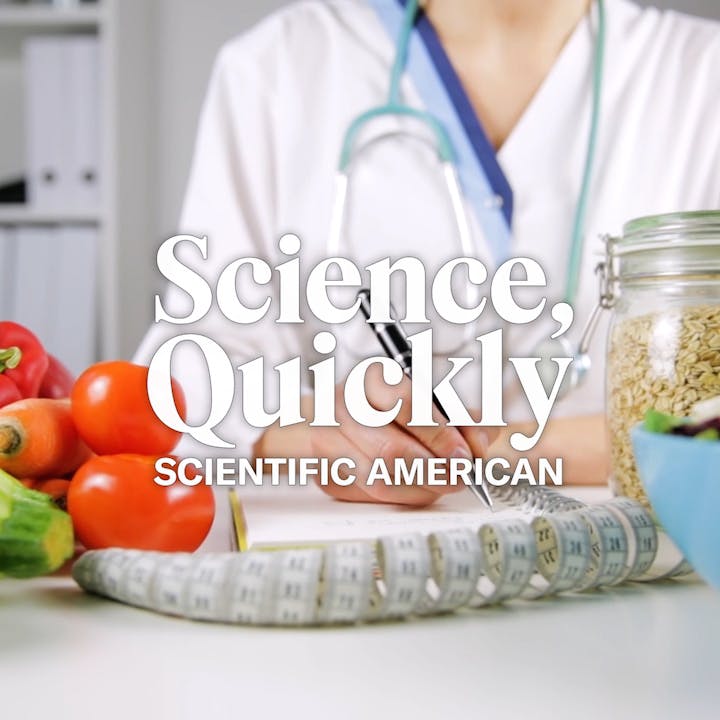
Can Food Work as Medicine?
Doctors are starting to prescribe vegetables or entire meals to ward off disease. Learn more about your ad choices. Visit megaphone.fm/adchoices
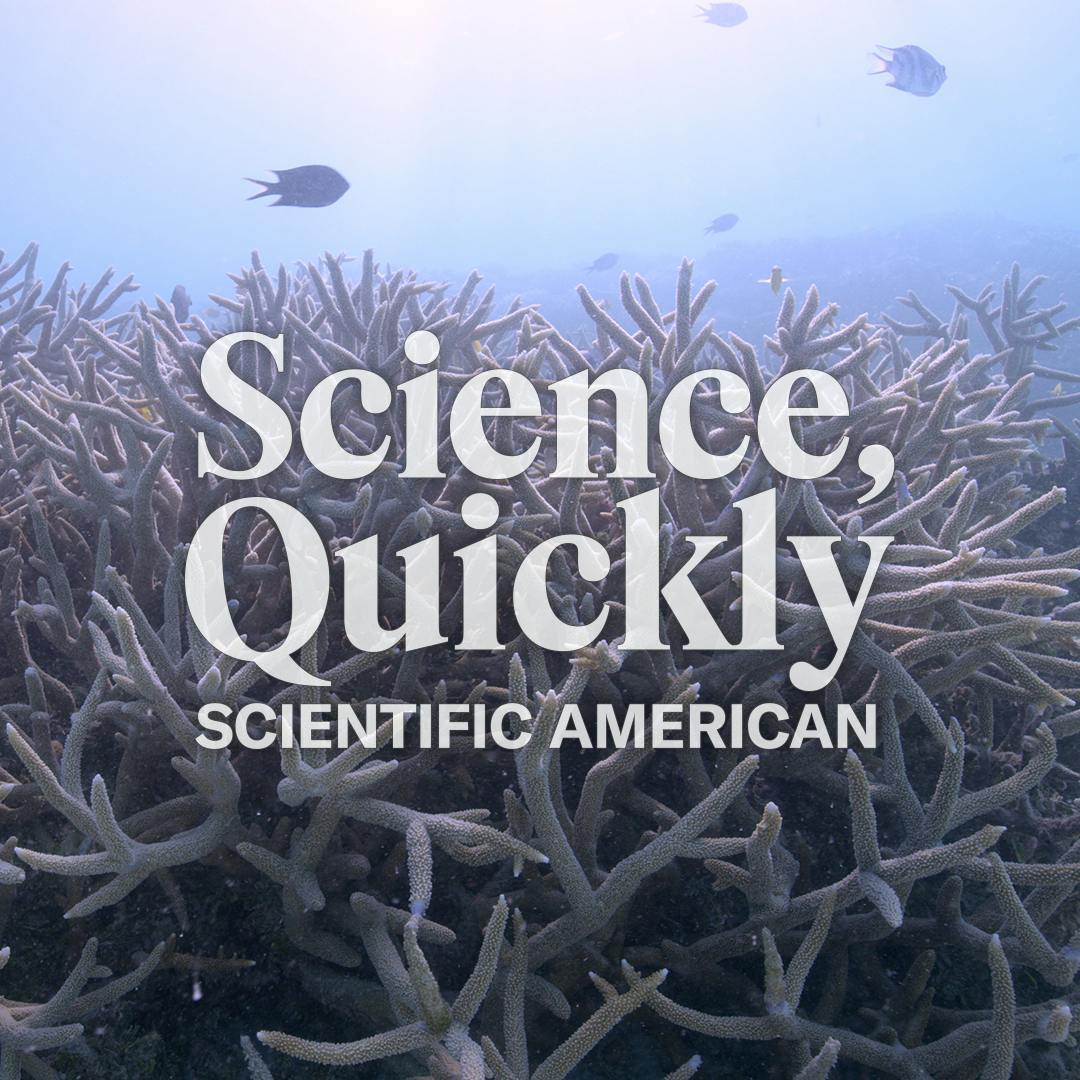
Corals Are Once Again Bleaching En Masse, but Their Fate Isn’t Sealed
Amid Earth’s fourth global coral bleaching event, a leading expert says tackling climate change is the key to fighting back. Learn more about your ad choices. Visit megaphone.fm/adchoices