
Science Magazine Podcast
657 episodes — Page 6 of 14

Sleeping without a brain, tracking alien invasions, and algorithms of oppression
Simple animals like jellyfish and hydra, even roundworms, sleep. Without brains. Why do they sleep? How can we tell a jellyfish is sleeping? Staff Writer Liz Pennisi joins host Sarah Crespi to talk about what can be learned about sleep from these simple sleepers. The feature is part of a special issue on sleep this week in Science. Next is a look at centuries of alien invasions—or rather, invasive insects moving from place to place as humans trade across continents. Sarah talks with Matthew MacLachlan, a research economist at the U.S. Department of Agriculture’s Economic Research Service, about his Science Advances paper on why insect invasions don’t always increase when trade does. Finally, a book on racism and the search algorithms. Books host Angela Saini for our series of interviews on race and science talks with Safiya Umoja Noble, a professor in the African American Studies and Information Studies departments at the University of California, Los Angeles, about her book: Algorithms of Oppression: How Search Engines Reinforce Racism. This week’s episode was produced with help from Podigy. [Image: marcouliana/iStock; Music: Jeffrey Cook] [Alt text: brown marmorated stink bug pattern] Authors: Sarah Crespi; Liz Pennisi, Angela Saini Learn more about your ad choices. Visit megaphone.fm/adchoices

Soil science goes deep, and making moldable wood
There are massive telescopes that look far out into the cosmos, giant particle accelerators looking for ever tinier signals, gargantuan gravitational wave detectors that span kilometers of Earth—what about soil science? Where’s the big science project on deep soil? It’s coming soon. Staff Writer Erik Stokstad talks with host Sarah Crespi about plans for a new subsoil observatory to take us beyond topsoil. Wood is in some ways an ideal building material. You can grow it out of the ground. It’s not very heavy. It’s strong. But materials like metal and plastic have one up on wood in terms of flexibility. Plastic and metal can be melted and molded into complicated shapes. Could wood ever do this? Liangbing Hu, a professor in the department of materials science and engineering and director of the Center for Materials Innovation at the University of Maryland, College Park, talked with Sarah about making moldable wood in a new way. In a sponsored segment from Science/AAAS Custom Publishing Office, Sean Sanders, director and senior editor for the Custom Publishing office, interviews Michael Brehm, associate professor at UMass Chan Medical School Diabetes Center of Excellence, about how he is using humanized mouse models to study ways to modulate the body’s immune system as a pathway to treating type 1 diabetes. This segment is sponsored by the Jackson Laboratory. This week’s episode was produced with help from Podigy. [Image: Xiao et al., Science 2021; Music: Jeffrey Cook] [Alt text: honeycomb structure made from moldable wood] Authors: Sarah Crespi; Erik Stokstad Learn more about your ad choices. Visit megaphone.fm/adchoices

The ripple effects of mass incarceration, and how much is a dog’s nose really worth?
This week we are covering the Science special issue on mass incarceration. Can a dog find a body? Sometimes. Can a dog indicate a body was in a spot a few months ago, even though it’s not there now? There’s not much scientific evidence to back up such claims. But in the United States, people are being sent to prison based on this type of evidence. Host Sarah Crespi talks with Peter Andrey Smith, a reporter and researcher based in Maine, about the science—or lack thereof—behind dog-sniff evidence. With 2 million people in jail or prison in the United States, it has become incredibly common to have a close relative behind bars. Sarah talks with Hedwig Lee, a sociologist at Washington University in St. Louis, about the consequences of mass incarceration for families of the incarcerated, from economic to social. This week’s episode was produced with help from Podigy. [Image: Adrian Brandon; Music: Jeffrey Cook] [Alt text: illustration from the special issue on mass incarceration by Adrian Brandon. He writes: “This illustration shines a light on the structural role of the prison system and how deeply embedded it is in the fabric of this country.”] Authors: Sarah Crespi; Peter Andrey Smith Learn more about your ad choices. Visit megaphone.fm/adchoices

Swarms of satellites could crowd out the stars, and the evolution of hepatitis B over 10 millennia
In 2019, a SpaceX rocket released 60 small satellites into low-Earth orbit—the first wave of more than 10,000 planned releases. At the same time, a new field of environmental debate was also launched—with satellite companies on one side, and astronomers, photographers, and stargazers on the other. Contributing Correspondent Joshua Sokol joins host Sarah Crespi to talk about the future of these space-based swarms. Over the course of the first 18 months of the coronavirus pandemic, different variants of the virus have come and gone. What would such changes look like over 10,000 years? Arthur Kocher, a researcher at the Max Planck Institute for the Science of Human History, talks with Sarah about watching the evolution of the virus that causes hepatitis B—over 10 millennia—and how changes in the disease’s path match up with shifts in human history. This week’s episode was produced with help from Podigy. [Image: Rafael Schmall; Music: Jeffrey Cook] [Alt text: Starlink satellites moving across the sky in a long-exposure photograph of the star Albireo in Cygnus] Authors: Sarah Crespi; Josh Sokol Learn more about your ad choices. Visit megaphone.fm/adchoices

Whole-genome screening for newborns, and the importance of active learning for STEM
Today, most newborns get some biochemical screens of their blood, but whole-genome sequencing is a much more comprehensive look at an infant—maybe too comprehensive? Staff Writer Jocelyn Kaiser joins host Sarah Crespi to discuss the ethical ins and outs of whole-genome screening for newborns, and the kinds of infrastructure needed to use these screens more widely. Sarah also talks with three contributors to a series of vignettes on the importance of active learning for students in science, technology, engineering, and math. Yuko Munakata, professor in the department of psychology and Center for Mind and Brain at the University of California, Davis, talks about how the amount of unstructured time and active learning contributes to developing executive function—the way our brains keep us on task. Nesra Yannier, special faculty at Carnegie Mellon University and inventor of NoRILLA, discusses an artificial intelligence–driven learning platform that helps children explore and learn about the real world. Finally, Louis Deslauriers, senior preceptor in the department of physics and director of science teaching and learning at Harvard University, laments lectures: why we like them so much, why we think we learn more from lectures than inquiry-based learning, and why we’re wrong. This week’s episode was produced with help from Podigy. [Image: Jerry Lai/Flickr; Music: Jeffrey Cook] [Alt text: newborn baby feet] [Authors: Sarah Crespi; Jocelyn Kaiser] Learn more about your ad choices. Visit megaphone.fm/adchoices

Earliest human footprints in North America, dating violins with tree rings, and the social life of DNA
Contributing Correspondent Lizzie Wade joins host Sarah Crespi to discuss fossilized footprints left on a lake shore in North America sometime before the end of Last Glacial Maximum—possibly the earliest evidence for humans on the continent. Read the research. Next, Paolo Cherubini, a senior scientist in the dendrosciences research group at the Swiss Federal Institute for Forest, Snow and Landscape Research, discusses using tree rings to date and authenticate 17th and 18th century violins worth millions of dollars. Finally, in this month’s installment of the series of book interviews on race and science, guest host Angela Saini interviews Alondra Nelson, professor in the School of Social Science at the Institute for Advanced Study, about her 2016 book The Social Life of DNA: Race, Reparations, and Reconciliation After the Genome. Note on the closing music: Violinist Nicholas Kitchen plays Johann Sebastian Bach’s Chaconne on the violin “Castelbarco” made by Antonio Stradivari in Cremona, Italy, in 1697. Courtesy of the U.S. Library of Congress. This week’s episode was produced with help from Podigy. [Image: Bennet et al., Science; Music: Jeffrey Cook] [Alt text: human footprints preserved in rock] Authors: Sarah Crespi; Lizzie Wade; Angela Saini See omnystudio.com/listener for privacy information. Learn more about your ad choices. Visit megaphone.fm/adchoices

Potty training cows, and sardines swimming into an ecological trap
Online News Editor David Grimm joins host Sarah Crespi to talk about the health and environmental benefits of potty training cows. Next, Peter Teske, a professor in the department of zoology at the University of Johannesburg, joins us to talk about his Science Advances paper on origins of the sardine run—a massive annual fish migration off the coast of South Africa. This week’s episode was produced with help from Podigy. [Image: Steven Benjamin; Music: Jeffrey Cook] [Alt text: sardines in a swirling bait ball] Authors: Sarah Crespi; David Grimm See omnystudio.com/listener for privacy information. Learn more about your ad choices. Visit megaphone.fm/adchoices

Legions of lunar landers, and why we make robots that look like people
Staff Writer Paul Voosen talks with host Sarah Crespi about plans for NASA’s first visit to the Moon in 50 years—and the quick succession of missions that will likely follow. Next, Eileen Roesler, a researcher and lecturer at the Technical University of Berlin in the field of human-robot automation, discusses the benefits of making robots that look and act like people—it’s not always as helpful as you would think. This week’s episode was produced with help from Podigy. [Image: Virginie Angéloz/Noun Project; Music: Jeffrey Cook] [Alt text: three robot drawings that look like people to different degrees] Authors: Sarah Crespi; Paul Voosen Learn more about your ad choices. Visit megaphone.fm/adchoices

Pinpointing the origins of SARS-CoV-2, and making vortex beams of atoms
Staff Writer Jon Cohen joins host Sarah Crespi to discuss the many theories circulating about the origins of SARS-CoV-2 and why finding the right one is important. Next, Ed Narevicius, a professor in the chemical and biological physics department at the Weizmann Institute of Science, talks with Sarah about creating vortex beams of atoms—a quantum state in which the phase of the matter wave of an atom rotates around its path, like a spiral staircase. This week’s episode was produced with help from Podigy. [Image: Alon Luski et al./Science 2021; Music: Jeffrey Cook] [Alt text: vortex beams showing holes in the center of the beam] Authors: Sarah Crespi; Jon Cohen Learn more about your ad choices. Visit megaphone.fm/adchoices

New insights into endometriosis, predicting RNA folding, and the surprising career of the spirometer
News Intern Rachel Fritts talks with host Sarah Crespi about a new way to think about endometriosis—a painful condition found in one in 10 women in which tissue that normally lines the uterus grows on the outside of the uterus and can bind to other organs. Next, Raphael Townshend, founder and CEO of Atomic AI, talks about predicting RNA folding using deep learning—a machine learning approach that relies on very few examples and limited data. Finally, in this month's edition of our limited series on race and science, guest host and journalist Angela Saini is joined by author Lundy Braun, professor of pathology and laboratory medicine and Africana studies at Brown University, to discuss her book: Breathing Race into the Machine: The Surprising Career of the Spirometer from Plantation to Genetics. This week’s episode was produced with help from Podigy. Listen to previous podcasts. About the Science Podcast Download a transcript (PDF). [Image: C. Bickel/Science; Music: Jeffrey Cook] [Alt text: folded RNA 3D structures] Authors: Sarah Crespi; Rachel Fritts Learn more about your ad choices. Visit megaphone.fm/adchoices

Building a martian analog on Earth, and moral outrage on social media
Contributing Correspondent Michael Price joins host Sarah Crespi to discuss the newest Mars analog to be built on the location of the first attempt at a large-scale sealed habitat, Biosphere 2 in Arizona. Next, William Brady, a postdoctoral researcher in the psychology department at Yale University, talks with Sarah about using an algorithm to measure increasing expressions of moral outrage on social media platforms. This week’s episode was produced with help from Podigy. About the Science Podcast Listen to previous podcasts. Download a transcript (PDF). [Image: Kai Staats; Music: Jeffrey Cook] [Alt text: lettuce plants being tended in a Mars analog] [Caption: Lettuce plants being tended in a Mars analog] Authors: Sarah Crespi; Mike Price Learn more about your ad choices. Visit megaphone.fm/adchoices

A risky clinical trial design, and attacks on machine learning
Charles Piller, an investigative journalist for Science, talks with host Sarah Crespi about a risky trial of vitamin D in asthmatic children that has caused a lot of concern among ethicists. They also discuss how the vitamin D trial connects with a possibly dangerous push to compare new treatments with placebos instead of standard-of-care treatments in clinical trials. Next, Birhanu Eshete, professor of computer and information science at the University of Michigan, Dearborn, talks with producer Joel Goldberg about the risks of exposing machine learning algorithms online—risks such as the reverse engineering of training data to access proprietary information or even patient data. This week’s episode was produced with help from Podigy. About the Science Podcast [Image: Filip Patock/Flickr; Music: Jeffrey Cook] [Alt text: Bottle of Vitamin D pills] Authors: Sarah Crespi; Joel Goldberg; Charles Piller Learn more about your ad choices. Visit megaphone.fm/adchoices

A freeze on prion research, and watching cement dry
International News Editor Martin Enserink talks with host Sarah Crespi about a moratorium on prion research after the fatal brain disease infected two lab workers in France, killing one. Next, Abhay Goyal, a postdoctoral fellow at Georgetown University, talks with intern Claire Hogan about his Science Advances paper on figuring out how to reduce the massive carbon footprint of cement by looking at its molecular structure. Finally, in a sponsored segment from the Science/AAAS Custom Publishing Office, Sean Sanders interviews Ansuman Satpathy, assistant professor in the department of pathology at Stanford University School of Medicine and 2018 winner of the Michelson Prize for Human Immunology and Vaccine Research, about the importance of supporting early-career research and diversity in science, technology, engineering, and math. This segment is sponsored by Michelson Philanthropies. This week’s episode was produced with help from Podigy. Listen to previous podcasts. About the Science Podcast Download a transcript (PDF). [Image: Marquette LaForest/Flickr; Music: Jeffrey Cook] Authors: Sarah Crespi; Martin Enserink Learn more about your ad choices. Visit megaphone.fm/adchoices

Debating healthy obesity, delaying type 1 diabetes, and visiting bone rooms
First this week, Staff Writer Jennifer Couzin-Frankel joins host Sarah Crespi to discuss the paradox of metabolically healthy obesity. They chat about the latest research into the relationships between markers of metabolic health—such as glucose or cholesterol levels in the blood—and obesity. They aren’t as tied as you might think. Next, Colin Dayan, professor of clinical diabetes and metabolism at Cardiff University and senior clinical researcher at the Wellcome Centre for Human Genetics at the University of Oxford, joins Sarah to discuss his contribution to a special issue on type 1 diabetes. In his review, Colin and colleagues lay out research into how type 1 diabetes can be detected early, delayed, and maybe even one day prevented. Finally, in the first of a six-part series of book interviews on race and science, guest host Angela Saini talks with author and professor of history at the University of Massachusetts, Amherst, Samuel Redman, about his book Bone Rooms: From Scientific Racism to Human Prehistory in Museums. The two discuss the legacy of human bone collecting and racism in museums today. This week’s episode was produced with help from Podigy. Listen to previous podcasts. About the Science Podcast Download a transcript (PDF). [Image: Jason Solo/Jacky Winter Group; Music: Jeffrey Cook] Authors: Sarah Crespi; Jennifer Couzin-Frankel; Angela Saini Learn more about your ad choices. Visit megaphone.fm/adchoices
Blood tests for Alzheimer’s disease, and what earthquakes on Mars reveal about the Red Planet’s core
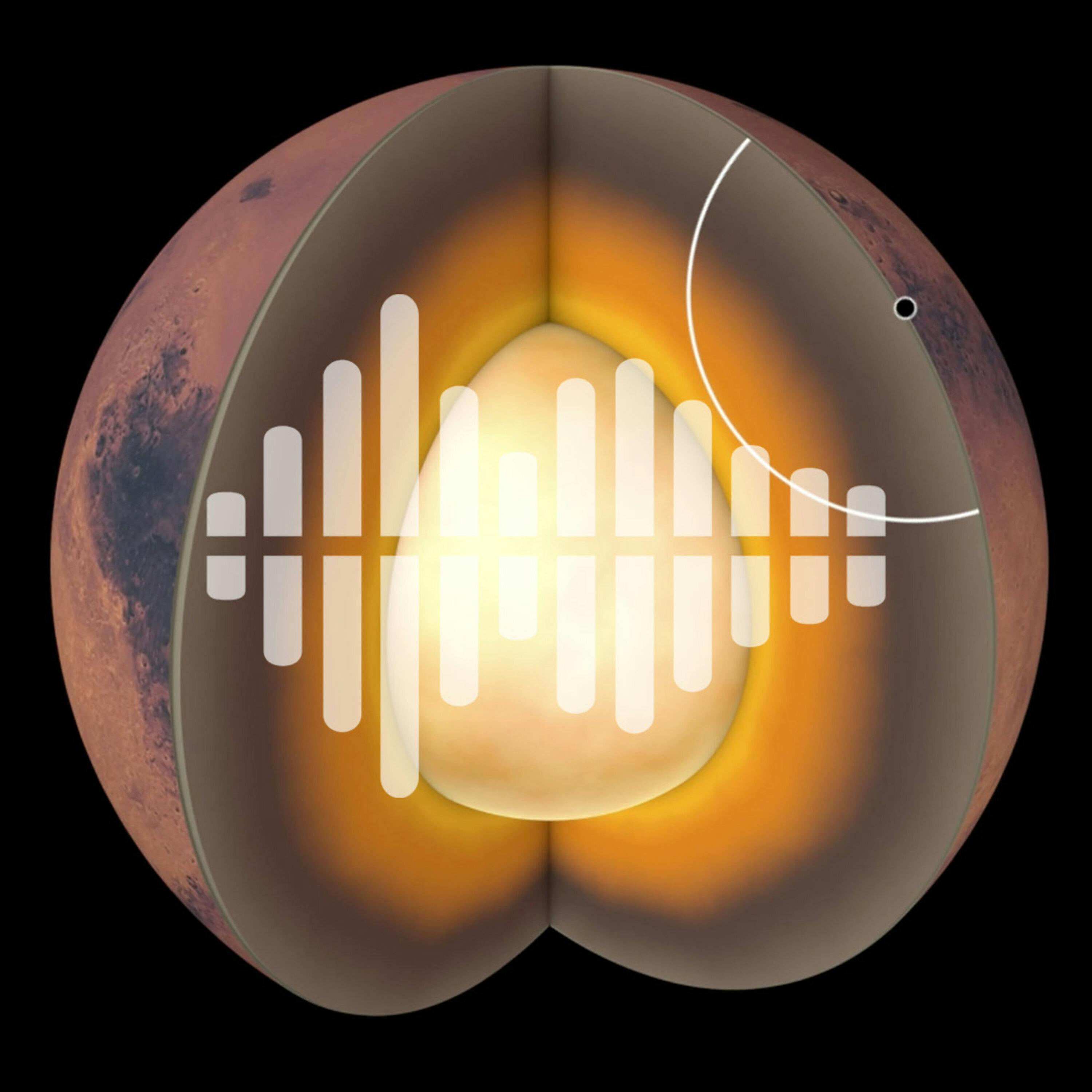
First this week, Associate Editor Kelly Servick joins us to discuss a big push to develop scalable blood tests for Alzheimer’s disease and how this could advance research on the disease and its treatment. Next, Amir Khan, a senior scientist at the Physics Institute of the University of Zurich and the Institute of Geophysics at ETH Zürich, talks with multimedia intern Claire Hogan about marsquakes detected by NASA’s InSight lander—and what they can reveal about Mars’s crust, mantle, and core. This week’s episode was produced with help from Podigy. Listen to previous podcasts. About the Science Podcast Download a transcript (PDF). [Image: C. Bickel/Science; Music: Jeffrey Cook] Authors: Sarah Crespi; Kelly Servick; Claire Hogan Learn more about your ad choices. Visit megaphone.fm/adchoices

Science after COVID-19, and a landslide that became a flood
First this week, Staff Writer Jennifer Couzin-Frankel joins host Sarah Crespi to discuss a new series on how COVID-19 may alter the scientific enterprise and they look back at how pandemics have catalyzed change throughout history. Next, Dan Shugar, associate professor of geoscience and director of the environmental science program at the University of Calgary, talks with producer Joel Goldberg about a deadly rock and ice avalanche in northern India this year and why closely monitoring steep mountain slopes is so important for averting future catastrophes. This week’s episode was produced with help from Podigy. Listen to previous podcasts. About the Science Podcast Download a transcript (PDF). [Image: Irfan Rashid, Department of Geoinformatics, University of Kashmir; Music: Jeffrey Cook] Authors: Sarah Crespi; Joel Goldberg; Jennifer Couzin-Frankel Learn more about your ad choices. Visit megaphone.fm/adchoices

Scientists’ role in the opioid crisis, 3D-printed candy proteins, and summer books
First this week, Editor-in-Chief Holden Thorp talks with author Patrick Radden Keefe about his book Empire of Pain and the role scientists, regulators, and physicians played in the rollout of Oxycontin and the opioid crisis in the United States. Next, Katelyn Baumer, a Ph.D. student in the chemistry and biochemistry department at Baylor University, talks with host Sarah Crespi about her Science Advances paper on 3D printing proteins using candy. Finally, book review editor Valerie Thompson takes us on a journey through some science-y summer reads—from the future of foods to a biography of the color blue. This week’s episode was produced with help from Podigy. Listen to previous podcasts. About the Science Podcast Download a transcript (PDF). Authors: Sarah Crespi; Holden Thorp; Valerie Thompson Learn more about your ad choices. Visit megaphone.fm/adchoices

Preserving plastic art, and a gold standard for measuring extreme pressure
First this week, Contributing Correspondent Sam Kean talks with producer Joel Goldberg about techniques museum conservators are using to save a range of plastic artifacts—from David Bowie costumes to the first artificial heart. Next, Dayne Fratanduono, an experimental physicist at the Lawrence Livermore National Laboratory, talks with producer Meagan Cantwell about new standards for how gold and platinum change under extreme pressure. Fratanduono discusses how these standards will help researchers make more precise measurements of extreme pressure in the future. Finally, in a sponsored segment from the Science/AAAS Custom Publishing Office, Sean Sanders interviews Laura Mackay, professor and laboratory head at the Peter Doherty Institute for Infection and Immunity at the University of Melbourne and 2018 winner of the Michelson Prize for Human Immunology and Vaccine Research, about the importance of diversity in science, technology, engineering, and math. This segment is sponsored by the Michelson Foundation. This week’s episode was produced with help from Podigy. Listen to previous podcasts. About the Science Podcast Download a transcript (PDF). [Image: Aleth Lorne; Music: Jeffrey Cook] ++ Authors: Joel Goldberg; Sam Kean; Meagan Cantwell Learn more about your ad choices. Visit megaphone.fm/adchoices

Does Botox combat depression, the fruit fly sex drive, and a series on race and science
First this week, Contributing Correspondent Cathleen O’Grady talks with host Sarah Crespi about controversy surrounding the use of Botox injections to alleviate depression by suppressing frowning. Next, researcher Stephen Zhang, a postdoctoral fellow at the Beth Israel Deaconess Medical Center, discusses his Science Advances paper on what turns on the fruit fly sex drive. Finally, we are excited to kick off a six-part series of monthly interviews with authors of books that highlight the many intersections between race and science and scientists. This week, guest host and journalist Angela Saini talks with Keith Wailoo, professor of history and public affairs at Princeton University, who helped select the topics about the books we will be covering and how they were selected. This week’s episode was produced with help from Podigy. Listen to previous podcasts. About the Science Podcast Download a transcript (PDF). [Image: Tomasz Klejdysz/Shutterstock; Music: Jeffrey Cook] Authors: Sarah Crespi; Cathleen O’Grady; Angela Saini Learn more about your ad choices. Visit megaphone.fm/adchoices

Keeping ads out of dreams, and calculating the cost of climate displacement
First this week, News Intern Sofia Moutinho joins host Sarah Crespi to discuss scientists concerns about advertisers looking into using our smart speakers or phones to whisper ads to us while we sleep. Next, Bina Desai, head of Programs at the Internal Displacement Monitoring Centre in Geneva, discusses how to predict the economic impact of human displacement due to climate change as part of a special issue on strategic retreat. This week’s episode was produced with help from Podigy. Listen to previous podcasts About the Science Podcast Download a transcript (PDF) [Image: Ramakrishna Math and Ramakrishna Mission Belur Math/Amphan Cyclone Relief Services; Music: Jeffrey Cook] Authors: Sarah Crespi; Sofia Moutinho Learn more about your ad choices. Visit megaphone.fm/adchoices

Finding consciousness outside the brain, and using DNA to reunite families
Learn more about your ad choices. Visit megaphone.fm/adchoices

Cicada citizen science, and expanding the genetic code
First this week, freelance journalist Ian Graber-Stiehl discusses what might be the oldest community science project—observing the emergence of periodical cicadas. He also notes the shifts in how amateur scientists have gone from contributing observations to helping scientists make predictions about the insects’ schedules. Next, Jason Chin, program leader at the Medical Research Council’s Laboratory of Molecular Biology, discusses how reducing redundancy in the genetic code opens up space for encoding unusual amino acids. His group shows that eliminating certain codes from the genome makes bacteria that are resistant to viruses and that these edited codes can be used to program the cells to make complicated molecules. In a sponsored segment from the Science/AAAS Custom Publishing Office, Science Editor-in-Chief Holden Thorp talks with Gary Michelson, founder of the Michelson Medical Research Foundation and co-chair of Michelson Philanthropies, about the best ways to support early-career scientists, including through prizes such as the new Michelson Philanthropies and Science Prize for Immunology. This week’s episode was produced with help from Podigy. Listen to previous podcasts About the Science Podcast Download a transcript (PDF) [Image: Bill Douthitt/Science; Music: Jeffrey Cook] Authors: Sarah Crespi; Ian Graber-Stiehl Learn more about your ad choices. Visit megaphone.fm/adchoices

Cracking consciousness, and taking the temperature of urban heat islands
First this week, Lucia Melloni, a group leader in the department of neuroscience at the Max Planck Institute for Empirical Aesthetics, talks with host Sarah Crespi about making the hard problem of consciousness easier by getting advocates of opposing theories to collaborate and design experiments to rule in or rule out their competing theories. Next, TC Chakraborty, a Ph.D. candidate at Yale University, shares his Science Advances paper on why it’s important to measure air temperature on the ground rather than from satellites when trying to understand urban heat islands—how cities heat up more than the surrounding countryside. This week’s episode was produced with help from Podigy. Listen to previous podcasts. About the Science Podcast Download a transcript (PDF). [Image: Joe Wolf/Flickr; Music: Jeffrey Cook] Authors: Sarah Crespi Learn more about your ad choices. Visit megaphone.fm/adchoices

Ecstasy plus therapy for PTSD, and the effects of early childhood development programs on mothers
Staff Writer Kelly Servick talks with host Sarah Crespi about the pairing of a specific type of psychotherapy with the drug MDMA, commonly known as ecstasy, for treating post-traumatic stress disorder. Also this week, Pamela Jakiela, an economics professor at Williams College, discusses the importance of knowing how early childhood development interventions like free day care or parenting classes have an effect on caregivers, particularly mothers. This week’s episode was produced with help from Podigy. Listen to previous podcasts. About the Science Podcast Download a transcript (PDF). [Image: Graham Crouch/World Bank; Music: Jeffrey Cook] Authors: Kelly Servick; Sarah Crespi Learn more about your ad choices. Visit megaphone.fm/adchoices

Cutting shipping air pollution may cause water pollution, and keeping air clean with lightning
News Staff Writer Erik Stokstad joins host Sarah Crespi to discuss possible harms from how the shipping industry is responding to air pollution regulations—instead of pumping health-harming chemicals into the air, they are now being dumped into oceans. Also this week, William Brune, professor of meteorology and atmospheric science at Pennsylvania State University, University Park, talks about flying a plane into thunderstorms and how measurements from research flights revealed the surprising amount of air-cleaning oxidants created by lightning. In a sponsored segment from the Science/AAAS Custom Publishing Office, Sean Sanders interviews Manfred Kraus, senior director and head of in vivo pharmacology oncology at Bristol Myers Squibb, about the impact of humanized mice on preclinical research. This segment is sponsored by the Jackson Laboratory. This week’s episode was produced with help from Podigy. Listen to previous podcasts. About the Science Podcast Download a transcript (PDF). [Image: Samantha Dellaert/Flickr; Music: Jeffrey Cook] Authors: Erik Stokstad; Sarah Crespi Learn more about your ad choices. Visit megaphone.fm/adchoices

Chernobyl’s ruins grow restless, and entangling macroscopic objects
Rich Stone, former international news editor at Science and current senior science editor at the Howard Hughes Medical Institute’s Tangled Bank Studios, joins host Sarah Crespi to talk about concerning levels of fission reactions deep in an inaccessible area of the site of the 1986 Chernobyl nuclear disaster. Though nothing is likely to come of it anytime soon, scientists must decide what—if anything—they should do tamp down reactions in this hard-to-reach place. Also on this week’s show, Shlomi Kotler, an assistant professor in the department of applied physics at the Hebrew University of Jerusalem, joins Sarah to discuss the quantum entanglement of macroscopic objects. This hallmark of quantum physics has been confined—up until now—to microscopic items like atoms, ions, and photons. But what does it mean that two drums, each the width of a human hair, can be entangled? Read a related insight. This week’s episode was produced with help from Podigy. Listen to previous podcasts. About the Science Podcast Download a transcript (PDF). [Image: Caption: New Safe Confinement structure built over Chernobyl ruins; Credit: URBEX Hungary/Flickr; Music: Jeffrey Cook] Authors: Rich Stone; Sarah Crespi Learn more about your ad choices. Visit megaphone.fm/adchoices

Storing wind as gravity, and well-digging donkeys
Contributing Correspondent Cathleen O’Grady joins host Sarah Crespi to talk about a company that stores renewable energy by hoisting large objects in massive “gravity batteries.” Also on this week’s show, Erick Lundgren, a postdoctoral researcher at Aarhus University, talks about how water from wells dug by wild horses and feral donkeys provides a buffer to all different kinds of animals and plants during the driest times in the Sonora and Mojave deserts. This week’s episode was produced with help from Podigy. Listen to previous podcasts. About the Science Podcast Download a transcript (PDF). [Image: Tracy Hall/Flickr; Music: Jeffrey Cook] Authors: Cathleen O’Grady; Sarah Crespi Learn more about your ad choices. Visit megaphone.fm/adchoices

Rebuilding Louisiana’s coast, and recycling plastic into fuel
Host Sarah Crespi talks with Contributing Correspondent Warren Cornwall about a restoration project to add 54 square kilometers back to the coast of Louisiana by allowing the Mississippi River to resume delivering sediment to sinking regions. Also on this week’s show, Dion Vlachos, a professor of chemical and biomolecular engineering at the University of Delaware, Newark, and director of the Delaware Energy Institute, joins Sarah to talk about his Science Advances paper on a low-temperature process to convert different kinds of plastic to fuels, like gasoline and jet fuel. This week’s episode was produced with help from Podigy. Listen to previous podcasts. About the Science Podcast Download a transcript (PDF). [Image: Shannon Dosemagen/Flickr; Music: Jeffrey Cook] Authors: Warren Cornwall; Sarah Crespi Learn more about your ad choices. Visit megaphone.fm/adchoices

Why muon magnetism matters, and a count of all the Tyrannosaurus rex that ever lived
Host Sarah Crespi talks with Staff Writer Adrian Cho about a new measurement of the magnetism of the muon—an unstable cousin of the electron. This latest measurement and an earlier one both differ from predictions based on the standard model of particle physics. The increased certainty that there is a muon magnetism mismatch could be a field day for theoretical physicists looking to add new particles or forces to the standard model. Also on this week’s show, Charles Marshall, director of the University of California Museum of Paleontology and professor of integrative biology, joins Sarah to talk about his team’s calculation for the total number of Tyrannosaurus rex that ever lived. In a sponsored segment from the Science/AAAS Custom Publishing Office, Sean Sanders interviews Imre Berger, professor of biochemistry at the University of Bristol, about his Science paper on finding a druggable pocket on the spike protein of SARS-CoV-2 and how the work was accelerated by intensive cloud computing. This segment is sponsored by Oracle for Research. This week’s episode was produced with help from Podigy. Listen to previous podcasts. About the Science Podcast Download a transcript (PDF). [Image:Lewis Kelly/Flickr; Music: Jeffrey Cook] Authors: Adrian Cho; Sarah Crespi Learn more about your ad choices. Visit megaphone.fm/adchoices

Magnetar mysteries, and when humans got big brains
Host Sarah Crespi talks with Contributing Correspondent Joshua Sokol about magnetars—highly magnetized neutron stars. A recent intense outburst of gamma rays from a nearby galaxy has given astronomers a whole new view on these mysterious magnetic monsters. Also on this week’s show, Christoph Zollikofer, a professor of anthropology at the University of Zurich, talks about the evolution of humanlike brains. His team’s work with brain-case fossils suggests the complex brains we carry around today were not present in the early hominins to leave Africa, but later developed in the cousins they left behind. This week’s episode was produced with help from Podigy. Listen to previous podcasts. About the Science Podcast Download a transcript (PDF). [Image: (Text) Sculptor galaxy; (Image) ESO/J. Emerson/VISTA; Cambridge Astronomical Survey Unit; Music: Jeffrey Cook] Authors: Joshua Sokol; Sarah Crespi Learn more about your ad choices. Visit megaphone.fm/adchoices
Fighting outbreaks with museum collections, and making mice hallucinate
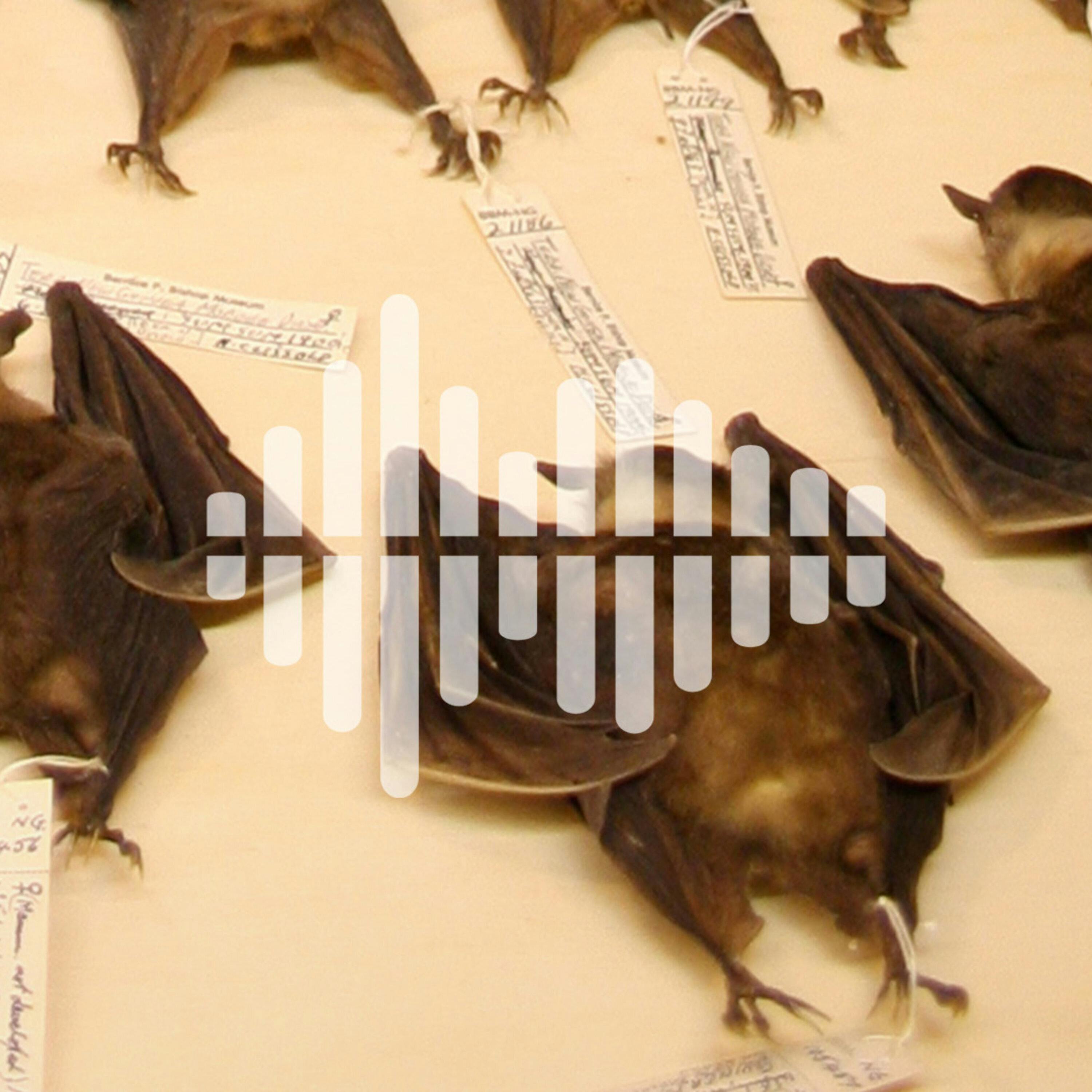
Podcast Producer Meagan Cantwell talks with Pamela Soltis, a professor and curator with the Florida Museum of Natural History at the University of Florida and the director of the University of Florida Biodiversity Institute, about how natural collections at museums can be a valuable resource for understanding future disease outbreaks. Read the National Academies of Sciences, Engineering, and Medicine report Biological Collections: Ensuring Critical Research and Education for the 21st Century. This segment is part of our coverage of the 2021 AAAS Annual Meeting. Also on this week’s show, Katharina Schmack, a research associate at Cold Spring Harbor Laboratory, joins producer Joel Goldberg to talk about giving mice a quiz that makes them hallucinate. Observing the mice in this state helps researchers make connections between dopamine, hallucinations, and mental illness. This week’s episode was produced with help from Podigy. Listen to previous podcasts. About the Science Podcast Download a transcript (PDF). [Image: christopherhu/Flickr; Music: Jeffrey Cook] Authors: Joel Goldberg; Meagan Cantwell Learn more about your ad choices. Visit megaphone.fm/adchoices

Social insects as models for aging, and crew conflict on long space missions
Most research on aging has been done on model organisms with limited life spans, such as flies and worms. Host Meagan Cantwell talks to science writer Yao-Hua Law about how long-living social insects—some of which survive for up to 30 years—can provide new insights into aging. Also in this episode, host Sarah Crespi talks with Noshir Contractor, the Jane S. & William J. White Professor of Behavioral Sciences at Northwestern University, about his AAAS session on keeping humans in harmony during long space missions and how mock missions on Earth are being applied to plans for a crewed mission to Mars. This week’s episode was produced with help from Podigy. Listen to previous podcasts About the Science Podcast [Image:TerriAnneAllen/Unsplash ; Music: Jeffrey Cook] Authors: Sarah Crespi; Yao Hua Law; Meagan Cantwell Learn more about your ad choices. Visit megaphone.fm/adchoices

COVID-19 treatment at 1 year, and smarter materials for smarter cities
Science News Staff Writer Kelly Servick discusses how physicians have sifted through torrents of scientific results to arrive at treatments for SARS-CoV-2. Sarah also talks with Wesley Reinhart of Pennsylvania State University’s Department of Materials Science and Engineering and Institute for Computational and Data Science, about why we should be building smart cities from smart materials, such as metamaterials that help solar panels chase the Sun, and living materials like self-healing concrete that keep buildings in good shape. This week’s episode was produced with help from Podigy. Listen to previous podcasts About the Science Podcast Download a transcript (PDF) [Image: Singapore Esplanade/Travis/Flickr; Music: Jeffrey Cook] Authors: Sarah Crespi; Kelly Servick Learn more about your ad choices. Visit megaphone.fm/adchoices

Next-generation gravitational wave detectors, and sponges that soak up frigid oil spills
Science Staff Writer Adrian Cho joins host Sarah Crespi to talk about plans for the next generation of gravitational wave detectors—including one with 40-kilometer arms. The proposed detectors will be up to 10 times more sensitive than current models and could capture all black hole mergers in the observable universe. Sarah also talks with Pavani Cherukupally, a researcher at Imperial College London and the University of Toronto, about her Science Advances paper on cleaning up oil spills with special cold-adapted sponges that work well when crude oil gets clumpy. This week’s episode was produced with help from Podigy. Listen to previous podcasts. About the Science Podcast Download a transcript (PDF). [Image: VLCC tanker Amoco Cadiz oil spill/Collection of Doug Helton/NOAA/NOS/ORR/Flickr; Music: Jeffrey Cook] Authors: Sarah Crespi; Adrian Cho Learn more about your ad choices. Visit megaphone.fm/adchoices

The world’s oldest pet cemetery, and how eyeless worms can see color
Science’s Online News Editor David Grimm joins host Sarah Crespi to talk about a 2000-year-old pet cemetery found in the Egyptian city of Berenice and what it can tell us about the history of human-animal relationships. Also this week, Dipon Ghosh, a postdoctoral fellow at the Massachusetts Institute of Technology, talks about how scientists missed that the tiny eyeless roundworm Caenorhabditis elegans, which has been intensively studied from top to bottom for decades, somehow has the ability to detect colors. This week’s episode was produced with help from Podigy. Listen to previous podcasts About the Science Podcast Download a transcript (PDF) [Image: HINRICH SCHULENBURG; Music: Jeffrey Cook] Authors: Sarah Crespi; David Grimm Learn more about your ad choices. Visit megaphone.fm/adchoices

Measuring Earth’s surface like never before, and the world’s fastest random number generator
First up, science journalist Julia Rosen talks with host Sarah Crespi about a growing fleet of radar satellites that will soon be able to detect minute rises and drops of Earth’s surface—from a gently deflating volcano to a water-swollen field—on a daily basis. Sarah also talks with Hui Cao, a professor of applied physics at Yale University, about a new way to generate enormous streams of random numbers faster than ever before, using a tiny laser that can fit on a computer chip. This week’s episode was produced with help from Podigy. Listen to previous podcasts. About the Science Podcast Download a transcript (PDF). [Image: Kyungduk Kim/Yale; Music: Jeffrey Cook] Authors: Sarah Crespi; Julia Rosen Learn more about your ad choices. Visit megaphone.fm/adchoices

All your COVID-19 vaccine questions answered, and a new theory on forming rocky planets
Science Staff Writer Jon Cohen joins host Sarah Crespi to take on some of big questions about the COVID-19 vaccines, such as: Do they stop transmission? Will we need boosters? When will life get back to “normal.” Sarah also talks with Anders Johansen, professor of planetary sciences and planet formation at the University of Copenhagen, about his Science Advances paper on a new theory for the formation of rocky planets in our Solar System. Instead of emerging out of ever-larger collisions of protoplanets, the new idea is that terrestrial planets like Earth and Mars formed from the buildup of many small pebbles. This week’s episode was produced with help from Podigy. Listen to previous podcasts. About the Science Podcast Download a transcript (PDF). [Image: European Space Agency/Stuart Rankin/Flickr; Music: Jeffrey Cook] Authors: Sarah Crespi; Jon Cohen Learn more about your ad choices. Visit megaphone.fm/adchoices

Building Africa’s Great Green Wall, and using whale songs as seismic probess
Science journalist Rachel Cernansky joins host Sarah Crespi to talk about progress on Africa’s Great Green Wall project and the important difference between planting and growing a tree. Sarah also talks with Václav Kuna, a postdoctoral researcher at the Institute of Geophysics of the Czech Academy of Sciences, about using loud and long songs from fin whales to image structures under the ocean floor. This week’s episode was produced with help from Podigy. Listen to previous podcasts. About the Science Podcast Download a transcript (PDF). [Image: Holly Gramazio/Flickr; Music: Jeffrey Cook] Authors: Sarah Crespi; Rachel Cernansky Learn more about your ad choices. Visit megaphone.fm/adchoices

Looking back at 20 years of human genome sequencing
This week we’re dedicating the whole show to the 20th anniversary of the publication of the human genome. Today, about 30 million people have had their genomes sequenced. This remarkable progress has brought with it issues of data sharing, privacy, and inequality. Host Sarah Crespi spoke with a number of researchers about the state of genome science, starting with Yaniv Erlich, from the Efi Arazi School of Computer Science and CEO of Eleven Biotherapeutics, who talks about privacy in the age of easily obtainable genomes. Next up Charles Rotimi, director of the Center for Research on Genomics and Global Health at the National Human Genome Research Institute, discusses diversity—or lack thereof—in the field and what it means for the kinds of research that happens. Finally, Dorothy Roberts, professor in the departments of Africana studies and sociology and the law school at the University of Pennsylvania, talks about the seemingly never-ending project of disentangling race and genomes. This week’s episode was produced with help from Podigy. Listen to previous podcasts. About the Science Podcast Download a transcript (PDF). [Image: Holly Gramazio/Flickr; Music: Jeffrey Cook] Authors: Sarah Crespi; Learn more about your ad choices. Visit megaphone.fm/adchoices
Calculating the social cost of carbon, and listening to mole-rat chirps
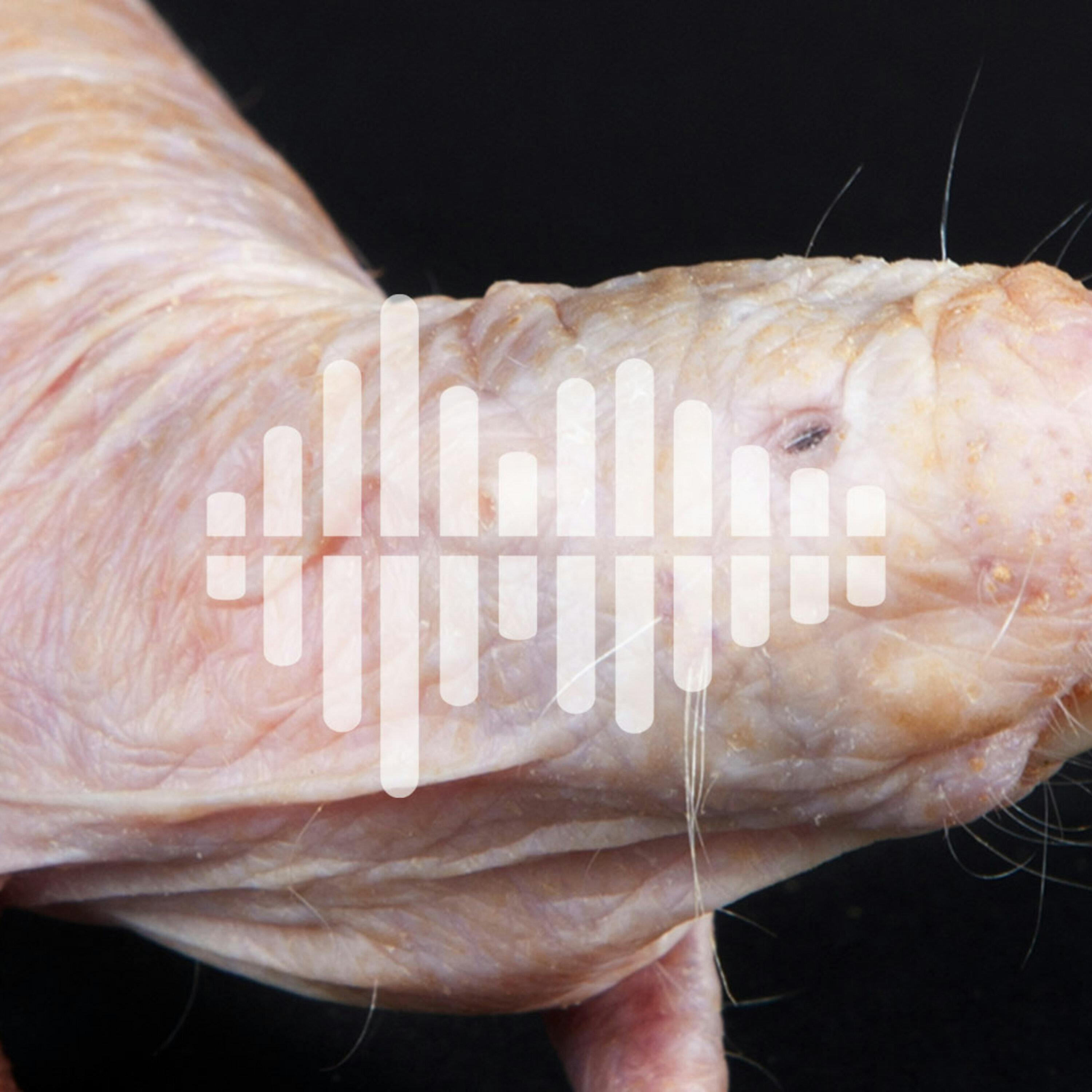
On its first day, the new Biden administration announced plans to recalculate the social cost of carbon—a way of estimating the economic toll of greenhouse gases. Staff Writer Paul Voosen and host Sarah Crespi discuss why this value is so important and how it will be determined. Next up, Alison Barker, a postdoctoral researcher at the Max Delbrück Center for Molecular Medicine, talks with Sarah about the sounds of naked mole-rats. You may already know naked mole-rats are pain and cancer resistant—but did you know these eusocial mammals make little chirps to identify themselves as colony members? Can these learned local dialects make naked mole-rats a new research model for language learning? This week’s episode was produced with help from Podigy. Listen to previous podcasts. About the Science Podcast Download a transcript (PDF). [Image: Smithsonian’s National Zoo/Flickr; Music: Jeffrey Cook] Authors: Sarah Crespi; Paul Voosen Learn more about your ad choices. Visit megaphone.fm/adchoices

Counting research rodents, a possible cause for irritable bowel syndrome, and spitting cobras
Online News Editor David Grimm joins host Sarah Crespi to discuss a controversial new paper that estimates how many rodents are used in research in the United States each year. Though there is no official number, the paper suggests there might be more than 100 million rats and mice housed in research facilities in the country—doubling or even tripling some earlier estimates. Next, Staff Writer Jennifer Couzin-Frankel talks with Sarah about a new theory behind the cause of irritable bowel syndrome—that it might be a localized allergic reaction in the gut. Sarah also chats with Taline Kazandjian, a postdoctoral research associate at the Centre for Snakebite Research & Interventions in Liverpool, U.K., about how the venom from spitting cobras has evolved to cause maximum pain and why these snakes might have developed the same defense mechanism three different times. This week’s episode was produced with help from Podigy. Listen to previous podcasts About the Science Podcast Download a transcript (PDF) [Image: Rushen/Flickr; Music: Jeffrey Cook] Authors: Sarah Crespi; David Grimm; Jennifer Couzin-Frankel Learn more about your ad choices. Visit megaphone.fm/adchoices

An elegy for Arecibo, and how our environments may change our behavior
Science Senior Correspondent Daniel Clery regales host Sarah Crespi with tales about the most important work to come from 57 years of research at the now-defunct Arecibo Observatory and plans for the future of the site. Sarah also talks with Toman Barsbai, an associate professor in the school of economics at the University of Bristol, about the influence of ecology on human behavior—can we figure out how many of our behaviors are related to the different environments where we live? Barsbai and colleagues took on this question by comparing behaviors around finding food, reproduction, and social hierarchy in three groups of animals living in the same places: foraging humans, nonhuman mammals, and birds. This week’s episode was produced with help from Podigy. Listen to previous podcasts. About the Science Podcast Download a transcript (PDF). [Image: University of Central Florida; Music: Jeffrey Cook] Authors: Sarah Crespi; Daniel Clery Learn more about your ad choices. Visit megaphone.fm/adchoices

The uncertain future of North America’s ash trees, and organizing robot swarms
Freelance journalist Gabriel Popkin and host Sarah Crespi discuss what will happen to ash trees in the United States as federal regulators announce dropping quarantine measures meant to control the emerald ash borer—a devastating pest that has killed tens of millions of trees since 2002. Instead of quarantines, the government will use tiny wasps known to kill the invasive beetles in hopes of saving the ash. Sarah also talks with Pavel Chvykov, a postdoctoral researcher at the Massachusetts Institute of Technology, about the principles for organizing active matter—things like ant bridges, bird flocks, or little swarms of robots. This week’s episode was produced with help from Podigy. Listen to previous podcasts. About the Science Podcast Download a transcript (PDF). [Image: Donald Macauley/Flickr; Music: Jeffrey Cook] Authors: Sarah Crespi; Gabriel Popkin Learn more about your ad choices. Visit megaphone.fm/adchoices

Areas to watch in 2021, and the living microbes in wildfire smoke
We kick off our first episode of 2021 by looking at future trends in policy and research with host Meagan Cantwell and several Science news writers. Ann Gibbons talks about upcoming studies that elucidate social ties among ancient humans, Jeffrey Mervis discusses relations between the United States and China, and Paul Voosen gives a rundown of two Mars rover landings. In research news, Meagan Cantwell talks with Leda Kobziar, an associate professor of wildland fire science at the University of Idaho, Moscow, about the living component of wildfire smoke—microbes. The bacteria and fungi that hitch a ride on smoke can impact both human health and ecosystems—but Kobziar says much more research is needed. This week’s episode was produced with help from Podigy. Listen to previous podcasts. About the Science Podcast Download a transcript (PDF). [Image: Christopher Michel/Flickr; Music: Jeffrey Cook] Authors: Meagan Cantwell; Ann Gibbons; Jeffrey Mervis, Paul Voosen Learn more about your ad choices. Visit megaphone.fm/adchoices

Breakthrough of the Year, top online news, and science book highlights
Our last episode of the year is a celebration of science in 2020. First, host Sarah Crespi talks with Online News Editor David Grimm about some of the top online news stories of the year—from how undertaker bees detect the dead to the first board game of death. (It’s not as grim as it sounds.) Sarah then talks with Online News Editor Catherine Matacic about the Breakthrough of the Year, scientific breakdowns, and some of the runners-up—amazing accomplishments in science achieved in the face of a global pandemic. Finally, Book Review Editor Valerie Thompson joins Sarah to discuss highlights from the books section—on topics as varied as eating wild foods to how the materials we make end up shaping us. This week’s episode was produced with help from Podigy. Listen to previous podcasts. About the Science Podcast Download a transcript (PDF). [Image: ISS Expedition 7 Crew/EOL/NASA; Music: Jeffrey Cook] Authors: Sarah Crespi; David Grimm; Catherine Matacic; Valerie Thompson Learn more about your ad choices. Visit megaphone.fm/adchoices
Making ecology studies replicable, and a turnaround for the Tasmanian devil
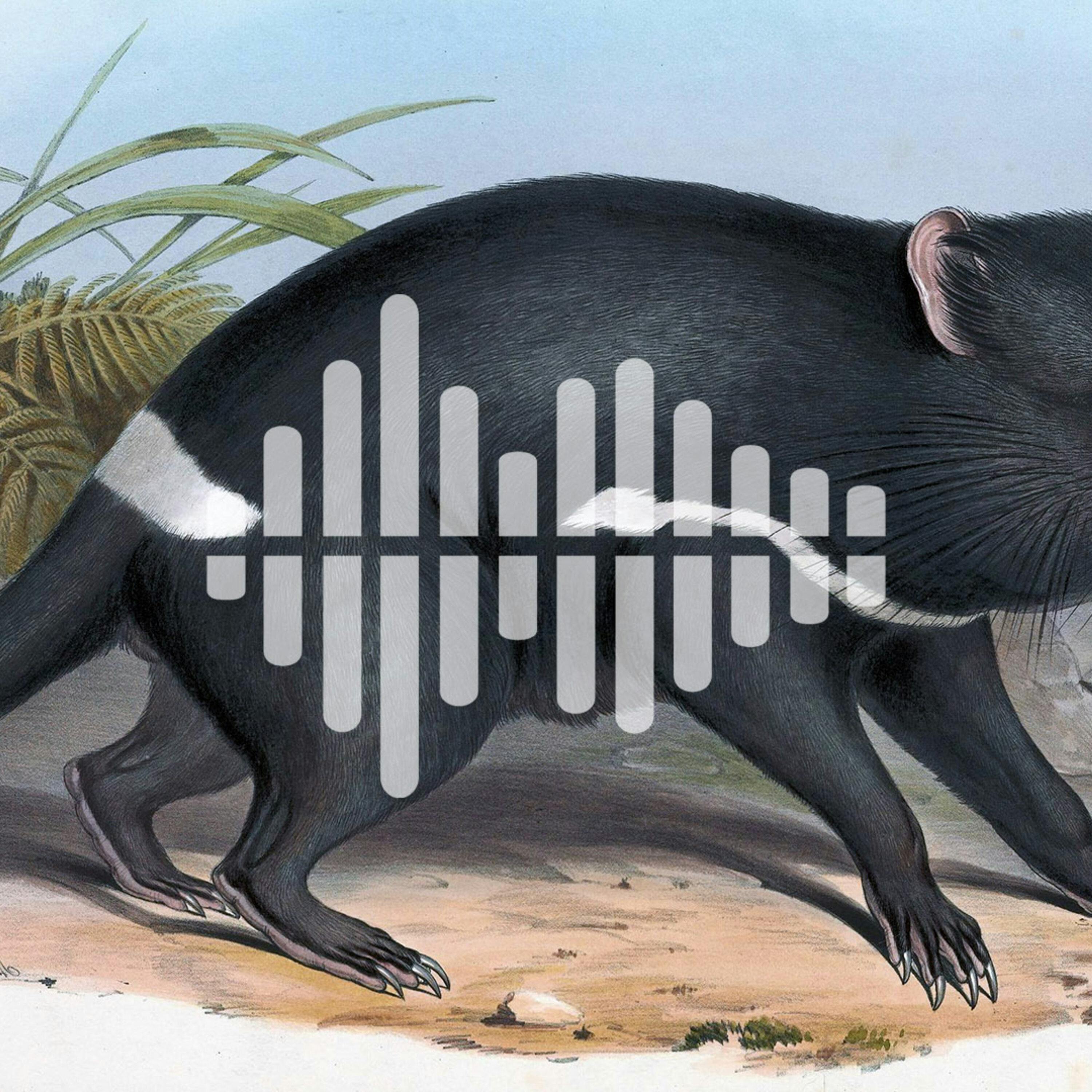
The field of psychology underwent a replication crisis and saw a sea change in scientific and publishing practices, could ecology be next? News Intern Cathleen O’Grady joins host Sarah Crespi to talk about the launch of a new society for ecologists looking to make the field more rigorous. Sarah also talks with Andrew Storfer, a professor in the School of Biological Sciences at Washington State University, Pullman, about the fate of the Tasmanian devil. Since the end of the last century, these carnivorous marsupials have been decimated by a transmissible facial tumor. Now, it looks like—despite many predictions of extinction—the devils may be turning a corner. This week’s episode was produced with help from Podigy. Listen to previous podcasts. About the Science Podcast Download a transcript (PDF). [Image: The Mammals of Australia, John Gould, 1804-1881/Biodiversity Library/Flickr; Music: Jeffrey Cook] Authors: Sarah Crespi; Cathleen O’Grady Learn more about your ad choices. Visit megaphone.fm/adchoices

How the new COVID-19 vaccines work, and restoring vision with brain implants
Staff Writer Meredith Wadman and host Sarah Crespi discuss what to expect from the two messenger RNA–based vaccines against COVID-19 that have recently released encouraging results from their phase III trials and the short-term side effects some recipients might see on the day of injection. Sarah also talks with researcher Xing Chen, a project co-leader and postdoctoral scientist at the Netherlands Institute for Neuroscience, about using brain stimulation to restore vision. Researchers have known for about 70 years that electrical stimulation at certain points in the brain can lead to the appearance of a phosphene—a spot of light that appears not because there’s light there, but because of some other stimulation, like pressing on the eyeball. If electrical stimulation can make a little light appear, how about many lights? Can we think about phosphenes as pixels and draw a picture for the brain? How about a moving picture? This week’s episode was produced with help from Podigy. Listen to previous podcasts. About the Science Podcast Download a transcript (PDF). Learn more about your ad choices. Visit megaphone.fm/adchoices

Keeping coronavirus from spreading in schools, why leaves fall when they do, and a book on how nature deals with crisis
Many schools closed in the spring, during the first wave of the coronavirus pandemic. Many opened in the fall. Staff Writer Jennifer Couzin-Frankel joins host Sarah Crespi to talk about what was learned in spring about how coronavirus spreads in schools that might help keep children safe as cases surge once again. Also this week: What makes leaves fall off deciduous trees when they do—is it the short, cold nights? Or is the timing of so-called “leaf senescence” linked to when spring happens? Sarah talked to Constantin Zohner, a lead scientist at the Institute of Integrative Biology at ETH Zurich, about his tree leaf timing study. Sarah also spoke with commentary author Christy Rollinson, a forest ecologist at the Morton Arboretum, about how important these trees and the timing of their leaf drop is for climate change. In the books segment, host Kiki Sanford talks with Ruth DeFries about her book, What Would Nature Do? A Guide for Our Uncertain Times. This week’s episode was produced with help from Podigy. Listen to previous podcasts. About the Science Podcast Download a transcript (PDF). [Image: Joe Cheng/Flickr; Music: Jeffrey Cook] Authors: Sarah Crespi; Jennifer Couzin-Frankel Learn more about your ad choices. Visit megaphone.fm/adchoices

Fish farming’s future, and how microbes compete for space on our face
These days about half of the protein the world’s population eats is from seafood. Staff Writer Erik Stokstad joins host Sarah Crespi to talk about how brand-new biotech and old-fashion breeding programs are helping keep up with demand, by expanding where we can farm fish and how fast we can grow them. Sarah also spoke with Jan Claesen, an assistant professor at the Cleveland Clinic’s Lerner Research Institute, about skin microbes that use their own antibiotic to fight off harmful bacteria. Understanding the microbes native to our skin and the molecules they produce could lead to treatments for skin disorders such as atopic dermatitis and acne. Finally, in a segment sponsored by MilliporeSigma, Science’s Custom Publishing Director and Senior Editor, Sean Sanders, talks with Timothy Cernak, an Assistant Professor of Medicinal Chemistry and Chemistry at University of Michigan, Ann Arbor, about retrosynthesis—the process of starting with a known chemical final product and figuring out how to make that molecule efficiently from available pieces. This week’s episode was produced with help from Podigy. Listen to previous podcasts About the Science Podcast Download a transcript (PDF) [Image: Erik Christensen/Wikipedia; Music: Jeffrey Cook, Podington Bear] Authors: Sarah Crespi; Erik Stokstad Learn more about your ad choices. Visit megaphone.fm/adchoices
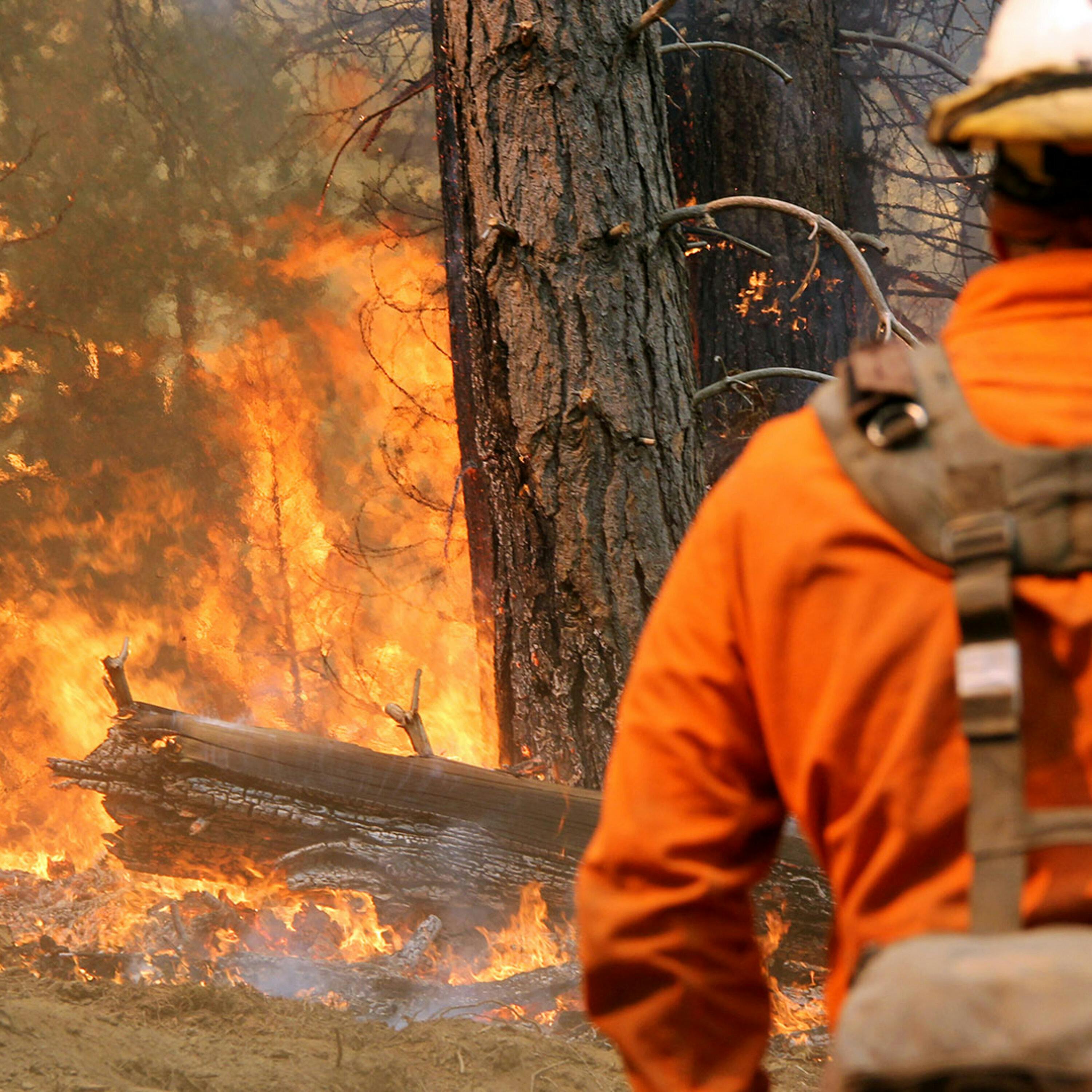
How the human body handles extreme heat, and improvements in cooling clothes
This week the whole show focuses on keeping cool in a warming world. First up, host Sarah Crespi talks with Senior News Correspondent Elizabeth Pennisi about the latest research into how to stay safe when things heat up—whether you’re running marathons or fighting fires. Sarah also talks with Po-Chun Hsu, assistant professor of mechanical engineering and materials science at Duke University, about the future of cooling fabrics for everyday use. It turns out we can save a lot of energy and avoid carbon dioxide emissions by wearing clothing designed to keep us cool in slightly warmer buildings than we’re used to now. But the question is, will cooling clothes ever be “cool”? Visit the whole special issue on cooling. This week’s episode was produced with help from Podigy. Listen to previous podcasts. About the Science Podcast Download a transcript (PDF). ++Meta [Image: J. Bartlett Team Rubicon/BLM for USFS/Flickr; Music: Jeffrey Cook] Authors: Sarah Crespi; Elizabeth Pennisi Learn more about your ad choices. Visit megaphone.fm/adchoices