
Science Magazine Podcast
657 episodes — Page 5 of 14

Snakes living the high-altitude life, and sending computing power to the edges of the internet
On this week’s show: How some snakes have adapted to the extremes of height and temperature on the Tibetan Plateau, and giving low-power sensors more processing power First up on the podcast, tough snakes reveal their secrets. Host Sarah Crespi talks with Staff Writer Liz Pennisi about how snakes have adapted to the harsh conditions of the Tibetan Plateau. Next on the show, Producer Meagan Cantwell talks about moving more computing power to the edges of the internet. She is joined by Alexander Sludds, a graduate student at the Massachusetts Institute of Technology’s Research Lab for Electronics. They discuss a faster, more energy-efficient approach to give edge devices—such as low-power smart sensors or tiny aerial drones—the computing power of far larger machines. This week’s episode was produced with help from Podigy. [Image: JUN-FENG GUO; Music: Jeffrey Cook] [alt: photo of a Tibetan hot-spring snake near a geothermal pool with podcast overlay symbol] Authors: Sarah Crespi; Liz Pennisi; Meagan Cantwell Episode page: https://www.science.org/doi/10.1126/science.adf3782 About the Science Podcast: https://www.science.org/content/page/about-science-podcast Learn more about your ad choices. Visit megaphone.fm/adchoices

Climate change threatens supercomputing, and collecting spider silks
On this week’s show: Rising waters and intense storms make siting high-performance computer centers a challenge, and matching up spider silk DNA with spider silk properties (Main Text) First up on the podcast this week, News Intern Jacklin Kwan talks with host Sarah Crespi about how and where to build high-performance computing facilities as climate change brings extreme conditions to current locations. Spiders are creeping into the show this week. Kazuharu Arakawa, a professor at the Institute for Advanced Bioscience at Keio University, discusses his Science Advances paper on collecting spider silks and the genes that make them. His team used the data set to connect genetic sequences to the properties of spider silks in order to harness this amazing material for industrial use. Visit the spider silkomes database here: https://spider-silkome.org/ This week’s episode was produced with help from Podigy. [Image: Dace Znotina/iStock; Music: Jeffrey Cook] [alt: a spiderweb with podcast overlay symbol] Authors: Sarah Crespi; Jacklin Kwan Learn more about your ad choices. Visit megaphone.fm/adchoices

Linking violence in Myanmar to fossil amber research, and waking up bacterial spores
On this week’s show: A study suggests paleontological research has directly benefited from the conflict in Myanmar, and how dormant bacterial spores keep track of their environment First up on the podcast this week, Staff Writer Rodrigo Pérez Ortega joins host Sarah Crespi to discuss links between violent conflict in Myanmar and a boom in fossil amber research. Also on the show this week, we hear about how bacterial spores—which can lie dormant for millions of years—decide it’s time to wake up. Kaito Kikuchi, an image analysis scientist at Reveal Biosciences, joins Sarah to discuss how dormant spores act a bit like neurons to make these decisions. In a sponsored segment from the Science/AAAS Custom Publishing Office, Sean Sanders, director and senior editor for the Custom Publishing Office, interviews Ramon Parsons, director of the Tisch Cancer Institute at the Icahn School of Medicine at Mount Sinai, about his institute’s innovative approach to cancer treatment. This week’s episode was produced with help from Podigy. [Image: (public domain); Music: Jeffrey Cook] [alt: micrograph of the bacterium Bacillus subtilis with podcast overlay symbol] Authors: Sarah Crespi; Rodrigo Pérez Ortega Episode page: https://www.science.org/doi/10.1126/science.adf2050 About the Science Podcast: https://www.science.org/content/page/about-science-podcast Learn more about your ad choices. Visit megaphone.fm/adchoices

Giving a lagoon personhood, measuring methane flaring, and a book about eating high on the hog
On this week’s show: Protecting a body of water by giving it a legal identity, intentional destruction of methane by the oil and gas industry is less efficient than predicted, and the latest book in our series on science and food First up on the podcast this week, Staff Writer Erik Stokstad talks with host Sarah Crespi about why Spain has given personhood status to a polluted lagoon. Also on the show this week is Genevieve Plant, an assistant research scientist at the University of Michigan, Ann Arbor, in the Department of Climate and Space Sciences and Engineering. Genny and Sarah talk about methane flaring—a practice common in the oil and gas industry—where manufactures burn off excess methane instead of releasing it directly into the atmosphere. Research flights over several key regions in the United States revealed these flares are leaky, releasing five times more methane than predicted. In this month’s installment of books on the science of food and agriculture, host Angela Saini talks with culinary historian and author Jessica B. Harris about her book High on the Hog: A Culinary Journey from Africa to America. This week’s episode was produced with help from Podigy. [Image: Jeff Peischl/CIRES/NOAA; Music: Jeffrey Cook] [alt: methane flares with podcast overlay symbol] Authors: Sarah Crespi; Angela Saini, Erik Stokstad Episode page: https://www.science.org/doi/10.1126/science.adf0584 About the Science Podcast: https://www.science.org/content/page/about-science-podcast Learn more about your ad choices. Visit megaphone.fm/adchoices

Can wolves form close bonds with humans, and termites degrade wood faster as the world warms
On this week’s show: Comparing human-dog bonds with human-wolf bonds, and monitoring termite decay rates on a global scale First up on the podcast this week, Online News Editor David Grimm talks with host Sarah Crespi about the bonds between dogs and their human caretakers. Is it possible these bonds started even before domestication? Also this week, Sarah talks with Amy Zanne, professor and Aresty endowed chair in tropical ecology in the Department of Biology at the University of Miami. They discuss a global study to determine whether climate change might accelerate the rate at which termites and microbes break down dead wood and release carbon into the atmosphere. This week’s episode was produced with help from Podigy. [Image: Christina Hansen Wheat; Music: Jeffrey Cook] [alt: Björk, a female wolf, with podcast overlay symbol] Authors: Sarah Crespi; David Grimm Episode page: https://www.science.org/doi/10.1126/science.ade9777 About the Science Podcast: https://www.science.org/content/page/about-science-podcast Learn more about your ad choices. Visit megaphone.fm/adchoices

Testing planetary defenses against asteroids, and building a giant ‘water machine’
On this week’s show: NASA’s unprecedented asteroid-deflection mission, and making storage space for fresh water underground in Bangladesh First up on the podcast this week, News Intern Zack Savitsky joins host Sarah Crespi to talk about the upcoming NASA mission, dubbed the Double Asteroid Redirection Test, that aims to ram a vending machine–size spacecraft into an asteroid and test out ideas about planetary defense. Also this week, Sarah talks with Mohammad Shamsudduha, an associate professor in humanitarian science at University College London’s Institute for Risk and Disaster Reduction. He explains how millions of individual farmers in Bangladesh are creating the “Bengal water machine,” a giant underground sponge to soak up fresh water during monsoon season. This week’s episode was produced with help from Podigy. [Image: SW Photography/Getty; Music: Jeffrey Cook] [alt: photo of agricultural fields and a big river at sunset in the city of Cox’s Bazar, Bangladesh, with podcast overlay symbol] Authors: Sarah Crespi; Zack Savitsky Episode page: https://www.science.org/doi/10.1126/science.ade8885 About the Science Podcast: https://www.science.org/content/page/about-science-podcast Learn more about your ad choices. Visit megaphone.fm/adchoices

Why the fight against malaria has stalled in southern Africa, and how to look for signs of life on Mars
On this week’s show: After years of steep declines, researchers are investigating why malaria deaths have plateaued, and testing the stability of biosignatures in space First up on the podcast this week, freelance science journalist Leslie Roberts joins host Sarah Crespi to discuss why malaria deaths have plateaued in southern Africa, despite years of declines in deaths and billions of dollars spent. Leslie visited Mozambique on a global reporting grant from the Pulitzer Center where researchers are investigating the cause of the pause. Also this week, producer Kevin McLean talks with astrobiologists Mickael Baqué and Jean-Pierre de Vera of the German Aerospace Center. They discuss their Science Advances paper about an experiment on the International Space Station looking at the stability of biosignatures in space and what that means for our search for life on Mars. This week’s episode was produced with help from Podigy. [Image: NASA/JPL-Caltech/ASU/MSSS; Music: Jeffrey Cook] [alt: enhanced-color image of Mars’ Jezero crater was taken by NASA’s Perseverance with podcast overlay symbol] Authors: Sarah Crespi; Leslie Roberts; Kevin McLean Episode page: https://www.science.org/doi/10.1126/science.ade7839 About the Science Podcast: https://www.science.org/content/page/about-science-podcast Learn more about your ad choices. Visit megaphone.fm/adchoices

Using free-floating DNA to find soldiers’ remains, and how people contribute to indoor air chemistry
On this week’s show: The U.S. government is partnering with academics to speed up the search for more than 80,000 soldiers who went missing in action, and how humans create their own “oxidation zone” in the air around them First up on the podcast this week, Tess Joosse is a former news intern here at Science and is now a freelance science journalist based in Madison, Wisconsin. Tess talks with host Sarah Crespi about attempts to use environmental DNA—free-floating DNA in soil or water—to help locate the remains of soldiers lost at sea. Also featured in this segment: University of Wisconsin, Madison, molecular biologist Bridget Ladell Woods Hole Oceanographic Institution marine biologist Kirstin Meyer-Kaiser Also this week, Nora Zannoni, a postdoctoral researcher in the atmospheric chemistry department at the Max Planck Institute for Chemistry, talks about people’s contributions to indoor chemistry. She chats with Sarah about why it’s important to go beyond studying the health effects of cleaning chemicals and gas stoves to explore how humans add their own bodies’ chemicals and reactions to the air we breathe. In a sponsored segment from Science/AAAS Custom Publishing Office, Sean Sanders, director and senior editor for Custom Publishing, interviews Benedetto Marelli, associate professor at MIT, about winning the BioInnovation Institute & Science Prize for Innovation and how he became an entrepreneur. This week’s episode was produced with help from Podigy. [Image: Jeremy Borrelli/East Carolina University; Music: Jeffrey Cook] [alt: a scuba diver underwater near a World War II wreck off Saipan with podcast overlay symbol] Authors: Sarah Crespi; Tess Joosse Episode page: https://www.science.org/doi/10.1126/science.ade6771 About the Science Podcast: https://www.science.org/content/page/about-science-podcast Learn more about your ad choices. Visit megaphone.fm/adchoices

Chasing Arctic cyclones, brain coordination in REM sleep, and a book on seafood in the information age
On this week’s show: Monitoring summer cyclones in the Arctic, how eye movements during sleep may reflect movements in dreams, and the latest in our series of books on the science of food and agriculture. First up on the podcast this week, Deputy News Editor Eric Hand joins host Sarah Crespi to discuss the first airborne campaign to study summer cyclones over the Arctic and what the data could reveal about puzzling air-ice interactions. Next on the show, Sarah talks with Yuta Senzai, a postdoctoral researcher in the department of physiology at the University of California, San Francisco, about his paper on what coordinated eye movement and brain activity reveal about the neurology of rapid eye movement sleep. Also on the show this week, a fishy installment of our series of books on the science of food and agriculture. Host Angela Saini interviews writer and editor Nicholas Sullivan about his latest book The Blue Revolution: Hunting, Harvesting, and Farming Seafood in the Information Age. This week’s episode was produced with help from Podigy. [Image: NASA Earth Observatory image by Jesse Allen and Robert Simmon, using VIIRS data; Music: Jeffrey Cook] [alt: photo from space of an epic 2012 Arctic cyclone with podcast overlay symbol] Authors: Sarah Crespi; Eric Hand; Angela Saini Episode page: https://www.science.org/doi/10.1126/science.ade5525 About the Science Podcast: https://www.science.org/content/page/about-science-podcast Learn more about your ad choices. Visit megaphone.fm/adchoices

Monitoring a nearby star’s midlife crisis, and the energetic cost of chewing
On this week’s show: An analog to the Maunder Minimum, when the Sun’s spots largely disappeared 400 years ago, and measuring the energy it takes to chew gum We have known about our Sun’s spots for centuries, and tracking this activity over time revealed an 11-year solar cycle with predictable highs and lows. But sometimes these cycles just seem to stop, such as in the Maunder Minimum—a 70-year period from 1645 to 1715 with little or no sunspot activity. News Intern Zack Savitsky joins host Sarah Crespi to discuss a nearby star that appears to have entered a similar quiet period, and what we can learn from it about why stars take naps. Also this week on the show, Adam van Casteren, a postdoctoral researcher in the School of Biological Sciences at the University of Manchester, joins Sarah to talk about measuring how much energy we use to chew up food. Based on the findings, it appears humans have turned out to be superefficient chewers—at least when it comes to the gum used in the study—with less than 1% of daily energy expenditure being spent on mastication. This week’s episode was produced with help from Podigy. [Image: NASA/SDO; Music: Jeffrey Cook] [alt: photo of the largest sunspot from our latest solar cycle with podcast overlay symbol] Authors: Sarah Crespi; Zack Savitsky Episode page: https://www.science.org/doi/10.1126/science.ade4241 About the Science Podcast: https://www.science.org/content/page/about-science-podcast Learn more about your ad choices. Visit megaphone.fm/adchoices
Cougars caught killing donkeys in Death Valley, and decoding the nose
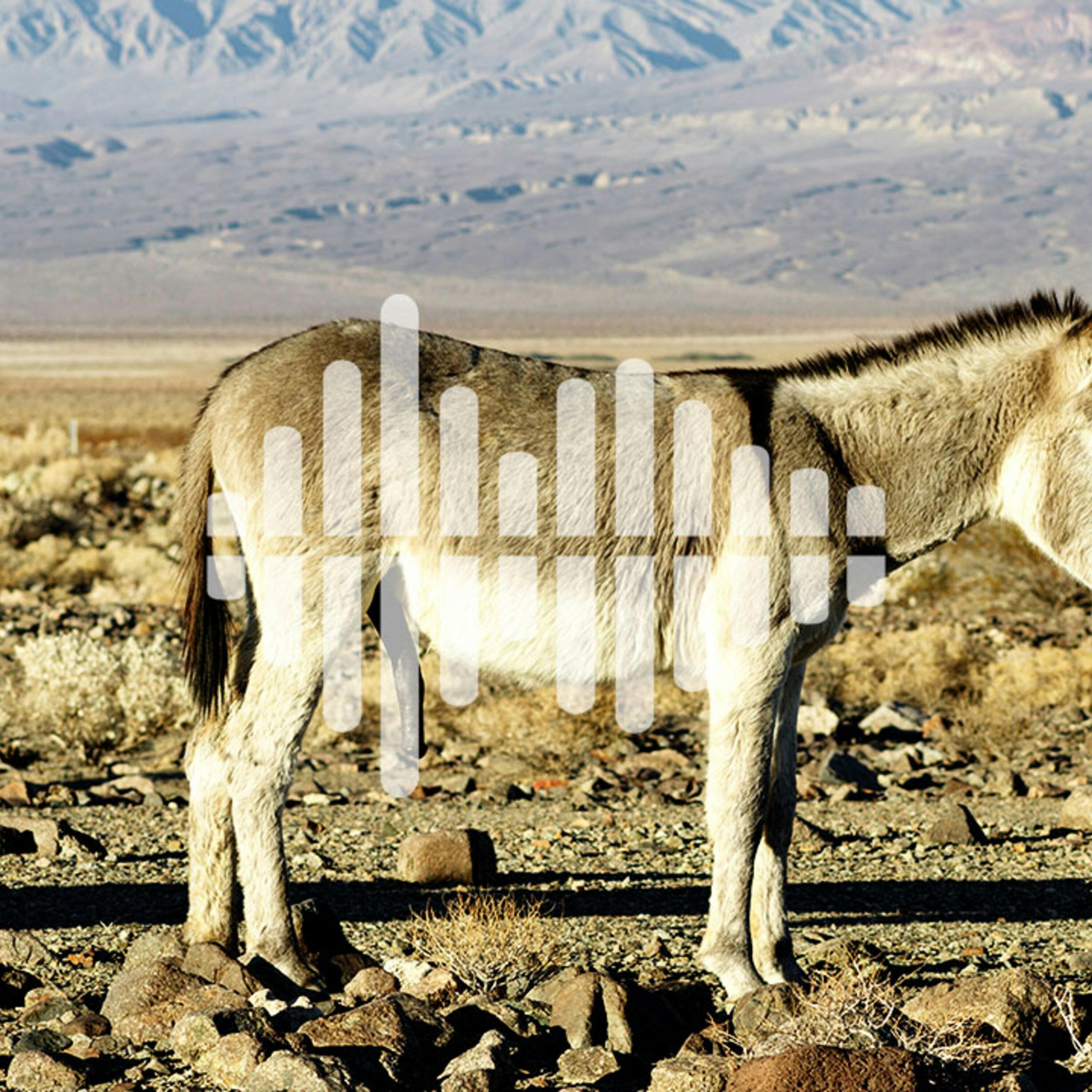
On this week’s show: Predators may be indirectly protecting Death Valley wetlands, and mapping odorant receptors First up this week on the podcast, News Intern Katherine Irving joins host Sarah Crespi to talk about the first photos of cougars killing feral donkeys in Death Valley National Park. They also discuss the implications for native animals such as big horn sheep, and plans to remove donkeys from the park. Also this week on the show, Paul Feinstein, professor of biology in the department of biological science at Hunter College, discusses a Science Signaling paper on a new approach to matching up smell receptors with smells—a long-standing challenge in olfaction research. This week’s episode was produced with help from Podigy. [Image: Angel Di Bilio/iStock; Music: Jeffrey Cook] [alt: photo of a burro on a hillside near Death Valley with podcast overlay symbol] Authors: Sarah Crespi; Katherine Irving Episode page: https://www.science.org/doi/10.1126/science.ade3366 About the Science Podcast: https://www.science.org/content/page/about-science-podcast Learn more about your ad choices. Visit megaphone.fm/adchoices

Invasive grasses get help from fire, and a global map of ant diversity
On this week’s show: A special issue on grass, and revealing hot spots of ant diversity This week’s special issue on grasses mainly focuses on the importance of these plants in climate change, in ecosystems, on land, and in the water. But for the podcast, Contributing Correspondent Warren Cornwall joins host Sarah Crespi to talk about their dark side: invasive grasses that feed fires and transform ecosystems. Also this week on the show, Evan Economo, a professor in the biodiversity and biocomplexity unit at the Okinawa Institute of Science and Technology, joins Sarah to discuss his Science Advances paper on creating a worldwide map of ant diversity. Such maps help us better understand where vertebrate and invertebrate diversity do and don’t overlap and what this means for conservation. If you want to explore the data, you can see them at antmaps.org. This week’s episode was produced with help from Podigy. [Image: NTPFES; Music: Jeffrey Cook] [alt: grassland fire in Northern Australia with podcast symbol overlay] Authors: Sarah Crespi; Warren Cornwall Episode page: https://www.science.org/doi/10.1126/science.ade2512 About the Science Podcast: https://www.science.org/content/page/about-science-podcast Learn more about your ad choices. Visit megaphone.fm/adchoices

Probing beyond our Solar System, sea pollinators, and a book on the future of nutrition
On this week’s show: Plans to push a modern space probe beyond the edge of the Solar System, crustaceans that pollinate seaweed, and the latest in our series of author interviews on food, science, and nutrition After visiting the outer planets in the 1980s, the twin Voyager spacecraft have sent back tantalizing clues about the edge of our Solar System and what lies beyond. Though they may have reached the edge of the Solar System or even passed it, the craft lack the instruments to tell us much about the interstellar medium—the space between the stars. Intern Khafia Choudhary talks with Contributing Correspondent Richard Stone about plans to send a modern space probe outside the Solar System and what could be learned from such a mission. Next up on the show, Myriam Valero, a population geneticist at the evolutionary biology and ecology of algae research department at Sorbonne University, talks with host Sarah Crespi about how a little crustacean might help fertilize a species of algae. If the seaweed in the study does use a marine pollinator, it suggests there may have been a much earlier evolutionary start for pollination partnerships. Finally, we have the next in our series on books exploring the science of food and agriculture. This month, host Angela Saini talks with biochemist T. Colin Campbell about his book The Future of Nutrition: An Insider’s Look at the Science, Why We Keep Getting It Wrong, and How to Start Getting It Right. This week’s episode was produced with help from Podigy. [Image: Johns Hopkins APL/Mike Yakovlev; Music: Jeffrey Cook] [alt: illustration of an interstellar probe crossing the boundary of the heliosphere with podcast symbol overlay] Authors: Sarah Crespi; Rich Stone; Angela Saini; Khafia Choudhary ++ LINKS FOR MP3 META Episode page: https://www.science.org/doi/10.1126/science.ade1292 About the Science Podcast: https://www.science.org/content/page/about-science-podcast Learn more about your ad choices. Visit megaphone.fm/adchoices

Possible fabrications in Alzheimer’s research, and bad news for life on Enceladus
On this week’s show: Troubling signs of fraud threaten discoveries key to a reigning theory of Alzheimer’s disease, and calculating the saltiness of the ocean on one of Saturn’s moons Investigative journalist Charles Piller joins host Sarah Crespi to discuss signs of fabrication in scores of Alzheimer’s articles brought to light by a neuroscientist whistleblower. Next, researcher Wan Ying Kang talks with Sarah about Saturn’s bizarre moon Enceladus. Kang’s group wrote in Science Advances about modeling the salinity of the global ocean tucked between the moon’s icy shell and solid core. Their findings spell bad news for potential habitability on Enceladus. This week’s episode was produced with help from Podigy. [Image: NASA/JPL/Space Science Institute; Music: Jeffrey Cook] [alt: Enceladus as viewed from Cassini with podcast symbol overlay] Authors: Sarah Crespi; Charles Piller Episode page: https://www.science.org/doi/10.1126/science.ade0384 About the Science Podcast: https://www.science.org/content/page/about-science-podcast Learn more about your ad choices. Visit megaphone.fm/adchoices

The Webb Space Telescope’s first images, and why scratching sometimes makes you itchy
On this week’s show: The first images from the James Webb Space Telescope hint at the science to come, and disentangling the itch-scratch cycle After years of delays, the James Webb Space Telescope launched at the end of December 2021. Now, NASA has released a few of the first full-color images captured by the instrument’s enormous mirror. Staff Writer Daniel Clery joins host Sarah Crespi to discuss these first images and what they mean for the future of science from Webb. Next on the podcast, Jing Feng, principal investigator at the Center for Neurological and Psychiatric Research and Drug Discovery at the Chinese Academy of Sciences’s Shanghai Institute of Materia Medica, discusses his Science Translational Medicine paper on why scratching sometimes triggers itching. It turns out, in cases of chronic itch there can be a miswiring in the skin. Cells that normally detect light touch instead connect with nerve fibers that convey a sensation of itchiness. This miswiring means light touches (such as scratching) are felt as itchiness—contributing to a vicious itch-scratch cycle. Also this week, in a sponsored segment from Science and the AAAS Custom Publishing Office, Sean Sanders, director and senior editor for the Custom Publishing Office, interviews Paul Bastard, chief resident in the department of pediatrics at the Necker Hospital for Sick Children in Paris and a researcher at the Imagine Institute in Paris and Rockefeller University. They talk about his work to shed light on susceptibility to COVID-19, which recently won him the Michelson Philanthropies & Science Prize for Immunology. This segment is sponsored by Michelson Philanthropies. This week’s episode was produced with help from Podigy. [Image: NASA; ESA; CSA; STSCI; Music: Jeffrey Cook] [alt: James Webb Space Telescope image of image of galaxy cluster SMACS 0723 with podcast symbol overlay] Authors: Sarah Crespi; Daniel Clery Episode page: https://www.science.org/doi/10.1126/science.add9123 About the Science Podcast: https://www.science.org/content/page/about-science-podcast Learn more about your ad choices. Visit megaphone.fm/adchoices

Running out of fuel for fusion, and addressing gender-based violence in India
On this week’s show: A shortage of tritium fuel may leave fusion energy with an empty tank, and an attempt to improve police responsiveness to violence against women First up this week on the podcast, Staff Writer Daniel Clery talks with host Sarah Crespi about a new hurdle for fusion: not enough fuel. After decades of delays, scientists are almost ready to turn on the first fusion reactor that makes more energy than it uses, but the fast-decaying fuel needed to run the reactor is running out. Also this week, we highlight an intervention aimed at increasing police responsiveness to gender-based violence in India. Sandip Sukhtankar, an economist at the University of Virginia, talks about creating dedicated spaces for women in local police stations, staffed by trained officers. The presence of these “help desks”—when staffed by women officers—increased the recording by police of crimes against women, opening up access to social services and possibly a path to justice. This week’s episode was produced with help from Podigy. [Image: DAVID PARKER/SCIENCE SOURCE; Music: Jeffrey Cook] [alt: The interior of the ITER fusion megareactor (artist’s concept) with podcast overlay] Authors: Sarah Crespi; Daniel Clery Episode page: https://www.science.org/doi/10.1126/science.add8229 About the Science Podcast: https://www.science.org/content/page/about-science-podcast Learn more about your ad choices. Visit megaphone.fm/adchoices
Former pirates help study the seas, and waves in the atmosphere can drive global tsunamis
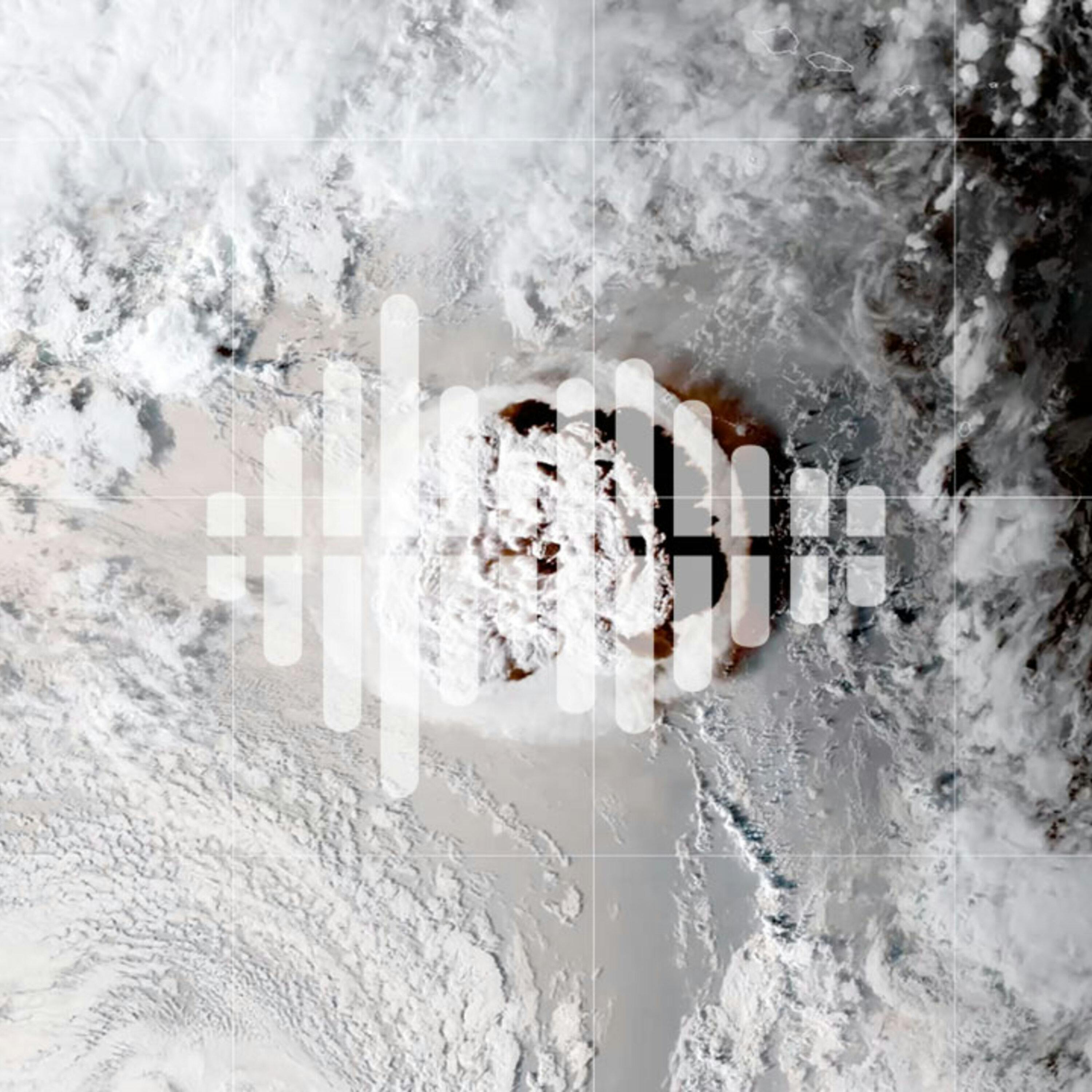
On this week’s show: A boost in research ships from an unlikely source, and how the 2022 Tonga eruption shook earth, water, and air around the world For decades, the Sea Shepherd Conservation Society caused controversy on the high seas; now it’s turning its patrolling ships into research vessels. Online News Editor David Grimm discusses how this change of heart came about with host Sarah Crespi. Also this week, how atmospheric waves can push tsunamis around the globe. Producer Meagan Cantwell talks with Emily Brodsky, an earthquake physicist at University of California, Santa Cruz, about data from a multitude of sensors showing how waves in the air drove the fast-moving tsunamis that raced around the planet after the January Hunga eruption in Tonga. Read the related papers: Global fast-traveling tsunamis driven by atmospheric Lamb waves on the 2022 Tonga eruption Atmospheric waves and global seismoacoustic observations of the January 2022 Hunga eruption, Tonga This week’s episode was produced with help from Podigy. [Image: NASA Earth Observatory; Music: Jeffrey Cook] [alt: Hunga Tonga-Hunga Ha‘apai eruption as seen from space with podcast overlay] Authors: Sarah Crespi; Meagan Cantwell; David Grimm Episode page: https://www.science.org/content/podcast/former-pirates-help-study-seas-and-waves-atmosphere-can-drive-global-tsunamis About the Science Podcast: https://www.science.org/content/page/about-science-podcast Learn more about your ad choices. Visit megaphone.fm/adchoices

Using waste to fuel airplanes, nature-based climate solutions, and a book on Indigenous conservation
On this week’s show: Whether biofuels for planes will become a reality, mitigating climate change by working with nature, and the second installment of our book series on the science of food and agriculture First this week, Science Staff Writer Robert F. Service talks with producer Meagan Cantwell about sustainable aviation fuel, a story included in Science’s special issue on climate change. Researchers have been able to develop this green gas from materials such as municipal garbage and corn stalks. Will it power air travel in the future? Also in the special issue this week, Nathalie Seddon, a professor of biodiversity at the University of Oxford, chats with host Sarah Crespi about the value of working with nature to support the biodiversity and resilience of our ecosystems. Seddon emphasizes that nature-based solutions alone cannot stop climate change—technological approaches and behavioral changes will also need to be implemented. Finally, we have the second installment of our series of author interviews on the science of food and agriculture. Host and science journalist Angela Saini talks to Jessica Hernandez, an Indigenous environmental scientist and author of Fresh Banana Leaves: Healing Indigenous Landscapes Through Indigenous Science. Hernandez’s book explores the failures of Western conservationism—and what we can learn about land management from Indigenous people. This week’s episode was produced with help from Podigy. [Image: USDA NCRS Texas; Music: Jeffrey Cook] [alt: cows in a forest] Authors: Meagan Cantwell; Robert Service, Sarah Crespi, Angela Saini Episode page: https://www.science.org/doi/10.1126/science.add6320 About the Science Podcast: https://www.science.org/content/page/about-science-podcast Learn more about your ad choices. Visit megaphone.fm/adchoices

A look at Long Covid, and why researchers and police shouldn’t use the same DNA kits
On this week’s show: Tracing the roots of Long Covid, and an argument against using the same DNA markers for suspects in law enforcement and in research labs for cell lines Two years into the pandemic, we’re still uncertain about the impact of Long Covid on the world—and up to 20% of COVID-19 patients might be at risk. First on the podcast this week, Staff Writer Jennifer Couzin-Frankel joins host Sarah Crespi to share a snapshot of the current state of Long Covid research, particularly what researchers think are likely causes. Also this week, Debra Mathews, assistant director for science programs in the Berman Institute of Bioethics and associate professor of genetic medicine at Johns Hopkins University, talks with Sarah about why everyone using the same DNA kits—from FBI to Interpol to research labs—is a bad idea. Finally, in a sponsored segment from the Science/AAAS Custom Publishing Office, Sean Sanders, director and senior editor for custom publishing, interviews Bobby Soni, chief business officer at the BioInnovation Institute (BII), about what steps scientists can take to successfully commercialize their ideas. This segment is sponsored by BII. This week’s episode was produced with help from Podigy. [Image: A. Mastin/Science; Music: Jeffrey Cook] [alt: illustration of potential causes for Long Covid ] Authors: Sarah Crespi; Jennifer Couzin-Frankel Episode page: https://www.science.org/doi/10.1126/science.add4887 About the Science Podcast: https://www.science.org/content/page/about-science-podcast Learn more about your ad choices. Visit megaphone.fm/adchoices
Saving the Spix’s macaw, and protecting the energy grid
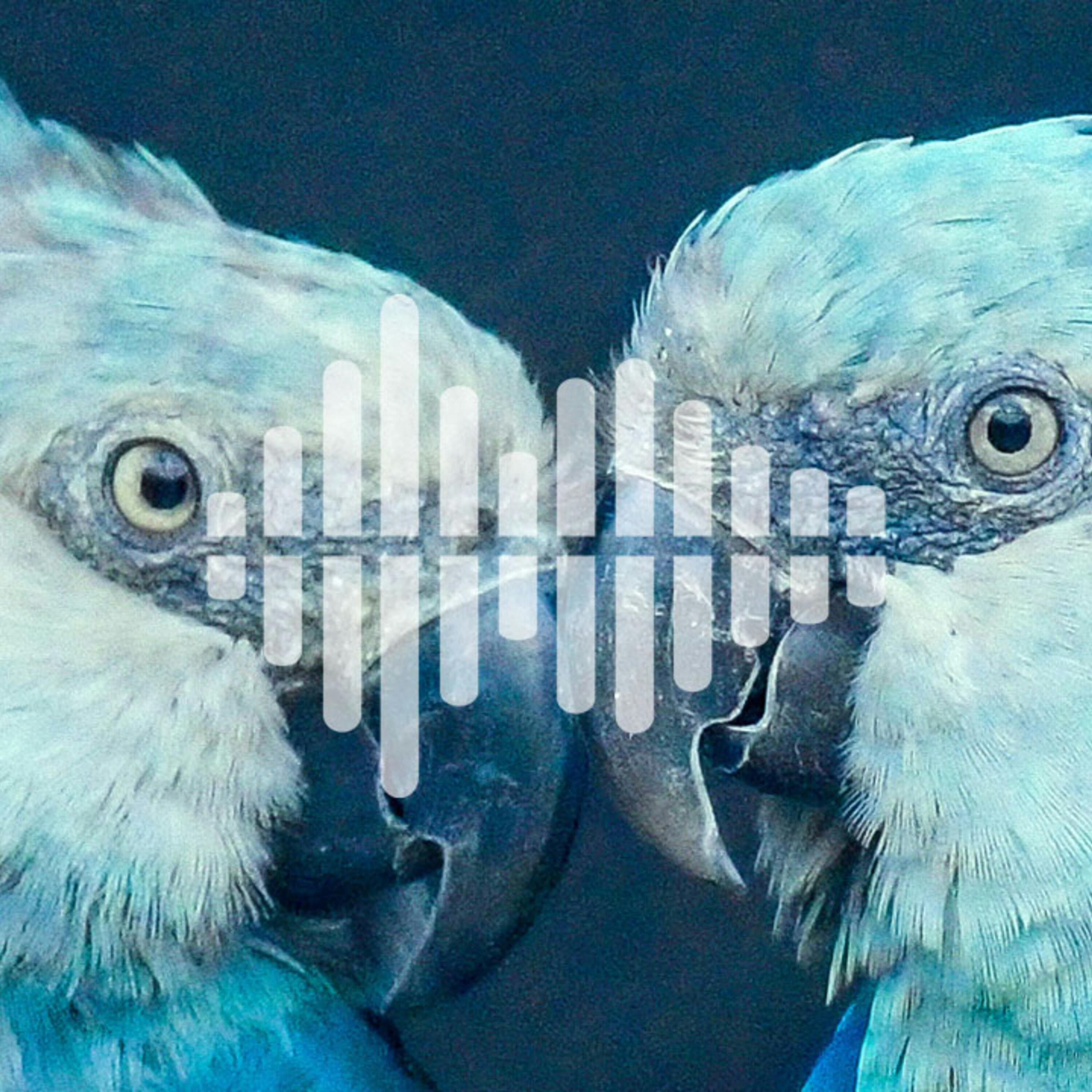
Two decades after it disappeared in nature, the stunning blue Spix’s macaw will be reintroduced to its forest home, and lessons learned from Texas’s major power crisis in 2021 The Spix’s macaw was first described in scientific literature in 1819—200 years later it was basically poached to extinction in the wild. Now, collectors and conservationists are working together to reintroduce captive-bred birds into their natural habitat in northeastern Brazil. Contributing Correspondent Kai Kupferschmidt discusses the recovery of this highly coveted and endangered parrot with host Sarah Crespi. Also this week, in an interview from the AAAS annual meeting, Meagan Cantwell talks with Varun Rai, Walt and Elspth Rostow professor in the LBJ School of Public Affairs at the University of Texas, Austin, about how to prepare energy grids to weather extreme events and climate change. This week’s episode was produced with help from Podigy. [Image: PATRICK PLEUL/PICTURE ALLIANCE VIA GETTY IMAGES; Music: Jeffrey Cook] [alt: two blue Spix’s macaws with podcast symbol overlay] Authors: Sarah Crespi; Kai Kupferschmidt; Meagan Cantwell Episode page: https://www.science.org/doi/10.1126/science.add3733 About the Science Podcast: https://www.science.org/content/page/about-science-podcast Learn more about your ad choices. Visit megaphone.fm/adchoices

The historic Maya’s sophisticated stargazing knowledge, and whether there is a cost to natural cloning
On this week’s show: Exploring the historic Maya’s astronomical knowledge and how grasshoppers clone themselves without decreasing their fitness First this week, Science contributing correspondent Joshua Sokol talks with producer Meagan Cantwell about the historic Maya’s sophisticated astronomical knowledge. In recent decades, researchers have set out to understand how city structures relate to astronomical phenomena and decipher ancient texts. Now, collaboration between Western scholars and living Indigenous people hopes to further illuminate the field. Also this week, Mike Kearney, a professor at the school of biosciences at the University of Melbourne, chats with host Sarah Crespi about a species of grasshopper that can reproduce asexually. After studying the insect’s genetics, Kearney and his group didn’t find harmful mutations—or traits that made the grasshopper better adapted to its environment than the two species of grasshopper it hybridized from. Kearney and his team suggest this way of reproducing might not be rare because it’s harmful, but because most animal have safeguards in place to prevent asexual reproduction from arising. This week’s episode was produced with help from Podigy. [Image: Sergio Montúfar/pinceladasnocturnas.com—Estrellas Ancestrales “Astronomy in the Maya Worldview”; Music: Jeffrey Cook] Authors: Meagan Cantwell; Joshua Sokol; Sarah Crespi Episode page: https://www.science.org/doi/10.1126/science.add3058 About the Science Podcast: https://www.science.org/content/page/about-science-podcast Learn more about your ad choices. Visit megaphone.fm/adchoices

Saying farewell to Insight, connecting the microbiome and the brain, and a book on agriculture in Africa
What we learned from a seismometer on Mars, why it’s so difficult to understand the relationship between our microbes and our brains, and the first in our series of books on the science of food and agriculture First up this week, freelance space journalist Jonathan O’Callaghan joins host Sarah Crespi to discuss the retirement of NASA’s Mars InSight lander. After almost 4 years of measuring quakes on the surface of the Red Planet, the lander’s solar panels are getting too dusty to continue providing power. O'Callaghan and Crespi look back at the insights that InSight has given us about Mars’s interior, and they talk about where else in the Solar System it might make sense to place a seismometer. Also this week, we have a special issue on the body’s microbiome beyond the gut. As part of the special issue, John Cryan, principal investigator at APC Microbiome Ireland, University College Cork, wrote a commentary piece on tightening the connections research has made between microbes and the brain—the steps needed to go from seeing connections to understanding how the microbiome might be tweaked to change what’s happening in the brain. Finally this week, we have the first installment of our series of author interviews on the science of food and agriculture. In this inaugural segment, host and science journalist Angela Saini talks to Ousmane Badiane, an expert on agricultural policy and development in Africa, and a co-author of Food For All In Africa: Sustainable Intensification for African Farmers, a 2019 book looking at the possibilities and reality of sustainable intensive farming in Africa. This week’s episode was produced with help from Podigy. [Illustration: Hannah Agosta; Music: Jeffrey Cook] [alt: overlapping drawings of microbial populations] Authors: Sarah Crespi; Jonathan O’Callaghan; Angela Saini Episode page: https://www.science.org/doi/10.1126/science.10.1126/science.add1406 About the Science Podcast: https://www.science.org/content/page/about-science-podcast Learn more about your ad choices. Visit megaphone.fm/adchoices

Seeing the Milky Way’s central black hole, and calling dolphins by their names
On this week’s show: The shadow of Milky Way’s giant black hole has been seen for the first time, and bottlenose dolphins recognize each other by signature whistles—and tastes It’s been a few years since the first image of a black hole was published—that of the supermassive black hole at the center of the M87 galaxy came about in 2019. Now, we have a similar image of the black hole at the center of the Milky Way—our very own galaxy. Staff Writer Daniel Clery joins host Sarah Crespi to discuss why these images look so much alike, even though M87’s black hole is 1600 times larger than ours. We also discuss what’s next for the telescope that captured these shots. Also this week, we take to the seas. Bottlenose dolphins are known to have a “signature whistle” they use to announce their identity to other dolphins. This week in Science Advances, Jason Bruck and colleagues write about how they may also recognize other dolphins through another sense: taste. Jason, an assistant professor in the department of biology at Stephen F. Austin State University, talks with Sarah about what this means for dolphin minds. In a sponsored segment from the Science/AAAS Custom Publishing Office, Sean Sanders, director and senior editor, interviews Gary Michelson, founder and co-chair of Michelson Philanthropies, about the importance of supporting research in the field of immunology—and where that support should be directed. This segment is sponsored by Michelson Philanthropies. This week’s episode was produced with help from Podigy. [Image: Dolphin Quest ; Music: Jeffrey Cook] [alt: bottlenose dolphin peeking its head out of the water with podcast symbol overlay] Authors: Sarah Crespi; Daniel Clery Episode page: https://www.science.org/doi/10.1126/science.add0515 About the Science Podcast: https://www.science.org/content/page/about-science-podcast Learn more about your ad choices. Visit megaphone.fm/adchoices

Fixing fat bubbles for vaccines, and preventing pain from turning chronic
On this week’s show: Lipid nanoparticles served us well as tiny taxis delivering millions of mRNA vaccines against COVID-19, but they aren’t optimized—yet, and why we might need inflammation to stop chronic pain The messenger RNA payload of the mRNA vaccines against SARS-CoV-2 is wrapped up in little fatty packets called lipid nanoparticles (LNPs). These fat bubbles were originally designed for something much different—carrying molecules into cells to silence genes. But they were useful and we were in a hurry, so not much was changed about them when they were pressed into service against COVID-19. Science journalist Elie Dolgin talks with host Sarah Crespi about ongoing efforts to improve LNPs as a delivery system for mRNA vaccines and therapeutic treatments. Next on the show, we hear about “pain chronification.” Have you ever thought about chronic pain? What happens in the body when it heals—no specific thing is broken—but the pain never subsides? Sarah chats with Luda Diatchenko, professor on the faculties of medicine and dentistry at McGill University, about her Science Translational Medicine paper on the need for inflammation to prevent pain chronification. This week’s episode was produced with help from Podigy. [Image: V. Altounian/Science; Music: Jeffrey Cook] [alt: lipid nanoparticle illustration with podcast symbol overlay] Authors: Sarah Crespi; Elie Dolgin Episode page: https://www.science.org/doi/10.1126/science.adc9455 About the Science Podcast: https://www.science.org/content/page/about-science-podcast Learn more about your ad choices. Visit megaphone.fm/adchoices

Staking out the start of the Anthropocene, and why sunscreen is bad for coral
On this week’s show: Geoscientists eye contenders for where to mark the beginning of the human-dominated geological epoch, and how sunscreen turns into photo toxin We live in the Anthropocene: an era on our planet that is dominated by human activity to such an extent that the evidence is omnipresent in the soil, air, and even water. But how do we mark the start? Science Staff Writer Paul Voosen talks with host Sarah Crespi about how geoscientists are choosing the one place on Earth that best shows the advent of the Anthropocene, the so-called “golden spike.” Also this week, Djordje Vuckovic, a Ph.D. candidate in the department of civil and environmental engineering at Stanford University, joins Sarah to talk about how sunscreen threatens coral reefs. Reefs are under a lot of stress these days, from things like warming waters, habitat destruction, and the loss of their fishy friends to voracious fishermen. Another suspected stressor is chemical sunscreens, which drift off swimming tourists. It turns out that common chemicals in sunscreen that protect skin from the Sun are modified by sea anemones and corals into a photo toxin that damages them when exposed to the Sun’s rays. This week’s episode was produced with help from Podigy. [Image: Amanda Tinoco; Music: Jeffrey Cook] [alt: photo of healthy corals at the Great Barrier Reef in Australia with podcast symbol overlay] Authors: Sarah Crespi; Paul Voosen TWEET New @ScienceMagazine Podcast: @voooos Djordje Vuckovic @cee_stanford https://www.science.org/doi/10.1126/science.abq8294 This week on the @ScienceMagazine Podcast, reporter @voooos https://www.science.org/doi/10.1126/science.abq8294 ++ LINKS FOR MP3 META Episode page: https://www.science.org/doi/10.1126/science.abq8294 About the Science Podcast: https://www.science.org/content/page/about-science-podcast Learn more about your ad choices. Visit megaphone.fm/adchoices

Using quantum tools to track dark matter, why rabies remains, and a book series on science and food
On this week’s show: How physicists are using quantum sensors to suss out dark matter, how rabies thwarts canine vaccination campaigns, and a kickoff for our new series with authors of books on food, land management, and nutrition science Dark matter hunters have turned to quantum sensors to find elusive subatomic particles that may exist outside physicists’ standard model. Adrian Cho, a staff writer for Science, joins host Sarah Crespi to give a tour of the latest dark matter particle candidates—and the traps that physicists are setting for them. Next, we hear from Katie Hampson, a professor in the Institute of Biodiversity, Animal Health & Comparative Medicine at the University of Glasgow, about her work contact tracing rabies in Tanzania. Her group was able to track rabies in a population of 50,000 dogs over 14 years. The massive study gives new insight into how to stop a virus that circulates at superlow levels but keeps popping up, despite vaccine campaigns. Finally, we launch our 2022 books series on food and agriculture. In six interviews, which will be released monthly for the rest of the year, host and science journalist Angela Saini will speak to authors of recent books on topics from Indigenous land management to foods that are going extinct. This month, Angela talks with Lenore Newman, director of the Food and Agriculture Institute at the University of the Fraser Valley, who helped select the books for the series. This week’s episode was produced with help from Podigy. [Image: Suzanne McNabb; Music: Jeffrey Cook] [alt: Dogs in Tanzania with podcast symbol overlay] Authors: Sarah Crespi; Angela Saini, Adrian Cho Episode page: https://www.science.org/content/podcast/using-quantum-tools-track-dark-matter-why-rabies-remains-and-book-series-science-and About the Science Podcast: https://www.science.org/content/page/about-science-podcast Learn more about your ad choices. Visit megaphone.fm/adchoices

Protecting birds from brightly lit buildings, and controlling robots from orbit
On this week’s show: Saving birds from city lights, and helping astronauts inhabit robots First up, Science Contributing Correspondent Josh Sokol talks with host Sarah Crespi about the millions of migrating birds killed every year when they slam into buildings—attracted by brightly lit windows. New efforts are underway to predict bird migrations and dim lights along their path, using a bird-forecasting system called . Next, we hear from Aaron Pereira, a researcher at the German Aerospace Center (DLR) and a guest researcher at the human robot interaction lab at the European Space Agency. He chats with Sarah about his Science Robotics paper on controlling a robot on Earth from the International Space Station and the best way for an astronaut to “immerse” themselves in a rover or make themselves feel like it is an extension of their body. In a sponsored segment from Science and the AAAS Custom Publishing Office, Sean Sanders, director and senior editor for custom publishing, interviews Alberto Pugliese, professor of medicine, microbiology, and immunology at the University of Miami, about a program he leads to advance research into type 1 diabetes. This segment is sponsored by the Helmsley Charitable Trust and nPod (the Network for Pancreatic Organ Donors with Diabetes). This week’s episode was produced with help from Podigy. [Image: M. Panzirsch et al., Science Robotics (2022); Music: Jeffrey Cook] [alt: remote-controlled rover with podcast symbol overlay] Authors: Sarah Crespi; Josh Sokol Episode page: https://www.science.org/doi/10.1126/science.abq5907 About the Science Podcast: https://www.science.org/content/page/about-science-podcast Learn more about your ad choices. Visit megaphone.fm/adchoices

Desert ‘skins’ drying up, and one of the oldest Maya calendars
On this week’s show: Climate change is killing critical soil organisms in arid regions, and early evidence for the Maya calendar from a site in Guatemala Staff Writer Elizabeth Pennisi joins host Sarah Crespi to discuss how climate change is affecting “biocrust,” a thin layer of fungi, lichens, and other microbes that sits on top of desert soil, helping retain water and create nutrients for rest of the ecosystem. Recent measurements in Utah suggest the warming climate is causing a decline in the lichen component of biocrust, which is important for adding nitrogen into soils. Next, Sarah talks with Skidmore College anthropologist Heather Hurst, who directs Guatemala’s San Bartolo-Xultun Regional Archaeological Project, and David Stuart, a professor of art history and director of the Mesoamerica Center at the University of Texas, Austin, about their new Science Advances paper. The study used radiocarbon dating to pin down the age of one of the earliest pieces of the Maya calendar. Found in an archaeological dig in San Bartolo, Guatemala, the character known as “seven deer” (which represents a day in the Maya calendar), was dated to 300 B.C.E. That early appearance challenges what researchers know about the age and origins of the Maya dating system. This week’s episode was produced with help from Podigy. [Image: Heather Hurst; Music: Jeffrey Cook] [alt: Ixbalamque painting from San Barolo, Guatemala, with podcast symbol overlay] Authors: Sarah Crespi; Liz Pennisi Episode page: https://www.science.org/doi/10.1126/science.abq4848 About the Science Podcast: https://www.science.org/content/page/about-science-podcast Learn more about your ad choices. Visit megaphone.fm/adchoices

A surprisingly weighty fundamental particle, and surveying the seas for RNA viruses
On this week’s show: A new measurement of the W boson could challenge physicists’ standard model, and an abundance of marine RNA viruses Staff Writer Adrian Cho joins host Sarah Crespi to discuss a new threat to the standard model of particle physics—a heavier than expected measurement of a fundamental particle called the W boson. They chat about how this measurement was taken, and what it means if it is right. Next, Sarah talks about the microscopic denizens of Earth’s oceans with Ahmed Zayed, a research scientist in the department of microbiology at Ohio State University, Columbus. They talk about findings from a global survey of marine RNA viruses. The results double the number of known RNA viruses, suggesting new classifications will be needed to categorize all this viral diversity. This week’s episode was produced with help from Podigy. [Image: A. Mastin/Science; Music: Jeffrey Cook] [alt: illustration of three RNA viruses with podcast symbol overlay] Authors: Sarah Crespi; Adrian Cho Episode page: https://www.science.org/doi/10.1126/science.abq3391 About the Science Podcast: https://www.science.org/content/page/about-science-podcast Learn more about your ad choices. Visit megaphone.fm/adchoices

Probing Earth’s mysterious inner core, and the most complete human genome to date
On this week’s show: A journey to the center of the center of the Earth, and what was missing from the first human genome project Staff Writer Paul Voosen talks with host Sarah Crespi about the many mysteries surrounding the innermost part of our planet—from its surprisingly recent birth to whether it spins faster or slower than the rest of the planet. Next, Sarah chats with Adam Phillippy about the results from the Telomere-to-Telomere (T2T) Consortium, an effort to create a complete and detailed read of the human genome. Phillippy, a senior investigator and head of the Genome Informatics Section at the National Human Genome Research Institute, explains what we can learn by topping up the human genome with roughly 200 more megabases of genetic information—practically a whole chromosome’s worth of additional sequencing. See all the T2T papers. This week’s episode was produced with help from Podigy. [Image: V. Altounian/Science; Music: Jeffrey Cook] [alt: An array of the human chromosomes showing newly sequenced parts from the Telomere-to-Telomere Consortium with podcast symbol overlay] Authors: Sarah Crespi; Paul Voosen Episode page: https://www.science.org/doi/10.1126/science.abq1885 About the Science Podcast: https://www.science.org/content/page/about-science-podcast Learn more about your ad choices. Visit megaphone.fm/adchoices

Scientists become targets on social media, and battling space weather
On this week’s show: Why it’s tougher than ever to be a researcher on Twitter, and a highlight from this year’s AAAS Annual Meeting First up, Contributing Correspondent Cathleen O’Grady talks with host Sarah Crespi about the harassment that COVID-19 researchers are facing and a survey conducted by Science that shows more media exposure is linked to higher levels of abuse. Next, producer Meagan Cantwell shares another interview from this year’s AAAS Annual Meeting. She talks with Delores Knipp, a research professor in the Ann and H.J. Smead aerospace engineering sciences department at the University of Colorado, Boulder, about what happens when our well-behaved Sun behaves badly. This week’s episode was produced with help from Podigy. [Image: SkyLab 4/NASA; Music: Jeffrey Cook] [alt: solar flare image taken from Skylab 4] Authors: Sarah Crespi; Cathleen O'Grady Episode page: https://www.science.org/doi/10.1126/science.adb2091 About the Science Podcast: https://www.science.org/content/page/about-science-podcast Learn more about your ad choices. Visit megaphone.fm/adchoices

The challenges of testing medicines during pregnancy, and when not paying attention makes sense
On this week’s show: Getting pregnant people into clinical trials, and tracking when mice aren’t paying attention First up, Staff Writer Jennifer Couzin-Frankel joins host Sarah Crespi to discuss how scientists can overcome the lack of research on drug safety in pregnancy. Next, Nikola Grujic, a Ph.D. student at the Institute for Neuroscience at ETH Zürich, talks about rational inattention in mice and how it helps explain why our brains notice certain things—and miss others. This week’s episode was produced with help from Podigy. [Image: Stefan Rotter/iStock; Music: Jeffrey Cook] [alt: rodent peering out of a hole] Authors: Sarah Crespi; Jennifer Couzin-Frankel Episode page: https://www.science.org/doi/10.1126/science.adb2037 About the Science Podcast: https://www.science.org/content/page/about-science-podcast Learn more about your ad choices. Visit megaphone.fm/adchoices

Monitoring wastewater for SARS-CoV-2, and looking back at the biggest questions about the pandemic
On this week’s show: We have highlights from a special COVID-19 retrospective issue on lessons learned after 2 years of the pandemic First up, Contributing Correspondent Gretchen Vogel joins host Sarah Crespi to discuss what scientists have learned from scanning sewage for COVID-19 RNA. And now that so many wastewater monitoring stations are in place—what else can we do with them? Next, we have researcher Katia Koelle, an associate professor of biology at Emory University. She wrote a review on the evolving epidemiology of SARS-CoV-2: What have been the most important questions from epidemiologists over the course of the pandemic, and how can they help us navigate future pandemic threats? Check out the full COVID-19 retrospective issue on lessons learned from the pandemic. This week’s episode was produced with help from Podigy. [Image: Stephan Schmitz/Folio Art; Music: Jeffrey Cook] [alt: partially constructed bridge over water filled with giant SARS-CoV-2 viral particles] Authors: Sarah Crespi; Gretchen Vogel Episode page: https://www.science.org/doi/10.1126/science.adb1867 About the Science Podcast: https://www.science.org/content/page/about-science-podcast Learn more about your ad choices. Visit megaphone.fm/adchoices

A global treaty on plastic pollution, and a dearth of Black physicists
On this week’s show: The ins and outs of the first global treaty on plastic pollution, and why the United States has so few Black physicists First up, Staff Writer Erik Stokstad joins host Sarah Crespi to discuss the world’s first global treaty on plastics pollution–and the many questions that need answers to make it work. Read a related Policy Forum here. Up next, we hear from some of more than 50 Black physicists interviewed for a special news package in Science about the barriers Black physicists face, and potential models for change drawing on a 2020 report that documents how the percentage of undergraduates physics degrees going to Black students has declined over the past 20 years. In his excerpt, Willie Rockward, chair and professor of physics at Morgan State University, describes how a study group dubbed the “Black Hole” provided much-needed support for him and four colleagues who were part of the first cohort of Black graduate physics students at the Georgia Institute of Technology. Next, Fana Mulu-Moore, a physics and astronomy instructor at Aims Community College in Greeley, Colorado, explains her ‘life-changing’ transition from research to teaching, and how it has given her a sense of purpose. This week’s episode was produced with help from Podigy. [Image: Carl Campbell/Flickr; Music: Jeffrey Cook] [alt: sheaves of plastic wrap photographed against a black background] Authors: Sarah Crespi; Erik Stokstad Episode page: https://www.science.org/doi/10.1126/science.adb1765 About the Science Podcast: https://www.science.org/content/page/about-science-podcast Learn more about your ad choices. Visit megaphone.fm/adchoices

Securing nuclear waste for 100,000 years, and the link between math literacy and life satisfaction
On this week’s show: Finland puts the finishing touches on the world’s first high-level permanent nuclear repository, and why being good at math might make you both happy and sad First up, freelance science journalist Sedeer El-Showk joins host Sarah Crespi to discuss his visit to a permanent nuclear waste repository being built deep underground in Finland, and the technology—and political maneuvering—needed to secure the site for 100,000 years. Also this week, Pär Bjälkebring, a senior lecturer in the department of psychology at the University of Gothenburg, talks with Sarah on the sidelines of the 2022 annual meeting of AAAS (publisher of Science) about the link between numeracy—math literacy—income, and life satisfaction. Bjälkebring took part in the AAAS panel Decision-Making with Large Numbers and Its Underlying Psychological Mechanisms on 19 February. Learn more about the 2022 AAAS meeting here. This week’s episode was produced with help from Podigy. [Image: Tapani Karjanlahti/TVO; Music: Jeffrey Cook] [alt: photograph of a digging machine inside a giant cave] Authors: Sarah Crespi; Sedeer El-Showk Episode page: https://www.science.org/doi/10.1126/science.ada1534 About the Science Podcast: https://www.science.org/content/page/about-science-podcast Learn more about your ad choices. Visit megaphone.fm/adchoices

COVID-19’s long-term impact on the heart, and calculating the survival rate of human artifacts
On this week’s show: A giant study suggests COVID-19 takes a serious toll on heart health—a full year after recovery, and figuring out what percentage of ancient art, books, and even tools has survived the centuries First up, Staff Writer Meredith Wadman talks with host Sarah Crespi about a new study that looked at more than 150,000 COVID-19 patient records and found increases in risk for 20 different cardiovascular conditions 1 year after recovery. Also this week we have Mike Kestemont, an associate professor in the department of literature at the University of Antwerp, talking about an estimate of how much of antiquity has endured. This week’s episode was produced with help from Podigy. [Image: Public domain; Music: Jeffrey Cook] [alt: illuminated manuscript page showing a giant R, plus a person and some writing] Authors: Sarah Crespi; Meredith Wadman Episode page: https://www.science.org/doi/10.1126/science.ada1311 About the Science Podcast: https://www.science.org/content/page/about-science-podcast Learn more about your ad choices. Visit megaphone.fm/adchoices

Merging supermassive black holes, and communicating science in the age of social media
On this week’s show: What we can learn from two supermassive black holes that appear to be on a collision course with each other, and the brave new online world in which social media dominates and gatekeeps public access to scientific information First up, Staff Writer Daniel Clery talks with host Sarah Crespi about the possibly imminent merger of two supermassive black holes in a nearby galaxy. How imminent? We might see a signal as early as 100 days from now. Also, this week we have a special section on science and social media. In her contribution, Dominique Brossard, professor and chair in the Department of Life Sciences Communication at the University of Wisconsin, Madison, talks about the shift in the source of scientific information away from traditional publishers, newspapers, etc. to social media platforms, and what it means for the future of science communication. Finally, we share some tweets about the relationship of social media and science communication submitted by young readers in our Letters section. You can read our picks here or check out all the submissions on Twitter at #NextGenSci. This week’s episode was produced with help from Podigy. [Image: NASA’S GODDARD SPACE FLIGHT CENTER; Music: Jeffrey Cook] [alt: simulation of a pair of supermassive black holes on the cusp of merging] Authors: Sarah Crespi; Daniel Clery Episode page: https://www.science.org/doi/10.1126/science.ada1028 About the Science Podcast: https://www.science.org/content/page/about-science-podcast Learn more about your ad choices. Visit megaphone.fm/adchoices

Building a green city in a biodiversity hot spot, and live monitoring vehicle emissions
On this week’s show: Environmental concerns over Indonesia building a new capital on Borneo, and keeping an eye on pollution as it comes out of the tailpipe First up this week, Contributing Correspondent Dennis Normile talks with host Sarah Crespi about Indonesia’s plans for an ultragreen new capital city on the island of Borneo. Despite intentions to limit the environmental impact of the new urban center, many are concerned about unplanned growth surrounding the city which could threaten rare plants and animals. Also this week, John Zhou, professor of environmental engineering at the University of Technology Sydney talks with Sarah about his Science Advances paper on reducing pollution from cars and trucks by live monitoring vehicle emissions using remote sensors. This week’s episode was produced with help from Podigy. [Image: Malinda Rathnayake/Flickr; Music: Jeffrey Cook] [alt: cars on the road in a city at sunset] Authors: Sarah Crespi; Dennis Normile Learn more about your ad choices. Visit megaphone.fm/adchoices

Fecal transplants in pill form, and gut bacteria that nourish hibernating squirrels
On this week’s show: A pill derived from human feces treats recurrent gut infections, and how a squirrel’s microbiome supplies nitrogen during hibernation First up this week, Staff Writer Kelly Servick joins host Sarah Crespi to discuss putting the bacterial benefits of human feces in a pill. The hope is to avoid using fecal transplants to treat recurrent gut infections caused by the bacterium Clostridium difficile. Also this week, Hannah Carey, a professor in the department of comparative biosciences within the school of veterinary medicine at the University of Wisconsin, Madison, talks with Sarah about how ground squirrels are helped by their gut microbes during hibernation. This week’s episode was produced with help from Podigy. [Image: Public domain; Music: Jeffrey Cook] [alt: illustration of two 13-lined ground squirrels] Authors: Sarah Crespi; Kelly Servick Episode page: https://www.science.org/doi/10.1126/science.ada0494 About the Science Podcast: https://www.science.org/content/page/about-science-podcast Learn more about your ad choices. Visit megaphone.fm/adchoices

A window into live brains, and what saliva tells babies about human relationships
On this week’s show: Ethical concerns rise with an increase in open brain research, and how sharing saliva can be a proxy for the closeness of a relationship Human brains are protected by our hard skulls, but these bony shields also keep researchers out. With brain surgeries and brain implants on the rise, scientists are getting more chances to explore living brains. Staff Writer Kelly Servick joins host Sarah Crespi to talk about the ethics of doing research on patients undergoing intense medical procedures, and the kinds of research being done. Also this week, Ashley Thomas, a postdoctoral researcher in the brain and cognitive science department at the Massachusetts Institute of Technology, talks about the meaning behind sharing saliva. Spend any time with a baby lately? Were you in awe—eager to cuddle, kiss, even change a diaper? Or were you slightly horrified by the drool and other fluids seeping out of this new human? Your feelings on the matter might depend on your closeness with the baby and—as Thomas and colleagues write this week in Science—the baby may notice which way you feel. According to their results, babies, like adults, seem to recognize sharing saliva—like sharing food and utensils or kissing—as a signal of close relationships. This week’s episode was produced with help from Podigy. [Image: Onfokus/Getty/iStockphoto; Music: Jeffrey Cook] [alt: baby chewing on a cellphone] Authors: Sarah Crespi; Kelly Servick Episode page: http://www.science.org/content/podcast/window-live-brains-and-what-saliva-tells-babies-about-human-relationships About the Science Podcast: https://www.science.org/content/page/about-science-podcast Learn more about your ad choices. Visit megaphone.fm/adchoices

Cloning for conservation, and divining dynamos on super-Earths
On this week’s show: How cloning can introduce diversity into an endangered species, and ramping up the pressure on iron to see how it might behave in the cores of rocky exoplanets First up this week, News Intern Rachel Fritts talks with host Sarah Crespi about cloning a frozen ferret to save an endangered species. Also this week, Rick Kraus, a research scientist at Lawrence Livermore National Laboratory, talks about how his group used a powerful laser to compress iron to pressures similar to those found in the cores of some rocky exoplanets. If these super-Earths’ cores are like our Earth’s, they may have a protective magnetosphere that increases their chances of hosting life. This week’s episode was produced with help from Podigy. [Image: Kimberly Fraser/U.S. Fish and Wildlife Service; Music: Jeffrey Cook] [alt: three baby black-footed ferrets being held by gloved hands] Authors: Sarah Crespi; Rachel Fritts Episode page: https://www.science.org/doi/10.1126/science.acz9974 About the Science Podcast: https://www.science.org/content/page/about-science-podcast Learn more about your ad choices. Visit megaphone.fm/adchoices

Setting up a permafrost observatory, and regulating transmissible vaccines
On this week’s show: Russia announces plans to monitor permafrost, and a conversation about the dangers of self-spreading engineered viruses and vaccines Science journalist Olga Dobrovidova joins host Sarah Crespi to talk about plans to set up a national permafrost observatory in Russia. Then Filippa Lentzos, senior lecturer in science and international security in the department of war studies and in the department of global health and social medicine, and co-director for the center for science and security at King’s College London, joins Sarah to discuss her Science commentary on the dangers of transmissible vaccines for controlling invasive species and viruses found in wildlife. This week’s episode was produced with help from Podigy. [Image: Евгений Ерыгин/Flickr; Music: Jeffrey Cook] [alt: person walking on snow at night in city of Norilsk, Russia] Authors: Sarah Crespi; Olga Dobrovidova Learn more about your ad choices. Visit megaphone.fm/adchoices

Top online stories, the state of marijuana research, and Afrofuturism
On this week’s show: The best of our online stories, what we know about the effects of cannabinoids, and the last in our series of books on race and science First, Online News Editor David Grimm brings the top online stories of the year—from headless slugs to Dyson spheres. You can find out the other top stories and the most popular online story of the year here. Then, Tibor Harkany, a professor of molecular neuroscience at the Medical University of Vienna’s Center for Brain Research, talks with host Sarah Crespi about the state of marijuana research. Pot has been legalized in many places, and many people take cannabinoids—but what do we know about the effects of these molecules on people? Tibor calls for more research into their helpful and harmful potential. Finally, we have the very last installment of our series of books on race and science. Books host Angela Saini talks with physician and science fiction author Tade Thompson about his book Rosewater. Listen to the whole series. This week’s episode was produced with help from Podigy. [Image: Biodiversity Heritage Library/Flickr/Public Domain; Music: Jeffrey Cook] [alt: illustration of a wombat] Authors: Sarah Crespi; David Grimm; Angela Saini Learn more about your ad choices. Visit megaphone.fm/adchoices

The Breakthrough of the year show, and the best of science books
Every year Science names its top breakthrough of the year and nine runners up. Online News Editor Catherine Matacic joins host Sarah Crespi to discuss what Science’s editors consider some of the biggest innovations of 2021. Also this week, Books Editor Valerie Thompson shares her list of top science books for the year—from an immunology primer by a YouTuber, to a contemplation of the universe interwoven with a close up look at how the science sausage is made. Books on Valerie’s list: Immune: A Journey into the Mysterious System that Keeps You Alive by Phillip Dettmer Fuzz: When Nature Breaks the Law by Mary Roach The Disordered Cosmos: A Journey into Dark Matter, Spacetime and Dreams Deferred by Chanda Prescod-Weinstein The Dawn of Everything: A New History of Humanity by David Graeber and David Wengrow Listen to last year’s books round up. List of this year’s top science books for kids. This week’s episode was produced with help from Podigy. [Image: Valerie Altounian/Science; Music: Jeffrey Cook] [alt: golden protein confetti] Authors: Sarah Crespi; Catherine Matacic; Valerie Thompson Learn more about your ad choices. Visit megaphone.fm/adchoices

Tapping fiber optic cables for science, and what really happens when oil meets water
Geoscientists are turning to fiber optic cables as a means of measuring seismic activity. But rather than connecting them to instruments, the cables are the instruments. Joel Goldberg talks with Staff Writer Paul Voosen about tapping fiber optic cables for science. Also this week, host Sarah Crespi talks with Sylvie Roke, a physicist and chemist at the Swiss Federal Institute of Technology, Lausanne, and director of its Laboratory for fundamental BioPhotonics, about the place where oil meets water. Despite the importance of the interaction between the hydrophobic and the hydrophilic to biology, and to life, we don’t know much about what happens at the interface of these substances. This week’s episode was produced with help from Podigy. [Image: Artography/Shutterstock; Music: Jeffrey Cook] [alt: oil droplets and water] Authors: Sarah Crespi; Paul Voosen; Joel Goldberg Episode page: https://www.science.org/doi/10.1126/science.acx9771 About the Science Podcast: https://www.science.org/content/page/about-science-podcast Learn more about your ad choices. Visit megaphone.fm/adchoices

The ethics of small COVID-19 trials, and visiting an erupting volcano
There has been so much research during the pandemic—an avalanche of preprints, papers, and data—but how much of it is any good? Contributing Correspondent Cathleen O’Grady joins host Sarah Crespi to discuss the value of poorly designed research on COVID-19 and more generally. In September, the volcano Cumbre Vieja on Spain’s Canary Islands began to erupt. It is still happening. The last time it erupted was back in 1971, so we don’t know much about the features of the past eruption or the signs it was coming. Marc-Antoine Longpré, a volcanologist and associate professor at Queens College, City University of New York, discusses the ongoing eruption with Sarah and what today’s sensors tell us about what happens when this volcano wakes up. This week’s episode was produced with help from Podigy. [Image: Eduardo Robaina; Music: Jeffrey Cook] [alt: The eruption of Cumbre Vieja, September 2021] Authors: Sarah Crespi; Cathleen O’Grady Learn more about your ad choices. Visit megaphone.fm/adchoices
Why trees are making extra nuts this year, human genetics and viral infections, and a seminal book on racism and identity
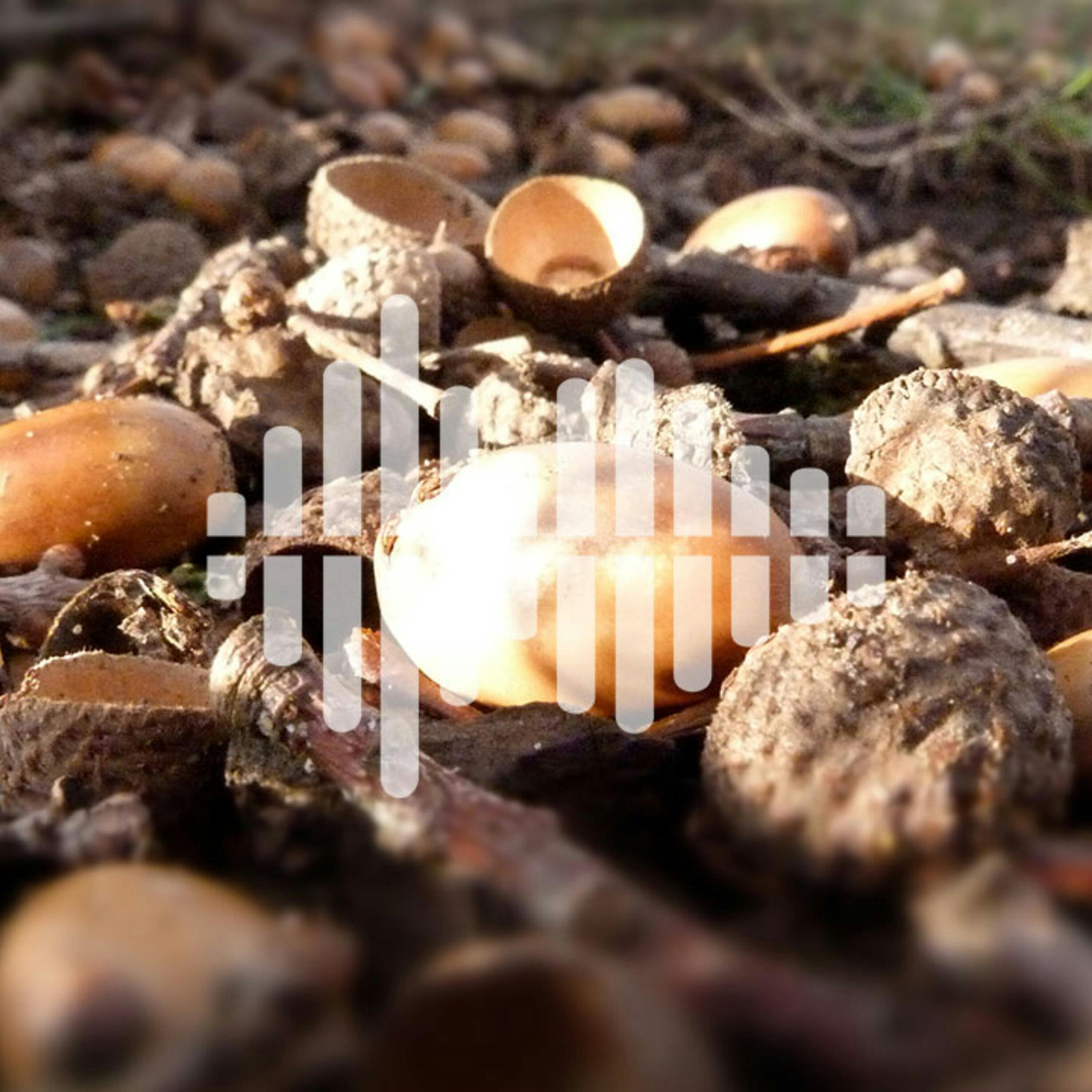
Have you noticed the trees around you lately—maybe they seem extra nutty? It turns out this is a “masting” year, when trees make more nuts, seeds, and pinecones than usual. Science Staff Writer Elizabeth Pennisi joins host Sarah Crespi to discuss the many mysteries of masting years. Next, Producer Meagan Cantwell talks with Jean-Laurent Casanova, a professor at Rockefeller University and an investigator at the Howard Hughes Medical Institute, about his review article on why some people are more vulnerable to severe disease from viral infections. This is part of a special issue on inflammation in Science. Finally, in this month’s book segment on race and science, host Angela Saini talks with author Beverly Daniel Tatum about her seminal 2003 book, Why Are All the Black Kids Sitting Together in the Cafeteria?: And Other Conversations About Race. This week’s episode was produced with help from Podigy. [Image: LensOfDan/Flickr; Music: Jeffrey Cook] [Alt text: Pile of acorns] Authors: Sarah Crespi; Meagan Cantwell; Angela Saini Learn more about your ad choices. Visit megaphone.fm/adchoices

Wildfires could threaten ozone layer, and vaccinating against tick bites
Could wildfires be depleting the ozone all over again? Staff Writer Paul Voosen talks with host Sarah Crespi about the evidence from the Polarstern research ship for wildfire smoke lofting itself high into the stratosphere, and how it can affect the ozone layer once it gets there. Next, we talk ticks—the ones that bite, take blood, and can leave you with a nasty infection. Andaleeb Sajid, a staff scientist at the National Cancer Institute, joins Sarah to talk about her Science Translational Medicine paper describing an mRNA vaccine intended to reduce the length of tick bites to before the pests can transmit diseases to a host. This week’s episode was produced with help from Podigy. [Image: Janice Haney Carr/Centers for Disease Control and Prevention; Music: Jeffrey Cook] [Alt text: digitally colorized scanning electron microscopic image of a grouping of Borrelia burgdorferi bacteria, the causative agent of Lyme disease] Authors: Sarah Crespi; Paul Voosen Learn more about your ad choices. Visit megaphone.fm/adchoices

The long road to launching the James Webb Space Telescope, and genes for a longer life span
The James Webb Space Telescope was first conceived in the late 1980s. Now, more than 30 years later, it’s finally set to launch in December. After such a long a road, anticipation over what the telescope will contribute to astronomy is intense. Daniel Clery, a staff writer for Science, joins host Sarah Crespi to talk about what took so long and what we can expect after launch. You might have heard that Greenland sharks may live up to 400 years. But did you know that some Pacific rockfish can live to be more than 100? That’s true, even though other rockfish species only live about 10 years. Why such a range in life span? Greg Owens, assistant professor of biology at the University of Victoria, discusses his work looking for genes linked with longer life spans. This week’s episode was produced with help from Podigy. [Image: Tyson Rininger; Music: Jeffrey Cook] [Alt text: Sebastes caurinus, the copper rockfish ] Authors: Sarah Crespi; Daniel Clery Learn more about your ad choices. Visit megaphone.fm/adchoices

The folate debate, and rewriting the radiocarbon curve
Some 80 countries around the world add folic acid to their food supply to prevent birth defects that might happen because of a lack of the B vitamin—even among people too early in their pregnancies to know they are pregnant. This year, the United Kingdom decided to add the supplement to white flour. But it took almost 10 years of debate, and no countries in the European Union joined them in the change. Staff Writer Meredith Wadman joins host Sarah Crespi to discuss the ongoing folate debate. Last year, a highly anticipated tool for dating ancient materials was released: a new updated radiocarbon calibration curve. The curve, which describes how much carbon-14 was in the atmosphere at different times in the past 55,000 years, is essential to figuring out the age of organic materials such as wood or leather. Sarah talks with Tim Heaton, senior lecturer in the School of Mathematics and Statistics at the University of Sheffield, and Edouard Bard, a professor at the College of France, about how the curve was redrawn and what it means, both for archaeology and for our understanding of the processes that create radiocarbon in the first place—like solar flares and Earth’s magnetic fields. This week’s episode was produced with help from Podigy. [Image: Andrew Shiva/Wikipedia; Music: Jeffrey Cook] [Alt text: close-up photograph of layers in volcanic tephra] Authors: Sarah Crespi; Meredith Wadman Learn more about your ad choices. Visit megaphone.fm/adchoices