Scholarly Communication
437 episodes — Page 7 of 9
Ep 88David Lindsay, "Scientific Writing = Thinking in Words" (CSIRO Publishing, 2020)
Listen to this interview of David Lindsay, emeritus professor of the University of Western Australia. We talk about his book Scientific Writing = Thinking in Words (CSIRO Publishing, 2020) and how your hypothesis can save the communication of your research. David Lindsay : "It's quite unfortunate that we're training our undergraduates in science this way. I mean, undergraduates know that when they write something, for example, a protocol to be graded—undergraduates know that their professors are seeking to find out whether the student knows something about the subject. So, as long as there's any semblance at all in the text that the student knows something about the subject, well, then the professor ticks a box and marks the student accordingly. This just encourages undergraduates to dump knowledge, to be writing any sort of rubbish just so long as something substantial-like bubbles out of it that seems to suggest that they have a reasonable understanding of the subject. But when these same undergrads get to the point of writing this way for scientific publication, well, then it all comes crashing down, because they can't just throw information together and hope that reviewers or editors will say, 'Oh, yeah, I think I can see what you mean. You know stuff.'" Learn more about your ad choices. Visit megaphone.fm/adchoices
Ep 86Irene Hilden, "Absent Presences in the Colonial Archive: Dealing with the Berlin Sound Archive's Acoustic Legacies" (Leuven UP, 2022)
Dealing with the colonial archive entails acknowledging the inability to know everything, accounting for the archive’s limited and incomplete condition. Dealing with the colonial archive is not merely about stories of the past but also about the history of the present, and how it is interrupted by the past. — Irene Hilden, in conversation with New Books Network. With a firm commitment to postcolonial scholarship, Absent Presences in the Colonial Archive: Dealing with the Berlin Sound Archive's Acoustic Legacies (Leuven University Press, 2022) presents a historical ethnography of a metropolitan institution that participated in the production and preservation of colonial structures of power and knowledge. This book examines sound objects and listening practices that render the coloniality of knowledge fragile and inconsistent, revealing the absent presences of colonial subjects who are given little or no place in established national narratives and collective memories. Based on research at the Berlin Sound Archive (Lautarchiv), which consists of an extensive collection of sound recordings compiled for scientific purposes in the first half of the 20th century, Irene Hilden engages with the archive by focusing on recordings produced under colonial conditions. This publication is available as a free ebook at OAPEN Library, JSTOR, Project Muse, and Open Research Library. Jen Hoyer is Technical Services and Electronic Resources Librarian at CUNY New York City College of Technology and a volunteer at Interference Archive. She is co-author of What Primary Sources Teach: Lessons for Every Classroom and The Social Movement Archive. Learn more about your ad choices. Visit megaphone.fm/adchoices
Ep 85Janaki Srinivasan, "The Political Lives of Information: Information and the Production of Development in India" (MIT Press, 2022)
The Political Lives of Information: Information and the Production of Development in India (MIT Press, 2022), written by Janaki Srinivasan and published by MIT Press in October 2022, examines how the definition, production, and leveraging of information are shaped by caste, class, and gender, and the implications of this for development. Information, says Srinivasan, has fundamentally reshaped development discourse and practice. In this study, she examines the history of the idea of “information” and its political implications for poverty alleviation. She presents three cases in India—the circulation of price information in a fish market in Kerala, government information in information kiosks operated by a nonprofit in Puducherry, and a political campaign demanding a right to information in Rajasthan—to explore three uses of information to support goals of social change. Countering claims that information is naturally and universally empowering, Srinivasan shows how the definition, production, and leveraging of information are shaped by caste, class, and gender. Srinivasan draws on archival and ethnographic research to challenge the idea of information as objective and factual. Using the concept of an “information order,” she examines how the meaning and value of information reflect the social relations in which it is embedded. She asks why casting information as a tool of development and solution to poverty appeals to actors across the political spectrum. She also shows how the power to label some things information and others not is at least as significant as the capacity to subsequently produce, access, and leverage information. The more faith we place in what information can do, she cautions, the less attention we pay to its political lives and to the role of specific social structures, individual agency, and material form in the defining, production, and use of that information. Janaki Srinivasan is Associate Professor at the International Institute of Information Technology, in Bangalore, India. Jen Hoyer is Technical Services and Electronic Resources Librarian at CUNY New York City College of Technology and a volunteer at Interference Archive. She is co-author of What Primary Sources Teach: Lessons for Every Classroom and The Social Movement Archive. Learn more about your ad choices. Visit megaphone.fm/adchoices
Ep 86Publishing Activism & Alternative Forms of Collaborative Scholarship
Scholarship is frequently imagined as a solitary pursuit, done mostly in archives or with books. This CHI Salon will feature scholars pursuing alternatives to this model and who regularly publish scholarship that emerges out of community activism, who co-write or co-edit books, and who actively seek out and create new models of authorship and research. Amherst Presidential Scholar Karma Chávez (UT-Austin) and Amherst College Press authors Megan Jeanette Myers (Iowa State) and Edward Paulino (John Jay) discuss their past publication experiences and the opportunities and challenges of collaborative scholarship. This panel is in honor of Open Access Week 2022 (Oct. 24-30). Participants: Karma Chávez is Bobby and Sherri Patton Professor in the Department of Mexican American & Latina/o Studies at the University of Texas-Austin. The author of The Borders of AIDS: Race, Quarantine, and Resistance (Washington, 2021), Queer Migration Politics: Activist Rhetoric and Coalitional Possibilities (Illinois, 2013), and the book of interviews Palestine on the Air (Illinois, 2019), Chavez has also co-edited four volumes: Queer and Trans Migrations: Dynamics of Illegalization, Detention, and Deportation (with Eithne Luibhéid, U of Illinois Press), Keywords for Gender and Sexuality Studies (with the Feminist Editorial Collective: other members are: Kyla Wazana Tompkins, Aren Z. Aizura, Aimee Bahng, Mishuana Goeman, and Amber Jamilla Musser, NYU Press), Standing in the Intersection: Feminist Voices, Feminist Practices in Communication Studies (with Cindy L. Griffin, SUNY Press) and Text + Field: Innovations in Rhetorical Method (Penn State University Press). Megan Jeanette Myers is associate professor of Spanish at Iowa State University where she co-directs the Languages and Cultures for Professions program. She is also a Faculty Fellow for Active Learning and Engagement at Iowa State’s Center for Excellence in Learning and Teaching. Myers is the author of Mapping Hispaniola: Third Space in Dominican and Haitian Literature (UVA, 2019), co-editor of the multimodal and multivocal anthology, The Border of Lights Reader: Bearing Witness to Genocide in the Dominican Republic (ACP, 2021), and just returned from a Fulbright Fellowship in the Dominican Republic. Edward Paulino is associate professor of Global History at John Jay College of Criminal Justice. Paulino is the author of Dividing Hispaniola: The Dominican Republic’s Border Campaign against Haiti, 1930-1961 (U. of Pittsburgh Press, 2016) and co-editor of The Border of Lights Reader: Bearing Witness to Genocide in the Dominican Republic (ACP, 2021). His scholarly articles and chapters have appeared widely and his research has been supported by the Fulbright Foundation, the National Endowment for the Humanities, the PSC-CUNY Research Foundation, and the New York State Archives. Learn more about your ad choices. Visit megaphone.fm/adchoices
Ep 83University Presses Today: A Conversation with Charles Watkinson
The NBN would not exist but for the work of university presses. So every year we celebrate the efforts of our colleagues at UPs during "University Press Week," which happens to be November 14 to 18. This year I talked to Charles Watkinson, director of the University of Michigan Press and president of the Association of University Presses. We discussed what UPs do, what makes them different from other publishers, how UP books are priced, and the future of open access publishing. We also talked about how to make a career in UP publishing. The AUP has a wonderful resource that will answer all your questions about UPs here. Marshall Poe is the founder and editor of the New Books Network. He can be reached at [email protected]. Learn more about your ad choices. Visit megaphone.fm/adchoices
Ep 84Cynthia Kros et al., "Archives of Times Past: Conversations about South Africa’s Deep History" ( Wits UP, 2022)
Archives of Times Past: Conversations about South Africa’s Deep History (Wits UP, 2022) is an exploration of particular sources of evidence on southern Africa’s early history. It gathers recent ideas about archives and asks the question: “How do we know, or think we know, what happened in the times before European colonialism?” Historians use a wide range of source materials for this work. What are these materials? Where can we find them? Who made them? When? Why? What are the problems with using them? The essays by well-known historians, archaeologists and other researchers engage these questions from a range of perspectives and in illuminating ways. Written from personal experience, they capture how these researchers encountered their archives of knowledge beyond the textbook. The aim is to make us think critically about where ideas about the time before the colonial era originate and to encourage us to think about why people in South Africa often refer to this “deep history” when arguing about public affairs in the present. The essays will appeal to students, academics, educationists, teachers, archivists, and museum practitioners. Jen Hoyer is Technical Services and Electronic Resources Librarian at CUNY New York City College of Technology, and a volunteer at Interference Archive. She is co-author of What Primary Sources Teach: Lessons for Every Classroom and The Social Movement Archive. Learn more about your ad choices. Visit megaphone.fm/adchoices
Ep 101100th Episode: Public Humanities
Saronik Bosu talks about humanities work engaging diverse communities and publics, misconceptions about what the ‘public’ in public humanities might mean as well as the recent attention paid to it by academic departments. In a longer version of the conversation, some individual instances of various digital humanities and archival projects are discussed. Here he speaks mainly from the perspective of his own work as a humanities podcaster and creator of humanities programming. Saronik Bosu is a doctoral candidate at the Department of English, New York University. He researches literary rhetoric and economic thought in contexts of decolonization. He is co-host of this podcast and the 2022-23 NYU-Mellon Public Humanities Doctoral Fellow. His work has appeared on journals like Interventions and Movable Type, as well as Avidly and Post45. He also makes art and works together its integration with scholarship. Image: © 2022 Saronik Bosu Learn more about your ad choices. Visit megaphone.fm/adchoices
Ep 120Making the Most of Academic Conferences: Insights and Tips from Dr. Thomas Tobin
You’re going to an academic conference—and maybe even presenting a project! Whether you are going virtually or in person, for the first time or the tenth, presenting or just attending, you want to feel prepared. Are you? This podcast episode explores: Why we need to go to academic conferences. Why it can be difficult to navigate them. How can you get the most of out of it. Our guest is: Dr. Thomas J. Tobin, who is a founding member of the Center for Teaching, Learning, and Mentoring at the University of Wisconsin at Madison. He is an internationally recognized speaker and author on quality in technology-enhanced education. His latest book is Going Alt-Ac: A Guide to Alternative Academic Careers, written with Katie Linder and Kevin Kelly, from Stylus Publishing. You can find him on Twitter @ThomasJTobin and at his website, Thomasjtobin.com. Our host is: Dr. Christina Gessler, a historian of women and gender and an introvert, who has presented in dozens of academic conference, and like many of our listeners, she is still learning how to make the most of an academic conference. Listeners to this episode may also be interested in: The Chronicle of Higher Ed article “How to Make the Most Out of An Academic Conference” The Chronicle of Higher Ed article “How to Make the Most of a Virtual Conference” The Chronicle of Higher Ed article “How To Cope With Presentation Anxiety” This article on The Introverts’ Guide to Speaking Up Quiet: The Power of Introverts, by Susan Cain The Craft of Research, by Wayne Booth et al The Research Companion, by Petra Boynton The Art of Creative Research, by Philip Gerald Welcome to The Academic Life! We reach across our mentor network to bring you podcasts on everything from how to finish a project to how to take care of your beautiful mind. On the Academic Life channel we embrace a broad definition of what it means to lead an academic life. We view education as a transformative human endeavor and are inspired by today’s knowledge-producers working inside and outside the academy. DMs us on Twitter: @AcademicLifeNBN. Learn more about your ad choices. Visit megaphone.fm/adchoices
Ep 82Barbara W. Sarnecka, "The Writing Workshop: Write More, Write Better, Be Happier in Academia" (2019)
Listen to this interview of Barbara Sarnecka, Professor of Cognitive Sciences and Associate Dean of Research and Graduate Studies for Social Sciences, University of California, Irvine. We talk about putting your mind in print. She is the author of The Writing Workshop: Write More, Write Better, Be Happier in Academia. Barbara Sarnecka : "The more quantitative a person's field of study is, the more likely they are to say that they just don't think that writing is a big requirement in their field. And they'll say, 'Well, writing isn't very important. I'm a biologist.' They imagine that writing is somehow for people in the humanities, or it's for playwrights or novelists, or something like that. But whenever anyone fails to be productive as a scientist, it's because they're not writing. It's because they're not publishing manuscripts or they're not producing funding proposals that are getting funded. It's not because they don't have enough ideas for experiments, or because they didn't collect enough data, or because they didn't learn to analyze the data properly. Those things are all kind of trivially easy, and that's why we can subcontract them to graduate students or the statistical consulting center or somebody to do them for us. You can't get somebody else to think for you, and you can't get somebody else to write for you." Find about more about Barbara, including why she chose to self-publish, in this interview. Read the research on Barbara's writing-shop intervention here. Read the research on cascading mentorship here and here. Contact Barbara's editor at [email protected] Daniel Shea is committed to helping scientists write at their best. Contact me at [email protected] Learn more about your ad choices. Visit megaphone.fm/adchoices
Ep 16Want to Talk to People about Books? Here's How....
Rebel Book Club is an online and in-person book club. Each month, over 1,000 people get together to discuss a non-fiction book, occasionally with the author as a participant. For new members, use code: REBELREADER Ben Keene is an entrepreneur, author, and food journalist. Caleb Zakarin is the Assistant Editor of the New Books Network (Twitter: @caleb_zakarin). Learn more about your ad choices. Visit megaphone.fm/adchoices
Ep 128Scholar Skills: Communicating Through your Online Presence
Is there a strategy to communicating your research online? This episode explores: What an academic communications strategist does. Why having a strategy to your online presence is important. Common misperceptions about communicating online. Lessons learned from an academic communications strategist. The benefits and challenges to being an academic entrepreneur. Our guest is: Jennifer van Alstyne (@HigherEdPR), a communications strategist for professors and researchers. At The Academic Designer LLC, Jennifer helps people share their work effectively in online spaces like websites and social media. The Social Academic blog shares advice about managing your online presence in Higher Education. Jennifer is a Peruvian-American poet with a BA in English from Monmouth University, an MFA in Writing & Poetics from the Jack Kerouac School, and an MA in English from the University of Louisiana at Lafayette. She lives in San Diego, California. Connect with Jennifer on Twitter and LinkedIn. Our host is: Dr. Dana M. Malone, a higher education scholar and practitioner energized by facilitating meaningful conversations and educational experiences. She specializes in college student relationships, gender, sexuality, and religious identities as well as student success and assessment planning. Dana is the author of From Single to Serious: Relationships, Gender, and Sexuality on American Evangelical Campuses, (Rutgers UP). Listeners to this episode may also be interested in: Social Media How To’s Articles about managing your personal website Successes and Setbacks of Social Media: Impact on Academic Life edited by Cheyenne Seymour (Wiley) Social Media for Academics by Mark Carrigan, 2nd edition (Sage) This NBN conversation on how social media has shaped contemporary society. This NBN conversation on theories and practices of social media communication. Welcome to The Academic Life! You are smart and capable, but you aren’t an island, and neither are we. We reach across our mentor network to bring you podcasts on everything from how to finish that project to how to take care of your beautiful mind. Here on the Academic Life channel, we embrace a broad definition of what it means to be an academic and to lead an academic life. We view education as a transformative human endeavor and are inspired by today’s knowledge-producers working inside and outside the academy. Wish we’d bring on an expert about something? DMs us on Twitter: @AcademicLifeNBN. Learn more about your ad choices. Visit megaphone.fm/adchoices
Ep 316Juan Pablo Pardo-Guerra, "The Quantified Scholar: How Research Evaluations Transformed the British Social Sciences" (Columbia UP, 2022)
How do metrics and quantification shape social science? In The Quantified Scholar: How Research Evaluations Transformed the British Social Sciences (Columbia UP, 2022), Juan Pablo Pardo-Guerra, an Associate Professor in sociology at the University of California, San Diego, explores this question using a case study of British academia. The book combines a rich array of quantitative and qualitative analysis, demonstrating the transformation of working conditions, institutional contexts, and research areas since the introduction of a metrics and quantification regime during the 1980s. Highlighting the complexity and ambivalences of metrics and quantification, as well as the uneven distribution of positive and negative impacts, the book offers essential reading for every academic, irrespective of the nation or institution in which they work. It also will be important for those seeing to better understand the role of metrics and markets in contemporary life. Dave O'Brien is Professor of Cultural and Creative Industries, at the University of Sheffield. Learn more about your ad choices. Visit megaphone.fm/adchoices
Ep 81Sarah Huffman et al., "Preparing to Publish" (Iowa State University Digital Press, 2022)
Listen to this interview of Sarah Huffman (Assistant Director of the Center for Communication Excellence) and Elena Cotos (Associate Professor of Applied Linguistics in the English Department and Director of the Center for Communication Excellence) and Kimberly Becker, (Lecturer in English) — all three at Iowa State University. We talk about how to ruin your or anyone's reading experience of research articles by showing you just how much is going on in the text besides research! Kimberley Becker : "Less experienced writers of research tend to think that academic writing is this objective and faceless entity, when in fact it's very much negotiating lots of different social relationships. Academic writing is really pulling together this whole rhetorical situation of the author and the audience and the purpose. I think students, for example, get so bogged down in the complexity of the content — I mean this is very high-level content they have — that they forget that the reader has needs." Read Preparing to Publish ( Iowa State University Digital Press, 2022) here. Learn more about your ad choices. Visit megaphone.fm/adchoices
Ep 180Thomas S. Mullaney and Christopher Rea, "Where Research Begins: Choosing a Research Project That Matters to You (and the World)" (U Chicago Press, 2022)
The hardest part of research isn't answering a question. It's knowing what to do before you know what your question is. Where Research Begins: Choosing a Research Project That Matters to You (and the World) (University of Chicago Press, 2022) tackles the two challenges every researcher faces with every new project: How do I find a compelling problem to investigate--one that truly matters to me, deeply and personally? How do I then design my research project so that the results will matter to anyone else? This book will help you start your new research project the right way for you with a series of simple yet ingenious exercises. Written in a conversational style and packed with real-world examples, this easy-to-follow workbook offers an engaging guide to finding research inspiration within yourself, and in the broader world of ideas. Read this book if you (or your students): have difficulty choosing a research topic know your topic, but are unsure how to turn it into a research project feel intimidated by or unqualified to do research worry that you're asking the wrong questions about your research topic have plenty of good ideas, but aren't sure which one to commit to feel like your research topic was imposed by someone else want to learn new ways to think about how to do research. Thomas S. Mullaney is professor of history at Stanford University and a Guggenheim fellow. His books include The Chinese Typewriter: A History and Your Computer is on Fire. Christopher Rea is professor of Asian studies at the University of British Columbia. His books include Chinese Film Classics, 1922-1949 and The Age of Irreverence: A New History of Laughter in China. Caleb Zakarin is the Assistant Editor of the New Books Network (Twitter: @caleb_zakarin). Learn more about your ad choices. Visit megaphone.fm/adchoices
Ep 80John Measey, "How to Publish in Biological Sciences: A Guide for the Uninitiated" (CRC Press, 2022)
Listen to this interview of John Measey, Researcher at the Centre for Invasion Biology, Stellenbosch University, South Africa. We talk about the needs of early-career researchers and also about our need for early-career researchers. John Measey : "What we really need to know is what a scientific journal is for and what we want it to be for. So, we know, more or less, what it was for and where it came from, but what do we want that to be in the twenty-first century, and how will the journal meet rigor, independence, transparency, and replicability? Because we have a lot more potential now than we've ever had before for making knowledge available, so this means that every single publication that's out there, every piece of scientific work — all of it can be used not only one time by one scientist, but again and again and again by all scientists today and to come. So the question here is, How do we want that to be presented? I don't think that we should lose that interpretive manuscript, that (as we call it) journal paper, because it really gives us the insight of what the people who conducted that research did and what they think about what they did. That is a historical document of the time. But I want to ask too: What else can we get that will really make that paper so much more valuable going on into the future? Let's make the data available, let's make the script for the analysis available, let's make the code available — and there's so much more, because these days scientists are producing so much more digital content. So what do we want journals to do, and how do we want them to interact with this availability, with this big data?" Read and use How to Publish in Biological Sciences Read and use How to Write a PhD in Biological Sciences Learn more about your ad choices. Visit megaphone.fm/adchoices
Ep 79Studying Black Religious Thought
The Journal of Black Religious Thought advances critical scholarship in the fields of Religious Studies – with special attention to Black religious studies, which includes and intersects, but not limited to the Hebrew Bible/Old Testament, New Testament, Intertestamental, Quran, theology, history, ethics, practical theology, religion-science, philosophy of religion, Black hermeneutics, philosophy of religion, womanist, intersectionality, cultural studies, among others – offering African American, African, and/or African Diaspora points of view. Dr. John Ahn is Associate Professor of Hebrew Bible at Howard University School of Divinity. He is trained in ancient Near Eastern and Religious Studies. He specializes in the historical and social reconstructions of the sixth and fifth centuries BCE with interests to the first century CE. Dr. Ahn is the editor-in-chief of The Journal of Black Religious Thought (Brill). Caleb Zakarin is the Assistant Editor of the New Books Network (Twitter: @caleb_zakarin). Learn more about your ad choices. Visit megaphone.fm/adchoices
Ep 10Adam Nocek, "Molecular Capture: The Animation of Biology" (U Minnesota Press, 2021)
In Molecular Capture: The Animation of Biology (University of Minnesota Press, 2021), Adam Nocek, Assistant Professor in the Philosophy of Technology and Science and Technology Studies at Arizona State University, investigates the collusion between entertainment and scientific visualization in the case of molecular animation. “The very same tools that were invented to animate a character like Shrek or Nemo are now being applied to set in motion protein domains and cellular processes.” Opening with this quote by animator and scientist Gaël McGill, the book retraces the complex genealogy of molecular animation and analyses its pretension to scientific value. While the first half of the book deals with “molecular capture” as the cinematographic process of producing moving images of the molecular world, the second half thinks about that same “capture” as a form of governmental rationality, a kind of apparatus rendering life visible and available down to its most fundamental mechanisms. This discussion leads the author to consider the elusiveness of life and how the current codes of molecular animation are blurring the line between knowledge, data, speculation, and imagination. At the source of fascinating images, granting consumers with the impression of directly accessing the invisible processes defining life, molecular animation stands at the intersection of important questions relating to the history of scientific visualization, the evolving relationship between science and entertainment, and the production of biopolitical forms of governance. Victor Monnin, Ph.D. is an historian of science specialized in the history of Earth sciences. He is also teaching French language and literature to undergraduates. Learn more about your ad choices. Visit megaphone.fm/adchoices
Ep 10Twitter, Intellectual Discourse, and Humility
For this episode of How To Be Wrong, I speak with George Styles, a biochemist and author of the book Contemplation. George is also what we describe these days as an “influencer”—although as we discuss he objects to that label—on social media, with over 37 thousand followers on Twitter. His approach to Twitter is novel in that he focuses on asking probing questions designed to generate discussion, which at times become rather heated. Our conversation moves through topics related to how Twitter is used and how it can be used as a tool for generating civil intellectual discourse. Learn more about your ad choices. Visit megaphone.fm/adchoices
Ep 78Jo Mackiewicz and Isabelle Thompson, "Talk about Writing: The Tutoring Strategies of Experienced Writing Center Tutors" (Routledge, 2018)
Listen to this interview with Jo Mackiewicz, professor of rhetoric and professional communication at Iowa State University, and with Isabelle Thompson, emerita professor of technical and professional communication and former coordinator of the English Center at Auburn University. We talk about their book Talk about Writing: The Tutoring Strategies of Experienced Writing Center Tutors (Routledge, 2018) and writing. Jo Mackiewicz : "The more I think about writing center interactions and write books about it, the more I think that the value a tutor brings to learning is this: to show students a thinking process, to show students an analysis process about writing — to show them a self-questioning of yourself as writer, and also a questioning of any sort of text, a questioning of your relationship to the text, a questioning of what you know about the subject matter, of how you evaluate your handling of that subject matter. Tutors model this process for student writers." Contact Daniel at [email protected]. Learn more about your ad choices. Visit megaphone.fm/adchoices
Ep 77Nicholas Rowe, "The Realities of Completing a PhD: How to Plan for Success" (Routledge, 2021)
Listen to this interview of Nicholas Rowe, researcher and educator based in Finland. We talk his book The Realities of Completing a PhD: How to Plan for Success (Routledge, 2021) and about what needs to change. Nicholas Rowe : "Writing for different purposes, for different audiences is a huge skill, because people are going to need this communication skill in their research proposal when they present their ideas to advisors, but also in their publications when they share their ideas with colleagues. Now, of courses, everybody's systems and processes are different, but the key communicative skills that you need are fairly much the same, and if you don't need them at one stage of a project, you're going to need them at another." Contact Daniel at [email protected]. Learn more about your ad choices. Visit megaphone.fm/adchoices
Ep 74Covering Higher Ed: A Chat with Sara Custer of Times Higher Education
A special opportunity to hear from Sara Custer, editor of The Campus (Times Higher Education), about the role of journalism and reporting in higher education. Avi and Sara cover topics ranging from the role of media in increasing cross-institution collaboration and sharing during the pandemic to how universities can do a better job supporting their junior scholars. Also, don't miss out on the opportunity to learn how you can publish in Times Higher Education yourself! Avi Staiman is the founder and CEO of Academic Language Experts. Learn more about your ad choices. Visit megaphone.fm/adchoices
Ep 614Paul A. Djupe et al. "The Knowledge Polity: Teaching and Research in the Social Sciences" (Oxford UP, 2022)
Paul A. Djupe, Anand Edward Sokhey, and Amy Erica Smith, The Knowledge Polity: Teaching and Research in the Social Sciences (Oxford UP, 2022) explores a more holistic understanding of knowledge production in the social sciences, moving beyond the publication process often required by those in tenure/tenure-track positions to thinking about the role of community in the construction of knowledge. Political Scientists Paul A. Djupe (Denison University), Anand Edward Sokhey (University of Colorado-Boulder), and Amy Erica Smith (Iowa State University) emphasize the idea of academics as citizens in communities and institutions, endowed with certain rights and responsibilities with regard to knowledge production, exchange, and promotion. These actions go beyond simply research; knowledge production incorporates teaching, reviewing, blogging, podcasting, commenting, mentoring, and other similar actions, all of which inherently depend on collaboration and community. Djupe, Smith, and Sokhey all have first-hand experience in the “publication pipeline” process. They accurately and intricately detail aspects of community that are overlooked within the academia. The collaborative nature of The Knowledge Polity speaks to the power of co-authorship in political science and sociology. The research indicates that building relationships with peers and mentors alike provides scholars with access to people whose advice is trusted, people who they consider friends, and people who know other scholars whose advice can also be trusted and valued. Similar to co-authorship, peer review is another dimension of knowledge exchange, collaboration, and the rights and responsibilities of the knowledge polity. The review process is reciprocal, and there is an innate sense that it is a duty, especially when the authors discuss “reviewer debt” (reviewing fewer papers than one is submitting) and how it is usually “paid off” when scholars reach tenure and have more time and capacity to give back to the community. Most academics would like to do more reviews, proving there is a powerful desire to participate in this important act of knowledge production. The authors use data from an extensive Professional Activity in the Social Sciences (PASS) study, which sampled responses from 1,700 sociology and political science faculty about their publications, and experiences with regard to the process. They integrate different aspects of all of these findings in each chapter, examining for differences across disciplines, methodology, gender, race, and age, among other variables. The Knowledge Polity: Teaching and Research in the Social Sciences integrates a diversity of empirical research, qualitative inputs, and sophisticated analysis to better understand knowledge production within the social sciences. It becomes clear that the idea of the solitary scholar, alone in his/her office, creating knowledge is much more of a myth, since the reality is that knowledge production is much more of a collective undertaking and experience. Emma R. Handschke assisted in the production of this podcast. Lilly J. Goren is a professor of political science at Carroll University in Waukesha, WI. She is co-editor of the award winning book, Women and the White House: Gender, Popular Culture, and Presidential Politics (University Press of Kentucky, 2012), as well as co-editor of Mad Men and Politics: Nostalgia and the Remaking of Modern America (Bloomsbury Academic, 2015). Email her comments at [email protected] or tweet to @gorenlj. Learn more about your ad choices. Visit megaphone.fm/adchoices
Ep 76Vivian Kao and Julia Kiernan, "Writing STEAM: Composition, STEM, and a New Humanities" (Routledge, 2022)
Listen to this interview of Vivian Kao, Associate Professor of Composition and Coordinator of the First-Year Writing Program, and Julia Kiernan, Assistant Professor of Communication and Coordinator of Technical and Professional Communication — both at Lawrence Technological University, Michigan. It's more than just hot air — we talk about their STEAM, and their book Writing STEAM: Composition, STEM, and a New Humanities (Routledge, 2022). Vivian Kao : "Writing is really central to the project of STEM. And I'm talking about writing very capaciously, so that is, composing in multiple modes, in multiple media — that is, learning how to communicate to many different audiences and how to utilize many different genres. Because writing is a way of thinking and a way of understanding your place in the world." Contact Daniel at [email protected]. Learn more about your ad choices. Visit megaphone.fm/adchoices
Ep 74International Association of Genocide Scholars
The International Association of Genocide Scholars is a global, interdisciplinary, non-partisan organization that seeks to further research and teaching about the nature, causes, and consequences of genocide, and advance policy studies on genocide prevention. The Association, founded in 1994, meets regularly to consider comparative research, important new work, case studies, the links between genocide and other human rights violations, and prevention and punishment of genocide. The Association holds biennial conferences and co-publishes the scholarly journal Genocide Studies and Prevention. Melanie O’Brien is Associate Professor of International Law at the UWA Law School, University of Western Australia. Dr. O'Brien's work on forced marriage has been cited by the International Criminal Court, and she has been an amicus curiae before the ICC. She has been an expert consultant for multiple UN bodies, and is widely consulted by global media for her expertise on international criminal law. She has conducted fieldwork and research across six continents. Caleb Zakarin is the Assistant Editor of the New Books Network (Twitter: @caleb_zakarin). Learn more about your ad choices. Visit megaphone.fm/adchoices
Ep 115Do You Need a Developmental Editor?
Welcome to The Academic Life! In this episode you’ll hear about: Dr. Laura Portwood-Stacer’s own experience getting her first two academic books published. An overview of different kinds of editors who will be part of shepherding your book to publication. What a developmental editor does. Why might you need to hire one. Her advice to book editors and their clients. Our guest is: Dr. Laura Portwood-Stacer, who is a scholar and academic. She wrote a book based on her dissertation and many scholarly journal articles, including “How To Email Your Professor (Without Being Annoying AF).” She earned a PhD in Communication, with a certificate in gender studies, from the Annenberg School for Communication and Journalism at the University of Southern California. She lives in Los Angeles and, in 2021, I became a two-time Jeopardy champion. She is the author of The Book Proposal Book, and runs her own consulting business for authors. Our host is: Dr. Christina Gessler, who holds a PhD in American history. Listeners to this episode may also be interested in: Stylish Academic Writing, by Helen Sword What Editors Do, by Peter Ginna This podcast about the peer review process This podcast about book proposals, by Laura Portwood-Stacer Information about developmental editing and academic book publishing in general: These online programs, including a free webinar for scholarly authors on How to Work With a Developmental Editor Information about The Book Proposal Book including free downloads and worksheets Laura’s weekly newsletter with timely tips and resources for scholarly authors You are smart and capable, but you aren’t an island, and neither are we. We reach across our mentor network to bring you podcasts on everything from how to finish that project to how to take care of your beautiful mind. Here on the Academic Life channel, we embrace a broad definition of what it means to be an academic and to lead an academic life. We view education as a transformative human endeavor and are inspired by today’s knowledge-producers working inside and outside the academy. Wish we’d bring on an expert about something? DMs us on Twitter: @AcademicLifeNBN. Learn more about your ad choices. Visit megaphone.fm/adchoices
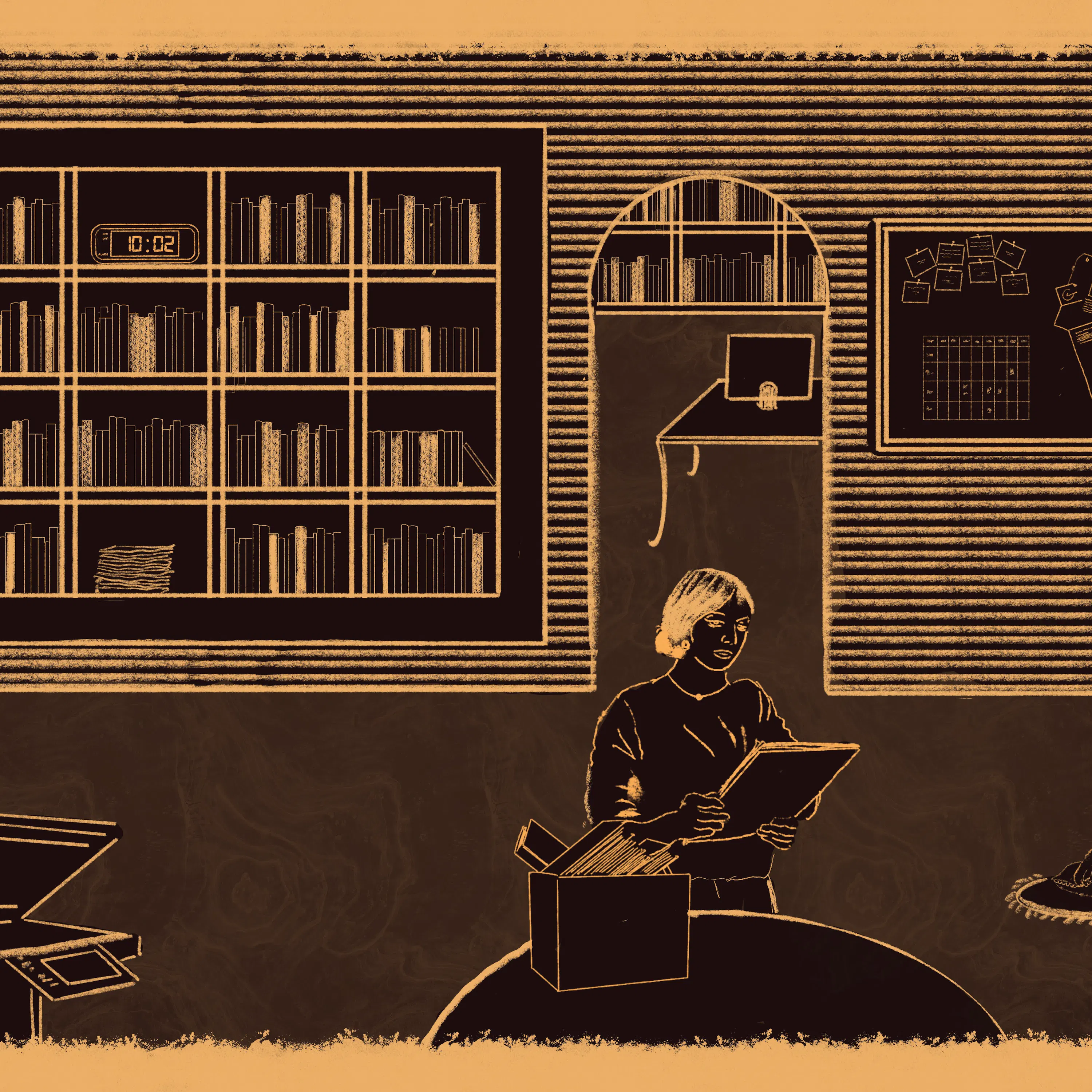
Ep 87University Press
Rebecca Colesworthy talks about the university press and how its workings should be demystified, what authors should keep in mind when they pitch their books, and what university presses do for the state of academic labor. Rebecca Colesworthy (she/her) is senior acquisitions editor at SUNY Press. Her areas of acquisition include literary studies, women’s and gender studies, queer studies, Latin American and Iberian studies, Latinx studies, African American studies, Indigenous studies, and education. She is the author of Returning the Gift: Modernism and the Thought of Exchange (Oxford UP, 2018) and co-editor with Peter Nicholls of How Abstract Is It? Thinking Capital Now (Routledge, 2016). She is on the editorial board of MAUSS International; has taught at New York University, University at Albany, SUNY, and Skidmore College; worked for a handful of years in the nonprofit sector; and holds a PhD in English from Cornell. Image: © 2022 Saronik Bosu Music used in promotional material: ‘Nerys & Leo’ by Bloom K Trio Learn more about your ad choices. Visit megaphone.fm/adchoices
Ep 143Michael Bérubé and Jennifer Ruth, "It's Not Free Speech: Race, Democracy, and the Future of Academic Freedom" (Johns Hopkins UP, 2022)
The protests of summer 2020 led to long-overdue reassessments of the legacy of racism and white supremacy in both American academe and cultural life more generally. But while universities have been willing to rename some buildings and schools or grapple with their role in the slave trade, no one has yet asked the most uncomfortable question: Does academic freedom extend to racist professors? It's Not Free Speech: Race, Democracy, and the Future of Academic Freedom (Johns Hopkins University Press, 2022) considers the ideal of academic freedom in the wake of the activism inspired by outrageous police brutality, white supremacy, and the #MeToo movement. Arguing that academic freedom must be rigorously distinguished from freedom of speech, Michael Bérubé and Jennifer Ruth take aim at explicit defenses of colonialism and theories of white supremacy—theories that have no intellectual legitimacy whatsoever. Approaching this question from two angles—one, the question of when a professor's intramural or extramural speech calls into question his or her fitness to serve, and two, the question of how to manage the simmering tension between the academic freedom of faculty and the antidiscrimination initiatives of campus offices of diversity, equity, and inclusion—they argue that the democracy-destroying potential of social media makes it very difficult to uphold the traditional liberal view that the best remedy for hate speech is more speech. In recent years, those with traditional liberal ideals have had very limited effectiveness in responding to the resurgence of white supremacism in American life. It is time, Bérubé and Ruth write, to ask whether that resurgence requires us to rethink the parameters and practices of academic freedom. Touching as well on contingent faculty, whose speech is often inadequately protected, It's Not Free Speech insists that we reimagine shared governance to augment both academic freedom and antidiscrimination initiatives on campuses. Michael Bérubé (interviewed here) is Edwin Erle Sparks Professor of Literature at Pennsylvania State University; Jennifer Ruth is a professor of film at Portland State University. Both have served in various roles within the American Association of University Professors, and also coauthored The Humanities, Higher Education, and Academic Freedom: Three Necessary Arguments (2015). Catriona Gold is a PhD candidate in Geography at University College London, researching security and mobility in the 20-21st century United States. Her current work concerns the US Passport Office's role in the Cold War. She can be reached by email or on Twitter. Learn more about your ad choices. Visit megaphone.fm/adchoices
Ep 73Effective Altruism: What it is, What it Does, and How You Can Help
80,000 Hours provides research and support to help students and graduates switch into careers that effectively tackle the world’s most pressing problems. Benjamin Todd is the president and co-founder of 80,000 Hours. He managed the organisation while it grew from a lecture, to a student society, to the organization it is today. He also helped to get effective altruism started in Oxford in 2011. Caleb Zakarin is the Assistant Editor of the New Books Network (Twitter: @caleb_zakarin). Learn more about your ad choices. Visit megaphone.fm/adchoices
Ep 138Publishing in Asian Studies Journals
How can we get our articles in Asian studies published? What criteria should we use in selecting what journals to target? On what basis do journal editors make decisions on what articles to publish? How should prospective authors deal with harsh and even contradictory reviewer reports? In this special double-length summer podcast, based on an online event convened by NIAS in 2021, two editors of Asian studies journals discuss the challenges of publishing high-quality articles in the field, in a lively and wide-ranging conversation with NIAS Director Duncan McCargo. Julie Yu-Wen Chen is Professor of Chinese Studies at the University of Helsinki. One of the editors of the Journal of Chinese Political Science, until recently Julie was also the editor-in-chief of Asian Ethnicity. Hyung-Gu Lynn is AECL/KEPCO Chair in Korean Research at the University of British Columbiaand the longstanding editor of Pacific Affairs. The Nordic Asia Podcast is a collaboration sharing expertise on Asia across the Nordic region, brought to you by the Nordic Institute of Asian Studies (NIAS) based at the University of Copenhagen, along with our academic partners: the Centre for East Asian Studies at the University of Turku, and Asianettverket at the University of Oslo. We aim to produce timely, topical and well-edited discussions of new research and developments about Asia. About NIAS: www.nias.ku.dk Transcripts of the Nordic Asia Podcasts: http://www.nias.ku.dk/nordic-asia-podcast Learn more about your ad choices. Visit megaphone.fm/adchoices
Ep 111Dissertations Wanted! A Conversation with the Editor of University of Wyoming Press
Welcome to The Academic Life! In this episode you’ll hear about: Why Robert Ramaswamy wants to see your revised dissertation submitted for publication. What makes a revised dissertation ready to submit to a press. How to choose mentor texts to put in your proposal. Signs that you might not want to turn your dissertation into a book, and what to do instead. The editorial complexities of saying “no” to a book proposal. And a discussion about the new University of Wyoming Press imprint Our guest is: Robert Ramaswamy (he/they), who has a BA in American studies from Yale University and an MA in American studies from George Washington University, and left a PhD program in American Culture at the University of Michigan ABD. He joined UPC/University of Wyoming Press as acquisitions editor in 2022, after working as an assistant editor for the Ohio State University Press and as an editorial assistant for University of Michigan Press/Michigan Publishing. At UPC/UWyoP, Robert acquires in history, environmental humanities, public humanities, and democracy and the United States. He lives in Ann Arbor, MI with his partner, Anna, two dogs, and eight chickens. Our host is: Dr. Christina Gessler, the co-creator of the Academic Life. Listeners to this episode might also be interested in: Association of University Presses University of Wyoming Press On Revision, by William Germano From Dissertation to Book, by William Germano What Editors Do: The Art, Craft and Business of Book Editing, by Peter Ginna A discussion of From Dissertation to Book, hosted by Dr. Dana Malone A conversation with Mona Hamlin about marketing scholarly books A conversation with acquisitions editor Rachael Levay You are smart and capable, but you aren’t an island and neither are we. We reach across our mentor network to bring you experts about everything from how to finish that project, to how to take care of your beautiful mind. Here on the Academic Life channel, we embrace a broad definition of what it means to be an academic and to lead an academic life. We view education as a transformative human endeavor and are inspired by today’s knowledge-producers working inside and outside the academy. Wish we’d bring on an expert about something? DMs us on Twitter: @AcademicLifeNBN. Learn more about your ad choices. Visit megaphone.fm/adchoices
Book Proposal

Ep 75Book Proposal
Laura Portwood-Stacer talks with Kim about book proposals. Laura is a consultant for academic authors. Her book, titled, appropriately, The Book Proposal Book (Princeton UP, 2021), is a how-to-guide for writing an outstanding book proposal. Through her business, Manuscript Works, Laura runs courses, workshops, and provides editorial assistance, to help academics navigate the world of publishing. Enrollment for her next “Book Proposal Accelerator Course” opens on Jan. 3, at 9am PST. Here’s the link: courses.manuscriptworks.com Image of several books from Wikimedia Commons. Music used in promotional material: Mozart Piano Concerto K.467 2mvt. by Cheong Lin Learn more about your ad choices. Visit megaphone.fm/adchoices
Ep 152Whitney Trettien, "Cut/Copy/Paste: Fragments from the History of Bookwork" (U Minnesota Press, 2021)
Today’s guest is Whitney Trettien whose book Cut/Copy/Paste: Fragments from the History of Bookwork was published through the University of Minnesota Press in 2022. Trettien is a Professor of English at the University of Pennsylvania, and researches the history of the book spanning print and digital technologies. Cut/Copy/Paste explores makerspaces and collaboratories where paper media were cut up and reassembled into radical, bespoke publications. The book is complemented with a wide array of resources on early modern publishing available on the book’s webpage hosted by the University of Minnesota Press. John Yargo recently received his PhD in English literature from the University of Massachusetts Amherst, specializing in the environmental humanities and early modern culture. His articles have been published or are forthcoming in the Journal for Early Modern Culture Studies, Studies in Philology, and Shakespeare Studies. Learn more about your ad choices. Visit megaphone.fm/adchoices
Ep 72Combating Fraud and Plagiarism in the Publication of Academic Research
Jason Prevost, coordinating Chair of the Publication Ethics Committee, and Senior Acquisitions Editor at Brill joins Avi Staiman, CEO of Academic Language Experts, to discuss how publishers handle ethical issues such as plagiarism, questions of authorship, and even fraudulent results. Hear how Jason dealt with a senior professor who refused to credit authorship to his Ph.D. student despite the fact that he wrote a considerable amount of his book. Also, learn how publishers go about retracting problematic research and tracking down the subsequent citations of the faulty research. Avi Staiman is the founder and CEO of Academic Language Experts Learn more about your ad choices. Visit megaphone.fm/adchoices
Ep 123Robert-Jan Smits and Rachael Pells, "Plan S for Shock: Science. Shock. Solution. Speed." (Ubiquity Press, 2022)
Plan S: the open access initiative that changed the face of global research. Robert-Jan Smits and Rachael Pells's book Plan S for Shock: Science. Shock. Solution. Speed. (Ubiquity Press, 2022) tells the story of open access publishing - why it matters now, and for the future. In a world where information has never been so accessible, and answers are available at the touch of a fingertip, we are hungrier for the facts than ever before - something the Covid-19 crisis has brought to light. And yet, paywalls put in place by multi-billion dollar publishing houses are still preventing millions from accessing quality, scientific knowledge - and public trust in science is under threat. On 4 September 2018, a bold new initiative known as 'Plan S' was unveiled, kickstarting a world-wide shift in attitudes towards open access research. For the first time, funding agencies across continents joined forces to impose new rules on the publication of research, with the aim of one day making all research free and available to all. What followed was a debate of global proportions, as stakeholders asked: Who has the right to access publicly-funded research? Will it ever be possible to enforce change on a multi-billion dollar market dominated by five major players? Here, the scheme's founder, Robert-Jan Smits, makes a compelling case for Open Access, and reveals for the first time how he set about turning his controversial plan into reality - as well as some of the challenges faced along the way. In telling his story, Smits argues that the Covid-19 crisis has exposed the traditional academic publishing system as unsustainable. Galina Limorenko is a doctoral candidate in Neuroscience with a focus on biochemistry and molecular biology of neurodegenerative diseases at EPFL in Switzerland. Learn more about your ad choices. Visit megaphone.fm/adchoices
Ep 70English-Language Publishing in Asian Universities and Colleges
Hear from Professor Chris Gerteis, director of the International Publishing Initiative at Tokyo University. Avi and Chris have a fascinating discussion about the role of English language publication in universities and colleges in Asia and his work to assist faculty to publish their books with respected university publishers. Chris shares some of the unexpected hurdles in helping Japanese scholars to publish their work and how reviewers can be more open and understanding to different writing styles, formats, and tones. Avi Staiman is the founder and CEO of Academic Language Experts Learn more about your ad choices. Visit megaphone.fm/adchoices
Ep 71Jo Mackiewicz, "Welding Technical Communication: Teaching and Learning Embodied Knowledge" (SUNY Press, 2022)
Listen to this interview of Jo Mackiewicz, Professor of Rhetoric and Professional Communication at Iowa State University and editor of the Journal of Business and Technical Communication. We talk about welds that hold and about sentences that stand. Jo Mackiewicz : "Oh, I'd definitely agree that people can be motivated in what they're learning when they appreciate the art of it. I mean, for instance in welding, you need to put in a certain number of hours in order to have your mind and your body work as one in this technique — you know, you need to become the technique. And that kind of thing doesn't just happen. Your body has to do it over and over and over again for you to become an artist, or in the terms I use in the book, an expert. And those hours that you spend practising in a welding program, or in a writing program for that matter — those hours are all just building up your practice hours, building up your technique, and you keep continuing on towards true expertise." Contact Daniel at [email protected]. Learn more about your ad choices. Visit megaphone.fm/adchoices
Ep 106Amplifying Academics and Supporting Public Education
Welcome to The Academic Life! In this episode you’ll hear about: Why Dr. Marshall Poe left a tenured professorship to create the New Books Network How his own experience with dyslexia inspired his book-talk podcasts, Why he wouldn’t want to go back to being a professor now, Common misconceptions—plus some good advice—about starting a podcast The NBN’s role in democratizing education and in supporting academic presses. Our guest is: Dr. Marshall Poe, who is a historian, writer, podcaster, and editor. He is the founder and editor of the New Books Network, an online collection of podcast interviews with a wide range of nonfiction authors which began as a single channel in 2007 and has since grown into an archived audio library containing thousands of NBN episodes. He has taught Russian, European, Eurasian, and world history at universities including Harvard, Columbia, University of Iowa, and the University of Massachusetts Amherst. Dr. Poe has also authored and edited of a number of books for children and adults. He lives in Northampton, MA. Our host is: Dr. Christina Gessler, the co-creator of the Academic Life. Listeners to this episode might also be interested in: A History of Communications: Media and Society from the Evolution of Speech to the Internet, by Marshall Poe Articles by Marshall Poe in the Atlantic The Grinnell College History Department The Grinnell College podcast channel on the NBN The Russian and Eurasian Studies channel on the NBN You are smart and capable, but you aren’t an island and neither are we. We reach across our mentor network to bring you experts about everything from how to finish that project, to how to take care of your beautiful mind. Here on the Academic Life channel, we embrace a broad definition of what it means to be an academic and to lead an academic life. We view education as a transformative human endeavor and are inspired by today’s knowledge-producers working inside and outside the academy. Wish we’d bring on an expert about something? DMs us on Twitter: @AcademicLifeNBN. Learn more about your ad choices. Visit megaphone.fm/adchoices
Ep 69Julia Molinari, "What Makes Writing Academic: Rethinking Theory for Practice" (Bloomsbury, 2022)
Listen to this interview of Julia Molinari, lecturer in professional academic communication at The Open University (UK) and independent researcher. We talk her book What Makes Writing Academic: Rethinking Theory for Practice (Bloomsbury, 2022) and about the things people use academic writing for. Julia Molinari : "We need to ensure that teachers of academic writing have access to scholarship and can do the research that they need to do in order to sensitize themselves to the different ways of conceiving of writing. Because I see scholarship very much as a lever to the change that needs to happen in higher education. Scholarship means, for the teacher of EAP, knowing what has been written about academic writing and knowing that there isn't just one standard form, there isn't just one template that says, 'This is academic. This is not academic.' So, enabling practitioners to do research, to do the scholarship — this is something that requires an institutional commitment: people need to have time built into their contracts, they need to be literally paid to do the scholarship, to be aware of what's at stake when it comes to academic writing." The ebook editions of this book are available open access under a CC BY-NC-ND 4.0 licence on bloomsburycollections.com. Open access was funded by Knowledge Unlatched. Contact Daniel at [email protected]. Learn more about your ad choices. Visit megaphone.fm/adchoices
Ep 66Should Scholars Trust Machine Translation of their Articles?
Should academic scholars trust machine translation for the publication of their academic articles? In this episode, Avi Staiman and Prof. Ana Guerberof Arenas discuss the evolution of machine translation and the most recent developments in machine translation technology. Ana shares her insight on the potential pitfalls of relying on machine translation for unpublished manuscripts. She also shares the results of her recent study on the advantages of human translation for creative and literary texts. Ana Guerberof Arenas is a Marie Skłodowska Curie Research Fellow at University of Groningen. Her project (CREAMT) looks at the impact of MT on translation creativity and the reader's experience in the context of literary texts. Ana is also a Senior Lecturer in Translation and Multimodal Technologies at University of Surrey (UK) where she is a member of the Centre for Translation Studies. She has worked more than twenty years in the translation/localization industry in roles that ranged from translator to operations manager. She has authored refereed articles and book chapters on MT post-editing productivity, quality and experience; pre-editing and post-editing; reading comprehension of MT output; translator training and creativity, and reading experience with different translation modalities. Avi Staiman is the founder and CEO of Academic Language Experts. Learn more about your ad choices. Visit megaphone.fm/adchoices
Ep 68The Association for Diplomatic Studies & Training: A Discussion with Susan Rockwell Johnson and Margery B. Thompson
ADST has the world’s largest collection of U.S. diplomatic oral history. They have over 2,500 oral histories at ADST.org Susan Rockwell Johnson is the president of ADST since November 2016. She is a career member of the Senior Foreign Service (retired) with over three decades of distinguished service in a broad range of bilateral and multilateral assignments in and out of the State Department. Margery B. Thompson directs ADST’s book-related programs, advises diplomats and others on editing and publishing matters, and coordinates the ADST-DACOR Diplomats and Diplomacy Series. Before joining ADST in 1995, she was director of publications and editor at the Georgetown University Institute for the Study of Diplomacy (ISD) from 1980 to 1994. Caleb Zakarin is the Assistant Editor of the New Books Network (Twitter: @caleb_zakarin). Learn more about your ad choices. Visit megaphone.fm/adchoices
Ep 65The American Historical Association: A Discussion with Jim Grossman and James Sweet
Founded in 1884 and incorporated by Congress in 1889 for the promotion of historical studies, the American Historical Association provides leadership for the discipline and promotes the critical role of historical thinking in public life. The Association defends academic freedom, develops professional standards, supports innovative scholarship and teaching, and helps to sustain and enhance the work of historians. As the largest membership association of professional historians in the world (over 11,500 members), the AHA serves historians in a wide variety of professions and represents every historical era and geographical area. James Grossman is Executive Director of the American Historical Association. He was previously Vice President for Research and Education at the Newberry Library, and has taught at the University of Chicago and the University of California, San Diego. James H. Sweet is Vilas-Jartz Distinguished Professor of History at the University of Wisconsin-Madison, where he has taught since 2004. He is a historian of Africa and the African diaspora, with a particular focus on the cultures and politics of enslaved Africans in the Americas. Caleb Zakarin is the Assistant Editor of the New Books Network (Twitter: @caleb_zakarin). Learn more about your ad choices. Visit megaphone.fm/adchoices
Ep 67How to Start a Successful Academic Podcast: A Discussion with Sean Guillory
Today I talked to Sean Guillory. Sean did something pretty remarkable (and hard): He started a successful academic podcast. It's called the SRB Podcast and deals with Russian and Eurasian affairs. In the interview, Sean explains how he did it, how he does it, and his current project, a wonderful narrative podcast called Teddy Goes to the USSR. I highly recommend you subscribe to the SRB Podcast and Teddy Goes to the USSR. You can follow Sean on Twitter here: @seansrussiablog. Sean Guillory is the Digital Scholarship Curator at the Center for Russian, East European, and Eurasian Studies at the University of Pittsburgh. Marshall Poe is the founder and editor of the New Books Network. He can be reached at [email protected]. Learn more about your ad choices. Visit megaphone.fm/adchoices
Ep 62Roslyn Petelin, "How Writing Works: A Field Guide to Effective Writing" (Routledge, 2021)
Listen to this interview of Roslyn Petelin, Honorary Associate Professor at the University of Queensland, Australia. We talk about her book How Writing Works: A Field Guide to Effective Writing (Routledge, 2021) writing well and knowing why. Roslyn Petelin : "My book caters for all kinds of writers: student writers, creative writers, technical writers, journalistic writers, corporate writers, all of whom need to be able to write well, write successfully, for either personal or corporate credibility." Contact Daniel at [email protected]. Learn more about your ad choices. Visit megaphone.fm/adchoices
Ep 62Dave Harris, "Literature Review and Research Design: A Guide to Effective Research Practice" (Routledge, 2019)
Listen to this interview of Dave Harris, a writing coach who uses principles from design to help authors develop writing practices. We talk about his book, Literature Review and Research Design: A Guide to Effective Research Practice (Routledge, 2019), and the ongoing conversation that is research. Dave Harris : "And one of the important elements of thinking of your research as a conversation with your community of scholars is that the gaps in the literature are, to some extent, the things that others have left unsaid. So, we're in this conversation, and one person mentions an idea and they mention three factors of that idea, and there's a fourth factor that they didn't mention — well, that's your gap in the literature, and you jump in and you say, 'Well, we also want to talk about this fourth factor.'" Clear your thoughts with Dave! Contact Daniel at [email protected]. Learn more about your ad choices. Visit megaphone.fm/adchoices
Ep 63Zen Faulkes, "Better Posters: Plan, Design and Present an Academic Poster" (Pelagic Publishing, 2021)
Listen to this interview of Zen Faulkes, instructor at the School of Interdisciplinary Science, McMaster University, Canada. We talk about his book Better Posters: Plan, Design and Present an Academic Poster (Pelagic Publishing, 2021) and efficiency. Zen Faulkes : "Any time that you're very early on in a project, you'll have tendency (as I call it) to democratize data. You want to have all the data be important. You think everything's important when you're just at the start of a project. But when you've been at the project longer, when you've had the time to sit with the data and with your questions and the ideas — then you start realizing, 'Of all the stuff I've done, this part right here, this is the thing that is really the key result. This is going to be the thing that other people are going to be the most interested in.' And so I think that this is a skill: being able to figure out, What are the most critical things in terms of what I think the project is about, and what are most likely going to be the things that are critical for other people — what's going to be most valuable for other members of my research community." See more posters here! Contact Daniel at [email protected]. Learn more about your ad choices. Visit megaphone.fm/adchoices
Ep 61The American Association of Geographers: A Discussion with Emily Yeh
The American Association of Geographers (AAG) is a non-profit scientific and educational society aimed at advancing the understanding, study, and importance of geography and related fields. Its headquarters is located in Washington, D.C. The organization was founded on December 29, 1904, in Philadelphia. As of 2020, the association has more than 10,000 members, from nearly 100 countries. Emily T. Yeh is Professor of Geography at the University of Colorado at Boulder and President of the AAG. Caleb Zakarin is the Assistant Editor of the New Books Network (Twitter: @caleb_zakarin). Learn more about your ad choices. Visit megaphone.fm/adchoices
Ep 165Stacey Copeland and Hannah McGregor, "A Guide to Academic Podcasting" (Amplify Podcast Network, 2022)
A Guide to Academic Podcasting is a practical guidebook introducing scholars to the multiverse of podcasting. It’s an open-source publication made by Amplify Podcast Network, written by Stacey Copeland and Hannah McGregor. In this conversation, we talked about embodied knowledge, gendered (and racialized) voices, and how new media publishing is transforming the relationships scholars have with the public(s). We entered into the territory of the vulnerable scholar, examined our discomfort with silence, and the spaces of possibilities academics may discover in podcasting. Learn more about your ad choices. Visit megaphone.fm/adchoices
Ep 118Pandemic Perspectives 10: Covid and the Art of Science Communication
In this Pandemic Perspectives Podcast, Ideas Roadshow founder and host Howard Burton talks to John Tregoning, Imperial College respiratory infections researcher and author of the acclaimed book Infectious: Pathogens and How We Fight Them. Ideas Roadshow's Pandemic Perspectives Project consists of three distinct, reinforcing elements: a documentary film (Pandemic Perspectives), book (Pandemic Perspectives: A filmmaker's journey in 10 essays) and a series of 24 detailed podcasts with many of the film's expert participants. Visit www.ideasroadshow.com for more details. Howard Burton is the founder of Ideas Roadshow and host of the Ideas Roadshow Podcast. He can be reached at [email protected]. Learn more about your ad choices. Visit megaphone.fm/adchoices
Ep 117Pandemic Perspectives 9: Covid, 'Scientism,' and the Betrayal of the Enlightenment
In this Pandemic Perspectives Podcast, Ideas Roadshow founder and host Howard Burton talks to bestselling author and University of Oxford law professor Charles Foster on how the coronavirus pandemic reveals how so many of us—including so many scientists—have replaced rigorous scientific skepticism with an alarming cult of "scientism." Ideas Roadshow's Pandemic Perspectives Project consists of three distinct, reinforcing elements: a documentary film (Pandemic Perspectives), book (Pandemic Perspectives: A filmmaker's journey in 10 essays) and a series of 24 detailed podcasts with many of the film's expert participants. Visit www.ideasroadshow.com for more details. Howard Burton is the founder of Ideas Roadshow and host of the Ideas Roadshow Podcast. He can be reached at [email protected]. Learn more about your ad choices. Visit megaphone.fm/adchoices