
Sales Talk for CEOs
200 episodes — Page 3 of 4
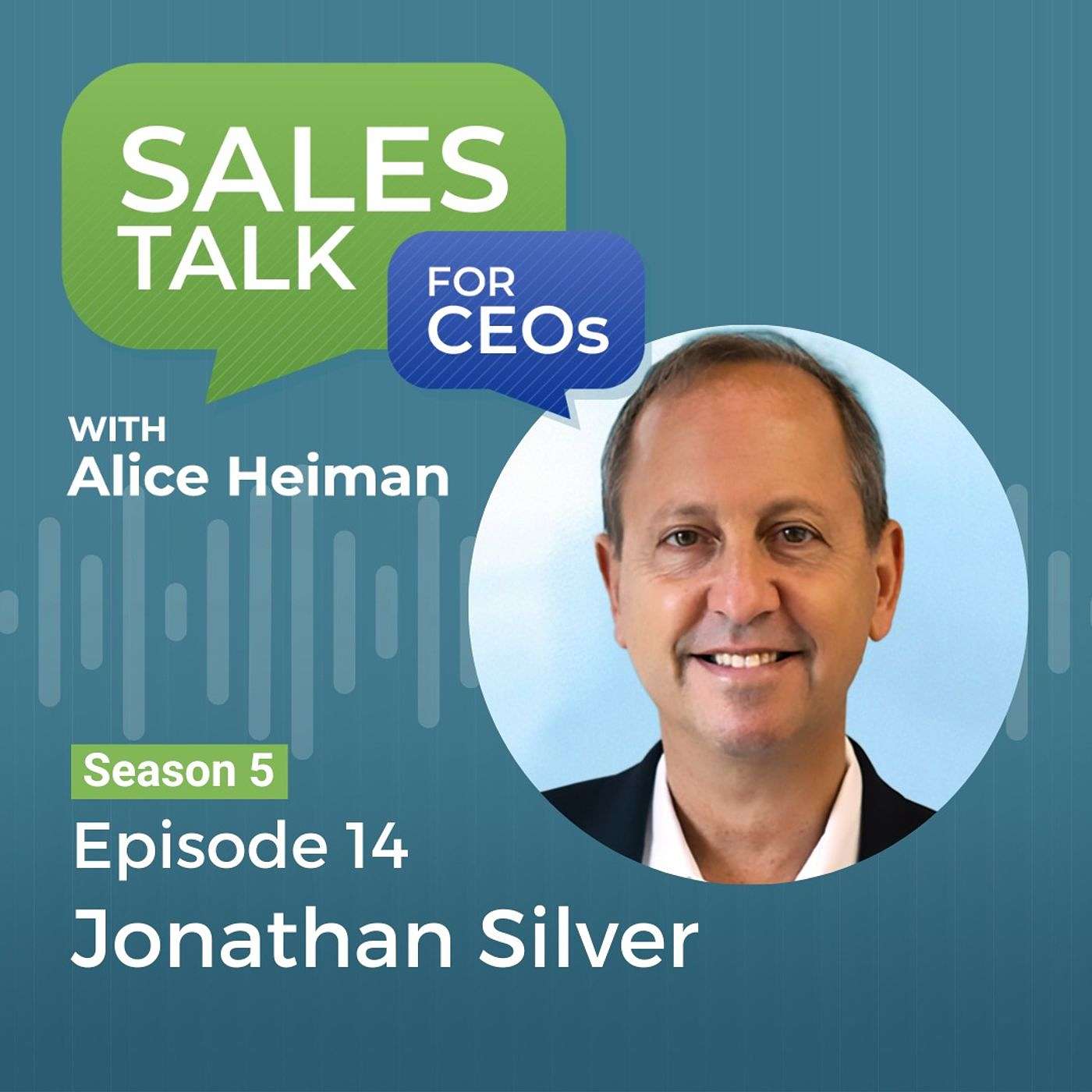
S5 Ep 20CEO's Roadmap to Data-Driven Success: Lessons from Jonathan Silver
Imagine harnessing the power of 140 million credit card swipes to reshape your business strategy. That's exactly what Jonathan Silver of Affinity Solutions does, and he’s here to share his groundbreaking journey with us. In a dynamic conversation with Alice Heiman on Sales Talk for CEOs, Jonathan delves into the art of transforming consumer data into powerful business insights. This episode is a treasure trove for CEOs looking to navigate the complexities of data-driven decision-making and innovative business growth.Why CEOs Should Listen:Strategic Utilization of Consumer Data: Embrace the transformative power of consumer data in shaping business strategies.Business Agility: Learn from Jonathan’s journey about the importance of agility and responsiveness in today’s business world.Sales Team Optimization: Gain insights into assembling a sales force that resonates with your company’s mission and market needs.The Essence of Entrepreneurial Spirit: Discover the significance of resilience and creative thinking in driving business growth. Chapters00:03 The Changing Face of Sales in Business01:29 The Genesis of Affinity Solutions04:21 From Inflatable Potties to Data Pioneers08:04 Pivoting to a Winning Strategy13:06 The Rise of Card-Linked Offers22:05 Building a Robust Sales Team29:54 Achieving Product-Market Fit39:14 Verticalizing for SuccessListen to the full podcast for an in-depth understanding of each chapter. Listen NowAbout GuestJonathan Silver is the Founder and CEO of Affinity Solutions, the leading consumer purchase insights company focused on outcome-based solutions. Affinity provides comprehensive purchase insights and media measurement via exclusive, fully permissioned real-time, consumer purchase data, integrated with key ecosystem partners. This allows for seamless, privacy-centric, data access at an unprecedented scale. Affinity powers solutions for financial institutions, marketers, investment firms, consulting firms, and media & marketing enterprises by providing real-time demand signals and insights on consumer spending which drive high-value decisions that lead to better business outcomes.Silver’s vision for Affinity is to transform data insights into experiences that improve people’s lives. He is a graduate of Wharton and the University of Pennsylvania School of Engineering. Social Links Connect with Jonathan Silver on Affinity Solutions official website:Consumer Purchase Data Tools - Affinity SolutionsConnect with Jonathan on LinkedIn:https://www.linkedin.com/in/jonathan-silver-33b456/Link to CNBC Squawk Box https://www.cnbc.com/2023/11/13/consumer-spending-fell-in-october-according-to-new-cnbc/nrf-retail-monitor-tracking-card-transactions.htmlYou can learn more about and connect with Alice Heiman in the links below.Connect with Alice on LinkedIn:(99+) Alice Heiman | LinkedInCheck out Alice’s website:Alice Heiman - Alice Heiman
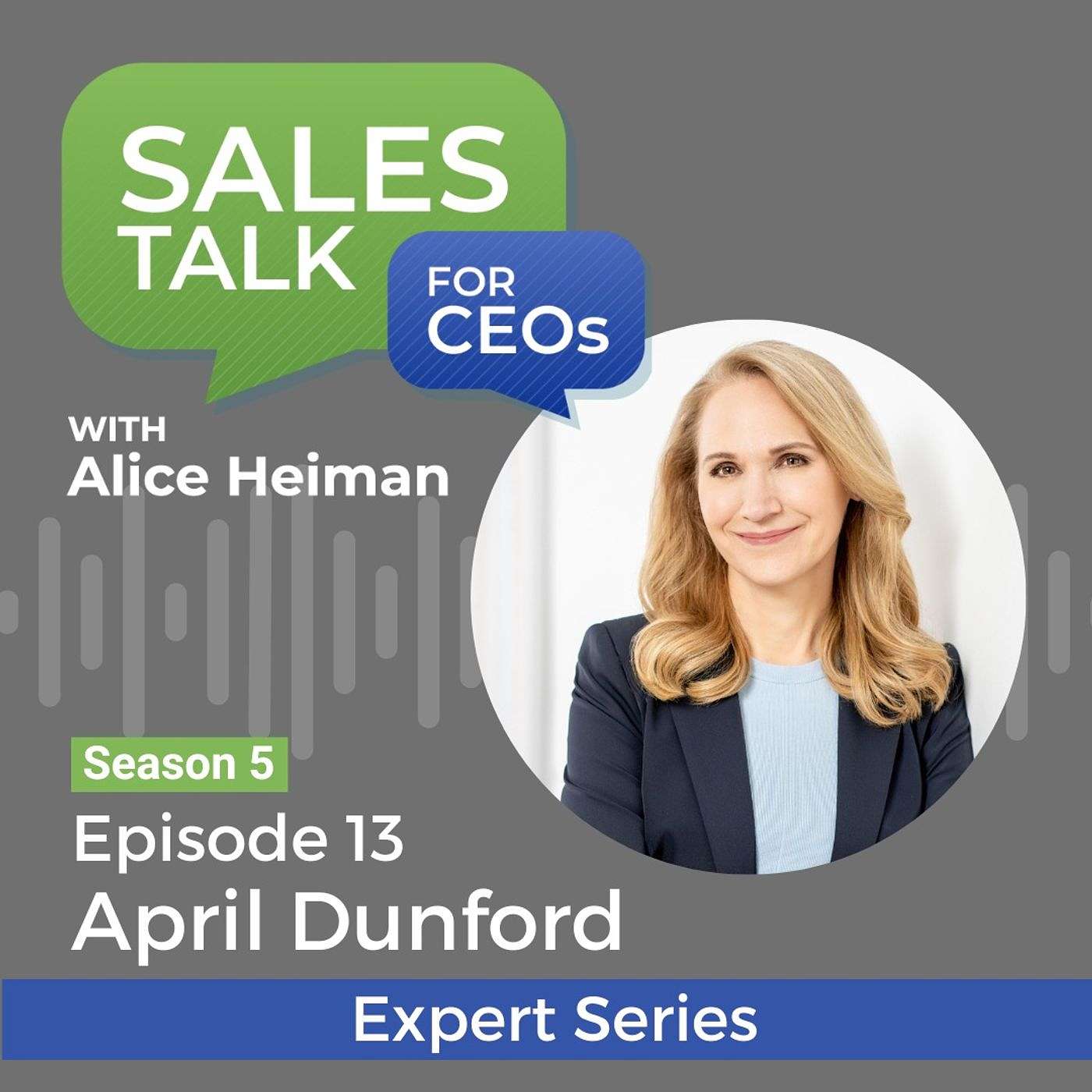
S5 Ep 19Is Your Product Obviously Awesome? with Expert April Dunford
Have you ever wondered why, despite having amazing products, customers still struggle to understand your company's value?April Dunford, an authority on product positioning, discusses the critical role of positioning in sales and marketing. Known for her first book "Obviously Awesome" and her expertise in positioning, April shares her insights on why companies often struggle with positioning their products. She emphasizes that most companies have positioning, but it's not deliberate, leading to misalignment and missed opportunities. April highlights the transformative power of effective positioning, using an illustrative story from her early career where repositioning a product from enterprise CRM to CRM for investment banks led to significant business growth and acquisition by a major player.The episode underscores the common disconnect between how companies perceive their products and how customers understand them. April points out the importance of involving sales teams in positioning discussions, as they have direct insights into customer perceptions and competitors. And describes in her second book, Sales Pitch, how to translate the marketing work done for positioning into sales speak. April advises CEOs to routinely reassess their company's positioning, even if it seems satisfactory, to ensure alignment with market realities. She stresses the need for a cross-functional team approach to redefine positioning involving sales, marketing, and product teams. The episode serves as a crucial reminder for CEOs and sales leaders of the importance of clear and strategic positioning in today's competitive market. April Dunford's insights offer valuable guidance on how to approach this process thoughtfully and effectively to drive business growth and customer satisfaction.This podcast is a must listen and her books are both must reads. Chapters05:26 Lack of methodology and squishiness surrounding positioning in marketing0:09:02 Naming of April Dunford's books: "Obviously Awesome" and "Sales Pitch"11:12 Importance of aligning positioning with customer perception14:01 Components of positioning: competition, differentiation, value, customer, market19:07 Example of a company positioned as Enterprise CRM but found success in investment banking22:36 Shifting positioning to target specific industries led to success25:51 Understanding the buyer's perspective and guiding them through the buying process31:20 Buyers are overwhelmed with information and struggle to make decisions33:56 Poor positioning and difficult buying process on websites.39:07 Cross functional team approach to positioning.42:45 Leveraging product knowledge to identify unique value propositions.44:59 Characteristics of a Best Fit customer and market categories46:13 Mapping positioning to a sales narrative for effective storytellingSocial Links You can learn more about and connect with April Dunford in the links below.Connect with April on LinkedIn:(99+) April Dunford | LinkedInCheck out April's website:April Dunford - Positioning for B2B Tech CompaniesCheck out April's Podcast:Positioning With April DunfordCheck out April's NewsletterPositioning with April Dunford | SubstackYou can learn more about and connect with Alice Heiman in the links below.Connect with Alice on LinkedIn:(99+) Alice Heiman | LinkedInCheck out Alice’s website:Alice Heiman - Alice HeimanAbout GuestI spent the first 25 years of my
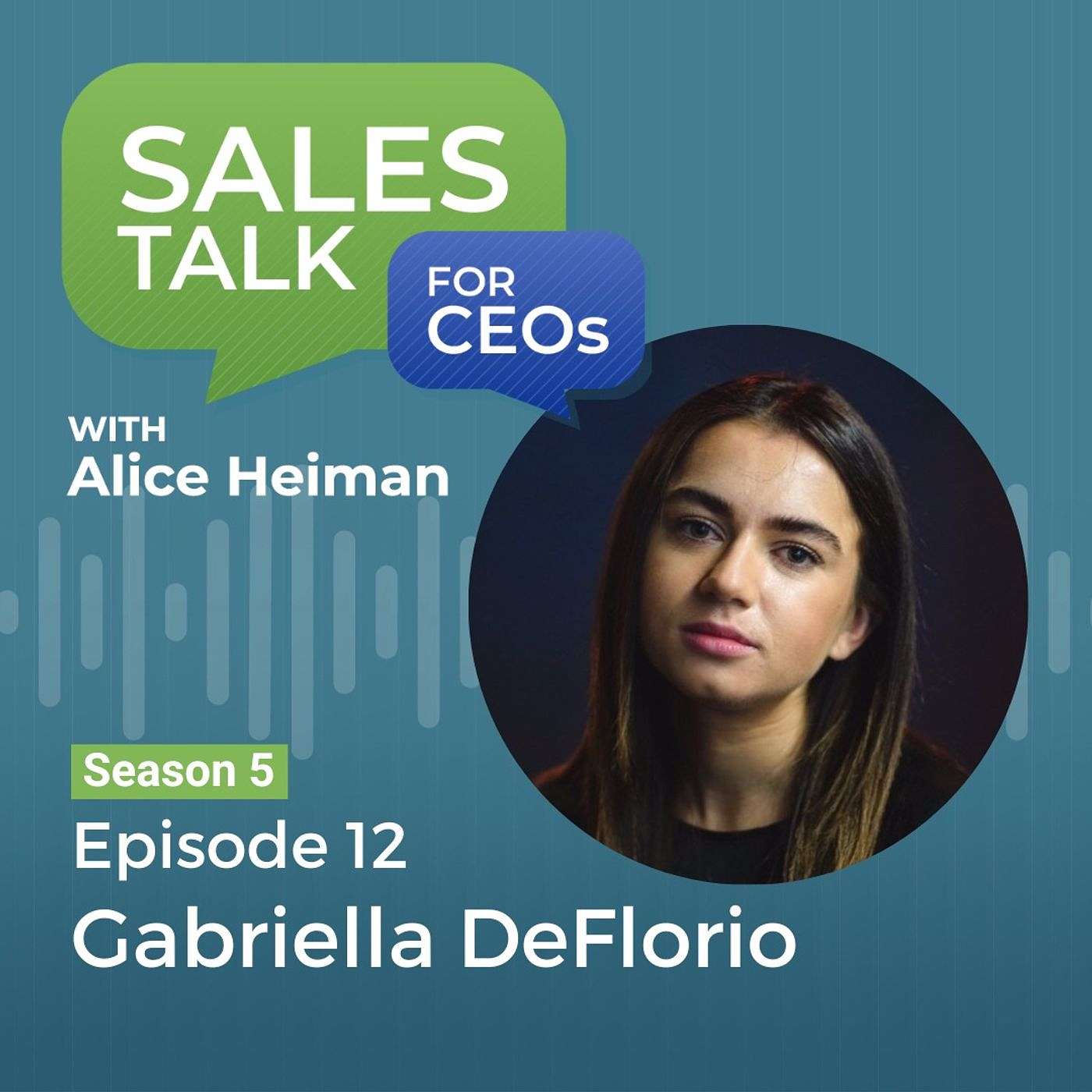
S5 Ep 18Gabriella DeFlorio on Being First to Market: How She Started Prelay
Gabriella enjoyed working with technical and operationally focused people tackling complex problems. She always worked in a team to do sales but didn’t like the lack of transparency to the team members as the deal progressed. She saw a need for a team selling tool. “I really didn’t have any other option than starting this business and seeing where I could go with it.”The team selling space had a huge need and Gabriella DeFlorio of Prelay knew she had to fill that need. Even with all her Go To Market experience, it’s different when you start a category and Prelay did that. She started small with some beta customers and about a year later she was really able to go sell. Her Go To Market background made her know she should be on the frontlines. It allowed her to continue gathering information to shape the product. “You can’t lose touch with the customers.” This keeps her close to her customers today, even though she has a sales team. The first sellers she brought on covered the deals end to end and soon after she brought on customer success and a head of sales keeping herself in the game as the subject matter expert. It was challenging to find the right people for an early stage company. Finding the right people who were ok with the ambiguity and who were utility players and product aware. ”Because of this we’re very focused on knowledge sharing.”Her biggest challenge, becoming a “household name.” Gabriella is excited about having Prelay become a name in the market. She feels it is important to stay focused on awareness. “It’s a space that is just being created.. There’s no team selling product like Prelay.” She stays involved on the product side and has directed her sellers to insert her where she is needed. Listen to her tell the story of starting a company and a category and growing her sales. Chapters00:04 Selling is a team sport, lone wolf sellers are outdated.03:22 Gabriella's background in scaling startups led to creating Prelay.10:54 Thoughtful R&D and user-centric approach in the beginning.13:04 The importance of CEOs staying close to the customer16:20 Challenges of scaling and growing the team22:30 CEO involvement in complex workflows and strategic deals23:49 Balancing involvement in deals with the sales team's capabilities25:03 Discussing the growth of the SE organization26:17 Importance of in-person connections and LinkedIn presence27:36 Building an advisory council for networking and supportAbout GuestIn a past life, Gabriella was an Olympic Trials hopeful and a competitive D1 cross country & track athlete at the University of Michigan. During her competitive running career, 7 leg surgeries failed to keep her off the D1 stage, reinforcing her core approach to life – persistence and perseverance can lead you to achieve feats that may seem impossible at first. Gabriella leveraged the same mindset when entering the tech industry, where she discovered a similar spark of excitement and passion in scaling companies. Taking on Silicon Valley, she helped scale core go-to-market at Fountain (YC W15) and at Truework (Sequoia-backed).Now at Prelay, she is building the future of revenue team collaboration.To learn more about Prelay, you can get in touch via gabriella (@) prelay.comSocial Links You can learn more about and connect with Gabriella DeFlorio in the links below.Connect with Gabriella on LinkedIn:(99+) Gabriella DeFlorio | LinkedInCheck out Prelay's website:Prelay | Drive Revenue Faster as a TeamYou can learn more about and connect with Alice Heiman in the links below.Connect with Alice on LinkedIn:<a href="https://www.linkedin.com/in/a
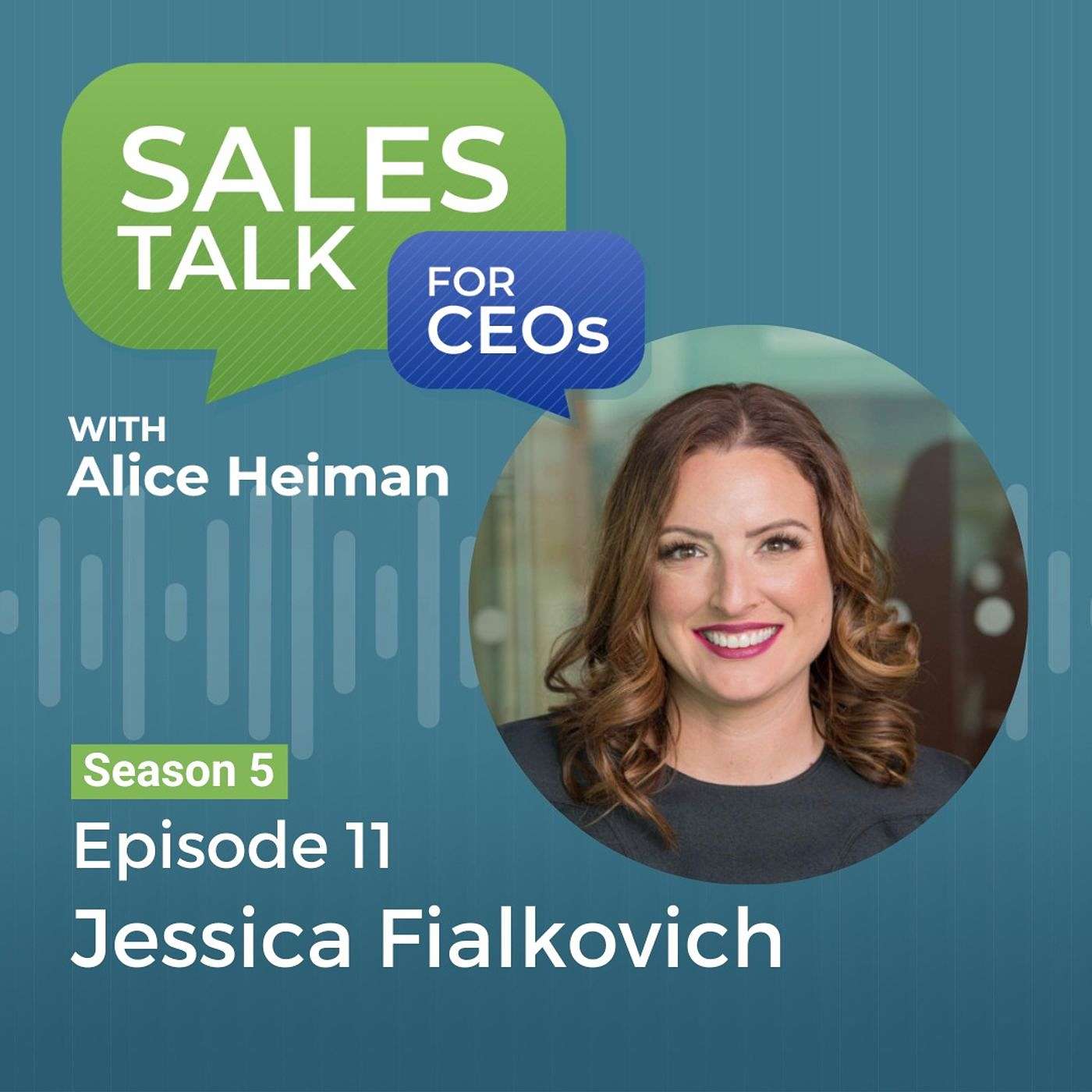
S5 Ep 17Successful Growth through Acquisition with Jessica Fialkovich
How do you wind up being a business broker after a luxurious career in the high-end wine business?Funny story. After working in the corporate world around 2008 and 2009 Jessica Fialkovich and her husband saw her friend who had a luxurious wine business brokering really high-end wines around the world. They thought how fun it would be to taste wine and travel for a living so with the help of their friend started their own wine business. Three years later, it turns out that tasting wine all day was exhausting and they decided to return to something more corporate. They hired a business broker to help them sell the wine business and as they say, the rest is history. Jessica and her husband now own Transworld Business Advisors, a thriving company offering M&A services and Exit Factor, helping small and midsize businesses to increase their valuation for an eventual sale. They’ve grown tremendously over the 10 years and how did they do it? At first, networking, door-knocking, and becoming a valued resource in her local business community. More recently she’s authored a very useful book called, Getting the Most for Selling Your Business and she and her husband have acquired several businesses. Jessica shares her secrets to making acquisitions. Successful acquisitions require patience, relationship-building, and a knack for spotting opportunities. As Transworld Business Advisors continues to grow, their commitment to community service and client relationships ensures a promising future.Join us in exploring Jessica's remarkable journey and uncover the secrets to thriving through strategic acquisitions!Chapters02:25 Jessica's transition from the wine business to business brokerage04:08 Decision to join a franchise model for business brokerage08:18 Challenges of hiring salespeople and the importance of cultural fit12:00 Growth of sellers and team expansion in recent years14:17 Researching and selecting new markets for expansion18:51 Writing a book as a lead generator23:07 Reasons for growing through acquisition: people, market share, services23:56 Importance of timing and readiness for acquisition deals25:25 Acquiring "fixer upper" businesses for strategic growth28:02 Learning and adapting to the acquired organization's operations31:33 Jessica's company culture and growthAbout GuestAs a business exit expert and speaker, Jessica Fialkovich helps small businesses owners with under $10 million in revenue who desire to build a legacy.She provides insights and guidance around the overwhelming world of buying and selling a business, giving peace of mind throughout the decision-making process.Jessica Fialkovich offers 10 years of thought leadership within small business M&A and has personally bought and sold multiple companies.Social Links You can learn more about and connect with Jessica Fialkovich in the links below.https://jessicafialkovich.com/https://www.tworld.com/locations/colorado/https://exitfactor.com/Connect with Jessica on LinkedIn:https://www.linkedin.com/in/jessicafialkovich/You can learn more about and connect with Alice Heiman in the links below.Connect with Alice on LinkedIn:https://www.linkedin.com/in/aliceheiman/Check out Alice’s website:https://AliceHeiman.com
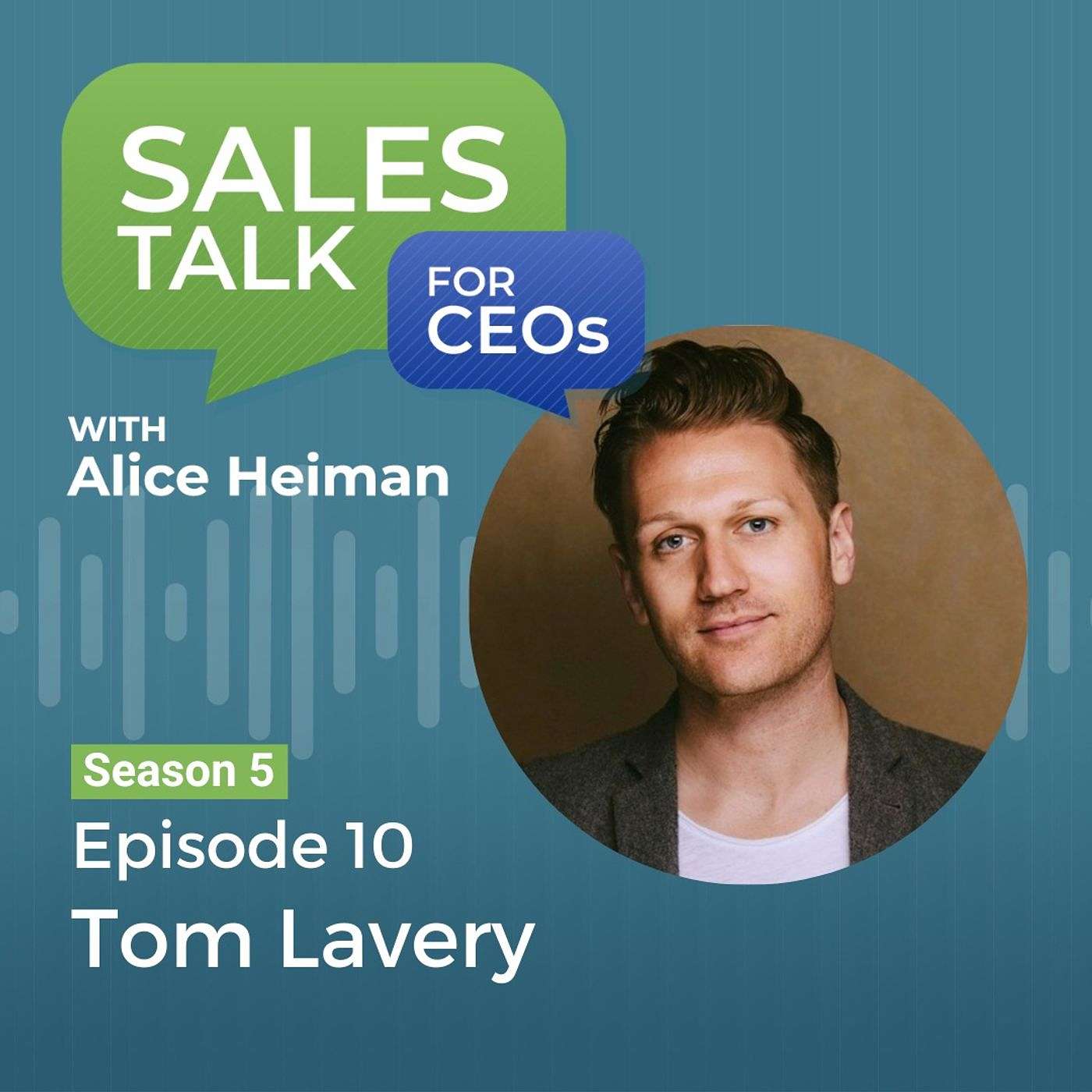
S5 Ep 16Customer Success and Culture: 2 Keys to Success with Tom Lavery
When investors are leaning on you to get “New Logos” you can lose sight of customer success and it can change or damage your culture. For Tom Lavery at Jiminny, compromising on customer success or culture were not options. Tom was a VP of sales before he, his wife and their technical cofounder started the company. He set out to solve some of the problems he faced around coaching as a sales leader. Tom understands that effective sales leadership starts with data. Jiminny's platform records, transcribes, and analyzes video, voice, and email communications, providing valuable insights for sales leaders.From the beginning he did the selling and his first hires for sales were not sellers, but customer success managers. This was pivotal to his growth because customers had high user adoption and because of that renewed and told others. His entire team is focused on customer success because of his strong culture. In seven short years, his team has grown tremendously, and they work as a team to retain customers, find new prospects and guide buyers through to a decision. Even with his amazing team, he plays an important role in sales. Listen to Tom share his growth story with Alice and his passion for maintaining a great culture. Chapters02:52 Tom Lavery's background and inspiration for starting Jiminny09:49 Getting the first sales through networking and local interactions12:22 User adoption and expanding the use of Jiminny12:29 Product market fit is tricky and takes time to achieve.15:22 Customer success was a priority and received more investment than sales.20:19 A formal referral process was implemented to drive referrals.24:55 Customer success and sales must work together in a team.27:14 CEO's involvement in sales is based on deal management and support.30:36 Importance of data mining and insights in sales and marketing.37:14 Changing players in the team as the company grows and matures.38:04 Tom Lavery talks about never giving up and offering supportAbout GuestTom has over 15 years of experience in high-growth VC/PE-backed SaaS companies. Tom is currently the CEO and Founder of Jiminny, a Conversation Intelligence Platform that helps companies maximize their team's revenue. Prior to starting Jiminny, he was SVP at Reward Gateway and saw them through two PE-backed buyouts.Social Links You can learn more about and connect with Tom Lavery in the links below.Connect with Tom on LinkedIn:(99+) Tom Lavery | LinkedInCheck out Jiminny's website:Revenue & Conversation Intelligence Software | Jiminny(99+) Jiminny: Overview | LinkedInYou can learn more about and connect with Alice Heiman in the links below.Connect with Alice on LinkedIn:(99+) Alice Heiman | LinkedInCheck out Alice’s website:Alice Heiman - Alice Heiman
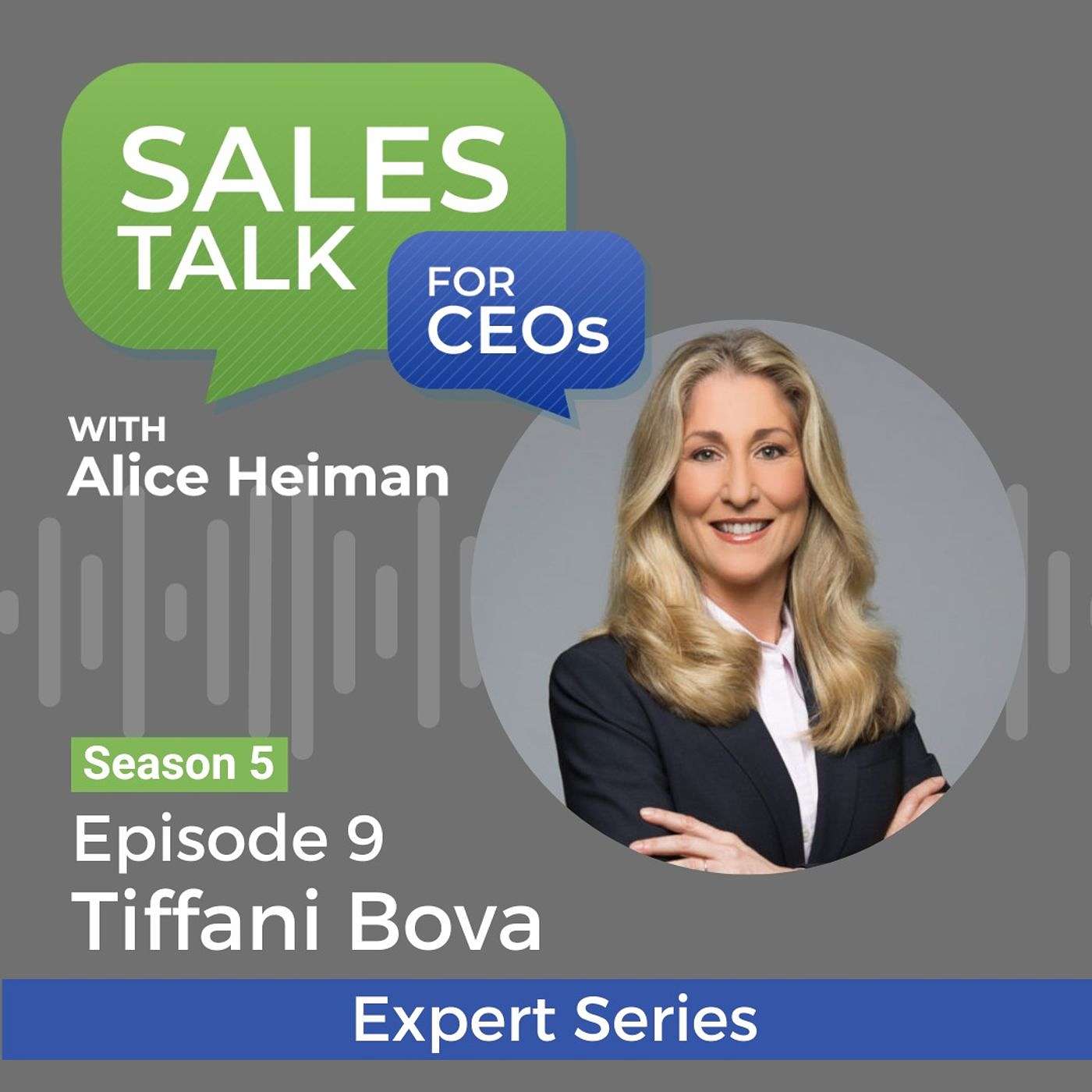
S5 Ep 15The Power of Employee Experience: Insights from Tiffani Bova
In a world where businesses prioritize customer experience, CEOs must grasp the profound impact of employee experience. In a compelling discussion with Tiffani Bova, author of "The Experience Mindset," we explore the importance of elevating the employee experience. Tiffani emphasizes the need for CEOs to understand the link between employee satisfaction and customer success, fostering a cycle of growth.Tiffani underscores the undeniable connection between employee and customer experiences. She asserts that happy employees lead to happy customers, emphasizing the need for a supportive work environment. She states, "To win customer love, you must first earn employee affection." This highlights the pivotal role of the employee experience in driving customer satisfaction.To enhance the employee experience, CEOs should align KPIs for both customer and employee satisfaction. Tiffani recommends questions like, "What are your top customer experience KPIs?" and "Is leadership success tied to these KPIs?" Harmonizing metrics and compensation ensures equal importance for both customer and employee satisfaction. What impacts one will impact the otherImproving the employee experience doesn't require massive changes. Tiffani advises CEOs to begin with one aspect at a time, addressing pain points and streamlining processes. Conducting pulse surveys and seeking employee feedback initiate a culture Tiffani Bova's insights highlight the pivotal role of employee experience in company success. CEOs must prioritize employee well-being, align metrics, and make incremental changes. Embracing modern tech and ensuring it is making jobs easier not harder is vital. CEOs must balance employee experience with customer experience for lasting success.Chapters01:35 Tiffani Bova's background and book "The Experience Mindset".04:55 The research on the impact of employee experience on customer experience.08:07 CEOs acknowledging the lack of ownership of employee experience.12:27 The disconnect between customer-centricity and employee experience.15:23 Employee experience impacts customer experience in the long run.18:19 Process alignment and technology integration improve employee experience.21:02 Simplify tasks and processes to improve employee experience.26:47 Importance of ongoing conversations and employee input30:18 Happy customers don't always mean happy employees34:41 Outdated technology is a major challenge for employeesAbout GuestTiffani Bova is a renowned business strategist, speaker, and author known for her expertise in sales, growth, and innovation. She has held prominent positions at leading technology companies, including Salesforce, where she served as the Global Customer Growth and Innovation Evangelist. Tiffani is recognized for her insights into customer-centricity, digital transformation, and the future of business.Throughout her career, Tiffani has been a sought-after keynote speaker and thought leader, sharing her knowledge on topics such as sales and marketing strategies, customer experience, and the impact of emerging technologies. She is also the author of the book "Growth IQ," which explores various strategies for driving business growth.Tiffani Bova's work has made her a respected voice in the business world, and she continues to inspire and educate professionals through her speaking engagements, writings, and consulting work.Social Links Connect with Tiffani Bova on her official website:Tiffani BovaFind Tiffani Bova's books, The Experience Mindset and Growth IQ on her websiteTiffani Bova - The Experience MindsetTiffani Bova - Growth IQConnect with Tiffani on LinkedIn:
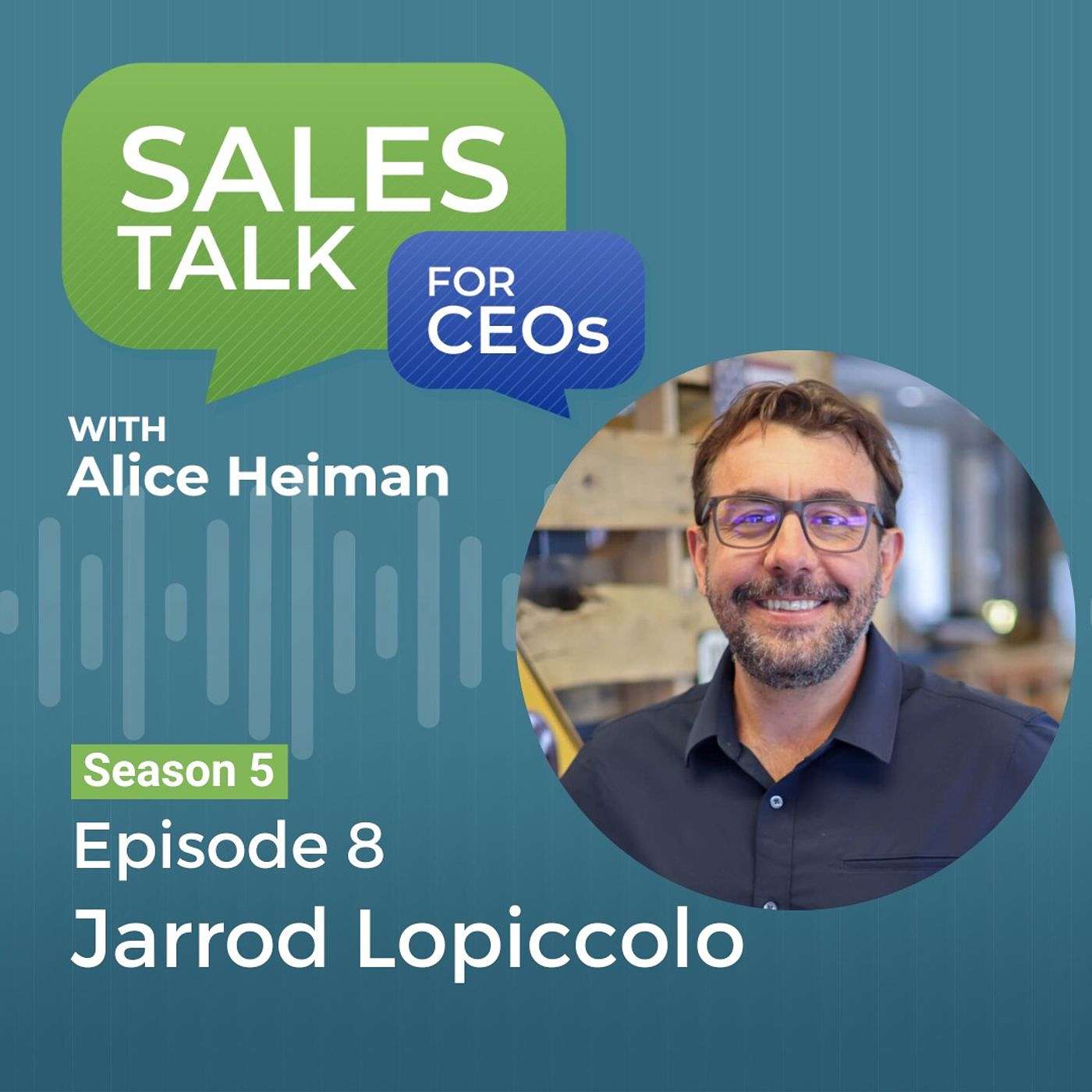
S5 Ep 14CEO Jarrod Lopiccolo on Sales Success and Giving Back
Twenty years ago, a couple, sat with their laptops at their house and launched a business. It was some uncharted territory, but they dove right in. Who knew where they would be 20 years later. Still happily married, kids grown, business booming, over 60 employees and a strong commitment to community. An absolute success story. Jarrod and Alice explore the very essence of Nobel Studio’s sales success due to Jarrod’s focus and determination emphasizing the pivotal role that networking and relationship-building play in the process. It's not just about closing deals; it's about forging meaningful connections.But that's not all! Jarrod shares the fascinating story of how Noble Studios discovered their niche in the competitive travel and tourism industry. Their journey to becoming an authority in their field is both inspiring and enlightening.And what sets Noble Studios apart isn't just their business success – it's their commitment to giving back. Jarrod delves into the heartwarming impact of their philanthropic program, Noble Deeds, and how it's not just about profit but also about making a difference in the communities where they live.This podcast episode underscores the profound importance of sales in fueling business growth. It's also a heartwarming reminder of the value of giving back to the community, making it an episode that's not to be missed. So, join Alice and Jarrod on this captivating journey as they share insights, stories, and the passion that drives Noble Studios to new heights.Chapters05:29 Starting the company and background of the founders10:31 Founder-led sales and the value of effective communication13:37 Investing in a high-octane sales person to scale.19:14 Expanding in the Bay Area through referrals and relationships.22:10 Growth and finding a niche23:00 Asking what success looks like for clients26:43 Decision to focus on travel and tourism industry31:46 Starting Noble Deeds to give back to the community35:30 CEO's role in sales as the company matures38:23 CEO's involvement with existing accounts and triggers for involvement42:30 Importance of proactive CEO involvementAbout GuestJarrod Lopiccolo is the CEO of Noble Studios, a creative digital performance marketing agency. With over 20 years of experience, Jarrod has led Noble Studios to become a global company with a focus on building digital infrastructure and providing creative and performance marketing services. He is known for his leadership skills and his commitment to giving back to the community.Social Links Connect with Jarrod Lopiccolo on Noble Studios official website:Noble Studios | Creative Digital Performance Marketing AgencyConnect with Jarrod on LinkedIn:(99+) Jarrod Lopiccolo | LinkedInYou can learn more about and connect with Alice Heiman in the links below.Connect with Alice on LinkedIn:(99+) Alice Heiman | LinkedInCheck out Alice’s website:Alice Heiman - Alice Heiman
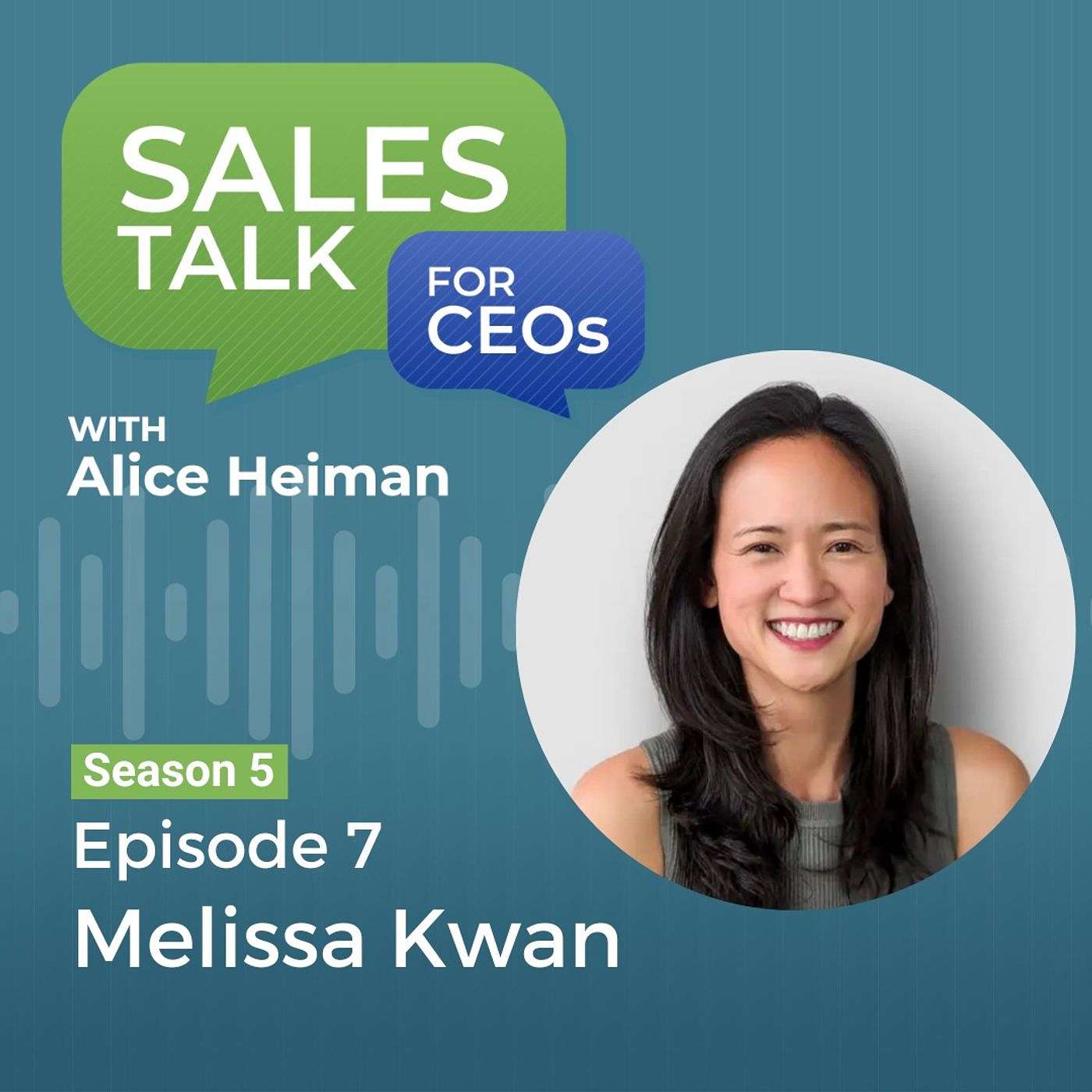
S5 Ep 13Doing What You Love with Melissa Kwan
After building and exiting two Blue Ocean startups that, in her own words, were painful, my guest, Melissa Kwan, figured it out."It's important to know what you want to do, but even more important to know what you don't want to do. And I had two startups, as you mentioned, that were quite painful in the sense that I didn't think I was very smart or very strategic in choosing the actual idea and choosing the product. But these aren't things that you just know right off the bat. You have to learn these things through experience.”She and her partner built eWebinar in a way that required little overhead and allowed them to travel and work from anywhere. With no one to sell but herself she picked up the phone and called the people she knew and that got her started, but it wasn’t enough. She took a course and quickly learned that sharing content on LinkedIn about her journey as an entrepreneur would drive traffic, but she didn’t do it for that alone. She recognized that her story would help others. I’m not talking about a little self-promotional post here; I’m talking about taking hours to determine the right content and write and edit it before posting to ensure the maximum impact. It worked. Along with that she learned that appearing on podcasts to tell her story would be a great way to get the word out and she’s now been on over 100 podcasts. She also hosts her own podcast called, ProfitLed. Melissa's journey is a testament to innovation and adaptability. It's a reminder that success lies in solving real problems. Chapters01:22 Melissa explains what eWebinar does07:41 Melissa's strategy of introducing a validated business model in a blue ocean market09:43 The skills needed to build a successful business can be acquired12:12 Building a better product by improving existing solutions17:28 Founder-led sales to get initial customers19:56 Transitioning to marketing and SEO for growth24:11 Using the eWebinar software as the demo experience26:21 Attribution is difficult due to dark social, multiple strategies required28:39 Podcasts as a marketing strategy for building brand and exposure30:22 Initial experience with podcast agency and decision to self-place36:40 SEO and content generation as the top lead generation method39:16 Lack of high-quality leads in companies42:37 Rethinking sales strategies to adapt to changing buyer behaviorAbout GuestYou know webinars right? They're amazing and people love them. It's the only way to get in front of all your customers without hopping on a plane.But there's a massive problem: someone has to be there to do them live. Which makes them completely unscalable, especially if you have customers in different time zones. eWebinar automates this process by taking a video and delivering it like a webinar, so you can do hundreds of the same webinar without ever needing to actually be there in front of a camera to do the webinar. Our chat feature lets attendees ask you questions even if you're not there. You can hop in to respond live if you want, but if you're not there, you can respond later via email. This works just like any support chat system (chat bubble you see when you land on a website).eWebinar saves people from doing the same boring demo, onboarding, and training webinar over and over again by turning any video into an interactive webinar that they can set on a recurring schedule or make available on-demand. Companies are using eWebinar to deliver hundreds of webinars to customers and prospects every month without a live host. Resulting in happier team members and most importantly, delightful customers."On live webinars, it's hard to answer every question before the session ends. Now we run over 100 webinars a month and only spend an hour a day answering every message." - Anett
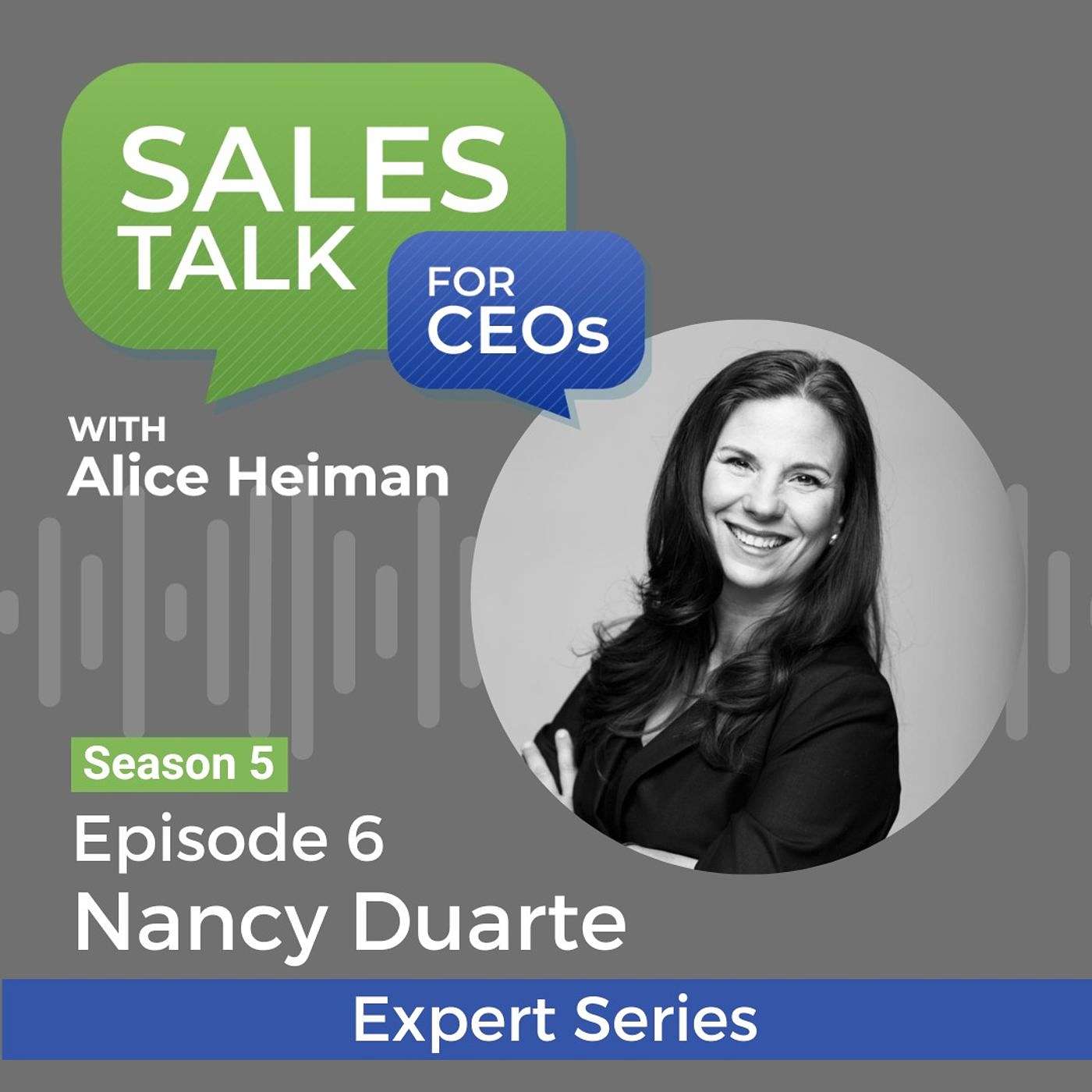
S5 Ep 12CEOs Can Craft & Deliver Compelling Messages that will be Remembered with Nancy Duarte
From mastering conversations to commanding the stage, dive into the mind of communication expert Nancy Duarte.Alice and Nancy’s conversation reveals that, in an era of fleeting attention, CEOs must craft compelling narratives.For these leaders, understanding their audience isn't just a tip - it's a mandate. Nancy stresses the significance of empathy and preparation, urging CEOs to don the shoes of their audience.Gone are the days of static presentations. The modern CEO story unfolds with dynamic gestures, vocal versatility, and perfectly-timed pauses, all backed by Vanessa Van Edwards’ groundbreaking research on TED Talks.But, how do CEOs craft this captivating narrative? It starts with the big idea, gauges the audience's current state, and projects a vivid future. Visual aids. Essential. Practice. Non-negotiable.As businesses evolve, CEOs mustn’t just communicate; they should inspire. Embracing storytelling, these corporate narrators don't just lead businesses, they sculpt industries.Join Alice and Nancy as they decode the art of impactful communication and envision a future where CEOs aren’t just heard but remembered. Tune in to the Sales Talk for CEOs podcast and let your leadership voice be the difference!Chapters01:19 Need for CEOs to improve their communication and presentation skills02:50 Importance of empathy in effective communication04:41 Three key factors to consider: story, visualization, and delivery10:42 Ongoing conversations for long-term success and reinvention13:28 Staying updated on news and developments related to the audience15:49 Using a triangle framework to outline the big idea and desired transformation19:41 Recognizing qualitative signs of audience engagement and understanding23:12 Challenges of gauging audience engagement in virtual presentations.29:14 Considering alternative presentation formats, such as interviews.31:08 The importance of practicing and getting comfortable with the material.35:07 Have experts prepared to answer questions you can't.40:48 Gestures, pausing, and purposeful movement enhance delivery.44:55 Research on how to end a talk effectively47:08 CEOs as thought leaders and gaining an unfair advantageAbout GuestNancy Duarte: A Luminary in Communication and StorytellingNancy Duarte, the CEO of Duarte, is renowned for her expertise in the realm of communication and storytelling. With a career spanning decades, Nancy has firmly established herself as an American writer, speaker, and business leader Nancy Duarte - Wikipedia. Her profound knowledge is encapsulated in her books, one of which is titled "Slide:ology: The Art and Science of Creating Great Presentations" Slide:ology® |.Beyond her literary contributions, Nancy is recognized as a communication expert who has offered her expertise to help brands articulate their stories compellingly Nancy Duarte Built A 30 Year Career In Silicon Valley On The Art Of Storytelling (forbes.com). Her achievements and insights have caught the attention of renowned publications such as Fortune, Time Magazine, Forbes, and the Wall Street Journal, to name a few Nancy Duarte — Faith Driven Entrepreneur.Throughout her professional journey, Nancy has encountered various adversities, which she has transformed into learning experiences, further enriching her expertise and perspective Interview | Nancy Duarte, CEO | The Industry LeadersIn essence
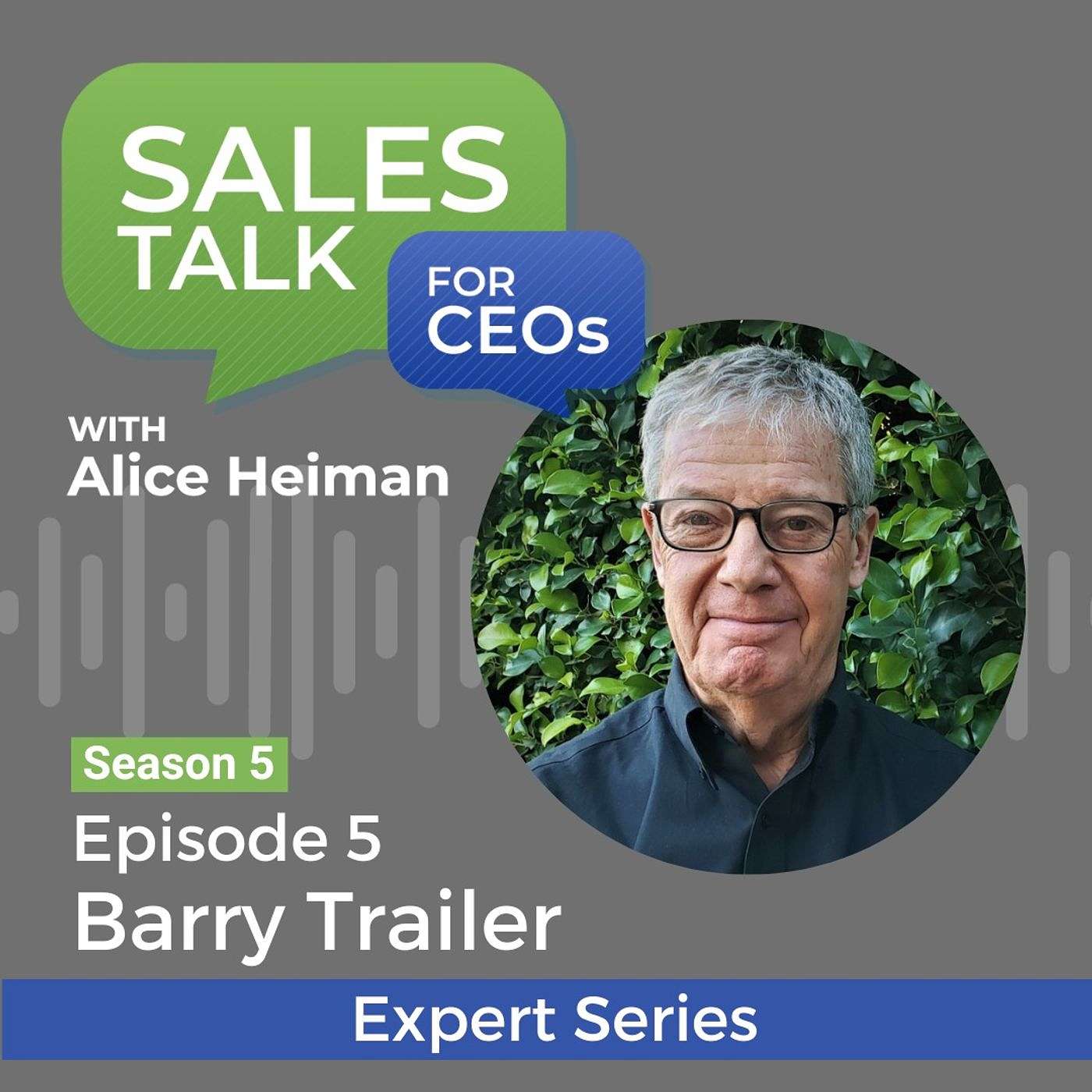
S5 Ep 11The Easiest Way to Get More Business with Barry Trailer
CEOs, do you want to unlock the secret to sky-high sales?Your loyal customers might just have the answers you seek.Barry Trailer from Sales Mastery Advisors highlights a goldmine of opportunity: diving deep into repeat and referral sales. Believe it or not, expanding within your existing customer base can yield better returns than braving new territories.Furthermore, while data is crucial, it's quality over quantity. CEOs should focus on insightful data interpretation, emphasizing process-oriented coaching, adept tech use, and consistent training.Barry's revealing Sales Performance Scorecard survey shows just 53% of reps hitting or surpassing their quotas, signifying a pressing need to revamp strategies.Interestingly, the survey suggests a direct link: the stronger the processes and relationships, the better the sales performance. With peak levels, 61% of reps excel in their roles.To truly drive sales momentum, CEOs must revitalize internal processes, and make sure the focus is on nurturing customer relationships and optimizing data utilization. By focusing on these cornerstones, soaring sales are no longer just a dream.Want to dive deeper? All the riveting details await in this informative episode.Chapters00:02 Introduction to the podcast and topic of sales strategies01:07 Discussion on the easiest ways to get more business04:20 The challenges of new reps in new territories07:12 The importance of doing the hard work in sales12:16 The importance of actionable information from data12:51 Levels of relationship and understanding in data analysis14:19 Introduction of the sales performance scorecard assessment.16:22 Low revenue plan attainment and reps meeting quota.18:23 Slow progress in implementing artificial intelligence for sales.20:08 The importance of levels of relationship and process implementation.27:42 Random process can be successful but lacks predictability.29:18 Buyers are better at buying than sellers are at selling.30:16 Many sales teams do not fully utilize the tools provided.31:46 Lack of user adoption and misuse of tools leads to inefficiency.36:11 Managers need coaching on how to coach effectively.38:48 Coaching is often misunderstood and not properly implemented.43:23 Process-oriented coaching and technology can improve sales outcomes.44:28 CRM should be used as a system of record and engagement.About GuestBarry Trailer is prominently associated with SalesMastery, holding a leadership position as a past president of both Miller Heiman and Goldmine. Miller Heiman is recognized as a world-class sales training firm, while Goldmine is renowned for its Customer Relationship Management (CRM) applications. Barry Trailer's professional experiences extend to the digital platform LinkedIn, where he maintains a professional profile, emphasizing his significance in the global business network. Furthermore, Barry's insights on the pivotal role of a company's coaching approach in influencing win rates have been highlighted, suggesting his expertise in sales management and strategiesSocial Links You can learn more about and connect with Barry Trailer in the links below.Connect with Barry on LinkedIn:(99+) Barry Trailer | LinkedInCheck out Sales Mastery website:SalesMasteryYou can learn more about and connect with Alice Heiman in the links below.Connect with Alice on LinkedIn:(99+) Alice Heiman | LinkedInCheck out Alice’s website:Alice Heiman - Alice Heiman
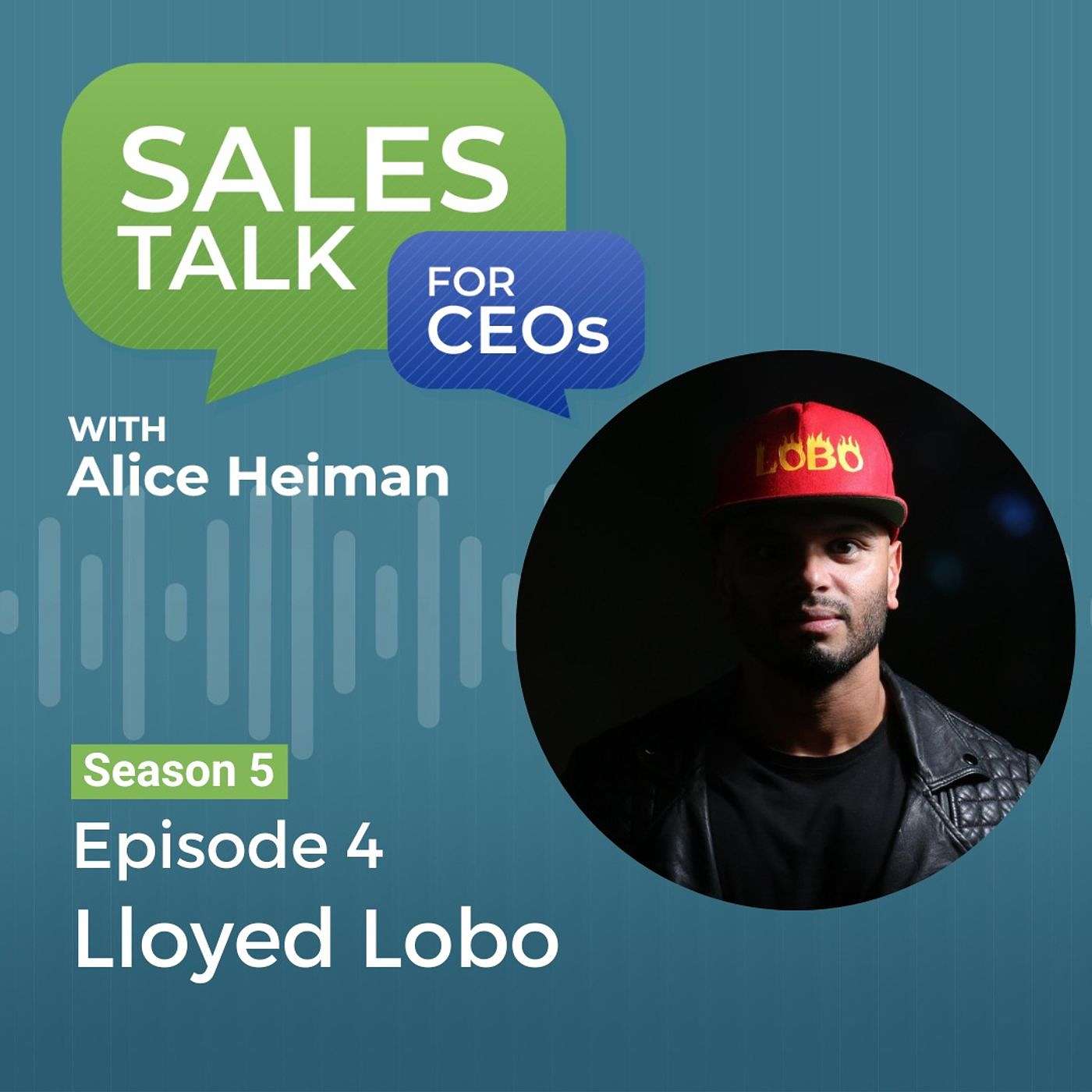
S5 Ep 10From Grassroots to Greatness with Lloyed Lobo
In the age where traditional sales tactics seem obsolete, CEOs and founders are shifting to innovative strategies. Lloyed Lobo, co-founder of Boast, accentuates the importance of community-led growth. His journey, from an engineer to a salesperson, and ultimately, to the co-founder of a company aiding businesses in accessing R&D funding, underlines the value of community.Lloyed divides community-led growth into four stages: audience, community, movement, and cult. He believes that it starts with a passive audience, and, with engagement, it transforms into an active community. When this community works collectively towards a cause, it becomes a movement, and finally, with deep-rooted beliefs, it can shape into a cult (in a good way).By curating events, insightful blog posts, and actively engaging with his audience, Lloyed created a trusted hub for entrepreneurs. He also emphasizes founder-led sales in a startup's initial stages, suggesting that personal touchpoints build credibility and rapport.Furthermore, Lloyed points out that community-driven platforms don't just boost sales but propel innovation by fostering a collaborative space for knowledge sharing. As the world progresses, businesses that prioritize and integrate community-building will emerge as leading brands.Chapters00:39 Introduction of special guest Lloyed Lobo, co-founder of Boast.03:55 Boast integrates with technical and financial systems to streamline funding.08:05 Lloyed Lobo's journey from engineering to sales to co-founding Boast.12:10 The challenges of cold calling and finding the right audience14:39 Framework for targeting the right audience: passion, niche, propensity to pay, ease of access15:56 Identifying white spaces in the market: lack of support and tactical content20:16 Hosting meetups and the importance of consistency22:29 Understanding the ideal customer profile and their aspirations25:46 Using events and community to engage and build loyalty28:57 Founder-led sales and the importance of product-market fit33:05 Hiring for trajectory and the importance of grit and determination35:24 Founder reinventing their job and excitement of trying new things39:18 The role of community in building enduring brands.41:12 Lloyed Lobo's journey from humble beginnings to success.45:18 The importance of loving your customer and adding value.45:43 Lloyed Lobo's book "From Grassroots to Greatness".About GuestLloyed Lobo, an entrepreneur, podcast host and community builder, experienced the Gulf War as a young refugee in Kuwait, witnessing the strength of community in evacuating the population to safety. As the co-founder of fintech platform Boast.Al, he leveraged the Community-Led Growth model to bootstrap the company to $10 million in annual recurring revenue while also co-founding Traction, a community empowering more than 100k innovators through connections, content, and capital.Lloyed is also the author of ‘**From Grassroots To Greatness: 13 Rules to Build Iconic Brands with Community Led Growth’ **(foreword by Jason Lemkin), which covers tactical advice from community-led businesses both big and small, such as Apple, Harley Davidson, Nike, Crossfit, HubSpot, and many more to help readers attract passionate and devoted fans of their own. The book topped Amazon’s new release charts in various categories, including Startups and Business Technology, within mere hours of its pre-sale launch.About CompanyBoast.ai is a leading financial technology firm that simplifies the process for companies to access government incentives, including R&D tax credits and innovation grants. Leveraging a blend of expertise and automation, Boast.ai streamlines the claims process, maximizes claims amounts, and reduces the risk of audits. With their integrated platform, businesses ca
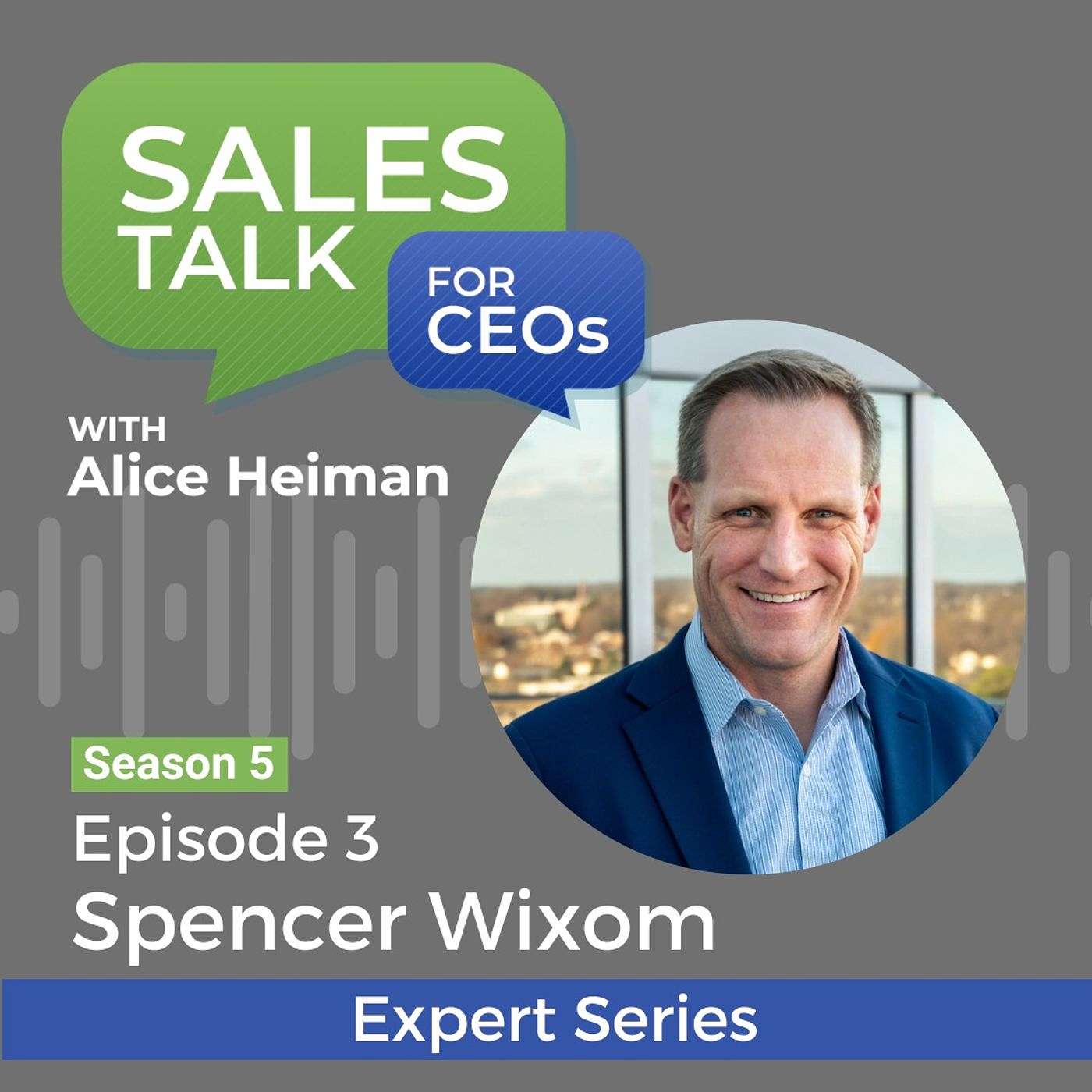
S5 Ep 9Reimagining Sales for the New Era with Spencer Wixom
Wouldn’t you love to get into the mind of your sellers and understand exactly what they are thinking? Wouldn’t you love to know what they are struggling with most?If you could read their minds, or if you asked, what would your sales leaders say it is and what would your sellers say? Spencer Wixom from The Brooks Group says that his research shows the answer you likely will get if you ask is prospecting and discovery calls. Why, because it’s hard. Harder these days than ever and leaders are still teaching and depending on old methods that don’t work. Spencer’s insights shed light on the challenges of prospecting and discovery, where traditional modes of communication still reign supreme. In the price-sensitive market landscape, he champions the mantra of selling value over price, urging sellers to convey their solution's tangible ROI.But what truly stands out? Spencer’s attention to the emotional and motivational pulse of sales teams. Recognizing the evolving motivations of the younger generation and the nuances of hiring and retention, he underscores the importance of CEOs understanding and catering to individual seller drives.Join Alice as she unpacks Spencer's strategies, exploring the future of sales and the critical role CEOs play in shaping it.Chapters02:02 Importance of having a simple, fundamental sales process05:33 Study shows that prospecting and discovery are the biggest struggles11:25 Introducing a formal referral selling program can increase results13:06 Connecting people with similar issues strengthens trust in relationships19:53 Salespeople need to understand customer value, not just product features.24:33 Recognizing trigger events to understand the value of products/services.25:54 Burnout and lack of motivation among sales development reps27:58 Generational differences in motivation32:05 Balancing work-life priorities and productivity36:09 Customer indecision and closing challenges38:40 The importance of the sales process and relationship building39:14 The pressure on salespeople to close deals42:04 The importance of team selling and gaining commitment48:42 The importance of empathy and understanding buyers' struggles51:42 Importance of understanding natural capabilities and skills for job success55:26 Shift in demographics and work dynamics with millennials and Gen Z About GuestSpencer Wixom is the President & CEO of The Brooks Group. His primary responsibility is leading the organization to deliver transformational performance improvement in their client’s sales teams. This is done by harnessing the collective effort and expertise of The Brooks Group Executive team and empowering market-leading talent up and down the organization. Spencer joined The Brooks Group after many years leading global teams as an executive in the sales transformation space, including marketing, sales enablement, research and analytics, and client success. About HostThe Brooks Group is an award-winning organization specializing in sales training and classes. With a focus on offering top-tier sales training solutions, the Brooks Group aims to empower sales teams to reach their full potential and drive significant business results. Their training programs are designed to be impactful, customized, and aligned with the unique needs and goals of each client they serve. Although detailed services were not provided, the multiple awards and client testimonials indicate a strong reputation and effectiveness in delivering their sales training services. Social Links You can learn more about and connect with Spencer Wixom in the links below.Connect with Spencer on LinkedIn:(14) Spencer Wixom | LinkedI
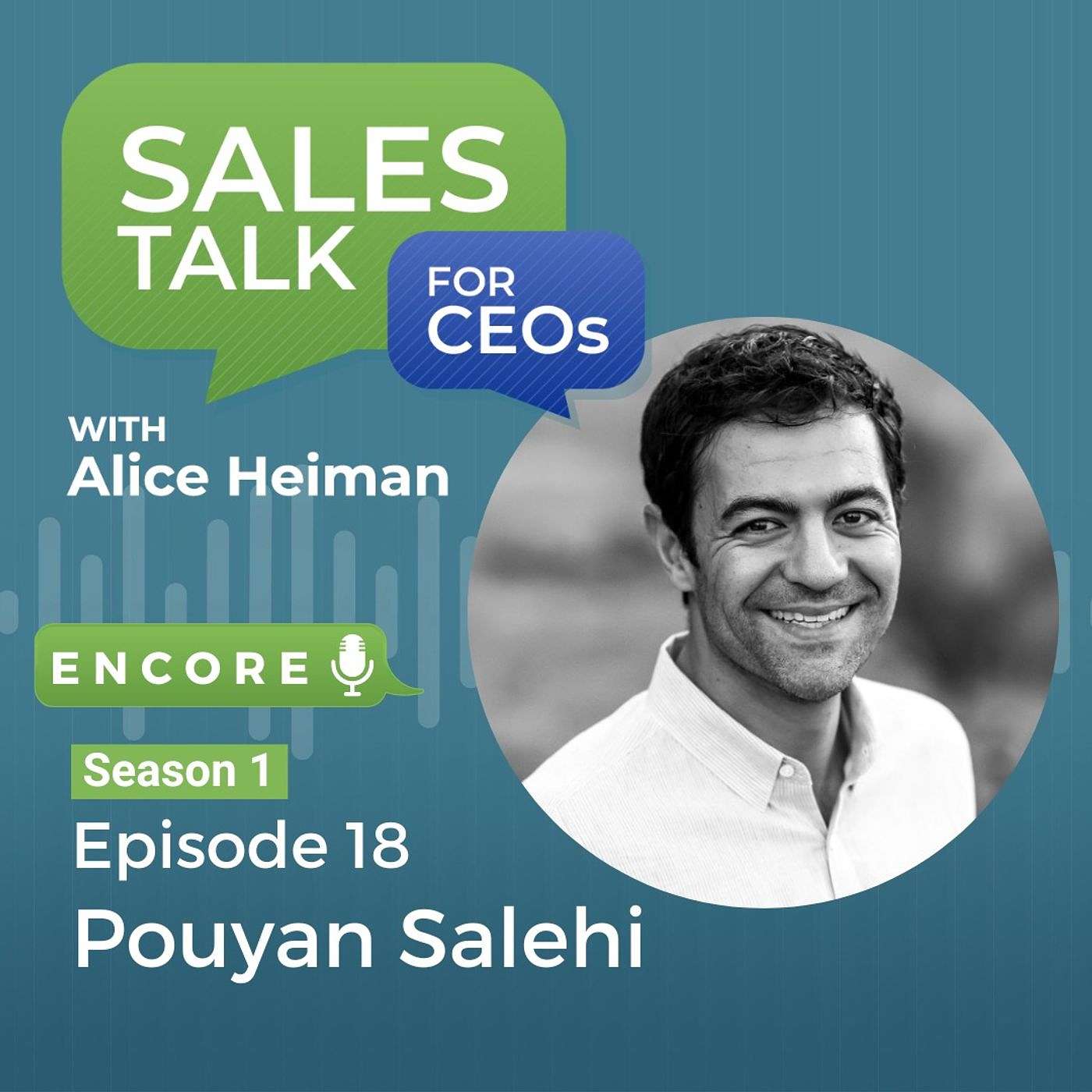
S5 Ep 8Encore: Aligning Your Go-to-Market Team with Pouyan Salehi
Product. Sales. Marketing. Customer Success. If you want to grow your business, your entire go-to-market team has to be in perfect alignment. Providing a seamless experience makes such a huge difference to customers, but it’s often hard to achieve. Luckily, you’ll get plenty of ideas and inspiration in this Encore Episode on the Sales Talk for CEOs podcast.My guest for this interview is Pouyan Salehi, CEO of Scratchpad, a workspace designed specifically for sales and revenue teams. Scratchpad has a unique bottom-up sales model where—on the one hand—the end-users of the software (sales reps) are not the buyers, but—on the other hand—the end-user experience is instrumental in getting sales conversations with decision-makers at large companies. A fully aligned go-to-market team is crucial to success, and, in this interview, Pouyan shares how he achieves it.As Pouyan explains, aligning your go-to-market team has nothing to do with tools and processes. Instead, you have to start with mindset, prioritizing ‘delight’ and ‘experience.’ “We’re a software company, and we build a product, and people buy the product. But that’s just one component,” says Pouyan. “What we’re essentially doing for every user interaction that we have is we’re giving them an experience. We’re delivering an experience, and that experience should be one of delight.”This mindset drives sales and customer experience at Scratchpad and has brought the entire go-to-market team together into one cohesive unit. Scratchpad has established a base of raving fans that any CEO would envy! Listen in to hear how Pouyan has done it, so you can apply the strategies to your business too.Highlights[2:25] Designing a space for sales team efficiency[7:24] Understanding diversity in sales reps[9:26] Balancing structure and individual flexibility[13:45] Selling your idea and testing your value proposition[20:25] Designing a complex go-to-market motion[29:40] Building a fully aligned go-to-market team[35:19] Creating raving fansAbout Our GuestPouyan Salehi is co-founder and CEO of Scratchpad, the pioneer of the Revenue Team Workspace. Prior to Scratchpad, Pouyan was co-founder and CEO of PersistIQ, the complete outbound platform engineered from the ground up for sales. A successful serial entrepreneur, Pouyan also co-founded Lera Labs (CycleIO) and has dedicated the last decade to improving the sales process for B2B enterprise sales reps and teams.Show LinksConnect with Pouyan Salehi in the links below:Website: https://scratchpad.com/LinkedIn: https://www.linkedin.com/in/pouyansalehiYou can learn more about and connect with Alice Heiman in the links below:Website: https://AliceHeiman.comLinkedIn: https://www.linkedin.com/in/aliceheiman/
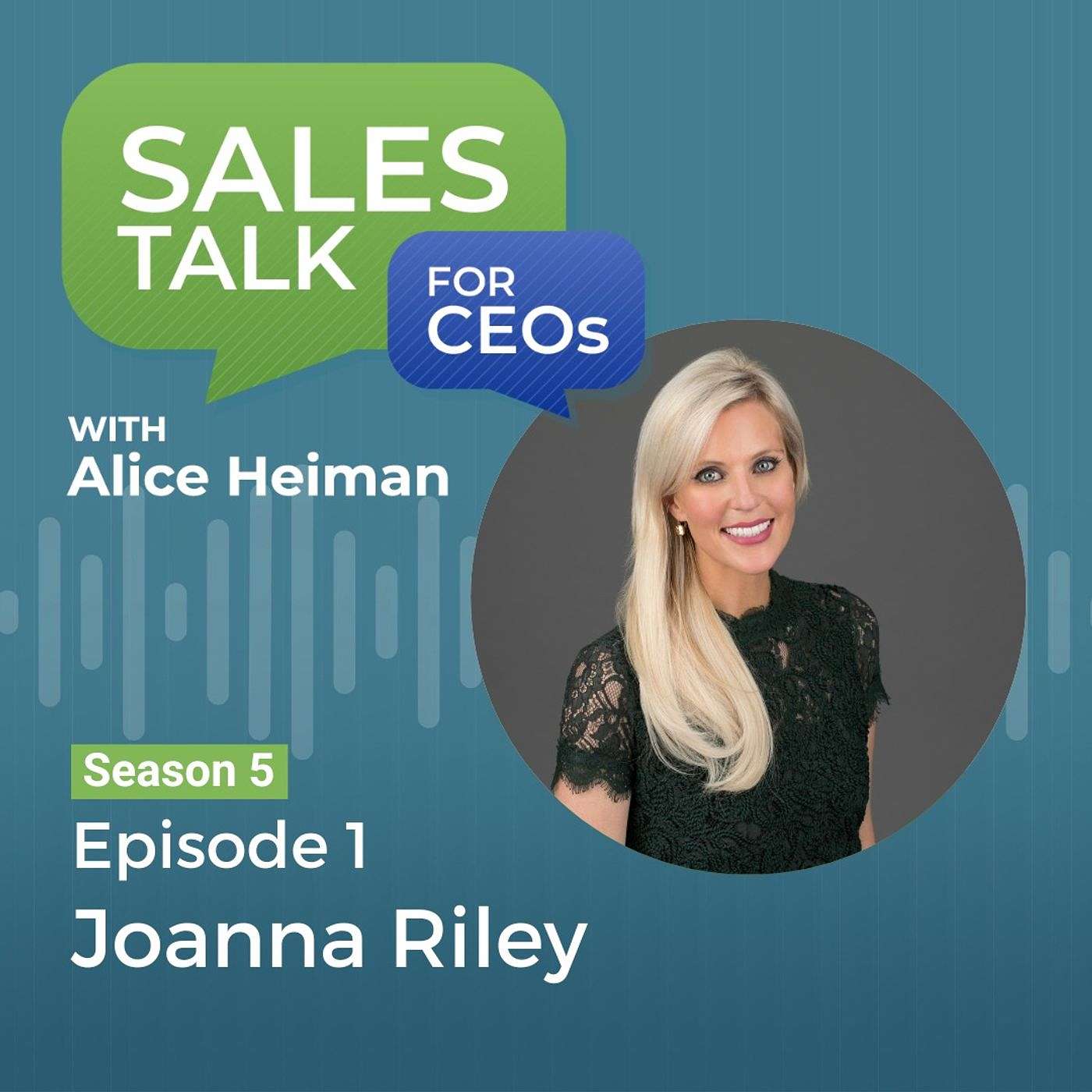
S5 Ep 7From FBI to Entrepreneur with Joanna Riley
From FBI prodigy to HR tech disruptor, meet Joanna Riley, the extraordinary CEO revolutionizing talent acquisition.Joanna's secret agent aspirations led her down a unique path, guided by her parents' unwavering support. Her undergraduate years were a whirlwind of cutting-edge courses in the psychology and geometry of crime, fueling her passion for espionage.Joining the FBI right out of college, Joanna's first taste of the professional world may surprise you - she conquered sales at just four years old, going door to door as the "snail annihilator" with her best friend.After 3 successful startups Joanna is now transforming the way companies find and harness their most valuable asset - people. As the visionary leader of Censia, she focuses on diversity, a deep understanding of customer connection and is shaking up the traditional notion of sales. She is on a mission to revolutionize talent acquisition with the power of AI. Hear Joanna’s journey and discover how she’s reshaping the hiring landscape and paving the way for a new era of success on this incredible interview! Chapters03:53 Importance of using data to make hiring decisions and retain employees.05:22 Joanna's background in the FBI and how it translates to entrepreneurship.08:26 Transition from the FBI to starting the first company in sales.10:05 Success and sale of the first company at a young age.13:20 CEO pain point: finding the right people for their company.13:56 HR tech focuses on helping companies with talent acquisition.14:55 Talent market shifted from active to passive job seekers.15:49 Current talent search methods are outdated and ineffective.16:46 Underrepresented communities are disadvantaged in keyword-based searches.17:16 AI can provide a more intelligent understanding of candidates' capabilities.18:03 Shifting the focus from keywords to desired achievements.19:04 Started selling after building a structured talent database.21:45 Customer advisory board helped identify pain points and validate solutions.25:50 Importance of CEOs staying in touch with customers.26:37 Initial challenges in selling and finding product-market fit.30:39 Transitioning to hiring salespeople.32:02 Scaling and growing the go-to-market team.33:07 Advice for CEOs: prioritize sales and customer conversations.About GuestJoanna Riley is an experienced entrepreneur and investor, renowned for championing diversity in the tech sector and for driving the development of ethical AI in HR Tech. As the CEO and Founder of Censia, she spearheads a cutting-edge Talent Intelligence Platform that is revolutionizing the way enterprises identify, recruit, and retain transformative talent. Joanna's passion for leadership extends beyond her role at Censia. She is a prolific early-stage investor and a distinguished member of the Board of Young Presidents Organization (YPO) as part of the Global Membership Council. She also devotes her time to mentoring up-and-coming entrepreneurs in the tech space.Her achievements are rooted in a diverse and robust background. Early in her career, Joanna was an integral part of the International Training Unit for the FBI. In addition, she distinguished herself as a national rower and earned her BA degree in Foreign Affairs from the University of Virginia. Today, she continues to hone her business acumen as part of the President's Program at Harvard Business School.Social Links You can learn more about and connect with Joanna Riley in the links below.Connect with Joanna on LinkedIn:(35) Joanna (Jo) Riley | LinkedInCheck out Censia's website:Transformative Talent Intelligence - CensiaYou can learn more about and connect with
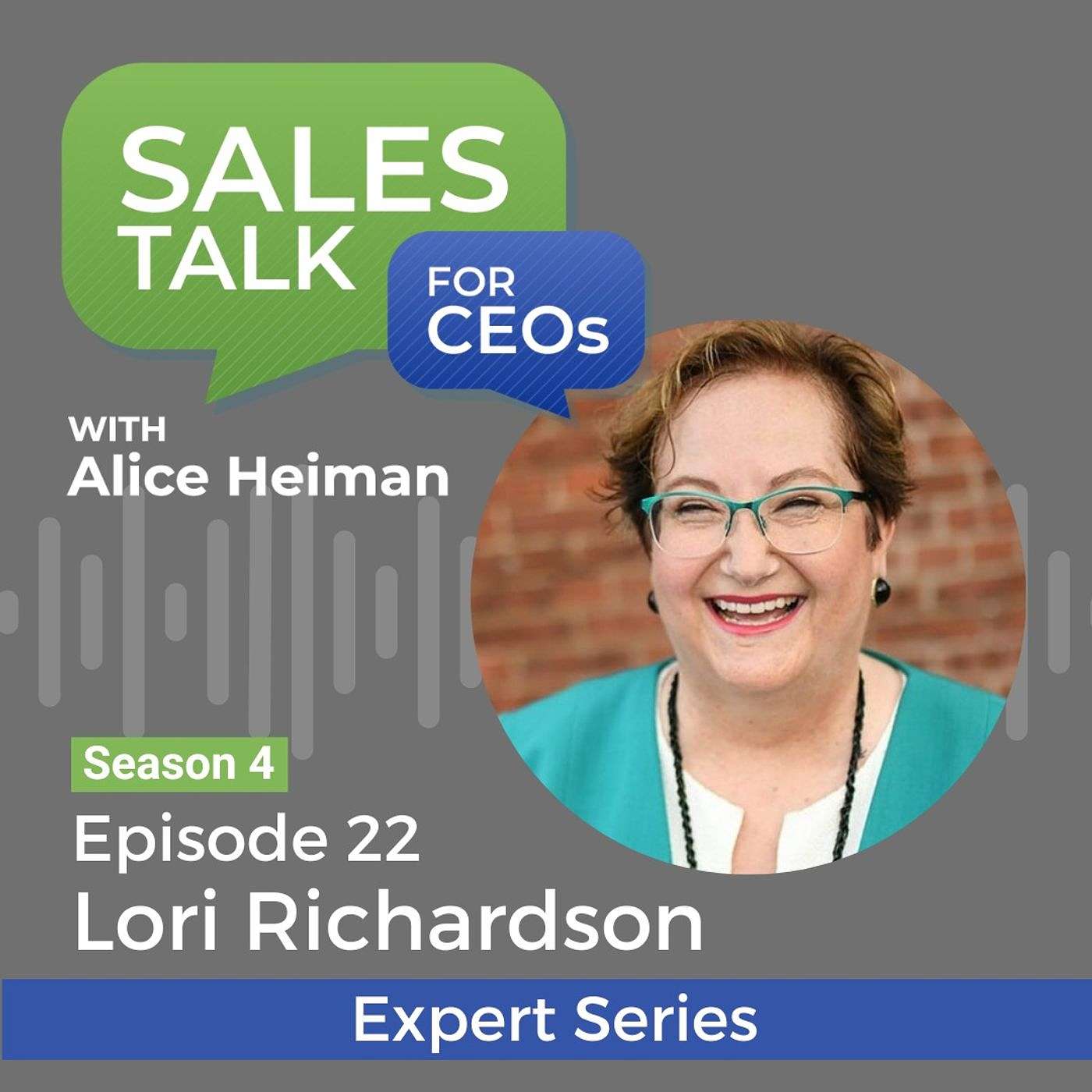
S5 Ep 6Revolutionizing Sales Hiring with Lori Richardson
Hiring high-performing teams is no easy feat for CEOs, but when it comes to sales teams, the stakes are exponentially higher. Achieving your organization's business objectives hinges on building and scaling a successful sales force that drives predictable revenue growth.But what do you do when sales are stagnant and results fall short of expectations? It's time to examine how we, as CEOs, have supported the growth of our sales teams.In a value-packed conversation with Lori Richardson, a renowned sales strategy expert and founder of Score More Sales, we dive into the crucial factors that contribute to building peak performing sales teams.Lori emphasized the utmost importance of hiring the right people, empowering effective sales leaders, and providing ongoing coaching and support.Discover how you can revolutionize your sales teams and supercharge your business success with these insights from a true sales guru.Chapters04:30 Challenges with traditional sales training and accountability08:37 Importance of hiring the right salespeople and coaching them09:45 Discussion on the need for training on hiring and assessing candidates11:27 Importance of setting up a customized assessment for each sales role13:29 Critique of using personality assessments for hiring salespeople17:09 Importance of setting clear criteria and avoiding excessive requirements24:09 Discussion on the concept of "culture add" in hiring29:58 Importance of expanding networks and connections for diversity hiring32:08 Tips for making job postings more appealing to diverse candidates35:30 Importance of sticking to the hiring process and not deviating40:00 Importance of assessing existing sales teams and leaders45:24 Importance of developing a strong sales team for company valuationAbout GuestLori Richardson is the CEO, Speaker, and Founder of Score More Sales, a consultancy she established in 2002 to assist companies in boosting their revenues through strategic sales endeavors. Her expertise stems from over two decades of experience in B2B sales and leadership roles. With a commendable career in tech sales under her belt, Lori envisioned Score More Sales to be a beacon for leaders of mid-sized businesses, guiding them in hiring competent sellers and appraising their incumbent sales teams. As of 2022, the company marked its 20th year, symbolizing two decades of dedicated service in the realm of sales consultancy. Apart from her role as the head of Score More Sales, Lori has made significant contributions to the sales domain as an author. She penned "She Sells," a book that serves as a manual for company and sales leaders to effectively discover, enlist, and retain sales talent.Social Links You can learn more about and connect with Lori Richardson in the links below.Connect with Lori on LinkedIn:(99+) Lori Richardson | LinkedInCheck out Score More Sales website:ScoreMoreSales - More of What Works, NowYou can learn more about and connect with Alice Heiman in the links below.Connect with Alice on LinkedIn:(99+) Alice Heiman | LinkedInCheck out Alice’s website:Alice Heiman - Alice Heiman
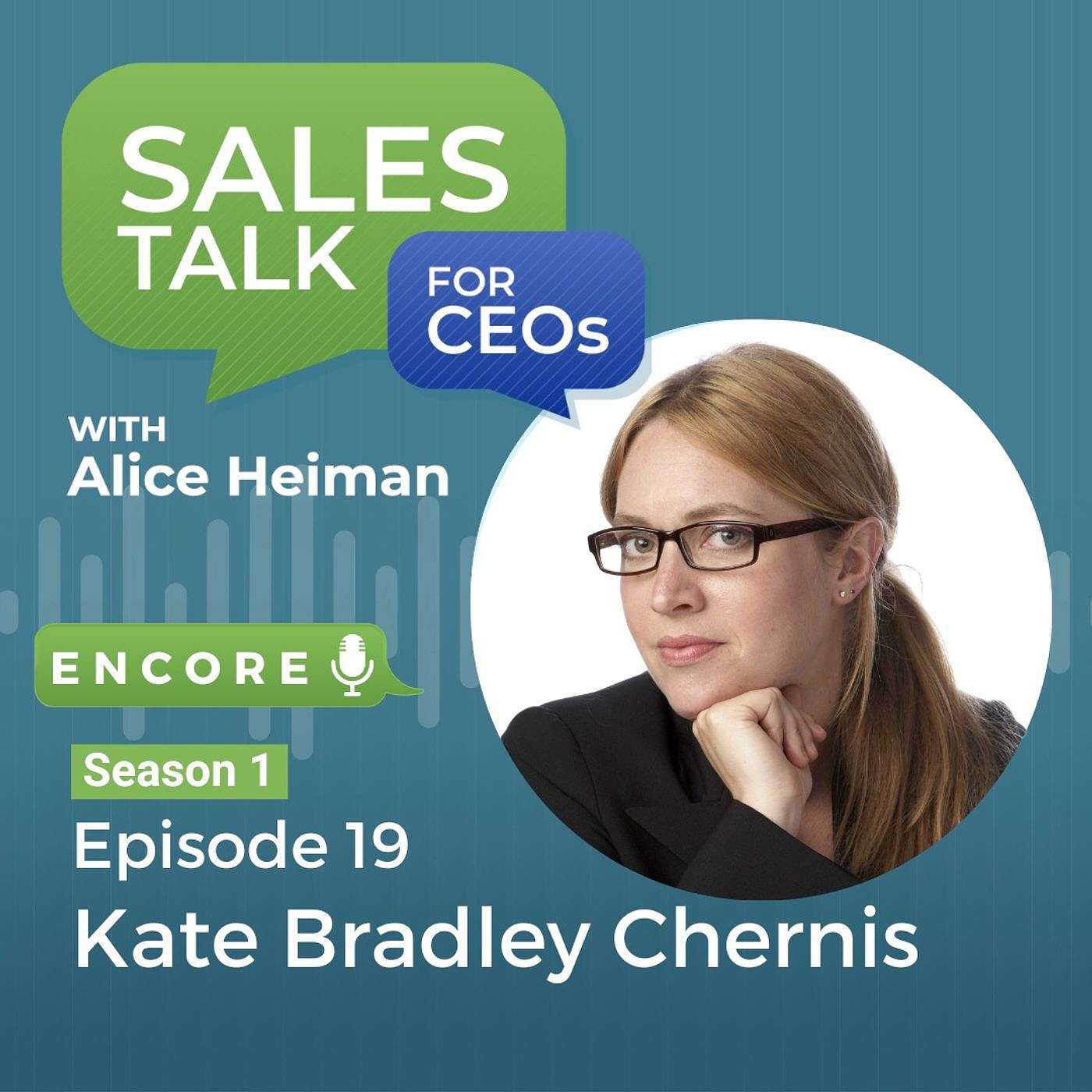
S5 Ep 5Encore: Marketing That Is Music to Your Buyer’s Ears with Kate Bradley Chernis
Connection is everything. When your marketing message resonates with your customers, selling becomes easier, retention becomes easier, and your customers become powerful evangelists who market and sell for you. To achieve this, you have to find the right words that make your customers lean in. You have to create marketing that is music to your buyer’s ears.In this episode of the Sales Talk for CEOs podcast, my guest Kate Bradley Chernis shares advice on how to do just that. A former live radio DJ, Kate is now the CEO of Lately, a software that uses artificial intelligence to learn the voice of brands and create writing models based on the words, key phrases, and sentence structure that will get the highest engagement. Kate has used Lately technology to get a 98 percent sales conversion rate with the company’s organic messages, and she is sharing tips for creating marketing that connects to customers in this podcast episode.As Kate explains, the problem with a lot of marketing is that marketers are trying to find ‘the right words that sell.’ “The objective isn’t actually a sale,” says Kate. “The objective is first to engage. Get to the next step. Get the reaction. Get them to lean in. Get that long play going.”In this interview, Kate discusses the importance of making a connection as you start conversations with potential customers via marketing. Using the neuroscience of music, she explains how marketing messages should be crafted to offer familiar ‘touch points’ that cue nostalgia, memory, and emotion. This, in turn, builds trust, which is the basis for customer acquisition and loyalty. Sound interesting? Then listen in to learn how you too can create marketing that is music to your buyer’s ears. Highlights2:37 The rollercoaster of the CEO8:27 Getting specific about your ideal customer17:58 Why the objective of your marketing isn’t a sale21:17 Believing in yourself (and not the naysayers)28:26 Creating two-way street marketing30:33 Making music to your buyer’s ears39:00 Creating a seller-free experience QuoteThe objective isn’t actually a sale. The objective is first to engage. Get to the next step. Get the reaction. Get them to lean in. Get that long play going.” Connect with Kate Bradley Chernis in the links below:Website: https://www.lately.ai/LinkedIn: https://www.linkedin.com/in/katebradley/ You can learn more about and connect with Alice Heiman in the links below:Website: https://AliceHeiman.comLinkedIn: https://www.linkedin.com/in/aliceheiman/
S5 Ep 4Going from the Wild Wild West to Sales Structure with Michael Katz
From youngest CEO on the Nasdaq to an industry he never dreamed he’d be in. You’ll want to dive into this exclusive interview with CEO Michael Katz, founder of mParticle, with a mission to unify and organize customer data, unlocking its untapped potential.mParticle was born from Michael’s triumph at Interclick, where data-driven approaches led to business success. Recognizing the growing significance of mobile and the complexity of customer data, he seized the opportunity to create a platform that could rise to these challenges.Because Michael didn’t know sales his strategy took a unique approach and one that I often recommend for the early days. He was very choosy about who he invited to the table to invest. It wasn’t just money he was looking for, he found people who cared about his success as much as he did. By leveraging his network of investors, his lead generation was all through introductions. That became a force multiplier for him. Starting with founder-led sales and being very successful because of the introductions from his investors, he soon saw the need for more salespeople but not really knowing sales he shares how he hired his first great seller. Michael soon hired a sales leader and looking back, what he realizes is that he waited too long to bring in sales enablement. Another game changer for his sales growth was collaborating with partners as they played a pivotal role in building trust and influencing decision-makers.Michael Katz is the thoughtful, purpose driven, gritty type of CEO I’d want to work for. He shares a wealth of knowledge so I’ll stop here and let you listen to learn the rest. Chapters00:53 Michael Katz discusses how mParticle manages customer data to increase sales.03:22 Michael Katz shares his background and the founding of mParticle.05:40 mParticle was founded to solve the technical challenges of mobile app data.09:00 Michael Katz utilized his network to make introductions and generate leads.11:49 Hiring multiple salespeople with different backgrounds to benchmark their performance.18:28 Fine-tuning the sales organization and aligning the different functions.26:45 Building a sales organization with regional coverage and vertical specialization.32:52 Sales is a system that requires constant fine-tuning and alignment.41:26 The sales organization includes account executives, sales management, solutions engineering, and sales enablement.About GuestMichael Katz is the CEO and Co-Founder of mParticle, a leading technology company specializing in data infrastructure for the mobile and web industries. With a proven track record of innovation and leadership, Michael has played a pivotal role in guiding mParticle to become a prominent player in the data management landscape.As the CEO, Michael Katz oversees the strategic direction of the company, fosters key partnerships, and spearheads efforts to deliver cutting-edge solutions to clients worldwide. With a passion for harnessing the power of data, he has helped mParticle establish itself as a vital platform for businesses seeking to optimize their data collection, integration, and activation processes.Drawing upon his extensive experience in the technology sector, Michael's visionary leadership has been instrumental in driving mParticle's growth and success. Under his guidance, the company has achieved significant milestones and earned a reputation for its exceptional data solutions and commitment to customer success.Social Links You can learn more about and connect with Michael Katz in the links below.Connect with Michael on LinkedIn: https://www.linkedin.com/in/michaelskatz/Check out mParticle's website: https://www.mParticle.com/You can learn more about and connect with Alice Heiman in the links below.Connect with Alice on
S5 Ep 3The CEO's Role in Sales: 2nd Anniversary Edition with Alice Heiman
The CEO's role in sales is vital to the growth and success of any company. But many are unclear on what that role should be. In this episode, Alice outlines clearly 3 roles the CEO needs to consider.The CEOs role with existing customers and prospects The CEOs role as an evangelist The CEOs role on social media Alice starts by talking about the role with existing customers. Typically, the CEO only gets involved when there is a problem. By focusing on building strong relationships with the customer’s CEO or other high-level leaders and being proactive you have a greater opportunity to ensure things go well. She suggests writing notes of thanks, holding events, and making videos. She notes that you can’t do this for all customers and that the sales leader and team should prepare a list showing where your efforts will have the most benefit. She talks about the importance of the CEOs role with prospects. It’s much less likely to see a CEO getting involved with prospects but Alice reminds us that no one can bring confidence to a deal the way a CEO can. There will be times when the CEO should be positioned with the most senior-level people to provide their vision and insight as it relates to what the customer is trying to accomplish. Next, she mentions the role of evangelist, it is one Alice knows some CEOs are reluctant to take. By sharing your thought leadership, industry insights and talking about your great company you can create a draw that will make you the chief lead generator. She recommends appearing on podcasts, speaking at conferences, appearing on a panel, moderating a panel, or holding a webinar. The third role is the CEOs role on social media. She insists that utilizing social media, particularly LinkedIn, allows you to expand your reach and connect with stakeholders in your industry in a way that drives demand. Being present on social media will help you build your brand and your company's brand.As CEO, Alice recognizes the amount and variety of work you have to do and recommends outsourcing or delegating the things that others could do better to free you up to take the role in sales you need to take and work more on things that energize rather than drain you and are truly in your genius zone.Chapters00:59 Importance of CEO's role in sales03:03 CEO's role with existing customers04:15 CEO's role with prospects08:50 CEO's role as an evangelist10:39 Ways to evangelize, podcasts, conferences, webinars, videos14:49 Importance of CEO's presence on LinkedIn17:36 Outsourcing social media management20:01 Connecting and interacting with customers and prospects on LinkedIn23:05 Conclusion and gratitude for two years of podcastingAbout your hostAs Chief Sales Energizer, Alice is internationally known for her expertise in elevating sales to increase valuation for companies with a B2B sale that have exceptional growth potential. Spending her time strategizing with CEOs, company leaders and their sales leadership to build the strategies that find new business and grow existing accounts is her passion. Her clients love her spirit and the way she energizes their sales organization. Alice also serves on the board of several growing companies to energize and elevate their sales. When she is not guiding CEOs to elevate their sales, she can be found hanging out with her family, walking, snow skiing, sailing in Lake Tahoe, volunteering in the community, or reading a book in her backyard. You can learn more about and connect with Alice Heiman in the links below.Connect with Alice on LinkedInCheck out Alice’s website
S5 Ep 2The Danger of CEOs Undermining Sales with Larry Mandelberg
Are you a CEO perplexed by your company's stagnant sales? The solution may lie within your own actions.According to the insightful Larry Mandelberg, renowned author of "Businesses Don't Fail, They Commit Suicide," CEOs often become detached from the sales process and unknowingly hinder their team.The consequences of this disconnect are substantial, forcing CEOs to look at things differently and shift their attention from driving revenue to providing unparalleled value to their customers.Larry's extensive experience has revealed that by making this shift, CEOs can cultivate satisfied customers who will, in turn, refer others and propel business growth.However, this change in focus necessitates a shift in mindset and a willingness to prioritize customer needs above short-term gains.Additionally, Larry emphasized the importance of having a clear purpose and its profound impact on revenue. Understanding the value the organization delivers, who it is delivered to, and how it is delivered is paramount in establishing a thriving enterprise.Chapters02:25 CEOs may be undermining sales by not focusing on delivering value07:01 The role of the CEO in sales culture09:45 CEOs stepping on toes in sales process13:08 Guidelines for bringing the CEO into sales calls24:23 CEOs should always ask questions and play stupid28:17 The need for Sales, Accounting, and Finance to sit down and reimagine the way payments are made31:21 The CEO's responsibility in making sure different areas of the organization are communicating and looking for ways to make each other's jobs easier35:30 Practical advice for CEOs, including interdepartmental conversations and scheduling them based on the sales cycle43:31 Inviting customers to visit the office to gain empathy for the work done48:14 The importance of clarity in speaking to a specific market and revisiting the mission statement frequentlyAbout GuestLarry Mandelberg is a consultant, speaker and author with “more than 150 years of combined business experience.” A natural problem solver, Larry represents the 5th generation of his family’s business. He started working at a young age where he learned from his father before and after school. Larry is an effective catalyst for change who has solved intractable problems and achieved new levels of efficiency and success for businesses in multiple industries. A prolific writer, Larry has published more than 80 columns. His first book, Businesses Don’t Fail, They Commit Suicide is scheduled for release in early 2018. A sought-after speaker, he has delivered more than 60 business-changing keynotes and workshops.Social Links You can learn more about and connect with Larry Mandelberg in the links below.Connect with Larry on LinkedIn: (47) Larry Mandelberg | LinkedInCheck out Larry's website: Mandelberg.biz | Harness, Focus, GrowCheck out Larry's book:https://www.amazon.com/Businesses-Dont-Fail-Commit-Suicide/dp/1662438214You can learn more about and connect with Alice Heiman in the links below:Connect with Alice on LinkedIn: (47) Alice Heiman | LinkedInCheck out Alice’s website: https://aliceheiman.com/
S5 Ep 1Companies are bought, they are not sold with Tracy Young
Being a first-time female entrepreneur in a male dominated space is no easy feat, and Tracy Young's journey starting a tech company in the construction industry is truly inspiring. She co-founded PlanGrid after recognizing the inefficiencies of paper blueprints and digitized them with tablet-friendly software that streamlined construction processes. Tracy's innovative solution caught fire and drove massive organic growth for PlanGrid. As the company expanded and shifted to enterprise sales, Tracy's team developed strategic and empathetic approaches to address diverse customer needs. She also built a strong sales team, learning from experienced reps and empowering her employees. Ultimately, Autodesk acquired PlanGrid, validating both Tracy's and PlanGrid's value. Building on her success, Tracy launched TigerEye to help sales teams optimize their strategies and unlock their full potential. Tracy's story showcases the incredible achievements of women entrepreneurs in male-dominated industries, and how game changing innovation can happen anywhere in your organization. Chapters02:44 Tracy Young explains the problem PlanGrid solved in the construction industry 06:14 Tracy Young and her co-founders quit their jobs to work on PlanGrid full-time 08:21 PlanGrid starts selling to friends and receives positive feedback 10:41 PlanGrid's user base grows through word-of-mouth and virality 16:31 PlanGrid transitions to selling to enterprise customers 19:58 Challenges of selling to enterprise customers and expanding product offerings 22:18 Tracy Young discusses the importance of understanding the needs of different decision-makers 33:00 Autodesk acquires PlanGrid 38:06 Tracy Young and her husband co-found TigerEye 45:23 Tracy Young shares where to find TigerEye and connect with her About GuestTracy Young is the co-founder of TigerEye, a software company that helps sales leaders track and predict the future performance of their sales teams. She was also the co-founder and CEO of PlanGrid, a construction software company that was acquired by Autodesk. Tracy has been recognized as one of Forbes' Top 50 Women in Tech and a Top 50 SaaS CEO by the SaaS Report.About CompanyTigerEye is a software company that helps sales leaders track and predict the future performance of their sales teams. Social Links You can learn more about and connect with Tracy Young in the links below.Connect with Tracy on LinkedIn: (99+) Tracy Young | LinkedInCheck out TigerEye's website: TigerEye — AboutYou can learn more about and connect with Alice Heiman in the links below.Connect with Alice on LinkedIn: (99+) Alice Heiman | LinkedInCheck out Alice’s website: Alice Heiman - Alice Heiman
S4 Ep 20Case Studies Close Deals with Julian Lumpkin
If CEO, Julian Lumpkin, learned one thing from his sales career it was to follow what the most successful sellers were doing and do that. It paid off.Before starting SuccessKit, he learned to use case studies to sell and realized that his company didn’t have a way to produce these. All of the successful salespeople had collected these stories, memorized them and used them over and over. Knowing that all salespeople need case studies throughout the sales cycle, SuccessKit was born. Julian quickly realized that knowing how to sell did not equip him to run a company and successfully scale sales at the same time, so he needed an easy way to get his first customers and he used his network, did an outstanding job and built his sales on referrals. Recently, he realized that the referrals he was getting weren’t going to power his growth to meet his goals so he added another way for customers to find him and started a series of highly successful online events where he trains salespeople on how to use case studies. Julian is still working on the barriers to increasing sales, so listen to what he has done, including launching a new product line, one that his customers really needed. Chapters02:54 Importance of customer success04:23 Authentic language from clients10:50 Developing case studies and using inexpensive paid advertising to get leads15:37 Importance of having a formal referral strategy in place16:07 The importance of collecting and organizing case studies19:56 Organizing case studies by significant challenges and important problems20:59 Building and owning a library of case studies23:23 Best practices for using case studies in the sales process24:28 Importance of understanding prospect's unique concerns and priorities33:18 Hiring salespeople without a good process for inbound and outbound leads38:48 Tips for getting started on creating case studiesAbout GuestJulian has been in the sales world for over 14 years. He started his career in tech sales, moved to management, and then founded SuccessKit in 2016. He serves as the point person for new clients, ensuring that each project is initiated, executed smoothly, and delivered on time. With a strong passion for entrepreneurship, Julian has established himself as a key figure in the business world. His leadership and expertise have led to the founding of SuccessKit, where he plays a crucial role in bringing on new clients, ensuring their success, and overseeing project management.Julian's entrepreneurial journey is fueled by his commitment to delivering exceptional results and his ability to foster strong client relationships. Through SuccessKit, he has created a platform that provides clients with the tools and support they need to thrive in their respective industries. Julian's dedication to client success has earned him a reputation for excellence, and he continues to make a significant impact in the business community.About CompanySuccess Kit is a B2B company that creates case studies and customer success stories in written and video formats to help salespeople provide relevant examples of customer success during the sales process. The company encourages its clients to read and categorize their case studies appropriately based on verticals, personas, and the most significant challenges solved. According to SuccessKit, the best case studies start with a problem and build a story arc using Joseph Campbell's story arc to create a good story that people can lean into and recognize themselves.Social Links You can learn more about and connect with Julian Lumpkin in the links below.Connect with Julian on LinkedIn: https://www.linkedin.com/in/julian-lumpkin-b845aa15/Check out SuccussKit’s website: </
S4 Ep 19Navigating the Future of Partner Selling with Cassandra Gholston
Can you imagine saying goodbye to confusing spreadsheets and emails that track partner relationships and sales?Imagine the possibility of your team instantly identifying sales opportunities in your partners' networks? Cassandra Gholston, CEO of PartnerTap, joined me on the podcast to share her journey building a data sharing application that allows companies to leverage the strengths of their partners and expand their reach into new markets. She also shares how she overcame startup challenges in implementation and marketing and built a thriving revenue team.Cassandra recounted those early days saying, "We started to understand the difference between mercenary sales and missionary sales. And this was missionary sales."Chapters05:36 Referral selling is important.22:29 CEOs can train sales teams to properly prepare and bring them in at the right time for customers or prospects.23:03 CEOs should be involved in sales to show they care about their customers.24:44 Cassandra started Fempire to bring powerful women together and promote women leaders.28:06 Outdated sales strategies like cold calling and spamming on LinkedIn are not effective.31:29 CEOs can feel like they're on an island by themselves, but the podcast and networking can help.33:47 Co-selling is a big deal, and every company is looking to do it.34:44 Customer success is important for high user adoption and making customers successful.35:46 Ongoing customer success is necessary for customer renewals and growth.39:48 Tenured customer success teams are important for success in a down market.About Guest Cassandra is a customer and partner-obsessed CEO who has been driving revenue with and for partners her whole career.As an enterprise software sales rep, she knew her secret to success was working with partners. Helping partners get into new accounts, leveraging her relationships to accelerate partner deals, and sharing insights helped her build a web of trusted partnerships around her accounts. This approach propelled her to the #1 enterprise sales rep spot three years in a row.At the height of her enterprise sales career, and with two young kids at home, Cassandra had an epiphany for a new software product that would help every B2B sales rep save time, sell more, and crush their quota with partners. She quit her job, co-founded PartnerTap, and built the industry’s first ecosystem sales platform. Today PartnerTap is the leading partner ecosystem platform empowering channel, partner and sales teams at HPE, Lumen, Genesys, ADP and SAP Concur to share data and co-sell with partners.About CompanyPartner Tap is a data sharing application that allows secure sharing of CRM data between companies, automating account mapping and pipeline sharing. The platform helps companies identify new logos to target and where they have existing customers or inroads. The company works with all large CRMs and even some smaller ones, and has been successful, working with some of the largest companies such as HP, ADP, and SAP.Social Linkshttps://partnertap.com/https://www.linkedin.com/in/cassandragholston/Fempire | We’re on a mission to activate and grow women’s power at every level of society. (fempireecosystem.com)You can learn more about and connect with Alice Heiman in the links below.Website: https://AliceHeiman.comConnect with Alice on LinkedIn
S4 Ep 18Scaling Your Sales Through Customer Retention
What if you could keep your customers for years and continue to grow with them? What if everyone in your company was responsible for customer retention? What if everyone in your company sold?When a culture of caring permeates your company everyone takes responsibility for the customer’s success and helps to solve for customers so they buy - sales. If the answer to every question about building a successful sales team came back to the process of delivering successful outcomes for customers, how would that change your company?. Adam Miller recounts his 30 year journey at Elevate building an organization where every team member takes responsibility for the success of the customer and everyone sells. Chapters:00:00 Sales is Solving Problems 08:06 Scaling Sales 14:160 Sales Skills are Teachable 15:11 Hybrid Selling and Hiring Remote Sellers 19:38 Retaining Talent 22:54 Hunters, Account Managers and Customer Success 27:31 Measuring Customer Success and Corporate Courage 32:40 Selling is a Team Sport 34:56 Adapting to Self Service Buyer BehaviourAbout Our Guest:The ELEVATE Group - Chief Executive Officer ELEVATE Capital - Private Equity Investor Bahamas Air Sea Rescue - Northern Bahamas - President An innovator and a visionary, Adam has offered cutting edge scalable solutions for the world’s most prestigious forward-thinking companies for over 25 years. Earning a reputation with an insatiable appetite for building things, he is the Founder and Chief Executive of The ELEVATE Group, the strategic & tactical partner to ambitious leaders looking to drive business success. As a private equity investor and adventurer at heart, Adam consistently pushes boundaries and seeks opportunity to meet the needs of rapidly changing industries. Sales. Marketing. Data. Breakthrough Business Strategies. He never strays away from a challenge. Analytical in his approach to breaking down complex processes, Adam is a leader who believes in constant self-improvement, giving back, and helping those around him succeed. Outside of his passion for delivering tangible results, this Airplane & Helicopter Pilot/Sailor leads the Bahamas Air Sea Rescue’s growth and has an active role as SARDO (Search & Rescue Duty Officer) as well Airwing Rescue Captain. Social links:https://www.linkedin.com/in/millerjadam/https://thinkelevate.comYou can learn more about and connect with Alice Heiman in the links below.Website: https://AliceHeiman.comConnect with Alice on LinkedIn
S4 Ep 17Usings AI To Gain A Competitive Edge In B2B Sales
Artificial Intelligence (AI) is here to stay. Will your sales organization utilize it or will they be left behind?AI is having a big impact on B2B sales by empowering salespeople to focus on what they do best: building meaningful relationships with their prospects. But wait, don't worry about AI replacing human sales reps! Usman Sheikh, Founder and CEO of xiQ, a Silicon Valley-based AI-powered SaaS platform explains how AI can be a game-changer for sales leaders who embrace it as a tool to gain a competitive advantage.In this podcast, we dive into the cutting-edge applications of generative AI in B2B sales, including how to create hyper-personalized emails and communication that resonate with your target audience.If you want to stay ahead of the curve in this rapidly evolving landscape, you won't want to miss this must-watch interview.Chapters:00:00 Introduction to AI and ChatGPT 06:05 Combining ChatGPT With Up To Date Data Sources 10:26 How Sellers Can Use ChatGPT 18:42 The Role of AI in the Shift From Lead Quantity to Quality 24:08 Techniques To Make Your Sellers More Productive28:58 Understanding How To Write Effect Prompts 35:48 What CEOs Need To Know & Do About AI44: 50 Using AI Along The Entire Lifecycle Of The Customer47:40 How To Live With AI About Our Guest:Usman Sheikh is the Founder and CEO of Silicon Valley-based xiQ, Inc. a next-generation, AI-powered, SaaS platform for B2B sales and marketing. Prior to founding xiQ Inc, Usman served as Vice President with SAP, SE, where he held leadership positions in Product Management, Sales Enablement, and Digital Commerce globally. He left SAP to pursue his passion for developing next-generation technologies using AI at the intersection of B2B Sales and Marketing.About xiQ:xiQ Inc. is a Personality-driven Sales and Marketing Platform™ that combines neuroscience, psychology, and AI to understand the buyers’ mindset. xiQ reinvigorates b2b sales and marketing by doubling down on industry-leading personality and behavioral science to provide broader, deeper, and more actionable insights. Companies using xiQ are able to increase their sales win rates by 4x, increase client engagement by 10x and realize ROI within weeks.xiQ Inc. won the award for ‘Best Use of Martech for Demand Generation’ in 2022, was recognized as a Leader in ‘G2 Enterprise ABM Category’, and was named a ‘Cool Vendor for Marketing Technology’ by Gartner. Social links:LinkedIn Profile: https://www.linkedin.com/in/usmanmsheikh/Website: https://www.xiqinc.com/LinkedIn: https://www.linkedin.com/company/xiqincYou can learn more about and connect with Alice Heiman in the links below.Website: https://AliceHeiman.comConnect with Alice on LinkedIn
S4 Ep 16What Titans of Tech Teach Us About Growing Sales Teams
This episode dives into how large organizations scale their sales teams. But do these approaches work for smaller organizations? Absolutely! Radhika Shukla has worked in a sales leadership role at some of the largest tech giants including Microsoft and IBM. She takes us through the entire gamut of building high performance sales teams.From an ‘Always be learning’ mindset to customer focus, hiring, execution and motivation she lays out the entire playbook. Every sentence could be its own chapter.Chapters:00:00 Radhika’s Background - Always Be Learning 06:53 Sales Growth Strategies 10:33 Five Pronged Approach to Customer Focus 13:14 Three Part Execution Plan 19:29 Five Rules For Hiring the Right Sales People 27:19 Hiring Mishaps 34:09 Intentional Diversity 40:00 Advice for CEOsAbout Our Guest:Radhika is a Senior Sales Executive/Leader with 21 years of extensive experience in strategic sales leadership and business management serving customers across diverse industries in Auto, Manufacturing, Retail/CPG, Financial Services, SLG and Healthcare. Having worked at tech giants like, IBM and Microsoft, she has extensive experience in mentoring and leading high performing teams across North America and Asia providing strategic guidance/coaching to craft cost-effective solutions addressing critical business needs and accelerating customer digital transformations. She has an MBA in Strategy from the prestigious University of Michigan-Ross School and is a renowned Community leader serving on the Boards of 4 nonprofits: MAI Family Services, Michigan Crisis Services, Pioneer Medical Research, and Interfaith Leadership Council of Metro Detroit. She was recently named No 1 In the Top 10 Women in Manufacturing by the UK publication Manufacturing Global. A strong believer in being a "learn-it-all", she has 14 technical cloud and industry certifications under her belt with a deep appreciation for leading teams in solving a customer's technical challenge through the lens of the economy and business benefits. She is a 4-time National Pageant winner and has been crowned:Mrs. India 2018Mrs. Entrepreneur International 2019Mrs. Michigan North America 2020Top 5 Mrs. North America 2020Mrs. Congeniality North America and People's Choice North America 2020Mrs. Michigan USA 2021Mrs. USA 2nd Runner Up 2021Besides being a well-respected Industry thought leader, keynote speaker, career coach, she is passionate about giving back and is an active ambassador/advocate for DEI, women empowerment, and STEM education. A dynamic, results-driven, passionate Sales Leader with a proven track record of successfully driving up cloud solution sales, substantial ROI and profitability, delivering remarkable results for Fortune 500 companies and creating growth strategies eliciting best from contributors, she has been featured on several podcasts for her leadership principles/mantra: “Inspire, Empower, Appreciate”Accomplishments: Recognized No 1 in Top 10 Women in Manufacturing; Microsoft Hero Empathy in Action award recipient; Microsoft US National Gold Standard Excellence for Customer Obsession; Microsoft Worldwide Community Award FY22; FY22 Microsoft Top Sales Manager (sole US recipient to receive Technology Solutions Excellence Diamond Award); IBM's Manager's Choice and Voice of the Customer AwardsMrs USA 2nd Runner Up, Mrs Michigan USA 2021, Mrs Michigan North America 2020, Top 5 Mrs North America 2020, Mrs India Michigan 2018.Social Media link:LinkedIn: Radhika Shukla | LinkedIn You can learn more about and connect with Alice Heiman in the links below.Website: https://AliceHeiman.comCon<
S4 Ep 15How to maximize revenue growth with SalesOps
Leading indicators, lagging indicators, qualitative data, and quantitative data might sound like boring topics for your sales meetings. Quite the contrary, Michael Ingram of SalesOps.io explains the role that each one plays in achieving predictable revenue growth.Sales revenue is a lagging indicator of success. By the time you know it, it’s too late. You need data daily and weekly that tells you what to do before it’s too late. Leading indicators give you a chance to fix problems before you miss the quarter.Chapters:00:00 What Is SalesOps? 08:27 Moving On From Anecdotal To Leading Indicator Data 14:04 Qualitative Customer Data Capture at the Front Line 20:20 Activity-Driven Approach to Sales Metrics Worked 10 Years Ago 24:26 It's All About the Conversation 30:15 Scaling SalesOps GracefullyAbout Our Guest:Michael is the Founder and CEO of SalesOps.io (rev ops talent marketplace), as well as the Co-Founder of Productal (product talent marketplace). He has helped build marketing, sales, and customer success operations for hundreds of organizations over the last 10 years, with a focus on high-growth B2B technology companies. He previously led sales operations, business development, and sales development teams at Axial, an online network connecting the lower middle market of private equity. Prior to Axial, Michael led enterprise sales operations and strategy at Zocdoc, helping structure the systems and processes to scale the sales and success organization to over 250 team members. Before recognizing his passion for startups, he spent 4 years in management consulting for biotech and pharma companies with ZS Associates. Michael graduated from the University of Alabama (Roll Tide) with a Masters in Applied Economics and a BS in Operations Management.Company Overview SalesOps.io is a revenue operations talent marketplace. We have a network of over 500 rev ops experts that we place into fractional and full-time engagements with tech companies and other organizations that have a gap in operational resources. Our work largely falls into the buckets of commercial process, tools, and analytics across the customer journey. Productal is a similar talent marketplace focused on the Product side of the house - staffing product managers, designers, advisors, and analysts into orgs that need product-related experts.Social links:Michael Ingram’s LinkedIn: https://www.linkedin.com/in/michaelsalesops/SalesOps LinkedIn: https://www.linkedin.com/company/salesops.io/Productal LinkedIn: https://www.linkedin.com/company/productal/about/You can learn more about and connect with Alice Heiman in the links below.Website: https://AliceHeiman.comConnect with Alice on LinkedIn
S4 Ep 14How Mission-Driven Companies Benefit From Founder-Led Sales
It's not surprising that Bronwyn Spira, after trying many different sales strategies, landed back on the founder-led model. In mission-driven companies, founders often deliver the most compelling pitch.She then set about recruiting a sales and marketing team to support the sales process across the entire customer journey.Stick with us to the end where Bronwyn leaves us with her three growth tips for every CEO.Chapters:00:00 A platform for patients and practitioners04:20 Getting Sales Started08:32 Back to Co-founder Led Sales12:25 The Importance of Strong Marketing16:56 Finding the Right Sellers - Hungry and Driven24:15 Building Relationships and Trust Over Time30:42 Customer Success at Scale33:40 The Future of Force 38:25 Executive Sponsors 42:53 Three Tips for CEOsAbout Our Guest:Bronwyn Spira is a physical therapist and the founder and chief executive officer of Force Therapeutics, a provider-prescribed digital care management platform that empowers patients throughout an episode of care. Bronwyn is passionate about improving patient engagement and satisfaction with rehab and recovery by delivering high-quality, clinically validated remote care to patients, regardless of access challenges.Social links:https://www.linkedin.com/company/force-therapeutics/https://twitter.com/FORCETherExhttps://www.linkedin.com/in/bronwyn-spira-40578815/ You can learn more about and connect with Alice Heiman in the links below.Website: https://AliceHeiman.comConnect with Alice on LinkedIn
S4 Ep 13A Customer-Success Driven Sales Strategy
LeanData’s sales organization’s head count might seem too costly to some. It was derived out of a constant quest to map internal resources to support customer success - not revenue, yet it is highly profitable. One example, split the customer success manager role into two positions. One checking in to monitor the account health and ensure renewal. The other, a coach to provide ongoing best practice advice to customers.Join us to learn the customer-centric sales enablement process that makes LeanData recession-proof.Chapters:00:00 LeanData - Revenue Orchestration 04:08 Pitching the Problem Not the Solution 06:17 Scaling the Sales Team 08:10 Hiring a VP Sales 11:51 Letting Sellers Sell: 1 to 1 ratio of SDR to AE 16:41 Adding Enablement & Customer Virality 18:57 Revisiting The Customer Journey - Adding Coaches 23:09 Certified Users Have Higher Renewal Rate 27:40 What’s Next for LeanDataAbout Our Guest:Evan Liang is the Co-founder and CEO of LeanData. Prior to launching LeanData in 2012, Evan worked in product, strategy, and business development roles at Microsoft, Ebay, Caring.com and Smart Modular Technologies as well as associate positions with venture capital firms Shasta Ventures and Battery Ventures.About LeanData:LeanData is an essential element of the modern revenue tech stack. The LeanData Revenue Orchestration Platform simplifies buyer journeys while accelerating time to revenue through no-code, drag-and-drop lead routing, lead-to-account matching, automated meeting scheduling, engagement analytics, and strategic integrations.Social links:https://www.linkedin.com/company/leandata/https://twitter.com/LeanDatahttps://www.facebook.com/LeanDatahttps://www.youtube.com/@leandataincYou can learn more about and connect with Alice Heiman in the links below.Website: https://AliceHeiman.comConnect with Alice on LinkedIn
S4 Ep 12Better Prospecting Leads To More Sales Conversations
Is your sales team struggling to have conversations with the right buyers? Better prospecting is the most direct path to increase sales conversations. Wendy Weiss takes us through the four steps to improve your sales team's ability to schedule sales calls.Her four steps are 1. The right list, 2. Great skills, 3. Strong process and 3. The right software. What can your team add to improve their prospecting?Chapters:00:00 Chapter 1: How do we get more conversations with buyers 01:50 Chapter 2: 4 things to move the needle 06:31 Chapter 3: The List 11:27 Chapter 4: The Skills - Prospecting versus Selling 17:19 Chapter 5: Skills - Researching the Buyer Need 22:15 Chapter 6: Skills - Leaving Voicemail 30:19 Chapter 7: Skills - Diagnosing Buyer Responses 37:16 Chapter 8: The Process 40:16 Chapter 9: The Software - Making Prospecting EasierAbout Our Guest:Wendy Weiss is the founder of the Salesology® Prospecting Method that generates predictable sales revenue results. Wendy has helped 775 businesses increase qualified appointments and sales faster, more easily, and more profitably. She is the author of The Sales Winner’s Handbook Essential Strategies to Skyrocket Sales Performance and Cold Calling for Women Opening Doors & Closing Sales. A former ballet dancer, Wendy believes everything she knows in life and business she learned in ballet class. From warmups to rehearsals, she shows her clients how to perform at their best and close all the sales they need.Company InfoSalesology® is a sales training and coaching consultancy, with expertise and solutions for developing new businesses. As a pioneer and leader in the crowded new business development space, Salesology® sets the standard for sales training. Owned and operated by Wendy Weiss, she and her team help sales leaders and individual contributors speed up their sales cycle, reach more prospects directly, and generate more sales revenue. Clients like Avon Products, ADP, New York Life, and thousands of entrepreneurs throughout the country have used and benefited from these time-tested techniques to amazing results.Social links:Twitter - https://twitter.com/wendyweissLinkedIn - https://www.linkedin.com/in/wendyweiss/LinkedIn - https://www.linkedin.com/company/gosalesology/Facebook -
S4 Ep 11The Art Of Scaling A Sales Team
How do you balance growth with quality service delivery? With no background in sales, Kevin Warner, Co-founder, and CEO, originally decided to hire someone who knew sales and put his focus on delivery. He realized quickly it wasn’t working and took the lead sales role. Once sales picked up, he built a sales team and grew exponentially but he watched the quality of service delivery suffer, and client churn increased. What was the right size for the company where they could serve the clients with excellence, reduce churn and increase profitability? They had some tough decisions to make. They reduced the team and focused on the success of the customer. He went back to a founder-led sales approach with a sales team to back him. Under his renewed guidance healthy growth returned. Now at 10 years in, they have achieved low churn, high profitability and now have the valuation that creates the exit options every founder dreams of. You’re going to want to hear his story.Chapters:00:00 Introduction to Leadium 05:47 How to talk to humans 09:31 Start with proper segmentation 11:25 The McDonald’s Conveyor Belt of Outbound Sales 12:54 Founder led Sales 16:32 Sales is Not a Magic Bullet 19:51 Back to Founder Led Sale 24:07 Removing the Roadblocks 27:35 The Role of the CEO 29:54 Reducing Churn 32:34 The End of SDRsAbout Our Guest:Kevin Warner, the Founder, and CEO of Leadium an award-winning B2B lead generation agency.Kevin is a core visionary behind the rapid growth of the outsourced sales development industry. He has proven that top-of-funnel sales can be scaled through an agency model, by creating over $1 billion in revenue pipeline across 1200 organizations, playing a part in 76 acquisitions, and seeing clients receive $6.5 billion in funding and 5 IPOs. He has experience managing a global team of 600 sales reps, data researchers, content creators, and sales strategists.You can learn more about and connect with Alice Heiman in the links below.Website: https://AliceHeiman.comConnect with Alice on LinkedIn

S4 Ep 10Building and Implementing Scalable Processes
Most CEOs have a hard time running one successful company. Veronica Buitron runs two!Her secrets boil down to simple, hard won lessons. First, you need a process for everything to be successful and to scale. Second, you need to trust and empower your teams.Every CEO can learn from her episode.Chapters:00:00 - Introduction2:26 - Tango Code: Redefining Software Development 003:53 - Automating Process for Scalability 10:02 - Engineering and Sales Are Both Just Solving Problems14:50 - Building Visions Together 16:30 - Shared Success 18:36 - Understanding the Sales Process at An Early Stage21:02 - Building a Sales Team Starts With A Defined Process28:11 - The CEO Sales Role32:39 - How Veronica Runs Two Companies35:12 - Implementing Agile Across the Entire Company36:20 - Trust and EmpowermentAbout Our Guest:Veronica Buitron is the Co-Founder and CEO of TangoCode a software development company and Chassis, the leading platform enabling digital marketers to automate & accelerate search and social campaigns. As a female entrepreneur, Veronica considers it essential to not only create a diverse and progressive culture within her own company but also to promote it within the tech community. These values have enabled Chassis to create the industry’s most innovative digital marketing solution automating and accelerating ROI for its clients.Chassis enables businesses to use first-party data to create a more effective marketing offering, achieving results 4X faster than using Google or Facebook. The platform promotes automation as a catalyst for marketers to be more productive and efficient in serving their clients and achieving scale.Veronica is an avid reader and enjoys speaking on diversity, innovation, and their interrelated relationship. She is a passionate business leader, a lifelong learner, a mentor to other women in technology, and a devoted role model for her three children.Social links:Veronica's LinkedInVeronica's Twitter You can learn more about and connect with Alice Heiman in the links below.Website: https://AliceHeiman.comConnect with Alice on LinkedIn
S4 Ep 9How To Hire The Right Sellers In An Early Stage Company
Ariel came from engineering, he had been a product leader for quite a few years and then made the transition into sales. Initially when he moved into sales, he was running product marketing. And he thought sales was so easy, you just get all of the factsheets and battle cards and the information on the features and capabilities and share that with the prospects that they will buy it. Of course, he learned quickly he was wrong. Running a sales team taught him that sales was so much more and luckily he learned before he started his company. That mindset shift is what prepared him to at first do the sales himself and then build a sales organization at Second Nature AI. He learned two very important things as he moved from founder led sales to hiring a team. First, in an early stage company you have to hire a different type of seller. They have to have passion for the product and they have to know how to do full cycle selling without all the resources of a big company. He told me, you have to hire full cycle sellers - salespeople who don’t need the support of a large marketing and sales team. They need to be able to adapt on the fly. So that is what he did and then he learned the second thing, you have to have inbound leads. Even with the right salespeople, if there are no leads sales don’t happen. Listen to hear the lessons that helped him grow sales. Chapters:00:00 - Artificial Intelligence That Trains Your Salesforce? 07:48 - The Genesis of Jenny AI 10:53 - The First Customers Input 15:19 - Scaling Sales and the Team 26:32 - Using Second Nature to Train and Assess Sellers 28:15 - Marketing Ahead of Sales Hires to Increase Inbound 32:55 - The Sales Feedback Loop 36:15 - The Next ChapterAbout Our Guest:Ariel Hitron is the CEO and co-founder of Second Nature. He has held various executive positions including VP of New Markets and VP of Sales and Customer Success at Kaltura. He ran global sales teams with dozens of reps, built playbooks and training sessions, and earlier in his career, developed and brought to market multiple software products, generating tens of millions of recurring revenue and used by millions of consumers.As the CEO of Second Nature, Ariel is able to merge his passion for sales, tech, and product development, by applying AI to enable large B2B sales organizations to scale up and get systematic about their sales coaching.About Second Nature:Second Nature helps salespeople have better conversations.Using AI-driven role play, sales professionals can practice in a safe space, and improve their performance and confidence by gaining real-time, personalized feedback.Social links:https://www.linkedin.com/in/arielhitron/https://www.linkedin.com/company/second-nature-ai/ You can learn more about and connect with Alice Heiman in the links below.Website: <a hre
S4 Ep 8The Secret to Predictable Growth through Building a Personal Brand
Samantha McKenna, a former employee of On24, was recruited by LinkedIn for her mastery of building a powerful brand on the platform. She started posting on LinkedIn in 2011, leading to recognition and a promotion. After two years, she broke her 13th record and decided to pursue her passion for making a positive impact. She left LinkedIn to start her own company, #SamSales, initially intending to work part-time, but quickly realized that wasn't feasible.She is one of the rare founders who was in sales prior to starting her company but she never planned to go into sales, she thought she was going to be in finance. Starting her own business, well that might have been inevitable because both of her parents are entrepreneurs. For many who start a company sales come slowly but for Samantha sales were easy because she had already built an audience on LinkedIn. She had been providing useful content for years so once she posted that she was now in business, the sales flooded in. (Don’t we all wish for that.)Samantha's all-women team of 11, , now does a full range of sales related advisory and services. To grow into that, she learned to delegate and rely on proactive referrals and relationship-building for long-term success. Even though she has a great sales team, Samantha is still involved in selling and managing sales.Her team does sales the easy way, they rely on proactive referrals from existing customers and partners. She taught her team to track job changes on LinkedIn and stay in touch. This usually leads to more business. They focus on building relationships for the long term.Chapters:00:00 - Intro 02:54 - Quality Over Quantity 05:15 - Samantha’s Start In Sales 10:10 - LinkedIn 1%er 16:51 - My Large Networks Gave #samsales A Running Start 20:43 - The ever evolving CEO sales role 24:01 - Referral selling 25:55 - Working in your genius zone 30:59 - What’s next?About Our Guest:Samantha McKenna, CEO of #samsales Consulting, is an award-winning sales leader, brand ambassador for LinkedIn, angel investor, board member, and highly sought-after speaker. She has broken nearly 15 sales records, believes great sales are rooted in exceptional manners, and consistently looks for opportunities to continue growing the company’s philanthropic efforts. Since 2008, Sam has worked for some of the most notable names in the Bay Area, including ON24 and LinkedIn. While with these organizations, Sam spent her time as an individual contributor in Enterprise sales before moving to scaling teams and revenue as an executive Leader.With more than 30,000 LinkedIn followers, Sam has inspired sales professionals with her tangible sales tips and actionable advice used daily by executives and teams alike. Sam has been named a Top 50 Women in Revenue and Top 20 Women in Sales Leadership, appears as one of the faces of LinkedIn Sales Navigator’s marketing campaigns, and has been named a Top Ten LinkedIn Sales Star several times over. She has a deep commitment to helping women succeed - particularly those who are military spouses - as well as individuals from underrepresented backgrounds. Sam is dedicated to shining a light on her trademark Show Me You Know Me and #givefirst mantras - and together with her team, raised over $50,000 for charity in 2021 alone with the innovative #samsales ‘Show Me You Know Me’ Charity Event. In its first 24 months, #samsales Consulting has scaled to multi-million dollar revenue and added 17 talented team members. The #samsales team serves over 100 clients, achieved312% of their first annual revenue goal, and surpassed all reason with 233% YoY growth in its second year!Connect with Samantha McKenna on LinkedInFollow <a href="https://twitter.com/smckenna719?lang=en
S4 Ep 7Move Deals Through Your Pipeline With The Centricity Model
Sean Doyle applies behavioral science to marketing and the sales funnel. His model is called Centricity and he shares important lessons about alignment between sales, marketing and customer success to move deals through the funnel. Sean says, “Deals stall in the middle of the funnel because we aren’t giving the buyer what they need to make a decision.If you are still feeding them information about your product features and benefits, they are 80% likely to decide to stick with the old, lower risk, status quo.”On the other hand, we know that if you help them make sense of the information, you are heading in the right direction together. Sometimes this takes sales, customer success and marketing together and at different points in the customer journey. This lively interview will help every CEO with strategies to help their team move more deals through the middle of the funnel to close.Chapters00:00 Strategic Versus Creative Marketing06:17 Behavioral Science: The Centricity Model13:22 Your Buyer’s Problem18:36 Marketing and Customer Success at the Closing Table24:08 Making it Easier for Customers to Buy31:00 6 Step Pipeline: Tracking Steps Versus Activity38:00 Emotional and Rational Content: Marketing and Sales balance43:40 Selling is Helping About Our Guest:Sean M. Doyle is principal at FitzMartin Inc, a leading consultancy focused on optimizing sales and marketing investments of emerging middle- market, B2B businesses. FitzMartin’s clients earn on average an ROI of $287 per $1 invested. Through a 30+ year career with over 5,500 client engagements, Sean saw the need for a repeatable, systematic, objective go-to-market model. The model, Centricity, informs sales, marketing, technology and creative decisions. His niche is helping executives identify opportunities to achieve their strategic, personal and financial objectives. Connect with Sean on LinkedInFollow Sean on TwitterResource Links:Changing for Good You can learn more about and connect with Alice Heiman in the links below.Website: https://AliceHeiman.comConnect with Alice on LinkedIn
S4 Ep 6Strategies To Gain An Unfair Advantage
Almost every company I know is struggling to bring new business in at the pace required. Why? Well, that is an interesting question but I think by now most of us know that our methods are outdated and simply don’t work. The better questions are how do we keep new business flowing in? What should be done instead of what we continue to do that doesn’t work? I’ve always had a fascination with weeds. They are amazing. Strong, resilient, persistent and they can literally take over an area. My friend Stu Heinecke and I share that same fascination only I know he is more fascinated than me because he wrote a whole book on them called How to Grow Your Business Like a Weed. Weeds have an unfair advantage and Stu wants all company leaders to understand what that is and how it can be applied to their business so that they can dominate the market. There are many strategies to gain that unfair advantage and Stu is here today to help you pick the best ones for your business. Find out why having the mindset of a weed will give your company an unfair advantage and possibly even market domination. Highlights:04:14 Having a network is very important. Being able to get introductions is very important. I mean, that works. That's a shortcut.04:37 [If you can’t get an introduction] You need to do something audacious, not just audacious, but also you need to do something that's relevant… something that has the person saying, Oh my gosh, who is this? I love the way you think.07:01 books are still a valid way to stand out, even if you haven't written one, send some of your favorite books…I’m helping you to learn…09:58 Alice Heineman says you can tell a lot about a person just by looking at their pipeline.[the caption on a cartoon that Stu sent to Alice ahead of the interview]12:36 one of your [Alice Heiman] great unfair advantages is that you show up usually as a speaker at events16:14 what is it about weeds that causes them to spread and grow and dominate and makes them such tough competitors? Do they have a unified model? And it turns out they do, they leverage a fierce mindset.17:11 if a business doesn't have unfair advantages, it won't exist for long.19:20 you want your competitors looking at your unfair advantage and saying how the heck are we going to beat that?22:23 Why would we talk about a mindset when we're talking about plants? They don't have brains.23:07 You can't grow your business like a weed if you don't have the right mindset. If we're still having our salespeople sell the way they sold ten years ago, it's not going to work.24:01 I should add a couple more attributes to mindset. Emotions get in the way. Your actions should lead your emotions, not the other way around. Don’t ask ‘Do I feel like going to the gym?’ Go to the gym and then see how you feel. Do everything at scale through collaboration.28:47 Here's the really cool thing about weeds. They thrive in disrupted ground. We are coming into a recession, another word for disruption, and it’s an opportunity to thrive if you have the right mindset.31:08 One way to thrive is to eliminate any 1 to 1 leverage. If you are part of the deliverable stream, you need to fix that because you become a bottleneck to your growth. Moving toward multi-channel collaborations is another way to thrive.About Our Guest:Stu Heinecke is a bestselling business author, marketer and WSJ cartoonist. His first book, How to Get a Meeting with Anyone, was named one of the top 64 sales books of all time. His latest, How to Grow Your Business Like a Weed, lays out a complete model for explosive business growth, based on the strategies, attributes and tools weeds us
S4 Ep 5How This CEO Bootstrapped A Sales Team
It’s been 14 years since Bob Vaez started EventMobi and he’s had considerable growth without investment from Venture Capital or Private Equity. How did he do it? It wasn’t always easy.EventMobi’s early sales model was classic founder led with Bob doing it all from mining his network for leads to closing deals. His decision to bootstrap versus take external investment meant that hiring an experienced sales leader was out of the question. Instead he hired young, hungry graduates who could listen and tell stories.His strategy worked. Growth was great, annual sales revenue soared. Then the pandemic hit and revenue plummeted to near zero.Within a few months, Bob pivoted the in-person event platform into a virtual one.Sales rebounded and are stronger than ever with a return to in-person.Bob’s 14 year journey is a great how-to for any CEO looking to bootstrap their startup.Highlights:05:20 I had this passion for events and they would give you this tote bag full of paper and this show guide that's 300 pages. I'm like, why is this not on my phone?06:38 We were building a product that no one had ever heard of, software for events.06:57 I realized the other part of the product we have to build is a platform for planners and event organizers because their data was all over the place. 08:10 I think honestly at the beginning for a lot of startup founders, sales is not the main concern. But in reality, you want to make sure you have product market fit and selling is the best way to determine that.13:10 EventMobi is a bootstrap company and so very different from a VC backed company.13:43 From zero to the first $500K was very experimental. I didn't know if the company was going to exist in the next few months. After that, I couldn't do everything myself, so I had to hire someone to do online demos using WebEx14:49 We weren't really hiring traditional salespeople. We were hiring people that were empathetic. They were really good listeners and they were really good storytellers.15:12 I ran it like that until we had about 12 people on the sales team. I was still managing marketing and support with a few junior managers, and we hit 5 million. That’s when I realized it was too much for me so we promoted our first sales manager from within the sales team. That took us to $10M.17:35 I think a lot of early CEOs hire what I call full-stack salespeople - they take it from lead to renewal. This has to be divided into different roles as you grow. How you define those roles and the timing is critically important.22:46 When the pandemic hit, we went from $10M to 0 overnight because all of the confidence got canceled. We retooled our platform to support virtual and suddenly our leads grew by a factor of five.28:45 We had a two pronged strategy in terms of building the sales team. One was to promote from within. And the other was to hire staff from the industry.31:40] Customer demands are changing. They are expecting a different type of response and they have different pain points. We need to train and enable the sales team to be able to help them in a way that they can benefit from rather than let me show you 12 tools we have.32:05] Information overload is real. There's so much noise and there're so many competitors. The customers can't even remember who said what.About Our Guest:Bob has over 10 years of experience in software, semiconductor and mobile industry in various capacities from engineering to business development. He has worked for a number of small and large companies in Toronto, Canada and Silicon Valley, California such as BTE, ATI, AMD and Nvidia.Currently Bob is the CEO of EventMobi.com.EventMobi is an interactive mobil
S4 Ep 4What every CEO can learn from 2022
Wrapping up my 3rd season and I still can’t believe I started and built a successful podcast. The thing I love most is the conversations with the CEOs. They are so willing to share their story in the spirit of helping others. Whether they are near the beginning or the end of their journey it’s always interesting to learn why they started and how they grew sales. In this Season Finale we revisit some of the main themes that are essential for every CEO to take into 2023 and beyond.Number one on the list - if you are using the sales strategies and methods that got you where you are I can guarantee they won’t get you where you want to be. Just doing more of the same doesn’t cut it. Strategies and tactics that worked just before the pandemic don’t work anymore. You need to stop and map your buyer's journey and adjust your strategy and tactics to meet that.Cold outreach yields abysmal results. No one answers the phone and no one wants your sequence of emails especially when they are all about you. Buyers who are looking for you expect to have access to your product information before engaging with your sales team. You need to understand what your customer wants, how they want to buy and meet them where they are. If buyers won’t take cold calls and they are deleting your email how do you generate leads? How do you ensure that your sales people are having plenty of conversations with people who can buy from them?The changing role of the CEO in the sales process was another recurring theme. Many of our guests are moving back to a founder led sales approach and have found huge success in being the chief lead generator. Imagine using your own network and the network of your whole senior team to make introductions for your salespeople so they don't have to go in cold. What is your role in sales currently?Tune in to this and every episode to find the answers. Highlights:01:15 A different structure for how to pursue revenue growth.02:03 How the customer wants to buy from you.03:03 So as a CEO, what are some of the things you can do to make it easier to be your customer? 04:26 Making content readily available to the people that want to buy from you.05:43 What is the CEO’s role in the sales process?07:17 Creating a conversation.08:16 A mindset shift.10:05 Increasing the effectiveness of your salesperson. You can learn more about and connect with Alice Heiman in the links below.Website: https://AliceHeiman.comLinkedIn: https://www.linkedin.com/in/aliceheiman/
S4 Ep 3Bring More Certainty and Less Volatility to Sales
Heidi Messer started Collective[i] with one goal: to bring more certainty and less volatility to sales and improve the livelihoods of every single employee.According to Heidi, sellers operate at 30% productivity rates. There is no other function in a company that is as unproductive as sales. Higher productivity equals more certainty, so why not improve it. If sales improves every other department has more opportunity. In order to bring more certainty and less volatility , Collective[i] focuses on two main innovations:Automate everything possible in the sales process in order to reduce seller admin work and improve CRM accuracy;Train teams on the agile sales process in order to scale revenue.This is one of the most comprehensive interviews on the modern sales process I’ve ever recorded. Highlights:01:19 All of the time that is spent trying to fix the problems in CRM, we fix so that sellers can sell, managers can coach, and everybody else has absolute transparency into what's happening. 02:23 Nobody trusts the pipeline reviews. So let's just start with a clean capture of data into the CRM and have it done automatically. Nobody has to worry about trusting it.02:36 You know that sellers operate at 30% productivity rates. There is no other function in a company that is as unproductive as sales.03:16 Instead of trying to figure out what happened, we want people to focus on adapting to what's likely to happen.04:25 What was interesting about the mid 2000s is we actually saw marketing transform from being a gut based endeavor to one that was highly scientific, very adaptive and focused on optimization.06:54 We're going to own siloed data, not just within companies, but between companies. Everybody told us it wouldn't work. I'm convinced that if you haven't heard that, you don't have a good idea.07:33 Sales is the lifeblood of companies. Our entire economy depends on sales. If you can bring more certainty to sales and less volatility, you impact the livelihoods of every single person employed by a company.08:17 There's no entrepreneur I've met who isn't a great salesperson.10:21 When you start out with a new product you have to find out what's important to their (you customer’s) business? How am I going to persuade them to try this new thing? And then somehow I think what happens when you grow is you get out of that habit of thinking that way,11:12 There's a significant portion of companies that still believe sales itself is a process, meaning sales is an assembly line. It’s not, it’s more like a sport that needs a playbook and lots of practice.13:51 So imagine now you have to hire salespeople who sell to people who sell.15:53 You have to hire salespeople who are able to be trusted advisers. Do they have fundamental sales skills? Do they have enough knowledge that they can provide people with advice on how to move forward and not just explain something?16:58 I think there's a massive defining line that happened after COVID, and I don't think we're going back.17:49 There's a particular kind of sales leader who can sell innovation and there's a kind of sales leader who wants to sell the status quo.22:33 If you're a good founder, you pick advisors who are smarter than you. I want to hire an expert in something that I may not be an expert in.25:39 We have to do a better job of training our sales teams.27:13 We drink our own champagne.27:57 We switched to Agile.29:11 Agile sales describes an organization that's working perfectly in sync to adapt to changes that are happening real time in marketplaces.31:46 We automated everything that they were doing that was low value. So there's not a seller that spends more than 10 minutes a week in CRM. 32:37 We don't do annual sales conferences, we do quarter
S4 Ep 2Nine Time CEO with Seven Exits Talks About Building Sales Teams
Sean Burke shares his knowledge of building high performance sales teams gained through nine startups, seven exits and billions of dollars in value creation.The first rule, you can only attract the best if you can show a definitive path to hitting quota. If you can’t show the math, why would they join your team?Next, you are building a team not a collective of individual contributors. Part of this is defining your role and the role of every part of the company in contributing to the sales team's success.And finally, you need to build metrics around each salesperson to compare and help share best practices across the team. Why is one person’s close rate higher or time to close lower?Sean goes on to talk about mentoring and the difficulty of getting people to take the essential first steps. If you follow his advice, you will never have to worry about getting a job or earning a living.And these highlights only scratch the surface of the wisdom Sean shares with us.Highlights:20:52 If you can't share with them the math of how people get to their numbers, why would they ever join your team?23:26 Every single salesperson on my team has those numbers in a customized dashboard.23:37 The sales velocity formula basically tells you, "Am I going to hit my number or not?"24:38 "Joe, here's what your close ratio is. Bill's close ratio is 10% higher. What are you guys doing differently? By the way, why is Jane's time to close 60 days shorter than yours? Why is our time to close existing business longer than new business? It should be shorter."25:31 What does the data know that our sales leaders don't know, and what do our sales leaders know that the data doesn't know, and we can combine those two together to get a much more accurate forecast.26:42 I will coach anybody on my sales team, but very few people will do the things that I ask them in coaching.28:53 I can guarantee you this, anybody who takes the effort to follow my plan will never have to worry about money the rest of their life,29:06 I do deal strategy work and I will sell, my CEO will sell, everybody sells in our organization so the sales team knows that they have an absolute support mechanism.35:44 From the CEO down to the individual customer success representative we define how we're going to work with each customer.About Our Guest:Sean has devoted his career to practicing, testing, learning, measuring, failing, and triumphing in the pursuit of sales & leadership excellence. The knowledge he shares is from doing the work every day. So unlike consultants, influencers, and experts – Sean still has a number to hit and over 2,000 people across the globe who expect him to make the right leadership decisions as well as help them achieve their own life’s mission.Connect with Sean here:LinkedIn - https://www.linkedin.com/in/seanhburke/Website - seanburke.bizTwitter - https://twitter.com/seanburke
S4 Ep 1Selling is Solving
After eight years of trial and error, Daveed feels he has finally figured out the sales model for, Valens Global. He heard about the rainmaker sales model from a very successful law firm. The senior partner initiated discussions with clients that demonstrate the firm's expertise and ability to solve a particular problem. For Daveed it meant taking the lead with the customer to define the problem and the framework to solve it. His teams, often working in parallel, taking charge of delivering the solution. We love to solve problems and when we are focused on doing that the sale comes naturally. Highlights:02:01 Valens Global solves problems that involve the intersection of evolving technologies, changing global society, often changing ecology or environment, and manifest in ways that are different as patterns than they were in the past. Disinformation, for example, is one such problem set problems involving climate change, problems involving terrorists, and evolving technologies.03:53 We use simulations and games. What is different about our games is first we've invested significantly in storytelling and world building techniques. So there's a cinematic or novel quality to our games.05:30 For our university clients, we get a lot of students coming back and saying that this was the most profound educational experience that they'd had during their university career.06:36 Last year we did a racially or ethnically motivated violent extremism workshop. It was a series of workshops that used a Valens simulation tabletop exercise to anchor the conversations.08:32 Given the life and death nature of the topics that we deal with, practicing self care for your team is very important.09:09 I started Valens Global because I was tired of correctly predicting outcomes that were against the consensus opinion. Valens allowed me to productize my subject matter expertise and rise above group think consensus.21:39 Our sales model has shifted from a sales team model to a rainmaker model that I learned from a famous law firm.33:19 It’s really important to listen and learn about a customer's problem. And in many cases, we deal with big problems and we can’t afford to fail. Solving these problems is my sales model.About Our Guest:Daveed Gartenstein-Ross is an entrepreneur, practitioner, and scholar with specialized knowledge of violent non-state actors and terrorist groups. He is the founder and CEO of the private firm Valens Global, which has twice been named to Entrepreneur Magazine’s E360 list of the top small businesses in the United States. He is also on the faculty at Carnegie Mellon University and Duke University. Among the many projects that Daveed has undertaken for Valens Global, he led the company’s efforts to support the drafting, threat assessment, and crafting of priority actions for the U.S. Department of Homeland Security’s 2019 Strategic Framework for Countering Terrorism and Targeted Violence, which received widespread acclaim. The New York Times, for example, editorialized that the strategy represented “a shift that is both urgently needed and long overdue.” He holds a Ph.D. in world politics from the Catholic University of America and a J.D. from the New York University School of Law.About Guest Company:A few sentences about Valens Global: Valens Global was founded in 2014 on the belief that the private sector is vital to addresing key twenty-first century challenges, including advancing the national security interests of America and its allies and to saving lives by protecting the public from terrorist attacks and other threats. Valens's high-quality analysis is paired with numerous interlocking capabilities, including in physical security, training, threat assessments, detection of insider threats, and m
S3 Ep 20Use this simple rule to win more deals
Years of trust can evaporate in a matter of moments if you forget this simple rule. Dmitri Leichik learned the hard way that customers are not buying your product, they are buying your commitment to their success. The moment they perceive a transactional motive, you’ve lost.Utilizing a founder led sales model, Twistellar has grown globally and still relies on Dmitri’s long term relationship strategy that in many cases takes years to mature from conversation to trust to a project.If you sell B2B, you have to assume that a potential customer already has a trusted supplier. They may say no to you on a Monday and yes on a Friday because something changed in that relationship. Timing and luck are everything and that’s why you have to be tireless in maintaining relationships over long periods of time.Highlights3:24 You need to clearly understand how people interact, how people communicate, how your sales people actually work every day to make their customers happy. Only then can you automate the process.5:14 A professional consultant must focus on the customer’s business processes, not the solution features. Sometimes our role is to convince the customer not to spend money on a solution because the business is not ready.8:27 In sales, the first step needs to be defining “What difference can you bring to the table?”9:49 To be successful, three factors need to come together at the same time: You need luck to be in the right place at the right time, you need to be very active to be in as many places as possible, you have to be working hard to make every customer successful.11:49 I still do most of the selling myself since I am the best person to match business needs to technical solutions. I am a technical advisor and am never trying to sell a specific solution.13:47 In B2B, a potential customer already has a supplier to solve their problems. You have to get to them at the exact moment where they have some reason to consider a new partner.14:45 We work 12-14 hours a day so that we can always be available to give friendly advice. That’s how we ‘sell’.18:48 To win business, you have to demonstrate that you bear the responsibility for the project’s success.20:49 It can take years to build a relationship before the first project. On the other hand, one wrong action can spoil that relationship in one day.23:01 You must consider all of the people in an organization who benefit from your work. They are part of your word of mouth referral network especially when they move to a new company.26:50 The sales process ends when the work is done and the customer is happy.28:10 Mistakes can be made and it's critically important to take responsibility for them. We recently underestimated a project by 400 hours and we accepted the loss.About Our GuestDmitri Leichik is CEO and co-founder of Twistellar, #1 Salesforce Consulting Partner in Denmark. Dmitri brings more than a 20-year background of being a co-owner and CEO of a group of trading and production companies, providing hands-on management experience.For now, Dmitri is a business expert who's responsible for corporate strategy, finances, business development, customer relations, and general operational efficiency in Twistellar. He managed to gather a team of 100+ motivated professionals in just 5 years.Dmitri is a master of business & service processes automation and optimization. He ensures that the customer is always the key figure at Twistellar.Connect with DmitriLinkedinTwitter About Guest CompanyTwistellar is a #1 Salesforce Consulting Partner in Denmark, working with customers in the USA, Europe, Asia, and Aus
S3 Ep 19Leading Growth: How to modernize your sales team
Anthony Iannarino has some bad news for sales leaders who are depending on 20 year old sales models. They just don’t work anymore. “Tell me about your problems and let me tell you about my solution” won’t even get you a second meeting.”Alvin Toffler, who wrote The Future Shock, said that the future is going to be dominated by people who can learn, unlearn and then learn again. The hard part is unlearning.Sales teams must be retrained to create value not sell benefits. Anthony calls this becoming a One Up. The core value creation is ‘'I know more about this decision than anything else.” Let me start a conversation with you about that.Unlearning old sales habits is only the beginning. Anthony takes us through his three, non-negotiable, steps to hold salespeople accountable. Number one, a set amount of time per week prospecting. Number two, reporting on the actual conversations that are ongoing. As a sales leader, your job is to establish the criteria for what represents a quality conversation. And finally what is the next conversation that we should be having and our strategy to get there.Listen to the entire episode to learn how to build your modern B2B sales strategy and team.Highlights:2:21 I'm not disrupting the industry. All I'm doing is documenting the strategies and tactics that work because the buyer has a different problem than they've ever had before. They're more confused, they're more uncertain. They have a difficult time getting consensus.3:07 The most common problems that sales teams have: I don't have enough opportunities. Opportunities aren't moving fast enough through our pipeline for us to reach our goals. I don’t understand why salesperson A is doing well while salesperson B isn’t.4:47 If you're training your team in a legacy approach where it's looks like solution selling and we start with let me tell you how great our company is and look at all these logos…8:21 …one client said to me, we did $10 million. Our goal next year is $12 million. And I said, that is probably the worst goal I've ever heard…9:26 The part of the vision that I care about is what do you want your team to be?10:03 The best salespeople create more value in a conversation than others.10:52 There's a chapter in the book about alignment. It’s when the CEO has a vision that is tangible, proven, and clearly understood by customer success, marketing, and sales.12:39 I would describe churn as the devil.14:16 We can get the first meeting, but we can't convert it to a second meeting. What that means is you didn't create enough value.14:54 Let me give you another lens, my lens is not filled with false assumptions. I'm showing you what reality looks like and what you need to do.15:30 We transform your team to a modern approach that means they're going to be what I call One Up. And One Up means I know more than you and I have greater experience than you do about this decision, not about everything.Helping them understand what's going on, what it means for them, and what they need to do. So that means you're going to have a different sales force on the other end that can create greater value.17:13 So it's not about what you sell. It's about how you sell. And if you get the ‘how’ we sell right, then you have a better shot of reaching your full potential.18:29 Alvin Toffler, in The Future Shock, said that the future is going to be dominated by people who can learn, unlearn and then learn again. So that's where we are right now. So the hard part is the unlearning.19:09 the most important thing for you to work on is increasing the effectiveness of your salesperson in the conversation with their client.20:39 That's where growth comes from. It's the conversations that we're having.23:34 I have two chapters on accountability…It's a very, very different kind of accountability.
S3 Ep 18If your sales process is all in the CEOs head, you can’t scale!
Jake Dunlap takes us from founding Skaled Consulting to his first successful sales hire. And yes, it did take 10 years to get it right.It’s great to be a founder led sales company but founder led services delivery is a problem. This was the first major hurdle that Jake encountered in his fledgling sales consulting business and a barrier to scaling. It took years to structure a scalable services delivery model. The first big lesson, young, affordable, full-time staff didn’t have the requisite skills to replace Jake and properly service the accounts. It turns out, contract, part time senior team members could deliver.As he grew globally, it was time to expand the sales team. His next big challenge was finding salespeople who could sell even 80% as well as he could. His hires kept failing until he realized it was because the sales process was in his head and needed to be on paper. His second big a ha moment was realizing that selling a product is different from selling a service. Jake only recently cracked this problem and hired an experienced services salesperson.The biggest takeaway that every B2B company needs to understand, customers want everything on their terms and this includes learning about your product. Sales teams can no longer be gatekeepers of the buyer's journey.Highlights:1:57 We are a revenue strategy, operations and enablement company and really what that means, we've got 40 plus people globally and what we do is we help organizations optimize the sales process. 3:13 If you've got a marketing organization that's compensated on one thing and a sales organization that's compensated and there's no overlap, you're not going to have marketing and sales alignment.6:27 When I started my business, I started cold outreach from Crunchbase. I found people that just raised a seed series A, series B and started reaching out cold to CEOs. Hey, you know, chances are you're probably thinking about these challenges. I've faced them multiple times. Let me know if you need help. And sure enough, within the first 45 days, I had a few customers. I’ve just been figuring it out since then.9:59 I thought everybody had to be full time because if they were contractors, they wouldn't care. And boy, was I wrong.11:57 Over the years we hired a few different sales people and it never worked out. Obviously as a CEO, everything's my fault. I didn't really know the DNA of the person that I needed. Selling a service is much different than selling a product.15:05 I can count on two hands how many founders I've seen that didn't have to figure out the Go-To-Market themselves before hiring the first salespeople.17:18 It's your job to fix these problems no matter what department. You can't outsource fixing your problems.20:36 And so another mistake that I made when I was scaling early is I kept hiring junior people and putting them in roles that they were not set up to be successful in. 22:03 Get it right and then get it off your plate.23:27 Some of our first big deals were through partnerships where the other partner didn’t provide the services that we did.26:21 Handing a job off to someone without the training or process is abdicating not delegating.30:40 I didn't ever really define what made a good partner for us. I took probably hundreds of calls with people who were never going to be a fit.35:46 Revenue Operations is really a good synopsis of what we do. It's looking at the end-to-end customer journey and experience.40:03 We live in a world of now on my terms. I want to consume information when I want to. The problem is B2B sales is in the Stone Age right now. We've created a process where the salesperson is a gatekeeper for information instead of giving it to consumers on their terms.About Our Guest:Jake Dunlap consistently designs rep
S3 Ep 17Hear how Matt Fok grew his company leveraging existing customers
Matt Fok came up with his idea for eZ-Xpo, before the pandemic. He thought, what if you could continue the dialogue started at conferences virtually? Since his company was already selling an eLearning platform, he simply went to his existing customers to validate the idea. And then the pandemic hit. His founder-led sales approach paid off as he uncovered more and better ways to address the market need. By providing content and ongoing interactions between companies and their prospects, the platform could be used to build communities. eZ-Xpo provides the middle of the funnel nurture interactions virtually. Rather than hire a sales force, Matt has employed two sales strategies. He has hired and trained a team of 20 Digital Collaborator Champions to guide customers through the setup and management process. Each champion specializes in a niche such as fintech or blockchain.And instead of trying to clone himself, he runs boot camps to teach customers what he has learned about creating successful implementations.An unexpected consequence of his approach is improved SEO as a byproduct of the enhanced content and interaction on his customer’s websites.“The lack of in person events taught us that we needed a way to maintain interactions started at in person events!”Join us to learn more about how quickly Matt scaled eZ-Xpo with his sales model. Highlights:2:13 We help companies get more organic traffic and leads by leveraging hybrid events, both in-person and virtual and on demand not just for lead generation, but actually for ongoing engagement.3:26 One of the big challenges or huge untapped opportunities for companies is to leverage the same platform to do in-person events or hybrid events.5:31 We started thinking that there is a better way to get virtual traffic. We actually started the virtual trade show before the pandemic.6:33 Sales is about educating your clients about new ways to do business.6:59 You bring the leads at a trade show but then you have to nurture. Instead of spamming them with promotional material, have a virtual summit with subject matter experts to show the benefits of your approach to solving their problem.8:27 Bring people back for more content boosts your SEO ranking for free.9:10 After our initial sales focus of promoting SEO benefits to existing customers we reached out to channel partners. The platform itself is really good at creating a partner ecosystem network.12:19 Our first target audiences were communities like associations that have captive audiences like the Chamber of Commerce. They don't have a solution to connect all the local chapters.14:22 We do some outbound marketing through social media and, SEO, but of our lead generation comes through channel partners. 15:26 Instead of growing a sales force, we rely on 20 Digital Collaborative Champions. They specialize in verticals such as fintech or blockchain and work directly with channel partners to design the community programs.19:00 Instead of looking for new customers, focus on expanding your offer to existing customers.21:30 Instead of cloning myself to get out of the founder-led sales role, we created digital bootcamps to pass all of my knowledge to potential customers.22:38 Any B2B company with a channel partner ecosystem can take advantage of this platform to enhance the front end experience versus focusing just on backend API integrations.27:48 Companies and communities are looking for thought leadership in order to think outside the box.29:47 A company that brings a community along with their solution will have a major competitive advantage over their competitors.32:21 Hybrid events or in-person events is like e-commerce. Remember 20 years ago asking should we just have a brick and mortar company or just e-commerce? The short answer
S3 Ep 16Is B2B Buyer Confidence Stalling Your Deals?
My next guest on Sales Talk For CEOs is Brent Adamson and he’s got some revolutionary ideas about B2B enterprise selling. Brent explains decision maker confidence is the main barrier for B2B teams to close deals. The three factors eroding confidence are complexity, information overload and value opacity or consensus on the value of the desired outcome.So stop selling product benefits. You need to propose a framework that starts with consensus on the value that the solution will deliver and builds a picture of the steps, and barriers to delivering that value. By the same measure, help the customer make the best decision and if that’s not your product, get to that answer as quickly as possible.Stick around to learn what your sales teams need to do to overcome this crisis of confidence. Highlights:5:48 The number one thing we need to solve in B2B commerce is customers' lack of confidence in their ability to make complex decisions on behalf of their company.6:12 There are three forces eroding buyer decision making confidence: complexity, information overload and value opacity (outcome clarity)8:16 The value discussion has to start significantly farther upstream than your capability or benefits.10:24 (the old way of selling) was based on this idea of frame breaking. You map a customer's mental model of how their business works, and you find places to displace or disrupt that model to break that frame and show them a better, different way to think about their business.11:12 I think there's an opportunity for us today to move from frame breaking to frame making.11:59 Travel agents went out of business because I could do it all online. And all of a sudden, I tried to do it online and was overwhelmed. And I realized, you know what I need? I need a travel agent.13:15 Now they're stuck and really frustrated. What if you were the company that helped them anticipate that obstacle, helped them avoid it to begin with? What if you took them by the hand and guided them through a decision making process, gave them a heads up? By the way, the phrase I use all the time, “in working with other customers like you, one of the things we've found is…”15:17 Let's see if we can, in our case through software, put a framework around, okay, what are you trying to do? Why is that valuable? By the way, do your three colleagues agree with you that that's what they're trying to do?20:49 …notice everything we're talking about here isn't about selling and buying, it's about humanity.32:35 A faster close comes from confident customers. There's our bumper sticker.34:04 Because if we're going to lose, we want to lose early so we can move on to better opportunities. About Our Guest:Brent Adamson is a world-renown researcher, author, presenter, trainer, and advisor to B2B commercial executives around the world. Known as having the “biggest crystal ball in B2B sales,” Brent is the co-author of the best-selling, industry changing The Challenger Sale and The Challenger Customer. He is also a frequent contributor to well-known business publications, including the Harvard Business Review, featuring his recent articles, “Sensemaking for Sales” and “Traditional B2B Sales and Marketing Are Becoming Obsolete.” Across the last 19 years, Brent has been privileged to work with some of the greatest thought leaders in B2B and B2C sales and marketing, building and leading exclusive communities of highly progressive commercial executives. Known as a world-class facilitator and speaker, Brent has presented to tens of thousands of commercial leaders both in-person and virtually all over the world, rangi
S3 Ep 15Founder-Led Sales Startup: Tips and Tricks After 8 Years of Selling with Karen Frame
My guest today on this episode of Sales Talk For CEOs is Karen Frame whose company Makeena, is on a mission to help people live healthier lives on a cleaner planet. She talks about the advantages of having a founder-led sales organization. The obvious advantage is being close to your customers and making sure that your product is solving a real problem for them. The not so obvious advantage is using scarce capital to hire a brand and consumer success team for her two-sided marketplace instead of hiring a sales team.One of her earliest lessons about selling came from a successful Silicon Valley startup CEO who taught her it's never too early to sell. Whether that be customers, investors or future employees. She continues to follow this sage advice.Highlights:1:45 We connect you with brands that are better for your health and better for the planet no matter where you shop5:24 I'm going to take the mall kiosk concept into the 21st century. Everybody's got a handheld kiosk in the palm of their hand. And now I can really help people buy better anywhere they want to shop.8:06 I was giving up a lot in my career to really focus on building something where I felt like I was helping people lead healthier lives on a cleaner planet. 10:25 I learned from a Silicon Valley CEO named Praveen that you don't really have to have everything all together before you start selling. And as a founder, you're always selling. You're selling to investors, team members, in my case, consumers, brands, and partners in the industry.14:32 But the mission is around helping brands really understand how to move their product off the shelf. Where are they doing well? What is their competition doing?15:53 So when I started Makeena, I knew that I wanted to be a Certified B Corp because when I launched Natural Interactions, this interactive touchscreen kiosk system in the 1990s, I had sat on a steering committee for business for social responsibility. And I knew that business could be a force for good.19:13 And when brands saw this (a Certified B Corp), they're like, “Oh." And immediately they trusted us more. 34:11 Keeping customers delighted as we continue to grow the company is really just about listening. And this is one of the reasons why I think it's really important for a founder to continue to sell no matter what. You have to listen to the feedback you're getting from your customer. 37:06 Being the founder with a small scrappy team, my first real hires are brand delight people that are continually talking to the customer because I can't do that all the time.About Our Guest:Karen, Makeena’s CEO & Founder, is passionate about being an entrepreneur and making the world a better place. She firmly believes that building a technology company in the natural products space will encourage people to shop healthier and lead to a cleaner planet because Makeena will make it easy for them to make smarter choices. Karen became an entrepreneur in the early 1990s when she moved to Boulder, Colorado, and built and operated two interactive touchscreen kiosk companies, one for the real estate industry (InterActive Properties) and one for the natural products industry (Natural Interactions). After that, Karen was general counsel for a number of emerging growth and publicly-held software and data analytics companies. Karen earned her degree in accounting and business from Indiana University and a CPA and law degree from the University of Illinois. She also attended Oxford University, focusing on international business transactions, and taught Principles of Business for Entrepreneurs in the Cross Campus Entrepreneurship Certificate Program at the University of Colorado.About Makeena:Makeena is a rewards ap
S3 Ep 14Sales Talk for CEOs: Building A Revenue Team in 2022 with Arman Eshraghi
Arman Eshraghi can teach us something about building sales teams from scratch. He is, after all, on his fourth startup Qrvey. So, what has he learned from one startup to the next? What has he changed and what stayed the same? One constant that remains true for Arman, if you, as CEO and Founder can’t sell your product, bringing in a sales team won’t solve the problem. Once you do bring in a sales team, Arman believes sales teams only succeed if they can see that the product is helping customers. This is the only way to build their confidence. Do you agree?Another major shift, in perspective for Arman over the 4 startups is the way to measure success. Sales numbers are not it. Successful customers is the ultimate measure. Making Qrvey indispensable to every customer is the finish line. Highlights:1:29 Qrvey is an embedded analytic technology that SaaS companies can infuse within their own product rather than spending years and millions of dollars building it themselves.3:50 The world is about data and what you can do with that data. If you have a coffee shop, and you want to make more sales you could improve your coffee, or you can improve your data and do better marketing. Better marketing will improve revenue more than improved coffee.4:24 Amazon is Amazon because they have data and the more data they have, the faster they grow.6:28 The software world is getting to the point that you just put pieces together unlike 30 years ago when you built everything from scratch.8:32 If you, as a founder, cannot sell, bringing in a sales person won’t solve the problem.10:16 I would like to admit that good sales people do a much better job than me. When it comes to sales, I cannot really keep up with them. (Because as CEO, he set them up for success)12:46 In my previous company, I came to market when the web was brand new. We came to market in a completely different way.About Our Guest:Arman Eshraghi is a serial entrepreneur presently serving as Founder and CEO at Qrvey. Arman's professional career includes founding four B2B software companies while also serving as an advisor to startups and entrepreneurs. He is a member of Mindshare and the Forbes Technology Council and also a board member of INCspire.When he's not working on his own startup or advising other startups, he can be found sharing his thoughts on leadership, entrepreneurship and technology on Linkedin, Medium and Forbes.com.Arman currently lives in the San Francisco Bay area with his family of three. For fun, Arman maintains an unusually large board game collection and sometimes designs his own strategy games, drawing inspiration from everything, especially from the nature around us.About Qrvey:"Qrvey delivers embedded analytics specifically designed for SaaS companies, empowering them to offer rich self-service reporting and dashboarding capabilities to their business users easily and quickly."Show Links:Arman Eshraghi:Twitter: https://twitter.com/arman123LinkedIn:
S3 Ep 13Why CEOs Should Care about Starting a Digital Conversation with Expert Tim Hughes (S3:Ep13)
The world of selling has irrevocably changed. Buyers no longer want to be sold to and especially not as a result of a cold call. They want to get to know a company by getting to know and trust the people who work there. Starting digital conversations is the first step to build this trust. As CEO, it’s imperative that you lead by example.In this episode Alice talks with Tim Hughes who explains how to change your sales approach from “interrupting to pitch” to “gaining trust”. Simply put, you and your team use social media to start conversations that both expand your network and build trust for a future opportunity to sell. He explains the three how-to steps: Creating the right social profile, expanding your network, producing content that engages. Many salespeople don’t know how to use social media to connect and build a trusted network so they simply have a meager profile and don’t do anything else. In fact they may even be afraid because their previous company may have fired employees who posted on social. If you expect your sales or better yet, your Go To Market team to build networks and share content on social then as CEO model the behavior and create the proper framework for success including training, guidelines and content strategies.Tim goes on to explain the opportunities for B2B CEOs to dominate their vertical as thought leaders by producing content designed to educate target customers. Unless you are one of a handful of CEOs like Bernard Looney of BP, who already have it down, it’s time to watch, learn and do social selling.Highlights:3:02 In the past our sales and marketing used interruptive methods, cold calling, email, billboards. We interrupt you to pitch. And now, the buyer just won't put up with that.3:24 …buyers are digital. What can we actually do to be where the buyers are? 4:23 Gartner research is telling us that more and more people are saying 'I'd like a seller free buying experience. I'd like to be able to learn on my own.'5:11 What we're doing on social is trying to create a conversation. There's three things that you need on social media. One is you need to have a great profile. A great profile as in what we call "Buyer centric." So when a buyer looks at you, they go, "That person looks interesting, that person could help me."9:14 So the second thing you need is a wide and varied network. And that's about you building out contacts in the people you want to influence, so the accounts you want to sell to, yes, but better yet, people who could introduce you.11:08 And the third thing that we need is content. And the reason why we need content is buyers are online looking for information and advice. 16:31 If you are not connected in your digital network to enough people, it's going to be really hard to get introductions, or if you connected and then spammed me, I'll never give you an introduction , because I know you're going to do that to the next person. 20:03 CEOs, senior leaders, lead by example. If you want your teams to be digital, you have got to be digital.21:01 Look at people like Julie Sweet, who's the CEO of Accenture, or Bernard Looney, who's the CEO of BP. Bernard has done an amazing job at repositioning BP in the world via social media. 24:41 I ask CEOs who is the leading technical and commercial influencer in your market or vertical?" And the answer to that usually will be, "I don't know. There isn't one." Well, why not? Why isn't it you?29:40 It's about digital dominance. Owning the narrative out there on social media.37:18 I don't think we realize how much it's changed, but COVID has changed the world, it's changed society. And so it changed the way of business. It sped up our need to be digital.About Our Guest:Tim Hughes is universally recognized as the world leading pioneer and exponent
S3 Ep 12Sales Talk for CEOs: A Return to Cold Calling with Chris Beall (S3:E12)
My next guest is Chris Beall, CEO of ConnectAndSell, Inc. who is a case study in drinking your own champagne. He is here to talk about using his own platform to build his business and the breakthroughs that he discovered to make the platform more effective for him and of course the customers that use it.Chris Beall takes us through his journey building the ConnectAndSell business model starting with his “Wartime” stance to pioneering better pipelines and finally inventing the next generation of technology that cannibalizes his first generation. His biggest breakthrough was going from demo to test drive where customers get to experience the thrill of having actual sales success in a day-long, on premise, session. Every CEO can learn how to increase sales team performance by listening to this interview with Chris. Highlights:2:10 So everyone out there who's saying cold calling is dead, cold calling is not dead2:27 You don't want to pay your reps to be phone jockeys14:13 "Look, there's two kind of CEOs. There's peacetime CEOs and wartime CEOs, and you better know which one you are."14:49 We got going pretty fast and started making lots of sales. Then we focused on making a sales machine and finally made the breakthrough “The Test Drive”18:44 I don't believe that it's possible to figure out what to do until you're doing something and feeling the pain of it not working.20:41 To me, something that's not done in anger is not done at all. So that's our test drive. We do 500 of them a year.23:57 So what the question on the table really is, what's it going to be like to work together to solve thisproblem? 25:02 Your competition right now, today, tomorrow, the next day, and forever is to do nothing!27:01 Well, we need to experience what our customers are experiencing. So let's organize like they're organizing even though we don't like it.28:05 There is no such thing as a person who talks, listens, reads, writes, and does data who isn't a CEO or a future CEO.31:14 Rescheduling (missed sales calls) is your number one source of new business.33:36 The idea of the lone wolf salesperson who's not part of the machine is just not part of our company.34:41 We establish status alignment with somebody that we're their peer, and then we need to let them feel comfortable that we're an expert, and then we need to give them a piece of advice about what the next thing is to do.38:27 So once a test drive has happened, the conversion rate is about 37%. 40:31… the enterprise is not that person you're talking to, it's this big dynamic beast that's going to reorg once a year. 41:19 Everything's renewals, everything's upsell, everything's the future.So how do you start in a way that establishes, for sure, that value is being deliveredAbout Our GuestFor thepast 30 years, Chris Beall has participated in softwarestart-ups as a founder or at a very early stage of development. His belief is that the most powerful part of any software system is the human being that we inappropriately call a “user,” and that thevalue key in software is to let the computer do what it does well —go fast without getting bored —in order to free up human potential. Toward that end, Chris has been involved with Requisite Technology, GXS, Epiance, Qlip Media, Aptara, Cadis, Sun Microsystems, and Unisyn. He is currently CEO of ConnectAndSell, Inc., based in Silicon Valley, and hosts a podcast at MarketDominanceGuys.com.Show LinksGerhard Gschwandtner and the Sales 3.0 Conference Connect with Chris Beall in the links below:Website: https://connectandsell.com/LinkedIn: https://www.linkedin.com/in/chris-beall-7859a4/Twitter: <a href="https:
S3 Ep 11Sales Talk for CEOs: A Founder-Led Sales Organization with Usman Sheikh (S3:E11)
So many founders make it their goal to get out of the sales role as they scale. “I can hardly wait until we can afford a VP sales to take over” is a common founder refrain. While his role has evolved, getting out of sales entirely is the last thing that Usman Sheikh plans to do. In this episode we will learn what defines a founder-led sales organization and how you might change your mind about getting out of sales.It all starts with redefining the sales mindset. B2B sales are not transactional. They come with building a relationship and the core currency of a relationship is the right information. That’s how he got xiQ - Personality-Driven Sales & Marketing™️, started in the first place. He reached out to his SAP network to share his vision of providing more helpful data to sales organizations than they could possibly collect on their own. This turned into more and deeper conversations with people in his network who eventually became his first 5 customers. Rather than change this approach, he expanded it by reaching out to more and more people in his network which created opportunities for his sales team. Highlights:4:54 Fortunately for me, when I was at SAP, I was able to form a great network ofhighly valuable and engaged and influential people7:15 I started explaining my vision, which was to be able to tap into this enormous amount of data that's out there that's relevant to sales but humanly it's not possible to analyze and bring in, it started ringing bells.9:04 So it was very clear to me that listening to what the customers had to say, addressing their key pain points, and being able to bring novelty innovation to how traditional problems were solved was super, super important.12:47 … being able to hire the right mindset. Sales is not about selling anymore, it's about educating. It's about having a conversation.15:42 We have to make it easier to buy from us, and knowing our buyers better helps us do that. 18:18 We take salespeople and we make them into tool jockeys, and that just takes time away from selling.20:03 Salespeople are only spending about 20% of their time with actual customers. 80% of their job is doing so many other things.21:45 We, by the way, drink our own champagne. Everybody uses xiQ. And one of the core purposes of xiQ is to help you spend less time on doing research, more time on selling.25:30 We're still doing a lot of networking and finding individuals that can help us meet a heart lead leader.31:16 We are increasingly leaning towards partnerships and channels. Quote: “You’ve got to know the problem you are going in to solve. The client doesn’t have time to explain it to you.” Connect with Usman Sheikh in the links below:Website: https://xiqinc.com/LinkedIn: https://www.linkedin.com/in/usmanmsheikh/Twitter: https://twitter.com/usmanmsheikh You can learn more about and connect with Alice Heiman in the links below.Website: https://AliceHeiman.comLinkedIn: https://www.linkedin.com/in/aliceheiman/