
Sales Talk for CEOs
200 episodes — Page 2 of 4
S11 Ep 8Ep149 Building a $1.2 Billion Enterprise: Katherine Kostereva on Scaling and Sales
How does a CEO turn a passion for solving business challenges into a billion-dollar company? Katherine Kostereva, CEO of Creatio, shares her inspiring entrepreneurial journey, from her beginnings at IBM to building a globally recognized no-code platform. Discover how she bootstrapped her company for six years, secured $200 million in funding, and created a collaborative culture that fuels growth. Learn actionable strategies on prioritization, building strong sales teams, and leveraging partnerships to scale efficiently. About GuestKatherine Kostereva is the Founder and CEO of Creatio, a global vendor of an AI-native platform designed to automate CRM and workflows using no-code. With a lifelong passion for technology, she launched Creatio in 2014, bootstrapping the business with a clear mission to empower businesses to automate their ideas in minutes without writing a single line of code. A decade later, in 2024, Creatio achieved unicorn status and raised $200 million at a $1.2 billion valuation. The funding is aimed at advancing AI capabilities and driving further innovation in the no-code and CRM space.Social LinksShe’s Building A No-Code CRM And Workflow Automation Empire B2B tech startup Creatio is latest female-founded unicorn | Fortune Creatio CEO Katherine Kostereva on origin story, 'founder mode,' mentoring, Ukraine - Bizwomen Katherine Kostereva | CEO | Creatio (27) Katherine Kostereva | LinkedIn Book recommended by Katherine: https://www.amazon.com/Amp-Unlocking-Hypergrowth-Expectations-Intensity/dp/1119836115Podcast recommended by Katherine: https://www.blitzscalingvc.com/podcastConnect with Alice HeimanLinkedIn Profile: (27) Alice Heiman | LinkedInAlice’s Website: Alice Heiman | Sales Consultant and Strategist for CEOs
S11 Ep 7Ep148 From Beer to Idea and How the Accelerator and a Network Made the Difference with Ivan Barajas Vargas
What happens when two QA professionals turn their frustrations with the industry into a groundbreaking solution? In this episode, Alice Heiman sits down with Ivan Barajas Vargas, co-founder of MuukTest, to explore how he and his partner transformed the QA automation process using AI. Ivan shares his journey from bootstrapping to landing funding, his pivot to a top-down sales strategy, and the lessons learned from building a thriving startup. If you’re a CEO looking to scale smarter, embrace innovation, or rethink your sales strategy, this conversation is packed with actionable insights you won’t want to miss.About GuestDuring the 15 years that Ivan Barajas Vargas worked in QA and test automation, he realized that testing was slow and required an army of QAs to get it automated. In 2019, he and Renan Ugalde founded MuukTest, an AI-powered solution that effortlessly automates software testing in days instead of years. Since being part of top startup accelerators like MassChallenge and TechStars, MuukTest received grants from the National Science Foundation’s Small Business Innovation Research (SBIR) program, as well as being included in Google for Startups’ Latino Founders Fund for 2023, among other grants.Social Links Connect with Ivan Barajas VargasOur website: MuukTest - Test Automation ServicesIvan's LinkedIn Profile: (50) Ivan Barajas Vargas | LinkedInMuukTest LinkedIn: https://www.linkedin.com/company/muuktest/Connect with Alice HeimanLinkedIn Profile: https://www.linkedin.com/in/aliceheiman/Alice’s Website: https://aliceheiman.com/
S11 Ep 6Ep147 Use the Power of Referrals to Close More Deals with Alice Heiman
Referrals are an often-overlooked yet highly effective way to boost sales. In this episode, Alice Heiman dives into the transformative impact of a formal referral selling process. Learn why referrals outperform cold outreach, how they lead to higher-quality leads, and why they drive stronger customer retention. With real-world statistics and practical advice, you’ll gain the tools to build a referral system that consistently delivers results for your sales team.Connect with Alice HeimanLinkedIn Profile: https://www.linkedin.com/in/aliceheiman/Alice’s Website: https://aliceheiman.com/
S11 Ep 5Ep146 How CEOs Can Build Better Workplaces with Dan Pontefract
Dan Pontefract, author of Work-Life Bloom, joins Sales Talk for CEOs to share a groundbreaking approach to leadership. Key takeaways include redefining CEO responsibilities to include care, balancing humanity with execution, and fostering engagement through positive reinforcement. Dan also introduces a unique framework for navigating work-life cycles, offering practical advice for CEOs to inspire their teams and drive sustainable success. About GuestMy new book, WORK-LIFE BLOOM is a Thinkers50 Top New Management Book for 2024 and won the Gold Medal - Axiom Business Book Awards. Otherwise, I'm a leadership strategist, author, consultant, and keynote speaker. Other award-winning books include LEAD. CARE. WIN., OPEN TO THINK, THE PURPOSE EFFECT & FLAT ARMY. I help leaders realize that the future of work is now. Dan Pontefract is a renowned leadership strategist, author, and keynote speaker with over two decades of experience in senior executive roles at companies such as SAP, TELUS, and Business Objects. Since then, he has worked with organizations worldwide, including Salesforce, Amgen, the State of Tennessee, Nestlé, Canada Post, Autodesk, BMO, the Government of Canada, Manulife, Nutrien, and the City of Toronto, among others.As an award-winning and best-selling author, Dan has written five books: WORK-LIFE BLOOM, LEAD. CARE. WIN., OPEN TO THINK, THE PURPOSE EFFECT, and FLAT ARMY. Dan also writes for Forbes, Harvard Business Review, and other outlets.Dan is a renowned keynote speaker who has presented at four TED events and has delivered over 600 keynotes . He is an adjunct professor at the University of Victoria’s Gustavson School of Business and has received over 25 industry, individual, and book awards.Dan’s career is interwoven with corporate and academic experience, coupled with an MBA, B.Ed, and multiple industry certifications and awards. Notably, Dan is listed on the Thinkers50 Radar, HR Weekly’s 100 Most Influential People in HR, PeopleHum’s Top 200 Thought Leaders to Follow, and Inc. Magazine’s Top 100 Leadership Speakers.About Guest CompanyDan offers a range of options to help you, your team, your entire organization, or your event with various leadership and corporate culture insights. Options include keynotes, workshops, strategic planning sessions, assessments, master classes, and various learning modules. Tailored or off-the-shelf, Dan's repertoire of knowledge and solutions is as wide as his musical tastes. (hint: very wide) Inquire: [email protected] Links https://www.danpontefract.com/content/https://www.linkedin.com/in/danpontefract/https://www.linkedin.com/company/the-pontefract-group/Books: https://www.danpontefract.com/content/booksbydan/Podcast: https://www.danpontefract.com/content/podcast/Blog: https://www.danpontefract.com/content/blog/Book recommended by Dan: https://www.danpink.com/books/drive/Podcast recommended by Dan: https://munkdebates.com/listen/Connect with Alice HeimanLinkedIn Profile: https://www.linkedin.com/in/aliceheiman/Alice’s Website: https://aliceheiman.com/
S11 Ep 4Ep145 Lessons in Founder-Led Sales and the Power of Specialization with Jamon Holmgren
Meta DescriptionDiscover the journey of a CTO turned co-founder who mastered founder-led sales and embraced the power of niche specialization to scale a thriving business. Learn how strategic focus and teamwork drive success.About GuestJamon is a software developer, business owner, husband, father of four, and new grandpa, located in southwest Washington state. He is co-founder of Infinite Red, Inc., a fully remote React Native app consultancy located across the USA and Canada. He learned to code at age twelve in order to make games and that led to a lifelong obsession with coding. He is still making games to this day, and also plays ice hockey (as a goalie) on a Finnish-American team and takes any excuse that he can to drive his tractor around his 3 acres.Social Links Jamon (@jamonholmgren) / XJamon (@jamon.dev) — Bluesky(20) Jamon Holmgren | LinkedInJamon Holmgren's Personal Websitehttps://infinite.redBook recommended by Jamon: The Culture Code | Unlock The Secrets to the Most Successful TeamsPodcast recommended by Jamon: The Leadership Podcast – We Study Leaders – The Leadership PodcastConnect with Alice HeimanLinkedIn Profile: (20) Alice Heiman | LinkedInAlice’s Website: Alice Heiman | Sales Consultant and Strategist for CEOs
S11 Ep 3Ep144 How the CEO can insure their team wins Mega Deals with Jamal Reimer
Discover how CEOs can lead their teams to secure larger corporate deals, transition upmarket, and build strategies for landing transformative accounts with expert insights from Jamal Reimer.About GuestJamal Reimer is an experienced coach, best-selling author, product developer, and ambitious multi-million-dollar Enterprise Seller with more than 2 decades of experience in the field. After closing three 50-million-dollar deals at Oracle, he found his passion in helping others achieve the same. He’s coached hundreds of B2B sellers, teaching them the art of closing mega deals. Jamal has also cultivated a thriving community of more than 600 sellers, all dedicated to supporting and elevating each other’s success.About Guest CompanyEnterprise Sellers is a company that is dedicated to helping sales professionals close mega deals. This company offers training and mentorship to B2B SaaS sellers. They aim to help sales professionals navigate and understand the best strategies to secure large deals with potential customers. The Enterprise Sellers focuses on strategies that have been tested and proven to be effective by experienced industry professionals.Outboundless, where Jamal is a co-founder, focuses on helping companies scale their sales operations. By offering services like on-demand sales teams and tailor-made growth plans to suit each client.Social Links Episode Social LinksLinkedIn: https://www.linkedin.com/in/jamal-reimer/Company Website: https://www.enterprisesellers.com/https://jamalreimer.com/Company LinkedIn (Enterprise Sellers): https://www.linkedin.com/company/enterprise-sellers/Company LinkedIn (Outboundless): https://www.linkedin.com/company/outboundless/Link to Mega Deal Secrets: https://www.megadealsecretsbook.com/order-587089631679443322419Book recommended by Jamal: https://heathbrothers.com/books/the-power-of-moments/Podcast recommended by Jamal: https://www.npr.org/podcasts/510318/up-firstConnect with Alice HeimanLinkedIn Profile: https://www.linkedin.com/in/aliceheiman/Alice’s Website: https://aliceheiman.com/
S11 Ep 2Ep143 Before You Hire More Salespeople, Check This First
Alice Heiman reveals critical strategies to ensure your sales team is at peak performance before expanding your team.Connect with Alice HeimanLinkedIn Profile: https://www.linkedin.com/in/aliceheiman/Alice’s Website: https://aliceheiman.com/Alice Blog: https://aliceheiman.com/want-more-sales-hiring-more-salespeople-may-not-be-the-answer/
S11 Ep 1Should CEOs Close Deals with David Brock
Chapters01:54 Dave Brock's EntryIntroducing guest Dave Brock, a seasoned sales expert and author, discussing the dynamics of executive involvement in sales.02:07 The CEO's Role in SalesUnderstanding the strategic involvement of CEOs in sales, particularly in early-stage companies.02:46 Current Roles and InsightsDave illustrates his current role advising large companies and the unique challenges of early-stage companies.04:04 The Sustainable Role of CEOsDiscussion on how CEOs should balance their involvement in sales to ensure sustainability and growth.05:22 Leveraging Executive PresenceStrategies on how and when CEOs should intervene in sales processes to leverage their authority and experience.06:57 Opening Doors in SalesAnecdotes on how executive titles can accelerate business development and client engagement.07:45 Transition in CEO InvolvementExploring why CEOs might reduce their direct involvement in sales over time and the importance of empowering sales teams.09:56 Effective Use of Executive InfluenceDave shares how CEOs should be strategically used in sales, not just for authority but for significant business impact.10:01 Anecdote: CEO as a Symbolic PresenceHighlighting a quirky yet strategic use of a CEO's presence in international negotiations.11:29 CEO Missteps in Sales InterventionsA discussion on the potential risks and pitfalls when CEOs overstep in sales situations.16:17 The Importance of Strategic Executive InvolvementUnderlining when and why sales teams should leverage their CEOs, with a focus on access and displaying commitment.19:43 CEO Preparedness and CoordinationInsights into how sales teams should prepare and justify the involvement of senior executives in sales discussions.23:15 Establishing Organizational Support StructuresHow companies should structure executive support to ensure agility and efficacy in sales support.27:06 Long-term Strategic EngagementEncouraging CEOs to engage deeply with sales processes to drive organizational success and growth.44:59 Closing RemarksRecapping the essential points of CEO involvement in sales and the benefits of strategic executive participation.About GuestProvided: Dave is author of the Sales Manager Survival Guide and the upcoming Sales Executive Survival Guide. He is CEO of Partners In EXCELLENCE, boutique consulting company working with Global 500 technology, industrial product, and professional services company. He is also a highly sought after coach to CEOs, CROs and other executives. AI: Dave Brock is a seasoned professional with a knack for helping businesses navigate the fast-paced and often complex world of sales. He operates as the CEO of Partners in EXCELLENCE, a consulting firm that aids companies in becoming top performers in their fields. Known for his remarkable ability to analyze data and implement strategies that yield tangible results, Brock is admired by many in the industry. Brock carries with him a rich experience and deep understanding of the corporate environment, which allows him to provide effective solutions to companies struggling to cope with change. His forte lies in simplifying the intricacies of the business world, enabling organizations to seize opportunities and launch effective action plans with ease.About Guest CompanyPartners In EXCELLENCE is a consulting firm renowned for its solutions that help business leaders and sales teams deal with today's intricate and dynamic corporate landscape. Their primary aim is to work closely with their clients, helping them innovate, transform and eventually emerge as leaders in their respective fields. Their team of experts provide invaluable coaching and design customized solutions based on the individual needs of each business. According to te</p
S10 Ep 8The Dakota Way: Why it Matters with Gui Costin
Chapters01:06 Guest Introduction01:13 Dakota's Dual Business Model02:39 Origin Story of Dakota03:10 Transition from Employee to Entrepreneur05:06 Early Days and Initial Client Acquisition06:37 Growing the Company and Sales Team Development07:42 Implementing the 'Dakota Way'09:01 CEO's Role in Sales Process10:32 Sales Team Expansion and Developing Leadership12:07 Introducing AI in Sales13:14 Utilizing AI for Enhanced Customer Targeting16:03 Cold Outreach Strategies18:50 Building a Sales Culture Focused on Belief and Persistence20:28 Importance of the Human Element in Sales25:07 Final Insights and Advice for CEOsAbout GuestGui Costin is an entrepreneur and thought leader with a track record of success in the field of sales and marketing. He is the founder and CEO of Dakota, a sales and marketing company specializing in investment services. With over 30 years of experience in the industry, Gui possesses an extensive knowledge of the global economy and investment world. Throughout his career, he has successfully launched and managed numerous businesses in the investment space. His expertise lies in sales strategy, business development, market research and product management.About Guest CompanyDakota is an industry leader when it comes to sales and marketing in the investment services sector. The company was established by Gui Costin with a vision to revolutionize investment sales and marketing efforts through technology. Today, Dakota boasts a comprehensive sales platform – Dakota Marketplace, which is the first-ever search engine for investment strategies. The platform connects asset managers with potential investors. Alongside Dakota Marketplace, the company offers various other services like fund placement, investor research, data sync service that help drive revenues of businesses in capital raising.Links Connect with Gui CostinLinkedIn Profile: https://www.linkedin.com/in/guicostin/Company Website: https://www.dakota.com/Gui Costin's book 'Millennials Are Not Aliens' on Amazon: https://www.amazon.com/Millennials-Are-Not-Aliens-Everything/dp/1946633429Gui Costin’s book ‘The Dakota Way’: Stay Tuned - Scheduled to be released in February 2025!Dakota's YouTube Channel featuring Gui Costin: https://www.youtube.com/@DakotaLivePodcastBook recommended by Gui : Amazon management systems The Amazon Management System - Ram Charan - Author, CEO AdvisorPodcast recommended by Gui: Chris Lockhead Podcast : Category Pirates (2) Category Pirates 🏴☠️ - YouTubeConnect with Alice HeimanLinkedIn Profile: https://www.linkedin.com/in/aliceheiman/Alice’s Website: https://aliceheiman.com/
S10 Ep 7Sales Funnel vs. Sales Pipeline: Key Differences for Better Sales Strategies
Episode DetailsChapters00:01 Introduction and Importance of Modern Sales Strategies01:40 Understanding and Organizing Sales Opportunities03:16 Differentiating Leads from Opportunities04:47 Tracking and Managing Opportunities06:13 The Funnel vs. The Pipeline07:33 Analyzing Pipeline Health and Sales Quotas09:02 The Significance of Periodic Reviews10:51 Avoiding Common Pipeline Review Mistakes12:24 Conducting Effective Funnel and Deal ReviewsSocial Links Connect with Alice on LinkedIn: https://www.linkedin.com/in/aliceheiman/Alice’s Website: https://aliceheiman.com/
S10 Ep 6Scaling Your Business Through Founder-Led Sales and the Power of Partnerships
Chapters01:21 Guest IntroductionIntroduction to guest Jay Aigner, a founder of a QA software testing company, sharing glimpses into starting his business.01:39 Current Company Operations Jay Aigner explains his company's role in alleviating QA bottlenecks and providing quality assurance services to software companies.02:17 Initial Inspiration for Starting a BusinessJay recounts his career journey leading up to entrepreneurship, inspired by personal life challenges and a lack of job opportunities.03:17 Side Gigs Before Entrepreneurship Jay discusses managing multiple consulting gigs while holding a full-time job and how that transitioned into his business.04:02 Transitioning to Full-Time Business The turning point when Jay decided to focus solely on his business, pursuing an opportunity after being laid off.05:02 First Steps in Growing Business Details on how Jay's business acquired its first customers through Upwork and networking in local business groups.06:21 Building a Team Jay describes the initial team-building phase, stating the importance of offloading tasks to focus on growth and leadership.07:34 Addressing Sales Challenges The struggles and learning curve involved in establishing an effective sales framework and team within the company.08:43 Utilizing AI and Technology Discussing how the company integrates AI for enhanced efficiency while focusing on personalized client interactions.10:11 Sales Strategies and Customer Relationships Insights into maintaining customer relationships and developing targeted sales strategies through localized networking.11:54 Importance of a Structured Sales FrameworkThe critical role of a formal sales framework and accountability in scaling and managing sales efforts effectively.12:40 Strategic Partnership and Lead Generation Jay emphasizes the importance of strategic partnerships and localized lead generation in scaling the business.14:24 Utilizing, Training, and Implementing AIHow AI is utilized for list building and data analysis, providing a competitive edge in personalized marketing.16:18 Growth Through Strategic PartnershipsJay elaborates on the future growth strategies focused on forming strategic partnerships within the industry.19:31 Value of a Podcast in Business NetworkingJay shares the benefits of running a podcast for networking, brand building, and direct business opportunities.About GuestJay Aigner is the founder and CEO of JDAQA Software Testing, a leading provider of QA solutions for modern software platforms. With over a decade of experience across various software domains, Jay has expertise in development, quality assurance, and product management. He transformed JDAQA from a startup consulting firm into a prominent software testing company operating nationally and internationally. Jay also hosts The First Customer Podcast, interviewing successful software entrepreneurs and leaders. In his free time, he enjoys spending time with his family, astrophotography, flying, skateboarding, and fishing.Social Links Connect with Jay on LinkedIn:(13) Jay Aigner | LinkedInThe First Customer YouTube Channel:The First Customer - YouTubeBooks recommended by Jay: Ecosystem Lead Growth. https://a.co/d/bM2siVqFanatical Prospecting: Fanatical Prospecting - Jeb BlountAlice’s Website:https://aliceheiman.com/Connect with Alice on LinkedIn: <a href="https://www.linkedin.com/in
S10 Ep 5Streamline, Personalize, Grow: How AI is Transforming Sales Teams
Imagine freeing up hours in your day while boosting your team’s productivity and engagement. With the right AI tools, that’s possible. In this Sales Talk for CEOs episode, Alice Heiman speaks with Gillian Utesch, CEO of Broken Glass Ceiling Marketing, about how AI-driven tools can help your team to streamline marketing, personalize engagement, and tackle sales in a whole new way. Here’s what you need to know about AI to enhance your go-to-market strategy without stretching your team to the limit.From Pharmacist to Marketing Innovator: Gillian’s JourneyGillian’s story starts in a surprising place—a pharmacy. Transitioning from a pharmacist to a marketer, makes sense right? LOL, I think she has a whole book in that story. She started a firm to do traditional marketing and she quickly realized there were a lot of things she didn’t want to do. That set her on a path to automate those tasks so she could get them off her plate. She was so successful that she realized that her clients might like to do the same. They wanted to automate the repetitive tasks that often bogged down teams. So she built out the tools so that everyone can use them. Now, her company helps clients minimize time on routine activities, allowing CEOs and their teams to focus on growth. As Gillian puts it, “I didn’t build a business around what I loved doing—I built it around what I didn’t want to do, so others wouldn’t have to either.”Key Insights for CEOs Embracing AI in Marketing and SalesReaching Clients in Multiple Time ZonesAfter COVID, work styles and locations became more dispersed, with clients now spread across global time zones. Instead of a one-size-fits-all approach to communication, AI can help you identify ideal times for outreach, increasing the likelihood of engagement without adding work to your team’s plate.Cutting Through the Noise with Personalized CommunicationEmail inboxes are overflowing, making it harder than ever to connect meaningfully with customers. AI can analyze your audience’s preferences, enabling your team to deliver highly relevant content that resonates. Rather than sending blanket emails, think about messages that address your clients' specific industries and needs.Engagement Over Posts: Building Authentic Connections on LinkedInPosting on LinkedIn isn’t enough. True engagement happens through interaction, which is often time-consuming. AI tools can handle initial connections and automate responses in line with your brand voice, freeing you to jump into conversations when they matter most.Action Steps for CEOs to Implement AI EfficientlyAssess and Integrate AI Tools with PurposeDetermine which tasks are ripe for automation—think of repetitive, high-volume activities like initial outreach or follow-ups. Tools like xiQ allow for deep research and message personalization, helping your team engage meaningfully without sacrificing time.Build Authenticity into AutomationAI tools should support authentic connection. Personalization doesn’t just mean using a contact’s first name; it’s about showing real knowledge of their challenges. Setting up guidelines for your team can ensure AI outputs reflect your brand and bring value to every interaction.Scale Strategically Without Losing Personal TouchAs your reach expands, so does the need for genuine, tailored responses. AI can assist in automating responses that sound natural and caring, allowing your team to handle larger volumes without compromising quality.Leveraging AI to Free Up Time and Maximize ImpactThe real value of AI for CEOs isn’t just about saving time; it’s about allowing you and your team to focus on what matters most—building relationships, strategizing for growth, and driving impactful outcomes. As Alice Heiman notes, “AI is here to stay, and those who embrace it wil
S10 Ep 4How to Integrate AI into Your Sales Strategy
Imagine your sales team leveraging tools that analyze data, predict trends, and create personalized messages in real-time. This isn’t some futuristic fantasy—it’s happening now in today’s AI-driven sales landscape. As Alice Heiman puts it, “Salespeople who don’t use AI will be replaced by those who do.”In this episode of Sales Talk for CEOs, Alice explores how AI can reshape your go-to-market (GTM) strategy. Let’s dive into the key takeaways and action steps every CEO should consider.AI’s Impact on Customer Success and MarketingBefore tackling sales, let’s look at how AI is already transforming customer success and marketing. AI enhances customer interactions by delivering fast, accurate responses, personalizing communication, and even predicting customer needs.In marketing, AI tools handle content creation, manage social media, and even assist with graphic design. This ensures consistent messaging and saves your team countless hours.Sales and AI: Navigating the New FrontierIntegrating AI into sales feels like stepping into uncharted territory. There’s enormous potential, but also new challenges. Some CEOs worry AI might dilute their brand’s voice or leak sensitive data. The truth? When used properly, AI is a game-changer.Action Steps for CEOs: Implementing AI in SalesEstablish Clear Guidelines: Set rules on AI use to protect data security. Make sure your team knows the risks of free AI tools and has clear directives on approved software.Train Your Sales Leaders: Train sales leaders on AI policies and tool usage. Then, empower them to educate their teams so AI becomes a strategic advantage, not a point of confusion.Use AI for Research and Personalization: Tools like xIQ offer valuable insights into prospects, help with SWOT analyses, and tailor messaging based on personality types. Your team can use this information to connect on a deeper level.Craft AI-Powered Emails and Messages: AI can help create engaging, personalized emails. However, always review and refine the content to ensure it’s accurate and fits your brand’s tone.Develop Sales Strategies Using AI:AI can analyze account data, spot new opportunities, and suggest next steps. This helps your team make informed decisions and stay ahead of the competition.Stay Competitive by Embracing AIAI is rapidly changing how sales teams operate. By integrating it into your GTM strategy, you can improve efficiency, boost customer engagement, and drive more revenue. As Alice Heiman says, “AI is here; it’s doing great things. We need to use it, but we need to be smart.”Ready to learn more about using AI in your sales strategy? Tune in to the full episode of Sales Talk for CEOs with Alice Heiman for a deeper dive.Chapters00:02 Introduction to AI in Sales01:51 Establishing AI Guidelines and Policies03:25 AI in Customer Success and Marketing06:22 Addressing Fears and Misconceptions About AI in Sales08:53 Training and Implementing AI for Sales Teams10:06 AI Tools for Sales Coaching11:28 AI for Sales Research and Prospecting14:16 AI for Crafting Effective Sales Communication17:05 AI for Developing Sales Strategies20:42 Conclusion and Call to Action
S10 Ep 3How Authenticity Can Become Your Biggest Strategic Advantage
Imagine if the key to faster growth and deeper connections was something as simple as being yourself—authentically. In this episode of Sales Talk for CEOs, Erin Hatzikostas reveals how authenticity, when used intentionally, becomes a powerful tool for CEOs to lead with confidence, build trust, and create a lasting impact in their organizations.Key Insights from the Episode:1. Authenticity is a Strategic AdvantageErin Hatzikostas makes a bold claim: authenticity isn’t about just "being yourself"—it's a strategic tool for leadership and business success. She defines authenticity as being genuine, original, and authoritative. By focusing on these traits, leaders can create trust and connection, both internally and externally. Erin explains that many leaders mistakenly believe they are already authentic, but true authenticity is more nuanced and requires intentionality.“Authenticity isn’t about you; it’s about showing up for others. It’s an absolute fast pass to connection, trust, and differentiation,” Erin explains.2. The Myth of "Being Yourself"Erin debunks the common belief that authenticity simply means being yourself. Instead, she explains that authenticity must be in service to others, meaning it’s about how you show up for your team, your customers, and your partners in unexpected ways. It's about being genuine in moments where people least expect it, and knowing that being transparent doesn't always mean oversharing.“It’s not how you act in a room with your direct staff—that’s easy. The real challenge is showing up authentically in high-stakes situations, like board meetings or client interactions,” Erin points out.3. Authenticity in Action: Where It Matters MostFor CEOs, the opportunities to be authentic go beyond one-on-one conversations with direct reports. Erin emphasizes that the real challenge lies in high-stakes settings—like board meetings, client interactions, and public communications. It’s in these moments where authentic leadership can truly shine and create a lasting impact.Erin explains, “CEOs need to focus on what’s needed, not what’s normal. If you're delivering a message and it isn’t genuine and authoritative, you're not going to keep people's attention."4. The 50% Rule: Innovate Your Way to SuccessErin shares a practical strategy she calls the "50% Rule," which allows leaders to break free from traditional playbooks. Instead of trying to follow every best practice, CEOs should adapt by taking what works and infusing their own originality. By doing this, leaders can create something that is both innovative and authentic to who they are and what their company stands for.5. Reducing the Zero Moments of TruthErin introduces the concept of "zero moments of truth," explaining how CEOs can reduce the time it takes for potential clients to know, like, and trust them. Building authentic connections early through thought leadership and strategic content allows CEOs to build relationships faster and more effectively. Erin encourages leaders to reduce these zero moments through consistent and authentic interactions, both online and offline.Action Steps for CEOs:Start with Authenticity: Make a conscious effort to show up genuinely in high-stakes settings. Authenticity can be your differentiator.Apply the 50% Rule: Don’t feel pressured to follow every rule. Take what works, discard what doesn’t, and add your own unique spin.Create Trust through Consistency: Whether it's online content, meetings, or public communication, reduce the zero moments of truth by showing up authentically and consistently.Final Thought:In today's competitive market, authenticity is more than just a personal trait—it's a powerful strategy for success. Erin Hatzikostas shows us that by being genuine, original, and authoritative, CEOs can not only build trust but also differentiate themselv<
S10 Ep 2How Product Focus and Integrity Drove Egnyte’s Growth
What does it take to build a company from the ground up and lead it to success for 16 years? For Vineet Jain, CEO and Co-founder of Egnyte, the answer is a relentless focus on product excellence and customer satisfaction. In a recent episode of Sales Talk for CEOs, Vineet shared how these principles helped him grow Egnyte into a leading cloud-based content collaboration and governance platform, serving over 23,000 customers.Key Insights from Vineet Jain:Product First, Always Vineet credits Egnyte’s success to being a product-centric company. By developing a solution that offers a seamless, turnkey experience for mid-market companies, Egnyte solves the critical challenges of content security and collaboration without complicating user workflows.“Our superpower is the product,” Vineet said. “It’s easy to manage, saves time, and reduces costs, which is exactly what mid-market customers need.”Customer Satisfaction Over Revenue From day one, Vineet instilled a culture that prioritizes customer happiness over quick revenue gains. He believes that happy customers are the foundation of long-term success, and he’s made Net Promoter Scores (NPS) a key metric for success at Egnyte. “A happy customer is more important to me than revenue targets,” he explained. “Without happy customers, the rest won’t matter.”Selling with Integrity Jain’s approach to sales is simple: don’t oversell, and don’t treat customers like a quick win. His sales strategy focuses on building trust and long-term relationships, ensuring that customers feel valued well beyond the initial sale. “Integrity matters in sales. It’s not about short-term wins but about building relationships that last,” Vineet shared.The Power of Inside SalesEarly on, Jain recognized that the best way to scale Egnyte was by building an inside sales team focused on mid-market customers. This strategy allowed them to efficiently acquire customers while maintaining a personalized approach.“Our inside sales model gave us the ability to scale while keeping acquisition costs low and sales cycles short,” said Vineet.Action Steps for CEOs:Prioritize Product Excellence: Build a solution that truly solves customer problems.Focus on Customer Success: Make customer satisfaction your number one metric.Maintain Integrity in Sales: Build long-term trust with your customers.Leverage Inside Sales: For mid-market companies, inside sales can be more efficient and cost-effective.Vineet Jain’s journey with Egnyte highlights the importance of focusing on what truly matters: a great product, happy customers, and long-term success. For more insights, listen to the full episode below.Chapters01:11 - What Ignite Does - Vineet explains that Ignite provides a cloud-based content collaboration and security platform, targeting mid-market companies.02:33 - Solving Mid-Market Challenges - Discussion on how Ignite offers a turnkey solution for content management and security, addressing the unique needs of mid-market companies.04:53 - The Genesis of Ignite - Vineet shares the origins of Ignite, including the transition from their previous company and the early development of the product.06:57 - The Early Days of Cloud Computing - Insight into how Ignite started as an "on-demand file server" and evolved as the concept of cloud computing emerged.07:37 - Product-Centric Culture - Vineet discusses Ignite’s strong focus on building a robust product before going to market, a practice rooted in their engineering background.08:52 - Early Customer Acquisition - The strategy behind Ignite’s initial customer acquisition, relying heavily on search engine marketing and the importance of product-market fit.11:20 - Identifying Target Industries - How Ignite organically identified its primary industries—AEC
S10 Ep 1How to Use Sales Funnels to Improve Revenue Forecasting
Accurate sales forecasting is critical for sustainable growth, with companies that effectively forecast being 10% more likely to increase their revenue year-over-year. Yet, many CEOs struggle with this crucial aspect of their business. If accurate forecasting remains a challenge, it may be time to examine the health of the sales funnel.In a recent episode of Sales Talk for CEOs, Alice sat down with Hamish Knox, a renowned sales consultant and Sandler trainer, to explore why understanding and properly managing the sales funnel is vital for any CEO. Hamish, known for his expertise in creating scalable, repeatable sales engines, shared insights on how CEOs can optimize their funnels to drive growth.Key Insights:Funnel vs. Pipeline: Hamish emphasizes the importance of viewing the sales process as a funnel rather than a pipeline. This approach provides a clearer picture of potential bottlenecks and ensures a healthy flow of opportunities.Ideal Client Profile (ICP): A funnel filled with prospects who don’t match your ICP can drain resources and lower win rates. Ensuring alignment on ICP across your sales and marketing teams is essential.Qualifying Leads: Jumping to demos too early can lead to wasted effort. Sales teams should focus on gathering information to ensure leads are genuinely qualified before moving them through the funnel.Maintaining Funnel Health: A bloated funnel, with too many opportunities stuck in the middle, can signal inefficiencies. Regular reviews and a focus on mutual next steps help keep the funnel flowing smoothly.Understanding the Sales Funnel vs. PipelineHamish Knox advocates for the funnel over the pipeline analogy in managing sales processes. While pipelines suggest a linear progression of leads, a funnel better captures the filtering process necessary to identify the most promising opportunities. As discussed previously, the buyer’s journey can also be visualized as a bow tie, extending beyond the initial purchase."A glance at the funnel can tell you what’s gone wrong, what’s happening, and whether the funnel is healthy," says Hamish. This visualization helps CEOs and sales leaders quickly identify issues, such as a funnel clogged with unqualified leads or one that’s too narrow at the top, signaling insufficient lead generation.Filling the Funnel with Quality LeadsThe foundation of a healthy funnel is a steady flow of ideal customer profile (ICP) leads. Hamish notes that one of the biggest challenges companies face is ensuring that only high-quality leads enter the funnel. "Anybody and everybody is not an ICP," he stresses, underscoring the need for strict adherence to the ICP criteria.Misalignment between sales and marketing can often lead to a funnel filled with less-than-ideal prospects. CEOs should ensure that both teams are synchronized in their understanding of the ICP and work together to attract and nurture these high-value leads.Qualifying Leads: The Right WayProperly qualifying leads is crucial for maintaining funnel efficiency. Jumping straight to demos without understanding the lead's needs can result in missed opportunities or wasted resources. "Sellers get paid on the information gathered, not the information given," Hamish reminds us. Effective qualification means thoroughly understanding the lead's requirements before moving them forward.This disciplined approach prevents the funnel from becoming bloated with unqualified opportunities, which can distort forecasting and lead to frustration within the sales team.Avoiding the Bloated FunnelA common issue in many sales organizations is the "bloated funnel"—a situation where too many opportunities get stuck in the middle stages of the funnel. Hamish advises that if there isn’t a mutually agreed-upon next step within 45 calendar days, the opportunity should be re-evaluated or e
S9 Ep 8Why Your Sales Team Needs Stronger Leadership Now More Than Ever
One question is on the minds of many CEOs: What exactly should sales leaders be doing to ensure their teams are performing at their peak? The answer, while multifaceted, revolves around a critical shift in focus—prioritizing customer experience and empowering sales teams to excel.Shifting Focus: From Internal Metrics to Customer ExperienceTraditionally, sales leadership has often been about hitting targets, managing internal metrics, and ensuring the sales funnel is full. However, the modern approach demands a pivot. The primary role of sales leaders today is to ensure that salespeople are equipped to provide an exceptional customer experience. This customer-centric focus is not just about closing deals; it’s about making it easier to be your customer and harder to be your competitor.“Sales leaders need to ask every day, what are we doing to make it easier to be our customer? That means we're providing a great customer experience from hello to 'I'm your loyal customer,'” says Alice Heiman.Empowering Sales Teams: The Role of LeadershipSales leaders are the backbone of the sales team. They are not only responsible for managing their teams but also for inspiring, coaching, and developing them. The challenge lies in balancing the day-to-day management tasks with the need to spend quality time coaching and strategizing with their sellers. The reality is that sales leaders should be spending 80% of their time coaching salespeople to close business effectively.This involves a variety of activities:Strategic Account Management: Sales leaders must be deeply involved in developing account strategies, ensuring the right resources are allocated, and that senior leadership is engaged when needed.Continuous Development: Sales leaders must assess the strengths and weaknesses of their team members and create development plans that include ongoing learning. This could involve reading industry-specific literature, attending webinars, or even engaging in peer learning.Effective Deal Coaching: With many deals stalling or ending in no decision, sales leaders need to provide thorough deal coaching, helping salespeople map out strategies, understand customer pain points, and navigate the complexities of the sales process.Managing the Managers: Who Coaches the Sales Leaders?One of the critical, yet often overlooked, aspects of a sales leader's role is their own development. Who is coaching the coaches? CEOs must ensure that their sales leaders are receiving the guidance and development they need to continue growing. This could mean bringing in external coaches, providing access to leadership training, or fostering a culture of continuous learning within the organization.Final Thoughts: A Call to Action for CEOsIf you’re a CEO wondering whether your sales leaders are equipped to lead a peak-performing team, it might be time to reassess. Shadow your sales leaders, understand their daily activities, and ensure that they are not bogged down by non-essential tasks that detract from their ability to coach and lead their teams. By focusing on the development of your sales leaders, you’re not only improving their performance but also driving the overall success of your sales team and, ultimately, your company.If you want to discuss improving sales leadership in your organization, feel free to reach out. I’m always happy to chat and offer insights tailored to your needs.“The job of a sales leader, all of them, no matter what their title, is to ensure that salespeople can do their job and that customers have a great experience.”Episode DetailsChapters00:02 Introduction and Setting the Scene01:43 Role of Sales Leaders and Customer Experience05:18 Communicating Needs to Leadership and Building Foundations08:02 Daily Activities of Sales Managers11:03 Strategic Planning and Senior L
S9 Ep 7Your Blueprint for Hiring Top Sales Talent
How can CEOs consistently hire top-tier sales talent? Kristie Jones, a sales leadership expert with over 20 years of experience, shares her strategies for attracting, hiring, and onboarding the best sales professionals in the latest episode of Sales Talk for CEOs. Kristie dives into the hiring process, the importance of structured onboarding, and ensuring long-term success for your sales team.Creating an Ideal Candidate ProfileKristie emphasizes creating an ideal candidate profile over a generic job description. “We need to start by building out an ideal candidate profile, just like we would build out an ideal customer profile,” Kristie explains. This involves analyzing the traits of past successful hires and defining the necessary skills and experience.Your Blueprint to Hiring Effectively:Kristie shares her approach to sourcing and screening candidates, ensuring a smooth and efficient hiring process:Effective Candidate Sourcing: Kristie promotes job postings on LinkedIn, uses paid LinkedIn ads, and leverages Slack channels. “I ask my client to post it on their company page on LinkedIn and promote it,” she says. This multi-channel strategy helps gather a substantial number of qualified applicants.Streamlined Screening Process: The initial screening process is critical to filter out unsuitable candidates. Kristie’s assistant conducts phone screens to ask about compensation structure, contributions to past organizations, and reasons for leaving previous jobs. They each get a grade. “If they're a nine or ten, they move forward,” Kristie explains.Behavioral-Based Interviews and Assessments: Candidates undergo a formal interview and an assessment to validate their skills. “We do an assessment review,” Kristie says, involving the prospective manager in the process. This helps ensure that the candidate is a good fit for the role and the company culture.The Verbal Offer Before extending a written offer, Kristie makes a verbal offer and tells them that once the written offer is received it requires a decision within 24 hours. This ensures candidates are committed and ready to join the team promptly.Smooth Onboarding ProcessKristie highlights the importance of an effective onboarding process. “I stay on and support the first two weeks of the onboarding process,” she says. A structured onboarding plan is essential to ensure new hires receive the necessary support and start contributing quickly.Action Steps for CEOs:Develop an Ideal Candidate Profile: Define traits of your best sales performers to guide your hiring process.Leverage Multiple Sourcing Channels: Promote job openings widely to gather a substantial number of qualified applicants.Implement a Structured Screening Process: Use consistent, competency-based interviews and assessments to filter candidates.Ensure Effective Onboarding: Develop a detailed onboarding plan to support new hires and integrate them into the team quickly.Kristie Jones’ insights provide a clear roadmap for CEOs and sales leaders looking to build a high-performing sales team. Her experience underscores the importance of a structured hiring process and a supportive onboarding program. To gain deeper insights into Kristie's strategies and how they can transform your hiring process, listen to the full episode below. Whether you're a budding entrepreneur or an established CEO, this episode provides practical advice and inspiration for building your dream sales team.Episode DetailsChapters03:25 Initial Steps in the Hiring Process04:56 Building Ideal Candidate Profiles06:46 Gender Decoder for Job Descriptions09:29 Promoting Job Openings Strategically12:38 Handling Large Numbers of Applications14:50 Initial Screening Process18:16 Behavioral-Based Interview Questions23:11 Asse
S9 Ep 6Pivoting to Success: The Tenbound Story
What if the key to your company’s success lay hidden in a challenge you’re currently facing? David Dulany's journey from sales frustration to creating a thriving business is a testament to this idea.In this episode of Sales Talk for CEOs, Alice Heiman speaks with David Dulany, founder of Tenbound, about his transition from working at Achieve Global to founding a company focused on sales technology tools. David shares insights on pivoting his business, building a robust sales team, and the importance of niching down to meet market demands.Here’s what you’ll discover:David’s journey from sales training to founding Tenbound.The significance of pivoting and niching in business.Challenges and strategies in building an effective sales team.Insights into the evolving landscape of sales technology.David’s advice for CEOs on continuous learning and adaptation.Finding a Niche in Sales TechnologyDavid Dulany, founder of Tenbound, didn't start his career with a clear path to entrepreneurship. Initially working at Achieve Global, a sales and leadership training company, David always had a passion for the tech industry. "I got my foot in the door at Glassdoor when they first started, and we built up the SDR team there," David recalls. His experience at Glassdoor paved the way for his eventual leap into entrepreneurship.The Accidental EntrepreneurDavid describes his entry into entrepreneurship as accidental. "I was between jobs and a friend needed help with his SDR program," he says. This opportunity led to his first client and the birth of Tenbound. David’s story is a testament to seizing opportunities as they come and being open to new paths. "I was really interested in the predictable revenue model, and a lot of things converged at the same time," he notes.Building TenboundTenbound initially focused on consulting and training services for SDR teams. "We started doing playbooks, training, and consulting with different companies," David explains. The company's growth was largely driven by word of mouth and referrals. "People I had worked with in the past reached out, and that became a source of business," he says.Pivoting to Sales TechnologyThe major pivot for Tenbound came with the realization of the growing demand for sales technology tools. "Everybody wanted to talk about the tools," David observes. This led to the creation of a comprehensive database of over 2,000 sales technology tools on Tenbound's website. "We've compiled this database where you can research and look into the best solutions for your sales problems," he explains.Overcoming Challenges in HiringHiring the right salespeople was a significant challenge for David. "One person can make such a huge difference to your company," he emphasizes. David's approach involved a lot of trial and error, but ultimately, he found success by hiring individuals with a proven track record in sales.Action Steps for CEOsEmbrace Flexibility: Be open to pivoting your business model based on market demands.Invest in People: Hiring the right talent can make a significant impact on your company’s success.Leverage Technology: Utilize sales technology tools to streamline operations and enhance efficiency.Build a Community: Foster strong relationships with clients and industry peers to create a robust referral network.David Dulany’s journey with Tenbound highlights the importance of adaptability, leveraging technology, and the power of community in building a successful business. To learn more about his strategies and insights, watch the full episode of Sales Talk for CEOs below.Episode DetailsChapters00:52 David's Early Career and Foundational Experience01:59 Introduction to Ten Bound and Its Current Focus 02:54 David's Career Ride and Transition to Te
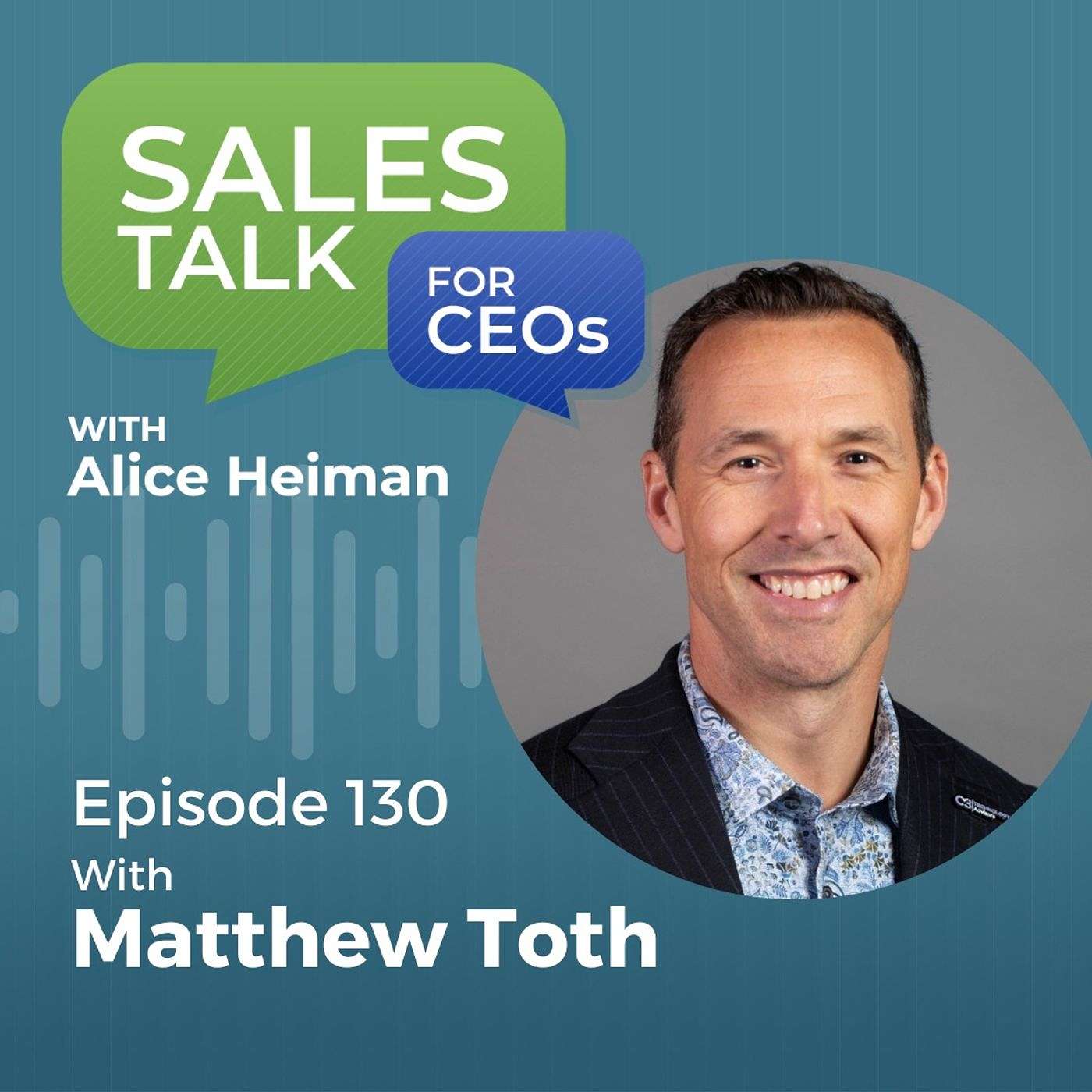
S9 Ep 5Building Your A-Team: Matthew Toth's Proven Strategies for Hiring and Retaining Top Talent
In an era where technology evolves at lightning speed, having the right team in place is no longer a luxury—it's a necessity. CEOs today face the critical task of ensuring their organizations are equipped for sustained growth and success. Matthew Toth, CEO of C3 Technology Advisors, shares valuable insights from his 15-year journey in building a successful technology consulting firm. Here’s what he’s learned about hiring, training, and retaining top talent.Building a Foundation for SuccessMatthew emphasizes the importance of laying a solid foundation for business success. "Sales is a lagging indicator of just doing the right things," he says. "If you build the right culture, bring on the right people, and have a good strategy, the numbers will follow." He believes that focusing on long-term goals and creating a strong company culture are essential steps toward sustainable growth.Effective Hiring StrategiesWhen Matthew decided to start his own business, he knew he needed to hire the right people to grow. His approach to hiring involved planting seeds early. "I started seeding my network with, 'When this thing works out, I'm going to come for you one day,'" he shares. This proactive strategy allowed him to build a pipeline of potential hires who were already familiar with his vision and values.Matthew's first hire was someone he saw as a perfect fit for his company culture. Despite the initial challenges, he trained this employee by giving him numerous opportunities to engage in real-world sales activities. "I just decided I'm going to go grind this thing out," Matthew recalls. His emphasis on practical experience and on-the-job training helped his first hire become a successful leader within the company.Training and DevelopmentTraining new hires can be challenging, especially without a formal process in place. Matthew's solution was to provide hands-on training through real-world experiences. By involving new employees in client interactions and sales processes, he ensured they gained practical skills and knowledge. "There's no training manual when you hire your first employee," he admits. "But giving them as many at-bats as possible was a great way to learn."Retaining Top TalentRetaining top talent is crucial for long-term success. Matthew believes that treating employees well and investing in their development is key. "I measure my success by year-over-year retention of extraordinary people," he says. By creating a supportive and growth-oriented environment, he has been able to maintain a high level of employee satisfaction and performance.Action Steps for CEOsBuild a Strong Foundation: Focus on creating a positive company culture, hiring the right people, and developing a clear strategy.Proactive Hiring: Continuously build a pipeline of potential hires by networking and keeping in touch with talented individuals.Hands-On Training: Provide new hires with practical experiences and real-world opportunities to develop their skills.Invest in Retention: Treat employees well, invest in their development, and create a supportive work environment to retain top talent.Matthew Toth’s journey from a solo entrepreneur to the CEO of a successful technology consulting firm offers valuable lessons for any leader. His experience underscores the importance of building a strong foundation, proactive hiring, hands-on training, and investing in employee retention. To learn more about Matthew's strategies and insights, listen to the full episode below. Whether you're a budding entrepreneur or an established CEO, this episode provides practical advice and inspiration for your business journey.About GuestI’m the father of one amazing girl, husband to a police officer and founder of C
S9 Ep 4Is a Chief Revenue Officer Right for Your Business? When to Consider a CRO
In the complex world of company leadership structures, the role of the Chief Revenue Officer (CRO) has sparked debates on its necessity and timing. In this episode of "Sales Talk for CEOs," Alice Heiman dives into the nuances of the CRO role, helping CEOs determine if and when it might be essential for their company.Deciphering the CRO Role:The emergence of the CRO role aims to bridge the gaps between sales, marketing, and customer success. Alice Heiman discusses the strategic integration these departments require, emphasizing that alignment is key to fostering growth and customer retention.When is a CRO Necessary?Alice points out that not every company needs a CRO immediately. She suggests that the consideration for a CRO often becomes relevant as companies approach or surpass the $50 million revenue mark. For smaller ventures, the CEO often needs to handle these alignments directly.Action Steps for CEOs:Assess Organizational Needs: Analyze whether your current setup effectively supports growth and customer alignment.Understand the CRO’s Impact: Consider how a CRO could influence your strategic outcomes.Prepare for Integration: Plan how a CRO would fit within your existing leadership framework.Educate Your Team: Ensure your staff understands the potential impact of a CRO on the company’s success.Why Consider a CRO?Understanding when a CRO is necessary involves recognizing the potential for better strategic alignment across departments that directly influence revenue generation. "The decision to appoint a CRO should be driven by specific business needs, not just industry trends," Alice explains.Tune Into the Full Discussion:For a deeper exploration of whether your company could benefit from a CRO, listen to the full episode of "Sales Talk for CEOs." Alice offers detailed advice that can guide your decision-making process about this pivotal role.Chapters00:00 Introduction to Sales Strategies01:45 Evolution of Sales and Marketing03:13 The Rise of Customer Success04:37 The C-Level Conundrum06:12 The Need for a CRO07:54 CEO’s Role in Alignment09:36 Creating Synergy for Customer Success11:08 Evaluating CRO ReadinessSocial Links Connect with Alice on LinkedIn:(40) Alice Heiman | LinkedInCheck out Alice’s website:https://AliceHeiman.com
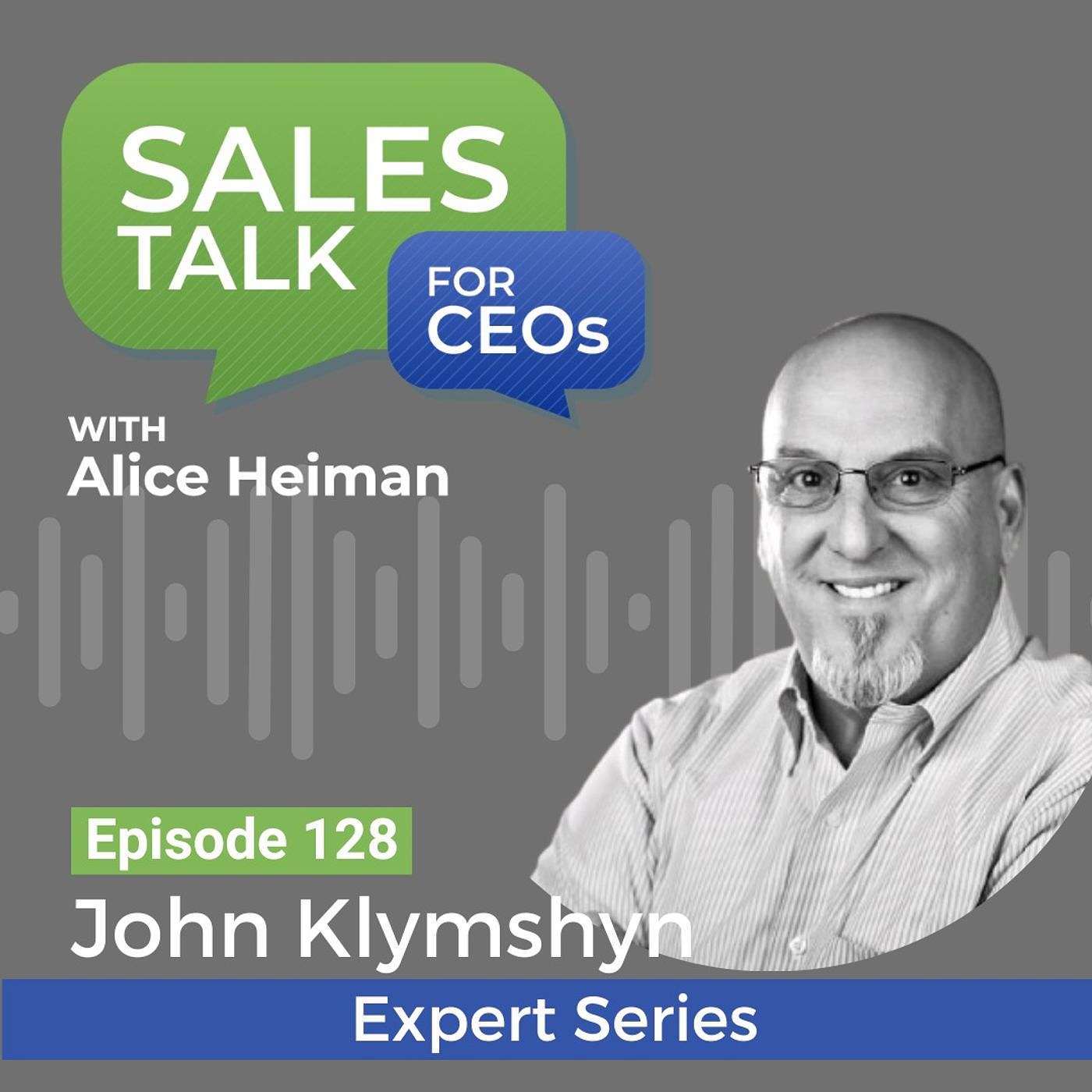
S9 Ep 3The Power of Vision: John Klymshyn on Leading Sales and Inspiring Teams
What role does vision play in sales and leadership? John Klymshyn, a Navy veteran turned renowned sales coach, author, and speaker shares his insights on how a clear vision can transform sales teams and inspire individuals to achieve greatness. Join us as John discusses his journey, the importance of vision, and actionable strategies for CEOs to lead their organizations effectively.Vision Precedes EverythingJohn emphasizes that a clear vision is the foundation of successful leadership. "The first three words in my book on sales management are 'vision precedes everything.' Without vision, the people perish. Our employees are our precious inventory," John explains. A compelling vision inspires individuals to go the extra mile and fosters a sense of purpose within the organization.Inspiration Over MotivationAccording to John, the role of a CEO is not to motivate but to inspire. "Motivation fades, inspiration feeds," he says. Leaders can drive sustained performance and commitment by understanding individual motivations and creatively inspiring their teams. This approach helps individuals connect with the company's vision and see how their efforts contribute to a larger goal.Precision of LanguageClear and precise language is essential for communicating vision effectively. John advises leaders to start sentences with "Here's where we're headed" to align their teams' focus. "When the vision can be expressed in one sentence, people either buy into it or they don't," he asserts. Precise language ensures everyone in the organization understands and can articulate the vision, leading to better alignment and execution.Action Steps for CEOs:Develop a Clear Vision: Spend time defining a concise vision for your organization. Ensure it resonates with your team's values and goals.Inspire, Don’t Just Motivate: Understand what drives your team members and use this knowledge to inspire them towards achieving the vision.Use Precise Language: Communicate the vision clearly and consistently. Use language that resonates and inspires action.John Klymshyn's insights on vision, inspiration, and leadership offer valuable lessons for CEOs looking to drive their sales teams to new heights. Leaders can align their organizations and achieve lasting success by developing a clear vision, inspiring rather than just motivating, and using precise language. Listen to the full episode below to gain deeper insights into John’s strategies and experiences. Whether you're a new CEO or an experienced leader, this episode provides practical advice on inspiring and leading your team effectively.Chapters01:22 The Importance of Vision05:10 Articulating Vision10:18 Crafting a Vision Statement15:10 Implementing Vision Throughout the Organization20:23 Vision and Sales Strategy25:05 Motivating Enterprise Salespeople29:42 Overcoming Misconceptions About Salespeople33:26 Engagement and Contribution38:50 The Lifelong Learner41:59 The Importance of Retention and Recruiting44:08 Closing Remarks and Key TakeawaysAbout GuestJohn Klymshyn spends many of his waking hours Coaching “C” Suite Executives... andthose on the path to those roles. Constructing and Maintaining GREAT Teams is hisFocus.For John: “It’s all about the language!”John’s clients include: Indeed.com, Four Seasons Hotels & Resorts, The New YorkTimes, Colliers International, Rent.com (now Apartments.com). Pinehurst Golf resort,Fish Richardson Law and many more. As a professional speaker, John has spoken inMexico City, Cabo San Lucas, Toronto, Montreal, Honolulu, Dublin, Ireland and everymajor city in the United States.He has written 12 books, which have evolved from addressing and exploring creativity, to executive developme
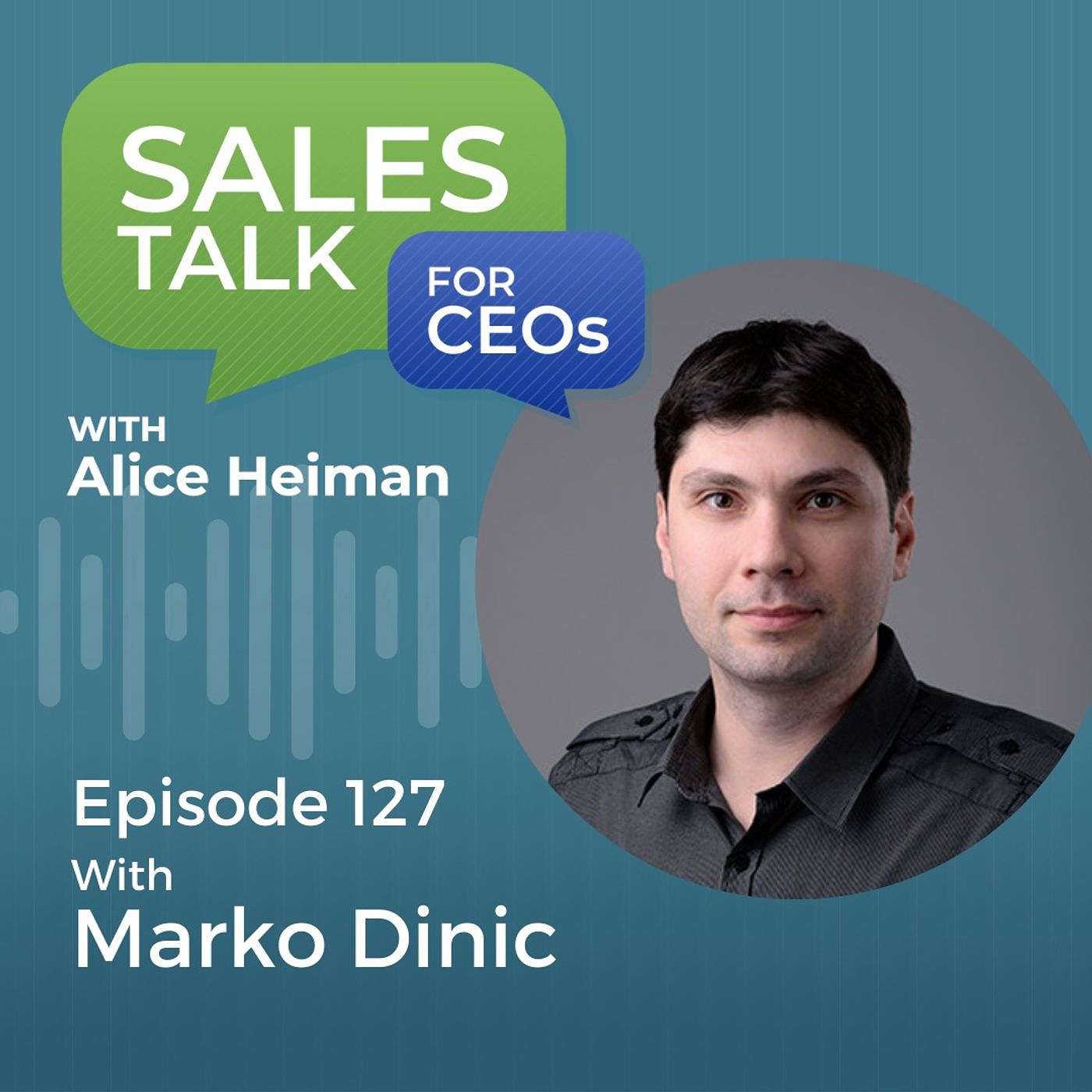
S9 Ep 2From Engineer to CEO: Marko Dinic's Unexpected Journey in Tech Leadership
Having no plans of becoming a CEO, engineer Marko Dinic shares his 18-year journey to becoming the leader of a company that excels in compliance solutions. Leading his company through both triumphs and challenges, Marko, CEO of Jatheon, delves into his experiences, lessons learned, and the unique insights he's gained along the way.Complex Sales Require Technical ExpertiseMarko emphasizes the need for deep technical understanding when selling intricate compliance solutions. Marko states, “In our industry, sales cycles are very long and involve numerous technical evaluations and integrations. Having a technical lead ensures that we can address any technical concerns that arise during the process, providing confidence to our clients and streamlining the sales journey.”Adapting Through Economic TurmoilFacing market turmoil and recession, Marko had to downsize and rebuild, showcasing resilience and adaptability in leadership. He recalls, “We went from 32 people down to six. So it wasn't going according to plan. But we were able to get back to a cash flow positive state by 2013.”Building the Right TeamThe journey to finding the right sales team involved trial and error, emphasizing the need for experienced, senior salespeople who understand the intricacies of the industry. Marko shares, “We arrived at our current setup, which is primarily SEO-based and PPC-based inbound leads. They come to our senior account executives. We do not have SDRs in front of them because we found that young sales executives do not help us at all.”Action Steps for CEOs:Embrace Technical Expertise in Sales: Ensure your sales team includes technical leads to handle complex details and improve the overall sales process.Focus on Resilience: Prepare for economic challenges by having adaptable strategies and a resilient mindset.Invest in Senior Talent: Hire experienced salespeople who can navigate complex sales environments and provide valuable feedback for product development.Marko Dinic's journey from engineer to CEO of Jatheon offers invaluable lessons for any leader. His experience underscores the importance of technical expertise in sales, resilience in the face of economic challenges, and the critical role of hiring the right team. To gain deeper insights into Marko's story and the strategies that have driven his success, listen to the full episode below. Whether you're a budding entrepreneur or an established CEO, this episode provides practical advice and inspiration for your own business journey. Episode DetailsChapters00:49 Overview of Jatheon Technologies02:52 Early Career and Joining Jatheon09:33 Navigating Financial Challenges and Reorganization09:33 Transitioning to CEO and Sales Department Challenges14:25 Structuring and Scaling the Sales Team20:34 Lessons from Trial and Error in Hiring24:30 Remote Work and Open Communication Culture30:51 Alignment and Continuous Improvement42:26 Recommendations and Closing RemarksAbout GuestMarko Dinic is an SaaS B2B entrepreneur, investor, and CEO of Jatheon Technologies, a Toronto-based com tech company that is a leader in the archiving and compliance technology sector.With a sharp focus on innovation and customer-centric solutions, Marko has spearheaded Jatheon’s transformation into a key player in the data archiving space. His strategic vision centers around providing robust and secure archiving solutions that cater to regulated industries, including financial services, healthcare, and government entities. Marko’s leadership is marked by a commitment to delivering technologies that ensure compliance with evolving regulations and enhance operational efficiency. His expertise and dedication have been pivotal in Jatheon’s growth and its ability to help organizations manage t
S9 Ep 1From Problem to Product: Sujan Patel's Path to Mailshake
In 2015, Sujan Patel faced a common frustration: sales teams failing to follow up with prospects. His solution? Build a tool so effective that it turned into a successful company, Mailshake.In this episode, Alice Heiman talks with Sujan Patel, co-founder of Mailshake, about his journey from solving his own sales problems to building a successful bootstrapped company. Sujan shares valuable lessons learned over the past ten years.Here’s what you’ll discover:How Sujan transitioned from marketing to sales and founded Mailshake.The importance of pivoting and targeting the right audience.Building a community early for successThe benefits of product-led growth.Advice for CEOs on staying focused and differentiating in a crowded market.A Problem-Solver's BeginningSujan Patel, co-founder of Mailshake, didn't initially set out to create a sales engagement platform. As a VP of Marketing at a SaaS company, he discovered a significant gap in sales follow-up and engagement. "I needed a simple tool to make sure the sales team follows up. Humans, step aside; software, let's go solve this problem," Sujan recalls. His background in marketing led him to develop Mailshake to address his own sales challenges. "I took over the sales team with no real background in sales," Sujan shares. He realized that effective follow-up and engagement were missing, prompting him to create a solution.Building a CommunityInitially targeting marketers, Sujan quickly realized that salespeople were the primary users who benefited most from Mailshake. "We changed all of our branding and copy to focus specifically on the sales use case," Sujan explains. This pivot was crucial for the company's growth and product-market fit. His strategy involved building a community and sharing his journey with potential customers. "I built about a 50,000-person email list and updated them weekly on my journey," he says. This approach not only created early traction but also fostered a sense of involvement among his audience.Scaling the Sales OrganizationAs Mailshake grew, Sujan transitioned from handling sales himself to building a sales team. "I hired a sales assist first, which effectively doubled our conversion rate," he notes. This move allowed him to focus on the company's vision while ensuring that customers received the support they needed. Mailshake's product-led growth strategy enabled them to scale without a massive sales team. "We went from a team of 15 sales reps to a lean, mean five people," Sujan highlights. By focusing on simplicity and ease of use, Mailshake maintained high customer satisfaction and retention.Sujan’s Advice for CEOsSujan emphasizes the importance of knowing your differentiator in a crowded market. "You need to have one thing that is your differentiator or what you're amazing at," he advises. By staying focused on their strengths and continuously improving their product, Mailshake continues to thrive.Action Steps for CEOsUnderstand Your Market: Regularly reassess your target audience and be willing to pivot based on feedback and market demand.Leverage Community Building: Engage with your potential customers early and often. Building a community can create loyal advocates and provide valuable insights.Invest in Product-Led Growth: Focus on making your product so good that it sells itself. Simplify the user experience and provide clear value.Scale Thoughtfully: Grow your team and processes in response to demand. Ensure each addition to your team aligns with your strategic goals.Sujan Patel’s journey with Mailshake highlights the power of innovation driven by personal frustration and a deep understanding of market needs. To learn more about his strategies and insights, watch the full episode of Sales Talk for CEOs below.
S8 Ep 8Unlocking Growth: Why Every CEO Needs a Team of A-Players
Imagine this: every person reporting directly to you is not just competent, but an A-player, fully aligned with your vision and driving your company's growth. Sounds ideal, right? This is not just a dream—it's an achievable reality that can transform the way you lead. Today on "Sales Talk for CEOs," Alice Heiman delves into why having the right people in the right roles is not just beneficial but essential for your company's success.Key TakeawaysEvaluate Your Team: It's crucial to assess if each team member is an A-player who contributes positively to your company’s performance and culture. Alice notes, “You do not need to struggle with the people who work for you. It’s not good for you, it’s not good for them, and it isn’t good for the rest of the company.”Leverage Individual Strengths: Encourage team members to operate in their "genius zone" where they excel and are most passionate, boosting morale and efficiency. Alice emphasizes, “Know what you’re good at and do that. Let’s figure out how to get someone else to do things you’re not good at, rather than having you do them poorly.”Strategic Restructuring: Be willing to make tough decisions. If team members are not suited to their roles, consider reassignments or changes to better align their strengths with the company’s needs. Don’t just live with it. As Alice points out, “It’s just really not fair to anyone and it doesn’t make your company grow faster, that’s for sure.”Alice discusses the common challenges CEOs face with team dynamics, emphasizing the importance of not just filling positions, but filling them with people who truly fit the company’s vision and values.Action Steps for CEOs:Conduct a Performance Review: Identify who truly meets the A-player criteria.Focus on Your Strengths: Ensure you are working within your genius zone and encourage your team to do the same.Clear Communication on Roles: Have honest discussions with your team about their performance and future within the company.Alice challenges leaders to envision a team that not only supports but propels company growth. She poses a critical reflection for every CEO, "What would your world be like if every team member was an A-player?"Aligning your team with your company's goals isn't just beneficial—it's crucial for thriving in today's competitive market. Tune into the full podcast for a deeper dive into how you can lead your team to success.Chapters00:00 Introduction - Alice Heiman kicks off the podcast addressing CEOs and discussing the challenges with sales strategies.02:14 A Player Struggles - Exploring the common CEO issue of having underperforming team members and the desire to turn them into A players.04:24 CEO's Role in Team Performance - The harsh truth that a part of the struggle with team performance lies with the CEOs' decisions.06:23 Genius Zone Concept - Alice Heiman introduces the concept of working within one's 'genius zone' to enhance personal and company growth.08:02 Team Structuring - Discussing the importance of aligning team members' roles with their strengths and talents.09:24 Personnel Changes - Insights on making tough personnel decisions to ensure each team member is playing to their strengths.11:14 Impact on Customer Experience - How internal team dynamics directly influence customer satisfaction and sales.13:04 Call to Action for CEOs - Alice Heiman urges CEOs to evaluate themselves and their teams to optimize company performance and growth.13:50 Conclusion - Wrapping up by emphasizing the CEO's role in building a strong company culture and inviting listeners to the next episode.Connect with Alice on LinkedIn:(40) Alice Heiman | LinkedInCheck out Alice’s website:
S8 Ep 7The Art of Whale Hunting: Strategies for Big Sales Success
Landing big deals, or "whale hunting," is crucial for small and mid-sized businesses aiming to grow. In a recent episode of "Sales Talk for CEOs," Barbara Weaver Smith, an expert in whale hunting, shared invaluable insights on how CEOs can successfully target and secure these significant accounts.From Strategy to Action: The Essence of Whale HuntingWhale hunting is a systematic process for scouting, hunting, and harvesting large accounts. Barbara explains, “A whale is a customer that could give you a deal that's ten to twenty times bigger than your current average deal.” This approach requires the involvement of the CEO and senior leaders to succeed. "Selling is a team sport. The salesperson is an orchestrator,” says Barbara.Why Whale Hunting MattersSecuring large accounts is one of the safest and least expensive ways to grow your business. Barbara highlights, "If you get one big company and understand strategically how to move in that company, you can do a lifetime of business with that one customer."Key Strategies for Whale HuntingIdentify the Right Targets: It’s essential to know which companies to target. Barbara advises picking a specific geography and industry to build brand recognition and power.Mitigate Risks: Big companies have significant fears about working with smaller companies. Barbara suggests preparing materials to address these fears, such as detailed onboarding plans and financial stability assurances.Leverage Networks: Use your network to gain introductions to key decision-makers. Barbara shares, "The idea that you picked them out because you have a set of criteria and they fulfill it perfectly... they just beam."Involve the CEO: The CEO must play an active role in the sales process, especially in building trust with potential clients. Barbara notes, "They need to know you, and they need to know you know what the sales team is doing."From Insights to Implementation: Key Action Steps for CEOsTo transform these strategies into successful outcomes, CEOs need to take deliberate actions. Here are the crucial steps to effectively pursue and land whales:Emphasize Personal Interaction: Build trust by having direct engagement at the right level with potential clients.Understand the Risks: Prepare in advance to mitigate the risks the leaders of large companies will have. Build a Dedicated Team: Train a team that can effectively execute your whale hunting strategy.Barbara Weaver Smith’s insights provide a roadmap for CEOs looking to elevate their sales game by targeting and securing large accounts. For more detailed strategies and expert advice, watch the full episode below.Chapters00:00 Introducing Barbara Weaver Smith - Host Alice welcomes Barbara Weaver Smith. She is an expert in "whale hunting" — landing major accounts.01:33 The Excitement of Sales Talk - Barbara expresses her anticipation for discussing her area of expertise.01:53 Defining Whale Hunting - Barbara explains whale hunting as a business strategy. She emphasizes CEO involvement for successful large deals.03:07 The Importance of Teams in Sales - Emphasizing sales as a team sport. Lone wolves are a thing of the past.05:50 Scouting and Engaging Targets - The process of identifying ideal clients. The role of scouts and engaging teams in whale hunting.07:44 The Value of Large Accounts - Barbara discusses strategic growth through large client accounts. She explains their impact on businesses.08:03 Repeat Success - Addressing the challenge of replicating the success of landing a first-time whale. This requires a deliberate and structured approach.10:35 Overcoming "Whale Fears" - Introducing the notion of mitigating big companies' fears. This includes dealing with smaller vendors and financial risks.14:11 Building Ef
S8 Ep 6From 1 million to 1.5 billion at Angie’s List, What Alex Levin did Next
Episode Summary: Ever felt the frustration of navigating customer service bots that just don't get your problem? Alex Levin of Regal.io understands this pain all too well and is transforming customer interaction with a human touch. He shares his journey from working to build Angie’s list to cofounding Regal.io, getting customer feedback in the early days and growing sales to $3M ARR in the first year. Here's what you'll discover:After taking Angie's List from 1 million to 1.5 billion, why Alex craved the startup world.The founding story of Regal.io and its mission.How personalized customer interactions can drive sales.The importance of a hands-on approach in the early stages of a startup.From Angie's List to Regal.io: The Founding Story After helping Angie's List grow from 1 million to 1.5 billion in revenue, Alex Levin yearned for the dynamic environment of a startup. Recognizing a gap in how companies interact with customers online, he co-founded Regal.io. “People were nervous about making big decisions online. What worked was actually talking with the customer,” says Alex. He found that for complex services, customers preferred real conversations to feel reassured and confident.Personalized Customer Engagement Regal.io was born from the insight that certain industries, like home services, healthcare, and education, benefit immensely from personalized customer interactions. At Angie's List, Alex saw that conversion rates improved significantly when customers had real conversations. He explains, “We had a team of 5000 people engaging directly with customers, but the tools were not made for proactively engaging them.” This meant using a large team to personally interact with customers, build trust, and guide them, even though existing tools weren’t designed for this proactive approach.Building the Business Alex and his co-founder took a calculated risk, leaving their jobs to build Regal.io without a finished product. They validated their concept by showing potential customers mockups and iterating based on feedback before raising money. Alex emphasizes, “Don't raise any money until you've convinced yourself it's a real business.”Scaling and Sales Strategy Initially, Alex led the sales efforts himself, leveraging his industry knowledge and personal network and was able to close $3M in ARR the first year. When you are doing all the selling and decide you are ready for some help, he advises, “Get somebody to shadow you, see what you're doing, figure out how you're doing it.” This hands-on approach helped them get others up to speed more quickly.The Role of Human Interaction In a world increasingly driven by digital interactions, Regal.io stands out by emphasizing the value of human touch. “If you’re lucky, people go to that one feature they like, and you end up spending years building that,” Alex notes. This approach has helped Regal.io grow rapidly, reaching significant milestones in a short time.Action Steps for CEOsEmphasize Personal Interaction: Identify areas where direct engagement can significantly impact customer experience and conversion rates.Validate Early: Before investing heavily, use mockups and direct customer feedback to refine your product concept.Build a Dedicated Team: Hire individuals who can shadow and learn from your sales process to create a scalable sales strategy.Making real connections with your customers can make a big difference. Alex Levin's journey with Regal.io shows how personal touch can drive business success. For more insights and detailed strategies, watch the full episode below.Chapters01:02 Guest Welcome - Introduction of Alex Levin, founder of Regal IO, and his journey from Angie's List to starting his venture.01:32 Regal IO Explained - Alex provides insights on Regal IO's conception from his exp
S8 Ep 5Turning a Sweet Idea into a Thriving Business: The Grove Cookie Journey
Did you know 95% of Americans eat at least one cookie per month? In today's "Sales Talk for CEOs," Alice speaks with Grayson Hogard's entrepreneurial journey from hobby baking to a hugely successful business. As CEO of Grove Cookies, Grayson turned traditional treats into a powerhouse of corporate gifting. Discover how cookies can reshape client relations and strategies.A Sweet StartIn 2020, amidst the pandemic, Grayson and his wife began baking as a hobby. Their homemade Oreo cookies were a hit among friends, sparking the idea to sell them. "When I took a bite out of our Oreo cookie, I was like, okay, this is real," Grayson recalls. They quickly set up their business, choosing traditional cookie flavors over trendy ones to stand out in the crowded market.From Home Kitchen to Corporate GiftingGrayson's logistics expertise and initial positive feedback led them to focus on corporate gifting. They realized the potential when a financial advisor requested hundreds of cookies as client gifts. "When you get a client that wants to send out 500 gifts a year, you just are like, oh, there's a market here, let's explore it," Grayson explains. This insight shifted their business towards serving corporate clients, offering a memorable and delicious touch to business relationships.Navigating Business GrowthDespite no formal business background in baking or sales, Grayson's experience in logistics helped streamline their operations. They refined their offerings based on customer feedback, ensuring their cookies always arrived intact and delicious. "All that mattered to them at the moment was cookies do not break. And we succeeded on the first try," Grayson notes about their packaging efforts.The Key to Success: Listening and AdaptingListening to their clients has been crucial. Grove Cookies adapted their packaging and expanded their range based on client needs, maintaining high standards and customer satisfaction. Grayson emphasizes, "Really listening to your customers, which is always important, and executing off of that."Action Steps for CEOs:Identify Unique Opportunities: Like Grayson, look for unique angles in crowded markets.Leverage Personal Passions: Turn personal passions into business opportunities.Listen to Your Customers: Use client feedback to refine and adapt your offerings.For more insights and the full story of how Grove Cookies turned a simple idea into a thriving business, make sure to watch the full episode of Sales Talk for CEOs. Discover the power of combining passion with business acumen!Chapters01:42 Overview of Grove Cookie - Grayson explains the focus of Grove Cookie, specializing in corporate gifting and sales and marketing.02:23 Popularity of Cookies - Discussion about the universal appeal of cookies and their role in corporate gifting.04:01 Choosing the First Cookie Flavor - Grayson talks about selecting the Oreo cookie as their first flavor and how it became a favorite.05:27 Packaging and Shipping Challenges - The initial challenges of packaging and shipping cookies without them breaking.06:36 First Sale and Realization of Market - Grayson's first sale to his mother and the realization of a market for corporate gifting.07:51 Networking for Initial Clients - The importance of networking in securing their first major clients and building relationships.09:33 Cold Calling Strategy - Grayson shares his experience with cold calling and the success it brought in securing clients.10:40 Ideal Customer Profile - How they identified financial advisors as their initial target market.12:53 Learning from Feedback - The significance of customer feedback in refining their products and services.16:52 Expanding Customer Base - How the ideal customer profile has changed and the benefits of partnering with gifting platforms.18:05 Using Gift
S8 Ep 4Why Your Sales Aren't Growing: The Critical Role of Value in Customer Acquisition with Expert Ian Campbell
In today's fiercely competitive market, understanding the core of value-driven sales can be transformative. This crucial concept was the centerpiece of our latest "Sales Talk for CEOs" episode, featuring expert Ian Campbell, CEO of Nucleus Research and author of "The Value Sale." In this discussion, we delve into how emphasizing value rather than just product features can revolutionize sales dynamics and lead to enduring customer relationships.Key Takeaways:Accelerating Sales Cycles with Value: Demonstrating the true value of products or services can significantly shorten the sales cycle and enhance customer satisfaction.Sustaining Post-Sale Value: Delivering ongoing value post-sale is crucial for ensuring customer loyalty and facilitating smooth renewals.Essential Value Articulation: It's vital for CEOs to train their teams to articulate value effectively, aligning closely with customer expectations.Action Steps for CEOs:Evaluate Sales Messaging: Refocus your sales conversations to emphasize value over product features.Commit to Training: Continuously train your sales team on recognizing and communicating value effectively.Adapt and Improve: Regularly assess how your team communicates value and adjust strategies as needed.Ian Campbell shared, "When value drives a deal, people shorten the sales cycle. They make better references." This emphasizes the importance of a value-centric approach in modern sales strategies.Alice Heiman underscored the significance of this strategy, stating, "When there's value, you have the momentum you need to keep a sale going and close it."For a deeper dive into how embedding value in your sales process can foster more engaged and loyal customers, be sure to watch the full episode of "Sales Talk for CEOs." This discussion is essential for CEOs looking to refine their sales strategy and cultivate teams that prioritize customer value at every interaction. Don’t miss these expert insights — watch the full episode now!You are not going to want to miss this episode with expert Ian Campbell! For a comprehensive exploration of their insights, make sure to watch the entire episode.Chapters00:00 Introduction - Welcome to Sales Talk for CEOs and introduction to the value proposition topic with guest Ian Campbell of Nucleus Research.01:30 The Importance of Value - Exploring why value is essential in sales and how it can shorten sales cycles and foster long-term customer relationships.02:56 Focusing on Customer Value - The discussion shifts to a customer-centric approach and how value shapes their purchasing decisions.04:28 Renewals and References - Ian emphasizes the pivotal role of articulating value for subscription renewals and generating robust customer references.05:34 Beyond the Sale - Delving into how value sustains the customer journey beyond the initial sale, influencing retention and word-of-mouth marketing.06:23 Key Value Aspects - Ian breaks down the critical factors of value that resonate most strongly with customers, aiding in the sales process.07:23 Direct vs. Indirect Benefits - Understanding the difference between direct and indirect benefits and their impact on the value narrative.08:15 Crafting Marketing and Sales Messages - The conversion to align marketing and sales messaging with value-driven content to captivate the target audience.09:39 The Art of Value Language - Learning how to effectively communicate value propositions, translating into successful customer engagement.10:17 Selling Through Value - Ian explains the significance of selling through an individual to make an organization-wide impact.12:08 Assessing Sales Team Culture - A guide for CEOs to evaluate whether their teams are truly embracing value selling tactics.13:14 Training for Value Selling - High
S8 Ep 3From Silos to Synergy: Transforming Your Team with a Go-to-Market Framework
Did you know that collaborative team selling has become a fundamental approach for modern businesses? According to Forrester, nearly 60% of sales leaders now emphasize team collaboration over individual efforts to secure significant deals. In this compelling solo episode of Sales Talk for CEOs, Alice Heiman explores why moving away from traditional sales and marketing silos to a unified go-to-market (GTM) strategy is crucial for thriving in today’s competitive landscape.Key Insights for CEOs:Team-Based Selling is Essential: "The days of the lone wolf seller are long gone," Alice explains, highlighting the importance of team collaboration in sales.Cultural Shift is Necessary: A GTM strategy involves reshaping your company's culture so that everyone understands their role in sales success.Marketing Must Contribute to Sales: Alice stresses that marketing should generate sales-qualified leads, directly contributing to the sales pipeline.Include Customer Success Early: Start customer success processes early in the sales cycle to enhance customer retention and satisfaction.Actions for CEO’s: How to Implement a GTM Strategy:Evaluate Your Current Processes: Look at how each department supports or hinders sales and customer experiences.Encourage Collaboration: Work towards unified sales goals across all departments.Clearly Communicate Your Vision: Articulate a vision that emphasizes exceptional customer experience across all departments.Adopting a GTM strategy is not just an operational change but a strategic necessity for modern CEOs. For a deeper dive into these strategies, watch the full episode of Sales Talk for CEOs. Equip your team to meet today's market challenges by integrating these insights and encouraging them to adopt a successful GTM strategy.Chapters00:00 Introduction - Alice Heiman uncovers the evolving landscape of sales and the vital shift from siloed functions to a unified go-to-market strategy.02:02 Go-to-Market Importance - Unpacking the necessity for team collaboration in sales and questioning traditional sales, marketing, and customer success isolation.04:28 Marketing's Role in Sales - A deep dive into how marketing must transition from branding to owning sales numbers and generating qualified leads.05:39 Customer Success Integration - Exploring the expanded role of customer success in onboarding and retention, starting long before the sales close.07:17 Cross-Departmental Sales Roles - A call for every department to recognize their part in sales and how they contribute to making it easier for customers.09:20 CEO's Leadership in Sales Alignment - Emphasizing the CEO's unique position to realign the company's vision and culture towards a customer-centric, integrated sales approach.Social Links Check out Alice’s website: https://aliceheiman.com/Connect with Alice on LinkedIn: https://www.linkedin.com/in/aliceheiman/
S8 Ep 2From Sales Rep to CEO: Navigating the Journey to Funded Startup
"It's how you sell that becomes your differentiator in a crowded market," explained Ross Rich. Alice was excited to talk with Ross, whom she’s known since the early days of his entrepreneurial journey. Ross, the CEO of Accord, started his company to solve a critical problem in sales: lack of transparency between teams and customers. His insights are not just about Accord’s journey from idea to successful product, but about the transformative lessons learned from evolving from a sales rep to a CEO.Key Takeaways for CEOs:1. The Genesis of Accord: A Lesson in Identifying Market GapsRoss’s journey began at Stripe, where he recognized a recurring challenge across sales teams—aligning the "why," "how," and "who" of deals was cumbersome and opaque. This realization spurred him to develop Accord, demonstrating the power of addressing specific market needs with precise solutions. “The whole idea behind Accord is taking those best practices that pretty much every top seller uses...and building that into software to make it really easy for both the seller and the customer to understand those three key aspects,” Ross shared.2. Embracing the Entrepreneurial Leap: Overcoming Fear with PreparationRoss’s transition from employee to founder wasn't spontaneous. It was calculated and gradual, emphasizing that making 'the leap' should feel like a natural next step, not a risky jump into the unknown. He advised, “It shouldn’t feel like a crazy leap at the time...By the time that you’re ready to do it, it should be, hey, I have an overwhelming amount of work to do on this project.”3. The Importance of Early Customer Success ManagementOne of the critical early mistakes Ross acknowledged was underestimating the importance of customer success management. Before scaling the product or marketing efforts, ensuring that the initial customers are successful and well-supported is vital. This focus helps in refining the product based on real user feedback and solidifies the foundation for scaling.What to Do Next? Actionable Steps for CEOs:Ross’s experiences underline the necessity of not just starting a business but nurturing it through thoughtful steps and strategies. For CEOs aiming to replicate such success, here are actionable steps to consider:Evaluate Market Needs: Just as Ross identified a gap in sales transparency, CEOs should look for unmet needs in their markets that align with their expertise and business vision.Gradual Transition into Entrepreneurship: Transitioning to a full-time entrepreneurial role should be a process rather than a sudden shift. This approach reduces risk and ensures a solid foundation for the business.Prioritize Customer Success: Invest in customer success early on. This focus will not only improve your product through genuine feedback but also increase customer retention and satisfaction.To grasp the complete range of insights Ross offers about enhancing your business operations through these foundational strategies, watch the full episode on our youtube channel.Chapters00:00 Introduction - Alice opens the episode touching on the need for CEOs to update sales strategies and the joy of reconnecting with early-stage entrepreneurs she had met.02:07 Welcome Ross Rick - Ross Rich, founder of Accord, joins the conversation, reminiscing about the initial connection with the show host, Alice.02:41 Discussing Accord - Ross introduces Accord, sharing insights from his early days as a seller at Stripe and the concept behind his company.03:21 Technical Interruption - A sudden audio cut forces a pause in the conversation, prompting troubleshooting efforts.05:43 Resuming Conversation - With technical issues resolved, they restart the discussion, focusing on Accord's role in sales transparency and customer understanding.06:27 Why Accord Was Founded - Ross de
S8 Ep 1Leading with Empathy: How Cory Munchbach’s Journey from Analyst to CEO Shapes her Leadership Today
How does a product marketer end up in the CEO seat? Moving from being an analyst at Forrester to starting at BlueConic as a product marketer and doing many different jobs at the company over the years landed Cory Munchback the CEO seat.Fully backed by the founder, Cory shares her remarkable journey from analyst to CEO, detailing the vital lessons learned and the strategies that have shaped her leadership.Cory’s Path to CEOCory started her career at Forrester Research, gaining invaluable insights into marketing leadership and technology strategy. This foundational experience at Forrester was crucial as she transitioned to BlueConic, where she began as the Director of Product Marketing. Reflecting on her diverse roles within the company, Cory notes, "I've always been someone who feels how the system works."Key Takeaways for CEOsEmpathy and Understanding Across Roles: Cory emphasizes the importance of understanding every department's role in achieving the company's objectives. She shares, "I have a deep reverence and admiration for the skills that they bring, because I literally knew I wasn't good enough at them or wasn't passionate about them to do it myself."Replacing the Founder as CEO: Cory highlights the smooth transition from the founder being the CEO to her replacing him as a well-planned succession. "He was fully behind me. This was a thoughtful succession plan...me taking over was something he valued as part of his own legacy," Cory explains, underscoring the significance of support and clear communication during leadership transitions.The Importance of Customer-Centric Leadership: The customer is at the core of Cory's leadership philosophy. Coming from product marketing she knows better than most that you have to stay close to the customer. Don't miss the rapid fire session at the end of the episode where Cory shares her favorite books and podcasts that have influenced her career and leadership style.For an in-depth understanding of Cory Munchbach’s strategic approaches and personal influences that have shaped her journey at BlueConic, listen to the full episode.Join us next week on Sales Talk for CEOs for more insights from top executives on driving growth and leadership effectiveness.Chapters00:00 Introduction - Unveiling the critical sales knowledge CEOs need to thrive in modern markets.00:03 Female CEO Spotlight - Kicking off with excitement for female CEOs and the fresh perspectives they bring to the table.01:05 Welcome Cory Munchbach - Introducing Cory Munchbach, CEO of Blueconic, and her unexpected career journey.01:29 Exploring Blueconic - Diving into what Blueconic does, its ideal customer profile, and how their tech drives business forward.02:26 The Importance of Consumer Insights - Discussing the necessity for brands to deeply understand consumer behaviors.02:44 Cory's Path to CEO - A look at Cory's progression within Blueconic and her transition to the CEO role.03:02 From Analyst to CEO - Tracing Cory's professional roots from Forrester Research to her leadership position.05:03 The Lure to Blueconic - Cory shares what drew her to join a fresh, dynamic startup and tackle new challenges.06:07 The Marriage of Sales and Product Marketing - Understanding how product marketing works in unison with sales to achieve success.07:56 Initial Sales Struggles & Strategies - Reflecting on early sales efforts and the push for establishing brand credibility.08:05 Rapid Role Progression - Cory recounts the various roles she adapted on her way to the top.11:14 Cultivating Customer Success - Emphasizing the need for focusing on customer satisfaction to drive sales and business growth.14:15 Journey to CEO - Cory's evolution within Blueconic and the responsibilities she accumulated along the way.17:
S7 Ep 8How CEOs Can Harness the Power of Revenue Operations: Insights from Eddie Reynolds
What is RevOps anyway and how is it different from SalesOps? What do I as the CEO need to know about RevOps?In a recent episode of Sales Talk for CEOs, Eddie Reynolds, a seasoned expert in Revenue Operations (RevOps), shared crucial insights for CEOs looking to boost efficiency and enhance customer experiences. Eddie's expertise centers on aligning sales, marketing, and customer success teams to optimize overall revenue operations. Here are the simplified, actionable insights from Eddie, aimed at CEOs who are ready to leverage RevOps effectively in their organizations.Key Takeaways for CEOs:Defining Revenue Operations: Eddie describes RevOps as an evolution of sales and marketing operations. It aims to bridge the gaps between siloed departments to streamline the customer journey and improve revenue efficiency. "RevOps looks at the entire revenue engine, aiming to increase revenue efficiently and reduce costs," Eddie explains.Aligning Teams for Greater Efficiency: Misalignment between marketing and sales is a common barrier to growth. RevOps centralizes functions to ensure all departments work towards the same revenue goals, thus enhancing lead conversion and customer retention. Eddie highlights, "RevOps was developed to tackle the classic disconnects between marketing, sales, and customer success."Focusing on Customer Value: Shifting the focus from lead quantity to lead quality—those likely to convert and offer long-term value—is crucial. This strategy demands a deep understanding of customer profiles and targeted marketing. Eddie advises, "Targeting should revolve around the lifetime value of customers, aligning marketing, sales, and customer success."The Role of Technology in RevOps: Adopting the right tech stack is crucial for effective RevOps. Technology should enhance visibility across the sales funnel and support data-driven decision-making, helping track and optimize the customer journey. "While building a tech stack is vital, it's about more than just technology—it's about supporting the go-to-market strategy," Eddie notes.From Theory to Practice Here are a few ways to apply these RevOps strategies within your own organization.Action Steps for CEOs:Evaluate your RevOps strategy: Ensure it aligns with your company's revenue goals and includes all relevant departments.Train your team: Equip them with the knowledge to understand and implement RevOps principles effectively.Invest in technology: Choose tools that enhance data analysis and inter-departmental communication.Watch the full episode here to grasp the complete range of insights Eddie offers about enhancing your business operations through RevOps.Subscribe to Sales Talk for CEOs for expert insights tailored for top executives. Join us next week for more guidance aimed at driving your company’s growth and operational excellence.Chapters01:08 Welcoming Eddie Reynolds - Introducing Eddie Reynolds, an expert in revenue operations, to discuss the transformation of sales operations.01:43 Defining Rev Ops - Eddie explains Rev Ops through common problems faced between marketing and sales alignment.03:16 Customer Experience Focus - Discourse on how Rev Ops plays a crucial role in enhancing customer experience and aligning sales, marketing, and customer success.04:23 Why Alignment Matters - Debating the need for congruence between sales and marketing to ensure valuable customer interaction and efficient operations.05:32 The Pitfall of MQLs - A critical view on how misguided marketing goals can lead to poor lead quality and affect sales performance.07:30 Challenging Traditional Metrics - Exploring the flaws in current lead generation and measurement tactics and their impact on the sales process.08:43 Aligning Marketing and Sales - Solution-focused dis
S7 Ep 7From Law to Leadership: Clate Mask’s Journey to CEO of Keap
In a recent captivating episode of "Sales Talk for CEOs," Clate Mask, CEO and co-founder of Keap, shared his journey from law school to leading a company that’s at the forefront of small business automation software. For CEOs looking to streamline their operations and enhance customer engagement, Clate's insights are golden.Key Takeaways for CEOs:Leverage Automation for Growth and Efficiency: Clate explains, "Automation isn’t just about saving time; it’s about scaling your business efficiently to maximize both growth and profitability." This approach has allowed Keap to support small businesses in achieving more with less—something every CEO should consider.Emphasize Customer Success: Moving from traditional support to proactive customer success can significantly impact business growth. Clate emphasizes the importance of this shift: "By integrating Customer Success Managers into our team, we ensure our clients not only use our product but transform their business with it."Stay at the Helm of Revenue Leadership: Even as the company grows, a CEO’s involvement in driving revenue remains crucial. Clate advises, "As CEOs, we must lead the charge on revenue, staying closely connected to the outcomes and processes that drive our business forward."Insightful Reflections:Starting with his initial career pivot, Clate’s narrative is a testament to adaptability and passion. He shares, "I was drawn to the fast-paced world of tech and never looked back. It’s about harnessing every experience to propel your company forward."Discussing the strategic evolution from Infusionsoft to Keap, Clate offers a candid lesson on market alignment: "We learned the hard way that our strength lies in serving businesses that are ready for automation, not just anyone."Clate also gets real about the challenges and triumphs of entrepreneurship: "Those dark years were tough, but they taught us resilience and the importance of staying true to our vision and our customer."Watch the full Sales Talk for CEOs Podcast:For a deeper dive into how Clate Mask has steered Keap through the ups and downs of tech entrepreneurship and how these lessons can apply to your business strategy, tune into the full episode of "Sales Talk for CEOs."Catch the episode on our YouTube channel or listen on your favorite podcast platform to gain more insights into achieving sustainable growth and customer satisfaction.Chapters01:03 Welcome Clate Mask - Introducing Clate's unique journey from law school to software company CEO.01:29 Keap's Mission - Discussing the services Keap provides to small businesses, focusing on growth, efficiency, and automation.02:54 Niche Software Solutions - Addressing why Keap is the ideal CRM and business automation solution for small businesses, compared to Salesforce and HubSpot.03:33 Clate's Origin Story - Clate Mask shares his transition from law school graduate to co-founding a software company with family.05:24 Company Evolution - How the small custom software company grew into a substantial business focused on CRM products.07:26 Rebranding to Keap - Clate explains the strategic shift from Infusionsoft to Keap to focus on small business automation.09:05 Infusionsoft's Legacy - The integration and enhancement of Infusionsoft within Keap's comprehensive suite of products.09:55 Conquering Sales - Clate recounts his early sales challenges and the transformative advice from his father.11:27 Automating Success - How the implementation of automated follow-ups revolutionized the company's sales process.13:39 Building a Sales Team - Transitioning from lone salesman to establishing a robust sales structure within the company.15:50 Helping Profession of Sales - Aligning sales with a mission of helping customers solve problems effectively.<
S7 Ep 6From NASA to CEO: Lessons in Leadership, Storytelling and Curiosity
This week’s episode of "Sales Talk for CEOs" is out of this world, literally! Alice Heiman was joined by Beth Mund, whose journey from NASA to entrepreneurial space storyteller is rich with insights for business leaders. Not only that, we found out Alice is a bit of a space geek and she’s a huge fan of Beth’s having discovered her when she began her podcast Casual Space. Beth's story from navigating NASA’s communication strategies to starting her podcast and founding a nonprofit called Stories of Space underscores the essence of curiosity, the imperative of adaptability, and the potency of storytelling in leadership.Key Takeaways for CEOs:Foster a Culture of Curiosity: Beth's endless questions at NASA showcase the need for leaders to cultivate curiosity within their teams. A curious team is an innovative team, always on the brink of the next big discovery.Embrace Change and Adaptability: Mund's leap into the unknown by leaving NASA for new ventures teaches the importance of adaptability in leadership. Change is not just inevitable; it’s an opportunity for growth.Leverage Diverse Testing Groups: Beth’s experiences as an analog astronaut demonstrate the value of diverse test groups in gaining genuine product insights. Understand your customers by walking a mile in their shoes, or in this case, their spacesuit.Harness the Power of Storytelling: Mund’s transition to storytelling through her podcast and nonprofit work illustrates how narratives can effectively communicate complex ideas and connect with people on a deeper level."Curiosity is one of the key things that salespeople need, and I believe that all CEOs need to be curious...Fostering a culture of curiosity within your organization can lead to the exploration of uncharted markets and the development of groundbreaking products."Beth Mund’s transition from the realms of being International Space Station Communications Officer NASA to entrepreneurship offers CEOs a blueprint for navigating their businesses through today’s dynamic landscapes. Her journey reminds us that the principles guiding space exploration—innovation, adaptability, and effective communication—are parallel to navigating the intricacies of modern business leadership.Watch the full episode on our YouTube channel to see Beth Mund share her extraordinary experiences and insights that can inspire every CEO to lead with curiosity and courage.By embracing these lessons, CEOs can pilot their companies with the vision, innovation, and resilience needed to explore uncharted territories in business and beyond. Mund’s narrative is not just a call to explore outer space; it's a call to explore the vast potential within our teams and ourselves. Don’t miss out on this cosmic journey of leadership and innovation—listen to the podcast now.Chapters01:55 Exploring New Horizons - Alice elaborates on the value of seeking inspiration from diverse fields outside of sales, hinting at the innovative insights to come from Beth's experiences.04:22 Beth's Stellar Journey - Beth shares her nostalgic beginnings in space fascination and her journey from gazing at Halley's Comet to working at NASA and beyond.07:27 Finding a Place Among the Stars - Storytelling continues with Beth explaining how her childhood curiosity about space led to a fulfilling career in NASA communications.09:07 Tapping into Curiosity - Alice discusses the parallels between curiosity in Beth’s space pursuits and its necessity in sales and leadership roles.09:34 The NASA Chapter - Beth recounts her tenure at NASA, the challenges encountered, and the crucial task of conveying the value of space exploration to taxpayers.12:15 Selling the Stars - Unpacking the concept of 'selling space' and the nuanced role of storytelling and education in bo
S7 Ep 5Adapt, Innovate, Scale: Key Strategies from Recapped's Sales Success Story
"We help sellers consistently execute a Michelin star experience for their buyers instead of a fast food experience." And isn’t this what every buyer wants today. On "Sales Talk for CEOs," Alice Heiman was joined by Mark Fershteyn of Recapped, whose journey from sales struggles to CEO offers a roadmap for innovation in sales strategies. His focus on the customer journey always in the forefront.Elevating the Buyer ExperienceMark emphasizes transforming the sales process into a collaborative and transparent journey; he wants to enable sellers to provide a Michelin Star experience. This approach underlines the shift towards prioritizing the buyer's needs and simplifying their journey. Something he always did as a seller. Embracing Adaptability and ProcessReflecting on his early days in sales where he was struggling and almost got PIP’d. He realized he was too focused on the art of sales and not the science. He recognized that the best sellers had a process and though he didn’t consider himself a very organized person he knew he had to do something. So he started project managing his deals, creating mutual action plans and spreadsheets and all of a sudden he was 150, 250, 300% of quota and those principles became the basis for Recapped. "I was too focused on the art of sales and not the science of sales."His story highlights the importance of adaptability, process, and organization in achieving sales success.Learning from ScalingDiscussing the challenges of rapid growth, Mark advises, "You can always speed up. You can't always slow down." He underscores the need for a solid foundation before scaling, advocating for a strategic approach to growth.Key Takeaways for CEOs:Prioritize the Buyer’s Experience: Elevate the sales process by focusing on transparency and collaboration, enhancing the overall buyer journey.Innovate Through Adaptability: Embrace change and focus on the science behind sales to develop processes that drive success.Scale with Caution: Ensure a solid foundation and clear processes are in place before accelerating growth to avoid potential pitfalls.For more in-depth insights and practical advice from Mark Fershteyn's experience, CEOs are encouraged to listen to the full episode of "Sales Talk for CEOs."Mark's journey is a testament to the power of focusing on the buyer's experience, the necessity of adaptability, and the importance of cautious scaling in the dynamic world of sales.Chapters00:00 Introduction - Understanding contemporary sales strategies and the shift towards customer-centric approaches.01:59 Recapped's Value Proposition - Mark Fershteyn explains how Recapped elevates the buyer experience through collaboration and transparency.03:36 Eliminating Inefficiencies - Highlighting how Recapped reduces common sales bottlenecks and streamlines buyer-seller interactions.04:48 Origin Story - Mark shares his personal sales challenges and the inception of Recapped as a solution for process-driven selling.06:17 Sales as Science - The transformative moment that marked Mark's shift from artful selling to systematic, results-focused methods.07:17 Early Success Leading to Investment - The journey from an efficient internal tool to securing investment to scale Recapped.09:04 The Accidental Entrepreneur - How Mark went from VP of Sales to running a successful start-up.10:18 User Adoption Challenges - The importance of robust onboarding and user adoption in the early stages of customer relationship-building.12:23 Rapid Scalability Challenges - The pitfalls of aggressive scaling and the subsequent need to pare down and refocus.13:52 Market Downturn and Pivot - Adapting to changing market conditions and making tough decisions to ensure the future of Recapped.16:23 Building a Sales Te
S7 Ep 4The Power of Exceptional Experience
Do you know that exceptional customer and employee experiences can be the game-changer for your business? In a recent episode of "Sales Talk for CEOs," Alice Heiman explores this dynamic duo's profound impact. Here's a sneak peek:🌟 Customer Experience MattersDive deep into the customer journey.Identify areas for improvement.Create a seamless path to customer success.🌟 The Employee Experience ConnectionDon't underestimate the power of a positive workplace.Engaged employees naturally provide better customer service.A happy workforce drives exceptional customer experiences.🌟 Where Success ConvergesThe sweet spot where customer and employee experiences intersect.Optimize both to supercharge your company's growth.Happy employees deliver outstanding customer service, boosting revenue and profitability."Great customer experience and great employee experience go hand in hand because one drives the other. When they grow and expand together and continue getting greater together, our companies thrive." - Alice HeimanReady to take action today? Prioritize both customer and employee experiences to unlock your business's full potential. Dive into the podcast for a deeper understanding of this vital link and set your business on the path to success.Chapters02:36 Importance of deep diving into customer experience 04:25 Connecting customer experience to employee experience 06:01 Assessing and improving employee experience 08:01 Impact of employee experience on customer experience 09:23 Thriving companies through caring, productive employees Connect with Alice on LinkedIn:(28) Alice Heiman | LinkedInCheck out Alice’s website:Alice Heiman | Sales Consultant and Strategist for CEOs
S7 Ep 3Scaling to $22 Million ARR: Sales Insights from Retention.com's CEO
Another company that scaled to over $20M in ARR. How does Alice Heiman keep finding them?In another insightful episode of "Sales Talk for CEOs" Alice Heiman was joined by Adam Robinson, CEO of Retention.com, who shared his remarkable journey of bootstrapping his company to a $22 million ARR in just four years. Not unlike “G” Guillaume Moubeche, from a few episodes ago, Adam is willing to put himself out there and share the good, the bad and the ugly.This episode offers CEOs actionable insights on leveraging technology for sales success, the importance of transparency, and the power of authentic engagement.The Essence of Retention.com's InnovationAdam Robinson has carved a niche in the sales landscape by addressing a critical need: identifying anonymous website visitors. Retention.com's innovative approach, as Robinson puts it, allows businesses to "know who they are without them filling out a form or doing anything," revolutionizing how sales teams follow up on leads. This breakthrough underscores the untapped potential in sales technology, urging CEOs to rethink their strategies.Key Insights for CEOsInnovate to Stay Ahead: Robinson's journey underlines the importance of adopting and creating new technologies. His message to CEOs: don't shy away from technology that can redefine your sales strategy.Transparency Builds Trust: By openly sharing his company's ups and downs, Robinson demonstrates the value of transparency in building a brand. It's a reminder that honesty can significantly bolster your company's image.Content is King: Adam's success story on LinkedIn emphasizes the need for CEOs to leverage social media and content creation to engage with their audience (for actions you can take on that listen to Scott Gillum’s episode). He wisely points out, "I made 18, ten-minute episodes, two different seasons...and I ended up hiring the person full time to basically 5x the output of this."Product-Market Fit is Key: "Nothing will work without incredible word of mouth," Robinson states, highlighting the essence of product-market fit. This is a critical reminder for CEOs to continually refine their offerings based on customer feedback.Simplicity in Communication: The effectiveness of Retention.com's cold email strategy lies in its simplicity. "We can identify your anonymous website visitors and give you email addresses for people who do not fill out forms. Do you care?" This approach underscores the power of clear, concise messaging.Engage and InnovateRobinson's journey demonstrates how CEOs can actively engage with their communities and innovate relentlessly. In a world where sales strategies rapidly evolve, embracing technology and fostering a transparent relationship with your audience can set you apart.To gain comprehensive insights into transforming sales strategies and leveraging technology for business growth, make sure to listen to the full episode of "Sales Talk for CEOs" Adam Robinson's experience is a testament to the power of innovation, clear communication, and community engagement in driving business success.Chapters01:43 Adam Robinson, CEO of Retention.com joins the conversation, hinting at a game-changing sales tool for identifying website visitors.02:02 Adam discusses documentary series on the growth of his company and finding the ideal customer profile.03:49 The core technology of Retention.com is revealed, a tool for identifying website visitors without forms.05:00 Discussing how personal-level website visitor identification significantly benefits sales professionals.06:15 Adam recounts his prior experience in SaaS and the inception of R

S7 Ep 2CEOs on Social Media: A Direct Correlation to Increased Revenue
In the engaging world of social media, CEOs find themselves at a crossroads between opportunity and caution. A recent conversation between Alice Heiman and Scott Gillum on "Sales Talk for CEOs" podcast sheds light on this very issue, offering a blend of strategies, insights, and anecdotes that CEOs can't afford to ignore. The discussion delves into the transformative power of social media for personal branding and the pivotal role CEOs play in this dynamic landscape.The CEO's Role in Social Media: A Strategic ImperativeThe conversation with Scott Gillum reveals a critical insight: "There is a correlation between your online presence and revenue." This simple yet profound statement underscores the importance of a strategic social media presence, not just for the brand but for the CEO personally. It's about being where your customers are, engaging in meaningful conversations, and showcasing the human side of leadership.Embracing Training and Defining RolesOne of the first hurdles to overcome is the fear of the unknown and the potential for missteps online. Gillum points out, "They want training...they want to know how to do it right." This calls for a structured approach to social media engagement, where CEOs and senior management are clear on their roles - be it as content producers, sharers, or supporters. It's about empowering leaders with the skills and confidence to engage effectively, without risking the brand's reputation.The Power of Authentic EngagementGillum's work with a global law firm illustrates the tangible benefits of executive involvement in social media, highlighting "a direct correlation between revenue billings and their online presence and activities." This evidence supports the notion that when CEOs engage online, it not only enhances their personal brand but also contributes significantly to the company's bottom line.Strategic Content Creation and DistributionIn discussing content strategies, the importance of planning cannot be overstated. Gillum emphasizes the shift towards "planning a quarter out," allowing for higher production quality and more strategic content dissemination. This approach ensures that social media efforts are aligned with overall business goals, making every post part of a larger narrative that drives engagement and leads.Choosing the Right Platforms and FrequencyThe digital landscape is vast, with each platform offering unique advantages. From LinkedIn's professional network to Instagram's visually engaging stories, CEOs need to identify where their audience is most active. However, Gillum warns against over-posting, suggesting that "less is more" when it comes to frequency. The focus should be on quality, relevance, and strategic timing, ensuring that each post adds value to the conversation.The CEO as a Brand AmbassadorFinally, the discussion touches on the CEO's role as the ultimate brand ambassador. Whether it's championing STEM programs or highlighting community involvement, CEOs have the opportunity to use social media as a platform for sharing what they and their companies stand for. This authentic engagement not only humanizes the brand but also builds trust and credibility with customers and prospects alike.In ConclusionThe insights from Alice Heiman and Scott Gillum's conversation serve as a roadmap for CEOs navigating the social media landscape. By embracing training, defining roles, engaging authentically, and strategically planning content, CEOs can leverage social media to enhance their personal brand, amplify their company's message, and ultimately drive business success. The key is to be strategic, authentic, and always aligned with the company's values and goals. In the ever-evolving digital world, the CEO's voice can be a powerful catalyst for growth, innovation, and connection.Chapters00:00 Introduct
S7 Ep 1From Sustainability Advocate to Tech Entrepreneur: Malin Schmidt's Journey to the Top
In an enlightening episode of the Sales Talk for CEOs Podcast, Alice Heiman engages with Malin Schmidt, not just as the CEO of Kodiak Hub, a pioneer in supplier relationship management software, but as a visionary leader whose journey epitomizes the fusion of sustainability and technology in business. Schmidt's transition from a sustainability advocate to a tech entrepreneur offers invaluable lessons on the intersection of technology, procurement, and sustainable business practices, making her path a beacon for CEOs and leaders aiming to navigate the complexities of modern industries.A Journey of Resilience and InnovationAt the heart of Schmidt's story is her unwavering commitment to sustainability, which led her to challenge the traditional cost-centric models in procurement. Her philosophy, "What we want to do is to put the right data and insights in front of the strategic buyer...including the quality of what you buy, how it has been produced, and of course, to the right price," reflects a holistic approach to business that balances economic, environmental, and social factors.Kodiak Hub's utilization of technology to foster transparency and drive change is a testament to Schmidt's forward-thinking leadership. She emphasizes the importance of not just collecting data but using it to identify and act on opportunities for improvement, stating, "One thing is to report and to measure. But if those data points are not used to drive and identify opportunities for change...then what use is it to just report?" This approach underscores the role of technology as a catalyst for meaningful change, beyond mere efficiency gains.Schmidt's leadership journey is also marked by resilience, particularly in the face of challenges such as the COVID-19 pandemic. Her ability to lead Kodiak Hub to double its growth consecutively highlights the significance of agility and customer-centric innovation in overcoming obstacles. This resilience, coupled with a strategic focus on growth, offers a blueprint for CEOs navigating uncertain times.Emphasizing Creativity and Innovation in LeadershipA distinctive feature of Schmidt's leadership style is her emphasis on creativity in hiring. By exploring candidates' personal journeys and thought processes, Schmidt seeks to uncover their innovative potential, ensuring that Kodiak Hub's team is not only technically adept but also capable of thinking outside the box to drive sustainable solutions and innovation. This approach to building a team underscores the critical role of creativity in fostering innovation and navigating the complexities of technology and sustainability.Key Insights for CEOsSchmidt's journey and leadership at Kodiak Hub offer several key takeaways for CEOs and business leaders:Sustainability as a Core Business Strategy: Schmidt's emphasis on sustainability highlights its importance as a competitive advantage and a pillar for long-term business success.The Power of Technology for Change: Leveraging technology for transparency and to drive actionable change is crucial for modern businesses aiming to stay ahead.Resilience Through Innovation: Schmidt's ability to guide her company through challenges underscores the importance of innovation and customer-centric approaches in ensuring business continuity and growth.Creativity in Leadership: Valuing creativity in the hiring process ensures a team capable of innovative thinking and problem-solving, key components for addressing today's complex business challenges.For CEOs and business leaders looking to embrace sustainable business practices and navigate the complexities of modern supply chains, Malin Schmidt's insights provide a roadmap for leveraging technology, understanding buyer needs, and prioritizing sustainability to drive business growth and innovation. Her journey from a sustainability advocate to a leading CEO in the tech spa
S6 Ep 8Unlocking the Power of Authentic Influence in Leadership with Matthew Brown
In an insightful episode, Alice welcomed influence expert Matt Brown to explore how CEOs can leverage their influence for meaningful change. Having founded 14 companies and hosted over 850 podcast episodes, Brown shared his profound insights on leveraging influence to drive positive change within and beyond your organization.The True Essence of Influence"Influence is the current and future currency of business leadership," Matt Brown said, challenging the term's misconceptions. Unlike influencer marketing, which often lacks authenticity, Brown emphasized that genuine influence is about elevating others, not yourself. Your influence should aim to build better teams, enhance business operations, and scale brand presence in ethically responsible ways.Navigating the Digital Influence LandscapeSocial media has transformed how CEOs can use influence to create change and excel in business. Brown highlighted the importance of creating a credible digital presence, describing it as a collection of "credibility signals" that potential clients, partners, and top talent seek when evaluating a leader's trustworthiness.Thought Leadership’s Impact:Brown delved into true thought leadership, urging CEOs to share non-obvious, evidence-based insights. "True thought leadership is where you paint a nonobvious, evidence-based view on a problem," he explained, encouraging leaders to solve real-world problems and share those solutions to establish authority and influence in their industries.Key Takeaways for CEOsStart with Authenticity: Influence should be ethical and authentic; focus on uplifting others, not self-promotion.Leverage Thought Leadership: Share unique, evidence-based insights on relevant topics to assert authority and foster trust within your industry.Take Action and Improve: Brown's parting advice to CEOs is straightforward yet powerful: "Choose to start today." Whether writing a book, starting a podcast, or enhancing internal communications, the key is to take decisive action and continuously strive to improve.Start TodayMatt's parting message is clear: "Choose to start today." Whether it's enhancing digital presence, sharing thought leadership, or improving internal communications, the key is taking action.Discover how to harness the power of influence to drive positive change within your organization and beyond; watch the full episode below, and don’t forget to hit that subscribe button! Chapters0:03:26 Definition of influence and the difference between positive and negative influence 0:09:57 The impact of digital influence on sales and trust 0:12:57 The importance of using assets as a CEO to influence prospects and employees 0:13:50 The significance of internal communication in maintaining a strong company culture 0:16:00 The value of telling the company's story internally and externally 0:18:42 The impact of onboarding and internal communication on driving culture 0:21:11 Additional strategies for CEOs to improve their digital influence 0:25:25 The significance of solving a problem and offering proof to influence others 0:26:26 Utilizing podcasts and writing a book to increase influence 0:28:46 Focus on doing things more and betterAbout GuestMatt Brown is a veteran founder and entrepreneur zealously dedicated to aiding, entrepreneurs, CEOs, business leaders and the broader business community in fostering positive change. A veteran founder of 14 companies across a span of 25 years, successfully exiting multiple businesses.In the limelight as the host of the globally celebrated Matt Brown Show, Matt has steered over 850 episodes to success, making it a powerhouse of insights with millions of down
S6 Ep 7The Transformative Power of Appreciation
In a world driven by results and constant hustle, we often forget to pause and appreciate our achievements. Alice Heiman, in her recent podcast, emphasizes the importance of appreciation in business success. Here are the key takeaways:Appreciation Builds Momentum: Taking a moment to truly appreciate our accomplishments can create great momentum. It instills confidence and encourages us to plan for a successful future.Greatness Breeds Success: Acknowledging past achievements is the true measure of success. Reflecting on the times when you've outdone yourself helps predict future success.Leadership and Appreciation: As leaders, appreciating ourselves and our teams is crucial. It sets an example for others and drives sales, scales businesses, and focuses on what truly matters—customer satisfaction and employee engagement.It's Simple and Cost-Effective: Appreciation doesn't have to be grand gestures. Simple acts like handwritten notes, thoughtful gifts, or spending quality time can go a long way in showing appreciation.Building a Culture of Appreciation: To foster a culture of appreciation, start with yourself, appreciate your team, and encourage others to do the same. It creates a positive atmosphere that benefits everyone involved.Alice Heiman's insights highlight the transformative power of appreciation in business. Take the time to appreciate yourself, help others do the same, and share appreciation with those around you. It's a simple yet powerful practice that can elevate your business to new heights.If you found these insights valuable, be sure to listen to the full podcast for a deeper understanding of the topic. Don't forget to like and subscribe for more thought-provoking discussions on "Sales Talk for CEOs."Chapters01:27 Importance of taking time to appreciate and celebrate successes 02:47 Deep appreciation helps build momentum and confidence 03:56 Recommendation to read the book "Ten X is Easier Than Two X" 05:29 Being great as a leader benefits others and brings success 06:46 Need to appreciate and celebrate team achievements 08:05 Ways to appreciate oneself and others in the company 09:31 Understanding how individuals like to be appreciated 10:50 Suggestions for showing appreciation: handwritten notes, asking preferences Connect with Alice on LinkedIn:(2) Alice Heiman | LinkedInCheck out Alice’s website:Alice Heiman | Sales Consultant and Strategist for CEOs
S6 Ep 6Innovating from the Top: How a Former CMO Revitalized a Company as CEO
Imagine taking over the CEO role of a company just as COVID hit. Alice Heiman sat down with Andee Harris, the dynamic CEO of Challenger Inc., who did just that. Harris shared her riveting journey of steering the company through the COVID-19 pandemic and moving from 100% in-person training to 100% online training basically overnight, revealing not only the challenges faced but also the exact strategies she implemented to drive rapid growth and adapt to a rapidly changing business landscape.The Catalyst for Change: Pivoting in a PandemicHarris's tenure at Challenger began amidst the pandemic. She was met with the daunting task of revitalizing a company that was "dead in the water" due to the pandemic-induced halt in its traditional training services. Recognizing the urgent need to pivot, Harris spearheaded the transition to virtual and e-learning platforms, ensuring that the high demand for Challenger's training could be met despite the constraints of the global crisis.One of the most striking revelations from Harris was the absence of a demand generation and marketing strategy within Challenger. The company had previously relied heavily on leads from Gartner and engagements with legacy customers. Leveraging her background as a Chief Marketing Officer (CMO), Harris embarked on building a robust demand generation engine. This included optimizing the company's website for SEO, engaging in social selling, and rebranding Challenger as an innovative tech company, thereby widening its appeal to include SMB and mid-market customers alongside its enterprise clientele.Strategic Sales Team RestructuringHarris didn't stop at marketing transformations. She meticulously restructured the sales team to better align with customer segments, differentiating between new logo acquisition and existing account management. This strategic segmentation enabled Challenger to tailor its approach to various customer needs more effectively, showcasing Harris's keen understanding of the nuances in customer buying processes.Key Takeaways for CEOs:Andee Harris's journey with Challenger Sales Training Company offers invaluable lessons for CEOs navigating their businesses through uncertainty:Embrace Agility: The swift pivot to virtual and e-learning platforms was a testament to the importance of agility in business. CEOs should be ready to adapt their product delivery to meet customer needs, regardless of external pressures.Demand Generation is Key: Harris's focus on building a demand generation engine highlights the critical role of marketing in driving growth. CEOs should ensure their companies have robust strategies for lead generation and brand positioning.Strategic Sales Team Structure: Tailoring sales strategies to customer segments can significantly enhance effectiveness. CEOs should consider how their sales teams are structured to best meet the diverse needs of their clientele.Customer-Centric Approach: Above all, Harris's strategies were rooted in a deep understanding of customer needs and buying behaviors. CEOs should maintain a laser focus on serving their customers in the manner they prefer, ensuring success and satisfaction.Andee Harris's CEO journey, is a compelling case study on leading with resilience, innovation, and an unwavering focus on customer needs. Her success in transforming Challenger amidst unprecedented challenges offers inspiration and practical advice for CEOs looking to navigate their companies through turbulent times.For a deeper dive into her strategies, challenges, and the innovative steps she took to transform Challenger, watch the full episode and subscribe to our channel!Chapters02:55 'Andee's decision to become CEO of Challenger after selling High Ground'06:17 'Transition of Challenger's founders and how opportunity came Andee's way'08:43 'Overcoming the absence of demand generat
S6 Ep 5From Reluctant Entrepreneur to Successful CEO with Justin Rende
Growing your business by doing an exceptional job is something that Alice’s guest Justin Rende knows well. This may be overlooked by those companies with a race to land new logos. Having referenceable customers can help you grow your sales. In fact when you do an exceptional job, without prompting, your customers will tell others. But that won’t fuel all the growth you need. You might have to become a bike messenger and start dropping off packages. When Justin decided to branch out he focused on startups. Learn how Justin messengered his way into startups all over New York City and how that grew his sales before hiring a team of sellers.Chapters02:38 Justin's journey from a consulting firm to starting his own business, Rhymetec03:24 The concept and process of penetration testing04:35 How successful penetration tests led to a referral and the start of Rhymetec05:34 The opportunity that prompted Justin to start his own business06:35 Justin's steps to become a CEO practically overnight07:03 Gaining the first prominent client and the growth following that08:57 The importance of doing a great job and how it led to a snowball effect in business growth10:40 Justin's strategies for scaling the company, hiring new talent, and the responsibilities they brought in17:39 The transition from bike deliveries to a global sales approach18:23 The training and responsibilities of hired CSOs and their role in sales and customer success20:05 Outreach strategies to engage technology startups23:30 Justin's unique approach using personal touches in sales outreach and its impact26:58 The evolution of sales tasks and hiring a sales team to support business growth32:06 Discussion on the growth of the go-to-market team beyond initial outreach methods34:49 Key takeaways on the importance of hiring people with the right mindset in salesAbout GuestJustin Rende is the Founder and CEO of Rhymetec, a cybersecurity firm providing cybersecurity, compliance and data privacy needs to SaaS companies. With over 20 years of experience in cybersecurity, Justin has focused exclusively on developing the most innovative and customizable cybersecurity solutions for modern SaaS-based companies.Social Links Connect with JustinLinkedIn: https://www.linkedin.com/in/justin-rende/Twitter:

S6 Ep 4The Importance of Sales Leadership in a Changing Economy with Gretchen Gordon
In a world where sales strategies are swiftly evolving, CEOs can no longer afford to overlook the critical role of exceptional sales leadership. Alice Heiman’s latest guest, Gretchen Gordon, author of "Happy Sales Manager" and President of Braveheart Sales Performance, shares her profound insights on empowering sales teams to excel in any economic climate.Episode’s Key Takeaways:Adaptability: With predictions of a fluctuating 2024 economy, CEOs must ensure their sales leaders have robust plans to adapt and thrive regardless of market conditions.Strategic Sales Planning: It's not just about the numbers; it's about understanding the market, retaining customers, and fostering growth through value-driven relationships.Mindset and Skills: A winning sales team is built on a foundation of confidence, business acumen, and the ability to act as trusted advisors to their customers.Curious about transforming your sales team and leading them to new heights Watch the full episode below for a deep dive into Gretchen's strategies for stellar sales leadership.Chapters02:17 - Anticipating 2024's Economy: Evaluating economic predictions for 2024's potential challenges and opportunities.08:35 - Gaining More Market Share: Tactics for sales leaders to expand market share in fluctuating economic conditions.14:29 - Effective Market Positioning: Discussing strategies to stand out in the market for enhanced sales results.18:29 - Customer Retention Strategies: Techniques for retaining customers by showcasing value and differentiation.25:35 - Elevating Sales Roles: Transforming sales teams into trusted advisors and industry peers.28:20 - Boosting Sales Confidence: Overcoming confidence barriers in sales through practice and support.32:13 - Sales Attitude and Impact: The influence of mindset on sales effectiveness and client interactions.38:05 - Leveraging Referrals: Using existing networks for referrals to new customer segments.40:56 - Responsive Sales Planning: Adapting sales goals and methods to align with economic shifts.42:47 - Leadership in Sales: Balancing tactical skills and mindset for optimal sales leadership.When it comes to leading sales teams, it's about balancing the trio of acquiring new customers, ensuring customer retention, and driving growth. As Gretchen eloquently puts it, being a sales leader is about "driving sales and leading teams with ease and fun."For more insights on sales leadership and how to empower your team for success, subscribe to The Sales Talk with CEO’s podcast.About GuestGretchen Gordon is the author of "Happy Sales Manager" and the President of Braveheart Sales Performance. With over 14 years of experience, she helps salespeople and leaders excel in any economy.I am an author, keynote speaker and I lead a team of experts who cultivate sales teams so sellers can sell and leaders can lead. We focus on People, Processes, and Pipeline to accelerate sales and profits and transform organizations permanently.You can learn more about and connect with Gretchen Gordon in the links below.Connect with Gretchen on LinkedIn:(99+) Gretchen Gordon | LinkedInCheck out Braveheart's website:Braveheart SalesYou can learn more about and connect with Alice Heiman in the links below.Connect with Alice on LinkedIn:(99+) Alice Heiman | LinkedInCheck out Alice’s website:Alice Heiman | Sales Consultant and Strategist for CEOs

S6 Ep 3Relationships Over Sales Pitches with Eduardo Coll
Forget the traditional sales pitch; it's all about relationships and networks. This was the sage advice from Eduardo Coll, when he talked with Alice on "Sales Talk for CEOs." His innovative approach to business growth, focusing on conversational selling and leveraging networks, provides a fresh perspective for CEOs and entrepreneurs.Embrace Conversational SellingRelationships Over Sales Pitches: Eduardo's team showcases the effectiveness of building connections first, without immediately pushing for a sale. This approach fosters trust and opens doors for genuine business opportunities.Solving, Not Just Selling: Focus on understanding and solving client problems rather than just selling a product or service. This shift in approach can create more impactful and lasting client relationships.Leverage Your Network for ExpansionTap into Personal Connections: Eduardo stressed the significance of utilizing personal and professional networks, particularly in a business's early stages, as a more effective strategy than traditional sales methods.Empower Your Team in Sales: Encourage every team member to see themselves as potential contributors to sales, utilizing their unique networks and connections.Key Takeaways for CEOs1. Prioritize Relationship-Building: Train your sales team to focus on establishing relationships first.2. Maximize Your Network: Use your personal and professional networks to identify potential clients and opportunities.3.Encourage Team-Wide Sales Contribution: Foster a culture where all team members can aid in sales through their networks."Forget that you need to sell and start focusing more on the relationship... that's a better start," Eduardo advised, highlighting a pivotal shift in sales strategy.Eduardo's methods remind us that in today's business landscape, success is as much about how you connect and whom you know as what you sell.Chapters01:18 The importance of sales-driven growth and funding through growth 03:23 Importance of building relationships and focusing on problem-solving 11:57 The importance of having a team of partners with complementary skills 15:17 Initial sales strategies, focusing on referrals and leveraging contacts 18:34 The value of a strong network in generating leads 22:30 Transitioning from founders doing all the selling to hiring salespeople 24:08 Having a lead flow before hiring salespeople 26:31 Hiring salespeople through personal connections and trust 32:17 Discussion on when to involve senior executives in sales process 36:08 Challenges of finding clients through digital marketing for service companies About GuestEduardo, or Edu, as he prefers to be called, is a Systems Engineer specialized in business and agile methodologies and has 22 years of experience in the IT industry as a developer, a manager, a director and most recently, as co-founder of 2 companies, Incutex and Exomindset. In 2019, he founded exomindset.co with a partner to provide local and international clients with software engineering and development services, his belief was that teamwork and agile methodologies could overcome any cultural and language barriers, that coding is universal. He speaks Spanish and English fluently as well as some Portuguese and whil

S6 Ep 2Using My Time: Drink Your Coffee While it's Hot!
This week Alice shares her reflections after having time to think during the holidays. In this podcast she considers how CEOs should use their time to do what is most important to them and that are things only they can do.She talks about how CEOs need to stay in their genius zone and find others to do the rest. It’s tempting to continue doing so many things, just because you can, when someone else could do them better and leave you to do what you do best. As CEOs you always have so much going on and most of you are still heavily involved in sales as well. Alice points out that you need to start to think differently about your time. In this episode she recommends that you drink your coffee while it’s hot.Chapters00:53 Importance of using time effectively as a CEO 01:34 Being a better leader and supporting sales strategies 02:23 Metaphor of drinking coffee while it's hot 03:36 Taking time to enjoy and savor the moment 04:45 Tips for keeping coffee hot and writing things down 06:00 Importance of morning rituals and self-care Social Links You can learn more about and connect with Alice Heiman in the links below.Connect with Alice on LinkedIn:(99+) Alice Heiman | LinkedInCheck out Alice’s website:Alice Heiman | Sales Consultant and Strategist for CEOs
S6 Ep 1From the White House to Wonderhell: Laura Gassner Otting's Journey of Resilient Leadership
SummaryLaura Gassner Otting, TEDx speaker and author of Wonderhell: Why Success Doesn’t Feel like it Should . . . and What to do About it, had an insightful conversation with Alice. Her career has spanned from a pivotal role in Bill Clinton's White House to achieving entrepreneurial heights. Laura and Alice discussed the concept of "Wonderhell," which most CEOs know well, it’s where the exhilaration of success is entwined with the challenges it brings and the feeling of wanting more. This episode offers a unique opportunity to gain insights from Laura's diverse experiences, shedding light on the complex dynamics of ambition, success, and the resilience required to thrive in leadership roles.Exploring "Wonderhell"Laura's journey through the highs of achievement and the lows of pressure showcases the duality at the heart of success. "Wonderhell" is not just about reaching the peak; it's about thriving amidst the challenges and relishing the journey. Laura shares, "I wrote Wonderhell because I found myself in it.” She reveals, “I was filled with imposter syndrome and anxiety and uncertainty and doubt and envy and exhaustion and burnout. And I was like, it's kind of horrible. Now, I'm stuck with the burden of my potential." She knew she had to figure it out and the book is the result of that.Key Insights from this episode:Embracing Ambition: Laura encourages CEOs to see ambition as a catalyst, not a flaw. It's the fuel that drives us towards greater heights. She states, "Embrace your ambition... It's okay for me to want more, that's totally cool."Success Beyond Finances: Success isn't just measured in dollars. Laura places immense value on personal relationships and internal fulfillment. She remarks, "I am proudest of the relationships that I built and deepened with my kids, my husband, and my friends."Emotional Balance: Achieving success brings a spectrum of emotions. Laura's approach is about finding an equilibrium between excitement and the anxieties that come with leadership. She advises, "Get comfortable being uncomfortable... understand that this is not the now; it's actually the new normal."Strategic Focus and Delegation: As a CEO, Laura highlights the importance of focusing on tasks unique to your skillset and delegating to others to enhance efficiency and satisfaction. Laura elaborates, "The highest and best use of your time is to do what only you can do."Embracing the JourneyLaura Gassner Otting teaches us that success is more than a destination; it's a continuous process of growth, challenge, and self-discovery. Her journey from the White House to entrepreneurship exemplifies the nuanced nature of leadership and the importance of embracing every part of the journey.Have you experienced your own version of "Wonderhell"? I’d love to hear from you. Join the discussion in the comments below. Chapters08:18 - Valuing Achievements Before Chasing Next Goals11:47 - Shifting Leadership Mindset to Positivity14:47 - Leveraging Intentional Focus for Opportunities18:12 - Prioritizing Culture for Business Success22:31 - Empowering Teams with Strategic Questions23:57 - Scaling Insights from '10x is Easier Than 2x'26:13 - Balancing CEO Ego with Effective Leadership30:28 - Importance of CEO-Audience Engagement34:07 - Embracing Ambition and Overcoming Doubts38:06 - Focusing on Long-term Business Trajectory42:57 - Balancing Business and Personal Life PrioritiesAbout GuestLaura’s secret superpower is seeing your greatness and reflecting it back on you, so that you can get “unstuck” — and achieve extraordinary results. A frequent contributor to Good Morning America, the TODAY Show, Harvard Business Review, and Oprah Daily, Laura is the Wall Street Journal Bestselling Author of three books, Wonderhell, L

S5 Ep 22Bootstrapping to $20 Million ARR in Just 5 Years with Guillaume Moubeche
In the ever-evolving world of B2B sales, few stories are as compelling as that of Guillaume Moubeche, CEO of Lempire. Guillaume or “G” as his friends call him is one of the happiest, most friendly CEOs you will come across. But don’t let that fool you, he’s one determined founder. When he realized how hard it was going to be to raise money he completely changed his focus to the customer and it worked. But that’s not all, he got out there and made himself known. Using a live show on Facebook and his LinkedIn profile, he connected, helped and collected fans. His innovative tactics drove so much interest that he didn’t miss that investor money he decided to quit chasing. In this episode G tells Alice about the innovative ideas and unique approach he took to B2B sales. He practices what he preaches and is a living example that what he sells works. Why CEOs Should Listen:Blueprint for Bootstrapping Success: Discover Moubeche's strategies for starting from scratch and scaling to millions without external funding.Personalized Sales Tactics: Learn how personalization and building trust can transform your sales approach.Entrepreneurial Insights: Gain insights on how to nurture an entrepreneurial spirit within your sales team for unparalleled results.Episode Chapters:[02:12] The Genesis of Lempire: Charting the Birth of a Sales Revolution[06:02] The Power of Personalization: Shaping a Human-Centric Sales Approach[14:20] Building a Dynamic Sales Team: From Solo Efforts to Collaborative Success[20:58] Scaling Sales Operations: Evolving Strategies for Business Growth[35:47] The Inbound Advantage: Mastering the Art of Customer Attraction[41:30] Fostering Customer Trust: The Core of Successful SalesFor a comprehensive understanding of each chapter, tune in to the full podcast.—-------------------------About Guest👋 I'm G., and here's my story in a nutshell:\- Founded 2 businesses: one sold at $600k ARR, the other valued at $150M+\- Authored a book - "The $150M Secret"\- Featured in 200+ media outlets📈 $0-$20M ARR in 5 yrs without funding with lempire (lemlist, lemwarm, taplio, tweethunter, lemcal)💸 Sharing my learnings on Profit-led Growth: the only resource you need to grow a profitable SaaS businessWhat you'll get by following me:🚀 Actionable tips to grow a profitable SaaS business🔥 Transparent & actionable advice, no fluff💼 Exclusive updates on lempire’s growthReady to adopt a profit-led growth approach and bootstrap the SaaS of your dream? I’ll be posting business growth tips and tricks - so hit that “Follow” button!Peace, love & profit ✌️Social Links Connect with Guillaume Moubeche On Lempire's official website:lempire - Building the Future of RelationshipsConnect with Guillaume on LinkedIn:(99+) Guillaume Moubeche | LinkedInYou can learn more about and connect with Alice Heiman in the links below.Connect with Alice on LinkedIn:(99+) Alice Heiman | LinkedInCheck out Alice’s website:Alice Heiman - Alice Heiman
S5 Ep 21Turning Startup Challenges into Triumphs: William Gilchrist's CEO Journey
Every CEO's journey is unique, but few are as eye-opening as moving from the structured world of corporate to the unpredictable realm of startups. This is the path William Gilchrist, CEO of Konsyg, shares on Sales Talk for CEOs with Alice Heiman. His experience unveils not just the challenges but also the vital strategies he learned for thriving in a startup environment.In this episode, you’ll learn:Adaptability: Gilchrist's shift from corporate to startup highlights the need for flexibility and a diverse skill set.Honesty in Sales: A straightforward approach to client communication builds trust and long-term relationships.Networking: Effective networking is key to opening doors and driving growth.Team Building: The importance of assembling a team that shares your vision and commitment.Client Management: Strategies for successfully onboarding and managing clients to ensure continuous success.Episode Chapters:[00:01:22] From Corporate to Startup: Embracing New Challenges[00:05:24] Laying the Groundwork: Overcoming Early Hurdles[00:10:19] The Power of Connections: Networking for Success[00:24:49] The Trust Factor: Fostering Honest Client Relationships[00:29:33] Scaling New Heights: The Growth of KonsygCurious about how Gilchrist navigated these critical steps in his journey? Listen to the full podcast for an in-depth understanding of each chapter.About GuestWith an expansive career spanning over 15 years in technology sales across North America, Europe, the Middle East, and Asia-Pacific, William stands as a global authority in the field. He possesses a B.A. in International Relations from Bowdoin College, a TEFL Certification from GLV Zhuhai / 平和英语学院, and dual Mandarin certifications from Cornell University and Beijing University / 北京大学.William's journey began in Shanghai's bustling corporate scene, serving as a Media Relations Manager for Wai White Dragon, a distinguished publication for the city's crème de la crème. Subsequently, he shifted gears, taking on the mantle of Director of Admissions and College Planning at Chicago's Hales Franciscan High School. Here, he was instrumental in rejuvenating the admissions department, crafting strategies to enhance enrollment from a specific demographic within the Chicago region. His next endeavor led him back to Asia, where he bolstered business development efforts in Singapore for TSL Marketing, orchestrating lead generation campaigns in both English and Mandarin for elite tech enterprises across J-APAC.William's prowess was soon recognized by tech giant, Google. As their Regional New Business Sales Manager for Asia-Pacific. He transitioned to the APAC Knowledge Manager role, emphasizing training and quality assurance for regional and international endeavors. William's sales spirit later propelled him to oversee Outbound Sales Teams for TradeGecko (acquired by QuickBooks) and MyDoc, both trailblazing startups based in Singapore.Currently, as the visionary Founder of Konsyg, William oversees comprehensive sales processes for Enterprises and SMEs on a global scale.Social Links Connect with William Gilchrist On Konsyg's official website:On-Demand Sales Solutions for Global Businesses | KonsygConnect with William on LinkedIn:(99+) William Gilchrist | LinkedInYou can learn more about and connect with Alice Heiman in the links below.Connect with Alice on LinkedIn:(99+) Alice Heiman | LinkedInCheck out Alice’s website:Alice Heiman - Alice Heiman