
Roots and All - Gardening Podcast
411 episodes — Page 4 of 9
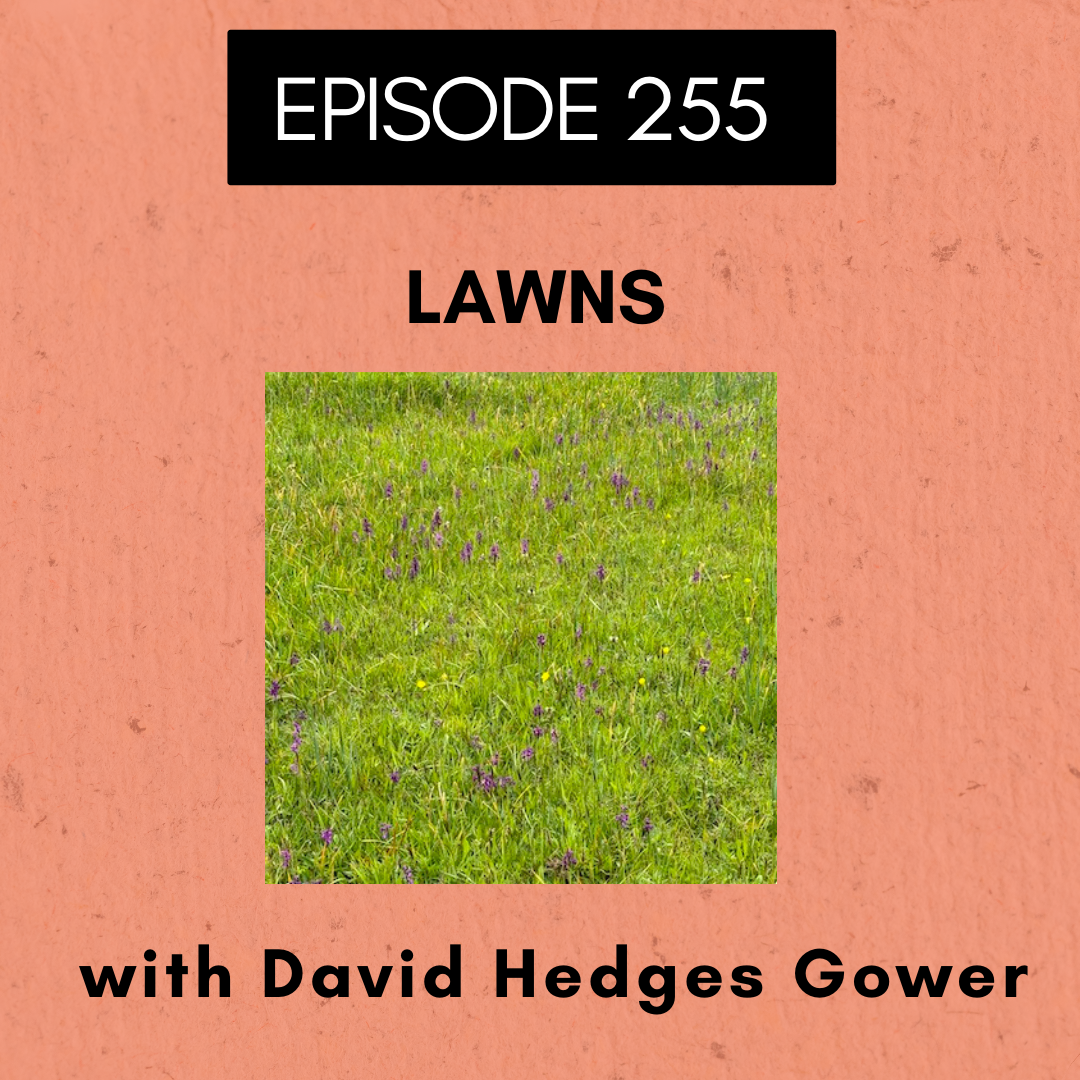
Ep 255Episode 255: Lawns
My guest this week is David Hedges-Gower. David is a prominent figure in the UK's lawn care industry, known for his expertise and dedication to promoting sustainable lawn care practices. He wrote the book 'Modern Lawn Care', is the Chairman of The Lawn Association, founded the world's first lawn care qualification and works tirelessly to promote responsible, sustainable lawn care practices that benefit the environment and homeowners. What David has to say on lawns certainly challenged my notions on what lawn care involves, whether they're a sensible option to those concerned about wildlife and the environment and what they can and should be like from a horticultural perspective, so listen on with an open mind… Dr Ian Bedford's Bug of the Week: Horse Chestnut Moth What We Talk About Lawns and their uses Do lawns have to be high maintenance? Ideal grass species for sustainable lawns Do you have to feed a lawn? Can lawns be of use to wildlife? Artificial lawns About David Hedges-Gower David Hedges-Gower is a prominent figure in the UK's lawn care industry, known for his expertise and dedication to promoting sustainable lawn care practices. His background in greenkeeping, including his role as Superintendent at the prestigious Oxfordshire Golf Club, provided him with a strong foundation in turf management. After recognizing the need for better information and knowledge in the lawn care field, David transitioned into lawn care and authored a book titled "Modern Lawn Care" in 2014. This publication served as a valuable resource for those seeking to improve their lawn maintenance practices. In addition to his book, David has been actively involved in educating people about proper lawn care through training days, seminars, and advisory services. He is a trusted source of information, having accumulated 43 years of experience in the field. He often serves as an expert for publications, radio channels, and other advisory bodies, helping to disseminate his knowledge to a wider audience. One of David's notable achievements is founding the world's first lawn care qualification, which caters to both homeowners and professionals. This qualification helps individuals gain a better understanding of modern and sustainable lawn care practices, contributing to the overall improvement of lawn maintenance. David Hedges-Gower is also the Chairman of The Lawn Association, an organization dedicated to promoting the value of living lawns and distinguishing between genuine sustainable lawn care and marketing tactics that claim sustainability without delivering on it. The association collaborates with significant horticultural bodies like English Heritage to educate staff, trainees, and apprentices on sustainable lawn care methods. Recently, David launched the True Garden Range, a groundbreaking product in the form of 2-in-1 fertilizers and soil conditioners made from composted recycled food waste. This product addresses the need for sustainable lawn care options in the retail market, providing a more environmentally friendly choice for gardeners. David's passion lies in making sustainable lawns a priority, countering the practice of franchises that prioritize profits over the health of lawns. He envisions sustainable lawns as not just a feature of our surroundings but a necessity, and he works tirelessly to promote responsible lawn care practices that benefit both the environment and homeowners. Links www.davidhedges-gower.com Modern Lawn Care by David Hedges-Gower www.lawnassociation.org Other episodes if you liked this one: Tapestry Lawns So & Mo Patreon
Ep 254Episode 254 - Buddlejas and Lavenders
This week, my guest is Andrew Bullock, who runs The Lavender Garden Nursery. Andrew holds the National Collection of Buddlejas and grows a huge range of lavenders and buddlejas from his nursery in The Cotswolds. We talk about how to attract pollinators to your garden, when and how to prune your buddlejas and lavenders, whether buddlejas are invasive, why lavenders are sometimes short-lived and anything else you ever wanted to know about these two plants for pollinators. Dr Ian Bedford's Bug of the Week: Mosquitoes What We Talk About Which is better for bees - buddleja or lavender? The best varieties for bees/butterflies/pollinators in general Night time pollinators How to grow lavender and buddleja When to prune and how much to take off Buddleja - invasive? Causes of short-lived lavender Links The Lavender Garden Contact Andrew on the phone: 01453 860356 or 07837 582943 www.premierpolytunnels.co.uk Other episodes if you liked this one: Pollinators & Pollination Bugs in Your Garden Patreon
Ep 253Episode 253: The Lost Gardens of Loughrigg
Several years ago, Penn Allen inherited a collection of diaries that had been meticulously maintained by her great grandmother. Penn discovered the diaries documented the building of her great grandmother and grandfather's Arts and Crafts house and the development of the garden that followed. She uncovered an untold story of her family, of plant hunting and of rock gardens - one that has significance to the wider world of horticultural history and in fact, goes some way to rewriting it. Dr Ian Bedford's Bug of the Week: Buddleias and Butterfly Tongues What We Talk About What the book is about and why Penn felt it was important to write it How the garden helped heal; through providing a space to contemplate, a space to communicate, a distraction… Alpines and rock gardening Plant hunters Reginald Farrer Will Purdom What became of house and garden About Penn Allen Having spent most of my life in the UK, I moved permanently to the beautiful Lot region in SW France with my husband around fifteen years ago. I have a passion for my garden and the outdoors and can generally be found either striding over a windswept hillside or upside down in my flower beds, always with a Labrador or two by my side. The Lost Garden of Loughrigg is my first story, though hopefully not my last! Links The Lost Gardens of Loughrigg by Penn Allen Tickets to see Penn Allen at the Kendal Mountain Book Festival Twitter @PennAllenwrites Instagram penn.allen www.modicagardens.com
Ep 252Episode 252: Aromatic Gardening
My guest this week is Amy Anthony, a certified clinical Aromatherapist and Aromatic Gardener. In addition to that, Amy is an aromatherapy educator, podcaster, herbalist, certified master composter, and artisanal distiller and is one of New York's top aromatherapy practitioners. We talk about the importance of connecting with nature through scent, how aromatherapy can support wellness and vitality and how you can become an aromatic gardening practitioner yourself. Dr Ian Bedford's Bug of the Week: Rosemary Leaf Beetles What We Talk About What is aromatherapy? What is aromatic gardening? What's the difference between plant aromatics and synthetics? What are best essential oils for supporting wellness and vitality? Do you need to be careful with any aromatic oils? What are safe and practical approaches to aromatherapy? How are you connected to plants from your culture? "Aromatherapy is not a consumptive exercise." Why? What can we do about this in our own gardens? How is aromatherapy linked to the moon? Where to find out more About Amy Anthony Amy is a certified clinical Aromatherapist and Aromatic Gardner who left her career in marketing research to pursue what is closest to her heart: working with plants. As a certified aromatherapist, aromatherapy educator, herbalist, gardener, certified master composter, and artisanal distiller, Amy is one of NYC's top aromatherapy practitioners. Host of the Essential Aromatica podcast, Amy also tends her own aromatic garden on the North Fork of Long Island where she distills her unique products. Listed as one of America's most influential aromatherapists, Amy Anthony is currently the New York State representative for the Alliance of International Aromatherapists and has her private practice called NYC Aromatica which includes one-on-one customized aromatherapy sessions, online class offerings, corporate consulting and article writing. Links Essential Aromatica Podcast NYC Aromatica Other episodes if you liked this one: Scent Magic with Isabel Bannerman Gardening for Your Senses Patreon
Ep 251Episode 251: Green Roofs & City Wildlife
This episode, my guest is green roof guru, urban designer, photographer, birdwatcher, punk ideologist and all-round straight talker Dusty Gedge. We talk about green infrastructure, encouraging species back into landscapes, how to maintain landscapes for habitat value and what's being and can be done to up the green value of public spaces. Dr Ian Bedford's Bug of the Week: Woodlice What We Talk About Brownfield gardening Biodiversity in decline The problems faced by birds in urban environments What initiatives Dusty is most excited by What happens if biodiversity starts causing a problem? Maintaining green roofs as habitats About Dusty Gedge Links www.dustygedge.co.uk Facebook Instagram Twitter LinkedIn Collecting the Love 1 Collecting the Love 2 Other episodes if you liked this one: The Botanical Mind Public Green Spaces Patreon
Ep 250Episode 250: The Human Garden
This episode is an interview with environmental landscape artist, TED Speaker and art21 Educator Tobacco Brown. Tobacco connects art and environmental justice and is a visual artist, digital storyteller, master gardener, social practitioner, cultural historian and intuitive environmental advocate. We talk about community green spaces, how humans connect with the land and why it's so important that we do. Dr Ian Bedford's Bug of the Week: Beewolf What We Talk About What can gardens teach us about ourselves? Lessons we can learn from a garden that help us live our lives well Are there lessons we can take from life that will help us be better gardeners? Wisdom residing in the soil Land justice Communication blight remediation How gardens grow with you as you go through life About Tobacco Brown Links Email [email protected] Tobacco Brown What Gardening Taught Me About Life - Tobacco Brown's TED Talk On Instagram art21 Other episodes if you liked this one: The Botanical Mind Public Green Spaces Patreon
Ep 249Episode 249: Designing Responsibly Built Environments
My guest this week is Blanche Cameron, who leads UCL Bartlett School of Architecture's Environmental Design and Greening Cities modules, and is an urban green infrastructure advocate who works closely with industry and the government on urban greening issues. To say our towns and cities are not always good examples of environmentally sound design and biodiversity would be quite the understatement, but Blanche is one of a group of outspoken advocates for nature inclusive design who are are working towards better outcomes in this regard. Dr Ian Bedford's Bug of the Week: Dagger flies What We Talk About The built environment and biodiversity collapse Landscaping in towns and cities How good design can help mitigate biodiversity loss and climate change Vertical planting and green roofs Do we need a coherent plan or is it up to individuals to start changing their landscapes? "Productising" and the construction industry's need for homogeneity Where does technologically fit in? About Blanche Cameron Blanche leads UCL Bartlett School of Architecture's Environmental Design and Greening Cities modules and contributes to other modules and programmes, including the Landscape Architecture and Sustainable Heritage MSc.She coordinated the Living Landscape Strategy for UCL's £1Bn UCL East development, and sits on UCL's campus greening 'Wild Bloomsbury' steering group. Blanche is an urban green infrastructure advocate, working closely with industry and government, bringing practitioners into the heart of teaching, including John Little, biodiverse landscapes innovator, and Dusty Gedge, living roofs expert and founder in 2004 of the independent advisory organisation, Livingroofs.org. Blanche edited the GLA's 2019 10-year update report on the impact of a decade of urban greening since the London Plan's Green Roofs and Walls 2008 policy, co-written by Dusty Gedge and Gary Grant. Links Blanche on LinkedIn www.naturalgrower.co.uk www.veteransgrowth.org Other episodes if you liked this one: John Little Green Roofs with Dr Anna Zakrisson Patreon
Ep 248Episode 248: The Container Victory Garden
This episode I'm speaking with author and expert gardener Maggie Stuckey about growing food in containers. We talk about growing a container garden of vegetabhttps://rootsandall.co.uk/podcast/episode-52-grow-fruit-vegetables-in-pots-with-aaron-bertelsen/les, herbs, and edible flowers and the inspirational history of wartime Victory Gardens and their legacy for today's gardeners. Dr Ian Bedford's Bug of the Week: Painted Lady Butterflies What We Talk About Victory gardens Growing food in containers With container space at a premium, how can you choose what to grow? Essential equipment Cool season and warm season plants Maggie's neat trick for planting garlic cloves Root vegetables in containers Should you try to focus on one type of plant or can you grow a mixture of things? Succession planting About Maggie Stuckey Bestselling author Maggie Stuckey is an expert in the art of growing good things to eat in containers. For more than twenty years, Maggie has been enjoying vegetables, herbs, and edible flowers grown in her own container garden — and inspiring others to transform even the tiniest spaces into vibrant personal foodways. In her book The Container Victory Garden, Maggie shares practical and comprehensive tips and techniques for container gardening alongside the rich history of the original wartime Victory Gardens, which date back to 1917. Links The Container Victory Garden: A Beginner's Guide to Growing Your Own Groceries by Maggie Stuckey - HarperCollins Focus, April 2023 Move with Adele Other episodes if you liked this one: Fruits and Vegetables in Pots Container Planting with Harriet Rycroft Patreon
Ep 247Episode 247: Botanical Education
This episode I'm speaking with Seb Stroud. Seb is based at Leeds University and is part of the Ecology & Evolution Group, where his research looks at many different topics including botany, freshwater ecology, ecosystem structures and urban landscapes. He recently co-authored a research paper which looks at the state of botanical education and that's what I was particularly interested in chatting about today. Dr Ian Bedford's Bug of the Week: Woolly Aphids What We Talk About What is the extinction of botanical education? Why is it happening? The effects of losing our tradition of botanical education Plant blindness The UN's sustainable development goals and future funding The impact of botanical education extinction on climate change, food security and our economy What is actually being done about it? Natural history GCSE Equity and accessibility in environmental education The UK as a nation of gardeners and nature lovers…? About Sebastian Stroud Links Botanical education paper Seb Stroud on Twitter Botanical University Challenge Royal Botanic Garden Edinburgh RBGE's PropaGate Learning - Online Courses BSBI Kew's Grow Wild Botanists are Disappearing with Seb Stroud - The Conversation, July 2022 CW Studio Other episodes if you liked this one: Modern Plant Hunters The State of Horticulture Patreon
Ep 246Episode 246: Urban Smallholding
My guest this episode is urban smallholder Sara Ward. Sara runs Hen Corner, a backyard smallholding in London. Her website Hen Corner has a wealth of information on growing and making food, she runs courses, sells products from her bakery and has just published a book 'Living the Good Life in the City'. I began by asking Sara what prompted her to follow in the wellieprints of Barbara Good. Dr Ian Bedford's Bug of the Week: Gardening for Nature What We Talk About What prompted Sara to set up Hen Corner How much can you grow in your average urban garden? Keeping animals Getting rid of waste from the garden Preserving food Looking after things when you're away About Living the Good Life in the City Sara Ward has transformed her Victorian terraced house in London into an urban smallholding, 'Hen Corner', and in Living the Good Life in the City she shares some of the ways she and her family have brought city and country together, and shows that you, too, can make a difference to how you live and the food you eat. Divided into sections covering Make, Grow, Preserve, Keep and Celebrate, Living the Good Life in the City is packed full of recipes, stories, tips and tricks including baking bread, making your own jam, pasta, sausages and cheese, keeping bees and livestock, preserving, foraging, harvesting and celebrating with food. Links Living the Good Life in the City by Sara Ward - Pimpernel Press, July 2023 www.hencorner.com Digital Fuse Other episodes if you liked this one: Huw Richards on Veg Growing Food Forest in Your Garden with Alan Carter Patreon
Ep 245Episode 245: The Language of Trees
My guest this episode is artist and activist Katie Holten. Katie has just released a book called The Language of Trees, a collection of literary and scientific works by people like Robin Wall Kimmerer, Ursula le Guin, and Ross Gay. Using her Alphabet of Trees, the book is underpinned by the Katie's art and asks us to examine our relationship with trees by pulling together wide-reaching strands and demonstrating in one place, just how connected we are to them. Dr Ian Bedford's Bug of the Week: Asian Hornets What We Talk About The idea behind the Language of Trees The Tree Alphabet Themes behind the essays Inspiring Tree People About The Language of Trees In this beautifully illustrated collection, artist Katie Holten gifts readers her visual Tree Alphabet and uses it to masterfully translate and illuminate pieces from some of the world's most exciting writers and artists, activists and ecologists. Holten guides us on a journey from prehistoric cave paintings and creation myths to the death of a 3,500 year-old cypress tree, from Tree Clocks in Mongolia and forest fragments in the Amazon to the language of fossil poetry. In doing so, she unearths a new way of seeing the natural beauty that surrounds us and creates an urgent reminder of what could happen if we allow it to slip away. Links The Language of Trees by Katie Holten - Elliott & Thompson, June 2023 www.katieholten.com Starcroft Farm Cabins Other episodes if you liked this one: Plants and People The Botanical Mind Patreon
Ep 244Episode 244: The Biodiversity Gardener
My guest this week is wildlife author and photographer Paul Sterry. Paul has written many books on wildlife but his latest, The Biodiversity Gardener, pulls together his decades of knowledge and the result is a wildlife gardening manual with real-life examples taken from Paul's Hampshire wildlife friendly space. Dr Ian Bedford's Bug of the Week: Dark Edged Bee Flies What We Talk About Can small gardens really make a difference to our declining biodiversity? Won't they become unsupportable islands of life? How to start wildlife gardening Butterfly caterpillars and when to safely cut the grass/meadow/hedges Weeding and cutting back and species that use certain plants as larval hosts Is scrub good and how can you incorporate it in your garden? Do you need to manage it to avoid it becoming woodland? Advice for anyone looking to transition away from a conventional to a wildlife garden The Nature Conservancy Council! About Paul Sterry Links The Biodiversity Gardener by Paul Sterry - Princeton University Press, June 2023 Paul Sterry on Twitter www.naturephotographers.co.uk Other episodes if you liked this one: The Garden Jungle with Dave Goulson Making a Wildlife Garden Patreon
Ep 243Episode 243: Magical Plants and Flowers
This week's episode, my guests are Chris Young and Susan Ottaviano. Chris and Susan are better known as the 2 Green Witches. Chris Young is a lifelong gardener whose acclaimed garden, Tiny Sur is a certified wildlife habitat and Susan is an artist, performer, songwriter, and food stylist. Their new book is The Green Witch's Guide to Magical Plants & Flowers: Love Spells from Apples to Zinnias and together we take a light-hearted look at the power of plants to help you manifest your deepest desires. Dr Ian Bedford's Bug of the Week: Invasive Species What We Talk About What is a grimoire? What is green witchcraft? The forward to the book is written by the iconic Debbie Harry. Is she a green witch? Love spells Do spells work? How the practices in the book help you to connect more deeply with your garden The Indian paintbrush plant. Queen Anne's lace jelly About Susan Ottaviano Artist, performer, songwriter, and cooking maven Susan Ottaviano welcomes you into the lush and whimsical world of green witchcraft with her new book, The Green Witch's Guide to Magical Plants & Flowers: Love Spells from Apples to Zinnias ( 6/6/23 Skyhorse Publishing). With her rich illustrations and inspiring vegan recipes, Susan and co-author Chris Young shine light on brilliant ways to use products from the farmers market, supermarket, or even your backyard garden to bring light, love, good food, and good humor into your life. Susan has been a groundbreaking food stylist and recipe developer for over twenty years. Her work has been featured in magazines, cookbooks, and advertisements from Bon Appétit to Grey Goose to Uber Eats. Best known as the lead singer for pop band Book of Love, Susan and her bandmates recorded five albums for Warner Brothers Records/Sire Records. Book of Love was a fixture on the Billboard Dance Club charts throughout the 1980s and 1990s, with multiple hits in the top ten. The group reunited in 2016 for a sold-out world tour to mark their 30th Anniversary. Her evocative artwork, which explores food, femininity, and sexuality, has been featured in numerous gallery shows, including a Spring 2023 group show titled "Eat It" at Collar Works Arts Organization. She earned a BFA in Painting from The Philadelphia College of Art, and has been awarded post-graduate certificates from the Culinary Institute of America in Hyde Park and the Institute of Culinary Education in New York City. She lives in New York's East Village. Susan can be found on Instagram at @susanottavianoart About Chris Young Author, gardening expert, and former Comedy Central executive Chris Young first discovered his love of the outdoors growing up exploring the vast Indiana backyard of his late grandfather. Even while obtaining a degree from Indiana University and working as the Director of Talent at Comedy Central, Chris never lost his fascination with the power of nature. In his new book, The Green Witch's Guide to Magical Plants & Flowers, Love Spells from Apples to Zinnias (6/6/23 Skyhorse Publishing), Chris and co-author Susan Ottaviano share the surprising mystical properties of dozens of plants and flowers. Over the years, Chris honed his expertise working with green witches, gardening virtuosos, and botanical magic practitioners from New York City to rural Oregon. Eventually Chris settled down in California with his husband, television writer Jon Kinnally, where he re-committed himself to the botanical world. Chris' own garden, "Tiny Sur", has been designated by the National Wildlife Federation as a certified Wildlife Habitat. It is also certified by The Xerces Society as a Pollinator Habitat, by Monarch Watch as a Monarch Waystation, and by the Humane Society as a Humane Backyard. On Facebook, Tiny Sur (@tinysuroflaurelcanyon) boasts thousands of loyal, engaged followers. Chris writes, gardens, and practices green witchcraft in Laurel Canyon, where he lives with husband Jon, cats Simon, Howard, and Elliott, and two Russian tortoises, Wentworth and Boris. Chris can be found on Instagram as @plantymcflowers. About The Green Witch's Guide to Magical Plants & Flowers Chris Young and Susan Ottaviano, better known as the 2 Green Witches. Chris Young is a lifelong gardener whose acclaimed garden, Tiny Sur is a certified wildlife habitat. Susan is an artist, performer, songwriter, and food stylist. Their new is The Green Witch's Guide to Magical Plants & Flowers (6/6/23 Skyhorse Publishing). Couldn't we all use a little more magic in our lives? Equal parts practical guide and beautiful keepsake, The Green Witch's Guide to Magical Plants & Flowers shows you how to bring more love and contentment into your life using elements of nature. This book, written by our favorite 2 Green Witches, unlocks the secrets hiding in your garden, transforming everyday flowers, fruits, and plants into bath salts, herbal infusions, soaps, sachets, tinctures, and more. It provides all-natural recipes that illuminate pathways to health, peace, love and prosperity, and harmo
Ep 242Episode 242: Soil - The Story of a Black Mother's Garden
Hello and welcome to this week's episode where my guest is poet and scholar Camille Dungy. Camille has documented how she diversified her garden to reflect her heritage in her book 'Soil: The Story of a Black Mother's Garden'. We talk about the politics of gardening, planting a nature garden and how nature writing has influenced our gardens in the past and how it can shape the way we do so in the future. Dr Ian Bedford's Bug of the Week: Bloodsuckers What We Talk About Why Camille believes "Every politically engaged person should have a garden" The idea behind Camille's pollinator garden in Colorado Gardens that offer something more than beauty Is there something we can do to make ourselves take more thinking, creating time? The state of modern nature writing The lessons learnt from gardening "If I cultivate a flourishing I want its reach to be wide". What Camille means by this. About Camille Dungy Camille T. Dungy is the author of Soil: The Story of a Black Mother's Garden (Simon & Schuster: May 2, 2023). She has also written Guidebook to Relative Strangers: Journeys into Race, Motherhood, and History, a finalist for the National Book Critics Circle Award, and four collections of poetry, including Trophic Cascade, winner of the Colorado Book Award. Dungy edited Black Nature: Four Centuries of African American Nature Poetry, the first anthology to bring African American environmental poetry to national attention. She also co-edited the From the Fishouse poetry anthology and served as assistant editor for Gathering Ground: Celebrating Cave Canem's First Decade. Dungy is the poetry editor for Orion magazine. Her work has appeared in Best American Poetry, 100 Best African American Poems, Best American Essays, The 1619 Project, All We Can Save: Truth, Courage, and Solutions for the Climate Crisis, over 40 other anthologies, plus dozens of venues including The New Yorker, Poetry, Literary Hub, The Paris Review, and Poets.org. You may know her as the host of Immaterial, a podcast from the Metropolitan Museum of Art and Magnificent Noise. A University Distinguished Professor at Colorado State University, Dungy's honors include the 2021 Academy of American Poets Fellowship, a 2019 Guggenheim Fellowship, an American Book Award, and fellowships from the NEA in both prose and poetry. Links Soil: The Story of a Black Mother's Garden by Camille Dungy - Simon & Schuster, May 2023 www.camilledungy.com Other episodes if you liked this one: Can Women Save the Planet? Ecologically Integrated Gardens Patreon
Ep 241Episode 241: Wild Mothers
This week's episode, my guest is writer Victoria Bennett, author of'All My Wild Mothers – motherhood, loss and an apothecary garden'. The book weaves memoir and herbal folklore and is a story of re-wilding our wastelands, and the transformation that can happen when we do. Daisy, for resilience. Dandelion, for strength against adversity. Borage, to bring hope in dark and difficult times… Dr Ian Bedford's Bug of the Week: Box tree moth What We Talk About What is an apothecary garden? How Victoria learnt about gardening and herbalism The garden Victoria and her son built in their new house Dealing with the challenges thrown up by neighbours and housing associations Some of the most powerfully useful plants Victoria has grown How Victoria's mother influenced her gardening aesthetic Victoria and her son's next joint gardening adventures About 'All My Wild Mothers – motherhood, loss and an apothecary garden' The book was published earlier this year with Two Roads Books. An intimate weaving of memoir and herbal folklore, it is a story of re-wilding our wastelands, and the transformation that can happen when we do. Daisy, for resilience. Dandelion, for strength against adversity. Borage, to bring hope in dark and difficult times. Victoria says, "faced with a life very different to what I thought it would be; deep in grief following the tragic death of my eldest sister, facing financial difficulties, and caring for my young son who was diagnosed at age 2 with Type One diabetes, I decided to see what could grow on the barren land of the former industrial site over which our new social housing home was built. With my son, I began to grow, relying on the weeds that were under our feet and the things that other people threw out or eradicated from their pristine gardens. Stone by stone, seed by seed, my son and I turned the rubble into a wild, healing garden. As we did, we discovered that sometimes what grows does so, not in spite of what is broken, but because of it." Links Victoria's website 'All My Wild Mothers – motherhood, loss and an apothecary garden' by Victoria Bennett Other episodes if you liked this one: Grounding Roots with Lulah Ellender Darwin's Garden with Dr Jude Piesse Patreon
Ep 240Episode 240: Guerrilla Gardening
My guest this episode is author and activist Ellen Miles. Ellen is the founder of Nature is a Human Right, she runs Dream Green, a social enterprise that helps people get guerrilla gardening with guides, grants, and workshops and has a book that will be released this Thursday the 8th of June, Get Guerrilla Gardening: A handbook for planting in public places. Dr Ian Bedford's Bug of the Week: Spider silk What We Talk About What is guerrilla gardening? Does it matter who owns the land you guerrilla garden? Is it illegal? Are you liable if someone trips over your planter, for example? Should we be growing more food in communities? If you're growing food in an urban location, how can you know the soil isn't contaminated with anything that will be taken up by your plants? Who decides why a space should be used for? Where is the input from the people that live with and use guerrilla gardened spaces? What are some potentially good sites? What are parklets? Are there spaces (such as wild spaces) that should be left alone? In order for a plant to establish either from seed or as a plant, it needs to have a degree of tenacity. Is it easy to strike a balance between finding plants that are tough enough to survive and persist and avoiding plants which can be invasive? How do you cope with practical hurdles such as no water, nowhere to store your tools, nowhere to sit down…? How do you cope with vandalism? Should you try and communicate with the local authority? If so, who and how can you best get hold of them? How do ensure a garden continues to thrive after it's established? Other resources and people doing good work in this area About Ellen Miles Ellen Miles is an author and activist rooting for nature in urban neighbourhoods. She founded Nature is a Human Right and edited the acclaimed anthology of essays inspired by the campaign (Nature is a Human Right: Why we're fighting for green in a grey world, DK, 2022). Ellen also runs Dream Green, a social enterprise that helps people get guerrilla gardening with guides, grants, and workshops. Get Guerrilla Gardening is a joyful handbook – packed with illustrated 'how to's, inspiring stories, and photos of vibrant transformations – demystifies the art and science of planting in public places. With no prior gardening knowledge required, Get Guerrilla Gardening guides you through a straightforward, flexible action plan to suit your aims and abilities, covering everything from the legalities of guerrilla gardening, to how to choose the right plants for your patch. Links Get Guerrilla Gardening by Ellen Miles Ellen on Instagram Other episodes if you liked this one: Public Green Spaces with Neil Sinden of CPRE Ecological Gardens with Sid Hill Patreon
Ep 239Episode 239: Growing Biodiversity
My guest this week is gardener Benny Hawksbee. Benny has a background in biology and gardens with one eye on biodiversity. His projects include the Eden Nature Garden, a community garden designed to be a haven for people and wildlife, and John Little's garden in Essex. We talk about how Benny brings biology and ecology into his work, what we can all do to garden for wildlife whilst reducing our input in terms of resources and how we can involve the community in building and using gardens that work for everyone. Dr Ian Bedford's Bug of the Week: Broad bean pests What We Talk About Benny's professional background and how he got into horticulture The Eden Nature Garden How Benny brings biology & ecology into his work Gardening on a low budget and with low resource availability, such as the absence of running water and electricity Going against the horticultural rule book Bees - native species and honeybees The importance of community involvement in public gardens The future of gardening in the UK Links www.edennaturegarden.org www.hawksbeegardening.com Benny on Instagram London Natural History Society UK Bees, wasps, ants recording society Other episodes if you liked this one: John Little Nature from the Rubble Patreon
Ep 238Episode 238: Toss the Salad!
EThis episode goes out in celebration of The Chelsea Fringe. The Fringe is an annual event which runs concurrently to the RHS Chelsea Flower Show and celebrates everything alternative in horticulture. And this episode is certainly alternative! It was intended to be an AMA (Ask Me Anything) episode but quickly evolved into a general chat with my host this week, Jake Rayson. We then moved on to talk about a new initiative I'm launching. The idea is in its embryonic stage and I have no idea how it's going to develop, but listen on for some more info. Thank you very much Jake for being a friend, stand-in host and long-term supporter of Roots and All. Please check out the links to Jake's work below. Links Jake made a handy list of free resources, NBN Atlas and GBIF his latest faves, quite amazing. And he's available for wildlife forest garden design work, remote sites a speciality. Here's his portfolio Here's Jake's Garden Wild Spreadsheet Other episodes if you liked this one: The Chelsea Fringe with Tim Richardson Introduction to Forest Gardening with Jake Rayson Patreon Custom permalink
Ep 237Episode 237: The Apothecary
This episode features writer, garden historian and returning guest Caroline Ball. In eighteenth-century Bavaria a prosperous apothecary, Johann Wilhelm Weinmann began an extraordinary project, the compilation of an A to Z of plants, meticulously documented, and lavishly illustrated by botanical artists using the latest colour-printing methods of the time. He aimed to include thousands of plants from all over the world, describing their individual characteristics and commissioning magnificent colour illustrations of each specimen. The first complete volume of the Phytanthoza Iconographia, as he called it, was published in 1737 and the work grew to four immense tomes. The Iconographia gives an unparalleled view of the ornamental and useful plants that were known to botanists and gardeners in the early eighteenth-century. Caroline has written two books, A Splendour of Succulents & Cacti and A Cornucopia of Fruit & Vegetables, which document how this piece of work came to be collated and which reproduce many of the amazing images featured within. Dr Ian Bedford's Bug of the Week: Butterfly Tongues & Buddleia What We Talk About Johann Wilhelmina Weinmann and his Phytanthoza Iconographia Where Weinmann sourced the plants that were included The painters who documented the specimens Historical plant pots How the work was reproduced Matching the plants depicted to contemporary specimens Are historical botanical texts merely a curiosity, or can they inform our knowledge of horticulture in the present day? Some of the more surprising medicinal uses for plants that are documented in the book About Caroline Ball & the Phytanthoza Iconagraphia In eighteenth-century Bavaria a prosperous apothecary, Johann Wilhelm Weinmann, grew an 'American aloe' that astounded all who saw it. He was also the mastermind behind an extraordinary project - a comprehensive A to Z of plants, meticulously documented, and lavishly illustrated by botanical artists using the latest colour-printing methods of the time. Weinmann aimed to include thousands of plants from all over the world, describing their individual characteristics and commissioning magnificent colour illustrations of each specimen. The first complete volume of the Phytanthoza Iconographia, as he called it, was published in 1737 and the work grew to four immense tomes. The Iconographia gives an unparalleled view of the ornamental and useful plants that were known to botanists and gardeners in the early eighteenth-century. Caroline Ball is an editor, copywriter and occasional translator who has written on many subjects, but has a particular interest in horticulture, garden history and plant-hunters. She is also a keen gardener. Caroline's books A Splendour of Succulents & Cacti and A Cornucopia of Fruit & Vegetables feature illustrations from an eighteenth-century botanical treasury, celebrating Weinmann's rare and precious volumes by theme. Links A Splendour of Succulents & Cacti A Cornucopia of Fruit & Vegetables: Illustrations from an eighteenth-century botanical treasury Members of the public can explore the collections via the Bodleian's online image portal here. digital.bodleian.ox.ac.uk Other episodes if you liked this one: Heritage Apples with Caroline Ball Herbs with the Herb Society Patreon
Ep 236Episode 236: Mosses
This week, my guest is Dr Neil Bell, bryologist at the Royal Botanic Garden Edinburgh and author of The Hidden World of Mosses, which takes a look into the minute and fascinating world of bryophytes. If you've ever wanted to know how these plants live and reproduce, whether you can cultivate moss indoors or outdoors, what that green stuff is you find on the surface of potted plant's compost and whether you should take it off, the environmental and habitat value of mosses and how they are affected by the moon, listen on… Dr Ian Bedford's Bug of the Week: Tardegrades What We Talk About What is moss? How is it different to other plants? Liverworts and hornworts How mosses reproduce Moss species in the UK Cultivating mosses in a garden or as a houseplant Liverworts growing on the surface of potted plants Is there a place for mosses on brownfield sites? Do all mosses need shade and moisture? How mosses take in nutrients and attach to structures The role mosses play in the environment in terms of water attenuation and conservation, and as habitats for other creatures Sphagnum bogs as a 'potential positive feedback loop' for climate change and what can be done about this The connection between sphagnum moss and the moon How you can better see mosses, to explore what they look like in detail and appreciate them About The Hidden World of Mosses Did you know that there are nearly 20,000 different species of mosses and their relatives worldwide with over 1000 in the UK? And did you know that Sphagnum moss is almost wholly responsible for the creation and maintenance of peat bogs, preventing harmful carbon from being released into the atmosphere? The Royal Botanic Garden Edinburgh has published The Hidden World of Mosses, providing an accessible guide to these not-so-humble botanical gems. Written by bryologist Dr Neil Bell, the book presents information about these incredible plants, exploring their tiny, intriguing and diverse environments in detail. This fascinating book also contains hundreds of stunning photographs which reveal the beauty and splendour of moss. Perhaps the most misunderstood and misrepresented of all groups of organisms, moss is often thought of as unattractive and unremarkable, but nothing could be further from the truth. Mosses and their relatives (liverworts and hornworts) are found in almost every part of the world, from lush forests to rocky mountains tops and from city centres in the tropics to Antarctic tundra. Mosses are critical to the planet - if they ceased to exist tomorrow the world would be in a lot of trouble. Examining the many different types of moss, including those found in the UK and internationally, The Hidden World of Mosses explores the incredible environments of these plants that form their own miniature forests filled with grazers and predators, and have their own ecological norms and mechanics. They play a critical role in climate change prevention and have an extraordinary ability to hold and control water in forests, uplands and valleys. Incredibly, some mosses can hold more than 20 times their own weight in water. Peat mosses (Sphagnum) are almost entirely responsible for creating and maintaining peat, which is a traditional fuel and used for the flavour it imparts to many whiskies. Sphagnum moss keeps the soil in which it grows permanently wet, largely preventing decomposition.Interestingly, Sphagnum moss has also been used by medics over the centuries. Due to its absorbent and antiseptic properties, it was used as a cheaper alternative to cotton wool dressings in World Wars One and Two, and has been used to treat wounds for many years. On tropical mountains, mosses prevent flooding by capturing large amounts of water, gently controlling the flow of heavy rainfall, absorbing it like a giant sponge and then slowly letting it out again into rivers in a regulated manner. Additionally, mosses offer hunting grounds, protection and food for a host of much smaller creatures such as worms, mites, spiders and beetles, who use moss as a place to shelter, graze, or reproduce. Speaking about the publication of The Hidden World of Mosses, Neil Bell said, "Mosses are just a little smaller than most things we deal with in our everyday lives, so we tend not to notice their intricate beauty and how different they are from each other unless we make the effort to look really closely. Mosses and their relatives have evolved to live in a different way from other plants, playing a critical role in the environment that other plants can't, and the mosses and liverworts we have in Scotland are of international significance - far more so than our other native plants, in fact. We need to recognise that and protect them. I hope that this book will raise awareness of this hidden botanical world and encourage more people to explore it ." Dr Neil Bell is a bryologist at the Royal Botanic Garden Edinburgh. Much of his research is focused on quantifying, understanding and promoting Scotland's globall
Ep 235Episode 235: Woodchip
My guest this week is Ben Raskin, the Soil Association's Head of Horticulture and Agroforestry. Ben is the author of several books on gardening, including Zero-Waste Garden and The Community Gardening Handbook. His latest book is 'The Woodchip Handbook', which I was very excited to read and even more excited to speak with Ben about, because I've long been a fan of using wood chip in the garden. In the interview, we cover the many uses for woodchip in the garden, how it can help with plant and soil health, what sort of wood makes good chip and the do's and don'ts of using it. Dr Ian Bedford's Bug of the Week: The Syrphids What We Talk About Sourcing woodchip Making your own Different species of tree woodchip Runoff when storing woodchip Do we need to store or compost woodchip before we use it? The uses for woodchip in the garden What is ramial chipped wood and what can it be used for? The benefits of using woodchip as a mulch Avoiding suppressing self-seeders Woodchip and carbon retention What happens to woodchip if treated as 'waste'? About Ben Raskin Ben Raskin has worked in horticulture for more than 25 years, developing a wide range of experience both in practical commercial growing and wider policy and advocacy work. As the Soil Association's Head of Horticulture and Agroforestry, he provides growers at all levels of production with technical, marketing, policy, supply chain and networking support. He is currently implementing a 200-acre silvopastural agroforestry planting in Wiltshire. Ben is the author of several previous books on gardening, including Zero-Waste Gardening (2021), The Community Gardening Handbook (2017) and three volumes of the Grow Together Guides aimed at families with young children: Compost, Grow, and Bees, Bugs, and Butterflies. Additionally, Ben co-chairs the Defra Edibles Horticulture Roundtable and sits on the boards of the Organic Growers Alliance and Community Supported Agriculture Network UK. Links The Woodchip Handbook by Ben Raskin www.benraskin.uk Innovative Farmers Field Lab - willow woodchip for apple scab (with Glynn Percival) Innovative Farmers Field Lab - peat free woodchip propagation substrate (with Iain Tolhurst) Other episodes if you liked this one: Dr Glynn Percival's episode where he talks about tree health and the various uses of different mulches in terms of suppressing diseases A recording of Iain Tolhurst, where he talks about his use of ramial woodchip Patreon
Ep 234Episode 234: The End of the Life Cycle
This week's episode, I'm speaking to holistic funeral director, Holly Lyon-Hawk. It's not easy for most of us to talk about end of life, death and funeral arrangements and yet it's such an important thing to prepare for, it's unavoidable, it needn't be frightening or taboo, and it is something we can make easier for ourselves and our loved ones if we start a conversation around it whilst we still can. In the interview, Holly talks about her approach and about what options are open to those of us who love nature and gardens and I expect you'll find what we talk about sometimes surprising and also reassuring to know that there are alternative options. Dr Ian Bedford's Bug of the Week: Choices for pest control What We Talk About Holly's background and how she became a holistic funeral director How Holly approaches funerals differently Some common misconceptions around funerals Can I be composted? Can I be buried in my garden? Eco-friendly ways to be buried How a garden or love of gardening can be incorporated into a funeral Talking about your funeral wishes and how we can prepare for dying How to make sure your last wishes are followed About Holly Lyon-Hawk I originally trained as a veterinary nurse before working as a sculptor for many years. I set up my own business working as a holistic funeral director many years ago understanding that people needed not only more choice, but also more support than they had been, on the whole, from mainstream traditional funeral directors. I now work across the S/E England supporting many families as both as End of Life Practitioner and a Holistic Funeral Director. I am an author as well as a multi-award winning Holistic Funeral Director, Specialist in Ceremonial Care of the Body and End of Life Practitioner for People and Pets. Links www.hollylyonhawk.com Holly's Podcast - No One Gets Out of Here Alivehttps://noonegetsoutofherealive.buzzsprout.com Holly's Book - A Gentle Goodbye Other episodes if you liked this one: Caring for God's Acre with Harriet Carty Sacred Woodlands with Simon Leadbeater Patreon
Ep 233Episode 233: Houseplant Legends
This week's episode I'm speaking to horticulturist, journalist, host of the On the Ledge podcast and author of a new book 'Legends of the Leaf', Jane Perrone. Have you ever wondered why the leaves of the Swiss cheese plant have holes? How aloe vera came to be harnessed as a medicinal powerhouse? Or why – despite your best efforts – you can't keep your Venus flytrap alive? If you're familiar with the On the Ledge podcast, you'll know Jane takes deep dives into the background of houseplants; where they come from, how they behave and how we can best grow them. Dr Ian Bedford's Bug of the Week: The Lepidoptera About Legends of the Leaf Have you ever wondered why the leaves of the Swiss cheese plant have holes? How aloe vera came to be harnessed as a medicinal powerhouse? Or why – despite your best efforts – you can't keep your Venus flytrap alive? You are not alone: houseplant expert Jane Perrone has asked herself those very questions, and in Legends of the Leaf she digs deep beneath the surface to reveal the answers. By exploring how they grow in the wild, and the ways they are understood and used by the people who live among them, we can learn almost everything we need to know about our cherished houseplants. Along the way, she unearths their hidden histories and the journeys they've taken to become prized possessions in our homes: from the Kentia palms which stood either side of Queen Victoria's coffin as she lay in state; to the dark history of the leopard lily, once exploited for its toxic properties; to English ivy, which provided fishermen with a source of bait. Each houseplant history in this beautifully illustrated collection is accompanied by a detailed care guide and hard-won practical advice, but it is only by understanding their roots that we can truly unlock the secrets to helping plants thrive. About Jane Perrone Jane Perrone is a horticultural expert, journalist and the host of On The Ledge, a podcast dedicated to houseplants and indoor gardening. She is a regular contributor to the Guardian, the Financial Times and Gardens Illustrated. She lives in Bedfordshire with her husband, two children, a dog called Wolfie and a home full of plants. Links www.janeperrone.com Order Legends of the Leaf Jane on Instagram On Twitter Other episodes if you liked this one: Plants as Art with Alyson Mowat Botanical Styling with Michelle Mason Patreon

Ep 232Episode 232: Ecologically Integrated Gardens
My guest this week is Shawn Maestretti of Studio Petrichor, a design studio working out of California. Shawn's personal mission is to reconnect with the natural world, tread lightly on the land, nurture biodiversity, protect water, and bring people together. We speak about how Studio Petrichor designs with these values in mind and the systems and techniques that are used to achieve these goals. Dr Ian Bedford's Bug of the Week: Orange Tip Butterflies About Studio Petrichor & Shawn Maestretti Studio Petrichor is a group of compassionate individuals on a journey to manifest meaningful change in the world through transformational and environmentally-aligned landscaping practices. Our goal is to help individuals and communities cultivate stronger, richer relationships with their environment. Along the way, we educate and empower one another to support and protect Mother Nature's living systems. When we see and believe our actions and lives matter, it places us in a role of responsibility. It is this belief that will bring about a more beautiful, abundant, connected world. Shawn Maestretti is an Oracle and Alchemist, (aka plant daddy, licensed landscape architect, certified arborist, certified permaculture designer, biospheric caretaker, speaker, and educator). Shawn is a member of the Climate Reality Leadership Corp, a Kiss the Ground Soil Advocate, and has co-founded the non-profit Poly/Ana to empower communities to honor and protect natural, living systems. He is also a Landscape Design Teacher at the Theodore Payne Foundation. Shawn has been presenting on Nature's intelligence and humanity's impact on climate change in his presentation series Regenerative Landscapes and the Climate Crisis, Reimagining Landscape and Lifestyle, and Landscape Architecture and The Death of the Ego. His personal mission is to reconnect with the natural world, tread lightly on the land, nurture biodiversity, protect water, and bring people together. Shawn always considers impacts on flora, fauna, fungi, soil, water, the environment, the interconnectedness of our actions, and of course, a changing climate. Links www.studio-petrichor.com Other episodes if you liked this one: A Post-Wild World with Thomas Rainer Water-wise Gardening with Janet Manning https://www.patreon.com/rootsandall
Ep 231Episode 231: Poison Prescriptions
Hello and welcome to this week's episode of Roots and All where I'm speaking to both of the Seeds Sistas, Fiona Heckels and Kazzla Goodweather about their latest book 'Poison Prescriptions'. The book takes a look at three key plants; datura, henbane and belladonna aka the power plants. Steeped in political history, the mysterious past of our native power plants calls to us somewhere deep within. The book urges the resurrection of the ancient tradition of using of these plants in medicine, as well as being a practical guide to plant magic, medicine and ritual. Dr Ian Bedford's Bug of the Week: Ectoparasites What We Talk About Witching herbs How long have they been used by humans and what have they been used for? The chemicals they contain and how they can affect the body Developing a deeper connection with plants Henbane Datura Belladonna Links www.seedsistas.co.uk Poison Prescriptions by The Seed Sistas - Watkins Media Limited, November 2022 Other episodes if you liked this one: Sensory Herbalism Nicole Rose of Solidarity Apothecary Patreon Membership
Ep 230Episode 230: Sensory Gardens & Autism
Hello and welcome to this week's episode, where in recognition of World Autism Acceptance Week, I'm speaking about Sensory Gardens, with a focus on design for people with autism. I have three guests; Camellia Taylor who's designed The Natural Affinity Garden, which will be at the Chelsea Flower Show in May, after which time it will be relocated to Kent, to the charity Aspens where it will be used by residents of and visitors to the site. Next, I speak with Meraud Davis who's overseeing the project at Aspens and finally, to Alexis Selby a foraging obsessed, nature-loving, all-round amazing person who's giving us her take on using outdoor spaces with her son, Jared. Dr Ian Bedford's Bug of the Week: Narcissus Root Fly What We Talk About Why do we need to distinguish between men and women when it comes to environmentalism? Isn't it fair to say some women are interested in improving and caring for their environment and some aren't, and this is the case too with men? The feminisation of responsibility as it relates to climate change Why women are more affected by climate change than men Women and the control of the means of polluting production Why women lack the opportunity to generate a larger climate footprint Women who are making a difference About The Natural Affinity Garden Aspens will partner with garden designer Camellia Taylor to create a show garden for the RHS Chelsea Flower Show (23 – 27 May 2023), supported by Project Giving Back. Aspens is a social care charity that provides high quality care and support topeople on the autism spectrum and with learning disabilities, and their families in the South-East. The Natural Affinity Garden for Aspens, is one of six All About Plants gardens being supported by Project Giving Back in 2023. It will encourage a connection with nature and maximise the benefits to a visitor's wellbeing by engaging with the seven senses (touch, taste, scent, sight, sound, movement and temperature). Each planting zone of the design targets specific senses and every aspect of the planting has been included for sensory stimulation. The dominant use of green in the garden provides an overall feeling of calm for those with hyper-sensitivity (sensory avoidant) and subtle additions of purple and yellow provide stimulation and interaction for those with hypo-sensitivity (sensory seeking). After the show, the garden will be relocated to the heart of Aspens' Kent site, where it will provide a rich, therapeutic haven for the charity's community. The Natural Affinity Garden for Aspens' designer Camellia Taylor has a background in psychology and health care and has worked on previous projects with Aspens. She has a strong connection with the charity's core values of empowerment, inclusivity and integrity and is passionate about supporting their vision for an inclusive society where people with disabilities can thrive. Links www.aspens.org.uk World Autism Awareness Week - The National Autistic Society Social Stories Autism Training Other episodes if you liked this one: Making Gardening Accessible with Mark Lane Gardening for Your Senses Patreon Membership
Ep 229Episode 229: Can Women Save the Planet?
This week I'm speaking to Dr Anne Karpf. Anne is Professor of Life Writing and Culture at London Metropolitan University and is a writer, sociologist and award-winning journalist. In 2021 she released the book 'How Women Can Save the Planet', where she looks at how there is gender inequality across the board from how we experience the climate crisis to our ability to effect change. Dr Ian Bedford's Bug of the Week: Queen Bumblebees What We Talk About Why do we need to distinguish between men and women when it comes to environmentalism? Isn't it fair to say some women are interested in improving and caring for their environment and some aren't, and this is the case too with men? The feminisation of responsibility as it relates to climate change Why women are more affected by climate change than men Women and the control of the means of polluting production Why women lack the opportunity to generate a larger climate footprint Women who are making a difference Links How Women Can Save the Planet by Anne Karpf - C Hurst & Co Publishers Ltd, May 2021 Other episodes if you liked this one: Gardening in a Changing World Wildfires with Saul Elbein Patreon Membership
Ep 228Episode 228: The Chelsea Fringe
This week my guest is Tim Richardson, who, amongst many other things, is a garden writer, historian and founder of the Chelsea Fringe. The Fringe is an annual event which is a collection of all things horticultural, the quirkier the better, and it runs concurrent to the RHS Chelsea Flower Show each May. Events are held around the world and are an opportunity to celebrate horticulture in an alternative way. Dr Ian Bedford's Bug of the Week: Cabbage Bomb Aphids About the Chelsea Fringe The Chelsea Fringe – the alternative garden festival and established highlight of the horticultural calendar – will take place for a 12th year with nine days of festivities confirmed from 20 - 28 May 2023. After two years in which participants responded creatively to the restrictions of the pandemic, the festival returned to the real world with a bang in 2022. A programme brimming with stimulating and diverse events took place with contributions from Cranbrook to Perth, and from Naples to Seattle. Fringe organisers are now encouraging everyone to start thinking about the imaginative, quirky, and unusual ideas they might bring to the 2023 Fringe to help create another bumper celebration of horticulture and grassroots gardening. Fringe founder and director Tim Richardson said: "We are a 'true Fringe' in that we don't commission or curate. We accept everything that our participants suggest – if an event is on-topic, legal and interesting, it's in! That means everything from community-garden events, art projects and performances to walks and talks, craft demos, and workshops – just a few of the categories we end up with. We are always surprised – and delighted – by what pops up each year, fresh from the imagination of our horticultural comrades in the UK and around the world." Thousands of events have taken place in more than 20 different countries since the first Fringe was held in 2012. What started as a back-of-a-postcard idea has grown over a decade into an international event which is an established — if unorthodox — fixture of the gardening calendar. It remains an unfunded, unsponsored and volunteer-run Community Interest Company (CIC), powered by a small but dedicated group, with many events in the festival free to attend. Contributors and venues over the years have included community gardening groups, public parks, artists, poets, chefs, galleries, schools, and major institutions such as Kew, the Inner Temple, the Natural History Museum, and Covent Garden Flower Market, among many others. Despite its name, the festival reaches well beyond Chelsea; not just to every quarter of London, but also to the far corners of the UK and around the world. Events have taken place on the Isle of Mull, in Monmouth, Margate, Leeds, Bristol and Henley-on-Thames, and the Fringe's global appeal has been underlined by enthusiastic participants signing up in Canada, Sweden, Poland, Italy, Australia, and Japan. Events usually begin to appear on the Fringe website from February, while registration remains open right up until the very last day of the festival. Potential event organisers are encouraged to make contact as soon as possible in order to make the most of the promotional potential that taking part brings. Anyone with an idea – however unformed – is encouraged to get in touch now. Our team of volunteers will do everything we can to turn germs of ideas into flourishing blooms by May 2023. The Chelsea Fringe is now inviting individuals and organisations, first-timers and Fringe veterans, to contact us at [email protected] outlining what they propose to do as part of the 2023 festival programme. Links https://chelseafringe.com www.chelseafringe.com On Instagram On Twitter On Facebook Other episodes if you liked this one: Show Gardens Public Green Spaces Patreon Membership
Ep 227Episode 227: Seed Balls
My guest this week is Dr Ana Attlee, co-founder of the company Seedball. The idea for Seedball started to germinate in 2010 when Ana and her fellow PhD student Emily Lambert were looking into ways to successful start wildflowers from seed in order to encourage pollinators. 13 years later, Seedballs are stocked in respectable horticultural establishments all over the country and their range continues to grow with new and exciting seed packages being added all the time. Dr Ian Bedford's Bug of the Week: Preparing for Spring What We Talk About What is a Seedball? What different types can you get? How many seeds are in a ball and what's the germination rate like? How many seedballs do you need? Can you throw them anywhere? Do you need to water them? How long are they viable? How might you reuse the tins? Links www.seedball.co.uk Other episodes if you liked this one: Creating Wildlife Habitats The Garden Jungle with Dave Goulson Patreon Membership
Ep 226Episode 226: Soil Bacteria & Rhizophagy
This week, I am delighted to welcome back champion of the soil food web, Jeff Lowenfels. Jeff is the author of the Teaming With series of books which look at what goes on at a micro level in the soil beneath our feet. His new title 'Teaming with Bacteria' lifts the lid on new findings about how plants use and interact with bacteria and he's here to give us the lowdown on this amazing relationship. Dr Ian Bedford's Bug of the Week: Solitary Bees What We Talk About Rhizophagy Bacteria and endophytic bacteria How bacteria helps make healthy soil What bacteria does for plants and vice versa How plants attract bacteria How plants know when to stop letting in bacteria Can bacteria still exist happily in the soil without a plant? Bacteria and monocrops Bacteria carried in seeds Bacteria and hydroponics Simple and practical things we can do to help the plant/bacteria relationship Bacteria research and the future of gardening and plant growing About Jeff Lowefels Jeff Lowenfels is the author several of award-winning books on plants and soil, and he is the longest running garden columnist in North America. Lowenfels is a national lecturer as well as a fellow, hall of fame member, and former president of the Garden Writers of America. Links The Teaming with series, written by Jeff Lowenfels Teaming with Bacteria Teaming with Nutrients Teaming with Fungi Teaming with Microbes Other episodes if you liked this one: Mycorrhizal Fungi with Jeff Lowenfels Mycorrhizal Fungi with Dr Petra Guy Patreon Membership
Ep 225Episode 225: Hardy Eucalyptus
My guest this week is Hilary Collins who runs Hardy Eucalyptus at Grafton Nursery. Hilary researches the best way to grow Eucalyptus trees in the UK and also Europe. At the nursery, they run all manner of trials and Hilary writes papers and articles on Eucalyptus plus she has a book called Cut Foliage Eucalyptus – Fantastic Foliage and How to Farm it. She consults all over the world, and also works in the Garden Design and Construction Company advising on planting design. Hilary is here today talking all things eucalyptus and my first question was how she came to specialise in this group of plants. Dr Ian Bedford's Bug of the Week: Signals What We Talk About Different garden-worth eucalyptus varieties Eucalyptus selection Eucalyptus pruning Eucalyptus seed provenance How to plant them to ensure success The benefits of air-pot containers What is March 18th all about in the Horticultural Calendar and the life of any Eucalyptus tree owner? About Hilary Collins First and foremost in my career: I am a horticulturist…and also parent to 2 daughters Charlie and Victoria. Charlie is our landscape Architect for our garden design and build company Envisage Gardens. Victoria has escaped from professional horticulture and works in education. I started growing plants when I was about 3 or 4 with my father who was a very keen gardener and amateur tree-grower, but we grew all manner of bedding plants, fruit and vegetables, tomatoes, perennials. He was very into Bonsai too. And my mother was very keen that I should learn all about our native flora, from a very early age. I went to University of Bath to read Horticulture because I loved the subject, loved the city and the location and also partly in rebellion because it really appalled my headmistress who thought it was a really unsuitable career for a 'young lady'! The course is no longer on offer sadly. Whilst at Bath, I worked for Long Ashton Research Station running the Specific Apple Replant Disease Trials, following year I ran the Fireblight Trials for Showerings (Allied Lyons) and then just before my final year I worked at the National Fruit Trials – trees again, but this time working in Tissue Culture. So I would have liked to have gone into research, but all the Research Stations closed down. I am an escaped Lab Rat. So I went into commercial horticulture, growing plants and also garden design. When I graduated, I ran a tree seed business for a couple of years before selling it. We bought Grafton Nursery in 2008 and decided amongst other plants, to grow trees. This has evolved into almost exclusively growing Eucalyptus trees for a wide range of customers. I like to talk talk about the wide range of applications of Eucalyptus. There isn't just Eucalyptus gunnii. We grow over 70 species. They have a wide range of applications. · Carbon sequestration · Producing timber for firewood logs, biomass, hardwood lumber and silvo pasture · Cut Foliage for floral art and fodder for Zoo Animals · Screening trees – shade trees · Nectar and pollen for bees – all year round · Sustainable drainage systems – via the Swamp Gums · Tencel – Lycocell for clothing fabric and carpets etc · Oil – antimicrobial – used in cosmetics, medicinal products and rocket fuel · Gold prospected – ok may be not in the UK… I run Hardy Eucalyptus at Grafton Nursery, where I research the best way to grow Eucalyptus trees in the UK and also Europe. We run all manner of trials. I write papers and articles on Eucalyptus; Shrub-on-a-stick – how to prune them to keep them small Shrub-in-a-tub – how to grow them successful in containers Screening trees for privacy. How to grow them as a hedge Best way to grow Cut Foliage so we can support our Flower Farmers with the right advice in their Eucalyptus orchards/plantations We also have a small firewood plantation and we trial the trees for their use in sustainable drainage systems. I've written a book on how to grow Cut Foliage Eucalyptus – Fantastic Foliage and How to Farm it. Prior to Brexit we exported all over Europe – trying to make that happen again with our French Project. I consult all over the world, including America, Norway, New Zealand and Australia. I also work in our Garden Design and Construction Company – I do the planting plans. I have a particular interest in Wild Gardens and Kitchen/Fruit Gardens. Links www.hardy-eucalyptus.com Cut Foliage Eucalyptus: Fantastic Foliage and How to Farm It by Hilary Collins Other episodes if you liked this one: Exotic Plants with Graham Blunt of Plantbase Nursery Camellias with Fiona Edmond Patreon Membership
Ep 224Episode 224: Making Gardening Accessible
Hello and welcome to this week's episode of Roots and All, where my guest is garden designer, TV personality and Trustee of the Gardening with Disabilities Trust Mark Lane. Mark talks about the various types of challenges people can face that might impede their activity in the garden, and how gardens and gardening can be adapted to enable people to carry on with these activities. He gives some excellent, practical advice for anyone who may need to adapt horticulture to suit their own needs or those of others. Dr Ian Bedford's Bug of the Week: Stridulation What We Talk About Is gardening one of the more tricky hobbies to modify if you find yourself less able? Why is it a good thing to keep on gardening? How many people in the UK are gardening with disabilities? What are some of the most common types of disabilities facing gardeners? Some of the biggest challenges you see come up time and again Helpful solutions Where can people go to get help to garden/grants? Where can designers and pro gardeners go to get guidance? About Mark Lane Roger Hirons has been a horticultural speaker for over thirty years, presenting to garden clubs and societies as well as the University of the Third Age and the Women's Institute. Since studying horticulture at Pershore College, he has also run and co-run plant centres and worked in the landscaping industry for nearly twenty years. Links Mark Lane Designs Gardening with Disabilities Trust Other episodes if you liked this one: Gardening by Touch, Smell, Sound and Taste with Andrew Hesser Stephen Hackett of Horatio's Garden Patreon Membership
Ep 223Episode 223: Hedges and Living Boundaries
This week's guest is Roger Hirons, a horticultural expert and speaker, who's been in the industry for over 35 years. Roger has just released a really excellent book called the Gardener's Guide to Hedges and Living Boundaries, which covers preparation and design advice for establishing a new living boundary; advice on dealing with existing boundaries in need of restoration or extension; planting for both your human and wildlife neighbours and also a directory of some really interesting hedging plants, climbers and trees. Dr Ian Bedford's Bug of the Week: The Swallowtail What We Talk About Why plant a hedge or living boundary instead of installing a fence? What is a living boundary? Which plants are well suited to creating a fedge? What plants are good for wildlife? Boundaries that are low maintenance Boundaries that are good for security Mounds aka bunds Wall shrubs Tips for staking newly planted plants Hedges that are good for wildlife When to cut a hedge if being considerate of bird nesting and feeding behaviours About Roger Hirons Roger Hirons has been a horticultural speaker for over thirty years, presenting to garden clubs and societies as well as the University of the Third Age and the Women's Institute. Since studying horticulture at Pershore College, he has also run and co-run plant centres and worked in the landscaping industry for nearly twenty years. Links Gardener's Guide to Hedges and Living Boundaries by Roger Hirons - The Crowood Press Ltd, October 2022 Other episodes if you liked this one: Low Allergen Planting with Olivia Kirk Ivy with Fibrex Nurseries Patreon Membership
Ep 222Episode 222: Nature from the Rubble
Hello and welcome to this episode of Roots and All. This week, I'm speaking to landscape architect Sally Bower. Sally has just been awarded the main RHS prize for her Bursary Report titled 'Nature Rising from the Rubble' which looks at gravel and recycled aggregate gardens in Essex and London. Specifically, Sally looked at John Little's Hilldrop garden, RHS Hyde Hall, Beth Chatto's gravel garden, the Langdon Nature Discovery Car Park and the Horniman Museum Grasslands garden and her findings were invaluable if you're interested in designing with or growing in these types of media, and Sally had some surprising findings of note too. Dr Ian Bedford's Bug of the Week: Harlequins What We Talk About The purposes of the study and the distinctions between the different growing media used by people creating gravel/rubble gardens Is this style of gardening be appropriate across the whole of the UK? Big Sky Meadow - is this style of planting is as labour intensive as a traditional flower border might be? In Beth Chatto's garden, when beds are newly installed or are refreshed, they are subject to double digging during which process mushroom compost is incorporated to improve soil fertility. How does this gel with the idea that plants grow really well in low fertility, well-drained gravel substrates? John Little's private garden and how it is built to encourage biodiversity How important is a site specific approach? One of the gardens is a success because once the plants grow through the aggregate and reach the clay below, they grow happily and healthily. Isn't this just a gravel mulched garden rather than a proper gravel garden? How gravel gardens make a positive environmental contribution Why does soil which contain demolition waste high in lime capture carbon more quickly? Sally's favourite example of this type of garden from the ones she wrote about About Sally Bower Based in Liverpool, I've been a landscape architect and garden design for over 20 years. My designs aim to develop attractive low impact schemes which reconnect people with nature, support wildlife and respond to the site and its setting. I am particularly interested in what it means to make a 'wild' garden and brownfield gardens for biodiversity and wildlife. Links www.sallybower.co.uk Link to Sally's Report - 'Nature rising from the rubble' Other episodes if you liked this one: John Little of the Grass Roof Company Beth Chatto with Catherine Horwood Patreon Membership

Ep 221Episode 221: Sky Gardening
My guest this episode is the super-talented and creative gardener and designer Brent Purtell and we're talking about the Capitaspring Rooftop Garden in Singapore, which shares the '2nd highest' building ranking along with 3 other buildings, all the same height. There are 3 gardens on the building, covering an area of 10,000 square feet and containing a mixture of ornamentals and edibles, all growing at dizzying heights. Brent was involved on the build and design side before he became the Head Gardener, overseeing the maintenance of Capitaspring Rooftop Garden. Dr Ian Bedford's Bug of the Week: Stinky pigs What We Talk About What is the Capitaspring Rooftop Garden and where is it located? How much growing space is there in total? The kind of things which grow in the garden How productive a rooftop edible can forest be How the produce is used The challenges of growing edibles on a rooftop Who visits the garden? About the Capitaspring Building & Gardens The Capitaspring building was completed in early 2022. At 280m high, it shares the '2nd highest' building ranking along with 3 other buildings, all the same height. This is due to Singapore having a cap of 280m on any new building. It's owned by Capitaland, a major property developer in Singapore and the region. Designed by BIG-Bjarke Ingels Group, and Carlo Ratti, it is very much a flagship building for the company and Singapore in general, with the relatively unique use of planting throughout the building. Current tenants are the big investment house JPMorgan, for example. An article about the building Within the tower are three restaurants. These are: 'Sol and Luna' on level 17 - a casual latin inspired theme 'Kaarla' on level 51 - Fine dining coastal Australian 'Oumi' on level 51 - Fine dining Japanese Originally there was no concept of a 'food forest' or similar from the architects, and indeed, the chef's garden only takes up 50% of the overall rooftop space, with the other 50% planted in typical ornamental, low maintenance fashion. Rather, the addition of the edible section came from 1 Group, who reached out to a local company, Edible Garden City Pte Ltd to help with the design and installation. www.ediblegardencity.com Edible Garden City was started in 2012 with the aim of 'helping Singaporeans grow their own food'. It has 3 pillars to the business, one being food production at 2 'urban farms', which supplies produce to many restaurants through the city, including many Michelin starred. The second pillar is education, which runs workshops for the public at the aforementioned urban farm, along with onsite workshops for teachers in schools across the city. Thirdly, they design and build edible gardens, with over 260 built to date. The majority of these are gardens built within schools so that the students have access to a working garden, however many gardens have been built for commercial/hospitality venues, including the famous ParkRoyal Hotel, Marina Bay Sands etc. The remaining founder Bjorn Low, is a very recognised figure within Singapore for his environmental efforts. The garden was opened in Feb/march 2022 and so is still quite new and produces approx 70 - 80 kgs of produce a month. For example, here is a breakdown for October: Apple mint 200gm Brazilian Spinach 19.6kg Fame Flower 1kg Lemon Balm 800gm Lemon Myrtle 1.5kg Moringa leaves 10gm Kaarla Salad mix 12kg Purslane 3.1kg Rosemary 280gm Thyme 50gm Wasabina Mustard 1.5kg Wild Water Cress 15.5kg Mizuna Mustard 1.5kg Komatsuna 1kg Oyster Leaf 500gm Wild Pepper 500gm Pumpkin x 3 Edible flowers 2kg And here are a few of the ways the kitchen use them all: KAARLA CLOSED LOOP SALAD - ROOF TOP LEAVES AND FLOWERS, TIGER NUT CURD, DAIKON WESTERN PRAWNS, GERALDTON WAX, NATIVE TAMARIND ARDEN GROWN TIGER NUT ICE CREAM, TIGERNUT NOUGATINE, WHITE CHITOSE CORN, CALAMANSI JELLY, POACHED ORANGES AUSTRALIAN MARKET OYSTER, FIG LEAF AND OYSTER PLANT VINEGAR 8PP SESAME CRUST TUNA SERVED WITH WOOD-FIRED PADRON PEPPER, LEMON MYRTLE DRESSING LOBSTER DONABE - Garden Komatsuna, Tofu, Shungiku, Chestnut, Mitsuba, Seafood Dashi KOHITSUJI YAKI - Grilled Australian Lamb, Red Garlic Sauce, Lemon Myrtle, Lemon Balm, Calamansi, Satsumaimo UNI IKURA - Sea Urchin, Salmon Roe, Wasabina, Yuzu CHIRASHI Sashimi Of The Day, Daily Produce From Our Food Forest BUTA KAKUNI - Braised Australian Pork Belly, Fresh Yuzu, Fame Flower, Eringii, Egg Yolk, Mountain Caviar SHIO KOJI TEPPAN CHICKEN - Free-Range Chicken , Sansho Koji, Garlic Flower, Curry Leaf The 'Kaarla closed loop salad' in particular is popular as a signature dish. Links www.1-group.sg www.kaarla-oumi.sg/kaarla Other episodes if you liked this one: Food Forest in Your Garden Food Forests for Plant Lovers Patreon Membership
Ep 220Episode 220: The Gardener's Almanac
To book-end the winter break, I'm sort of picking up where we left off by talking about a way to mark the passing of the year and the seasons and to ground yourself and your gardening endeavours in the natural patterns that govern them. My guest is Lia Leendertz, author of the annual The Almanac: A Seasonal Guide and she starts by talking about the origins of her almanac. Dr Ian Bedford's Bug of the Week: Winter in the veg garden What We Talk About The history of Lia's Almanac How Lia intends for people to use the Almanac throughout the year The importance connecting with traditions, celebrations and rituals The monthly list of gardening jobs Gardening by the phases of the moon Underlying themes of the Almanac; the pond and the zodiac A discussion of Lia's line about the month of August, "Your ancestors would be proud to see how far you have come, sipping a glass of cold wine and laughing in the sun." About Lia Leendertz Lia is an award-winning garden and food writer based in Bristol. Her reinvention of the traditional rural almanac has become an annual must-have for readers eager to connect with the seasons, appreciate the outdoors and discover ways to mark and celebrate each month. Links The Almanac: A Seasonal Guide to 2023 by Lia Leendertz - Octopus Publishing Group, September 2022 Lia's Website Lia on Instagram Lia on Twitter Other episodes if you liked this one: The Wheel of the Year with Dr Rebecca Beattie Garden Roots with Lulah Ellender Patreon Membership
Ep 219Episode 219: The Wheel of the Year
Ep 218Episode 218: Creating Natural Habitats in the Garden
Ep 217Episode 217: Composting & Bokashi
This week's guest is Martyn Richards who is the Home & Garden Manager for Agriton UK, part of a large European group of companies who manufacture products to help commercial and domestic users deal with the 'soil, crop, animal waste cycle'. Martyn contacted me to see if I would be interested in speaking to him about their bokashi composting system and I thought, yes, I would, because I didn't really understand the process. So my first question to Martyn was, just what is bokashi? Listen now and all will be revealed… What We Talk About What is bokashi compost? How bokashi systems are different to traditional composting methods What can you compost? Is there anything you can't? Do you need to add anything for the process to work? What are Bokashi organisms? Where do they originate from? Is it expensive to set up? Does it work at any scale? Does what you put in affect what comes out in terms of nutrient value? What is Bokashi bran? Links Agriton's Bokashi Brochure www.agriton.co.uk Other episodes if you liked this one: The Composting Process Feeding Your Soil with Humanure Patreon Membership
Ep 216Episode 216: Korean Natural Farming
This week, my guest is David O'Carroll. David runs an 11 acre agroforestry learning centre in Totnes, Devon where he teaches natural farming methods, based on the techniques around Indigenous Microorganisms (IMO) and Korean Natural Farming (KNF). He focuses on building healthy soil to produce healthy plants and is both generous with his time and knowledge as he aims to share the details of his techniques to help other growers. What We Talk About What is Korean Natural Farming? What is IMO? How do you make it? Why do you need it? What is LAB? How does it help plants? Is KNF as useful for ornamental plants as it is for edibles? Do you need a lot of space to make the KNF preparations? Preparations for home gardeners to try Links www.ballaghbotanicals.co.uk www.zerosoap.info Other episodes if you liked this one: Mycorrhizal Fungi with Jeff Lowenfels Garden Amendments with Nigel Palmer Patreon Membership
Ep 215Episode 215: Deer Resilient Gardens
This week, my guest is renowned horticulturist Andrew Bunting. Andrew is the Vice President of Horticulture at the Pennsylvania Horticultural Society, where he leads the utilization of planting and design to promote environmentally sound gardening practices across the organization. Andrew's extensive experience informs the work of PHS' Public Gardens and Landscapes team which maintains a network of public gardens and landscapes across the Pennsylvania region, contributes to creating vital greenspace and encourages all to see the impact of horticulture in their own lives and I must say, it sounds a really wonderful organisation. Andrew's expertise extends to many subjects but given his experience of gardening large landscapes in an area where deer are prevalent, and given that at this time of the year in the UK, our gardens are becoming tasty prospects when the wider landscape is offering slim pickings, I thought it would be very useful to get Andrew's take on managing deer. What We Talk About The species of deer Andrew deals with in the US Can you exclude deer from a garden? How can you do this? Deer deterrents Plants that can cope with predation Is it just eating plants that's the problem? Do deer trample on plants too? The times of the year are they most active Deer welfare About Andrew Bunting Andrew Bunting, Vice President of Horticulture at PHS, leads the utilization of planting and design to promote environmentally sound gardening practices across the organization. As a renowned horticultural expert, Andrew's extensive experience informs the work of PHS' Public Gardens and Landscapes team which maintains a network of public gardens and landscapes across the Philadelphia region, contributes to creating vital greenspace and encourages all to see the impact of horticulture in their own lives. Links Pennsylvania Horticultural Society Other episodes if you liked this one: Foxes in Your Garden with Terry Woods Cats and Gardens Patreon Membership
Ep 214Episode 214: Food Forests for Plant Lovers
This week's guest is permaculture designer and author of 'The Plant Lover's Backyard Forest Garden', Pippa Chapman. Growing our own food is becoming more and more important, and Pippa has tips on creating a year-round food forest that is low-maintenance and good for wildlife, that can work in a variety of aspects and that is an enjoyable and beautiful space for people too. What We Talk About What is a forest garden? Can forest gardens can be a bit limited in their plant palettes? Does a forest garden have to be a decent size in order to work? Food forest design techniques such as keyhole beds and lasagne beds The random assembly design technique Pippa's essential perennial food plants Good examples of forest gardens About Pippa Chapman RHS-trained and garden designer, Pippa Chapman, is the author of 'The Plant Lover's Backyard Forest Garden', where she shares how she turned her grassy and paved back garden into an abundant, biodiverse, edible and beautiful forest garden that provides for her family and the local wildlife. Pippa also includes flowers into her garden design, so the garden is both beautiful and productive, and gives advice on using perennials for structure and food, as well as info on guilds, polycultures and growing in containers. Pippa's real-life examples and years of experience will help anyone create their own multilayered, edible paradise that can be enjoyed by the whole family. Growing our own food is only going to become more important, and a food forest of any size can offer: year-round food that is low-maintenance; wildlife habitat; beautiful gardens for people to enjoy; carbon sequestration; shady microclimates; and more. Links 'The Plant Lover's Backyard Forest Garden' by Pippa Chapman - Permanent Publications www.thoseplantpeople.com Other episodes if you liked this one: Introduction to Forest Gardening with Jake Rayson Food Forest in Your Garden Patreon Membership
Ep 213Episode 213: Weird & Wonderful Plants
Ep 212Episode 212: Biological Controls
This week, my guest is Julian Ives, founder of Dragonfli Limited, a company specialising in taking biological controls which have been more commonly used in professional growing environments and bringing them to home gardeners. We talk about why these controls might be suitable for helping you manage your own garden, how and when you can apply them and why they might provide a useful long-term solution for those looking to avoid chemical deterrents. About Julian Ives Julian Ives is a Director of Dragonfli Ltd, a company he founded in 2010 with the aim of bringing biological pest control to the gardener. Julian spent his early career advising professional growers on how to use biological pest control whilst working for Koppert Biological Systems, and now advises a number of leading botanical gardens in how to manage insects using biological controls. Links Gardener's Guide to Biological Pest Control: Using natural predators in the garden by Julian Ives - The Crowood Press Ltd, August 2022 Other episodes if you liked this one: Probiotics for your Garden Patreon Membership
Ep 211Episode 211: How to Grow the Flowers
Hello and welcome to this week's episode where I'm speaking with Marianne and Camilla, joint founders of Wolves Lane Flower Company. Marianne and Camilla are on a mission to inspire everyone to have a go at growing flowers and are part of a new wave of "farmer florists" putting the environment first. Their new book 'How to Grow the Flowers' charts a year at Wolves Lane Flower Company and in easy to understand and digest fashion, shows you what to do and when to do it in order to create your own flower farm at any scale. About Wolves Lane Flower Company Camila Romain and Marianne Mogendorff are the founders of Wolves Lane Flower Company, a micro flower farm in north London. The duo is on a mission to inspire everyone to have a go at growing flowers and were earmarked as one of British Vogue's "most talented female gardeners" in 2020. They are part of a new wave of "farmer florists" putting the environment first. Flowers are something we are irresistibly drawn to and turn to at the milestone moments of our lives, at births, marriages and deaths, to connect with an estranged friend, to send love or say we're sorry. They colour our most formative experiences and are our gateway to finding our own personal relationship with the planet we inhabit. No matter the size of your garden, 'How to Grow the Flowers' is a practical, but approachable guide that will instill the confidence in you to grow flowers to bring into your home and enjoy all year round. Links 'How to Grow the Flowers' by Camila Romain and Marianne Mogendorff - HarperCollins, Sep 2022 Other episodes if you liked this one: Growing Cut Flowers with Georgie Newbery of Common Farm Flowers Alstroemerias with Ben Cross Patreon Membership
Ep 210Episode 210: Gardening in a Changing World
This week my guest is garden and landscape designer and writer, Darryl Moore. Darryl is one of the most, if not in my opinion, the most informed voice on gardens and design in the UK and his new book Gardening in A Changing World: People, Plants and the Climate Crisis presents an overarching perspective of the complexity of plant life, and the ways that we can begin to appreciate and work together with plants, rather than against them, in addressing the rapidly changing conditions affecting the planet. About Darryl Moore Darryl Moore is an award-winning garden and landscape designer and writer. He is Director and co-founder of the innovative urban landscape organisation Cityscapes, realising creative approaches to greening city spaces through novel design ideas that ensure ecological, economic and social sustainability. He is co-curator of thehub.earth. He sits on the Society of Garden Designers Council, and is a fellow of the RSA. His most recent award was for the St Mungo's Putting Down Roots Garden at the RHS Chelsea Flower Show 2022, showcasing sustainability and ecology in public places. Links Gardening in A Changing World: People, Plants and the Climate Crisis by Darryl Moore - Pimpernel Press Ltd, Oct 2022 Other episodes if you liked this one: Wild Gardens with Jo McKerr James Basson of Scape Design Patreon Membership
Ep 209Episode 209: Soundscapes and Landscapes
This week I'm speaking to Dr Mike Edwards, Chief Listening Officer at Sound Matters, a company focussed on using sound and listening to create more sustainable and resilient futures. Sound Matters provided the soundtrack to the Rewilding Britain garden that one best in show at this year's Chelsea Flower Show. Mike recently spoke passionately about climate change, soundscapes and landscapes at the Beth Chatto Symposium and wowed a lecture theatre full of rapt listeners with his prowess on the didgeridoo. End music included with the kind permission of Sound Matters. Links The Soundtrack from the Rewilding Britain Garden at the 2022 RHS Chelsea Flower Show The Sound Matters Soil Composer Listening project www.sound-matters.com Other episodes if you liked this one: Gardening by Touch, Taste, Sound & Smell Gardening for Your Senses Patreon Membership

Ep 208Episode 208: Ecological Gardens with Sid Hill
Ep 207Episode 207: Alternative Allotments
This week, I'm speaking to co-founder of Roots Allotments Ed Morrison. Along with Christian, Will & Josh, Ed set up Roots Allotments on a site in Bath as an alternative to traditional allotments with their long waiting lists, large and often difficult to manage plots and set up a low carbon footprint, no dig and wildlife-friendly site where people could lease some space and join the grow your own food movement. Dr Ian Bedford's Bug of the Week: Harvestmen What We Talk About How Roots Allotments came about How they are different to conventional allotments The costs of a plot, waiting lists, term of lease, facilities and support offered What can be grown on a Roots Allotment? Why no dig? Links Roots Allotments Other episodes if you liked this one: No Dig with Charles Dowding Sharing & Borrowing Gardens with Joyce Veheary of Lend and Tend Patreon Membership
Ep 206Episode 206: Propagating Plants
This week, my guest is Nikki Barker. Nikki's long career in horticulture has seen her work across many sectors of the industry and she is now the Senior Horticultural Advisor at the RHS. She's just had a book published called 'A Gardener's Guide to Propagation Techniques' and I spoke to Nikki to get some general tips on propagation and to find out what we can be propagating at this time of year. Dr Ian Bedford's Bug of the Week: Allium leaf miners What We Talk About With peat being phased out, what are good alternative proprietary growing media for propagation? Some common seeds that require light to germinate Seeds that can be particularly tricky to germinate Good ways of propagating plants at this time of the year Dahlias - good ways to propagate them The easiest methods and plants to try propagating if you don't have a lot of space or equipment Links Gardener's Guide to Propagation Techniques: The essential guide to producing plants by Nikki Barker - The Crowood Press Ltd, September 2022 Other episodes if you liked this one: Young Propagators' Society Growing Under Protection with Guy Deakins Patreon Membership