
Roots and All - Gardening Podcast
405 episodes — Page 3 of 9
Ep 299Episode 299: Sowing Seed, Growing Culture
What if growing food was never meant to be about just the end product? What are we missing from conventional agriculture and gardening? Steven Martyn is an Ontario based teacher and practitioner of sacred agriculture and what he terms wildculturing. He focusses on the traditional living skills of growing food, building and healing and has a unique take on how we can live in the with the earth. Steven had me pondering how agriculture has been used to create culture historically, how we incorporate intentionality into horticulture, he even had me rethinking my morning beverage… About Steven Martyn Steven says "After passing from my body when I was 19 I saw what my life purpose was, and that I had fallen well short. I was given back my body to fulfill a very specific purpose in this life. Since that time forty some years ago I have spent my life spreading the green gospel and bringing people back to be healed by our Great Mother Earth. I spent many years teaching traditional plant use and many more de-programing colonial thinking, opening peoples minds and hearts to a sacred relationship with land, and specifically with the plant people. I practice and teach forms of sacred agriculture and "wildculturing" that our ancestors have practiced since the Paleocene, that generate such abundance the land easily feeds our family, school and friends." Steven has more than thirty years experience living co-creatively with the Earth, practicing traditional living skills of growing food, building and healing. Steven created Livingstone & Greenbloom in 1986, Toronto's first green landscaping company. In 1996, he created the Algonquin Tea Company, North America's premiere bioregional tea company. He has given talks and run workshops internationally for more than twenty years and taught plant identification and wilderness skills at Algonquin college for 11 years, and at the Orphan Wisdom School for eight years. In 2014, Megan and Steven started the Sacred Gardener Earth Wisdom School. Steven released his first book The Story of the Madawaska Forest Garden in 2016, his second, Sacred Gardening in June 2017 and The Roundhouse in 2022. Steven Martyn: M.A. (traditional plant use), B.F.A. honours, artist, farmer, wildcrafter, builder, teacher, writer, visionary. Links Steven's books on Amazon Here are a couple of podcasts that Steven has been on: MYTHIC MASCULINE : Agents of Cultural Regeneration FOR THE WILD: Letting Land Lead www.sacredgardener.ca On instagram Other episodes if you liked this one: Regenerative Design - This episode, my guest is Erik Ohlsen, a US based regenerative designer, permaculturist, landscape contractor, author, farmer, herbalist, storyteller and practitioner of Nordic folk traditions. His approach to regenerative landscaping is rooted in decades of practical experience and a humbleness that allows Erik to be led by what the land has to tell him. The Human Garden - This episode is an interview with environmental landscape artist, TED Speaker and art21 Educator Tobacco Brown. Tobacco connects art and environmental justice and is a visual artist, digital storyteller, master gardener, social practitioner, cultural historian and intuitive environmental advocate. We talk about community green spaces, how humans connect with the land and why it's so important that we do. Please support the podcast on Patreon
Ep 298Episode 298: Why not use the garden?
Why have gardens been underused in care home settings in the past, even when they're designed to be used? This episode, my guest is Debbie Carroll. Debbie is a Southampton based garden designer with experience in designing for care homes and other health settings for residents with dementia. Her work in these surroundings prompted her to question why these gardens were not more actively used even when they were designed to the latest design guidance. Along with her fellow designer Mark Rendell they researched what hindered engagement with the garden, in particular for people living with dementia. About Debbie Carroll Debbie Carroll is a Southampton based garden designer celebrating 20 years as a designer. She is passionate about gardens being well used and well-loved long after she has left. Her experience in designing for care homes and other health settings for residents with dementia prompted the question of why gardens were not more actively used even when designed to the latest design guidance. Along with her fellow designer Mark Rendell they researched what hindered engagement with the garden, in particular for people living with dementia. Step Change Design Ltd was formed 10 years ago to share the findings of this study and has since published their 'Why don't we go into the garden?' series of books and tools. These support both the care sector towards more person-centred care and designers in working effectively alongside them. Their ultimate aim is to enable residents to continue to step outside as and when they choose and for gardens to be well-used and much loved long after the designer has left. Links Summary of Step Change's research Free resources – loads of articles on the Step Change download page Books & tools – 'Why don't we go into the garden?' series of books and tools Webinars: Webinar Debbie did for Salford Age UK. YouTube Panel webinar for the Dementia Housing group Other episodes if you liked this one: Sensory Gardens & Autism - Hello and welcome to this week's episode, where in recognition of World Autism Acceptance Week, I'm speaking about Sensory Gardens, with a focus on design for people with autism. I have three guests; Camellia Taylor who's designed The Natural Affinity Garden, which will be at the Chelsea Flower Show in May, after which time it will be relocated to Kent, to the charity Aspens where it will be used by residents of and visitors to the site. Next, I speak with Meraud Davis who's overseeing the project at Aspens and finally, to Alexis Selby a foraging obsessed, nature-loving, all-round amazing person who's giving us her take on using outdoor spaces with her son, Jared. Making Gardening Accessible - Hello and welcome to this week's episode of Roots and All, where my guest is garden designer, TV personality and Trustee of the Gardening with Disabilities Trust Mark Lane. Mark talks about the various types of challenges people can face that might impede their activity in the garden, and how gardens and gardening can be adapted to enable people to carry on with these activities. He gives some excellent, practical advice for anyone who may need to adapt horticulture to suit their own needs or those of others. Please support the podcast on Patreon

Ep 297Episode 297: Soil and Soul
EThis episode, my guest is Ella Malt. Ella runs an all female gardening team in Norfolk called Soul and Soul Norfolk Ltd. She is passionate about the intentional reimagining of existing spaces, and about renovation over replacement. Listen on to find out how Ella started her business and developed her team, whilst maintaining a focus on sustainability and nature. About Ella Malt Ella Malt runs an all female gardening team in Norfolk called Soul and Soul Norfolk Ltd. She is passionate about the intentional reimagining of existing spaces, renovation over replacement with a focus on sustainability and nature. Links www.soilandsoulnorfolk.co.uk Other episodes if you liked this one: Hiring a Gardener - Anyone with a modest or sizeable outdoor space will appreciate the time and effort that goes into maintaining it. So the question professionals in the industry are often asked is, how do I get a good gardener? In the second episode of this series, Sarah Wilson finds out some answers as she interviews Claire Vokins a friend and fellow Horticulturist, who runs her own garden care business, Elizabeth Clare Gardening Ltd, in South West London. With a no-nonsense approach, Claire blows the lid off this topic and reveals a wealth of knowledge and practical advice. Learn about the benefits and pitfalls of hiring a gardener, the many variables to consider and the most important factors when deciding on your choice, especially the ever grey area of how much you can expect to pay on an hourly rate. Adversely, pick up some helpful pointers on what to do if hiring a regular gardener is out of your budget. So whether it's a 'jungle cut' or a more detailed maintenance and care plan you have in mind for your outdoor space, there is bound to be something that will grab your attention in this episode. The Organic Nursery - This episode, my guest is Sam Frings who founded The Organic Plant Nursery. Sam explains in his own words how he got started and how things have been along the way. It's not easy being a pioneer, but listen on to find out how Sam and his family have battled against the odds to do it right. Please support the podcast on Patreon
Ep 296Episode 296: Regenerative Design
This episode, my guest is Erik Ohlsen, a US based regenerative designer, permaculturist, landscape contractor, author, farmer, herbalist, storyteller and practitioner of Nordic folk traditions. His approach to regenerative landscaping is rooted in decades of practical experience and a humbleness that allows Erik to be led by what the land has to tell him. Links www.erikohlsen.com The Regenerative Landscaper: Design and Build Landscapes That Repair the Environment by Erik Ohlsen Other episodes if you liked this one: Ecological Gardens with Sid Hill - This week's guest is eco gardener, landscape designer, permaculturist, horticultural thinker and garden experimenter, Sid Hill.Sid is concerned with building gardens that can sustain people and wildlife and he's talking to me today about his particular brand of gardening, what we can do differently to improve our gardens and the whole discipline of horticulture in the UK. Ecologically Integrated Gardens - My guest this week is Shawn Maestretti of Studio Petrichor, a design studio working out of California. Shawn's personal mission is to reconnect with the natural world, tread lightly on the land, nurture biodiversity, protect water, and bring people together. We speak about how Studio Petrichor designs with these values in mind and the systems and techniques that are used to achieve these goals. I as we wend our way through eco-gardening. Please support the podcast on Patreon

Ep 295Episode 295: Picture Perfect Gardens
Hello and welcome to this week's episode where my guest is freelance photographer Mark Bolton. Mark photographs gardens and interiors for editorial and commercial clients and after purchasing a house in Devon, he decided to create his own picture perfect garden. He chose the cottage style of gardening to fit the bill, so listen on to find out how he created his perfect space and tips for how to create your own picturesque paradise. Links A New Cottage Garden: A practical guide to creating a picture-perfect cottage garden by Mark Bolton About Mark Bolton Mark Bolton (@markboltonphoto) is a freelance photographer who photographs gardens and interiors for editorial and commercial clients throughout the UK and Europe. He lives in Devon. Other episodes if you liked this one: Cottage Gardens - This episode features garden designer, grower, speaker and writer Andrew Sankey. Andrew specialises in English cottage gardens and has meticulously researched the subject for decades, becoming an expert on this style of gardening. He's recently released a book called The English Cottage Garden and in the interview, we talk about what defines a cottage garden, both in the past and now, the plants and features most commonly found in one and tips if you're looking to create your own. Wild Gardens with Jo McKerr - This week's episode features garden designer and horticulturist Jo McKerr, who runs Pratensis Gardens. Jo is particularly interested in designed spaces where soil health, biodiversity and wildlife are encouraged but which still look good to the human eye. I started with a list of questions for Jo but the interview became more of a fireside chat, so pull up a chair and join Jo and I as we wend our way through eco-gardening. Please support the podcast on Patreon.

Ep 294Episode 294: Wood Meadows
Hello and welcome to this week's episode where I have a returning guest, Jake Rayson. We're talking about wood meadows, or rather we're talking around the periphery of wood meadows as a concept. We're talking about the use of land, gardens, humans and wildlife and generally getting a bit ranty about the absolute state of things. I realise that's not by much in the way of introduction, but the conversation twists and turns and the best thing to do is just take a listen… Links When culture supports biodiversity: The case of the wooded meadow by Kull, Kukk & Lotman 2003 Three Hagges Wood Meadow, designed by Linden Hawthorne & managed by Plantlife Tending The Wild by Kat Anderson Readings on Land Ownership reading circle by Antonia Malchik How Buildings Learn, TV series & book by Stuart Brand The Real World of Technology lectures & book by Ursula Franklin The Dawn of Everything by David Graeber & David Wengrow Responsive Web Design by Ethan Marcotte Less Is More by Jason Hickel Meadows by George Peterken Is fly-tipping good for biodiversity? by John Little Other episodes if you liked this one: No Mow May - This episode, my guest is Mark Schofield, Plantlife's Road Verge Advisor for the UK. Mark has a huge amount of experience when it comes to green space conservation and is currently involved in a number of projects across the country to manage road verges better for wildlife involving biomass harvesting trials and the use of AI in surveys. He's also one of Plantlife's representatives for the #NoMowMay campaign, and in this interview, he talks about how we can maintain both private and public green spaces more sympathetically for wildflowers and the wildlife they support. Meadows with Keith Datchler - Join me for an interview with conservationist and wild meadows expert Keith Datchler. We talk about the state of our wildflower meadows, their importance for biodiversity and where we, as humans, fit as part of the biodiversity that feels at home in meadows.we take a light-hearted look at the power of plants to help you manifest your deepest desires. Please support the podcast on Patreon

Ep 293Episode 293: The Rewilding of Molly McFlynn
Hello and welcome to this week's episode where my guest is Sue Reed. Sue's background is varied and she's worn a variety of hats, including teacher, museum guide, upcycler of waste wool knitwear and published author. Her most recent creation is the fictional character Molly McFlynn, a quirky and courageous character who comes to terms with the concept of being an outsider against the backdrop of covid and a rugged Northern landscape. Listen on to find out how nature factors into the rewilding of Molly… About Sue Reed Sue Reed lives in rural Northumberland with her husband, Tim where their love of wild places and nature can be realised. They have three grown-up children and two granddaughters who mean the world to them. Born in Worthing, Sussex, Sue migrated steadily north and has worn a variety of hats in her professional life from teacher, museum guide, upcycler of waste wool knitwear as The Woolly Pedlar to published author. It was in 2019 that she decided to go to Newcastle University to do an MA in Creative Writing, which is where the idea for the Molly McFlynn books started. When not writing, Sue divides her time with her husband in the garden, travelling in their converted campervan or looking after the grandchildren. They try to live as sustainably as possible, leading gentle lives in tune with the seasons, and growing their own fruit and vegetables. Sue also writes about organic gardening, seasonal eating and foraging at The Bridge Cottage Way. Links www.suereedwrites.co.uk Sue on Facebook On Instagram Sue's Substack: Down Clarty Lonnen Other episodes if you liked this one: Can Women Save the Planet? - This week I'm speaking to Dr Anne Karpf. Anne is Professor of Life Writing and Culture at London Metropolitan University and is a writer, sociologist and award-winning journalist. In 2021 she released the book 'How Women Can Save the Planet', where she looks at how there is gender inequality across the board from how we experience the climate crisis to our ability to effect change. Magical Plants & Flowers - This week's episode, my guests are Chris Young and Susan Ottaviano. Chris and Susan are better known as the 2 Green Witches. Chris Young is a lifelong gardener whose acclaimed garden, Tiny Sur is a certified wildlife habitat and Susan is an artist, performer, songwriter, and food stylist. Their new book is The Green Witch's Guide to Magical Plants & Flowers: Love Spells from Apples to Zinnias and together we take a light-hearted look at the power of plants to help you manifest your deepest desires. Please support the podcast on Patreon

Ep 292Episode 292: Spiders
This week, my guest is Meg Skinner. Meg works as an invertebrate ecologist, surveying sites for protected species and volunteers for the British Arachnological Society. We're talking today about spiders in your garden; how they go about their business, how you can encourage more, to visit your garden, oh and we talk about the much maligned false widow… About Meg Skinner Meg Skinner works as an invertebrate ecologist, surveying sites for protected species. She volunteers for the British Arachnological Society as a Press Officer and recording scheme organiser for harvestmen. Meg grew up in the rural Cotswolds and has always had a fascination for the natural world. Links BAS website BAS youtube channel Other episodes if you liked this one: Worms in Your Garden - Sarah interviews Paul Hetherington, Director of Fundraising and Communications at the Buglife Invertebrate Conservation Organisation, with a particular interest in discussing worms and depending on the type, their significance in the garden. So dip into the world of our 2 enthusiasts for an insightful chat about the trials and tribulations of this common garden dweller and much understated invertebrate. Learn about the enormous impact they have on our ecosystems and how we can encourage and nurture these ultimate 'friends of the earth'. However it pays to be mindful that not all worms have a positive effect on our environment! Bugs in Your Garden - I'm speaking to esteemed entomologist Dr Ian Bedford about accepting the insects in your garden and learning to accept their vital role in the wider ecosystem. We talk about the how gardens can work alongside public spaces to provide habitats for beleaguered bugs, how we can reconcile growing food with welcoming bugs and whether reports of Insectageddon are justified. Support the podcast on Patreon

Ep 291Episode 291: Inspiration from Nature
This week, my guest is watercolour artist Lisa Gardner. Lisa is inspired by the natural world, the connection between breath and brushwork and rare wild plant species on the edge of extinction - seemingly far flung interests that come together in a beautifully natural and synergistic way in Lisa's work. About Lisa Gardener Lisa Gardner is a watercolour artist inspired by the natural world, the connection between breath and brushwork and rare wild plant species on the edge of extinction. Passionate about wild plants and the vital role they play in the health of our environment, Lisa's art strives to connect people to nature, to improve their wellbeing, and inspire action to save species and their habitats. Links Lisa has created 6 video workshops that share her journey with Plantlife, they can be found here. Short film mentioned in the interview Plantlife's important work can be found here. Information on the Grassland Action Plan Lisa and Plantlife are campaigning for can be found here. You can also get involved and volunteer for the National Plant Monitoring Scheme. Other episodes if you liked this one: Garden Sculpture - This episode I'm speaking to Victoria Leedham, Co-Curator and Gallery Manager of the Hannah Peschar Sculpture Garden. I visited the garden earlier this month and even in winter garb, it was beautiful, set as it is in ancient woodland with streams running through it that pour down from Leith Hill in Surrey. The sculptures in the garden are diverse in character and look stunning within the location, each one fitting harmoniously into the backdrop of planting and landscape. Victoria is responsible for sourcing and placing sculpture in the garden, alongside owner garden designer Anthony Paul. We spoke about Victoria's work, about the sculpture garden and also how you can select and place sculptures in your own garden. Plants as Art - Sarah chats to Alyson of Alyson Mowat Studio and author of Terrariums & Kokedama. Alyson Mowat runs her studio out of Shoreditch in London and has been creating botanical masterpieces for the past 5 years. She works with indoor and outdoor plants to make visually stunning green displays and specialises in terrariums, jarrariums, aquascapes and kokedama to stage plants in unique ways. We talk about using plants to create visual statements, finding sources of inspiration and how you can try some of these techniques for yourself. Support the podcast on Patreon.
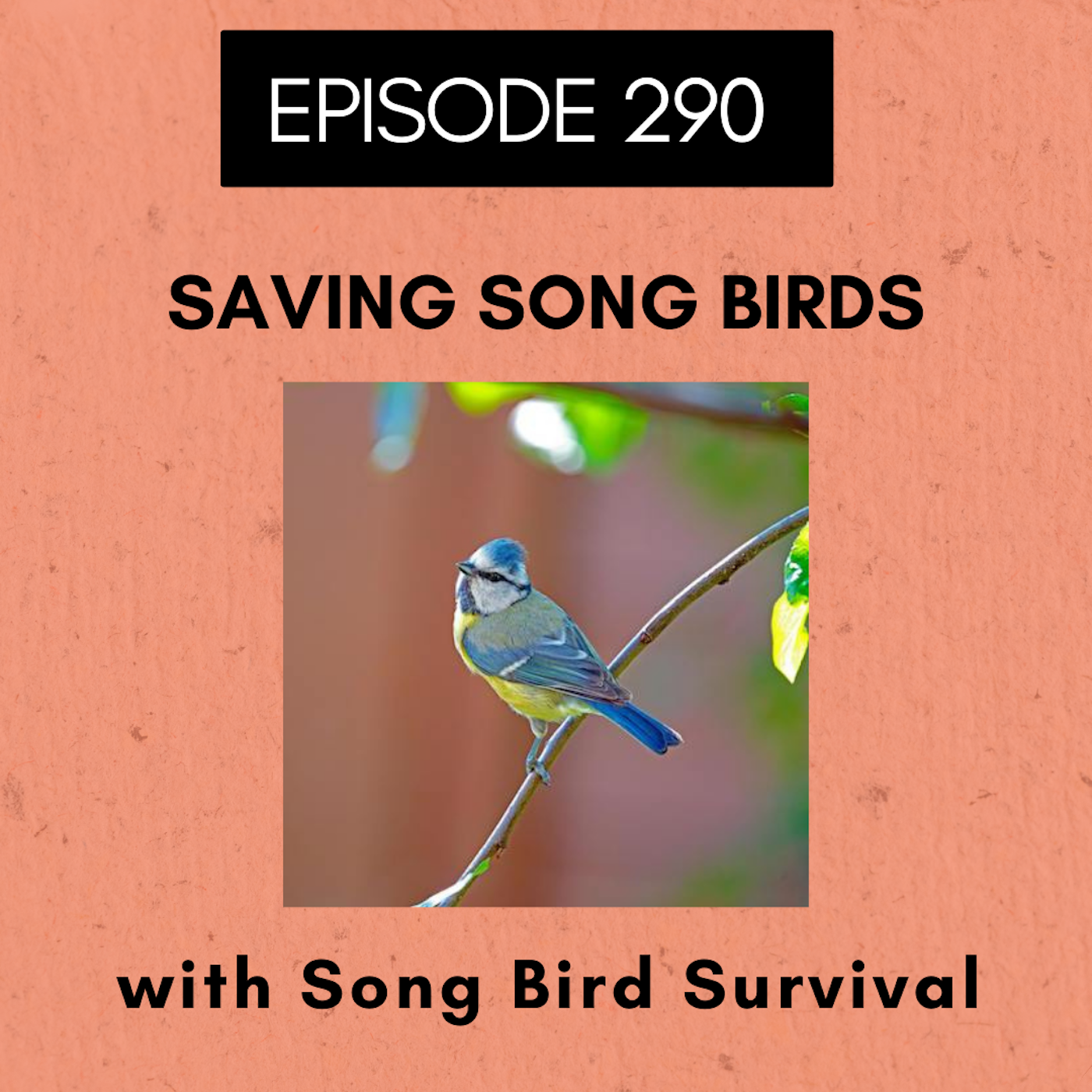
Ep 290Episode 290: Saving Song Birds
Sue has been CEO at SongBird Survival for the last three years leading the charity in its ambition to protect the amazingly diverse but sadly declining songbird populations across the UK. With its growing body of scientific research which is fuelling solutions, SongBird Survival is advocating that we can and should take action to protect these ecologically threatened creatures. Campaigns including Gardens for Birds provide accessible and rewarding opportunities to play a part in much needed practical ways to reverse the drastic declines many species are facing. Charlotte has been the research and engagement manager at SongBird Survival for over two years, and her passion is in bringing science to the public. By overseeing the research programme at SBS, she hopes to create the greatest impact on UK songbirds possible. Prior to her role at SBS, she worked as a scientific researcher and wanted to do more to connect scientific research and conservation. Links SongBird Survival www.songbird-survival.org.uk Advice on the optimum methods for protecting birds in your garden Downloads of plant lists and hints and tips to support birds through gardening Whether you are a novice or an experienced gardener, see our tips for some ideas to get gardening with wildlife in mind. Other episodes if you liked this one: Britain's Birds with Benedict Macdonald - This episode, I'm talking BioChar with Craig Sams, the co-founder of Carbon Gold, a company that produces a range of BioChar products for the garden but also for agricultural use. I interviewed Craig in his beautiful garden in Hastings, so please excuse the cries of the seagulls who tried to get in on the act around halfway through the interview.… Garden Birdwatch - This week I'm speaking to Sue Allen of Microbz, which produces and distributes probiotics for gardens. The concept of probiotics in gardens is new to me, but it dovetails nicely with previous episodes looking at soil health and mycorrhizal fungi so I was delighted to speak to Sue and find out more about how probiotics work in gardens and what we can do to encourage them. Support the podcast on Patreon
Ep 289Episode 289: Animal Friendly Fertiliser
This week, my guest is Los Angeles-based landscaper and fertiliser guru Erin Riley. Erin specialises in organic vegetable gardens and native, drought-tolerant landscapes and we're talking today about her work to create fertilisers that are good for plants, people, animals and the planet. About Erin Riley Erin is stewarding a gardening renaissance: elevating organic fertilizers past their dependance on animal byproducts by founding the vegan fertilizer company. Her mission: to grow plants without killing the planet. Links www.cabbagehillfertilizer.com Erin's substack post "Does fertilizer matter?" Other episodes if you liked this one: Biochar - This episode, I'm talking BioChar with Craig Sams, the co-founder of Carbon Gold, a company that produces a range of BioChar products for the garden but also for agricultural use. I interviewed Craig in his beautiful garden in Hastings, so please excuse the cries of the seagulls who tried to get in on the act around halfway through the interview.… Probiotics for your Garden - This week I'm speaking to Sue Allen of Microbz, which produces and distributes probiotics for gardens. The concept of probiotics in gardens is new to me, but it dovetails nicely with previous episodes looking at soil health and mycorrhizal fungi so I was delighted to speak to Sue and find out more about how probiotics work in gardens and what we can do to encourage them. Support the podcast on Patreon
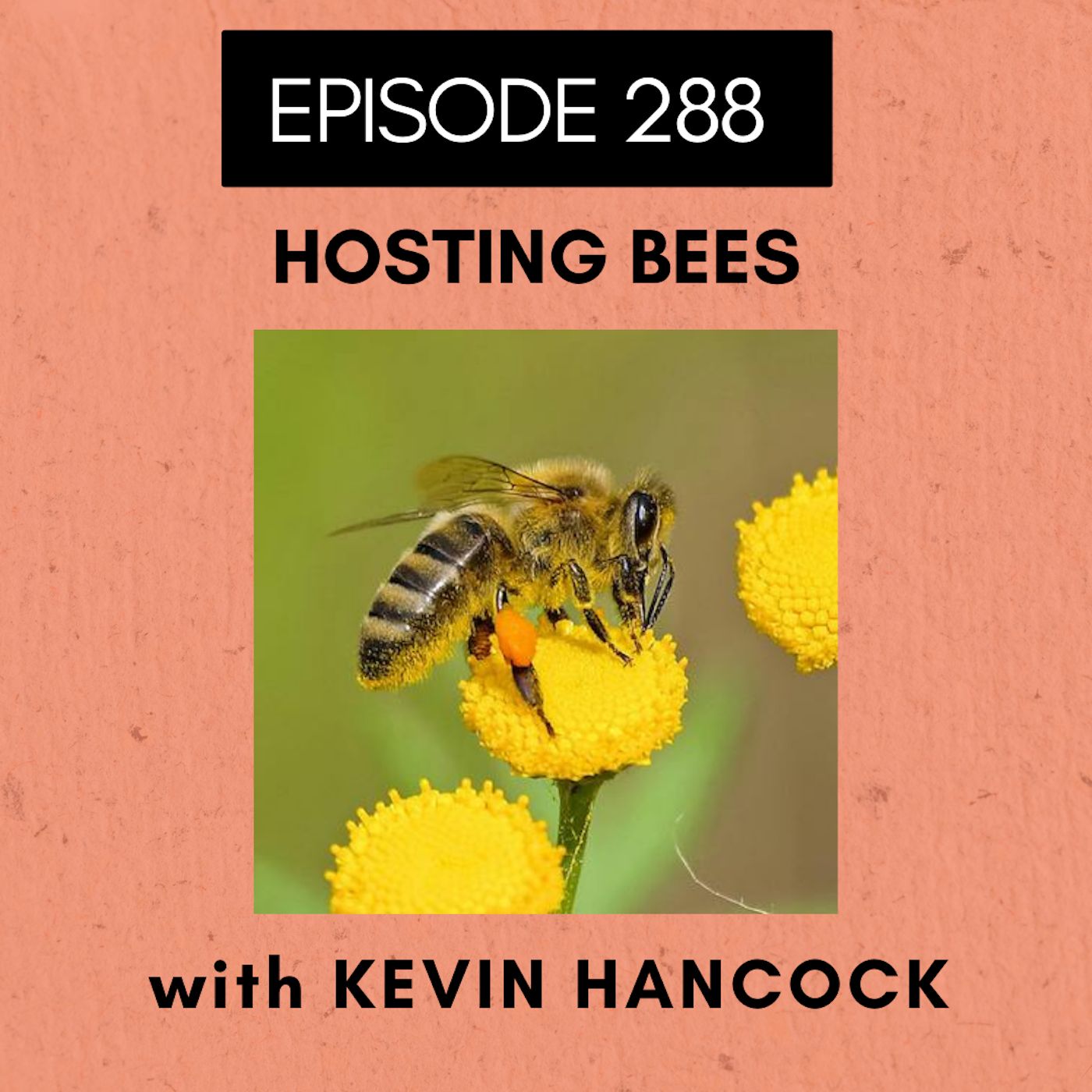
Ep 288Episode 288: Hosting Bees
This week, my guest is bee expert Kevin Hancock. Kevin has invented a honeybee nest box that's the only self-regulating honey harvesting system in the world, meaning the bees will dictate how much honey you can take dependent on the environment that year. It's a way of hosting rather than keeping bees and is an intriguing system. About the Eco Beehive "ECO BEEHIVE is the only SELF REGULATING HONEY HARVESTING SYSTEM IN THE WORLD! Wow that is so exciting!! But it is !! no really.. give me a chance and I'll explain. I am on a mission to strengthen the honeybee network across Europe!! You are automatically involved. First. What is strengthening the honeybees network? Honeybees don't live in isolation. They are all interconnected though a network of colonies. No beekeeper is in isolation. Whatever they do impacts on the greater network around them. OK so why? To get more colony's in the environment. Not apiaries. More hives spread out creates a network of interconnected nests, results in stronger genetics. Faster response to problems like predation and sickness, across the network. The problem is the network has collapsed. You can affect change by installing honeybees nest boxes. I recommend my nest box: Where did it all start you ask? Well as a little boy helping with the bees on my Grandfather's farm in Africa, to catching my first swarm when I was about twelve years old. This then sparked the interest and evolved into my hobby of beelineing (tracking bees to find wild colonies). My story makes me uniquely qualified to design and build the ECO- BEEHIVE. With an interest in bees ( Apis mellifera ) not beekeeping! My interest is mostly investigating bees in the wild. These little insects are under pressure from all sorts of thing. But simplest of these to fix and something we can all get involved in and help with is to simply give them a safe, natural home to live. Solving this simple but big problem, is my mission! After trying many different designs over quite a few decades, and using all the data I have collected from observing bees, I have developed a nest that is so convincing, to bees, they will just move in on their own! But more impressive is they will stay, But even more impressive, is they will then thrive. This then is the ECO--BEEHIVE. www.gardenersbeehive.com Other episodes if you liked this one: Urban Bees - My guest this week is urban apiculturist Mark Patterson. Mark founded and runs Apicultural where he work with businesses and communities to invest in natural capital, improving the environment for pollinators and delivering pollinator monitoring surveys for clients. He provides honey bee hive management solutions, beekeeping training and education and also supplies quality urban honey to a select group of establishments. So you'd think Mark would be all for the idea of urban honeybees, right? Listen on… Looking Out for Bumblebees - This episode my guest is Gill Perkins, CEO of the Bumblebee Conservation Trust. We talk about bumblebee populations and habitats, what we can do to encourage and care for bumblebees in our gardens and about the role of bumblebees in tomato pollination, which came as a complete surprise to me! Support the podcast on Patreon
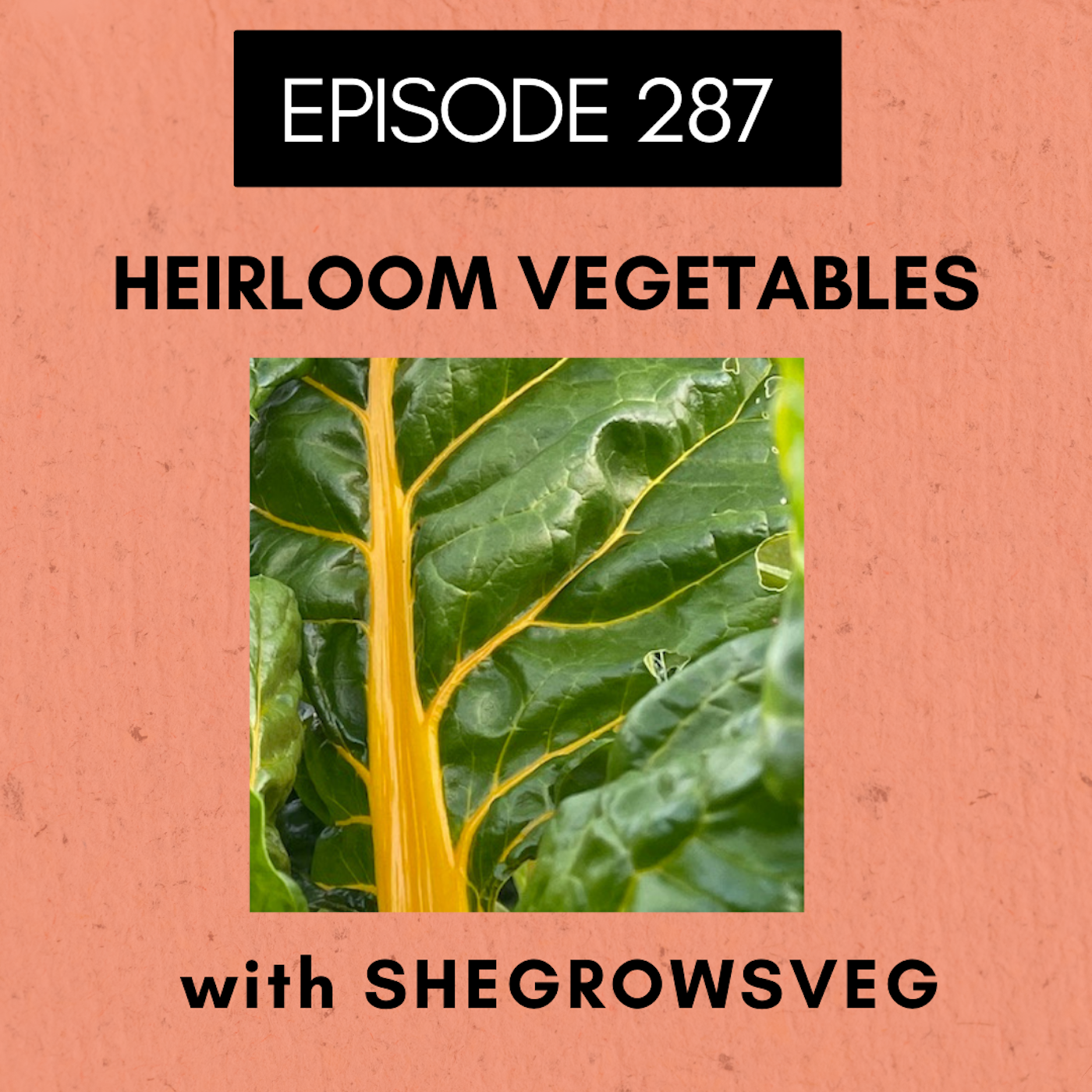
Ep 287Episode 287: Heirloom Vegetables
This episode my guest is former jewellery designer to the stars, turned social media veg grower, Lucy Hutchings. Along with music festival organiser, Kate Cotterill, Lucy set up SheGrowsVeg, an heirloom seed company which is bringing the most unusual veg, fruit, and edible flowers to veg patches and plates everywhere. About SheGrowsVeg Would you like to enliven your dishes with homegrown veg that looks and tastes incredible? Jet black tomatoes, stunning pale pink chicory that looks like a rose or salad leaves that taste like wasabi are just a few of the tasty veg that could grace your plate thanks to exciting new seed brand, SheGrowsVeg. SheGrowsVeg is disrupting the seed market with its range of over 150 open pollinated heirloom seed varieties that promise the most beautiful, unique and delicious veg to give your dishes the wow factor. Launched by former jewellery designer to the stars, turned social media veg grower, Lucy Hutchings (@shegrowsveg), along with top marketeer and music festival organiser, Kate Cotterill, SheGrowsVeg is set to bring the most unusual veg, fruit, and edible flowers to veg patches and plates everywhere. SheGrowsVeg's range is entirely open pollinated seed from heirloom or rare origins, meaning they are packed full of nutrients, are outstanding in the looks department and taste phenomenal. Explains Lucy, "We want to disrupt the seed market with varieties that, up until now, have largely been unavailable. We firmly believe that the only way to give yourself the most incredible range of ingredients, at a price that won't break the bank, is to grow it yourself. You don't have to be into gardening to grow food and we've created our range to give you beautiful open pollinated veg and the helping hand you need to get growing." SheGrowsVeg wants to attract everyone from ardent growers, to kitchen garden novices, along with experimental cooks who are dreaming of using unique and delicious produce they simply can't buy in the shops. To help those new to growing their own, 'Sow, Grow and Taste' Youtube videos can be found via QR codes on every single pack, giving confidence to all. So if you're dreaming of bringing new colour, taste and variety to your plate, growing your own could be the answer and SheGrowsVeg will help you turn that dream into a reality. Each pack features stunning photography and jargon free instructions, making them a pleasure to collect. SheGrowsVeg have also carefully curated seed collections such as 'chef's choice' and 'top 5 heirloom tomatoes' that make beautiful gifts tucked in little eco cotton bags. To find out more about the huge variety of seeds available and to buy online visit www.shegrowsveg.com. Other episodes if you liked this one: Edimentals - This week, I'm speaking to one of the world's foremost experts in ornamental, edible plants, Stephen Barstow. Stephen grows a dazzling range of plants, some you probably haven't even heard of, let alone eaten and more still that you may have heard of but may not have considered to be edible. Stephen's book Around the World in 80 Plants looks at perennial, leafy plants from around the globe that play a big part in the diet of those living where these plants naturally occur in abundance. He's grown and studied these in his garden in Norway and selected varieties for taste, growth performance and for nutritional, ornamental and entomological value. that please the eye, work from a maintenance perspective and can evolve successfully over time. We talk about what he grows in his garden, his passion for onions, his book and some of the varieties mentioned therein. Sky Gardening - My guest this episode is the super-talented and creative gardener and designer Brent Purtell and we're talking about the Capitaspring Rooftop Garden in Singapore, which shares the '2nd highest' building ranking along with 3 other buildings, all the same height. There are 3 gardens on the building, covering an area of 10,000 square feet and containing a mixture of ornamentals and edibles, all growing at dizzying heights. Brent was involved on the build and design side before he became the Head Gardener, overseeing the maintenance of Capitaspring Rooftop Garden. Support the podcast on Patreon

Ep 286Episode 286: Natural Happiness
This episode my guest is Alan Heeks, former corporate world inhabitant, organic farmer, coach and author of the book 'Natural Happiness'. After his transition into organic farming, Alan realised that "a cultivated organic ecosystem is a profound guide to tending human nature, and that organic growth methods have parallels for people: such as composting your stress, and using crop rotation to avoid burnout." We explore the idea further… About Alan Heeks Alan Heeks had a baptism by mud at age 42, when he dropped out of a successful business career and followed a wild impulse to start an organic farm as an education centre where young people could find their roots and direction as they entered adult life. Despite Alan's lack of any relevant experience, the project succeeded, and gave him a huge education too. He explains, "I realised that a cultivated organic ecosystem is a profound guide to tending human nature, and that organic growth methods have parallels for people: such as composting your stress, and using crop rotation to avoid burnout." Alan's new book about this approach, Natural Happiness, also draws on the workshops he has led for hundreds of people sharing his insights, from troubled teenagers to super-stressed NHS doctors. Alan and his wife Linda live in Hay-on-Wye, and grow many of their own vegetables. Links www.naturalhappiness.net Twitter Facebook LinkedIn YouTube Other episodes if you liked this one: Forest Bathing - Forest Bathing, or Shinrin Yoku, is the practice of immersing yourself in nature as therapy. It's the perfect antidote for those who feel disconnected from the land and unattached from nature, which is increasingly likely to happen in a world where 55% of us live in urban areas. In this episode, I speak to Stefan Batorijs who founded Nature and Therapy UK in 2017, as a response to a growing need to foster a spiritual and psychological connection to the land. If you've always wondered what Forest Bathing, or Shinrin Yoku, entails, this is the episode for you! Gardening for Your Senses - This week I'm chatting with writer Kendra Wilson. Kendra has written a vast amount about gardening but I was particularly interested in speaking to her about her book Garden for the Senses. Engaging all your senses can lead to a deeper connection with the landscape and it can be an unusual and transformative experience. I wanted to find out how we can all learn to better use our senses and firstly, what prompted Kendra to write the book. Support the podcast on Patreon

Ep 286Episode 285: No Mow May
Hello and welcome to this week's episode where my guest is Mark Schofield, Plantlife's Road Verge Advisor for the UK. Mark has a huge amount of experience when it comes to green space conservation and is currently involved in a number of projects across the country to manage road verges better for wildlife involving biomass harvesting trials and the use of AI in surveys. He's also one of Plantlife's representatives for the #NoMowMay campaign, and in this interview, he talks about how we can maintain both private and public green spaces more sympathetically for wildflowers and the wildlife they support. About Mark Schofield Mark used to work for the Lincolnshire Wildlife Trust before he joined Plantlife as their Road Verge Advisor for the UK. He has 15 years of experience of road verge and urban green space conservation and has organised extensive citizen science surveys. He is currently involved in a number of projects across the country to manage road verges better for wildlife involving biomass harvesting trials and the use of AI in surveys. Mark is also one of Plantlife's representatives for the #NoMowMay campaign, and has written much of the guidance on the Plantlife website for how we can maintain our lawns and public green spaces more sympathetically for wildflowers and the wildlife they support. Links No Mow May and lawn management guidance: https://www.plantlife.org.uk/campaigns/nomowmay/ https://www.plantlife.org.uk/advice-learning/managing-grassland/ Trends in green space management: Report from APSE with good news from local authorities for meadows and biodiversity priorities Other episodes if you liked this one: Tapestry Lawns - This episode, I'm talking to Dr Lionel Smith, horticulture lecturer and author of the book Tapestry Lawns: Freed from Grass and Full of Flowers. As the title suggests, a tapestry lawn replaces grass with flowering dicots, increasing biodiversity, lowering maintenance needs and seriously upping the aesthetic value of a lawn. Living with a tapestry lawns involves a little bit of self-education around how you treat plants and I start by asking how to overcome one of my own biggest worries about having one… Gardening for Your Senses - This week I'm chatting with writer Kendra Wilson. Kendra has written a vast amount about gardening but I was particularly interested in speaking to her about her book Garden for the Senses. Engaging all your senses can lead to a deeper connection with the landscape and it can be an unusual and transformative experience. I wanted to find out how we can all learn to better use our senses and firstly, what prompted Kendra to write the book. Support the podcast on Patreon
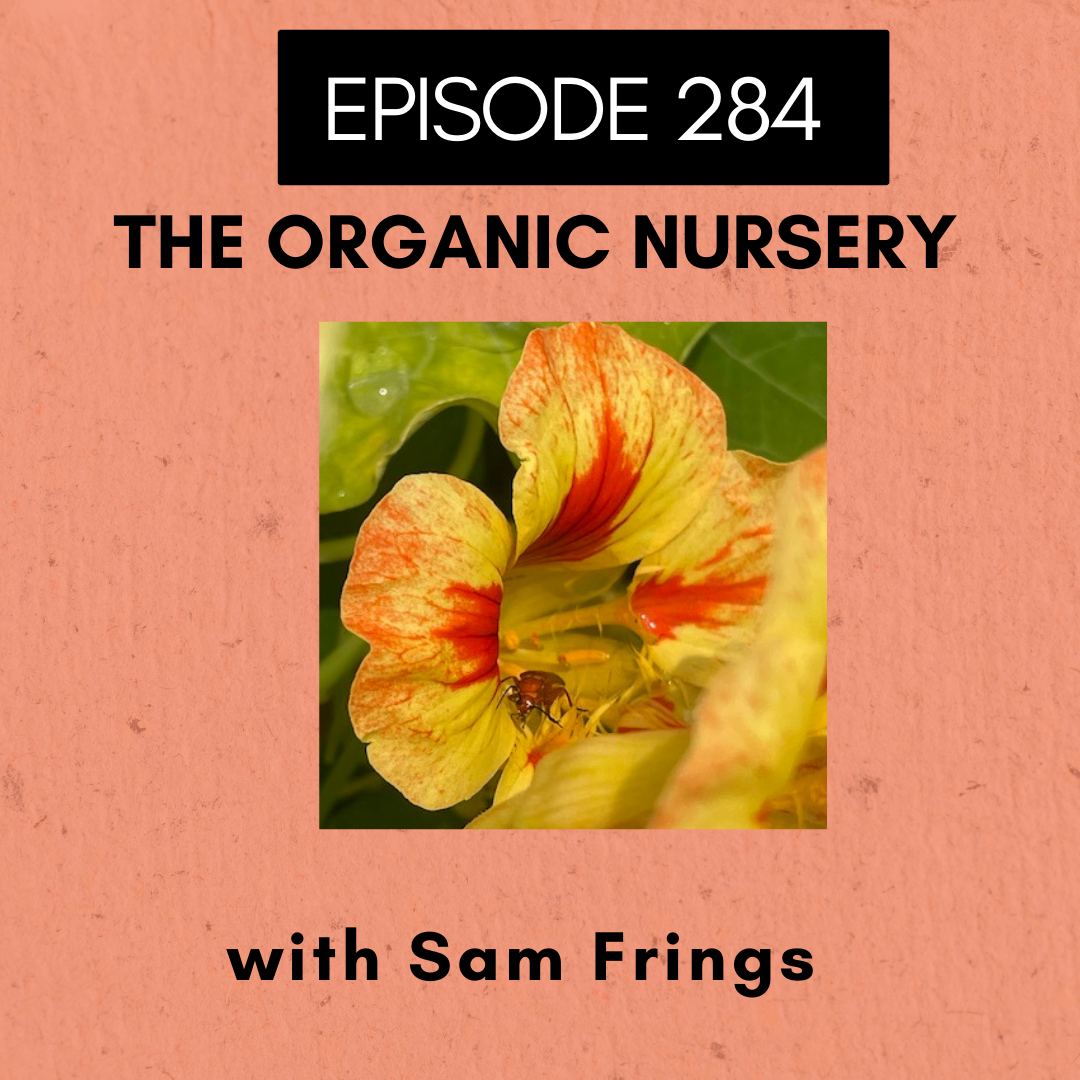
Ep 284Episode 284: The Organic Nursery
This episode, my guest is Sam Frings who founded The Organic Plant Nursery. Sam explains in his own words how he got started and how things have been along the way. It's not easy being a pioneer, but listen on to find out how Sam and his family have battled against the odds to do it right. Links www.organicplantnursery.co.uk Other episodes if you liked this one: Running a Green Nursery with Chris Williams of Edible Culture - This week I'm speaking to Chris Williams, co-founder of Edibleculture, an inspirational nursery based in Faversham in Kent. From the day the nursery was established 5 years ago, ethically and ecologically sounds principles have been employed to create the brilliant business that exists today. We talk about how the nursery succeeds where so many others are failing to make changes; using peat-free compost, gardening organically without chemicals, eliminating single use plastics from their sales output and many other initiatives that make this nursery truly revolutionary. School Gardening - This episode I'm joined by 3 guests; Louise Moreton who heads up the horticultural programme at Wicor Primary School and 2 of the MiniHorts themselves, Rebecca and Kieran. Louise set up a horticultural programme at the school 11 years ago, initially in a voluntary capacity. The programme became such a success she's now employed by the school and works 4 days a week to deliver what has become a vital part of the curriculum. Rebecca and Kieran are Year 6 pupils who are members of the after school gardening club and leads in the MiniHorts programme, passing on their knowledge and enthusiasm to younger pupils. The MiniHorts have been in the media quite a bit, including featuring in an episode of Gardeners' World in 2017, so they're seasoned pros at this sort of thing! If you don't have children or children of school age, I think you'll still find this episode interesting and inspiring, it's well worth a listen. Support the podcast on Patreon

Ep 283Episode 283: The Tree Hugging Lawyer
This episode, my guest is Sarah Dodd AKA the Tree Hugging Lawyer and founder of law firm Tree Law. Sarah specialises in civil and criminal claims arising from disputes with trees, in particular trees causing damage to properties. She's also the host of Tree Law TV channel on YouTube and today, we find out all about her background, her work and the law as it relates to trees. What We Talk About Common neighbour disputes when it comes to trees Subsidence Cutting trees that overhang your property Is there such a thing as a right to light or a right to privacy? How TPOs work Is enough done to protect trees through the law? About Sarah Dodd Sarah is the Tree Hugging Lawyer and founder of law firm Tree Law. Sarah specialises in civil and criminal claims arising from disputes with trees, in particular trees causing damage to properties. Sarah acts for various clients including homeowners, commercial properties owners, insurers, local authorities and developers. Sarah is a past chair of the Subsidence Forum and a member of the LTOA, MTAO and the Arboricultural Association. Sarah is the host of Tree Law TV channel on YouTube providing free contents answering some commonly asked questions about trees. Sarah is hosting the Tree Law summer conference in London on 17 September. Tickets are on sale for that event at Lincoln's Inn via Eventbrite - Treelawconference www.treelaw-ap.co.uk Other episodes if you liked this one: Trees with Peter Thurman - Selecting and planting trees can be a minefield. Never fear though, help is on hand as 'legend in the world of trees', Kew-trained, Peter Thurman is here to provide straight-forward advice about what to do and what not to do when buying a tree and planting it out. Discover how to select the right tree for your garden's soil type and which species of tree will help you create the effect you are targeting. Learn how pleached trees can become an attractive alternative to fencing, just beware of the High Hedges Act! Does it pay to have patience when growing your tree, or is it easier to have instant impact? Pick up some valuable tips and tricks on the planting process. From deciding which food you should feed your prized specimen with, to mulching and watering, your questions are sure to be addressed in this informative episode. Irreplaceable with Julian Hoffman - This episode's guest is writer Julian Hoffman and we're talking about his book 'Irreplaceable'. I read the book a few months back and as you might expect from reading the blurb, it's about those irreplaceable wild environments and the species we're in danger of losing. But it's also about the people who are so deeply connected to the landscapes and the animals they're battling to save. Julian speaks about why it's imperative that we stop the destruction of precious landscapes, how we can help at the individual level and why it's vital to maintain the connection between people and place. Support the podcast on Patreon

Ep 282Episode 282: Song of the Garden
This week my guests are Northern California based musical duo Misner & Smith. Sam, who is Misner, and Megan, who is Smith comprise one of the most acclaimed acts in the Americana world. Blending elements of that genre with bluegrass, traditional folk ballads, and more pop leaning ideas, they've been described as making music that is gloriously nonconforming. Aside from their musical chops, Sam & Megan are expert gardeners who focus on pollinators, sustainability and community gardening. Listen on to find out how their connection to nature feeds into their music. What We Talk About Sam & Megan's gardening backgrounds Gardening sustainably and for the community Gardening as a creative outlet? How gardening inspires when you are looking for creative prompts How gardening factors into their music? The garden soundscape About Misner & Smith Northern California based unclassifiable duo Misner & Smith treasure the unpredictability of their band. Technically precise songwriting mirrored with an improvisatory spirit and soaring harmonies have made the band consisting of Sam Misner and Megan Smith one of the most acclaimed acts in the Americana world. Blending elements of that genre with bluegrass, traditional folk ballads, and more pop leaning ideas, Misner & Smith makes music gloriously nonconforming. The duo first met at a Shakespeare festival as professional actors in California in 2002 but began working as a musical duo two years later when Sam and Megan discovered a mutual love of roots music, Woody Guthrie, and in particular, harmony singing. Before the release of their career defining sixth LP ALL IS SONG, the duo had released five critically acclaimed records, including Halfway Home (2004), Poor Player (2008), Live at the Freight & Salvage (2010), Seven Hour Storm (2013), and headwaters (2017). It was that 2017 release that found the group stripping their sound back down to where it began, two voices and two instruments. headwaters was recorded live in the studio and features the duo doing what they do best. On ALL IS SONG, they build upon that momentum and turn in their finest work to date, an album of inspired declarations to the power of music, song, and, most importantly, collaboration. www.misnerandsmith.com YouTube Other episodes if you liked this one: Natural Fibres - This week's guest is multi-media artist Hanna Varga. Hanna incorporates the natural world into her work and her current projects involve foraging for fibres she turns into both useful and beautiful items. The conversation began with Hanna talking about her work past and present and developed into a really important conversation about the value of items at their more than fiscal level. Soundscapes & Landscapes - This week I'm speaking to Dr Mike Edwards, Chief Listening Officer at Sound Matters, a company focussed on using sound and listening to create more sustainable and resilient futures. Sound Matters provided the soundtrack to the Rewilding Britain garden that one best in show at this year's Chelsea Flower Show. Mike recently spoke passionately about climate change, soundscapes and landscapes at the Beth Chatto Symposium and wowed a lecture theatre full of rapt listeners with his prowess on the didgeridoo. Support the podcast on Patreon
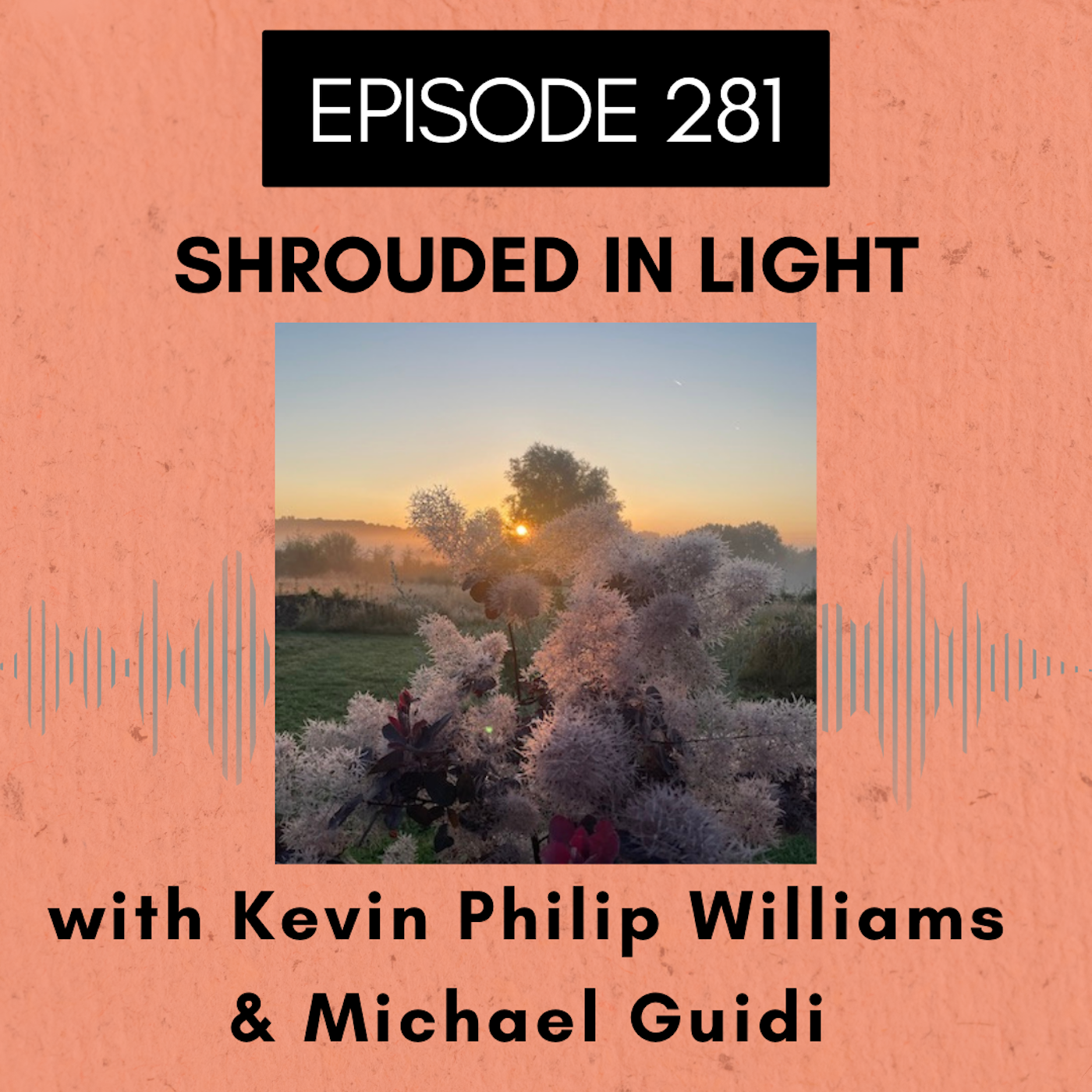
Ep 281Episode 281: Shrouded in Light
This week my guests are Kevin Philip Williams and Michael Guidi, authors of a new book 'Shrouded in Light: Naturalistic Planting Inspired by Wild Shrublands'. I'll let Kevin and Michael say more about the idea behind it but a book about horticulture that compares natural landscapes to graffiti and branch frameworks to sigils catches my attention immediately… What We Talk About The premise behind the book What is a shrub? Why have shrubs fallen out of fashion? Which of the global shrublands most inspires and informs their planting design at the garden level Good examples of designed shrublands The future of innovative garden design Shrouded in Light: Naturalistic Planting Inspired by Wild Shrublands by Kevin Philip Williams and Michael Guidi Other episodes if you liked this one: The View From Federal Twist - This episode features James Golden, talking about the naturalistic garden he's built around his home in New Jersey. James's garden has been created intuitively over time and sits perfectly within the landscape, in fact is a landscape in its own right. Sometimes baffling, sometimes threatening and without utilitarian purpose, the garden is nonetheless life-affirming, vital and dramatically beautiful in different ways from one moment to the next. Gardening in a Changing World - My guest this episode is garden and landscape designer and writer, Darryl Moore. Darryl is one of the most, if not in my opinion, the most informed voice on gardens and design in the UK and his new book Gardening in A Changing World: People, Plants and the Climate Crisis presents an overarching perspective of the complexity of plant life, and the ways that we can begin to appreciate and work together with plants, rather than against them, in addressing the rapidly changing conditions affecting the planet. Support the podcast on Patreon

Ep 280Episode 280: A Floral Feast
This week my guest is Carolyn Dunster. Carolyn is a planting designer, botanical stylist, garden writer and author of a book all about eating flowers entitled 'A Floral Feast: A Guide to Growing and Cooking with Edible Flowers, Foliage, Herbs and Seeds'. We discuss how to expand your culinary endeavours to encompass the ornamental parts of your garden. A Floral Feast: A Guide to Growing and Cooking with Edible Flowers, Foliage, Herbs and Seeds by Carolyn Dunster Other episodes if you liked this one: Edible Flowers with Jan Billington - In this episode, I'm speaking to Jan Billington of Maddocks Farm Organics, a flower farm in Devon growing and selling organic edible flowers. We talk about the easiest and tastiest flowers you can grow, colour trends, some more unusual edible flowers and how you can use edible flowers for your own special event. The episode starts with Jan telling us about her farm and why she feels her business needs to give something back. Welcome to Mintopia - This week's guest is Dr Si Poole, founder of Mintopia, a website dedicated to mint featuring its own online reference library for the different types, the mintopaedia. Si holds one of the National Collections of mint and holds getting on for 200 different cultivars. From his plastic-free, organic nursery, he sells themed collections of mints and he's passionate and knowledgable about every aspect of the Mentha genera, impressive given that there's much more to this plant than mint sauce and mojitos. Support the podcast on Patreon
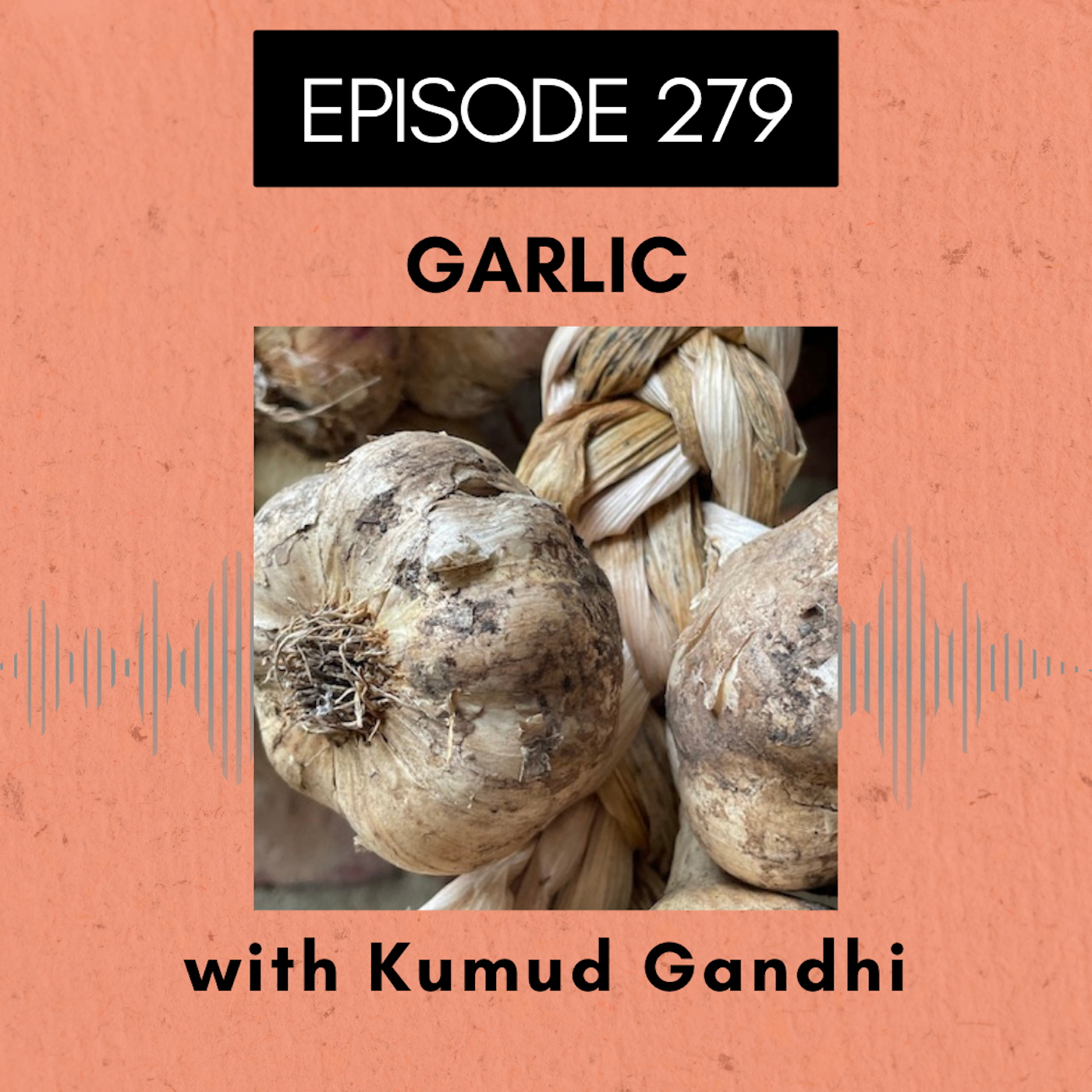
Ep 279Episode 279: Garlic
My guest this week is Kumud Gandhi, a food scientist, author and founder of The Cooking Academy. Kumud has written a book called The Garlic Story, a look at the history of garlic and its culinary uses. We talk about how garlic has been celebrated and revered throughout history, the different types and uses and how you can incorporate more of it into your life. 'The Garlic Story' is a celebration of all things garlic with over 50 delectable recipes, promising a flavourful journey that showcases the diverse and irresistible facets of this humble ingredient. The Garlic Story by Kumud Gandhi www.thecookingacademy.co.uk Other episodes if you liked this one: Unusual Edible Plants - This episode I'm speaking with Kevin Hobbs & Artur Cesar-Erlach, authors of EDIBLE: 70 Sustainable Plants That Are Changing How We Eat which looks at edible plants from around the world that are revolutionising how we grow, eat and appreciate food. It tackles important questions like what do we eat when our usual diets are no longer sustainable, how do we future proof food and how can we be more mindful about what we eat and considers what the future of global food production might look like. Climate Cuisine with Clarissa Wei - this episode of the podcast, I'm speaking to journalist and host of the Climate Cuisine podcast, Clarissa Wei. On her podcast, Clarissa shares the stories of the crops grown sustainably around the world. The goal is to highlight climate-centric conversations about crops and the food we eat as they become increasingly important to the resiliency and survival of our food systems. Support the podcast on Patreon
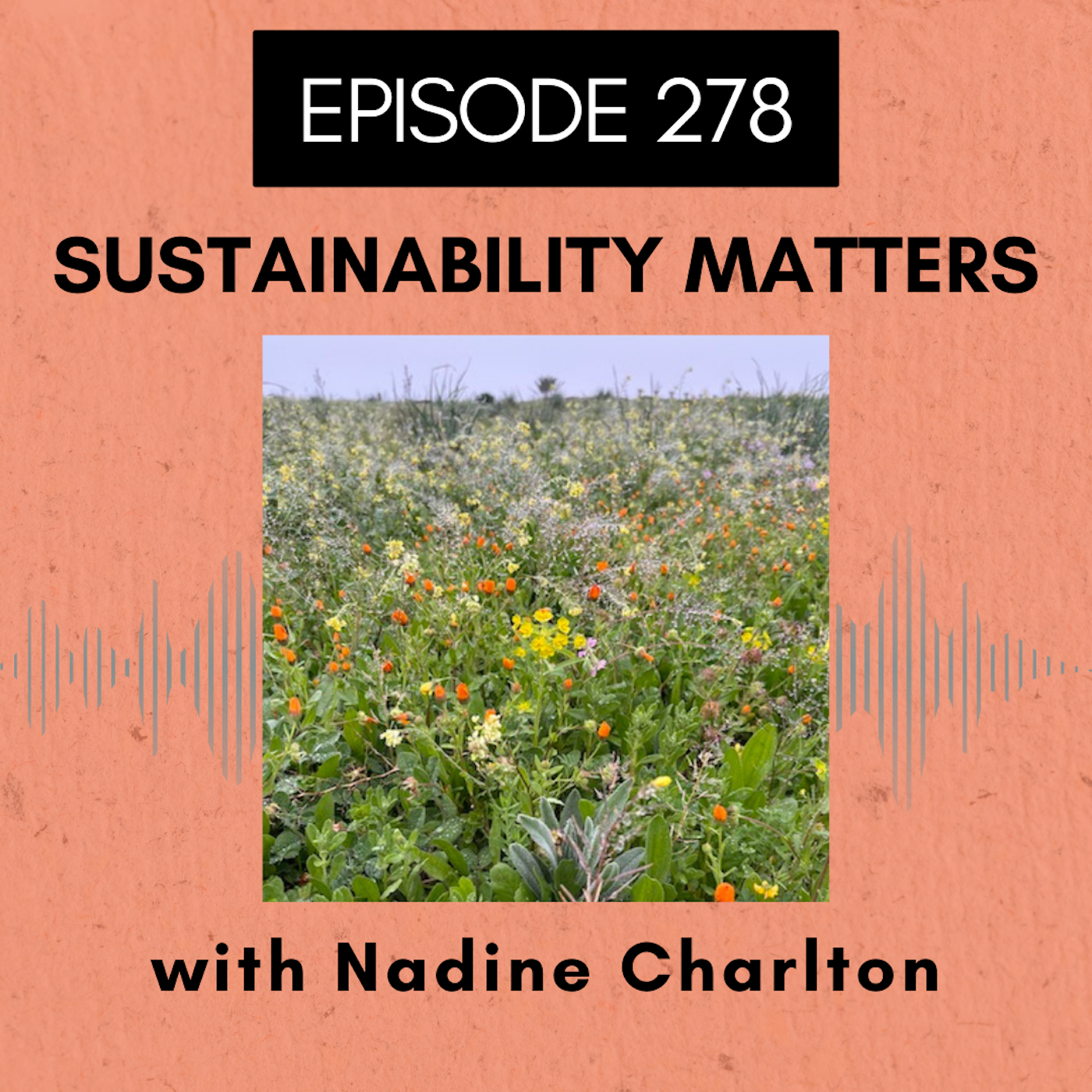
Ep 278Episode 278: Sustainability Matters
My guest this week is Nadine Charlton. Through her business Home Spring Gardens, Nadine provides specialist services to the horticultural and landscape construction industry, advising on sustainable best practice and creating beautiful gardens and landscapes with an environmental conscience. We talk about the importance of sourcing sustainable garden products, how you can tell whether what you're buying is sustainable and whether enough is being done on this front. About Nadine Charlton & Home Spring Gardens Nadine provides specialist services to the horticultural and landscape construction industry with commitment to sustainable best practice and creating beautiful gardens and landscapes with an environmental conscience. She has exhibited personally at RHS shows, and has project managed and advised on multi award winning gardens at RHS Chelsea Flower Show. Nadine has an ability to see a vision and make it happen, connecting people and bringing teams, partners as well as commercial objectives together with demonstrable results. She has a lifelong passion of historic landscapes and architecture and is an advocate for using traditional methods with the benefit of modern insights and techniques. A passionate lover of outdoor living, Nadine is committed to innovation and education; inspiring the next generation. www.homespringgardens.co.uk Nadine is currently working with Landscape Architect Michael Lote on his debut show garden 'It doesn't have to cost the Earth' which will be featured at RHS Malvern Spring Festival 9-12 th May 2024 showcasing innovative sustainable construction products and methods. The garden will be repurposed to Woodoaks Farm which is owned by the Soil Association Land Trust to create a permanent training and educational space to facilitate learning for school children and adults, growing together with the horticultural and agricultural industry. Other episodes if you liked this one: Historic Roses Irises Support the podcast on Patreon

Ep 277Episode 277: Historic Tulips
My guest this week is Polly Nicholson. Polly is the owner of Bayntun Flowers in Wiltshire, and holds the national collection of Tulipa (Historica) with Plant Heritage. Polly has also written a book called 'The Tulip Garden: Growing and Collecting Species, Rare and Annual Varieties' which is released on the 21st March and today she shares her knowledge of this complex and fascinating group of plants. About Polly Nicholson Specialist flower grower and tulip expert Polly Nicholson is the owner of Bayntun Flowers in Wiltshire – growers of organic flowers cultivated in walled gardens and a one-acre field at the foot of the Marlborough Downs in Wiltshire. Nicholson holds the National Collection of Tulipa (Historic) with Plant Heritage, and has featured on BBC Gardener's World, Radio 4, in Gardens Illustrated, Country Life, T: The New York Times Style Magazine, The World of Interiors, and House & Garden. Links The Tulip Garden: Growing and Collecting Species, Rare and Annual Varieties by Polly Nicholson www.bayntunflowers.co.uk Other episodes if you liked this one: Historic Roses Irises Support the podcast on Patreon
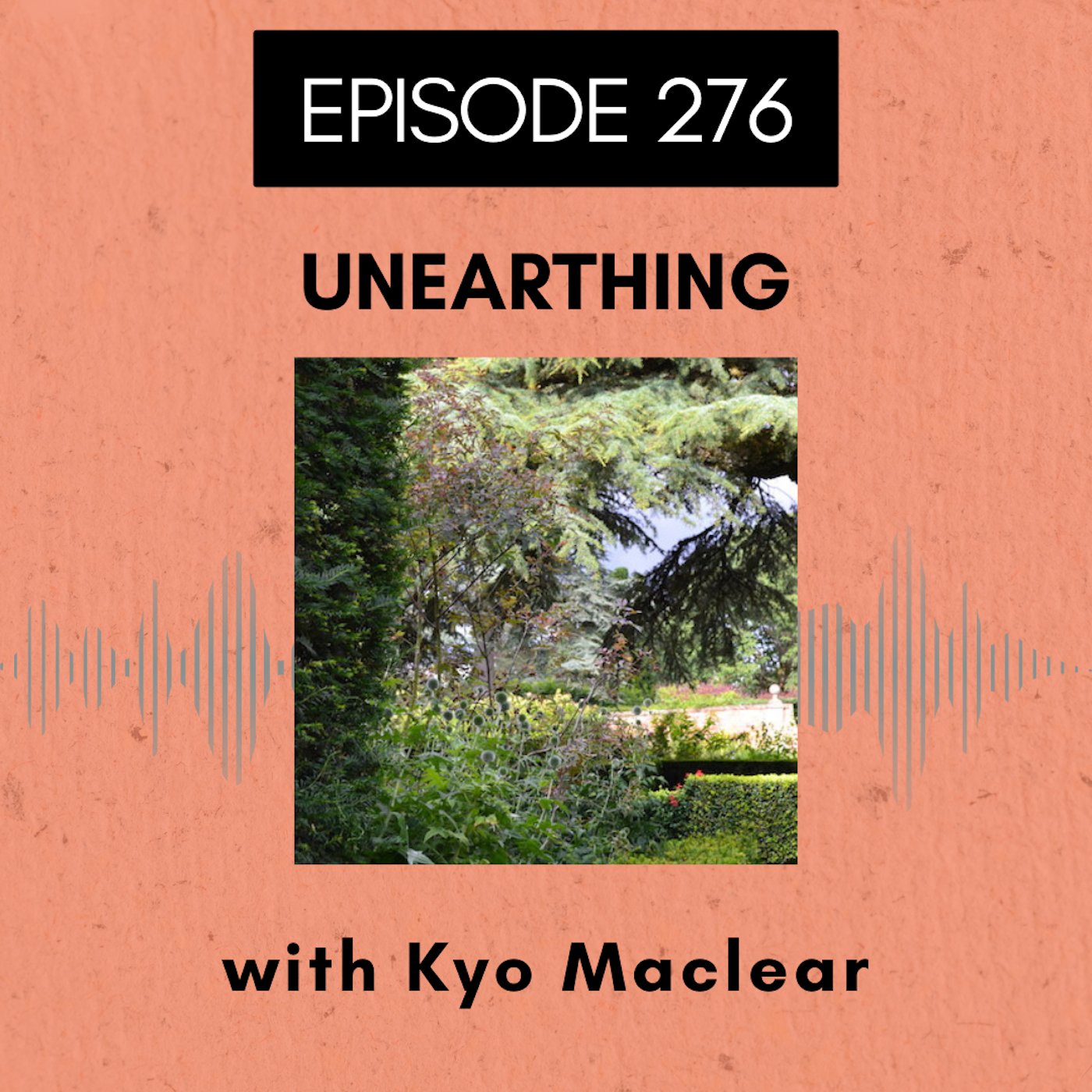
Ep 276Episode 276: Unearthing
Hello and welcome to this week's episode where my guest is Kyo Maclear. Kyo is an author and her latest book is centred around family secrets, her mother and how gardening shaped their relationship and helped her frame their mutual experiences. About Unearthing Kyo Maclear's Unearthing: A Story of Tangled Love & Family Secrets is published on 7th March 2024. It's a gripping and emotionally eloquent memoir about a family secret revealed by a DNA test, the lessons learned in its aftermath, and the transformative possibilities of growing plants. A memoir of inheritance that goes far beyond heredity, Unearthing is about what happens when we give up the watered, weeded, and pruned plots of our family histories and embrace a more expansive view of kinship. Told through the passage of seasons with exquisite illustrations by the author, it is a tender testimony to the ineradicable love between a mother and daughter for readers of Michelle Zauner's Crying in H Mart and Katherine May's Wintering. When Kyo Maclear receives the result of a DNA test showing that she and the father who raised her, whose death she is grieving, are not biologically related, she is suddenly a detective in her own life, desperately seeking answers from her ailing mother whose memories and English are failing. Maclear no longer speaks Japanese, her mother's first language, so she turns to her mother's second fluent tongue: the wild and green language of gardening, to provide them with a way of connecting. This beautifully constructed, intricate memoir is a work as unique as its author, and yet, movingly, achingly relatable. About Kyo Maclear Kyo is an award-winning novelist, essayist, and children's author. Her books have been translated into eighteen languages and published in over twenty-five countries. She is the author of the hybrid memoir Birds Art Life (2017,) and winner of the Trillium Book Award. She holds a doctorate in environmental humanities and is on faculty at the University of Guelph Creative Writing MFA. Links Unearthing: A Story of Tangled Love & Family Secrets by Kyo Maclear www.kyomaclear.com Other episodes if you liked this one: A Rolling Stone Gathering Moss All My Wild Mothers Support the podcast on Patreon
Ep 275Episode 275: Community Gardening
Vicky Chown is a Medical Herbalist, foraging instructor and self taught permaculturist. She's head gardener at Omved Gardens, a fascinating community garden in London which focuses on food, creativity and wellbeing. What we talk about The idea behind Omved Gardens How nature factors in to the garden Where food and creativity fit in The design of the site and how it feeds into the purpose and the overall experience for visitors Who uses the site The activities that take place About Vicky Chown Vicky Chown is a Medical Herbalist (BSc), foraging instructor and self taught permaculturist. She is head gardener at Omved Gardens and Coordinator of their Seed Saving Network. Links Vicky Chown on Instagram @handmade_apothecary The Seed Saving Network @seedsavingnetwork Omved Gardens @omvedgardens Other episodes if you liked this one: Gardening for your Senses Permaculture Support the podcast on Patreon

Ep 274Episode 274: Natural Swimming Ponds
Caroline & Jon have created the most amazing swimming pond in their back garden and have documented their journey on social media, posting videos of year-round swimming adventures and pond-life. If you need inspiration to tackle a garden project you've always thought was just a pipe-dream, listen in as Caroline & Jon offer their refreshingly optimistic and can-do approach. What we talk about What made Caroline & Jon install a pool in their garden? Planning permission Filling the pond Cleaning the pond Swimming year round Bringing in wildlife The planting scheme - aesthetic or functional? Build cost Links Caroline & Jon on TikTok Caroline & Jon on Instagram Other episodes if you liked this one: Creating Wildlife Habitats Bats Support the podcast on Patreon
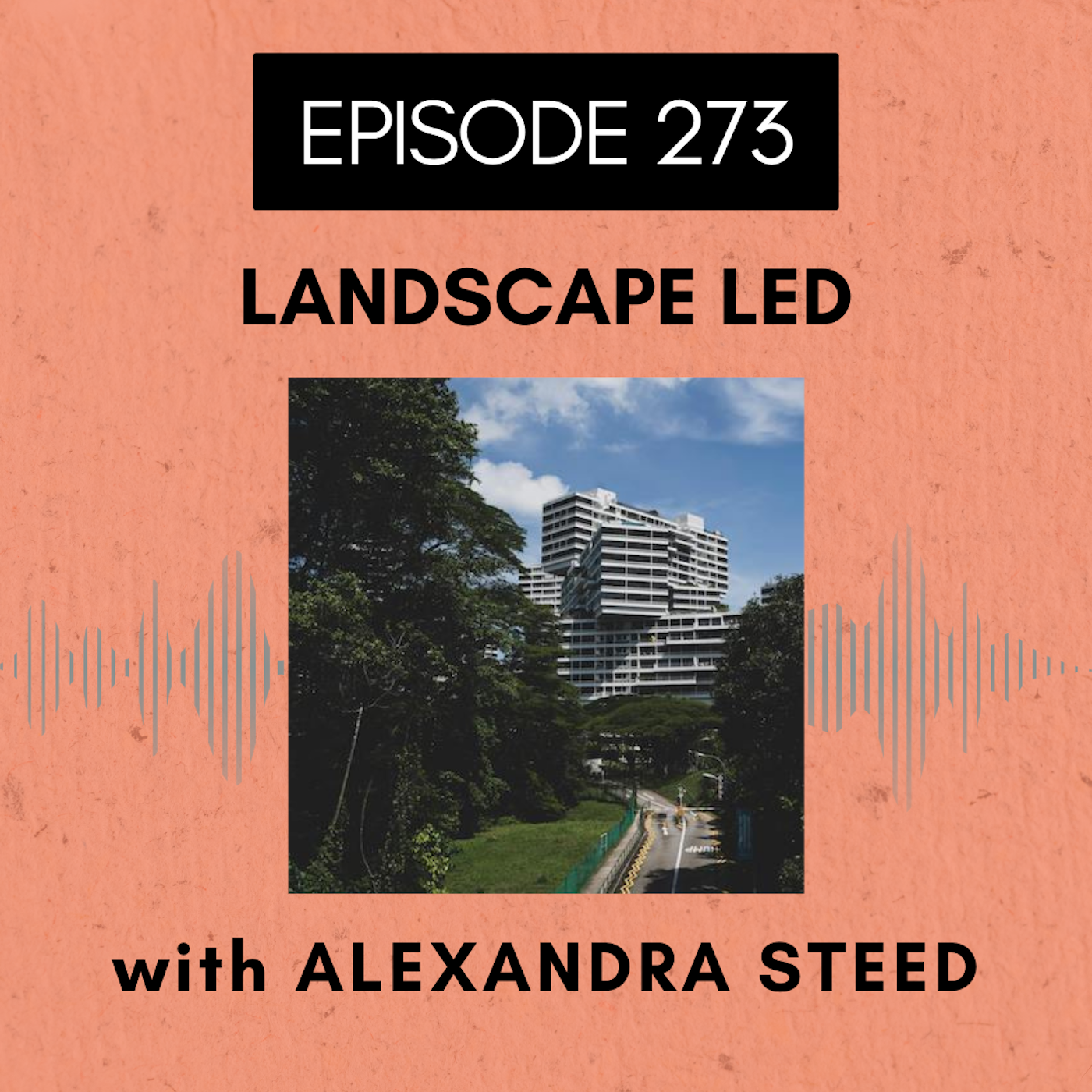
Ep 273Episode 273: Landscape Led
Alexandra Steed is a passionate landscape architect with a profound commitment to art, sustainability, and the transformative power of landscapes. Alexandra recently authored Portrait to Landscape and we talk about the possibility of and the necessity for shaping our landscapes so they may help to heal the earth. What we talk about Why portrait to landscape? The biosphere An overview of Alexandra's ideas for better landscape design and management? Urban vs rural landscaping Can we rely on change that comes from the top down? How individuals can make a difference About Alexandra Steed Alexandra Steed, a passionate landscape architect and Fellow of the Landscape Institute (FLI) and the Royal Society of Arts (FRSA), has a profound commitment to art, sustainability, and the transformative power of landscapes. In 2013, she founded URBAN to bring joy to people's daily lives through landscape design that enhances beauty and fosters well-being. Steed actively advises and serves on expert panels for organisations such as the Design Council UK and the Government's Office for Place. As a lecturer at The Bartlett, UCL, she shares her knowledge and volunteers her time to support community empowerment and inclusive public spaces. Steed's exceptional contributions to landscape architecture have garnered prestigious awards, including the WAFX Award for innovative global solutions and The LI Award for Excellence in Tackling Climate Change. With a strong focus on preserving biodiversity and ecosystems, Steed's dedication to integrating natural processes into her designs is evident. Through her work and advocacy, she champions climate change mitigation and inspires others to connect with and appreciate the natural world. About Portrait to Landscape "Portrait to Landscape: A Landscape Strategy to Reframe Our Future" is a ground-breaking book that calls for a transformative shift in our relationship with the natural world. Written by a renowned landscape architect, this book offers a new perspective on our place in the world and a compelling vision for a regenerative future. In an era plagued by environmental disasters and global challenges, the book argues that our exploitative and fragmented relationship with nature is at the root of these issues. Drawing upon the metaphor of a self-focused portrait versus a wide-angle landscape view, the book illuminates the profound impact of our narrow perspective. It offers a roadmap for reconnecting with the larger community of life. Through a captivating narrative, the author explores the interconnectedness of the living world and the urgent need to shift from a human-centric mindset to one that embraces the wisdom of nature. It demonstrates with inspiring examples from around the world how landscapes can become catalysts for healing and regeneration, leading to improved well-being and sustainability. "Portrait to Landscape" presents a holistic approach to restoring the earth, addressing not only the symptoms but also the underlying causes of environmental degradation. The book outlines practical strategies for policymakers, activists, and individuals to protect and restore landscapes, emphasising collaboration and long-term stewardship. With passion and expertise, the book calls on global citizens to take action and become active participants in the healing process. It offers a powerful message of hope and possibility, envisioning a future where humanity and all nature coexist in harmony. This thought-provoking book will inspire readers to reconsider their relationship with nature and join the movement towards a more sustainable and regenerative future. It is a must-read for anyone seeking a deeper understanding of our place in the world and how we can inhabit it with integrity. Links "Portrait to Landscape" is available here. South Essex Estuary Park Project, UK Sponge City Project, China Other episodes if you liked this one: Led by the Land with Kim Wilkie Responsibly Designing the Built Environment Support the podcast on Patreon

Ep 272Episode 272: Living with the Earth
Perrine Bulgheroni is a renowned farmer who, along with Charles Herve-Gruyer, co-authored the Living with the Earth series of books and co-founded the famous Bec Hellouin, an ecoculture farm in Northern France. We talk about growing produce, closed loop farming, how food growing helps capture carbon and how to manage your natural environment for maximum benefits for people, wildlife and ecosystems. What we talk about What ecoculture is Does it take up less space than traditional agriculture? The ecoculture approach to rainfall and soil Volumes two and three of Living with the Earth Ideal land area for a plot The Flow of Organic Matter How ecoculture contributes to carbon capture About Living with the Earth: A Manual for Market Gardeners - Volume 1: Permaculture, Ecoculture: Inspired by Nature by Perrine and Charles Hervé-Gruyer Living With The Earth is a three volume series bringing together years of hands-on organic growing experience and research from the world-renowned Bec Hellouin Farm in France. In 2006, Perrine and Charles Hervé-Gruyer set out on a mission to discover a new form of agriculture that provides organic crops, creates healthy soil and brings meaningful employment to the local community. A combination of biointensive methods and permaculture design, which they have named 'ecoculture', and backed by scientific research, has resulted in a highly abundant market garden that sequesters carbon and frees up land for Nature. This beautifully illustrated, comprehensive first volume shows you how natural systems work, and explains how a wide range of simple and effective techniques can create ecologically diverse gardens or highly productive farms. The in-depth chapters on weather patterns, soil types and ecosystem services, give the reader a sound understanding of the environment they are growing in. The book covers everything you need to design a farm and implement a high-yielding food system from scratch, from understanding permaculture and its tools to the full design process, using the successful systems at Bec Hellouin as examples. Chapters on composting, mulching, fertilisers, green manures and working with beneficial microorganisms offer the reader a selection of tools for creating healthy soil within the farm ecosystem. About the Authors Perrine Hervé-Gruyer pursued a career as a lawyer in Asia before devoting herself to psychotherapy. She is now a farmer. An educator by training, Charles Hervé-Gruyer travelled the globe aboard the training sailboat 'Fleur de Lampaul' for 22 years. He is the author of several books. Perrine and Charles became certified permaculture teachers in 2013. Links Living with the Earth: A Manual for Market Gardeners - Volume 1: Permaculture, Ecoculture: Inspired by Nature Other episodes if you liked this one: Urban Smallholding The Garden of Equal Delights Support the podcast on Patreon

Ep 271Episode 271: Japanese Maples
Miles Hayward is a dendrophile and keen plantsman, who discovered a passion for Japanese Maples and soon began to accumulate a wide variety of different cultivars. He started Miles Japanese Maples in 2016 specialising in Japanese Maples, after becoming frustrated by the lack of good quality trees in garden centres and local nurseries. He now grows high-quality trees in relatively small numbers, focussing on quality over quantity. What we talk about What is a Japanese Maple? The different species Preferred growing conditions Should you feed your Japanese maple? Where to site them Growing maples in containers Pruning maples Miles' favourites About Miles Hayward Miles Hayward is a dendrophile and keen plantsman, having studied Botany at Reading University in the late 1990s before going on to work at a hardy exotic plant nursery for ten years where his love of trees flourished. While exhibiting at various flower shows around the country, he discovered a passion for Japanese Maples and soon began to accumulate a wide variety of different cultivars. Miles decided to start a small nursery in 2016 specialising in Japanese Maples, frustrated by the lack of good quality trees in garden centres and local nurseries. We like to think of ourselves as 'small batch growers', producing high-quality trees but in relatively small numbers, due to lack of space! Each tree receives a lot of care and won't be sold to a customer until Miles is completely satisfied that it is the best it can be (or he really likes it and wants to hang on to it!) Miles Japanese Maples has been peat and pesticide free since inception, although there is always experimenting and tinkering to find the perfect compost mix. The trees have been grown in Air-Pots for the last 5 years or so, to ensure that they have the best possible root systems. The nursery is open to visitors by appointment or we are at various plant fairs around the south-east at some lovely venues. We were delighted to exhibit for the first time at Chelsea Flower Show last year and will be returning in 2024. Miles is a member of The Maple Society of Britain and Ireland, The International Dendrology Society and various others too numerous to mention! Links www.milesjapanesemaples.co.uk Miles Japanese Maples on Instagram Green Heart Horticultural Services on Facebook Green Heart Community Nursery The Nursery Fundraiser Other episodes if you liked this one: Bonsai with John Hanby Hardy Eucalyptus Support the podcast on Patreon
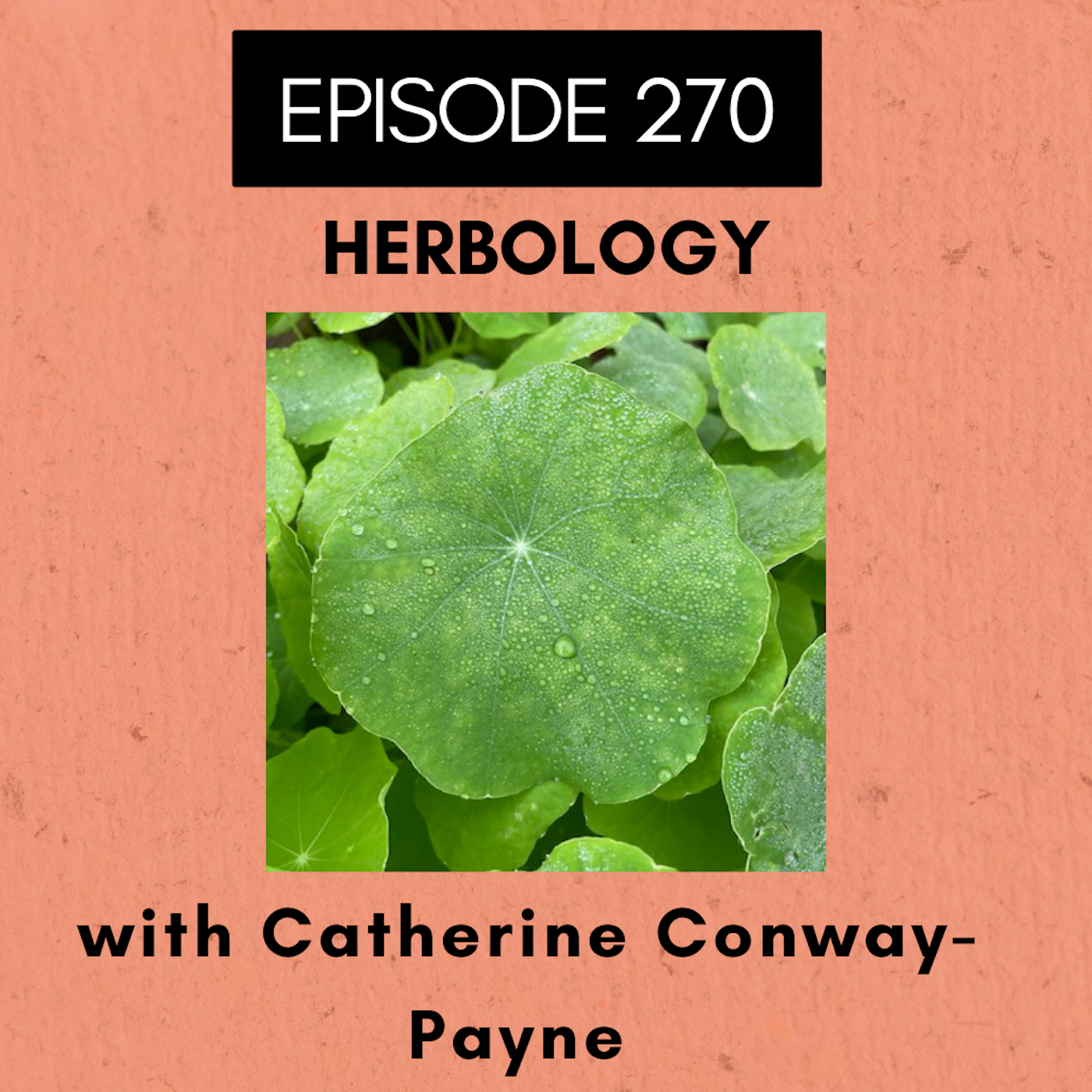
Ep 270Episode 270: Herbology
My guest this week is Catherine Conway-Payne. Catherine is the course director of the Royal Botanic Garden Edinburgh's diploma in Herbology and an expert on the history of natural remedies. Catherine recently authored possibly the most beautiful book ever, a book called 'Herbology – A Physic Garden Pharmacy' where she looks at the origins of the physic garden at RBGE in the mid-17th Century. She recreates and reimagines original recipes from that time, mentioning in the book the historical uses of such ingredients as powdered toads and spiders' web, but thankfully providing alternatives to those who want to look at growing their own medicine and herbal remedies. What we talk about What is the 'Herbology' about? What is green pharmacy? What are the Materia medica? What is a vulnerary herb and can you give me an example of one and how you could use it? What are lunar infusions? Some of Catherine's favourite plants to work with About 'Herbology – A Physic Garden Pharmacy' The practice of referencing and using nature to create remedies, recipes and therapeutic preparations has been around for thousands of years. Over time, our knowledge of the more traditional 'green pharmacy' of this sort has diminished. Yet today herbology, the study of herbs, is enjoying a renaissance as reconnecting with nature and sustainability surges. To coincide with this renaissance, the Royal Botanic Garden Edinburgh has published Herbology – A Physic Garden Pharmacy, a beautiful, hard-back book filled with natural remedies and recipes, and showcasing the best practices on gathering ingredients and safely preparing them. Much more than a recipe and remedy book, Herbology is also a history of the Royal Botanic Garden Edinburgh, a place where medicinal plants have been grown for hundreds of years, for the benefit of the medical profession and their patients. The book references four other publications which date from the origins of the Garden in the 17th century. One, the Edinburgh Pharmacopoeia (1699), was discovered in the Royal College of Physicians of Edinburgh. Originally published in Latin, the contents of the Pharmacopoeia have remained relatively inaccessible to most for over 300 years. However – with the kind assistance of the Royal College of Physicians of Edinburgh and the dedicated work of one research associate from the Garden, Robert Mill – the work in its entirety has now been translated into English; several extracts of which are being shared, for the first time, within the pages of this book. Author Catherine Conway-Payne said, "It was an absolute joy to delve in to the Pharmacopoeia and discover which medicinal plants were being grown in Edinburgh during the latter part of the 17th century, which may be regarded as something of a golden age of herbalism. Then, the worlds of plants and medicine were closely aligned and it has been fascinating to find out that some recipes have not changed at all and that others contained extraordinary ingredients such as powdered toad, mouse droppings and even spider's webs. Readers of Herbology will be relieved that our modern-day holistic formulations have omitted these from their list of ingredients." There are many precious botanicals within the pages of Herbology – among them nettle, dandelion, wild garlic and winter blooming witch hazel. Organised by the seasons, the book is filled with recipes and remedies and readers will join Catherine on a journey into 'green pharmacy' making special botanical creams, green ointments, herbal honeys, syrups, juices and teas along the way. Catherine continued, "So much has been lost and forgotten over the years but we have been enjoying a real resurgence of interest in herbology recently." "There has never been more desire to study all things 'green' and to learn how to work as one with nature, understand the precious therapeutic potentials of medicinal plants and nurture the earth that sustains them. The very nature of herbology is so expansive that once you are immersed within this facet of botanical learning you cannot help but become more aware of its inherently curative and dynamic spirit. For generations to come, perhaps this age in time might be viewed as a period of great holistic change and life sustaining initiative." Herbology is illustrated by botanical artist Jacqui Pestell and contains evocative photography by Kate Soltan. Links Herbology – A Physic Garden Pharmacy by Catherine Conway-Payne www.rbge.org.uk Other episodes if you liked this one: Herbs with The Herb Society Magical Plants & Flowers Support the podcast on Patreon

Ep 269Episode 269: What Do Garden Designers Do?
This episode features horticulturist, garden designer, RHS Show Judge and plant guru Nina Baxter. We talk about what garden designers do, why they differ from landscapers, how you can find one and what they might charge for their work. Whether you're thinking of hiring a garden designer, thinking about becoming one or are just curious about the profession, this is worth a listen. Nina begins by describing her journey into garden design… What we talk about What is a garden designer? Where can you find one? What might the process look like once you've hired one? What should they possess in terms of qualifications, insurance, etc? How do they differ from landscapers? How do they charge for their work and what might you expect to pay? About Nina Baxter Nina Baxter is an experienced garden designer and horticulturist who has run her successful practice; Nina Baxter Garden Design Ltd. since 2004. Nina is Director of London College of Garden Design, an RHS Show Judge and a member of RHS Show Gardens Selection Panel. Links Nina Baxter Garden Design London College of Garden Design Other episodes if you liked this one: Hiring a Garden Designer Hiring a Gardener Support the podcast on Patreon
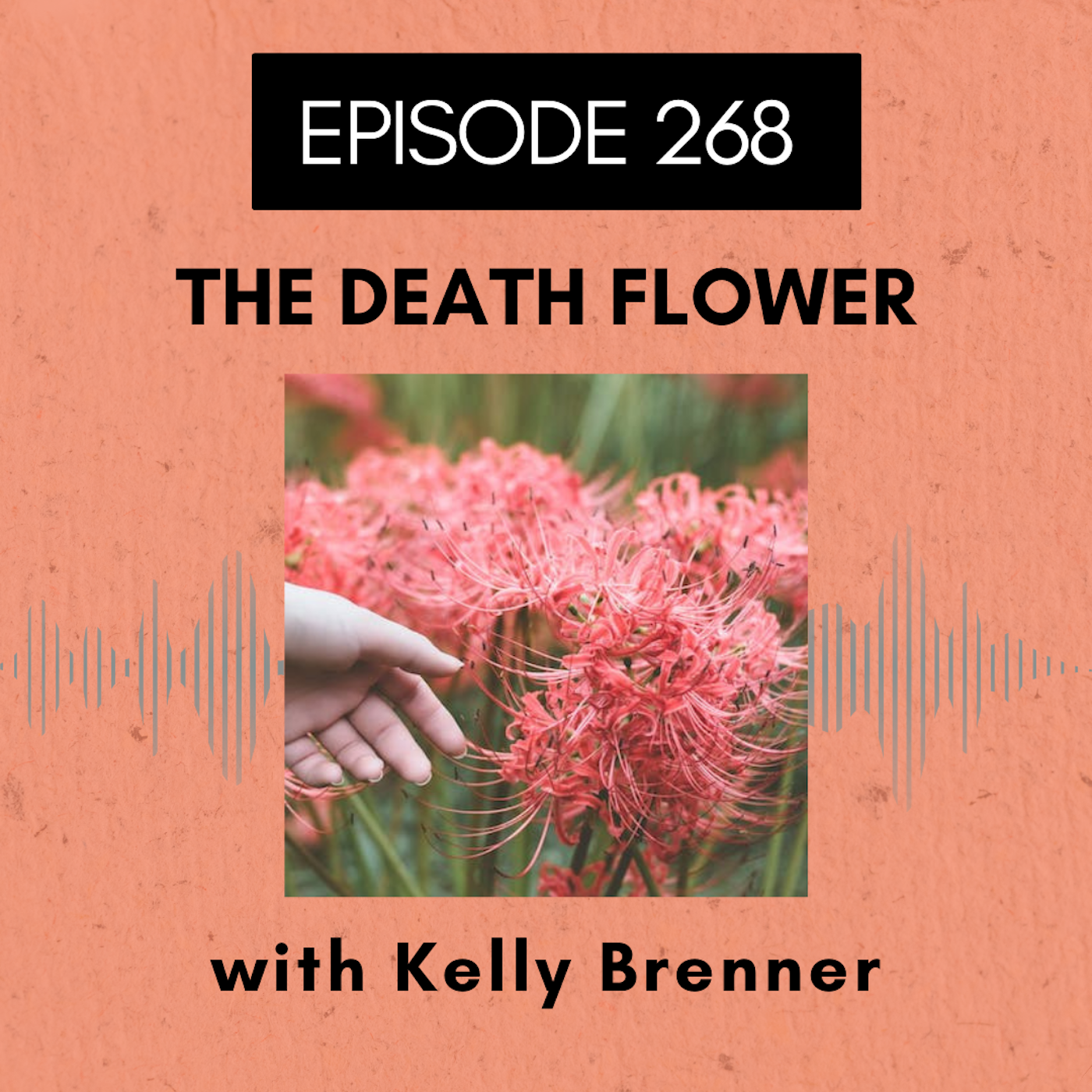
Ep 268Episode 268: The Death Flower
My guest this week is writer, broadcaster, nature observer, citizen scientist and champion of the outdoors, Kelly Brenner. This episode came about off the back of a listener suggestion and begins with a look at Lycoris radiata aka the Death Flower, and its place in nature and culture. This may seem an odd choice of subject for this festive time, but this is the last episode of 2023 and the nearest to the winter solstice, which heralds the death of the sun, so it somehow seemed fitting. Dr Ian Bedford's Bug of the Week: Overwintering fruit and veg pests What we talk about What intrigues Kelly about Lycoris radiata, and why she thinks it has garnered such dark symbolism throughout history Nature, wildlife, and folklore – how they are seamlessly woven into Kelly's work The origin story of Kelly's passion for plants, nature and folklore and how they naturally blend into her writing and explorations How urban dwellers can maintain their connection with nature, and are there specific aspects of urban landscapes that come alive during these colder months? The Sleuth Wood Show Invertefest Links Kelly Brenner's website Other episodes if you liked this one: The Winter Garden Camellias with Fiona Edmond Support the podcast on Patreon
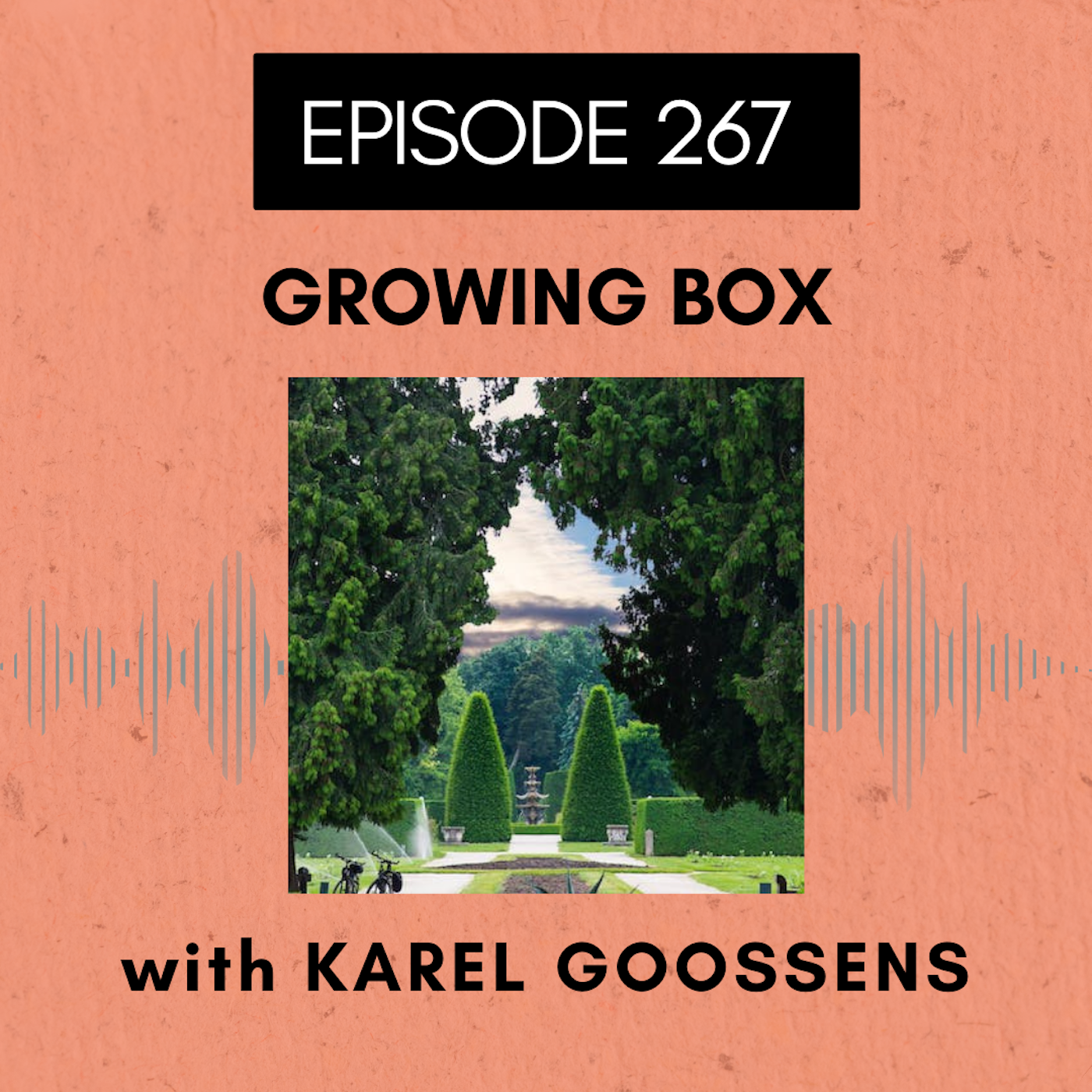
Ep 267Episode 267: Growing Box: Moths, Blight and Solutions!
My guest this week is Belgian nurseryman Karel Goossens. Karel runs an internationally renowned nursery supplying box plants and is the Chariman of the Belgian arm of the European Boxwood & Topiary Society. With decades of experience growing box and an irreverent approach to tackling the problems that go along with it, when he was recommended to me, I thought he was my ideal sort of guest! He does recommend intensive cultivation methods which include spraying chemical fungicides and insecticides, so this epsiode is not for everyone. However, I do acknowledge that many historic gardens are built around a backbone of box and that many listeners are professional gardeners who deal with box and its attendant blights, so this epsiode is a practical look at what you can do. Dr Ian Bedford's Bug of the Week: Box Tree Moth Links Kwekerij Goossens on Instagram European Boxwood & Topiary Society Karel's website for tripod ladders Our Plant Stories with Sally Flatman Other episodes if you liked this one: Lawns with David Hedges-Gower Hiring a Garden Designer
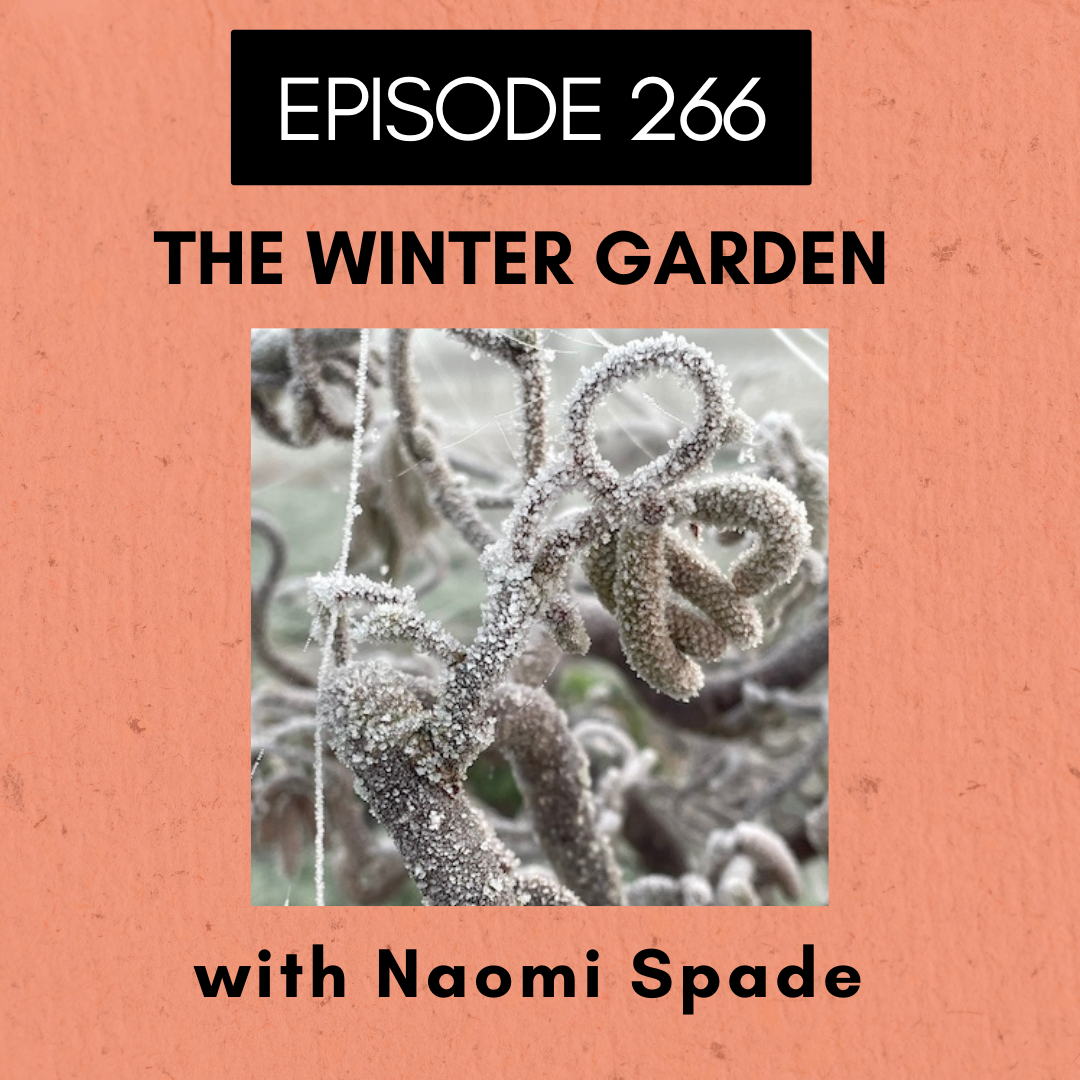
Ep 266Episode 266: The Winter Garden
This week's guest is Naomi Slade. Naomi is a journalist, author, designer and consultant. She works as a writer and broadcaster and lectures on a range of specialist subjects. She has written a number of popular gardening books and as if that weren't enough, she's also an award-winning garden designer and will be exhibiting the Flood Resilient Garden, which she's co-designed with Ed Barsley, at RHS Chelsea 2024. We're speaking about her latest book, The Winter Garden: Celebrating the Winter Season. Dr Ian Bedford's Bug of the Week: Organic Recyclers and Millipedes The Winter Garden by Naomi Slade Other epsiodes if you liked this one: New Nordic Gardens Natural Stone Support the podcast on Patreon
Ep 265Episode 265: Natural Fibres
This week's guest is multi-media artist Hanna Varga. Hanna incorporates the natural world into her work and her current projects involve foraging for fibres she turns into both useful and beautiful items. The conversation began with Hanna talking about her work past and present and developed into a really important conversation about the value of items at their more than fiscal level. Dr Ian Bedford's Bug of the Week: Cabbage Whiteflies About Hanna's 'Say It With Knots' Project "I am currently working on an engaging and urgent body of work in response to our current ecological times. I'm making a new series of sculptural forms using wild foraged plant fibres and transforming them into tactile artefacts of cordage, ropes and knots to tell stories. I source the art materials I use from the local environment to minimise my carbon footprint. The process of both gathering and making cordage is beautiful, versatile and yields evocative results. The metaphors in language offer us a diverse range of symbols, hiastorical and cultural associations and highlights the important role of rope making technologies played in the development of civilisations. I juxtapose the craftmanship with the natural history of the landscape where the raw materials come from. I'm beginning this work on the north coast of the Scottish Highlands where a long history of shipping and fishing trades have been present. Natural and human history intertwines in the resulting artworks. I am currently in Cromarty on an artist residency developing this project that will culminate in the first exhibition of this project opening on the 15th of December. I wish to transport my audience in time - back to the beginning, where it all started by twisting together vegetal fibres into a piece of string. Also, looking ahead into the future, an invitation to imagine new possibilities in tactile dimensions in our increasingly digitised age. I wish to awaken curiosity and evoke questions about interconnectedness. How will we continue making meaning with our hands? How can we create in reciprocity with the more-than-human world around us?" Links Hanna on Instagram Ashleaf London Other episodes if you liked this one: Botanical Storytelling with Amanda Edmiston Amanda's new book - The Time Traveller's Herbal Making & Using Natural Dyes Patreon
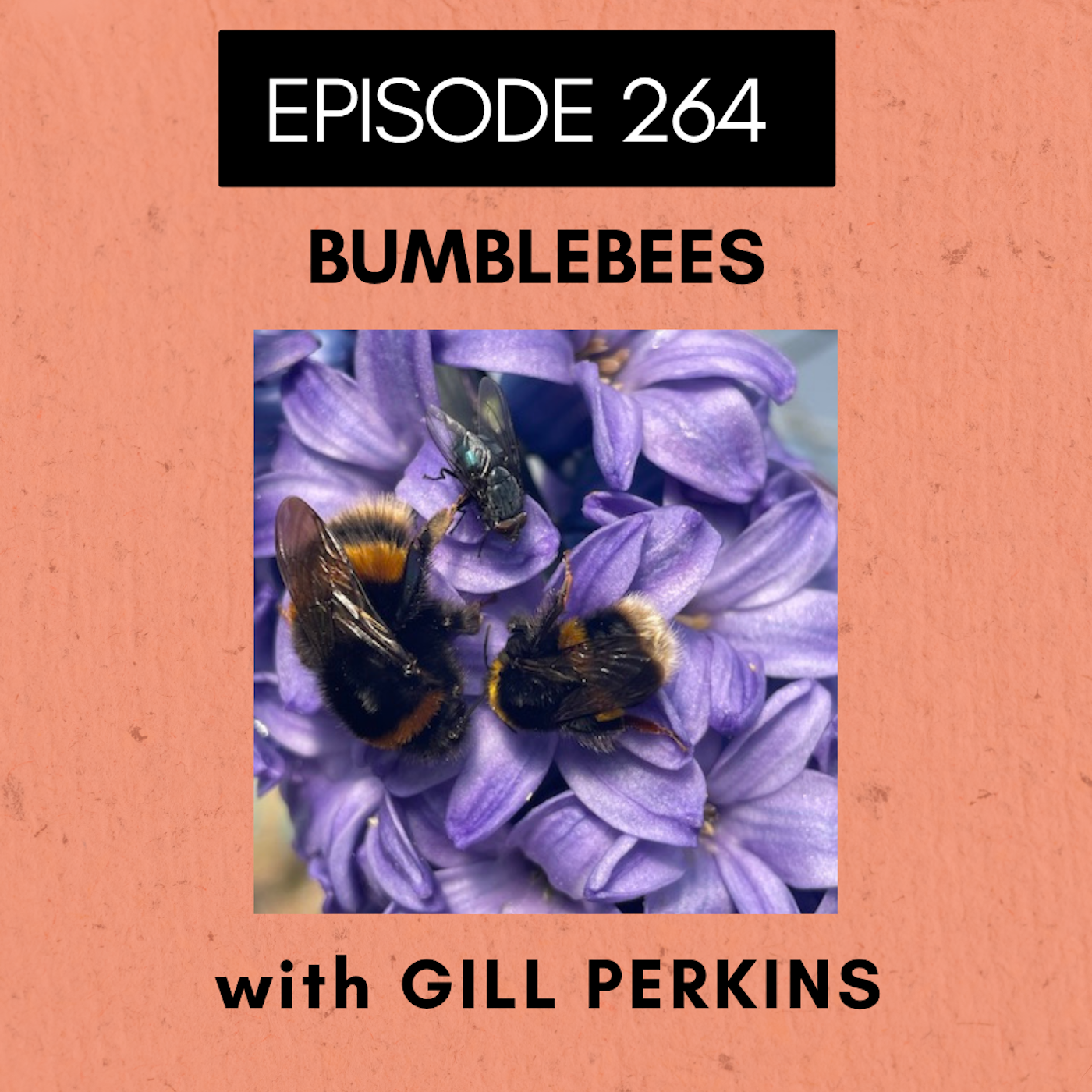
Ep 264Episode 264: Looking out for Bumblebees
Hello and welcome to this week's episode where my guest is Gill Perkins, CEO of the Bumblebee Conservation Trust. We talk about bumblebee populations and habitats, what we can do to encourage and care for bumblebees in our gardens and about the role of bumblebees in tomato pollination, which came as a complete surprise to me! Dr Ian Bedford's Bug of the Week: Fuchsia Gall Mite What We Talk About Bumblebee concerns Bumblebee identification Honeybees and beekeeping Encouraging and caring for bumblebees Tomato pollination Links Bumblebee Conservation Trust Bee the Change Managed Honeybees lbka.org Article on beekeeping Honeybees and other wildlife Trouble with beekeeping boom Other episodes if you liked this one: Urban Bees with Mark Patterson Pollinators with Professor Jeff Ollerton Patreon
Ep 263Episode 263: Ooooby - Out of Our Own Back Yard
This week's episode my guest is Pete Russell, founder of Ooooby, an online platform which matches customers with small scale, local growers. Shopping for food in this way promotes homegrown produce, farm to consumer sales, supports independent growers, helps people to buy local, protects our farming heritage and helps us to move away from the chronically broken food system we currently live under. Listen in as Pete tells us how Ooooby works and how you can get involved if you're interested. Dr Ian Bedford's Bug of the Week: Allium Leafminers What We Talk About The idea behind Ooooby The value of small scale and local farming Sustainability The range of products available Quality control The cost to the producer Links www.ooooby.com Pete's Ted Talk More on Ooooby Other episodes if you liked this one: Climate Cuisine with Clarissa Wei Greg Peterson of The Urban Farm Patreon
Ep 262Episode 262 - Low Impact & Environmentally Conscious Design
My guest this episode is New Zealand based landscape designer Jo Wakelin. Jo creates low impact and environmentally conscious spaces and her own garden is a masterclass in water-wise planting that sits lightly within the landscape - beautiful but in keeping with its surroundings both aesthetically and ecologically. We talk about her extensive research and the lessons she's learnt along the way. Dr Ian Bedford's Bug of the Week: Black Vine Weevils What We Talk About Jo's work and what she does in her own garden Jo's thoughts on native versus non-native plants in a garden setting How gardens can and should work with their surrounding landscape Current schools of thought in NZ garden design Links Jo Wakelin on Instagram Other episodes if you liked this one: Design Experts - Xanthe White Ecologically Integrated Gardens Patreon
Ep 261Episode 261 - The Butterfly Garden
This week's episode, my guest is Clive Farrell. Clive is a butterfly expert who established The London Butterfly House at Syon House and has dedicated his life to breeding and studying the butterflies of Britain and the world. His latest project has been to develop the 100 or so acres around his home in Dorset into a haven for insects, that features unusual, even magical elements such as a giant fibreglass dragon, a replica of a Saxon longhouse that is home to a huge bog oak sculpture, a temple dedicated to ravens and a giant's chair. Clive's garden is the stuff of dreams to adult and child visitors, but also to the invertebrates which makes their homes amongst this garden which is built for them. Dr Ian Bedford's Bug of the Week: Overwintering Butterflies What We Talk About I'm not telling you, just listen ;-) Other episodes if you liked this one: Butterflies with Peter Eeles Bugs in Your Garden with Dr Ian Bedford Patreon
Ep 260Episode 260 - Moon Gardens
This episode my guest is Jarema Osofsky, founder of the design studio Dirt Queen NYC and author of Moon Garden: A Guide to Creating An Evening Oasis. Moon gardening is an enchanting way to slow down in the evenings, immerse yourself in nature and cultivate a relationship with your plants and the moon and I'm talking with Jarema about how you can create your own. Dr Ian Bedford's Bug of the Week: Large Hairy House Spiders What We Talk About What is a moon garden? Do they have to contain all white flowers? Should you plant for year round interest? Should the garden be visible from the house? Apart from colour, what else is important in a moon garden? Can you create a moon garden indoors? Can moon gardens benefit wildlife? Night blooming and night fragrant plants How best to enjoy your moon garden About the book MOON GARDEN: A Guide to Creating an Evening Oasis (Chronicle 10/3/23) is a guide to creating a garden that comes alive at night, with night-blooming plants and night fragrant flowers. The book is full of design and horticultural wisdom; planting tips for outdoor, indoor, and container gardeners; and soothing rituals such as journaling and meditations. With beautiful botanical illustrations, Moon Garden encourages readers to approach gardening as a grounding, spiritual practice. Spending time outdoors, and bringing nature into one's home, is both joyful and healing. MOON GARDEN is part of Jarema's mission to design beautiful garden spaces that help people cultivate meaningful connections to the natural world, while also benefiting local ecosystems in the process. About Jarema Osofsky Brooklyn-based landscape and interior plant designer, Jarema Osofsky is the founder of Dirt Queen NYC, a garden design and plant care business. Her debut book, MOON GARDEN: A Guide to Creating an Evening Oasis (Chronicle 10/3/23), invites readers to dive into the world of moon gardens and all that they offer. MOON GARDEN is a guide to creating a garden that comes alive at night, with night-blooming plants and night fragrant flowers. The book is full of design and horticultural wisdom; planting tips for outdoor, indoor, and container gardeners; and soothing rituals such as journaling and meditations. With beautiful botanical illustrations, MOON GARDEN encourages readers to approach gardening as a grounding, spiritual practice. Jarema grew up in New York's Hudson Valley, the daughter of an avid gardener. Throughout Jarema's life, visiting family in Hong Kong and Arizona sparked Jarema's love affair with tropical plants, the desert landscape, and unusual cactuses. What started out as a hobby and a "fresh start" after a bad break-up, Jarema began growing plants and sold them in vintage pots in her neighbourhood. She earned her BA in East Asian studies and fine art from Oberlin College and worked as an artist assistant in New York and Los Angeles, where she struggled to find her own form of expression. It was a pivotal moment when she realised that plants were the medium she had been searching for. After developing a strong customer base and advising plant owners, she decided to pour all her energy and passion into starting her own business. Jarema's design studio, Dirt Queen NYC, works closely with clients to create verdant gardens that offer meaningful and ecologically sustainable connections to the natural world. Jarema's work has been featured in Architectural Digest, T Magazine, Elle Decor, Apartment Therapy, and others. Jarema currently resides in Brooklyn, New York with her partner Adam, and their pup, Esme. A day in the life includes a trip to the local farmers market, walks in the park with her dog, qi gong and evening journaling. Always watering, pruning or propagating in her garden, Jarema also loves to travel and immerse herself in other cultures, landscapes, botanical gardens, art and architecture. Links Moon Garden:A Guide to Creating an Evening Oasis Jarema on Instagram @dirtqueennyc Other episodes if you liked this one: Botanical Styling Houseplant Legends Patreon
Ep 259Episode 259 - Unusual Edible Plants
This episode I'm speaking with Kevin Hobbs & Artur Cesar-Erlach, authors of EDIBLE: 70 Sustainable Plants That Are Changing How We Eat which is a beautifully illustrated book looking at edible plants from around the world that are revolutionising how we grow, eat and appreciate food. It tackles important questions like what do we eat when our usual diets are no longer sustainable, how do we future proof food and how can we be more mindful about what we eat and considers what the future of global food production might look like. Dr Ian Bedford's Bug of the Week: Harvestmen What We Talk About The idea behind the book Traditional staple crops Hopniss Great Burdock Cornelian cherry Ebbing's Silverberry Sea buckthorn Kevin & Artur's vote for the most under-utilised crop About the authors Kevin Hobbs is a UK-based professional grower and plantsman with over thirty years' experience in the horticulture industry. He is the author of The Story of Trees and Herbaceous Perennials, Hillier's Gardener's Guide. Artur Cisar-Erlach is an ecologist and food expert based in Vienna, whose work spans the fields of food and ecotourism. He is the author of The Flavor of Wood. Katie Kulla is an illustrator, writer and farmer based in Oregon in the United States. Links Edible: 70 Sustainable Plants That Are Changing How We Eathttps://www.summerfieldbooks.com/product/edible-70-sustainable-plants-that-are-changing-how-we-eat/ Lucinda Weldon Coaching Other episodes if you liked this one: Wild Food Tasting Session Edimentals with Stephen Barstow Patreon
Ep 258Episode 258 - Grow Fruit Trees Well
This episode, my guest is Susan Poizner. Susan is the author of the award-winning fruit tree care book Growing Urban Orchards and her new book, which is now an Amazon Number One Bestseller, Grow Fruit Trees Fast. Susan trains thousands of new growers worldwide through her award-winning fruit tree care training program and is the host of The Urban Forestry Radio Show and Podcast and an ISA Certified Arborist. She founded the Ben Nobleman Park Community Orchard in Toronto in 2009, helps others establish and maintain community orchards and food forests in Toronto and beyond and has won multiple awards for her work. Dr Ian Bedford's Bug of the Week: Ivy Mining Bees What We Talk About Selecting trees for disease resistance and planning for a staggered harvest if you grow multiple trees Choosing a spot for your tree Tree roots as the tree matures Feeding your fruit trees Mulching Success in a community orchard Summer and winter pruning About Susan Poizner Susan is the author of the award-winning fruit tree care book Growing Urban Orchards and her second book Grow Fruit Trees Fast. Susan trains thousands of new growers worldwide through her award-winning fruit tree care training program and is the host of The Urban Forestry Radio Show and Podcast and an ISA Certified Arborist. She founded the Ben Nobleman Park Community Orchard in Toronto in 2009, helps others establish and maintain community orchards and food forests in Toronto and beyond and has won multiple awards for her work. Links Growing Urban Orchards Grow Fruit Trees Fast The Urban Forestry Radio Show Great Dixter Charitable Trust Other episodes if you liked this one: Plan, Plant & Maintain Fruit Trees Apples Patreon
Ep 257Episode 257 -Taste Your Garden
This episode, my guest is qualified herbalist Meghan Rhodes. Meghan discusses how we can tap into our gardens for better health, why herbs are good for dealing with conditions that are manifestations of multiple problems, such as stomach issues, the 7 keys tastes you find in herbs and how you can get started on your own journey using herbs for wellbeing. Dr Ian Bedford's Bug of the Week: Spanish Slug Story What We Talk About How herbalism adds another layer of wellbeing to gardening Why taste is baked into our biologies, even if you're brand new to working with plants and herbs How to recalibrate your palette to be able to detect the 7 key tastes of herbs How understanding tastes helps you make the most of foraged and homegrown herbs About Meghan Rhodes Meghan Rhodes is a qualified herbalist who has helped over 80 people start living herbalism, making healthier, safer solutions for themselves and their families a reality. As the founder of Rhodes Roots & Remedies, she has written 10 course books, authored the books Easy Herbal Remedies for Infants and Slow-Infused Self-Care, as well as developed a unique four season sense-based herbalism course and journey, Awaken Herbal Wisdom. Meghan's practice of herbalism is rooted in the belief that we must remember, reclaim and relearn our knowledge of our bodies, our autonomy and how to work with plant medicine in order to bring control of our own health back into our families and homes for a sustainable future for ourselves and the planet. Meghan is a member of both the College of Practitioners of Phytotherapy and the Ayurvedic Professionals Association. Links Get on the waiting list for Meghan's intensive herbalism course - Awaken Herbal Wisdom - enrolling annually - or DM Meghan the word ACCESS for the link. Exclusive access to exploring one of the seven tastes Instagram - @rhodesrootsandremedies GreenBlue Urban Other episodes if you liked this one: Sensory Herbalism The Herb Society Patreon

Ep 256Episode 256 - Urban Bees
Hello and welcome to Roots and All, where my guest this week is urban apiculturist Mark Patterson. Mark founded and runs Apicultural where he work with businesses and communities to invest in natural capital, improving the environment for pollinators and delivering pollinator monitoring surveys for clients. He provides honey bee hive management solutions, beekeeping training and education and also supplies quality urban honey to a select group of establishments. So you'd think Mark would be all for the idea of urban honeybees, right? Listen on… Dr Ian Bedford's Bug of the Week: Ear Wigglers What We Talk About How many hives are there in London, does anybody have an estimate? Is it a sustainable number? Where are they foraging for floral resources? Are there enough of these? Are urban conditions more taxing for bees? Do environmental stressors lead to higher incidences of disease, for example? Do managed bees outcompete wild bees when it comes to consuming pollen and nectar? Are managed bees necessary? Useful? Desirable? Filling a niche left by potentially dwindling numbers of wild bees? A useful pollination and food source for humans? Why are commercial beekeeping companies trying to muscle in on the beekeeping tradition in London? Do honeybees count as an 'environmental credit' in terms of planning and building? About Mark Patterson After completing a National Diploma in Agriculture, Land use and recreation which included a practical Horticultural course Mark went on to study for an Honours Degree in Countryside Management and Ornithology at Kingston Upon Hull University - an ecology based course of study. It was during this time at University that Mark was introduced to bee keeping by a fellow student. As senior Consultant Mark has amassed over 26 years of experience in the fields of nature conservation and ecology. His past professional positions include marine biologist/ranger on the Farne islands national nature reserve, Countryside Ranger for a local Authority, Nature reserve manager for Durham Wildlife services, Worked on a bird of prey Reintroduction program with the RSPB , Freelance consultancy and 11 years as a project and program manager for a national Environmental regeneration Charity, Groundwork. Having assisted others with their beekeeping for several years Mark began bee keeping on his own in 2010 having attended an introduction course and a seasons mentoring. Since then he has volunteered extensively for Bee keeping associations, serving as elected committee official and Trustee to the LBKA, taught courses and organised forage planting activities for the bee keeping community he serves. Mark spent 3 years working for DEFRA as a seasonal Bee Inspector and currently cares for around 30 colonies of honey bees,10 of which are his own. Mark currently posses the BBKA Bee basic certificate, BBKA Honey bee management certificate, several of the BBKA modular exam certificates and the General Husbandry certificate. Mark has extensive training and experience in notifiable bee diseases diagnosis and management. As well as Honey Bees Mark is also highly knowledgeable about Solitary bees and Bumblebees and teaches Bee identification courses for the Field Studies Council as part of the nationwide BioLinks program. Links www.apicultural.co.uk Mark Patterson on LinkedIn www.howgreennursery.co.uk Other episodes if you liked this one: The Garden Jungle with Professor Dave Goulson Pollinators with Professor Jeff Ollerton Patreon
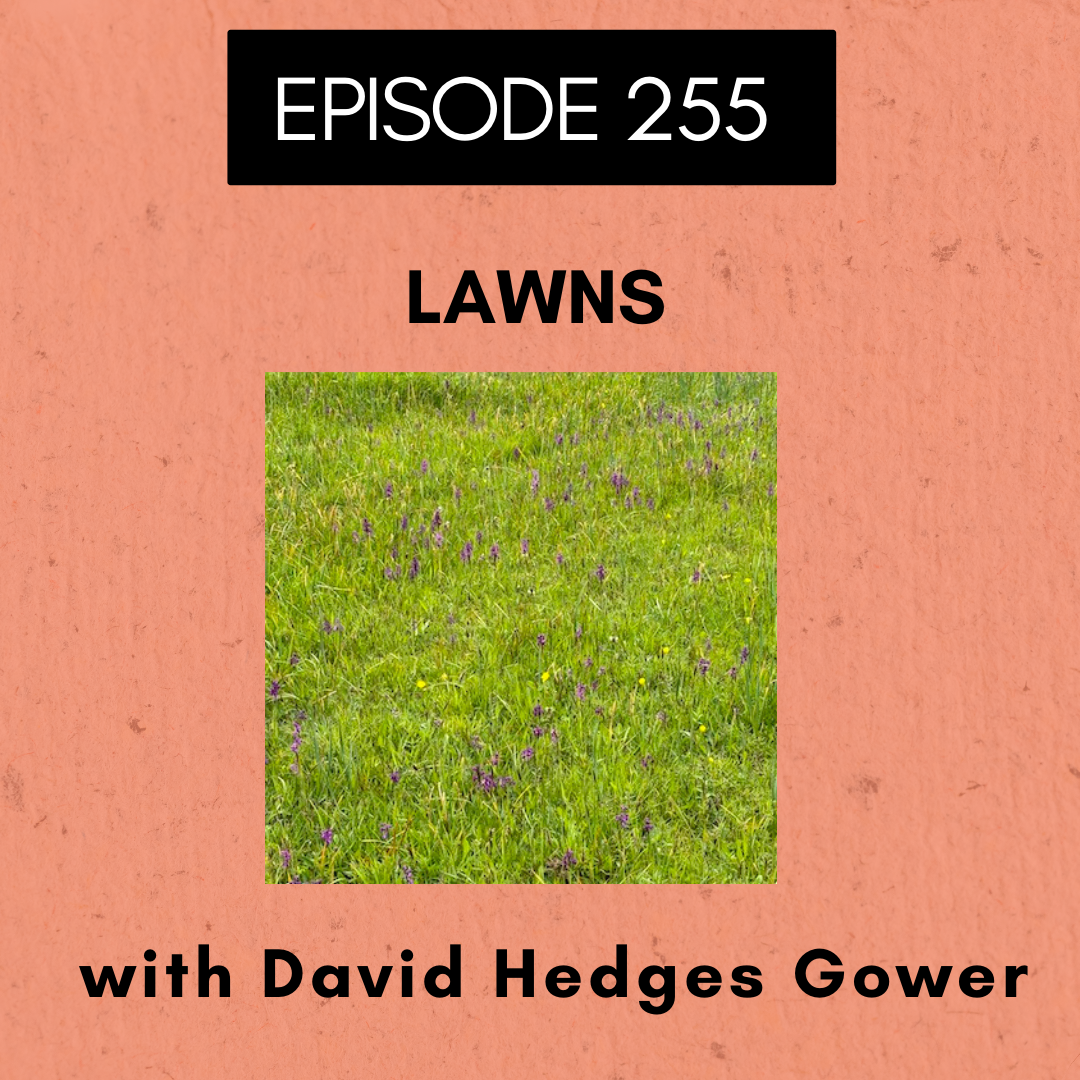
Ep 255Episode 255: Lawns
My guest this week is David Hedges-Gower. David is a prominent figure in the UK's lawn care industry, known for his expertise and dedication to promoting sustainable lawn care practices. He wrote the book 'Modern Lawn Care', is the Chairman of The Lawn Association, founded the world's first lawn care qualification and works tirelessly to promote responsible, sustainable lawn care practices that benefit the environment and homeowners. What David has to say on lawns certainly challenged my notions on what lawn care involves, whether they're a sensible option to those concerned about wildlife and the environment and what they can and should be like from a horticultural perspective, so listen on with an open mind… Dr Ian Bedford's Bug of the Week: Horse Chestnut Moth What We Talk About Lawns and their uses Do lawns have to be high maintenance? Ideal grass species for sustainable lawns Do you have to feed a lawn? Can lawns be of use to wildlife? Artificial lawns About David Hedges-Gower David Hedges-Gower is a prominent figure in the UK's lawn care industry, known for his expertise and dedication to promoting sustainable lawn care practices. His background in greenkeeping, including his role as Superintendent at the prestigious Oxfordshire Golf Club, provided him with a strong foundation in turf management. After recognizing the need for better information and knowledge in the lawn care field, David transitioned into lawn care and authored a book titled "Modern Lawn Care" in 2014. This publication served as a valuable resource for those seeking to improve their lawn maintenance practices. In addition to his book, David has been actively involved in educating people about proper lawn care through training days, seminars, and advisory services. He is a trusted source of information, having accumulated 43 years of experience in the field. He often serves as an expert for publications, radio channels, and other advisory bodies, helping to disseminate his knowledge to a wider audience. One of David's notable achievements is founding the world's first lawn care qualification, which caters to both homeowners and professionals. This qualification helps individuals gain a better understanding of modern and sustainable lawn care practices, contributing to the overall improvement of lawn maintenance. David Hedges-Gower is also the Chairman of The Lawn Association, an organization dedicated to promoting the value of living lawns and distinguishing between genuine sustainable lawn care and marketing tactics that claim sustainability without delivering on it. The association collaborates with significant horticultural bodies like English Heritage to educate staff, trainees, and apprentices on sustainable lawn care methods. Recently, David launched the True Garden Range, a groundbreaking product in the form of 2-in-1 fertilizers and soil conditioners made from composted recycled food waste. This product addresses the need for sustainable lawn care options in the retail market, providing a more environmentally friendly choice for gardeners. David's passion lies in making sustainable lawns a priority, countering the practice of franchises that prioritize profits over the health of lawns. He envisions sustainable lawns as not just a feature of our surroundings but a necessity, and he works tirelessly to promote responsible lawn care practices that benefit both the environment and homeowners. Links www.davidhedges-gower.com Modern Lawn Care by David Hedges-Gower www.lawnassociation.org Other episodes if you liked this one: Tapestry Lawns So & Mo Patreon
Ep 254Episode 254 - Buddlejas and Lavenders
This week, my guest is Andrew Bullock, who runs The Lavender Garden Nursery. Andrew holds the National Collection of Buddlejas and grows a huge range of lavenders and buddlejas from his nursery in The Cotswolds. We talk about how to attract pollinators to your garden, when and how to prune your buddlejas and lavenders, whether buddlejas are invasive, why lavenders are sometimes short-lived and anything else you ever wanted to know about these two plants for pollinators. Dr Ian Bedford's Bug of the Week: Mosquitoes What We Talk About Which is better for bees - buddleja or lavender? The best varieties for bees/butterflies/pollinators in general Night time pollinators How to grow lavender and buddleja When to prune and how much to take off Buddleja - invasive? Causes of short-lived lavender Links The Lavender Garden Contact Andrew on the phone: 01453 860356 or 07837 582943 www.premierpolytunnels.co.uk Other episodes if you liked this one: Pollinators & Pollination Bugs in Your Garden Patreon
Ep 253Episode 253: The Lost Gardens of Loughrigg
Several years ago, Penn Allen inherited a collection of diaries that had been meticulously maintained by her great grandmother. Penn discovered the diaries documented the building of her great grandmother and grandfather's Arts and Crafts house and the development of the garden that followed. She uncovered an untold story of her family, of plant hunting and of rock gardens - one that has significance to the wider world of horticultural history and in fact, goes some way to rewriting it. Dr Ian Bedford's Bug of the Week: Buddleias and Butterfly Tongues What We Talk About What the book is about and why Penn felt it was important to write it How the garden helped heal; through providing a space to contemplate, a space to communicate, a distraction… Alpines and rock gardening Plant hunters Reginald Farrer Will Purdom What became of house and garden About Penn Allen Having spent most of my life in the UK, I moved permanently to the beautiful Lot region in SW France with my husband around fifteen years ago. I have a passion for my garden and the outdoors and can generally be found either striding over a windswept hillside or upside down in my flower beds, always with a Labrador or two by my side. The Lost Garden of Loughrigg is my first story, though hopefully not my last! Links The Lost Gardens of Loughrigg by Penn Allen Tickets to see Penn Allen at the Kendal Mountain Book Festival Twitter @PennAllenwrites Instagram penn.allen www.modicagardens.com
Ep 252Episode 252: Aromatic Gardening
My guest this week is Amy Anthony, a certified clinical Aromatherapist and Aromatic Gardener. In addition to that, Amy is an aromatherapy educator, podcaster, herbalist, certified master composter, and artisanal distiller and is one of New York's top aromatherapy practitioners. We talk about the importance of connecting with nature through scent, how aromatherapy can support wellness and vitality and how you can become an aromatic gardening practitioner yourself. Dr Ian Bedford's Bug of the Week: Rosemary Leaf Beetles What We Talk About What is aromatherapy? What is aromatic gardening? What's the difference between plant aromatics and synthetics? What are best essential oils for supporting wellness and vitality? Do you need to be careful with any aromatic oils? What are safe and practical approaches to aromatherapy? How are you connected to plants from your culture? "Aromatherapy is not a consumptive exercise." Why? What can we do about this in our own gardens? How is aromatherapy linked to the moon? Where to find out more About Amy Anthony Amy is a certified clinical Aromatherapist and Aromatic Gardner who left her career in marketing research to pursue what is closest to her heart: working with plants. As a certified aromatherapist, aromatherapy educator, herbalist, gardener, certified master composter, and artisanal distiller, Amy is one of NYC's top aromatherapy practitioners. Host of the Essential Aromatica podcast, Amy also tends her own aromatic garden on the North Fork of Long Island where she distills her unique products. Listed as one of America's most influential aromatherapists, Amy Anthony is currently the New York State representative for the Alliance of International Aromatherapists and has her private practice called NYC Aromatica which includes one-on-one customized aromatherapy sessions, online class offerings, corporate consulting and article writing. Links Essential Aromatica Podcast NYC Aromatica Other episodes if you liked this one: Scent Magic with Isabel Bannerman Gardening for Your Senses Patreon
Ep 251Episode 251: Green Roofs & City Wildlife
This episode, my guest is green roof guru, urban designer, photographer, birdwatcher, punk ideologist and all-round straight talker Dusty Gedge. We talk about green infrastructure, encouraging species back into landscapes, how to maintain landscapes for habitat value and what's being and can be done to up the green value of public spaces. Dr Ian Bedford's Bug of the Week: Woodlice What We Talk About Brownfield gardening Biodiversity in decline The problems faced by birds in urban environments What initiatives Dusty is most excited by What happens if biodiversity starts causing a problem? Maintaining green roofs as habitats About Dusty Gedge Links www.dustygedge.co.uk Facebook Instagram Twitter LinkedIn Collecting the Love 1 Collecting the Love 2 Other episodes if you liked this one: The Botanical Mind Public Green Spaces Patreon
Ep 250Episode 250: The Human Garden
This episode is an interview with environmental landscape artist, TED Speaker and art21 Educator Tobacco Brown. Tobacco connects art and environmental justice and is a visual artist, digital storyteller, master gardener, social practitioner, cultural historian and intuitive environmental advocate. We talk about community green spaces, how humans connect with the land and why it's so important that we do. Dr Ian Bedford's Bug of the Week: Beewolf What We Talk About What can gardens teach us about ourselves? Lessons we can learn from a garden that help us live our lives well Are there lessons we can take from life that will help us be better gardeners? Wisdom residing in the soil Land justice Communication blight remediation How gardens grow with you as you go through life About Tobacco Brown Links Email [email protected] Tobacco Brown What Gardening Taught Me About Life - Tobacco Brown's TED Talk On Instagram art21 Other episodes if you liked this one: The Botanical Mind Public Green Spaces Patreon