PLAY PODCASTS
Razib Khan's Unsupervised Learning

Razib Khan's Unsupervised Learning

171 episodes — Page 1 of 4

Chris Rufo: the California project

May 8, 202620 min

Gregory Cochran: 15 years after The 10,000 Year Explosion

May 1, 202630 min

Russ Greene: the rise of Total Boomer Luxury Communism

Apr 25, 202647 min

10,000 years of selection (in Western Eurasia)

Apr 17, 202629 min

Matthew Schmitz: Christianity as identity, New Atheism and the Texas of Lord Hanuman
Apr 10, 202615 min

Megan McArdle: the follies of populism, impending fiscal crisis, and the whirlwind of AI

This is a free preview of a paid episode. To hear more, visit www.razibkhan.comOn this episode of Unsupervised Learning Razib talks to returning guest Megan McArdle. She is the author of The Up Side of Down: Why Failing Well Is the Key to Success and a Washington Post columnist and op-ed board member. McArdle grew up in New York City and attended Riverdale Country School. She obtained an undergraduate degree in English from University of Pennsylvania and an MBA from the University of Chicago. McArdle’s previous positions were at The Economist, The Atlantic and Newsweek. She has a new podcast for the Washington Post, Reasonably Optimistic, and also contributes to Central Air and The Dispatch. Razib and McArdle talk about the follies of populism, left and right, and the damage being done to America in the name of anti-elitism. Razib asks McArdle if there is any way out of a national debt crisis and fiscal insolvency (answer: probably not). Then they discuss the role high cost of living and confiscatory tax rates on the flight of capital and high-income individuals from blue states, and McArdle explains the historical-structural reasons that liberal cities cannot cut back on their top-heavy labor force. Razib and McArdle discuss immigration, trade and globalization, and the short-sightedness of MAGA-populism. Finally, they address AI, McArdle’s usage of it, and the promise it has in revolutionizing work and transforming our society.
Apr 2, 202614 min

Monologue: Race - genetics, history and sociology

This is a free preview of a paid episode. To hear more, visit www.razibkhan.comOn this episode, Razib talks about race, and how to think about this touchy subject.* Categorization of humans in biomedical research: genes, race and disease* The Apportionment of Human Diversity* Human genetic diversity: Lewontin’s fallacy* A Family Tree in Every Gene* How Genetics Is Changing Our Understanding of ‘Race’* Race: The Power of an Illusion* A Genealogical Interpretation of Principal Components Analysis* Inference of Population Structure Using Multilocus Genotype Data
Mar 27, 202614 min

Monologue: Out-of-Africa is not dead but hybridization lives

This is a free preview of a paid episode. To hear more, visit www.razibkhan.comOn this episode Razib talks about where we are when it comes to “Out-of-Africa,” Neanderthal origins and the broader state of understanding the dynamics of Homo evolution.Cited:* Hypothesis: A modern human range expansion ~300,000 years ago explains Neandertal origins* Did Levallois tools make Neanderthals human?* Interbreeding between Neanderthals and modern…
Mar 23, 202615 min

Chris Bradley: better science for longevity

This is a free preview of a paid episode. To hear more, visit www.razibkhan.comToday Razib talks to Chris Bradley, a serial entrepreneur and the CEO and Co-Founder of Matter Bio, a company dedicated to preserving genome integrity and addressing the root causes of aging. With a multidisciplinary background spanning neuroscience, cell biology, and computer science, Bradley aims to translate early-stage biotech concepts into practical therapies that can extend human lifespan Matter Bio is focused on diagnosing, quantifying, and repairing the structural variations and mutations that accumulate in human DNA. Bradley has BS is neuroscience and cell biology from Rutgers and a MS in computer science from New York University. The discussion first aims to focus on fundamental science concepts. What is genome integrity, and why does it matter? Bradley reviews the current state of the science to understand how errors creep into our genomic code over our lifetimes, and how it can lead to cancers and other pathologies. He points out that there is a wide variation in lifespan and cancer-risk across animal species, showing that in some ways nature may have “solved” the problem. In addition, Razib reiterates how complex and amazing any genome is, with billions of base pairs, and how incredible it is that our body’s repair mechanisms function as well as they do.Bradley then discusses the practical goals of Matter Bio as they begin their first clinical trials. Rather than just focusing on basic science, Bradley’s long-term focus is to make a difference in human lives. He discusses how the drastic gain in human life expectancy over the last 150 years already shows that we can increase longevity. Ultimately, Matter Bio aims to push the frontier so that we are less and less surprised by centenarians. Bradley also addresses the reality that a lot of the innovation in biotech right now, including what Matter Bio wants to achieve, is limited by the regulatory state, rather than what can be done in terms of the science or funding environment.
Mar 14, 202629 min

Chris Masterjohn: COVID-19 to mitochondrial health, communicating and applying "the science"

This is a free preview of a paid episode. To hear more, visit www.razibkhan.comToday, Razib talks to Chris Masterjohn, a nutritional scientist and leading expert in mitochondrial biology who believes hidden energy bottlenecks underlie much of modern disease. After years of work as a professor and researcher, he founded Mitome, the first mitochondrial analysis designed for everyday health, and serves as its Scientific Director. His mission is to make mitochondrial testing accessible so people can identify and correct the specific energy limitations holding them back. After earning his PhD in Nutritional Sciences from the University of Connecticut in 2012, he completed a postdoctoral research fellowship at the University of Illinois at Urbana-Champaign and subsequently served as an Assistant Professor of Health and Nutrition Sciences at Brooklyn College. He has a Substack.Razib and Masterjohn first discuss the impact of social media on the communication of science, and his wrangling with the public health establishment during the COVID-19 pandemic. Masterjohn explains how digging into the primary literature showed that the authorities were claiming far greater certainty than they should have, and recounts attempts to censor and rebuke him when he pointed this out. He also addresses some misrepresentations that Anthony Fauci engaged in during his tenure. Next, Razib asks Masterjohn about the insights he has gained from nutritional science in terms of how he lives his own life, and his overall philosophy of public health. Masterjohn pushes against the tendency to over-medicalize and rely on pharmaceuticals before looking to common-sense nutrition and exercise. They then discuss the importance of the mitochondrion in molecular genetics, and how that is relevant both in terms of physiology and evolution. Masterjohn then talks about his company, Mitome, and the added value of greater and greater metabolic and genetic information in the present age.
Mar 6, 202629 min

Mike White: academia and genomics in the 21st century

This is a free preview of a paid episode. To hear more, visit www.razibkhan.comOn this episode of Unsupervised Learning, Razib talks to Mike White, a Genetics professor at the Washington University in St. Louis. White has a position at the School of Medicine in St. Louis, where he leads a research team focused on understanding the biophysical architecture of regulatory DNA. He earned a B.A. in music before pivoting to the sciences, receiving his Ph.D. in Biochemistry from the University of Rochester in 2006 and completing a postdoctoral fellowship at Wash U under Dr. Barak Cohen. White’s work combines functional genomics, synthetic biology, computational biology, and deep learning to decipher how cells interpret regulatory sequences. His lab aims to predict how non-coding genetic variations impact complex human traits and disease risk, while exploring how to apply transcriptional circuits for broader applications in health and agriculture.Razib first talks to White about the cultural, political and social winds moving through academia since 2010. How did academic science become so politically polarized, and what significance does it have for future funding streams? White brings his insights from the viewpoint of someone whose perch is in a medical school, and so somewhat at the margins of the cultural revolution sweeping through academia and even STEM. He notes it seems that the activist high tide peaked around 2020, though the hostility between the Right and institutional academia continues unabated, affecting NIH funding.Then White discusses where we are in terms of understanding gene regulation, and its importance in biological function. Razib and White review how almost 99% of the human genome does not code for proteins, so often it is called “junk DNA,” but the reality is that there are other functions in that region, first and foremost, regulating and modifying protein expressing regions. Razib asks White where we are in human genomics more than 25 years after the draft, has it lived up to expectations? And where we are going in the future?
Mar 1, 202620 min

Aaron Renn: Heartland urbanism and leaving Left Behind behind

This is a free preview of a paid episode. To hear more, visit www.razibkhan.comOn this episode of Unsupervised Learning Razib talks to Aaron Renn. Renn is a writer, consultant, and urban analyst known for his work on the challenges facing American cities and religious institutions in the 21st century. He is a contributor to The American Reformer and the author of Life in the Negative World, a book exploring the cultural shifts regarding Christianity in America. Renn previously served as a Senior Fellow at the Manhattan Institute for five years and as a contributing editor for City Journal, having established his voice on urban policy through his widely cited blog, The Urbanophile. Prior to his career in public policy and journalism, he spent 15 years in management and technology consulting, including a tenure as a partner at Accenture.Before getting into the meat of the discussion, Renn and Razib discuss management consulting and the value that a firm like Accenture provides a corporation. Razib wonders whether consultants are simply brought in to rubber-stamp what management has already concluded, but is aiming to pin the blame on an external actor (e.g., layoffs). Renn argues that this is not the case, and in fact, though he acknowledges that management consultants provide an outsider view unencumbered by internal politics that allows them to be taken more seriously. They also discuss the impact of AI on some services that management consultants provide, and the future of white-collar work.Then Renn goes on an extended riff on the rise and fall, and possible new rise, of the Midwestern social and economic landscape. A native of southern Indiana, Renn has spent time in Chicago and New York before settling down in the affluent suburb of Carmel, Indiana. Razib and Renn discuss the decline of the Northeast and the industrial Heartland, and what makes the Midwest unique, with its origins as part of the original early American republican frontier. Renn discusses candidly the upsides and downsides of living in “flyover country,” from its peace and tranquility, to the reality that Midwestern metropolitan areas do not have the same intellectual and cultural dynamism as coastal cities.Finally, Razib asks Renn, a Protestant Christian who identifies as evangelical, about the cultural and theological shifts occurring on what was once called the Religious Right. Renn argues that this movement’s peak was really in the mid-1990’s, and the whole thirty-year period since has seen retreat and retrenchment. He believes that Christians have lost control of the cultural narrative and have to accept a position as outsiders. Renn also addresses the decline of premillennial dispensationalism, most famously illustrated in the Left Behind series of the 1990s and early 2000s, and the rise of Christian nationalism, and in particular, the role of Reformed pastor Doug Wilson in this shift.
Feb 20, 202629 min

Daniel Tabin: ancient DNA, the good, bad and ugly

This is a free preview of a paid episode. To hear more, visit www.razibkhan.comOn this episode of Unsupervised Learning Razib talks to Daniel Tabin, a 5th-year Ph.D. student in David Reich’s lab in the Department of Human Evolutionary Biology. His research focuses on using ancient and modern DNA to answer questions about human history. Tabin completed a degree in Computer Science and Math and Master’s in Computer Science from Rensselaer Polytechnic Institute. He Ph.D. project involves the population genetic history of Central and East Asia.First, Razib and Tabin discuss a recent paper he co-authored that looks at problematic results in the paleogenetic literature due to contamination and DNA damage. Tabin reviews all the processes and analyses that paleogeneticists go through to validate that the ancient DNA data they have is truly ancient, rather than recent contamination, from wet-lab precautions to downstream analysis. Then they dig into the empirical results over the last 15 years from the field of ancient DNA, from what we know (or don’t) of the out-of-Africa bottleneck, early modern humans in Asia and how we think about persistent mysteries like “Population Y” in the New World (Population Y is more closely related to Papuans and Andamanese than Northeast Asians).
Feb 13, 202625 min

Joe Henrich and Cosimo Posth: the weirdest people in the world and the genetics of Ice Age Europe

Between 2017 and 2020 Razib co-hosted the podcast The Insight. A year ago it went offline, but now the archives are back! On this episode of Unsupervised Learning, Razib re-posts two important episodes from The Insight. First, a conversation with evolutionary anthropologist Joe Henrich about his 2020 book The WEIRDest People in the World: How the West Became Psychologically Peculiar and Particularly Prosperous. Second, starting at 51 minutes and 45 seconds, Razib interviews Cosimo Posth about a paper on which he was co-author, The genetic history of Ice Age Europe.With Henrich Razib initially discusses the emergent field of cultural evolution, and his earlier book The Secret of Our Success: How culture is driving human evolution, domesticating our species, and making us smart. Then, they discuss the confluence of history, anthropology and economics that led him to propose, along with his colleagues, the thesis that psychological peculiarities of medieval Europeans explains their dynamic success down into the modern period, leading to the emergence of “Western, Educated, Industrialized, Rich, and Democratic societies.”Changing tacks, Razib’s conversation with Posth surveys the field as it was in the late 2010s, and in particular focuses on what we had learned about the genetics of Upper Paleolithic Europeans. This refers particularly to the period between 45,000 and 11,700 years before the present, the end of the last Ice Age, when various big game hunting societies dominated the continent after the extinction of Neanderthals. This is a public episode. If you'd like to discuss this with other subscribers or get access to bonus episodes, visit www.razibkhan.com/subscribe
Feb 4, 20261h 34m

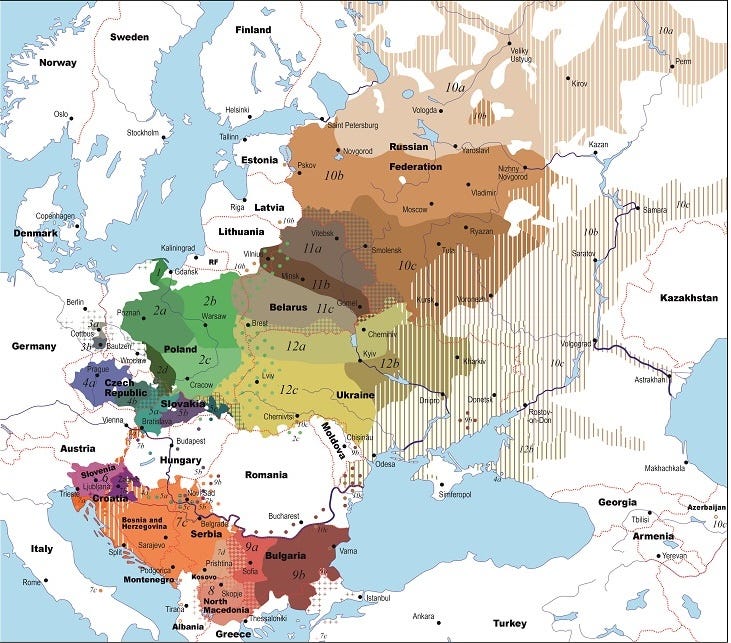
Peter Nimitz: the story of the Slavs

This is a free preview of a paid episode. To hear more, visit www.razibkhan.comOn this episode of Unsupervised Learning Razib talks to Peter Nimitz about the rise of the Slavs. His Substack, titled Nemets, explores world history through the lenses of archaeology, paleogenetics, and historical processes. His writing focuses on "deep history," such as the Bronze Age Collapse and the migration of Indo-European peoples, while connecting these ancient shifts to broader patterns of civilizational rise and fall. Nimitz often integrates technical data from genetics and climate science to challenge traditional narratives about nomadic tribes and early state formations across Eurasia. Beyond antiquity, the newsletter also touches on modern geopolitical developments and regional studies, ranging from the war in Ukraine to the cultural history of the Americas.Razib and Nimitz explore the thousands of years of Slavic history and prehistory, from their fragmentary mentions in antiquity, to their explosion in the Middle Ages. Nimitz discusses the many archaeological cultures in northeastern Europe that might be candidates for the proto-Slavs as they emerged from the Corded Ware Culture during the Bronze Age, as well as the historical, cultural and genetic effects of the Slavic migrations that impacted Christian Europe after 600 AD. He also addresses the role of Slavs as one of Europe’s preeminent ethnolinguistic configurations in early modern Europe.
Jan 30, 202629 min

Jesse Arm: Gen Z Republicans and their views

This is a free preview of a paid episode. To hear more, visit www.razibkhan.comOn this episode Razib talks to Jesse Arm, VP of external affairs at the Manhattan Institute. His writing and commentary have appeared in the New York Times, Wall Street Journal, The Atlantic, New York Post, Fox News, City Journal and Jerusalem Post. Arm graduated with honors from the University of Michigan, where he majored in international political economy, and studied language and international affairs at Tel Aviv University. He has also worked for Senator Tom Cotton and Representative Dan Benishek, and the analytics arm of American Continental Group, a major lobbying firm.Razib and Arm discuss the perceptions and attitudes of Gen Z Republicans, focusing on a group of 18-29-year-olds in Nashville, TN. Arm notes that while Gen Z feels economic anxiety, they are also entrepreneurial and comfortable with the world of social media. Gen Z Republicans are religious, like previous generations, but less likely to be married or have long-term partners at the same age as earlier cohorts. They express a desire for politics to be entertaining, similar to reality TV. The conversation also touches on the influence of social media on their views, the power of influencers like Nick Fuentes, and the potential for future political figures to emerge from the creator class. Arm also addresses the impact of intergenerational wealth transfer on political attitudes.
Jan 23, 202615 min

Davide Piffer: how Europeans became white

This is a free preview of a paid episode. To hear more, visit www.razibkhan.comOn this episode of Unsupervised Learning, Razib talks to Davide Piffer, whose Substack examines genetic differences between populations. Piffer has been publishing on human genetic variation for a decade, and recently started a Substack, Piffer Pilfer, exploring similar issues in detail over a series of posts.Razib asks Piffer about the difficulties in analyzing polygenic scores from quantitative traits in ancient DNA samples. How does he do in technical terms, from genome quality to imputation to ancient populations from modern ones? Then, they discuss some of Piffer’s findings, in particular, his work on pigmentation. Piffer talks about how he discovered that modern European pigmentation, and in particular, light complexion, is the product of both admixture from different populations with different characteristics and natural selection over the millennia. Piffer talks about how he discovered that selection for lighter pigmentation continued into the Iron Age.
Jan 16, 202621 min

Aneil Mallavarapu: why machine intelligence will never be conscious

This is a free preview of a paid episode. To hear more, visit www.razibkhan.comToday Razib talks to Aneil Mallavarapu, a scientist and technology leader based in Austin, Texas, whose career bridges the fields of biochemistry, systems biology, and software engineering. He earned his doctorate in Biochemistry and Cell Biology from the University of California, and has held academic positions at Harvard Medical School, where he contributed to the Department of Systems Biology and developed the "Little b" programming language. Mallavarapu has transitioned from academic research into the tech and venture capital sectors, co-founding ventures such as Precise.ly and DeepDialog, and currently serving as a Managing Partner at Humain Ventures. He remains active in the scientific community through local initiatives like the Austin Science Network.Most of the conversation centers around Mallavarapu’s arguments outlined in his Substack The Case Against Conscious AI - Why AI consciousness is inconsistent with physics. The core of his argument rests on the "Simultaneity Problem" and the "Hard Problem of Physics,” which involve non-locality and the memorylessness of artificial intelligence phenomena. Though Mallavarapu believes that artificial intelligence holds great promise, and perhaps even “artificial general intelligence” (AGI) is feasible, he argues that this is a distinct issue from consciousness, which is a property of human minds. Razib also brings up the inverse case: could it be that many organisms that are not particular intelligence, also have consciousness? What does that imply for ethics of practices like eating meat?
Jan 9, 202620 min

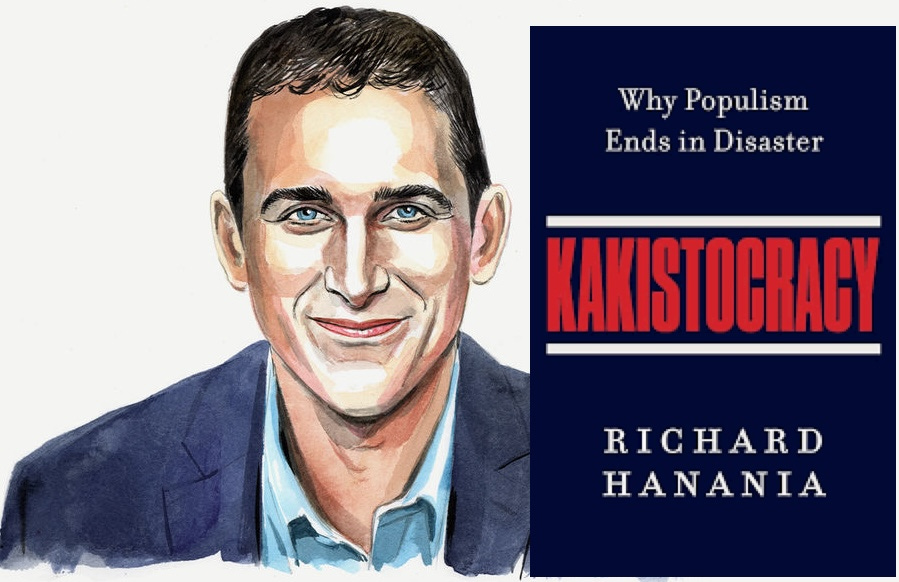
Richard Hanania: his break with the Right and the rise of kakistocracy

This is a free preview of a paid episode. To hear more, visit www.razibkhan.comOn this episode Razib, talks to Richard Hanania, a returning guest to the podcast. Hanania holds a Ph.D. from UCLA, a J.D. from the University of Chicago, and an undergraduate degree from CU Boulder in linguistics. He is a regular contributor to the Boston Globe and UnHerd, and has his own newsletter. Hanania is also the author of The Origins of Woke: Civil Rights Law, Corporate America, and the Triumph of Identity Politics.Razib and Hanania talk about his new book Kakistocracy: Why Populism Ends in Disaster, and his developing views on populism and immigration. They highlight the rise of populism on the Right, the rejection of cognitive elitism, and the impact of social media on political discourse. Hanania criticizes the far-right’s nativism, particularly against Indian immigrants, and the rise of anti-Semitism, both as a feature of low-IQ populism. They also touch on foreign policy, noting the failures of authoritarian regimes like Russia and China, and the potential for democratic systems to prevail. Hanania brings up cultural differences, particularly in Asia, and the impact of personality traits on success. They talk about the Big Five personality traits, and note that disagreeableness and low neuroticism are linked to professional success, especially in men. Razib also brings up the 2017 James Damore Google memo controversy, highlighting the cultural and political implications down to the present. Hanania reflects on his experiences with cancel culture and the evolving acceptance of diverse viewpoints. They also discuss the role of Substack in promoting free speech and the challenges faced by platforms in maintaining this principle.

Jan 4, 202619 min

Monologue: sex differences, 2 billion years B.P. to now

This is a free preview of a paid episode. To hear more, visit www.razibkhan.comOn this episode, Razib talks about:* Why sex is evolutionarily deep and persists* Why males and females exist* Cultural norms of patriarchy* The feminist revolution and its connection to the rise of modern liberalism* Male-female differences in biology (size, strength and anatomy)* Male-female differences in psychology* How psychological differences impact individual performance and social norms* Why hyper-patriarchal societies cannot transition to a modern consumer society
Jan 2, 202614 min

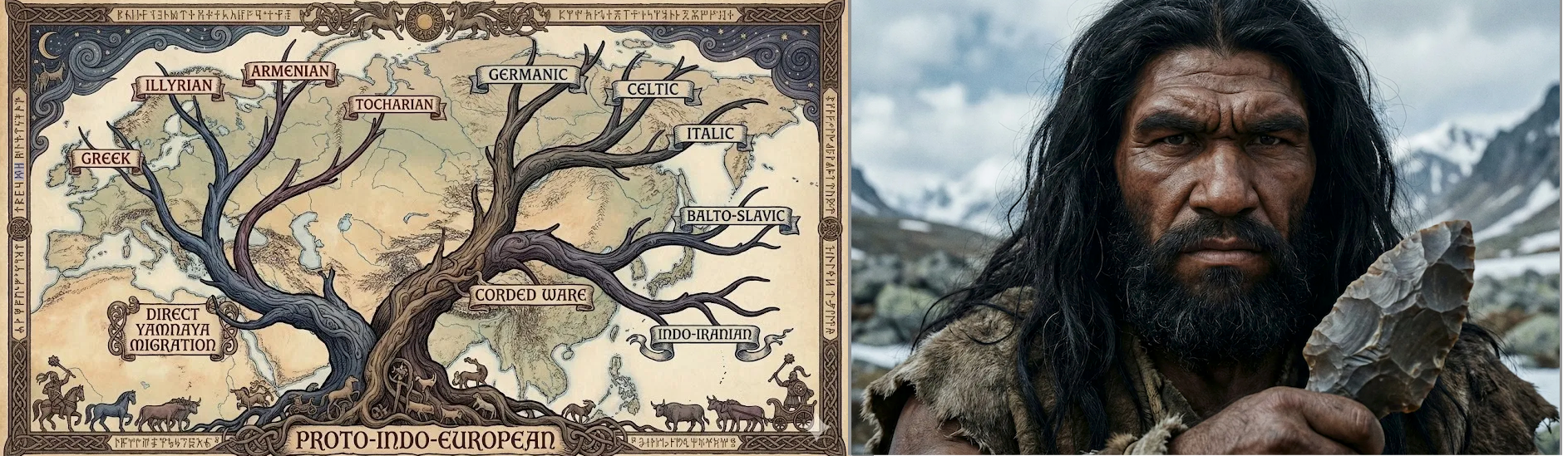
Monologue: year-end review of Proto-Indo-European origins and humanity's deep evolution and diversity

This is a free preview of a paid episode. To hear more, visit www.razibkhan.comOn this episode of Unsuperivsed Learning Razib reviews two big stories he has followed and written about on this Substack in 2025, Indo-European origins and how genomics has illuminated human evolution.* Two Steppes forward, one step back: parsing our Indo-European past* The cave where it happened: Denisova cavern’s congress of ancient peoples* The wandering Fulani: children of the Green Sahara* John Hawks and Chris Stringer: Neanderthals, Denisovans and humans, oh my!* Re-writing the human family tree one skull at a time* John Hawks: varieties of humankind all mixed-up* Cesar Fortes-Lima: the Fulani out of the Green Sahara* Lost Green Saharans: ancient DNA unearths a new race from a verdant North African interlude* Homo with a side of sapiens: the brainy silent partner we co-opted 300,000 years ago* Bonus monologue: man the hybrid monster* Bonus monologue: ancient North Africans and the Green Sahara
Dec 29, 202520 min

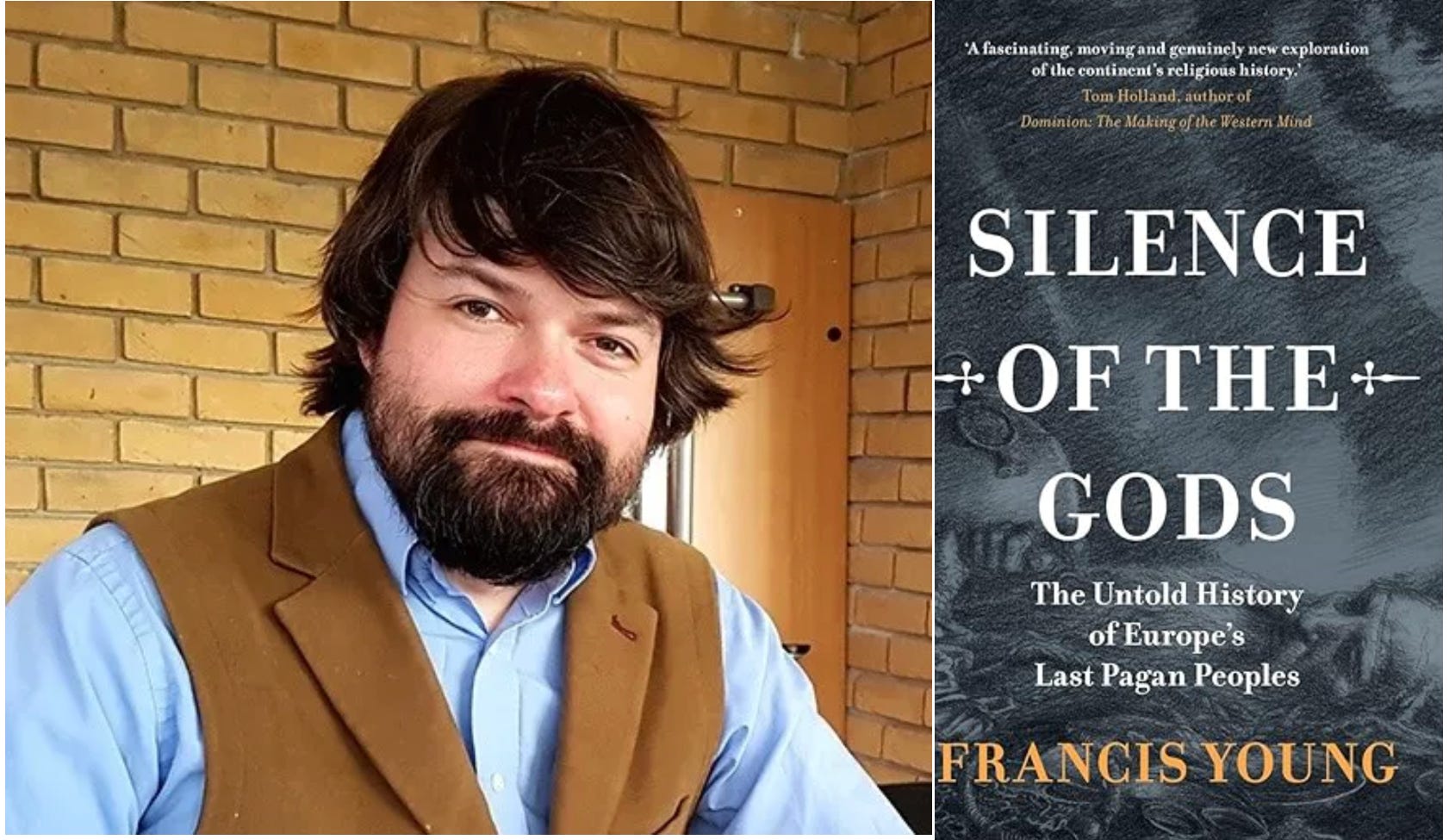
Francis Young: Baltic paganism in modern times

This is a free preview of a paid episode. To hear more, visit www.razibkhan.comOn this episode, Razib talks to returning guest, Francis Young, a historian who teaches at Oxford. Young specialises in the history of religion and belief from ancient times to the present day, and provides expert indexes for academic books and translates medieval and early modern Latin. He holds a PhD from Cambridge University and is the author, editor or co-author of over 20 books. On his last visit to the podcast, he discussed his book Pagans in the Early Modern Baltic, an account of the practices and persistence of Baltic paganism down to the 16th-century, the age of the Renaissance and Reformation. Today he discusses his new book, Silence of the Gods: The Untold History of Europe’s Last Pagan Peoples. Razib and Young first discuss what it means to be “pagan” in a European context, first during Classical Antiquity, but more recently in Northern Europe down to the early modern period. Young discusses how it is difficult to understand and define paganism without reference to Christianity, which was a major force in shaping the nature of pagan religion in Northern Europe. Razib asks about the specific nature of northeast Baltic paganism, and in particular, the late survivals of pre-Christian religion among Lithuanians and Estonians, and the differences between the two groups. Young explains his understanding of different religious practices and the various forms of non-Christian practice that persisted among different groups, including mixed “creole” identities. Razib also inquires about the Mari El, a Finnic group in the Urals that might be the only continuously officially pagan people in Europe, as well as evidence Young reports that Estonian peasants were never truly fully Christianized.
Dec 25, 202520 min

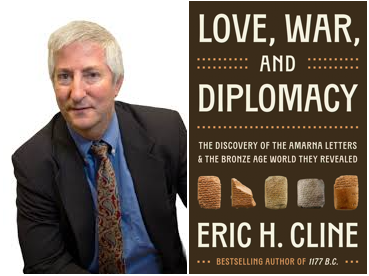
Eric Cline: Love, War and Diplomacy, international relations in the Bronze Age

This is a free preview of a paid episode. To hear more, visit www.razibkhan.comOn this episode of Unsupervised Learning, Razib again talks to George Washington University archaeologist Eric Cline. The author of 1177 B.C. - The Year Civilization Collapsed and After 1177 B.C. - The Survival of Civilizations, Cline has a new book out, Love, War, and Diplomacy: The Discovery of the Amarna Letters and the Bronze Age World They Revealed. While 1177 B.C. closed with the end of the first global civilization, that of the Eastern Mediterranean at the end of the Bronze Age, and After 1177 B.C. tells the story of those who picked up the pieces, Love, War, and Diplomacy puts the spotlight on the Late Bronze Age at its peak. Razib and Cline discuss the two major threads in Love, War, and Diplomacy: the decipherment of cuneiform and the emergence of the field of Assyriology, and the diplomatic world of Bronze Age Great Powers. Cline addresses the reality that 19th-century archaeology was not an idealized enterprise, and scholars had to compete with treasure hunters, and negotiate difficult nationalist sensitivities. He also explains how they deciphered cuneiform decades after hieroglyphs, providing an alternative view of the earliest antiquity. The discussion then focuses on the intricate and tense relationship between Egypt, Assyria, the Hittites, and the Mitanni. Cline also highlights the reality that the Amarna Letters also shed light on the bickering between the petty states of the Levant and their relationship to their hegemon, Egypt.
Dec 17, 202520 min

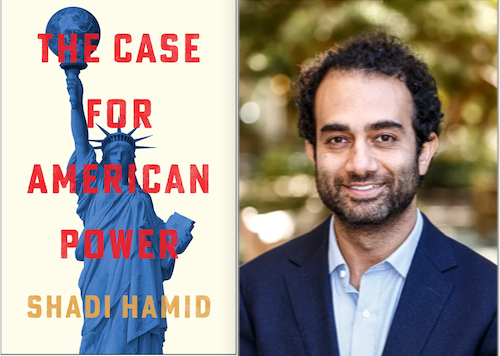
Shadi Hamid: American power and the post-woke age

This is a free preview of a paid episode. To hear more, visit www.razibkhan.comOn this episode of Unsupervised Learning Razib talks again with Washington Post columnist and repeat guest Shadi Hamid (listen to previous episodes). A native Pennsylvanian of Egyptian ethnic background and Islamic faith, Hamid completed his Ph.D. in politics at Oxford University. He is co-host of the Wisdom of Crowds podcast and website with Damir Marusic, and now the author of his own Substack and a recent book, The Case For American Power. Hamid is also the author of The Problem of Democracy: America, the Middle East, and the Rise and Fall of an Idea. , Temptations of Power: Islamists & Illiberal Democracy in a New Middle East and Rethinking Political Islam.Before moving the discussion to The Case For American Power, Razib asks Hamid about his current positioning on the American political landscape with the emergence of the hard-right during the second Trump administration. Hamid admits that during the “woke era” he wasn’t sure about his place on the Left as a progressive due to his misgivings with racial identarianism, but with the rise of white nationalism on the Right and the executive decisions of the Trump administration Hamid finds himself more comfortable saying he is a progressive. Racism and the passions unleashed by the Israel-Palestine conflict since 10/7 have made Hamid reevaluate the virtues of some level of wokeness.Pivoting to foreign policy, Razib and Hamid discuss his new book, and its positioning within a political landscape that ranges from neconservatism, liberal internationalism and isolationism of all sorts. Despite Hamid’s misgivings of some aspects of American culture and the nation’s past political sins, he asserts (unlike the far Left) that overall America is a force for good, and that it should exercise its power to spread its vision of morality across the world. The Case For American Power is an attempt to articulate a liberal and progressive internationalist vision for 2025, decades after the failed Iraqi intervention. Hamid also addresses the sea-change on the progressive side of American politics when it comes to Israel, admitting he feels much freer to express skepticism or critiques of Israeli policy than he had in previous eras.
Dec 12, 202519 min

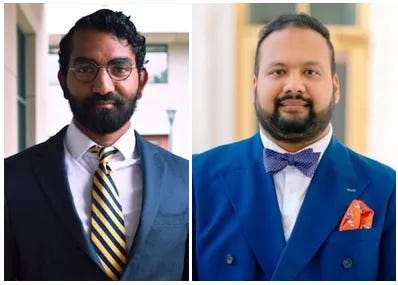
Vishal Ganesan and Anang Mittal: American Hinduism out of Indian Hinduism

This is a free preview of a paid episode. To hear more, visit www.razibkhan.comCyber week deals continue. Lock in a lifetime subscription rate 25% off. Annual subscriptions now at $59/year (a $20 savings). This is my only yearly sale. Thanks for reading and thanks for subscribing!On this episode, Razib talks to Vishal Ganesan and Anang Mittal, two Indian-American Hindus who have been thinking about the role of their faith in the present, and past, of the American social landscape. Ganesan is a California-based attorney and writer who focuses on the history, identity, and representation of the Hindu diaspora in the United States. He is best known for his project “Hindoo History” and his writing on the “Frontier Dharma” platform, which attempts to conceptualize what an American, as opposed to Indian, “Hinduism” might look like. Anang Mittal is a DC-based political communications professional who recently worked for Senator Mitch McConnell. Mittal grew up in India before moving to the US at a young age about 25 years ago. Ganesan, in contrast, was born to an earlier generation of Indian immigrants to the US. He grew up north of Austin, TX. Though their perspectives differ, they both believe that Hinduism and Indian-American identity cannot simply be ported over with no changes into the American cultural landscape.The conversation is centered on two essays, Ganesan’s The Meaning and Limits of “Hinduphobia” Discourse in the Diaspora and Mittal’s What Hindu Americans Must Build. While Ganesan explores and articulates what it means to be Indian-American and Hindu today in America, and what might mean in the future, Mittal’s argument is framed by a deep understanding of American history and how Hindus fit into the bigger arc of history. Razib, Ganesan and Mittal discuss the past, present, and potential future of Hindus and Indians, two separate categories, in America over the course of two hours. Their discussion was triggered by the online controversy over the fact that Vice President J. D. Vance’s wife is a Hindu, and he has encouraged her to convert to his Roman Catholic religion (in which their children are being raised). But the discussion extends far beyond matters of contemporary politics, probing what it means to be American, and what it could mean to be a Hindu.
Dec 5, 202520 min

John Hawks and Chris Stringer: Neanderthals, Denisovans and humans, oh my!

This is a free preview of a paid episode. To hear more, visit www.razibkhan.comOn this very special episode, Razib talks to paleoanthroplogists John Hawks and Chris Stringer. Hawks is a paleoanthropologist who has been a researcher and commentator in human evolutionary biology and paleoanthropology for over two decades. With a widely read weblog (now on Substack), a book on Homo naledi, and highly cited scientific papers, Hawks is an essential voice in understanding the origins of our species. He graduated from Kansas State University in 1994 with degrees in French, English, and Anthropology, and received both his M.A. and Ph.D. in Anthropology from the University of Michigan, where he studied under Milford Wolpoff. He is currently working on a textbook on the origins of modern humans in their evolutionary context. Hawks has already been a guest on Unsupervised Learning three times.Chris Stringer is affiliated with the Natural History Museum in London. Stringer is the author of African Exodus. The Origins of Modern Humanity, Lone Survivors: How We Came to Be the Only Humans on Earth and Homo Britannicus - The Incredible Story of Human Life in Britain. A proponent since the 1970’s of the recent African origin of modern humans, he has also for decades been at the center of debates around our species’ relationship to Neanderthals. In the 1980’s, with the rise to prominence of the molecular model of “mtDNA Eve,” Stringer came to the fore as a paleoanthropological voice lending support to the genetic insights that pointed to our African origins. Trained as an anatomist, Stringer asserted that the fossil evidence was in alignment with the mtDNA phylogenies, a contention that has been broadly confirmed over the last five decades.Razib, Hawks and Stringer discuss the latest work that has come out of Yuxian, China, and how it updates our understanding of human morphological diversity, and integrate it with the newest findings about Denisovans from whole genome sequencing. They talk about how we exist at a junction, with more and more data, but theories that are becoming more and more rickety in terms of explaining the patterns we see. Hawks talks about the skewing effect of selection on phylogenetic trees, while Stringer addresses the complexity of the fossil record in East Asia.Related: Re-writing the human family tree one skull at a time and The cave where it happened: Denisova cavern’s congress of ancient peoples.
Nov 29, 202519 min

Sean Trende: 2025 elections and political demographics, past and future

This is a free preview of a paid episode. To hear more, visit www.razibkhan.comToday Razib talks to Sean Trende. He is a prominent American political analyst who currently serves as the Senior Elections Analyst for RealClearPolitics, a position he has held since 2010. He is also a Fellow at the American Enterprise Institute (AEI) and a lecturer at The Ohio State University, where he earned his Ph.D. in political science in 2023. Before transitioning to full-time political analysis, Trende practiced law for eight years at firms including Kirkland & Ellis LLP and Hunton & Williams LLP, holding a J.D. and M.A. from Duke University and a B.A. from Yale University. Known for his expertise in election forecasting, redistricting, and political demographics, he authored the book The Lost Majority (2012), co-authored The Almanac of American Politics 2014, and served as a court-appointed special master to redraw Virginia’s legislative districts in 2021.Trende and Razib first talk about the elections in the fall of 2025 in Virginia and New Jersey, and what they tell us about the elections next year. They also discuss the election of Zohran Mamdani in New York City, and the rise of populism on the Left and Right. Razib asks Trende about why political commentary often assumes single-party rule is about to happen, only to be refuted by the reality of the opposition's resurgence once these claims are made. They also talk about Trende’s distinctive personal background, and his perspective as a more centrist-libertarian commentator and professor in the political analyst field.
Nov 21, 202520 min

Alex Young: IQ, disease and statistical genomics

This is a free preview of a paid episode. To hear more, visit www.razibkhan.comThis week on the Unsupervised Learning Podcast, Razib talks to returning guest Alex Young of UCLA and Herasight. Trained originally as a mathematician, Young studied statistics and computational biology at the University of Cambridge before doing a doctorate in genomic medicine and statistics at the Wellcome Trust Centre for Human Genetics, University of Oxford, under Peter Donnelly. He also worked at deCODE Genetics in Reykjavik and at Oxford with Augustine Kong, developing methods in quantitative and population genetics.Razib and Young talk extensively about what we know about heritability and genomics in 2025, four years after their first conversation. In particular, they discuss what larger sample sizes, high-density genotype-arrays and whole-genome sequencing have told us about heritability and the ability to predict traits in individuals from their sequence. They discuss quantitative and behavioral traits like height, intelligence and risk of autism, and the differences between classical statistical genetical methods utilizing twins and modern molecular genomic techniques that attempt to fix specific physical markers as causal factors in characteristics of interest. In addition to his academic work, Young has also been consulting for the polygenic embryo-screening company Herasight, working on cutting-edge methods for genomic prediction in the context of in vitro fertilization. They dig deep into the new method Young and colleagues worked on that helps democratize embryo selection using genomics, ImputePGTA.

Nov 14, 202530 min

Zineb Riboua: Zohran Mamdani and Third-Worldism ascendent

This is a free preview of a paid episode. To hear more, visit www.razibkhan.comToday on Unsupervised Learning Razib talks to Zineb Riboua, a research fellow and program manager of Hudson Institute’s Center for Peace and Security in the Middle East. She specializes in Chinese and Russian involvement in the Middle East, the Sahel, and North Africa, great power competition in the region, and Israeli-Arab relations. Riboua’s pieces and commentary have appeared in the Wall Street Journal, Foreign Policy, the National Interest, the Jerusalem Post and Tablet among other outlets. She holds a master’s of public policy from the McCourt School of Public Policy at Georgetown University. She did her undergraduate studies in France, where she attended French preparatory classes and HEC Paris’ Grande Ecole program. Her Substack is Beyond the Ideological.Razib and Riboua discusses two pieces on her Substack today, Zohran Mamdani, Third-Worldism, and the Algerian Revolution and Zohran Mamdani and Islam as Language, American Third-Worldism. Riboua explains that contrary to some assertions Mamdani is not an Islamist, but neither is a standard-issue class-based socialist or an identitarian in the woke model that was ascendent a few years ago. Rather, Riboua’s contends that Mamdani, a “Third-Culture Kid,” emerges out of the post-colonial world that reframes the Marxist framework into a Western vs. non-Western dyad. Rather than the Islamist Iranian Revolution of 1979, she traces Mamdani’s intellectual lineage, that of anti-colonial Third-Worldism, to the Islam-inflected Algerian Revolution of the early 1960s. With conventional racial and gender identitarianism exhausted, Riboua contends that Third-Worldism is likely going to be the most potent force in the American Left over the next decade.

Nov 7, 202520 min

Ed West: visitor from a dying empire

This is a free preview of a paid episode. To hear more, visit www.razibkhan.comToday Razib talks to Ed West, a British journalist and author. He has served as deputy editor of UnHerd and The Catholic Herald, and has written columns for The Spectator and The Daily Telegraph. He runs the Substack newsletter Wrong Side of History, where he explores culture, politics, and the longue durée of Western history. West is the author of books including Small Men on the Wrong Side of History and The Diversity Illusion, as well as popular-history titles such as 1066 and Before All That. A previous podcast guest, West and Razib revisit the topic of British decline three years on. They discuss Britain’s economic transformation, from one of the standout economies of Europe a generation ago, to a laggard. Razib probes why the British seem so attached to their welfare state, and why the state has embraced anti-growth policies along with high migration rates. They also discuss the tensions within Britain’s large Muslim minority, and the cultural environment that allowed for mass migrant inflows despite their political unpopularity.

Nov 1, 202530 min

Noah Smith: Japanese and American politics

This is a free preview of a paid episode. To hear more, visit www.razibkhan.comToday Razib talks to Noah Smith, an American economist-turned-blogger known for his commentary on economics and public policy. His blog, Noahpinion, is one of the most popular on Substack. He earned a PhD in economics at University of Michigan and served as an assistant professor of finance at Stony Brook University before leaving academia to become a full-time writer. He wrote a column for Bloomberg until 2021, when he turned his focus entirely to independent writing and his Substack newsletter. Smith is based out of San Francisco but spends part of the year in Japan. An enthusiast for Japanese culture, he is also one of the central nodes in English-speaking rabbit-twitter.First, Razib and Smith talk about the current cultural and political situation in Japan. In particular, how did Japan transform itself from a country with non immigration to one with a non-trivial number of migrants? Additionally, Razib asks Smith about the new Prime Minister, Sanae Takaichi, the first woman in that role. Smith elucidates her relationship to the politics of two of her most prominent predecessors, Shinzo Abe and Junichiro Koizumi. Razib also asks, is she as far right as some people are saying? Then Smith and Razib discuss the “vibe shift” in American culture over the last five years, from the peak period of wokeness around 2020, to the current political ascendancy of MAGA and how Democrats are reconfiguring their politics.

Oct 25, 202530 min

Coltan Scrivner: the evolution and psychology of horror

This is a free preview of a paid episode. To hear more, visit www.razibkhan.comToday, Razib talks to Coltan Scrivner, a behavioral scientist, horror entertainment producer, and author, whose work centers on the psychological and evolutionary roots of our fascination with darkness, horror, and true crime. He is affiliated with the Department of Psychology at Arizona State University. Scrivner also serves as the executive director of the Nightmare in the Ozarks Film Festival and founded the Eureka Springs Zombie Crawl. He has been featured in The New York Times, CNN, The Wall Street Journal, NPR, TIME Magazine, National Geographic, Scientific American and Forbes. He is the author of Morbidly Curious: A Scientist Explains Why We Can’t Look Away, where he explores how our fascination with horror functions as a survival-oriented, yet deeply human, impulse.Though working in psychology and behavior, Scrivner’s original training is in biological the sciences, and Razib first probes him on the possible evolutionary origins of our persistent interest in horror, and why we might actually be attracted to the phenomenon in the first place. Scrivner also explains how the horror genre differs from other narrative forms, in particular, the power imbalance that makes heroic action and tension much more difficult. Horror, in fact, primarily leverages our intuitions about how predator and prey interact, more than a battle between peers. Scriver also discusses the relationship between fear and our dreams, and the various psychological and evolutionary theories for why we might have so many nightmares.

Oct 17, 202520 min

Nate Soares: we are doomed (probably)

This is a free preview of a paid episode. To hear more, visit www.razibkhan.comToday Razib talks to Nate Soares the President of the Machine Intelligence Research Institute (MIRI). He joined MIRI in 2014 and has since authored many of its core technical agendas, including foundational documents like Agent Foundations for Aligning Superintelligence with Human Interests. Prior to his work in AI research, Soares worked as a software engineer at Google. He holds a B.S. in computer science and economics from George Washington University. On this episode they discuss his new book, If Anyone Builds It, Everyone Dies: Why Superhuman AI Would Kill Us All, co-authored with Eliezer Yudkowsky. Soares and Yudkowsky make the stark case that the race to build superintelligent AI is a “suicide race” for humanity. Razib and Soares discuss how AI systems are “grown” rather than deliberately engineered, making them fundamentally opaque and uncontrollable. They explore a concrete extinction scenario, explain why even minimally misaligned goals could lead to human annihilation. Soares urges immediate cooperative action to prevent such a worst-case outcome.

Oct 9, 202520 min

Alexander Cortes: broscience, health science and fertility

This is a free preview of a paid episode. To hear more, visit www.razibkhan.comOn this episode of Unsupervised Learning, Razib talks to Alexander Cortes. Cortes is a trainer, fitness influencer and entrepreneur. He is the co-founder, along with his wife, of Ferta, a company that aims to “optimize your reproductive health and conceive naturally.” Born and raised in California, Cortes began his career in the fitness industry as a personal trainer in 2010. Over the next few years he expanded his efforts online, writing about fitness and nutrition from a science-informed perspective. Cortes developed a following by offering practical advice on strength training, muscle building, and the psychological aspects of fitness to the interested general public, translating the wisdom-of-the-gym for the person on the street.In the first part of the podcast, Razib and Cortes talk about “broscience,” and how it differs from “quantified self” and other movements geared toward self-optimization. They discuss how “bros” arrived on the importance and utility of peptides long before the ozempic revolution, and how the iterative and experimental methods of gym-addicted amateurs predated and anticipated what would later become conventional wisdom. Razib also explores how Cortes’ particular style of broscience differs from that of others, with its stronger empirical basis and analytical orientation (and aversion to fads like “raw food”). They discuss the “peptide revolution” and how online fitness and health influencers discovered it earlier, the utility of the macromolecules in health and wellness, and what the online community discovered already that is likely to come down the clinical pipeline.In the second part of the discussion, Cortes introduces his new company, Ferta, and its situates its position in the fertility space. He explains the origin of his firm as he and his wife began to attempt to conceive in their 30s, and how difficult or easy the process was conditional on the optimizations they engaged in. Cortes explains many people struggle because they do things wrong, and don’t maximize their chances by being healthy and fertile.Note: This episode also features a bonus segment from Dinesh D’Souza, where he talks about his career as a public intellectual in the 1990s, and his origins as a conservative intellectual.

Oct 2, 202514 min

Kat Rosenfield: after the vibe shift

This is a free preview of a paid episode. To hear more, visit www.razibkhan.comToday on Unsupervised Learning, Razib talks to Kat Rosenfield. She is an American novelist, journalist, and culture critic known for both her fiction and commentary on contemporary political debates. She began her career in publishing and as a reporter for MTV News before branching out into broader cultural criticism, contributing to outlets such as The New York Times, Wired, Vulture, Reason, and UnHerd. As a novelist, she has written You Must Remember This (2023), No One Will Miss Her (2021), Inland (2014) and Amelia Anne Is Dead and Gone (2012). Rosenfield also co-authored the New York Times bestselling A Trick of Light (2019) with Stan Lee. She is currently a contributor to The Free Press and a co-host of the Feminine Chaos podcast.In the four years since Rosenfield was last on Unsupervised Learning the “culture wars” have seen a changing of the front lines; the woke ascendancy is no more, Elon Musk purchased Twitter, and Donald J. Trump is back in the Whitehouse. After the recording of this podcast Rosenfield was the target of a “cancellation” campaign due to her making light of white liberal gushing over the prose stylings of Ta-Nehisi Coates. But this being 2025, Rosenfield seemed more amused than afraid of the concerted attempt to “drag” her online and notify her employers. The first portion of this podcast discusses where we are now in the culture wars, how things have broadly changed, and which institutional pockets of the old woke ascendancy remain. Rosenfield and Razib also discuss the rise of gender polarization in online culture, and in particular, among Gen-Z.

Sep 25, 202515 min

Eric Kaufmann: a cultural revolution in winter

This is a free preview of a paid episode. To hear more, visit www.razibkhan.comToday Razib talks to Eric Kaufmann, a Canadian professor of politics at the University of Buckingham, where he directs the Centre for Heterodox Social Science. He earned his BA from the University of Western Ontario and his MA and PhD from the London School of Economics. Prior to his current role, he held positions at the University of Southampton and Birkbeck, University of London, which he left in October 2023. He is the author of several books, including Whiteshift: Immigration, Populism and the Future of White Majorities, Shall the Religious Inherit the Earth?, and The Third Awokening. His research interests include nationalism, political and religious demography, and national identity. Kaufmann is a previous guest on the podcast.Razib and Kaufmann begin their conversation by exploring the thesis of one of his earlier works, 2004’s Rise and Fall of Anglo-America. They discuss the definition of “WASP,” White Anglo-Saxon Protestant, and cultural changes in the white American majority because of the massive immigration waves of the 19th and early 20th century. Kaufman argues that a coalition of liberal WASPs and “white ethnics” was instrumental in the eventual overthrow of the cultural hegemony of elite Protestant whites in the second half of the 20th century. Razib and Kaufman then relate the history of the WASPs to his latest book, The Third Awokening, which chronicles the rise of “cultural socialism” centered around race. Kaufman documents the potency of the ideas of the latest variant of wokeness, their traction among the youth, and argues for its historical roots in earlier forms of Anglo liberalism.

Sep 19, 202520 min

Ryan P. Williams: the Claremont Institute standing athwart history

This is a free preview of a paid episode. To hear more, visit www.razibkhan.comToday Razib talks to Ryan P. Williams. He is president of The Claremont Institute, a position he has held since 2017. He is also a contributor to The Claremont Review of Books and started The American Mind. Williams earned a B.A. in political science and Economics from Hillsdale College and an M.A. in politics from Claremont Graduate University. He has taught American politics and political philosophy as an adjunct professor at California State University, San Bernardino and Cal Poly Pomona.Razib and Williams first discuss the origins of The Claremont Institute and the influence of Harry Jaffa on the think-tank’s founding and current thought. They explore the influence of Jaffa’s mentor, political philosopher Leo Strauss, upon his worldview, and the differences that define the “west coast Straussianism” associated with the Institute and “east coast Straussianism.” Williams also articulates how the conservative thought of Claremont affiliated scholars and pundits differs from other movements on the right, and in particular, how it is differentiated from both neoconservatism and paleoconservatism. Razib and Williams then go over The American Mind’s decision to publish Michael Anton’s “flight 93 election” piece, and the connection of many Claremont scholars to the Trump administration and the MAGA movement.

Sep 12, 202515 min

Chad Orzel: the state of physics and academia in 2025

This is a free preview of a paid episode. To hear more, visit www.razibkhan.comChad Orzel is a physicist and science writer who has been blogging for nearly twenty-five years. He’s the author of four books, Breakfast with Einstein: The Exotic Physics of Everyday Objects, How to Teach Quantum Physics to Your Dog, How to Teach Relativity to Your Dog, Eureka: Discovering Your Inner Scientist and A Brief History of Timekeeping. The last is a mix of cultural and engineering history, archeology and physics, and reflects Orzel’s wide interests as reflected in his Substack, Counting Atoms.In this episode of Unsupervised Learning Razib surveys the state of physics communication and science, as well as our broader culture’s relationship with academia. Orzel and Razib first discuss the massive success of physicist-turned-YouTuber Sabine Hossenfelder. Emerging from academic physics and associated with Lee Smolin and the Perimeter Institute, Hossenfelder has shifted from skepticism of mainstream theories like string theory to arguing that academic science as a whole must be restructured. Orzel also notes that contrarian or heterodox views in popular areas such as astrophysics and particle physics receive much more attention than applied fields like solid-state physics. Razib and Orzel reflect on how science communication has changed over the past two decades, moving from the text-driven blog era before 2010 to the rise of podcasts and video. They also discuss the many technological applications of physics in the 21st century, particularly in battery technology, an area that is transforming daily life but rarely serves as fodder for glossy popular-press treatments.In the second half of the podcast, Orzel considers how science, and academia more broadly, have navigated the adversarial stance of the Trump administration. Razib asks whether institutional science, shaped in the post–World War II era, may be due for a major transformation, or whether it is even approaching the end of its line. Finally, Orzel addresses whether academics can regain broad public trust in the wake of the extreme politicization of the 2010s.

Sep 3, 202514 min

Jonathan Anomaly and James Lee: is eugenics in our future?

Recently, the new embryo-selection start-up Herasight has been in the news, finally coming out of stealth. Part of the buzz is because of the public involvement of well-known geneticists and academics like Alex Young and Joe Pickrell in Herasight’s algorithm development. Additionally, Noor Siddiqi, the CEO of Orchid, a competitor to Herasight (and onetime advertiser on this podcast), was a guest on Ross Douthat’s show Interesting Times, triggering another round of conversations around embryo-selection, including in The Wall Street Journal and Breaking Points. To hash out some opposing viewpoints, Unsupervised Learning decided to bring on two guests that stake out very different positions, Dr. James Lee, a psychometrician and behavior geneticist at the University of Minnesota, and Dr. Jonathan Anomaly, a philosopher and Herasight’s sales lead. Lee has been on the record with his skepticism of reproductive technology, writing an op-ed in The Wall Street Journal four years ago warning against the consequences of polygenic embryo selection. Meanwhile, Anomaly’s last book was Creating Future People: The Science and Ethics of Genetic Enhancement, where he advances the idea that such technologies will unlock human potential. This is a public episode. If you'd like to discuss this with other subscribers or get access to bonus episodes, visit www.razibkhan.com/subscribe

Aug 28, 20251h 23m

Jason Richwine: immigration moratorium now

This is a free preview of a paid episode. To hear more, visit www.razibkhan.comOn last week’s episode of Unsupervised Learning, Razib spoke with Alex Nowrestah, a vice president at the Cato Institute and a strong advocate for expanding legal immigration. This week, he turned to the other side of the debate with Jason Richwhine, a resident scholar at the Center for Immigration Studies and a vocal supporter of sharply reducing immigration.Richwine earned undergraduate degrees in mathematics and political science from American University, and later a Ph.D. in public policy from Harvard. Before joining CIS, he served as deputy director of the National Institute of Standards and Technology and worked as a senior policy analyst at the Heritage Foundation.The conversation begins with an overview of the dramatic swings in U.S. immigration policy under Biden and Trump. Both note the surge of the foreign-born population in the early 2020s, with the unauthorized share now estimated at 15-16 million. Richwine faults Biden for lax border enforcement and the abuse of parole programs, and points to the comparative effectiveness of Trump’s Remain in Mexico policy. He also presses the case for a moratorium, arguing that even legal immigration must be scaled back to sustainable levels. Razib and Richwine weigh the economic and cultural consequences of high-skilled immigration and close by considering whether meaningful reform is politically possible in the years ahead.

Aug 21, 202515 min

Alex Nowrasteh: an immigration libertarian in Trump's America

This is a free preview of a paid episode. To hear more, visit www.razibkhan.comThree years ago, Razib recorded two podcasts with two immigration experts on different sides of the issue, Alex Nowrestah and Jason Richwhine. While Nowrasteh, who works for the libertarian Cato Institute as Vice President for Economic and Social Policy Studies, supports higher levels of legal immigration, Richwine, a Resident Scholar at the Center for Immigration Studies (CIS), favors lower levels of inflows into the US. The initial pair of podcasts was recorded in the midst of the massive increase in immigration that occurred after the loosening of the pandemic-era controls, resulting in the highest proportion of the foreign-born since the turn of the 20th century. Though the Biden administration tightened controls in its last year, the swell of illegal immigration resulted in a backlash that fueled the re-election of Donald Trump to the presidency and a turn in policy toward restriction. Recently, Razib recorded two conversations with Nowrestah and Richwine, revisiting the topic in 2025, and after three years of policy shifts.Today, Razib talks to Nowrasteh about the record of the Biden administration, the pivot occurring in the first year of the Trump administration, and where he sees the Republicans going in the future. Nowrasteh addresses the reality that the Democratic administration's lack of interest in controlling illegal flows resulted in anger and frustration at migration in general, and emphasizes the importance of borders and rules in allowing for legal immigration. Razib and Nowrasteh also discuss the controversy over H1-Bs, the role that skilled immigration plays in buttressing American power, and the conflicts on the Right regarding how immigration policy relates to geopolitics. They also explore the relationship between immigration and population, and how both connect to urban policy and economic growth.Next week, Razib will post his episode with Jason Richwine.

Aug 15, 202514 min

John Hawks: varieties of humankind all mixed-up

This is a free preview of a paid episode. To hear more, visit www.razibkhan.comToday on Unsupervised Learning, Razib talks to John Hawks, a paleoanthropologist who has been a researcher and commentator in human evolutionary biology and paleoanthropology for over two decades. With a widely read weblog (now on Substack), a book on Homo naledi, and highly cited scientific papers, Hawks is an essential voice in understanding the origins of our species. He graduated from Kansas State University in 1994 with degrees in French, English, and Anthropology, and received both his M.A. and Ph.D. in Anthropology from the University of Michigan, where he studied under Milford Wolpoff. He is currently working on a textbook on the origins of modern humans in their evolutionary context. Hawks has already been a guest on Unsupervised Learning three times.In this episode, Razib and Hawks focus on a very specific question: What were the different contributions to the heritage of modern humans in a world more than 200,000 years ago that was inhabited by at least half a dozen hominin species? First, Hawks takes us back to the year 2000 and his early work extending a more multiregional framework of human evolution, exploring what could be gleaned from the archaeological and paleontological record. Then Razib and Hawks discuss the ancient DNA revolution and the discovery that modern humans had ancestry from Neanderthals, as well as from an entirely new species, the Denisovans. They also examine the fact that, unlike Neanderthals, Denisovans appear to have been separated into very different regional populations that made distinct contributions to various modern populations. Razib also asks Hawks about the discovery of new pygmy human species in Luzon, as well as the current state of research on Homo naledi in South Africa and the Hobbits of Flores. Hawks contends that DNA will likely be extracted from all these lineages at some point and, if not, protein sequence data may be obtained. This would finally give researchers the statistical power to evaluate the possibility of extremely archaic admixture events. Hawks and Razib also address the potential role of natural selection driven by introgressed genes from sister lineages of humans and how this shaped modern variation.

Aug 9, 20259 min

Noah Millman: from finance to the culture industry

This is a free preview of a paid episode. To hear more, visit www.razibkhan.comToday Razib talks to Noah Millman. Millman is an American screenwriter and filmmaker, as well as a political columnist and cultural critic based in Brooklyn, New York. He is the film and theater critic for Modern Age; previously he was a columnist for The Week (2015–2022) and a senior editor at The American Conservative (2012–2017). Millman writes the newsletter Gideon’s Substack, and his work has also appeared in outlets such as The New York Times and Politico. He graduated from Yale University and initially worked on Wall Street for 16 years, starting in a hedge fund's mail room, before leaving after the financial crisis to pursue creative endeavors full-time. Millman has been a producer on seven films, and written three and directed three. His most recent film is Resentment, and he is working on a novel, Fables of a Jewish Century.Razib and Millman begin their conversation discussing their history as bloggers who began writing early in the first decade of the century, in the wake of George W. Bush’s invasion of Iraq. Millman discusses his disillusionment with neoconservatism, and his evolution into a moderate, if heterodox, Democrat. They also discuss their positionality in a political commentary landscape that has radically shifted over the last twenty years, and what it’s like to be strongly partisan. They discuss how their views of religion have changed, especially in the wake of the New Atheist movement after 9/11 and the emergence of psychedelic spirituality in the 2020s. Millman articulates his views as a Jew whose own theological commitments are minimal, stating that he believes that the “Hindus are right about God” but John Calvin was probably right about humans.In the second half of the discussion, they pivot to the arts, beginning with how film as a medium has developed over the last generation, from the high tide of independent films in 1999 and through the “comic book” movie heyday of the 2010s, and on finally to the reemergence of more classic movies like Tom Cruise’s Top Gun: Maverick 2 and Brad Pitt’s F1. Razib argues that the Marvel universe exhausted its creative possibilities, and the same content no longer compels the younger generations, especially in a 90-minute format. Millman addresses whether film as a medium has reached the end of the line as a mass medium, and how fan-culture and “stan” culture has transformed the experience of the arts. He also asserts that cultural fragmentation is driven by technology, as consumers have a much greater range of options in their choices than in the past. Millman observes that as top-down cultural dynamics have collapsed, shifts are now driven by bottom-up drives. He also argues that movies will ‌continue to be a major art form because filmmaking is now far cheaper than it was in the past, but he is not optimistic about the future of mass-market tent-pole films that can transcend myriad fan subcultures. Movie studios still do not know which films will become hits and which will flop, even the magic of Pixar and Marvel Studios are no longer a sure thing. In fact, Millman argues that fragmentation has masked the revival of art forms like the novel. As the gatekeepers are gone, many consume low art, with middle-aged people reading copious amounts of YA fiction. Millman argues that any aspiring artist needs to grapple with the competitive realities of the new attention economy. Technology has made it easier for anyone to create art because new tools are cheaper and self-publishing is now a real option for writers. However, all of this unleashed creativity is competing for the same amount of funding, support and a relatively fixed audience.

Aug 1, 202515 min

Cesar Fortes-Lima: the Fulani out of the Green Sahara

This is a free preview of a paid episode. To hear more, visit www.razibkhan.comOn this episode of Unsupervised Learning Razib talks to human geneticist Cesar Fortes-Lima about his paper from earlier this year, Population history and admixture of the Fulani people from the Sahel. Fortes-Lima has a Ph.D. in Biological Anthropology, and his primary research areas include African genetic diversity, the African diaspora, the transatlantic slave trade, demographic inference, admixture dynamics and mass migrations. Formerly a postdoctoral fellow in the Department of Human Evolution at Uppsala University, Forest-Lima is now an instructor in genetic medicine at the Johns Hopkins University. He is also a returning guest to the podcast, having earlier come on to discuss his paper The genetic legacy of the expansion of Bantu-speaking peoples in Africa.Razib and Fortes-Lima first contextualize who the Fulani are in the West African socio-historical context, in particular, their role as transmitters of Islam across the Sahel. They also discuss the importance of having numerous Fulani subpopulations in the publication; earlier work had generalized about the Fulani from a small number of samples from a single tribe. Fortes-Lima highlights the primary finding, in particular, that the Fulani seem to have what we now call “Ancient North African” (ANA) ancestry. That people was related to, but not descended from, the “out of Africa” population which gave rise to Eurasians. They also explore the role of natural selection in allowing the Fulani to subsist on a diet high in milk, and how the Fulani lactase persistence mutation is exact same with Eurasians rather than East Africans. Fortest-Lima also reviews some of the earlier 20th-century anthropological speculations about the origins of the Fulani, and what his results show about their affinities (or lack thereof) to groups in West Asia and the Maghreb.

Jul 26, 202515 min

Jack Despain Zhou: in defense of tracking

This is a free preview of a paid episode. To hear more, visit www.razibkhan.comOn this episode of Unsupervised Learning Razib talks to Jack Despain Zhou, executive director of the Center for Educational Progress (CEP). Despain Zhou is a graduate of Western Governors University, and is completing his J.D. at Temple University. A former cryptographic analyst for the US Air Force, Despain Zhou is better known as a former producer for Jesse Singal and Katie Herzog at Blocked and Reported under the pseudonym Tracie Woodgrains.Despain Zhou’s mission with CEP is to push for individualized learning programs “where every student can advance as far and as fast as their curiosity and determination will take them.” In short, not only does CEP support tracking, but it believes that more individualized learning environments are what allow students to flourish. Despain Zhou talks about how his own life informed his interest in this topic, going from a precocious and curious toddler to a sullen elementary school student. He explained to his mother at the time how the boring, regimented one-size-fits-all mentality of the public school system removed all his passion for learning. Despain Zhou talks about how the levelling and equity oriented philosophy of the modern educational establishment is extremely unpopular, but has nevertheless taken root in ed schools and therefore has advocates among both teachers and administrators. He makes the case that CEP’s advocacy is needed given the educational theorists’ intense and passionate fixation on keeping students of all talents at the same level; this is a case where Despain Zhou argues common sense is far superior to esoteric research for which there is truly no robust evidence.

Jul 19, 202515 min

Nikolai Yakovenko: the $200 million AI engineer

On this episode of Unsupervised Learning, in the wake of Elon Musk’s xAI Grok chatbot turning anti-Semitic following a recent update, Razib catches up with Nikolai Yakovenko about the state of AI in the summer of 2025. Nearly three years after their first conversations on the topic, the catch up, covering ChatGPT’s release and the anticipation of massive macroeconomic transformations driven by automation of knowledge-work. Yakovenko is a former professional poker player and research scientist at Google, Twitter (now X) and Nvidia (now the first $4 trillion company). With more than a decade on the leading edge computer science, Yakovenko has been at the forefront of the large-language-model revolution that was a necessary precursor to the rise of companies like OpenAI, Anthropic and Perplexity, as well as hundreds of smaller startups. Currently, he is the CEO of DeepNewz, an AI-driven news startup that leverages the latest models to retrieve the ground-truth on news-stories. Disclosure: Razib actively uses and recommends the service and is an advisor to the company.Razib and Yakovenko first tackle why Mark Zuckerberg’s Meta is offering individual pay packages north of $200 million, poaching some of OpenAI’s top individual contributors. Yakovenko observes that it seems Meta is giving up on its open-source Llama project, their competitor to the models that underpin OpenAI and ChatGPT (he also comments that it seems that engineers at xAI are disappointed in the latest version of Grok). Overall, though the pay-packages of AI engineers and researchers are high; there is now a big shakeout as massive companies with the money and engineering researchers pull away from their competitors. Additionally, in terms of cutting-edge models, the US and China are the only two international players (Yakovenko notes parenthetically that Chinese engineers are also the primary labor base of American AI firms). They also discuss how it is notable that almost three years after the beginning of the current booming repeated hype-cycles of artificial intelligence began to crest, we are still no closer to “artificial general intelligence” and the “intelligence super-explosion” that Ray Kurzweil has been predicting for generations. AI is partially behind the rise of companies like Waymo that are on the verge of transforming the economy, but overall, even though AI is still casting around for its killer app, big-tech has fully bought in and believes that the next decade will determine who wins the future. This is a public episode. If you'd like to discuss this with other subscribers or get access to bonus episodes, visit www.razibkhan.com/subscribe

Jul 12, 20251h 20m

David Van Ofwegen: a peripatetic philosopher across Eurasia's antipodes

This is a free preview of a paid episode. To hear more, visit www.razibkhan.comToday on Unsupervised Learning Razib talks to David van Ofwegen, a philosophy teacher based in Thailand. Razib and Ofwegen first met by chance while he was traveling in the US in 2003. A Dutch national, educated at the University of Leiden in the Netherlands and then the University of Hawaii, specializing in the philosophical underpinnings of Social Darwinism, Ofwegen has been based in Thailand for the last 15 years.Razib and Ofwegen’s initial connection was over their shared interest in the turmoil in Europe post-9/11 and the 2002 assassination of the right-wing Dutch politician Pim Fortyun. They discuss what has happened in the Netherlands over the last generation, with both immigrant assimilation into Dutch society, and the assimilation of Dutch society to immigrants. Ofwegen reflects on returning to a homeland where he encounters bartenders who don’t speak Dutch, only English, and youth culture where white Dutch affect the accents of Moroccan immigrants. He also observes that in his hometown of the Hague, it is as common to hear Arabic or Turkish on the streets as Dutch. This is in contrast with the countryside outside of the large cities, which remain overwhelmingly white and native-born. Ofwegen also notes that global multiculturalism has had an impact on the practice of some Dutch customs, in particular the traditions surrounding Black Pete (Zwarte Piet), a character in Dutch Christmas celebrations that is wildly offensive to American sensibilities, given the longtime convention of blackface. Ofwegen argues that the Netherlands is becoming less Dutch and more global, homogenizing into a node in the pan-American cultural sphere.They also discuss the contrasts between Thailand and the Netherlands, and what it is like living outside the developed world. Though in nominal terms the GDP per capita of Thailand is about 10% of that of the Netherlands, Ofwegen does not feel that his adopted homeland is particularly underdeveloped or behind the times. Bangkok in particular is fully in the modern world, with all the comforts and technologies we avail ourselves of in the West. Ofwegen also observes that while the poor in the West live in deprived ghettos, in Thailand, the poor are usually rural peasants who own their own property. Nevertheless, he is clearly a guest. Though married to a Thai native and with a child who has Thai citizenship, he is legally an expatriate of the Netherlands. He notes that the same is true of Thailand’s large Burmese and Cambodian populations. The Thai have a very clear idea of their nation and its identity, in contrast to the more globalized vision common among Western elites.

Jul 9, 202515 min

Claire Lehmann: after the Intellectual Dark Web

This is a free preview of a paid episode. To hear more, visit www.razibkhan.comOn this episode of Unsupervised Learning Razib talks to returning guest Claire Lehmann. Lehmann has an undergraduate degrees in psychology and English from the University of Adelaide. She was enrolled in a graduate program in psychology, but left it after becoming disillusioned with moral relativism, she went on to found the online magazine Quillette to reflect a more traditionally pro-reason and pro-evidence-based worldview. Within three years Lehmann was profiled in 2018 in The New York Times as a major figure within the nascent “intellectual dark web.”Razib and Claire discuss the evolution and current state of Quillette, a publication founded in 2015 to counter anti-enlightenment thinking, and later a platform for many thinkers associated with the intellectual dark web. Initially anti-left and anti-post-modernist, it later became known for its stance against cancel culture and woke ideologies, albeit without ever explicitly aligning with the American right. Lehmann clarifies her publication’s classically liberal stance. They also touch on the evolution and disintegration of the intellectual dark web, the corrosive impact of woke culture on academia over the last decade, and the likely future role of AI in disrupting traditional education.Lehmann also discusses the changing landscape of social media and public discourse, particularly the impact of Elon Musk's interventions at Twitter over the last few years. They also explore the "woke right" debate, alluding to the authoritarian tendencies emerging among ascendant conservatives, citing discussions of the topic by former Quillette contributor and editor Colin Wright and journalist Jesse Singal. Razib asks about the future of Quillette, and Lehmann talks about its new focus on long-form articles on culture, science and the arts, and addresses the magazine's pro-Israel stance, which has polarized some American readers that don’t understand why an Australia-based publication should take a strong pro-Zionist stance.

Jun 29, 202514 min

Nathan Cofnas: Judaism's group evolutionary strategy and hereditarianism defended

This is a free preview of a paid episode. To hear more, visit www.razibkhan.comOn this episode of Unsupervised Learning Razib talks to philosopher of science Nathan Cofnas, whose specialty is biology and ethics. An American, Cofnas is currently a Leverhulme Early Career Fellow in the Faculty of Philosophy at the University of Cambridge. He earned his Bachelor of Arts in Philosophy from Columbia University, and his doctorate in philosophy at the University of Oxford. His Substack is here.First, they discuss Kevin MacDonald’s theory of Judaism as a group evolutionary strategy, which is outlined in his three-book series, A People That Shall Dwell Alone: Judaism as a Group Evolutionary Strategy, Separation and Its Discontents: Toward an Evolutionary Theory of Anti-Semitism and The Culture of Critique: An Evolutionary Analysis of Jewish Involvement in Twentieth-Century Intellectual and Political Movements. Cofnas reviews his own critiques of MacDonald’s theory, and the reception they received professionally and from MacDonald’s large cohort of online fans. He also discusses the impossibility in obtaining a hearing for MacDonald’s response to Cofnas’ arguments in academia given anxieties today about so much as “platforming” offensive ideas. Razib brings up the evolutionary biological aspects of MacDonald's theory, and why there are reasons to be skeptical due to the unrealistic parameters of mathematical models required by MacDonald’s theories.They then turn to attempts to cancel Cofnas over his hereditarian views. Cofnas articulates his perspective that actually a woke-Left egalitarian perspective is probably the most rational position if you utterly reject hereditarianism, especially as regards group differences. Cofnas believes conservative arguments about the importance of culture in shaping outcomes have run their course. Finally, Razib presses Cofnas on the actual career prospects for a heterodox academic in the 21st century, and possible alternate routes to become a public intellectual.

Jun 20, 202515 min

Steve Hsu: China's inevitable rise and America's confused response

This is a free preview of a paid episode. To hear more, visit www.razibkhan.comToday Razib talks to repeat guest Steve Hsu about China, a topic with so many currently relevant dimensions gIven the PRC’s clear emergence as an economic, military and political rival to the US. Hsu is a Caltech‑trained theoretical physicist who migrated from black holes to big data, co‑invented privacy tech at SafeWeb, helped found the biotech company Genomic Prediction, all while remaining a prominent public voice on genetics, intelligence and the future of human enhancement. He is also a professor of physics at Michigan State, and from 2012-2020 was vice president for research and graduate studies there.Razib and Hsu discuss whether China is innovating and how meanwhile American regulation and culture are stifling its domestic creativity. A proud Iowan, Hsu rebuts the notion that he is pro-China, seeing himself simply as a realist convinced that it is important to face the PRC head on and assess its strengths candidly. He and Razib talk about China’s demographic headwinds. Hsu points out the reality of demographic inertia. The generation already born in the 21st century is an abundant young workforce who will power the nation’s rise for the next 30-40 years; that disastrously plummeting fertility making headlines today is a concern post-dated for at least a generation down the road. They also discuss the quality of Chinese higher education, and the reality that the population today is far more educated than it was 25 years ago. Hsu also talks about possible cultural and biobehavioral differences between East Asians and Europeans, and addresses why South Asians seem to be better adapted to succeed in American corporate culture.

Jun 13, 202515 min