Razib Khan's Unsupervised Learning
193 episodes — Page 3 of 4
John Hawks: 2024 in Neanderthals, Denisovans and Hobbits
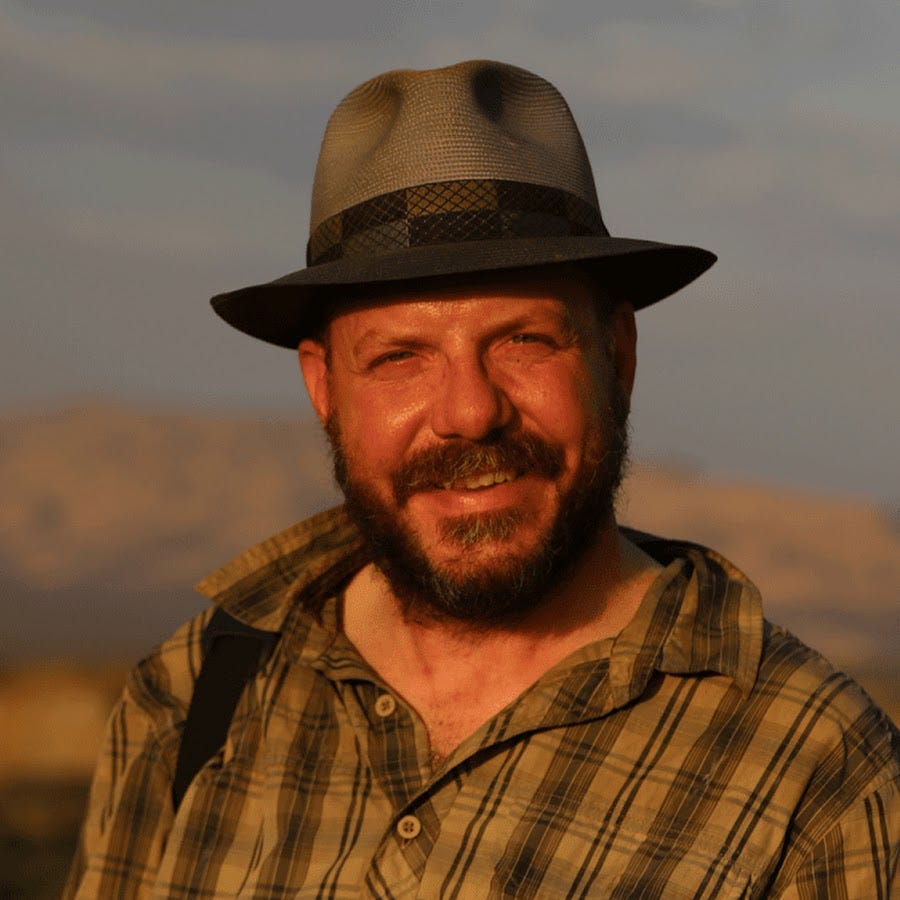
This is a free preview of a paid episode. To hear more, visit www.razibkhan.comOn this episode of Unsupervised Learning, third-time guest John Hawks returns after two years to discuss what we’ve learned in paleoanthropology since he and Razib last talked. Hawks obtained his PhD under Milford H. Wolpoff, and is currently a professor in anthropology at the University of Wisconsin. Hawks has also co-authored Almost Human: The Astonishing Tale of Homo naledi and the Discovery That Changed Our Human Story and Cave of Bones: A True Story of Discovery, Adventure, and Human Origins with Lee Berger.Razib first presses Hawks on what we know about archaic human admixture into modern populations, and particularly what we’ve learned about Denisovans. They discuss how many Denisovan populations there were, how many Denisovan fossil remains we have, and why it has taken so long for researchers to assign a species name to this lineage of humans. Hawks also address the puzzle of the phenomenon of why there are at least two pygmy hominin populations in Southeast Asia. Perhaps humans too are subject to island dwarfism like many other mammals? Also, Razib wonders why Southeast Asia was home to such a startling variety of humans at once prior to the arrival of modern populations. They discuss all of this in light of the framework of Out-of-Africa, the recent spread of anatomically modern humans outside of Africa. Razib questions how robust this model is today given our understanding of modern humans’ extensive and repeated interactions with both Neanderthals and Denisovans. Finally, Hawks covers some controversies over fossils being sent into space that roiled the archaeological world last year.
David Mittelman: pushing the genomic frontier in 2024
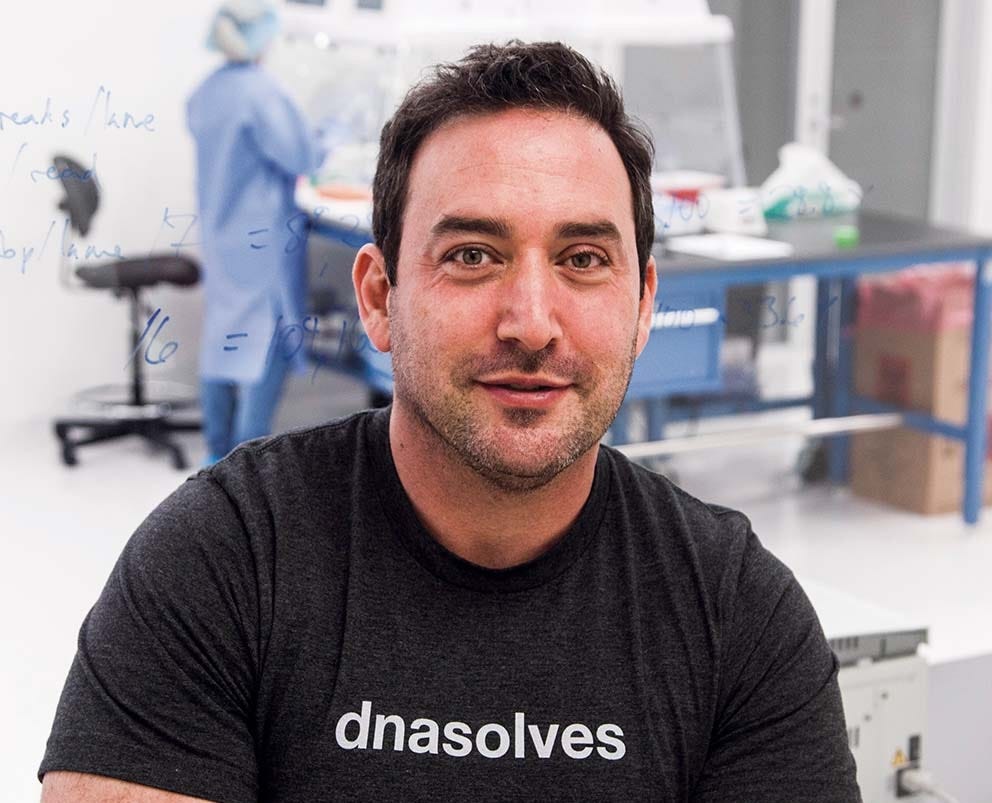
This is a free preview of a paid episode. To hear more, visit www.razibkhan.comThree years ago David Mittelman came on Unsupervised Learning to talk about emerging possibilities on the frontiers of genomics, and his new startup at the time, Othram. Since then, Othram’s work has been featured widely in the media, including in a Law & Order episode, and the firm has solved thousands of unsolved cases, with nearly 500 public. For over a decade, Mittelman has been at the forefront of private-sector genomics research. He trained at Baylor College of Medicine and was previously faculty at Virginia Tech.Razib and Mittelman discuss the changes that the rapid pace of genomic technology has driven in the field of genetics, from the days a $3 billion dollar draft human genome in the year 2000 to readily available $200 consumer genomes in 2024. One consequence of this change has been genetics’ transformation into information science, and the dual necessities of increased data storage and more powerful, incisive data analysis. Genomics made information acquisition and analysis so easy across the research community that it allowed for the pooling of results and discoveries in big databases. This has pulled genetics out of the basic science lab and allowed it to expand into an enterprise with a consumer dimension.Mittelman also discusses the improvements and advances in DNA extraction and analysis techniques that allow companies like his to now glean insights from decades-old samples, with bench sciences operating synergistically with computational biology. Razib and Mittelman talk about how he has helped solve hundreds of cold cases with new technology, in particular, at the intersection between new forensic techniques and both whole-genome sequencing and public genetic databases. They also discuss the future of genetics, and how it might touch our lives through healthcare and other domains, passing from inference to fields like genetic engineering.
In Search of Indo-Europeans in 2024: of Catacombs and Corded Ware
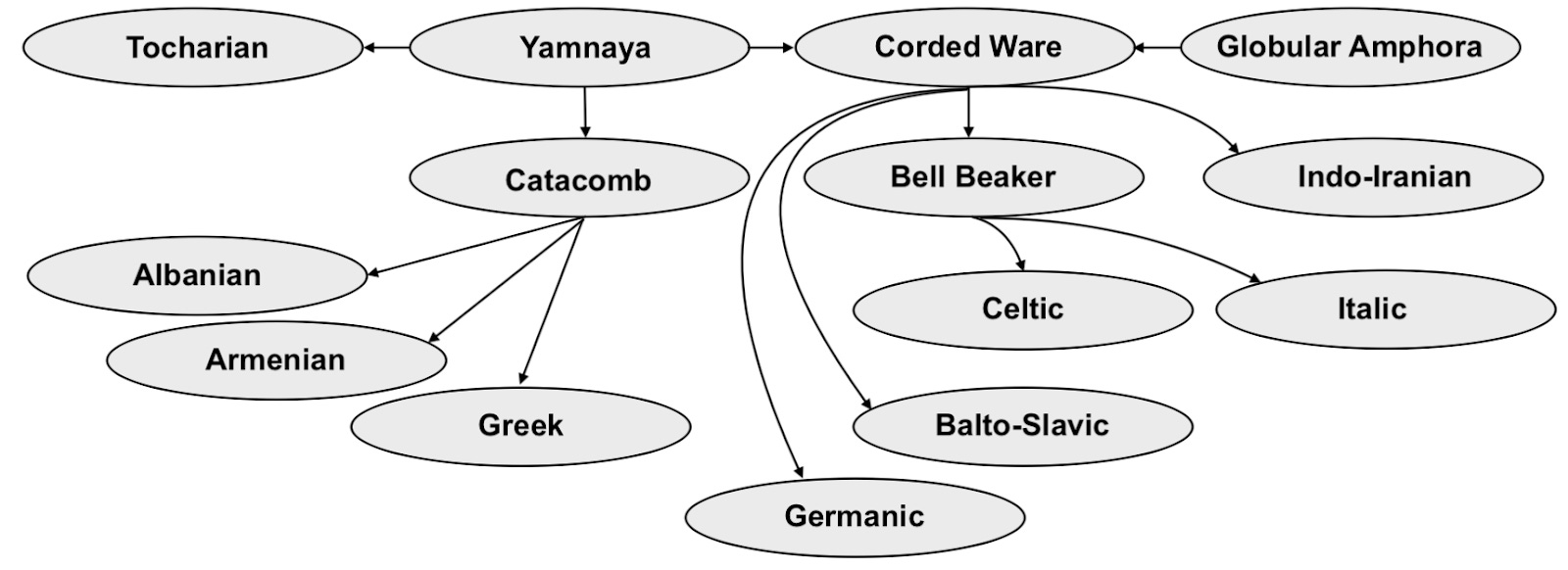
This is a free preview of a paid episode. To hear more, visit www.razibkhan.comOn this episode of Unsuperivsed Learning reviews what we know about Indo-Europeans as 2024 comes to a close. This is prompted by a new preprint Ancient genomics support deep divergence between Eastern and Western Mediterranean Indo-European languages, which finally establishes that populations in Northern and Southwestern Europe derived from a different steppe-origin population than the Greeks and Ilyrians of the Balkans, as well as Armenians. Razib talks about how ancient DNA is resolving long-standing disputes in historical linguistics, and coming down on the side of very particular sets of hypotheses. He discusses Peter Bellwood’s First Farmers: The Origins of Agricultural Societies, and its models about the origins of Indo-European languages, and how they have been falsified by paleogenomics. Razib also steps through the relationship of particular Indo-European groups to ancestral archaeological cultures like the Corded Ware, Bell Beaker and Catacomb Cultures. He also talks about the connections between charioteers and the early Mycenaeans, and looks at Robert Drews’ ideas in Coming of the Greeks. Finally, he addresses outliers in the ancient DNA data that indicate connections between locales as disparate as Scandinavia and Cyprus 4,000 years ago.
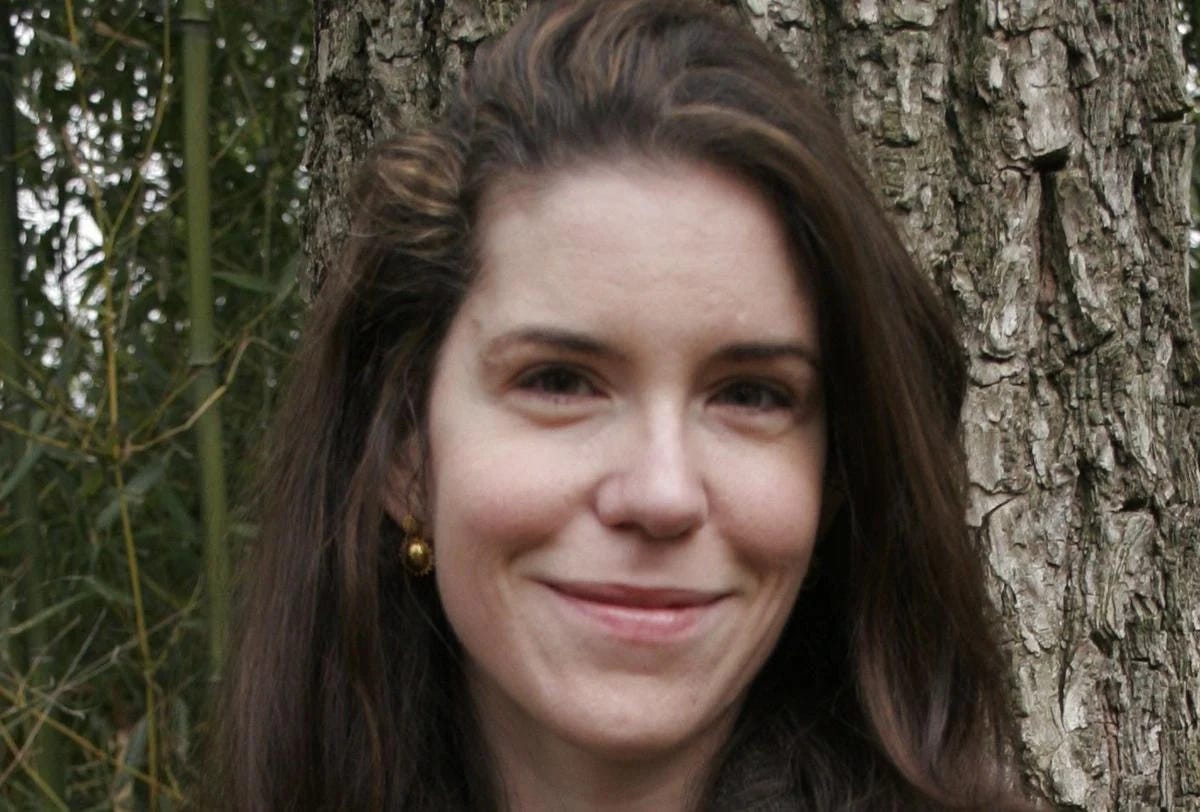
Megan McArdle: American food culture, artisanal to industrial
This is a free preview of a paid episode. To hear more, visit www.razibkhan.comThis week on Unsupervised Learning Razib talks to Megan McArdle, author of The Up Side of Down: Why Failing Well Is the Key to Success and Washington Post columnist and op-ed board member. McArdle was raised in New York City and attended Riverdale Country School. She obtained an undergraduate degree in English from University of Pennsylvania and an MBA from the University of Chicago. A pioneering blogger based out of New York City and covering the site of the WTC in the wake of 9/11, McArdle went on to work at The Economist, The Atlantic and Newsweek.In this episode, the discussion largely focuses on McArdle’s research about the cultural history of food and cooking in the US. But first they discuss the economic implications of Donald Trump’s election, and the domestic consequences shifting toward a tariff-heavy trade regime. McArdle lays out the case that a massive tariff would have the same impact as a tax, not to mention the broad disruptive economic effects on large companies’ supply chains.Then they move on to the changes in American cuisine over the last few centuries, and the shifts driven by technology and innovation. McArdle points out that in the 19th century, gelatin dessert was a luxury and an exotic treat because it was labor intensive to prepare. But by the middle of the 20th century industrial-scale food processing made gelatin, in particular Jell-o, a cheap commodity, and it became associated with the lower classes. Similarly, before factory farming, chicken and eggs were more expensive than red meat, and thus viewed as high-end ingredient (whereas today, chicken is far cheaper than beef). Finally Razib and McArdle talk about how the plentitude of food available in the 21st century contributes to the obesity epidemic that has only ceased its relentless expansion with the advent of Ozempic.

Nikolai Yakovenko: the Singularity is not here
On this episode of Unsupervised Learning, Razib catches up with Nikolai Yakovenko about the state of AI at the end of 2024. Yakovenko is a former professional poker player,and research scientist at Google, Twitter and Nvidia. With a decade in computer science, Yakovenko has been at the forefront of the large-language-model revolution that has given rise to multi-billion dollar companies like OpenAI, Anthropic and Perplexity and hundreds of smaller startups. Currently, he is the CEO of DeepNewz, an AI-driven news startup that leverages OpenAI’s latest model. Full disclosure: Razib actively uses and recommends the service and is an advisor to the company. Razib and Yakovenko first review what makes the last few years special, the rise of large-language-models on top of neural network architecture of transformers. Yakovenkoi discusses how far they’ve come since OpenAI released ChatGPT to the public in the fall of 2022, and how people have been using the underlying technology to develop applications atop it. Despite predictions of mass unemployment, Razib points out that two years later America is at full employment, and only niche fields like translation have been impacted. In contrast, Yakovenko points out that most software developers use artificial intelligence in some form to aid in their daily engineering work, noting the possibility that the AI revolution is integrating itself seamlessly as a utility for preexistent jobs. They also discuss the fact that though AI is a booming field, only one brand-name company has so far emerged in the industry, OpenAI. Though they agree that the current hype cycle is now abating, it is clear that the major investments in the field like data centers will continue from major players as AI-driven applications like self-driving cars become more and more mainstream. This is a public episode. If you'd like to discuss this with other subscribers or get access to bonus episodes, visit www.razibkhan.com/subscribe
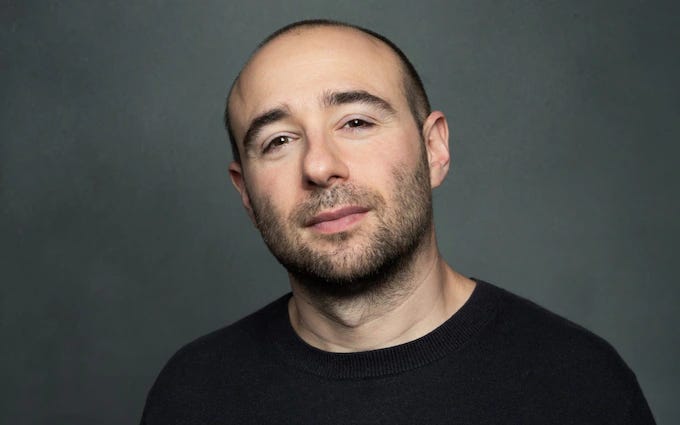
Yascha Mounk: American democracy in 2024
This is a free preview of a paid episode. To hear more, visit www.razibkhan.comOn this episode of Unsupervised Learning, Razib talks to Yasha Mounk. The founder of Persuasion, a contributor to The Atlantic and a professor at Johns Hopkins, Mounk now has his own Substack, where he hosts his weekly column and podcast. He is the author of The Great Experiment: Why Diverse Democracies Fall Apart and How They Can Endure, The People vs. Democracy: Why Our Freedom Is in Danger and How to Save It and The Identity Trap: A Story of Ideas and Power in Our Time. Razib and Mounk first discuss Mounk’s immediate reaction to the 2024 election, and how the Democrats might pick up the pieces going forward. Mounk believes that the argument in his book The Identity Trap, neatly captures many of the problems for the party. Democrats leaned in on the inevitably of racial polarization in an age of progressive depolarization. Razib also asks Mounk for his retrospective on the COVID-19 epidemic, in which he was a commentator who argued in The Atlantic for more stringent habits and then later, for an opening up. They also discuss how the Public Health establishment COVID interventions threw the whole field into disrepute, and what it tells us about the nature of expertise.Then Razib asks Mounk about European nations and their future. In particular, whether their low productivity and fertility rates combined with mass migration doom them to a future of irrelevance and national dissolution. Mounk highlights the unfortunate case of the UK in particular, though he notes that his home nation of Germany is finding itself in a precarious situation with China competing with its manufacturers and Russia cutting off its gas supply. Finally, Razib closes by asking Mounk whether he is still as worried about American democracy in the wake of the 2024 Trump win as he was in 2016.

Anatoly Karlin: Russian nationalism to American globalism
This is a free preview of a paid episode. To hear more, visit www.razibkhan.comToday Razib talks to Russian commentator and transhumanist Anatoly Karlin. Karlin has a BA in political economy from U C Berkeley. For most of the 21st century he had positioned himself as part of the right wing of the transhumanist movement. He returned to Russia after living in California’s Bay Area for several years, and from there he promoted a nationalistic vision in opposition to American military and cultural power. With the February 2022 invasion of Ukraine, he joined a chorus of Russian warbloggers cheering on the inevitable conquest.And then, like Richard Hanania, he did an about-face on the Russian invasion, reversing many of his views. Today Karlin is a digital nomad, and aligns firmly with American cultural and technological progressivism. He endorsed Kamala Harris and promotes what he terms a “Biosingularity.” His Substack is “Elite Human Capital,” a term popularized by Hanania. Arguably Karlin has gone further than Hanania in endorsing the new American global order, underpinned both by the US’s technological and cultural dominance.Razib and Karlin talk about how he came to invert so many of his views, while at the same time remaining fundamentally committed to the transhumanist project, like combating aging. They discuss the contrast between Russia and the US, and how Karlin came to see Vladimir Putin’s decision to invade Ukraine and stand against the West as folly. Karlin also discusses his peripatetic lifestyle, the new friends made and those lost due to his conversion to what he would have previously called “globalism.”
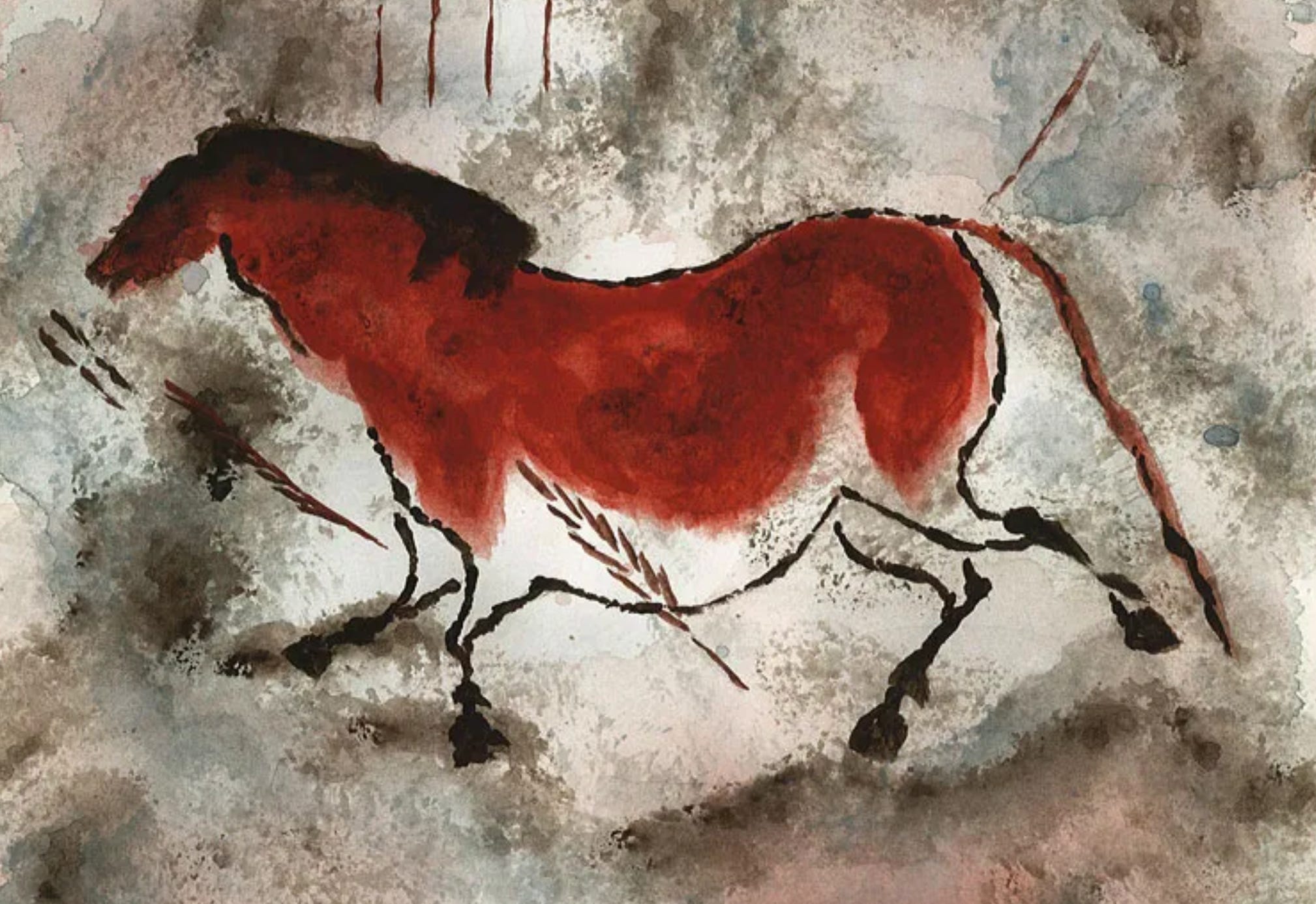
The Horse: Man's Most Useful Companion
This is a free preview of a paid episode. To hear more, visit www.razibkhan.comOn this week’s episode of Unsupervised Learning Razib covers the archaeology, genetics and history of the horse. Dogs may be man’s best friend, but for thousands of years horses were humanity’s most valuable domesticate. While pigs, cattle and goat were essential elements of the world’s subsistence economies, the horse in its military roles was a luxury good, with Chinese emperors sending delegations to Central Asia in search of “heavenly steeds.”But while dogs have been humanity’s sidekick for at least 20,000 years, and cattle and caprids for about 10,000 years, the horse is a relatively new addition, tamed on the Central Asia steppe only some 5,500 years ago. But despite their late entrance, horses quickly proved economically critical, opening up trade routes, increasing farming productivity and remaining weapons of war down until the last futile Polish cavalry charges in 1939 against invading Nazis. The horse’s role as a loyal steed was not inevitable; repeat attempts to domesticate tropical zebras have failed, while most other Eurasian megafauna, from moose to elephants, remain wild.The horse is part of the “secondary products revolution,” with high-fat milk and manes that can be refashioned to adorn human helmets, but just as importantly it was a pre-modern information technology revolution. Mongolian cavalry-messengers were able to cut a year-long trek across Eurasia down to a month. And between about 300 AD and 1500 AD, mounted cavalry dominated the Eurasian continent, driving the emergence of new empires and hastening the collapse of old ones. Since its domestication on the Pontic steppe in 2500 BC, which may have saved the species from extinction, the horse has played a critical part in world history, only really finally passing into obsolescence on the farm, the road and the battlefield in the past century and a half.

Crémieux Recueil: US election 2024 analysis
On this episode of Unsupervised Learning Razib talks to Cremieux, a Twitter anon who is regularly retweeted by the likes of Paul Graham, Noah Smith and Elon Musk. A data scientist and statistician, Cremieux specializes in visualizations and analyses that cut to the heart of social and cultural dynamics, from economics to behavior genetics. Cremieux and Razib first discuss the polls and demographic results of the 2024 election, in which Donald Trump seems to have made broad-based gains across all demographics. They also discuss the mirage of the “emerging Democratic majority,” and the possibility that Latinos and Asians shifted so much in the last four years that the racial depolarization predicted by analysts like David Shor since 2012 has finally come to pass.Cremieux also talks about the likely policy outcomes implied by Vivek Ramaswamy and Elon Musk’s slated heavy involvement in the next Trump administration, from the exit of Lina Khan to the reversal of numerous Biden executive orders in areas like employment and civil rights. Cremieux argues that there will be a massive house-cleaning in the civil service. Cremieux has talked to operatives with knowledge of the thinking of Ramaswamy’s people; if Ramaswamy gets a role like chief of staff, they plan to operationalize insights from Richard Hanania’s book, The Origins of Woke: Civil Rights Law, Corporate America, and the Triumph of Identity Politics. This is a public episode. If you'd like to discuss this with other subscribers or get access to bonus episodes, visit www.razibkhan.com/subscribe
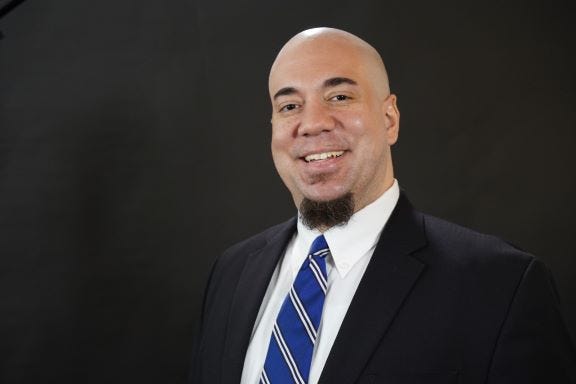
Wilfred Reilly: confronting historical myths propagated in schools
This is a free preview of a paid episode. To hear more, visit www.razibkhan.comOn this episode of Unsupervised Learning Razib talks to returning guest Wilfred Reilly about his new book, Lies My Liberal Teacher Told Me: Debunking the False Narratives Defining America's School Curricula. Reilly holds a Ph.D. in political science from Southern Illinois and a J.D. from the University of Illinois. Raised in a working-class neighborhood on Chicago’s South Side, he worked in the private sector before his career in academia, including stints as a political canvasser, real estate investor and a corporate sales executive. He is also the author of Taboo: 10 Facts [You Can't Talk About] and Hate Crime Hoax: How the Left Is Selling a Fake Race War. His writing appears in a wide array of publications like Commentary, National Review and Quillette. Razib and Reilly tackle the reality that over the last few decades the American education system has reoriented itself to teach values by slanting a neutral historical narrative not specific to a particular viewpoint in the direction of what is arguably distortion and misinformation. Perhaps the most egregious case of this is the narrative about slavery, making the institution a uniquely American sin when the reality is that until the 19th century it was a widespread practice across almost all societies. In fact, as Reilly points out, it was the West, and in particular Britain, that ended the practice across much of the world. An aspect of counterfactually reorienting the historical narrative for didactic purposes is that many educators have reinvented peoples and places to serve their own idealism; Native Americans for example have become repurposed into premodern environmentalist activists, even though their arrival in the New World over 10,000 years ago was indisputably associated with megafaunal extinction. Reilly shows that this pattern of reinterpreting and shading the past applies even to events within the lifetimes of the living. The various retellings of the “Red Scare” periods of American history after World War I and World War II obfuscate the reality that the US in the 20th century did have a Communist movement that infiltrated the professions and even the diplomatic corps; Joe McCarthy’s excesses seem to have ended up justifying amnesia about a global political movement that transformed much of the world and had very real aims to take over the USA.Lies My Liberal Teacher Told Me highlights that current attempts to retell history are not actually even liberal, but simply radical, and reflect the capture of education schools by Leftist activists since the 1970s. Rather than equipping children for the modern economy and expanding their understanding of the world, the regnant generation of educational practitioners seems intent on creating a cadre of 21st century radicals whose vague view of the past is rooted in ideology rather than any observable reality.

Leighton Woodhouse: chaos and corruption in urban America
This is a free preview of a paid episode. To hear more, visit www.razibkhan.comOn this episode of Unsupervised Learning Razib welcomes Leighton Akira Woodhouse back to the podcast. Woodhouse is a freelance journalist and a documentary filmmaker, currently based in Oakland, California. He grew up in Berkeley, and was a doctoral student in Sociology at UC Berkeley. After leaving academia he contributed to outlets like The Intercept and The Nation, before starting his own Substack, Social Studies, as well as working with Michael Shellenberger. He also has a new podcast with Lee Fang, Le Pod.Woodhouse and Razib discuss the broader issue of the necessity of order in cities, how important cities are to American economic dynamism, and how the problems of cities impact us all. One of Woodhouse’s beats has been crime and public disorder, and living in the Bay Area he has been unwitting witness to some of the most flagrant dysfunction of the current era. He outlines the culpability of the judicial system in the rise of petty crime and details organized crime’s opportunistic manipulation of the system. Razib inquires about the political elite’s role in fostering disorder, in particular the policies and views of the mayor of Oakland and the Alameda County district attorney. They address the rise of the movement against law and order on the West coast, its connection to social libertarianism, and how that differs from East-coast big city liberalism. Woodhouse believes that the West coast’s homelessness crisis emerges in particular from its unique political configuration accelerated by a judicial system that aids and abets social libertarianism that is operationally pro-crime. Finally, they discuss the possibility that the 2024 elections will throw out of office many of the mayors and district attorneys brought in in the last few years on a plan of social justice activism.
Lyman Stone: a demographer against the birth dearth
This is a free preview of a paid episode. To hear more, visit www.razibkhan.comOn this episode of Unsupervised Learning Razib talks to Lyman Stone, a soon to be PhD in sociology from McGill University specializing in population dynamics. Stone runs the Pro-natalism Initiative at the Institute for Family Studies, and has had appointments at AEI, and has written for The Atlantic and The New York Times. Well known for his social media presence, Stone is a published academic who has explored COVID policies, religion and divorce rates. Stone has previously been on Unsupervised Learning to discuss his work on religion, but this episode they shiftto his bread and butter: demographics and the preconditions for a pro-natalist society.First, Razib and Stone discuss the variables behind the fertility crash in the USA since 2008, and Stone debunks the notion that it is driven purely by decline in teen births. Despite the reality that teen births have dropped, disproportionately among Hispanics, Stone notes that since 2008 there has been an increase in both the age of first birth and age of marriage, resulting in reduced lifetime fertility. Stone also addresses worldwide patterns, and notes that aside from Niger almost the whole of Africa seems to have been impacted by the demographic transition that is leading to reduced fertility on other continents. He does note that the gap between the number of children women want, and the number they have, is particularly large in Africa. Razib and Stone also discuss the fiscal/monetary rationales for reduced fertility, as well as social and cultural changes. They also discuss the genetics and heritability of pro-natal dispositions, concluding that the changes we see in total fertility rate are driven by cultural change.
Peachy Keenan: cosmopolitan radical traditionalist
This is a free preview of a paid episode. To hear more, visit www.razibkhan.comOn this episode of Unsupervised Learning Razib talks to the pseudonymous commentator “Peachy Keenan.” A native of Los Angeles with an Ivy League education, Keenan worked in entertainment before detouring into punditry, writing for the Claremont Institute’s The American Mind, appearing on Fox News and penning Domestic Extremist: A Practical Guide to Winning the Culture War.Razib and Keenan discuss her peripatetic and unique journey from a relatively apolitical member of America’s liberal professional managerial class to a conservative Catholic housewife with a large family. Keenan talks about her ability to connect with audiences of all stripes despite her partisan leanings as the product of her cosmopolitan upbringing among coastal elites. Though in her values and practices she lives the life of the “domestic extremist,” she still retains an aesthetic appreciation of the broader culture in which she grew up. Domestic Extremist is to a great extent a roadmap from where she was, to where she is. Keenan offers a sort of primer on how to change the “factory settings” for the American professional class, proposing traditional family life as an exit out of the endless rat race.They also discuss the reality that the modern conservative culture falls short of produce any art for its own sake, at most putting out fare that ranges from overly didactic films produced by the Daily Wire to the cringe-inducing Christian film industry. Keenan emphasizes that good art must be good art, first and foremost, and whatever ideological valence should be layered in with subtlety and taste. She also discusses the problems with raising consciousness among conservative philanthropists about the problem of right-wing philistinism, and why aesthetic excellence would be a boon in any attempt to recapture the cultural high ground.

Jesse Singal: after the replication crisis and into the youth gender medicine debate
This is a free preview of a paid episode. To hear more, visit www.razibkhan.comOn this episode Razib talks to Jesse Singal, a journalist who has covered the social science beat for the last decade. Singal has an undergraduate degree in philosophy from University of Michigan and a master’s in public affairs from Princeton. Currently a freelance journalist who writes his own Substack, Singal-Minded, and contributes to Blocked and Reported with Katie Herzog, Singal is formerly an editor at New York Magazine. His first book The Quick Fix: Why Fad Psychology Can't Cure Our Social Ills, covered the replication crisis.Razib and Singal first talk about what he learned, and unlearned, during his time as a reporter at New York Magazine, especially social psychology results that were long on glamor but short on robustness. They discuss how long we’ve known that social psychology had a problem, and whether it still hasn’t reformed itself. Singal also reflects on his role in publicizing sexy findings, and how journalism has taken steps to be more careful lately. They also address some of the specific findings that came out of early 2010’s social science, from implicit bias to power posing.Next, Razib asks Singal about youth gender medicine, and the major controversies over the last few years. Singal discusses the differences between female to male transitions as opposed to male to female, and relates the whole domain back to the replication crisis and the lack of good research. They also discuss political and social aspects, and where Singal sees youth gender medicine going in the next few years.

Sam Hammond: I for one welcome our A.I. overlords
This is a free preview of a paid episode. To hear more, visit www.razibkhan.comIf you have a sibling with autism, your future child’s risk for an autism diagnosis is increased by a factor of 2 to 3.5×. Orchid’s whole genome embryo reports can help mitigate your child’s risk by screening for over 200 genetic variants definitively linked to autism and other neurodevelopmental disorders. Discuss your situation with a genetics expert.On this episode of Unsupervised Learning Razib talks to economist Sam Hammond. Canadian-born Hammond serves as the Senior Economist at the Foundation for American Innovation. His work primarily focuses on innovation and science policy, with particular attention to the societal and institutional impacts of disruptive technologies such as artificial intelligence.Before his role at FAI, Hammond was Director of Poverty and Welfare Policy at the Niskanen Center. Hammond also held a research fellowship at the Mercatus Center at George Mason University, focusing on policy issues related to technology and regulation. He holds a BA in Economics from Saint Mary’s University and MA's in Economics from George Mason University and Carleton University.After a quick discussion about Canadian housing, Razib and Hammond consider his piece 95 theses about AI. Hammond’s contention is that AI might prove as impactful as the printing press, or, at the outer edge equivalent to photosynthesis. Nearly two years into the current “AI hype cycle” we still haven’t found the “killer app” of AI, but thinkers like Hammond are getting ahead of the likely inevitable societal changes. He believes that change is inevitable, and the details that need to be worked out are how we as a species adapt and evolve in response to our technology. Hammond contends that the AI-revolution is likely to produce changes in the next generation analogous to industrial transformations of the late 19th centuries and early 20th centuries, when cars, electrification and airplanes transformed civilization.
14,000 years of natural selection
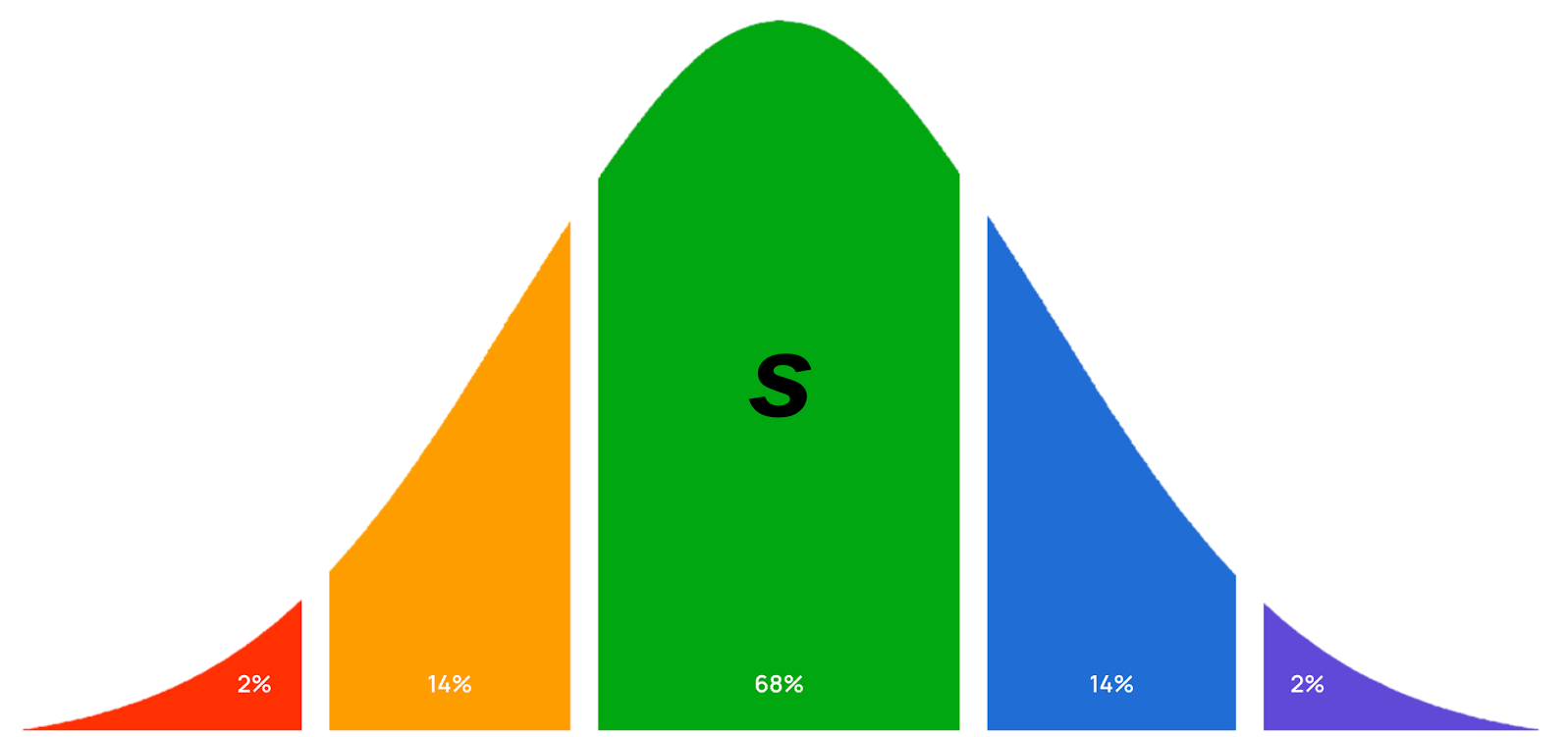
This is a free preview of a paid episode. To hear more, visit www.razibkhan.comIf you have a sibling with autism, your future child’s risk for an autism diagnosis is increased by a factor of 2 to 3.5×. Orchid’s whole genome embryo reports can help mitigate your child’s risk by screening for over 200 genetic variants definitively linked to autism and other neurodevelopmental disorders. Discuss your situation with a genetics expert.On this episode of Unsupervised Learning Razib talks about what we have learned from a blockbuster new preprint, Pervasive findings of directional selection realize the promise of ancient DNA to elucidate human adaptation. Synchronously released was the Ancient Genome Selection browser, which allows you to trace the allele frequency of variants of interest over the last 10,000 years. Razib covers:* The relationship of selection to adaptation and the Darwinian understanding of evolution* Non-genetic selection* Types of biological selection like positive, negative, background and balancing selection* Hard vs. soft sweeps and their relevance to detecting selection in the genome* Older forms of natural selection detection between species (dN/dS, Tajima’s D)* Newer forms of selection detection within species with haplotype structure, outlier SNP analysis and site frequency spectra* The Generalized Linear Mixed Model used to model allele frequency change over time, and estimates of selection in cases where population structure and drift are not sufficient* Specific examples of SNPs whose variation can be examined in the browser and are clearly cases of selection* Survey of traits that were revealed under selection, including blood groups, pigmentation and intelligence* Critiques of the methods due to not accounting for drift or population structure, and its limitations in relation to the ability to port across populations due to LD structure

Europe: 40000 BC to 1200 BC
This is a free preview of a paid episode. To hear more, visit www.razibkhan.comIf you have a sibling with autism, your future child’s risk for an autism diagnosis is increased by a factor of 2 to 3.5×. Orchid’s whole genome embryo reports can help mitigate your child’s risk by screening for over 200 genetic variants definitively linked to autism and other neurodevelopmental disorders. Discuss your situation with a genetics expert.On this week’s episode of Unsupervised Learning Razib discusses the genetic and archaeological history of Europe from the arrival of modern humans (permanently) 45,000 years ago, to the end of the Bronze Age in the decades after 1200 BC. He covers these time periods:* Pre-Aurignacian (before 43 kya) * Aurignacian (43-26 kya) * Gravettian (33-21 kya) * Solutrean (22-17 kya) * Magdalenian (17-12 kya) * Epigravettian (21-10 kya) * Mesolithic (12-7 kya) * Neolithic (9-5 kya) * Bronze Age (5-3 kya)Relevant papers:* Reconstructing contact and a potential interbreeding geographical zone between Neanderthals and anatomically modern humans* The Persian plateau served as hub for Homo sapiens after the main out of Africa dispersal* A genome sequence from a modern human skull over 45,000 years old from Zlatý kůň in Czechia* An early modern human from Romania with a recent Neanderthal ancestor* Palaeogenomics of Upper Palaeolithic to Neolithic European hunter-gatherers* Survival of Late Pleistocene Hunter-Gatherer Ancestry in the Iberian Peninsula* A 23,000-year-old southern Iberian individual links human groups that lived in Western Europe before and after the Last Glacial Maximum* Population genomics of Mesolithic Scandinavia: Investigating early postglacial migration routes and high-latitude adaptation* Late Pleistocene human genome suggests a local origin for the first farmers of central Anatolia* Genomic Evidence Establishes Anatolia as the Source of the European Neolithic Gene Pool* Massive migration from the steppe was a source for Indo-European languages in Europe* The genomic ancestry of the Scandinavian Battle Axe Culture people and their relation to the broader Corded Ware horizon* The genomic history of the Iberian Peninsula over the past 8000 years* Steppe Ancestry in western Eurasia and the spread of the Germanic Languages
Misha Saul: the Antipodean Anglosphere
This is a free preview of a paid episode. To hear more, visit www.razibkhan.comIf you have a sibling with autism, your future child’s risk for an autism diagnosis is increased by a factor of 2 to 3.5×. Orchid’s whole genome embryo reports can help mitigate your child’s risk by screening for over 200 genetic variants definitively linked to autism and other neurodevelopmental disorders. Discuss your situation with a genetics expert.On this episode of Unsupervised Learning Razib talks to Misha Saul, the host of the Kvetch Substack. Saul is a first-generation Jewish Australian, born in Georgia (former Soviet republic), who grew up in Adelaide and now lives in Sydney. He graduated from the University of Adelaide with degrees in commerce and law. His day job is in finance, but the Kvetch highlights his interests in history and Jewish culture. Razib and Saul discuss extensively the differences and similarities between the US and Australia, and how each relates to other Anglophone nations like Canada, New Zealand and of course the UK. Saul asserts though Australia leans into its frontier reputation, in reality it is much more of a bureaucratic-ruled nation than the US, albeit with more of a Scots-Irish flavor than comparatively middle-class New Zealand. He also contrasts the relatively generous welfare-state of Australia and America’s inequality, which he describes by analogy to the film 2013 Elysium, with its contrast between an earth dominated by favelas and a well-manicured low-earth orbit utopia for the super rich. They also discuss the geographical and cultural coherency of a vast nation like Australia, which has a desert at its center. Saul mentions it is often actually cheaper to fly to and vacation in Bali or another Asian locale than going to Perth from Sydney. Despite the reality that Australia has exotic fauna, it is notably an overwhelmingly urban society, where few have any interaction with the “bush.” Though Australians appreciate archetypes like “Crocodile Dundee,” Saul paints a picture of a much more urbane reality. Razib asks about the phenomenon of “white-presenting” Aboriginals, and Saul argues all societies look somewhat crazy from the outside because of their shibboleths, and the debates around Aboriginality are Australia’s.As an immigrant and first-generation Australian, Saul also discusses Australia’s immigration system, which strictly controls and regulates migration. Saul argues that because of the high educational and skill qualifications most Australian immigrants assimilate well, and he contends that there is a broad consensus to maintain strict limits on inflows. He argues that the Anglo-Australian identity is strong enough that the assimilative process continues to work even with the large number of Asians from China and India, who have triggered nativist worries and political activism.

Rachel Haywire: the edge of the avant-garde
This is a free preview of a paid episode. To hear more, visit www.razibkhan.comIf you have a sibling with autism, your future child’s risk for an autism diagnosis is increased by a factor of 2 to 3.5×. Orchid’s whole genome embryo reports can help mitigate your child’s risk by screening for over 200 genetic variants definitively linked to autism and other neurodevelopmental disorders. Discuss your situation with a genetics expert.On this episode of "Unsupervised Learning," Razib talks to Rachel Haywire, who writes at Cultural Futurist. Haywire is the author of Acidexia and began her career in futurism as an event planner for the Singularity Institute. She got her start as part of the "right-brain" faction around the Bay Area transhumanist and futurist scene circa 2010. Currently, she is working on starting an art gallery in New York City that serves as an event space for avant-garde creators who are not encumbered by mainstream or "woke" cultural sensibilities.Haywire recounts her experience as a creator in the early 2010s in the Bay Area and the transition from a socially libertarian milieu where diverse groups mixed freely to one more defined by a progressive cultural script, with the threat of cancel culture beginning to be noticeable. She points to the 2013 cancellation of Pax Dickinson for edgy tweets as a turning point. Razib and Haywire also allude to the role that the reclusive accelerationist philosopher Nick Land played in seeding certain ideas and influencing movements like the Dark Enlightenment.Jumping to the present, Haywire now lives in New York City, and she addresses the Dimes Square scene centered around the neighborhood in Manhattan's Lower East Side. Haywire points out that the actual artistic production from Dimes Square luminaries is quite low, with an almost total lack of music and a focus on online personas. Her goal with her salons and soon-to-open gallery is to put the emphasis on art above politics or e-celebrity culture.Finally, Razib discusses the impact of AI on creativity and whether it will abolish the artist. Haywire believes that AI is just another tool and has had mixed success leveraging it for her own artistic works in areas like industrial music. She believes that the real use of AI will be to create drafts and prototypes that artists will have to polish and reshape so that they reflect human creativity rather than just some averaged algorithm.
Halie May: the democratization of genomics
This is a free preview of a paid episode. To hear more, visit www.razibkhan.comIf you have a sibling with autism, your future child’s risk for an autism diagnosis is increased by a factor of 2 to 3.5×. Orchid’s whole genome embryo reports can help mitigate your child’s risk by screening for over 200 genetic variants definitively linked to autism and other neurodevelopmental disorders. Discuss your situation with a genetics expert.On this episode of Unsupervised Learning Razib talks to Halie May, the host of the Substack The Sequence, and a genetic counselor at Natera. May has a B.S. in chemical biology from Stevens Institute of Technology and a M.S. in human genetics from Sarah Lawrence. Before working at Natera she was a researcher and instructor at Columbia University and designed testing panels at genetics start-up, Tomorrow’s Health.Razib and May discuss how much the field has changed even in her short career, in large part because genetic counseling is a 50-year-old profession that has been transformed in the last decade by the introduction of genome-wide datasets. May highlights the changes in the last ten years, and how they have impacted counselors and end users, in particular the ubiquity of noninvasive prenatal screening tests. Here, she mentions that whole-genome analysis isn’t quite where she had expected when she began studying these issues six years ago, and Razib brings up the fact that it’s already a decade ago he had his son whole-genome sequenced. They discuss the hold-ups in the progress of genetic testing and analysis, and May points out that a major issue is likely the utter lack of federal guidelines, with oversight of genetic healthcare mostly being left to the states. This lack of coordination means that there is no top-down signal, and localities and institutions are left to cobble together frameworks in an ad hoc manner. Razib also asks May about how private companies, like Natera, might fill the gap in what hospitals can provide, and the potential pathways and promise of the democratization of genetic results.

Inez Stepman: Silicon Valley's post-human world
This is a free preview of a paid episode. To hear more, visit www.razibkhan.comIf you have a sibling with autism, your future child’s risk for an autism diagnosis is increased by a factor of 2 to 3.5×. Orchid’s whole genome embryo reports can help mitigate your child’s risk by screening for over 200 genetic variants definitively linked to autism and other neurodevelopmental disorders. Discuss your situation with a genetics expert.On this episode of Unsuperivsed Learning Razib talks to native Californian, Inez Stepman. Stepman has an undergraduate degree in philosophy from UC San Diego, and obtained her J.D. from University of Virginia. She is a Senior Policy Analyst at the Independent Women’s Forum, a Lincoln Fellow at the Claremont Institute and a contributor to The Federalist. Stepman is also a co-host of the High Noon podcast.Razib and Stepman first talk about her reaction to Marxist author Malcom Harris’ Palo Alto: A History of California, Capitalism and the World, exemplified by her piece in First Things, Ambitious Nihilism. A native of Palto Alto who went to high school with Harris in the early 21st century, Stepman believes that the left-wing narrative in Palo Alto is misleading. Though Silicon Valley avows fashionable social liberalism and radicalism, Harris argues that it is actually a seedbed for right-wing neo-Neo-Reaganism and capitalism. Stepman disagrees; though it is true that from a Marxist and explicitly socialist perspective Silicon Valley falls short, the overall political tenor was firmly on the left. She recalls even after 9/11 that her Palo Alto milieu took a dim view of American patriotism. For Stepman, Silicon Valley was more a laboratory of fashionable woke shibboleths, about a decade ahead of its time, as well as being the training ground for conformist grinds who were geared toward jumping over the next academic or professional hurdle.Stepman sees this narrow and short-sighted ethos throughout Silicon Valley, and the broader sense in American culture that technology will allow us to transcend our limits to humanity. She argues that wealthy tech entrepreneurs who aim to defeat death, like Bryan Johnson, are fundamentally inhuman in their goals and orientation. Razib and Stepman discuss extensively advances in biotechnology and fertility in particular that American society seems to take for granted, like noninvasive prenatal testing and gene editing, which are rolling out without much discussion.

Christina Buttons: navigating the gender wars
This is a free preview of a paid episode. To hear more, visit www.razibkhan.comIf you have a sibling with autism, your future child’s risk for an autism diagnosis is increased by a factor of 2 to 3.5×. Orchid’s whole genome embryo reports can help mitigate your child’s risk by screening for over 200 genetic variants definitively linked to autism and other neurodevelopmental disorders. Discuss your situation with a genetics expert.On this episode of Unsupervised Learning Razib talks to Christina Buttons, who writes at Buttons Lives. A native Californian and erstwhile artist, Buttons switched to journalism two years ago, writing about gender medicine. A contributor to Quillette, The Post-Millennial and The Daily Wire, Buttons is now a freelance journalist living in Nashville, Tennessee.The first part of the conversation breaks down what “gender medicine” entails in its gory details. In April Razib had a conversation with Colin Wright about the relationship between sex and gender, and the broader philosophical issues entailed by the ideas of gender ideology. But in the discussion with Buttons, Razib asks what it means for a child to transition medically. What are the surgeries that transition a boy to a girl and a girl to a boy? They also discuss different hormone regimes, from those that block normal puberty to those that enhance the secondary sexual characteristics of the target gender to which the individual aims to transition. Buttons discusses why she got interested in the topic, the fraught area of medically transitioning children. She distinguishes her circumspect and focused critiques of gender transition from the catchall broadsides of so-called trans-exclusionary radical feminists and religious conservatives.Razib asks Buttons about her departure from The Daily Wire due to ideological differences, and what it feels like to be a moderate between militant factions to both her left and right. Though originally on the Left, and even woke, today Buttons identifies as a centrist classical liberal, which naturally means she tends to offend a great variety of factions with her individualistic viewpoints.Finally, they discuss youth treatment centers, group homes where self-destructive young people are sent to recover and be rehabilitated. Recently these have been in the news, with Paris Hilton claiming that she and others had been subject to abuse at these centers. Buttons herself spent much of her teens in youth treatment centers, and she believes that Hilton’s case is weak, and shutting down these facilities will result in higher rates of self-harm. Buttons plans on moving to this issue as her next project, because she believes people need to know the truth beyond the sensational headlines.

Sarah Haider: activist to podcaster and public intellectual
This is a free preview of a paid episode. To hear more, visit www.razibkhan.comIf you have a sibling with autism, your future child’s risk for an autism diagnosis is increased by a factor of 2 to 3.5×. Orchid’s whole genome embryo reports can help mitigate your child’s risk by screening for over 200 genetic variants definitively linked to autism and other neurodevelopmental disorders. Discuss your situation with a genetics expert.On this episode of Unsupervised Learning, Razib talks to returning guest, Sarah Haider. Haider is the co-host of the podcast A Special Place in Hell and the Substack Hold That Thought. A native of Houston, graduate of the University of Texas in Austin, Haider is the founder and former executive director of Ex Muslims of North America. Today Razib asks her about her move out of the nonprofit world, and into being a full-time public intellectual, speaking and writing on topics of interest to her beyond that of Muslim-born who become secular. And then, more specifically, Razib probes Haider about her thoughts on gender and politics. He asks her how becoming a mother in the last few years and idiosyncratic aspects of her personality may lend themselves to a comfortable home in the heterodox intellectual space.They extensively consider the different dynamics of male and female podcasters, and the comparative surfeit of men versus women willing to offer their opinions on all and sundry topics. Haider also contends that women, by their very nature, are going to be perceived differently than men, resulting in a different way of arguing and engaging with audiences, guests and co-hosts. They also discuss the reality that both their podcast audiences have a male tilt, and whether that is a direct outcome of their communication styles. Outside of the realm of podcasting Razib and Haider explore the implications of there being two ways of speaking and thinking when it comes to men and women, and how that shapes how you talk, think and value issues.Haider also discusses how her pregnancy, and becoming a mother, have changed her politics and social views. When Razib brings up Erik Hoel’s idea of “cultural billionaires,” Haider asks how many women are on the list of such individuals? She argues that becoming a mother is such an all-consuming task that it is no surprise that most of the prominent public women who contribute to opinion and academia are childless; Haider points that Betty Friedan was exceptional among second-wave feminists in having children.

Eliah Overbey: the birth of bioastronautics
This is a free preview of a paid episode. To hear more, visit www.razibkhan.comIf you have a sibling with autism, your future child’s risk for an autism diagnosis is increased by a factor of 2 to 3.5×. Orchid’s whole genome embryo reports can help mitigate your child’s risk by screening for over 200 genetic variants definitively linked to autism and other neurodevelopmental disorders. Discuss your situation with a genetics expert.On this episode of Unsupervised Learning Razib talks to Dr. Eliah Overbey, assistant professor of bioastronautics at the University of Austin. Dr. Overbey has an undergraduate degree in computer science from UC San Diego, a Ph.D. in genomics from the University of Washington, and did her postdoctoral fellowship at the Weill Cornell Medical School. She joined University of Austin in the summer of 2024, and is setting up a genomics core facility in the fall.First, Razib asks Overbey what bioastronautics as a field is, and what it attempts to discover. In short, bioastronautics focuses on the impact of spaceflight and zero gravity on the biological functioning of human astronauts and the organisms that have been taken into space. Overbey focuses on genomics and related fields, and talks about the difficulties of small sample size (only 600 humans have thus far been astronauts), as well as the funding difficulties in a field that falls between conventional disciplines (physics and biology). Razib and Overbey also discuss the possibilities opened by private space flight, and the likelihood in the near future of much larger sample sizes for studies given the efforts of SpaceX and Blue Origin. Overbey also talks about the biological difficulties in manned space flight, and the difficulties that might occur on a mission to Mars, from bone loss to radiation.Overbey is optimistic in particular about the expansion of near-Earth space travel in the next decade due to the privatization of space flight, and the greater flexibility of some private actors in funding research studies than NASA enjoys. Anticipating larger sample sizes, she has begun a biobank focused on samples in space, and has begun engaging in widespread collaborations with other researchers in the nascent but growing field.
Aria Babu: pro-natalism in the shadow of empire
This is a free preview of a paid episode. To hear more, visit www.razibkhan.comIf you have a sibling with autism, your future child’s risk for an autism diagnosis is increased by a factor of 2 to 3.5×. Orchid’s whole genome embryo reports can help mitigate your child’s risk by screening for over 200 genetic variants definitively linked to autism and other neurodevelopmental disorders. Discuss your situation with a genetics expert.Today Razib talks to Aria Babu, a British think-thank professional who is part of the growing number of young men and women who are taking an interest in population decline and promoting pro-natalism. Babu has a degree in chemistry from University College London, and has long worked in areas related to the study of economic growth and entrepreneurship. Prior to her interest in pro-natalism Babu held conventional views about population growth and its ties to environmental alarmism. But she quickly saw that actually fertility is crashing worldwide, and with that there might be dire economic and social consequences. If that trend is left unchecked, she foresees a worst case scenario of massive economic decline and the replacement of our riotously varied modern civilization by a select few narrow subcultures, like the Amish or Somalis, who continue to favor reproduction as a social value. On the state level, declining populations will likely lead to the rise of culturally stagnant and politically authoritarian societies reminiscent of The Children of Men.Babu and Razib also discuss what it is like living as an urban professional in Britain in 2024. While the fact that the UK has one megacity can lead to disproportionate focus on London, Babu points out that it allows the entire nation’s intellectual and cultural class to be in close proximity, resulting in powerful synergies. She also argues that the problem in the UK is not immigration, but insufficient housing for larger populations and the lack of a system to allow in very skilled and value-add migrants. Rather than integration into the EU or an American-system, Babu favors an approach closer to Singapore, where the UK goes its own way and crafts its policies to take advantage of specific opportunities offered by blindspots in EU or American politics.
Louise Perry: overcrowded Britain and the ennui of a post-imperial nation
This is a free preview of a paid episode. To hear more, visit www.razibkhan.comIf you have a sibling with autism, your future child’s risk for an autism diagnosis is increased by a factor of 2 to 3.5×. Orchid’s whole genome embryo reports can help mitigate your child’s risk by screening for over 200 genetic variants definitively linked to autism and other neurodevelopmental disorders. Discuss your situation with a genetics expert.On this episode of Unsupervised Learning Razib talks to Louise Perry. A British journalist known for her commentary on feminism and gender issues, Perry is the author of the book The Case Against the Sexual Revolution. She also contributes to The New Statesman, UnHerd, and The Daily Mail, and has a Substack at Maiden Mother Matriarch. Perry is a graduate of University of London’s School of Oriental and African Studies, with a degree in anthropology.Perry and Razib first discuss Britain’s current housing crisis, the reasons and possible solutions. Though the Office for National Statistics estimates the UK’s population at 67.1 million, Perry believes that the true number is likely higher because individuals who are present illegally or have a “gray” status are unlikely to respond. But even this population would make the UK over eight times more densely populated than the US, with England being 13 times denser. In fact, England’s population density is similar to India’s. Perry also brings up the reality of massive immigration flows over the last few years; where before 2020 net migration was around ~200,000 per year, since 2021 the figure has been closer to ~500,000. Additionally, many of these immigrants are placed in “social housing,” subsidized or owned by the government. Perry also points out that the legal regulations in Britain stipulate that about 30% of new developments be allocated for social housing, which incentivizes incumbent homeowners to block construction. Additionally, the rate of population growth is much higher than the British construction industry’s capacity to keep up with the theoretical demand. The UK does not produce enough bricks, nor does it have the labor pool of homebuilders.The conversation continues to a broader discussion of the ennui in modern British society. Perry asserts that a major problem driving the housing crisis is that the UK has only one major city, London, and any professional who wants to settle in a more affordable region must also take a major salary cut. Setting aside London, and its economic engines of finance and commerce, Perry characterizes the rest of the UK as more akin to a developing Eastern Europe nation. She also believes that the next decade will see a mass flight of the upper-middle-class, the primary tax base of the state. Perry herself has Australian citizenship through her parents (who immigrated from Australia to the UK), while her husband has an American mother. Her situation is common to many upper-middle-class Britons, who have connections to Canada, the US, New Zealand and Australia. Perry believes this is one reason the British political culture is not reforming itself: so many have in the back of their head that they can jump ship if it starts sinking. Ultimately, her thesis is that British openness and intellectual curiosity make the national character a poor seedbed for nationalism, and it may be inevitable that the UK is caught up and tossed about in a vortex of globalization.
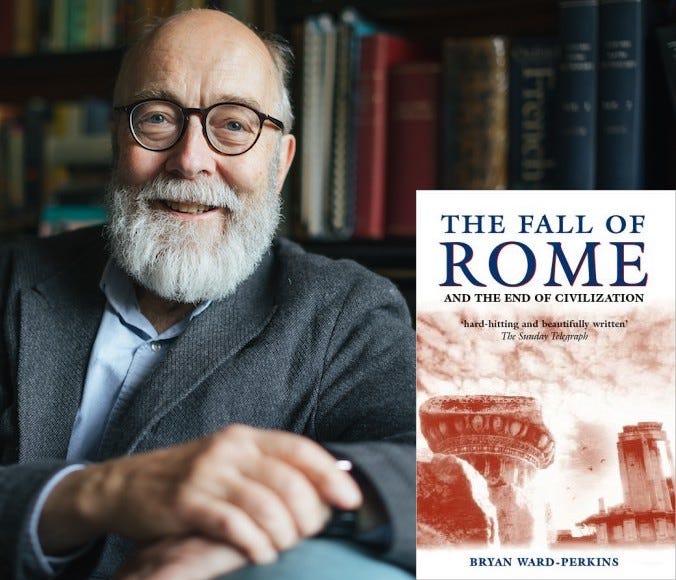
Bryan Ward-Perkins: The material consequences of the fall of Rome
This is a free preview of a paid episode. To hear more, visit www.razibkhan.comIf you have a sibling with autism, your future child’s risk for an autism diagnosis is increased by a factor of 2 to 3.5×. Orchid’s whole genome embryo reports can help mitigate your child’s risk by screening for over 200 genetic variants definitively linked to autism and other neurodevelopmental disorders. Discuss your situation with a genetics expert.On this episode of Unsupervised Learning Razib talks to archeologist and historian Bryan Ward-Perkins about his 2005 book The Fall of Rome: And the End of Civilization. Ward-Perkins was born and grew up in Rome, a son of architectural historian and archaeologist, John Bryan Ward-Perkins. Educated at Oxford University, Ward-Perkins eventually became a fellow of Trinity College at the same university, from which he has since retired. An archaeologist with a deep interest in economic history, Ward-Perkins’ standout book The Fall of Rome was to a great extent a restatement of traditional understandings of the Roman fall in the wake of academic revisions stimulated by Peter Brown’s 1989 World of Late Antiquity: AD 150-750. Ward-Perkins scholarship focuses on the outputs of economic production: fine pottery, grand public buildings and copious coinage. In contrast, Brown and his fellow travelers tended to focus on religious innovation and creativity in the centuries coincident with Rome's fall. The Fall of Rome documents in crisp, dense prose the material collapse attendant with the dissolution of the Western Empire in the late 5th and 6th centuries, from the vanishing of pottery in Britain to the cessation of the construction of massive buildings across the Italian peninsula.Razib also asks Ward-Perkins his opinions on his colleague Pete Heather’s book The Fall of the Roman Empire: A New History of Rome and the Barbarians. Ward-Perkins sees Heather’s work as complementary; while Ward-Perkins is interested in the material aspects of everyday Roman life, Heather documents and narrates the diplomatic and military affairs of the Roman elite. Ward-Perkins also comments on Chris Wickham’s work in books like The Inheritance of Rome: Illuminating the Dark Ages 400-1000, which outlines how the Roman and post-Roman states differed, in particular, the disappearance in Europe of professional soldiers paid in currency, rather than feudal levies. They also discuss Walter Scheidel’s Escape from Rome: The Failure of Empire and the Road to Prosperity, and whether Roman citizens were actually materially better off than their medieval successors. Ward-Perkins also gives his estimation of the time measured in centuries until Western Europe reattained Roman levels of social, technological and political complexity.

Nikolai Yakovenko: the stillborn promise of the LLM age
If you have a sibling with autism, your future child’s risk for an autism diagnosis is increased by a factor of 2 to 3.5×. Orchid’s whole genome embryo reports can help mitigate your child’s risk by screening for over 200 genetic variants definitively linked to autism and other neurodevelopmental disorders. Discuss your situation with a genetics expert.On this episode of Unsupervised Learning Razib talks to Nikolai Yakovenko, a returning guest to the podcast, about his new AI startup, DeepNewz, and the state of the LLM-driven AI landscape circa the summer of 2024, where we are in relation to earlier expectations and where we might be in the next decade. Yakovenko is an AI researcher who has worked at Google, Twitter and Nvidia, and is now a serial entrepreneur. He is also a competitive poker player. He currently lives in Miami, Florida, though he travels frequently to America’s numerous “ideaopolises,” from San Francisco, Austin, Boston to New York City.Razib and Yakovenko discuss the reality that in the middle of 2024 here they are again, chatting about the world on a podcast, a scenario not everyone anticipated in the heady days of December 2022/January 2023 when the more overheated visiony tech imaginations swirled with expectations that the advent of artificial general intelligence, the “machine god,” was imminent. Though OpenAI’s GPT 3/3.5 was a leap ahead of GPT 2, GPT 4/4o has been a less spectacular advance. One of the major unforeseen aspects of the LLM-based framework in AI has been the returns to scale in terms of training data, but the last year and a half have not seen any great quantum jumps. The paradigm-shifting revolution that was promised has not arrived. Though AI has increased productivity on the margins, and certain artistic professions and translators have been decimated, overall, it is still a technology with more promise than realized outcomes. Yakovenko points out that AI-driven music creation produces serviceable outputs, but not great masterpieces. To test this, Razib used Suno to create a song “Nikolai’s Dream” within 5 minutesmid-conversation. Though mildly catchy, Suno’s lyrical styling elicited more amusement than awe.Yakovenko notes the importance of the LMSYS Chatbot Arena Leaderboard to get a sense of the performance of the various LLM projects. Using the feedback of participants, it produced an updated ranking of chatbot performance. The top ten models are from OpenAI, Anthropic, Google and a Chinese vendor. Yakovenko notes the compression, with a very tight distribution of scores at the top. It turns out that OpenAI is not running away from their competition contra its brand visibility likely being two orders of magnitude greater than Anthropic’s. This brings to the fore the reality that these AI technologies have been viewed as both scientific research projects and potential business and consumer products.Finally, Yakovenko and Razib talk about DeepNewz. While most LLM-based chatbots tend to exclude very recent data and events, Yakovenko had the idea of creating DeepNewz to aggregate and assemble the breaking news in various categories like science and sports. Instead of a top-down query of news in various categories, the idea behind DeepNewz is to both cater to your preferences in terms of what you might find interesting, but also to surface stories that you might not know you might be interested in, adding more value.Related: David McKay: AI and the end of the world as we know it and Nick Cassimatis: fear not AI, this too shall pass. This is a public episode. If you'd like to discuss this with other subscribers or get access to bonus episodes, visit www.razibkhan.com/subscribe
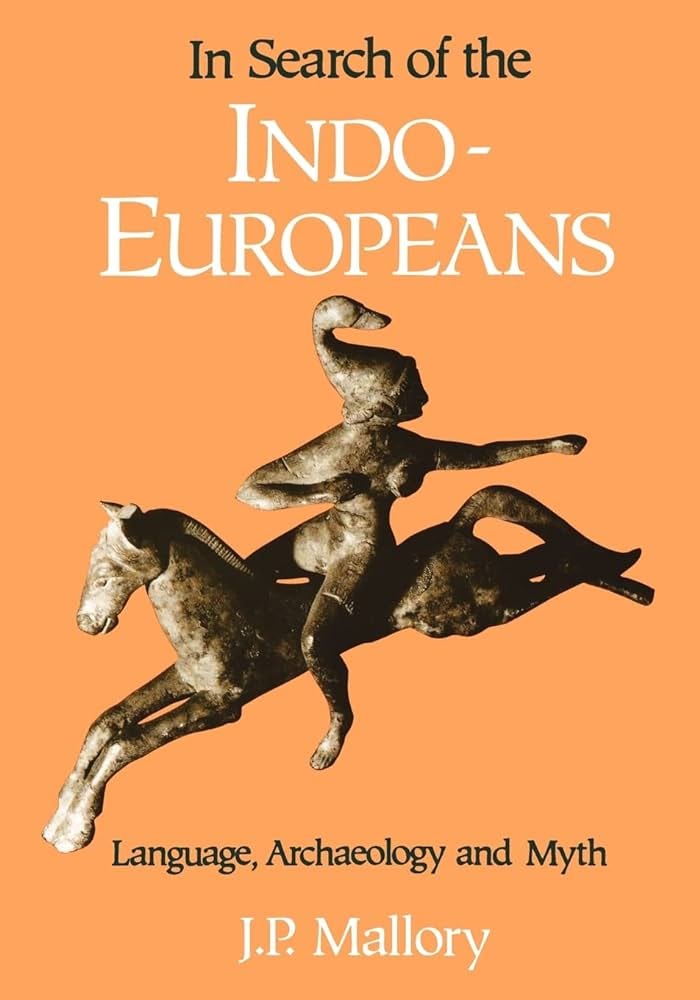
J. P. Mallory: Indo-Europeans found?
This is a free preview of a paid episode. To hear more, visit www.razibkhan.comIf you have a sibling with autism, your future child’s risk for an autism diagnosis is increased by a factor of 2 to 3.5×. Orchid’s whole genome embryo reports can help mitigate your child’s risk by screening for over 200 genetic variants definitively linked to autism and other neurodevelopmental disorders. Discuss your situation with a genetics expert.On this episode of Unsupervised Learning Razib welcomes back a returning guest, J. P. Mallory, to discuss his reaction to the recent preprint The Genetic Origin of the Indo-Europeans. Mallory is the author of In Search of the Indo-Europeans: Language, Archaeology, and Myth, The Oxford Introduction to Proto-Indo-European and the Proto-Indo-European World and The Tarim Mummies: Ancient China and the Mystery of the Earliest Peoples from the West. He is also a retired professor from Queen’s University Belfast in Northern Ireland. An archaeologist who trained under Marija Gimbutas, Mallory has long used linguistics to complement his disciplinary training in archaeology to understand the origin and location of Indo-European languages.Though Mallory admires The Genetic Origin of the Indo-Europeans, he still thinks more work needs to be done to pinpoint the original homeland of the Yamnaya or their ancestors. The fact is that the preprint remains somewhat vague in its final conclusion, and more work is needed to make sure the populace acquires the same level of community. Mallory also discusses the challenges inherent in interdisciplinary work, synthesizing archaeology, linguistics and now genetics. He believes that a key to grasping the emergence of pre/proto-Indo-European is tracing lineage groups through their Y chromosomes, as the genetics, mythology and anthropology indicate that pre/proto-Indo-Europeans were quite patriarchal and patrilineal. Though Mallory is hopeful that we are making progress on the topic of Indo-Europeans he worries that the fraught situation of disciplinary rivalries will retard synergy, where archaeogenetics engages in excessive imperialism vis-a-vis archaeology and linguistics.
Sean Anthony: the Muhammad of history
This is a free preview of a paid episode. To hear more, visit www.razibkhan.comIf you have a sibling with autism, your future child’s risk for an autism diagnosis is increased by a factor of 2 to 3.5×. Orchid’s whole genome embryo reports can help mitigate your child’s risk by screening for over 200 genetic variants definitively linked to autism and other neurodevelopmental disorders. Discuss your situation with a genetics expert.On this episode of Unsupervised Learning Razib talks to professor Sean Anthony about his book Muhammad and the Empires of Faith: The Making of the Prophet of Islam. Anthony is a historian in the Department of Near Eastern Languages and Cultures at The Ohio State University. He earned his Ph.D. with honors in 2009 at the University of Chicago in Near Eastern Languages and Civilizations, and has a mastery of Arabic, Persian, Syriac, French, and German. Anthony’s interests are broadly religion and society in late antiquity and medieval Islam, early canonical literatures of Islam (Koran and Hadith) and statecraft and political thought from the foundational period of Islam down to the Abbasid Caliphate over a century later.Razib and Anthony discuss the state of the controversial scholarship about the origins of Islam, which often comes to conclusions that challenge the orthodox Muslim narrative. This earlier generation of scholars, like Patricia Crone, challenged the historicity of Muhammad, the centrality of Mecca in early Islam and even the distinctive religious identity of the early 7th century’s Near East's Arab conquerors. This revisionist school serves as the basis for Tom Holland’s 2012 book, In the Shadow of the Sword: The Birth of Islam and the Rise of the Global Arab Empire. While Holland’s work was an accurate summary of research before the 2010’s, Anthony argues that since then new findings have updated and revised the revisionism itself. A Koran dating from the mid-7th century seems to confirm the antiquity of this text and traditions around it, while contemporaneous non-Muslim sources refer to Muhammad as an Arabian prophet. While it is true that coinage did not bear the prophet’s name until the end of the 7th century, it may be that earlier generations of scholars were misled by the lack of access to contemporary oral sources themselves necessarily evanescent. Razib and Anthony also discuss whether the first Muslims actually self-identified as Muslims in a way we would understand, as opposed to being a heterodox monotheistic sect that emerged out of Christianity and Judaism. Though classical Islam qua Islam crystallized under the Abbasids after 750 AD, it now seems quite clear that the earlier Umayyads had a distinct identity from the Christians and Jews whom they ruled.
Chad Niederhuth: genetics in plants, from Mendel to GMOs
This is a free preview of a paid episode. To hear more, visit www.razibkhan.comIf you have a sibling with autism, your future child’s risk for an autism diagnosis is increased by a factor of 2 to 3.5×. Orchid’s whole genome embryo reports can help mitigate your child’s risk by screening for over 200 genetic variants definitively linked to autism and other neurodevelopmental disorders. Discuss your situation with a genetics expert.On this episode of Unsupervised Learning Razib talks to Chad Niederhuth, an erstwhile academic plant geneticist now working in industry. Niederhuth and Razib discuss the reality that in 2024 it is often human genetics that gets the glory, even though experiments on plants go back to the field’s very origins with Gregor Mendel and his peas. Niederhuth’s original training is in molecular genetics, and they discuss the relevance of differences in basic biological machinery between plants and animals, for example the reality that the former have chloroplasts while the latter have mitochondria. They also extensively discuss the flexibility and variation across plants in terms of size and organization of the genome; plants much more often deviate from a diploid two-gene-copy setup than animals, and their range of genome size is enormous. While the smallest plant genome is 61,000,000 bases, the largest is 148,800,000,000 bases (2,400 times larger than the human genome). Razib and Niederhuth discuss the flexibility and utility of plants in basic genetic research, but also in the applied agricultural context. Though classic techniques of selection are still relevant, more and more researchers are using genomic methods that look at variation at the DNA level to predict traits in the next generation, and so allow for more robust and productive cultivars. Razib also notes that public queasiness over genetic engineering in animals, let alone humans, does not seem to apply equally to plants, meaning that GMO techniques can be perfected in crops first before transferring to animal or medical contexts.Finally, Niederhuth talks about his transition from being faculty at a research university to a scientist in the private sector. Overall Niederhuth is happy because his pay is greater, and his responsibilities are narrower and more focused. While as a professor he had to also split his time between teaching and serving extensively on committees, his current position is focused entirely on the research he finds so gratifying. Razib and Niederhuth also discuss the politicization of academic science that has occurred over the last 15 years, and the institution’s future prospects.Related: Earlier conversation with Niederhuth on The Insight about GMOs.

Jonathan Keeperman: becoming Lomez
This is a free preview of a paid episode. To hear more, visit www.razibkhan.comIf you have a sibling with autism, your future child’s risk for an autism diagnosis is increased by a factor of 2 to 3.5×. Orchid’s whole genome embryo reports can help mitigate your child’s risk by screening for over 200 genetic variants definitively linked to autism and other neurodevelopmental disorders. Discuss your situation with a genetics expert.On this episode of Unsupervised Learning Razib talks to Jonathan Keeperman, an former lecturer in writing at UC Irvine and proprietor of Passage Press. Keeperman also posts on the internet under what was until recently an anonymous pseudonym, Lomez. Unlike many anonymous accounts on X, “Lomez” developed a decade-long identity, to the point where Keeperman wrote articles under that name for publications like First Things, The Federalist and The American Mind.Razib and Keeperman talk about what it is like to go from someone with distinct and separate identities, a well-developed online life as well as a fairly conventional offline world, and how to reconcile them when they collide. Keeperman talks about the peculiar and often offensive scripts and modalities of the world of anonymous commentators, whose goals seem to be to have hidden discussions in plain sight, hiding their discourse through shock and obfuscation, and how difficult it can be to communicate this reality to people with more conventional outlooks. Keeperman admits that he understood that at some point his anonymity would be stripped away from him, but admits that it is still a difficult path to negotiate. The Lomez identity was unabashedly on the political Right, but as an academic and writing lecturer he was much more discreet about his views, and many of his friends and acquaintances were shocked as to his true politics. Keeperman’s father was a liberal and a Jewish American, so many of his relatives would no doubt have been surprised by his political commitments. Razib also asks Keeperman what exactly an MFA means as a credential, and what it teaches you. Though he does not think much of the credential itself, Keeperman explains that the MFA is a terminal degree for many interested in writing and literature, two loves that pulled him away from a life in the corporate world. He explains that one of his goals in entering the writing profession was to bring a masculine sensibility that he feels has been marginalized in the world of creative writing, which is today dominated by women. Razib and Keeperman talk about the marginalization of certain masculine values of vigorous competition and biting debate in many parts of the culture-producing industries, and how Passage Press is an attempt to cultivate voices that otherwise might not find a platform. In this vein, Keeperman ends by asserting the importance of free speech for all views, from the most offensive to the most anodyne, as an essential part of American culture and the life of the mind.

Ryan Burge: Losing Our Religion
This is a free preview of a paid episode. To hear more, visit www.razibkhan.comIf you have a sibling with autism, your future child’s risk for an autism diagnosis is increased by a factor of 2 to 3.5×. Orchid’s whole genome embryo reports can help mitigate your child’s risk by screening for over 200 genetic variants definitively linked to autism and other neurodevelopmental disorders. Discuss your situation with a genetics expert.On this episode of Unsupervised Learning Razib talks about religion with Ryan Burge, professor of political science at Eastern Illinois University, and author of The Nones: Where They Came From, Who They Are, and Where They Are Going and 20 Myths About Religion and Politics in America. Burge also has a Substack, Graphs about Religion, where he posts the latest data on trends in American society.First, Razib asks Burge to outline the wave of secularization that has impacted American society over the last 25 years, from its causes to its potential end. Burge points out that mainline Protestantism looks to be on the verge of extinction in the 21st century, while evangelical Christianity saw its high point in the 1980s. Then they talk about the nature of religiosity in America, and Burge asserts that in some ways the rise in “religious nones” is probably just social desirability bias. With the fall of Communism, atheism and irreligiosity lost some of their negative connotations, and more and more people have “come out of the closet” or just accepted their revealed preferences. Razib also asks if Christianity will become a minority religion in the US, and if it is true that people become more religious as they get older. Finally, they discuss extensively the connection between religion and politics and how that drove the rise in defections from Christianity, and Burge talks about how the 21st century will see a normalization of extreme polarization between Christian conservatives and secular Americans.

Lost civilizations and the promise of new knowledge
This is a free preview of a paid episode. To hear more, visit www.razibkhan.comIf you have a sibling with autism, your future child’s risk for an autism diagnosis is increased by a factor of 2 to 3.5×. Orchid’s whole genome embryo reports can help mitigate your child’s risk by screening for over 200 genetic variants definitively linked to autism and other neurodevelopmental disorders. Discuss your situation with a genetics expert.On this episode of Unsupervised Learning Razib discusses the idea of “lost civilizations,” the possibility that there were complex societies during the Pleistocene Ice Age. This topic recently rose to salience after a dialogue between writer Graham Hancock and archaeologist Flint Dibble on Joe Rogan’s podcast. Hancock is a longtime guest on Rogan’s show and he promotes a theory that an advanced “lost civilization” during the Ice Age left remnants of its culture across the world, for example the pyramids of both Egypt and the New World. In the exchange, Dibble, a vigorous online critic of pseudo-archaeology came back with scientific orthodoxy; civilization emerged after the end of the Ice Age, and there is no evidence for anything during the Pleistocene.Razib explains why evidence from biology makes it clear that Hancock is almost certainly wrong. No massively advanced global civilization during the Ice Age left its imprint across the world. Though the archaeological evidence is strong, the data from DNA is even more unambiguously robust and informative. But then Razib steps back and asks what “civilization” is, and presents the possibility that stillborn cultures might have existed during the Ice Age. Civilizations that left no descendants and barely any archaeological footprint. He also argues that the modern conception of civilization starting in Sumer and Egypt 5,000 years ago is simplistic, and American ideas about an arrow of history ascending onward and upward tend to be misleading as a guide to the past. Though the orthodox view is mostly right, there are always gaps in our knowledge and surprises around the corner. Graham Hancock’s enthusiasm for what we can know is commendable, his conclusions long ago outpaced his evidence. In the future, understanding the past will be done with even more powerful tools, but we must proceed with humility upon the foundations of all we know while acknowledging what we don’t.Related: Why Civilization Is Older Than We Thought and Paradise Lost.
Akshar Patel: Modi's India in the 21st century
This is a free preview of a paid episode. To hear more, visit www.razibkhan.com10% of pediatric cancer is linked to a single-gene variation. These variants can be detected in embryos before pregnancy begins. Orchid’s whole genome embryo reports can help mitigate your child’s risk for cancer by screening for 90+ genetic variants linked to pediatric cancer. Discuss embryo screening and IVF with a genetics expert.On this episode of Unsupervised Learning Razib talks to Akshar Patel of The Emissary about his recent sojourn in India. Patel began The Emissary because he felt there were many gaps in the media representation of India. Razib asks whether The New York Times’ claim that Modi is a strongman is correct, and whether India is an illiberal democracy. Patel notes that despite a Westernized super-elite embedded in global Left politics, India is fundamentally a conservative society where communal identity and background reign supreme. He observes that this collectivism is recognized in laws and social norms, though urbanized contexts are breaking down traditional barriers.Perhaps the most notable aspect of modern India is its macroeconomic dynamism; today India is the world’s fifth largest economy, surpassing the United Kingdom. Patel saw widespread optimism about the nation’s economy and citizens’ own futures, bolstering Modi’s broad popularity. Nevertheless, media claims that the Muslim minority is being marginalized does seem to be broadly correct as Indian reaffirms its Hindu identity. Equally as important as religion in India is caste. Though Patel believes that dating apps and day to day interaction are breaking down caste, he observed on the ground the institution’s day to day utility as a way to obtain jobs or foster social welfare. Overall he sees a future India that is economically and geopolitically relevant, but also very distinctive and civilizationally assertive.

Jeremy Carl: The Unprotected Class - How Anti-White Racism Is Tearing America Apart
This is a free preview of a paid episode. To hear more, visit www.razibkhan.com10% of pediatric cancer is linked to a single-gene variation. These variants can be detected in embryos before pregnancy begins. Orchid’s whole genome embryo reports can help mitigate your child’s risk for cancer by screening for 90+ genetic variants linked to pediatric cancer. Discuss embryo screening and IVF with a genetics expert.On this episode of Unsupervised Learning Razib talks to Jeremy Carl, Senior Fellow at the Claremont Institute, where he focuses on immigration, multiculturalism, and nationalism in America. Previously, Carl was a Research Fellow at Stanford’s Hoover Institute where he analyzed and wrote about energy policy. He has BA with distinction from Yale University and an MPA from the Kennedy School of Government at Harvard University.Today Carl talks about his new book, The Unprotected Class: How Anti-White Racism Is Tearing America Apart. Though it is in vogue to talk about white supremacy and systemic privilege today, it is notable that in 2024, only 32% of Harvard’s student body is white. Largely due to the opioid crisis there has been a decline in life expectancy among whites, disproportionately shouldered by those without college degrees. In The Unprotected Class Carl narrates how in the 60 years since the Civil Rights revolution of the 1960's, the movement has mutated into a war on the soon-to-be-erstwhile white majority, with anti-white sentiment openly and proudly expressed by cultural elites. He argues that this descent into identitarianism undermines the fabric of American society, and divides our society rather than uniting us. Razib and Carl discuss how racialized insults and attacks on whites, seen by many as innocuous due to the power and privilege of the white majority, actually degrade the public discourse and deplete the common cultural capital of Americans to coexist despite their diversity. They also discuss anti-white racism’s erasure of class differences among white Americans, and the social and economic pathologies afflicting regions like Appalachia. Ultimately, The Unprotected Class shows how denigrating and attacking one group of Americans leaves us all with less dignity and rights.
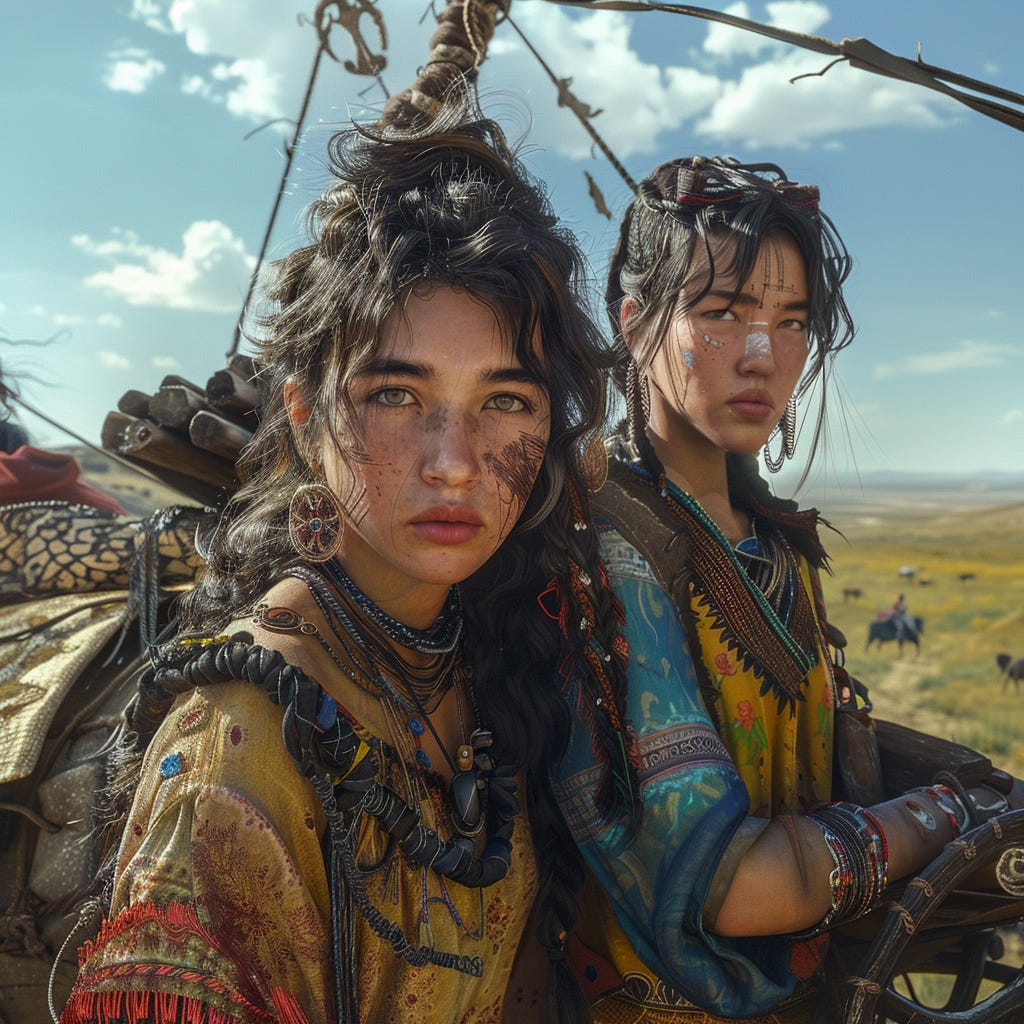
The Genetic Origin of the Indo-Europeans
This is a free preview of a paid episode. To hear more, visit www.razibkhan.com10% of pediatric cancer is linked to a single-gene variation. These variants can be detected in embryos before pregnancy begins. Orchid’s whole genome embryo reports can help mitigate your child’s risk for cancer by screening for 90+ genetic variants linked to pediatric cancer. Discuss embryo screening and IVF with a genetics expert.On this episode of Unsupervised Learning Razib talks about the April 2024 preprint The Genetic Origin of the Indo-Europeans. This blockbuster publication introduces nearly 300 new ancient DNA samples, uncovers the origins of the Yamnaya, and delves into how they transformed the genetic and cultural landscape of Eurasia ~5,000 years ago.Razib addresses:* The now-identified ancestors of the Yamnaya* The genetic landscape between the Dnieper, Volga and Caucasus before the Yamnaya and that region’s numerous distinct populations* When the Yamnaya came into being as a distinct genetic-cultural cluster (after 4000 BC)* The relationship of the Yamnaya to the Anatolian Hittites and the newly refined idea of an Indo-Anatolian (as opposed to Indo-European) language family* The region where proto-Indo-Anatolian languages likely flourished, and why they disappeared* The population-genetic landscape of clines vs. clusters in human genetic structure over historical time
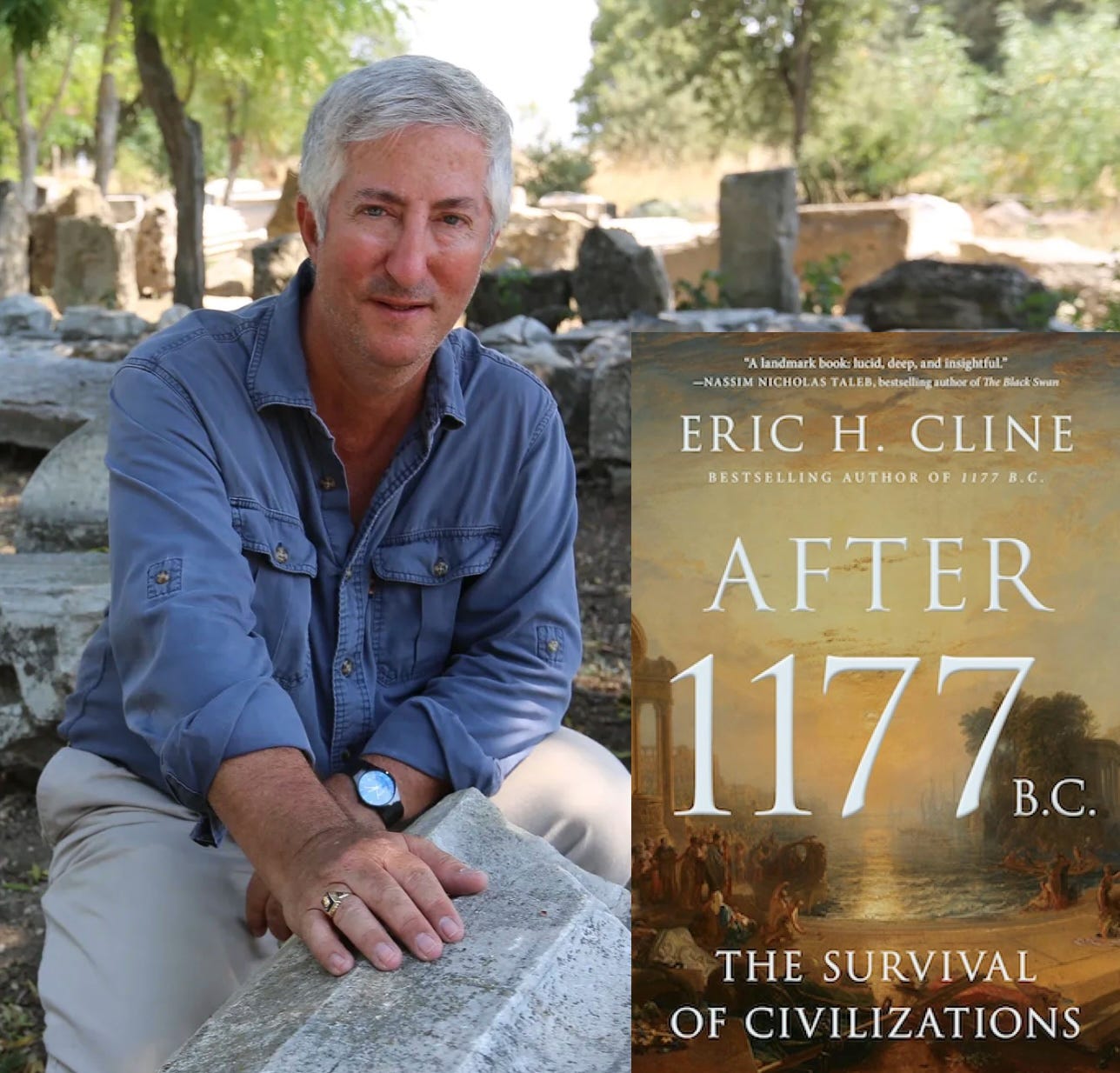
Eric Cline: After 1177 B.C.
This is a free preview of a paid episode. To hear more, visit www.razibkhan.comIf you have a sibling with autism, your future child’s risk for an autism diagnosis is increased by 2 - 3.5x. Orchid’s whole genome embryo reports can help mitigate your child’s risk by screening for 200+ genetic variants definitively linked to autism and other neurodevelopmental disorders. Discuss your situation with a genetics expert. On this episode of Unsupervised Learning Razib talks to George Washington University archaeologist Eric Cline. The author of 1177 B.C. - The Year Civilization Collapsed, Cline has a new book out, After 1177 B.C. - The Survival of Civilizations. While 1177 B.C. closed with the end of the first global civilization, that of the Eastern Mediterranean at the end of the Bronze Age, After 1177 B.C. tells the story of those who picked up the pieces. But first Cline and Razib talk about the popular appetite for ancient history, and how 1177 B.C. became a surprise bestseller. Cline’s training is in archaeology and they discuss how new technologies like ancient DNA and isotope analysis are now contributing to transforming our understanding of the past.Then they turn to he organization of After 1177 B.C., how Cline decided to build on regional geographically focused histories rather than constructing a tightly integrated single narrative thread. This gets to the reality that the period covered in After 1177 B.C. is one of disintegration and isolation, as the networks binding together ancient Near Eastern kingdoms collapsed, with some states like that of the Hittites disappearing, and others like Egypt re-emerging sharply restructured. Cline and Razib also discuss the lacunae in our understanding of the past, and the possibility that civilization may have gone through more cycles than we yet understand, with perhaps some social and technological complexity in the Pleistocene that we had not previously anticipated. Cline points out that Göbekli Tepe certainly must have had precursors in the Pleistocene, as local people could not have constructed such a site without skill and know-how accumulated over generations.

John Massey: Chinese dreams through Western eyes
This is a free preview of a paid episode. To hear more, visit www.razibkhan.comFor the first time ever, parents going through IVF can use whole genome sequencing to screen their embryos for hundreds of conditions. Harness the power of genetics to keep your family safe, with Orchid. Check them out at orchidhealth.com.On this unusual “from the vault” episode of Unsupervised Learning, Razib talks to John Massey, a retired Australian engineer who has been a long-time correspondent. Massey and Razib recorded this podcast in the spring of 2021, at the height of the COVID-19 pandemic. At that time, Australia and China were enacting strict lockdowns to halt the spread of the virus, while the US and Europe were already taking a more relaxed approach. Though the conversation is a bit of a temporal rewind, back to a time when Americans were more worried about infection than inflation, the overarching theme is the role of China in the world and its possible future history.Massey, though an Australian, has married into an ethnic Chinese family, and some of his grandchildren live in China. The current great power tension of the 21st century is clearly China vs. the US, and in this battle Massey takes a broadly pro-Chinese stance. This is obviously a minority view for Westerners, but it is not entirely unheard of, with even voices as prominent as Thomas Friedman, columnist at The New York Times, waxing poetic about Chinese technocratic efficiency. Prior to its recent economic doldrums and fertility problems, the narrative of China ascendant was dominant and overpowering, and Massey reflects a faction of the West that still believes that Asian power’s preeminence is inevitable, given the forces of history. For them, the fundamental question is simply how we in the West will adapt to it.
Colin Wright: in the trenches of the gender wars
This is a free preview of a paid episode. To hear more, visit www.razibkhan.comFor the first time ever, parents going through IVF can use whole genome sequencing to screen their embryos for hundreds of conditions. Harness the power of genetics to keep your family safe, with Orchid. Check them out at orchidhealth.com.On this episode of Unsupervised Learning Razib talks to Colin Wright, a returning guest, host of the Reality’s Last Stand Substack and a fellow at the Manhattan Institute. Before digging deep into the biology of sex and the cultural politics of gender ideology, Razib and Wright touch on what’s been happening to Jonathan Pruitt, Wright’s erstwhile advisor. He was accused of academic fraud in 2019, and dozens of papers where Pruitt was the primary contributor of data had to be retracted. Notably, papers where his mentees collected the data did not suffer from the same problems. Evidence quickly mounted that Pruitt’s whole career productivity was built on fraudulent data. As of 2024, Pruitt’s university, McMaster, where he had an endowed chair, found him to be guilty of fraud, while his doctoral dissertation from University of Tennessee was withdrawn. He resigned from his university in 2022, and embarked on a fantasy writing career. Today he is the author of the dark fantasy, The Amber Menhir.Then Razib and Wright talk about the current state of gender ideology, and the conflicts around trans rights in the US and abroad. Wright, who is working on a book on sex and gender, believes we may have seen the high tide of gender ideology, with the retreat occuring earlier abroad in places like Britain, where youth medical gender transition has been severely curtailed. He also reviews the major terms and concepts, like the difference between sex and gender, and also what exactly is meant by binary sex and why it is so important in our ability to understand biology generally and patterns in human society specifically. Finally, Razib asks Wright to expound on the different factions in the “gender wars,” from gender critical TERFs to social conservatives and queer theorists.

Kristian Kristiansen: DNA and European prehistory
This is a free preview of a paid episode. To hear more, visit www.razibkhan.comFor the first time ever, parents going through IVF can use whole genome sequencing to screen their embryos for hundreds of conditions. Harness the power of genetics to keep your family safe, with Orchid. Check them out at orchidhealth.com.On this episode of Unsupervised Learning Razib talks to Kristian Kristiansen, an archaeologist at the University of Gothenburg and affiliate professor at the Lundbech Center for Geogenetics, Copenhagen University. A past guest on this podcast, Kristiansen has recently contributed to an astonishing lineup of landmark papers published in Nature just in the last few months, Population genomics of post-glacial western Eurasia, Elevated genetic risk for multiple sclerosis emerged in steppe pastoralist populations, 100 ancient genomes show repeated population turnovers in Neolithic Denmark and The selection landscape and genetic legacy of ancient Eurasians. They also discuss his chapter in the 2023 book The Indo-European Puzzle Revisited: Integrating Archaeology, Genetics, and Linguistics.Razib and Kristiansen discuss the state of the emerging synthesis between archaeology, genetics and historical linguistics. Though himself an archaeologist, Kristiansen admits that in many ways historical linguists were correct, with models of mass migration now overturning those of cultural diffusion. He also gives a high-level summary of soon-to-be-published work on the spread of plague in Europe 5,000 years ago, and its role in the collapse of Neolithic civilization and the rise of steppe Indo-Europeans. Kristiansen gives a summary of recent developments in understanding the archaeology of Bronze Age Northern Europe, and in particular the expansion of the Corded Ware people. Razib and Kristiansen also discuss the role of distinct migration streams of the steppe people and their contribution to various Indo-European populations. Is it time to wonder if the Greeks descended from Corded Ware or Yamnaya?

Samo Burja: Palladium Magazine, China, Russia and the future of Eurasia
This is a free preview of a paid episode. To hear more, visit www.razibkhan.comToday on Unsupervised Learning, Razib talks to long-time podcast favorite Samo Burja. Burja is the founder of Bismarck Analysis and Bismarck Brief, a Research Fellow at the Long Now Foundation and The Foresight Institute. He is also now the chair of the editorial board of Palladium Magazine. Already a four-time guest on Unsupervised Learning (he has previously shared his views on China's future, Russia's present and archaeology's past, his role at Bismarck Analysis and geopolitical uncertainty, reflected on his piece in Palladium on Finding "lost civilizations" and covered his ideas on "social technology," China, and the foreign view of America), the Slovenian-born Burja is one of the most original and incisive public intellectuals writing in America today. His 2021 piece, Why Civilization is Older than We Thought, brings a level of depth and rigor to historical heterodoxy that you rarely find anymore. Burja has also forwarded the “great founder theory” of historical change and formulated the idea of “live players” in social analysis.In this episode, Razib asks Burja for his sense of the world landscape in early 2024, revisiting conversations that delve into logistical details of the Russian invasion of Ukraine and the future of Chinese power. Burja continues to be pessimistic about the long-term prospects of European and Ukrainian resistance to a Russian war-machine that is geared toward grinding its way through lengthy battles of attrition. He also asserts that the current bearish attitude toward Chinese power is short-sighted, arguing that Western media in particular understates the technological and economic achievements of the PRC over the last generation. Burja believes that even if the “China bulls” were overly optimistic, the “China bears” go to excess in the opposite direction. Finally, he touches upon his vision for Palladium Magazine, a publication he has long contributed to, and which he now helms.
Steve Hsu: IQ, artificial intelligence and academia
This is a free preview of a paid episode. To hear more, visit www.razibkhan.comFor the first time ever, parents going through IVF can use whole genome sequencing to screen their embryos for hundreds of conditions. Harness the power of genetics to keep your family safe, with Orchid. Check them out at orchidhealth.com.On this episode of Unsupervised Learning Razib talks to Steve Hsu, physicist, entrepreneur and public intellectual. Hsu is an Iowan who earned his undergraduate degree from Caltech and his Ph.D. from Berkeley. Later he was a Harvard Junior Fellow, before moving on to professorships at Yale and the University of Oregon, and finally settling down at Michigan State University in 2012. Hsu is founder of Safeweb and Genomic Prediction, and his current focus is on a new AI startup. Between 2012 and 2020, he was vice president for research and graduate studies at Michigan State. Hsu also has a blog, Information Processing, and a podcast, Manifold.Razib asks Hsu about where cognitive and behavioral genomics are in 2024, and where they are going. They discuss the reality that while study of educational attainment (EDU) has proceeded relatively far, the study of intelligence itself has been neglected. Hsu outlines the case for why cognitive phenotypes should be studied, even if the topic remains controversial and fraught. They then address the current fad for artificial intelligence, and how emerging companies in the space are going to transform workplace productivity and culture. Hsu contrasts the rapid pace in the advancement in AI with the torpidity of behavioral genomics. Finally, Razib and Hsu discuss changes in academia in the wake of the “Great Awokening” that led to his ouster in 2020 from his role as vice president of research and graduate studies at Michigan State. Hsu talks about how his work in IQ and genetics became weaponized on social media by left-wing graduate students during the George Floyd protests.
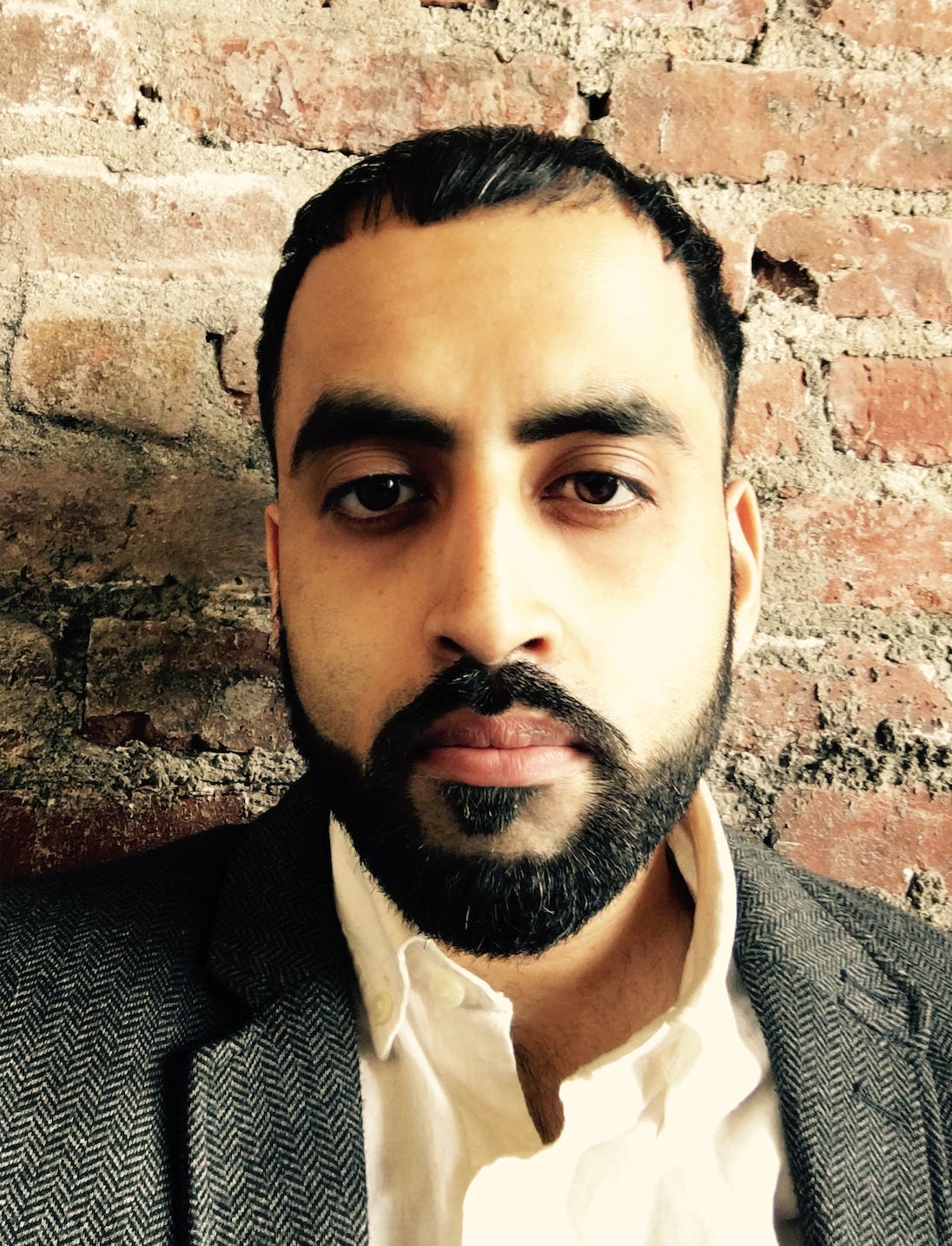
Murtaza Hussain: Gaza and the global left
This is a free preview of a paid episode. To hear more, visit www.razibkhan.comFor the first time ever, parents going through IVF can use whole genome sequencing to screen their embryos for hundreds of conditions. Harness the power of genetics to keep your family safe, with Orchid. Check them out at orchidhealth.com.Today Razib talks to Murtaza Hussain about the social, cultural and political context of recent fissures in the US around the conflict in Israel and Gaza. Hussain is a reporter at The Intercept and has his own Substack. They begin their conversation talking about Hussain’s response to the 10/7 Hamas attacks on Israel, and Israel’s subsequent invasion of Gaza. Hussain discusses his bewilderment and disappointment at some commentators who he saw being knee-jerk and tribalistic in their response. He also talks about the generational divides on Israel that have become apparent: while American Boomers and Gen-X tend to support the Jewish state overwhelmingly, while Millennials, and especially Zoomers, are more divided, or perhaps even a pro-Palestinian, perspective. Hussain, a Pakistani Canadian Millennial, though now a naturalized US citizen, does not approach the subject of the Israel/Palestine conflict with a reflexive sympathy for any particular side, but does believe that many Americans are unaware of the broad support that Palestinian nationalism attracts worldwide and especially among the youth.Razib and Hussain then discuss the intellectual history that led up the conflict between Hamas, an Islamist movement, and the state of Israel, and how the Palestinian national struggle is positioned within the global Left. They discuss the various connections between Palestinian nationalism in the 1960’s and 1970’s and the Soviet Bloc and Left-wing national liberation movements like the IRA, and how that might impact sympathies of activists. Hussain contends that in many ways the Palestinian liberation movement is a leftover of 20th-century struggles, with the end of apartheid South Africa and the peace accords in Ireland. He outlines the multi-decade relationship both the Palestinians and Israelis have had with the non-aligned movement and postcolonialism. Though today Israel is coded as a Western nation (they participate in Eurovision), Hussain notes that as Prime Minister, David Ben Gurion attempted to send Israeli delegates to the non-aligned Bandung Conference in 1955, a move that was blocked by Egypt.

Chris Stringer: human evolution in 2024
This is a free preview of a paid episode. To hear more, visit www.razibkhan.comFor the first time ever, parents going through IVF can use whole genome sequencing to screen their embryos for hundreds of conditions. Harness the power of genetics to keep your family safe, with Orchid. Check them out at orchidhealth.com.On this episode of Unsupervised Learning Razib welcomes back paleoanthropologist Chris Stringer. Affiliated with the Natural History Museum in London, Stringer is the author of African Exodus. The Origins of Modern Humanity, Lone Survivors: How We Came to Be the Only Humans on Earth and Homo Britannicus - The Incredible Story of Human Life in Britain. A proponent since the 1970’s of the recent African origin of modern humans, he has also for decades been at the center of debates around our species’ relationship to Neanderthals. In the 1980’s, with the rise to prominence of the molecular model of “mtDNA Eve,” Stringer came to the fore as a paleoanthropological voice lending support to the genetic insights that pointed to our African origins. Trained as an anatomist, Stringer asserted that the fossil evidence was in alignment with the mtDNA phylogenies, a contention that has been broadly confirmed over the last five decades. But in 2010, Stringer and other proponents of an “out of Africa” “with replacement” model of recent human origins began to modify their views in response to the mounting evidence of archaic admixture, the introgression of Neanderthal and Denisovan genes into the modern human genome. On this episode, Razib queries Stringer on the state of human evolution from the fossil’s-eye view in 2024. They discuss “Dragon Man,” and whether this is just a fossil of one of the Denisovan populations. Razib also presss Stringer about the diversity of human species in Southeast Asia, and just how many Denisovan populations or “races” might have existed. They also touch on Homo naledi, and the ensuing controversies around naledi-related publications. Razib seeks Stringer’s opinion on different models of African origins for our lineage, from extensive archaic admixture to “African multi-regionalism.” On a more speculative note, they mull over the possibilities for complex societies in the Pleistocene in light of the finds at Göbekli Tepe. With Stinger’s over five decades in the discipline, very few rival his qualifications or capability to provide a bird’s-eye view of where we are in understanding human evolution in 2024.

Rob Henderson: foster-kid to Ivy League graduate
For the first time ever, parents going through IVF can use whole genome sequencing to screen their embryos for hundreds of conditions. Harness the power of genetics to keep your family safe, with Orchid. Check them out at orchidhealth.com.On this episode of Unsupervised Learning Razib talks to Rob Henderson, author of the new book Troubled: A Memoir of Foster Care, Family, and Social Class. Henderson is a commentator known for coining the term "luxury beliefs," a tendency among elites to use their beliefs to signal social status, with real-life costs of those beliefs born by non-elites alone. Henderson grew up in California foster homes, before being adopted into a working-class family in Red Bluff, CA. After an academically undistinguished period in high school, he joined the U.S. Air Force straight out of high school, eventually serving a short stint in Germany. While in the military, he was identified as intellectually gifted via standardized tests, and it was during this time that Henderson developed habits that equipped him to become an exemplary airman, and eventually a public intellectual. Along the way, Henderson earned a bachelor’s degree from Yale and a Ph.D. in psychology from Cambridge University. Henderson first came to public prominence with his 2018 New York Times op-ed, Why Being a Foster Child Made Me a Conservative. Later he outlined the concept of luxury beliefs in Quillette, and moved his popular newsletter to Substack. Troubled fleshes out the working-class life experiences that made Henderson who he is today, and how and what sets him apart from other members of the elite-educated “professional-managerial class.” While he was an indifferent student who barely graduated high school, parental expectations prepped Henderson’s classmates for the Ivy League. At the time Henderson was studying at Yale, the median family income of his fellow students was $192,000. In Redding, CA, where he grew up, the median family income was about $65,000. About ten times as many Yale students hailed from the top 1% (19%) than the bottom 20% (2.1%) of family income. Troubled would shock many of Henderson’s Yale classmates, because the economic, social and cultural deprivation and domestic volatility he describes would be so alien and unrelatable. Among the most striking illustrations of how he grew up was Henderson’s perplexity upon being expected to be excited for his first birthday party in his adoptive home. As a former foster child with a winter-break birthday, not only had he never received presents, had a cake or a party. Henderson had literally never been sung “Happy Birthday.” Troubled beings with Henderson’s primary memories of his Korean immigrant mother when he was a toddler. After she was deported, Henderson’s formative years in childhood were spent as a ward of the state, shuffled from foster placement to placement.Razib also touches on something that Henderson has discovered in the last few years with consumer genetics. Not knowing who his father was, and clearly not being fully Asian, he had always trusted he was of mixed white and Korean heritage. But a 23andMe test makes it plain that his father was genetically Mexican. Not entirely shocking as Henderson was conceived in Southern California, the genetic test turned him overnight into a “BIPOC” individual, with nearly 20% indigenous American ancestry. This is a public episode. If you'd like to discuss this with other subscribers or get access to bonus episodes, visit www.razibkhan.com/subscribe

Nick Cassimatis: fear not AI, this too shall pass
This is a free preview of a paid episode. To hear more, visit www.razibkhan.comFor the first time ever, parents going through IVF can use whole genome sequencing to screen their embryos for hundreds of conditions. Harness the power of genetics to keep your family safe, with Orchid. Check them out at orchidhealth.com.On this episode of Unsupervised Learning Razib talks to Nick Cassimatis, erstwhile artificial intelligence researcher and currently an entrepreneur. Cassimatis has undergraduate and doctoral degrees in cognitive and computer science from Massachusetts Institute of Technology, and a master’s degree in child psychology from Stanford. He studied for his Ph.D. under Marvin Minsky, arguably the most prominent and influential artificial intelligence researcher of the second half of the 20th century. Later, Cassimatis was a professor at Rensselaer Polytechnic Institute, founder of a successful startup, and a researcher at Yahoo and Samsung.Because of the explosion of large language models as implemented in OpenAI’s ChatGPT and Google’s Gemini, we are now living through an artificial intelligence “hype cycle.” But Cassimatis observes that this is not the first time this has occurred. The 1960’s saw enthusiasm triggered by the ELIZA therapist chatbot. Then, in the 1990s another wave of interest crested because of the mastery of chess by Deep Blue. Finally, there was a boom of excitement around artificial intelligence after Watson’s victory in Jeopardy in the early 2010s. But these hype cycles also have their equivalent troughs; Cassimatis recounts that when he went to study artificial intelligence in the early 2000s, many people discouraged him because the field’s allure had cooled considerably. And yet, under Minsky he developed an interest in how computers could learn, writing papers like A cognitive substrate for achieve human-level intelligence. This background makes Cassimatis a particularly well-informed and trenchant observer and analyst of the current arguments about the possible emergence of artificial general intelligence in the next decade, and what it means for the future of humanity.But first, Cassimatis and Razib step back and address some basics. What is machine learning? How does this relate to deep learning and natural language processing? What are transformers and what is a neural network? These are terms that are thrown around casually in the technology press, but these concepts emerge from over fifty years of research in computer science. With those preliminaries out of the way, Razib probes Cassimatis’s opinions about the past and future of large language model-driven artificial intelligence, and the probability of Ray Kurzweil’s “intelligence explosion” soon. Cassimatis believes it is likely that this hype cycle will eventually fade and suspects that large language models may run up against their limits very soon. He suggests that since ChatGPT’s release in the fall of 2022, the massive transformations predicted in our lives have not come to pass more than a year later. It has not, for example, replaced search on the web, nor has it revolutionized software engineering.And it is the last issue, the impact of artificial intelligence and advances in computing that underpin Cassimatis’ current start-up, Dry.Ai, a platform for developing applications in a no and low-code framework. The enablement of faster and more productive programming frameworks like GitHub Copilot over the last few years has prompted some to wonder if a crash in demand for engineers is in the offing, with a smaller number of far more productive workers. Cassimatis reminds us that in the early days of high-level programming languages, like Perl, Python or Java, the same argument was mooted. And yet, on the contrary, the demand for developers has remained high. Cassimatis expects in the near future to see artificial intelligence hitched up to platforms like Dry.Ai which will make programming easier, reducing the time from conception to final release of an application. Overall, he sees a future that is more technologically advanced, but he does not anticipate that the next generation will bring the revolutionary transformation of all life as we know it.
Zoe Booth and Iona Italia: Quillette's dynamic duo
This is a free preview of a paid episode. To hear more, visit www.razibkhan.comFor the first time ever, parents going through IVF can use whole genome sequencing to screen their embryos for hundreds of conditions. Harness the power of genetics to keep your family safe, with Orchid. Check them out at orchidhealth.com.On this episode of Unsupervised Learning, Razib talks to Zoe Booth and Iona Italia. Booth is community engagement officer and Italia is managing editor at Quillette. An Australian, Booth has degrees in French, Politics and Law from the University of Newcastle. Italia is an erstwhile academic of British nationality and mixed Parsi and Scottish heritage, with a Ph.D. in English literature from Cambridge University. She is the author of Our Tango World, former editor-in-chief of Areo Magazine and the host of the Two for Tea Podcast. Razib discusses both of their trajectories into the heterodox intellectual sphere, Booth, from her starting point as a younger Millennial and Italia as a member of Generation X. While Booth recounts she had typical generational views on social justice and left-inflected politics, Italia admits despite being very left-wing most of her life she was never very well disposed to the identitarian trend that has crystallized into “woke” politics in the 2020s. Booth also addresses the reality that even if the existence of Quillette, a female-led bastion of free thought, with founding editor Claire Lehmann and now managing editor Italia might seem to suggest otherwise, it is not always easy to be a heterodox woman. Booth and Italia discuss how female personality orientation tends more toward making people feel comfortable and included rather than confrontations over truth claims that might hurt feelings. Italia and Razib also address her unique personality quirk of very high disagreeability, which might explain both her rejection of group-think and her earnest quest for the truth as she understands it.Booth and Italia talk about how the recent events around the Gaza war between Israel and Hamas, have resulted in changes in their social life due to political polarization. Overall Quillette has taken a pro-Israel position across the editorial staff, which has resulted in some blowback among their readership. Italia also talks about her own change from solidarity to the global left because of their Hamas-friendly stance, and her continued rejection of conservative social movements, including Islam. Booth and Italia also address Quillette’s consistent trend of touching cultural and political third rails, but in the service of classical liberal values. Italia believes any blowback toward her and the magazine comes disproportionately from a small group of malcontents, and that broadly liberal values are much more popular than most people realize.

James Miller: the end of world as we know it
This is a free preview of a paid episode. To hear more, visit www.razibkhan.comFor the first time ever, parents going through IVF can use whole genome sequencing to screen their embryos for hundreds of conditions. Harness the power of genetics to keep your family safe, with Orchid. Check them out at orchidhealth.com.On this episode of Unsupervised Learning Razib talks about AI, the singularity and the post-human future, with James D. Miller, a Smith College economist, host of the podcast Future Strategist and the author of Singularity Rising: Surviving and Thriving in a Smarter, Richer, and More Dangerous World. Miller and Razib first met at 2008’s “Singularity Summit” in San Jose, and though Singularity Rising was published in 2012, some of the ideas were already presented in earlier talks, including at that conference. More than 15 years since Miller began formulating his ideas, Razib asks him how the theses and predictions in his book have held up, and how they compared to Ray Kurzweil’s The Singularity is Coming. On this last point, Miller is very bullish on Kurzweil’s prediction that artificial intelligence will surpass that of humans by 2030. He also believes that the “intelligence explosion,” Kurzweil’s “technological singularity” when AI transforms the earth in unimaginable ways through exponential rates of change will in fact come to pass.But while Kurzweil predicts that the singularity will usher in an era of immortality for our species, Miller has a more measured take. He believes AI will drive massive gains in economic productivity, from cultural creativity to new drug development regimes (one of the original rationales behind IBM’s AI program). But while Kurzweil anticipates exaltation of conscious human life into an almost divine state, Miller suspects that AI may eventually lead to our demise. He estimates a 10% probability that Kurzweil is correct that we will become immortal, and a 90% probability that AI will simply shove us aside on this planet as it begins to consume all available resources.Overall, Miller is satisfied with the predictions in the first third of Singularity Rising. Computational technology has become far more powerful than it was in the late aughts, with a supercomputer in everyone’s pocket. Though the advances in AI seem to exhibit discontinuities, in particular with the recent seminal inventions of transformers and large language models coming to the fore, the smoothed curve aligns with Kurzweil’s 2030 target for human-level intelligence. On the other hand, where Miller has been disappointed is the merely modest advances in biological human engineering, with far fewer leaps forward than he had anticipated. Razib and Miller discuss whether this is due to limitations in the science, or issues of governance and ethics. Miller closes making the case for a program of cloning the great 20th-century genius John von Nuemann and the statesman Lee Kuan Yew.While the computational innovation driving AI seems to have advanced on schedule, and the biological revolution has not taken off, the last section of Miller’s book focused on the economic impacts of the impending singularity. He still believes the next 10-20 years will be incredible, as our economy and way of life are both transformed for the good. Until that is, humans become obsolete in the face of the nearly god-like forms of AI that will emerge around 2050. Until then, Miller anticipates the next generation will see rapid changes as people make career shifts every half a decade or so as jobs become redundant or automated. If Singularity Rising proves correct, the next generation will be defined by what the economist Joseph Schumpeter termed “creative destruction.” If Miller is correct, it may be the last human generation.
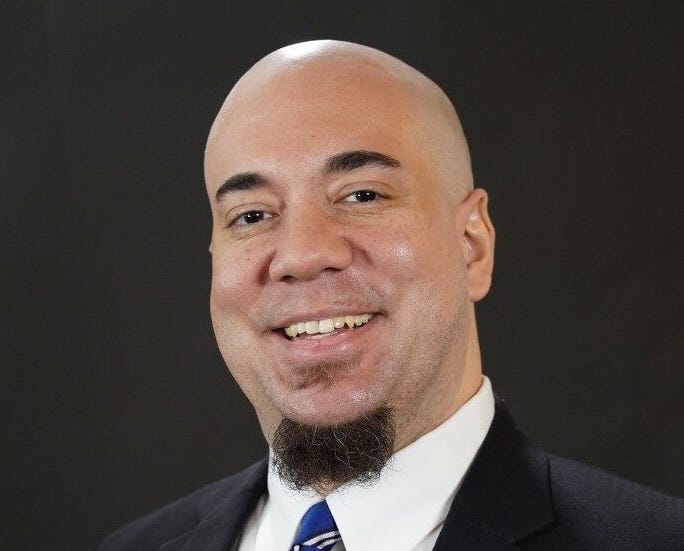
Wilfred Reilly: a social scientist in the culture wars
This is a free preview of a paid episode. To hear more, visit www.razibkhan.comFor the first time ever, parents going through IVF can use whole genome sequencing to screen their embryos for hundreds of conditions. Harness the power of genetics to keep your family safe, with Orchid. Check them out at orchidhealth.com.In this episode, Razib talks to Wilfred Reilly, political scientist, author and fearless cultural commentator. Reilly holds a Ph.D. in political science from Southern Illinois and a J.D. from the University of Illinois. Raised in a working-class neighborhood on Chicago’s South Side, he discusses his ten-year diversion from academia, including his stints as a canvasser for the gay rights group the Human Rights Campaign and a corporate salesperson. A prolific public intellectual, Reilly is the author of Lies My Liberal Teacher Told Me, Taboo: 10 Facts [You Can't Talk About] and Hate Crime Hoax: How the Left Is Selling a Fake Race War.Razib asks what it means to be a “black conservative,” and Reilly responds that the term brackets all black intellectuals who dissent from the progressive orthodoxy, ranging from rock-ribbed right-wingers like Thomas Sowell to moderate liberals like John McWhorter. They also discuss the excesses of Civil Rights legislation and Richard Hanania’s thesis in The Origins of Woke: Civil Rights Law, Corporate America, and the Triumph of Identity Politics that the legal system is geared toward racial progressivism. Reilly believes that wokeness cannot be rolled back until that institutional and legal framework driving for radicalism is neutered.Segueing into the domain of political science, Razib and Reilly discuss the difference between avowed preferences and revealed preferences around issues like abortion and pornography. Both agree ordinary Americans strongly disagree with ideologues who hold extreme policies. Reilly also points out the strangeness that many of the most violent and visible activists during the BLM protests were white, and he holds these are the people who are buying books by radical activist professors like Ibram Kendi, who meanwhile has little real influence among black academics.They also discuss diversity within the black American community, including Laurence Otis Graham’s exploration of socioeconomic status in Our Kind of People: Inside America’s Black Upper Class. Reilly talks about his more upper-class mother’s attempt to inculcate elitism within him, and its failure to stick. Then Razib moots the question of the differences between “American Descendents of Slaves” (ADoS), Africans and Caribbeans, and the fact that Harvard refuses to survey its black students by sub-demographic. Finally, Reilly expounds at length on his “anti-doomer” views, arguing that economic, social and environmental catastrophism is almost always wrong, as well a providing a hearty defense of the cultural richness and economic dynamism of the Midwest.