Razib Khan's Unsupervised Learning
193 episodes — Page 4 of 4

Erich Schwarz: in the beginning was the worm (C. elegans)
This is a free preview of a paid episode. To hear more, visit www.razibkhan.comFor the first time ever, parents going through IVF can use whole genome sequencing to screen their embryos for hundreds of conditions. Harness the power of genetics to keep your family safe, with Orchid. Check them out at orchidhealth.com.Today Razib talks to geneticist Erich Schwarz, a Research Professor in the Department of Molecular Biology and Genetics at Cornell University since 2012. Schwarz has a molecular biology degree from Harvard and a Ph.D. from Caltech. After working with the fruit fly Drosophila melanogaster in graduate school, he switched to the nematode Caenorhabditis elegans, and has continued studying nematodes ever since. After helping to found the C. elegans genome database WormBase (wormbase.org) in the early 2000s, he began sequencing and characterizing the genomes of several nematode worms other than C. elegans, either because they are biologically informative or because they are worldwide parasites. His current work includes using the genome of Ancylostoma ceylanicum to help devise an anti-hookworm vaccine.Schwarz explains why C. elegans, often called “the worm,” has been so useful in developmental and molecular genetics, and its role in the career of the late Nobel laureate Sydney Brenner. With a simple anatomical structure, every single one of the 1,000 cells of C. elegans has been mapped and detailed. Despite its small size, this organism has spawned a research community of thousands, documented in Andrew Brown’s In the Beginning Was the Worm: Finding the Secrets of Life in a Tiny Hermaphrodite. In the age of hundreds of thousands of human genomes, Schwarz explains the decades-long period in the late 20th century when biological research was dominated by “model organisms,” simple and easy-to-experiment-on animals, plants and bacteria that could eloquently and plainly elucidate universal and essential mechanisms of function and structure. Razib and Schwarz also discuss the future of model organisms in a genomic future, when high-throughput data analysis can supercharge decades-long experimental projects. Ultimately, the future is not likely to see model organisms set aside, but rather to witness them merged into the broader research community in human and medical genomics which has been driving technological changes in sppedspeed and volume of data collection.
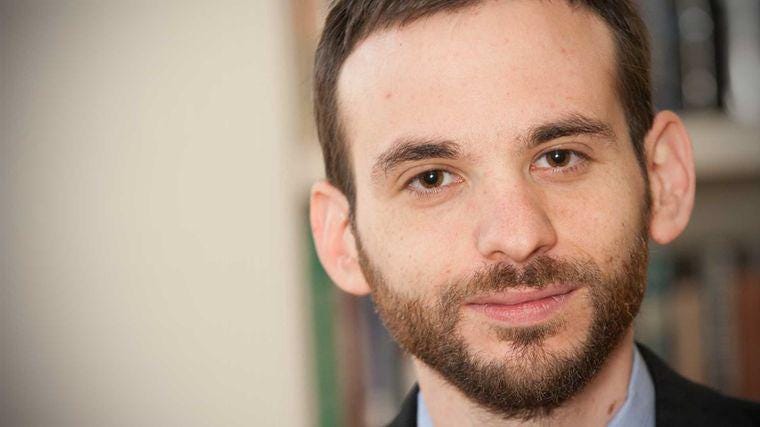
Seth Stephens-Davidowitz - Who Makes the NBA?: Data-Driven Answers to Basketball's Biggest Questions
This is a free preview of a paid episode. To hear more, visit www.razibkhan.comFor the first time ever, parents going through IVF can use whole genome sequencing to screen their embryos for hundreds of conditions. Harness the power of genetics to keep your family safe, with Orchid. Check them out at orchidhealth.com.Today, Razib talks to Seth Stephens-Davidowitz, author of Who Makes the NBA?: Data-Driven Answers to Basketball's Biggest Questions and Everybody Lies: Big Data, New Data, and What the Internet Can Tell Us About Who We Really Are. Stephens-Davidowitz, formerly of Google and The New York Times, is a freelance data scientist and author. He has a degree in philosophy from Stanford and a PhD in economics from Harvard. In this episode, he discusses his process of writing Who Makes the NBA?, which he crafted in a month using ChatGPT’s code interpreter feature, and the biggest insights from his book.Razib probes Stephens-Davidowitz on the relationship between height and athletic ability, and why success in the NBA has the largest heritable component of any major league sport. They also discuss the finding that children of NBA players enjoy a non-genetic advantage in basketball, and why those who make it into the league and succeed are from higher socioeconomic strata. Stephens-Davidowitz also discusses why international basketball is popular in the former Yugoslavia and Lithuania, and how the popularity of volleyball in Iran and Brazil affects the pipeline of talent from those nations.The episode concludes with the author’s detailed thoughts about what it was like to write a book assisted by AI, and the feasibility of this sort of content creation over the next decade. Razib and Stephens-Davidowitz discuss the possibility of massive productivity gains from AI over the next few years and the long-term feasibility of writing careers if AI keeps improving at the current rate. Finally, Stephens-Davidowitz lays out his plan to write his next few years’ of books at a far faster clip, relying on AI assistance..
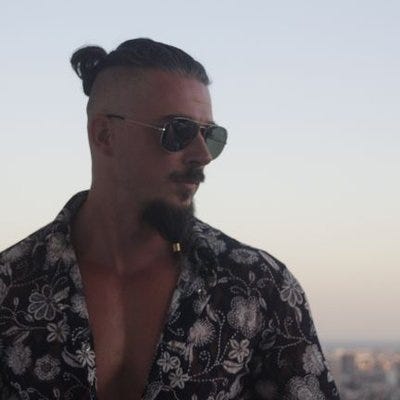
Alexander: the psychology of dating
This is a free preview of a paid episode. To hear more, visit www.razibkhan.comFor the first time ever, parents going through IVF can use whole genome sequencing to screen their embryos for hundreds of conditions. Harness the power of genetics to keep your family safe, with Orchid. Check them out at orchidhealth.com.Do 20% of the men on dating apps get 80% of the dates? Is the Zoomer generation the sexless generation? What are the best predictors of relationship success? These are some of the questions Razib asks Alex of DatePsychology on this episode of Unsupervised Learning. A psychologist who studied cognitive and behavioral neuroscience in graduate school, Alex explores topics around dating on his YouTube channel and disseminates the latest research via his tweets (you can also subscribe to his newsletter). In a world where the “discourse” is filled with anecdotes and ideology, Alex’s modus operandi is to ask “what does the scientific literature say?”Razib and Alex talk about various online subcultures, from incels to “pickup artists,” what they get right and wrong about dating culture and the impact of technology on long-standing dynamics, like the art of approaching women in public places like bars. Alex also discusses how the proliferation of dating apps has changed the dynamics of the online dating marketplace over the last 20 years. Razib probes him about the variables correlating with dating and compatibility, from looks to values to personality. Does intelligence matter in partner compatibility? They also discuss cross-cultural differences, and how urban dating markets differ from those in more rural locales. The online discourse is filled with individuals opining about dating and culture, but into this space of vapid assertion, Alex presents study after study of peer-reviewed research.
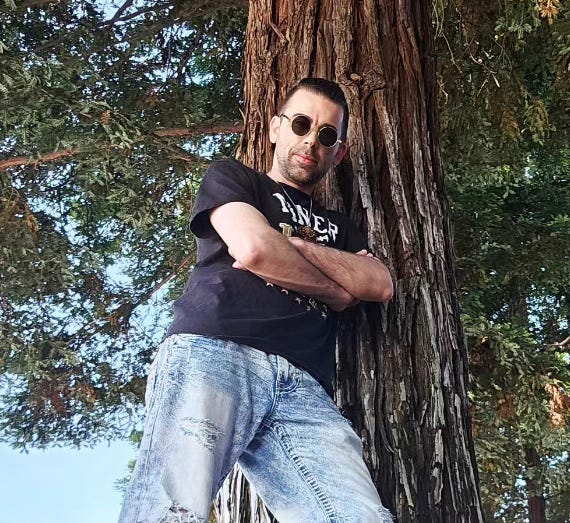
David Lightbringer: mythopoetic interpretations
This is a free preview of a paid episode. To hear more, visit www.razibkhan.comFor the first time ever, parents going through IVF can use whole genome sequencing to screen their embryos for hundreds of conditions. Harness the power of genetics to keep your family safe, with Orchid. Check them out at orchidhealth.com.On this episode of Unsupervised Learning Razib talks to David Lightbringer, a YouTube content creator who focuses on the world of The Game of Thrones and the mythologies of ancient peoples. Though Lightbringer writes essays, and distributes his thoughts via podcast (and you can also read his views in short-form on numerous topics via his tweets on X), his primary platform is his YouTube channel. Lightbringer’s videos, range across topics as diverse as “Harappans, Aryans, and the Bactria-Margiana Archaeological Complex: Indian Origins” to “The Grey King: Secret PreHistory of the Ironborn.” Two years ago, journalist and entrepreneur Antonio García Martínez declared that we were entering a new “age of orality.” By this, he meant that the primacy of text was declining in our culture, as younger generations preferentially consumed audio content over magazines. Perhaps Martínez could even have stipulated that this was the age of “audiovisuality.” Anyone producing podcast content knows that the “Zoomer” generation, those born after 1995, prefer not to subscribe to a feed proactively. Instead, they spend their days passively “consuming content” by leaving YouTube in the background at length. Nearly 40% of this generation spends four or more hours a day on social media, and 88% use YouTube. Lightbringer is part of this massive, new world of creators who produce history, literary and cultural commentary content for those who prefer hour-long documentaries or impassioned monologues to short clips of funny cat memes.Razib and Lightbringer discuss his analytic method for producing secondary commentary on George R. R. Martin’s Song of Ice and Fire. Lightbringer points out that Martin has been explicit and open about his myriad literary influences, so filling in the “backstory” to the history and anthropology of his universe often involves detective work into its cultural roots, which go back to figures as diverse as J. R. R. Tolkien and H. P. Lovecraft, as well as ancient motifs and primal archetypes drawn from the mythologies of varied cultures. The same methodologies we can use to analyze “real” mythology, religion and cultural history, can also be employed for fantastical literary worlds. Razib and Lightbringer also shine the light on the vast world of literature and history on YouTube, which is now the primary mode for many people’s autodidact pursuits. Razib argues for the value of text, while Lightbringer asserts that the visual aspect of YouTube documentaries allows for both greater accessibility and more informational richness.
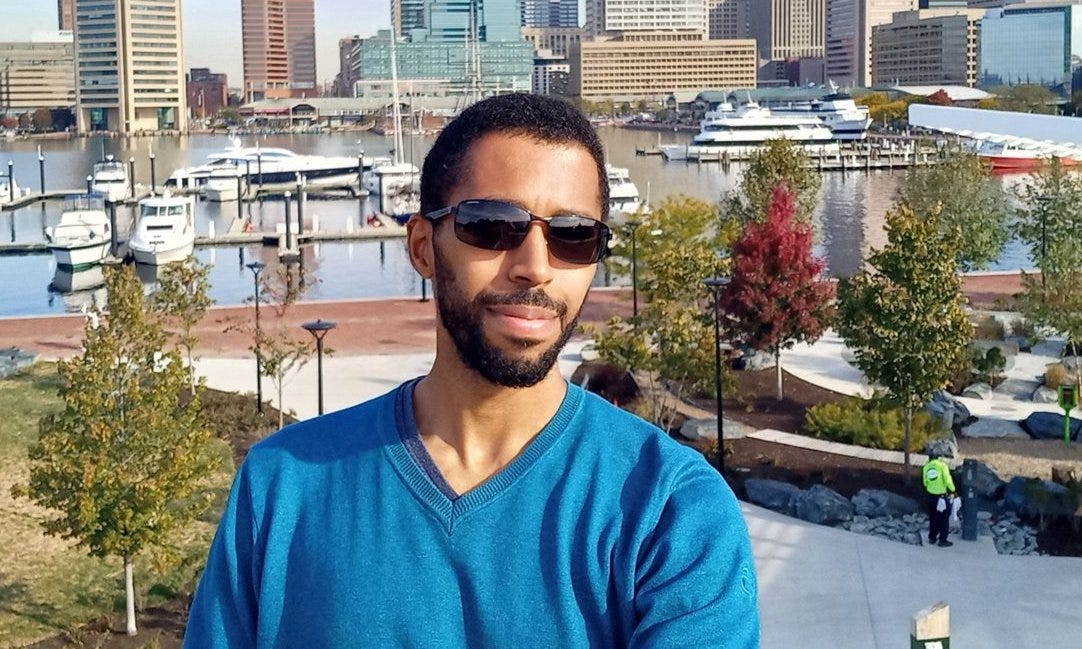
Cesar Fortes-Lima: the three thousand-year odyssey of the Bantu
This is a free preview of a paid episode. To hear more, visit www.razibkhan.comFor the first time ever, parents going through IVF can use whole genome sequencing to screen their embryos for hundreds of conditions. Harness the power of genetics to keep your family safe, with Orchid. Check them out at orchidhealth.com.On this episode of Unsupervised Learning Razib talks to human geneticist Cesar Fortes-Lima about his new paper, The genetic legacy of the expansion of Bantu-speaking peoples in Africa. Fortes-Lima has a Ph.D. in Biological Anthropology and his primary research areas include African genetic diversity, African diaspora, transatlantic slave trade, demographic inference, admixture dynamics and mass migrations. Most recently a postdoctoral fellow in the Department of Human Evolution at Uppsala University, he has recently taken a position in Ambroise Wonkam Laboratory at Johns Hopkins University.Razib and Fortes-Lima discuss the primary conclusions of his blockbuster paper, which was published in Nature. When did the Bantu people begin their migrations? What were their origins? And what routes did they follow as they expanded to cover a third of the African continent? They also discuss the earlier peoples of East Africa and the relationship of the Bantu to Cushitic pastoralists and Khoisan foragers. Fortes-Lima addresses how the inclusion of 1,763 participants, including 1,526 Bantu speakers from 147 populations across 14 African countries, and whole-genome sequences from 12 Late Iron Age individuals, allowed them to use spatially explicit methods correlating genetic, linguistic and geographical variables. They found support for a serial-founder migration model, and determined population sizes, as well as testing alternative models of migration and admixture. Unlike many historical population genetic analyses, The genetic legacy of the expansion of Bantu-speaking peoples in Africa explicitly tests competing hypotheses. Finally, Fortes-Lima also discusses the broader necessity for greater diversity in genetic datasets, and how this study advances that project by adding thousands more geographically disparate samples.
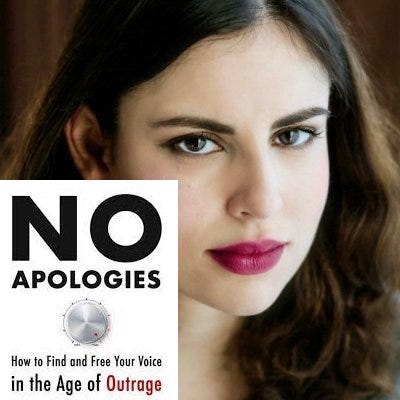
Katherine Brodsky: After 10/7 in Israel, Europe and the US
This is a free preview of a paid episode. To hear more, visit www.razibkhan.comFor the first time ever, parents going through IVF can use whole genome sequencing to screen their embryos for hundreds of conditions. Harness the power of genetics to keep your family safe, with Orchid. Check them out at orchidhealth.com.Katherine Brodsky hosts the Substack Random Minds and is author of the soon-to-be-published book No Apologies: How to Find and Free Your Voice in the Age of Outrage―Lessons for the Silenced Majority. The daughter of Ukrainian Jewish immigrants to Israel and then Canada, Brodsky has worked as a photographer, in public relations and as a publisher. A recent visiting fellow of the Danube Institute, she is freshly back in North America in the wake of Israel’s Gaza invasion, following the Hamas attacks of 10/7.Razib and Brodsky have a wide-ranging conversation about her travels in Europe, her return to North America, her understanding of Israel and what it’s like to be a Jew in the world today. Despite Hungary being ruled by a right-wing government for the past decade, Brodsky observes that it is the European nation where she perceived the least public anti-Semitism, in large part due to government policy suppressing such sentiments. In contrast, she felt very uncomfortable and even afraid in London when she visited during the mass protests in support of the Gazans. Brodsky has also been shocked by the unanimity of the global Left in support of the Palestinians, and the dismissal by many feminist organizations of the reality of sex crimes committed by Hamas on 10/7. A secular Jew, Brodsky has now begun to wear visible signs of her Jewishness as a rebuke to the anti-Semitism she sees all around her.Razib asks her about her opinions in regard to free speech and the battle between pro-Israel and pro-Palestinian factions in the media. Brodsky believes that the topic of her book, No Apologies, is even more relevant after the events of the last few months than it was when she initially wrote the book proposal. They discuss the lack of dialogue, debate and the polarization into strict information tribes. When it comes to information, they touch upon semantic arguments about indigeneity, who is a settler in the context of Israel-Palestine, and how it relates to genetics, history and archaeology.

Cody Moser: the adaptive landscape of cultural evolution
This is a free preview of a paid episode. To hear more, visit www.razibkhan.comFor the first time ever, parents going through IVF can use whole genome sequencing to screen their embryos for hundreds of conditions. Harness the power of genetics to keep your family safe, with Orchid. Check them out at orchidhealth.com.On this episode of Unsupervised Learning, Razib talks to Cody Moser, co-author of a recent paper, Innovation-facilitating networks create inequality. Moser is an evolutionary psychologist and cultural evolutionist at UC Merced, where he is completing his doctorate. A previous guest on the podcast, Moser immediately digs deep into the abstruse and technical model that shows that more is not automatically better when it comes to innovation and discovery. First, he contrasts his results with the Tasmanian cultural evolution model outlined by Joe Henrich nearly 20 years ago. In short, Henrich showed that very small populations tend to lose cultural traits and skills over time. Going through a population bottleneck has a memetic as well as genetic effect. The converse scenario is one where a large population is able to retain and even accumulate more cultural traits and skills.Moser’s main finding is that some fragmentation of these large populations may in fact foster innovation. On the evolutionary psychological scale, massive groups may tend toward conformity, and disrupting information flows may foster independence of thought. A significant immediate implication is that scholarly thought might benefit from separating into competing schools and departments where distinct groups can develop solutions collectively but retain enough independence to resist being drawn into broader irrational herd behavior. Moser’s results have broader implications for how businesses and corporations should operate, and perhaps quantify why nimble startups often outpace and defeat massive organizations despite the latter having almost infinite resources. Groupthink is powerful. Though small populations will be hit by skill loss with the death of keystone individuals, large populations may ossify, “locking in” regnant ideologies. Razib also probes Moser about the rise of agent-based modeling and simulations in social science over the last 20 years, and how they have allowed scholars to circumvent the limitations of relying purely on college students to act as experiment subjects.

Philippe Lemoine: French food and American immigrants
This is a free preview of a paid episode. To hear more, visit www.razibkhan.comOn this episode of Unsupervised Learning Razib talks to Philippe Lemoine, a fellow at CSPI, a philosopher of science trained at Cornell. Lemoine often wades into controversial topics, like whether Chinese COVID data is trustworthy, but recently, he posted on Twitter that “Americans *genuinely* believe they have better food than France. They really believe it.” Not only did this trigger a response by Tyler Cowen at Marginal Revolution, but the controversy broke out of social media into the international media.For the first portion of the conversation, Razib and Lemoine reflect on the circus surrounding his tweet, and what he really means. Though Lemoine defends his tweet, he wants to emphasize that while Americans kept pointing to restaurants, he wanted to emphasize how superior French home cooking was over what Americans produce when they eat in (though he will still defend French restaurants as superior, he admits that if you value variation and diversity of cuisine as goods in and of themselves, then “American food” can be counted as superior). Additionally, Lemoine extolls the virtue of French meal-time customs and norms, with their leisurely pace. He asserts, likely plausibly, that Americans with their on-the-go philosophy of life truly don’t enjoy food, they consume it. Razib pushes Lemoine on whether he would genuinely prefer to live in France despite the nation being 33% poorer than the US on a purchasing-power-parity basis, and he sticks to his guns.Then they move to a topic that unambiguously throws France into a worse light than the US: immigration policy. Lemoine discusses the reality that French immigrants and immigrant-descended populations are not doing very well. Not integrating, committing crime and both economically and socially marginalized. He also claims that the French government actually does have a good breakdown of ethnic groups even though it cannot officially collect such data. Lemoine asserts that America’s positive experience with immigration has little to do with America, and mostly to do with the source and character of immigrants: unlike Europe, the US imposes a strong selective sieve on education and skills. In contrast, European nations often simply receive immigrants from their former colonies or through the asylum process. Razib and Lemoine also discuss French fertility, which remains higher than that of the US.

Mark Safranski: the 21st-century way of war and the exhaustion of the American Empire
This is a free preview of a paid episode. To hear more, visit www.razibkhan.comOn this episode of Unsupervised Learning Razib discusses war and diplomacy from 9/11 to 10/7 with Mark Safranski. Safranski is a long-time military affairs and foreign policy commentator who ran the popular weblog Zenpundit beginning in 2003. They survey how the 21st century, from the 9/11 attacks down to the Hamas atrocity against Israelis on 10/7, has seen a transformation of war and diplomacy by other means. From an age of flip phones as a luxury item in the early 2000’s to ubiquitous smartphones in the 2020’s, Safranksi and Razib explore how even still in 2023, Russia and Ukraine are engaging in the most significant set-piece battles since War War II, recapitulating some of the worst aspects of stagnant trench warfare more than a century on.Safranski then explains the theories promoted by military scholars about how warfare has, and should, change in the technological era, particularly William Lind’s ideas of fourth and fifth-generation warfare. He also argues that drone technology in various forms has been around since World War I, though it was perfected in the past twenty years. Considering America’s technological advancements over the 21st century, Safranski alarmingly explains that the gap between us and our nearest competitor, China, is rapidly closing (with the US losing every government-sponsored war game against China in the years around 2020). He believes that the unipolar moment of the late 1990’s is truly ending, and elaborates on the decay that has overtaken some branches of the US military, in particular, what had been the world’s dominant blue-water navy, which is literally rusting away.They conclude the conversation by reflecting on the changing role of the blogosphere in influencing military and foreign policy thinkers, and how the decade after 9/11 saw a fertile cross-pollination between online discourse and the brain trusts of the military-industrial complex. Finally, Razib asks Safranski if the neoconservative movement is making a comeback in the wake of Russia’s Ukraine invasion, and what has surprised him about American reactions to 10/7.

Nikolai Yakovenko: OpenAI in chaos, the future of artificial intelligence and effective accelerationism
Today, Razib interviews Nikolai Yakovenko, already a three-time guest on his podcasts (A Twitter engineer on machine learning and his former company's prospects, GPT-3 and the rise of the thinking machines and AI and Biology). An artificial intelligence researcher based in Miami who has worked at Google and Nvidia, Yakovenko is the founder of DeepNews where he currently works.Razib and Yakovenko talk about the economic, technological and socio-political implications of the leadership turmoil at OpenAI, the $86 billion dollar company that has supercharged the field of artificial intelligence with their product, ChatGPT. Yakovenko digs deep into the nuts and bolts of how artificial intelligence works today, from transformers to GPUs and different compute needs of training vs. inference. They also discuss the importance of shipping products at a tech company, in contrast to simply publishing papers as the measure of productivity in academic basic science research for example, and how on this count OpenAI succeeded where Google has not. Razib asks Yakovenko if OpenAI might now fall behind Google, whose corporate risk-aversion had squandered it an early lead in technology like transformers. Now that OpenAI is seized by such organizational chaos as to stop development, Google may have time to catch up. Yakovenko also talks about the likelihood of artificial intelligence becoming a corporate oligopoly due to the field's colossal compute needs. Finally, Razib and Yakovenko address the cleavages that arose at OpenAI due to the board’s adherence to effective altruism, while leadership and employees instead charted a shift toward effective accelerationism. This is a public episode. If you'd like to discuss this with other subscribers or get access to bonus episodes, visit www.razibkhan.com/subscribe
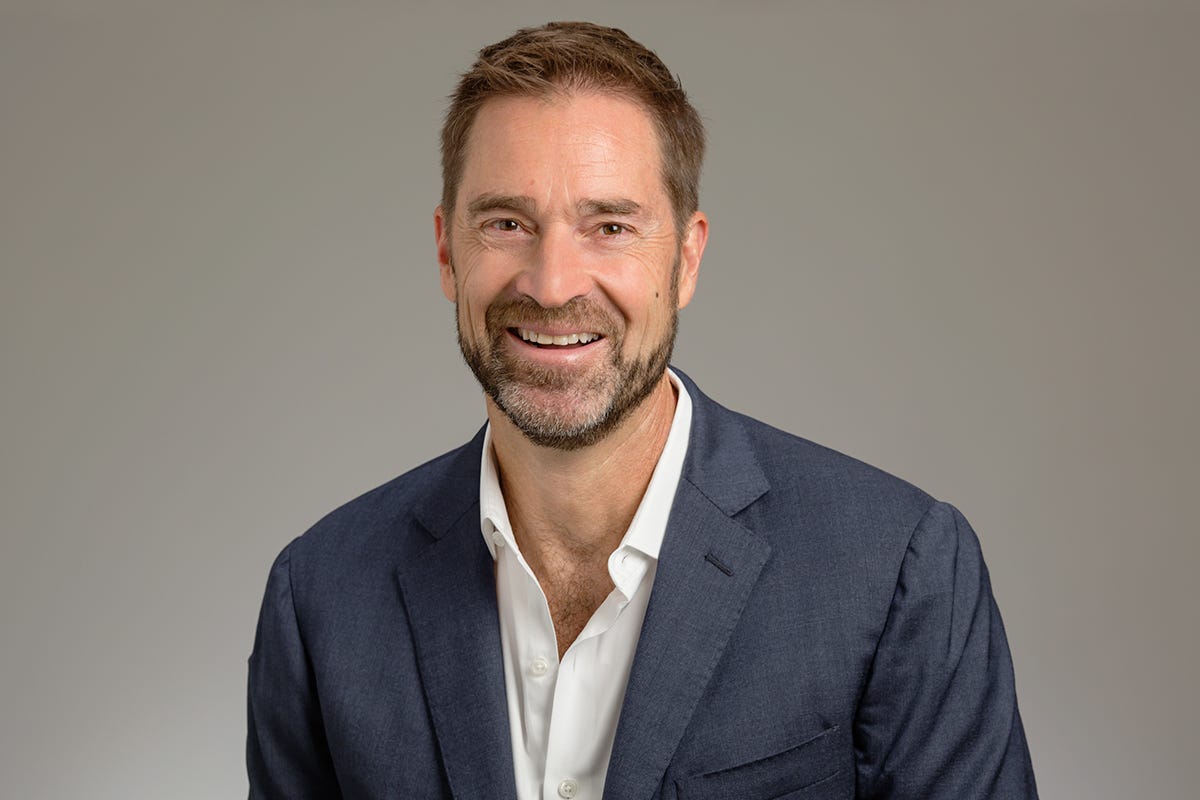
Brent Roberts: let's talk about personality
This is a free preview of a paid episode. To hear more, visit www.razibkhan.comOn this episode of Unsupervised Learning, Razib discusses personality with Brent Roberts, professor of psychology at the University of Illinois. Roberts explains what personality actually is as a psychological construct, and how it differs from personality traits, like extraversion. Razib and Roberts also address the Big Five Personality system, and how it relates to the Myers-Briggs framework. Roberts elucidates what the Big Five’s extraversion, openness, conscientiousness, neuroticism and disagreeability actually mean, and how they correspond to Myers-Briggs dichotomies of extraversion/introversion, sensing/intuitive, thinking/feeling and judging/perceiving. Though Myers-Briggs may have some shortcomings, for example collapsing continuities in discrete categories, Roberts maintains that it still retains some utility, and is not as unscientific as many researchers assert.Razib then asks about personality’s relationship to behavior genetics. What is the heritability of personality’s subcomponents? How do they interrelate? And what might the evolutionary context of personality variation be? Roberts also addresses the idea that personality traits can change over one’s lifetime, and are unstable from test to test. Razib also wonders how different traits, like agreeability, correlate with life outcomes in income and happiness. Finally, they discuss the nature of psychopaths and sociopaths, and how they relate to the Big Five categories.
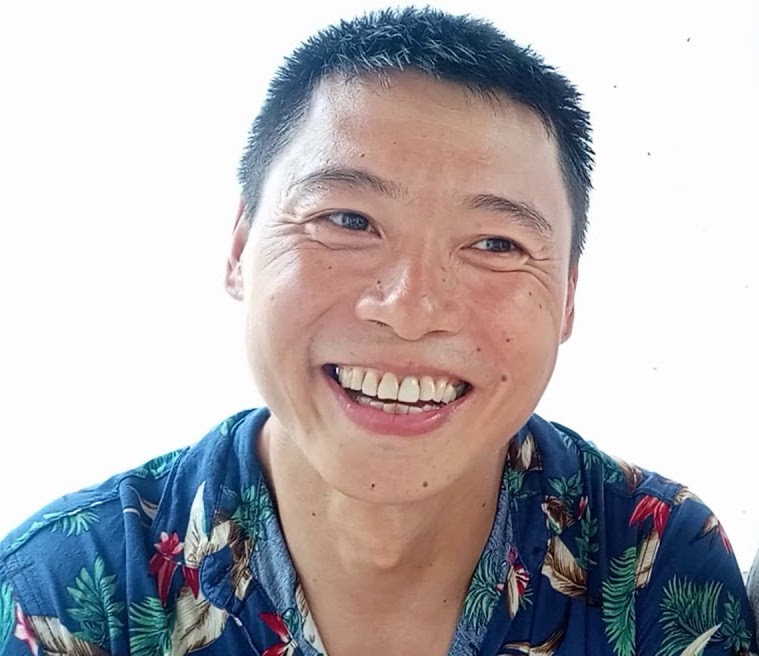
Carl Zha: Chimerica to the Thucydides's Trap
This is a free preview of a paid episode. To hear more, visit www.razibkhan.comFor the first time ever, parents going through IVF can use whole genome sequencing to screen their embryos for hundreds of conditions. Harness the power of genetics to keep your family safe, with Orchid. Check them out at orchidhealth.com.On this episode of Unsupervised Learning Razib talks to Carl Zha. Zha is a Sichuan-born China-commentator who had a long-term professional sojourn in southern California, before settling in Bali, Indonesia. He hosts the Silk and Steel podcast, which covers China, the Silk Road, and more general history, culture and geopolitics. Zha and Razib have known each other since the 2010’s, and often circle back to discussions of China, its history, politics and culture. The course of their conversations has spanned both the close of the “Chimerica” period of trade and political relations, and the more adversarial status that obtains in both the US and in the People’s Republic of China under Xi Jinping.But first, Razib and Zha discuss what it’s like to live as an ethnic Han Chinese in Indonesia, albeit one who resides in Hindu-majority Bali, where Zha settled after marrying a local woman and becoming a father. Though Indonesia has an economically and politically powerful Chinese minority, it was also the scene of ethnic riots in the 1990’s and a genocide of Han Chinese in the 1960’s. Until recently, the state did not recognize Confucianism as a religion and discouraged Chinese names and Chinese-language schools. Nevertheless, Zha presents a relatively positive picture of relations on the island of Bali, where the Hindu population seems to have had an easier time integrating Han in a more syncretistic culture than in the Muslim-majority islands.Then they discuss the pivot in US-China relations in the last half a decade, and the possibilities presented by great power rivalry. Razib and Zha address the thorny reality that though China and the US are now embarking on more explicitly adversarial geopolitics, their economic ties remain strong, with Chinese supply chains essential for American firms like Apple and the US consumer demand essential to propping up China’s vast export sector. Zha also offers a defense of Xi Jinping's rule and the prospects for China as it turns inward from the world, focusing on its domestic market and shoring up its geopolitical positions. The discussion turns to the range of likely outcomes in a world where the 21st century is both the American and Chinese century, and the two great powers remain both economically and geopolitically entangled through trade and numerous bilateral relationships with other nations.
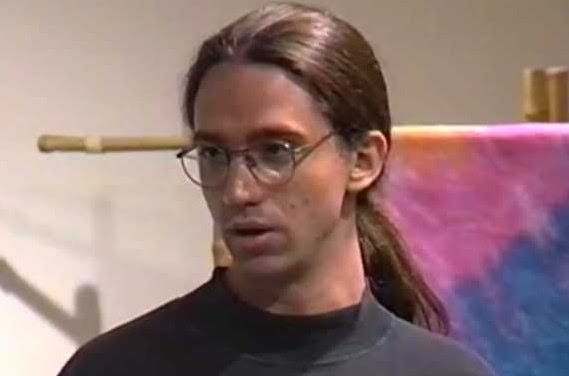
Curtis Yarvin: reflections on a life of poetry
This is a free preview of a paid episode. To hear more, visit www.razibkhan.comFor the first time ever, parents going through IVF can use whole genome sequencing to screen their embryos for hundreds of conditions. Harness the power of genetics to keep your family safe, with Orchid. Check them out at orchidhealth.com.On this episode of Unsupervised Learning, Razib talks with Curtis Yarvin. The host of the Grey Mirror Substack, Yarvin is the former Mencius Moldbug, a pseudonym under which he wrote extensively on culture, politics and history. Yarvin’s social and political views have been profiled widely, including by Vanity Fair and Vox. The intellectual father of neo-reactionary thought, Yarvin is also trained as a computer scientist, and in 2010, he released the first version of Urbit, a decentralized personal server platform, which has spawned an entire community and conferences like Urbit Assembly.Yarvin’s interests extend beyond technology and politics. He is deeply invested in high culture and believes in the importance of the humanities to our civilization. Razib and Yarvin spend most of this episode on the role of poetry in our broader culture, why it is relevant, why it matters, and the works that Yarvin most values. Though his educational background is as a technologist, Yarvin believes that poetry is an essential ingredient in what makes us human. The question of humanity, along with some references to the Dune universe, moves the conversation to Yarvin’s reflections on the rise of A.I. via large language models, and whether it poses an existential threat to the human race (he does not believe it does). Yarvin also offers his opinions on Eliezer Yudkowsky’s trajectory of thought; Yudkowsky has in the last decade become the leader of the “A.I. doomer” faction within the futurist community. Like many observers with a strong computational background, Yarvin does not believe A.I. will lead to the abolition of man, though it may open up new possibilities, extending what humans are capable of in terms of innovation and productivity through cybernetics. Like all technology, its ultimate utility will be contingent on our decisions as humans.

Michael Muthukrishna: A Theory of Everyone - The New Science of Who We Are, How We Got Here, and Where We’re Going
This is a free preview of a paid episode. To hear more, visit www.razibkhan.comFor the first time ever, parents going through IVF can use whole genome sequencing to screen their embryos for hundreds of conditions. Harness the power of genetics to keep your family safe, with Orchid. Check them out at orchidhealth.com.On this episode of Unsupervised Learning, Razib talks to Michael Muthukrishna about his new book, A Theory of Everyone: The New Science of Who We Are, How We Got Here, and Where We’re Going. Muthukrishna is Associate Professor of Economic Psychology at the London School of Economics, an affiliate of the Developmental Economics Group at STICERD and Data Science Institute, Azrieli Global Scholar at the Canadian Institute for Advanced Research (CIFAR), Technical Director of The Database of Religious History, a fellow at the Charter Cities Institute and board member of the One Pencil Project. Of Sri Lankan extraction, he trained as an engineer in Australia, but later became interested in anthropological and cultural questions. He studied for his Ph.D. under Joe Henrich in Canada. Like his mentor, Muthukrishna cross-applies toolkits from evolutionary biology and population genetics to questions of variation and change in human cultures.A Theory of Everyone is an ambitious book with arguably galactic ambitions. The chapters jump from topics like the Cambrian Explosion to the ever-increasing amount of energy needed to get at the fossil fuels that power our civilization. But to start off, Razib asks Muthukrishna about his background as a “third culture kid” and how that might have influenced his anthropological interests. Muthukrishna observed firsthand social and political chaos in Papua New Guinea, while his family’s background in Sri Lanka illustrated for him the salience of ethnic tensions, even when differences might seem minimal to outsiders. Then Razib talks about A Theory of Everyone’s fixation on energy and its role in powering organic life, about our technology-driven civilization and about our potential interplanetary future. Here, Muthukrishina thinks like an engineer, albeit with a broad historical and evolutionary perspective. He and Razib also discuss the problems of “degrowth economics” and why it is a dead-end for a dynamic civilization’s flourishing. Razib also probes Muthukrishna for his views on IQ, its utility as a psychological measure, the variation between individuals and groups, and how those might relate to cultural evolutionary frameworks for considering cognitive aptitudes. The conversation concludes with a consideration of future possibilities as we hurtle past our current energy constraints as a civilization (Muthukrishna is bullish on nuclear), and the role of decentralized political experimentation in improving our social technology.

Peter Nimitz: the end of the first civilizations 4,300 years ago
This is a free preview of a paid episode. To hear more, visit www.razibkhan.comFor the first time ever, parents going through IVF can use whole genome sequencing to screen their embryos for hundreds of conditions. Harness the power of genetics to keep your family safe, with Orchid. Check them out at orchidhealth.com.On this episode of Unsupervised Learning Razib talks to Peter Nimitz about what he memorably calls the crisis of the 23rd century. Most people know of the fall of Rome, and the subsequent European Dark Ages. And because of scholars like Eric Cline, today growing numbers are aware of the civilizational collapse at the end of the Bronze Age, when an incipient global civilization enfolding everything from the shores of the eastern Mediterranean to Mesopotamia was torn apart by climate change and invasion. But before Rome, before the Hittites, the third millennium BC saw a climatic shock that seems to have abruptly transformed all Eurasia and Africa. There have long been glimmers of this upheaval; historical texts record chaos in Sumer and Akkad, while in Egypt the Old Kingdom fell. But today the toolkit of archaeology can illuminate far more, and is making clear that a massive climatic shift toppled fragile empires and transformed cultures. Some areas of Eurasia, like China, seem to have experienced massive drought. Others, like Siberia, became even colder, with regions becoming ever more inhospitable to human occupation.And now Nimitz has reviewed what we know region by region in a magisterial post, Crisis of the 23rd Century: Upheavals from Spain to the Yangtze. Razib presses him about the contrast between the three peninsulas of Southern Europe: the Iberian, Italian and Balkan, and how they each experienced the intrusion of Indo-Europeans during this period (informed by ancient DNA findings). They also discuss the potential divide between Corded Ware and non-Corded Ware Indo-European migrations, and how that shook out across Eurasia. Then they touch upon the civilizational hearths of the Near East, and the wholesale transformation that occurred at this moment culturally and demographically in the Horn of Africa. Finally they sweep eastward, into Siberia, Central Asia and finally China, where new cultures arose and old civilizations collapsed in the centuries after the crisis of the 23rd century.

IBW Episode #3: The Israel-Palestine conflict
For the first time ever, parents going through IVF can use whole genome sequencing to screen their embryos for hundreds of conditions. Harness the power of genetics to keep your family safe, with Orchid. Check them out at orchidhealth.com.On the third episode of the Intellectual Brown Web (IBW) Razib, Sarah Haider of A Special Place in Hell (and her own Substack), Shadi Hamid of The Washingon Post (plus Wisdom of the Crowds and his own Substack) and Murtaza Hussain of The Intercept (and his own Substack) discuss the effects of the Hamas atrocities and the now impending Israeli invasion of Gaza on both geopolitics and American culture. Haider and Khan address why they are finally discussing the Israeli-Palestine conflict, which both have long avoided. In contrast, Hamid and Hussain who have both long taken a scholarly and journalistic interest in the issue, now find themselves deeply engaged once more. Hamid in particular addresses what he sees as the eliminationist rhetoric coming out of some Israeli and American quarters in reaction to the terrorist actions, while Hussain argues that the coming divide will be between the West and the Global South. All four discuss whether 2023 will be similar to 2001, with a massive pivot in American culture and foreign policy forced by Islamist terrorism (conclusion: probably not, but there will be changes).They also discuss the massive impact of the conflict in American culture already in just the last few days, in particular its relevance to cancel culture and the strident unapologetic anti-Israel reactions of radical Left activists. Hamid puts the spotlight on billionaire hedge fund manager Bill Ackman, who is attempting to assemble a list of Harvard students who are members of organizations that backed a pro-Palestinian letter so he can have the option of not hiring them. For the last half a decade Hamid has been a vocal opponent of cancel culture, and he objects to its resurgence in a new form, as well as the turning away from avowed principles by old allies against wokeness. Hussain and Haider respond that most people are truly not principled, and appeal to elevated universal ideals solely it is in their interest.Khan, Haider, Hamid and Hussain finally discuss the relationship of American Jews with the American Left, and prospects for a coalitional crackup, as well as the future of the relationship between Jews and Muslims in the US. Khan brings up the divergence between academia and the rest of American society, with universities and many faculty members remaining silent in marked contrast to the official response to other recent high-profile political events, while Hollywood and corporations have strongly taken Israel’s side.They finish the conversation by reasserting the need for open discussion, free speech and an understanding and acceptance of human dignity, no matter one’s ethnicity, religion and nationality. Though these principles are violated on all sides, Haider emphasizes that there still need to be principles, lest every discussion and debate collapse into a power game of all against all.Related: A Special Place in Hell: Israel at War, Israel, Gaza, and the Double Standard on Cancel Culture, Who is Responsible for the War in Gaza? and Hamas is dragging Israel toward the abyss. This is a public episode. If you'd like to discuss this with other subscribers or get access to bonus episodes, visit www.razibkhan.com/subscribe
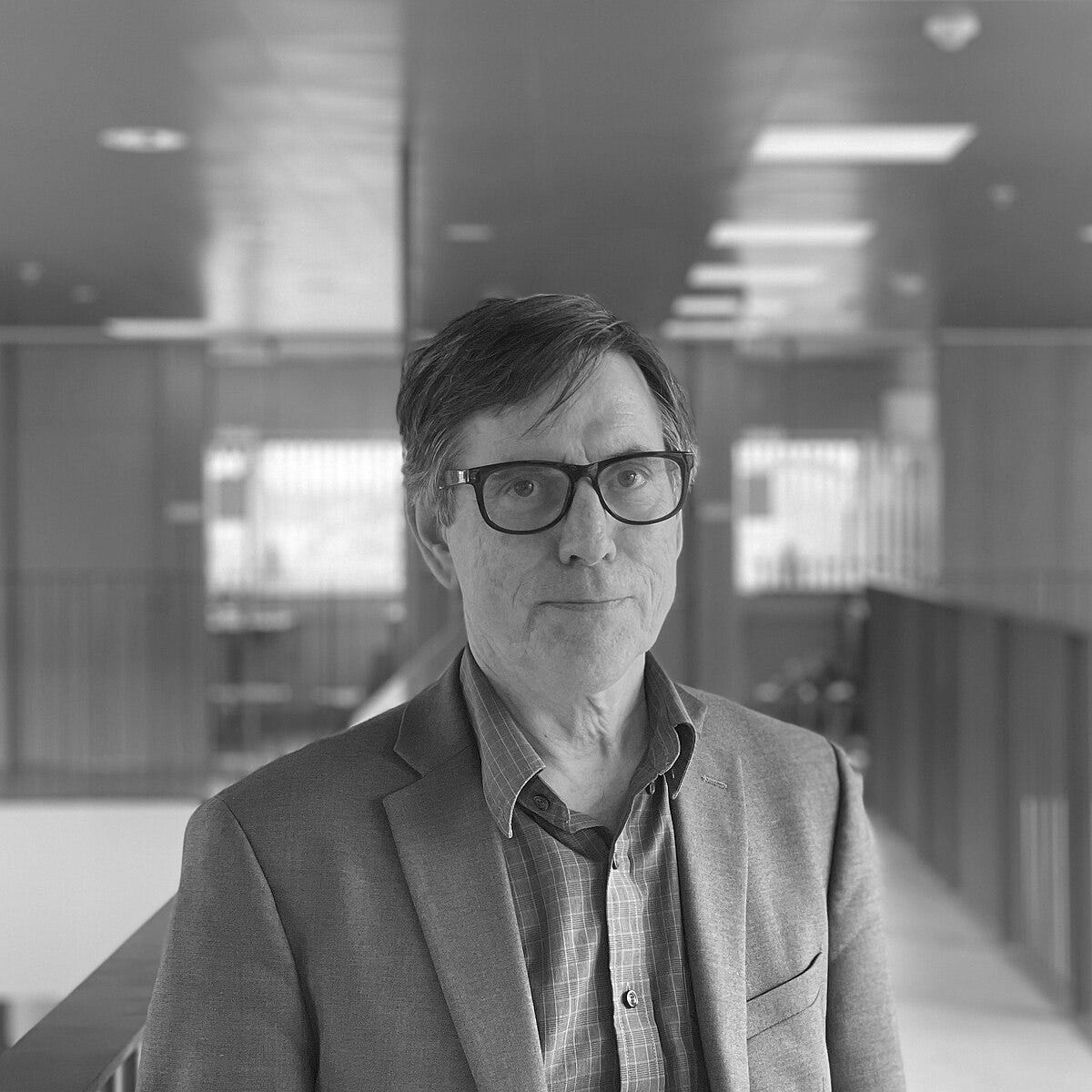
Gregory Clark: what has genetics to do with social status?
This is a free preview of a paid episode. To hear more, visit www.razibkhan.comFor the first time ever, parents going through IVF can use whole genome sequencing to screen their embryos for hundreds of conditions. Harness the power of genetics to keep your family safe, with Orchid. Check them out at orchidhealth.com.On this episode of Unsupervised Learning Razib welcomes back Gregory Clark, a past guest on this podcast. When he last talked to him, Clark had just been disinvited from giving a talk whose results he has now turned into a paper, The inheritance of social status: England, 1600 to 2022. Until recently an economics professor at the University of California, Davis, Clark is now teaching at the University of Southern Denmark. His previous books include The Son Also Rises: Surnames and the History of Social Mobility and A Farewell to Alms: A Brief Economic History of the World.Today Razib and Clark discuss his shocking finding that a simple model predicated on genetic relatedness explains the status distribution across many centuries in England. Clark finds that even where wealth is passed from father to offspring (expected in a patriarchal society), occupational status is inherited equally from mother and father, as expected in a genetic framework rather than cultural framework. Another surprising result from Clark’s dataset is that the rate of social mobility has been unchanged across 400 years in England, despite massive cultural and political shifts. He also finds high rates of inheritance of social status in many other societies, with the highest in the Indian subcontinent.Razib asks Clark how it could be that the data shows such consistently similar rates of social status mobility across periods as different as Victorian England or post-World-War-II Britain. Clark also addresses why he did not work on a model that integrated cultural inheritance; in short, those models were more complex and seemed far less satisfying than his two-parameter equation. He also addresses the social media furor in response to his paper, and his defense against the charge that he’s a eugenicist.

Sundar Iyer & Sudha Jagannathan: the accused speaks the truth about caste and the "Cisco Case"
For the first time ever, parents going through IVF can use whole genome sequencing to screen their embryos for hundreds of conditions. Harness the power of genetics to keep your family safe, with Orchid. Check them out at orchidhealth.com.Related: The Indian caste system: origin, impact and future, The character of caste and Passing the civilizational purity test: India's 3000-year caste straitjacket.Unsupervised Learning tends to steer clear of topics “ripped from the headlines,” but the occasional exception must be made. Today, Razib talks about the intersection of religion, caste and American law and policy with Sundar Iyer and Sudha Jagannathan. Jagannathan, an MBA, is now a board member of the Coalition of Hindus of North America, after working in technology and sales in the Bay Area for 30 years. Iyer is a technology entrepreneur, advisor and angel investor, who holds a Ph.D. in computer science. But this conversation is not about technology. It's about a “current event” that took over Iyer’s life for the better part of the past three years. In the year 2020, California regulators sued Cisco Systems for “for internally enforcing the caste hierarchy.” Iyer was one of two individuals named in that case. For most of the 2020’s so far, Iyer’s life was turned upside down, before the California Civil Rights Department dismissed its case against him (though it continues to pursue Cisco).When the this issue first emerged in the news, some blogs, group chats and email lists surfaced points that should have made anyone skeptical that Iyer was a casteist: he is an atheist who does not identify as Hindu, and his personal views on social issues are quite liberal. These facts are in the public record because twenty years ago, long before he was in the public eye, Iyer wrote about his perspectives in a blog post expressing his strident atheism and rejection of caste. Now Iyer is speaking out about what he experienced, and how progressive cultural and political institutions are being weaponized by activists pursuing narrow, self-interested aims. As a successful entrepreneur, Iyer has the resources to fight to clear his name, and stand up for the objective truth against what he sees as the manipulations of the media and activists. Jagannathan also offers her own perspective as a devout Hindu who is from a “lower caste” background who takes issue with comments made in the mainstream media about her religion and culture, where the caste system is conflated with Hinduism and Indian identity, and assertions are made that the caste is a fundamental part of her faith.Though this episode focuses on the institution of caste and the experience of Indian Americans specifically, it is more broadly about the significant tradeoffs of embracing simple solutions in a complex world. The social justice movement and the American elite political class are fundamentally egalitarian, currently ever alert for oppressors and the oppressed. In the process, innocent individuals get swept up in witch hunts, as activists attempt to find causes worthy of their attention and outrage. Iyer’s experience is not unique, insofar as many, many, Americans have fallen under the narrowed eye of crusading Human Resources departments, bent on transforming workplace disputes into socio-political dramas. The ultimate question is whether an exceedingly diverse America can proceed forward as a dynamic economy and culture despite the burden of ever-present litigation and workplace conflict created when our elites fixate on what divides us, rather than what unites us. This is a public episode. If you'd like to discuss this with other subscribers or get access to bonus episodes, visit www.razibkhan.com/subscribe

John Logsdon: what has genomics done for evolution?
This is a free preview of a paid episode. To hear more, visit www.razibkhan.comFor the first time ever, parents going through IVF can use whole genome sequencing to screen their embryos for hundreds of conditions. Harness the power of genetics to keep your family safe, with Orchid. Check them out at orchidhealth.com.We’re about a generation into the “age of genomics,” or as it’s sometimes termed the “post-genomic era.” Today Razib talks to John Logsdon, a professor of biology at the University of Iowa, about what genomics has wrought in relation to our understanding of evolution, and what evolution has taught us about the structure and nature of the genome. In 2014, Logdson and Sarah J Hanson contributed a chapter entitled “Genome Evolution” to the Princeton Guide to Evolution. Razib uses this mid-2010s review to scaffold his discussion with Logdson about where we are in 2023. But first, he asks what the exact difference between genetics and genomics is. It is sometimes said that quantity has a quality all its own, and Razib and Logdson discuss the different analytic challenges of analyzing the evolutionary trajectory of a single gene, a task up the alley of classical genetics, and describing the evolution of the whole genome of an organism like a human, with thousands of genes.They then move on to various issues relating to the architecture and evolution of the genome that are of deep interest and curiosity to researchers but rarely surfaced to the public. Why do bacterial genomes have so much less “junk” than those of complex organisms, like humans? Why is the relationship between organism complexity and genome size still so uncertain? How has evolution impacted the “molecular machinery” of the genome (like promoters)? And what is the difference between those scientists who use genomics to understand evolution and those who attempt to understand the evolutionary forces that shape the nature of the genome?By inspecting where we are on many specific issues relating to evolution and genomics, Razib and Logdson begin a sketch of how the emergence of genomics has changed evolutionary biology, as the entire genetic maps of vast numbers of species are now at our fingertips. The discussion finally concludes with future possibilities in the next few decades, as the post-genomic era moves from a revolution to a background condition, a banality.Note: Logsdon mentioned HHMI molecular genetic videos. Here is an excellent example:

Christopher Rufo - America's Cultural Revolution: How the Radical Left Conquered Everything.
This is a free preview of a paid episode. To hear more, visit www.razibkhan.comFor the first time ever, parents going through IVF can use whole genome sequencing to screen their embryos for hundreds of conditions. Harness the power of genetics to keep your family safe, with Orchid. Check them out at orchidhealth.com.Yesterday, Razib discussed Richard Hanania’s The Origins of Woke: Civil Rights Law, Corporate America, and the Triumph of Identity Politics with the author. Today, Unsupervised Learning hosts a wide-ranging discussion with Christopher Rufo on his book, America's Cultural Revolution: How the Radical Left Conquered Everything. While Hanania’s focus is law and politics, Rufo looks at intellectual history and culture. If you follow his prolific output on social media or in City Journal, you know Rufo is an indefatigable culture warrior, but in America's Cultural Revolution he outlines in a book-length narrative the ideas and people he believes have driven the “Great Awokening” of the 2010’s and 2020’s.Though Razib and Rufo first discuss his past life as a filmmaker, and in particular, Diamonds in the Dunes, a 2014 documentary about a baseball team in Xinjiang, most of the conversation revolves around the historical figures of the mid-to late-20th century that set the stage for the rise of woke culture and critical race theory. They begin with the elder statesmen of 1960’s radicalism, Frankfurt School critical theorist Herbert Marcuse. The exposition of Marcuse’s life is Rufo’s entrée into a discussion about “Cultural Marxism” that has defined much of his public profile over the last few years. Rufo elucidates the connection between radical academics and violent activists in the streets in the late 1960’s, and how it connects to protests in the 2010’s. He also traces the genealogy of many modern institutions back to 1960’s radicalism, including Marcuse’s personal connection to the field of “Diversity, Equity and Inclusion” (DEI) through his wife, who pioneered its practices and terminology. Razib and Rufo also discuss the checkered life of one of Marcuse’s star students, Professor Angela Davis, whose involvement in violent terrorism in the 1960’s is curiously ignored by her academic supporters. Skipping much closer to the present, Rufo talks about political and social radicalism he witnessed in 2020 in Seattle and the events later in Portland, as the Pacific Northwest came to embrace “America’s Cultural Revolution.”Finally, Razib asks Rufo for his take on the state of contemporary politics, and the path forward. Though the vast majority of America's Cultural Revolution focuses on the past, Rufo has embraced an active role in current politics, especially the conflict over New College in Florida. Shifting from a Left-Right frame, Rufo reflects on tensions within the ostensibly anti-woke Right, and the future of the American republic and its critics both from on the far Left and far Right.

Richard Hanania: The Origins of Woke - Civil Rights Law, Corporate America, and the Triumph of Identity Politics
This is a free preview of a paid episode. To hear more, visit www.razibkhan.comFor the first time ever, parents going through IVF can use whole genome sequencing to screen their embryos for hundreds of conditions. Harness the power of genetics to keep your family safe, with Orchid. Check them out at orchidhealth.com.In September 2023, Harper Collins published Richard Hanania’s The Origins of Woke: Civil Rights Law, Corporate America, and the Triumph of Identity Politics, two months after Christopher Rufo’s America's Cultural Revolution: How the Radical Left Conquered Everything. Both these books tackle the same issue: the US’s Leftist cultural direction, especially since 2015, and what Matthew Yglesias termed the “Great Awokening” in 2019. Razib recently interviewed both authors, and today we release the first of two conversations over consecutive days so listeners can reflect on Hanania and Rufo’s divergent perspectives on one of the major themes of American political culture in the 2020’s.First, Razib talks to Hanania, who holds a J.D. from the University of Chicago and a Ph.D. from UCLA, about The Origins of Woke. Befitting his legal education, much of the book delves into the knock-on consequences of 1960’s legislation, particularly the 1964 Civil Rights Act. Hanania articulates the view that “wokeness” can be defined by the idea that any variation in outcome between groups must be ascribed to discrimination and that entertainment of alternative views (for example, that groups have different aptitudes and/or preferences for specific fields) is tantamount to racism. The Origins of Woke touches upon sex discrimination and the emergence of queer identity politics, but Hanania believes that the central through-line between the 1964 Civil Rights Act and the modern woke era is the black-white racial division in the US, and the fight for racial equality before the law morphing into a campaign for total equity of outcome in all domains of life. Synthesizing his background in law and political science, Hanania argues that a combination of vague initial legal frameworks and an activist bureaucracy have enabled the sharp detour from the original drafters’ intent with civil rights legislation instead into a total revolution of norms. He also points out that much of the framework for the woke revolution was put in place under the conservative Nixon administration, a pattern observed by Pat Buchanan in his 1975 book Conservative votes, liberal victories: Why the right has failed.One of the major contentions of The Origins of Woke is that excessive focus on Andrew Breitbart’s assertion that “politics is downstream” of culture has led the Right down the wrong path to de facto defeatism. Hanania discusses how the “marketplace of ideas” model ultimately fails given the Left’s capture of all institutions that would arbitrate issues around the culture war. Rather, Hanania clearly believes that the path to the rollback of woke norms across the broader culture is through politics, and in particular the Republican party fully embracing its role as a reactive force against the American legal regime that was seeded in the 1960’s.

The Indian caste system: origin, impact and future
This is a free preview of a paid episode. To hear more, visit www.razibkhan.comIn the US, roughly 1 in 33 infants are born with a congenital disability, about 25% of which have an identified genetic cause. For the first time,, parents can use Orchid’s whole genome sequencing to screen their embryos for these genetic variants and mitigate their baby’s disease risk. Check out orchidhealth.com, and use code RAZIB when signing up to skip the waitlist.What is caste? This is a question many Americans have been asking since the publication of Isabel Wilkerson’s Caste: The Origins of Our Discontents (an Oprah's Book Club selection). On this episode of Unsupervised Learning, Razib talks at length about the historical, cultural and genetic aspects of caste. He explains the genetic origins and impacts of the practice in the Indian subcontinent, and how that contrasts with “caste” in other societies like feudal Japan. Razib also explores how caste, a European-origin word, came to bracket a sociological phenomenon that includes two related concepts, varna and jati, and how the former is abstract while the latter is concrete.Caste in the Indian subcontinent has massive social and political implications. Razib talks about the demographics of caste, and how this is relevant to considerations of equity in a nation-state originally founded on socialistic principles. In the subcontinent, caste is not simply a Hindu phenomenon but extends to Muslims and Christians. And in a subcontinent of nearly 2 billion people, caste expresses itself in varied ways depending on region.Finally, Razib ponders the future of the institution. If diasporic communities like Mauritius and Guyana are any guide, caste has a dim future. With urban jati exogamy rates increasing constantly over the last generation, Razib predicts that in the 22nd century caste in the subcontinent will be viewed as a outmoded practice continued only by a few communities. Caste is a question that is relevant to both the past and the present, but the forces of modernization will eat away at its foundations going forward.
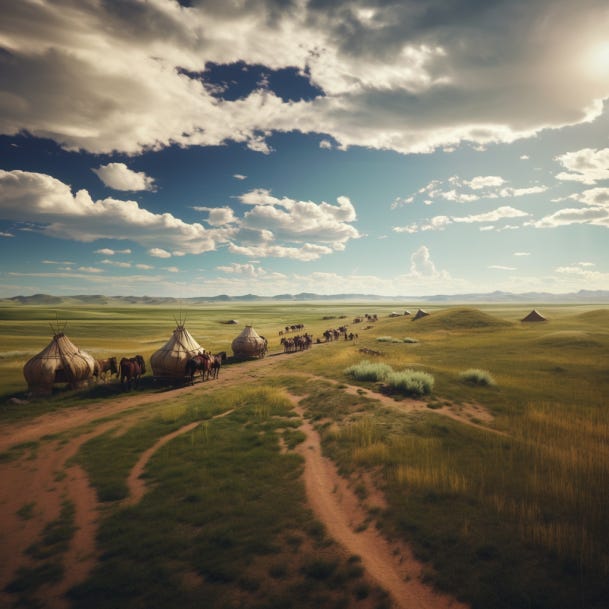
David Anthony: when we were Yamnaya
This is a free preview of a paid episode. To hear more, visit www.razibkhan.com1 in 36 children in the US have Autism Spectrum Disorder, but did you know that 20-30% have a known genetic cause for their condition? Read more about how, for the first time, parents can use Orchid’s whole genome sequencing to screen their embryos for these genetic variations, and mitigate their baby’s risk of disease. Check them out at orchidhealth.com, and use code RAZIB when signing up to skip the waitlist.Today, Razib revisits The Horse, the Wheel, and Language with David Anthony, emeritus professor at Hartwick College and collaborator with David Reich’s ancient DNA research group at Harvard University. Anthony and Razib survey the last two years in terms of questions regarding the domestication of the horse, the spread of the wheel, and Yamnaya steppe herders' language; subjects of his 2007 book. They also discuss the exponential growth in our understanding of the paleodemography of Bronze Age Eurasian nomads since 2015’s publication of Massive migration from the steppe was a source for Indo-European languages in Europe, a study for which Anthony provided many of the samples.Razib asks Anthony how his understanding of the rise of Indo-Europeans has or has not changed, in the wake of new data and novel interpretations over the last two years. Anthony reiterates the broad outlines he has been proposing for decades: the Yamnaya nomads of the Bronze-Age Eurasian steppe were the proto-Indo-Europeans, full stop. He also addresses those who argue for the Corded Ware culture of East-Central Europe being considered a sister, as opposed to a daughter, culture of the Yamnaya. Anthony points out that analysts in Reich’s group have discovered individuals who are apparent relatives between the Yamnaya and Corded Ware, indicative of a close and tight bond. Like the Danish archaeologist Kristian Kristiansen, Anthony believes that the pastoralist people who invaded Northern Europe 5,000 years ago should be thought of as fundamentally Yamnaya. He also addresses those skeptical of Yamnaya origins, positing perhaps some discomfort with the idea that modern people descend from warlike nomadic groups.Finally, Razib presses Anthony about new theories regarding more detailed structure of early Indo-European migrations. Does he accept the contention that most Indo-European groups descend from the Corded Ware, while Armenians, Greeks, Tocharians and Illyrians descend from the Yamnaya directly? What more elements to the narrative are going to be added beyond the broad assertion that the Yamnaya were the proto-Indo-Europeans?Related podcasts: David Anthony: the origin of Indo-Europeans, Thomas Olander: the origin and spread of Indo-European languages, James P. Mallory: finding the Indo-Europeans and Kristian Kristiansen: the birth of Northern Europe.Selected publications:* The genetic history of the Southern Arc: A bridge between West Asia and Europe* Population genomics of bronze age Eurasia* Massive migration from the steppe was a source for Indo-European languages in Europe* The origins and spread of domestic horses from the Western Eurasian steppes* Language trees with sampled ancestors support a hybrid model for the origin of Indo-European languages

Erik Hoel: The World Behind the World
This is a free preview of a paid episode. To hear more, visit www.razibkhan.com1 in 36 children in the US have an Autism Spectrum Disorder diagnosis, but did you know that 20-30% have a known genetic cause for their condition? Read more how, for the first time, parents can use Orchid’s whole genome sequencing to screen their embryos for these genetic variations, and mitigate their baby’s risk of disease. Check them out at orchidhealth.com, and use code RAZIB when signing up to skip the waitlist.Today, Razib talks to Erik Hoel, host of the Substack The Intrinsic Perspective and author of The World Behind the World: Consciousness, Free Will, and the Limits of Science. An academic neuroscientist by training, in The World Behind the World Hoel outlines the emergence of modern neuroscience, and where it went wrong in terms of the field’s researchers' focus. But first, Hoel discusses human understanding of the mind, and how it has changed over time. He gives his take on Julian Jayne’s The Origin of Consciousness in the Breakdown of the Bicameral Mind, and explains that it is unlikely that consciousness emerged after the Bronze Age as posited in the book. Instead, The World Behind the World argues that the differentiation between the inner world and the outer world, the intrinsic perspective of literature and psychology and the extrinsic perspective of physics and biology arose with the Classical Greeks 2,500 years ago. Hoel also observes that a modern perspective on one’s inner world and psychological complexity so evident in Greco-Roman texts rapidly fades again after the fall of Rome and the regression during the Dark Ages, when literacy declined and text became refocused exclusively on the functional external world, whether it be tax records or agronomy manuals.The World Behind the World is a book-length argument fleshing out Hoel’s contention that understanding consciousness is, and must be, at the heart of neuroscience. Though studies of the biology and chemistry of axons and glial cells make sense from a reductionistic perspective, Hoel makes a convincing case that contemporary neuroscience models fail to understand how the brain works. The World Behind the World suggests modern neuroscience is pre-paradigmatic, like biology before evolution or physics before Newtonian mechanics: merely a collection of fascinating observations and detailed mechanisms. Hoel maintains that a true neuroscience theory with consciousness as its center and organizing principle is necessary to understand how the intrinsic world emerged and functions.

Katherine Dee: Is Twitter just our default?
This is a free preview of a paid episode. To hear more, visit www.razibkhan.comOn this episode of the Unsupervised Learning podcast, Razib talks to internet commentator formerly known as default friend who is perhaps better known today as the internet culture writer Katherine Dee. Dee is a regular contributor to Retvrn, The Washington Examiner, The American Mind, Tablet Magazine and UnHerd. She has also recently written a piece for Compact: Why You’re Never Leaving Twitter. But first, Razib and Dee discuss how they have known each other for nearly a decade, going back to 2015 on the site formerly known as Twitter, and more substantially as residents of Austin in the late teens. Since 2019 Dee's existence has been a peripatetic one; after leaving Texas and first moving to the Bay Area, she then lived in the Pacific Northwest, before finally settling in Chicago. Working in advertising, and then in big tech, Dee has finally settled on a career as a freelancer, with all the freedom and uncertainty that entails.Razib asks Dee whether there is today, in 2023, any culture that isn’t somehow connected to the internet. She agrees about the pervasive nature of digital and social media, and how thickly it is interleaved into the lives of younger Millennials and Zoomers. And yet as a counterpoint to this conception of a revolution that has transmuted “IRL” life online, Razib argues that social media is just an amplification of “bulletin board system” (BBS) culture which existed as early as the 1980’s. Dee then reflects on her maturation as an observer of all things internet through Twitter and Discord, and the shadow-impact of more obscure platforms like Tumblr and 4chan on our broader culture, beneath the notice of the wider population of “normies,” while Razib reminds her how small Twitter’s user base is compared to platforms like Facebook or YouTube (the latter are measured in billions, while Twitter retains some 450 million active users).In her piece, Why You’re Never Leaving Twitter, Dee argues that the anemic showing of dozens of Twitter clones and pretenders in the last decade argues that the platform just isn’t going to be dethroned from its central role in the media, and thereby wider American culture. From right-wing to left-wing imitators, or Facebook’s Threads, every challenger has failed to eat into Twitter’s critical position as a nexus in the media ecosystem, a central node in transmitting information throughout diverse subcultures. But Razib plays devil's advocate, musing whether Elon Musk’s erratic tenure since assuming ownership of the platform, his change of its brand to X, his petty beefs with publishers like Substack and ex cathedra pronouncements of major feature changes, might actually spell the end of the platform. Though Dee seems skeptical that even Musk could destroy his new property, not seeing any replacement on the horizon, suggests to her that the age of a single central information switchboard for the internet may be ephemeral and one we look back on as a particular and unique moment in history, just as we do the age of three major television networks in the 20th century.
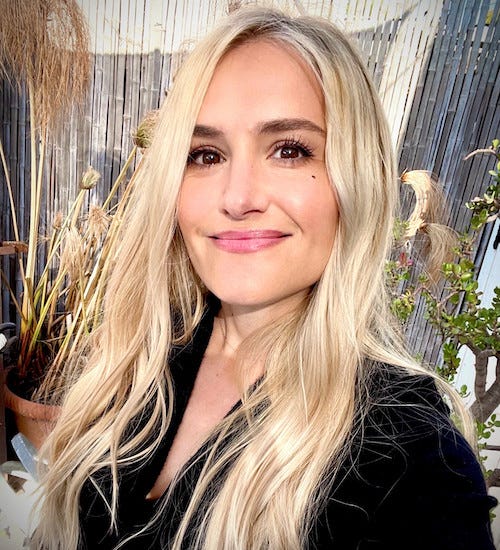
Cory Clark: adversarial collaborations in science
This is a free preview of a paid episode. To hear more, visit www.razibkhan.comOn this episode of Unsupervised Learning Razib talks to Dr. Cory J. Clark, a behavioral scientist and executive director of the Adversarial Collaboration Project at the University of Pennsylvania. Clark got her Ph.D. in social psychology at UC Irvine, but her interests have broadened over her career as is clear in a diverse oeuvre.First, Razib and Clark talk about the culture of self-censorship within science due to politicization and intra-scientific politics. They discuss whether fraud is more damaging to the career of a senior or junior scientist, and the crisis coming for behavioral economics in the wake of the Francesco Gino and Dan Ariely ethics scandals. While Razib offers the prescription of viewpoint diversity, Clark argues that a recommitment to objectivity and truth as the fundamental values of science is needed. They then move on to her major current project on “adversarial collaboration.” Whereas in “normal science” two rival research groups may hold to conflicting hypotheses for decades, with outsiders unable to adjudicate, Clark argues that researchers with differing views should come together to converge upon the truth.Her interest in the culture of science leads naturally to a broader concern about human cultural equilibria. In The Evolution of Relentless Badassery, Clark argues that a particular personality type is socially and evolutionarily favored. Razib and Clark discuss whether we live in a time of peace so that disagreeable violent characters are at a low ebb in their stature, and perhaps in the face of cultural chaos the “badass,” figures like Michael Corleone in The Godfather films may reemerge to establish order and ruthless justice.The discussion loops back to a consideration of the values that unite scientists, and the cultural and political winds moving through the profession that might threaten to blow it off course as an enterprise, might leave it more a social club than a venerable institution to generate information. Clark is candid that she is not sure she would recommend heterodox students even attempt to join the academy.
Alex S. Young and James J. Lee: quantitative genetics in 2023
This is a free preview of a paid episode. To hear more, visit www.razibkhan.comOn this episode of Unsupervised Learning Razib talks with Alex Young of UCLA and James Lee of the University of Minnesota about quantitative genetics and its relationship to complex traits and the genomic revolution. Young, trained as a mathematician, and Lee, trained as a psychologist, have both converged upon research programs exploring the role of genetics in generating variation in human behavior and disease. First, the trio reviews quantitative genetics’ modern basis in R. A. Fisher’s 1918 paper The Correlation between Relatives on the Supposition of Mendelian Inheritance, and how the field emerged from the same intellectual root as population genetics in the first decades of the 20th century. They then discuss phenomena closely associated with quantitative characteristics: polygenicity, heritability and the central limit theorem. Razib also outlines the role of population genetic parameters like mutation, selection and drift in shaping the distribution of any given trait, particularly the characteristic’s variation and median values.After a deep dive into major concerns like the difference between heritability in the “broad sense” and “narrow sense,” what additive genetic variance is and why it’s so important to evolution and applied breeding and contemporary heritability estimates of traits like height and intelligence using twin studies and family-based genomic analyses, the conversation concludes with a discussion of Gregory Clark’s new PNAS paper, The inheritance of social status: England, 1600 to 2022. What are its implications? Why did it ignite a firestorm on social media? Lee in fact contributed a comment on the paper to PNAS, while Young has tackled its methods and conclusions on social media.In a conversation that stretches on for over two hours, Razib, Lee and Young touch upon many aspects of a discipline that combines the statistical insights of the 20th century with the genomic technologies of the 21st. Lee also expounds on a result from one of his papers that didn’t make it into the final publication due to reviewer skepticism: what he calls a “beer-chugging phenotype” reported from the study of twins.
Renu Mukherjee: affirmative action's end
Today the Supreme Court ended affirmative action when it comes to university admissions as we know it. Anticipating this decision, Razib recorded a conversation with Renu Mukherjee a few months back. But today they also added a timely prologue reflecting on the decision, which shook out exactly as she expected (also see her report, Friends of the Court? Advocacy Groups as Amici in Students for Fair Admissions). Mukherjee is a Paulson Policy Analyst at the Manhattan Institute and a Ph.D. student in American politics at Boston College, where her dissertation will focus on affirmative action. Razib asks Mukherjee to discuss the origin of affirmative action as it is practiced in the US today, starting with the Bakke decision in 1978, and then moving on to Grutter vs. Bollinger in 2003. She then moves to the details of the current cases, in particular Students for Fair Admissions Inc. v. President & Fellows of Harvard College, where the plaintiffs assert that Harvard University discriminates against Asian Americans in admissions, and engages in “racial balancing.”Razib and Mukherjee then explore the implications of the decision. Razib wonders about the implication for Harvard in particular, which is, to great extent, the finishing school of the American ruling class. Is Harvard’s mission sustainable if 40% of the student body is Asian American? Mukherjee points out that these demographic trends, the rise of Asian Americans proportionally and the decline of historically represented groups, have been occurring despite affirmative action, for example, the decline of Jewish Americans in the Ivy League over the last generation. Additionally, both Razib and Mukherjee agree universities are certain to engage in both evasion and massive resistance to the ruling. Mukherjee argues that the current moves against standardized testing anticipate the program of evasion that we can expect in the future, where holistic admissions can allow the administrators’ preferences to continue.Note: Today we also released another podcast on Muslims and their recent confrontations with the LGBTQIA+ movement with Sarah Haider of A Special Place in Hell (and her own Substack), Shadi Hamid of the Brookings Institute (and Wisdom of the Crowds and his own Substack) and Murtaza Hussain of The Intercept (and his own Substack). This is a public episode. If you'd like to discuss this with other subscribers or get access to bonus episodes, visit www.razibkhan.com/subscribe
Russia invades Ukraine and ends globalization?
Life comes at you fast. Sometimes faster than others. Given the events that have upended assumptions about international relations, shaken the financial system and riveted the world since Razib pre-recorded this week’s paid-subscriber podcast with Samo Burja, founder of political risk consultancy Bismarck Analysis, we recorded a bonus mini-episode for all subscribers. On this extra episode of Unsupervised Learning Razib talks with Burja again, focusing solely on current geopolitical events. Are things going according to the Russian plan? How long will the Russians stay, and how will this impact Europe? And what are the long-term consequences of the Western economic response to Russia’s incursion for the world’s geopolitical balance? Samo addresses head-on what he believes are the likely ramifications for the US, Europe, Russia and Asia.Welcome back to the multipolar world, dominated by Keynes’ old animal spirits (paying subscribers, I highly recommend the week’s premium podcast with Samo where he talks about his firm Bismarck Analysis, and how they see the world). If you are among the many struck by the irrationality of Putin’s behavior, Samo’s approach to breaking it down without cant or emotion should be required listening.Related: Putin’s Bet, A Contrarian View on Ukraine/Russia, Samo Burja and Drone Adoption Favors Quantity Over Quality In Warfare. This is a public episode. If you'd like to discuss this with other subscribers or get access to bonus episodes, visit www.razibkhan.com/subscribe
Rav Arora: psychedelics and spirituality
Rav Arora came to public prominence in 2020 with a column for The New York Post provocatively titled “The Fallacy of White Privilege.” He suffered personal and professional blowback, but today the 20-year-old Canadian undergraduate has a semi-regular column in The New York Post, and is interviewed by the likes of Glenn Loury. Arora’s fearlessness in expressing his opinions on a wide range of topics, in particular politically controversial ones, combined with a dogged work ethic has earned him a wide platform, publishing in The New York Post, The Global and Mail and Quillette. He’s also already had guests on his podcast as prominent as Sam Harris. Not too shabby for someone who hasn’t even graduated university. But on this episode of the Unsupervised Learning podcast, Arora discusses a new passion, the intersection of psychedelics, therapy and mysticism. When he’s not writing about social and political topics, he is now exploring “science of mystical experience and psychedelics” on his new Substack, The Noble Truths with Rav Arora.Razib first lays his cards on the table and admits that he has no firsthand knowledge of psychedelics and no personal interest or understanding of mysticism. And yet, he acknowledges that discussion of drugs like psilocybin is pervasive across society. Rav disabuses Razib of the idea that psilocybin and other psychedelics are dangerous, a case where Generation-Z has to enlighten a member of Generation-X who was inculcated with the “Just Say No To Drugs” message of the 1980’s. For Rav, psychedelics are a means to an end, a tool like any other.But much of the discussion goes deeper into issues of metaphysics. What is spirituality, and what does Rav say to people who express no interest in mysticism or religion? Rav contends that the utility of psychedelics for spirituality doesn’t have anything to do with religion, making the point that the atheist Sam Harris has long been intrigued by the potential of psychedelics in bringing about heightened mental awareness. Though Razib remains skeptical, it’s clear that this decade will see more discussion of this topic, and Rav also notes the extensive research in psychotherapy showing that psychedelics are proving effective in treating mental illness.The substack is The Noble Truths with Rav Arora, where he posts essays on the science of mystical experience and psychedelics. Paid subscribers can also get Rav’s post-psychedelic trip audio recordings and FaceTime podcasts with ‘IDW’ figures. This is a public episode. If you'd like to discuss this with other subscribers or get access to bonus episodes, visit www.razibkhan.com/subscribe
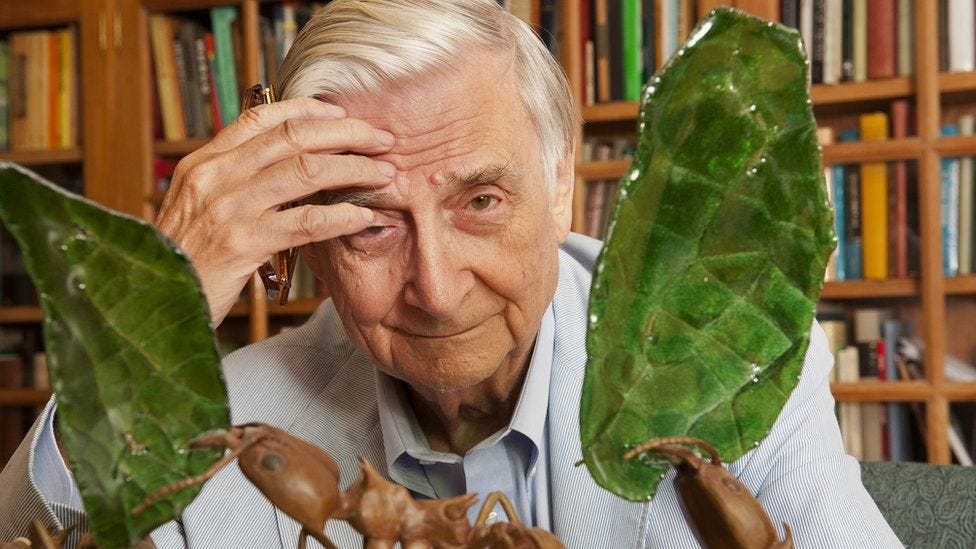
David Sloan Wilson and Charles C. Mann on E. O. Wilson's legacy
The day after Christmas 2021, the great entomologist and evolutionary biologist E. O. Wilson died at the age of 92. Carl Zimmer in The New York Times wrote an obituary that highlighted his seminal early contributions to science, as well as his role as a public intellectual after the publication of 1975’s Sociobiology. Wilson also wrote an autobiography, Naturalist, telling the story of his life in science from his own perspective.In the days after his passing, I wanted to touch base with those who knew him, collaborated with him, and even had disputes with him. The evolutionary biologist David Sloan Wilson (no genetic relation) has talked in his books about how he was influenced by the elder Wilson early in his career, and also how they eventually became colleagues and allies in scientific debates. Recently he published The Six Legacies of Edward O. Wilson as a reflection on E. O. Wilson’s career and influence. These six were his contributions to evolutionary biology, biodiversity, human sociobiology, the unification of knowledge, his encouraging stance toward young scientists and other learners, and finally, the frontier of ecosystems studies (his very last project).I’ve talked to David before about his work on multi-level selection as well as his ambition toward utilizing evolutionary biological frameworks in the context of social science and policy, so I reached out to discuss the piece he wrote about E. O. Wilson’s life. Knowing that the elder Wilson had encouraged David's interest in group selection as a graduate student, I expected to focus on the late scientist’s great contributions. But in fact, we addressed the reality that the elder Wilson often had greater aspirations than concrete paths of execution. No one can deny E. O. Wilson’s original contributions to ecology and his mastery of entomology, but David Sloan Wilson points out that some of his recent books sketch out grand plans, but do not deliver any roadmap on how to achieve those ends. Rather than a hagiography, the conversation emphasizes that we shouldn’t make icons out of scientists, that science is a collective enterprise, and that too often it is depicted as the products of singular “Great Men.” Nevertheless, over the course of the discussion, David Sloan Wilson and I do discuss the late Wilson’s positive and important contributions to entomology and mentorship, as well as his last forays into scientific debates when he became involved in a controversy around the utility of W. D. Hamilton’s inclusive fitness framework in 2010, and their collaboration in the 2000’s on multi-level selection theory.One of the things about E. O. Wilson’s life that many have observed was his great range. In addition to his contributions to evolutionary biology, over the last few decades of his life, Wilson became a promoter of conservation and biodiversity (a term he helped popularize in the late 1980’s). But his activism was not without controversy. In the last third of the podcast, I talk to the science writer Charles C. Mann about his run-ins with Wilson in relation to environmentalism, where the scientist’s love of nature seems to have driven him beyond what conservation biology may have entailed. Mann also recounts Wilson’s dismissals of his pointed questions in relation to predictions made by his scientific theories about island biodiversity, reiterating that even the greatest of scientists are not necessarily dispassionate when it comes to their own scholarship. This is a public episode. If you'd like to discuss this with other subscribers or get access to bonus episodes, visit www.razibkhan.com/subscribe

Trent Colbert: standing athwart the mob
This is a “bonus episode” of the Unsupervised Learning Podcast. Due to the time-sensitivity of the discussion, I am posting this simultaneously to Substack and Libsyn, so both free and paid subscribers are receiving this email.Your regularly scheduled weekly subscribers-only podcast will still be released this Thursday.Recently Yale Law School (YLS) student Trent Colbert wrote Why I Didn’t Apologize For That Yale Law School Email: We must end the culture of performative repentance for Persuasion. I was broadly familiar with the culture-war saga that Colbert was caught up in, having read a piece a few weeks ago in The Washington Post describing how a seemingly innocent and jocular email triggered accusations of racism at YLS (as well as Aaron Sibarium’s piece in The Washington Free Beacon). Colbert’s piece in Persuasion made me curious about him, and I reached out to talk about what he had seen, and the lessons that we as a society and individuals might take from it.First, Colbert gives us his own perspective of what transpired at YLS to make him a “trending topic” on social media. Perhaps to the surprise of Millennials, the 23-year-old Zoomer seemed not entirely familiar with the well-known podcast Chapo Trap House. As a member of Gen X, I have to admit it's a little unnerving to hear Millennials viewed as geriatric elders. But Colbert grew up in a world of super-charged cultural change and perhaps perceives the passage of time differently than those of us who came into adulthood before smartphones. He contended that some of the offense others perceived might be a matter of cohort differences and even just his casual Zoomer manner. Even a few years' difference today might mean an entirely alternative landscape of memes and sensibilities, so a subtle and wry reference among his age-mates could strike an individual only a few years older as offensive, opaque and “tone-deaf.”With that in mind, I was curious about his background, and where he got the strength to stand up to the YLS administrative bureaucracy. We explored his relationship to his Cherokee background, as well as growing up in a moderately conservative household where religion was important. Colbert takes the idea of right and wrong seriously, and he felt that his own conscience would not allow him to agree to an apology that was premised on lies. Importantly, he also had a supportive group of friends at YLS and a wider circle of backers in the community.Eventually, we moved to broader social forces, and how his individual choices and decisions might impact others. By doing the right thing, rather than the easy thing, Colbert hopes to show that it is possible to defeat the kind of bureaucratic machine that was unleashed upon him and trigger a preference cascade that changes the culture on campus. And doing the right thing has not been entirely easy, as Colbert admits to being uncomfortable with realizing how others at YLS viewed him purely through a racial lens, as well as the fact that many prominent organizations accused him of being a racist.Overall, perhaps the take-home lesson is that it doesn’t take an exceptional person to take on the system. Just someone who has a core set of principles and friends and family who support them when they might have to make decisions that lead to socially unpopular outcomes. This is a public episode. If you'd like to discuss this with other subscribers or get access to bonus episodes, visit www.razibkhan.com/subscribe
Patrick Wyman: Luther, Columbus and Gutenberg
Today on this bonus episode of Unsupervised Learning I’m excited to talk to Patrick Wyman about his new book, The Verge: Reformation, Renaissance, and Forty Years that Shook the World. Full disclosure, I enjoyed The Verge, and a review will be posted from me on National Review Online within the next week.Wyman is the host of Tides of History, a podcast about history and assorted topics which I recommend to everyone (I’ve been a guest). If you’ve listened to him speak at length, you won’t be very surprised by the topics and style of writing in The Verge. The narrative does a great job balancing the academic with the engaging.After reading his book I was curious to ask Wyman about how he wove social and economic history into a persona-driven narrative. We talk at length about the particular details of the significance of the 40-year-period he covers, and whether Martin Luther was a necessary man (as opposed to just being sufficient).Patrick and I also tackle meta-historical questions such as the importance of “great men” versus forces-of-history, and whether the Protestant Reformation was inevitable due to technological changes. It’s a wide-ranging conversation, so if you are interested in the nitty-gritty of historical processes I think you’ll enjoy it.Cross-promotion: The six-part series on Finland is done, check it out:* Part one: Duke Tales: shades of Finnish cultural weirdness in my own backyard* Part two: Weirdness as a national pastime: culture* Part three: Go West Young Siberian: genetics findings* Part four: From deepest Siberia to Europe’s edge: more genetics* Part five: Frontier Finns: cabins, rakes & Indians* Part six: Finnish brains, baiting and bottlenecks: education and medical genetics This is a public episode. If you'd like to discuss this with other subscribers or get access to bonus episodes, visit www.razibkhan.com/subscribe

Dragon Man ascending: two geneticists discuss the latest paleoanthropological discoveries
Last week two new hominin fossils were published in the scientific literature, and extensively reported on in the media. “Dragon Man”, discovered in Harbin, China, and dating to 140,000 years ago is claimed to be a new species that is the closest to the modern human lineage. Meanwhile, the hominin discovered at Nesha Ramla in Israel dates to 120,000-140,000 years ago, and it seems most similar to Neanderthals (though its tools are no different from modern humans to the south and west in Africa).I’ve given some thought to the implications of these results, and how to interpret them. But I wanted to get the sense of another geneticist, my friend Vagheesh Narasimhan. I’ve talked to Vagheesh before in relation to his blockbuster paper, The formation of human populations in South and Central Asia. My goal for this podcast was to “nerd out” on human evolution from a genomics perspective, and see if he had the same impressions that I did of these papers.We discussed population structure in Denisovans, the importance of ancient DNA and proteins, whether the “Out of Africa” theory even makes sense, as well as new work on methylation patterns in the genome and predicting physical characteristics. I did bring up statistical power in “skull science,” and both of us expounded on why DNA, in particular, is so powerful as a method of inference in comparison to traditional morphology.It was an hour spent slashing back and forth across these two papers and circling around from a genetic perspective. Both of us agreed that we can’t conclude Dragon Man is closest to modern humans.Past paleoanthropology podcasts:* Chris Stringer: 1,000,000 years of human evolution* Chris Stringer on paleoanthropology in 2020* Chris Stringer and The Human Revolution* Multiregionalism is Dead...Long Live Multiregionalism!* A conversation with John Hawks: a life in paleoanthropology* John Hawks on Neanderthals: part 1, part 2* Lee Berger and the Dawn of "Big Data" in Paleoanthropology This is a public episode. If you'd like to discuss this with other subscribers or get access to bonus episodes, visit www.razibkhan.com/subscribe
Richard Hanania: Israel, "wokeness" is just civil rights, and the Chinese century
Richard Hanania is the president of the Center for the Study of Partisanship and Ideology (CSPI). He also runs a Substack and a podcast that are “must-read/listen.” Richard is perceived as something of a contrarian, so I wanted to ask him about Israel and its role in American politics because he has opinions on that topic somewhat outside of the mainstream.But since I scheduled this podcast he’s “blown up” due to a piece he wrote, Woke Institutions is Just Civil Rights Law. Eliciting responses from the Right and Left, this is the sort of work that has made Richard’s name. He goes where angels fear to tread. His profile has certainly gotten higher since I got to know him several years ago. He was recently on the Tucker Carlson show.On this podcast we talk about:* The incessant attention given over to the Israel-Palestine conflict in the USA* His thesis that in relation to “wokeness” culture is downstream of politics* The inevitability of Chinese dominance in the 21st century* The mass hysteria in reaction COVID-19* What it’s like running a “Think Tank” This is a public episode. If you'd like to discuss this with other subscribers or get access to bonus episodes, visit www.razibkhan.com/subscribe

Texpocalypse Now: a postmortem
I will be posting my usual weekly subscribers-only podcast with Cathy Young on the French Revolution soon. The French Revolution is a current passion of Cathy’s (well, the topic, not revolution!). But since today is not the most “usual” Friday (I for one am just over 24 hours into regaining electricity), I’ve also thrown together a free series of conversations with friends who have a range of relevant areas of expertise (or just plain bad luck this week) who are united in having survived this week’s lingering polar front, a nearly Texas-wide power outage, and its many discontents. Millions were left without power for days in sub-zero temperatures, lost their water service, or both. This week’s guests made time to chat at a moment’s notice over the last 24 hours as the luckiest of us are just beginning to get back to normal life (though many here remain without water even after power was restored). This is very much a rough draft of history, not my usual evergreen type of content. I’m learning something new daily and I hope you’ll get something out of it, too.My guests:* Jon Stokes, a deputy editor at The Prepared. Jon talks about how and why even he was caught flat-footed, even though he has long been a prepper.* Gareth Highnam, a scientist in Austin who managed to lose not one but two roofs over his head in a single day, thanks to condo sprinkler systems bursting.* Marina Roberts, of Austin DSA and Homes not Handcuffs, talks about how the crisis has impacted the large population of homeless in the metro area.* Lisa Mahapatra, a tech worker who recently relocated to Austin from California talks about what it’s like being a new homeowner in a new city in the grips of a local disaster.* Finally, I caught up with two friends for a discussion of power grids, supply chains, and American decline: Josiah Neeley, an Austin-based energy analyst at R Street, and of the Urbane Cowboys podcast, and Byrne Hobart, a recent Brooklyn-to-Austin transplant who writes The Diff, a finance and economics Substack. This is a public episode. If you'd like to discuss this with other subscribers or get access to bonus episodes, visit www.razibkhan.com/subscribe

American Civil War? Richard Hanania thinks it unlikely
For this episode of Unsupervised Learning, I talked to Richard Hanania of the Center for the Study of Partisanship and Ideology. Normally my goal is to record podcasts that aren’t particularly time-sensitive (e.g., my conversation last weekend with Alina Chan about the possibility of “lab leak” of SARS-Cov-2 will be fresh for months, as will my chat with Armand Leroi about race, eugenics, and Aristotle). They only reach free listeners a couple of weeks after going live for paid subscribers and my hope is that the content will remain evergreen long after both. But this is not an ordinary time, and like many, I’ve been wondering what to say in this moment that might add value.Richard is a smart and heterodox thinker whose ideas and opinions are informed by his background as a scholar of political science. He’s not “winging it.” Last fall The Washington Post published his op-ed, Americans hate each other. But we aren’t headed for civil war. My big question for him was if he had updated his assessment in light of recent events. We recorded this tonight, January 12th and I’m releasing it immediately to both paid and free subscribers to Unsupervised Learning because his insights and assessments are timely.In addition to talking about whether the US will erupt in civil war or suffer a coup in the next decade, we also discuss a new report he co-authored, The National Populist Illusion: Why Culture, Not Economics, Drives American Politics. The conclusion is that a populist economic realignment isn’t happening, and in much of the podcast we discuss Richard’s belief that Republicans and Democrats will “regress to the mean.” He believes Donald J. Trump is a sui generis figure, and with his exit, Republicans will probably want to revert to their old playbook.We also mull over the possibility that the “Great Awokening,” a phenomenon first identified by one of the fellows at Richard’s think-tank, Zach Goldberg,* still has steam left in it, and what that means for the Biden administration.Finally, while recording the podcast we uncover intriguing evidence that Jon Ossoff, Senator-Elect from Georgia, is “I.D.W.-adjacent.”* It has been brought to my attention that “Spotted Toad” had been using the term “Great Awokening” in the fall of 2017. This is a public episode. If you'd like to discuss this with other subscribers or get access to bonus episodes, visit www.razibkhan.com/subscribe
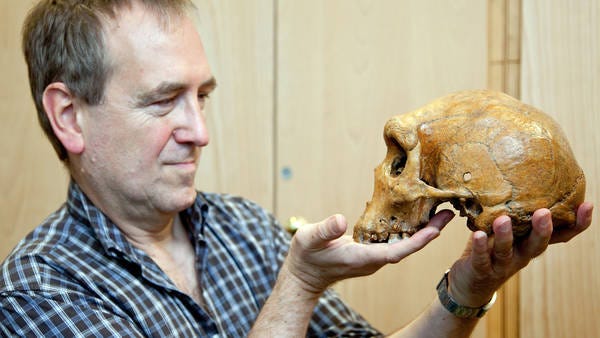
Podcast countdown to 2021 - day 6, Chris Stringer: the state of paleoanthropology in the 2010's
I'm counting down to the new year here by re-releasing favorite past episodes from the archives of my other podcast homes each day until 2021. Hope you'll discover a memorable voice or two you might have missed before. These episodes are free for all; next on the docket are new episodes for paying subscribers only, including conversations with Armand Leroi and Alina Chan. My conversation with Armand releases today for paid subscribers. With the steady downpour of new fossil finds and ever more freshly sequenced ancient DNA, ours is an era of plenty in the field of human evolution. In June of 2020, I had a chance to record a long discussion for The Insight podcast with Chris Stringer, one of the doyens of human paleoanthropology. We talked about all the discoveries we've been lucky to witness over the past few years on these topics of such incredible interest to the general public.Stringer has been active in the field for decades, first as an early advocate of the African origin of modern humans, and now as an all-around synthesizer and public intellectual. His gift for communicating the pith of abstruse results is on fine display in this conversation. I enjoyed it very much and I hope you will too.This is day 6 of 6. Here is day 1: Shadi Hamid, day 2: Vagheesh Narasimhan, day 3: Thomas Chatterton Williams, day 4: Alexander Ioannidis, day 5: Suhag Sukhla.And in case you missed them in the busy runup to the holidays, here is my series of five quick pieces from last week:The Age of Genetic Engineering BeginsThe Original Chinese ManApplying IQ to IQYour Roots are ShowingIn Gods We Trusted One reason I shared this sampler of my writing was to leave those considering a subscription plenty of time to grab one at Substack’s lowest rates before I adjust the pricing upward in the new year. This is a public episode. If you'd like to discuss this with other subscribers or get access to bonus episodes, visit www.razibkhan.com/subscribe
Podcast countdown to 2021 - day 5, Suhag Shukla: Hindus in America
I'm counting down to the new year here by re-releasing favorite past episodes from the archives of my other podcast homes each day until 2021. Hope you'll discover a memorable voice or two you might have missed before. These episodes are free for all; next on the docket are new episodes for paying subscribers only, including conversations with Armand Leroi and Alina Chan.What is a Hindu? In pre-modern times that might encompass all the people of the Indian subcontinent, irrespective of ethnicity or religion. But over the past few centuries, the term has narrowed to include just those who adhere to the subcontinent’s indigenous religious traditions And, over the last decades of the 20th century and into the early 21st, these people have migrated in large numbers to the United States. About 1% of Americans are now of Indian origin, and the majority of those are Hindu.Suhag Shukla is an attorney and executive director of the Hindu American Foundation. In an hour-long wide-ranging conversation we recorded in the summer of 2019 for Brown Pundits we explore what it means to be Hindu in American in the year 2019. As it happens, the most prominent person of the Hindu faith today in the United States is not of Indian subcontinental origin: Tulsi Gabbard. Additionally, the hold of Hinduism on many Indian Americans whose family traditions are of that faith seems to be tenuous at best.Shukla’s organization is fundamentally American, recapitulating the pattern of ancient faiths adapting to the American landscape like Judaism and Roman Catholicism.This is day 5 of 6. Here is day 1: Shadi Hamid, day 2: Vagheesh Narasimhan, day 3: Thomas Chatterton Williams, 4: Alexander Ioannidis.Also, if you were too busy over the holidays, my series of five quick pieces from this holiday season:The Age of Genetic Engineering BeginsThe Original Chinese ManApplying IQ to IQYour Roots are ShowingIn Gods We Trusted One reason I shared this sampler of my writing was to leave those considering a subscription plenty of time to grab one at Substack’s lowest rates before I adjust the pricing upward in the new year. This is a public episode. If you'd like to discuss this with other subscribers or get access to bonus episodes, visit www.razibkhan.com/subscribe
Podcast countdown to 2021 - day 4, Alexander G. Ioannidis: Native American ancestry in pre-Columbian Polynesia
I'm counting down to the new year here by re-releasing favorite past episodes from the archives of my other podcast homes each day until 2021. Hope you'll discover a memorable voice or two you might have missed before. These episodes are free for all; next on the docket are new episodes for paying subscribers only, including conversations with Armand Leroi and Alina Chan.Alexander Ioannidis is not the most famous Ioannidis at Stanford. But perhaps he should be!In the summer of 2020, he led a study that seems to confirm gene flow of Native American ancestry into Polynesia long before Christopher Columbus sailed the ocean blue. On some level, we always knew and suspected this. How could people who crossed the whole Pacific not have arrived on the American mainland? Also, the existence of the American sweet potato in Polynesia indicates some contact.But we had always assumed it was cultural. Using the “best-of-breed” genetic methods Alex found that there were clear signs of ancient Native American ancestry in the people of the Marquesas. Over 45 minutes in May of 2020, we discuss technical details, the archaeological and anthropological relevance to contacts between Pacific and American peoples, and future directions for his research.This is day 4 of 6. Here is day 1: Shadi Hamid, day 2: Vagheesh Narasimhan, day 3: Thomas Chatterton Williams.And if you missed them in the busy runup to the holidays, here is my series of five quick pieces from this past weekThe Age of Genetic Engineering BeginsThe Original Chinese ManApplying IQ to IQYour Roots are ShowingIn Gods We TrustedOne reason I shared this sampler of my writing was to leave those considering a subscription plenty of time to grab one at Substack’s lowest rates before I adjust the pricing upward in the new year. This is a public episode. If you'd like to discuss this with other subscribers or get access to bonus episodes, visit www.razibkhan.com/subscribe
Podcast countdown to 2021 - day 3, Thomas Chatterton Williams: beyond black and white
In anticipation of releasing new podcasts in 2021, including with Armand Leroi and Alina Chan, I’ve been reposting some of my favorite conversations of the past few years in the last week of the current year. I'm counting down to the new year here by re-releasing a favorite past episode from the archives of my other podcast homes each day until 2021. Hope you'll discover a memorable voice or two you might have missed before. If they weren’t famous to you before, I hope they are now.Some guests need no introduction. In 2020, Thomas Chatterton Williams is one of those individuals. But back in March of 2019, when we talked for 1 hour and 15 minutes he was neither quite as internet-notorious nor as widely fêted. The author of two books, Losing My Cool: Love, Literature, and a Black Man's Escape from the Crowd and Self-Portrait in Black and White: Family, Fatherhood, and Rethinking Race, Thomas has also become renowned and reviled for his role in organizing “the letter”, which made a calm plea for open debate and discussion on the Left.Since reaching that level of visibility in the summer of 2020 Thomas has been caught up in a series of “internet-controversies.” But as much as I appreciate his cool under social-media pressure, there has always been a lot more to him than internet drama, and over the course of our discussion, we get into his background as a mixed-race black American, his ex-pat life in France and the birth of his “white presenting” children.Also, if you were too busy over the holidays, my series of five quick pieces from this holiday season:The Age of Genetic Engineering BeginsThe Original Chinese ManApplying IQ to IQYour Roots are ShowingIn Gods We TrustedOne reason I shared this sampler of my writing was to leave those considering a subscription plenty of time to grab one at Substack’s lowest rates before I adjust the pricing upward in the new year. This is a public episode. If you'd like to discuss this with other subscribers or get access to bonus episodes, visit www.razibkhan.com/subscribe
Podcast countdown to 2021 - day 2, Vagheesh Narasimhan: Indian genetic history
In anticipation of releasing new podcasts in 2021, including with Armand Leroi and Alina Chan, I am reposting some of my favorite conversations of the past few years in the last week of 2020. I'm going to count down to the new year here by re-releasing a favorite past episode from the archives of my other podcast homes each day until 2021. Hope you'll discover a memorable voice or two you might have missed before.Vagheesh Narasimhan is an assistant professor at the University of Texas in Austin. I am honored to count Vagheesh as a friend. But even before we got to know each other I was shouting about his research because his work has been some of the most impactful in the area of human evolutionary genomics over the past few years. His 2019 paper, The Formation of Human Populations in South and Central Asia is the first and last word on the ancient population-genetic history of a region that is home to 25% of the world’s population. Recording in September of 2019 Vagheesh and I spent about an hour and a half discussing the implications of the results in his seminal 2019 paper, and future directions in his research. If you want to understand the genetic history of South Asia, this podcast will get you off to an excellent start.Also, if you were too busy over the holidays, my series of five quick pieces from this holiday season:The Age of Genetic Engineering BeginsThe Original Chinese ManApplying IQ to IQYour Roots are ShowingIn Gods We TrustedOne reason I shared this sampler of my writing was to leave those considering a subscription plenty of time to grab one at Substack’s lowest rates before I adjust the pricing upward in the new year. This is a public episode. If you'd like to discuss this with other subscribers or get access to bonus episodes, visit www.razibkhan.com/subscribe
Podcast countdown to 2021 - day 1, Shadi Hamid
This past week I recorded two podcast episodes I'm particularly looking forward to sharing with you.First, I had a long chat with Armand Leroi. Any chance I get to talk to him I come away wondering why he isn't everywhere, all the time. Leroi’s Mutants: On Genetic Variety and the Human Body is one of the most elegantly written works of scientific narrative from the 2000’s. Even so, I was surprised to pick up his next book in the 2010’s and discover a beautifully illustrated, historically rich tome, The Lagoon: How Aristotle Invented Science. Armand has mad range. In the course of 1 hour and 20-minutes, we discuss C. elgans, personal genomics, eugenics, race, the future directions of Leroi’s scholarly work, and the intellectual and cultural climate of the 2020’s.My other conversation was with the understandably very in-demand Alina Chan. I've been asking Alina to carve out a little time for a chat for weeks because she’s been at the center of the discussion of an important scientific topic over the last six months, the origin of SARS-CoV-2. Alina downplays her bravery, but her relentless commitment to uncovering the verifiable truth, whether it be good, bad, inconvenient, or ugly, really sets her apart in 2020. She's well worth a follow and I look forward to seeing how her career unfolds. Her spirit gives me hope.As this year winds down, I'm counting my blessings, including the chance to have logged hundreds of podcasts over the past few years with fascinating people in a huge range of fields. Many of these conversations are just as relevant and compelling as they were when they first went live. With that in mind, I'm going to count down to the new year here by re-releasing a favorite past episode from the archives of my other podcast homes each day until 2021. Hope you'll discover a memorable voice or two you might have missed before.Today, I bring you a conversation I had with Shadi Hamid in March of 2019 for the Brown Pundits podcast. The world is so unimaginably different a year and a half later so I was gratified to find it’s still a fresh listen. In the 1 hour and 45-minute conversation, Shadi talks about his background (Egyptian, Muslim, American), his professional interests (the Middle East), and his status as a mildly non-woke American-of-color.Despite our political difference (Shadi’s left to my right) and opposition on religious views (Shadi’s Islam to my atheism), we have always gotten along and been able to have a conversation because of our commitment to the pluralism of views. Shadi is an adherent to a very old-fashioned cultural liberalism predicated on the marketplace of ideas. You may disagree with him on something, and I do on many topics, but he is always open to engagement. He takes on all comers.And if you missed them in the busy runup to the holidays, here is my series of five quick pieces from this past weekThe Age of Genetic Engineering BeginsThe Original Chinese ManApplying IQ to IQYour Roots are ShowingIn Gods We TrustedOne reason I shared this sampler of my writing was to leave those considering a subscription plenty of time to grab one at Substack’s lowest rates before I adjust the pricing upward in the new year. This is a public episode. If you'd like to discuss this with other subscribers or get access to bonus episodes, visit www.razibkhan.com/subscribe