
Rabino Tuvia Serber
448 episodes — Page 4 of 9
Parashat Vayikra - Give your heart
This week's Torah reading opens the book of the laws of the Temple and Tabernacle. One of the main services there was that of the offerings. What lessons can we extract from them? Based on Likkutei Sichot, vol. 1, p. 939

Parashat Vaikrá - Humildad y Soberbia
En la seccion de esta semana aparece, en el texto de la Torá, una letra Alef más chica que las lertras convencionales. A partir del análisis de una historia del Alter Rebe con su nieto, el futuro tercer Rebe de Jabad, el Rebe explica la esencia de la humildad y bajeza. Basado en Likutéi Sijot, vol. 17, pág. 1
Judaísmo para no judíos - 12
Esta es una serie de clases basada en unos videos cortos sobre asuntos de Bnei Noaj. En cada clase se analiza en detalle los puntos clave de esos videos cortos. De esa manera se recorren los Siete Preceptos Universales y sus ramificaciones desde una perspectiva práctica y concreta. Cada clase tiene un tiempo de preguntas que los participantes preparan de antemano. En esta clase se comienza a explicar la Blasfemia. La clase se basa en estos videos cortos: https://youtu.be/axn5sL1buv8 https://youtu.be/HuSYBx2aTt8 https://youtu.be/e_LJWbkr0VE
Y llamó a Moshe 5747
Este es un discurso jasídico del Rebe, Rabí Menajem Mendel Schneerson, del año 1987. en este discurso el Rebe explica los primeros versículos de parashat Vaikrá, combinando ideas de dos discursos del Alter Rebe en Likutéi Torá.
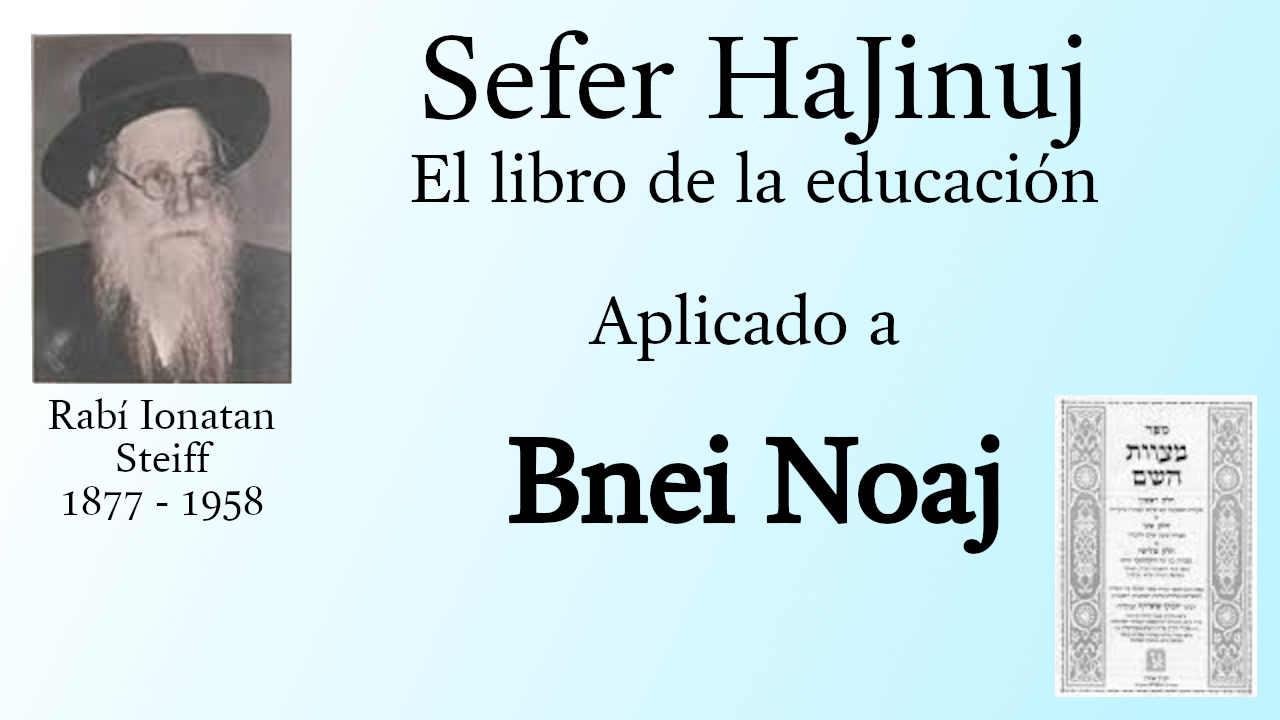
Curso para Bnei Noaj 9 - 48
En este curso estudiaremos los preceptos del judaísmo en forma breve, basándose en el libro de la educación (Sefer HaJinuj) y aplicándolos a Bnei Noaj de acuerdo a los escritos de Rabí Ionatan Steiff (1877-1958). En esta clase estudiamos los preceptos relacionados a los Diez Mandamientos.
Curso para Bnei Noaj 9 - 48
Parashot Vayahkel / Pekudei - General and particular
This week there are two readings. Each one of them represent, in their names and in their content, the idea of group vs. individuals, general vs. particular. What lesson can we learn from them? Based on Likkutei Sichot, vol. 21, p. 250
Parashot Vayahkel / Pekudei - General and particular

Conjunto e individuo
Esta clase es sobre una charla del Rebe respecto de las dos secciones Vaiakhel y Pekudéi. En ambas se enfatiza al sunto del conjunto y del individuo. Cómo se expresa eso en la construcción del Mishkán y en el Pueblo de Israel. Basada en Likutéi Sijot, vol. 21, pág. 250
Judaísmo para no judíos - 11
Esta es una serie de clases basada en unos videos cortos sobre asuntos de Bnei Noaj. En cada clase se analiza en detalle los puntos clave de esos videos cortos. De esa manera se recorren los Siete Preceptos Universales y sus ramificaciones desde una perspectiva práctica y concreta. Cada clase tiene un tiempo de preguntas que los participantes preparan de antemano. En esta clase se comienza a explicar la Blasfemia. La clase se basa en este video corto: https://www.youtube.com/watch?v=DWHXCpKk_Lc
Este mes será para ustedes 5747
Este es un discurso jasídico del Rebe, Rabí Menajem Mendel Schneerson, del año 1987. En este discurso se explica la diferencia entre el comienzo del mes de Tishrei y el comienzo del mes de Nisan.
Parashat Yitro - Refining paganism
This is a free translation of a talk from the Rebbe of parashat Yitro, 1965. Printed in Likkutei Sichot, vol. 11, p. 74. 1. Regarding what is written in our Torah portion: “And Jethro said: Blessed be the L-rd who has delivered you” — our Sages of blessed memory said: “It is a disgrace for Moses and the six hundred thousand [Israelites] that they did not say ‘Blessed’ until Jethro came and said: ‘Blessed be the L-rd.’” This requires understanding: what is the meaning of “that they did not say ‘Blessed,’ etc.”? After all, Moses and the Children of Israel sang a song to the L-rd after the miracle of the Splitting of the Sea! And it cannot be explained that the disgrace was that they did not say “Blessed” regarding the Exodus from Egypt (but only regarding the Splitting of the Sea), for if so, “the main point is missing from the text.” This can be understood by prefacing what is written in the Zohar: that until Jethro came and acknowledged the Holy One, blessed be He, the Torah was not given to Israel. And when Jethro came and said, “Blessed be the L-rd who has delivered you, etc.; now I know that the L-rd is greater than all the G-ds, etc.,” through this he effected that “the Holy One, blessed be He, was exalted above and below, and afterward He gave the Torah in completeness.” Apparently, this is difficult to understand: how is it possible that all the great spiritual stature of Moses and Aaron and the six hundred thousand of Israel — before Jethro came — was still not sufficient for the Torah to be given to Israel, and that they merited it only after Jethro also acknowledged the Holy One, blessed be He, and said, “that the L-rd is greater than all the G-ds”? 2. All the above will be understood by first introducing the following question: At the beginning of the portion it is written, “And Jethro, priest of Midian, Moses’ father-in-law, heard all that G-d had done.” One must understand: what is the verse teaching us here by emphasizing that he was a “priest of Midian”? Seemingly, it would have sufficed to inform us briefly: “And Jethro, Moses’ father-in-law, heard.” Moreover, regarding “priest of Midian,” there are two interpretations: a) “Priest” in the sense of a minister — meaning that Jethro was the chief (or prince) of Midian. b) A priest of idolatry (see Rashi below: “for he was familiar with every form of idolatry in the world, etc.”). According to the second interpretation — that he was a priest of idolatry — this is most puzzling: does the Torah come here to relate something derogatory about Jethro, Moses’ father-in-law? Especially when from the content of our portion it appears that the intention is the opposite — to recount Jethro’s praise. The explanation is as follows: in truth, the verse does not use the title “priest of Midian” to diminish Jethro’s importance, but on the contrary, to describe his former greatness and honor (in the land of Midian), through which his virtue is emphasized even more when he came to convert — to the extent that “his heart motivated him to go out to the wilderness, a place of desolation, to hear words of Torah.” For even according to the second interpretation of “priest of Midian” (that he was a priest of idolatry), this indicates Jethro’s greatness in terms of knowledge and intellectual grasp. For the root of the error of those who went astray and were drawn after idolatry came (primarily) through intellectual understanding and reasoning. As Maimonides writes: “They said: Since G-d created these stars and spheres to govern the world, etc., they are worthy of praise and glorification and of being accorded honor. And this is the will of G-d, etc.” That is to say: although it is indeed true that the flow of Divine vitality is drawn down into this physical world through the stars and constellations — as our Sages said, “There is not a blade of gra
Parashat Yitro - Refining paganism
Talmud Meguila - 9b/10a
En estas páginas el Talmud continúa con una serie de Mishnaiot sobre la diferencia entre dos asuntos. Aquí se discute sobre los diferentes Sumos Sacerdotes, las ofrendas en el Taberáculo y la santidad de Ierushaláim. Para bajar el tratado completo: www.tuviaserber.com/Meguila/Meguila.pdf
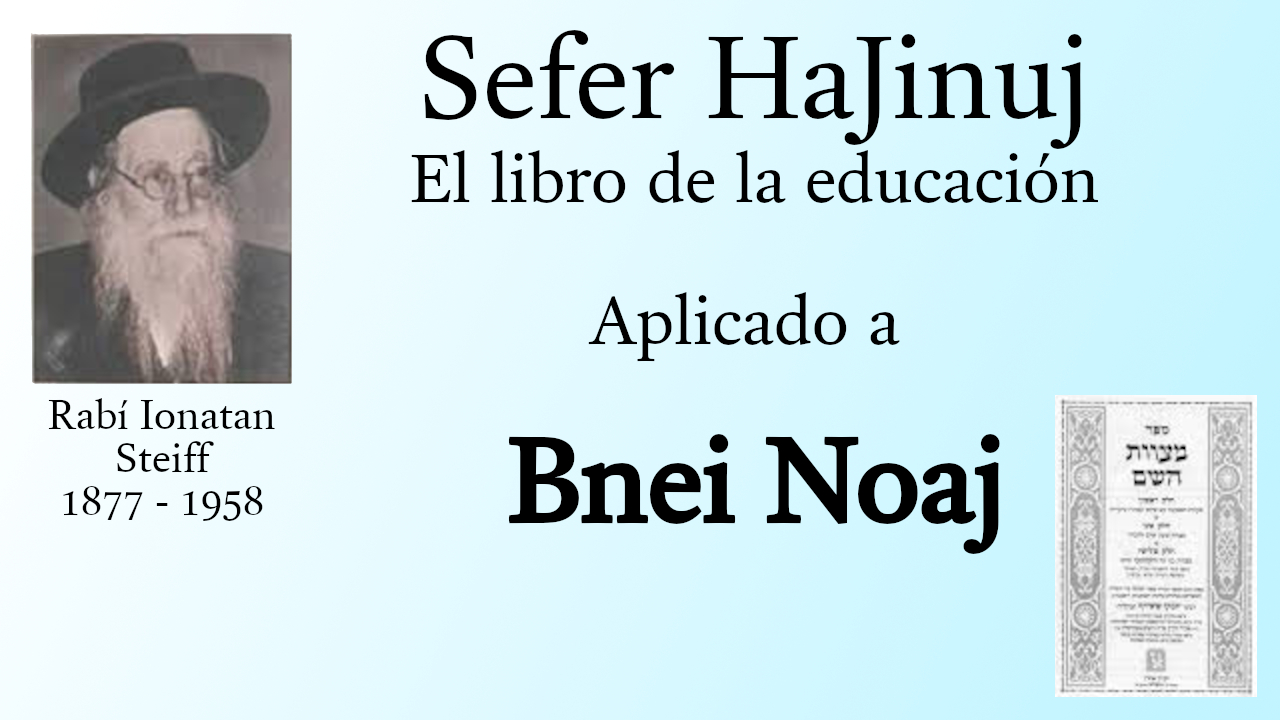
Curso para Bnei Noaj 9 - 47
En este curso estudiaremos los preceptos del judaísmo en forma breve, basándose en el libro de la educación (Sefer HaJinuj) y aplicándolos a Bnei Noaj de acuerdo a los escritos de Rabí Ionatan Steiff (1877-1958). En esta clase estudiamos los preceptos relacionados a los Diez Mandamientos.
Curso para Bnei Noaj 9 - 47
Wash yourself
This week's Torah reading talks about the Kiyor, a big washing basin for the Kohanim (priests) to wash their hands and feet before starting the daily service in the Temple. The material used to build it and it's usage has an eternal lesson.
Parashat Ki Tisa - Wash yourself
Esta es la regla de la Torá 5746
Este es un discurso jasídico del Rebe, Rabí Menajem Mendel Schneerson, del año 1986. Este discurso explica cómo las leyes de la Vaca Roja representan a todos los asuntos de la Torá y la vida en general.
Judaísmo para no judíos - 10
Esta es una serie de clases basada en unos videos cortos sobre asuntos de Bnei Noaj. En cada clase se analiza en detalle los puntos clave de esos videos cortos. De esa manera se recorren los Siete Preceptos Universales y sus ramificaciones desde una perspectiva práctica y concreta. Cada clase tiene un tiempo de preguntas que los participantes preparan de antemano. En esta clase se explicarán diferentes leyes sobre la idolatría.
Is Christianity Idolatry?
This class analyzes the definition of idolatry according to Judaism and the different perspectives regarding how does that definition applies (or not) to Christianity.
Talmud Meguila - 8b/9a/9b
En estas páginas el Talmud continúa con una serie de Mishnaiot sobre la diferencia entre dos asuntos. Aquí, entre dos tipos de Metzora (persona con la enfermedad milagrosa Tzaráat) y entre dos tipos de escrituras de los libros santos. Para bajar el tratado completo: www.tuviaserber.com/Meguila/Meguila.pdf
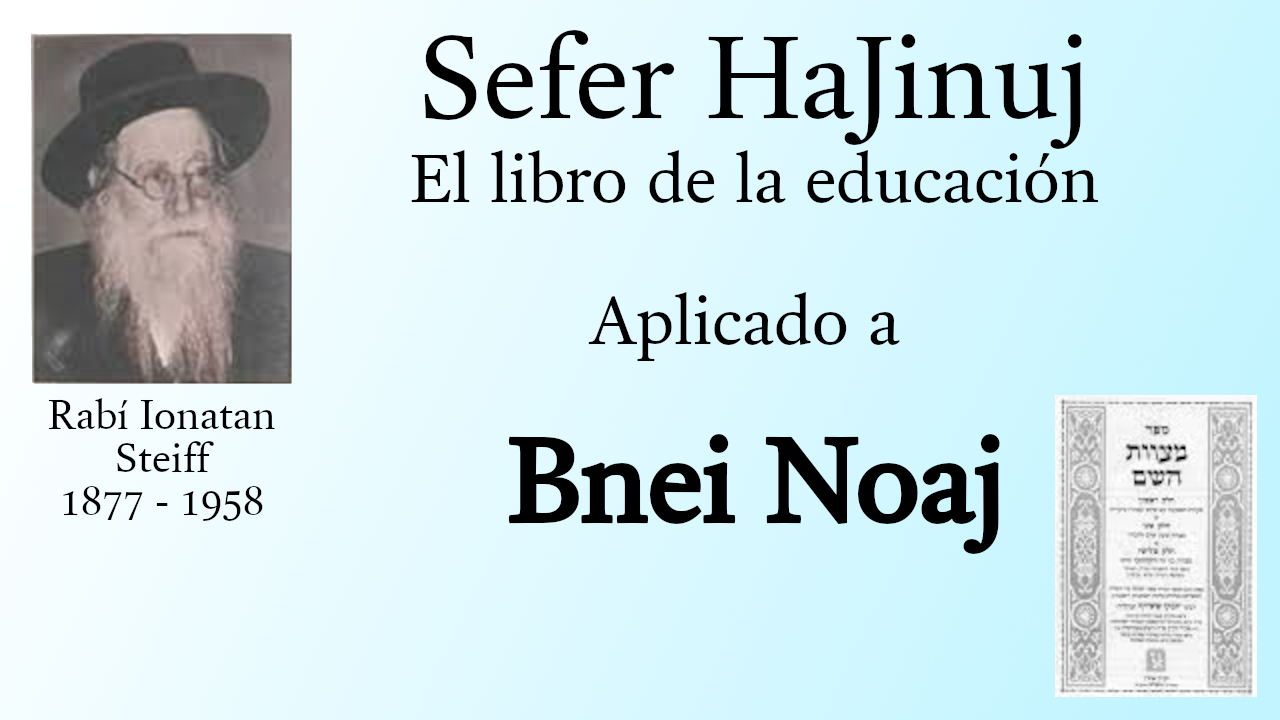
Curso para Bnei Noaj 9 - 46
En este curso estudiaremos los preceptos del judaísmo en forma breve, basándose en el libro de la educación (Sefer HaJinuj) y aplicándolos a Bnei Noaj de acuerdo a los escritos de Rabí Ionatan Steiff (1877-1958). En esta clase estudiamos los preceptos relacionados a los Diez Mandamientos.
Curso para Bnei Noaj 9 - 46
Parashat Tetzaveh - Don't loose enthusiasm
In this week's Torah reading we learn about the garments of the High Priest. Even from there, we can extract lessons for life. Based on Sefer HaSichot 5748, vol. 1, p. 314.
Parashat Tetzaveh - Don't loose enthusiasm
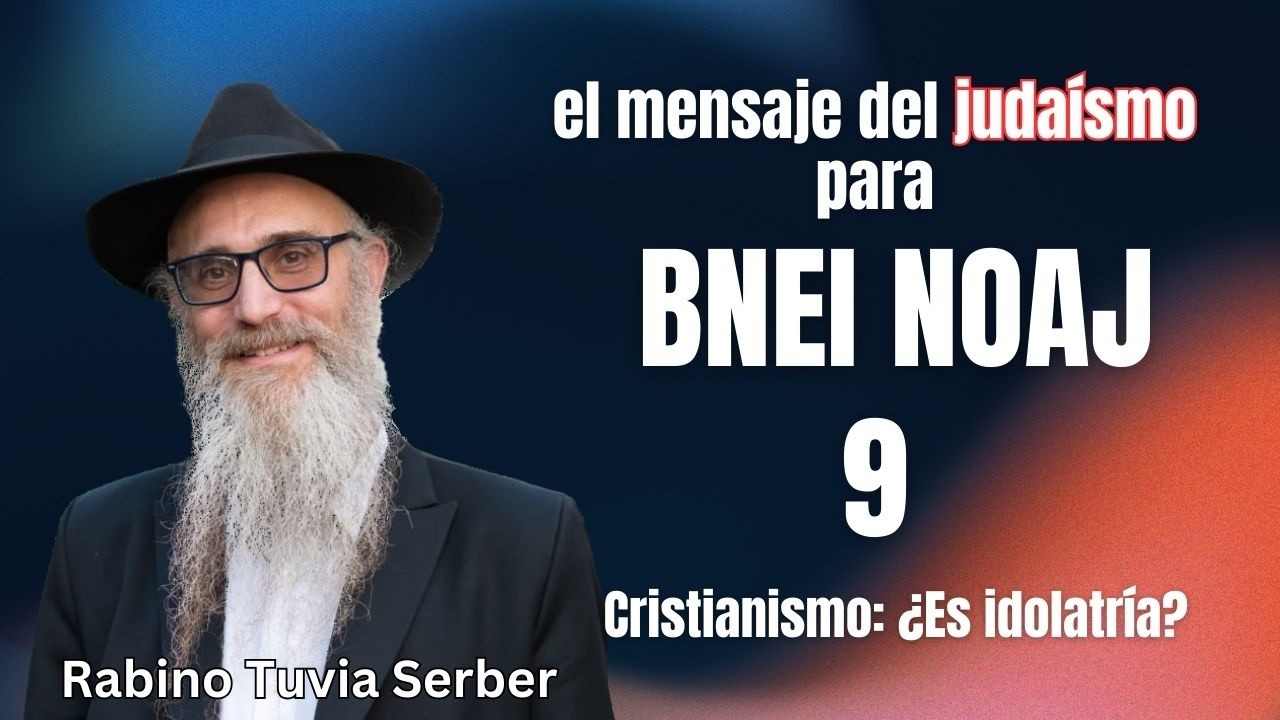
Judaísmo para no judíos - 9
Esta es una serie de clases basada en unos videos cortos sobre asuntos de Bnei Noaj. En cada clase se analiza en detalle los puntos clave de esos videos cortos. De esa manera se recorren los Siete Preceptos Universales y sus ramificaciones desde una perspectiva práctica y concreta. Cada clase tiene un tiempo de preguntas que los participantes preparan de antemano. En esta clase se explicarán las diferentes opiniones sobre el cristianismo, si es idolatría o no.
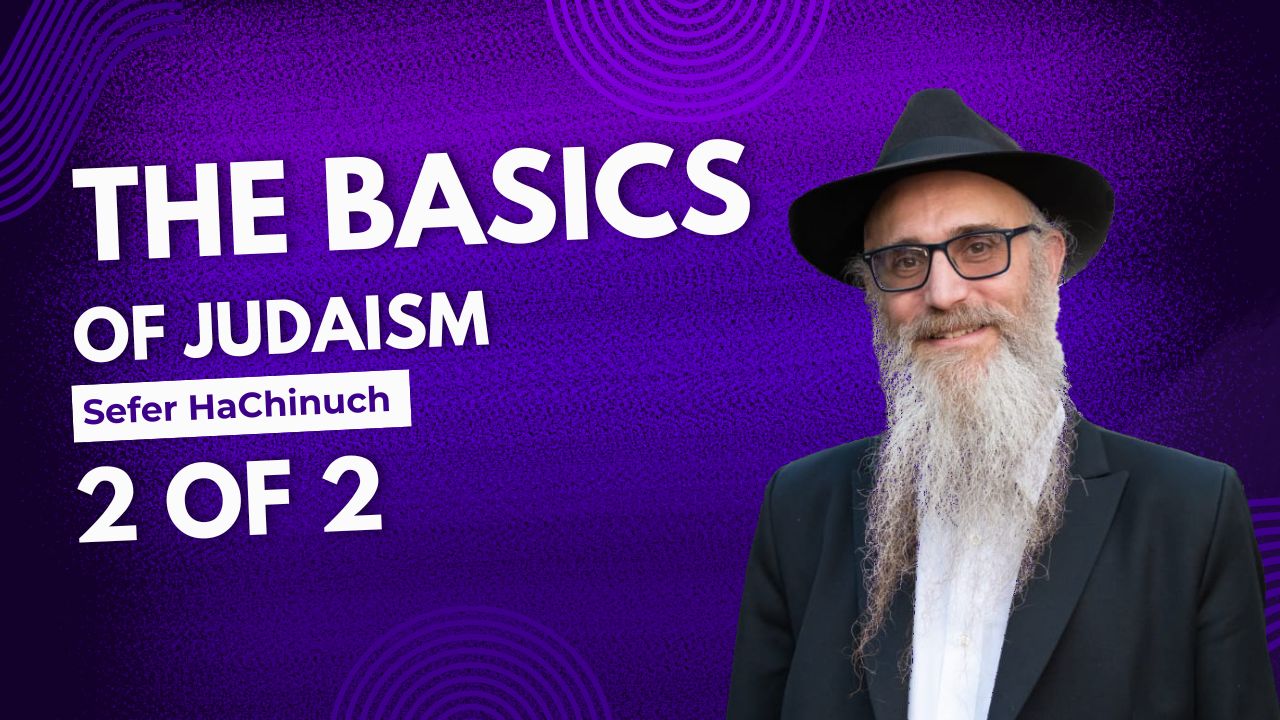
The basics - 2 of 2
This class explains parts of the introduction of a classic Jewish book: The Sefer HaChinuch, the Book of Education. With this introduction we can understand the basic ideas of Judaism and the message for non Jews also.
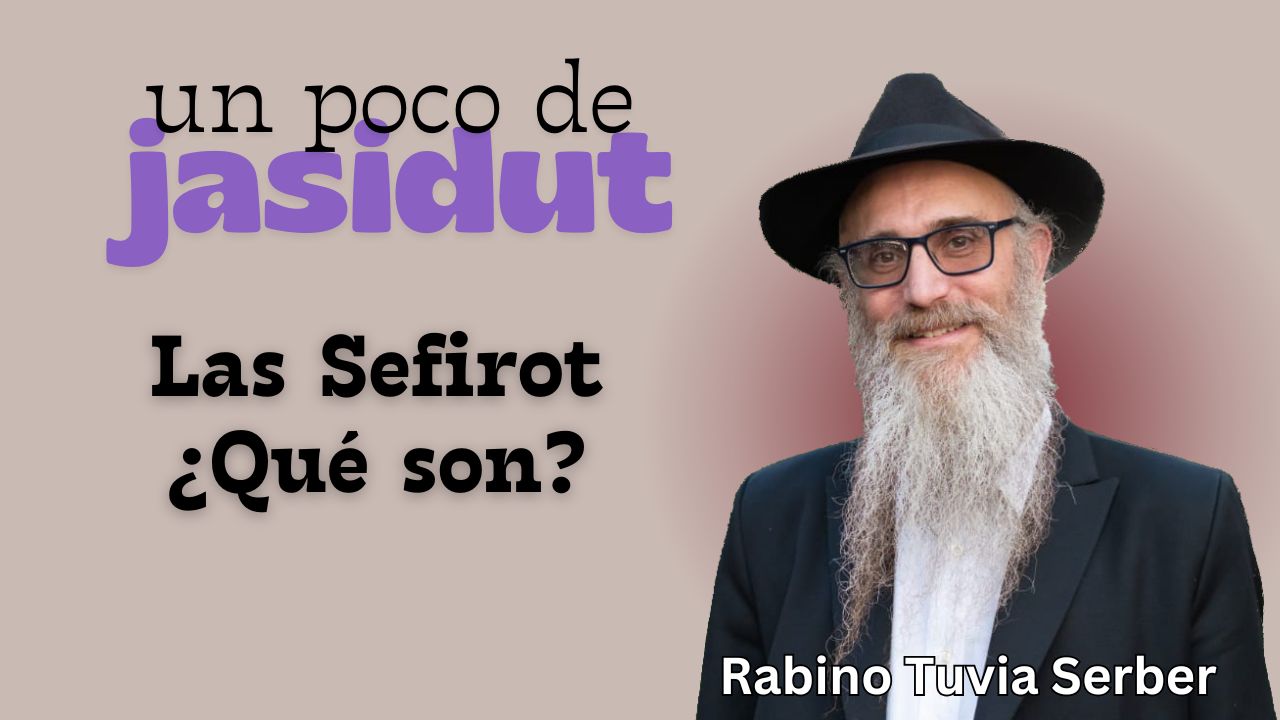
Las Sefirot: ¿qué son?
Esta clase corta explica, con ejemplos, de qué se trata esta doctrina de la mística judía, ampliamente explicada en la Cabala y el Jasidut.
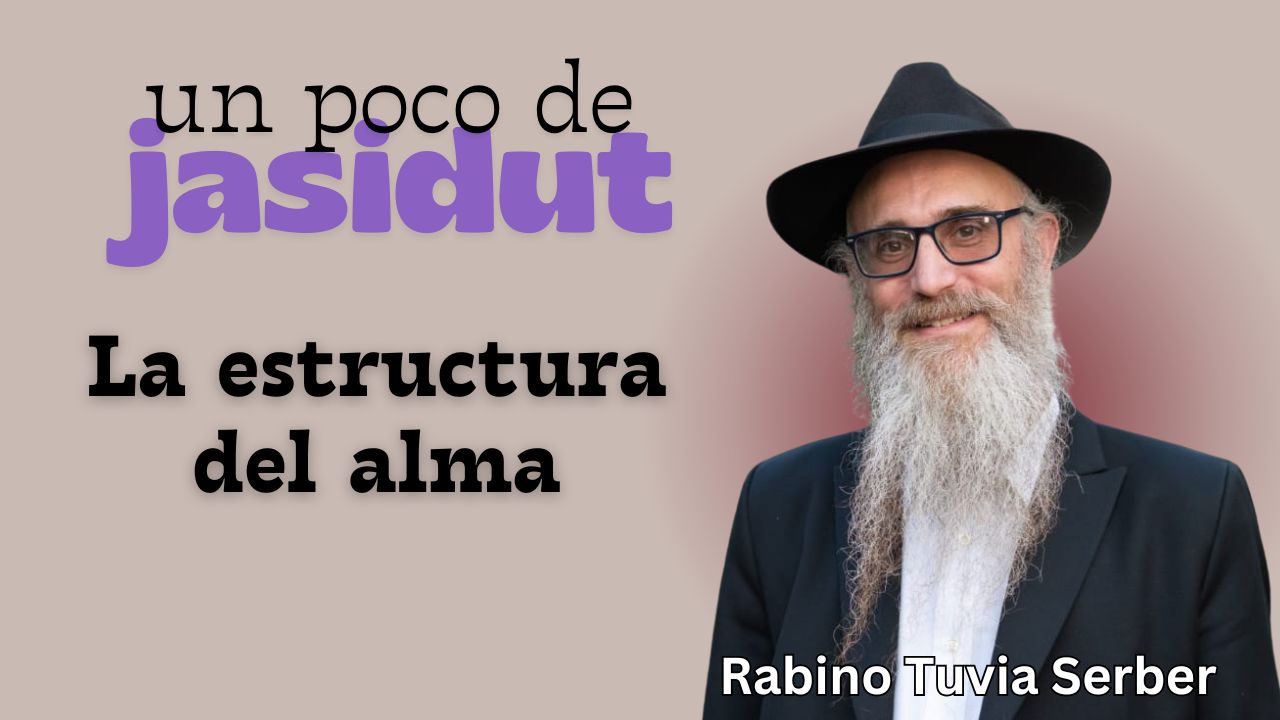
La estrucura del alma
Esta es una parte de una clase que explica, brevemente, la estructura del alma y por qué es así.
The basics - 1 of 2
This class explains parts of the introduction of a classic Jewish book: The Sefer HaChinuch, the Book of Education. With this introduction we can understand the basic ideas of Judaism and the message for non Jews also.

Recuerda lo que te hizo Amalek 5747
Este es un discurso jasídico del ebe, Rabí Menajem Mendel Schneerson, del año 1987. En este discurso se explica la aplicación actual de la guerra contra Amalek "en el camino, cuando salieron de Egipto", antes de llegar a "la Tierra buena y amplia".
Parashat Truma - The foundations
Parashat Terumah - The foundations
In this week's Torah reading we learn about the donations the Jewish people gave for the building of the Tabernacle (Mishkan). There were, actually, three types of donations with several differences: what do they represent in the spiritual realm? Based on Likkutei Sichot vol. 1, p. 162
Curso para Bnei Noaj 9 - 45
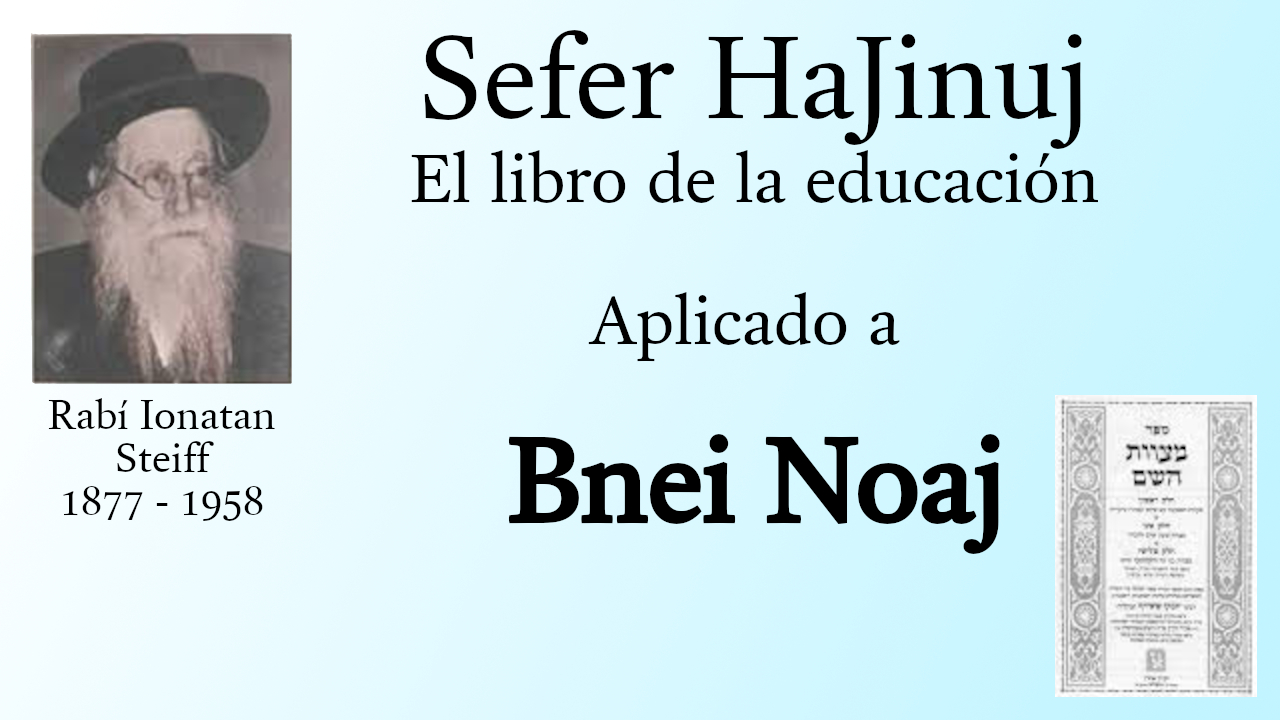
Curso para Bnei Noaj 9 - 45
En este curso estudiaremos los preceptos del judaísmo en forma breve, basándose en el libro de la educación (Sefer HaJinuj) y aplicándolos a Bnei Noaj de acuerdo a los escritos de Rabí Ionatan Steiff (1877-1958). En esta clase estudiamos los preceptos relacionados a los Diez Mandamientos.
Parashat Mishpatim - The rules
This week's Torah reading starts with a word "And": "And these are the rules". There are different types of rules in the Torah and "Mishpatim" represents rational rules. What is the word "And"? BAsed on Likutei Sichot, vol. 3, p. 899
Judaísmo para no judíos - 8
Esta es una serie de clases basada en unos videos cortos sobre asuntos de Bnei Noaj. En cada clase se analiza en detalle los puntos clave de esos videos cortos. De esa manera se recorren los Siete Preceptos Universales y sus ramificaciones desde una perspectiva práctica y concreta. Cada clase tiene un tiempo de preguntas que los participantes preparan de antemano. En esta clase se explicarán derivados de idolatrías. Basada en estos videos cortos: https://www.youtube.com/watch?v=ql9-v_ekmfU https://www.youtube.com/watch?v=8VPFEKDDPw0 https://www.youtube.com/watch?v=CsGd5FTiUTQ
Talmud Meguila - 8a/8b
En estas páginas el Talmud explica la última parte de la Mishna sobre "regalos a los pobres". Se relatan algunas historias respecto de las comidas de Purim. Se continúa con las diferencias entre Shabat y Iom Tov y las diferencias entre Shabay y Iom Kipur. Para bajar el tratado completo: www.tuviaserber.com/Meguila/Meguila.pdf
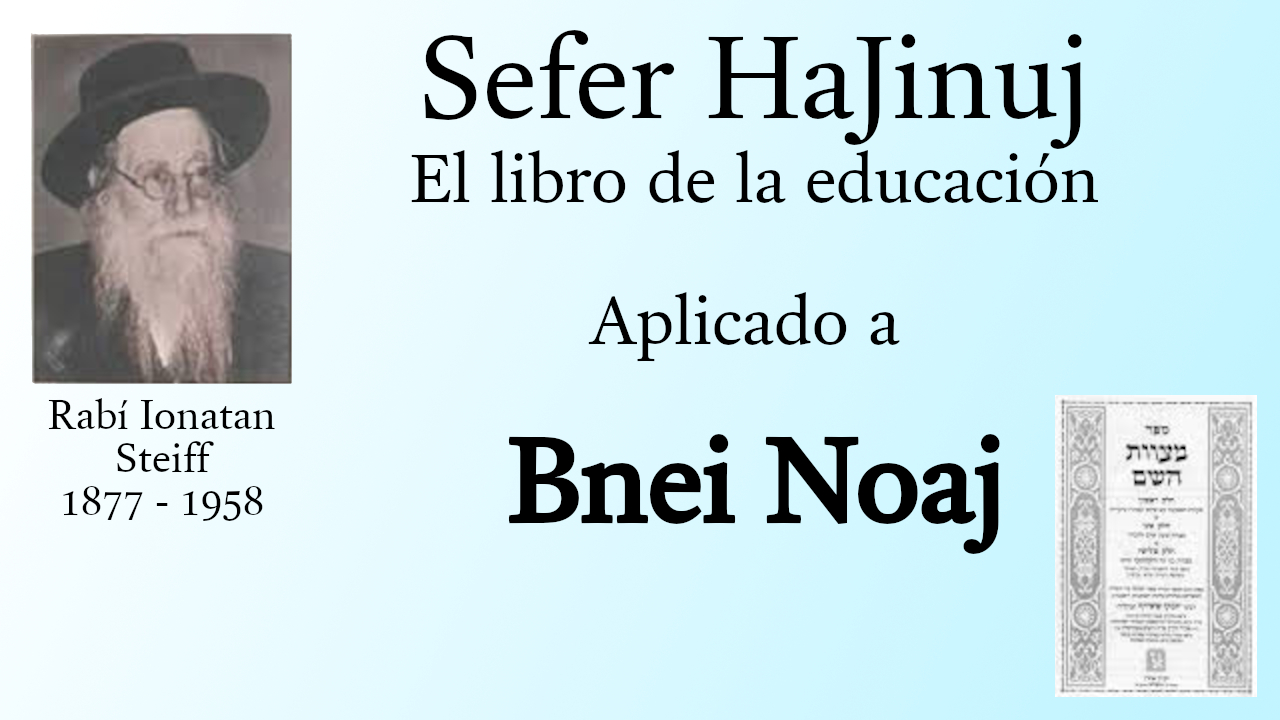
Curso para Bnei Noaj 9 - 44
En este curso estudiaremos los preceptos del judaísmo en forma breve, basándose en el libro de la educación (Sefer HaJinuj) y aplicándolos a Bnei Noaj de acuerdo a los escritos de Rabí Ionatan Steiff (1877-1958). En esta clase estudiamos los preceptos relacionados a los Diez Mandamientos.
Curso para Bnei Noaj 9 - 44
Parashat Yitro - Yitro recognized
This week's Torah reading relates how Yitro came to meet Moshe in the desert. He blessed G-d in a way nobody had done before, and our sages take that a something very special: why? Based on Likutei Sichot, vol. 11, p. 74
Parashat Yitro - Yitro recognized
Judaísmo para no judíos - 7
Esta es una serie de clases basada en unos videos cortos sobre asuntos de Bnei Noaj. En cada clase se analiza en detalle los puntos clave de esos videos cortos. De esa manera se recorren los Siete Preceptos Universales y sus ramificaciones desde una perspectiva práctica y concreta. Cada clase tiene un tiempo de preguntas que los participantes preparan de antemano. En esta clase se explicarán varios tipos de idolatrías que aparecen en la Torá. Basada en este video corto: https://www.youtube.com/watch?v=fRUHMzHaPOs

Itró y la raíz de Kain
Este es un discurso jasídico del Alter Rebe, Rabí Shneur Zalman de Liadí, de bendita memoria, de sus discursos cortos. En este discurso se explica que hay almas cuya raíz es Kain y otras, cuya raíz es Hevel. Las almas descendientes de Kain poseen un poder muy especial en el servicio a Di-s.

Bnei Noach and Shema Israel
This class explains, with sources, whether non Jews can recite the Shema Israel verse(s) in the Torah. This particular verse talks about the unity and uniqueness of God.
Talmud Meguila - 7a/7b
En estas páginas el Talmud explica la última parte de la Mishna sobre "regalos a los pobres". Se relatan algunas historias respecto de las comidas de Purim. Se continúa con las diferencias entre Shabat y Iom Tov y las diferencias entre Shabay y Iom Kipur. Para bajar el tratado completo: www.tuviaserber.com/Meguila/Meguila.pdf
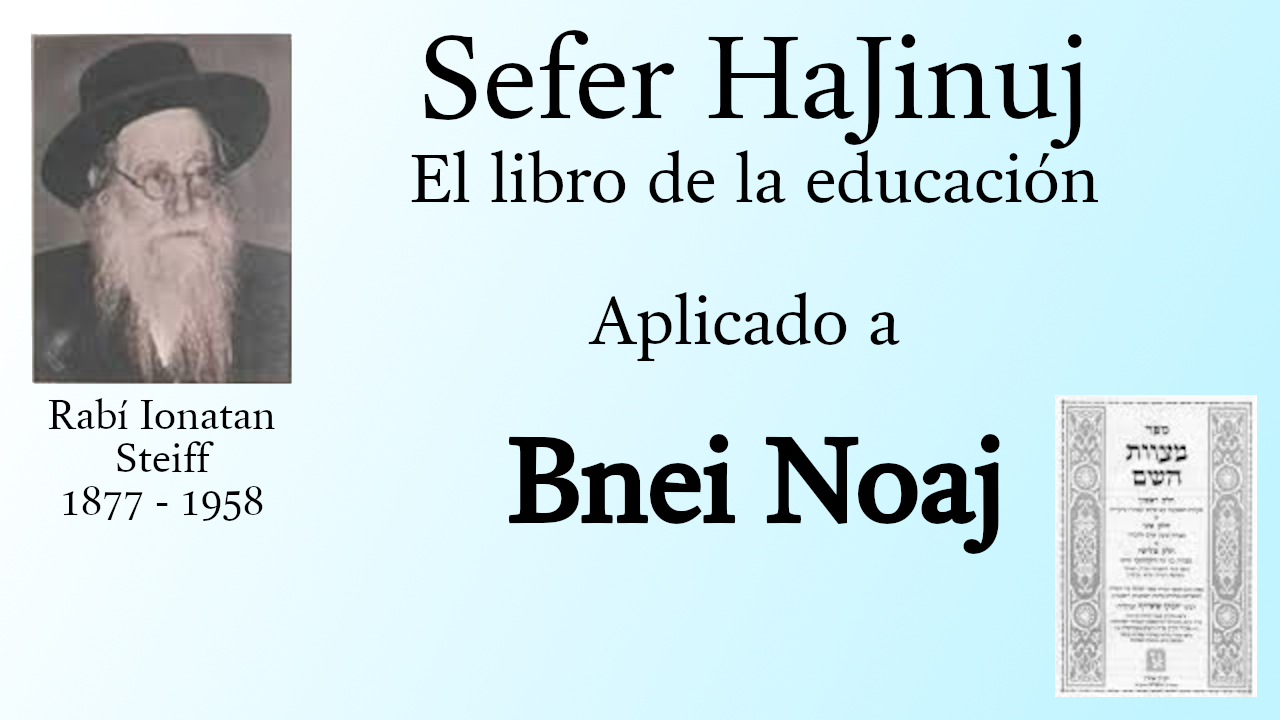
Curso para Bnei Noaj 9 - 43
En este curso estudiaremos los preceptos del judaísmo en forma breve, basándose en el libro de la educación (Sefer HaJinuj) y aplicándolos a Bnei Noaj de acuerdo a los escritos de Rabí Ionatan Steiff (1877-1958). En esta clase estudiamos los preceptos relacionados a los Diez Mandamientos.