PLAY PODCASTS
PT Pintcast - Physical Therapy

PT Pintcast - Physical Therapy

327 episodes — Page 1 of 7

The Therapist Who Took the Interview While Driving

Aug 23, 202659 min

John Gallucci: You’re Never Smarter Than the Curve

Aug 21, 202629 min

Make 100 Mediocre Things!

Aug 21, 202657 min

The Apple Pie Lesson for PT Clinics

Aug 19, 202657 min

Payment, Reimbursement, and Grandpa the Mailbox Guy

Aug 17, 20261h 1m

What’s Your Clinic’s Zip Line?

Aug 16, 202652 min

The Business Model Behind the Care

Aug 13, 202657 min

The PT Profession Has a Math Problem

Aug 12, 20261h 1m

Would You Do PT Again?

Aug 6, 20261h 0m

Stop Making the EMR Suck Less

Aug 5, 202654 min

Understand What Game You’re Playing

Jul 31, 202655 min

The Messy Middle Between Physical Therapy and Fitness | Sean Pastuch

Jul 30, 202642 min

The Golden Mile Problem: Money, PR, and Why AI Still Needs You

Jul 28, 202652 min

Burnout, Better Jobs, and the PT Social Media Game

Jul 21, 20261h 0m

How Physical Therapists Can Turn Content Into Patients, Income and Opportunity

Jul 17, 202626 min

Why Patients Quit PT After Visit 3

Jul 9, 202658 min

Why Most PT Ads Don’t Work

Jul 2, 202629 min

Physical Therapists Need to Stop Selling Visits

Jun 24, 20261h 2m

What PT Clinics Can Learn From Amazon Prime Day

Jun 11, 202636 min

Stop Pricing Physical Therapy Like Billing Codes

Jun 10, 20261h 0m

Content Is Not The Business. Patients Are.

Jun 4, 20261h 1m

Chronic Pain Isn’t What You Think It Is

May 8, 202639 min

What a Rock Radio DJ Learned That Every PT Needs to Hear

May 7, 202630 min

Why PTs Are Underpaid (And What To Do About It)

May 6, 202647 min

PT Burnout Isn’t What You Think

May 5, 202635 min

Decision Fatigue Is Costing Your Clinic More Than You Think

May 4, 20261h 0m

Why Doing Less Makes Your PT Clinic More Profitable

Apr 15, 202656 min

Why Insurance PT Models Are Breaking Down

This episode dives into one of the biggest shifts happening in physical therapy right now: the gap between what patients need and what insurance allows.Jimmy, Tony, and Dave break down:• Why most AI solutions in healthcare never make it past pilot phase• How insurance limitations are shaping care delivery• The rise of hybrid and post-rehab fitness models• Why clinical skill is no longer the main differentiator• How communication, sales, and patient buy-in drive outcomesKey Insights:• 95% of AI pilots in healthcare never scale—adoption is the real problem• Insurance caps are forcing clinics to find new care models• Neuro and long-term patients are underserved by traditional PT• Cash-based PT is growing because patients value time and outcomes• Pre/post testing isn’t just clinical—it’s a sales and trust tool• PTs are trained to “not lose,” but progress requires riskWhy This Matters:If you’re a clinic owner, this is about adapting your model before it’s forced on you.If you’re a staff PT, this is about understanding what actually creates value in today’s market.

Apr 8, 202650 min

If You Can’t Prove It, Stop Doing It

Most physical therapy clinics don’t have a marketing problem—they have a measurement problem.In this episode, Jimmy and Andrea break down why marketing often gets labeled as a cost instead of a growth driver, and what needs to change for clinics to actually see ROI.If you’re a clinic owner or leader trying to justify marketing spend, this episode gives you a clear framework to connect activity to revenue.Key Insights:If marketing doesn’t show up on the P&L, it won’t be taken seriouslyIntegrating EMR and CRM data is the foundation for tracking ROIPaid search works—but only at the bottom of the funnelMost clinics ignore demand generation and show up too lateAttribution is imperfect—don’t let that stop strategyYou don’t need more channels—you need better alignmentAI won’t fix bad systems—it amplifies themPersonas must be updated regularly based on real patient behaviorWhy This Matters to PT Owners:Helps you stop wasting money on unproven tacticsGives you a way to defend marketing spendImproves patient acquisition without increasing budgetAligns your team around growth, not guessworkResources & Links:Andrea (LinkedIn referenced in episode)Sponsors:SaRA Health — Automate patient follow-up and generate revenue between visits???? sarahealth.comEMPOWER EMR — Built for PT workflows, faster documentation???? empoweremr.comU.S. Physical Therapy — Career growth and clinic support???? usph.com Subscribe & Follow:Apple Podcastshttps://podcasts.apple.com/us/podcast/pt-pintcast-physical-therapy/id1000443325Spotifyhttps://open.spotify.com/show/3LmMUT64yrUc2iGo9EmafcYouTubehttps://www.youtube.com/@PTPintcastLinkedInhttps://www.linkedin.com/in/jimmy-mckay-pt-dpt-a4207659/Instagramhttps://www.instagram.com/ptpintcastX / Twitterhttps://x.com/PTPintcastWebsitehttps://www.ptpintcast.com/

Apr 7, 202644 min

Communication Skills PTs Need But Don’t Learn

This episode dives into one of the biggest frustrations in physical therapy: feeling unheard at work. Rebecca Griffith breaks down how to communicate with leadership, advocate for patients, and avoid being labeled “difficult.”Key Insights:• Most leadership decisions are system-driven, not personal• Curiosity beats criticism in tough conversations• Timing, tone, and delivery matter as much as the message• Not all feedback moments are created equal• Small organizations allow more personalized communicationWhat This Means for PTs & Clinic Owners:• You can advocate without damaging relationships• Better communication leads to more influence—not less• Understanding the system helps you navigate it• Emotional reactions can sabotage valid concerns• Leadership communication is a learnable skillTactical Takeaways:• Ask: “Help me understand the goal of this decision”• Write questions first—don’t react in the moment• Clarify: is this decision final or open for input?• Choose the right time and setting for feedback• Focus on system impact—not just personal impactGuestRebecca Griffith, PT, DPTSponsorsSaRA Health – patient engagement solutionsEMPOWER EMR – faster, smarter documentationU.S. Physical Therapy – clinic growth and career pathways

Apr 6, 202631 min

AI in PT Clinics: What Actually Works

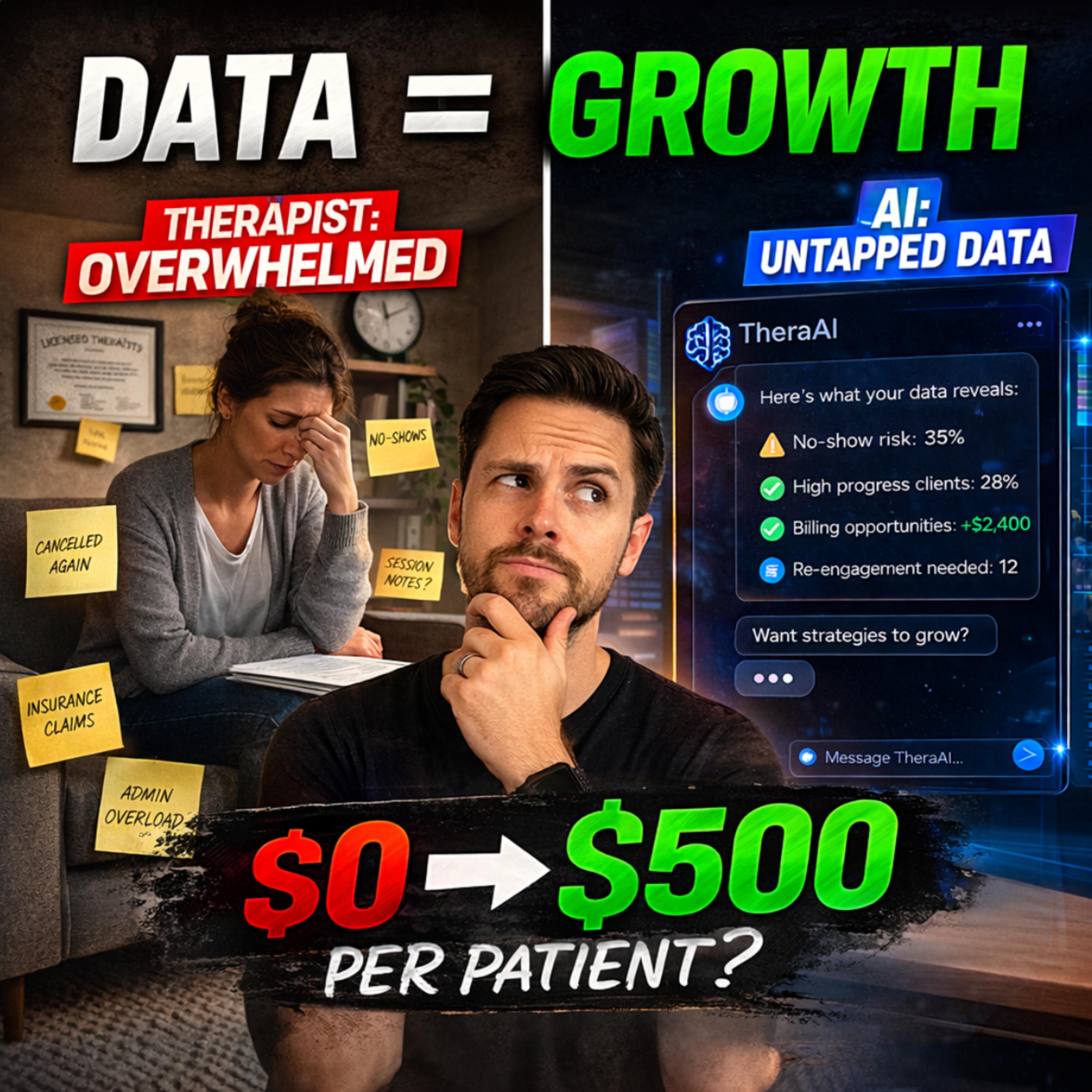
This episode breaks down how AI is being used inside real physical therapy clinics—not as hype, but as a tool to improve operations.The biggest mistake clinics make is treating AI like a feature instead of building it into workflows. When Sal Aprea from Flagler Health shows you that done right, AI helps reduce no-shows, improves patient engagement, and creates new revenue opportunities without adding staff.Key Insights:AI fails when it feels like “extra work”Clinics must focus on workflow, not toolsTrust drives adoption: staff → patients → operationsRTM is underused because no one owns it operationallyDone right, AI improves the patient journey between visitsGuest shares how clinics can:Increase patient follow-throughImprove operational efficiencyAdd revenue streams through RTMBuild trust with both staff and patients
Apr 3, 202615 min

Why PT Clinics Are Missing the Biggest Opportunity

This episode explores how AI, business strategy, and human relationships intersect in physical therapy—and what clinic owners should actually do about it.Key Insights:• AI can scale listening and communication—but not human connection• In-person relationships still drive referrals and business growth• Other industries (sports, retail) are winning by owning attention and data• PT clinics are sitting on valuable data but not using it strategically• Partnerships and distribution matter more than tacticsWhat This Means for PT Owners:• Use AI to enhance—not replace—patient communication• Double down on in-person referral relationships• Look outside healthcare for business models that work• Start leveraging your EMR data beyond billingGuest Links & ResourcesTony Maritato YouTube: https://www.youtube.com/@TotalTherapySolutionsDave Kittle YouTube: https://www.youtube.com/@TheDaveKittleShow SponsorsSaRA Health – helps automate patient engagement and improve outcomes EMPOWER EMR – faster documentation and better workflows U.S. Physical Therapy – career growth and clinic support
Apr 2, 20261h 0m

You’re Not Stuck: Rethinking Your PT Career

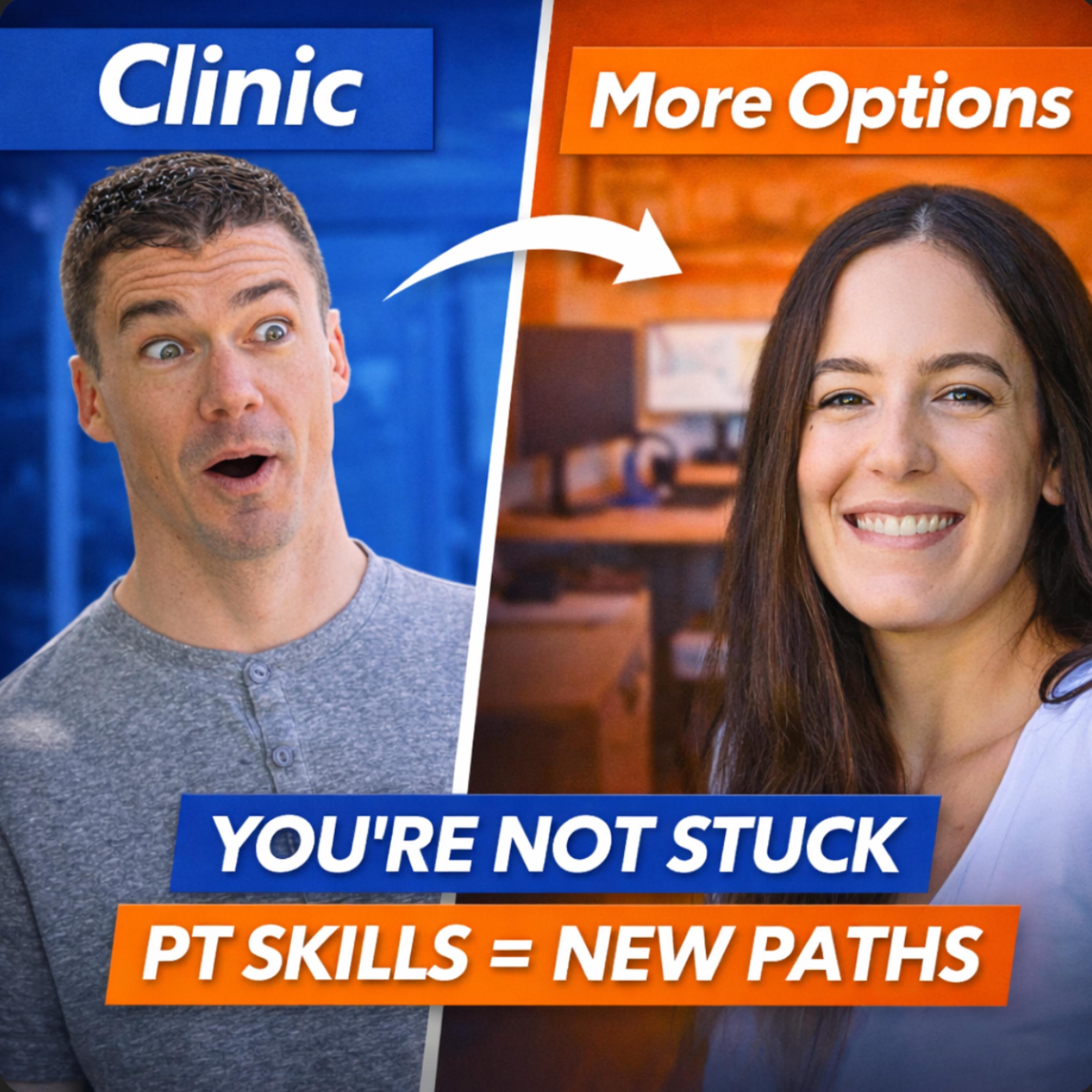
Most physical therapists think their career path is set the moment they graduate. This episode challenges that idea.Elana Yavetz shares how she transitioned from clinical practice into a project management role in tech—and why her PT background was actually her biggest advantage, not a limitation.If you’re a clinic owner, this changes how you think about your team. If you’re a clinician, it changes how you think about your future.Key Insights:PT skills translate directly into leadership and operations rolesCareer paths in healthcare are no longer linear“Impact” doesn’t require direct patient carePT education misses exposure to career flexibilityThe biggest barrier to change is identity, not abilityPractical Takeaways:List your skills before exploring new rolesStop searching “non-clinical PT jobs”—start translating skillsRecognize communication and problem-solving as high-value assetsExpand how you define making an impactGuest Links:LinkedIn: LinkedIn.com/in/elanayavetzInstagram: @eyav_Sponsors:SaRA Health — Increase patient engagement and RTM revenueEMPOWER EMR — Faster workflows, better documentationU.S. Physical Therapy — Career growth without burnout Subscribe & Follow:Apple Podcasts: https://podcasts.apple.com/us/podcast/pt-pintcast-physical-therapy/id1000443325Spotify: https://open.spotify.com/show/3LmMUT64yrUc2iGo9EmafcYouTube: https://www.youtube.com/@PTPintcastLinkedIn: https://www.linkedin.com/in/jimmy-mckay-pt-dpt-a4207659/Instagram: https://www.instagram.com/ptpintcastX / Twitter: https://x.com/PTPintcastWebsite: https://www.ptpintcast.com/
Apr 2, 202615 min

Volume vs Value: The Future of PT Clinics

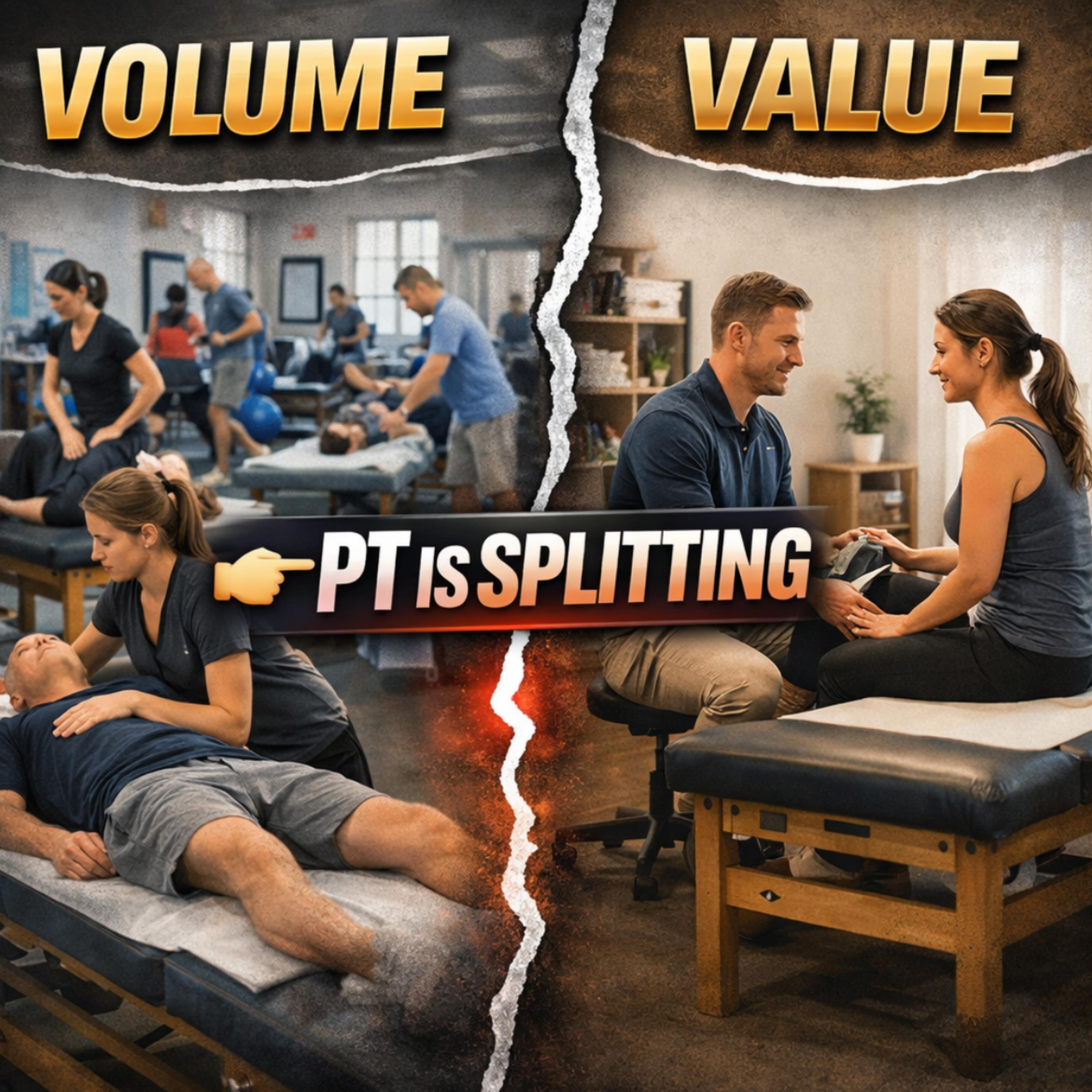
In this episode of PT Pintcast, we unpack a major shift happening inside the physical therapy profession: the growing divide between high-volume clinics and high-value, premium care models.From hiring struggles to reimbursement pressure, from patient behavior to AI disruption—this conversation challenges how PTs think about care delivery and business sustainability.If you're a clinic owner, this episode is less about theory and more about survival.Key TakeawaysPatients prioritize access and convenience more than clinical nuanceReferral-driven patients behave differently than direct-access patientsHigh-volume care isn’t inherently lower quality—it depends on executionPT careers may be shortening due to financial pressure and burnoutCorporate clinics rely heavily on new grads due to reimbursement limitsAI could reshape delivery—but not replace human trustThe future likely includes BOTH scalable care AND premium careWhy This MattersIf you're running a clinic today, you're making decisions about:Staffing modelsPricing strategyPatient acquisitionLong-term positioningThis episode helps you understand where the profession is heading—so you don’t get caught building something that won’t last.SponsorsSaRA HealthAutomate patient follow-ups, improve outcomes, and generate RTM revenue—without adding staff.???? https://sarahealth.comEMPOWER EMRFaster documentation, cleaner workflows, and an EMR built for how PTs actually operate.???? https://empoweremr.comU.S. Physical Therapy (USPH)A national network focused on clinician development, mentorship, and long-term career growth.???? https://usph.com

Apr 1, 202653 min

The 90-Day Content Plan for Clinics

Most clinic marketing isn’t failing because of effort—it’s failing because it’s irrelevant.In this episode, Jimmy and Andrea break down why traditional approaches (press releases, feature updates, polished promos) don’t work anymore—and what actually does.They explore:Why “when everyone is shouting, it’s just noise”The critical difference between storytelling and self-promotionA practical 90-day system to test and improve contentWhy “safe” marketing is actually the riskiest moveHow to think like a media company inside a healthcare businessWhere AI fits into your workflow—and where it can hurt youKey takeaway: Connection beats perfection. Relevance beats volume.If you’re a PT or clinic owner trying to grow, this episode gives you a system you can actually implement—not just ideas.9️⃣ Guest CalloutsAndrea → Writing and speaking on AI in healthcareFocus areas:Responsible AI use in healthcareMessaging and positioningUsing AI as a strategic tool (not a shortcut)

Mar 31, 202658 min

Why So Many PT Leaders Feel Like Imposters

Most clinicians are trained to treat patients — not lead teams.So when a physical therapist suddenly becomes a supervisor, director, or clinic leader, it’s common to feel unprepared. That feeling often shows up as imposter syndrome.In this episode of PT Pintcast, Jimmy McKay talks with speech-language pathologist and leadership coach Katie Holterman about why imposter syndrome is so common in healthcare and what clinicians can do when it shows up.They break down how leadership roles appear suddenly in clinical careers, how imposter syndrome affects decision-making inside clinics, and practical ways PTs can build confidence while leading teams.If you’ve ever sat quietly in a leadership meeting wondering if you belong there — this episode is for you.Key Insights• Why clinicians often become leaders without leadership training• The five profiles of imposter syndrome in healthcare professionals• How imposter syndrome causes decision paralysis in clinics• Why asking questions actually increases perceived leadership authority• The “Actually Factually Good At” list for building leadership confidence• How shifting from “Do I belong here?” to “What problem am I here to solve?” changes leadership mindsetGuestKatie HoltermanSponsorsSaRA HealthRemote care platform helping clinics automate patient check-ins and meet RTM requirements.https://sarahealth.comEMPOWER EMRAn EMR built specifically for rehab workflows with faster documentation and cleaner operations.https://empoweremr.comU.S. Physical TherapyA national network supporting PT clinicians and clinic owners with mentorship and career development.https://usph.com Subscribe & FollowApple Podcastshttps://podcasts.apple.com/us/podcast/pt-pintcast-physical-therapy/id1000443325Spotifyhttps://open.spotify.com/show/3LmMUT64yrUc2iGo9EmafcYouTubehttps://www.youtube.com/@PTPintcastLinkedInhttps://www.linkedin.com/in/jimmy-mckay-pt-dpt-a4207659/Instagramhttps://www.instagram.com/ptpintcastX / Twitterhttps://x.com/PTPintcastWebsitehttps://www.ptpintcast.com/

Mar 30, 202627 min

The Real Reason Your Website Isn’t Bringing Patients

Most PT clinic owners assume growth comes from referrals—until those referrals slow down.In this episode, Lex Lancaster breaks down how patients actually find clinics today and why most PT websites fail to convert visitors into patients. This conversation focuses on practical, actionable strategies clinic owners can use immediately.Key Takeaways:• SEO is about getting found by the right patients, not more traffic• Your website must clearly answer: who you help, what you do, how, and where• Generalist messaging kills conversions—specificity wins• Organic traffic builds long-term patient flow without ongoing ad spend• SEO is a 6–18 month play, not a quick fix• Content = answering real patient questions consistently• If your website doesn’t convert, ads will only waste moneyWhy This MattersIf your clinic relies only on referrals, you’re exposed. SEO and content create a second, scalable pipeline of patients that works even when referrals slow down.Guest LinksWebsite: https://www.lexlancaster.comInstagram: https://www.instagram.com/lexlancaster_SponsorsSaRA Health — Automates patient engagement and RTMEMPOWER EMR — Faster workflows built for PTsU.S. Physical Therapy — Career growth and clinic supportFlagler Health - https://www.flaglerhealth.io/Subscribe & FollowApple Podcastshttps://podcasts.apple.com/us/podcast/pt-pintcast-physical-therapy/id1000443325Spotifyhttps://open.spotify.com/show/3LmMUT64yrUc2iGo9EmafcYouTubehttps://www.youtube.com/@PTPintcastLinkedInhttps://www.linkedin.com/in/jimmy-mckay-pt-dpt-a4207659/Instagramhttps://www.instagram.com/ptpintcastX / Twitterhttps://x.com/PTPintcastWebsitehttps://www.ptpintcast.com/

Mar 27, 202639 min

Getting Patient Buy-In When They Don’t Want Help

Most patients don’t want to be in physical therapy—especially in acute care. That creates friction, resistance, and missed opportunities for better outcomes.In this episode, Sid Stoddard breaks down a practical communication framework PTs can use immediately to improve patient buy-in without adding time or complexity.Key Takeaways:“Embrace the suck” → patients are already frustrated before you walk inPatients don’t want PT—they want to leave or get back to lifeUse the “onion” approach: uncover layers before pushing interventionsAlways explain the why behind what you’re askingAdapt your communication style (wear different hats)This applies to outpatient PT just as much as acute careSmall actions (like helping with self-care) build massive trustWhy this matters:Better communication = faster buy-in, smoother visits, fewer refusals, and more efficient clinics. Guest Links:Sidney Stoddardhttps://scholars.georgiasouthern.edu/en/persons/sidney-stoddard-2/

Mar 27, 202633 min

4.9 Stars ≠ Good Care: The Problem with Healthcare Metrics (with Larry Benz)

What if the problem in healthcare isn’t a lack of data… but the wrong data?In this episode, Larry Benz joins the show to unpack a quiet shift that’s happening across healthcare:We’ve started confusing what’s easy to measure with what actually matters.Star ratings, patient satisfaction scores, and online reviews have become the scoreboard—but they were never designed to measure true clinical excellence.So what happens when the proxy becomes the point????? What You’ll Learn:Why high ratings don’t always mean high-quality careHow healthcare drifted toward convenience metricsThe unintended consequences of optimizing for satisfactionWhat better measurement could look likeHow clinic owners and clinicians should think differently????️ Guest:Larry Benz is a physical therapist and founder of Confluent Health and Evidence In Motion. He’s spent his career building and scaling healthcare organizations—and challenging the assumptions behind how success is measured.???? Connect & Subscribe:Read this and more from THE OPERATOR on SUBSTACKShare with a clinician or clinic owner who needs to hear it

Mar 26, 202623 min

Why PT Burnout Is About Ownership, Not Volume

This episode dives into what it actually takes to build a modern physical therapy business — starting with almost nothing and scaling through smart decisions, not big budgets.Nathan LeMaster shares how he launched a clinic during the pandemic with less than $4,000 and grew it into a multi-state company by focusing on culture, ownership, and patient experience.Key Insights:• You don’t need big capital to start — you need sweat equity and relationships• Burnout in PT is often caused by lack of ownership, not patient volume• Hiring for passion creates niche growth (runners, wrestlers, women’s health)• Early-stage clinics should prioritize community presence over social media polish• Cash-based care raises expectations — and improves outcomes• Different populations (like pediatrics) may require hybrid modelsWhat This Means for PT Owners:If your clinic feels stuck, the issue may not be marketing or volume — it may be structure. Ownership, autonomy, and clear positioning create better clinicians and better businesses.Guest Links:Website: theempoweru.comInstagram: @EmpowerU_SDSponsors:SaRA Health — Remote patient engagement that drives revenueEMPOWER EMR — Documentation built for PT workflowsU.S. Physical Therapy — Growth without losing clinic identity Subscribe & Follow:Apple Podcastshttps://podcasts.apple.com/us/podcast/pt-pintcast-physical-therapy/id1000443325Spotifyhttps://open.spotify.com/show/3LmMUT64yrUc2iGo9EmafcYouTubehttps://www.youtube.com/@PTPintcastLinkedInhttps://www.linkedin.com/in/jimmy-mckay-pt-dpt-a4207659/Instagramhttps://www.instagram.com/ptpintcast

Mar 25, 202647 min

Why Most PTs Overthink Marketing (And Stay Invisible)

In this episode, Jimmy McKay sits down with Tony Maritato and Dave Kittle to break down what actually works in physical therapy marketing today.The conversation cuts through the noise around content creation and focuses on what busy PTs and clinic owners need to know: how to get attention, build trust, and turn that into patients.Key Insights:• You don’t need high-end production to get results—consistency wins• Most PTs fail at content because they never start• Content should be built for the audience, not the clinic• Social media is optional—but attention is not• If you won’t do it, hire for it—but don’t ignore itThis episode also explores emerging opportunities like live selling and how attention is increasingly tied to revenue in healthcare.GUEST LINKSTony Maritato — https://www.youtube.com/c/MedicareBillingDave Kittle — https://www.youtube.com/@thedavekittleshow/featuredSPONSORSSaRA Health — Remote care platform helping clinics generate revenue between visitsEMPOWER EMR — Faster documentation and better workflows for PT clinicsU.S. Physical Therapy — Career growth and clinic partnership supportSUBSCRIBE & FOLLOWApple Podcasts: https://podcasts.apple.com/us/podcast/pt-pintcast-physical-therapy/id1000443325Spotify: https://open.spotify.com/show/3LmMUT64yrUc2iGo9EmafcYouTube: https://www.youtube.com/@PTPintcastLinkedIn: https://www.linkedin.com/in/jimmy-mckay-pt-dpt-a4207659/Instagram: https://www.instagram.com/ptpintcastWebsite: https://www.ptpintcast.com/Twitter/X: https://x.com/PTPintcast

Mar 25, 202642 min

Why PTs Struggle to Negotiate (And What to Do About It)

Most physical therapists know they should negotiate—but few feel confident doing it.In this episode, Jimmy McKay and Rebekah Griffith break down why negotiation feels uncomfortable in PT and how that hesitation impacts salary, contracts, and clinic growth.This isn’t about becoming a “salesperson.” It’s about communicating value clearly so you can get paid appropriately and build better professional relationships.Key Insights:• Negotiation isn’t about you—it’s about the impact you create• If you don’t define scope first, price conversations fall apart• Most PTs start negotiating too late in the conversation• Asking better questions is more powerful than “selling”• Saying no is a critical business skill—not a failure• You need a clear “floor” before entering any negotiation• Every conversation is a negotiation for informationWhy This Matters to PTs & Clinic OwnersIf you can’t negotiate:• You accept lower reimbursement• You underprice your services• You limit clinic growth• You burn out doing work that isn’t alignedBetter negotiation = better business decisions and better patient outcomes.GUESTRebekah GriffithSPONSORSSaRA HealthHelping clinics increase revenue between visits with automated patient engagementhttps://sarahealth.comEMPOWER EMRFaster documentation, better workflows, built for PTshttps://empoweremr.comU.S. Physical TherapyClinician-led growth and career development opportunitieshttps://usph.com

Mar 24, 202648 min

Your PT Clinic Isn’t Growing Because You’re Invisible

Most PT clinics still believe growth comes from referrals alone. But patients don’t choose clinics the way they used to.In this episode, Jimmy breaks down why digital presence is now the first impression—and often the deciding factor—for new patients.If your clinic isn’t showing up online in a meaningful way, you’re losing patients before they ever call.Key Insights:• Digital is now the front door to your clinic• Referrals still matter—but they’re no longer first• Word of mouth is still alive, but it’s happening online• Content builds trust before the first visit• You can’t “hack” attention—you have to earn it• Consistency beats one-off marketing effortsWhy This Matters:A busy clinic owner doesn’t have time for guesswork. This episode gives a clear direction: if you want more patients, you need to be visible, trusted, and consistent online.SPONSORSSaRA Health — Helping clinics generate revenue between visitsEMPOWER EMR — Built for speed and PT workflowsU.S. Physical Therapy — Supporting clinicians and clinic growth

Mar 23, 20261h 0m

Why Physical Therapists Are Burnt Out (And What Actually Fixes It)

Physical therapy feels harder than ever for many clinicians—burnout, declining reimbursement, and career uncertainty are constant conversations.But what if the problem isn’t the profession… it’s perspective?In this episode, Derek Landis shares what happens when you step outside the U.S. system and practice in a place where access to care is limited and every PT skill matters.Key Takeaways:Why PT burnout is often tied to perceived value, not actual impactWhat changes when patients finally get access to careThe hidden skills PTs undervalue (like transfer training and education)How serving underserved populations can improve clinician satisfactionWhy clinic owners should create opportunities for purpose-driven workWhy This Matters for Clinic Owners:If your team feels disengaged, this episode highlights a lever most clinics ignore—creating meaning through impact. Supporting outreach, pro bono work, or mission-driven care can improve morale without changing compensation models.Guest Links:Website: https://landis-family-jamaica.epistle.org/Friends of the Redeemer: https://friendsoftheredeemer.orgSponsors:SaRA Health – Helping clinics generate revenue between visitsEMPOWER EMR – Built for faster, cleaner PT workflowsU.S. Physical Therapy – Supporting clinician growth and clinic partnerships

Mar 23, 202624 min

The Numbers That Actually Grow a PT Business

Most physical therapy clinics are tracking metrics—but not all metrics actually matter.In this episode, Jimmy and Tony break down how KPIs can unintentionally drive the wrong behavior inside your clinic. From arrival rate to cancellation tracking, they explain how focusing on the wrong numbers can lead to worse patient outcomes and stalled business growth.They also explore a bigger shift: why PT clinic owners should think beyond traditional revenue models and start leveraging attention, content, and alternative income streams.Key Insights:Why “what gets measured gets messed up” in PT clinicsHow arrival rate can actually hurt patient accessThe difference between downstream vs upstream metricsWhy profit—not activity—should guide decisionsThe “patient drop-off cliff” after visit 2–3How content and media can become a revenue streamWhy fear keeps PTs playing small in businessWhy This Matters:If you’re a clinic owner, tracking the wrong KPI doesn’t just waste time—it trains your team to prioritize the wrong behaviors. Fixing this can immediately improve patient retention, staff decision-making, and profitability.GUEST Tony Maritato SPONSORSSaRA Health — https://sarahealth.comEMPOWER EMR — https://empoweremr.comU.S. Physical Therapy — https://usph.com SUBSCRIBE & FOLLOWApple Podcasts: https://podcasts.apple.com/us/podcast/pt-pintcast-physical-therapy/id1000443325Spotify: https://open.spotify.com/show/3LmMUT64yrUc2iGo9EmafcYouTube: https://www.youtube.com/@PTPintcastLinkedIn: https://www.linkedin.com/in/jimmy-mckay-pt-dpt-a4207659/Instagram: https://www.instagram.com/ptpintcastX / Twitter: https://x.com/PTPintcastWebsite: https://www.ptpintcast.com/

Mar 19, 20261h 1m

The Career Move Most PTs Ignore (And Pay For Later)

Most PTs focus on getting better clinically. The ones who build lasting careers do something different—they get involved.In this episode, Edie Benner shares how engagement in associations, events, and community directly impacts your career, your clinic, and your long-term satisfaction in the profession.If you’re feeling stuck, isolated, or burned out, this episode gives you a practical path forward.OPTA Gala Event: https://www.ohiopt.org/event/OPTA75GalaKey TakeawaysNetworking isn’t optional—it’s how opportunities happenAssociations provide mentorship, referrals, and business insightClinic growth often starts outside the clinicThe shift from “expert” to “coach” is critical for modern PTsBurnout decreases when you reconnect with purpose and peopleWhy This MattersFor clinic owners:Better connections = better ideas, referrals, and strategyFor staff PTs:Involvement = faster growth, more opportunity, less burnoutGuest LinksWebsite: www.arhs.usInstagram: @adverehabhealthspecInstagram: @edieknowltonSponsorsSaRA Health — Helps clinics generate revenue between visitsEMPOWER EMR — Faster workflows, better clinic operationsU.S. Physical Therapy — Growth, mentorship, and career pathsSubscribe & FollowApple Podcasts: https://podcasts.apple.com/us/podcast/pt-pintcast-physical-therapy/id1000443325Spotify: https://open.spotify.com/show/3LmMUT64yrUc2iGo9EmafcYouTube: https://www.youtube.com/@PTPintcastLinkedIn: https://www.linkedin.com/in/jimmy-mckay-pt-dpt-a4207659/Instagram: https://www.instagram.com/ptpintcastX / Twitter: https://x.com/PTPintcastWebsite: https://www.ptpintcast.com/

Mar 19, 202624 min

Why PT Clinics Need Metrics (And Clinicians Should Care)

Many clinicians feel tension between patient care and productivity targets. In reality, that tension often exists because clinicians were never taught how the business side of healthcare works.In this episode of PT Pintcast, Jimmy McKay talks with Katie Holterman about how clinics can bridge the gap between clinical excellence and operational performance.The discussion focuses on practical ways clinic leaders can introduce metrics without alienating clinicians — and how transparency, standardization, and communication help teams work toward the same goal.Key Insights From the Episode• Why clinicians often resist productivity metrics• The role of clinical guardrails in protecting care quality• Why every clinic needs clear performance metrics• How dashboards and scorecards improve clinician buy-in• The leadership mistake that causes teams to reject metrics• Why some clinical standardization actually improves autonomy• How value-based care is changing rehab expectationsPractical Takeaways for Clinic Owners• Explain metrics using clinical language, not just business terms• Show clinicians how documentation protects their license and revenue• Use scorecards to make performance expectations visible• Limit KPIs to the few metrics that truly matter• Connect metrics directly to patient outcomes and clinic sustainabilityWhen clinicians understand why the numbers matter, the conflict between business and care becomes alignment instead of tension.SponsorsSaRA HealthThe remote care platform helping clinics boost revenue through automated patient check-ins and RTM support.EMPOWER EMRAn EMR designed for rehab clinics with faster documentation and cleaner workflows.U.S. Physical TherapyA national network supporting clinic owners and clinicians with growth opportunities and leadership development.Subscribe & FollowApple Podcastshttps://podcasts.apple.com/us/podcast/pt-pintcast-physical-therapy/id1000443325Spotifyhttps://open.spotify.com/show/3LmMUT64yrUc2iGo9EmafcYouTubehttps://www.youtube.com/@PTPintcastLinkedInhttps://www.linkedin.com/in/jimmy-mckay-pt-dpt-a4207659/Instagramhttps://www.instagram.com/ptpintcastX / Twitterhttps://x.com/PTPintcastWebsitehttps://www.ptpintcast.com/

Mar 17, 202627 min

Authenticity Beats Hospital Marketing

Healthcare organizations spend millions on marketing — yet patients often trust a clinician with a phone more than a polished hospital commercial.In this episode, Jimmy and Andrea unpack why authenticity beats traditional healthcare marketing and how PT clinics can leverage clinician voices to build trust with patients.They also dive into one uncomfortable truth:Many clinics believe they have a marketing problem when the real issue is operations and patient experience.From the “three T’s and three P’s” of clinician content to the role of authenticity in healthcare communication, this conversation gives clinic owners a practical lens for thinking about marketing, retention, and patient trust.Key TakeawaysAuthentic clinician content often outperforms corporate healthcare advertising.Clinicians should be empowered to create educational content.Most clinics underestimate the operational impact on patient retention.The “three T’s” for clinician content: Tools, Training, Time.The “three P’s” for clinic marketing: People, Process, Product.Why This Matters for PT ClinicsIf patients trust real clinicians more than traditional marketing, clinics should focus less on polished campaigns and more on empowering clinicians to communicate directly with patients.The result can be stronger trust, better patient education, and more sustainable growth.

Mar 16, 20261h 0m

Why Physical Therapists Chase Credentials Instead of Expertise

Physical therapists often feel pressure to collect certifications and letters after their name.But does that actually make better clinicians?In this episode, Jimmy talks with Clint Serafino and Nate Henry about why the PT profession needs more mentorship, deeper clinical reasoning, and better collaboration across healthcare disciplines.They also share the story behind Global Physio Training, a nonprofit working to deliver hands-on clinical education to physical therapists in underserved communities like Cameroon.Instead of focusing on expensive equipment or healthcare infrastructure, their mission focuses on something simpler — training clinicians.Because better clinicians create better healthcare systems.Chapters00:00 — Why Credentials Aren’t Expertise04:30 — Mentorship In Physical Therapy10:00 — Building Global Physio Training15:30 — Lessons From Cameroon PTs21:30 — Interdisciplinary Healthcare Teams27:00 — Diagnosing Movement Problems33:30 — Future Of Physical TherapyIn This Episode• The difference between technicians and clinicians in PT• Why mentorship matters more than credentials• What American PTs can learn from global clinicians• How interdisciplinary healthcare teams improve outcomes• Why PT clinics should collaborate with physicians and other providers• The vision behind Global Physio TrainingResources MentionedGlobal Physio Traininghttps://www.globalphysiotraining.com

Mar 14, 202640 min

The Systems That Burn Out Physical Therapists

Most physical therapists feel stuck between productivity expectations, documentation requirements, and changing reimbursement models.But what if the problem isn’t clinicians — it’s the systems around them?In this episode, Jimmy talks with Katie Holterman about how healthcare systems, documentation processes, and compliance frameworks can either burn clinicians out or support them.Katie explains why efficiency and quality are not enemies, why most documentation is unnecessarily complex, and how clinics can design systems that protect clinicians while improving outcomes.The conversation also dives into the future of value-based care, the role of outcomes in physical therapy reimbursement, and why most continuing education fails to deliver practical clinical value.If you’re a physical therapist, clinic owner, or healthcare leader, this episode offers practical insight into building systems that actually work for clinicians.Key TakeawaysWhy documentation is often more complicated than necessaryThe three questions that simplify compliant documentationWhy productivity isn’t the enemy of good patient careHow clinic systems should protect clinicians instead of burning them outWhy most continuing education fails cliniciansHow outcomes will shape the future of physical therapy reimbursementWhy understanding the “why” behind metrics changes everythingGuestKatie Holterman

Mar 13, 202638 min