Prehospital Care Research Forum (PCRF) Journal Club
92 episodes — Page 1 of 2
Code 3 or not to be?
Can AI Grade This? The Future of Feedback in Health Professions Education
The Hardest Call in EMS: Is This Child Critical?
From Resuscitation to Reflection: Preparing Students for the Reality of Patient Death
The Return of Whole Blood: Hype or High-Value Care?
Training Without Patients? Live from ACCREDITCON
Push or Squeeze: Which CPR Device Wins?
Bearing Witness: The Hidden Cost of Paramedic Training
More Than a Pilot: How eCPR Programs Shape Everyday Resuscitation
Can’t Intubate, Can’t Oxygenate: Does Simulation Mastery Make the Cut?
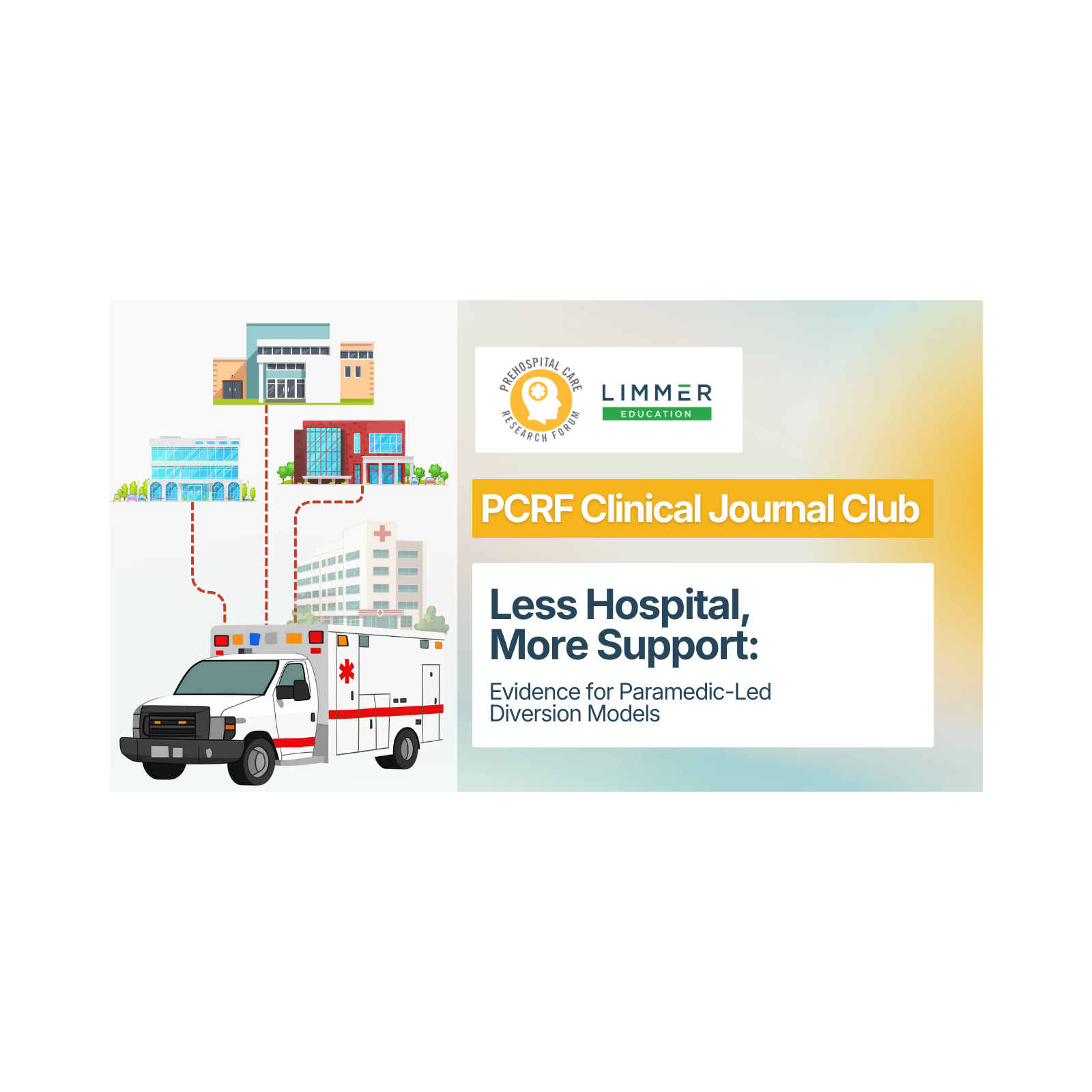
S2026 Ep 5Less Hospital, More Support: Evidence for Paramedic-Led Diversion Models
In March 2026's journal club we step into a nuanced corner of prehospital care that’s quietly reshaping how systems think about patient destinations. We unpack research from Toronto on paramedics transporting intoxicated patients to a stabilization centre rather than straight to the emergency department. Most patients required no medical interventions in the field, and only a small subset needed later transfer to a hospital. What does this mean for EMS diversion practices, resource use, and paramedic decision-making? Join us for a practical, forward-looking discussion on when less hospital might mean better care in the prehospital world.Article: Examining a Stabilization Center for Patients with Alcohol or Opioid Intoxication Transported by Paramedics: A Cohort Study of an Emergency Department Diversion Model
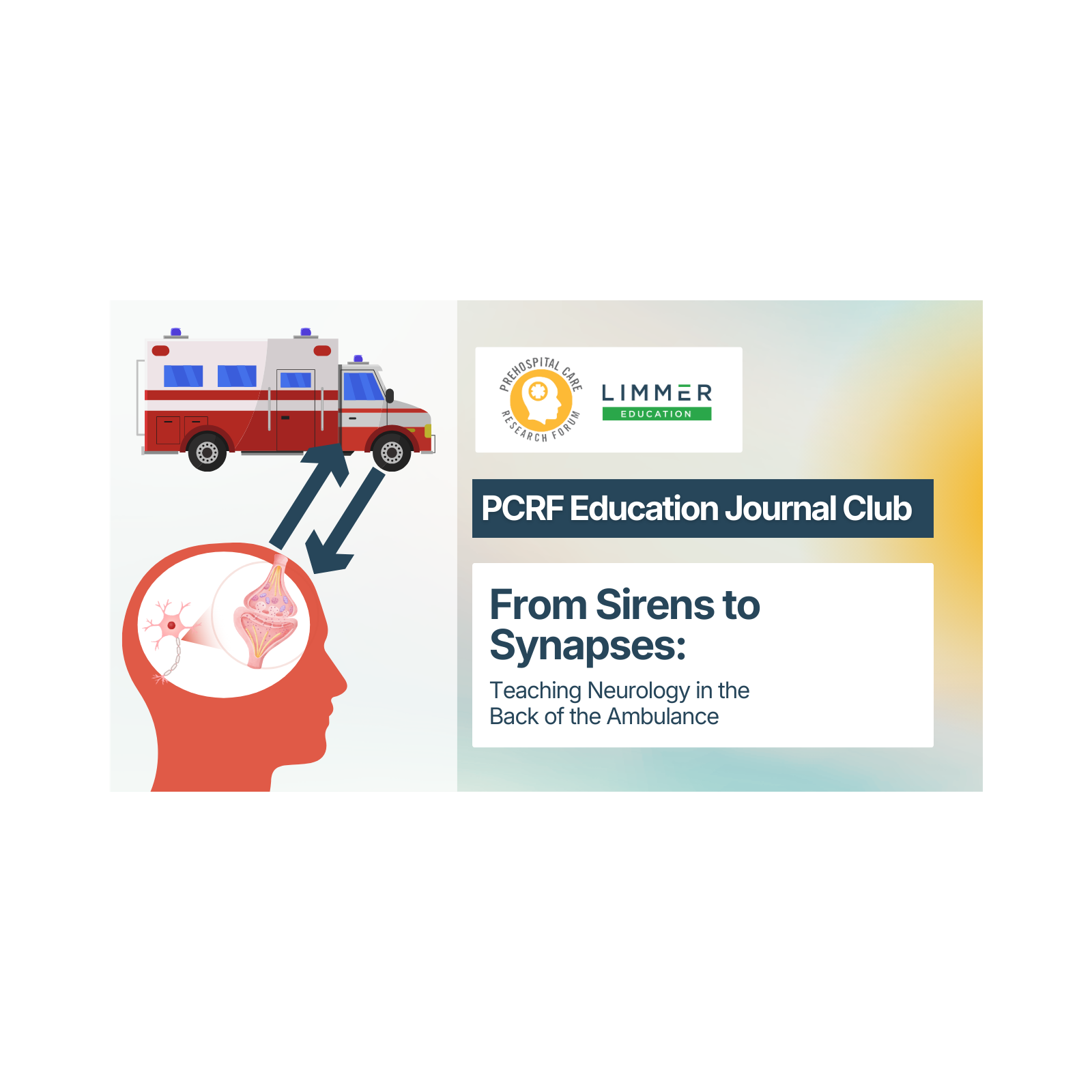
S2026 Ep 4From Sirens to Synapses: Teaching Neurology in the Back of the Ambulance
Neurologic emergencies don’t wait for the hospital—and neither should neurology education. This episode breaks down a longitudinal EMS curriculum using cases, simulation, and gamification to improve prehospital neurologic assessment. We’ll discuss feasibility, knowledge outcomes, and system-level metrics like door-to-needle time and thrombectomy transfers. Does active learning and simulation meaningfully change prehospital neurologic care—or just test scores? And what does “success” really look like for EMS education? Article: Curriculum Innovation: Training the Front Line A Neurologic Emergencies Curriculum Pilot for First Responders https://www.neurology.org/doi/10.1212/NE9.0000000000200286
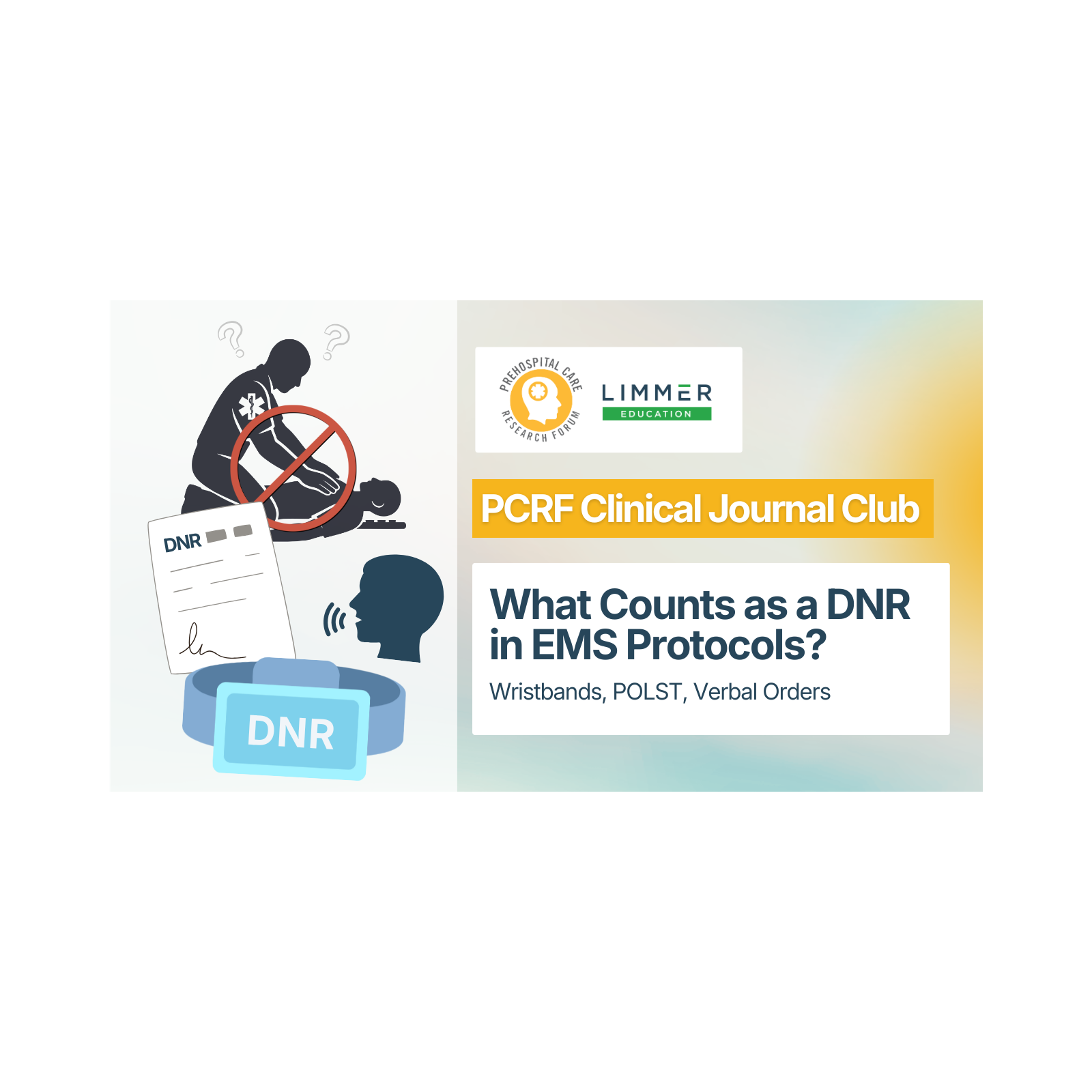
S2026 Ep 3What Counts as a DNR in EMS Protocols? Wristbands, POLST, Verbal Orders
In this month’s journal club episode, we tackle a topic every EMS educator and clinician wrestles with: how do you honor a patient’s end-of-life wishes when they call 911? We unpack a structured review of U.S. EMS protocols and the wide variation in what counts as a valid Do Not Resuscitate (DNR) order, from physician-signed forms to bracelets, POLST-style documents, and even verbal orders. We’ll discuss how these differences can lead to moral distress and affect goal-concordant care, and why understanding the nuances of DNR documentation matters for field providers, system leaders, and anyone who wants to ensure patient wishes are respected in the out-of-hospital setting.
S2026 Ep 2CPR Mastery: How good is good enough? Is Mastery Learning Overkill? Short, Self-Directed CPR Training Delivers Comparable 6-Month Retention
Does CPR training really need to be “to mastery”? This study suggests a few minutes of self-directed practice may be just as effective months later. Join the journal club to debate what this means for EMS education, standards, and training efficiency.
S2026 Ep 1Clear Air in a Rolling World: What Ambulance Methoxyflurane Exposure Means for Paramedic Safety
In this episode, we step inside the ambulance to explore a question rarely discussed: how safe is the air paramedics breathe when administering methoxyflurane, marketed as Penthrox. While not used in the United States, Penthrox is widely used in Australia and other parts of the world as an inhaled analgesic for prehospital pain management. In this month’s journal club, we unpack a controlled laboratory study that measured occupational exposure inside ambulance environments, examine how ventilation changes the equation, and discuss what the findings mean for paramedic safety, system design, and the evolving balance between patient comfort and clinician health. A thoughtful ride through science, safety, and real-world EMS practice.
S2025 Ep 17The BEST of Educational Research in 2025!
Our annual end-of-year special edition of the PCRF Education Research Journal Club when each of our panelists will share a favorite article from the educational literature in 2025.
S2025 Ep 16Sim Ready? EMS Teams in Action During Pediatric Crises
In this month’s Educational Journal Club, we dive into a multi-state study examining EMS team performance during simulated pediatric emergencies. We will explore how well EMS clinicians handle high-stakes scenarios like respiratory arrest, cardiac arrest, and seizures in children—and whether having a Pediatric Emergency Care Coordinator (PECC) makes a difference. With insights into training gaps and simulation-based performance data, we’ll discuss what these findings mean for frontline care and how to better prepare EMS teams for rare but critical pediatric calls. Article: Quality of Care and Opportunities for Improvement in Prehospital Care of Critically Ill Pediatric Patients: An Observational, Simulation-Based Study https://www.tandfonline.com/doi/full/10.1080/10903127.2025.2500715
S2025 Ep 15Education Research Oral Abstract Presentations
Listen to the Education Research Oral Abstracts presented live at EMS Expo.
S2025 Ep 14NAEMSP Trauma Compendium: What Every EMS Clinician Should Know
Join us for this month’s Journal Club from the Prehospital Care Research Forum as we take a closer look at the NAEMSP Trauma Compendium: a landmark collection of trauma care guidance from some of the field’s leading voices. In this special episode, we’re joined by the lead author for a guided tour through each article, while our panelists bring sharp questions and on-the-ground insights. Whether you’re in the classroom or on the curbside, this is the trauma update you don’t want to miss.
S2025 Ep 13Bridging the Language Divide: EMS Clinician Education and Interpreter Access for Patients with Limited English Proficiency
How ready are EMS clinicians to care for patients who don’t speak English—and what shapes that readiness? This new study explores the intersection of language access, EMS training, and clinician confidence when serving diverse communities. Join us this month for the Prehospital Care Research Forum Journal Club as the lead author shares what they uncovered and why it matters for future EMS education and policy. If you’ve ever faced a language barrier on scene, this conversation is for you.The article can be found at: Factors Associated with EMS Clinician Preparedness to Provide Care for Patients with Limited English Proficiency
S2025 Ep 12From Helping Up to Helping Out: The Lift‑Assist Story
What really happens after a lift assist? This study uncovers the timeline of patients who call 911 for help getting up—only to return days later, this time in an ambulance. Are these quiet calls a warning sign? Join us as we follow the path from floor to gurney and explore how repeat lift assists could be the key to predicting preventable emergencies. If you think a lift assist ends when the crew drives away, think again.Article: Timeline for repeat EMS encounters resulting in transport following "lift assist" in a suburban EMS system
S2025 Ep 11A Profession Under Pressure: What’s Fueling EMS Clinician Burnout?
Burnout is a growing concern across healthcare, but how deep does it run in EMS, and what’s the real cost? In this episode, we explore a national survey of EMS clinicians that uncovers critical insights into well-being, workforce stability, and what might be driving providers away from the profession. Join us to find out how burnout is measured, why it matters more than ever, and what the data reveal about the future of the EMS workforce.
S2025 Ep 10Spotting Trouble Early: A 3-Point Checklist to Predict Violence in EMS
Violence against EMS clinicians is rising—but what if we could see it coming? This month’s Journal Club explores Aggressive Behavior Risk Assessment Tool for EMS (ABRAT-EMS), a simple yet powerful 3-item checklist that helps identify potentially violent patients before transport. With strong sensitivity and specificity, this tool could be a game-changer for EMS safety. Tune in as our panel dives into how it works, what it means for frontline providers, and where it fits into broader violence prevention strategies. Article: Aggressive Behavior Risk Assessment Tool for Emergency Medical Services https://www-sciencedirect-com.libproxy.uthscsa.edu/science/article/pii/S2688115225000530
S2025 Ep 9Beyond the Call: Unpacking Leadership and Communication in EMS Clinical Judgment
For EMS clinicians, clinical judgment involves higher-order thinking, beginning with clinical reasoning and culminating in clinical decision-making. Existing frameworks suggest that other constructs like leadership and communication may also influence clinical judgment. This evaluation aimed to determine whether leadership and communication are integrated within the broader concept of clinical judgment. Presented Live from Accreditcon 2025. Article: Understanding higher-order constructs of leadership and communication in EMS clinical judgment https://bmcmededuc.biomedcentral.com/articles/10.1186/s12909-024-06282-5
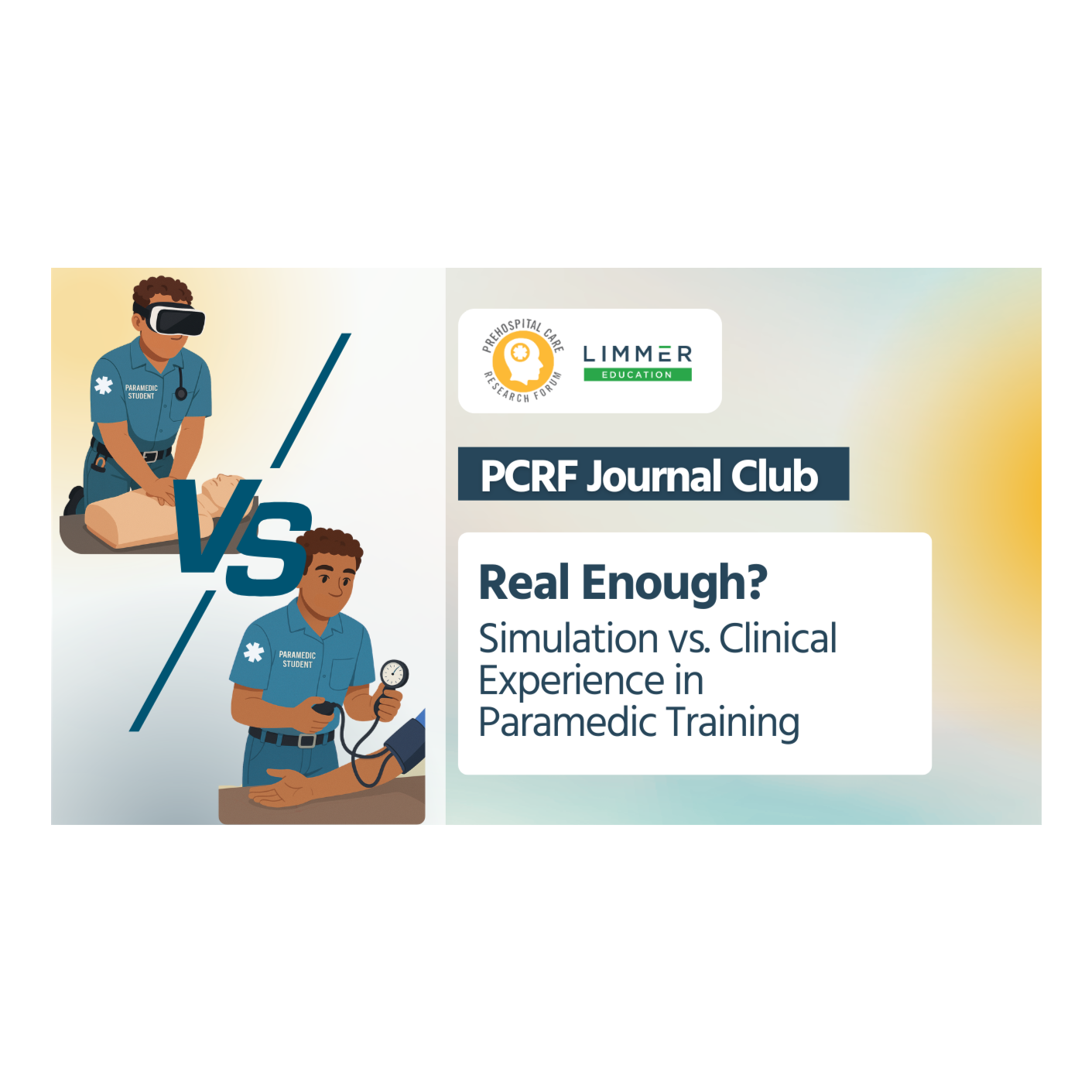
S2025 Ep 8Real Enough? Simulation vs. Clinical Experience in Paramedic Training
This month's PCRF Education Journal Club dives into a systematic review exploring simulation-based education in paramedic training. With clinical placements under pressure, could sim labs be the future—or are we missing something vital? Tune in, read up, and bring your thoughts to the discussion—let’s break it down together! Article: Systematic review of the evidence for using simulation to replace clinical practice
S2025 Ep 7Breathing Easier: The TRAUMOX2 Trial and Oxygen Strategies for Trauma Patients
In this episode of the Prehospital Care Research Forum's Journal Club, we examine the results of the TRAUMOX2 Randomized Clinical Trial, which compares early restrictive and liberal oxygen strategies for trauma patients. Tune in as we break down the findings, discuss the implications for prehospital and emergency care, and explore how oxygen management could influence outcomes for trauma patients. Don’t miss this critical analysis of one of the year’s most impactful studies! Article: Early Restrictive vs Liberal Oxygen for Trauma Patients: The TRAUMOX2 Randomized Clinical Trial
S2025 Ep 6Balancing Act: Stress, Empathy, and Competency in Paramedic Education
How do stress, empathy, and coping strategies impact the clinical competency of paramedic students? In this episode of the education journal club of the Prehospital Care Research Forum Podcast, we delve into the fascinating findings of a study exploring these critical factors in paramedic education. Join us as we uncover how students navigate the pressures of clinical practice, the role of empathy in patient care, and strategies for turning stress into a powerful learning tool.Article: Effects of Clinical Practice Stress, Stress Coping, and Empathy on Clinical Competence among Paramedic Students
S2025 Ep 5Take-Home Naloxone: Exploring Receivers Perspectives on Opioid Overdose Prevention
In this episode of the Prehospital Care Research Forum's Journal Club, we discuss the findings of a qualitative study examining the acceptability of providing take-home naloxone kits by EMS to individuals at risk of opioid overdose. Discover the insights from the study, including patient perspectives, potential barriers, and the implications for overdose prevention strategies. Join us for a thought-provoking conversation on how EMS can play a pivotal role in combating the opioid crisis.https://www.tandfonline.com/doi/full/10.1080/10903127.2024.2435034?src=
S2025 Ep 4Closing the Loop: How EMS Providers View Hospital Outcome Data
In this episode of the education journal club of the Prehospital Care Research Forum Podcast, we explore the groundbreaking pilot study, "Perceptions and Use of Automated Hospital Outcome Data by EMS Providers." Join us as we dive into the findings on how EMS professionals view and utilize automated hospital outcome data, the challenges of data integration, and its potential to enhance prehospital care. Discover what this research means for bridging the gap between EMS and hospital systems and how it could shape the future of data-driven emergency care. https://escholarship.org/uc/item/24b143f2
S2025 Ep 3Guiding the Field: Unpacking the 2024 Evidence-Based Prehospital Care Guidelines
In this episode of the Prehospital Care Research Forum's journal club, we take a deep dive into the 2024 Systematic Review of Evidence-Based Guidelines for Prehospital Care. From groundbreaking updates to practical applications, we’ll explore how these guidelines are shaping the future of EMS. Join us to learn what’s new, what’s impactful, and how it all translates to better outcomes in the field. Don’t miss this essential episode for EMS professionals striving to stay at the forefront of evidence-based care!https://www.tandfonline.com/doi/full/10.1080/10903127.2024.2412299#abstractPrehospital Guidelines Consortium: https://prehospitalguidelines.orgEMS Research Reading List: https://prehospitalguidelines.org/reading-list/
S2025 Ep 2Risperidone on the Road: Exploring Prehospital Treatment of Agitation
A new potential treatment for patient agitation and safety intervention for EMS: oral risperidone. While the medication has been around since the early 1990s, it has only recently been used in EMS. Join us for this month's Prehospital Care Research Forum Journal Club as we explore this treatment's feasibility, safety, and potential!https://www.tandfonline.com/doi/full/10.1080/10903127.2024.2361133#
S2025 Ep 1Beyond the Books: Empowering Medical Students in Clinical Training
Healthcare students often describe the leap from classroom learning to clinical and field as one of their most challenging transitions. But how can health education better prepare them for the realities of patient care?" In this Prehospital Care Research Forum Educational Journal Club episode, we dive into new research exploring innovative strategies to bridge the gap between theory and practice. Join us as we unpack the findings and implications of this pivotal study, reshaping how medical students are trained for the frontlines of healthcare.https://www.tandfonline.com/doi/full/10.1080/07853890.2024.2443812
S2024 Ep 24Best of EMS Education Research 2024 (Dec 24)
Our end-of-year special edition of the PCRF Education Research Journal Club where each of our panelists will share a favorite article from the educational literature in 2024.
S2024 Ep 23The Best Clinical Research from 2024
There has been no shortage of outstanding EMS clinical research this year! From intramuscular epinephrine injections in cardiac arrest to stabilization of atrial fibrillation in the ambulance, research continues to guide our best patient care practices. Join us for the December Clinical Journal Club as our panelists round out 2024 with an article they think is changing clinical practice in this rapid-fire discussion we are calling The Best of Clinical Research in 2024.
S2024 Ep 22Simulating Success: How 3D VR is Changing Paramedic Education (Nov 2024)
Are virtual patients the future of paramedic training? In our latest episode, we dive deep into the groundbreaking world of 3D Virtual Reality Simulations (3DVRS) and how they stack up against traditional hands-on training. Join us for our next educator Journal Club as we explore a new study comparing these innovative simulations to the real-life experience paramedics rely on. Could VR be the next big thing in emergency medical education? https://onlinelibrary.wiley.com/doi/10.1002/emp2.13092
S2024 Ep 21Reviving the Discussion: Naloxone's Impact on Cardiac Arrest Survival
The administration of Naloxone for patients in cardiac arrest in the out-of-hospital setting has rarely been advised in the United States. Despite this, many EMS agencies allow for its administration and include the opioid antagonist in their cardiac arrest protocols. This contrast leaves the frontline EMT and paramedic with little direction on whether the drug provides a benefit to the patient suffering out-of-hospital cardiac arrest. Join us this month for the Prehospital Care Research Forum's journal club as we revive the topic and review a recent publication that compares out-of-hospital cardiac arrest patients who received Naloxone with those who did not.https://jamanetwork.com/journals/jamanetworkopen/fullarticle/2822449?utm_source=silverchair&utm_medium=email&utm_campaign=article_alert-jamanetworkopen&utm_content=wklyforyou&utm_term=082124&adv=
S2024 Ep 20AI may pass the test, but can it explain why? (Oct 2024)
We have all seen the news articles that ChatGPT and other AI models can pass the MCAT and LSAT. As educators, we worry about computers passing tests, not students. However, is there an opportunity for AI to help us in the classroom, not by taking the test but by writing the explanations for the correct answers? Join us this month for Journal Club, where we will discuss exactly that and review the article: Can ChatGPT generate practice question explanations for medical students, a new faculty teaching tool?https://www.tandfonline.com/doi/full/10.1080/0142159X.2024.2363486
S2024 Ep 19Stepping Up Safety: Integrating Fall Prevention in EMS Services (Oct 2024)
Falls are the leading cause of injury for older Americans; in fact, one out of every four persons aged 65 and older has reported a fall in the past year. Falls are also the leading cause of EMS activations annually, accounting for over 3 million annual ED visits. EMS has a front-row seat in this epidemic, but little has been done to evaluate its role in a cure. In this month's journal club, we review a recent publication that describes the community benefits of an EMS-recognized and evaluated fall prevention program. Article: "Integrating Fall Prevention Strategies into EMS Services to Reduce Falls and Associated Healthcare Costs for Older Adults"https://pubmed.ncbi.nlm.nih.gov/38533419/
S2024 Ep 18AI Revolution: Crafting Diverse and Inclusive Medical Case Vignettes (Sep 2024)
AI is already helping to reduce the remedial and redundant tasks in our classroom, but can it design our case studies and simulations, too? Even better, can it increase the diversity of our patient scenarios while removing our preconceived notions and implicit biases? Join us for this month's education journal club as we review research that asked ChatGPT to do precisely that!https://bpspubs.onlinelibrary.wiley.com/doi/full/10.1111/bcp.15977
S2024 Ep 17Life-Saving Seconds: The Power of Early IM Adrenaline in Cardiac Arrests (Sep 24)
There is no shortage of advancements in out-of-hospital cardiac arrest. In fact, every time EMS providers renew their CPR or ACLS, changes are made that have been demonstrated to improve the patient's chances of a meaningful recovery. Listen to our discussion on the next potential advancement in out-of-hospital cardiac arrest: intramuscular epinephrine! Article: Early intramuscular adrenaline administration is associated with improved survival from out-of-hospital cardiac arresthttps://www.resuscitationjournal.com/article/S0300-9572(24)00159-X/fulltext
S2024 Ep 16Unlocking Potential: How Growth Mindset Emails Boost First-Generation College Student Success
Can one email from a professor improve students' exam scores? This isn't a story about an accidental email sent with the answer key attached. It is a story about a professor who, using a growth mindset, encourages students to keep pushing forward in their biology class. Join us for this month's education journal club as we explore the impact of faculty mindset on student performance, specifically on first-generation college students, following this experience.https://www.lifescied.org/doi/full/10.1187/cbe.23-07-0131
S2024 Ep 15Sirens & Strength: Unveiling the Female EMS Journey (Aug 24)
Workforce shortages continue to pervade EMS. Despite the pandemic recovery and increased efforts at bringing more people into the field and keeping them there, fewer people are choosing to climb into the back of an ambulance. Little work, however, has been put into describing the experience of being an EMT or paramedic, specifically those who are underrepresented in the EMS workforce. Join the Prehospital Care Research Forum clinical journal club this month to explore the latest research on just that, The Female Emergency Medical Services Experience: A Mixed Methods Study.https://www.tandfonline.com/doi/full/10.1080/10903127.2024.2306248
S2024 Ep 14Talk like a Pro: Virtual Training for Tough Conversations in EMS (July 2024)
Can you educate healthcare students on delivering life-and-death news to patients, and if so, can you standardize it and evaluate student improvement and performance? Can virtual simulation truly bring the realism necessary to deliver this serious news? Join us for this month's Education Journal Club as we unpack the details of this multi-institutional effort, exploring how virtual simulation is being leveraged to create a scalable, competency-based curriculum.
S2024 Ep 13"I can't breathe" is EMS doing everything they can for patients suffering from respiratory distress
EMS providers respond to patients suffering from shortness of breath every day and have a vast array of treatment options in the prehospital setting. However, limited analysis describes the nation's EMS treatment of patients suffering from shortness of breath. Join us this month for the PCRF Journal Club to discuss this recent publication describing nationwide trends in the treatment of patients with bronchospasm. Article: Emergency Medical Services Management of Bronchospasm in the United States: A Cross-Sectional Analysis and Nationwide Quality Assessmenthttps://www.tandfonline.com/doi/abs/10.1080/10903127.2023.2220021
S2024 Ep 12Grey Matter Mysteries: Unveiling Neuroanatomy Through Cadaver Instruction
Cadaver dissection is one of the highest-rated days of paramedic school for those programs lucky enough to have access to a cadaver lab. However, a fun experience does not always equate to student learning. Join us for this month's educational journal club as we review "A Know-Brainer: The Power of Cadaver-Based Instruction to Teach Clinical Neuroanatomy" and ask whether cadaver dissections help improve learning.
S2024 Ep 11Assessing Burnout Rates and Contributing Factors in Emergency Medical Service Clinicians
EMS providers are routinely involved in high-stress situations with limited follow-up or healthy coping mechanisms. These experiences can trigger stress responses and burnout in our first-responder community. Despite the widespread conversation about burnout in EMS, limited literature describes the problem. Join us for this month's PCRF Journal Club to review a study that evaluates burnout in EMS using a validated tool.
S2024 Ep 10Where do we fall short? A nationwide evaluation of paramedic education program deficiencies (May 24)
Live from Accreditcon ! If you have seen one paramedic education program, you have seen one paramedic education program. As educators, we have all heard this mantra when describing the diversity in training modalities utilized by paramedic education programs. However, as reported in the annual Resource Assessment Matrix, there is limited nationwide evaluation of what programs are doing well and where they are falling short. Join the Prehospital Care Research Forum panel and authors this month for a live discussion of Medical Directors, Facilities, and Finances: Resource Deficiencies in Accredited Paramedic Programs. Article: Medical Directors, Facilities, and Finances: Resource Deficiencies in Accredited Paramedic Programs https://www.tandfonline.com/doi/full/10.1080/10903127.2023.2245476?src=recsys
S2024 Ep 9Saving Seconds Saving Lives: The Impact of Law Enforcement in Out-of-Hospital Cardiac Arrests (May 2024)
Law enforcement is often the first responder on scene in out of hospital cardiac arrest. The ability for police to provide high quality CPR and early defibrillation can have a substantial impact on patients lives however has rarely been studied. Join us for this month's PCRF Journal Club to discuss this most recent publication that evaluates the impact of law enforcement on patients suffering from out of hospital cardiac arrest
S2024 Ep 8Am I on Camera? Using Video Review in Pediatric Skills Training
Maintaining skills in pediatric prehospital care is critical since pediatric patient encounters can be high acuity/low frequency. Evidence shows that procedural skills competency decays in as little as three months. These researchers used simulations and first-person video to test the effectiveness of procedural skills training for experienced EMS professionals and its impact on skills retention. Article: Improving Pediatric Procedural Skills for EMS Clinicians: A Longitudinal Simulation-Based Curriculum with Novel, Remote, First-Person-View Video-Based Outcome Measurement.
S2024 Ep 7Measuring more than response times: How does EMS stack up? April 2024
Did you get out the door in less than 90 seconds? Whether it brings pride or nightmares, this is the most common quality improvement question asked. However, there are other national quality benchmarks for EMS, such as completing a respiratory assessment for patients who are suffering from difficulty breathing and administering medication for patients presenting with a seizure or asthma. Join this month's PCRF Journal Club to discuss this recent publication that evaluates where EMS stacks up on these and other quality benchmarks.