Prehospital Care Research Forum (PCRF) Journal Club
Prehospital Care Research Forum
Show overview
Prehospital Care Research Forum (PCRF) Journal Club has been publishing since 2023, and across the 3 years since has built a catalogue of 95 episodes. That works out to roughly 95 hours of audio in total. Releases follow a fortnightly cadence, with the show now in its 2026th season.
Episodes typically run an hour to ninety minutes — most land between 1h 1m and 1h 3m — and the run-time is fairly consistent across the catalogue. It is catalogued as a EN-language Health & Fitness show.
The show is actively publishing — the most recent episode landed 1 weeks ago, with 19 episodes already out so far this year. The busiest year was 2023, with 34 episodes published. Published by Prehospital Care Research Forum.
From the publisher
The UCLA Center for Prehospital Care established the Prehospital Care Research Forum (PCRF) at UCLA in 1992 in cooperation with JEMS Communications. The PCRF Journal Club is a bi-monthly online meeting that critically evaluates published research and its relevance to prehospital care. We aim to promote healthy and respectful discussions that challenge present and future prehospital care practices. Each session is facilitated by a panel of experts, PCRF board members, and associates.
Latest Episodes
View all 95 episodesWhat Makes the Best Educator?
Ready or Not: Pediatric Readiness in EMS
More Than a Pandemic Story: Building a Resilient EMS Education System
Code 3 or not to be?
Can AI Grade This? The Future of Feedback in Health Professions Education
The Hardest Call in EMS: Is This Child Critical?
From Resuscitation to Reflection: Preparing Students for the Reality of Patient Death
The Return of Whole Blood: Hype or High-Value Care?
Training Without Patients? Live from ACCREDITCON
Push or Squeeze: Which CPR Device Wins?
Bearing Witness: The Hidden Cost of Paramedic Training
More Than a Pilot: How eCPR Programs Shape Everyday Resuscitation
Can’t Intubate, Can’t Oxygenate: Does Simulation Mastery Make the Cut?
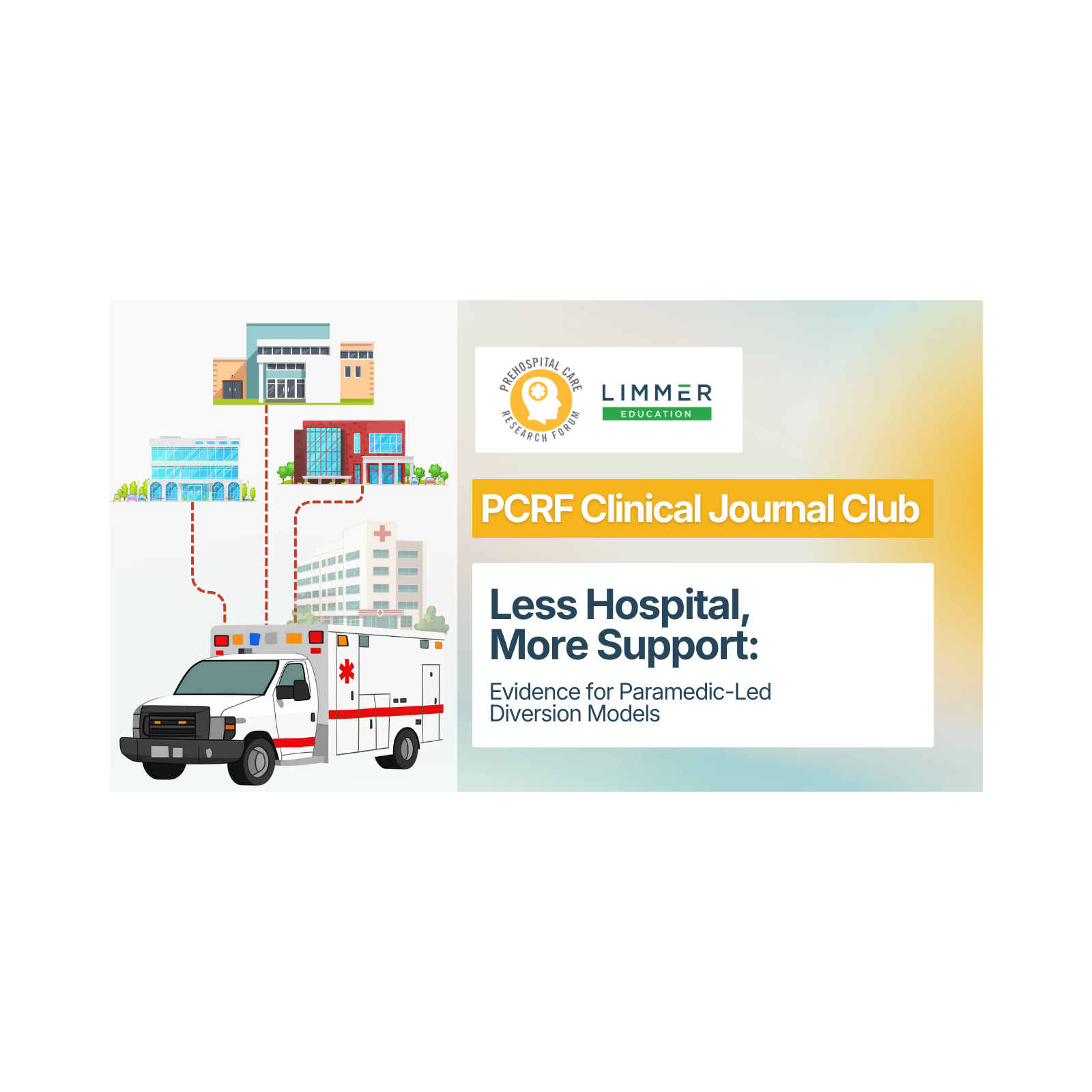
S2026 Ep 5Less Hospital, More Support: Evidence for Paramedic-Led Diversion Models
In March 2026's journal club we step into a nuanced corner of prehospital care that’s quietly reshaping how systems think about patient destinations. We unpack research from Toronto on paramedics transporting intoxicated patients to a stabilization centre rather than straight to the emergency department. Most patients required no medical interventions in the field, and only a small subset needed later transfer to a hospital. What does this mean for EMS diversion practices, resource use, and paramedic decision-making? Join us for a practical, forward-looking discussion on when less hospital might mean better care in the prehospital world.Article: Examining a Stabilization Center for Patients with Alcohol or Opioid Intoxication Transported by Paramedics: A Cohort Study of an Emergency Department Diversion Model
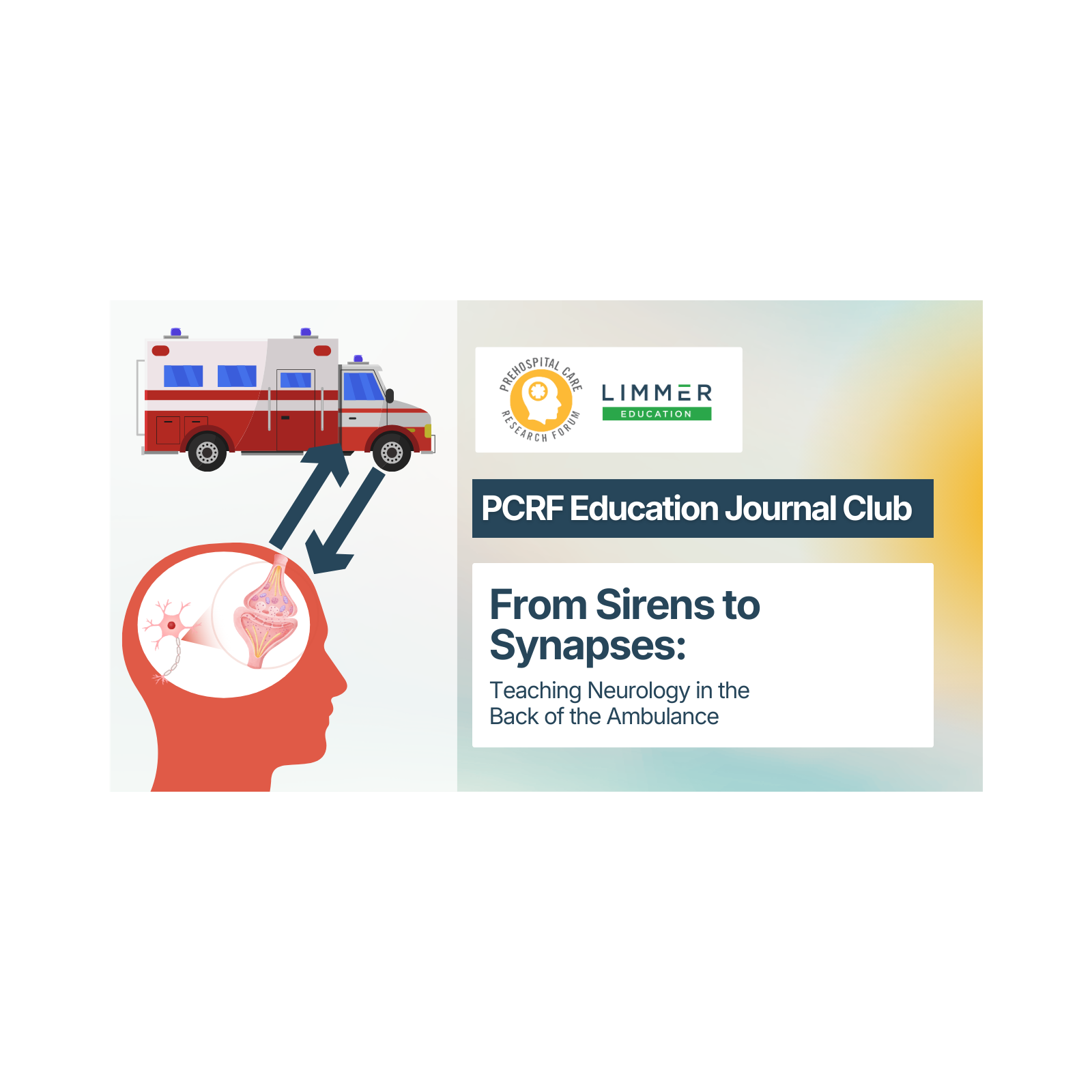
S2026 Ep 4From Sirens to Synapses: Teaching Neurology in the Back of the Ambulance
Neurologic emergencies don’t wait for the hospital—and neither should neurology education. This episode breaks down a longitudinal EMS curriculum using cases, simulation, and gamification to improve prehospital neurologic assessment. We’ll discuss feasibility, knowledge outcomes, and system-level metrics like door-to-needle time and thrombectomy transfers. Does active learning and simulation meaningfully change prehospital neurologic care—or just test scores? And what does “success” really look like for EMS education? Article: Curriculum Innovation: Training the Front Line A Neurologic Emergencies Curriculum Pilot for First Responders https://www.neurology.org/doi/10.1212/NE9.0000000000200286
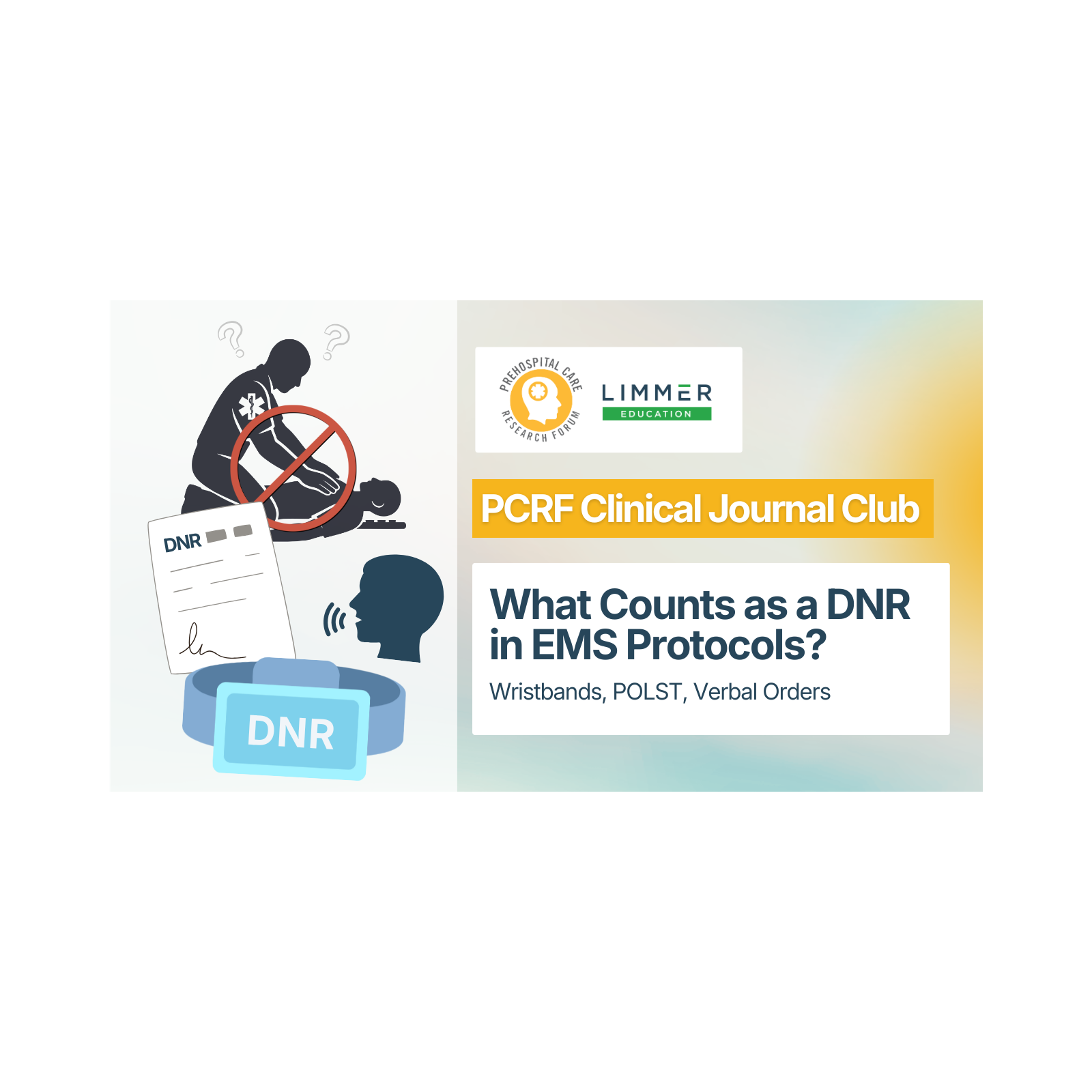
S2026 Ep 3What Counts as a DNR in EMS Protocols? Wristbands, POLST, Verbal Orders
In this month’s journal club episode, we tackle a topic every EMS educator and clinician wrestles with: how do you honor a patient’s end-of-life wishes when they call 911? We unpack a structured review of U.S. EMS protocols and the wide variation in what counts as a valid Do Not Resuscitate (DNR) order, from physician-signed forms to bracelets, POLST-style documents, and even verbal orders. We’ll discuss how these differences can lead to moral distress and affect goal-concordant care, and why understanding the nuances of DNR documentation matters for field providers, system leaders, and anyone who wants to ensure patient wishes are respected in the out-of-hospital setting.
S2026 Ep 2CPR Mastery: How good is good enough? Is Mastery Learning Overkill? Short, Self-Directed CPR Training Delivers Comparable 6-Month Retention
Does CPR training really need to be “to mastery”? This study suggests a few minutes of self-directed practice may be just as effective months later. Join the journal club to debate what this means for EMS education, standards, and training efficiency.
S2026 Ep 1Clear Air in a Rolling World: What Ambulance Methoxyflurane Exposure Means for Paramedic Safety
In this episode, we step inside the ambulance to explore a question rarely discussed: how safe is the air paramedics breathe when administering methoxyflurane, marketed as Penthrox. While not used in the United States, Penthrox is widely used in Australia and other parts of the world as an inhaled analgesic for prehospital pain management. In this month’s journal club, we unpack a controlled laboratory study that measured occupational exposure inside ambulance environments, examine how ventilation changes the equation, and discuss what the findings mean for paramedic safety, system design, and the evolving balance between patient comfort and clinician health. A thoughtful ride through science, safety, and real-world EMS practice.
S2025 Ep 17The BEST of Educational Research in 2025!
Our annual end-of-year special edition of the PCRF Education Research Journal Club when each of our panelists will share a favorite article from the educational literature in 2025.
S2025 Ep 16Sim Ready? EMS Teams in Action During Pediatric Crises
In this month’s Educational Journal Club, we dive into a multi-state study examining EMS team performance during simulated pediatric emergencies. We will explore how well EMS clinicians handle high-stakes scenarios like respiratory arrest, cardiac arrest, and seizures in children—and whether having a Pediatric Emergency Care Coordinator (PECC) makes a difference. With insights into training gaps and simulation-based performance data, we’ll discuss what these findings mean for frontline care and how to better prepare EMS teams for rare but critical pediatric calls. Article: Quality of Care and Opportunities for Improvement in Prehospital Care of Critically Ill Pediatric Patients: An Observational, Simulation-Based Study https://www.tandfonline.com/doi/full/10.1080/10903127.2025.2500715