Prehospital Care Research Forum (PCRF) Journal Club
92 episodes — Page 2 of 2
S2024 Ep 6Harnessing Simulation to Cultivate Diversity, Equity, and Inclusion Skills in Healthcare Learners
Communication, advocacy, and even history-taking are all behaviors engrained in the EMS provider. In fact, we can all think of an educator, preceptor, or partner who helped teach and role-model these skills. Because these behaviors reflect our training, they are also open to bias based on our different lived experiences. Join us this month for the Prehospital Care Research Forum education podcast as we review this scooping review on using simulation to teach behavioral skills related to diversity, equity, and inclusion.https://pubmed.ncbi.nlm.nih.gov/36194859/
S2024 Ep 5Evaluating Ventilations in Out of Hospital Cardiac Arrest and the impact on Survival
Survival from out of hospital cardiac arrest continues to be a benchmark for EMS Agencies across the globe. Focuses on chest compression quality and early defibrillation have led to substantial improvements in return of spontaneous circulation and thousands more cardiac arrest survivors being able to leave the hospital. Join this month’s PCRF Journal Club to discuss a paper that evaluates the size of BVM used and its impact on cardiac arrest survival.
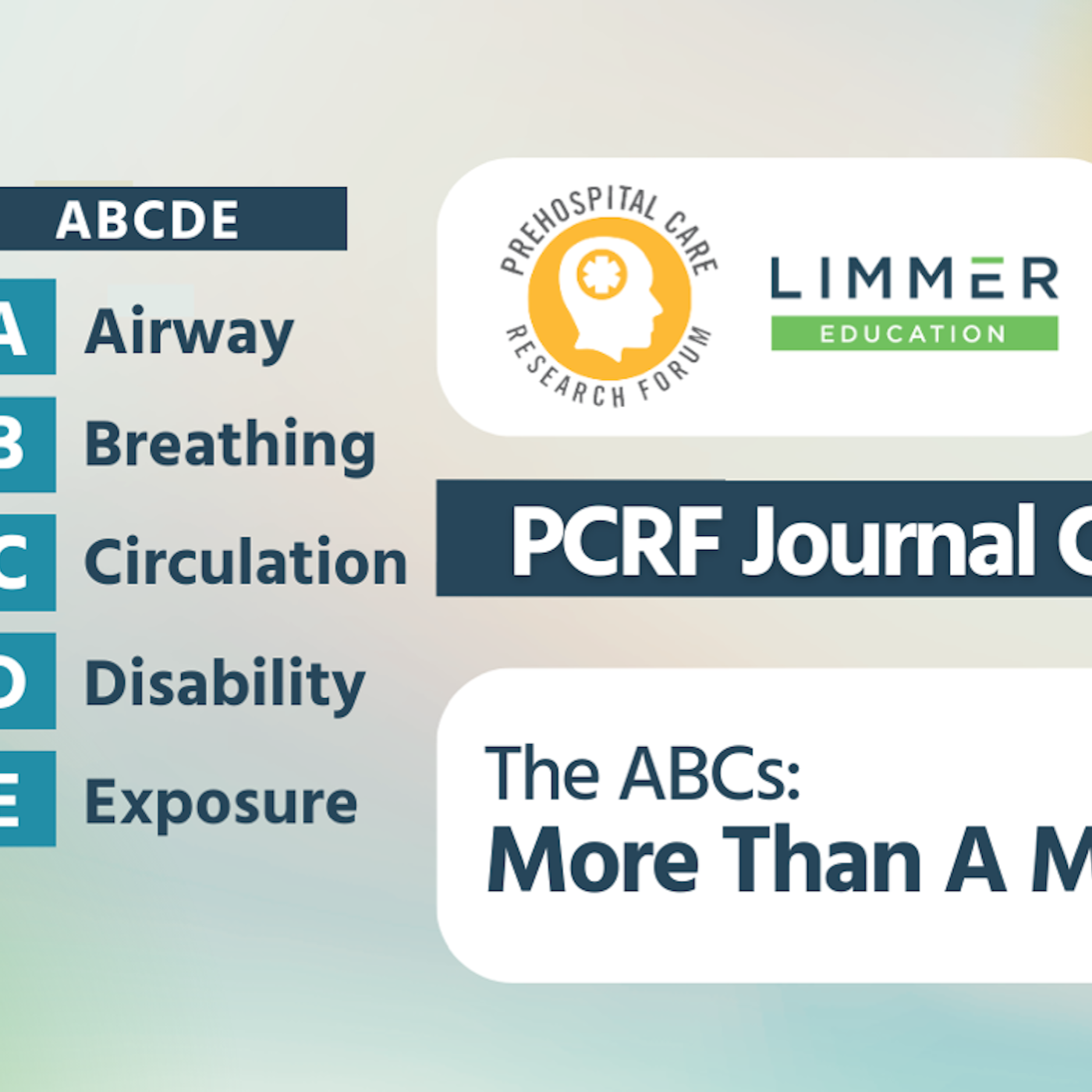
S2024 Ep 4The ABCs: More than a mnemonic (Feb 2024)
Checklists have become a part of every EMS provider's day. We use them to check in our ambulances, ensure we have all our equipment, and help us prepare for low-frequency skills. However, can a checklist do more than that? Can a checklist help us perform better in the field? Join us for this month's Prehospital Care Research Forum education podcast, where we will review a study that evaluated if using an easy-to-remember checklist can improve cardiac arrest management.
S2024 Ep 3To Treat or Not to Treat: Atrial Fibrillation (Feb 2024)
While most cardiac dysrhythmias fit nicely into a treatment algorithm, atrial fibrillation stands out as lacking clear-cut treatment guidelines. Concerns over patient outcome, risk of potential stroke, and further cardiac damage leave many agencies favoring rapid transport and limited treatment. Additionally, limited data is available to link prehospital treatment to the patient’s hospital discharge status. Join this month's PCRF Journal Club to discuss a landmark paper that evaluates treating atrial fibrillation in the prehospital setting, including a link between prehospital treatment and hospital outcome data.
S24 Ep 2Unlocking Inner Peace During Paramedic School (Jan 24)
Mental health has long been a focus of the overall well-being of the EMS provider. However, should training in stress management start sooner, perhaps during initial education? Can meditation help improve success during paramedic training? To help answer these questions, join this month's Prehospital Care Research Forum education podcast to learn the impacts of adding a course on meditation. Specifically, what benefits were found in reducing depression, anxiety, and stress in initial education paramedic students?
S2024 Ep 1How safe is EMS: A review of occupational injuries and illness in paramedics
The inherent risk of injury and illness comes with most jobs, more so in the first responder community. Working on the front lines during disasters, roadway collisions, and violent encounters, paramedics experience their fair share of risk. However, limited large-scale data analysis describes the injuries and illnesses paramedics face. Join this month's PCRF Journal Club as we review a study that evaluated workforce data to describe these challenges paramedics face and how we compare to other first responders and those in health care.https://www.ncbi.nlm.nih.gov/pmc/articles/PMC10548021/
S2023 Ep 25The Best of Educational Research in 2023! (Dec 2023)
Join us for this end-of-year special edition of the PCRF Education Research Journal Club when each of our panelists will share a favorite article from the educational literature in 2023.
S2023 Ep 24Adverse safety encounters in pediatric patients (Dec 2023)
Most of our pediatric patients cared for and transported by EMS have low acuity, which results in very favorable outcomes. Despite this, EMS providers still experience adverse safety encounters while caring for pediatric patients. Join this month's PCRF Journal Club as we review a study that evaluated the frequency, type, and potential harm from these adverse safety encounters across 15 EMS Agencies in 3 states.
S2023 Ep 23Do we agree? Self-directed intubation skill ratings by students and instructors
Can students in self-directed endotracheal intubation training accurately and reliably self-evaluate their abilities? This paper used an algorithm-driven hybrid simulation learning method to assess competence. Including peer-to-peer practical skills training. Join us as we explore this method of learning and algorithm for assessment.
S2023 Ep 22Precious Cargo: EMS Providers’ Impressions of Safe Pediatric Transport (Nov 2023)
In 2012, The National Highway Traffic Safety Administration issued guidelines on the safe transport of pediatric patients to lessen the chance of injury during ambulance transport. However, many EMS clinicians are still unfamiliar with sage transport standards and best practice recommendations in the pediatric population. Join us on the next PCRF Journal Club as we review a study that uses qualitative research methods to explore the range of individual attitudes, organizational policies, and professional norms that may influence choices pertaining to pediatric restraint in ground ambulances. Article: Safe Ground Transport of Pediatric Patients: A Qualitative Assessment of Best Practice Guidelines Implementation https://pubmed.ncbi.nlm.nih.gov/37344226/
S2023 Ep 21Escape Rooms: A solution to engage EMS learners in sensitive topics? (Oct 2023)
EMS providers are uniquely positioned to assess for maltreatment of children and vulnerable populations. Unfortunately, EMS rates of identification and reporting are very low. In this project the authors used an escape room-based format to engage participants on a difficult topic. Join us as we explore this method of teaching and learning. Article: https://pubmed.ncbi.nlm.nih.gov/37318845/
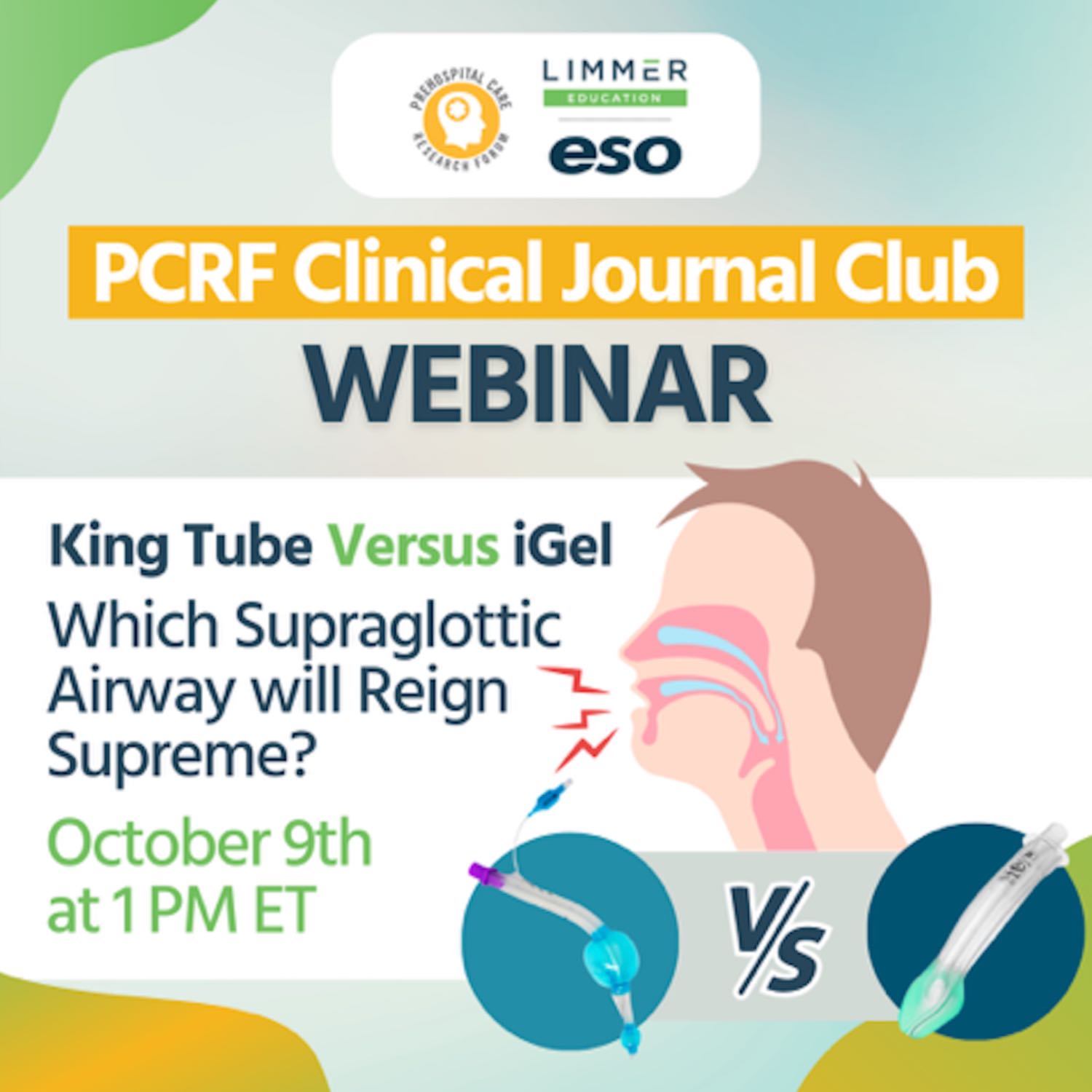
S2023 Ep 20King Tube Versus iGel: Which Supraglottic Airway will Reign Supreme? (Oct 2023)
The use of supraglottic airway devices during the resuscitation of out-of-hospital cardiac arrest (OHCA) patients is increasing across the United States and worldwide. The two most commonly used supraglottic airway devices in the United States are the King Laryngeal Tube (King-LT) and the iGel. It is unknown if design differences for the KING-LT and the iGel may translate to differential first pass insertion success or ventilation effectiveness and therefore impact patient outcomes. Join us on the next PCRF Journal Club as we review a study from the CARES surveillance group that compares the neurologic outcomes of OHCA patients managed with the King Laryngeal Tube (King LT) to the neurologic outcomes of patients managed with the iGel. Article: https://pubmed.ncbi.nlm.nih.gov/37120129/
S2023 Ep 19Augmented Reality for Augmented Learning? (LIVE from EMS World EXPO)
Pediatric patient encounters are infrequent in the EMS setting and can be high risk/high acuity. Augmented reality programs that mix the virtual world with the haptics of a real-world experience, has the potential to augment learning. But is it feasible, usable, and useful in EMS? This study tested one pediatric AR simulation program on a group of EMS professionals to answer that question. Join us LIVE from EMS WORLD EXPO-ISS as we discuss the outcomes of the study, PREHOSPITAL PEDIATRIC EMERGENCY TRAINING USING AUGMENTED REALITY SIMULATION: A PROSPECTIVE, MIXED METHODS STUDY
S2023 Ep 18Revealing the Role of Prehospital Pain Management in Pediatric Emergency Care
Pain management is vital to providing comprehensive care to injured children, and the decisions made in the prehospital setting profoundly impact our pediatric patients' overall experience and outcome. However, little is known about how hospital care is impacted by prehospital pain management in pediatric patients.
S2023 Ep 17To Infinity and Beyond: An Evidence-Based Review of Simulation in EMS Education (Aug 2023)
Where are we with Simulation Based Training (SBT) in EMS? This systematic review of current literature combed through more than 500 studies, identifying common areas of SBT in EMS, high and low fidelity use, and analyzing the setting, strengths, weaknesses and results of each. With shrinking clinical opportunities and increased accountability for competency, is simulation the answer for EMS?
S2023 Ep 16Safeguarding Hearts: Unleashing the Power of Prehospital Chest Pain Risk Stratification (Aug 2023)
Chest pain is a life-threatening symptom encountered by EMS clinicians every day that demands swift and accurate decision-making to ensure the best possible outcomes. Join us for the next PCRF Journal Club as we review the RESCUE study that delves into the effectiveness of EMS employing chest pain risk stratification tools in prehospital settings and utilizing these tools to assess the severity of chest pain. Listen to find out if these metrics allow for EMS to make informed decisions about the appropriate level of care needed for those suffering from chest pain. Article: https://pubmed.ncbi.nlm.nih.gov/34734787/
S2023 Ep 15Breaking the Silence: Unveiling the Hidden Epidemic of Violence Against Paramedics
Violence against paramedics and other healthcare professionals is an alarming and growing concern in today's society. The rising incidence of violence not only poses significant risks to the well-being of clinicians but also hinders the effective and timely delivery of patient care. Join us for the next PCRF Journal Club as we review a groundbreaking initiative that has been undertaken to evaluate violence against paramedics through a novel, point-of-event reporting process.
S2023 Ep 14Flying blind no more: A Novel Point-of-care Ultrasound Curriculum for Air Critical Care Personnel
The benefits to using ultrasound in EMS continue to grow and are proving to be lifesaving. However there continues to be wide discrepancy of how ultrasound is used, implemented, and taught. Join the Prehospital Care Research Educator Podcast this month as they discuss an air ambulances approach to training their EMS clinicians in the use of ultrasound.
S2023 Ep 13A better view?: Video laryngoscopy and intubation success post COVID-19 (Jun 2023)
The COVID-19 pandemic has led to significant changes in healthcare practices, including the use of personal protective equipment (PPE) and the adoption of new technologies. One area of focus has been the use of video laryngoscopy for endotracheal intubation, which has been shown to reduce the risk of viral transmission to healthcare workers while also improving the accuracy of intubation. Join the PCRF Journal Club as we review a study that compared the transition from direct laryngoscopy to video laryngoscopy on endotracheal intubation success during the COVID19 Pandemic.
S2023 Ep 12Live From Accreditcon 2023
Live from ACCREDITCON! Grab lunch and join the team from Prehospital Care Research Forum for a discussion of current research. The PCRF journal club gathers monthly to discuss current published research affecting all facets of EMS, including topics related to EMS education. During this session, the panel will examine published papers related to accreditation. The role of accreditation in 21st century health professions. education: report of an International Consensus Group https://bmcmededuc.biomedcentral.com/articles/10.1186/s12909-020-02121-5 Paramedic educational program attrition accounts for significant loss of potential EMS workforce https://onlinelibrary.wiley.com/doi/10.1002/emp2.12917
S2023 Ep 11What Are They Thinking? A novel strategy to measure paramedic student clinical reasoning skills
One essential goal of EMS education is to promote clinical reasoning. However, assessing student learning in this dimension is challenging. This study describes the adaptation of script concordance testing, a strategy used in other professions, to assess clinical reasoning in paramedic students. Article found here: https://bmcmededuc.biomedcentral.com/articles/10.1186/s12909-023-04020-x
S2023 Ep 10Breaking Down Language Barriers in Emergency Care: Perspectives of EMS Providers
You arrive on the scene with your EMT partner and are immediately met by the patient and their family, obviously in distress, staring at you for help. As you begin your assessment, you realize you are unable to speak to the patient due to a language barrier. Your mind begins to race for what you can do while you hope someone on scene can help with translation. Every EMS provider has struggled to communicate with his or her patient at some point in an attempt to deliver great patient care. However, little empirical evidence details the barriers to patient care when the provider and patient do not speak the same language. Join the PCRF Journal Club as we review a qualitative study identifying the EMS-perceived barriers to providing patient care for those with limited English proficiency.
S2023 Ep 9Can You Trust Me? A Standardized Strategy for Mentoring Simulation Faculty.
Mentoring faculty to facilitate simulation properly is challenging. This qualitative research process was used to derive a deliberate series of formative assessments designed to prepare simulation faculty and to evaluate their readiness to facilitate learning using simulation effectively. Article: https://www.ijohs.com/read/article/pdf/spj2oYYBEgXBsCdHRpLD#
S2023 Ep 8Reimagining Opioid-Related Incidents: Massachusetts EMS Takes a New Approach
There is no doubt EMS providers are caring for an increase in opioid-related incidents in the United States and worldwide, leading to compassion fatigue and burnout. However, little is known about these patient encounters beyond the fact that they are increasing. Join us for the next PCRF Journal Club as we review a 7-year study aimed at redefining and categorizing these opioid-related incidents utilizing a validated algorithm with the goal of helping EMS providers better understand the nature of these incidents, improve their ability to respond effectively and inform public health strategies to address the opioid epidemic. Article: https://pubmed.ncbi.nlm.nih.gov/36710470/

S2023 Ep 7Virtually No Difference? Does a virtual reality trainer impact skill retention?
The variety and use of virtual reality teaching tools is increasing. This study compares learning retention of tourniquet application of EMTs who used virtual reality as a refresher learning strategy compared with a control group.
S2023 Ep 6Breaking the Cycle: Understanding 72-hour Repeat EMS Encounters
Patients with repeat EMS encounters within 72 hours represent an important patient population to better understand risks and resource utilization, yet limited data exist describing characteristics of these encounters. Come join us on the next PCRF Journal Club as we review a study that describes patients who had more than one EMS encounter within 72 hours and compares them to patients who did not have subsequent EMS encounters within a single, large urban EMS agency.
S2023 Ep 4Where do we go from here? Research Gaps and Priorities in EMS Education
As out-of-hospital medicine evolves, emergency medical services (EMS) education practices must also be updated to ensure that EMS professionals acquire and maintain the skills needed to best serve patients. Join the authors who identified and ranked the top 10 research priorities related to EMS education in the United States.
S2023 Ep 3A stroke of good fortune or quality care? Variation in EMS stroke care
EWhile studies have found that EMS compliance with recommended prehospital care for patients with acute stroke is inconsistent, little is known about the sources of variability in compliance. Join us as we review a study that utilizes linked statewide stroke registry and EMS data to explore patient and EMS agency-level contributions to variability in prehospital stroke care.
S2023 Ep 2Speaking Up, Speaking out: Empowering new graduates to speak up for safety
Power, hierarchy, and poor team culture can put patient care at risk. By understanding the complex psychosocial and clinical challenges that new graduates face, is it possible for a new graduate to actively intervene on behalf of team and patient safety? Join us to discuss this qualitative study exploring how educators can prepare graduates to speak up for safety.
S2022 Ep 4Rhythm interpretation misclassification & poor survival from out-of-hospital cardiac arrest
Early recognition and rapid defibrillation of shockable rhythms are strongly associated with survival in out-of-hospital cardiac arrest (OHCA). Little is known about the accuracy of paramedic rhythm interpretation and its impact on survival. Join us on the next podcast to review a study that seeks to determine if paramedic interpretation of initial rhythm would be associated with survival. Article: Paramedic rhythm interpretation misclassification is associated with poor survival from out-of-hospital cardiac arrest Authors: H. Hill Stoecklein, Andrew Pugh, M. Austin Johnson, Joseph E. Tonna, Michael Stroud, Stavros Drakos, Scott T. Youngquist https://pubmed.ncbi.nlm.nih.gov/34952179/To view the video. visit: https://youtu.be/HTeiop1zKxg
S2022 Ep 5TBI: A Challenge to the Current Understanding of Hypotension
The societal burden of traumatic brain injuries (TBIs) is enormous. One major focus of evidence-based TBI treatment guidelines is the prevention and treatment of hypotension. However, little is known about the out-of-hospital blood pressure ranges associated with optimal outcomes in TBI. Join us at the next PCRF Journal Club as we review a study that identified the out-of-hospital systolic blood pressure range that is associated with optimal outcomes in major TBIs Article: Optimal Out-of-Hospital Blood Pressure in Major Traumatic Brain Injury: A Challenge to the Current Understanding of Hypotension Authors: Daniel W. Spaite, MD; Chengcheng Hu, PhD; Bentley J. Bobrow, MD; Bruce Barnhart, MSN, RN; Vatsal Chikani, MPH; Joshua B. Gaither, MD; Kurt R. Denninghoff, MD; Gail H. Bradley, MD https://pubmed.ncbi.nlm.nih.gov/35339285/To view the video, visit: https://youtu.be/kjZoZleaR64
S2022 Ep 7Falls in Older Adults Requiring Emergency Services
Falls in Older Adults Requiring Emergency Services: Mortality, Use of Healthcare Resources, and Prognostication to One Year Although falls among older adults are common and frequently require emergency services, research on long-term outcomes and prognostication is sparse. Come join us at the next Journal Club to examine healthcare use and one-year survival among older adults who fall and find out if mortality can be predicted. Article: https://www.ncbi.nlm.nih.gov/pmc/articles/PMC9183773/pdf/wjem-23-375.pdfTo view the video: https://youtu.be/fmUMOR07tGA

S2022 Ep 9Is AVPU comparable to GCS in critical prehospital decisions?
Is AVPU just as informative as GCS? This cross-sectional study is aimed to assess whether prehospital AVPU categorization correlates with GCS severity categorization and, similarly, with mortality rates in trauma victims. Article: https://doi.org/10.1016/j.ajem.2022.06.042To view the video, visit: https://youtu.be/8j62LLueSNY
S2022 Ep 8On Pins and Needles: Prehospital Chest Decompression
Prehospital needle decompression is a rare but potentially life-saving procedure. Prior studies on chest decompression in trauma patients have been small, limited to single institutions or emergency medical services (EMS) agencies, and lacked appropriate comparator groups, making the effectiveness of this intervention uncertain. This Journal Club episode reviews a study that examined the association of prehospital needle decompression with early mortality in patients requiring emergent chest decompression. Article: Association of Prehospital Needle Decompression With Mortality Among Injured Patients Requiring Emergency Chest Decompression https://pubmed.ncbi.nlm.nih.gov/35976642/To view the video, visit: https://youtu.be/IplgoRj8N_Q
S2022 Ep 10Arrested Development: EMS-Witnessed Cardiac Arrest
EMS witnessed out-of-hospital cardiac arrest can be challenging for the EMS clinicians attending to the patient, even though patients who suffer OHCA in front of emergency medical services (EMS) clinicians have a greater likelihood of survival. Little is known about how EMS clinicians think about and experience those events. Come join us at the next PCRF Journal Club where we review a study that sought to understand how EMS clinicians assessed patients who devolved to cardiac arrest in their presence and uncover the perceived barriers and facilitators associated with recognizing and treating witnessed. Article: A Qualitative Analysis of the Experiences of EMS Clinicians in Recognizing and Treating Witnessed Cardiac Arrests. Prehosp Emerg Care. 2022 Sep 9:1-16. https://pubmed.ncbi.nlm.nih.gov/36082980/To view the video, visit: https://youtu.be/lA1b8OimkWY
S2022 Ep 11An EXACT target for SpO2 following OHCA Resuscitation?
The administration of a high fraction of oxygen following the return of spontaneous circulation in out-of-hospital cardiac arrest may increase reperfusion brain injury. Join us at the next PCRF Journal Club as we review a study that evaluated whether targeting a lower oxygen saturation in the early phase of post-resuscitation care for out-of-hospital cardiac arrest improves survival at hospital discharge.Article: Bernard SA, Bray JE, Smith K, Stephenson M, Finn J, Grantham H, Hein C, Masters S, Stub D, Perkins GD, Dodge N, Martin C, Hopkins S, Cameron P; EXACT Investigators. Effect of Lower vs Higher Oxygen Saturation Targets on Survival to Hospital Discharge Among Patients Resuscitated After Out-of-Hospital Cardiac Arrest: The EXACT Randomized Clinical Trial. JAMA. 2022 Oct 26. doi: 10.1001/jama.2022.17701. Epub ahead of print. PMID: 36286192. Link: https://pubmed.ncbi.nlm.nih.gov/36286192/To view the video, visit: https://youtu.be/vXfqIMtcOFE
S2022 Ep 13What's the Scoop with Bup?
Medication for opioid use disorder is extremely effective and can reduce overdose mortality by two-thirds. However, treatment initiation rates are low among overdose survivors. Prehospital buprenorphine administration after an overdose has the potential to help treat withdrawal symptoms and reduce repeat overdoses. Come join us at the next PCRF Journal Club to find out if the prehospital administration of buprenorphine has beneficial effects on clinical outcome measures in patients with naloxone-precipitated withdrawal.Carroll G, Solomon KT, Heil J, Saloner B, Stuart EA, Patel EY, Greifer N, Salzman M, Murphy E, Baston K, Haroz R. Impact of Administering Buprenorphine to Overdose Survivors Using Emergency Medical Services. Ann Emerg Med. 2022 Sep 30:S0196-0644(22)00506-6. doi: 10.1016/j.annemergmed.2022.07.006. Epub ahead of print. PMID: 36192278.To view the video, visit: https://youtu.be/-fJFub6oEAM
S2022 Ep 12This is no Snoozefest: EMS Sleep Study
Long-duration shifts, variable shift scheduling, limited time off between shifts, and other factors are linked to fatigue in EMS shift workers. Odds of injury, error and adverse events are higher among U.S.-based EMS clinicians who report fatigue vs. those who do not. Come join us at the next PCRF Journal Club as we review a cluster-randomized trial that tests whether EMS clinicians randomized to receive tailored sleep health education would have improved sleep quality and less fatigue. Article: Patterson PD, Martin SE, Brassil BN, Hsiao WH, Weaver MD, Okerman TS, Seitz SN, Patterson CG, Robinson K. The Emergency Medical Services Sleep Health Study: A cluster-randomized trial. Sleep Health. 2022 Nov 10:S2352-7218(22)00181-4. doi: 10.1016/j.sleh.2022.09.013. Epub ahead of print. PMID: 36372657. Sites referenced: www.emsfatigue.org 412YinzerMedic.orgTo view the video, visit: https://youtu.be/YK7sCztJmhQ
S2022 Ep 6Social Determinants of Health and EMS Use Among Children
Prior studies suggest that EMS utilization in children may vary by socioeconomic status. However, most of these studies were small, and focused on regional data. Join us as we review a recently published study that used the National EMS Information System 2019 dataset and the Child Opportunity Index to evaluate EMS utilization in children based on structural, economic, and environmental conditions. One of the study’s authors, Dr. Jen Fishe, will be joining as a guest. Article: The Child Opportunity Index and Pediatric Emergency Medical Services Utilization Authors: Sriram Ramgopal, Lindsay Jaeger, Angelica Cercone, Christian Martin-Gill & Jennifer Fishe https://www.tandfonline.com/doi/full/10.1080/10903127.2022.2076268To view the video, visit: https://youtu.be/qGLr_tZrAoA
S2022 Ep 2Cost of Caring Traumatic Stress and Compassion Fatigue in EMS
Compassion fatigue is the acute or gradual loss of benevolence that occurs after exposure to critical incident stress. The study we will review this month uses a cross-sectional survey to identify the prevalence and predictors of compassion fatigue among EMS professionals. Article: Secondary Traumatic Stress in Emergency Services Systems (STRESS) Project: Quantifying and Predicting Compassion Fatigue in Emergency Medical Services Personnel Authors: Ginny K Renkiewicz, Michael W Hubble https://pubmed.ncbi.nlm.nih.gov/34128453/To view the video, visit: https://youtu.be/eit0GL-7jB8
S2022 Ep 3Reducing pediatric medication errors: Could an age-based field guide be perfect addition?
Several studies have demonstrated the high frequency of medication errors in pediatric patients by prehospital providers during both patient care and simulation. Does the addition of a pediatric field guide improve the percentage of correct doses? Come join us at the next PCRF Journal Club to find out! Article: Medication Errors in Pediatric Patients after Implementation of a Field Guide with Volume-Based DosingAuthors: Lara D. Rappaport, Geoffrey Markowitz, Steven Hulac & Genie Roosevelt https://pubmed.ncbi.nlm.nih.gov/35020...To view the video, visit: https://www.youtube.com/watch?v=-lL5uzBbrDo&list=PLbmCpBsQ87iUYX9o_xvmC8x0mrV1G5B2d&index=3
S2023 Ep 1Let’s talk about Sex & Race: How Equitable is our EMS Care?
EMS providers pride themselves on the great care we deliver, but is that care equitable for all our patients? Join us for this second special edition PCRF journal club with the Diversity, Equity, and Inclusion committee of the National Association of EMS Physicians. Dr. Andra Farcas and the panel of authors will discuss their recent systematic scoping review on disparities in EMS care. After screening thousands of abstracts, the authors analyzed over 145 articles. It is time to act on the information they uncovered!To view the video, please visit: https://youtu.be/g7XOQD5v_bM