
PolliNation Podcast
305 episodes — Page 6 of 7
54 Ron Miksha - Crop Pollination: Past, Present and Future
Listen in to learn the evolution of migratory beekeepers since the 1970's, and why Ron believes that our current pollination system isn't sustainable. "We can do more with fewer acres by using the honeybees, and they're being provided by commercial beekeepers." - Ron Miksha. Learn more about this episode of PolliNation at http://bit.ly/PN-Ron-Miksha
53 Kelly Rourke - National Pollinator Week
Listen in to learn about National Pollinator Week, how the Pollinator Partnership helps the world's pollinator populations, and how you can take part. "Protect their lives, preserve ours." - Kelly Rourke. Learn more about this episode of PolliNation at http://bit.ly/PN-Kelly-Rourke

52 OSU Research Retinue - Mowing or mowing less: What helps the bees more?
Listen in to learn about how the ways that we maintain our lawns can help or hinder the abundance and diversity of bees, and affect pollinator health. "There are so many variables when you're considering lawns, like how big the lawn is, or where it is, and this study did an amazing job of trying to factor in all of the characteristics." - Addison DeBoer. Learn more about this episode of PolliNation at http://bit.ly/PN-Research-Retinue-Lawns
51 Heather Higo - Rearing your Own Queens
Listen in to learn more about how you can get started rearing your own queens, the many facets of it's preparation, and Heather's tips in getting started. "Colonies aren't going to rear queens for you unless they're absolutely bursting with bees, and you won't be able to rear good quality queens unless there's a really high level of nutrition in that colony." - Heather Higo. Learn more about this episode of PolliNation at http://bit.ly/PN-Heather-Higo
50 Lincoln Best - Taxonomy with The Oregon Bee Atlas
Listen in to learn about Lincoln Best's manifesto for native bees and plant communities, and his best practices for volunteers in the Oregon Bee Atlas. "A lot of our environmental issues are landscape issues. So in order to have a healthy landscape, we need to know how to manage places and also restore them." - Lincoln Best. Learn more about this episode of PolliNation at http://bit.ly/PN-Lincoln-Best

49 A $7 million investment in pollinator health by the Foundation for Food and Agricultural Research (FFAR)
Listen in to today's episode to learn more about FFAR, the work FFAR is doing to help pollinator research, and how they are helping citizen scientists. "We consider the topic of pollinators and pollinator health to be vital to agriculture and to the success of the United States's agriculture." - Sally Rockey. Learn more about this episode of PolliNation at http://bit.ly/PN-FFAR
48 Travis Owen - The Amateur Anthecologist
Listen in to learn more about the science of anthecology, how you can develop resources for pollinators, and what makes the honeybee unique to other bees. "I was really excited to share what I saw. I feel really passionate about it, and I want other people to be passionate about it, too." - Travis Owen. Learn more about this episode of PolliNation at http://bit.ly/PN-Travis-Owen

47 Briana Ezray - Mullerian mimicry and why telling bumble bee species apart by color can be hard.
Listen in to this episode to learn more about Mullerian mimicry, it's role in the evolution of bumblebees, and why it is the subject of Briana's research. "Depending on where you are, you might have the same species with completely different color patterns, and this is fairly common in Oregon." - Briana Ezray. Learn more about this episode of PolliNation at http://bit.ly/PN-Briana-Ezray

46 A Well-Curated Bee In A Museum Is Worth A Thousand Pictures
Listen in to learn the role of a museum in biodiversity and pollinator research, how citizen scientists can help, and OSU's new grant-funded bee project. "This atlas will stand as a record of what we have done, and hopefully as a basis for understanding where we might go look for more records or need more records." - Dr. Chris Marshall. Learn more about this episode of PolliNation at http://bit.ly/PN-Dr-Chris-Marshall
45 Practicing Good Mason Bee Stewardship... The Bee Buddy Way
Listen in to learn how best to take care of your mason bees, when to place them outside, and how the Bee Buddy program helps the pollinator community. "If any of you have the chance, take a mason bee or any pollinator, look at it under the microscope and I think it's going to open up a whole new world to you." - Jerry Paul. Learn more about this episode of PolliNation at http://bit.ly/PN-Bee-Buddies
44 John Gates - Making Nucleus Colonies
Listen in to learn about how John got started with nucleus colonies, how he has influenced other beekeepers, and what he saw change in his bees over time. "We examined a number of different beekeeping operations, and it came out that nuc production was the best way to make money. " - John Gates. Learn more about this episode of PolliNation at http://bit.ly/PN-John-Gates

43 Mark L. Winston - Listening to Bees
Listen in to learn about Mark's work on bees and their communication, how his publications have impacted beekeepers everywhere, and his upcoming release. "If I was going to hang out with beekeepers, I needed to learn how to communicate with them effectively, and I learned very quickly that beekeepers are way smarter than most scientists give them credit for." - Mark L. Winston. Learn more about this episode of PolliNation at http://bit.ly/PN-Mark-L-Winston
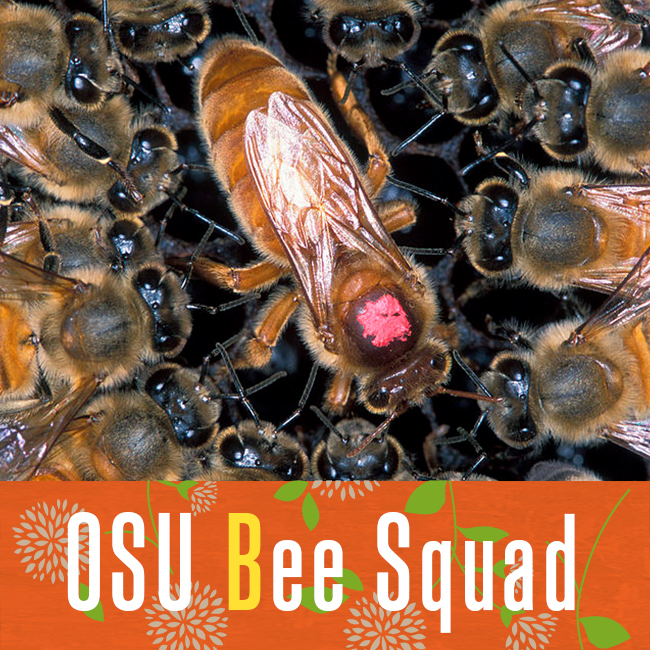
42 OSU Bee Squad - Honey Bees and Conservation (Research Retinue)
Listen in to learn more about how honeybees affect global regions, which pollinators are the most effective, and how studies could improve their research. "In the fight for bee conservation, we shouldn't be focusing on honeybees because that's an agricultural and economic issue, not a conservation issue." - Isabella Messer. Learn more about this episode of PolliNation at http://bit.ly/PN-OSU-Bee-Squad
41 Rose Kachadoorian - What States Are Doing For pollinator Health
Listen in to learn how your local and country agencies have fought for pollinator health, and what changes are taking place with farmers and regulators. "To have this already written plan that has already been agreed upon as a good idea would be really useful for people who want to do the right thing, but aren't quite sure what that is." - Rose Kachadoorian. Learn more about this episode of PolliNation at http://bit.ly/PN-Rose-Kachadoorian
40 Tom Landis - Monarch Butterflies in Southwestern Oregon
Listen in to learn more about the Monarch butterfly, what Monarch waystations are and why they exist, and their unique system of migration. "The adult butterfly weighs half as much as a paperclip, yet they fly 40 miles a day and up to 700 miles [to their destination]." - Tom Landis. Learn more about this episode of PolliNation at bit.ly/PN-Tom-Landis
39 Jeff Reardon - Bees in the Legislature
Listen in as we talk about Reardon's landmark bill, what it has done for pollinators, and how he involved the bee-keeping community. "[This bill] is one of my favorite projects, ever." - Jeff Reardon. Learn more about this episode of PolliNation at bit.ly/PN-Jeff-Reardon

38 Dr. Ramesh Sagili - The Elusive Secrets of Honey Bee Nutrition and Controlling Varroa Mites
Listen in as we talk about honey bee nutrition, what beekeepers need to know about nutrition supplements and sterols, and what Ramesh has learned about controlling varroa mites. "There is not much that we understand about the needs of sterols in honey bees." - Dr. Ramesh Sagili. Learn more about this episode of PolliNation at http://bit.ly/PN-Ramesh-Sagili
37 Alison Center - North American Butterfly Association
Listen in as we talk about butterflies, their fascinating relationship with nature, and how you can plant your garden to attract more butterflies. "The first step is to be curious about butterflies and start noticing them, and then where does your interest lie? Would you like to know more about their natural history? Do you want more of them in your yard? Or are you a birder who wants something new?" - Alison Center. Learn more about this episode of PolliNation at http://bit.ly/PN-Alison-Center

36 John Gruszka - Independence From Packaged Honey Bees: the Case of Saskatchewan, Canada
Listen in to hear about the history of pollinators in Northern Canada, wintering techniques, and how packages of bees have changed the beekeeping industry. "In the summertime, it's God's country for beekeeping." - John Gruszka. Learn more about this episode of PolliNation at http://bit.ly/PN-John-Gruszka
35 BEEvent - Oregon's Pollinator Conference
Listen in to learn more about the BEEvent, Oregon's pollinator conference, and what this event provides gardeners and pollinator enthusiasts of all kinds. "There is a lot of hunger out there to do something to help [pollinators], but people don't know what to do, and we're giving them that information." - Susan Morton. Learn more about this episode of PolliNation at http://bit.ly/PN-BEEvent

34 Dr. Gail Langellotto - What Pollinators Need From Gardeners in Urban Habitats
Listen in to learn about ground nesting bees, the potential problems of plant lists, and how to maximize the benefits of urban landscapes for pollinators. "A lot of [gardeners] don't recognize the importance of next sites for bees, and in particular, the importance of nest sites for ground nesting bees." - Dr. Gail Langellotto. Learn more about this episode of PolliNation at http://bit.ly/PN-Dr-Gail-Langellotto

33 Mehmet Ali Döke - How Honey Bees Survive The Winter
Listen in to learn about the effect of the winter season on bee populations, how bees have adapted, and what beekeepers can do to protect their colonies. "They're in such large numbers, they wouldn't be able to make it through another year if they couldn't start the spring earlier than the other species. That's in a way an advantage, but also a curse." - Mehmet Doke. Learn more about this episode of PolliNation at http://bit.ly/PN-Mehmet-Ali-Doke

32 Matt Arrington - Highbush Blueberries and Honeybees
Listen in to learn about highbush blueberries, and how honeybees can greatly benefit the pollination and harvest of your plants. "[Blueberries] are blooming in the spring, when we usually have fairly heavy rainfall, low temperatures, windstorms, and those are all environmental conditions that are really not good for foraging activities, especially in honeybees." - Matt Arrington. Learn more about this episode of PolliNation at http://bit.ly/PN-Matt-Arrington

31 Doug Sponsler - The Risk of Pesticides to Honey Bees and Ecotoxicology
Listen in as we go over pesticide's effects on pollinators, the difficulties in testing, and the advantages certain insects have in fighting pesticides. "It's a bit ironic that the most convenient organism for which to study toxicology from a logistical perspective, the honey bee, is also the most problematic one for which to interpret toxicology." - Doug Sponsler. Learn more about this episode of PolliNation at http://bit.ly/PN-Doug-Sponsler
30 Steve Frank - Navigating Urban Environments For Pollinators
Listen in to learn about how urban environments affect pollinators, what homeowners and civil planners can do to improve them, and which plants and trees are best for the city. "People can even help their own local micro-habitat by shading their driveway and their house and things like that, which saves you energy to boot." - Steve Frank. Learn more about this episode of PolliNation at http://bit.ly/PN-Steve-Frank
29 Alan Turanski - Saving The Bee Through Pollinator Awareness
Listen in as we talk about the Alan's work with GloryBee, their raising of bee awareness, and how beginning beekeepers can get started. "At the beginning those were the two tenets of what we're still trying to achieve today: to raise and expand awareness, and raise support [for honeybees]. " - Alan Turanski. Learn more about this episode of PolliNation at bit.ly/PN-Alan-Turanski
28 Al Shay - Urban Landscapes for People and Pollinators
Find out more about what you can do for pollinators at your own home, and how Al blends aesthetic and functional aspects of landscaping and pollinator habitats. "It seemed just a horrible shame to have 500-odd acres of space here on campus and have it all strictly geared toward something you look at as you pass by. We could do a better job than that." - Al Shay. Learn more about this episode of PolliNation at http://bit.ly/PN-Al-Shay
27 Sarah Johnson - On Bumblebee Watch with Citizen Scientists
Listen in as we talk about the bee population of Canada, her new captive breeding project, and how citizen science positively impacts her research. "He surveyed a wide variety of people, and the vast majority of them think bees are important but nobody really knows what a bee is versus what a fly is." - Sarah Johnson. Learn more about this episode of PolliNation at bit.ly/PN-Sarah-Johnson
26 Skyler Burrows - Bringing Taxonomy to Citizen Scientists
In today's episode, we will learn about Skyler's work with pollinators, his projects with citizen scientists, and how you can get started in taxonomy. "Things like 'Bees In Your Backyard' are really helpful, but until you have the bee in your hand, it's really difficult to know what you've got." - Skyler Burrows. Learn more about this episode of PolliNation at bit.ly/PN-Skyler-Burrows
25 Dr. Dewey M. Caron - Managing and Preventing Varroa Mites
Listen in to this episode to learn about how you can keep your colonies safe from varroa mites, and what tools you can use to prevent and manage them. "It's not if your colony has varroa mites, that's not the question you should be asking. You should be asking how many mites does my colony have? " - Dr. Dewey M. Caron. Learn more about this episode of PolliNation at bit.ly/PN-Dr-Dewey-M-Caron
24 Kristen Healy - Mosquito Abatement and Pollinators
We will be talking about mosquito abatement techniques, their effect on pollinator health, and the research Kristen's team has done to keep them safe. "They really wanted to know if what they were doing with mosquito control was killing bees, so they asked if we could help address that topic." - Kristen Healy. Learn more about this episode of PolliNation at http://bit.ly/PN-Kristen-Healy

23 George Hansen - Beekeeper Built Bee Habitat
Listen in to learn George's experience as a land manager, good practice in cultivating pollinator habitats, and his work in the advocacy of pollinators. "We're creating in many areas what are virtually pollinator deserts." - George Hansen. Learn more about this episode of PolliNation at http://bit.ly/PN-George-Hansen
22 Oregon Flora Project - Making A New Natural Resource
Listen in to learn more about the Oregon Flora Project, and the amazing benefits their research and data collection has on pollinators. "The Oregon Flora Project is striving to make information useful and relevant…to a broad sector of the population." - Linda Hardison Learn more about this episode of PolliNation at bit.ly/PolliNation-22
21 Dr. Jim Rivers - Seeing The Forest For The Bees
Dr. Jim Rivers is a vertebrate ecologist and leader of the Forest Animal Ecology Lab at Oregon State University. With broad research interests that are focused in the fields of animal behavior and physiological ecology, his research program combines observational, experimental, and comparative approaches to test predictions from theory in empirical settings. He recently lead the Pollinators in Managed Forests workshop, which brought together speakers from Oregon State, Washington State, Montana State and the U.S. Department of Agriculture to address a variety of topics, including the influence of wildfire severity, salvage logging, herbicides and practical ways to augment blooms for native bees. We're talking today about how pollinator habitats and forests coexist and work with each other, the ways that bees thrive in forested areas, and how he and others in the field have begun researching the interaction of pollinators in forested areas. "There's a lot more that we don't know about bees in managed forests than what we do know." - Dr. Jim Rivers. Learn more about this episode of PolliNation at http://bit.ly/PolliNation-21
20 Erin Udal - Bringing Bees To The People
Erin Udal leads community pollinator conservation projects out of Vancouver, BC and was formerly the Program Manager and Pollinator Specialist with the Environmental Youth Alliance. With her background in conservation biology, she designs bee-friendly gardens and develops citizen science projects, working to help people protect pollinators in our backyards and parks. Erin finds facilitating hands-on outdoor education very rewarding, and always pleased to share the fascinating and diverse world of native bees with anyone who cares to learn. On today's episode, we talk with Erin Udal about developing citizen science projects, working to help people protect pollinators in our backyards and parks. "I think it was Carl Sagan that said, 'Science is not so much a body of information, but a way of thinking', and so I want people to feel like they are part of that way of thinking." - Erin Udal. Learn more about this episode of PolliNation at http://bit.ly/PolliNation-20

19 David Phipps - Golf Courses as Pollinator Habitat
David Phipps is considered one of the Northwest's leaders in golf course environmental stewardship and innovation. While working as the superintendent at Stone Creek Golf, he received the GCSAA President's Award for Environmental Stewardship in 2012, as well as the 2004-2005 Cooperator of the Year by the Clackamas County Soil and Water Conservation District. David received a Bachelor of Science Degree from Oregon State University in Horticulture, Turf and Landscape Management, and currently works for the Golf Course Superintendents Association of America as the NW Region Field Staff Representative. Today we're talking about pollinator habitats curated within golf courses, how they can best be utilized, and David's amazing contributions to conservation and the golf industry. For more, visit us at pollinationpodcast.oregonstate.edu.
18 Lynn Royce – Bees in The Trees
Lynn A. Royce, Ph.D. did her doctoral research on tracheal mites of honey bees and has studied pollinators for over 30 years. She is a passionate scientist who cares deeply about implementing research in practical applications to improve honey bee health. In this episode, we talk about her organization Tree Hive Bees, and how you can perform "bee-lining" to trace wild bees back to their colonies in trees. For more, visit us at pollinationpodcast.oregonstate.edu.
17 Ellie Andrews – The Sociology of Pollinator Health
Ellie Andrews is a PhD student in Development/Rural Sociology at Cornell University. As honey bees across the US face a range of challenges, keeping bees healthy and productive requires ever more skill and investment. Her research seeks to understand the sociological dimensions of these educational imperatives: how are new beekeepers learning to keep bees and how are experienced ones adapting to new challenges? For more, visit us at pollinationpodcast.oregonstate.edu.
16 Ellen Topitzhofer – Honey Bee Parasite Spread in Pollination
Ellen Topitzhofer works for the Bee Informed Partnership, an innovative organization across the U.S. that works with commercial bee keepers to tackle some of their most pressing pest management issues. In this episode, we discuss the unique pest issues in the Pacific Northwest, and explore the universal problem of varroa mites in bee colonies. We talk about how best to manage those pests, the relationship of the mites to the bees and pollination patterns, and more. For more, visit us at pollinationpodcast.oregonstate.edu.
15 Jen Holt - How to Become a Master Beekeeper
Jen Holt is the brand new Coordinator for the Oregon Master Beekeeper Program at OSU. In this episode, we'll learn about how Jen got interested in bees, what she sees for the future of the program, and the ins and outs of how the program functions today. We discuss beekeeping education from the start to the master - how to take a regular person and turn them into a beekeeper. Jen is co-appointed to the OSU Pollinator Health Program, so we talk about creating synergy between the two programs. For more, visit us at pollinationpodcast.oregonstate.edu.
14 Jessa Kay Cruz - Creating Pollinator Habitat Around Farms
Bee habitat in agricultural landscapes is key element in any good strategy for pollinator health. But farmers have a lot going on and may not have clear answers to some important pollination questions. Our guest is here to help us with these issues. Jessa Kay Cruz is the Senior Pollinator Conservation Specialist for California with the Xerces Society. Based in Sacramento, Jessa works closely with landowners and farmers, developing strategies for overcoming misconceptions when it comes to pollinators and their habitats. For more, visit us at pollinationpodcast.oregonstate.edu.
13 Ruth Marsh - Repairing Bees with Art
Ruth Marsh is a multidisciplinary artist based out of Halifax, NS. Her work uses absurd and often comically deadpan narratives to address loss, absence and longing in the context of living creatures and the natural world. She is interested in investigating themes of environmental loss through labour intensive meditations on transformation: life to death, experience to memory and the surrealistic degradation of information that occurs with each successive change of state. In this episode, we talk about her work repairing bees. She creates these labor-intensive repairs using found objects, and uses exhibitions of the work to bring together people from the scientific and art community. For more, visit us at pollinationpodcast.oregonstate.edu.
12 Scott MacIvor - The Bees of Toronto
Scott is an Assistant Professor of Urban Ecology at the University of Toronto at Scarborough in the Department of Biological Sciences. Scott is also a researcher at the Green Roof Innovation Testing (GRIT) lab at the University of Toronto in the faculty of Landscape Architecture. Scott has published 12 peer-reviewed articles on green roof ecology and performance, and works with the City of Toronto Planning Division on a number of projects, which have included the 'Bees of Toronto' Biodiversity Series book, and the 'Guidelines for Biodiverse Green Roofs'. Today we're talking about the Bees of Toronto book, what makes the city special for pollinators, and why urban habitats are so important for bee conservation. For more, visit us at pollinationpodcast.oregonstate.edu.
11 Laura Taylor - Pollinator Restoration in Soil and Water Conservation Districts
Laura Taylor works for The West Multnomah Soil and Water Conservation District. In this episode, find what happens when a local government wants to do something to help pollinator health. As a conservation technician and an educational coordinator, Laura created an innovative program to monitor wild pollinators around restoration sites. Learn how she got the monitoring program off the ground, what you can do for landowners wanting to help create pollinator habitats, and how they teach people to identify pollinators. For more, visit us at pollinationpodcast.oregonstate.edu.
10 Aimee Code - Using Pesticides around Bee Habitat
Aimee Code is the Pesticide Program Director at the Xerces Society for Invertebrate Conservation. During her career she has worked in urban and agricultural setting to mitigate the risks of pesticide use and promote integrated pest management programs. She also works with communities around the country to implement policies and practices to restore dwindling pollinator populations. Today we discuss how to mitigate the use of chemicals and pesticides on farms and around pollinator habitats, as well as what to do when you have to use chemicals. We talk about the best places to build and locate pollinator habitat, and more. For more, visit us at pollinationpodcast.oregonstate.edu.
09 Dr. Meghan Milbrath – Northern Bee Breeding Network
Dr. Meghan Milbrath began working bees with her father as a child over 20 years ago, and now owns and manages The Sand Hill Apiary, a small livestock and queen rearing operation in Munith, Michigan. Meghan is active in multiple beekeeping organizations, writes for multiple beekeeping journals, and speaks about bees all over the country. She currently runs the Northern Bee Network, a directory and resource site dedicated to supporting queen producers, and she is passionate about keeping and promoting healthy bees. For more, visit us at pollinationpodcast.oregonstate.edu.
08 Sujaya Rao - Contrary Perspective to Native Bee Declines in Agricultural Landscapes: The Willamette Valley Experience
Today on the podcast talk about bumblebees in agriculture. Dr. Sujaya Rao is a Professor in Entomology at Oregon State University. Her research covers IPM in field crops and native bee pollinators in diverse cropping systems and in native habitats. A serendipitous discovery made by her led to development of a new bee monitoring tool. She has also documented the presence of overwintering sites and nests of bumble bees in agricultural landscapes. Results from her studies on native bee abundance, overwintering and nesting of bumble bees provide evidence that, contrary to the perspective that agricultural landscapes are detrimental to native bee populations, the diversity of cropping systems in western Oregon has enabled native bumble bees to flourish. Dr. Rao is also actively engaged in insect outreach in K-12 classrooms and at public events. For more, visit us at pollinationpodcast.oregonstate.edu.
07 Sarah Common – Hive for Humanity: Keeping People Healthy with Bees
Today on the show we explore bees and their social impact. In 2012, Sarah Common co-founded Hives for Humanity Society, alongside her mother, Julia, in response to a gap she saw in opportunities for connection to nature, to community and to meaningful work for marginalized citizens. She has coordinated partnerships between a variety of organizations and businesses, developing programming that builds self-worth and community pride. We talk about how it got founded, how it works, and tips for other groups looking to do something similar in their communities. For more, visit us at pollinationpodcast.oregonstate.edu.
06 Dr. Dave Smitley - Protecting Pollinators in Urban Landscapes
Dr. Dave Smitley is a professor and researcher at Michigan State University. He works with the turf grass and nursery industries to deal with emerging pest problems, and the greenhouse industry to grow plants in ways that are safe around pollinators. In this episode we talk about practical tips as well as national initiatives to protect pollinators in urban landscapes. For more, visit us at pollinationpodcast.oregonstate.edu.
05 Mike Burgett - Honeybee Pollination Markets
Mike Burgett is the Emeritus Professor of Entomology at OSU, where he has taught since 1974. He has conducted a huge amount of work on apiculture research, including a survey of beekeepers and growers in the Pacific Northwest of the US, which is our main topic for today. We'll discuss pollination markets as they are today, the history of beekeepers in this region, the unique pollination scenarios in the Pacific Northwest. For more, visit us at pollinationpodcast.oregonstate.edu.