
Play Therapy Parenting Podcast
236 episodes — Page 5 of 5

S1 Ep 382 Main Parenting Goals You Should Be Working On In 2021
Are you setting goals or resolutions for the new year? If so, is one to create a better relationship with your kids? Or to parent in a kinder way? In this episode, I share two main goals for 2021 that can start you off on the right foot in how you interact with your kids. If you just want to put 2020 behind you because of guilt over the way you handled parenting moments, then stick with me this year and I'll teach you how to build a better relationship and interact more kindly with your kids.

S1 Ep 37Do Your Kids Feel Loved By You? (How to Make Certain)
Are you loving your kids in the way that they feel love? You might be completely wasting your efforts in showing love to your kids, unless you are speaking their "language!" In this episode, I introduce you to the 5 Love Languages of Kids, so that you can know for sure that your kids feel loved by you.

S1 Ep 36The Antidote to Guilt, Shame, and Blame as a Parent
We know that kids don't come with an instruction manual and parenting doesn't have a road map. That often leaves us confused, defeated, frustrated, and ashamed of our failures. It doesn't have to be that way! This episode highlights a question that I ask myself almost on a daily basis, and gives the key that opens the door to freedom from guilt, shame, and blame.

S1 Ep 35How to Talk to Your Kid's Teacher About Behavior Problems
Is your child's behavior at school creating stress and anxiety in your family? Do you fear daily reports from the teacher? Are you unsure how to handle what's going on when you talk to the teacher or staff? I've helped many families navigate this issue in my private practice. When there are struggles at school, you have to address them directly. Use these simple tips to prepare you so that you feel confident talking to your kid's teacher.

S1 Ep 342 Tips for Parents Dealing with Their Child's Anxiety
Have you ever felt helpless to handle your children's anxiety and worries? Have you tried things that didn't seem to help? Do you want nothing more than to see your kids happy and worry free? With the sharp increase in child anxiety levels this year, it's important to have effective tools to help manage this struggle. In this second part of this two-part series, you get practical skills to reduce your frustration and their anxiety.

S1 Ep 33What are the Warning Signs of Anxiety in Children?
Do you wonder if some of your children's behaviors are related to anxiety? Have you seen an increase in big emotions, worry, fear, or confusion? Is one of the unforeseen fallouts of 2020 that our kids are experiencing increased anxiety? If the phone calls to my office are an indicator, this is the new childhood epidemic of this year. This is the first of a two-part series on recognizing anxiety in children, and how best to help your child through their worries.

S1 Ep 32Is Your Child a "Two Marshmallow Kid?"
Have you ever felt that your kids are too impulsive? Do they get out of control when they are overly excited? Are they quick to melt down when they don't get their way? Does their behavior seem reckless sometimes? A good predictor of adult success is how well a child can control their impulses. In this episode I share some tips with you to help your kids learn self-control.

S1 Ep 31Why your child should say "I'm angry"
You probably hate it when your child loses it when they get upset! But do you know what's going on in their brain when they have that reaction? In this episode, I explain the results from a study that reveals when a child says, "I'm angry," it decreases the emotional over-reaction. This is how kids can learn self control.

S1 Ep 30What You Need to Know about Your Kids' Thoughts, Emotions, and Behaviors (spoiler - they're all connected!)
Kids say things that often lead us to the wrong conclusions about what is going on. A Yale study reveals how much our feelings influence what we think and do, especially children! This episode dives into the trick that helps us get to the heart of the emotion that our kids feel, rather than focusing on what they say.

S1 Ep 29Stop trying to reason and rationalize with your child!
Have you ever tried to explain to your child why something they did wasn't a good idea? We've all done it. But here's the problem... kids aren't rational until about 12 or 13, so you're wasting your time explaining things rationally to them. Kids are emotional and here-and-now. So to effectively communicate with them, you have to speak to their feelings and emotions. In this episode, Dr. Brenna tells you how that works.

S1 Ep 28Understanding your kid's big emotions (anger, crying, etc.)
One of the key practices in Play Therapy is figuring out the emotion behind the behavior. When you know what emotion is causing a child to act a certain way, you can then reflect that feeling back to them and often diffuse any behavior issues. In this episode, I discuss how many of the "big" emotions that children have are rooted in a sense of powerlessness. I discuss the science behind it, and how you can respond appropriately to reduce behavior issues.

S1 Ep 27Say it in 10 words or less!
Kids under 13 do not have rational thought, yet parents try to rationalize with their kids during discipline. This is completely futile! Kids are emotional, so it's more effective to meet them in their emotion, reflect their feeling, and if you impart some instruction, say it in 10 words or less! Anything beyond 10 words gets lost. In this episode of Play Therapy Parenting®, Dr. Brenna explains this "rule of thumb" that comes straight out of her 10-week private parent coaching called Child Parent Relationship Training (CPRT). For more information on CPRT visit www.thekidcounselor.com/cprt

S1 Ep 26Pediatricians should prescribe PLAY! (not meds)
In this episode of Play Therapy Parenting®, Dr. Brenna discusses how the American Academy of Pediatrics published their "best of" 2019 journal articles, and one of the studies explores prescribing PLAY to combat all the stress, busyness, and anxiety that kids are experiencing these days. This is something Play Therapists have known for over 100 years! It's nice to see the medical/pediatrics community acknowledging the benefits of play for kids.

S1 Ep 25"Be a thermostat, not a thermometer"
In this episode of Play Therapy Parenting®, Dr. Brenna shares a parenting tip from her private parent coaching class (Child Parent Relationship Therapy [CPRT]) "Be a thermostat, not a thermometer" is a metaphor that teaches you how to RESPOND to your kids, instead of just REACTING to their emotional fluctuations. References: Cochran, N., Nordling, W., & Cochran, J. (2010). Child-Centered Play Therapy (1st ed.). Wiley. VanFleet, R., Sywulak, A. E., & Sniscak, C. C. (2010). Child-centered play therapy. Guilford Press. Landreth, G. L. (2002). Play therapy: The art of the relationship (2nd ed.). Brunner-Routledge. Bratton, S. C., Landreth, G. L., Kellam, T., & Blackard, S. R. (2006). Child parent relationship therapy (CPRT) treatment manual: A 10-session filial therapy model for training parents. Routledge/Taylor & Francis Group. Benedict, Helen. Themes in Play Therapy. Used with permission to Heartland Play Therapy Institute.

S1 Ep 24Today I Just Want To Encourage You
In this episode of Play Therapy Parenting®, Dr. Brenna just offers some encouragement during this time of unknown. As you adjust to this "new normal", and with kids doing school from home, and you possibly working from home, hopefully, we can reflect on some good things that are happening in families. So stay encouraged as we navigate this time we find ourselves in, and be leaders for your children.
S1 Ep 23The Truth about "Baker Acting" Kids
In this episode of Play Therapy Parenting®, Dr. Brenna discusses the involuntary committing of minors (known as "Baker Acting" in Florida) to mental health facilities. Unfortunately, many parents are unaware of what this process looks like, and how traumatic of an experience it can be for kids. So please be informed about this extremely important topic.

S1 Ep 22Say Goodbye to Power Struggles with your Kids
In this episode of Play Therapy Parenting®, Dr. Brenna discusses how the root of many, if not most, behavioral issues with kids is Power Struggles. Learn what causes the power struggles and how to eliminate them with your kids.
S1 Ep 20Why Reflecting Feelings Works (even on adults!) - Play Therapy Parenting® w/ Dr. Brenna Hicks
In this episode of Play Therapy Parenting®, Dr. Brenna shares a story of a Mom who has taken Brenna's private parenting coaching, using the Reflecting Feelings skill. Normally, this Mom uses Reflecting Feelings on her 4 year old, but an opportunity came up to use it on her adult sister… and it worked! Watch this video to learn WHY Reflecting Feelings works so well.
S1 Ep 19How to be truthful with your kids, even when the truth is hard! (great advice for adoptive families) - Play Therapy Parenting® w/ Dr. Brenna Hicks
In this episode of Play Therapy Parenting®, Dr. Brenna discusses the topic of talking to your kids about hard subjects, and why you should do so truthfully, by using age appropriate language. The example she uses is of an adoptive family whos child's Mom died of an overdose, and how to address this topic with the young child.
S1 Ep 18The Consequence is Enough - Play Therapy Parenting® w/ Dr. Brenna Hicks
In this episode of Play Therapy Parenting®, Dr. Brenna discusses three ways to prevent the "emotional investment" in our child's behavior from becoming a negative influence and undermining our disciplining effort.
S1 Ep 17To a Child, Different is Bad
Sometimes it's easy to forget if a child has a developmental delay, when dealing with their behavior problems. In this episode, Dr. Brenna Hicks delves into the mindset of a child with developmental delays and how it affects their self-esteem and behavior. Dr. Brenna gives three tips to parents who are dealing with this issue to help build up their child.
S1 Ep 16Kids already know what they need to work on
"The very heart of play therapy lies in the belief that children innately understand what they struggle with, they just don't necessarily know how to fix it. And they will work on it through their play if they're given the time, the tools, and the opportunity." In this podcast, Dr. Brenna tells the story of a boy, without telling him why he was there, discovers, on his own, within 20 minutes what issues he needs to work on. Dr. Brenna also touches on the topic of "competence themed" play.
S1 Ep 15Let Your Kids "Play" Through Their Issues
In this video, Dr. Brenna shares an example from her play room to explain how children "play" through their issues. Whereas adults "talk" or "work" through their issues, children play through their issues and "re-write their story", so to speak. The take-away is to not "protect" your child from their feelings. The only way through an issue, is to go through it! Dr. Brenna also touches on a secondary topic of non-traditional family configurations and how that affects kids.

S1 Ep 14The Goodness of Kids
In this video, Dr. Brenna comments on a situation that happened in the lobby of her practice where she overheard a Mom, maybe unknowingly, using a play therapy principle that communicated that the Mom trusted the child, knows that he will do what he's been asked to do, and that she believes in his abilities. What a great encouragement to see a Mom interacting with her son in this way. Learn what this play therapy principle was by watching the video and learn how to respond to your kids so that they become capable and trustworthy.

S1 Ep 12Trends in Child Diagnoses
From ADHD to Autism Spectrum to ODD, CD and Bi-Polar. Dr. Brenna talks about the trends she observes in her practice about childhood diagnoses. She believes that Play Therapy should at least be considered as a non-medication alternative to try before simply medicating children.

S1 Ep 11Seeking child therapy does NOT mean you are failing as parents!
Sometimes it is a struggle when families pursue therapy for their kids. In this podcast, Dr. Brenna helps you to understand the way that the therapy process works and some of the common concerns that parents have as a result of feeling that they need some support and help for their kids.
S1 Ep 10Get Your Kids Moving to Combat Diagnoses!
In this video, Dr. Hicks talks about research revealing that a holistic approach, that aligns with Play Therapy, is effective in combating common child diagnoses. Before you accept a pediatrician's diagnosis, and medicate your kids, consider this simple, more natural approach!
S1 Ep 9Stop Rewarding Negative Behaviors
Many parents don't realize that the way they respond to their kids is actually REWARDING their NEGATIVE behavior! In this video, Dr. Hicks explains what this looks like, and how to implement a play therapy technique to prevent rewarding negative behavior.

S1 Ep 8The Top 3 Most Preventable Behavior Problems
Dr. Brenna discusses the top 3, most easily preventable reasons kids display behavior problems. So before reacting, mentally go through this list to see if you can quickly eliminate the cause for these top 3 reasons children misbehave.

S1 Ep 7Play Therapy with Teens
Play Therapy works for all age groups. In this episode, Dr. Brenna explains what play therapy with teens and older populations may look like, and why it's effective.
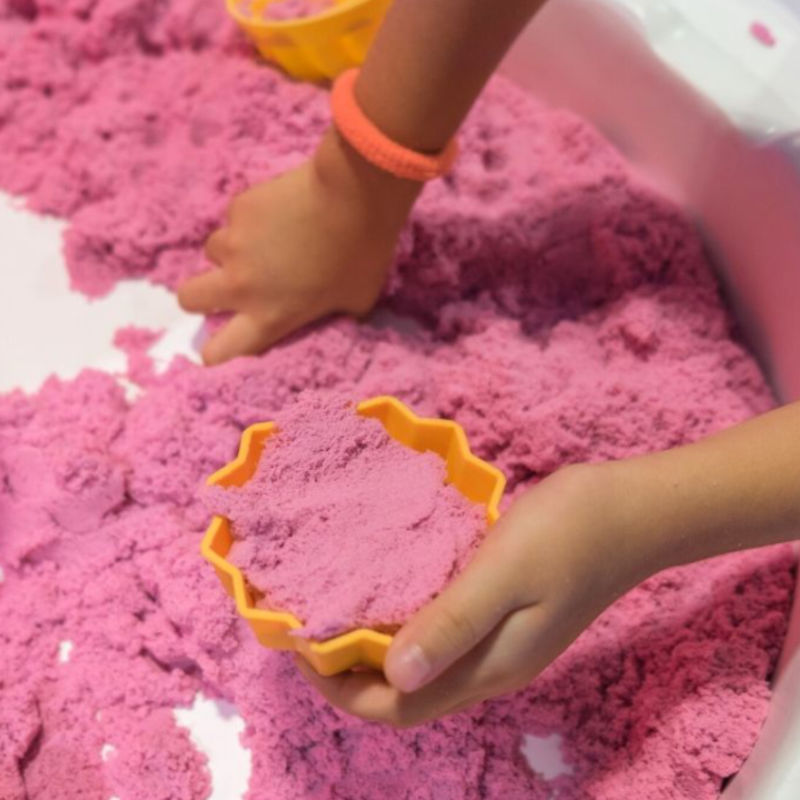
S1 Ep 6The "Magic" of Play Therapy
Sometimes, Play Therapy is described as "Magical" because people don't know why it works so well, it just does. In this episode, Dr. Brenna explains how play therapy works by telling a story of one of her clients who worked through his issues through play. He did it at home... not the play room... and his Mom witnessed, first hand, the "magic" of play therapy!
S1 Ep 5#Badmom
A video that I had to record as a result of a simple bumper sticker on a car in front of me… and it is now my personal mission to make every parent claim positive and encouraging traits about themselves! Watch all the way to the end so that you can be empowered to fight the critical and harsh way that we talk about ourselves as parents.
S1 Ep 4How To Increase Your Emotional Vocabulary
The more you understand the "wheel" of emotions, the more you can help your child communicate what they are feeling accurately. In this video, Dr. Brenna Hicks introduces you to Plutchik's Wheel of Emotions, and the theory of how it all fits together. You can use this knowledge to better Reflect Feelings to your child.

S1 Ep 3The Importance of Learning to "BE" With Your Kid
In this episode of the Play Therapy Podcast, Dr. Hicks explains why sometimes it's okay to simply "be" with your kid. You don't need to solve, explain away, or distract them from their current issue. Brenna gives several examples from her office, and from other Moms, how to meet the child in that emotional moment.

S1 Ep 2The Four "Pillars" of Play Therapy
The four "Pillars" of Play Therapy are the foundational skills that Play Therapy is built on. Dr. Brenna Hicks gives an overview and examples for each of these skills. This video is foundational training for any parent looking to add Play Therapy skills to their parenting "tool box". References: Cochran, N., Nordling, W., & Cochran, J. (2010). Child-Centered Play Therapy (1st ed.). Wiley. VanFleet, R., Sywulak, A. E., & Sniscak, C. C. (2010). Child-centered play therapy. Guilford Press. Landreth, G. L. (2002). Play therapy: The art of the relationship (2nd ed.). Brunner-Routledge. Bratton, S. C., Landreth, G. L., Kellam, T., & Blackard, S. R. (2006). Child parent relationship therapy (CPRT) treatment manual: A 10-session filial therapy model for training parents. Routledge/Taylor & Francis Group. Benedict, Helen. Themes in Play Therapy. Used with permission to Heartland Play Therapy Institute.
S1 Ep 1All Feelings Are Valid
In this episode of Play Therapy Parenting Podcast, Dr. Brenna Hicks talks about the play therapy skill, reflecting feelings, and why it's okay for parents to simply reflect a child's feeling back to them, and then stop! We tend to want to solve problems for our kids, or try to make our kids feel better, when sometimes, simply "sitting" in the child's emotion is what they need more.