Planetary Radio: Space Exploration, Astronomy and Science
1,336 episodes — Page 1 of 27
Twenty organic molecules found in an ancient Martian rock
Book Club Edition: Diane Ackerman and “The Planets: A Cosmic Pastoral”
Igniting Discovery: A showcase of NASA-funded research
Day of Action 2026: Rejoining the fight to save NASA science
Space Policy Edition: Why humans matter — The philosophy of Artemis II
Yuri's Night 2026: Celebrating 65 years of human spaceflight
Project Hail Mary hits the big screen
Book Club Edition: Founder and CEO Peter Beck on The Launch of Rocket Lab
Triumph and turmoil: Artemis II and the renewed fight to save NASA science
Artemis II launches to the Moon
Space Policy Edition: Return to Launch — Cape Canaveral's unlikely history
What makes Cape Canaveral the center of U.S. spaceflight? The answer is a fascinating mix of geography, military strategy, Cold War politics, and a fair amount of historical accident. In this episode of the Space Policy Edition of Planetary Radio, host Casey Dreier, chief of space policy at The Planetary Society, sits down with Stephen C. Smith, author and writer behind the Substack The Space Pundit, to discuss his book Return to Launch: Florida and America's Space Industry. A longtime Kennedy Space Center Visitor Complex communicator and Merritt Island resident, Smith brings a unique perspective to the story of how a remote Florida peninsula became the gateway to the Cosmos. The conversation spans the full arc of Cape Canaveral's history, from captured Nazi V-2 rockets fired off a concrete slab in 1950, the Apollo era's dramatic economic boom and bust, and the rise of commercial spaceflight. Along the way, Smith and Dreier explore why Mexico's president inadvertently shaped U.S. launch site selection, how eminent domain built a spaceport, and what Space Florida did to help break the region's cycle of economic dependence on government programs.See omnystudio.com/listener for privacy information.

Artemis II’s AVATAR and a sungrazing comet
Artemis II is the first crewed lunar mission since Apollo 17, and riding alongside the crew is one of the most ambitious biology experiments ever sent to space. It's called AVATAR, short for A Virtual Astronaut Tissue Analog Response: tiny organ chips grown from the astronauts' own cells, flying the same trajectory around the Moon, exposed to the same deep-space radiation and microgravity as the crew themselves. Lisa Carnell, director of NASA's Biological and Physical Sciences Division, explains what this experiment could mean for the future of human exploration. Then, Alain Maury, asteroid hunter and Planetary Society Shoemaker Near-Earth Object grant recipient, tells the story of how his MAPS survey in Chile's Atacama Desert spotted a faint, fuzzy object that turned out to be something extraordinary. C/2026 A1 (MAPS) is a sungrazing comet now falling toward the Sun on a path that will bring it within 162,000 kilometers (100,000 miles) of the solar surface on April 4th. If it survives that encounter, it could become one of the most spectacular comets in decades. And finally, Planetary Society Chief Scientist Bruce Betts joins us for What's Up, including how to spot the comet yourself, if it makes it through. Discover more at: https://www.planetary.org/planetary-radio/2026-avatar-and-sungrazerSee omnystudio.com/listener for privacy information.
The astronaut health experiments of Artemis II
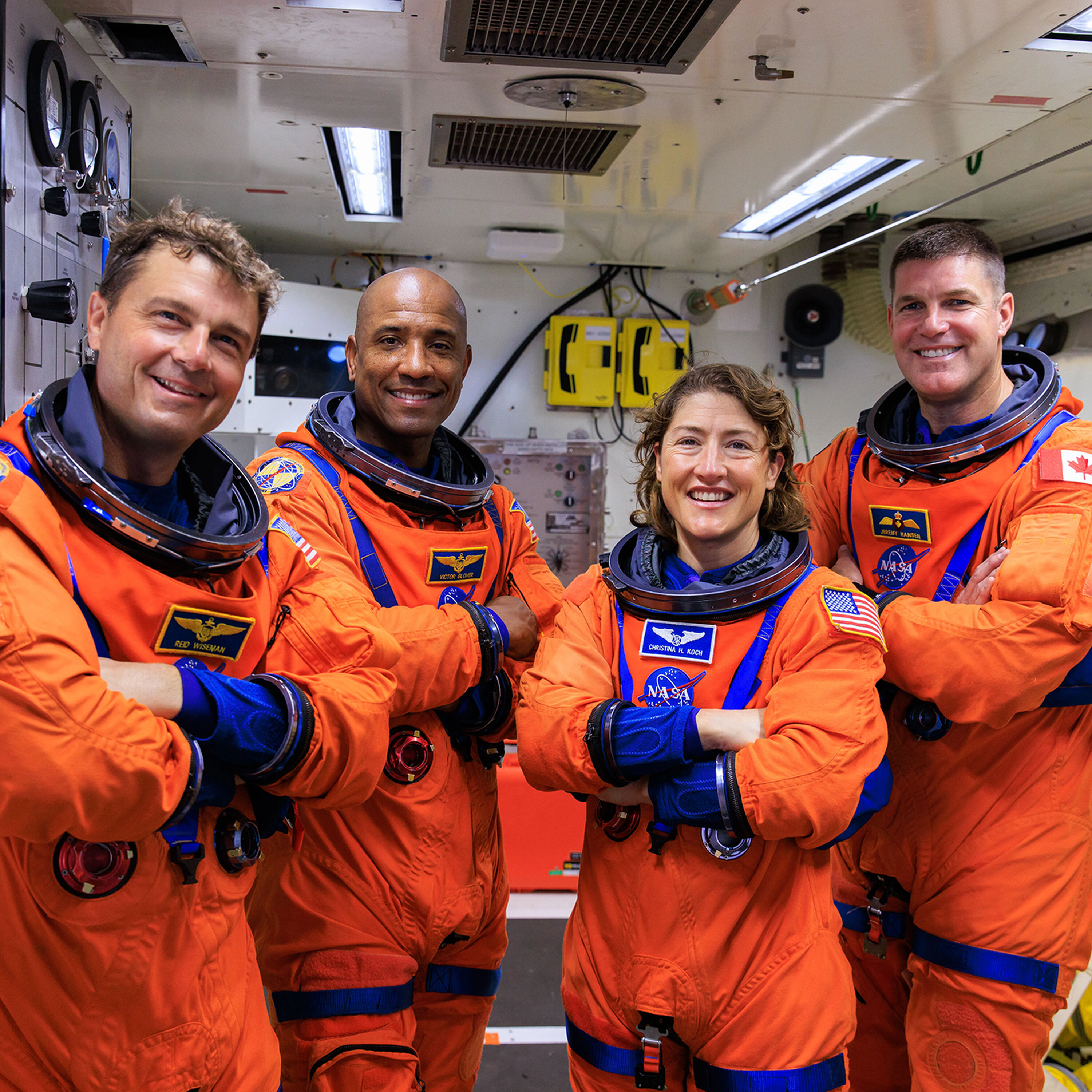
Artemis II is about more than getting four humans to the Moon and back. It's an opportunity to gather data on human health in deep space that we haven’t had in over 50 years. This week, we’re joined by Steve Platts, chief scientist of NASA's Human Research Program, who walks us through the suite of human health experiments flying aboard Artemis II, from the ARCHER wearable sensors tracking crew health and team dynamics, to dry saliva swabs measuring stress hormones. Then Casey Dreier, chief of space policy at The Planetary Society, helps us make sense of NASA's Ignition Day, a major press event held on March 24 in which the agency unveiled sweeping changes to its lunar exploration plans and beyond. And we close with Bruce Betts, chief scientist of The Planetary Society, in our weekly What's Up, where we explore one of the stranger phenomena in human spaceflight, the flashes of light astronauts sometimes see when cosmic rays pass through their eyes. Discover more at: https://www.planetary.org/planetary-radio/2026-astronaut-health-experiments-artemis-iiSee omnystudio.com/listener for privacy information.
Book Club Edition: The Giant Leap: Why Space is the Next Frontier in the Evolution of Life
Join us for an awe-inspiring conversation with astrobiologist and astronomer Caleb Scharf as he eloquently makes the case for "dispersal," the nearly inevitable advance of life and humanity across our solar neighborhood. From the book: "The idea of Dispersal is one where the sheer scale and scope of life’s future extension into the solar system profoundly changes things: not because of some new (and unlikely) cultural enlightenment from within but because of what the enormous expanse of space will do to dilute and change our species and all others.” Adam Frank says of the book, “If we can make it through the many crises of the next century, then the Solar System and the stars beyond await us. In The Giant Leap, Caleb Scharf demonstrates how becoming a true space-faring species is more than just humanity’s future.” Discover more at: https://www.planetary.org/planetary-radio/book-club-caleb-scharfSee omnystudio.com/listener for privacy information.
The 18th European Space Conference: Dreaming of European boots on the Moon
Humanity is going back to the Moon, and Europe is already playing a critical role in making it happen. This week, Planetary Radio brings you voices straight from the 18th European Space Conference in Brussels, Belgium, where more than 2,000 of the world’s top space leaders gathered to shape the future of European space exploration. We begin with conference co-organizer Tomas Dimitrov of Logos and Business Bridge Europe, who sets the stage for the conversations ahead. From there, we hear from European Commissioner for Defence and Space Andrius Kubilius, ESA Director General Josef Aschbacher, French Minister Delegate for European Affairs Benjamin Haddad, and Germany’s Federal Space Minister Dorothee Bär. We also take you inside the Moonlight Initiative panel, bringing you the full conversation as scientists and engineers from ESA, NASA, and industry lay out their vision for building GPS and communications infrastructure around the Moon, and wrestle with what it will really take to support a permanent human presence there. Then, Planetary Society Chief Scientist Bruce Betts joins us for What’s Up to tackle one of the most fascinating and unexpected challenges of lunar exploration: what time is it on the Moon? Discover more at: https://www.planetary.org/planetary-radio/2026-european-space-conference See omnystudio.com/listener for privacy information.
Starman: Looking back on a life exploring the Solar System
Gentry Lee spent nearly five decades at NASA's Jet Propulsion Laboratory, and in that time he helped shape some of the most ambitious missions in the history of space exploration. A new documentary, “Starman,” chronicles his career and the big question that runs through it: is there life beyond Earth? Lee worked on every NASA mission to land on Mars, helped Carl Sagan bring the Universe to living rooms around the world with “Cosmos,” and oversaw dozens of active missions as Chief Engineer for the Solar System Exploration Directorate at JPL. Few people have had a front-row seat to the Space Age quite like him. In this episode, host Sarah Al-Ahmed sits down with Gentry at Planetary Society headquarters just one day after his retirement from JPL. He reflects on the colleagues who shaped him, the missions that changed our understanding of the Solar System, and why the search for life beyond Earth remains the most profound endeavor humanity has ever undertaken. Discover more at: https://www.planetary.org/planetary-radio/2026-starmanSee omnystudio.com/listener for privacy information.
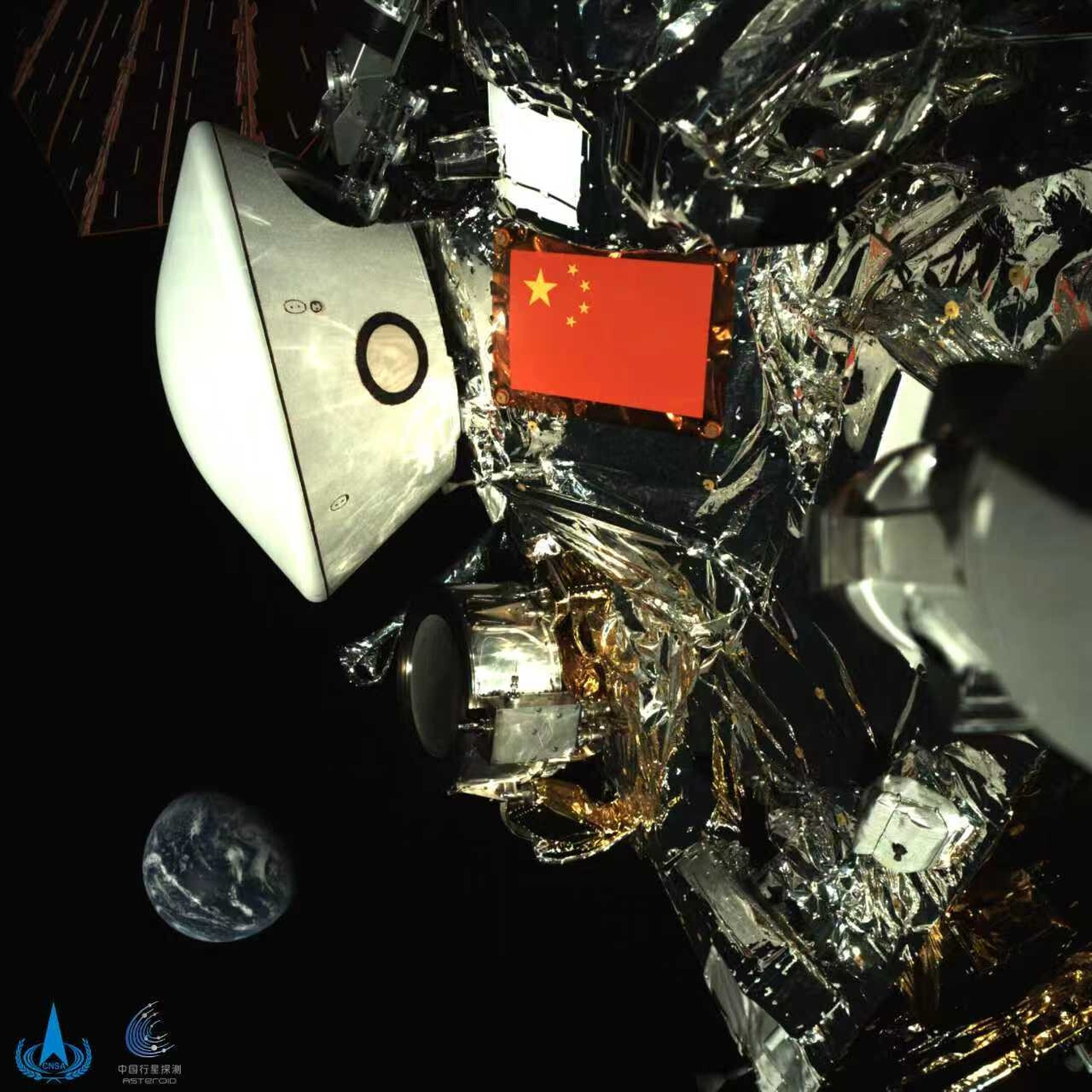
Space Policy Edition: Is there really a space race between the US and China?
Is the United States really in a new space race with China? Or is that framing missing the bigger picture? In this Space Policy Edition of Planetary Radio, Casey Dreier, chief of space policy at The Planetary Society, sits down with Patrick Besha, former NASA strategic advisor on China, to explore the realities behind China’s rapidly advancing space program. They discuss how China’s political system shapes its long-term space strategy, why the rhetoric about a “space race” may be misleading, and how competition between the United States and China in space is likely to unfold over the coming decades. Discover more at: https://www.planetary.org/planetary-radio/spe-us-china-space-raceSee omnystudio.com/listener for privacy information.
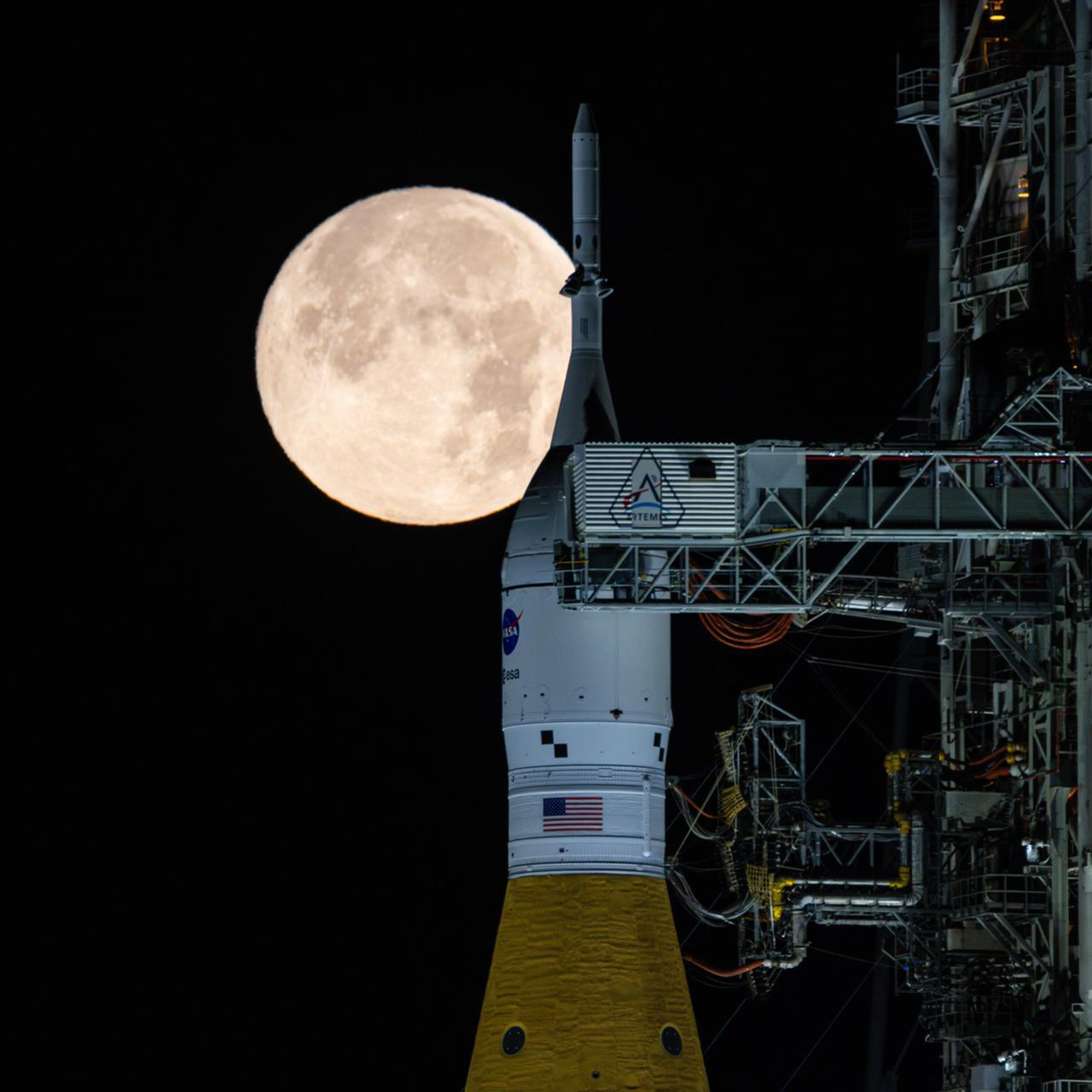
Artemis update: NASA reshapes the road back to the Moon
NASA has announced a major restructuring of the Artemis program, reshaping the roadmap for returning humans to the Moon. At a February 27 press conference, agency leadership addressed the rollback of Artemis II following post–wet–dress–rehearsal testing and unveiled significant changes to upcoming missions, including shifting Artemis III from a planned lunar landing to a low-Earth-orbit rendezvous and integrated systems test. In this episode, you’ll hear remarks from NASA Administrator Jared Isaacman and Lori Glaze, Moon to Mars program manager and acting associate administrator for NASA’s Exploration Systems Development Mission Directorate. They explain what happened with Artemis II and why NASA is changing course. Then, host Sarah Al-Ahmed is joined by Jack Kiraly, director of government relations at The Planetary Society, and Ari Koeppel, AAAS science and technology policy fellow, to unpack the political and strategic forces behind this shift and what it means for the future of lunar exploration. In What’s Up, Bruce Betts, our chief scientist, looks back at Apollo 9, the Earth-orbiting mission that proved the Lunar Module could operate independently before NASA attempted a lunar landing. Discover more at: https://www.planetary.org/planetary-radio/2026-artemis-updateSee omnystudio.com/listener for privacy information.
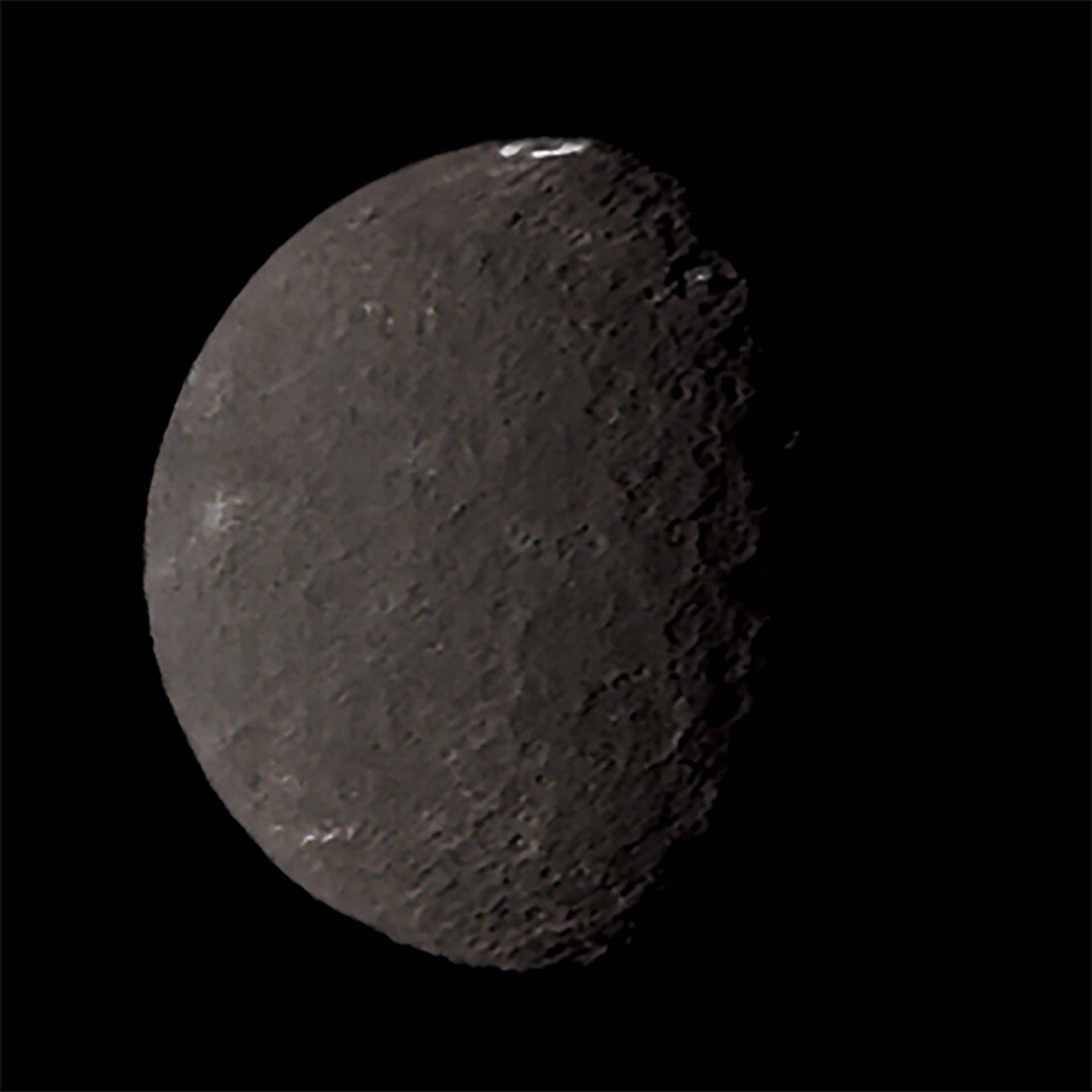
Did an impact trigger cryovolcanism on Umbriel?
Could a single ancient impact have briefly transformed one of the Solar System’s darkest moons into a cryovolcanic world? When Voyager 2 flew past Uranus in 1986, it captured the only close-up images we have of Umbriel, a heavily cratered, charcoal-dark satellite long considered geologically inactive. But one feature stands out: a bright ring inside the 131-kilometer-wide Wunda crater. In this episode, Sarah Al-Ahmed speaks with Adeene Denton, NASA postdoctoral program fellow at the Southwest Research Institute, about her team’s new study published in the Journal of Geophysical Research: Planets. Using shock physics simulations, Denton and her colleagues reconstruct the impact that formed Wunda crater to determine what Umbriel’s interior must have been like at the time. Their modeling explores whether impact-induced cryovolcanism can explain the bright deposits observed on the crater floor. Then, in What’s Up, Bruce Betts, chief scientist of The Planetary Society, joins Sarah to break down one of the key mechanisms that keeps icy moons from freezing solid, tidal heating driven by orbital resonance. Discover more at: https://www.planetary.org/planetary-radio/2026-cryovolcanism-on-umbrielSee omnystudio.com/listener for privacy information.
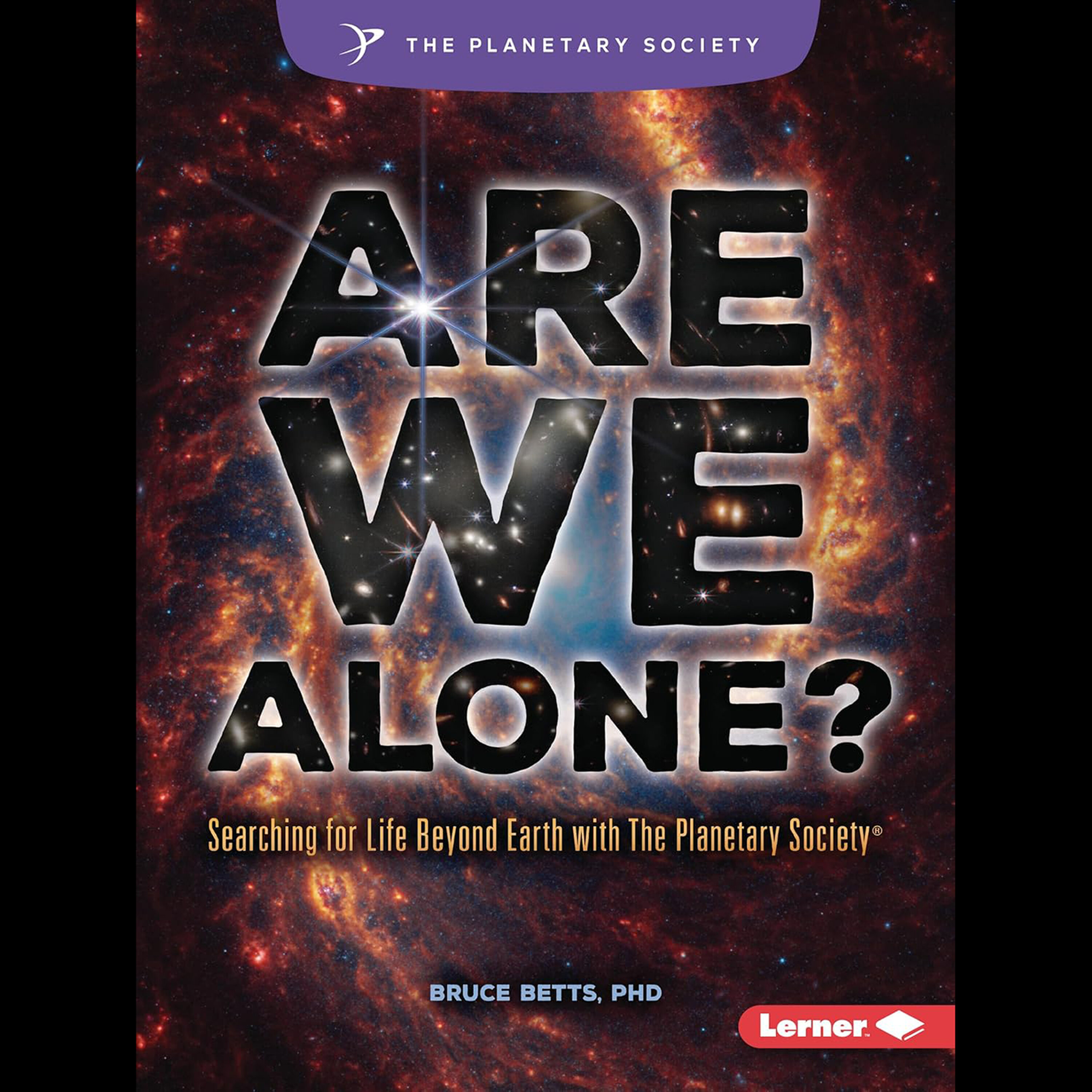
Book Club Edition: Planetary Society Chief Scientist Bruce Betts’ latest for kids
They informed and entertained together throughout the first 20 years of Planetary Radio. Listen in as the Society’s chief scientist and book club edition host Mat Kaplan share the mic once again for a delightful conversation about Dr. Betts’ two new space books for young people. “Are We Alone?” introduces the search for life across the Universe, while “The Size of Space” collects many of Bruce’s brilliant and hilarious ways to cut our Solar System down to human size. Discover more at: https://www.planetary.org/planetary-radio/book-club-bruce-bettsSee omnystudio.com/listener for privacy information.
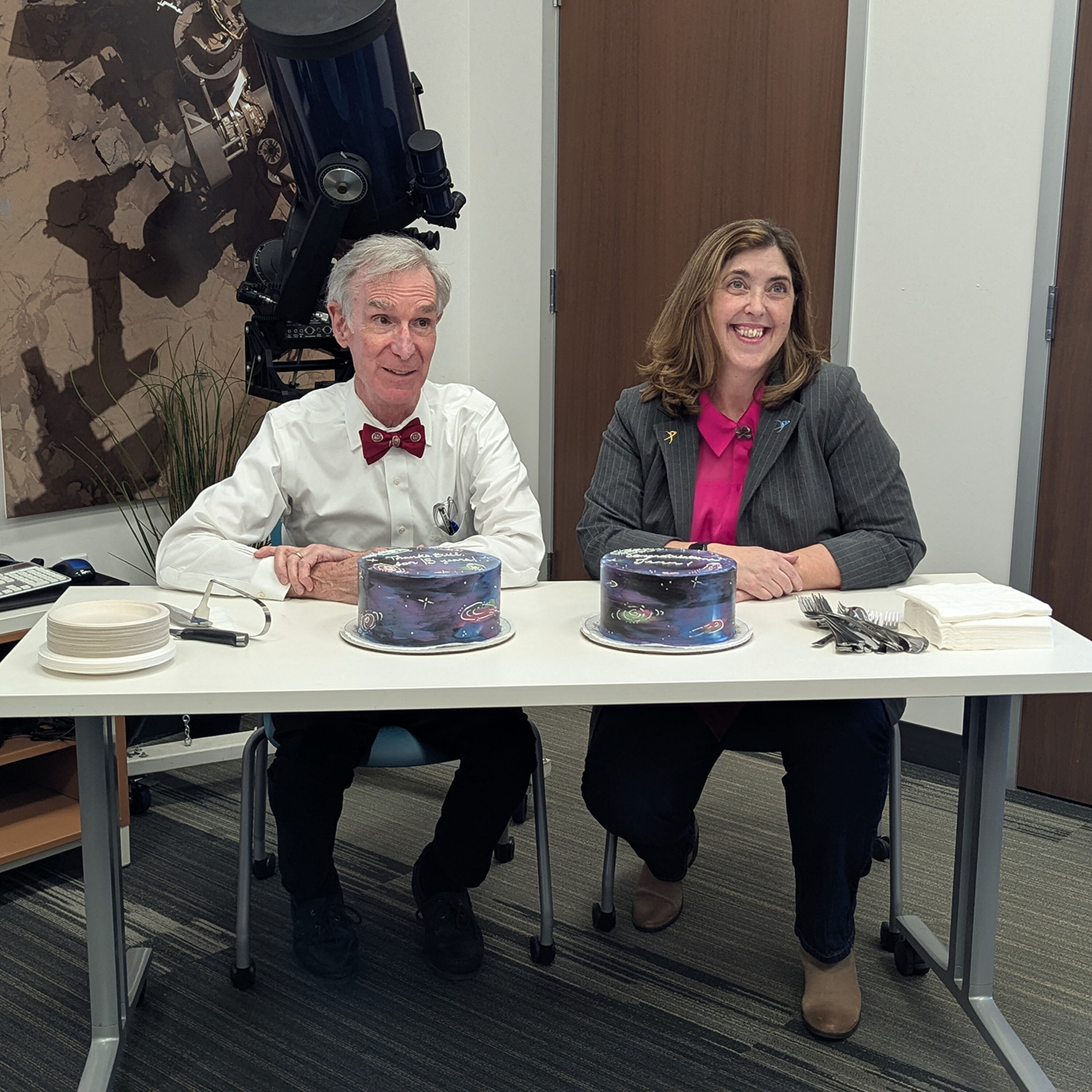
A new chapter at The Planetary Society: Jennifer Vaughn becomes CEO
This week on Planetary Radio, we mark a major leadership transition at The Planetary Society. Host Sarah Al-Ahmed sits down with Bill Nye, outgoing chief executive officer and newly appointed chief ambassador of The Planetary Society, and Jennifer Vaughn, incoming chief executive officer and former chief operating officer, for a candid conversation about this long-planned transition. Together, Bill and Jenn reflect on how the organization, under their shared leadership, grew into the world’s largest and most effective nonprofit dedicated to advancing the scientific exploration of space. Then, Bruce Betts, chief scientist of The Planetary Society, joins Sarah for What’s Up. They discuss an upcoming planetary alignment on and around February 28, 2026. Discover more at: https://www.planetary.org/planetary-radio/2026-jennifer-vaughn-ceoSee omnystudio.com/listener for privacy information.
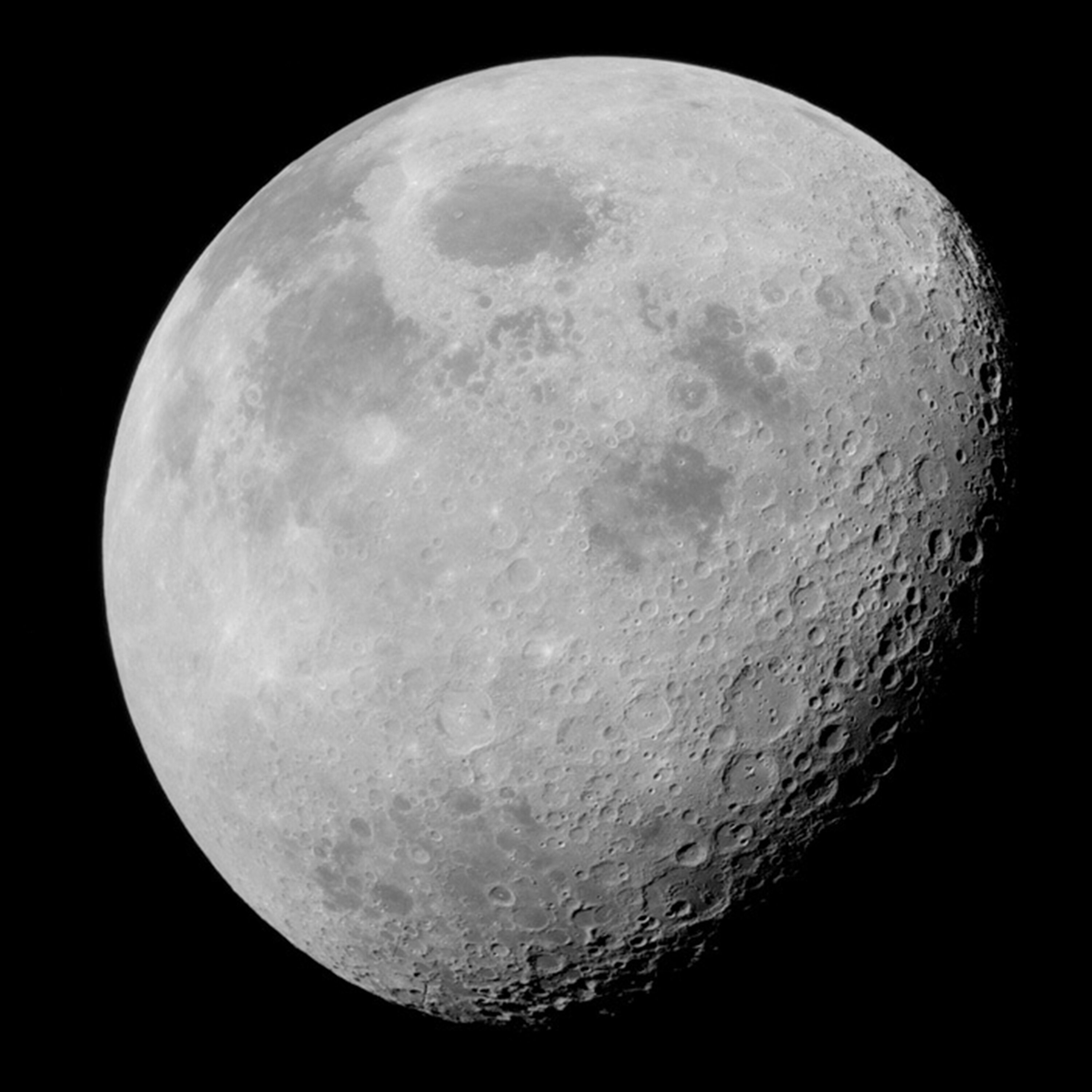
Where did Earth’s water come from? Clues hidden in Apollo Moon dust
Where did Earth’s water come from? In this episode of Planetary Radio, we explore how scientists are answering that question by studying a remarkably well-preserved record of the early Solar System: lunar samples brought back by the Apollo missions. Host Sarah Al-Ahmed is joined by Tony Gargano, postdoctoral fellow at the Lunar and Planetary Institute with the University Space Research Association and a research affiliate at NASA’s Johnson Space Center. Gargano studies lunar rocks and regolith to understand how planets form, evolve, and acquire key ingredients like water over time. By analyzing subtle chemical fingerprints preserved in Apollo-era lunar regolith, his work helps constrain how much water meteorites could have brought to Earth and what that means for our planet’s path to habitability. The episode also features a short bonus segment with actor George Takei, recorded at the Academy Museum of Motion Pictures during a screening of “Star Trek IV: The Voyage Home.” Takei reflects on the enduring legacy of “Star Trek,” its influence on generations of scientists and explorers, and why he is excited about humanity’s return to the Moon in the Artemis era. He connects science fiction’s hopeful vision of the future with the real science helping us understand our origins today. Discover more at: https://www.planetary.org/planetary-radio/2026-earth-water-apollo-moon-dustSee omnystudio.com/listener for privacy information.
Space Policy Edition: What a NASA Authorization bill actually does
What does a NASA authorization bill actually do, and why does it matter? In this episode of Space Policy Edition, we dig into one of the most misunderstood but powerful tools Congress uses to shape the future of U.S. space exploration. Host Casey Dreier, chief of space policy at The Planetary Society, is joined by Jack Kiraly, the Society’s director of government relations, for a deep dive into how NASA authorization bills work, how they differ from appropriations, and why they can have decades-long consequences for science missions, human spaceflight, and planetary defense. The discussion also reflects on a major recent win for space advocates: Congress’s bipartisan decision to protect NASA science funding. Discover more at: https://www.planetary.org/planetary-radio/spe-what-is-a-nasa-authorization-billSee omnystudio.com/listener for privacy information.

Europa’s quiet seafloor
What if Europa’s seafloor isn’t alive with activity after all? This week on Planetary Radio, host and producer Sarah Al-Ahmed explores new research that reframes how scientists think about one of the Solar System’s most intriguing ocean worlds. Sarah is joined by Paul Byrne, associate professor of earth, environmental, and planetary sciences at Washington University in St. Louis. Paul is the lead author of a new study suggesting that the seafloor beneath Europa’s global ocean may be geologically quiet today, potentially lacking the hydrothermal activity often associated with habitable environments on Earth. Together, they discuss how scientists investigate places we can’t yet observe directly and why Europa remains a compelling world to explore regardless of what we find. Then, Bruce Betts, chief scientist of The Planetary Society, joins us for What’s Up to explain why Saturn’s moon Enceladus shows strong evidence for active hydrothermal vents beneath its icy crust, offering a fascinating contrast between two ocean worlds. Discover more at: https://www.planetary.org/planetary-radio/2026-europas-quiet-seafloorSee omnystudio.com/listener for privacy information.

Artemis II and III: The science that brings us back to the Moon
Humans are preparing to return to the Moon. On this episode of Planetary Radio, host Sarah Al-Ahmed is joined by Kelsey Young and Noah Petro, two of the scientists helping turn humanity’s return to the Moon into reality. Kelsey Young is a research space scientist at NASA Goddard Space Flight Center and serves as the Artemis Science Flight Operations Lead. She also leads the Lunar Observations and Imaging Campaign for Artemis II, defining what astronauts will observe, document, and study as they fly around the Moon for the first time in more than 50 years. Noah Petro is the lab chief of the Planetary Geology, Geophysics, and Geochemistry Laboratory at NASA Goddard and the former Project Scientist for the Lunar Reconnaissance Orbiter. He also serves as the Project Scientist for Artemis III, helping shape the science behind humanity’s first lunar footsteps of the 21st century. Together, they discuss how Artemis II and Artemis III build on decades of lunar science, how astronauts are being trained to observe the Moon like geologists, and why the Moon’s south pole is such a compelling destination for future exploration. Then, we wrap up with What’s Up, where Bruce Betts, chief scientist of The Planetary Society, shares the story of the first and so far only professional geologist to walk on the Moon. Discover more at: https://www.planetary.org/planetary-radio/2026-artemis-ii-and-iiiSee omnystudio.com/listener for privacy information.

NASA science saved: Inside the 2026 budget victory
After months of uncertainty, NASA science has been spared from the largest proposed budget cuts in the agency’s history. In this episode of Planetary Radio, host Sarah Al-Ahmed unpacks how Congress moved to restore near-full funding for NASA science and what that victory really means for missions, researchers, and the future of space exploration. Sarah is joined by Jack Kiraly, director of government relations at The Planetary Society, and Ari Koeppel, an AAAS science & technology policy fellow at The Planetary Society, to break down what passed in the FY 2026 budget, why the details matter, and how bipartisan support helped protect science programs across planetary science, astrophysics, Earth science, and heliophysics. The conversation also takes an honest look at the costs of the past year, from lost jobs and disrupted missions to shaken morale, and why rebuilding NASA’s scientific workforce will take time, even after this hard-won win. We also look ahead to what comes next as the FY 2027 budget process begins, and why sustained public engagement remains essential to protecting space science. Plus, Bruce Betts, chief scientist of The Planetary Society, joins us for What’s Up, where we discuss the recent early return of astronauts from the International Space Station, what’s known about the situation, and what it means for station operations. Discover more at: https://www.planetary.org/planetary-radio/2026-nasa-science-savedSee omnystudio.com/listener for privacy information.

Book Club Edition: The Little Book of Aliens by Adam Frank
Famed astrophysicist and science communicator Adam Frank shares his sense of wonder and humor in a live conversation about his excellent new book, “The Little Book of Aliens.” Join Adam and host Mat Kaplan as they explore the origin of life, the search for extraterrestrial intelligence, and whether all those UFO sightings are worthy of deeper investigation. Discover more at: https://www.planetary.org/planetary-radio/book-club-adam-frankSee omnystudio.com/listener for privacy information.

IMAP and the shape of the heliosphere
Our Solar System is wrapped in a vast, invisible bubble created by the Sun, a protective region that shields Earth and the planets from much of the radiation that fills our galaxy. But until recently, scientists have only had rough sketches of what this boundary looks like and how it behaves. In this episode of Planetary Radio, host Sarah Al-Ahmed is joined by David McComas, professor of astrophysical sciences at Princeton University and principal investigator of NASA’s Interstellar Mapping and Acceleration Probe (IMAP) and Interstellar Boundary Explorer (IBEX) missions, along with Matina Gkioulidou, a heliophysicist at Johns Hopkins Applied Physics Laboratory, former IMAP-Ultra instrument lead, and current IMAP project scientist and co-investigator. Now stationed at the Sun–Earth L1 Lagrange point, IMAP uses 10 instruments to study the heliosphere — the region where the solar wind collides with material from interstellar space. The mission does this by tracking energetic neutral atoms, particles that travel in straight lines from distant regions of the heliosphere, allowing scientists to map areas of space that spacecraft can’t directly sample. McComas and Gkioulidou explain how IMAP builds on the legacy of Interstellar Boundary Explorer, what makes this mission different, and why understanding the Sun’s influence across space matters not just for fundamental science, but for space-weather forecasting and protecting technology and astronauts closer to home. Discover more at: https://www.planetary.org/planetary-radio/2026-imapSee omnystudio.com/listener for privacy information.

Voyager and the heliopause: Exploring where the Sun gives way to the stars
What does it really mean to enter interstellar space, and what have we learned since humanity first crossed the invisible boundary between our Sun and the stars? In this episode of Planetary Radio, we explore the science of the heliosphere and the realm beyond with Linda Spilker, project scientist for the Voyager mission at NASA Jet Propulsion Laboratory. Drawing on decades of experience with the twin spacecraft, Spilker shares how Voyager reshaped our view of the Solar System’s outer frontier, from the nature of the heliopause to the unexpectedly rich structure of the local interstellar medium. We unpack what Voyager 1 and Voyager 2 have taught us about charged particles, magnetic fields, and cosmic rays beyond the Sun’s protective bubble, and why those measurements have upended earlier ideas about where the Solar System truly ends. Spilker also reflects on the mission’s extraordinary longevity, the ingenuity required to keep the spacecraft communicating across the vastness of space, and what Voyager’s legacy means for future journeys between the stars. Then, in What’s Up, Bruce Betts, chief scientist at The Planetary Society, places Voyager in context, showing how long-lived missions shape the bigger picture of space science and why observing longer can lead to some of our most profound discoveries. Discover more at: https://www.planetary.org/planetary-radio/2026-voyagers-and-the-heliopauseSee omnystudio.com/listener for privacy information.

Space Policy Edition: Change for the Sake of Disruption at NASA
Marcia Smith, the founder and editor of Space Policy Online, joins the show and revisits a conversation we had one year ago, recorded just weeks before the second Trump administration took office. That episode, “The Challenges of Change at NASA,” explored the institutional and political roadblocks to radical change at the U.S. space agency. A lot has happened since that show, including DOGE, mass staff departures, a draconian budget cut proposal, a dramatic shift toward sending humans to Mars, and the rapid departure of 20% of NASA's workforce. But at the end of the year, much remains the same. The SLS and Orion programs continue unchanged, with funding locked in through 2032. The humans-to-Mars policy has effectively vanished; returning U.S. astronauts to the Moon, to stay, is again centered within civil space policy. NASA's science missions, though still facing a serious budgetary threat, have not gone away. So, did we see real change at NASA? And to what end? Or was it merely disruption masquerading as change? Marcia Smith and host Casey Dreier revisit their original analysis and discuss what they got wrong, what they got right, and what surprised them about 2025 in civil space policy. Discover more at: https://www.planetary.org/planetary-radio/spe-2025-a-year-of-disruption-and-change-at-nasaSee omnystudio.com/listener for privacy information.

Looking back: Space exploration in 2025
As 2025 comes to a close, Planetary Radio looks back on a year that reshaped space exploration, through stunning discoveries, major milestones, unexpected challenges, and the people who carried science forward through it all. In this episode, Sarah Al-Ahmed, host and producer of Planetary Radio, is joined first by Kate Howells, public education specialist at The Planetary Society, to share results from The Planetary Society’s Best of 2025 campaign and the newly released 2025 Year in Pictures edition of The Planetary Report. They discuss the images, missions, and accomplishments voted on by the global space community, and how space imagery continues to inspire curiosity, connection, and hope. Then, Sarah sits down with Mat Kaplan, senior communications advisor, Asa Stahl, science editor, and Ambre Trujillo, digital community manager at The Planetary Society, for a wide-ranging conversation about the defining space exploration stories of 2025. The episode closes with Bruce Betts, chief scientist of The Planetary Society, in What’s Up, where he looks ahead to what’s coming in 2026. Discover more at: https://www.planetary.org/planetary-radio/2025-looking-back-space-explorationSee omnystudio.com/listener for privacy information.

Looking back: Space policy and advocacy in 2025
2025 was one of the most consequential years for space policy in modern U.S. history. In this special year-in-review episode, Planetary Radio takes a deep dive into what happened behind the scenes in U.S. space policy and advocacy as NASA faced unprecedented proposed cuts to its science programs. With nearly half of NASA’s science budget at risk, dozens of missions threatened, and months of leadership uncertainty at the agency, this year became a defining moment for the future of space science. Sarah Al-Ahmed is joined by Casey Dreier, chief of space policy at The Planetary Society, Jack Kiraly, director of government relations, and Ari Koeppel, an AAAS science & technology policy fellow, to unpack how this crisis unfolded and how scientists, space advocates, and lawmakers responded. Together, they explore how public advocacy helped shift the conversation in Congress. Plus, in What’s Up, Chief Scientist Bruce Betts explains why stability matters so much for space science and what’s at stake when long-term missions are disrupted. This is the first of two special year-end episodes. Next week, Planetary Radio will look back at what humanity accomplished in space exploration in 2025, from new missions and discoveries to milestones across our Solar System and beyond. Discover more at: https://www.planetary.org/planetary-radio/2025-looking-back-space-policy-and-advocacySee omnystudio.com/listener for privacy information.

Book Club Edition: MOONS: The Mysteries and Marvels of our Solar System by Kate Howells
It was such a delight to feature work by our own Kate Howells in The Planetary Society’s member book club. We keep Kate busy as our public education specialist, but she found time to write about many of her favorite natural satellites in this richly illustrated edition. Join her and book club host Mat Kaplan for a journey taking us from our own Moon, past Europa, Titan, and many more, and out across a galaxy that is no doubt full of worlds circling other worlds. Discover more at: https://www.planetary.org/planetary-radio/book-club-kate-howellsSee omnystudio.com/listener for privacy information.

Galileo at 30: How a mission transformed our understanding of Jupiter
Thirty years ago, NASA’s Galileo spacecraft became the first mission to orbit Jupiter, opening a new chapter in our exploration of the outer Solar System. Over eight years around Jupiter, Galileo transformed how we understand Jupiter and its moons, revealing a powerful and dynamic planetary system, uncovering evidence for oceans hidden beneath icy worlds, and reshaping the search for life beyond Earth. To mark the 30th anniversary of Galileo’s orbital insertion, scientists, engineers, historians, and advocates gathered at the California Institute of Technology for a special symposium: Galileo at 30. In this episode of Planetary Radio, host Sarah Al-Ahmed takes you inside that celebration. You’ll hear how Galileo survived seemingly impossible challenges, how its team adapted when things went wrong, and how its discoveries reshaped planetary science. You’ll hear from key voices in Galileo’s story, including historian Erik Conway, project manager Bill O’Neil, magnetometer principal investigator Margaret Kivelson, Europa Clipper Project Scientist Bob Pappalardo, and Dragonfly mission Principal Investigator Elizabeth “Zibi” Turtle, along with reflections from many others whose lives and careers were shaped by this remarkable mission. Together, they tell the story of Galileo not just as a spacecraft, but as a shared human effort, one whose legacy continues to guide exploration today. Discover more at: https://www.planetary.org/planetary-radio/2025-galileo-at-30See omnystudio.com/listener for privacy information.

Space Policy Edition: The Moral Case for Space Science
Why do we explore space, and why does science matter in the first place? In this Space Policy Edition rerun, Planetary Society Chief of Space Policy Casey Dreier revisits a deeply influential 2020 conversation with philosopher and ethicist J. S. Johnson-Schwartz, author of The Value of Science and Space Exploration. As debates over NASA’s budget and the future of space science continue to resurface, this conversation remains strikingly relevant. Dr. Johnson Schwartz makes a compelling philosophical case that science itself is not merely useful or beneficial, but a moral obligation. Beyond economic returns, technological spinoffs, or national prestige, the pursuit of knowledge has intrinsic value, and public space agencies play a critical role in representing that shared human interest. Discover more at: https://www.planetary.org/planetary-radio/the-moral-case-for-spaceSee omnystudio.com/listener for privacy information.

Inside the 2025 Mars Society Convention
The 2025 International Mars Society Convention convened at the University of Southern California this October for three days of passionate discussion about humanity’s future on the red planet. Speakers explored science, policy, technology, AI, synthetic biology, and the long-term path toward becoming a multi-planet species. In this episode, Mat Kaplan, senior communications adviser at The Planetary Society, shares his conversations with speakers and guests at the Convention. We hear from Robert Zubrin, founder of The Mars Society, who delivered a fiery call to protect NASA’s science programs in the face of unprecedented budget cuts. Humphrey “Hoppy” Price, Chief Engineer for NASA’s Robotic Mars Exploration Program at the Jet Propulsion Laboratory, updates us on the future of Mars Sample Return and new mission architectures. Keynote speaker Dex Hunter-Torricke, a longtime communications leader for SpaceX, Meta, and other major tech organizations, reflects on AI’s promise and peril, and why Mars remains a beacon of hope for humanity’s future. Biologist and technologist Tiffany Vora, vice president for innovation partnerships at Explore Mars, and Erika DeBenedictis, biologist and founder of Pioneer Labs, reveal breakthroughs in synthetic biology and engineered microbes that could help future Martians survive. Steve Benner, chemist and founder of the Foundation for Applied Molecular Evolution (FfAME), revisits the Viking lander experiments and makes a provocative case that we may have found Martian life nearly 50 years ago. Architect Melodie Yashar, CEO of AENARA and a pioneer in 3D-printed habitat research, shares progress in additive construction on Earth and Mars. James Burk, executive director of The Mars Society, discusses advocacy, analog research stations, and the organization’s expanding international footprint. Finally, we meet Sasha, a 13-year-old presenter whose enthusiasm offers a bright glimpse of the next generation of explorers. We wrap up the show with What’s Up with Bruce Betts, chief scientist at The Planetary Society, with a discussion of perchlorates in the Martian soil. Discover more at: https://www.planetary.org/planetary-radio/2025-mars-society-conventionSee omnystudio.com/listener for privacy information.

ESCAPADE begins its journey to Mars
NASA’s twin ESCAPADE spacecraft have finally launched on their journey to Mars. Designed to study how the solar wind interacts with Mars’ patchy magnetic fields and drives the loss of its atmosphere, ESCAPADE is NASA’s first dual-spacecraft mission to the Red Planet and a major milestone for the SIMPLEx program’s small, low-cost planetary explorers. The mission began its voyage aboard Blue Origin’s New Glenn rocket after several weather and space weather delays, marking the vehicle’s first science launch. We begin with Ari Koeppel, AAAS Science & Technology Policy Fellow and Space Policy Intern at The Planetary Society, who was at Cape Canaveral for the prelaunch activities. Ari shares what it was like to navigate repeated scrubs and even a powerful solar storm, along with the emotional experience of watching a spacecraft carrying an instrument he helped build begin its voyage to Mars. Next, we are joined by Dr. Rob Lillis, ESCAPADE’s Principal Investigator and Associate Director for Planetary Science at UC Berkeley’s Space Sciences Laboratory. Rob explains how ESCAPADE aims to unravel Mars’ complex space environment using two coordinated orbiters, why its measurements are key to understanding atmospheric escape, and how its innovative trajectory made the mission possible after the loss of its original rideshare opportunity. Finally, Dr. Bruce Betts, Chief Scientist of The Planetary Society, returns for What’s Up to talk about why Mars produces aurora even without a global magnetic dynamo. Discover more at: https://www.planetary.org/planetary-radio/2025-escapadeSee omnystudio.com/listener for privacy information.

Smart Girl Dumb Questions: Casey Dreier answers why space is worth it
This week on Planetary Radio, we’re sharing a special conversation from our friends at the Smart Girl Dumb Questions podcast. Host Nayeema Raza sits down with The Planetary Society’s Chief of Space Policy, Casey Dreier, to explore one of the most common questions in space exploration: Why does space matter, and is it really worth the cost? Casey breaks down how space exploration impacts daily life, from GPS and weather forecasting to cutting-edge technologies and scientific discoveries that could reshape our future. Together, Nayeema and Casey unpack the big ideas behind NASA’s ~$25 billion budget at a moment when U.S. national priorities are shifting. Stick around after the interview for a special U.S. Thanksgiving-week edition of What’s Up with Chief Scientist Bruce Betts. Discover more at: https://www.planetary.org/planetary-radio/2025-smart-girl-dumb-questionsSee omnystudio.com/listener for privacy information.

Book Club Edition: The Martians: The True Story of an Alien Craze that Captured Turn-of-the-Century America by David Baron
There was a time when almost everyone, from Alexander Graham Bell to the Wall Street Journal, believed there was a supremely intelligent civilization on Mars, one that was probably trying to talk to Earthlings. Most of this belief could be traced to an amateur astronomer and charismatic speaker named Percival Lowell. David Baron tells this story in “The Martians: The True Story of an Alien Craze that Captured Turn-of-the-Century America,” the product of seven years of research into this strange chapter of history. He shares many of the most surprising, fascinating, and very entertaining details, including much that had been lost to history, in this book club conversation with Mat Kaplan. Discover more at: https://www.planetary.org/planetary-radio/book-club-david-baronSee omnystudio.com/listener for privacy information.

Epic Spaceman: Making cosmic scale human
When his filmmaking career stalled during the pandemic, Toby Lockerbie turned to the one place that had never stopped inspiring him: the Universe. With no background in visual effects, he taught himself the tools needed to transform complex space science into cinematic stories using everyday objects and beautifully crafted visuals to make the Cosmos feel human. His channel, Epic Spaceman, now reaches millions and has earned multiple Webby Awards for its innovative approach to visualizing scale, awe, and accessible science. This week on Planetary Radio, Toby joins host Sarah Al-Ahmed to discuss the creation of Epic Spaceman, how visual metaphors can change how we understand the Universe, and why awe remains one of the most powerful tools for science communication. Then we welcome Bruce Betts back for What’s Up, where we reflect on the end of the Japanese Aerospace Exploration Agency’s Akatsuki mission to Venus. Discover more at: https://www.planetary.org/planetary-radio/2025-epic-spacemanSee omnystudio.com/listener for privacy information.

The Planetary Society goes to TwitchCon 2025
The Planetary Society heads to TwitchCon 2025 to explore how scientists and educators use livestreaming to share the excitement of discovery. We begin with Moohoodles, one of Twitch’s pioneering space science streamers and co-host of the live panel “The Planetary Society: Space, Time, and You.” She explains how she built a thriving community around astrobiology and space exploration long before Twitch even had a Science & Technology category. Then we share moments from the panel, featuring a special video message from Bill Nye, CEO of The Planetary Society, and highlights of how livestreaming helps inspire new audiences to look up. At the Science & Technology Meet and Greet, Sharkg33k and Paleontologizing explain how their streams connect life on Earth to exploration beyond our planet. Later, Jack Kiraly, The Planetary Society’s Director of Government Relations, joins the show for a Space Policy Update on Jared Isaacman’s renomination as NASA Administrator, examining what it could mean for the agency’s leadership and direction. The episode wraps up with What’s Up with Bruce Betts, The Planetary Society’s chief scientist, celebrating the third anniversary of the end of the LightSail 2 mission and sharing a new random space fact. Discover more at: https://www.planetary.org/planetary-radio/2025-twitchconSee omnystudio.com/listener for privacy information.

Space Policy Edition: Should a (potential) biosignature revive Mars Sample Return?
In 1996, a controversial claim of fossilized life in a Martian meteorite ignited a golden age of Mars exploration. Nearly 30 years later, a potential biosignature detected by the Perseverance rover at Jezero Crater has sparked…nothing, not even a formal effort to revive the beleaguered robotic Mars Sample Return project. Why did the claims surrounding the Allan Hills meteorite (which were ultimately rejected) kick off 25 years of unprecedented robotic exploration of the Red Planet? And why did the discovery at Cheyava Falls fail to ignite the same level of interest? Lou Friedman, former Executive Director of The Planetary Society and longtime proponent of Mars Sample Return, joins the show to contrast these to tipping points of Mars exploration, and argues why space scientists should seize this discovery to push for a scientific future at the Red Planet. Discover more at: https://www.planetary.org/planetary-radio/spe-lou-friedman-on-msr-and-tipping-point-eventsSee omnystudio.com/listener for privacy information.

Do Aliens Speak Physics?
If we ever meet intelligent extraterrestrials, will we even be able to talk about physics? Physicist Daniel Whiteson of UC Irvine and cartoonist Andy Warner join Sarah Al-Ahmed to explore one of science’s strangest and most profound questions: if alien civilizations exist, would their understanding of the Universe look anything like ours? Their new book, “Do Aliens Speak Physics?”, discusses the nature of knowledge itself, asking whether math and physics are truly universal, or if even our most “objective” truths are shaped by our human perspective. Together, they consider what it would take to communicate with alien intelligence and how humor and illustration can make those big cosmic ideas feel surprisingly down-to-Earth. Then, stick around for What’s Up with Bruce Betts, as we discuss how difficult it is to explain physics to humans, let alone extraterrestrial life. Discover more at: https://www.planetary.org/planetary-radio/2025-do-aliens-speak-physicsSee omnystudio.com/listener for privacy information.

Ripples on the Cosmic Ocean
What happens in space doesn’t stay in space. Historian Dagomar Degroot joins Planetary Radio host Sarah Al-Ahmed to explore how shifting solar cycles, volcanic eruptions on Venus, Martian dust storms, and even mistaken sightings of lunar forests have influenced life, science, and society on Earth. His new book, “Ripples on the Cosmic Ocean: An Environmental History of Our Place in the Solar System,” reframes the Solar System as part of our cosmic environment, one that has shaped humanity’s past and will define our future. Then, Planetary Society Director of Government Relations Jack Kiraly updates us on the latest developments in space policy, including the ongoing search for NASA’s next administrator and proposed changes to the Artemis program’s launch vehicles. And stick around for Bruce Betts, The Planetary Society’s chief scientist, in What’s Up. Discover more at: https://www.planetary.org/planetary-radio/2025-ripples-on-the-cosmic-oceanSee omnystudio.com/listener for privacy information.

2025 NASA’s Innovative Advanced Concepts Symposium: Part 2 — Hopping robots and the search for exoplanet magnetospheres
In this second installment of Planetary Radio’s coverage from the 2025 NASA Innovative Advanced Concepts Symposium in Philadelphia, Pennsylvania, host Sarah Al-Ahmed highlights more of the technologies presented by the NIAC fellows. Mary Knapp of MIT Haystack Observatory shares her team’s Great Observatory for Long Wavelengths project, a space-based radio array designed to detect magnetic fields around distant exoplanets. Michael Hecht, also from MIT Haystack Observatory and principal investigator for the MOXIE experiment on NASA’s Perseverance rover, discusses Exploring Venus with Electrolysis, a concept that could turn Venus’s dense atmosphere into fuel for long-duration flight and exploration. Benjamin Hockman from NASA’s Jet Propulsion Laboratory introduces two projects: Gravity Poppers, tiny hopping probes that could map the interiors of asteroids and comets, and his team’s concept for a Venus balloon observatory. Finally, Justin Yim from the University of Illinois Urbana-Champaign presents LEAP, a legged robot designed to hop through the icy plumes of Saturn’s moon Enceladus in search of clues to its hidden ocean. Then stay tuned for What’s Up with Dr. Bruce Betts, chief scientist of The Planetary Society. Discover more at: https://www.planetary.org/planetary-radio/2025-niac-symposium-part-2See omnystudio.com/listener for privacy information.

Book Club Edition: Space Craze by Margaret Weitekamp
The American fascination with spaceflight and what we might find out there began long before any human left Earth. It’s Dr. Margaret Weitekamp’s job to collect, document, and preserve the cultural artifacts that display our deep attraction to all things spacey. Her book, Space Craze, explores how these objects, ranging from 1930s Flash Gordon ray guns to Mercury space capsule cookie jars, have represented our Earthbound fears and hopes. She joined the Society’s space-crazed Mat Kaplan for a live and lively conversation. Discover more at: https://www.planetary.org/planetary-radio/book-club-margaret-weitekampSee omnystudio.com/listener for privacy information.

2025 NASA’s Innovative Advanced Concepts Symposium: Part 1 — Lunar glass and starshades
Each year, NASA’s Innovative Advanced Concepts program (NIAC) funds visionary ideas that could shape the future of space exploration. In this first of two episodes from the 2025 NIAC Symposium in Philadelphia, Pennsylvania, USA, Planetary Radio host Sarah Al-Ahmed introduces some of the concepts presented at this year’s event. You’ll hear from Martin Bermudez and Josh Simpson from Skyeports LLC. Bermudez is the company’s CEO and principal investigator for the LUNGS Project, and Simpson is a glass artist and co-investigator. Together, their team is exploring how to build glass-blown lunar habitats from melted Moon dust. You’ll also meet Christine Gregg, research engineer at NASA’s Ames Research Center, who’s developing architected metamaterials to stabilize giant space structures. And finally, John Mather, Nobel laureate and senior astrophysicist at NASA’s Goddard Space Flight Center, shares his team’s work on an inflatable starshade that could help us see Earth-like worlds around distant stars. Then stick around for What’s Up with Dr. Bruce Betts, chief scientist of The Planetary Society. Discover more at: https://www.planetary.org/planetary-radio/2025-niac-symposium-part-1See omnystudio.com/listener for privacy information.

A Day of Action to save NASA science
On October 6, 2025, hundreds of space advocates from across the United States joined The Planetary Society and 20 partner organizations on Capitol Hill to deliver one clear message: protect NASA’s science budget. We begin with Ari Koeppel, AAAS Science & Technology Policy Fellow and Space Policy Intern at The Planetary Society, who shares why this moment matters for scientists facing uncertainty about their future. Then Britney Schmidt, planetary scientist at Cornell University and member of The Planetary Society’s Board of Directors, calls in from Washington, D.C., to share what it’s like on the ground as hundreds of advocates come together to defend the future of space science. Next, we take you to the press conference on the steps of the U.S. Capitol, featuring Bill Nye, CEO of The Planetary Society, Representative Glenn Ivey of Maryland’s 4th District, Marcel Agüeros, president-elect of the American Astronomical Society, and Brandon Jones, President of the American Geophysical Union. Together, they urge Congress to restore NASA’s science funding and maintain the United States' leadership in discovery. We close with Casey Dreier, chief of space policy at The Planetary Society, reflecting on the power of grassroots advocacy and what comes next for the Save NASA Science campaign. Finally, in What’s Up, Bruce Betts, The Planetary Society’s chief scientist, joins host Sarah Al-Ahmed to look ahead, exploring the great mysteries we could solve in the coming years if we continue to invest in space science. Discover more at: https://www.planetary.org/planetary-radio/2025-day-of-action-for-nasa-scienceSee omnystudio.com/listener for privacy information.

Space Policy Edition: China’s growing space science ambitions
If the United States is indeed in a space race with China, then we cannot abandon space science. That’s the claim made by Maxwell Zhu and The Planetary Society’s chief of space policy, Casey Dreier, in a recent op-ed in Payload Space. Their piece contrasted the growing ambitions of China’s coming space science program against the draconian cuts proposed by the White House in 2026. The results are stark: where China is pursuing new missions, the United States is abandoning them. Casey and Maxwell explore why this is the case, whether China sees this investment as part of a competition at all, and the structural challenges of integrating space science into a geopolitical context. Discover more at: https://www.planetary.org/planetary-radio/maxwell-zhu-on-chinas-space-science-ambitionsSee omnystudio.com/listener for privacy information.

Perseverance finds potential biosignatures in Jezero Crater
NASA’s Perseverance rover has made one of its most intriguing discoveries yet in Jezero Crater. A rock sample called Sapphire Canyon, drilled from the Bright Angel formation, contains unusual chemical and mineral patterns that may be potential biosignatures. We begin with remarks from Morgan Cable, research scientist at NASA’s Jet Propulsion Laboratory and co–deputy principal investigator of the PIXL instrument on Perseverance, in a video released alongside NASA’s September 10, 2025 announcement. Then, host Sarah Al-Ahmed speaks with Joel Hurowitz, associate professor of geosciences at Stony Brook University and deputy principal investigator of the PIXL instrument on Perseverance, who is also the lead author of the new Nature paper detailing the findings. Hurowitz explains how textures nicknamed "poppy seeds" and "leopard spots" connect organic carbon with minerals like vivianite and greigite, and why these could represent some of the most compelling evidence yet for ancient microbial life on Mars. Finally, in this week’s What’s Up, Bruce Betts, The Planetary Society’s chief scientist, joins Sarah to explore earlier moments in the history of Mars exploration when tantalizing hints of life sparked scientific and public excitement. Discover more at: https://www.planetary.org/planetary-radio/2025-perseverence-biosignaturesSee omnystudio.com/listener for privacy information.