Planetary Radio: Space Exploration, Astronomy and Science
1,373 episodes — Page 1 of 28
Voyager 1 reaches one light-day from Earth
Space artist Don Davis and a new view of Voyager 1
Space Policy Edition: Whose JPL is it? A historian on the lab’s 90-year search for itself
The night the Universe got bigger: An event to honor Hubble’s discovery
How Perseverance drove itself into the record books
Meet the Winners of The Planetary Society’s 2026 STEP Grants
Book Club Edition: Dinner With an Astronaut by Leroy Chiao
From the Mojave to Phobos: PlanetVac rides with MMX
Space Policy Edition: What does “science as a service” really mean?
2026 NASA's Innovative Advanced Concepts Symposium: Part 2 — Solar sails and breathing beyond Earth
2026 NASA's Innovative Advanced Concepts Symposium: Part 1 — Nuclear sensors and cave explorers
Hayabusa2 flies by asteroid Torifune
Book Club Edition: Alien Oceans by Kevin Hand
Star Trek at 60: What Vulcans and Klingons can teach us about being human (Part 2)
Star Trek at 60: What do we value the most? (Part 1)
Space Policy Edition: The Long Space Age with Alex MacDonald
World Space Week and farewell to Swift
The Nancy Grace Roman Space Telescope is ready to launch
Book Club Edition: Becoming Martian by Scott Solomon
The SpaceX Falcon 9 that crashed into the Moon
Total solar eclipse 2026: Astrophotography and birdsong
Space Policy Edition: “Science: A New Golden Age” - Reimagining U.S. science policy
LHS 1140b: The first atmosphere detected on a rocky habitable-zone exoplanet
TERP RAPTOR: A student-built mission to asteroid Apophis
Hot Jupiters: The ‘Roasted Planet’ and the wrong-way hotspot
Book Club Edition: “The Edge of Space-Time” by Chanda Prescod-Weinstein
Sian Proctor and John Read on teaching babies to love the Cosmos
Small Town Universe: Inside Green Bank's Radio Quiet Zone
Space Policy Edition: What's going on with commercial space stations?
Rosalind Franklin and the search for life on Mars
Tianwen-2: China closes in on Kamoʻoalewa
Book Club Edition: “To Be Taught, If Fortunate” with Becky Chambers
Flying on Titan: The engineering of Dragonfly
U.S. space science in flux: Grant rules, rockets, and reorganization
Space Policy Edition: A proposal to stifle American science
Spacewoman with Eileen Collins
Los Angeles Astronomical Society celebrates 100 years of looking up
Twenty organic molecules found in an ancient Martian rock
Book Club Edition: Diane Ackerman and “The Planets: A Cosmic Pastoral”
Igniting Discovery: A showcase of NASA-funded research
Day of Action 2026: Rejoining the fight to save NASA science
Space Policy Edition: Why humans matter — The philosophy of Artemis II
Yuri's Night 2026: Celebrating 65 years of human spaceflight
Project Hail Mary hits the big screen
Book Club Edition: Founder and CEO Peter Beck on The Launch of Rocket Lab
Triumph and turmoil: Artemis II and the renewed fight to save NASA science
Artemis II launches to the Moon
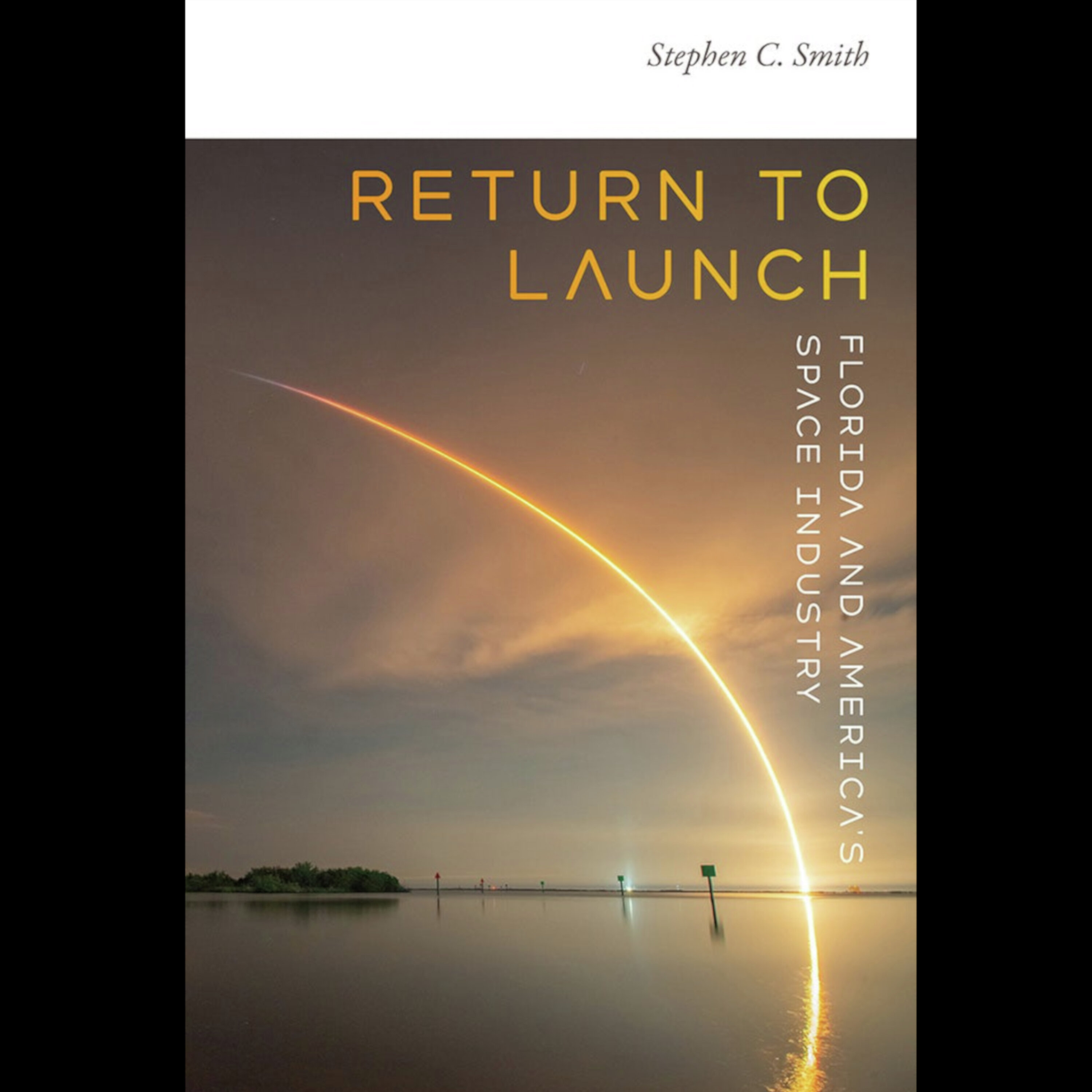
Space Policy Edition: Return to Launch — Cape Canaveral's unlikely history
What makes Cape Canaveral the center of U.S. spaceflight? The answer is a fascinating mix of geography, military strategy, Cold War politics, and a fair amount of historical accident. In this episode of the Space Policy Edition of Planetary Radio, host Casey Dreier, chief of space policy at The Planetary Society, sits down with Stephen C. Smith, author and writer behind the Substack The Space Pundit, to discuss his book Return to Launch: Florida and America's Space Industry. A longtime Kennedy Space Center Visitor Complex communicator and Merritt Island resident, Smith brings a unique perspective to the story of how a remote Florida peninsula became the gateway to the Cosmos. The conversation spans the full arc of Cape Canaveral's history, from captured Nazi V-2 rockets fired off a concrete slab in 1950, the Apollo era's dramatic economic boom and bust, and the rise of commercial spaceflight. Along the way, Smith and Dreier explore why Mexico's president inadvertently shaped U.S. launch site selection, how eminent domain built a spaceport, and what Space Florida did to help break the region's cycle of economic dependence on government programs.See omnystudio.com/listener for privacy information.

Artemis II’s AVATAR and a sungrazing comet
Artemis II is the first crewed lunar mission since Apollo 17, and riding alongside the crew is one of the most ambitious biology experiments ever sent to space. It's called AVATAR, short for A Virtual Astronaut Tissue Analog Response: tiny organ chips grown from the astronauts' own cells, flying the same trajectory around the Moon, exposed to the same deep-space radiation and microgravity as the crew themselves. Lisa Carnell, director of NASA's Biological and Physical Sciences Division, explains what this experiment could mean for the future of human exploration. Then, Alain Maury, asteroid hunter and Planetary Society Shoemaker Near-Earth Object grant recipient, tells the story of how his MAPS survey in Chile's Atacama Desert spotted a faint, fuzzy object that turned out to be something extraordinary. C/2026 A1 (MAPS) is a sungrazing comet now falling toward the Sun on a path that will bring it within 162,000 kilometers (100,000 miles) of the solar surface on April 4th. If it survives that encounter, it could become one of the most spectacular comets in decades. And finally, Planetary Society Chief Scientist Bruce Betts joins us for What's Up, including how to spot the comet yourself, if it makes it through. Discover more at: https://www.planetary.org/planetary-radio/2026-avatar-and-sungrazerSee omnystudio.com/listener for privacy information.
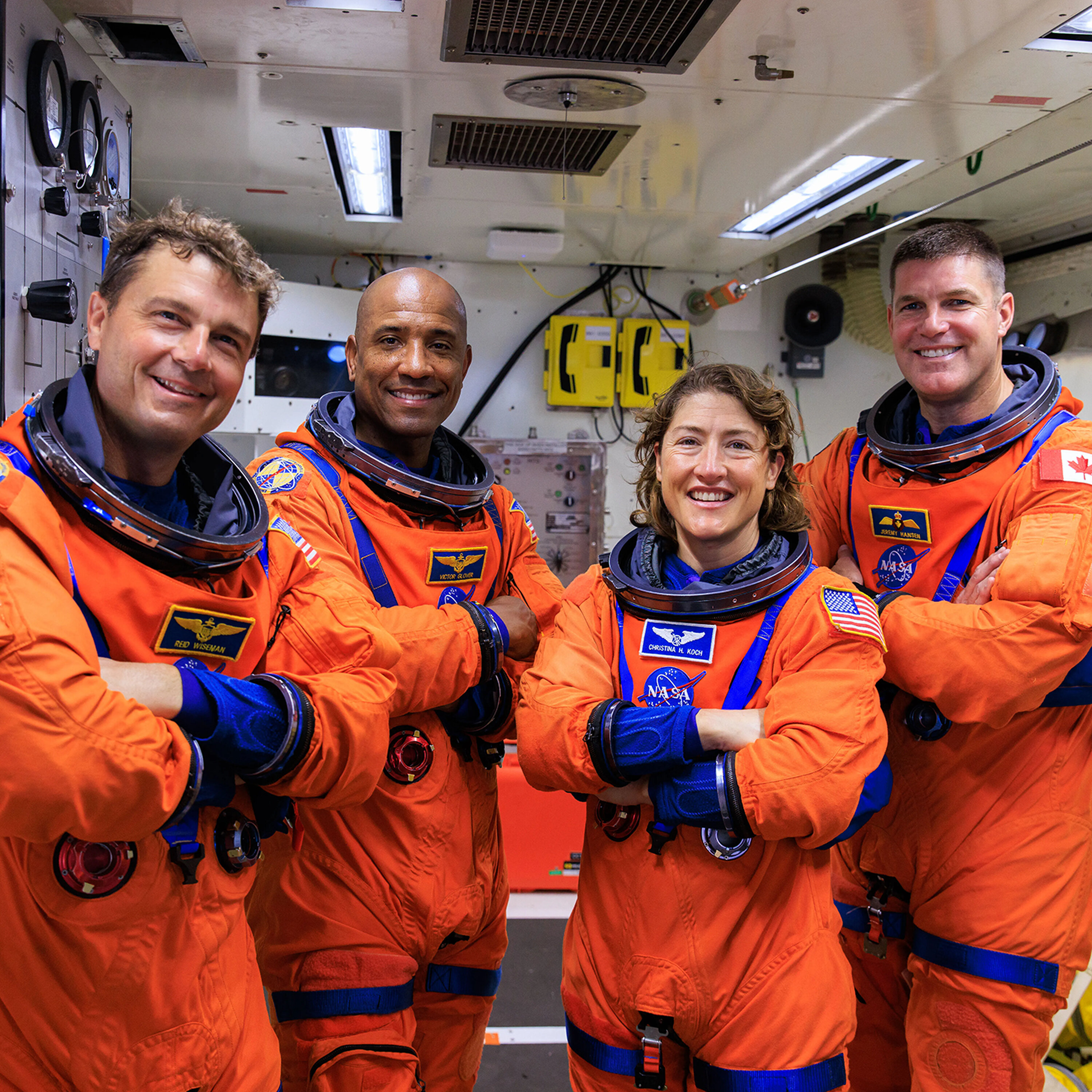
The astronaut health experiments of Artemis II
Artemis II is about more than getting four humans to the Moon and back. It's an opportunity to gather data on human health in deep space that we haven’t had in over 50 years. This week, we’re joined by Steve Platts, chief scientist of NASA's Human Research Program, who walks us through the suite of human health experiments flying aboard Artemis II, from the ARCHER wearable sensors tracking crew health and team dynamics, to dry saliva swabs measuring stress hormones. Then Casey Dreier, chief of space policy at The Planetary Society, helps us make sense of NASA's Ignition Day, a major press event held on March 24 in which the agency unveiled sweeping changes to its lunar exploration plans and beyond. And we close with Bruce Betts, chief scientist of The Planetary Society, in our weekly What's Up, where we explore one of the stranger phenomena in human spaceflight, the flashes of light astronauts sometimes see when cosmic rays pass through their eyes. Discover more at: https://www.planetary.org/planetary-radio/2026-astronaut-health-experiments-artemis-iiSee omnystudio.com/listener for privacy information.