Planet: Critical
242 episodes — Page 2 of 5
Nuclear and Justice | Jessica Lovering
If not nuclear, then what else? This is Jessica Lovering's question, co-founder of the Good Energy Collective. She says the most important thing is to lift one billion people out of energy poverty. To do that, we need a low carbon source of energy without intermittency issues. Because of this, she says, nuclear is a form of environmental justice. Jessica begins by explaining the historical and current dynamics, regulatory issues, financial challenges, and technological advancements in nuclear. We then address the potential and complexities of nuclear power in addressing climate change, managing energy needs, and ensuring energy equity. We also explore community consent, nuclear waste management, geopolitical implications, employment impacts, before discussing whether or not nuclear is worth the risk in an increasingly unstable world.Planet: Critical is 100% independent and community-powered. If you value it, and have the means, become a paid subscriber today! Get full access to Planet: Critical at planetcritical.substack.com/subscribe
Decarbonising the War Machine | Sherri Goodman
The U.S Military is going green. But what does that mean? Decarbonised bases, hybrid vehicles, micro electricity grids, recycling methane gas. In fact, the U.S military is doing what climate activists are crying out for governments to do—everything, that is, except changing their overarching strategy. In a mind-bending example of how climate action can be taken when the purpose fits the status quo, the U.S military is ahead of the curve when it comes to taking this problem seriously. I'm joined by Sherri Goodman, Secretary General of the International Military Council on Climate and the U.S first ever Under Secretary of Defence (Environmental Security) to discuss how the military is approaching the climate crisis. She explains what happens when a climate-denying administration disagrees with the military's prognosis, the steps they're taking to decarbonise, and the purported necessity for defence during times of resource scarcity. We then debate the reality of the big picture: Is such action truly sustainable if we're not addressing the big picture drivers which create the conditions for violence and conflict?Planet: Critical is 100% independent and community-powered. If you value it, and have the means, become a paid subscriber today! Get full access to Planet: Critical at planetcritical.substack.com/subscribe
How Net Zero Killed 1.5 | James Dyke
The Paris Agreement is dead. The celebrated target marked in ink in 2016 has been killed by the focus on technocratic solutions over systemic change. Now, rather than address the frightening reality spawned by delusion and incompetence, we're heading even faster towards two degrees—and that being the new acceptable target. Earth system scientist James Dyke explains that we cannot allow this new target to be set, which the fossil fuel industry is pushing for. This is James' second time on Planet: Critical. Just a few years ago, I interviewed him about the dangers of Net Zero policies and how these carbon accounting tricks were on course to send us over the 1.5 degree limit. Many scientists were chorusing that warning. Their concerns were not heeded and just three years later, we're on course for a truly dangerous future. In this episode, James explains how we got here, what we've done wrong, and what will happen if climate policies don't rapidly address the structural inequalities and waste of both our energy and economic systems. Planet: Critical is 100% independent and community-powered. If you value it, and have the means, become a paid subscriber today! Get full access to Planet: Critical at planetcritical.substack.com/subscribe
The Plastic Crisis | Jane van Dis
We can’t harm the planet without harming ourselves.Plastic. It’s ubiquitous. We are now learning it’s also insidious. Plastic is linked to numerous serious health conditions, from cancers to heart disease. It’s changing our DNA—and now babies are being born pre-polluted.Jane van Dis is a medical doctor, academic and co-founder of ObGyns For Sustainable Future within Healthcare Without Harm. She joins me to explain the myriad impacts of plastic on the body, the collusion she has investigated between the petrochemical industry and government, how the fossil fuel industry got society hooked on the stuff, and the medical industry’s own plastic pollution problem. This is a jaw-dropping episode, exemplary both of the systems of harm we are forced to live in, and how civic advocacy begins when we take care of one another. For Jane, her journey began when she asked the question: Why are my patients getting sicker?Planet: Critical is 100% independent and community-powered. If you value it, and have the means, become a paid subscriber today! Get full access to Planet: Critical at planetcritical.substack.com/subscribe
The Green Washing Machine | Veronica Bates Kassatly
What happens when an industry regulates itself?Bad science, opaque methodologies, incorrect conclusions—and few questions asked. The fashion industry has spent over 10 years drafting sustainability guidelines under the guise of independent analysis which protect brands’ bottom lines. Thanks to an elaborate network of organisations, think tanks and funders, these guidelines have even made their into Law around the world. The problem? They’re unscientific. Veronica Bates Kassatly is an economist and sustainable fashion consultant I met whilst investigating this story in 2022. Despite the extent of fashion’s greenwashing making international headlines years ago, little has come on since, as Veronica explains in the episode. We discuss the manipulation of sustainability metrics by the fashion industry to promote polyester fibre as sustainable, the deficiencies in current methodologies, and the impact of EU regulations on global trade, particularly for producers in the Global South. The episode highlights the interplay of economics, legislation, and industry incentives in perpetuating unsustainable practices, urging for inclusive discussions and genuine sustainability measures.Planet: Critical is 100% independent and community-powered. If you value it, and have the means, become a paid subscriber today! Get full access to Planet: Critical at planetcritical.substack.com/subscribe
The Energy Collapse | Louis Arnoux
What happens when economics takes precedence over thermodynamics?Eventually, the system collapses—because being incompatible with thermodynamics is impossible. That’s the stark message of this week’s guest, Louis Arnoux, a scientist, engineer and managing director of Fourth Transition, who has been working on this problem for decades. Louis and his team’s research point to our energy systems collapsing by 2030 because we’re having to spend more energy than ever before to extract fuel. Soon, the energy cost of extraction will equal the energy benefit. Such an equilibrium is, in his words, a dead state. In the episode, Louis gives a phenomenal overview of the three thermodynamic traps human civilisation is caught in, including how decarbonising to renewables is exacerbating the thermodynamic problem. He explains how our current energy systems work antithetically to the sun and the planet, including the waste problem, before highlighting the role of economics in the creation of an impossible system. He then explains what a possible energy system could look like with the technology we have available, and how we can engineer that system to mimic the efficiency and productivity of life on the planet. Planet: Critical is 100% independent and community-powered. If you value it, and have the means, become a paid subscriber today! Get full access to Planet: Critical at planetcritical.substack.com/subscribe
E-Topia | Deep Dhillon
Can we engineer our way out of dystopia? A.I. technologist Deep Dhillon and I had a heated exchange about technology after meeting by chance in Granada after a flamenco performance. The conversation was fascinating, and I invited him onto the show to discuss what's really going on in Silicon Valley around A.I., what developments are being made and why, and how this technology is going to impact us all. As a cofounder of Xyonix and host of the podcast, Your A.I. Injection, Deep has decades of experience working on A.I. models. He explains his vision for a brighter future facilitated by technology, but equally explains the negative impacts of technology not just on society but on the industry itself which is racing to keep up with its own developments. This is a wide-ranging conversations about systems, tech, the economy and collective responsibility for engineering a better future for us all.Planet: Critical is 100% independent and community-powered. If you value it, and have the means, become a paid subscriber today! Get full access to Planet: Critical at planetcritical.substack.com/subscribe
The Rights of Nature | Mongabay Newscast
This week, P:C features Mongabay.Nations across the globe are trialing “rights of nature” laws and “legal personhood” for various ecosystems and a range of reasons, from Indigenous reconciliation to biodiversity protection. While these two concepts are closely related, they have some key differences.Viktoria Kahui discusses what distinguishes them and how they’ve been used for conservation, while stressing there’s still little evidence that legal personhood protects biodiversity. Kahui is an environmental and ecological economist at the University of Otago in Aotearoa New Zealand and joins the Mongabay Newscast to interrogate these legal frameworks.In this conversation with co-host Rachel Donald, Kahui outlines instances where the laws have been applied and why, despite some flaws, she thinks they are worth considering and iterating upon to combat environmental degradation, despite a global debate and many critiques, based on their intent and design. Chief among these is their imposition of an anthropocentric (and primarily Western) legal viewpoint upon something as complex as nature, which transcends the confines of human liability and, therefore, cannot be subjected to it without knock-on effects that potentially harm the people these laws are intended to empower.Kahui weighs in on this debate and where she sees such laws being applied in a promising fashion, such as in Ecuador, where courts have examined nature in the context of established constitutional law, leading to outcomes that have benefited both people and nature.“Very slowly, as lawyers and judges are becoming more familiar with the concept, they’re able to interpret it when there is a legal case being brought, and they’re [better able to argue] the side of nature,” she says. “It’s certainly much, much more positive than what we’ve seen in the past.”Subscribe to or follow the Mongabay Newscast wherever you listen to podcasts, from Apple to Spotify, and you can also listen to all episodes on the Mongabay website.Planet: Critical is back to regular programming next week. Stay tuned. Get full access to Planet: Critical at planetcritical.substack.com/subscribe
Sick People or Sick Society? | Steffi Bednarek
How has the psychology industry perpetuated the problem? Steffi Bednarek is a climate psychotherapist working both with clients on their anxiety and depression related to climate grief, and the overarching systems within the psychology profession which stigmatises mental health by failing to grasp that poor mental health can be a rational reaction to a broken world. Steffi joins me to discuss how the dysfunction of our neoliberal economic system permeates our experience of being in the world, questioning whether health is an attainable goal in a sick society. She suggests the mental health crisis is yet another opportunity to radically transform our systems to promote a health that includes people and planet. We discuss the construct of the self, the metacrisis as a birth process, the role of the body in understanding information, and how to build psychological resilience. Planet: Critical is 100% independent and community-powered. If you value it, and have the means, become a paid subscriber today! Get full access to Planet: Critical at planetcritical.substack.com/subscribe
We Deserve Better Certainties | Natasha Lennard
Remember the adage it's easier to imagine the end of the world than the end of capitalism? Culture inculcates certainties—and only in living against them will we forge new possibilities, says writer Natasha Lennard. Changing the world from the ground up takes time, it takes bravery, it takes collective will to go against. Only power changes fast. But we can live in a world where people—not power—make changes. In this wonderful discussion on certainty, doubt and reimagining the world, Natasha, author of two books on politics and violence, walks us through how we currently conceptualise crisis and certainty, and how once we have an understanding of that conceptualisation, we can become more aware of how certainties arise from collective meaning making. This is about moving the frontiers of certainty, rejecting things that we think to be certain in order to challenge, experiment, and joyously resist violent norms. This is about how we build a new world—and remember what truly is certain: love, shelter, community, joy.Planet: Critical is 100% independent and community-powered. If you value it, and have the means, become a paid subscriber today! Get full access to Planet: Critical at planetcritical.substack.com/subscribe
Low Tech Life | Kris De Decker
What if the solutions are the problem?Life is made beautiful by the myriad possibilities that evolve—spontaneously—from interactions in the world. A look shared between strangers, a joke passed from customer to barista, a story swapped, a birdsong heard. But these possibilities are diminishing with every tech substitution for interaction. Tech gets in the way. I'm joined by journalist and founder of Low Tech Magazine, Kris De Decker, to discuss the difference between high tech and low tech; the zealous and unfounded faith in tech crippling our climate decisions; the relationship between tech, finance, economies and state control; and how a low tech lifestyle is liberating. This is a beautiful conversation with someone really walking the walk when it comes to sustainability—and reaping the rewards.Planet: Critical is 100% independent and community-powered. If you value it, and have the means, become a paid subscriber today!References: Brett Scott and Altered States of Monetary Consciousness: Get full access to Planet: Critical at planetcritical.substack.com/subscribe
Crisis of Mastery | Bayo Akomolafe
How do we come home to our bodies? Bayo Akomolafe is a philosopher writer, activist, professor of psychology and executive director of the emergence network. He's the author of 'We Will Tell Our Own Story' and 'These Wilds Beyond Our Fences: Letters To My Daughter on Humanity's Search for Home'. Bayo is an extraordinary poet artist, linguistic dancer, who seems to revel at the very edge of thought, holding up fractal mirrors with which we can see ourselves in splendid possibility and wounded reality. He has a way of speaking that invites both the past and the future to pick up the spirit of the present and remind it not to be weighed down by all that it thinks it is. In this conversation, Bayo talks about the crisis of mastery that we face today: white modernity and the edge of the moral field into which we must dance and play and revolt. He describes cracks as innovation; the pragmatic of the useless; the minor gestures which disrupt; and edge as a place of power. This is a conversation about carnival and bodies, on de-territorialising our senses, on emerging with reality, on relating, and on coming home.Planet: Critical is 100% independent and community-powered. If you value it, and have the means, become a paid subscriber today! Get full access to Planet: Critical at planetcritical.substack.com/subscribe
Building Trust | Nate Kinch
How can businesses make better decisions?The corporate world needs new values, values that inspire different motivations for existing. But doing so within the existing framework of driving shareholder value is so complicated that many are claiming it can't be done. Socio-technological ethicist Nate Kinch is trying anyway.Nate works at the intersection of values and technology, working on redesigning corporate values by focusing on building trust and morality within organisations. We discuss this at length, and whether or not business is capable of designing its own decay or degrowth due to a wider ecological imperative. We also discuss the drivers of this corporate crisis, including the story of separation.Support journalism for a world in crisis. Get full access to Planet: Critical at planetcritical.substack.com/subscribe
Climate Change as Class War | Matt Huber
The global majority are not responsible for global warming. A tiny percentage of the world's population are in positions of power, making decisions that impact the entire planet. These are the people who own and benefit from the fossil-fuelled means of production. Professor Matt Huber says taking power back from them is a class struggle—and cannot be done without building working class power. Building on arguments from his book, Climate Change as Class War, Matt says that rather than focusing on elite consumption we should target elite production, making material arguments for systems change that the working class can relate to. He also explains what the professional class of environmentalists fail to grasp about working class voters, why capital ignores public infrastructure, and why a Green New Deal is the only way to combat petro-privatisation.Support journalism for a world in crisis. Get full access to Planet: Critical at planetcritical.substack.com/subscribe
The Sixth Mass Extinction | Peter Brannen
The carbon cycle is more dangerous than an asteroid.An asteroid killed the dinosaurs but unstable carbon cycles caused the worse mass extinctions in earth’s history—and we are putting carbon dioxide into the air at a rate the earth has never seen before.I’m joined by science journalist Peter Brannen, author of The Ends of the World, to discuss how the carbon cycle has caused five out of the six mass extinction events — with the worst taking 10 million years for the planet to recover. Peter says all the drivers point that we are hurtling towards a sixth mass extinction if we don’t change rapidly change course, an event totally unprecedented in its man-made nature. This is an experiment in planetary systems going horribly wrong. We still have time to stop. If we don’t, the results could change the planet beyond recognition. Planet: Critical is 100% independent and community-powered. If you value it, and have the means, become a paid subscriber today! Get full access to Planet: Critical at planetcritical.substack.com/subscribe
How A.I. is Driving Policy | Paul Schutze
A.I. is here—except it isn't. Or is it? A.I. is all over the news all of the time, and nations are scrambling to win the race and become the world leaders in this technology which we're told will change the world. This belief, this myth, is driving policy, investment, hype and conferences. It's the myth that is making A.I., a technology which has consistenly been over-promised and failed to deliver. Yet, nobody is asking if we want the changes we're told A.I. will deliver. The assumption is the future will be artificially intelligent. This means that other critical problems are falling off the agenda which is now dominated by the race towards a hyper-technological future—no matter the costs. Researcher Paul Schütze joins me to explore how these myths are making A.I. into a reality, with no consideration as to whether or not we want that reality. He explains the true cost of this A.I. futurism on the environment, social cohesion, and even our imagination. Planet: Critical is 100% independent and community-powered. If you value it, and have the means, become a paid subscriber today!Books referenced: Rethinking Racial Capitalism Get full access to Planet: Critical at planetcritical.substack.com/subscribe
Climate Reparations | Esther Afolaranmi
Reparations provide legal rights.So argues lawyer and humanitarian, Esther Afolaranmi. Esther is the founder of the Golden Love and Hands of Hope Foundation in Nigeria, working on women’s liberation, girls’ education and lobbying the UN to meet the climate pledges promised at COP meetings. Esther joins me to discuss the links between climate, family planning, social justice and explains the corruption in Nigeria preventing the country from moving past the legacies of extraction and colonialism.Esther explains that climate reparations are not about money, but about granting equal legal rights to the world’s most vulnerable communities. She also says that as long as unethical leaders break the promises made at climate conferences, those communities will be forced to take more desperate action to secure their futures. Get full access to Planet: Critical at planetcritical.substack.com/subscribe
Doing the Right Thing | Gianluca Grimalda
What would you lose to take a stand?Gianluca Grimalda, a climate change researcher, lost his job after he refused to fly back from fieldwork in Papua New Guinea. Gianluca has been “slow travelling” for decades. He thinks his former employer tried to make an example out of him because of his climate activism. It’s one of those stories that reveals the madness of the world—he was sent to research how vulnerable communities are responding to climate change as the seas consume their villages, and then told he could no longer continue that research if he did not commit an act of harm.He joins me to share the preliminary results of his fieldwork and tell this incredible story: his activism, the threats of dismissal, the ongoing fight with the institute, and the incredible journey from Bougainville to Germany by ferry, train and coach. This is a tale that reminds us that some things are less complicated than we are led to believe—and that we cannot rely on our institutions for moral clarity.Watch the film made about Gianluca’s journey here.Support journalism for a world in crisis. Get full access to Planet: Critical at planetcritical.substack.com/subscribe
The Body Politic | Ranu Mukherjee
Our bodies know what words fail to describe.Shifts in culture, ravages of violence, ruptures and reconciliation—the body politic lives in our own bodies, informing and inhibiting our experience in the world. Yet, we fail to recognise this connection, and the even wider one of our own bodies as part of the earth's system, which is experiencing great violence and chaos. We need to reconnect with our bodies.Ruptures is just one of the themes Ranu Mukherjee explores as an artist. She joins me to discuss this, and the somatic experience, deep time, the lives of plants, and the violence that ripples out through society. We explore the limitations of connection in economies of scale, how this informs our power hierarchies, and the violence we then internalise, which leads us to a beautiful conversation on uncertainty.Support journalism for a world in crisis. Get full access to Planet: Critical at planetcritical.substack.com/subscribe
The Symbolic Species | Terrence Deacon
We belong to our symbols as much as they belong to us. Like the planetary environment, our relationship with language and symbols has impacted our culture, even our biology, argues Professor of Anthropology, Terrence Deacon. Our capacity for interpretation allows us to understand one another and work as a collective mind, explaining the incredible leaps our species has made—and also the trouble we’re in. Terrence joins me to explain our relationship to symbols and how they evolve with the world. We then discuss what happens when our symbols get stuck, or disconnected, simplifying into ideological constructs which fix our identities. Planet: Critical is 100% independent and community-powered. If you value it, and have the means, become a paid subscriber today! Get full access to Planet: Critical at planetcritical.substack.com/subscribe
Energy Wars | Art Berman
Whoever controls the energy supply controls the new world order.Russia and China are deepening their relationship, Western allies in the Middle East are joining the fossil-fuelled BRICS alliance spanning the globe, and the Wagner group is loosening Europe’s grip of Africa. The tectonic plates of geopolitics are shifting along new fault lines as rising powers focus on securing resources while the old Empire in the West pretends it can decouple economies and energy. The world is at war, but only one side is being honest about what for. Acclaimed energy expert Art Berman says this is the culmination of millennia of human fallibility. This is a conversation that takes us from 3000 BCE and the discovery of what he calls the most disruptive technology humans ever had right up to today and the energy wars blooming around the world. We discuss our psychological disposition to immaturity, our cognitive shortcomings when examining complexity, the secrets of holy texts and even morality. Art explains how energy is reshaping geopolitical alliances, which leaders understand the reality of our situation, and why technology cannot solve our problems. Planet: Critical is 100% independent and community-powered. If you value it, and have the means, become a paid subscriber today! Get full access to Planet: Critical at planetcritical.substack.com/subscribe
The Thermodynamics of Degrowth | Tim Garrett
What's the relationship between our energy consumption, our material footprint and our economies?Tim Garrett and I come to refer to these as “the holy trinity”. Tim is a Professor of Atmospheric Sciences at the University of Utah, and over two years ago, he joined me to discuss the thermodynamics of collapse, where he explained his research into the behaviour of snowflakes and how you could extrapolate the behaviour of economies and civilization using the laws of thermodynamics. He's back on the show to explain how we use our energy, the necessity of a surplus of energy and how all of this relates to a society's growth and health.In this conversation we discuss questions like: Will renewables facilitate an increased consumption of fossil fuels? Can we reduce inequality by reducing energy consumption? How can we organise a wave-like civilisation, which grows and decays within safe boundaries? Can we decline in order to recover before crashing completely? Get full access to Planet: Critical at planetcritical.substack.com/subscribe
Reimagining A.I | John Wild
What does artificial intelligence have in common with eugenics? The first person to float the idea of a "general intelligence" was a eugenicist who was determined to rank intelligence according to race. This is just one of the legacies of A.I., a technology which Silicon Valley vehemently promises will transform the world, but which for now only consumes enormous quantities of energy. Despite the warnings from technologists around the world, for-profit companies are racing to develop A.G.I. no matter the costs. Artist John Wild has traced the deep history of A.I., finding its roots in disturbing schools of thought which seek to raise the dead. He's also found where these histories are alive and kicking in C-Suite boardrooms. He joins me to reveal the disturbing imaginaries associated with A.I., and how we can begin to reimagine it as an entangled, decentralised, collaborative tool to create new ways of being.Planet: Critical is 100% independent and community-powered. If you value it, and have the means, become a paid subscriber today! Get full access to Planet: Critical at planetcritical.substack.com/subscribe
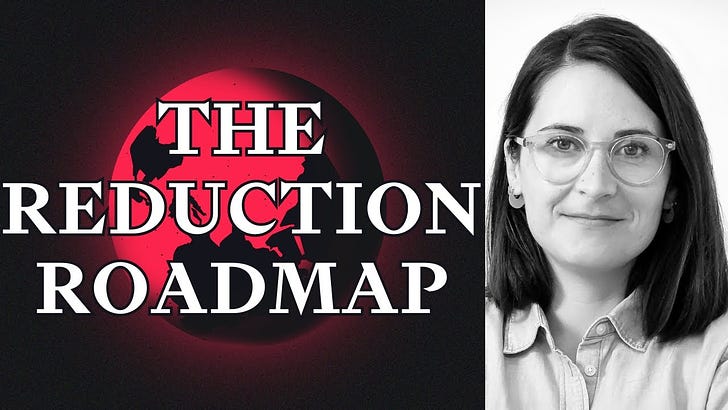
The Reduction Roadmap | Dani Hill-Hansen
Who takes the initiative when governments fail to ask?Amazingly, in Denmark, an industry is lobbying its government for much tighter regulations to absolutely reduce emissions in order to meet the Paris Agreement. Stakeholders across the entire Danish building industry have agreed to an ambitious reduction roadmap tafter a team of architects undertook an independent review of government policies. They found that global building emissions must be reduced by 96% to limit global warming, and are currently lobbying for an emissions cap of carbon dioxide kilograms per meter squared.I'm joined by Dani Hill-Hansen, sustainable design engineer, architect at EFFEKT, and co-author of the Reduction Roadmap. She explains the findings of their research, the ambitious targets of the roadmap, how they got 540 stakeholders across the industry to sign on, and the methodology of "brand activism" they've developed alongside this project to kickstart other industries across the globe to initiate necessary climate action. Get full access to Planet: Critical at planetcritical.substack.com/subscribe
The Politics of Food | Chris Smaje
What’s the future of food?Last year, two of my former podcast guests had a long and very public disagreement about the politics of food, locking horns over the utility of farming in a densely-populated world. Activist and writer George Monbiot has written extensively about lab-grown food and the need to revolutionise our food systems with technology so that we can better feed everyone. Farmer and academic Chris Smaje has argued that farming is a critical component of community autonomy, and wrote a book in response to George’s own, Regenesis, criticising the vision as “eco-modernist”. George hit back that Chris’ proposal is a “cruel fantasy”.I watched this unfold online, worried to see two experts disagree so deeply on something fundamental to how we organise society, and invited Chris back to talk about this second book, Saying No To A Farm-Free Future. Chris explains how our food production systems are emblematic of our crisis of relationship to the earth. He argues that de-materialising our food supply plays into the colonial history of uprooting people from the land and denigrating agriculture. This leads us to discuss land, language, and culture, decentralising power, and the political binaries that could be dissolved by grounding our thinking in the land.Correction: The previous version of this interview stated that the debate between George Monbiot and Chris Smaje was around lab grown meat instead of lab grown food. Get full access to Planet: Critical at planetcritical.substack.com/subscribe
Designing Collective Security | Olivia Lazard
We’re breaking all kinds of records at the moment: cities are boiling at 62C, ocean temperatures are literally off the charts, and governments have increased the global defence budget to an alarming $2440 billion.War costs life, and not just human life. The environmental impacts of war are colossal, with one study already showing that the first few months of Israel’s assault on Gaza emitted more carbon dioxide than 20 climate-vulnerable nations do in one year. Our ecosystems are at their breaking point, with six of nine planetary boundaries crossed. We need global collaboration to commit the huge systems overhaul necessary to survive the planetary crises and mitigate the catastrophic decisions of the last centuries.Olivia Lazard, research fellow at Carnegie Europe, joins me to discuss just how complex that task is, detailing the five steps of the Anthropocene and how violence increases at each step. We discuss these legacy systems of extraction and violence and how they are embedded into decisions being made around A.I., creating security risks in a resource-scarce world. We also cover the dematerialisation of our economies, the myths that blind us to energy and materials, before discussing the balance of power tipping our planet and human systems further into crisis.Planet: Critical is 100% independent and community-powered. If you value it, and have the means, become a paid subscriber today! Get full access to Planet: Critical at planetcritical.substack.com/subscribe
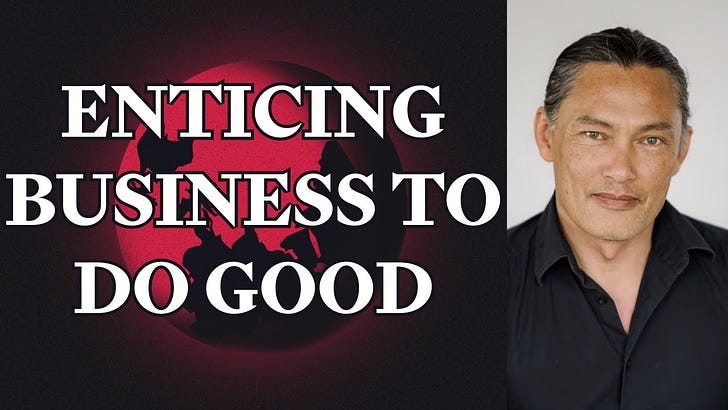
Global Carbon Reward | Delton Chen
Can the market do the right thing?Not without supportive policy. Market-based solutions do not have a good track record when it comes to climate, stuck as they are within an exploitative economic framework. But, equally, we cannot just do away with markets, which have existed for millennia in many different forms. They need revolutionised, not abandoned. Civil engineer and geo-hydrologist Delton Chen joins me to discuss the Global Carbon Reward, a policy for managing climate-related risk. Described as a “carrot policy”, Delton says the GCR incentivises polluting industries to reduce their emissions whilst encouraging the private market to invest in research and development of mitigation technologies. This conversation is filled with nuance, technicality, analysis and discussion on the viability of market-based solutions in a market that drives perverse incentives. Planet: Critical is 100% independent and community-powered. If you value it, and have the means, become a paid subscriber today!You can also listen to my latest episode of the Mongabay Newscast where I spoke with Dahr Jamail about the resource wars driving climate-fuelled conflict. Get full access to Planet: Critical at planetcritical.substack.com/subscribe
Social Tipping Points | Erin Remblance
Here’s the good news: People can change—quickly.Sometimes it feels impossible to imagine anything other than collapse with the way our energy systems are designed, the corruption in governance, and the financial motives which skew the present system towards profit over everything else. It’s true that if nothing changes, the global system will collapse. But it’s also true that people are capable of amazing feats of imagination and adaptation—especially social imagination. This week I’m joined by Erin Remblance, degrowth advocate and co-founder of ReBiz, an “un/school” designed to equip all people with the worldview and skills to create regenerative and pluriversal post-growth futures. ReBiz offers a core course on social tipping points and Erin joined me to discuss exactly that: What are social tipping points? And, importantly, how do we create them? This is a conversation about technology, economy, imagination, politics and a just transition—because most people are good people. Planet: Critical is 100% independent and community-powered. If you value it, and have the means, become a paid subscriber today! Get full access to Planet: Critical at planetcritical.substack.com/subscribe
Global Oil Depletion | Alister Hamilton
When do you think we’ll run out of oil?2050? 2100? Never? That’s understandable given the IPCC models access to oil until 2100; politicians like Rishi are betting big on North Sea deposits. Petroleum is the life blood of our global economy, and it’s difficult to imagine it drying up. More often, when we talk about transitioning away from fossil fuels, it’s because of the necessity to limit global warming—not because we run out.But a team in Scotland are warning exactly that—we’re running out. Fast. Alister Hamilton is a researcher at the University of Edinburgh and the founder of Zero Emission Scotland. He and his colleagues self-funded research into oil depletion around the world and the results are shocking: We will lose access to oil around the world in the 2030s. They calculated this by establishing the Energy Return On Investment (EROI) and found that whilst there will still be oil deposits around the world, we would use more energy accessing the oil supply than we would ever get from burning it. This is because we’re having to mine further into the earth’s crust to access lower-grade oil. According to their calculations, the oil in the North Sea will be inaccessible—in a dead state—by 2031, and the oil in Norway by 2032. Around the world, oil reserves see the same trend through the 2030s.Petroleum is the life blood, and we haven’t yet built out a different circulatory system to support renewable energy—in less than a decade, the world as know it could crash. © Rachel DonaldPlanet: Critical is 100% independent and community-powered. If you value it, and have the means, become a paid subscriber today! Get full access to Planet: Critical at planetcritical.substack.com/subscribe
The Origins of Hell On Earth | Carl Safina
I like to think of intellectual discourse as the entangled root network of an ancient tree: everything is connected to everything else. Not so much a linear march of progress but a gnarled and entangled mess from which fruits bear. This is why, despite thousands of years, some ideas don’t travel very far, but double back and loop themselves around other roots, creating something that feels solid, but may be rotten at its core.This week I’m joined by ecologist and writer Carl Safina who has spent the past few years researching that root network of cultural beliefs from all over the world, discovering profound similarities and critical differences. He explains that the main difference between Western thought and most other cultures is the disconnectedness of humankind from nature, and he traces this back to Plato’s philosophy of absolute ideals.This is my second episode with Carl. We first spoke over two years ago when he was deep in the process of researching his latest book, Alfie and Me: What Owls Know, What Humans Believe. That conversation was truly fundamental to my own thinking, so it was a real joy to have Carl back on the show now that the book is out. This conversation goes begins with Plato, takes us through the delightful common threads that weave together most human cultures, and ends with Carl explaining how this rift between humans and nature results in the perverse incentives in our psychotic system today.Planet: Critical is 100% independent and community-powered. If you value it, and have the means, become a paid subscriber today! Get full access to Planet: Critical at planetcritical.substack.com/subscribe
The Psychological Transition | Jonathan Mille
We need to confront political impossibility.A few months ago, I was sitting on a train bashing out a furious article about the British government’s climate incompetence. The man next to me was in a zoom call on climate change, vigorously shaking his head. I couldn’t help but ask. That’s how I met today’s guest, Jonathan Mille, a researcher at University College London’s Climate Action Unit, where he studies systemic risk and the impact of our interdependent global systems on climate change response. Jonathan focuses much of his attention on the physical and political possibility of the energy transition, and in today’s episode we discuss that exact tension between what is physically possible and what is politically possible. We explore the narrative challenge we face as a society, along with the distinct knowledge gaps found in industry, policy circles and business which create blind spots of psychological vulnerabilities, impeding the necessary psychological transition. © Rachel DonaldPlanet: Critical is 100% independent and community-powered. If you value it, and have the means, become a paid subscriber today! Get full access to Planet: Critical at planetcritical.substack.com/subscribe
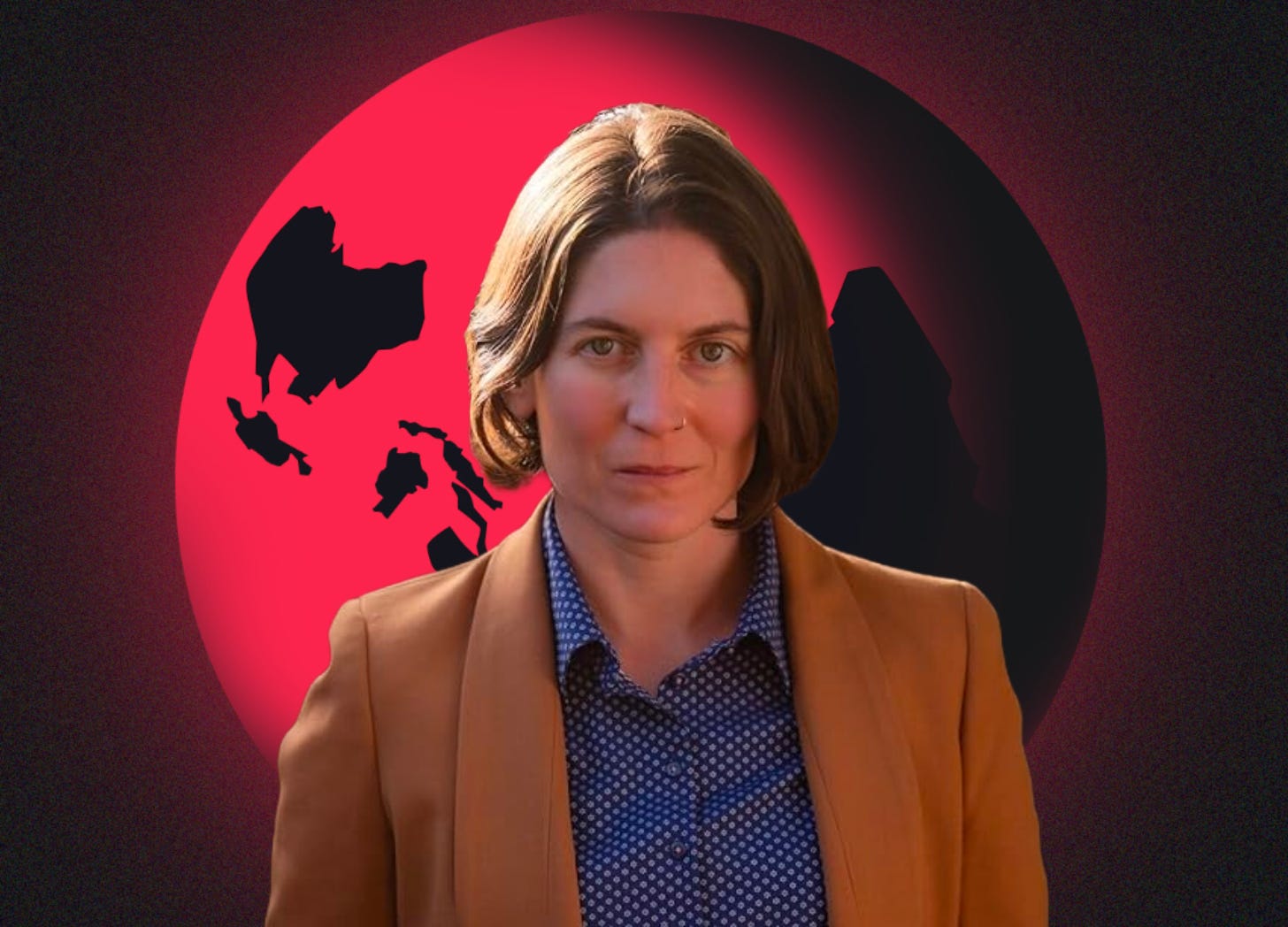
Rewilding the Earth to Rewild Ourselves | Laura Martin
We need to restore our own ecology.That doesn’t just mean fencing off parts of the earth into “nature conservation” spaces because, as this week’s guest Laura Martin points out, what does that say about the space on the other side of the fence? That human spaces are unnatural? Or that they don’t deserve to be protected?Laura is an environmental historian, Assistant Professor of Environmental Studies at Williams College, and author of the extraordinary book, Wild by Design: The Rise of Ecological Restoration. She joins me to discuss how policies create crises, not just abstract notions of neoliberalism, fossil-fuelled capitalism, and industrialisation. She says that environmental policies offer us alternatives to our present. So which ones can we use to build a world that protects both ourselves and the species with whom we share this planet? We then discuss at length the difference between conservation and restoration, with ecological restoration—rewilding—offering a politics of care that sees humanity collaborate with fellow species to promote ecological well-being everywhere, from the grasslands to the inner city. © Rachel DonaldPlanet: Critical is 100% independent and community-powered. If you value it, and have the means, become a paid subscriber today! Get full access to Planet: Critical at planetcritical.substack.com/subscribe
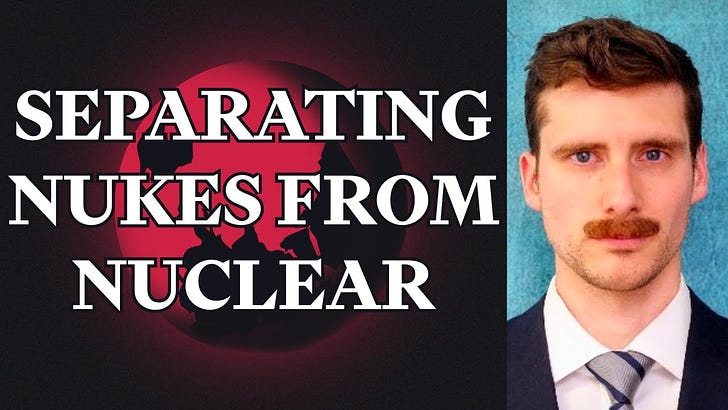
Is Nuclear the Answer? | Mark Nelson
Nuclear: The perfect energy or perfect weapon.There are such widely-held—and understandable—fears surrounding nuclear that in 2023 the Green party in Germany were instrumental in decommissioning the nation’s final plants—in the middle of an energy crisis. The environmentalists in the sixtoies and seventies were key to the anti-nuclear movement which swept the world, with France one of the only nations to resist the calls to shut down the reactors for fear of states weaponising the waste. That decision means France is now one of the only energy resilient nations in Europe.There are obvious benefits to nuclear, and a new generation of nuclear engineers desperate to prove it. Mark Nelson is one of them. An engineer and consultant in the energy transition, Mark joined me to dispel myths around nuclear, where he believes the backlash started, and how we can transform existing fossil fuel infrastructure into truly renewable energy. We cover a lot in this conversation—including a couple of disagreements on the social and political angles—and there’s a lot to be mined in the episode. It certainly won’t be the last one on nuclear energy. Get full access to Planet: Critical at planetcritical.substack.com/subscribe
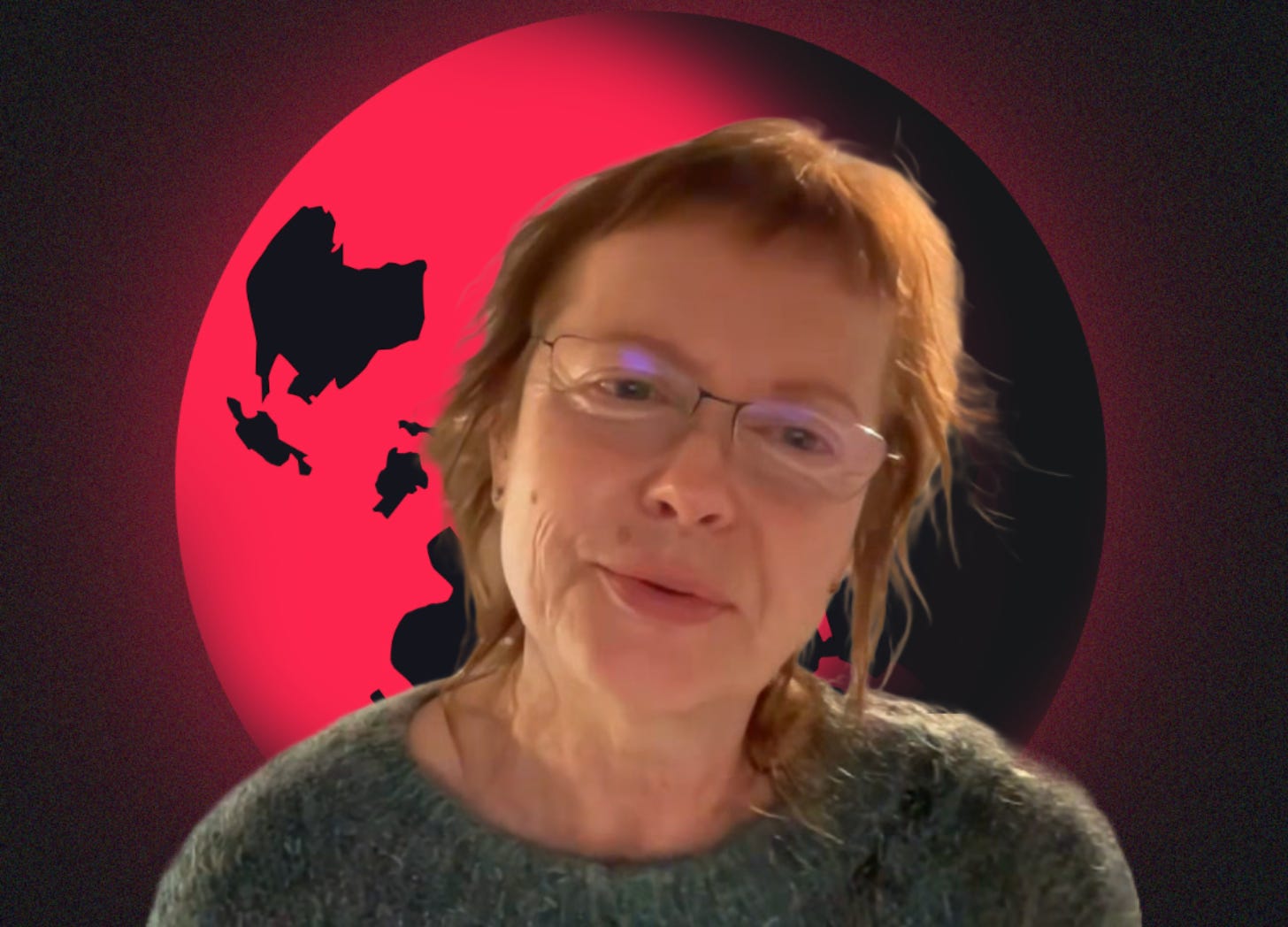
Art, AI and Octopus | Mer Maggie Roberts
Could AI be a natural intelligence?Artist Mer Maggie Roberts, cofounder of the collective Orphan Drift, has been investigating how the natural world can inspire technological development to resist continuing anthropocentrism. The more-than-human world has so many perspectives to offer which could open our eyes to our own blind spots, and encourage a politics of care, stewardship and understanding. We need diversity, more than ever, and not limited only to human experience. But AI, an unknowably powerful tool, is being coded in man’s image, with all the biases, reductionisms, flaws and dispassion we exhibit.Maggie sought to open up the fields of possibility with a project that imagines training an AI model on the experience of an octopus. Octopi are multi-perspectival creatures, boasting one brain in each leg and a ninth, central brain in their body. The way they experience the world is complex, nuanced and utterly different to our own experience. Building technology which reflects rather than consumes the natural world could be a critical tool in marrying man’s relationship to the wider world, which we discuss in this wonderfully wide-ranging and nuanced conversation on the role of art in a crisis.Planet: Critical is 100% independent and community-powered. If you value it, and have the means, become a paid subscriber today! Get full access to Planet: Critical at planetcritical.substack.com/subscribe
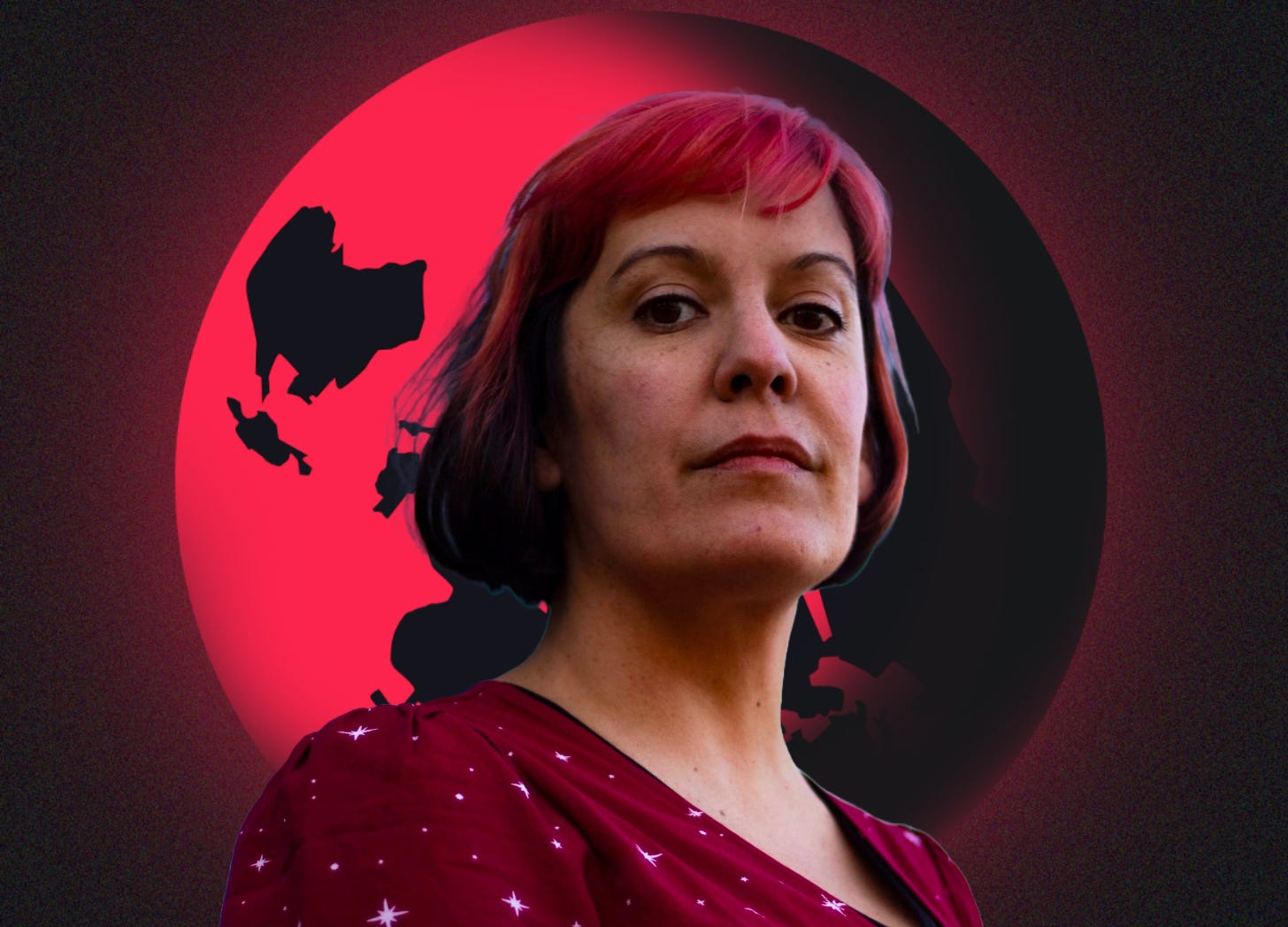
Climate Corruption | Amy Westervelt
Truth is stranger than fiction—but fiction is better written.We know their playbooks and their networks, but the bad guys of this story are in no rush to change their tactics. From funding dodgy research to bleating lies on prime time television, the fossil fuel industry and its allies are audaciously villainous. They’d been getting away with it for decades—but now independent media has them running scared.Amy Westervelt is an award-winning investigative climate journalist and media founder with 20 years on the climate beat. Her investigations have exposed the worst crimes of the fossil fuel industry, and she now leads an international team of climate reporters at Drilled who uncover the connections between governments, industry and policy.She joins me today to discuss their recent exposé of The Atlas Network, the shadowy ecosystem of think tanks pushing for the criminalisation of climate activists all around the world. Amy explains the roots of the network’s beginnings in World War Two, its rapid expansion as neoliberalism sunk its teeth into global politics, and its vast grip today on policy-makers around the world. This is a startling conversation, revealing the terrifying reach of right-wing extremism and corporate capture, with Amy suggesting the only path forward may indeed be revolutionary.Planet: Critical is 100% independent and community-powered. If you value it, and have the means, become a paid subscriber today! Get full access to Planet: Critical at planetcritical.substack.com/subscribe
Trauma, Power and Stories | Paddy Loughman
If society is sick, how do we heal?The idea of an “original trauma” bears similarities with the concept of an “original sin”: We fell, from grace, and have suffered ever since. The sinner, traumatised, cannot find his way back into paradise. The devil whispers in his ear. Hurt people hurt people.Wisdom suggests there may be some truth to these tales. That a portion of humanity aeons ago faced terrible strife and were traumatised to the extent their relationship with the world suffered, and they became extractive accumulators, unable to trust in the gift of life, suspicious of the world and one another. These people took without giving, and the trauma spread through the land. From this, the “veneer of civilisation” was imposed upon the wildness of the natural world, a bid to control which resulted in the eventual destruction of nature.My guest this week, Paddy Loughman, is my friend. He describes himself as a strategist and narrative consultant working in the climate space. I think of him as a story-teller and word-weaver. Paddy and I have weekly phone calls about the state of the world, and he kindly acquiesced to recording one of them. We discuss original trauma, civilisation vs savagery, sickness, collapse, healing and story. This conversation spans life and decay, death and possibility, love, hope and reality, with Paddy offering we may be in a position now where the best we can do is create crash pads to save all that is beautiful when the veneer comes tumbling down.Paddy is the cofounder of Stories For Life and Inter-Narratives, focusing on the interplay of narrative change and systems change. He’s a former advisor to the UN’s Climate Champions and some of the world’s biggest businesses. This week he has launched his own Substack which offers a gentle yet unflinching exploration of the world as it is, and how it could be.Planet: Critical investigates why the world is in crisis—and what to do about it. Support the project with a paid subscription. Get full access to Planet: Critical at planetcritical.substack.com/subscribe

Enshrining the Rights of Nature in Washington's Constitution | Chaytan Inman
If they won’t get it done, then we’ll do it ourselves.Chaytan Inman is uninspired by politics. The computer science student was fed up or energy-blind and materials-blind promises made by big political names, promises of unlimited economic growth on a finite planet and infinitely available renewable energy, all tied up in the language of “Net Zero”. Chaytan didn’t see anyone running on a political platform which promised a liveable future. So he decided to run for Governor of Washington State.“We cannot consume our way out of an overconsumption problem.”Chaytan joined me to discuss his decision and his political platform: Enshrining the rights of nature in the state constitution. He aims to ensure the Pacific Northwest will “still have rain, trees, food and water” for the future, envisioning a radical shift in how natural resources are valued by giving nature the same rights as people, and embedding citizenship in the state’s natural ecosystem. He also reveals two other policies around taxation and agriculture, offering a true degrowth platform for Washington residents.Chaytan is young—and he says he truly does not want to have to run for governor—but his elders have failed his generation. It's truly heartbreaking to see how many young people are having to put themselves on the line because of this failure. We should have a society of elders that knows how to lead, that can use all of their life experience to seed their imagination with possibilities for the future. Elders know when it's time to move on. In such a society, young people should have the freedom to be idealists, not burdened with the pressure of being realists. But, in our world, we are led by no one, and run by idiots and ideologues. This crisis demands leadership. It may come from surprising places.© Rachel Donald Get full access to Planet: Critical at planetcritical.substack.com/subscribe

The Cognitive Dissonance Crisis | Sarah Stein Lubrano
What do W.E.I.R.D countries have in common? Western, Educated, Industrialised, Rich, Democratic. The citizens of these countries exhibit markedly more extreme psychological characteristics than those of non-WEIRD nations. One of the weirdest characteristics is a belief in a fixed “self’ which will behave in a reliable and predictable manner no matter the environment. The belief in this unchanging self is what makes it very difficult for us to change our minds—and even concoct wild rationalisations to justify our behaviour. Welcome to the age of cognitive dissonance.Sarah Stein Lubrano, a researcher at Oxford University, joins me to explain the cognitive dissonance phenomenon, its roots in the alleged security granted to us by a fixed sense of self, and why it’s so hard to change our beliefs. She then reveals what neurophilosophy tells us about how to help others change our minds, the power of storytelling, and the importance of social infrastructure for creating cohesive, fluid and non-judgemental communities. It is these brave communities which dare examine themselves, their beliefs about the world—and change their maladaptive behaviours. This is an episode about how to dare change our minds.© Rachel DonaldPlanet: Critical investigates why the world is in crisis—and what to do about it. Support the project with a paid subscription. Get full access to Planet: Critical at planetcritical.substack.com/subscribe
What We Get Wrong About Money | Steven Hail
Did you know the government doesn’t spend your taxes?Welcome to the world of Modern Monetary Theory, a revolutionary way of decoding our monetary systems—and making them work better for us. I’m joined by Steven Hail, economist and lecturer, who explains, using MMT, what we get wrong about money, taxes, inflation and even currency. Steven reveals how the notion of states not being able to afford certain necessities—like education, health, the green transition—is nonsense, explaining how the supply of resources impacts our economy, not running a deficit. Alongside debunking a range of money myths, he also reveals the fascinating history of taxation as a means to create a citizenry and their dependence on a centralised state.This is a technical episode, but Steven’s explanations are clear and concise, and we successfully cover a lot of ground to uncover the real relationships between governments, markets and the monetary system they swear by.Episodes referenced include my interviews with Fadhel Kaboub, Jason Hickel and Kate Raworth.© Rachel DonaldPlanet: Critical investigates why the world is in crisis—and what to do about it. Support the project with a paid subscription. Get full access to Planet: Critical at planetcritical.substack.com/subscribe
Climate is a Justice Issue | Naomi Oreskes
Neoliberalism is the disease which keeps on killing.But did you know the neoliberal economic gospel we live under today is a deliberate misinterpretation of the original theory? In her new book, The Big Myth: How American Business Taught Us to Loathe Government and Love the Free Market, historian of science Naomi Oreskes shows how a group of American plutocrats distorted the the conservative teachings of Friedrich van Hayek’s theory of neoliberalism in order to plunder the world’s resource, unleash the markets, and undermine federal power. Naomi joins me today to give an incisive and brutal summary of why our world is in crisis, detailing the criminal avarice of these plutocrats; how institutions, lobbyists and corporations continue to undermine democracy; and why a renewable world threatens the powers that be. This phenomenal explanation shows why the climate crisis is not a scientific problem, but a political, economic and social issue, with Naomi revealing tactics civilians used throughout history against the destructive elite.© Rachel DonaldPlanet: Critical investigates why the world is in crisis—and what to do about it. Support the project with a paid subscription.‘It’s Not the End of the World’ book assumptions & omissions spark debateCheck out my latest episode on Mongabay’s Newscast in Hannah Ritchie and I go head-to-head about her book, It’s Not the End of the World, and the data omissions which paint a far rosier picture of the polycrisis than her backer, Bill Gates, would have us believe. Get full access to Planet: Critical at planetcritical.substack.com/subscribe
Becoming Ungovernable At Scale | Fabian Dablander
We can’t do this without taking power back.But with the systems of power so effectively tied up in the complex system of unelected officials, hidden relationships and the ownership of natural resources, there seems to be no clear strategy for taking power back. One theory of change is putting pressure on the system until it caves—becoming ungovernable at scale.Fabian Dablander, an energy transition researcher at the University of Amsterdam, and a member of the activist group Scientist Rebellion joins me to discuss that strategy: Is it possible? How do we do it? We also discuss nonviolence vs sabotage, hope and denial, and the tipping points of social change. We then confront power: Where does power lie? How much is power willing to give up? And should we recognise that power is not willing to come to the table to negotiate?© Rachel DonaldPlanet: Critical investigates why the world is in crisis—and what to do about it. Support the project with a paid subscription. Get full access to Planet: Critical at planetcritical.substack.com/subscribe

Keep Trying in 2024 | Rachel Donald
One week ago I emailed my subscribers and asked them to submit any burning question they may have about me or Planet: Critical. I expected most questions to be personal, about me and my journey. Instead, most were asking for advice or my opinion on the state of the world. I guess I never thought about the moment when I would become more than the interviewer, but three years of Planet: Critical have furnished me with more knowledge, ideas and dare I say wisdom than I ever imagined possible.Thank you to everyone who submitted to the form, there were many questions to choose from, and many of them touching on similar themes. Here are the 13 I chose:* You've had many answers to your opening question, all of which go some way to approaching a single dimension of the meta-crisis. Is there a picture building in your head which brings together and synthesises these threads, or could start a conversation to do just that?* What political ideology would you say you closest identify with?* How can we quickly change the way everyone on the planet understands and engages with the causes and effects of climate change, so that we can have more concerted and faster progress to prepare for it's effects and stop it from becoming worse?* Truly deeply madly, what do you, (you personally) - based on all the knowledge and inspiration you have acquired through your interviews - think this world will look like in 2100?* What role do you see for religious innovation/improvisation in our civilisations ongoing & unavoidable decline?* Rachel: people talk of the gut/brain axis, and the heart/brain axis. When you were moving towards Planet: Critical, what was your road between your gut, your heart, and your mind?* How has what you have learned from Planet Critical changed you? Your mindset, priorities and how you live?* How important is the United States government to the health of the planet? Can climate action happen without the government?* Do you think mainstream centrist politics will ever come round to the idea of degrowth or the steady-state economy?* Can women save the world?* What helps you stay steadfast and optimistic in the face of so much knowledge of how deeply tragic our situation is?* Members of Novara Media say it is very important to them that they work in a team with editors. You seem to be all alone. How do you manage?* I listened to your episode with George Monbiot, and you both mentioned the "machine" ratcheting up. This is despite the well-meaning people shouting from the rooftops in protest for decades, if not centuries (if we reach all the way back to, say, Ralph Waldo Emerson, Henry David Thoreau and John Muir). Do you feel that your podcast and similar endeavours from other people (such as George Monbiot, Nate Hagens, Jem Bendell, James Hansen, Resilience.org etc.) make any difference or are you bound to "bark as the caravan moves on"? If the latter is the case, are you at peace with it? Is it enough for you that "you tried", as Louise Harris sings in her song that you've shared? Do you think humanity will have a change of heart at the 11th hour or do you think that the "machine" will run until it hits the hard physical, biological and climatic boundaries?Planet: Critical investigates why the world is in crisis—and what to do about it. Support the project with a paid subscription.© Rachel Donald Get full access to Planet: Critical at planetcritical.substack.com/subscribe
Nationalism and Greenwashing | Laurie Parsons
Carbon Colonialism won’t solve the crisis.State response to the interlocking climate, biodiversity, water, inequality, and health crises has mostly been to unleash the free market to promote solutions which perpetuate the global system of pillaging and exploitation. This only protects the status quo whilst sacrificing current and future generations. We have a name for this terrible violence: greenwashing. I’m joined today by Laurie Parsons, a senior lecturer in Human Geography, to discuss the tensions between a global political economy, national legal jurisdictions, and a populace that is drowning in information. Taking examples from his book, Carbon Colonialism, Laurie explains how the people footing the climate bill are local and indigenous people around the world who are suffering under the extractive actions of corporations and the reticence of national governments to act. He also reveals the history of greenwashing as it began in the 1960s as “Eco-Pornography”, before giving an excellent analysis of the deliberate divide and conquer tactic separating land, labour and capital has long driven wealth into the world’s most powerful nations.Planet: Critical investigates why the world is in crisis—and what to do about it. Support the project with a paid subscription.Laurie researches at Royal Holloway, the University of London, and is the principal investigator of the projects, The Disaster Trade, The Hidden Footprint of UK Imports and Investment Overseas, and also Hot Trends, How the Global Garment Industry Shapes Climate Vulnerability in Cambodia. © Rachel Donald Get full access to Planet: Critical at planetcritical.substack.com/subscribe
It's Them vs Us | George Monbiot
We need to stop pretending we live in a democracy.The essence of a democratic state is rule by the people, for the people. This has only ever been an illusion to mask oligarchic power. Upheld by the media, this illusion serves to sequester resources, power and divide a population who should be united in the face of their exploitation. We are a society of altruists governed by psychopaths. This is the message of George Monbiot, distinguished writer and activist, on today’s episode. George’s Guardian columns are read all over the world, lauded for their big picture scope on issues of climate, justice and politics. A fervent anti-capitalist and environmental campaigner, George joins me to discuss political, economic and legal corruption, the link between colonialism and strong welfare states, social tipping points, and movement-building. This is a wide-ranging and thorough discussion covering violence, sabotage, language and system dynamics: You cannot control a complex system from the centre—we are fighting against those who want to do just that at the expense of everything else.Planet: Critical investigates why the world is in crisis—and what to do about it. Support the project with a paid subscription.The episode also features the deeply moving song We Tried by climate activist Louise Harris. This is the anthem we’ve been waiting for, a rallying cry in the dark to take action before all is lost. Let’s get it to Christmas Number 1 in the UK charts to pierce the mainstream. Get the song here and support Louise’s climate album fund.© Rachel Donald Get full access to Planet: Critical at planetcritical.substack.com/subscribe

Mongabay: Climate loss & damage fund ‘the furthest thing imaginable from a success’
Public Service Announcement!I’m now collaborating with Mongabay on their weekly Newscast podcast, bringing you conservation news from all around the world. To celebrate—and to encourage you all to subscribe!—I’m sharing my inaugural episode as cohost with you today.On this episode, I interview Brandon Wu of ActionAid USA about the Loss and Damages negotiations that took place ahead of COP28—and how the USA used its political weight to bully developing nations into accepting a deal unrecognisable from the premise of L&D. Loss and Damages is, in effect, climate reparations—a fund paid into by developed nations, who are historically responsible for the emissions causing global warming, which developing nations can then use to respond to the chaos caused by climate change: floods, storms, crop failures, displaced populations. However, it was the vulnerable nations who were forced to concede at the negotiating table, walking away with a deal which serves the interests of the world’s most powerful.Brandon gives an excellent overview and analysis of the situation, revealing how the USA used its muscle to twist the arms of developing nations at the final hour. I then discuss these details with my wonderful cohost, Mike DiGirolamo.Mike and I have collaborated over the years on a couple of projects and I was truly delighted when he suggested we join forces on this project! Please join us as we uncover the most important stories in conservation and environmental journalism from around the world.Subscribe to the Mongabay Newscast:* Apple * Spotify* Mongabay website* Download the free app on Apple or Android to access all episodes Get full access to Planet: Critical at planetcritical.substack.com/subscribe
Our Global Economy Won't Survive | Sandy Trust
What maniac would suggest a hothouse earth would be economically positive?The financial services—and their incorrect models is costing us time to implement effective policies to mitigate climate change as much as possible. This is the warning from a report published by the Institute of Actuaries. The Emperor’s New Climate Scenarios warns that the world of finance is massively underestimating the destruction climate change will cause on our economy after 1.5 degrees of warming.Actuary and lead author, Sandy Trust, joins me to explain how such thinking got baked into the financial services by way of one man’s dodgy calculations, how to better interpret climate modelling, and the difference between risk assessment and scientific assessment. This is a truly fascinating conversation with Sandy expertly guiding us through technical terms to reveal a stark image: The people in charge are totally unaware of what’s coming. Get full access to Planet: Critical at planetcritical.substack.com/subscribe
The Green Democratic Revolution | James Schneider
All the money and power in the world—but still the ruling class is failing.James Schneider, Communications Director for Progressive International, explains how crisis is a permanent feature of fossil capitalism, which is currently cannibilising itself. He reveals a strategy for progressive movements around the world to unite around energy rights, before explaining how we need revolution over reform, including an anti-regime campaign to overthrow the ruling class. This is an acute and scathing analysis of the ruling class—and why hope lies with a green democratic revolution.James Schneider is the cofounder of People’s Momentum, author of Our Bloc: How We Win, and Labour’s Head of Strategic Communications under Jeremy Corbyn.© Rachel DonaldPlanet: Critical investigates why the world is in crisis—and what to do about it. Support the project with a paid subscription. Get full access to Planet: Critical at planetcritical.substack.com/subscribe

Oil and Conflict | John Browne
What Big Oil knew — from climate to Iraq.John Browne, Chairman of BeyondNetZero, was CEO of BP from 1995 – 2007. In 1997, he broke ranks with the industry and delivered a landmark speech on the impact of burning fossil fuels on the climate. But this was two decades after Exxon had hired their own climate scientists and buried the results.John explains what he and his executive team knew in the mid-nineties, insisting they began working solutions as soon as they understood the planet was heating up. However, as I point out, there are clues on BP’s website which suggest the company knew beforehand. We also discuss the impact of resources and particularly fossil fuels on conflict with John revealing he was invited to the Pentagon around the time of the Iraq war to estimate how much oil was in the Middle East nation. Planet: Critical investigates why the world is in crisis—and what to do about it. Support the project by becoming a free or paid subscriber.© Rachel Donald Get full access to Planet: Critical at planetcritical.substack.com/subscribe
Moral Clarity | Hamza Yusuf
Genocides are a Weapon of WarIdeologies are weaponised by the morally bankrupt to control those who are oriented towards values. Despite what the long arc of narrativised history would have us believe, even as it is being rewritten in realtime, the minority want more than their share—and they’ll do anything to take it. Wars are fought over resources; only the soldiers pray as dawn breaks.Hamza Yusuf is a British-Palestinian writer and journalist. He joins me to discuss the establishment’s lack of moral clarity concerning the genocide taking place in Gaza. We discuss the colonial roots of Israel’s ethnic cleansing and the long history of Western forces’ desire to appropriate the immense fossil fuel resources of the Middle East. We also explore the failures of Arab state leaders to protect the Palestinian people, the weaponisation of ideology, and the deliberate obfuscation of linguistic tricks that see Israel acting with impunity on the international stage.Planet: Critical investigates why the world is in crisis—and what to do about it. Support the project by becoming a free or paid subscriber.© Rachel Donald Get full access to Planet: Critical at planetcritical.substack.com/subscribe
Climate Delay and the Fossil Fuel Industry | Ketan Joshi
Welcome to the sophisticated world of greenwashing.From outright climate denial to tactics of delay, the status quo is rapidly responding to the eco-crisis—just not in the way we need it to. Rather than throw money at an energy transition, tackle runaway capitalism and tax polluters, Big Oil and governments alike are muddying the waters of discourse to eke out every last drop of fossil fuel.Ketan Joshi joins me to explain how this happened. A climate researcher and communications consultant, Ketan is one of the most astute guardians of our future, prolifically revealing greenwashing tactics used to dupe the public by private and state institutions. In this episode, he reveals these and the actions that the fossil fuel industry took to delay national energy transitions, the link between wealth, power and influence, and the root of the inequitable distribution of resources.Planet: Critical investigates why the world is in crisis—and what to do about it. Support the project by becoming a free or paid subscriber.© Rachel Donald Get full access to Planet: Critical at planetcritical.substack.com/subscribe