
Physiologically Speaking
Physiologically Speaking is a publication dedicated to providing the latest science-based information on health and human performance.
Brady Holmer
Show overview
Physiologically Speaking has been publishing since 2023, and across the 3 years since has built a catalogue of 44 episodes. That works out to roughly 25 hours of audio in total. Releases follow a monthly cadence.
Episodes typically run twenty to thirty-five minutes — most land between 16 min and 1h 3m — with run-times ranging widely across the catalogue. None of the episodes are flagged explicit by the publisher. It is catalogued as a EN-language Health & Fitness show.
The show is actively publishing — the most recent episode landed 3 months ago, with 9 episodes already out so far this year. Published by Brady Holmer.
From the publisher
A weekly podcast highlighting recent research in science. www.physiologicallyspeaking.com
Latest Episodes
View all 44 episodesHow I Use Ketones
The Ketone Study I've Been Waiting For...
My Home Gym / Garage Gym Tour
The Benefits (and Science) of Walking with Weight

Live with Brady | 3.2.26
This is a public episode. If you'd like to discuss this with other subscribers or get access to bonus episodes, visit www.physiologicallyspeaking.com/subscribe

Live with Brady | Is VO2 Max Cancelled?
This is a public episode. If you'd like to discuss this with other subscribers or get access to bonus episodes, visit www.physiologicallyspeaking.com/subscribe

Live with Brady | 2.23.26
This is a public episode. If you'd like to discuss this with other subscribers or get access to bonus episodes, visit www.physiologicallyspeaking.com/subscribe
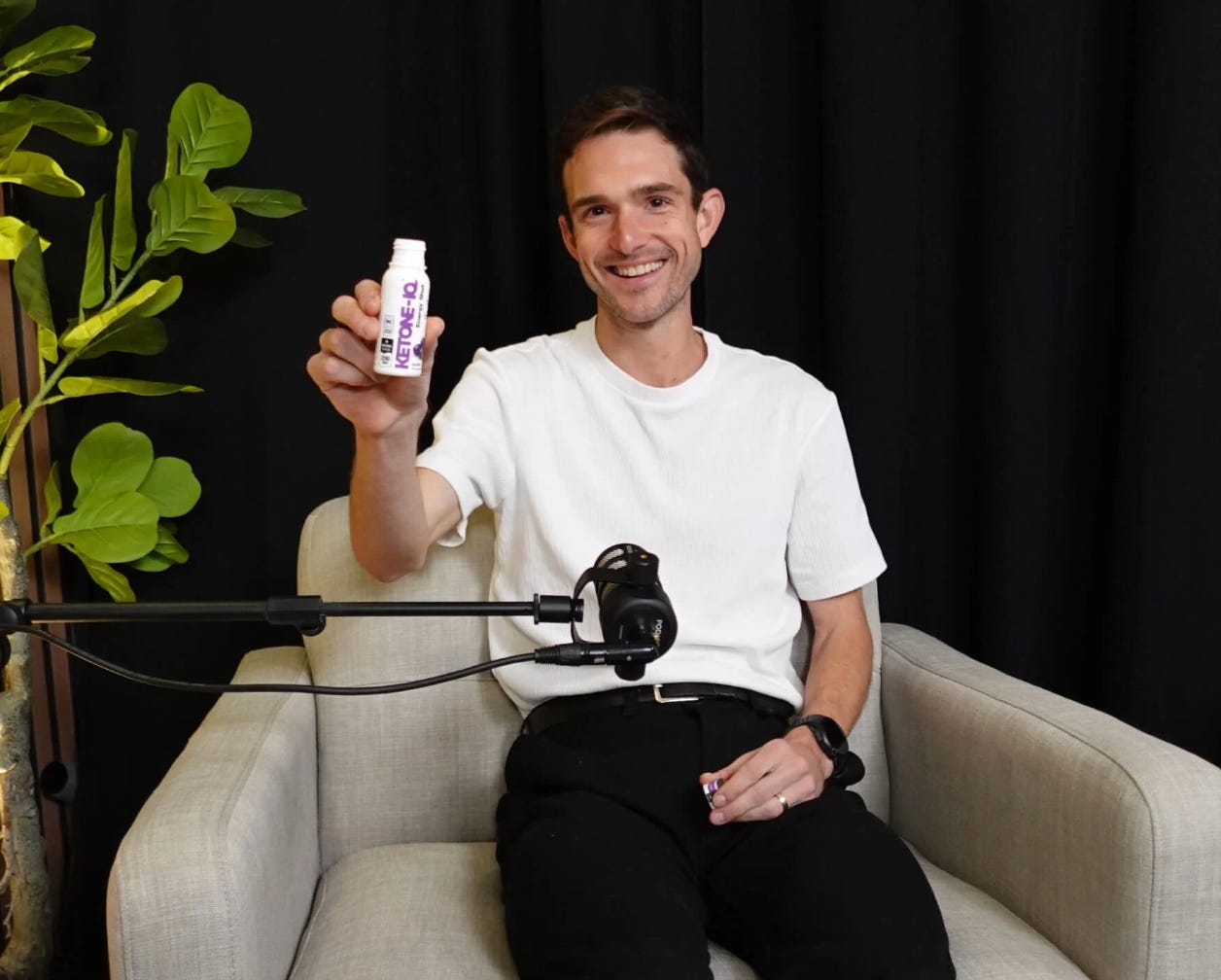
Ketones for Brain Health with Dr. Latt Mansor (Ketone-IQ)
In this video, I interview Dr. Latt Mansor (Instagram: @lattmansor)—research lead at Ketone-IQ and an all-around fun and savvy guy. We chat about exogenous ketones, how they work, and their research-backed benefits for cognition, as well as their potential for treating neurological conditions such as traumatic brain injury, dementia, and Alzheimer’s disease.I’ve been using exogenous ketones for several years now, and Ketone-IQ has become the brand that I trust and use almost daily for workout recovery, performance, and cognitive enhancement. And I’m excited to announce that I just joined their scientific advisory board and can’t wait to help share the science of ketones with the world.Try some for yourself:Unlock sharper focus and support long-term brain health with Ketone-IQ— Get 30% off your subscription, plus a free gift with your second shipment at ketone.com/BRADY. This is a public episode. If you'd like to discuss this with other subscribers or get access to bonus episodes, visit www.physiologicallyspeaking.com/subscribe

Why Does 'Mainstream' Health Media Want Us to Eat Less Protein?
In this video, I critique a recent article highlighting 5 signs that you might be eating "too much protein." This is a public episode. If you'd like to discuss this with other subscribers or get access to bonus episodes, visit www.physiologicallyspeaking.com/subscribe

Physiologically Speaking Live | 12.25.25
This is a public episode. If you'd like to discuss this with other subscribers or get access to bonus episodes, visit www.physiologicallyspeaking.com/subscribe

Physiologically Speaking Live | 12.10.25
If you’re wondering, “Did he say airports in gyms instead of gyms in airports?”, the answer is yes. OOPS.Thank you to everyone who tuned into my live video! Join me for my next live video in the app. This is a public episode. If you'd like to discuss this with other subscribers or get access to bonus episodes, visit www.physiologicallyspeaking.com/subscribe

Physiologically Speaking Live | 12.4.2025
This is a public episode. If you'd like to discuss this with other subscribers or get access to bonus episodes, visit www.physiologicallyspeaking.com/subscribe

Physiologically Speaking Live | 12.1.25
This is a public episode. If you'd like to discuss this with other subscribers or get access to bonus episodes, visit www.physiologicallyspeaking.com/subscribe

Training Update + a Look into My Injury History as a Runner
Greetings!I sat down this weekend to record a short video to provide an update on my current training and injury status and share some stories about my injury history as a runner. I opened up a bit about some struggles, what I’ve learned, and what I want to improve on in the future. Thanks for watching.~Brady~ This is a public episode. If you'd like to discuss this with other subscribers or get access to bonus episodes, visit www.physiologicallyspeaking.com/subscribe

California International Marathon Training Update
This is a public episode. If you'd like to discuss this with other subscribers or get access to bonus episodes, visit www.physiologicallyspeaking.com/subscribe

Physiology Friday #285: Q&A on Ketones, Creatine, Endurance Nutrition, Heat Training, and More!
Greetings!In place of this week’s newsletter, I recorded a Q&A session based on questions I’ve received in the last few months. I had so much fun doing it and hope you enjoy listening (and learn something!)I answer a variety of questions related to training, nutrition, supplementation, and injury prevention; share insights on the use of ketones and creatine; discuss fueling strategies for workouts, and emphasize the importance of mental performance and adaptation. I also cover challenges related to heat training, health concerns associated with high training volumes, and the role of gear in running, as well as advice on weight management while training for performance.You can find an edited list of questions and my responses below (for those who prefer to read). It’s a bit shorter and punchier for better digestibility.Nutrition & SupplementationExogenous KetonesQ: How often do you use exogenous ketones? I noticed recovery benefits during ultra training but not with lower volume.A: During peak marathon blocks I currently take 4 shots/week (of Ketone-IQ: two after my hard interval session and two after my long run. I pair them with post‑workout carbs and protein. I generally don’t use them in base phases or at low training volumes.Q: What are your overall thoughts on ketones, and when/how often do you take them? Worth the investment?A: They’re not a miracle supplement, and many basics move the needle more. For me—solid sleep, nutrition, and training already in place—ketones are a small edge I experiment with mainly post‑workout for recovery. Cost matters, so I focus usage where I feel the most benefit.Q: Do you use ketones pre‑workout or pre‑race? I’ve heard folks tout recovery benefits most.A: Rarely pre‑race. Occasionally before a long run for a “flow”/focus feel, but for performance I prioritize carbohydrates during the session. My primary use case remains after hard sessions and long runs.CreatineQ: Thoughts on creatine? Do you cycle off?A: I take ~5–10 g/day, every day. There’s no need to cycle; creatine isn’t a hormone and doesn’t cause receptor “desensitization.” If you stop for a week or two, your stores remain fairly saturated; after >~1 month off, benefits likely wane.Q: Do you take creatine on non‑training days?A: Yes—daily. Creatine works via long‑term saturation, not acute timing.Q: Does timing matter?A: You can take it anytime, but I prefer post‑workout with a meal (protein + carbs). Better blood flow/insulin sensitivity may help uptake and support glycogen/protein synthesis.Q: What supplements are you taking right now?A: Daily: Omega‑3s (EPA/DHA), creatine, vitamin D, iron (FerroZorb/Thorne), and Tongkat Ali (experimental; no clear effects noticed, no downsides so far). I removed ashwagandha—I felt it sometimes blunted my drive/mood (anecdotal).FuelingQ: How do you fuel early‑morning sessions? Two‑hour rides are also hard to fuel.A: I’m not hungry early. I usually start fasted and then take carbs during (gels/drink mix). For 90–120 minutes, I aim ~40–60 g carbs/hour. ≤80‑minute easy runs I often do fasted.Q: What do you eat right after a workout if you’re not hungry?A: Hot days kill appetite. I lean on Greek yogurt + granola + berries or a smoothie (protein + fruit + greens powder + ice). Cold/sweet options go down easier than “hearty” meals.Q: You use multiple gel types. How do you choose, and why not Maurten?A: I rotate to avoid palate fatigue and to match purpose: caffeine vs. non‑caffeine; 40 g vs. 20–25 g carb gels; different carb sources (maltodextrin/fructose vs. “real‑food” blends). Current favorites:* SIS Beta Fuel (40 g, isotonic)—easy to take without water.* Minted (40 g + ~50 mg caffeine, unflavored)—simple profile.* BPN GO (25 g, real‑food)—tasty and lighter. Maurten works but the chewable texture isn’t ideal for me at race pace.Q: Benefits of fueling even “easy” long runs? Downsides of not fueling?A: Fueling easy long runs may not boost performance that day, but it protects recovery by limiting glycogen debt/calorie deficit. I feel better the next day when I fuel a 20‑miler vs. under‑fueling or going fully fasted.Training & WorkoutsQ: First six weeks of a 12‑week marathon block—what quality do you do? Continuous threshold or intervals? Key goal‑pace workout before race?A: Early and late phases look similar: lots of tempo/threshold work, with some shorter, faster reps closer to race day. I prefer continuous threshold (tempos; 2–3 mi repeats) over short reps. Two staples:* 8–10 miles at marathon pace within a long run (dress rehearsal with fueling/shoes).* 4–3–2–1 mile cut‑down (pace quickens each block; ~10 total quality miles).Q: Strength training—do you follow a program (e.g., StrengthLog)?A: Not a strict program. I do simple bodyweight/dumbbell work a few times weekly (push‑ups, pull‑ups, DB variations). It’s minimal but helps durability.Q: Go‑to bike workouts to improve running?A: Mostly aerobic intervals like 3–4 × 15–20 min @ ~80–85% FTP. Great marathon‑effort proxy. Otherwis

The Science of Protein Quality with Dr. Joseph Matthews
In this conversation, I chat with Dr. Joseph Matthews. He’s a postdoctoral research fellow in Geriatrics and Protein Metabolism, a physiologist, and a nutritionist.Joe just authored a review paper on protein quality, in which he and his coauthors define protein quality, what determines it, and why some of the methods we currently use to measure protein quality are outdated (and how we could do better).You’ll learn the highest quality sources of protein, nuances around protein timing and quantity, whether animal or plant proteins are best, and more.You can find Joe on:* X - @JosephMatthews_ * LinkedInJoe also just started writing on Substack - so check him out! This is a public episode. If you'd like to discuss this with other subscribers or get access to bonus episodes, visit www.physiologicallyspeaking.com/subscribe

Creatine for the Brain with Dr. Nicholas Fabiano
Dr. Nicholas Fabiano is a psychiatry resident at the University of Ottawa and a rising voice in the field of lifestyle psychiatry. With a background in applied life sciences and medical training at the University of Ottawa, he has developed a passion for understanding how exercise, nutrition, and sleep influence mental health.Featured in outlets such as The Washington Post and Fast Company, Dr. Fabiano has been recognized as a “rising star” in neuroscience for his evidence-based approach to mental health. In this conversation, Dr. Fabiano joins me to discuss the multifaceted role of creatine, particularly its implications for brain health, cognitive function, and mental health. We focus on a review article he just published titled "Creatine for the Brain: More is Likely Better for Brain Bioenergetics, Health, and Function,” in which he argues that 10 grams or more of creatine per day may be the optimal dose for cognitive performance and mental health.He emphasizes the importance of understanding dosing, the potential benefits of creatine in various conditions such as sleep deprivation, traumatic brain injury, Alzheimer's disease, and depression, and the need for more research to optimize creatine supplementation and its mechanisms of action in the brain.Follow Nick on X: @ntfabianoFollow Nick on Instagram: @ntfabiano This is a public episode. If you'd like to discuss this with other subscribers or get access to bonus episodes, visit www.physiologicallyspeaking.com/subscribe

Is Zone 2 Training Optimal for Mitochondrial Health? My Interview with Kristi Storoschuk
In this video, I chat with Kristi Storoschuk, a PhD candidate in muscle physiology at Queen’s University. She’s actively involved in research on high-intensity interval training, mitochondria, glucose regulation, and lactate.Kristi joined me to talk about her recent review article titled Much Ado About Zone 2: A Narrative Review Assessing the Efficacy of Zone 2 Training for Improving Mitochondrial Capacity and Cardiorespiratory Fitness in the General Population, in which she questions the bold claims made about the superiority of zone 2 training for improving mitochondrial capacity, fat oxidation, cardiorespiratory fitness, and general health outcomes. It’s a must-read.* Follow Kristi on X @k_storoschuk* Follow Kristi on Instagram @krististoroschuk This is a public episode. If you'd like to discuss this with other subscribers or get access to bonus episodes, visit www.physiologicallyspeaking.com/subscribe

Special Marathon Training Q&A with the Bone Health & Osteoporosis Foundation
On Monday, I spoke to the Bone Health & Osteoporosis Foundation's ‘Be Bone Strong’ NYC & Sydney Marathon Teams for an in-depth discussion on how to train smarter, recover better, and boost performance at any age.Thanks to Barbara Grufferman for the invitation and opportunity to speak. She’s graciously allowed me to share the webinar with my audience. Enjoy!Topics covered:* Recovery after stress fractures * Flexible training strategies that protect performance * How to improve speed without risking injury * Pacing tips for race day success * Age-related adaptations and smarter recovery for older runners * Heat training and travel prep for international races * Creatine: what kind, how much, and when to take it * Nutrition timing for energy and performance * Electrolytes, hydration, and marathon fueling * Pros and cons of ice baths, compression boots, and NSAIDs * VO₂ max: what it is and how to raise it * Why "physiological resilience" matters * Sleep, glycogen, and why gels matter mid-race* And more! This is a public episode. If you'd like to discuss this with other subscribers or get access to bonus episodes, visit www.physiologicallyspeaking.com/subscribe